9 Hopeful Books About Schizophrenia

I n August, 2009, I got something in the mail from my uncle Bob. I didn’t know Bob very well; he was a self-described “hermit” who lived in the Californian desert. It was the story of his life, which he’d typed in all-capital letters on his typewriter, a stack of about sixty misspelled pages that stunk of cigarettes and were punctuated mostly with colons. On a cover page, he described it as a “true story” about being “labeled a psychotic paranoid schizophrenic.” On the phone, he explained he wanted my help with getting his story “out there.”

The more I learned about schizophrenia, the less I felt I could answer something as seemingly basic as “what is it?”

Purchase the book.

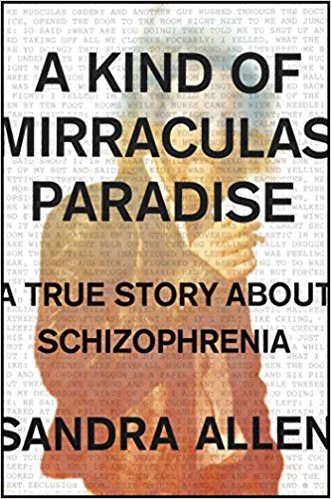
Soon after I began to write a version of Bob’s story based on what he sent me. Eight years later and it’s grown into a book called A Kind of Mirraculas Paradise: A True Story about Schizophrenia that’s being published by Scribner on January 23. My version tells Bob’s story faithfully to the facts as he shared them. It also endeavors to better understand that phrase: “psychotic paranoid schizophrenic.”

Before my uncle sent me his manuscript, I knew virtually nothing about what the term schizophrenia meant or didn’t mean. So I started reading. A lot. I read psychiatric books and anti-psychiatric books and books by family and friends of people who’ve been diagnosed with mental illnesses. I read books by self-identified “mad” people and “psychiatric survivors.” I read books about science and history and disabilities studies. I read memoirs and novels and poems and plays. I interviewed lots of people, too, and spoke with people informally. I spoke with anybody who might have some perspective to lend on these topics. Because, it became clear, the answer to a question like “What is schizophrenia?” isn’t simple. For a long time, the more I learned about schizophrenia, the less I felt I could answer something as seemingly basic.

Often someone I’ve just met will ask what I do, and we’ll get to talking about my uncle Bob and what he mailed me. We’ll end up talking about schizophrenia. We’ll talk about mental illness more generally and mental healthcare in America today. Sometimes we’ll talk about what a better future could look like. Sometimes people I’m speaking with decide to tell me their connection to schizophrenia; they’ll often tell me about someone they love, or they’ll tell me about the work they do, or occasionally they’ll tell me about themselves.

The following are books I find myself recommending to people. My hope is that they’re works that are approachable for readers brand new to this topic but also stories that will be illuminating even to those already entrenched in these complex topics. Something I’ve noticed is that books about the topic “schizophrenia” skew sad; some are downright pessimistic. I have tried to present works that speak about schizophrenia honestly, and yet do so with a measure of hope.

The Gene: An Intimate History by Siddhartha Mukherjee

This is a deeply considered and gorgeously rendered work, part memoir and part clear-eyed assessment of the past, present and future of genetic study. Mukherjee, both a physician and gifted writer, begins by describing the several members of his family whose lives have been devastated by schizophrenia. In order to better understand schizophrenia, he explains all of genetics generally, unraveling the fascinating story of how researchers have come to know what they do about genes. Arriving in the present day about halfway through the book, he then shifts into exploring the ramifications of genetic knowledge today. He discusses such matters as race and gender and identity and intergenerational trauma and psychiatric diagnoses like schizophrenia. I think the world would be a better place if everybody read The Gene.

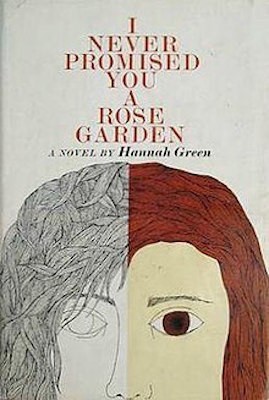
I Never Promised You a Rose Garden by Joanne Greenberg

This 1964 novel fictionalizes the author’s self-described descent into and recovery from schizophrenia right before the dawn of psychopharmaceuticals in the late forties and early fifties. The book rivetingly animates the protagonist’s elaborate inner world, and the devoted efforts of her psychiatrist — who is based on a real-life doctor, Dr. Frieda Fromm-Reichmann. Rose Garden was initially published under a penname at the behest of Greenberg’s mother. It resonated with a surprising number of readers, becoming an unexpected bestseller and inspiring many adaptations. Today Rose Garden remains something all too rare: a widely read story about schizophrenia written by someone who had herself been diagnosed. It’s a very powerful and formally daring work, one that remains as necessary as ever.

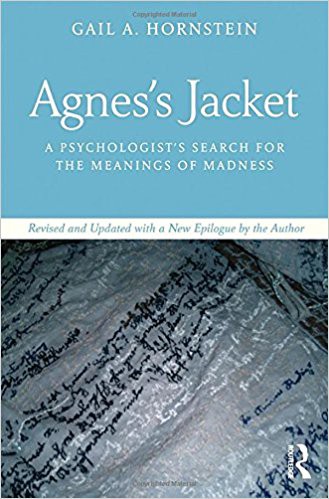
Agnes’s Jacket by Dr. Gail Hornstein

In this memoir, an academic psychologist traces her own journey toward a more scientific and historically grounded understanding of madness. I recommend this book particularly for mental health care professionals seeking to better understand schizophrenia and other severe mental illnesses, and to those partaking in the debates about how to best treat people diagnosed. For those interested in psychiatry, I also recommend Dr. Hornstein’s thorough biography of Dr. Frieda Fromm-Reichmann (of Rose Garden fame), To Redeem One Person is to Redeem the World.

Mad in America by Robert Whitaker

In this exemplary work of narrative investigative journalism, Whitaker begins with a confusing proposition: a WHO study that found that in richer nations like America, there are worse outcomes than in poorer ones for people diagnosed with severe mental illnesses like schizophrenia. Puzzled, Whitaker began to look at why or how that could be. In this groundbreaking work, first published in 2001, Whitaker comprehensively tells the story of American mental health care, unfolding how the public came to know what we do about psychiatric disorders like schizophrenia and psychiatric treatments like antipsychotics. I also highly recommend another of his books, Anatomy of an Epidemic, which looks at the skyrocketing cost of the growing population of Americans today disabled by mental illness.

The Protest Psychosis: How Schizophrenia Became a Black Diseaseby Jonathan Metzl

In the 1950s, half a million Americans lived in public mental hospitals, a number that has since fallen dramatically. In this academic book, Metzl analyzes historical psychiatric records from one public hospital, observing a clear story of how the label “schizophrenia” was disproportionately applied to different groups at different historical periods. The end result deftly demonstrates how psychiatric diagnoses may be wielded as tools of racist and misogynist oppression.

The Voices Within by Charles Fernyhough

An engaging popular science book that examines how little we understand the internal experiences of people generally — not only those diagnosed with schizophrenia. What is thought? How do scientists study thought? This book also provides an introduction to the Hearing Voices movement, a civil rights movement for self-identified voice-hearers that has emerged over the last three decades. Fernyhough contemplates the voices “heard” by creative writers such as myself, and closely examines several historical and literary examples of this other sort of voice hearing.

The Origins of Consciousness and the Breakdown of the Bicameral Mind by Julian Jaynes

This (in)famous psychology tome, published in the 1970s, offers a particular thesis about the evolution of human beings, specifically to do with consciousness. Jaynes argues that humans in Homer’s Iliad were not conscious in the modern sense; instead, he posits, they hallucinated directions from Gods, i.e., voices. In support of his argument he mentions the existence of people diagnosed with schizophrenia, who claim to hear voices. In the late eighties, a Dutch woman named Patsy Hague who’d long been diagnosed with schizophrenia — she heard many voices — read Jaynes’ book. She afterward worked to convince her psychiatrist, Dr. Marius Romme, of the realness of her voices. The two appeared on a Dutch daytime show asking voice hearers to call in — and to their surprise many did. They then held a meet-up for voice hearers, which many mark as the beginning of the Hearing Voices movement. These gatherings allowed voice-hearers to realize that they were uniquely equipped to help one another strategize about how to live not just despite but with their voices. The first Hearing Voices Network support groups were held soon after in the UK; today there are HVN meetings in about 30 nations worldwide. To those interested in learning more about the Hearing Voices movement, I’d recommend Living with Voices: 50 Stories of Recovery by Dr. Marius Romme himself and his wife and longtime collaborator, the journalist Sandra Escher, as well as three other prominent figures in the movement. The book presents 50 narratives of people who’ve heard voices or seen visions or had other unusual or extreme experiences.

The Loony-Bin Trip by Kate Millett

In this gorgeously wrought memoir, celebrated feminist author Kate Millett vividly portrays the astounding loss of power that can come with psychiatric diagnosis. Though not a story about just schizophrenia, per se, it is one about a dynamic that pervades so many narratives about mental illness: a disagreement about whether someone has to take psychiatric medications. At the story’s beginning, Millett is a celebrated author living a stable life. She decides to stop taking Lithium she’s been prescribed for six years, doubtful of her diagnosis and tired of shaking hands and diarrhea. She soon finds being opposed by nearly everyone in her life. I recommend this book especially to those Millett mentions in her dedication: “to those who’ve been there.”

Outside Mental Health by Will Hall

Hall is a therapist and self-identified schizophrenia survivor and host of the Madness Radio podcast. This collection anthologizes many of the interviews he’s done on the show with people involved with efforts to reform mental health. Together these conversations provide a wide range of points of view on so many matters related to psychiatric diagnosis and treatment and the status of persons given psychiatric diagnoses in our society, as well trauma, oppression, alternative conceptions of madness, and spirituality. I’d most recommend this book, as well as his podcast, to anybody interested in hearing the perspectives of those who’ve been psychiatrically diagnosed about what has and hasn’t helped them live full and dignified lives.

7 Books To Help You Understand the Dogs (and Dog People) in Your Life

Dog person vs. cat person: it’s an old and contentious debate, and one that probably won’t be solved by literature—but that doesn’t mean we aren’t going to try. Writers have been struggling for decades (probably centuries) to argue the dog-person case, trying to express exactly what it is about canines that’s won our eternal affection. Here are just the offerings from the last few years.

From a graphic memoir about a neurotic but beloved dog to a thriller about a zoonotic plague that threatens a cull of the family pets, these seven books tell of the resilient bond forged between dog and humans, celebrate the human-canine devotion, and illuminate why dog people dedicate their existence to their furry companions.

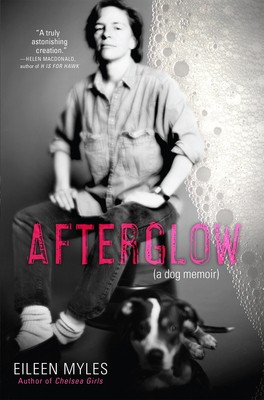
Afterglow (a dog memoir) by Eileen Myles

On the surface, Myles’ poetic memoir seems like a meditation on what it means to be a dog,an eternally silent child,” dependent on humans. Afterglow opens with the decline and death of Rosie, Myles’ beloved pitbull, confidant, and muse. Myles, who at various points envisions Rosie as the reincarnation of their father and of other famous people in history, channels Rosie’s ethereal voice from the afterlife, allowing the dog to “recount” her experiences on earth. Afterglow uses fabulist imaginations and a nonlinear mix of true, fictitious, and experimental scenes to reflect on Myles’ experiences with intimacy, spirituality, queerness, politics, alcoholism and recovery, writing, and of course, loss.

The Friend by Sigrid Nunez

An unnamed writing professor inherits a Great Dane after the suicide of her best friend and mentor. Apollo is bewildered by the sudden loss of his master. The dog waits unbudgingly by the door, expecting his master’s return. Despite her protestations that she is a cat person and a rent-stabilized lease that prohibits dogs, the professor finds herself bonding with Apollo through their shared mourning. Nunez’s story of a dog and his inadvertent caregiver is a darkly humorous and unsentimental tale of friendship, mourning, and solace.

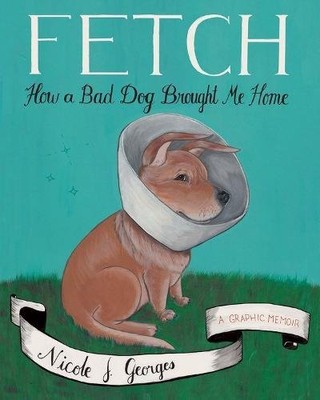
Fetch: How a Bad Dog Brought Me Home by Nicole J. Georges

Georges’s beautifully drawn graphic memoir recounts her relationship with Beija, a shar-pei/corgi rescue dog. Prone to knocking over small children and barking obsessively, Beija was such a difficult pet that not even vets, dog whisperers, and a pet psychic could cure her neurotic behavior. But through the next fifteen years of a turbulent young adulthood, relationships gone wrong, depression, a sexual awakening, and the chaos of the Portland punk scene, Beija and her “Don’t Pet Me” bandana was the one constant in Georges’s life.

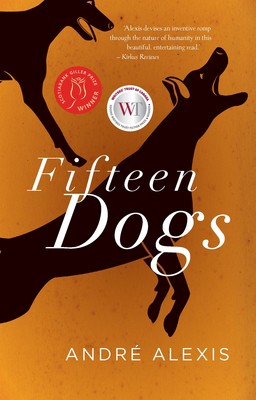
Fifteen Dogs by André Alexis

Does human intelligence makes us unhappy? The gods Apollo and Hermes make a bet to answer that question, granting a pack of dogs at a Toronto veterinary clinic mortal consciousness. The pack’s newfound cognition proves to be both a burden and a gift as they navigate unfamiliar thoughts and sensations. The dogs escape to establish their proto-society by the city’s lakeshore, free from the control of human masters, but divisions form between those who cleave to the familiar canine ways and those who welcome the change. The transference of sentience reveals the paradoxes of human behavior, but also unmasks a universal truth: a life fulfilled is being in love and being loved in return.

Lily and the Octopus by Steven Rowley

Ted is a single, gay writer struggling with sobriety, tumultuous relationships and a flailing career. His life revolves around one constant: Lily, a 12-year-old ice-cream loving dachshund. On Thursdays, they argue over cute boys (he’s a Ryan Gosling fan, she’s a Ryan Reynolds girl); on Fridays, they play board games; on Sundays, they indulge in pizza. But the cozy life the two of them built together is threatened by an octopus attached to Lily’s head. Ted can sense that the the interloping cephalopod is hungry to take his most devoted companion away from him and he vows to kill the octopus. Using magical realism, Rowley conveys precisely what it feels like to love and to lose a dog.

Jonathan Unleashed by Meg Rosoff

Jonathan has all the trappings of a successful grownup: a job at an advertising agency, a New York City apartment, and “a not-unimpressive girlfriend.” But the truth is writing mind-numbingly boring copy for stationery makes him miserable, the landlord might evicted from his illegal sublet any day now and he finds Julie and her “belief system consisted of medium heels, a decent haircut and solid retirement funds more or less from birth” boring. His brother’s dogs Sissy the Spaniel and Dante the Border Collie come to live with him and they are determined to sort out his life. Rosoff’s charming and hilarious novel is a love story of becoming an adult in the New York City.

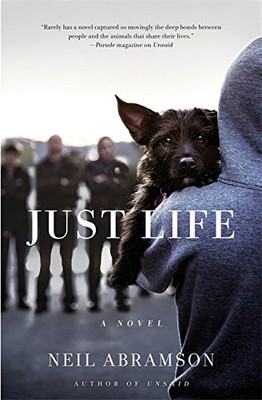
Just Life by Neil Abramson

A deadly animal-transmitted virus spreads through the Upper East Side, bringing chaos and panic to New York City. Suspicion soon falls on the family pets and faced with a demand for immediate action, the Governor declares a quarantine. Veterinarian Samantha Lewis who runs a no-kill dog shelter in her neighborhood knows that a cull is imminent. With help from a homeless teen, an elderly priest, a sympathetic cop and a disgraced psychologist, Samantha embarks on a mission uncover the origins of the disease and save the dogs before it’s too late.

Zaphod Beeblebrox for President

It probably started with Ronald Reagan, the actor-turned-president—or, if you take Douglas Adams’ word for it, the terrifyingly dangerous extraterrestrial-origin synthetic person.

Reagan didn’t jump right from Hollywood to the presidency; he spent a long time as governor of California, and even as an actor he was also a union leader. (Ironic, huh? He wasn’t a Republican back then.) But he was the harbinger of a genre of celebrity politicians, with ever-shorter gaps between their artistic and political careers. These entertainer-leaders leveraged studied charisma, name recognition, and fanbases built in a much more exciting arena than government to achieve political success. A Sonny Bono, an Arnold Schwarzenegger, and an Al Franken later, here we are: The president has never held any previous office but did host an embarrassing reality show, and as soon as Oprah Winfrey gave one rousing speech people started clamoring for her to run for the highest office in the land. (She might do it, too.)

As with almost everything else of note in the galaxy, Douglas Adams saw this coming 92 million miles away.

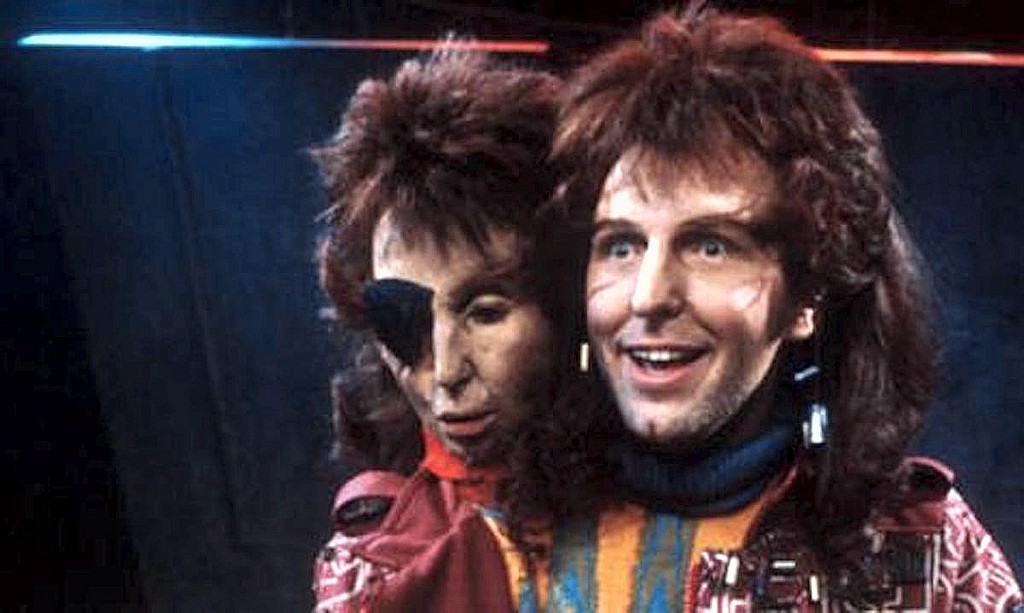
The Galactic President in Adams’ Hitchhiker’s Guide to the Galaxy series is the two-headed, three-armed Zaphod Beeblebrox — erratic, irresponsible, wildly egomaniacal, voted Worst-Dressed Sentient Being in the Known Universe seven times. Zaphod has more charisma than Trump and less poise than Oprah, but as politicians they’re three of a kind: They’ve been rocketed to power not by their background in statecraft, but by their inescapable celebrity.

In the case of Oprah and Trump, this is due to a major flaw in American politics known as “the American people.” The thirst for celebrity politicians—the urge to transplant prominent entertainers into other influential roles regardless of background or skill—is a function of our short attention spans and lack of respect for experience or knowledge. When we see someone we recognize projecting authority, charm, or oratorial skill, we cry “make them president!” with a joking fervor that is indistinguishable from the real thing.

Zaphod has more charisma than Trump and less poise than Oprah, but as politicians they’re three of a kind.

In Zaphod’s case, though, it’s actually the goal. The purpose of his position, though he isn’t supposed to know it, is distraction. “Only six people in the galaxy knew that the job of galactic president was not to wield power but to attract attention away from it,” Adams writes. “Zaphod Beeblebrox” — who, as is revealed in the Hitchhiker’s Guide radio show, has made presidential addresses from the bath, from prison, and from a sex worker’s bedroom—“was amazingly good at his job.”

Like many of Adams’ great innovations, it’s a joke that’s also a sly critique that’s also a genuine perspective shift likely to disrupt your worldview forever. Once you’ve internalized the gag, it’s impossible not to think about it every time a president does something showy, even if it’s as gentle as playing basketball in mom jeans. What if his job right now is not to wield power but to attract attention away from it? you wonder. We’d never know. This is doubly true when the president is a grandiose blowhard obsessed with the size of his TV ratings and perpetually starting petty, awful feuds. It’s triply true when the president isn’t a president or even a candidate, but simply an eloquent celebrity who gave a stirring and morally upright speech and was immediately cast as the Savior of Our Embattled Government. Do we want Oprah to bring dignity back to the White House, or do we simply want her to distract us until we forget where real power lies?

It’s a comforting thought, in all honesty—at least it is now, when our president is a sub-Beeblebrox buffoon. (Zaphod’s not in control of his faculties either, and he spends most of his presidency as a criminal fugitive, but at least he’s clever.) What if Obama’s statesmanship and Trump’s shenanigans had exactly the same amount of influence on actual policy: zero? Deflationary for Obama, to be sure; by Galactic President standards he’d be considered deeply mediocre, always reading and working and eating seven almonds instead of putting on a show. But in the Trump era, it’s actually nice to think that the president might be a flashy figurehead, his vaunted “button” just a pacifier. He can strut and howl and posture all he likes, but there’s somebody else in charge.

And maybe that’s why we’re so eager to cast votes for Oprah—or, for that matter, The Rock. “She has no governing experience,” I saw people scolding when the “Oprah for office” fervor took hold, and others responded: “Well, look at the guy we have now.” If the presidency is going to be reduced to pure spectacle, we seem to be saying, let’s at least fill it with someone we can watch without feeling sick.

But of course, the presidency isn’t pure spectacle, now or in the future. That’s the difference (well, one of the differences) between Adams’ universe and ours: The president may be a clown, but he’s not supposed to be one. He still has a job, a real one. And while there are plenty of shadowy influencers behind the scenes, they’re people like the Mercers and Vladimir Putin and lobbyists: corrupt opportunists out for personal gain. If the president can’t be trusted to wield real power, you can bet that the people his antics are covering for are even worse.

In Adams’ world, when the president attracts attention away from “real power,” that means a single source of responsible and lucid (if eccentric) leadership. “It is a well-known fact that those people who most want to rule people are, ipso facto, those least suited to do it,” Adams writes. Thus we have had “a succession of Galactic Presidents who so much enjoy the fun and palaver of being in power that they very rarely notice that they’re not. And somewhere in the shadows behind them — who? Who can possibly rule if no one who wants to do it can be allowed to?” It’s a conundrum, but a solvable one; this is, after all, a world in which Life, the Universe, and Everything has an answer, even if we don’t know what it means. (N.B. for anyone who hasn’t read the books: it’s 42. Suddenly a lot of things nerds have been saying make a lot more sense to you, don’t they?) The power the capering president distracts from is the single person who can be trusted to rule.

Eventually we meet him: a man living alone, save for a cat, in a shack on a planet on the outskirts of some distant galaxy. The Man in the Shack is so relentlessly skeptical that he ceases to believe in the outside world when the door is shut. Lesser leaders ask him questions, and he answers in his idiosyncratic way (“My Universe is my eyes and my ears. Anything else is hearsay”), and they act on his answers. But he isn’t interested in ruling people; he isn’t even sure people exist. (“Do you rule the Universe?” Zaphod asks him. “I try not to,” he says.) The universe, Zaphod decides, is in good hands.

Our universe is not.

The entertainment president requires a solid backing: known or unknown, someone in the shadows who can rule when no one who wants to can be allowed. At the very least, he or she requires a solid clockwork of advisors, officials, and legislators—all of them knowledgeable, all of them functioning, all of them practiced and proficient enough to keep the system running when the person who’s nominally in charge is really only there for show. What is a figurehead without a ship?

The entertainment president requires a solid backing: known or unknown, someone in the shadows who can rule when no one who wants to can be allowed.

I wish we could have a Zaphod Beeblebrox president, one whose antics can be safely enjoyed because they’re only there for show. I would be perfectly happy to live in a country that could anoint its favorite celebrity as its public face and let governing take care of itself. It works beautifully in Hitchhiker’s Guide; Zaphod gallivants around the galaxy, doing telecasts from the bathtub and stealing multiple ships and getting eaten by a carbon copy of the Ravenous Bugblatter Beast of Traal, and meanwhile the Man in the Shack keeps everything quietly ticking along. It’s fun and functional. It’s also science fiction. We know, precisely because of how well it works in that universe, that it can never work here.

We wish for a Zaphod Beeblebrox because we want to believe in a Man in the Shack: someone who can be trusted to give us direction, even if we’d never understand their methods, even if we’ll never be allowed to see. But in real life, there is no weird grownup in charge. Those people who most want to rule people are, ipso facto, those least suited to do it, and somewhere in the shadows behind them — nobody.

Why Is it So Hard for Andy Weir to Follow Up on His First Success?

You could say that Andy Weir is most comfortable in all things astronomical — whether that’s his rise to success, or the subject matter of his fiction. His first novel, The Martian, began as a series of chapters self-published on a blog and became the Oscar-nominated Hollywood blockbuster directed by Ridley Scott and starring Matt Damon. For his second novel, Artemis, Weir returned to space, this time to our moon and its first habitable city. The novel, named after the city, follows Jasmine “Jazz” Bashira, a young Muslim woman who works as a delivery girl, but also moonlights as a smuggler.

The novel pits poverty against wealth; two social classes collide when Jazz accepts a mission from a man named Trond Landvik. What follows is a fast-paced, well-plotted thriller across the whole city. If there is one thing Weir has perfected in his two novels, it’s exciting the reader page after page.

I spoke with the author as 2017 was winding down and he was reflecting on his two novels. We talked about the unique challenges of following up a major success — particularly when it’s your first book — and staying true to writing his first love: outer space.

Adam Vitcavage: With the soaring success of The Martian, was Artemis easier to write knowing you can write something critics and fans would love? Or harder because of the pressure of publishing a bestseller turned Hollywood blockbuster?

Andy Weir: Of course it’s stressful to follow up a success like The Martian, especially considering it was my first book. A success like The Martian comes once in a career for a writer, and I happened to get mine right out of the gate. It’s extremely unlikely that Artemis will be as popular. But if people read it and say “I liked The Martian better, but this was still pretty good,” then I’ll call that a win.

AV: You now have two best-selling books set on Mars and the Moon. When did your fascination with space begin?

AW: I can’t remember a time when I wasn’t interested in space. Probably because my dad is also a space nerd. So I was indoctrinated from an early age.

The Adventure of the Space Traveler

AV: Your novels are heavily intertwined with science. When an idea comes into your mind, how do you go about researching the correct sciences?

AW: Mostly I just Google things. The space industry is incredibly well documented and easy to research. People are very proud to be a part of it and they like to write articles about what they’ve done.

I can’t remember a time when I wasn’t interested in space.

AV: With Mark Watney and now Jazz, you’ve created two outstanding characters. Were they who you created first or did they fall into the plots and stories you wanted to tell?

AW: Mark Watney was there from the beginning, yes. But Jazz was a more circuitous route. I didn’t set out to make a female Saudi lead. It just evolved that way. Originally, Jazz was a minor character in a completely different story idea. As I worked on the plot and characters for Artemis, Jazz just kept becoming more and more prominent. Once I decided she would be the lead, she was already cemented in my mind as a Saudi woman. My imagination would have rebelled at me if I tried to change her at that point.

Blast Off! 11 Novels of Space Exploration

AV: Are there any particular novels that explore similar themes to Artemis that you can recommend?

AW: People often compare Artemis to Heinlein’s “The Moon is a Harsh Mistress.” But, believe it or not, I don’t think they’re similar at all. They both involve a lunar colony, but that’s it. Artemis isn’t about revolution or political strife. It’s a story of early colonization and the ugly things that have to happen for a city to grow. So, although it may sound strange, one of my biggest inspirations was Chinatown.

AV: 2017 was a trying year for a lot of people. What literature got you through it and really connected with you?

AW: I didn’t get much time to read, unfortunately. I was very busy writing Artemis and also working on the pilot for Mission Control (a TV series that CBS ultimately decided against running).

Artemis isn’t about revolution or political strife. It’s a story of early colonization and the ugly things that have to happen for a city to grow.

AV: Any books you missed that you’re dying to read?

AW: Yes I have to read Dune. I still haven’t done it. What kind of sci-fi-fraud am I?

AV: Now that you’ve dipped your toe into Hollywood, can we expect any film or projects in the future?

AW: For the moment I’m concentrating on novels. I did a spate in TV and that was pretty cool. But my bread and butter comes from narrative fiction.

AV: Do you have any writing resolutions for 2018? Any things you want to try or focus on?

AW: I’m going to stick to my strengths — realistic science fiction.

AV: Finally, do you have your next idea? Can we expect a space trilogy?

AW: I’d like to write a sequel to Artemis. Different main character, but the same setting.

What Virginia Woolf’s Lost Essay Can Teach Us About City Life

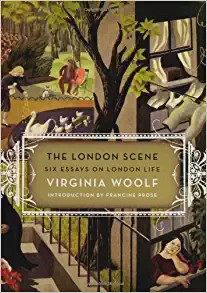
When the padded envelope showed up in my mailbox in September, I tore it open immediately. At the time I’d just started research on my master’s thesis about Virginia Woolf and walking. Mrs. Dalloway intrigued me, as did To the Lighthouse and A Room of One’s Own. But Woolf’s short essays aren’t read as frequently, which is why The London Scene caught my attention while I paged through Goodreads for works by Virginia Woolf.

This collection wasn’t available at any of the bookstores in my area. The only way I could get a copy was a third-party seller who only sold used editions. The jacket copy informed me that I was holding the book’s only U.S. edition printed within the last three decades.

The London Scene, by Virginia Woolf

That night, I tore through those 77 pages. Woolf writes about everything from expectations when visiting the homes of famous authors to the distinct sensation of standing in Westminster Abbey. The map inside the front cover includes landmarks for armchair travelers: Hyde Park, St. Paul’s Cathedral, and Tower Bridge. A collection of six essays commissioned by Good Housekeeping in 1931, the series is more conversational than Woolf’s other work. Woolf invites us to walk London with her, moving us from the flânerie of wandering a street to the interiority of a drawing room.

It wasn’t until 1981 that five of the essays were collected and published in book form. The last essay, “Portrait of a Londoner,” was missing from that edition. Emma Cahill discovered it at the University of Sussex in 2004. It’s this rare essay that ends the 2006 reissue of the collection, and the one that captured me most as a reader.

In just 1900 words, Woolf immortalizes a bygone London and the ways in which the circumscribed space of a living room can tell us everything we need to know about the heart of a city. We’re introduced to the elderly Mrs. Crowe, the ideal English hostess who shares her thoughts on everything from the latest theatre showing to her days in the company of Henry James. As Woolf explains, “Mrs. Crowe’s great gift consisted in making the vast metropolis seem as small as a village with one church, one manor house, and twenty-five cottages.”

Woolf immortalizes a bygone London and the ways in which the circumscribed space of a living room can tell us everything we need to know about the heart of a city.

She embodies an idea of London from a time before World War II. Even though it’s the 1930s, Mrs. Crowe hasn’t shaken her Victorian ways. Each evening from five to seven, she receives guests in her drawing room for tea. Woolf gives tips for conversing with Mrs. Crowe: subjects must not be too personal because intimate conversation leads to silence, and gossip about other people is always more welcome than your personal issues.

It’s an odd essay, short enough to leave you wanting more, yet self-contained in such a way that Woolf’s ideas don’t need further elaboration. It is also reminiscent of her more famous works: like many of Woolf’s essays, “Portrait” starts with a character. Though fictional, Mrs. Crowe embodies London as it was at that time. It’s referential to the rest of a collection that centers on walking the city, which is why it’s such a surprise that this is the essay that was forgotten.

As a writer, I’ve spent a lot of time thinking about how to inhabit and describe places I’ve never been. Travel has always seemed to me the closest you can get to being a different version of yourself. And if you can’t travel, reading is the next best thing. Virginia Woolf has shown me the beauty of writing about space, and her work is still the best way to immerse myself in London, a city I have yet to visit.

Travel has always seemed to me the closest you can get to being a different version of yourself. And if you can’t travel, reading is the next best thing.

Take this description of Mrs. Crowe and her drawing-room window:

As she sat in her chair with her guests ranged round she would give from time to time a quick bird-like glance over her shoulder at the window, as if she had half an eye on the street, as if she had half an ear upon the cars and the omnibuses and the cries of the paper boys under the window. Why, something new might be happening this very moment. One could not spend too much time on the past: one must not give all one’s attention to the present.

Woolf’s intimate knowledge of place is often part of the conversation surrounding her work. Yet “Portrait of a Londoner” does not spend time guiding us through the city streets. Why was this the essay that ended a collection about adventuring through London? Mrs. Crowe’s drawing room detaches us from what we expect. Woolf populates her nonfiction with characters that make it possible for us to imagine the city as a place of possibility, a place alive.

As Francine Prose points out in the 2006 introduction to the collection, “while it might not list the hottest restaurants and the newest boutique hotels, The London Scene gives us an amalgam of intelligence and beauty that few, if any, guidebooks, provide.”

The London Scene can still act as a guidebook. But its wider appeal has less to do with landmarks: it’s self-evident that a city is more than just push-pins on a map. What “Portrait” gives us that the other essays don’t is the feeling that it’s possible to experience a city through conversation with another person. Woolf is saying that it’s the people that make a place, and that’s why this piece should be read alongside her more well-known essays and stories.

Woolf is saying that it’s the people that make a place, and that’s why this piece should be read alongside her more well-known essays and stories.

I think of “Street Haunting,” an essay Woolf wrote in 1927 just a few years before The London Scene, which centers around an evening when Woolf decides she needs a pencil and uses this as an excuse to wander the early evening streets. Her 1925 novel Mrs. Dalloway is also aware of London: that story could not take place anywhere else. The connection between these works and “Portrait” is that they each start or end with an interior space. They also deliver some of the best last lines in English literature. Consider how the essay ends:

But even London itself could not keep Mrs. Crowe alive forever. It is a fact that one day Mrs. Crowe was not sitting in the armchair by the fire as the clock struck five … Mrs. Crowe is dead, and London — no, though London still exists, London will never be the same city again.

At first, I didn’t see why Mrs. Crowe’s death deserved to close out this collection. As an armchair traveler, I wanted writing to make me feel the physicality of a place I’d never visit in person. But the more I thought about it, I came to see how heavily this loss is weighted: the expected routine, the safe space of the drawing room, is gone forever.

I’ve realized that some of the best literature we have about cities isn’t about the street names and name-dropping, but the composite experience a place can give you.

Like the streets Google Maps keeps in its archive with snapshots of people mid-stride on their way in or out of the three-dimensional scene, “Portrait of a Londoner” preserves a moment. In that sense, it’s fitting that “Portrait” should end the collection. We are the guests at teatime, invited into a space that bridges the space between private home and public meeting place. The character of Mrs. Crowe is the way Woolf invites us to experience her city as she sees it. Woolf’s essay taught me that knowing a city from a window is just as important as meeting it head-on in the streets.

I haven’t been to London, but it’s the first place outside the U.S. I really wanted to go. After the thesis, maybe I’ll finally see the places I’ve read about. I’ve realized that some of the best literature we have about cities isn’t about the street names and name-dropping, but the composite experience a place can give you. And sometimes that experience takes place within.

How to Become a Cat Lady

“A Cat Called Grievous”

by R. L. Maizes

In the end we were a family. Not like yours, maybe, but one that suited us, and we stayed together a long time. Like most families, we began with two. Then, when Weldon and I had been married for seven years, he discovered the cat, curled inside a fleece-lined boot on our porch. We could have named her Boot.

“Eugenia, come see her,” he called. Excitement saturated his voice, which was ordinarily tentative.

The boot lay on its side. The cat was hidden, all but her face, a mass of black fur with a streak of blonde down her nose and yellow eyes. Hiding places were plentiful on the porch — boxes half-filled with newspapers to be recycled, empty planter pots — but nothing as warm as the boot.

“She’s had a litter,” Weldon said after she crawled out, teats stretched like putty and hanging low. His lips trembled, and I thought he might cry.

I took his hand, squeezed the rangy fingers, rubbed a thick knuckle with my thumb. Under other circumstances, we would have called her Mama.

Her kittens were gone, eaten by coyotes, perhaps. Every day she prowled through snowdrifts that hid the withered Colorado landscape, wailing as she searched for them. She returned at night, wet fur pasted down, shivering. Ignoring the bowl of warm milk and plate of sardines we put out, she crawled into the boot.

After a week, she stopped going out. She sat on the porch, long neck stretched toward a shark gray sky, howling for hours. We called her Grievous.

Another snow fell. It topped Weldon’s tractor-trailer and the hulking machine loomed even larger. Thick flakes swirled around the house, stuck to the windows in clumps, and slid down leaving watery trails. Drifts buried the boot. Grievous crouched behind a box on the porch, taking shelter from the wind.

“What do you think?” Weldon asked. “Should we let her in?” I nodded. He held the door open, jiggling the knob. It was his nature to feel rejected, so I knew he was concerned she would refuse us. As I backed up, clearing a path, she crept in and settled under the sofa.

In the room we called the nursery, its pale pink walls stenciled with sheep, I slipped a mattress from the empty crib. Above, a black and white solar system hung cobwebby and desolate. On the opposite side of the room stood a dusty changing table and a dresser that had never been used.

“What are you doing?” Weldon asked from the doorway, his voice wavering.

“Grievous can sleep on it.”

“What about the baby?”

“What baby?”

I tucked the mattress in a corner of our bedroom, a luxurious cat bed, but Grievous ignored it.

A few days later, I sawed a hole in the front door and covered it with a rubber flap. Grievous came and went as she pleased, while at a nearby worktable I stitched dresses and tailored suits. I paused each time I heard the slap of the rubber, glad she had her freedom, relieved when she returned.

We took her to the vet to be spayed. As I lugged the cat carrier, I imagined it was a bassinet. I thought a baby would coo pleasantly, but the cat moaned, protesting her abduction.

“Too many cats already,” the vet said, smiling in a way that told me she enjoyed extracting reproductive organs and mopping up blood. She was small and energetic, with pointy ears, like a bat.

The steel examination table shone, and I had second thoughts about interfering with nature. Grievous had lost one litter already. Afterwards, I admired the neat cuts the doctor had made.

Grievous recovered and hurtled through our neighborhood, pouncing on mice and chipmunks. Outside our dining room window, she caught a rabbit. Her head vanished inside the creature and then reappeared, pink intestinal pasta dripping from her whiskers.

“She’s something, isn’t she,” I said.

“You want me to take a picture?” Weldon asked.

He was joking, but I did. If not to display, then to keep in my wallet, a reminder of nature’s ferocity, which I admired. But it seemed indecent. I shook my head no.

Weldon wrapped his long arm around my shoulders, pulling me to him. I remembered the way he had comforted me early in our marriage when I failed to get pregnant, telling me that without a child we could continue in the way of newlyweds. “We won’t have to share our bed,” he said. “At least not yet.” He kissed my eyelids, throwing me into a welcome darkness. Unbuttoning his shirt, I grasped his springy black chest hair, pearled his nipple between my teeth. I mounted him on the couch, pleasure erasing our disappointment.

Back then when he was on the road, hauling dry goods to Mississippi and New Jersey, he’d call me when my favorite song, Shania Twain’s “Any Man of Mine,” came on the radio. We’d sing it together, road noise backing up his airy voice. He enjoyed the weight of the truck beneath him and how responsive it was. Rarely did he return home without a gift, not from gas station shops, but from boutiques he had ferreted out in unfamiliar towns — an antique perfume atomizer, rare fabrics for my work, a picture of the two of us inked on a grain of rice. In those days, I greeted his return with the delight of a young child.

In the spring after Grievous came, Weldon and I took walks after dinner. We struggled to find things to say to each other, the years having exhausted our best stories. How many times could I hear that Weldon had nearly drowned in a reservoir when he was eight, discovering too late that the shore had receded and his friends had abandoned him? He already knew I had been expelled from high school for puncturing the fuel tank on an English teacher’s car after she gave me an F. We remarked on the weather and the damage winter had done to the roads.

One evening, we passed a toddler riding a tricycle in front of our house. In a neighboring yard, a Doberman hurled itself against the chain that secured it to a tree. We had gone only a few steps when the chain snapped and the dog leaped onto the child, knocking him from his seat. The dog lunged for the boy’s soft neck, and the child screamed. Before we could reach them, Grievous appeared and vaulted onto the dog’s back, raking claws through its hide. The dog spun from boy to cat. We grabbed the toddler and ran inside, while Grievous escaped up a tree.

The next night, the child’s mother brought Grievous a pot of catnip, setting it on our porch. She pulled a tissue from her pocket and blew her nose. “He cracked a tooth in the fall and his palms were bloody, but thanks to you and your cat, he’s alive. He’s my only child. You can’t imagine what it’s like.”

What did she mean by that? I pushed the plastic pot toward her with my foot. “Grievous doesn’t like catnip.”

“We’re just glad she could help,” Weldon said and led me inside.

Our house was large, with three bedrooms in addition to the nursery, a playroom, and a formal dining room. It was crammed with heavy furniture, heirloom secretaries and mahogany dining and bedroom sets. Before Grievous, it had felt empty.

We had planned to have a large family. Weldon and I were only children, and we had inherited all our parents’ material goods and all their hopes. My father had been an astronomer, and I fantasized about girls in velvet jackets winning the science fair and curly-haired boys discovering stars they named after us. But after years of noting my temperature on a chart, of harvesting and implanting and miscarrying, I gave up. Not so with Weldon, who continued to hope for a miracle.

“Maybe we should sell the house. Get a condo,” I had said over breakfast, the last time science failed us. I scraped charcoal from my toast with a knife, raining black ash onto the pine table.

“Kids need room to play.” Weldon drowned his oatmeal in milk and rowed a spoon through the mush.

“Something modern.” I bit into the dry toast.

When Grievous joined our household, I forgot about a condo. I hated to imagine her trapped in three small rooms, a litter box wedged between the tub and the toilet, and no access to the outdoors. In our house she had free reign. I fed her in the kitchen, brushed her in the living room, and in the bedroom talked to her in that high singsong reserved for babies. No matter that she sharpened her claws on the legs of the eighteenth century armoire and sliced the thick tweed on the settee. We hadn’t selected these elegant furnishings ourselves, after all.

Weldon seldom called me from the road anymore. But one night, piloting his tractor-trailer on three hours’ sleep, chomping microwaved cheeseburgers from 7-Eleven, I heard from him. “Could you check if I set the DVR to record the hockey games,” he said, though I knew he would never forget that.

“Let me see,” I told him, and stood before the recorder for the time it would have taken to press the right buttons. “All done.” I waited for him to get to the real reason for his call.

“Remember to take your prenatal vitamins,” he said as if he had just thought of it. He put them out for me every morning when he was home.

“Right,” I said. I almost laughed. Except for one occasion of frustrated, side-by-side masturbation, we hadn’t had sex in nearly two months.

I no longer bristled when clients ordered dresses for christenings and bar mitzvahs. Bold darts flew from the waists and bosoms I sewed. Grievous hopped into my lap at night, softening everything: the armchair, the roar of a passing motorbike, the tick of my pulse. But after a few minutes she grew impatient, wriggled to the floor, and licked off my scent.

She slipped out each morning. I didn’t know where she went, though once I saw her drinking from a concrete birdbath. Afternoons she ascended a giant oak, sprawled on a high branch, and spied on prey.

“You want me to call the fire department?” a neighbor asked, as the sun set, and Grievous remained in the tree. An elderly woman with ropy arms who always hosted three generations at holiday meals, she knew nothing about cats.

“Best time for hunting,” I said.

I thought Grievous was indestructible, but one day she was hit by a Corvette, her femur fractured, bone jutting through skin. We heard the whump of the impact, followed by a cry of rage. Unsure if she would survive, we raced her to the vet. The doctor pinned the bone and sewed her up. The accident shook us from our routine. That night, we cradled Grievous and each other.

Later, we tiptoed to another bedroom. “Do you think we’ll wake her?” I asked, but we were already shedding our flannel pajamas. I didn’t think I could become pregnant.

Six months later, we scrubbed the nursery, and Weldon hung the needlework he had bought in an arts and crafts shop in Nebraska: “Welcome Baby.” Grievous wove between the legs of the crib, marking them with her scent. She rolled on the beige carpet, seeding it with black fur.

She had slept in our bed since the accident. “We might want the baby in bed with us,” Weldon said that night. He pulled the covers to his chin and flipped the TV to a show about prisoners. Grievous tapped his hand, but Weldon refused to pet her.

“There’s room for all of us.” Sitting at a table across the room, I cut out letters of the alphabet for a quilt. The sex of the baby was still a mystery. I pictured a perfect, pink-cheeked infant like the ones on baby food jars, bundled in the quilt.

“She might scratch the baby.”

The utility knife slipped, and I sliced off the top of the W. “She wouldn’t. Not intentionally.” I had grown large and hated to bend down, so I didn’t bother to retrieve the severed fabric.

“Grievous won’t mind. She’s always been very independent.” Since Weldon had learned he was becoming a father, an unwelcome confidence had crept into his manner.

I tried to object, but he lowered Grievous to the floor.

She didn’t fit on my lap anymore, and I was too tired to hold her in my arms. I had been having trouble sleeping. Every night, just as I was about to doze off, the baby would kick, waking me. During the day, I nodded over my sewing machine, wearing the only clothes that fit me, tent-like dresses I made myself. My nails grew so fast they were like claws no matter how often I cut them.

We brought the child home, a girl named Neda. Weldon juggled diapers and a bassinet, while I hobbled into the house, aching where the baby had torn me, resisting her entry into the world.

“I wonder where Grievous is,” I said. I felt an inexplicable longing for her.

Weldon stroked Neda’s cheek, stared into her gray eyes, and cooed.

“I’m sure the cat’s fine,” he said.

The baby cried, a grating sound. Her face flushed. I took off my coat and lifted my blouse.

Nights her bawling woke me from dreams in which a companion and I dined on herring in cream sauce and salmon filets. Deprived of sleep, my work suffered. Seams veered right and left, unraveled behind missing knots. Erratic cuts ruined bolts of fabric. I left pins in hems and delivered a wedding dress to a man celebrating his fiftieth anniversary.

I would lay Neda on the couch while I worked, admiring the thin auburn curl I had arranged in the center of her otherwise bald, floppy head. Baby acne dotted her face, fat pooched her cheeks, and she stuck out her tongue. She didn’t look like a girl who would one day win a science fair.

We saw only brief glimpses of Grievous, but evidence of her was everywhere: scratches on the nursery door, bite marks on the crib, and mice piled high on the porch, babies that looked more stunned than dead.

One night we heard the childlike wailing of a cat fight. A red-haired EMT who lived down the block said she was coming home from an emergency call and saw Grievous swipe a bobcat.

The owner of the Corvette, a televangelist whose megachurch was blocks from our house, claimed Grievous slashed his tires. He sped through the neighborhood without regard for pets or children and had been the one to injure Grievous. “I saw her sniffing around the car,” he said, “and the next day they were flat.”

I could tell Weldon suspected me because of the English teacher, but didn’t have the heart to accuse his wife. I let him believe what he wanted.

How I missed the days when Grievous would snake around my legs while I pedaled the sewing machine. Feeling the gentle pressure of her body, my heart had expanded, and I understood what it meant to love without words. Neda woke screaming from her nap, and I trudged off to change her.

The little girl grew. When he was home, Weldon sat on the floor with her, plucking a toy piano while she sang “Twinkle Twinkle” off key. He tried to teach her the sounds of the animals, but she declared moo when she should have cried baa and quacked when she should have roared. When he counted on her fingers, she poked him in the eye. She fell asleep on his lap, listening to stories of his childhood on a Colorado ranch.

But he was often away, and then it was just the child and me.

One day, as she played on the living room floor, she pointed under the breakfront and squealed, “Kitty, Mama!”

Grievous sauntered out and circled Neda.

I paused in my sewing. “Good kitty.” I hadn’t seen her in a long time and was relieved she looked healthy, eyes clear and coat shining.

“Good kitty,” Neda said.

Grievous stepped onto the child’s lap. Her claws were like scythes. Brushing Neda’s arm, they carved lines in blood.

“Oh dear.” I wiped the blood with a fabric swatch.

“Oh dear,” Neda said.

Grievous purred. I had forgotten what a soothing sound that was and closed my eyes to listen.

Neda trailed the cat all afternoon, over couches, under beds and armoires. Dust bunnies clung to her hair, her jumper blackened. When I lay her down for an afternoon nap in the bed we had just bought her, she called for Grievous. The cat ambled across the nursery floor and jumped in bed. I was glad they were getting along.

That night, I set a plate of tuna casserole in front of Neda, and she spooned half onto the floor for Grievous. After the cat ate, she cleaned herself, licking her paws and rubbing her face. Copying her, my daughter smeared spit on her cheeks.

Grievous disappeared through the cat door, and Neda tried to follow. She jammed her head through, but her shoulders got stuck. As I pulled her inside, she swatted my hands. She yelled for the cat and was inconsolable, weeping so hard she wheezed. The next night was the same. Not for the first time, I thought how much easier it was to love a creature whose habit was silence.

When Weldon returned a few days later, he sealed the cat door, trapping Grievous inside. We watched from a few feet away, Grievous and I. “It’s wrong,” I said. “She’s wild.”

“You’re the one who complained Neda was upset,” he said through the nails in his mouth. I should have known he would do anything for the child.

I had always read to my daughter before bed, but now she shoved Pinocchio and The Velveteen Rabbit aside and patted her belly, insisting I scratch it. When I did, she murmured, a throaty hum. I liked to imagine she was Grievous’s littermate, a second cat we had rescued from the snow. Grievous slept under the covers, her tail in Neda’s face.

Perched on the window ledge, Grievous stared at finches. She stalked a squirrel, lifting her paw to trap it, but it was Grievous who was trapped on the wrong side of the glass. She crept behind Neda, who was unaware of being followed. I couldn’t help but admire the cat’s stealthy movements, the way she rotated her ears to pick up every sound. They played together, and Neda shrieked and laughed.

So what if the child never went to the park or McDonald’s anymore — she howled if separated from Grievous — or if I had to put her plate on the floor next to the cat’s to get her to eat? She could learn a lot from Grievous.

“Do you know she pees in the cat box?” As he interrogated me, Weldon held up a diaper Neda had torn off.

I suppose he would have preferred a more helpless child. “It’s easier than changing her.”

He shook his head and closed his eyes. I could tell he feared he no longer understood his daughter.

When he tried to get Neda to play, to pummel the towers he erected from blocks or to gaze at the moon through a plastic telescope, she refused. “Play Grievous,” she said. And off she went.

Sometimes Grievous lay on the floor, feet splayed behind, content to let Neda brush her. But I found bite marks on Neda when I bathed her. Grievous could be savage, but Neda didn’t seem to mind.

My daughter no longer clung to my apron or watched me sew. Gone were the days of her reaching for the shiny blade when I cut leather and vinyl. She was off with Grievous, napping in sunbeams and chasing flies. She raked the furniture with her sharp nails and curled in a ball to sleep, her head hidden in her hands.

One day I heard snarling and yowling. When I went to investigate, I found Neda on the floor of the nursery. Scratches ran the length of her neck and hands, and her forehead was bloody. Fur erect, back arched, Grievous commanded the bed.

“Kitty won’t let me up,” the child whimpered. When I approached, Grievous hissed. I cleaned Neda up and tucked her into my bed. Despite their fight, Neda called for Grievous to join her.

When Weldon returned from his trip and saw Neda’s injuries, he waited until the child was asleep and kicked the cat’s bowl across the kitchen. “We’re getting rid of her.”

“Who, Neda?” I joked.

His mouth tightened.

“Neda would never forgive us,” I said. I couldn’t imagine life without Grievous. She was our first, and I wouldn’t give her up.

“We’ll tell her Grievous ran away.”

“It’s not the cat’s fault. You trapped her inside.”

When Grievous padded into the room, Weldon lunged for her, but she scrambled to the top of a bookcase. While he dragged over a stepladder, she leaped to the floor, dashed behind the refrigerator, and then vanished into the basement.

Weldon put out a fresh dish of cat food and watched it, but Grievous waited until we slept to eat. The next day he built a trap, cutting a hole in a wood chest and rigging a door to shut when the cat went for the tuna inside. He caught only Neda’s arm.

When he went back on the road, things changed. I lured Grievous with her favorite foods — raw chicken liver and kidneys — and we became a family again. She and Neda batted blocks around the floor, and I massaged Grievous with my toes.

Weldon phoned from the highway; I said I hadn’t seen Grievous.

The cat’s ears rotated toward the front of the house when Weldon’s truck rolled over the asphalt. As soon as he opened the door, she darted out. “Good riddance,” he shouted. When he turned back to me, he looked tired, as if he could barely carry his suitcase.

Neda tried to follow the cat, but Weldon clasped her arm with his free hand. “No more Grievous,” he said.

She sank her teeth into his fingers, and he drew them to his chest, his eyes narrowing. As she fled from the room, he dropped the suitcase, and it toppled onto its side.

That night, I slept with the covers over my face, missing Grievous, who had lain against me while Weldon was away.

Sitting on the couch the next morning, Weldon clutched a cup of coffee he’d brewed from a stolen motel packet in one hand, his other hand bandaged and resting on a pile of unread newspapers in his lap. “Sometimes I think you love that cat more than you love me.”

Distracted, I plunged the sewing machine needle through my middle finger. While Weldon drove me to the emergency room, I considered all Grievous had given me and how little she had asked in return.

Neda curled up on her bed refusing to eat or play. She yowled in her sleep, her arms and legs churning as if she were running on all fours. Half-moons darkened beneath her eyes.

Snow fell. I saw Grievous take shelter under Weldon’s tractor-trailer. I was glad she had found a dry spot. After dark, Neda and I snuck out with sardines. We kneeled in the snow at edge of the trailer, huddling together for warmth, and I set down the plate. Grievous allowed us to stroke her ears as she ate.

A week went by, and Weldon left again. He was headed to Missouri but made it only half a mile. Receiving a call about the accident, I remembered the gentle way he had with Neda and the happiness of our early days. I would miss him. The police officer told me his brake lines had been compromised — four neat slashes all in a row — and they tore as he rounded an icy curve. The semi careened down an embankment, landing in a ravine. Weldon died instantly.

Neda and I were glad to have Grievous back. I unsealed the cat door, and we watched her through the window, hijacking a house finch and biting the head off of a squirrel. I bought a taxidermy kit. We stuffed the trophies she left us and mounted them on the walls of the nursery after painting over the sheep.

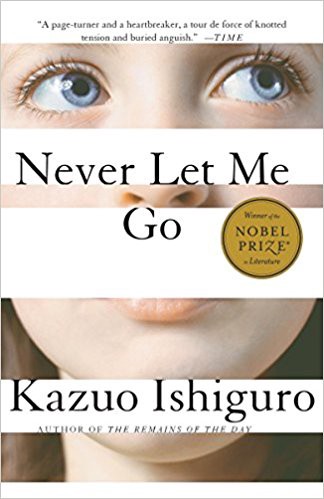
Kazuo Ishiguro’s ‘Never Let Me Go’ Is a Masterpiece of Racial Metaphor

In our new dystopian reality, we rarely get to celebrate good news. Waking up to the New York Times alert about Kazuo Ishiguro’s Nobel Prize win was one of the few truly joyous occasions of 2017. Not only because I’ve been a fan of the Japanese-British author since college, but also his recognition on such a global platform reaffirmed a worldview that needs to be remembered now more than ever.

But I was mystified when, amid the jubilant responses to the Nobel Prize committee’s decision to award Ishiguro, some began openly fretting over the author’s commitment to addressing matters of identity. Interestingly, these critiques tended to originate from within the Asian American community. Citing interviews where the author copped to being “self-conscious about this issue of people taking me literally” in reference to his Japan-centered novel, An Artist of the Floating World (1986), readers asked: Why did he stop writing novels with Japanese protagonists? Did he pander too much to the white gaze? Is that why he won — because he made himself palatable to white readers? Writers of color often have to negotiate their identities in ways that white writers do not when publishing in America, where the industry is nearly 80% white, and even more so in the U.K.

Ishiguro’s characters explore aspects of nonwhite identity that are actually more incisive and authentic than if they were simply reflections of Japanese culture.

The push for inclusivity may actually help explain why some readers feel let down by Ishiguro’s choices as a writer. In order to find a work that conforms more closely to what’s expected of Asian diasporic literature, we must reach farther back into the author’s oeuvre — to his debut A Pale View of The Hills (1982), which features an immigrant narrative about a middle-aged Japanese woman living in England. Ironically, such pigeonholing would seem to undermine the endeavor of contemporary writers of color to subvert rigid definitions of what they can and can’t write about. As someone who identifies as such, I reeled at the insinuations that the Japanese-born author was somehow less representative of his ethnicity because he has written about white characters, or characters whose race is never explicitly mentioned. In fact, I would argue just the opposite — that Ishiguro’s characters explore aspects of nonwhite identity that are actually more incisive and authentic than if they were simply reflections of Japanese culture.

Ishiguro’s novels frequently grapple with the role of the individual within the confines of society. Over the years I’ve found myself returning to his 2005 novel Never Let Me Go when contemplating the social conditions that continue to persist in our post-9/11, post-colonial, post-racial, post-everything world. The experience of diving into an Ishiguro novel becomes a process of excavation, of uncovering memories that the narrator has meticulously buried over a lifetime. But don’t expect any big reveal; instead, we must be satisfied with fragments of truth. The author’s gift lies in his ability to use those fragments to construct a portrait, which, in the end, resembles something more of a mirror. That truth implicates us as much as it does the characters in their fictional realm.

Never Let Me Go’s setting, stated simply as “England, late 1990s,” offers an alternative present where cancer and other previously incurable diseases all have a cure — but at some very high costs. Framed as the memoir of Kathy H., now 31, the narrative opens with recollections of her childhood growing up at an idyllic boarding school Hailsham in the English countryside. The narrative paints Hailsham and its remote, pastoral setting as one of a handful of “privileged estates.” Insulated from the outside, the school cultivates a unique culture, where the students’ guardians place a heavy emphasis on the need for creativity over the learning of rote subjects. In this way, we can think of Hailsham as representative of the high culture frequently associated with novels about exclusive educational institutions.

For those fortunate enough to gain admittance into these predominantly white spaces, they must often convince themselves that the bargain is worth it — that to follow the path of assimilation is better than to suggest rebellion. This rings especially true for people of color, who historically have been the ones excluded. The promise of belonging to an elite group proves so intoxicating that the students fail to discern to whom exactly they pledge their loyalty, and at what price. Only later do we the reader understand the types of roles Kathy and her peers are being groomed for.

It is this turn in the novel that begins to undo our perception of the students’ special standing. As the story unravels, we see that the walls of Hailsham do not act so much as fortification against intruders as they do a means of incarceration. The guardians employ psychological tactics in order to quell the curiosity of the students and discourage them from physically escaping. So in spite of the institution’s initial acclaim, Hailsham seems more and more a fraud where the imposition of order upon the student body supersedes the intellectual cultivation of the individual student.

In this brave new world, the technology of human cloning is implemented on a full scale for the harvesting of vital organs. The novel considers the ramifications of treating life as resource. More importantly, it forces us to reevaluate the comparison between the life of the human and nonhuman. But even this classification remains in constant flux. Identity, it seems, is never stable — a belief that’s rooted in the core of Never Let Me Go’s coming-of-age story.

Because we are never told what race Kathy and her classmates are in Never Let Me Go, I have a hunch that most readers assumed by default they were white. Certainly, this is what the 2010 film adaptation envisioned with its casting of comparably pale and willowy actors, all of whom could be described as very typically “English” in appearance. But it’s entirely possible to read these characters as non-white. Reduced to their mere expendable parts, Kathy and her fellow students represent those marginalized figures of our collective unconscious. Their embodiment of the unspeakable may even be biologically encoded onto their selves. Kathy’s friend Ruth theorizes: “We’re modeled from trash. Junkies, prostitutes, winos, tramps. Convicts, maybe, just so long as they aren’t psychos. That’s what we come from.” Because ethnic minorities are more likely to live in poverty compared to white people in the UK, the source population for these clones would have almost certainly included people of color. And given the very real history of how Western medicine has exploited black bodies specifically, there’s a strong case to be made for Ishiguro’s characters being non-white both figuratively and literally.

From science fiction to reality, the business of organ trafficking has materialized quite literally in non-white countries like China, India, Egypt, and Pakistan. Transplant tourism is a real thing, and its combined ethical dubiousness and questionable legality raise concerns about the commodification of human bodies. Pope Francis called organ trafficking one of the “new forms of slavery,” alongside forced labor and prostitution. For other modern-day metaphors for enslavement, look no further than commercial surrogacy or the indentured servitude sanctioned by our immigration laws. Never Let Me Go transforms the approach to racial subjugation in the name of scientific progress, which has created an entire sub-race of clones to service the needs of the greater whole of society. Just as notions of racial hierarchy have been used to promulgate colonial systems throughout history, the perceived nonhuman status of the clones seemingly justifies their sacrifice. The novel reframes the history of imperialism as a conflict between those considered human and those who are not.

The novel reframes the history of imperialism as a conflict between those considered human and those who are not.

The question of humanness troubles the clones, as well as sympathetic individuals like the guardians. On Hailsham’s mission, one of the guardians Miss Emily proclaims, “Most importantly, we demonstrated to the world that if students were reared in humane, cultivated environments, it was possible for them to grow to be as sensitive and intelligent as any ordinary human being.” The liberal-minded guardians invested in the students’ cultural education not only with the aim of improving their quality of living, but also to establish that their lives were worth saving. Working against the rationalization of science, the guardians looked to the students’ creativity as the truer measure of their being human. “We took away your art because we thought it would reveal your souls,” Miss Emily informs Kathy, then amending, “Or to put it more finely, we did it to prove you had souls at all.” The insinuation that she could be without a soul does not so much upset Kathy as it confuses her. She remembers a similar incident in her childhood when it occurs to her that an adult might be afraid of who she is:

So you’re waiting, even if you don’t quite know it, waiting for the moment when you realize that you really are different to them; that there are people out there, like Madame, who don’t hate you or wish you any harm but who nevertheless shudder at the very thought of you — of how you were brought into this world and why — and who dread the idea of your hand brushing against theirs. The first time you glimpse yourself through the eyes of a person like that, it’s a cold moment. It’s like walking past a mirror you’ve walked past every day of your life, and suddenly it shows you something else, something troubling and strange.

These moments of questioning threaten Kathy’s sense of self. Yet for readers familiar with life in the margins, they merely confirm her humanity.

As highlighted by the value placed on the clones’ artwork, the validity of one’s humanity hinges primarily upon the expression of emotion and the ability of others to read those emotions. This problem of readability extends to the author himself. When Josephine Livingston asks in The New Republic “What’s So ‘Inscrutable’ About Kazuo Ishiguro?” she’s being rhetorical, knowing full well that “inscrutability” is a longstanding Orientalist trope used to dehumanize Asian figures. She quotes Ishiguro’s own words:

Books, articles and television programmes focus on whatever is most extreme and bizarre in Japanese life; the Japanese people may be viewed as amusing or alarming, expert or devious, but they must above all be seen to be non-human. While they remain non-human, their values and ways will remain safely irrelevant. No wonder the British are so fond of the ‘inscrutability’ of Japanese faces.

Ishiguro’s insight into how his own ethnic exterior may be perceived suggests that he is in fact portraying the clones’ struggle through a racial lens. The correlation between the failure of the British to see Japanese people as human and the failure of critics to interpret Ishiguro’s work appears inextricable. In the essay “The ‘Inscrutable’ Voices of Asian-Anglophone Fiction,” The New Yorker contributor Jane Hu goes one step further to establish how Ishiguro’s affinity for “first-person narrators who keep their distance — actively denying readers direct interior access” provides an aesthetic quality indicative of inherent “Asian-ness.” By leaning into the “inscrutable Oriental” stereotype, Asian-Anglophone novelists, such as Chang-rae Lee, Ed Park, and Weike Wang, consciously play with the prejudices of Western readers.

To say that Ishiguro’s writing eschews identity politics   would be a failed reading of those works.

To say that Ishiguro’s writing eschews identity politics — an implication that his most popular novels, Never Let Me Go among them, are somehow safer and therefore less racially transgressive — would be a failed reading of those works. Perhaps his stories resist categorization precisely because they so urgently demand to be read universally. “[F]or me the essential thing is that [stories] communicate feelings,” the author said in his recent Nobel Lecture. He made the appeal that “we must become more diverse,” with the understanding that to “widen our common literary world to include many more voices from beyond our comfort zones of the elite first world cultures” means broadening whose stories help define what it means to be human. Boiled down to their essence, his characters beg simply to be seen, to be understood. Reading Ishiguro, I feel both.

9 Political Books To Read After ‘Fire and Fury‘

Given the bump to its release date and reports of it selling out at midnight sales at bookstores across the country, we’re guessing some of you might have spent the weekend reading Michael Wolff’s Fire and Fury: Inside the Trump White House. And maybe you’re looking for something interesting with which to follow it.

It’s possible that you might want another book delving into abuses of political power. Maybe you’re looking to explore the recent past (or the more distant past) to gain clues about Donald Trump’s ascent from contentious real-estate developer to high office. Or perhaps you’re seeking an antidote for narratives surrounding the Trump White House and would prefer a tale of a more functional administration. Here are some options for your next political read.

Trump: The Greatest Show on Earth by Wayne Barrett

Few reporters captured the unpleasant nature of the politically connected in New York City like the late Wayne Barrett. First published in the early 1990s, Barrett’s biography of Trump offers readers an alternative to Trump’s preferred narrative of himself as a boldly successful corporate figure, and serves as a reminder of the unpleasant aspects of our current President’s earlier days.

American Scoundrel: The Life of the Notorious Civil War General Dan Nickles by Thomas Keneally

During a 2016 campaign rally, then-candidate Trump infamously boasted that he “could stand in the middle of 5th Avenue and shoot somebody and I wouldn’t lose voters.” The case of Dan Sickles, who killed his wife’s lover, was acquitted, and went on to lead troops for the Union in the Civil War, suggests a bizarre precedent for these remarks. Keneally’s book includes an insider’s look at mid-19th century Washington, and the conflicts and infighting that took place there.

The President is a Sick Man: Wherein the Supposedly Virtuous Grover Cleveland Survives a Secret Surgery at Sea and Vilifies the Courageious Newspaperman Who Dared Expose the Truth by Matthew Algeo

Matthew Algeo’s The President is a Sick Man tells the story of a secretive President (in this case, Grover Cleveland) hiding something critical (in this case, a tumor) from the American people and some of his closest advisors, and of the operation and coverup that ensued. A contentious administration, a distrust of the media, and an ominous sense of secrecy: there’s a lot in Algeo’s narrative that will seem more than a little familiar.

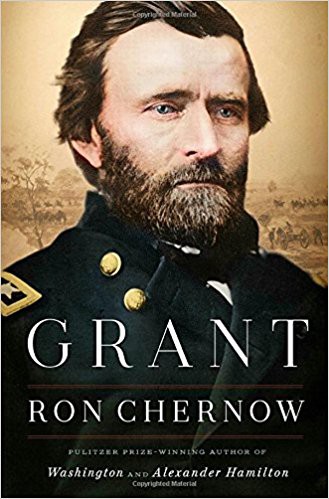
Grant by Ron Chernow

Among Ron Chernow’s talents as a biographer is the ability to remind readers of the humanity and contradictions of people who have long since developed larger-than-life reputations. With his recent biography Grant, Chernow examines the contradictions of Ulysses S. Grant, whose life moved from tremendous lows to towering heights. In his review of the book for Slate, David Plotz notes that Grant, during his presidency, “surrounded himself with con artists and rich people.” Some readers may note some contemporary resonances there as well.

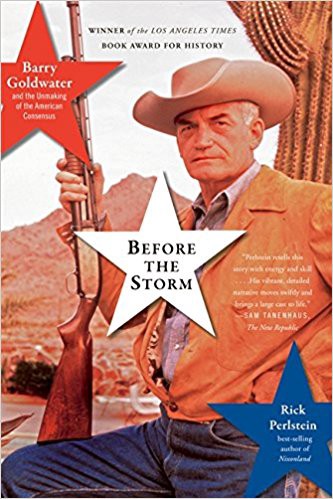
Before the Storm: Barry Goldwater and the Unmaking of the American Census by Rick Perlstein

The election of Donald Trump offers a host of contradictions that many of us are still unfolding: the gulf between Trump’s populist rhetoric and his own privileged background; his sometimes contentious and sometimes welcoming relationship with other elected Republicans. Those looking for the historic roots of this would do well to examine Before the Storm, the first of three books Rick Perlstein wrote about the birth of contemporary American conservatism.

Team of Rivals: The Political Genius of Abraham Lincoln by Doris Kearns Goodwin

For readers seeking a portrait of a more functional Presidential administration, Doris Kearns Goodwin’s Team of Rivals (the basis for the acclaimed film Lincoln) may be the perfect counterpoint to the fractious infighting seen on an average day’s news. Goodwin’s look at the Lincoln administration examines how Lincoln worked with the men who were also in the running for the Republican nomination in 1860, and how they came to form the core of his cabinet—and thus addressed one of the largest crises faced by the nation.

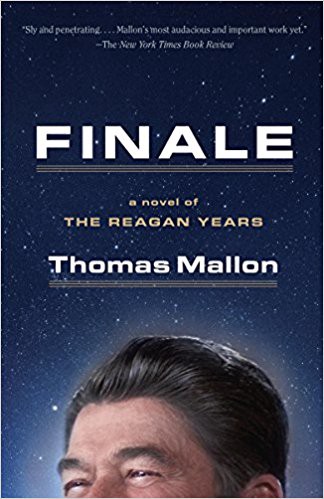
Finale: A Novel of the Reagan Years by Thomas Mallon

In recent years, Thomas Mallon’s fiction has turned to examining the complex personal dynamics within presidential administrations, and the ways in which the proximity to power can alter certain relationships. The focus of this novel is 1986, and the ways those in power addressed the looming end of the Cold War, the AIDS crisis, and other national and international concerns.

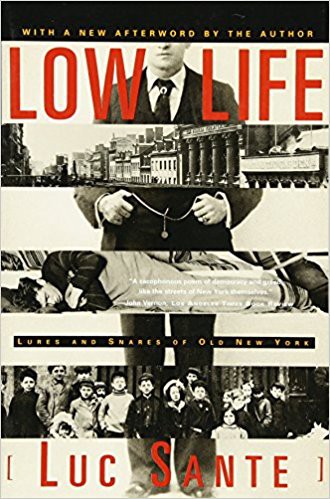
Low Life: Lures and Snares of Old New York by Luc Sante

Donald Trump’s rise to national prominence stems directly from his roots as a businessman among the often fractious politics of New York City. If one wants to understand the city’s own complex political history, with crooked politicians and flawed institutions, Luc Sante’s comprehensive Low Life has an abundance of information on the origins and misdeeds of Tammany Hall to get you started.

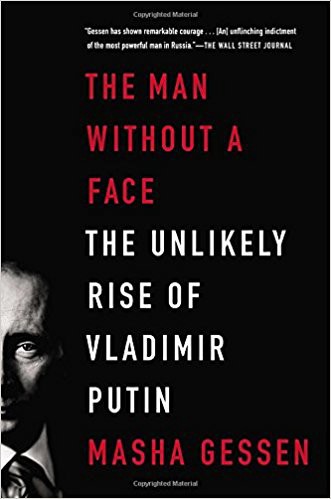
The Man Without a Face: The Unlikely Rise of Vladimir Putin by Masha Gessen

Look, if you’re already terrified about the current state of American politics, it might behoove you to bring your overall levels of anxiety, in Spinal Tap terms, up to 11. So why not sit down with this detailed look at how Russia’s head of state got his start, moving from relative anonymity at the KGB to becoming one of the most powerful figures on the world stage.

10 Death-Obsessed Books to Satisfy Your Inner Goth

Since I was a kid, people have called me morbid for being interested in death. For the longest time I accepted this epithet, but at a certain point, I began to wonder… If everyone who has ever lived has died; if I — barring some medical miracle—will also die; and if we still don’t know what happens after we die, well, isn’t it more morbid not be interested in death?

My fascination with death led me to found Morbid Anatomy where, via a blog, exhibitions, books, public programs and a recently shuttered museum, I showcased ways in which people have dealt with death at different times and places. My intention was to urge people to question contemporary attitudes, and to demonstrate, via a preponderance of historical examples, that the way we think about death today, in our particular time and place, is the exception rather than the rule. Improbably. Morbid Anatomy hit a chord, and went on to become a nexus for “death-curious” people all over the world.

Following is a list of ten of the books that were most influential in shaping my worldview and cultivating my interest in the intersections of art and death. Some are from my youngest childhood (encouraging my belief that all children are interested in death!) and others were discovered more recently.

Charlotte’s Web, E.B. White

Charlotte’s Web was a very important book in my development. My mother lovingly read it to me when I was a very young girl, and I was solemnly gifted my own copy when I passed my first reading tests. The book is a heartbreaking evocation of the facts of life and death as experienced on a mid-20th century American farm through the travails of Wilbur, a young pig who learns, to his dismay, that his purpose in life was to be made into bacon. His life is ultimately spared through the generosity of his friend, a spider, who saves his life by sacrificing her own. The 1973 Hanna-Barbera film — with Charlotte, the spider, voiced by singer Debbie Reynolds — is just as poignant and evocative.

A Nervous Splendor: Vienna 1888–1889, Frederic Morton

A Nervous Splendor is a literary cultural history that presents an arresting vision of the grand lives — and grander deaths — of the inhabitants of Vienna, Austria. Capital of the glittering Habsburg Empire, it was also, as the author demonstrates, a city “given over to the dramaturgy of death.”

The book traces the lives of some of the city’s most illustrious citizens — including Gustav Klimt, Sigmund Freud, and Arthur Schnitzler — as they intertwine with, and respond to, the mood and movement of their city. The story moves to the drumbeat of ornate suicides reported on with relish by the local papers, revealing the city’s fascination with the schöne leich, or beautiful corpse.

These culminate in the mysterious death of Vienna’s beloved Prince Rudolph — young, handsome, and progressive—whose corpse was found in his hunting lodge with that of his beautiful young mistress Baroness Mary Vetsera in what many believed was a double suicide. The book ends with an intimation of more deaths yet to come with the introduction of a baby named Adolf Hitler, born just after Rudolf’s body is interred in his family’s imperial crypt.

Down a Dark Hall, Lois Duncan

I have always been a huge fan of author Lois Duncan, the unrivaled queen of 1970s and ’80s young adult supernatural. She wrote many wonderful novels dealing with death and the paranormal, taking on such phenomena as witchcraft (Summer of Fear), ESP (The Third Eye), and astral projection (Stranger with my Face). She even published a fascinating book about the real-life murder of her daughter, which she came to believe had been eerily presaged by her novels, bringing up provocative ideas of the relationship between creative work and mediumship.

My favorite of all of Duncan’s books is Down a Dark Hall, in which protagonist Kit Gordy, a self assured teenager, is admitted to an exclusive boarding school in an eerie gothic mansion. She soon realizes that the students have been selected not for their academic achievement, but for their special sensitivities; every night, when they go to sleep, they are being used without their knowledge as mediums to channel the ghosts of dead artists, writers, scientists and composers who produce work through them from beyond the grave. Kit discovers that all of the former students of this infernal academy either succumbed to madness or died, and makes it her mission to liberate herself and her fellow students before it’s too late.
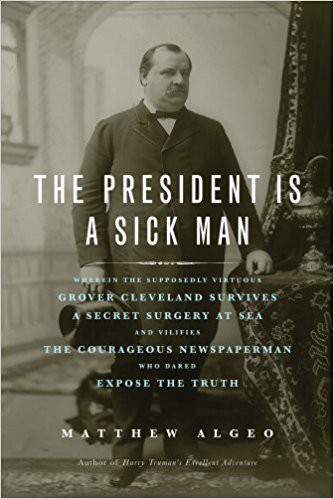
Trilby, George du Maurier

Trilby was an instant sensation upon its publication as a serial in 1894, but is rarely read today, probably because of the overtly anti-semitic characterization of its villain, Svengali, an infernal Jewish mesmerist and musical virtuoso. Nevertheless, it was hugely influential, with what we know as the Trilby hat tracing back to the first London stage production, and the word “Svengali” now a part of our everyday lexicon.

The eponymous heroine of the book, Trilby, is a beautiful artist’s model whose free-spirited ways and questionable moral repute make her an inappropriate wife for her true love, a young artist from a good family. The sinister Svengali is also in love with her, and woos her by seductively playing Chopin’s funeral march while whispering in her ear what a beautiful skeleton she would make, put on view in “a nice little mahogany glass case” at the nearby medical museum. Meanwhile, the Paris Morgue — a popular tourist attraction at that time, where people would come to look at the unclaimed bodies on slabs — looms in the distance.

Ultimately, Trilby sacrifices her true love to save him from the harm that might come from marrying beneath his station, leaving her vulnerable to Svengali’s spell. Through hypnosis, he transforms her into his obedient servant and the finest singer the stage has ever seen, making her an international sensation. Not surprisingly, both she and Svengali meet a tragic end.

Looking Everywhere for a Way to Deal with Death

The Gashlycrumb Tinies, Edward Gorey, 1963

Edward Gorey is one of my great all time heroes; author and illustrator, he penned (and inked) charmingly dark fables — often in rhyming couplets — of death, disaster and the absurd. He published dozens of exquisite, small-scale books which he both wrote and illustrated, most of which take place in a vaguely Edwardian universe of his own creation.

It is very hard to pick just one of his books, but the The Gashlycrumb Tinies, arguably Gorey’s most iconic work, is perhaps also my favorite. This illustrated A to Z is reminiscent of a Victorian childrens’ book intended for moral improvement, except that, in this case, each letter of the alphabet details the death of a child. A few choice lines: “M is for Maud who was swept out to sea, N is for Neville who died of ennui, O is for Olive run through with an awl, P is for Prue trampled flat in a brawl.”

A few other of my favorite Gorey works are The Hapless Child, which narrates the demise of its innocent heroine Charlotte Sophia; The Insect God, in which a kidnapped child is sacrificed to an enormous, skull faced insect; and The Loathsome Couple, a charming little book inspired by the real life Moors Murders, where a couple murdered five children in the 1960s.

Salomé: A Tragedy in One Act, Oscar Wilde, with illustrations by Aubrey Beardsley

The story of Salome is drawn from The New Testament. It tells the story of King Herod and his step daughter Salome, who demands, at her mother Herodias’ behest, the decapitated head of John the Baptist on a platter. Wilde took this brief biblical sketch and wove a lavish femme fatale fantasy around it, culminating with the depraved temptress passionately kissing the blood dripping head of the saint while musing on the mysteries of love and death.

Banned in Britain until 1931, it nevertheless inspired such memorable film adaptations as Alla Nazimova’s 1923 Salomé — with expressionistic visuals inspired by Aubrey Beardsley’s original decadent illustrations — and Ken Russell’s provocative 1986 Salome’s Last Dance. It also features heavily in Billy Wilder’s Sunset Boulevard (1950) in which aging silent film star Norma Desmond tragically acts out the role of Salome in real life after succumbing to a madness brought on by preparing to play the role for her comeback.

The Turn of the Screw, Henry James, 1898

On Christmas Eve, in an old house, a story is told to friends around the fire; The story is said to be from a manuscript written by a young woman about her experiences as governess for two precocious children on a large isolated British estate. Over the course of her tenure, the governess becomes convinced that her wards are under the thrall of the ghosts of two of the estate’s former employees, sinister figures who were engaged in a torrid romantic relationship and, it is intimated, might have even taken sexual liberties with the children.

The story ends with a shocking, eros-tinged death that leaves us no closer to knowing if the ghosts were real, or figments of the sexually-repressed governess’ imagination. A wonderful book, it was also adapted into one of my all time favorite films, The Innocents, starring Deborah Kerr and with a script co-written by Truman Capote.

A Taste of Blackberries, Doris Buchanan Smith, 1973

I cannot have been alone as a child in my predilection for books in which main characters died, or this book would never have been the successful award winner it is. I won’t say much more, for fear of giving too much away, but like Charlotte’s Web — to which it is often compared — it is a meditation on love, loss, and coming to terms with brevity and fragility of life.

Interview with the Vampire, Anne Rice, 1976

With its atmospheric evocations of an 18th-century New Orleans full of crumbling plantations and slave revolts, the 19th-century Parisian Théâtre des Vampires in which a coven of vampires kill and feed from their victims on stage before an unsuspecting audience, and a vampire love triangle between two men and young girl, Anne Rice’s sexy revision of the familiar Dracula story created a new vampire mythology, one that went on to impact all that followed, most notably the Twilight series. To me the most poignant character is Claudia, a New Orleans waif transformed into vampire at the age of 5 and cursed to live forever in the body of a child. The character — as well as the book itself — is said to have been inspired by Anne Rice’s daughter Michelle, who died of leukemia at 5 years old.

The Leopard, Giuseppe Tomasi di Lampedusa

This book, a favorite of my now-deceased grandmother, is an elegiac evocation of the end of the aristocracy heralded by the rise of democracy in 19th-century Italy. Written by a Sicilian prince and published only after his death, it is a melancholy meditation on the death of a way of life, via the ruminations of a man who sees the end is near, both personally and for the culture that gave his life meaning. Ultimately death comes to take the old prince — a great romantic adventurer in his day — in the form of a beautiful woman beckoning him on to a final amorous adventure.

Macmillan to President: No, You Actually Can’t Suppress Books You Don’t Like

Simon & Schuster publishes Fahrenheit 451, and Penguin Random House publishes 1984. But Macmillan Publishers is doing its best to keep them from becoming reality.

Macmillan—the parent company of Henry Holt, which is publishing Michael Wolff’s combustive Trump administration tell-all Fire and Furyhas already made clear what it thinks about governmental attempts to suppress a book. When the president demanded last week that the publisher “immediately cease and desist from any further publication, release or dissemination” of Fire and Fury, it instead moved the publication date to the following day. The message was clear: oh, you don’t want this book out in the world? Well, we’re putting it out TOMORROW.

Now, the message is even clearer. Macmillan will send its legal response to the president’s cease and desist demand today, but in the meantime, CEO John Sargent has written an unsparing open letter to Macmillan employees about his (and the company’s) commitment to the First Amendment. In it, he calls the president’s demand “flagrantly unconstitutional,” citing Supreme Court decisions with the confidence of a legal scholar.

Here’s the call-to-arms conclusion:

There is no ambiguity here. This is an underlying principle of our democracy. We cannot stand silent. We will not allow any president to achieve by intimidation what our Constitution precludes him or her from achieving in court. We need to respond strongly for Michael Wolff and his book, but also for all authors and all their books, now and in the future. And as citizens we must demand that President Trump understand and abide by the First Amendment of our Constitution.

The letter would, needless to say, be completely lost on Trump; his name doesn’t even appear until the very last paragraph, at which point he would absolutely have wandered off. But it’s a stirring document for those of us who can read and do care about the freedom to publish.