Electric Literature is opening submissions of personal and critical essays starting today, January 2. We’re particularly interested in pieces that examine the intersection of the literary experience and other creative endeavors: film, fine art, music, video games, science, tech, architecture. Submissions will close January 16.
The year after I graduated college, I was broke. Hungry broke. So broke that I didn’t need to set an alarm clock, because my growling stomach would wake me up every morning at seven. I was living in the last house at the dead-end of a dirt road at the top of a mountain in southern Vermont, surrounded by forest, and every morning I’d get up, pour myself a small bowl of Cheerios, and read. And look at the trees. And then read some more.
That fall, I put cereal on the table by working as a woodcutter. For ten dollars an hour, I’d swing a maul, over and again, splitting piles of firewood for the winter — oak, hickory, birch, ash, locust, beech — and then I’d go home to my books. I read most of Shakespeare’s plays that year, and Goethe’s Faust, and Nietzsche’s collected works. I dove into Hemingway and Hunter S. Thompson, and I read and reread Invisible Man. It was the year I discovered Rebecca Solnit and reacquainted myself with Willa Cather. When I got paid, I’d go to the used bookstore, pick up a few titles, and then return home to read and contemplate the trees.
Perhaps it’s no surprise that my own book, This Radical Land: A Natural History of American Dissent(forthcoming in 2018), is about trees and what happened when certain nineteenth-century Americans, skeptical about the social and environmental costs of capitalist progress, looked out at them. I spent ten years reading everything about trees and culture that I could; yet what I read is only a fraction of what’s out there — even in English. It seems that humans have never tired of writing about the sylvan world.
Here are a few of those books, and a handful of the trees I discovered, a highly idiosyncratic list, that have helped to define my life. Maybe some of them will guide you through your inner forest.
Stegner moved frequently as a child, but he spent his boyhood in southern Sasketchewan on what was the last North American frontier. His book begins when the middle-aged Stegner returns, for the first time, to his hometown, only to find it utterly strange, until he crushes a few leaves of the scrubby, silver-leafed wolf willow, and brings it to his nose. What ensues is a Proustian remembrance that blends fiction, lightly fictionalized memoir, history, and philosophy of history — “a librarian’s nightmare,” Stegner called it — every page of which is bewitching.
Trees: Palm, Cottonwood, Rubber, Holly Book: Gardens in the Dunes, by Leslie Marmon Silko
Gardens in the Dunes is set at the end of the nineteenth century, and begins in a small pocket of bone-dry desert on the Arizona-California desert where Indigo, her mother, grandmother, and sister are the last of the Sand Lizard people. It’s the very end of the US’s unbroken war against the American Indians, and the novel follows Indigo as she’s captured, sent to an Indian boarding school to be “civilized,” and then taken in by a woman named Hattie and her botanist husband, Edward, who combs the globe for marketable plants. The trio travel widely — Europe, South America, the East Coast of the US — as Indigo struggles to find a place in a world that is being so quickly remade in the image of empire and capitalism. Silko is painterly in her evocation of nature, and each new journey of Indigo’s is marked by strange new trees. In a scene that functions synedochally for the rest of the novel, Indigo, transplanted to New York City stands, shocked, as two entire entire beeches are uprooted and replanted: “wrapped in canvas and big chains on the flat wagon was a great tree lying helpless, its leaves shocked limp, followed by its companion; the stain of damp earth like dark blood seeped through the canvas.”
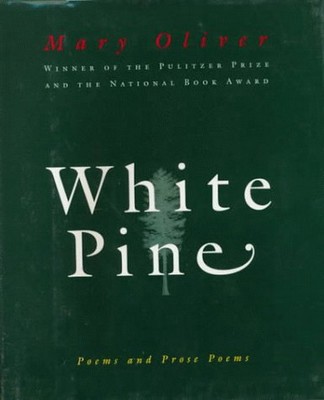
Evergreens have long carried with them connotations of healing, of resurrection, of life everlasting — arbor vitae literally means “tree of life” — which is one of the reasons why they are used for Christmas trees. Oliver’s collection meditates on life and the passage of time measured against the environment, and it glows with spiritual revelation: “This is, I think,/ what holiness is:/ the natural world,/ where every moment is full/ of the passion to keep moving.”
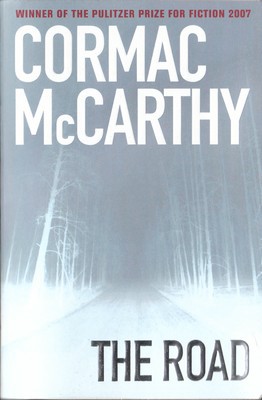
Tree: The Tree of Death Book: The Road, by Cormac McCarthy
The unrelenting dull despair of McCarthy’s post-apocalyptic The Road comes from his evocation of a hopeless world devoid of all but human life, which he establishes by having his father-and-son protagonists march through an unchanging landscape of dead and burnt trees. Page after page, step after step, there’s nothing but burnt forests for his characters to look upon, nothing but shades of ashen grey, nothing with which to kindle hope. And yet the father walks on, in faith. “All the trees in the world are going to fall sooner or later,” he tells his son. “But not on us.”
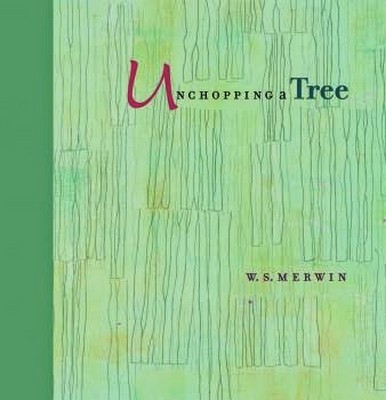
Merwin’s poem, Unchopping a Tree, elegantly bound in a hardcover edition from Trinity University Press, brilliantly captures the poet’s twin commitments to environmentalism and pacifism, both of which, at root, are about a practice of care. There’s a deep sadness to Unchopping a Tree, which imagines what it would take to put just one felled trunk back together so that it could again live. Along the way, the reader gains a sense of just how carefully, fragilely, and perfectly life teeters on the edge of oblivion. “Everything is going to have to be put back,” Merwin ends on a note that blends resolve with desperation.
Roy’s first novel is a tragedy set against the enduring ravages wrought by British colonialism in India that left marks on bodies, on lives, on politics, and on the land. The story follows a pair of young, innocent twins, Estha and Rahel, who one day discover an old boat lying beneath a mangosteen tree that their great-grandfather, a minor religious celebrity known as the Revered E. John Ipe, had planted on the banks of the enormous Meenachal River. Estha and Rahel, and, later, their British cousin Sophie Mol, take to playing in the boat — the same boat used by their mother to cross the river at night and meet with her Paravan, Marxist lover, a violation of of both strict caste conventions and class. The same boat from which Sophie Mol will tumble and drown. The mangosteen witnesses this all, and is the mark of history: a tree planted by a well-to-do great-grandfather in colonial times, a tree sheltering the secret of illicit love, a tree under which the innocence of childhood drowns in the trauma of becoming adult.
McPhee has written about trees — or their fruits or the people who live amongst them — on a number of occasions, but my favorite, and possibly my favorite McPhee of all time, is his slim volume, The Survival of the Bark Canoe, from 1975. It’s about a young, intense man named Henri Vaillancourt, one of two Euroamericans alive at the time who knew how to make a canoe in the traditional, Native American way, using nothing but the bark of a white birch, cedar planking, spruce roots and pitch, an axe, an awl, and a knife. McPhee and Vaillancourt take one of the canoe builder’s boats down the Allagash river in Maine, and the book-length essay is a tale of clashing personalities, monomaniacal obsession (Vaillancourt does nothing but think about, talk about, and make canoes, writes McPhee), and McPhee’s quest to understand what drives someone to build a boat that had all but gone extinct. It is also a tale of artistry — only McPhee could turn the details of shaping a gunnel, thwart, or rib into poetry — that ultimately begs the unresolved question, how should we take care of the past?
When Italo Calvin sets his magical-realist novel in a Holm Oak tree surrounded by an eighteenth-century Italian forest, he’s following in a long tradition. The woods have seemingly always been a site for fantasy, hallucination, and wonder. Try to imagine A Midsummer Night’s Dream taking place in a wheat field, Snow White in a market place, The Legend of Sleepy Hollow in Manhattan. The Baron in the Trees is the tale of a young nobleman, Cosimo, who took to living in his family’s oak tree at the age of twelve, never to set foot on land again. Aloft in his sylvan kingdom, Cosimo discovers true liberation, and, over the course of the next fifty years, fights battles, makes journeys, falls in love, and gradually turns into a Saint Francis-esque woodland sprite. He never dies, either, and instead simply floats away on a rope dangling from a passing hot-air balloon. It’s a fable, but one that resonates with Emerson’s observation that “in the woods, we return to reason and faith.”
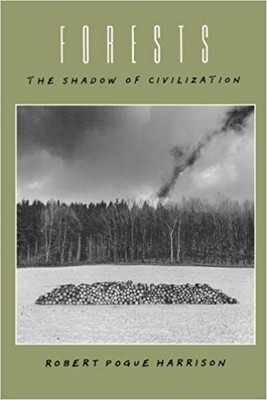
Harrison’s Forests is a genealogy of how forests have cultivated the Western cultural imagination, from antiquity to the late-twentieth century (the book was published in 1992), but it’s not the standard one-damn-thing-after another kind of history; instead, it’s a beautifully rendered philosophical essay that moves subtly, unpredictably, and thrillingly to its final conclusion. Facing the forests, Harrison writes, we find ourselves, not because the trees are like us — they’re irreducibly different, in fact — but because, in their unknowable difference, they set us free to become who we are. When we lose touch of the forests, we lose everything.
Emily Dickinson is a paradox: haunted by loss, she gave to the world poetry that is radiant with an evergreen beauty. Dickinson, whom the cultural critic Lewis Mumford called “a rare flower,” drew her inspiration from both death and the vitality of the natural world, which, in many of her poems, are yoked together. One of my favorites, poem 41 from 1858, echoes loudly in our era of global climate change and environmental degradation:
I robbed the Woods —
The trusting Woods.
The unsuspecting Trees
Brought out their Burs and mosses
My fantasy to please.
I scanned their trinkets curious —
I grasped — I bore away —
What will the solemn Hemlock —
What will the Oak tree say?
And simply: Leaves Book: About Trees, by Katie Holten
I just recently found Katie Holten’s About Trees, and I’ve never encountered anything quite like it. Holten, an Irish artist living in New York, invented a tree font: A is represented by the skeletal silhouette of an apple tree, B by the beech, all the way on to the Zelkova. The form of each sylvan letter is unique. About Trees is composed from excerpts of famous passages on trees, Darwin on thinking, for instance, rendered in English — and then reprinted, all on one page, in Holten’s tree font. Holten turns text into a forest, and the tremendous beauty of her art comes in the realization that the tree-font forest is both immediately familiar — as in the opening lines from Radiohead’s “Fake Plastic Trees”: “Her green plastic watering can for/ her fake Chinese rubber plant/ In the fake plastic earth” — and immensely strange. Her book is a wilderness of prose and poetry that ultimately returns us to the fact of human wondering, which we have long recorded on leaves.
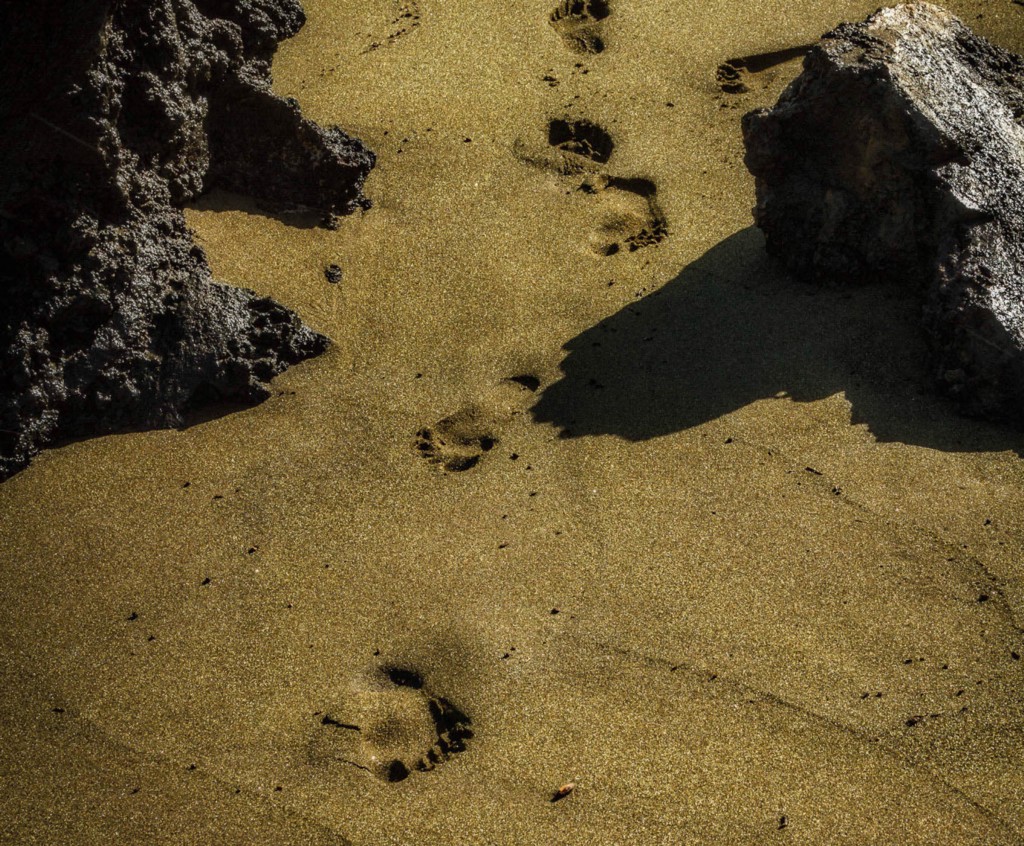
Morning again. The sand fleas were bad. But everything else here, the breeze, the good rough smell of the sea air, the way daylight wakes you slowly, was better than the forest. He stretched his massive arms, feeling his shoulder muscles expand against the sand, then groggily stood up to check out what the waves were up to today.
It was flat. Low tide. The water was licked with imminent sun.
He was readying himself to run toward it, to feel the cool black current, laced with stars, rinse the fleas from his fur, when he saw it —
A cluster of humans sitting in the sand.
He got down low, then peered up slowly, scanning through the blades of salt hay to discover that there were droves of them, little clusters of silhouettes dotted up and down the beach. Some of them surrounding small pits of orange fire.
What were they doing out this early?
Usually, the crowds, with their brightly-colored shade-makers and folding seat contraptions and rectangular mats and round balls and heavy boxes full of ice, didn’t arrive until late morning, at the earliest. It takes time to move such artillery.
He had a pang of missing Littlefoot and Mediumfoot, and all their artillery (banana peels, walnut shells, vine hammocks, bamboo husks), so he tried to diffuse it by looking back at the water. Its swirls of silver were just beginning to settle his nerves, when he noticed that one of the silhouettes, a tiny one, was looking in his direction. Her finger rising up toward him.
He dove back toward his nest, crouching low in the sand. He wasn’t too worried about them coming for him yet, a child the only one who seemed to have spotted him — and who believes a child?
But still. Why on earth were they here? He had a bad feeling.
Not only was it dawn, it was winter. Usually the only humans you got this time of year were the ones who wore dark bodysuits, who lumbered into the freezing water with big white boards upon which they tried, time and time again, to stand. Those ones never noticed him. He could walk out onto the sand entirely exposed, and they would mistake him for one of their kind, his fur looking like their bodysuits from that distance, if they noticed him at all. It looked fun, trying to stand on the water. He sometimes dreamt of swimming out to one and using his eyes and gestures to ask to borrow their board. He had a feeling, a hunch, he’d be good at riding it, knowing just when to stand, when to bend. But he knew that it was probably too grave a risk. Humans, even the ones so in love with the waves they seemed more peaceful than the rest, couldn’t help their natures.
He’d always wondered why his kind bothered them so. They seemed perfectly content with deer, with squirrels and raccoons coexisting alongside them. What was it about his species that riled them up so? He was almost entirely vegetarian, liked a good termite nest, if he could find one, the piquant crunch of a fire ant, but that was basically it. He would never dream of trying to consume mammalian flesh. The thought made him sick. He wanted only their friendship, or, less than that, a benevolent disregard, neighborliness. But they were never content to leave him be. The few times he’d been spotted, his presence had always brought screams, then the raising of objects — cameras, spears, nets, guns — which one, depended on the human. The bullet wound in his lower leg still ached most days, all these years later.
Sigh. He figured his only course of action was to crawl a half mile or so low in the dunes and make his way to the water once he was further from the hoards.
He was just about to sit up, to heave himself forward to begin the four legged crawl through the grass, when the tiny human appeared on the top of the dune. For an instant, before he registered her oddly tangy, chemical smell, he pictured it was Littlefoot. Poised high on a branch, about to bound on to his chest — their favorite game… Why had he left them? The answer wasn’t simple. He had come to feel encumbered by it all. The gathering, scraping, chewing everything for everyone. Finishing just in time to start it all again.
After leaving, he had initially tried living in the woods, a few woods over from their woods, but the branches were too dangerous, hung too thickly with memories. He’d find himself yearning. For the soft plunks of Littefoot, the gentle crackling of twigs as Mediumfoot sat nursing under a tree. A dangerous force, this yearning, for he knew, if he gave into it, it would pull him back to a life he did not want.
The foreignness of the beach, its flatness, its lack of trees, its waves, even its sand fleas, was his best protection. He was safe here, as long as he had those waves. Every morning rinsing off the memories that had accumulated overnight.
The tiny creature had drawn near. Her smells of vanilla, of cucumber, were overpowering. “Hi,” she whispered, waving her furless little hand.
Though he had no idea what the word meant, he grunted back, “Hunph.”
“Are you here to see the sunrise?” she asked.
Again, he could not understand the question, though he noted its tones of curiosity. He gestured at his nest. “My home,” he said, which came out like, “Hunnn, hun, hun. Hn hn.”
“It was my mom’s idea,” said the girl. “She came up with it a few weeks ago. She said we should all stay up late to watch the ball drop on TV, and then get up early and drive to the beach so that we’d be the first Americans to witness the dawning of the New Year! My dad said, ‘Well, technically, there are some beaches in Maine that are further East, who would see it before us.’ And my mom said, ‘Arg. Why do you have to rain on my parade?’ And my dad said, ‘Not trying to be mean! Just stating the facts.’ And my mom sighed and got gloomy. But they still woke us up this morning. It was pitch dark, and I was confused at first so they let all of us stay in our jammies, and we’ve just been sitting in blankets on the sand, waiting, waiting. Mom says it’s gonna be beautiful. A fresh start. Dad says it’s gonna look like an over-easy egg, cracking over the waves. Mom said we could go out for pancakes after! But dad worried nothing would be open on New Year’s Day. Or, that for those few places that were open, the lines would be too long. And mom said, ‘For chrissakes wasn’t your new years resolution to be more hopeful, Bill?’”
The girl got quiet, conspiratorial, whispered in Bigfoot’s ear, “Bill is my dad’s name.”
Bigfoot adored this. Being chatted with. He had no idea the meaning of any of her words but believed he could register the emotions beneath them. Namely, that she was confortable with him. He put his massive black palm out toward her.
Impossibly, she rested her tiny white starfish of a hand upon it.
The contact, he was helpless against it. He was awash in Littlefoot. In his divine, loamy smell. The memories swirling into him — the piggy back rides, the walnut fights, the time Bigfoot had defended them from bees, little bastards. The honey he had extracted from the hive, amber liquid dripping off his finger, and into Littlefoot’s mouth. Littlefoot’s copper eyes, warming wide. He wondered, dared to wonder, how old Littlefoot was now. Nearly a year, up to his shin, surely. How Mediumfoot would have been faring, without him around to gather food. Then he was slammed by a horrific image. Something he felt sure was the truth. Both of them dead. Eyes picked out by vultures, rib cages protruding from the forest floor, dangling with bits of meat and matted hair.
He took the tiny human into the crook of his elbow and lifted her to his chest. She giggled and reached her arms around his neck, her little fingers twisting and pulling at his fur in clumps. The warmth of her, the size of her, so like Littlefoot. He hugged her close.
She said, “uuuf.” Then, “ow.”
And he understood this to mean hold tighter. He complied. Hugging tighter and tighter, her breathing becoming labored, gruntlike, just like his.
He could feel it, her warmth, her breath, breathing life back into the skeletal images of Littlefoot, of Mediumfoot. An illusion, he knew, but a great one. Their skin plumping up nice, their fur prickling back into thick, shiny coats, their eyes alighting with gold. He hugged tighter and tighter until the wriggling in the creature’s limbs had stopped entirely. Till there was no more warmth to squeeze out.
He let the husk of her body flop to the sand and began his slow, achy crawl to those merciful waves, the hoots and cheers of humans resounding from just over the dunes.
About the Author
Lulu Miller is a Peabody award-winning journalist for National Public Radio. She is the Co-founder of NPR’s Invisibilia, a show about the invisible forces that shape human behavior. Before that, she was a reporter on the NPR Science Desk, and a founding producer of WYNC’s Radiolab. She lives in Charlottesville, Virginia, with her wife and dog and writes stories when they are sleeping.
Fiction allows us to extrapolate our own futures, both on a personal level and on a societal one. With the Trump administration looking to make it easier to dig for fossil fuels and ignoring evidence of global warming, climate change has once again taken a prime position in the news, and the need for cautionary tales about the environmental path we’re on seems more important than ever. Here’s a look at eight books that explore the dangers of climate change to both landscapes close to home and on a global level.
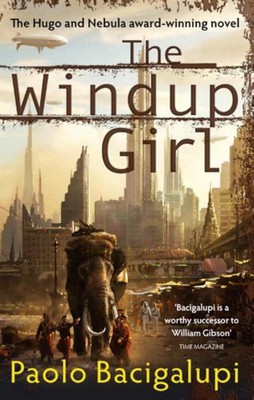
Paolo Bacigalupi’s The Windup Girl features a number of high concepts, each of which might be enough for a gripping read. Its setting is one in which global warming has suffused the landscape, reshaping the boundaries of nations and altering the way humans live. Genetic engineering has undergone massive leaps forward, as has energy technology; the result is a work that’s both cautionary and dazzling.
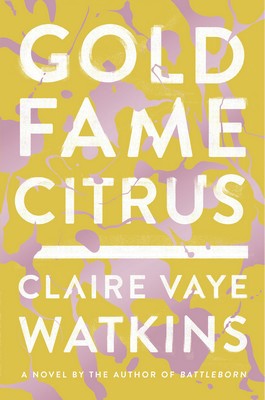
The Californian landscape of Claire Vaye Watkins’s heady, haunting novel Gold Fame Citrus is punctuated by abandoned homes, strange fauna, and a resurgence of the desert. It’s a setting that’s drawn from the present day: where once the homes of the affluent existed, a wasteland has sprawled, off-limits to all but the bravest or most desperate. It’s a bold commentary on where our society might end up, and how certain trends might accelerate into something hazardous and inhospitable.
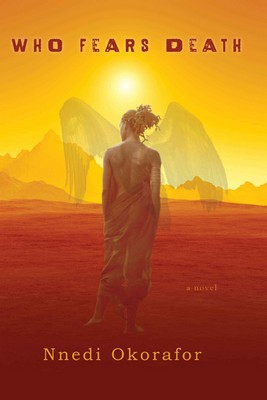
Climate change can affect as many landscapes as exist on Earth. In Nnedi Okorafor’s novel Who Fears Death, the setting is sub-Saharan Africa at some point in the future. The societies depicted in this book live in the wake of an earlier, more technologically advanced one, which crumbled at some point in their past and our future. What remains is an altered world and terrain, populated by a handful of people possessing uncanny abilities.
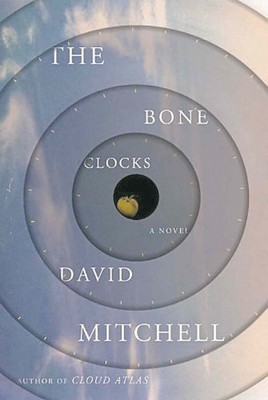
David Mitchell’s The Bone Clocks encompasses the bulk of the life of its protagonist, beginning with her childhood in the recent past, and moving forward into the middle of the 21st century. It’s in this last section that the novel becomes truly devastating: as a result of environmental and economic collapse, society has reverted to a sort of brutal feudalism. It’s an unnerving conclusion largely due to the realism and level of detail with which Mitchell conveys this world; we see it in all of its unsettling dimensions.
The novels of J.G. Ballard frequently use transformed versions of the world as their settings–sometimes to accentuate thematic points, and sometimes to explore the uncanny. (The Day of Creation focuses on a new river emerging near the Sahara, while The Crystal World focuses on a terrifying transformation of the landscape.) The Drowned World is set in a future where polar ice has melted, submerging existing coastlines and reshaping urban geographies around the globe.
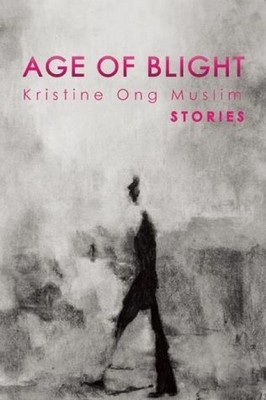
The title of this collection references a moment in human history when certain societal tendencies will have advanced past the point of salvaging. In other words: what happens when the surface of the planet is entirely blighted, and what will the events have been that got us there? Muslim’s stories not only explore the means by which the environment is degraded and remade, but also delve into the psychology of alienation that causes such actions to take place.
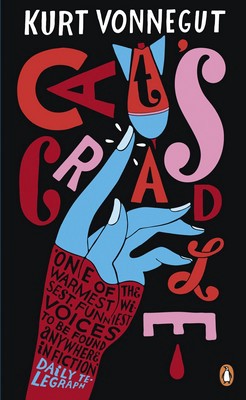
The meanings of metaphors shift over time. When Kurt Vonnegut’s novel Cat’s Cradle was first published in 1963, its central MacGuffin–a substance called ice-nine, which would turn water into ice at any temperature–came off as a metaphor for nuclear weapons. As a story about human technology with the potential to irrevocably break the world, it now could just as easily be read as a cautionary tale about climate change, with none of its power lost.
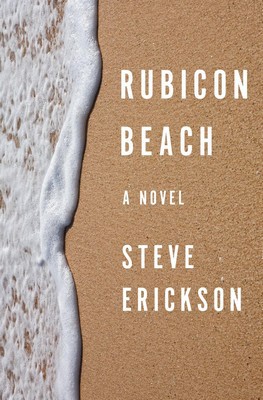
Steve Erickson’s novels all tap into their own surreal energy, whether they’re spinning tales of parallel timelines or returning to motifs of lost and destroyed structures. In his early novel Rubicon Beach, Erickson opts for a familiar setting, Los Angeles, but imagines that city in the not-so-distant future, when cataclysmic events have resulted in flooding of the city. The portrait of an urban space after such a transformation is one of the most haunting aspects of this unpredictable novel.
Somewhere in my childhood bedroom lurks an old Nine West shoe box brimming with love letters scrawled on craggy college-ruled paper. In high school, when my interest in the day’s physics or math lesson would inevitably wane, I’d turn the page in my notebook and write my then boyfriend hormone-fueled rants about my unparalleled love for him, and occasionally, in what may be a Joycean hallmark (minus the farts, see #11), the things I wanted to do with him. We traded these missives back and forth at our lockers, which amounted to hundreds of inside-joke riddled professions of young love.
Once, to our mutual horror, my dad found a stray note while cleaning out the trunk of his car. That day, I learned an important lesson about privacy and secure backpack zippers. But after a mortifying conversation, I emerged with the upper-hand, admonishing him for having the audacity to read a letter so obviously not for him. Polite company (excluding dads) know better than to read others’ private exchanges.
In literature, we are offered a rare, perhaps singular invitation into such intimate correspondences. Whether the following love letters are artfully penned in a novel, memoir, or the anthologies of long-dead greats — these 11 vulnerable glimpses into the besotted human-id are all-consuming reads.
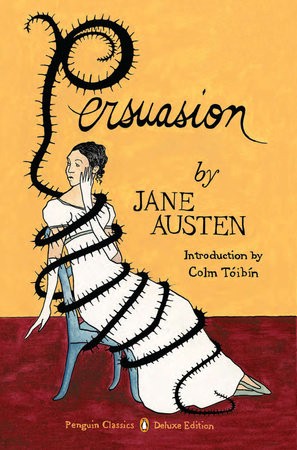
When I polled friends and coworkers about this assignment, for good reason, the prevailing response fell along the lines of: “Include Persuasion, duh.”
In Jane Austen’s final, posthumously published novel, Persuasion, the heroine Anne Elliot was convinced (or some would say, persuaded) by her godmother, Lady Russell, to call off her teenage engagement to the impecunious Frederick Wentworth. Fast-forward almost a decade later, and the two reconnect via the typical Austen scaffolding of events, and it’s revealed that they’ve never truly forgotten each other.
After overhearing a conversation in which Anne argues that men move on more swiftly from their past loves, Wentworth counters her claim with one of the most highly regarded love notes in all of literature:
I can listen no longer in silence. I must speak to you by such means as are within my reach. You pierce my soul. I am half agony, half hope. Tell me not that I am too late, that such precious feelings are gone for ever. I offer myself to you again with a heart even more your own than when you almost broke it, eight years and a half ago. Dare not say that man forgets sooner than woman, that his love has an earlier death. I have loved none but you. Unjust I may have been, weak and resentful I have been, but never inconstant. You alone have brought me to Bath. For you alone, I think and plan. Have you not seen this? Can you fail to have understood my wishes? I had not waited even these ten days, could I have read your feelings, as I think you must have penetrated mine. I can hardly write. I am every instant hearing something which overpowers me. You sink your voice, but I can distinguish the tones of that voice when they would be lost on others. Too good, too excellent creature! You do us justice, indeed. You do believe that there is true attachment and constancy among men. Believe it to be most fervent, most undeviating, in
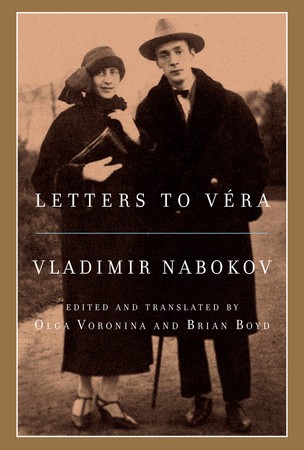
In 2014, Knopf published a meticulously annotated compilation of 50+ years of correspondence between Vladimir Nabakov and his beloved wife, Vera. Although the couple had their share of obstacles (infidelity, to name one), the letters demonstrate an abiding love capable of overcoming even the most treacherous of threats (Nazi persecution, another).
My tenderness, my happiness, what words can I write for you? How strange that although my life’s work is moving a pen over paper, I don’t know how to tell you how I love, how I desire you. Such agitation — and such divine peace: melting clouds immersed in sunshine — mounds of happiness. And I am floating with you, in you, aflame and melting — and a whole life with you is like the movement of clouds, their airy, quiet falls, their lightness and smoothness, and the heavenly variety of outline and tint — my inexplicable love. I cannot express these cirrus-cumulus sensations.
Before the English patient sustained the burn-injuries that rendered him amnesic in an Italian hospital, he was an explorer in the Sahara Desert who fell in with another man’s wife, Katharine. At the heart of Michael Ondaatje historiographic metafiction masterpiece is this torrid affair, which ends in high melodrama when Katharine’s husband, Geoffrey, attempts a three-way murder-suicide. The English patient and Katharine survive, and find shelter in a cave. When the English patient leaves to seek help, Katharine writes him a final goodbye as she withers away in the cold, echoing darkness.
The 1992 Booker Award-winning novel was adapted for the silver-screen — watch the tearjerking performance accompanied by a tasteful amount of sad-piano below:
Say what you will about the morality of affairs, but damn do they inspire some impassioned writing. Vita Sackville-West and Virginia Woolf began a covert-ish relationship in the mid 1920’s, and IMHO, the world is better for it because it inspired Woolf’s satirical, gender-bending novel, Orlando. The collection of these lovers’ letters are evidence that she had superb material to work from.
Milan [posted in Trieste] Thursday, January 21, 1926
I am reduced to a thing that wants Virginia. I composed a beautiful letter to you in the sleepless nightmare hours of the night, and it has all gone: I just miss you, in a quite simple desperate human way. You, with all your un-dumb letters, would never write so elementary phrase as that; perhaps you wouldn’t even feel it. And yet I believe you’ll be sensible of a little gap. But you’d clothe it in so exquisite a phrase that it would lose a little of its reality. Whereas with me it is quite stark: I miss you even more than I could have believed; and I was prepared to miss you a good deal. So this letter is just really a squeal of pain. It is incredible how essential to me you have become. I suppose you are accustomed to people saying these things. Damn you, spoilt creature; I shan’t make you love me any the more by giving myself away like this — But oh my dear, I can’t be clever and stand-offish with you: I love you too much for that. Too truly. You have no idea how stand-offish I can be with people I don’t love. I have brought it to a fine art. But you have broken down my defences. And I don’t really resent it …
Please forgive me for writing such a miserable letter.
In Pierre Choderlos de Laclos’ 1782 French epistolary novel, the principle characters Marquise de Merteuil and the Vicomte de Valmont are arch nemeses and ex-lovers who wield their inimitable letter writing skills as weapons of manipulation. The book is comprised solely of letters written back and forth between various characters.
Love in the Time of Cholera follows the diverging lives of childhood sweethearts Florentino Ariza and Fermina Daza. Florentino first catches a glimpse of Fermina when he delivers a telegraph to her father, and from there it’s fated that the young postal worker and beautiful girl should start their own passionate correspondence. He goes home and toils over a letter, which soon transforms into a sixty-page “dictionary of compliments” declaring his admiration for her. After he hands her the tome, he waits for what feels like an eternity for an answer, but it turns out she’s mutually smitten, and just really needed the time to wade through the heavy metaphors. They begin an intense exchange of hundreds of love letters, which infuriates Fermina’s father. Life gets in the way and sends the adolescent lovebirds down different paths, but Florentino claims to have remained faithful to Fermina throughout his entire life, and he makes a final (and successful) proclamation of his love at her husband’s funeral five decades later.
The this-is-why-you-should-say-it-in-person letter
The plot of Atonement is set into motion by a horribly misconstrued letter that lands Robbie in jail and leaves his secret girlfriend Cecilia hopelessly wishing for his exoneration. Since Robbie is imprisoned, the only way the couple can communicate is through a series of letters. Robbie is eventually released on the condition that he serve in the army during World War II. Perhaps the most devastating missive comes from Cecelia during this time when she writes:
…I know I sound bitter, but my darling, I don’t want to be. I’m honestly happy with my new life and my new friends. I feel I can breathe now. Most of all, I have you to live for. Realistically, there had to be a choice — you or them. How could it be both? I’ve never had a moment’s doubt. I love you. I believe in you completely. You are my dearest one, my reason for life. Cee
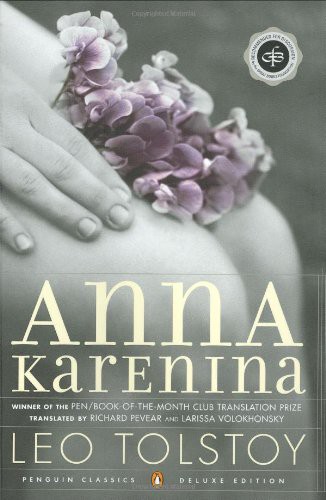
He may not be the titular character, but Levin’s development into a happier, less solipsistic guy is just as integral to the classic’s plot as Anna Karenina’s untimely demise. In Part IV, Chapter XIII, Levin takes another go at courting the object of his affection, Kitty. He’s always had trouble communicating his feelings, but Kitty’s innate understanding of him makes it easier. The two sit down at a card table and Kitty produces a stick of chalk, and they start a game of scribbling the first letter of every word in a sentence they wish to say.
Levin jots down: “W, y, a: i, c, n, b; d,y, t, o, n?”
Kitty responds: “T, I, c, n, a, o.”
Did ya get all that? Doesn’t matter because “everything had been said in that conversation. She had said that she loved him.”
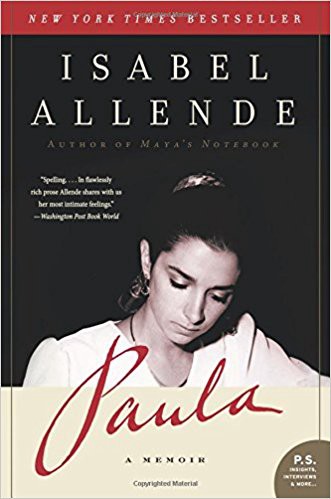
Isabel Allende never intended to write a memoir. She started what became Paula as an informational letter to her daughter to summarize the events she was missing as she lay asleep in a porphyria-induced coma. To the heartbreak of Isabel and her family, Paula never recovered, but she continued writing her letter which blends with some of the classic elements of magical realist fiction.
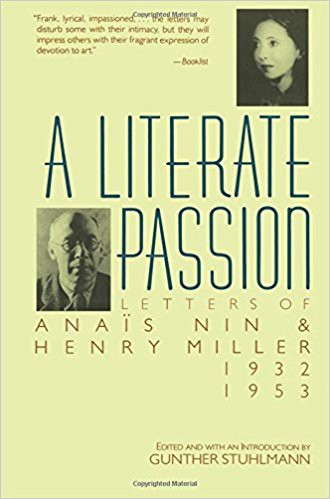
A Literate Passion by Anaïs Nin and Henry Miller, edited by Gunther Stuhlmann
The highbrow affair letters
Anaïs once wrote to Henry, “We are writers and make art of our struggle,” — that statement became truer than ever when Gunther Stuhlman published a compilation of their missives. The writers only spent a short amount of time with each other in the early ’30s, but carried on a love letter exchange for 21-years! Here’s one of my favorite passages from Miller to Nin:
I say this is a wild dream — but it is this dream I want to realize. Life and literature combined, love the dynamo, you with your chameleon’s soul giving me a thousand loves, being anchored always in no matter what storm, home wherever we are. In the mornings, continuing where we left off. Resurrection after resurrection. You asserting yourself, getting the rich varied life you desire; and the more you assert yourself the more you want me, need me. Your voice getting hoarser, deeper, your eyes blacker, your blood thicker, your body fuller. A voluptuous servility and tyrannical necessity. More cruel now than before — consciously, wilfully cruel. The insatiable delight of experience.
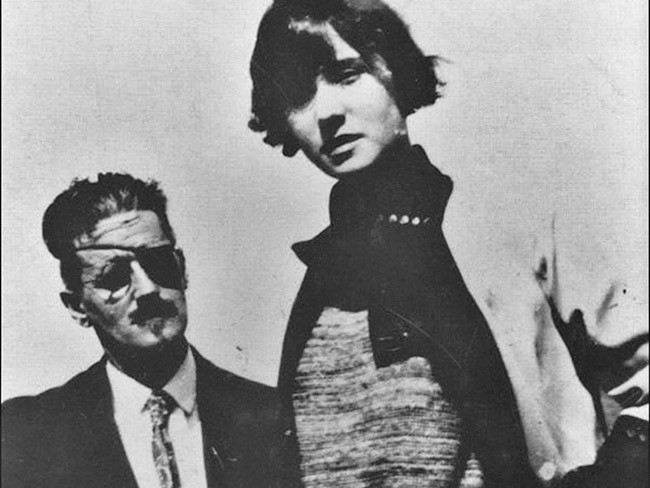
Save your eggplant emoji for the playground, kids, because James Joyce is about to blow you away with the kinky letter he wrote his wife Nora.
You know it’s real when you can’t get enough of your lover’s ~scent~
**WARNING: VERY NSFW**
My sweet little whorish Nora I did as you told me, you dirty little girl, and pulled myself off twice when I read your letter. I am delighted to see that you do like being fucked arseways. Yes, now I can remember that night when I fucked you for so long backwards. It was the dirtiest fucking I ever gave you, darling. My prick was stuck in you for hours, fucking in and out under your upturned rump. I felt your fat sweaty buttocks under my belly and saw your flushed face and mad eyes. At every fuck I gave you your shameless tongue came bursting out through your lips and if a gave you a bigger stronger fuck than usual, fat dirty farts came spluttering out of your backside. You had an arse full of farts that night, darling, and I fucked them out of you, big fat fellows, long windy ones, quick little merry cracks and a lot of tiny little naughty farties ending in a long gush from your hole. It is wonderful to fuck a farting woman when every fuck drives one out of her. I think I would know Nora’s fart anywhere. I think I could pick hers out in a roomful of farting women. It is a rather girlish noise not like the wet windy fart which I imagine fat wives have. It is sudden and dry and dirty like what a bold girl would let off in fun in a school dormitory at night. I hope Nora will let off no end of her farts in my face so that I may know their smell also.
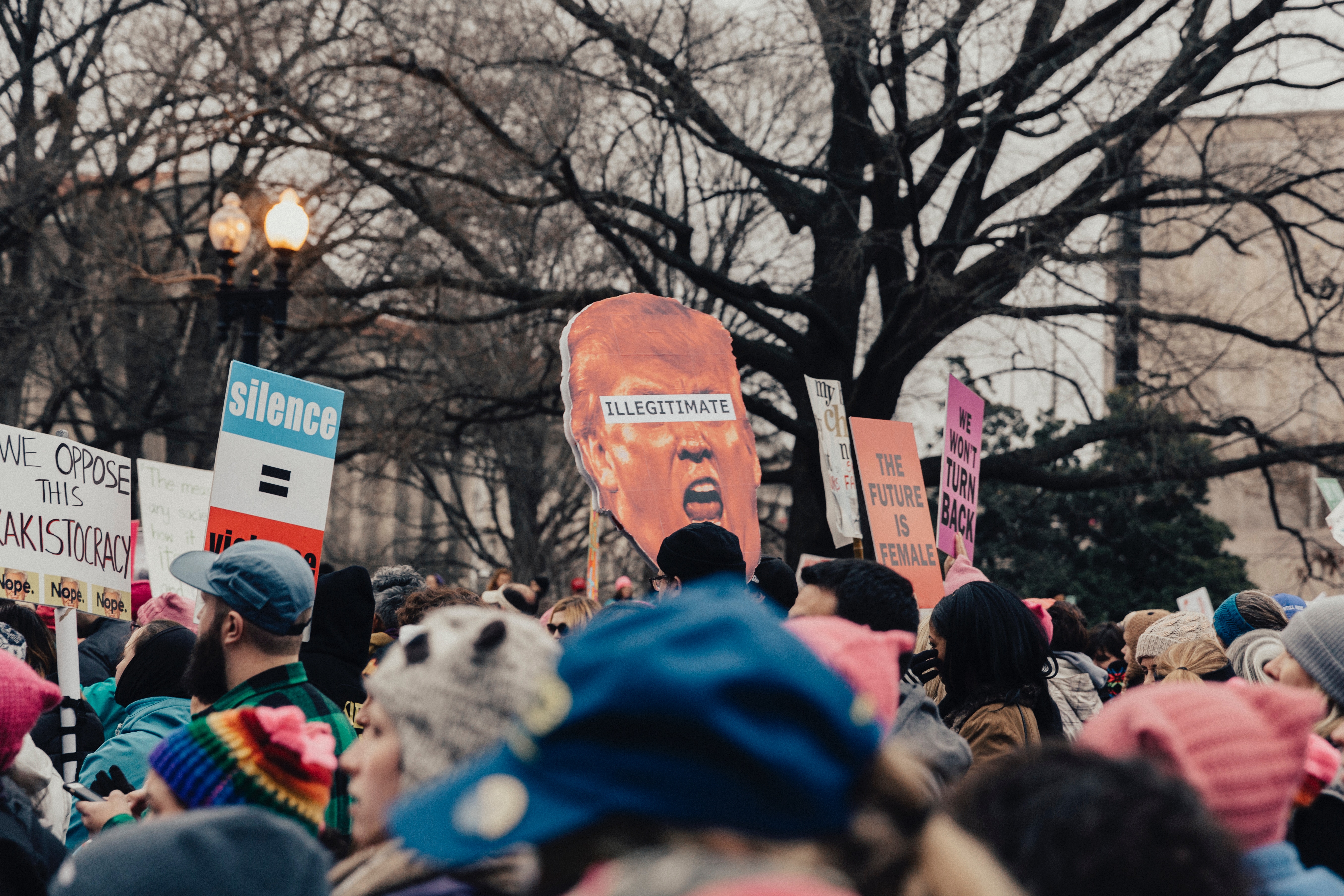
Creatives are critical players during political crises. At our best, we articulate danger now and danger ahead. We visualize possibility. We act.
I owe writers for what they did for me in November 2016. I didn’t feel a minute of relief from my post-election haze until I listened to the readers at “What Just Happened: Writers Respond to the 2016 Presidential Election.” Participants shared powerful stories. But there was also something about getting together that night. Community and the written word had us feeling energy that we didn’t have when we walked in the door.
Poet Willie Perdomo declared 2017 the year of “fear, angst, and Hell No”. That tidily summed up my year. But what about for others? One year later, I asked creatives to share how living in America in 2017 has affected their work and well-being.
Distracted, Angry, Vigilant
Respondents were asked how they were doing. Many shared some level of distress.
Rosebud Ben-Obi (poet): “I’m feeling a lot of things. Distracted. Angry. Vigilant. Every day we wake up to some new nonsense that our so-called president has created.”
Willie Perdomo: This is the year of Fear, Angst, and Hell No. The idea that there’s more hoax, and tragedy, and gunplay, and war, and taxes, and hurricanes to come, is enough to exhaust the soul. And, yet, it’s the soul that translates the most when these elements are at their apex.
Leslie Cain (independent film producer): For most of the past year I was constantly waffling between depressed incredulity and determination that America lives up to its promises, even if they weren’t sincere in the first place. I’m trying to focus on how to protect the least protected amongst us.
Peter Markus (fiction writer): I’m doing my best not to throw up my hands. I’m finding ways — small ways — to focus on joy, delight, pleasure. To have to be in this world and navigate the daily situations and relations and wonder, ‘Did the sweet fellow at the vet who is a lover of dogs and Bob Seger vote for that monster? Did my neighbor who is a good neighbor and who we chat across our yard about Michigan football and the Red Wings: I know how he voted. How hasn’t his opinion changed?
Serena Agusto-Cox (poet):I’m more anxious about the world and the role of the United States. I’m more concerned about my daughter’s future in a world where abuse and neglect are OK in the political world, as is regulating women’s rights and the rights of others.
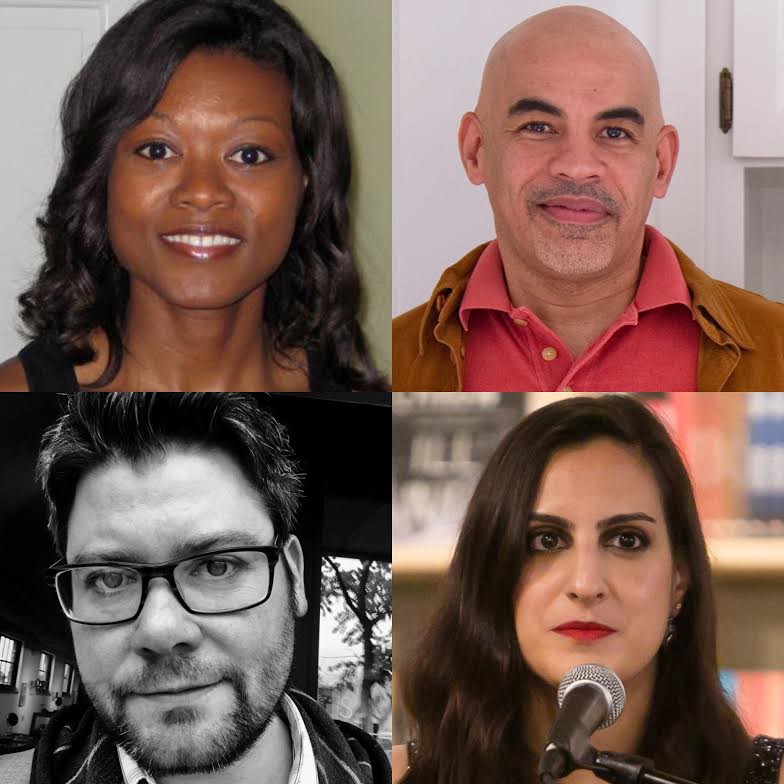
(Clockwise from top left: Koritha Mitchell, Willie Perdomo, Olivia Kate Cerrone, Marc McKee)
Robert Fanning (poet): Artists and writers are feeling beings — I say that 100% unapologetically. It’s harder to escape now, to make those necessary imaginative flights — with a constant deluge of Bad News in every sphere: ecological, social, political. For me, it is harder to maintain concentration, to focus on the project at hand; my heart feels pummeled and pulled — by such massive and social political issues, by what feels like an assault on the very truth.
Barry Kaplan (playwright): I sometimes feel my retreat to the country makes me safe from the horrors of what is going on in America.This is not to say that people here are oblivious to the world; quite the contrary. But it is easier for me to be alone here and without TV or the newspaper I can feel like everything is OK.
Marc McKee (poet): A year ago I was seized with dread. Now I’m confronted with horror-creep, and it’s like endlessly, endlessly weeding a garden. Some of my friends have machetes and like heroes go to work. Every. Day. Some of my friends are crying from exhaustion and fear and real hurt. And still the weeds come on in fits and swells.
I asked the respondents how Trump’s politics and policies affected their communities.
McKee: Trump is basically just a demented accelerant. He’s a lit matchbox dropped into 40 years of Republican gasoline, and though he’s scarcely worth the word, so incurious and unreflective and unreconstructed he is, his “politics” have further galvanized ignorance and fear.
I’m lucky to live in a college town, albeit a somewhat besieged one, ideologically speaking. We rallied for women in my town. We rallied for the Muslim community in my town, leaving a mountain of flowers at the downtown mosque. We have had marches for climate, we have stood outside representatives’ offices insisting that common sense prevail with regard to health care and gun regulation. And so far, none of the menacing policies brandished by an alternately empowered and chastened conservative “lawmaker” majority in Washington have proved out.
Rosebud Ben-Oni (poet): My mother’s family lives on the U.S.-Mexican border, so I hear often about the daily political and social insults on their lives, which seem to be escalating as Trump wants to seize land to build his ridiculous wall. As a woman, as a Latinx, as a bisexual, I can’t not be affected by the current administration. I’m hyper-aware in that sense of looking over my shoulder again and again when I walk down the street. And I don’t mean only a literal street. But that, too.
Cain: Since the morning after, when my nine-year-old daughter woke up to find that Trump had won, I thought some of her faith in grown-ups knowing and doing the right thing faded. I saw her confusion and then the cloud. We were not what she thought we were and neither was the world.
What This Means for the Work
The political, social, and cultural dynamics of the last year affected respondents differently — but most reported personal impact.
Gloria Nixon-John (poet): I have had trouble focusing on my work as it seems less important than expressing my fears about what the current administration is doing, or might do.
Sarah Louise Lilley (actor): As an artist, if you’re work is not overtly political, it can be a challenge to feel that your voice matters. However, I believe more than ever that art is vital. Just making art now is a political act in itself.
I believe more than ever that art is vital. Just making art now is a political act in itself.
Cain: Art ignites, names demons and exorcises them, too. Art can quiet noise and the glare of purposefully placed distractions. This is why they go after art first, be it the NEA or PBS, because we are affirmed when we create and affirmed people know their power. So, I support and engage more art out of necessity now. It feels less about ego and more like a sin to not produce work.
Serena Agusto-Cox (poet): I’ve had a tough time writing poems on the two manuscript themes I have. Either I don’t write at all or I write angry poems about some news item or Trump’s policies in general. I’m generally not an angry person, but these poems need to get out so I can feel a sense of equilibrium these days.
Perdomo: I wonder about the cycles of destruction, the contempt for the Other, and how a percentage of the population (rabid White nationalists, probably minimal in number, but significant in power and holdings), believe that the country belongs to them and only them. Because then they seek ownership of our bodies, our communities, water. I’m interested in the gangster/politician analogy and how they are not far removed from each other. And I’m still disgusted that the best the leader of the free world could come up with were Bounty towel foul shots for a Puerto Rico that had just been decimated by a hurricane. When you see that kind of heavy, intentional symbolism, you have no recourse but to run to your notebook with a sense of urgency, and hopefully, a touch of what the fuck. I roll with Langston Hughes on guidance and advice: Hold. Fast.
James Nolan (poet, novelist): My memoir of a politically radical, most unconventional life — Flight Risk: Memoirs of a New Orleans Bad Boy (University Press of Mississippi) — came out during the first months of the Trump presidency, and to promote it at book events during these polarized times has been a tricky experience. Until the election, I actually thought my life and its values had become fairly mainstream — but guess what? — it’s 1968 again, which ironically is where the memoir opens, at a chapter called “Sixty-Eight” set in the mental hospital to which my parents committed me for being an anti-war and civil rights activist.
In book talks I’ve avoided discussing with certain audiences several of the chapters, especially those concerning my girlfriends’ abortions, my bisexuality, being thrown into a Guatemalan jail because of my association with Latin American revolutions, the year I spent teaching in post-Maoist China, and my expatriate life during the heady la movida years in newly democratic Spain. I didn’t realize how truly divided the country is until I had to go on the road with this book. There was standing room only at my event in at City Lights in San Francisco, but I was uninvited to present the book in Jackson, Mississippi, the very place the book was published.
Koritha Mitchell (nonfiction writer): Trump’s ascension has not changed anything I’ve been saying or doing because I’m convinced that the unwillingness to call out white supremacy, white privilege, and white mediocrity helped get him elected. However, I have found myself even more committed to supporting writers of color. They are bearing witness in ways that should not be lost to us now or lost to posterity. And that’s true whether their work is engaging Trump or not.
I have found myself even more committed to supporting writers of color. They are bearing witness in ways that should not be lost to us now or lost to posterity.
Kaplan: As a white male playwright, I find that the temper of the times is such that more and more theatres in New York and regionally are soliciting plays from women, transgender people, and people of color. As a citizen of America I find this a thrilling development; as a playwright, it feels, for the first time, that I am being shut out.
In the Classroom
Nixon-John: While I am having trouble focusing on my writing, I have been more available to help students, many of whom are adults working on worthwhile manuscripts.
Olivia KateCerrone (fiction writer): I take great inspiration from the poet Cheryl Buchanan, who founded Writers Without Margins which partners with various shelters and nonprofit organizations in [Boston], such as the Pine Street Inn and St. Francis House, providing a supportive, creative space to nurture and uplift marginalized voices. Buchanan’s work is a constant reminder of the power that individuals still have at the grassroots level, making a real difference in their communities.
(Clockwise from top left: Chinelo Okparanta, Max S. Gordon, Leslie Cain, Barry Kaplan)
Novelist Chinelo Okparanta shared an unpublished essay she wrote after a white male student brought a story to her predominantly white writing workshop at a Pennsylvania university. The story culminates with the targeted killing of all of the Black population.
Okparanta : There’s a way in which the pulse quickens and the eyes tear up and the face burns with heat when one stumbles upon a story like this. If one is a particular kind of person, anyway. Say, a dark-skinned person reading about the destruction of herself by her very own student — the student she comes into contact with at least twice a week. The student she had no idea was capable of harboring such destructive thoughts, even in a fictional universe.
What They Didn’t See Coming
Serena Agusto-Cox (poet): None of it. Except for maybe the cowardice of the Republican party, refusing to stand up for the country and its citizens rather than corporations and their own party victories. Why they do not act to get rid of someone so harmful and unconscionable is beyond me.
Nixon-John: Knowing about [friends and family] support for Trump has changed my feelings about each of them. I have had to avoid some ‘friends’. Some are relatives. I know hate is poison, but it surfaces whenever I see the President’s face. And I don’t think I am the one who needs therapy.
Markus: Oh I saw it coming. I saw all of it coming. I saw the election result coming. I saw the hatred for the other coming. I saw the power and the permission to voice that hatred coming.
Oh I saw it coming. I saw all of it coming. I saw the election result coming. I saw the hatred for the other coming.
Nolan::A Holocaust survivor once explained that the oppression of German Jews began when Hitler gave people the moral permission to act out their long-simmering resentments. I didn’t expect the resentment in the U.S. to explode quite so quickly after Trump’s election. This has happened on both the extreme right and left, and their street and campus clashes threaten to boil over into a civil war.
McKee: Trump makes me feel as though he is the last object lesson we offer ourselves before we implode into violent irrelevance. I don’t see that coming, but that’s what scares me.
What Gives Them Hope
Markus: I see the faces of my children.I hear their voices. I see my wife, I hold her hand, and I know that I am loved.
Cerrone: Justice Ruth Bader Ginsburg recently offered this quote: “The true symbol of the United States is not the bald eagle; it is the pendulum, and when the pendulum swings too far in one direction, it will go back.” The Democratic victories in Virginia give proof to this sentiment, especially considering Danica Roem’s historic win. The tide is turning against hate and discrimination.
(Clockwise from top left: James Nolan, Sarah Louise Lilley, Gloria Nixon-John, Rosebud Ben-Oni)
Mitchell: James Baldwin and his writing and speaking always give me life. I’m constantly struck by his vision and his willingness to call things exactly what they are. Throughout the Obama presidency, so many simple truths seemed unspeakable. Indeed, Obama modeled the tendency to leave white supremacy, white privilege, and white mediocrity unremarked, despite how fundamentally they continue to determine outcomes for every American. Baldwin’s work models precisely the opposite tendency because he believed that a commitment to democracy required no less.
Lilley: Donald Trump has woken everyone up. We can no longer pretend, we can no longer keep quiet.
Donald Trump has woken everyone up. We can no longer pretend, we can no longer keep quiet.
How to Maintain Creative Energy During This Time
Markus: I do my best to be who I am and to love who I love and to try to act with patience and kindness in every interaction of my every day.
Lilley: I think self-care is more important than ever. Whatever that looks like for you — time in nature, turning off your phone, meditation, exercise, taking a bath or journaling.
Kaplan: I have always liked being alone and working alone and that has not changed as I’ve gotten older and the world has become a more worrisome place. I still go to my desk every day and write and try to learn about myself as I do it. My dog is a wonderful writing companion. I can look away from my desk, across the room at the armchair where she is sound asleep and making little noises in her throat, and be reminded that this is what life is.
Mitchell: I maintain consistent energy and avoid mood swings because I don’t eat sugar or flour. It’s so much easier to find oneself in intense anger and sadness when one’s hormones are out of balance, which sugar and flour almost guarantee in most people.
Fanning: I’m working hard to try and stay away from the edge of that black hole, which is essentially the self sliding into the self, the spiritual flesh flipping backwards upon itself. It really hurts when that happens, so I’m trying — baby steps — to eat better, sleep better, exercise, practice self-maintenance and care. I love going for walks with my wife most mornings beside the river and through the woods. I am, wherever I can, replacing social media and the phone with books (a constant battle). I am working hard on being present for my wife and my children — especially in the moment, looking at them when they’re talking to me, holding them close.
Max S. Gordon (essayist): [I’ve] found myself thinking: If they are going to blow our asses up anyway, and we all end up going to war, maybe I should get high one more time, you know, just go out with a bang? I know better, of course, and it won’t happen, but these are dangerous times for an addict. These are dangerous times for all of us.
What Comes Next
Gordon: Something is definitely coming, and to deal with it we need to be whole. We can’t be fragmented with each other, or within ourselves. The thing that’s coming needs you to hate yourself so you will feel nationalistic pride when they try and build a wall. It needs you afraid at night, hiding behind the shades, so you can be manipulated into a travel ban. The thing that’s coming is counting on you to be a mess, in debt, traumatized, dissociated, drunk, high, angry, racist, lonely, heartbroken, in despair, cynical. It needs you to think Black/White, Palestinian/Jew, Man/Woman, Gay/Straight, Them/Us, Me/Other. The thing that’s coming needs you numb and asleep, so it can organize at night. Then, suddenly, you get up one morning and see the men in the streets with machine guns. Because they know by then it will be too late.
The thing that’s coming needs you numb and asleep, so it can organize at night. Then, suddenly, you get up one morning and see the men in the streets with machine guns.
Fanning: The job of the poet is now as crucial, more crucial than ever — to continue to speak truth, to continue to speak imagination, to speak hope, and to speak love.
Agusto-Cox: Focus on your self-care and family, then do good in your community. Keep hope alive. Even if you don’t have the money to give, give a little of your time or the clothes you don’t wear anymore. Help kids in your community do homework. Anything.
Markus: People need to pay attention. We need to listen and need to take words at their face value. Words say what they say and they often say more than what they say. Words as deed as the saying goes. We need to act, even in small ways: the daily acts of kindness, toward each other, toward total strangers. A simple hello, good morning, how are you? And to listen, I mean really listen when people speak. What people want more than anything else is to hear from you, “I hear you.” Which of course is another way to say, “I feel you. I am with you. We are all in this together.”
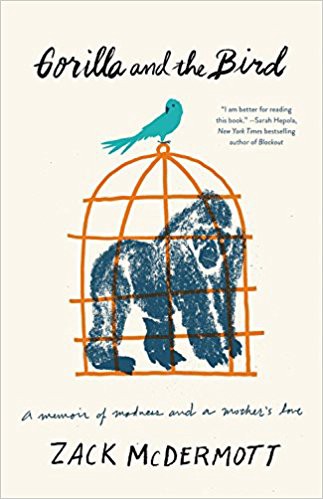
Zack McDermott’s debut memoir, Gorilla and the Bird, chronicles a psychotic break that disrupted his 20s and brought him face-to-face with the realities of mental health, incarceration, and opportunity in the United States. At 26, McDermott represented clients for New York’s Legal Aid Society by day, but spent nights and weekends on his budding career in comedy, doing stand-up and writing a TV pilot. Not realizing exhaustion and insomnia were triggers, he left his Lower East Side apartment one morning in the grip of a psychotic break. Convinced he was part of an elaborate Truman Show-like audition for his breakout television role, McDermott thought everyone from the soccer team he briefly joined in Tompkins Square Park to the police at the Bedford Avenue L train stop who escorted him to the hospital were in on it. He spent years after his first manic episode grappling with his bipolar diagnosis and taking antipsychotics while representing often mentally ill clients in court.
McDermott, nicknamed “the Gorilla,” for his broad chest, beard, and copious body hair, relied on his mother, “the Bird.” She’s a stalwart woman who advocates for her son when he can’t speak for himself. She raised McDermott and his two siblings as a single mother on a grocery store clerk salary in Wichita, Kansas. McDermott’s memoir shows him grappling with the stigma of mental illness and learning to manage his symptoms, but is also a commentary on “the dire consequences” for the mentally ill who don’t have an advocate like “the Bird” or middle-class privilege to lean on. I spoke with McDermott about the assumptions faced when it comes to mental illness, privilege, and how he reflected and wrote about this time so vividly in his memoir.
Randle Browning: Gorilla and the Bird opens with the psychotic break that led you through New York City, convinced you were being filmed for your breakout TV role — and eventually landed you in Bellevue Hospital. Did you worry about the perception you were sensationalizing mental illness?
Zack McDermott: I told the absolute truth as best I could. I didn’t exaggerate. I don’t think I was giving people something to gawk at. I was telling a story. There is a danger to glorifying mental illness. There’s this school of thought that people who have mental illness are intelligent or creative. There are brilliant people who have mental illness. There are also people who are brilliant but not mentally ill. Jerry Seinfeld’s about as stable as a bowl of Quaker Oats. He’s a creative genius. There are just as many people that are totally sick — a lot of my clients. They’re not seeing flashes of genius.
RB: In your book you wrote, “Bipolar, psychotic, insane — it’s still one-hundred percent okay to use these words as pejoratives; they are our go-to labels to describe dangerous people.” Do we need a better understanding of what it means to be mentally ill or have bipolar disorder in particular?
ZM: Part of it is just knowing what bipolar disorder is. A lot of times if someone has outbursts or behaves in a dysfunctional or destructive way or has a bad temper, people say, “He’s bipolar.” I don’t get offended easily, but there’s something counterproductive here. You should be as familiar with the symptoms of bipolar disorder as you are with the cold or flu. It costs a lot to not know what those symptoms are, especially when people go through it. I’m not saying if I’d known all about it I would’ve said, “You’re right, take me the doctor.” Maybe. In the throes of mania or psychosis, we are still capable of saying, “Alright, I’m exhibiting symptoms.” I knew something was off with me, I just had no clue what this thing even was.
You should be as familiar with the symptoms of bipolar disorder as you are with the cold or flu.
RB: How much would you say Gorilla and the Bird is about the “dire consequences” for people who don’t come from privilege?
ZM: It’s shocking how many people walk through life patting themselves on the back. We celebrate certain things as if they have a high degree of merit, like being smart. You did literally nothing to be smart. This is kind of extreme, but I don’t even find being a hard worker virtuous. You’re just throwing dice and coming up seven, seven, seven. People don’t look at their good fortune with enough space and removal to consider: “I’m just really lucky to be here.” The flipside is if you’re not viewing how lucky you are, you don’t have enough empathy when others are unlucky.
RB: Based on your experience as a public defender, have you found there to be a correlation between mental illness and incarceration?
ZM: Sure. We’ve more or less criminalized mental illness. We take these people who scare us — we have this default system where you did a bad thing and you go to this building. The question of what we can do for you is never asked. I’m all for a hospitality-driven criminal justice system, where you come as more of a patient than a combatant. Right now it’s so adversarial. The question needs to be asked — not “What did you do to us?” but, “What did we do to you?” What did we do to create whatever host of problems are guiding your actions and behavior? I promise if I threw you in prison, you’d come out with some mental illness. You’d come out looking rough, feeling worse.
We’ve more or less criminalized mental illness.
RB: I believe you, especially after reading about your time in mental institutions. In Gorilla and the Bird, you relive several manic episodes. Was it emotionally draining to write, or hard to remember what it felt like?
ZM: No, it wasn’t hard to relive anything. Plus, it’s work. It’s hard to live it, it’s not hard to think about it. Then, remembering it — I have a good memory. I wrote 300 pages in 2009 that I would occasionally consult. Then there are parts where I was so out of it there’s no way I could have a memory of it. There’s that stretch where it’s just my mom’s journals. I was out for two weeks. I thought it worked as a little device.
RB: Your mom supports you through all of this. What happens to people who don’t have a “Bird”? What would’ve happened to you if you didn’t have her?
ZM: It’s hard to say because I have more going for me. I have a terminal degree. Most of my clients didn’t have college degrees. Most of them didn’t have friends whose parents are psychologists. They’re trying to live. They don’t have health insurance. It’s conceivable to me that I could’ve been arrested several times, but I think I always had a better chance of encountering medical intervention or help and being able to implement that. I worked as a public defender. I know what these medications are. I know what the symptoms are. I think a lot of people, like my clients, were in the dark. It’s hard to separate middle class privilege, for lack of a less buzzy word, from having a great mom. It all made all this possible.
RB: Maybe it’s not one or the other. Your mom and the benefits of middle class privilege mean your story ends in a different way than most of your clients.
ZM: Most people don’t get to write books about it when they’re done.
RB: So much of writing is the work of making all the parts fit together after you’ve written the first several drafts.
ZM: It’s like building a car. If the book is going to work well, you can’t just say, “The gasket is close enough.” It has to be flush. And you know what else? You get a lot better from the beginning to the end. If you write for 10 to 15 hours every day for two years, you get better. What you used to think was really good, Chapter Seven, now needs to be better, because Chapter 17 is better.
RB: Is there anything that didn’t make it into the book that you wish did?
ZM: No, I know I gave it my best shot, and my writing partners and friends did too. It had to go through four brilliant editors, and we worked really hard on it. Once we thought we had it good enough, we tightened the screw, and then we tightened it again. We made the right calls on what went in and what went out. I trust everybody that helped me edit it. I had a buddy who said, “We’re done. We have polished this thing, and we can do this no longer.”
We have to revisit the way we look at mental illness. The treatment is to lock you up with other crazy people. It’s literally the worst thing you could do.
RB: Is there something you wish people knew about mental illness?
ZM: My mom has a quote: “When people are at their worst, when your instinct is to walk away, what you really need to do is move toward them.” You’re not witnessing someone being bad. You’re seeing symptoms of a disease. It’s like being mad at someone for throwing up when they have the flu. We have to revisit the way we look at mental illness. The treatment is to lock you up with other crazy people. It’s literally the worst thing you could do. Incarceration is not a treatment. Putting someone in uncomfortable conditions when all they need is sleep, feeding people horrible food. That feels crazy.
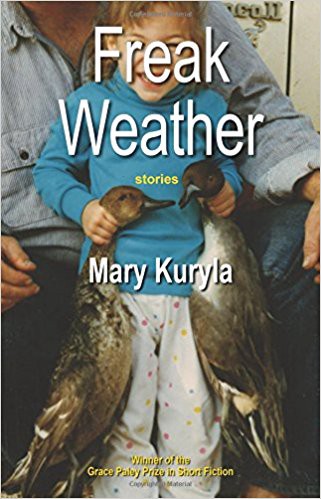
The stories in Mary Kuryla’s Freak Weather are by turns disturbing and astonishing, blending the desire for a better life with the quicksand of situational reality. In each tender rendering, a female protagonist navigates her surroundings by protecting herself from the peril she’s trying to escape, often with an animal standing in as an ersatz totem for the issue. These tales twist until they become something undeniable, and Kuryla’s commitment to letting her characters make mistakes without pausing to consider their actions is something rarely seen in fiction. Despite the rush of end-of-semester grading, we were able to speak by phone about her characters’ attempts to understand their sexuality, themselves, and the people around them—and how they use pets as an emotional buffer.
Eric Farwell: In reading the stories, it becomes immediately clear that there’s something propelling them, and that being able to take whatever wonky motivations a character might have at face value is a big part of what makes the work unique. Where did this absurdist humor come from? Were you reading that served as a touchstone?
Mary Kuryla: I wasn’t necessarily reaching for humor, but I’d say that I find human nature funny, and the way we conceptualize our world does tend to contain a certain amount of humor. I think that all of the characters in Freak Weather Stories, to some degree, are underdogs. I gravitate to the underdog, but I’m not interested in portraying them as victims. I struggle with that as a woman and a feminist, because there was so much literature that was coming up for so long that felt concerned with women as disempowered. I’m not interested in telling those stories, because the approach doesn’t seem particularly literary, or even particularly empathetic. I’m more interested in how people get themselves tangled up, how their flaws create huge problems for them, and whether there’s a potential exit for them, a way to escape their own trappings. I guess that when I speak of the underdog, I’m interested in how these types of characters might succumb to that more easily compared to someone who has a lot of means to shore themselves up and protect themselves from such things.
In regard to the question of what I was reading, Denis Johnson’s Jesus’ Son, Tom Jones’s The Pugilist at Rest, and Barry Hannah’s Airships come to mind. So many of the stories in these collections endlessly portray men behaving badly. It’s interesting that in all this post-Vietnam writing, you have these men that are steeped in this bad behavior, but somehow our culture is really supportive or at least indulgent of this behavior. There’s something like a bad boy thing, and we sort of tuck into them. We might feel like their behavior is really shocking, but there’s something that really stays with us about the burden these men are under. I was really interested in telling a female version of that, because I just didn’t see any. I was interested in what it would be like to have a female character behaving really badly. Joanna Scott’s Various Antidotes stood out to me as having a really intense integrity about exploring women’s identity in a way that wasn’t always pleasing. Angela Carter’s stories of noncompliant and wayward women were also a source of inspiration, as were the films of women directors such as Agnes Varda and Chantal Ackerman.
EF: The biggest theme in the collection is the lack of understanding these characters have of themselves. Often, there’s a shift where a protagonist thinks they understand, but then loses their grip on that certainty. Perhaps more interesting is when you don’t try and posit a reason, but just put the job in the reader’s hands. For you, what holds fascination in regard to what we think we know about ourselves and how we come to different realizations?
MK: These characters always think they can outrun their feelings. We all do that to some extent. You might even observe this behavior in another person—when, say, you’re taking a walk with someone, and you bring up something unpleasant, that person will start walking faster. It’s just a simple thing we all do. Take a story in the collection like “The Worst of You,” where there’s a mom packing to go to jail for child neglect. I was trying to work with the thread of the psyche unspooling. You could almost say it’s a stream-of-consciousness piece, but it also leads to all this action, sets her on this path of what she’s going to go do, even if by the end she undoes it all. In some of the stories, I was working with how language itself can create momentum, how language can chase both towards and away from itself. Since my background is in filmmaking, and as someone steeped in the history of cinema, my work is at times influenced by experimental traditions in film; therefore, I’m always trying to find a balance between story and form. I feel like I have to offer the reader a story, some semblance of story, so that the form can be tolerated. If you’re willing to understand the language and the rules I’m setting out formally, it’s because you believe there’s a story there that’s going to deliver. Maybe it won’t deliver in ways that are terribly familiar, but there is a story. You can say we create stories to try and figure out who we are, but I also think we put ourselves through things to find that out. For example, Penny, the main character in the title story “Freak Weather,” knows she’s in a bad relationship, but she doesn’t have the tools to get out of it. She’s just going to act out as a means of finding a way out.
You can say we create stories to try and figure out who we are, but I also think we put ourselves through things to find that out.
EF: It’s funny that you mention that, because the title story starts you off down this journey of using animals as emotional buffers. In “Freak Weather,” “Deaf Dog,” and “In Our House,” you take the time to set up a kind of vague or serious concern, and then bring in a dog or puppy to kind of separate the protagonist from that issue. In other words, the animals are used to divide the subject from peril.
MK: You know, when I worked with Gordon Lish, he encouraged us to find our limit or wound that we keep going back to. For me, it was rabbits. I raised rabbits as a girl, and I took a lot of solace in pets. Often when I would bring home pets, I’d have to take them back. There must have been something in animals for me where I believed I could protect them, but where they also, you know, helped mitigate my feelings. So, I think you’re correct, but I also wanted to point out that there’s real danger in taking the idea too lightly. I mean, the story “To Skin a Rabbit” is genuinely disturbing for some. In the story, the protagonist is trying to cope with forces in her world she can’t master. So she takes control of what she can.
EF: Animals are also used as emotional stand-ins in stories like “Animal Control” and “Introduction to Feathers.” What’s interesting is that these stories are much more interior than those that use pets or creatures as buffers. I’m not sure if you make that distinction yourself, but I’m hoping you could maybe speak to how you made those calls in a general sense.
MK: I can say that I didn’t necessarily have any conscious awareness of that, that the stories would become more opaque and interiorized or externalized as they unfolded. However, some stories were a lot harder to solve than others. For example, “Animal Control” eluded me for seven years. I worked on it a lot, and got feedback in workshops that could help tame the hell out of it, but nothing that helped if I wanted to stay with a story that was just not easy to contain. It wasn’t until Tony Perez at Tin House suggested I check out this essay by Lucy Corin called “Material” that I started to figure out the story. In the essay, Lucy Corin says that your material is your material. If you want to get answers for what your work is, a sense of what the language is asking for, you have to go back to your material and let it tell you. I took “Animal Control” and put the story up on the wall. I studied it and tried to figure out what it was telling me. It’s a weird way of detaching from your work and analyzing it. I suddenly realized that I needed to get the animal control officer downstairs into the basement, which I had not been able to do before. I had resisted taking her down the stairs because going into the basement in search of an abducted child is what happens in a thriller or horror story. But that was what the story required and, thanks to Lucy Corin’s essay, I figured out how to do it on the story’s own terms. So, I guess what I would say in response to the role of animals in these stories, is that an animal is often a projection of a young protagonist, while for the adult female characters, if an animal figures, it is often as a substitute for a child.
EF: Miscommunication also weaves its way into these stories. Again though, there’s this desire to subvert the expectations of the protagonist. In “Mis-sayings,” the dancer assumes her inability to correctly pronounce or sound things out is the reason she’s having a hard time connecting with her partner, not the situation they’re in. When you’re drafting, do you view this as another layer of subterfuge, or does this aspect of your craft have a different purpose?
MK: I am always looking at how we don’t understand each other. How language eludes us. I’m married to a Russian immigrant. I find that in being married to somebody who has a second language, I’m consistently thrilled by our miscommunications and how antic language can be. But even after my husband’s command of English was pretty flawless, he still had a habit of blending English words. He would take two words that were not necessarily similar in meaning but that nevertheless sounded similar and make them into one word, an unintended neologism. It was always fun to figure out the two words he had amalgamated; even more fascinating was to figure out how he had intended the word to be used. So, to me, I don’t see language as a fixed thing. I see it as elusive, full of tricks, and I like that best about it.
I don’t see language as a fixed thing. I see it as elusive, full of tricks, and I like that best about it.
EF: That’s funny, because I was going to ask you about your use of language. In the stories, there are a lot of bent phrases like “his smile is all sly boots,” that read like sayings or a kind of slang, but dial up the language more than render a character as regionally authentic. So your answer here perfectly accounts for the play there.
MK: The only other thing I could tell you was that I was a terrible speller as a kid. One of the reasons I was such a bad speller is because any spelling of a word seemed just as interesting as the correct one. I think that’s how I feel about phrasing. That’s how I feel about errors. That’s how I feel about language. In fact, that stuff is more interesting to me — the mistakes, the misalignments, the confusion — because it liberates us from our comfortable space in relation to language; and they make language come alive. There has been a great deal out there recently about William Gass, since he just passed away; his whole commitment was to make language flesh. To make language a thing. I think mistakes open up a space for language to shift from representation to delivering the actual thing itself.
EF: I wanted to end by asking about how you approached understandings of power in these stories. Men in “Freak Weather,” “Mis-Sayings,” and “To Skin a Rabbit” all have an inherently ill-informed sense of their own power in relation to women. You pull this neat trick where you showcase that women placed in these unfortunate circumstances are in control, but for the most part, you use that showcase of power as a social lubricant. In this way, it kind of goes back to the idea of the buffer, where they’re using their sexuality in order to gain ground and avoid an awkward or dangerous situation.
MK: I suspect that this collection can disturb some people because the female characters in it cannot be boxed in. They are not behaving in ways that people feel comfortable with. In “Mis-sayings” the American guy that the Russian émigré has come to live with only wants to see her as a ballerina, but she was a stripper in Russia. This American won’t let her be seen in that way. So, there is a certain relief in being able to show herself for who she is to the kid who comes to buy drugs. I have a tendency in my stories to deploy a stand-in; for example, in “Freak Weather” Penny needs to have it out with her husband, but she instead has a strange and precarious confrontation with her husband’s boss.
With regards to this idea that the characters are using their sexuality in order to gain ground and avoid an awkward and dangerous situation, I think some of those tactics spring from my love of cinema. Recently, I taught a class on cinematic and televisual bodies. We were looking at the body in cinema, and how different bodies gain power through visualization, through representation, through taking up screen space or by surrendering it. Actresses like Mae West and Marlene Dietrich, and these sort of earlier figures in the motion picture industry, enjoyed an incredible amount of power with their sexuality, and actually also owned it. Mae West had her own production company. She took credit for discovering Cary Grant. She padded her hips and breasts to spotlight her sexuality, and was in control of it, and especially in control of the script and her sharp and clever tongue. I do feel that women can have a great deal of power in their sexuality, but as a feminist I also recognize that it is a slippery slope where women are easily made vulnerable by the very same thing. A number of the stories in the collection deliberately take up these tensions.
Novel Gazing is Electric Literature’s personal essay series about the way reading shapes our lives. This time, we asked: What book was your feminist awakening?
When I finished college, it was a cicada year, temperatures were in the high eighties, and a radio evangelist had predicted the world would end on the very day of my graduation. I was an English major graduating from a Methodist college, and the symbolism of the locusts, the heat, and the prophecy was too much for me to resist and almost too much for me to bear. Disappointed in my college experience and prone to existential crises, I found myself thinking, What a waste. What a waste of the last four years of my life.
Of course the world didn’t end that day. But my life as a student did, and my life as a student was the only life I knew. I’d never enjoyed school, but I’d understood it. School was something I could count on, something I knew I could do well. I had trouble choosing good friends and coping with my emotions and styling my hair, but I could take a test. I could write a research paper. I could read a book. And this faith in my abilities as a student got me through the roughest patch of my post-grad funk. In that first year after college, I became a better student than I’d ever been. I started journaling, trained to be a GED teacher, and read over 60 books, one of which was Sandra Cisneros’ The House on Mango Street. For the next several years, I’d sleep with Mango Street on my bedside table.
Cisneros began writing this collection of vignettes as a graduate student in the Iowa Writers’ Workshop and published it in 1984. It’s the story of Esperanza, a young Latina growing up in Chicago and dreaming of a life of creativity, independence, and self-defined femininity. If I concentrate, I can recite entire passages from Mango Street, but the phrase always at the tip of my tongue when I talk about this novel isn’t from the narrative at all. In the author biography at the end of the book, Cisneros describes herself as “nobody’s mother and nobody’s wife.” When I read those words, I was soaking in the bathtub at my mother’s house. I read and reread until the water got cold. Nobody’s mother, nobody’s wife. Goddamn.
Throughout the novel, Esperanza dreams about the woman she will be once she leaves Mango Street. She will wear red lipstick and be beautiful and cruel. She will live in a clean, simple house, all by herself. She will write poems and stories. She will have peace.
Peaceful solitude has been my dream for as long as I can remember. As a girl I, too, fantasized about clean, simple homes I lived in by myself. I dreamed of sparkling hardwood floors, billowing curtains, natural light, and beautiful aloneness the way other children dreamed of snow days in Georgia. When I was in first grade, we wrote stories about how we envisioned our lives. I wrote that I didn’t want to have any children, and my teacher showed my mother and they both laughed. I can’t blame them; it’s an odd thing for a 7-year-old to say. But some fifteen years later, Sandra Cisneros gave me permission to say it. All of a sudden, I’d found a kindred spirit.
Nobody’s mother, nobody’s wife. It’s an epilogue of sorts. The author biography is always at the end of a book. It’s usually light, objective, and for the most part, immaterial to the understanding of the novel. But in my reading of Mango Street, the author biography is something of a happily ever after. It was easy to identify with Esperanza. We were both artsy and melancholy and determined in our own way. We even shared a name — Esperanza means hope, and Hope is my middle name. What was more difficult to grasp, though, was the reality of the future. It’s always been easy for me to dream, but real-life examples of dreams come true were hard to come by. Along came Sandra Cisneros. A young brown woman from a working class family writing books and traveling the world and coming home only to herself. Not a fictional character, but a real person. Could it be? Yes. Yes.
Nobody’s mother, nobody’s wife. It’s an epilogue of sorts.
For years, I could be found at the grocery store, on the street corner, in my bedroom, muttering, “nobody’s mother, nobody’s wife.” It was my mantra. It would deliver me, or so I thought. It would prevent me from being burdened by relationships when I could be reading and writing and eating and dancing and living. Since those post-grad years, I’m happy to say my feminism has evolved. I now think it could be quite nice to belong to someone, that it could enhance my life instead of taking away from it. That thought could change at any moment. It changes throughout the day. At 28, I’m still trying to figure out if I can be a mother and a wife and still be the person I feel called to be. I’m not sure I can. Being a daughter and a sister and a friend is overwhelming enough. I’m not sure I can do more.
But my feminism is a feminism of possibility. And Hope is my middle name.
DON’T MISS OUT
Sign up for our newsletter to get submission announcements and stay on top of our best work.
YOUR INBOX IS LIT
Enjoy strange, diverting work from The Commuter on Mondays, absorbing fiction from Recommended Reading on Wednesdays, and a roundup of our best work of the week on Fridays. Personalize your subscription preferences here.