Big Changes Afoot at Okey-Panky

After two years of curating delightfully strange, funny, and obscure writings at Okey-Panky, J. Robert Lennon is stepping down as Okey-Panky’s Editor-in-Chief to focus on his next novel.

Electric Literature will continue to publish the literary oddities that Okey-Panky championed as a biweekly Monday supplement edition to Recommended Reading, and as occasional special features on Electric Literature. With the support of the New York State Council on the Arts, the RR Monday commuter edition will include poetry, graphic narratives, and prose of under 1,500 words, and will be the first major expansion of Recommended Reading since it launched in 2012. The first issue, “Bigfoot on the Beach” by NPR’s Invisibilia co-host Lulu Miller, will publish on New Year’s Day 2018.

Over two years, Okey-Panky published authors such as Padgett Powell, Chris Offutt, and Kashana Cauley, and earned a place in Best American Comics 2016 for “The Swim” by Anne Emond. Lennon is equally proud of the fact that half of what the magazine published came from unsolicited submissions. “OP had the best slush pile of any magazine I’ve ever worked on — I couldn’t believe the amount of great writing we received,” he said. “The magazine renewed my faith in new writers and writing, and it was fun to edit, too.” Electric Literature will continue this tradition by holding open submission periods for the Recommended Reading Commuter.

Okey-Panky’s poetry editor Ed Skoog, fiction editor Rhian Ellis, and comics editor Sara Lautman will continue to offer support to the new incarnation of the magazine, which will be led by Recommended Reading’s editorial staff. Electric Literature editor in chief Jess Zimmerman will assume the duties of Okey-Panky’s nonfiction editor Alice Bolin, whose book of essays Dead Girl is forthcoming from HarperCollins in 2018. “Alice Bolin was a superb nonfiction editor, and I’m delighted that Rhian, Ed Skoog, and Sara Lautman will continue to bring some of that OP mojo to Recommended Reading,” said Lennon. “These people are my friends and some of the smartest, most talented writers and editors I know, and it has been an honor to work with them on Okey-Panky.”

While the often perplexing name Okey-Panky will be retired, its whimsical and idiosyncratic spirit lives on.

UPDATE: The new editor of The Commuter is Kelly Luce.

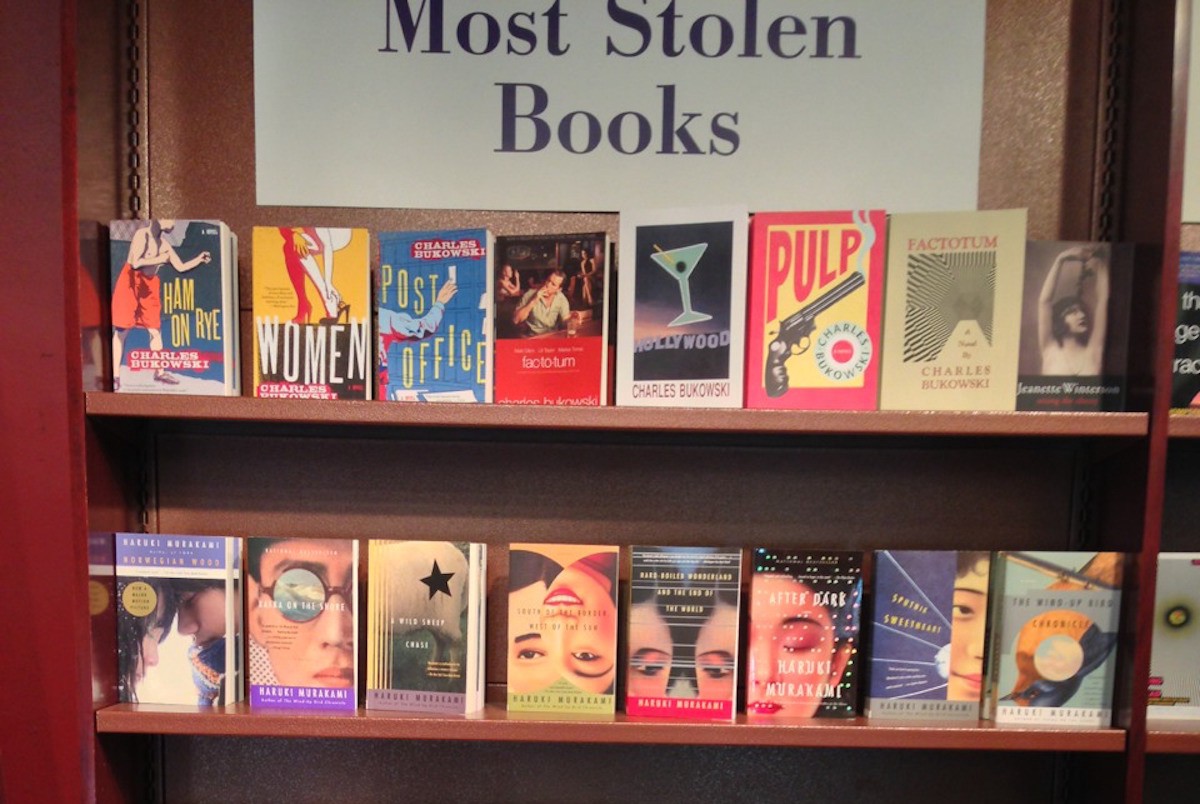
Indie Bookstores Tell Us About Their Most Stolen Books

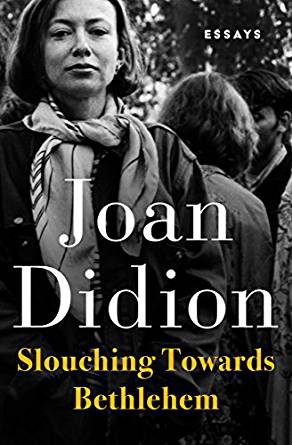
Unlike surreptitiously lifting gummy bears from Walmart, the act of stealing a book reveals a lot about the character, or at least the literary tastes, of the thief. I asked indie bookstores to tell us about their most stolen books, and based on their responses, I can say with authority that there are three types of book burglars. There are the counterculturals who think they are sticking it to the man (“the man,” in this case, being a small independent bookstore) by “liberating” books by anti-establishment writers like Kerouac, Vonnegut, and Bukowski. (Ironically, Abbie Hoffman’s Steal This Book did not make this list.) Then there are those too embarrassed to be seen with a self-help book so they hide Sex for Dummies in their shopping bags and scurry out of the store. Next are the cool kids who want a curated Instagram photo of them lounging by the pool with a margarita in hand and a Joan Didion book in the other. They have no real intention of reading their prop, so why pay for Slouching Towards Bethlehem?

P.S.A: Independent bookstores are magical, endangered places. Stealing from these small, often struggling establishments is a mortal sin and the Book Gods will smite you. If you must kidnap books (which you shouldn’t, because libraries exist) then steal from big box stores instead.

Astoria Bookshop, Queens, New York

“Probably Joan Didion’s Slouching Towards Bethlehem, though [Patti Smith’s] Just Kids, all the Bukowski (of course), a lot of Italo Calvino, Roberto Bolano, and believe it or not Sontag’s On Photography are also in the running. I have basically had to stop carrying NYRB titles because they walk out the door. Melville House novellas are nearly as bad.

We’ve also lost a lot of Wimpy Kid at book fairs over the years, but that’s not the same kind of issue.

The conclusion we’ve come to is that people steal books that they think will make them seem smart but perhaps have no intention of reading (and hence don’t want to pay for?). The link seems to be a sense of pretentiousness, looking at the specific books that walk.” — Lexi Beach, Owner

Books Are Magic, Brooklyn, New York

“We have one kind of crazy story about a shoplifter earlier this summer that tried to lift something like 6 books. Among the titles were Haruki Murakami and Cormac McCarthy (all male writers if I remember correctly).

One night when Emma and Mike were home tending to their children, Mike looked at the store security cameras on his phone (as he is wont to do), and saw someone stealing. I picked up a phone call at the store from Mike asking me to call the police while he jumped on his bike and tore down to the store. He arrived panting and sweaty on his bike, in 5 minutes, just as the man was turning down the street. Without stopping, I pointed him in the right direction, and Mike was off.

Mike sees the guy a ways down, bikes up to him, tells him to give the books back, and he does! — a big stack. The guy tells him that he just wants to read, and doesn’t have any money. This is the part where Mike should have directed him to the library. But they had a nice conversation and shook hands.

Mike then came back to the store, where the police had arrived. They seemed to think he was crazy for chasing him down and not pressing charges. Just a day in the life of a small business, I guess.” — Colleen Callery, Marketing & Communications Manager

Book People, Austin, Texas

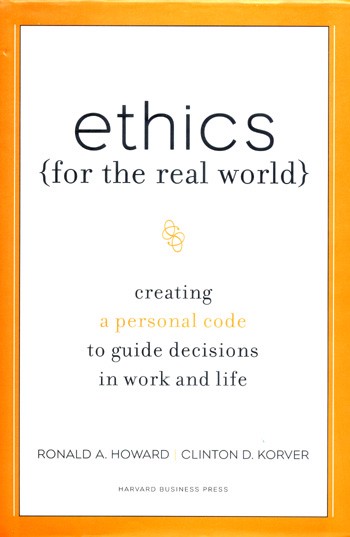
“We lose a lot of manga, but certainly odd is that we lose ethics books from our philosophy section.” — Steve Bercu, Owner

Community Bookstore, Brooklyn, New York

Electric Literature intern Natalee Cruz stopped by Community Bookstore and spotted this small sticky note urging people not to steal their Joan Didion books, with two eyeballs drawn on for emphasis. After speaking to the owner, she discovered that “the most stolen books in his store is Didion’s Slouching Towards Bethlehem and [books by] James Baldwin. His reasoning was because the shelf that holds those titles is being a barrier that makes it easier to steal and that those books have great resale value when they are taken to used bookstores.”

Harvard Bookstore, Cambridge, Massachuettes

“I’d say [Jack Kerouac’s] On the Road and [Kurt Vonnegut’s] Slaughterhouse 5 are probably the titles we’ve noticed disappearing the most over the years.” — Alex W. Meriwether, Marketing & Events Manager

Haunted Bookshop, Iowa City, Iowa

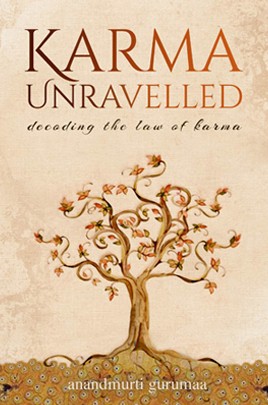
“In the department of funny stories, someone stole a book about karma and how its philosophical implications differ so strongly from those of Western concepts of instant, divine retribution. I was laughing too hard to stop the kid. (Maybe he needed the book even more than he wanted it, you know?)” — Nialle Sylvan, Owner

Kramerbooks, Washington, D.C.

“Historically, the number one title stolen is Zadie Smith’s White Teeth. I have no idea what that says about the thieves. Although the only other work of fiction in the top 10 is Dave Eggers’ Heartbreaking Work of Staggering Genius, so the five finger discount appeals to hipster millennials. Perhaps more illuminating, five of the top ten titles stolen would be categorized as Psychology/Self-Help. Two titles of which are by Robert Greene (48 Laws of Power and Art of Seduction). My thinking here is either the thieves are self-starting or have missed the point completely.” — Lynn Schwartz, General Manager

Magers & Quinn, Minneapolis, Minnesota

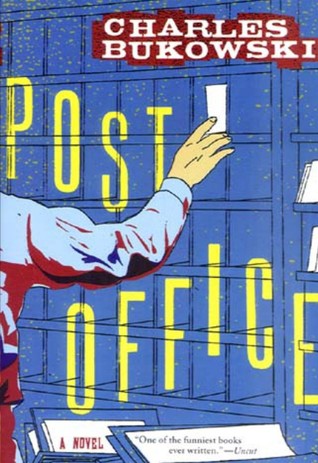
“In the past couple decades, we had a long-standing rule of keeping Charles Bukowski behind the register — his books seem to be stolen more than most other authors. (I’ve heard this is the case for other stores too.) But, within the past couple years we have returned him to the shelf with the rest of the literature or poetry, and so far it seems to be going well.

Vonnegut also seems to ‘walk out the door’ quite a bit.

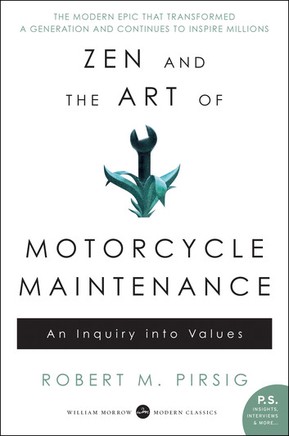
Lately, we’ve seen an uptick of missing items from the philosophy section — things like Zen & The Art of Motorcycle Maintenance [by Robert M. Pirsig] and Meditations by Marcus Aurelius.

We also frequently have Bibles stolen. Many Bibles come in a slipcase or box, so it’s a fairly common thing to find the tell-tale empty box hidden among the Bible shelves.

Of course, we don’t know who is doing the stealing. Besides the Bibles, the common theme of a lot of our missing items seems to be stuff that questions established values, morals, or systems. Frankly, it’s a really weird phenomenon because it seems like people want to ‘shop’ at an indie bookstore for their hip reading material, but don’t want to contribute to keeping that indie in business by purchasing the book.” — Annie Metcalf, Assistant Retail and Marketing Manager

McNally Jackson, New York, New York

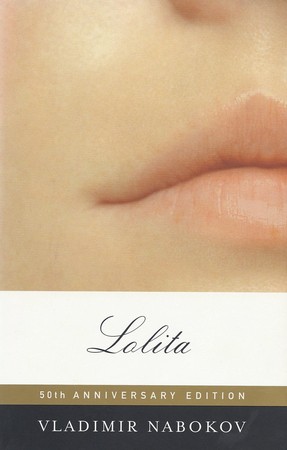
“We keep all of our Hunter S. Thompson, Jack Kerouac, F. Scott Fitzgerald, Paulo Coelho, and Vladimir Nabokov’s Lolita behind the counter. Books from our philosophy and metaphysics sections also often get stolen, as well as DVDs and of course, expensive coffee table books.” — Nora Kipnis, Bookseller

Subtext Books, Downtown St. Paul, Minnesota

“Among our most stolen books are: Fahrenheit 451 by Ray Bradbury, 1984 by George Orwell, and anything by Charles Bukowski. We also recently had a copy of [Atul Gawande’s] Being Mortal stolen, which we thought was a bit odd, but maybe they just really needed it? But one of my worst experience of bookstore theft that I’ve had in my 4 1/2 years happened just over a month ago. These two younger women were in the store browsing the shop. I saw them look at our favorites section, and specifically our favorite current poetry books. Now, I never pass up a chance to tell someone about my favorite poetry books, so I recommended them a few titles. And these were some kick-ass poetry books. The best of the year in my opinion. And sure enough, I head back to the register to help another customer check out, and the two ladies walked out without saying a word and took three of my favorite poetry titles with them. Retail can be hell some days. This was one of them.” — Matt Keliher, Head Buyer and Manager

The Writer’s Block, Las Vegas, Nevada

“Without question, Bukowski is our single-most stolen author. For reasons that are probably obvious. A Google search for the phrase “lowlife literature” brings up the headline, “Bukowski: The Godfather of Lowlife Literature” as its first result. Of course, I don’t mean this to denigrate Bukowski’s merit as an author. But his misfit aesthetic definitely appeals to the sort of non-conformist character who believes that stealing their books is appropriate and/or exhilarating. I can’t hate them for it, but I do wish they wouldn’t steal from small, pop-and-pop bookstores with rent and utility bills to pay. Also: (Paulo Coelho’s) The Alchemist. Frequently lifted. Here, I will be snotty and say that there’s connection between cheap, pseudo-spiritual novels and moral unscrupulousness.

As for who steals: teenagers. No surprise there. Hopefully they’ll all grow up to repent and become literary patrons with fat wallets.” — Drew Cohen, Co-owner and Buyer

8 Cookbooks You Can Read Like…Books

It’s easy to find recipes. Thousands of tips for the gooiest chocolate chip cookies and YouTube tutorials for how to ensure, this year, your turkey won’t be dry, are out there for your taking. And popular as they are, those high-speed cooking videos rob the experience of its ritual, while the increase in on-demand, recipe-in-a-box services means the novice and hobbyist cooks miss out on the the experimenting, discovery and improvising that make the kitchen exciting. It’s led many to wonder about the fate of the cookbook. How quaint, it seems, to crack a spine for your ingredients and instructions.

But cookbooks aren’t always instruction manuals. Often, they tell deeper stories of the dish, whether its the history of the ingredients or the way the author came to the recipe. They draw you into the world of their food, sometimes so much that you get lost in them before you get the chance to get out your frying pan. But also, get out your frying pan, because you’ll want to make everything you find in these books.

Eight Flavors: The Untold Story of American Cuisine by Sarah Lohman

As Lohman states in her introduction, “history has a flavor.” Certain ones evoke certain times, and by tracking American ingredient trends, beginning with black pepper and ending with Sriracha, she tells the story of America, its cuisine, immigration, prejudice and more. You’ll already be inspired to cook with the eight titular flavors (black pepper, vanilla, chili powder, curry powder, soy sauce, garlic, msg and sriracha), but Lohman includes both historical and modern recipes in each chapter, such as Xanath (vanilla) Liqueur, Garam Masala Ice Cream, or Umami Finishing Salt (a.k.a. MSG made from scratch). If America was Already Great, it’s because of this food.

The Smitten Kitchen Cookbook by Deb Perelman

Perelman built her following not just on her amazing recipes and beautiful photography, but with the funny, relatable way she spoke about dealing with small kitchens, picky eaters, and vacillating between being too lazy to cook anything elaborate and deciding to make her friend’s wedding cake. Her first cookbook introduces each recipe with musings on the task at hand, assuring you that gnocchi is not that hard, or telling you how to throw a dinner party and actually enjoy yourself. She’ll have you at peach and sour cream pancakes.

A History of Food in 100 Recipes by William Sitwell

Apocryphally, Napoleon said that the biggest advance in modern warfare was the potato, which allowed armies to cover greater distances now that they had a portable, ready-to-eat source of food. ood, in other words, is never just food. A History of Food in 100 Recipes traces just what we’ve eaten and what it means, from Ancient Egyptian Bread, to the origins of the Cupcake, to rice krispies treats. Not all the recipes are easy to recreate, but for a good time, try to decipher “Fish experiment XIII.”

My Two Souths by Asha Gomez

The two souths chef Gomez refers to are Kerala, India and the American south, two cuisines known for bold, complex flavors that Gomez weaves beautifully into dishes you will dream of just from reading the descriptions. But the way she describes her childhood in India, or her first encounter with Georgian hoecakes, or a dish like “tomato clove preserves” which could easily come from either of her two souths, make this a truly unique cookbook.

The Inspired Vegan by Bryant Terry

Despite vegan food being just as interesting and varied as any other kind for, I don’t know, forever, a lot of people still can’t get over the image of it being all seitan sandwiches and dry quinoa. Terry combines influences from Brooklyn, the Bay Area, and his family’s cuisine in the American south into specific menus, such as “grits, greens, molasses,” an homage to the flavors of the African diaspora, or a dinner to celebrate Shirley Chisholm, the first major-party black candidate for president. He features recipes, but also essays and even soundtracks to put together perfect vegan feasts.

97 Orchard by Jane Ziegelman

What could a building have to say about the history of American cuisine? Jane Ziegelman, the director of the culinary program at New York City’s Tenement Museum, found one that says everything. Her book traces the history of five immigrant groups — Germans, Irish, German Jews, Russian Jews and Italians — through five families who lived in one building, and the food they made that would go on to define a country. Recipes include things like actually good gefilte fish, oyster patties, corned beef, and garlicky pasta that transcended the tenement.

Garlic and Sapphires by Ruth Reichl

Reichl changed the game of restaurant reviews when she became the critic at The New York Times, starting with her iconic review of Le Cirque, in which she disguised herself to showcase how the restaurant catered to the elite and non-elite differently. Her memoir of her time at the Times deserves a read no matter what, but it’s also sprinkled with recipes like risotto primavera, roast leg of lamb, and classic New York cheesecake.

The Artists’ and Writers’ Cookbook by Natalie Eve Garrett

This is as literal a version as you can get of a good story combined with recipes. An updated version of a 1961 collection of the same name, this cookbook features essays, short stories and poems by writers and artists like Neil Gaiman, Francesca Lia Block, and James Franco on the recipes that have defined their lives. If you ever wanted to make scrambled eggs like Joyce Carol Oates, here’s your chance.

8 Gifts Made From Books For Book Lovers

The book lover is typically easy to buy for. Give them a new or used book, a new title to their collection, and they are likely going to be pleased. But you’re not a typical friend, and this hasn’t been a typical year. So, it’s time to rise above the easy book gift and gravitate towards these creative and original ideas: gifts where the book transcends its text and becomes something new, the form of a book without its content. A book as a symbol of itself. A book, in some cases, that you can drink booze out of.

Some book lovers are sensitive about treating books as materials, so before you purchase, make sure your friend isn’t going to cry if she sees a cut-up copy of Jane Eyre. (You can reassure her that many of these gifts are made out of books that were already damaged!) But for hardier souls who want to build their entire life out of books, here are eight ideas for decor, jewelry, accessories, and home goods that will have them writing you a sonnet (and then cutting it up and making it into a scarf).

What We Talk About When We Talk About Bouquets

Edible arrangements and conventional flora step aside — there’s a new bouquet in town. The bouquet of romantic prose! These pages from old or damaged novels are transformed into flowers for a true testament of eternal love. You can choose Pride and Prejudice, Gone with the Wind, or an assortment of romantic books, although a Raymond Carver bouquet could be attractive in the “brooding artist black turtleneck” kind of way.

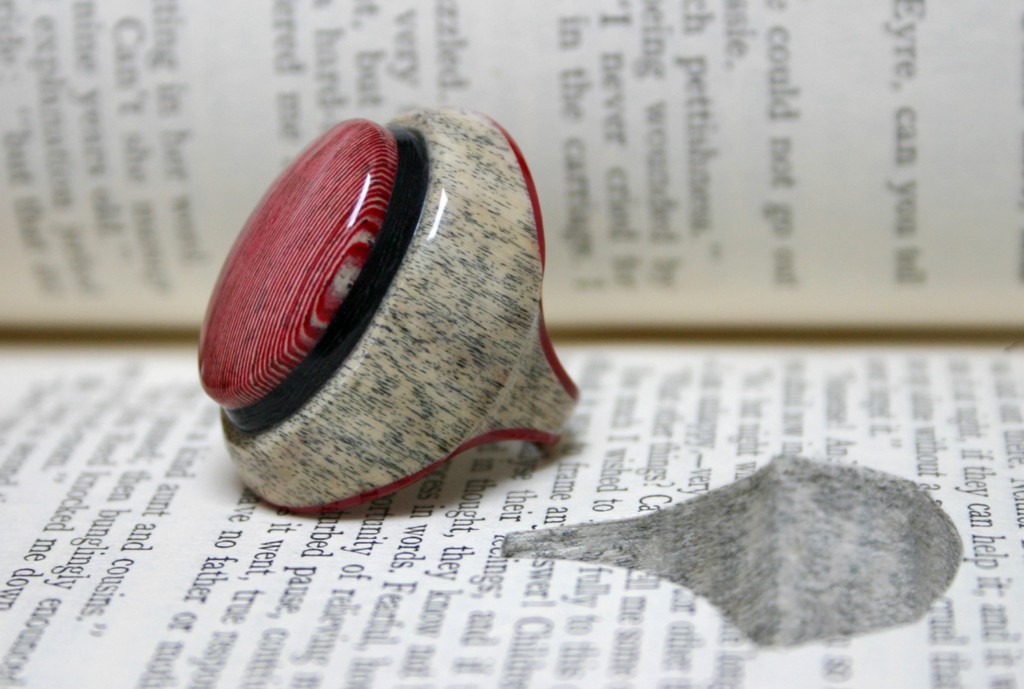
Put a Ring on It

Wearable art takes a new angle with these fantastic pieces of jewelry by Jeremy May. Pages of old books are carefully selected, then laminated together and glossed. The final result is a one-of-a-kind piece of jewelry, a piece that is thoughtful and (secretly) full of ideas.

Put Your Money Where Your Book Used To Be

For those who want their everyday accessories to have a little more literary cred, check out the online shop or D.C. studio of Rebound Designs. The store features old books recycled into wallets, purses, journals, jewelry, and lamp shades. The result is a timeless piece for any book lover.

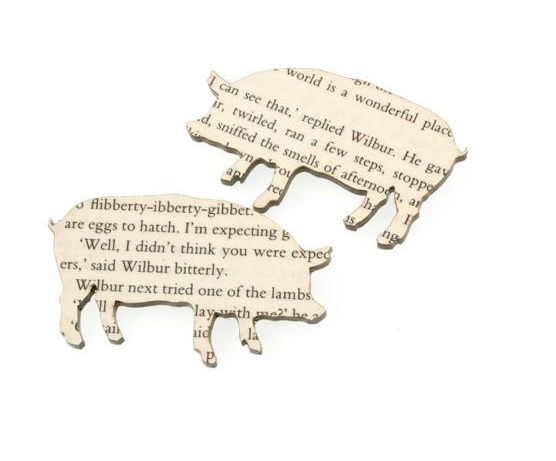
Some Brooch

Lovers of Charlotte’s web, rejoice! There is a Charlotte’s Web book brooch out there and it’s pretty freakin’ cute. Pages from the book are repurposed on this wooden Wilbur. The store copy notes that “each one is unique and is most likely to feature a different, yet indicative, passage of text,” but I personally want this exact brooch, the one with the words “flibberty-ibberty-gibbet.”

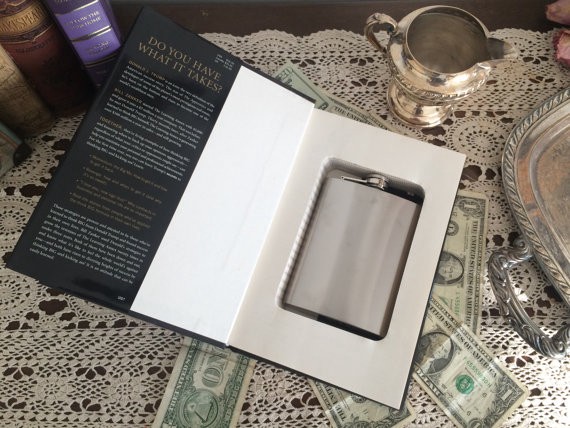
Think Big and Kick Ass In Business and Flasks

If the Trump presidency is driving you to drink, maybe this is what you need: a book safe made out of a hollowed-out copy of Donald Trump’s Think Big and Kick Ass in Business and Life, specially designed to hold a flask (included). This may not be the best gift for your book-loving boss, but test it out with your best friend. (Or soon-to-be-ex-best friend, once you give them a gift with Donald Trump’s face on it.) Unlike some of the other gifts on this list, this one is perfect for a book lover specifically because the book in question has been destroyed.

Read with Your Gloves On

A subtle book reappropriation, these gloves feature the spine from a damaged copy of The Storm and the Rainbow, for those cold days when books still need to be read. The shop, Wimsey Books, also incorporates book spines into ties, scarves, purses, hats, and even jackets.

Deck the Halls With Frodo

This ornament filled with scraps from damaged copies of Lord of the Rings is great for the book lover, specifically the Tolkien lover. And why stop there? Get some gold rings, elf figurines, and an Eye of Sauron and do a whole Tolkien tree! Even better, decorate an Ent.

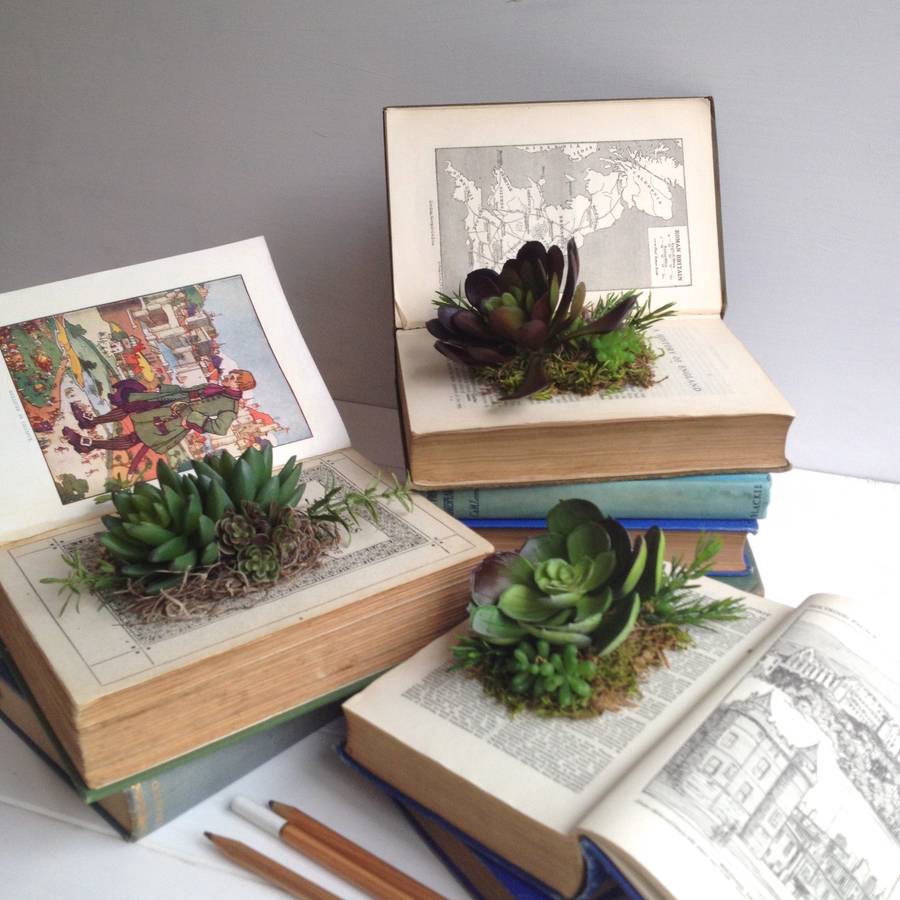
Paradise Found

These succulent planters made from vintage books are a great gift for those literary friends that decided to move in together and want everyone to know they love reading (if their guests somehow missed the giant bookshelf in the living room). These gifts only ship to the U.K., though, so everyone else will have to make their own—just find a favorite vintage book and some realistic artificial plants, and make your desk or shelf into a dreamy wordy wonderland.

The Book That Made Me a Feminist Was Written by an Abuser

Novel Gazing is Electric Literature’s personal essay series about the way reading shapes our lives. This time, we asked: What book was your feminist awakening?

The painting on the cover stopped me in my tracks, right there in the science fiction/fantasy section of Waldenbooks at Chapel Hill Mall in Akron, Ohio. The central figure is a woman. She’s not naked, nor is she wearing an armored bikini or an approximation of medieval dress that allows for ample cleavage. Instead, she is wearing a voluminous robe, her long, dark hair bound by a simple coronet. She is sitting on a beautiful white horse and grasping a sword by its blade. She looks determined, but serene, fully self-sufficient.

There’s not a man in sight.

And that evocative title! The Mists of Avalon. I’d already read — and loved — T. H. White’s The Once and Future King, which had led me to Howard Pyle’s take on Arthurian legend, as well as John Steinbeck’s. I’d even muddled through La Morte d’Arthur. Bradley’s reference to the island where Arthur rests made me feel like an insider, while the marketing copy suggested something radically different than anything I’d encountered before: Arthurian legend, from the female perspective.

I still cannot imagine anything more perfectly aligned with my thirteen-year-old sensibilities than Marion Zimmer Bradley’s masterpiece. Bradley opened my eyes to the idea that, when we look at the past, we are only ever seeing a small part of it — and usually, what we are seeing excludes the experiences of women. Encountering the vain, self-serving, diabolical Morgan le Fay transformed into the priestess Morgaine compelled me to question other received narratives in which women are to blame for the failures of men. The Mists of Avalon also gave me a glimpse of spiritual possibilities beyond male-dominated, male-defined religions. In retrospect, I can see that it gave me ways of seeing that helped me find the feminine even within patriarchal systems while studying religion as an undergrad. The impact of this book lingers in my feminism, certainly, but it also influenced my scholarly interest in folklore, and it still informs my personal spirituality.

The Mists of Avalon by Marion Zimmer Bradley

But my primary reaction to The Mists of Avalon, when I first read it, wasn’t intellectual; it was emotional. Like The Once and Future King, Bradley’s novel follows its protagonist from childhood into old age. I sympathized with the girl Morgaine, and her adolescent experiences hinted at frustrations I was just beginning to feel. The moment when Morgaine and Lancelet are, finally, about to become lovers — and then Gwenhwyfar, blonde and fair and lithe and helpless, stumbles into Avalon… No matter how many times I revisit this scene, it still crushes me. This isn’t a story about the pretty girl, the princess. It’s the story of the smart girl who becomes a powerful woman. Even so, Bradley brings nuance to these characters. She shows us Morgaine doing foolish, selfish things, and she shows us that Gwenhwyfar’s position is an impossible one. Doom hangs over Arthur’s glorious reign, just as fate rules many a legend and fable. There is no happy ending for anyone at Camelot — there never has been — but Bradley shows us real people struggling against their destiny, and she shows us that it’s not just impersonal fortune to blame for their inevitable downfall. Instead, it’s systems of oppression. By the time I left home for a women’s college in 1989, I’d reread The Mists of Avalon several times. I arrived ready to smash the patriarchy.

By the time I left home for a women’s college, I’d reread The Mists of Avalon several times. I arrived ready to smash the patriarchy.

And then, in 2014, Moira Greyland, Marion Zimmer Bradley’s daughter, told the world that her mother had sexually abused her and many other children for more than a decade. I didn’t even know how to process this information. I believed Greyland, absolutely, but I just couldn’t make this revelation fit with The Mists of Avalon and what that book meant to me. Bradley was not an author to whom I had a personal attachment. I’d never gotten into anything she’d written besides The Mists of Avalon. Had I been more of a fan, I might have seen the pedophilia threaded through her other work. I might have known that Walter Breen — Bradley’s husband and Greyland’s father — died in prison after being convicted of molesting a child. (Greyland says that there were many, many more victims.) Had I been more of a fan, I might have known that rumors about Bradley and Breen had circulated in the science fiction and fantasy communities for years.

My connection wasn’t with Bradley, though. My connection was with Morgaine and Viviane and Morgause — the characters Bradley created. When I read Greyland’s story, I immediately thought of one scene in The Mists of Avalon that suddenly seemed suspect, but that was it. Wondering what I might have missed, I decided to read the novel one more time.

The scene that I remembered was right where it had always been:

She stretched out her arms, and at her command she knew that outside the cave, in the light of the fecundating fires, man and woman, drawn one to the other by the pulsating surges of life, came together. The little blue-painted girl who had borne the fertilizing blood was drawn down into the arms of a sinewy old hunter, and Morgaine saw her briefly struggle and cry out, go down under his body, her legs opening to the irresistible force of nature in them.

The sexual act described here takes place around the Beltane fire. As a young reader, I was disturbed by it, but I saw it as a description of people who have passed beyond the normal world and into the sacred time of a fertility ritual. The scene was frightening for me as a child, and repellent, but also, I must admit, fascinating. In context, this passage made sense: The horror of the scene was an element of its power.

And that was all I found. Everything I had always loved about the book was still there, and I didn’t find anything new to hate. So, what was I going to do with this book?

This is, of course, a version of the question we’re all asking ourselves at the moment. How do we separate the artist from the art? Should we? Can we? I have found that my own answers vary. Woody Allen’s face makes Annie Hall, Crimes and Misdemeanors, and Hannah and Her Sisters — all movies I’ve adored — impossible. I’m also done with Louis C.K., but I’m not even ready to think about the colleagues and collaborators — Pamela Adlon? Aziz Ansari? — who have supported him, even as I, myself, was long willing to let “rumors” be “rumors.” Losing Kevin Spacey isn’t hard for me, but forswearing Harvey Weinstein forever means forgetting about a long list of great movies. And Weinstein was a producer — a facilitator more than a creator. Is his connection to a film close enough to make that film anathema?

Jodi Kantor, Megan Twohey, and Ronan Farrow’s reporting on Weinstein seems to be a tipping point for sexual harassment and assault in Hollywood, but we’re also seeing women and men come forward in journalism, publishing, and academia. The question of separating the abuser from his work metastasizes, and I don’t have any easy answers. Or, rather, I do have one easy answer: When someone says they’ve been assaulted, abused, harassed, I believe them. But I believe them, in part, because of lessons I absorbed from The Mists of Avalon.

When someone says they’ve been assaulted, abused, harassed, I believe them. But I believe them, in part, because of lessons I absorbed from The Mists of Avalon.

So, what to do with this once-beloved book? I’ve read it once since Greyland spoke out, and I don’t know if I will read it again. Probably not, I’m guessing. Discovering that powerful men are predators is disturbing, but not surprising. Learning that the author who introduced me to feminine spirituality and the hidden side of history abused children — girls and boys, her own daughter — was horrifying in an existential kind of way. I’m a writer and an editor and I know that characters can exceed their creators. I would go so far as to say that that’s the goal. So I can keep Morgaine — what she has meant to me, what she has become in my personal mythology — while I reject Bradley.
I no longer recommend The Mists of Avalon to other readers, and I can’t imagine burdening a child with it. There are other stories. Monica Furlong’s books Wise Child and Juniper are now my go-to titles for youngsters. Manda Scott’s Boudica series are the books that I wish I had found when I was thirteen, and I’m eagerly awaiting the sequel to Nicola Griffith’s Hild. It’s entirely possible that these stories about powerful women might never have been published if not for the success of The Mists of Avalon. This is part of Bradley’s legacy, too. But, even if I can appreciate the extent to which this author created a space for a new kind of writing in fantasy, I am still haunted by the voices she silenced.

When she finally came forward with her story, Greyland said,

[O]ne reason I never said anything is that I regarded her life as being more important than mine: her fame more important, and assuredly the comfort of her fans as more important. Those who knew me, knew the truth about her, but beyond that, it did not matter what she had done to me, as long as her work and her reputation continued.

I believe Moira Greyland. Her life matters more than any fiction.

9 Essayists of Color You Should Know About

I put this together as a list of essayists of color and indigenous essayists you should follow, since many “people to follow” lists aren’t representative. But in truth, these aren’t simply “racially inclusive” writers I’d strongly suggest people follow; they’re really good writers I’d urge people to follow.

You more than likely already know the Roxane Gays, Ashley Fords, Janet Mocks, Aura Bogados, Kaitlyn Greenidges, Ta-Nehisi Coates, Jeff Changs, and host of others who have risen in the ranks to be more prominent voices and sought opinions when it comes to the goings on of our nation and the arts we savor. And, I do hope if you haven’t read their work already you start doing so. But this isn’t a post about who you may already know but who you may not be aware of yet.

This list is in no way comprehensive. (I could add another 50 names of those widely published and unpublished.) What this list is is representative of a group of artists creating exceptional work on a range of topics in art, (pop) culture, identity, and politics with material that is not only distinctive but informative and thought-provoking.
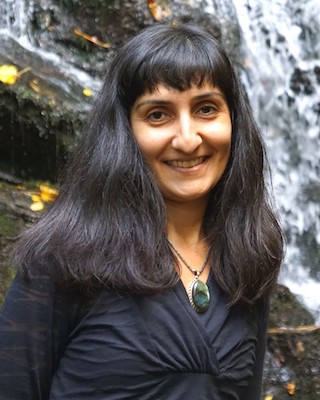
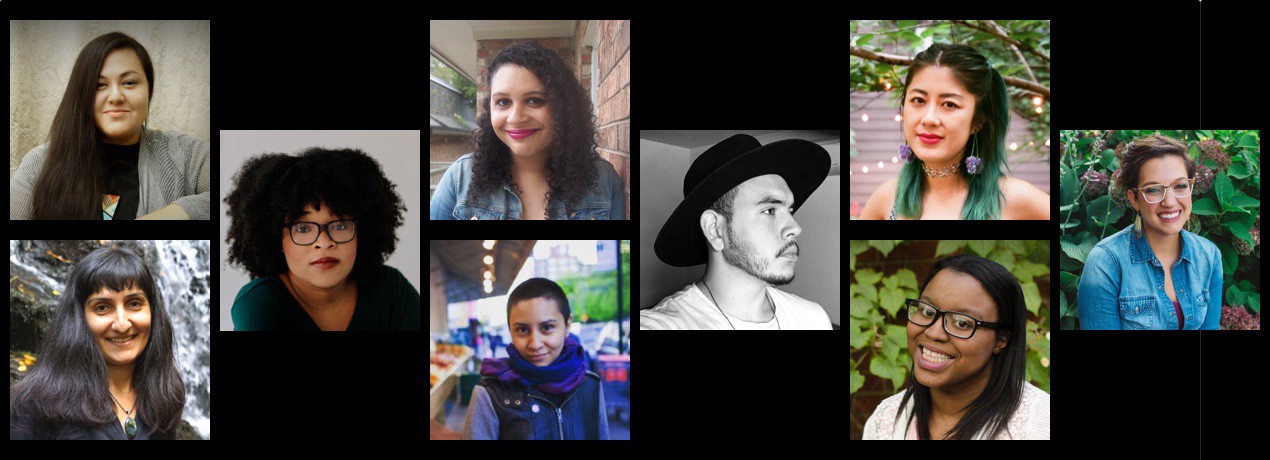
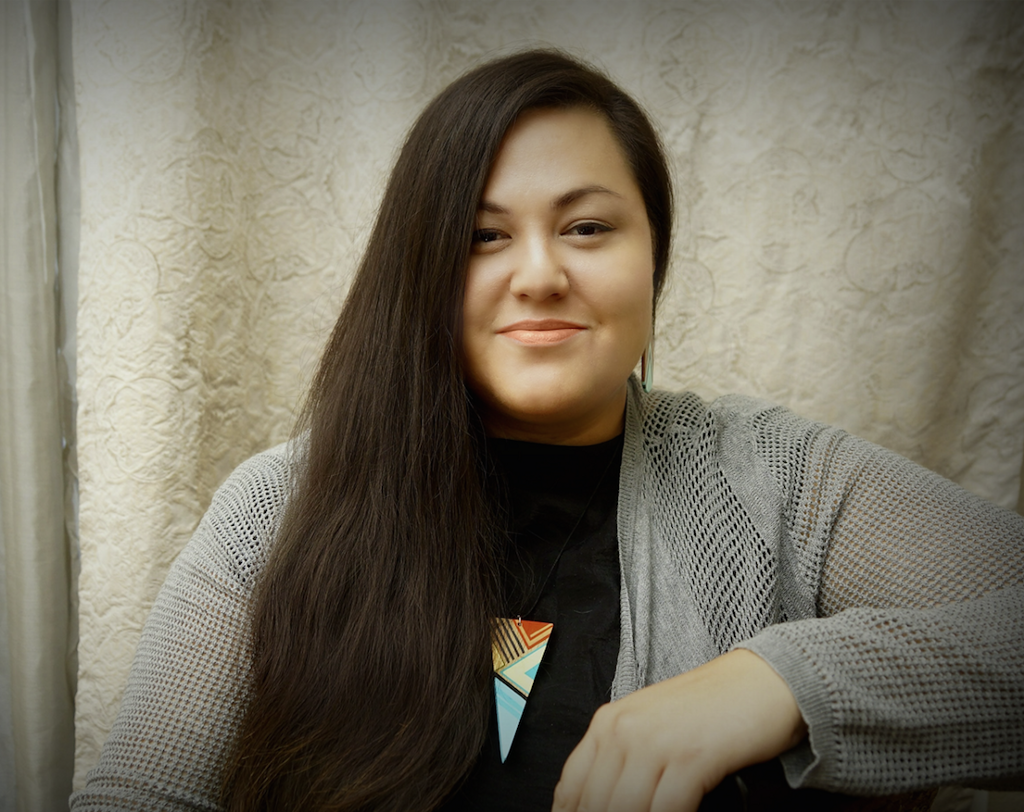
(Jonnie Taté Walker)

Jonnie Taté Walker

Activist, writer, and visual storyteller Taté Walker served as the editor for Native Peoples magazine and has contributed to sites such as Everyday Feminism. She’s spoken about and written extensively on Indigenous culture and representation, as well as sexuality and poverty & health in communities. On my podcast Taté and I discussed ongoing stereotypes and misconceptions for Native Americans and the necessity for artists of all areas to be compensated for their work rather than be an instrument for “busting stereotypes.” As Taté says, we have opportunities to educate via our experiences, not be tokens.

Recommended Reading: “New Indigenous Superheroes Save the Day”

Anjali Enjeti

Anjali’s writing has appeared in The Atlantic, Brevity, and Lunch Ticket and in regular contributions to The Atlanta Journal-Constitution in her hometown. A board member of the National Book Critics Council and Pushcart nominated writer, Anjali’s reviews and reporting have often focused on social justice, given visibility to refugee communities, and lack of representation in the publishing community. From the personal to the political, Anjali injects her writing with her passions on seeing nation-wide progress.

Recommended Reading: “Thoughts of Home: Blueprint for a Baby”

(Morgan Jerkins)

Morgan Jerkins

With her upcoming debut This Will Be My Undoing: Living at the Intersection of Black, Female, and Feminist in (White) America, Morgan is steadily becoming a prominent voice for Black feminism/female identity. Her writing has looked backward and forward, as well as examined the current state of Black people and artists. As associate editor of Catapult, Morgan has also provided a venue for more PoC writers to house their work. Morgan’s interest and dissection of pop culture in particular is also stealthy—just check her Twitter feed.

Recommended Reading: “The Forgotten Work of Jessie Redmon Fauset”

(Gabrielle Bellot)

Gabrielle Bellot

Gabrielle is a staff writer for LitHub. Her essays and reviews can be found in The New York Times, Prairie Schooner, VICE, and The Missouri Review, to name a few. While Gabrielle’s work speaks to politics and racial and gender identity, she also analyzes the literary canon. Looking at world-building to presentations of characters in classics like Invisible Man and Ray Bradbury, Gabrielle provides a refined approach to examining seminal works in current times.

Recommended Reading: “Hollywood’s First Harassment Case, 96 Years Before Weinstein”

(Photo of Bani Amor on street corner)

Bani Amor

If you want to learn more about decolonizing travel writing then Bani is the writer you need to be reading. Bani’s writing covers their own experiences traveling while brown, queer, and disabled, and also engages with the overt influence of the white/cishet/abled/male gaze in covering communities of color in particular and the distinctions that can and should be seen when exploring the world. Bani’s work has appeared in CNN Travel, Nowhere magazine, Bitch magazine, and many other outlets.

Recommended Reading: “Getting Real About Decolonizing Travel Culture”

(Profile photo of John Paul Brammer)

John Paul (JP) Brammer

In JP’s Hola Papi! advice column on Into and previous work in Buzzfeed and NBC Out, he has been outspoken about his experiences from disability to gender/sexual identity to Latinx culture. The discussions broached on Hola Papi! (as well as JP’s personal essays) reflect a specificity that doesn’t sensationalize but personalizes experiences and concerns within the LGBTQ+ community, providing heart and understanding that’s on par with the Dear Sugar columns.

Recommended Reading: “If Public Schools Don’t Survive, Kids Like Me Won’t Either”

(Jenny Zhang)

Jenny Zhang

Cross-genre writer Jenny Zhang gained even more visibility from her Buzzfeed essay “They Pretend to Be Us While Pretending We Don’t Exist,” but Jenny’s been writing fiction, poetry, and essays for a longer duration covering Asian American identity, immigration, art, and dissecting the problematic tropes we see and the people this material truly impacts. Her debut story collection Sour Heart also encompasses similar topics and viewpoints from a more expansive and experimental storytelling style.

Recommended Reading: “The Importance of Angsty Art”

(Keah Brown)

Keah Brown

A recently announced book deal with Atria Books means we have more to look forward to from Keah. She is the creator of the hashtag #DisabledandCute and has been a keen voice in pop culture, disability politics, and dating & relationships. She’s interviewed Roxane Gay and is a vocal fan of The Ellen Show. Keah’s Twitter presence is as welcoming and honest as her writing when it comes to weaving personal anecdotes to break down the ableist nature of representations in the arts while also reflecting on the need for more intersectional discourse.

Recommended Reading: “Disabled and Empowered: Why I’m Championing Strong Black Female Athletes”

(Adrienne Keene)

Dr. Adrienne Keene

Professor and researcher Adrienne Keene maintains the Native Appropriations blog where her discussions and analyses don’t solely focus on Native American erasure. She has also written about misogyny (in light of the Weinstein case), the ongoing effects of colonialism and its inextricability from the American psyche, and cultural appropriation. Adrienne’s work persists to push the conversation forward with a better understanding of the numerous issues Native/Indigenous communities face while dissecting it with a factual approach.

Recommended Reading: “Why Tonto Matters”

The 8 Best Affordable Writing Retreats That Won’t Break the Bank

Networking, hustle, and industry understanding are unfortunate burdens of the life of a young and working writer. But trickier still is finding solitude. Privacy, quiet, and uninterruption are crucial to the craft; if solitude is one of the challenges of writing, it is also essential.

While residencies and fellowships are wonderful, most ask for applications and portfolios, and that can be prohibitive when you’re just starting out. Writing retreats are another means of getting away — and they can be done affordably, some even offering scholarships. Most bring together a small community of writers for a few days, so there is the opportunity for socializing and meeting the like-minded. Some involve travel to local sites or parks, or daily meetings to discuss the industry or the craft.

If you’re looking to get some peace and focus — or the best gift for your writerly friend this holiday season — here are some of the best writing retreats we found that won’t break your bank.

Wellspring House Retreat — Ashfield, Massachusetts, $260-$280/week

Retired English professor Preston Browning is the co-director of Wellspring House with his wife, author Ann Hutt Browning. The Wellspring House is run exclusively as a retreat for writers and artists, and as such is open all year: winter rates (mid-November to April 1st) are $260/week for an individual, and $290/week for a couple. Normal rates are only slightly higher: $280/week for an individual, and $310/week for a couple. You can also choose to stay just one to three nights for about $60–$90 per night. Each stay comes with access to the large living room and kitchen, along with access to one of the two common bathrooms (in total, the house hosts about six rooms). And if you’re really looking to get away, this retreat will help you do it: while the house offers modern amenities like laundry, the website warns that the house has no cell phone service.
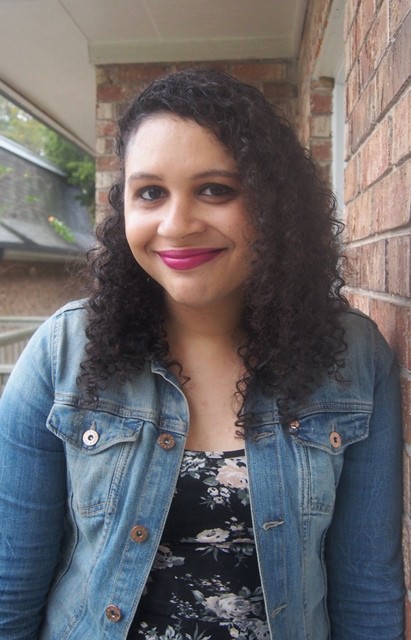
From RMFW

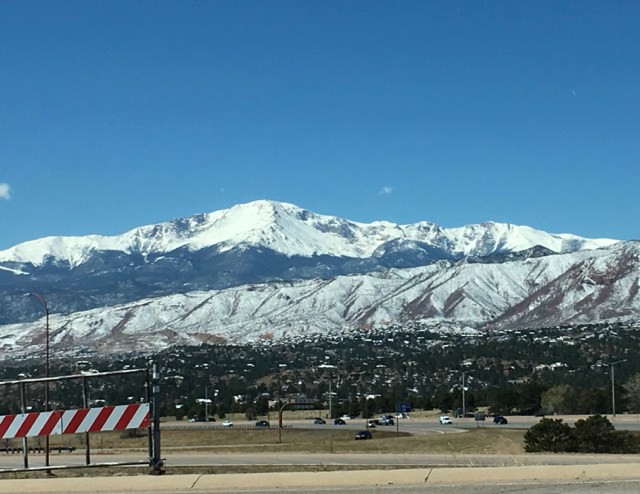
Rocky Mountain Fiction Writers Retreat — Colorado Springs, Colorado, $65-$399

The Rocky Mountain Fiction Writers Retreat takes place in the foothills of the Colorado Rockies, at the Franciscan Retreat Center. Spanning three nights, it often contains special agent and author guests — in 2018, for example, Sandra Bond from the Bond Literacy and authors Heather Webb and Corinne O’Flynn will be there, leading talks and workshops, including a Publishing AMA by Sandra Bond. Residents can choose days only ($65 total, including meals), to stay and share a bedroom with one other resident ($299 total), or to have their own private bedroom for the duration of the retreat ($399 total).

The farm, from Andlit

God’s Whisper Farm Writer’s Retreat — Radiant, Virginia, $195 + $25/night

At the God’s Whisper Farm Writer’s Retreat, writers stay on a farm containing goats, chickens, dogs, and cats. They can enjoy writing workshops, talks from writers, meditation sessions, open mics, and shared, home-cooked meals. All rooms have two bunks and cost $25/night, but if you want slightly more private accommodations, you can opt to stay at a nearby Airbnb or at Best Western. If you want to avoid fees altogether, there are also ten free campsites nearby. Keep in mind the $195 rate is an early bird rate; prices may go up if you book within about three months of the retreat, hosted in late June.

Kundiman Retreat, in partnership with Fordham University — Bronx, New York, $375 + $25 application fee

In partnership with Fordham University, the nonprofit organization Kundiman offers a retreat for 36 lucky participants who apply. Kundiman, according to their site, aims to nurture writers and readers of Asian American literature. Keeping with this mission, top Asian American poets and writers lead the Master Classes and manuscript consultations at the retreat. The five-day retreat also includes reading, writing circles, and informal social gatherings, with room and board included in the subsidized tuition fee. Applicants can apply to either the poetry or writing track: as part of the retreat, poetry fellows get a free consultation on a 10-page manuscript, while fiction fellows get a free consultation on a 15-page manuscript.

‘The Moth’ Retreat for Artists and Writers, Cavan, Ireland, €300, or about $355 a week

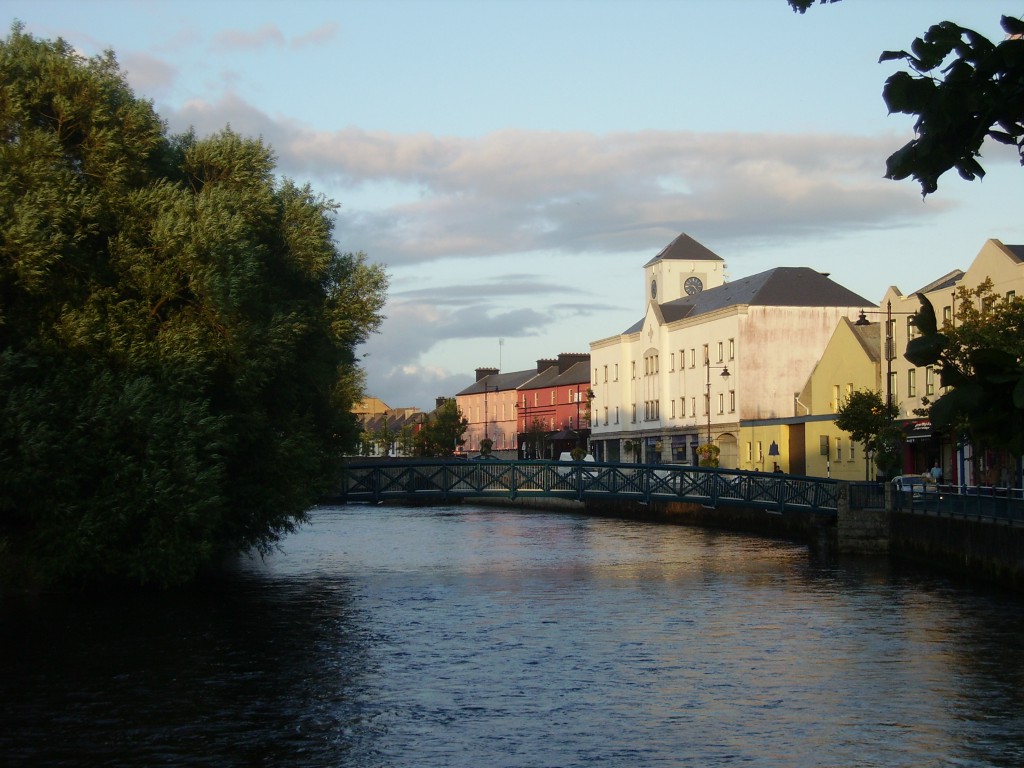
If you want to submerse yourself in history during your retreat, try crossing the pond and attending The Moth Retreat for Artists and Writers, located at a house in Cavan, Ireland. According to the retreat website, Samuel Beckett went to school just a half an hour northwest of the home, while renowned writers like Seamus Heaney and Patrick Kavanagh all lived within an hour’s drive. The house itself is completely private, and includes a large studio, kitchen, and breakfast room downstairs, and a bedroom and bathroom upstairs. Fresh eggs are provided every morning, though you are expected to furnish your own meals. If you want to bring a friend or guest, that will cost you an extra 100 euros. Need a ride to the bus station or help finding other provisions? The publishers of The Moth are nearby and ready to help, according to the retreat website.

The loft from Houselove

The Good Contrivance Farm Writer’s Retreat — Reisterstown, Maryland, $550 for one week

Another solitary retreat you could try is run by The Good Contrivance Farm, and is hosted in a contemporary loft apartment in the farm’s main barn. The Good Contrivance Farm is a non-profit that aims to preserve and restore historic farms in Maryland. To apply, send in a résumé and writing sample (space is booked on a first-come, first-served basis). Once booked, you’ll enjoy private use of the apartment, which includes great views of the farm, a full kitchen, 1.5 baths, a small library, and free WiFi. You can stay up to 4 weeks, with discounted rates the longer you stay (going as low as $450 per week if you stay the full four — though add $100 a week if you plan on having a second person stay with you.) Proceeds of the retreat all go to the non-profit.

The Watering Hole Winter Retreat — McCormick, South Carolina, $299–$399

The Watering Hole Winter Retreat is focused on building community among its 42 hosted poets. The retreat has no traditional classrooms, and aims to provide more publishing opportunities for poets of color, according to its site. Facilitators and speakers include renowned National Book Award winners, MacArthur Geniuses, recipients of the NAACP Image Award, and more. Interested writers can apply with a cover letter and three poems, and the site mentions that preference is given to applicants who are members of The Watering Hole Facebook Group and those who follow the organization’s Facebook fan page. During the fellowship, writers stay at modern cabins at Hickory Knob State Park.

The Mariandale Center’s Life Writing/Memoir Retreat — Ossining, New York, $350

The Mariandale Center is a quiet spot in Ossining, New York that hosts retreats and other programs. Included in the writing retreat are daily workshops, craft discussions, writing prompts, feedback on writing, and time to work on projects. Writers can also enjoy walks near the mountains and river. For this particular retreat, which spans three nights, all meals are included, and writers of all genres and experience levels are welcome.

How Indie Presses Are Elevating the Publishing World

Independent presses are a lifeline in the publishing world. At a time when large publishing houses are merging into even larger conglomerates, writers may feel like finding a home for their work requires a very specific, and at times corporate, mindset. But indies show that there’s another way. Via contests, open calls for submissions (for agented and unagented writers), and targeted requests, independent presses provide an alternate arena, making publishing more of a reality for marginalized artists and those with unique voices and writing styles. Plus, they’re getting more and more recognition. This year Graywolf Press had several titles as finalists or longlisted for the National Book Award. Paul Harding’s Pulitzer winning book Tinkers was published by a university aligned press (Bellevue Literary).

Rosalie Morales Kearns, Leland Cheuk, and Laura Stanfill are indie publishers seeking to add to the publishing landscape in unique ways that speak to their own experiences and beliefs. I spoke with them about the missions of their presses, the challenges they face, and what authors and publishers should take into account about the business.

Jennifer Baker: In a world full of presses, why did you decide to create yours and what stands out about it that you saw lacking in the marketplace?

Rosalie Morales Kearns: I started Shade Mountain Press in 2013, and launched its first two books in 2014. Our focus is on literary fiction by women. As a feminist, I certainly am not surprised by the VIDA count and other research showing how underrepresented women are in terms of their work being reviewed in the major venues, winning literary awards, being taught in university classes, and being taken seriously in general. Living in a white supremacist culture, I’m not surprised that women of color are even more drastically underrepresented. But perhaps I had a utopian vision that the small press world was more egalitarian, more inclusive, etc. I learned how wrong I was when I was seeking a publisher for my short story collection Virgins & Tricksters. It ended up being published in 2012 by Aqueous Books, a woman-owned press. But before that, as I researched small presses, I kept coming across publishers that praised themselves for being willing to take chances on less commercial work. Then I’d look at their new and forthcoming lists, and see seven out of eight titles by men, nine out of ten titles by men, sometimes 100% of their titles by men.

(Shade Mountain Press, “A mob of scribbling women”)

Leland Cheuk: When I started 7.13 Books last November, what stood out to me was how few literary debuts were being announced every year by the Big Five on Publishers Marketplace. It’s incomplete data since not every agent and editor announces their deal on PM, but when you see the number is in the low 200s, you start wondering how anyone gets published at all. Then you think about all the tens of thousands going into MFA and PhD programs in creative writing. Then you think about all the people who choose not to go into those programs but still want to write a book, all so they can one day be one of the lucky 200 people a year. Most writers don’t realize how small the target they’re aiming at really is. I certainly didn’t.

Most writers don’t realize how small the target they’re aiming at really is. I certainly didn’t.

Laura Stanfill: Forest Avenue began in 2012 as a grassroots effort to publish and promote local talent. Many Oregon authors were knocking on New York doors and being told their voice-driven, original work didn’t fit the established, commercially viable parameters the big houses had set. After hearing so many anecdotes about worthy manuscripts that almost-but-didn’t-quite make it in a city 3,000 miles away, I decided to publish literary fiction by Oregonians and get it on the shelves in Northwest bookstores. Other Portland independent presses — Microcosm, Hawthorne Books, Future Tense, Eraserhead, and others — inspired and mentored me.

JB: What have your experiences been in seeking out marginalized voices that fit the mission statement of your press? And what do you suggest other publishers do to promote more visibility (in-house and with their authors) of marginalized backgrounds?

RMK: Our 2015 and 2016 novels were the result of a submissions call for fiction by WOC. Our 2016 call was specifically for work by African American women, and that resulted in the brilliant novels that will be our 2017 and 2018 titles.

It’s not enough for a publisher to issue a general call for submissions with a little footnote or a little “by the way” statement tacked on at the end, mentioning that they particularly want to see more “diverse” submissions. If you put out a specific call, for authors from a specific background, the message you’re sending is that your next title will definitely be from that group. And that’s an important distinction.

(7.13 Books logo)

LC: There’s a huge disconnect between the publishing industry and the reality on the ground. When you read the slush, you see there’s plenty of talent, period — including marginalized voices in whichever ways you want to define that. I look for diversity in ethnicity, gender, sexuality, economic strata, but I also look for diversity in the art form of the adult literary novel as a whole, which includes criteria like aesthetics, genre, and storytelling methods. 7.13 has gotten 300 or so submissions in the first year and I estimate 75% are Anglo male because in general they’re more likely to submit whether the manuscript is ready or not. But as word has gotten out about the press, I’m seeing more diverse submissions now. I think it helps that my face is on the website and it’s clear I’m an editor of color. My 2019 list has two novels authored by Muslim American men, novels about same-sex relationships, a novel set abroad, a fabulist collection. When editors and agents say they have trouble “finding talent,” really what they’re saying is that they have less time and money to take chances. And understandably so. They’re working in divisions of big companies in a struggling industry. They’re downsizing, doing more with less, and so on. That said, the Big Five are putting out over 300,000 books a year, why are they claiming to have trouble “finding talent.” The bottom line is if they wanted to spend time and money “finding talent,” they would. Talent isn’t in witness protection.

LS: It’s not enough to dangle a welcome sign in front of a closed door.

Five years ago, as a brand-new publisher with no track record, I believed that inviting marginalized authors to submit would be enough to help our committee find manuscripts that matched our brand. Mistake #1: We issued that invitation on our website, as part of our press submission guidelines, hoping it would be discoverable. Mistake #2: We didn’t yet have a catalog of underrepresented voices to prove that my words were anything more than the same-old rhetoric, or that the door was really open.

We’ve learned a lot since then. Earning national distribution has allowed for more trade journal coverage, which has helped us articulate and amplify our brand through bigger platforms and therefore reach more authors and readers. Submissions grew by 170 percent the year we opened nationally, so that helped us receive — and fall in love with — more manuscripts by authors of marginalized backgrounds.

It’s not enough to dangle a welcome sign in front of a closed door.

JB: What questions should authors be asking of their publishers in general? Authors may consider publication as that final step but there’s so much more to it.

RMK: Authors should get a really clear idea of their publisher’s timetable, and make sure that the publisher is intending to send out advance reader copies, in hard copy, in a sufficient number and in a timely way (four or ideally more months before publication date).

If the publisher is going to do a very light edit, they should be clear on that with the author, so that the author understands they will have to do various rounds of proofreading themselves. My press hires a professional proofreader, and I also do proofreading at later stages, when I’m working with the book designer and then when the file is converted to ebook format. All kinds of glitches can creep in in the layout stage and in the ebook stage.

The publisher should also be clear about how much of the publicity work will be on the author, and the author needs to realize that this could take a lot of time. As a publisher I take charge of creating copy for book jackets, for the press release, and for other promotional materials (frankly, a lot of authors just aren’t that good at describing their own work). Also I handle the work of identifying possible reviewers, querying them, following up, etc.. But that being said, it’s certainly a common practice at very small presses to let the authors create the copy and do the legwork in identifying and contacting reviewers. Small-press publishers have only so much time.

The Great 2017 Indie Press Preview

LS: Information authors should request before signing include details about the press’s distribution model, the estimated pub date, applicable deadlines, publicity plans, galley quantity, sales goals, and specific contract terms. All small press publishers should give their authors a thorough onboarding packet, including information about these topics, the editorial process, rights information, and estimated first-run print quantity. If the press asks for subrights, this packet should detail the mechanisms the press has in place to sell those rights.

Transparency about sales goals is especially crucial; if an author enters a publishing contract expecting to earn enough royalties to pay rent for a year, and the publisher has a sales goal of a thousand copies, the disconnect can be emotionally and financially devastating to the author. Understanding distribution is equally important; if an author wants to see her book on the shelf at her local indie, and the press does print-on-demand and has set bookstore-unfriendly discounts, that author will be surprised and disappointed to learn that the store can’t order their title.

JB: I’d hope that independent presses aren’t seen as a substitute for a larger publisher but as a viable option. Are there some myths you’ve experienced that may make it hard for people to understand how an indie publisher operates in comparison?

LC: Writers don’t understand that if you sign with a big publisher, your eventual sales numbers can become a black mark on you. If you don’t meet sales expectations, you’ll have trouble signing with a big house again because they all look at BookScan. Writers don’t typically think about the all-too-common scenario of having an editor buy your book, get laid off, and then your book is in limbo with no sales, marketing, or publicity support or in the worst case, the deal is cancelled altogether. Writers don’t get that big houses can also ask you to pay out of pocket for your own publicist. Writers don’t get that you might very well end up selling only a few hundred books at a big house too. And if that happens your big house career is basically over. These are all things they don’t tell you in your MFA program.

LS: One of the biggest myths is that small presses can’t possibly sell as many books as Big Five presses. Reality: We actually can and do compete — not with the mega-sellers or the big advances — but with debut fiction, we can hold our own and often exceed what a similar big-five book is selling. I’m actually relying on debut fiction as my bread and butter, so I have a financial — and emotional — interest in these books doing well. They’re not sidelines. They’re our reason for existing.

Writers don’t understand that if you sign with a big publisher, your eventual sales numbers can become a black mark on you.

JB: What’s been a highlight for you as a publisher?

RMK: I end up feeling so invested in my press’s titles that I simply think of them in a shorthand way as “my” titles, and when they win recognition and awards, I’m as thrilled as if the honor was for me. I joke with the authors that I suppose I should give them a bit of credit too. Vanessa Garcia’s novel White Light, the title that earned a starred review in Kirkus, also landed on NPR’s Best Books of 2015 list. Besides being a huge thrill, it was also important for me as validation, confirming my judgment as a publisher and reassuring me that yes, I’m doing this right, I’m onto something with this press I’ve started.

LC: One of my authors had her book launch in front of a full house crowd at Powell’s Books in Portland. She said it was one of the best nights of her life. That’s what it’s all about, isn’t it? Publishing your book is an experience. It’s almost silly that we wait for permission to do so. But if that’s what writers need to move forward into authorhood, I’m happy to provide that permission.

(Forest Avenue Press logo)

LS: I’m lucky to have been able to attend every single one of our book launches, to date. Watching my authors take the mic and share their stories in front of a hundred-plus people reminds me why I pour so much time and love into our titles. It’s the moment when their potential becomes actualized, where their work moves fully out of their own personal spheres and into the world.

Being a 2017 Publishers Weekly Star Watch honoree means a lot to me because a local bookseller — Rosanne Parry of Annie Bloom’s Books — nominated me. And being on that list is a great reminder that small, independent presses belong in the same room as the big-five tastemakers, even though we don’t have big budgets or giant lists.

JB: What advice would you give someone creating their own independent press?

RMK:

  • It takes much more time and much more money than you imagine.
  • Be prepared to hire others for anything you’re not an expert in. Hire a professional cover designer, layout person, copyeditor, proofreader, publicist if you yourself lack expertise in those fields.

LC: Do not, under any circumstances, do it for the money. Do it for literature. Do it for your authors.

LS: Find allies and mentors with business models you want to emulate, and ask them for help. Once you’re established in the industry, help the next group of publishers by sharing what you’ve learned. Along the same lines, join PubWest. I joined the board of directors in 2016 with a focus on helping to bring in small presses whose financial health would be directly and positively impacted by having access to the conferences, discounts, roundtables, and networking.

Stop Dismissing Midwestern Literature

I’ve spent 18 years, on and off, living and writing outside the Midwest, but it’s still easy for the practiced ear to hear the nasal pitch in my voice and locate my hometown in Illinois between Chicago and I-80. I’m a professor in Connecticut, but the center of my cultural compass is a field or rusted warehouse in a state with a lot of vowels that many people can’t find on a map.

This is a challenging place to write from — but then again, it’s not really seen as a place at all. When I first began to send out my writing, I learned how Midwestern I was and heard that writing about the Midwest was “regional” in a bad way: not a good investment for a publishing house unless I could write about Chicago or plumb the gothic vein that confirmed readers’ stereotypes of hopelessly backward places and people or satirical wastelands of Suburbia.

I sent my first published essay as a writing sample for an academic job, and in my interview in a hotel room at MLA, a professor looked me up and down and said, “Wow. I expected someone more ‘Reba McEntire.’”


I first left the Midwest two days after my college graduation, eager to find the excitement and culture that was supposed to reveal my real life. The Midwest has typically been portrayed as a stultifying place that artists and Bohemians from Bob Dylan to the Walsh kids from 90210 flee on the way to finding themselves, in Greenwich Village or L.A. I drove out to Boston in a dented red pickup truck, not understanding that I was acting out a regional bias that has affected artistic culture for almost one hundred years.

Edward Watts, author of An American Colony: Regionalism and Roots of Midwestern Culture, describes the Midwest of the late 1700s, when it was “the Old Northwest,” the western edge of a new country settled with the violent extermination and relocation of Native Americans. Watts argues that the Old Northwest was the first colony of the United States, and that the current cultural relationship between Midwest and East Coast still ripples out from the dynamics established in that era.

Upon confessing homesickness I have heard, ‘I didn’t think there was anything there to miss.’ Yet Walt Whitman once described the Midwest as the nation’s ‘crown and teeming paradise.’

Watts, like me, moved from Illinois and lived in Connecticut, where his “ignorance of the East was a source of ridicule” but his “eastern friends’ provincial ignorance of the Midwest was, if anything, a badge of sophistication.” Watts writes that Midwesterners view the East “as the East views Europe, its own erstwhile colonial parent.”

Midwesterners aren’t an oppressed colonial minority. Watts explains that the Midwest fits in a postcolonial framework along with places like Australia where “white colonials stayed and made homes on land seized from a displaced or marginalized aboriginal population.” The Midwest illustrates the ongoing dynamics of imperialism, including the “sweeping amnesia” of colonialism that required strong identification with the centers of colonial cultural power. The Old Northwest — which Watts describes as “more diverse than the East in regard to race, class, and religion” — resisted that role but also internalized and reinterpreted its “own entanglement in empire.”

My own relationship with the small working and middle-class town of my birth is one of attachment threaded with sadness; it was a lovely yet harsh place to grow up. When I drive through hours of corn I am struck anew by the ecological costs of monocrop agriculture and the decimation of small-town life wreaked by the transition from family to factory farming. Racism forged white flight from the cities and the whiteness of sundown towns as the cities were renewed with waves of immigration. The economic upheavals of the Midwest are written in family stories: Then we moved north, the plant closed, we lost the farm. I love the place precisely because of the way all these forces weave together and find expression and evolution in Midwesterners’ lives. I don’t have a pamphlet or a sales pitch, and I’m still searching for the book that captures the essence I love. Maybe I could take you there to smell the rain, and we could set lawn chairs up in the garage to watch a storm roll in.


When I moved to the East Coast for the first time, I began to see the Midwest through the eyes of others. A new acquaintance would lean in at a party to ask where I was from, then express sympathy at my answer. “Wow. How in the world did you end up here?” he might say, as if I’d engineered a prison break. Upon confessing homesickness I have heard, “I didn’t think there was anything there to miss.” Yet Walt Whitman once described the Midwest as the nation’s “crown and teeming paradise.” So what happened?

In From Warm Center to Ragged Edge: The Erosion of Midwestern Literary and Historical Regionalism, 1920–1965, Jon Lauck argues that forces came together in the 1920s to turn the nation toward the coasts and to cement the image of the Midwest as the back alley of the nation. Literary editor Carl Van Doren played a large role. He penned an essay that appeared in the fall 1921 literary supplement of The Nation arguing that World War I had brought together and given voice to writers who needed to rebel against the “cult of the village” and who sought to reveal the “slack and shabby” underside of small-town Midwestern life. Van Doren pulled evidence from Edgar Lee Masters’ Spoon River Anthology, Sherwood Anderson’s Winesburg, Ohio, Sinclair Lewis’s Main Street, and F. Scott Fitzgerald’s This Side of Paradise. Masters, Lewis, and Anderson all disagreed with Van Doren, saying that he was simplifying works that were intended to portray a three-dimensional Midwest. But Van Doren’s thesis stuck, and also tanked the careers of Masters and Anderson, both of whom were dismissed after their later attempts to celebrate the Midwest were seen as sentimental schlock.

What is lost, among other things, is a potential narrative in which Midwestern writers helped to shape the canon and build literary realism.

Main Street by Sinclair Lewis in particular was read as a caricature of Midwestern small-town narrowness. And Lewis was rewarded handsomely for this portrait, essentially birthing the market for dissing the Midwest or focusing on its scariness. Lauck writes that attention to similar works — and lack of attention to those that celebrated the real Midwest — created a feedback loop that still affects our culture and literary canon. What is lost, among other things, is a potential narrative in which Midwestern writers helped to shape the canon and build literary realism.

Van Doren was influenced by critic Van Wyck Brooks and H. L. Mencken, who were among the early Modernists who fought for the role of the intellectual in modern culture and sought to wrest culture toward the coasts. In those same years, high culture began to be defined as whatever wasn’t Midwestern; The New Yorker was launched in 1925 with this tag line: “Not for the old lady from Dubuque.” The critic Stuart Pratt Sherman, Iowan by birth, opposed Van Doren’s dualism with a call for “middlebrow” culture: art and literature that would engage a broad audience. Yet the cultural production continued to shift toward the coasts.


Being away has sharpened my love and longing as I learn what I am missing elsewhere. We Midwesterners are often seen as friendly and a little naïve, our reticence or bashfulness inaccurately read as stupidity. If we make something of depth and substance, it is a bit of a surprise or maybe an accomplishment to have transcended the nothingness. If we leave the region of our birth, it’s assumed that we gratefully disappear into our destination.

Yet Midwesterners in all their urban, suburban, and rural varieties have a way of talking, walking, dreading, yearning, looking at the sky, cooking, planning their lives, and working, a way of being that is identifiable to other Midwesterners. My Midwestern antennae go up when I hear the flattened accent in all its guises, lengthened pauses, a certain shrug or prolonged but non-confrontational way of making eye contact.

It’s time for the Midwest to be defined culturally as a part of the country on par with other regions.

If a new acquaintance asks more than one question about me and seems genuinely interested in the answer, I will counter with “Where are you from?” We then locate where we have lived based on the number of hours it takes to drive to other locations or bodies of water, exchanging bemused smiles as if to say, And here we both are, out of our element. Nice work muddling through. We read each other’s speech, gestures, and facial expressions to see subregion and hear nearby cities. We smile, happy to have a little bit of home between us.


These days the so-called fly-over states with all the vowels are also dismissed as Trump territory. There’s plenty of racism in the Midwest…but also everywhere else. The Midwest these days seems almost to function as a geographical repository for images of deterioration, as an imaginary focal point where racism, addiction, white supremacy, and conformity are located.

It’s time for the Midwest to be defined culturally as a part of the country on par with other regions. Robert Dorman offers regionalism and the pride of regional cultural production as a “soft” form of identity for white people as a counterbalance to white identity and the virulence of racism. Lauck argues that our whole national culture has a responsibility to commit to a fairer view of a region “to protect it from degrading clichés and the realm of easy cynicism.”

Lauck mentions Belt Magazine and its press, Belt Publishing, as one promising press attempting to change this. (I’m in one of their newest anthologies called Rust Belt Chicago, with an essay about the ring of small towns around Chicago called Chicagoland). The press has published books about the cities in the region, each one with its own beautiful history of immigration, ethnicity, and race; architecture; art scene; agricultural and industrial past and present; and geography.

The supposed blankness of the Midwest hides its edginess. All the writers I love from the region are skirting those edges: Edna Ferber, Richard Wright, Meridel LeSueur, Thomas Dreiser. Sandra Cisneros writes in multiple genres about the Pilsen neighborhood in Chicago. There’s Bich Minh Nguyen’s story of refugee emigration from Vietnam to the suburbs of Detroit. Ira Sukrungruang’s Southside Buddhist. Lee Martin’s nonfiction is about his family’s unsuccessful migration from central Illinois to Chicago and then back again. There’s also Joe Oestreich’s writing about his life in the rock band Watershed as it skirted fame.

Other contemporary nonfiction writers from the Midwest who write about the region include Samantha Irby, Debra Marquart, Marvin V. Arnett, Cheri Register, Michael Martone, Angela Palm, Kate Hopper, Patricia Hampl, David Foster Wallace, Gayle Brandeis, Barrie Jean Borich, Paulette Bates Alden, Hanif Willis-Abduraqqib, Megan Stielstra, Ryan Van Meter, Kathleen Finneran, Karrie Higgins, Zoe Zolbrod, Rebecca McClanahan, Joe Mackall, Roxane Gay, and so many others I’ve missed.

The supposed blankness of the Midwest hides its edginess.

A tiny sampling of current Midwestern fiction I’ve loved includes Jane Smiley, Marilynne Robinson, Celeste Ng, Jane Hamilton, Angela Flournoy, Leon Forrest, and Nancy Zafris, along with many profiled in the book The New Midwest: A Guide to Contemporary Fiction of the Great Lakes, Great Plains, and Rust Belt, edited by Mark Athitakis, but this is not even a representative list. The wealth of literature — not to mention poetry and other genres best left to other writers to catalogue — quickly becomes overwhelming. What unites these writers is that they all create on the page a living place that is not so far away.

In four years, Van Doren’s thesis about the Midwest as cultural wasteland will celebrate its century of influencing American culture. And I hope that the era of the Midwest as a region too “regional” to read will slowly decline — but that requires, I think, Midwesterners like me to step out of our reticence and speak to the blankness, to say loudly what we loved and struggled with about the place that made us. When I left the Midwest for the second time, it was for a job, as happens to so many of us. My leaving was tinged with regret, and I miss my complicated homeland.

When I did a signing in a Barnes & Noble’s bookstore near my Illinois hometown, a woman stopped by and bought two copies — a complete stranger, without even glancing at the topic or the cover — because “you wrote a book and you’re from here. You made us proud.”

A Professor’s Affair With Her Student

“Hiddensee”

By Michelle Hart

When the girl was in college she had an affair with a woman twice her age. The woman herself had had an affair when she was sixteen with a man in his forties. The girl admired the woman so much that any similarity between them flattered her.

They met at the college’s gym. The girl, whose mother had died months before, had become haunted by the prospect of poor health. Also, she was a student, and worried about letting something free go to waste. For weeks, they ran next to one another on adjacent treadmills. The girl could not stop gawking at the woman, whose body was taut and muscular, the kind of body that seemed like it would never be stricken by disease.

Despite the drawn-out nature of her mother’s illness, the death had come as a shock. The girl sometimes felt she no longer knew how to live now that the life of the person who gave her life had ended. Yet whenever the girl was with the woman she was not occupied by grief; with the woman, the girl had hardly any thoughts at all.

The girl went to the woman’s house in Farmingdale twice a week. She would go whenever the woman wanted. Every time the woman invited the girl to her house the girl felt as though the woman was doing her a favor.

At first, the woman offered next to nothing about herself and answered the girl’s slight inquiries with as few words as possible. The girl could have dug more forcefully into the woman’s biography, but she didn’t. Mostly, she did not want to be an intrusion or a bother. Yet also, the girl was not entirely interested in the woman’s marriage or interests; she cared only that those interests included her. The girl would look at the woman’s polished fingernails, a strange pastel yellow, and forget that they belonged to someone twice her age. She would look around the woman’s house and forget that the woman shared it with someone else.

The woman asked the girl many questions about her life and would nod her head thoughtfully at the answers. Sometimes if the woman liked the girl’s answer, she would give the girl a kiss. When the woman didn’t kiss her, the girl assumed she’d said something wrong. The woman listened to the girl calmly and deliberately, often, it seemed, waiting for the girl to say something interesting. The girl became conscious of summoning only the details from her life that were unusual and arresting. The woman was a children’s book author. Whenever the girl was around the woman, she had the sensation that she could be a character in one of the woman’s stories, and would often find herself trying to come up with experiences from her life that the woman could put in a book.

Once, the girl explained why she’d chosen the college she was attending. When she was in kindergarten, the younger brother of a boy in her class had accidentally hung himself on the cord attached to the window-blinds. The boy’s brother was only three years old, which seemed like the most dreadful thing. The boy in her class had worn a sweatshirt with the college’s name emblazoned on it, the only thing the girl remembered about that time in her life other than the accidental suicide. When it came time for her to look at colleges, she became captivated by the idea of attending a school she associated with tragedy.

A laugh billowed from the woman’s body, as if she wasn’t expecting to find this funny. The girl was accustomed to making people laugh; she had always been “the funny one.” That the girl could make this woman laugh — a shrewd and elegant woman who was not easily amused — made the girl feel as though she was living a life that mattered.

She also told the woman that she had only one ovary, which was true. Because of a cyst, it had to be removed when she was born. The girl believed this was an interesting detail — at once tragic and funny. The woman asked, “Can you have children?”

“I don’t know,” the girl said. “I don’t think I want kids anyway. Do you?”

“I wouldn’t have made a very good parent. I wouldn’t have known how.”

The woman asked the girl about her parents. The girl lied and told the woman they were both still alive. She did not want the woman to see her as complicated.

The girl did eventually learn about the woman. It happened one night when they shared a bottle of wine. The woman refilled her own glass again and again without offering more to the girl. When the bottle was empty, the woman, drunk and slumped on the sofa, stared at the girl, her eyes rheumy with uncertainty. It seemed she wanted to tell the girl something; it was similar to the look she gave before they had sex, a look of thrift and want. The girl, who was on the other end of the sofa, was about to inch towards the woman and offer herself, when the woman began telling her a story, her story, as if the alcohol had uncorked it. The woman was born in Germany and moved to upstate New York with her parents and older sister when she was six. Her parents were stingy. The only time they ever spent money was to take her and her sister into Manhattan once a year to see a Yankees’ game and to eat at Lüchow’s, a famous German restaurant on the Lower East Side. One year the woman’s sister took her into the bathroom stall at Yankee Stadium and lifted up her shirt to reveal a vague heart-shaped stain on her chest. It was a lupus rash.

Because lupus was an autoimmune disorder, the woman’s sister, much like the girl’s mother, was frequently sick. This meant that she — the woman, then just a girl — was often ignored or left alone. The man with whom she’d had the affair was a family friend. He was not German. The first time he came over to offer his condolences, he brought the family an upmarket bottle of wine and a set of pens bearing his company’s logo; he had traveled for work and learned that it was customary to gift expensive wine and stationary. The woman used the pens to write and draw in her journal, which was how she started creating stories. He saw her doodling one day and he asked, his voice low and suggestive, “Do you ever write about me?” It was euphoric, the woman said, to be seen that way. It was euphoric to be seen at all.

At this, the girl nearly cracked open. She brimmed with so much affection for the woman that she thought she might burst. She wanted to tell the woman how grateful she was, how the woman’s desire for her allayed a lifetime of feeling ugly, how being seen by the woman meant that she was truly there.

But the woman misinterpreted the girl’s silence. She thought she wanted an explanation. “I think that when you’re miserable, you often do things that extend that misery,” the woman said. “There’s something about being miserable that makes it seem as though time has stopped.” This was not in any children’s book the girl had ever read.

Being with the woman reminded the girl of why she loved reading: to have her own life and innermost thoughts and feelings reflected back to her. Sometimes the girl worried that her own life would not make sense without the woman in it, without the woman articulating precisely how she — the girl — felt. She’d never imagined meeting someone who shared the same aches. That their childhoods shared similarities gave the girl the impression, upon looking at the woman, that she was looking at some future version of herself. That the woman had also had a traumatic childhood and still led a good life made the girl think she also could.

One evening, the girl fell asleep in the woman’s bed, and when she woke, she found the woman in her office with the door closed. The girl stood by the door and listened. “I don’t know what I’ll have,” the woman said into the phone. “Maybe I’ll order something.” She said, “I miss you.” She said, “I love you.” Her voice was so tender, so sweet, so unlike the tone she used in conversation with the girl. The girl’s stomach ached with jealousy, but with that came a warm sense of vindication; if the woman found happiness, then maybe the girl could too.

They agreed to stop seeing each other once the woman’s husband returned. At that point they’d been together for three months. On what she thought was their last night together, the girl met the woman in Manhattan. They went out for sushi, a food the girl had never eaten before. The restaurant was long and narrow, illuminated only by rectangular lanterns that seemed suspended freely in the air. Throughout the meal her eyes darted between the diners to their left and to their right. She was suddenly afraid they knew she and the woman were lovers. Their relationship had only ever occurred in the woman’s bedroom and now it was as if they had invited others into that bedroom.

The woman asked the girl what was wrong.

The girl said, “I’ve never been out before.”

“With a woman?”

“Yes.”

“Are you ashamed?”

“No,” the girl said. She didn’t know how to have a conversation about shame, or even why she felt it. The woman nodded. Her despondency, usually kept hidden, blew across the table like a draft. Many of the woman’s books seemed to be about shame, as much as children’s books could be about that, and the girl wondered whether the woman’s adolescent shame — her not being from America, her having been poor, her having an affair with a much older man, her having relationships with women, her living a semi-normal life while her sister was sick — had dissipated, or whether it was still there. The girl wondered if shame could become so outsized that it went away, like a balloon that swells until it pops.

After dinner, they walked through Washington Square Park. It was December, and being in Manhattan in December gave the girl the sense that she was in a movie. Despite the cold air she felt warm. She sighed and watched the faint cloud of her breath fade into the night.

The woman brought the girl underneath the stone archway at the end of the park and kissed her. The kiss was passionate, sloppy, as if the woman had become possessed by a teenager’s spirit — the ghost of who she used to be, who she never was. After a while, the woman pulled away. She looked wistful, her face filled with the flush of girlhood. In this moment, the girl could see the shape and color of the woman’s youth. The woman had told the girl previously that she’d gone to Columbia for graduate school, and the girl wondered now, having no sense of the city’s geography, if they were close to Columbia’s campus.

“I wish I could have been here with you,” the girl said.

“You wouldn’t have wanted to be with me then. I was not a very lovable person.”

The girl said, “I don’t think I’m a very lovable person either.”

She wanted the woman to tell her she was, to tell her that she could be.

“No one is lovable at your age,” the woman said.

The woman had said to the girl once, while they were naked in bed, that the girl would drive someone crazy one day. At the time, the girl swelled with pride, filled with promise and lust. She ignored the future tense. Now she panicked at the thought of finding this someone. No one is lovable at your age.

She met a boy in her philosophy class whom she considered soliciting for sex, but found it more pleasurable to imagine the act than to engage in its reality. Because she hadn’t spoken to him, she was able to long for him with ridiculous intensity. In her Jane Austen seminar, the girl wrote a story about her imagined tryst with him. She then sent it to the woman.

After corresponding for days about her imagined tryst with the boy in her class, the woman’s replies ranging from curious to callous, the affair eventually continued. The woman’s husband was home now, however, and the woman seemed frequently distressed. For the most part, the girl liked to imagine that it was the woman’s husband who was the thorn in the woman’s side.

She and the woman met infrequently — weeks went by without them seeing one another — and whenever they were together, the woman was in a rush. The girl was still so overcome with desire for the woman that she had to masturbate every day; this meant that when they did have sex, the girl often took a long time to come. If she took longer than usual she would feel as though she was wasting the woman’s time.

It was springtime. On an especially warm day the girl and her roommate brought their spare bath towels out onto the quad and lay, luxuriating in the light. While they were talking a boy walked by. He wore tight black jeans. The knot between his legs loomed. The girl and her roommate looked at each and laughed, at once acknowledging and trying to conceal their arousal. The roommate had a boyfriend back home, but said on days like these she wished she wasn’t attached. That was how she put it: “attached.” The girl was not attached. The roommate, whom the girl considered both prettier and smarter, said she envied the girl. There was nothing else in the world other than the girl’s solitude that could make the girl the object of her roommate’s envy.

On the phone with her father one day the girl asked what it was like to be married. He thought for a moment. He said marriage was like the card game War; both the pain and pleasure of it came from its longevity. After he said this he became excited, as if he was proud of his cleverness. The girl heard him gather a notebook and scratch what he had said down into it. Days are filled with small-scale squabbles, he said. Sometimes you won, sometimes you didn’t. But you just keep playing. He wrote that down too. To the girl, this seemed exhausting.

Her father said, “I’m glad we’re talking about this.”

“You are?” the girl said.

He hesitated. He had met someone, he said. She was a widow and lived in Argentina. She had some family in America, whom she visited every few months. Listening to him describe this woman, the girl understood her father’s desire for a relationship that had inherent parameters, geographic and emotional.

When she got off the phone with her father, the girl, spurred by her father’s new romantic life, found herself, as she had for the past year, oscillating between gratitude and resentment. Her father had kept the severity of her mother’s illness hidden from her, and while she was thankful to not have to confront it squarely, she begrudged him for keeping it a secret. The secret had given him a great deal of power over her, making her feel, after her mother died, like an idiot.

The next time the girl saw the woman she told her about the conversation with her father. They were in the woman’s kitchen. There was a stool by the counter on which the girl softly spun.

“I didn’t realize your parents were divorced,” the woman said.

The girl blanched. She forgot she hadn’t told the woman about her mother. “They’re not divorced,” the girl said.

The woman watched the girl struggle to sit still. To stop herself from spinning, the girl had lifted her leg and rested it on the counter. The woman leaned across the counter and studied how the girl was sitting. “Could you not put your foot on the chair?” she said.

The girl’s face became hot. “Sorry.”

The woman said, “So your parents have an open marriage.”

“I don’t know what that is.”

“A marriage where both parties are free to see other people.”

“Is that what you have?”

A smile split the woman’s face. She rubbed her mouth with the back of her hand, which erased the smile. “Marriage like War,” she said. “That’s good.”

“It doesn’t sound good.”

“Relationships are hard. Often they’re not worth it.”

“How can you say that?”

“From experience. I have been with my husband for a long time. When I met him, I thought, ‘This is okay.’ Sometimes it’s not okay. There have been whole years of our marriage where I thought, ‘What is going on? Why are we doing this?’”

The girl repeated the woman’s questions back to her. She did this not because she wanted the woman to answer them, but because their silliness and simplicity surprised her. “What is going on? Why are we doing this?” They didn’t seem like questions to ask about a marriage.

The woman must have thought the girl wanted the questions answered, or that the girl was teasing her. She narrowed her eyes and cocked her head to the side. A laugh broke through, curious and brusque. Any levity that the laugh produced soon dissolved into an air of awkwardness; the girl had overplayed a hand she hadn’t even been dealt. The woman’s eyes asked, Who are you to make light of something serious, something you can’t possibly understand? “All right,” the woman said, pushing herself away from the counter, away from the girl. “I need to take care of some things.” She called a taxi for the girl and slapped a twenty-dollar bill on the countertop.

Weeks passed. By then the girl’s semester was nearly over. She began to worry she would never see the woman again. Sorrow draped over her like a quilt, warm and indulgent. She thought about nothing else but how terrible she felt; there was nothing beyond it. There was insularity in sorrow. There was decadence in loneliness. There was something about being miserable that made it seem as though time had stopped.

Wallowing in her heartache, the girl sat in the college’s arboretum, the once-denuded trees slouching with the weight of new leaves, and listened to songs about unrequited love. Her favorite was Patsy Cline’s “Faded Love.” It had come on the radio one day while she was in the car with her father, just after her mother had died. It was a love song, of course, but the girl had imagined singing the words to her mother. And remember our faded love. After she’d heard “Faded Love,” she could only ever see her mother in the lyrics of love songs. At times the girl’s pining for her mother had felt romantic, filled with a longing that belied parental loss. She was at least grateful now to have someone else onto whom she could direct that yearning.

Just before the girl left for summer break, she and the woman ran into one another at the gym. Whenever this had happened, as it occasionally had, they would pretend to never have met. The charade always gave the girl a fizzy tingling. She would work out on the machine behind the woman and stare at the woman’s ass, all the while punch-drunk from having seen it bare. They would leave separately without ever acknowledging one another, though the girl often fantasized what it would be like to confront the woman in a crowded gym, to expose their affair. The girl had an improbable advantage over the woman: the woman had so much to lose — her marriage mostly — and the girl had nothing. The best part of having nothing was that it couldn’t be lost.

The girl went into the locker room and sat down on the wooden bench in front of her locker. She looked down at her body, which was more fit than it had ever been before. Everything good that will happen in my life, the girl thought, will happen because of the woman. A few minutes later the woman walked in to the locker room. Their lockers were not next to each other but they were in the same row. Silently, the woman opened hers. The woman’s eyes shifted to regard the girl peripherally, and in this clandestine look, the woman began taking off her clothes. First she took off her shirt, then her leggings, then her sports bra, and finally her underwear. This was how the woman was: she withheld and invited. The woman filled so many of the girl’s wants and at the same time left so many of her wants unfilled that the feeling of wanting in and of itself became desirable.

Seeing the woman naked, both in front of her and out of reach, reminded the girl of a picture of her mother that hung on the refrigerator door in her childhood home. The picture was taken in Florida, at the girl’s grandmother’s condo in Fort Lauderdale. The girl was young, six or seven. Her father stood in the swimming pool and she stood on his shoulders, her fists balled and her arms outstretched, like a cheerleader. The girl’s mother sat by the edge of the pool, facing the camera. In the photo she was beautiful in an arcane way; this was before she’d gotten cancer the first time, before she refused to be photographed. It must have been the girl’s aunt, also dead, who took the picture. Because it was a Polaroid, the blue of the water looked almost gold from weathering and age. Looking at the photograph now, after her mother had died, was like knocking on a locked door with no one on the other side.

The woman stood naked for a moment before putting her regular clothes on. As she turned to leave the locker room, she cupped her hand on the girl’s shoulder. The girl looked up, but before she could meet the woman’s gaze, she had drifted away and out the door.

The woman called the next day. It was the first time they’d ever spoken on the phone. The girl had forgotten she gave the woman her number. The woman hadn’t given the girl hers — they communicated only by email — and when the girl picked up, her voice wavered with confusion. The woman’s voice in the girl’s ear sounded both close and far away. “It was nice seeing you yesterday,” the woman said.

Flattered and confused, the girl let out a jittery laugh.

“Can I see you again?” the woman asked. As she asked it, she brought her voice lower, and the hiss of the whisper tickled the girl’s ear.

They arranged to meet later that same day. To make it, the girl had to skip a study session with some other students from her class. When she arrived at the woman’s house, she rang the doorbell and turned away from the door. She looked down at the whitewashed wood of the doorstep. There was a small spot where the wood had started to split and she could see the ground below it.

The woman came to the door and the girl glanced up at her, at once both jubilant and glum. The woman opened the door and stepped aside to let the girl in. “Come in,” the woman said. It felt as though it was the first time the girl had been to the woman’s house. The girl was unsure of what to do or what to say, and in this uncertainty she did and said nothing. She took her shoes off and left them by the door.

The woman closed the door behind the girl and said, “How are you?”

“Fine,” the girl said.

The woman smiled and sighed. “No one ever means that.” She kissed the girl on the cheek. “I have a friend who always answers that question by saying, ‘Great. My life is great.’ It bothers everyone.”

The girl wondered if the woman was deliberately ignoring their last two encounters. “I’m sorry,” the girl said. “For the last time I was here.” She didn’t know if she was supposed to apologize, or what she was apologizing for. The girl assumed she always had something to apologize for.

The joy fell from the woman’s face. “You don’t have to apologize.”

To stop herself from apologizing for her apology, the girl asked the woman if she had any plans for the summer. The woman was going to Hiddensee, an island off the coast of Germany. What the woman said was, “We’re going to Hiddensee.” For a moment, the girl thought the woman meant the two of them.

“I want your life,” the girl said.

The woman said, “I’m sure you’ll have it someday.”

The woman walked into the kitchen to get a glass of water. The girl, dumbfounded by the portent of the woman’s words, balked, standing still for a moment in the foyer. She didn’t think the woman wanted to be followed, so instead she ambled into the living room, which was on the opposite side of the house. In the living room were two large windows side by side, so close together that the girl had often wondered, on the rare occasion she found herself in this part of the house, why they weren’t just one window. She stood in front of these windows in a way that her body was bisected by the small sliver of wall between them. Her body reflected in the glass appeared vague, as if she was a sketch that had not yet been filled in.

She took a seat on one piece of a sectional sofa. When the woman found the girl, she sat down next to her. The girl inched closer to the woman, wanting to feel the warmth of the woman’s body. Being touched by the woman felt like putting pressure on a gaping wound. After a flicker of hesitation — or maybe it was just surprise — the woman lifted her arm to accept the girl. The girl rested her head on the woman’s shoulder and wrote her name with her fingernail on the woman’s leg. What she wrote was her signature, which she had been practicing since she was a child, in the case that she became famous. Over and over the girl signed her name on the woman’s leg before erasing it with her palm.

The woman fell back into the sofa and looked up at the ceiling. Instinctively, the girl looked up too. The ceiling was high and gave the girl the sense that she was very small. This feeling of smallness was pleasing; it made the world seem larger, more open to her.

After a moment, the woman said, “Do you think I’m a bad person?” She said this with a strange lilt, almost childlike, which was off-putting and confused the girl, who bristled. Many months earlier, the woman had told the girl about running into an old friend, someone the woman considered a genuinely good person. Of this encounter, the woman had asked the girl, “Have you ever spoken to someone who is a much kinder, better person than you are, and thought, ‘I have nothing in common with this person?’” The woman and the girl had laughed together about this, their insensitivity a devious secret. The girl loved thinking of the woman as selfish because it granted the girl permission to be selfish; the woman’s willingness to behave badly, even in middle age, absolved the girl of any guilt. Now, the woman’s intimation of guilt made the girl feel as if she needed to protect the woman from something, to console her. She didn’t know to take care of the woman. “If you’re a bad person,” the girl said, “then so am I.”

After college, the girl moved to Manhattan and got a job as an editorial assistant at a small publishing company. Also, she began writing a novel, taking her laptop on weekends to a cafe near her apartment. The cafe had a patio and in warmer months, the girl would write outside, besotted with her loneliness.

She had relationships with other women, whom she saw mostly in secret. The illicitness of these relationships was thrilling at first. Eventually, however, these women expressed their desire, to live an open life. Some wanted the girl to be a part of these open lives. The girl, believing a closed life was more exhilarating and could not be ruined, lost interest and broke the relationships off. If she went out with anyone for more than a few weeks she became restless. She was happiest when writing, just her and her fantasies, slightly fictionalized spirits from her childhood that appeared only in service to her and her story; she had the sense that a relationship and its emotional commitments would diminish her artistic enterprise.

Yet living life this way — cloistered, disconnected — became wearying. One day, just after her twenty-sixth birthday, the girl was in a taxi on the way back to her apartment. The taxi took her uptown via the FDR. It was dawn and the day was just breaking. The East River looked breathtaking in the early light; it literally took her breath. Seized by a sort of frenzied horror, she began to tremble. Her eyes started to water. Her fingers worried the seatbelt strap that held her in place. She shut her eyes, imagining someone cozying up to her in the taxi’s backseat, looking out at the gilded morning.

Caroline was a Japanese translator, whom the girl had met through mutual friends. She called the girl “hachimitsu,” which was the Japanese word for “honey.” In Japan, however, the word was not used as a term of endearment — it literally referred to the slow, golden goo.

Because they had been introduced by close friends the girl felt she should at least try to embrace the possibility of partnership. It did not take very long for the girl to realize she was in love. Caroline had both a down-home affability — she was from Kansas City — and a formidable intellect. She translated passages from Japanese novels in front of the girl, who was astonished by Caroline’s ability to take a thing and make it something else.

One summer night, six months or so into their relationship, Caroline and the girl strolled along St. Mark’s. The block had an electric and ineffable beauty, especially in summer. It vibrated with life. They walked hand in hand, the first time the girl had done that in public with another woman. Blissfully, they watched a group of skateboarders, figures from the girl’s suburban youth. The sound of the board kicking off the street sounded like the striking of a match. As they walked, the girl described to Caroline the plot of The Graduate. Caroline had never seen it. Listening to someone recount the plot of a movie is often a difficult thing to endure, but Caroline listened with consideration, wide-eyed and curious. She asked the girl to explain the characters’ motivations, their backstories. The girl was so surprised by Caroline’s genuine interest — in the story, in her — that she lost track of what she was saying.

She looked down at their braided hands. Caroline’s knuckles were cracked with eczema and the girl, almost without thinking, brought the rough skin to her lips. Caroline laughed, soft and sweet. The girl thought then that a nice life would be hearing that laugh every day. She thought then that she would never want anything else. Their eyes met and they each gave a smile like a wince, as if it hurt to be happy.

A year after they’d started dating, the girl and Caroline took a trip to Hiddensee. The girl wanted to impress Caroline with an unconventional choice of vacation spot; she thought it would make her appear knowledgeable, which she believed would make her seem like a more worthwhile partner. More than that, the girl wanted to stand where the woman had stood, to breathe in the island’s salty air and its marshy verdancy. She still believed that she would be happy in life if she did everything the woman did.

She wondered often if she was living a life the woman would be proud of. Just before leaving for Hiddensee, the girl had published her first story, a copy of which she’d sent to the woman’s address. She’d spent hours trying to figure out what to say, and finally just decided to write only her name, signing it the way she had practiced on the woman’s leg. To the girl’s surprise, the woman wrote an email in reply: “You should learn to write personalized notes for your readers.” The message’s gentle admonition, both indifferent and sensible, aroused the girl, and for days afterward she was sick with longing for the woman.

They stayed at a bed and breakfast in Rügen and in the afternoon took a ferry to Hiddensee. Tourism was limited on the island since it was not accessible by car. Once they were settled on the beach, they positioned themselves on a single towel with their bodies pressed up against one another. Caroline’s face was drawn against the nape of the girl’s neck. They lay like this for so long, and it was so comfortable despite the odd grassiness of the ground beneath them, that they fell asleep.

They were awoken some time later by the arrival of other vacationers. The sound of people and the shock of being stirred from sleep so abruptly caused the girl to tear away from Caroline. “I’m going to go for a swim,” she said.

The water was refreshing and calm. She submerged herself and stayed under until she couldn’t breathe. When she surfaced, she floated on her back. The sun embraced her, and for a time, it felt as though she was melting into the ocean. She looked back at the beach, which was surrounded by golden-green pastures and ramshackle cottages. The girl could see why the woman loved Hiddensee: every inch of it was infused with gorgeous melancholy, at once warm and forlorn. There is something about misery that makes it seem as though time has stopped.

Her eyes then alighted on Caroline, who was up now, reading a novel doorstop-thick. On Caroline’s wrist was a large rose-gold watch, the face of which was so big that one could tell the time from a distance. The midday sun, muted in Hiddensee but still potent, glinted off the watch. The light hit its surface in such a way that the girl imagined it made a sound like a struck bell. The girl, who was now a woman, treaded the water and listened. It was the sound of time passing.