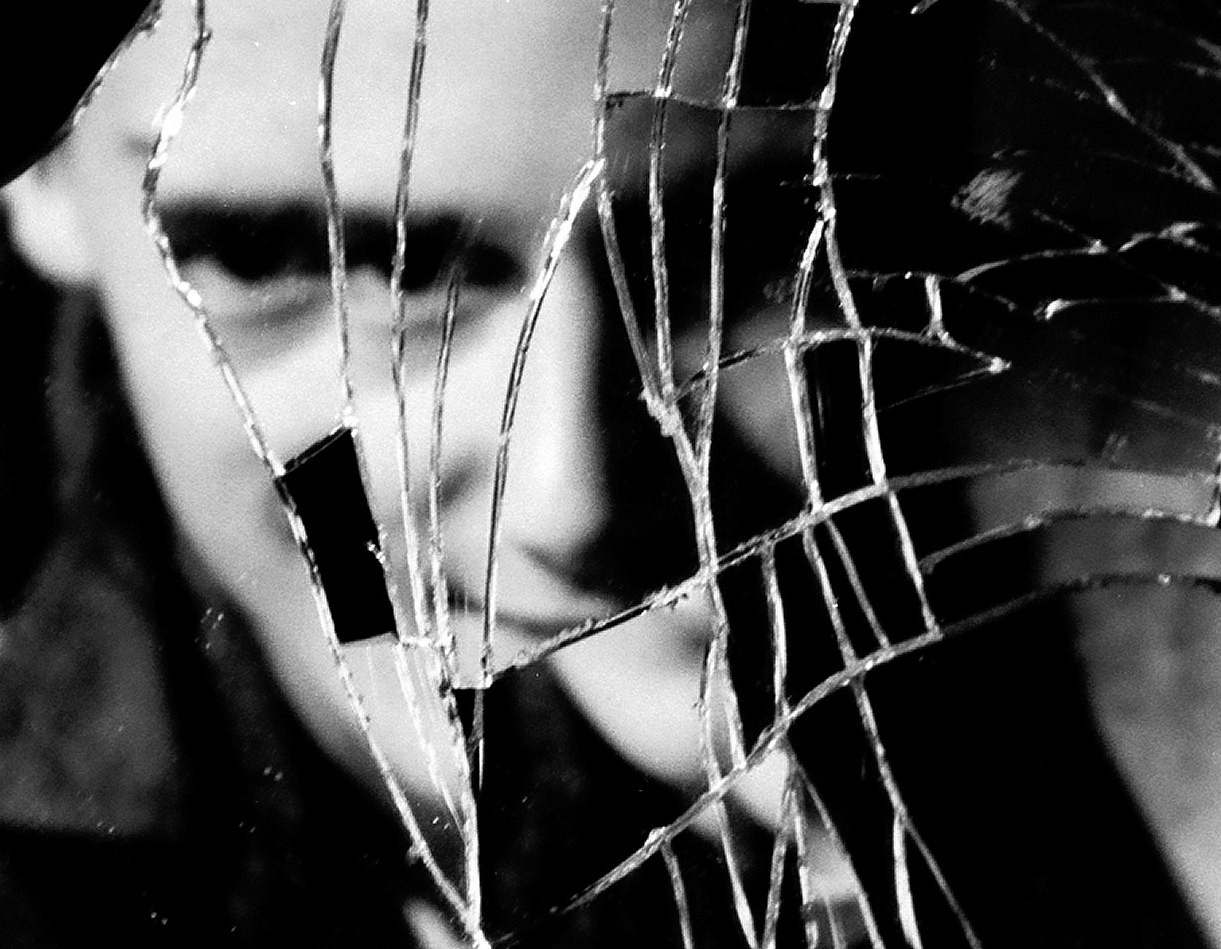
A New Story by the Master of Hardboiled Detective Fiction

“The Glass That Laughed”

by Dashiell Hammett

Conscience prompts hallucination and weird phantoms make an end

Moonlight, slanting through the window, became a white pattern on the floor of the room in which Norman Bacher awakened. The carafe on his bedside table was empty; he had drunk often that restless night. Fumbling for his slippers, he got out of bed. The bureau’s mirror threw a reflection at him.

In the dim light, hair rumpled, face paler than ordinary, the face in the glass was too like Eric’s not to startle Norman. He brushed a hand across his forehead and blew his breath out sharply. What had for an instant been a dark stain on the mirrored brow was only a pendant lock of hair. He studied the face in the glass until his pulse was steady. Then he went for his water and returned to bed. But he could not sleep.

He knew that what remained of his brother would never be found, never searched for. He knew no one could suspect him of having murdered his brother. Eric Bacher and some fifteen thousand of the bank’s dollars had vanished simultaneously. Reckless spendthrift Eric, with his weakness for gambling, always deep in debt, taken into the bank a few months ago only because his brother earnestly requested it. There were people — many — in Bradton who preferred Eric’s society to Norman’s, but not even the fondest of them could suspect Norman of any part in the vanishing of his brother and the money. Thrifty, industrious Norman, with thirty years of sober drabness and twelve years of faithful service in the bank to his credit. Certainly there was little likelihood of disaster from without. From within — he had provided against that too.

He knew himself down to his least weakness, and he had planned his crime with adequate allowance for each quirk of his nature. Nights of sleeplessness, gusts of cowardice, even the occasional remorse that could be routed only by thinking of what the stolen thousands meant to him — they were not to buy folly, those dollars, but to start him toward the wealth and power of which he dreamed — all these things he had considered and weighed and measured before he had acted. But there was this thing he had not foreseen.

Neither of the Bacher twins had ever been mistaken for the other. The most casual acquaintance could not have made that mistake. Norman’s face was pale, grave, with the compressed, secretive mouth and steady eyes of the young man whose career is a serious thing. Eric’s face had color, was mobile, and his mouth was always either open or about to open — a great talker and laugher. Nevertheless, their features — seen when sleep, say, had robbed them of their daytime expressions — were much alike. The differences were all in the pulling here and there of muscles at the behest of two identities that were as far apart as only brothers can be. In unconsciousness one brother’s face was the other’s, except for coloring. Eric had pink skin and a red mouth.

But Eric’s face, just before the bullet had struck, and just after, had been twisted and blanched — first by fear and then by a spasm of brief pain, perhaps — into a mask that would better have become his brother. Norman had seemed to look into his own face dying with Eric’s body. In his mind had remained the impression of his own face distorted by the fear of death — no stranger to him — with a red spot in the forehead where a metal pellet had been driven into Eric’s brain. It was Eric who had been shot and who had died, but through Norman’s brow, the blood had trickled down Norman’s face.

Twice within the day this dying face had looked at Norman; from a store window on Broadway this afternoon, and now from the bureau mirror, made terribly real this time by the counterfeit scar on the forehead. Hope said that this seeing dead Eric in his own likeness was a trick of overwrought nerves, a trick that would lose its horrible effectiveness as his nerves gradually relaxed into normal steadiness. Fear said that through this trick too-taut nerves would destroy themselves and their owner; that each repetition of the illusion would increase the tension, that the greater the tension became, the more frequent and real would the illusion be — until the inevitable collapse.

Were hope right, or were fear, Norman Bacher knew he could not hide from this thing. All his planning had been based upon the principle that shadows pursue fastest when fled from. He got out of bed and sat in the moonlight before the bureau, looking into the down-tilted glass. This illusion had to be forced down if disaster were to be avoided; he knew himself to the least weakness. After a while he slept, his head against the chair back. He had seen nothing in the glass except his own face. Later he awakened with a stiff neck and went back to bed.

Twice the next day he saw Eric’s dying face — in a window of the bank, and in a chewing-gum machine on First street. Each time he faced the reflection until he was steady-nerved in the assurance that it was his own and not his brother’s face. He bought a green eye-shade. His desk at the bank faced a window that became a dim mirror when the awning was lowered in the afternoon. He had not yet seen Eric’s face in that window, and did not wish to.

Coming home from the bank that same afternoon he took his first definite step in flight from his dead brother’s face. The mirrored chewing-gum machine in First street was in his path. Approaching, he kept his eye steadily upon it until he came abreast. Then he spied Mrs. Dunan, the bank president’s wife, coming toward him. He hastily looked away from the mirror. He feared that if he saw Eric in the glass this second time he might be startled into some momentary gesture of betrayal. So he turned his eyes toward Mrs. Dunan, and lifted his hat — but in the very act of averting his eyes from the mirror he had caught a flash of Eric’s face. He went on, walking fast, for the first time running from the illusion. After that he was never to be certain that it was an illusion.

That was Saturday. He stripped the house of its mirrors that night and piled them in the cellar. At midnight he went to the cellar again and brought four of the largest mirrors up to his bedroom, where he propped one against each wall. In the center of the room he sat on a chair, and turned his face from mirror to mirror, looking into the four reflections of a face that was unmistakably his own. It was after daylight when he gave it up and got into bed. As he raised his head to adjust the pillow more comfortably under it, Eric’s white face looked at him. It was not Eric’s face when he sat up in bed and peered through the thinning dusk at the glass. It was his own. All day Sunday he prowled through the house in which his brother had died; upstairs and downstairs, ceaselessly, aimlessly, he walked; from the dusty attic to the damp cellar, with its pile of broken glass where he had worked with an ax on the mirrors. Every light burned, and everything that could cast a reflection was covered by a rug, curtain, sheet, towel, or cloth of some sort. The tow attic windows had no blinds. He had turned away to find covering for them, but had been afraid of what they might show him when he returned. A candlestick lay on a trunk nearby. He broke the glass out of the windows with it.

Shortly after midnight he was in the cellar poking at the ruined mirrors until he had a triangular fragment large enough to give him back his face. Carrying it upstairs, he stood it against two books on a table. He sat down and stared into it, elbows on the table, face on hands. As he sat looking into the face that was so certainly his own and not his brother’s, his eyes became fixed with hypnotic rigidity. He could have wrenched them away only with severe effort, but he made no effort. All of him was centered on what showed in that ragged bit of glass. His breathing became heavy and mechanically spaced. His eyes turned upward and outward, though the lids did not close.

Sometime later he came to with a convulsive start. The glass reflected his own face, white and harried and unscarred of forehead. He resumed his staring — he had dozed for an instant, perhaps, dreaming. . . . Through the silent earliness of Monday morning came the striking of the City Hall clock. He did not hear it. His eyes were focused glassily, unswervingly on the glass. The clock struck again, later hours. The sun crept around the drawn blind and laid parallel strips of gilt on the floor. He neither heard nor saw.

An elbow slipped. His head dropped, knocking the mirror over. He jumped to his feet, upsetting the chair, crying aloud in crazy terror. Then he looked around the lightening room and laughed jarringly. The night had passed. Nothing had happened. He felt suddenly childish, silly, ashamed of the seriousness with which he had taken the illusions.

Something tickled the bridge of his nose. His hand came away red. A stinging was in the center of his forehead. He snatched up the mirror. Eric’s face, white and twisted by terror, looked at him. From the hole in Eric’s forehead blood still trickled.

Screaming, Norman Bacher bolted out of the house. Two men — a telegraph operator and a brakeman — were across the street, walking toward the station. He dashed over to them and began shrieking his confession into their astonished faces. He gestured wildly. The triangular piece of looking-glass — its dagger-sharp apex stained freshly red — sailed out of his hand, and shattered on the sidewalk with a tinkling that was like the distant laughter of children.

All The Actually Decent Men in Fiction We Could Think Of

W e know that in real life, a good man is hard to find, but you’d think solid dudes would be readily available in the realms of fiction.

It turns out, though, that caddishness and ego are such universal heroic traits that it’s tough to identify thoroughgoing mensches even in novels—especially if you rule out characters who remain children throughout the book or series. (Sorry, Dickon from The Secret Garden!) It’s even harder if you rule out dogs. This whole list could have been male dogs.

For our purposes here, a good guy is not necessarily “lawful good.” Breaking rules in service of the greater good doesn’t disqualify a character: Jean Valjean of Les Misérables steals a loaf of bread, but only to feed his family; The Hunger Games’ Cinna plots rebellion against a super shitty regime. Good guy qualifications that do apply: neither emotionally nor physically abusive; honest with and supportive of friends and lovers; doesn’t use people for money and/or sex; and finally, doesn’t predicate his affection on virginity. Not a high bar! You’d think.

During my research, I had trouble remembering all the crappy things characters I liked had done. C.S. Lewis’s Aslan, though not human, is alright for a Christ figure—but someone reminded me that he wouldn’t let Susan back into Narnia because she liked makeup and boys. I liked Zora Neale Hurston’s Tea Cake, but forgot that he beat and stole from Janie. I thought of Shakespeare’s Ferdinand, but realized his love for Miranda was explicitly virginity-based: “Oh, if a virgin, / And your affection not gone forth, I’ll make you / The Queen of Naples.” Bye.

To be fair, no one likes a Mary Sue (or Gary Stu). Bad Boys often do well in literature, whether you’re into controlling blood-suckers or condescending aristocrats, especially when they’re redeemed by a female protagonist. In real life, of course, we’re all flawed, and perhaps a lack of good fictional dudes suggests a lack of flesh-and-blood inspiration. But it’s worth noting that if I tried to make a list of “good women characters in literature,” the difficulty would be confining it.

Our list is obviously not comprehensive, although crowds have been sourced. In talking to people about putting together this list, the fact that it took so many women and men so long to think of characters to add to this list is reason enough to write one. With that in mind, here’s an incomplete list of Guys Who Can Hang.

Watson also invented the side-eye.

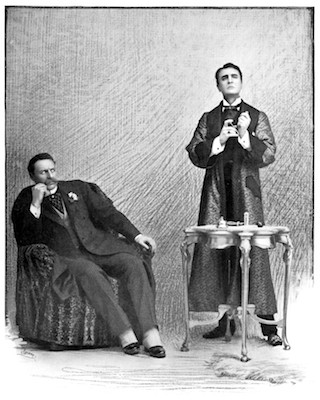
John Watson, the Sherlock Holmes stories by Arthur Conan Doyle: Watson is the thoughtful, sensible foil to Holmes’ dickish genius. Holmes gets the glory; Watson gets to be the one we actually like.

Jean Valjean, Les Misérables by Victor Hugo: He steals a loaf of bread to feed his family AND IT’S FINE.

Jem Carstairs, The Infernal Devices trilogy by Cassandra Clare: Despite his forced dependence on a demonic drug, Jem is encouraging, supportive, remarkably lacking in self-pity, and at one point rescues a cat from the clutches of evil.

Cinna, The Hunger Games trilogy by Suzanne Collins: Cinna is both an aesthetically brilliant stylist and a member of the underground resistance that topples a dystopian regime. His gold eyeliner is a bonus.

This image also appears in the OED’s entry for “superior.”

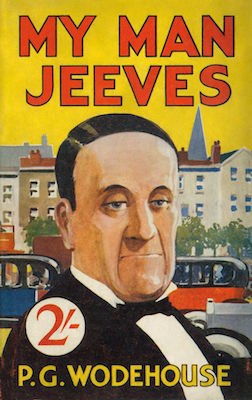
Reginald Jeeves, the P.G. Wodehouse universe: A self-described gentleman’s gentleman, Jeeves is so flawless that his name has its own entry in the Oxford English Dictionary.

Daisuke, And Then by Natsume Sōseki: Daisuke is decent if unmotivated, living off his parents’ money in Meiji-era Tokyo. He lives a chill life, reading, philosophizing, and writing letters. Even when he falls in love with his friend’s wife, he doesn’t do anything super creepy.

Ethan Figman, The Interestings by Meg Wolitzer: A nerdy and immensely talented artist, Ethan manages not to be a jerk after achieving success.

Gabriel Oak, Far From the Madding Crowd by Thomas Hardy: Farmer Oak stays loyal to our heroine, Bathsheba, throughout her life, respecting her independence and valuing her friendship despite her initial rejection of his marriage proposal. And he saves a bunch of her sheep from bloat.

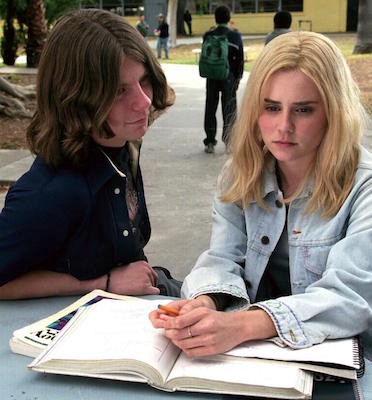
Long live Bob Newby — another good man.

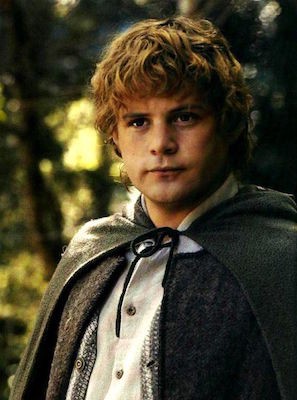
Samwise Gamgee, The Lord of the Rings trilogy by J.R.R. Tolkien: Sam is the steadfast best friend we all want. Motivated, too: he “burned with a magnificent madness, a glowing obsession to surmount every obstacle.”

Tengo Kawana, 1Q84 by Haruki Murakami: Writer, math teacher, and remarkable hand-holder, Tengo remains thoughtful and kind throughout an increasingly complicated tangle of parallel universes. When Tengo’s mentor asks him to rewrite a young woman’s manuscript, Tengo is so uncomfortable that he insists on meeting with the author before accepting the job. A male writer who doesn’t feel that a younger woman’s prose depends on him — imagine!

Captain Carrot Ironfoundersson, the Discworld series by Terry Pratchett: A human raised by dwarves, Carrot is one of the only literary law enforcement officers I’d trust. Honest, loving, and simple (but not stupid), he consistently places the needs of the public above his own.

George Knightley, Emma by Jane Austen: Mr. Knightley is a relatively down-to-earth guy and lifelong friend and confidante of our heroine, Emma. By Austen standards, he’s not even particularly classist. Per Zoë Triska: “Knightley is an actual nice guy, not a ‘nice guy.’”

The editor’s first choice image was actually this one.

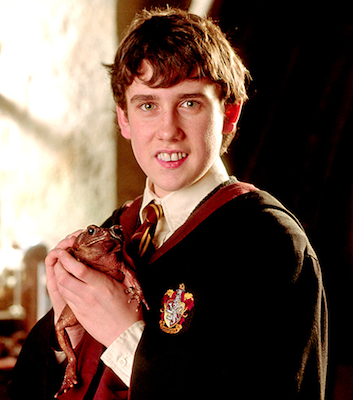
Neville Longbottom, the Harry Potter series by J.K. Rowling: A shy and awkward kid, Neville Longbottom grows into an underground organizer and snake-slaying badass. As Harry said, he’s worth twelve of Malfoy.

Philip Pirrip, Great Expectations by Charles Dickens: Pip is honest, hardworking, ridiculously forgiving, and a friend to escaped convicts.

Sandy Rogers, Not Without Laughter by Langston Hughes: In turn-of-the-century Kansas, Sandy Rogers grows up reading books and questioning morality, religion, and race relations. Hughes described the character as semi-autobiographical, and I think we all want to hang out with Langston Hughes.

Astrid and Paul in the movie of ‘White Oleander’

Paul Trout, White Oleander by Janet Fitch: Our heroine, Astrid, bonds with the artistic Paul in a center for foster kids without placement. Unlike many characters in White Oleander, Paul doesn’t try to manipulate or murder Astrid. When she leaves the center, he remains in touch from afar.

Gregor Samsa, The Metamorphosis by Franz Kafka: Gregor’s life as a traveling salesman sucks, and then he wakes up as a cockroach. In both unpleasant stages of life, he loves and cares for his family, and dreams of sending his sister to a music conservatory. Then he dies a monstrous vermin.

The Girls Who Turned into Trees

Novel Gazing is Electric Literature’s personal essay series about the way reading shapes our lives. This time, we asked: What book was your feminist awakening?

1. A Warning

I have to tell it slantwise. Straight on, you will not understand. You have not understood. You do not have the language.

Listen close, now. Listen and do not forget.

2. A Story

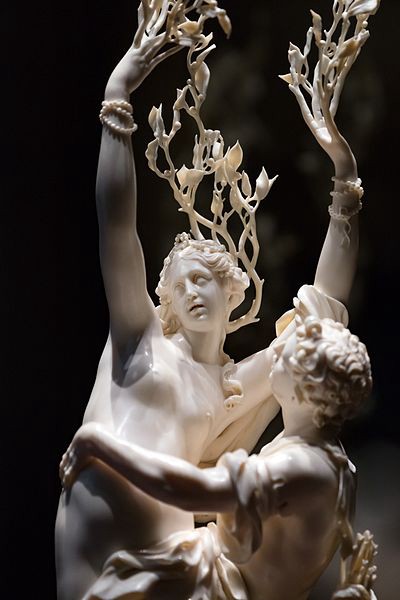
I read the story in a book when I am ten. There is a picture but I can’t understand it, not then: the woman tree, her reaching.

Once she was a nymph of Artemis. She roamed the woods. Free with her sisters. Freely alone. Once, the trees looked like shelter and she ran, naked, with the wind on her skin.

Then Apollo came into her woods. Shot with Cupid’s arrow, startling nymphs with his needing. He didn’t seem scary at first. He wasn’t Zeus, the woman-chaser, or Hades, kidnapper of virgins. He was the god of music and poetry. He was artsy. He was sensitive.

Still, he chased her. But who could believe it? So unlike him. Must be a mistake. Must be a misunderstanding.

Daphne, nymph of Artemis, roamer of forests, fleet-footed runner, is scared. She is running. He is chasing. She is tiring. She is sure she will be caught. She is calling for help. She is begging her father, the river god, to save her. We are no longer safe in these woods with the nymphs and the trees and the goddess — we are caught in the desires of powerful men. They make currents to sink us, whirlpools to swallow us whole.

What kind of father turns his daughter into a tree and thinks that is protection?

What kind of father turns his daughter into a tree and thinks that is protection?

She is changing as I watch her. I cannot look away. I feel her bark edging over my skin. I feel limbs grow long. I harden. I feel feet sink down until I cannot move them. The wood masks my face. I hear my leaves rustle. I see the man coming. I am frozen in place.

He steals a lock of hair, a branch of leaves to make a crown. He shouts apologies. He weeps for what he’s done. But I have lost my girl shape.

3. Twelve

When the first cat-call comes I am running, late, for my mother. Mothers wait and mothers worry and I don’t want my mother worrying. I run through the shadows of trees in a neighborhood that is peaceful and leafy and safe. The shout is out of place. The passing car is gone in seconds. But the shout lingers, a dissonance hung in the air. I won’t remember the words. I will always remember the feeling. Bark growing. The strangest sensation. Fear and strength at once. I stop running. Running makes them think that you want to be chased.

4. Fourteen

Breasts draw attention. Fleshy. Womanly. Escaping from barked-0 up neutrality. We are told even bra straps scream sex at the boys. Hide. Hide. Cover up. Eros is not to be toyed with. Keep the budding breasts concealed. What terrors they’ll bring if they blossom.

Apollo and Daphne by Jakob Auer. Photo: Manfred Werner

5. Eighteen

The kiss is quick, unwanted. The grab, the hold, the lurch of lips. New, wet, leach in my leaves.

Ass grab in bar. Who? Can we see? What would we do if we could?

The man lays himself in my bed and I curl myself small in the corner. Polite. Be polite. Good girl. Nice.

Come outside. Smile. Come with me. Smile. Kiss. Smile. Now. Smile. Fuck. Smile. Take it off. Smile. Smile. Smile. Hand

in hair on bus. Not mine. Stranger

hand. Eyes. Always

eyes. Always

wanting. Always

needing. Mom/whore

give.

6. Nineteen

Words do not mean what they mean. No means maybe means yes. Stop means maybe means go. Maybe is not a word. Maybe is something invisible. In between. Unsure. Not certain. These words do not exist. These words default to yes.

Bifurcate

language. Bind

the binarium. All this binomial business

bisected to

bipartite parts.

Bisexual

does not mean what it means, means different to you. You say this word means extra-sexual woman, super-sexual woman. It means woman wanting sex with any everyone. And if there are no bounds on potential desire then she must desire you desiring her. This word means woman wanting all the time. It means “she likes it.” It means “she wants it, bad.” It means she must invite your leer, your touch, your kiss, your grab, your hard, hard

hold.

Push that word down into roots. Bury that word deep in the deep underground.

7. Twenty

Father always said, tell women they’re beautiful. Had to come over and say it. Number now? Kiss? Fuck? Smile. I gave you a compliment.

8. Twenty-Five

Watching Titus. Smart women, grad school women. Watch a woman tied up, see her stand bearing arms replaced by tree limbs and blood. Such blood. There is Daphne in an image so inhumanly literal we cannot believe. Too fantastical, too familiar, too —

Roomful of women. Watch like witnesses. Can only try to talk about it after.

9. Thirty

The student — the adult student — is angry. Looms while he tells me I don’t know what I’m doing, don’t understand, am not correcting correctly. His brilliance. My stupid. Door blocked by his body. Does the window open? Could I move if I had to or am I rooted in place?

Other students walk in. Man moves away. Hands shake for the rest of the hour. I teach over leaf-rattle nerves that no one hears but me.

It happens every term. Some version. Some old/new iteration. Listen to a roomful of women talk teaching and you’ll hear it repeat. Again and again. We rarely tell anyone. We start to see it as part of the job.

10. Thirty-Three

All the men are talking. About sexual harassment. Good liberal feminist men meaning well. They are having a serious discussion. About sexual assault. They are mourning fallen heroes. They mourn men they admired. Good liberal feminist men meaning well just like them. Sensitive men. Artsy men. Men of Apollo.

There are women in this room. We do not speak in words. We rustle our leaves at each other. We

try to meet eyes around bark.

The men watch us, expect explanation.

11. A Question

What can we say to you? You rose up through different dimensions. You turned into creatures apart. Words mean different to you. What root whispers, what leaf rustles, what branch groans, could you hear? You speak a different language. You do not have our words.

What if our foundational story of difference isn’t Babel, not the sin of aspiring skyward? Not Adam and Eve and the sin of seeking knowledge?

What if our story is Daphne and Apollo? Tale of power unacknowledged. Sin of power misapplied. Sin of power made to harm until, dividing, we change to each other.

What if our foundational story of difference isn’t Babel, not the sin of aspiring skyward? What if our story is Daphne and Apollo?

Tell me what shapes you grow into. Men are animals. Chauvinist pig. Wolf in the hen house. Bear-wolf.

12. A Story

Our girls grow into trees. Subject to an ancient curse. Shaped by your burdens. Bearing those burdens in branches.

Too quiet. Too loud. Emotional. Bossy. Frumpy. Hysteric. Mom/whore. Smile/bitch.

We give you funhouse femininity. We give it just for you. Just because you threaten so nicely.

You don’t see the bark. You don’t see the branches. You don’t see the forests we make, the vast underground systems of roots we have built. Generation over fallen generation. Secret language

we push underground, so deep even we can forget it.

Fury of words. Fury of story. Fury that rends on the inside.

I dream in angry forests. Simmer of sap in deep winter. Awakening trees rising. Lifting battle

hardened roots to run. Not away. This time we run toward you. A whole forest of fury.

Eight Tiny Stories, Translated From the Emoji

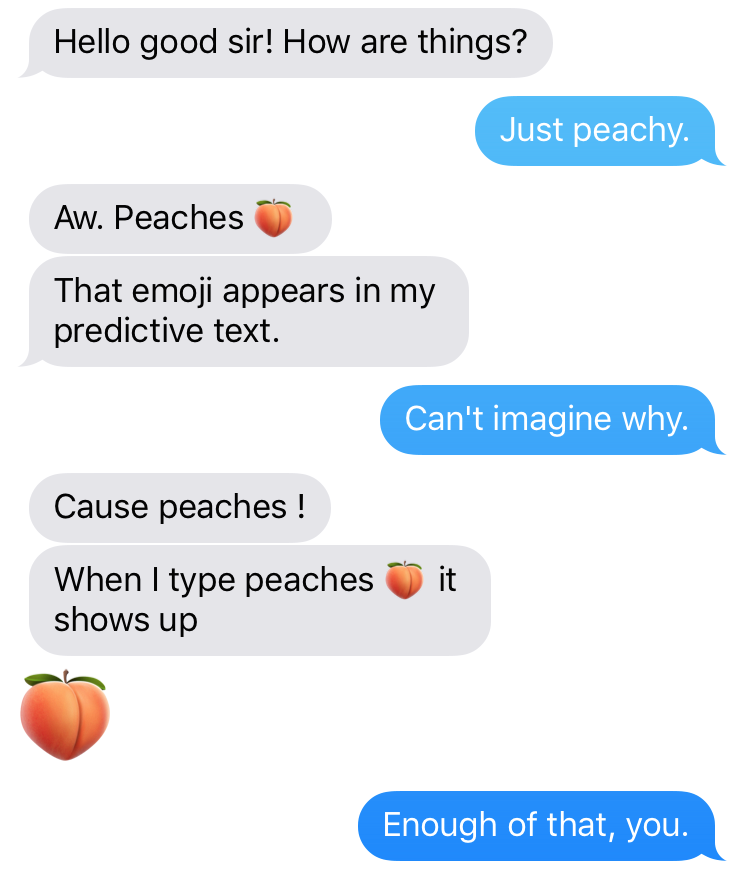
First, an origin story. In October of 2016, my friend John Bateman became obsessed with his iPhone. Of course, this did not make him unique. Specifically, he’d become fascinated with a new texting feature. Now, instead of just autosuggesting the word “bird,” your SMS also gave you the option of texting an emoji of a bird’s head!

When I told John I was doing “just peachy,” he texted, “When I type peaches, it [Peach emoji] shows up,” and then sent a text of a giant peach. I wasn’t sure if John knew that sending a big peach emoji to someone was like showing them a butt, so I tried to discourage him, fearing a barrage of eggplants. This worked not at all. He texted me an apple! A cookie! A snake! A pile of books!

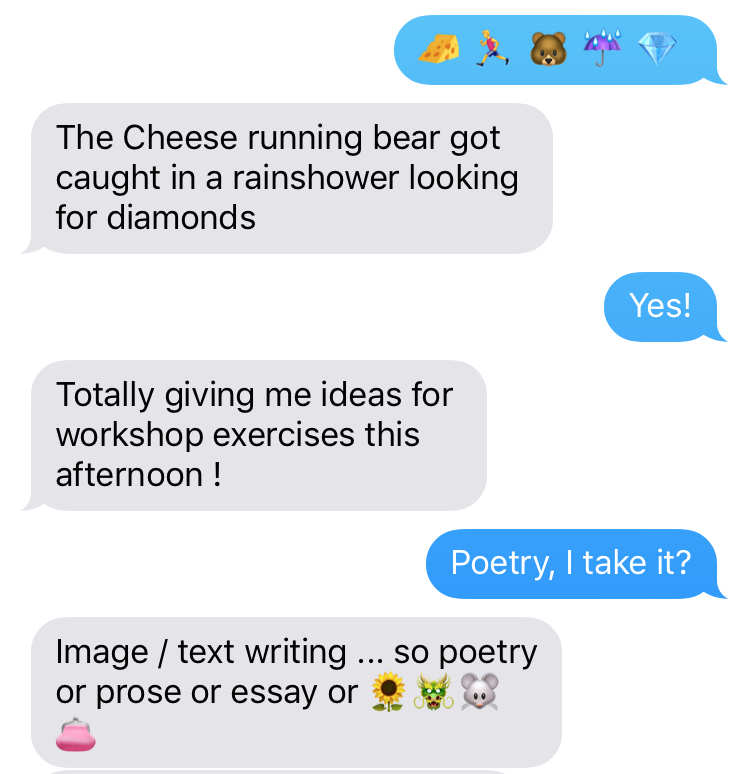
“This is kind of amazing” he wrote. I told him, “Knock yourself out,” and then sent a text consisting of a series of five emoji I had randomly discovered by typing in the words for them. John, who, like me, is a writer with an interest in the interplay of words and images, assumed I’d hidden a cryptic message in the random sequence of little pictures. “Write a package, spider earth cutting?” he asked. I only responded with five more random emoji. “The Cheese running bear got caught in a rainshower looking for diamonds,” he mused. And thus began a game that has continued to this day. One of us texts five random emoji to the other, and the recipient has to write a story (roughly of tweet length) to explain each of the emoji in order.

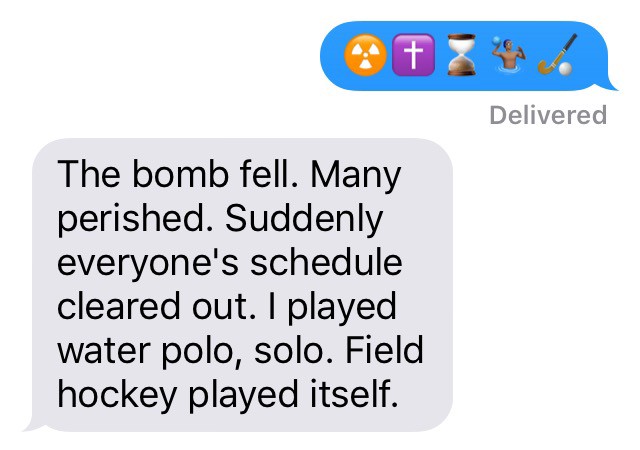
Below are eight of our collaborative creations.

—James Hannaham

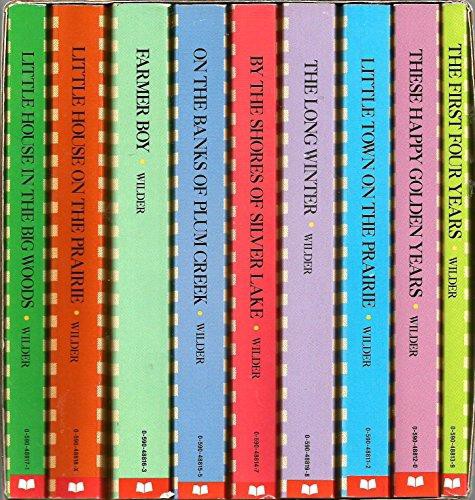
Laura Ingalls Wilder’s Magical Objects

The cup, the gun, the doll, the cape, the button box and the scrap bag, the stick of candy savored and then gone, the carved shelf, the china shepherdess, the fiddle and its song, the story, the dress with blackberry buttons, the golden pin and the engagement ring, the new stove, the red mittens, the willow rocker, the string of Indian beads, the blue coat lined with swan skin, the butter churn and butter mold, the bullet mold and molten lead, the cow, the horses, the geese, the chickens, the kitten, the hand-knit lace, the shiny penny, the hay stick, the coffee grinder, the covered wagon, the sunbonnet swung by its strings.

If you have read the Little House books, you recognize these things, the practical objects and the magical ones. Perhaps you, too, have coveted them, bought replicas in a gift shop, scoured Ebay, antique stores, and rummage sales for items like Carrie’s china dog, Laura’s glass box, or Ma’s thimble, then felt the connection spooling through the object straight home to the Little House. Perhaps like one historical archeologist, you have even allowed Laura’s “detailed, loving references to the family’s stuff” determine your choice of a career.

The Little House on the Prairie books

When I first read these books, I loved the practical objects and the activities they engendered. I wanted to churn butter and make my own rag doll, see a bullet made at an open hearth, prize new woolen mittens as a Christmas gift, rejoice as Laura did in receiving my very own tin cup for the very first time. I wanted to wrap myself in woolen veils to keep warm and wear layers of petticoats trimmed with lace I’d made myself. I wanted to grind wheat into flour and then bake it into bread, to dance to a fiddle tune. And I did do some of these things —baked rugelach with my grandmother Bertha, whose story of emigration from eastern Europe had always fascinated me, learned to knit, make jam, and square dance, sewed patches on my jeans if not the jeans themselves — as I searched for a more direct connection between what I consumed and what I produced, romanticized and idealized though that connection may have been. It was the 1970s, and even for a Manhattan teenager, the back-to-the-land movement had an allure.

I wanted to grind wheat into flour and then bake it into bread, to dance to a fiddle tune. It was the 1970s, and even for a Manhattan teenager, the back-to-the-land movement had an allure.

I longed for the pretty decorative things too — a golden bar pin etched with a little house, the gilt braid along the edge of a dark blue flannel dress, beads collected at an Indian camp and tied up in the corner of a handkerchief, Laura’s engagement ring and her oval glass bread plate saved from fire. I did not long for a single penny as Laura did, but I longed to long for one, longed to feel that in scarcity anything small and shiny would take on a special gleam.

Even the lovely and useless things were not magical, though. The magical things were so pleasurable that they could never be forgotten, so powerful and terrible that they could never be touched. Only these special objects magnetized my eyes. In Constructing the Little House: Gender, Culture, and Laura Ingalls Wilder, Ann Romines has called Laura’s longing for these objects a “transcendent desire.” The blackberry buttons on Aunt Docia’s dress, juicy enough to eat, the knick-knack shelf of vines, flowers, and stars carved by Pa, the china shepherdess always placed on that shelf, and Ma’s fine silk and wool delaine dress transported me, too: the object itself and the desire for that object coalesced into a tunnel or doorway or portkey and pulling me physically into the world of the books. These things are weighty — as Romine says, “heavy with stories.”

When Aunt Docia reappears, Laura recognizes her through the memory of those buttons, time-traveling back to the sugaring-off dance where she first saw and craved them. These magical objects push us, pull us, even as they command stillness and demand silence, a hand outstretched. Only Ma can touch the shepherdess. If Baby Carrie clutches her, she may shatter. If Laura tastes those blackberry buttons, she will find only jet or glass. (So long in mourning, Queen Victoria introduced the fashion of carved jet buttons; poorer folk would have mimicked her style with black glass). The knick-knack shelf’s carved vines, moon, and stars are traced by eye, not hand, and even Ma could be transformed into something “so rich and fine that Laura was afraid to touch her.”

I did not long for a single penny as Laura did, but I longed to long for one, longed to feel that in scarcity anything small and shiny would take on a special gleam.

The china shepherdess, most iconic of these iconic things, has a cameo in every book, described the same way each time — or nearly so, as if the hand of memory is turning the little figurine this way and that, as if narrator-Laura is saying “Oh yes, there were skirts,” then later, “Oh yes, the skirts were wide.” At first she’s a little china woman and then a little china shepherdess. At first she wears a china bonnet over her china curls. Her bonnet is never mentioned again, but her hair is often described — how it’s golden, how it’s curled. Her apron is pink right away; later, her cheeks are too. Her dress is laced across in front, and later those bodice laces tighten. Her little shoes are always gilt, but only later are her eyes called blue. Although Laura claims that the china shepherdess is always the same, smiling the same smile, her eyes as sweet as ever, her hair as bright as it was so long ago in the Big Woods, she changes and shifts in subtle ways. So static and solid, even so, she shimmers.

Another of many supposed replicas of the Little House china shepherdess

Through seven books, from the moment Pa places her upon the carved shelf in Little House in the Big Woods to the moment in These Happy Golden Years when Ma says their home is no longer a claim shanty but a real, four-room house, the china shepherdess is “the weird secret Ingalls signal that a house had become a home.” She gets packed away safely and taken out again when they have stopped moving, if only temporarily, and Ma has decided that they are no longer savages. She’s placed on the log cabin mantel in Indian Territory, in the board house Pa builds near Plum Creek, and finally in the claim-shanty-turned-farmhouse at Silver Lake but tellingly not in the Surveyor’s house which the family is only borrowing for the winter nor in the dugout where the family lives like muskrats rather than human beings, although Ma and the girls do their best to keep that earthen floor clean.

Out of the Woods: Appalachia, Literature, and the American Dream

As Romines says, the shepherdess and the good dress, like the church newspapers she treasures, signify Ma’s hopes that her girls will grow up to be ladies, her belief in order and in God, and a lasting connection between her family and the whole civilized world she left behind when she followed Pa westward. I understand this, but for me, the china shepherdess and the blackberry buttons are not allegorical objects but magical ones (perhaps other Laura objects are magical for you). They serve no concrete purpose nor symbolic one. Instead, they are pure fascination and enchantment. Their force fields both attract and repel.

Blackberry buttons for sale on Etsy

I find an image of blackberry buttons online, hoping to buy them although I’ll never sew them to a sweater or dress, but it turns out they’re dark red rather than black, plastic rather than glass. I learn about fine delaine cloth, and the probable make of Pa’s violin although I do not play. While the location of the original china shepherdess remains a mystery, one contender has turned up among Carrie’s belongings. Hurriedly I search for images of it on display in the Keystone South Dakota Historical Society, only to be disappointed as many others have been: photos show a faded little figure in gilt shoes and breeches, more courtier than shepherdess. A replica, available through the gift shop in DeSmet, is equally disappointing, despite the fact that it looks almost exactly as described in the books — perhaps because I know it’s not “the one.” This research is a grasping hand, but when it finally finds the objects, it turns out their magic depends on a constantly teasing desire that, once fulfilled, dissolves, like candy on the tongue. (Oh, how the Ingalls girls knew that saving their Christmas candy, parceling it out, would make it sweeter; oh, how they still couldn’t stop themselves from devouring it all at once. Ma knew something similar, parceling out those magazine stories to be read during the long winter.) And so I leave the ersatz objects behind and return to Laura’s words and images, objects themselves, their intense physicality, their magical aura.

A replica, available through the gift shop in DeSmet, is equally disappointing, despite the fact that it looks almost exactly as described in the books — perhaps because I know it’s not “the one.”

From my grandmother Bertha I mostly inherited costume jewelry — multi-colored clip-on earrings and gigantic cut glass brooches — and also a disintegrating wallet containing expired charge cards from Saks and Gimbels, postcards I’d sent her from my summer vacations, a bill for the upkeep of my grandfather’s grave. Only her shiny brass samovar was intriguing, the one thing that remained from her childhood in Russia. Its tall fluted urn sat in her home and then in my parents’. Dusting it, I marveled at the scrolled handles and spout, the chimney on which to warm the tea pot. I imagined my ancestors sipping tea through a sugar cube held between their teeth or drinking tea into which a spoonful of jam had been stirred, a foreign and glamorous custom.

After my parents both died, the samovar finally came to me, but in the years since, I have not unpacked it, despite its fairy tale promise, fearing that when I open the box and remove the crumpled newspaper, I will find only tarnished metal. No time machine, no repository of stories flowing as freely as hot water used to flow from its spout. I suspect that touching it will not magically allow me to remember more about Bertha or improve the memories of the two elderly women still alive who actually knew her.

Family stories leak into the world: instruction, entertainment, warning, history, savior, and sanctuary. Treasured and preserved, returned to again and again, they can themselves become magical objects.

Family stories leak into the world: instruction, entertainment, warning, history, savior, and sanctuary. Treasured and preserved, returned to again and again, they can themselves become magical objects. The Ingalls girls valued Pa’s tales so highly that the very last thing Baby Sister Grace did before Mary went off to The College for the Blind was beg to sit in her lap and hear the story of Grandpa and the panther one last time. Laura loved Pa’s fiddle tunes, and he ceremoniously left this instrument to her even though she didn’t play, but when he was gone, she missed the music, not the instrument. His stories about bears and panthers, about naughty children trying to escape the confines of a Sunday afternoon, and perhaps about Laura’s own childhood were never forgotten, she said, and “to[o] good to be altogether lost,” the most important inheritance.

The stories about my grandmother have themselves become talismanic, inscribed on my heart. They have taken on the apocryphal nature of the stories about saints. How she was a runner for the failed 1905 Communist revolution in Belarus. How she listened at the window to learn her brothers’ lessons and yearned for an education. How she came to America, alone, when she was twelve. How she escaped the Triangle Fire and started a union. I turn to these stories in times of distress, as if repeating them will bring good luck or strength, fortitude or vision; her actions serve as omen or oracle; the retelling of tales, an incantation.

Poetry Is For Everyone

I first met Jason Reynolds in 2015 at Symphony Space for a memorial honoring the late Walter Dean Myers. At that evening’s festivities, organized by Myers’ son Christopher, we heard from an array of writers and musicians who knew and were nurtured by Myers’ breadth of work. Early on in the night a statuesque Black man clad in black recited poems in Myers’ honor. His words reverberated throughout the dimly lit space. This was Jason Reynolds.

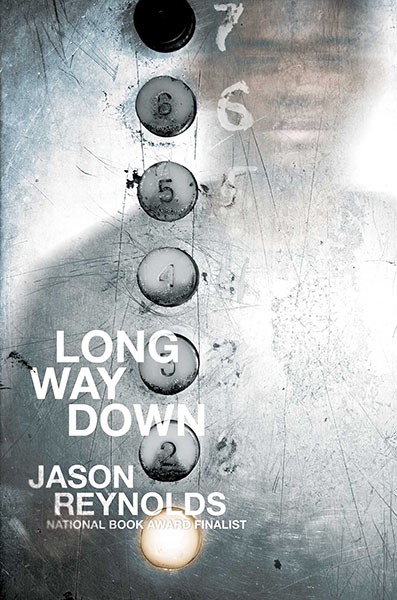
Jason’s poetry and delivery are his signature: booming, powerful, pointed, each word meticulously chosen for impact. Two years after that introduction, this voice has made him one of the most lauded contemporary authors for young people’s literature. His style, delivery, and work ethic have also lead to him being a National Book Award finalist, winner and honoree of numerous Coretta Scott King awards, and four-time New York Times bestseller. His latest bestseller, Long Way Down, a novel in verse, was also longlisted for the National Book Award. When I sat down with him during a whirlwind tour, he discussed how poetry has produced some of the most politically charged writing and how it dictates his methods for prose.


Jennifer Baker: I primarily see you as a poet. So, as a poet, how hard is it to construct a novel in verse?

Jason Reynolds: Novel in verse is not the same as a novel in poetry. That’s like calling Romeo and Juliet poetry.

JB: Which people do.

JR: Really it’s just a play in verse. Hamlet is a play in verse, it isn’t an epic poem. It’s just in verse. And I think what you can do with verse — because of the sort of suspension of rules — you can kind of fool around with format in a different way. You can play with language in a way that you can’t always do with prose. It literally becomes more of an art project for me. So in terms of if it’s difficult to write it, I think that the rules of narrative stay the same.

When you write a novel in verse, you realize how many extra words we write in prose that aren’t always necessary.

When you write a novel in verse and you do it well, you’re trying to write something that’s nuanced and complicated. I think you realize how many extra words we write in prose that aren’t always necessary. You can really trim and trim and trim when you’re writing in verse. There’s a lot that you don’t have to say. And that doesn’t mean your story has to suffer. In Another Brooklyn Jackie didn’t even write adjectives into the book. That’s where the genius lies in people like her. I think that’s where the genius is in the manipulation of language. When you’re writing in verse it’s literally about every word counting. I’ve edited this book more than any other book.

JB: I was taught poetry as specific form, this specific structure, the wording and symbolism, all that stuff, that we lose when we don’t see poetry in its many forms. I was taught the old standbys like Emily Dickinson, Shakespeare as poetry, and Yeats. It can make it feel less accessible in a way, and accessibility can mean different things to different people.

JR: One of my favorite poets is Countee Cullen, and he only wrote in tight form. But it’s powerful stuff. It hits you, every single one. And I think of Lucille Clifton who wrote these really short poems. She was the master of brevity. You may get five or six lines but it’s a gut punch. It may not be a particular structure like a sonnet or a sestina, but that also doesn’t mean that when structure doesn’t have a name it’s not structure. The danger in talking about free verse the way we normally do, we typically don’t complicate the structure of free verse. What it does is it strips the poet of agency and decision-making. There is a structure. That poet chose to break a line here or add a stanza. To punctuate or not punctuate. And that constitutes the structure of that piece.

I think accessibility has less to do with form and more to do with the poet’s ability to articulate a specific narrative. Or to be free enough to break form when form can’t fit function. In Long Way Down there are a few poems that are structured, structured poems. One of them has a tight rhyme scheme. And most people don’t know it’s there. But I put it in there because I think poetry is all the things. I think it’s a haiku. It’s a sijo. I think it’s a sonnet. I think it’s free verse. It’s three lines or five lines or a paragraph.

JB: When I spoke with Jesmyn Ward, she found when she taught undergraduates that everyone was versed in the classics in the academic atmosphere. It’s that we have to choose to learn about what’s contemporary and use that as comparison to the classics. Which is inspired by the classical, yet we do need to know about Danez Smith, Tommy Pico, Morgan Parker

JR: And Ocean Vuong. For sure. Let’s read whoever from the past and let’s read Terrance Hayes, art about grief. Or let’s read [Edgar Allan] Poe about grief and see what’s changing over time is the form, the language, perhaps the syntax.

(Poet Sonia Sanchez in 1972. New York Public Library Archives. The New York Public Library Digital Collections.)

All of Danez Smith’s class, the Danez Smith’s, the Saeeds [Jones], Solmaz Sharif, Safiya Sinclair. I mean these people are killing it. Even Claudia Rankine’s stuff. They are reframing what poetry is. And their work is derivative, to me at least, of the ‘70s Black Arts Movement with the fearlessness of Sonia [Sanchez] and [Amiri] Baraka. Baraka wrote pow pow pow. He wrote onomatopoeia in poems that he took from comic books as a kid. He was inspired by that. And I think what does it mean to be able to write pow pow pow? Well, I think 40 years later you get Danez Smith. You get people who have a certain level of irreverence, a fearlessness.

JB: I also think about the stories that poetry tells. What would you tell the person who writes prose to get them into poetry? What I keep noticing with some prose writers, or simply non-poets, is there’s a fear (or intimidation) of poetry and I’m not sure where that comes from —

JR: That comes from the classics. It comes from the over-intellectualization of poetry from the classics.

JB: But isn’t prose over-intellectualized too?

JR: It’s all over-intellectualized. But I think that the poet has always been seen as the intellect of the literary community. The poets were supposed to be the scribes of all the things. The poets were the leaders of the literary community for a very, very long time. And so, I think it just comes from the echelon this BS caste system that’s carried over. I think it’s that nonsense on top of racism, which is always there, on top of the undervaluing or de-valuing of diverse voices. The truth is Gwendolyn Brooks’ “We Real Cool” should be considered a classic. “We Real Cool” is familiar, it’s accessible. It’s interesting.

In poetry you have to know how to create stakes and in poetry you only get a little bit of space to create stakes.

What I would say though to a prose writer is I look at [poetry] as this is the ballet. You learn ballet and you can do other dances because you learn the discipline. You understand a sort of form, body, strength, muscle. But that’s what poetry is. It doesn’t mean you only have to write ballet though. Nor does it mean ballet is something that can’t be perverted or muted and flipped on its head. That’s what poetry is to me. And it’s the greatest thing that I learned how to do because it helped me learn how to write prose.

I approach the page in a specific way because I write poetry. I know how to enter, I know to exit. In poetry you have to know how to create stakes and in poetry you only get a little bit of space to create stakes. I know I’m not afraid to repeat. There’s no literary device I can’t do. I want to repeat the same word ten times. If I want to break a line in the middle of a paragraph to prove a point. If I want to jump down three lines for effect I will do that in prose because I know what it does for poetry. For me, poetry is the most distilled version of how the brain works, if it’s done right. If you can figure out how to do that right than you can implement that into your prose.

How do you create moments of trauma? How do you create moments of urgency? In poetry you’d almost create jab-like words, you’d break the line over and over again. Perhaps there’s only one word in a line, perhaps you stagger the lines. There are ways to do that in poetry that you can also do in prose. It’s actual poetic license.

JB: Thinking about what you said with the poet starting out as the thinker, we move into prose or even books as entertainment, which is fair as a form of entertainment as well as a form of education. I think in comparison to how it’s presented that becomes intimidating to some.

Poems that are the most abstract are coming from people who had the freedom to write with ambiguity, and that was rarely Black people.

JR: But there are so many different markers on that spectrum that have to be discussed. Let’s pick Shakespeare. Shakespeare’s been over-intellectualized historically. But the truth is when he was writing it at the time he was writing it for lay people. They were basically called, now, reality TV shows, sitcoms, or soap operas. That’s what he was writing, sort of pulp with jabs at the royals. But it was pulp back in the day that we over-intellectualize now. Take Langston [Hughes]. “Life for me ain’t been no crystal stair,” there’s a directness to that. There is nothing about that that is vague or ambiguous. In so many of those during the movements when people of color were writing poems, whether it be the Black Arts Movement, the Harlem Renaissance, whether it be Pablo Neruda or poetry of the exile — we can run a list — typically the poems that are the most abstract or vague are coming from the people who had the freedom to write with ambiguity, and that was rarely Black people. We still rarely make art that is ambiguous. There’s no freedom to do so. There’s no space to risk the people that we’re writing this for to understand it. I actually think we’ve been working in that tradition of accessible poems for a very long time. So for people who say they don’t understand it, it’s like “Yo, you just haven’t read the right poetry.”

JB: If you have had time to read this year, what poetry has stuck for you? I’d highly suggest Nature Poem by Tommy Pico.

JR: T’ai Freedom Ford. Her new book is brilliant. I mean so good. So good. Solmaz’s Look. Safiya Sinclair. Looking forward to reading Kevin’s [Young] joint. Danez. Liz Acevedo’s “Beastgirl.” She has a novel in verse coming out but she has a chapbook and it is dope. A little bit of everything. I don’t have time to read, but I try to jump in there.

‘Murder on the Orient Express’ Brings Color to Agatha Christie’s All-White America

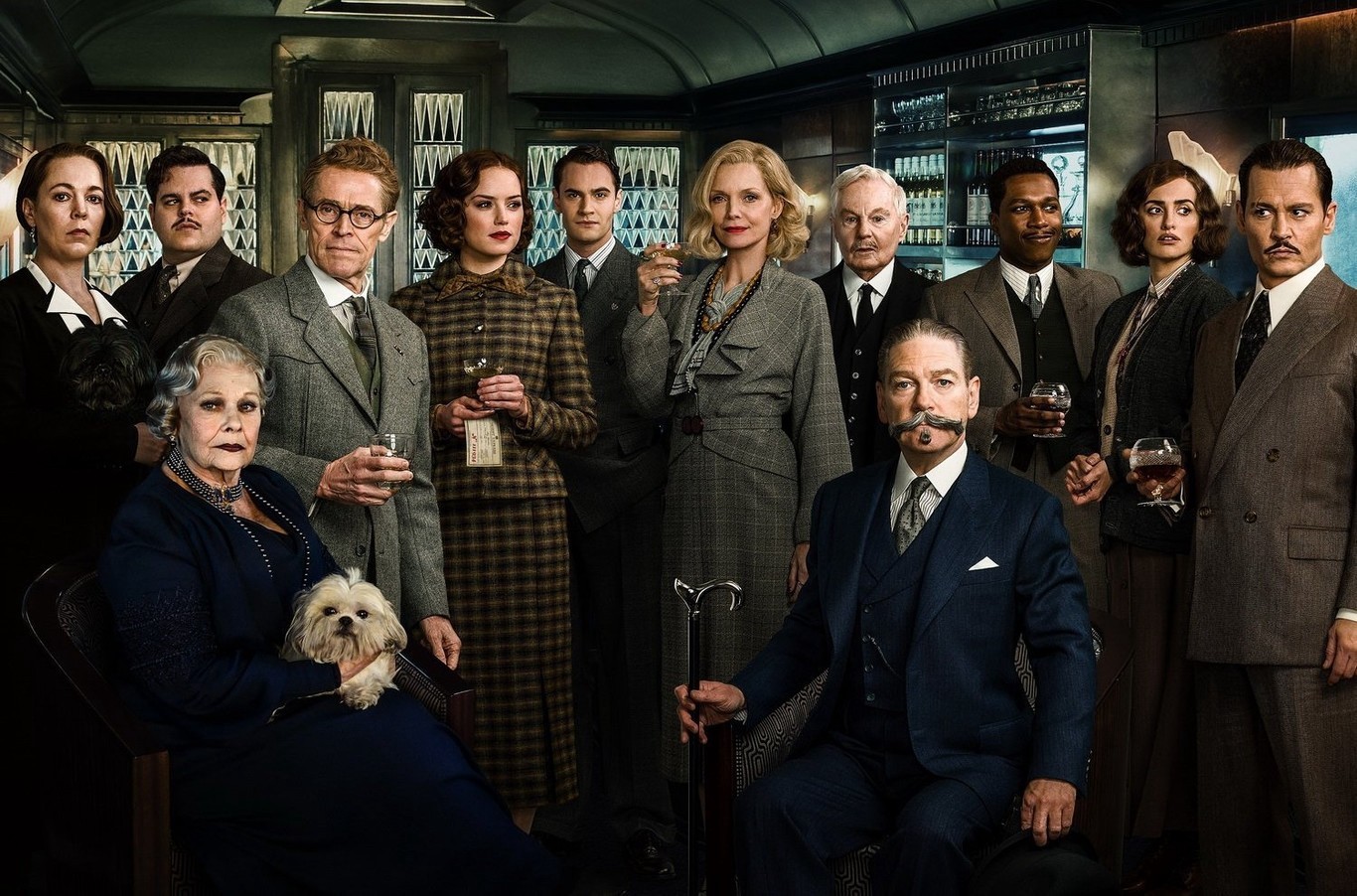
“I saw a perfect mosaic,” says Agatha Christie’s detective Hercule Poirot, discussing the passengers (and suspects) in Murder on the Orient Express. The implication is that, on this train, he can see America. There are twelve other passengers besides Poirot and the murdered Mr. Ratchett, an eclectic array of people with seemingly little to no connection to one another.

It’s the very eclectic nature of these suspects, from motormouth American Mrs. Hubbard to Italian car salesman Antonio Foscarelli to the Russian Princess Dragomiroff, that serves as the crux of Christie’s book, and of the solution. Everyone is, in the context of Christie’s vantage point, diverse, reflective of the United States. How else could all these random people on the train at the same time — and witnesses to a mastermind murder, no less? The novel serves as Christie’s commentary on America, its diversity, and its troubled idea of justice — but for modern audiences, it’s a commentary that doesn’t really land until Kenneth Branagh’s 2017 film. (Spoilers for both follow.)

Everyone is, for Christie, diverse, reflective of the United States. How else could all these random people on the train at the same time — and witnesses to a mastermind murder, no less?

Ratchett, it turns out in both novel and book, was only a pseudonym for a man named Cassetti, whose paranoia was rooted in the guilt that haunted him as one of the men responsible for the kidnapping and murder of Daisy Armstrong, the daughter of a famed pilot (a la Charles Lindberg) and granddaughter of an iconic stage actress. Cassetti was never charged with the crime, leaving a complicated web of suffering behind him, an intricate Rube Goldberg contraption of grief and death. But from where he escaped, and where the crime took place, is critical: “Ratchett had escaped justice in America,” despite the fact that “there was no question as to his guilt.” Poirot, considering the suspects, the twelve stab wounds, the impossible nature of their togetherness, correctly speculates: “I visualized a self-appointed jury of twelve people who condemned him to death and were forced by exigencies of the case to be their own executioners.” If the actual American justice system couldn’t ensure that justice be served for the murder of a child, then why not take matters into their own hands? The people on the train are, in essence, the jury of peers on which American justice theoretically relies — a justice that the criminal system can rarely be trusted to provide.

In fairness, Christie’s vision of America, and America’s conception of justice, was born of outsiderness. The Queen of Crime came from an affluent background in England, wrote most of her novels about and in England, and almost intentionally wrote with an insularity that highlighted how people within certain statuses dealt with outsiders, in terms of class, race, and gender. Her murders often involved someone of a marginalized background — someone poor or not male or something — falling under suspicion, only to find that in fact the rich folk that were the perpetrators. Or perhaps those outside the dominant group committed these crimes as poetic justice, as in Death on the Nile, where a young woman takes revenge on the rich best friend who’s emotionally robbed her for most of their collective lives. Christie’s murders either sought to subvert expectations in terms of what justice looks like for what she conceived as marginalized people, or to reify the idea that those already in power will do almost everything to keep that power.

In Murder on the Orient Express, published in January 1934, poetic justice is the primary M.O. and subtext. But this poetic justice — whose conclusion is structured, depending on the read, either like a the jury of a court or like a socialist utopia — serves to illustrate how Agatha Christie saw the United States and to what degree she understood its functions mechanically.

Miss Marple vs. the Mansplainers: Agatha Christie’s Feminist Detective Hero

Though Christie would elucidate on her thoughts about how the criminal system works in books like Sad Cypress and Witness for the Prosecution, Murder on the Orient Express is concerned with an outline of what American justice looks like. In a conversation with Col. Arbuthnot about justice, Poirot says, “‘In fact, Col. Arbuthnot, you prefer law and order to private vengeance?” “Well, you can’t go about having blood feuds and stabbing each other liken the Corsicans or the Mafia,” the Colonel replies. Say what you like, trial by jury is a sound system.” Arbuthnot is firm when he says that, that the evaluative nature by “twelve good men and true” (said in the 1974 film) is the best way of ruminating on guilt and innocence. For Christie, at least as far as this book is concerned, she seems to doubt the institutional context of that approach; it is entirely possible for the trust we put into an institution, one whose goal is for liberty, justice, and goodness, to be betrayed. Something in the machine may fail and the only logical next step will be to act autonomously. For Christie, the United States was incredibly fallible in its institutions, if not its intentions. Her understanding of justice fluctuates between nuanced and shortsighted, understanding when things aren’t fair, but not exactly to what degree and what systems of oppression are at play.

It is mildly curious how clear-eyed Christie can be about American justice while remaining relatively myopic, or at least limited, when it comes to what diversity may mean for American national identity. Poirot’s “perfect mosaic” is actually made up of different shades of white — which means there are only so many ways that the justice system can fail the people on that train.

It is not that ethnic white people are not a form of diversity, exactly, but that conceptualizing of America coheres with Christie’s tendency towards whiteness in her stories. America is kind of exotic to her, but the exoticism she perceives — or at least the exoticism she’s willing to put in her book — is limited to different kinds of white: an Italian immigrant and a Russian socialite and a German maid. It’s exotic to have a random mass of people, a melting pot. But not so exotic that actually nonwhite people exist there.

America is kind of exotic to Christie, but the exoticism she perceives is limited to different kinds of white.

Neither Sidney Lumet’s 1974 adaptation of the book, with Albert Finney as the detective, nor the 2008 adaptation for the TV series Agatha Christie’s Poirot, dig very much into the implications of the social makeup of the passengers, at least no more than the book already did. Though it’s crucial to hear Finney boisterously say “America” again and again, the former is a star-studded trifle, and the latter is a self-serious TV movie made in the “prestige TV” vein, belaboring Poirot’s moral dilemma about whether or not to let the passengers off the train, knowing they were the ones that stabbed Cassetti. Neither takes a necessarily empathetic view of the systems and hierarchies at play. But, perhaps shockingly, Kenneth Branagh’s 2017 adaptation of the book, with himself in the role of the detective, is willing to probe these questions of race, justice, and America — and it does so without becoming an overly dour affair.

Support Electric Lit: Become a Member!

Not only does the 2017 version seem more engaged with the politics of identity, there’s also a tacit understanding of the very racism that underlies much of Christie’s work. Branagh and screenwriter Michael Green make some changes to the cast of characters: Greta Ohlsson (played by Ingrid Bergman in the 1974 film) is replaced by Pilar Estravados (Penelope Cruz); Col. Arbuthnot (Sean Connery), once stationed in India, is now Dr. Arbuthnot (Leslie Odom Jr.), an amalgam of the Colonel and Dr. Constantine; and Foscarelli (Denis Quilley) is traded in for Biniamino Marquez (Manuel Garcia-Rulfo). This is not just colorblind casting or neoliberal lip service. With characters like Hector MacQueen (Josh Gad), assistant to the late Cassetti (Johnny Depp) basically saying, “I’m not racist, but check up on that Cuban guy,” and Hardman (Willem Dafoe) just being a straight up white supremacist (and implied Nazi sympathizer) who makes snide remarks about Dr. Arbuthnot, Branagh’s version dares to challenge Christie’s reputation. The film acknowledges that not only were Christie’s characters racist themselves, but that she, by sidestepping the reality of how white people and non-white people interacted in favor of stereotypes and tropes, had a racist streak too.

Branagh’s version of Christie’s version of American national identity is not as concerned with the artificial or presentational Americanness that Christie envisioned, but it does not feel revisionist so much as it feels like a rectification of something that Christie overlooked. For all of her travels to Baghdad or on the Nile, Christie is unable or unwilling to imagine a version of diversity that would be meaningful today. Branagh’s reconceptualization of the passengers on the Orient Express makes her “mosaic,” and Poirot’s ethical questions, more potent and more real.

Branagh’s reconceptualization of the passengers on the Orient Express makes her “mosaic,” and Poirot’s ethical questions, more potent and more real.

The film feels more aware of the political values that would have existed at the time, making mention of American climate in the context of different approaches to how the U.S. views Stalin and communism (MacQueen and Arbuthnot both think the other is wrong about Stalin), how British colonialism either was an act of shattering or binding (Arbuthnot’s role as doctor of color serves to complicate his role in the British’s colonial history), the bigotry faced by mixed race relationships (Arbuthnot and Debenham), and the manner in which certain suspects try to throw others’ under the bus nods to how white privilege may operate in this space. There is, like in America, an intricacy to the operation of power and politics, right here on the train.

Branagh’s update is not only the next logical step for what an Agatha Christie adaptation should be — decadent with a dash of contemporary fun. It also deepens the source material with a much more nuanced understanding of American national identity. In adding more shades of black and white, it has more little grey cells than you would think.

Does Any Book Really Need to Be 1600 Pages Long?

Double Take is a literary criticism series in which two readers tackle a highly-anticipated book’s innermost themes, successes, failures, trappings, and surprises. In this edition, Tobias Carroll and Bradley Babendir explore Matthew McIntosh’s metafictional epic, theMystery.doc.

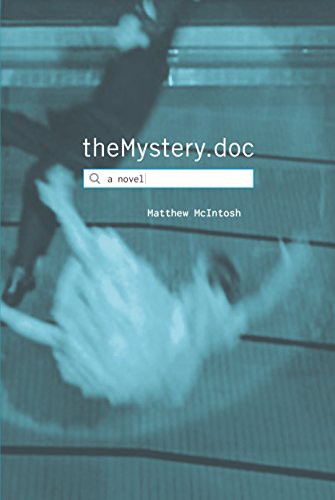
A book of this size demands to be noticed. There’s something so jarring and compelling about publishing a 1600 page monster of a novel in 2017 — a time when most novels are trimming down and narrowing their focus — to a perhaps an intentional lack of media coverage. Yet Matthew McIntosh lays the foundation with the necessary metafictional suspects: multiple concurrent narratives, typographical decoys, computer code, television stills, and even some pop-up ads. The end result is a book that’s equal parts puzzle and brick. With little else like it, theMystery.doc’s unique stature alone could be worth the price of entry.

Tobias Carroll: There is a point, 990 pages into Matthew McIntosh’s 1660-page theMystery.doc, where a character loses their mind while pondering the size and scope of a theoretical novel that sounds a whole lot like the one in front of us. Reading that, I was alternately amused that McIntosh was acknowledging the elephant in the room — this book, a supposed giant book about literally everything — and frustrated that we were getting metafictional and self-referential humor at a point when most books have begun to wrap things up.

That blend of admiration and frustration characterized my reaction to theMystery.doc pretty well. It’s about a host of things: a writer who wakes up with no memory of his life until that point, an online chat where at least one of the participants may be a computer program, a woman trapped in the World Trade Center on September 11, the nature of God. It’s also a genuinely experimental work — maybe the literary equivalent of a sprawling independent film like Chris Marker’s Sans Soleil — that does wholly unorthodox things with images and spacing.

Sometimes I felt as though I was tapping into something transcendental; at others, I felt like I was literally wrestling with it. So I’m curious to know what you thought.

Bradley Babendir: My reaction to the book is mostly in line with yours: awed frustration. I’m glad you pulled out that specific metafictional moment (in a book full of them) because I found it to be disappointing too. There was something so typical about it that left me a little cold. In one sense, I agree: I was comforted by McIntosh’s acknowledgement of its hubris. In another, the acknowledgement fell flat, almost redundant.

I don’t know if you had a physical copy of the book or not, but the size and scope of it is self-evident. It is gigantic. It is physically difficult to read because it is so heavy. It’s over four pounds. Without getting too abstract: What does that mean? What does it mean to have the reader physically wrestle the book to be able to read it? My initial thought: The exhaustion of reading it was essential to many of the book’s powerful and beautiful moments. The book is many things all at once, and, to make the framing here slightly more specific: What parts were working best for you? I thought the chat sequences with the computer program (or programs) was the most engaging and exciting to read. The more conventional narrative — the sections about the author — were a little tougher to get through.

What does it mean to have the reader physically wrestle the book to be able to read it?

There isn’t really a level of interest on a specific subject that’s going to make someone who has a visceral, negative reaction to a book of this size want to read it. Openness to the size would be the most important piece, and I think that in the eyes of most readers, that will be, more so than its content, what ultimately defines it. Luckily for McIntosh, the ambition of his project matches well with the general ambitions of a reader who is drawn to something so massive.

TC: In terms of the “about everything” aspect of the book, I’m curious about your take on the more metaphysical parts. Initially, I took the title as a more straightforward riff on what a mystery is — and that’s certainly the case as well, given the somewhat classic setup of a man awakening sans memory. McIntosh’s metaphysical stakes seem a lot larger, and they don’t really ever contract over the course of the book. Did you also find this to be present? Also, did you come away with any greater understanding as to, for lack of a better phrase, the universe according to the Mystery.doc?

BB: I should admit that invocations of Christianity are something I tend to struggle to understand, having been raised Jewish. I often end up with a more surface-level of understanding because I’m never quite sure I have enough knowledge to really “get it.” Still, I found a lot of the invocations of religion compelling, like the speech or sermon beginning on page 1207 that ends with a reassuring sentiment offered to a character for whom some of “language will be lost.” McIntosh writes, “…the bible says in Romans 8, that he speaks in ways that when we can’t even articulate, God still gets said what he wants to say.” I don’t know the scripture and I don’t really believe in God, but that struck me as a beautiful idea in the context of this book.

‘The Book of Disquiet’ Is the Weirdest Autobiography Ever

I think the more general question of metaphysical stakes is a wonderful one. I grew to understand “the mystery” differently over the course of the book. I don’t know if I have a greater understanding of the world according to theMystery.doc, though I think that if I did, I might have missed the point. A lot of this book is about alienation from “reality” which, to use Phillip K. Dick’s definition, “is that which, when you stop believing in it, doesn’t go away.” That’s worth considering alongside theMystery.doc since McIntosh plays with this notion. For example, large portions of the book appear redacted. Whole pages are redacted, and there are pages almost entirely redacted with a word or two that are not. I’d like to know how you considered those passages. If I assume that McIntosh is referencing the type of documents that are often portrayed with redactions — like secret government reports — then what is redacted is most important and most sensitive. Then again — maybe they’re just black lines? As in, what’s the point? For me, the metaphysical stakes emanated from the structure and style as much as the content, though with a book like this it’s not necessarily possible to separate each, which just adds to the puzzle.

TC: I read the redactions in a couple of ways. On one level, it seemed of a piece with McIntosh’s attempts to fold in as much of early-21st century American life into this narrative as he possibly could; like it or not, I feel like redacted government documents have become associated with George W. Bush’s presidency in an inexorable way. On that level, it reminded me of Jenny Holzer’s Redaction Paintings, where the raw materials of the abuses of the War on Terror were turned into art without necessarily losing their potential to make a sociopolitical point. I also wondered if these didn’t have certain qualities of erasure poetry to them as well, which would also be in tune with McIntosh’s way of working in different artistic disciplines and aspects of other media.

Did the use of film stills, to an extent that there was a kind of interpolation of cinematic language, mesh interestingly with the rest of the narrative? And what did you make of the moments of linguistic static, where characters ran rampant across the page, but which came off like gibberish? I was reminded a little of how books like Mark Doten’s The Infernal (which also grapples with some of the same recent history), Jennifer Marie Brissett’s Elysium, and Sarah Hall’s Daughters of the North use a kind of random distortion effect in the text to suggest a document that had been somehow corrupt. McIntosh also does that on a much, much, much grander scale, which at times felt a little excessive. This is a book roughly the size of a human head, so excess becomes relative.

This is a book roughly the size of a human head, so excess becomes relative.

BB: I found most of what McIntosh was doing to be emotionally and intellectually compelling. I found a cinematic language and logic emerging as I explored the film stills and photographs. The static had a similar effect on me, in that it became more of a visual experience than a linguistic one. When there are 15 pages filled with mostly asterisks, a narrative meaning inadvertently looms but it also calls attention to itself, to look at it. I found it all so complicated and worthy of inspection as I was experiencing them and that is an argument in their favor. At the same time, their place in theMystery.doc’s narrative is much less clear to me.

Did you feel like this book is a coherent? I found it aimless. Structurally, it’s unpredictable and that — of course — becomes part of the reading experience. Eventually the book establishes its own logic. Most importantly, this was incredibly emotionally coherent for me, in that I think the book has an affective emotional arc that is, both frequently and ultimately, quite deliberate and moving. Do you agree?

TC: I’d agree with you 100% about the novel having an emotional arc that worked, even as some of its components seemed more (intentionally) bewildering. I haven’t sat down and read any interviews with McIntosh, nor have I read his previous novel–which, if the nods to it in this book are to be believed, is much more traditionally-structured than his followup. So I’m curious if he’s intended it as a kind of collage, or if there is in fact a massively complex narrative unfolding that both of us have evidently missed.

Earlier, I’d talked about the sense of this text as a kind of embedded digital work; looking back on it, that’s only increased. The book’s title is a filename; the first word we see on the first page (technically page i) is another file name: “foretellcometell.wav.” And the initial structure is such that these different narrative strands—and some of the digital-ish static that surrounds them—are distinct… until they aren’t. By the end they’ve started mashing themselves together and recombining into different forms, which seems like a very 21st-century thing, from popup links on video clips on YouTube to situating a digital animation in the middle of a news article. I wonder if this might not also be one of the themes of the book: the way that, over the last decade or so, the lines between different forms of media have become increasingly blurred, and the narrative potentials that that might offer. The fact that a different version of the title page turns up on page 1565—that this has all been a kind of prelude—supports that, in my mind.

Support Electric Lit: Become a Member!

And with that also comes questions of what humanity and authorship mean in this new context: on page 1567, there’s another variation on a chat window conversation that may or may not be between a computer program and a human being. Did you get a similar feeling: that this question of the creation of art in the early 21st century was also below the surface of some of these narrative decisions?

BB: I do get a similar feeling about theMystery.doc’s wrestling with the creation of art in the 21st century. There is certainly an interest in blurring, but I’ve thought about it more in terms of juxtaposition. I read a lot of books on my tablet, and I use the same device to watch movies, play games, send emails, check twitter, and more. This is perhaps not a new revelation but I think it’s the idea that McIntosh is really grappling with. It’s almost like a challenge. He’s asking “does this seem bizarre to you?” and it does when he’s literalized it in his book, but there’s also a reflection in daily life. We are (or at least I am) always switching between words and pictures and videos, all the time. There are writers that grapple with this in different ways but I think that McIntosh’s method is effective and provocative. Everything is available all the time and McIntosh sees the urgency of that and its consequences.

I’d like to draw us toward a larger thematic question about what McIntosh is writing toward. What binds this book together? I think it has a lot to do with the overflowing post-9/11 sadness, paranoia, and anxiety. A lot of the photographs in the book, like the set of the couple dancing, or the set of an American flag, have a paranoid sense of being surveilled; it registers to me, at least, as unsettling.

What binds this book together? I think it has a lot to do with the overflowing post-9/11 sadness, paranoia, and anxiety.

TC: I’m with you on theMystery.doc thematically addressing the national mood in the early years of the 21st century. I think that a lot of what we’ve been talking about taps into that, from the questions of religion posed throughout to the Turing Test-esque rumination on what makes someone human versus a machine to the direct evocation of national symbols and national traumas. To take that a step further, I think there’s a pervasive mood of questioning, from the title onwards–a sense that (perhaps in response to the chaos of American life post-2000 election, post-September 11, etc.) nearly everything that could be taken for granted is now ripe for interrogation.

Part of that is baked into the novel, with the “am I talking to a human or a program” dialogues that recur throughout the narrative being one significant example, along with the narrative of amnesia that’s probably its most familiar narrative element. But there’s also the way the novel makes use of a traditional three-act structure, but constantly subverts it; there’s the way that it appears to be grand literary epic that reads more like a metafictional collage; and there’s the way that the novel’s title evokes a file name–something that can still be edited, something malleable. (See also: Kanye West’s decision to keep updating his album The Life of Pablo after its formal release date.)

So maybe that’s where all of this is going—this is McIntosh’s way of simultaneously channeling the joy and potential of early-21st century American life—where certain rigid hierarchies have begun to crumble, and there’s more freedom to create something new and unclassifiable—alongside the dangers that come along with it, and the feeling that you’re increasingly being watched, whether by governmental agencies or private enterprise.

To an extent, I think McIntosh’s book is one that resists easy categorization or analysis—but I also think there’s a lot more happening in it than simply an arbitrary jamming together of numerous disparate narratives. Even if that was the case, it seems as good a place as any to evoke the collective modern-day American headspace.

Happy Thanksgiving from Electric Literature!

Dear EL Members,

On behalf of everyone here at Electric Literature, I want to tell you how grateful we are for your support. It means so much to know that you not only read what we publish, but more importantly, believe in our mission to make literature exciting, relevant, and accessible. So this Thanksgiving, we want to say thank you!

As always, you can access the full Recommended Reading archives and submit your own fiction year round. And please feel free to email editors@electricliterature.com with any questions.

Wishing you a wonderful holiday weekend!

Halimah Marcus
Executive Director, Electric Literature

10 Novels About Family Gatherings Gone Bad

Fiction has no shortage of unhappy families — since they’re all unhappy differently, there’s a lot to write about. Chronicling the ups and downs of various familial groups has been the goal of many a novelist — and, over the years, it’s led to countless stories about family gatherings gone awry. Some books tell the tale of a dysfunctional family falling into outright conflict over the course of a meeting or meal; others use explosive arguments or discord to expose a deep fissure within an otherwise healthy family.

Here’s a look at ten novels featuring family gatherings gone memorably awry–from the comic to the tragic to the decidedly surreal.

The Brothers Karamazov

The Brothers Karamazov, Fyodor Dostoevsky

Sometimes, getting together with families reminds us of the flaws of those who we’re related to; sometimes, they remind us of our own inadequacies. The title characters in Fyodor Dostoyevsky’s classic novel experience all of the above as they struggle with the legacy of their father and of their own wildly different approaches to life.

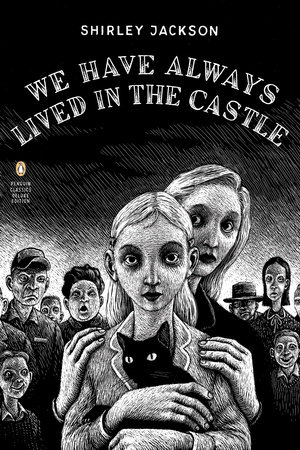
We Have Always Lived in the Castle by Shirley Jackson

We Have Always Lived in the Castle, Shirley Jackson

If we’re talking about family meals gone awry, there’s a very special place at the table for Shirley Jackson’s Gothic classic We Have Always Lived in the Castle. A fateful family dinner is at the root of many of the novel’s strange conflicts, and the precursor to its haunting mood of isolation and alienation.

The Vegetarian by Han Kang

The Vegetarian, Han Kang

The title character of Han Kang’s The Vegetarian is a woman who, one day, decides that she no longer wishes to eat meat. To say that the people closest to her are bewildered by this decision is something of an understatement; it leads to a series of strange acts of violence, shifts in identity, and one of the most harrowing fictional family dinners in recent memory.

Problems, Jade Sharma

Thanksgiving festivities can make for a host of squirm-worthy moments, from discussions about politics to unexpected intrusions of food allergies. And then there’s the Thanksgiving featured in Jade Sharma’s Problems, which raises the bar of in-law awkwardness to a new level when the novel’s heroin-addicted protagonist travels with her husband to visit his family for the holiday.

Image result for o fallen angel kate zambreno

O Fallen Angel, Kate Zambreno

Nearly every variation on the traditional American nuclear family is turned on its head in Kate Zambreno’s haunting, stylized novel O Fallen Angel. Here, the bonds between parents and children are chillingly frayed, family meals are occasions for excess, and the difficulty that different generations have in communicating with one another brings tragic effects.

10103214. sy475

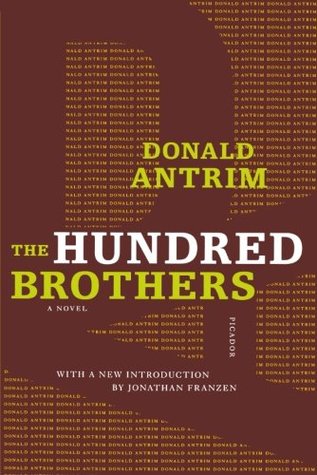
The Hundred Brothers, Donald Antrim

Many family gatherings are inspired by unpleasant events. The title characters in Donald Antrim’s wonderfully bizarre novel are brought together by the death of their father. The hundred siblings gathered together is your first clue that this isn’t a strictly realistic novel–in fact, it takes numerous turns into increasing levels of surrealism, even as it explores familial dynamics and long-standing resentments.

Bright Lines by Tanwi Nandini Islam

Bright Lines, Tanwi Nandini Islam

Early on in Tanwi Nandini Islam’s novel Bright Lines, there’s a scene of familial discord as dinner is prepared. Reading it may stir familiar memories of intergenerational clashes between parents and children. It’s a dissonant moment in a novel that explores both sides of familial connections: how they can lead to conflict, but also how they can bring people together.
Dunbar by Edward St. Aubyn

Dunbar, Edward St. Aubyn

Few contemporary writers describe imploding families and the long legacy of trauma with the skill and style of Edward St. Aubyn. For his novel Dunbar, he reimagined King Lear as the story of an aging media mogul with three daughters, and ups the amount of familial dysfunction to an operatic level. The result is a story at once familiar and revitalized.
12021

The Crow Road, Iain Banks

Iain Banks’s novel The Crow Road traces the diverging pathways within a sprawling Scottish family, exploring questions of art, skepticism, belief, and mortality along the way. At the center of the book is a clash between father and son in which their differing views on atheism spark a conflict that runs throughout much of the novel.

darkansas final art.jpg

Darkansas, Jarret Middleton

In Jarret Middleton’s Darkansas, the tensions and frustrations found at most family gatherings are accentuated by the uncanny — it emerges that the protagonist’s family includes a pair of twins in each generation, one of whom is destined to kill the other. And on the periphery is a sinister duo with a vested interest in seeing destiny run its course, heightening things dramatically.