Deconstructing a Relationship Through Ducks

“Short Circuit”

by Jenny Diski

It was Lillian’s habit to take a walk every lunchtime. It got her out of the office, she avoided having to eat with the colleagues she already spent most of her week with, and gained a daily dose of fresh air. A nonsense, of course, in an inner-city park with traffic racing and fuming round its perimeter, but the landscaped greenery and docile duck-life in the man-made pond gave at least a symbolic justification for Lillian’s feeling that it was good for her. Anyway, it didn’t do any harm.

Lillian felt also that her daily walk was good for her mind, though if thinking was a deliberate consideration of particular matters about which one came to a judgement, then that probably wasn’t the right word for what went on in her head as she walked the winding path that took her back to where she had started, in just the right amount of time to begin the afternoon’s work. Her thought processes didn’t seem to function in the deliberate, one-step-after-another way of her daily walks, on their defined route.

This really didn’t matter since she was not a professional thinker. She supposed, though she wasn’t sure, that philosophers and scientists thought in an orderly, arranged way. First there was a problem, then the pros and cons of a possible solution and finally a decision which might mean the end of that particular thought, or the choosing of a new solution to be mentally tested. Even if this were an accurate picture of that kind of mind — and she wasn’t convinced it was — her life didn’t require such an orderly approach to thought. She didn’t think she thought about anything very much during her lunchtime walks.

At least that was how it had been, until a couple of months ago. But then she reminded herself as she reached the part of the path which looped itself around the oval duck pond, everything had been the way it had been until that time. Since when, her lunchtime walks had lost their pleasantly pointless flavor, her mind seeming blank enough to do no more than notice the recurring influence of the seasons: leaf-fall and the stark silhouettes of naked branches; new growth and the strange, almost hallucinatory suggestion of pale green like the fuzz on the chin of an adolescent boy; male mallards in their bright mating colors; ranks of ducklings struggling to keep up in the race for the bread Lillian threw to them, but which their mothers always seemed to get to first. That had been what the walks were for; just noticing the same things as the years rolled by — now this is happening again, now that. She valued them for the relaxation that repetition offered. Like the path which led, in space, always to the same sequence of landmarks, the changing seasons provided a similar comfort in time. All Lillian did, or wanted to do, was effortlessly to notice. But although it was now palpably winter — her heavy overcoat and scarf, and the slap of cold air against her cheeks telling her it was so — her mind was too preoccupied to benefit from the pleasure of here it is again. She wondered, though, if what went on in her mind lately would be counted as “thought,” either.

This morning, as she put up with the daily crush on the tube getting to work, a memory of part of a conversation before dinner last night had come into her mind, gleaming and sharp, like a bright, lethal blade.

“I’ll be a bit late this evening. I’m having a drink with Rory.”

“Who?”

“Rory, from God-knows-when in my life. He phoned out of the blue, this morning.”

“How do I know that’s true?”

The sentence had slipped out in spite of Lillian trying to hold it in by sinking her teeth into her bottom lip.

“Because,” the voice calm, without emotion one way or the other, “because I say so.”

End of conversation. Time for a drink before dinner.

On the tube, surrounded by damp, overheated bodies which Lillian would smell on her clothes from time to time during the day, there were two passes from the gleaming, double-edged knife. The memory of having tried and failed — again, always again — to bite back useless words that couldn’t possibly resolve the question constantly paining her, made her almost faint with anger at herself. Until she remembered how deliberately he’d said, “He phoned me out of the blue…” The emphasis on he hadn’t been there as he spoke, but that was what the sentence was for. Allay suspicion, leave no room for it. Rory. He.

The direction of her anger shifted now from her own inability to live with her doubts, to Charlie, for his deceit, his scheming, and for the way his deceit made her feel. The rage at being lied to. The energy it took up.

There were flashes before her eyes as if chemicals surged suddenly in her body, causing a visual disturbance. She saw a picture of Rory — female — telling whoever she was involved with, “I’m seeing Charlie tonight. You remember, the girl I was at college with?” Why not use the coincidence of a pair of cunningly ambiguous names? Make up as little as possible. Always the best way. And then laugh about it together.

Out in the street with enough empty air around her, she shook off the pressure of bodies pushing, close in, against her, and got hold of her thoughts. This had to stop. It was too painful, too awful. Charlie had told her again and again, “Listen to me, I love you. Why else would I be here? What other possible reason could there be for it? Don’t you know, don’t you feel I love you? Can’t you tell?”

Lillian let the familiar assurance spread over her sore parts like a viscous remedy taken to line and soothe raw flesh. There was a simple logic to Charlie’s words. Truth was self-evident. Well, that wasn’t necessarily true, but in this case it was. She couldn’t, if she looked at the history of the two of them, at his behavior, at how things were between them, doubt that he loved her. And the corollary: “I’m not interested in anyone else. I love you — I want you. You are everything I’ve ever wanted, why would I go with anyone else?”

It was insane — well, neurotic — to give time and energy to suspicions that made no sense in the light of what was actually happening.

She climbed the flight of stairs to the office, relieved at the calm certainty — as normal as Charlie, as anyone — she had made herself feel. It was the state of mind in which she wanted to proceed with her day and her life.

It had lasted until lunchtime. Her emotional existence had taken on a new diurnal pattern: the second-thought rage about something said or done as the tube clattered along in time to the build-up of her anger; the coming to her senses as she walked to work, once the pressure of being underground was relieved by being back on the surface again; the simple getting on with her job until lunchtime, when she went downstairs and headed towards the park, and then the other version of “coming to her senses,” and an hour of striding rage. A daily nightmare since Charlie had moved in with her. It was unbearable — whether her suspicions were accurate or not — just the thinking, the supposing, the turmoil of one minute this certainty, the next minute the opposite. It reminded her how, as a child, she had believed in God because it was so clear, so obvious, that he existed. She couldn’t imagine how anyone could think differently. And then, ten years on, the same absolute conviction that there was no deity, no otherness, only the material world that could be seen, heard and felt. How could anyone possibly believe in God? It wasn’t until a further ten years on that she had come to the possibility of agnosticism, and the ability to live with an uncertainty. Even then, she had trouble understanding how anyone could believe firmly one way or the other. But the business of believing in Charlie was more urgent than her problems with God. The swings of conviction — he is seeing someone else — he most certainly isn’t — came around several giddying times a day. Sometimes Lillian felt as if she were going mad, but there was nothing mad about her thoughts in either state of mind. They were all too logical. It was only the persistence and the seesawing that had the quality of madness.

She had told Charlie it wouldn’t work. She kept on telling him, but it seemed that they had different definitions of what working meant. Lillian was at a loss to know what to do. She didn’t understand the situation, had no idea how to assess what was going on, all she knew was the vivid quality of her discomfort.

Lillian had never lived with anyone, not until she was thirty-five and Charlie moved in. Barged in, she would have said, but she had enough respect for the truth to know it couldn’t have happened without her consent, without her wanting it. Nonetheless, it felt now more as if she had been involved in an accident, than that she had made a considered decision. She couldn’t shake off the feeling that an act of God had occurred of which she was the victim.

This was not the truth. Lillian had very definitely made a decision, but looking back on it, it seemed to her that that moment was the root of the madness which had descended on her. It had started there: with a thought-out attempt to be…normal?

There had always been lovers. Lillian liked sex, and sometimes liked to have company. After a few years of getting together with men purely for their talent in bed, she came round to the view that there might be something better to be found. She confined herself to relationships, thereafter, with men who were talented in bed, and whom she could stand to have in her flat for more than five minutes after they’d got dressed. Lillian saw this as a definite moment of growth. At twenty-six, when she made the decision, she had, she felt, matured. Sex on its own was all right, physically, but would no longer do. She felt she wanted more. So from then on she only got involved with men she liked. This caused a decrease in sexual activity, but she was able to cope with it, given her new-found maturity.

At first, at the beginning of Lillian’s sexual history, she was no different from her friends, who had as frequent and superficial relationships as she had. They all had fun, Lillian and her friends, through college. But, gradually, one after another, the other women dropped away as each formed permanent attachments. By the time Lillian was thirty-two, most had married or were living with someone, though some had divorced by then and were on second husbands, and two had decided to be lesbians (which made no difference since both of them were in settled relationships). Only Lillian remained steadfastly single. No one stayed in her flat for more than one night at a time, and her newly discovered dissatisfaction with purely physical relationships did not mean that she felt the need to be with someone twenty-four hours a day, or to have company when she went to the supermarket.

She still saw some of those friends and they frequently tried to persuade her of the joys of being in a committed relationship, but it was not what Lillian wanted. She didn’t argue when they called her neurotic, she acknowledged it.

“Yes, I suppose I am, but there it is. Here I am, and neurotic or not, I live and work and function okay. So if I don’t have a problem, why not just accept that’s how I am?”

Fair enough, but, in fact, Lillian did see a psychotherapist for a while. She went because of car tax. She found keeping her car on the road caused her terrible anxiety. For two months before the road tax was due to be renewed each year, Lillian would be overcome with fear and helplessness. The car needed an MOT, but she was somehow incapable of finding, or getting to, a garage to obtain it. She always did eventually, at the last moment, but until then she would lie awake until it began to get light, consumed with worry about how to find a garage, about making an appointment, then getting to it. All this, night after night, for months before, and then a blind panic a day before the tax was due. Afterwards, always, she wondered what the fuss was about; it had been simple, she only had to repeat next year what she had done this year, but calmly. But, of course, the following year the same thing happened. All kinds of official, required organization left her in this state, and Lillian knew that there was something wrong about it. It made life a misery and she was aware, with one part of her mind, that it wasn’t necessary. She went to see a shrink.

There was, in her fear of coping with everyday details, something of a hankering for a “man about the house.” So David Fanshaw suggested, and in all honesty, Lillian found herself unable to protest much at his analysis as far as it went. Very soon, though, she was confronted with the problem of transference. She was too guarded, Fanshaw told her. After a few weeks, he pointed out that not once had she made a slip of the tongue, she recalled no dreams, and her refusal to lie on the couch, as opposed to sitting opposite him in the chair, was symptomatic of a refusal to trust him, to be prepared to make herself vulnerable to him. They had long since stopped talking about cars and getting domestic machinery mended. Vulnerability had become the issue.

“But why would I deliberately make myself vulnerable?” she asked, her eyes widening in genuine perplexity.

“Because people who refuse to be vulnerable, who refuse to take a risk with other people, are hampered in their ability to make relationships.”

“Are you telling me that to open yourself up to being hurt and unhappy is a sign of health? You aren’t really saying that, are you? That I should deliberately lay myself open to pain? Wouldn’t your lot call that masochistic? There are some genuinely unpleasant people out there, you know.”

David Fanshaw made a church roof and steeple with his fingers.

“Until you take the risk, how do you know what anyone is like? If you reject everyone, because some people aren’t nice, you won’t find the other kind. You’ll never make a real relationship.”

“But,” Lillian explained calmly, “I don’t want a real relationship. I mean, not more than I have already. I see people. I get involved with people…”

“Up to a point.”

“Well, of course, up to a point. Everything’s up to a point. Why would I change my life when it seems very satisfactory to me? I don’t have to be married to be happy.”

“But you’re here.”

“Because of panicking about things, not because I’m not in a cozy domestic situation.”

They carried on for a while, but Lillian never did lie down, and it became clear that David Fanshaw felt they wouldn’t get to the bottom of things until she responded in a less rational way.

One problem was that Lillian was not mystified about why she was like she was. She knew that her background, a pair of hopelessly inept, over-anxious parents and an older sister killed in a pointless and awful accident, made her attitude to life the way it was. She told Fanshaw that at the first session.

“I understand why I’m the way I am, but how I am, preferring to live alone and so on, is fine by me. I don’t want to be cured of my need for independence, I just want some help with my irrational anxieties.”

“I’m afraid that psychotherapy doesn’t work like that,” he warned her. “It’s not a matter of curing inconvenient symptoms, but of looking at underlying causes, at the whole situation.”

She should have realized then that there wasn’t any point, but she kept on hoping that something useful would come out of it. One night, though, she had what David Fanshaw might have called an insight if it had been the kind of thing he approved of. Lillian got up early, wrote a letter to Fanshaw thanking him for his help and enclosing a final cheque, and then put a small ad in the local newspaper offering her car for sale. That was what she called dealing with a problem. She couldn’t panic about the car if she didn’t have one. She promised herself to deal with other anxieties as they arose, in much the same way. If they cause you trouble, do without them. She was only applying to machinery what she had always applied to men. Get rid of whatever areas she found intolerable. Deny the power of anything that could upset her equilibrium. Practical, was the way Lillian thought about it.

So how did it come about that a year after she’d met Charlie, he’d turned up at her doorstep with his suits over one arm, and his stereo under the other? Because she had agreed that he should. And why, Lillian wondered as if it were an entirely new thought, throwing the crusts of her sandwich at the ducks, had she agreed to such a thing?

Because she loved Charlie; because it was different. And because, recognizing the pleasure she got from his company and wanting more of it, more of the time, she had thought why shouldn’t she take a risk, for once in her life? But if love was what she felt for Charlie, it wasn’t the blinding kind that her friends seemed to catch. She wasn’t befuddled into believing herself to be part of a fairy tale. She had no doubt that the relationship would end sooner or later, or, at any rate, peter out. She could imagine only too well the unpleasantness of separating the effects of two lives that had come together in one place. She could see with dismal clarity, when she forced herself, the misery of finding herself alone after a year or two, disoriented by the new kind of existence she had got used to; or worse, the hideous near-certainty of becoming the woman who waited at home while her man found himself more interesting fish to fry without wanting the inconvenience of packing his bags.

Knowing all this, certain that all this applied to her and not some statistical other, Lillian had nevertheless taken a deep breath and said, “Yes,” when Charlie told her for the tenth time that he wanted to be living with her. After all, it seemed suddenly to occur to her, what was the prospect of pain, however clearly she envisaged it, compared to the excitement of doing what she wanted to do, and, for once, to hell with the consequences? Which was a curious thought, since until that moment, she had not felt that the life she chose to lead was anything other than exactly what she wanted.

But throwing caution to the wind is a talent that comes with practice, and Lillian had none. A whim, novel though it might be, wasn’t enough to stop the cold sweat that ran down her spine when Charlie rang the doorbell on the day they had arranged he should move in. So Lillian, learning from the motorcar lesson, took things in hand.

“Listen,” she said while Charlie filled the space in the wardrobe she had made for him. “I want to get something straight. I want to make a deal. I won’t be told lies. In return for you not lying to me, I won’t make any demands about fidelity. It’s just logical,” she said, as Charlie turned to look at her. “If I don’t care about you fucking other women, then you can’t lie to me, can you, because there’s nothing to lie about. And then I won’t have to spend energy worrying if I’m being lied to. It’s the idea of being deceived and not knowing it, not you fucking other women, that I really can’t stand.”

“You don’t care if I have other women?”

“No.”

Charlie turned to the wardrobe and started taking out the hangers he had just put in.

“What are you doing?”

“I don’t want to live with you if you don’t care if I’m fucking other people. I’d rather leave now.”

Lillian stared at him. “Stop it.”

“No. The arrangement isn’t to my taste. I am faithful to you, and that’s all there is to it. I don’t want you not to care if I fuck someone else.”

“It’s just that I don’t want you to have a chance to lie to me. I can’t bear the idea of worrying about it.”

“I don’t lie to you. I won’t ever lie to you. I don’t want other women, because I want you, but if I did, I’d tell you, because it’d be over.”

“How do I know that’s true?”

“Because I’m telling you it’s true.”

It was the first time that pair of sentences were spoken between them, but by no means the last. Lillian recognized the essential truth of the exchange, or rather, recognized that it was as far as truth could go in such matters. She had already solved the problem: if she wanted guarantees about another person’s thoughts and acts, then she simply had to distance herself sufficiently from them, so that their thoughts and acts were not relevant, and only the actual time spent together was of concern. But something had made her want more.

Perhaps it was simply the passage of time — being thirty-five makes you notice that time is limited and that it’s entirely possible for some things never to happen. It also had to do with what might be thought of as a pull towards democracy. If everyone else was taking risks, shacking up with someone and accepting the consequences, then maybe her fear of it was wrong. Maybe she should try it.

Whatever it was, when she was faced with the reality, she discovered that her fears were not merely “neurotic,” as in “superficial,” but ran deep enough to take up most of her mental energies. She knew she could never know what was really going on in another person’s mind, no matter how closely they might have linked their lives, and Lillian found the inescapable reality of this fact intolerable.

“I want to rummage through the files inside your mind,” she had once said to a sleepy Charlie, who had smiled at the idea, not realizing the deadly seriousness of the thought.

That fact, combined with what seemed to be her congenital certainty that, after a time, all relationships became at best comfortable, and that men would inevitably look elsewhere for excitement, made living with Charlie a kind of hell, as bad as her worst imaginings.

Lillian couldn’t understand friends whose confidence in their men seemed to her like a desperate optimism. It seemed that all of them, for the most part, intelligent, well-informed women, believed at the beginning of their involvements that their relationship was the final choice of partner that each party would make. They had found their life-long relationship, and, in spite of both the men and the women having had several other relationships, Lillian’s friends were wonderfully sure that this was it. Never mind the divorce statistics, never mind the figures showing the percentage of men (and women) who were unfaithful in relationships, never mind the fact that some of their friends’ marriages had collapsed into apathy or desertion.

Lillian couldn’t understand the “It’s different for us” attitude that she saw all around her. She didn’t feel like that. She couldn’t help knowing that statistics had as good a chance of applying to her as to anyone else. So there was no doubt that Charlie, ardent and devoted as he might be at their relatively early stage of relationship, would end up wanting a comfortable domestic relationship with her (if such a thing were possible), and sexual excitement with a variety of someone else’s. No, she didn’t really think he was unfaithful to her now (at least, for part of the time she didn’t), but she knew he would be, and she was horrified at the idea that there would be a moment when the change occurred and she would be left foolishly imagining that it was still the way it had been at the beginning. “Bastard!” she yelled at the faithless Charlie of the future. “Treacherous, lying bastard!” And sometimes, when she couldn’t stop herself, she said it to the Charlie of the here and now. It wasn’t that she wept and screamed; their discussions were no more than that. But Lillian knew, for all the apparent reasonableness of her tone, that she couldn’t believe what Charlie said, and, most awful, she knew she never would. There was nothing he could say. Her questions and accusations were more like verbal tics. They could not be answered.

“But you’d know if I was involved with someone else,” Charlie tried to reassure her, defending his future against her pessimism.

She knew, though, that was just another truism not borne out by the figures.

“But you can’t punish me, or throw me out for what I haven’t done but might do in the future.” Charlie was remarkably patient with what he called “LM,” which stood for “Lillian’s madness.”

Enjoy what there is now, and let the future take care of itself. Lillian heard this advice from everyone. It made very good sense. They were, she and Charlie, amazingly happy together; she did enjoy having breakfast with him; she liked them going to the supermarket together; she looked forward to getting home and meeting him, as she often did, on the doorstep, each fumbling in their pocket for the key. Against all the odds their relationship was a huge success. Except for those times when Lillian’s alarm about what was going to happen cut through the pleasure, and made her brain zing with anger at Charlie for bringing potential deceit into her life.

Lillian threw her last piece of bread into the mêlée at the edge of the pond and, seeing no more coming their way, the ducks veered off in search of other lunchtime philanthropists. She didn’t view their behavior as treacherous; it was perfectly natural that they should take what they wanted from wherever they could get it. Lillian liked the openness of the transaction.

Everything about human transactions, on the other hand, was devious, including attempts at openness. All right, so Charlie, loving her and wanting her, assured her that he wasn’t sleeping around; but when he grew tired of her, he would use exactly the same words to lie with. He would say “No” to her question, “Are you fucking anyone?” now, because he wasn’t, and then, because he was. How could anyone know which was which, or when the one turned into the other?

Lillian continued her walk. The path straightened up and took her past neatly manicured grass. In the summer, it was filled with people sunning themselves singly or in couples, with kids racing and shouting, with balls and bikes, dogs and picnickers; now, it was empty, a quiet, green swathe, as soothing and uneventful as she wished her mind would be. But she couldn’t make it be still.

Today it was ambisexual Rory, yesterday it was a postcard that slipped out of the book Charlie was reading. “Sorry you’re feeling low. Here’s something to cheer you up.” On the other side was a reproduction of a Rothko painting, an abstract of solid yellow blocks. Back on the side that really mattered, it was signed, “Janey.” She knew who Janey was: a colleague at work. But she didn’t know what Janey was.

“Nothing. A friend. She left it on my desk.”

“After you told her how unhappy you are with me?” Lillian snapped. “After I’d walked around groaning about my sinuses a couple of weeks ago. Remember? How could I have told her I was unhappy with you? Haven’t you noticed that we’re happy together?”

“You don’t leave cards on someone’s desk without a reason.”

“Yes, you do. Just a friendly gesture.”

“And then you keep it in your book?”

“Yes.”

“Why should I believe you?”

“Because I’m telling you the truth.”

Charlie’s tone of infinite patience frightened her, but there was also something curiously exciting about it. It felt as if she were walking on a smooth lake of ice, knowing that each step brought her nearer to the middle that was not quite frozen enough to be safe. She had wondered on yesterday’s walk how many more times they could have that conversation before Charlie threw up his hands and left, his patience turning out not to be infinite at all, as she knew it couldn’t be. And now, she recognized suddenly that part of her wished he would. Get it over with. Push him just that bit further, and she wouldn’t have to worry about their future; it would be a thing of the past. And she would be proven right: yes, there was love, but it was only up to a point. How could it be any other way?

So this morning it had been Rory. One step nearer. Even if Charlie brought a resplendently masculine Rory round for dinner, there was no reason to believe that he hadn’t been seeing someone else, using Rory as an alibi. There was no reason to believe anything, not in a world where outcomes are already inevitable, and telling the truth is the same as telling lies at a different time. Even Charlie’s infinite patience was suspect. It was like laying down wine for drinking in the future. The more she grew to trust him, the easier it would be for him to deceive her. It was therefore an act of madness, of self-destruction, to trust Charlie, even if he was telling the truth.

The path curved gently around the neat green field and Lillian walked back on the other side towards the entrance. The park had been carved out of the edge of Hampstead Heath. To her left, as she walked, a fence marked the boundary between the untended heath on one side, and the carefully cultivated park on the other. The heath wasn’t exactly wild land, there was a network of branching paths through and round it, but Lillian preferred to stay on the cultivated side where there were no unexpected turns along the path, no unforeseen distractions — a circle of interesting mushrooms, or an enticing wooded area — so she could be sure she would be back where she had started from in the same amount of time, every day.

And what was wrong with that? What was wrong with enjoying the thoughtlessness that routine allowed? What was the necessity for doing the unknown, the difficult thing?

Tomorrow, she would overhear Charlie speaking to someone on the phone, while she was having a bath. The next day she’d think she’d detected a scent that wasn’t his. The day after, they’d be driving to a restaurant and she’d notice a single, auburn hair on the headrest of the passenger seat. And on. And on. It didn’t matter how happy they were together, the suspicions would squeeze out the pleasure, until anxiety was all that was left. Only one thing could satisfy her. Not reassurance, not logic, not re-affirmations of love; only a simple “Yes” in answer to her question would provide relief. Lillian discovered, as she reached the park gate, that was all she wanted. Love was a charming idea, companionship was nice, but only Charlie’s infidelity could make her really happy. She was working on it, she thought, as she climbed the stairs to her office. She was doing the best she could to make the relationship work.

Zinzi Clemmons is Always Willing to Get in Trouble

Zinzi Clemmons’s novel What We Lose, for which she was recently named one of the National Book Foundation’s “5 under 35,” doesn’t mince words. The novel is unusual, bringing together many small pieces — a page or two of narration, a graph, a quoted article, a sentence alone on the page. The precision of each of these pieces cuts open the many layers of grief, desire, and identity, and Clemmons leaves them splayed for the reader. After the first few pages, I felt the narrator’s loss of her mother, her fear of losing her father, and my own fears of losing my parents knotting together in my stomach. I closed the book for a week before I could face the rest of it. When I re-opened it, of course, I couldn’t shut it; I read the whole, gorgeous thing in a single sitting.

Purchase the novel.

The novel started for Clemmons as a different book entirely: a traditional, linear narrative, which she was writing as her MFA thesis at Columbia. Shortly after she finished classes, her mother’s battle with cancer took a turn and intensified. Clemmons moved back to Philadelphia to care for her until her death a few months later. “Basically I had this very big life event plop down right in the middle of writing the book,” Clemmons explains. “And, as anyone who’s a writer knows, when those things happen, they will present you with new topics to write about — because it’s really impossible not to write about them.” She began incorporating journal entries about her mother into the manuscript, and eventually abandoned the original manuscript entirely. A new story grew around fragments of journals and research on grief: the story of Thandi, a young woman who, like Clemmons, is the daughter of an American father and a South African mother who is dying of cancer.

Since the release of What We Lose, Clemmons has stayed attentive to the fine details of social issues. Recently that meant calling out the “hipster racism” of Lena Dunham, who had dismissed actor Aurora Perrineau’s accusation of rape by Murray Miller, a writer and producer on Girls. (This interview was conducted a few weeks before that incident.) Clemmons followed her statement on Dunham with a tweet written with the same fearlessness we find in her novel: “To all the haters, harassers and abusers creeping into my timeline, remember this: I brought down a major celebrity and her publication with one Facebook post. Try me.”

On a cold evening in New York and a warm afternoon in LA, I chatted with Clemmons about the complexities of race and womanhood that public discourse likes to gloss over, and the choice to write in a structure of fragments to examine those details.

Alison Lewis: You manage to excavate so many different layers of privilege in this novel. I’m thinking, for instance, of Thandi seeing her mother’s cancer as almost a privilege; Thandi is too embarrassed to tell her friends about the cancer because it’s a disease that’s so well documented and funded — whereas AIDs, at the time, wasn’t. And yet of course Thandi can’t express that embarrassment to her mother because it would be so hurtful… These notions of privilege are so complicated and personal that Thandi feels they can’t be spoken aloud. Did writing about them through fiction free you, in some sense, to go there, to say it?

Zinzi Clemmons: Yeah, absolutely. That was a thought I had at the time: that I would be protected by a novel; I could be more honest. At the same time, I don’t want to make it seem like I never would have said those things [in nonfiction]. I definitely have said things that have gotten me in trouble, even in this book. I’m always willing to get myself into trouble! During the writing process, I didn’t want to feel encumbered by anything.

A Burial Story About Far-Away Family

AL: In that same paragraph about the “privilege” of cancer, you go on to say that the legacy of apartheid is always with Thandi and her family: “not sickness, not suffering, not death could change that.” I wonder if you could talk about that — as an American, I’m not sure I know what it feels like to carry the truth of apartheid daily.

ZC: I think you can understand that as an American, if you replace apartheid with race. The point that I was trying to make that disease, and pretty much all matters of health, completely constrict you in a way that is unavoidable. Especially for young people, it’s hard to wrap your head around: just how little control you have. You might have all of these feelings about a group that you’ve been put in, right — cancer patients, cancer families — but the world looks at you in a specific way, and the way the world feels about it constricts you. Even though Thandi has these feelings about cancer, there is nothing she could ever do to be outside of it. This is something that is put on you; you don’t have any control over it. As a black person, I’m used to feeling out of control. And as people who have lived under the [apartheid] government and have subsequently lived with that legacy, you also do not have control over what the world thinks about you.

AL: I wonder if you could talk about writing about biracial experience, or being a light-skinned black woman? Was it scary to write about those things publicly? Did you worry that people would say, “that’s not my experience”?

ZC: Yeah, of course. And I guess that’s part of why I did it. A lot of the problem of talking about race is that feelings are bound up in it so tightly, and people have a hard time distinguishing their feelings from true systemic issues and things that are offensive. And of course feelings are valid — my book is entirely about feelings! But that’s one part of the argument, and it has dominated the discussion in a way that obscures any kind of progress on the issue. Aside from feelings, what’s at stake in this colorism debate is power and privilege. There are black women like myself who have more privilege than other black women — that’s the issue. I didn’t explain that argument in the book; I came out and just said the ugly things that light-skinned women say as a result of their privilege. I just put it out there. That’s really the only appropriate way do it in fiction because it’s not polemic, and I knew with that approach there would be a reaction to it.

A lot of the problem of talking about race is that feelings are bound up in it so tightly, and people have a hard time distinguishing their feelings from true systemic issues.

An excerpt that contains some of those blunt passages about colorism ran online, and I think some took it as me saying those terrible things that light-skinned women say — they thought that I was saying them earnestly. And, it’s Twitter — this platform is almost designed to proliferate these types of battles. I think a lot of it was just genuine confusion or not knowing that it was fiction. The reactions that happened beyond that were like “you’re black, why would you write this?” I think what it came down to was, “you’re not any better than us.” And that’s really the point, right? Those statements — in the book it’s something like “darker skinned women will always be jealous of you” — I agree that’s fucked up. In that moment, that is a light-skinned black woman not dealing with her own privilege, not recognizing that, and being cruel. And what I would say to that character, if I had the chance to talk to her, is the same thing: “you’re not any better than anyone else.”

The upside to these discussions that generate a lot of controversy is sometimes they put you on the path towards making actual progress. When people are talking about these things, working past that point of discomfort to actually understand what’s going on, that’s what’s important. Personally, as well as in my writing, I don’t really care about the discomfort, as long as there’s a payoff. For black writers, for writers of color and people who are working with identity, we have to make that choice all the time. And I guess my stance on it is, I wouldn’t be doing this unless I was taking risks and pushing boundaries — I’m glad to be able to do that. In regards to my own identity, that’s why I’m here.

One thing that I want people to understand, especially my readers, is that I don’t have the same identity as Thandi; I have a different experience. If you want to be technical, I’m a multiracial person, not a biracial person — but I’ve never called myself multiracial. I think that people should be able to define themselves however they want to, and that’s the choice that I made: I call myself black. I always have. I acknowledge that I have a multiracial experience and I’m interested in investigating it, but I have always been uncomfortable with the ways in which, when we label ourselves as half-this, half-that, multiracial, blah blah blah, we’re sectioning ourselves off from people. There has been so much anti-black racism associated with those categorizations that I think it’s really necessary to look at them with a lot of suspicion. So as far as my identity goes, I say I’m black, and it’s complicated…is pretty much how I’ve always approached it.

AL: You mentioned you’re glad to be able to push boundaries. What are some boundaries you would like to push, and what kinds of messages do you feel aren’t getting talked about that should be?

ZC: The various identities within blackness, within whiteness, within gay communities — publishing tends to homogenize, so right now we have black books, we have some black women’s books, we have a couple of black gay books. But we haven’t yet trained ourselves to look at those complexities within race or within another umbrella identity — to really look at them for what they are. I’ve been compared to Chimamanda Adichie — why? We’re just black women who are writing about Africa! The similarities end there, and I would even disagree with her strongly on many points, particularly as relates to class. And those sorts of arguments, where we’re really talking about who we are and what we care about, that’s where we should be going.

AL: I wanted to ask about violence specific to motherhood; your narrator carefully admits that, in her worst moments, she would gladly hand her son over to a very kind kidnapper because he’s annoying and she can’t deal with him all the time. How did you reconcile this experience of motherhood in the same book that is mourning a mother?

ZC: I felt compelled to investigate the underside. Perhaps this is where I’d be more of an essayist as opposed to a fiction writer — point, counterpoint. It’s incomplete unless you do that. I’m not a mother, so I was the most intimidated writing those sections because I didn’t have any relation to it. I felt like I started getting in touch with the authenticity of that experience — it started feeling realer to me — when I got to lines like that one with the kidnapper because, you know, that’s what makes it complete. I had a feeling that statement would feel authentic, but I didn’t know for sure, so I was nervous about how people with children would respond to it.

Perhaps this is where I’d be more of an essayist as opposed to a fiction writer — point, counterpoint. It’s incomplete unless you do that.

AL: Lastly, both you and I work in publishing, and I get frustrated that it’s such a white industry, which isn’t often ready to look at itself and realize that it has a specific perspective. Do you have thoughts on the direction that publishing is going, and where there are spaces for writers of color to publish in a way that feels true, that isn’t going to be edited into being more…palatable for white readers?

ZC: One thing that’s really important now is how independent presses have stepped up and taken on some of the slack from mainstream publishers. It’s getting harder and harder to get a debut literary novel published, and now the indies are really covering that area. With that growth, you do see room for more writers of color because indies are just open to more things; they don’t have corporate interests they’re beholden to. But I think what that creates — something that I’ve noticed and that I’m worried about — is tokenization. Honestly, writers of color are in vogue now, and everyone is talking about issues of representation! The danger with that is that we only learn half the lesson, and we end up publishing books by writers of color that don’t talk about issues that are important to people of color, that don’t actually move the needle. Look at Tyler Perry. He’s one of the most successful filmmakers working right now, period, and his stuff is trash. It’s absolutely bad for society. So we can increase the color and don’t increase the quality or get any further towards progress. We need to ask who we’re choosing elevate, and who we’re choosing not to, and why are we elevating them? I think that’s the next frontier — not just talking about people’s identities but talking about their messages, and how those two things match up.

Zinzi Clemmons is at work on her next book, a collection of essays, for Viking.

Alison Tate Lewis is editor of the literary magazine American Chordata. Her writing has appeared in the Brooklyn Rail, Somesuch Stories, and Electric Literature.

What Reading Bukowski’s ‘Women’ Taught Me About Men

In Late to the Party, we ask writers to read a seminal author who has somehow passed them by. You can read previous entries here.

When I began working as a bookseller almost two and a half years ago, I frequently said to no one in particular as I shelved books in the poetry and fiction sections, “I have a thousand and one reasons I’ll never read Bukowski, and they’re all named Trevor.”

I avoided Bukowski in high school without even trying, simply because I had no male authority guiding me to his work. I focused instead on the Daves — Dave Eggers, David Foster Wallace, and David Sedaris — all because my favorite teacher, a quirky and energetic man, mentioned those writers were among his favorites. Nor did I ever reach for Bukowski in college. None of my syllabi included him, as I focused my coursework on Indian and South Asian writers, and later ultra-contemporary short stories. But the real reason I never touched his work at that age? No man I wanted to sleep with thought I should.

Until I left school, and really until I met my current partner a year and a half after that, I aligned my taste (in literature, in music, in whatever I could) with the sensitive young men who caught my (always looking) eye. I spent my first year in New York City going on a lot of dates. I scoured dating profiles, and the same name kept popping up — Charles Bukowski. But Trevor left an especially bad taste in my mouth. We didn’t date for long, and things didn’t end well. Thanks to him, I associated Bukowski with condescension, infidelity, and a sheer unwillingness to sexually satisfy a woman. I saw Trevor’s smug face every time I put a copy of Ham on Rye back on the shelf, raising his eyebrows in mock surprise that someone who calls herself a writer has never read Bukowski’s seminal novel.

In short, back then, my taste in literature — both what I sought out and what I avoided — was formed by infatuation more than my own preferences. I was not confident in my own personality or opinions to hold the interest of my latest crush, so I read his favorite authors so he could tell me about them — or, in the case of Trevor and Bukowski, spurned them out of spite. In the time since then, I’ve grown up. I read for only myself now, focusing exclusively on young female writers with a powerful story to tell. I’ve become an advocate for these emerging voices, and haven’t read a book published before 1980 in about two years.

Back then, my taste in literature — both what I sought out and what I avoided — was formed by infatuation more than my own preferences.

But I somehow cannot escape Bukowski’s pull. My current partner has Bukowski cover art tattooed on his left bicep. He has a tattered copy of Women he read after a terrible breakup six years ago. The moment I learned that, I knew I would have to read it too. The bad dates with Trevor (and others) aside, Bukowski-reading men aren’t all bad. They can be clever, sensitive, and creative. They’re also, unquestionably, messed up — just like the protagonist of Women, Henry Chinaski, who pinballs from fling to fling, unable to be satisfied. But the truth is, as problematic as it is to admit this, I am drawn to “damaged” men, in much the same way way damaged men are drawn to “damaged” women in the Manic Pixie Dream Girl books and films I criticize for stripping women of their agency. Would finally reading Bukowski help me comprehend exactly what their damage was?

I borrowed my partner’s tattered copy of Women, curious to stand in his shoes and read what he did to mend his broken heart. I hoped it would help me better understand him, or at least the “him” of a time before we had even met. I hoped that in reading this novel, I would also understand the men behind those bad dates, the great men in my life now, and possibly why I tried so hard to impress them.

Women is a straightforward first-person narrative. Poet and novelist Henry Chinaski lives in Los Angeles, and writes a few poems each day when he’s not drinking beer or having sex. He’s successful — though we don’t see his poems, he frequently gives readings at universities, and has garnered a fan base of predominantly young women, most of whom are aspiring writers themselves. He pursues a relationship with Lydia, a sculptor and single mom. They make each other miserable and happy in equal measure. After Lydia moves away, he has a series of short-term flings with women he meets through friends, or fans who reach out to him over the phone or by mail. He seeks fulfillment through repeated sexual encounters, but can’t seem to find any.

When I reached the halfway mark, I told a coworker (a male Bukowski fan I really respect) that I found the text “unsettling.” I like grit and I like grime. I like that, despite his success, Chinaski drives a beat up car and lives in a squalid house. I like that he is unattractive, and his success with women (at least in the short term) is based solely on his talent as a writer. I like that he (sometimes—okay, rarely) cares about pleasing his partners during sex. I like that he meets his match in one or two women who won’t sleep with him, but I will get to that later. But that’s it — that’s all I like.

The novel is rife with problematic viewpoints. Chinaski rarely seeks affirmative consent with his partners, he’s horrifyingly misogynistic to these women and to the reader, and his daily routine is so mundane I feel like I read a thousand-page tome instead of a mid-length novel. I realized early on that I was right to never read Bukowski’s work. I continued, though, to satisfy my curiosity. There’s a reason Bukowski is popular among the men I’ve been with, and I was determined to discover why. Then I found the meditation on love and loneliness I was looking for. “I thought about breakups, how difficult they were, but then usually it was only after you broke up with one woman that you met another,” Chinaski says after leaving yet another paramour. “I had to taste women in order to really know them, to get inside them. … So I explored them as best I could and I found human beings inside.” He goes on to say,

I was sentimental about many things: a woman’s shoes under the bed; one hairpin left behind on the dresser; they way they said, ‘I’m going to pee…’; hair ribbons; walking down the boulevard with them at 1:30 in the afternoon, just two people walking together; the long nights of drinking and smoking, talking; the arguments; thinking of suicide; eating together and feeling good; arguments; the jokes, the laughter out of nowhere; feeling miracles in the air; being in a parked car together; comparing past loves at 3 AM; being told you snore, hearing her snore; mothers, daughters, sons, cats, dogs; sometimes death and sometimes divorce, but always carrying on, always seeing it through. …

And with that, I got it. My expectations for the book rested on the men in my life I knew had read it, and I could not understand how these soulful and creative people (even the bad ones somehow wooed me for a brief period of time) could idolize a text rife with violence and misogyny. But I suddenly understood. I finally recognized Chinaski’s aggression as a mask for sensitivity and romance he did not understand in himself. I did not get the journey from damaged man to fixed man I hoped for, but I found my motive for reading.

I finally recognized Chinaski’s aggression as a mask for sensitivity and romance he did not understand in himself.

I didn’t like Women, but I gained a few things from reading it. The book offered a better understanding of Los Angeles literary culture, and insight into the power dynamics that inform sexual relationships. I liked reading about a time when iPhones weren’t invented yet, and writers still banged out their manuscripts on a typewriter without any irony. The act of reading Women reminded me how far I’ve come as a reader and writer. I felt visceral horror at Bukowski’s depictions of Chinaski having sex with women without their consent. I am not too far removed from a time in my life where that wouldn’t make me red with rage. My rage could not keep me from thinking critically about the text as I do with current novels I adore and applaud. I felt proud of myself for engaging with art I knew would make me upset, which is something I tell my friends to do all the time.

But mostly, Women taught me about men. Eventually Chinaski comes around to admitting his behavior might be a problem. “Could I keep on telling myself that it was merely a matter of research, a simple study of the female? I was simply letting things happen without thinking about them. I wasn’t considering anything but my own selfish, cheap pleasure. I was like a spoiled high school kid.” But he does not change. His self-deprecation and timid approach to being a better person reminds me of the worst qualities in those Bukowski-reading men I’ve known — Trevor, in other words. But the Trevors of the world don’t have the option of writing themselves an understanding partner, or a successful career, so they have to be better when Chinaski is not. To be “better” is to treat women as intellectual equals, and not sexual playthings. To be “better” is to act unselfishly. To be “better” is to have impulse control.

I will continue to engage with art that makes me angry because I can’t write about the world if I don’t know about the world, and every new book I read is a chance to join a different conversation. But I have no plans to read any more Bukowski novels — I don’t care for his voice. Still, I’m grateful for the opportunity to learn what he was saying to all the Trevors who worship him. I struggled with Women, but I am a better reader and writer for having done so.

Ursula K. Le Guin Explains How to Build a New Kind of Utopia

These are some thoughts about utopia and dystopia. The old, crude Good Places were compensatory visions of controlling what you couldn’t control and having what you didn’t have here and now — an orderly, peaceful heaven; a paradise of hours; pie in the sky. The way to them was clear, but drastic. You died.

Thomas More’s secular and intellectual construct Utopia was still an expression of desire for something lacking here and now — rational human control of human life — but his Good Place was explicitly No Place. Only in the head. A blueprint without a building site.

Ever since, utopia has been located not in the afterlife but just off the map, across the ocean, over the mountains, in the future, on another planet, a livable yet unattainable elsewhere.

Every utopia since Utopia has been both a good place and a bad one.

Every utopia since Utopia has also been, clearly or obscurely, actually or possibly, in the author’s or in the readers’ judgment, both a good place and a bad one. Every eutopia contains a dystopia, every dystopia contains a eutopia.

In the yang-yin symbol each half contains within it a portion of the other, signifying their complete interdependence and continual intermutability. The figure is static, but each half contains the seed of transformation. The symbol represents not a stasis but a process.

It may be useful to think of utopia in terms of this long-lived Chinese symbol, particularly if one is willing to forgo the usual masculinist assumption that yang is superior to yin, and instead consider the interdependence and intermutability of the two as the essential feature of the symbol.

Yang is male, bright, dry, hard, active, penetrating. Yin is female, dark, wet, easy, receptive, containing. Yang is control, yin acceptance. They are great and equal powers; neither can exist alone, and each is always in process of becoming the other.


Both utopia and dystopia are often an enclave of maximum control surrounded by a wilderness — as in Butler’s Erewhon, E. M. Forster’s “The Machine Stops,” and Yevgeny Zamyatin’s We.

Good citizens of utopia consider the wilderness dangerous, hostile, unlivable; to an adventurous or rebellious dystopian it represents change and freedom. In this I see examples of the intermutability of the yang and yin: the dark mysterious wilderness surrounding a bright, safe place, the Bad Places — which then become the Good Place, the bright, open future surrounding a
dark, closed prison . . . Or vice versa.

In the last half century this pattern has been repeated perhaps to exhaustion, variations on the theme becoming more and more predictable, or merely arbitrary.

Notable exceptions to the pattern are Huxley’s Brave New World, a eudystopia in which the wilderness has been reduced to an enclave so completely dominated by the intensely controlled yang world-state that any hope of its offering freedom or change is illusory; and Orwell’s 1984, a pure dystopia in which the yin element has been totally eliminated by the yang, appearing only in the receptive obedience of the controlled masses and as manipulated delusions of wilderness and freedom.

Yang, the dominator, always seeks to deny its dependence on yin. Huxley and Orwell uncompromisingly present the outcome of successful denial. Through psychological and political control, these dystopias have achieved a nondynamic stasis that allows no change. The balance is immovable: one side up, the other down. Everything is yang forever.

Where is the yin dystopia? Is it perhaps in post-holocaust stories and horror fiction with its shambling herds of zombies, the increasingly popular visions of social breakdown, total loss of control — chaos and old night?

Where is the yin dystopia? Is it perhaps in the increasingly popular visions of social breakdown, total loss of control — chaos and old night?

Yang perceives yin only as negative, inferior, bad, and yang has always been given the last word. But there is no last word.

At present we seem only to write dystopias. Perhaps in order to be able to write a utopia we need to think yinly. I tried to write one in Always Coming Home. Did I succeed?

Is a yin utopia a contradiction in terms, since all the familiar utopias rely on control to make them work, and yin does not control? Yet it is a great power. How does it work?

I can only guess. My guess is that the kind of thinking we are, at last, beginning to do about how to change the goals of human domination and unlimited growth to those of human adaptability and long-term survival is a shift from yang to yin, and so involves acceptance of impermanence and imperfection, a patience with uncertainty and the makeshift, a friendship with water, darkness, and the earth.

Excerpted from NO TIME TO SPARE: Thinking About What Matters by Ursula K. Le Guin. Copyright © 2017 by Ursula K. Le Guin. Reprinted by permission of Houghton Mifflin Harcourt Publishing Company. All rights reserved.

Yo Mama Wants to Know what Kind of Shit You’re Reading

Yo mama’s breath stinks so bad that when she goes into your room and picks up William Trevor: The Collected Stories from the nightstand, she breathes that stank breath on that old paper and the characters living in the pages start to do shit they aren’t supposed to do, like Malcolmson in “Access to the Children,” a fair, tallish man in a green tweed suit. The way it’s written that dude Malcolmson is supposed to exit his Volvo, keys jangling, and get his kids from his ex-wife’s place but yo mama’s breath stinks so bad that even Malcolmson can smell it, that stank breath seeping through the cracks in the car door, and he refuses to get out. Yo mama’s breath stinks so bad the fucking story don’t work like it’s supposed to anymore. Malcolmsom won’t get his kids and take them to the zoo or the movies or anywhere at all because he’s trapped in that Volvo, trying to save himself from yo mama’s breath, that heavy stank burning the paint off his car, and the story can’t move forward, which is kind of a good thing for Malcolmson because he can’t go get drunk in front of his kids and then say some regrettable shit to his ex-wife. In a way, yo mama’s breath saves Malcolmson from himself.

That doesn’t make a good story, though. The whole reason you’ve got that book on your nightstand is because you’re looking for a good story, and the only reason yo mama is flipping through it is because she wants to know what kind of shit you’re reading in your room all night, which is better than being with her downstairs, where she slumps nightly on the couch and eats tuna salad from a mixing bowl and watches reruns of The Andy Griffith Show and laughs as the cockatiel whistles along during the theme song from his cage in the corner. The worst thing about yo mama’s breath is that it makes everything else stink, too, like the carpet, the drapes, the furniture, the laundry, and all those old books you bring home from the library, all those old books that once smelled so good and so sweet.

The New Oxford American Tells a Story — An Essay by Helen Betya Rubinstein

Where I Come From, Paulo Coelho is for Grandmas

I first started suspecting something odd about Paulo Coelho in one of my publishing classes. When the professor mentioned the author’s name, I noticed I was the only one doing what I thought of as the traditional smirk of dismissal. Many of my fellow students — smart, admirable English majors — whispered excitedly among themselves the way one does when a favorite author is mentioned. I was confused, but class had moved on.

After that, I started paying more attention when I heard the Brazilian author’s name around American bookish and literary spaces. I noticed that the translation for his most recent book at the time, Adultery, was available in bookstores very close to its release date in Latin America. Having a translation released close to the original release date is a definitive sign of admiration and popularity. I noticed, too, that booksellers and other people whose taste I respect and admire from social media quoted Coelho or mentioned The Alchemist among their favorite books.

All of this was, to put it mildly, perplexing. The popularity of Paulo Coelho in itself is not surprising. He is an internationally-known bestselling author. What took me aback was the difference in fan demographic. Back at home in Colombia, and generally across Latin America, there are those who love Coelho and those who would not be caught dead with any book of his in their hands. The first group, the fans, tend to be older — a lot of aunts and grandmothers, a lot of inspirational quotes on Facebook with idyllic mountains as the background. Certainly my aunts and grandmothers. In the other camp live those who despise the author. Plenty has been written in Latin America by literary luminaries like Héctor Abad Faciolince about the reasons why Coelho’s work is not good writing. To be fair, a lot of what has been written against Coelho has the subtle smell of bestseller-shaming. But the general perception is that Coelho writes self-help books wrapped around fables that are easy to read and digest. They are uplifting books with enough empowerment in them to make you feel capable, but light enough to require a second and third subsequent fix to keep the high going.

Granted, some U.S. fans are also into inspirational Facebook quotes. (Photo by BK)

I am not a fan of hating on any phenomenon simply because everyone else is doing it — I believe in informed and educated hating of things — so one wild spring break many years ago, I took on the personal project of reading the whole shelf of Coelho books that my mother nurtures and grows every year. I found his stories predictable, his writing of women clichéd and flat, and his prose less than sparkling. When I tried to tell my mother this, she promptly told me I “just hadn’t lived enough to appreciate his books” — never mind that I had been studying and training myself precisely to issue informed opinions on books since my third semester in undergrad.

None of my literature-studying friends in Colombia can take Paulo Coelho seriously, yet the same demographic in America seems to derive inspiration from his work. While I was perusing the Latin American translation stacks at the McNally Jackson bookstore in New York, I found a fake book instructing me to ask at the front desk if I wanted a book by Coelho. The bookseller at the cash register told me that his books were kept hidden with Kerouac and Bukowski because they were stolen at a similar rate. Young men who write, she told me, stole Coelho and Bukowski at the same time. Young men who write in America and my mother was a cross section of a Venn diagram I had never expected to find.

The bookseller at the cash register told me that his books were kept hidden with Kerouac and Bukowski because they were stolen at a similar rate.

When I asked at Brookline Booksmith in Boston about the sales and audience for Paulo Coelho´s books, Rick, a bookseller there, informed me that in the past three months they have sold 20 copies of The Alchemist. The people who come looking for his books are mostly young people who might want self-help but are also looking for a narrative or poetic book. Another bookstore in Boston has sold over 300 copies — basically guaranteeing one copy per day — of the anniversary edition of The Alchemist; not only that, but over 20 copies of the graphic novel version of the book have been sold as well. Only 20 copies of the book in Spanish have been sold over the past year in that same store. How many copies does Cortázar sell in a month in the U.S.? How many books by Clarice Lispector?

The Second Death of Clarice Lispector

Meanwhile, in Colombia we have bookstores like Wilborada that choose not to carry Coelho. Wilborada is an independent bookstore in the heart of Bogotá. Like Brookline Booksmith, Wilborada is the kind of local bookstore that holds readings, hosts book clubs, and has gathered a loyal customer base that enjoys, and trusts, the tastes of their booksellers. According to Dario Quimbaya, bookseller there, they decided to curb Coelho’s books because they made the decision to limit the shelf space dedicated to self-help. On top of that, Coelho is not even as popular as he used to be within the intended audience. New authors have been recently cornering the market, like María Elvira Pombo, who presents a form of introspection through conversation with angels. In Dario’s years of experience in the bookselling business, the people who have asked for the kind of self-help that Coelho writes tend to stay away from literary fiction or short stories.

Any translation is an interpretation, and as such it should not be terribly surprising that new nuances and shades come up and attract an audience that the original language might have ignored. But the shift in the age and interests of the audience for this author, with language being the biggest apparent change, is quite fascinating. Like the kid who changes schools and suddenly becomes cool, Paulo Coelho earned a new reputation in his English iteration. It is often we hear that by translating a piece of writing we are left with a slightly lesser version of the original, but it would seem that with Coelho he gained more merit.

Like the kid who changes schools and suddenly becomes cool, Paulo Coelho earned a new reputation in his English iteration.

Even though I don’t enjoy his books, I don’t believe there is anything inherently wrong about reading or enjoying Coelho, the same way I don’t really find anything wrong with Dan Brown or the trashiest romance. To each their own, and in current times we have to get our happiness wherever we can get it. Having one foot in the Latin American publishing market and the other in the American one, I am particularly aware of how hard it is to promote literature in translation. Marketing and publicity is key, and even so, just a sliver of the books sold in the U.S. are works in translation. No doubt it helps that Harper Collins publishes Paulo Coelho in English. His books can get the full muscle of a big publishing house in order to promote and get them strategically placed in front of a large audience.

But to see that sliver of books being overtaken by just a couple of authors raises questions. Is it possible for smaller publishers to tap into this wealth of interested readers to promote other translated authors? How did an author dismissed for his lack of literary merit in one half of the continent become the go-to for young authors, readers, and men recommending books on their dating app profiles in the other? If we can learn anything from all of this is that we should all be moved into reading even more books in translation, and perhaps even translating more books. If Brazil’s Dan Brown is changing lives in the U.S., imagine the wealth of knowledge and narratives lying in the bookstores of America waiting to get picked up.

How Audre Lorde Helped Me Reclaim My Voice

Novel Gazing is Electric Literature’s personal essay series about the way reading shapes our lives. This time, we asked: What book was your feminist awakening?

I was 25 years old the first time I thought about my voice. It was during my second year as a graduate student at a small liberal arts college outside of Philadelphia. Seated in a semicircle in a fluorescent lit classroom, I quietly looked over the syllabus for EN 444: Women, Writing, and Rhetoric, or “feminist literary theory” as my white self-described third wave professor gleefully called it. Smoothing her skirt, she smiled before assuring me and my classmates that this course and this classroom would be a safe space where we could openly dismantle misogyny and subvert patriarchal pedagogy. Before she could review the required reading list, a woman seated to my left interrupted, asking for the definition for “patriarchy” and whether or not there we would be required to memorize any key terms throughout the semester. Another student, the only man in the room, asked if the course was only for women (he later dropped the class).

While my professor replied to their questions, I paged through the syllabus. Familiar names of women whose works I’d read in undergrad appeared in Times New Roman: Adrienne Rich, Alice Walker, bell hooks, Simone De Beauvoir, Toni Morrison, and Gloria Steinem, a.k.a. the matriarchs of the feminist canon. There were also a few names I didn’t recognize. One of those names was Audre Lorde.

Each class, we focused on two or three women writers. As a group, we’d discuss the structure of their pieces and way they used language to captivate their audience. While my classmates cooed over Virginia Woolfe’s wit in “Professions for Women” and Dorothy Day’s spirited conviction in a speech from the late 1930s, I drew zig-zags in the margins of my notebook. A few times, I tried to jump into the conversation, suggesting that many women writers possess accessibility that others lack. One classmate mentioned Woolfe’s famed “A Room of One’s Own” as an example, citing how Woolfe’s economic stability allowed for her to dedicate herself solely to her work. As names of other women writers were mentioned, I decided to chime in, suggesting that Phillis Wheatley, although a slave, was able to occupy various intellectual and physical spaces in ways that other Black women of her generation weren’t able to. Seconds later, a white classmate (dressed in a burnt orange sari and Birkenstocks) cut me off. Her face was bright red. “How could you say that,” she shouted. “She was a slave being held against her will. How is that a privilege? Do you even understand the implications of the Transatlantic Slave Trade?” Before I could answer, my professor suggested that we take a five minute break.

From that point forward, I found myself caught between frustration and fury, hesitant to share my thoughts. As we made our way down the proverbial timeline, I remained silent. Although we were assigned pieces by women of color, class discussion rarely centered around those voices. Instead, we spent the majority of our time examining works written by white (and primarily heteronormative) women. Or at least we did, until we got to “The Transformation of Silence into Language and Action.”

To say that Audre Lorde’s words changed my life would be cliche, but it would also be the truth. At that point in the course, I dreaded going to class. Despite my high-spirited and well-intentioned professor and the unknowingly microaggresive white women in my class, as one of two POC students in the class, I felt like I had few allies within the “safe space” my professor had promised at the beginning of the semester. I can’t remember why we focused on Audre that day instead of someone else. Perhaps it was because her essay was shorter than the piece assigned by Adrienne Rich, or maybe my professor had finally realized how racially homogenous the focus of our class discussions had been. Regardless of the reason, that day stirred something inside me. Audre’s words dissolved a wall I didn’t realize I’d been hiding behind.

Audre’s words dissolved a wall I didn’t realize I’d been hiding behind.

In the opening to her iconic essay, Audre writes, “I have come to believe over and over again that what is most important to me must be spoken, made verbal, and shared, even at the risk of having it bruised or misunderstood.” The first time I read that sentence I was sitting at home on the floor of my bedroom and yes, the world seemed to drift away. I felt as if she saw me, that she knew the story of how I lost the confidence to share my experiences and truths with others. Somehow she saw the countless ways that the world turned an opinionated little Black girl into a reluctantly silent woman. I reread the sentence again and again. Each word reminded me that what was most important to me must be spoken, even at the threat of being dismissed, refuted, or misinterpreted. Within the span of a sentence, she helped me remember that I not only had a voice, but that my voice was necessary. Silence was no longer an option.

The day we discussed “The Transformation of Silence into Language and Action” was the first time I willingly participated in class. Every time that a classmate failed to contextualize the intersectionality of Audre’s identity as a Black lesbian poet, I reminded them to return to the text. When a middle-aged white woman tried to relate Audre’s experiences to her own, I cut her off without apology, mentioning that due to her privilege as a white woman, her experience, although valid, is not “just like” the experiences of women of color. When my professor asked if anyone was comfortable with sharing how our silences had failed to protect us, I volunteered. I briefly shared a childhood memory of being spat on and called a n*gger by an elementary school peer. I told them how I lied to my mom at the bus stop when she asked me why I was crying and how I denied the whole incident despite it being recounted to my parents by my bus driver. As I spoke, I could feel my classmates’ eyes on me, a few exhaled empathetic sighs while the others slightly shook their heads in disbelief. My professor thanked me for sharing before taking a deep breath and quickly adding, “I’m so sorry that happened to you.”

In that moment, I felt freer than I ever had, but it wasn’t because of them. Sure, their empathy — however performative or authentic it might have been — was appreciated, and the ability to insert myself into a dialogue that I’d merely watched from the sidelines for so long felt great. That freeness, the looseness in my shoulders, and the less heavy weight on my chest, that was because of Audre. She shook me awake. She taught me that I can dispel my own fears with the sound of my voice. Through her words, I reclaimed my life.

She shook me awake. She taught me that I can dispel my own fears with the sound of my voice. Through her words, I reclaimed my life.

Five years later, I sit on a bus headed back to Brooklyn from the Women’s March in Washington, D.C.. My arms are tired from carrying a laminated protest sign with Audre’s words written on it. The landscape blurs as we cross state lines and I lean my head against the cool glass of one of the bus’ many windows. I’m on the brink of 30, more or less out of a job, and Donald J. Trump, or 45 as my friends and I have chosen to call him, is horrifically the President of my nation. As I sit, my fears about the future swarm inside my mind. I pull my phone out of my pocket and open the only PDF saved on it. I dim the light on my screen, and begin to read: Of course I am afraid, because the transformation of silence into language and action is an act of self-revelation, and that always seems fraught with danger.

And again, Audre sees me. Across space and time, she reminds me that I’m not alone — that none of us really are. And just like that, the weight of my silence and my fears is lifted.

12 Novels About the Power of Journalism

Two things that are equally true at this point in time: journalism is especially necessary to the continued health of our nation’s safety and civil rights, and journalism is in a moment of deep peril, with newsrooms being cut, advertising-based business models in jeopardy, and political polarization wreaking its own form of havoc on the industry. Good journalism can give people a greater sense of the world around them; irresponsible journalism can stoke hatred or give cover to corrupt or immoral actions.

Needless to say, journalists and journalism have been the source of inspiration for many a novelist. Some examine the institution itself, finding compelling narratives in the story of how news is reported. Others reiterate why the fourth estate matters; still others provide cautionary tales for why journalistic excesses can lead to a grim place. And another group finds the power in the lives of writers: how their job affects their home lives, their perceptions of the world, and their ability to function. Here’s a look at a dozen disparate takes on the media, spanning from the 19th century on into the near future.

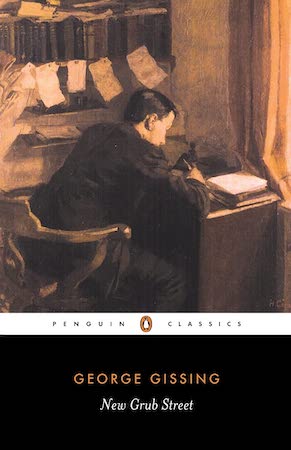
New Grub Street by George Gissing

At the heart of George Gissing’s sprawling 1891 novel New Grub Street are two writers: one, a high-minded author of serious fiction, struggling to find an audience for his work; and one, a far less idealistic figure far more apt to compromise when the prospect of money is at stake. They reside in a world where literary authors struggle to make ends meet, where new publications seek funding from wealthy benefactors, and where public feuds are commonplace. No eerie resonances with the present day there, nope.

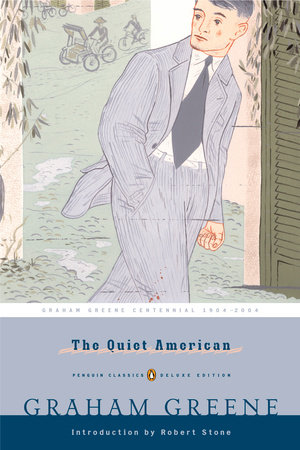
The Quiet American by Graham Greene

The Quiet American by Graham Greene

Politics and journalism are often interwoven; how a tense geopolitical event is covered can often shape public perception of it and, thus, the governmental response. The narrator of Graham Greene’s 1955 The Quiet American is a British journalist in Vietnam, who comes to clash with a mysterious American with his own agenda. Questions of idealism, honesty, and war all come to a head over the course of the narrative.

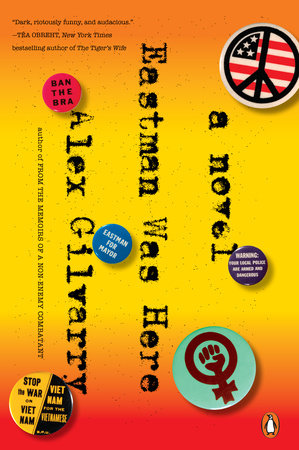
Eastman Was Here

Eastman Was Here by Alex Gilvarry

The title character of Alex Gilvarry’s Eastman Was Here is an aging literary lion of the New York scene who, by the early 1970s, is still coasting on the acclaim of a book he wrote shortly after World War II. The outsized personalities of the likes of Norman Mailer—as well as their excesses and other flaws—are certainly the template here. But as Eastman heads to cover the Vietnam War and begins to question his own approach to life and craft, a host of other literary touchstones—from Graham Greene to Joan Didion—further complicate the narrative.

Speedboat

Speedboat by Renata Adler

Renata Adler’s literary work has explored questions of journalism and the media from both sides of the fiction/nonfiction life—including 1999’s Gone: The Last Days of The New Yorker. On the novelistic side of things, there’s her debut novel Speedboat, first published in 1976, which filters a host of impressions of urban life in the mid–1970s through the particular lens of one journalist’s perspective. The result is a singular and unpredictable work which still feels vital 40 years later.

Philadelphia Fire by John Edgar Wideman

Journalists can help uncover moments in history that have been overlooked and help expose moments of injustice. The central character of John Edgar Wideman’s novel Philadelphia Fire is engaged in exactly that: he’s in the city mentioned in the title to research a book about the time in 1985 when the city’s police bombed a building housing the group MOVE, causing a fire that destroyed a number of homes and killed eleven people.

The Shipping News by Annie Proulx

There are numerous elements in play in Annie Proulx’s award-winning novel, from questions of family and human connection to an immersive portrayal of a small community. But here, too, journalism plays a part: the novel’s protagonist is a reporter, looking to make a fresh start by taking a job and moving his family to Newfoundland. As with everything else in the novel, Proulx offers a sharply-observed take on newsroom life.

Jeff in Venice, Death in Varanasi by Geoff Dyer

The life of a journalist has, at times, offered perks—for a rarefied stratum, that could include global travel, access to elite spaces, and a general sense of the high life. In the first half of Geoff Dyer’s Jeff in Venice, Death in Varanasi, a journalist makes his way around the Venice Biennale, engaging in various acts of excess—all of which makes for a bold contrast with the book’s stark, philosophical second half.

John Henry Days

John Henry Days by Colson Whitehead

In Colson Whitehead’s 2001 novel John Henry Days, Whitehead follows the travails of a journalist on assignment from an online publication to cover a stamp prominently featuring John Henry. Whitehead raises a host of questions of national memory and heroism as he tells this story, all the while juxtaposing it with the surreal and mundane world of press junkets through which the novel’s protagonist moves.

The Book of Formation by Ross Simonini

The Book of Formation by Ross Simonini

Over the course of Ross Simonini’s novel The Book of Formation, we see a journalist’s career shift over the course of many years. This unnamed figure engages in a series of interviews with the scion of a self-help movement based around, essentially, creating a new identity for oneself. Over the course of the novel, Simonini explores the boundaries between reporter and subject, probes the nature of celebrity, and holds a funhouse mirror up to the face of American celebrity culture.

The Lost Honor of Katharina Blum

The Lost Honor of Katharina Blum by Heinrich Böll

Out of the chilling atmosphere of radical politics in 1970s Germany came Heinrich Böll’s taut, precisely written novel The Lost Honor of Katharina Blum. It examines a case in which journalistic excesses lead to tragic ends: the title character is circumstantially connected to a crime, and is hounded by an amoral reporter, which leads to a violent and harrowing conclusion.

The Continuous Katherine Mortenhoe

The Continuous Katherine Mortenhoe by D.G. Compton

In D.G. Compton’s 1973 novel The Continuous Katherine Mortenhoe, he provides a chilling view of a potential future of journalism—one that’s only gained in power as the years have gone by. The title character is dying in a world where most diseases have been cured; one of the central characters is a voyeuristic journalist whose eyes act as cameras, invasively documenting her last days.

Malacqua by Nicola Pugliese

Sometimes, journalists are tasked with providing an explanation of events that might not otherwise have one. Sometimes, events are so bizarre that no such explanation is possible. That’s certainly the case in Nicola Pugliese’s Malacqua, in which a series of downpours in Naples heralds a sequence of bizarre events—including a terrifying sequence involving an abandoned doll—and a reporter attempts to understand something that lacks a rational explanation.

Have We Gotten Better at Writing About Sex?

Auberon Waugh of the Literary Review founded the Bad Sex in Fiction Award in 1993, out of a need to note the superfluous and unnecessary writing about sex in literature and to encourage an evolution away from the idea that “sex sells.” Now entering its 25th year, with the nominees out last week and the winner announced yesterday, the award is still necessary. Yet this year, even the judges agreed that the nominees were really not all that bad. Could it be that writers have started to get better at writing about sex?

This explanation makes sense to me because the first year of the Bad Sex Award, 1993, was also my first year of life. I still have a ways to go in reaching my peak maturity as a writer and as an overall citizen (i.e, credit card bills and life-style choices), but I’ve also come a very long way, especially in terms of sexual maturity (hi Mom). Maybe it just takes 25 years of tasteful public shaming for a person—or sex writing—to mature.

This year, even the judges agreed that the nominees were really not all that bad. Could it be that writers have started to get better at writing about sex?

If we want to continue to ride my timeline and align it with the existence of this award, then it would be appropriate to note that 2006 was a banner year for famous nominees—and, for me, the beginning of puberty. What’s worse than the sixth grade, filled with braces and weird pains and awkward, awkward, awkwardness? Well, have you read Pynchon’s excerpt that put him in the 2006 nomination? The one where we find a dog that has been trained to give his owner oral pleasure and is left with a curious character? It’s worse. Or at least just as bad.

I don’t even want to reproduce the original text on the page. If you want to read the full excerpt, click here. Otherwise, just know the passage ends with “Reader, she bit him.”

This is really bad. I’m talking “choking on the lunch your mom packed for you in the middle of the cafeteria and having to give yourself the Heimlich maneuver in the sixth grade while eating next to your crush” bad. The kind of stuff that makes you embarrassed that you even read and visualized it bad. But this didn’t even win the award! Iain Hollingshead won the award for his “bulging trousers” entry. The editors of the Literary Review magazine wrote this in their defense, “Because Hollingshead is a first-time writer, we wished to discourage him from further attempts. Heavyweights like Thomas Pynchon and Will Self are beyond help at this point.” (Pynchon and Self weren’t even the only hard-hitters on the list that year; David Mitchell was also nominated for Black Swan Green. Puberty is hard on us all.)

But have we matured in our ways of reading and accepting sex in writing? Last year, Erri De Luca won the 24th annual award for the following:

My prick was a plank stuck to her stomach. With a swerve of her hips, she turned me over and I was on top of her. She opened her legs, pulled up her dress and, holding my hips over her, pushed my prick against her opening. I was her plaything, which she moved around. Our sexes were ready, poised in expectation, barely touching each other: ballet dancers hovering en pointe.

The bad sex is starting to be not that bad, per se. There’s no discussion of any kind of the cringe-worthy metaphors to sex you hear from that guy in your MFA. It’s actually kind of funny, to imagine two people overwhelmed by sexual desire yet poised like ballet dancers, maybe even in tutus. The prize seems to have finally gone to someone that wrote a funny-bad passage on sex and not a simply bad passage on sex like Morissey’s boob erotica (sorry, love the Smiths but this intimacy is nothing like the kind of whimsical connection we feel during “This Charming Man”), or Sean Thomas’ “own Toshiba, dinky little JVC.”

This year, the sex writing is pretty mild in terms of the outrageous. Eliminating sex from literature would be ignoring the importance of talking about sex in western culture, and these authors are trying to keep the conversation going. But when we put Melvyn Bragg’s florid sex from A Time to Dance (1993 winner) next to Giles Coren’s I-don’t-even-know-what in Winkler (2005 winner), and compare them both to Laurent Binet’s passage that was nominated this year, you can see how the writing has matured from “fuck it, this needs a sex scene” to “let me at least try and relate this back to ‘The Seventh Function of Language.’”

The writing has matured from “fuck it, this needs a sex scene” to “let me at least try and relate this back to ‘The Seventh Function of Language.’”

Here’s Bragg from the contest’s infancy:

We came together, do you remember, always tenderly, at first standing, like a chivalric introduction to what was to be a voluptuous sensual battle? Just stood and kissed like children, simply, body to body, skin to skin, you slightly stirring against me, myself disregarding for those seconds the ram of sex aching below.
Eyes closed . . .reaching into the melting fluid rubbered silk — a relief map of mysteries — . . . reeking of you, our tongues imitating the fingers . . .

Coren from 2005, puberty:

And he came hard in her mouth and his dick jumped around and rattled on her teeth and he blacked out and she took his dick out of her mouth and lifted herself from his face and whipped the pillow away and he gasped and glugged at the air, and he came again so hard that his dick wrenched out of her hand and a shot of it hit him straight in the eye and stung like nothing he’d ever had in there, and he yelled with the pain, but the yell could have been anything, and as she grabbed at his dick, which was leaping around like a shower dropped in an empty bath, she scratched his back deeply with the nails of both hands and he shot three more times, in thick stripes on her chest. Like Zorro.

Puberty, all right.

And Binet, a 2017 nominee:

He puts his hands on Bianca’s shoulders and slips off her low-cut top. Suddenly inspired, he whispers into her ear, as if to himself: “I desire the landscape that is enveloped in this woman, a landscape I do not know but that I can feel, and until I have unfolded that landscape, I will not be happy …”
Bianca shivers with pleasure. Simon whispers to her with an authority that he has never felt before: “Let’s construct an assemblage.”

Even this year’s winner is comparatively decent, if slightly perplexing in its metaphors—congratulations, Christopher Bollen.

The skin along her arms and shoulders are different shades of tan like water stains in a bathtub . . . Her face and vagina are competing for my attention, so I glance down at the billiard rack of my penis and testicles.

The Literary Review’s justification for Bollen’s win doesn’t even pretend he’s as bad as the offenders of yesteryear. “Bollen goes overboard in his attempts to describe the familiar in new terms, leading occasionally to confusion,” the judges decided. “In the line quoted … they were left unsure as to how many testicles the character in question has.”

Shedding Skin: Sex, Intimacy, Writing, and Social Media

Side by side, the errors of the writers’ ways seem to be fixing themselves. No more do we see “crude” sex happening on the page as an experiment. Instead, the “bad” comes from the uninspiring metaphor of a woman to a bathtub and testicles to a billiard rack. As readers, we are not stuck to a word or a phrase that makes our reading face pucker and squint, like “melting fluid rubber silk” did for me. Nor are we engrossed by the pacing and the horror of being marked “like Zorro.” Rather, this year’s nominations and winner invite us to laugh at the awkward. We can chuckle at the different ways we understand sex, how every experience can vary, and we can look at this award as a sort of pact that with every year we will be one step closer towards better prose in sex.

20 Authors I Don’t Have to Read Because I’ve Dated Men for 16 Years

Certain writers — or artists, or film-makers, etc.— are so embedded into their particular cultures that one doesn’t need to have consumed their work in order to understand its impact. In particular, there are a bunch of white male authors it is possible to just about forget you haven’t read if you’ve dated the type of dudes you meet at an n+1 party. Certain books are so central to this type of dude that getting through a relationship — or even a few dates—constitutes the same level of knowledge of these authors that one might get from actually reading them, and gives you just as much right to hard-earned lifelong knowledge about their books, knowledge that need not ever be fact-checked by actually reading the books themselves (unless, for some reason, you really want to). Presented below, 20 authors on whose work I have involuntarily ended up with a strong opinion due to my unfortunate heterosexuality.


1. Philip Roth: I’ve never read any of Philip Roth’s books, but I have dated enough men who have that I can carry on a decent small-talk conversation about why I don’t like them. (If you would like to achieve this without dating men, you could just read a description of one of Roth’s books, in particular the one in which a man is transformed into a boob). Roth and I live in the same neighborhood, and a friend of mine once ran into him in the local pharmacy, where he was buying hemorrhoid cream or Cialis or something equally embarrassing, and glared at my friend for noticing him. Telling this story, I always imagine Roth holding a box that just says BAD DICK CREAM.

I’m sure the thing I say where I call him ‘the manic pixie dream girl of American literature’ is probably wrong, but I’m not gonna stop saying it.

2. Kurt Vonnegut: Honestly, I feel pretty guilty that I’ve never finished a Kurt Vonnegut novel, and I’m sure the thing I say where I call him “the manic pixie dream girl of American literature” is probably wrong, but I’m not gonna stop saying it. Even if it isn’t an accurate description of Vonnegut himself, I stand by it absolutely, and in perpetuity, as a description of every single dude with a tattered copy of Breakfast of Champions on his nightstand.

3. Tom Robbins: On the other hand, I feel pretty guilty that I have ever read any Tom Robbins books.

4. Arthur Miller: I’m sorry about your dad.

5. Jonathan Franzen: Anyone who really, sincerely loves Franzen’s writing has also probably really, sincerely told someone that “learn to code” was the solution to all their problems. The Corrections also contributed to the obsession with the literal and figurative “big book,” in which the size and weight of a novel directly equals its importance, a concept applied almost exclusively to novels by men.

6. Jonathan Safran Foer: I think the general opinion is that the most Jonathan Jonathan, the Ur-Jonathan, is Franzen, but bear with me here, because it’s actually Foer. Foer is the most successful of the Jonathans, in financial terms, and his personal life is a like a movie about the Brooklyn book world created by the Sex and the City writers’ room. The only thing I know about his recent prose is that scene about the doorknob, which made me unable to have sex for a week after I read a review that excerpted it, which I guess is technically an example of “impactful” writing.

7. J.D. Salinger: I’ve never read Salinger because I suspect that his books are at least 30% descriptions of ways in which women can be small, but I have read the best thing he ever (inadvertently) produced, which is this tweet. A lot of wonderful people love Salinger, but so do a lot of people whose job seems to be staging their meals on Instagram.

8. Chuck Palahniuk: Fight clubs aren’t real, you aren’t in one. (The less flippant thing I have to say is that the horror of the human body is a deeply important and nearly inexhaustible topic for literature, but it is close to impossible to find a white, male, famous writer whose writing on this subject is anything but a thinly disguised demonstration of violent misogyny, and maybe you should read Angela Carter or Carmen Maria Machado instead.)

9. Charles Bukowski: Alcoholism is a disease, not a personality.

10. John Updike: I’m sure that short story was very sad but also you have never had to have a job.

11. Bret Easton Ellis: I don’t like cocaine which is great because it means I have mostly avoided the people who want to sincerely talk about Bret Easton Ellis. A favorite of dudes hoping their sociopathy will be mistaken for genius; a more obvious favorite of dudes who quit their MFA a year in to go to a second-tier business school. A super-favorite of a guy who doesn’t mention his real estate license is how he actually makes money until you’ve known him for a couple months.

12. Ayn Rand: I’m sorry about your start-up.

One of the greatest things about getting older is that nobody has tried to talk to me about Jack Kerouac in at least five years.

13. Jack Kerouac: One of the greatest things about getting older is that nobody has tried to talk to me about Jack Kerouac in at least five years.

14. Thomas Pynchon: I’m sorry about your unfinished novel. (I actually love Pynchon and this burn is very self-directed).

15. Norman Mailer: The favorite author of every guy who loves to talk about bar fights but has never been in one.

16. Tom Wolfe: The favorite author of every man with an unfinished novel and a “writing outfit.”

17. Martin Amis: The favorite author of every dude who hates women but loves telling people about the year* he lived* in London. (*three months) (*studied abroad)

18. Donald Barthelme: Barthelme is a beautiful, strange, important writer beloved by dudes who will interrupt two out of every three sentences you say to them.

19. David Foster Wallace: A list like this wouldn’t be complete without DFW, but at the same time his inclusion feels disingenuous, because when it comes to Wallace, I am the literary bro cornering you at a party to ask if you’ve read him and why not. I love DFW’s work in the same over-personal obsessive way this list is meant to mock. Wallace is also an author whose body of work defies the kind of easy summary that can be gleaned from listening to a dude talk at a party about his favorite writer, or applied independent of actual engagement with the writing. I came to his work on my own without the suggestion of any dude, and I’ve probably rhapsodised obnoxiously about his work to most everyone I’ve dated since then. Furthermore, the circumstances of his death render pretty much all of jokes I could make here distasteful. In a better world, DFW would still be alive and we’d all gleefully roast dudes who suddenly start wearing a sweaty bandana to their undergraduate creative writing classes for no reason. The problem with dudes who love DFW, though — not all of them, certainly, but too many of them — is that they miss the lesson in his work that’s most useful to the type of person — like these dudes, and like myself — who tends toward hero-worship of authors they admire. The things that dudes who aggressively love DFW tend to imitate in DFW’s life and work are the very things that are meant to be openly foolish, interrogative rather than proud, at once offering levity and intense self-skewering criticism. That this enormous vulnerability has been either utterly elided or turned toxic by any of his most fervent fans doesn’t come close to being the greatest tragedy regarding the author, but it’s still immensely regrettable. In unpopular opinions, however, I still think “Big Red Son” is the best essay he ever wrote about America, and I wish he had lived long enough to revise a Large Adult Son joke into it.

20. Ernest Hemingway: The only truly feminist thing I have ever done is never finishing a Hemingway novel.