Kazuo Ishiguro’s ‘Never Let Me Go’ Is a Masterpiece of Racial Metaphor

In our new dystopian reality, we rarely get to celebrate good news. Waking up to the New York Times alert about Kazuo Ishiguro’s Nobel Prize win was one of the few truly joyous occasions of 2017. Not only because I’ve been a fan of the Japanese-British author since college, but also his recognition on such a global platform reaffirmed a worldview that needs to be remembered now more than ever.

But I was mystified when, amid the jubilant responses to the Nobel Prize committee’s decision to award Ishiguro, some began openly fretting over the author’s commitment to addressing matters of identity. Interestingly, these critiques tended to originate from within the Asian American community. Citing interviews where the author copped to being “self-conscious about this issue of people taking me literally” in reference to his Japan-centered novel, An Artist of the Floating World (1986), readers asked: Why did he stop writing novels with Japanese protagonists? Did he pander too much to the white gaze? Is that why he won — because he made himself palatable to white readers? Writers of color often have to negotiate their identities in ways that white writers do not when publishing in America, where the industry is nearly 80% white, and even more so in the U.K.

Ishiguro’s characters explore aspects of nonwhite identity that are actually more incisive and authentic than if they were simply reflections of Japanese culture.

The push for inclusivity may actually help explain why some readers feel let down by Ishiguro’s choices as a writer. In order to find a work that conforms more closely to what’s expected of Asian diasporic literature, we must reach farther back into the author’s oeuvre — to his debut A Pale View of The Hills (1982), which features an immigrant narrative about a middle-aged Japanese woman living in England. Ironically, such pigeonholing would seem to undermine the endeavor of contemporary writers of color to subvert rigid definitions of what they can and can’t write about. As someone who identifies as such, I reeled at the insinuations that the Japanese-born author was somehow less representative of his ethnicity because he has written about white characters, or characters whose race is never explicitly mentioned. In fact, I would argue just the opposite — that Ishiguro’s characters explore aspects of nonwhite identity that are actually more incisive and authentic than if they were simply reflections of Japanese culture.

Ishiguro’s novels frequently grapple with the role of the individual within the confines of society. Over the years I’ve found myself returning to his 2005 novel Never Let Me Go when contemplating the social conditions that continue to persist in our post-9/11, post-colonial, post-racial, post-everything world. The experience of diving into an Ishiguro novel becomes a process of excavation, of uncovering memories that the narrator has meticulously buried over a lifetime. But don’t expect any big reveal; instead, we must be satisfied with fragments of truth. The author’s gift lies in his ability to use those fragments to construct a portrait, which, in the end, resembles something more of a mirror. That truth implicates us as much as it does the characters in their fictional realm.
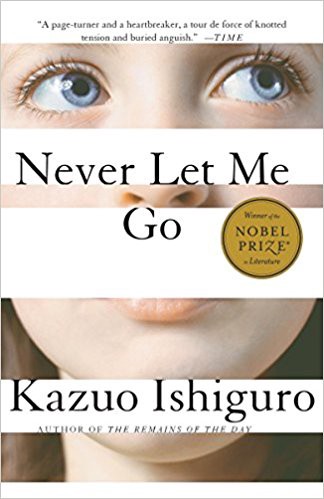
Never Let Me Go’s setting, stated simply as “England, late 1990s,” offers an alternative present where cancer and other previously incurable diseases all have a cure — but at some very high costs. Framed as the memoir of Kathy H., now 31, the narrative opens with recollections of her childhood growing up at an idyllic boarding school Hailsham in the English countryside. The narrative paints Hailsham and its remote, pastoral setting as one of a handful of “privileged estates.” Insulated from the outside, the school cultivates a unique culture, where the students’ guardians place a heavy emphasis on the need for creativity over the learning of rote subjects. In this way, we can think of Hailsham as representative of the high culture frequently associated with novels about exclusive educational institutions.

For those fortunate enough to gain admittance into these predominantly white spaces, they must often convince themselves that the bargain is worth it — that to follow the path of assimilation is better than to suggest rebellion. This rings especially true for people of color, who historically have been the ones excluded. The promise of belonging to an elite group proves so intoxicating that the students fail to discern to whom exactly they pledge their loyalty, and at what price. Only later do we the reader understand the types of roles Kathy and her peers are being groomed for.

It is this turn in the novel that begins to undo our perception of the students’ special standing. As the story unravels, we see that the walls of Hailsham do not act so much as fortification against intruders as they do a means of incarceration. The guardians employ psychological tactics in order to quell the curiosity of the students and discourage them from physically escaping. So in spite of the institution’s initial acclaim, Hailsham seems more and more a fraud where the imposition of order upon the student body supersedes the intellectual cultivation of the individual student.

In this brave new world, the technology of human cloning is implemented on a full scale for the harvesting of vital organs. The novel considers the ramifications of treating life as resource. More importantly, it forces us to reevaluate the comparison between the life of the human and nonhuman. But even this classification remains in constant flux. Identity, it seems, is never stable — a belief that’s rooted in the core of Never Let Me Go’s coming-of-age story.

Because we are never told what race Kathy and her classmates are in Never Let Me Go, I have a hunch that most readers assumed by default they were white. Certainly, this is what the 2010 film adaptation envisioned with its casting of comparably pale and willowy actors, all of whom could be described as very typically “English” in appearance. But it’s entirely possible to read these characters as non-white. Reduced to their mere expendable parts, Kathy and her fellow students represent those marginalized figures of our collective unconscious. Their embodiment of the unspeakable may even be biologically encoded onto their selves. Kathy’s friend Ruth theorizes: “We’re modeled from trash. Junkies, prostitutes, winos, tramps. Convicts, maybe, just so long as they aren’t psychos. That’s what we come from.” Because ethnic minorities are more likely to live in poverty compared to white people in the UK, the source population for these clones would have almost certainly included people of color. And given the very real history of how Western medicine has exploited black bodies specifically, there’s a strong case to be made for Ishiguro’s characters being non-white both figuratively and literally.

From science fiction to reality, the business of organ trafficking has materialized quite literally in non-white countries like China, India, Egypt, and Pakistan. Transplant tourism is a real thing, and its combined ethical dubiousness and questionable legality raise concerns about the commodification of human bodies. Pope Francis called organ trafficking one of the “new forms of slavery,” alongside forced labor and prostitution. For other modern-day metaphors for enslavement, look no further than commercial surrogacy or the indentured servitude sanctioned by our immigration laws. Never Let Me Go transforms the approach to racial subjugation in the name of scientific progress, which has created an entire sub-race of clones to service the needs of the greater whole of society. Just as notions of racial hierarchy have been used to promulgate colonial systems throughout history, the perceived nonhuman status of the clones seemingly justifies their sacrifice. The novel reframes the history of imperialism as a conflict between those considered human and those who are not.

The novel reframes the history of imperialism as a conflict between those considered human and those who are not.

The question of humanness troubles the clones, as well as sympathetic individuals like the guardians. On Hailsham’s mission, one of the guardians Miss Emily proclaims, “Most importantly, we demonstrated to the world that if students were reared in humane, cultivated environments, it was possible for them to grow to be as sensitive and intelligent as any ordinary human being.” The liberal-minded guardians invested in the students’ cultural education not only with the aim of improving their quality of living, but also to establish that their lives were worth saving. Working against the rationalization of science, the guardians looked to the students’ creativity as the truer measure of their being human. “We took away your art because we thought it would reveal your souls,” Miss Emily informs Kathy, then amending, “Or to put it more finely, we did it to prove you had souls at all.” The insinuation that she could be without a soul does not so much upset Kathy as it confuses her. She remembers a similar incident in her childhood when it occurs to her that an adult might be afraid of who she is:

So you’re waiting, even if you don’t quite know it, waiting for the moment when you realize that you really are different to them; that there are people out there, like Madame, who don’t hate you or wish you any harm but who nevertheless shudder at the very thought of you — of how you were brought into this world and why — and who dread the idea of your hand brushing against theirs. The first time you glimpse yourself through the eyes of a person like that, it’s a cold moment. It’s like walking past a mirror you’ve walked past every day of your life, and suddenly it shows you something else, something troubling and strange.

These moments of questioning threaten Kathy’s sense of self. Yet for readers familiar with life in the margins, they merely confirm her humanity.

As highlighted by the value placed on the clones’ artwork, the validity of one’s humanity hinges primarily upon the expression of emotion and the ability of others to read those emotions. This problem of readability extends to the author himself. When Josephine Livingston asks in The New Republic “What’s So ‘Inscrutable’ About Kazuo Ishiguro?” she’s being rhetorical, knowing full well that “inscrutability” is a longstanding Orientalist trope used to dehumanize Asian figures. She quotes Ishiguro’s own words:

Books, articles and television programmes focus on whatever is most extreme and bizarre in Japanese life; the Japanese people may be viewed as amusing or alarming, expert or devious, but they must above all be seen to be non-human. While they remain non-human, their values and ways will remain safely irrelevant. No wonder the British are so fond of the ‘inscrutability’ of Japanese faces.

Ishiguro’s insight into how his own ethnic exterior may be perceived suggests that he is in fact portraying the clones’ struggle through a racial lens. The correlation between the failure of the British to see Japanese people as human and the failure of critics to interpret Ishiguro’s work appears inextricable. In the essay “The ‘Inscrutable’ Voices of Asian-Anglophone Fiction,” The New Yorker contributor Jane Hu goes one step further to establish how Ishiguro’s affinity for “first-person narrators who keep their distance — actively denying readers direct interior access” provides an aesthetic quality indicative of inherent “Asian-ness.” By leaning into the “inscrutable Oriental” stereotype, Asian-Anglophone novelists, such as Chang-rae Lee, Ed Park, and Weike Wang, consciously play with the prejudices of Western readers.

To say that Ishiguro’s writing eschews identity politics   would be a failed reading of those works.

To say that Ishiguro’s writing eschews identity politics — an implication that his most popular novels, Never Let Me Go among them, are somehow safer and therefore less racially transgressive — would be a failed reading of those works. Perhaps his stories resist categorization precisely because they so urgently demand to be read universally. “[F]or me the essential thing is that [stories] communicate feelings,” the author said in his recent Nobel Lecture. He made the appeal that “we must become more diverse,” with the understanding that to “widen our common literary world to include many more voices from beyond our comfort zones of the elite first world cultures” means broadening whose stories help define what it means to be human. Boiled down to their essence, his characters beg simply to be seen, to be understood. Reading Ishiguro, I feel both.

9 Political Books To Read After ‘Fire and Fury‘

Given the bump to its release date and reports of it selling out at midnight sales at bookstores across the country, we’re guessing some of you might have spent the weekend reading Michael Wolff’s Fire and Fury: Inside the Trump White House. And maybe you’re looking for something interesting with which to follow it.

It’s possible that you might want another book delving into abuses of political power. Maybe you’re looking to explore the recent past (or the more distant past) to gain clues about Donald Trump’s ascent from contentious real-estate developer to high office. Or perhaps you’re seeking an antidote for narratives surrounding the Trump White House and would prefer a tale of a more functional administration. Here are some options for your next political read.

Trump: The Greatest Show on Earth by Wayne Barrett

Few reporters captured the unpleasant nature of the politically connected in New York City like the late Wayne Barrett. First published in the early 1990s, Barrett’s biography of Trump offers readers an alternative to Trump’s preferred narrative of himself as a boldly successful corporate figure, and serves as a reminder of the unpleasant aspects of our current President’s earlier days.

American Scoundrel: The Life of the Notorious Civil War General Dan Nickles by Thomas Keneally

During a 2016 campaign rally, then-candidate Trump infamously boasted that he “could stand in the middle of 5th Avenue and shoot somebody and I wouldn’t lose voters.” The case of Dan Sickles, who killed his wife’s lover, was acquitted, and went on to lead troops for the Union in the Civil War, suggests a bizarre precedent for these remarks. Keneally’s book includes an insider’s look at mid-19th century Washington, and the conflicts and infighting that took place there.

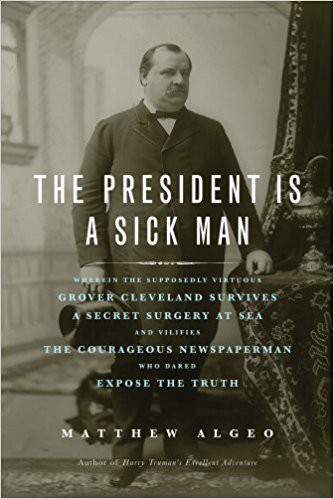
The President is a Sick Man: Wherein the Supposedly Virtuous Grover Cleveland Survives a Secret Surgery at Sea and Vilifies the Courageious Newspaperman Who Dared Expose the Truth by Matthew Algeo

Matthew Algeo’s The President is a Sick Man tells the story of a secretive President (in this case, Grover Cleveland) hiding something critical (in this case, a tumor) from the American people and some of his closest advisors, and of the operation and coverup that ensued. A contentious administration, a distrust of the media, and an ominous sense of secrecy: there’s a lot in Algeo’s narrative that will seem more than a little familiar.

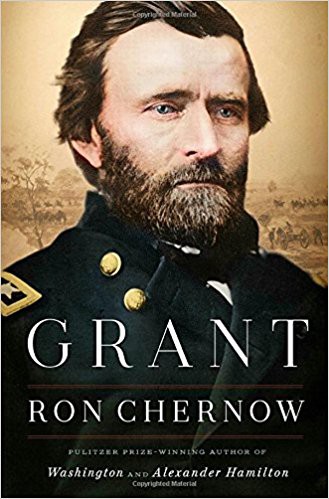
Grant by Ron Chernow

Among Ron Chernow’s talents as a biographer is the ability to remind readers of the humanity and contradictions of people who have long since developed larger-than-life reputations. With his recent biography Grant, Chernow examines the contradictions of Ulysses S. Grant, whose life moved from tremendous lows to towering heights. In his review of the book for Slate, David Plotz notes that Grant, during his presidency, “surrounded himself with con artists and rich people.” Some readers may note some contemporary resonances there as well.

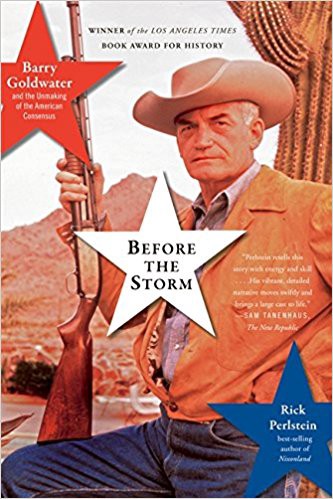
Before the Storm: Barry Goldwater and the Unmaking of the American Census by Rick Perlstein

The election of Donald Trump offers a host of contradictions that many of us are still unfolding: the gulf between Trump’s populist rhetoric and his own privileged background; his sometimes contentious and sometimes welcoming relationship with other elected Republicans. Those looking for the historic roots of this would do well to examine Before the Storm, the first of three books Rick Perlstein wrote about the birth of contemporary American conservatism.

Team of Rivals: The Political Genius of Abraham Lincoln by Doris Kearns Goodwin

For readers seeking a portrait of a more functional Presidential administration, Doris Kearns Goodwin’s Team of Rivals (the basis for the acclaimed film Lincoln) may be the perfect counterpoint to the fractious infighting seen on an average day’s news. Goodwin’s look at the Lincoln administration examines how Lincoln worked with the men who were also in the running for the Republican nomination in 1860, and how they came to form the core of his cabinet—and thus addressed one of the largest crises faced by the nation.

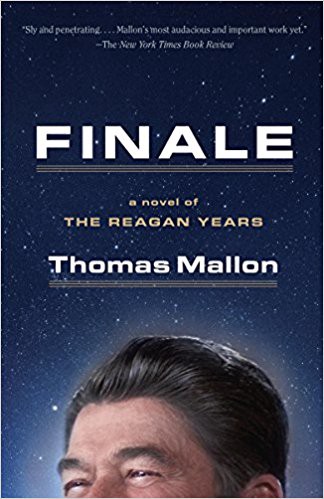
Finale: A Novel of the Reagan Years by Thomas Mallon

In recent years, Thomas Mallon’s fiction has turned to examining the complex personal dynamics within presidential administrations, and the ways in which the proximity to power can alter certain relationships. The focus of this novel is 1986, and the ways those in power addressed the looming end of the Cold War, the AIDS crisis, and other national and international concerns.

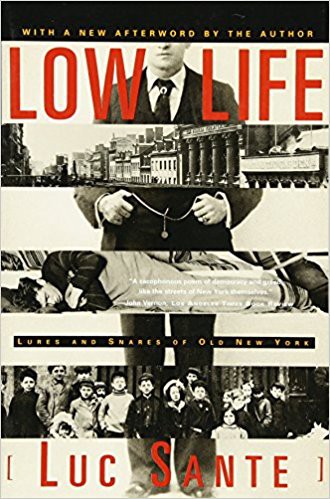
Low Life: Lures and Snares of Old New York by Luc Sante

Donald Trump’s rise to national prominence stems directly from his roots as a businessman among the often fractious politics of New York City. If one wants to understand the city’s own complex political history, with crooked politicians and flawed institutions, Luc Sante’s comprehensive Low Life has an abundance of information on the origins and misdeeds of Tammany Hall to get you started.

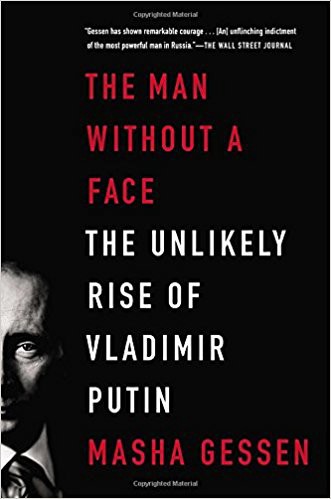
The Man Without a Face: The Unlikely Rise of Vladimir Putin by Masha Gessen

Look, if you’re already terrified about the current state of American politics, it might behoove you to bring your overall levels of anxiety, in Spinal Tap terms, up to 11. So why not sit down with this detailed look at how Russia’s head of state got his start, moving from relative anonymity at the KGB to becoming one of the most powerful figures on the world stage.

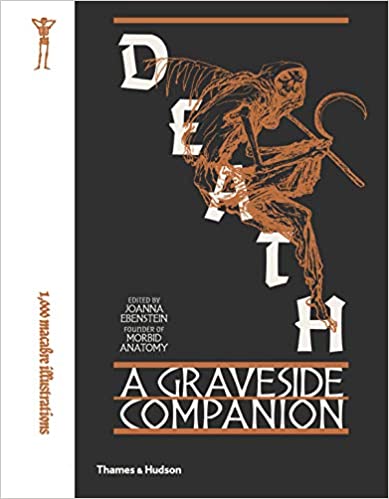
10 Death-Obsessed Books to Satisfy Your Inner Goth

Since I was a kid, people have called me morbid for being interested in death. For the longest time I accepted this epithet, but at a certain point, I began to wonder… If everyone who has ever lived has died; if I — barring some medical miracle—will also die; and if we still don’t know what happens after we die, well, isn’t it more morbid not be interested in death?
My fascination with death led me to found Morbid Anatomy where, via a blog, exhibitions, books, public programs and a recently shuttered museum, I showcased ways in which people have dealt with death at different times and places. My intention was to urge people to question contemporary attitudes, and to demonstrate, via a preponderance of historical examples, that the way we think about death today, in our particular time and place, is the exception rather than the rule. Improbably. Morbid Anatomy hit a chord, and went on to become a nexus for “death-curious” people all over the world.

Following is a list of ten of the books that were most influential in shaping my worldview and cultivating my interest in the intersections of art and death. Some are from my youngest childhood (encouraging my belief that all children are interested in death!) and others were discovered more recently.


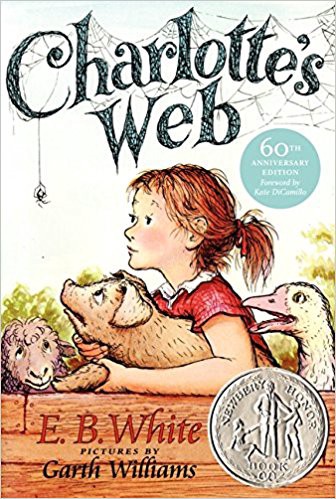
Charlotte’s Web, E.B. White

Charlotte’s Web was a very important book in my development. My mother lovingly read it to me when I was a very young girl, and I was solemnly gifted my own copy when I passed my first reading tests. The book is a heartbreaking evocation of the facts of life and death as experienced on a mid-20th century American farm through the travails of Wilbur, a young pig who learns, to his dismay, that his purpose in life was to be made into bacon. His life is ultimately spared through the generosity of his friend, a spider, who saves his life by sacrificing her own. The 1973 Hanna-Barbera film — with Charlotte, the spider, voiced by singer Debbie Reynolds — is just as poignant and evocative.

A Nervous Splendor: Vienna 1888–1889, Frederic Morton

A Nervous Splendor is a literary cultural history that presents an arresting vision of the grand lives — and grander deaths — of the inhabitants of Vienna, Austria. Capital of the glittering Habsburg Empire, it was also, as the author demonstrates, a city “given over to the dramaturgy of death.”

The book traces the lives of some of the city’s most illustrious citizens — including Gustav Klimt, Sigmund Freud, and Arthur Schnitzler — as they intertwine with, and respond to, the mood and movement of their city. The story moves to the drumbeat of ornate suicides reported on with relish by the local papers, revealing the city’s fascination with the schöne leich, or beautiful corpse.

These culminate in the mysterious death of Vienna’s beloved Prince Rudolph — young, handsome, and progressive—whose corpse was found in his hunting lodge with that of his beautiful young mistress Baroness Mary Vetsera in what many believed was a double suicide. The book ends with an intimation of more deaths yet to come with the introduction of a baby named Adolf Hitler, born just after Rudolf’s body is interred in his family’s imperial crypt.

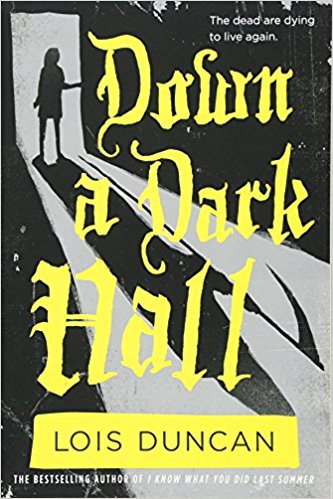
Down a Dark Hall, Lois Duncan

I have always been a huge fan of author Lois Duncan, the unrivaled queen of 1970s and ’80s young adult supernatural. She wrote many wonderful novels dealing with death and the paranormal, taking on such phenomena as witchcraft (Summer of Fear), ESP (The Third Eye), and astral projection (Stranger with my Face). She even published a fascinating book about the real-life murder of her daughter, which she came to believe had been eerily presaged by her novels, bringing up provocative ideas of the relationship between creative work and mediumship.

My favorite of all of Duncan’s books is Down a Dark Hall, in which protagonist Kit Gordy, a self assured teenager, is admitted to an exclusive boarding school in an eerie gothic mansion. She soon realizes that the students have been selected not for their academic achievement, but for their special sensitivities; every night, when they go to sleep, they are being used without their knowledge as mediums to channel the ghosts of dead artists, writers, scientists and composers who produce work through them from beyond the grave. Kit discovers that all of the former students of this infernal academy either succumbed to madness or died, and makes it her mission to liberate herself and her fellow students before it’s too late.

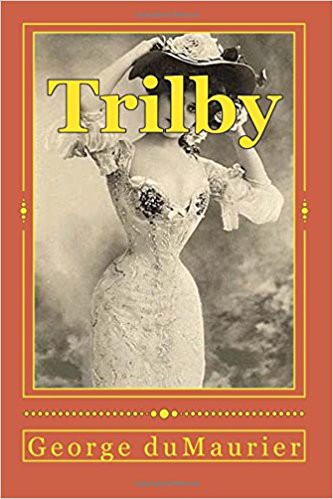
Trilby, George du Maurier

Trilby was an instant sensation upon its publication as a serial in 1894, but is rarely read today, probably because of the overtly anti-semitic characterization of its villain, Svengali, an infernal Jewish mesmerist and musical virtuoso. Nevertheless, it was hugely influential, with what we know as the Trilby hat tracing back to the first London stage production, and the word “Svengali” now a part of our everyday lexicon.

The eponymous heroine of the book, Trilby, is a beautiful artist’s model whose free-spirited ways and questionable moral repute make her an inappropriate wife for her true love, a young artist from a good family. The sinister Svengali is also in love with her, and woos her by seductively playing Chopin’s funeral march while whispering in her ear what a beautiful skeleton she would make, put on view in “a nice little mahogany glass case” at the nearby medical museum. Meanwhile, the Paris Morgue — a popular tourist attraction at that time, where people would come to look at the unclaimed bodies on slabs — looms in the distance.

Ultimately, Trilby sacrifices her true love to save him from the harm that might come from marrying beneath his station, leaving her vulnerable to Svengali’s spell. Through hypnosis, he transforms her into his obedient servant and the finest singer the stage has ever seen, making her an international sensation. Not surprisingly, both she and Svengali meet a tragic end.

Looking Everywhere for a Way to Deal with Death

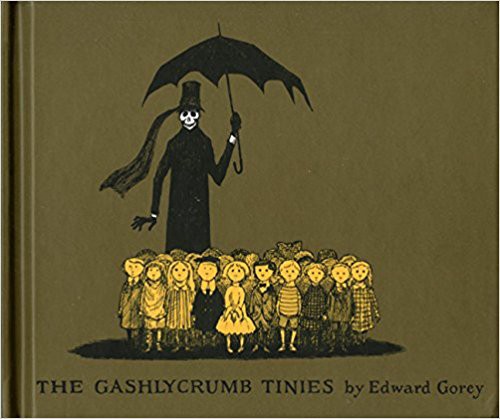
The Gashlycrumb Tinies, Edward Gorey, 1963

Edward Gorey is one of my great all time heroes; author and illustrator, he penned (and inked) charmingly dark fables — often in rhyming couplets — of death, disaster and the absurd. He published dozens of exquisite, small-scale books which he both wrote and illustrated, most of which take place in a vaguely Edwardian universe of his own creation.

It is very hard to pick just one of his books, but the The Gashlycrumb Tinies, arguably Gorey’s most iconic work, is perhaps also my favorite. This illustrated A to Z is reminiscent of a Victorian childrens’ book intended for moral improvement, except that, in this case, each letter of the alphabet details the death of a child. A few choice lines: “M is for Maud who was swept out to sea, N is for Neville who died of ennui, O is for Olive run through with an awl, P is for Prue trampled flat in a brawl.”

A few other of my favorite Gorey works are The Hapless Child, which narrates the demise of its innocent heroine Charlotte Sophia; The Insect God, in which a kidnapped child is sacrificed to an enormous, skull faced insect; and The Loathsome Couple, a charming little book inspired by the real life Moors Murders, where a couple murdered five children in the 1960s.

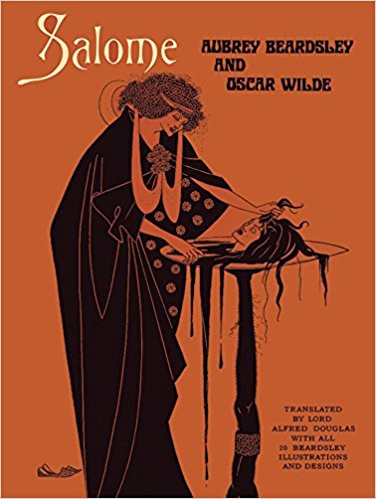
Salomé: A Tragedy in One Act, Oscar Wilde, with illustrations by Aubrey Beardsley

The story of Salome is drawn from The New Testament. It tells the story of King Herod and his step daughter Salome, who demands, at her mother Herodias’ behest, the decapitated head of John the Baptist on a platter. Wilde took this brief biblical sketch and wove a lavish femme fatale fantasy around it, culminating with the depraved temptress passionately kissing the blood dripping head of the saint while musing on the mysteries of love and death.

Banned in Britain until 1931, it nevertheless inspired such memorable film adaptations as Alla Nazimova’s 1923 Salomé — with expressionistic visuals inspired by Aubrey Beardsley’s original decadent illustrations — and Ken Russell’s provocative 1986 Salome’s Last Dance. It also features heavily in Billy Wilder’s Sunset Boulevard (1950) in which aging silent film star Norma Desmond tragically acts out the role of Salome in real life after succumbing to a madness brought on by preparing to play the role for her comeback.

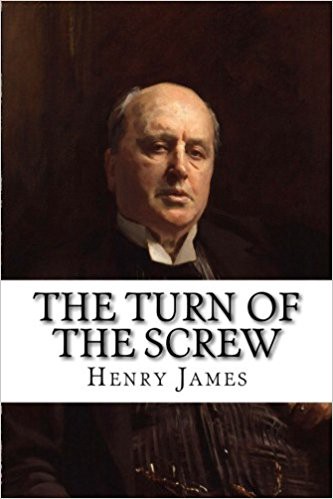
The Turn of the Screw, Henry James, 1898

On Christmas Eve, in an old house, a story is told to friends around the fire; The story is said to be from a manuscript written by a young woman about her experiences as governess for two precocious children on a large isolated British estate. Over the course of her tenure, the governess becomes convinced that her wards are under the thrall of the ghosts of two of the estate’s former employees, sinister figures who were engaged in a torrid romantic relationship and, it is intimated, might have even taken sexual liberties with the children.

The story ends with a shocking, eros-tinged death that leaves us no closer to knowing if the ghosts were real, or figments of the sexually-repressed governess’ imagination. A wonderful book, it was also adapted into one of my all time favorite films, The Innocents, starring Deborah Kerr and with a script co-written by Truman Capote.

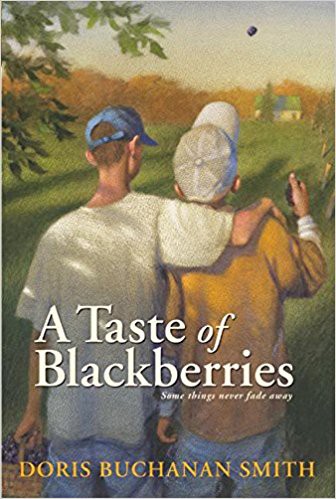
A Taste of Blackberries, Doris Buchanan Smith, 1973

I cannot have been alone as a child in my predilection for books in which main characters died, or this book would never have been the successful award winner it is. I won’t say much more, for fear of giving too much away, but like Charlotte’s Web — to which it is often compared — it is a meditation on love, loss, and coming to terms with brevity and fragility of life.

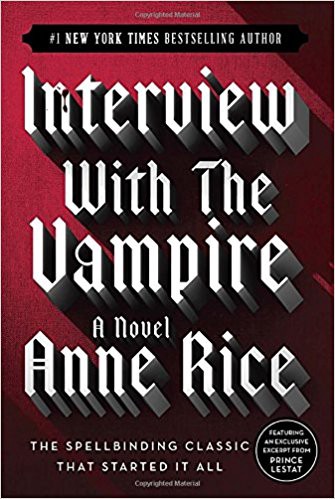
Interview with the Vampire, Anne Rice, 1976

With its atmospheric evocations of an 18th-century New Orleans full of crumbling plantations and slave revolts, the 19th-century Parisian Théâtre des Vampires in which a coven of vampires kill and feed from their victims on stage before an unsuspecting audience, and a vampire love triangle between two men and young girl, Anne Rice’s sexy revision of the familiar Dracula story created a new vampire mythology, one that went on to impact all that followed, most notably the Twilight series. To me the most poignant character is Claudia, a New Orleans waif transformed into vampire at the age of 5 and cursed to live forever in the body of a child. The character — as well as the book itself — is said to have been inspired by Anne Rice’s daughter Michelle, who died of leukemia at 5 years old.

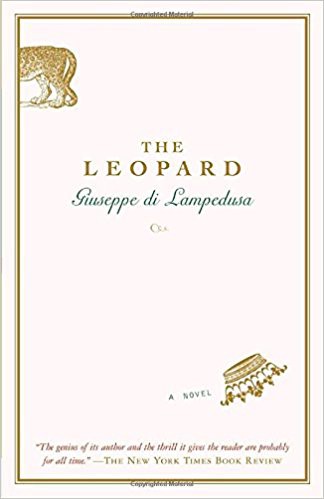
The Leopard, Giuseppe Tomasi di Lampedusa

This book, a favorite of my now-deceased grandmother, is an elegiac evocation of the end of the aristocracy heralded by the rise of democracy in 19th-century Italy. Written by a Sicilian prince and published only after his death, it is a melancholy meditation on the death of a way of life, via the ruminations of a man who sees the end is near, both personally and for the culture that gave his life meaning. Ultimately death comes to take the old prince — a great romantic adventurer in his day — in the form of a beautiful woman beckoning him on to a final amorous adventure.

Macmillan to President: No, You Actually Can’t Suppress Books You Don’t Like

Simon & Schuster publishes Fahrenheit 451, and Penguin Random House publishes 1984. But Macmillan Publishers is doing its best to keep them from becoming reality.

Macmillan—the parent company of Henry Holt, which is publishing Michael Wolff’s combustive Trump administration tell-all Fire and Furyhas already made clear what it thinks about governmental attempts to suppress a book. When the president demanded last week that the publisher “immediately cease and desist from any further publication, release or dissemination” of Fire and Fury, it instead moved the publication date to the following day. The message was clear: oh, you don’t want this book out in the world? Well, we’re putting it out TOMORROW.

Now, the message is even clearer. Macmillan will send its legal response to the president’s cease and desist demand today, but in the meantime, CEO John Sargent has written an unsparing open letter to Macmillan employees about his (and the company’s) commitment to the First Amendment. In it, he calls the president’s demand “flagrantly unconstitutional,” citing Supreme Court decisions with the confidence of a legal scholar.

Here’s the call-to-arms conclusion:

There is no ambiguity here. This is an underlying principle of our democracy. We cannot stand silent. We will not allow any president to achieve by intimidation what our Constitution precludes him or her from achieving in court. We need to respond strongly for Michael Wolff and his book, but also for all authors and all their books, now and in the future. And as citizens we must demand that President Trump understand and abide by the First Amendment of our Constitution.

The letter would, needless to say, be completely lost on Trump; his name doesn’t even appear until the very last paragraph, at which point he would absolutely have wandered off. But it’s a stirring document for those of us who can read and do care about the freedom to publish.

Sometimes the Most Feminist Thing You Can Do Is Exist as a Woman in Public

Novel Gazing is Electric Literature’s personal essay series about the way reading shapes our lives. This time, we asked: What book was your feminist awakening?

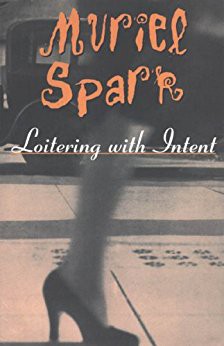
I first read Muriel Spark’s Loitering With Intent on the steps of a pub terrace in Forest Hill, South London. I’d just finished university final exams, was in London for the foreseeable future, and didn’t know what I was doing.

I felt left behind, as if time had continued for everyone else but stopped for me. Classmates talked about their plans for Masters programs, traveling, and internships with the slightly desperate smiles of people who also didn’t know what they were doing but could afford to float. A couple of my friendships dramatically disintegrated. I read articles about how my generation were screwed and articles about how we were entitled; I’d stopped writing articles of my own, feeling overwhelmed by the sheer number of opinions and confessions in my online world. I applied for one to five jobs a day, tried to visualize a future. It was June 2015 and I was stuck.

Reading Loitering With Intent was not a bright Damascene moment but a sunny-morning awakening. I saw clearly, and recognized myself.

When I’d first encountered Spark at seventeen, I had believed that feminism was all about standing up to the patriarchy, not giving a fuck, dressing up, being strong, taking control of your sexuality and flaunting it. It meant identifying as a feminist, loudly and often. The feminist bloggers I followed talked about “eyeliner that could slay a man” and “weaponized femininity”. My idea of a feminist heroine was Cordelia from the young adult novel This Is All, who unabashedly confessed how she’d decided to have sex with her boyfriend at fifteen, in a church. I thought feminism was about rebelliousness and unashamed sexuality — in other words, not exactly Muriel Spark.

By this definition of feminism, though, I was failing: I didn’t look the part, I didn’t wear makeup, I wasn’t an extrovert, and I was…weird.

It had also begun to occur to me that feminism, in the shallow form I understood it, was asking a lot of women and the stories we told. We had to reject the pressure of beauty standards and adverts, but also look good and be confident. We had to be role models, good girlfriends, examples to the youth. We had to confront male power, but not be too nasty about it, unlike those “mean, man-hating feminists” in the 1970s. We had to be open about our sexuality and personal journeys so as to be understood, without knowing if anyone would make the effort to understand — but, we also had to make feminism look fun! It seemed as if being a feminist was a performance, and an exhausting one: constantly on the beat, correcting, confronting, destroying, confessing.

It seemed as if being a feminist was a performance, and an exhausting one: constantly on the beat, correcting, confronting, destroying, confessing.

Muriel Spark gave me a new model for a feminist hero, one that made more sense to me. The feminist act in Loitering With Intent wasn’t about deadly eyeliner or bold sexuality or anything else that seemed far out of my reach. It was about loitering — about the quiet subversiveness of simply existing in public as a woman.

The story begins in 1950 with Fleur, the twentysomething heroine, writing in a graveyard in Kensington. A policeman comes over and asks what she’s doing, and she answers calmly that she’s writing a poem. Once he leaves, she finishes her poem and stays in the graveyard until sunset.

So there I was in 2015, loitering on the steps of a pub, not knowing what on earth I was doing, reading about this woman who was also hanging around without excuse—and, far from “alone and palely loitering,” she’s having a great time doing it.

The story is about Fleur working a peculiar day job while she writes a novel. Refreshingly, there are no angsty scenes of her agonizing over a typewriter or complaining about writer’s block. Fleur loves to write and is shamelessly interested in everyone and everything around her: early on, she remarks that, “If [my landlord and his wife] had thrown me out I would still have had nothing much against them, I would mainly have been fascinated.”

Going against my previous conception of feminist heroines, the story isn’t hugely concerned with Fleur’s sexuality, or with her loudly defying social norms: the primary interest is how her life as an artist collides with her job. She has an unsatisfactory relationship with her patronizing, married literary critic boyfriend, but that’s casually introduced a quarter of the way through and Fleur’s attitude towards him is humorously unemotional. On being told that her boyfriend is using his wife and herself as cover for an affair with a man, she wonders “how he found the time for us all.” The love triangle and the boyfriend’s rival novel are key threads of the story, but the relationship doesn’t define Fleur, and she is — to the horror of his wife — more concerned with her own “thoroughly sick” novel than her boyfriend.

I connected with all of this, but there was a deeper reason I felt so strongly about Fleur. It was her lack of shame that stirred me.

As a teenager, I loved walking. We lived in a rough area of the city, where I was occasionally catcalled, told to stay away from certain streets and to avoid eye contact with groups of boys. At my all-girls’ school, “men in the area” were mentioned as if they were wolves lurking outside the gates. Once we even had a solemn school assembly in response to a girl who had been overheard boasting about her new red underwear on the train.

But nobody actually told me that I wasn’t allowed to walk because it wasn’t safe, and at first I didn’t put it together. I didn’t feel any self-consciousness about walking itself: if I was wearing purple tights and leg-warmers and someone stared at me, that was their problem. Sometimes I did get spooked, finding myself on a deserted side street or crossing the road to avoid a group of men, but I had an unreasonable feeling that if I simply stayed in motion I was uncatchable.

I now put my fearlessness down to the fact that as a queer neurodivergent person, being raised by my dad, I had a slightly different experience of girlhood. Being seen as a girl, but not exactly feeling like one. Being told to be wary or modest, but not really absorbing the message, never feeling truly unsafe. I felt anxious in crowded hallways or shopping malls, but when I walked I felt I was in control of my being, just as I did when I’d written something I was proud of. It also mattered that I’m white, and I find it hard to separate the freedom I experienced from knowing that my family was permissive and that being white in the U.K. affected my experience of walking: the responses of people around me, for example, and my confidence in having the right to walk alone and seek help from strangers if it was needed.

I know I was lucky that I was never in danger — but, writing that, I feel as if I’m saying sorry for having felt so free, so secure in the world. I’m not sorry. I wish girls were objectively safe and free everywhere.

On getting to university, I learned more about sexism and intersectionality, about other people’s experience of girlhood. I marched with Reclaim the Night. I talked to girls who wanted to write but didn’t see why their writing was worth showing to anyone, and I read work by girls struggling with shame. I went to writers’ groups where I and other women were talked over by kind, well-meaning men. Slowly it sank in, the message that other young women had received loud and clear long ago: This isn’t for you, you’re not safe on the street. Don’t write. Disappear. It hurt.

Slowly it sank in, the message that other young women had received loud and clear long ago: This isn’t for you, you’re not safe on the street. Don’t write. Disappear.

So I found it healing to read about a woman artist who is so simply, fearlessly present. Fleur doesn’t apologize for her art, and she doesn’t apologize for her presence on the street — or in the graveyard. I was starting to realize that in many ways, this takes more bravery than being brash or risque.

Later on in the novel, Fleur revisits the opening scene and adds that she asked the policeman: suppose she was committing a crime by sitting on the gravestone, what crime would it be? He replies that “it could be loitering with intent”: a good summing-up of Fleur’s sharp-eyed, watchful flanerie, of how she’s driven and yet content to observe. Loitering with intent is an interesting contradiction, for loitering is purposeless yet associated with people who are up to no good.

Recently, it’s felt hard to enjoy myself outside without noticing how public space is becoming ever more policed and privatized. In my hometown’s city center, in the shiny upper floor of the central railway station, there is a shopping mall with no seats. Nobody is allowed to sit on the floor, no homeless people are allowed, and anyone who lingers gets looks: why would anyone want to stand still, anyway? Why wouldn’t you be going somewhere? “If you see someone acting suspiciously…” yells the recorded announcement over the speakers. Policemen with guns stroll past in pairs.

Recently, it’s felt hard to enjoy myself outside without noticing how public space is becoming ever more policed and privatized.

So in places like this it’s increasingly hard to loiter, which I hate because loitering — existing in public without shopping — is so vital to me.

In her essay Radical Flaneuserie, Lauren Elkin quotes the poet Anne Boyer: “The flaneur is a poet is an agent free of purses, but a woman is not a woman without a strap over her shoulder or a clutch in her hand”. Elkin notes that:

… women experience [flanerie] in a particular way, wary of attracted unwanted attention, but also wanting to be noticed, to exist, to count, to be seen on their own terms. This is the radical move of the flaneuse: I will shop, or I won’t shop, but I am not defined by it either way.

In her underrated novel Rebuilding Coventry (1988), Sue Townsend tells the story of a housewife and mother, Coventry, who commits a murder and escapes to London without even a handbag. Catapulted into public space, walking back and forth between King’s Cross and Holborn, Coventry is unsure what to do with her hands:

there they are… at my sides, carrying nothing, holding nothing, pushing nothing… So I let them hang down and after a while I forget them and am comfortable. This is how men walk.

And here’s Fleur, loitering in Hyde Park:

… And I stopped in the middle of the pathway. People passed me, both ways, going home from their daily work, like myself… People passed me as I stood… The thought came to me in a most articulate way. “How wonderful it feels to be an artist and a woman in the twentieth century”… and I went on my way rejoicing.

Here is where making art and the act of loitering collide, with Fleur’s connection between the physical act of standing still in the London homeward rush, and opting out in a more serious way. She is a loiterer by virtue of being an artist who watches and maintains distance.

Throughout the story, Fleur critiques snobbery, hypocrisy, and male power without being able to do anything except fictionalize it. As a secretary working for a rich man she’s patronized, and for her commitment to being herself she is written off by her detractors as “sick,” “mad,” and “unwomanly.” Yet she is resilient, energized by her sheer curiosity. Regarding the bizarre nature of her day job, she says: “I preferred to stay in the job; I preferred to be interested as I was than happy as I might be. I wasn’t sure that I so much wanted to be happy, but I knew I had to follow my nature.” In the end, Fleur’s success is granted by her commitment to “following her nature” as a woman artist and observer.

Fleur says that, “there was a demon inside me that rejoiced in seeing people as they were, and not only that but more than ever as they were, and more, and more.”

The bust of Virginia Woolf in Tavistock Square (National Trust photo)

It’s that act of detached one-sided observation, shading between empathy and voyeurism, that the flaneuse-artist engages in. Ideally, while the flaneuse-artist is out in public she doesn’t have to educate anyone, soothe their feelings or confront their sexism: she can simply process her surroundings, working off what she sees. Virginia Woolf wrote that “if I pass [a girl on the street] I can, without knowing I do it, instantly make up a scene… This is the germ of such fictitious gift as I have.”

A few months ago I saw Woolf’s statue in Tavistock Square for the first time, with these words on the brass plate:

Then one day walking round Tavistock Square I made up, as I sometimes make up my books, To the Lighthouse, in a great, apparently involuntary, rush.

I nearly cried to think of how Woolf adored walking, how the freedom and variety stimulated her.

And I felt sorry that so many women now feel unable to linger or walk peacefully, and how many have trouble creating anything because they were never given any space to make things up. There should be no danger for the woman walking. There should be no need for a woman to apologize for walking, observing, engaging, writing, letting her hands hang down, just being. Let us walk, let us stand still, let us make things up.

There should be no need for a woman to apologize for walking, observing, engaging, writing, letting her hands hang down, just being.

What joy to take up space on a page, on the street. What delight to stop in the homeward rush and loiter, fascinated with the world.

I used to think feminism was about renouncing shame, about confessing your sexual adventures and loudly confronting those around you on their sexism, about making yourself available as a source of education, a role model, a good example. But sometimes renouncing shame, and reclaiming your freedom and right to exist, starts by finding a heroine who is happy to just sit in a graveyard and write without apology, then go on her way rejoicing. I knew when I read Loitering With Intent that if there was space on the bookshelf for Fleur, there was space in the world for me.

The Only Good Thing About Winter Is This Story Written in Snow

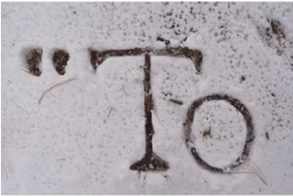
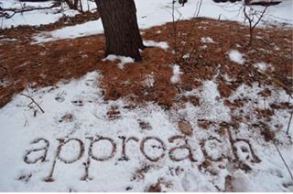
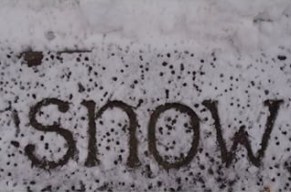
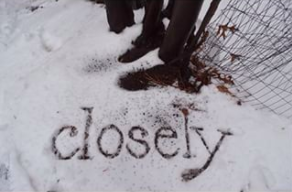
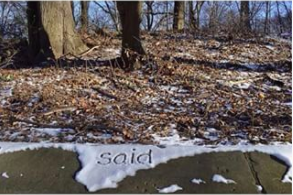
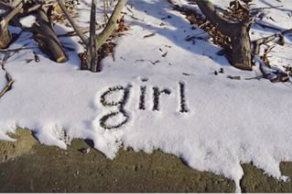
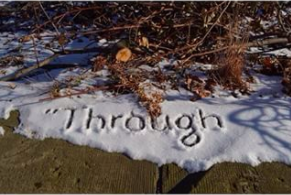
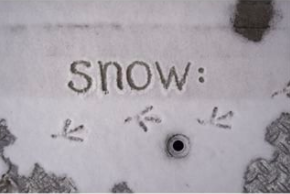
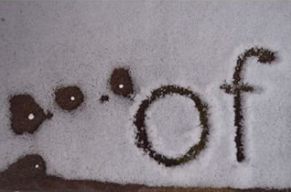
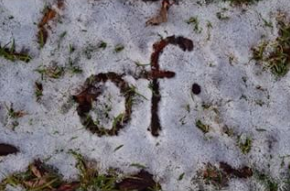
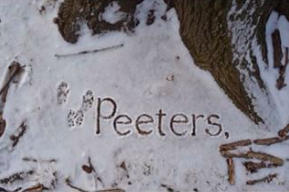
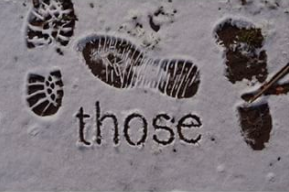
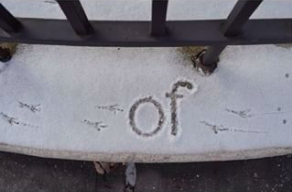
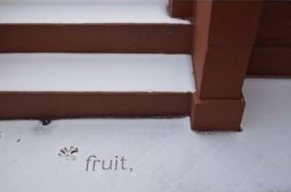
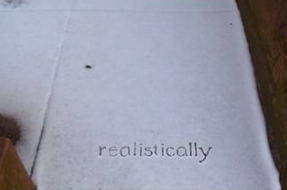
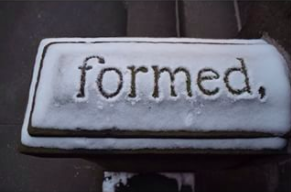
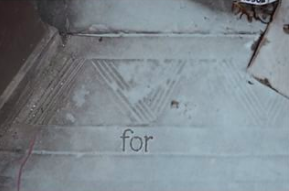
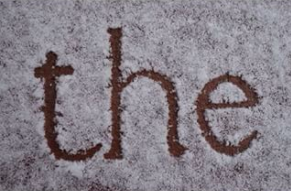
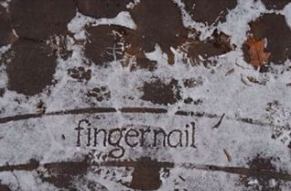
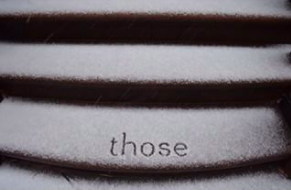
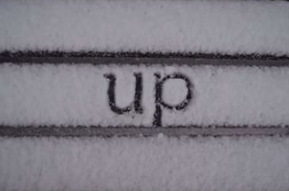
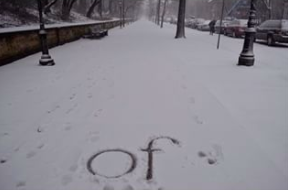
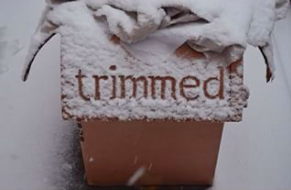
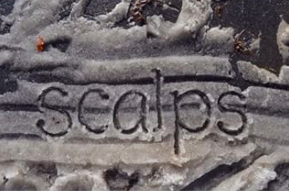
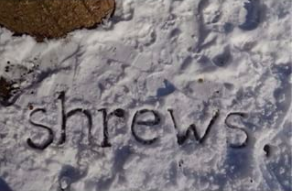
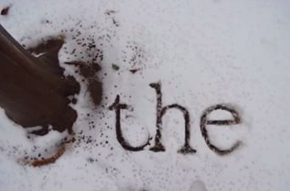
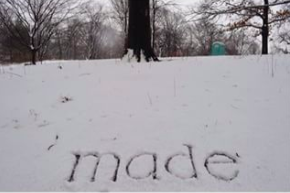
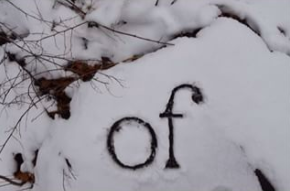
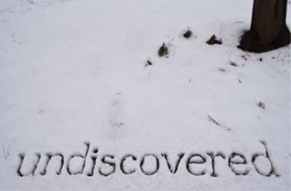
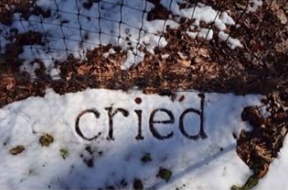
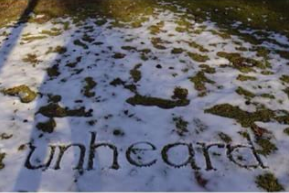
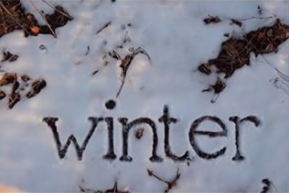
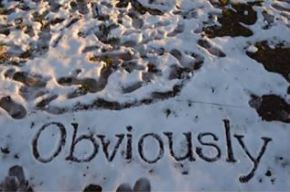
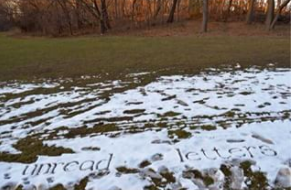
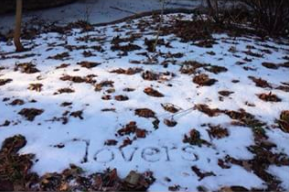
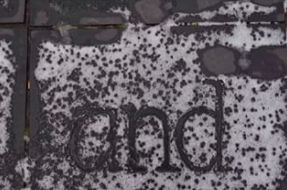
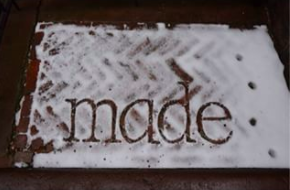
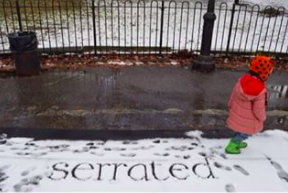
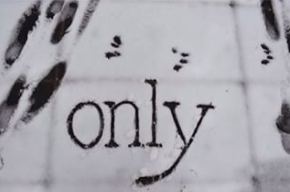
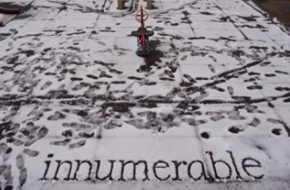
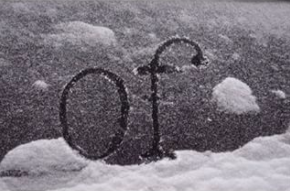
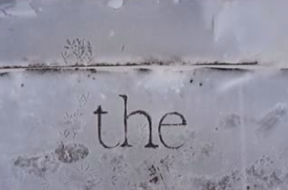
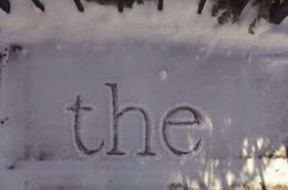
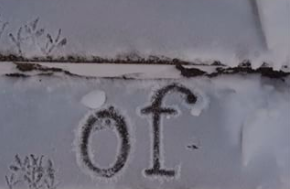
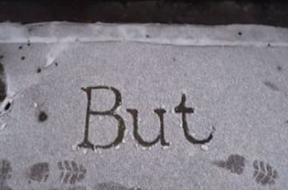
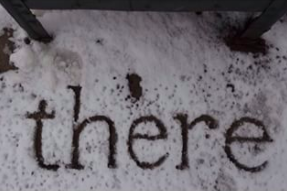
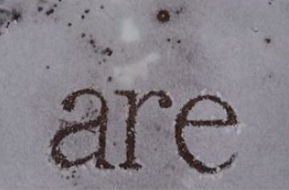
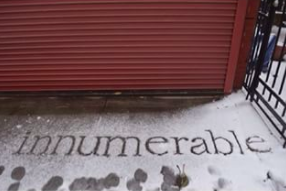
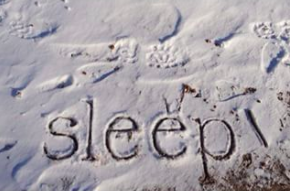
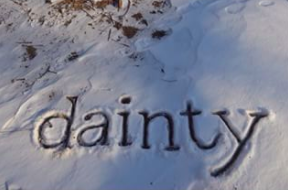
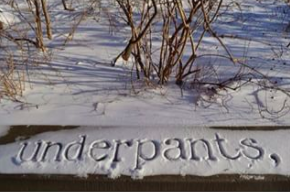
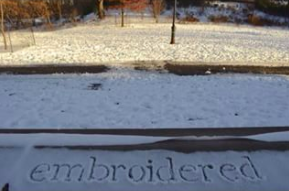
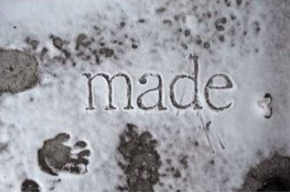
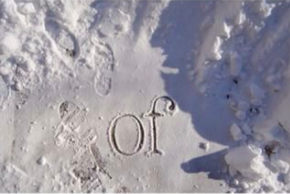
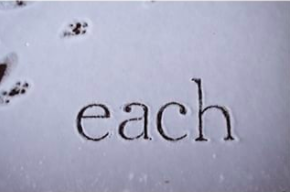
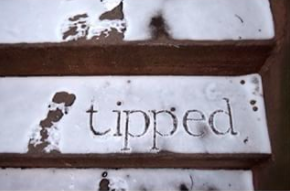
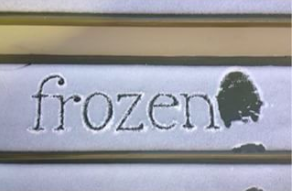
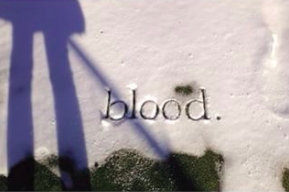
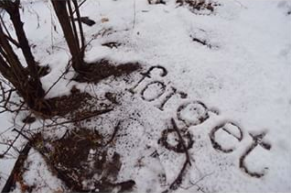
The east coast of the U.S. recently had its first major snow of the winter, which sucks in almost every conceivable way but one. The silver lining: the continuation of author Shelley Jackson’s story written in snow, which was started back in 2014 and, four years later, is still only a few sentences long. (This might be a wildly different story if we were in Iceland, but Jackson lives in New York, a city with an average snowfall of 25 inches per year and falling, and the story is written one or maybe two words at a time.)

Jackson, who has been experimenting with the forms of fiction for more than 20 years (her hypertext novel Patchwork Girl is a classic of the genre, and her story “Skin” is only published as tattoos—although she has also written two standard codex books, a novel called Half Life and a story collection called The Melancholy of Anatomy), is now entering her fourth winter of carefully embossing serif letters into light snowfall. Before this weekend, the most recent sentence, composed entirely during a snowfall in March, 2017, cut off in the middle:

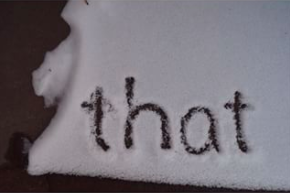
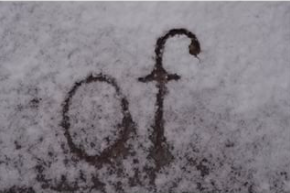
There are snows that, conceiving a more perfect snow, never fall; doubtful snows that, after a few overtures, withdraw into themselves to think; snows that, addressing us at a myriad points, compose from

We now know that the sentence continues “these transactions a.” What comes next? We may not know until it snows again.

In the meantime, you can follow the snow story as it unfolds on Instagram. To whet your appetite, here are the first six sentences, which run from January to March, 2014. So far, to be fair, the tale doesn’t exactly have a rollicking plot; it’s more along the lines of Borges’ catalogue of animals. But who knows what might happen with the next snowfall?

Nafissa Thompson-Spires Is Taking Black Literature in a Whole New Direction

Many Black writers remain tethered to retelling what feels like the same tale, one that overtly centers racial injustice and relies on the past instead of looking out toward the future. So, when Kiese Laymon tweeted, “Nafissa Thompson-Spires wrote what we been waiting for in Heads of the Colored People. Goodness gracious,” I knew exactly what he meant.

Image result for heads of the colored people

Heads of the Colored People, Nafissa Thompson-Spires debut collection of short fiction sketches (think along the lines of vignettes but longer), is a new narrative in the canon of Black literature, one rooted in the lives we lead right now. From bickering bougie Black mothers passing notes to one another inside their kids’ backpacks to a young girl contemplating how to best notify her Facebook friends of her impending suicide, Thompson-Spires’ collection overtly fights against the belief that Black literature has to reflect a certain narrative of racial oppression and suffering. Heads of the Colored People is a forward-looking mosaic portraying the unique lives of modern Black characters.

Thompson-Spires earned a Ph.D. in English from Vanderbilt University and a Master of Fine Arts in Creative Writing from the University of Illinois. Her work has appeared or is forthcoming in The White Review, Los Angeles Review of Books Quarterly, StoryQuarterly, Lunch Ticket, The Feminist Wire, and elsewhere. Heads of the Colored People publishes in April with Simon and Schuster’s Atria/37 Ink imprints.

I got to know Thompson-Spires when we both attended the Tin House Summer Workshop this past June. We chatted on the phone about this new nexus of Black identity, how her book introduces a unique way of examining race in fiction, and 1980s Canadian television.


Tyrese L. Coleman: I agree with Kiese that your book is what we have been waiting for, especially Black Gen Xers, Millennials, and Xennials. The stories aren’t dependent on race, but feel incidental to it. I see how race informs the lives of your characters, but does not define them.

Nafissa Thompson-Spires: In some ways, I agree with you completely and in other ways I’m not sure. I feel like the book is hyper-racial, but maybe hyper-racial in a surprising way. All the stories are really about race, or at least they could be interpreted that way. But, I think, first and foremost, they’re about these unique characters. So, maybe they’re about race in ways we just haven’t seen before — about intersections between upper-middle class identity and race, or disability and chronic illness and race. But the racial part is important.

One of the things I was trying hard to do is write about contemporary Black people. It’s important for us to be looking back because that history undergirds all the problems we’re having now, and always will. But it’s equally important for us to see stories about Black people today. I wanted to write about Black people today, at least from the ‘90s to the present, and the kind of unique struggles they deal with. Because we are one of the first generations post-integration living out everyday problems.

It’s important for us to be looking back. But it’s equally important for us to see stories about Black people today.

TLC: Your characters are a natural progression or the children of the people Margo Jefferson wrote about in Negroland. I related to some of the stories on a personal level. The characters are my age, I knew the references, and their outlook on life. And some of the stories, I couldn’t relate to because I didn’t come from a middle-class upbringing…or the West Coast. It reminded me of Paul Beatty and the very Los Angeles feel of The Sellout.

NTS: I like that you said you identified with some of it, and did not identify with other parts of it because I really appreciate that honesty.

When I was young, it seemed like whenever I read a Black book, it was almost always about some deep, tragic suffering, like people were having crosses burned on their lawn, and they were usually working-class families. I didn’t see anything about a Black girl who was stuck in a white school, which is what I was dealing with, and how to deal with being different at that level, and on being middle class or upper-middle class and not really fitting in anywhere. Now there are lots of those books, but there weren’t for me as a kid.

In some ways, I was just trying to write the stories I felt like I hadn’t seen and the characters I felt like I wanted to see more of when I was younger. Definitely, people like Paul Beatty and Colson Whitehead have represented those kind of families and individuals in recent years. Even though different contexts, Chimimanda [Ngozi Adichie] and ZZ Packer have done a little more with middle-class Black characters. But, I still felt like there were specific kinds of characters, characters who were really weird and nerdy, that I hadn’t quite seen.

When I was young, it seemed like whenever I read a Black book, it was almost always about some deep, tragic suffering.

TLC: I feel like these are the type of individuals that exist and are part of who we are that people don’t associate with Black culture. My favorite piece is the very first set of vignettes that the book gets its title from. Everyone has their own personal outlook. They are joined by their blackness but how they respond to their blackness is totally different.

NTS: All the stories in some way are trying to deal with the pressure of respectability, and the characters are either working with respectability or against it. So, somebody like Fatima in “Fatima, the Biloquist: A Transformation Story” is really burdened by her image, and so is Randolph in “The Necessary Changes Have Been Made.” They’re both hyper-aware of how people perceive them and worried about fitting in with White people and looking a certain way. Someone like Riley has all these interests in common with white people but is doing his own thing no matter what they think, and so does his girlfriend Paris in “Heads of the Colored People.” In some ways, I think the collection is trying to deal with the pressures of all that baggage, which I think we inherited from the generation before us, and to think about new ways of trying to be Black in spite of that pressure.

But I think these people have always existed. There’s always been this huge spectrum of Black people but we don’t tend to read about the ones who are marginalized within a marginalized group. Growing up, my immediate family were the only people who were upper middle class in my extended family. The rest of the family would call us the “bougie” ones or make fun of us for being like the Huxtables. It was always derogatory because they weren’t living that way. Even though we were already Black, we were perceived as the “wrong” Black. We all know that person who gets made fun of for not being “Black enough” or for hanging out with white people too much, and I wanted to talk about what it feels like to be in that situation. But also, to be in that situation and navigate it, not just to suffer.

We all know that person who gets made fun of for not being “Black enough” or for hanging out with white people too much, and I wanted to talk about what it feels like to be in that situation.

TLC: Why sketches? The stories aren’t traditional narratives with a beginning, middle and end.

NTS: I started thinking about a theme. The theme was “The Heads of the Colored People,” which is a collection of literary sketches by James McCune Smith, a Black abolitionist writer who used the sketch form to write about citizenship. Initially, I was trying to hold on to this framework…make my book in conversation with his. But it was too much of a constraint. So, I decided to tell the stories I wanted to tell and keep the title and think about heads more broadly, in terms of leadership, psychology, and literary, physical heads in the form of a concussion story. But the titular story and overarching theme came from trying to write back to James McCune Smith’s work. I would like to think of these as full stories that begin and end in medias res.

TLC: That’s interesting. The ending in medias res made me think these people were going to continue on…as if we dropped in on them in the middle of turmoil.

NTS: I’m obsessed with two things: the ‘80s and Canadian TV, and especially ‘80s Canadian TV. And Canadian TV has this thing where the kids always end in peril. There is never a nice tidy ending. It’s “I’m bawling my eyes out,” then credits. Maybe that aesthetic has influenced my writing in some unconscious way.

TLC: With such a forward-facing collection, what are you hoping to see for the future of Black literature?

NTS: I’m really proud of all the people who are writing. I love Kiese’s work. Long Division is one of the best novels I’ve ever read. I like Mat Johnson’s work. I like what I am starting to read of Jesmyn Ward’s work. I like that there’s a lot more variety now. I just read Stay With Me by Ayobami Adebayo and it’s one of my favorite books that I’ve read this year. I like that there’s variety and there is space for what everyone is doing.

I think what I want is not so much from Black writers themselves, but from the literary gatekeepers. I want them to recognize us all and not pit us against each other. There can’t only be this narrative of the one “anointed Black writer” who gets the attention at a time. People can get equal attention and an equal playing field. I also want them to recognize that Black writing is art in the same way other writing is. That we can take risks that other writers can take. I would like to see more space for all of us and more recognition of the many things we can be, which is what my collection is about.

Finding Eastern and Western Selves Through Eastern and Western Stories

I had often taught Gish Jen’s work to my students at UCLA, but I first got a chance to meet her in at a fiction writing workshop she offered in Shanghai on “Influence and Confluence in the Short Story: East and West.” Jen’s workshop focused on deconstructing Western assumptions of literary storytelling.

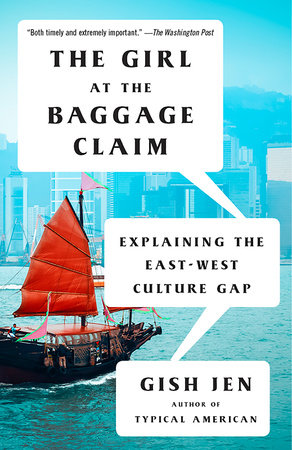
A few months later, Jen’s nonfiction book The Girl at the Baggage Claim: Explaining the East–West Culture Gap was released with Knopf. It continued not only the discussion we’d had in our Shanghai workshop, but also the exploration of East–West differences from her earlier nonfiction book, Tiger Writing: Art, Culture, and the Interdependent Self.

The Girl at the Baggage Claim by Gish Jen
Buy the book

Besides nonfiction, Jen has published five fiction books — four novels and a story collection. Her short fiction has appeared in The New Yorker, The Atlantic Monthly, and many other periodicals and anthologies, and has been included in The Best American Short Stories four times (including The Best American Short Stories of the Century, edited by John Updike). In addition to a masterful portrayal of Chinese American experiences, her fiction explores the American story of migration in other ethnic communities alongside those of alienation, assimilation, globalization, culture gap, generation gap, and more.

We talked mostly about Jen’s latest book, The Girl at the Baggage Claim, and the innovation it offers the idea of “global” art and literature.


Namrata Poddar: From literary storytelling and visual arts to cocktail hours and satirical humor, from academic settings and entrepreneurial strategies to American interracial dynamics and the minority experience, The Girl at the Baggage Claim relentlessly challenges a white West on its sociocultural assumptions. What were some of the biggest joys and struggles of writing a hybrid nonfiction book of such an ambitious scope?

Gish Jen: I really was both blessed and cursed in having so much fantastic material. The struggle was first to decide what to include — and I really had to be ruthless — and then to make a coherent narrative out of what was still an enormous amount of material: to present each nugget and give it its due, but also to make sure it led on to the next nugget, even as certain themes and motifs recurred. In many ways, it was like writing a novel except that even if I could see just what I needed to make it all work, I couldn’t just make it up.

As for the biggest joy, that was finally — yes — making it all work together. I felt like a baker who had just finished a twenty-layer wedding cake.

NP: In exploring cultural assumptions and differences, your book aptly reminds the reader that the East and the West aren’t mutually exclusive binaries, or for that matter, strict geographical concepts. And yet, it repeatedly reminds the reader how differences in Eastern and Western conceptions of the self do dominate our understanding of creative practices. Can you reiterate your understanding of East–West perceptions toward the self? What do you think are some of the factors engendering this cultural gap?

People in Western industrialized societies, especially the U.S., tend to imagine ourselves as avocados.

GJ: This is an enormous simplification but in a nutshell, people in Western industrialized societies, especially the U.S., tend to imagine ourselves as avocados: We imagine ourselves as having a big pit at our center, to which we must above all be true. What’s more, we are preoccupied with the features of those avocado pits, and the ways in which they are unique. In other parts of the world — and, I should say, many parts of the U.S. — people are also unique, courageous and capable of independent action. They have just as much integrity and just as much creativity. But if you ask them why they just undertook what they undertook or made what they made, they will not say because they did it to be true to their avocado pits. Rather, they will say they did what they did out of duty or obligation — because they wanted to repay someone for something, or because their religious beliefs demanded it of them, or because they saw themselves as a part of a great artistic tradition. This might entail self-expression, but it will not be self-expression for self-expression’s sake. That is, the reason will not be their avocado pit.

The factors contributing to this difference? There are way too many to list. But to give you an idea, they range from the realities of rice farming to the experience of immigration to the American frontier to the invention of the horse collar.

NP: As a creative writer, I’m particularly intrigued by the ways in which your book shifts the reader’s understanding of storytelling in different parts of the world. What do you perceive as some of the key differences between Eastern and Western literary storytelling?

GJ: Oh, how I hate to generalize(!) — aware as I am that, truly, every writer is sui generis. But in a general kind of way, post-19th century Western literature has tended to focus on the avocado pit — on the exploration of a single character, whose interior — visible or not — is given great consideration. This character’s idiosyncrasy is more important than his or her representativeness; the character must, above all, not have what MFA programs call a “generic” quality. And the structure of the story further reinforces the idea that nothing counts more than the avocado pit, as the pit ultimately generates the plot events.

We do not have to choose between the self that dominates in the West and the self that dominates elsewhere.

In earlier Western literature, as well as much non-Western literature, characters are more often “types,” and often cope with, rather than drive, events. Of course, they, too, have inner lives. But the uniqueness of those lives is less important; and the overall emphasis is often on a group or network of characters, even on capturing an entire world.

NP: While first person narratives are a valuable outlet for marginalized voices, you remind us how the thriving market for memoirs is a particularly American phenomenon, even if Asia, as I think of it, is a hugely diverse cultural space with a much older literary tradition. What do you think accounts for the American “popularity” of memoirs?

GJ: I talk a lot about this in both Girl at the Baggage Claim and Tiger Writing, drawing on the wonderful and nuanced work of Cornell psychologist Qi Wang. The answer in brief: As we Americans build ever-larger psychic moats around our ever-more mobile selves, we seek to foster elective ties with others. And one of our chief ways of doing that is by sharing the stories of our avocado pits — the more revealing and stirring the better.

NP: If there is one idea (and I know you have several) you would want the reader to most remember about your book, what would it be?

GJ: We do not have to choose between the self that dominates in the West and the self that dominates elsewhere. There is a middle. We can have both selves; and while, yes, the possession of both can result in conflict sometimes, it can also bring us richness, creativity and joy.

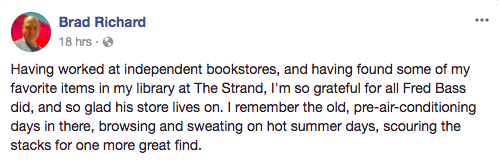
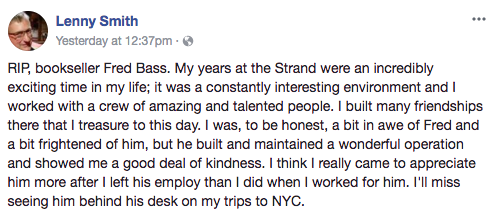
Readers and Booksellers Remember Strand Owner Fred Bass

Fred Bass, for decades the owner of The Strand—the legendary New York bookstore that boasts 18 miles of used, rare, and new books—passed away on January 3, 2018. Bass, who inherited the store from his father and later co-owned it with his daughter, spent his entire life surrounded by books and considered his job to be like treasure hunting. He was a world-builder of sorts, creating a little literary city within the larger city of New York. Readers, writers, and book enthusiasts are familiar with this kind of love, and many of them took to social media this week to remember a giant of the bookselling trade.

If you have your own memories of Fred Bass, you can share them with us at editors@electricliterature.com, and we’ll add them to the list.

“Fred Bass gave me my first job in books. I probably picked up more useful information during the summer of 1990, when I worked at the Strand between my first and second years at Columbia, than I did in any other three-month stretch of my life. Watching him sort thousands of books every day, barely pausing to accept his deli order, made those books real to me in a new way: as mysterious but knowable artifacts, with secret histories and reputations beyond their texts.

‘This is good. This is bad. This is good.’ ‘Is this good?’ ‘No.’

I didn’t know Fred well, but his death is certainly the end of something for me, just as the Strand was the beginning.” —Heather O’Donnell, owner of Honey & Wax Booksellers, in an email

How Edith Wharton Changed My Understanding of Marriage

Novel Gazing is Electric Literature’s personal essay series about the way reading shapes our lives. This time, we asked: What book was your feminist awakening?

There’s a scene from Bernardo Bertolucci’s The Last Emperor in which Wenxiu (Wu Jun Mei), the second wife of the recently exiled emperor, tells her husband Puyi (John Lone) that she wants a divorce. “I do not want to be your mistress any longer,” she declares in the back of their chauffeured sedan while seated next to Puyi’s first wife, Wanrong (Joan Chen). Both women are shown draped in furs, each clutching their respective lap dogs. Later, we see Wenxiu make good on this threat as she walks out the front door of their European-style house and into the rain without an attendant or even an umbrella. It is a brief moment of triumph in the otherwise unhappy biopic.

Wenxiu (Wu Jun Mei) leaves her life as second wife behind in The Last Emperor

Being that I was around eight or nine years old at the time, most of the political history was lost on me. But I found myself drawn in by the grand images of the Forbidden City (a place I wouldn’t visit in real life until I was 20 years old), the adult themes (including opium addiction and lesbianism), and the epic tragedy of it all. The “first wife” and “second wife” statuses — which my mother assured me was the norm in China back in those days — was something I was still learning to wrap my head around about the same time I watched the film version of The Joy Luck Club. Perhaps the seemingly dated concept of polygamous marriage so struck me because somewhere in my subconscious I recognized its familiarity. I grew up fully aware that my mother and I were my father’s second family, and so I knew there was a “first wife,” whom he remained legally married to, and a first family filled with older half-siblings that I would see from time to time. I had an inkling that it was not the typical arrangement, but my parents lived together in one home, so it was close enough to a nuclear family as far as I was concerned. My parents finally separated when I was 12, and the comforts of my childhood departed along with my father in more ways than one.

I grew up fully aware that my mother and I were my father’s second family.

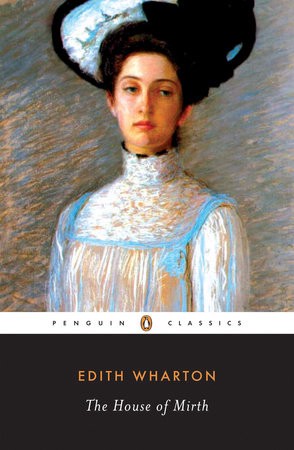
In my mid-twenties, fresh from first heartbreak and unsteady bouts of employment, I was long overdue to encounter Edith Wharton. I started with The Age of Innocence, which was perfection. But it was The House of Mirth that allowed me to see my life as a single woman in a whole new light.

The novel introduces its flawed heroine, Lily Bart, through the eyes of Lawrence Selden, a bachelor with little wealth, and who therefore is not a suitable match for Miss Bart. The first few pages read like a modern New York story: two friends run into each other at Grand Central. On account of her “thirst,” Selden invites Lily back to his place for some tea and a smoke. It is there in his Madison Avenue apartment that she remarks: “How delicious to have a place like this all to one’s self! What a miserable thing it is to be a woman.” A typical man, he doesn’t quite understand his own privilege, replying, “Even women…have been known to enjoy the privileges of a flat.” She immediately sets him straight, interjecting: “Oh, governesses — or widows. But not girls — not poor, miserable, marriageable girls!” Therein lies the central question of the narrative: how can a woman live independently? In Lily Bart’s case, she doesn’t, not if she wants to remain in the good graces of society. Wharton, of course, was writing about the leisure class. Certainly, the char woman scrubbing the steps that Lily later passes while leaving Selden’s apartment doesn’t have the same luxury of contemplating gender politics in between social calls on a hot afternoon.

Therein lies the central question of the narrative: how can a woman live independently?

In my case, it was also thanks to a certain amount of privilege that I had been able to pursue unpaid internships and underpaid gigs before landing my first full-time, salaried job at the age of 25. Only then was I finally able to afford New York City rent on my own, without assistance from my father. I realize how lucky I was to have his help in those lean times, but the money did not come without an emotional cost. I remember the year he disinvited me from spending Christmas with his first family. “It’s better if you don’t come,” he said over the phone without giving me any reason. I cried as I told my mother, and we speculated what may have caused the change in heart. Although I had never considered that he might have been ashamed of me, perhaps he thought members of his other family would be uncomfortable with my presence. Maybe to his other kids, I would always represent his past dalliance, his brief abandonment of them. When I did see my father before flying back to New York, his parting gift to me was an envelope full of cash. He traded in money instead of love. I accepted the consolation prize, but it would be the last holiday I would spend in California.

Back in Lily Bart’s time, without money from her family, a woman’s only option was marriage. As the 29-year-old approaches potential spinster age — “I’m as old as the hills, of course,” Lily jokes — the pressure to marry is inescapable. When Selden asks her, “Isn’t marriage your vocation? Isn’t it what you’re all brought up for?” she observes a clear difference between men and women when it comes to marriage: “a girl must, a man may if he chooses.” Here, she speaks to her lack of financial independence, for even as a grown woman, Lily lives as her aunt’s ward and receives an allowance. Of Gerty Farish, Selden’s unmarried cousin who has enough money to live modestly on her own but remains an outsider in society, Lily laments, “she is free and I am not.” Lily’s own situation is complicated by gambling debts and the constant need to keep up appearances. Only marriage to a wealthy man would solve her financial woes, and so Wharton draws a direct line between marriage and money — both of which went hand in hand for a woman’s survival.

Once, when I was feeling particularly blue about being single, a friend pointed out that for the majority of history women have been the property of men. Or, at the very least, they had no choice when it came to relying on men to provide them with a comfortable life and respectability. It was his way of helping me to maintain perspective. Thinking about Lily Bart’s fate, about that of so many women of literature and stories of the past, about my own mother’s struggles, I knew he was right. The lack of financial independence has proven to be the ruin of so many famous fallen women such as Madame Bovary, while Anna Karenina finds herself trapped by her class status. For these birds in gilded cages, the only way out seems to be death. For my mother, who grew up in a poor fishing village and as a second-class citizen in British-ruled Hong Kong, her fortune changed in America, where she met my father and helped him build his real estate business. And while I have come to respect her ability to free herself from their relationship, I also witnessed how her financial situation deteriorated afterward.

While I have come to respect my mother’s ability to free herself from her relationship, I also witnessed how her financial situation deteriorated afterward.

Perhaps this is why Wenxiu’s decision to leave behind her life as a royal consort in exchange for her freedom seemed incredibly brave to me. That she’s shown walking off screen, into the unknown, only added to the symbolism of the moment. We never see what happens to her in the film. In reality, she filed for divorce and was stripped of her titles. She became a schoolteacher, remarried, and died at 43. Years later, I’m reminded that the very act of being able to support oneself as a woman outside the institution of marriage is still a radical one. That women like Wenxiu, Lily Bart, and even my mother were willing to give up so much in order to live on their own terms makes me wonder why we continue to view marriage as the end goal. And that the possibility of a happy ending for women who choose to stay single or unmarried is still looked upon with doubt should compel us to rewrite the narrative.