Hollywood has drawn source material from books since the industry existed. We all know that Game of Thrones came from George R. R. Martin’s bible-length fantasy novels, A Song of Ice and Fire, and that Margaret Atwood’s The Handmaid’s Tale inspired an equally gripping Hulu series, but even the most voracious readers might be surprised to learn that the following popular shows originated as paperbacks. So, next time you’re at the water cooler discussing last night’s cliffhanger, you can ask with a smirk: “Have you read the book?”
13 Reasons Why
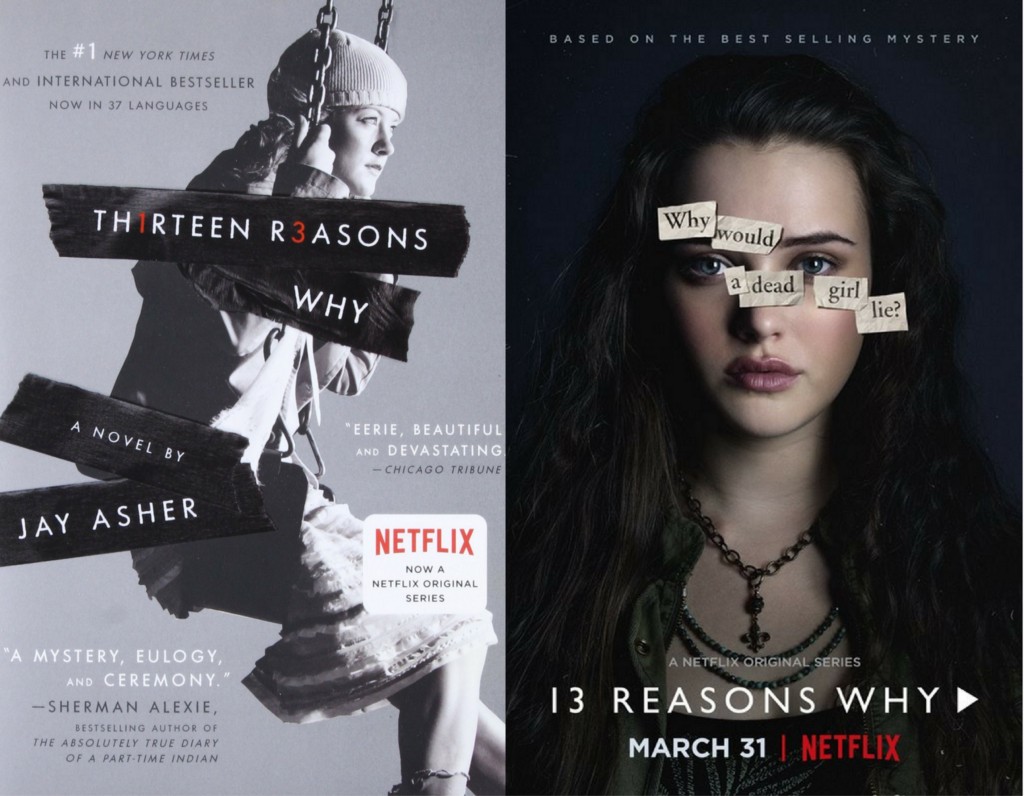
Thirteen Reasons Why, the YA novel by Jay Asher, hit the bookshelves ten years before Netflix’s series of the same name became the most tweeted about show of 2017. Both versions are structured around the suicide of Hannah Baker and her cassette tapes, delivered to the individuals responsible for her death with an explanation of why she chose to end her life. A lot has changed in the ten-year gap between the publication of the novel and the series airing, especially the evolution of technology: In the book, the rumors about Hannah travel through word-of-mouth in the hallways, while in the TV show, compromising photos of her spread through social media and group chats.
Outlander
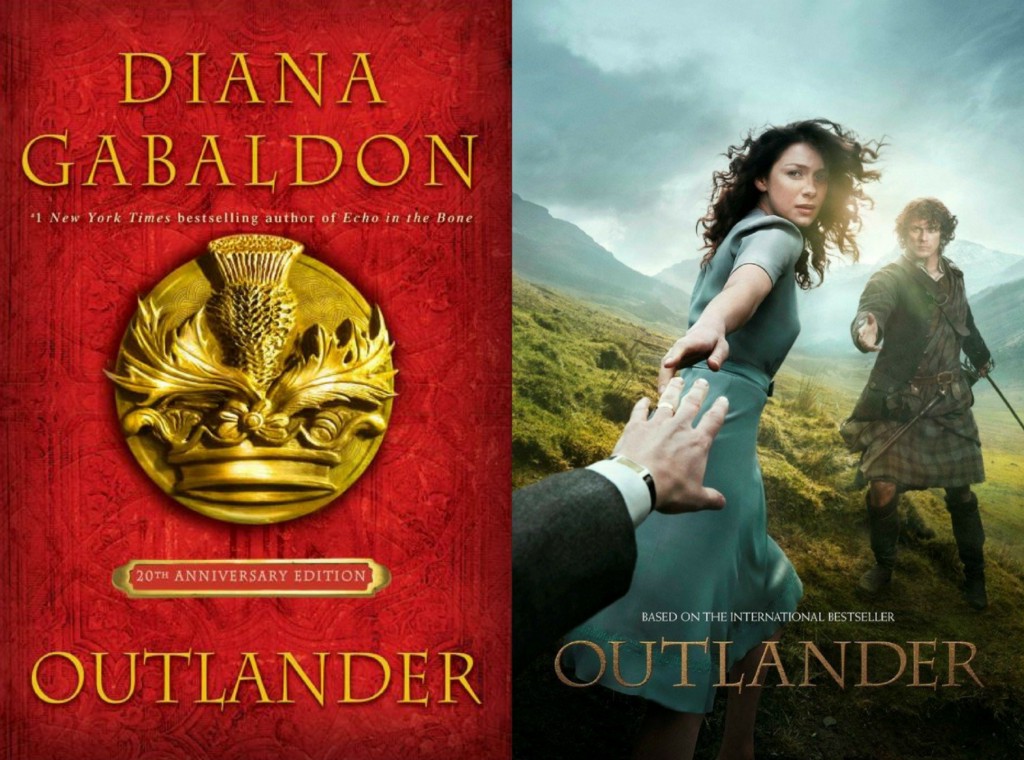
Long before Outlander became a hit show on Starz, the story of a time-traveler in the Scottish highlands originated in Diana Gabaldon’s bestselling 1991 historical science fiction series of the same name. With all the trimmings of popular TV (Sex! Scottish accents! Time traveling! Hot guy! Hot guy who is always shirtless!), it is a wonder that 24 years went by before its onscreen incarnation. With five more books in the Outlander series and one more in the works, fans can rest easy knowing that the show won’t run out of storylines before catching up with the books (*cough* Game of Thrones). #ClaireAndJamieForever
Pro tip: A great hack to find out what happens next is to read the book(s)!
The Walking Dead
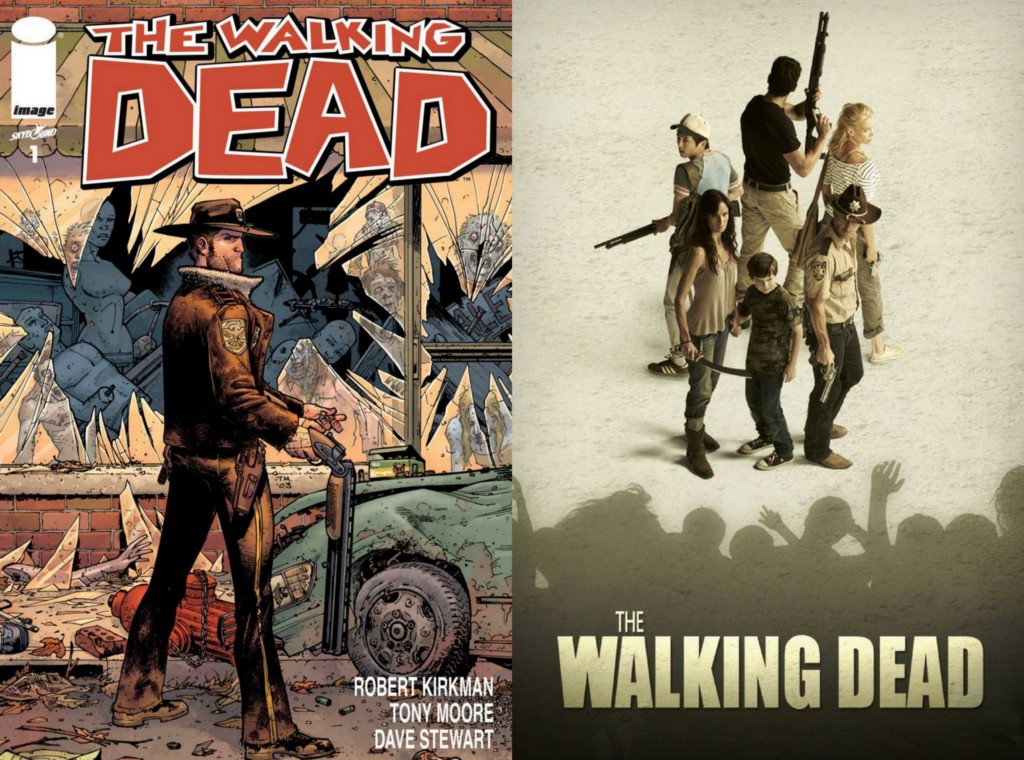
AMC’s post-apocalyptic show about survivors navigating a zombie-ridden wasteland started as a comic book series with a cult following written by Robert Kirkman. Plenty of carnage and heartbreak feature in both the cloth and screen versions (R.I.P Glenn), but major deaths are “remixed” for the TV adaptation—characters die in the comic’s frames and on the show in different, but equally gory ways.
A lot has changed in the ten-year gap between the publication of the novel and the series airing, especially the evolution of technology.
Mindhunter
What started as the memoir of an F.B.I. agent who pioneered the psychological study of criminal profiling was adapted into the crime drama Mindhunter. The show follows two agents who interview incarcerated serial killers to get inside their mindset, and then use this insight to solve active cases. The Netflix show takes some liberties with the characters’ private lives, while the nonfiction books omits the steamy sex scenes. Overall, major occurrences from the show match with events depicted in the book, like that deeply unsettling interview with serial murderer Edmund Kemper (which yes, actually happened in real life).
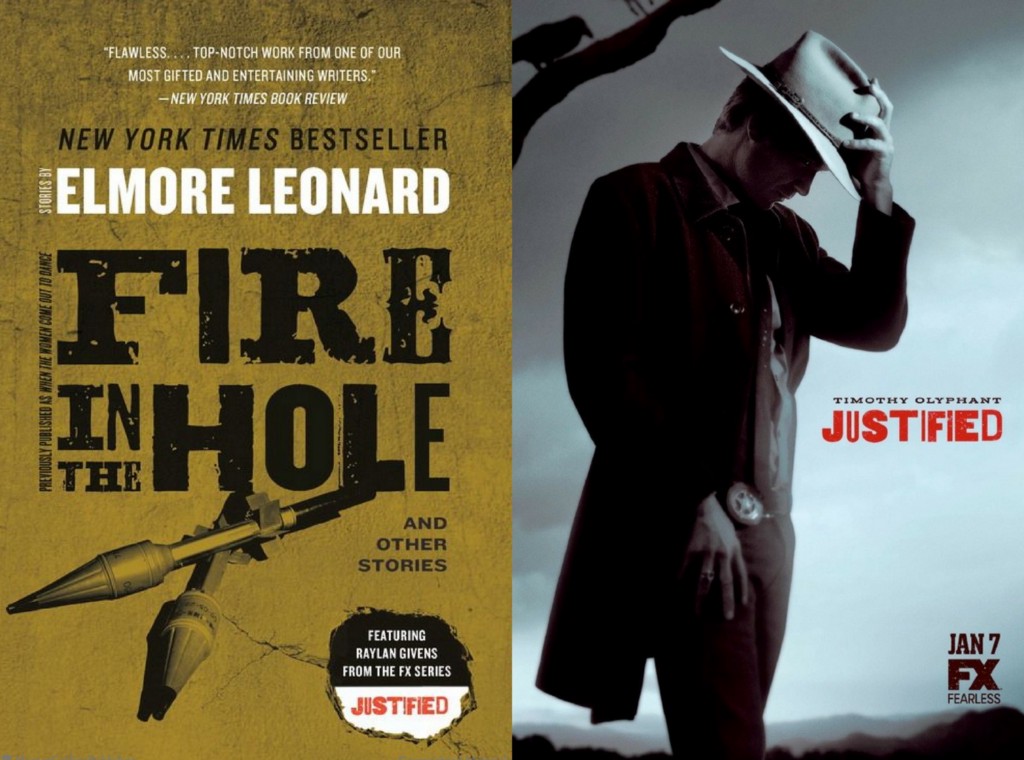
FX’s Justified, about an Old West-style U.S. Marshal enforcing his own brand of unconventional justice in small-town Kentucky, was adapted from a short story, Fire in the Hole, by Elmore Leonard. The screenwriters did such a great job with Justified that Leonard was inspired to revisit his Raylan Givens character with the 2012 book Raylan: A Novel. A case of art imitating life imitating…more art.
Bones
Bones started as Kathy Reichs’s Temperance Brennan crime novels, which in turn are based on Reich’s own life story. In the TV show, which the author described as a “prequel to the book series,” Dr. Brennan is an intelligent and socially awkward forensic anthropologist in her 30s at the Jeffersonian Institute in D.C., solving crimes with her partner, FBI agent Seeley Booth. The books have a little more dramatic grit—Temperance is a 40-something recovering alcoholic, working in North Carolina and Montreal with an ex-husband and a kid, occasionally engaging in dysfunctional hookups with Canadian Detective Andrew Ryan.
House of Cards
House of Cards has a long lineage: it’s based on the BBC miniseries of the same name, which in turn is based on a book, which drew inspiration from Shakespeare’s Macbeth. Very meta. The dark, political thriller about a ruthless, power-hungry couple manipulating their way into the White House was Netflix’s first original series. Mirroring Frank Underwood’s humiliating fall from power last season, the show has been suspended indefinitely following numerous following allegations of actor Kevin Spacey’s sexual misconduct. Don’t feel comfortable watching past seasons? Read the book instead.
Novel Gazing is Electric Literature’s personal essay series about the way reading shapes our lives. This time, we asked: What book was your feminist awakening?
On a summer day in 1998, I scanned my collection of VHS tapes to find the perfect one to take to a boy’s house. I was 16 and in something akin to lust with an old friend named Jimmy. We had only progressed to the point in our relationship where “watching movies” still at least half meant that we’d actually try to watch movies, so I was looking for something that I genuinely wanted to share. A film that might tell him something about me, something he might actually get. My beloved Videodrome had been a bust on our previous movie night– Jimmy had gotten little more out of Cronenberg’s 1982 body horror treatise on media influence than a passing thrill at seeing Deborah Harry’s boobs, and I’d retreated to my room to write angry Marshall McLuhan-referencing poetry the second that he left. So I wanted something slightly more accessible that would still be weird enough to show him a piece of my soul. That film, I decided, was Texas Chainsaw Massacre 2.
I appreciated the groundbreaking nature of Tobe Hooper’s original 1974 Texas Chainsaw Massacre, but it was his perversely goofy follow-up that had my heart. Some of the reasons were easy enough for me to articulate: I was impressed by the loopy audacity that it must have taken to follow up one of the most bleak and realistic horror films with some sort of horror/comedy hybrid that ravaged good old American values as mercilessly as Leatherface tore up human remains. It was also a source of creative inspiration for me; I was briefly convinced that I should start an industrial band that liberally sampled dialogue from the film and name it Nam Land, after Leatherface’s brother’s rambling vision for a theme park based on the Vietnam War. But there was something else about it, too, something I didn’t know how to put into words yet. All I knew was that, while both films featured extended scenes of young women screaming while they’re being chased around by a man wielding a chainsaw, only the original iteration scared me. TCM2 did… something else. I couldn’t say what it was exactly, but I was pretty sure that I liked it a hell of a lot more.
Jimmy’s father delivered a stern lecture on how I had ruined feminism by bringing this trash into his house.
So my plan for the night was to show Jimmy the movie, briefly explain all of this to him, and then make out (and possibly proceed from there). What I hadn’t anticipated was that Jimmy’s father would lumber into the room in the middle of the opening scene, take one look at the tape case, groan, and deliver a stern lecture on how I had ruined feminism by bringing this trash into his house. “These movies exploit young women and no one, especially young women, should be watching this,” he eventually concluded, to my noncommittal mumbles and Jimmy’s complete silence. “But maybe that’s just me.”
I wish I could say that my first reaction was frustration or anger at him, but instead it was frustration and anger at myself. How could I, a smart, self-possessed young woman who was vehemently opposed to things like exploitation, assault, and misogyny, have missed this after so many viewings? How could I have been so naive as to need this man to explain it to me after seeing less than 60 seconds of the film for himself? How could I have allowed myself to be humiliated like that in front of him?
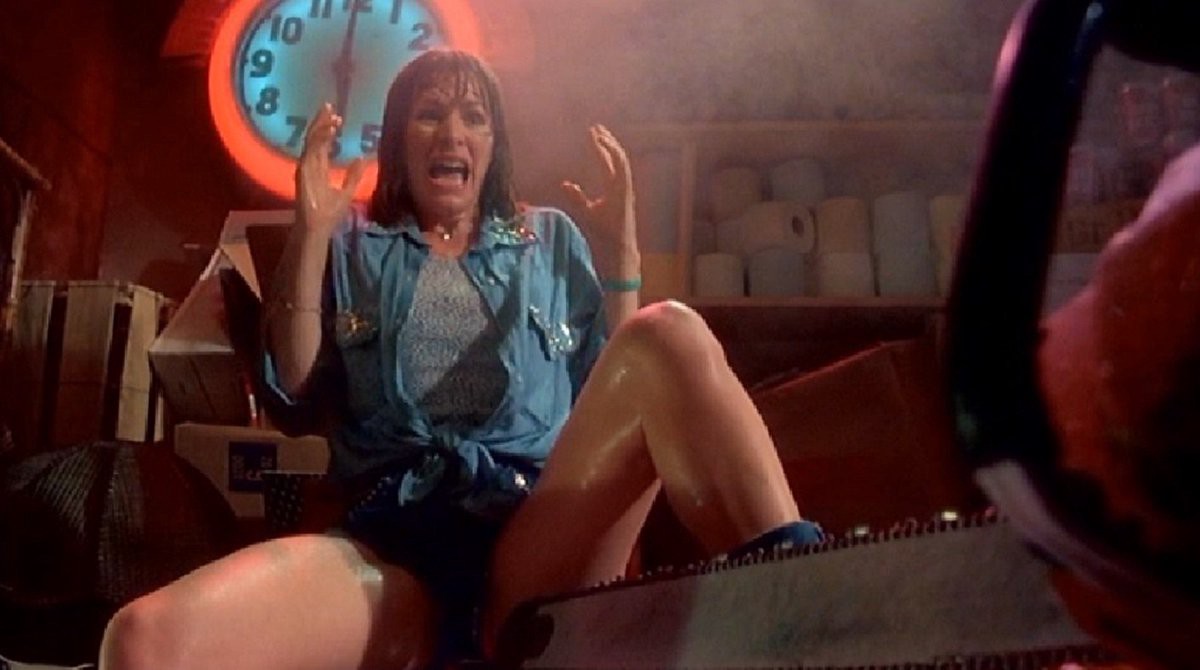
In an effort to be a better woman and a better feminist, I tried to see the rest of the movie through this man’s eyes. But, as I once again watched Stretch, the film’s sole (living) female character, attempt to survive various groups of menacing men and useless men in a semi-revealing set of cutoffs, none of my feelings were as simplistic as the response he’d demanded of me. The last thing I wanted to do was denounce Stretch as she finally escaped the clutches of Leatherface’s family and spun around screaming, wielding a chainsaw of her own, as the villains’ compound crumbled around her. I wanted to join her while flailing about in my own ambiguous rage.
I did not make out with Jimmy after it ended, and I began to dream up other plans for my virginity. We drifted apart, and I soon got over him, but the fallout of that night lingered. The more I thought about it, the more angry I became at Jimmy’s dad and at the world that had allowed him to think he was the righteous one for lecturing a 16-year-old about feminism and her taste in film, especially when he’d never taken the time to get to know her opinions on either, or watch more than a minute of the film in question. How dare he assume that I hadn’t already, in my 16 years, put in more time grappling with the roles that women played on and off screen than he would have to do in his entire life? How dare he not even attempt to consider that any girl — let alone a girl who, like everyone we knew in our hometowns, had come of age at a time when Canada’s so-called “schoolgirl killer” was still hunting on our streets — wasn’t already familiar with the ways in which the world wanted to consume us? That she might be developing a complicated relationship to horror that he could never possibly understand? If he was so bloody concerned about the ways in which women could be harmed and exploited, why hadn’t he noticed the way that I’d frozen when he started berating me? Where had he been when Jimmy’s childhood friend had dragged a classmate of ours across the library floor by her hair in 8th grade and only the mothers of the girls in our class demanded that the school do something about it? And why the fuck had Jimmy just sat there while all of this happened?
It took me another 16 years before I watched Texas Chainsaw Massacre 2 again. For a long time, I couldn’t think about it without spiralling into a frustrated venting session about how much I resented Jimmy’s dad, even though I was grateful for the inadvertent cockblock he’d foisted upon his feckless son that fateful night. By the time that I felt able to rewatch the film, there was a tiny part of me that started to worry that, as an adult, I might start to see things differently and have to concede that he was right.
I never should have doubted my younger self.
In the opening minutes of TCM2, a pair of spoiled young men shoot at road signs as they joyride and listen to the radio. Upon hearing that a female DJ is taking requests, they call up just to hassle her. The DJ, “Stretch” Brock, politely indulges their antics at first but soon asks them to hang up. They refuse. Her producer, L.G., is powerless to disconnect them, so she’s left continuing to take their abuse and begging them to stop until they eventually hang up. Later on that night, they call again to demand that she play “Bright Lights, Big Titties” and yell at her some more until an even bigger creep — Leatherface — shows up to brutally murder them. Stretch, listening to their screams on the line, is left understandably shaken, while L.G. can offer her little more than sympathy and some grumbling about dead air when the call finally kicks out.
“Is it just me, or did Texas Chainsaw Massacre 2 predict Twitter?” I asked my husband.
Scene after scene, scream after scream, I realized what it was that I’d been so struck by but unable to define as a teenager: recognition. Sure, this was, on many levels, a schlocky B-movie with so many of the expected hallmarks of the time — women in hot pants and peril, over-the-top gore. But it was a schlocky B-movie in which a woman faced men’s threats, both implicit and explicit, and was left breathing but almost unrecognizable at the end of it. That felt familiar.
Scene after scene, scream after scream, I realized what it was that I’d been so struck by but unable to define as a teenager: recognition.
Stretch is menaced by Leatherface and his family, who attack her, violate her, and cover her in someone else’s skin, but she’s almost equally threatened by the film’s ostensible good guys. “Lefty” Enright, the former ranger who comes to town to avenge Leatherface’s victims, consistently uses her for his own ends and consistently lets her down when his manipulations leave her in danger. L.G. eventually comes through for her in a critical moment, but he’s a producer who can’t even protect his DJ from harassment on the radio. Even the scene that had left me the most ambivalent in my younger years — in which Stretch pretends to seduce Leatherface as he rubs his chainsaw against her crotch — left me chilled not by its luridness but by its familiarity. I know so many women who have been forced to pretend to like far worse in the same efforts to save their lives.
I don’t for a second believe that this is entirely — or possibly at all — intentional, and I’m still not sure what to make of that ending. Is Stretch just a predecessor to the Strong Female Character, the sex symbol who’s allowed to kick a pre-apportioned amount of ass on her way to a victory every bit as hollow as her motivations and backstory? Does her character development, such as it is, come from the same place that male-driven rape revenge stories come from? Was all of this just another excuse to see actress Caroline Williams spin around in those Daisy Dukes? A commentary on how easy it is to become just like the monsters you’re battling? A way to make up for Sally’s far less heroic escape in the first movie?
Whatever it is, I still want to scream along with her. And I’m thankful that I had this film to assure me, in its own twisted way, that I wasn’t seeing things. That I had it to prepare for me all interactions with shitty men that I had ahead of me, from Jimmy’s living room to my career in media. That I had it again when I was trying to tell people what it was like to be a woman online — or in the world at all. Tobe Hooper might not set out to make a feminist manifesto, but he gave me the raw material with which I would eventually build my own.
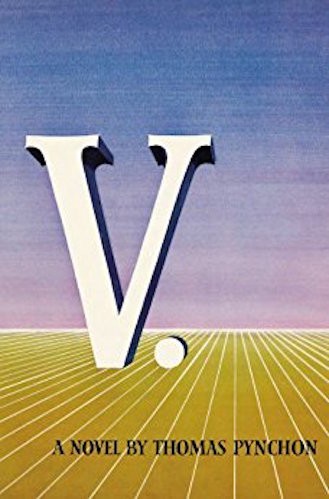
Thomas Pynchon: The name conjures black polo-necked students, carrying copies of Maurice Blanchot’s L’Ecriture du Désastre, chain-smoking gitanes, postmodernism tattooed on their foreheads. The man’s been aestheticized, like his literary movement. But instead beyond brilliant technique, Pynchon should be known as one of the very few foreign (white) writers who wrote responsibly about an African country, and actually improved the world by doing so. He was conscious of his privilege as a white, male author, and used this privilege in order to tell a story buried by white history: the Herero people’s genocide by German colonial forces, the first, “forgotten” genocide of the 20th century.The massacre is integral to two of Pynchon’s most famous novels, V. and Gravity’s Rainbow.
There is a particular set of circumstances that authorized Pynchon’s telling of the event, circumstances which do not exist today. For starters, there weren’t any Herero (or Namibian, for that matter) writers of fiction who had prominently addressed the genocide at the time of his novels. In the ’60s and ’70s there was no internet, nor the masses of scholarship we take for granted. In such circumstances, it was almost a moral imperative to write the genocide down — repeatedly, in Pynchon’s case — to draw attention to it again and again. By doing so, he acted (and still acts, as the books live on) as a kind of ethical megaphone, and ensured that this megaphone would be passed down to others. He led me to Namibian activists and their work, for instance; you should definitely check out what Esther Muinjangue, Israel Kaunatjike and Veraa Katuuo have to say. I also discovered Dorian Haarhoff, a Namibian poet and author, who leads creative writing workshops with local students in order to give their stories a platform.
The story goes that Pynchon stumbled on the genocide while looking for a pamphlet on Malta. He then devoted himself to reading everything he could on it — consulting German reports, anthropological studies, Herero dictionaries, anything. It’s no small feat, considering that V. was published in 1961 and most of the history books on the genocide were written in the 2000s. The Herero massacre wasn’t even really talked about until mid-1990s, since the Namibia was controlled by the South African government — and its apartheid — until then.
Published when Pynchon was 24, V. is an ironic yet heartfelt postmodernist rant against the increasingly corporatized, automated, biopoliticized world of 1961. I was also about 24 when I started reading it, and I thought, okay, this is obviously a very cool book with proper lefty sentiments and a heart and masterful technique and intelligence displayed already by an author no older than myself. I gradually understood that the eponymous V is a time-traveling, shape-shifting woman who embodies the Western, post-enlightenment condition: a terrifying, automated creation, obsessed with jewelry and all specimens of materialism, one that emerges and feeds on Empire and its horrors. It’s fitting, then, that she appears in Namibia in Chapter 9, part of the souvenirs of a German engineer, Kurt Mondaugen.
When I first read V., though, I was taken aback by the sudden change of scene. What is this, I thought, Pynchon’s ‘Out of Africa’ fantasy? I was deeply skeptical about this white man, not to mention tired and afraid. Later that same year, 2016, we would all hear Lionel Shriver’s speech on how the concept of cultural appropriation was just stupid. She praised bestselling author Chris Cleave — white, British — for his “courage” in creating “Little Bee,” a fourteen-year-old Nigerian asylum seeker in his book of the same name. She scoffed at the critics who believe Cleave was wrong to appropriate such a story for himself, because “they are his characters, to be manipulated at his whim, to fulfill whatever purpose he cares to put them to […] It’s his book, and he made her up. The character is his creature, to be exploited up a storm.” It felt like an imperial slap in the face — but it didn’t surprise me. It was an attitude I was already used to, one that’s cropped up many times since then, including recently in Francine Prose’s article for the New York Review of Books. And when V. shifted scenes to Namibia, I assumed it was more of the same. A righteous hippie appropriating a story that wasn’t his to tell: I thought I had Pynchon summed up. When I finished the chapter without outrage, I re-read it, determined that I would find one way that the novelist had failed, had been dismissive, insensitive, crude. I found none. This was incredible to me. As a brown, Créole métisse from the African island of Mauritius, raised on Edward Said, Frantz Fanon and Aimé Césaire, I’d lost hope that white writers could produce something on us so-called “Others” without me choking on my own bile.
I’d lost hope that white writers could produce something on us so-called ‘Others’ without me choking on my own bile.
And yet, here was a powerful, furious voice on the horrors of German colonialism. Here was a 24-year-old man writing his heart out on a massacre that almost no one had heard of, that nobody was even talking about until decades after novel was published. Here was Pynchon, shedding light on the genocide of the Herero people, and doing so in a responsible, ethical way that didn’t appropriate the Herero voice. It was a revelation.
Through faithful historical retelling, Pynchon sears the genocide into our consciousness. In flawlessly lucid prose, he describes how General Lothar von Trotha “issued his ‘Vernichtungs Befehl,’ whereby the German forces were ordered to exterminate systematically every Herero man, woman and child they could find.” You encounter the narrator’s virulent disgust in every line. It’s easy to imagine Pynchon in some dusty archive, tearing through German reports and their blank, statistical language in anguish: “[Von Trotha] was about 80 percent successful. Out of the estimated 80,000 Hereros living in the territory in 1904, an official German census taken seven years later set the Herero population at only 15,130, this being a decrease of 64, 870 […] This is only 1 per cent of six million, but still pretty good.”
You learn about the way the Germans tortured the Hereros, the way they killed them — and you learn it from the point of view of a German character, Kurt Mondaugen. This deliberate choice is part of Pynchon’s responsible storytelling technique: first, it’s one of the only ethical ways of recounting the genocide as a foreign author, since the Herero point of view is not appropriated. The massacre should be told by the Herero people: it is their trauma, their story. Pynchon couldn’t just put words in their mouths, words they didn’t choose. It would have been a third silencing of the tribe: the first being the literal silencing of the people by death, the second the silence of history on the event, and the third, the bleaching of the Herero’s (fictional) voice. Instead, by telling the story slant, Pynchonleaves space for the true voice to come: by leaving the Hereros silent, he acknowledges that an outsider cannot describe a trauma so abysmal in scope. That voice belongs to the Herero people alone.
Second, since you see the genocide unfold through Mondaugen’s eyes, the reader feels like a witness, hands tied and somehow complicit in the mechanisms of white history. Indifference is impossible. The colonists’ actions are told in the same, detached voice as the German reports, a voice that showcases the utter, systemic dehumanization of the Hereros: “From the height of a man on horseback a good rhinoceros sjambok used properly can quiet a n****r in less time and with less trouble than it takes to shoot him […] with the tip of his sjambok, had had the obligatory sport with the black’s genitals, they clubbed him to death with the butts of their rifles and tossed what was left behind a rock for the vultures and flies.”
Gravity’s Rainbow was published twelve years after V. The book is set at the twilight of the Second World War; it moves through time to explore the ideologies and events that caused the war, the genocide, and the Holocaust, and what those ideologies have turned into “today” (the 1970s, but equally applicable today in 2017). In the novel, the Hereros have traversed continents and now find themselves in Germany. There, they grapple with their identities, their displaced condition, the massacre of their people.
We move from V.’s German point of view into the Herero mind. I can’t speak for Pynchon, but I think the reason he gives the Herero tribe a voice now is that we have moved away from the genocide and Namibia into a completely fictional setting and narrative. That doesn’t mean, of course, that the characters should be “used” in any way he wants, as Shriver might say: that would be contrary to everything the author’s strived so hard for. Instead, through his fully-fledged Herero characters — you’ll find no essentialist, indeterminate ‘African’ descriptions here — we learn more about the tribe’s rich history: we are introduced to their culture, language and religion, an account that is well-researched and highly accurate. In this way, the Hereros aren’t seen as faceless victims of a genocide: they are a people, with history, with culture, identity.
We learn of the Herero God, Ndjambi Karunga, “creator and destroyer, sun and darkness, all sets of opposites brought together, including black and white, male and female.” How the God passes on this duality to Mukuru, the mythical first man, and how he in turn passes it to to the omuhona. How the omuhona carries a leather cord tied in knots, where each knot corresponds to a member of the tribe. How the Herero village is shaped like a mandala. Pynchon gives us a stunning description of the fertility ritual of the Ovatjimba, an outcast tribe of the Herero people: “But as you swung away, who was the woman alone in the earth […] they have pointed her here, to be in touch with Earth’s gift for genesis. The woman feels power flood in through every gate: a river between her thighs, light leaping at the ends of fingers and toes. It is sure and nourishing as sleep.” If the prose of V. was at an ironic remove, in the cold nihilist style of the German reports, here Pynchon leads us on an empathetic journey through fact-based imagination.
I’m assuming that some of you, by now, will be wondering why on earth the Hereros are in Germany. The country should be, and is, anathema to them — so why are they there, working for the Axis powers? This narrative arc, I think, is Pynchon’s way of exploring the shattered, traumatized post-colonial self, without ever rendering his characters into mere metaphor or symbol. I’ll explain by way of Pynchon’s main Herero character, Enzian, who is also the product of incredible amounts of research and postcolonial discourse (I find Fanon’s The Wretched of the Earth again and again in him).
“Somewhere, among the wastes of the World, is the key that will bring us back, restore us to our Earth and to our freedom”: Enzian, the leader of the Hereros, relentlessly attempts to make sense of the depthless horror his people have suffered. He was a child when the genocide occurred: “He had been walking only for a few months when his mother took him with her to join Samuel Maherero’s great trek across the Kalahari.” Samuel Maherero was the leader of the Hereros, who understood that he was being played by the German forces for their own gain. He turned against them in 1904, leading his newly united tribes against the colonial powers. The German army decided to exterminate them all; the Herero people fled the troops by crossing the Kalahari desert.
The reader feels like a witness, hands tied and somehow complicit in the mechanisms of white history.
Enzian’s mother dies during the crossing. He is returned to his village, where his people were either exterminated or “used as animals.” “Enzian grew up into a white-occupied world,” Pynchon writes. “Captivity, sudden death, one-way departures were the ordinary things of every day. By the time the question occurred to him, he could find no way to account for his own survival. He could not believe in any process of selection. Ndjambi Karunga and the Christian God were too far away. There was no difference between the behaviour of a god and the operations of pure chance.” He then becomes the protégé of Captain Weissmann (literally, “white man”), who takes him to Europe.
This Herero finds himself at a kind of interstice of identity: violently molded and yet “cared for” by Europe, he is as consequence both attracted to and intensely repulsed by the Western White Man. He carries this rift within himself, since he is both Nguarorerue (“one who has been proven”) and Otyikondo (“half breed”). His memories of how life was before remain blurry, a kind of historical amnesia reconstructed by stories and myth. This is true of all his exiled tribe: the German influence on them has become so strong that it has diluted the Herero sense of self, out there in Europe.
Enzian desperately seeks to make sense of the genocide, of his survival. He is convinced that there is a true text of his people out there, one that would reveal to them their lost identities and their fate, one that would explain their traumatized condition. He was told by Weissmann that he’d find this text by working on the V-2 Rockets. In the face of such devastating power, the power to annihilate masses, Enzian thinks the rocket is a sort of divine manifestation, since it “Begins Infinitely Below The Earth And Goes On Infinitely Back Into The Earth it’s only the peak that we are allowed to see, the break up through the surface, out of the other silent world.” He works on a new rocket, one that would “have no history” and where his people would “find the Center again, the Center without time, the journey without hysteresis, where every departure is a return to the same place, the only place.” A place where the whole Herero self, uncontaminated by colonialism, would lie within reach.
It’s a painful read, to say the least, and I believe it will be painful for anyone whose ancestors were murdered by white colonists, for anyone who is descended from slaves. I’m reminded of my aunts who read Léopold Sédar Senghor and other négritude writers in the ‘60s (and today), working out their identities within the historical amnesia produced by slavery. Of my mother, who prefers not to think about her family’s history, since it hurts too much. Of my grandfather, a Creole man with a Franco-Mauritian father and black, Malagasy mother. He bore his father’s surname, one of the few declared métisse’s of his time. He was made to suffer atrociously for it.
If Pynchon were to set a story anywhere on the African continent today, I would be outraged. African writers — and we are many — ceaselessly strive to put our histories and cultures on the literary map; what we find excruciatingly difficult is to get our writing published and noticed, even when we choose to write in English. Our voice has been cast as niche, all blood-orange sunsets and acacia trees, and moving away from this cliché is formidably challenging, even with the success of authors like Ayobami Adebayo, Akwaeke Emezi, Chimamanda Ngozi Adichie and Chibundu Onuzo (all Nigerian — there’s definitely something special happening in that country).
The threat of a foreign white writer taking my stories away from me is real: take Chris Cleave again. Shriver claims that Cleave told her he “completely sympathize[s] with the people who say I have no right to do this. My only excuse is that I do it well.” He means, undeniably, that he writes the story of a Nigerian girl better than any Nigerian could. By his tone-deafness, by his wilful ignorance, he may very well have stifled the voice of an up-and-coming Nigerian writer who had the same book in mind: she pitches it, she’s told that it’s been done already. It’s easy to understand, then, why I write with dread. I worry about foreign authors. I also worry about second-generation Mauritian writers living abroad, who only know Mauritius through tales, photographs, and one or two family vacations: I worry when they are commissioned to write about Mauritius today. More opportunities lost for us, here. I’ve been told I should move to America or England, get an MFA: there are no such opportunities on my island. An MFA is one of the best ways for us Africans to be legitimized as writers, it’s true — but England’s economy is about to implode, and I’m the wrong color for the Trump administration. Even if I were accepted in a program, how on earth would I emigrate? Our currency is so much weaker. I live with my partner and my cat, loans on our heads. These are my set of problems at the moment: minute, compared to my friends on the continent who have had to flee their countries due to civil war.
The threat of a foreign white writer taking my stories away from me is real.
Besides, the white-dominated publishing industry has political reasons — though it may not acknowledge them — for keeping African writers on the fringe. Though we are, of course, so much more than colonialism and “Western” influence, the more our voices are heard, the greater the rest of the world’s sense of responsibility for what they’ve done and what they continue to do on the continent. Here’s one example: it is not in the American or British military’s interests for the world to know about the forceful displacement of the Chagos people from the Chagos Archipelago (now know as the British Indian Ocean Territory). Once the islanders — referred to as “Tarzans” and “Man Fridays” in military documents — were evicted and forbidden to return, the island was converted into a military base. This occurred as recently as 1967. The base still exists today, crucial to surveillance and attack programmes in the Middle East. Most people don’t know about it, or what happened there. BOMB magazine and The White Review have published Natasha Soobramanien’s fiction pieces on Chagos (Natasha’s an English writer of Mauritian heritage living in Europe, who has beautifully written on the Mauritian immigrant experience), but that’s about it. These pieces form part of her Chagossian novel, a book she’s been working on for many years. It’ll obviously be spectacular, when published: I’ll be counting the amount of reviews she’ll be getting, the kind of conversations she’ll be provoking, in the hopes that her voice won’t be stifled or dismissed. Perhaps it’ll even be a bestseller, fostering Black Lives Matter protests in support of the Chagossians. A Chagos bestseller: an American military nightmare.
Through literature, we can hold people and institutions to account, even when they escape blame outside the pages. V. and Gravity’s Rainbow held the German military responsible for their actions, and helped the world know about the massacre. Real-life justice is less swift. The German government refused to acknowledge its actions and the term “genocide” until 2015, when the president of the German parliament, Nobert Lammert, described the killing of the Herero and Nama people as Voelkermord — literally, “murder of a people” (or genocide). The Namibian people are still waiting for reparations.
What about the would-be Pynchons of today? The justice warriors, sickened by events around the globe, wanting to help but afraid of speaking for the Other? If that’s you, then the greatest thing you can do is help us speak for ourselves, and read our work: be an ethical megaphone. Social media, obviously, provides multiple platforms for you to engage with writers and showcase their work. A Google search will easily tell you all about authors in different, ‘remote’ countries: contact them, and if they write in a foreign tongue, contact their translator or agent. Today’s writers are often hyphenated multi-taskers: writer, editor, editor-in-chief, reviewer. That means, in general, that you’ve got a lot of ways of drawing attention to authors of different communities and places: in the choice of books you review, in the pieces you accept for your literary magazine, even in the way you reject unpolished work by marginalized voices. For those of us without access to creative writing programs, a detailed rejection may be the closest we get to mentorship.
Through literature, we can hold people and institutions to account, even when they escape blame outside the pages.
Or if you want to tell our stories, tell them with us. Take Dave Eggers’ What is the What, published in 2006. It recounts the life of Valentino Achak Deng, a Sudanese refugee, and Eggers and Deng both worked on the novel over many years. Though the book was panned by a few critics — “couldn’t Deng tell his story himself?” — the important thing is, Deng actively wanted to work with Eggers on his story. He wasn’t manipulated or coerced into it. Through McSweeneys, Eggers also published There is a Country, a book that comprises eight pieces written by South Sudanese authors. All of this to say: there are multitudes of ways to help us foreign authors from distant lands, but please don’t write our stories for us: collaborate with us if you must, but otherwise, invest yourself in making sure that we will be heard.
Pynchon did it right, but he did it right for his time. Today, the best way to call attention to something like the Herero genocide would be by standing alongside Namibian authors — or, even better, giving them a leg up and getting out of the way.
The drains were backing up. The sink in the bathroom, which I feared my daughter had stuffed with paper, drained with the slowness of an hourglass. The sink in the kitchen was only a little better. Just last week the super had removed a clump of hair the size of a baby’s head from the shower drain, and it still wasn’t draining properly. We have to get a fucking plumber over here, I said to my wife. Can we talk about this later? she said. Let’s deal with bedtime first. Then we’ll talk about the plumber later. I ran the water in the bath till all the yellow had gone out of it, and then I put the stopper in and let the water fill the tub. I sat on the edge of it, thinking about our predicament. It wasn’t so easy to find a decent plumber, the last plumber who’d come to the apartment was basically a thief, given how much he charged for half an hour of work. What are you doing? my wife called. I’m filling the bath, I said. I could really use your help, she said. I’ll be there in a minute, I said, but really there was no reason I had to be in the bathroom watching the water fill the bathtub, so I came out and found my son in the living room chewing up the edge of the rug and my wife in the kitchen spooning apple sauce into my daughter’s mouth. I picked up my son, reaching into his mouth and pulling out a few fibers from the rug I’d bought from a friend, who for a while was adrift and selling rugs but was now a newspaper reporter in Tehran. I went into the kitchen, and my daughter said, I’m a baby. My mama’s feeding me. You’re three and a half almost, I said. I’m a baby, like Max, she said. Alright, I said. It’s almost bath time, baby. She’s just having a little more applesauce, my wife said, and then she’s going to take a bath. I’m a baby, she said. Alright, baby. Finish your applesauce and then let’s take a bath. I brought my son into the bathroom and shut off the bath water, and then into the foyer, where we have our changing table, which is not really a changing table, just my old falling-apart Ikea dresser with a changing pad on top of it. We’re going splish-splash, Max, I said, as I took off his clothes, and that got him excited and he started flapping his arms wildly, and when he was naked I carried him into the bath, and a few minutes later, my daughter walked in naked, and stepped in, and while my son kicked his feet, and my daughter played with a plastic bag, filling it and squeezing the water out the small holes she’d made in it, I sat on the floor next to them, thinking about something my mother had told me a few weeks earlier, how when I was just about my daughter’s age I had developed a fear of taking baths, it came out of nowhere, according to my mother, just one day it seized me, and I refused to get in the tub. When she told me this, it was as if I could suddenly remember it, the very texture of the fear, it wasn’t a fear of the bathtub, but a fear of the drain, that little round entrance into another world, a world of darkness beneath the floor, behind the walls. What if it sucked me down? But you have to get clean, Gabriel, my mother would say, and she tried to pick me up, but I clung to the edge of the tub, screaming. Daddy, the water’s getting cold, my daughter said, and I said, Alright, time to get out, and I picked up my son and swung him from side to side letting the water drip off him back into the tub, onto my daughter’s head. It’s raining, I said. Then I wrapped him in a towel, and I helped my daughter out, and we went into the living room, where my wife was picking toys off the floor. Was this really my wife, this tired-looking woman picking toys off the floor? She said, Did you have a good bath? And my daughter said, Daddy wasn’t playing with me, and my wife said, Why wasn’t daddy playing with you? and my daughter said, I don’t know, and for a moment I felt like bursting into tears, while I was putting on my son’s pajamas in the foyer. Did you make a bottle? I called to my wife, who answered that, yes, the bottle was already made, it was in the refrigerator. Great, I said, as I carried my son into the kitchen and got the bottle and then through the hall into our room where he still had his crib next to our bed. I turned the sound machine on and sat in the glider chair by the window and gave him the bottle, letting my eyes close, my head fall back against the top of the chair, while my son sucked his bottle down, and then I stood up with him and burped him and sang him hush little baby and put him down in his crib with his stuffed giraffe and left the room just as he started to cry. My wife was brushing my daughter’s teeth, and I went past the bathroom, his cries following me down the hall, into the kitchen, where I started doing dishes, letting the water run lightly, because of the problem with the drain, hearing my son crying over the sound of the water, but the sound of his crying didn’t hurt me viscerally in the way my daughter’s crying used to when we’d leave her to cry herself to sleep. His crying wasn’t pleasant, but I could bear it, it didn’t destroy me like my daughter’s crying had once destroyed me. Say goodnight to daddy, my wife said, and I turned, and they were standing in the doorway, my daughter’s face buried in my wife’s neck. I turned off the water, dried my hands. Goodnight, I said and touched the curls on top of my daughter’s head. No kiss, she said, burying her face into my wife’s shoulder. That’s OK, I said, trying to take it in stride, trying to take it all in stride, it was just a phase, I told myself, she’s three years old, she’s supposed to be a little difficult, and besides we have plenty of good moments, I thought, as I kissed the back of her head and told her I loved her. Then I finished washing the dishes and went in the living room and picked up my aunt’s manuscript. My aunt was writing a book about my grandparents’ life in Prague before the war, trying to put the pieces back together. It was almost unbearable to read, to see coming what the characters in the story could never see coming. My wife came out of the bedroom. I put the manuscript down. Is she asleep? I asked. She was exhausted, my wife said. Do you want to hang out for a little bit? I asked. Sure. Just let me go get a cookie, she said. But right then the buzzer on the front door sounded. Who the fuck is that? I asked. Jesus Christ, if the kids wake up, I will murder someone, my wife said. She went to the door. Who is it? she said in a completely different voice. It’s Jewel from down the hall. I’m sorry to ring your bell so late. I heard my wife unlock and open the door. Are you okay, Jewel? I don’t know if I’m okay or not. The landlord turned my electricity off. I have no phone. He’s trying to get me out of here. Do you think you can give a call down to Happy Lucky Kitchen and order me some food, I have the money to pay for it, and maybe I could have just a glass of water. Of course, Jewel, my wife said. Come in please. Sit down. Oh, that’s okay, sweetheart. Just some water would be nice. I got up from the couch and went in the kitchen and poured a glass of water from the filter, brought it over to the door. She was wearing a dirty bathrobe. Her bleached-looking, useless eyes were wide open. I handed her the water, touched the glass to her hand. Thank you so much, dear, she said. She told my wife the phone number and what she wanted, and my wife called to order the food. I told her I could walk her back to her apartment. Thank you so much, sweetheart. I took her arm and we began to walk down the hall. Her apartment was on the very opposite end of the floor. Her fingers clamped hard onto my arm. Can you see anything at all? I asked. Oh, don’t talk about it, she said. I’m going to call a social worker tomorrow, I said. No, please don’t. Those people have a vendetta against me. They want to take my social security and shut me up in a home, but I’ve lived here forty-one years, and I won’t go. Finally, we were standing in front of her door. She fumbled in the pockets of her robe and pulled out the keys, used the finger of her other hand to find the lock. When she opened the door, I smelled rottenness, decay. Something shivered deep inside me. Her apartment was dark, but from the light in the hall I could make out framed photographs on the wall opposite the door. One was of Nelson Mandela, smiling and waving. Come check on me from time to time, she said. I will, I said, and then I walked back to my apartment, where my wife was in the kitchen, stabbing a straightened clothes hanger down the drain.
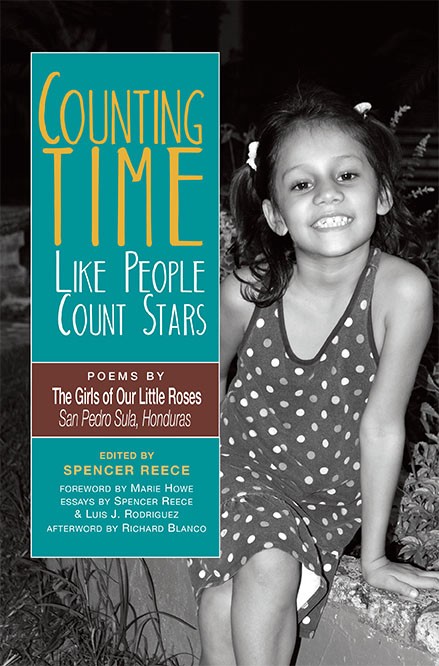
O n my first visit to Our Little Roses in Honduras, a nation of 250,00 orphans, a girl says to me, “Don’t forget us.” Maybe she says it to every gringo that passes through the only home for abandoned girls in the murder capital of the world, but in my case, her request changes my life. I go back and live a year in the orphanage. I can’t just say “yes” to her and not mean it.
The only way I can think of to honor this request is to teach them poetry and put together a book of their poems. So what if my Spanish is early days? So what if I have hardly taught? So what if I don’t know much about anthologies? So what if I need to find a grant because the church doesn’t support this idea? So what if I knew little about pubescent girls and menstruation?
So what if I need to find a grant because the church doesn’t support this idea? So what if I knew little about pubescent girls and menstruation?
I don’t look good on paper but I forge ahead, get the grant, start teaching. About two months into my time, I am completely exasperated. The girls do not want to write poems. They are not paying attention. The girl who asked me not to forget them is ignoring me. In addition, I’ve invited a documentary film crew, too, so what becomes more disturbing to me is the crew may be capturing for all time my biggest disaster.
I go to visit the founder in her office to ask her advice, she who welcomed this poetry idea. She’d said with hesitant joy, “Well, it’s ambitious.” The keys on a string around my neck jangle; I look grim as a jailer. Behind me, the kids in their uniforms laugh and yell. I believe they are mainly laughing at me. It’s a lonely business. The founder turns to me and says:
“You see that girl in your 11th grade class, the one that has been giving you trouble? Let me tell you about her. At the age of four, her mother gave her away to a stepmother. The stepmother tied a rock around her neck and threw her in a well. She screamed for days. A neighbor found her and brought her to our doorstep. She’s been here for fourteen years and no one has ever come to visit her on Family Day.” Out the window, girls and young women laugh, bounce balls, step lightly, eat baledas.
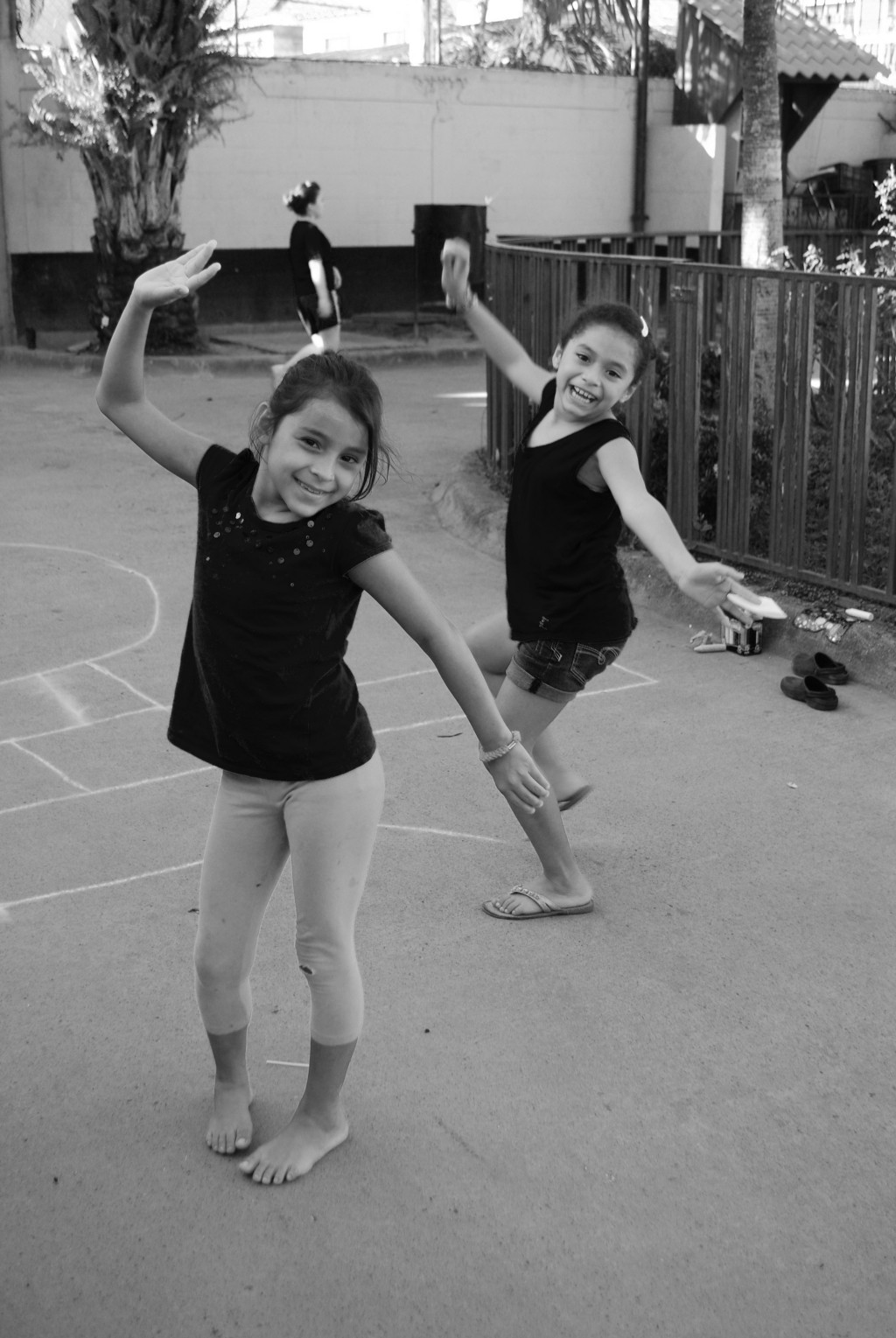
Young girls dancing at Our Little Roses orphanage. Photo: Mary Jane Zapp
Back I go to the classroom. Through my windows I can see the mountains, blue on blue on blue, and mangoes hang, ripe and orange. There is that troublesome girl, smiling shyly, holding her pencil, waiting for me to begin. Knowing her story, my teaching changes. If she writes a poem, fine; if not, fine.
There is that troublesome girl, smiling shyly, holding her pencil, waiting for me to begin. Knowing her story my teaching changes. If she writes a poem, fine; if not, fine.
That girl and I sit in the courtyard after class. A turtle near the fountain twitches. Around us the other 71 girls carelessly play. Prompting her toward a poem, I ask the girl to use the word “charity.” What comes back is the truth as she knows it:
What is home for you?
Your school can be your home
even if you don’t have a bed.
Living here has been like
tasting cotton candy:
It is that sweet.
Her poem changes my teaching: the minute I see it, hear it, digest it, I awaken. The next day I come up with new techniques. The textbooks from Texas handed down year after year with ripped and scribbled-on pages kill the energy, so I ask the girls to drop them onto the floor. Thunk! Thunk! We never pick them up again. There’s mischief now in that room. And there’s more love in me and they smell it.
Spencer Reece teaching poetry at Our Little Roses.
I say, “Look at me! Mírame!” All I deploy from now on is spoken words. “Listen to this,” I say as I begin to recite. One girl who has been sleeping all semester shifts her head just a little. Has she really been listening the entire time? “Now you say it,” I suggest. The girls stiffen. “That’s right, take out your pencils and write down what I am saying, I will say it again.” The world between us opens.
What works is for me to repeat the poems to them and for them to repeat the poems back to me: a call and response. What works is asking them to memorize poems. We harken back to poetry’s oral tradition. They see poetry as something durable and invisible, like those girls, like Honduras, like me: a poet, a priest, gay.
We harken back to poetry’s oral tradition. They see poetry as something durable and invisible, like those girls, like Honduras, like me: a poet, a priest, gay.
I stand at the whiteboard with marker pens that don’t work. I have my elegant lisp from a year prior in Madrid learning Spanish. The girls look at me like I am a circus freak.
Am I paranoid or are they whispering what I dread? “He’s gay, right?” I like being called gay as much as they like being called orphans: not much. Especially if someone says it before we do. Makes people laugh, makes people pity. Now I never know what those girls think but I’m going to guess that like psychics they can see my history of suicide, family estrangement, and a lock-up in a psychiatric ward.
Straitjacketed in their navy blue school uniforms, sweating, their foreheads like windows after a rainstorm, I decide to introduce dancing. I find a pitifully old boom box and a recording of Diana Ross and The Supremes singing “Stop in the Name of Love.” I say, “After every vocabulary quiz we will dance to The Supremes. For twenty minutes.” When I tell them this at first they look at me stunned as if to say, “You’ve got to be kidding me, Mister.” But it doesn’t take long to convince them. We dance: the girls undulate, and I, the old gringo, bust a move.
Am I paranoid or are they whispering what I dread? “He’s gay, right?” I like being called gay as much as they like being called orphans: not much. Especially if someone says it before we do.
Weeks go. We start with Shakespeare’s 18th Sonnet: “Shall I compare thee to a summer’s day?” We tackle Auden, Machado, the 23rd psalm King James version and an anonymous poem from the Terezin concentration camp. Odd grouping I know, but it’s what’s in my head and with faulty internet and power outages it’ll have to do. No textbooks. No paper. We study words they don’t know. They each keep a diary.
The girls write poems first in Spanish, then translate them into English, or first in English and then in Spanish. Girls protect their stories. Some of the girls are truculent, intractable, mercurial, stubborn. Their personal stories are what they have, often all they have, so exposing that to strangers does not happen quickly, and sometimes it feels like it will never happen, and that becomes fine with me. Exposing feelings is delicate surgery. The girls snap like the turtle they torture in the courtyard. One girl writes, “It is horrible to know you’ve been thrown away.” I think, “Careful, Spencer.” Some of the girls will only publish anonymously; like Emily Dickinson before them, the idea of publication horrifies them. It’s like “publishing your soul,” Dickinson had said. And yet in the same breath many of them also want to be known. Dickinson sent 575 of her poems out in letters. So a part of her wanted to be heard. Poetry roots in the loam of wanting to be heard and not seen.
Tick-tock. My last day approaches, along with a mounting enthusiasm for poetry. It’s close to Christmas, 2013. We plaster the school hallways with poems. One girl, not in my classes, who speaks no English, studying to be a beautician, hands me a piece of paper crumpled into a ball, and says, “For you, Mister.” The poem is titled, “Invisible for All My Life.”
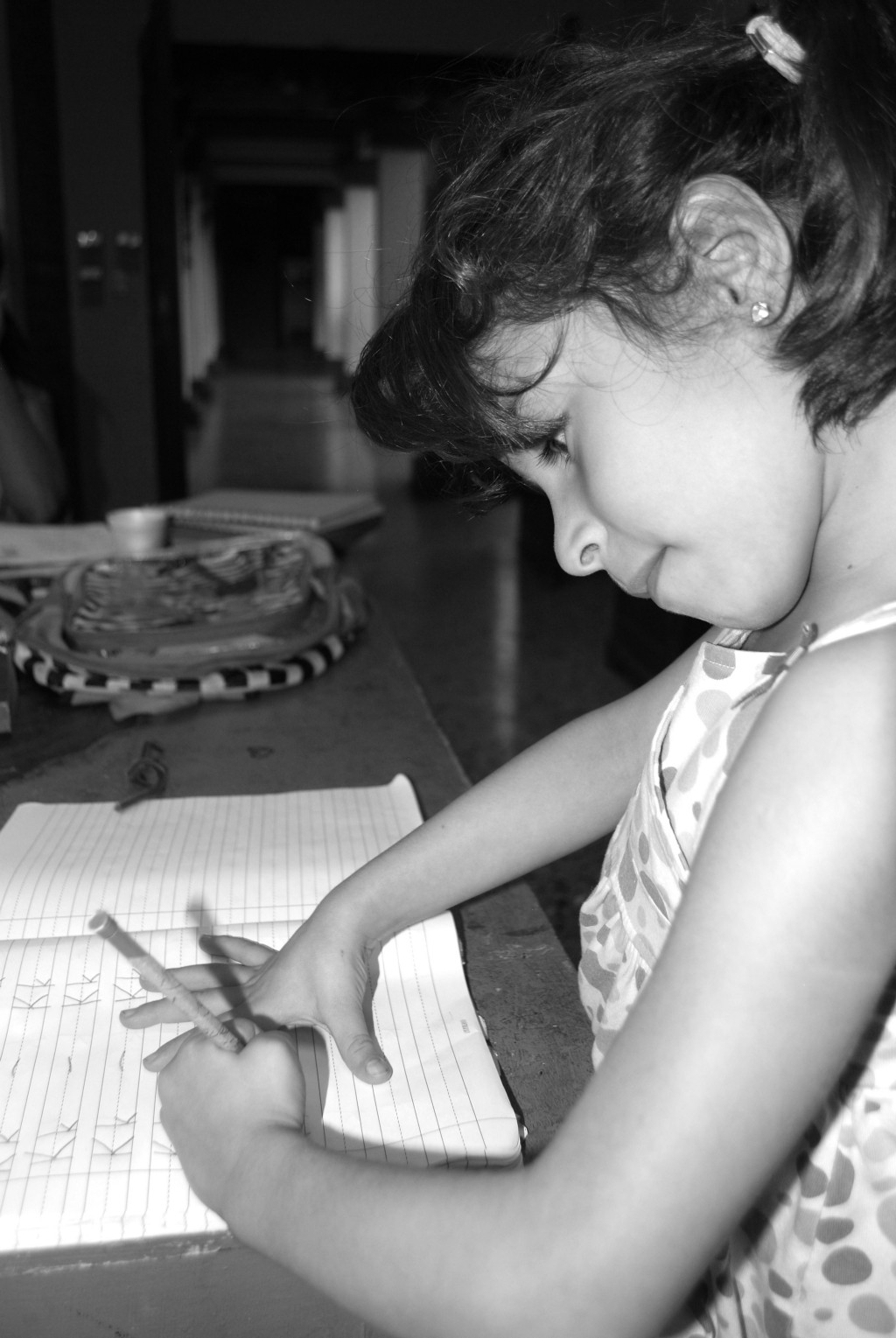
A young girl practices her letters at Our Little Roses. Photo: Mary Jane Zapp
Another girl comes to me, who had been stabbing her pencil into the sofa when we met privately saying how much she hated poetry, and now says to me, shoulders back, “Yes, Mister, I want to recite the Langston Hughes poem about Helen Keller.” She recites with more confidence than I’ve ever seen. Where did it come from? For months she had paid no attention, had emphatically stated she wanted her poem to be anonymous in the book, and then, after her Hughes recitation, she comes to my desk, looks out the window as all the other students are leaving, and says, “Mister, I want my name in the book.” I tap the letters of her name onto the keyboard, save the name in the document on the laptop, a name she hated most of her life: Leyli Karolina Figueroa Rodriguez.
Girls protect their stories. Some of the girls are truculent, intractable, mercurial, stubborn. Their personal stories are what they have, often all they have.
Much time has gone since I taught those girls. Yet not a day passes that I don’t think about them in my church office in Madrid, how they trusted me to pastor their book of poems to the world this Christmas. The book was difficult to publish. Half the editors didn’t know where Honduras was. Many rejected us.
For so long I thought they needed someone with better Spanish or a Latino or someone better informed about social justice. I’m no Gabriela Mistral. Anyone but white, eccentric, bohemian, expat me. Wasn’t I better off publishing poems from abroad, staying removed from things like Elizabeth Bishop? I’d tried mightily to hand off this project to anyone the year before and the year during when I lived there. But it didn’t work out. God kept pushing me to the center of the room. Who’s to make sense of it? These days, I suppose many might shy away from the idea of a white American priest teaching the brown people.
But then the girl from the well had turned to me at Christmas and said, “Now I know why God brought you here.” (God is never used ironically in Honduras like in Europe or the U.S.). “Really,” I say, incredulously. “Yes,” she said, straightening her back, “God brought you here because you understand us.” I know what she is saying: “Mister, you know what it’s like to be thrown away.” Those girls. Maybe you’d have to know them for this story to make sense. Maybe you will.
About the Author and the Project
Born in Hartford, Connecticut, and raised in Minneapolis, poet Spencer Reece is the son of a pathologist and a nurse. He earned a BA at Wesleyan University, an MA at the University of York, an MTS at Harvard Divinity School, and an MDiv at Yale Divinity School. He was ordained in the Episcopal Church in 2011. Reece’s debut collection of poetry, The Clerk’s Tale (2004), was chosen for the Bakeless Poetry Prize by Louise Glück and adapted into a short film by director James Franco. He is also the author of the collection The Road to Emmaus (2013), which was a longlist nominee for the National Book Award.
Beer has more connections to the literary world than you might imagine. There’s the obvious thing, where being a writer makes you want to drink. There’s the obsessive nerd factor. And there are also similarities between creative writing and making beer: some people revisit traditional forms, others want to experiment, and in recent decades, there’s been an increase in the number of upstarts — both indie presses and craft breweries — creating something for a small but dedicated audience.
So it’s probably not a shock that more than a few breweries have sought inspiration from literary sources. Some seek to distill the essence of a writer into an ale or lager; others take a particular literary work as their starting point. Here’s a look at nine of them, from breweries all across North America. We’ve also provided suggested food pairings. Suggested book pairings go without saying.
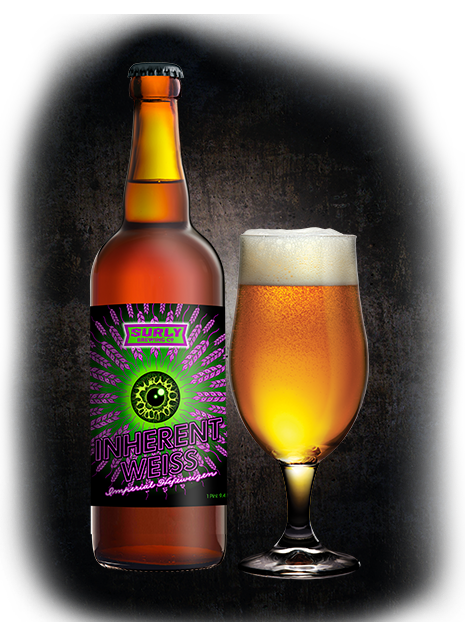
How, exactly, would you convey the essence of Thomas Pynchon’s psychedelic mystery novel Inherent Vice within the confines of a bottle of beer? Surly’s Inherent Weiss, an imperial hefeweizen, gives it a shot, and comes up with something that embodies that novel’s contradictions. It’s hazy and peppery — and, like the novel that inspired it, it’s got plenty of blissful notes, but also an unexpected complexity. And it’s just strong enough to leave you a little dazed, if you’re not careful.
Oregon is home to a thriving craft beer scene, as as well as a host of innovative writers. Put the two together and you have Ninkasi’s First Rule, an IPA that takes its cue from Chuck Palahniuk’s Fight Club. This one’s made with a whole lot of different kinds hops — perhaps a nod to the growing underground movement in the novel that inspired the beer. (“The first rule of Hop Fight Club is…”)
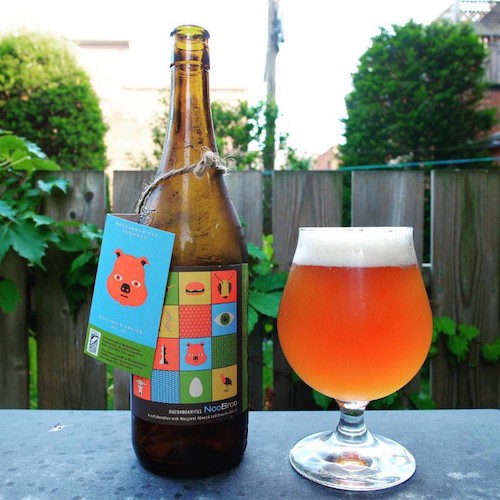
Between writing fiction, writing comics, and having her existing work adapted for television, you’d think Margaret Atwood would be pretty busy. But you can also add “collaborated with a brewery” to her list of accomplishments. Atwood worked with fellow Canadian novelist Graeme Gibson and the Ontario-based brewery Beau’s to create the impressively-named MaddAddamites NooBroo. It’s a gruit ale, an older style of beer that makes use of an abundance of herbs and botanicals, including several that hearken back to Atwood’s post-apocalyptic series starting with Oryx and Crake.
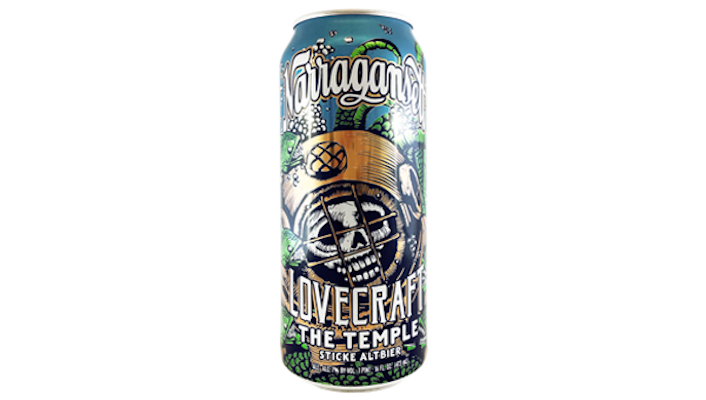
Given that Rhode Island’s Narragansett Brewing Company is based out of Providence, can anyone guess which influential-yet-problematic author has inspired several of their beers, including The Temple, a sticke altbier? Yes indeed: it’s the master of cosmic horror, H.P. Lovecraft. Throw in some nightmare-inducing can art and you have just the thing to fuel a late-night horror writing session, the beer slowly causing you to become more and more aware of an impossible presence, just outside of your field of vision, promising vistas of impossible geography and ancient cities. Or maybe just more beer.
Food pairing:Cthurkey, with a toast to the Elder God of your choice.
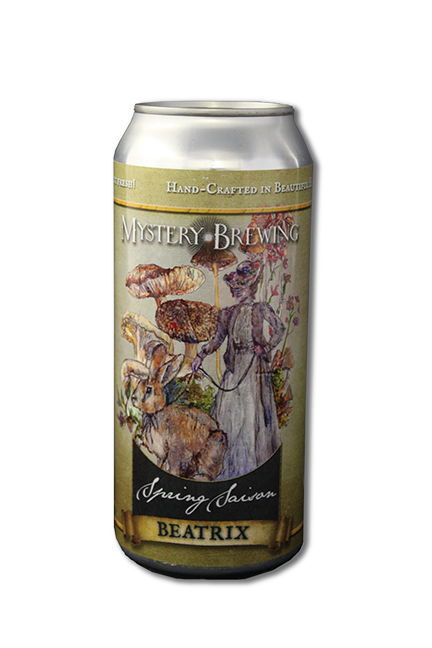
North Carolina’s Mystery Brewing has more than a few beers with something literary at their center: besides the Beatrix spring saison, they also brew beers inspired by the works of Victor Hugo and Charles Dickens. As befits a beer inspired by the creator of Peter Rabbit, the brewery describes this saison as “hoppy.” Could it have been anything else?
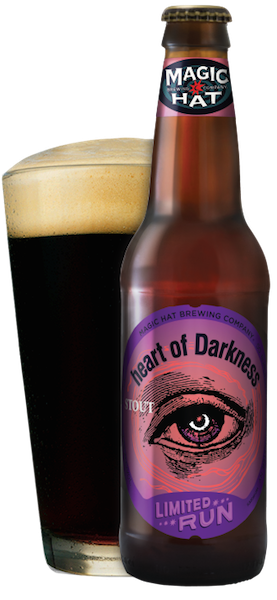
Some brewers apply their literary inspiration to technique, finding a style or ingredients that line up neatly with a book’s plot or themes. Others take a more literal approach — which seems to be the case for Magic Hat’s Heart of Darkness. The stout is inspired by Conrad’s book insofar as it’s dark.
Food pairing: A river-dwelling fish, cooked to perfection; alternately, the horror, the horror.
Salem’s Notch Brewery is pretty open about its influences. It has beers named after songs by both Sonic Youth and The Replacements — Our Brewery Could Be Your Life? — and it also brews Infinite Jest, a pale wheat beer that takes its cue from David Foster Wallace’s much-admired doorstopper. Is the wheat, perhaps, a nod to Wallace’s midwestern roots? Does the list of ingredients offer valuable advice in your next game of Eschaton? Only Notch Brewery knows for sure.
As one might surmise from its name, Denver’s Fiction Beer Company has embraced the whole “beers inspired by books” concept. Its literary tipples represent a pretty broad scope of work: among the inspirations for beers the brewery currently has on tap are works by Shirley Jackson, J.K. Rowling, and Aldous Huxley. And then there’s their Old Bums and Beat Cowboys IPA, which takes its cue from a certain well-known novel by Jack Kerouac.
Food pairing: Fast food, the better to eat while you’re on the road.
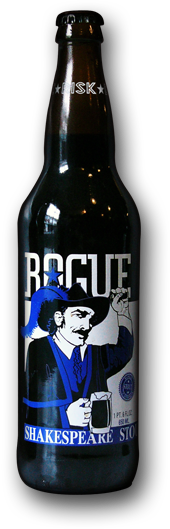
Sometimes, when it comes to literary inspiration, you have to go with the classics. Such is the case with Shakespeare Stout, from Oregon’s ubiquitous Rogue Ales. Given that Rogue’s beers have included nods to everything from savory doughnuts to sriracha in their flavors, this Bard-inspired beer finds the brewery in a more restrained mode, creating a hearty and filling beer perfect for drinking in iambic pentameter.
Food pairing: A savory meat pie would seem fitting for both old-timey England and present-day Portland.
This beer, from Brooklyn’s up-and-coming Threes Brewery, doesn’t take inspiration from one book or writer so much as it riffs on an entire literary trope. Unreliable Narrator is an IPA made with a host of complex hops and can art that looks like it was taken from a vintage New Directions paperback. Though, given its name, there theoretically could be any style of beer inside that can, couldn’t there?
Food pairing: A hamburger, but disguised as a salad.
I listened to Billie Holiday on certain school nights. With my underwear soaked in period blood, I crawled across my bedroom carpet. I got intimate with it. I knelt at the stereo. A cassette spun on the tape deck. Blues filled the corner. I fell to my side and curled my body around an invisible ball of feelings that was tethered to me as if by an umbilical cord.
A pretty heroin addict from long ago was singing to me. She was voicing how it felt to be in love.
She was voicing how it felt for me to be in love with a white girl. “You’re my thrill. You do something to me. You send chills right through me. When I look at you. ’Cause you’re my thrill . . .”
“You’re My Thrill” expressed every emotion I felt for this white girl, and it didn’t matter that a whole bunch of time and space existed between me and Billie Holiday. Her delivery proved to me that she understood how crazy in love I was with this girl I’m not even going to bother describing. All the white girls I fall for are the same. They’re all Michelle Pfeiffer. Or James Dean. None of them have been Nina Simone. None of them have been Richard Pryor. None of them have been Screamin’ Jay Hawkins. Only Billie Holiday could voice my yearning. She was dead. That seemed fitting.
This essay is excerpted from “Mean,” by Myriam Gurba. Purchase the full nonfiction novel here.
This white girl who I French-kissed went to Catholic school with me. She kept her things in a locker by the chapel. The pimple on her chin turned me on. Every part of her turned me on. We touched titties and tongues in her bedroom. We bit each other. Her hands bruised my arms and flanks and we tasted one another’s blood. We crawled through moonlight into dark, wet tunnels and felt each other’s necks. She listened to Zeppelin. She had her flaws.
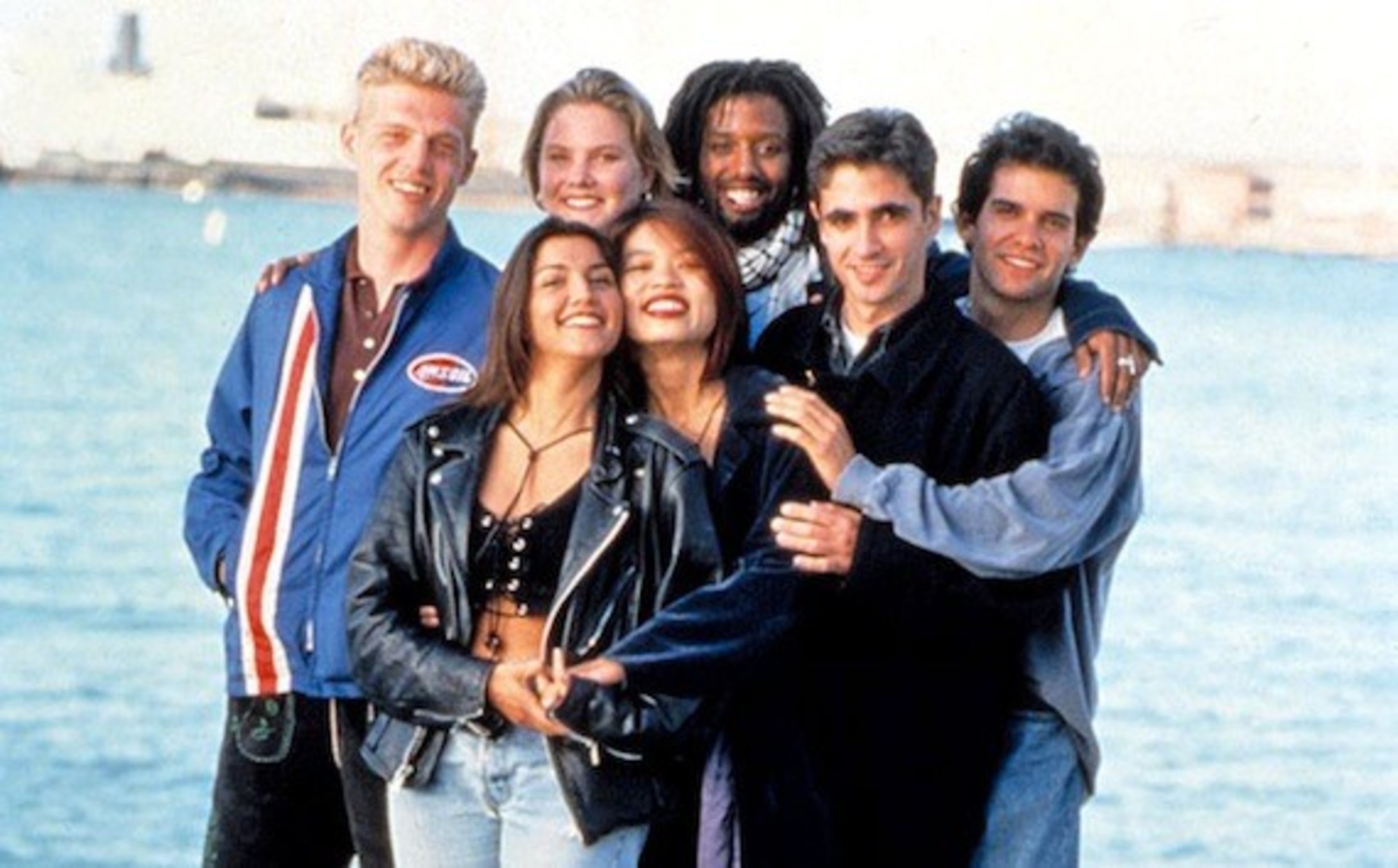
I enjoy saying that my father forcing me to mow the lawn and use the leaf blower turned me gay. I also blame MTV’s The Real World. Do you even know what The Real World was? It was reality. It was a tv show where a bunch of fairly good-looking people with conflicting identity politics were put together in a house, plied with free alcohol, and filmed giving one another lectures and HPV.
The San Francisco season premiered at the same time I invited the white girl of my dreams over for enchiladas. Pedro starred as the gay cast member. That was a thing in the ‘90s— the gay cast member.
Like me, Pedro wasn’t white. He was light skinned but not white; there’s a difference. Pedro dated a black guy. He had a handsome face and spoke with a Cuban accent. When had a Cuban on tv last been so popular? It had to have been Ricky Ricardo. Pedro was dying of AIDS. He was doing it better than Magic Johnson.
Pedro had beef with one of his roommates, Puck. Puck was a white guy of the worst type: a white guy with a bicycle. He delivered things on his bike. He was a bike messenger. He reveled in being disgusting in a very “boys will be boys” kind of way, and the show’s editors dedicated a segment to his grossness. They juxtaposed this grossness against Pedro’s AIDS-y gentility.
All the white girls I fall for are the same. They’re all Michelle Pfeiffer. Or James Dean. None of them have been Nina Simone. None of them have been Richard Pryor.
A scene opens with Pedro being interviewed. In an accent similar to Mom’s, he says, “I really have a big problem with Puck. I’m fixing myself a bagel with peanut butter and I’m getting really into it.” Cut to Pedro in the kitchen. Sensual R & B plays as he slices a bagel. The musical choice suggests that gay Latinos sexually interact with everything. Sticking a knife into a bagel is erotic for us.
We don’t see the fingering happen, but we see Puck walking out of the kitchen, seemingly chewing, and over his shoulder Pedro calls, “Did you stick your finger in the peanut butter?” Cut back to the interview, where Pedro confirms that yes, Puck stuck his finger up his nose and then fingered the peanut butter jar, licked his digit, and went on with his straight life. Puck denies his crime. The tapes are replayed. They vindicate Pedro.
Puck totally did it.
Watching this drama made me hungry for a bagel. It also made me wonder if Pedro ever got so frustrated he wished he could give Puck AIDS.
In college, I met a conservative gay writer with HIV.
He was dating the roommate of this boy I was having experimental sex with, and once he walked into their sparely furnished living room while I was hanging out on the couch in sweats and radiating viral heat.
My immune system was fighting something fluey. I could feel coughs growing inside me.
The writer strode toward me. I remained seated. He reached out his hand and said, “Hello, I’m Andrew.”
“Hello,” I replied to the Englishman I already knew to be Andrew Sullivan. “I’m sick.”
In a tiny way, I felt powerful. Powerful enough to kill Andrew Sullivan by coughing on him.
In a tiny way, I felt powerful. Powerful enough to kill Andrew Sullivan by coughing on him.
Andrew Sullivan made a yikes face.
He waved at me in place of a handshake and paced to the balcony. There, his date, a gorgeous white boy, was waiting, leaning against the railing. Andrew Sullivan put his hands around the swimmer’s shoulders. He pressed his chest against the boy’s back, HIV positive to HIV negative.
Pedro’s accent soothed me. His beauty soothed me. The high stakes of his life so inspired me, they almost made me want to have AIDS. But I think being in love with a mean white girl was enough. She was my AIDS.
The Real World: San Francisco had a gay. The Real World: Los Angeles had a lesbian. The roommates found out when she wore her “I’m Not Gay But My Girlfriend Is” t-shirt to shoot pool.
Pedro partly made me come out to Mom.
If he could argue with a bike messenger on international TV about sticking his finger in peanut butter, the least I could do was acknowledge that I was bonkers for a white girl.
Scarlett O’Hara, Lana Turner, Divine. White girls. Baltimore drag queens make the prettiest white girls.
White girls are the Holy Grails of Western civilization. I wish they could be replaced with something else. Let there be a new grail. Let that grail be a dead Mexican woman in a long dress. Let her name be Wisdom.
Let her ghost unmoor the hero’s journey. Let the ghost whisper her sibilant name. Let her breathe it right into your mouth.
White girls are the Holy Grails of Western civilization. I wish they could be replaced with something else. Let there be a new grail.
I still hang out with white girls. I still hang out with ghosts.
When do you think white girls will go extinct? We are more than a decade into the twenty-first century, and I see no indications of their decline.
There are still plenty of them to feel inferior to. There are still plenty of them to get high with. The last one I hung out with hates men.
She lives with her partner on a street with a funny name. Something like Cerulean or Imbroglio.
The white girl delivers marijuana. Unlike Puck, she uses a Honda. One of her clients is a high school teacher who invites her to sit at her kitchen table. The teacher will pack a bowl and ply the white girl with weed, peppering her with questions about transgendered womanhood. Since the white girl is kind of new to her job, she feels like she has to humor the teacher. She can’t stand it, though. She’s not a teacher. The teacher is.
The white girl and I are pharmaceutical sisters. I take estradiol twice a day and progesterone once a day to supplement my failing ovaries. I take spironolactone to fix the mess my adrenal glands make. The white girl takes these same hormones and androgen blockers for other reasons. Mainly, it’s because her ovaries exist on an alternate level of consciousness. She’s trans.
When do you think white girls will go extinct?
We squatted on her tiny stoop together. The night sky gave us a whole bunch of black to stare at. Her cat pranced along the lawn. With cautious paws, she crept toward my feet. She crouched as if she were going to come at me and then leapt back and darted into the grass.
Her tail twitched. Its tip seemed to have been hacked off and then peeled. “What happened to her tail?” I asked.
The white girl said, “Bob accidentally slammed the door on it and she tried to yank it out and ripped the fur off. When Bob opened the door, it was just bones and blood. He felt so bad.” The white girl shook her head. Her strawberry-blond curls bounced.
She crossed her legs and tugged her miniskirt toward her knees. “We had to put a cone on her because she kept chewing it. It’s healing now. It looks way better.”
We stared at the cat. I wondered what the raw tail would have tasted like. I considered the default: chicken.
The white girl asked, “Want some?” She held out a smoldering J. “No thanks.”
The cat frolicked. The white girl asked, “Do you like acid?” “I’ve never done it,” I said.
“Oh, I love it,” she said. She scrunched her curls and sang acid’s praises. It was her favorite.
After she finished telling me about some trip she went on using experimental drugs, I told her, “One time, in junior high, this boy gave me a tab. Since it was wrapped in foil I thought it looked like jewelry, so I kept it in my jewelry box. That way my parents couldn’t find it. It just blended in.”
The white girl reached for her curls. She scrunched. “Coke makes me so horny,” she said. “I love coke.”
The white girl reached for her curls. She scrunched. “Coke makes me so horny,” she said. “I love coke.”
We wandered back inside her house. The soft recessed lighting made me feel like we were in a peach. I was sitting on the carpet, hating my body. To my right, a huge flat-screen played a music video. White girls in swimsuits ran on a beach, showing off their peaches. The white girl’s endless legs hung off the couch. Her fingers curled. Purple acrylics scratched her thigh, tattooed with the word misandry to express her hatred for the male sex.
This tattooed thigh makes her the ultimate woman.
Baby rocks tumbled from a plastic sack that she tipped over her phone. They hit the screen and she set the phone down on the glass-topped coffee table. Swiping, she pressed a Costco membership card to the rocks, flattened them, and made little white beaches. She raked the plastic across them and chopped.
She snatched a dollar bill off a closed laptop and rolled it into a tight tunnel. Leaning over, she placed the money between her nostril and the whiteness then dragged it along the beach. The beach vanished.
About the Author
“Myriam Gurba lives in California and loves it. She teaches high school, writes, and makes “art.” nbc described her short story collection Painting Their Portraits in Winter as “edgy, thought-provoking, and funny.” She has written for Time, kcet, and The Rumpus. Wildflowers, compliments, and cash make her happy.”
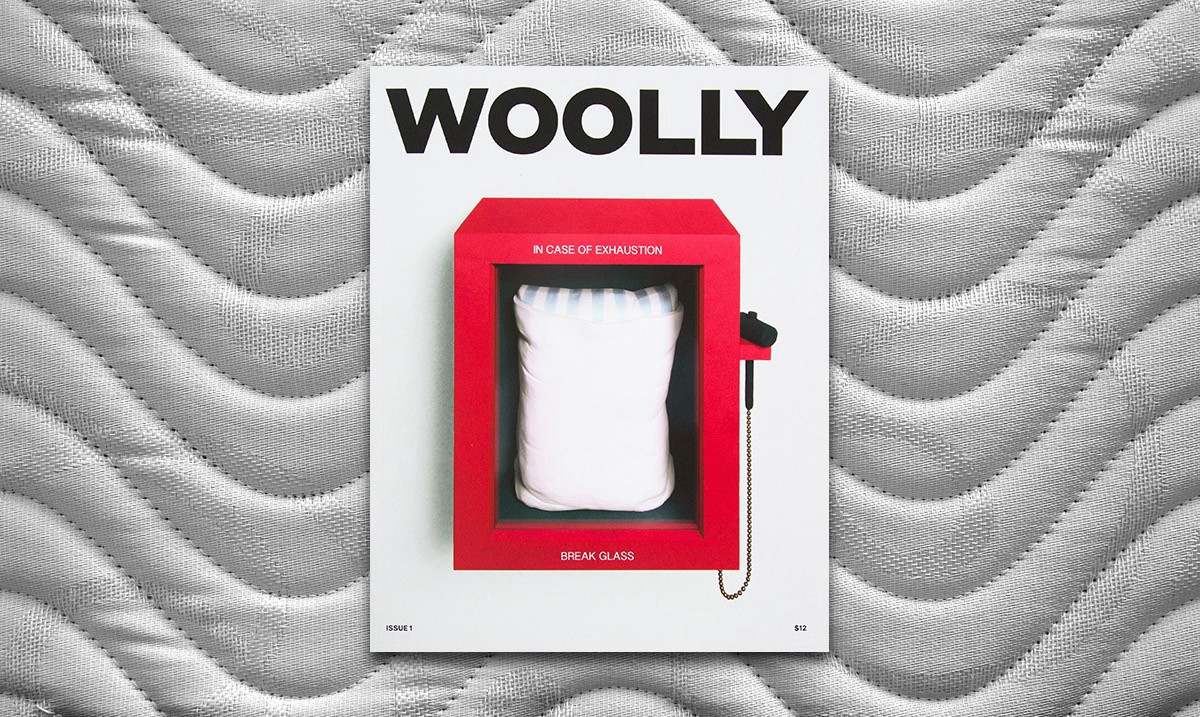
Online mattress retailer Casper has already branched out into pillows, sheets, and bed frames. Now it’s taking the obvious next step: a $12 print periodical.
The magazine, Woolly, describes its first issue as “96 pages of first-person essays, satirical service journalism, advice columns, and original artwork.” Unlike Casper’s now-shuttered previous digital publication, Van Winkle’s, the company’s new foray into creating content instead of comfort is a little less obvious in scope. Where Van Winkle’s focused on all things sleep, Woolly is branded as “a curious exploration of comfort, wellness, and modern life.” Do we need a 96-page quarterly glossy about coziness? Well listen, I mean, do we need a magazine on modern farmers? Do we need Paris reviewed?
Casper is not exactly the obvious choice for literary sponsorship. I guess one could argue that bed is a great place to read, but Casper is very much a podcast-ad kind of company; it’s like Blue Apron starting a food publication, or MailChimp launching a scientific journal of primatology. But scrape away the “hipster mattress” ethos (full disclosure: I have a Casper), and what you find is kinda just… a magazine. One of the editors came over from Van Winkle’s, and the other one has a list of writing and editing credits as long as your nightshirt. Apparently the print mag also got a boost from the team behind McSweeney’s. Whatever else Woolly may be, it’s editorially legit.
Casper isn’t the only company pivoting to content. At this point, it’s an actual trend, at least convincing enough for the New York Times (sponsor: Uber). MEL Magazine, a men’s interest online publication, is a project of razor subscription service Dollar Shave Club. Gay dating app Grindr has a new online magazine called Into. Airbnb has a travel mag, and so does luggage company Away. At first glance, it seems like one step above sponcon, a cross between a vanity project and a sub rosa advertising wing. Why pay for an article when you can buy the whole content machine?
But the thing is, these mags aren’t half bad! (Full disclosure: I have friends who work at MEL and Into, but at least one of them I would definitely insult if I had to do so for integrity.) I read a couple things on Woolly and they’re well-written and fun. It doesn’t feel like a retail company blundering into the world of publishing, like a compressed Casper mattress bursting out of its cardboard box. It feels like some people who just wanted to make a good magazine found a way to get the money it takes to do so. In other words, if you work in books or media or any kind of writing-related industry, it feels like someone’s living the dream.
Yes, on the face of it, a Casper magazine sounds absurd, even a little insulting to all the struggling legacy print mags — except, oops, most of those were started by eccentric bazillionaires who got a bunch of money from TV or bakeries or Plimptoning or whatever and felt like throwing it down a hole anyway. Maybe the thing that will save print, where advertising failed, is pure patronage. All I’m saying is, if Tesla comes calling, Electric Lit will pick up the phone.
As a literary agent, I receive roughly 500 queries, or book pitches, a month. After 11 years of doing this job, I have seen a lot of book ideas. Obviously I’ve noticed trends (did you know all vampires live in Seattle now?) but there are other similarities outside of pop culture or critical mass made evident by the slush pile. When an agent or editor says they are looking for something they’ve never seen before, these are the things we don’t mean.
If what you’re already writing looks like something on this list, don’t panic. To misquote a friend, publishing is a rich tapestry; lots of books like these have been published (you can probably think of a bunch off the top of your head), and some are even great. Your book might be great, too! But if your gut tells you it isn’t after reading this list, don’t fall back on the assumption that publishing will make an exception for you just because all the other options are terrifying. Take some time to think about it and adjust your course as necessary. And if you want to write a book but haven’t started, or if you’re still trying to get going on your NaNoWriMo novel, don’t do one of these:
1. The Axe To Grind Novel
This book sure will show your stupid boss/girlfriend/teacher/parent they were an idiot for firing/dumping/failing/not loving you! Unfortunately, your personal injustices are your own, and it’s hard for the reader to generate enough sympathy for the infallible “protagonist” when everyone else is 100% horrible and wrong. If your life was The Glass Castle, then yeah, write that, but I sure hope it wasn’t.
A subcategory of The Axe To Grind Book of Non-Fiction is the Stunning Work from a Fearless Whistleblower that will Set the World of [Industry] on Fire. Maybe it will! But I usually learn about these stories from the news, as they are genuine news, and not in the query pile.
2. I Didn’t Ask For This!
These fantasy novels (for any age reader) feature a Chosen One who would really rather not, thanks, but will anyway for Reasons. YA has been doing this for a while, but as per usual, adult books are just catching up. Good for the grownups. The problem here is that if the main character doesn’t want to do the thing, then I probably agree with them! I don’t want to do most things. The Reasons need to be specific and relatable to get me to care and follow along with a protagonist who harumphs a lot.
3. Strange But True
If you have to say ‘but it really happened!’ to convince the reader, Anne Lamott comes over and takes back your copy of Bird by Bird.
All those wacky stories from your grandpa/hairdresser/neighbor/ex-friend that are just soooooo good that you could make them into a story, kinda like Life of Pi but maybe not so Indian and more about your mom’s summer camp in Connecticut? A series of anecdotes does not add up to a novel. If you have to say “but it really happened!” to convince the reader, Anne Lamott comes over and takes back your copy of Bird by Bird.
4. You Can Trust Me
These usually start: I’ve been a parent/teacher/writer/blogger/chef/ ornithologist for five minutes so here is a manual on how to do That Thing right. I can really tell it like it is because I didn’t waste time getting things like “credentials” or “formal training.” What the writer doesn’t know here is that people like credentials, or at least a writer with a well-known Twitter, when it comes to handing over $17–25 for advice or information. Why? Because of the illusion of trust, i.e. Oprahness. We trust the person we recognize more than the one we don’t. Would you buy a book from someone you’ve never heard of purporting to solve a problem serious enough you want to read a book about it and not just Google it? Probably not.
5. Anything Zombie
Clarkesworld said it best: No more zombies, please.
6. Greatest Hits
Your collection of 30 years as a syndicated columnist/your journal/your blog. You need a better reason than it’s all just sitting here so…. to write a book. That’s why you want to publish it; it’s not why any reader wants to read it. Plus, you need new stuff so people who actually know you — your primary market — have a reason to buy your book.
7. Picture Books for Adults
Just don’t. What reason do adults have to walk into a store and hand over cash money for a thing that they can’t read to children and that other adults have so few impulses to really read? When was the last time you said: “you know what I’m in the mood to read? A Dick and Jane book, but with thinly veiled references to meth and masturbation”? Never.
When was the last time you said: ‘you know what I’m in the mood to read? A Dick and Jane book, but with thinly veiled references to meth and masturbation’?
8. Eat, Pray, Whatever
These stories of enlightenment in the face of illness/divorce/loss/grief as an important personal journey, most often written by women, are heartbreaking and profound. These issues are serious and so is the self-actualization (of women. Sorry dudes, we’ve heard enough about your self-actualization). But this formula of illness etc. leading to radical life change has crossed my desk so many times that it no longer holds any meaning. It’s a familiar jumble of medical jargon, empty white wine bottles, and taillights in the mist.
9. “Historical” YA
These young adult novels are usually set in the ’80s or ’90s and are chock full of awesome nostalgia and references that happened at least ten years before actual teen-aged readers of YA were born. What’s clear to me now is that they are just thinly veiled Axe to Grind novels starring cheerleaders and jocks instead of your boss and ex-wife. You aren’t fooling anyone.
10. Professor Wonderful
Yes, academia is just like Dante’s Inferno and all the young coeds are hot, but what is a middle-aged professor supposed to do but burn it all down in a madcap romp of alcohol, questionable professional practices, and probably pot? I liked Wonder Boys too, a lot, but academia hasn’t changed in a long, long time, and neither has this story.
Writing books is hard, and I respect the effort you’ve put into your novel, even if it’s on the list. But reading bad books is also hard, and together, we can stop these tired ideas before they start.
Like most brilliant ideas, it began as a joke. A friend and I were at lunch, discussing our frustrations with online dating, when I suddenly realized the ridiculousness of our conversation. Here we were, two modern, educated women, and we had spent nearly two hours talking about our romantic relationships! This wasn’t the sort of woman I wanted to be. I wanted to be Gloria Steinem. I wanted to be Ruth Bader Ginsburg. I didn’t want to be the sort of woman who spends her entire life talking about boys.
I decided, right then, that I needed to do something to alter the course of our conversation. Putting on my big-girl feminist cap, I said, “You know, there have been a lot of talented, amazing ladies, throughout history, who never coupled off. Emily Dickinson, for example.”
Emily Dickinson has long been my go-to gal amongst my single lady heroes. She was a virgin, unmarried, and a recluse, but, man, was she talented. I wondered aloud to my friend began to wonder: How would Ms. Dickinson fare in the world of online dating? Would a lovelorn poet, obsessed with death and privacy, be able to woo a modern man? We laughed, and then went on discussing our own dating disasters.
For the next week or so, I went about my business as usual, but this Emily Dickinson idea wouldn’t go away. I kept wondering, if I created a profile for Emily, how would people respond to her? Would she get emails? Would people get the joke? It would be an interesting art project, if nothing else.
Would a lovelorn poet, obsessed with death and privacy, be able to woo a modern man?
Eventually, one quiet Saturday night, led by a genuine curiosity and my own frustrations with dating, I did it. I brought Emily Dickinson into the 21st century.
Using a combination of actual Dickinson quotes and my own sarcastic sense of humor, I created what I thought was a fairly accurate OkCupid profile:
What I’m doing with my life: Being a hermit. Overusing the dash.
I’m really good at: Breaking rules, specifically capitalization and punctuation.
Favorite books, movies, shows, music, and food:
Movies: What is a movie?
Books: Wordsworth, Browning, Keats, Emerson, Shakespeare (i.e. dead people)
Music: Yes, I do enjoy playing the piano on occasion. Thank you for asking.
Food: Baked goods, especially my famous gingerbread. I love making it for the neighborhood children, but I can’t leave the house. Instead, I stand at the window and lower it down to them in a basket. It’s so much easier that way.
The six things I could never do without: white dresses, gardening, graveyards, writing letters to older men, talking smack about my parents, pain
I spend a lot of time thinking about:Death, death, and more death.
On a typical Friday night I am: in my bedroom, alone.
You should message me if:You’re not dying, but you like talking about death.
As soon as the profile went up, I was bombarded by emails. There were messages from men who thought it was funny and played along:
Hi, I’m Ezra Pound I’m a strange mix of hermit and extrovert.
When can we go zombie hunting?
Well, technically, Jane Austen was the zombie killer, not Dickinson, but close enough.
There were also emails from men who were utterly confused, who wrote things like, “Why?” and “I don’t get it.” One 22-year-old guy questioned me about my profile pictures, two 19th-century photographs of Dickinson:
Him: Those pictures from the 1950’s?
Me: More like 1850.
Him: So how is that u in the photo? That’s impossible.
I think I blew his mind. Poor guy.
There were even a few pervy emails in the mix:
I’ve never spanked a chick in black and white before.
But for me, the most intriguing emails came from men who treated me like I was just an ordinary single lady, lookin’ for love. I like to refer to them as the “Hi” guys. Every woman who has participated in online dating knows them. A man sends you an email that reads, “Hi, I’m John” or “Hi, I’d like to get to know you.” The messages aren’t offensive. They’re just boring. A “Hi” message is equivalent to saying, “Hey, I didn’t read your profile and I don’t care about your brain or your personality, but we should go out sometime.”
Emily got those emails as well, which I found really interesting. Did these men think the 19th-century photographs of Emily Dickinson I had posted were images of an actual living, breathing woman? Did they think I was an historical reenactor? Or were they just so desperate for sex or companionship that they emailed every profile they came across?
Why was Emily Dickinson succeeding at online dating to a much higher degree than I ever had? Well, she was famous, for one thing, and dead for another.
But it wasn’t only the “Hi” guys who were interested in dating Emily. Intelligent men, who got the joke, eventually starting hitting on her/me as well.
So, other than being an Dickinson impersonator what else are you interested in?
They had no idea who I was. They didn’t know my age, my weight, my gender, nothing. For all they knew, I could be an 80-year-old man or a group of thirteen-year-old girls or a really smart gorilla. Yet still they wanted to meet me; they wanted to know me. Several men gave me their phone numbers, even though they had never seen a photo of the real me.
They did see photos of Emily Dickinson, though. My profile contained two photographs of Dickinson, the only two in existence, although only one has been authenticated. In both, she is unassuming and well-covered. Her OkCupid pictures did not include images of her cavorting on beaches. There were no boob-squeezing selfies or come-hither stares. It was obvious that she didn’t fit in with the cool kids.
So why was she getting so much attention? At first, I found it curious, but after a while, I realized that Emily’s experience was merely an extension of the OkCupid experience in general.
Online dating is a make-believe world. When we create a profile, we’re projecting a certain type of image. People are drawn in by that image, and then they create their own fantasy on top of that. An online dating site is really nothing more than layers upon layers of ego and insecurity. Essentially, nothing is real.
In the guise of Emily Dickinson, I was hip. I was smart. I was funny. I could quote poetry on demand. But my real OkCupid profile projected that image as well. So why was Emily Dickinson succeeding at online dating to a much higher degree than I ever had?
Well, she was famous, for one thing, and dead for another. Maybe that was it. Men do tend to fetishize famous dead women, especially if the woman in question has a head full of neuroses. Marilyn Monroe, Francesca Woodman, Sylvia Plath. If most modern men met these women in real life, they would call them crazy, but somehow, in the safety of death, they become worthy. Maybe this wasn’t your run-of-the-mill OkCupid projection about a real-world woman. Maybe this was a step beyond that: a fantasy about an interesting, talented, dead woman with a penchant for morbidity. The “Belle of Amherst” had suddenly become the “Depressive Dream Girl” of online dating.
The ‘Belle of Amherst’ had suddenly become the ‘Depressive Dream Girl’ of online dating.
Unfortunately, not everyone was in love with Emily. People kept reporting me for falsely representing myself, as if I were actually trying to pull a fast one on the entire male population. A user would issue a complaint and then OkCupid would delete my images. Apparently, on OkCupid, you’re allowed to be a harassing perv, but under no circumstances can you pretend you’re a dead poet.
I kept reposting the images anyway, and people kept reporting me. This process happened over and over again. Eventually, I got tired of this merry-go-round and added a disclaimer to my profile: This is clearly a joke. I am not actually Emily Dickinson. That seemed to help, although several people told me that the disclaimer made the whole thing “less funny.”
But even with all the haters, Emily was not hurting for suitors. She was, in fact, an unlikely star in the online dating scene. She received a hundred “likes” in two days. Once I left the house for an hour and came home to find seventeen messages in my inbox. I could barely keep up. I wanted to respond, at least once, to every message I received, but it quickly became a full-time job.
So, after two days of playing Emily Dickinson, I decided to cancel the account. I was lost in the wormhole of online dating, and if I didn’t end the experiment, I would never leave the house again. (Which would make my Emily Dickinson impression all the more authentic.)
Of course, with all that interest, I might have actually met someone, if I had stuck with it. It would have made a great romcom. “Bespectacled writer disguises herself as Emily Dickinson and ends up falling in love with very own Thomas Wentworth Higginson!” In the movie trailer, there would be a montage of the female lead belting out Taylor Swift’s “Blank Space” as she danced around her apartment.
It would have made a great romcom. ‘Bespectacled writer disguises herself as Emily Dickinson and ends up falling in love with very own Thomas Wentworth Higginson!’
But I didn’t want to lead people on. And I didn’t want to disappoint them by not being Emily Dickinson — by being instead a real flesh-and-blood person, a non-recluse, a non-genius, and alive.
Early on, a guy asked for my real-world profile and I sent it to him. He thanked me, but then I never heard from him again. Then, right before I deactivated my account, a guy I knew from my real OkCupid profile “liked” my Emily page. I messaged him, revealing my true identity. He wrote back, “You are so messed up.”
I rest my case.
DON’T MISS OUT
Sign up for our newsletter to get submission announcements and stay on top of our best work.
YOUR INBOX IS LIT
Enjoy strange, diverting work from The Commuter on Mondays, absorbing fiction from Recommended Reading on Wednesdays, and a roundup of our best work of the week on Fridays. Personalize your subscription preferences here.