Kathy Acker and Chris Kraus are two of America’s most misunderstood and misinterpreted writers, born out of the last days of an affordable New York City we can’t stop eulogizing. They are preserved side-by-side in the amber of cult status, and not only because they have shared lovers, friends, or artistic sensibilities (Chris Kraus even owns a rare William S. Burroughs print that was given to Acker as well). Their personal narratives also connect them. Both were once invisible strivers, and within very different timeframes, they found the open arms and gaping mouths of a fresh-faced audience.
So it’s fitting that Kraus is now Acker’s biographer. Her After Kathy Acker shows the cult favorite not only as an artist in the making, but as an autofiction instigator and satirist ahead of her time. And it also demonstrates that Kraus and Acker’s spiritual connection is shared much more broadly than previously acknowledged — shared, perhaps, among all misunderstood women artists. Acker, as an outsider in the literary scene and a loner in her personal life, gave birth to a new generation of female creators, giving them permission to take risks and experiment. This book will enlighten anyone who, knowingly or not, was fed from Acker’s umbilical cord.
Acker styled herself as an “anti-nuclear family writer.” The formal structures and “post-punk” style she became famous for were in direct opposition to the cozy images of courtship and childrearing. Her true home, her religion, sat on her bookshelves; she worshipped by collaging herself with each page she has ever read. But in her work, as we see through Kraus’s biography, she was (perhaps in spite of herself) both a daughter and a mother. She was a daughter consumed by the chaos of her psychic welts — a mind forged into a sharp spear of control and discipline to offset the lack of mirroring from her family. Acker’s was an “identity full of holes” in need of books to fill in her foundation to prevent the feeling of constant free-fall. She cannibalized her idols, birthing herself from the art she consumed like a maggot emerging from its host.
And she was a mother because Acker was always in conversation with other writers, doling out permission slips to future generations to reach for the words they desired and own them until they could find their voice. The feminist musician Kathleen Hanna recalled being deeply changed by a workshop led by Acker in Seattle, realizing that “I (too) couldn’t write from a singular perspective, I couldn’t write an open and closed narrative. I just sort of wrote this stuff that was from all different kinds of identities, and I thought I was nuts and I would just hide that shit in my bottom drawer.” According to Hanna, Acker told her to give up on making it as a writer and start a band if she wanted to be a catalyst for change; her teacher had “no maternal bones in her body,” Hanna said, but she was prophetic and profound even if not nurturing. In a parallel process so often indicative of Acker’s almost psychic tether to her audience, she herself has said that writing was a way of managing symptoms of a mind on the brink of a possible schizophrenia. Acker searched for the fascia in everything, and we can’t tell the head from the tail in her vaudevillian twists and turns as she looks for the right landing strip on the writer’s tarmac. Acker needed the support and guidance her exterior and performative hyperbolism seemingly denied. She wrote Bernadette Meyer postcards as a young poet, detailing her hungry pursuits, minor triumphs and disappointments with her literary community was a way of accessing an identity, an ever evolving and pliable self that could both mold and disrupt once allowed to ooze in through the cracks.
Acker was always in conversation with other writers, doling out permission slips to future generations to reach for the words they desired.
Was it possible for Acker to get some distance from the world and her fixed persona in it without being deemed a castrating bitch, without becoming too scary and confusing in her stories? She used a stand-in to challenge the binary that says we must either be “real” and confess, or create someone or something out of whole cloth. Invent, or be yourself, but never shall the two coexist: this is the lie Kathy Acker wouldn’t live with. Acker could not, and should not have to, pick between poetry, fiction and nonfiction. There has never been a stronger case made for a fourth genre revolution than in reading After Kathy Acker.
“I was unspeakable, so I ran into the language of others.” With that one sentence Acker lays bare the political necessity of thievery and a feminism that reveals the struggles of achieving a shifting collectivist goal. She also recasts what vulnerability and the urges towards perfection look like side-by-side, plugging up the glory holes of our objectified bodies with shreds of boring fiction. With “unspeakable” she re-stages and fairytales the stable and oppressive text into a moving river anyone can step into more than once. Acker then de-feathers the heroic father lie, taking on welcomed self-curated constraints to subvert the violence of alienation and otherness. As Caroline Bergvall notes of this kind of Ackerian master trick: “One is not oneself. One has not one self. One’s speech is that of others.”
In Kraus, Acker finds not only a biographer and a spiritual daughter but also a true mother, someone who gathers up her lies and truths alike with equal regard. Kraus has recently said in an interview that one can only really get a hologram of Acker, and the one she evoked may not please her. However, this is a family portrait Acker deserves, because Kraus dug through every scrap and postcard and assembled a tapestry worthy of this lonesome goddess of war. We now know of every boyfriend, every foe, every love letter, every flat she occupied, and every setback she often created for herself, such as her stubborn refusal to treat her breast cancer with western medicine, eventually dying in 1997 at an alternative clinic in Tijuana. She was only 53 years old.
In Kraus, Acker finds not only a biographer and a spiritual daughter but also a true mother, someone who gathers up her lies and truths alike with equal regard.
Mostly, we see that Acker wasn’t simply hungry for an audience like every artist out there. She was starving for her own cavalry of readers to provide her with unconditional love. Acker wanted her punch to be met with a kiss, a goal she never satisfactorily achieved. The men she pursued with her intellect ran away, or they stayed and became her celibate companions. She spoke at length in interviews and correspondences about how her female gaze and promiscuity only brought on constant rejection and compromised her reproductive health as a secondary blow. Acker didn’t break out of the traditional structure of male dominated relationships in which women had much more at stake physically, emotionally and mentally even though she aggressively tried in ways spanning from her sartorial choices of leather and chains to her soldiering on with painful sex through bouts of pelvic inflammatory disease to sustain a connection.
With her first book, I Love Dick, Chris Kraus managed to give women the right to be wrong, asking, “Why does everybody think that women are debasing themselves when we expose the conditions of our own debasement? Why do women always have to come clean?” She has blessed us with a feminism of failure and longing. While Kraus had to work against being pigeonholed as the wife of so-and-so at one time, Acker wanted more than anything to be attached to a committed and powerful man and never seemed to fear how her writing might be perceived in contrast to a mate’s. Her biggest allies, and automatic enemies, were all women. Acker killed off her relationship with Constance DeJong, the writer of Modern Love, a book she surely related to and wished had been fed through her pen, after DeJong upstaged her at a joint reading. It was petty and childish, but being a hurt little kid wasn’t something she managed to outgrow. And so, storming off, leaving, moving, and constantly traveling ultimately became something Kathy Acker was very good at doing. She continued to symbolically stomp away from her mother. But tantruming to avoid the cliché of becoming her mother with such blind fury yielded the opposite result, especially towards the end of her brief life.
Tantruming to avoid the cliché of becoming her mother with such blind fury yielded the opposite result.
It makes sense that Acker couldn’t stay in the claustrophobia of the literary world, or maybe anywhere, and fell in love with her motorcycle the way young girls tend to become obsessed with horses. She was a blue ribbon showstopper herself, and knew it, and needed everyone else to mirror that image back to her. The legendary LA punk singer Exene Cervenka has said that it’s women who exude power on stage in a direct or exaggerated way are rejected as too angry and too scary, when emotion is completely beside the point. Acker inched towards the kind of rock star status women were beginning to enjoy right before her untimely death and was welcomed into the queer San Francisco community with ease and eventually recorded a spoken word album, Redoing Childhood (Kill Rockstars), with the seminal band Tribe 8. Acker’s less than nurturing nudge to Kathleen Hanna to use music as a tool to reach, or create, as she eventually did, a wide feminist audience, generously paid off, and continues to have a cultural ripple effect. When women in the nineties, like L7, The Lunachicks, Bratmobile, and Bikini Kill got on stage wearing combat boots and pulling out their tampons to throw them into a crowd of sweaty meatheads shouting slurs and telling them how much they sucked, Kathy Acker was the pin in their hand grenades — none of the maternal bones, but all of the connective tissue birthing us angry girls.
After his interview on Yahdon Israel’s literary interview show LIT, author Victor LaValle proclaimed that this show had Charlie Rose beat. (True story.) Considering LIT’s creator and host was influenced by interview shows like Rose’s, it makes sense that his latest endeavor would gain such acclaim. Israel’s #LiterarySwag hashtag, which went viral on Instagram, branded him as a writer and lover of literature with a specific viewpoint and style (both in vision and in fashion). This perspective lead to quick video encounters with authors where Israel asked their favorite books and designers, because there’s creative versatility in both mediums. LiterarySwag—the hashtag and the associated book club—further solidified the idea that reading audiences aren’t a niche but a wider community that can, and should, be sought.
Words are often the sole form writers utilize to connect with audience, yet the LIT Platform extends that connection through the audio and visual, giving a literal face to authors we may not truly know … yet. Whether discussing racist book reviews with LaValle, the extensive variety of poetry forms with Pulitzer Prize winner Tyehimba Jess, the difficulty in depictions of Black criminality in young adult literature with National Book Award longlisted author Ibi Zoboi, or societal and gender expectations with poet Mahogany Browne, Yahdon’s LIT platform generates discussion we’re not currently immersed in from a viewpoint that’s often not included in the literary sphere. I got to talk with Yahdon about his goals for LIT and how it came about as another medium started by underrepresented individuals from the ground up.
Jennifer Baker: The LIT Platform is pretty distinctive in itself, especially when the current classification for YouTubers who do book reviews or talk the literary life are BookTubers. Was that always the aim to make LIT more distinctive from what’s currently online?
Yahdon Israel: I created LIT for the very same reason Toni Morrison wrote The Bluest Eye. Morrison wrote The Bluest Eye because it hadn’t existed, but more importantly: because she wanted to read it. I watch a great deal of interviews on the Breakfast Club, James Lipton’s Inside the Actors Studio, Sway in the Morning, Hot 97, Between Two Ferns. And the people who are seldom interviewed are writers. In many ways being Black has taught me to notice what isn’t there. That lens lends itself to what I notice about pop culture: We’re missing from the conversation. Better put: We’re not included. And by “we” I mean writers.
JB: It’s evident you already had a lot in mind for LIT. The set up, the logo, the guest roster has been impeccable. As someone doing this the “grassroots way,” how much work has gone into LIT and maintaining your vision?
What people are really saying is that writing, writers, books, literature, etc. has never been presented in a way that was interesting.
YI: The main thing that’s gone into everything is having the audacity to believe that something like a show like this should exist. When I talked about this show with people, I was told all the reasons it would never work. The main one being: Writers just aren’t that interesting. Which was, and is, bullshit to me. But I understood the sentiment because I, in my own life, know what’s really meant by that. What people are really saying is that writing, writers, books, literature, etc. has never been presented in a way that was interesting.
JB: When I spoke to editor Mensah Demary about literature as entertainment he made a good point that he didn’t understand why books haven’t transcended to the level of popularity that movies and music have.
YI: Word. A lot of it has to do with the medium. We, who engage with books, underestimate the time it demands to dedicate ourselves to that endeavor. Jay Z’s 4:44 can be listened to in under an hour. And can be enjoyed by many people simultaneously in that hour. Twenty people can’t read the same book at the same time in the same amount of time, so already there’s a distancing between people. Never mind the fact that, if you’re from a disenfranchised neighborhood, some people are illiterate. Which isn’t to say that they’re unintelligent. But where do they fit into the convo? Where do people who would like to read, but didn’t grow up doing so, find community? The literary world, in my opinion, has never sincerely answered that question because that question would shift a lot of the ways the literary world does things.
JB: Do you think this is also what makes marginalized representation in literature even scarcer? If people, and the industry, continue to look at literature as something for “a select few.”
YI: This is where being inclusive matters. Many of the people who work in literature are lifelong readers. So it’s difficult for them to bridge the gap between themselves and the people who don’t read as much. Who aren’t privy to the literary references, and care enough to want to understand them. I started reading fairly late in my life. Or should I say: I cared about reading fairly late in my life, so my perspective of literature is one of an outsider’s. LIT is the show I would’ve liked to have when I was a kid. A show where I didn’t only have to read a book to connect with a writer. The language that books are communicated in tells us who books are really for. And if your reference point is hip-hop, like mine, and you’re used to seeing album covers where, in one glance, you get a sense of the artist’s world — what they look like, where they’re from, their aesthetic and sensibilities — then you go into a bookstore where all you get are a variety of fonts, why would I ever care about books? More importantly: Why would I care about the people who write them? The smallest thing on a book is usually the author photo, which is the one of the few opportunities for a reader to connect with the writer on some personal level. Most people who don’t read don’t think of writers as real people. LIT is a reminder that we are.
JB: When it comes to guests did you already have a list of those you wanted to approach? And how did you go about approaching them?
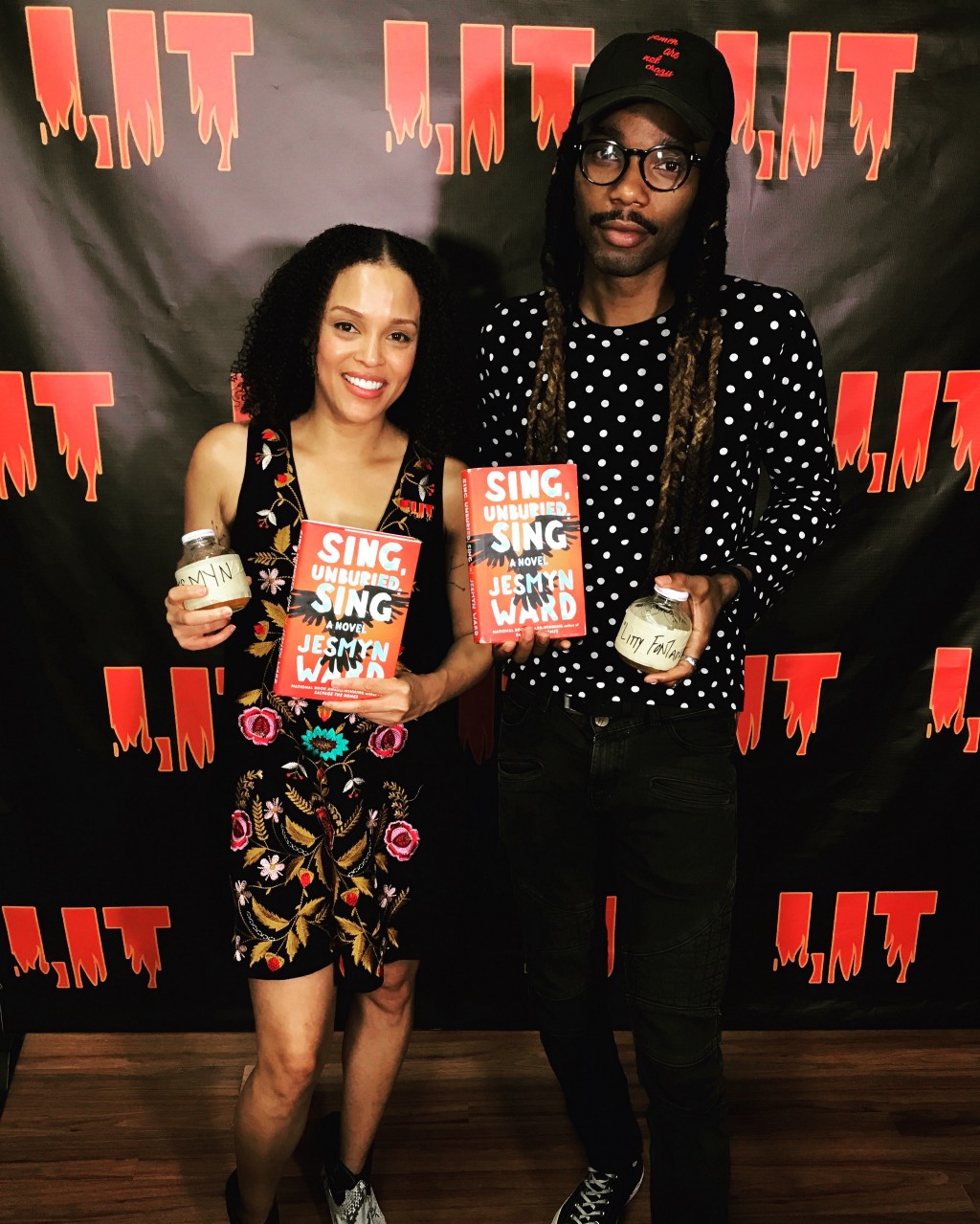
(Author Jesmyn Ward and Yahdon Israel holding Mardusse and Ward’s new book, Sing, Unburied, Sing.)
YI: It started with writers who are close friends. And by close I mean writers whose only response to what I was doing was “When?” Writers who know how dedicated I am to this vision of bringing the literary world to a bigger audience, and can see how this helps our industry. More importantly than the industry: the culture. And then I just took the momentum from the first interviews into asking for other ones. While the vehicle of what I’ve done has changed, the driving force hasn’t. It’s been my belief that the writers who have said yes are writers who have no reason not to believe me because I’ve been doing everything I said I was going to do.
JB: Do you ever get nervous asking authors to be on or at this point take things as they come?
YI: Nervous for what? [laughs] The worst thing they can say is ‘no.’ Which, if I don’t ask, I’ll get anyway. I’m realizing that when you can tell yourself ‘yes’ first, everything else falls in line. This doesn’t mean that people won’t say ‘no.’ It just means that this show isn’t dependent on any one writer’s answer. If one writer says no. That’s fine. The beautiful thing about writers is that they’re so many of us. Someone’s gonna say yes. Plus the show isn’t only for writers. As the show gets bigger, you’ll begin to see teachers, rappers, actors, photographer’s, anyone I think is LIT will be on the show talking about books. And that’s what, in my opinion, will change the culture. Not diversity so much as inclusion. Making everyone feel like they belong. ’Cause they do.
Also: the world tells writers ‘no’ all the damn time. We have a picture of our current president’s bookshelf and the only books there are his own. I think this show is working because it’s saying ‘yes’ to people who aren’t used to hearing it.
JB: Also it’s always an honor to be asked to talk about one’s work. Because it means you’re being seen.
YI: And it means, hopefully, the person asking wants you (as artist/guest) to be seen further. This is part of the work of inclusivity. Taking it upon myself to embrace writers who challenge my understanding of literature, and talk to them about it instead of pretending that they don’t exist. This show is about reckoning, which is something I can rarely say I see entertainment do. Most people confuse being rude and confrontational as reckoning and I’ve peeped game to know the difference. To reckon with something is to care about it beyond the level of whether I like a writer’s work, but ask the question of whether or not I understand it.
This is part of the work of inclusivity. Taking it upon myself to embrace writers who challenge my understanding of literature, and talk to them about it instead of pretending that they don’t exist.
JB: You have more than two dozen episodes up already and it seems you post about 2–3 per week? Will that remain the schedule or do you see more/less in the future?
YI: Well, right now it’s only been me and Danny, from the Pink Pig Productions team, who’s been doing everything. My friend from high school, Cyril Jewels, blessed us with the music for the show. But we’ve been doing this with virtually no money.
I’m creating a Kickstarter so we can remain self-sufficient, while upping the show’s production level. Money will also allow us to get support and compensate fairly for it. When Claire Messud came on the show, I told her that LIT will soon be, in the not so distant future, a status symbol in the literary world, simply because it will be one of the few things we have that’s making a meaning attempt to reach beyond it. LIT is bigger than books. It’s culture.
JB: How do you set up for a LIT episode? Do you have your questions ready and let the convo build from there or is it fairly off the cuff?
YI: So, first, I email the guests the one sheet, which has the show’s format on it — who or what they first read that made them want to be a writer; how they’d describe their work to someone who has never read them; things that translate for a non-literary audience what this little thing of ours is all about. Besides that, my questions come from reading the person’s work and previous interviews and making sure I’m not asking questions that have already been asked. If I manage to ask a question already asked, I’m also managing to bring nuance to the question to challenge the writer to think about their own answers differently.
JB: There seems a good flow to your convos too, not something I’ve heard before but also in that we’re seeing a good dynamic between you and guests.
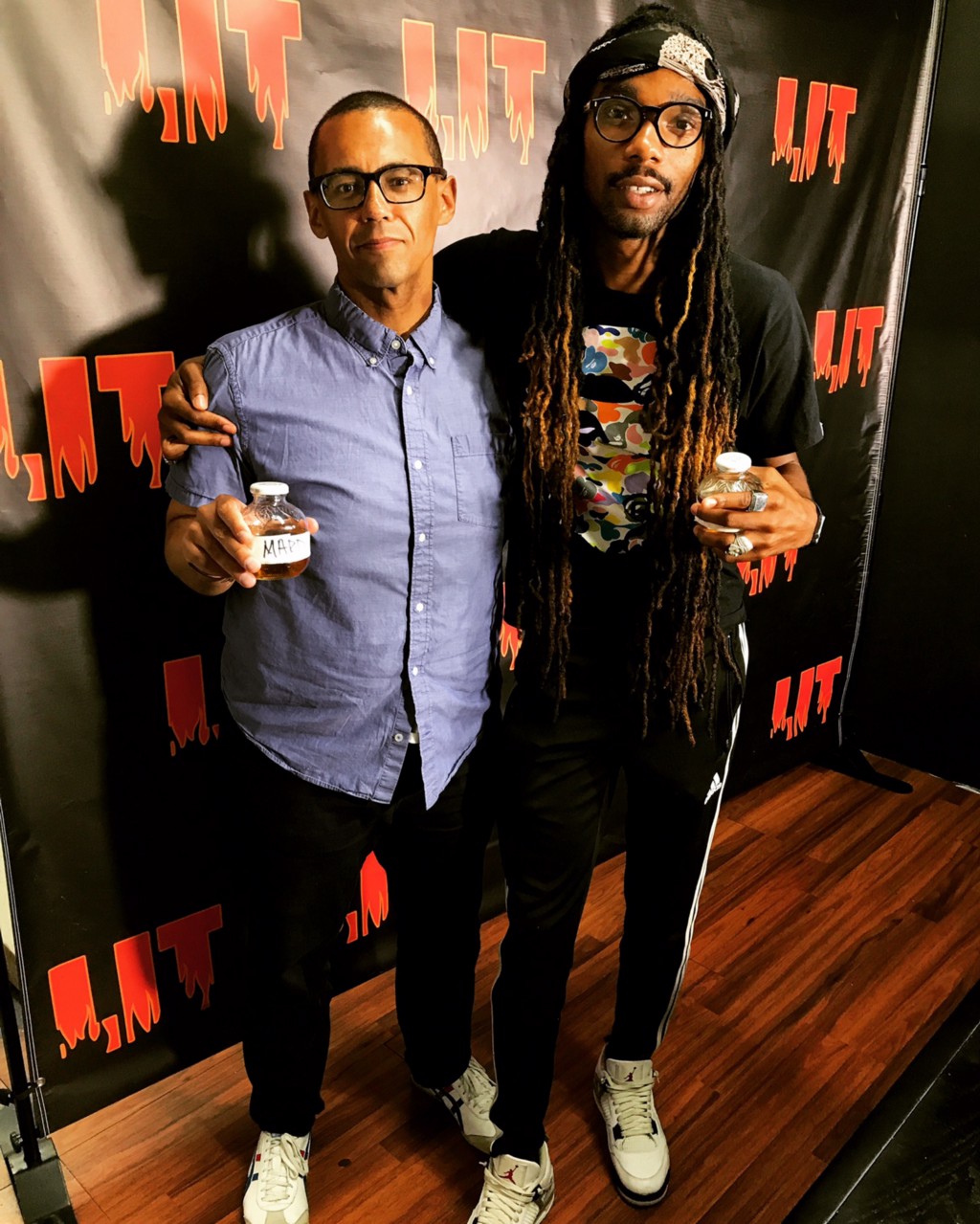
(Victor LaValle and Yahdon Israel on the LIT set, holding the show’s signature drink, Mardusse.)
YI: Most of the time, I’m not necessarily asking anything. We’re just chopping it up, which, in itself is a format that allows writers to relax. Then when you add the Mardusse — the Martinelli’s apple juice and Dusse cognac mix — it’s a lituation.
JB: Can you see a time/space where those of us doing the promotion (out of a need we see) can see a sustainable financial model to do this? At the moment LIT and other platforms (I’m also thinking of WRBG) are made in a FUBU (for us, by us) way are not supported by the industry the way bigger (and white-owned) entities are.
YI: Absolutely! I do see this becoming a lucrative thing. But what has to happen, in my opinion honestly, is more kids/teenagers have to be the arbiters of the culture. Meaning we have to embrace them in a more meaningful way. When I went to Westhill High School in Connecticut I spoke to 2,000 kids. Of the 2,000, 200 of them read for their own enjoyment.
JB: Only 10%? Wow.
YI: I then asked the 10%, how many of their friends can they talk to about books? The average number 1–2. And I thought about it: How many writers are teenagers? Think about music, and actors, and fashion. They’re mostly the same age as their fans. Then I thought about what would’ve made me read for enjoyment as a teenager: if my friends were writing it. So I think if there teenagers who were being published, it would send a message that their words have value.
JB: I can see that. Kid lit writers tend to be adults. Traditionally published ones anyways.
YI: Also: it’s condescending to think that kids can only read YA. No one tells a sixteen year-old that they’re too young to get Kendrick, but there’s this insidious assumption that a teenager won’t understand Junot, so it’s, in my opinion, intentionally put out of reach so kids feel like they have “to be older” before they can enjoy it — and that’s not true.
JB: I wasn’t reading YA primarily as a young reader. It was Anne Rice or Stephen King. In high school we read John Steinbeck and Zora Neale Hurston.
YI: Right. I first watched Goodfellas when I was 13 and didn’t need to wait 14 years until I decided that it was my favorite movie. My thing is: our literary world is pretty arrogant in who it considers to belong, and hasn’t made a meaningful gesture to reach new readers or even create readers. Instead of being asked, “How do we reach your market?” with what I write; I’ve been told “There isn’t a market for my writing.”
JB: Just want to let you know even though you can’t see me, I’m nodding right now. Last question, is the Literary Swag book club still around?
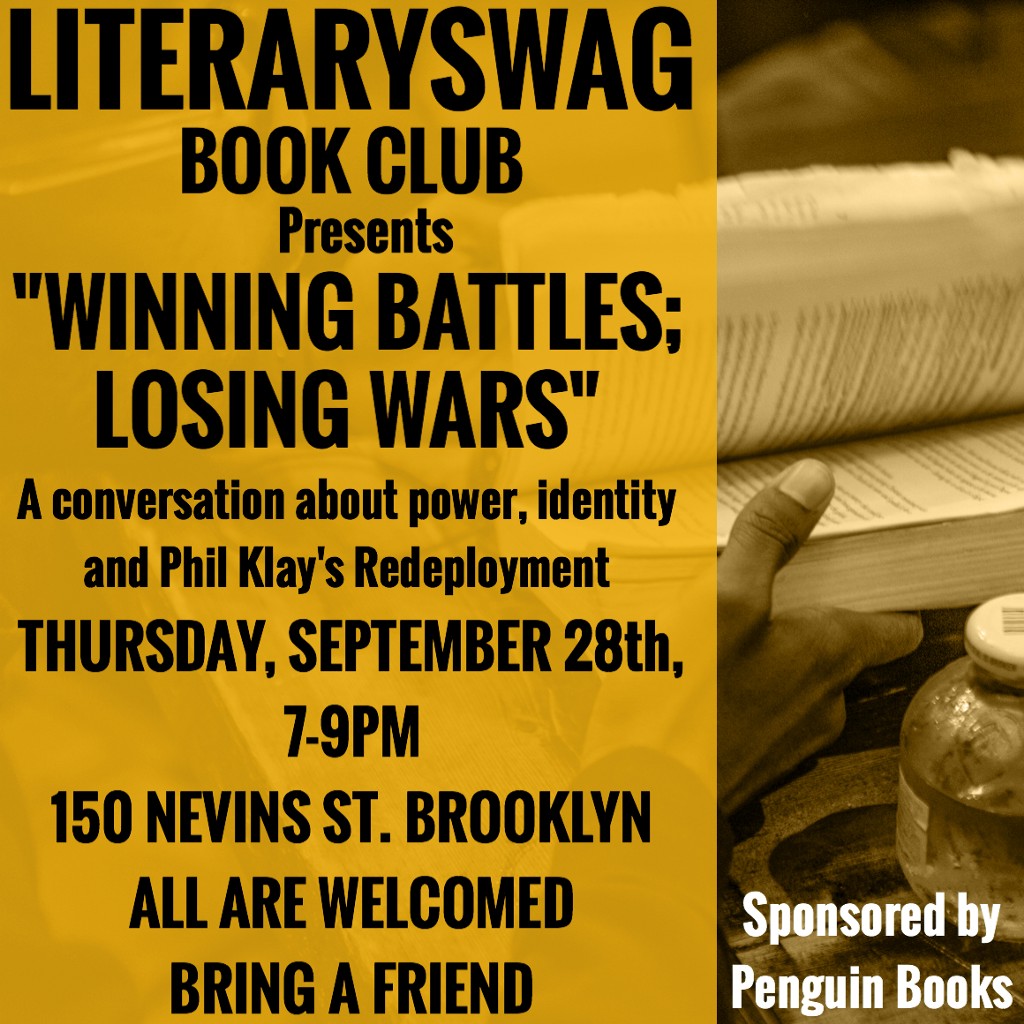
YI: Uh yeah! Every last Thursday at the Brooklyn Circus! It’s also a subscription service. The most important thing about the book club is that it’s a community. One thing I emphasize about the book club is you don’t have the read the book to come to the meeting. I do that because I want to show that the world that leads into literature can be an open door. If I told people that you have to read the books to come, I’d be perpetuating an attitude that made me hate books for as long as I did to begin with. The attitude was “this isn’t for you.” The attitude adjustment is “This is for you, too!” We’re actually celebrating two years of LiterarySwag Book Club Thursday, September 28th, 7pm — 9pm at 150 Nevins. We’re discussing Phil Klay’s Redeployment — and so much more! And once again: even if you don’t read: come through, because it’s lit!
(Literary Swag Book Club 2-Year Anniversary Flyer for Sept. 28th event in Brooklyn. Event sponsored by Penguin.)
For the Sunday ride to Nana D.’s and Aunt Esther’s Jane brought an anxious lot of sugar. The interstate to Woonsocket took one hour. To Jean and Ruth, Jane passed back Tastykakes or Devil Dogs or Yodels or Yoohoos or Ding Dongs or Dum Dums or powder puff doughnuts. The girls accepted these stipends without appetite. Everything with a soft white surprise in the center.
Or else foods that you could make things out of. Licorice ropes an armspan long and filament thin that the girls knotted into chain-gang anklets.
What Jean and Ruth liked best were the turnips. Jane stopped at Sunnyhurst Farm just past the state border. The turnips were vegetable outlaws, special spawn of Rhode Island, exotic in the proud and debased way of that state. They tasted good and barely edible. Fun to eat, like eating a chair. Jane picked out a dozen — purple grading to yellow and more solid than apples. Propped on the hood she skinned each with a pocket knife. From the blade sprang one continuous skein that Ruth telescoped back to a shell of a turnip, a black joke on turnips. Jane sliced the flesh up into slick fat coins. The coins perspired starch and were for biting designs into. Jean bit hers into moons. Ruth bit hers into frowns that were moons and copycats of Jean’s. Invention for Ruth was a kind of trouble. At the rest stop Jane bit hers into a three-story house using her eyeteeth for windows and widow’s walks and sleep-in porches. Save it! said Ruth and Jean. Give it here! they said and they pleaded shellac it and make it an ornament, but Jane chewed it up, smiling with metal-packed teeth.
It would just go bad if I did, she said.
Jane’s teeth were crafty but her hands were famous. Until the girls walked she sewed all of their clothes. She knit mittens that doubled as puppets. Bent coat hangers into halos and wire-frame wings and wove yarn wigs for Halloween — how the other mothers fumed. For Ruth’s sixth birthday she constructed an angel-food castle with a chocolate drawbridge operated by widget. Boiled lollipops for stained glass. Oh my, said the other mothers when their girls told of it. The basement was feral. Plastic paneled and ceilinged in scabietic pipes — its ugliness inspired Jane. From those pipes swung unoccasioned piñatas of newsprint dredged in flour glue. The girls’ guests clubbed them. Also from the pipes was Jane’s gift-o-matic. The girls’ guests drew numbers. They tugged a corresponding string that dangled and worked a pulley that let down a gag gift — a calico frog stuffed with lentils. Jane sewed, stuffed, and rigged it.
Once a month, at Building 19, laserlike in that headache hangar, Jane pawed the priced-to-move ends of fabric bolts.
She made Italian ice with a hammer and syrup.
Any day of the week, any guest of the girls would not leave giftless.
The girls’ guests loaded up in a bewildered frenzy.
Jean and Ruth could give no explanation. They said of Jane only, She likes to do it.
Your mother can make anything out of anything — this from the other mothers, who knew Jane from the distance of the uncrossed yard. The mothers waved from the car when dropping off or collecting. When Jane spoke to them, it was by phone in the kitchen with her back to Jean. It was about when to drop off and when to collect. With stagey gestures — fending off favors or gnats.
Jean watched these calls in the crossed-arm pose of a cop.
After, Jane would say, That woman buys six-packs of underwear when her maid goes on vacation. A medical doctor who can’t operate a washer.
Or sometimes, mad: What are you looking at?
Jean’s mother never cried.
Her sister never cried.
Her father never lied.
Jean lied sometimes and cried often, so strong-lunged and bestial that Jane could do nothing but close her in a cold shower clothed. She got Jean in fast with those fast-thinking hands — the way she crushed spiders or plucked out teeth.
For Ruth, the trouble was not crying but wiseness.
Don’t get wise with me, Jane said, and it was not water to cure it but a slap to the face. She was slapping her own was the feeling you got.
Ruth took it and walked, uncured. Like she had appointments in that house to keep.
In her lonesome immunity, Jean held her own hands.
In the car to Woonsocket, Jane told a story about an orphan girl adopted by a thieving man. In the story, everyone poor was good and French. The best ones died of galloping consumption. Jean assumed it was the story of Jane’s life. Assumed this although they were on the road to Jane’s still-breathing parents. When Jean was grown she said as much to Ruth — remember how Mom used to tell us her life on that drive?
It was Ruth’s burden to be right (which came down to being attentive and unforgetting). By its inattention and forgetfulness the world contrived to pain her. She lodged her complaint by keeping her voice low. At her most right and pained, Ruth was an alto. In that low way she said to Jean, That was the plot of Les Miserables. You know it. You’ve seen it. We saw it together.
Jean felt ill then with theft — felt that someone had seized, with legal warrant, what she had wrongfully owned.
Tell it again, said Jean and Ruth in the car as soon as Jane finished, but Jane always said, I can’t. We’re here.
Woonsocket was danceable.
You could feel it: a committee of adults colluding to please you, for reasons that preceded you and were certainly not you. Your pleasure, it was clear, was the outcome of a treaty.
Woonsocket was cigarettes and fudge, dogs and dress pins.
The fudge was undercooked, the dogs frenetic.
The dress pins were rhinestone ladybugs set on felt velveteen, and Nana D. would show them shyly and sometimes give them up.
You ate until your stomach was a pendulum and its upswing toppled you.
The neighborhood had the lying-low breathing of the recently bullied. You sensed the triumphal exit of earth movers. The land had no features but crowfoots and newts.
The houses on Nana and Esther’s street looked like the town you’d make, bored, with old school milk cartons. Like every fifth on the street, their house siding was mint.
And behind it: old persons, the significant ones fitting in ready-grin teeth the moment that Jane killed the engine out front.
Guess who ruined the fudge! Nana D. greeted them this way. We’ll eat it with spoons.
She stood back-to-back with Ruth and beat her by only inches.
That grin as athletic and jazzed-out as a tap dance. Nana did somersaults on command. That’s enough, said Jane. Let Nana D. be.
Charming Nana!
Attached to a cigarette was the other old person of note, Aunt Esther, with a bullfrog’s mesmeric perseverance and register — stay stay stay stay STAY — and attached to her by that leash of voice were three Boston terriers. They speed-skated linoleum. They dropped glutinous plumb lines of spittle. Esther’s hands took turns, one on cigarette detail and one off duty interred in a pot of shea butter.
Be good, Special, or I’ll put you down, my love. Esther said this to her favorite, Someone Special, and then her bones, slip stitched in khaki veins, shuddered.
Jane and Nana would cry, Don’t laugh, don’t laugh!
Esther laughed as one giving out.
After, she’d have to lie in the bedroom and hook up to the tank.
The oxygen tank with tattling sighs reinflated her.
Jean and Ruth fitted soupspoons of fudge in their mouths.
Woonsocket was one marathon baptism.
It was as if Jane could not bear to see them there dry. Like it was her mission to liquefy all points of contact.
Woonsocket was a slugfest of low-rent water fun: hose, sprinkler, wading pool, bath.
With the hose and sprinkler you turned the scant apron of backyard to slaphappy mud.
In the pool you drowned newts you mistook for aquatic.
In the bath, you machined products. You conducted science. Every cream, lotion, shampoo, and shaving soap pestled to paste and rolled into straight-to-market beauty pellets, gray from your skin, whose benefits you evangelized hard to Nana D. Close your eyes and just feel this, you’d say, and snail the pellet down the loose sleeve of her arm skin.
Ooo! she’d say, the easy mark, but sometimes too soon. You’d have to scold her.
Gramp was a sweatered installation in a La-Z-Boy knockoff. His hue was tobacco. The chair was balding, the sweater misbuttoned. If it weren’t for the eyes and hands, you would think him asleep. The fingernails were claw thick and injurious as weevils. They worried the armrests, found loose thread and pulled. The skull was fixed on its axis and handsomely armed in a spring-loaded pompadour. Inside the eyes swiveled. They saw people as columns of darkness moving in with agendas to part him from that which he still held rights to, that chair. They saw dogs as avengers. The eyes were watchdogs for dogs and alerted the hands. When a dog entered the room, one hand leapt up to puppeteer a mouth.
Gramp’s hand growled. It nipped the air. The nails of it gnashed.
Feel lucky? Gramp said.
Someone Special skated backward.
Every bath was a plenary session. Esther rested, but Nana and Jane attended. While Ruth took hers, Jean moved in on Gramp with a spoonful of fudge.
Open up, she said.
She held the spoon to the mouth. With one fervent hand she parted the lips. The teeth within were his last defense.
Open up, you pickleworm, she said.
The self-acting hand on the armrest tensed. In Gramp things roiled. Kicked up a bad sediment.
Telepathic Esther, hooked up out of view, knew. Stay stay stay! she called from her bedroom. Thrush, you stay or I’ll put you down!
Jean put down the spoon.
Gramp’s eyes beheld the sun-stroked yard with speculation.
Feel lucky? Gramp said. Soon the white stuff will be coming down.
Why does he always say that? said Ruth in the hall. It’s June.
Jean watched Gramp’s eyes roll to show their white backs.
Keep luck on her toes. Make her feel lucky. You said that. Your skin was gone that skim-milk blue. May I never drink milk. You said luck must like my looks, me hanging on, unfevered, so keep her. The blood wormed thickly out of your ears. Stained the ticking. The wild dogs outside were numerous, plunderous, rooting the earth where I buried Hank. They let out moans like humans rutting. May I never feed a dog. March of ’19 was the Spanish flu. Every door in Fourchu marked out for quarantine, a wet tar X in the hand of that pink-eyed Halifax officer. Fourchu occupants jailed to their sick house. But lobster would not haul themselves — get what’s ours before it’s got, you said. So we got out and got it. Now the March earth hard and Hank dug too shallow. You yelled to dig your grave deeper from the sickbed window. Stand in it and let me see how deep. I want to see just the rims of your eyes. The ground was hard and I was tired. I was twelve. Eleven graves, one for every year I’d kept on. This my first to dig alone. Yours will be my last, I thought. So I crouched. I cheated. You see me, I called, it’s up to my eyes! May I never have to sweat to eat. A tip, you said: Pay luck no mind, then pay her mind when she’s given up. When her value’s down. Buy low, you said. Timing is all. How do I pay luck mind? I said. Me twelve and you sixteen, my last and my least. Your lungs two sets of lips gummed and smacking. Two drowning mouths inside your chest. Smack smack. It made me ill. The sound of me overboard that once, just us two. I was eight. Ma just passed and Da long gone. I was drowning before you. You docked the oars in the wherry and studied me. Your eyes an odd annunciation. Some new truth: paler than I knew. I scrabbled for the surface, beat the water with my fists. Try harder, you said. Try harder, you said. You stabbed the oar at my hand on the corkline. I pawed the tumblehome. You rowed from reach. The waters swallowed me. They had taught you swimming this way too. Chester taught you and Lloyd taught Chester and Tom taught Aubrey taught Donald taught Hank taught Fred taught Cyril taught Clint taught Lloyd. The water closing its cold throat above me. Light spilling down, a shafting liquid. I beat through that to air and saw in your eyes that you did not like me. Indifferent eyes. Not blue blue but skim-milk blue. May I never drink milk; may I never be beholden to one who never liked me; may I ever be a gift to the one who does. To spite you, my lungs on the spot grew feathery gills. I went amphibian. I kicked away from you and straight for the bottom and lay there amid soft and soundless decay for three nights straight. I chewed on substrate. I became a bottom-feeder. A human lobster. And when I returned to that house, you could no longer touch me.
Then I was twelve, unfevered, and it was your turn to feel death upon you. Gag up blood yolks in the bucket I held. What you had left was an hour maybe. You were drowning on blood, my last blood kin, who never liked me, and the last order you gave was the one I did not keep: Dig me deeper than Hank. If you let the dogs eat me, I’ll kill you myself.
If you could you would. But the dead can’t kill.
The wild dogs ate you five feet before me and yet I breathe.
I quit Fourchu.
What I did, I joined the rummies.
The Boston Rum Row syndicates are onetime banana boats, battered beam trawlers, tramps, schooners, bankers, yachts, all rust-faced fugitives from the knacker’s yard. Swivel’s freelance. He’s got an ex-navy subchaser. He rides it at anchor five miles off shore. The syndicates unload faster and funner — call girls board who double their shoreside price, a hazard bonus is what they call it — but Swivel’s dependable. He pays the go-through decent.
I’m seventeen and a go-through man. My little flat-bottom skiff I call Tortoise. Never show your cards in a name. Her payload is fifty cases. She docks in the mud flats, down past the busted molasses tank. Flea sedge and spike rush give good cover.
Sundown, I pull out with the sunset fleet. Go-through jobs sprung from hidden coves zip across the three miles of U.S. territorial. I move with them at twenty-five knots. Hail the mother ship. Pull alongside. Pay off the supercargo. Load to the gunwales. Wave to the Coast Guard revenue cutters: Spanish-American War relics with coffee-grinder engines straining flat out to make ten knots. Designed for iceberg patrol is what they are. The poop-along ladies. They count tonnage, wave back, sleepy.
At the landing point, the Stateside agent’s there with his convoy. His work gang unloads. His gunmen smoke and suck cream from éclairs.
Here’s the math: Swivel buys up Scotch for eight dollars a case at St. Pierre; sells it off Rum Row for sixty-five to the agent who sells it to bootleggers for one hundred and thirty. Landed price is at least double. Now, shoreside bootleggers doctor it three to one, turn around the eight-dollar case for four hundred. National Aridity is a regular wet nurse. She suckles the good and the bad alike. Even the Coast Guard men in their picket boats score — it’s promotions and promotions, a gravy train.
It doesn’t even take luck. If you were a fisherman yesterday, today you’re a rummy.
For one year straight, everyone’s happy.
But spring of ’24, the Coast Guard and Congress make a resolution about balls. How they adore them and want to grow some. They get ideas. Idea number one is to push back the Rum Line from three miles to twelve — thinking to put the Row out of reach of us small craft. Some, it’s a fact, can’t do the distance. But Tortoise is tight as ticks. Idea number two is hire on Swedish merchant seamen named Lars, their two words of English yes and put-put. Idea three: Take twenty-five destroyers out of retirement. Thousand tonners, moving at thirty knots. Mounted one-pounders for close-in work. These take station at mile twelve, to breathe down hard on the necks of Rum Row. And behind them at intervals the bad news for go-throughs: flotillas of six bitters and picket boats. Shoreside sand pounders haunt the beaches.
Now luck counts. So I make luck want it. I go bold. Push Tortoise harder. Go after dark, cloud cover, no lights, trust luck to steer us shy of sandbars. Those who woo luck wrong get boarded. Too much sissy foot unmans you for luck. If you’re outward bound, tossing salt over shoulders and twiddling hare foots, cutters will surely find fault with your life vests. They’ll ask for documents. They’ll take two hours to analyze handwriting.
God likes the bow and scrape. He cuts deals for toadies. Well, I dance swell, but not on my knees. I take instead luck. Luck is a call girl who likes my looks and my steps. Sometimes a slap. But sometimes all that fatigues a man. Here was my misstep running go-through for Swivel. I became too cozy. I drank up the days, dillydallied my runs. I misread the weather. One day in June I saw them: clouds banked up against the sky, green-gray, sun showing as through a film of ground glass. Wrong clouds for Tortoise. Tortoise hates snow. I foresaw the snow, but who would believe it — it’s June, you fool, I told myself. I discounted the clouds and drank my cut brew. I stewed off the day. But the light filtering down through cloud cover blurred me, and, like a fool, when at sundown I pushed out I by accident prayed. Pleasebetogod-letthepissfuckingsnowholdoff. To what in hell was I praying? No matter. I two-timed luck. And for that one day, luck didn’t want me.
The waves are steep at mile twelve and snow comes hard as Swivel’s men hand down the last case. On your mark, the revenue cutters. They skulk up, lights off, tonguing your way, lappity lap lap, and you might think it’s fish. You might think big game. But it’s not halibut. It’s picket boat. Swivel signals it. And me already loaded up fifty case. Cut the engine, Swivel says. Give the wheel a turn to port and lash it, says he. Lappity lap lap. Lappity lap. And the cutter closes in and then pisses off. Nothing. Hoopla.
Trouble is, I’ve drifted. Can’t see for snow. And the engine, overloaded from a dead start, labors. I’m misdirected in bad sea, shoved headwise to Swivel. Twenty footers and my prow blowing Swivel’s stern. The blessed romance of it. A row of pale patches where the faces of Swivel’s men glow watching from the subchaser deck, immovable. The air hurts. My engine won’t catch. Then the hit. Glancing, and my pilothouse lays out sideways. The rail swoons starboard, buckled down flat to deck. By the moon — it’s high — about two ante meridiem. Not a good hour.
Nor the worst. If the wave had hit any sooner I’d have nailed the counter of the subchaser square and been gone. Instead I beat death to the punch and dove.
To all eyes I disappeared for good. The water took me.
But did luck take me back, a lobster?
You judge.
I drifted the bottom for three nights straight.
It was so soft down there and so soundless.
I was a goddamn peaceful crustacean.
When I at last surfaced, I met luck herself. She had taken the body of a flat-chested kid. Younger than I thought and a good deal odder. She touched my cheeks like they were flesh, not shell. She laid her body on mine like ours were one body. So close was she, my eyes could not converge to see her. She doubled before me. When she spoke, I could not say from whose mouth the words came: I paid for you and you’re mine to keep.
Drink hulled Gramp’s brain. When Jean was grown, Jane spoke of how Nana was going to put Gramp in a home, but Esther said keep him for the pension check. Wasn’t it Nana’s house, her say? asked Ruth. Jane said it was not. The house was Esther’s, Eddy’s when he lived, willed him by Alice. Thrush would have hated nothing more than to know he lived off Eddy’s good graces.
Soon the piss-fucking white stuff will be coming down.
As if to back him, Gramp’s eyes showed only their whites.
Nana D. came in from the bathroom and stood before him. When Nana’s hand touched his cheek, Jean saw him shiver.
In a lawsuit filed September 14, a former Swarthmore College baseball player named Charles Green accused Chad Harbach, author of The Art of Fielding, of stealing significant plot points from Green’s unpublished autobiographical novel, Bucky’s 9th. “The two baseball novels bear a substantial similarity that could occur only as a result of Harbach’s access to a version (or versions) of Bucky’s and his large-scale misappropriation of Green’s creative efforts,” the suit claims. Among the “uncanny” parallels cited: Both are baseball stories. Both concern, specifically, the baseball teams of Division III liberal arts colleges. Both involve a baseball prodigy coming of age, and incorporate a “Recruiter-Mentor Plot” and an “Illicit-Romance Plot.” Both feature an estrangement between a father and his adult child. Also, both have a “climactic beaning scene.”
Does this amount to plagiarism? It’s hard to say. The two novels share a number of elements, but many of these elements are also present, in, say, the Futurama episode “A Leela of Her Own.” Unlike cases of stolen language, à la Jonah Lehrer or Melania Trump, claims about stolen ideas are challenging to prove. But that doesn’t stop people from trying. Here are five other interesting, weird, or downright ridiculous claims of literary theft.
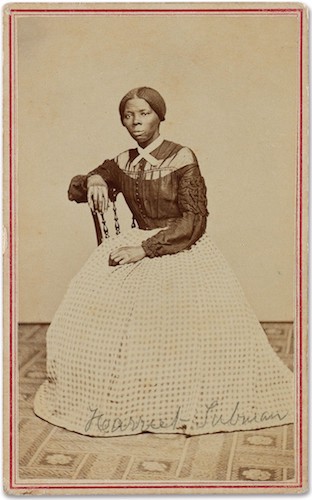
Claim: Chelsea Clinton stole Harriet Tubman
Chelsea Clinton’s children’s book She Persisted features famous historical women who, in Clinton’s words, “overcame adversity to help shape our country.” Due to that very adversity, famous historical women are in notably shorter supply than famous historical men, and while the book does feature heroines you might not have encountered in school, its slate of role models is still relatively obvious: Ruby Bridges, Sally Ride, Sonia Sotomayor, Oprah Winfrey. Still, Christopher Janes Kimberley was convinced enough that Clinton copied his idea that he sued her and her publisher, Penguin Random House, for $150,000. Kimberley had submitted a pitch for a children’s book called A Heart is the Part That Makes Boys And Girls Smart to Penguin Young Readers (directly to the president of the imprint, no less!). Instead of publishing it or responding, he said, Penguin gave the idea to Clinton. His proof? She used quotations from three of the same women that he proposed to cite in his “Quotable Questionnaire”: deep cuts Harriet Tubman, Nellie Bly, and Helen Keller. Right-wing and alt-right media salivated over the suit, but everyone else seems to have given it all the credence it deserved.
Claim: J.K. Rowling stole the word “muggle”
J.K. Rowling has been accused of idea theft, and vice versa, so many times that there’s a whole Wikipedia page for “legal disputes over the Harry Potter series.” The earliest was American writer Nancy Kathleen Stouffer, who sued Rowling for infringement in 1999, when only three of the books had been published (although it was already clear that the series was turning a handsome profit). Stouffer claimed that she’d invented the word “muggle” in her vanity-press book The Legend of Rah and the Muggles, and that another of her works featured a character named Larry Potter. This is thin enough—but the court didn’t just rule that the similarities were too vague to amount to much. It actually found that even Stouffer’s weak evidence may have been fabricated. “In connection with this litigation, Stouffer has produced booklets entitled The Legend of Rah and the Muggles that were allegedly created by [publisher] Ande in the 1980s,” says the judgment. “However, plaintiffs have submitted expert testimony indicating that the words ‘The Legend of’ and the words ‘and the Muggles,’ which appear on the title pages of these booklets, could not have been printed prior to 1991.” Ditto for the tale of Larry Potter, which the judgment describes as the story of “a once happy boy named Larry who has become sad.” Stouffer said that the ’90s provenance of the words “muggle” and “Potter” wasn’t related to the case; she attributed it to “the fact that she continued to revise the story into the 1990s.” But the court found the whole thing unconvincing. Not only was the case dismissed, but the judge fined Stouffer $50,000 for “intentional bad faith conduct.”
Claim: Stephenie Meyer stole sex on the beach
In a general sense, the Twilight saga is like every vampire novel and also every teen novel ever written. But in a more concrete sense, according to Jordan Scott, it is specifically like the vampire novel she wrote as a teen. Scott said she published excerpts from her 2006 novel The Nocturne online, where Stephenie Meyer could have (and, she alleges, did) use them as the basis for the fourth Twilight book, Breaking Dawn. Among the evidence: both books include a wedding, and a sex scene on a beach. Not only that, but both beach sex scenes involve such elements as oceans, kissing, happiness, and someone being called “beautiful”! Characters in both books also have nightmares, become pregnant, are sad when someone they love dies. The case was dismissed, but the lawsuit is worth reading, mainly because the excerpts it includes are so comprehensive that you no longer have to read The Nocturne or Breaking Dawn, if indeed you ever did.
Claim: Cassandra Clare stole the urban fantasy genre
Unlike many of the plaintiffs in these cases, Sherrilyn Kenyon is herself a successful, New York Times bestselling author. The titular “darkhunters” of her Darkhunter series have supernatural powers and defend the world by slaying demons. Her suit alleges that also-bestselling author Cassandra Clare infringed on her copyright for Clare’s Mortal Instruments series, which features a similar band of supernaturally-powered demon-slayers called “shadowhunters.” The complaint includes a 15-page comparison of the two series; one character in each, for instance, is “rebellious and beautiful,” can’t cook, “seems flamboyant and loud, but is generous and tender‐hearted,” and “wears tall boots,” so I will be suing also.
There are certainly a lot of similarities, and maybe they add up to something—but as Laura Miller reported at Slate, “After the Guardian wrote about the suit, my own social media feeds filled up with writers alarmed at the notion that a litigious author seemed to be claiming ownership of some very commonplace motifs of the fantasy genre.” Some of the similarities, as described in the suit, seem eerie; others are simply tropes. (And some are reaches. One comparison lists only two traits: “jet black hair spiked with color” and “bisexual.” Pretty sure the idea of queer kids dyeing their hair is not copyrighted.) Is it possible that two authors independently came up with the idea of “mortal or normal objects…including without limitation a cup, a sword, and a mirror, each imbued with magical properties to help battle evil and protect mankind”? Considering the genre, it’s almost impossible that they wouldn’t. And “Both works take place in an urban world that is not what it seems” sounds less like an accusation and more like a definition. But are the rest of the parallels enough to support Kenyon’s claim? We’ll find out when the case goes to trial in 2018.
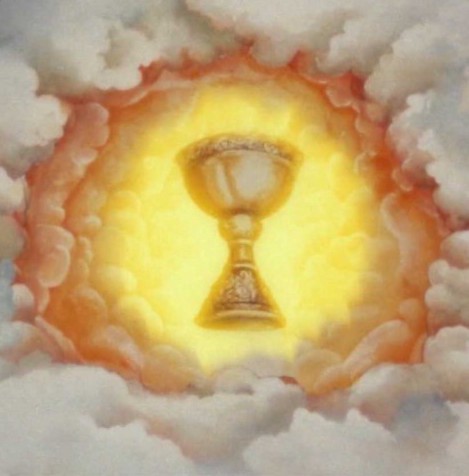
Claim: Dan Brown stole the secret of the Holy Grail
Like J.K. Rowling, renowned author Dan Brown has weathered several lawsuits. The most interesting, though, was the one brought by Michael Baigent and Richard Leigh, authors of Holy Blood, Holy Grail. The case itself wasn’t all that exciting; the judge eventually decreed that historical research, however broadly interpreted, is fair game as a substrate for fiction. In fact, Brown himself openly acknowledged Baigent and Leigh’s book, which argues that the “Holy Grail” refers to the bloodline of Jesus’ descendants after he married Mary Magdalene, as an influence. (Many other novels, including Foucault’s Pendulum and the comic book Preacher, have name-checked or been inspired by the book as well.) The really interesting part about this suit didn’t come to light until a few weeks later, when lawyer and Guardian writer Dan Tench noticed that the judgment was scattered with seemingly-random italicized letters. “I did not seriously consider that the judge could have implanted a hidden message in the judgment,” Tench wrote. “High court judges simply do not do such things.” But at the urging of judge Peter Smith, Tench took a closer look. The first ten italicized letters spelled out SMITHYCODE, and a Fibonnaci-based formula applied to the rest spelled out “JACKIEFISHERWHOAREYOUDREADNOUGHT.” “This must be taken as a doubtless riposte by the judge, who lists the study of the early 20th century admiral, Jackie Fisher, as a main interest,” wrote Tench. “When asked who was Jackie Fisher, how many times must he have answered that Admiral Fisher conceived of the great battleship HMS Dreadnought?” Of course. Much easier to embed that answer in a code in a judgment about a book about the Holy Grail.
“Double Take” is our literary criticism series wherein two readers tackle a highly-anticipated book’s innermost themes, successes, failures, trappings, and surprises. In this edition, Scott Esposito and Bradley Babendir discuss Fernando Pessoa’s The Book of Disquiet.
The Modernist master Fernando Pessoa’s work remained largely unnoticed during his lifetime. He left behind a chest full of writing that would be later known to many as The Book of Disquiet. The book has been deemed an “autobiography” and a “diary,” but it’s equally a novel or an essay collection or even a kind of pre-internet codex blog. Pessoa ruminates about pretty much everything, often entering enlightening and sorrowful spaces while battling life’s eternal questions. Recently released by New Directions with a brand new translation, The Book of Disquiet is in its most complete form ever.
Scott Esposito:The Book of Disquiet is enormous — in every sense of the word — and I’m eager to get into some of the granular details with you, but I thought we might start off this conversation with a more general question: In what sense is The Book of Disquiet a book? Is it a book? Just what is it?
Famously, The Book of Disquiet is an incomplete work, composed of 500-some fragments that were not even published until 1982, decades after Pessoa’s death in 1935. No one knows what order these fragments should be placed in, or even which fragments constitute the work itself (and if there are more hidden somewhere that have yet to come to light). Nobody seems to know just what genre this book is: Is it a novel (it’s supposedly written by one of Pessoa’s most famous alter egos, Bernardo Soares)? Is it a journal? Is it a commonplace book? Something along the lines of a Portuguese version of Italian poet Giacomo Leopardi’s infamous Zibaldone?
I want to pose the question of just what this item is, but before I do that I’d just like to quote the critic George Steiner on The Book of Disquiet:
The fragmentary, the incomplete is of the essence of Pessoa’s spirit… The very kaleidoscope of voices within him, the breadth of his culture, the catholicity of his ironic sympathies… inhibited the monumentalities, the self-satisfaction of completion… As Adorno famously said, the finished work is, in our times and climate of anguish, a lie.
It was to Bernardo Soares that Pessoa ascribed his Book of Disquiet, first made available in English in a briefer version by Richard Zenith in 1991… What is this Livro do Desassossego? Neither “commonplace book,” nor “sketchbook,” nor “florilegium” will do. Imagine a fusion of Coleridge’s notebooks and marginalia, of Valery’s philosophic diary and of Robert Musil’s voluminous journal. Yet even such a hybrid does not correspond to the singularity of Pessoa’s chronicle. Nor do we know what parts thereof, if any, he ever intended for publication in some revised format.
Modernism, of course, was a movement of fragmentation, a movement of missing pieces — think of Kafka, the modernist writer par excellence, who never finished a single novel (and who indeed intended his manuscripts to be burned), yet who is often lionized as one of the greatest novelists of all time. Those incomplete novels always seem to be drawing us toward meaning, toward completion, but then stop short, endlessly frustrating our desire for some kind of ending, so the fact that Kafka never managed to finish them is oddly appropriate. Modernism is all about incompletion, and many modernists have been considered great writers in spite of (or rather, because of) their incompleteness, something that is very clearly present with Pessoa.
Bradley Babendir: The question of exactly what The Book of Disquiet is has been on my mind since I started the book, and I’m glad that you opened broadly. In one sense, of course it’s a book: it looks like a book, feels like a book, and is organized like a book. That is, of course, facile, so I suppose what I’m getting at is that it’s presentation as a book is in some sense inextricable from my interaction with it on those terms. Still, its incompleteness and lack of known order undermine the idea that it is a book, in the sense that it’s not any one thing. In other words, there is not one The Book of Disquiet, but many.
Part of what makes this enthralling, and as you said, one of the greatest literary works to ever emerge out of modernism, is that incompleteness feels intrinsic to its project. What would a truly finished The Book of Disquiet look like? It seems like it could never be finished, which makes it an almost perfect manifestation of modernism. Steiner’s Adorno quote is exactly right. With this in mind, I can’t think of it as a novel. With Kafka’s work, for example, I can see how and in what way those books could be finished, if they were truly finished. This isn’t the case for The Book of Disquiet.
The most interesting part of Steiner’s quote is that desire to categorize it alongside an admission of its impossibility. When reading it, alongside considerations of how it compared to the works of writers that you and Steiner mentioned, I couldn’t help but think about it alongside the work of writers like Sarah Manguso, particularly her books 300 Arguments and Ongoingness. Her commitment to efficiency sets her apart, but the reading experience feels somewhat similar. Those books, too, don’t have a sense of completion.
In that sense, to get back to the central question, I suppose it feels to me most like an essay collection. Yet that feels unsatisfactory to me, obviously, because it’s such a limiting category for something so irregular and so unique, but any designation more specific seems destined to be more wrong than it is right.
What do you think about that? Is that a useful in understanding the book? What would it mean to accept that a book is uncategorizable? And what about it makes it so, because it’s not just the lack of organizational direction intrinsic in the text, but the text itself that makes it one-of-a-kind.
Modernism is all about incompletion, and many modernists have been considered great writers in spite of (or rather, because of) their incompleteness.
SE: I think you are smart to point out the desire to categorize, which is an obsession that we’re all a little prone to, but which ultimately is just one, somewhat arbitrary, way of looking at a work. What does it mean to accept that a book is uncategorizable? I think that we would effectively be stating that this book constitutes a category of one, that it is revolutionary, without precedent, a book that establishes another way of seeing, a work that is a new thing under the sun. Does Pessoa live up to that? Perhaps, or perhaps not, it is a difficult question.
The Portuguese have a famous, untranslatable word called saudade, which is often translated as “nostalgia,” specifically a melancholic and/or longing nostalgia, although it seems this scarcely suffices to explain this deep and complex emotion. I bring it up because Soares’s temperament is absolutely saturated with this saudade, you find it everywhere in this book; I quote, almost at random, “Everything wearies me, even those things that don’t. My joy is as painful as my grief.” Or consider the beautiful dictum, “I dream because I dream.”
Soares is a flâneur, a person whose vocation is loafing around a city, wandering through it at random, and though The Book of Disquiet does offer many remarkable descriptions of Lisbon, to me its real project is a very detailed exploration of the mental topography of Soares’s saudade. One of the things I find so impressive about this book is how Pessoa makes it feel so full of life, of knowledge, of wisdom, of beauty, of mystery, despite basically always going back to this one enervating emotion. The book is so incredibly dense, so exact in its very inscrutability, so endlessly ponderable that I always end up reading it very slowly, and with many breaks, as every page just bristles with so much. It’s so dense, mystic, and inexplicable that it’s practically a divination tool, like a Portuguese I Ching.
What has been your experience of reading this book?
It’s so dense, mystic, and inexplicable that it’s practically a divination tool, like a Portuguese I Ching.
BB: My experience was rather similar to yours. The density of thought on each page is staggering, and it can make the longer sections in this book (which are usually no more than a handful of pages at most) seem daunting. Even the shortest sections, sometimes no more than a sentence or two, can be intellectually daunting. One of the sections I’ve thought about most from the book is numbered 19: “Let us absurdify life from east to west.” Only seven words, but as you said, it’s endlessly ponderable. I’m not sure, even after thinking about it for a long time, I’ve approached what feels to me like an understanding of it. What exactly does Soares mean by absurdify? On its own, the sentence feels emphatic, perhaps declarative and triumphant, but the book is drenched in saudade and in that context it exchanges an energy for weight.
This brings me to something I’m interested to hear your thoughts on, which is the worldview conjured in the book. There are so many incisive passages in The Book of Disquiet that seem worthy of unpacking. Take, for example, the frequent invocation of dreaming throughout the book. The dictum you mentioned is an excellent place to start. “I dream because I dream” is elegant and simple and imbued with an inevitability that is often times comforting. At other points in the book, however, dreaming is not so easy. Soares writes, “Being able to dream the inconceivable and make it visible is one of the major triumphs that even I, great dreamer though I am, only rarely achieve.” He also draws clean lines around dreaming and other activities.
He distrusts anything he perceives as action, and goes so far to say:
“To think, yes, even to think, is to act. Only in absolute daydreams where no activity intervenes, where all consciousness of ourselves gets terminally stuck in the mud — only there in that warm, damp state of non-being can one truly abandon all action.”
Passages like this certainly read like divinations, and that’s one sense in which they should be understood. But I also wonder about the line between thinking and dreaming, which is difficult for me to navigate. Dreaming to me seems an imaginative process, especially if, as Soares claims to sometimes do, it is possible to dream the inconceivable. I wonder what you think about Soares’s conception of the dream, as it frequently recurs in the book.
I’d also like to know what you thought about some of the darker observations that appear in this book. At one point, Soares writes, “We are made of death.” And another: “all loves are the abomination of love.” A third: “To express oneself is always a mistake.” These are odd, counterintuitive, sad, and entirely fascinating to me. How did you take them?
What does it mean to accept that a book is uncategorizable?
SE: These quotations you’ve given us regarding dreams immediately take me to another one of Pessoa’s heteronyms, namely Alberto Caeiro. Caeiro is a very special character: here’s a sort of foundation of all of Pessoa’s other heteronyms, the poet-master, the ultimate genius, even though Caeiro himself is scarcely an artist as we usually understand it. He’s just this very naive, simple, somewhat fragile man in the Portuguese countryside who writes beautiful verse as if by sheer instinct. Here is what Pessoa has to say about him:
“He sees things with the eyes only, not with the mind. He does not let any thoughts arise when he looks at a flower . . . the only thing a stone tells him is that it has nothing at all to tell him . . . this way of looking at a stone may be described as the totally unpoetic way of looking at it. The stupendous fact about Caeiro is that out of this sentiment, or rather, absence of sentiment, he makes poetry.”
My gut instinct, although I hardly feel able to generalize about such an enormous, confounding, and contradictory volume as The Book of Disquiet, is that Soares yearns toward this kind of immediacy, this (to draw from one of your quote) “warm, damp state of non-being [where] can one truly abandon all action.” And I think this also gets at the contradictory dictums that one finds in such prodigious numbers everywhere here, for instance, “all loves are the abomination of love” and “To express oneself is always a mistake.”
The desire to get into a state analogous to Caeiro’s mystical oneness with everything outside of himself in the world is a kind of skeleton key for unlocking these sorts of statements — that, perhaps, if once dreams well enough, one might escape into the realm of dreams entirely, where there would be no division between “dreams” and “the real world” — or between “love” and “the abomination of love,” etc, etc — and one would attain the sort of consciousness that Caeiro has by pure instinct.
In this way, of course, Pessoa is doing his own rendition of one of the key questions in the European philosophical tradition, this question of being estranged from “being,” a question that begins with the likes of Spinoza and Schopenhauer, and continues right up through Heidegger and Sartre (of course), and which is a major concern of French post-structuralists like Barthes, Derrida, and Lacan. To me, this impossible desire informs much of that saudade that one finds endlessly throughout Pessoa, this omnipresent sense of one’s own estrangement, and this wish that one might be like Caeiro and enter into a sort of pre-linguistic relationship with the world — this complete absence of all artifice would yield the most beautiful poetry possible.
To conclude, let me go back to a word you used to describe some of these quotations: dark. I see what you mean, and I do think that there’s a definite darkness to Pessoa’s vision of reality, but whenever I read this book I also always feel like Pessoa just “gets away” with so much, in the sense that observations which, in a different book, might come off as overly trite, sentimental, dark, simplistic, or what have you always end up sounding miraculous when Pessoa makes them.
So perhaps this is a good segue to a question that I feel we must grapple with, which is: what about the title of this book? What exactly is a book of disquiet? And is disquiet — at least in the way we commonly define the word — really the major organizing principle of everything that one finds in this volume? I don’t know that I can answer any of these questions satisfactorily, but to get us started I will note that in the “preface” to this book, Soares claims that “this book is the autobiography of someone who never existed,” a certain Vicente Guedes for whom “dreaming was a religion.”
BB: I’m not sure what a “book of disquiet” would be, but I did find reading this book to be disquieting. It does not feel like an organizing principle, at least as I think of them, in that it does not feel like there is an organizing principle imposed on the book. The Book of Disquiet reads like something that happened. There is an inevitability to it. This fits with how Soares claims the book came to be, which you quoted. Autobiographies are an inevitable type of book. Their course is set before the writing begins.
The claim that this is an autobiography of a man for whom “dreaming was a religion” is fascinating to me because, as we’ve discussed, dreaming is treated as a spiritual experience, something akin to becoming one with ones thoughts and the world around them. I’m also interested, in contrast to this, in how on page 28 (section 17), the project of the book is described like this:
I am offering you this book because I know it to be both beautiful and useless. It teaches nothing, preaches nothing, arouses no emotion. It is a stream that runs into an abyss of ashes that the wind scatters and which neither fertilise nor harm — I put my whole soul into its making but I wasn’t thinking of that at the time, only of my own sad self and of you, who are no one.
I wonder what you think of this quote and of the questions it raises. I find the conflicting arrogance and self-criticism fascinating, and I am of course struck by how viscerally I disagree with it. I’m not sure what to make of a passage wherein a writer assesses their own book in a way that seems so wrong. This leads to me a somewhat related question: What does it mean to read a work like this in times so saturated with irony? For me, I think it created quite a beautiful experience, and part of that was because I was constantly navigating the space between my perception and what seemed to be the intended impact of the text.
SE: I like what you say about this book not having an organizing principle so much as reading “like something that happened.” Like you, I don’t read this book as being “about” anything so much as being a tendency, an immense body of thought that came out of a particular way of inhabiting the world. Also like you, I don’t find this book disquieting per se (or, at least, the disquiet that one finds in it is just one of many, many emotions encountered here). But I could perhaps see it as being the product of someone’s disquiet, this regular writing out of short prose fragments a way of coping with a profound state of anxiety.
The Book of Disquiet is saturated with irony in the sense of a unreliable narrator — a person whose words we don’t quite know how to regard.
As to the quote you’ve shared, my opinion is that, like so much in this book, it’s made of discrete chunks that on their own are quite simple to parse but when all put together baffle me with their complexity. Regarding the irony, I feel that this is part of the immense depth of this book, that one never knows what to take seriously and what to read between the lines. Just look at where Pessoa calls this book both “beautiful and useless:” what writer would really admit his work has no use, and in which sense would he mean that his writing is “useless?” And would he really be so arrogant as to flatly call his writing “beautiful?” It seems so out of character.
In my reading, The Book of Disquiet is saturated with irony in the sense of a unreliable narrator — a person whose words we don’t quite know how to regard. I think is a quite richer and more interesting sort of irony than the way we tend to use the word popularly nowadays, as a kind of shorthand for a sharp, biting humor where the intended meaning of a remark is never in doubt (it’s usually the exact opposite of the superficial meaning of the statement). I think this gets back to what I was saying about how hard I find this quote to parse, and which you mention at the end of your remarks: the level of irony in Pessoa seems to constantly be shifting — some of the quote reads as quite earnest, while other parts seem almost impossible to take on their face, and then right in the middle is that beautiful poetic metaphor (a different kind of discourse altogether), which dances right on the precipice of incoherence (as Pessoa so often does).
It strikes me that this is one of the great, unique things about literature — as opposed to other forms of art — the way that it can combine these different registers of communication into statements of intense depth. I find it a little like the end of 2001, when David Bowman looks into what he takes as a black monolith floating in space and suddenly realizes that it is in fact full of stars, that this object that seconds before was simply a metallic rectangle of some 20 feet or so becomes an object of profound depth, a portal to another world. And that to me is the longed-for experience of reading great literature, an experience that Pessoa excels at evoking to a rare degree, this sense of feeling chasms open up before your eyes as you work your way through these seemingly mundane statements.
Let’s go a little bit further in interrogating Pessoa’s claim that his book is both “beautiful and useless.” I think you and I will have no difficultly agreeing that The Book of Disquiet is quite beautiful; I’m more curious about this word “useless.” What, if anything, have you found The Book of Disquiet useful for in your lifetime? Does a great work of literature like this have a “use” (in any sense of that word), or is Pessoa correct that his book really is useless? In which case, why do we read it and spend so much time talking about it?
BB: I’ve spent a lot of time thinking about the ways in which I find The Book of Disquiet useful. I’m not certain that I’ve got a satisfactory answer. It is useful in the ways that all remarkable and uniquely structured books are, in that it has taught me how to read differently. That is insufficient because this is also a book that has given me a profound, emotionally complicated reading experience, unlike any that I’d had before or will again.
Maybe its biggest use is this: It’s changed the way I think about thinking. One way to describe The Books of Disquiet is a collection of thoughts. (Not thought, which would, I think, imply a less idiosyncratic and contradictory book). I don’t mean this in a cheeky way, wherein one could describe all books as collections of thoughts. Of course, all things written had to be previously thought. What I mean in reference to The Book of Disquiet is that most sections describe how the narrator sees the world. I wouldn’t say that I agree with most of those points of view, but the processes the narrator goes through of explaining his conclusions and how he arrived at them is fascinating and has impacted the way I conceive of seeing and analyzing the world around me.
Is this really a use? Perhaps not. I don’t tend to look at works of literature in terms of their uses, and I would not have if the writer himself had not described the book itself as “useless.” I have a knee-jerk defensive reaction against that sentiment, which I suppose amounts to wishing to defend the book from itself. To me, that sees the mark of a very powerful work.
I’d like to hear what you have to say about the book’s uses, too. I your original question you rightly mentioned the number of meanings ‘uses’ can have and I am sure I’ve left many stones unturned.
I think literature can contribute to the national architecture, it can elevate a simply great city into one of the world’s truly unique places.
SE: The phenomenology — the very texture of the narrator’s experience of the world — is perhaps the chief draw for the book. It’s so multiple, and so strange, that it’s just dazzling. It’s taught me to read in new ways and simply to be sensitive to aspects of the world that I never noticed existed, which, truly, what more could you want from a book?
I could go on and on (and on) in that vein, but, okay, here’s a very different “use” for The Book of Disquiet. A couple years ago I traveled to Lisbon, and as happens when you cross nine hours of time zones I had some pretty severe jet lag. Lisbon, incidentally, is an incredible city, full of hills and beautiful architecture, a castle, an unbelievable monastery, world class art, that incomparable music known as fado, and of course espresso, which they refer to as “bica.” I was so severely jetlagged that each morning I would awake at approximately 4:00 am, completely awake and utterly unable to fall back asleep. So I would take my copy of The Book of Disquiet out into the common room of the guest house I was staying in and read as the sun came up. Not only was it a glorious way to pass what otherwise would have been a chore, it felt like the ideal way to start each morning in Lisbon (Pessoa is, of course, celebrated everywhere in Lisbon). It is one of the reading experiences I can best recall out of the two and a half years since I was in Portugal.
I think literature can contribute to the national architecture, it can elevate a simply great city into one of the world’s truly unique places, it can be the exact right thing at the right moment, it can help you transform from a tourist into a traveler. Those are uses, right?
I mean, what else can do all that, and fit right into the palm of your hand? I loved The Book of Disquiet before I went to Portugal, but after my time there it had taken on an altogether new importance in my life.
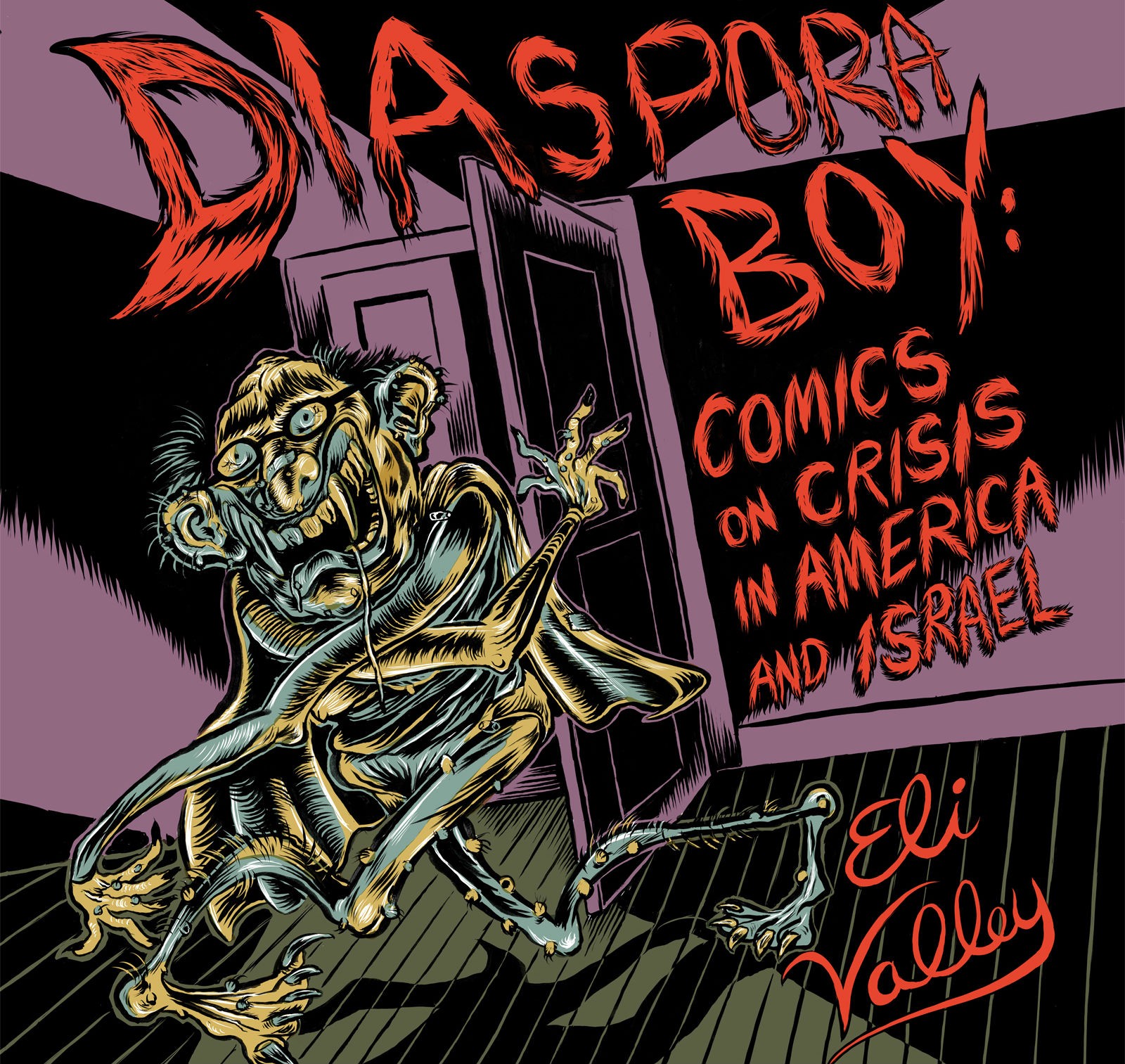
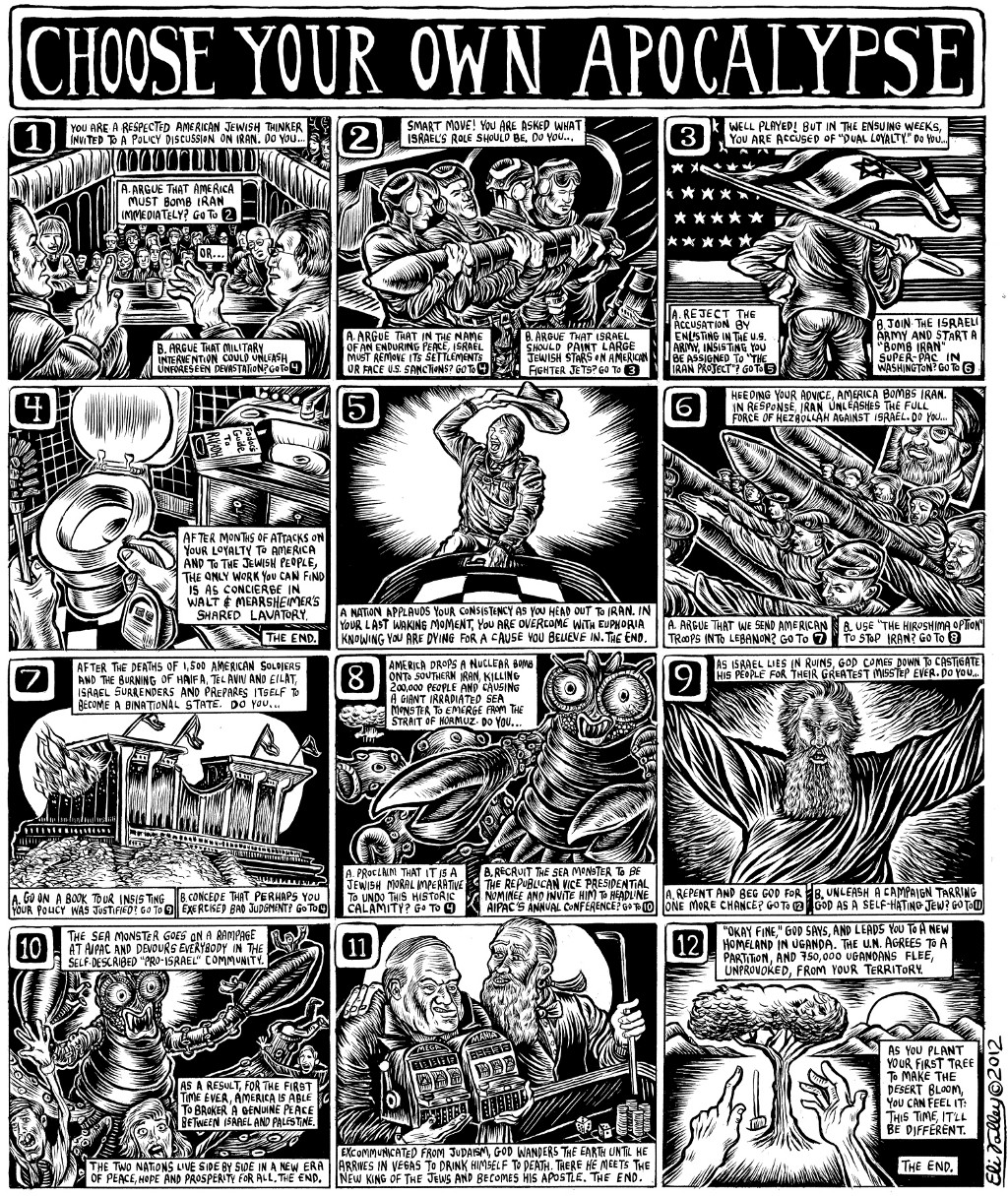
When Eli Valley introduced his book Diaspora Boy: Comics on Crisis in America and Israel last month at McNally Jackson, he spoke to a room rapt with attention. Valley is not only a singular artist and incisive writer, he’s also a hilarious and dynamic performer. Through a visual presentation incorporating his comics, he made the audience laugh while lampooning conservative critiques of his work (Bret Stephens called it “grotesque” and “wretched”) and showed photographs of himself engaging in activism throughout his life, culminating in photographs from protests this year in the wake of the Trump election.
Though the comics in the book end with Valley’s interpretations of the Republican primaries, the ten years of work provide a timeline and analysis that helps make sense of the cultural shifts that led to an America where Donald Trump could gain widespread support. With both micro analyses of specific events in the Jewish political and cultural communities and macro interpretations of large scale issues in the U.S., Valley’s work helps the reader understand the cultural structures underlaying the problems facing a divided nation. Valley’s work blends history with satire in an effort to both inform and entertain the reader on the complex relationship between America and Israel.
Valley and I met in the East Village to talk about constructing a book made of both comics and essays, the threats facing political journalists and artists, and the backlash his work has received.
Rebecca Schuh: I love that Diaspora Boy integrated so many artistic and narrative elements. Can you talk a little bit about the process of bringing together the comics and the analytical writing?
Eli Valley: The comics themselves came about over the course of ten years. A lot of them were based on things that had happened years prior. I’ve gathered visual materials related to my work, from a hobbyist perspective, for the entire ten years as well: postcards from Israel, stamps, I have one book over a hundred years old from Germany. I accumulated a lot, and on a trip to Israel I took these photographs myself, at Yad Vashem and the Diaspora Museum. If you’re passionate about something, you’re able to combine a hobbyist interest with an actual rigorous exploration.
RS:I love that. I was really impressed with how much you were able to integrate.
EV: I give presentations on my work, so I like to keep in mind the slideshow format, which is in some ways similar to comics with the combination of the narration and the visual. A presentation is live so it’s different, but the storytelling via visual narrative is similar in slideshows so I accumulated a lot for that purpose as well. For the introduction I mined a lot of that material.
RS: In terms of the timeline of publishing, I was thinking about how most of the comics, if not all, were before the election.
EV: The last one was done for the book exclusively, and the last two before were done during the primaries.
RS: How did your perception of the world that the book is being published into into change after the election?
EV: For one thing, I spoke in the introduction about Donald Trump the way we all thought of him at the time. It was the middle of last year. I wrote about him as a buffoon, a dangerous buffoon, someone who wouldn’t actually become president. And so I spoke about him in terms of what it revealed about Jewish leaders who were supporting him despite his being a hero of American naziism — this was clear long before Charlottesville. I’m glad that is in the introduction. It makes it relevant today. It’s about chronicling American Jewish communal support for the same forces of demagoguery and bigotry that prevailed in Israel over the past decade, and that now prevail in America. We’re all wondering how it’s happened here — when you look at the stuff in this book, it’s in some ways a harbinger of where we are now.
Author Eli Valley
RS: That’s so interesting, I guess I hadn’t thought about how you were tracking that ascent. No one could have known he was going to get elected, but reading your book makes it obvious that there were definitely some cultural shifts that could have predicted that someone like him would come to power.
EV: Absolutely. I call Trump Netanyahu with smaller hands in the introduction. Netanyahu shares a lot in common with Trump. Including demagoguery, bigotry, attacks on the press, attacks on institutions of democracy, attacks on human rights organizations. I don’t know if Trump has gone that far yet, but he will. It’s a similar method of autocrats. It was inconceivable to me for the past ten years that anyone in a Jewish communal organization or institution would allow Netanyahu into its doors, because he’s the kind of thing that we have feared. And yet, he’s the head of the Jewish state.
RS: You talk in the book about backlash you got at different points for the comics. Do you have any memorable stories about an incidence of that backlash?
EV: There were so many. The main one that changed a lot of things for me was the one where I positioned Abe Foxman as an anti-semite. I talk a lot about how he waged this war on The Forward until they stopped running me. The Forward didn’t want to make an immediate cut because they didn’t want to make it look like they were bowing to McCarthyite pressure, so they did a slow, don’t accept his pitches, we’ll take a smattering, but it’s over. I was able to get in three or four over the course of the next year, I don’t remember exactly how many, but…it really left me…it wasn’t a great experience.
EV:The Forward of all places, I liked it because it was a Jewish communal institution. While I was there, it was writing critical introspection and calling out hypocrisy among readers, and that was important, and when that became unavailable it was depressing because in terms of personal expression you want a higher outlet, but also the idea of the strength and sustainability of Jewish institutions — the only newspaper to consider itself an independent watchdog bowing to McCarthyite pressure was disturbing.
RS: Journalists are really concerned right now about the freedom of the press, with good reason. Have you noticed that in practice yet?
EV: I think we’re mostly talking about it in theory. I think the larger problem for political art is just outlets in general. They don’t want to pay for something that isn’t clickbait. The outlets for journalists of all types are shrinking, not just political artists.
Without mentioning specifics there was one outlet where they said the publisher and editor weren’t pro Trump, but they didn’t accept something of mine because they did not want to rock the boat too much. It’s not happening yet to the degree that we have feared, although that can still come. The main issue is the continuing erosion of the print landscape and lack of options and diversity of outlets. The main one recently being the Village Voice print edition.
The outlets for journalists of all types are shrinking, not just political artists.
RS: That was so upsetting and it happened so quickly, I don’t think anybody saw it coming. They were such a stalwart.
EV: Yeah exactly, Honestly, thirty years ago, alt-weeklies were the lifebloods of communities. Now, you can count them on one hand.
RS: It’s scary too to think of how, in journalism, we’re at this point where the funding is so scarce, and like you were saying there’s the problem of clickbait, and now it’s intersecting with the political persecution of journalists — it’s coming from all sides. You had this focus throughout the book on events that maybe the average layperson might have forgotten had happened in the past few years. How was it revisiting these events now, especially when we’re now so inundated with fifteen breaking news items every day?
EV: In some ways it was exhausting revisiting these crazy policy and politics debates, and also actual actions and behavior, but in other ways the introduction is so in depth it provides this underlying skeleton for the whole book, it allowed me to see each comic through the lens of the cohesive vision of Israel and the diaspora.
Panels courtesy of Eli Valley.
RS: That’s a great metaphor, thinking of it with the vertebrae, all books have that to a certain degree but it’s especially apt for a book that contains so much art. You did talk about a lot of events I didn’t know about, but I found with your descriptions I was definitely able to contextualize it very quickly, there wasn’t anything that I was like, I don’t get this at all. Another thing I really loved was how you played with these pop cultural forms through the art, like the Obama paper doll and the Choose Your Own Apocalypse. Can you describe the process of how you pick cultural tomes like that and then integrate them into your art?
EV: Basically I have an extensive idea file. With Choose your Own Apocalypse and some of the noir comics, I love these ephemera from the past, and I always want to find some way to make it fit. Once I find something that matches, I go with it. It’s like there’s something that I’ve always wanted to do, and then an opportunity arises.
RS: I love the comic where you had the Chagall painting integrated. I thought there was something really unique about how you took the painting and put it into the comic but then also took Chagall’s specific art style and integrated it with yours in the panels. Can you talk a little about the actual artistic process of that, how you go about learning different styles?
EV: With me for this one, form followed function. Because I was talking about these horrific animal rights abuses in Postville, and the Chabad movement that I was going after at this time likes to portray themselves as embodying Jewish folkloric things of yesteryear, like Norman Rockwell ideas. Or Chagall paintings, including this one. They think they’re in a Chagall painting but it’s a twisted Chagall painting. So I went to this painting, which I always loved, and tried finding things in it that would relate to the actual horrific abuses. So this is what determined it, and then I developed it into different panels with very specific horrors that were perpetrated by this company.
RS: Another one I was really fascinated by was your Amy Winehouse comic.
EV: I’m glad.
RS: It was one of my favorites, but more than just being a big Amy Winehouse fan I loved how this really critiqued gender relations in a way that was so piercing. There was one line, about the effort to “define her potential through such an archaic lens.”
EV: This comic was wrestling with ways that her life and death were being distorted for political ends but also noting how I, too, was distorting it, and inventing an idealized version of a female celebrity, but I realized I was doing it, so I tried to call myself out within the comic.
I love over the top. I love insanity. I think that the political debates I’m satirizing are insane, so I tweak them a little bit to make it a distorted mirror of reality.
RS: Another thing I was struck by in the book was how funny it was. I wasn’t expecting it! Can you talk about how you developed your sense of humor, or how you would define it?
EV: Basically I love over the top. I love insanity. I think that the political debates I’m satirizing are insane, so I tweak them a little bit to make it a distorted mirror of reality. The specific antecedents are the Mad Magazine comics of the 1950’s which lampooned a lot of the sacred institutions of Americana in a period of mass commercialization and consumption — things like Mickey Mouse, which they made into Mickey Rodent, or Archie, they went after all these popular cultural bulwarks, and they just eviscerated them. While they were making fun of both the comics or television shows or movies themselves, they were also using them as a way to satirize elements of a capitalist society at the time including McCarthy. So the early Mad comics were an intense inspiration from that perspective, but also the perspective of the actual method of the two stalwarts that were Harvey Kurtzman and Will Elder. With Will Elder, in particular, it was the way he drew, it was so beautiful and intricate but also so wild and out of this world in terms of the way he would pack every panel with so many different details and asides and illusions.
RS: Now that the book is published, what kind of comics are you working on?
EV: Right now I’m focusing on what’s happening in the Trump administration and the perspective and the levels of Jewish complicity within that.
Whether it’s Charlotte’s Web, Animal Farm, or Watership Down, stories about animals have the potential to hold and enrapture us, across all age groups. What’s true for books is just as true on the screen: this past summer brought with it the satirical science fiction film Okja, with a massive genetically engineered pig at its center; and stories of wildlife behaving in unexpected ways have held viewers’ attention in everything from Zoo to The Lion King. So here’s a look at a dozen books that memorably explore the lives of animals — some to mysterious effect, some focusing on their interaction with humans, and some using them to counterpoint the foibles or challenges of humanity. They range in tone from the comic to the tragic, from the esoteric to the surreal.
1. André Alexis, Fifteen Dogs
The realistic and the metaphysical coexist to magnificent effect in André Alexis’s moving tale, which brings together gods, humans, and canines. In the opening scene, a wager between two ancient gods endows a group of dogs with sentience and human-level intelligence. Alexis takes this central concept to unexpected places, movingly exploring questions of mortality and devotion in some scenes, and charting out the ruthlessness of some of his characters in others.
2. Can Xue, Vertical Motion
One could convincingly argue that Can Xue’s fiction explores the natural world, but frequently in a skewed or altered manner. That’s certainly the case with the title story of this collection, told from the perspective of a group of strange creatures that dwell underground. Through her use of language, she conveys the alien in wholly familiar terms, flipping questions of humanity on their head.
3. Cynan Jones, The Dig
Animals looms large in the world of Cynan Jones’s taut, powerful novel The Dig. Part of the action centers around a sheep farm, including a host of decidedly visceral scenes; another subplot involves the baiting of badgers. Though farming can frequently be a source of pastoral or even whimsical scenes in certain novels and stories, here it’s presented as a way of life that’s as tense and fraught with danger as the petty criminals who’ve shown up in some of Jones’s other fiction.
4. Elena Passarello, Animals Strike Curious Poses
After a book of essays dedicated to the human voice in different permutations, it seems fitting that Elena Passarello’s second collection of essays focuses on fauna of all kinds, and throughout history. She often roots these in particular moments in history, from 19th-century circus elephants to prehistoric mammoths. In telling the stories of these animals, she’s also telling the story of human societies from an unexpected (and memorable) perspective. (Good luck getting “When Doves Cry” out of your head, too.)
5. Noëlle Revaz, With the Animals
In this taut and nerve-racking chamber piece, Noëlle Revaz makes powerful use of a rural setting to contrast the natural lives of beasts with the frequently-abhorrent masculinity of the novel’s protagonist. Paul is a thoroughly unpleasant figure, crude in his rhetoric and obsessed with the animals on his farm far more than with the rest of his family. But Revaz’s sense of juxtaposition makes for a memorable comparison between brutish man and empathic beasts.
6. Joy Williams, Ill Nature: Rants and Reflections on Humanity and Other Animals
Joy Williams’s writings often show the natural world in a strange or unsettling way, sometimes veering into the atmospheric and surreal, at others tapping into something primal. In this nonfiction collection, Williams delves even further into this world; in the stunningly good essay, “Hawk,” she explores how even the most familiar animals in our lives — say, a beloved dog — remain fundamentally alien to us.
7. Sakutarō Hagiwara, Cat Town
Cats. For some of us, they’re beloved companions; for others, they’re mysterious creatures that hiss and claw at a moment’s notice. In the novella Cat Town, Sakutarō Hagiwara taps into this mysterious aspect of felines, telling the tale of a narrator who becomes disoriented and stumbles into a town with a sinister abundance of cats. It’s a dreamlike story with more than a little mystery and menace, which seems apt, given the animal that lends the novella its name.
8. Margo Lanagan, Tender Morsels
Talking about animals in literature without acknowledging the role of fairy tales would be an incomplete conversation. In her novel Tender Morsels, a retelling of the story of Snow White and Rose Red, Margo Lanagan explores the legacy of sexual violence and the nature of familial bonds in a story that involves parallel worlds and strange transformations. (Specifically, a man turning into a bear — hence its place on this list.) Though the storytelling is primal, the emotional complexity of the narrative is anything but.
9. Haruki Murakami, The Elephant Vanishes
Strange animals abound in Haruki Murakami’s first collection of short stories, and, as is often the case in his work, reality tends to fluctuate in and out of realism when they’re around. In the title story, this reaches its apex, as the main character ponders the disappearance of an elephant from his local zoo, a mystery that has a decidedly surreal solution.
10. Jeff VanderMeer, Borne
Strange animals abound in the fiction of Jeff VanderMeer, from the slightly off-kilter creatures found in the Southern Reach trilogy to the sinister fish, penguins, and bears in his collection, The Third Bear. In his most recent novel Borne, a devastated city lives in fear of Mord, a flying bear the size of a building. Sinister, intelligent bears are never not scary; throw in the ability to fly, and you have some serious nightmare fuel on your hands.
11. T.H. White, The Goshawk
Early in his career as a writer, T.H. White decided to adopt a goshawk and train him. The fluctuating bond between White and his hawk, Gos, makes up the bulk of this mesmerizing study of the interaction between the two. White’s training methods come up for a fair amount of critique in Helen Macdonald’s excellent H For Hawk, which also explores questions of the bond between humans and falcons while also venturing into questions of how that bond has been manifested in literature and culture.
12. Matt Bell, In the House upon the Dirt Between the Lake and the Woods
Matt Bell’s debut novel begins with a couple moving into a home in an isolated part of the world and rapidly becomes a hallucinatory creation story like no other. Along the way, there are sinister moments involving a bear and a squid that live in close proximity, and a host of bizarre transformations both corporeal and topographical.
13. Lina Wolff, Bret Easton Ellis and the Other Dogs
Lina Wolff’s deftly constructed book Bret Easton Ellis and the Other Dogs is about a lot of things: it’s a coming-of-age novel with a tinge of metafiction to it, and just a bit of animal imagery thrown into the mix. And there’s the conceit that gives the novel its title: a group of stray dogs adopted by sex workers and named after male authors.
“Double Take” is our literary criticism series wherein two readers tackle a highly-anticipated book’s innermost themes, successes, failures, trappings, and surprises. In this edition, Shanthi Sekaran and Nayomi Munaweera, two authors with their own recently-released second novels, share their impressions of Arundhati Roy’s Man Booker Prize longlisted The Ministry of Utmost Happiness.
There are no accolades to be found on the back cover of Arundhati Roy’s new novel, The Ministry of Utmost Happiness — only a quote from the book: “How to tell a shattered story? By slowly becoming everybody. No. By slowly becoming everything.” Whether Roy succeeds in this endeavor — whether it’s even possible to succeed in such an endeavor — is almost an unanswerable question. Better, perhaps, to focus on the everybody and everything that populate this shattered story: Hijras and Dalits, old diaries and a busy cemetery, a government assassin and an abandoned baby girl.
Twenty years have elapsed since the release of Roy’s Booker-winning first novel, The God of Small Things, and this week she made the Booker long list again. It’s with measured breath that one opens The Ministry of Utmost Happiness. Roy takes us on a meandering and unpredictable journey, from the teeming boroughs of Delhi to blood-soaked Kashmir, from activist hotbeds to staid American suburbs. To read this book is to tear into the skin of modern-day India, a land of deeply embedded societal roles, to examine the daily tragedy of a land in conflict — its living bodies, its corporate mask and its ever-morphing identity.
Shanthi Sekaran: There were times in this book when I was like, what is Arundhati Roy smoking? And where can I get me some.
Nayomi Munaweera: Ha! Which parts? And do you think smoking whatever it was would make you a better writer?
SS: The zoo, for example. And various people’s private papers.
NM: Yes! I loved that bit.
SS: There are so many riffs in this book. You think, as a reader, you know where things are leading and then Roy switches tracks. You’re suddenly running alongside the story you thought you were in. She doesn’t create complete departures, but sometimes what you think is a quick tangent becomes an entire chapter. So many times, reading this book, I had to give up my illusion of control, and just go with what was happening. It really seems to just do what it wants to do.
NM: I agree. But I also feel like she was very much in control. It’s a book with a wide range. It sprawls, it takes up room but I think she was very aware of that.
So many times, reading this book, I had to give up my illusion of control, and just go with what was happening. It really seems to just do what it wants to do.
SS: I remember when she was speaking at City Arts & Lectures [in San Francisco, CA], she said, “I wanted to tell the story of the air and everything in it.” I take that as meaning that she wants to tell the story of India, in a geopolitical sense, as she’s spent so many years steeped in those matters. This is the India of social paradox and border battles and communal violence. This isn’t peacock ’n’ mangos India.
NM: It’s amazing we both got to see her speak a few weeks ago. People keep saying she hasn’t written a book in two decades but they forget that she has various nonfiction pieces. She’s been grappling with India the entire time. And it all shows in the book. I think her project has gotten much bigger in those two decades.
SS: India is no longer, in the world’s imagining, a quaint, unfathomable and exotic place. It’s now a player on the global scene, and I feel like readers and the Western public are finally ready to engage with the inherent intricacies.
NM: Did you read Michiko Kakutani’s review? Kakutani essentially thinks the book was too big. That it was a failure because it took on too much.
SS: I think you have to accept this book on its own terms. If you start applying narrative tradition and expectation, you sort of miss the point. Roy wanted to tell the story of everything. So by necessity, that story is going to feel fragmented. But that doesn’t diminish its value. It’s just attempting something that most novels don’t.
NM: Kakutani said, “Roy’s gift is not for the epic but for the personal as God of Small Things so profoundly demonstrated.” I had to disagree with that analysis. It’s always a bad idea to compare a writer’s books. The fact that she told a very personal tale successfully and beautifully in God doesn’t mean she can’t take on the multiplicity and complexity of India in a second book. So, as you said, you have to approach with no expectations.
India is no longer, in the world’s imagining, a quaint, unfathomable and exotic place.
SS: Yes, though some would argue that to tell the epic tale, or the political tale, you focus on the personal. That the personal becomes a reductive mirror for the political. But I’m guessing that’s not what she’s trying to do with this book. It’s not like she’s trying to reflect India in a personal story and failing. There are elements of that reflection in the book. But more than this, I get the sense that she is actually trying to tell the story of contemporary India itself — specifically contemporary Delhi and Kashmir. And how does one even do that? Do you think she succeeded?
NM: Personally I do think she succeeded. It’s an enormous story and task to take the tremendous multiplicity of South Asia. It’s even mentioned in the back cover copy, “it’s not the story of everybody, it’s the story of everything.” So she’s talking about the fate of people but also the fate of animals, the fate of the forests, the fate of the rivers. It’s an enormous undertaking and I think she did it brilliantly.
SS: I’d say she succeeded in telling a compelling, sometimes surprising, story of “everything” in India. But of course the attempt to do such a thing — to tell the story of everything — is doomed to fail. Especially when it involves the maddening paradoxes of India.
From the broader view, what I especially appreciate is that this book turned a leaf for me. It made me look at today’s India in a way I hadn’t yet considered. I was one of those “Oh look! They have malls now!” people. Roy flipped that for me, made me look at the underbellies of those malls, the reality that I, like so many Indians, would rather not see. Being in India involves a lot of “not-seeing.” But it seems Roy won’t stand for that.
NM: Yeah, I can see that. For me, too, I was aware of the anti-Muslim Hindu fundamentalism, as in Sri Lanka we have anti-Muslim Buddhist fundamentalism, but I wasn’t aware of the scope of it. Or the way caste has played into it. The way globalization is a continuation of colonialism. At the talk, Roy said a reader came up to her and mentioned she was studying post-colonial studies. Roy replied, “Is colonialism really ‘post?’” That stayed with me. The idea that the exploitative means of a previous age have only morphed with modernity.
In the book, this really became clear in that moment when history and fiction merge and she has Warren Anderson, the American CEO of Union Carbide, come to India after the Bhopal gas leak killed so many and continues to destroy lives. He looks at the cameras of the gathered press and says, “I just got here. Hi mom.” And that “Hi mom” is repeated over and over on the television as it becomes clear that the company isn’t going to redress their dire wrongs. It was a powerful moment in the book and clearly one that points to her own activism.
SS: I’ll never forget her comparison of capitalist, globalized India to a grandmother tarting herself up.
NM: Yes, Delhi or India herself as the grandmother who is being dressed up to seduce foreign multinationals. That was an amazing description. They try to hide all her ugliness in push-up bras and high heels.
Old secrets were folded into the furrows of her loose, parchment skin. Each wrinkle was a street, each street a carnival. Each arthritic joint a crumbling amphitheater where stories of love and madness, stupidity, delight and unspeakable cruelty had been played out for centuries. But this was to be the dawn of her resurrection. Her new masters wanted to hide her knobby, varicose veins under imported fishnet stockings, cram her withered tits into saucy padded bras and jam her aching feet into pointed high-heeled shoes. They wanted her to swing her stiff old hips and re-route the edges of her grimace upwards into a frozen, empty, smile. It was the summer Grandma became a whore.
SS: That leads me to the question of the body. The body plays a huge role in this book.
NM: This is a book about all kinds of bodies. There are the bodies that don’t conform. One of the main characters is a Muslim Hijra — a transgender woman, recognized in India as a third gender — who is transforming from male to female. She goes from being Aftab to Anjum. There is also the body of the tiny black female baby whose coming is rejoiced at as if she were a goddess come in the final page of the book. She’s female, she’s black, both of which are often undesirable qualities in a traditional South Asian context. Yet Roy is positing these outsider bodies as the truly heroic: that which will rescue us from a frightening insistence on homogeneity. Anjum is celebrated for her ability to cross the bodily boundaries.
SS: Yes, Let’s talk about Anjum, whose narrative dominates the first half of the book. There are so many evocative connections between Anjum and India. The Hijra’s body, for example, is a body in conflict — at least in this book’s depiction. It presents a fragmented experience of gender.
NM: As a Hijra character says to a young, uninitiated Anjum, “Indo Pak is inside us.”
Arre yaar, think about it, what are the things you normal people get unhappy about? I don’t mean you, but grown-ups like you — what makes them unhappy? Price-rise, children’s school-admissions, husbands’ beatings, wives’ cheatings, Hindu-Muslim riots, Indo Pak war — outside things that settle down eventually. But for us the price-rise and school-admissions and beating-husbands and cheating-wives are all inside us. The riot is inside us. The war is inside us. Indo-Pak is inside us. It will never settle down. It can’t.
The riot is inside us. The war is inside us. Indo-Pak is inside us. It will never settle down. It can’t.
SS: Also, as a Hijra, Anjum is placed firmly on the outskirts of society. But paradoxically, the Hijra’s role is well understood and integrated into Delhi society. It’s not a wide-ranging role; there’s not much freedom or opportunity in it, but the Hijra’s role is included and understood, both accepted and reviled.
NM: Right. She becomes part of a very old community of Hijras in the city. As one of the older Hijras reminds them, they’ve been part of the city’s history for centuries. The Muslim rulers of Delhi entrusted their mothers and queens to the court eunuchs. So they came out of a very old tradition. But that’s a Muslim tradition so somewhat at odds, perhaps, with modern Hindu fundamental India.
SS: One of my favorite scenes is when these activist filmmakers visit Jantar Mantar (the protest and activism center of Delhi) and ask Anjum and her posse to say, in Urdu, “Another world is possible.” You can imagine one of those video montages of people of all castes and creeds repeating this one hopeful phrase, a plea for unity, a tidy you-tube viral thing. But what does Anjum do? She doesn’t repeat the phrase as instructed. Instead, she looks into the camera and says “We’ve come from there…from the other world”.
She won’t be convinced that she is part of the “Duniya,” part of the mainstream. She’s lived so much of her life understanding her separation from it that she seems altogether incapable of saying something which, to her, feels wholly irrelevant. She is her own form of resistance, resisting the filmmakers who themselves are making a video on power and resistance.
NM: Right. And I think Roy is saying that it is the misfits, the ones who don’t belong, who refuse easy categories, who reject nationalism, who are our best bet for a better world. Anjum refuses to be rescued. She finds sorority first in the Hijra house and then in the cemetery. But it’s always with others who are also fractured and outcaste.
SS: So, Anjum leaves her Hijra compound — she’s had enough of it — and sets up camp in a cemetery. She’s essentially homeless. But slowly, she takes in other wandering souls, and builds a shelter. And then the shelter grows more complex, more people join her. People with loved ones whose occupation or status exclude them from traditional funeral rites start to come to her. Her ramshackle lean-to becomes the Janaat Guest House and Funeral Services. As I read this, the American me is thinking: Does she have a permit?
Why do you think Roy chose a cemetery for Anjum’s home? What is it about a cemetery that speaks to Anjum’s experience, to the ideas of exclusion and inclusion, life and death, the body?
NM: It’s another in-between place. Where the dead and living coexist and circumvent the rules most people are governed by. For example, they make up their own rituals to honor Miss Jebeen the Second’s mother and Tilo’s mother as well as Saddam Hussein’s father. All three of those characters were not honored or recognized in the traditional ways. This band of misfits honors them in very specific ways.
It’s also, I think, a way to be in touch with history while India crashes into modernity. What do you think about the cemetery setting? And the fact that our other main character Tilo also ends up there?
SS: I agree about the cemetery being a liminal space, somewhat outside the confines of mainstream everyday activity, but still with its societal role. In this specific way, the cemetery’s role reflects the Hijra’s role. I think the cemetery also brings us back to the notion of the body. What is a cemetery, but a place to dispose of bodies? And death brings us into a final, ultimate reckoning with the body. When you die, there’s no getting around your body. There’s no surgery or makeup or spin class that can save you from your body. Anjum, of course, has been dealing with the demands of her body her entire adult life. But the cemetery as a resting place, as a solid, unmoving repository for the body — I think this says something about India itself.
What is a cemetery, but a place to dispose of bodies? And death brings us into a final, ultimate reckoning with the body. When you die, there’s no getting around your body.
NM: Well, early on Anjum does say that she’s waiting to die. So she goes to the cemetery. But then she creates a very vibrant, colorful, peopled existence there. I’m not sure it is unmoving. I saw it as a very dynamic place as these characters take up residence. Tilo starts a school in the cemetery. They bring in all those animals. Saddam Hussein gets married there. I think it’s set forth as an alternate vision of a community that could be. A place of refuge, as it were, to the larger India which is beset by caste, war, misogyny etc. Even the goat whose job it is to be sacrificed for Eid doesn’t get sacrificed for sixteen Eids in the cemetery!
SS: Yes, Anjum and her coterie of friends, misfits, animals: they bring life and dynamism to the place. Without them, though, the role of the cemetery is fixed, the rules of inclusion and exclusion are fixed. They bring life to death.
NM: Right. So it’s a place Tilo can come to when she and the baby, Miss Jebeen the Second are threatened. What did you think of Tilo and the Kasmir storyline? We leave Anjum and go on this huge ride to Kashmir. Did you find that jarring as some readers have expressed?
SS: We switch, about halfway through the book, to the viewpoint of Dasgupta, who introduces the reader to Tilo. We’ve left the misfits of Delhi society now, and come into contact with the upper echelons, the boarding school types. I didn’t find this switch jarring, most likely because I was drawn in by Dasgupta’s narrative voice, which was quick, clear, chatty. I did have to trust that we’d come back to Anjum. Roy hadn’t simply dropped this character. For a while, I didn’t love the fact that we were hearing about Tilo from Dasgupta’s far removed viewpoint. The second half of the book really came alive for me when I was hearing directly from Tilo. So we approach Tilo from a distance. She’s a mysterious female student, unreadable to her male classmates, an object of fascination precisely because of her inscrutability, and because she seems to have no use for any of them. There’s one line I’ll always remember about Tilo.
NM: Is it about being in a country of her own skin with no visas granted?
SS: Yes: She marries a man — a former classmate — whose mother is minor royalty. Tilo herself comes from a less certain pedigree, though it’s known that she’s part Dalit. Naga, her descended-from-royalty classmate, is ceaselessly devoted to her. As Roy explains it, “It had to do with the way she lived, in the country of her own skin. A country that issued no visas and seemed to have no consulates.” I began to understand, from that line, why we were approaching Tilo from such a distance.
NM: Yes, I loved that too!
SS: It’s her distance, her inscrutability, that defines her as a character. If we’d dove right into her head, that mystery would be shattered.
NM: This reminded me of how she described Rahel in God of Small Things, as someone perfectly contained in her own body and her deep solitude. No desire to please or impress anyone. And also as a woman who is aging but doing nothing to fight it. Which, I might add, tends to describe Roy herself beautifully.
SS: I must admit I visualized Tilo as Roy. I wonder if the inscrutable character pops up more often in literature than we realize.
NM: It’s Tilo’s deep interiority that seems to make her unforgettable to all three of the men: Dasgupta, Naga and Musa. I think she’s interesting as a foil to the fact that people are being asked to be citizens of India in a particular way — nationalism being such a pervasive, pernicious force.
And then we have a character who is staunchly answerable only to herself. Analogous to Roy, who continues to live in India and claims the right to critique it no matter what.
SS: This gets back to the idea of post-colonialism not being post. There’s been so much emphasis on the “new India,” the world’s largest democracy, the hot new tech market, the Bollywood movies that deliver a luxurious, Westernized, sanitized vision of India — more tourism video than cinema. The “new India” seems to overlook vast regions of the “real India.”
The “new India” seems to overlook vast regions of the “real India.”
NM: For example, the war being fought between the government and indigenous people over the forests in the middle of the country.
SS: And this relates to the idea of colonialism because Indians and non-resident South Asians are being told, consciously and subconsciously, to look at THIS but not THAT, to talk about this but not that. We’re losing the freedom to see, in the name of progress and globalization. We’re facing a colonization of the mind.
NM: Right — whereas Roy is brave enough to look at and talk about everything. I think that’s a major point of this book. Globalization at what cost and to whom? Who is left behind, who is slaughtered in the rush to modernize?
SS: As an immigrant, or child of immigrants, it’s a scary thing, frankly, to point out the negative things about your country — or your parents’ country. India has existed on the margins of American consciousness for so long that I, for one, want to show everyone the glitzy, shiny, progressive stuff. It’s scary to point to the inequities, the violence, the injustice.
NM: Interesting! My first book was all about the Sri Lankan civil war so I was interested in pointing out all the atrocity. But living abroad in Nigeria and then in the U.S. I was granted the privilege of safety to talk about those things in a way I couldn’t if I lived in Sri Lanka and definitely if I was Tamil and living in Sri Lanka.
SS: I’ve been asking myself what saves the book from becoming preachy — especially the blood-soaked Kashmiri sections. Is it the format? Often we’re presented with this information through old journals. There’s one section of whimsical reading comprehension exercises compiled by Tilo, in the style of a children’s workbook, but detailing individual tales of religious violence. The material is horrifying, but the format is almost humorous.
NM: Yeah, it’s almost funny, but obviously not. An incredible feat to produce that particular heartbreaking, yet funny tone.
It’s interesting to me that Amrik Singh, the government agent-torturer in Kashmir, escapes to the U.S. with his family. But clearly they cannot escape the past since many years later he ends up killing himself and his family. The implication being that Kashmir destroyed everyone’s lives. Not just those of the civilians and the rebels but even the agents of the government.
I have to add that I think this book is incredibly brave. I can’t imagine being so openly critical of so many forces in the way that Roy is. I have to say I worry for her safety.
I was in India some years ago for the Jaipur festival and was with some Indian friends of friends. A woman asked me who my influences were. I mentioned Roy and she said very casually, “Oh, the hooker with the Booker.” She had no compunction saying that. She had never read Roy but didn’t think she needed to.
SS: That’s terrible.
NM: It’s deep misogyny. There’s also a claim that she shouldn’t be writing about Dalits, etc., because she isn’t one.
SS: Which points to the question of exploitation, writing from the outside about the Dalit experience. Can a novelist write about a marginalized group that one isn’t part of? It’s a valid question, and one I’ve dealt with in writing Lucky Boy (which tells the story of an undocumented woman). The question we have to ask ourselves is, what is Roy doing with the Dalit narrative? Does she exploit it? Does she use its superficial surface details or does she delve deeply into character? Does she illuminate the humanity of the Dalit experience?
NM: As a novelist I think it’s imperative that we write about whatever we want as long as we are able to approach our subjects with respect. Otherwise every writer is limited to memoir.
As a novelist I think it’s imperative that we write about whatever we want as long as we are able to approach our subjects with respect. Otherwise every writer is limited to memoir.
SS: We won’t give away the ending, of course, but how did you feel when you read the final line and closed the book? What were you left with?
NM: I cried. A lot. The whole book just washed over me. The intensity of what she had achieved. I listened to the book on audible first and I cried at the end. Then I read the book and at the end I cried again. The second time I think because I was just in awe of the whole project and at the fact that she ends on that particular beautiful and hopeful note. I tend to do this with the ones that hit me deep. What about you?
SS: My final reaction was a sort of pain in my gut. Between my gut and my throat. Like acid reflux. It’s the pain I get when I feel possibility, when I see the dark depths of a situation and the injection of hope. So much of the beauty and power of this book lies in recognizing what Roy achieved. It lies in the knowledge of India’s history, complexities, troubles and beauty. India is a force that stands behind this book. It streams through the book like light. Maybe that’s what happens when you tell the story of a country, when you take on that impossible task and succeed.
NM: Yes! Beautiful way to wrap up that particular reading experience. Not easy reading by any means but very deeply affecting. What more can you ask for from a book? I think it’s a book many of us will be affected by and return to for decades.
Thanks so much for chatting about the book with me.
SS: Thank you.
Shanthi Sekaran lives in Berkeley, California. Her latest novel, Lucky Boy, was named an Indie Next Great Read and an Amazon Editors’ Pick. The New York Times calls it “brilliantly agonizing” and the Chicago Tribune writes that “it engage(s) empathetically with thorny geopolitical issues that feel organic and fully inhabited by her finely rendered characters.” Her essays and short fiction have appeared in The New York Times, Canteen Magazine, Huffington Post and Best New American Voices. She’s a member of the San Francisco Writers’ Grotto and teaches writing at CCA and St. Mary’s College. www.shanthisekaran.com
Nayomi Munaweera’s debut novel, Island of a Thousand Mirrors was long-listed for the Man Asia Literary Prize and the Dublin IMPAC Prize. It was short-listed for the DSC Prize for South Asian Literature and the Northern California Book Prize. It won the Commonwealth Regional Prize for Asia. The Huffington Post raved, “Munaweera’s prose is visceral and indelible, devastatingly beautiful-reminiscent of the glorious writings of Louise Erdrich, Amy Tan and Alice Walker, who also find ways to truth-tell through fiction. The New York Times Book review called the novel, “incandescent.” The book was the Target Book Club selection for January 2016. Nayomi’s second novel, What Lies Between Us was hailed as one of the most exciting literary releases of 2016 from venues ranging from Buzzfeed to Elle magazine. Her non-fiction and short fiction are also widely published. www.nayomimunaweera.com.
After you were dead, I worked non-stop at night sewing your poems back together, or where necessary, pulling them apart, subsisting on tear-
and-eat items at the gas station on the corner, push-button milkshakes, microwaveable popcorn. I picked my body up like a folding suitcase
every morning and every night hung it back up in the closet, in love with that weightlessness, hating feeling heavy and useless
one leg still a little longer than the other, a dead father and mother, the history of cinema before 1960 playing on loop inside my brain.
One day I’m Janet Gaynor in the Parisian sewers, another, I’m the mountain in The Searchers John Wayne is walking toward and then I’m the ranch house door
that closes on itself to consecrate the darkness, the liquid border dividing the Country of Time from the Country of Loss.
O, my mentor, my minotaur, the hospital where you held my hand is gone, and with it the labyrinth and the latticework, the chandeliers of tubes,
the horrible food, the buffet of ways to be dead and still falling in love with how the light blinds the television, how the body stays exactly where you leave it
laid across the crux of sheets like Helen Hayes in A Farewell to Arms, a pillow for an aureole, and no one to lift you up so I lift you up now —
I take your body to the cherry blossoms, the bell choir, the thawing lake, the din of the armistice. You weigh almost nothing. My arms are giving way.
Dover Beaches
The sea is a bomb tonight. The moon illuminates it Like a yard light keeps the yard from going black Like an embassy flies a single flag or a church Choir stands in unison to sing. The sea is an invitation, A car on fire, an unopened letter.
Long ago, so-and-so heard it Speaking to him through the legs Of a table. You know how Table legs can be unstable, one a little shorter Than the other so the table wobbles? It’s a small thing but it’s a reason To eat hemlock, to put rocks in your pockets, To run through the temple screaming.
The Sea is the Earth Humanless and impenetrable. It swallows Light and air and deposits What’s left At its outermost exterior or gathers it On the surface in swirls the size Of Texas; at its heart, the sea is clean And cold and uninhabitable.
Ah, Love, should we even bother Touching one another? You’re married. I have psoriasis, and we’re inside this FedEx Office making flyers For a pet we promised to protect And now is lost and likely dead, or worse. The world is a bad, awful, no-good place. We are the world.
Wagner & Nietzsche
They first met in his office. Wagner showed Nietzsche the view of the water. The younger man looked down and felt dizzy. The view is what makes a god, Wagner said. They could see every border of the city.
Nietzsche must have looked like the water, too. One thick coat of sunlight across the chrome of surface and the mystery of depth. To Nietzsche, Wagner was an office: the perfect chair, the perfect desk.
The oldest crime on record is a young man falling in love with an older one. Another word for it is fatherhood. We know the world is flawed for good because the world requires it.
Let us gather to celebrate our fathers, our father says. The world was better before we entered it. Every son is a curse carrying the antidote inside of him.
When Nietzsche stopped coming to Bayreuth, Wagner’s wrath was sad and comical. In public, he rebuked his adopted son. In private, he missed everything about him.
O Father who is not my Father I forgive you, Nietzsche wrote. I forgive you for doing what you do. When the Good Father finds your door, I will feed his horse a sugar cube.
Alex Gilvarry’s highly acclaimed debut, From the Memoirs of a Non-Enemy Combatant, has been followed up by a dark, funny, page-turning novel called, Eastman Was Here. The story follows the misadventures of an unforgettable antihero: Alan Eastman.
It’s 1973 and Eastman is a washed-up writer, public intellectual, cultural critic, and philander whose wife just walked out on him. Now in the depths of personal crisis, he believes the only way to win back his wife — while simultaneously proving to the world that he’s still that great American novelist from twenty years earlier — is to exhibit his virility by flying to Saigon and covering the end of the Vietnam War as a war journalist. I had the chance to chat with Alex about how he fleshed out this thrilling book and how he reflects on some of the larger issues it touches upon.
Karim Dimechkie:I’ve got to say, I was pretty confused by how much I cared for your main character. He is immature, brutish, misogynist, hypocritical, irresponsible, and exists far beyond the acceptable baseline of human selfishness. Yet I loved being around him, read the book every chance I could and thought fondly of him when I couldn’t. The humor in the story certainly helps, but there’s something else happening here. Is it his transparency? The fact that we always have a sense of the insecurities and wounds lingering behind his brash behavior? Whatever it is, it inspired an inexplicably compassionate read from me. Can you talk about how you developed such a layered character and if your feelings about him changed over the course of making this book? Do you find him as improbably likable as I do?
Alex Gilvarry: What you’re talking about is how I feel about some of my favorite characters. Rabbit Angstrom. Why do I feel for that man? He’s all the things you say Eastman is — immature, irresponsible, a misogynist, and then I can’t help but care. That is, in the realm of Updike’s Brewer, Pennsylvania. I don’t care for misogynists and womanizers at all. Same thing with Raphael Nachman, Leonard Michael’s sort of alter-ego in his Nachman stories. God, I love Nachman. I love seeing both these characters fail miserably. I suppose I was thinking of this type of man when I imagined Alan Eastman, a fading war correspondent, a big “man” of a writer in the Hemingway sense. And then I tried to make him as real as possible…show how our urges conflict with our values. Show the lies we tell ourselves daily. Sometimes, I think you need to allow your characters to do some very bad things. That’s how I wanted Eastman to be. My feelings did change as I began to make things up. When you allow your characters to do bad things, you have to reconcile those in order for the reader to understand. When they stop understanding, they should put down the book.
KD:I can relate to wanting to see Eastman fail, but it was entirely out of a desire to see him learn rather than wanting for his punishment. Again, the miraculous contradiction of this character for me is that he somehow still feels like a good guy while not being much of a good guy.
AG: Yes, of course, you’re right. But I don’t think, in my way of working, I was conscious of him learning from his mistakes. Or that I intended him to learn or change in the beginning. On a first draft I’m just trying to make somebody seem real, and in that process I’m more unconscious of how to resolve events and character arcs if that makes any sense. In later drafts and especially working with my editor, I can think of the reader and what they want from the story. And either give them what they want or withhold it.
KD:I want to talk about the humor. This book isn’t just hilarious, there’s a profundity to the comedy. It’s a means of depth and increased vulnerability. Can you talk about how you see the role of humor in your work, and why some writers seem to deliberately avoid using it in theirs?
AG: I think you risk not being taken seriously when you write humor or satire. I’m not complaining. That’s just the way it is. And believe me, if I could write me an All the Light You Cannot See I would. I’d write it all the way to the bank! A lot of novelists avoid humor, like sex. What happened to sex? Both those things went out the window after the ‘80s. I suppose humor can be misunderstood too easily. It can also undercut the emotion of a scene. Which could interfere with what readers want out of a book. So that’s when I’ll edit something out, when it’s messing with what’s going on or the purpose of a scene or moment. I used to think every line needed to be funny. I’m moving away from that now. Drama is hard for me. That’s where the challenge really is.
And there are many writers with a great sense of humor. Francine Prose, Mary Gaitskill, Rivka Galchen, Gabe Hudson, Paul Beatty, Sam Lipsyte, my wife Alexandra Kleeman…you, Karim Dimechkie. Enough to keep my reading list full each year.
A lot of novelists avoid humor, like sex. What happened to sex? Both those things went out the window after the ‘80s.
KD:Okay, allow me to backpedal a little and get some of the basics down. How did the book originate? When did you realize you had a novel on your hands, and how long did it take to finish?
AG: The book is partially inspired by Norman Mailer. I found myself at his house in Provincetown, writing my first novel, as part of the Norman Mailer Writers Colony. I was doing my homework because I wasn’t very familiar with Mailer’s work, just his persona. While there, I read in a biography that Mailer was asked by the New York Herald to go to Vietnam, to follow marines, but the deal fell apart and he never went. Like much of his short non-fiction, I imagined he would have eventually turned it into a book. What would it have been like? The idea never left me. And knowing how Mailer worked, this book would probably be more about himself than Vietnam.
So I started thinking about a roman à clef based on Norman Mailer’s life. That’s how Eastman was born. But it took awhile to figure out how it should be written. And once I read The Armies of the Night, where Mailer writes about himself in the third person, I knew — that’s how I’ll do it. There’s something so brash about that. The book took three years to write, which isn’t so bad. And this one I did in four drafts, which I think means it wasn’t too problematic as a manuscript.
KD:There’s this wonderful way you pepper in your research without it reading like research at all. I saw it in the dated language (i.e. “Now, you listen here…”), and in the subtle, perfectly placed details that triggered my brain to flesh out worlds I’ve never known: Vietnam, Hawaii, New York in the ‘50s, ‘60s, and ‘70s. You also place us in the company of characters who have professions I’m assuming you have no first hand experience with — war journalists and army generals to name a few. How and at what phase in the writing process did you conduct and implement the research?
AG: I research at the beginning, really. When I’m figuring out what I want to write about. In a period novel I’m looking for language and texture. Good details I’ve never read or seen before. Outdated language. I wanted my book to sound like it had been written in the 1970s — that was most important. When I read fiction about a certain period from the past and it sounds like it was written yesterday I don’t buy it. I had trouble with Martin Amis’s The Zone of Interest for that exact reason. The Nazis sounded like a bunch of Brits.
I went to the Harry Ransom Center in Texas to look through Norman Mailer’s letters. In a letter to his first wife, Bea, during WWII, she used the term “salt petered.” That’s the stuff from the past I was looking for. I let all those expressions soak in for a few years.
I knew it was integral that I go to Vietnam, so I did, and stayed in the Continental where a lot of the book is set.
My father is a vet of the Vietnam War. He enlisted early, I think in 1964. He planted his stories in my head at an early age. We went to see all the war movies together and we still do. Next week we’re going to see Dunkirk. When I was eight years old he took me to see Full Metal Jacket. I didn’t understand it at all. I still remember wanting to cover my ears.
Oh, and Michael Herr worked on that script whose book Dispatches I read while researching. What a great book. There. Full circle.
When I read fiction about a certain period from the past and it sounds like it was written yesterday I don’t buy it.
KD:It feels like every scene in the book has conflict, large or small. They each have their own arc while also contributing to the central narrative. I’m wondering whether you have some scene-building philosophy. Do you have any rules regarding what one of your scenes must accomplish?
AG: Not really. I studied playwriting in college, so maybe some of that has stuck with me. There needs to be dramatic tension, of course. And in some of those playwriting exercises, I remember they would press you to introduce a third character, just to complicate matters. But I don’t think in terms of what characters want from the other and vice versa like a dramatist. I do, however, know when I get stuck in a scene, which happens frequently, I will realize “Oh, that’s because I only have one person in this shitty scene.” And to get things moving, I just need another character to enter the room for things to happen. That’s the only thing I’m conscious of in my scene method. Put in more characters.
KD:Let’s talk about the misogyny in Eastman’s character. One of the unsettling moments in the book is when he lectures a supremely talented journalist about why the world won’t want to read her war novel. We later learn that, above all, Eastman is threatened by her being “the real deal.” I’m curious about how you reflect on what he says about U.S. readership not wanting a war novel from a woman, and what he is claiming the publishing industry does and does not want to help out into the world.
AG: The world was a sexist place in 1973. The women’s movement and feminism was breaking through in America, and yes, these men were threatened by it. Mailer himself, early on, confessed to not reading women at all. He didn’t consider them to be on the level. Later in his life that might have changed. But not in the ‘50s and ‘60s. He was only in competition with other male writers, those he thought of as major novelists. The great novelist would be male, and so on. It’s a very sexist attitude that I needed to reconcile with my own character, Eastman. Because he, too, believes in such things. I think this attitude toward women writers still persists, even in my own reading habits and book buying. Why do I buy more male work than female? Why is it that I size myself up to other writers (mostly male)? I don’t like this about myself and am constantly trying to fight it. Having worked at a publisher, and having been on both sides of this business, I also feel that men still get paid more than women in their advances. It’s hard to prove this, as one would need confidential access to what writers get paid, and creative economies are harder to pin down in this respect. But I think there’s still a systematic problem in our industry that favors men.
I think there’s still a systematic problem in our industry that favors men.
KD:Which is shocking since the numbers clearly show that women read more books than men, and the majority of editors at publishing houses are women — yet we still hear about women writers getting better results when employing a man’s pen name, like Catherine Nichols who, as recently as 2015, found that using a man’s name brought her eight times the positive interest from agents when soliciting them. What’s going on here? Has the publishing industry just not caught up to the demographic reality of their consumers?
AG: I should say that the publishing industry is well aware of the problem and I think we’re doing a relatively good job compared to other creative industries, say compared to film and Hollywood. There was the VIDA study a few years ago that showed the gender imbalance in book reviews — men being reviewed more than women. I don’t know what the statistics are today, but our problems won’t go away in a year. It’ll take a generation or two. Pamela Paul has done a good job with the TimesBook Review. Even back in 2012, when I was pitching profiles and interviews of writers, I remember Sheila Heti turning one of mine down because of a backlog of interviews with white male writers at the Believer. I couldn’t argue with that. But I do find it frustrating, as do many of my female friends, that so many women writers get boxed into the “women’s fiction” category. That sucks. I take Jennifer Weiner’s side in all this.
DON’T MISS OUT
Sign up for our newsletter to get submission announcements and stay on top of our best work.
YOUR INBOX IS LIT
Enjoy strange, diverting work from The Commuter on Mondays, absorbing fiction from Recommended Reading on Wednesdays, and a roundup of our best work of the week on Fridays. Personalize your subscription preferences here.