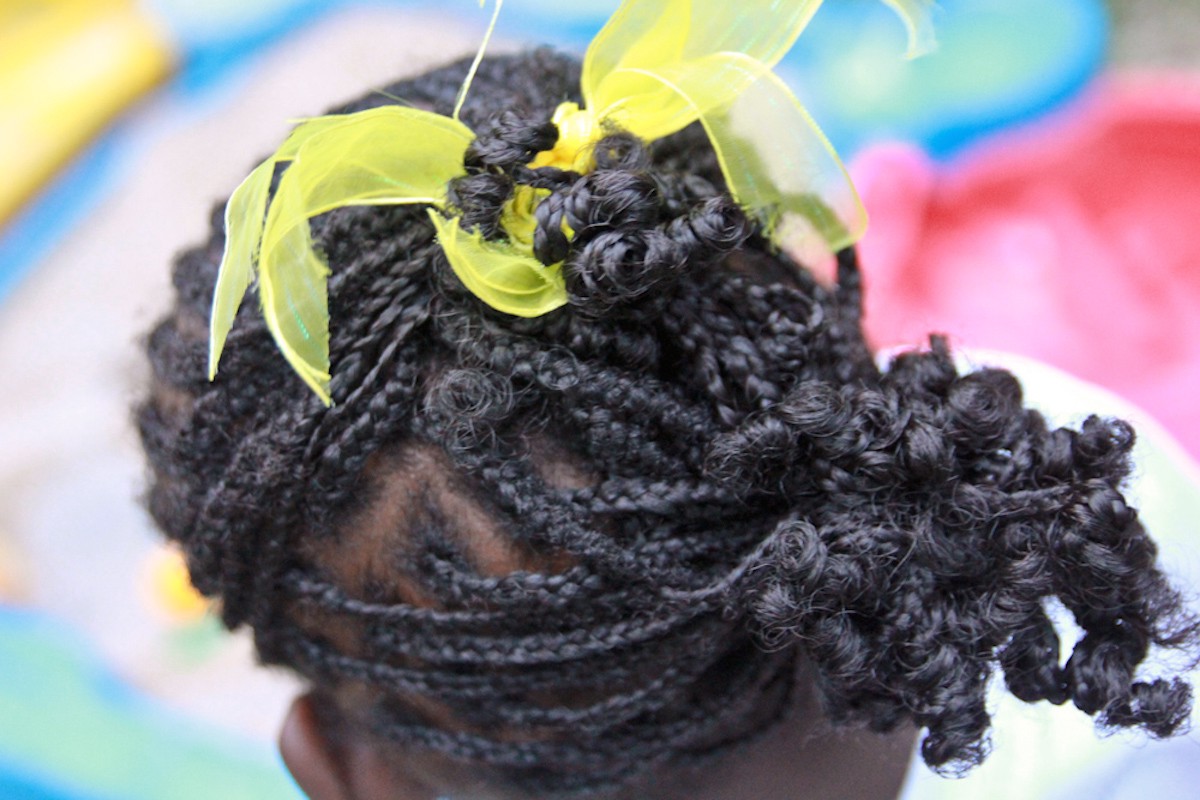
The Only Two Black Girls at Boarding School

The other African girl was tall. She had a broad, square-shaped body with muscular arms and legs. Her skin was like onyx, very black and shiny from the baby oil she smoothed on after her morning bath. Her name was Agatha and she was from Kenya.

When I first arrived at St. Mary’s in the middle of the term, she sat on her bed watching as Auntie Harriet helped me to unpack my things. All of the other girls were lounging on the sofa and armchairs at the front end of the long, narrow dormitory. They were painting each other’s toenails bright pink and eating a large tin of Quality Street chocolates. I noticed that they were all white or Asian. The girls had not looked up when Auntie Harriet and I walked in with Sister Miller, who asked me if I had brought a hot water bottle to sleep with. It could be rather cold at night in this part of England. It didn’t get cold where we were from, did it?

I was often the only, or one of very few, black students at the schools I attended. My father worked for the United Nations. In Year Three at an international school in Rome, a boy refused to hold my hand during a game of Ring Around the Rosie because his mother said that God left black people in the oven too long. That meant that we were mistakes. The teacher corrected him: Colored people are just like us. I was not supposed to correct teachers, so I didn’t say anything about her use of the word colored. Everyone in my class called me burnt toast behind my back for months. Then, a popular girl started putting twigs in my big curly hair at recess and laughing at how they did not fall out. Once, I grew hot and I shoved her hard. I was pleased that she skinned her knee and that she looked ugly when she cried. For a full year, until we moved again, I did not have a single friend. From those experiences, I learned to observe carefully. I learned there were ways to make it so that race didn’t matter, or at least so that it didn’t matter as much.

I was not supposed to correct teachers, so I didn’t say anything about her use of the word colored.

“Agatha,” Sister Miller said, motioning for her to come over to us, “this is Nadia. She is from Ghana.” She said it like “Gay-Na.” “Is that near Kenya?”

“Not really,” said Agatha. “Nice to meet you.”

My father taught me to say, when people asked me where I was from, that I was Ghanaian. I overheard him tell a friend that my American passport was just a practicality. It would enable me to go to college in the States without any trouble. And, it would easily open up doors for me that had taken him many years to jimmy open. He sounded angry about all of this. He said the word American as though it was an insult. My mother, who left him — left us — when I was two, was Armenian-American.

A few days after that conversation, a woman on the metro in Rome asked me if I was Indian. She was looking back and forth between my father and me with a furrowed forehead. People often walked up and asked me questions like that. The woman’s tone suggested that she couldn’t figure me out and she didn’t like it. “My daughter is black,” my father snapped. The woman hurried away. “Don’t ever be confused about that,” he said to me, as though being confused was a choice, as though blackness was a simple thing.


I was obsessed with literature about people like me: Black people, in-between people, people who complicated the rules.

I am not proud of this, but when I met Agatha and observed that we were to be the only two black girls in the dorm, I was relieved that she was dark-skinned. I was relieved that she had a wider nose, nappier hair, and fuller lips than me. I was relieved because this meant I would not be at the bottom of the racial pecking order. To be clear, I did not believe that this pecking order was just or right. My father was dark-skinned and so were many of the people I loved and respected the most. But it did not matter what I believed. The rules were written long before I arrived at St. Mary’s, long before Agatha and I were born. I knew the rules well because they shaped my life, and also because I was obsessed with literature about people like me: Black people, in-between people, people who complicated the rules.

In “Why I Love Black Women,” sociologist and writer Michael Eric Dyson wrote:

The preference for (light skin) finds painful precedent in black culture. It dates back to slavery when the lightest blacks — whose skin color was often the result of rape by white slave masters — were favored over their darker kin because they were closer in color and appearance to dominant society.

Mulatto slaves, as they were then called, were often viewed as more intelligent and were thus assigned indoor domestic work instead of strenuous outdoor, manual labor. Many were taught to read and write, and in some cases were even granted freedom before it was required by law. This preferential treatment was designed to stratify the black community and to establish whiteness as the ideal to be aspired to, even among black people.

After the American Civil War, these divisions persisted, as lighter-skinned former slaves had internalized their privilege. They often distanced themselves from darker black people through marriage and the establishment of separate civil and cultural organizations. And the transition into freedom was easier for light-skinned black people because of the stereotypes that white people held about blackness. In his book, Soul by Soul: Life Inside the Antebellum Slave Market, Walter Johnson notes that dark-skinned slaves, particularly men, were believed to be more prone to violence and theft and incapable of controlling sexual urges. After slavery, darker-skinned black people found it more difficult to find paid work.

The same forces that led to the privileging of lighter-skinned black people in America were also exerted in Africa during colonialism. In Black Skin, White Masks, Frantz Fanon writes that “the colonized is elevated above his jungle status in proportion to his adoption of the mother country’s cultural standards.” This truth was evident in Rwanda, for example, where first German and then Belgian colonists favored the Tutsi tribe over the Hutu tribe based on the Hamitic hypothesis.

This hypothesis, believed by many Western scholars at the time, held that there were two races present in Africa: the Hamitic race and the Negroid race. The Hamitic race was thought to be a superior race of people who originated in northern Africa. British historian C. G. Seligman went so far as to claim that all significant discoveries and advancements in African history, including those of Ancient Egyptians, were achieved by Hamites. He argued that Hamites migrated into central Africa as pastoralists, bringing more sophisticated customs, languages, technologies and administrative skills with them. Hamites were believed to be more closely related to Caucasians. Tutsis were believed to be descendants of Hamitic people because they had more ‘European’ features. Hutus were believed to be fully Negroid. Tutsis were therefore allowed more access to education and jobs. Ethnic identity cards were introduced to ensure tribal division. Many have argued that this division was at the root of the Rwandan Genocide of 1994, during which members of the Hutu majority murdered as many as 800,000 Tutsi people.


After pointing to the wardrobe and telling me that I should put my things in it, Sister Miller disappeared into her small private room in a corner of the dormitory. We heard the theme song for Coronation Street through the open door. Agatha sat on the chair next to the bed that was to be mine. She listened to Auntie Harriet and me as we chatted about how I should make sure to wear two pairs of socks if it snowed and how much money I would get each week for the tuck shop. Agatha nodded at everything we said as though she was somehow a part of our arrangements.

Agatha nodded at everything we said as though she was somehow a part of our arrangements.

Auntie Harriet tied her shoulder-length box braids back with a hairband that had been around her wrist. She took all of my things out of my small suitcase and placed them neatly in the drawers. My new green and red school uniforms were hung in the closet and a teddy bear was placed on my pillow, even though I was twelve. Then, Auntie Harriet hugged me and told me that she would come back to get me in two weeks. She would bring a hot water bottle. I was to spend every other weekend with her in London.

“Nice to meet you, Agatha,” she said, “I hear that Kenya is a very nice place, very advanced for Africa.”

“Yes,” said Agatha, nodding more vigorously.

I had come to St. Mary’s because my father thought that all the moving around was disrupting my education. He had left his small village for boarding school in Kumasi at the age of nine. Boarding school, he believed, would teach me to be independent. It would provide more educational rigor and discipline than the American school in Rome where he had recently been transferred back to from the Kampala office. He called the school in Rome “Foolishness International.” When we went there for a tour, the principal let us peek into the classrooms while lessons were in session. Later that day, my father told my stepmother that the children seemed to spend all day painting with their fingers and expressing their opinions. How could they have opinions when they didn’t know anything yet? Nobody knew anything until they were at least eighteen. First you should learn facts; then you can form opinions. Anabel laughed.

“That is not how they think in America,” she said, “Everyone is entitled to an opinion, even children. Facts or no facts.”


In the dining hall that night, I learned that all of the girls in my dormitory — the Year Nine girls — were to sit together at every meal. Agatha told me this as we stood in line to be served our shepherd’s pie and sides of peas. She had not left my side. She showed me where the toilets and the showers were. She explained the schedule — what time the bells for breakfast, assembly, church, and classes would ring. I had already gotten this information in writing from the boarding mistress that morning, but I let her tell me anyway. As she talked, I watched the other girls. I wondered why Agatha was not with them. They seemed to be enjoying themselves, looking at teen magazines and gushing over boy band members. If there was something wrong with Agatha, I didn’t want to inadvertently become associated with whatever it was. I hoped that race was not the issue, but I did not rule it out as a possibility.

Agatha set her plate down at the very end of the table, leaving a space on the bench between herself and a pretty blonde girl with rosy cheeks. The blonde girl looked like the girls in the school’s brochure, the ones who had been running around in the field of geese. I sat across from her rather than across from Agatha. I could feel Agatha staring at me, but the boarding mistress said grace so I was able to close my eyes to avoid looking at her. A twinge of guilt tightened my heart and I resented it. It was not as though I sat so far away from her, I told myself.

“I’m Nadia. What’s your name?” I asked the blonde girl as the room filled once again with loud conversation. She perked up at my question.

“Are you American?” she asked.

“Yes,” I said, sensing immediately that this was the right answer. My father was the one who had exiled me to this school. I couldn’t be expected to follow his rules about nationalities now. I was alone and had to fend for myself. If my American accent (courtesy of my international school education and the summers spent with my mother in Massachusetts) was an asset, then why should I not use it to my advantage?

“I’m Claire,” she said. “Everybody, Nadia’s American.”

It quickly became clear that Claire was the most important of the Year Nine girls. The other girls watched her while they talked. When her upturned nose wrinkled, they started to stammer, reversing what they were saying. It also quickly became clear that Claire did not like Agatha. Claire doled out her attention evenly, giggling at jokes and smiling at each girl as she asked them a question or approved of an opinion. But she never so much as glanced at Agatha, who ate her meal in silence.

After dinner, we were allowed to watch a film in the common room. Claire selected The Wizard of Oz from the sparse collection on a small bookcase against the wall. There were not that many films the nuns deemed appropriate for young ladies. Nobody else even attempted to weigh in on the decision. As I settled into a beanbag chair and Claire turned off the lights, Agatha walked by the common room in her pajamas, a book in her hand.

“Thank God she’s not coming in here,” said Claire. “She smells so horrible. Didn’t you notice, Nadia? It’s really awful, isn’t it?”

All of the girls turned to look at me.

“Oh, yes,” I lied, “It’s so bad. I’ve been holding my breath all day.”

Everyone laughed and Claire pressed play.

The next day, when my father called, I could barely bring myself to speak to him, I was so ashamed.


In George Schuyler’s 1931 novel Black No More, Dr. Junius Crookman develops a revolutionary process that can make black people white. Max Disher becomes one of his first customers after he is rejected by a white woman. Black Max becomes white Matt. He marries Helen, infiltrates a white supremacist organization, extorts millions of dollars, and absconds to Europe. Meanwhile, as more and more black people become white, black leaders lose their power and America loses its cheap labor. The country is in turmoil. Then, it is discovered that it is possible to identify “new” white people because they are several shades lighter than “original” white people. So, America throws out notions of white superiority and, instead, everyone rushes to purchase skin darkening creams. Now, black becomes beautiful. Through satire, Schuyler illustrates the absurdity of racism.

“My sociology teacher had once said,” Dr. Crookman tells reporters during a press conference, “that there were but three ways for the Negro to solve his problem in America…To either get out, get white, or get along.” There was no way for me to get out of St. Mary’s, though I begged my father. It seemed that getting along would be difficult without Claire’s approval. So, I stooped to what Max did. I rejected blackness, and embraced whiteness.

There was no way for me to get out of St. Mary’s, though I begged my father. SonI rejected blackness, and embraced whiteness.

That week, I carefully considered every move I made. I got to know each of the Year Nine girls and to understand their places in the social order. Claire’s full name was Lady Claire Suggitt-Jones. Her father was a member of the House of Lords. Her mother was a beautiful socialite who was frequently in the pages of Hello Magazine at polo tournaments and ribbon cuttings. Most of the other English girls were of a similar ilk — either titled or moneyed. My family could only afford the school fees because they were paid by my father’s employer. Claire’s sidekick, Veronica Ivanenko, was the most beautiful girl in our year, more beautiful than Claire but without any discernible personality of her own. Her father was a Russian millionaire. Her parents were divorced and her mother was now dating a famous pop star. The three Asian girls were all from Honk Kong. They would occasionally wander off together, speaking in Cantonese. Of them, Patricia was the leader because she had a wicked sense of humor that even Claire, who prided herself on being quick to jab a precise joke into the fleshy part of other people’s stories, had to admire. Around Claire, Patricia was quieter, more prudent with her dry wit. She too, it seemed, played by the rules.

I began to develop my role in the group. Because I was believed to be American, I was expected to behave like the teenagers in the American television shows that the girls watched a great deal of. Luckily, I had watched the same shows. I was supposed to roll my eyes frequently at the stuffiness of life at St. Mary’s. This was not difficult to do. I did find St. Mary’s stuffy. I was also supposed to have some experience with boys and other forbidden things like cigarettes and alcohol. I didn’t have any experience with any of those things, but it wasn’t difficult to pretend that I did. Nobody knew me. Because I had often found myself without friends in the past, I had spent a lot of time alone with nothing but books and my imagination to keep me company.

Always, Agatha watched me. As I walked to the tuck shop with Claire and Veronica, she followed close behind, her eyes searing my back. Once, I entertained the girls by arguing with Sister Miller who wanted to tear the pages about dating and menstruation out of our magazines. Puritanical suppression of ideas, I called it. Agatha listened, but did not laugh when everyone else laughed. Since her bed was across from mine, sometimes she would walk over to try to talk to me before lights-out. I didn’t ignore her, but I didn’t encourage her either. I answered her questions in as few words as possible.

“The food here is not nice, is it? Do you miss eating food from home?”

“Not really,” I said, even though every time I went to Auntie Harriet’s for the weekend, all I wanted was foo foo and peanut soup.

“Is there a place in London where you go to do your hair? I need to get my braids redone.”

“My Aunt does it,” I said. In truth, Auntie Harriet took me to a place in Wembley once a month. I felt bad for lying about that because Agatha’s hair was starting to look bad. There was a lot of unbraided growth. The extensions in the front of her head were hanging onto her short baby hairs for dear life. But I didn’t want to risk losing my status by inviting her to come to the salon with me.

A month after I started school at St. Mary’s, I began to find Agatha’s braids everywhere. I found one in the shower and one in the entrance to the laundry room. One of the Belgian nuns who washed our clothes (I never learned why the nuns were assigned jobs based on nationality. The Belgians did laundry; the Irish worked in the kitchen) handed it to me thinking that it might be mine. Given that potential confusion, I made sure to dispose of every braid I found, wrapping them in toilet paper and throwing them into the garbage. Meanwhile, Agatha’s hair was looking more and more desperate. She tried to cover it up with headbands and ribbons, but they weren’t much help. Unlike me, she had no family in England. I was the only African girl she knew.

One day, during P.E., it was warm enough to play field hockey outside instead of playing handball in the gymnasium. We all changed into the very short green skirts and matching bloomers we wore for sports activities. We ran three laps around the field to warm up. Claire and Veronica jogged right in front of me.

“Look at her go,” Claire said pointing at Agatha. “She looks like a gorilla. Like a giant ugly gorilla.”

I picked up speed and passed them. It would be easier for me to pretend not to have heard her. I ran faster than I had ever run in my life.

That night, at dinnertime, Veronica found one of Agatha’s braids in the bread basket as we stood in line for roast beef and potatoes. She shrieked so that everyone turned to see what was happening. Claire picked up the braid with a napkin.

That night, at dinnertime, Veronica found one of Agatha’s braids in the bread basket as we stood in line for roast beef and potatoes.

“Oh my days,” she said. “It’s Agatha’s filthy weave. It probably has insects in it. I’ve completely gone off my food.” She said this in a loud voice for all to hear. She dropped the braid on the floor dramatically.

The hall roared with laughter. I saw that even Sister Harris, who had a soft spot for Agatha, chuckled.

“Nadia,” Claire squealed, “Are your braids going to fall out like Agatha’s?”

“No,” I said trying to sound light, “mine are not fake like hers.” I decided I would put a photograph of my mother up on the wall behind my bed. She had olive skin and straight, silky hair. Never mind that I barely knew her.

Behind me, I heard a tray slam down onto the counter. I turned around to see Agatha walk calmly but stiffly out of the dining hall.

After that, Agatha stopped trying to talk to me before lights-out. She stopped watching me.


In Toni Morrison’s The Bluest Eye, Pecola longs, painfully, for blue eyes. She idolizes Shirley Temple and detests her dark skin that even her own mother deems ugly. She is tormented at school. She sees whiteness as the key to being loved. She obsessively eats candies, the wrappers of which are printed with a photo of a blonde-hired, blue-eyed girl named Mary Jane. She hopes that eating the candy will transform her eyes to blue. She also appeals to God. But she only receives her blue eyes through madness after she is raped by her father, gives birth to his child, and is thoroughly shunned by her community. She decides the shunning is because everyone is jealous of her blue eyes. Perhaps her fixation on blue eyes as opposed to white skin speaks to a deep-seated knowledge that it is the world that needs to change, not her. Because she cannot change the world, she chooses to see it differently, through different eyes.

I too chose to blind myself, but I chose to blind myself to the horrible way in which Agatha was treated. The narrator of The Bluest Eye tells us this of how people felt about Pecola: “Her simplicity decorated us, her guilt sanctified us, her pain made us glow with health.” I cannot claim that I did not relish the fact that I was accepted by Claire while Agatha was not. I cannot claim that under Claire’s blue-eyed gaze, I did not, despite my guilt, glow with health.

I cannot claim that under Claire’s blue-eyed gaze, I did not, despite my guilt, glow with health.

On Friday, Auntie Harriet came to take me to London. Agatha was sitting on her bed reading a book. She had headphones on. She almost always had her headphones on in the dormitory now.

“Ay!” said Auntie Harriet, catching a glimpse of the state of affairs on Agatha’s head. “We should take her with us to Wembley. Does she have no one to braid her hair?”

I could not think of a reason that would make sense to Auntie Harriet as to why Agatha should not come with us. So, Auntie Harriet spoke to Sister Miller and then to Agatha who looked up at me, surprised. Agatha called her parents in Nairobi to ask for permission.

As we walked out of the dormitory, Claire stared at us open-mouthed. There would be questions, questions to which I was already thinking up answers.

“Thank you,” Agatha said to me quietly in the car. Tears filled my eyes. She had nothing to thank me for. I knew I would be nice to her as long as we were in London, but things would not change when we were at school. Not if I could help it. She observed me, smiling a sad little smile. Then, she turned to look out the window. It was grey and raining. It was always either grey or raining or both.

“Whatever these English people did to deserve this weather,” said Agatha, “must have been bad, very bad.”


The memory of how I treated Agatha still causes me to hang my head, to gnaw at my cuticles, to feel an uncomfortable remorse. It has led me to reckon with my own relative privilege. I know, from life and literature, how insidious racism is, how destructively absurd. I used to look to literature to help me understand how to exist in an often racist world. I sought to understand the unjust rules, and admittedly, how to make them bend in my favor.

Now, I read to understand how to reject them, how to rewrite them. In The Fire Next Time, James Baldwin writes:

The subtle and deadly change of heart that might occur in you would be involved with the realization that a civilization is not destroyed by wicked people; it is not necessary that people be wicked but only that they be spineless.

This realization is deadly because it forces you to see how you are implicated in racism and the violence that results from it. It is subtle because complicity is often made up of small decisions and actions. Complicity is an unspoken word, an unasked question, an unextended invitation. It is the decision to sit across from a blonde girl rather than a black one. Complicity is an act of distancing. It is willful blindness.

A Poet Survives Abuse, Brain Trauma, and a Hurricane, Then Turns to Memoir

Alice Anderson’s voice is pure music, distinct, rhythmic, and lilting. I first heard her read the poem “Joy Ride,” from her second collection of poetry, The Watermark, and I was mesmerized. I met Anderson on social media, where she has a huge presence and following. We met up in person at the AWP in Los Angeles in 2016 and made a magical connection that has persisted since. She is a fierce advocate on behalf of those affected by intimate partner and domestic violence and a voice for those impacted with traumatic brain injury.

According to the National Coalition Against Domestic Violence, on average, nearly 20 people per minute are physically abused by an intimate partner in the United States. Some Bright Morning, I’ll Fly Away shines a light on the violence one in three women and one in four men will experience in their lifetime. In the aftermath of Hurricane Katrina, when her doctor husband’s mental health spirals out of control and he tries to kill her, Anderson must gather up her three small children and flee for her life. An epic battle ensues — emotional, psychological, spiritual, and legal — for her children’s welfare, for self-preservation, and ultimately for redemption. Anderson’s debut in prose, a memoir, Some Bright Morning, I’ll Fly Away is as poetic and lyrical, as dramatic and captivating as her poetry, and as fierce as her advocacy on behalf of victims of violence.

Kelly Thompson: So, we’re speaking on August 29th, in the midst of Hurricane Harvey, now downgraded to Tropical Storm Harvey, which is devastating Texas with unprecedented amounts of rain and flooding. How is it that your memoir, Some Bright Morning, I’ll Fly Away, which begins with the aftermath of Hurricane Katrina, enters the world 12 years later with Hurricane Harvey? Would you call that synchronicity? There’s a sense of having come full-circle with its release this week.

Alice Anderson: It feels incredibly full-circle, but also heartbreaking. There’s this kind of mirror image that is happening with Hurricane Harvey that happened with Hurricane Katrina.

When Hurricane Katrina hit the Mississippi Gulf Coast it devastated the entire coast. Mississippi has 32 miles of white sand, gulf beaches. And all of the towns along the coast, all the way from Bay St. Louis to Ocean Springs, where I lived, to Gautier, to Pascagoula, they were all destroyed. Then the levies broke in New Orleans. It was a devastating catastrophe, but it was a man-made catastrophe. Many people on the coast felt ignored or forgotten-about.

I thought about the people on the coast of Texas the other day. To me, it feels like Katrina all over again.

Katrina was definitely a character in my poetry collection, The Watermark. Katrina is also almost its own character in the memoir Some Bright Morning, I’ll Fly Away. The only way I know how to talk about something that big is to make it into a personification, because it really does come in and change your entire life, or your life entire.

KT: The Watermark was your second book of poetry, released last year to great acclaim. Diane Seuss, another brilliant poet, said that “poem after poem seethes liked a hurricane . . . .” A couple of lines in the poem, “Birds,” resonated with me “You must find grace within the calamity. That’s where all the beauty lives.” Some Bright Morning, I’ll Fly Away certainly does that, finds grace within calamity on so many layers because your memoir isn’t just about surviving Hurricane Katrina, but it’s also about surviving your ex-husband Liam’s violent attempt on your life and the unrelenting battle that follows to free yourself and your children from his abuse.

AA: That line is almost like a motto to me. Many years ago, when I was getting an MFA at Sarah Lawrence College, my class was so small; there were three full-time professors, Thomas Lux, Mark Doty, and Jean Valentin, and only five poets in my class. But, the late great Thomas Lux nicknamed me, “The Redemption Addict.” I see that as a pull-through in all my work. That is who I am at my core, no matter what it is, no matter how ugly, how terrible, how violent it is, I am able to, or I strive to, see the redemption. The silver lining. The meaning in it. And I think that’s just me as a poet and also me as a survivor. That came through in the memoir as well.

KT: It does. The story begins with what I think of as a prose poem. In the prologue, we read: “We make chapels of our scars. Every one of them is a chapel. Every one of them becomes the religion of your life.” Which reminds me of how the best writers, to me, have been the ones who take the stuff of their lives, take the dark and the light and transmute it into art. Clearly, that is your religion. Would you speak to that function of art in your life?

AA: It’s very interesting because I did something in this memoir that maybe some writers do, I’m not aware if there are a lot of writers who do this, but I wrote the memoir while I was going through many of the events. I didn’t write the stories right after Hurricane Katrina. But, about five years in, I began writing as it was happening.

Writing was a way to be a translationist of my own life. What I was experiencing was absolutely devastating and oftentimes nearly unbearable. Writing the book was a way of backing up from it and making it into something beautiful, and seeing the higher meaning of it all while it unfolded. At a certain point, though, I stopped writing the book because I didn’t know where this story was going to end.

But then, there’s a scene where I’m driving in the middle of the night in my car with the sunroof open and one child next to me, another child in the backseat and we’re following an ambulance that’s carrying my third child. And I had this overwhelming spiritual feeling, you could say religious, where I realized, “I’m driving through the end of my book. This is the end of the story.” I discovered that there’s a real transcendence to writing your life as it happens.

I discovered that there’s a real transcendence to writing your life as it happens.

KT: No spoilers, but yes, that harrowing scene at the end where everything comes full circle is breathtaking. I love your writing process, the way life parallels art and vice versa. There’s more than one near-death experience in this story. I’ll read from the passage in the chapter Heck on Wheels that occurs after a terrible motor accident from earlier in the narrator’s life:

I saw my whole life rise up. All of it. The blood and the guts of it…blackbirds sprang out of my mouth and into a sky filled with stars the shape of every moment of shame I’d ever swallowed. And then they fell to the ground, beautiful shooting jade, exploding into laughter. Everything was silent. I didn’t see God.

Ah, that’s so beautiful. I get a sense that your near-death experiences add to the theme of redemption and magic that runs through all of your work. That transcendence that comes across even inside the brutality.

AA: I think it’s added to my experience as a human being, as a person with a heart. It’s very interesting that you chose that quote, because I went back and revised that section, or that little part of that chapter, after a conversation about near-death experiences you and I had. And, in talking with you, I thought, “I have more to say and I need to be more courageous about what that moment was.” But, I think that those experiences, any experience that takes you so close to the edge, whether it’s the edge of life and death, or the edge of sanity and madness, the edge of violence and safety, the edge of health and wellness, of ability and disability, any experience that’s on that edge feels spiritual to me, and it’s a challenge to try and capture it on the page.

KT: Very much so. That’s not the only near-death experience your narrator has. Her ex-husband tries to kill her, and with the divorce and fighting for custody, the aphasia from the traumatic brain injury, I think those edges really do lend themselves to the richness of this story.

AA: Definitely. One of those near-death experiences was the accident, one brutal moment in my life where I flew off a scooter and into a bus stop pole, and almost died. That it was followed by the added trauma of someone trying to kill me years later was a different experience of near death altogether. What I really struggled with and tried to capture, something I don’t see often in writing about domestic violence or abuse, is this feeling of being killed in slow motion.

Depending on the situation, it may be beatings over time, or verbal and emotional abuse. Whatever it is, it is killing you little by little. I left after he tried to kill me. It was so brutal and it was the first time.

Author Alice Anderson

KT: You didn’t really experience repeated physical violence in the relationship because after he tried to kill you, you left. But there was escalating verbal and emotional abuse prior to that.

AA: A couple of years ago on Twitter, there was this famous hashtag, “Why I stayed.” A lot of abuse survivors suffer because of the stigma and the judgment. When you talk about violence, people still can’t quite wrap their heads around the fact that the danger is not just getting beat up, or pushed around, or a black eye, or a broken bone. The danger is really death. So, it was important to me to capture on the page the actual danger involved in domestic violence. And that’s where that line in the story comes from, where the idea of being killed in slow motion came from.

KT: That line comes toward the end of the story, you write, “You don’t think about the ways domestic violence can kill you in slow motion…” If you think about the trauma involved and the emotional impact as well as the real danger, anyone on the receiving end of intimate partner violence is experiencing a slow death, and it’s misperceived, minimized, and stigmatized in our culture. You also write, “The damage keeps settling in. Just like abuse: the damage keeps settling in.”

I want to read from a passage early in the book that foretells all that the narrator would endure.

My life unfurled in a series of disastrous…sometimes devastating events marked by a doomed love, by babies born, by a once in a lifetime hurricane, by brutal domestic violence, by a night of the soul so long it seemed that daylight may never come. All of it complicated by a gothic legal battle, a traumatic brain injury, and affairs of the heart, both sweetly maternal and wildly romantic.

So, as a reader, that’s like, “Whoa.”

AA: That seems like way too much shit to happen to one person doesn’t it?

KT: Yeah. So this is a question for writers, as well as readers: Did your background in poetry lend itself to your ability to cover so much ground in your memoir?

AA: I think so. The way that I wrote Some Bright Morning, I’ll Fly Away is not typical. I wrote the first scene, “How I Learned to Shoot a Gun,” and I had the same feeling about writing that scene, or chapter, that I’d get when I wanted to write a poem. That moment becomes big and real in my head, as I’m driving down the street, or when I first wake up in the morning, for weeks on end, I’m thinking about that scene. And I’m layering it in my head, so that when I finally write it down, it’s pretty much finished. I don’t do a lot of drafts.

So, I just kept writing these scenes until I had a stack of them. Then I made a list about things that I might write that would connect them. When I first started writing, I did think all of those things in that passage that you read would kind of hold an equal value. I think a lot of people who know me online thought this book would be much more a brain injury book. But in the end, the larger story, which is sort of the story of my family’s survival, rose to the top, like the cream.

KT: I love the image in that same passage, “Like a strange ball of ribbon dropped from the sky in a storm, random, out of control, my life unfurled.” In addition to the larger metaphor of the storm, it’s a perfect metaphor for the story. I see it as a form for the structure of the book, in a way.

AA: Well, you know I’m very visual, so when I write that, I actually am carrying that ball of ribbon around in my head. It’s this kind of pale pink color, and it drops from the sky before the hurricane comes. And it’s literally sort of unwinding in slow motion. It’s like when you see those white plastic bags caught in the wind in the street, and they never really land. They move around in different shapes. I think of that unraveling just like that. Even in the unraveling, it’s still beautiful, and so fascinating. So, it’s a metaphor for all of the different kinds of unraveling in the book. All of it. Yes.

KT: So gorgeous. I love that image. The narrator of Some Bright Morning, I’ll Fly away not only experiences trauma and brutality in her amazing life, which includes great adventure like modeling in Paris, and an award winning debut book of poetry, Human Nature, but it seems that wherever she goes, a kind of magic goes with her. And, yeah, I fell in love with this narrator. I recently spoke with Rene Denfeld about her new book of fiction The Child Finder, which also comes out this week, and in The Child Finder, the protagonist of the story says she doesn’t believe in resiliency. Instead, she believes in imagination. And, I couldn’t help but think of the narrator in Some Bright Morning because she is so imaginative and magical. Did imagination play a role in her ability to survive?

AA: I love that you said that. I hadn’t thought of it that way. I really have a deep connection with the magic of the universe, no matter what is happening. There’s a scene where I’m in an upstairs bedroom changing the baby’s diaper, and I look out the window, and see all of my journals from my entire life, dozens and dozens of journals, the ones I’d thrown in the garbage because he forbid me to write, heard the crunch and creak of the garbage truck, and that moment, I looked at those white pages, even in the devastation, and, not just as I was writing this, but in the moment it was happening, I really saw those pages like bird wings. Past the garbage truck, I could see out into the deep water bayou, where cranes were flying by, and I knew, even as my ex-husband was erasing me, the journals would come back to me … in some form. I think I have a natural connection with the magic of the world. I am always on the lookout for it.

I’m not sure why I have held on to such wonder considering the life I’ve lived, but I think I have. I wanted the narrator of this book to have that wonder and to enjoy the magic of it because there is a lot of beauty in the world, no matter what is happening.

KT: That sense of wonder in this narrator goes all the way back to her childhood and comes forward consistently, and beautifully so. On that note, although there’s much sorrow and pain in this story, it’s also full of humor and laughter. One chapter is aptly titled, Welcome to the Circus and it’s full of colorful characters. A favorite of mine, Dr. Colette V. Colette, is a psychiatrist, and appears in the FEMA trailer on the county fairgrounds where family court is being held. She’s wearing maxi pads affixed to her shoulder, embellished with Christmas bows and decoratively-trimmed Post-It notes that read, “I love you, but don’t hug me.” Evidently, everywhere she goes people insist on hugging her and it hurts her shoulder.

Then the narrator goes to Dr. Colette V. Colette’s office to be evaluated as to whether or not she’s a fit mother and every inch of shelf space and desk top and floor space is covered with pink flamingos of every kind. And, I have to say that I laughed until I cried during those sections. The maxi-pads and the flamingos. I still laugh thinking about so many of those amazing characters, not to mention the image of holding court in a FEMA trailer in the middle of the fairgrounds in the aftermath of a hurricane. Truly a circus!

AA: There is a lot of “You couldn’t make this shit up” in this book. Even before I knew I was going to write a memoir, I would say to my close family members who knew what I was going through, “Man, I should write this story someday.”

There is a lot of “You couldn’t make this shit up” in this book.

KT: Something I found beautifully done in the memoir is the treatment of the family. The narrator’s parents come across as multi-dimensional beings in spite of the narrator’s difficult history with them. I don’t want to put out any spoilers but the father daughter story was stunning. What was it like to write about that?

AA: A lot of my earlier work features the father, right? So I really loved that I finally had the chance to tell the end of the story. I was pleased to be able to write about it.

KT: In honor of those affected by partner violence who may be struggling, especially those who might be in a violent situation even as they read Some Bright Morning, any words?

AA: Oh, my goodness. Well, we can go back to the first line of the book, “We make chapels of our scars,” and there’s this wall, this huge, shimmering wall of silence, still, around domestic violence, and intimate partner abuse. And there are a myriad of reasons that people are silent.

One of the things that was wonderful about writing this book was that I could finally tell my whole story. A lot of people, when they read this book, the first thing they say to me is, “I had no idea.” And it wasn’t because I wanted to be silent, or I wanted to keep secrets, but the experience of escaping a violent environment is not quick. The leaving is just the beginning. It is not over in a night, or a week, or a month, or, a lot of times, it’s not over in a year.

I liked being able to tell the story that as long as it may take, or as much as you may be wondering, “Why am I still enduring this?” You’re still always going towards your moment of freedom. I hope that people feel that. To those struggling, I hope that you make chapels of your scars because everything you’ve gone through becomes who you are. And, it doesn’t have to be shameful, and it doesn’t have to be ugly. The truth is no matter what happens, you’re still beautiful. You’re still the chapel.

To those struggling, I hope that you make chapels of your scars because everything you’ve gone through becomes who you are. And, it doesn’t have to be shameful, and it doesn’t have to be ugly.

KT: And I think the story will help other victims know that they’re not alone and that there is a way out, a way through. And for those who may have a traumatic brain injury, your narrator’s fierce determination to regain function is an inspiration. Any words for those with a traumatic brain injury?

AA: Oh, my gosh. I’ll say three things. The first thing is, “Nobody gets traumatic brain injury until they get a traumatic brain injury.” And the second thing, every neurologist, every specialist, tells every person who’s had a TBI, “How you are at two years is how you’re going to be.” Do not believe the outcome that is ascribed to you. As Lidia Yuknavitch says, “We are not the story they made of us.” If I believed the story they told me I would never read again. I would never speak in fluent sentences again. I would certainly never teach college again, and I would never write again.

Finally, brain injury recovery is very, very slow. Over a period of four years, I kept working day after day, and refusing to believe the prognosis I was given, finding new ways to recover that worked for me, that I just made up most of the time. I was not the story they made of me. I have come farther than anyone could have ever imagined. And I’m in year eight, and I was just talking to my partner the other day, saying, “You know, a year from now, we’re going to be talking about when we first started dating, and I was like this, but look how much further I’ve come.” Because I see improvement year by year. And, so, it’s slow—

KT: Nevertheless, she persisted.

AA: Yes! Nevertheless, persist. That’s exactly right.

Love Can’t Save the World, or Even Israel, in ‘Dinner at the Center of the Earth’

Nathan Englander’s new novel, Dinner at the Center of the Earth, can’t decide whether it’s funny or not; or maybe, my predilection for dark humor is warring with my concern over the seriousness of the subject matter. On the one hand, the book seems incredibly hopeful and sincere (read: naïve); on the other hand, many of the imagined scenarios can be read as nothing other than farcical. Regardless of his own intentions, how are we, the readers, meant approach this book? Can love, as Israeli actress Gal Gadot now famously pronounced, truly save the world? Or is love, a certain kind of love, precisely what is tearing the world these characters inhabit apart?

Briefly, the novel follows several threads across different timelines: a secret prisoner being kept in an underground cell, named Prisoner Z, and his guard; the guard’s mother, Ruthi, who sits at the bedside of her comatose boss; Prisoner Z’s history as a student turned spy turned traitor; an Israeli waitress Prisoner Z fell in love with but who goes on to fall in love with a Palestinian mapmaker; and, woven through and around it all, the dreams of a man Englander refers to only as “the General,” and who is clearly a not-very-well-disguised Ariel Sharon. These threads all weave together at certain points, but they’re all telling different stories with different points of tension, all of which, in the end, are about love.

Can love, as Israeli actress Gal Gadot now famously pronounced, truly save the world? Or is love, a certain kind of love, precisely what is tearing the world these characters inhabit apart?

Because here, in my estimation, is what the book is about, at its core: it is about terrible, terrible love. It is about the love Ruthi has for her comatose boss, the General, and her utter belief in his ability to rise again from his coma, like a very slow Jesus. It is about the love Ruthi’s son has for Prisoner Z over whom he’s been watching for years, day in and day out. It is about the rush of lust and love that a spy feels for his savior, even if she’s actually his captor. It is about the love of country coming before personal relationships, and the love between individuals who belong to enemy camps. And, most of all, it is about the irrational, wholly mysterious love for one’s nation and its people.

The book’s somewhat chauvinistic title is fitting. The dinner in question takes place in the book’s final scene, underground, where two people meet for a romantic date in a secret, illegal tunnel connecting Israel and the Gaza Strip. Though Israel and/or Palestine are not, in fact, the center of the earth, they may as well be, and Englander knows this; the people who believe in Israel’s right to exist are matched in fervor only by those who believe in the right for Palestine to exist (the Venn diagram of those who believe in both has a relatively small overlapping area). The way Englander navigates this fervor, this love of country, is more by telling and quick plot maneuvers than by showing. Oddly enough, or perhaps purposefully, the love of country that comes through most clear is the violence enacted by the General.

Love really doesn’t save the world, whether in Englander’s novel or out of it.

The General is portrayed in sections titled “Limbo,” a space that is presumably where the remnant of his consciousness have gone. Here he is always remembering a single gunshot, an allusion to the accidental gunshot that killed Ariel Sharon’s—I mean, the General’s—son when the boy was only 11. In this limbo space, the General remembers the violence he himself wrought, as well as the reason for it, which comes as an alarming directive from Prime Minister Ben Gurion:

“The world hates us, and always has. They kill us, and always will. But you, you raise the price,” Ben Gurion says. “Don’t stop. Don’t stop until our neighbors get the message. Don’t stop until killing a Jew becomes too expensive for even the rich and profligate man. That is your whole purpose on this earth. […] You, put here solely to raise the bounty hung on the Jewish head. Make it expensive. Make it a rare and fine delicacy for those with a taste for Jewish blood.”

This chilling, seemingly cold-blooded pronouncement comes from a defensive place and in a time very soon after the blood of millions of Jewish people (and Romani and gay and others) had been spilled. Englander’s theory for the General’s existence, put in the mouth of that former prime minister, feels uncomfortably accurate for anyone familiar with Ariel Sharon’s history. And it, too, is coming from a place of love — the love of one’s people and the refusal to let them continue to be slaughtered.

The violent love of the General and his former boss are felt most strongly in the book. On the opposite end is the naïve Prisoner Z who longs for peace, and whom we follow as he inadvertently betrays his country, believing that he is working towards peace. He’s a heartbreaking character, kept prisoner for some dozen years, spending his days writing letters to the General, including this extremely poignant observation:

“To lose this war with Palestinians, to cede ground, to raise the white flag of surrender — it is the only way for us to win. History will prove it. Only now, the history for which I fight is, as yet, a future unknown.”

Prisoner Z’s motives are the same as the General’s — to save and protect the Jewish people — but while the General worries for their material lives, Prisoner Z worries over their souls as well.

In between the extremes of aggression and surrender lies the muddy space of compromise, which Englander seems like he wants to explore through a romance between an Israeli and a Palestinian. But though their existence is interesting — intelligence operatives but for opposing sides, both admits in conversation to their own side’s failings and wonders how they’ll be able to bridge the gap between them — the characters themselves aren’t really fully developed. They’re placeholders for ideology more than they are people. The implication, whether intended or not, is that compromise is indeed the least understood space in this conflict, the most romanticized yet least practiced. It’s a shame, because while I’d never expect a novelist to solve the issues between Israel and Palestine, he did have a good opportunity to give them a fighting chance here, but the couple feels rushed into the story and don’t carry the emotional or intellectual resonance they could.

While the book broadly explores what various kinds of love look like, it ultimately sees its futility: love really doesn’t save the world, whether in Englander’s novel or out of it.

Well-Read Black Girl’s Inaugural Festival Is a Homecoming

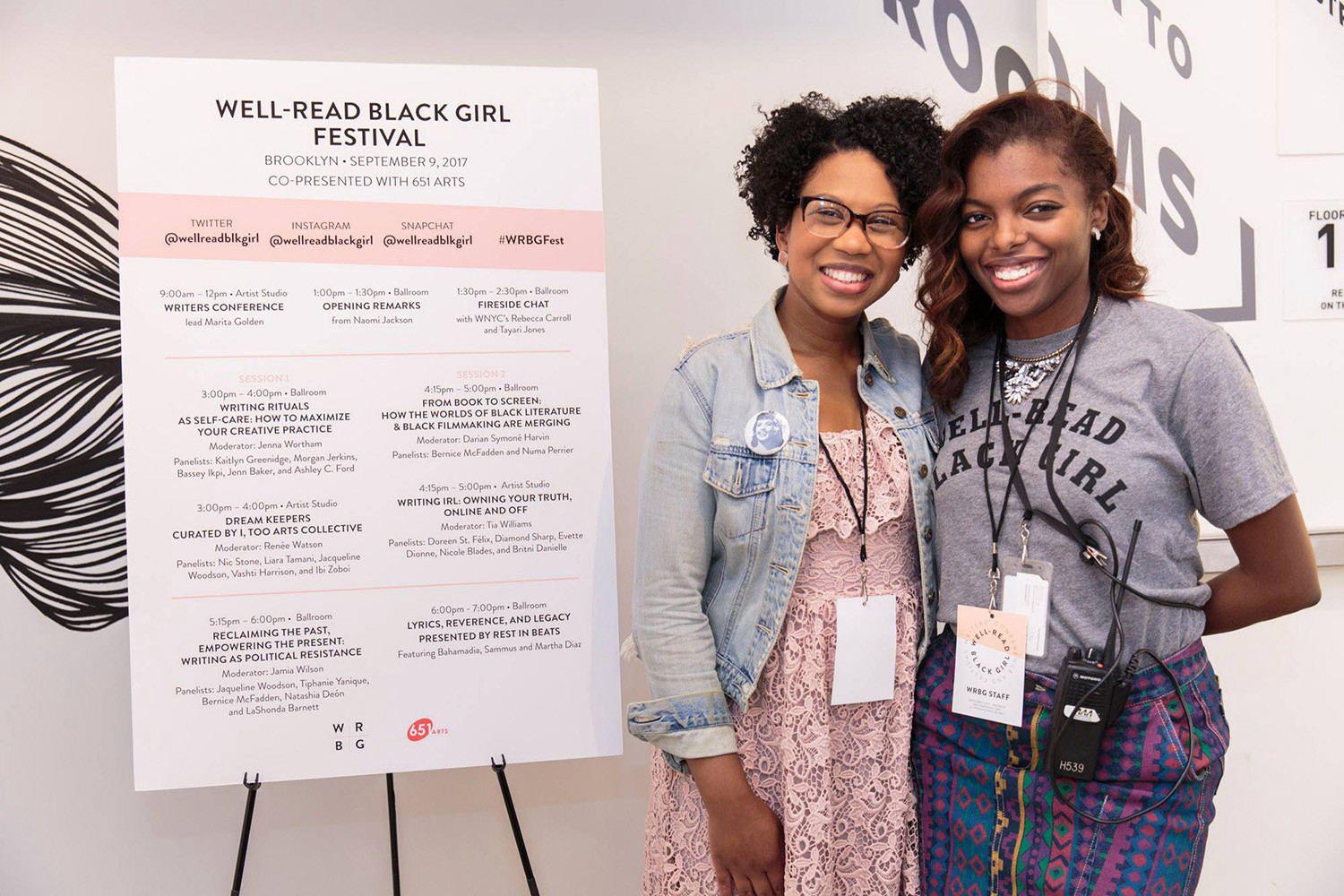
The inaugural Well-Read Black Girl (WRBG) Festival was a family affair, truly. Or better yet, in the words of Shirleen Robinson, a WRBG book club member and attendee, it felt “like a homecoming.” Homecoming pinpoints the energy and morale of everyone at WRBG Fest. Homecoming invites the memory of being welcomed with open arms. Homecoming is the place that you want to be in and once you’re there couldn’t imagine being anywhere else.

On September 9, BRIC, an arts organization in downtown Brooklyn, housed a sea of brown faces of varying hues, all of them eager to inhabit the space, excitedly tweeting while listening intently (yes, you can do both), and anticipating what came next. The June Kickstarter for the WRBG festival not only made its original goal but obliterated it within the first week, and the hype was to be believed. Everything came to fruition seamlessly, lovingly, and with purpose.

The several hundred attendees were primarily Black women, but also men, women, and nonbinary attendees of other ethnicities. I was one of those women who watched and felt the audience hang on to every word, starting with Tayari Jones’ fireside chat with WNYC’s Rebecca Carroll. Naomi Jackson’s opening remarks and those of Well-Read Black Girl founder Glory Edim had the main room packed to standing room only. Across the hall in the studio was the overflow crowd who watched the fireside discussion live. Familiar “ummhmms,” similar to those that fill conversations between me and my friends, reverberated through the space when Jones said that “perfectionism can be your way of procrastinating.” We didn’t all know each other in that moment, but we shared those knowing glances while murmuring our agreement.

We didn’t all know each other in that moment, but we shared those knowing glances while murmuring our agreement.

The theme of paralysis, of ownership, of intent was ever present on the panels at WRBG Fest. These themes can and have halted us as women, as women of color, as women writers of color, in varying degrees. There was the understanding that all of us as artists feel a certain level of hesitation about our work and place in the art world. Yet as Black women, the weight and expectations, from ourselves and the outside world, was different, distinct, and one on which we could silently commiserate, while writers — both debuts and highly established — relayed their struggles, their joys, and their enthusiasm to be in this space made by Black women, for Black women, and in celebration of Black women.

From the day it was announced as a Kickstarter campaign, or really from the time Glory Edim created Well-Read Black Girl, the solidity and size of the community could not be dismissed. The overwhelming buying power and support of Black women by Black women has resulted in the ongoing success and growth of online communities like Black Girl Nerds or For Harriet, steady ticket sales for the film Girls Trip, and the achievements of other Black female curated areas in- and outside of the arts. In less than three months, Edim and team members Carla Bruce-Eddings (books editor), Ebony LaDelle (publishing advisor), and Dianca London Potts (online editor) worked with the support of others in the arts community to make this idea come to fruition. The overwhelming response made clear that it’s time for Black women to acknowledge our place and contributions in the art world — and in lieu of the industry creating this space, Black women would once again build it for ourselves.

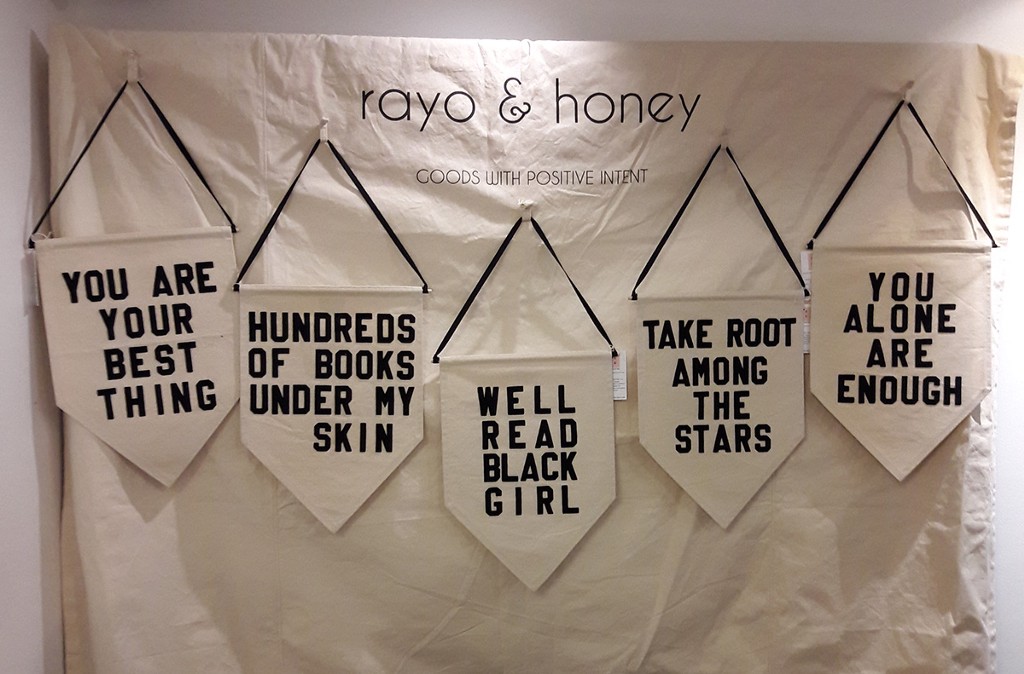
The success of WRBG Fest also lies in the structure. The morning was dedicated to a conference that included a small workshop lead by Marita Golden and a literary agent roundtable. This provided the hands-on craft portion and provided access to publishing professionals. The rest of the festival included discussions with well-known authors like Bernice McFadden, Jacqueline Woodson, Tiphanie Yanique, Nicole Blades; those with debut books on the horizon such as Morgan Jerkins, Jenna Wortham, and Vashti Harrison; as well as established critics and editors like Doreen St. Felix, Rebecca Carroll, Evette Dionne, and Ashley Ford. Topics included self-care and writing methods, owning your truth online and off, writing as resistance, and a kidlit chat. The latter panel was organized by the nonprofit I, Too Arts Collective founded by author and social justice educator Renée Watson. The new nonprofit was also a partner along with PEN America and Rest in Beats. Rayo & Honey was tapped to provide WRBG curated pennants for inspiration with quotes from literary legends like Toni Morrison and Maya Angelou. (The overall event was co-presented with 651 Arts.)

In lieu of the industry creating this space, Black women would once again build it for ourselves.

WRBG Fest kept things small the first time around to further build audience and community for WRBG. In addition, Brooklyn high school students and participants in I, Too Arts’ Langston Hughes Young Writers Institute were invited to attend the festival specifically for the Dream Keepers children’s literature panel that included Jacqueline Woodson, Ibi Zoboi, Liara Tamani, Vashti Harrison, Nic Stone, and was moderated by Watson. It was important for the younger generation to not only bear witness to this event but also feel their worth with so many women writers surrounding them at different stages in their journeys.

“It’s really powerful to see so many Black women together celebrating literacy and celebrating each other,” Watson told me, “I think there’s this myth that Black women don’t get along and there’s all this bickering and jealousy and fighting, but all these major authors are here and I’ve seen nothing but love and hugs. That’s a beautiful, powerful thing. And it’s a powerful thing to show to our young people.”

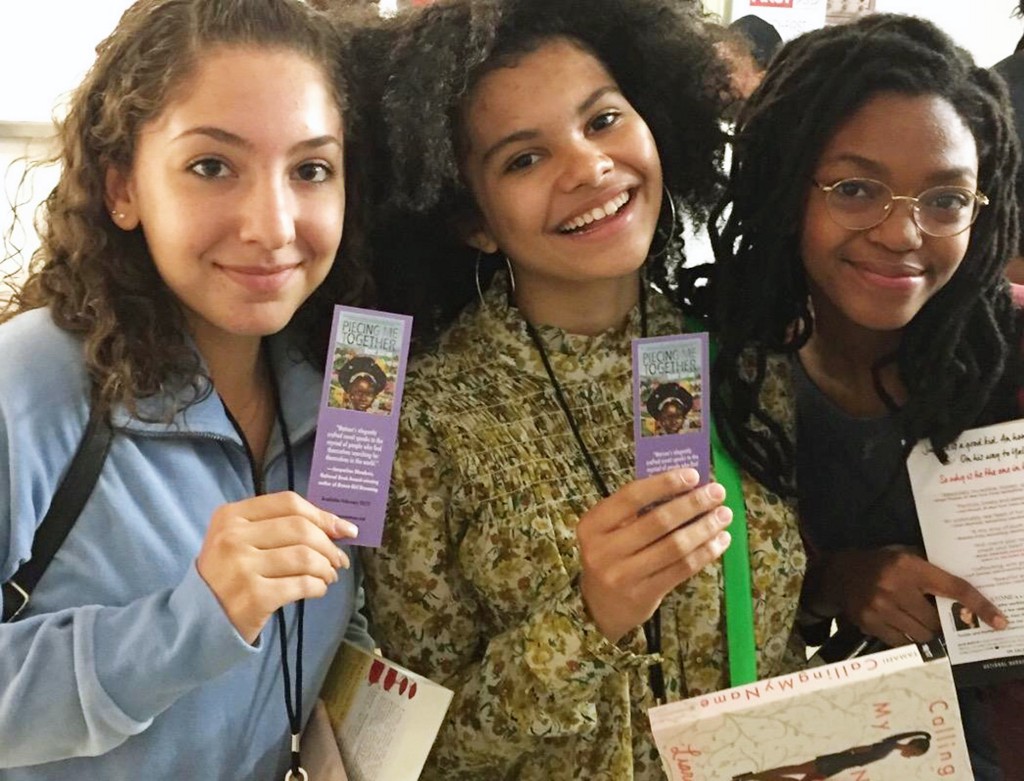
I, Too Arts Collective’s Langston Hughes Young Writers Institute participants who attended WRBG Festival and received books at the YA Dream Keepers panel

The partnership with I, Too, Arts was a “natural fit,” Watson said, as I, Too Arts’ efforts were intertwined with WRBG’s. Watson mentioned that she and Edim are mutual fans of one another. Haymarket Books, publisher of the September WRBG bookclub pick Electric Arches by Eve Ewing, was on hand to sell copies. WORD Bookstore was also fully stocked with Black woman voices from those present to those who have been WRBG bookclub picks in the past like debut Zinzi Clemmons’ What We Lose and highly praised titles such as Brit Bennett’s The Mothers.

Mothers brought daughters, writers brought their notebooks, and everyone brought good energy. As a Black woman who has inhabited many artist spaces, I can say that the spirit here was felt deeply in my marrow. While there are festivals dedicated to the PoC experience, more are being built within the community to exemplify and lift up the Black female experience, especially for artists. To see such a range of authors and artists in one space, so close, and at an accessible price point (festival tickets were $15) made WRBG Festival stand out with the warmth and enthusiasm Edim has brought to the bookclub she created two years ago. I wasn’t the only one who felt how special this moment was. National Book Award winning author, and a judge for fiction this year, Jacqueline Woodson enthusiastically exclaimed how phenomenal WRBG Fest was: “I can’t believe we’re all in a bunch of rooms together. It feels safe and necessary and empowering and exciting.”

Mothers brought daughters, writers brought their notebooks, and everyone brought good energy.

Recent Whiting Award recipient Kaitlyn Greenidge emphasized that the overall planning of WRBG Fest made it one of the best she’d been to. “I think Glory and the team at WRBG have been phenomenal at bringing in women readers and bringing in people who are interested, people who are maybe just casual readers and people who absolutely love books and people who work in the industry. I’ve seen all those types at this conference.” She added that seeing “all those types being welcome is rare at literary conferences.”

The WRBG team was committed to continuing to foster that sense of community and be welcoming. Bruce-Eddings noted that while the focus of the festival would always remain on Black women anyone who wanted to join in these festivities was welcome, and that wasn’t going to change anytime soon.

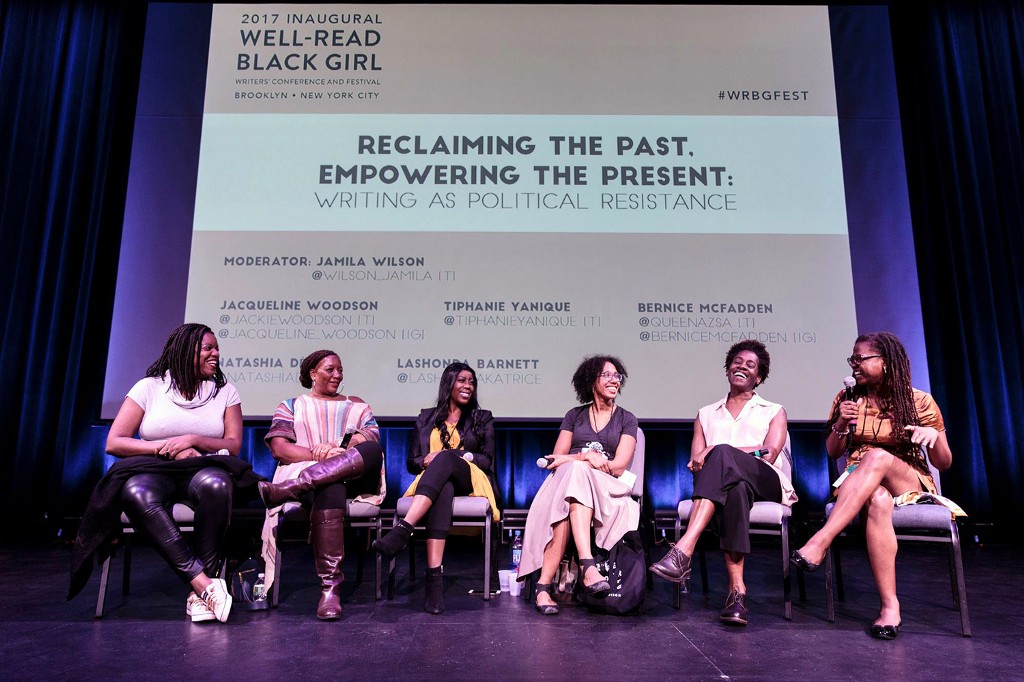
Writing as Political Resistance Panel with LaShonda K. Barnett, Bernice L. McFadden, Natashia Deon, Tiphanie Yanique, Jacqueline Woodson, moderated by Feminist Press’s Jamia Wilson

WRBG has always highlighted the intensity and focus of Black women writers, giving a platform to share and promote new work that is often ignored or even hidden by the publishing industry. Material can be eclectic, not always rooted in pain but illustrating promise, sacrifice, and beauty — and WRBG lifts these conversations to another level through a closer inspection of identity, craft, and experience in the work we see published traditionally. This can often be absent in the critique of titles that exist because few PoC voices are in the field of criticism to expound on those connections.

We Need Diverse Books, But We Also Need Diverse Reviewers

Being part of the WRBG community as team member and an artist has been pivotal for London Potts, she says, because it’s so important for Black women writers to come together and not be in a vacuum. “I think I struggle as a lot of other people today who are writers of the fear of the blank page, the anxiety of a deadline, the sense of maybe my work isn’t urgent enough,” she told me. “And I feel like I’m in a constant state of writer’s block. And I’m also an anxious person and I feel I don’t always fit in a space. So I feel like this every morning when I wake up and schedule social media for WRBG it’s another affirmation that there’s a home for me and women like me.”

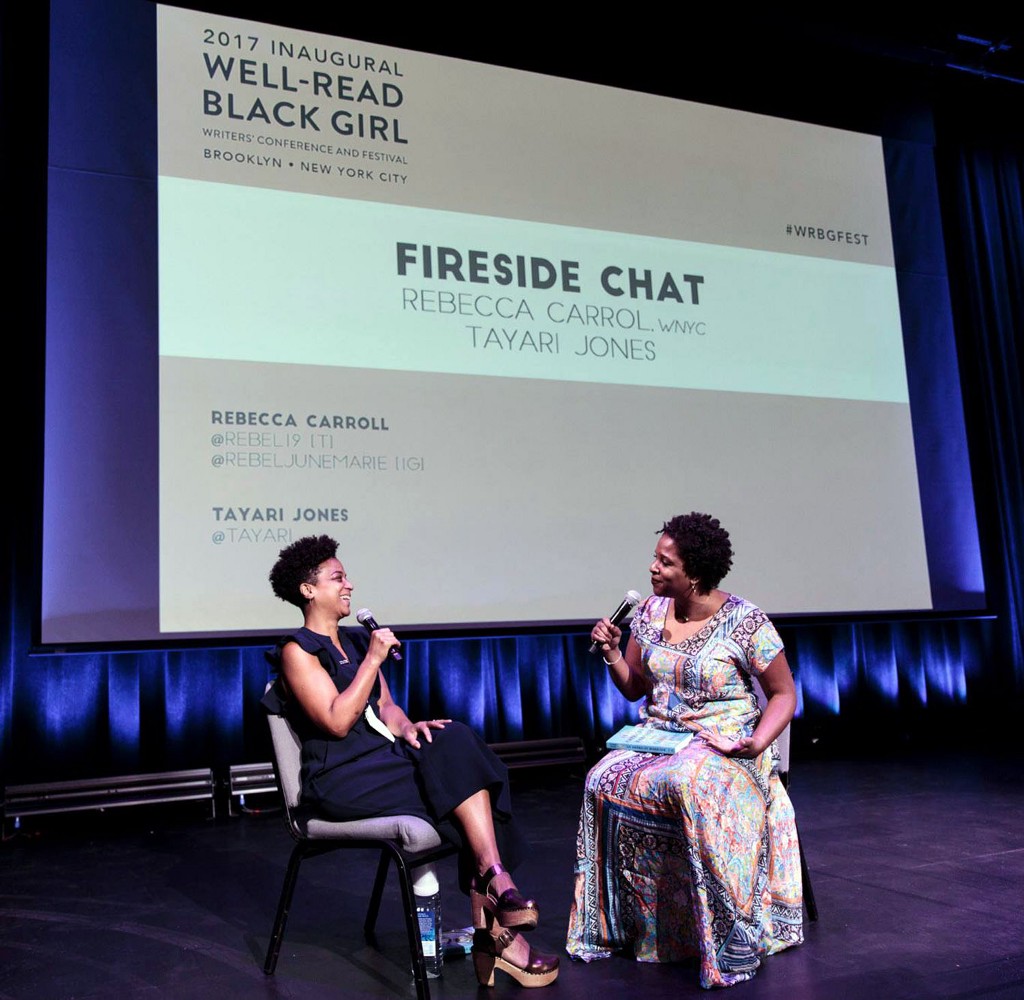
Author Tayari Jones in conversation with Rebecca Carroll for the WRBG Festival’s Fireside Chat.

The event closed with a performance from Madison McFerrin with Rest in Beats, and the presentation of flowers accompanied by heartfelt appreciation to Edim from her teammates. The entire festival was beautiful in the fact that it was a homecoming. I couldn’t temper my smile, nor did I want to, at the knowledge that we were all part of something so big, so necessary, and so timeless. There was no way we weren’t carrying this with us out BRIC’s doors, into the evening, and back to the page.

As Tayari Jones said earlier that day, “Hold this room in your heart so when people outside of it try to stop you, you’re encouraged to keep going.”

A Grandmother’s Story About Family Rejection

“Who’s Irish?”

by Gish Jen

In China, people say mixed children are supposed to be smart, and definitely my granddaughter Sophie is smart. But Sophie is wild, Sophie is not like my daughter Natalie, or like me. I am work hard my whole life, and fierce besides. My husband always used to say he is afraid of me, and in our restaurant, busboys and cooks all afraid of me too. Even the gang members come for protection money, they try to talk to my husband. When I am there, they stay away. If they come by mistake, they pretend they are come to eat. They hide behind the menu, they order a lot of food. They talk about their mothers. Oh, my mother have some arthritis, need to take herbal medicine, they say. Oh, my mother getting old, her hair all white now.

I say, Your mother’s hair used to be white, but since she dye it, it become black again. Why don’t you go home once in a while and take a look? I tell them, Confucius say a filial son knows what color his mother’s hair is.

Who’s Irish? (Electric Literature’s Recommended Reading Book 278)

My daughter is fierce too, she is vice president in the bank now. Her new house is big enough for everybody to have their own room, including me. But Sophie take after Natalie’s hus­band’s family, their name is Shea. Irish. I always thought Irish people are like Chinese people, work so hard on the railroad, but now I know why the Chinese beat the Irish. Of course, not all Irish are like the Shea family, of course not. My daughter tell me I should not say Irish this, Irish that.

How do you like it when people say the Chinese this, the Chi­nese that, she say.

You know, the British call the Irish heathen, just like they call the Chinese, she say.

You think the Opium War was bad, how would you like to live right next door to the British, she say.

And that is that. My daughter have a funny habit when she win an argument, she take a sip of something and look away, so the other person is not embarrassed. So I am not embarrassed. I do not call anybody anything either. I just happen to mention about the Shea family, an interesting fact: four brothers in the family, and not one of them work. The mother, Bess, have a job before she got sick, she was executive secretary in a big company. She is han­dle everything for a big shot, you would be surprised how complicated her job is, not just type this, type that. Now she is a nice woman with a clean house. But her boys, every one of them is on welfare, or so-called severance pay, or so-called disability pay. Something. They say they cannot find work, this is not the economy of the fifties, but I say, Even the black people doing bet­ter these days, some of them live so fancy, you’d be surprised. Why the Shea family have so much trouble? They are white people, they speak English. When I come to this country, I have no money and do not speak English. But my husband and I own our restau­rant before he die. Free and clear, no mortgage. Of course, I under­ stand I am just lucky, come from a country where the food is popular all over the world. I understand it is not the Shea family’s fault they come from a country where everything is boiled. Still, I say.

She’s right, we should broaden our horizons, say one brother, Jim, at Thanksgiving. Forget about the car business. Think about egg rolls.

Pad thai, say another brother, Mike. I’m going to make my for­tune in pad thai. It’s going to be the new pizza.

I say, You people too picky about what you sell. Selling egg rolls not good enough for you, but at least my husband and I can say, We made it. What can you say? Tell me. What can you say?

Everybody chew their tough turkey.

I especially cannot understand my daughter’s husband John, who has no job but cannot take care of Sophie either. Because he is a man, he say, and that’s the end of the sentence.

Plain boiled food, plain boiled thinking. Even his name is plain boiled: John. Maybe because I grew up with black bean sauce and hoisin sauce and garlic sauce, I always feel something is missing when my son-in-law talk.

But, okay: so my son-in-law can be man, I am baby-sitter. Six hours a day, same as the old sitter, crazy Amy, who quit. This is not so easy, now that I am sixty-eight, Chinese age almost seventy. Still, I try. In China, daughter take care of mother. Here it is the other way around. Mother help daughter, mother ask, Anything else I can do? Otherwise daughter complain mother is not sup­portive. I tell daughter, We do not have this word in Chinese, supportive. But my daughter too busy to listen, she has to go to meeting, she has to write memo while her husband go to the gym to be a man. My daughter say otherwise he will be depressed. Seems like all his life he has this trouble, depression.

No one wants to hire someone who is depressed, she say. It is important for him to keep his spirits up.

Beautiful wife, beautiful daughter, beautiful house, oven can clean itself automatically. No money left over, because only one income, but lucky enough, got the baby-sitter for free. If John lived in China, he would be very happy. But he is not happy. Even at the gym things go wrong. One day, he pull a muscle. Another day, weight room too crowded. Always something.

Until finally, hooray, he has a job. Then he feel pressure.

I need to concentrate, he say. I need to focus.

He is going to work for insurance company. Salesman job. A paycheck, he say, and at least he will wear clothes instead of gym shorts. My daughter buy him some special candy bars from the health-food store. They say THINK! on them, and are supposed to help John think.

John is a good-looking boy, you have to say that, especially now that he shave so you can see his face.

I am an old man in a young man’s game, say John. I will need a new suit, say John.

This time I am not going to shoot myself in the foot, say John.

Good, I say.

She means to be supportive, my daughter say. Don’t start the send her back to China thing, because we can’t.

Sophie is three years old American age, but already I see her nice Chinese side swallowed up by her wild Shea side. She looks like mostly Chinese. Beautiful black hair, beautiful black eyes. Nose perfect size, not so flat looks like something fell down, not so large looks like some big deal got stuck in wrong face. Everything just right, only her skin is a brown surprise to John’s family. So brown, they say. Even John say it. She never goes in the sun, still she is that color, he say. Brown. They say, Nothing the matter with brown. They are just surprised. So brown. Nattie is not that brown, they say. They say, It seems like Sophie should be a color in between Nattie and John. Seems funny, a girl named Sophie Shea be brown. But she is brown, maybe her name should be Sophie Brown. She never go in the sun, still she is that color, they say. Nothing the matter with brown. They are just surprised.

The Shea family talk is like this sometimes, going around and around like a Christmas-tree train.

Maybe John is not her father, I say one day, to stop the train.

And sure enough, train wreck. None of the brothers ever say the word brown to me again.

Instead, John’s mother, Bess, say, I hope you are not offended.

She say, I did my best on those boys. But raising four boys with no father is no picnic.

You have a beautiful family, I say. I’m getting old, she say.

You deserve a rest, I say. Too many boys make you old. I never had a daughter, she say. You have a daughter.

I have a daughter, I say. Chinese people don’t think a daughter is so great, but you’re right. I have a daughter.

I was never against the marriage, you know, she say. I never thought John was marrying down. I always thought Nattie was just as good as white.

I was never against the marriage either, I say. I just wonder if they look at the whole problem.

Of course you pointed out the problem, you are a mother, she say. And now we both have a granddaughter. A little brown grand­ daughter, she is so precious to me.

I laugh. A little brown granddaughter, I say. To tell you the truth, I don’t know how she came out so brown.

We laugh some more. These days Bess need a walker to walk. She take so many pills, she need two glasses of water to get them all down. Her favorite TV show is about bloopers, and she love her bird feeder. All day long, she can watch that bird feeder, like a cat.

I can’t wait for her to grow up, Bess say. I could use some female company.

Too many boys, I say.

Boys are fine, she say. But they do surround you after a while.

You should take a break, come live with us, I say. Lots of girls at our house.

Be careful what you offer, say Bess with a wink. Where I come from, people mean for you to move in when they say a thing like that.

Nothing the matter with Sophie’s outside, that’s the truth. It is inside that she is like not any Chinese girl I ever see. We go to the park, and this is what she does. She stand up in the stroller. She take off all her clothes and throw them in the fountain.

Sophie! I say. Stop!

But she just laugh like a crazy person. Before I take over as baby-sitter, Sophie has that crazy-person sitter, Amy the guitar player. My daughter thought this Amy very creative-another word we do not talk about in China. In China, we talk about whether we have difficulty or no difficulty. We talk about whether life is bitter or not bitter. In America, all day long, people talk about creative. Never mind that I cannot even look at this Amy, with her shirt so short that her belly button showing. This Amy think Sophie should love her body. So when Sophie take off her diaper, Amy laugh. When Sophie run around naked, Amy say she wouldn’t want to wear a diaper either. When Sophie go shu-shu in her lap, Amy laugh and say there are no germs in pee. When Sophie take off her shoes, Amy say bare feet is best, even the pediatrician say so. That is why Sophie now walk around with no shoes like a beggar child. Also why Sophie love to take off her clothes.

Turn around! say the boys in the park. Let’s see that ass!

Of course, Sophie does not understand. Sophie clap her hands, I am the only one to say, No! This is not a game.

It has nothing to do with John’s family, my daughter say. Amy was too permissive, that’s all.

But I think if Sophie was not wild inside, she would not take off her shoes and clothes to begin with.

You never take off your clothes when you were little, I say. All my Chinese friends had babies, I never saw one of them act wild like that.

Look, my daughter say. I have a big presentation tomorrow.

John and my daughter agree Sophie is a problem, but they don’t know what to do.

You spank her, she’ll stop, I say another day. But they say, Oh no.

In America, parents not supposed to spank the child.

It gives them low self-esteem, my daughter say. And that leads to problems later, as I happen to know.

My daughter never have big presentation the next day when the subject of spanking come up.

I don’t want you to touch Sophie, she say. No spanking, period.

Don’t tell me what to do, I say.

I’m not telling you what to do, say my daughter. I’m telling you how l feel.

I am not your servant, I say. Don’t you dare talk to me like that. My daughter have another funny habit when she lose an argu­ment. She spread out all her fingers and look at them, as if she like to make sure they are still there.

My daughter is fierce like me, but she and John think it is bet­ter to explain to Sophie that clothes are a good idea. This is not so hard in the cold weather. In the warm weather, it is very hard.

Use your words, my daughter say. That’s what we tell Sophie. How about if you set a good example.

As if good example mean anything to Sophie. I am so fierce, the gang members who used to come to the restaurant all afraid of me, but Sophie is not afraid.

I say, Sophie, if you take off your clothes, no snack.

I say, Sophie, if you take off your clothes, no lunch.

I say, Sophie, if you take off your clothes, no park.

Pretty soon we are stay home all day, and by the end of six hours she still did not have one thing to eat. You never saw a child stubborn like that.

I’m hungry! she cry when my daughter come home.

What’s the matter, doesn’t your grandmother feed you? My daughter laugh.

No! Sophie say. She doesn’t feed me anything! My daughter laugh again. Here you go, she say. She say to John, Sophie must be growing.

Growing like a weed, I say.

Still Sophie take off her clothes, until one day I spank her. Not too hard, but she cry and cry, and when I tell her if she doesn’t put her clothes back on I’ll spank her again, she put her clothes back on. Then I tell her she is good girl, and give her some food to eat. The next day we go to the park and, like a nice Chinese girl, she does not take off her clothes.

She stop taking off her clothes, I report. Finally! How did you do it? my daughter ask.

After twenty-eight years experience with you, I guess I learn something, I say.

It must have been a phase, John say, and his voice is suddenly like an expert.

His voice is like an expert about everything these days, now that he carry a leather briefcase, and wear shiny shoes, and can go shopping for a new car. On the company, he say. The company will pay for it, but he will be able to drive it whenever he want.

A free car, he say. How do you like that.

It’s good to see you in the saddle again, my daughter say. Some of your family patterns are scary.

At least I don’t drink, he say. He say, And I’m not the only one with scary family patterns.

That’s for sure, say my daughter.

Everyone is happy. Even I am happy, because there is more trouble with Sophie, but now I think I can help her Chinese side fight against her wild side. I teach her to eat food with fork or spoon or chopsticks, she cannot just grab into the middle of a bowl of noo­dles. I teach her not to play with garbage cans. Sometimes I spank her, but not too often, and not too hard.

Still, there are problems. Sophie like to climb everything. If there is a railing, she is never next to it. Always she is on top of it. Also, Sophie like to hit the mommies of her friends. She learn this from her playground best friend, Sinbad, who is four. Sinbad wear army clothes every day and like to ambush his mommy. He is the one who dug a big hole under the play structure, a foxhole he call it, all by himself. Very hardworking. Now he wait in the foxhole with a shovel full of wet sand. When his mommy come, he throw it right at her.

Oh, it’s all right, his mommy say. You can’t get rid of war games, it’s part of their imaginative play. All the boys go through it.

Also, he like to kick his mommy, and one day he tell Sophie to kick his mommy too.

I wish this story is not true. Kick her, kick her! Sinbad say.

Sophie kick her. A little kick, as if she just so happened was swinging her little leg and didn’t realize that big mommy leg was in the way. Still I spank Sophie and make Sophie say sorry, and what does the mommy say?

Really, it’s all right, she say. It didn’t hurt.

After that, Sophie learn she can attack mommies in the play­ ground, and some will say, Stop, but others will say, Oh, she didn’t mean it, especially if they realize Sophie will be punished.

This is how, one day, bigger trouble come. The bigger trouble start when Sophie hide in the foxhole with that shovel full of sand. She wait, and when I come look for her, she throw it at me. All over my nice clean clothes.

Did you ever see a Chinese girl act this way?

Sophie! I say. Come out of there, say you’re sorry.

But she does not come out. Instead, she laugh. Naaah, naah­ na, naaa-naaa, she say.

I am not exaggerate: millions of children in China, not one act like this.

Sophie! I say. Now! Come out now!

But she know she is in big trouble. She know if she come out, what will happen next. So she does not come out. I am sixty-eight, Chinese age almost seventy, how can I crawl under there to catch her? Impossible. So I yell, yell, yell, and what happen? Nothing. A Chinese mother would help, but American mothers, they look at you, they shake their head, they go home. And, of course, a Chi­nese child would give up, but not Sophie.

I hate you! she yell. I hate you, Meanie!

Meanie is my new name these days.

Long time this goes on, long long time. The foxhole is deep, you cannot see too much, you don’t know where is the bottom. You cannot hear too much either. Ifshe does not yell, you cannot even know she is still there or not. After a while, getting cold out, getting dark out. No one left in the playground, only us.

Sophie, I say. How did you become stubborn like this? I am go home without you now.

I try to use a stick, chase her out of there, and once or twice I hit her, but still she does not come out. So finally I leave. I go out­ side the gate.

Bye-bye! I say. I’m go home now.

But still she does not come out and does not come out. Now it is dinnertime, the sky is black. I think I should maybe go get help, but how can I leave a little girl by herself in the playground? A bad man could come. A rat could come. I go back in to see what is happen to Sophie. What if she have a shovel and is making a tun­nel to escape?

Sophie! I say. No answer.

Sophie!

I don’t know if she is alive. I don’t know if she is fall asleep down there. If she is crying, I cannot hear her.

So I take the stick and poke.

Sophie! I say. I promise I no hit you. If you come out, I give you a lollipop.

No answer. By now I worried. What to do, what to do, what to do? I poke some more, even harder, so that I am poking and pok­ing when my daughter and John suddenly appear.

What are you doing? What is going on? say my daughter. Put down that stick! say my daughter.

You are crazy! say my daughter.

John wiggle under the structure, into the foxhole, to rescue Sophie.

She fell asleep, say John the expert. She’s okay. That is one big hole.

Now Sophie is crying and crying.

Sophia, my daughter say, hugging her. Are you okay, peanut?

Are you okay?

She’s just scared, say John.

Are you okay? I say too. I don’t know what happen, I say.

She’s okay, say John. He is not like my daughter, full of ques­tions. He is full of answers until we get home and can see by the lamplight.

Will you look at her? he yell then. What the hell happened?

Bruises all over her brown skin, and a swollen-up eye.

You are crazy! say my daughter. Look at what you did! You are crazy!

I try very hard, I say.

How could you use a stick? I told you to use your words! She is hard to handle, I say.

She’s three years old! You cannot use a stick! say my daughter. She is not like any Chinese girl I ever saw, I say.

I brush some sand off my clothes. Sophie’s clothes are dirty too, but at least she has her clothes on.

Has she done this before? ask my daughter. Has she hit you before?

She hits me all the time, Sophie say, eating ice cream. Your family, say John.

Believe me, say my daughter.

A daughter I have, a beautiful daughter. I took care of her when she could not hold her head up. I took care of her before she could argue with me, when she was a little girl with two pigtails, one of them always crooked. I took care of her when we have to escape from China, I took care of her when suddenly we live in a country with cars everywhere, if you are not careful your little girl get run over. When my husband die, I promise him I will keep the family together, even though it was just two of us, hardly a family at all.

But now my daughter take me around to look at apartments. After all, I can cook, I can clean, there’s no reason I cannot live by myself, all I need is a telephone. Of course, she is sorry. Sometimes she cry, I am the one to say everything will be okay. She say she have no choice, she doesn’t want to end up divorced. I say divorce is terrible, I don’t know who invented this terrible idea. Instead of live with a telephone, though, surprise, I come to live with Bess.

Imagine that. Bess make an offer and, sure enough, where she come from, people mean for you to move in when they say things like that. A crazy idea, go to live with someone else’s family, but she like to have some female company, not like my daughter, who does not believe in company. These days when my daughter visit, she does not bring Sophie. Bess say we should give Nattie time, we will see Sophie again soon. But seems like my daughter have more presentation than ever before, every time she come she have to leave.

I have a family to support, she say, and her voice is heavy, as if soaking wet. I have a young daughter and a depressed husband and no one to turn to.

When she say no one to turn to, she mean me.

These days my beautiful daughter is so tired she can just sit there in a chair and fall asleep. John lost his job again, already, but still they rather hire a baby-sitter than ask me to help, even they can’t afford it. Of course, the new baby-sitter is much younger, can run around. I don’t know if Sophie these days is wild or not wild. She call me Meanie, but she like to kiss me too, sometimes. I remember that every time I see a child on TV. Sophie like to grab my hair, a fistful in each hand, and then kiss me smack on the nose. I never see any other child kiss that way.

The satellite TV has so many channels, more channels than I can count, including a Chinese channel from the Mainland and a Chinese channel from Taiwan, but most of the time I watch bloopers with Bess. Also, I watch the bird feeder-so many, many kinds of birds come. The Shea sons hang around all the time, ask­ing when will I go home, but Bess tell them, Get lost.

She’s a permanent resident, say Bess. She isn’t going anywhere.

Then she wink at me, and switch the channel with the remote control.

Of course, I shouldn’t say Irish this, Irish that, especially now I am become honorary Irish myself, according to Bess. Me! Who’s Irish? I say, and she laugh. All the same, if I could mention one thing about some of the Irish, not all of them of course, I like to mention this: Their talk just stick. I don’t know how Bess Shea learn to use her words, but sometimes I hear what she say a long time later. Permanent resident. Not going anywhere. Over and over I hear it, the voice of Bess.

I’m Almost 40 and Still Getting My Stories Rejected—Am I Running Out of Time?

The Blunt Instrument is a semi-regular advice column for writers. If you need tough advice for a writing problem, send your question to blunt@electricliterature.com.

Dear Blunt Instrument,

I’ve read through your past columns about the anxiety of rejection, and also, past Electric Literature posts about why pieces get rejected.

I am in a period of acute existential anxiety, which has led me to do all kinds of things, like fire my therapist — who didn’t understand why I was reading for pleasure when I was in graduate school (an MFA!) and told me that I “chose” to write fiction because subconsciously I knew I would never succeed — and to start training for a century ride.

The extreme and acute existential anxiety drives me — I have been called “hellaciously productive” — but it also is obviously unhealthy and not sustainable. It derives from two things:

  1. I’m heading into my last year of MFA and I don’t know what happens after but I have to start worrying about how I’ll eat after graduation now;
  2. I’m old as fuck for an MFA: I can never be a Something Under 35, I may never be an Anything Under 40, and the prospect of being an over-40, emerging writer is, well, scary and humiliating when your twenty-something peers are scooping up accolades; and okay, three things;
  3. Most immediately, for the last year I have been in a nice rejection note holding pattern for my fiction writing: I get more “long lists” and “please re-submit in the future” and “we look forward to reading more of your work” than I do form rejections — but still no actual acceptances.

On the one hand, these are great and encouraging, because the people who edit magazines and journals that I’ve loved for years think my work is “compelling” and “enjoyed reading it” and “found much to admire.” On the other hand, I cannot use that pay my landlord, my impending student loans, my maxed out credit cards, my dentist (surprise: I grind my teeth), or the new therapist that I’m trying to find now.

At times, it seems bizarre and cruel that fiction publishing operates the way in which it does, like some kind of purgatory: like I have to write 2500 words a day for X amount of years, read X amount of books, re-submit to the same 25 publications and awards X times, and eventually, hopefully, maybe land an agent and maybe earn an audience outside of my cohort. I keep learning new things and working, but it hurts something terrible when it comes to nothing, and it becomes scary when I consider these failures in light of the rest of my life: senior parents who rent and live check-to-check, raging student debt from undergrad (despite working full time all the way through it), and a series of false starts in other careers.

I’ve done the things you’re supposed to do: “rejection therapy,” working as a reader, working as an editorial assistant and intern, writing reviews and criticism, reading everything I could get my hands on, applying and being accepted to a funded MFA, and working my ass off since I’ve been here. I write every day, I read every day, I revise and interrogate my own work constantly. And yet, it is to no avail. When I try to talk to other, more established writers about this, they tell me to “be patient” and it “takes time” but it feels like I don’t really have that — my eggs are shriveling and my face is wrinkling; statistically, women hit peak wage-earning capacity at 35 and face hiring discrimination after 40 — and it just feels like I’m too old to still be figuring things out.

It just feels like I’m too old to still be figuring things out.

The short of it: am I too old to even matter? Should I just give up on fiction? I feel like I am good, and like I have important things to say, but that nobody really wants to listen, and that soon enough, I will be an invisible old bag anyway, chain-smoking American Spirits in a secondhand muumuu, surrounded by a pack of borderline-feral lapdogs, walls to my studio apartment washi-taped with all of my encouraging declines on Submittable.

The short of it: when does “we look forward to reading more of your work in the future” become “we look forward to publishing your work”?

Sincerely,

How Soon Is Now

PS: Also, I should probably chill out, but it seems like my concerns are reasonable and that a certain level of doubt and fear keeps me moving. How do I keep my writing anxiety on the productive side and not let it destroy me? (Asking for my molars.)


Dear How Soon,

There’s a lot going on in your letter, and as you mention, I’ve addressed some of your concerns in this column before (in particular, dealing with the anxiety of rejection). So I won’t linger too long there, except to say that I think you’re doing almost everything right — you’re working hard, you’re productive, and your writing is getting very close to publication. All signs suggest that you’re going to get good news soon. Your established writer friends are correct: it takes time; be patient.

I do see a few errors in your thinking, though — areas where resetting your expectations and getting more perspective could help you keep up your work with less teeth grinding.

First, let’s establish that there’s nothing “bizarre and cruel” about the work involved in a writing career. You say it feels “like some kind of purgatory: like I have to write 2500 words a day for X amount of years, read X amount of books, re-submit to the same 25 publications and awards X times, and eventually, hopefully, maybe land an agent and maybe earn an audience outside of my cohort.” Yes, you need to write and read and submit for many hours and do it all over again for many years before you’re going to be successful, but it’s not because gatekeepers are hazing you. It’s because experience will make you a better writer. Getting an MFA doesn’t magically mean you’re done learning and deserve to get published, and just because you’re getting your MFA later than some doesn’t mean you get to skip the work that occurs outside and after the MFA.

Second, let’s talk about ageism. I understand that being surrounded by 20-somethings can make you feel old. (Some of my direct reports like to append their birth year to their passwords; they were born in the 1990s.) But think about how your letter would sound to someone ten or twenty or thirty years older than you. How will it sound to you, if you read it in ten or twenty or thirty years? Heck, I am about your age and I’m vaguely offended that you even question whether you are “too old to even matter.” The answer is NO, you are not too old and will never be too old. Too old for what? Almost dead people still matter, and writing isn’t gymnastics. There is ageism in publishing, but self-loathing and defeatism won’t help our cause. Further, you don’t have to put your birth year in your cover letter, so there is no reason to think age has something to do with your rejections.

There is ageism in publishing, but self-loathing and defeatism won’t help our cause.

Penelope Fitzgerald was 58 when she published her first book, a biography. She was 60 when she published her first novel. You’ve got twenty years to beat her time. Don’t worry about getting on an “Under X” list. They’re silly and ageist. Also ageist: The image of an aging woman writer as an “old bag” “chain-smoking” in a “secondhand muumuu.” Who says people with muumuus and lapdogs can’t be great writers? (I’m reminded of Mary McCarthy calling Dorothy Parker disappointingly “dumpy” in her memoirs, for which I will never forgive her.) We can’t complain about being the victims of ageism if we are ageist ourselves. In other words, be the change you want to see in the world, etc.

Third, let’s talk about money. You say that you can’t use nice rejections to pay your bills. Unfortunately, you’re not going to be able to use acceptance letters to pay your bills either. Many magazines and journals pay nothing at all, and others only a small honorarium (say, somewhere between $50 and $500 per piece). Even at the high end, you’d have to publish 60 stories in a year (more than one per week) to net $30,000, and at those wages you’d be going further into debt, not getting out of it.

Support Electric Lit: Become a Member!

A vanishingly small number of writers can afford to live on book sales alone. Especially at this stage of your career, it’s crucial that you find another form of employment. You may eventually make some money from your fiction (I hope you do!) but you can’t depend on it. Get a job that provides a stable source of income and health (and dental) insurance, and ideally leaves you time for writing. Easier said than done, I know, but writing isn’t easy. For that matter life in general is not easy.

To circle back to where we started, I’ll repeat: You’re doing almost everything right. Keep up the hard work, but remember that the time you’re spending writing and reading and submitting (not to mention living) is not some kind of symbolic prerequisite for getting to the big writers’ table; it’s necessary time that is making you better. The better your writing gets, the easier it will be to get published. (We all know shitty work gets published too.)

The time you’re spending writing and reading and submitting is not some kind of symbolic prerequisite for getting to the big writers’ table; it’s necessary time that is making you better.

Also, get another therapist — but make sure your new therapist is sympathetic to the needs of artists. There are actually therapists that specialize in working with writers and artists, though one writer friend of mine who deals with anxiety, and has a great relationship with his current therapist, says his best advice for finding the right one is to pick someone older — a nice reminder of the value of experience.

I wish you luck and mental peace.

—The Blunt Instrument

Tiny White People Took Over My Brain

Hiding out in the suburbs, on the hard drive of the Windows desktop that still lives in my childhood bedroom, are the remains of the world’s whitest novel. We’re talking upper-middle-class-ennui white. Picket-fenced, silently-seething-marital-dissatisfaction white. Where every person is conversant in Cheever’s entire catalog and has started, finished, or seriously contemplated a Ph.D. These characters don’t just see psychoanalysts, they are psychoanalysts.

I fared no better with short fiction. My head was crawling with enough tiny white people to populate several years’ worth of stories, many of which wound up published in Canadian literary journals. If I ever felt brave enough to mention race at all in my writing, it was either as an awkward conversational topic, or worse, a minor plot point — the functions to which the world had consigned it in my own life. Implicitly, every character in the work was white. Explicit mention of a person’s race was more to point out what they weren’t, which was white.

You’d be forgiven for expressing surprise that the author of these fictions was an eighteen-year-old woman of color — one who seemed to view the world with the blinders of an old white man.

My stories were evidence for the imagined judge and jury  of how many tiny white people could dance on the head of my pen.

“Who wrote this shit?” is a common sentiment among writers confronting their past work. There’s a distinct pleasure to this bit of theater, namely due to its silent implication — that the writer has improved since then, transforming her sentences in the crucible of craft. But the work is also genuinely hard to face. I struggle to charitably imagine my way back into my teenage psyche, that of a girl so averse to taking on race in her fiction — despite its status as, arguably, the most visible thing about her — that she took to tone-deafness instead; a clumsy, not-so-knowing wink at the reader that this was A Sensitive Subject. I’m told we should be kind to past versions of ourselves, so here’s my attempt at being charitable: these overwrought fictions were attempts to excise my intellectual anxieties, a glib performance of my vocabulary and theoretical smarts to prove my fitness for authorship. They were also an exercise in fanatic emulation, further evidence for the imagined judge and jury — who probably looked a lot like Wallace, Franzen, and Roth — of how many tiny white people could dance on the head of my pen.

But there was a deeper kind of anxiety at play than mere questions of talent or intelligence. These self-serious slices of white life were also a diversion, a bit of razzle-dazzle to distract the world from the writing that, just by looking at me, it might expect me to produce.

As a mixed-race woman, I inhabit a body that people have either too much or no fun trying to read. To make an explicit claim to my own heritage is often seen as an invitation to call my belonging into question. The places where I could easily opt out of facing such social torsion were the worlds where I was sovereign. So in my constructed realms I aimed for neutrality, and to my younger self, under the sway of a knotty mess of factors — reading habits, course syllabi, peer group, role models — “neutral” meant “white.” (Once, in a terrible writing workshop, one of my colleagues described my characters as “WASPy” — though only to ask why I’d bothered to make them Jewish).

As far as acts of intended subversion go, this one was a perfect failure. In seeking to circumvent the question of race, I wound up replicating the same ideologies that had cornered me into feeling like I didn’t deserve to write about it in the first place. “Write what you know” took a hard backseat. Instead, I wrote what I read.


My reading taste was never formed with the expectation that I should encounter, on the page, people who looked like me.

My reading taste was never formed with the expectation that I should encounter, on the page, people who looked like me. I did not think to demand representation from the works that I consumed, and for their part, the authors I read were content not to offer it. Instead I trained myself into literary cipher-hood, learning to commune with narratives that focused on what I only much later came to call “white people doing white things.” I can think of a number of reasons why, as a young person, such a communion could have seemed so natural. For one thing, psychological realism has always been my Achilles heel — nail it and I may well forget that everyone in your book is white. It’s also hard to find people who look like me, so perhaps at some point I just gave up trying to find them — and anyway, circumstances had arranged it such that I spent my time in mostly white spaces. When I bothered to look up from the page at the world around me, given slight adjustments for time period and geography, the slide clicked neatly into place.

All of which meant that I didn’t think to question the greatness, or the whiteness, of the works put in front of me. As a young person with undeveloped taste, I clung to the classics as a compass in the unknowable stacks of adult fiction. I convinced myself that consuming the texts of the titans was the work of becoming a writer. I affected, then developed, a taste for expensive sentences. An undergraduate English degree fed the beast. Mainstream creative writing wisdom, grounded in the principles of emulation, supported this parasitic hunger to inhabit the master’s sentences (see the famous commandments of author and god-aspirant Richard Bausch, with the numbers two and seven dictating, respectively, that thou shalt “imitate” and “eschew politics” — about the last pieces of advice any non-white writer should feel they have to follow). The sole force in my life that made an effort to diversify my tastes — if we’re not counting certain syllabi’s token inclusions of Beloved — was my mother.

I have always loved my mother unreservedly, but that doesn’t mean I was receptive to her suggestions. Any twinges I felt to read Maya or Toni or Zora or Alice were promptly stifled by the fact that to do so was framed as some kind of virtuous choice, like so many of the things my mother advocated but my adolescent self found personally offensive (curfews, piano practice, tuna casserole). More than that, I was deeply, destructively resentful of the idea that these texts were somehow “for me,” or “good for me,” in a way that the works on the Great Books Lists were not; that the shape of my taste could be predicted or in any way influenced by the way my body signified.

It’s not that I didn’t want to read Maya or Toni or Zora or Alice — it’s that I didn’t want to feel like I ought to read them. Like it was a duty that fell more heavily upon me and the people who looked like me than on those who could easily swap themselves in for a character in, say, Goodbye, Columbus. I’d settled for demanding less from the works that I read, which in all fairness should have guaranteed the logical opposite — that no works had more right than any other to make demands on me. Especially not while I was trying to conquer the classics. I read to know and understand, not to be known and understood. The relationship had only ever flowed in one direction. When it suddenly offered hints of the reciprocal I felt, more than anything else, offended.

It’s not that I didn’t want to read Maya or Toni or Zora or Alice — it’s that I didn’t want to feel like I OUGHT to read them.

While I insisted on sheltering my reading list from any forms of outside influence, I had absolutely no problem disrupting someone else’s. For a long time before I was brave enough to share my output with any kind of writing community, my mother was my sole litmus test. I’d push my fiction in front of her like a mouse I’d just killed, hungry for praise but usually just provoking the emotional equivalent of “I guess we’ve got mice.” My mom was always gracious when faced with this evidence of my mind’s infestations — gracious, but never in love. She’d read everything I gave her, compliment it, smirk at its smartass humour and coo over the diction, but it never seemed to touch her. Kind of like how I felt about Mao II.

But that wasn’t a connection I was capable of drawing at the time. I was merciless in my cross-examinations as I tried to plumb her responses for depths that, let’s be real, the work hardly merited. Things I wanted to know: Did she like it? Was it funny? Like actual ha-ha funny? Was it better than my last story? Did it remind her of any writers? Were they American? Were they men? (Being compared to men was always higher praise; my youthful priorities were misaligned along multiple axes.) Things I didn’t want to know: if she had any suggestions for improvement; if it hadn’t made her laugh; if it reminded her of anything Oprah liked. The wrong comment and I’d sulk for hours, certain of both the infallibility and the fundamental, enigmatic complexity of my tiny white people.

Other than the knowledge that she’d diligently fostered my love of language, I wonder if there was anything in this early work that my mother could even recognize, let alone connect with. Apart from taking place in a white suburb much like our own, my writing contained no tangible traces of our experience, not so much as a nod to our bodies or inner lives or cultural heritage. I wonder if she was struck by this absence; if it felt, as certain mid-century American writing sometimes makes me feel, like she’d mistaken a window for a mirror. If it was a jarring moment, reorienting herself to the awareness that this was the flat and awful lens through which her child perceived the world, as reflected in bits of test-tube lit where everyone was horrible to one another and also had no discernible day jobs.


As a younger writer, my pet fantasy took shape not just as literary fame, but as a particular question posed by a reporter: that authorial interview fixture, “what’s your relationship to your characters?” There’s a lot to be gleaned from a writer’s response. In a now-infamous conversation with the Kenyon Review, the novelist Richard Ford describes his relationship to his fictional creations as one of “[m]aster to slave.” As if that weren’t enough, Ford removes any traces of reasonable doubt by claiming to sometimes “hear them at night singing over in their cabins,” so caught up in his racist rhapsodies that he seems to forget the tenor of the metaphor: all the inmates of a Richard Ford cabin would be white, apathetic, and sleeping with somebody else’s wife. It’s an analogy that, in addition to being highly offensive, allows the writer to self-congratulate about both his discipline and the apparent reality of his creations — he can’t even escape their voices when he puts down the pen.

E.M. Forster gives us a similar humblebrag when he describes his characters seizing the reins and galloping off with the plot, a conceit Nabokov is quick to dismiss as derivative and “trite,” deadpanning instead that he works his own subjects like “galley slaves” (surprisingly, this one checks out — it’s tied to a very narrow context of European penal servitude, the second most severe punishment after execution, with a bonus Nabokovian pun on “galley” as the proofs of a book). Colson Whitehead’s decision in The Underground Railroad is both more interesting and more sensitive, rewriting a fugitive slave bulletin to proclaim of Cora, his main character, that “SHE WAS NEVER PROPERTY.” Within the narrative, Whitehead offers his protagonist a kind of apology for putting her through the traumas of the preceding pages, according her a freedom that neither the text nor history was able to provide.

My interviewer, I imagined, would ask the question for a different reason, expecting a different kind of answer: intending to sniff out the scent of autobiography in my work. The perfect metaphor to shut down such an invasive reading, I long ago decided, was to claim a parental relationship and call my characters my children. Nabokov would probably also find this figure trite and derivative, and he wouldn’t be wrong, but necessity trumps originality. The analogy propped up a number of crucial truths about the umbilicus between me and my tiny white people: I created them, they contained a part of me, any flaws of theirs I claimed as my own, but at base, we were separate and distinct.

This is not to say that love for my characters was absent, any more than a parent’s love for a child she created but does not completely understand. But it feels telling that I was so prepared for this criticism — do you honestly see yourself in these people — and so invested in defending myself against it. It feels telling that drawing a clear line of demarcation between the me and the not-me was my chosen defense.

At the same time, it seems a bit chilling to invoke the parent-child relationship as the basis of differentiation rather than affiliation. You’d think that after going through a process as birth-like as the one Hilary Mantel describes — one of physically “pull[ing]” her characters from “out of [her] own self” — that a writer would be a little prouder to claim the product as her own. But in my case, claiming my characters too openly might have invoked the same judgment that I’d been hearing on and off for my entire life: that the child looked nothing like the parents.

Claiming my characters too openly might have invoked the same judgment that I’d been hearing my entire life: that the child looked nothing like the parents.

I hadn’t read all of Cheever. My house was not edged by a picket fence. I did not stare moodily out of windows, nurturing dark thoughts because it had been weeks since I’d slept with my wife. The parental metaphor was a bit, I guess, like Forster’s autonomous characters, meant to indicate that these dear, horrible little people had lives of their own. But in my case, the claim came with a silent addendum — “and their lives look nothing like mine.”

Crucially, neither did their bodies. In my writing, I saw no room to engage with the fraught question of how I saw myself, or how the world struggled with seeing me, as a racialized person. With my own racial identity so often questioned for its legitimacy — encapsulated by the constant demand by strangers and acquaintances to identify my “background” — to tackle that dynamic in fiction didn’t seem worth the exhaustion. To write at any length about non-white characters would have been to risk retreading that same terrain. But I’m wary of making it sound like I actively suppressed the urge to diversify my writing, when my omissions and missteps were closer to unconscious. I did not write white characters at the deliberate expense of black characters; it was just what my mind defaulted to as the most acceptable. It was a stone that earned me two dead birds: a swerve around personal pain, and an offering to the world of what it seemed hungriest for.


It took me a while to twig to the fact that I had serious competition for the heart of my first reader, that there were heights of aesthetic bliss to which my tiny white people were not capable of transporting her. There was one book in particular that my mother carried around with great care and for some time; one she’d curl up with on the couch and snicker into quietly, as though the two of them were shit-talking everyone else in the room. While sidling past, I cut my eyes at the cover and promptly wrote the whole thing off on the basis of its graphic design — boxy white letters over a color-blocked background of pink, lime and aquamarine — and my unfamiliarity with the author’s name. If I hadn’t heard of a title, as my watertight logic went, then it must be the fault of the book.

A couple of weeks passed. Between raising five children, my mom found the time to finish the novel’s 400-something pages. Still the love affair didn’t end. I caught her Googling the writer’s name and doing the same shit-talking snicker over a lengthy interview. Hovering behind her shoulder in her home office, I caught my first glimpse of my mother’s funnier friend, who I’d come to think of as a kind of personal antagonist vying for the role of pseudo-daughter: young, turbaned. Killer cheekbones.

“She’s mixed,” my mom said. “And she’s hilarious. Look at her” — flipping over her copy of White Teeth — “so young. You should read it.”

The bliss, it turned out, wasn’t aesthetic at all — at least, not exclusively. My mother’s reaction to Zadie Smith’s writing, the feelings of recognition and communion the work produced in her, was so foreign to any effect I was trying to achieve with my fiction — foreign, even, to anything I’d thought of fiction as capable of doing — that it couldn’t even take root in me as jealousy. The undeniable gap in the joy she took between Smith’s work and mine was not just because Smith was the superior craftswoman, but because we were engaged in totally different pursuits — Smith to write the world as she knew it, me to write the world as others did. When I did read the novel, and more of Smith’s work, it was so much more to me than just a pleasurable lesson in empathy and sentence-making, delivered with the gift of narrative absorption.

Reading Zadie Smith was the first time I really thought of the author as a person, as bearer of a physical body that both produced and informed the text, and how the experience of encountering that on the page — whether it takes the form of candor, humor, or representation — can be a revolutionary one for your reader. Though at the time, you’d have been hard-pressed to get me to admit that my mother’s recommendation was actually right. Zadie would back me up on this — as a teenager, she had her own resistance to her mother’s prescribed list of books by black women. When she finally agreed to read Zora Neale Hurston’s Their Eyes Were Watching God, her fourteen-year-old self’s grudging admission, after a reading experience that left her weeping, was that the novel was “basically sound.”


In a recent Harper’s piece on Jordan Peele’s Get Out and the Whitney Biennial, Smith admits that “[t]o be biracial at any time is complex.” The inner conflict that animates the biracial experience, Smith writes, can produce an anxiety about one’s authenticity, one that may result in “an unfortunate tendency toward overcompensation.” Smith is reflecting on her encounter with Dana Schutz’s Open Casket, asking what ought to be the “appropriate” response of a mixed-race person to this depiction of black suffering. “Overcompensation” might be one word that explains the genesis of my tiny white people. When faced with works by writers of color, my knee-jerk response was an overwhelming anxiety about the inability, real or imagined, to recognize myself in these depictions of black life. Instead I threw my literary lot in with the “canon,” trafficking in tropes both more easily recognizable and widely consumed. Whiteness as neutral. A curious, unfortunate symptom of what Smith might call the “yearn[ing] for absolute clarity: personal, genetic, political.”

This past December, I took my mother to meet Zadie Smith on the Swing Time tour. Standing in the signing line, I had some vague plan to introduce them by tracing some kind of lineage of her novels through our two generations, but when we reached the front of the queue it was Zadie who spoke first. She loved my mom’s outfit — camo pants, baseball cap — and told her she looked “like a nineties homegirl.” Before I had time to say anything, my mom broke in with an opening play of her own, sliding across the table a picture of her five kids like it was a code in a secret, shared language. I watched as the two of them bent over the signing table to study the photo, heads together, marveling at the “roll of the dice” that comes with biracial family making.

When faced with works by writers of color, my response was an anxiety about the inability to recognize myself in these depictions of black life.

“Your turn next,” Zadie said, looking up at me, meaning it now fell to me to ring in the next generation. I didn’t tell her that I do have children of a kind, and that I’m still trying to sort out how best to do them justice; how to fashion them into people I’m entirely proud to call my own. Depending on how brazen I’m feeling, sometimes when I meet an author, I’ll claim my writerly affinity (sometimes too passionately — I’m pretty sure I scarred Jonathan Franzen). But with Zadie I kept quiet, contented enough with those moments of recognition.

The world’s whitest novel, the one that still lurks in my childhood home in the suburbs, remains mercifully unfinished, which is how it will stay. A few years back, I cribbed one of its stronger subplots and turned it into a short story with a title — “The Anxiety of Influence” — that grows more cringingly symbolic as time goes by. I’m still learning, which is to say I’m still unlearning. Tiny white people are everywhere, bursting into every subgenre and ready to crawl into your ears — bored and affectless as they surf the true-crime wave, vomiting “all the feels” across your feminist long-reads, inserting themselves unceasingly between the words “great” and “novel.” I won’t be so gross as to give you a recitation of all the non-white characters in my work — I’ll leave such tasks to Jonathan Franzen. But I will say that I’m seeking to do my part as a writer as well as a reader. I demand more of my characters, now, because I demand more of myself.

The Pain That Works Its Way Through Families

I n the 1970s, the Australian author Christina Stead wrote across the Atlantic to American poet Stanley Burnshaw: “Every love story is a ghost story.” The phrase, like a restless apparition, continues to haunt — attributed at times to David Foster Wallace and Virginia Woolf, its exact origins remain unknown. With the work of Josephine Rowe, one could take Stead’s equation a little further: every story is a ghost story, an act of writing into and away from loss. The past haunts, and Rowe draws our attention to what is left behind: objects, artifacts, stories.

I first encountered the work of Josephine Rowe at a monthly reading series back in the homeland we share — though Rowe hails from Melbourne, and I from Sydney: the two places that divided my own childhood and family, linked only by the long, black ribbon of the Hume Highway. That night I’d followed the trail of a boy I liked in the hopes of being, for a short while, in the same room as him — up a set of creaky stairs to an apartment above a convenience store in Newtown, to somebody’s bedroom that had been converted into a performance space for the night, a red velvet armchair marking center-stage, the distant rush of traffic on King Street in the background. I sat on the floor, drinking mulled wine brimming with pulpy oranges from a paper cup, staining my teeth. I no longer remember if the boy was there or not. What I do remember is a woman with long auburn hair reading from a slim volume of short fiction. I remember her wearing glasses, though I have not since seen any photographs of Josephine Rowe wearing glasses. Maybe this is a mutation of memory — something to do with the clear-eyed gaze she turned on places so familiar to me, the singular vision that wrestled the terror and beauty of the Australian landscape into a topography of small, transcendent moments — sparse, but highly-charged. I remember a story about foxes and how loyalty is a learned thing; another a story about a father teaching a daughter to break beer bottles, and how this, too, might be a kind of love. I went home alone that night, but less lonely than I had been, clutching a copy of that first book of stories as if it was a talisman.

Josephine Rowe’s debut novel, A Loving, Faithful Animal, considers the shadows of violence that dog one family from the Vietnam War to their rural Australian home. But here, Rowe also provides us with maps of other kinds of tenderness, other acts of grace. Follow her, and you just may find a way out of the darkness, towards a shaky but luminous hope.

Madelaine Lucas: A Loving, Faithful Animal is deeply rooted in a dusty, dry, isolated Australian landscape. You’re based now in Tasmania, but have lived in parts of the U.S. as well as Canada. How has this changed your relationship to place? Is it easier to write about the Australian environment when you’re oceans away, or right in the middle of it?

Josephine Rowe: Most of A Loving, Faithful Animal was written from oceans away. It was an almost tactile pleasure to write of Australian coastal pools from the heart of a Montreal winter, in the midst of a polar vortex. Would I have written about it so joyously and gratefully from the edge of the Coogee Women’s baths, or from a diving block the Newcastle Baths? No, I would have gone swimming.

At a certain remove — emotional, temporal or geographical — things crystallize. It’s a matter of perspective, which is partially illusion. We begin to feel as though we might see and understand things clear to their outer edges. There’s also the question of what survives such distance, be it abstract or physical, what rises out of the white noise of minutiae.

But yes, all places seem easier to write once you’ve left them, or with the traveler’s hyper-awareness that comes from being very new to them. There’s also a kind of coda of this sensitivity that comes in the process of leaving — the smash-and-grab of remember this. I suppose the shared element in these three situations is an awareness and appreciation of distance.

ML: Animals have a kind of totemic power in your work. In the novel, the characters seem to have more of a sense of empathy towards, and kinship with animals than they do for the members of their own family.

JR: Yes — what is it? I remember overhearing my father talking to our family collie with a gentleness and affection that he would never show to my sister, mother or me, that I believe he might have been incapable of showing us. I listened from behind the back door — I might have been about 10 — with something of a bewildered, a curious relief. Oh; that person is in there. Somewhere. I remember, too, the swift, gruff shift in his tone when he realized I was there, how embarrassed he seemed. Eat your food now, he said to the dog, and went back inside.

What our culture does to males, in particular — to men and to boys — in shaming tenderness out of them from an early age. It’s infuriating. And it stems from fear that tenderness will somehow render them defenseless, weak, open to attack. For whatever reason, affection towards animals is more permissible.

ML: Your previous published works of fiction have been composed of beautifully whittled short stories, some of them only spanning a paragraph or a page. I’ve read that A Loving, Faithful Animal began as a short story. What was the process like of developing this into a longer, sustained narrative? Do the two forms feel, to you, like drastically different beasts?

JR: The longer feels more vulnerable, absolutely. There’s something armadillo-like about those shorter works; balled up tight, and gone over so many times they feel — at least to me, knowing how many editorial layers they comprise — as though they’re lacquered, armored. Whereas the novel, especially in inviting so many voices, has so many points of articulation. Which somehow feels more…exposed? I instinctively feel this way about dialogue, too, and maybe it’s an aesthetic, on-page thing: here’s a narrows, or a fragile bone.

There’s also something about writing that can be contained all at once in one’s visual field — this sense of seeing it in its entirety is comforting to me. The novel, longer stories and essays…writing towards these is more like wading out into dark, open water, a night ocean. It’s uneasy but a little thrilling, too. You’re less sure of what’s there, about to brush your leg. I’m still talking about authorial process, though, rather than as a reader, and I’m certainly not making value judgments: I will keep both forms, please. I read an essay by Annie Dillard recently that held longer narratives (in fiction and non) as superior, as they draw upon the greater temporal experience an author might have over the course of penning it, however many years:

“Into a long, ambitious project you can fit or pour all you possess and learn. A project that takes five years will accumulate those years’ inventions and richnesses.”

I take her point, regarding time. But short stories — and poems, essays, etc. — can accumulate that way too, over years, can draw upon that breadth of lived experience and shifting concerns. The best writing, at whatever length, does hint at that strata, and that long gaze fore or aft, but if pressed I might say it’s more exceptional to witness in the space of a story.

Author Josephine Rowe. Photo by Jason Montano.

ML: The novel is told from multiple points of view, with each chapter being told by a different member of the same family. How did you arrive at this structure?

JR: A Loving, Faithful Animal started as a short story, and the only voice was Ru’s, echoing my own interest in the imaginable link between my father’s panther tattoo, that of a mascot kept at the Puckapunyal Army Base in central Victoria, and the phantom big cat said to stalk that area.

As it tendrilled out into a longer work, it became evident that Ru would simply not be able to tell all of it, that here were corners around which she couldn’t see, no matter what age she might be positioned at. I was also wary of having her young judgment cast over everything. Diplomacy, then.

ML: The multiple perspectives also allow us to see how Jack’s experiences of the Vietnam War have ricocheted, affecting his family in different ways. Can you talk about the idea of inherited memory that comes up in the book? Did scientists really traumatize mice with the smell of cherry blossoms?

JR: They did, yes — in a study at Emory University several years ago. And I’m no advocate for traumatizing mice, so I was a bit conflicted about referencing this study. But it did strike me profoundly, when I heard about it, as vividly illustrating the inheritance of fear.

The mice in this study were conditioned to associate pain (electric shocks) with an otherwise innocuous scent, acetophenone, akin to cherry blossoms. The subjects’ offspring — and their offspring’s offspring — were observed to fear the scent alone, at first encounter, despite no negative stimulus. Mice whose parents had not been conditioned to fear it showed no adverse responses.

The study has gained a lot of attention, as it is quite a tidy metonym for intergenerational trauma — I think I first heard of it on an episode of RadioLab. It led me to considering my own fears — those shared with my father, but with no direct experiential grounds — and wondering about the nature of such legacies, or how to parse coincidence from legacy.

ML: One thing that unites all these characters — aside from place, and blood — is voice. Even simple phrases, like calling an argument “a blue,” speaks to an Australian vernacular that is so familiar to me and, even in its gruffness, comforting. Did you know from the beginning that voice was going to be essential in capturing these characters? I’m also curious what your favourite Australian colloquialisms are. (My personal favourites are “We’re not here to fuck spiders” and “Off like a bride’s nightie.”)

JR: In showing the novel to early U.S. readers I was often perplexed by the things picked up as exoticisms. So many wavy underlines on the manuscript: Skerrick!? Chook!? And maybe they stand out with similar clarity for you for the inverse reason: because they’re familiar, nostalgic — like a catching the scent of eucalyptus in Oakland or Manhattan.

To me the vernacular isn’t intended as ornamental at all — it’s the natural, audible landscape. As I imagine Glaswegian is to James Kelman; he’s simply recording, just trying to page it true to ear. The characters in A Loving, Faithful Animal share a lexicon, as do most households, but that’s only one element of voice — each of them sounded very different to my ear. Hopefully that individuality carries to readers less familiar with Australian colloquialisms. There’s always the danger, in writing vernacular — especially if it’s being read at some remove — of characters becoming caricature. But at the same time, to completely iron out this phraseology — to bestow everyone with an RP (received pronunciation) kind of eloquence would be false, and in a way, reductive. Some of the smartest people I’ve known say “fink” rather than “think.”

ML: You’ve spoken elsewhere about how you were working on stories about Australia’s colonial history and out of this emerged a narrative about a family and the long-ranging aftermath of the Vietnam War. I’ve also read that your father was an army man and that some elements of the novel are autobiographical. I’m wondering if the process of writing the novel was one of cutting closer to the bone? Was there some resistance, at first, in digging deep into experiences that felt, perhaps, close to home?

JR: I’m comfortable with lived experience, including difficult lived experience, being a launch point for stories or poems or essays. But yes, this was much harder, for many reasons, and it dredged up a great deal more doubt. Partly because it was cathartic, and I was in some ways distrustful of that catharsis: Who’s this for? Does it need publishing, or has it served its purpose? Around the time I was most impeded by such doubts, and over-interrogations of worthiness, Romeo Dallaire fell asleep at the wheel after a long stretch of insomnia related to his recollections of the U.N.’s failure with Rwanda. This, coupled with (Canadian) reports of military suicides related to PTSD, which prompted some briefly-lived media lip service about speaking out and de-stigmatizing mental illness, which was in turn followed closely by the closure of several regional returned service leagues. And I thought, fuck it. There really isn’t enough talk of duty-of-care, and not enough awareness of the intergenerational repercussions of conflict.

The depiction of violence was difficult to navigate throughout writing, and in some respects remains so. I’ve heard a few times, recently, domestic violence dismissed as an Australian trope, which is frustrating and saddening. This disinclination to look is part of the same greater victim-shaming culture that allows it to be clichéd: Don’t talk about it anymore, no one wants to hear, it’s boring.

Violence handled gratuitously, however — violence in place of substance — is entirely deserving of scorn. With the novel, I found it a difficult negotiation; I didn’t want Jack to be two-dimensionally monstrous (the Ruined Vet stereotype) but I didn’t want to shy away from his brutality, either, nor of Evelyn’s re-rendering of it. At the same time, I didn’t want to list into misery porn. The end result is far less centre-stage, visible cruelty — far less sadness in general — than there was in the day-to-day of my own upbringing. In fact I think of this as quite a hopeful book. I needed for it to be, and I’m relieved when I hear from readers who arrive at the same take.

This disinclination to look is part of the same greater victim-shaming culture that allows it to be clichéd: Don’t talk about it anymore, no one wants to hear, it’s boring.

ML: I love that line from Louise Bourgeois you quote elsewhere — “Every day you have to abandon your past or accept it and then, if you cannot accept it, you become a sculptor.” Writing, for me, has always been a way to grapple with experiences that have felt chaotic and impose a shape on them, so I relate to that. But I imagine there is a difficulty here, when writing about violence at war or at home, which is often senseless and unfathomable. What were the challenges of wrestling narrative coherence around the character’s experiences of trauma?

JR: Here’s another good one from Anne Truitt:

“The most demanding part of living a lifetime as an artist is the strict discipline of forcing oneself to work steadfastly along the nerve of one’s most intimate sensitivity.”

Physical and psychological violence is part of what steered me to literature in the first place — initially as a place of refuge, then later as a means of agency. Writing has made it more fathomable, has been a means of metabolizing. For Jack, who has no outlet, really, artistic or otherwise, things remain curdled. Like so many veterans he’s been shamed into silence about his experience in Vietnam (and I feel this post-war silencing is particularly damaging in the case of the Vietnam War, for a number of reasons — personnel who were conscripted into a conflict that was later downgraded in a way that would exclude them from returned service leagues and benefits, among much else). Ignorance of harm is its own violence.

Jack can only really meet the war and its effect on him slantways, in small, isolated (diffused) glimpses, and is shaken when images or echoes of the war come uninvited. It always seemed obvious that his section would be fragmented in the manner it is, interspersed with the rhetoric of others — political speeches and talking heads and medical journals and field manuals. Half-remembered songs, doctors’ diagnoses. An aversion to himself as first-person subject. It felt truest to him, closest to his interior. I appreciate that some readers will find it distancing or alienating, and perhaps this is as it should be — inhabiting another’s sense of alienation should feel discomforting. Jack’s chapter is certainly more heavily reliant on reader empathy, in understanding that others’ thoughts don’t adhere to the same patterns as our own.

Physical and psychological violence is part of what steered me to literature in the first place — initially as a place of refuge, then later as a means of agency.

ML: There’s a great attention to language in A Loving, Faithful Animal. I’m curious about your process. Are you the type of writer who carefully considers each word before you put it down, or does the rigorous editing come later?

JR: I write and edit fairly frenetically, fastidiously, over a number of formats — longhand in journals, on the backs of envelopes, etc., going back and forth between these and the laptop (and occasionally the typewriter), and long walks. The months a draft spends in the desk drawer or in some backwoods of a document folder is just as important. In short, it takes me forever to do anything. I even edit cocktails, mid-drink. I’d make for a terrible journo.

ML: I’ve noticed that many of your stories are written in the 2nd person point of view. Do you think this is an impulse that comes from also writing poetry?

JR: Ah — I was actually thinking about this the other day. I’ve always been a little nonplussed by readers who resist second person narratives on grounds of personal taste or a lack of familiarity, especially given how natural it is to spoken conversation. I tend to dismiss it when it’s leveled as vague criticism of a work, as my take is that the reader or reviewer objecting just hasn’t read widely enough. My response is typically, okay, keep reading, you’ll get over that. But in thinking about how it’s so often a blind spot to writers and readers of fiction, I did land in the same place. So you’re quite possibly onto something there. Everyone — all of us — should read more poetry. It’s the form that most encourages leaning out towards another’s thinking.

ML: Who are the writers that you continue to return to for inspiration? What books are on your desk?

JR: My desk is currently in pieces in a Tasmanian storage locker, but writers who most frequently travel along in my suitcase include: Michael Ondaatje, Rebecca Solnit, James Galvin, Jayne Anne Phillips, Denis Johnson, Virginia Woolf, Sarah Holland-Batt, Alice Munro, and more recently, Annie Dillard.

10 Books That Were Written on a Bet

John Steinbeck once said, “The profession of book writing makes horse racing seem like a solid, stable business.” There’s no doubt about it — writing is a gamble, and all authors, even the legends, are occasionally seized by a paralyzing fear about whether and how their work will turn out. But over the course of literary history, some writers have found that doubling down on that uncertainty was just the thing they needed to get the creative juices flowing. A little doubt, a little pride on the line, maybe some money, too — that’s the kind of motivation authors need every now and again. In fact, some of our best-loved authors were known to make good on a wager, from Dostoevsky to Hemingway to Agatha Christie. There’s a lesson to be learned here for writers suffering from creative roadblocks and shortage of motivation: sometimes all it takes is a close friend telling you that you can’t do something to make you realize you can — and dammit you will.

Ranging from six words to hundreds of pages, these works attest to the impressive dedication of writers refusing to turn down any challenge, never mind cold hard cash. So, next time you’re in need of a prompt, head to the track, and tell Steinbeck to pipe down and take a flyer on the filly to show.

Green Eggs and Ham by Dr. Seuss

Green Eggs and Ham by Dr. Seuss

“I’ll bet you $50 that you can’t write a book using only 50 words,” Seuss’s publisher Bennett Cerf once said to him. And the rest is history…Little did Cerf know, it probably wasn’t a smart wager to challenge one of literature’s most iconic wordsmiths. As expected, Seuss — a power not be underestimated — won the bet, and Green Eggs and Ham was born. And the author became $50 richer! (There may have been some residual income…)

Frankenstein by Mary Shelley

Frankenstein by Mary Shelley

On one fateful summer day in 1816, the idea for Frankenstein was given life, all thanks to a bet. With lightning flashing in in the background and the candleight flickering, Mary Shelley was at the Villa Diodati near Lake Geneva when Lord Byron suggested that those present should endeavor to write frightening ghost stories. What was initially a fun few hours during a storm resulted in Shelley’s romantic, gothic classic. Clearly affected by the ambiance and discussions of that night, Frankenstein was published a year after.

Precaution

Precaution by James Fenimore Cooper

What’s one way to encourage your unemployed husband to find work? Make a bet with him to write a book! In 1820, Cooper was reading aloud to his wife from an English novel, but finding it dull, he threw it aside and declared, “I could write a better book than that myself.” Cooper’s wife Susan challenged him to do just that. The result was the first of Cooper’s many novels: Precaution. Written in imitation of well-known English novels, it’s positive reception made Cooper realize his potential as a writer capable of delving into topics uniquely American.

The Gambler by Fyodor Dostoevsky

The Gambler by Fyodor Dostoyevsky

We can’t help but think that Dostoyevsky was referring to himself in the title of this novel. Ironically enough, the prolific Russian writer used the writing of this book to dig his way out of some steep gambling debts. The terms of the wager were that if he didn’t finish the novel within a few months, he would have to hand over the publishing rights and royalties for all of his other novels — which as you can imagine, is a lot. Thankfully, Dostoyevsky completed the book in time, appropriately reflecting the dangers of compulsive gambling.

J.R.R Tolkien and C.S. Lewis

The iconic friendship between these two authors is the gift that keeps on giving. Legend has it that they made a bet that they would try writing in a new genre. With a simple flip of a coin, it was determined that Lewis would write a space-travel story, while Tolkien would have a go at time-travel. Lewis was successful in his attempt, creating his space trilogy: Out of the Silent Planet, Perelandra, and That Hideous Strength. Tolkien, on the other hand, wrote that his effort “ran dry,” leaving Lewis the winner of their hefty bet.

The Mysterious Affair at Styles by Agatha Christie

The Mysterious Affair at Styles by Agatha Christie

We have Agatha Christie’s sister Madge to thank for the mystery novel that started it all. It was written on a bet that the now-legendary mystery maven couldn’t write a novel in which the reader would be unable to spot the murderer, despite having access to the same clues as the detective. Christie began writing the novel when she was volunteering in Torquay hospital dispensary during WWI. Naturally, her exposure to medicines of all sorts, made poison the murder weapon of choice for her first book. The manuscript was accepted after rejections from six publishers. All we have to say is: Thanks, Madge!

“For Sale: baby shoes, never worn.”

In what has been described as a six-word novel, “For Sale: baby shoes. Never worn” is an extreme example of what we now might call “flash fiction.” Some have called it apocryphal, but the legend goes that Hemingway was part of a bet to see who could write a complete story in six words. And, true to form, the victorious Hemingway supposedly went around the table collecting his ten dollars from each and every writer who was not as brave or succinct as he.

The Eaters of the Dead by Michael Crichton

This 1976 Michael Crichton novel about a 10th-century Muslim Arab who travels with a group of Vikings to their settlement has its origins in a bet with his friend that he couldn’t make an entertaining story out of Beowulf. A few mist-monsters, soothsayers, and vicious savages later, you can guess who won that wager.

Inherit the Stars by James P. Hogan

What else are you supposed to do when you’re stuck in a cubicle on your computer all day except make office bets? James P. Hogan did just that when his complaints about the ending of 2001: A Space Odyssey finally drove his coworkers to tell him to write a better one, if he thought he could do it. Accepting the challenge, Hogan and his coworkers bet about whether he could get it published. Needless to say, his days of computer sales were over and he began his new career as a hard sci-fi writer. (Better than 2001? Your call.)

Catacombs of Terror! by Stanley Donwood

This noir crime-thriller set in Bath, England was written as a result of bet between Donwood and his publisher at the time, Ambrose Blimfield. Sitting in a pub in the early 2000s, Blimfield told Donwood that he would publish his 150,000 novel if he wrote it in a month’s time — and he threw in a five quid wager for good measure. If Donwood was unable to deliver, Blimfield would have to go back to publishing local poets. As is often the case with writers, Stanley’s precarious finances dictated his decision, and he accepted the challenge. Writing at any and all times of the day, Donwood had two days to spare by the time he completed his pulp novel.

My Snuggle

for Karl Ove Knausgaard

SCENE ONE

Karl Ove Knausgaard and I are stuck together like two halves of an oyster shell, or maybe something a little more solid like a lynchpin. The atmosphere is on fire. It’s like we’re in one of those Hollywood movies where two lovers are running towards each other in a meadow filled with flowers, except Karl Ove and I aren’t moving. Karl Ove’s head is resting on my chest. My hand is resting on his head, my fingers buried deep in the waves of his beautiful, gray hair. I close my eyes and try to keep quiet. I don’t want to disturb the neighbors or let on to Karl Ove’s wife.

SCENE TWO

Karl Ove and I are in his studio. I straighten my dress (I don’t usually wear a dress) and sit down on the couch. The couch is nondescript. Karl Ove straightens his t-shirt and faded blue jeans and sits down at his desk. He lights a cigarette, a Chesterfield, the same kind of cigarette my father used to smoke. The smoke creeps across Karl Ove’s desk, covering coffee cups, ashtrays, random seashells, feathers, and photographs, maybe, of his wife and children.

I find my laptop and open it. Karl Ove opens his laptop. I notice we have matching laptops. It’s another sign. Karl Ove begins typing. Tap, tap, tap, click, tap, tap, tap, click. His face glows in the soft light radiating from the computer screen, the same way it must glow by firelight, or lamplight, or by the Aurora Borealis so marked in these Nordic countries. But I don’t care about the Aurora Borealis, the lamplight, or the firelight though, all I care about is Karl Ove’s face glowing, and how he looks like an angel, I think.

Tap, tap, tap, click, tap, tap, tap, click.

I wonder what Karl Ove is writing. I wonder if he’s working on a poem, a haiku maybe, or maybe just a word. I begin to type, too. Tap, tap, tap, click, tap, tap, tap, click. The keyboard is on fire. I love the idea of me and Karl Ove working side by side. I wonder if Karl Ove notices my fingers gliding across the keyboard. I wonder if he’ll like the memoir I’m writing. I hope it won’t bother him that I’ve been with other men. Karl Ove takes a drag off his cigarette and goes back to typing.

Karl Ove’s wife enters the room through a doorway to my left and stops. Karl Ove doesn’t look up. The couch I’m sitting on is directly between Karl Ove and Karl Ove’s wife. Karl Ove’s wife is wearing black lingerie. The lingerie doesn’t look like normal lingerie, though. It looks like an old corset Great Grandmama Iðunn used to wear. There’s a red lace thread running across the bust line. The thread reminds me of a vein running through stone.

Karl Ove’s wife looks at Karl Ove. “It’s late. I’m going to bed. I expect you immediately,” she says, her voice strained, her face contorted.

“Yes, mother,” Karl Ove says, without looking up.

I notice Karl Ove’s face has lost its angelic glow. He looks serious and gloomy now.

Karl Ove’s wife looks at me. She knows everything. She knows Karl Ove and I made love. She knows I had my fingers buried deep in his hair. A woman knows these things. I sit up straight and try to look innocent. I was much better at lying when I was younger.

“You are not allowed to appropriate my husband,” says Karl Ove’s wife. “I don’t give a damn if this is a dream or not.”

“I’m not trying to hurt anyone. Besides, this is my dream and a person can’t really control this type of thing,” I say.

“You better be careful or you’re going to end up in trouble for defamation of character, invasion of privacy or worse,” says Karl Ove’s wife.

“At least there weren’t these kinds of situations when Socrates was around or Plato would have had his ass in a sling,” I say. I think of the nuns and the auburn-haired priest in the memoir I’m writing and hope, by God, they’ll understand.

“Ass in a sling?” Karl Ove’s wife looks confused.

I look over at Karl Ove and wonder if he’s appropriating this conversation I’m having with his wife.

Tap, tap, tap, click, tap, tap, tap, click.

“And the truth is — ,” I say, looking back at Karl Ove’s wife, “I’ve never read a single one of Karl Ove’s books, not yet anyway.”

Karl Ove’s wife turns abruptly, her expression like a General Major, and leaves the room.

“God, your wife — ” I start to say to Karl Ove, but then stop just short of saying — tyrannical, oppressive, buzzkill. I don’t want to criticize Karl Ove’s wife. I just made love with her husband for Christ’s sake. I had my fingers buried deep in the waves of his beautiful, gray hair, I —

Karl Ove takes another drag off his Chesterfield and continues typing.

SCENE THREE

There’s a brown tabby cat purring next to me on the couch. The purr fills the room like semi-automatic gunfire or a bomb blast. The cat is young and sweet. I run my fingers through her fur, making slow, deliberate passes from her forehead to the tip of her tail. I wonder if Karl Ove hears the purring. I wonder if he sees how good I am with cats, with his cat, I mean.

I notice the couch. It’s no longer nondescript. It’s made of a dark, rich, mahogany leather, a Chesterfield couch made in England, maybe. The arms of the couch look like fists minus the thumbs. The back is lovingly cross-stitched. My father would have liked this couch, but not my mother. I wonder if Karl Ove’s wife likes the couch.

I suddenly remember Karl Ove is married and I’m married, too. Everything feels complicated. The cat is purring louder. I hope my husband and Karl Ove’s wife will forgive me. I hope Karl Ove will forgive me. I look over at Karl Ove and notice his face is no longer gloomy, but wholly radiant as if maybe the word he was struggling to possess has finally offered itself up. Karl Ove snuffs out his cigarette in an overflowing ashtray, smooths back his hair, and smiles. The cat stretches and yawns and jumps off the couch.

The Nostalgia of the Neighborhood Hardware Store