How Reading About London Helped Me Overcome Agoraphobia

I once moved to a city that didn’t want me.

As soon as I’d unpacked my belongings, it started doing everything it could to drive me away again. It seemed to accommodate everyone else, but while the city they lived in was warm and friendly, mine was cold and cruel. People walked so closely past me I could feel the air between us move, but this was the only proof I had that we were living in the same place.

This vast collection of infrastructure and people, of course, wasn’t colluding against me at all. The distance between London and myself was really caused by agoraphobia and anxiety, which forced me to spend most of my first six months in London holed up in one room, with a giant window showing me a constant stream of people walking from one place to the next. I’d often make it down the four flights of stairs from the apartment to the street in an attempt to join them, only to flee back up again once my feet had touched the ground.

I forgot what it was like to go grocery shopping, to walk past other people, sit at a desk and work, and be a part of the city’s febrile hum. I came to understand the politician’s way of merging everyone into one and referring to them as one big entity, because I was on the outside of it wondering how I’d ever get back in. And I blamed London for each setback, rather than the imbalances in my brain.

Eventually I did manage to venture outside, though I still struggled with the city for a long time. But I didn’t find my way down the stairs and into a welcoming London just through force of will. I read my way there.

I didn’t find my way down the stairs and into a welcoming London just through force of will. I read my way there.

The London that unfolded in front of me on the page provided an easy first step to understanding my surroundings. This is the only place I’ve ever lived that had an entire genre of books dedicated to understanding its intricacies and surviving inside its walls, and I took those books as a guide as I struggled to understand London and my place in it.

Reading about the city made me feel like I was falling back into a half-finished dream — as is often the case when a writer articulates the thoughts you have that were too distant to put into words, and too abstract to be conjured in anyone else’s minds. Other writers’ takes on the city helped me realize I wasn’t alone in feeling shunned, or overstimulated by the city. I was just another Londoner.

The books were about London, but they helped me learn more about myself, and how my own thinking patterns needed to change. London has featured in the lives and works of many of history’s greatest writers, including George Orwell, Dickens, Muriel Spark, T. S. Eliot and Virginia Woolf, but the literature dedicated to London says more about the human condition than it ever could about a physical space, because the city is too vast, too fast and too nuanced to act as anything other than a blank canvas onto which we project ourselves.

James Boswell writes in The Life of Samuel Johnson, “I have often amused myself with thinking how different a place London is to different people. They, whose narrow minds are contracted to the consideration of some one particular pursuit, view it only through that medium… But the intellectual man is struck with it, as comprehending the whole of human life in all its variety, the contemplation of which is inexhaustible.”

One thing I projected onto the city was the morbid curiosity I’d had since I was a child pestering my mother about what happened after we die. London has a constant energy that only slightly dips on a Sunday morning before brunching hours, when a sleepy stillness lingers on its streets. This unbounded vitality felt to me like London was always gesturing towards death, in the same way that being happy tends to make me acutely aware of how much I have to lose.

The city was bursting with reminders of mortality, from its underground tunnels to its disposable pop-up shops, wailing ambulances, roaring planes overhead and the constant stream of thousands of faces, displaying our in-built desire to populate and override the fact we’re all built to expire.

When I first moved here, death plagued every street I walked on — and yet, at the same time, there was too much life at my fingertips for me to know what to do with. But for me, and for any writers who’ve contemplated London’s ability to lure one towards dark thoughts, the constant reminders of impending death, laid out as casually and frequently as lampposts, make for fertile ground for wanting to live a full life outside the confines of four walls.

The constant reminders of impending death make for fertile ground for wanting to live a full life outside the confines of four walls.

Necromania is only one aspect of London’s complicated personality. For everyone who lives here, the city is as nuanced as the most complex of people. H. G. Wells wrote in The Rise of Tono-Bungay, “I could fill a book, I think, with a more or less imaginary account of how I came to apprehend London, how first in one aspect and then in another it grew in my mind. Each day my accumulating impressions were added to and qualified and brought into relationship with new ones; they fused inseparably with others that were purely personal and accidental. I find myself with a certain comprehensive perception of London, complete indeed, incurably indistinct in places and yet in some way a whole that began with my first visit and is still being mellowed and enriched.”

One way in which we cope with such a multi-faceted entity is to treat it as if it were a living person. One of the first things I noticed upon moving here was the degree to which Londoners, writers and non-writers alike, compulsively anthropomorphize the city. We treat London as if it were a person with free will, from the ruthlessly ambitious City to the reserved, well-mannered Hampstead, the heavily tattooed, laidback Hackney and the raucous, age-defying Camden.

A popular complaint about London-as-a-person is how rude and impersonal it can feel, but we simultaneously appreciate being able to walk around and feel anonymous, at times when such a state of being is required. In her essay “Street Haunting,” Virginia Woolf wrote about what she called, “The greatest pleasure of town life in winter — rambling the streets of London.” She asked if there was any greater delight than to “leave the straight lines of personality,” and take on the minds and bodies of passers-by.

Many of London’s most celebrated writers are also curious flâneurs, because roaming the city’s streets and exploring it physically is the only way to understand such an expanse. One of its most celebrated living flâneurs, Iain Sinclair, declares an end to London as he knows it in his book, The Last London, where he describes the end of London’s written era, when every stage of the city’s life was captured in time by writers past. Now, he says, London is “wedded to an instant, dominant present tense.” He writes:

In the fugue of London walking, real feet on unreal ground, we have to deal with that sense of groundlessness, striding faster and faster in anticipation of a bigger fall, weaving hard to avoid the committed, heads-down texters and tweeters who seem to be programmed for impact.

Like many other analyses of the city, Sinclair’s words provide pertinent commentary on wider trends. Literature inspired by London’s streets often weaves micro observations with macro metaphors. Every time you go outside, the city drip-feeds scraps of conversations, unnoticed acts of altruism and snippets of people’s lives that can collect to become general diagnoses on mankind, for writers, readers and the rest.

It’s to global London’s detriment that a suited, briefcased banker trampling on a homeless person’s blanket is a sign of capitalism’s failure, that one café serving £4 bowls of cereal in a poor part of town is the sign of gentrification gone awry. This is especially true for a city caught in the world spotlight amid the furor of Brexit, when the city’s every move is being carefully watched.

Sinclair’s declaration of death to written London is a worrying trend, if my own experience is anything to go by. I found comfort in relying on writers’ snapshots in time, their painting of London as a still being — because the very nature of writing about something suggests it was unmoving for long enough for a writer to record it, and for it to be worth doing so. Sinclair alludes to our present tense-obsessed social media times taking over, which, for future newcomers, means that getting to grips with the city will require a whole new level of effort. Taking comfort in the time capsules of Sinclair et al. allowed me to capture London’s heart, rather than trying to keep up with its frenetic cells, which multiply and die off quicker than our own brains’ and bodies’ as we try to understand them.

Since getting to know London by retracing the steps of writers, and understanding my place here by reading about it, the city has found its way into my own writing. After shutting myself out of the city for so long, once I recovered from my anxiety I realized that just exploring the city wasn’t enough. I wanted to get the city deep in my veins, as deep as it seemed to me to be in my favorite writers.

I wanted to get the city deep in my veins, as deep as it seemed to me to be in my favorite writers.

When London became my subject, it took on a different kind of distance than the one I felt when I first moved here. I’ve learned that the only real distance humans face in the modern world is conjured mentally. Technology and travel allow us to stay close to whomever we choose, however far away they are — but the bonds depend on us being a willing participant in the world around us. Our own minds can drive us worlds apart from those standing right in front us, a distance that can’t be closed by a plane journey or Skype call.

It was only when my fog of anxiety lifted that I realised that living here can make you feel more alive than you’ve ever felt before, but that it isn’t a sentient thing with a desire to make life difficult. There are bad people within its boundaries who do do that, of course, but London itself isn’t to blame.

This city is an irresistible plaything for writers, a veritable playground for the human psyche, where Londoners’ true motivations, fears and ambitions have the space to play out and, ultimately, help shape the literature — or disposable tweets and texts — defining London at a place in time.

From the uninitiated to the veteran, Londoners move quicker, consume (in every sense of the word) with abandon, and let bad days show on our faces. We mourn together, worry about rent together, ride underground together, and carry all the weight of the city with us as we walk around. Part of the initiation into London is learning to attune our own characteristics to some of those we project onto the city itself; ambition, resilience, openness, and perhaps a slightly harder exterior, too — because when you can’t beat it, you join it, and when you can’t understand it, you read.

A Black Man’s Murder Tears Apart a Town

“Buck Boy”

by James McBride

We was rehearsing over Mr. Woo’s Grocery and Chinese Take-Out one day when the following happened: We hear gunshots.

First we stop playing and hit the floor because in The Bottom you don’t know who the good guy is. Then we hear Mr. Woo shouting downstairs and we run down and see him standing over Buck Boy Robinson.

Buck Boy be about seventeen years old, I guess. Don’t matter now ’cause he laying on the floor dead as a doornail. Blood is everyplace. Buck Boy, dead as he was, still got a knife in one hand and fistful of dollar bills in the other. His hand was clutching that money tight, like he never want to let it go.

Mr. Woo is a little old man who wear a yellow straw hat. Whether he’s Chinese or Korean I don’t know, but he let my band rehearse upstairs over his store for free. He holding a gun. He drop it like it’s a firecracker and walk around in a little circle, ringing his hands and talking in Chinese or whatever. I couldn’t understand a word.

Two cops come quick, chase everybody out the store, close it down and take the gun from the floor. They leave us inside because we are witnesses. The cop ask Mr. Woo what happened.

“He try to rob me,” Mr. Woo say. He don’t look too hot. His face is pale and he look like somebody punched him in the stomach. The cops have a heck of a time prying that money out of Buck Boy’s hand. Finally they get it out and hand it to Mr. Woo, but the Chinese shake his head.

“Just get him out,” he say. He don’t look at Buck Boy when he talk.

By this time the whole neighborhood show up, including Buck Boy’s sister Victoria, who be shouting and screaming outside Mr. Woo’s store. The cops ask us questions but we really didn’t see nothing, so the cops call the black van to come get Buck Boy. The van take its time to get there, but Buck Boy, he ain’t in no hurry now. So we sit there a half hour: Me, Dex, Goat, Bunny, Dirt, the cops, Mr. Woo, and Buck Boy. I seen that Buck Boy was wearing a brand-new pair of white and purple sneakers.

Nobody around here liked Buck Boy too much. He always be looking for trouble and he always be strung out on something what they call PCP or whatever that makes you lose your mind. Drugs was his main line, but he’d steal anything. Steal a purse, steal the chrome off a car, steal a whole car. The worst he did was he stole our whole school bus two years ago when we was on it. He crashed it into a light pole on the Boulevard and bang us up pretty bad and run off. I don’t think he went to jail for it.

So nobody cry too much when they carry Buck Boy from Mr. Woo’s Grocery except for his sister Victoria. It’s kind of sad, because his mother never pay him no mind from when he was a little boy, and I heard people say she is strung out on drugs herself. That whole Robinson family is bad news.

No sooner do they load Buck Boy into the van than television trucks come flying up. They come all the way from Morgantown, West Va., twenty-eight miles across the state line, even though we is Uniontown, Pa., a whole different state. The News don’t care. News is news. And The Bottom is always good news for the news. Cause we mostly bad news. The reporters jump out and bust through the crowd like cops. Right behind them come Rev. Jenkins. He is the preacher of my church, Bright Hope Baptist. I read a story in the newspaper once that say ever since the 1980s, Rev. Jenkins has been the “community leader” of The Bottom. I don’t know what that is, but it do seem like whenever there’s a fresh-cooked chicken or a television camera around, Rev. Jenkins don’t be far off. When people talk about how much they hate Rev. Jenkins, my ma says, “I don’t hate his guts. He’s full of my food.”

Rev. Jenkins cover a lot of ground just standing in one place.

He’s a big, fat man. I seen him undress at the pool one time, and it took me five minutes to see all of him. He got a slicked-back hairdo and he wearing one of his fine suits. He sports some of the most killing suits you ever seen. He’s going with the pink pinstripe suit today, and when he bust through the crowd people bounced off him like he was a beach ball. He hit the door of Mr. Woo’s the same time the newsmen do, but Mr. Woo had locked it and pulled the shades down.

“Oh hell,” Rev. Jenkins say. Then he starts talking loud about Buck Boy being shot to death, poor ol’ Buck Boy, and it was a shame he was so young, and that he was tired of the foreigners always coming to The Bottom and starting up stores and treating the blacks like they’re nobody after black folks spend all their money on them. And after a while he make it sound like Mr. Woo come all the way over from China or wherever just to shoot Buck Boy.

The newsmen kind of swill around and try to peek inside Mr. Woo’s store. Then Rev. Jenkins say, “We’re gonna do something about this. We need an investigation.”

When he say that, the newsmen whip their heads up like a hunting dog who sniff a fox in the wind. They pull out their cameras and notebooks and turn on their tape gizmos and rush him.

“What kind of investigation?” one newsman ask. He got silver hair whipped up so much it look like cotton candy.

“A big investigation,” Rev. Jenkins say. “Why there shouldn’t be no bigger investigation than this one. There should be a granddaddy investigation.”

“You mean a grand jury investigation,” one newsman say.

“Don’t put words in my mouth!” Rev say. But then he is quiet a minute, and you can almost hear the machines in his mind clicking and spinning back and forth. He preach a fine sermon, but when he teach Sunday school I could read better than him and I’m only twelve. “You’re right,” he say. “We want the grandest jury investigation for all of it.”

The reporters look at him and a couple of them laugh. That get Rev hot. He swell up inside his suit and it seem like the grease from his hair start to melt and spread and cover his face. “I’m saying that boy is a victim,” he said. “That Korean had a gun. If that boy was white, would he be dead today? Would that Korean have shot him? Maybe he just went to get something to eat. Maybe the cops planted a weapon on him. Only God knows,” he say, and he pull out a handkerchief to wipe his face, “because the cops ain’t tellin’. But the truth is we tired of our children being gunned down like animals. We’re tirrrrreed! We’re gonna march!”

Rev. Jenkins can’t read too good, but he sure got a way with words. This crowd getting warm now. “Yeahhh!” they say, “Let’s march!”

“Is the march tomorrow?” a news lady holler out. She’s a blond lady. I seen her on TV before. She look so good on television you want to kiss her, but in person she got so much powder on her face she look like a dustbag from a vacuum cleaner. On TV she looks young, but in person she look like she was born in the year of only God know. If she was two-faced, I think she could’ve used the other one. I was just so shocked to see her that way, but my friends Goat and Bunny was in love and can’t take they eyes off her.

“There is no tomorrow for my people,” the Rev say. “We will start right now. We will boycott this store. We will stand out here every single day and march and starve to death before we buy goods from a murderer. These foreigners treat us like second-class citizens. They shoot our children. They get minority loans from the government. We’re sick of it. We ain’t takin’ NO MORE! We are FED UP! WE’RE GONNA MARCH!”

Now the crowd is fired up and newsmen are filming the whole thing. Everybody in this crowd I just about know, and they all know Mr. Woo ain’t like the people from Sun Yung Restaurant three blocks down who put bulletproof glass over their counter and take your money and make sure not to touch your hand before they pass out the food to you and treat people from The Bottom like they ain’t nobody, but everybody’s laughing and watching Rev. Jenkins. He fun to watch when he get his wheels spinnin’. He really hot now.

“Ahhhh-haaaaa!” Rev. Jenkins say, “Ahhhhh hah! Tired! Lawd…a boy is dead…”and he wipe his face with his handkerchief and start stuttering like he in church. “I knew this boy for years. He should have had a long life! What else did he have? He had no dreams! He had no hope! He had no aspirations! Ahh, but life! He had life! That’s the one thing they couldn’t take away from him, and now look. They took that away! Awwwwww! We are tired. We ain’t takin’ it!!”

“Yess!” say the crowd.

Rev. Jenkins point to Mr. Woo’s store behind him. “We will march here tomorrow at this same time to see that this boy gets justice and this man gets driven outta here. And until he leaves we ain’t quitting. We shall overcome. We shall overcome. We shall overcome! We SHALL-NOT-BE-MOVED!” and he shout them last words so loud one newsman with headphones yank them off.

The funny part is, if Buck Boy Robinson saw Rev. Jenkins in his fine pink suit walking down the Boulevard at night, he’d rob him down to his socks no problem. And Buck Boy would never protest for Rev. Jenkins if Rev. Jenkins was shot for holding up a store.

The next day The Bottom was jumping. Everybody and their brother show up. A bunch of white people come from town and from all the big towns around show up wearing T-shirts that say CARAO, which means Coalition Against Racism and something. The Guardian Angels like the kind they got in New York City come all the way from Pittsburgh, and more newsmen than I ever seen before. Fat newsmen. Old newsmen. Black newsmen. I even seen newsman from China or Japan and look like Mr. Woo. They go all over the neighborhood asking about Buck Boy and Mr. Woo, except they don’t call him Buck Boy no more. They call him Regis. I never knowed his real name was Regis.

Rev. Jenkins get a bunch of people walking around in a circle in front of Mr. Woo’s store, but Mr. Woo was still closed. They marched anyway singing, “We Shall Overcome,” and the TV cameras filmed it, but it wasn’t too exciting. I didn’t hardly know none of them protesters except Victoria Robinson and Rev. Jenkins. My whole band was there. The Five-Carat Soul Bottom Bone Band. Every member, even some of the old ones we threw out like Pig who don’t never rehearse and Adam who they call Dirt who always smells funny. It was them two plus Bunny, Dex, Dex’s brother Ray-Ray, Beanie, and Goat. We was in a fix. Our drums and guitars and Pig’s saxophone was locked over Mr. Woo’s store, ’cause he was holed up someplace tight and outta sight. We wanted our gear, but nobody was listening to us. They was busy selling beer and hot dogs to all them new people, The Guardian Angels and the CARAO T-shirt people and the white people from Morgantown and Pittsburgh and few black folks I never seen before, not people from The Bottom. Not too many people from The Bottom who knew Buck Boy would march for him.

It wasn’t more than forty people out there, but that night I see it on television and it looked like a real protest, with Rev. Jenkins out there leading hundreds of people, chanting and shouting and singing “We Shall Overcome” with Rev. Jenkins out front hollering and screaming. My mother watched it too and she laugh and say, “Hillary is a fool.” Hillary is Rev. Jenkins’s real name. My mother went to high school with him.

Next day The Bottom fill up with even more newsmen and protesters, and it’s so many people swilling around on the Boulevard with new signs and more songs they stop traffic. They talking about burying Buck Boy soon, and the television people interview Buck Boy’s mother who say she don’t have no money to bury him. Next thing you know all sorts of money coming in. My sister Sissie knows Buck Boy’s sister Victoria and Victoria told her that so much money come over the Robinsons’ house that Mrs. Robinson needed three shoeboxes to put it in. She say one rich black man from Pittsburgh brung $1,200 cash to the house. Victoria said her mother bought a brand-new refrigerator plus a giant TV set and some new couches.

Buck Boy died on a Saturday. By Thursday The Bottom was still so full of newsmen knocking on doors that folks was running from them, so the newsmen started interviewing each other. Rev. Jenkins got his friend preachers to bring their churches from places out of town to keep the protest going, and more white folks like college students from Morgantown, West Va., showed up, yelling, “We’re not taking it anymore!” They seem like nice people. I sure hope they leave The Bottom before dark.

They don’t get around to burying Buck Boy till the following Monday because they was fussing over a place big enough for the service. First they planned to have it at the Gilbert Funeral Home on the Boulevard, but it only fits about seventy people. Then they move it to Mr. Wallace’s funeral home on Simmons Avenue, but that got Rev. Jenkins upset. He say why not take it to his church, which holds four hundred people? They fuss about it and fuss about it even on TV and it make me a little sick. They fightin’ over who can bury Buck Boy Robinson of all people. Nobody did nothing when Leonard Evans got shot in the back on Washington Avenue by that white cop for nothing, or Stella Brooks got raped by her father and he got away with it. But Buck Boy, who robbed a school bus and tried to rob Mr. Woo, he’s a hero now.

The day of the funeral there must have been five hundred people packed inside Rev. Jenkins Bright Hope Baptist Church and a ton of people outside who couldn’t fit in shoving each other to get to the front where me and the rest of the band had camped out. They put me up front because I play the organ, but they didn’t need me. They got a special organist all the way from Cleveland to play. Boy, he was something. He revved up the crowd good with them old songs. His was wearing the shiniest shoes you ever saw, and when he played he put his shiny shoes aside on a nice clean handkerchief on the floor next to the organ and played the organ pedals in his socks. And them socks didn’t have nar hole in them.

Meanwhile, Rev. Jenkins was up front talking to the reporters from the pulpit till the last minute and he had a long time to talk to them because nobody had brought Buck Boy into the church yet.

Well, we just waited, everybody is standing around waiting, and waiting, and singing, and after a while the big-shot organ player from Cleveland he runned out of songs and had to get something to drink, and he walked off the organ, and now it’s just people standing ’round. The body of Buck Boy is very late now, and finally we hear the crowd holler outside and we know Buck Boy’s coming. Something about the noise the crowd made give me a very funny feeling, and when they brought Buck Boy I know why they hollered.

They had him in a pine box, and the first thing one of the newsmen say is, why that sure don’t look like much of a casket. Then somebody laugh, and then somebody else laugh.

Buck Boy’s sister and uncles and about a hundred cousins is up front and everyone is real quiet, just looking at that little box, with four little handles on it, no fancy-looking paint, nothing. You could see it was the lowest, cheapest casket come from out of Charlie’s Bargain Store someplace. The funeral men carrying it set it down in front of the church and took off like they was ready to duck bullets.

Rev. Jenkins is looking around for somebody to open the casket, but nobody move. Finally he open it. Buck Boy look fine. Got a nice suit on, but that casket gotta go. Rev. Jenkins look around the front rows and ask for Buck Boy’s mother, but she ain’t there. I see Victoria Robinson standing there shrugging, so Rev. Jenkins got on the podium and sprint through his sermon like nothing’s wrong, though he got one of them “We’ll-get-to-this-later” looks on his face. Soon as it’s over the funeral men come back and lift Buck Boy to the hearse while Rev. Jenkins march out of church in his robes hollering about the Gilbert Funeral Home and all the money they gave Mr. Gilbert for the funeral. There was about a hundred people following him and they was hot.

Mr. Gilbert’s funeral home is right around the corner. Rev bang on the door and Mr. Gilbert open up and peek his head out. He see that mob and he don’t open the door all the way. He’s a spooky old man and he smell funny and he’s always cranky, but his son Adam who they call Dirt plays guitar very good. Nobody but us wants Dirt in their band because he smells funny and everybody knows he works with dead people.

“I oughta skin you, Randy!” Rev. Jenkins say to Mr. Gilbert, and the crowd behind him raise up like they ready to trample Mr. Gilbert.

“It’s not my fault,” Mr. Gilbert say, “I can’t bury nobody for free!”

“By God, we had four thousand dollars in donations for that boy,” Rev. Jenkins snaps.

“Nobody gave me nothing,” Mr. Gilbert say. “I swear to you, Hillary, I’ve had him in here more than a week and I didn’t get a dime from nobody. No suit for him to wear, nothing. Didn’t charge ’em for storage neither.”

Rev. Jenkins, he turned and looked at Victoria Robinson, who had marched over there and was standing right behind him. “My mother said she sent the money,” Victoria say in a little voice, but she got a little jump in her voice and right then and there I knowed what happened.

Mr. Gilbert say to Victoria: “I tried to call your house but y’all ain’t got no phone. I went by there but nobody answered the door and there were reporters all over. I went by a couple of times.” And then he turn to Rev. Jenkins and say in a dry way: “I called you several times, too, Hillary, but you wouldn’t return my calls either.”

The Rev bite his lip and sway in his robes, then reach down and pull up his church robe to get at his pants pocket. “I’ll pay for the suit and casket right now myself,” he say.

“Nope,” Mr. Gilbert say. “It’s been paid for.”

“By who?”

“Mr. Woo. He come by and paid me an hour ago. He gave me enough for a nice casket and a nice suit. I only had time to buy the suit. I didn’t have time to order another box. And I didn’t have no spares around here I could use in the meantime neither.”

It took all afternoon to sort out what happened at Mr. Gilbert’s funeral home, for now everyone knowed Mrs. Robinson took all them donations and used them to buy televisions and couches and dope and whatever else. There was a lot of people in that crowd that wanted to find her and beat her brains out, but Rev. Jenkins said let it go. He told the newsmen to not say anything about it and a lot of them said they wouldn’t but they did anyway. The Rev didn’t care. He had his hands full keeping the folks from trying to fry Mrs. Robinson, and I think they would’ve gone no matter what if it wasn’t for Victoria Robinson. That business tore her up and you could see it. She was only fourteen but she growed up right then and there. She really ain’t so bad like the rest of them Robinsons.

After a while Rev. Jenkins say he had to go to the graveyard and say the last words over Buck Boy, so a bunch of us ride in the church van with him. Me, Mr. Gilbert, Victoria Robinson, my sister Sissie, Goat, Adam, Bunny, Dex and his brother Ray-Ray, just about the whole Five-Carat Soul Bottom Bone Band.

When we got to the graveyard it was almost dark outside and very quiet. The graveyard men had left the gate open, but there was nobody around and you almost couldn’t see because there were no lights and it was getting dark and lonely with the wind blowing. Rev. Jenkins drove in on the paved road and said it suddenly occurred to him that he didn’t know where to find Buck Boy’s grave ’cause he’d rushed out of church before anybody could tell him where it was. But I knew, and I told him to keep driving around those little curvy roads till I told him to stop. When I saw Mr. Woo standing by himself on a little hillside with his yellow straw hat in his hand, I pointed and told Rev. Jenkins that’s where Buck Boy is buried. And that’s where he was.

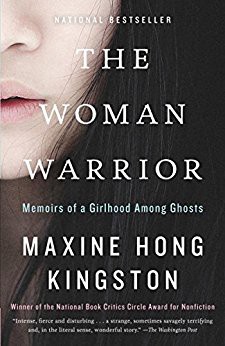
The Last Chinese American Woman Writer Who Hasn’t Read Maxine Hong Kingston

In Late to the Party, we ask writers to read a seminal author who has somehow passed them by. You can read previous entries here.

For as long as I have known about the existence of The Woman Warrior, I have wanted to avoid reading it. When a well-meaning seventh-grade teacher recommended the book because of its Chinese themes, I smiled politely and promptly turned back to the far superior themes of His Dark Materials.

I was not interested in “Chinese themes.” Books about being Asian-American always featured parents who wanted you to go to Harvard and classmates who made fun of your food, and this was both close to life and boring. I was interested in books that had parents who were fabulously-dressed aristocrats and classmates who knew magic.

By late high school, I got over it; I read Amy Tan and Anchee Min and Adeline Yen Mah. But even then, I resisted Kingston’s 1976 memoir. I disliked folklore and disliked being told over and over that The Woman Warrior was required if you were feminist and Asian and a writer. Reading, and by extension, writing about Asian female oppression did not appeal. I wanted to be a Chinese person who wrote books that never had to mention foot-binding, not even once. I didn’t want to be constrained in my topics, yet the canon of books by Asian American women seemed to suggest that it was my duty to discuss the immigrant experience.

I worried that no matter what I wrote, I would receive responses like the one Leonard Chang received from a “legendary editor”:

The characters, especially the main character, just do not seem Asian enough. They act like everyone else. They don’t eat Korean food, they don’t speak Korean, and you have to think about ways to make these characters more “ethnic,” more different. We get too much of the minutiae of [the characters’] lives and none of the details that separate Koreans and Korean-Americans from the rest of us. For example, in the scene when she looks into the mirror, you don’t show how she sees her slanted eyes, or how she thinks of her Asianness.

And I blamed books that focused on ethnicity for setting these expectations. Avoiding Woman Warrior itself somehow felt like a way to avoid the obligations I believed it was imposing.

Still, the book is narrated by a Chinese American girl in northern California, and that was my life, too, half a century later. Maxine Hong Kingston is one of the progenitors of a legacy of literature that should be meant for me — at least, one that others say is meant for me. And, as Chinese culture teaches and as Kingston’s family notes again and again in the book, you have a duty to pay tribute to your forebears.


My family has a genealogy book that included no women until my sister and I were added. Still, our names are misspelled and there is a notation that we don’t live in the same country as everyone else. This is the exact type of story that would infuriate Kingston. It has all the elements that pervade Woman Warrior: silencing women, erasure from the family, generational differences, a gap between East and West.

Perhaps she would say the misspelling made me into a ghost like the ones that haunted her life. The subtitle of Woman Warrior is “memoirs of a girlhood among ghosts,” and indeed they are around every corner and in every section. Kingston’s book is non-linear, a complex arrangement of forms that defies genre. Legends (of the “warrior woman” Mulan and a poet captured in a barbarian raid) mix with the stories of her mother becoming a doctor in China, an aunt coming to the U.S. to confront a husband with a new wife, and Kingston’s own experiences struggling to speak up in school. Ghosts accompany all of this. Kingston writes:

Once upon a time the world was so thick with ghosts, I could hardly breathe; I could hardly walk, limping my way around the White Ghosts and their cars. There were Black Ghosts too, but they were open eyed and full of laughter, more distinct than White Ghosts.

“Ghost” doesn’t simply denote ancestors, or heroic figures, or monsters (though these are there, too). It also refers the people of everyday life. The word “ghost” becomes a title appended after a description, a word almost like “person.” Kingston describes her mother referring to “ghost teachers” and “druggist ghosts.” There are also taxi ghosts, bus ghosts, police ghosts, fire ghosts, meter reader ghosts, tree trimming ghosts,” the Milk Ghost and the Grocery Ghosts and the Garbage Ghost. Kingston fears the Newsboy Ghost.

And here is where she loses me, because this passage shows a sloppiness with language that colors my trust in the rest of the book. Kingston calls Chinese “the language of impossible stories,” but in China, a ghost is not a ghost.

Avoiding Woman Warrior itself somehow felt like a way to avoid the obligations I believed it was imposing.

In Chinese, each one-syllable ideograph is its own word, allowing for an exquisite economy of language. When literally translated, names read as dramatic and unwieldy, like “Pavilion of Prosperity and Heavenly Peace.” Kingston’s mother is named Brave Orchid and her aunt is Moon Orchid. I am Jade Poem. My mother, Heroic Forest. But when you say our names, you register these dramatic meanings no more than you would think “defender of men” when greeting someone called Alexander. Often in Chinese, the literal meanings of the words are muted from consciousness. At one point, Kingston notes that the words for “be careful” literally mean “use a little heart.” Surprised, I translated the words back into Chinese and she was right. But xiao xin is so commonly used as “be careful” that, though Chinese is my first language, I had never before noticed this literal meaning.

This problem of translation is not easily solved, and the translation of Chinese to English often creates a word that seems more mythic and more dramatic than is truly experienced. And so it is with “ghosts.” A world of taxi ghosts and bus ghosts conjures images of superstition and fantasy — but ghosts, or guei, in this context often refers to white people. Sometimes, it’s a catch-all pejorative like “asshole.” Kingston hardly claims that the ghosts are literal, and they do sometimes represent the weight of tradition and memory. But as the playwright Frank Chin, one of Kingston’s harshest critics, has said, the lack of clarification makes the Chinese narration of the world seem more superstitious and backward than it is. Chin says that she writes for white people and plays into their negative stereotypes.

This vision of China rings familiar even 40 years after publication. It’s the one we most often see in the West. It is Chinese culture as seen through complaints, where community trumps everything and the Communists make your uncle kneel on broken glass. In China, villagers attack the home of Kingston’s aunt who committed adultery, donning masks and smashing all the food jars. In San Francisco, Kingston’s parents run a laundry and fight with their “savage” children. Her mother is brave, but also cuts Kingston’s tongue to “make her talk better.” Her father “refused to eat pastries because he didn’t want to eat the dirt the women kneaded between their fingers.”

It’s easy to see why Chin accuses Kingston of selling her culture to white people. Kingston’s China and Kingston’s America are negative, inferior. They’re the exact places I read about and decided I wanted nothing to do with.


Deciding I wanted nothing to do with this world did not let me escape it. I had no choice in the matter, just as I had no choice but to experience flashes of recognition while reading the memoir. “My American childhood was so disappointing,” Kingston writes, and of course so was mine. Her relatives compare girls to maggots and warn each other that “when fishing for treasures in the flood, be careful not to pull in girls.” I was raised by grandparents who clearly favored my male cousins simply by virtue of their sex.

While at home reading, and frowning at, Kingston’s complaints about “the secrecy of the Chinese,” I learned that my grandfather was a doctor during the Communist Revolution. He made the mistake of saying that those with skills (like, say, doctors) should be in charge. This was not very communist of him, and he was demoted to a regional hospital. He was depressed about this for 20 years. I was alive for 26 before I heard about it.

Responding to accusations of inauthenticity, Kingston says critics don’t understand that she is writing not about China, but about Chinese America. This is not a strong defense, as her descriptions of Chinese America still play into many white perceptions.

But then she asks, “Why must I ‘represent’ anyone besides myself?” Woman Warrior is a memoir, not a textbook or a polemic. The descriptions become “stereotypes” when the reader generalizes them to represent all Chinese Americans, but this is something Kingston did not intend and could not control. Instead, Kingston is writing to represent herself and an experience that was filled with oppression, confusion, unhappiness. It is the wider literary gatekeepers who took her experience and flattened it into the universal. I feared that Kingston in her choice of subject matter had set the path for Asian writers like myself, but she never wanted to be the arbiter of Chinese American life.

I feared that Kingston in her choice of subject matter had set the path for Asian writers like myself, but she never wanted to be the arbiter of Chinese American life.

Neither do I. My own literary interests tend toward speculative fiction, so I still lack the desire to write explicitly about “Chinese themes.” But in reading, and reading about, Woman Warrior, I see more clearly the way that Asian American writers lose control of their own narrative, and the ways that a lack of diversity gives people disproportionate authority against their own will. I see more clearly the forces that stupidly made me view Kingston as someone whose footsteps I had to follow, instead of just another person.

Even read on its own merits as a story of one woman’s life — released from the baggage of being the story of lives that superficially resemble mine — Kingston’s book seems distant and leaves me cold. But taken off this pedestal, the innovations and craft of The Woman Warrior become more apparent. It is a complex account of what it was like to be Kingston, writing about experiences at a time that few others did. It is the personal and not the general. It is not template, not beginning or end.

Where Crime Fiction Meets the Talmud

Many people know Tod Goldberg, the showman. Whether he’s posing questions to the new students in an assembly of the UC Riverside Palm Desert MFA, shocking seniors with his colorful language at the LA Times Festival of Books, or chatting up authors over a candy bowl at a writers’ festival (simultaneously cracking wise on twitter about their newest bespoke fashion trend), he’s always making someone laugh, and doing so with a twinkle in his eye. This twinkle appears to be equal parts mischievousness and genuine enthusiasm for human oddity. But Tod Goldberg, the writer — the one who told me in my first quarter of his MFA program to stop being intimidated by everyone because, “we’re all just people who sit around in our underwear, late at night, typing” — is introspective and deeply concerned with the welfare of people. Goldberg writes his observant vulnerability into the heart of his stories — even the ones involving killers.

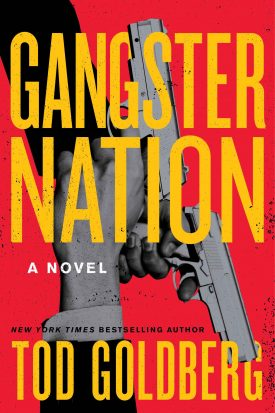
Goldberg’s newest book, Gangster Nation (Counterpoint), is the sequel to his award-winning 2014 novel, Gangsterland. The series is going to be produced for TV by the team behind Peaky Blinders. The premise of the books is that Sal Cupertine, Chicago mafia hit man, makes a mistake: he shoots undercover FBI agents in a deal gone bad. He’s subsequently hidden in a temple in Las Vegas, given a new face, and a new identity: Rabbi David Cohen. Since he’s not Jewish — and has to become so, at least ostensibly— quickly, Rabbi David Cohen pulls from the Jewish texts he binge reads and rounds them out with Bruce Springsteen lyrics. Gangster Nation picks up two years after Gangsterland: Sal’s new face is failing him, and he is growing desperate to reunite with his wife and son.

Goldberg and I caught up over email about his reading habits, the one book he’s always trying to rewrite, and what makes him want to fight. We’ll be in conversation at Oakland’s East Bay Booksellers (formerly Diesel, A Bookstore) on October 5th if you’d like to hear the rest of the conversation.

Heather Scott Partington: Rabbi David Cohen says, “You want to know a man, read his books.” He’s heard it somewhere he can’t remember (“Emerson or Whitman or maybe it was George Washington?”). Which books should a person read to really know Tod Goldberg? Why those particular titles?

Tod Goldberg: I suppose it would be a combination of a lot of things. You would probably want to read my mother’s divorce handbook The Statue of Liberty is Cracking Up, which she wrote in the 1970s and which has anecdotes from my childhood in it, except I’m not really sure which ones, because my mother tore all of those pages out once when she was in a particularly dark stage of her mental illness. I was ten and I still have the same copy I’ve always had, but have never sought out a copy with all the intact pages to find out what’s missing. It’s on a shelf right beside me now. It’s a good reminder to me of how perilous this world can be, even when the threat is in your own mind. You would probably want to pick up every Donald Westlake, Elmore Leonard, and Robert Parker book published before 1985, as those were the first crime novels I ever read. In a sort of Almost Famous-like scene, when my brother Lee went off to college, he left me with a bag of paperback books, which ended up as a kind of manual to a life in crime fiction, and then refilled the bag every Hanukkah. You’d probably want to read Empire Falls by Richard Russo, which is my favorite book of all time, and which taught me how to write in third person. And you’d want to read Alice Munro, whose work I turn to over and over again when I want to know how to express complex human emotion, or you’d just pick up The Hitchhikers Guide to the Galaxy, a book that I kept in my pocket for a few years. But the truth, really, is that if you really want to know me, you’d buy a ton of books about UFOs, Bigfoot, weird psychic stuff, and ghost hunters, because if there is one thing that only my family really knows, it’s that I am totally obsessed by those books and have been since I was a kid. Not that I believe in any of that stuff. I mean. Not at all. But I’m pretty sure if I had more free time I could totally learn how to astral project.

(Also? It was Emerson. He said, “If we encounter a man of rare intellect, we should ask him what books he reads.”)

HSP: A lot of angst in Gangster Nation comes from The Family’s middle management. The idea that working for someone else, doing the drudgery that it takes to keep things moving is soul-crushing. In the case of this novel, it pushes some of the lesser-knowns to make bold, even sloppy, moves toward greatness. Have you had any of those moments in your professional life? Did any of your previous jobs push you toward what you ultimately wanted to do, simply because they were so banal?

TG: I worked for a while in the infomercial business. This was right after I graduated from college and was trying to become a writer, so the mid-1990s. It was a terrible job. I was an account executive for a bunch of products with really dubious names and claims. There was one whose whole concept was that you could do exercises for your face that would essentially make you look decades younger, thus eliminating the need for plastic surgery, and yet it was, ironically, lauded by plastic surgeons. You can make yourself look like a cat for pennies on the dollar compared to plastic surgery! That wasn’t the call to action, but in my mind it was. Anyway, working in the infomercial business, even for just a year, I saw and experienced some deeply weird stuff. There was one time we got a call about a boatload of those rice pillows that had been infested with vermin, which then led to a discussion about how one burns vermin infested rice pillows on a boat in a port. We had an exercise device we sold that had some tension spring that was shooting out of it and breaking windows and hitting animals and children and such, which prompted a massive recall and a lot of panicked phone calls that inexplicably landed on my desk. And then there was the fact that the whole operation was connected to Swami Prakashanand Saraswati, who a decade later was arrested for being a child molester and skipped the country after getting $10 million in bail money paid for by another infomercial impresario. I tell you this all as a long way of saying that even then, at the bottom rung of an organization the seemed at best morally toxic by definition (separating people from their money in hopes that their cheeks won’t sag is a grift, folks, no matter if it’s on your TV or someone comes to town with a magic tonic) and actually abetting criminal activity at its worst, I only really figured out something was amiss when I came to work and the bagels and snacks had been removed from the kitchen. There was a meeting that day and our boss announced that in order to cuts costs because of the projectile tension screw problem, there would no longer be free snacks…and that there might be a few layoffs. I can’t say I made any bold moves toward greatness at that moment, but I did come home and tell my then-girlfriend-now-wife that if I had to work at that place any longer, I might jump out a window and that I really wanted to try to make a go at this writing thing full time, but not, categorically, in the infomercial business.

Author Tod Goldberg

HSP: From Gangsterland to Gangster Nation, Rabbi David Cohen had to learn to live with anger simmering beneath the surface. You write, “He was about keeping his rage in check these days. Every morning, he wrapped tefillin on his strong arm, to remind himself of this… David couldn’t always be dialed to a ten, or else he’d have nowhere to go when he really needed to be angry. Six or seven, that was his sweet spot.” What discoveries did you make about rage as you wrote this character who needed to show such control?

TG: Part of the challenge in writing this character — or, really, characters, since he ends up being two different people with two different voices, both on the page and in his head — is that I have to make a guy who murdered people for a living and is now pretending to be a rabbi somehow the most empathetic person in the book, while also making him the most dangerous and duplicitous. But his primary rage comes from a simple place: he recognizes that the one thing keeping him from the things he wants most — his wife and son — is a mess of his own making. That he chose to be in this life by not making any choices at all, that when he could have gotten out of it years earlier, he never did, he just rolled through life letting other people make decisions for him. I think that’s a relatable rage. How many of us have had a moment when we realized that passivity had altered our life? The other thing, though, is that I think part of what exists in both of these books is a contemplation of what turns rage into violence, a thing I think about a lot. What pushes people to do terrible things. In the process of reading all of these books about Judaism and Jews in general, as I’ve tried to mirror what Sal Cupertine would be reading as he becomes more and more immersed in this fake life of Rabbi David Cohen, I’ve been struck by how often the contemplation of violence has shown up in the history of the Jews. I suppose it shouldn’t be a surprise — a history of persecution is going to obviously give rise to this sort of thinking — and so I’ve tried to integrate this holy interpretation into this character’s life in a more profound way, which is also part of the process of making a monster into a human. The introduction of spirituality into a person who never believed in anything is something I’m fascinated by and how that spirituality either condemns or condones their actions. But, you know, not all spirituality is about peace and love…as the Talmud says, if a man comes to kill you, wake up early and kill him first.

You know, not all spirituality is about peace and love…as the Talmud says, if a man comes to kill you, wake up early and kill him first.

HSP: You’ve said before that your career is, in many ways, about trying over and over again to rewrite Steinbeck’s Of Mice and Men. Does this hold true for Gangster Nation?

TG: Oh, for sure. Of Mice and Men has always been an important book to me because it was one of the first novels I was actually able to read — I was profoundly dyslexic as a kid and didn’t start reading until I was about ten and the novel is actually written very simply, as much of Steinbeck is, in terms of sentence complexity, so when I picked it up initially, it wasn’t hard for me to understand — but also because it was the first book that made me cry. That last scene when George shoots Lennie in the back of the head to save him from a worse death is so powerful, but equally so are the dreams that every character has, and how deftly Steinbeck entwines those dreams between the characters. I always find myself thinking about characters in relation to where you they want their lives to go, the dream they have for themselves, so in Gangster Nation, as with Gangsterland, those dream lives often cause people to make terrible decisions. And it’s no coincidence that Gangsterland opens with Sal Cupertine talking about shooting people in the back of the head…and in Gangster Nation, the idea that you can just shoot someone in the back of the head and it will solve all your problems never quite turns out how it should. In Of Mice and Men, George desperately wants to be somebody and by the end, he is somebody, but not for the reasons he ever could have expected. I’m trying to get there with these people I’m writing, too.

HSP: Gangster Nation isn’t all eyeball-slicing and arson and severed heads; there’s great contrast between the violent acts of the old-school mafia and their unspoken code of conduct. It reminds me of the Chivalric code: the idea that a person can be a fighter and yet is responsible for upholding a higher standard when he’s not fighting. Limits are set. Affairs, or divorces, have to be handled with delicacy. Families are off limits. And yet, these guys are killers. Why was it important to you to explore this duality of the crime world?

TG: I guess I’ve always been interested in how bad people compartmentalize their lives, but I’m also driven a little batty by this romantic notion of honor among gangsters. The fact is, as long as there have been crime families and street gangs, there’s been this idea that they all live by some kind of strict code. It’s bullshit. The reason we know about these people is that they can’t keep their mouths closed, they have a narcissistic desire to be noticed — street gangsters cover their bodies with tattoos which explain exactly who they are, for instance — and they constantly kill people that other people love, which means someone is going to say something. So part of what I’m writing about is satirizing these codes, revealing them to be the farce that they are. That said, I think the reason people are attracted to gangsters as a form of entertainment — and I recognize that as the author of two books about gangsters, with a TV show in development about the same gangsters, that I am complicit — has a lot to do with wish fulfillment on some level. We all want to be the person who can do whatever we want. The person no one messes with. The person no one gets over on. It’s a pipe dream, of course, because the only people who can do precisely what they want all of the time are sociopaths. I think, too, that the duality you speak of has a lot to do with the appeal of anti-heroes at certain junctures of American history, actually. Because a true anti-hero has to live by a strict code if they’re going to defeat whatever system they’re fighting, particularly if their actions might be illegal within that system.

HSP: You write, “David was of the opinion Rabbis couldn’t be Wyatt Earping motherfuckers on the street.” Is it a challenge to keep the level of action up when what you’ve done is write your protagonist into a mostly quiet congregation in the desert? How did you approach the idea of keeping David/Sal on edge while you also developed his understanding of the Jewish faith?

TG: Is it a challenge? Yes and no. I’m still writing crime fiction, so in order for there to be a book, something bad has to happen. There’s a pretty big leap in time from the end of Gangsterland to the start of Gangster Nation — two years, at least for David/Sal’s part of the book — and what I want the reader to understand is that in those two years, yeah, it’s been a little quiet, and that’s when David/Sal has become more Jewish, has begun to settle into his role as a rabbi, so that when things jump off for David/Sal he’s a little rusty. All the while, a noose is tightening around his neck, things happening back in Chicago and Wisconsin that will cause him problems. But I also wanted society to be tightening around him, too, so that the world David/Sal has carefully constructed becomes a prison. Keeping the action up is hard in the sense that I don’t want to make the book a cartoon, I want there to be consequences for actions. If someone shoots a gun, or if someone dies, I want it to reverberate. I want the world to be altered every time something bad happens, and to do that with as much as much realism (even though, of course, the premise itself is intentionally sort of absurd) as possible, it requires a slower pace than, say, The House of Secrets, the book I wrote with Brad Meltzer. In that book, we really pumped up the speed a great deal, so that it had a feverish pace, shorter chapters, more clipped dialog, a timeline of just a few weeks, which I think really worked. But this is a book the unfolds over several months, which means the action has to be intense when it happens, and then in between this larger world I’ve constructed has to keep pushing forward. The stuff with Sal becoming more and more comfortable as Rabbi Cohen requires some scenes that you wouldn’t normally see in your run-of-the-mill crime novel — a wedding, a funeral, a bar mitzvah — but hopefully those events are just strange enough to keep people reading and wondering just when Rabbi Cohen might need to remember he’s a hitman.

HSP: One of the things that gives this novel such weight is its connection — and subsequently, Rabbi David Cohen’s — to historical events. “No, these days, because of the stories of his congregation, he thought about shit that had gone down in 1917,” David thinks. “All that Pale of Settlement mishegoss. Pograms and show trials and Cossacks chasing down toddlers with dogs. That shit pissed him off like it had happened yesterday, because, in effect, it had. Three years ago he was blissfully unenlightened.”

There’s also a remarkable conversation between Rabbi Cohen and his mentor, Rabbi Kales, about the Warsaw Uprising during World War II. “Why would they stage a rebellion they knew would fail?” Cohen wonders. Kales’ questions challenge Cohen to think about why it might matters to history that we fight. What matters enough to you that you’d fight (or are fighting) for it, even if, as Rabbi Kales tells Sal/Rabbi Cohen, “There is no post-war for you”?

TG: I think, for Jews, the idea that the mob is coming for them remains a pressing concern, and in this case I’m talking about the hordes, not a bunch of guys in suits talking about whether to take the cannoli or leave the gun. So when I see things like Nazis and white supremacists marching on an American city, chanting that Jews will not replace them, it doesn’t make me scared, it emboldens me to stand up and be heard, to actively support with my time and money and words the causes and people I believe in, because I’m not hiding in the ceiling waiting for something bad to happen. I remember when I wrote the scene you’re speaking of — it was last summer, in the middle of the election season, and I was already feeling a looming sense of dread. I was reading all of these books about how the Holocaust had occurred, not because I thought it would specifically play a role in this book, but because I wanted to have the same stuff in my head that Rabbi Cohen would have in his, and while reading about the Warsaw Uprising I was struck by this notion that the righteous often fight even when they know they’ll lose to empower others around them. I don’t think I’m righteous, not by a long stretch, but I am not one to stay quiet and I suspect a lot of that comes from personal history. My family did escape Russia. My grandfather told us stories about Cossacks running him down with dogs. Those are real things. So, today, they still matter to me. And of course I care about other things, too — my wife, my family, my friends, my students — that I think I end up fighting for them every day, whether I’m totally aware of it or not.

When I see things like Nazis and white supremacists marching on an American city, chanting that Jews will not replace them, it doesn’t make me scared, it emboldens me to stand up and be heard.

HSP: How did 9/11 change the lives of the characters in the book? Was your writing on this subject — especially on how the tragedy of the event affected the economics of the crime world — generated from research or speculation?

TG: I always knew Gangster Nation would take place right before and right after 9/11 because, as I said above, I wanted Rabbi Cohen to be noosed in by society, to literally trap him in Las Vegas. I wanted the characters in the book to be faced with a larger existential fear, wanted to see how they’d react. But also I wanted to explore the nature and history of criminality and profound violence in this country, the things we are willing to accept in the due course of living and those things we are not willing to accept. And, too, the role religion has played in our relationship to violence. All of which is related to the terrorist attacks and then the subsequent response by the country — things like the Patriot Act, for instance, which eroded many of our civil liberties in favor of personal safety, which is a bargain we were all willing to make right then. The economy of organized crime has always been tied to the social issues of the day and in the aftermath of 9/11, when law enforcement was looking the other way, all of the things I talked about in the book flourished — that’s the truth — and, likewise, you see it repeated throughout history. What I’ve enjoyed doing in both of these books is mixing reality with my own fantasy world, because if often turns out that the reality is far more nefarious. Even the tiny fact that the mayor of Las Vegas during this time, Oscar Goodman, was a Mafia lawyer — a thing most everyone knows, if they know anything about Las Vegas — seems absurd on its face. But it’s true and could only happen in a place like Las Vegas.

HSP: This is not a question. I just want to confirm that tossing a Teddy Ruxpin into a Visqueened murder space in an abandoned warehouse is creepy as hell.

TG: I find stuffed animals horrifying. Their dead eyes. Their propensity to be dressed in human clothes. How, when you’re a kid, your sister tells you all of your stuffed animals become living creatures when you fall asleep, so you fake being asleep for hours in an attempt to catch this transformation.

Or maybe I just had a mean sister.

HSP: What is the timeline like on the Gangsterland TV series that’s been optioned? It’s going to make a great series. And what’s next for you?

TG: The timeline is something beyond my control! The project is in great hands — it’s being produced by the team behind Peaky Blinders — and I feel very confident, but with these things, the best you can do is try not to obsess about it. It would be fantastic if it all worked out. My plan is to start writing again later this fall…about some characters that might be familiar to a few people…

A Town in Two Countries at the Same Time

The place where history and cartography converge can be tricky to navigate. This is something I know from experience, looking back on both my family’s history and how I understood it growing up. As a child, the quickest answer to describing my paternal grandfather’s side of the family was they were Austrian. (My father’s parents moved here in the 1930s.) But in talking with other relatives, I’ve been told that some relatives, several generations back, considered themselves to be Polish. That the national borders of central and eastern Europe have shifted considerably over the last hundred-plus years isn’t necessarily news–especially when you’re talking about the post-World War I breakup of the former Austro-Hungarian Empire.

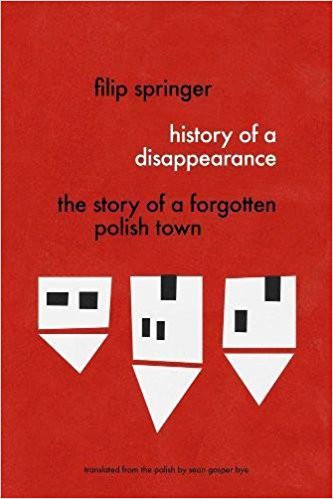
I was reminded of my own confusion in terms of how best to think of one part of familial history by Filip Springer’s History of a Disappearance: The Story of a Forgotten Polish Town. Though Springer isn’t writing about the part of Poland from which my family members hailed, he touches on a number of the same questions: what makes a particular piece of land belong to one nation or another? What does it mean to multiple generations of people who think of a place in an entirely different fashion? And how do those of us on the outside of these discussions best process the issues at hand?

At the center of Springer’s narrative is the German town of Kupferberg. Alternately, at the center of Springer’s narrative is the Polish town of Miedzianka. Unlike Superman and Clark Kent, they’re always in the same place at the same time—Kupferberg is located in a geographic region that was handed over to Polish control in the 1940s. Before the book even begins, a map of Lower Silesia shows a series of towns with names listed in both German and Polish; a larger map shows how the borders of Poland, Germany, and the Soviet Union changed after the Second World War. There’s a long and complex history here, one that eludes easy description.

What does it mean to multiple generations of people who think of a place in an entirely different fashion?

Springer’s approach to telling this story juxtaposes the intimate and the international in scale. The long first chapter covers several centuries’ worth of history, concluding in 1929, just before the shape of Germany and Poland will be forever altered. It’s followed by a collection of quotes, some taken from a manuscript, others from interviews. The juxtaposition, a range of voices with sometimes-conflicting opinions on major issues, helps to give the reader a sense of how these questions of borders and nations play out among everyday people.

Springer’s shifts in tone and style work with multiple purposes: he’s able to convey both the scale of the changes that affect Miedzianka/Kupferberg, and he’s able to give the reader a sense of the constant shifts in landscape that befell this place. Sometimes he hones in on particular stories: the tale of a woman named Barbara Wójcik, who eludes death numerous times in post-war Poland, is gripping on its own; in the greater context of the narrative, it speaks to the fragility of life in times of conflict and of the role of chance and luck in simply surviving.

After Communism had taken hold in Poland after the war, a nearby uranium mine became one of the sources of industry for the town of Miedzianka. Springer’s harrowing description of the everyday routine of the mine’s workers–and the devastating effect it had on their health–makes for one of the most gut-wrenching sequences in a book that abounds with them. Throughout the book, Springer demonstrates how governmental policy, interpersonal conflict, and the legacy of war lead to clashing worldviews and a series of broken bodies, environmental devastation, and histories that remain in constant flux.

This is a work that constantly pushes at the boundaries of what nonfiction and reportage can do.

The sociopolitical questions raised in Springer’s book also bring to mind plenty of contemporary political hot spots, including Russia’s recent military actions in Ukraine and its annexation of Crimea. And questions of shifting borders and concepts of national identity have shown up in fiction: China Miéville’s The City & The City features a micronation shared by two populations who have trained themselves to ignore one another’s residents and architecture, while Dave Hutchinson’s Europe in Autumn is set in a near-future Europe in which nations have become even more granular.

To call History of a Disappearance a work of nonfiction that reads like fiction does it a disservice: this is a work that constantly pushes at the boundaries of what nonfiction and reportage can do. Springer deftly brings together archival research, oral histories, and meditations on what can be learned from the history of this town (or, if you prefer, these towns). The story of how Kupferberg became Miedzianka demonstrates how national conflicts play out against the backdrop of smaller communities, but it also raises themes that are far from specific to the histories of Germany and Poland. In this provocative narrative, Springer raises a thoughtful array of questions that many will wrestle with for years to come.

The Height of the HIV/AIDS Crisis, in 10 Books

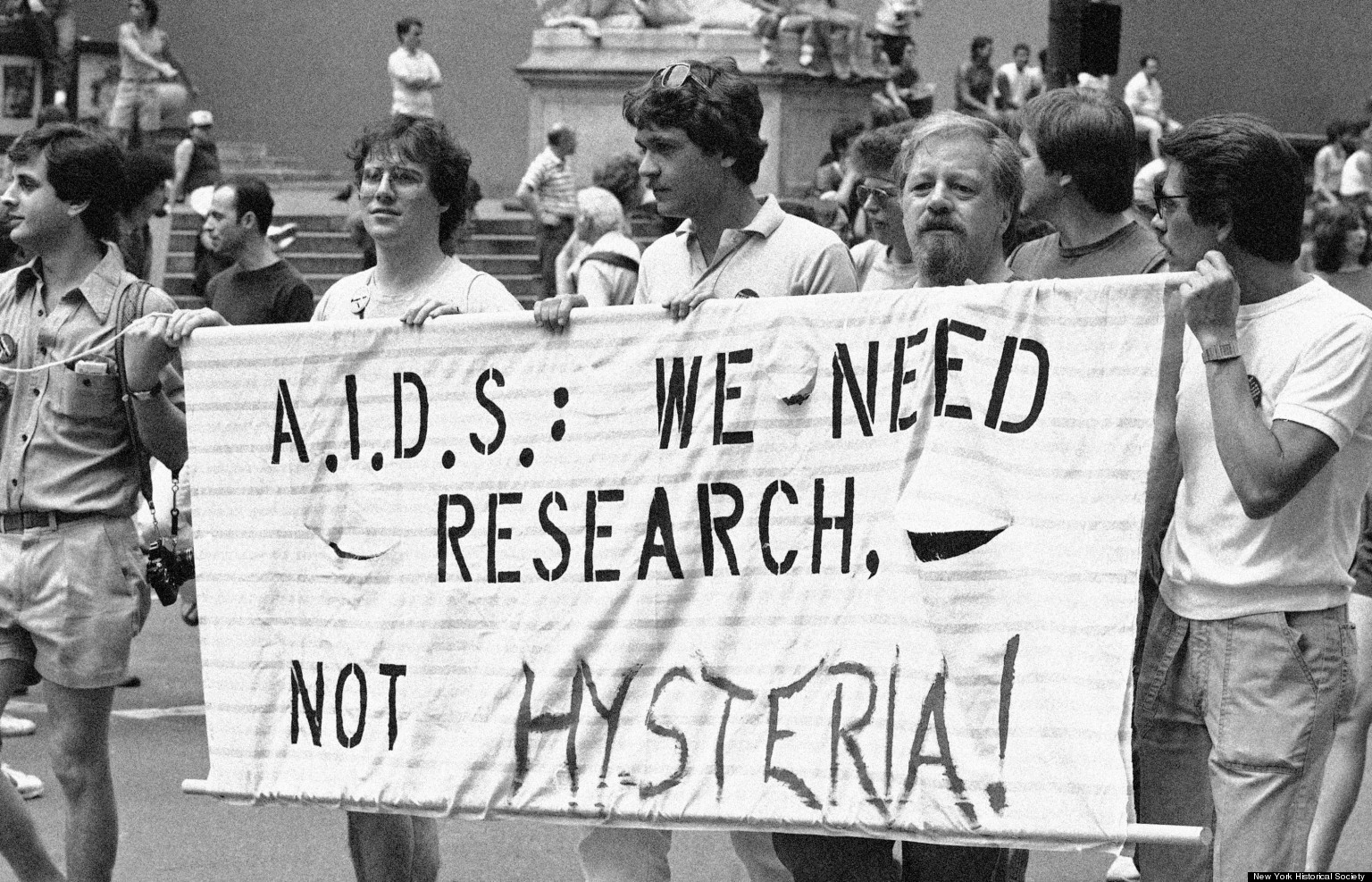
A s a disabled writer, I’m wary of using a medical marker to define an era, because HIV/AIDS is a sociopolitical issue as well as a medical one. But when looking at early HIV/AIDS literature, the convenience of using 1997 as a dividing point is difficult to ignore. That year marks the advent of Highly Activate Antiretroviral Therapy (HAART), when the experience and depiction of HIV/AIDS changed, at least for those of us with privilege and access to doctors and medications, from a death sentence to what is euphemistically called a “manageable chronic condition.”

In compiling this list of HIV/AIDS literature, I’ve necessarily made a few choices. First, the work had to be written before and/or about pre-1997 HIV/AIDS. And because I wanted to look at the undigested reality of those times, I decided not to include work about this era by contemporary authors writing from a retrospective distance. I also limited the discussion to work originally published in English. Perhaps the most important choice I make is not to include the important and crucial memoirs of the period because what I want most to explore is this: Early in the HIV/AIDS pandemic, how did writers create a fictional world based on all-too-painful reality?

1985

Samuel Delany’s Tale of Plagues and Carnivals, part of the eminent science fiction writer’s Nevèrÿon series, is one of the first novels to address AIDS. In this ninth tale of the series, a fatal sexually transmitted disease breaks out, predominantly among gay men. Delany parallels what happens in Nevèrÿon with how New York City dealt with the very early AIDS crisis. That what is seen as the first AIDS-related novel to be published by a “major” publisher was genre-fiction is notable. That it was by an African American gay man even more so, as the African American AIDS experience has too often been marginalized or ignored.

1986

In “The Way We Live Now,” her short story first published in The New Yorker Susan Sontag creates a community surrounding Max, who is sick with AIDS in the hospital. We never hear from Max. Instead, the story is told in fragments by others as they grapple with something they’re not sure they know how to grapple with, the illness and impending death of a friend. Though borrowing her title from Anthony Trollope’s 1875 novel, Sontag’s story is informed both by her own experience of cancer, and her hospital visits to Joe Chaikin, the avant-garde theater director whose 1984 stroke left him with partial aphasia. It is this personal experience that saves the story from the disturbing trope of the voiceless patient and lack of sociopolitical context.

1989

Eighty-Sixed by David Feinberg and The Irreversible Decline of Eddie Socket by John Weir: I think of these two first novels together because they both depict gay life in New York City before, on the cusp of, and during the pandemic. They track what some might see as the sexual excesses of the pre-AIDS era into the time of what was known as the AIDS crisis. By doing so, behavior itself might seem as much a cause for a virus spreading as the longing for what might be unattainable: the perfect body, the perfect love, the perfect life. But read closer to see how the gay community, built on secrecy, competition, and caring, morphed into an example of how a long-despised and marginalized group learned to take the power to change into its own hands.

1990

The Body and Its Dangers and Other Stories by Allen Barnett shares with the Feinberg and Weir novels a bit of gallows humor amid so much pain, death, and loss. In “Time as It Knows Us,” the book’s longest and most moving story, Barnett takes us inside a communal household where everyone is ill or HIV positive and looks at how friend cares for friend.

1990

At the center of People in Trouble by Sarah Schulman is a love triangle set in, and illuminated by, the ravages of AIDS, homelessness, and other social ills of the Reagan era. Realizing they have nothing to lose, the AIDS activists of Justice (based on ACT UP), with whom Molly and Kate become involved, devise and perform acts of civil disobedience to gain attention from a purposefully distracted world. What’s uncanny about this novel is not only the character of real-estate mogul Ronald Horne (enough said), but also the small but resonant symbols of the era, including the teddy bears that were ubiquitously used to comfort those dying of AIDS and the car alarms in the city, to which nobody paid attention despite the loud consistent noise.

1992

Was by Geoff Ryman at first might not seem like an AIDS novel, though its protagonist, Jonathan, is an actor dying of AIDS. Jonathan’s pilgrimage to Kansas to find out about the “real” Dorothy Gael, who L. Frank Baum famously transformed into Dorothy Gale in his classic children’s book, The Wonderful Wizard of Oz, on which the ever-popular musical movie starring Judy Garland is based, can be seen as a fever induced dream. In Was, Jonathan learns of the difficult life of the dysfunctional and abusive Gaels, who suffered through the 1888 Kansas diphtheria epidemic. Interspersed is the story of Frances Gumm, who will become, despite and because of, her own family issues, Judy Garland. Ryman shows how myths and obsessions become the succor of those with difficult pasts, and how we deal with difficult pasts informs the way we deal with a difficult present. In an era where families, and most of society, abandoned gay men to AIDS, the fictions of Was felt all too real.

1994

The Gifts of the Body by Rebecca Brown is a cycle of interconnected stories, all told from the point of view of a caregiver for people with AIDS. Each of the ten stories is about a different patient and each has a theme related to various “gifts,” physical and emotional, of the body. Written in Brown’s trademark minimalist style, we experience the give and take of caregiver and cared for, what passes between them, and the emotions related to our bodies’ mutability. Unlike “The Way We Live Now,” The Gifts of the Body, though told from the point of view of the caregiver, distinguishes itself in its diverse array of characters and the humanity given to each, not only by the caregiver but also by the writer.

1996

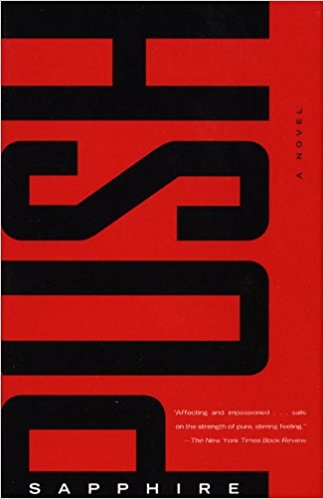
Sapphire’s debut Push is told in the visceral voice of Precious, an overweight, dark skinned, HIV-positive teen living with her abusive mother in Harlem. One of the short novel’s revelations is that Precious caught HIV by being raped by the man she knows as her father. Push charts Precious’s journey to self-esteem, helped by a teacher, as well as an AIDS support group. Though some of the latter part of the novel, which includes her classmates’ telling the stories of their lives, can read as agit-prop, Sapphire’s protagonist opens up AIDS fiction to include the voice of an African-American teenager as she is brutalized by, and fights against, a relentless world.

2004

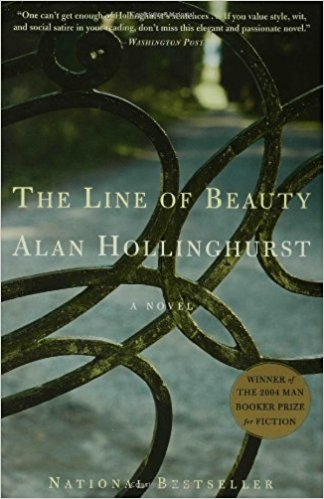
The Line of Beauty by Alan Hollinghurst is the only novel I include published after the advent of HAART. Hollinghurst’s first novel The Swimming-Pool Library (1988), in which there is no mention of AIDS, was set in the summer of 1983, “the last summer of its kind there was ever to be.” The Line of Beauty, which takes place in London during the Thatcherite 1980s (in one of its most famous scenes, the protagonist Nick Guest dances with Mrs. Thatcher), perhaps too subtly for some, indicts those in power, and those whose “values” kept them in power, for the neglect and stigmatization of those dying of AIDS. Hollinghurst does this with no direct political rhetoric. The Line of Beauty puts the early HIV/AIDS era in the sociopolitical context it belongs.

What Happens When You Throw Literature Into the Large Hadron Collider?

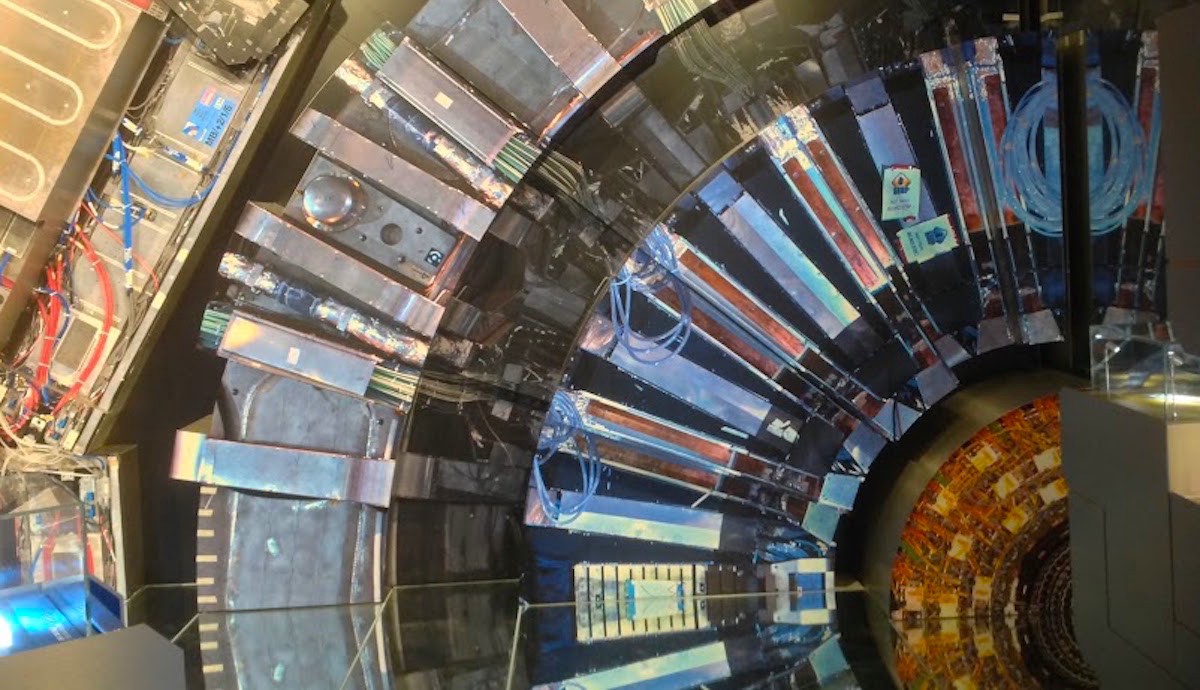
Let’s begin by talking about the Large Hadron Collider. It’s a particle accelerator located in Switzerland. As its name suggests, it’s massive. Its research may well help humanity determine certain essential properties of the universe in which we live. And, for numerous science fiction and disaster-story aficionados, its very existence opens the door to a host of tales of science gone wrong and the earth itself being consumed in a storm of anti-matter. (The BBC docudrama End Day, made by a pre-Rogue One Gareth Edwards, memorably depicts this; it’s got plenty of nightmare fuel in its imagery of the world imploding.) There is, in fact, a website dedicated to answering the question, “Has the Large Hadron Collider destroyed the world yet?” As of the writing of this review, thankfully, it has not. Still, its allure to storytellers isn’t hard to understand.

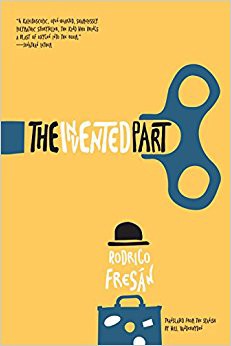
Rodrigo Fresán’s 2014 novel The Invented Part, newly translated into English by Will Vanderhyden, is a book that deals with the implications of the Large Hadron Collider on humanity and the universe. It’s also a tale of a lonely and frustrated voice grappling with their isolation from society, in the mode of William Gass’s The Tunnel and Saul Bellow’s Herzog. It’s a strange and rewarding book, and one which channels a stylized, almost hermetic environment—which seems to fit the themes of both supercolliders and the inner workings of the human psyche.

The Invented Part opens with a whopping sixteen epigraphs—musings on writing, memoir, and veracity from the likes of John Cheever, David Foster Wallace, Marcel Proust, Bob Dylan, Michael Ondaatje, and Iris Murdoch. First and foremost: that’s a lot of epigraphs. But by the end of the opening section in which they appear, Fresán’s intention for them seems clear—there’s a sort of micro-narrative taking place over the course of these sixteen quotes, one which establishes a realm in which quotes from venerated authors create an irreverent dialogue. For example, Kurt Vonnegut’s “All this happened, more or less” is immediately followed by James Salter’s “Nothing actually happened.” Epigraphs are frequently used as a way to usher the reader into the thematic ground that the ensuing book will explore. Here, Fresán is up to something a little different: the collage-like effect of these quotes provides a preview of what to expect from the novel to come. In other words, it’s the epigraph (or epigraphs) as overture.

If this sounds contentious, odds are good that the narrator of The Invented Part—and maybe the book itself—agrees with you. Once we’re past the epigraphs, the narrator (called the Boy, the Young Man, or the Lonely Man) veers into a section musing on fictional beginnings. From an early moment, the narrator takes aim at a particular mode of reading.

Today’s electrocuted readers, accustomed to reading quickly and briefly on small screens. And, yes, goodbye to all of them, at least for as long as this book lasts and might last. Unplug from external inputs to nourish yourself exclusively on internal energy.

This all might seem a little overwhelmingly “get off my lawn,” but that’s intentional—a fictional character feeling alienation rather than a novelist striving for the same. In the hundreds of pages that follow, the story of this novel’s writer-protagonist manifests in a host of forms, from archetypically-told tales of the artist as (literally) a Young Man to sections in which Fresán uses different fonts to convey the collisions of different narratives. The narrator of The Invented Part abounds with contempt for technological alterations to the experience of reading, and yet his story is being told in a manner that seems half Modernist and half hypertext.

What follows is a life told in fragments, showing the novel’s central character at a host of points in his life, from heady and idealistic youth to the more jaded voice encountered earlier in the narrative. There’s also an abundance of references to other artists — not just writers (though Joan Vollmer, Charlotte Brontë, and F. Scott Fitzgerald are the subject of plenty of rumination throughout the narrative), but also musicians. Which is another point at which the narrative folds back on itself. At one point, a comparison is broached between songwriting and fiction, which leads into this long digression:

Do any of you have even the slightest idea who Harry Nilsson was or is? Or Warren Zevon? And, just to be clear, I’m not talking about their dissonant or clever self-destructive epics but about their constructive intimacy in the moment of composing subtle and perfect songs.

As the novel goes through its abundant permutations, themes of the cosmic, the weird, and the science fictional start to enter the narrative. In the span of two sentences about two-thirds of the way through the book, Fresán invokes 2001: A Space Odyssey, H.P. Lovecraft, Jorge Luis Borges, and Adolfo Bioy Casares. Here, you have the transcendental, the paranoid, and the bizarre all invoked in short order—all of which serves as a notification for Fresán’s final gambit.

By the end of the novel, this narrator’s destination is in sight: the Large Hadron Collider, where he hopes to turn his metaphysical debates into something much more cosmic, and remake the universe. Given that the previous five hundred pages have found our hero dissecting his own life using a host of fictional devices, it doesn’t seem too far off the mark to note that The Invented Part is its own kind of “clever self-destructive epic.” And while writers writing about alienated writers is a familiar sight, there’s a welcome distancing here, as Fresán’s literary invocations remind the reader of the dangers of an unchecked creative ego.

Perhaps in keeping with the book’s science fictional side, The Invented Part is the first volume in a planned trilogy; Fresán’s followup, The Dreamed Part, is due to appear in English translation in 2019. This is a head-spinning novel, one in which heady invocations of art abut the loose outlines of a plot that could well serve as fodder for a SyFy original movie if treated differently. But then again, that blend of intense aesthetic discussion and absurdist pulp plotting is one that constantly reassembles itself, and offers a read unlike little else that’s out there. In terms of its knowing merger of pulp science fiction tropes and rigorous musings on art and society, the work of Bhanu Kapil is one of a handful of points of comparison—but Fresán and Kapil are very different writers. The Invented Part is a surreal and circular narrative, eventually cycling around and colliding with the very story it’s telling. As images go, that seems entirely fitting.

How Hard, How Hard It Is to Be a Person

Parsons gets on flights and gets off later sometimes realizing he remembers nothing whatsoever about those hours in the air, kills routine delays in Chili’s and Wolfgang Puck’s and PF Chang’s nursing craft beers while working on client reports, buys breath mints after with the company card, arrives at the layover thinking it’s his destination, arrives at his destination thinking it’s his layover, arrives home anxious he’ll miss his flight out. Parsons’ home is Colorado Springs, but it could be anywhere, as much as he travels, a never-ending gauntlet necessitated by his boss’s insistence that clients value face-time, which maybe they do, though it seems to Parsons that what they value is any excuse to eat too much then play alpha dog afterward in scotch and cigar bars. Parsons is that excuse. Parsons’ actual title is “Associate Energy Consultant,” but his job is to fly and eat dinner. Parsons is thirty-one and single and clinically depressed, though undiagnosed. Parsons thinks this is his life, foreseeably.

Parsons plays a MMORPG called Lords of Chthon, in which he is a blacksmith orc or orcish blacksmith. Parsons’ orc’s name is Parsons1986 — the digits are his birthday year. Parsons immediately regretted naming his orc after himself, but once it was in the system it was impossible to change, and anyway it makes him identify a little more than he otherwise might with his avatar, an unprepossessing red and green creature forever falling into elvish Pits of Despair or getting ambushed by Goblin Militias. Parsons himself belongs to an orc guild and has made a couple of friends among the orcs, although “friends” might be pushing it. But he does feel a bond with them, especially an orc named Terrykins who always says hi to him and asks him how his day has been.

Parsons usually says “good you?” and lets the action proceed, but today, camped out at California Pizza Kitchen on a two hour delay, when Terrykins asks how he is, Parsons — or Parsons1986, technically — says “bad.” Parsons1986 tells Terrykins his life feels utterly unfulfilling and meaningless. Parsons1986 says he sometimes thinks about hurting himself. Parsons1986 apologizes, saying he knows people come to the Chthonic Realm to get away from this kind of thing, but he doesn’t really have anyone else to talk to. Parsons cannot talk to his boss or coworkers, and as for his family, don’t even get Parsons started on them. Parsons is lucky he turned out as well-adjusted as he did.

Parsons watches Parsons1986 watch Terrykins bob gently up and down in front of him, bow and arrow in hand, clearly unsure of how to respond. Parsons has a feeling Terrykins is about to kill Parsons1986 for the keks, so-called, so he slams his laptop shut, spilling his beer on his lap. Parsons gathers his bags and flees to the bathroom in a mincing shuffle of mortified dismay.

Parsons cleans up in the bathroom and looks at Parsons in the mirror. Parsons is not a bad-looking guy, save the dark stain on his crotch and a receding hairline that, like so many other things in his life, he cannot do anything about. Parsons thinks how strange it is that we walk around all the time looking at people, basing value judgments of others on how they look, on the casts of their faces, when anything could be going on inside; the man looking back at him in the mirror, for example, might be a happy person in a fulfilling job and relationship — even though the Parsons in the mirror is himself, he has a slightly hard time divining Mirror Parsons’ mental state.

Parsons leaves the bathroom marginally comforted by the thought that the people passing by cannot read his mind, do not know anything about him, although this thought becomes somewhat uncomforting the longer he dwells on it. Parsons partly wishes people could read his mind, know the pain he is in, although he’s not sure why he wishes that — after all, if he hasn’t been able to do anything about the way he feels in three decades, what could a stranger do? Parsons has always had trouble connecting with other people, and his attempts to share his loneliness have not exactly been fruitful, take Terrykins, for example. Parsons is put in mind of a date he went on recently, in Atlanta, with a woman he’d met on a gaming chat site. Parsons had thought of it as a date, anyway, but the woman showed up to the fancy restaurant he’d booked wearing frayed white jeans, and an unmistakable look of confusion on her face. Parsons got through the dinner by drinking and lying a lot. Parsons told her that he was married, had four (four!) children. Parsons told her he was working in biotech, a field he could barely describe to himself let alone someone else. Parsons thought about killing himself that night, though Parsons increasingly often thinks about killing himself, including how he might do it.

Parsons has variously considered jumping off something tall (probably the easiest way to go, though there might be incredible pain in that last millisecond) and shooting himself (probably painless or close to it, but he doesn’t know how to get a gun or want to go through that process, and anyway, the thought of disfigurement, even in death, is disturbing, though he knows that is irrational), but he has in fact gradually, without consciously making the choice, settled on a default suicide plan. Parsons’ bathroom counter features a large bottle of Ambien and two bottles of Lorazepam sitting beside each other, like soldiers awaiting deployment orders from Parsons, who stands before them nightly. Parsons imagines swallowing all of them, lying down on his Tempur-Pedic mattress, and being swallowed by the foam, just disappearing down into the Chthonic Realm.

Parsons sits in a plastic chair at Gate C7, with an hour to spare before the delayed flight will purportedly arrive. Parsons’ crotch is still damp. Parsons realizes he has decided to kill himself when he gets home; no, this not quite right — the decision was made long ago, it simply now feels like the right time. Parsons is frightened by the thought, the resolution he feels. Parsons makes a deal with himself: if Terrykins has killed Parsons1986, Parsons will end things tonight; if Terrykins hasn’t… he still might, but it’s not definite. Parsons opens his laptop. Parsons logs in. Parsons opens Lords of Chthon. Parsons finds Parsons1986 dead. Parsons’ gut wrenches in a sick twist of terrified relief. Parsons sees unread messages in the dialogue box. Parson reads these messages, in which Terrykins expresses sympathy and tells Parsons to send a PM, then lists a phone number and says Parsons should call him or her, then warns him of an axe-wielding troll creeping up behind. Parsons’ gut wrenches again in a sick twist of relieved terror. Parsons begins crying silently. Parsons shakes in his seat, shakes so hard that a girl texting on her phone across from him looks up in alarm and scuttles away.

Parsons, later on during the flight, attempts to work on a spreadsheet, but he cannot focus. Parsons feels ashamed of his earlier outburst, but then he looks down the metal tube in front of him, and he is suddenly overcome by a great affection for his fellow passengers, these strangers sharing this cramped space and stale air while trapped utterly in their own heads, and in this fleeting moment he forgives himself, thinking how hard, how hard it is to be a person! Parsons leans his head against the pillow, falls quickly asleep, and dreams of a horde of monstrous avatars rushing across a sweeping plain, joyful in their movements and weaponry, the arrows they launch like wishes into distant battlements.

Love, Lies, and Grocery Shopping in a Blizzard

Fresh Faces Abound on the National Book Awards Longlist

Updated October 3 to include the finalists—see below.

The National Book Awards fiction longlist is out, and it may not look how you expected. That’s partly because of the absence of hard-hitters like Paul Auster and George Saunders, both of whom have new novels that were shortlisted for the Man Booker prize this week. But it’s also because a full 40 percent of the semifinalists are first-time authors published by either independent or university presses.

Of course, there are big names too—notably Jesmyn Ward, who won this award in 2011 for her novel Salvage the Bones, and is in the running again for this year’s Sing, Unburied, Sing. (Perhaps even more impressively, her short story from A Public Space was printed in Recommended Reading.) Jennifer Egan, winner of the 2011 Pulitzer Prize for fiction, is also on the list for her upcoming Manhattan Beach.

But it’s not just 2011 all over again. The deluge of debuts includes Carmen Maria Machado’s dark and intricate short story collection Her Body and Other Parties; Lisa Ko’s The Leavers, about a boy whose undocumented Chinese immigrant mother goes missing; Margaret Wilkerton Sexton’s New Orleans family saga A Kind of Freedom; and Carol Zoref’s Barren Island, about immigrants working in a horse-rendering plant in an island off New York. These first-timers are published by, respectively, three independent presses and a university press: Graywolf, Algonquin, Counterpoint, and New Issues Poetry & Prose. Another longlisted book, Charmaine Craig’s Miss Burma, was also put out by independent publisher Grove.

We asked Machado, who’s written for Electric Literature in the past, what it was like to have a first-time book in the running for such a prestigious award. She gave us a pretty unfiltered reaction: “I, uh, can’t believe this is happening? But I’m so fucking grateful to everyone at Graywolf and my agent Kent Wolf for believing in my weird beautiful little book.” Machado also drew attention to the longlist’s diversity, not only in terms of publishing history but also experience and voice: “I’m really honored that the NBA judges are giving recognition to women, queer folks, people of color, small presses, debut books, and short story collections. As a debut author, I definitely was not expecting this. I guess I’d imagined that if something like the National Book Awards was in the cards for me, I’d be working my way up to it over the course of my career, if that makes sense. So… I’m in shock. But it’s a good kind of shock.”

The judges (Alexander Chee, Dave Eggers, Annie Philbrick, Karolina Waclawiak, and Jacqueline Woodson) will now go into chambers; the finalists will be announced on October 4, and the award on November 15. Chances are still better than even that it’ll be someone whose work you already know, from one of the more established publishing houses. But those chances are definitely not as high as they usually are.

Here’s the whole list:

Elliot Ackerman, “Dark at the Crossing” (Knopf/Penguin Random House)

Daniel Alarcón, “The King Is Always Above the People: Stories” (Riverhead Books/Penguin Random House)

Charmaine Craig, “Miss Burma” (Grove Press/Grove Atlantic)

Jennifer Egan, “Manhattan Beach” (Scribner/Simon & Schuster)

Lisa Ko, “The Leavers” (Algonquin Books/Workman)

Min Jin Lee, “Pachinko” (Grand Central Publishing/Hachette)

Carmen Maria Machado, “Her Body and Other Parties: Stories” (Graywolf Press)

Margaret Wilkerson Sexton, “A Kind of Freedom” (Counterpoint Press)

Jesmyn Ward, “Sing, Unburied, Sing” (Scribner/Simon & Schuster)

Carol Zoref, “Barren Island” (New Issues Poetry & Prose)

Update:

The shortlist has now been announced, and the finalists are:

Elliot Ackerman, “Dark at the Crossing”

Lisa Ko, “The Leavers”

Min Jin Lee, “Pachinko”

Carmen Maria Machado, “Her Body and Other Parties: Stories”

Jesmyn Ward, “Sing, Unburied, Sing”

Two debut authors, two indies, four women, and only one white guy! No matter who wins, we kind of all win in that sense. (But the actual winner will be announced at the ceremony on November 15.)

Can You Speed-Read Your Way to Happiness?

I n the past several days, I have read the following books: Just Mercy, Hillbilly Elegy, Rise from Darkness, and String Theory, David Foster Wallace’s exploration of greatness in tennis. I read Walden while boiling water for pasta and The Bully Pulpit while pretending to use the bathroom to get a break from my toddler.

Since you’re wondering: no, I haven’t taken a speed reading course (although I did read 10 Days to Faster Reading). I signed up for Blinkist.

Blinkist is an app that allows you to “access … key insights from 2,000+ bestselling nonfiction books, transformed into powerful packs you can read or listen to in just 15 minutes.” In other words, it’s like SparkNotes for the self-help department.

In many ways, Blinkist is not an app that was designed with someone like me in mind. I don’t read much from its staple genres: Personal Growth & Self Improvement, Management & Leadership, Motivation & Inspiration. Anyone can use Blinkist, and it does offer books in topics ranging from Parenting to Politics to Biographies, but its bread and butter — Entrepreneurship & Small Business, Marketing & Sales, Productivity & Time Management — appears to be targeting a market that is decidedly not me.

Blinkist seems built for the type of person who is actively looking for ways to lifehack the time they spend unwrapping their power bars in order to maximize their morning growth potential. The type of person who uses the words “paradigm shift” and “actionable” confidently and without having to Google “business jargon,” like I just did. The type of person who really WANTS to read The 4-Hour Workweek, but just can’t find the time between Crossfit and Extreme Racquetball, which is like regular racquetball but muddy and you won’t shut up about it.

This app is for the type of person who really WANTS to read The 4-Hour Workweek, but just can’t find the time between Crossfit and Extreme Racquetball, which is like regular racquetball but muddy and you won’t shut up about it.

I am not a businessperson, in vocation or temperament. I am also not a person deeply invested in my own personal improvement (but I don’t want to brag). I’m a lowly freelance writer who finds the very idea of a “power nap” offensive, and I’ve never once looked at something and thought, “There’s gotta be a better way!” In fact, as someone who lives with chronic depression, I’m more prone to thinking, “This current solution is bad, but it is the best we can hope for, and who even cares because soon we shall all return to the cold, unforgiving dirt for the Eternal Power Nap.” But it was this fact — that I am someone who both loves to read and is sometimes too depressed or exhausted to do it — that got me thinking about the toxic relationship between depression and productivity (or lack thereof). And I wondered if Blinkist might help.

I went through a long bout of major depressive disorder in college, and the first thing I lost was the ability to read. I was an English major who suddenly couldn’t finish a page: I would stare at my textbooks, my novels, my laptop screen, and the words just swam. It was the feeling you get when you are exhausted and realize that you’ve just read four pages of a book without actually reading a word, only it was everything I read, and it was all the time.

That was a long time ago, but now, even in the midst of the daily, mild depression I now live with quite comfortably, books can quickly become weaponized. That’s because depression will feed on anything, no matter how small or strange or insignificant. In this way, it is the goat of mental illnesses: whether you put filet mignon or a tin can in front of it, it’s going to eat. And I don’t mean a cute goat, by the way, one who goes down slides or sings along to Taylor Swift. I mean a goat that can see an unread book on your nightstand and use it to convince you that not only will you never finish that book, you will never finish any books, reading is a waste of time, and also, even though you still know all of their first and last names, none of your elementary school classmates remember you.

Or a goat who cannot choose its next book because there really are so many books, and there really is so little time, and what if it makes the wrong choice and halfway through discovers that it just doesn’t like Cormac McCarthy and needs to admit that to itself, and this means that it — the goat, obviously the goat — is stupid and is never getting those precious hours back, and why are there so many books to begin with? I love books, but I think there are too many, and I’m pretty sure it’s specifically to torture me. Don’t take my word for it: I think even Ray Bradbury would agree with me on this, since he wrote an entire “how-to” guide on how to solve the book overpopulation problem (unless I am gravely misreading Fahrenheit 451).

I love books, but I think there are too many, and I’m pretty sure it’s specifically to torture me.

Whether a stack of books on your nightstand sends you into an existential crisis, or you’re just a normal busy person, the best part of Blinkist is that it gives you the feeling of accomplishment. When I finished a “book,” I clicked a checkmark, and it congratulated me. “Done and dusted!” it proclaimed, and I got a little serotonin burst. I hadn’t done anything real or important — in truth, I had just read a very poorly worded, laughably simplified summary of a heavily researched, 400-page book — but that didn’t matter. There’s also nothing inherently impressive about, say, leaving the house, but if you can overcome the inertia of your own depression to turn that knob and step outside, then, at least in that moment, it’s enough.

Blinkist also aids the decision-making process. Reading the summary of Hillbilly Elegy confirmed that I didn’t really need to read the whole book. “Reading” String Theory by David Foster Wallace fascinated me enough that I plan on reading the whole book. It’s like when people justify illegally pirating music by saying they’ll probably buy the album anyway, except it’s not a lie.

Blinkist is decidedly not a substitute for reading books. It may be a substitute for reading books that no one actually needs to read in the first place, books that only contained 15 minutes worth of an idea but had to be stretched out to 200 pages for the publishers. The Four Hour Workweek? Check your email less, be rich to begin with. Boom. Done and dusted.

Blinkist is decidedly not a substitute for reading books. It may be a substitute for reading books that no one actually needs to read in the first place.

But the thing that brought me the most joy from Blinkist was, more often than not, how bad the summaries were. Here, for example, is how Blinkist introduces the classic transcendental meditation that is Walden:

You’ll also discover:

* why devoting yourself to your work can make you a fool;

* how so-called “savages” are actually very advanced when it comes to housing; and

* which one of Thoreau’s visitors had a habit of crawling up his leg.

Spoiler alert: that last one was Emerson!

Today, I cancel my free 7-day trial to Blinkist. I’ll spend my money on SSRI co-pays instead of the $79.99 Premium subscription. And if I ever change my mind, there’s a whole section on life hacks for happiness.