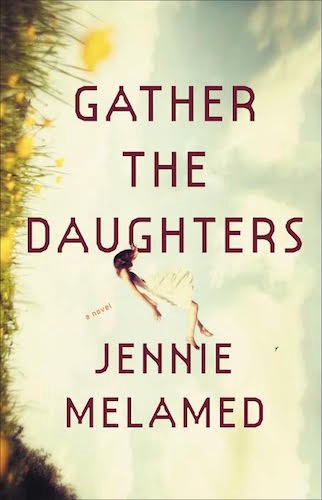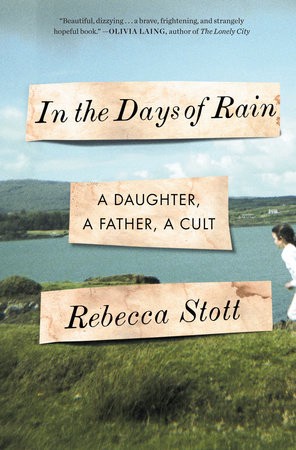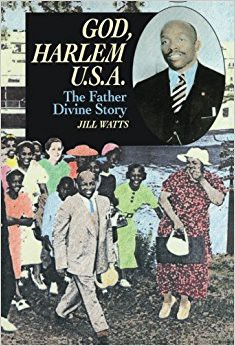
Why Are Friendships Between Teen Girls So Radioactive?

Give in: Pick a pair of them, lost in each other, a matched set like a vision out of the past. Nobody special, two nobodies. Except that together, they’re radioactive: together, they glow.

Robin Wasserman, Girls on Fire

I spent high school, college, and most of my early adulthood single and fiercely attached to a series of best friends. This term — “best friend” — feels juvenile. The superlative “best” seems a little too insistent, ignorant of the way friendships ebb and flow. But these friendships really were marked by an overt, exclusive devotion. After my daughter was born two and a half years ago, I felt my then-best friend pull away, and along with sadness, loneliness, embarrassment, I also felt a sharp pang of wistfulness: a sense that I’d likely never fall hard into an intense friendship like that again.

When I was younger it was exhilarating to fully reveal myself, unflinching, to a new friend. I wonder if it still would be, if not for the fact that in a nearly identical way I already feel vulnerable and exposed. I have a two-year old daughter and an infant son. There are emotional and physical parallels between early motherhood and intimate friendship. I’ve been thrown up on by my college roommate, and, more recently, my children. I am sometimes awake all night comforting someone I love. I can never be out of contact.

After my daughter was born, I felt my best friend pull away, and along with with sadness, loneliness, embarrassment, I also felt a sharp pang of wistfulness: a sense that I’d never fall into an intense friendship like that again.

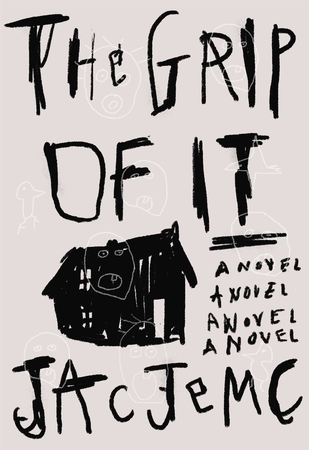
Image result for girls on fire book

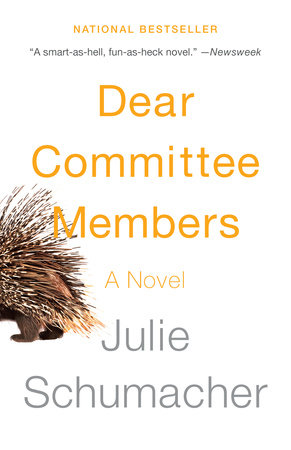
The past few years seem to have brought an increase in fiction about intense adolescent friendships between girls. Last summer, I gorged on Robin Wasserman’s Girls on Fire, reading it so quickly that I felt dizzy by the time I finished. The novel’s ending is violent, gruesome, grotesque, but it was the friendship at the novel’s core rather than the plot that enthralled me. The specifics of the story are surreal: Lacey and Nikki are keeping the secret of their accidental murder of a popular jock in the middle of a drunken threesome. It is a different friendship, Lacey and Hannah’s, that Wasserman is describing when she entreats us to imagine a radioactive pair of girls. The novel is as much about the intense loyalty a friendship like that inspires as it is about the murder.
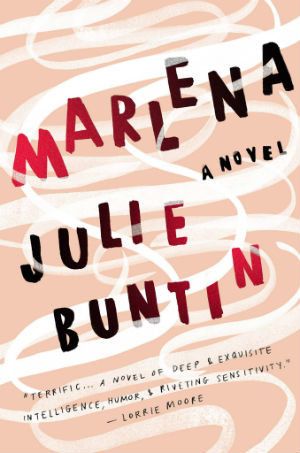
Image result for marlena julie buntin

Like Girls on Fire, Julie Buntin’s debut novel Marlena centers on another intense, isolating, all-consuming, radioactive teenage friendship. After Cat’s parents divorce, she moves with her mom and brother to rural northern Michigan. At first she’s infatuated with Marlena, the beautiful, hurt, slightly frightening girl who lives next door; by the time school starts, they are a glowing pair. The novel’s structure alternates between chapters in New York, where Cat is a married adult woman, and chapters in Michigan where Cat and Marlena are high schoolers.

I had only just begun Marlena, already feeling a little giddy with self-absorbed recognition, when I read in an interview that Buntin cited Lorrie Moore’s Who Will Run the Frog Hospital as one of the books that made her want to be a writer. Of course! I finished Moore’s novel about Berie and Sils, two best friends who work at a fairy tale-themed amusement park in Horsehearts, New York on a cold March night. I remember feeling so overwhelmed with inarticulable emotion that I ran, dressed in jeans and a sweater, from my college apartment to campus. I felt the melodrama of my behavior even as I was living it, but I also felt compelled to respond somehow to the novel. I climbed a fire escape and sat there looking over campus wondering what the word was for the thing I was feeling. For years, I remembered my visceral reaction more than the novel itself.

I climbed a fire escape and sat there looking over campus wondering what the word was for the thing I was feeling. For years, I remembered my visceral reaction more than the novel itself.

When I taught Hawthorne to 11th graders, we spent a lot of time talking about Carl Jung’s theory of archetypes. It was a satisfying counter to the way in which more literal-minded students, skeptical of all the analysis that accompanied our reading, often claimed the figurative layers of the story were something invented by English teachers. I used Jung as a means of saying: look, there really is something universal, whether Hawthorne did it on purpose or not (though in the case of Hawthorne — of course he did!) in the places, colors, characters in the stories we read.

Jung’s shadow archetype was hardest to explain. It made perfect sense, yet articulating its meaning was always just outside my grasp. The darkness inside each of us, I remember trying to explain. The part of us all that would go into the forest with Young Goodman Brown. And part of growing up is meeting and ultimately acknowledging that shadow.

The late scenes of Girls on Fire and Marlena both occur in a damp, shadowy, late-autumn woods haunted by literal death that signals the end of girlhood. Following this death, in a lyrical summary that evokes Berie and Sils’s fairy tales of Storyland, Wasserman writes:

Once upon a time there was a girl who loved the woods, the cool sweep of browning greens, the canopy of leafy sky. Hidden in the trees, she picked flowers and dug for worms, she recited poems, timing the words to the bounce of her feet in the dirt. In the woods she met a monster, and mistook her for a friend. Into the woods, they went deeper and darker, and carved a sacred ring around a secret place, where the monster dug out pieces of the girl and buried them in the ground so that the girl could never truly leave, and never bear to return…it was her fate, to live under the rotting bark and the molding stones that she could escape, but always, somehow, the woods would claim her.

In the woods of sexuality, secrecy, fear, childhood ends. These two forests — the site of Marlena’s death and the site of the murder in Girls on Fire — might as well be the same place. A place familiar as the scene of evil in childhood fairytales, a place inhabited by a Jungian shadow. Though Sils is not dead, her remaining in Horsehearts long after Storyland has closed makes the once-enchanted landscape feel bleak with gothic decay. Although she’s unhappily married and has never known a friendship like that again, Berie has left, traveled and now reminisces from a distance like Cat, thinking constantly of Marlena from her new life in Manhattan.

In the woods of sexuality, secrecy, fear, childhood ends. These two forests — the site of Marlena’s death and the site of the murder in Girls on Fire — might as well be the same place.

It wasn’t until I read Marlena that I remembered a short story I wrote about ten years ago. It was a first-person story about a pair of high school best friends. Like Marlena, the best friend in my story drowned. I had her ambiguously-but-not-really drive herself into a reservoir based on the real-life one my best friend and I used to drive around on humid summer nights. Even at the time, I knew it was almost inevitably maudlin to end a short story with a character’s suicide, and — of course — everyone in the class said as much. My professor told an anecdote about a writer who said you get three suicides or murders in your writing career and must use them wisely. I remember thinking, “well, sure, I’m twenty-four and this story is not that great, but these characters are one hundred percent worthy of one of those three.”

In my real life, leaving a radioactive friendship, and with it our confessions, secrets, and the feeling of those swampy, autumn forest days always came as a relief. Is there a way, in literature at least, to depict the end of an intense friendship that doesn’t involve brackish water and a stagnant small town life for one friend, while the other comes of age in a brightly-lit elsewhere, still never quite apart from the forest, never able to forget what it showed inside of her? Intimate friendships, particularly between young women, don’t seem to require murder or opioid addiction or menacing fathers to take on a dark, haunted quality, after they end.

Is there a way to depict the end of an intense friendship that doesn’t involve brackish water and a stagnant small town life for one friend, while the other comes of age in a brightly-lit elsewhere?

The term half-life refers to how long it takes for half of a radioactive isotope’s unstable atoms to decay. How long after a friendship does a body retain the glow? I’ve been wondering what the half-life of a radioactive friendship might be.

I realize now that the night I finished Who Will Run the Frog Hospital I was feeling the inevitability of such loss with an anticipatory nostalgia, and at the same time feeling comforted by the suggestion of those radioactive traces always, even if faintly, lighting up some part of me. The friendships that had been fiercely formative — not sexual, but hardly casual or simple — in my own life, were nowhere to be seen in common representations of adulthood (and I think now I see that they really are not part of adulthood in the same way they are in adolescence). But their influence might remain.

This was as much terrifying as it was a comfort. Berie and Sils, though such different adults, unable to even fully address how intimately they know one another, are still marked by the summer in which they were inseparable. And, even as adults, are tied together by numbing loneliness they cannot articulate.
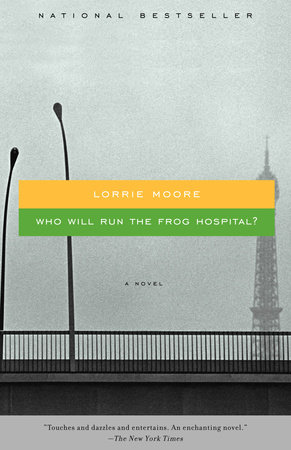
Who Will Run the Frog Hospital? by Lorrie Moore

When I re-read Frog Hospital last year, I was taken aback to find that it wasn’t the novel I’d remembered at all. In my mind it was a story of an intense teenage friendship, but there’s much more from the adult-Berie’s point of view than I remembered. She’s in a miserable marriage. The friendship certainly is the novel’s central relationship, but there is a fully realized plot; adult Berie’s husband and teenage Sils’s boyfriend are developed characters. Berie is fired from her job at Storyland for stealing money to pay for Sils’s abortion, a fact that had totally receded behind the memory of that sharp Chicago air and anticipation of isolation that seemed inevitable in my coming life as an adult. I’d remembered the adult sections as a frame for a coming-of-age narrative, but, as with Marlena, they are half the story itself!

As an adult, I’m struck by how much being half of a glowing pair of girls was was about feeling partnered and as a result, validated. Having someone who’d be in it with you. In the hating of phonies, in the obsessing over cross country race times, in the obsessive crush on a history teacher, in the toxic fear of weighing more than a hundred pounds, in the desperation to escape suburban Connecticut, in the realization that the greatest danger on your college campus was in the basements of fraternity row, in the lonely, fumbling years of figuring out what to wear to job interviews and how much to drink at work parties. That kind of friendship was about really being known. My parents knew and loved me, but these friendships were thrilling in the way intimacy offered the validation of being known and loved by someone who didn’t share my genetic material.

As an adult, I’m struck by how much being half of a glowing pair of girls was was about feeling partnered and as a result, validated.

My family moved to Switzerland when I was six, and it was there that I met my first best friend. We were best friends by default: two of only a handful of American kids, her parents knew mine, we had siblings the same age. We spent afternoons exploring the attic of my family’s rental house with a gothic curiosity. We put on plays for our families and spoke English at lunch-time and celebrated American Thanksgiving and told ghost stories and ate her mom’s tiramisu.

Remembering this friendship carefully for the first time in years, I’m tempted to cast it in an entirely wholesome light. The last best friendship that was not charged with the burgeoning sexuality, the intimacy of secrets adolescent and teenage girls share. But then I remembered the dark winter afternoon when we used a fork to pluck a piece of poop from the upstairs toilet and examine it closely. I can still see the cutlery pattern. I was disgusted, thrilled, nervous about what we’d done and threw the fork away to be sure no one might eat with it. An eight year old’s darkness, sure, but the fecal metaphor seems too important to ignore. Perhaps as a principle of balance, with the notion of a “best” friend, some darkness is inevitable.

Perhaps as some principle of balance, with the notion of a “best” friend, some darkness is inevitable.

As a senior in high school, I worked hard to craft the seemingly-effortless write-up that would go under my yearbook photo (favorite quote: Franny Glass saying “I’m sick to God of just liking people. I wish I could meet somebody I could respect”). To my best friend of that autumn, I’d written: “the fire was lit on the night you were born.” Crafting these yearbook messages to friends, boyfriends, parents, even favorite teachers was an important ritual at my high school. The fire line I used was from a car ad my friend and I had seen while we flipped through running magazines wondering if any of the professional runners got their periods.

Even at the time, I knew the message sounded romantic and suggested a sexual intimacy, but I didn’t care. My friend had said she loved the line, and I understood being her best friend meant remembering this. Not just that night, but for the months until I wrote the words that would go under my senior picture and proclaiming it publicly in the same way I was required to decorate her locker on her birthday or accompany her to a party we knew would be broken up before midnight.

I didn’t have a boyfriend until the summer after I graduated from college. I filled my middle, high school, and college years with female friendships so intense it was easy to mistake us for a couple. In an essay she wrote for The Atlantic, Buntin describes a Marlena-like friend of her own: “At 16, I was in love with her in a not-entirely platonic way, which every woman who has been the sidekick in a teenage girl-duo will completely understand.”

I filled my middle, high school, and college years with female friendships so intense it was easy to mistake us for a couple.

In my teenage girl-duos, we shared twin beds and talked all night and confessed fears and desires so intimate that speaking them aloud sometimes made me dizzy. Some of these revelations feel callow now, but they were existential then. Would we ever fall in love with someone who loved us back? Would we always feel suffocated by the girls we were expected to be? Would we ever stop hating our bodies? Would sex hurt? Would we have jobs that we loved, or were even good at? It was such a relief to feel revealed, vulnerable and still understood. Loved even.

We learned to drive together and drained gallons of $.89 gasoline on Connecticut’s back roads. We watched Lifetime eating disorder specials, dubbed from TV on VHS, together in silent awe. We went kayaking in the Long Island Sound and capsized when the water was forty degrees. We poured glue in the mailbox of our menacing, misogynistic history teacher. We ran miles and miles in the freezing rain and only then let ourselves binge on Chinese takeout, warm, cozy, clean in our team sweats, curled up together wondering what everything yet to come would be like. We called each other in the middle of the night and risked waking up the whole house — in the days before cell phones — when our boss was creepy at the work party or when we wanted to be sure the other wasn’t mad or we were afraid that the girl who drank too much at the party really might die, just like we learned in health class.

We met at the diner before school, arming ourselves for the day ahead, gathering intel from the night before. We walked each other home from parties, as we’d been instructed to do during college orientation and concocted elaborate plans to get chemistry TAs to ask us on dates. We walked down the street holding hands, laughing in the language we’d made up just to speak to one another. We told each other we could be writers, lawyers, doctors, evolutionary biologists and that we deserved better than the TA, and anyway, he once dismissively called biology a “soft science.”

Until, abruptly, it was too much. Until the twin beds felt too small, the smell of spoiled milk (it’s easier to purge if the last thing you’ve eaten is dairy), or stale beer, or dirty sheets, or clammy hands too much to bear. I felt suddenly suffocated to be known so intimately. It was never with any grace that I pulled away. I sat at a different lunch table, revealed secrets I knew I shouldn’t, pulled my hand free, stayed home with my parents the night everyone got home for Thanksgiving break, stopped answering the phone.

I felt suddenly suffocated to be known so intimately. It was never with any grace that I pulled away.

I write about these friends all together not because they were interchangeable, but because the way it felt to be known, accepted, and loved by someone outside my family was what made me glow. That liminal time between adolescence and young adulthood was itself so unstable that it seems in retrospect that of course friendships that intense would have been radioactive. I think even then I knew that it would be impossible to have more than one such friend at a time. More than one person who would call you in the middle of the night when you’d had your first kiss, or your boss drank too much and passed out in a bathroom, or could reasonably expect to hold your hand in public. There are other friends I’ve been close with and shared adventures with, but the specific kind of intense friendship that feels like a not-quite-decent secret is the kind that seems to have a half-life.

Friendships formed more temperately, in the daylight hours, over years of shared interests or proximity, have more often been capable of evolving gracefully. Without the intensity of commitment to one another’s darkest elements, these other friendships have been more resilient and longer-lasting. I think now of my closest friends and realize that the inconvenient geography of adulthood in the suburbs, exhaustion of work commitments, demands of parenting, have forced a slowed pace — maybe we can meet for dinner once every other month, or maybe we can squeeze in a few adult sentences between pushes on the swing — that seem to have also lent a stability.

Friendships formed more temperately, in the daylight hours, over years of shared interests or proximity, have more often been capable of evolving gracefully.

I wonder if Claire will end up being the last radioactive best friend I made and lost. I imagine the way she shaped the adult I became, the half-life of that influence long, her mark on me fading slowly as I age.

We met as young high school English teachers nine years ago. It’s not exactly that the dissolution of our friendship has been too emotionally fraught to imagine being open to true, vulnerable friendship again, but that I realize how much of the vulnerability and intensity feels incompatible with the emotional demands of my adult life: marriage, motherhood, the geography of suburban living combine to make the kind of intense bonding I once took for granted feel as much a relic of a different life as math tests and school lunches.

I realize how much of the vulnerability and intensity feels incompatible with the emotional demands of my adult life: marriage, motherhood, the geography of suburban living.

The day Claire and I became friends was one of those first bright, sunny warm days at the tail end of a long Connecticut winter. We were running around the track after coaching high school distance runners when I confessed a crush on one of our teaching colleagues. By the time we’d circled the track, we’d hatched a plan to turn our next English department happy hour into a date, and by the lap after that we were laughing too hard to breathe, careening in and out of lanes, as the kids who were still waiting for rides after practice watched us with a mix of amusement and discomfort.

As soon as I walked in the door of my apartment, I called Claire to tell her something I’d thought of on the drive home. That weekend she taught me how to put on eyeshadow and two weeks later we drove to the Outer Banks for a weeklong vacation with my college friends. Unbothered by gridlock on the Cross Bronx Expressway, a closed lane on the New Jersey Turnpike, a wrong turn in Maryland, we talked nonstop through the entire ten hour drive.

When I became friends with Claire, I’d just moved back to Connecticut, a place I’d hated as a teenager. I’d broken up with a boyfriend I once thought I would marry, and I was, for the first time in several years, really afraid I’d spend the rest of my life eating Trader Joe’s frozen pizzas alone in my apartment. At one point, I thought my radioactive best friendships were the shameful mark of not having had a boyfriend at an age when most girls had, as though the friendships themselves were evidence of a certain kind of unlovability. I see it a little bit differently now.

It’s true that I would likely would not have found myself giggling hysterically over putting battered University of Chicago tote bags on the purse stool at a five-star Chicago restaurant with my college roommate if I’d had a boyfriend. Those late night conversations around that reservoir, barrelling east on I-80, running down the rocky Connecticut beach, early mornings curled toward a friend, talking ourselves toward sleepy oblivion might never have been. Those were the nights, conversations, moments that made me. I spent these drives and runs and nights talking about what I feared, loved, longed for, desired most. Allowing myself to be known, shadow and all. This kind of connection was really what I desired, often in an animal, primal way. This kind of longing felt more pure than the longing I had for a romantic relationship. That second desire always felt tinged with validation, with being explainable to my students, my parents’ friends, marking myself as worthy in some societally agreed-upon sense.

This kind of connection was really what I desired, often in an animal, primal way. This kind of longing felt more pure than the longing I had for a romantic relationship.

I have some friends who, though they were happy to be settling into marriage, mourned the end of their single lives. That there would be no more first dates, one night stands, initial flirtations. I hated dating, and though and for me those early dating days were always more anxiety and uncertainty than euphoria. I do understand some of the wistful nostalgia for the rush of early infatuation, though. On days when I haven’t laughed or slept enough, when I feel isolated and muted by adulthood, I long for the adrenaline rush that comes with falling in love. I’ve always fallen in love with friends differently than with men. More confidently, more wholly, more intimately.

By the time I recognized that my friendship with Claire had ended, she was already too far away to fight with or resent. I wonder sometimes if her pulling away from me is karma for the friendships I’ve felt a sudden urge to escape. I have a lot of questions about how and why I might have been too much. Did I become like someone we’d have once rolled our eyes at? Did I talk too much about my kids? Too clingy? Not funny enough? Did I say something rude? Fall short when she needed support I didn’t understand? Had I simply become too much?

For years, I’ve been thinking about how different the end of a friendship is than the end of a relationship. The most obvious difference is that there’s not typically a concrete “break up” in a friendship. But, it’s not just that. Both the beginning and end of my best-friendships were different than dating. It never mattered to me as much that my boyfriend know me as that he love me, respect me, want some bigger, more abstract similar things out of life. Maybe for that reason, the end of a romantic relationship never felt sudden, but was instead a slow realization of incompatibility that became arguments and frustrations and then eventually required a conversation and returning of belongings. And, maybe most differently of all, the end of a romance comes with a socially-condoned mourning period.

Both the beginning and end of my best-friendships were different than dating. It never mattered to me as much that my boyfriend know me as that he love me, respect me, want some bigger, more abstract similar things out of life.

In Who Will Run the Frog Hospital, when Berie’s marriage is on the brink of dissolution over her husband’s affair, it is Sils and that summer of intense connection that Berie thinks of. Sitting in Paris with her cruel, aloof husband, adult Berie remembers:

I was invaded by Sils, who lives now in my vanished girlhood, a place to return to at night, in a fat sleep, during which she is there, standing long-armed and balanced on stones in the swamp stream, stones in the cemetery, stones in the gravelly road out back…”

Marlena and Frog Hospital are both novels split between the past — the narrator’s adolescence and period of intense friendship — and the present. Cat’s adult life in New York is haunted by Marlena, by unresolved questions about her death, of course, but also by the ways in which the woman Cat became was shaped by the friendship they shared, briefly, years ago.

I think about apologizing to my own ghosts. For no longer being entirely the person that I was when we became friends. For sending them into reservoirs. For writing the story about them to begin with. For pulling my hand away that bright June afternoon in Chicago. For moving lunch tables in tenth grade, and at the time, not feeling even a little bit sorry about it.

Although I know ego — being the half of the duo left behind rather than the half who does the leaving — is part of what’s made it hard to find closure in the end of my friendship with Claire, I also suspect it’s the feeling I won’t ever fall in friendship love again that has made it hard to move on. I’ve read so much about the ways mothering small children can make women feel “touched out” by the end of the day, and as a result the ways that physical intimacy must be renegotiated after parenthood. Certainly the intimacy of breastfeeding and diaper changing make can other kinds of physical intimacy unappealing. Our cat rubbed against me while I was writing this essay and I nearly screamed.

Certainly the intimacy of breastfeeding and diaper changing make can other kinds of physical intimacy unappealing. Our cat rubbed against me while I was writing this essay and I nearly screamed.

In the same vein, the emotional intensity of parenting does not leave a lot of room for intimate friendships. Parenting the way I hope to, or even adequately, is already so much that there’s no room for too much. I am already confronted with my shadow all the time. The specter of death that rises fully realized during labor, the craving for sleep even as I wake with a worried start at the baby’s cries, the inability to ever be fully present when I’m not in the same physical space as my children, the constant awareness of how long it’s been since I nursed or pumped, of how much breast milk is in the fridge, how much each child has been held, nuzzled, shown the fierce, unconditional nature of my love. A constant balance of how I can do better for them and by them. To step away from this kind of physical and emotional intensity for the kind of all-consuming friendship I once knew is unfathomable. But, still, motherhood and friendship do not occupy the same emotional space, and I sometimes miss the rush of becoming known, loved, validated by a new friend.

After my second baby was born, women brought dinner. Not Claire — other mothers. Many of these women I’d never spent time with one-on-one. I hadn’t met their husbands, I didn’t know where they’d grown up, who they’d been in the lifetime before they became mothers. Although we didn’t push the topic beyond the societal norms that go along with asking a woman how her labor went, I knew they knew about the darkest, most intimate moments of my life. They knew how scared I was during labor, how much pain I was in, how near I felt to death — either my own or my baby’s — they knew how deliriously tired I was, how filled with irrational outrage over small injustices, how panic-stricken over sudden infant death syndrome, hemorrhage, drunk drivers, nuclear apocalypse I was. Though, if we did talk about any of this, it was slowly, in spurts when toddlers weren’t listening. Friendships unfolding over months, years, not manic-all-night conversations.

If we did talk about any of this, it was slowly, in spurts when toddlers weren’t listening. Friendships unfolding over months, years, not manic-all-night conversations.

I sometimes wept with gratitude for the chicken pot pie on my doorstep on a dark January Thursday evening. For acknowledgement of the out-of-body exhaustion, euphoria, and fear that mark the first weeks home with a new baby. Last week at the indoor playground, my infant strapped in a carrier, my daughter climbing up and down the jungle gym, my new friend Stefanie and I exchanged sentences between hugs and toddler reassurance. We were together at the playground for maybe forty minutes, quickly skimming the surface of things we’d built up to tell each other. Beneath each snippet of conversation we managed, was an unspoken hour of raw honesty. The forty minutes were restorative. Although — or maybe because — this unarticulated understanding is not radioactive.

The term “radioactive” is not used to describe a stable person or a sustainable friendship. As I was googling “radioactive tracers,” my browser suggested “how long does it take for radioactive tracers to leave the body.” They light us up as they course through our veins, maybe revealing illness. And we want that glow to fade out. A brief half-life.

Sometimes, especially just around the time I was realizing Claire didn’t want to be my friend anymore, I would tell my husband that I was lonely. Once he said, dismayed, “but I’m right here.” And, truly, he is. But, he’s not a woman, not a mother, and we are a team in an inextricable, permanent, consequential way that none of my friends and I ever have been. The stakes can feel terrifyingly high — no room for instability in this home that houses our children. Our work together is largely about turning inward. Power-washing the house and scheduling dentist appointments and eating dinner on the back patio and waiting until after our children are in bed to worry about Trump or ISIS or catastrophic floods.

That I feel we’re in it together is consistent with those radioactive friendships, but what we’re in is so different, so much more about us and less about me. Although I once might have, I don’t think it’s superficial or old-fashioned to want to limit the role the shadow is allowed to occupy in that space. I don’t think a marriage should be radioactive.

Although I once might have, I don’t think it’s superficial or old-fashioned to want to limit the role the shadow is allowed to occupy in that space. I don’t think a marriage should be radioactive.

It is hard to explain how much I miss the all-consuming and validating rush of being part of a pair on fire while also understanding how utterly impossible it would be now. The things I thought would make me feel old — hair greying, skin wrinkling, clothes fitting differently — have been inconsequential compared to that kind of friendship, or even more, the belief that that kind of friendship would always be possible. Of these female friends, those we do see as adults show just this. I think it’s why I cried, without understanding that it was why I cried, when I finished Who Will Run the Frog Hospital. Berie’s loveless marriage, Sils’s townie life, Marlena’s death, Cat’s alcoholism feel like literary dramatizations of my own half life.
A Brother’s Story About Being a Stranger to his Sibling

“My Sister, Nozomi”

by Sacha Idell

I grate a piece of wasabi, open the window, and pretend to ignore the phone when Nozomi calls. I don’t want to talk to her — not yet, anyway — and once I start cooking I hate to stop. There’s something sad, I think, about walking away from a meal when it’s half-finished. Even if you come back to it later, the focus is different: the precision and the timing are all lost. Finishing a meal like that isn’t worth the disappointment.

Nozomi knows that the phone isn’t the best way to reach me. She’s seen me ignore it enough. If Nozomi really wanted to hear from me, she’d show up at my apartment doorstep unannounced again. If it’s important she’ll leave a message. That’s the way it’s always worked. It’s just that Nozomi can get stubborn. It’s easier for her to call than it is to take the train out here from Chiba. Plus, she can’t always lie to our father about where she is. Everyone gets caught eventually.

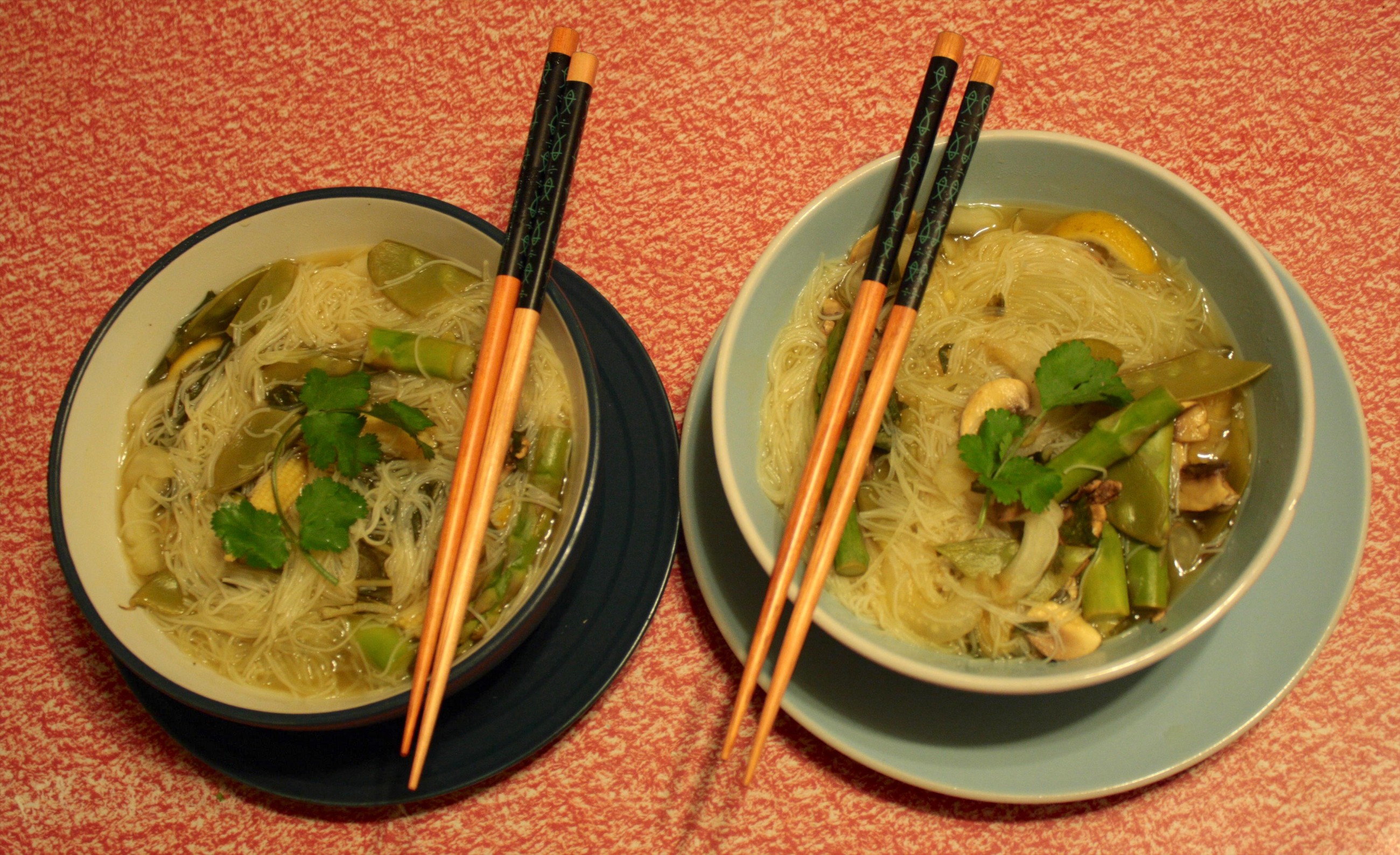
The phone buzzes again — Nozomi must have left a voicemail — and I scrape green paste from a container, watch it fall into a ceramic dish. The paste reshapes against my fingers. Wisps and indentations mar the edges. I set the dish aside, wash my hands and the grater, spray and wipe the counters, and check on the rice in the cooker. The timer has about fifteen minutes left. A filet of pike is crisping in the broiler while tofu simmers in a broth of dashi and mirin, topped by ginger and scallion slices. By the time I stop moving, I’ve made a nice little meal for one: tofu, pickles, grilled fish, rice, and a small bowl of miso soup.

I open the fridge, reach over bottles of soy sauce and salad dressing. It’s still early in the day, but I grab a can of Sapporo and pour it into a glass. Foam rises and settles. I polish off everything quickly — I always make sure to eat everything — and wash all the dishes by hand. Then the phone rings again and I continue to ignore it. Some calls don’t need to be answered.

I call Nozomi my sister, but it’s not like we’ve ever lived in the same house. She’s my father’s daughter, but we have different mothers. It’s an ordinary story. My mother was a hostess at a small bar by the station. My father hadn’t married Nozomi’s mother yet, but I guess he might have already been dating her. I don’t know the specifics; all I know is the ending: my mother pregnant and living on her own, my father married to the daughter of a wealthy family and taking over their business.

The rest isn’t very important. Nozomi’s mother died when she was young, and the two of us met some time after her funeral. My father invited me to dinner one night, as a way of reaching out to a family he had never known. His secretary must have drafted the letter, but at nineteen, I was intrigued. Wasn’t it an ordinary thing to want to meet your father? Why shouldn’t I feel the same way?

On a Thursday evening, I slipped on my only jacket and tie and took the train all the way to Tokyo. There were three transfers just to get to Shinjuku, and one more to get to the restaurant in swanky Aoyama after that. The menu in the window failed to list any prices.

A waiter with dark shoes that probably cost twice my salary lead me to a private room in the back of the restaurant. My father, his secretary, and Nozomi were all seated on cushions at the far end of a low table. The room smelled faintly of tatami. A moth-patterned tapestry hung at the back of the room. It seemed slightly out of place, and I found myself distracted, unable to focus on my father’s expression and greeting. He waved me over, as he might a frequent guest in this sort of establishment, and motioned for me to sit near the door, next to Nozomi. I sat, somewhat stiffly, and was handed a menu.

“Anything you might like is fine,” the secretary said. “We’ve already taken care of it.”

I glanced over at Nozomi and caught her staring at me. Her face turned red at the edges, and her head shot straight down to her empty plate. I smiled. Kids have to be nervous in these sorts of situations.

A chain of waiters appeared and handed us drinks. A garish blue cocktail was set on a napkin before my father. He sipped it slowly, and I wondered how long it would take for his tongue to stain that color.

Worried that I might order the wrong thing, or that I would request something too expensive, I asked my father to order for me, and he nodded and lit a cigarette. He didn’t seem to have much interest in talking. At one point, a call came, and my father and his secretary excused themselves to deal with a work situation. Nozomi and I were left alone.

“How old are you?” I asked, unable to think of other questions to ask a kid her age.

“Ten.”

I nodded. “That’s a good age, ten. I remember liking it.”

She stared at her plate. Clearly I was making a muddle of things.

“Is there anything you’d like to ask me?” I couldn’t think of anything else. “Why I’m here or anything?”

She shook her head.

“Really? Nothing at all?”

“Do you have a car?”

I was taken aback for a second.

“A car? Why?”

“So you don’t have a car?”

I shook my head. “The train gets me where I need to go.”

Nozomi bit her lower lip. A confused expression flickered across her face.

“But I thought everyone in the countryside had a car.”

My father and his secretary re-emerged from the hallway and sat down. Nozomi stared at me expectantly.

“Not everyone has a car in the countryside. It isn’t always important.”

“But you live in a house, right?”

I laughed. “More people do out there, I guess. But I don’t need much space, so it’s just an apartment.”

“We live in an apartment too. It’s big, but it’s an apartment. There isn’t a yard. Do you have a yard?”

I looked over at my father, but he just took another sip of his cocktail. The moth tapestry fluttered as a nearby door opened. The fabric’s trembling made them look as though they might fly right out of the fabric.

“Not really. There’s a lot with some grass and gravel that the apartments share. And a shed with a coin-powered washing machine. But that’s about all. It’s near the beach though.”

“The beach? With surfers? In Ibaraki?”

My father was silent for the rest of the evening, chewing his way through the conversation while Nozomi besieged me with question after question, all of which I answered dutifully, even after I had lost the ability to pay attention.

Nozomi had been obsessed with the idea of having an older brother for years. She was ecstatic to find out she had one all along. But she also must have been disappointed. A 10-year-old girl probably wouldn’t want a 19-year-old part-timer as her older brother — much less an older brother who only cared about cooking and listening to old Happy End albums — but she seemed happy about it anyway. Unrealistic dreams always make you happy when they come true, regardless of whether or not they’re what you actually wanted. It was probably something like that.

Around a week later, there was a knock on my door. I wasn’t expecting anyone, but figuring it was a neighborhood circular or something similar, I opened it, and Nozomi was standing on the other side. She was still in her school uniform, clutching the straps of her backpack. Her nose was red from the winter cold.

“Nozomi?” I asked.

“I’m running away from home,” she answered.

“What?”

“I’m going to live here.”

Nozomi ducked under my arm and into the entryway. She took off her shoes and lined them up neatly on a small rack by the door. The main flap of her backpack was undone, and a Snoopy pencil case was peeking out the top.

“No you’re not,” I said.

She laughed, ignored me. I shut the door and rushed inside after her. My mother was still at work and would be until the early morning. The television was on in the corner, and a variety show was playing softly in the background. Nozomi took off her blazer and scarf and hung them on an empty coat hanger in the closet. She kneeled down on a cushion and unwrapped a rice cracked from the bowl on the table. Unsure what else to do, I thought about calling our father, but he was usually busy during the day, and it was a long a train ride from Chiba. Nozomi must have spent a long time on the train coming to my apartment, I reasoned. It probably wouldn’t hurt to let her stay for an hour or two.

“Do you want some tea?” I asked. Nozomi looked up at me, smiled, and nodded.

I filled our stained kettle with water and set it on an electric coil. Nozomi started flipping between channels behind me.

“Does he know you’re here?”

“He doesn’t care.”

I reached into the cabinet and pulled out a small bag of loose tea leaves.

“When you run away from home, you need to leave a note or something. Haven’t you ever seen anyone run away on TV? If you don’t, they’ll think something terrible happened. They might even call the police.”

“I’ve never met a policeman.”

“They’re usually nice.”

I shook the leaves into a pot and drizzled warm water over them. The scent filled the kitchen.

“Hmm,” Nozomi affirmed.

I brought the teapot and two cups on a small tray into the living room, set down the cups and filled them.

“You have to call him, okay? You can’t run away and not tell anyone about it.”

“Okay,” she said.

Nozomi stayed the night, and I gave her money to return by train in the morning. For no particular reason, it became a routine, Nozomi running away from home on the weekends and staying with me. I was never quite sure what to make of it, but I enjoyed the company.

As she grew older, Nozomi would call or text me in the gaps between her visits. Twice, when she was studying for exams, she had to cancel the trip. She acted very upset about it at the time, but she would never admit that now.

I have no idea what our father thought of all this. He didn’t seem to mind — in fact, he starting paying for her trips. It always bothered me a little. From how Nozomi described him, he sounded like a very removed parent, but the negligence seemed extreme — brother or not, I was basically a stranger. Not someone to send your young, impressionable daughter to. Even now, I can’t fathom it, but he must have figured that as long as Nozomi was happy, everything would be fine.

A few hours pass and I go into town to buy groceries. My first unemployment check went into my account yesterday, so I can afford to be a little less frugal. Besides, shopping keeps me busy. It’s an old habit; my mother tried to buy a day’s food at a time, to make certain we never let anything sit in the house and go to waste. I might as well have inherited it genetically.

The sun is low in the sky, and the breeze gives everything a slight chill. The closest grocery store is in the center of town, but it’s across from the restaurant so there might be a chance of having an awkward run-in with someone from my old job. I decide to go to one a little further away, at the edge of the shopping arcade next to the stationary shop.

The stationary shop has been deserted for a while now. Mrs. Kawashima ran it for years after her husband ran away. She and my mother were two of the only single-parents in the area, and this town being as tight-knit as it is, they often relied on each other for support. I spent a few afternoons in the Kawashima’s apartment above the shop, but stopped going around the time I turned seven. Her daughter and I never got along.

I grab a red-plastic shopping basket and fill it with simple things. Tofu, ginger, another six-pack of Sapporo. I add a bottle of Cutty Sark from the liquor aisle, some razor blades and shaving cream, and a tube of mint toothpaste. On my way to the register I notice a woman bump into a display of canola oil. Her shoulder brushes against a stack of the plastic bottles. They scatter everywhere. None break.

I think about going over and helping, but one of the stockboys sees the spill and rushes over first. My phone starts buzzing in my pocket again. The cashier closest to me clears her throat — there’s no one left in line — so I ignore the call and go to check out. The cashier rings up my items one by one. The register beeps as it processes.

I take a long sigh and listen to the messages. As usual there’s not anything all that substantial. “Sorry,” I tell the cashier as I hand over the bills. “I was worried it might be important.”

The cashier smiles and shakes her head. She’s not the type for small talk, but she seems willing to indulge me.

“She’d been calling all morning.”

“Your girlfriend?”

“Sister.”

She nods and hands over a few hundred yen. Outside, moths crowd around a vending machine and a magazine rack. The wings are simple white, faint and shimmering. It’s not really the season for moths, and even though they’re not particularly interesting, for a while I can’t look away.

By the time I get home again, Nozomi’s already sitting on my doorstep. She’s wearing a green sweatshirt over her uniform. Her ears are covered with oversized headphones.

“Hi,” I decide subtlety might be the right approach. Nozomi scowls back.

“Dumbass. I’ve been calling all morning.”

I scratch behind my ear a few times. “Sorry. I haven’t looked at my phone.”

Nozomi rolls her eyes and pulls her headphones back onto her head. I start to say something else, but before I can get the words out she presses the play button.

“Are you going to let me in, or are we just going to stand out here?”

“I don’t know,” I shrug. “It’s a pretty nice day.”

Nozomi makes an expression that must mean something like you aren’t nearly as funny as you think you are.

“Whatever.”

I fish the keys out of my pocket and open the front door. My apartment smells like dashi. The hardwood is flaking in the entryway.

“Have you eaten yet?”

Nozomi walks over to the low table by the TV and plops down on a cushion. She sets her phone on the table and listens to a few songs. I set aside my shopping bags and start unpacking, throw a couple blocks of tofu into the fridge and store the whisky beneath the sink.

“Are you hungry?” I try again.

“Are you cooking?” She asks without a flicker of interest.

“I could be.”

“Make up your mind.”

“Did you have a fight with Dad?”

She turns up the volume. It’s loud enough to hear fragments of the music from across the room. Without another word, I start washing rice in the sink. Water runs through, milky at first, but it gradually clears. I stick the rice in the central container of my antique rice cooker. I chop some mushrooms, chestnuts, and bamboo shoots and throw those in too. I add some sake and soy sauce to the water for seasoning.

“What are you making?” Nozomi asks. Her headphones are down around her neck again. “A bit of this and that. Nothing special.”

I reach in the fridge and pull out two cans of Sapporo.

“Want one?”

She gives a noncommittal grunt, so I pour her half a glass. She takes a sip and grimaces. I pretend not to notice.

“How are things at work?” She asks.

I hesitate — given the choice, I’d rather Nozomi didn’t hear about anything until I have a new a new job. She’s a worrier; she’ll probably imagine something that’s worse than reality.

“I don’t work at the restaurant anymore,” I say at last. Half a lie is going to be better than a whole one. “I quit two weeks ago.”

“Oh.” She says. For a moment I’m a little disappointed.

I turn on the television. We watch a commercial for Pocari Sweat in silence before a variety show comes back on. They’re doing a segment about pet owners in Tokyo. The hostess struts about in heels, dragging a perfectly white toy poodle on a leash while she interviews pet owners on the street. I wonder for a bit if the poodle is even hers to begin with — it doesn’t seem very attached, but then it seems unethical, somehow, to treat an animal like a prop.

“Do you need me to ask Dad for help?”

“No,” I shake my head. “I’ll be fine for a while still. Nothing’s dried up quite yet. I’ll find something new before too long.”

Nozomi takes another sip of beer and I lean my head back and imagine tracings in the white on the ceiling. The volume on the TV is so high that I don’t notice when the rice cooker dings, and all the food at the bottom of the container chars together. But we end up eating it anyway.

When Nozomi was eleven, she once visited my mother’s apartment after school. She had gotten to the apartment before me, and had used the spare key to let herself in to wait. She was fascinated with the seed my mother had fed her canary, and had dragged the whole sack of it to the living room table. I was quiet when I entered, and I remember her scattering the seeds across our low table in the living room, the gold of them bright against the dark coloring of the wood. I don’t know why I was watching her. I was probably just curious — why would a girl like her be interested in something so mundane? Or maybe it was the way her hair fell and shook, ever so slightly, as her she counted the seeds. Her mouth framed the edges of numbers, but she never spoke the words aloud.

“What are you doing?” I had asked, and even then I could sense that it was a mistake, that nothing should have been said.

“Nothing.” She said, and scooped the seeds, mostly uncounted, back into the small cotton sack where they were stored.

That sack had vanished from our apartment by the time Nozomi left. I assumed Nozomi had taken it with her, but out of some small fear for her I never told my mother anything.

Months later, I opened a small box in the closet, looking to bring out my mother’s winter clothing, her heavy socks and jackets and scarves. When I opened the box, moths erupted out by the dozen, white and fluttering and somehow torrential. When the moths cleared, it was as though they had never been there. All that was left in the box was a molding bag of bird seed on top of a thick pile of fabric. The clothing had all been eaten away.

I toy with a hole in my shirt and mutter an incoherent response to a question, but Nozomi isn’t paying attention. I turn out the light in the kitchen and the television is the only illumination left. Irregular flickers of blue light rush across the ceiling. I open and close my right hand. In the half-light the motion is distorted, as though I’m moving in a dream, and my hand isn’t really mine.

“Have you called Dad?”

She shakes her head.

“Are you staying here tonight?” I ask.

“Yeah.”

“I’ll lay out your futon in a bit.”

“Thanks,” Nozomi says, and she sounds like she means it.

I wake up earlier than Nozomi and decide to take a walk. It’s cool out. The breeze is rough by the water. My route cuts across a small parking lot, over the sea barrier and down onto the beach. It’s low tide, and something is reeking. Driftwood and seaweed are piled unceremoniously by the waves.

I pull on the cuffs of my sweatshirt a bit and stuff my hands into my pocket. The motion forces me to hunch a bit. My eyes stay locked on the ground.

Around eight I get a text message from Nozomi. She says she’ll call home and then make breakfast, so I should ‘definitely’ be back home in an hour. I text her back saying it’ll be two, and that she can eat on her own if she wants. I don’t really have a reason to say that, and I feel like a jerk, but for some reason I can’t put my finger on it also feels necessary.

At the edge of the shoreline I climb a staircase and turn right onto a grassy cliff that overlooks the ocean. Someone installed a stone bench there, ages ago. The sort of thing that’s only built to seat one, but looks like it could handle another person or two. A small pile of rocks is neatly lined to its side, making the shape of a wing. I sit down and scratch my head and remember the pile of tattered clothing again. It was really more my fault than Nozomi’s. I’m glad I didn’t let her get the rap for it. I don’t think she deserved it. Maybe I didn’t either.

I start to remember all the times I’d let something get ruined. Once I unplugged the refrigerator before we left town for two days. By the time we got back, all of the food in the freezer had thawed and spoiled. I can’t remember why I did it, but I must have had a good reason. My mother was livid all the same.

There was also the time I broke my calculator. I had to buy a special one for some class or other, and it was terribly expensive. I remember the strain on my mother’s face when we went into the shop and saw the prices. I kicked my bag down a flight of stairs later, out of frustration with something unimportant. When I took out the calculator to work, the screen was cracked.

My phone rings. I expect it’s Nozomi complaining, but I see my father’s name on the caller ID.

“Hello?”

“Naoki? It’s me.”

“What do you want?”

I cross my legs, prop an elbow up on the back of the bench, and lean my head into my palm. “Nozomi said you might need some help.” My father says at last.

“I’m fine without it.” I pull the phone away from my ear, let my thumb hover above the button to cancel the call, but for some reason I can’t seem to let myself do it.

“Are you sure?”

The volume is high enough to hear the voice over the waves and the nearby road. I bring the phone back to my face but stay quiet.

“Listen, Naoki, I might have a deal for you. Just hear me out for a moment.” Waves crash in the distance. The sound is almost like static.

“Naoki? Are you listening?”

“I’m listening.”

“Good. Now, I don’t know how you feel about this, but it seems to me that lately, you take more care of Nozomi than I do.”

“I don’t do anything.”

“Don’t be modest, Naoki. You do plenty.”

I clutch my forehead, even though he can’t see me over the phone.

“You’ve got to be joking.”

“You can tell where I’m going with this, then. I’d pay you. Enough to make it worth your while. More than enough. Nozomi needs a role model, especially at such a delicate age. For whatever reason, she seems to like you. Why not let her live with you for a few months? I’ll pay for everything you two might need. You won’t need to look for a new job. If you really want one, of course I could find you something at the company too. It sounds like a promising proposal, doesn’t it?”

I can feel something violent surging in my gut. But Nozomi wouldn’t want me to say anything. Not now, and certainly not like this.

“I’ll think about it,” is all I can manage. And I suppose I won’t be able to help myself. Now that he’s said it, I can’t not think about it. The carelessness of it all.

After breakfast, I offer to walk Nozomi to the station. It’s a bright sunny day, perfect for walking, and even if I’ve already been outside for a while, Nozomi could probably use the company.

“You’re nuts,” she says. “What’s so great about wandering around this town on your own?”

I smile back and ruffle the hair on the top of her head. She glares at me and straightens it out in her phone’s camera.

“Jerk.”

We gather her things back into her backpack and walk down the main thoroughfare. The most direct route cuts through town, right by the old restaurant, but I pretend not to notice even when we walk by.

“Are you okay?”

“What?”

“You seem stiff.”

I shrug. “Sometimes it’s natural to be stiff. Your body can’t be loose if you have nothing to compare it to.”

“You are so weird. I hope I’m not like you when I’m older.”

I shake my head. A light wind crawls across the road, scatters a fluttering of moths.

“You know that I’m going to be all right, don’t you?”

Nozomi nods, but doesn’t saying anything else.

“Just make sure that you can take care of yourself, Nozomi. I’m here if you need me, but I don’t think that you do. You’re old enough to know who you need to rely on. I can’t be the one to help you with everything. But I can be your dumb, deadbeat older brother all you want.”

“Is that all?” She sounds a bit disappointed.

“Yeah. That’s all for now.”

“You can rely on people too,” Nozomi says quietly. “I’m here too, you know.”

Despite her protests, I buy Nozomi a ticket when we get to the station. It’s not that expensive, and she’ll be happy with the extra spending money. She takes it from my hand reluctantly, as if she’s worried I might bite if she gets too close, and then darts away quickly. She stares at the ticket in her palm until we reach the turnstiles. The color of it almost matches her skin. It seems strange to print a ticket like that — why choose a color that can get lost inside your hand?

“Are you sure you don’t need anything? Anything at all?” Nozomi seems hesitant, but I can’t ask her for anything. She’s at an age where she needs a real parent to take care of her.

“I’ll be fine. Really. I promise.”

The train departs on time, a 10-second segment of some unidentifiable orchestral number playing from the station’s loudspeakers as the doors close. I leave as the train’s sliding out of the station. Faces blur in the windows as it picks up speed. My hands are thrust in my pockets, my phone turned off. For a few seconds I teeter in a dim place, white wings fluttering and surging and fading around me. I wonder if I’ve made the right decision, but there are always, I figure, more opportunities to make the same decision over again. Most things that are ruined can be replaced.

The breeze picks up and drags a drop of sweat across my forehead. The sensation feels oddly real, somehow heightened by my uncertainty. I shake my head and walk out of the station, passengers rushing towards the turnstiles behind me. As I walk home, I look carefully for moths everywhere I can think to, but no matter how much I look, I can’t seem to find any. The moths are nowhere to be seen.

Does ‘My Absolute Darling’ Deserve the Hype?

“Double Take” is our literary criticism series wherein two readers tackle a highly-anticipated book’s innermost themes, successes, failures, trappings, and surprises. In this edition, Michele Filgate and Bradley Sides discuss Gabriel Tallent’s My Absolute Darling.

Gabriel Tallent’s debut novel My Absolute Darling arrives on a wave of early praise. It’s an intense and harrowing story, following fourteen-year-old Turtle Alveston and her fight to survive the dangerous world and her abusive father. As you’ll see in Michele and Bradley’s conversation, My Absolute Darling is a kind of rare, brilliant book that manages the difficult task of emotionally breaking its readers before, somehow, finding a way to give them hope.

Bradley Sides: To me, the single greatest aspect of My Absolute Darling is the fourteen-year-old protagonist, Turtle Alveston. Truthfully, she’s a character I don’t think I’ll ever forget. She’s tough. She’s fierce. And she works so, so hard to overcome every hardship that comes her way. At such a young age, she endures all forms of abuse, and, somehow, she still has the strength to continue.

“Survivor” is the term I think best describes Turtle. Yes, she physically survives abuse from her father, but she also survives other things. She survives her poverty. She survives her problems with school. She survives lengthy (and dangerous) stays in the woods. I mean, she’s a person who just survives. I kept comparing Turtle’s inherent drive to survive to Mireille’s in Roxane Gay’s An Untamed State, which is the book I thought of the most as I was reading My Absolute Darling.

To begin, I’m curious to know what you think of Turtle — and of her determination to survive.

Michele Filgate: I fell in love with this book because of two things: the gorgeous prose and Turtle. She’s one of those characters who will always stay with me. The number one word I’d use to describe her is “resilient.” Her father is an awful human being, and the scenes where he’s abusive are horrifying and sadly all too real. The way she internalizes what happens to her makes sense.

This is a survival story, and it works because the reader can’t help but root for Turtle. She’s not an easy character, by any means, but it’s her complexity that makes her feel like a living, breathing person. And you’re right: My Absolute Darling isn’t just about abuse. It’s also a coming of age story. Were there any moments where you felt frustrated with her?

She’s not an easy character, by any means, but it’s her complexity that makes her feel like a living, breathing person.

BS: You are totally right about Turtle not being “an easy character.” There are two moments, especially, where that sentiment rings truest to me.

The first one is early on in the book, and it involves her treatment of a bullied classmate named Rilke, who the girls’ teacher describes as being a “know-it-all” and “kind of a kiss-up.” We know that Turtle’s background isn’t good. As we’ve stated, her father abuses her. Plus, she doesn’t have friends or meaningful ways in which she can find any real type of escape. Rilke’s life doesn’t seem quite as rough as Turtle’s for what we know, but she still has her own struggles. When Anna, the teacher, reaches out to Turtle and asks her to befriend Rilke, I had so much hope that we would see Turtle develop some kind of meaningful relationship with someone, but she doesn’t. At least not yet — and not with Rilke. While on the school bus, Turtle verbally and viciously attacks Rilke. What’s worse, I think, is Turtle’s reaction. She sees Rilke’s pain. She sees what she’s done to her. But she allows the moment to burn. Rilke “wraps her hands around herself, pulling her red coat up onto her shoulders, and she bends over her book, opening her mouth as if to say something, and not coming up with anything to say.” It gutted me to see that kind of shared pain.

Turtle’s most disappointing moment, at least from my perspective, is when she basically abandons Rosy, Grandpa’s old, dying dog. After he dies, Turtle does show some general affection toward Rosy. She offers to get food for her. She pets her. And these things are certainly commendable, but she doesn’t do enough. When Rosy is dying in the field near Grandpa’ trailer, Turtle touches the dog. She feels the quickened heartbeats. Ravens are overhead. She knows that Rosy’s death is near, but she leaves her. Tallent writes of Turtle, “She thinks, that old dog, she’ll be okay there, for now.” When she returns, though, it’s too late. The ravens are feasting upon Rosy.

Turtle has so much strength that I think she takes it for granted. Not everyone — not Rilke, not Rosy — can deal with the kinds of things Turtle might could endure. These two moments are tough to read, but they are necessary for us to understand how intensely hurt she is. It makes her ultimate triumph all the more powerful.

And then there’s Cayenne. What do you think about the way Turtle treats her?

MF: I agree with you — these moments ARE necessary in order to see Turtle as a three-dimensional, all-too-human character. We need to see her failures in order to root for her.

The scene where Turtle meets Cayenne for the first time is devastating. Her father disappears for a long time, and shows back up with a girl who is “nine or ten.” “She has a blocky oval face, a jutting jaw, rounded, clunky cheekbones, Twilight open on her lap. Turtle feels nothing look at the girl. Nothing. It is like the socket where a tooth should be. She thinks, his mistakes are not your mistakes. You will never be the way he is. You will never.” Right away, she attempts to distance herself from the girl. And then Martin has her aim a gun at Cayenne, to shoot at a coin. It’s such a dreadful moment. You know nothing good can come of it.

I won’t ruin it for the reader, but the evolution of Turtle’s relationship with Cayenne is what makes the end of the book even more compelling. Before Cayenne arrives, no one else witnessed the abuse. “It has always been private.” She tries to convince herself that Cayenne doesn’t matter to her, but she does.

Do you think learning to care for Cayenne is what saves Turtle?

BS: You know, I’ve asked myself that question before, and I’m still not totally sure how I should answer it.

On one hand, it’s certainly fair to argue that learning to care for Cayenne is what saves Turtle. If Cayenne didn’t appear, I doubt Turtle would ever have that moment where she would have to take on a nurturing role. Sure, she has other moments where she could care for others, especially with Rilke and Rosy, but with Cayenne it’s different. This is a young girl who shares the same broken walls that she does. They hear one another’s cries. They understand the hurt that surrounds them in ways that, perhaps, no one else can. It seems like there would nearly have to be some kind of innate protective and loving bond the girls would form that would lead to some kind of healing.

At the same time, I question my reasoning because the emotional (and probably selfish) part of me wants Turtle to be the one who saves Turtle. I love the recurring motif of her cleaning her gun. She works on polishing that thing from the beginning up until the novel’s end. It’s a slow process, and she savors it. She’s readying herself. Maybe Cayenne’s arrival is just a coincidence. Turtle could already be nearing her moment of salvation.

What do you think?

MF: I also love the idea of Turtle saving herself, but I think Cayenne is the motivation she needs to get to that point. She finally has empathy for someone else, or maybe it’s that she allows herself to feel empathetic for the first time. She knows why Cayenne allows Martin to have any power over her: “He can be pretty fucking persuasive. And what if she came from somewhere that no one cared about her, and all of a sudden there’s Martin. What would you do, if you’d never had that in your life? If you were a child. You’d do a lot, she thinks. You’d put up with a lot. Just for that attention. Just to be close to that big, towering, sometimes generous, sometimes terrifying mind.” And just after she says that to herself, she convinces herself she doesn’t need to help Cayenne, because she “has her own problems.”

So why do you think Turtle eventually changes her mind? She was raised by a man who told her that you can’t count on anyone else to help you. “…you’re on your fucking own,” he tells her. But she’s no longer on her own, once Cayenne is in the picture. And that means she has a responsibility outside of herself. Is that what Turtle needs in order to care for herself? To care for someone else, too?

BS: I think Turtle changes her mind because Cayenne’s love tames her in ways that no one else’s can.

Cayenne doesn’t really push Turtle — at least not too much. And when she does, it’s not aggressively or with selfish intent. Cayenne seems to respect Turtle’s introverted personality. She doesn’t corner her. She doesn’t constantly question her motives or challenge her intelligence. She allows Turtle to be Turtle.

This approach works, too. Slowly, Turtle warms up to Cayenne. I love this scene near the end of the book: “Turtle holds the girl in her arms, and the girl is small, with slender shins and small bony feet, and her hair is rough and coarse on Turtle’s cheek. It sticks to Turtle’s lips and the girl reaches up and puts her arms around Turtle’s neck and Turtle says nothing, but holds her, and holding her, she thinks, this is a thing I can take care of, and if I couldn’t show the girl any love, I could show her care, I can do that much, maybe. I am not like him, and I can take care of things and can take care of her, too, maybe, even if I don’t know if it’s real and even if I don’t mean it more than that, I can salvage something maybe by just doing that…” Here, Turtle changes. She becomes the nurturer that Cayenne needs and, I think, that she, herself, needs. This embrace leads Turtle to a renewed sense of purpose. She’s fighting for Cayenne — and for herself.

We’ve talked about Turtle’s relationships with people; let’s talk about the one she has with the natural world, which is nearly as important in this particularly novel. We could probably even say that the world Turtle inhabits is, itself, a character, right?

Tallent describes this California world as having lush forests and various bodies of fresh water. But it’s also wild and ripe with overgrowth: “The old house hunkers on its hill, all peeling white paint, bay windows, and spindled wooden railing overgrown with climbing roses and poison oak.” The description of the back deck captures this complex setting even better: “The back door off the kitchen has no lock, only holes for the knob and deadlock, and Martin kicks it open and steps out onto the unfinished back deck, the unboarded joists alive with fence lizards and twined with blackberries through which rise horsetails and pig mint, soft with its strange peach fuzz and sour reek.”

The thing that’s so interesting is that Turtle seems most comfortable out in the wild. Let’s talk about Turtle’s connection to the untamed world.

MF: I love that scene, too. It’s a moment of absolute tenderness. Turtle resolves to never be like Martin. The cycle of abuse is so common, but many people lean on it as an excuse for abusive behavior. It’s not an excuse. There’s no justification for abusing people. And as you say, Turtle changes in this moment. She won’t be like him. She refuses.

The landscape is definitely a character in this novel, much like Cormac McCarthy’s writing. It makes sense that she’s more comfortable in the wild. When you’re raised in an unstable household, the outdoors seems like a safer place than the confines of the home. It’s very much alive, just like her. We can see that in this passage, for instance. “The tide is out; there is a black expanse of cobbles, and each cobble holds an eye of moonlight, and each looks soft and wet like flesh, stretched out before her in a multitude. The beach draws breath like a living thing, and she can smell the muddy stink of the estuary.”

The landscape is definitely a character in this novel, much like Cormac McCarthy’s writing.

I know (because it’s in his author bio) that Gabriel Tallent spent time “leading youth trail crews in the backcountry of the Pacific Northwest.” It’s clear that his deep knowledge of nature comes from his time on the trails.

I want to talk about Turtle’s name. A turtle carries its home on its own back. Do you think of Turtle in that way, too? As self-reliant and carrying a protective shell around with her?

BS: I really like what you just said: “A turtle carries its home on its own back.” It’s such a true statement. Turtle totally does this. She’s a hunter, and, when she’s ready, she becomes a nurturer. Without her, I don’t think Cayenne would make it, and, truthfully, I don’t think Martin would survive either.

One thing I’ve observed about turtles is that they don’t really seem to be social creatures. They are, like you said, “self-reliant.” I think that, too, describes our protagonist here. She’s willing to talk to people — and she does, but she’d rather be by herself and do her own thing.

Turtle owns her name. When Cayenne is first talking to Turtle, Cayenne calls her by her birth name, which is Julie. Turtle hates that name. She says, “It makes me want to puke.” I think that’s one of the best lines of My Absolute Darling. It’s just so Turtle. Cayenne starts talking about how Turtle can’t be Turtle because she’s too pretty, but Turtle quickly informs her that being pretty is something she doesn’t care about. Not. At. All.

I don’t think Tallent could’ve picked a better name for his protagonist. It’s perfect.

I’m glad you mentioned names because I want to know what you think about one of Turtle’s nicknames. I’m talking about “Kibble,” the name Martin calls her. I think I cringed every time he said it. Do you think it’s another way for him to demean her? Or am I being too hard on him? Can anyone be too hard on him?

MF: Ed Yong wrote a wonderful piece for The Atlantic last year called “Why Turtles Evolved Shells: It Wasn’t for Protection.” Apparently the shell’s first purpose wasn’t defense — that came later. “The turtle’s shell, then, is a wonderful example of exaptation — the evolutionary process where a trait evolves for one function and is then co-opted to serve another. They began as digging platforms and then became suits of armor,” Yong says. When I think of Turtle, I imagine her digging her way to freedom. So this name suits her because she’s not just a person who wears a suit of armor. She’s also a person who actively burrows her way out of an extremely difficult situation.

I hate hate hate the fact that Martin nicknames her Kibble. He’s equating his daughter to dog food, as if she was created to be devoured. That couldn’t be further from the truth — but it’s his truth.

There’s no such thing as being too hard on Martin. He deserves our scorn. We can’t make excuses for an abuser. Did you ever feel bad for him?

BS: I don’t feel bad for him. If he did one thing that seemed genuine — for real, just one, I might feel some pity for him, but Martin carries on like he’s living in some utopian fantasy world.

He intimidates everyone around him. He’s crude. He’s a liar. He’s an awful guy.

With Martin, Tallent, I think, has given us one of the great villains of contemporary literature. You mentioned McCarthy earlier. If we take away the (possible) immortality of the Judge from Blood Meridian, I think Martin Alveston is comparable in terms of evilness. There’s some real chill-inducing stuff happening in these pages.

As we begin to close, I just want to say that I hope this book reaches people because it’s an important novel — maybe the most important one of 2017. Turtle’s story needed to be told, and Tallent does it beautifully. This is the kind of book that can change the world, and I sincerely hope it does.

I hope this book reaches people because it’s an important novel — maybe the most important one of 2017.

MF: Blood Meridian is a perfect book.

Martin is the ultimate villain. He’s manipulative and smart and a total creep.

Let’s hope that people don’t steer clear of the book because of the dark subject matter. To anyone who is afraid of reading it because they can’t handle reading about abuse, I would say the same thing I’d say to people who didn’t want to read A Little Life: you’ll miss out on one of the best books of the year. Give this book a try. It might change you. It very likely will.

Gender Roles and Other Baggage You Get from Your Mom

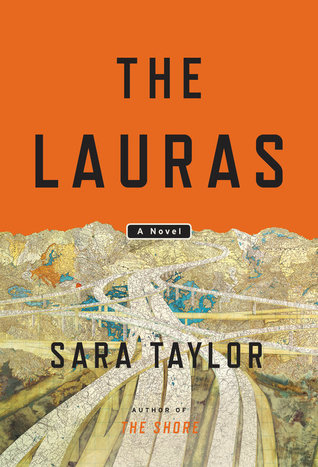
What ties together the friendships that we mythologize with memory? In the case of the mother of the protagonist in Sara Taylor’s new novel, The Lauras, there’s something concrete: in a series of meaningful friendships from her youth, all the women were named Laura. Fleeing an unhappy marriage, she packs up Alex and they begin an odyssey across the United States to retrace the meaningful people and places of her youth.

Narrating this saga is Alex, who doesn’t identify as male or female, a teenager coming of age in an unconventional manner, living between motels and month-to-month rentals, sporadically enrolled in school as their mother works at dive bars and diners to fund the journey. Alex struggles with social perceptions, solitude, and sexuality, and as they travel around the country, they encounter far more of both the joys and disturbances of America than the average teenager.

Over email, Sara and I talked about social performance of gender and culture, America’s weird attitude toward sexuality, and the insidious nature of controlling access to information.


Becca Schuh: At the end of the first chapter, the narrator, Alex, talks about their mother not knowing how to act American or act female. The nature of performance, of both culture and gender, continues to be a theme throughout the book. What inspired you to take this lens on social performance?

Sara Taylor: My mother is an immigrant, whose own mother was not always present to pass on the secrets of femininity while she was growing up. I remember listening in as a child as she got friends to explain things — how you French braid hair, what kind of food you make for a cookout — that everyone else seemed to just know. Not knowing herself, she wasn’t always able to teach me, and so for the longest time I thought that being female, and acting American, came naturally to everyone else and I was just bad at it.

When I moved to England I had the privilege of observing culture without the expectation that I’d perform correctly. Watching women presenting a more formal version of femininity than I’d seen in America, and figuring out a different set of rules of social interaction, I realized that both things were learned, both were performative, that neither were inborn traits. Being foreign allowed me to fail in my participation of both to some extent, but for everyone else performing gender and culture correctly seemed mandatory, their approach and success determining their degree of belonging, and therefore what opportunities were open to them. After thinking about it for so long, The Lauras seemed as good a place as any to start exploring the idea of social performance more concretely.

BS: Alex begins the book without close friends and these struggles are only exacerbated as they move around the country, without much time in each place to form interpersonal bonds. What interested you about creating a protagonist who had so little peer to peer influence?

ST: One of the things that I wanted to explore while writing the book was the sense of isolation that comes of not belonging, in Ma’s case because of cultural differences, and in Alex’s, gender presentation. The other was the sort of baggage that surrounds the relationship between a parent and a child when both of them start to grasp that the other is a fully realized person who is neither defined nor limited by their relationship. Both instances demand a degree of separation from other characters.

On a completely different level: there are many books about adolescent friendships, or adolescents who long for friendships, but not many which feature young people who lack close friendships and yet are content within themselves. I’ve known many people who grew up with minimal peer interaction and who were content being alone with themselves, and wanted to take the opportunity to portray that character.

BS: At one point Alex says that their reluctance to be tied to a gender identity had something to do with parental allegiance: “Because in my mind that’s what they were asking, do you want to grow up to be like your mom or dad?” I hadn’t thought of gender identity as relating to parents in that way before, but it makes total sense. Could you talk about that a little more?

ST: The first brush with gender that I remember involves being told that the world was grouped into mothers and fathers, and that I was like my mother, while my newborn brother was like my father. And even though it wasn’t so often explicit, a lot of the gender lessons I was taught continued in that vein: I was given play makeup, and plastic heels, a vinyl purse, and a baby doll because I belonged to the same group as my mother. Refusing these was read less as a rejection of the toys I’d been given than a rejection of the sameness between us; people didn’t say, “don’t you want to wear makeup?” they said, “don’t you want to be like your mom?” And all of the kids around me seemed to have had it explained, and to understand it, in those terms. Gender wasn’t male and female, it was mothers and fathers, and no matter how closely you identified with your opposite sex parent, we were all told that we were fated to grow up to be a version of our same sex parent. Most of us seemed pretty ok with that, but I remember not being the only one who was certain that I’d grow up to be the other gender, because I was more similar to the parent who I’d been told I had the least in common with.

There are more sophisticated ways of conceiving of gender, but putting it in one of the most essential ways I felt was more natural to how Alex would express the question.

Gender wasn’t male and female, it was mothers and fathers, and no matter how closely you identified with your opposite sex parent, we were all told that we were fated to grow up to be a version of our same sex parent.

BS: Obviously the name “Laura” has a huge significance throughout the book, and I loved this passage in particular: “You try to get the new Laura to fill the hole the old Laura left. And when you get older it doesn’t matter that you know things don’t work like that, because your ears will be primed and your heart will beat faster at the sound of that name.” Did you have an experience in your life that inspired this passage and the mother’s path with the women named Laura in her life?

ST: Unfortunately (or not) the answer is pretty pedestrian. When I was a child I lived next door to a girl named Laura, with whom I was extremely close until we moved away, when I was eight years old. When I got to college it seemed like every woman I met there was named Laura, or Lauren, or some other variation of the name. The more I got to know those Lauras the more surprised I was that, even though they were each very different people, there was a quality about them, and a feeling they elicited in me, that reminded me of the Laura I’d known as a child. It took me an embarrassingly long time to figure out that what I’d felt was the odd closeness of female friendship, which I hadn’t experienced much of since leaving that first Laura behind.

BS: At one point, Alex’s mother says, “If I could do one thing for you, kiddo, I’d make it so you didn’t want. Not that you had everything that you could want, but that you never feel the feeling of ‘want.’ That you could get along without it.” Do you agree with that idea?

ST: Masochistically, I love the sensation of anticipatory wanting, almost more than I do of actually fulfilling that wanting. My mother, as mothers do, doesn’t get it, and she’s said to me before that she absolutely hates having to see her kids longing for things they can’t have, either material or abstract.

If you only had one wish and wanted to spend it on making sure your child never suffered, “I wish they were freed from want” is a pretty good way to phrase it: Pain is just a condition of wanting relief, hunger a condition of wanting food, loneliness of wanting love. I understand the urge to be free of want, and I understand the desire for someone you love to be free of want, but I feel like being free mutes the feelings of being human. But again, I’m a masochist; the Buddhists and stoics I know would probably disagree.

Masochistically, I love the sensation of anticipatory wanting, almost more than I do of actually fulfilling that wanting.

BS: Throughout hearing about the mother’s past, we get a lot of interesting insight on the intersections of religion and sexuality. That’s obviously a centuries long conflict — how do you think that’s reflected in current culture?

ST: I’m not sure I can really say. I grew up in a conservative Christian environment, in the American south, both of which have religious and sexual hang-ups of their own. I didn’t realize quite how hung up on sex America is, and how closely it is tied to religion, until I came to England, where it wasn’t just my peers, but their parents and grandparents, who didn’t seem to think that sexual expression was a big deal, and similarly seemed to think that it was a personal, rather than moral and religious issue.

I think that the degree to which popular culture seems to be saturated with sex is less a product of our having transcended a repressive or religious past as it is a sign that we are still effected by it, and that Christian attitudes towards sex are so tightly woven into the fabric of American culture that we no longer realize that they are there.

BS: In the chapters where Alex’s mother helps Anna-Maria escape her impending marriage, I was particularly creeped out by the idea of her fiancé controlling the books she read. Do you think that the effort to control someone’s information intake is a form of abuse?

ST: This might be one of my pet soapboxes…

One of the most disturbing hypothetical situations I can think of is one in which Person A needs to make a choice, and Person B restricts the information available to Person A about the implications of that choice in such a way that Person A can only reasonably choose the action that Person B wants them to choose. If you add a patina of benevolence — Person B only manipulates Person A because they want what they know is best for Person A — it only becomes more horrifying. Put in abstract terms, it is easy to see how this is a violation of Person A’s free will, and the fact that it is a method of exerting control, and therefore a form of abuse, is clear.

But once it’s mapped onto real life situations the distinctions seem to become muddied. A not insignificant part of the thesis I recently finished deals with the question of how restricting adolescents’ access to information impacts the quality of the education they receive. A lot of the arguments in favor of restriction are based on the idea that if teens are given limited information it will compel them to make the ‘right’ choices, and that the good of the youths concerned outweighs any violation of their rights. But benevolence is no substitute for rights, and despite all of the arguments in favor of controlling access to information, yes, I do think it is a form of abuse, and that it’s a form that’s incredibly insidious because it can have such an impact on a person, and because it doesn’t read as abuse to people outside the situation who would intervene if the dynamic were more apparent.

12 Chilling Books About Real and Fictional Cults

Whether you’re counting down the hours until the premiere of American Horror Story: Cult or trying to make sense of South Korea’s former president’s scandalous ties to a shamanistic spiritual leader, it’s difficult to deny that cult narratives are in vogue again. From fictive groups like the Guilty Remnant or the Meyerists, to real life sects like the Moonies or the Order of the Solar Temple, communities rooted in zealous — and oftentimes deadly — beliefs are a cautionary reminder of how dangerous the exploitation of an individual’s trust and faith can be.

As a literary alternative to binge watching documentaries about cults on YouTube or listening to the You Must Remember This 12-episode series on Charles Manson in between new episodes of AHS, we’ve compiled a multi-genre list of reads that explore what can happen when religion turns sinister.

Children of Paradise by Fred D’Aguiar

Fred D’Aguiar’s Children of Paradise is a riveting reimagining of life in Jonestown prior to its tragic end. Readers witness the unraveling of Jim Jones’ utopian dream through the eyes of two of his followers — Joyce and her daughter Trina — in addition to the commune’s caged gorilla, Adam. As the heinous cult leader’s behavior becomes more erratic, Joyce is forced to plan her escape from the community she once viewed as her salvation. With vivid prose and heart wrenching empathy, D’Aguiar’s novel examines the power of love and what it means to be free.

The Road to Jonestown: Jim Jones and Peoples Temple by Jeff Guinn

In his extensive view into the rise and fall of the charismatic turned murderous preacher Jim Jones, Jeff Guinn (who also penned a book on the equally notorious Charles Manson) examines how a Bible-toting civil rights activist evolved into one of history’s most well-known cult leaders. From Jones’ staged healings to illicit drug use and womanizing, Guinn’s research — including recently released FBI files — sheds new light onto the man responsible for the largest mass suicide in the U.S.

Jonestown and Other Madness by Pat Parker

Celebrated lesbian feminist poet Pat Parker’s 1989 collection Jonestown and Other Madness is a gripping reflection on the way race, class, and gender played into Jim Jones’ sadistic slaughter of his congregation. Through the stanzas of poems like “Legacy” and “Love Isn’t,” Parker forces readers to question their definition of liberation and love and to actively discern the difference between empowerment and manipulation. She challenges us to reflect on how easily we accept the answers we are given in the wake of tragedy. In the foreword to the collection she writes, “If 900 white people had gone to a country with a Black minister and ‘committed suicide,’ would we have accepted the answer we were given so easily?” The answer, much like her question, is as timely as ever.

The Girls by Emma Cline

Emma Cline’s wildly popular debut The Girls is a fictive glimpse into the inner circle of a Manson Family-esque group through the eyes of an enamored teenager named Evie. Set in the late ’60s, Cline’s addictive novel gives an intimate depiction of adolescence, desire, and the grotesque lengths some are willing to go in order to feel like they belong. As cinematic as Joan Didion’s quintessential essay “The White Album” and as eerie as Lie: The Love and Terror Cult, The Girls is a haunting bildungsroman inspired by a bloody history.

Child of Satan, Child of God: Her Own Story by Susan Atkins

Child of Satan, Child of God is the autobiography of one of the Manson Family’s most infamous members. Throughout the pages of her book, Susan Atkins revisits her troubled past, her struggle with addiction, and her relationship with Charles Manson, the man she blindly followed and ultimately committed murder for. Penned in 1977, Atkins’ book is an inarguably underrated tale of redemption and the perfect primer for those looking forward to next month’s publication of Member of the Family.

Underground: The Tokyo Gas Attack and the Japanese Psyche by Haruki Murakami

Beloved novelist Haruki Murakami revisits the ghastly sarin gas attack that took Tokyo by surprise in the spring of 1995. Orchestrated by Japanese doomsday cult Aum Shinrikyo, the attack, which occurred at rush hour, resulted in 12 deaths, the injury of 50 individuals, and health complications for thousands of commuters. In Underground, Murakami attempts to make sense of this horrific act through a series of conversations with survivors. A testament to the resilience of the human spirit, this investigative look into one of Japan’s deadliest crimes is an unexpected story of hope.

Gather the Daughters by Jennie Melamed

Jennie Melamed’s dark yet satisfying Gather the Daughters transports readers to a post-apocalyptic colony ruled by tyrannical men. In a community shaped by sexism, censorship, and government mandated procreation, womanhood goes hand-in-hand with servitude, domesticity, and dehumanizing subjugation. As the novel’s heroines come of age, they are confronted with the depravity of their colony’s traditions, an occurrence that sparks a rebellion and irrevocable change. Melamed’s debut is a captivating meditation on the dangers of misogyny and fear.

Heaven’s Gate: America’s UFO Religion by Benjamin E. Zeller

The sole in-depth study of Heaven’s Gate, Benjamin E. Zeller’s book charts the formation of Marshall Applegate and Bonnie Nettle’s UFO cult and its shocking end. Tracing the group’s ties to the New Age movement and Evangelical Christianity, Zeller explores how the anxiety of the 1990s and the looming threat of a new millennium led to one of the decade’s ghastliest mass suicides. Heaven’s Gate is a well-researched and insightful examination of what occurs when faith becomes deadly.

Heaven’s Harlots by Miriam Williams

Miriam Williams’ memoir recounts the time she spent as a member of David Berg’s sex cult The Family International aka The Children of God. Williams, who joined the group in the ’60s as a teenager, spent 15 years practicing what her then leader Berg called “flirty fishing.” Heaven’s Harlots exposes Berg and The Family’s sinister motives and documents Williams’ escape and her journey towards healing and freedom.

In the Days of Rain by Rebecca Stott

In her recent memoir, Rebecca Stott revisits her relationship with her father and the restrictive evangelical community that shaped them. Members of the Exclusive Brethren, Stott and her family believed in extreme separation from the secular world in hopes that it would help them live a righteous life untainted by sin. A powerful and fascinating look at life within the sequestered cult that Stott grew up in and later escaped, In the Days of Rain is an exhilarating celebration of family, persistence, and forgiveness.

The World in Flames: A Black Boyhood in a White Supremacist Doomsday Cult by Jerald Walker

Readers experience the chaotic doctrine of the Worldwide Church of God through Jerald Walker’s harrowing boyhood recollection of his family’s time as followers of the questionable evangelist Herbert W. Armstrong. Throughout his book, Walker revisits how Armstrong’s teachings (a mesh of biblical canon and white supremacy) and failed prophecies put his already vulnerable family at risk. The World in Flames exposes the ways in which racism and greed can corrupt and how salvation often begins with choosing your own path.

God, Harlem U.S.A. by Jill Watts

A definitive portrait of the often overlooked cult leader Father Divine, God, Harlem U.S.A. illustrates how an economically disadvantaged Black boy from the South became a religious celebrity and political influencer. Through meticulous research, Jill Watts examines Father Divine’s origin, his theology, and the rise and fall of the International Peace Mission Movement. An especially interesting read for Philly natives, Watts’ biography breathes new life into Father Divine’s intriguing story.

10 College Novels for People Who Graduated This Century

All it takes is a quick once-over of a current college campus to notice the drastic changes these academic havens have undergone in the last 50 years. Long gone are the days of almost exclusively male professors and submissive female students trying to get their M.R.S. degrees. In today’s higher-education institutional showdowns, diversity and open dialogue reign supreme. Thankfully, the campus novel genre has existed to document the vast transitions in both student body and campus atmosphere that have taken place in the last half-century.

In its most basic form, a campus novel is a book whose main setting is in and around a university. The genre’s heyday dates back to the 1950s with Kingsley Amis’s Lucky Jim, Mary McCarthy’s The Groves of Academe, and Vladimir Nabokov’s Pnin. Later, authors like Philip Roth, Saul Bellow and John Barth honed in on the campus as the setting for their erotic anxieties of intellectual misadventures. While some argue that the genre was (thankfully) retired sometime after Roth’s The Human Stain, the contemporary campus novel appears to be alive and well, encapsulating the ever-turbulent issues, emotional and political, that today’s students have to deal with.

Now, without having to bring up anyone’s graduating class, we can all agree that back-to-school season is an exciting time if you’re participating in it, reminiscing about it, or experiencing it at a distance via your children. Either way, these ten contemporary campus novels will transport you to college grounds teaming with academia, school spirit, and more than a fair share of scandal. And rest assured — this is not your father’s campus novel.

Dear Committee Members by Julie Schumacher

Dear Committee Members by Julie Schumacher

Dear Committee Members perfectly illustrates the eternal struggles between liberal arts departments and…what feels like the rest of the world. A frustrated professor of creative writing at a small midwestern liberal arts school must deal with budget cuts and grubby accommodations for his department while the Econ staff is living the life of luxury in their remodeled offices. Written as a series of recommendation letters the protagonist is often called upon to produce for his students, Schumacher takes a hilariously new take on both the campus and epistolary novel genres.

Cow Country by Adrian Jones Pearson

Finally, a novel willing to look at academia in the often-overlooked world of community colleges. Loaded with mayhem and drama, the novel dishes the gossip about the ins-and-outs of educational administration. At Cow Eye Community College, a school on the brink of ruin, Charlie arrives to unite the quarrelsome faculty members. Cow Country drew a lot of attention when it was purported to be written by American novelist Thomas Pynchon —the jury is still out on that one.

On Beauty by Zadie Smith

On Beauty by Zadie Smith

Zadie Smith adds some much needed diversity to the often homogenous campus novel genre. On Beauty centers around an interracial British- American family living in the university town of Wellington, Massachusetts. The main characters are academics, same as their spouses and children. Smith takes a page out of Amis’ book by combining comedy and intellect, all the while mingling high and low culture to give readers some refreshing variety.

Loner by Teddy Wayne

Loner begins on teenager David Federman’s first day at Harvard. Hailing from New Jersey, where he was overlooked and dissatisfied with his lot, he arrives in Cambridge for orientation thinking he will be surrounded by a fresh clique of upscale academics. Disappointed by his social prospects once again, he determines to infiltrate the glamorous world of Manhattanite Veronica Morgan Wells. Wayne explores issues of gender politics and privilege as it unfolds on a prestigious university campus.

My Education by Susan Choi

My Education by Susan Choi

A young impressionable student falls for her sophisticated older professor — sound familiar? A scandalous relationship of this sort seems to have reached its saturation point in literature and film, so how does one make a unique novel out of it? Have said young impressionable student fall for the wife of the professor instead. Now that’s a plot twist, and Choi does just that in My Education as she explores intimacy, aging, and obsession.

The Marriage Plot by Jeffrey Eugenides

Taking place at Brown University circa 1982, The Marriage Plot, offers insight into contemporary relationships juxtaposed against those found in classic literature. The first portion of the novel features an old English professor asking his students, “What would it matter whom Emma [Bovary] married if she could file for separation later?” And so continues an exploration of the maladies that trouble relationships, including looming post-graduate life and mental illness.

The Art of Fielding by Chad Harbach

Harbach offers insight into the world of sports at Westish College, nestled on the shore of Lake Michigan. An ode to small liberal arts schools, The Art of Fielding explores the tale of not only the star baseball player, but also his gay roommate, his best friend, as well as the college president and his daughter. All in all, the novel transports readers to the intimate settings of any college campus: dorm-rooms, dining halls, and sports fields.

10 Stories for the Back to School Season

Harvard Square by André Aciman

Yes, another book about Harvard. Wait wait, this one’s different, I promise. Harvard Square is about a Jew from Egypt who longs to be an acculturated American and a distinguished professor of literature. When he becomes close friends with a brash, rebellious Arab cab driver, he begins to lead a double life as an academic and an exile. That’s certainly one way to make Harvard interesting.

Higher Ed

Higher Ed by Tessa McWatt

Imagine a world of brutal job cuts, unemployment, and the decreasing assurance of tenure — oh wait…On a 21st-century East London campus, Higher Ed hones in on the lives of five Londoners worried about their job security.

The Devil and Webster by Jean Hanff Korelitz

The Devil and Webster is an accurate reflection of the hot issues on college campuses as of late. Naomi Roth is the first female president of Webster College, which has abandoned its conservative background and begun to breed progressive grads. Naomi’s administration is affected when student protests about a popular professor’s denial of tenure fire up the campus.

Someone Just Ran Over Terry Pratchett’s Unpublished Work with a Steamroller

Beloved fantasy writer Terry Pratchett, creator of Discworld, died in March 2015, but it took two and a half years for his final wishes to be carried out—because it’s tricky to find someone who will let you use a seven-ton steamroller to run over a hard drive.

Pratchett, who was living with early-onset Alzheimer’s for nearly a decade before his death, kept writing right up until the end—and a little past it. His last completed novel The Shepherd’s Crown came out a few months after his death, and The Long Cosmos, a collaboration with British science fiction author Stephen Baxter, was published last year. But he also had at least ten unfinished books, and he didn’t want them to see the light of day. So he stipulated that the drive containing his incomplete works was to be flattened by a steamroller. (These days, it’s not enough to burn or shred a manuscript; you have to break out the heavy, electronics-crushing machinery. Shy authors of the future may have to seek to destroy the Cloud.)

Rob Wilkins, Pratchett’s longtime assistant (and the guy who wrote those tweets that made you cry after his death) was tasked with carrying out the execution. The Great Dorset Steam Fair hooked him up with a vintage steamroller named Lord Jericho, which actually sounds like a plausible Pratchett character, but the seven-ton machine didn’t quite do the trick; it wiped out the stone blocks that the drive was resting on, but didn’t destroy the drive itself. Those suckers are hardy. Wilkins had to throw it in a stone crusher to get the job done.

As any fan knows, Pratchett was a big believer in the power of books—in general, not just his own. One of his most indelible creations is the library of the Unseen University, presided over by its orangutan Librarian, in which ordinary books are shelved alongside books that have never been written, books that catch on fire if not kept under running water, and books that have to be nailed shut to prevent them from flying away. But those ordinary books are magical enough. “The truth is that even big collections of ordinary books distort space,” Pratchett wrote. “The relevant equation is: Knowledge = power = energy = matter = mass; a good bookshop is just a genteel Black Hole that knows how to read.” No wonder he wanted close control over the disposition of his work.

“It’s something you’ve got to follow,” Wilkins told the BBC, about Sir Terry’s final request. But is it? Plenty of authors have asked for their unfinished work to be destroyed, and they don’t always get their wish. If they did, we wouldn’t have The Aeneid (which Virgil wanted burned), or Kafka’s The Trial (which he wanted burned), or Vladimir Nabokov’s The Original of Laura (which he wanted destroyed, but which his son finally published after 30 years of dithering), or Go Set a Watchman (which Harper Lee did not want published, and then mysteriously supposedly did, but probably didn’t). Other authors’ final works exist in a sort of Schroedinger’s Incomplete Novel space, where they haven’t been destroyed as requested but also haven’t been released: Edward Albee left behind two unfinished plays, which he asked friends to destroy, but as far as we know they haven’t yet. Sometimes, as with Laura and Watchman, manuscripts destined for the bonfire wind up hanging around in limbo for years and finally finding their way into print.

Maybe the trick to having your final wishes honored is to be a real drama queen about it. Setting manuscripts on fire is the expected route, plus any feeling of magnitude kind of gets undercut by the Guy Montag-ness of it all. But requesting that, in Neil Gaiman’s paraphrase of Pratchett’s instructions, “whatever he was working on at the time of his death to be taken out along with his computers, to be put in the middle of a road and for a steamroller to steamroll over them all”—that’s a request that, regardless of your sense of ethical versus literary obligation, you at least can’t ignore.

Or maybe the key is just to have a faithful amanuensis, the kind of person who thinks “you’ve got to follow” a final wish. The world may be a little poorer because of Rob Wilkins’ integrity, but listen: we got 70 Terry Pratchett novels, and you probably haven’t read every single one of them yet, and if you have, you could probably happily read them again. And deep in the library of the Unseen University, those lost books are probably sitting on a shelf, waiting to be read—if you can make it past the orangutan.

Late to the Party: Kōbō Abe’s ‘The Woman in the Dunes’

In Late to the Party, we ask writers to read a seminal author who has somehow passed them by. You can read previous entries here.

There was one thing I knew about The Woman in the Dunes that assured me I would connect with it on at least some level: I am all too familiar with the horrors of sand.

For a white guy, I’ve delved pretty deeply into Japanese literature, from Yukio Mishima to Yasunari Kawabata to Ryūnosuke Akutagawa’s Rashōmon and Other Stories (from which Akira Kurosawa adapted his classic film). I appreciate the spareness in diction, preciseness, meditative melancholy, and attention to the irreparable gulf of perception and misperception between each person and the next. I’ve found all these qualities in contemporary Japanese novels—at least, the contemporary Japanese novels I could find. Only three percent of the American book market represents titles in translation, and only a fraction of those books are translated from the Japanese.

But despite the slim pickings in a literary category I’ve come to love, I’d never gotten around to The Woman in the Dunes, the best-known novel by celebrated mid-century surrealist Kōbō Abe. Maybe it was his reputation for abashedly eerie weirdness; as a reader, I tend not to actively seek out the experimental or the nightmarish. When I mentioned to some friends what I was reading, those who were familiar with the book vacillated between displays of excitement and wide-eyed alarm. “Dude,” one said, “it’s compelling, but it’s dark, and strange.” Another: “He’s the Japanese Kafka—fair warning.” They knew that I find the Kafkas of the world intriguing, but not entirely to my taste.

That said, it was beyond time. And besides, there was the sand.

For seven summers in the prime of my youth, I worked at a beach club on Long Island as a cabana boy. Not the sexualized Matt Dillon in The Flamingo Kid kind of cabana boy, but the “sure, I can drag four 20-pound lounge chairs, two umbrellas, and a cooler filled with beer a mile and a half down to the ocean for you, Marilyn” kind of cabana boy. The kind that trudged miles across scorching white sand beaches in swampy heat day after day for four months, putting up beach parasols that always blew over, dragging beach furniture in little rickshaws with tires that were always flat, taking out the garbage for families with screaming children that never seemed to want to go home.

Later summers were better. I knew the families I worked for pretty well, and they would feed me dinner, slip me beer, and chat with me for hours at a time. But those early summers, before I had my own row of cabanas and simply relieved other cabana boys and girls on their courts four days a week, were rough.

The first workdays of the week, Maintenance Mondays, were the most Sisyphean of all. Most days, we’d sit on the porch on the front office and listen to the crusty growl of our sexist, racist, xenophobic club manager until someone complained that there was too much sand on the boardwalk. Pushbrooms in hand, we’d trudge across the club to spend an hour brushing said sand off a mile of hot tar-coated planks before trudging back and spending the rest of the day forced to pay attention to the manager while he did things like point at a news clipping of Stephen Hawking and say, “Not worried about black holes? What’s this ugly son-of-a-bitch got to live for, anyway?” until someone inevitably complained about more sand on another boardwalk—sometimes it was even the same sand on the same boardwalk—and we trudged back across the club to take care of it. Usually, these efforts were accompanied by club members saying things like “Boy, doesn’t get better than a job at the beach, does it? Beats the office!”

The worst of those days was after an early summer storm. That morning, there was a particular evil to the club manager’s slight smile, his aviator sunglasses barely hiding his glee. Shortly after arriving, I was down on the beach with six other kids with yard tools that looked like some unholy union between a garden rake and a deep sea dredge, raking up rotting, stinking seaweed and dumping it into huge black garbage bags. Occasionally someone would drive by on an ATV, look at us with a mixture of humor and pity, refuse to drive us and the bags the two miles to the dumpsters, then drive off. Then, when we each had a full bag, we’d haul them down the boardwalk toward the dump. Through an endangered bird nesting area. During mating season. Before nets had been strung up to keep the terns from dive-bombing pedestrians.

For more than half of that two-mile walk, the only thing worse than the smell of sixty pounds of seaweed rotting in each bag was trying to keep the birds from pecking at our eyes while we dodged the torrent of birdshit. Once we finally dropped the bags off at the dump, we walked back past the front office, where the club manager literally pointed and laughed at our sorry shit-and-seaweed-covered forms as we tried in vain to delay the inevitable return to the shoreline.

“What the fuck you waiting for?” At least I think that was it—we could barely make out what he was trying to spit out in that thick Queens accent of his between the bouts of belly laughter. “There’s lots more seaweed where that shit came from. Get back to it.”

Here’s what I learned from The Woman in the Dunes: There are definitely worse sand-related jobs than being a cabana boy. Also, Abe is really something else. Spare he may be, but Kawabata, Akutagawa, and Mishima he ain’t. Haruki Murakami might be the one with a novel called Kafka on the Shore, but with The Woman in the Dunes, Abe beat him to everything but the title.

In an article for Vice in 2013, in which Blake Butler read not only Woman in the Dunes but three other Abe novels in succession, he summarizes the whole book like so:

Abe’s most well-known novel, and for good reason. It gets very close to a feeling that I suspect many of us have had — that life is often fucked, and we are all trapped in an endless cycle of shit. Ostensibly it’s about an insect collector sent on a work trip into the desert, who then becomes stranded in a city that is stuck inside a pit of quicksand. There he meets a woman who seems determined to make him stay in the pit and be her husband. There are few who could make such an absurd scenario seem so plausible and familiar, like squeezing humanity from a bear trap, but Abe pulls it off. Emotions are close and logically considered, fleshed in the reader in a way that makes them almost trapped in the body of the protagonist too — a labyrinth with no real gap for exit. The first of many great examples of Abe’s amazing ability to take a bizarre, implausible situation — one that shouldn’t be able to sustain a novel-length text — and somehow make it seem as familiar as anything more largely considered “real.”

I started reading the novel a few weeks after Twin Peaks: The Return started its 18-episode run. Abe was train reading in the morning and afternoon, and the evenings saw me playing David Lynch binge catch-up. That was… a mistake. I hadn’t slept so poorly since the summer after I graduated college.

Haruki Murakami might be the one with a novel called ‘Kafka on the Shore,’ but Abe beat him to everything but the title.

The Woman in the Dunes and both iterations of Twin Peaks share much in terms of where their respective authorial eyes are focused. Like Lynch, Abe sees the ore of horror buried within the quotidian, just waiting to be mined. The infamous sand that makes up the titular dunes of the novel seems, at first, to be just that: crushed rock. (Once, a member of the beach club I worked at for seven summers asked me to plant a tree in front of her cabana. When I told her that trees needed nutrient-rich soil in which to grow and could not grow in sand, which is crushed rock, she responded with a whinge: “But it’s a beech tree!”) The novel goes to great pains to explain the science behind sand, as if to elucidate its nature as a real, understandable thing:

SAND: an aggregate of rock fragments. Sometimes including loadstone, tinstone, and more rarely gold dust. Diameter: 2 to 1/16 minutes.

A very clear definition indeed. In short, then, sand came from fragmented rock and was intermediate between clay and pebbles. But simply calling it an intermediate substance did not provide a really satisfactory explanation. Why was it that isolated deserts and sandy terrain came into existence through the sifting out of only the sane from soil in which clay, sand, and stones were thoroughly mixed together? If a true intermediate substance were involved, the erosive action of wind and water would necessarily produce any number of intermingling intermediate forms in the range between rock and clay.

That explanation proved as solid a foundation for the logic of the properties of the sand in the novel as underpinnings made of sand themselves. The sand of the seaside town where the book’s protagonist, a schoolteacher and amateur entomologist named Niki Jumpei but referred to almost always simply as “the man,” is eventually trapped is anything but what we think of as sand. It is as much a character in the novel as the landscape of a Sergio Leone film, determining the lives of those who live within it the way the smog-filled cities of China have forced its citizens into wearing air pollution masks.

The sand is not a fixed quantity, but increases and increases, constantly encroaching on the village and threatening its very existence. The sand goes on to prove to have corrosive qualities, as well—it dissolves wood, and, left long enough, rots flesh. It entirely determines the lifestyle of the town in which the man is trapped, as well as determining the necessity of trapping men like him to the survival of the townspeople.

Like David Lynch, Abe sees the ore of horror buried within the quotidian, just waiting to be mined.

But it’s important to the novel that the narrator thinks of the sand logically, because the absurdity of his situation demands an attempt to retain a grasp on those things in his world that are solid and understood. If this sounds existentialist in a Myth of Sisyphus sort of way, that’s probably because it is.

Part of the novel’s ability to feel real is rooted in Abe’s choice to use free-indirect speech to tell his story. When under pressure, the man thinks in fragments of thought that spiral into new fragments—some of which, during moments of clarity, feel precise and measured, while others, detailed as his thought process descends into paranoia and despair, are simply odd wanderings of the troubled mind. It’s not purely stream-of-consciousness, but let’s just say it’s likely Abe learned as much from Mrs. Dalloway as he did from “The Country Doctor.” The style allows readers (or at least this reader) to see replicated on the page some of their own natural patterns of thought.

Another reason the novel feels real? The man is a real shit to the eponymous woman. Of course he is! Why, when stuck in a horrible situation with someone who is fairly evidently a victim of kidnapping-related trauma and potentially also Stockholm syndrome, would you attempt to empathize before holding your fellow prisoner responsible for your predicament, abusing her verbally and eventually physically and—once you’ve mostly accepted the hopelessness of trying to escape and found a way to make something of a mutually-beneficial relationship with her—sexually?

Another reason the novel feels real? The man is a real shit to the eponymous woman.

While painful to read, this felt as spot-on to me as any of the book’s other takeaways on human nature. Is this not exactly what a semi-intellectual man afraid of powerlessness and the dissolution of what he knows would do in a situation in which he must face precisely those fears? Wouldn’t he subjugate and abuse a woman he barely knows in order to feel some semblance of control? The woman remains, for the bulk of the novel, a cipher; the man simply cannot understand how her own troubles motivate her, or why they might be more important to her than his. Masculinity was as frail and toxic in ‘60s Japan as it is anywhere else in the world today.

Universal, too, is the willingness of humankind to exploit and subjugate its own in the name of “getting by.” The townspeople, it turns out, sell the sand on the black market to construction companies, which use it to make cement. The substance that keeps them trapped in lives of toil and prompts them to kidnap strangers and enslave them in order to fight off that substance itself turns out to be their source of livelihood—the base ingredient of a mundane construction tool tied to a bureaucratic criminal conspiracy. If that doesn’t scream Lynchian, I don’t know what does.

In the end, what would happen in Kafka also happens here. After many escape attempts, each resulting in a worse fate than the last, the man’s spirit is broken. Left still in the little town by the shore, living with the woman in her little house in the dunes, he remains convinced he can leave whenever he wants but feeling “no particular need to hurry about escaping.” The result is, in a way, Nietzschean—gaze long enough into the sand and there you are, a sandpit yourself. Or, as Abe put it:

You can’t really judge a mosaic if you don’t look at it from a distance. If you really get close to it you get lost in detail. You get away from one detail only to get caught in another. Perhaps what he had been seeing up until now was not the sand but grains of sand.

Perspectives change when you’ve been ground down enough that you can’t even remember how you felt before the grinding started. And for the man, that means remaining a missing person, stuck for life in a hut in a seaside town shoveling sand away, never able to see the water.

I can relate. I didn’t get to swim in the ocean much as a cabana boy.

Jac Jemc Thinks Romance is a Little Paranormal

I n the sprawling neighborhood of American literature, a significant proportion of the houses seem to be haunted. Given that the metaphorical figures of ghost and house are both about as loaded as they come, it’s no surprise that heavy hitters from Nathaniel Hawthorne to Henry James to Toni Morrison have employed the device for their own storytelling purposes, and its possibilities remain far from played out. Ghosts — i.e. entities trapped in temporal loops by some trauma — are a great way to throw a wrench into standard narrative assumptions of forward motion; they’re also perfect analogues for all manner of anxieties and compulsions, from the psychological to the historical. And a fictional house is apt to serve as a ready metaphor for an individual psyche, or a family, or a milieu … or, for that matter, for the literary work itself.

Buy the book

Jac Jemc’s second novel The Grip of It is a distinguished contribution to this creepy catalogue, partaking of the full richness of the tradition while extending the franchise through fresh moves of its own. Her haunted house — the fabulously-named 895 Stillwater Lane — is the new home of a young couple who’ve left the city to seek a fresh start in a small town, and swiftly emerges as a harrowing analogue for their marriage, with hidden passages and unquiet presences paralleling secrets they’ve concealed from each other and themselves. As Emily Dickinson cautions, “One need not be a Chamber — to be Haunted — / One need not be a House — / The Brain has Corridors — surpassing / Material Place.” Although the opening pages of The Grip of It neatly insinuate ghostly meddling, as the novel grows more fraught and claustrophobic, the prospect of an overtly supernatural antagonist begins to seem less like a menace than a relief. Just as an exchange of vows marks the end of many a classic romance, the cosigning of a mortgage turns out to be a hell of a way to kick off a horror story.

Jac Jemc’s first novel, My Only Wife, won the Paula Anderson Book Award and was a finalist for the PEN / Robert W. Bingham Prize for Debut Fiction; she is also the author of a short story collection (A Different Bed Every Time) and a chapbook of prose (These Strangers She’d Invited In). Her last name is pronounced “jems.” Although we both live in Chicago, and should probably hang out more, we conducted this conversation by email in August of 2017.


Martin Seay: A reader first encounters The Grip of It as a haunted-house story — which it certainly is, though it quickly reveals itself to be other things, too: a story about marriage, and about trust. In an essay called “The Shadow Chamber, The Boarding House, The Grip of It,” you also mention that some of the novel’s creepy twists and turns are inspired by the work of South African photographer Roger Ballen. I’m always interested to learn about the initial spark of a novel. Do you recall what The Grip of It was first, before it really began to take shape? Where did it begin?

Jac Jemc: The initial spark was simply: I want to write a haunted house story that doesn’t limit itself to the physical boundaries of the house. The initial working title for the book was The House, the Woods, the Water, but then Matt Bell announced he was publishing a fantastic book called In the House Upon the Dirt Between the Lake and the Woods, and I thought, “Welllll, great,” and had to change the title, but the idea of the haunting expanding to the natural world (both the nature surrounding the house and characters’ bodies) was there from the start. It wasn’t until much later that I realized I was really writing about a relationship again (which was also the focus of my first novel, My Only Wife). There’s something impossible to me about romantic/domestic relationships that I keep returning to — about the assumption that they’ll be a part of everyone’s narrative, about the ways we discuss the magic that supposedly guides them. There are moments when I can give myself over to the idea of romance, but there are more moments when I just can’t stop laughing at how absurd and embarrassing and lonely it really is. At some point I realized that writing about a haunting had brought me full-circle back to that idea.

There are moments when I can give myself over to the idea of romance, but there are more moments when I just can’t stop laughing at how absurd and embarrassing and lonely it really is.

I think I wanted to write a haunted house story because I love them and somehow it hadn’t occurred to me that I could participate in the creation of this thing I love. As a writer, I really move pretty blindly through what it is I like to write and plan to write. I’m sure I like haunted houses because I like thinking about the relationships between people and the ways that we can distrust those we’re closest to, including ourselves, but that’s not something that I could have identified before working on this book. The idea for the house came first, and all of the fissures between characters showed up much later. It’s not unusual for me to work in such a spontaneous way. I’ll often start with an image or a phrase, and grow the idea from there, without much more thought or planning. I wouldn’t say I’m even a particularly savvy reader of my own work, at least in the early stages. I trust my instincts and then eventually my motives begin to come clear, but it takes time.

MS: The Grip of It is the story of a young married couple who seek a fresh start by buying an old house in a small town; stuff gets weird right off the bat, and keeps getting weirder. The story is told in the first person, from the mostly-alternating perspectives of the couple, Julie and James. Something that struck me right away was their voices, which are convincing and distinct, but not exactly naturalistic: Their language is often expressive, figurative, oblique, and very much not designed to set up a baseline normalcy that’ll be disrupted by the supernatural later in the book. Since we have no access to any external point of view, we’re never sure how much we can trust our two narrators, a circumstance that resonates throughout the novel with unsettling force. It’s a bold move on your part, and kind of brilliant, I think. Can you say a little about how you developed the characters’ voices, and what the considerations were?

JJ: Well, the short answer is: figurative, oblique language is my jam. It’s what keeps me mashed to the page and working. At the time of drafting the book, that style of language was what was driving my writing, and so I sought a project that would match that obsession well. With revision, I tried to add more language and plot that was easier to grasp and I tried to restructure the book so that the haunting does feel as though it’s ramping up. In earlier drafts the language started and remained dense, without much everyday life/dialogue to anchor it, even flimsily, to the real world. There was also a third narrator, the neighbor Rolf, whose language was the dreamiest of the three of them, a spectral swirl that the reader was forced to slog through to try to figure out what was going on. Eventually he had to be cut and the information he shared had to be delivered in a more straightforward way to James and Julie, rather than to the reader. I was slow to figure out that balance. I also tried, over time, to pull apart James and Julie’s voices — the rhythms and what they talk about and how — but many similarities remain between them, as a nod to the way couples start to use the same expressions and tell each other’s stories and develop the same interests.

MS: I totally bought Julie’s and James’s narration, initially despite and later because of its peculiarity. I should mention that Grip also features some great minor characters — Julie’s down-to-earth colleague Connie, some just-the-facts police officers — who serve as smart and effective counterweights to all the strangeness.

When I was trying to figure out how to describe the narration in Grip, a word that I kept picking up and discarding was “poetic” — lame, I know, but maybe worth using in a specific sense here. What I mostly mean is that poetry (open-form poetry, anyway) strikes me as the literary form that a reader encounters with the least certainty about what its rules are supposed to be … whereas genre narratives like horror stories are largely defined by how they navigate rules and conventions. It seems like it shouldn’t be possible to use the rhetoric of poetry in a horror novel, but I think you do it really effectively in Grip. You’re a poet as well as a writer of novels and stories, and a lot of your work in each of those forms seems to operate in the unmarked territory that lies between them. How important were such formal considerations when you started writing The Grip of It? Its chapters are all quite brief, and some function almost like flash fictions; did the book always work that way, or did that approach emerge gradually?

JJ: I didn’t pay much attention to the rules and conventions of horror novels as I was writing. I’ve read a lot of horror stories, but not an impressive number of horror novels. The short chapters are a product of my own short attention span: usually, on a regular weekday, I try to write about a thousand words, so the chapters you see were probably each written in about a day, and then revision offered the opportunity to cut them down or expand them or mix them up. The short format of the chapters let me convince myself that I could work in a similar way to how I had been writing stories at the time, but instead of wrapping up the end of a story, I had to provide a launchpad into the next chapter. The language was always crucial because much of the haunting is suggested by the uncanny way James or Julie formulate something familiar with their words. Something normal is happening, but the reader knows that the character is experiencing it as strange because the words they’re using to describe that thing are off-kilter.

I didn’t pay much attention to the rules and conventions of horror novels as I was writing.

MS: Although The Grip of It is a fairly unconventional horror story, I appreciated the way it subtly acknowledges its forebears without ever imitating them. I thought I spotted quick nods to all sorts of scary predecessors — from Poe to Paranormal Activity — but in other interviews you’ve made particular mention of Shirley Jackson’s We Have Always Lived in the Castle and Mark Z. Danielewski’s House of Leaves as inspirations, or at least as favorites of yours. Some similarities aren’t hard to spot — like Jackson’s, the horror in Grip is psychological, human-scaled, and uncanny, without exactly being weird in the Lovecraftian sense; like House of Leaves, Grip is a story about a marriage, set in a spatially confounding house — but do you mind saying a little more about what you admire in these two novels, and how they were helpful with respect to Grip?

JJ: I admire House of Leaves for its willingness to be big and messy and for the fact that it was truly the scariest book I’d read. I am hard to creep out and that book did it. That said, I read it when I was 22 and I haven’t really returned to it (I wish I was better about rereading) so any influences are probably pretty distorted at this point. We Have Always Lived in the Castle was helpful in the way it allowed me think about what information gets shared when, how familial secrets drive the unease in the reader and keep them moving forward. I looked to that book for help with structure, but only after I’d amassed the raw material of my rough draft. I do love Edgar Allan Poe. “The Fall of the House of Usher” and the way it physicalizes the relationships in that book was in the back of my mind. And I did see Paranormal Activity — in the theater! I never see movies at the theater so the fact that I dragged my partner out to see that seems especially surprising to me looking back. I can’t say I loved the movie, but I do viscerally remember the way that people move in the surveillance videos, and what a clear indication of strangeness the movement represented. You’ve got a good eye! With much of my writing, it seems that I find inspiration in work that is quite different from my own; the connections seem really intuitive and clear in my head, but they’re often hard for me to articulate.

MS: You don’t have to answer this, but…about a hundred years ago I read a Bill Flanagan piece in Musician in which he talked about hints that songwriters sometimes drop to suggest that something they’ve written is about them personally. (His example was Springsteen in “Dancing in the Dark,” singing about how he gets up in the evening and comes home in the morning — regular business hours for a rock musician, but not for many other folks.) To be sure, In the Grip of It contains numerous clear indications that it is, like, super-duper-fictional … but am I nuts to also detect clues that it’s also rather specifically personal? I mean, you’ve dedicated Grip to your very awesome partner Jared — and the two of you conspicuously share first initials with your novel’s protagonist couple. Jared took the great author photo that’s on your book jacket; in the novel, James is a serious amateur photographer. Stuff like that. Am I — to use a classic ghost-story cliché — seeing something that’s not there? If I’m not mistaken about these glimmers of personal parallels, are they traces of your engagement with the material, or are they another hook to draw the reader in? Or both?

JJ: Ha. That is pure messiness on my part. I didn’t even think about the initials until after the book was finalized because I stole the names from some former coworkers and I was so worried they’d think I was saying something untoward about their relationship. The names had just been placeholders and then I became attached to their music (as it seems happens a lot from other writers I talk to). I can call out a few things that are not dissimilar to me and Jared: I always want Jared to get a haircut. I’m the more Type A between the two of us. Jared does video work and so he can handle a still camera pretty well, too. There’s more that’s pretty far away from us though: Jared does not have a gambling problem (though I have seen him genuinely enjoy a slot machine for an extended period of time that seemed mysterious to me) and he doesn’t like plants or nature. We’ve never moved a distance together to start over. Neither of us has ever seen a ghost and I don’t think I believe in them. I haven’t queried Jared on his feelings about ghosts too closely (though there is a really great Jincy Willett story called “The Haunting of the Lingards” about a couple and how their differing feelings about ghosts tears their marriage apart, so maybe I should).

MS: I am glad to get that on the record! I should probably say that I never felt as though Grip was disclosing anything specific about your life or your relationship — the particularizing details all seem invented — but I did get the strong sense that your visceral depiction of the struggle to maintain trust in the face of inevitable disappointment, confusion, and doubt is deeply felt, and carefully rendered in a way that I think will prompt uncomfortable recognition from any adult person who’s ever been half of a couple. (The fights in the book, for instance, are fantastic. The fact that they may be driven by some malevolent, identity-corroding supernatural force makes them seem more realistic rather than less so.)

JJ: Ah, yes. I think this is a fair assumption! I see what you’re saying. I have a few responses: 1) A fight scene is going to be informed by the way I fight or the way I’ve closely watched other people fight. 2) Jared and I really don’t argue much. It’s a pretty chill environment in the Jemc–Larson household. We nag each other about different things, but there’s a foundational trust that is quite different from the cracked ground on which Julie and James stand. That said, the urge to nag, my desire for Jared to know when the floor needs to be swept rather than my having to ask him to do it, is real and present enough that I can map that feeling onto a larger issue like a gambling problem, and how Julie needs to recognize that her commitment to James means that she is committed to supporting him through another instance of that (or a different) failure. I do think people can change, but I think that work is very slow and unreliable, and so you make your peace with the few imperfections, but that doesn’t mean you stop noticing them. And hopefully you’ve picked a person whose positives far outweigh the negatives for you. 3) There are things about the fights that I might be able to trace back to my parents more than James and Julie. My parents (neither of them will read this, but, Mom and Dad, please forgive me if someone brings it to your attention) fought a lot, and one of the people in the pair was not reasonable in their methods. (I’m trying to be generous.) Logic would flip-flop with such dexterity that I remember listening from my room, rapt, at both the one’s ability to fight so ruthlessly and the other’s to take the blows and try to force rationality into the situation. They love each other and have been together for 47 years, but I remain kind of astonished that two people with such different relationships to reason could remain so closely tied for so long. I try to avoid direct personal parallels, but some tie to my real emotions is always there.

Rejection is constant. Don’t let it deter you. It’s a lesson we need to keep reminding ourselves of, and a particularly hard lesson for some to learn when they’re starting out.

MS: To step away from the book for a moment … for a long time now, you have been faithfully blogging your rejections: When a publication or publisher turns down something that you’ve sent them, you record it on the internet, sometimes with a little detail about the particulars of the response and what (if anything) you think it might portend for whatever you’re submitting. (As of July 24, 2017, you’d blogged 374 rejections.) Years ago, when I first learned that you do this, I probably raised an eyebrow, assuming that this process was some kind of public self-flagellation. That was dumb of me. I have since come to understand the blog to be an outstanding resource for other writers — not in the usual sense that it provides information about markets and strategies or whatever, but in the more valuable sense that it demystifies the process of sending out work, it models professionalism and persistence and other good practices, it provides great examples of how to read one’s own writing in light of editor feedback, and, maybe best of all, it connects your labors as an independent writer to an entire community of people who are working hard to succeed at something they love. How long have you been doing this? Has your process changed over the years? As your writing has been published more and more widely and prominently, have your feelings about it changed?

JJ: I think it is a public self-flagellation though! You wouldn’t have been wrong. It’s something I constantly think about cutting off because I think it’s only getting more embarrassing with time, but apparently I like being embarrassed? It’s a way of atoning for all of the obnoxious self-promotion of social media, and I think that was a dynamic I was cognizant of from the start. Even in the beginning, if I met a friend for a drink, it felt easier to tell them I’d gotten a rejection letter than to tell them I’d had a story accepted. The latter felt braggadocious. Social media makes it so easy to brag, but I still don’t feel good about it. Right now, three weeks after the book has come out, I feel about ready to crawl into a hole because I’m so tired of talking about myself. That said, I do enjoy the spot of attention because it fills me up and helps give me confidence for the next thing, but I don’t have the stamina built up. I find myself ready to retreat and start ticking off the failures again pretty quickly. I’ve been keeping the blog for close to ten years. My process has remained pretty much the same, though I’m sure I’ve missed a few things out of sheer laziness. I am really bolstered, though, by the number of people who find it helpful. Rejection is constant. Don’t let it deter you. It’s a lesson we need to keep reminding ourselves of, and a particularly hard lesson for some to learn when they’re starting out.

MS: One last thing: What’s next for you? Mad King Ludwig, I hear?

JJ: And, yes, a novel about the Mad King: still plenty of ghosts and faulty architectures and interpersonal misses, but now with royalty and some nods toward our current political situation.