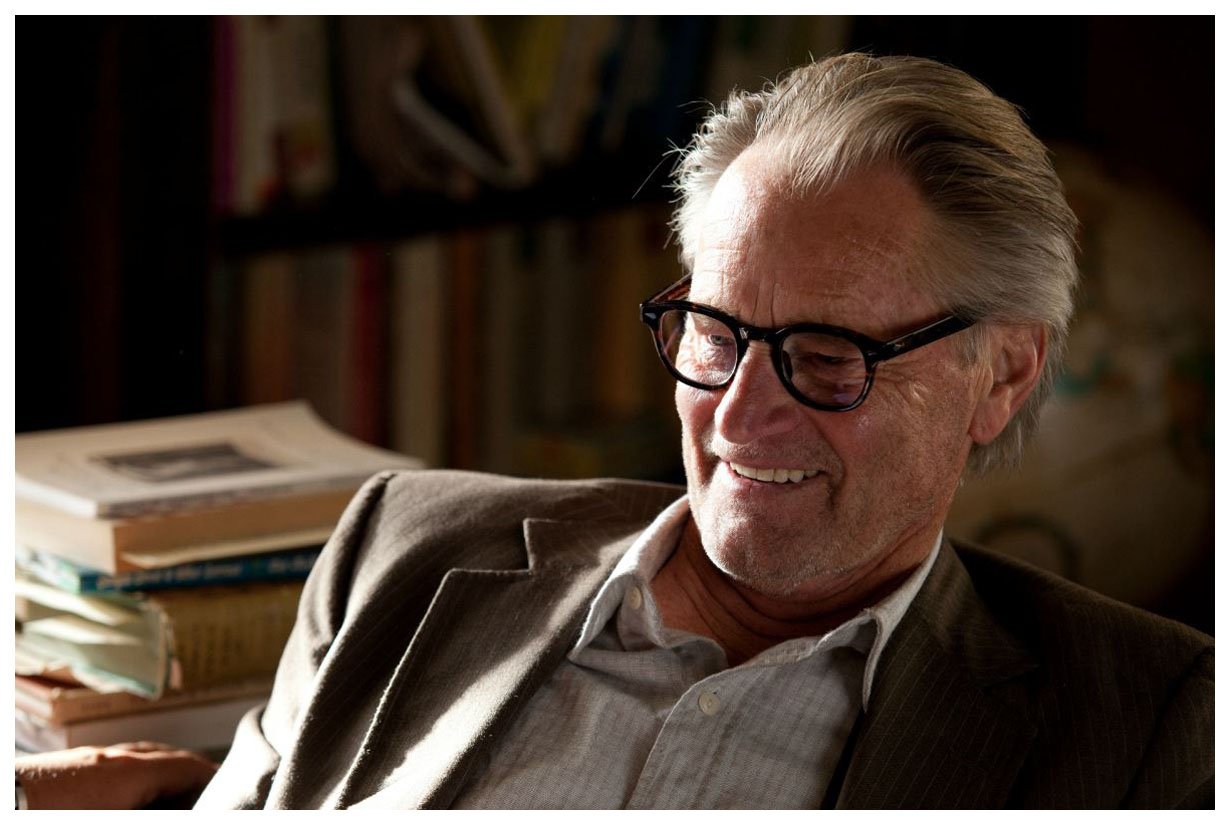
Sam Shepard, the visionary playwright, actor and storyteller, died last Thursday from complications of amyotrophic lateral sclerosis, or ALS. In his 73 years, Shepard won a Pulitzer prize for drama (in 1979, for “Buried Child”), was nominated for an Oscar (for his turn as astronaut Chuck Yeagar in “The Right Stuff”), helped to define and cultivate a new wave theater scene in New York, and memorialized his bleak and moving vision of the American West in a string of chiseled short story collections. In the modern history of American literature, he was without peer — a matinee idol who bled for his art; a star capable of baring his soul on screen, stage or page.
Shepard came up as a playwright in the downtown New York scene in the late 60’s and was a fixture of the Chelsea Hotel, among the first of that generation to achieve international prominence. He eventually settled in California and married actress Jessica Lange, with whom he had two children. Throughout that time, with the ups-and-downs of fame and literary fashion, Shepard kept writing, authoring a new play or story collection at nearly an annual clip, all the while returning to to the screen to steal the occasional scene — from Frank James in “The Assassination of Jesse James by the Coward Robert Ford” to the Rayburn’s patriarch in “Bloodline.”
Shepard was a preternatural talent and dedicated to his art. In one of his greatest stories, “Remedy Man,” a horse-breaker arrives at a rural outpost to deal with a troubled stallion and invites a young boy to join him in his work. The breaker gives the boy a piece of hard-earned wisdom: “Horse is just like a human being. He’s just gotta know his limits. Once he finds that out he’s a happy camper.” Yet Shepard never did seem to recognize limits himself, or maybe he just didn’t see the difference between one form of story and another. Calling him a renaissance man would be cliche or worse. Calling him a man of letters, one of the last of the American greats, seems true enough. To remember the man and his work, here’s a sample of his career:
— A PBS Great Performances interview about the dark themes of American family life in his plays:
— A rather dreadful quality video of a production of “True West,” starring Gary Sinise and John Malkovich, available in multiple parts on YouTube:
— The “Buried Child,” performed by a company in Indonesia. We can’t vouch for the acting on this one.
— That time Shepard (Yeager) broke the sound barrier.
— The trailer for Zabriskie Point, the film Antonioni asked Shepard to pen.
— This trailer for a documentary about his friendship and correspondence with Johnny Dark.
—A story about a horse. (Most of his stories were about horses in some way.)
— Or some very rough footage from the time Shepard and his former lover and longtime collaborator, Patti Smith, played the Abbey Theater.
Putting the pin down, Shelley turned to Raymond Dove and said, “It’s the deputy.”
“Which deputy?”
She glanced over at the pink-and-white map again, the one Jamie had hung up on the length of yarn. It was of a magic forest that led to a series of black holes. Shelley shuddered. “Can you please call the sheriff? Tell him I know where Jamie is at.”
“Where’s that?”
“The caves. Down by the river. That’s where she is.”
“Hold on a minute there…”
“Please. I have to go.”
Raymond Dove nodded and handed the folded knife back to Shelley. “In case you need it.”
She gave a half-smile, looked down at the knife, and took off running, the cloud of her breath quickly disappearing behind her.
As a 10-year-old, Shelley had gotten lost in one of the caves beside the river. Stuck more than lost. She had been playing in it all summer, had even read A Wrinkle in Time hidden inside. But after an exceptionally powerful rain, Shelley climbed down into one of the caves without thinking, where she fell into a brackish pool that had not been there before and got her foot stuck. She began to swallow water before Lyle Pearson, the postman, who lived by the river, pulled her out.
Shelley felt that old panic, could remember the taste of river water as she found her bicycle where she had left it alongside the cemetery gates, and began pedaling back through town. There was the shape of the abandoned gas station, the municipal library, the fading stores along the main thoroughfare looking ghostly and forlorn.
Once more, she took a right at the gravel road away from town, crossed the blue bridge, and returned to the woods that lined the river. The river smelled damp, and she could sense its movement, even this far away. Something flashed red up ahead, and Shelley squeezed the brakes on her bike.
A squad car.
Though she could not tell who the car belonged to — they all looked the same — something inside her turned, and Shelley knew it was the deputy, out here waiting for Jamie to show herself. She cursed silently and crept off her bicycle and hurried to the culvert along the side of the road. There, Shelley laid her bicycle down as softly as she could, and, pulling herself up the other side of culvert, made her way on hands and knees through the brush. Everything was wet—the ground below her and the leaves above her. Somehow, through the circle of trees above, she could see a fragment of the moon. Shelley took the knife Raymond Dove had given her and held it in her fist as she crawled. She knew she would not be brave enough to use it but, like an object from some long-ago story, hoped the sight of such a thing would be enough to keep her safe.
In the woods, Shelley once again found the tree full of God’s eyes. The tiny kites, with their bizarre patterns, became knowable, then unknowable, as they turned in the dark, until she realized she was staring at them like stars. Shelley thought again of what she had read out loud from the book: “To ward off evil. To observe.” She hurried past the tree and its yarn ornaments and down to the outcropping of rock and fallen limbs, where the riverbank seemed to erode a little more each year.
Ahead, she saw a pink string knotted around the pylon of a bridge that had years ago washed away. Several yards after that, Shelley found a pink knot tied to a bush of small white flowers, the names of which she was sure her grandmother had once taught her.
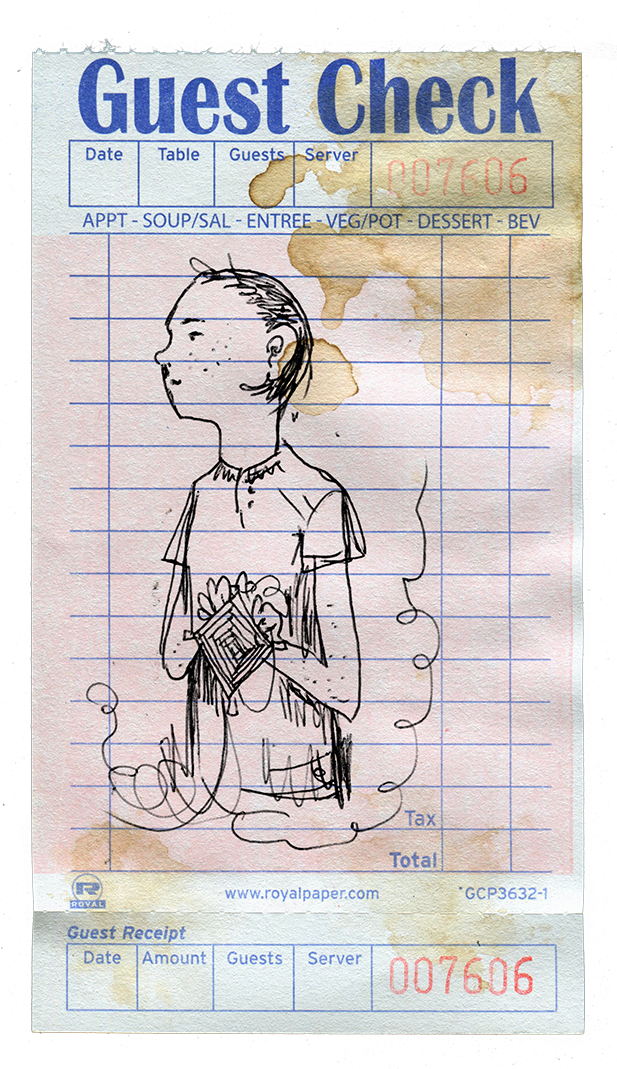
Shelley scuffled along the bank, digging at fallen bricks and dirt with her hands, calling out Jamie’s name. Then she remembered their song, their code: one short whistle, two long. But there was no reply. She tried again, whistling slightly louder. A weak sound came back. Shelley kept whistling and finally found a small cave, closer to the size of an animal’s den, and the shape of a figure hiding within, hidden beneath a red windbreaker. She climbed down into the cave on hands and knees, looking around. Everything inside was made of yarn and bits of fabric, a colorful nest, full of God’s eyes and loops of strands and string. The girl, Jamie, was asleep, holed up against one of the low, curved walls. Her forehead was placed against the sleeve of her coat. Shelley felt her cheek, which was warm. When the girl finally looked up, she seemed displaced, disoriented, but then smiled widely, revealing a missing dogtooth.
“Are you okay?” Shelley asked, and the girl, no longer smiling, nodded once.
“Come on,” Shelley said and helped her to her feet and out of the cave.
The girl was barefoot, Shelley noticed, and so she tried walking with Jamie on her back, her arms around Shelley’s neck, as they moved together through the woods.
“Where are your shoes?” Shelley asked.
“I lost them. When I got scared. When I ran.”
“Over by the cemetery?”
The girl nodded. Shelley could feel the motion against the back of her neck.
“What were you doing out there, Jamie? With the deputy?”
The girl’s breath was warm against Shelley’s left ear as she spoke. “We only ever talk. Ever since the parade last year. We meet at the cemetery. We never do anything. Sometimes he gives me things, but mostly we only ever talk.”
“But then why did you run off?”
The girl cleared her throat, and Shelley set her down. “Because.”
“Because why?”
“Because the last time he told me he wanted to hurt himself. He said he had feelings and that they made him want to die sometimes. I didn’t know what to do. So I stayed away. I put up the God’s eyes all over town. Put them everywhere I could.”
“How come?”
“To watch over. So they could see.”
Shelley did not know what to say. She felt proud that she had read the God’s eyes correctly, had understood their impractical message.
The girl went on: “This afternoon, I was riding my bike in front of my house, and he pulled up in his police car and told me he was leaving. He asked to see me one more time before he did. When we got to the cemetery, he told me he wanted me to go with him. But I didn’t want to. He got upset, so I ran. As fast as I could. Through the woods. He tried to follow me in his car. I went and hid by the Doves’ for a while, and then I came here when it got dark because I thought he might find me. I’ve never been so scared in my life.”
Shelley put a hand to the girl’s shoulder. But it was too hard to see in the dark to read the girl’s expression.
On through the woods, they made their way to the culvert. The police squad car was still parked in the middle of the road. The dome light was on, Shelley could see.
“We can’t sneak past him,” the girl said, and Shelley told her to shush.
The deputy was sitting in the driver’s seat, and the door was open, which was why the cabin light was on.
Shelley could not see anything other than the back of the deputy’s head, though it appeared he had one foot out of the car, as if he was unable to make up his mind.
“Okay,” Shelley said. “We’ll just go quietly. One by one. I’ll go first.”
The girl did not look like she would be able to do it. “I can’t,” she said. “He chased me. I’m too scared.”
Shelley gave the girl a stern look and said, “Don’t look at him. Just keep your eyes on me. Come on now.”
The girl shook her head.
Shelley squinted hard at the girl and handed her the knife. “This is a magic knife. It’s from Raymond Dove. Do you know what he’s done with this knife? Nobody can hurt you if you’re holding it. Do you understand?”
The girl blinked, somewhere between belief and disbelief.
“Come on now.”
Inching along the underbrush, once again on hands and knees, Shelley carefully turned and saw the deputy was sitting, legs splayed, holding a shiny silver service revolver in his lap. She looked over and saw the girl had stopped moving, had gone white-faced. Shelley turned and got hold of her nylon hood and began to pull. Another four or five feet and they would be out of the shadow of the car. Shelley closed her eyes and could hear the abstract gestures, the abstract lines, the interference from the police radio chattering beside them. She imagined them as dashes and dots, as a field of unnamed punctuation marks. All she had to do now was pass through.
But the girl had gone stock-still. “Come on,” she whispered. Under some kind of spell, Shelley thought.
The deputy sat in the car, muttering to himself. “Help. Help me,” he was saying.
The girl had become powerless, like a faint and tiny animal. Shelley put a hand on her shoulder. “Come on. Look at me. Look at me, Jamie. Come on. All you have you have to do is look straight ahead.”
The deputy continued to call out.
One hand forward, then the knee, the noise, the hidden chatter of the police band and the terrifying words of the deputy appearing and disappearing into the darkness around them.
One at a time, they finally made it to where Shelley had left her bike in the culvert. “Better if we run,” Shelley said.
The girl looked scared, but Shelley took her hand, upright now, running as fast as they could along the culvert toward town.
Behind them, a powerful noise, like a firework, exploded. But both girls kept running, neither turning to look back.
2. On the way, a half-mile from town, a squad car from the sheriff’s office arrived. Before Shelley could see his face, she recognized the tall white cattleman hat belonging to Sheriff Wes Joad. Together, the two girls ran hand in hand toward the flashing light until everything became a soft, hypnotic red.
Later, Shelley did not know what to say or think. Silently from the back seat of the squad car, she watched the sheriff take Jamie Fay in his arms and carry her bodily up the front steps of the porch. From behind glass fogged by her breath, Shelley saw the expressions on the faces of Jamie’s parents. Later, though she could not say how much later, the sheriff returned to the car, adjusted the rear-view mirror, and pulled away from the curb. The digital clock on the dashboard read 2:30 a.m.
“I left my bike. Somewhere out by the woods,” Shelley said solemnly.
“Have to go back for it tomorrow,” the sheriff murmured. “Your grandmother’s worried sick about you as is. I don’t believe anyone will bother it.”
She nodded, and then, unsure if he had seen her, said, “Okay.”
Shelley turned and stared out the window as the remaining buildings of the town passed by, staring at how it had all changed. In flashes of what seemed like photos, she saw the landmarks, businesses, shops, a single faded American flag left unfurled after dark in front of the VFW, and several houses in the soft, purple light of the approaching sun. The girl watched all go past, feeling heartsick.
All of it looks different, she thought.
The sheriff turned and spoke over his shoulder, “They’ll take Jamie over to the hospital in Dwyer tomorrow, be sure she’s okay. I have a feeling she’ll be all right. And you’ll be home in a few minutes.”
There was some static on the police band, which Shelley could not piece together. The sheriff, with a great degree of effort, lifted the radio receiver and answered as he continued to drive.
“That’s a 10-4. Tell Percy I’ll be by there in a half-hour or so.”
He replaced the receiver and turned to speak over his shoulder again.
“Looks like the deputy went and shot himself in the chest. They got him in the hospital over in Dwyer. Sounds like he’ll live.” The sheriff tried to smile in the rear-view mirror. “Everything’s going to be okay, don’t you worry. Everything’s going to be all right, you’ll see.”
Shelley felt unsure. It was then she noticed that she had been holding the folded knife belonging to Raymond Dove. The girl, Jamie, must have handed it back to her. She did not know when, only that it was sitting there. She looked up and continued to watch the remnants of town fly past.
“None of it. None of it’s the same,” she finally said.
3. Once home, after the sheriff had departed with one of her grandmother’s cakes, Shelley lay on the sofa with her head in her grandmother’s lap. It smelled like chartreuse and flour and honey, her grandmother’s nightgown. The girl turned away from the lamp that had been switched on, hiding her face against one of the sofa cushions.
“I thought you had left me,” her grandmother said. “I thought you had left me and were never coming back. Like your mother. I thought you had.”
Shelley began to cry. She felt her grandmother stroke her hair, the small hard bones, the callused fingertips, the soft palm against the side of her face.
“I’m sorry for scaring you. I’m sorry for running off like that.”
“You have a right to do as you please. I’m just an old nuisance and I smoke too much and I just was afraid you might just hold it against me.”
“I won’t run off like that again. I promise.”
“You had a night, didn’t you? A dark night. I heard it on the scanner. You did a very brave thing. I know I’d never have the courage myself. But you—”
“I didn’t know I could. There’s a whole world, and I had no idea about it.”
“You’ll go. You’ll find yourself out in that wide-open world and wonder whatever it was that ever kept you.”
“Grandma, I—”
“No. There’s no need to talk about it now. We’ll talk about it in the morning. You and I. We’ll have ourselves a talk. Now, are you ready for bed?”
“Do you mind if I sit here another minute with you?”
“Who, me? I don’t mind a bit. You can sit here as long as you like.”
“The birds’ll be up.”
“Shhh. Never mind them.”
Shelley closed her eyes, taking in the scent of the entire house. A moment of silence passed between them, and soon the old woman began to whisper:
Now, where were we, boys and girls? Where were we? Oh, yes. The woodsman had lost chicken after chicken to that fox and his fiddle and tracked him down to his den in the woods. And just then, the woodsman saw that wily old’ fox’s den, right there, and he reached in with one burly arm and grabbed that fox by the furry white scruff of its neck, and with his other arm, he threw back that great shining axe, and that little wily fox howled out in fright…
Shelley felt her grandmother’s eyes upon her, felt the soft fabric of her nightgown against her cheek, felt how good it was to be home again. The girl opened her eyes, staring up.
And then…and then, that woodsman, well, he let that wily fox go.
Shelley blinked. “That’s not how it goes.”
“That’s how it goes tonight.” And the voice came again, pleasant, soothing:
He didn’t have the heart or meanness to kill that awful varmint. He let that fox go and watched him run off through the thorns. And his puffy red tail was like a flame flickering in the woods. After that, the woodsman didn’t lose another bird—not a single one.
Shelley closed her eyes and felt the colors of the room change before her one by one. Somewhere a dog barked, and then there were the sounds she had been waiting for: the murmuration of the birds; the tolling of the grandfather clock striking four, telling its own story. Before her a tree appears, as if in a dream, and then it is a dream, and before her is an all-white tree, without flowers or leaves. But when she looks again, it has blossomed, each flower a different color, each opening before her eyes. One, two, three.
“Double Take” is our literary criticism series wherein two readers tackle a highly-anticipated book’s innermost themes, successes, failures, trappings, and surprises. In this edition, frequent Electric Literature contributors Tobias Carroll and Gabino Iglesias discuss Scott McClanahan’s The Sarah Book.
In this, McClanahan’s third book, Scott forges new ground with his unique semi-autobiographical prose. This time, he directs his attention to the dissolution of a marriage, the story of one era ending and the hopeful beginning of another. The Sarah Book takes the reader to unabashed new ground, and never lets you go.
Spoilers are encouraged and fair-warned, with the hope that readers purchase the book and join the discussion in the comments.
Tobias Carroll: I’m not 100% sure when I first saw Scott McClanahan read. I suspect it was at Franklin Park Reading Series; I was also mightily impressed that, at the time, he could pull off the self-publishing thing without losing sight of his craft. While I’d certainly say McClanahan has grown as a writer since the days of the Stories books, he’s kept up the ability to write these beautifully told works that feel effortless, but clearly aren’t. To say nothing of the way he folds together memoir and fiction, I’m thinking of some of the more surreal moments in both Hill William and Crapalachia.
I feel like I’ve been hearing talk of The Sarah Book for a while now. And now I’ve read it, and…
I think the main thing about it for me, and maybe a good place to start, is how McClanahan comes off in the book. To some extent, his narrators occupy this almost sublime space; there’s a kind of benediction in some of his work, which is great, and the persona he gives off is almost a holy figure. It seems like in The Sarah Book, he absolutely decimates that. This is the story of the end of a marriage, and it’s the story of someone coming to terms with a whole host of bad behavior, and it was an utterly harrowing read for me.
I’m curious about two readers coming to this: the ones that have read McClanahan for years and those coming in entirely fresh. I’m curious as to how they’d each receive it. And I’m curious about how you received it as well, and your history with McClanahan’s work.
Gabino Iglesias: I remember discussing the best songs of Van Morrison with nonfiction author and journalism legend Bill Minutaglio about eight years ago. At the end of the conversation he said something that stuck with me: “The man is plugged into something the rest of us can’t even see.”
Scott McClanahan’s fiction makes me think he’s plugged into that as well. He’s in touch with some cosmic-yet-very-human thing that gives his narratives an unshakeable sense of reality. Reading him is like sitting down with a friend who tells you stories that sound too great or too weird or too sad to be true, but that you know are based on real experiences. I agree that he shatters the beatific image, but he does so while remaining true to the rest of himself. The anger, the frustration, and those moments where he is doing something awful and knows it but can’t stop himself are all things we’ve all gone through, and they make The Sarah Book a narrative that’s very easy to understand on a deep level.
I think McClanahan’s (non)fiction gets reactions out of people regardless of their familiarity with his work. I first read his short stories and then Crapalachia, which blew me away. It felt strange and heartfelt and honest. You know, the kind of book that makes you want to question and then hug the author after you’re done reading. Readers who enjoyed that book will surely love The Sarah Book. Anyone who likes reading about flawed humans failing to cope with heartbreak and great changes will probably love this book. For those whose introduction to McClanahan’s work happens with this book, I can envision two reactions. The first is “Wow, this guy can write. This is sad, funny, touching, real, and awful.” The second is “This is the story of a loser who can’t stop messing up. He sometimes acts like a child. And what’s up with that messed up dog?” For me, the first group gets it and the second doesn’t, but you know all about literature and opinions, so I’ll leave it there. I definitely belong to the first group and think this one is as great as Hill William and Crapalachia, if not better, funnier, and sadder.
“Reading him is like sitting down with a friend who tells you stories that sound too great or too weird or too sad to be true”
TC: I’d never thought about McClanahan in conjunction with Van Morrison before, but–that seems spot-on, both for the way that they’re able to tap into an almost sacred emotional sensibility and for the way they fuck with it, the push-pull between what an audience wants and what the artist is trying to say. I am literally fighting off the urge right now to go deeply into a “smart writers on Van Morrison” rabbit hole — it’s already well into the day, and I have, as they say, miles to go before I sleep.
Beyond the (fairly harrowing) events described in the book, one of the other things that McClanahan did here that struck me was the inclusion of images. Not to that great an extent but it was still pretty intriguing to see the faces of McClanahan, his family, and even Grover show up in here. I’m not going to go so far as to say that Scott McClanahan working an extended allusion to The Monster at the End of This Book was one of the most moving reading experiences I’ve had this year, but it kind of was. I’m curious: What did you make of the use of photos? Did you find it an interesting evolution to his existing style?
GI: I’m not a fan of pretending to know what an author was thinking when he or she did something in a book, but I like to think McClanahan didn’t plan the thing with the photos and that it just happened organically. While he is an outstanding storyteller and the narrative was surely thought of in advance, there is also a raw passion in McClanahan’s work that makes me think he sometimes surprises himself with the extents he will go to in his quest to effectively communicate his story and to make readers feel something. In this case, the images were just the last stage in getting completely naked in front of his audience and probably also a clever, unique, new way for him of saying, “Hey, all of this is true. Here’s a picture to prove it.”
“There is also a raw passion in McClanahan’s work that makes me think he sometimes surprises himself with the extents he will go to in his quest.”
Something this book does very well is humanizing through humor. I laughed really hard at the scenes with the dog. That, I feel, was one of the most noticeable differences between this book and the author’s previous efforts. McClanahan has always presented his life, and Appalachia, through a funny, humane lens, but this time around, he offered cringe-worthy passages that offered a strange space to breathe between harrowing scenes in the car of painful memories. What did you think about that humorous/depressive balance?
TC: The short version: As a reader, I was pretty into it.
The longer version: To an extent, I think it was very necessary — just as McClanahan juxtaposes the ugly end of his marriage with its much more optimistic and joyful beginnings, finding a balance so that the narrative wasn’t simply a chronicle of harrowing events had to happen. So when you have a beginning that’s that harrowing — I mean, driving while wasted with children in the back seat? That’s a rough place to come back from–finding some way to even it out is pretty essential, I’d say. I, too, was pretty taken with the scenes with the dog, which were alternately hilarious and (as the dog grew older and older) pretty heartbreaking in their own right. And the marathon viewings of the “November Rain” video also hit home while also bringing a smile to my face at the image. Reading the book as a whole, I thought a lot about something Sean H. Doyle talks about a lot: The idea of writing memoir (or, in this case, fiction with an element of memoir) in which you’re the villain. I definitely got a sense of that here.
For me, the other way the humor worked had to do with questions of, not to sounds hugely pretentious, the transcendental. I think that’s something that comes up in McClanahan’s work a lot, both his prose and some of the times I’ve seen him read, where there’s been an almost religious aspect to it. (And on the flip side, there’s the scene at the end of, I think, Hill William, where he juxtaposes fucking the landscape with the landscape around him exploding.) I think that’s one of the things that puts him into his own category: There are plenty of books that have confessional or memoiristic aspects that deal with failing marriages, with alcoholism, with depression. But this one also has that sense of achieving a breakthrough in spite of all of that hate. This is a weird comparison to make, because the two books are otherwise pretty dissimilar, but I remember reading William T. Vollmann’s The Royal Family years ago and also being taken with the way that novel alternated scenes of harrowing degradation and revelatory bliss.
Though that brings me back around to a question: Where would you file McClanahan’s work? I think I first read him after seeing him read and I remember hanging out with a friend in Seattle and watching her reaction to his reading at Left Bank Books during AWP a few years ago. But I’m also at a loss as to who I might recommend his work. It’s autobiographical, but there’s just a tinge of the experimental; it has an amazing sense of location, but as someone who’s never been to West Virginia, I find it incredibly affecting. To be honest, I’m shocked no one’s written about McClanahan’s stylized yet autobiographical fiction in comparison with that of Karl Ove Knausgaard.
GI: When talking about McClanahan, I think transcendental is far from pretentious. In fact, it takes us back to Van Morrison and being plugged into something bigger, something special. I guess some folks would call it holy and other would cringe at the use of the term, but whatever it is, it’s certainly there. It makes McClanahan a special author, one that, instead of working hard to write to the beat of his drum, he naturally got rid of the drums and decides a sad piano with a great sense of humor and hearts instead of strings was going to be his thing.
The more I read, the harder it is for me to recommend books to people, and the easier it becomes. To some readers, I’d say this is an unclassifiable book, and that might turn some people off. The others, and the way I’d file McClanahan’s work, would have to call his work experimental autobiography/geographical memoir. To friends, with whom we are always able to leave fancy words out and just say what we feel, I’d say “Read him. He has a unique rhythm. He’s funny and sad and strangely soulful and amazing and his work is one of the reasons indie lit is the most exciting kind of lit there is.”
“I’m shocked no one’s written about McClanahan’s stylized yet autobiographical fiction in comparison with that of Karl Ove Knausgaard.”
The fact that McClanahan’s work is getting a lot of recognition helps fuel a whole movement of contemporary authors that are moving away from “everywhere and everyone” literature and digging into their roots to offer special narratives steeped in place/space/culture. Whether it’s frontera writing or the Appalachia of McClanahan or crime author David Joy, we’re seeing a lot of unique discourses, points of view, and geography-infused fiction that shows us how we’re different while bringing us together under the “great fiction/nonfiction” banner.
TC: I agree with all of that. And I also agree that McClanahan’s influence may be felt more in what it inspires other writers to do as opposed to giving them a template that they can follow. I’m thinking back to that point in music writing a decade and some change ago when a lot of people seemed to want to emulate Lester Bangs, but only to a superficial level, as opposed to some of the more interesting things he was doing with prose. There’s plenty to learn from in Scott McClanahan’s writing; writing using a bad pastiche of his style is, hopefully, not one of those lessons.
I might be digressing here slightly, but: the use of photos in The Sarah Book got me thinking about W.G. Sebald, and while I don’t necessarily think I’d file McClanahan and Sebald too closely together, there are some similarities, including the intentional blurring of lines between author and narrator. Sebald’s work has certainly influenced a number of writers whose work I love, including Teju Cole and Laird Hunt. I think both Cole and Hunt take that template and do their own thing with it, as opposed to coming up with some sort of pastiche.
But for all of the talk on the macro level and on the theoretical level, The Sarah Book also had me feeling for its characters in their smaller, intimate moments. It left me feeling for all of them as they struggled to understand one another, and it left me hoping they’d all found a greater peace in their lives. And so I also appreciate this book for its ability to bridge those two scales, and those two worlds.
GI: I have to fully agree with that wish. I think McClanahan had already made a lot of noise in the literary world, but nothing compares to the explosion of coverage and attention The Sarah Book is getting. Small venues and large venues alike are under the spell of this man’s prose, and I love it. The fact that he has stuck to his guns despite new stylistic flourishes make him admirable. I tend to celebrate the success of good people as if it was my own because it truly makes me happy, and seeing The Sarah Book everywhere makes me happy regularly because it is everywhere. Sadly, I’m sure we’ll get some pseudo-McClanahan prose in the coming years. Too many authors wait around to see what new thing sticks and then they try to replicate the formula, and that will surely happen with this book. That being said, a few pastiches of The Sarah Book is a price I’m willing to pay for having the book with out and about.
Feeling. For all its simplicity, that word manages to capture what this book is, does, and makes. I laughed and cringed. I nodded my head in recognition of my own stupidity and felt bad for McClanahan’s mistakes. I felt for him and for the kids and for the dog and, once it was all said and done, I felt for every person stuck in a crumbling relationship and for every shattered soul processing and learning to cope with devastating new realities while sitting in a parking lot somewhere in this country. Ultimately, aside from everything happening at the macro and theoretical levels, I think this book is a success because there is a large, living, bleeding heart full of scars at the center of it, and that is something no literary analysis can explain. Some books you hate and some books you feel indifferent about and some touch in strange ways that make you love them, and The Sarah Book belongs to this last group.
“It’s a balancing act atop a balancing act.”
TC: It’s a weird kind of alchemy. I keep thinking of how certain elements seem to converge in perfect balance for certain writers, and I think you perfectly capture how that works for McClanahan. I found myself thinking a lot about how McClanahan had captured aspects of his life in this book, and the candor and fearlessness with which he did so. When I interviewed him a month or so ago, he emphasized that he considers himself a fiction writer — and so that’s also something that constantly lurks in the back of my mind when I’m reading his work. How much of this is true? How much is embellished? (See also: Eileen Myles; see also, the aforementioned Knausgaard. Which is not terrible company to be in as a writer.)
That ambiguity might also be what makes McClanahan’s work so powerful. The story he’s telling in The Sarah Book is already deeply moving and wrenching, and — if I’m not projecting too much here — very discomfiting for anyone with a self-loathing or self-destructive streak. But we aren’t reading The Sarah Book: A Memoir here — even though we can see a photo inside of a guy named Scott McClanahan who looks a whole lot like the Scott McClanahan who wrote the book. It’s that risk that elevates an already-powerful work to a new level: It’s a balancing act atop a balancing act. And it’s a work with scenes that aren’t going to leave my head any time soon.
A visit to the city where pagan & Catholic rituals go hand-in-hand, ghosts are everywhere, and poetry speaks to the community
Electric Literature’s contributing editor Michael J Seidlinger is on the road as part of his project, #followmebook, visiting writers and exploring the limits of social media. As part of a limited summer series called “The Writing Life on the Road,” he’s sharing his conversations with writers he encounters as he makes his way from New York to California. This week, the poet Rocio Carlos, shares details and insights from her writing life in Los Angeles, California.
What follows are highlights from Rocio’s interview with Michael. Her responses have been edited for clarity.
Setting the Scene: Between Churches in Little Tokyo
We are at Far Bar which is at about 1st and Central street, technically in historic Little Tokyo, but it has also been called Bronzeville, and it’s been really important in the history of Los Angeles. Literally a block from here used to be a Buddhist temple and then it was a Baptist church. So it’s pretty informative in the history of our city as a whole.
The Little Notes That Transform Into More
Lately I’ve been writing notes in my phone. I end up having to do an archiving of places where I leave notes for myself. Like I’ll audio messages for myself when I’m writing. I will type notes into the ‘Notes’ app on my phone. I will write notes in a journal that is specifically put aside for that. I have my writing notebook and then I have my work notebook, but then I’ll write things in the margins, or even in my grocery list. So even the notes I write for myself or the everyday act of living, like the things I have to buy or the bills I have to pay sort of become a thing.
Naming All the Plants: Writing Al Fresco
I have a ritual of going outside early morning every morning and just walking around the backyard and noticing the natural world: the temperature, the sky, the animals present, the plants that need care, the plants that are thriving, and just sort of naming them. This is literally me walking around talking to myself out loud. Sometimes I’ll take an Instagram picture, which is a kind of note. The observation, the witness of it is a kind of note taking, and sometimes that can be a photograph, a memory.
Coffee and Cleanliness: Carlos’ Writing Routines
I need a clean house. That takes hours out of my day every day. Last summer I was really good about it. I set up this outdoor patio and I called it my summer office and every morning I would just take my shit out there which means I would just clean later for longer. I made a deal with myself, and I’m in this summer transition mode. It was just solstice, which I observe because I’m a pagan. I have a couple of heavy pieces of sitting furniture that I need moved. The minute a writer friend who can lift heavy furniture comes over, I will ask them to help set up my summer office. I made a deal with myself, as soon as I get up I’m just going to take my laptop, put my oatmeal and coffee on top of it and I’ll see you in two hours, house. In two hours, I’ll see that there is cat hair on everything and then I will clean up. That took some sacrifice and suffering on my part because I am absolutely centered in my home.
I do need coffee. I have coffee every morning. I like to be up at 6:30, and it’s just me and Scout, my cat. She and I just walk the perimeter of my yard — I have a huge yard. It’s magical. We just walk around and thank all the things, even though they are the same things I look at every day. I mourn things that couldn’t live.
The Ghosts that Follow Us: Pagan Catholic Traditions
I am Mexican and I grew up pagan Catholic, with practices that are so old that people don’t separate them from our indigenous practice. People will actively cast spells or things that would be considered spell casting by an orthodox church, and then not see it as contradicting the teachings of the Roman Church; they’ll go to mass immediately after all that and be like ‘this is all part of our cosmos.’ When my father had a stroke and was in the ICU, my mother without blinking said ‘I have your grandmother’s candle,’ by which she meant the pastoral candle that is burned at your baptism and then again when you receive last rights. ‘We’re going to stay up for as many nights as it takes.’ My mother interested the youngest of us, my little sister, in leading the rosary, a part of Roman Catholic practice. In our hands, it is an instrument for invoking and sustaining energy that maybe the Church does not account for. To keep her from falling asleep, my mom put my sister in charge. She would lead the chant; she would call, we would respond. Late into the night after being with my father all day at the hospital, we would just sit in our little living room and chant, chant, chant. That is casting a circle, invoking the deities. Proclaiming gratitude and asking for a favor.
There are ghosts everywhere. How could there not be? The violence of survival, some of us don’t make it. How do you tell a story that doesn’t necessarily belong to you, that you inherited? How do you stay true to it, or what is your responsibility to stay true to it? I always had this idea, being an outsider person in my own family, and in a lot of families it’s really common to attribute your characteristics to another living person. I never had anyone I was like, so I invented this story in my head of how I was like this missing auntie — my dad’s favorite sister who died in a terrible house fire and my grandfather almost died trying to rescue her from the fire. When he brought her out, it was too late. That’s my little ghost.
“There are ghosts everywhere. How could there not be? The violence of survival, some of us don’t make it.”
This manuscript that I am working on is like a call-and-response. Every time I would read something, it would prompt a response for me. It’s all paired with past and current observations and of course like everything, it amplifies. So it started as list-making, or talking back. I actually wrote a long poem in nine parts called “The Other House” in which I responded to the entire manuscript [The Yellow House by Chiwan Choi] and it was born from notes that I wrote for my own sake and they evolved into a poem. There was so much more written. A lot of it is in different voices. There’s direct speaking and then there’s interrupted thoughts which can sometimes appear in parentheses, or there are asides which can sometimes appear as italics, and then there are sequential numerations that are like the speaker actively trying to work out the thought. A lot of it is working through trauma and trying to reconcile the past that is inherited. A lot of the stories I inherit about our family and our people are directly tied up with a specific position in nature. Everything in my memory is about plants and animals and how you treat them. Not in some romantic way. It’s visceral and painful.
“Everything in my memory is about plants and animals and how you treat them. Not in some romantic way. It’s visceral and painful.”
The City as a Literary Community
The writing community — I have come in and out of it. In college, that seemed easy because you’re in a little bubble and you’re writing and reading on campus. Once you graduate, you lose it. I was a PEN emerging writer so that was helpful; I wrote and met good people and had good mentors in that program. After that, I ended up getting an MFA. To be a writer, I had to get another job. Thank God, poetry is a gift economy. Thank God, poetry will never be profitable. So I am totally under the radar, my only responsibility is to make the best work I can. When I went to graduate school, I liked my program. I liked my mentors and I liked my peers. I was productive. Afterwards, some of us kept meeting. I went to Otis College of Art and Design. I felt acknowledged, respected, and looked to as a standard by my chair and my peers. After that, for a year, some of us would meet and write. That’s part of my writing community — having someone to be responsible to. If you keep doing work outside of it being marketable, you find people and people find you and eventually it finds a payoff. It’s good to keep doing the work.
On Staying with Your People: At Home in Bicultural Los Angeles
Geographically and culturally, I have only ever lived in Los Angeles. I was born here. I grew up in Boyle Heights. I’ve only ever lived here. I went to college at Cal State LA. I worked for LA Unified, so I drove all over the district subbing at schools. I have never had a desire to live anywhere else. I love being from here and I love working from here and I just feel like I embody the city and I’m proud. In that way, I have never been separate from my people. I’ve made sure I live where I feel at home speaking my languages and I can contribute in some way. That I can talk to my neighbors and it’s not weird. My parents were very deliberate in raising my sister actively bicultural, which means they had rules about when English was allowed and when Spanish was mandatory. We did a lot of rituals that were related to our culture. We did our religious sacraments but we also went to powwows, and we also had quinceañeras and we had to be at the family’s every Sunday. My sister and I performed in dance troops for at least ten years each — actively bi-cultural, encouraged by our parents because when they were new in the US, in the north in the 70s, some of the worst racism they faced was from other Mexican Americans who were born here and looked down on them for not being born here. Culturally, geographically that is my heritage. And I’ve never had to go looking for it, it’s always been around.
“I just feel like I embody the city and I’m proud. In that way, I have never been separate from my people.”
“And now was acknowledged the presence of the Red Death. He had come like a thief in the night. And one by one dropped the revelers in the blood-bedewed halls of their revel, and died each in the despairing posture of his fall.” —Edgar Allan Poe, “The Masque of the Red Death”
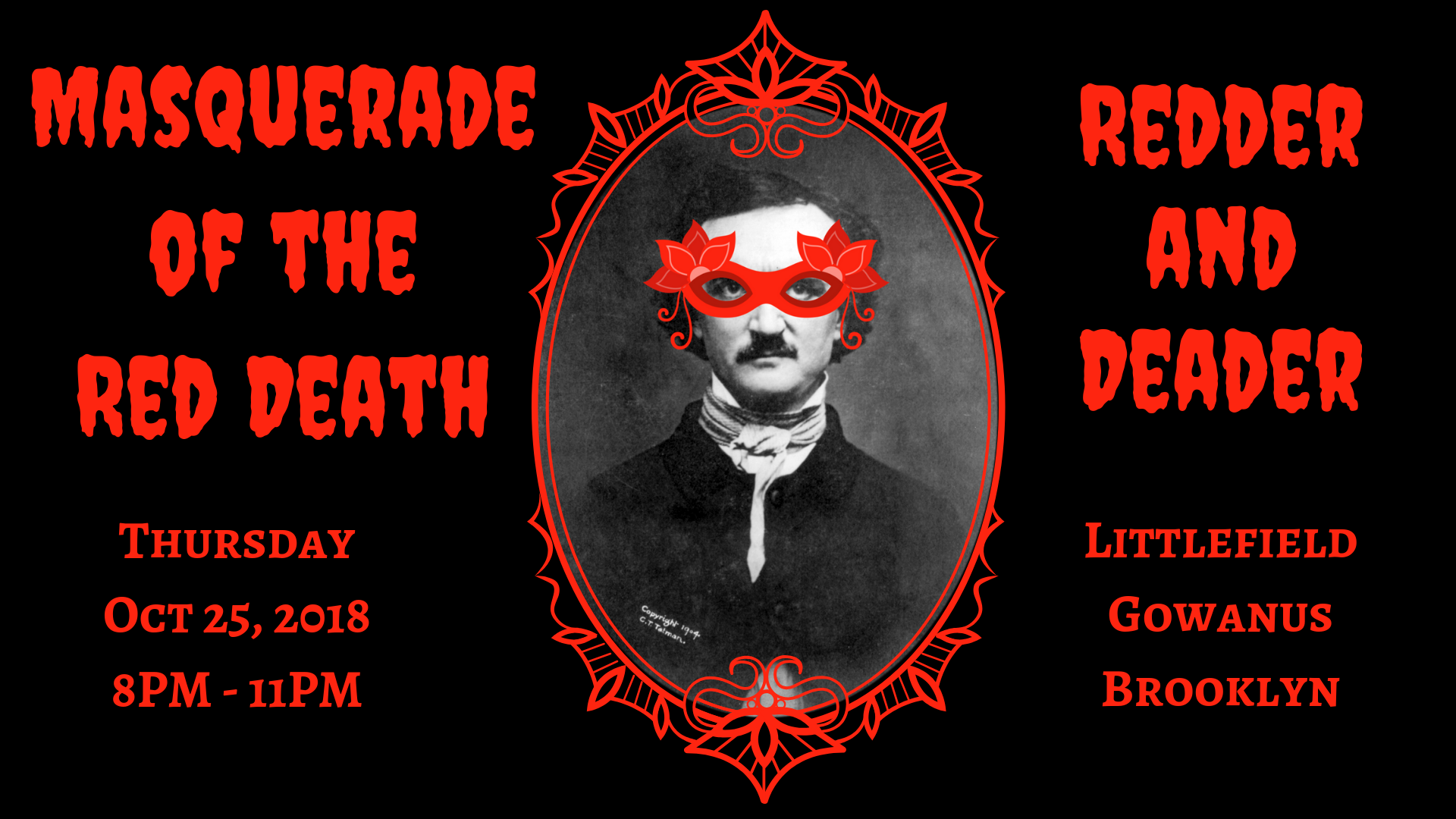
Early bird tickets to the Masquerade of the Red Death: Redder and Deader are now on sale for just $35! Tickets include a mask, unlimited beer and wine, and a specialty cocktail for the first hour. The price increases to $50 on October 1, so get your tickets today!
The Masquerade of the Red Death
Thursday, October 25, 2018
8:00 PM
Littlefield
635 Sackett St.
Brooklyn, NY 11217
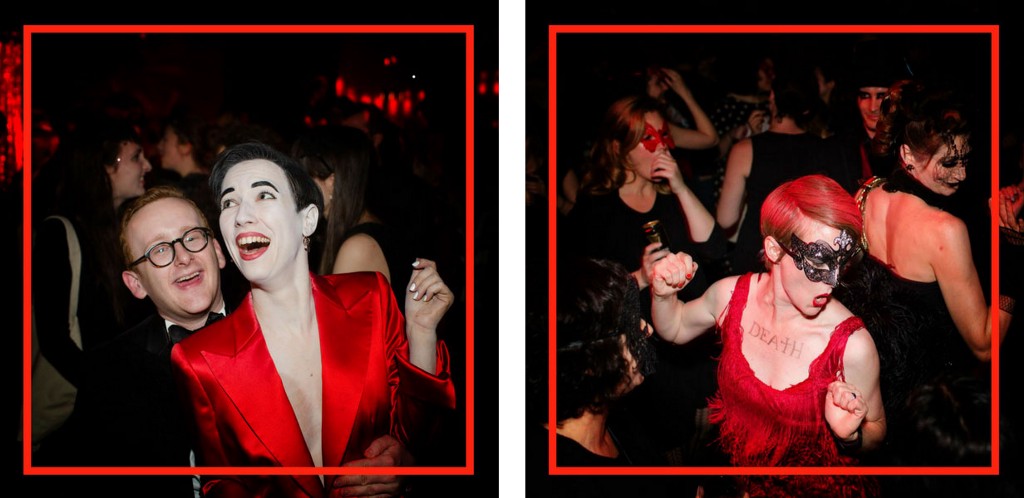
Last year, we packed the house at Littlefield with hundreds of revelers who sipped “Red Death” cocktails and danced the night away. This year, Electric Literature’s fundraiser will take the Edgar Allan Poe theme to the next level, with “Masquerade of the Red Death: Redder and Deader.” Guests are again encouraged to wear red or black, and masks will be provided. But unlike last year, not everyone may survive the night…
Dress Code: Red and Black Festive Attire
Music by DJ Colleen Crumbcake
Book Giveaways
21+
Electric Lit, Inc. is 501(c)3 non-profit, and your ticket purchase is tax-deductible minus the cost of goods and services.
Electric Literature is grateful for the support of our generous sponsors.
Marquee Sponsor
Electric Literature is also grateful for the support of our generous patrons who have sponsored tickets for our contributing writers to attend the Masquerade:
Terry McDonell
Meredith Talusan
Cynthia D’Aprix Sweeney
Become a Patron
Can’t make it to Brooklyn for the event? You can still support our mission of making literature more exciting, relevant, and inclusive with a charitable donation. Everything Electric Lit publishes is free to readers, and we pay every one of our writers. Each gift of $50 sponsors one of our writers to attend the Masquerade for free so we can celebrate them as guests of honor. Patrons giving at the $100 level will be acknowledged at the Masquerade on electricliterature.com.
Become a Sponsor
Electric Literature is one of the premier outlets for promoting new titles. Excerpts in Recommended Reading, reviews, interviews, and creative
content like lists and essays connect your writers directly with our engaged
and enthusiastic readers. We believe in a lively, thriving marketplace for
books where great writing is valued and easily discovered. To learn more about our sponsorship opportunities, email cristina@electricliterature.com.
It may be a lazy summer Friday, but the book world is buzzing with exciting news. Legendary NY Times chief book critic Michiko Kakutani is stepping down, the Man Booker Prize longlist has been released, and Hilary Clinton’s upcoming book promises to tell the world what exactly happened in 2016.
Michiko Kakutani steps down as chief New York Times book critic
It’s the end of an era in book criticism as we know it. Pulitzer-Prize winning book critic for the New York Times Michiko Kakutani is ending her reign as a feared and respected voice for literature good and bad, as she will be stepping down as the publication’s chief book critic. Kakutani has garnered a reputation for her honest and sometimes scathing book reviews, making and breaking the careers of writers in her 30+ years in the position. Among the authors she has reviewed are literary legends Toni Morrison, David Foster Wallace, and J.K. Rowling. Her reviews not only deemed books good or bad, but sifted through the social implications nestled in the fiction and non-fiction books. Kakutani is relinquishing the prized role to write more essays about politics and culture in the Age of Trump. We know her work will be just as brutal as ever.
Man Booker Prize longlist filled with literary big-names
The Man Booker Prize for Fiction has announced its 2017 longlist, and it is graced with English-speaking literary titans. A notable selection is Colson Whitehead’s Underground Railroad, which has already won the National Book Award and the Pulitzer Prize. Arundhati Roy, who made a comeback with her second novel, Ministry of Utmost Happiness, is featured on the list. The Man Booker Prize is for writers of any nationality who write in English and are published in Britain (American writers first became eligible in 2014). This year, four Americans made their way onto the list: Whitehead, Paul Auster, George Saunders, and Emily Fridlund. In September, judges will announce the shortlist, the longlist trimmed down to six works. The winner will be revealed on October 17, granting the recipient a hefty prize of 50,000 pounds.
New Hillary Clinton memoir addresses pressing questions
Hillary Clinton will address the question that has been on our minds since November: how did it all go so wrong? Aptly titled What Happened, Clinton’s most personal memoir yet will offer insight into the former Secretary of State’s experience as the first female presidential candidate from a major party in the United States. In addition, it will explore her thoughts and feelings during one of the most dramatic and messy campaigns in modern U.S. history. According to the book’s publisher, Simon & Schuster, the introduction reads as follows: “In the past, for reasons I try to explain, I’ve often felt I had to be careful in public, like I was on a wire without a net. Now I’m letting my guard down.” The book will also include a fair share of discussion about Russian interference in the election. Now number 17 on. Amazon, What Happened is scheduled to be out on September 12.
Hello, and welcome to my week-by-week review of the world. Today I am saying goodbye.
After eight years reviewing the world, this column has come to an end. I’ve recently encountered some health concerns and have been given only six weeks to live. While I’m not suffering from any specific malady, I am rather old, and at a recent checkup I pressed my doctor on the matter and she said, “for all I know it could be as little as six weeks.” I’m hoping to beat this thing called old age but the outlook is not good.
With such a prognosis, and also because Electric Literature has cancelled this column, this is my final installment of Ted Wilson Reviews the World that will be published publicly. I will continue reviewing everything in the world in the privacy of my own home, where I do a lot of other private things I can’t tell you about. My reviews will be kept in a notebook, to be revealed only upon my death or if a home invader should find it.
Reviewing one item per week for the last eight years has allowed me to review a lot, but not nearly everything. My hope is that with what little time I have left I can fulfill my pledge of reviewing the world even if that means three-word reviews such as “too many holes” or “not a cabbage.” I also may not be able to devote the time required to spellcheck or fact-check anything.
I would like to thank The Rumpus for originally publishing my column, and Electric Literature for publishing my column up until they decided they no longer wanted to.
I now feel a bit foolish for having spent money on this commercial.
For the next six weeks you can contact me by any of the methods below. (Please sign up for my email list if you’d like to be notified of my funeral arrangements.)
Presenting the eighth installment of The Bodega Project, where authors from across New York reflect on their communities through that most relied-on and overlooked institution, the bodega. Read the introduction to the series here.
I grew up in Tottenville, out on the southern tip of Staten Island, the southern tip of the state. The last town in an overlooked borough. A peninsula out past the Outerbridge, which, remarkably enough, was named for an actual person: Eugenius Harvey Outerbridge. Growing up, we always thought it was a geographic description. The bridge at the outer end. Of what? Everything. Yet somehow still part of New York City. Put it this way: if you took a small town in Indiana and filled it with New Yorkers, you’d have Tottenville. If that sounds incongruous, well, there you go.
George’s Deli was on the corner of Yetman Avenue and Amboy Road, up the block from three schools, and across the street from Our Lady Help of Christians (OLHC), an old red brick Catholic church with a single turret. Every Sunday, after noon mass, an altar boy, still wearing his white cotta and red rope belt, was dispatched to George’s to buy a six pack of Schaefer for Monsignor Brennan and Father Burke. Aspects of this story may have been apocryphal. A six-pack, for example, seems a little light.
George’s proximity to the church struck a discordant note. A darkness not so much on the edge of town but right in the heart of it. Across from the church no less. A bad element hung around there, teenagers who wore denim jackets dotted with the patches of heavy metal bands: Iron Maiden, Judas Priest, Black Sabbath. Playing video games, smoking cigarettes, and (gasp) doing drugs. Or maybe they were “on drugs.” Our parents weren’t sure. Either way, it was bad. What drugs? Didn’t matter. This was the eighties and all drugs were the same: one huge frying pan that sizzled then scrambled the egg that was your brain. As a result, we weren’t supposed to go into George’s. I only went in there on Saturday mornings, after basketball practice, to get a quarter water and a pack of gum. It was dark inside, even during the day; the video games in the back glowed with alluring light. The floors were wooden and a cat strolled around, up on the counter and back behind the register. Being in there by myself gave me an illicit charge; years later, I would feel a faint echo of it whenever I walked into a bar by myself in the middle of the day. Looking for trouble, as my mother might say.
In 1985, when I was in the fifth grade, a fire destroyed the old church. We watched it happen from our classroom down the block, black smoke billowing out of the elongated windows on its side. The fire was found to be the result of an electrical issue but the bad element from George’s was blamed. If they were on drugs, they were probably pyromaniacs too. They watched the fire as well, from across the street. They gathered outside George’s, skipping school, laughing. I remember watching them laugh and thinking they were evil. Not just bad but evil, like the devil. Only an evil person could laugh at a burning church.
(I was an altar boy in training at the time. Pure as the driven snow. Puberty, with all its occasions of sin, was mere months away. By the time it arrived, mass was being held in the school gym and I was an actual altar boy, on the long road to lapsed. To this day, I blame that fire for my fall away from the faith and by illogical extension, the bad element outside of George’s. Those fire-starting, drug-addicted, heavy-metal-head, Satan worshippers.)
Some time after the fire, I was with a friend who wanted to go into George’s. This friend was bolder than me and I didn’t want to seem timid in front of him. In we went. The store was empty. We took our time, checking out the video games before buying Yahoos and Yodels. (The adolescent version of pairing Cabernet with a ribeye.) We walked out of the store and turned right, in the direction of my house. By the time we saw them, it was too late. A large group gathered around the dumpsters behind the deli. We put our heads down, hoping to pass unnoticed. No such luck.
“Hey carrot top,” one guy said, stepping out in front of me. I’d seen him before. He was burly, had a mustache. He was old, even for this group, almost a grown up. One of his eyes wasn’t right; it curled into the corner near his nose. He was holding a small dart with a red plastic flight. He stepped very close to me. He raised his hand, pumped his arm, like he was going to throw the dart in my face. I flinched. His friends laughed.
“I’ll throw this in your eye,” he said, pumping again. I stumbled back. He smiled. We walked away, trying not to look too nervous, but I was scared shitless. My knees kept knocking into each other.
I never went into George’s again.
Years went by. I became a teenager, grew tall, broadened out. After a while, I didn’t go into George’s not because I was scared but because there was no need to go.
Also, it was no longer George’s. It was now called Rose & Paul’s Deli, though in a hurried, slurry Staten Island accent, it sounded like Rosenpalz, some Shakespearan character who didn’t make the final cut in Hamlet. (Even when it was George’s, I never associated it with the name George. In my head, it was Georgia’s, like the state, which made a certain sense. It was a place, not a name.) Rose & Paul’s was a cleaned up cousin of George’s, but sold the same fare: after-school snacks, milk and bread, beer.
The summer before I left for college, I got a job as a cleaner at my old intermediate school, IS 34. Over the summer, public schools get a once over: stairwells painted, floors waxed, classrooms cleaned. The other guys — the school’s janitors during the year — viewed me with an understandable mix of distrust and disdain. I wasn’t much use and I asked too many questions. We worked in the mornings and after lunch, well, everyone went their separate ways. I went to the gym to shoot jumpers. I didn’t see anyone again until five when I punched myself out and one of them punched everyone else out. This happened every day, except on Fridays.
On Fridays, we all went to the library after lunch. One of the janitors, Whitey, who liked me, sent me up to Rose & Paul’s to buy a case of cold Budweiser tall boys. The first time, when I balked, he told me to say it was for Whitey. Sure enough, when the woman behind the counter saw me carry a case of beer up to the counter, she asked me for ID, a scowl on her face.
“It’s for Whitey,” I said.
“Oh, okay,” she said, taking the twenty he’d given me. “Tell him I said hello.”
I’d carry the case back and we’d sit in the library with the windows open, drinking beer while Whitey told stories. Around four, they’d call it a day, ask me to punch them all out. (I guess they trusted me more after a few beers.) Whitey took home whatever beer hadn’t been finished. They lined the empties up on one large table, in the corner of the room. I didn’t drink much at the time, especially during the day. (College, with all its occasion for sins, was mere months away.) But I nursed a beer or two, to feel like part of the crew. After I punched everyone out, I went back to Rose & Paul’s and bought a pack of gum. I chewed every piece while I walked home, hoping it was enough to cover the smell of beer on my breath.
I’d carry the case back and we’d sit in the library with the windows open, drinking beer while Whitey told stories.
This happened all summer, every Friday. The empties piled up, until the entire table was covered. It worried me, that pile of empty beer cans. I kept thinking the kids would come back to school early and see it. But on the Friday before Labor Day, a few days before I left for college, Whitey dragged two large gray garbage cans into the library. He placed them at the end of the table and pushed all the empties into them. A few fell on the floor, spilling beer, but a quick mop with some ammonia and that was that. Good as new.
“And that’s how you do it,” Whitey said, winking at me. It felt like some hard-earned wisdom was being passed along, though to this day, I couldn’t tell you what it was.
I left Tottenville the next week. Not forever though it felt like it. I was only in Rose & Paul’s one other time. The following summer, I tried to buy a case of beer, using the “it’s for Whitey” trick. But it doesn’t work at ten on a Saturday night, especially when you’re already drunk.
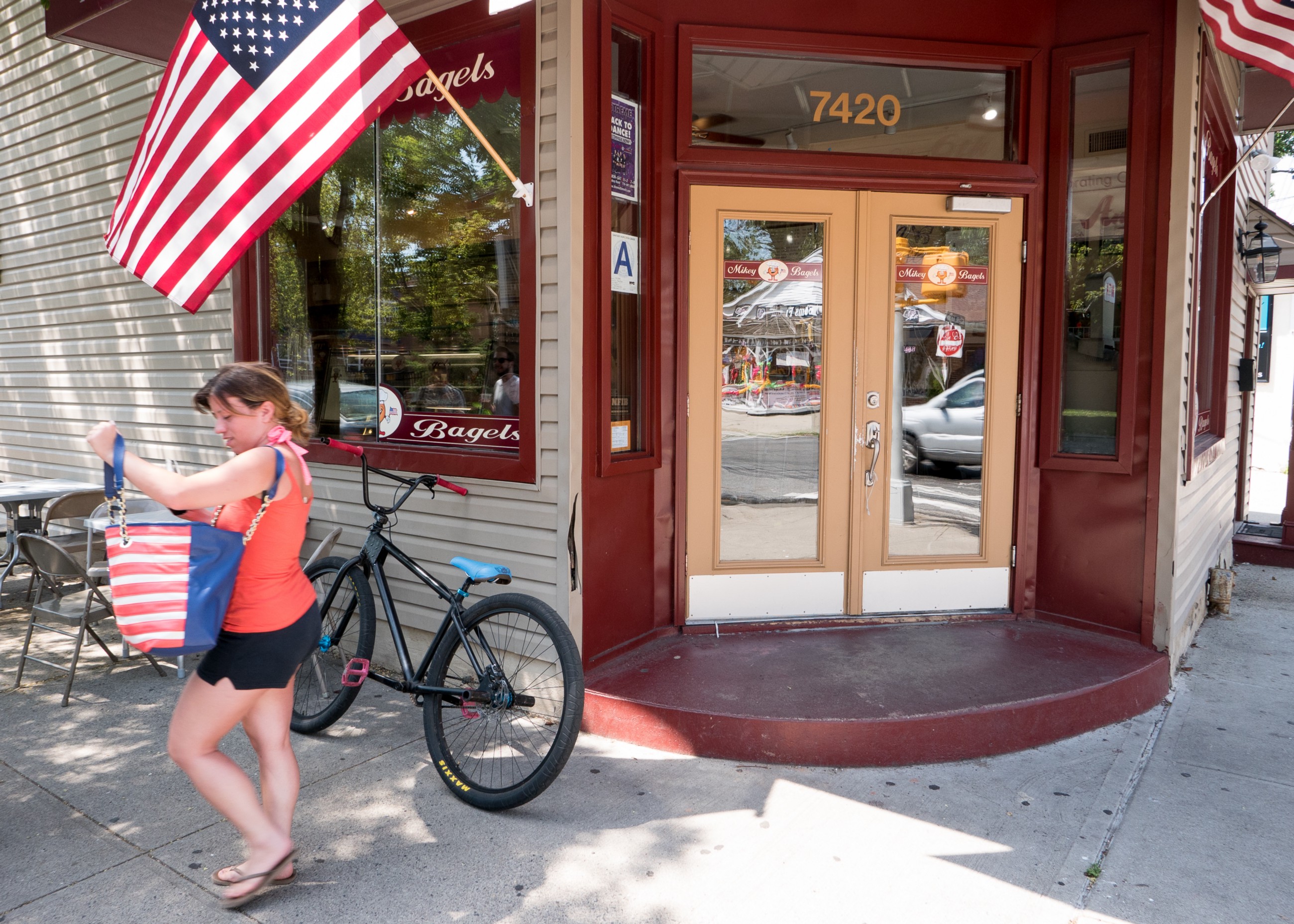
Rose & Paul’s is now Mikey Bagels. (Every deli on Staten Island, it seems, has some association with bagels. Bagel stores have spread across the Island the way bodegas have spread across the rest of the city.) Last week, I stopped in to see it. The store is bright and open with big windows and a handful of tables. On a Wednesday midmorning, it was doing a brisk business: moms chatting over coffee, teachers tucking in to grab tall cans of Arizona iced tea, blue collar workers ordering egg sandwiches. At the far end, where the video games used to be, a television, turned to ESPN, hung over the coffee makers. The attire was working class casual: sweatpants and jean jackets.
Not a bad element in sight. The drugs, however, are definitely there. Tottenville — like all of Staten Island, like almost every working class white part of the country — has been devastated by the opioid epidemic. Before I stopped at the store, I drove around the town for a while, saw a handful of strung out guys strolling the streets. I haven’t lived in Tottenville for twenty years but it was still unsettling. And when it’s widespread as it is, you can’t blame a bad element.
I drove around the town for a while, saw a handful of strung out guys strolling the streets. I haven’t lived in Tottenville for twenty years but it was still unsettling.
My mood improved at the store. I bought a cup of coffee and eavesdropped as the moms one table over debated the merits of having a pool in the backyard versus joining the South Shore Swim Club. An old friend, a teacher at IS 34, stopped in to get a snack. We hugged. She’s the librarian now, works in the same room where Whitey lined up all those empties. She asked after my family and I asked after hers. We promised to get together, the way old friends do even when they know they won’t. She had to run back to school for a meeting. I walked out a few minutes later, took my coffee to the car and drove back to Brooklyn.
About the Author
Eddie Joyce is the author of Small Mercies. He is working on his second novel. He was born and raised on Staten Island. He lives in Brooklyn with his wife and three daughters.
Rona wants to move to Paris or Rome or Tel Aviv but instead she lives in a small town in Ohio as a stay-at-home wife of a doctor who gets stuck in bed with migraines. “Stinkbugs fell from the ceiling onto my head while I slept, and the Food Lion in town was forever out of vegetables,” Rona says. She thinks if her husband prescribed her a good tranquilizer, she might arrive at “the state of mind conducive to sleeping ten hours straight with the TV and lights on.”
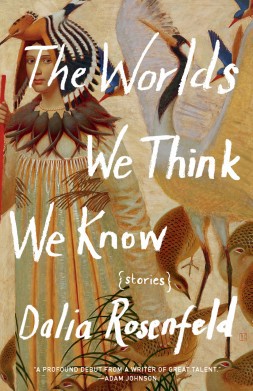
The characters in Dalia Rosenfeld’s debut short story collection, The Worlds We Think We Know, are often stuck between their connection to their Jewish culture and their displacement from it. Rona, for example, walks around town reading Sholem Aleichem, a 19th century Yiddish author. She gets these books from her mother who thinks if her daughter spent enough time “back in the shtetl,” she would stop complaining about her life in Ohio. When a neighbor recognizes what Rona’s reading and says the writer’s name out loud, pronouncing the guttural ch, Rona’s smitten. “I had hoped we could talk about literature a little longer,” Rona later says as the man admires her breasts in the bathtub. “That was half the reason I had taken off my clothes. The other half, as I have already suggested, was pure physiognomy.”
Rosenfeld writes funny and poignant stories about the struggle to feel at home in the world. In “Swan Street,” a couple moves just because the husband feels fidgety. He trips over a hole in their yard in Israel and declares he cannot live in a country with a permanent frost beneath its soil. In another story, the narrator tells an old man that her parents tried to raise her “to be the kind of Jew who could plant a tree in Israel without having to stay and watch it grow.”
A handful of Rosenfeld’s characters are spouses with not enough to do, so they spend time reading great novels and getting involved in small-town misbehavior. “I’m not sure why my husband let me lie in bed all day,” Rosenfeld writes in one story. “Maybe because he loved me? Or because he knew that it was safer for me to live in Isaac Bashevis Singer’s 1920 Warsaw or Jane Austen’s Pemberley than in dinky Lorraine?”
The rich stasis — the humor and modest drama — of Rosenfeld’s storytelling is reminiscent of Rivka Galchen’s work. In one great Galchen story, the narrator has so little meaningful activity to occupy her time that she focuses on not doing things. “I was trying to eat a little less often, it’s true,” Galchen writes. “I could be like those people who by trying to quit smoking or drinking manage to fit an accomplishment, or at least an attempt at an accomplishment, into every day.” Galchen and Rosenfeld write characters that crave engagement but are overwhelmed by the thought of pursuing it. In “A Famine In The Land,” Rosenfeld’s narrator grows frustrated with her sleepy bar mitzvah mentee:
“I cursed his parents for not enforcing a proper bedtime, and then myself for not knowing when that might be. Nine o’clock? Ten? How many hours did a preteen require these days? It was not enough to know that I needed twelve.”
The lush melancholy of this collection is bolstered by the characters’ deep intelligence and wit, and that spirit coalesces into a final piece called “Naftali,” a story about a woman vying after a man she will never be able to have. The narrator says, “It was easy for me to love [Naftali] without knowing him. He lived in Jerusalem, a city that belonged to my heart like no other.” But even in the holy city with the Jewish man of her dreams, this protagonist feels uncomfortable with her heritage. “I created only more chaos,” she says of her conversations with Naftali. “I could have given up then, admitted to myself that while we might have shared the same roots, there was no point in carrying on like an archaeologist, trying to produce evidence of an unbroken past.”
Jewish history is shredded through with displacement, and many of Rosenfeld’s characters are caught in the position of a having a long cultural history and no sense of home. “The streets were full of people like me,” Rosenfeld writes, “carrying their burdens from one place to another, stopping once, but never more than that, to admire the bougainvillea cascading over fences and stone ledges.” Naftali never stays in around Jerusalem for long, and says, “A Jew must always keep a packed bag under his bed, in the event he has to leave in a hurry.”
Rosenfeld expertly uses sadness and humor side by side, and her characters, while often vying for something more, are full of life. Couples in Rosenfeld’s stories agree to flirt a bit at parties, “just enough to keep a small cosmopolitan spirit alive, and to stay off antidepressants.” One narrator goes out for a drink with one of her husband’s visiting colleagues, a woman named Sophie, and after half a glass of wine is punctuating her conversation with joyful slaps to Sophie’s knee. She says, “While we talked, we got hungry and ordered food, first a plate of polenta fries, then a dish of asparagus, and finally the $25 steak special, which we took turns eating with one fork, even though the server had brought us two.”
That’s what reading Rosenfeld’s writing is like: You sit down to commiserate over your pain, and before you know it you’re laughing and ordering more drinks — more plates of food.
From a spy-packed Parisian brasserie to a North Atlantic chowder house, we’d love to eat and drink at these iconic literary haunts
Adam Gopnik, the terrific essayist who frequently finds a way to incorporate food into his work, once wrote, “Going to a restaurant is one of my keenest pleasures. Meeting someplace with old and new friends, ordering wine, eating food, surrounded by strangers, I think is the core of what it means to live a civilized life.” I would agree with Gopnik while adding another related, but no less keen or civilized pleasure — reading about a restaurant.
What’s so great about literary restaurants? First and foremost, I’ve found that restaurants — plus cafes, bistros, pubs, diners, really any manner of food establishment except maybe an automat, though full disclosure I’ve yet to come across one in a novel — transport you to and immerse you in the author’s imagined space more vividly than other settings because they play to multiple senses. At a restaurant, we hear the diners chat to each other as the glasses and forks clatter, we see the decor and observe the clientele, smell the cooking and taste the dishes. Restaurants are great for character building, too — you can learn a lot about someone based on what they order, whom they eat with, and how they treat the waitstaff, which incidentally I find holds true in real life, so tip appropriately.
Fictional restaurants, far from real life’s rent hikes and health inspectors, are often cozier, more delicious, more delightfully bizarre or over-the-top luxurious than anywhere I’ve actually eaten, and that’s why I’d absolutely go to these eleven restaurants — and bars for good measure — if only they existed.
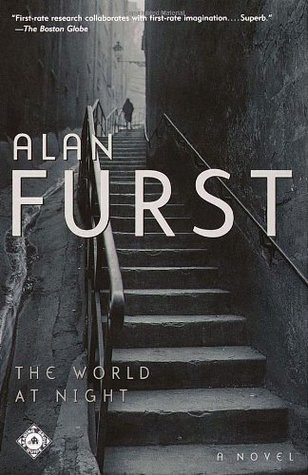
1. Brasserie Heininger in Alan Furst’s spy novels
Alan Furst is obsessed with Paris — the Hammett Prize-winning mystery writer returns time and again to the world of dark, smoky, seductive 1930s-era Paris, including many scenes set at the Brasserie Heininger. The brasserie is more than simply a fictionalized version of a classic Parisian restaurant — it’s also a smoky spy den. If I could go, I’d be sure to ask for table 14; in The World at Night, a bullet hole is cracked into the mirror above the table right before the Bulgarian head waiter is shot dead while sitting on the toilet in the ladies’ bathroom.
2. Try Pots in Moby Dick by Herman Melville
On a cold Nantucket evening, what’s better than settling down at an inn where you can dive face-first into a bowl of clam chowder “made of small juicy clams, scarcely bigger than hazel nuts, mixed with pounded ship biscuit, and salted pork cut up into little flakes; the whole enriched with butter, and plentifully seasoned with pepper and salt.” Granted, chowder is the only dish they serve at Try Pots (your choice of cod or clam), but see it as a delightful quirk, like the restaurant’s floor, which is paved with clamshells.
3. The Angleterre in Anna Karenina by Leo Tolstoy
The 19th century Russian aristocracy weren’t exactly known for their restraint, and the meal which Oblonsky and Levin share at The Angleterre is fit for two kings, which incidentally is how the wait staff treats them throughout their lavish, multi-course meal. On the menu? Turbot, oysters, cabbage soup, roast beef, capons, poulard a l’estragon, macedoine de fruits, Chablis, and Champagne, among other treats.
4. The Three Broomsticks from the Harry Potter series by J.K. Rowling
J.K. Rowling knows how to create delightful magical spaces (see: all of Diagon Alley and especially the bookstore, Flourish and Blots). That includes the wizarding world’s pubs: the Three Broomsticks is a local Hogwart’s hangout in the village of Hogsmeade, and I’d love to join the students and teachers for a pint of Butterbeer or a glass of Firewhiskey, mulled mead, or red currant rum.
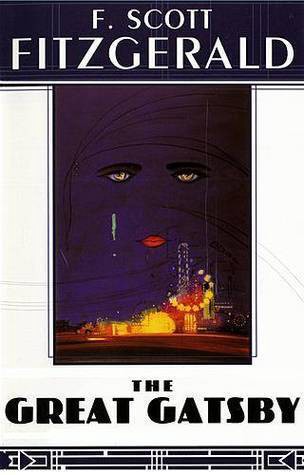
5. Speakeasy in The Great Gatsby by F. Scott Fitzgerald
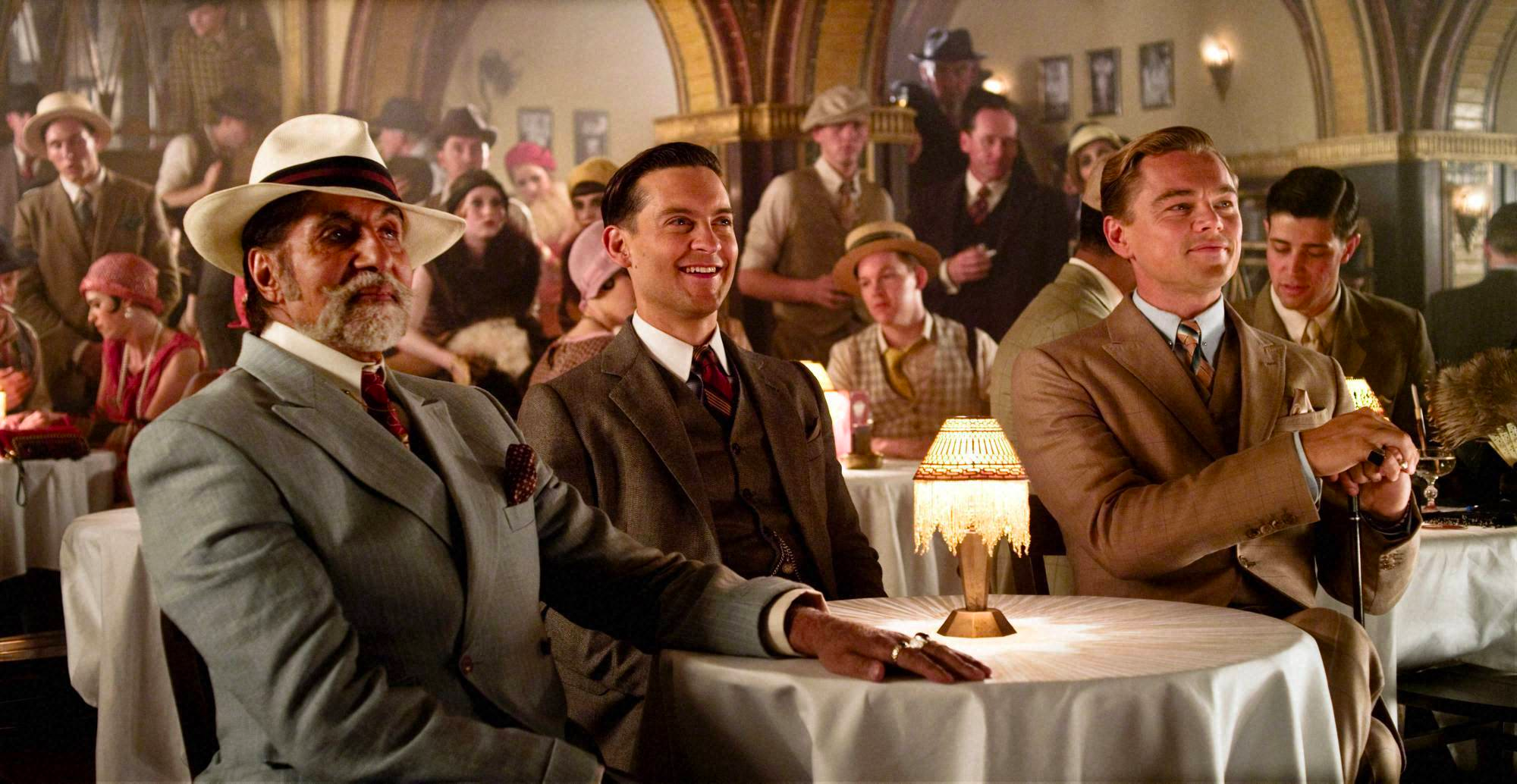
Faux-speakeasies and Prohibition-era cocktails are a dime a dozen in modern day New York, but there’s nothing like the real thing, particularly if the bar is created by F. Scott Fitzgerald — a man who knew how to have a good time. The den where Nick Carraway and Gatsby go to lunch and drink illicit booze is also a hothouse of dubious characters, including the man responsible for fixing the 1919 World Series. Pass the moonshine, please.
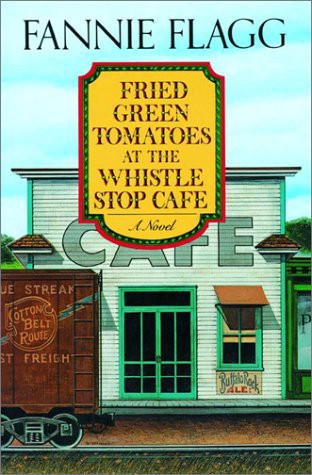
6. Whistle Stop Cafe in Fried Green Tomatoes at the Whistle Stop Cafe by Fanny Flag
The Whistle Stop Cafe is a warm, cozy spot where everyone is welcome to come and enjoy home-cooked Southern food, including the titular green tomatoes fried in cornmeal. Flag’s cafe was inspired by one that her great-aunt Bess owned in Irondale, Alabama, and she once admitted, “Strangely enough, the first character in Fried Green Tomatoes was the café, and the town. I think a place can be as much a character in a novel as the people.” Just one hint: skip the BBQ.
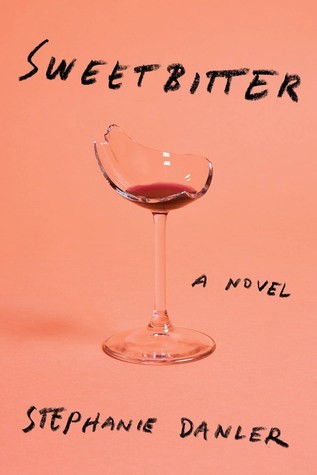
7. Unnamed Restaurant in Sweetbitter by Stephanie Danler
Danler’s fictional, unnamed restaurant was inspired the Union Square Cafe, the popular New York City restaurant where she worked as a waitress while earning her MFA at the New School. Instead of trying to nab a reservation in the dining room, I’d grab a seat at the bar and enjoy the delicious food while watching a kind of dinner theater — the many tensions and romantic entanglements that Danler seeded among the restaurant staff.
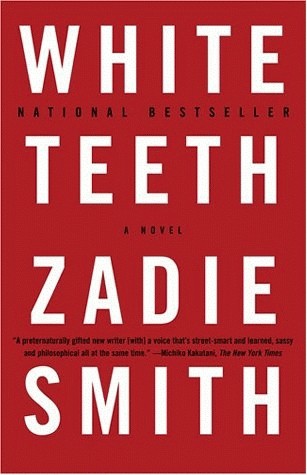
Smith excels at capturing the London which exists outside the posh streets of Kensington and the tourist attractions around Buckingham Palace and the Tower of London. Take O’Connell’s: an Irish pool house run by Arabs, it has no actual pool tables and the menu is bare bones, or short and sweet, depending on what you’re in the mood for — which better be eggs, chips, beans, and mushrooms, because that’s all they serve. Of course you go to O’Connell’s less for the eggs and more for the conversation, which covers “everything from the meaning of Revelation to the prices of plumbers. And women. Hypothetical women.”
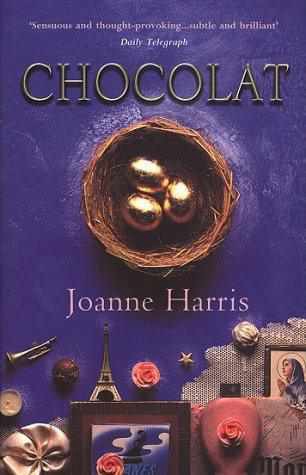
9. La Céleste Praline from Chocolat
This 1999 novel tells the story of a wandering chocolate-maker named Vianne Rocher who comes to the small French village of Lansquenet-sous-Tannes and opens a chocolaterie during the season of Lent. Vianne’s sugary creations aren’t appreciated by the local priest, who fights to shut her down. He loses, of course, to Vianne’s mouth-watering confections, like a gingerbread house “with the detail piped on in silver and gold icing, roof tiles of Florentines studded with crystallized fruits, strange vines of icing and chocolate growing up the walls, marzipan birds singing in chocolate trees.”
10. The Cat’s Pajamas in 2 A.M. at the Cat’s Pajamas by Marie-Helene Bertino
The “second best jazz club” in Philly may be the most delightful in terms of atmosphere, from its charming name to its quirky, likable staff and regular patrons. I’d easily hole up at The Cat’s Pajamas for a long night of house drinks, jazz, and shimmying — something which happens regularly at the Cat and which needs to happen more in everyday life.
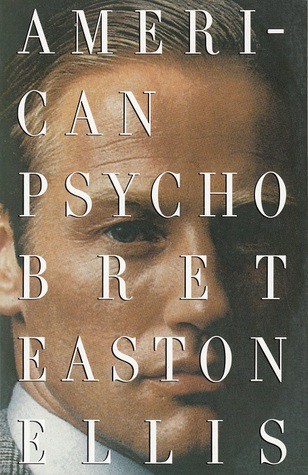
11. Dorsia in American Psycho by Bret Easton Ellis
The Dorsia is the ultimate in ridiculously expensive yet horrendously disgusting 1980s New York City power-dining. Though I wouldn’t want to actually eat dishes like blackened lobster with strawberry sauce or baby softshell crab with grape jelly, I would stop by to see the spectacle and then take pleasure in doing something that didn’t exist when Ellis was working on American Psycho — writing a scathing review on Yelp.
DON’T MISS OUT
Sign up for our newsletter to get submission announcements and stay on top of our best work.
YOUR INBOX IS LIT
Enjoy strange, diverting work from The Commuter on Mondays, absorbing fiction from Recommended Reading on Wednesdays, and a roundup of our best work of the week on Fridays. Personalize your subscription preferences here.