We Need Diverse Books, But We Also Need Diverse Reviewers

A sofa, a circle of light, a novel, maybe a beverage near at hand. It could be 1981 (when I was four and had just learned to read), or 2017 (when I am 40, and a beverage is a pre-req). Either way, the setting is about the same. Then and now, you can find me lying in the crook of a sofa, reading under a small glow. My childhood traumas were small in the world, but in my head and heart, overwhelming. When I was nine and my father left to work in another state, which meant that I would see him only once or twice a year, I would have raging fevers days before his every departure. I’d lie listlessly, sometimes crying for hours, days even, until, tired of my misery, I’d open a book and read. My refuge has been, is, will be, a book.

These days I go for books that do more than give me asylum; I seek out the books that I have loved, or admired, or that provoke me, that force me to think about them.

Every day since January 20, 2017 feels like a throwback to a (not-so-distant) anarchic era or a time jump to a moment close to the apocalypse or both at the same time. I feel as if I have a constant fever: cold and achy, and hot and bothered, all at once. Now, as before, I turn to reading, but these days I go for books that do more than give me asylum; I seek out the books that I have loved, or admired, or that provoke me, that force me to think about them.

Image result for james baldwin giovanni's room

I had been thinking about Giovanni’s Room for some time. In October 2016, a writer friend was reading it, as I was re-reading Notes of a Native Son and we exchanged emails about both books. Now, in the era of Trump, where every day different rights are set ablaze and turned to cinder, our pure pleasure at Baldwin’s prose feels like a luxury. Nevertheless, recently, I found myself on the sofa, luxuriating in Giovanni’s Room for the first time. The book was assigned for a class I’m taking, and inevitably, when we talked about it, we talked about its reception on initial publication, which was, in a nutshell: not good. Baldwin’s U.S. publisher, who had published Go Tell It on the Mountain, refused to even print the book. A reason for the lack of enthusiasm was, in part, because of the subject — homosexuality — and in part because of the characters: all white, and written by a black author. Which, of course, led us in class, to discuss the ever relevant, and to me, always vexing, topic of “Who Gets to Write What?” — an argument that, in my opinion, Kaitlyn Greenidge has settled admirably.

But, as we talked about the politics of a black author writing white characters, and vice versa, and many good points were made, I found myself considering the role of the critic, the reviewer, the judge, whose word can make or break a book’s sales, and sometimes, even a writer.

In 1956, in a review published in The New Leader, a liberal, and one can assume, sympathetic to Baldwin, magazine, critic Leslie Fiedler wrote:

“There is not only no Negro problem in Baldwin’s new book: there are not even any Negroes — and this, I must confess, makes me a little uneasy. His protagonist, David, is a shade too pale-face, almost ladies-magazine-Saxon, gleaming blond, and “rather like an arrow”: but this is not what troubles me. It is rather the fact that he encounters no black faces in his movements through Paris and in the south of France, that not even the supernumeraries are colored; so that one begins to suspect at last that there must really be Negroes present, censored, camouflaged or encoded.”

On November 2016, Garth Greenwell, in The Guardian, writes:

“Homosexuality is portrayed in racial terms repeatedly in Giovanni’s Room. Joey, the childhood friend with whom David spent one passionate night, is described repeatedly as “brown” and “dark”. Giovanni himself is “dark and leonine”; more pointedly, he’s imagined in this first scene as standing “on an auction block”. Race is an imaginary category, under constant negotiation; it’s worth remembering that in America, not long before Giovanni’s Room, Italians and other southern Europeans were viewed as non-white.”

I don’t present these two readings of Giovanni’s Room as counterpoints to each other; Greenwell’s was written fifty years after Fiedler’s, after Baldwin has been revered for decades, and in a climate arguably less hostile, or perhaps, differently hostile, to conversations about race and queerness. And Greenwell, unlike Fiedler, is gay (openly so). But both of them are white. And both of them are critically thinking and writing about Baldwin. Both of them have power, as critics, though Greenwell is a writer, writing less as a critic and more as an admirer (which of course, does not preclude him from thinking or writing critically). Both of them have power as white men in America, and both of them have different entry points in to the text.

And both of them seem to miss that Baldwin, in writing about race in Giovanni’s Room, is writing specifically about whiteness, without making it the obvious focus of the book, veiling it beneath the cloak of invisibility that whiteness often wears.

These observations lead us then to the question of “who gets to critique whom.” This is an important consideration. No one less established than George Packer writes about it, in “Race, Art, and Essentialism,” published in the New Yorker in April 2016. Packer was responding to the view that African-American writers have a special insight into African-American musicians, which Rick Moody expressed in a review of James Bride’s biography of James Brown. Packer’s point is that if we view the authority of critics as based in their identity, we limit the possibilities of critical inquiry to identity. He warns, “Watch out: a few more steps and you’ll find yourself saying they sure do have rhythm.”

Baldwin, in writing about race in Giovanni’s Room, is writing specifically about whiteness, without making it the obvious focus of the book.

It’s a valid point. I believe that a writer can and should be able to write about anything she wants, with a responsibility to writing well, especially when writing outside one’s comfort zone, and that a critic should be able to take on a subject with which she has expertise, experience, interest, curiosity, irrespective of her identity — but again, from a place of self-awareness and accountability to one’s position and its limitations. I also can’t help but note that, here too, we have two white men — Packer and Moody — arguing about James McBride, a bi-racial author, who has written a book on James Brown, a black musician. But beyond this, Packer and Moody are arguing and setting the terms of debate about who gets to critique whom and what.

This simple observation necessitates a somewhat meta question: who is writing about who gets to critique writing? Who gets to decide who shapes and participates in the public discourse on questions about who has authority? I am eternally grateful for VIDA, for the stats they compile and for explaining them, an undertaking I could never attempt. From their “2015 Count,” looking only at two “mainstream” magazines that publish book reviews, the New York Review of Books published only fifty-two reviews by women, as opposed to 216 by men. The New York Times Book Review fared much better, with 475 female reviewers and 469 male reviewers. But a closer look reveals that of the 871 women published or reviewed at the New York Times Book Review, 294 female writers responded to VIDA’s survey, and among them, 216 self-identified as white. Similarly, of the 44 women who self-reported at the New York Review of Books, 34 were white. The numbers are evidence: even just taking into account the categories of race and gender, women of color reviewers and critics are published at far lower rates than white males.

Here too, we have two white men — Packer and Moody — arguing about James McBride, a bi-racial author, who has written a book on James Brown, a black musician.

But VIDA compiles statistics from the pages and posts of what’s already been published. No one has, to my knowledge, aggregated the editorial and publishing staff and analyzed these compilations for race, gender, and sexuality disparity. We do not know who is in the room, much less what discussions are had, as decisions are being made about who reviews and critiques what and whom.

In our class discussion of Giovanni’s Room, we argued about the racial ambiguity of Joey, whom Greenwell mentions. Joey is the first boy that protagonist, David, sleeps with, and then, deeply ashamed, throughout the book, suppresses, conceals the intimacy, and the person. If, as Fiedler suggests, Joey is black, and his identity is concealed deliberately, what does that suggest about David — that he cannot accept his intimacy with a black boy? That he can make the black boy, the black body, other, and disassociate from it? Or, if Joey is not black, but is presented as racially ambiguous — “very quick and dark;” “Joey’s body was brown…” — then is David camouflaging Joey as black because to be sexually intimate with a white boy would require him to face his sexuality, whereas being sexually intimate with a black boy can be dismissed? In other words, by making Joey racially ambiguous, and possibly black, David can dupe himself that his deliberate disassociation is more because of race than sexuality? But, because Baldwin has written this, and not a white writer, we’re then forced to think about what it means for Joey to exist at the intersection of race and sexuality (and class).

No one has, to my knowledge, aggregated the editorial and publishing staff and analyzed these compilations for race, gender, and sexuality disparity. We do not know who is in the room.

Such a reading isn’t easy to come by. I don’t know if it’s a “correct” reading, and who can ask Baldwin now? I do know that it is a more nuanced, a more critical, and a more careful reading than one might initially have. I know it is not the reading with which I arrived to the classroom. It emerged through the discussion among seven people, of which four are women of color, and one is a white woman. We are of different races, ages, abilities, and sexualities. We do not always have productive conversations; we certainly do not always agree; and we have multiple, competing, and sometimes changing and incomplete authorities on a wide variety of subjects and identity positions. Our conversations, like our selves, are never static, but they are always critical.

A classroom has its place, and an independent, even solitary line of inquiry done on one’s own has its merits. As a writer, I would never want to indulge in “group think” for my creative work, or my critical work. But, as someone who has been in — and sometimes benefitted from — workshops, and who actively and joyously participates in literary conversations, I see value in critical conversation with people on a range of experiences, identities, and positions, who also have the ability to be self-critical, or at least, capable of self-reflection and open to receiving critique. This last condition is imperative. Where is the critic who is self-critical? (I don’t mean the inner critic.) We need critical voices in order to be better at critiquing, and at writing. And it matters too, who is participating in and leading such critical conversation, because the voice of the critic shapes and changes public perception and discourse.

In my class, our teacher is a woman, Asian Latina American, queer, whose scholarship is on African American literature; this matters. Her authority — of experience, education, research, and of identity — makes a difference to the quality, breadth, depth, and freedom of the conversation. Is it perfect? Not by any means, but the conversations are thoughtful, considered, nuanced, provocative, and respectful.

And it matters too, who is participating in and leading such critical conversation, because the voice of the critic shapes and changes public perception and discourse.

Which is to say, the opposite of Donald Trump’s tweets, opinions, eruptions, rants, and accusations. Nobody who genuinely wants to engage in intellectual and critical work wants to follow that lead. This I have to believe.

In 1984, Audre Lorde wrote “The Master’s Tools Will Never Dismantle the Master’s House,” and as we find ourselves now inhabiting Orwell’s 1984, we must find it in ourselves to push beyond the immediate questions of “who gets to write or critique what,” to actively dismantling how we approach the enterprise of critical thinking and writing in the public sphere. We must create/build/expand a model of “doing” public discourse that is the antithesis of a dangerous blowhard and trumpeter. One way to “…burn this motherfucking system to the ground and build something better,” as Claire Vaye Watkins demanded, is to re-design how we approach and conduct public discourse: so that it centers the voices and perspectives of those who have historically been at the margins, and so it that enables conversations from multiple viewpoints about writing and books, so that the discourse is more nuanced, considered, and critical.

Imagine a set of reviews, a critical exchange of sorts, on Giovanni’s Room between Roxane Gay, Alexander Chee, Saeed Jones, Rebecca Solnit, and a new, brilliant writer or critic we’ve yet to discover. Imagine a discussion between this same set on The Argonauts, or Swing Time, or literally anything else. Imagine a back and forth on The Underground Railroad or The Round House by Kiese Laymon, Claudia Rankine, Chang-Rae Lee, Porochista Khakpour, Teju Cole, Junot Diaz, Garth Greenwell, Noviolet Bulawayo… the list is long, and these are just some of the best-known names. Imagine deliberately centering this type of critical exchange in the public sphere among thinkers who bring their identities and their acumen to the conversation. And imagine this taking place, consistently, for the next five, ten, fifteen, twenty, years, so that for a whole generation of people, this is the norm. Now imagine the rhetorical shift that could take place. Would that shift prevent or stall an injudicious, over-simplified, unreasoned, loud and relentless tweet-tide? Possibly not. But it might disrupt that torrent. And from where I sit, that makes the circle of light bigger, brighter.

A War Story About Searching for the Disappeared

“René from Vukovar”

by Spomenka Štimec

“Is this the Esperanto Center?”

“Yes. Please come in.”

“Can I speak with you? I’m René’s aunt. René, from Vukovar. You know that René’s disappeared. We’ve been looking for him, trying to find him any way we can — the Red Cross, Amnesty International, the Croatian Army Commission on Disappeared Persons. There’s no sign of him.”

The words cascaded from the woman’s mouth. She still remembered how to speak Esperanto. She wasn’t thinking of the famed role that the Universal Esperanto Association played during the First World War. She was reacting instinctively. Esperanto is international. It must be able to do more than these rigid institutions.

René from Vukovar. Vukovar — the new symbol of our destruction. The war’s most suffering victim for whom Yugoslavia ended its seventy-three year existence. The easternmost city in Croatia, on the Danube, decimated by grenades during battles weeks in length. Vukovar’s bombed-out hospital was the site of the city’s last pulse of life. For weeks, neither medicine nor food could reach the city. Its wounded and its children, its pregnant women and its elderly — none of them could be evacuated. The roads into Vukovar had been turned into minefields, impossible to approach.

In these cruel battles, international norms of conduct are no longer observed. This is a war where the flag of the Red Cross is shot like a bullseye. Those shots are fired from the guns of the Yugoslav Army and Serb extremists, those who are convinced that only guns can prevent the democratic dissolution of Yugoslavia, or can stop Croatia, once an integral part of that country, from becoming an independent state. The will of the voters isn’t important. Let the guns decide.

For days on end, those of us who lived in more peaceful regions listened to the news of Vukovar’s suffering. The siege. The massacre of people defending the city. The destruction of its most important buildings. A shortage of blood plasma in the hospital. A shortage of — Day after day, each broadcast more terrible than the last. If we in Zagreb heard the air raid sirens only twice in one day or spent only a few days at a time in our basements, we were ashamed to leave our shelters knowing that the people of Vukovar wouldn’t be able to leave their cellars for weeks. To go draw water from the well meant death. To go bury your bullet-ridden neighbor in the closest garden similarly meant to lie yourself down dead next to him.

The half-destroyed hospital was set up as a refuge for survivors who had lost their homes. How could one live in those ruined buildings? Under the earth, in their cellars and basements, in underground shelters, the inhabitants struggled to survive. One story more horrific than the next. You couldn’t spread butter on your toast in the morning without your conscience gnawing: how can you do this in Zagreb when people were starving in Vukovar?

Vukovar is the easternmost city in Croatia, located in the region of Slavonia. On the other side of the Danube, Serbia begins. When the war began in 1991, the city of Vukovar suddenly became a point of grave strategic importance. It’s a small place, made famous on account of a clay dove. An ancient ritual artifact, the renowned dove is a work of art dating back from sometime between the Neolithic Era and the Bronze Age, discovered in 1938 at the Vučedol archaeological site near Vukovar. Consisting of painstakingly glued-together small pieces, it can now be seen in the Archaeological Museum in Zagreb. When the war broke out, the museums put all of their greatest treasures in basement shelters. The Vučedol Dove probably lies carefully packed away in some box. She spends the war better protected than the citizens of Vukovar itself: already shattered long ago, nothing will happen to her in the present conflict.

It is truly a breathtaking archaeological treasure. I’ve marveled many times at the oblique, angular carvings on the dove’s earthen neck and breast. The dove is a symbol of peace. Vukovar is a symbol of conflict. Heavy winged, the dove has fled through the smoke of the smoldering city of Vukovar. A bird of peace thousands of years old, shot down. At the time when it seems that the bloody twentieth century is finally giving way to the twenty-first, the Balkan passion for primitive weaponry has been reawakened.

I have never been to Vukovar.

Several months before the war began, René wrote to our Esperanto Center in Zagreb to ask if someone might be able to come and give a presentation about the language sometime after “the situation” quieted down. Back then we used the word “situation” to describe the constant state of chaos that swirled around us. The situation back then was typified by a few bombings here and there on the railroad tracks that ran from Belgrade to Zagreb and Zagreb to Belgrade. It had suddenly become dangerous to travel on several railway lines. We would wait for the situation to calm down.

Soon it was impossible to travel by train in any direction. The situation sharpened.

We listened to the news, our stomachs turning to stone. The “situation” had decided to cast us out from our former, fleeting lives. Cruelty moved into our thoughts and invaded our senses.

Lucky were those who didn’t have a television. My eyes held onto the memory of more serene times longer than others — I didn’t spend my nights watching atrocities on the screen. I only heard about them on the radio. The ears are more superficial than the eyes. In the morning, I could not yet tell whether what I heard had really been the truth or just some horrible nightmare.

“I’ll go to Vukovar as soon as it’s possible. In the autumn.” I said that summer, René’s invitation in my hand.

I never made that visit to Vukovar. The autumn never came to Vukovar either. A deadly summertime frost had already ravaged the city.

“When did he disappear?”

“November 17th, 1991. They entered the city and…”

Who entered the city? This was not a question one really needed to raise. We heard about the horrors in Vukovar every day. “Vukovar” was the word with which the morning news began. “They” were the Serb extremists, the White Eagles, the followers of Šešelj or Arkan or whatever they called those monsters who thought that military campaigns could solve everything.

The Serbs nursed an image of their history deeply immersed in myth. They had convinced themselves of the idea that anywhere in Yugoslavia where Serbs lived was in fact Serbia itself. As it was in Vukovar, so it was later in parts of Bosnia. These places were targeted in Serbian campaigns that sought to defend the local “endangered” Serbs. From Belgrade’s perspective, it was necessary to liberate the “transplanted Serbs,” that is, the Serbs who lived in republics other than Serbia. And this is how the catastrophe at Vukovar came to pass: to liberate a city meant to destroy it.

Vukovar has been liberated! announced the newspapers in Belgrade.

Vukovar has fallen! cried the Croatian newscasters.

Fallen into enemy hands. Liberated by the heroes. Two expressions for the destruction of Vukovar.

What did it mean to liberate a city if it no longer existed?

Could Esperanto help find René? I’d not yet given up hope. I liked to believe that Esperanto could.

I messaged the headquarters of the Universal Esperanto Association in Rotterdam.

Rotterdam responded kindly and promptly that the relatives of the missing person, rather than his fellow Esperantists, needed to fill out a questionnaire with all its attendant details in order to submit a formal request to search for the missing person. What is the Last Known Address of the Missing Person(s)? read one question. Božidara Adžije 36 I wrote sadly, trying to imagine a building with the roof still intact and glass still in the windowpanes. What is the Last Known Telephone Number of the Missing Person(s)? Such precise European bureaucracy! Try and call that number and find out what’s happening! Is it not grotesque to ask for these phone numbers? These people are coming from bombed-out cities where even the postal service stopped functioning months ago.

I remember my last visit to René. He’d already married Nevena. They’d just moved to Zadar, her native city. Both of them had trained as dentists and moved into her grandmother’s house while looking for work. Positions were few. René cooked, she complained. The third bottle of oregano this week for his delicacies! He could not get in the habit of measuring out his ingredients from the spice bottles in the cabinet. Grandma’s doilies hung over every surface.

I had met them at an Esperanto club meeting in Zagreb when we were all still students. They were quite affectionate with one another.

Too affectionate. This won’t end well.”

In Zadar, their wedding photo hung by the mirror. How young they looked! She on his shoulder. He, a gentleman in a white suit and white gloves.

I held the photo in my hand. I liked the image very much.

“We were already beating each other up by the time that was taken” René commented on his first year of marriage. There was still love hidden in his eyes as he turned to her. “Our guest thinks that I’m speaking metaphorically.”

The whole time I was in their home, a welcome poster hung on the wall in my honor.

She had a certain grace. Their life was still good-hearted, the darkness yet unseen. On holidays, he still took the tie from his wedding suit out of the closet.

They showed me their wedding gifts. One was a porcelain replica of the Vučedol Dove. It had broken in transit from his city to hers. “Now it looks more like the real thing” quipped René. Their reglued dove did indeed bare a stronger than usual resemblance to its Neolithic counterpart.

I found out about their divorce only afterwards. He found work in Žegar, a small village where “God says goodnight,” in the vicinity of Zadar. Not far from the village was the Krupa Monastery, an Orthodox church and an outstanding example of Serbian art in the region. The locals took to René quickly. Nowadays it’s necessary to say that he was beloved by both the Serbs and the Croats of the region. René — who had grown up in a Croat Catholic family — was often invited to have dinner with the Serbian Orthodox Bishop. He started collecting regional idioms and even began to write in the local dialect. He sent a long letter to us in Zagreb filled with vulgar, yet witty and nuanced village expressions. He told how he had the best dentist’s office in the region, seeing as how he knew all the latest techniques and mastered all the latest instruments. I didn’t save the letter. I had no idea it would be his last.

From Žegar, René moved back to Vukovar. He found a position in the dental practice at the rubber factory in the nearby town of Borovo. His brother, four years his elder, worked alongside him.

By the middle of September 1991, it was no longer advisable to drive from Vukovar to Borovo — to leave the house meant to be in the line of fire and to put one’s life in constant danger.

The home in which René lived with his brother and mother was a family-owned property left to them by his grandfather Jan, an ethnic Czech who sold agricultural machinery. The machines sold well in the agrarian region of Slavonia and in the city center their family home grew with their prosperity. It looked a bit like a castle. Their wealthy grandfather decorated it with carefully selected oaken furniture.

In September 1991, grenades shattered every window in the house and damaged the roof. During a half-hour lull in the shooting the brothers climbed up to the roof and tried to protect their home with plaster. Then the rains came, dense and cold. The cellar was, fortunately, strong and secure.

One day an oak desk suddenly took flight and slammed through the bathroom wall. No one was injured. Everyone had been in the cellar when the house was hit.

For decades, their grandfather’s grape vines had crawled up the bars of the iron gate that surrounded the courtyard. A grenade ripped the bars out from the cement and flung them onto a neighbor’s lawn.

It was the middle of September when René’s aunt last spoke with him. For hours, she dialed all the numbers she knew in Vukovar trying to reach her relatives in the besieged city. The overloaded phone lines prohibited family members, longing for contact, to get in touch with their relatives. Levelled by bombs, the post offices no longer functioned.

All of a sudden, she succeeded. She could hear clearly how the telephone echoed in Grandpa Jan’s great house. No response. Lost in thought, she let the phone ring. Unexpectedly, René picked up. He grumbled, complaining against those who would wake up their sleeping relatives during one of their brief nighttime breaks from the shooting. His typical wit and spirit, renowned within the family and outside it, was beginning to wither. In his voice, one could hear the pain — there was no exit from this situation. He felt isolated in the isolated city of Vukovar.

This was how René’s aunt interpreted the conversation in retrospect, after she had understood that this was the last time she would get to speak with her nephew.

Later it was no longer possible to call Vukovar.

It had seemed then that Vukovar was the Croatian Hiroshima. But after the fall of the city, it seemed like so much of the country had become Vukovar.

We heard about René’s last day from his brother Robert.

The 17th of November was the high point of the Vukovar tragedy. A round of bullets followed by several knocks on the door. The dog jumped. Robert opened the door.

One of the gunmen had deep lines on his face. He wore a uniform. A beard. A red star on his cap. A white ribbon on his shoulder, the symbol of the White Eagles. Two grenades hung from his belt. And a knife. He held his rifle in his hands.

“How many people are here?”

“Three” said Robert soberly.

The language wasn’t foreign. Besides a few variations, it was the same. This was a war in which the aggressor and the victim could understand each other very well. No interpreter necessary.

“You have three minutes to vacate this building.”

The family wasn’t ready to leave. No one had believed that the worst would happen. And yet it had.

René handed his mother her shoes. In the excitement, he took the wrong ones, her Dutch-made slippers that she wore around the house. She instinctively refused the slippers and put on her boots. A stroke of luck.

Outside, on the other side of the glassless windows, it was November.

Their mother quickly grabbed the family’s box of gold and jewelry. Her hand went straight from the box to thinking about food. She managed to shove a pair of long sausages into her bag. Later she realized that in her haste she took the wrong box, taking instead the one next to the valuables, the box filled with beads. The gold stayed at home, along with the house’s greatest work of art — Grandpa Jan’s marvelous old style fireplaces. As she came to the front steps, she realized that she’d forgotten her eyeglasses.

“My glasses” she said to the uniform, wanting to go back inside.

“Your glasses or your life. Take your pick. Clear enough for you?”

She didn’t go back.

She wasn’t allowed to turn around. That might aggravate him. She sped up.

Coming towards them was a woman from the neighboring street. She had had more than three minutes to pack. Loaded with multiple bags, she stumbled. René’s mother ran ahead to help the fallen woman.

“Where do you think you’re going?” growled the uniform.

“Don’t, Mama, he’ll shoot! Don’t go!” That was René’s voice.

The civilians were gathered together and brought en masse to the Velepromet storage facility.

“Are there Serbs here?”

This was the first way the group was divided. Take the Serbs out from the rest.

Silence.

“Are there any Serbs here?”

Two women announced themselves and were taken away. The non-Serbs remained.

The second way the group was divided was according to sex. Family members were separated. The men who had been led away turned over wine crates in the warehouses and sat down. It was clear that they would be waiting a long time. One day, maybe two. Without food, without water.

The boxes on which the men sat were made for wine bottles, for those famous wines with a picture of the clay dove on the label.

From time to time someone would enter the dark warehouse and abruptly shine a flashlight on the prisoners’ faces. Fear. Eyes squinting, blinded by the light.

Repeatedly, they called the prisoners in one-by-one for questioning. Would the prisoners ever come back?

What time was it when the man called René’s name? He was called as one of three, rather than alone. With him were two officials from the wine industry, the director of distribution and the city vinologist. René put on his glasses and was taken to the door. Eyelids heavy, Robert caught a glimpse of his brother in his peripheral vision. At the door, a ray of light shined from the outside. A scream. Robert recognized René’s voice. There was no doubt. René had cried out. A howl. The last sound his brother would make that would ever reach his ears.

Shots were heard immediately after the scream.

None of the three came back to the warehouse.

That night the brothers’ friend in the warehouse tried to slit his wrists with a crooked piece of sheet metal. He was stopped. Some hours later, his name was called. He never returned.

On the third day, Robert was taken to the barracks outside Vukovar. There, for the first time, water and bread were distributed. A box of sardines. A slice of bread. Their last meal had been eaten at home three days before. Breakfast.

The International Red Cross acted as an intermediary between Zagreb and Vukovar. Relatives in Zagreb waited for the buses to arrive with people from Vukovar. Many came back as a result of population exchanges — so many Croats for so many Serbs.

René’s aunt stood at attention waiting for each bus. A quick glance at each of the crumpled faces. No one familiar. Day after day, a new bus filled with survivors. A hopeful insomnia — maybe in tomorrow’s transport…

“Your nephew is alive. He bandaged my wounds in the camp” reported one man from Vukovar.

The comfort of those words warmed her waiting.

How many buses did she wait for? She held photos of her three missing relatives — René, Robert, and their mother — at the ready in in her handbag. “Have you seen them?” The question repeated itself endlessly.

Her sister, the boys’ mother, turned up on November 22nd dressed in the jumpsuit she had been wearing the day the White Eagle knocked on her door. René’s aunt had left her house that morning later than usual and drove to the hotel where the bus would bring the survivors from Vukovar. It was freezing outside and her car hadn’t wanted to start. René’s mother, coatless, stepped off the bus and met her sister’s gaze. They looked at each other through tears. Only afterwards, at home surrounded by familiar objects, could the mother begin to talk. It would take her hours to explain what they had been through.

The hopeful waiting continued. Eighteen days later, from a bus filled with people brought in exchange for Serbs, Robert emerged. René’s scream was still visible in his face. The aunt thawed out his frozen spirit with the warmth of family.

They waited for every subsequent bus of refugees from Vukovar. René wasn’t in any of them. Neither was his name on any list of dead, wounded, or imprisoned.

No one has ever found René.

Many returnees planted seeds of hope: someone saw him in the camp in Stajićevo, others in Niš, three people saw him in Banjica. A few claimed that they heard his “yes” during a roll call.

The women prayed.

God, thank you for saving one boy. Bring back the other one from whenever he is.

He disappeared in November 1991.

In February we celebrated his birthday without any hint of him.

Summer gallops closer.

At night, an uncertain idea awakens us.

Scream.

Hope.

School’s Out for the Summer, but Libraries Are Still Taking Care of Kids

Plus, a new PBS series will ask us to vote for our favorite American novel, and a lost J.M. Barrie play is found

U.S. Department of Agriculture

If you’ve got those start-of-the-week blues, here’s some literary news that is sure to get you pumped for some more long summer days. Libraries across the country are serving free lunches to keep children nourished during the summer, a new documentary series on PBS will explore great American novels, and a “sensational” lost play by Peter Pan author J.M. Barrie play has been found after half a century.

Libraries across the United States are offering free lunches to children who need it

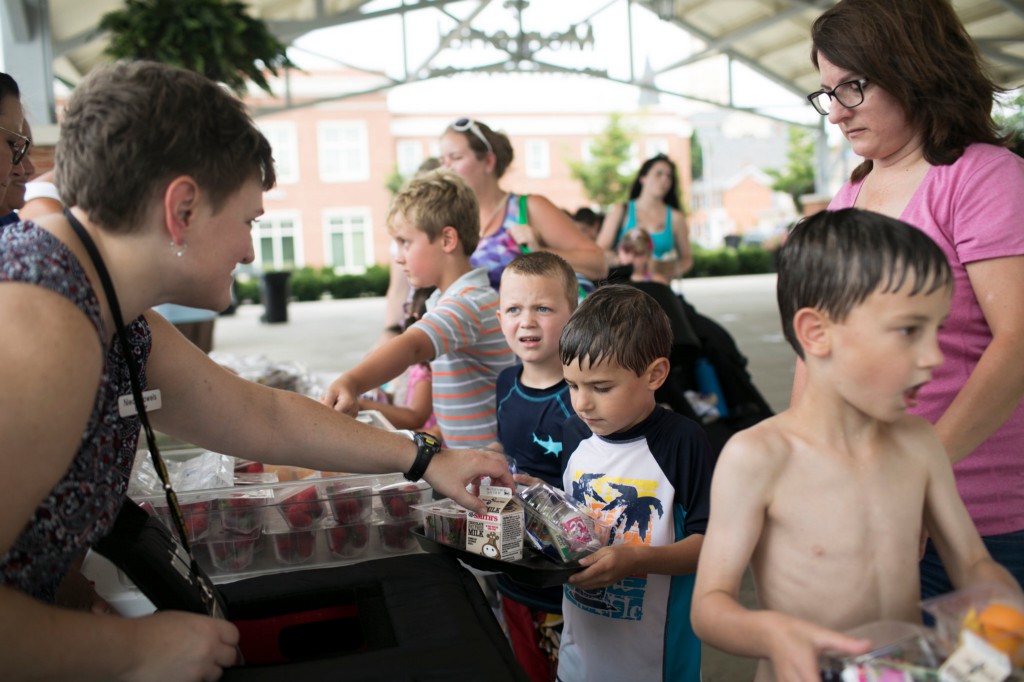
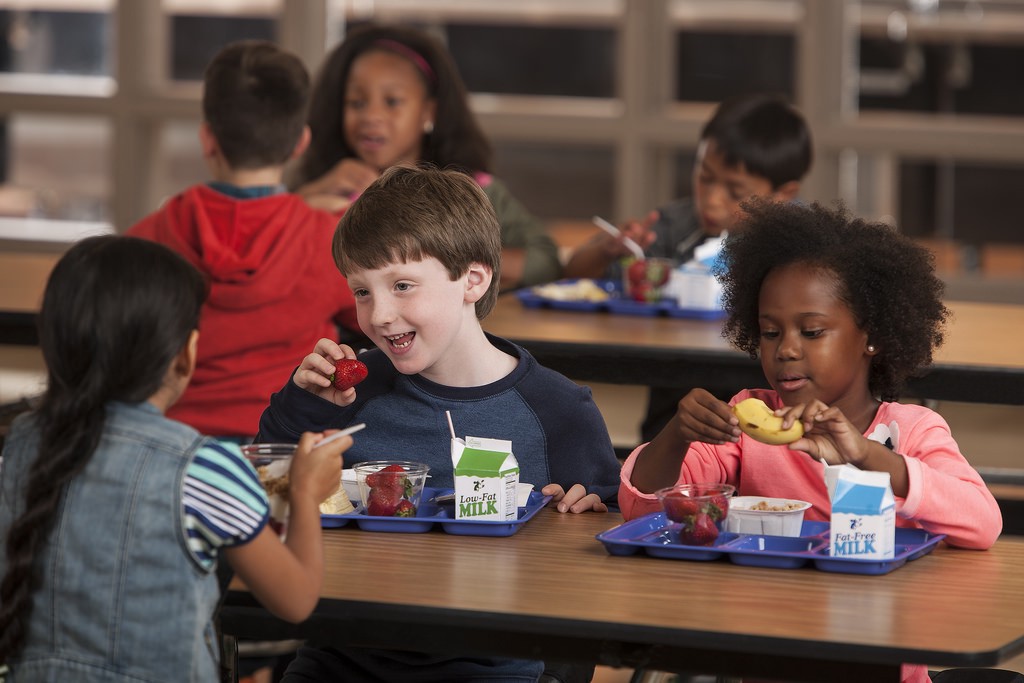
It’s undeniable that libraries make the world a better place. This summer, they’re continuing to rack up their good karma by keeping America’s children well-read and well-fed. Hundreds of libraries across the country are serving federally-funded meals in the summer in an effort to bring nutrition into an important discussion about learning and play, especially among lower-income communities. All of these meals are paid for by the Department of Agriculture’s summer food service program, serving about 179 million to nearly 4 million children this year. Not only are children of low-income communities fed, the program is also bolstering the use of the libraries for their other academic resources. “Our summer lunch effort has pushed more people into our libraries. They don’t just come for the meals and leave. They come for meals and stay,” said Andie Apple, the perfectly-named interim director of libraries for Kern County Libraries in California.

[NY Times/Catherine Saint-Louis]

11 Fictional Restaurants We Wish Existed

PBS documentary series will explore the country’s most beloved books

Get ready to battle over the best American book. PBS has announced that it will be releasing a show, titled “The Great American Read,” to spark a conversation about the country’s most beloved and influential novels. The eight-part series will explore the top 100 works identified in a market research survey that asked people to reveal their favorite reads. There is a catch: there can be only one title or series per author on the list. Additionally, throughout the show’s run, people will have the chance to vote on America’s favorite author, with the number one pick to be revealed during the finale. The documentary special will feature appearances by everyday Americans as well as citizens to explain their personal connections to their favorite books. It will begin in May 2018 and continue throughout the summer, with the finale scheduled for September, sure to incite some heated debates about books both hype-worthy and overrated.

[Variety/Daniel Holloway]

A lost J.M. Barrie play is found

Finding an unpublished, forgotten, hidden work by a famous writer is a dream for readers and scholars, but it doesn’t happen all that often in real life. So we should all get very excited about The Reconstruction of Crime, a play by Peter Pan creator J.M. Barrie, which was found after 50 years of languishing in a Texas archive. The play involves a great deal of audience interaction, asking for assistance in solving a horrible crime. It begins thus: “Please don’t applaud. Of course I like it; we all like it. But not just now. This is much too serious.” The Ransom Center, the site of Barrie’s archives, says the play is undated and runs to 33 pages.“It is unclear why he never had this play premiered — it might have been during a period where he was penning more serious dramas,” said Strand magazine editor Andrew Gulli.

[The Guardian/Alison Flood]

Essay Submissions are Open!

Electric Literature is opening submissions of personal and critical essays starting today, August 1. We’re particularly interested in pieces that examine the intersection of the literary experience and other creative endeavors: film, fine art, music, video games, science, tech, architecture. Submissions will close August 15.

Some of our favorite recent personal essays include pieces about what it’s like to live without a mind’s eye, about a writer’s journey out of her father’s house and into feminist rage, and about why men have to stop telling women to read David Foster Wallace. Has a book changed your life, or has your life changed how you read a book? Do you have a personal story about your favorite story? Bring us your sad, thoughtful, funny, illuminating experiences.

Critical essays may cover a single book, multiple books, a whole genre, or non-book pop culture like TV, music, and games. In the past, we’ve been interested in why we need dystopian stories without apocalypse; the metafictional elements of Dungeons & Dragons; why people are so critical of “I Love Dick”; and why we should all have imaginary friends. Some essays may be both personal and critical, like a meditation on how angry female heroes helped a writer with her depression.

Payment for essays is $50. Length is up to you, but we suggest aiming for 1,500–4,000 words.

Submissions will be accepted on our submittable account here.

Upending the Small Town Murder Mystery

Danya Kukafka on small town tragedy, teenage angst, and pushing beyond the question of whodunit

Danya Kukafka’s debut novel, Girl in Snow, tells the story of what happens after 15-year-old Lucinda Hayes is found dead at a playground in her Colorado suburb. After the death is declared a murder, all eyes turn to Cameron Whitley, a loner who hardly knows Lucinda but spends his nights watching her and her family from their front yard and drawing portraits of Lucinda. Girl in Snow is made up of alternating chapters following Cameron, Jade Dixon-Burns, an angsty teen with an unexpected connection to the victim, and officer Russ Fletcher. The question that propels the narrative of Girl in Snow forward isn’t “Who killed Lucinda?” but “How will Lucinda’s death change the people she left behind?”

I spoke to Kukafka over email about how she played with the form of the murder-mystery novel, why she decided to focus in on these three characters, and her unpublished novels.

King: Obviously, your book is not the first murder-mystery book about the death of a beautiful, popular girl. I think one of the things that makes this book unique is that, yes, you’re reading to find out what happened to Lucinda Hayes, but as a reader I became equally invested in what will happen to Cameron, Jade, and Russ. How will Lucinda’s death affect the three of them? How is it changing them, how will it continue to change them? When you were writing and editing, were you cognizant of using certain genre tropes to your advantage, turning them on their head, in a way?

Kukafka: I was cognizant, yes, and I wanted to do something different. I decided very intentionally to stay on the periphery of the central event (Lucinda’s death), and to make sure that in the end, the story wasn’t about that. I never found the details of Lucinda’s death particularly interesting. I wanted to focus on the way death affects people, especially in small communities, and the things we learn about ourselves during disaster. But of course, there is a body, and in the end, there is a murderer. I knew I couldn’t leave the reader unsatisfied, so in that sense, I did decide to adhere to the tried and true structure.

King: Are you a big reader of murder-mystery novels (apologies for that phrase, which I think oversimplifies your books and many other books that get placed in that genre). If so, what are some of your favorites? What appeals to you about the form?

Kukafka: I am! Some of my favorite books are those that play with the form. Celeste Ng’s Everything I Never Told You is wonderful, because it uses a similar murder-mystery structure to talk about family, social class, and race. Megan Abbott’s books take teen lives seriously, and allow them to be ominous, dangerous. I love books that scramble the usual equation — The Lovely Bones by Alice Sebold is one of my classic favorites, and so is The Virgin Suicides by Jeffrey Eugenides, and I even think Never Let Me Go by Kazuo Ishiguro could fall in this category. I’m also a big fan of Gillian Flynn, Paula Hawkins and Emma Donohue.

King: I’d like to hear how you decided on the ending. When you were writing, was the ending changing? When you began, did you know how the story would end, what happened to Lucinda and how? Or did that reveal itself along the way?

Kukafka: I had a very hard time with the ending. When you set out to write a murder mystery where the murder doesn’t really matter, you trick yourself into thinking it will just work itself out, which isn’t true. The murderer was always the same person (except for a brief period at the very start where I thought maybe Lucinda’s mother did it, but that made no sense). I did a lot of intensive work with my editor to pull all the plot points together, and to make sure we were striking the right balance. At one point, there was too much information about the murderer, and at another, there was too little. A lot of work went into getting it right, keeping the focus on the main characters while also coming to a gratifying conclusion for the reader.

King: The setting seems so important in this book — and not just because of snow. When I was reading, I kept picturing everything in shades of white, blue, and smoke grey. Yes, probably because of the cover, but there’s also something about this story that seems like it has to take place in winter in Colorado. Why did you decide on Colorado for the setting?

Kukafka: Well, I grew up in Colorado — though I grew up in a city much bigger than the fictional Broomsville. Having lived in New York for seven years now, I realize when I go back to visit just how unsettling the landscape can be. On the front range of the Rocky Mountains, where Broomsville is supposed to be, you have these towering peaks on one side, with a sprinkling of suburbs tucked into the base. Then on the other side, you have miles of open plains. Moving away made me realize just how jarring this setting is, and also how beautiful.

King: Girl in Snow is being called your first novel, but am I correct that it’s only your first published novel? I’ve read that you wrote your first novel at age 16 and several thereafter. Are there parts of Girls in Snow in those novels? How do you think writing those unpublished novels at such a young gage helped you understand the form of the novel and develop a voice?

Kukafka: Alas, you are correct! I wrote a couple of very rough young adult novels before I began Girl in Snow. They were really different from my current work, though — they all contained paranormal elements, and they were absolutely of the young adult genre. They were also rejected by dozens of agents.

But they certainly helped me develop a voice, and to realize I wanted to write about teens, for an older audience. And they helped me understand just how much work goes into getting a novel to its final draft.

10 Great Vanishings in Literature: A Reading List from Idra Novey, Author of Ways to Disappear

King: Let’s talk about Cameron. if we didn’t get so much of the story from his perspective, the reader might be — to use a less than eloquent term — creeped out by him. But you allow us to understand the tenderness in Cameron’s obsession, and so much of his personality can be explained by what happened to his father. How did you go about developing his character?

Kukafka: I went into this novel wondering: can you be a good person, and still do something bad? I’m curious about people who commit atrocious crimes, what gets them to that point, and whether they do these things with a level of awareness. How do you reckon with that? Cameron, of course, is only slightly creepy, but I set out to create a character who could do questionable things, and still be lovable. I was also interested in his personal trauma, and how that can manifest, especially in the mind of a fourteen-year-old. Cameron is always straddling that line. His age, his psychological past, and even the little things that make him “not normal” all allowed me to work with a sense of unreliability, which I loved.

“I’m curious about people who commit atrocious crimes, what gets them to that point, and whether they do these things with a level of awareness. How do you reckon with that?”

King: Both Russ and Cameron’s chapters are told in close third-person, but Jade’s chapters are in first-person. Can you tell me about this decision?

Kukafka: Everything is immediate and explosive for Jade, and the first-person just felt right for her. She’s a teenage girl — her emotions are her life, and she experiences the world viscerally, always looking for meaning. First-person felt closer, and more volatile, which was perfect for Jade.

I chose the third person for Cameron because it allowed me to hold certain things back; what he may or may not suspect about himself. I don’t think he understands himself well enough to narrate his own life in the first person, and the same goes for Russ.

King: Okay, last question. What books are you reading now that you’re excited about?

Kukafka: I recently read Chemistry, by Weike Wang, which I loved, and I also really enjoyed What We Lose by Zinzi Clemmons. Lately I’ve been on a bit of a galley kick — two upcoming books I’m excited about are Red Clocks by Leni Zumas, and Back Talk, a short story collection by Danielle Lazarin (both come out in early 2018). I also finally read The Secret History, by Donna Tartt. I know I’m very late to that party, but I’m glad I showed up eventually.

Pulitzer-Winning Playwright Sam Shepard Has Died

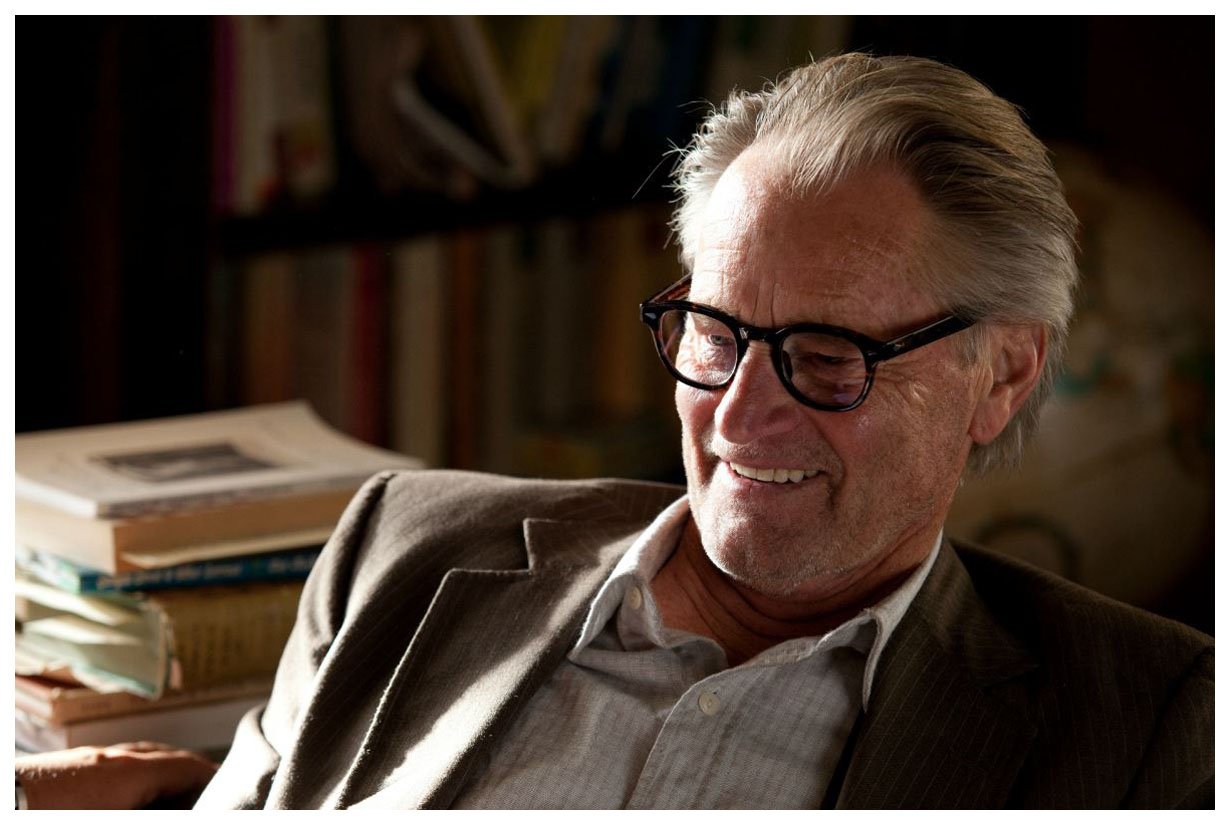
Sam Shepard, the visionary playwright, actor and storyteller, died last Thursday from complications of amyotrophic lateral sclerosis, or ALS. In his 73 years, Shepard won a Pulitzer prize for drama (in 1979, for “Buried Child”), was nominated for an Oscar (for his turn as astronaut Chuck Yeagar in “The Right Stuff”), helped to define and cultivate a new wave theater scene in New York, and memorialized his bleak and moving vision of the American West in a string of chiseled short story collections. In the modern history of American literature, he was without peer — a matinee idol who bled for his art; a star capable of baring his soul on screen, stage or page.

Shepard came up as a playwright in the downtown New York scene in the late 60’s and was a fixture of the Chelsea Hotel, among the first of that generation to achieve international prominence. He eventually settled in California and married actress Jessica Lange, with whom he had two children. Throughout that time, with the ups-and-downs of fame and literary fashion, Shepard kept writing, authoring a new play or story collection at nearly an annual clip, all the while returning to to the screen to steal the occasional scene — from Frank James in “The Assassination of Jesse James by the Coward Robert Ford” to the Rayburn’s patriarch in “Bloodline.”

Shepard was a preternatural talent and dedicated to his art. In one of his greatest stories, “Remedy Man,” a horse-breaker arrives at a rural outpost to deal with a troubled stallion and invites a young boy to join him in his work. The breaker gives the boy a piece of hard-earned wisdom: “Horse is just like a human being. He’s just gotta know his limits. Once he finds that out he’s a happy camper.” Yet Shepard never did seem to recognize limits himself, or maybe he just didn’t see the difference between one form of story and another. Calling him a renaissance man would be cliche or worse. Calling him a man of letters, one of the last of the American greats, seems true enough. To remember the man and his work, here’s a sample of his career:

— A PBS Great Performances interview about the dark themes of American family life in his plays:

— A rather dreadful quality video of a production of “True West,” starring Gary Sinise and John Malkovich, available in multiple parts on YouTube:

— The “Buried Child,” performed by a company in Indonesia. We can’t vouch for the acting on this one.

— That time Shepard (Yeager) broke the sound barrier.

— The trailer for Zabriskie Point, the film Antonioni asked Shepard to pen.

— This trailer for a documentary about his friendship and correspondence with Johnny Dark.

—A story about a horse. (Most of his stories were about horses in some way.)

— Or some very rough footage from the time Shepard and his former lover and longtime collaborator, Patti Smith, played the Abbey Theater.

RIP, Sam Shepard.

A Conclusion in the Caves

Previous Episode: Episode 6: A Hidden World

  1. Putting the pin down, Shelley turned to Raymond Dove and said, “It’s the deputy.”

“Which deputy?”

She glanced over at the pink-and-white map again, the one Jamie had hung up on the length of yarn. It was of a magic forest that led to a series of black holes. Shelley shuddered. “Can you please call the sheriff? Tell him I know where Jamie is at.”

“Where’s that?”

“The caves. Down by the river. That’s where she is.”

“Hold on a minute there…”

“Please. I have to go.”

Raymond Dove nodded and handed the folded knife back to Shelley. “In case you need it.”

She gave a half-smile, looked down at the knife, and took off running, the cloud of her breath quickly disappearing behind her.

Star Witness: A Story in Seven Parts (Electric Literature’s Recommended Reading Book 274)

As a 10-year-old, Shelley had gotten lost in one of the caves beside the river. Stuck more than lost. She had been playing in it all summer, had even read A Wrinkle in Time hidden inside. But after an exceptionally powerful rain, Shelley climbed down into one of the caves without thinking, where she fell into a brackish pool that had not been there before and got her foot stuck. She began to swallow water before Lyle Pearson, the postman, who lived by the river, pulled her out.

Shelley felt that old panic, could remember the taste of river water as she found her bicycle where she had left it alongside the cemetery gates, and began pedaling back through town. There was the shape of the abandoned gas station, the municipal library, the fading stores along the main thoroughfare looking ghostly and forlorn.

Once more, she took a right at the gravel road away from town, crossed the blue bridge, and returned to the woods that lined the river. The river smelled damp, and she could sense its movement, even this far away. Something flashed red up ahead, and Shelley squeezed the brakes on her bike.

A squad car.

Though she could not tell who the car belonged to — they all looked the same — something inside her turned, and Shelley knew it was the deputy, out here waiting for Jamie to show herself. She cursed silently and crept off her bicycle and hurried to the culvert along the side of the road. There, Shelley laid her bicycle down as softly as she could, and, pulling herself up the other side of culvert, made her way on hands and knees through the brush. Everything was wet—the ground below her and the leaves above her. Somehow, through the circle of trees above, she could see a fragment of the moon. Shelley took the knife Raymond Dove had given her and held it in her fist as she crawled. She knew she would not be brave enough to use it but, like an object from some long-ago story, hoped the sight of such a thing would be enough to keep her safe.

Audio: “Star Witness” | A Story in Seven Parts

In the woods, Shelley once again found the tree full of God’s eyes. The tiny kites, with their bizarre patterns, became knowable, then unknowable, as they turned in the dark, until she realized she was staring at them like stars. Shelley thought again of what she had read out loud from the book: “To ward off evil. To observe.” She hurried past the tree and its yarn ornaments and down to the outcropping of rock and fallen limbs, where the riverbank seemed to erode a little more each year.

Ahead, she saw a pink string knotted around the pylon of a bridge that had years ago washed away. Several yards after that, Shelley found a pink knot tied to a bush of small white flowers, the names of which she was sure her grandmother had once taught her.

Shelley scuffled along the bank, digging at fallen bricks and dirt with her hands, calling out Jamie’s name. Then she remembered their song, their code: one short whistle, two long. But there was no reply. She tried again, whistling slightly louder. A weak sound came back. Shelley kept whistling and finally found a small cave, closer to the size of an animal’s den, and the shape of a figure hiding within, hidden beneath a red windbreaker. She climbed down into the cave on hands and knees, looking around. Everything inside was made of yarn and bits of fabric, a colorful nest, full of God’s eyes and loops of strands and string. The girl, Jamie, was asleep, holed up against one of the low, curved walls. Her forehead was placed against the sleeve of her coat. Shelley felt her cheek, which was warm. When the girl finally looked up, she seemed displaced, disoriented, but then smiled widely, revealing a missing dogtooth.

“Are you okay?” Shelley asked, and the girl, no longer smiling, nodded once.

“Come on,” Shelley said and helped her to her feet and out of the cave.

The girl was barefoot, Shelley noticed, and so she tried walking with Jamie on her back, her arms around Shelley’s neck, as they moved together through the woods.

“Where are your shoes?” Shelley asked.

“I lost them. When I got scared. When I ran.”

“Over by the cemetery?”

The girl nodded. Shelley could feel the motion against the back of her neck.

“What were you doing out there, Jamie? With the deputy?”

The girl’s breath was warm against Shelley’s left ear as she spoke. “We only ever talk. Ever since the parade last year. We meet at the cemetery. We never do anything. Sometimes he gives me things, but mostly we only ever talk.”

“But then why did you run off?”

The girl cleared her throat, and Shelley set her down. “Because.”

“Because why?”

“Because the last time he told me he wanted to hurt himself. He said he had feelings and that they made him want to die sometimes. I didn’t know what to do. So I stayed away. I put up the God’s eyes all over town. Put them everywhere I could.”

“How come?”

“To watch over. So they could see.”

Shelley did not know what to say. She felt proud that she had read the God’s eyes correctly, had understood their impractical message.

The girl went on: “This afternoon, I was riding my bike in front of my house, and he pulled up in his police car and told me he was leaving. He asked to see me one more time before he did. When we got to the cemetery, he told me he wanted me to go with him. But I didn’t want to. He got upset, so I ran. As fast as I could. Through the woods. He tried to follow me in his car. I went and hid by the Doves’ for a while, and then I came here when it got dark because I thought he might find me. I’ve never been so scared in my life.”

Shelley put a hand to the girl’s shoulder. But it was too hard to see in the dark to read the girl’s expression.

On through the woods, they made their way to the culvert. The police squad car was still parked in the middle of the road. The dome light was on, Shelley could see.

“We can’t sneak past him,” the girl said, and Shelley told her to shush.

The deputy was sitting in the driver’s seat, and the door was open, which was why the cabin light was on.

Shelley could not see anything other than the back of the deputy’s head, though it appeared he had one foot out of the car, as if he was unable to make up his mind.

“Okay,” Shelley said. “We’ll just go quietly. One by one. I’ll go first.”

The girl did not look like she would be able to do it. “I can’t,” she said. “He chased me. I’m too scared.”

Shelley gave the girl a stern look and said, “Don’t look at him. Just keep your eyes on me. Come on now.”

The girl shook her head.

Shelley squinted hard at the girl and handed her the knife. “This is a magic knife. It’s from Raymond Dove. Do you know what he’s done with this knife? Nobody can hurt you if you’re holding it. Do you understand?”

The girl blinked, somewhere between belief and disbelief.

“Come on now.”

Inching along the underbrush, once again on hands and knees, Shelley carefully turned and saw the deputy was sitting, legs splayed, holding a shiny silver service revolver in his lap. She looked over and saw the girl had stopped moving, had gone white-faced. Shelley turned and got hold of her nylon hood and began to pull. Another four or five feet and they would be out of the shadow of the car. Shelley closed her eyes and could hear the abstract gestures, the abstract lines, the interference from the police radio chattering beside them. She imagined them as dashes and dots, as a field of unnamed punctuation marks. All she had to do now was pass through.

But the girl had gone stock-still. “Come on,” she whispered. Under some kind of spell, Shelley thought.

The deputy sat in the car, muttering to himself. “Help. Help me,” he was saying.

The girl had become powerless, like a faint and tiny animal. Shelley put a hand on her shoulder. “Come on. Look at me. Look at me, Jamie. Come on. All you have you have to do is look straight ahead.”

The deputy continued to call out.

One hand forward, then the knee, the noise, the hidden chatter of the police band and the terrifying words of the deputy appearing and disappearing into the darkness around them.

One at a time, they finally made it to where Shelley had left her bike in the culvert. “Better if we run,” Shelley said.

The girl looked scared, but Shelley took her hand, upright now, running as fast as they could along the culvert toward town.

Behind them, a powerful noise, like a firework, exploded. But both girls kept running, neither turning to look back.


2. On the way, a half-mile from town, a squad car from the sheriff’s office arrived. Before Shelley could see his face, she recognized the tall white cattleman hat belonging to Sheriff Wes Joad. Together, the two girls ran hand in hand toward the flashing light until everything became a soft, hypnotic red.

Later, Shelley did not know what to say or think. Silently from the back seat of the squad car, she watched the sheriff take Jamie Fay in his arms and carry her bodily up the front steps of the porch. From behind glass fogged by her breath, Shelley saw the expressions on the faces of Jamie’s parents. Later, though she could not say how much later, the sheriff returned to the car, adjusted the rear-view mirror, and pulled away from the curb. The digital clock on the dashboard read 2:30 a.m.

“I left my bike. Somewhere out by the woods,” Shelley said solemnly.

“Have to go back for it tomorrow,” the sheriff murmured. “Your grandmother’s worried sick about you as is. I don’t believe anyone will bother it.”

She nodded, and then, unsure if he had seen her, said, “Okay.”

Shelley turned and stared out the window as the remaining buildings of the town passed by, staring at how it had all changed. In flashes of what seemed like photos, she saw the landmarks, businesses, shops, a single faded American flag left unfurled after dark in front of the VFW, and several houses in the soft, purple light of the approaching sun. The girl watched all go past, feeling heartsick.

All of it looks different, she thought.

The sheriff turned and spoke over his shoulder, “They’ll take Jamie over to the hospital in Dwyer tomorrow, be sure she’s okay. I have a feeling she’ll be all right. And you’ll be home in a few minutes.”

There was some static on the police band, which Shelley could not piece together. The sheriff, with a great degree of effort, lifted the radio receiver and answered as he continued to drive.

“That’s a 10-4. Tell Percy I’ll be by there in a half-hour or so.”

He replaced the receiver and turned to speak over his shoulder again.

“Looks like the deputy went and shot himself in the chest. They got him in the hospital over in Dwyer. Sounds like he’ll live.” The sheriff tried to smile in the rear-view mirror. “Everything’s going to be okay, don’t you worry. Everything’s going to be all right, you’ll see.”

Shelley felt unsure. It was then she noticed that she had been holding the folded knife belonging to Raymond Dove. The girl, Jamie, must have handed it back to her. She did not know when, only that it was sitting there. She looked up and continued to watch the remnants of town fly past.

“None of it. None of it’s the same,” she finally said.


3. Once home, after the sheriff had departed with one of her grandmother’s cakes, Shelley lay on the sofa with her head in her grandmother’s lap. It smelled like chartreuse and flour and honey, her grandmother’s nightgown. The girl turned away from the lamp that had been switched on, hiding her face against one of the sofa cushions.

“I thought you had left me,” her grandmother said. “I thought you had left me and were never coming back. Like your mother. I thought you had.”

Shelley began to cry. She felt her grandmother stroke her hair, the small hard bones, the callused fingertips, the soft palm against the side of her face.

“I’m sorry for scaring you. I’m sorry for running off like that.”

“You have a right to do as you please. I’m just an old nuisance and I smoke too much and I just was afraid you might just hold it against me.”

“I won’t run off like that again. I promise.”

“You had a night, didn’t you? A dark night. I heard it on the scanner. You did a very brave thing. I know I’d never have the courage myself. But you—”

“I didn’t know I could. There’s a whole world, and I had no idea about it.”

“You’ll go. You’ll find yourself out in that wide-open world and wonder whatever it was that ever kept you.”

“Grandma, I—”

“No. There’s no need to talk about it now. We’ll talk about it in the morning. You and I. We’ll have ourselves a talk. Now, are you ready for bed?”

“Do you mind if I sit here another minute with you?”

“Who, me? I don’t mind a bit. You can sit here as long as you like.”

“The birds’ll be up.”

“Shhh. Never mind them.”

Shelley closed her eyes, taking in the scent of the entire house. A moment of silence passed between them, and soon the old woman began to whisper:

Now, where were we, boys and girls? Where were we? Oh, yes. The woodsman had lost chicken after chicken to that fox and his fiddle and tracked him down to his den in the woods. And just then, the woodsman saw that wily old’ fox’s den, right there, and he reached in with one burly arm and grabbed that fox by the furry white scruff of its neck, and with his other arm, he threw back that great shining axe, and that little wily fox howled out in fright…

Shelley felt her grandmother’s eyes upon her, felt the soft fabric of her nightgown against her cheek, felt how good it was to be home again. The girl opened her eyes, staring up.

And then…and then, that woodsman, well, he let that wily fox go.

Shelley blinked. “That’s not how it goes.”

“That’s how it goes tonight.” And the voice came again, pleasant, soothing:

He didn’t have the heart or meanness to kill that awful varmint. He let that fox go and watched him run off through the thorns. And his puffy red tail was like a flame flickering in the woods. After that, the woodsman didn’t lose another bird—not a single one.

Shelley closed her eyes and felt the colors of the room change before her one by one. Somewhere a dog barked, and then there were the sounds she had been waiting for: the murmuration of the birds; the tolling of the grandfather clock striking four, telling its own story. Before her a tree appears, as if in a dream, and then it is a dream, and before her is an all-white tree, without flowers or leaves. But when she looks again, it has blossomed, each flower a different color, each opening before her eyes. One, two, three.

Double Take: Scott McClanahan’s ‘The Sarah Book’ is Beautifully Told and Breathtaking

“Double Take” is our literary criticism series wherein two readers tackle a highly-anticipated book’s innermost themes, successes, failures, trappings, and surprises. In this edition, frequent Electric Literature contributors Tobias Carroll and Gabino Iglesias discuss Scott McClanahan’s The Sarah Book.

In this, McClanahan’s third book, Scott forges new ground with his unique semi-autobiographical prose. This time, he directs his attention to the dissolution of a marriage, the story of one era ending and the hopeful beginning of another. The Sarah Book takes the reader to unabashed new ground, and never lets you go.

Spoilers are encouraged and fair-warned, with the hope that readers purchase the book and join the discussion in the comments.

Tobias Carroll: I’m not 100% sure when I first saw Scott McClanahan read. I suspect it was at Franklin Park Reading Series; I was also mightily impressed that, at the time, he could pull off the self-publishing thing without losing sight of his craft. While I’d certainly say McClanahan has grown as a writer since the days of the Stories books, he’s kept up the ability to write these beautifully told works that feel effortless, but clearly aren’t. To say nothing of the way he folds together memoir and fiction, I’m thinking of some of the more surreal moments in both Hill William and Crapalachia.

I feel like I’ve been hearing talk of The Sarah Book for a while now. And now I’ve read it, and…

I think the main thing about it for me, and maybe a good place to start, is how McClanahan comes off in the book. To some extent, his narrators occupy this almost sublime space; there’s a kind of benediction in some of his work, which is great, and the persona he gives off is almost a holy figure. It seems like in The Sarah Book, he absolutely decimates that. This is the story of the end of a marriage, and it’s the story of someone coming to terms with a whole host of bad behavior, and it was an utterly harrowing read for me.

I’m curious about two readers coming to this: the ones that have read McClanahan for years and those coming in entirely fresh. I’m curious as to how they’d each receive it. And I’m curious about how you received it as well, and your history with McClanahan’s work.

Gabino Iglesias: I remember discussing the best songs of Van Morrison with nonfiction author and journalism legend Bill Minutaglio about eight years ago. At the end of the conversation he said something that stuck with me: “The man is plugged into something the rest of us can’t even see.”

Scott McClanahan’s fiction makes me think he’s plugged into that as well. He’s in touch with some cosmic-yet-very-human thing that gives his narratives an unshakeable sense of reality. Reading him is like sitting down with a friend who tells you stories that sound too great or too weird or too sad to be true, but that you know are based on real experiences. I agree that he shatters the beatific image, but he does so while remaining true to the rest of himself. The anger, the frustration, and those moments where he is doing something awful and knows it but can’t stop himself are all things we’ve all gone through, and they make The Sarah Book a narrative that’s very easy to understand on a deep level.

I think McClanahan’s (non)fiction gets reactions out of people regardless of their familiarity with his work. I first read his short stories and then Crapalachia, which blew me away. It felt strange and heartfelt and honest. You know, the kind of book that makes you want to question and then hug the author after you’re done reading. Readers who enjoyed that book will surely love The Sarah Book. Anyone who likes reading about flawed humans failing to cope with heartbreak and great changes will probably love this book. For those whose introduction to McClanahan’s work happens with this book, I can envision two reactions. The first is “Wow, this guy can write. This is sad, funny, touching, real, and awful.” The second is “This is the story of a loser who can’t stop messing up. He sometimes acts like a child. And what’s up with that messed up dog?” For me, the first group gets it and the second doesn’t, but you know all about literature and opinions, so I’ll leave it there. I definitely belong to the first group and think this one is as great as Hill William and Crapalachia, if not better, funnier, and sadder.

“Reading him is like sitting down with a friend who tells you stories that sound too great or too weird or too sad to be true”

TC: I’d never thought about McClanahan in conjunction with Van Morrison before, but–that seems spot-on, both for the way that they’re able to tap into an almost sacred emotional sensibility and for the way they fuck with it, the push-pull between what an audience wants and what the artist is trying to say. I am literally fighting off the urge right now to go deeply into a “smart writers on Van Morrison” rabbit hole — it’s already well into the day, and I have, as they say, miles to go before I sleep.

Beyond the (fairly harrowing) events described in the book, one of the other things that McClanahan did here that struck me was the inclusion of images. Not to that great an extent but it was still pretty intriguing to see the faces of McClanahan, his family, and even Grover show up in here. I’m not going to go so far as to say that Scott McClanahan working an extended allusion to The Monster at the End of This Book was one of the most moving reading experiences I’ve had this year, but it kind of was. I’m curious: What did you make of the use of photos? Did you find it an interesting evolution to his existing style?

GI: I’m not a fan of pretending to know what an author was thinking when he or she did something in a book, but I like to think McClanahan didn’t plan the thing with the photos and that it just happened organically. While he is an outstanding storyteller and the narrative was surely thought of in advance, there is also a raw passion in McClanahan’s work that makes me think he sometimes surprises himself with the extents he will go to in his quest to effectively communicate his story and to make readers feel something. In this case, the images were just the last stage in getting completely naked in front of his audience and probably also a clever, unique, new way for him of saying, “Hey, all of this is true. Here’s a picture to prove it.”

“There is also a raw passion in McClanahan’s work that makes me think he sometimes surprises himself with the extents he will go to in his quest.”

Something this book does very well is humanizing through humor. I laughed really hard at the scenes with the dog. That, I feel, was one of the most noticeable differences between this book and the author’s previous efforts. McClanahan has always presented his life, and Appalachia, through a funny, humane lens, but this time around, he offered cringe-worthy passages that offered a strange space to breathe between harrowing scenes in the car of painful memories. What did you think about that humorous/depressive balance?

TC: The short version: As a reader, I was pretty into it.

The longer version: To an extent, I think it was very necessary — just as McClanahan juxtaposes the ugly end of his marriage with its much more optimistic and joyful beginnings, finding a balance so that the narrative wasn’t simply a chronicle of harrowing events had to happen. So when you have a beginning that’s that harrowing — I mean, driving while wasted with children in the back seat? That’s a rough place to come back from–finding some way to even it out is pretty essential, I’d say. I, too, was pretty taken with the scenes with the dog, which were alternately hilarious and (as the dog grew older and older) pretty heartbreaking in their own right. And the marathon viewings of the “November Rain” video also hit home while also bringing a smile to my face at the image. Reading the book as a whole, I thought a lot about something Sean H. Doyle talks about a lot: The idea of writing memoir (or, in this case, fiction with an element of memoir) in which you’re the villain. I definitely got a sense of that here.

For me, the other way the humor worked had to do with questions of, not to sounds hugely pretentious, the transcendental. I think that’s something that comes up in McClanahan’s work a lot, both his prose and some of the times I’ve seen him read, where there’s been an almost religious aspect to it. (And on the flip side, there’s the scene at the end of, I think, Hill William, where he juxtaposes fucking the landscape with the landscape around him exploding.) I think that’s one of the things that puts him into his own category: There are plenty of books that have confessional or memoiristic aspects that deal with failing marriages, with alcoholism, with depression. But this one also has that sense of achieving a breakthrough in spite of all of that hate. This is a weird comparison to make, because the two books are otherwise pretty dissimilar, but I remember reading William T. Vollmann’s The Royal Family years ago and also being taken with the way that novel alternated scenes of harrowing degradation and revelatory bliss.

If You Want to Hear America Singing, Try the Walmart Parking Lot

Though that brings me back around to a question: Where would you file McClanahan’s work? I think I first read him after seeing him read and I remember hanging out with a friend in Seattle and watching her reaction to his reading at Left Bank Books during AWP a few years ago. But I’m also at a loss as to who I might recommend his work. It’s autobiographical, but there’s just a tinge of the experimental; it has an amazing sense of location, but as someone who’s never been to West Virginia, I find it incredibly affecting. To be honest, I’m shocked no one’s written about McClanahan’s stylized yet autobiographical fiction in comparison with that of Karl Ove Knausgaard.

GI: When talking about McClanahan, I think transcendental is far from pretentious. In fact, it takes us back to Van Morrison and being plugged into something bigger, something special. I guess some folks would call it holy and other would cringe at the use of the term, but whatever it is, it’s certainly there. It makes McClanahan a special author, one that, instead of working hard to write to the beat of his drum, he naturally got rid of the drums and decides a sad piano with a great sense of humor and hearts instead of strings was going to be his thing.

The more I read, the harder it is for me to recommend books to people, and the easier it becomes. To some readers, I’d say this is an unclassifiable book, and that might turn some people off. The others, and the way I’d file McClanahan’s work, would have to call his work experimental autobiography/geographical memoir. To friends, with whom we are always able to leave fancy words out and just say what we feel, I’d say “Read him. He has a unique rhythm. He’s funny and sad and strangely soulful and amazing and his work is one of the reasons indie lit is the most exciting kind of lit there is.”

“I’m shocked no one’s written about McClanahan’s stylized yet autobiographical fiction in comparison with that of Karl Ove Knausgaard.”

The fact that McClanahan’s work is getting a lot of recognition helps fuel a whole movement of contemporary authors that are moving away from “everywhere and everyone” literature and digging into their roots to offer special narratives steeped in place/space/culture. Whether it’s frontera writing or the Appalachia of McClanahan or crime author David Joy, we’re seeing a lot of unique discourses, points of view, and geography-infused fiction that shows us how we’re different while bringing us together under the “great fiction/nonfiction” banner.

TC: I agree with all of that. And I also agree that McClanahan’s influence may be felt more in what it inspires other writers to do as opposed to giving them a template that they can follow. I’m thinking back to that point in music writing a decade and some change ago when a lot of people seemed to want to emulate Lester Bangs, but only to a superficial level, as opposed to some of the more interesting things he was doing with prose. There’s plenty to learn from in Scott McClanahan’s writing; writing using a bad pastiche of his style is, hopefully, not one of those lessons.

I might be digressing here slightly, but: the use of photos in The Sarah Book got me thinking about W.G. Sebald, and while I don’t necessarily think I’d file McClanahan and Sebald too closely together, there are some similarities, including the intentional blurring of lines between author and narrator. Sebald’s work has certainly influenced a number of writers whose work I love, including Teju Cole and Laird Hunt. I think both Cole and Hunt take that template and do their own thing with it, as opposed to coming up with some sort of pastiche.

But for all of the talk on the macro level and on the theoretical level, The Sarah Book also had me feeling for its characters in their smaller, intimate moments. It left me feeling for all of them as they struggled to understand one another, and it left me hoping they’d all found a greater peace in their lives. And so I also appreciate this book for its ability to bridge those two scales, and those two worlds.

GI: I have to fully agree with that wish. I think McClanahan had already made a lot of noise in the literary world, but nothing compares to the explosion of coverage and attention The Sarah Book is getting. Small venues and large venues alike are under the spell of this man’s prose, and I love it. The fact that he has stuck to his guns despite new stylistic flourishes make him admirable. I tend to celebrate the success of good people as if it was my own because it truly makes me happy, and seeing The Sarah Book everywhere makes me happy regularly because it is everywhere. Sadly, I’m sure we’ll get some pseudo-McClanahan prose in the coming years. Too many authors wait around to see what new thing sticks and then they try to replicate the formula, and that will surely happen with this book. That being said, a few pastiches of The Sarah Book is a price I’m willing to pay for having the book with out and about.

Feeling. For all its simplicity, that word manages to capture what this book is, does, and makes. I laughed and cringed. I nodded my head in recognition of my own stupidity and felt bad for McClanahan’s mistakes. I felt for him and for the kids and for the dog and, once it was all said and done, I felt for every person stuck in a crumbling relationship and for every shattered soul processing and learning to cope with devastating new realities while sitting in a parking lot somewhere in this country. Ultimately, aside from everything happening at the macro and theoretical levels, I think this book is a success because there is a large, living, bleeding heart full of scars at the center of it, and that is something no literary analysis can explain. Some books you hate and some books you feel indifferent about and some touch in strange ways that make you love them, and The Sarah Book belongs to this last group.

“It’s a balancing act atop a balancing act.”

TC: It’s a weird kind of alchemy. I keep thinking of how certain elements seem to converge in perfect balance for certain writers, and I think you perfectly capture how that works for McClanahan. I found myself thinking a lot about how McClanahan had captured aspects of his life in this book, and the candor and fearlessness with which he did so. When I interviewed him a month or so ago, he emphasized that he considers himself a fiction writer — and so that’s also something that constantly lurks in the back of my mind when I’m reading his work. How much of this is true? How much is embellished? (See also: Eileen Myles; see also, the aforementioned Knausgaard. Which is not terrible company to be in as a writer.)

That ambiguity might also be what makes McClanahan’s work so powerful. The story he’s telling in The Sarah Book is already deeply moving and wrenching, and — if I’m not projecting too much here — very discomfiting for anyone with a self-loathing or self-destructive streak. But we aren’t reading The Sarah Book: A Memoir here — even though we can see a photo inside of a guy named Scott McClanahan who looks a whole lot like the Scott McClanahan who wrote the book. It’s that risk that elevates an already-powerful work to a new level: It’s a balancing act atop a balancing act. And it’s a work with scenes that aren’t going to leave my head any time soon.

The Writing Life on the Road: Rocio Carlos’ Los Angeles

A visit to the city where pagan & Catholic rituals go hand-in-hand, ghosts are everywhere, and poetry speaks to the community

Electric Literature’s contributing editor Michael J Seidlinger is on the road as part of his project, #followmebook, visiting writers and exploring the limits of social media. As part of a limited summer series called “The Writing Life on the Road,” he’s sharing his conversations with writers he encounters as he makes his way from New York to California. This week, the poet Rocio Carlos, shares details and insights from her writing life in Los Angeles, California.

What follows are highlights from Rocio’s interview with Michael. Her responses have been edited for clarity.

Setting the Scene: Between Churches in Little Tokyo

We are at Far Bar which is at about 1st and Central street, technically in historic Little Tokyo, but it has also been called Bronzeville, and it’s been really important in the history of Los Angeles. Literally a block from here used to be a Buddhist temple and then it was a Baptist church. So it’s pretty informative in the history of our city as a whole.

The Little Notes That Transform Into More

Lately I’ve been writing notes in my phone. I end up having to do an archiving of places where I leave notes for myself. Like I’ll audio messages for myself when I’m writing. I will type notes into the ‘Notes’ app on my phone. I will write notes in a journal that is specifically put aside for that. I have my writing notebook and then I have my work notebook, but then I’ll write things in the margins, or even in my grocery list. So even the notes I write for myself or the everyday act of living, like the things I have to buy or the bills I have to pay sort of become a thing.

Naming All the Plants: Writing Al Fresco

I have a ritual of going outside early morning every morning and just walking around the backyard and noticing the natural world: the temperature, the sky, the animals present, the plants that need care, the plants that are thriving, and just sort of naming them. This is literally me walking around talking to myself out loud. Sometimes I’ll take an Instagram picture, which is a kind of note. The observation, the witness of it is a kind of note taking, and sometimes that can be a photograph, a memory.

Coffee and Cleanliness: Carlos’ Writing Routines

I need a clean house. That takes hours out of my day every day. Last summer I was really good about it. I set up this outdoor patio and I called it my summer office and every morning I would just take my shit out there which means I would just clean later for longer. I made a deal with myself, and I’m in this summer transition mode. It was just solstice, which I observe because I’m a pagan. I have a couple of heavy pieces of sitting furniture that I need moved. The minute a writer friend who can lift heavy furniture comes over, I will ask them to help set up my summer office. I made a deal with myself, as soon as I get up I’m just going to take my laptop, put my oatmeal and coffee on top of it and I’ll see you in two hours, house. In two hours, I’ll see that there is cat hair on everything and then I will clean up. That took some sacrifice and suffering on my part because I am absolutely centered in my home.

I do need coffee. I have coffee every morning. I like to be up at 6:30, and it’s just me and Scout, my cat. She and I just walk the perimeter of my yard — I have a huge yard. It’s magical. We just walk around and thank all the things, even though they are the same things I look at every day. I mourn things that couldn’t live.

The Ghosts that Follow Us: Pagan Catholic Traditions

I am Mexican and I grew up pagan Catholic, with practices that are so old that people don’t separate them from our indigenous practice. People will actively cast spells or things that would be considered spell casting by an orthodox church, and then not see it as contradicting the teachings of the Roman Church; they’ll go to mass immediately after all that and be like ‘this is all part of our cosmos.’ When my father had a stroke and was in the ICU, my mother without blinking said ‘I have your grandmother’s candle,’ by which she meant the pastoral candle that is burned at your baptism and then again when you receive last rights. ‘We’re going to stay up for as many nights as it takes.’ My mother interested the youngest of us, my little sister, in leading the rosary, a part of Roman Catholic practice. In our hands, it is an instrument for invoking and sustaining energy that maybe the Church does not account for. To keep her from falling asleep, my mom put my sister in charge. She would lead the chant; she would call, we would respond. Late into the night after being with my father all day at the hospital, we would just sit in our little living room and chant, chant, chant. That is casting a circle, invoking the deities. Proclaiming gratitude and asking for a favor.

There are ghosts everywhere. How could there not be? The violence of survival, some of us don’t make it. How do you tell a story that doesn’t necessarily belong to you, that you inherited? How do you stay true to it, or what is your responsibility to stay true to it? I always had this idea, being an outsider person in my own family, and in a lot of families it’s really common to attribute your characteristics to another living person. I never had anyone I was like, so I invented this story in my head of how I was like this missing auntie — my dad’s favorite sister who died in a terrible house fire and my grandfather almost died trying to rescue her from the fire. When he brought her out, it was too late. That’s my little ghost.

“There are ghosts everywhere. How could there not be? The violence of survival, some of us don’t make it.”

The Writing Life on the Road: Jeff VanderMeer’s Tallahassee

Call-and-Response

This manuscript that I am working on is like a call-and-response. Every time I would read something, it would prompt a response for me. It’s all paired with past and current observations and of course like everything, it amplifies. So it started as list-making, or talking back. I actually wrote a long poem in nine parts called “The Other House” in which I responded to the entire manuscript [The Yellow House by Chiwan Choi] and it was born from notes that I wrote for my own sake and they evolved into a poem. There was so much more written. A lot of it is in different voices. There’s direct speaking and then there’s interrupted thoughts which can sometimes appear in parentheses, or there are asides which can sometimes appear as italics, and then there are sequential numerations that are like the speaker actively trying to work out the thought. A lot of it is working through trauma and trying to reconcile the past that is inherited. A lot of the stories I inherit about our family and our people are directly tied up with a specific position in nature. Everything in my memory is about plants and animals and how you treat them. Not in some romantic way. It’s visceral and painful.

“Everything in my memory is about plants and animals and how you treat them. Not in some romantic way. It’s visceral and painful.”

The City as a Literary Community

The writing community — I have come in and out of it. In college, that seemed easy because you’re in a little bubble and you’re writing and reading on campus. Once you graduate, you lose it. I was a PEN emerging writer so that was helpful; I wrote and met good people and had good mentors in that program. After that, I ended up getting an MFA. To be a writer, I had to get another job. Thank God, poetry is a gift economy. Thank God, poetry will never be profitable. So I am totally under the radar, my only responsibility is to make the best work I can. When I went to graduate school, I liked my program. I liked my mentors and I liked my peers. I was productive. Afterwards, some of us kept meeting. I went to Otis College of Art and Design. I felt acknowledged, respected, and looked to as a standard by my chair and my peers. After that, for a year, some of us would meet and write. That’s part of my writing community — having someone to be responsible to. If you keep doing work outside of it being marketable, you find people and people find you and eventually it finds a payoff. It’s good to keep doing the work.

On Staying with Your People: At Home in Bicultural Los Angeles

Geographically and culturally, I have only ever lived in Los Angeles. I was born here. I grew up in Boyle Heights. I’ve only ever lived here. I went to college at Cal State LA. I worked for LA Unified, so I drove all over the district subbing at schools. I have never had a desire to live anywhere else. I love being from here and I love working from here and I just feel like I embody the city and I’m proud. In that way, I have never been separate from my people. I’ve made sure I live where I feel at home speaking my languages and I can contribute in some way. That I can talk to my neighbors and it’s not weird. My parents were very deliberate in raising my sister actively bicultural, which means they had rules about when English was allowed and when Spanish was mandatory. We did a lot of rituals that were related to our culture. We did our religious sacraments but we also went to powwows, and we also had quinceañeras and we had to be at the family’s every Sunday. My sister and I performed in dance troops for at least ten years each — actively bi-cultural, encouraged by our parents because when they were new in the US, in the north in the 70s, some of the worst racism they faced was from other Mexican Americans who were born here and looked down on them for not being born here. Culturally, geographically that is my heritage. And I’ve never had to go looking for it, it’s always been around.

“I just feel like I embody the city and I’m proud. In that way, I have never been separate from my people.”

Be our Guest for Masquerade of the Red Death: Redder and Deader… If You Dare!

“And now was acknowledged the presence of the Red Death. He had come like a thief in the night. And one by one dropped the revelers in the blood-bedewed halls of their revel, and died each in the despairing posture of his fall.” —Edgar Allan Poe, “The Masque of the Red Death”

Early bird tickets to the Masquerade of the Red Death: Redder and Deader are now on sale for just $35! Tickets include a mask, unlimited beer and wine, and a specialty cocktail for the first hour. The price increases to $50 on October 1, so get your tickets today!

The Masquerade of the Red Death
Thursday, October 25, 2018
8:00 PM
Littlefield
635 Sackett St.
Brooklyn, NY 11217

Last year, we packed the house at Littlefield with hundreds of revelers who sipped “Red Death” cocktails and danced the night away. This year, Electric Literature’s fundraiser will take the Edgar Allan Poe theme to the next level, with “Masquerade of the Red Death: Redder and Deader.” Guests are again encouraged to wear red or black, and masks will be provided. But unlike last year, not everyone may survive the night…

Dress Code: Red and Black Festive Attire
Music by DJ Colleen Crumbcake
Book Giveaways
21+

Electric Lit, Inc. is 501(c)3 non-profit, and your ticket purchase is tax-deductible minus the cost of goods and services.

Electric Literature is grateful for the support of our generous sponsors.

Marquee Sponsor

Electric Literature is also grateful for the support of our generous patrons who have sponsored tickets for our contributing writers to attend the Masquerade:

Terry McDonell
Meredith Talusan
Cynthia D’Aprix Sweeney

Become a Patron

Can’t make it to Brooklyn for the event? You can still support our mission of making literature more exciting, relevant, and inclusive with a charitable donation. Everything Electric Lit publishes is free to readers, and we pay every one of our writers. Each gift of $50 sponsors one of our writers to attend the Masquerade for free so we can celebrate them as guests of honor. Patrons giving at the $100 level will be acknowledged at the Masquerade on electricliterature.com.

Become a Sponsor

Electric Literature is one of the premier outlets for promoting new titles. Excerpts in Recommended Reading, reviews, interviews, and creative
content like lists and essays connect your writers directly with our engaged
and enthusiastic readers. We believe in a lively, thriving marketplace for
books where great writing is valued and easily discovered. To learn more about our sponsorship opportunities, email cristina@electricliterature.com.