In Brian Platzer’s Debut, a City Burns

Living happily in an illusion can only be a temporary state. Those things we are hiding from show up — always, like clockwork. Those lies. Those mistakes. There’s no getting away from them. Still, though, we try. Brian Platzer’s debut novel, Bed-Stuy is Burning, shows us that no matter how hard we might try, we can’t ever hide.

“Bed-Stuy is Burning balances the multiple layers of stories going on with great success.”

Aaron, Platzer’s protagonist, has a “lucky” life. He lives with Amelia, his girlfriend, and, together, they have a son named Simon. They fill their home with love and kindness. But family stability isn’t all they have going for them.

Aaron is a successful banker, and Amelia works as a journalist. They are near personifications of privilege. They live in a beautiful home in Bedford-Stuyvesant thanks to a good — very good — investment. Platzer wants us to know exactly how gorgeous the house is:

“The top windowpanes behind Amelia were 1890s stained glass, and they all matched one another. Orange teardrops emanated from a central sky-blue whirl surrounded by golden diamonds. Aaron owned those windows. He and Amelia did together. They owned the stained-glass windows and the original woodwork surrounding them. The wood was mahogany, carved to look like columns holding up a frieze, with little torches surrounded by wreaths carved into the corners. Aaron and Amelia owned this woodwork, as they owned the fireplace tiles around the still-functional gas fireplaces, the sconce lighting, the hardwood floors, the built-in closets.”

Aaron claims to live on the “nicest block in Bed-Stuy,” where even the neighbors are great. Aaron and his family have lives of near untouchable privilege — or so it seems.

Externally, sure, Aaron’s life is golden, but internally, he’s a man searching — for something that I don’t think he would recognize if found.

We learn of his past gambling trouble and how he practiced as a disbelieving rabbi. Now, he lives his life with an undercurrent of uncertainty and questions the very notion of faith. He struggles in accepting that other people stand on their religious beliefs so firmly: “Aaron really did think that no one believed in God. Or maybe it was okay that some people did but not his life partner — not his future wife and the mother of his eventual children.”

A Story About the Volatility of a Codependent Friendship

Aaron’s internal and external lives collide when a police officer kills a young African-American boy nearby, and rioters hit his street. The bubble that is Aaron’s perfect world suddenly pops, and Aaron and his family aren’t so safe. He must confront both his neighborhood and its tricky dynamics, consisting of gentrification and various social injustices, as well as face the truth about himself if his story is to be a happy one.

Platzer creates some really beautiful images throughout Bed-Stuy is Burning; however, the larger one, of a man trapped outside the confines of his home amidst great violence and trying to work his way back inside, is arguably the most poignant. It’s in scenes such as this one that the internal and external duality that guides so much of the story becomes nicely realized.

Bed-Stuy is Burning balances the multiple layers of stories going on with great success. Not only are there many threads — going into the past and, then, shifting in the present — with Aaron as I’ve mentioned, but there are a handful of diverse supporting characters, including a single dad named Jupiter and a tenant named Daniel, who make up Platzer’s narrative. These characters help amplify the struggles of Aaron — and the world in which he exists. However, it’s Antoinette, Simon’s loving and riveting nanny, who has an emotional arc regarding faith that threatens to — and occasionally does — steal the novel’s heart. Platzer captures these characters and their stories in a convincing and, ultimately, compassionate way. It’s this kind of delicate handling that makes Bed-Stuy is Burning work so well.

Many reviews will likely mention the timeliness of Bed-Stuy is Burning, but, still, this fact can’t be overstated. Platzer discusses race, privilege, and gentrification. These very things might well define our current year. However, there must also be an acknowledgement of the timelessness he captures here, too. The heart of Bed-Stuy is Burning is about a man who struggles to escape his past failures and face the future. He’s still working on figuring out his identity. He’s lonely. He’s ashamed. But he’s trying — and persevering. It’s quite a triumphant story.

While Platzer’s novel is undoubtedly a good one, the tension does get a bit overwhelming in the second half, and the pacing is a little too quick in sections. The thrills, too, extend longer than necessary. These, though, are minor qualms.

Bed-Stuy is Burning, with its diverse voices and sincere depiction of the fight for social equality, is a mighty fine debut from a writer to watch.

The Weird World of Selena Chambers

I first met Selena Chambers at the 2015 World Horror Convention in Atlanta. Since Chambers was “bar-conning” it that year — the convention-circuit term for hanging out at bars in and around the convention center and/or hotel to drink with people you know instead of attending the panels — we hadn’t officially met before then. We talked for a total of maybe 10 minutes. Chambers, however, would leave an impression: graceful, solicitous, intensely perceptive and interested, like me, in a narrow subset — 19th century American occult arcana. That night, I forgot to pay my bar-tab and had my cabdriver return to the bar; when I entered and threw a few bucks on the table, Chambers applauded and said, “Nicely played, sir!” That moment would prove providential as Chambers and I have returned many times, though never in person, to talk about fiction, carrying on an email correspondence right into the present day.

So it was with no minor jolt of elation that I began reading Chambers’ debut collection, Calls for Submission, which rolls out a wild and eclectic array. Perhaps needless to say, it did not disappoint, given what I knew of Chambers; it’s a creepy-sad, smart and courageous collection that stimulates the intellect while inexorably pulling and pulling the heartstrings. In “The Sehrazatin Diyoramasi Tour,” a 19th century Turkish automaton shows a crowd of European tourists a series of uncomfortable and, progressively horrifying truths; in “The Last Session,” a tender-hearted adolescent caring for her ailing mother makes expedient and unorthodox use of hypnotic techniques; and in “The Neurastheniac” (nominated for a 2016 World Fantasy Award), the spiritual unraveling and death of an Emily Dickinson-by-way-of-Diamanda-Galas-esque poet disperses before the reader in a flurry of journal entries and poetic fragments. In June, Chambers and I did the emailing thing in order to discuss reclaiming literary territory, “the female glance,” being a hot-weather Goth, Florida weirdness, and the non-intersectionality of literary circles.

Van Young: Individually, the stories in this collection are eclectic, but marvelously self-contained. Eclectic, in that they often hop among genres (dark fantasy, cosmic horror, steampunk vaudeville, etc.), and many of them are often riffs on historical arcana, or other stories altogether; for example, “The Last Session,” probably my favorite story in the book, is an after-school special screamo-punk riff on Edgar Allan Poe’s “The Facts in the Case of M. Valdemar,” while “The Şehrazatın Diyoraması Tour” seems to take on Ambrose Bierce’s “Moxon’s Master” and Mary Shelley’s Frankenstein, as well as other tales of Victorian automata. Self-contained, though, in that they never fall prey to meta-contextual preciousness, but stand on their own as both literary artifacts and accomplished short stories. The sum effect of the stories is truly arresting — like being whisked through a curio-shop of the last few centuries’ most telling fantastical preoccupations. In keeping with the riff-based quality of many of these stories, were there any other collections as a whole that served as literary templates in how you constructed your own?

Chambers: That’s tough because I really do love the short form, and love reading it, but the truth is I had no designs on having a collection until around 2015, after the majority of the stories were written. And when I did start thinking about it, it was more of a personal aesthetic-check-in to see what I’d been doing for the last decade. Because I’d solely written for themes and anthologies, I was really worried my body of work was too eclectic, and that I had wasted ten years ignoring my own aesthetic interests for the market. I was pleased to find that there was, for the most part, a core mission I was somewhat aware of, but I was unsure it was being fully executed.

So that’s what went into the collection as a whole, but as far as its parts go, there are a lot of influences. Each tale in Calls for Submission does have a better counterpart that influenced it. For example, there’s some Wodehouse and Fitzgerald in “The Venus of Great Neck,” but that story is most in-debt to Mèrimée. “The Şehrazatın Diyoraması Tour” was definitely influenced by Mary Shelley, but also by Nick Mamatas’s “Arbeitskraft,” which is a Steampunk novelette about Marx and Engels. It showed me how to subvert things I disliked about that genre while celebrating those things I loved.

Van Young: I see that element of eclecticism-as-subversion there for sure. As a whole, the collection reminded me a lot of Borges’ Universal History of Iniquity, where Borges takes these unrelated myths about larger-than-life historical figures and narratively & culturally re-contextualizes them, often with an absurd twist. Indeed, maybe it’s that quality of re-contextualization and recombination that I find so resonant between your work & Borges’. Yet now I should ask, since you mention it, what have you been up to for the last decade? What’s your core mission?

Chambers: Thank you! Borges has been one of the great “re-mixers” I’ve been interested in over the years, and I definitely took a few notes in regards to re-contextualizing history for excavating new stories out of the old (or, I guess even, the untold).

The last decade? Oof, can I even remember? When I graduated college in 2004, I forgot to apply to grad school and started writing for money.

I know. Hilarious, right? This was before everything was completely gutted though. Even so, it was a hap-dash CV: jewelry copywriting, student papers, glossy pop-feminist essays for pop-up Internet women’s magazines, and Rum Diary times at a weekly newspaper in South Florida. What I wanted to write was fiction, but I didn’t know what to write about, so I literally wrote about everything else that paid.

Eventually, this philosophy lead me to Genre via non-fiction thanks to the Poe bicentennial. Poe is a major influence, and so it was a natural fit. It was the missing ingredient to figuring out what I wanted to write, fiction-wise. Through Genre, I became aware of Steampunk, Interstitial, and Weird, as well as the overall enthusiasm for remixing and mashing literary works and historical figures in a way that I had been toying with in my early stories. So, I started experimenting with that more and…here we are.

As for the core mission…back to Poe for a minute. I got into him at a really young age and he was a gateway to many things for me, including Baudelaire, French Symbolism, Modernism, Dada, and Surrealism. (This is how I found Borges, btw!). I was very much bespelled by Poe’s Poetic Principle and interest in ordering the Universe (Eureka), and as you can imagine, that imbued me with a Goth girl sensibility and unhealthy interest in death and metaphysics that I aped until around my junior year.

That’s when I really got into Modernism, Dada, and Surrealism, and fell in love with Mina Loy. She was interested in creating and exploring the female space beyond Wollstonecraft and Woolf. Breaking out of a gilded cage to be in a room of one’s own was not enough for Loy. She wanted to see worlds, countries, cities, or, at the very least, a Library for women’s experiences.

In her essay, “The Library of the Sphinx,” she summarizes my core mission in one line: “Your literature — let us examine it your literature — It was written by the men — .” I am trying to look at what’s been written by the men (Lovecraft, Poe, Verne, Robert Chambers, Hemingway, Fitzgerald, William Burroughs, etc.) and exploring and clearing the spaces for lost (mostly feminine) voices within it. And because I am still that little Goth girl at heart, most of this space is within the realm of loss, illness, and submission.

Van Young: As a fellow hot-weather Goth, I salute you! I love what you say here about “exploring and clearing the spaces for lost (mostly feminine) voices within” male-dominated literary traditions. You know, I read an essay recently in response to Hulu’s The Handmaid’s Tale (“The Radical Feminist Aesthetic of The Handmaid’s Tale by Anne Helen Peterson) that made a case for the show — and other more meditative, female-centered narratives like it — as a purveyor of what the writer calls “the female glance,” which functions as a complement rather than an opposite to the “male gaze” put forth in Laura Mulvey’s 1975 essay. “Unlike the steady, obsessive gaze,” Peterson writes, “the glance is sprawling, nimble: not easily distracted so much as a constantly vigilant. It scans, it flits, it spins — or, alternately, it observes, with patient detail, the moments of a woman’s world that often go unnoticed.” I often found myself conscious of such a “glance” in Calls for Submission. Is it safe to say, then, your overall project of “exploring and clearing spaces” in your stories cuts all the way down to the images you — often cinematically — create? The phenomenological way your primarily female characters navigate the fictional worlds, and meta-fictional literary spaces that surround them?

Chambers: Ugh, yes. Hot-weather Goth is a whole drippy, wilting identity we must hash out! Is Swamp Goth a thing?

I was very much concerned with trying to do something like that, to shift the gaze. Before I really realized what I was doing, I started exploring that shift in “Of Parallel and Parcel,” which has Virginia Poe confessing her life in her willful terms in a way that defies Poe’s poetic principle. And I think I really started realizing what I was doing with the gaze when I wrote “Descartar,” whose mission was to retell the “La Llorona” myth through the lens of abortion in a way I hadn’t seen discussed back then. The whole notion probably became fully realized, though, in “Remnants of Lost Empire,” where I rejected all of the male-dominated Miskatonic assumptions of who is writing what and conducting what scholarship and why.

Van Young: Moving on to some of the individual protagonists in these stories such as Virginia Poe, as you cite, from “Of Parallel and Parcel,” or the narrator of “The Last Session,” or that of “Dive in Me.” There’s a certain doomed naïveté operating in many of these characters, but one that’s never not allied with a sort of weary wisdom — the knowledge that, indeed, everything will not turn out all right, the characters just don’t know it yet. Also, so many of these characters make terrible decisions and not necessarily on the path to making the right one. On the whole, though, they’re identifiable — likable, even, which is something I feel we sometimes lose sight of in our dash to ally ourselves with “unlikeable” characters. How did you achieve that balance? What are some other tensions you seek to capitalize on in your characterizations?

Chambers: Dang. That’s a tough one. I guess I’ve always been fascinated by the false notion that we have control of our lives. That with a bit of sense and careful planning we can unlock the path to happiness. To an extent that can be true. I don’t believe in predetermined destiny, but no matter how diligently you plan, there are a few forces that can come in and fuck it all up. Government, illness, natural disasters, death, and the influence of other people and/or society. Even when we don’t have these forces interfering with our lives, there is always a risk that what we think is the best decision could turn out to be the worst. So, I am interested in exploring character through that lens.

“There is always a risk that what we think is the best decision could turn out to be the worst.”

I wasn’t sure whether I accomplished that in a balanced way, so that’s great to hear. If there is any kind of secret to how I achieved that balance it has to just be from listening and observing how people talk about their own decision-making. In the South, people will tell you their life story at the drop of a dime, so I have had a lot of opportunities to hear different experiences and perspectives on life choices. It’s usually never cut and dry. I never hear “That was the best or worst decision of my life,” but I do hear “I wish I had known this…” or “I didn’t know better at the time….” So, I try to be true to that and eschew absolutes.

As to other tensions…in “Dive in Me” and “The Last Session” I was very interested in seeing how we change our personalities, or go against our better judgements, based on who we are around. And I hope the dialogue in all the stories at least show how we try to manipulate each other with what is said and unsaid. There is also the traction of the inner mind, which is probably most explored in “The Neurastheniac” and “Remnants of Lost Empire,” and somewhat more playfully in “The Good Shepherdess.” As someone who lives 90% of the time in her head, I am really interested in how you can get to know a character solely through what she wants to divulge. In the case of these stories, it’s through writing — be it journaling, poetry, or through letters.

Van Young: You mention you’re Southern, you live in South, yet I don’t necessarily think of you as a Southern writer. But now that you mention it there’s a certain strain of witty Southern fatalism in your work, as well as an aesthetic I can only describe as grotesque. And yet your work ranges far and wide of any concrete notion of, say, Southern Gothic, or self-consciously regional fiction. As we touched on before, you’re also a self-proclaimed hot-weather Goth! A woman writer who seeks to reclaim territory in a field (weird fiction) and cultural/literary landscape dominated by men. You’re also an intensely literary writer who, so far as I know, identifies more strongly with genre traditions. How has being somewhat of a square peg in a round hole informed your work?

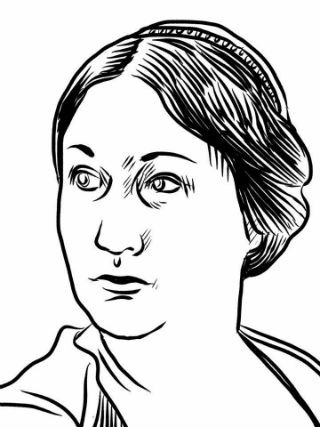
Selena Chambers, by Yves Touringy

Chambers: It’s funny you mention the Southern Gothic thing. I’ve actually been mulling this over a lot, lately. There are definitely two stories in Calls for Submission that are riffing off of the Southern Gothic tradition, but I’ve always viewed them within a more specific lens that I’ve termed the Florida Gothic. I live in North Florida, and not only do we have your standard trappings of ancient oaks and Spanish moss, but a lot of tropical landscape flourishes as well. We got drunk college students and pompous politicians brawling in the streets, and because of the interstate access there are always a new group of drifters or Chattahoochee discharges passing through. The beach is nearby, but so are the springs and the swamps, and both carry the ancient and silenced within their tides. Indian burial grounds are scattered about, which is always good fodder for scaring kids, and there have been occasional serial killers around, which is better fodder for scaring adults. So, yeah, the general anecdotes, gossip, and conversations around here make for straight weirdness. It’s like Faulkner meets Florida Man, and no matter how innocuous the day starts out, you never know what fresh from Florida hell it’s going to end at.

“It’s like Faulkner meets Florida Man, and no matter how innocuous the day starts out, you never know what fresh from Florida hell it’s going to end at.”

The running gag, I think, in my more Gothic stories, though, is trying to get away with defying death, and there isn’t anything more fatalistic and grotesque than that. And I learned that from Poe, Mary Shelley and the Romantics, Baudelaire and the Symbolists, and later on from the nihilism of Dada and Surrealism. So, I guess my aesthetic development was informed more from European sensibilities (with the exception of Poe, but it was true for him, too) than any true Southern ones. But, even so, you can’t escape where you live.

Those same influences is what I think has lead me to fit into the Weird somewhat, although I don’t necessarily self-proclaim myself that. Which ties into being a square peg. I like writing different kinds of stories and playing with and learning from different styles. I’ve never really viewed sub-genres as publishing labels so much as potential tools to add to the writer’s toolbox. So, for example, my story “The Şehrazatın Diyoraması Tour” isn’t quite Gothic, isn’t quite Steampunk, isn’t quite Transhumanist, because it’s a story that uses elements of all of those subgenres to create a more interesting effect than if it were hardcore this or that and stayed within the rules of one genre. That does make my stuff hard to classify sometimes, and is why the Weird umbrella has been nice. Either way, never feeling like I have to conform to this or that category allows me to play and explore a story more and have fun with it, which is what’s important.

Van Young: I strongly relate to that sense of playfulness in my own work. Being a little bit all over the place not because I’m trying to make some massive statement about genre experimentation, but just because it’s sort of who I am, and what amuses me as a writer. But our genres do, in some ways, define us as writers, at least in terms of who we end up associating with — our communities. When we met at the World Horror Convention in Atlanta in 2015 I was struck by how, including yourself and other writers like Molly Tanzer, Jesse Bullington, Craig Gidney, Anya Martin, and Orrin Grey, etc. there was this whole other spectrum of literary genre fiction out there I’d never experienced, just because I’d been going to AWP, if I went anywhere, and that had totally defined my social space. If genre barriers really are breaking down in the way everyone says they are, why don’t all writers of all genres associate more often? How do we broaden the community?

Chambers: I’m so glad you had that experience at World Horror! It certainly was a special one. I’m really looking forward to checking AWP out next year for the same reason. I know there are other Venn Diagrams out there I want to intersect with, and so I hope I’ll get to have a similar experience there like you had at WHC.

The genre barrier has always astounded me, and from what I can tell, it starts in Academia, and the classist elitism it breeds. Over the years, I’ve been in conversations with several friends who went through various MFA programs, and the consensus is that if anyone rolled in with a horror story they’d be spanked out of the workshop. Ditto sci-fi, fantasy, etc., even though genre barriers are supposedly breaking down.

We also have huge disconnects when we discuss the approaches to our careers. Money isn’t necessarily the end game for me, but as a freelance writer it has to factor into things. That whole notion that the writing is worth something, even if it’s just a few pennies a word, just get blank stares from writers working within academia. If a CV has too many paying gigs, you are seen as too genre (even if you aren’t writing capital G stuff). Which…I don’t understand, because it seems to me if you are going to spend a lot of money and time studying a craft, the expectation is there might be a return in the end? So, the whole “I don’t write for money thing” promotes an interesting pseudo-aristocratic class dynamic that casts Genre basically into the “working classes,” and MFA as “nobles” when they’re actually serfs.

Not that we’re liberated in Genre, either…there are problems on the other side down here in the scum pond. Many problems. But, as far as community ambassadorships go…Genre is more fandom driven than anything else, and as a result, a lot of participants could care less about what’s going on beyond it. And it does take two to tango and all that.

“The whole ‘I don’t write for money thing’ promotes an interesting pseudo-aristocratic class dynamic that casts Genre basically into the ‘working classes,’ and MFA as ‘nobles’ when they’re actually serfs.”

Van Young: What you say about the binary of making money off writing creating a “pseudo-aristocratic class dynamic” is fascinating to me, and kind of right-on. It’s weird, right? You want to make money off your writing because why shouldn’t you, but also it’s become such a martyr’s art-form in some ways, you’re expected not to from the get-go and so when you seek to — actively — it can somehow depreciate the value of your work. I’ve always felt the genre community provides a much healthier template for how writers should be treated and paid by publications and editors in general. But we all have a lot to learn from each other, besides! Who are some writers and works (besides Calls for Submission) you see bridging the gap these days that particularly interest you?

Chambers: It is really weird! I mean, of course, speculative fiction may not be everyone’s cup of tea, but neither are straight-shot family sagas. But it seems like there should be room for all stories! The point of craft, to me, anyway, is you have the skills to write the best kind of story regardless of genre.

So, having said that — yeah, there are tons of writers bridging the gap between speculative fiction and lit fiction. Coming from the lit fic side: Amelia Grey and Karen Russell come to mind. One of my favorite science fiction stories,“Black Box,” is by Jennifer Egan. I just picked up Leyna Krow’s I’m Fine, But You Appear to be Sinking which looks like it’s going to be filled with very memorable tales and weird shenanigans. And I also have on the stack Lidia Yuknavitch’s Book of Joan which is a dystopian, alternate history of Joan of Arc. I haven’t read Sander’s Lincoln in the Bardo, yet, but from what I have heard that would definitely fit into this conversation.

So that’s just a few of those…on the other side, dang, let’s see. Molly Tanzer has a new novel coming out this November from Houghton Mifflin Harcourt, Creatures of Will and Temper. It remixes The Picture of Dorian Gray and diabolism to explore the competitive and unconditional relationship of sisters, and I think is really going to speak to a lot of people with sibling feels (and Decadent feels!). Paul Tremblay’s last two novels have really crossed the bridge and opened port to readers who might not otherwise read horror. I think he was able to show just how much deeper into the human condition it can take us, especially with A Head Full of Ghosts. On the weird historical fiction front, Jesse Bullington’s The Folly of the World is a beautiful time-capsule of thieves and waifs struggling with some spookiness in the wake of the Saint Elizabeth Flood.

But, I don’t think a writer needs to necessarily jump into the big 5 to be part of the bridge. There are plenty of small press happenings, perhaps more so there than anywhere else: John Langan’s The Fisherman evokes Melville, Hemingway, and the great American fishing narrative to explore grief and loss. And I am always amazed by Nick Mamatas, whom I have already mentioned. My favorite work of his right now is The Last Weekend. It’s a poignant künstlerroman of a writer stuck in the middle of the post-apocalypse. But it’s also really just a mid-life existential crisis. He tries to rebuild his narrative that is constantly crumbling around him, in-between jacking up zombies, of course. I hate zombie books, so the fact that Nick was able to make me reevaluate the trope is saying something. To me, Nick is a “writer’s writer” but he’s so damn good you don’t realize that what’s happening. And really, I think that’s the rub, right — it’s about the writing. No matter which side of publishing you are on, it’s the writing that is going to transcend the bullshit.

Van Young: Last, not least, what’s with the title? Is it supposed to evoke some double-meaning?

Chambers: Yup! Calls for Submission refers to the two overarching elements of this book. First, there’s the career track…how these stories came to be. Almost all of them were written for anthologies or magazine themes. The only exception are the oldest stories, “The United States of Kubla Khan,” and “Of Parallel and Parcel.” Everything else was written in response to some form of a submissions call.

The second meaning refers to the collection’s overarching theme. I am fascinated by quieter forms of revolt, and each character in this story has some battle to subvert. Each story looks at how the character reacts when called to submit to something more powerful than them, be it government, illness, secrets, or worst of all, themselves.

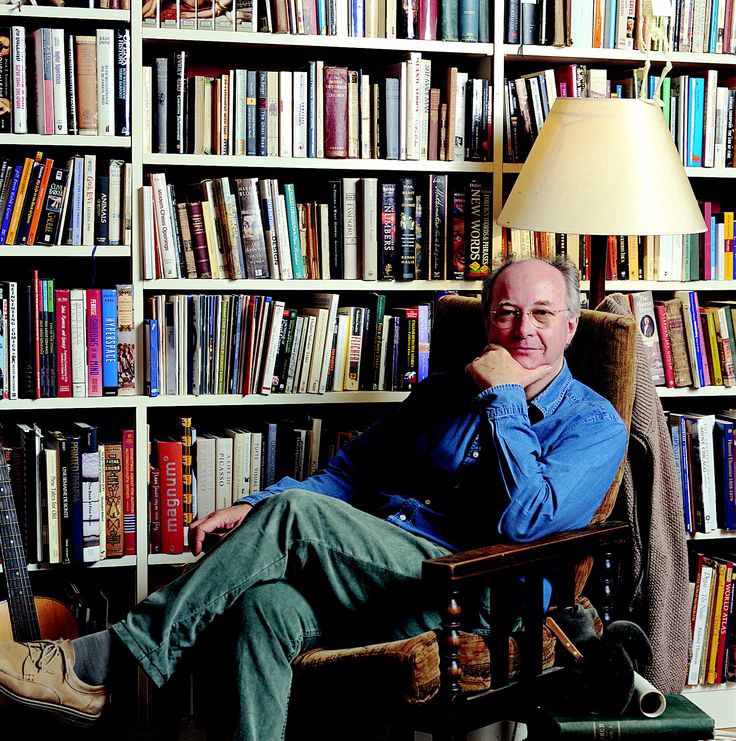
Philip Larkin’s (Let’s Say…) Complicated Personal Life Is on Display in New Exhibit

Plus the Tolkien estate and Warner Bros. settle their blood feud

The day after a long weekend necessarily comes with a whole torrent of literary news we may have missed during our days off. In today’s roundup, a new exhibit about English poet Philip Larkin explores his dark interests and tendencies, a hefty $80 mill lawsuit between the Tolkien estate and Warner Bros. has settled, Chelsea Clinton has no choice but to speak about her mother and America’s political climate, thanks to a new children’s book, and late rockstar Warren Zevon’s books will soon be up for grabs.

New Philip Larkin exhibit explores his long unseen dark side

The controversy surrounding Philip Larkin emerged posthumously, when revelations regarding his obsession with pornography, his conservative views, and indications of racism marred his reputation. An exhibit in Hull’s Brynmor Jones library (where he was the librarian) has now opened to explore the life, experiences, and complexities of the English poet. The exhibit features hundreds of personal items, including books, clothes, photographs, and notes, most of which were once in Larkin’s home and have not been seen by the public. The women of Larkin’s life are featured in the exhibit, revealing his mistreatment of them and his own problems with intimacy. Also on display are the empty spines of diaries that the poet asked to be shredded after his death, which are now thought to have contained pornography, and a figurine of Hitler given to him by his father. The exhibition’s theme is pink, Larkin’s favorite color, and at the end of the show visitors are asked to write a letter to Larkin that will be pinned on the wall.

So, in short, “Annus Mirabilis” fans — prepare to have your mettle tested.

[The Guardian/Hannah Ellis-Petersen]

$80m lawsuit between Tolkien estate and Warner Bros. finally settled

If there’s anything to not be messed with, it’s J.R.R. Tolkien’s legacy — unless you want an $80 million lawsuit, that is. In 2012, the Tolkien estate sued Warner Bros. for breaching their contract and breaking copyright laws by merchandising Tolkien’s beloved book characters. However, the lawsuit has now officially been settled — 5 years later. The initial agreements between the two sides were made in 1969, and granted Warner Bros. access to selling physical property (figurines, stationary, clothing, etc.). By moving beyond that scope into digital and online promotion, the entertainment company was allegedly harming the English fantasy writer’s legacy. Specifically, the lawsuit noted the online gambling game “Lord of the Rings: The Fellowship of the Ring: Online Slot Game.” The lawsuit said, “Fans have publicly expressed confusion and consternation at seeing ‘The Lord of the Rings’ associated with the morally questionable (and decidedly nonliterary) world of online and casino gambling.” The terms of the settlement remain confidential. Still, we’ve all learned a valuable lesson here. You play the Tolkien slots, you’re going to get burned — ’cause the house always wins.

[NY Times/Sopan Deb]

Chelsea Clinton is still being asked to answer for her mother & America

If you thought Chelsea Clinton might get a bit of respite on the children’s book circuit, think again. Her new children’s bestseller, named for the new feminist battle cry — She Persisted: 13 American Women Who Changed the World — steers clear of mentioning her mother in the book, aside from her brief cameo in a museum painting, captioned “Sometimes, being a girl isn’t easy.” But at recent promotional events, the author has been faced with questions from the kids such as, “How do we persist in resisting Donald Trump?” and “One day would you like to be president?” In an interview with The Washington Post, Chelsea Clinton said she did not want the recent election to overshadow the stories of the other women celebrated in the book, such as Helen Keller, Oprah Winfrey, and Harriet Tubman. Good luck with that. If there’s one subset of the population not exactly known for its ability to quit it with the persistent questions — why? how come? — it’s kids.

[The Washington Post/Nora Krug]

Warren Zevon’s large book collection to go on sale

Who doesn’t want to get their hands on a rockstar’s book collection? Warren Zevon’s eclectic library collection is going on sale, featuring signed copies with personal notes addressed to the late singer and songwriter. (Don’t pretend like you don’t know his biggest hit — “Werewolves of London.” Ah-oooo.) The library contains nearly 1,000 books, among them novels by his friends Carl Hiaasen and Stephen King. The books are being sold to raise money for a retreat and community center in Vermont started by Zevon’s ex-wife and daughter, a space that aims to be a safe haven for activists, artists, educational communities, and the like. Scattered among the pages on the block are personal items that the singer filed in there, including restaurant receipts, plane tickets, letters, and itineraries. Zevon never graduated high school, but loved to read, talk about books, and hang out with authors. The extensive collection is now being catalogued and will gradually be sold on eBay.

[The Washington Post/Lisa Rathke]

Surveillance, Satire and the Female Body

How to Explain the Nightmare

On the eve of a new tour, the Lonelyhearts are thinking about dystopias, Ghostface and the future of narrative songwriting

The Lonelyhearts are Andre Perry and John Lindenbaum, based respectively in Iowa City and Fort Collins. Since the band’s founding in 2003, they’ve released several well-received albums of narrative-driven songs, always poetic and gorgeously composed Americana whose lusher album arrangements give way to a more constrained and spare stage presentation of just a twelve-string acoustic guitar and a synthesizer. (I cannot recommend seeing them live strongly enough.) In addition to their work as musicians, both Perry and Lindenbaum have a background as prose writers, and Perry is also the co-founder of the Mission Creek Festival in Iowa City, an exciting annual celebration of music, literature, comedy, and other arts which brings together some of the best emerging talent in the country.

The Lonelyhearts’ latest album, The Age of Man, is something of a departure for the band, at least at first glance: a dystopian song cycle about strange weather, human/bat policemen, and refugee camps, its songs taking place across three generations of an alternative future America. It’s maybe my favorite of their albums so far: During a visit to Iowa City while on tour for my last novel, I had the privilege of hearing a few tracks while they were still being written, and the pleasure of listening to these works-in-progress on Andre’s living room studio left me anxiously hungry to hear the rest.

This summer, the Lonelyhearts are touring for several Midwestern dates with The Mountain Goats, beginning July 6th at Wooly’s in Des Moines, Iowa. Before they left, we discussed the literary argument that spawned The Age of Man, how we tell stories differently in lyrics and in prose, and how the invented world of an album comes into being.

Matt Bell [MB]: One of the fascinating bits of backstory to Age of Man is that it began out of an argument the two of you had while touring, specifically about Jennifer Egan’s A Visit from the Goon Squad, a novel built of interconnected short stories. Age of Man is a cycle of songs built along similar structural lines, each song its own story but contributing to the larger narrative arc of the album. Can I ask what the point of contention over A Visit from the Goon Squad was? Does Age of Man set out, somehow, to prove one or the other of you right?

John Lindenbaum [JL]: The album was actually inspired by two events — the aforementioned discussion of A Visit from the Goon Squad, and an unfortunate bat encounter in Andre’s apartment in Iowa City. As far as the Egan book, I think the argument was about whether or not the book is good. If I remember correctly, I claimed that the book succeeds because it weaves together a variety of perspectives to create a larger whole. I think Andre’s stance was that the book is just okay rather than brilliant, but now every novel about music will suffer from “it’s too much like Goon Squad” comparisons. We wanted to adopt the same multiple-perspectives several-generations conceit for Age of Man. I suppose that if you like our album, I was right. If you don’t, Andre was right.

Andre Perry [AP]: It’s true: We were arguing about the success of the novel’s structural premise. I didn’t think the whole narrative achieved “brilliance” as John noted but, damn, I respected Egan for making the effort. And, ultimately, she did craft some great stories within the entire book.

MB: The story in Age of Man takes place over three generations, and eventually includes plenty of speculative elements, including environmental disaster and radiation poisoning (“If I curse it’s just uranium in my brain / If I raise my hand it’s just the tailings building up in my veins”), bat-winged policemen and hyper-vigilant weathermen (“the watcher knows our sins / he calculates the winds”), and the failure of governmental and cultural institutions in a failing world (“Jesus was a good guy, I guess / but he never quite prepared me for this mess”). It’s a complicated story, but what we get is more impressionistic and allusional than expositional, which might be part of the difference between story collection and song cycle. Still, I wonder if there was a more explanation-heavy version at one time, or if you know more of the overarching story that what can be presented in these songs, each limited by a single narrator, singing from a single moment in the timeline. As someone reasonably ignorant of the typical songwriting process, I’d love to hear how the story was developed: did the plot exist separate from or even preceding the music, or was it collaged together as individual songs took shape? How much of this world never made it into the songs? Do you know a lot about these people and their lives outside of these moments?

JL: We developed the overarching narrative over the course of many, many lunchtime conversations. We had the general concept in mind before any of the songs were completed, but details changed as we worked our way through the lyrics of each song. For instance, I wanted “Repopulation Blues” to involve an IDP camp romance, but Ted’s new flame wasn’t one of the original set of characters. Many elements of the story might not be immediately clear to a listener, but yes, we see the various perspectives as combining to tell a cohesive story (in contrast to more of a Walter Benjamin-inspired putting-seemingly-unrelated-viewpoints-into-conjunction, which might better describe our previous records or the interludes in your Scrapper.)

And yes, we know additional details that aren’t explained in the lyrics (White Nose Syndrome in American bats, academic debates about “the Anthropocene,” Iran’s threat to blockade the Strait of Hormuz, the Bay Area male escort economy, etc.). Such an omniscient perspective violates Ted’s “no shahs/no creeds” claims in the final song, so maybe it too is doomed.

Alejandro Zambra’s Literary Mixtape

AP: In retrospect, the music and the final set of lyrics really did evolve separately in these songs. It was an interesting relationship: We had a story that we definitely wanted to tell but the songs’ structural confines — the chords and melodies and cadences we had put together independently of the lyrical conceit — determined how that story could be told. The phrases in “The Glow” allowed for us to fit a ton of words and thus narrative and insight into the song whereas “Escape From Bat City” has the shortest verses — it’s almost impossible to achieve reflective depth with verses that short. Those constraints really affected how the narrative came across from song to song. I mean, we knew that the music for “Escape From Bat City” was going to be about escaping the radioactive bats of Pittsburgh but if it had been different music the narrative would have unfolded with an alternative depth.

MB: Were there musical arrangements that you meant for the album that never found their lyrics? Formally, it’s interesting to think of the music as a constraint, which it obviously is (and often in a generative way, it seems), but also as a form seeking its own best content: the music wants a certain story shape, and you either find it or you don’t. Ten years from now, do we get the “Deluxe” version where those extra songs are possible?

AP: Somehow we made everything fit this time around. We found a home for each set of music, a place for each one of them on the record where they could become a piece of the story. To be honest, it was brutal at times — sitting around a kitchen table trying to come up with the words to both fit a certain phrasing and a narrative that not only satisfied the song but the overarching arc of the album. Specifically, I am thinking of “Rotterdam.” The lyrics took forever. Most of them were written very slowly in Fort Collins. It turned out to be one of my favorite songs. Not all of the songs were like that — sometimes the ideas and the words came quickly.

Given the epic scope of what we were trying to accomplish here, it’s my sense that the next record will be punchier and quicker on all fronts. It’ll be our Train Dreams.

MB: Growing up, the place where my dad’s taste in music and mine came together was in songs that told a good story. My dad read a lot less than me, but he would often talk about the stories from favorite songs of his, recounting their story beats the way I might describe a favorite novel. That’s one of the elements that attracted me to The Lonelyhearts, from the first time I heard you play live in a bar in Iowa City — I can still remember the story of “Ntozake Nelson” cutting through the chatter of the drinkers, the narrator’s voice pulling me toward that crushing line at the end of the final verse, “I may never fall in love but I’m getting to the age at which I’m willing to pretend.” Are there songwriter-storytellers who are particular influences for either of you? What constraints are you up against when you’re telling stories as songwriters, as opposed to writing in prose?

JL: My dad mostly listened to classical music, which I avoid, but our tastes also converged in songs that tell a good story (Springsteen, CCR). I’d never really thought about it like that before.

Storytelling — be it a straightforward beginning-middle-end arc or a series of evocative themes — is what I seek out in most music — the exceptions being post-rock bands such as Mogwai or Sigur Ros who soundtrack the weirdness inside my head. My list of favorite songwriters will probably seem painfully unsurprising: Neil Young, John Darnielle, Jeff Mangum, Low, Craig Finn, Jason Isbell, Vince Staples, Elliott Smith, Pusha T. For me, not all stories need to follow a linear path like “Long Black Veil” or “Johnny 99” — though I enjoy it when Courtney Barnett, Ghostface, or Jarvis Cocker spins a straightforward tale.

“Storytelling — be it a straightforward beginning-middle-end arc or a series of evocative themes — is what I seek out in most music…”

Andre is still an active prose writer. I haven’t written prose since the ’90s. So, for me, I only tell stories in the form of songs. I don’t find this limiting at all, though songwriting and prose are very different art forms. Even for a songwriter who often is accused of cramming far too many lyrics into a song, there are details, as you note above, that are going to be left up to the listener.

As a young songwriter, I think my real-life experiences and emotions informed the stories in my songs. Now, decades in, it’s much more of an inventive process — my own life still weasels its way in, but I am not always fictionalizing an event from my life. For the Lonelyhearts, I would argue that Age of Man is our first record that tells stories that are entirely divorced from our lives and those of our friends. In certain musical genres — Americana, trap-hop — it is expected that the songwriter write about her or his own life. I am happy that we are not constricted in that way.

AP: My dad was into jazz and I am into it too. I was feeling Coltrane and Coleman deeply as I grew up and now it’s more modern ensembles like Dawn of Midi or even someone like Nils Frahm. All of this to say I have always been interested in how music can evoke atmospheres and collective emotions — perhaps even before the lyrics get involved. I grew up in the mid-’90s and listened to Cuban Linx and Liquid Swords incessantly. The Infamous as well. I think what RZA and Havoc were accomplishing in terms of mood with those raw drum samples, eerie-ass jazz piano samples, and budget synths helped set the tone for me getting entirely blown away by GZA or Ghostface or Raekwon or Prodigy’s ability to tell a story through the lyrics. I studied those lyrics. I was a huge undercover nerd about it. As I got older I started to connect the dots to lyrical rawness via Lou Reed’s work with the Velvets. On some levels, his solo work really hit me harder than the Velvets. When he was really on I thought very few could contend with him. I mean that first verse of “Street Hassle” — he’s dancing these elegant phrases around each other while he’s talking about a body getting left for dead on the street and that little interlude he has Bruce Springsteen sing just to give everyone a break so they don’t cry — that shit is on point; it made you feel like you were literally on the street. After college I became aware of Grandaddy and the speculative worlds Jason Lytle constructed with that project. I think Grandaddy had a big influence on us as a band: synths, acoustic guitars, and a lot of lyrics — those were elements John and I could both agree on. I’d be remiss not to mention the Grateful Dead. Robert Hunter wrenched out some great songs with those guys. Like the Wu and Mobb Deep tracks, I used to stay up and listen to songs like “Rubin and Cherise” or “Terrapin Station” — Hunter was achieving these wild, beautiful narratives that were both his own stories and filled with all of these references to traditional folk tales — you needed a PhD to figure out what the hell was alluding to. And those narratives were so tight, you knew they took him forever to write; they didn’t fall out of him like those early gems: “Cumberland Blues,” “New Speedway Boogie,” or “Box of Rain.” In our more current era, I am keeping an ear to Jenn Wasner (Wye Oak), Angel Olsen, and Kendrick Lamar. Mitski’s writing on Puberty 2 is probably my favorite at this very moment.

Writing on the page is definitely a different form than writing songs, though I am interested in similar ends: figuring out how the most select details can reveal the most gripping story.

MB: John, I like your observation that certain musical genres expect “the songwriter write about her or his own life.” Maybe it’s because I grew up without knowing any professional writers or musicians or artists, but I mostly still take in art ignorant of the artist’s life: I often have no idea whether a song or a story is directly autobiographical until someone else tells me it is. It never really occurs to me to write that way, either, which I agree is a great freedom, maybe to instead look for the “most select details,” as Andre says. I was always taught that the universal is in the particular: that the more concrete and specific the detail, paradoxically the more universally accessible the emotion often becomes. (There’s a great bit in DeLillo’s Underworld about the “quotidian” and names of objects that always comes to mind for me here: the power of knowing the right names of things, the parts of things.) I wonder if that’s more difficult in songwriting, because of the size of the units of sense — you get such smaller phrases to work with than a fiction writer does: your images have to be more compressed, your dialogues less protracted. But one of the things I love about The Lonelyhearts is exactly that: the telling details in every line. So many songs — even by songwriters I truly admire — traffic in clichés and worn language, I think just because those clichés and bits of language fill in the music in places, and because they function as a sort of emotional shorthand. But it seems to me that the passage away from the known “realist” world toward the kind of invention on Age of Man frees you even further in the direction of the original image and new language. Was there a balance to strike in the worldbuilding here? A limit to how far you could push the invented future of the album without leaving the listener unable to follow you, especially given the relatively sparse amount of words you have to do your worldbuilding in?

AP: Each song must satisfy a number of key elements. We aim for compelling stories, vignettes, or impressions. We attempt to etch lyrics that are both clear and surprising to the listener. The music, we hope, will evoke a fascinating mood. All of those pieces must be in place. At each of those corners we fight to create a song that is in someway original. Perhaps the arrangement sounds familiar but the subject matter will be new. Or maybe the lyrical text reflects what you’d hear in a lot of folk songs but the sounds of guitars have been undermined by noisy synthesizers. There is a great need in our music to try as much as possible to avoid doing what has been done before. We often fail but sometimes it comes together. It’s not that we don’t like what’s come before there’s just this sense that if we are going to put these hours into attempting to craft songs for people to listen to they shouldn’t get a new Jason Isbell song or a Dandy Warhols track. Plenty of those songs exist and there are people who can make them better than us. John is particularly sharp about keeping us away from overused lyrics. It was cool when John Lennon told us love is all we need, but maybe we can’t say that again, at least not like he said it. We need to find a different way. And maybe it’s not even worth saying again; it’s possible Lennon locked that sentiment down, no one else needs to hear it ever again. What people might not have heard is that it’s possible to find love in a bat apocalypse. You’ll need more than love, though, you’ll also need to wage some biochemical warfare to eradicate the bats.

“It was cool when John Lennon told us love is all we need, but maybe we can’t say that again, at least not like he said it. We need to find a different way…What people might not have heard is that it’s possible to find love in a bat apocalypse.”

I’ve evaded your question to some degree: What I mean to say is that despite any invented narratives that shape an album, we are always focusing, I think, on the individual songs. In the case of Age of Man, we hope that someone who just hears one of these tracks will walk away and find something to hold onto in that track even if they don’t hear or can’t wrap their hands around the larger narrative at work. At the core of most of these songs there is still some universally understood human error at play among the characters.

JL: In my short fiction days (ahhh, the ‘90s), I also remember focusing on significant details to tell a much larger story. We certainly try to do that in our songs. We have spent serious hours debating the make and model of a car or which animal might have a broken leg. As far as fitting them all into short phrases, a general rule is that the songs with short phrases were started by Andre and the ones with an endless onslaught of lyrics were started by me. It is incredibly tricky to fit all the details I want into one of Andre’s tiny little verses. Still, I think that sort of challenge makes this songwriting partnership rewarding. Even though we are not ghost-writing pop hits for Disney, we do try to pay attention to catchiness and song length. I remember laboring to tell an entire story in the handful of notes that make up “Escape from Bat City,” for instance. Writing a cohesive album such as Age of Man makes it a touch easier, since we can refer to images or events from previous songs. We tried to ground all of it in a somewhat realistic world though, so I don’t think we gained much leeway detail-wise. The tent cities, criminal relatives, diseases, and military helicopters that appear in Age of Man could have featured on an earlier album of ours.

Tangentially, I am living in Mexico City for two weeks and just spent the previous three months reading contemporary Mexican fiction. While magical realism is just one of the many tools those authors employ, I don’t sense the same instinct to ground every single event in a plausible backstory. The radioactive vigilante bats might just show up in chapter 6.

To answer your question more directly, I did not feel limited in the sort of significant details or stories we could include. I would hope that most of the album makes sense to a listener. I suspect the rewriting of the ten commandments in the last song is the most head-scratching section.

I truly hope that the two novels of yours I have read are not autobiographical.

MB: We began this conversation last year, before Trump’s election and so much else that’s left our everyday world feeling very different than it did when we started. Returning to the album today, I do feel like I’m in a different listening environment than I was when we talked a few months ago. At the same time, I’m fairly suspicious of reading every work of art through current events, considering that most albums and novels are conceived of and written months if not years before the events they’re contrasted against: Age of Man is a dystopian album, but that doesn’t mean it’s responding to this set of circumstances. All that said, I wonder if playing these songs live has taken on a different tone or urgency recently: the album version is complete, but does the live set continue to evolve in response to the world in which it gets performed?

JL: It certainly is high season for dystopian art: The Handmaid’s Tale TV series, New York 2140, NK3, The Book of Joan, American War, Oryx and Crake, Borne, etc. We wrote these songs three years ago, before Trump was campaigning in coal country, so it’s almost as if the dystopian moment has caught up with us rather than vice versa. I agree that cultural and political context can change how songs are interpreted (remember when “Don’t Look Back In Anger” was just another catchy Oasis anthem?), but I don’t know how a live audience’s understanding of these songs has changed. We were fairly dark on our three previous albums as well, so I suspect the Age of Man songs are heard as “this time, with radioactive vigilante bats” rather than a complete genre shift like The Road or Zone One.

Still, we have written and arranged 10 new songs since we finished Age of Man, and maybe none of them would qualify as dystopian. My other band, Nadalands, continues to come up with new songs about impending apocalypse or social collapse, but I feel the Lonelyhearts have covered what we need to cover in that regard. It’s all ghosts, private aircraft disasters, and police brutality from this point forward.

“We wrote these songs three years ago, before Trump was campaigning in coal country, so it’s almost as if the dystopian moment has caught up with us rather than vice versa.”

AP: I almost agree with John’s remark about the dystopian moment catching up to us, but I would clarify even further: the dystopian moment has always been there; it’s just that people are more aware of it now. The current American political atmosphere has been with us for decades and in some ways since the beginning of our nation. Donald Trump isn’t the architect of this moment; he is a reflection of it. He doesn’t possess Sheev Palpatine attributes. He doesn’t even possess Anakin Skywalker qualities. Such dark talents belong to the likes of Dick Cheney or Roger Stone: sharp, conniving strategists.

As a citizen if you’ve been acutely aware of the nation’s tattered social fabric then these modern times are simply an affirmation of what you’ve been feeling all along — and you’ve likely been feeling them for awhile if you are gender non-conforming or an immigrant or a person of color or a person without access to cash, real estate, or education. A friend of mine recently unearthed an old Twilight Zone quote: “We will not end the nightmare, we will only explain it,” and I feel the Lonelyhearts have been on that vibe since 2004. Age of Man was a natural peak in our quest to represent just how turned around our systems are. But it’s not all bad news because ultimately these songs, especially when played live, are about catharsis and sharing a positive, real moment with other people — a community — whether it’s 15 or 300 people in a room together. We will chase that connection for the rest of our lives because a viable future relies on community.

A Story About the Volatility of a Codependent Friendship

“Kimberle”
by Achy Obejas

“I have to be stopped,” Kimberle said. Her breath blurred her words, transmitting a whooshing sound that made me push the phone away. “Well, okay, maybe not have to — I’d say should — but that begs the question of why. I mean, who cares? So maybe what I really mean is I need to be stopped.” Her words slid one into the other, like buttery babies bumping, accumulating at the mouth of a slide in the playground. “Are you listening to me?”

I was, I really was. She was asking me to keep her from killing herself. There was no method chosen yet — it could have been slashing her wrists, or lying down on the train tracks outside of town (later she confessed that would never work, that she’d get up at the first tremor on the rail and run for her life, terrified her feet would get tangled on the slats and her death would be classified as a mere accident — as if she were that careless and common), or just blowing her brains out with a polymer pistol — say, a Glock 19 — available at Walmart or at half price from the same cretin who sold her cocaine.

“Hellooooo?”

“I hear you, I hear you,” I finally said. “Where are you?”

I left my VW Golf at home and took a cab to pick her up from some squalid blues bar, the only pale face in the place. The guy at the door — a black man old enough to have been an adolescent during the civil rights era, but raised with the polite deference of the previous generation — didn’t hide his relief when I grabbed my tattooed friend, threw her in her car, and took her home with me.

It was all I could think to do, and it made sense for both of us. Kimberle had been homeless, living out of her car — an antique Toyota Corolla that had had its lights punched out on too many occasions and now traveled unsteadily with huge swathes of duct tape holding up its fender. In all honesty, I was a bit unsteady myself, afflicted with the kind of loneliness that’s felt in the gut like a chronic and never fully realized nausea.

Also, it was fall — a particularly gorgeous time in Indiana, with its spray of colors on every tree, but, in our town, one with a peculiar seasonal peril for college-aged girls. It seemed that about this time every year, there would be a disappearance — someone would fail to show at her dorm or study hall. This would be followed by a flowering of flyers on posts and bulletin boards (never trees) featuring a girl with a simple smile and a reward. Because the girl was always white and pointedly ordinary, there would be a strange familiarity about her: everyone was sure they’d seen her at the Commons or the bookstore, waiting for the campus bus or at the Bluebird the previous weekend.

It may seem perverse to say this, but every year we waited for that disappearance, not in shock or horror, or to look for new clues to apprehend the culprit: we waited in anticipation of relief. Once the psycho got his girl, he seemed pacified, so we listened with a little less urgency to the footsteps behind us in the parking lot, worried less when out running at dawn. Spared, we would look guiltily at those flyers, which would be faded and torn by spring, when a farmer readying his cornfield for planting would discover the girl among the papery remains of the previous year’s harvest.

When Kimberle moved in with me that November, the annual kill had not yet occurred and I was worried for both of us, her in her car and me in my first-floor one-bedroom, the window open for my cat, Brian Eno, to come and go as she pleased. I had trapped it so it couldn’t be opened more than a few inches, but that meant it was never closed all the way, even in the worst of winter.

In my mind, Kimberle and I reeked of prey. We were both boyish girls, pink and sad. She wore straight blond hair and had features angled to throw artful shadows; mine, by contrast, were soft and vaguely tropical, overwhelmed by a carnival of curls. We both seemed to be in weakened states. Her girlfriend had caught her in flagrante delicto and walked out; depression had swallowed her in the aftermath. She couldn’t concentrate at her restaurant job, mixing up simple orders, barking at the customers, so that it wasn’t long before she found herself at the unemployment office (where her insistence on stepping out to smoke cost her her place in line so many times she finally gave up).

It quickly followed that she went home one rosy dawn and discovered her landlord, aware he had no right to do so but convinced Kimberle (now four months late on her rent) would never get it together to legally contest it, had stacked all her belongings on the sidewalk, where they had been picked over by the students at International House, headquarters for all the third world kids on scholarships that barely covered textbooks. All that was left were a few T-shirts from various political marches (mostly black), books from her old and useless major in Marxist theory (one with a note in red tucked between its pages which read, COMUNISM IS DEAD! which we marveled at for its misspelling), and, to our surprise, her battered iBook (the screen was cracked though it worked fine).

Me, I’d just broken up with my boyfriend — it was my doing, it just felt like we were going nowhere — but I was past the point of righteousness and heavily into doubt. Not about my decision — that, I never questioned — but about whether I’d ever care enough to understand another human being, whether I’d ever figure out how to stay after the initial flush, whether I’d ever get over my absurd sense of self-sufficiency.

When I brought Kimberle to live with me she hadn’t replaced much of anything and we emptied the Toyota in one trip. I gave her my futon to sleep on in the living room, surrendered a drawer in the dresser, pushed my clothes to one side of the closet, and explained my alphabetized CDs, my work hours at a smokehouse one town over (and that we’d never starve for meat), and my books.

Since Kimberle had never visited me after I’d moved out of my parents’ house — in truth, we were more acquaintances than friends — I was especially emphatic about the books, prized possessions I’d been collecting since I had first earned a paycheck. I pointed out the shelf of first editions, among them Richard Wright’s Native Son, Sapphire’s American Dreams, Virginia Woolf’s Orlando, a rare copy of The Cook and the Carpenter, and Langston Hughes and Ben Carruthers’s limited-edition translation of Nicolas Guillén’s Cuba Libre, all encased in Saran Wrap. There were also a handful of nineteenth-century travel books on Cuba, fascinating for their racist assumptions, and a few autographed volumes, including novels by Dennis Cooper, Ana María Shua, and Monique Wittig.

“These never leave the shelf, they never get unwrapped,” I said. “If you wanna read one of them, tell me and I’ll get you a copy.”

“Cool,” she said in a disinterested whisper, pulling off her boots, long, sleek things that suggested she should be carrying a riding crop.

She leaned back on the futon in exhaustion and put her hands behind her head. There was an elegant and casual muscularity to her tattooed limbs, a pliability I would later come to know under entirely different circumstances.

Kimberle had not been installed in my apartment more than a day or two (crying and sniffling, refusing to eat with the usual determination of the newly heartbroken) when I noticed Native Son was gone, leaving a gaping hole on my shelf. I assumed she’d taken it down to read when I had turned my back. I trotted over to the futon and peeked around and under the pillow. The sheets were neatly folded, the blanket too. Had anyone else been in the apartment except us two? No, not a soul, not even Brian Eno, who’d been out hunting. I contemplated my dilemma: how to ask a potential suicide if they’re ripping you off.

Sometime the next day — after a restless night of weeping and pillow punching which I could hear in the bedroom, even with the door closed — Kimberle managed to shower and put on a fresh black T, then lumbered into the kitchen. She barely nodded. It seemed that if she’d actually completed the gesture, her head might have been in danger of rolling off.

I suppose I should have been worried, given the threat of suicide so boldly announced, about Kimberle’s whereabouts when she wasn’t home, or what she was up to when I wasn’t at my apartment. But I wasn’t, I wasn’t worried at all. I didn’t throw out my razors, I didn’t hide the belts, I didn’t turn off the pilot in the oven. It’s not that I didn’t think she was at risk, because I did, I absolutely did. It’s just that when she told me she needed to be stopped, I took it to mean she needed me to shelter her until she recovered, which I assumed would be soon. I thought, in fact, I’d pretty much done my duty as a friend by bringing her home and feeding her a cherry-smoked ham sandwich.

Truth is, I was much more focused on the maniac whose quarry was still bounding out there in the wilderness. I would pull out the local print-only paper every day when I got to the smokehouse and make for the police blotter. I knew, of course, that once the villain committed to the deed, it’d be front-page news, but I held out hope for clues from anticipatory crimes.

Once, there was an incident on a hiking trail — two girls were approached by a white man in his fifties, sallow and scurvied, who tried to grab one of them. The other girl turned out to be a member of the campus tae kwon do team and rapid-kicked his face before he somehow managed to get away. For several days after that, I was on the lookout for any man in his fifties who might come in to the smokehouse looking like tenderized meat. And I avoided all trails, even the carefully landscaped routes between campus buildings.

Because the smokehouse was isolated in order to realize its function, and its clientele fairly specialized — we sold gourmet meat (including bison, ostrich, and alligator) mostly by phone and online, though our best seller was summer sausage, as common in central Indiana as Oscar Mayer — there wasn’t much foot traffic in and out of the store and I actually spent a great deal of time alone. After I’d processed the orders, packed the UPS boxes, replenished and rearranged the display cases, made coffee, and added some chips to the smoker, there wasn’t much for me to do but sit there, trying to study while avoiding giving too much importance to the noises outside that suggested furtive steps in the yard, or shadows that looked like bodies bent to hide below the windowsill, just waiting for me to lift the frame and expose my neck for strangulation.

One evening, I came home to find Kimberle with my Santoku knife in hand, little pyramids of chopped onions, green pepper, and slimy octopus arms with their puckering cups arranged on the counter. Brian Eno reached up from the floor, her calico belly and paws extended toward the heaven promised above.

“Dinner,” Kimberle announced as soon as I stepped in, lighting a flame under the wok.

I kicked off my boots, stripped my scarf from around my neck, and let my coat slide from my body, all along yakking about the psychopath and his apparent disinterest this year.

“Maybe he finally died,” offered Kimberle.

“Yeah, that’s what I thought when we were about fifteen, ’cause it took until January that year, remember? But then I realized it’s gotta be more than one guy.”

“You think he’s got accomplices?” Kimberle asked, a tendril of smoke rising from the wok.

“Or copycats,” I said. “I’m into the copycat theory.”

That’s about when I noticed Sapphire angling in an unfamiliar fashion on the bookshelf. Woolf’s Orlando was no longer beside it. Had I considered what my reaction would have been any other time, I might have said rage. But seeing the jaunty leaning that suddenly gave the shelves a deliberately decorated look, I felt like I’d been hit in the stomach. I was still catching my breath when I turned around. The Santoku had left Kimberle’s right hand, embedding its blade upright on the knuckles of her left. Blood seeped sparingly from between her fingers but collected quickly around the octopus pile, which now looked wounded and alive.

I took Kimberle to the county hospital, where they stitched the flaps of skin back together. Her hand, now bright and swollen like an aposematic amphibian, rested on the dashboard all the way home. We drove back in silence, her eyes closed, head inclined and threatening to hit the windshield.

In the kitchen, the onion and green pepper pyramids were intact on the counter but the octopus had vanished. Smudged paw tracks led out Brian Eno’s usual route through the living room window. Kimberle stood unsteadily under the light, her face shadowed. I sat down on the futon.

“What happened to Native Son and Orlando?” I asked.

She shrugged.

“Did you take them?”

She spun slowly on the heel of her boot, dragging her other foot around in a circle.

“Kimberle . . .”

“I hurt,” she said, “I really hurt.” Her skin was a bluish red as she threw herself on my lap and bawled.

A week later, Native Son and Orlando were still missing but Kimberle and I hadn’t been able to talk about it. Our schedules failed to coincide and my mother, widowed and alone on the other side of town (confused but tolerant of my decision to live away from her), had gone to visit relatives in Miami, leaving me to deal with her cat, Brian Eno’s brother, a daring aerialist she’d named Alfredo Codona, after the Mexican trapeze artist who’d killed himself and his ex-wife. This complicated my life a bit more than usual, and I found myself drained after dealing with the temporarily housebound Alfredo, whose pent-up frustrations tended to result in toppled chairs, broken picture frames, and a scattering of magazines and knickknacks. It felt like I had to piece my mother’s place back together every single night she was gone.

One time, I was so tired when I got home I headed straight for the tub and finished undressing as the hot water nipped at my knees. I adjusted the temperature, then I let myself go under, blowing my breath out in fat, noisy bubbles. I came back up and didn’t bother to lift my lids. I used my toes to turn off the faucet, then went into a semisomnambulist state in which neither my mother nor Alfredo Codona could engage me, Native Son and Orlando were back where they belonged, and Kimberle . . . Kimberle was . . . laughing.

“What . . . ?”

I sat up, water splashing on the floor and on my clothes. I heard the refrigerator pop open, then tenebrous voices. I pulled the plug and gathered a towel around me, but when I opened the door, I was startled by the blurry blackness of the living room. I heard rustling from the futon, conspiratorial giggling, and Brian Eno’s anxious meowing outside the unexpectedly closed window. To my amazement, Kimberle had brought somebody home. I didn’t especially like the idea of her having sex in my living room, but we hadn’t talked about it — I’d assumed, since she was supposedly suicidal, that there wasn’t a need for that talk. Now I was trapped, naked and wet, watching Kimberle hovering above her lover, as agile as the real Alfredo Codona on the high wire.

Outside, Brian Eno wailed, tapping her paws on the glass. I shrugged, as if she could understand, but all she did was unleash a high-pitched scream. It was raining outside. I held tight to the towel and started across the room as quietly as I could. But as I tried to open the window, I felt a hand on my ankle. Its warmth rose up my leg, infused my gut, and became a knot in my throat. I looked down and saw Kimberle’s arm, its jagged tattoos pulsing. Rather than jerk away, I bent to undo her fingers, only to find myself face to face with her. Her lips were glistening, and below her chin was a milky slope with a puckered nipple . . . She moved to make room for me as if it were the most natural thing in the world. I don’t know how or why but my mouth opened to the stranger’s breast, tasting her and the vague tobacco of Kimberle’s spit.

Afterward, as Kimberle and I sprawled on either side of the girl, I recognized her as a clerk from a bookstore in town. She seemed dazed and pleased, her shoulder up against Kimberle as she stroked my belly. I realized that for the last hour or so, as engaged as we’d been in this most intimate of maneuvers, Kimberle and I had not kissed or otherwise touched. We had worked side by side — structureless and free.

“Here, banana boat queen,” Kimberle said with a sly grin as she passed me a joint. Banana boat queen? And I thought: Where the fuck did she get that? How the hell did she think she’d earned dispensation for that?

The girl between us bristled.

Then Kimberle laughed. “Don’t worry,” she said to our guest, “I can do that; she and I go way back.”

In all honesty, I don’t know when I met Kimberle. It seemed she had always been there, from the very day we arrived from Cuba. Hers was a mysterious and solitary world. I realized that one winter day in my junior year in high school as I was walking home from school just as dusk was settling in. Kimberle pulled up in her Toyota next to me and asked if I wanted a ride. As soon as I got in, she offered me a cigarette. I said no.

“A disgusting habit anyway. You wanna see something?”

“What?”

Without another word, Kimberle aimed the Toyota out of town, past the last deadbeat bar, the strip malls, and the trailer parks, past the ramp to the interstate, until she entered a narrow gravel road with dry cornstalks blossoming on either side. There was a brackish smell, the tang of wet dirt and nicotine. The Toyota danced on the gravel but Kimberle, bent over the wheel, maintained a determined expression.

“Are you ready?”

“Ready . . . ? For what?” I asked, my fingers clutching the shoulder belt.

“This,” she whispered. Then she turned off the headlights.

Before I had a chance to adjust to the tracers, she gunned the car, hurling it down the black tunnel, the tires spitting rocks as she skidded this way and that, following the eerie spotlight provided by the moon . . . For a moment, we were suspended in air and time. My life did not pass in front of my eyes how I might have expected; instead, I saw images of desperate people on a bounding sea; multitudes wandering Fifth Avenue or the Thames, the shores of the Bosporus or the sands outside the pyramids; mirrors and mirrors, mercury and water; a family portrait in Havana from years before; my mother with her tangled hair, my father tilting his hat in New Orleans or Galveston; the shadows of birds of paradise against a stucco wall; a shallow and watery grave, and another longer passage, a trail of bones. Just then the silver etched the sharp edges of the cornstalks, teasing them to life as specters in black coats . . .

“We’re going to die!” I screamed.

Moments later, the Toyota came to a shaky stop as we both gasped for breath. A cloud of smoke surrounded us, reeking of fermentation and gasoline. I popped open the door and crawled outside, where I promptly threw up.

Kimberle scrambled over the seat and out, practically on top of me. Her arms held me steady. “You okay?” she asked, panting.

“That was amazing,” I said, my heart still racing, “just amazing.”

Not even a week had gone by when Kimberle brought another girl home, this time an Eastern European professor who’d been implicated with a Cuban during a semester abroad in Bucharest. Rather than wait for me to stumble onto them, they had marched right into my bedroom, naked as newborns. I was going to protest but was too unnerved by their boldness, and then, in my weakness, I was seduced by the silky warmth of skin on either side of me. Seconds later, I felt something hard and cold against my belly and looked down to see Kimberle wearing a harness with a summer sausage dangling from it. The professor sighed as I guided the meat. While she licked and bit at my chin, Kimberle pushed inch by inch into her. At one point, Kimberle was balanced above me, her mouth grazing mine, but we just stared past each other.

Afterward — the professor between us — we luxuriated, the room redolent of garlic, pepper, and sweat. “Quite the little Cuban sandwich we’ve got here,” Kimberle said, passing me what now seemed like the obligatory after-sex joint followed by a vaguely racist comment. The professor stiffened. Like the bookstore girl, she’d turned her back to Kimberle. Instead of rubbing my belly, this one settled her head on my shoulder, then fell happily asleep.

“Kimberle, you’ve gotta stop,” I said, then hesitated. “I’ve gotta get my books back. Do you understand me?”

Her head was buried under the pillow on the futon, the early-morning light shiny on her exposed shoulder blade. With the white sheet crumpled halfway up her back, she looked like a headless angel.

“Kimberle, are you listening to me?” There was some imperceptible movement, a twitch. “Would you please . . . I’m talking to you.”

She emerged, curtain of yellow hair, eyes smoky. “What makes you think I took them?”

“What? Are you kidding me?”

“Coulda been the bookstore girl, or the professor.”

Since the ménage, the bookstore girl had called to invite me to dinner but I had declined. And the professor had stopped by twice, once with a first edition of Upton Sinclair’s Mental Radio. Tempting — achingly tempting — as that 1930 oddity was, I had refused it.

“I’ll let Kimberle know you stopped by,” I’d added, biting my lip.

“I didn’t come to see Kimberle,” the professor had said, her fingers pulling on my curls, which I’d found disconcerting.

Kimberle was looking at me now, waiting for an answer. “My books were missing before the bookstore girl and the professor,” I replied.

“Oh.”

“We’ve got to talk about that too.”

Down went her head. “Now?” she asked, her voice distant and flimsy like a final communication from a sinking ship.

“Now.”

She hopped up, her hip bones pure cartilage. She shivered. “I’ll be right back,” she said, heading for the bathroom. I dropped back onto the futon, heard her pee into the bowl, then the water running. I scanned the shelf, imagining where Mental Radio might have fit. Silence.

Then: “Kimberle? . . . Kimberle, you all right?” I scrambled to the bathroom, struggled with the knob. “Kimberle, please, let me in.” I imagined her hanging from the light fixture, her veins cascading red into the tub, that polymer pistol bought just for this moment, when she’d stick its tip in her mouth and . . . “Kimberle, goddamnit . . .” Then I kicked, kicked, and kicked again, until the lock bent and the door gave. “Kimberle . . .” But there was nothing, just my breath misting as I stared at the open window, the screen leaning against the tub.

I ran out and around our building but there was no sign of her, no imprint I could find in the snow, nothing. When I tried to start my car to look for her, the engine sputtered and died. I grabbed the keys to Kimberle’s Toyota, which came to life mockingly, and put it into reverse, only to have to brake immediately to avoid a passing station wagon. The Toyota jerked, the duct-taped fender shifted, practically falling, while I white-knuckled the wheel and felt my heart like a reciprocating engine in my chest.

After that, I made sure we spent as much time together as possible: reading, running, cooking venison I brought from the smokehouse, stuffing it with currants, pecans, and pears, or making smoked bison burgers with Vidalia onions and thyme. On any given night, she’d bring home a different girl to whom we’d minister with increasing aerial expertise. At some point I noticed American Dreams was missing from the shelf but I no longer cared.

One night in late January — our local psychopath still loose, still victimless — I came home from the smokehouse emanating a mesquite and found a naked Kimberle eagerly waiting for me.

“A surprise, a surprise tonight,” she said, helping me with my coat. “Oh my god, you smell . . . sooooo good.”

She led me to my room, where a clearly anxious, very pregnant woman was sitting up in my bed.

“Whoa, Kimberle, I — ”

“Hi,” the woman said hoarsely; she was obviously terrified. She was holding the sheet to her ample breasts. I could see giant areolas through the threads, the giant slope of her belly.

“This’ll be great, I promise,” Kimberle whispered, pushing me toward the bed as she tugged on my sweater.

“I dunno . . . I . . .”

Before long Kimberle was driving my hand inside the woman, who barely moved as she begged us to kiss, to please kiss for her.

“I need, I need to see that . . .”

I turned to Kimberle but she was intent on the task at hand. Inside the pregnant woman, my fingers took the measure of what felt like a fetal skull, baby teeth, a rope of blood. Suddenly, the pregnant woman began to sob and I pulled out, flustered and confused. I grabbed my clothes off the floor and started out of the room when I felt something soft and squishy under my bare foot. I bent down to discover a half-eaten field mouse, a bloody offering from Brian Eno who batted it at me, her fangs exposed and feral.

I left the dead mouse and apartment behind and climbed into my VW. After cranking it awhile, I managed to get it started. I steered out of town, past the strip malls, the cornfields, and the interstate where, years before, Kimberle had made me feel so fucking alive. When I got to the smokehouse, I scaled up a backroom bunk my boss used when he stayed to smoke delicate meats overnight — it was infused with a smell of acrid flesh and maleness. Outside, I could hear branches breaking, footsteps, an owl. I refused to consider the shadows on the curtainless window. The blanket scratched my skin, the walls whined. Trembling there in the dark, I realized I wanted to kiss Kimberle — not for anyone else’s pleasure but for my own.

The next morning, there was an ice storm and my car once more refused to start. I called Kimberle and asked her to pick me up at the smokehouse. When the Toyota pulled up, I jumped in before Kimberle had the chance to park. I leaned toward her but she turned away.

“I’m sorry about last night, I really am,” she said, all skittish, avoiding eye contact.

“Me too.” The Toyota’s tires spun on the ice for an instant then got traction and heaved onto the road. “What was going on with your friend?”

“I dunno. She went home. I said I’d take her but she just refused.”

“Can you blame her?”

“Can I . . . ? Look, it was just fun . . . I dunno why everything got so screwed up.”

I put my head against the frosty passenger window. “What would make you think that would be fun?”

“I just thought we could, you know, do something . . . different. Don’t you wanna just do something different now and again? I mean . . . if there’s something you wanted to do, I’d consider it.”

As soon as she said it, I knew. “I wanna do a threesome with a guy.”

“With . . . with a guy?”

“Why not?”

Kimberle was so taken back, she momentarily lost control. The car slid on the shoulder then skidded back onto the road.

“But . . . wha . . . I mean, what would I do?”

“What do you think?”

“Look, I’m not gonna . . . and he’d want us to . . .” She kept looking from me to the road, each curve back to town now a little slicker, less certain.

I nodded at her, exasperated, as if she were some dumb puppy. “Well, exactly.”

“Exactly? But . . .”

“Kimberle, don’t you ever think about what we’re doing — about us?”

“Us? There is no us.”

She fell on the brake just as we hurled beyond the asphalt but the resistance was catalytic: the car fishtailed as the rear tires hit the road again. My life such as it was — my widowed mother, my useless Cuban passport, the smoke in my lungs, the ache in my chest that seemed impossible to contain — burned through me. We flipped twice and landed in a labyrinth of pointy cornstalks peppered by a sooty snow. There was a moment of silence, a stillness, then the tape ripped and the Toyota’s front end collapsed, shaking us one more time.

“Are you . . . are you okay . . . ?” I asked breathlessly. I was hanging upside down.

The car was on its back, and suddenly Native Son, Orlando, and American Dreams slipped from under the seats, which were now above our heads, and tumbled to the ceiling below us. They were in Saran Wrap, encased like monarch chrysalides.

“Oh god . . . Kimberle . . .” I started to weep.

She shook her head, sprinkling a bloody constellation on the windshield. I reached over and undid her seat belt, which caused her body to drop with a thud. She tried to help me with mine but it was stuck.

“Let me crawl out and come around,” she said, her mouth a mess of red. Her fingers felt around for teeth, for pieces of tongue.

I watched as she kicked out the glass on her window, picked each shard from the frame, and slowly pulled herself through. My head throbbed and I closed my eyes. I could hear the crunch of Kimberle’s steps on the snow, the exertion in her breathing. I heard her gasp and choke and then a rustling by my window.

“Don’t look,” she said, her voice cracking as she reached in to cover my eyes with her ensanguined hands. “Don’t look.”

But it was too late: there, above her shoulder, was this year’s seasonal kill, waxy and white but for the purple areolas and the meat of her sex. She was ordinary, familiar, and the glass of her eyes captured a portrait of Kimberle and me.

10 Writers Who Fought For Independence

We look at the lives and legacies of ten writers whose dedication to the cause of liberty took them from the desk to the battlefield

Patrick Leigh Fermor and the “Abduction Gang”

No one can deny the power of writing. A perfectly rendered poem or an epic novel has a unique ability to reveal aspects of our society that we never before recognized. In times of conflict, oppression, and disarray, writers often play an integral role, chronicling the stories of people, cities, and eras, and inspiring their readers to imagine new futures and new ways of living.

But for some, putting pen to paper isn’t enough. In addition to their literary efforts, many writers throughout history have felt compelled to join more directly in the struggle. Serving various roles on the battlefield, they have fought for freedom — for their own independence, for their principles, in their own homelands and abroad. Some were on the right side of history. For others it was more complicated; they betrayed their dreams, or they were themselves betrayed by the cause. War is hardly ever black-and-white.

For the 4th of July, we’ve compiled a roster of writers who fought for freedom. While the individuals hail from a number of different countries and historical periods, their dedication and their zeal can’t be denied.

1. Samuel Beckett

In addition to being one of the giants of modernism, Beckett also worked to stop the German occupation of France during WWII by joining the French Resistance. He served as a courier and later stored armaments for his cell. Although he referred to his involvement as “boy scout stuff,” he was nearly caught by the Gestapo several times. Beckett continued to cultivate his writing, working on his novel Watt to keep himself sane while hiding out in the French village of Roussillon.

2. George Orwell

Orwell’s determination to fight fascism landed him in the middle of the Spanish Civil War in 1937. After arriving in Spain, the British writer made his way to the barracks of the Partido Obrero de Unificacion Marxista (POUM), a far left party. He experienced a lot of action during the war, so much that he ended up with a bullet in his neck, resulting in paralysis in his left hand. Upon release from the hospital, he was forced to flee to France, along with his wife. There, he immediately began working on Homage to Catalonia, a novel built out of his observations and experiences during the war. “There are occasions when it pays better to fight and be beaten than not to fight at all,” he wrote.

3. Gioconda Belli

As both a woman and a Nicaraguan citizen, Gioconda Belli’s life has been defined by revolutionary struggle. She was born in Nicaragua, studied in Philadelphia, and then returned to her home country to participate in the struggle against the Somoza dictatorship. As part of the Sandinista movement, she went on to hold a number of government posts. All the while, Belli continued writing books, poetry, and essays, with a focus on the country’s political struggles as well as its gender oppression.

4. Subhadra Kumari Chauhan

Subhadra Kumari Chauhan combined literary and activist zeal to become a resistor of British rule in India, joining the Non-Cooperation Movement in 1921. Even as a mother of four children, Chauchan remained devoted to the fight, one that landed her and her husband in jail a number of times. In the middle of all these hardships, she still continued to write poetry and short stories — work that inspired many youths to join the Indian Freedom Movement.

5. Agostinho Neto

Before becoming the first president of Angola, Agostinho Neto published three books of poetry and led the Popular Movement for the Liberation of Angola in the country’s war of independence from Portugal. Neto’s reign in Angola is remembered as a time of great strife, giving way to a civil war that would rage on for decades, tearing the country apart. Still, Neto is still considered to be among the nation’s greatest poets and an icon of African letters.

Revolutionary Novels

6. Rigas Feraios

Rigas Feraios, an important writer and thinker in the late 18th century, was also a pioneer of the Greek War of Independence, inspired by the revolution underway in France. While his work was stirring up the fervor of his compatriots, Feraios supported local uprisings throughout Greece and fought many skirmishes and political battles against the Ottoman Empire.

7. Juana Manuela Gorriti

Juana Manuela Gorriti was the Florence Nightingale of Peru. Although she was born in Argentina, Gorriti had links to both Peru and Bolivia. After moving to Lima, the Spanish Navy attacked ports on the coastlines of Chile and Peru, so she took on the role of battlefield nurse, risking her life to evacuate the wounded. For her heroism, she was awarded the Second Star of May by the Peruvian government. Gorriti went on to write about her experiences in articles and short stories that would later be collected and published. Over the course of her life she founded two newspapers: The Argentina Dawn and The Dawn of Lima, and became an influential journalist.

8. Patrick Leigh Fermor

The BBC once described this renowned man of letters as “a cross between Indiana Jones, James Bond and Graham Greene.” Fermor’s reputation is backed by a number of impressive literary endeavors, including travel writing, translating, and even screenplay writing. However, Fermor was also involved in the Cretan resistance fighting the Nazi occupation of the Greek island during WWII. His participation required that he disguise himself as a shepherd and live in the mountains for two years. A number of his works address his experiences during and after the war, such as Abducting A General — The Kreipe Operation and SOE, which documents the story of capturing and evacuating a German commander.

9. Jaroslav Hašek

Hasek was born in a time of rising Czech national awareness, a feeling that stayed with him throughout his life. At just 14, he was involved in Anti-German riots in Prague and later joined the anarchist movement. In 1915, he fought the Austro-Hungarian Empire in the First World War. A notoriously funny guy, Hasek was known to put his humor to good use in criticizing authority figures. He wrote The Good Soldier Švejk, a collection of absurd incidents about a WWI soldier that has since been translated to sixty languages.

10. Frantz Fanon

Frantz Fanon was born and raised in the French colony of Martinique. During WWII, French sailors took over the island’s government and placed it under the control of Vichy collaborators. At seventeen, Fanon sailed to Dominica and then Casablanca to join the Free French military forces. Later, he fought in France and was awarded the Croix de Guerre. After the war, he stayed in Europe to study medicine and was eventually sent to practice in a hospital psychiatric ward in Algeria. After war broke out, Fanon treated French soldiers haunted by the atrocities they had witnessed or been a part of. Eventually realizing he could no longer support French imperialism, Fanon quit his post and devoted himself to Algerian independence. The work he produced over the following decade would establish him as one of the continent’s leading intellectuals and a giant of anti-colonial theory and analysis.

The Secret Song

Continue reading Episode 4: A Very Odd Occurrence of Birds
Previous Episode: Episode 2: Shelley Enters the Woods

Shelley reached up to touch one of the wood-and-yarn structures and tried to decipher what all the shapes hanging in the trees were supposed to mean. But after several seconds on tiptoe, inspecting how they were all arranged, she found she was unable to understand their message.

The deputy swept his flashlight back and forth near the base of the tree, finding footprints leading off into the forest. The small depressions followed several winding paths through the woods and back to the road where they discovered the deputy’s squad car parked.

“Nothing,” Shelley announced bleakly, leaning up against the patrol car. The deputy took off his hat and did the same, leaning beside her, dropping the beam of the flashlight to the ground.

“Now what?” she asked.

The girl saw a silver flash near the deputy’s polished black brogans. She reached down and lifted up an enormous set of keys. “Are these yours?”

The deputy grinned, taking them in his hands. “You saved me. I can’t tell you how I appreciate it, Shelley.”

He reattached the ring to his belt and shook her hand with both of his own. “I can’t tell you what it means to me. Saves me from getting my hide chewed out by the sheriff. I gotta go check in.” He checked his watch. “Almost 8:30. You best be heading home yourself. I’m sure your grandmother’s getting worried about you.”

“I will. Don’t forget about your cheek.”

He held his fingers to the side of his face absentmindedly. “I won’t. You just make sure you get home all right.”

“Goodnight.”

“Goodnight,” the deputy said and climbed into the patrol car. Shelley watched him drive off, the car’s red lights and white shape dissolving into the darkness. She picked up her bicycle from where she had left it and rode away.

Just after Shelley passed over the blue bridge that turns away from town out along Farm Road, she heard a whistle, and not just any whistle. It was the secret song, the whistle she and Jamie had made up two summers before — two short notes, one long — coming from the empty parking lot beside the vacant gas station and the Bide-A-While, the only place in town Shelley was afraid of.

Braking before the moveable electric sign of the Bide-A-While, Shelley stared at the one-story building and its near-empty parking lot and felt a deepening sense of dread.

Above, up in the night air, the movable electric sign announced: Tuesday Night: Lingerie Contest. Friday Night: Dollar Beers or Two Dollar Shots.

The former gentlemen’s club turned mixed-company roadhouse was the only place in town Shelley had sworn never to set foot inside. It was the last place anybody had ever seen her mother that night, nearly 13 years before, and the source of all her anger and frustration about the world.

But tonight was different. Or so she’d begun to think. Someone she knew and loved was gone and missing.

Once again, Shelley heard the secret code — one short whistle, two long — and climbed off her bicycle. She set it down at the edge of the parking lot and stepped into the shadows between the Bide-A-While and the abandoned gas station, seeing how the building’s broken windows had all been smeared with lewd graffiti. Before she was overtaken by darkness, she called out “Jamie?” a little too hopefully.

Once more she heard the whistle.

She stepped forward and whispered, “Jamie?” again.

This time there was no reply.

The music from the Bide-A-While reverberated along the slanted walls. The jukebox, which hadn’t been updated since the mid-1980s, played a song she remembered but couldn’t recognize. Shelley saw the shape of someone crouching there in the dark, and heard them singing along off-key.

Irene, goodnight
Irene, goodnight,
Goodnight, Irene, goodnight, Irene, I’ll see you in my dreams

Before she could back away and hurry again into the light, the shape lifted its head. It was a man. Singing full-throated, the man appeared to be inebriated, his eyes bloodshot and his face unshaven, with unidentifiable black stains on his factory garb. He was sitting along the side of the white brick wall of the Bide-A-While, grinning wildly to himself.

At once, Shelley identified him as Bob White, a layabout and malingerer, a scoundrel sometimes in the employ of the nearby plastics factory, who had a prosthetic right hand. In his left, he held a half-empty pint of sour mash.

Whenever Bob came into the diner, he would sit at the counter and leer—the cold, plastic hand sitting open-palmed upon the linoleum as if dead.


2.Shelley began to quietly back away as the man slowly turned his head and fixed his gaze upon her.

“Girl. Girl. Who you whispering to?”

“Nobody,” she murmured, trying to get back into the light from the adjacent parking lot.

“I thought you might be trying to whisper to me. You sure you weren’t whispering to me?”

But Shelley was too afraid to speak.

“You want me to sing you a song? Something from the jukebox maybe? Maybe C-29? ‘Moonlight for Lovers’ by the Ray Squires Band?”

“No, please. I was just…”

But Bob was quicker than he looked. Before she could move away, he was up on his feet and had an arm out, was beside her, blocking her path with the cold, plastic hand.

“How about I sing you a little tune? Maybe you’d like old R-33 by the venerable Cole Sisters?” He coughed a little, looking defeated. “They won’t let me in the bar anymore without cash in hand. So I sit out here and sing for drinks. People can be awful generous if they want to be. The name’s Bob White, by the way. I don’t think we’ve been properly introduced, now have we?”

“I’m pleased, pleased to meet you, Mr. White. I see you in church every few weeks. You sit in the far back row. I’m Shelley George. I sing in the choir.”

“Well, I knew I recognized you from somewhere. I did. Glad to make your formal acquaintance, from one child of God to another.”

The man extended his lifeless right hand to shake. Shelley recoiled a little. The man looked down and scowled. “Oh, don’t mind that now. The right hand got taken off when I was 17 years old, over at the Precious Eternity plant, you know, the collectable plate factory, just before it shut down. Fooling around when I shoulda been watching what I was doing. A whole pallet of Tin Man and Scarecrow plates from the Wizard of Oz fell right on it. Bam. Just like that. Lopped off. I went from being right-handed to left-handed in a blink of an eye.”

“I’m so sorry.”

“Well, of course, I don’t mean to bother you any, I understand you probably get bothered by men all the time, looking how you do, but I guess I have a question I’d like to ask you.”

Shelley could see the nearly empty parking lot, could see the few vehicles sitting there, could still hear the signs of life from inside the bar. But if she yelled now, if she screamed, would anybody hear her?

“Do you mind if I ask you a question? I’m standing here trying to build up the courage.”

“Okay.”

“Would you mind telling me if you thought I was ugly-looking?”

“Pardon me?”

“Ugly, you know, do you think I’m ugly to look at?”

Shelley was disarmed by Bob White’s question; there was something about his weakness, his vulnerability that intrigued her. She looked up at his face, and quickly turned away.

“No. I think you have a good face. It’s…it’s sturdy.”

“But that’s my problem. Where I work, all anybody sees is the missing hand. We got to wear masks and uniforms all the time. So all anybody ever sees is this.”

The man held up the plastic appendage again. She did her best not to wince this time, forcing herself to stare.

“I work the line at Happy-Time now. The toy factory, over in Dwyer. You know, ‘Playtime is Happy-Time.’ We make doll parts and toy ponies. Sometimes I’m on the line that does Pretty Polly, the baby doll. Other times, it’s for the toy ponies, Wonder-Ponies.”

“Oh. I see.”

“They’re mostly the kind sold at dollar stores and drugstores, that kind of thing. They’re usually all in one aisle, you know, in some corner, like in a supermarket. They’re the kind no kid wants. You get it for them to keep them from crying.”

“I know the kind you mean.”

“That place, that factory is so loud, you can’t hear anything. There’s a mold, a press, you know, that makes all the ponies and dolls, one after the other, sometimes they get stuck, like Siamese. Or sometimes they come out funny, missing their heads. We put all those in a box and send them back to the front of the line and they melt them and put back them back in the mold. It makes me feel awful. Handing them that box at the end of the day. Turning in all them ugly, deformed animals and children.”

Shelley itched her nose, listening.

“Now I forgot what I was talking about.”

“How at the factory, nobody sees your face.”

“It’s the honest-to-God truth. We’ve got masks on, for the fumes. And uniforms and hats. So the only way to tell anyone apart is by their hands. And there’s this lady there, Silvia. She’s from Mexico. She came up to work at the factory with her brother and two sisters. She’s stationed at the end of my line. And they switch us every few hours, you know, to keep us from going mad. So once a day, she comes from the end of the line to the front where I’m working, and I have to hand her this little controller, what’s it called? It’s a controller with a button on it. You hit the button if the press gets jammed or there’s an emergency or fire. It’s called something, but I forget right now. But I have to hand her the little button with my left hand, so she doesn’t know I don’t have the right. It’s horrible is what it is.”

“That’s terrible.”

“It is terrible. Because I can’t get up the nerve to say anything to her.”

“Well, have you…have you ever tried talking to her?”

“Who me? What, are you crazy? No, I couldn’t. She wears red nail polish. When I hand her the controller, all I see is red nails. What can I say to someone like that?”

Shelley smiled.

“You might just introduce yourself. Just like we’re talking now.”

“Just like we’re talking now, huh?”

The man grinned and rubbed his chin and stared at Shelley’s face. He seemed to recognize something in it. “Go on and tell me your last name again,” he said. The girl looked down, and even in the dark, could feel her face go red.

She looked up finally and said, “It’s George. Shelley George.”

The man’s grin faded. “George, huh? George. I used to know your mom. I used to know your mother. She was a pistol. She was a wild one with her red hair. Loretta, that was her name?”

Shelley lowered her head. “Yes.”

“But she went by Lottie, wasn’t it? She was all brass. She had you when she was young, huh? She used to come up here on weeknights. Not a lot of ladies do that. Come up here on weeknights by themselves.”

“She was young. Not even 20,” Shelley said. “She didn’t like to be alone, at home, I guess.”

“That’s too bad. Well, I remember she had a pair of lungs. She used to sing along with the jukebox. People would clap when she was done.” The man grimaced, looking away. “Like they were at a real show, like she was an actual singer. Would you like to hear a secret?”

She looked up briefly. “Okay.”

“One time, your mother and me, we was drunk. She was drunker than me, if you can believe that, so I gave her a ride home. People don’t think you can drive if you’re missing a hand, but you can. I got this knob attached to the steering wheel. Well, she was having a hard time remembering where she lived. And when we pulled up in front of her place, she said she didn’t want to go in. I remember I tried to make a pass at her — she was one of the few women back then who would even bother to talk to me — and she just laughed and put a finger to the side of my mouth, right here, and she said I ought to keep that spot for her. That even though we never even kissed, I ought to keep it to commemorate the occasion. And I ain’t never been kissed on that spot. Not even when I did have the chance. And then she just leaned in close and sang me a song.”

The man began to sing a line from “Blue” by Patsy Cline, but Shelley only heard her mother’s voice from some far-off and pitiable memory.

When he was done singing, she thanked him for the story and said she should be going.

But the man did not lower his arm. “Where you running off to now?”

“Nowhere. I…I just need to be going.”

The man stared at her hard. “You’re looking for that girl, aren’t you?”

“No, I’m not.”

“I heard you say her name. You were whispering it all down this alley.”

Shelley felt embarrassed and afraid.

“I seen that girl. I seen her in the junkyard, this afternoon, playing by a pile of old beds. Nobody thought to ask me, but I did.”

“You saw her?”

“The one. From the parade a year or so ago.”

Shelley murmured, “She was Miss Somerset last year at the Founder’s Day parade.”

“I seen her today. I think it was today. I was coming home from my shift and stopped on my way home at the Well to have a drink. When I was done, I seen that girl playing out by the dump. She had made a little fort, with some mattresses piled up. I watched her for a while, but I think I scared her off. She ran off into the woods and just disappeared.”

“It was this afternoon?”

“Leastways I think it was. Or could have been yesterday, now that I think of it.”

“The dump,” she said. “Thank you very much, Mr. White. May I please go now?”

The man nodded regretfully and finally lowered his arm.

Shelley picked up her bicycle from where she had left it sitting in the parking lot and climbed on. The man followed, still standing in the shadows by the side of the building. “Of course, there’s just one more thing. Would you mind me asking you a favor? Something small is all it is.”

“I should be going, Mr. White.”

“No, I can’t even ask it.”

“No, please, go on.”

“Would you mind touching my hand, just once, just for good luck?”

Her face went pale. “But, Mr. White…”

“Please. You wouldn’t know what it would mean to me.”

She carefully reached out and touched the man’s hand. The world, the alley was very quiet: as if only for a second all the noise from the building and the road had gone silent. The man’s brow furrowed with sincere gratitude, his face briefly divided by the lights from the parking lot nearby. “Thank you. Thank you very much. You wouldn’t know what it means.”

“I’m going to go now, Mr. White.”

The man looked at his hand as if it has been somehow transformed. “You get going now. Before something terrible happens,” he said.

“Thank you, Mr. White. I will.”

“Remember now: Stay in the light!”

“I will,” the girl shouted, pedaling off.

“Stay in the light!”

It wasn’t until she’d pedaled safely away that she realized her shoulders were shaking and her hands were having a hard time staying on the handlebars. The woods seemed once again to grow around her.

A noise, a call came from somewhere up ahead, something unnatural, the thrashing of feathers and wings.

Before she knew it, she was surrounded by a bleak cloud of birds. Everything in the road ahead seemed to be obscured by their beaks and black eyes. Shelley paused. Their gnashing seemed to signal a silent though serious entreaty. Go back, the birds seemed to say, their wings flapping in frantic semaphore.


Continue reading Episode 4: A Very Odd Occurrence of Birds

Struck by a Momentary Blindness

Swap Meet

This morning, sitting at the table,
while she chews on toast, it occurs
that if you enjoy watching someone chew
you should give your soul to them.
But sharing a soul is more like splitting
tuna salad. Which I love for nostalgia
of metal superhero lunchboxes, and also
oceans, but hate on the breath of others,
even my wife’s carries the backwash.
It’s like returning a mirror to the store.
I say. Ha. Ha. She says, Not really.
More like a swap meet of sameness.
Going on, not knowing why we go on,
becomes its own pleasure. Come again.
Once I found an apricot on the island
in our kitchen and bit it in half, and felt
like my tongue held enough sun and root
I was overtaken, and wanted to leave
the other half for my wife, as if we could
trade whatever angularities of kindness
and sadness live inside us. Which was
a mistake, I realized before halfway out
the door, the way God mistakes prayer
for suggestion, the way a gift becomes
a box you haul room to room, looking
to set it down in the place it belongs.
So I turned back, ate the rest of the apricot
and woke my wife kissing her a long while.
I never told her this — I am not going to–
there are days I wait for some taste
of the world slow on her tongue.

Refusal

Today you set the gun down in the mouth
of the bathroom sink. It’s not every day
you are this hopeful. You sit on the can
and spelunk awhile. What now?
You have no idea how long now is.
Now unravels inside you; it is not easy to let go.
Then, Leshko’s! Breakfast. You head out
lucky, not feeling lucky, umbrella in a late snow.
By the door, a white pickle bucket, and you
forgetting what kept you from ending
so unilaterally, the odd fork taste the barrel left.
No matter, you are hungry for eggs, kielbasa,
a plate of kasha in gravy. It’s like the meal
before your sentence, but are low on cash
and between want and means you drift
like smoke in a bedroom filled with night.
Out in the streets, you used to see galoshes
sloshing the curb. Now, only the word,
the afterlife of seeing. And it occurs–
you love galoshes and seeing, and how cupula
makes umbrellas architectural, then like palms
blooming and collapsing. No, it is not enough
to love words; you must keep your head too,
like people moving through snow, refusing.
You are one of them now. You salt and sweat.
You can’t get too much of this—Not now,
not with your hands carrying the feel of what
you last touched. Not with your mouth, your gut,
the small busy flames licking inside,
the day floating in a slush of blue.

Tug-of-War

There’s that moment when the cocky
line up against a cosmology of the dorky,
and the flag jerks and seizes and the border
between sweeping triumphalism and wedgie
shifts. Or, mercifully, the drawn exhaustion
when both collapse, one a little more heapish,
and the moment, a fly you swat away,
returns, a lousy holiness. Of course,
there are limits to allegory. Our lives,
like our wars, manufactured off-shore,
and the fates —what were their names
D’Angelis, Jakoby — how we loved that
they smelled like The 70’s, like the liars
we aimed to make ourselves, and loved too
their predictable interventions, that one
would eventually take pity, one would not
want the truth to be known, none such,
so took it upon herself to call time,
call us in, humbled, regaled, unfinished
and take our seats in the orange cafeteria.
It seems like a long time ago; we were there,
long before we understood much of this,
when living was easier because we didn’t know
what we lived through would last a life.
Perhaps, this is why one doesn’t often find
the middle aged scrawling the names
of loved ones over their clavicles, and how
quick you claim your inner chicken shit
every time some thug calls your bluff.
And why your wife catches you gazing out
the car window as a woman whose body is
so far beyond your own crosses the street
and out of politeness, since you are on a date,
you pretend that you can not see at all,
that you’ve been struck by a momentary
blindness, that you are willing to fake
ailment to avoid being implicated in desire.
You are heading to a movie, the first since
the boys, and a dinner where you are supposed
to discuss the nuances of the film,
how it was predictably sad and beautiful,
that sadness is necessary for beauty,
then charge the writer with emotional fraud.
But all you will do is talk about the boys
how much you love and worry them
into the misshapen expression of worry.
Perhaps you will end up having sex
and it will feel faintly raw and unrelenting.
Or, poor goat, you’ll stumble and say
something that hurts her in the way
that hurt reminds her of a river, and you
heavy-lidded in your dull waders.
Either way, you know how the night ends
a little queasy so reach across the seat,
hand in her lap, shrewd and warm,
just as the light changes and returns.
You want to say all this talking about war
and love amounts to conversing with the gods,
but you know the gods are in dispute
and nothing you say saves you, the frank
and unkindly truth may not be enough for gods
busy tying a scrap of cloth on a line. And you
lounging in your boxers hammocked
between the limbs of a crooked locust
watching the day tug by amid giant shears
are not immune from the day kissing you
as you sway through its cool passage.

“Because We Can’t Be Trusted to Hurt Ourselves,” by Roblin Meeks

Surveillance, Satire and the Female Body

Alissa Nutting takes on a culture of sex dolls and maintenance lies

Sex shop mannequins — Bruges. Photo by Eric Huybrechts, via Flickr.

Following the 2013 debut of her fearless first novel, Tampa, as well as her 2011 collection of imaginative fiction, Unclean Jobs for Women and Girls, Alissa Nutting offers readers a new novel this summer, its dynamism and spark matching the fireworks of its July 4th release. Made for Love follows Hazel as she escapes from her marriage to Byron, CEO of Gogol Industries and controlling technocrat who has implanted a chip in her brain to monitor her every bodily function and move. Hazel seeks refuge with her father and his newly purchased sex doll as she tries to free herself from Byron’s clutches and chart a new life of her own.

Made for Love is replete with dark humor and absurd comedy, as well as tender moments of poignancy as Hazel makes her own way beyond Byron’s control. Original and inventive, full of incisive commentary and observant character-building, Nutting’s new novel is a treat for summer reading and for fans of her distinctive style and work. I am one of those fans, and it was a true pleasure to correspond with Nutting through email about Made for Love, literary humor, writing female characters, and what television can teach us about revision.

Anne Valente: As with your first novel, Tampa, and the stories in Unclean Jobs for Women and Girls, this novel is incredibly impressive in its scope of imagination and invention. How did the idea for this novel first come together for you?

Alissa Nutting: I was thinking about sex dolls and trophy wives. I was in a hopeless place in my former marriage. This is shitty to admit — I’m not a great person — but there were times when my mind would go to this place of, geez, I should’ve at least found someone mildly wealthy to be miserable with. I’d meet a writer who was married to an orthodontist or something and feel incredible jealousy. When you’re unhappy, you’re always imagining alternate paths. I watched a documentary about men who are in romantic relationships with sex dolls…it got me thinking about situations of one-way adoration and generally questioning how sustainable romantic adoration is. I feel like so often, dishonesty is really essential to adoration. In almost all contexts, really. We’ll overlook things so we can maintain adoration, and we’ll falsify ourselves to continue being adored. Maintenance dishonesty, let’s say. I wanted to write a novel that looked at the disruption of maintenance dishonesty in several different types of relationships.

Valente: The structure of this novel is incredibly striking. While the novel largely focuses on Hazel, we get chapters as well that focus on another character, Jasper, and we also move around in time between 2008 and 2019. How did you decide on that timeline and structure?

Nutting: I really love the singing competition show The Voice. I think it’s so much a metaphor for writing. It was writing Made for Love, anyway — the novel went through about seven major revisions. Sometimes you know big points of the story, and you’re writing to discover the pieces. But with this book, I had a whole lot of pieces and was cutting and arranging to discover the novel’s shape. And it really was a lot like The Voice. Cuts are never easy, but sometimes, you just realize: this is the end of the road for this section. It has potential, but other scenes are already actualized, and you need to go put your energy into polishing and elevating what’s working.

Other times, cuts are so painful. You have to decide between two sections that are both amazing in very different ways, or you have to let go of an incredible descriptive scene because you’ve already got a bunch of descriptive scenes in that chapter. I can’t recommend The Voice enough after a long day of revision. Often, the coaches mourn what’s being lost so much that it overshadows the celebration of the contestants that are staying. It’s a good lesson; I fall into that trap a lot. But I watch the show and feel heard on how painful edits are. It’s the death of possibility. It’s also the birth of judgment. I see this in my own creative writing students. They love talking about ideas for stories. The what-if? Zone is a safe place. It feels good. Making a choice, executing it, and then examining its flaws and how to improve them is way less glamorous and ego-boosting. We want writing to feel as good as brainstorming, but it doesn’t. At the beginning of the semester, my students think I’m being funny when I say, “Writing isn’t about feeling good. That’s not what we are here to do.” They think I’m joking and they laugh. By the end of the semester, they’re emphatically nodding at this statement. I’m not saying writing can’t be fun. But creativity often gets shopped as this loophole that allows hard work to feel great. Sustained hard work of any kind is uncomfortable. My writing students who think, I must be doing something wrong because this isn’t fun! get stuck revising. Seeing that in them helps me. It teaches me.

Valente: While we’re talking craft, I’d like to talk about point of view too. Whereas Tampa was told in first-person, Made for Love alternates between the close-third points of view of Hazel and Jasper. What did third-person afford you in this novel, and how did it come to you as the right choice for the book’s telling?

Nutting: It seemed like the creepiest, most insidious choice in terms of writing a novel about surveillance. It’s inside the characters’ heads, but it’s this other observer that isn’t them.

Valente: Hazel is so well-drawn as a character, and I was struck many times throughout the book by her strong characterization — from her large-scale desires to subtle lines here and there of how she thinks, such as “Hazel liked to imagine every thought she had that felt feminist was coming into her brain directly via Octavia Butler’s spirit.” How did you get to know Hazel as a character?

Author Alissa Nutting

Nutting: Thanks for saying that. Sometimes there’s an unwillingness to read female characters, or female authors, or both, satirically. I’ve noticed the reactions go like this: (Satirical writing centered on a male character): How cool; this is satire! (Satirical writing centered on a female character): This character is underdeveloped! I’m not just talking about my work — I mention this because I don’t want people who think my fiction is Pure Hot Trash to dismiss the point as me being defensive. I promise this is a thing, in satire and comedy but also in experimental prose. I’ve seen this bias applied to women writers of color in particularly unfair and outlandish ways. There seem to be these really specific, fixed expectations of certain types of interiority for female characters, no matter what the work is actually up to and interested in.

“There seem to be these really specific, fixed expectations of certain types of interiority for female characters, no matter what the work is actually up to and interested in.”

Hazel is not great at authenticity or being patient. She’s trying to rely more on herself for love and realness but she has no practice at it. There’s constant temptation to fall back into familiar patterns, to try to get affection from her blowhard father, etc. When I’m imagining a character, it’s really important for me to know the temptations they struggle with most.

Valente: The treatment of women was on my mind as I read this novel too, in light of the ways in which Tampa addressed our expectations of female sexual behavior and standards of attractiveness and beauty, and how Made for Love furthers this conversation. Hazel’s ex, Byron, closely controls her actions and behaviors after she leaves him, Jasper atones for his crimes against women, and Hazel’s father is only interested in sex with a store-bought doll — women are objects, in other words, and part of Hazel’s journey seems to be a rediscovery of her place in the world without control or mediation. Is this novel satirizing a systemic problem?

Nutting: Yes — I think satire is a really good investigative form. Critique is definitely at its center, in terms of satire as a genre, but I feel like curiosity is, too. The same can be said of comedy and that territory of overlap. So much of comedy is basically, How do we survive this? and dealing with feelings of powerlessness. Satire is often discussed as a form of direct address against oppressive forces, but I also love it for the ways it can be a dialogue amongst the most vulnerable aspects of ourselves: how do we make it to the next minute, really? How do we fight against the deadly, abusive forces outside of us and inside of us? I think it’s a great way to ask questions.

Valente: The novel also speaks to on our dependency on and alienation due to technology, given that each character struggles with finding human connection that isn’t mediated in some way. How do see this novel as engaging with the current moment of constant digital connection?

Nutting: Technology and its relationship to fulfillment — I’m actively wondering about this. Can we feel “loved” by technology alone? Sexually satisfied by technology alone? In terms of relationships, technology can help and hinder, and I’m really interested in the calibration of that. Even absent of technology, that’s a really important thing for any couple to figure out: how much fulfillment should I be getting outside of my partner vs. from/with my partner?

“Can we feel ‘loved’ by technology alone? Sexually satisfied by technology alone?”

Valente: This novel feels especially prescient and relevant given the current political climate. I’ll admit that as I read Made for Love, Byron’s insecurity and need for complete control reminded me of our current president — as well as his pervasive Twitter presence. How is this novel conversing with our current age of social media, control, and even loneliness and despair?

Nutting: There’s so much Trump parallel. The attempted control, the desire for power…the irony, of course, is that nothing makes you more vulnerable and myopic than wanting to control others. It’s a recklessness Trump serves up raw every day.

Literature’s Great Alternative Families

Valente: There were also a number of passages in the book that made me laugh out loud. Literary humor seems so hard to do well, and yet your execution of it in Made for Love seems pretty flawless to me. How do you incorporate humor and write it well?

Nutting: Humor is like a form of tetrachromacy for melancholy. If I’m laughing, I can see colors of sadness that aren’t visible outside the context of the joke. It can describe aspects of sadness no other style has the words for. It’s really the mother tongue of pain. I like humor because it lets me write about far more terrifying things than I’d be able to without it.

“Humor is like a form of tetrachromacy for melancholy…It’s really the mother tongue of pain.”

Valente: How did you decide on the title for the novel?

Nutting: The book really interrogates use and function. Essentially, I wanted a title that could be equally applied to a dating app or a human being or a sex doll.

Valente: What are you currently working on?

Nutting: Right now I’m working on TV stuff and essays. I’m super monogamous in my TV viewing, in terms of obsessively watching certain things, and it’s always really diagnostic of where I am mentally and emotionally. Prior to my divorce, all I could watch were true crime shows. Then I had a long stint where I only wanted to watch Intervention and Hoarders. Now I’m finally to a place where I can watch scripted drama again, and I think it’s sort of like a diploma, in terms of having gone through a major life upheaval. I made it to the other side. And writing Made For Love really helped with that.

At Long Last, Lowland Scots Get the Harry Potter They Damn Well Deserve

Plus, Phillip Pullman to name a character after a victim of the Grenfell Tower Fire, while copy editors at the NYT stage a walkout

Where is everyone? They’re off reading about wizards.

Yes, it’s the Friday before a long, long weekend, but the literary world never quite seems to slow down, does it? In today’s news: 20 years after its publication, the first Harry Potter book is being translated to Scots, Philip Pullman will name a character in his new book after a victim of the Grenfell Tower Fire, and a safety net against grammatical errors and fake news is eliminated at the NY Times, and the editors are not taking it sitting down.

Harry Potter and the Philosopher’s Stone to be translated to Scots

Harry Potter may have been inspired by the quaint streets of Edinburgh and the Scottish countryside, but for twenty years and after dozens of translations worldwide, the books have never before appeared in the ‘local’ language. That’s about to change. Harry Potter and the Philosopher’s Stone, the book that started it all, is finally being translated to Scots. Scottish imprint Itchy Coo, part of Black & White publishing, will be releasing the book in October. Matthew Fitt, an esteemed expert who has brought other children’s classics to the language, including Roald Dahl’s The Eejits and Chairlie and the Chocolate Works, will serve as translator. The forthcoming edition will be the book’s 80th translation. Author J.K. Rowling has many times voiced her love of Scotland, calling it one of the most “hauntingly beautiful places in the world.” Plus, the Edinburgh café where she wrote much of the book, The Elephant Room, has now become a popular tourist attraction for Potterheads visiting the charming city. The first paragraph reads:

“Mr and Mrs Dursley, o nummer fower, Privet Loan, were prood tae say that they were gey normal, thank ye awfie muckle. They were the lest fowk ye wid jalouse wid be taigled up wi onythin unco or ferlie, because they jist widnae hae onythin tae dae wi joukery packery like yon.”

It sort of heights the magic, doesn’t it? For Scots, anyway.

[The Guardian/Danuta Kean]

No, I Can’t Picture That: Living Without a Mind’s Eye

Philip Pullman to name a character after a Grenfell Tower Fire victim

In light of the recent Grenfell Tower fire, authors including Margaret Atwood, Jacqueline Wilson, and Philip Pullman are participating a fundraising auction to support those affected by the tragedy, which left 79 people dead and hundreds homeless. Pullman alone has now raised £32,400 after offering to name a character in the second book of his new series, The Book of Dust, after a name provided by the winner of the auction. James Clements, the former teacher of a 15-year old girl who passed away in the fire, offered up the student’s name: Nur Huda el-Wahabi. Pullman, a former teacher, stated: “I wish I’d met Nur Huda, and I’m desperately sorry she died. I hope the character I give her name to will be someone she’d have liked to know.” The large sum was raised through hundreds of micro-bids of £10–20 that kept adding up, with all of it going to the British Red Cross London Fire Relief Fund. Even though the auction closed on Tuesday evening, donations are still rolling in to support the cause.

[The Guardian/Danuta Kean]

Elimination of a NY Times copy editing desk causes walkouts and protests among staffers

Copy editing has roused a lot of emotions over at the New York Times, with hundreds of employees outraged over the elimination of a standalone copy desk consisting of about 100 editors. The action culminated Thursday afternoon with a walkout protesting the cut in staff size. Participants carried a number of signs including, “They say cut back, we say fight back,” ““Without us, it’s the New Yrok Times,” and “This sign wsa not edited.” The staff cuts at the Times are part of an effort to streamline the editing process. However, staffers reaffirmed the importance of the copy editing desk and it’s “safety net” function in catching both grammatical and factual errors. The walkout garnered a lot of attention on social media, with reporters tweeting in support of it and recalling instances when copy editors came to their rescue.

[The Washington Post/Samantha Schmidt]