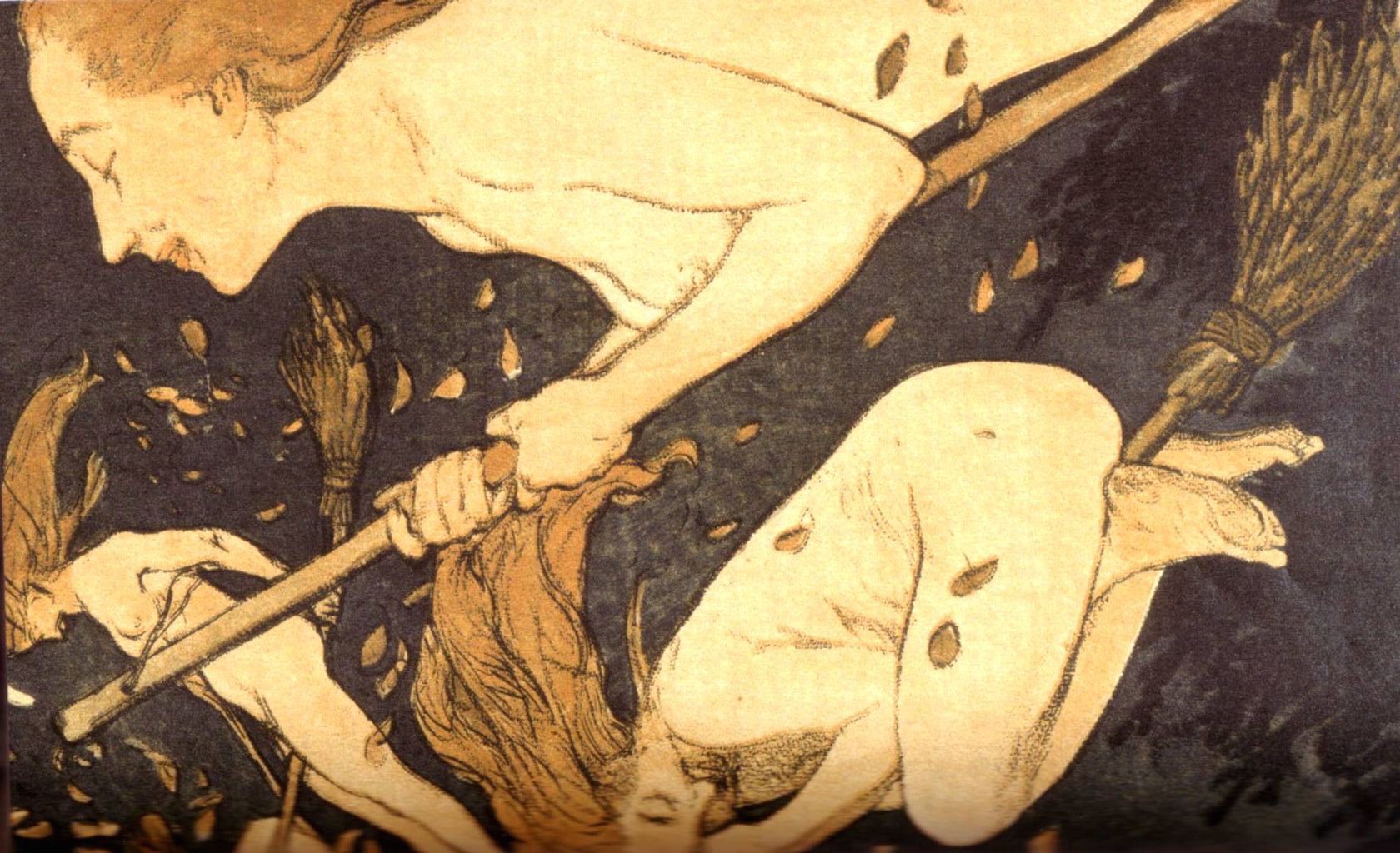
“If you’re a girl & you want to be heard / Then maybe have a demon flap your gap,” suggests James Gendron in his book of narrative poetry, Weirde Sister. In a seven-chapter story in verse, Gendron assumes the voice of a woman who was accused of, and ultimately executed for, witchcraft during the witch trials of the early modern period. As history is narrated by those who survive it, and the powerless rarely get to dictate their legacy, Weirde Sister is a crucial act of bearing witness.
The book grapples with “the arbitrary / Network of intersectional oppression / Known as Early Modern Europe,” rendering an historic atrocity with universal urgency. Serving as testimony submitted over three centuries after the trials, itis both excavation and exoneration. And while fascination with witch hunts may have timeless appeal, Weirde Sister is also a timely appraisal of the present moment. Gendron injects a politics of eternity into the dark heart of the story, which pulses with the abiding truth that “humans are capable of such / Inhumanity it doesn’t really seem inhuman.”
Gendron injects a politics of eternity into the dark heart of the story.
As expressed in his acknowledgements, Gendron conceived of Weirde Sister “in solidarity with every person whose mere existence terrifies the powerful.” Indeed, the book is driven by imaginative leaps of empathy. Gendron’s narrator speaks from the margins with sensitivity and sincerity, claiming: “I was a witch because / People hated me & no one knew why.” When she first signs a contract with Satan, she is merely grateful for the attention and care the deity pays her. Her observations are inflected with a sense of bewilderment at the evils of the world, even as she acknowledges that her own precarious position within it is interpellated by state and social systems of power. She defends Satan as misunderstood, blameless in the ordering of the world as we know it:
“See this world is what is evil Here where they push the kid With the lice down the stairs Where torture is not confined To the realm of genre fiction But undergirds the apparatus of state power”
It’s this same world order that allows the tourist economy of Salem to thrive on spooky sensationalism, willful amnesia glossing over histories of genocide and state violence. Gendron is clear about his own complicated interest in the Salem Witch Trials, explaining in the book’s preface that as a child he “felt normal in Salem because [he] was weird everywhere else.” The solace the place can provide is due in part to the town’s hokey Halloween infrastructure — what Gendron calls the “spooky-industrial complex” — which has of course arisen from a real tragedy.
Yet Gendron wonders if perhaps it is still better to be mocked than to be forgotten, pointing to countless other atrocities never commemorated. To this day, no one knows what was done with the accused witches’ corpses. The exact location of their deaths was only confirmed in 2016, and almost too perfectly, the site now abuts a Walgreen’s. These are the kinds of juxtapositions Gendron highlights and plays inside, creating fresh absurdities by confounding the old world with the new. Exhuming the witches’ memories in a sort of modern drag, he recontextualizes the trials in order to restore the human suffering at the story’s core.
Perhaps it is still better to be mocked than to be forgotten.
Gendron is at his most searingly lucid when exposing the arbitrariness of power and the pain it inflicts, though he is careful that Weirde Sister does not read like a treatise. Amid gruesome descriptions of bodily and emotional trauma appear aphoristic snatches of truth such as “The law too nakedly / scaffolds the halls of power” and “Men always think their feelings are your fault.” Such sharp observations are buttressed by a wry, winking sense of humor. The witches sleep on “cattresses” while ale becomes “the beverage of choicessity” and Satan “jots down new ideas for STDs.”
Satanism itself is treated as a sort of liberation theology, solace from the omnipresent threat of Puritanical violence. It seems the natural choice to take delight in the perversity of Satan over that of persecution. And Gendron’s delight is contagious, as when he writes, “Roll every tattoo in history into a ball / And light it on fire: / That’s just one grain of sand / On Hell Beach, baby / A beach where suffering is / Considered totally worth it.”
Gendron sometimes approaches this suffering slant, with a smile. Other moments of the book ring out with the intensity of their contemporaneity. Is it possible to think of witch hunts in 2017 without also conjuring the image of an American president who targets his country’s most vulnerable populations, even as he cries that any basic scrutiny is a “total witch hunt”? There is intrinsic value in reexamining the systems of power that allowed for three centuries of witch hunts, which “claimed an estimated 50,000 lives — a world-historical tragedy of which the Salem Witch Trials are but a late and geographically remote aftershock.” Perhaps the aftershocks are ongoing. Gendron’s consideration of a past tragedy is also a dark mirror for the modern world:
“Women can now be tried & even executed For a host of crimes of a primarily sexual nature A highly ambiguous sign of progress And this right to be murdered by the state Even accrues to children in cases Of petty theft & animals convicted Of involvement in acts of maleficent witchcraft Highlighting the paradox that equality Under the law often begins with the Universalization of heretofore selective Forms of oppression, the opening of new Horizons in disenfranchisement And the inequitable widening of the path Into the graveyard”
If Weirde Sister’s critical lens reflects poorly on humanity, it does so in the most humane spirit, like a plea for improvement. Or as Gendron writes, “This is not an anti-human feeling / This is a feeling of wanting to protect humans from people.” As new horizons in disenfranchisement open up, Weirde Sister is a call to action, a necessary reminder that everything old is new again.
By now, we’re all used to the idea that books don’t have to be physical objects of ink and paper — but with only a few exceptions, our digital books behave almost exactly like our old-school ones. Yes, you can change the print size of an e-book, or look up a word instantaneously, but on the whole, reading a digital book is effectively the same experience as reading a physical book in a slim plastic shell. Our e-books are almost always electronic versions of our print books, and our e-book readers are often designed to mimic the print book experience as closely as possible. I love my Kindle, but it doesn’t really feel like a quantum leap over the shelves and shelves of printed books that I still own and read.
After all, it isn’t meant to. A printed book is one of the first technologies many children learn how to use, but it’s still a technology, and once we’ve mastered it most of us don’t appreciate being asked to figure out how to read all over again. This one of the reasons why books that experiment with form, whether digital or print, tend to sell rather poorly. No matter how radical the content, we are conservative about the structure of our reading.
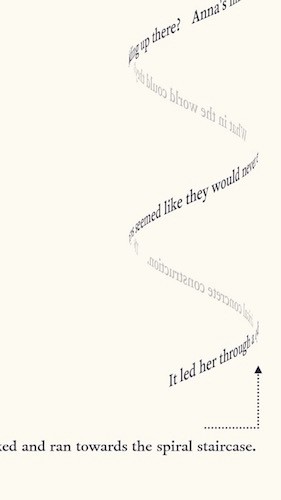
A spiral staircase in ‘Device 6.’
For a vision of a more daring alternate future for digital reading, though, we can look instead at a game. Device 6, a 2013 mobile/tablet game by Swedish developers Simon Flesser and Magnus Gardebäck, lets the reader encounter and explore text in a format unfettered by the demands of the printed book, giving us a peek at what the rewards of pushing text a bit further in the digital era could be.
As a story, Device 6 reads like W. G. Sebald writing an episode of The Prisoner. As a game, it plays like a version of the 1993 CD-ROM classic Myst pared back to its essentials. (In Myst, you spend your time exploring parallel universes at the behest of two mad brothers who are trapped inside books; in Device 6, you’re exploring inside the book yourself.) But as a book, Device 6 is something altogether new: a vision of what the printed word could be when set free from the prison of a static page. And Device 6 doesn’t just gesture towards an imagined lost future of digital reading — it’s also a commentary on what books mean in the present. It brings us face to face with the reality that every book, printed or digital, is not just a record of language or the conveyance of an idea but a construction of a particular space.
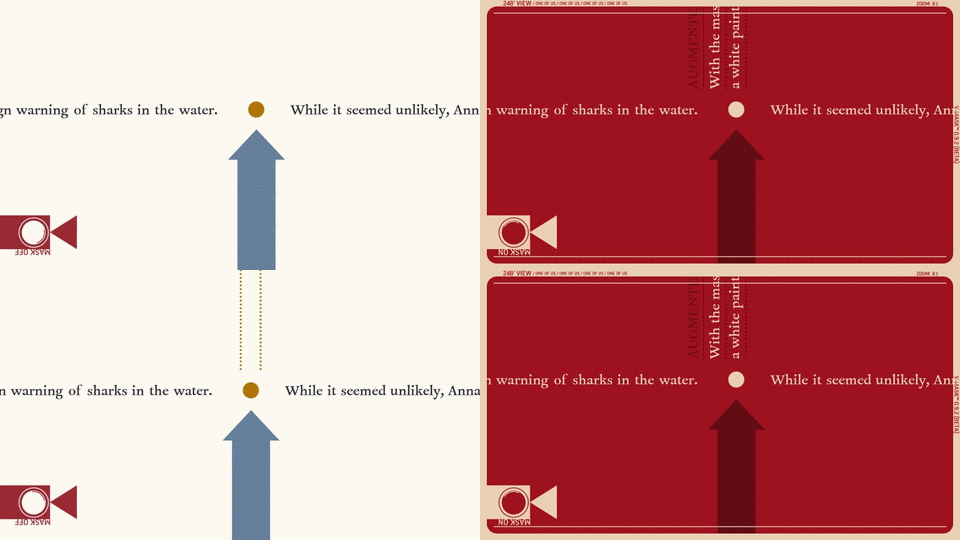
Like most electronic text (though not, interestingly, like e-books), Device 6 invokes not the codex book but the scroll: it features a single extended written surface rather than a series of discrete pages. While readers who spend a great deal of time online will find this immediately familiar, it’s also a canny physicalization of the story’s action. The protagonist, Anna, inexplicably awakens in a mysterious mansion and must explore its rooms and halls, a journey that the reader experiences through scrolling text that labors to mimic the mansion’s sprawling layout. That is, when Anna turns a corner, so does the text.
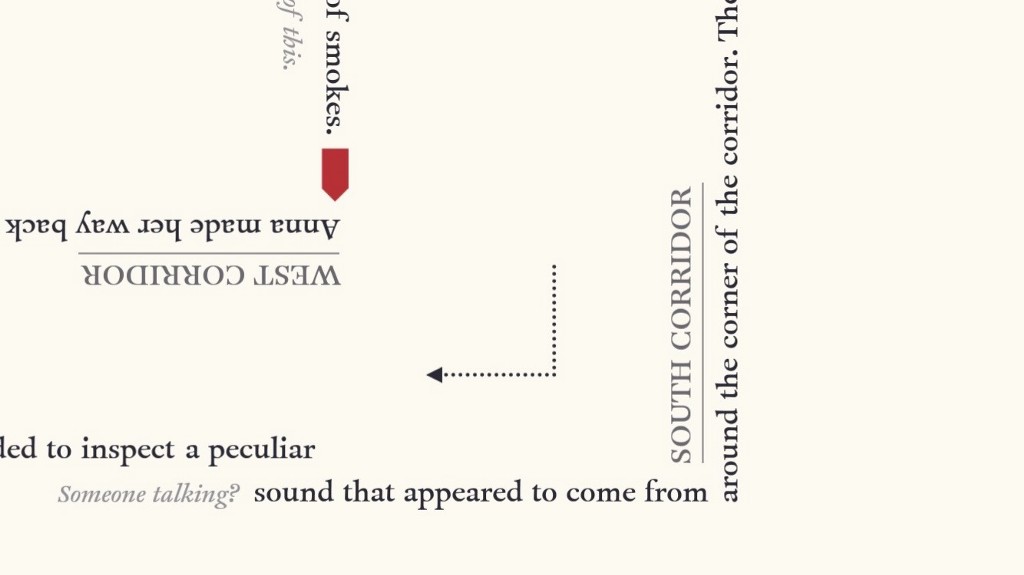
As Anna’s paths lead her back and forth within the mansion, the words of the story itself reflect her varied motions.
This can, in a still image, become a bit complicated.
In motion, however, this multiplicity of direction is much more intuitive. In the image above, the reader can follow the arrow and scroll the story to the left (well, the right, as I imagine most readers would, like me, rotate the screen rather than trying to read upside-down), or she can instead imagine herself turning into a different hallway and scroll the text down instead.
But while the experience of reading Device 6 resembles unrolling a parchment scroll and discovering foldouts pasted into the main body of the text, leading in unexpected directions, Device 6 is not in fact a parchment scroll, and whether it can be considered a book depends a great deal on how far one is willing to stretch that particular category. I’m not sure Device 6 should be properly described merely as a “video game” — in part because of the stigma that label can carry, and in part because I’d like to try to break down the walls we tend to build in our media consumption and consideration. (We all know that we “play” games and “watch” films and “read” books and “listen” to music, and that conventional wisdom tends to let boundary-breaking media, like games you read, fall through the cracks.) But at least part of what makes Device 6 work is its very gaminess.
The experience of discovery and revelation, described in the text, is reinforced by being enacted by the reader.
While Device 6’s story is primarily textual, and the movement through its spaces is guided and shaped by its manipulations of that text, it also requires the reader to solve a number of puzzles to open new spaces, and these puzzles largely play out through sounds and images. Like Miss Peregrine’s Home for Peculiar Children, Device 6 places black-and-white images among chunks of text to help build its eccentric imaginative world — but freed from the permeance of the printed page, the images in Device 6 shift and change. These dynamic visual and aural elements, as well as Device 6’s textual direction and manipulation, are made possible by the specific code-driven environment of a mobile app executed on a mobile device. And the experience of discovery and revelation, described in the text, is reinforced by being enacted by the reader.
At one point, Anna dons an electronic mask to make an invisible bridge visible through words.
Of course, neither that sentence nor even an animated gif can really capture the experience of discovering the invisible bridge. Following the text from left to right, the reader discovers the electronic mask after unwittingly passing the location of the bridge. When she puts it on, the visual landscape changes immediately, like looking through a sheet of red transparent plastic, but the reader must discover the extent of that change — including the bridge — on her own. In order to discover the bridge, the reader has to retrace her steps back into the text, moving against the flow of the words while wearing the electronic glasses in order to discover a new path that quite literally wasn’t there before.
In a sense, this is like turning back to an earlier chapter and finding that it reads differently than it did the first time, not just because it exists in a new context as a result of later chapters, or because something has changed within the reader herself, but because the words on the page have altered themselves for their own purposes. Books from Martin Amis’s Time’s Arrow, which narrates its story in reverse, to Choose Your Own Adventure novels have experimented with asking the reader to move through its pages in manners other than the conventional left-to-right, beginning-to-end—but by creating the ability for the text itself to respond to conditions created by the reader, the tools of digital games expand those possibilities dramatically. It’s as if the earlier chapters in a book developed new words and sentences and had to be revisited after a later chapter revealed some crucial piece of context.
This is like turning back to an earlier chapter and finding that the words on the page have altered themselves for their own purposes.
Participation is a powerful mechanic, and Device 6’s game nature makes the experience of exploration and revelation feel visceral in a way that merely reading about exploration struggles to match. In a book, the sentence “Anna put on the mask and discovered a bridge” can cause a feeling of triumph in the reader, but there’s something no less than magical in achieving it yourself.
Even as it makes use of game elements to go beyond the book experience, making it more immersive and reactive, Device 6 also illuminates fundamental aspects of the book that usually go unnoticed. One of the primary tasks of a video game is to create a space in which the player overcomes obstacles in order to reach some sort of a goal. Games may accomplish this through the creation of a two-dimensional map (think Pong, Pac-Man, or nearly any board game), or by repeating a series of pixels again and again with some minor variations, until it becomes a three-dimensional hallway. Device 6 uses text itself to create a space through which the reader passes, building upon but also replicating a set of tools that books tend to take for granted. Our use of these tools in a book — the syntax of motion across and between pages, in English left to right, top to bottom — is so ingrained as to frequently be invisible, but it’s there. Every book, every story, is a space through which we travel: one sound, one letter, one sentence at a time. Device 6 emphasizes and reconsiders this movement through text by making its words a map through which the reader is initially led, but which requires later that she retrace her steps back through the text into new, previously obscure corners.
Every book, every story, is a space through which we travel: one sound, one letter, one sentence at a time.
As in most media, there is a long tradition of books calling attention to their nature as media objects — Jonathan Safran Foer overlapping text in Extremely Loud and Incredibly Close until the page is nearly a solid mass of black ink; Bret Easton Ellis starting and ending The Rules of Attraction mid-sentence, itself an invocation of James Joyce’s Finnegan’s Wake; Cervantes making Don Quixote aware of the publication of his own adventures by the later chapters of his book. What is a bit more unusual is a book that dwells on the peculiar physical geography of textuality — think, say, of Gertrude Stein’s Patriarchal Poetry, in which Stein’s repetitions stretch the very possibility of visual tracking, forcing the reader to make physical contact — a finger, a pencil — to locate herself on the page. Only a handful of printed books do what Device 6 does: highlight, rather than obscuring, the way we move inside a text.
It is not accidental that we judge e-books for their success (or failure) in making the space and architecture of their text disappear into the act of reading. E-readers are praised when they make us forget that they are not books and criticized when they insist on presenting themselves as the objects that they are: blocks of text on a screen, navigated through gestures that never quite become unconscious. One of the essential tasks in literacy acquisition is the ability to move from decoding the building blocks of language — letters and words, syntax and grammar — to understanding the information and expression encoded within the language. Success is measured in part by internalizing the elements so thoroughly that they no longer require conscious effort. One level of proficiency is gained when the reader stops seeing letters and starts seeing words, another when the reader stops seeing words and starts seeing sentences, and so on.
Device 6, on the other hand, is able to point to the way books work by never quite seeking to become one. As a game that the player reads, Device 6 turns its text into a playful antagonist, and creates a set of rewards for the otherwise onerous demand that the reader continue to look at the text as an object in itself.
Usually they find their way, without the farmer, without the earnest dog behind them. When they didn’t come we rang the bell and when it was far past time for milking we left our places at the table. The coffee, our beds — everything grew cold. We called the neighbors. Weeks went by and while we waited we painted the barn red to attract attention. And cleared the field of stones, and with them built a church to house our grief. That was before we knew it could never be contained. The universe takes its time as the moths eat the sky into our sweaters.
Last Seen
When I was a girl a man in an elevator told me monkeys pull the cables that move us floor to floor. He didn’t know
I was connected to my body by a string. Every night my balloon tangled in the low forest of sleep
while a bear roared. He pushed the wind out of his way, one claw snagging my shoulder, a cave in front of me. To lose the bear I disappeared into a world so dark
it held only blind things, and the sound
of a hill accumulating nearby.
Movie of the Week
The missing boy’s voice is in the static on the phone. His family swallows the days, bloody their heads against glass doors without remembering. Sometimes a rash refuses to heal. Sometimes nightmares leave marks, blackened shells where the eyes were. With plywood and screws they seal themselves inside the house. They do their best, as if they could be saved from the thing by looking sideways — the ringing not already in them.
O n Wednesday August 17th, all 17 members of the President’s Committee on The Arts and The Humanities resigned their posts, citing President Trump’s equivocation regarding white supremacist demonstrations in Charlottesville, Virginia. The resigning members stated in a co-written letter that “speaking truth to power is never easy, ” but that “supremacy, discrimination, and vitriol are not American values.” Embedded in the statement, addressed directly to the commander in chief, was the word “RESIST,” spelled using the first letter of each paragraph.
While it’s no surprise that a committee convened to advise the president on cultural issues would resort to a somewhat obscure literary form to hammer home their disgust, the humanities committee wasn’t alone in coding its resignation letter for maximum impact. Daniel Kammen, one of seven science envoys working in the State Department, resigned his post August 23rd with a letter that used the same method to spell out the word “IMPEACH.”
Neither letter is shy about criticizing the current administration’s choices to gut arts funding, back out of measures to reduce the effects of climate change, or endorse the actions of white supremacists, so why bother hiding these messages to “RESIST” or “IMPEACH” in the first place? The President has a reputation for barely reading what he signs into law, which likely disqualifies him from enthusiasm about close-reading anything, let alone reading as a mode of confronting his own vocal critics. Perhaps the committee members and Kammen are aping Trump’s own declarative style, subbing in their own one-word pronouncements in summation of their experiences the same way the president uses “Sad!” as punctuation for his ubiquitous Twitter tirades. Regardless of their inspiration, the acrostics in these letters act as powerful distillations of their overall content, acting as a call to arms for anyone who finds themselves frustrated with the man in charge of the country’s future.
The acrostics in these letters act as powerful distillations of their overall content, acting as a call to arms.
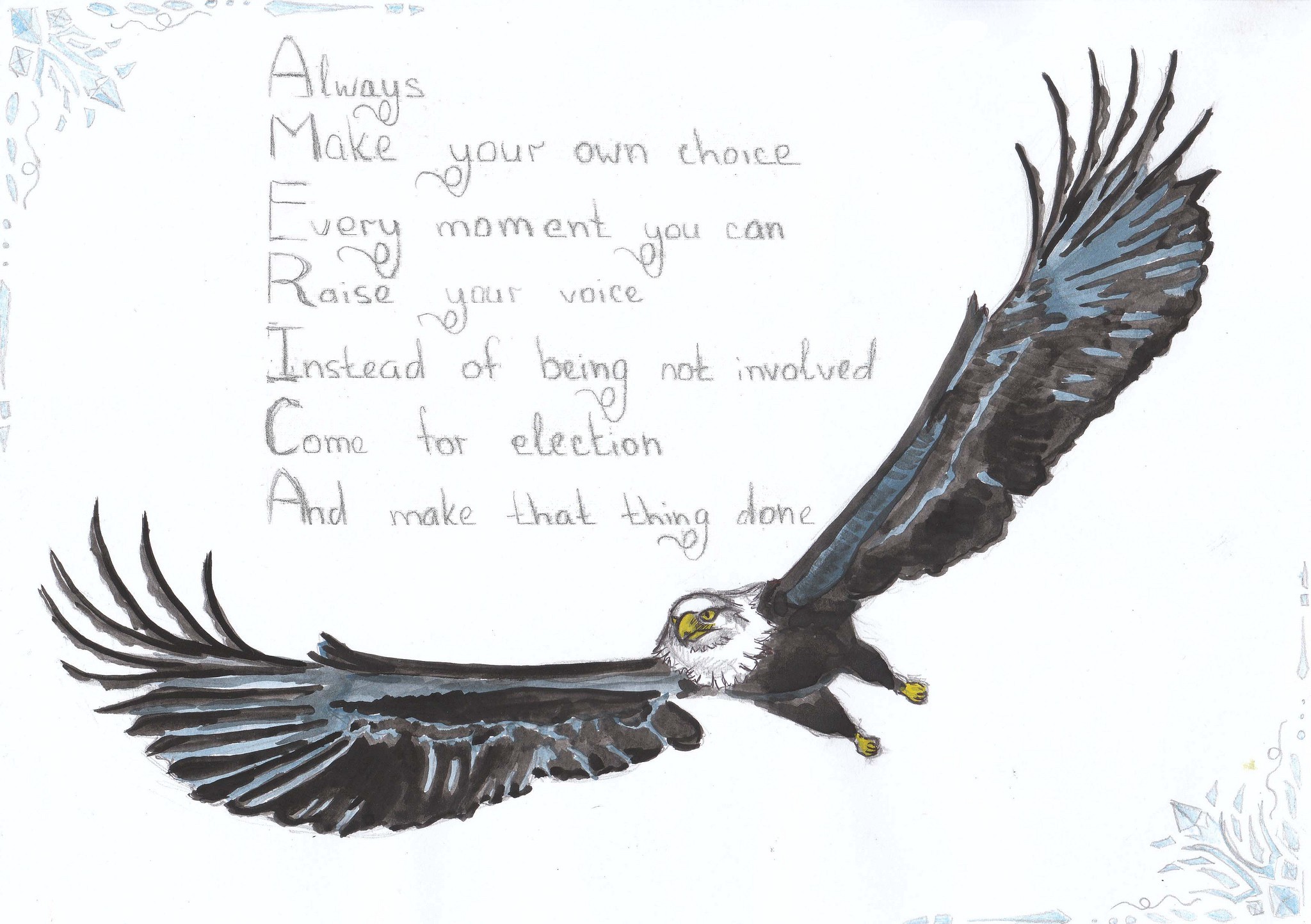
Acrostic poems are a form of constrained writing as old as the Bible, appearing especially frequently in the Psalms and the Book of Lamentations. The Roman poet Publilius Optatianus Porphyrius wrote to Emperor Constantine in acrostic to beg to return from exile. In medieval times, acrostics would often spell out the name of an author’s patron. The Dutch national anthem “Het Wilhelmus” contains the name of William of Orange, also the subject of the poem. Acrostics as a literary form have great steganographic potential, since the hidden word being spelled out is only apparent to an observant reader seeking a secondary message in addition to the one readily apparent on the page.
Enterprising writing instructors sometimes use acrostics to demonstrate how poems can explicitly embody their subjects, arranging the components to literally spell out what might otherwise be merely implied. Lewis Carroll’s acrostic poem at the end of Through The Looking-Glass spells out the name of its muse, the real-life Alice. William Blake uses acrostic in the third stanza of his poem “London” to spell out “HEAR,” asking his reader to come as close to the sounds of the city as someone experiencing them in real time. The Academy of American Poets describes the form as a kind of poem that seeks “to reveal while attempting to conceal.” Acrostics overlap the concrete and conceptual, unifying them.
Recently it feels as though the concrete and conceptual have indeed collapsed into one another. Statues of confederate generals are no longer outdated monuments to disgraced secessionists but rallying points for those who wish to maintain political power as the exclusive domain of white men. What better time for the return of the acrostic to common use than this moment, when we hear constant exhortations from both sides of the aisle demanding we show the world what it is America truly stands for? Choosing the most effective way to condemn the president isn’t something his detractors can afford to be subtle about. Though the acrostic is a kind of coded language, in the letters it serves to underscore their message of refusal to remain complicit in the failures of the current administration.
In following the acrostic’s appearances in recent news, I see the requests I make of my own students: Stick to what’s essential to the story. Sharpen your language. Exploit the connotations of the words you tell your story with. Use the most active verbs available. I can’t help but see these resignation letters as an attempt to teach us the same thing. The verbs are strong, the grievances and motivations listed as plainly and powerfully as possible. “We know the importance of open and free dialogue,” the PCAH letter offers, later landing the same paragraph on, “Your words and actions push us all further away from the freedoms we are guaranteed.” To borrow some strong language from my boyfriend when we read the letter out loud at breakfast last week: “Fucking Jhumpa Lahiri coming in with a fastball.” There is no better example of sharpness or careful choice than being able to distill an entire letter to a single, unequivocal word.
Declaring dissent in public means making oneself vulnerable to being labeled reactionary. These letters predict and negate that accusation.
Declaring dissent in public means making oneself vulnerable to being labeled reactionary. These letters predict and negate that accusation. The presence of an acrostic is proof of how carefully crafted these statements are. It’s next to impossible that either letter stumbled into spelling out a refrain that sprang up in direct response to Trump’s election or the word for how our democracy might lawfully remove him from office.
Poems have always been political because of their ability to elevate a momentary experience or observation to immortality. They are flexible creatures that contain infinite space for examining whatever they choose to concern themselves with. A poem has as many layers as the poet imposes on it. Acrostics task a poet with explicating a single word in such a way that that word acts as a vessel for the worlds beyond it. The form exists as a tool for slowing down the meaning of a single word, then exploding its possibilities.
An acrostic that might inspire the next resignation letter. (Credit)
One example I came across in researching the history of political acrostics feels particularly aligned with the past week’s examples of the form. In 1949, when Newfoundland became a part of Canada, The Newfoundland Evening Telegrampublished a seemingly affectionate poem on the occasion of the departure of their British governor, Gordon Macdonald. But beneath the poem’s request that Macdonald “remember if you will the kindness and the love/Devotion and the respect that we the people have for Thee,” lay an acrostic that spelled out “THE BASTARD.” Bureaucracy often demands language with a certain level of decorum, but the acrostic made space for the farewell the people of Newfoundland would rather have offered, had they not been restrained by propriety. Calls to resist and impeach engage in the same bureaucratic decorousness, couching their extreme acrostic summations in the more restrained writing of the body of the text. The letters use the acrostic to turn that decorousness on its ear, making it impossible for anyone to mistake their message simply because they aren’t shouting it into a megaphone or carrying it on a sign at a protest.
Elucidating where you stand in relation to Trump, with his shall we say singularly lyric way of regurgitating his own rhetoric, is probably a poetic form unto itself at this point. The resignation letters engage in his game of coded buzzwords, reinforcing and re-contextualizing their own content via their employment of the acrostic. Carefully chosen language communicates on many levels simultaneously, and in these two instances it does so to great effect. Greater still is the contrast between the care for language the committee and Kammen show and the current administration’s extreme difficulty maintaining a consistent press secretary, a consistent stance on important issues, a consistency at anything besides inconsistency.
The letters’ care for language contrasts with the current administration’s extreme difficulty maintaining a consistency at anything besides inconsistency.
The current White House seems to throw out imprecise language on purpose so that it may revise on a constant basis, never committing its statements to a final draft. These revisions are often impromptu, inspired both by rhetorical circumstance and the audience of the moment. Extreme intentionality is antithetical to the Trump administration, making the acrostic form an especially powerful critical tool for those opposed to the president and his supporters.
Yoked with the responsibility of taking a strong stance against the dismantling of the arts and sciences as American institutions, people are turning to poetic forms as the best mode of denouncing Trump. It’s one thing to walk away from association with Trump and all his fumbling with a strong statement of disavowal, and I quite admire that action regardless of how it’s expressed. But to see poetry weaponized, so to speak, by those who are truly paying attention to how much of our democracy is unraveling is truly special. Trump seems to be counting on the public not noticing what he’s accomplishing behind a curtain of performative incompetence. Maybe it’s best we spell it out for him: he’s underestimating the arts as a tool for change.
Every year, at the start of the U.S. Open—the final grand slam of the year, held at the Billie Jean King National Tennis Center in Queens—newspapers and magazines and the internet recommend books about tennis. But year after year, the same white male writers appear on those lists: David Foster Wallace, Martin Amis, John McPhee, Vladimir Nabokov.
I adore Wallace’s seminal essay, “Roger Federer as Religious Experience,” first published in the New York Times Magazine and anthologized in String Theory. I think McPhee’s Levels of the Game, an account of the 1968 match between Arthur Ashe and Clark Graebner at Forest Hills, is a classic. But I often long for tennis writing that’s a little less dude-bro, you know? If you’re looking for more of a Serena Williams vibe than a John McEnroe, here are 13 books — narrative nonfiction, memoir, mystery, romance, picture book — to read during the tournament.
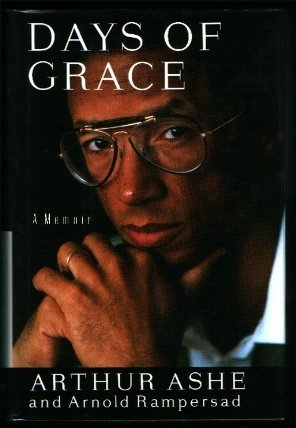
1. Days of Grace by Arthur Ashe and Arnold Rampersad
Days of Grace traces the final years of this champion’s life — Arthur Ashe was the first Black man to win singles’ titles at Wimbledon, the French Open and the U.S. Open — and reflects on sports, race, patriotism, family, and terminal illness. Co-written with Arnold Rampersad, who “defined the field of African-American literary biography” and is known for his works on Langston Hughes, W.E.B. Du Bois, and Jackie Robinson among others, Days of Grace is a courageous and honest narrative by an outstanding human being.
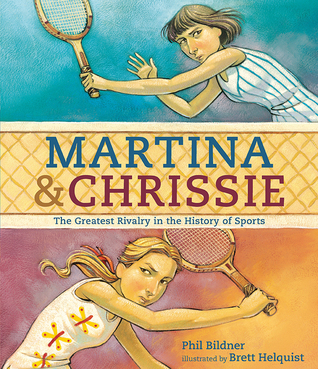
2. Martina & Chrissie: The Greatest Rivalry in the History of Sports by Phil Bildner, illustrated by Brett Helquist
I have a five-year-old with an interest in tennis — she watches Grand Slam tennis with me, and took her first lessons this summer — and she loves this one, with its brilliant acrylic-and-oil illustrations. Not only is this picture book detailed and informative, but it also covers both Martina Navratilova and Chris Evert’s on-court rivalry and their off-court friendship.
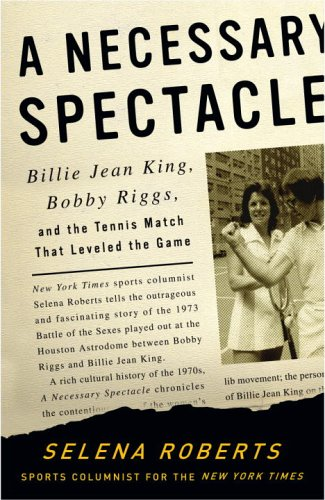
3. A Necessary Spectacle: Billie Jean King, Bobby Riggs, and the Tennis Match that Leveled the Game by Selena Roberts
In this journalistic account, New York Times columnist Roberts draws connections from 1973’s Battle of the Sexes, a “spectacle” between washed-up champion Bobby Riggs and tennis legend and advocate for gender equality Billie Jean King, to the rise of women’s sports since that match.
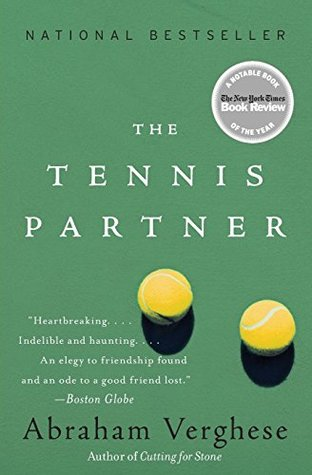
4. The Tennis Partner by Abraham Verghese
This moving memoir is about a relationship between two men who are deeply hurting: Verghese, a physician whose marriage has unraveled, and David, a student on his rotation who is a former professional tennis player from Australia and battling drug and alcohol addiction. The pair begin a tennis ritual and find true friendship and safety in a sport they love.
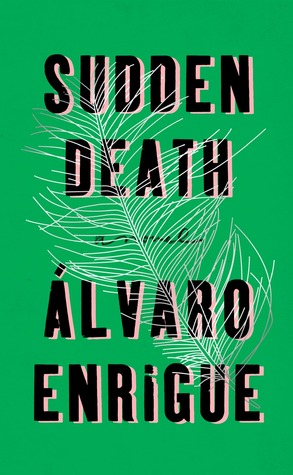
5. Sudden Death by Álvaro Enrigue, translated by Natasha Wimmer
The central narrative of this surreal novel by an award-winning Mexican writer is a fictional 16th-century tennis match played between the Spanish poet Francisco de Quevedo and the Italian painter Caravaggio. The ball is made from the hair of King Henry VIII’s beheaded wife, Anne Boleyn. Sudden Deathnot only tells the history of tennis, but also reimagines the Spanish colonization of the Americas; it is a brilliant and bold book.
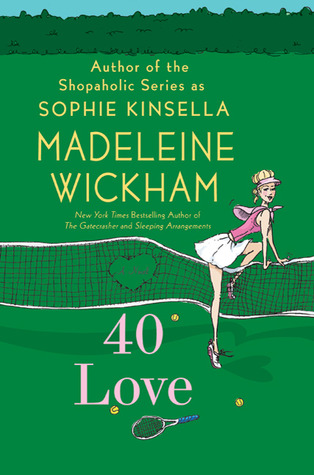
6. 40 Love by Madeleine Wickham
I admit: I am a big fan of Sophie Kinsella’s Shopaholic series, having read the first two while stranded on the tarmac at Beijing Capital International Airport for nine hours during an unexpected snowstorm. In 40 Love, Kinsella—writing as Madeline Wickham—skewers the nouveau riche in a comedy of manners about a weekend “tennis party” in the English countryside.
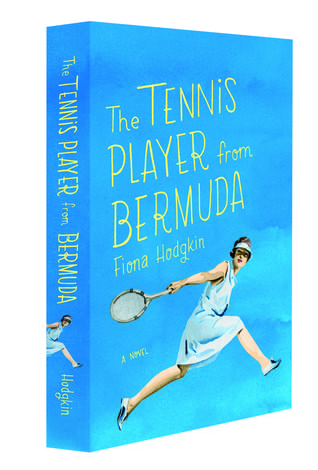
7. The Tennis Player from Bermuda by Fiona Hodgkin
In this historical fiction novel written as memoir, “Fiona Hodgkin,” the nom de plume of an American writer, tells the story of her brief but eventful career as an amateur tennis player in the early 1960s. Bermudian teenager Hodgkin dreams of playing in the Championships at the All England Lawn Tennis and Cricket Club in Wimbledon, and finally gets her chance when a telegram (!) arrives inviting her to play. This light read is well-researched, and full of terms and techniques and historical references.
8. Citizen: An American Lyric by Claudia Rankine
This isn’t a tennis book, per se, but chapter two of this National Book Award finalist is a brilliant and arresting poetic meditation on tennis’ GOAT (greatest of all time), Serena Williams, and Black excellence in tennis—including racist public critiques of Williams’ body, her confidence, and even expressions of her joy. A companion New York Times Magazine piece is also a must-read.
9. Sudden Death by Rita Mae Brown
The famed feminist screenwriter Rita Mae Brown was Martina Navratilova’s ex-lover, and this novel is a total roman à clef. According to Brown, speaking to the Washington Post in 1981, “She just walked out on me.” The book follows the romance of Argentinian rising tennis star, Carmen Semana, and her devoted partner, professor Harriet Rawls, from the French Open to Wimbledon, and finds its emotional center when Susan Reilly, Carmen’s arch-rival and former lover, leaks word of Carmen’s relationship with Harriet to the press.
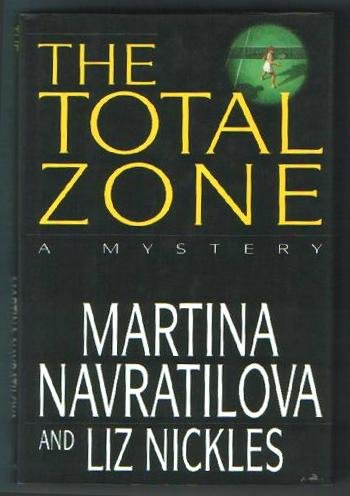
10. The Total Zone (plus Breaking Point and Killer Instinct) by Martina Navratilova and Liz Nickles
This trio of mystery novels stars retired tennis professional Jordan Myles, who solves a bevy of unbelievable murders at Wimbledon (Total Zone), the French Open (Breaking Point) and at a host of tournaments in the United States (Killer Instinct). Admittedly, the pacing is meh and the plots are zany, but the trilogy does reveal saucy details about secrets and sleaze on the women’s tour from one of the game’s legends.
11. The Love Game: Being the Life Story of Marcelle Penrose by Suzanne Lenglen
Lenglen was the diva of her day, and won 31 titles between 1914 and 1926. Her Edith Wharton-esque novel, set on the French Riviera, tells of the machinations of matches and match-making among traditional Victorian bourgeois woman. This entertaining novel features tennis, but also spurned proposals, engineered meetings, arranged marriages, and unrequited love; in Lenglen’s words, it is all “a great game.”
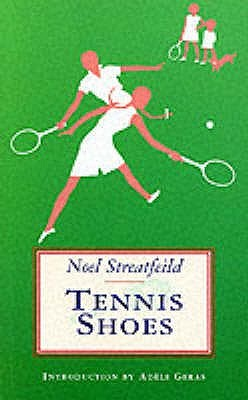
12. Tennis Shoes by Noel Streatfeild
Another children’s book, Tennis Shoes, one of the “Shoes” collection of adventures (Ballet Shoes, Theater Shoes, Circus Shoes, etc.), follows the hijinks of four red-headed Heath children, whose father and grandfather were top players, on their quest to win “a championship which no one of [their] age has ever won before.” It is a charming book about family and perseverance, and very funny if didactic in parts.
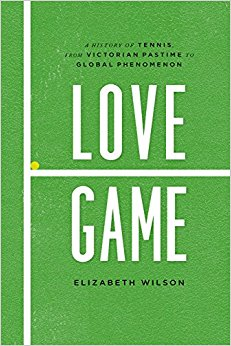
13. Love Game: A History of Tennis, from Victorian Pastime to Global Phenomenonby Elizabeth Wilson.
In this cursory history of tennis’ transformation from “provocative” pastime for “dandies” and women who felt constricted by Victorian mores to corporatized global sport, fashion writer and novelist, Elizabeth Wilson, examines the wider cultural landscape of tennis, rather than its point-by-point history and includes a solid account of modern day tennis’ many injustices — elitism, sexism and racism.
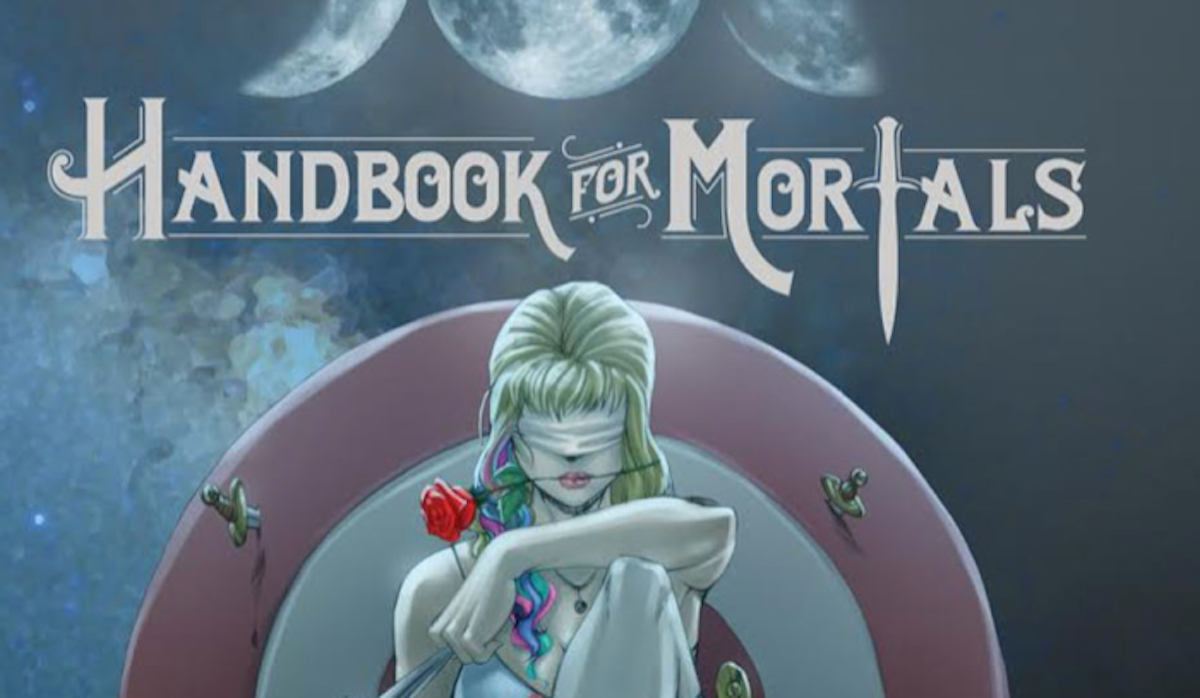
Buckle up, because this story is weird as all get-out. Yesterday, young adult writer and publisher Phil Stamper noticed a discrepancy on the New York Times bestseller list for YA fiction. Angie Thomas’ The Hate U Give, a wildly acclaimed novel (and soon to be movie) about a young black woman who becomes an activist after she sees police murder her friend, had been displaced by an unknown: something called Handbook for Mortals, by Lani Sarem, from the brand-new publishing arm of website GeekNation. And by “unknown,” we don’t mean a dark-horse phenom; we mean a book that literally cannot be bought from Amazon or Barnes & Noble, and yet somehow suddenly sold enough copies to not only make the bestseller list but debut at number one.
This is what I’m referencing. A book that’s out of stock on Amazon and is not currently in any physical B&N in the tri-state area.
Here’s how Amazon describes the book: “Zade Holder has always been a free-spirited young woman, from a long dynasty of tarot-card readers, fortunetellers, and practitioners of magick. Growing up in a small town and never quite fitting in, Zade is determined to forge her own path. She leaves her home in Tennessee to break free from her overprotective mother Dela, the local resident spellcaster and fortuneteller.” The hardcover costs $19.13 and you can’t buy it.
Although “Lani Sarem” anagrams to both Mars Alien and Anal Miser, it is not a nom de plume: Sarem is an occasional actress, music publicist, and band manager—including, at one time, for Blues Traveler—who has apparently already tapped herself to play the lead in Handbook for Mortals movie. And she, or someone at GeekNation, is apparently also a skilled book list scammer. It’s not that tricky to buy your way onto the bestseller list if you just put in some huge bulk orders; it’s legal and not even that uncommon. (Becoming an Amazon bestseller is even easier.) But the Times adds an asterisk to any book whose sales rank is affected by bulk purchases. Sarem (or someone) seems to have gamed the numbers by arranging large buys—only from verified NYT-reporting bookstores—of just under the amount that would trigger such a caveat. That’s 30 copies at a Barnes & Noble, 80 at an indie store, so we’re talking about a LOT of orders. You really owe it to yourself to read the Pajiba article that collects all the tweets that crack the case.
In any event, Sarem is a better scammer than she is a writer. Author Sarah M. Carter got her hands on a copy of Handbook for Mortals, and in her words: “hoooo buddy.” Thanks to Carter’s sacrifice, we’re able to bring you some highlights, all of which are absolutely dreadful in an incredibly specific way that those of you with cherished Livejournal memories—or, really, anyone who wrote self-important fiction about thinly-veiled Mary Sues in high school—will find deeply, cringingly familiar.
I would describe this book in a similar way that I might describe Harrison Ford: it can definitely get fucked.
And also much like Harrison Ford, it is now not on the Times bestseller list. The paper sent out an email that declined to even name the offender, let alone explain why the list was changed:
Congrats to Angie Thomas, the rightful #1:
Omg . Thanks to everyone who investigated, spoke out, and supported. This week is that much more special because of you. ❤️ this community
And congrats to Phil Stamper and other investigators for their tenaciousness, to Pajiba for doggedly staying on top of the most riveting publishing story we’ve read in ages, to Blues Traveler for getting rid of what sounds like a real liability, and of course to Lani Sarem for getting more people to read her Lani Sarem fanfic than ever before.
Presenting the tenth installment of The Bodega Project, where authors from across New York reflect on their communities through that most relied-on and overlooked institution, the bodega. Read the introduction to the series here.
The walk to Tony’s, down Xenia Street in Corona, Queens, isn’t about the Pepsi or Doritos I say I need, or the milk or American cheese my mother sometimes sends me out for. The dim interior with its two crowded aisles, neon chip bags, array of snack cakes and obligatory slinking cat aren’t that compelling. It’s what’s going on outside that draws me. I can’t say what it’s like now, but in 1984, when I was fourteen and out on my own, that’s where the whole neighborhood hung out.
There were the girls — Lisa from The House, my best friend Claudia from next door, Mel and Michelle, Tracy whose mom made her eat cigarettes whenever she caught her smoking. But more enticing were the boys: John, Jay or his brother Ajay, Harold, Omar, Claudia’s older brother William. Without fail, some or all of them would be outside, flirting, talking a big game, sharing bags of Frito’s or playing box ball with a Spaldeen on the sidewalk nearby. The boys always wore tanktops and basketball shorts, were spotless and well-groomed. They always smelled like a mixture of cumin, garlic, onion, and deodorant soap: Safeguard, Shield, Irish Spring. Decades later, my husband, who was partly raised in Venezuela and partly in a Boston suburb, described that smell to me as “house.”
My parents, first- and second-generation Jewish-Americans, moved to the neighborhood in the early 1960s. They had only been married a few years. For them, the chance to rent an apartment with an eat-in kitchen, separate dining room, and terrace, was a definite step up from the crowded tenements of Crown Heights and the South Bronx where they’d grown up. We had to take the bus to get to the subway from our third floor walk-up, but at least we had our own bedrooms.
Every so often, when our parents were out, my brother and I would hook up a ladder and shimmy out through a panel blocking the skylight in the hallway outside our door. From there we’d emerge onto the roof, our sloping street stretching off in either direction, lined with other mother-daughter houses like ours, some in rough shape and others meticulously kept. The DiDonato’s place, Francine’s, the Museum (our name for the cement yard filled with plaster statuary, including cherubs, cavorting goddesses, and an actual bubbling fountain). A few doors down was The House, a multistory building beside the long driveway where my parents parked our car, that housed a swirling universe of cousins from the Dominican Republic who’d drop in and out of town every summer. Claudia and her brothers William and Oscar lived right beside us, one floor down. A ten-minute walk east brought you to Flushing Meadows Park, with its iconic unisphere and weedy lakes. Much closer was the Long Island Expressway, the whoosh of its cars backgrounding our days and nights.
Our street was never quiet, but in the summer the volume exploded from car radios and boomboxes, most of the music and conversation in Spanish or Spanglish, or a mix of the two. Si, si, voy a la bodega, pero I don’t know if it be open. Mi hermano esta buscando el parking. The neighborhood was dominated by Puerto Rican, Colombian, Ecuadorian, Mexican, Cuban, and Dominican families — especially Dominican. The beat of our childhood was to salsa, rumba, and merengue, punctuated by The Sugarhill Gang and Grandmaster Flash. There were salsa parties in basement rec rooms of nearby apartment houses — tables swooning under platters of arroz con pollo, black beans, and buñuelos — where everyone danced. Those sweaty, joyous events were as far from a bat mitzvah at a Great Neck social hall as I can imagine.
It was with the people that hung out at Tony’s that I experienced all the firsts of young womanhood. My first couple’s dance (salsa, with Manny from The House). First kiss (Harold, in Claudia’s closet, playing Seven Minutes in Heaven). First unwanted kiss (during a tickle fight with Omar, who was more my brother’s friend). First time I purposely struck anyone besides my brother (Omar, elbow to the jaw, ending said kiss). First fair-weather friend… First friend-in-need…
Like every kid in history I just wanted to blend in, but of course there were limits. I was a white girl in a predominantly Latino neighborhood, dubbed la blancita by a sweetheart named Juan whom I dated one summer. Nobody hassled me beyond a complete mystification about the fact that we didn’t celebrate Christmas, but I felt my difference. My father was a lawyer. We spoke English at home. We were Jewish. On the 4th of July, our family would escape the neighborhood in favor of the beach, driving back slowly after dark, the borough transformed into a warlike maze of flash and sulfur, spent firecracker paper drifting in the streets. Tony’s would stay open at least until midnight, supplying the neighborhood crowd with forties and rolling papers, Mexican soda and a place to meet.
Even if I wasn’t a hundred percent at home in front of my home bodega, that didn’t stop me from trying. For a brief period in middle school I made the ill-advised move of adopting an accent that sounded like my friends from the neighborhood. I only got as far as Claudia’s apartment. Immediately she’d narrowed her eyes: Why you talking like that? I tried to play it off — Like what? — but I knew she was on to me. I quickly stopped trying, thankfully before I got my ass kicked by someone I hadn’t grown up with.
My parents moved out of Corona in 1993, right after I graduated from college. I’m not in touch with anyone from the old neighborhood now — I didn’t see them much in the years I spent at university upstate. I don’t really sound like I’m from Corona; in fact, I hardly even sound like a New Yorker. Although I drive right past my old block probably once a week on the way to my mom’s apartment, I never get off the highway. Our old building is apparently a condo now, which I only know because I looked it up on Zillow. I doubt I would recognize anyone in the neighborhood now if I bothered to drive by.
Where I live in Brooklyn the houses cost well over a million dollars, although it wasn’t like that when I moved here in 1996. One of the first things I loved back then was how much the bodegas on Smith Street reminded me of Tony’s. Even after I started eating organic, and joined the Park Slope Food Co-op, I’d go out of my way to visit the ones that still felt old school. I relished being able to slide my money across the counter and say How’s it going? in my old voice, the way I used to. The way I would at Tony’s.
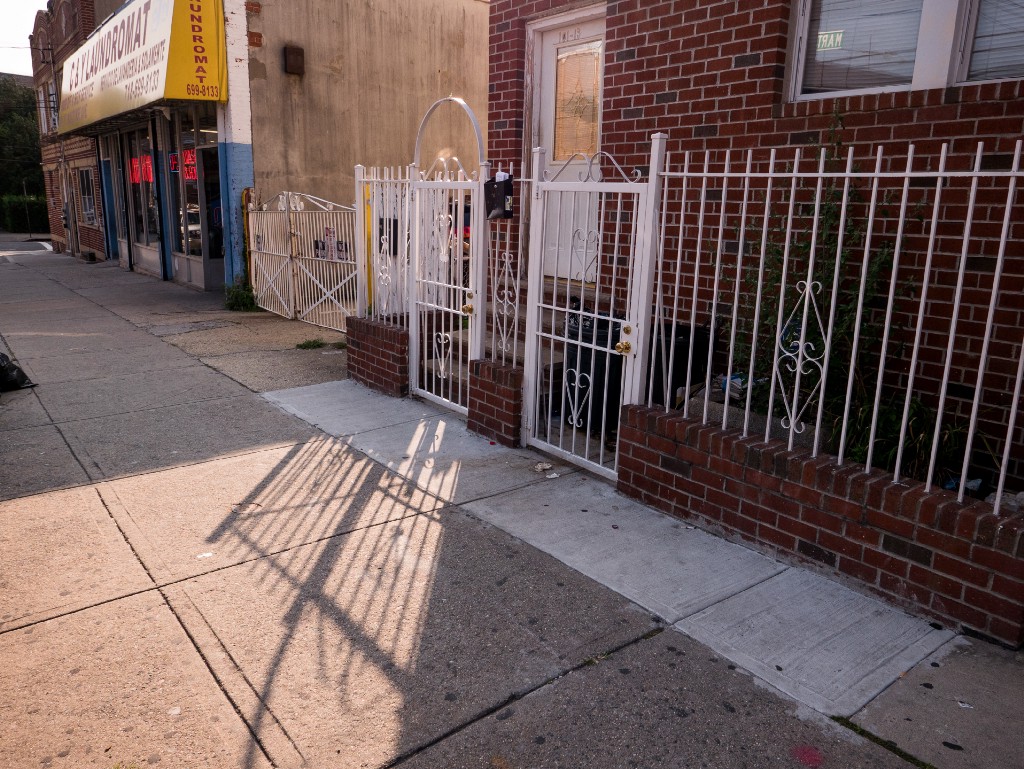
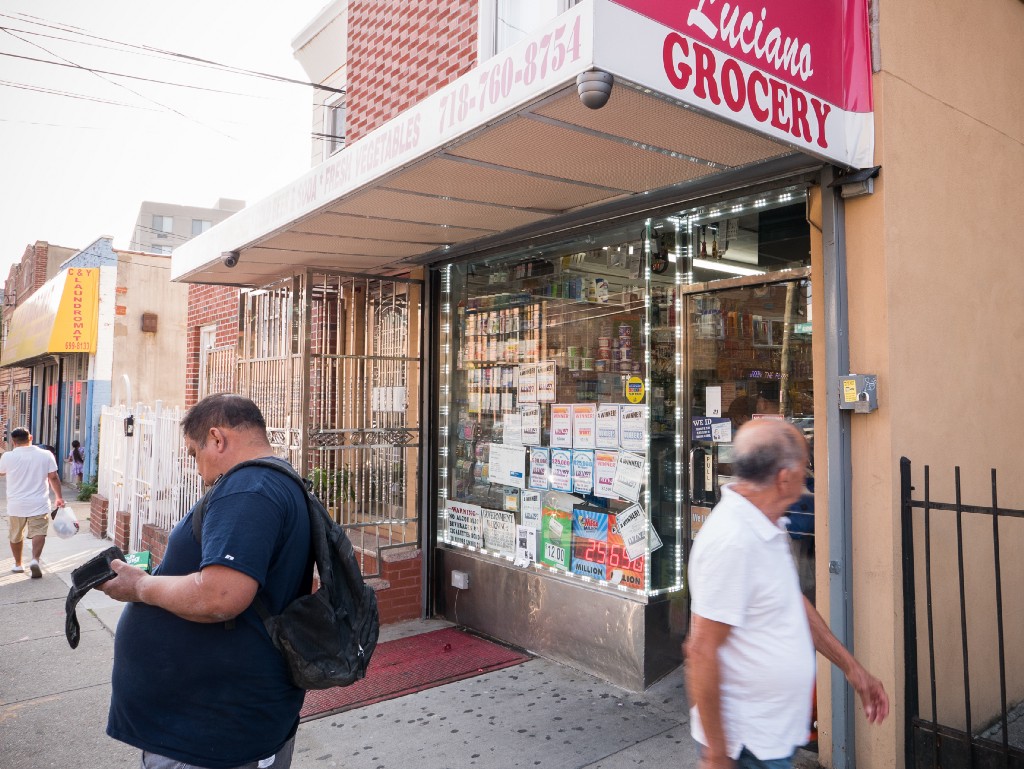
The internet coughs up photos of what Tony’s looks like today. The first thing I notice is that the awning now says “Luciano Grocery” — or maybe that was always there and I just don’t remember it. Either way, you’ll still find it listed as Tony’s Deli, the name the neighborhood knew it by, if you search for it online. Thankfully or not, nothing much else has changed. Unlike other bodegas in more gentrified parts of New York, there are no twelve-dollar wedges of cheese here, no kimchi, no cans of craft beer, no kale chips. The merchandise looks to be the same old, same old, just as I remember: Hostess, Delicias, Suavitel, Harina Pan, “Dominican Cake.” I don’t buy any of that stuff anymore (if I’m being honest, I’m more likely to get the kale chips).
The bodega I go to these days sits diagonally across the street from the apartment I rent in a leafy part of Brooklyn with my husband and two kids. It’s run by one of the nicest guys I’ve ever met, a Palestinian named Sam with whom I talk about parenting, Toyota SUVs, and the similarities between Arabic and Hebrew. He keeps an array of sweets on the counter, an impressive muffin shelf, and a sign proclaiming WE NOW HAVE LOX! in excited block letters. Sam and his brothers know us; Sam always asks about my mom’s health, and during the holidays he treats my girls to gingerbread. With my husband, Sam talks soccer, until I stick my head out the door wondering what happened to him and the ice cream or beer he stepped out for.
I probably won’t ever go back to Tony’s, although I’ve swooped around it in Google Maps. I know that some of the old crew went on to college, moved away, moved on. Others didn’t fare as well. It’s garden-variety nostalgia, I guess. But whenever I click around the old neighborhood, it feels deeper. I become unexpectedly swamped with sorrow. Not for the architecture, or our old apartment, or the street, or even the bodega itself. I think it’s for that girl on the brink of womanhood, the version I left behind. The girl who would venture to Tony’s all by herself, who danced there with a boy for the first time, who sometimes stood out on warm summer nights smoking and flirting. The girl whose roots are still buried there, if they were even hers to begin with.
About the Author
Amy Brill’s short stories and essays have appeared in One Story, The Common, Redbook,Real Simple, Guernica and the anthologies Stories from New York, Before and After, and Labor Day. She has been awarded a 2015 New York Foundation for the Arts fellowship in fiction, and a Peabody Award in documentary writing. Her debut novel, The Movement of Stars, was published in 2013.
I learned to snorkel mid-winter in an indoor pool in the suburbs of Cleveland, Ohio. The air was stifling, thick with the smell of chlorine. There was nothing to see in the pool and no explanation given for the purpose of this middle school gym unit; maybe our teachers dreamed we’d go on island vacations. I don’t remember ever snorkeling again until 2010 when I traveled to a research station on San Salvador Island in the Bahamas where I’d teach a Caribbean literature course and where I’d start writing a novel about the sediment of history’s layers. The water shimmered aqua closer to shore, deepened to a dark blue farther out. In spite of how clear the water seemed, you had to beware rocks and lionfish, and you couldn’t know where the reefs were without sticking your head beneath the meniscus of the ocean. Locals and research station staff would give instructions for different reefs around the island: where to enter the water and in which direction to float.
Locating trailheads to the ruins of the plantations on the island took the same colloquial knowledge. I needed a machete to re-clear trails that had almost disappeared after the rainy season. Some buildings I could find, somewhat intact or piles of rubble as they may be. Depending on the time of year and the amount of rain preceding my visits, different sections of the plantations were inaccessible. While I wanted my students to see the places we were reading about, the island’s lack of historical preservation became just as pertinent a topic of conversation.
While I wanted my students to see the places we were reading about, the island’s lack of historical preservation became just as pertinent a topic of conversation.
My professional training is in nineteenth-century U.S. literature, the literature of slavery and abolition a particular focus. I had never bothered to visit a restored or preserved plantation in the U.S., knowing how rare it was for such a place to be focused on preserving or illuminating the history of slavery. In the Bahamas, I wondered: wouldn’t this be the place for the descendants of the enslaved to take control of memory through preservation? Of the narrative presented to both outsiders and their own descendants?
In the span of years I’ve been going to the Bahamas, I also went to Eastern Europe for the first and second times. Three of my grandparents were immigrants — one before the war, two after. No one had ever gone back nor wanted to. But there I was in Vilnius, Lithuania — Vilna, the “Jerusalem of the North” before the war — for a literary seminar. On the plane over, I looked up the Lithuanian word for Jew so I’d know if someone called me that; I had no idea what to expect. I knew I’d be immediately identified as American, but it was disconcerting having no idea how others would be interpreting who I was.
From inside the ruins of a plantation building in the Bahamas. Photo: Rebecca Entel
The apartment I stayed in was inside the area that had been the wartime ghetto. There were some war-related plaques around town in multiple languages, most rather vague and hard to find. I wouldn’t have known the boundaries of the ghetto if I hadn’t learned them on a walking tour. Each day I crossed the street where the guarded entrance had stood. Each step I took — each meal I enjoyed in an outdoor café, sipping wine — felt weighed down with the layers of history I was moving through. Almost as though my clothes held a leftover dampness.
In the Bahamas, I wondered: wouldn’t this be the place for the descendants of the enslaved to take control of memory through preservation? Of the narrative presented to both outsiders and their own descendants?
Months after my trip a friend would return from teaching a course that traveled to sites of Civil War memory and recount walking into slave quarters for the first time in his life and worrying he’d break down in front of his students. I nodded, described “having the creeps” my entire time in Eastern Europe. Not new knowledge from the trips, but being in the places our ancestors, close and distant, survived or didn’t… There are probably no spots on earth that don’t feel this way to someone, if those someones are still around.
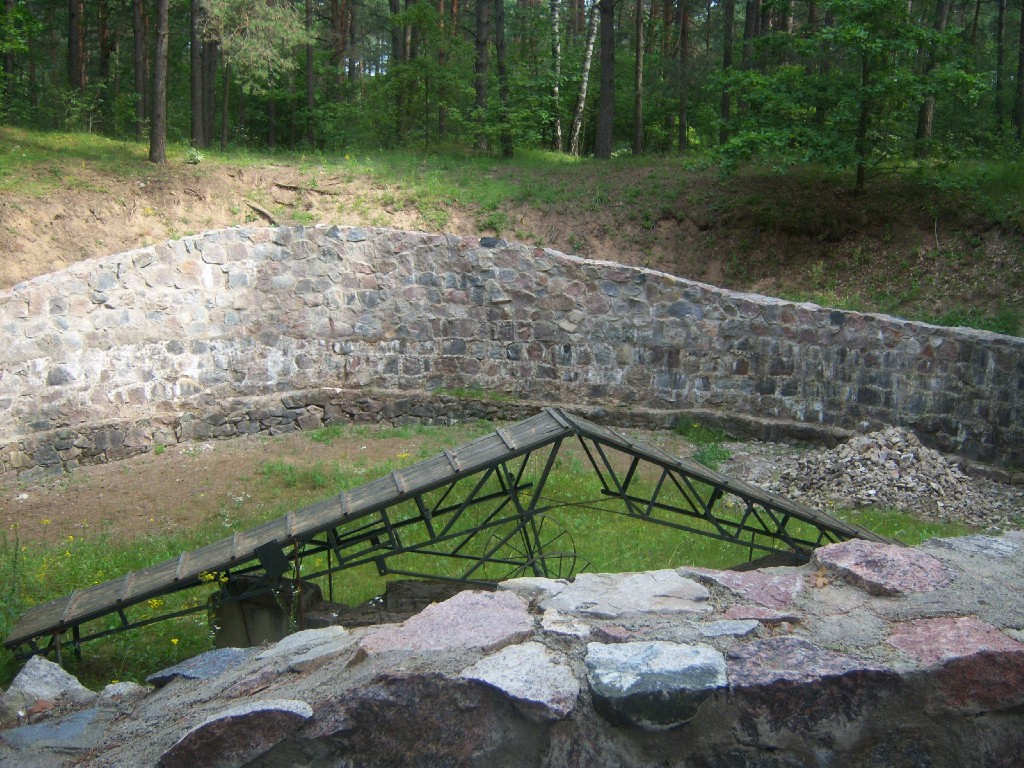
I didn’t have students with me at Panerai, a site in the forest outside Vilna where oil pits became mass graves. The group wandered silently among the pits and monuments. There were butterflies and a strong scent of pine, yahrzeit candles, a small museum space with graphic photographs. I found myself in a cluster of four, all of us grandchildren of people who’d survived the war in one or another unfathomable way: liberated from camps or in hiding. One of us murmured that she had a weird feeling that she didn’t want the non-Jewish people in our group to be there right then. Another mentioned that he’d spoken to some Lithuanians who grew up a mile away and had never been here. One floated the thought that maybe this place should just be bombed out of existence. I rambled a bit about the crumbling plantation walls I’d seen, the choice of nature’s entropy over historical preservation. We were subdued, didn’t debate. The four of us had all grown up in the U.S. or Canada. What if we lived here?
Pit at Panerai. Photo: Rebecca Entel
On the bus back to the city, the rest of the group sat in silence as though scraped down to exhaustion by what we’d seen. But the four of us laughed too loudly at something trivial. Maybe we’d become some dark version of punchy or maybe that day was a microcosm of how days just are: the reality of what we knew of this past wedged in alongside a funny story told by a friend.
Later that same day I got on another bus to Warsaw, the first time I’d ever gone to Poland. For weeks ahead of the 24-hour trip, I’d agonized about whether I should be taking a bus farther south to Auschwitz, where my grandfather had been during the war.
“Why do you need to go there?” my grandma had asked, annoyed. “So you can look at barbed wire?”
One of us murmured that she had a weird feeling that she didn’t want the non-Jewish people in our group to be there right then.
While we had this conversation on Skype, I heard my mother in the background on the phone with a friend of my grandma’s — also a survivor — and I could tell from her responses that he was bewildered, even upset, that I wasn’t going.
On this trip I was continuing to work on the novel that was partly fueled by my own bewilderment about the overgrown plantation ruins on San Salvador and the not-quite curious responses from San Salvadorans — the sense of why would you be interested in those stones?
I didn’t go to Auschwitz. Still, my grandma didn’t object to the preservation of camps as historical sites. To her, though, the sites were for those who didn’t know anything about the history — or worse, who didn’t believe — so someone like me visiting was beside the point. Was that the best use of the ruins on San Salvador: waiting for outsiders? Teaching what Derek Walcott describes in the “Ruins of a Great House” as the “leprosy of empire”?
Or: would anyone tell me if they didn’t want me walking there? To keep my blade’s edge away? Walcott: “The rot remains with us.” (My emphasis.)
In Beloved, Sethe’s notion of rememory suggests the traumatized could literally bump into their memories: “If a house burns down, it’s gone, but the place — the picture of it — stays, and not just in my rememory, but out there, in the world. What I remember is a picture floating around out there outside my head. I mean, even if I don’t think it, even if I die, the picture of what I did, or knew, or saw is still out there. Right in the place where it happened.” The past distorts the physical world into a minefield for those who wander back “out there.”
The trails to the inland plantations grow over while life goes on around the island’s perimeter, only cleared by visiting researchers who mark their tracks with fluorescent flagging tape so they can be found again and again.
As we stood at Panerai, living far, far away seemed a gift our grandparents had had the foresight to offer us. But they hadn’t deliberated; they’d fled.
As we stood at Panerai, living far, far away seemed a gift our grandparents had had the foresight to offer us. But they hadn’t deliberated; they’d fled.
“We were still trying to save our lives,” my grandma had told me about the few months she spent in Poland after the war ended. She had met my grandfather in the road, each trying to get home — him from Auschwitz, her from Wittenberg, a camp in Germany.
“How did you get home?” I’d asked.
“I walked.”
And everywhere she went she saw people walking in all different directions, speaking different languages.
Neither ever went home. Her town didn’t exist anymore; in Kielce, where my grandfather had grown up, a pogrom in 1946. The two of them went to Lodz to stay in a family friend’s spare room, but they were afraid even to speak on the streetcar since their accents would identify them as Jewish — a concept baffling to me. (When I studied Yiddish in college, my grandma told me I spoke it with a Clevelander’s accent.)
They traveled to a U.N.-run Displaced Persons camp near Munich. My mother was born there, the only doctor available a Nazi. Sick and cold and hungry, they arrived at Ellis Island in January 1947. They each traveled with a “Certificate of Identity in Lieu of Passport”issued by the U.S. consulate. On my grandma’s, the “Distinguishing Marks or Features,” was a scar. On my grandfather’s, the number on his arm. On my infant mother’s: the blank made more blank with “xxx.” Thirty years later I was born in Cleveland, white.
They each traveled with a “Certificate of Identity in Lieu of Passport”issued by the U.S. consulate. On my grandma’s, the “Distinguishing Marks or Features,” was a scar. On my grandfather’s, the number on his arm.
In the Bahamas, official emancipation came in 1834, but national independence has been in place only a few years longer than I’ve been alive. So many, many miles already traveled before that 140-year wait.
Sometimes you can’t stay; sometimes you can’t leave. No matter how many times I try to write through my glimmer of an idea about (im)migration and privilege, moving or staying put in places of peril, of genocide, I can’t find my way to a statement.
No version remotely resembles the ways these words — staying, leaving — mean in my life. The year I was snorkeling in gym class, I was the same age my grandma was when, as she put it, “the war was at my doorstep.” The monuments, memorials, and museums I saw: crafted thousands of miles from their referents.
My grandma, shaken for weeks after a trip to the then-newly-opened Holocaust Museum in D.C.: “I felt like I was on the inside, looking out.”
Skyping with my grandma from the hotel the night I arrived in Poland, I held my laptop up to the open, screen-less window. “It’s like a real city,” I said, and she shrugged. In the morning I walked into the hotel breakfast buffet and looked around at counters covered in all of my grandma’s favorite foods — the sweet smell of dark-brown breads and fruit spreads, interrupted by whiffs of herring and lox — and felt terrible. A canister marked LARD somehow made me feel better: something that made her not belong here.
After breakfast I picked up a bright yellow pamphlet advertising daylong bus trips. One went to a camp, promising tourists would see the shocking crematoriums.I can’t remember if it was going to Auschwitz or another camp. I can’t remember if it said crematorium or gas chamber. I’d put it back in its plastic holder on the lobby counter.
One tour went to a camp, promising tourists would see “the shocking crematoriums.” I’d put it back in its plastic holder on the lobby counter.
I made my way to a new Jewish museum on the Warsaw ghetto site that wasn’t technically open yet, peeked into windows on the exhibits under construction, and lingered in the gift shop, listening to Yiddish music. (In two trips to Vilna, I’d found one single person to speak Yiddish with.) The rest of the day I just wandered around Warsaw, a city neither of my grandparents had ever even visited, ducking in and out of cafes in rhythm with intermittent thunderstorms.
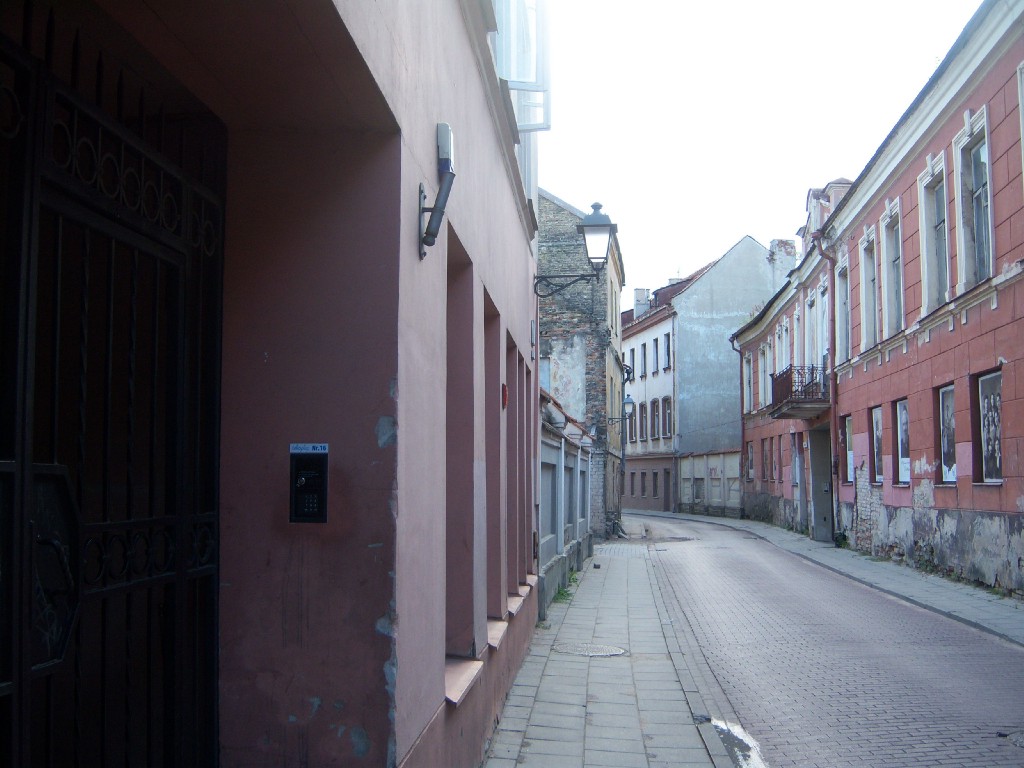
In Vilnius, Lithuania: (right) the Jewish library building that became a meeting place for the resistance in the ghetto; (left) the entrance to the apartment building I was staying in. Photo: Rebecca Entel
During one particularly long storm, I found a cafe with a charming rounded wall of windows. I sat there as the sky blackened and the windows rattled, looking through a book I’d bought at the museum: a collection of photographs from the Lodz ghetto, the first place my grandma had been imprisoned during the war and a local bus ride away from Warsaw. A bus ride I’d shied away from — I think — because I had no idea where to go once I got there.
Late in the evening I returned to the hotel to retrieve my overstuffed backpack for the overnight bus back to Vilna. When the bellhop strode from the lobby with my claim ticket, I hovered anxiously at the desk, unsure if I was supposed to wait or follow him.
The woman behind the desk told me: “Everything will be all right, madame.”
I tried to pronounce dziękuję — thank you — the way my grandma had told me the night before: the first and only Polish word she would ever teach me. I’d written it phonetically as chikoon-yay on a scrap of paper.
Upon my return from Poland, I had almost nothing to write on my travel blog. Whatever I was looking for, it wasn’t there: a point so obvious I felt embarrassed to type it.
My first time snorkeling at San Salvador’s barrier reef, I had a horrendous summer cold that turned my head to a lump of heavy clay. The July equatorial sun spangled the water and blinded me. And quashed my thought of getting a different view of hilltop plantation ruins from the middle of the ocean. (It would be almost seven years until my book about the ruins was published, two more years until my first trip to Eastern Europe, and four until Poland. Five and a half years later my grandma would die.) Disoriented, I spun in a doggy-paddle.
The July equatorial sun spangled the water and blinded me. And quashed my thought of getting a different view of hilltop plantation ruins from the middle of the ocean.
I put my head back in the water where it was cooler and hazy: an underworld you couldn’t see from above. I could hear nothing but my own breathing through the snorkel. Occasionally the water would cloud, and the coral would seem grey and dead-looking. But then: a flash of color as a spray of fish darted into hiding holes or burst forth under and around me. I dutifully cleared my mask when it fogged.
Another member of the group dove down to the sea floor and drummed her hands. The sand rustled up as a stingray longer than any of us slowly loosened itself from where it’d been submerged. How had she detected it, so well hidden? We hung in the water — admiring of its size and leery of its venom, both — watching it twist and float away.
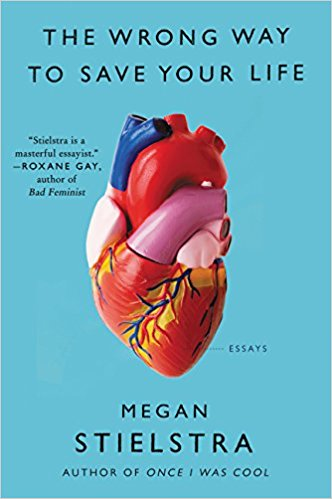
When you read Megan Stielstra’s new essay collection, The Wrong Way to Save Your Life, you know that she’s a powerful essayist. But when I talked to her about the collection, it became clear that her identity as a writer is manifold: her skills as an orator and an educator are just as honed as her prowess in memoir. Reading the collection will make you want to sit in on one of her workshops or watch her perform live storytelling in Chicago.
These stories of the classroom and of being an active participant in a vibrant cultural community weave their way into the essays that make up The Wrong Way to Save Your Life. It’s an eloquent study in the braided essay, as well as an exciting expansion of the form. Stielstra discusses the nature of growing up, how community building and radical pedagogy can build a better educational system, the national discourse on topics like gun control and sexual assault, all while building a conversation with other contemporary nonfiction writers and texts.
Not surprising given the wide range of ideas Stielstra covers in the collection, our conversation meandered all over the terrain of the problems of our society today, how to be a responsible writer and educator, and how waiting tables prepares you for a career in writing.
Becca Schuh: I loved all your writing about teaching. I graduated from a small interdisciplinary studies program, and I noticed a lot of commonalities in terms of radical pedagogy. So obviously that’s a huge topic you’re wrestling with in the book — how would you introduce people to that type of education?
Megan Stielstra: My graduate work was specifically in the teaching of writing. That’s something I think a lot of college teachers don’t necessarily have. You have this great expertise in a subject matter, but where is the support for how to teach and how to give that expertise to people. More importantly, how do you get to know the people who are in the room you’re standing in? What are their needs and wants? How can you serve the needs of the people in the room? I think that how I view education has a lot to do with just sitting and listening to people in that space. I can get really jargon-y, and I can talk about community building as a pedagogical practice, but it really boils down to that.
I was in college in the late nineties and early 2000s, and it was a hell of a lot cheaper than it is right now. I don’t want young people to be saddled with this massive debt for a single classroom. A lot of this is on the administration, too, the upper administration deciding the money that’s being spent and whether that’s going to strap young people in the future.
Each thing I say gets bigger and bigger because it’s not just administrators. We need to look at the federal government on this, because you cannot step out of college and already be underground in a hole. Just even saying that sentence out loud makes me want to set the walls on fire. This cannot be the way that it is. But it is, and it’s as crazy to me as science fiction and the machines taking over and aliens landing tomorrow.
BS: I had similar feelings to that a lot of times while reading the book, as you point out these ideas in education — not education itself but administration and how it’s handled — that just don’t make sense. It elicits this intense emotional response when you start to think about how backwards it is.
MS: While teaching I also worked in faculty involvement, so I had this interesting viewpoint, of talking to hundreds of college teachers every week and seeing what they were doing in their classrooms, the successes and challenges and frustrations they were having. And there would be this moment of realization, when I’d see that these feelings I’d been walking around with — like, dude this doesn’t seem right — they were validated and covered in conversations with hundreds of people.
A really clear example of this for me came this past October, right before the election. I teach at Northwestern, and in my creative nonfiction class, not long after the Access Hollywood tapes came out, I had several young women turn in essays about sexual assault. I think that that was not an isolated incident in this country. After the whole grab them by the pussy thing, you started hearing women talk. All of a sudden you go from one story and one isolated experience to hundreds of thousands and you just see the magnitude of not being alone in this — the power behind our stories when they’re told in volume, en masse. We can see this is real this is a problem this is not something that’s in our heads.
The next real challenge is we have is to listen to those hundreds of stories. We have to listen when students at colleges tell us something is wrong. We have to listen when half of our professorship is not making a living wage. We have to listen when women are talking about sexual assault, we have to listen to people of color, we have to listen to queer people. None of these stories are new. The thing that needs to change is the listening, and then from there the action.
We have to listen when women are talking about sexual assault, we have to listen to people of color, we have to listen to queer people. None of these stories are new.
BS: I was thinking about how the internet has increased the accessibility and availability of this information, and you know it’s so easy to gripe about the bad things about the internet, but thinking about how incredible it is that it’s this venue where people have such easy access to stories. But then, as you’re saying, you have to read them, and think about them.
MS: I think so much about the work being done by editors, and my husband is a curator, he runs an art blog, so he looks at thousands of pieces of art per day, and he finds the stuff that is incredible, and you can say the same thing about the role of an editor. I think the the idea of curation, the skill, what we’re really talking about here is media literacy. To be able to look at all of this stuff and delve into our sources and read multiple different perspectives and to be able to separate the facts from the truth.
BS:I work at a bar right now but I’ve worked at a lot of places, fancy, breakfast, the whole thing, so I was fascinated by a lot of your writing about the service industry and how it relates to creativity. There’s a passage where you say that watching customers get drunk and then tell stories helped you develop your own storytelling techniques. Were there any other things that you observed in restaurants that influenced your process as a writer?
MS: Oh my god, in the restaurant? Everything. Shit, I was at that place for twelve years. Specifically I’m talking about The Bongo Room in Chicago. There is no way I’d be where I am now without that restaurant. Not just my ability to make a living, but also living in a big city, I came from a very small town in Michigan, my father lives in Alaska, and for the longest time this was my family. Three of the women who I waited tables with for a decade were over here for dinner last night. I officiated a wedding for one of them when she married her husband last year. This is my family. I talk in the book about the year that I lived in Prague, and before I left, I went to my boss, and he said “Are you quitting or are you going on sabbatical?” And a year later I called him, we’d just got back I was so broke, so broke, and I called him and I’d just got off the plane, I’m totally jet lagged, I call thinking I’m going to try and get back in a month or so and he goes “Great I’ll put you back on for tomorrow morning.” These are the people who took care of me.
I was waiting tables while being a college professor, so people would ask, “What else do you do besides work here?” and I’m like “Well I’m a professor,” and there’s this…whoa, what. And then you can engage in a dialogue, like “Did you know that half of your college professors aren’t paid a living wage? Did you know what professors were full time and who weren’t?”
BS: You wrote: “I explain that I make more money pouring mimosas than I do teaching college students, let’s sit quietly for a moment and consider what this says about our culture.” What do you think it says?
MS: Part of the reason it was important for me to put that section in is that I don’t think with writing we spend a lot of time being really honest and upfront about the money. It’s not fair, it’s not right to young writers.
We have to talk about the basics of how do you eat, how do you pay rent, how can you be saving for retirement and not eat cat food — that is vital. There are so many voices that are being lost. There’s an organization that supports women, people, writers, who do now or have lived below the poverty line writing about poverty — the Economic Hardship Reporting Project — which is so vital, because so many people who are writing about poverty have never had that lived experience.
A thing that I think is really terrific is what Saeed Jones is doing with the Buzzfeed Emerging Writers Fellowship. You’re getting the professional support that you need, but it’s also paying you so you can live in New York for the duration. It would be incredible if that could be a model. I’m not the first person saying this, this has been said and said and said, but if internships are gateways into these positions, then the only people who are going to be able to work these internships are people who don’t need to be paid. And so again, what voices are we missing? I think that for me this all comes back to that Chimamanda Adichie lecture, “The Danger of a Single Story.” We’re just hearing from one voice what it means to survive in this country or what it means to be a young person, what it means to work. And if we’re not hearing from all sorts of voices then we’re not hearing the truth.
A lot of my students say, I want to be a writer but I’m here for pre-med or pre-law. My parents want me to do this. And the thing you want to say is, it’s your life, do whatever you want to do. But man, there is some privilege behind that comment. The young woman I’m thinking of specifically, her parents immigrated to this country. And they worked their asses off to send her to school, and there were all sorts of expectations. And she ended up writing a story about the conversation that she and I had about that. A really incredible essay.
We have to talk about the basics of how do you eat, how do you pay rent, how can you be saving for retirement and not eat cat food.
BS: I noticed in both your previous essay collection, Once I Was Cool, and this one — you talk about these manual processes that you undertake while writing essays. There was the one with the bathtub in the previous book and then in this book, dissecting the deer hearts. What was the root of the idea behind those processes?
MS: The deer heart exercise began with — I was really scared of losing my dad. That’s a piece that has been written and written and written and written — person is scared of losing family member.
So if I approach the essay with the question of ‘how do I stop my dad from climbing mountains,’ that’s not an interesting essay, because that’s been told a hundred million times, and the answer is clear: dad loves the mountains, dad will climb the mountains. So for me the question became, what do I do with all of my fear? While I was thinking about that, my dad sent us a big old box of deer hearts, and I was sitting looking at them, and I thought, ‘I don’t even know how one of these things works.’ I have twenty years in higher education where we’ve done all this shit with the heart as a metaphor, and I was sitting here with a visceral, an actual heart in my hand. The only other time I’d dissected anything was in high school with the frogs. So I was sitting there trying to cut up these deer hearts, and I couldn’t remember anything about that besides a closeup of a frog. I tried to unpack why, and then I realized oh, fuck, it’s because my teacher was Stephen Leith. [Stephen Leith was the perpetrator in a school shooting where Stielstra’s father was working in administration.] The essay made a lot more sense then. You can’t really talk about my dad and his move to Alaska without talking about this shooting. It originally wasn’t something I ever wanted to write about; for a long time, that was because I didn’t think it was my story to tell. And then…it is. This changed the trajectory of our lives. It’s an important conversation to talk about, how tragedies in our culture spill out in the big and huge ways that touch every person’s life.
BS: What else is on your mind as the book enters the world?
MS: I think there’s a single story being told in this country right now about Chicago. I want to be able to contribute to what the city really is, and to give one of many other perspectives on it, and to be able to say, “this place made me, I am here because of its arts organizations and because of its schools and because of its writers and its performers and its young people, and I’m so proud to be counted among them.” I really want to do justice to this place in some kind of a way, if this book can be a little bit of a love letter to Chicago, that means something to me, especially now.
The way you know Chicago through literature is reading about 700 different people from all sorts of corners. I’m reading I Am Not Your Perfect Mexican Daughter, by Erika Sánchez. And two other Chicago writers I love have books coming out this month, Jac Jemc and Lindsay Hunter. You hear so often the idea that Chicago is a flyover city. What people are missing by not stepping into our pages and our streets is something huge and kind of magic.
The narrator of Anelise Chen’s debut novel, So Many Olympic Exertions, is in the eighth year of her Ph.D. program and stands at risk of losing her funding. Her research area is sports, and after learning that a friend of hers — an ex-boyfriend — has killed himself, the narrator, Athena, becomes obsessed with athletes who give up: those who make the choice to do so and those whose bodies choose for them. She spends hours on YouTube watching videos of marathon runners and Iron Man competitors collapsing just before or directly after they’ve reached the finish line.
For Athena, whether or not one crosses the line is arbitrary. The effort itself is absurd. So is most everything else. The story is set in 2010, in the wake of the Great Recession, when newspapers were still patchy with items about “bank employees jumping off bridges [and] consultants swallowing their guns.” In other words, when the rules governing the American economy — the great game in which all of us participate, however skeptically — had just been rewritten, and the industry’s fiercest competitors found themselves abruptly disqualified. Chen marks such developments subtly but incisively. Before long, So Many Olympic Exertions reveals itself to be a book about much more than sport; its focus is on American systems — athletics, academia, capitalism — whose demands for achievement and continual progress can never be satisfied.
As Athena struggles to complete her thesis, the reader follows her trips to the gym, the library, her therapist’s, an academic conference in Chicago, her parents’ home in Los Angeles, a writer’s residency in Greece. She is on a mission — to finish her dissertation — but it remains unclear, despite her travel, whether she ever approaches any nearer to her goal. Chen is a thoughtful and inventive writer, and the world she creates may remind readers of certain paintings by Gustav Klimt, wherein the characters are rendered in a doleful realist hand as their surroundings shimmer with gold leaf.
I spoke with Chen about her book via Facetime Audio. Mostly we discussed athletics — watching and participating in them, and how difficult they are to quit. She was in residency at the Wurlitzer Foundation in New Mexico, and at various points our connection cut out; the residency’s internet and phone service, she explained, were unreliable.
Max Ross: What first got you interested in the field of sports research?
Anelise Chen: It was the 2010 Vancouver Olympics. I was in a hotel in Mystic, Connecticut, and the men’s luge was on TV. Earlier that week, during a training run, one of the competitors had died — something was wrong with the course, and he lost control and went over the side of the track. It cast this pall over the entire Olympics — everyone was calling it the cursed games. And while I watched I kept thinking how morbid the sport was.
I thought: The luge is such a good metaphor for how life actually feels. It seems like there’s no strategy to it. From a viewer’s perspective, it looks as if the competitors go, “Okay! I’m just going to throw myself down this track at really high speed and hope for the best!” Obviously there is a lot of strategy to it, but visually it looks completely desperate.
At the time, the economy was really bad, and this feeling of futility and things dying was in the air. And two of my friends had just passed away, a week apart from each other. It was like one event and another event and another event in rapid succession. And then I happened to in front of a TV when the Olympics were on. Before that I’d had no interest in sports. But suddenly I was enthralled.
MR: The way Athena watches sports, or studies them, doesn’t seem typical. She obsesses over the moments when athletes fail — when their bodies give up.
AC: When we watch sports, I think it normally has something to do with wanting to see the glorification of the body — of life. We’re watching really well-honed bodies in motion, and it’s life affirming. And the will to win is life affirming. The effort athletes put into their pursuits… They’re trying so hard! It’s so much!
And the act of watching activates the same areas of the brain as if you were actually moving your own body. Watching is powerful. Watching is analogous to doing. So spectatorship really becomes a conduit for experiencing what the athletes are experiencing. It’s entering into a heightened state.
On the other hand, it can begin to seem as if watching sports is some sort of ritual we’re performing to ignore the things that are really bothering us. To allay anxiety, and ignore difficulty and disappointment and — taking the metaphor to its furthest end — ignore that death exists. Ignore that we’re mortal beings, and that our bodies will ultimately fail us. By deadening us to these experiences, watching sports provides an antidote. But it can be a dangerous one.
It can begin to seem as if watching sports is some sort of ritual we’re performing to ignore the things that are really bothering us. Ignore that we’re mortal beings, and that our bodies will ultimately fail us.
MR: Have you participated in any sports yourself?
AC: I was a swimmer and a water polo player, and I was really bad at both. I became intimately acquainted with failure. And sucking, and losing.
I was competitive through high school, and we — the water polo team — had this really amazing coach. He’d coached members of the Olympic team before, and had been a college coach for a long time. So we were actually really good. Which meant that I was the worst player on a really good team. I think that contributed to my feeling that I just couldn’t cut it.
MR: But I imagine it was difficult to give up anyway…?
AC: Yes! It was really hard to give up!
The rhetoric of persistence is so convincing. And it’s definitely part of the capitalist machinery. You’re told — in various ways, and from very early on — that if you’re bad at a sport or a game, it’s your own fault. You weren’t trying hard enough; there’s some innate deficiency that is your own. With that, youth sports very quickly becomes an issue of identity. And then the stakes comes to seem impossibly high, and it becomes impossible to quit — if you quit, you’re giving up who you are.
But actually, with athletes, a lot of who’s good and who’s bad is freak circumstance. Funding is so much a part of it. And parental involvement, or the region where you grew up, and who expects what from you. And genetics. Some people are just bigger and taller than you. It’s not an equal playing field at all.
And yet, somehow when you lose there’s so much shame. And when you quit there’s even more.
Somehow when you lose there’s so much shame. And when you quit there’s even more.
MR: At times your book reminded me of that Garfield Minus Garfield webcomic, where someone’s removed Garfield from every panel, and the strip then just seems to be Jon, alone, talking to himself. But when you think of the comic as it’s supposed to be, with Garfield present, it’s still just Jon talking to a cat. Which is no less absurd.
Your book, I feel, evokes the absurd in a similar way, by thinking through what would happen if we removed competition from athletics, if athletes martyred themselves in training for no actual event.
AC: I thought about that idea a lot. The inside flap of the book is a still from Paul Pfeiffer’s interactive video piece Jerusalem (2014). Pfeiffer is a visual artist, and in this project he manipulated footage from a 1966 World Cup match between England and Germany. The players ghost in and out and you can’t see the ball they’re all chasing after. It looks like they’re running up and down the field for no reason.
His other work plays with the same idea. He’ll take footage from famous sporting events and Photoshop out all — or the majority of — the players. When the context is removed their activity becomes absurd.
MR: After seeing those images, it’s hard to feel that the game is anything but absurd.
AC: Games ultimately are absurd. There are random constructed rules. And the outcome is meaningless. It doesn’t affect world politics — except when it does — but speaking generally a game has no actual purpose to it.
It goes back to Pfeiffer’s work. If you have no opponents, and the rules of the game aren’t there or aren’t apparent, then the game loses its meaning. Why is this figure running up and down? If there’s no context, you see human life for what it is: just running up and down a field for no reason. In a way, if you perceive life from a certain angle and are inclined to think, ‘Well, we’re all just here playing this game with arbitrary rules, and ultimately we’re just alone on the field,’ then the striving and the sense of meaning and the sense of purpose — they all just dissolve.
There’s also the video work of Philippe Parreno. He made this film called Zidane: A 21st Century Portrait. It follows the French soccer player Zinedane Zidane for an entire match, and only Zidane — just a zoomed-in view of him. He’s kicking turf. He’s spitting. He scowls. But you can’t see the larger game he’s a part of. It gets at the same idea. What is he doing? What is he experiencing? What is it all for?
If you have no opponents, and the rules of the game aren’t there or aren’t apparent, then the game loses its meaning. Why is this figure running up and down? If there’s no context, you see human life for what it is: just running up and down a field for no reason.
MR: In your book then, is Athena just trying to figure out the rules? And is her frustration that she also finds them to be arbitrary?
AC: Athena’s game is also absurd. It’s, “Oh, I have to get this degree and…” There’s always an and. “I have to do this and this and this, in order to obtain this.” But what’s the purpose of obtaining this ultimate thing?
In 2010, it felt like capitalism had failed us as a structure. Its rules had led us off a cliff. In a sense we were all playing a badly designed game. And people were beginning to see that it was a daisy chain of “and then whats,” and were looking for ways out, and even investment bankers started committing suicide.
So with Athena’s friend, the one who killed himself — he’s opted out of the game. This doesn’t seem right to her, I think, this idea that you can actually drop out of the game. She had looked up to him. He was a standout student when they were in school together, he seemed to have it together, he seemed to have a promising future. But he still opted out.
MR: Is suicide the only way to opt out? That seems so bleak.
AC: Figuring that out is part of Athena’s conflict. Is it okay to opt out? Is it okay to quit? Is it okay to stop running? What will ultimately happen? If you recognize that whatever game you’re playing — soccer, academia, investment banking — is a dumb one, or if you reject the game’s parameters, you don’t have to continue on with it. But then the question is, what can you do?
There’s a section of the book where Athena’s talking about marathon runners who just stopped running. What happens to them? If you take away the metaphorical import of competition — the life and death stakes for medals and glory — competing doesn’t mean anything. Quitting just means you don’t want to run anymore. You can walk off the track. And life continues.
That’s why I like the story of Japanese runner Shizo Kanakuri, who dropped out midway through the marathon at the 1912 Stockholm Olympics. He just took a boat back home. He didn’t tell anyone and race officials assumed he’d died. Decades later, it was discovered he was actually alive and had raised a family and all that, and the Swedish National Olympic Committee invited him back to Sweden to finish the race. Which is to say, you can quit the race and nothing bad is going to happen.
But it’s still hard to quit, and that’s definitely something Athena’s grappling with. Do I want to keep playing this game that I don’t necessarily buy into, or believe in? How do I stop? I think she’s trying to find alternatives to the game that she’s been forced to play. Does this game have to be so cutthroat? Does it have to be a contest that we’re all in? Does the game have to be a competition?
Competition isn’t the only structure that play comes in. It doesn’t always have to be this win-lose binary. It can be imaginative in other ways. So trying to find another game or another structure to inhabit that isn’t antagonistic and isn’t based in competition — I think that’s what Athena’s after.
MR: But she still finds she needs rules to get by. For instance, she comes up with a set of guidelines for attending academic conferences (“Sit as far away from another human being as possible”), and sets goals for how many people to mingle with at parties.
AC: I think we all need some structure. She’s trying to find hers, if only to finish her thesis.
Is it okay to opt out? Is it okay to quit? Is it okay to stop running? What will ultimately happen?
MR: And do you think she’s successful?
AC: Ha, well. The book ends before there’s a resolution. I don’t know if it’s a cynical book, or if it’s hopeful. It’s still trying to figure that out. I don’t know ultimately what Athena discovers.
We never know if she finishes her thesis. The book ends with an image of ocean waves, which I liked because it’s so repetitive — this movement of waves crashing. There’s no beginning and no end, it just goes on and on. It’s really hypnotic. And it doesn’t stop.
DON’T MISS OUT
Sign up for our newsletter to get submission announcements and stay on top of our best work.
YOUR INBOX IS LIT
Enjoy absorbing fiction from Recommended Reading on Mondays, strange, diverting work from The Commuter on Wednesdays, and a roundup of our best work of the week on Fridays. Personalize your subscription preferences here.
Thank You!
Manage Consent
To provide the best experiences, we use technologies like cookies to store and/or access device information. Consenting to these technologies will allow us to process data such as browsing behavior or unique IDs on this site. Not consenting or withdrawing consent, may adversely affect certain features and functions.
Functional
Always active
The technical storage or access is strictly necessary for the legitimate purpose of enabling the use of a specific service explicitly requested by the subscriber or user, or for the sole purpose of carrying out the transmission of a communication over an electronic communications network.
Preferences
The technical storage or access is necessary for the legitimate purpose of storing preferences that are not requested by the subscriber or user.
Statistics
The technical storage or access that is used exclusively for statistical purposes.The technical storage or access that is used exclusively for anonymous statistical purposes. Without a subpoena, voluntary compliance on the part of your Internet Service Provider, or additional records from a third party, information stored or retrieved for this purpose alone cannot usually be used to identify you.
Marketing
The technical storage or access is required to create user profiles to send advertising, or to track the user on a website or across several websites for similar marketing purposes.