A Dark Fairytale About Post-Earth Education

“Miss Snowfall”

by Sofia Samatar

Here is the peaceable kingdom.

I once heard a beautiful story. Two people, a brother and sister, worked at the Castle until they were very old. Then the sister fell ill and couldn’t work anymore. In her illness her eyes became brighter and brighter, and her face thinner, until she looked like a little old child. Eventually she was so small the brother could carry her on his back. He carried her up to the Castle for medical treatment. There’s a long part of the story in which the brother staggers through the Castle, getting confused, going into the wrong rooms, waiting for hours to get clearance. All the time he has his sister on his back, and also something else: her pain, which has been growing until it nearly fills her whole body. “Pain is the heaviest thing,” said Miss Snowfall, who was telling the story. A faint clicking came from the back of the room, where some boys were fiddling with chalk. At the end of the story, the two old people were so worn out and bewildered they returned to the village without even seeing a doctor. The old woman died in her bed, underneath her own quilt, holding her brother’s hand. Her last words were: “Do you remember the way to the Castle?” Miss Snowfall delivered these words in a soft voice, almost a murmur, a voice that always filled me with a special anguish, because it made it seem as if she were speaking not to us but to herself, that she was far from us, removed. After the story she took out her handkerchief and, in a characteristic gesture, doubled it up and pressed it to her lips. Temar hated the story of the brother and sister, but to me it’s like a window through which I can see another world.

In those days, if you had asked any of us what we wanted to do when we grew up, we would have answered: “Work at the Castle.” Children probably say the same thing today, but I imagine it carries a different meaning for them than it did for Miss Snowfall’s pupils. For us, who had the immense good fortune to study under a teacher so inventive and eccentric we often didn’t know we were studying, a teacher whose one goal seemed to be to whip our imaginations into a frenzy, the Castle was a temple, a magic portal, a citadel, a cave. Ezera said it was an inverted world in which people floated face downward. Lia insisted people there spoke without words, in bolts of electricity. To all of these fancies Miss Snowfall responded with an approving smile, a smile that was slightly sad and therefore irresistible. We competed with one another for the honor of provoking that smile. Even those whose parents worked at the Castle, such as Elias, whose father was a security guard, or Markos, whose mother conducted inspections of the water system, made up outrageous stories without being scolded. “That’s probably true,” Miss Snowfall would say with her melancholy smile. The classroom was a zone free from accusation. All things were permitted there, above all Miss Snowfall’s weird assignments, which included knitting and lying on the floor to contemplate the inner light.

After school the children would pour out into the yard and then through one of the gates, either through the north gate with the inscription WASTE NOT, WANT NOT, or, like Temar and me, through the south gate, which bore the inscription ARBEITE UND HOFFE. Miss Snowfall also left through the south gate, but not immediately after school. Instead she would stand at the window, half concealed by the curtain, as if she were watching us go, although it also seemed she couldn’t see us, for if we waved to her she never waved back. Temar constructed a romance for Miss Snowfall out of the fact that Mr. Cinders, who taught mathematics to the upper classes, always glanced toward the window of our schoolroom as he bent to pin back the legs of his trousers before mounting his bicycle. But Miss Snowfall never made him any sign either, and so Mr. Cinders cycled home slowly to Unmarried Male Housing, a dreary edifice known as the Barn, to dine (as we imagined) in a hall full of noisy men who made fun of his protruding ears.

Miss Snowfall did not live in Unmarried Female Housing (known as the Henhouse) but in a room above Nimble’s dry goods dispensary. The Nimble family lived in the other rooms. If you were lucky enough to be sent out after supper to get some sugar or a packet of needles, you could see the silhouettes of the Nimble children romping about in the whitish light that filtered through the blinds. The real attraction, of course, was Miss Snowfall’s window, which gave off a yellow light, and through which no movement at all could be discerned. She was reading, we told each other, she was observing the inner radiance, she was writing letters or drawing a self-portrait. I was admitted to this room twice: once after Temar was lost and Miss Snowfall made me sit in her chair and chafed my hands, and a second time when Miss Snowfall herself was lost, having managed, with typical ingenuity, to hang herself from the light fixture.

For me, those early school days are infused with a Sunday glow. In fact, the real glow of Sundays, which has inspired so many verses, and which rules our bodies like the hand of a hidden puppeteer, has never made me as happy as the rusty gloom of the schoolroom. On Sundays when I was a child, we would get up early, like everyone else, and rush outside into the intensified light. My mother would always be there before us, seated in her chair in front of the house, her eyes closed, her entire body gilded. We would sit beside her on the squares of roughcloth we called “the outdoor blankets,” careful to keep our feet on them so our scrubbed shoes wouldn’t get dusty, enveloped in a timid silence, not even waving to our friends across the road, who were sitting outside with their own parents. All over the village, a hush. Only the cows broke it, lowing. And my father would appear around the side of the house, his hands clasped behind him, his beard shining, his good shoes tightly encased in galoshes, returning from letting them out to pasture.

Then we stood and shook out and folded our blankets. My mother snapped shut her collapsible chair. Sometimes she stumbled slightly, saturated, dazed with light. We collected our Bibles and walked to church. Everyone looked dim and hot. A hymn rose, faint but steadily growing, from those who had already arrived. We smiled at each other, at friends, but did not speak. We began to sing. We gather together to ask the Lord’s blessing. If we whispered, or looked as if we might step off the edge of the road, our father tapped our ankles with his cane.

Marvelous light. The white church seemed to pulse. You could feel it taking hold of you, lifting you. At school, Miss Snowfall explained the influence of that glow. We diagrammed the pineal gland while she spoke of the delicate secretions that make us particularly happy on Sundays. “Why can’t we have Sunday light every day?” asked Selemon. Miss Snowfall replied with her favorite question: “What do you think?” Hands shot up; we guessed that too much light, like too much sugar, could make you sick, that it would be wasteful, that God wouldn’t like it. Miss Snowfall erased the pineal gland and drew a line representing the surface of Fallow. She drew its tiny, fugitive sun, with arrows for rays. Squares represented the solar fields; a great opaque blob was our generator, which, she reminded us, has to power everything. It has to keep the reservoir working, the heaters for the pastures, the vast grain corridor, the production labs, the smithy, the workshops, the grottoes. “It has to power these lights,” she said, indicating the orange bulbs in the ceiling. “It has to make air. It has to run the Castle.”

We walked home through the eternal cold of the village, hands shoved deep into our coat pockets. I thought Selemon, who worked in the pastures after school, and who always smelled vaguely of the shit he collected on a cart, might grumble about all the fuel that goes to the generators of the Castle. Couldn’t they use some of it to light the sky? But Selemon left us as usual at the crossroads, hat pulled low over his curls, giving us a quick wave before trotting off down Granite Road. We walked on with the other children who lived in our district, our breath rising white in the twilight, a tentative, greenish twilight that colored the tops of the houses, a twilight that would last just long enough for us to feed the chickens and bring in the wash before going out at the touch of a distant switch. Temar walked beside me, her chin sunk in the folds of her scarf. I was already taller than she, though nearly two years younger. I could see from her posture, her frown, that she was thinking, and knew from experience that if I spoke to her now I’d get a sharp reply. So instead of talking to her I talked to our parents at supper, cheerfully, volubly, in order to compensate for her silence. And, as usual, she gave me in exchange for this kindness a gift of far greater worth. When we were in bed, when I was sure she was sleeping, she spoke. Into the icy darkness of our room came the words I would not have dared to say, but which perfectly articulated my own feelings, words that fell on my heart with a bursting shock of recognition, reverberating for days afterward: “I hate Sundays.”

After that I felt oppressed by Sundays, hounded. There was something dreadful about the secret workings of my pineal gland. I considered it a triumph if I could maintain a sour mood in the warmth of the churchyard, among the freshly washed and laughing children. As for Temar, she adopted an outward sign of isolation: It was around this time that she began to wear the shapeless black hat, knotted together from cast-off strings in Miss Snowfall’s classroom, that led people to call her Temar Black Hat. This hat is the reason I am known as Agar Black Hat today, even though I have never worn such an article. I have been left with a phantom hat, a mark. It’s better than nothing. “Fill the slate,” Miss Snowfall used to urge us, “to the edge.”

She was the daughter of Deacon Brass and his wife, who was known as Sister Brass. Her name was Sara. She received the name “Snowfall” after a fire. She was six years old when the Great Western Fire destroyed nearly a quarter of the village — workshops, granaries, labs, and animals. Seated on her desk in our classroom, swinging one foot, she described these horrors in a calm voice. The raw, piercing screams of chickens and, unimaginably, cattle. Men and women looming in the glow of the sky, which stayed on for three days, and in the blazing light of the fire. Everyone was covered with the earth they were using to smother the flames. They moved frantically and clumsily, figures of mud. Human bodies were dragged from the furnace, some of them still on fire. The ones that wouldn’t stop screaming were carried to the infirmary. Handcarts rushed up and down the tracks, traveling east with bodies, traveling west with enormous piles of dirt, in both cases materializing out of clouds of smoke only to disappear again with a doleful creaking.

Sara stood at the window, where she had been instructed to pray, holding the blinds apart with her small fingers. The blinds felt hot; her eyes felt hot. And the ashes that began to fall looked pale and cool, like what we know of snow. To the child at the window, the air appeared full of one of the miraculous substances of Earth. “I wanted,” she told us, “to run out and let it fall in my eyes.” “Mother,” she cried, “it’s snowing!” And so she received her gently mocking nickname, becoming known from that day as Sara Snowfall.

“But the most memorable part of that time,” she told us, “was the color blue.” She had discovered, standing at the window, that if she looked at the orange flames in the distance and then closed her eyes, she was treated to a marvelous image of the fire in deep blue. The power of this memory led her to the back of the classroom, to her vast collection of specimens, odds-and-ends, and outright trash, to fetch the color wheel she had made with various powdered minerals fastened to a slate with glue. In accordance with her idiosyncratic, associative method, a drawing lesson followed, and then a lecture on the Age of Disorder, when our ancestors, crazed with longing for the vivid colors of Earth, took to stabbing themselves in the eyes with picks.

I would not want to suggest, especially in light of Miss Snowfall’s fate, that we did not learn the proper curriculum. Miss Snowfall was extremely thorough. Often, when we arrived at school, we would find her poring over the huge books issued by the Council. To do this she wore a special reading lamp strapped to her forehead, advancing through our course of study like a miner. When we sidled in, awed by the sight of the books, she would look up and blind us for a moment with her flaming brow. Then she would switch off the light, and when our vision cleared we would see our own dear teacher, perhaps already pressing her handkerchief to her lips, wearing her customary pleasant and faintly sad expression, only a bit more tired, bowed down by the weight of history. We would take out our slates and Miss Snowfall would stand up and begin her lecture. With an energy and fluency I have rarely seen behind the pulpit, she spoke of the Former Days of Earth, of its bitter atmosphere and boiling seas, its floods, its storms, its wars and conflagrations. She spoke of the Universal Draft, which was, she explained, only the latest and largest version of the many drafts our people had faced throughout history, the innumerable calls to war we had refused, and for which we had been so often imprisoned, ridiculed, tortured, exiled, killed. My heart beat faster; I found myself scratching the underside of my bench with a fingernail, which always has a calming effect on me. Some of the children had tears in their eyes. It was so unfair, this senseless persecution, the pressing into evil of a people who only wished to be left alone. Miss Snowfall described the elders of the community, dignified and austere, holding the little children by the hand, standing outside the prisons in the hope of delivering some bread and comfort to an incarcerated generation. People going by would shove them, trying to make them fight. In one terrible region they tore out the old men’s beards. She spoke of the Great World Conference and the decision to depart, not for a sympathetic country — there was none — but for the stars.

“And they built an Ark,” she told us, “in the hills of Misraq Gojjam.” She was keen to impress on us not only the heroism of the engineers, but the achievements of the preachers, lawyers, schoolteachers, and bureaucrats who made it possible to save so many. In some parts of the Earth, governments were only too happy to let our people go; in others they strove to block us with laws and tariffs. Sums were raised in wealthy regions in order to help the poor ones, and peaceful liberation campaigns filled the streets. Of course, almost immediately there were disagreements and schisms. Some said only those of our faith should be permitted to join the trek; others said we must take everyone who desired a life of peace; still others argued over our faith itself, its character, its law. Such debates were especially fierce among those who practiced seclusion. Of these, some eventually boarded the Ark, believing that God would prefer them to accept a life dependent on advanced technology, rather than a life of war or a stillness amounting to suicide. Others, Miss Snowfall told us quietly, stayed on their burnt farms, among the cattle who were dying in the dust. In one district they shook out their sheets and curtains for the last time and went to bed, resolved not to rise until Judgment Day.

The Ark set sail. It was the Age of Drift. We rubbed out our slates and copied the plan of the ship Miss Snowfall drew on the blackboard. “The Age of Loaves and Fishes,” she quipped, and a giggle went round the room, not because the joke was funny but because we needed to laugh. It was true the Drifters made do with almost nothing. For this, we revered them. Generations were born and died on the Ark. The bodies of the dead supported those of the living. For some reason still unclear to us, all the horses perished.

On the Ark they had a place similar to our grottoes called the Hanging Gardens. They had fish tanks, cages, rows and rows of beds. Most importantly, they had the great monitor Gabriel, which gave them a report from Earth every twenty-five years. Now Gabriel stands at the center of the Castle, where he still delivers his report every quarter of a century, as he did without fail, like a mighty clock, through the Age of Disorder, the cave-ins, the plagues, the fires, the cults, the breakdowns of the sky. “Put on your coats,” Miss Snowfall said. She always knew when to take us outside. The room filled with happy jostling, voices, the drumming of feet. It is estimated that we will be able to return to Earth five hundred years after Gabriel reports a total absence of human life.

Mornings of childhood. The rush to get up, despite the biting chill of the floor, in order to be the first to use the water, and how often Temar, just as I thought I was winning, slipped in front of me and slammed the door of the bathroom in my face. The water, slick and gray with soap. Using Temar’s old water was better than using my parents’, which I would have to do if she spilled it (as happened more than once), for my parents’ old water was speckled with tiny hairs. Down the stairs, taking the last three steps at a jump. Wan kitchen light. Injections, my mother’s fingers warm, the needle cold. Only babies cried at their injections. Our little brother, Yonas, still cried, and Temar hushed him: “Father will hear you.” Then the potatoes with beet syrup, spoons clattering on plates. Coats and hats. As we ran out, Father was coming in from milking. No matter how wildly we hurried, we never escaped without meeting him, his great cracked hand extended, his mournful black eyes that seemed to read our thoughts. “Good morning, Father,” we chorused, and shook his hand. Then down the path and over the gate, never bothering to open it but swinging up over the rails. The sky was blue-green, Sheba and Naomi were running to meet us, and in the distance the roar of the smithy had begun.

Through the village, looking both ways for handcarts before we crossed the tracks, passing the Nimble store, the dispensary with the glass lamp in the window, the workshop where the door was propped open and looms already clacked, the desolate stretch of ground in front of the archives where Brother Lookout was sweeping. All day he swept the village streets with his funny sideways walk, his head subtly shaking as if he were always saying no, turning up a surprising amount of garbage, much of which found its way to Miss Snowfall’s classroom, where it was used in projects or simply gathered dust. We ran past Brother Lookout, we ran even faster past the house where Sister Blunt had died and her husband had covered all the windows with roughcloth, we flew past Sister Wheel, who was always standing in her yard beside a table on which she had placed a cup of coffee, we cut through the old surveyors’ camp, avoiding the piles of rubble, always wary of the boys who sometimes hid there to throw stones, and then other children were joining us, smelling of jackets and burnt potatoes, and it was now, we were climbing the hill, we were at school.

The door of our classroom stood wide open, and Miss Snowfall leaned against it, arms crossed, smiling. The bell clanged, rung by Little Yosef, the headmaster’s nephew. And perhaps we would go in, sit down, and take out our slates, or perhaps by the time the last notes of the bell died away we would be on our way down the hill in two orderly lines. For Miss Snowfall believed in what she called “experiential learning.” There were many days when we never set chalk to slate. Instead we walked all over the village, into the archives, the smithy, and the weaving workshop, where we bruised our fingers trying the machines. Together we pumped the handcarts and rode up and down an abandoned stretch of track. We visited the metal dome of the Zeitgeber, and were given a lecture on chronobiology by Brother Barter, who stammered whenever Miss Snowfall looked at him. We visited the clearance shed, where Sister Singer, who was as slim, sharp, and restless as Miss Snowfall was round and solid, gave us a special pink gum, which, she said, they chewed at the Castle, and allowed us to crowd up to the window and look at the Castle door. “How does it open?” Sheba asked. “From the inside, my love,” said Sister Singer, peering up herself at the silver disc in the sky. “They open it up and send down whatever they want. And when the people go up, the ones that work there, they send down a ladder for them.”

Filled with the image of Brother Bell and Sister Glove, the parents of our classmates Elias and Markos, ascending to heaven on a ladder like a pair of angels, we filed out into the grainy afternoon air to end our school day at the grottoes. This was Miss Snowfall’s favorite place; indeed, she often joked to us that she had become a teacher only so as to secure a pass to that paradise. We made more trips to the grottoes than anywhere else. At the entrance we had to leave Markos, who suffered from allergies, in the care of the doorkeeper, Brother Flint, a cheerful old man with a worn gray hat whose pockets were full of finger puppets in the shape of animals, which he made out of cast-off clothes. I believe his whole menagerie must have come from the same garment, for the little pig, the little sheep, the swan, and even the bumblebee had been sewn out of identical black cloth, and looked so much alike that only Brother Flint himself could tell them apart. I always hurried into the front hall so as to see as little as possible of Markos, who would have to spend the next hour being entertained by these puppets, and whose misery as he watched us go was palpable. In the sterilization chamber I felt as if the stinging jets were scouring off my guilt.

In the room beyond we all put on the dresses of white paper. Already we could feel the air of the grottoes. Sheba said it gave her a headache. In the next room we met the boys and put on the dark glasses. Then we walked out into the grass.

Sometimes, like Sheba, I had a headache at first. Sometimes I felt dizzy, even nauseous, but this never lasted long. Creamy sunlight warmed my face. I was sweating. A powerful greenness filled my lungs, as if I were breathing in the color. Miss Snowfall brushed her hands over the plants and told us their names. Beneath the white dress, her legs were dotted with black hair. She waved to the grotto workers, who waved back, silent, swathed in white veils. There was a buzzing sound, and things rustled in the grass. We watched the fish in their pools, we saw a turtle make its way into the water, we stood at the edge of the deer park and cooed at the fawns, we observed the scientists working behind glass, where even Miss Snowfall did not have clearance to go, at the tanks that seethed with life, the lungs of Fallow. Always, at the end, we sat on the grass beneath the trees. Many of our classmates dropped off to sleep, for the grottoes made one drowsy.

With slow gestures, Miss Snowfall unbraided her hair and massaged her scalp, as if to allow the warmth to penetrate her skull. Her braids undone, her hair standing up, she looked winsome and very young. She began to tell us stories from the Bible. She spoke of poplar and chestnut trees, and of manna, which is white like coriander seed, and tastes of wafers made with honey. The light of the grottoes filled me to my fingertips — not like a Sunday light, which often accompanied terrifying words from the pulpit, confessions, and scenes of discipline, but like the light of seven days, in the day that the Lord bindeth up the breach of His people and healeth the stroke of their wound.

Often Lia crept into Miss Snowfall’s lap and curled up there, sucking her thumb. Anywhere else, we would have mocked her for this babyish behavior, and who knows, even Miss Snowfall might have disapproved. But the grottoes enfolded her in their magic circle. I suspect Miss Snowfall knew, though we did not — yet — that Lia was beaten at home, more often and more severely than any of us, even Temar. Whatever the reason, she cradled Lia, murmuring of the aloes and the cedar trees which are beside the waters. Once, sitting very close to them, I discerned beneath the chemical tang of sterilization another smell, secret, rich, and sweet, a stink which I realized came from Miss Snowfall’s feet. At that moment I heard, as clearly as if I had spoken them, the words: Here is the peaceable kingdom.

This is not the first time I have written something I intend to submit for preservation. I have submitted a number of works, more than I care to remember. All have been rejected. I have submitted dramas, fantastical stories, novels of Old Earth, children’s tales, even hymns. At this point, merely to pass by the archives gives me a queasy feeling. For this reason, I rarely go into town, and if I need something unavailable in Housing, I pick it up from Sister Bundle’s little stand, rather than visiting the stores. It is a terrible feeling to have your work pulped. Brother Chalk at the archives — whom I call Ezera, since I knew him at school — tries to comfort me by telling me that pulped paper makes fresh paper possible, that destruction and renewal is the cycle of life. His remaining hair clumped at the back of his head, his chubby jowls fringed with beard, he is a good man, a father, sympathetic, and one of my best friends. The last time I spoke with him, I thanked God that I had no pencil with me, for I might have succumbed to the temptation to drive it into his hand.

Outside on the street after I was rejected the walls of the village were crisp, the gleam of the Castle door in the distance extraordinarily distinct. I walked home with the new sheaf of paper under my arm. And I began to write in a different direction, without thinking of the Council. I began to write what I feel is truly worthy of preservation, what I cannot help preserving in my memory. I have no doubt that this writing, too, will be pulped. But I feel at the same time that I am enabling something of Miss Snowfall to hover in the world. The more I write, the more her presence grows, and I am amazed at how much I remember of her, a person I had to a large extent forgotten, first because I was preoccupied with my own problems, and later because the memory of her was so painful. “Put it in the dustyard,” we say, when we mean that a thought or question should disappear. “Put it in the dustyard, Agar,” Temar said to me, the night I saw her spit a tooth into the sink. But lately only these scenes stand out to me, and I kneel, overwhelmed, in the dustyard of memory.

Strange that this dustyard should hold images of such splendor. Miss Snowfall’s bright face, her laugh, her stockings mended poorly because (she said) she was lazy, her wobbling progress through town on her brother’s bicycle when he visited her from the mining camp and loaned her his machine. Miss Snowfall, living in town as she did, had never been granted a bicycle, but at some point her brother had taught her how to ride, and sometimes on Saturdays she appeared, shaky and triumphant, running her usual errands in fine style. She always dismounted with a nervous leap, which sometimes caused the bicycle to fall over, spilling her packages on the ground. Then she would laugh so merrily that whoever was around her laughed too, helping to pick up her things, never embarrassed. Even Sister Wheel, standing outside by her eternal cup of coffee, allowed a faint smile to thaw her face when Miss Snowfall crashed that bicycle, and Miss Snowfall would dust herself off and greet Sister Wheel, as she always did, for she feared no one — on the contrary, she had a special affection for the oddest characters in the village. She stopped to chat with Sister Wheel every Saturday, bicycle or no, though “chat” seems an exaggerated way of describing a conversation with Sister Wheel, who tended to stare at passers-by with an expression of controlled fury before dropping a “Hello!” from her mouth like a stone. Sister Wheel had been a Young Evangelist, and was now what was called “peculiar.” She was often alluded to in sermons on the virtue of moderation. But Miss Snowfall spoke to her naturally, and in response I once heard Sister Wheel reply to her with a complete sentence: “It’s a waiting game, Sister, that’s all.”

How wonderful it was to see our teacher outside school, to hear her addressed as “Sister” rather than “Miss,” to greet her formally in the street while she twinkled at us with a kind of amusement that failed to conceal her pride in our good behavior. She spoke to our parents, she knew everyone, she greeted our little brother Yonas and laughed when he hid his face in our mother’s neck, she was an ordinary person, carrying ordinary things, syringes, bags of flour, some gum she needed to fix a crack in a table. Meeting her like this, we felt that the marvelous air she breathed, the life she lived, was accessible to us, close. Best of all was seeing her brother in church: a short dark man with a heavy beard who once showed us the knife he kept in the side of his boot.

Why is it that when I write these memories down, they swell until they seem to contain my whole body? Miss Snowfall and her brother in the churchyard, convulsed with laughter as Bishop Gloss walked by with crumbs in his beard. Bishop Gloss was the most terrifying man in the village, the head of every meeting, a brooding presence at every disciplinary discussion, he had driven Brother Lookout out of his mind, it was said, he had come to our house to reprimand our father for keeping a dirty henhouse. We couldn’t imagine laughing at him even if, at the fellowship meal that followed the service, he had bathed his whole head in soup. But Miss Snowfall and her brother stood frozen with suppressed mirth at the sight of the crumbs suspended in his majestic beard. Tears started from her brother’s eyes; Miss Snowfall crossed her legs just as we did when we laughed too hard. She pinched her brother’s arm harshly, like a child. At that the air came slowly out of his nose with a high-pitched whistle like the sound of the ancient brakes on his bicycle . . . Memories sparkling palely in the dustyard. The way Miss Snowfall lifted her chin when she said to Temar: “You may keep the hat.” The hat, a knitting project, certainly should have been unraveled when it was finished, the thread returned to the box. But Temar had picked out all the black threads with such care, knotted them together so cleverly, even the hair and wire. And Miss Snowfall, with a strange redness around her eyes, said: “Keep the hat.” In the same way she said to me, a year later: “You can be a writer.” Another excessive gesture, the jutting chin, the red, sore-looking eyes. The other children snickered; Temar ducked her head, embarrassed. But Miss Snowfall said firmly: “Writing is a noble pursuit.” The words sounded awkward, as words do when they have never been said before.

Perhaps this is why my memory of her is illuminated, enveloping: because, as much as we loved her, she dwelt among us like a stranger. I see her standing by the chalkboard, her arms crossed, rubbing her sleeves as if to keep off a chill, her face closed down, inert. Miss Snowfall could not bear discipline. If her pupils interrupted her — Markos and Elias were the worst offenders in our class, scuffling in the back — she simply stopped speaking. She would retreat into herself, go to the window, press her handkerchief to her lips. The first time this happened we were entertained, we wondered how long it might go on, and an evil spirit seemed to seep into the room, the cruel, gloating twin of the spirit of happy permissiveness that surrounded us when we spent whole afternoons building cities from empty jars. The chatter grew louder; Little Yosef laughed his braying laugh. Then Temar got up and strode to the back of the room. “Shut up!” she shouted at the boys. “Yes, be quiet!” I echoed, running up behind her, and some of the others joined in: “Let Miss Snowfall talk!” Temar’s fists were clenched, her whole body shook, the air was charged with unbearable energy, and Elias looked us up and down with his slow gaze, a sneer spreading on his face, and I felt that something terrible was going to happen, when Miss Snowfall shocked us, shattering everything.

“No, no!” she cried breathlessly, rushing toward us in such haste that her hip banged against a desk. “Don’t, please don’t!”

She was speaking to Temar and me. Temar’s eyes widened, amazed and hurt, and I felt a pang, for weren’t we Miss Snowfall’s defenders?

“Don’t, please,” Miss Snowfall repeated, trembling.

The class fell silent. Gloom covered us. Temar and I returned to our seats. Tears were trickling down my cheeks; I buried my face in my sleeve. When I looked up Miss Snowfall was paging roughly through a book, trying to find her place. She dropped her chalk on the floor, where it broke. Although I could not have expressed the thought at the time, I understood then that she had a horror of the exercise of power, not only the obvious sorts of power — the rod, the shout — but the type we knew most intimately: the power of the group. She had a horror of the downcast eye that waits for others to act, of the elders appearing at houses because someone, claiming to defer to their authority, has summoned them, of the public prayer that flays a member of the congregation in coded language. In other words, a horror of Fallow.

When Miss Snowfall was removed from her position, I had not been at school for two years. It was a difficult time for my family: Temar was working at the Castle and often refused to come home for the weekend, a source of great tension. As I recall, my sister was not at church when the special prayer for Miss Snowfall was held. I remember the heat of the sanctuary, the windows full of light, the grimy feel of the metal pew as I gripped it and scratched at its underside with a fingernail, discreetly, careful not to cause any noticeable vibration. Of course this sensual memory might have been lifted from any Sunday. From that particular day, I remember a sag of the heart as the bishop announced that Miss Snowfall was leaving the school, a feeling of guilt as he described her errors — the “haphazard” and “unorthodox” methods I had loved — and an immediate anxiety about what Temar would say. Then a long, circuitous prayer. Those in Miss Snowfall’s vicinity were invited to lay hands on her, but I was too far away. I could only see, at the distant front of the church, the rustling bulge of bodies surrounding her until she entirely disappeared.

Afterward, at the fellowship meal, I remember thinking she looked scrubbed, almost scoured, as if she had washed her face too hard. Her eyebrows were sparse, her hair faded to gray. She gazed down at her plate with her head tilted, wearing an odd little smile. Several of the children were crying and had to be taken away. The truth is, it was a scene of woe. People were greeting each other, shaking hands, finding their seats. Before starting the meal we sang “The Beautiful River”:

Oh, will you not drink of the beautiful stream,
And dwell on its peaceful shore?
The Spirit says: Come, all ye weary ones, home,
And wander in sin no more.

O seek that beautiful stream,
O seek that beautiful stream.
Its waters, so free,
Are flowing for thee,

O seek that beautiful stream.

The next time I saw Miss Snowfall, Temar was gone. I had been walking for some time. I had set out at dusk, carrying the lantern, and walked along the edge of the pasture all the way to the grain corridor before the light in my hand began to flicker. On Fallow there is always a subtle sense of being closed in. I put my hand on the wall of the corridor; it was freezing. Behind that wall, which reached all the way to the sky, humid air caressed our grain and an intricate irrigation system watered the ground. The water was made at the other end of the corridor and kept in the reservoir. Pipes transported it all over the village. I stood in the darkness, breathing hard. We are capable of such miracles but no one could bring my sister back to me.

My lamp was growing dim. I turned and headed back toward town, where a cluster of lights gleamed out of the dark. It was like a great ship twinkling all along its sides with holiday lights such as I had read about in the stories of Earth. By the time I arrived among those lights I could no longer feel my feet. I stopped and glanced up at a shadow in one of the windows. Someone stood there, looking out. I wondered if the person could see me. Then the figure vanished and the window shone clear.

I was turning away when a door opened and Miss Snowfall came out into the street. “Who’s there?” she cried, peering into the night.

“Agar, Temar Black Hat’s sister.”

“I saw your light go out,” she said.

I looked down at the lantern in my hand; it was dead.

“Look at that,” I said. I found it hard to work my lips, they were so cold. “Do you know, I was just standing here thinking about ships. Coming into the village I thought the lights looked like the lights of a ship but they really look the way I think the lights of a ship must look. Must have looked, I mean. Or perhaps they still look that way, on the green seas of Earth, with the seagulls winging overhead. Do you think there are still ships?”

Miss Snowfall seemed to consider. Then she said: “You’d better come up and charge that light.”

Her room was surprisingly bare. As a child, I had imagined it stuffed with treasure — a more splendid, more glittering version of her junk collection in our classroom. But it was simple, like anyone’s room. Bed, worktable, chair, gas stove, a lamp shaded with yellow roughcloth. There was a ceiling lamp too, but it wasn’t on. Of course I thought about that later. I thought so much about Miss Snowfall’s room, the big shadows thrown by the lamp, the chair covered with something shaggy, perhaps an old coat, where she made me sit. She knelt and tugged off my boots. Her hair was thin, wide tracks of scalp between the braids. She stripped the quilt off the bed and wrapped it around my feet. There was a photograph on the wall, a ghostly deer among weeds. “Oh, Miss Snowfall,” I said, “my sister has run away.”

“Yes,” Miss Snowfall said quietly, and a charge went through my chest, everything coming up, my face swelling and twisting from the pressure, the pressure of my rage, this useless rage that had nowhere to go, and I broke, I sobbed in her chair, I bawled like a calf.

Miss Snowfall pulled off my gloves. She rubbed my hands. When I was calmer, she made coffee. My lantern, plugged into her outlet, had begun to glow. She put a cup of coffee into my hands and sat on the bed with her own, regarding me with frank, unhappy eyes.

I sipped the coffee shakily. “That’s nice,” I said, nodding at the picture of the deer.

Miss Snowfall lowered her gaze.

“I mean, I don’t care,” I added quickly, realizing that the picture could only have come from one of the Council schoolbooks, that it was stolen.

She looked up at me and smiled. For the first time, I noticed the tremor in her lips. Her lips jumped and twitched when she was not speaking. I saw how she tried to disguise it by holding her cup in front of her mouth or drumming her fingertips against her chin. I thought of her old habit of pressing her handkerchief to her lips. I wondered if she had always had this tic, or if, when I was a child, it had been only a vague sensation, a premonition underneath the skin.

I dried my eyes on my sleeve and blinked. “Is it an Earth deer?”

“Yes,” Miss Snowfall said, turning to look at the photograph. Her cheek quivered, but the rest of her body seemed filled with a deep stillness like the otherworldly stillness of the picture. The deer looked into the room where we were. In the photograph, too, it was night. The deer stood motionless, pale, its perfect antlers etched against the dark. Its eyes were globes of molten light, symmetrical and clear. A night camera had captured it, Miss Snowfall said.

“It was wrong to take it,” she added, “but I was angry, and I wanted something.”

“It’s not wrong to be angry.”

She looked at me with some of the old amusement. “No?”

“No. Even Job was angry with God.”

“Yes, but he yielded, he didn’t go about tearing the pages out of books.”

We laughed, then Miss Snowfall sighed and looked at the picture again. She told me it came from one of the fallow regions of Earth. A place abandoned by human beings because they had poisoned it, ruined it. And slowly, once they had gone, the animals crept in.

“I guess all of Earth will be like that one day,” I said.

“That’s the idea.”

I was startled by the harshness of her tone. When I left, she made me take the picture. I folded it up and put it in my boot. It was the last time I saw her alive.

Drawing the Creative Process

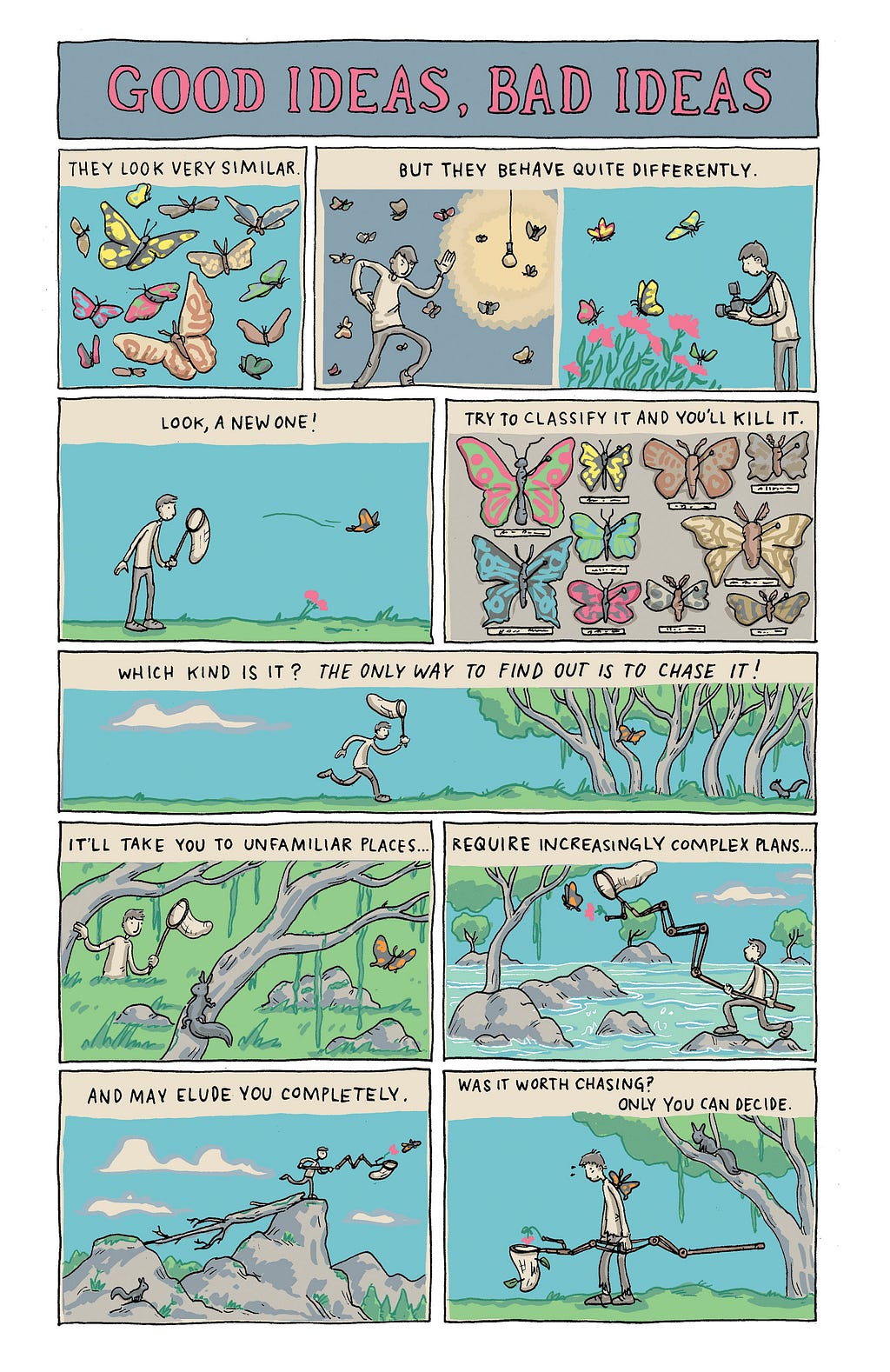
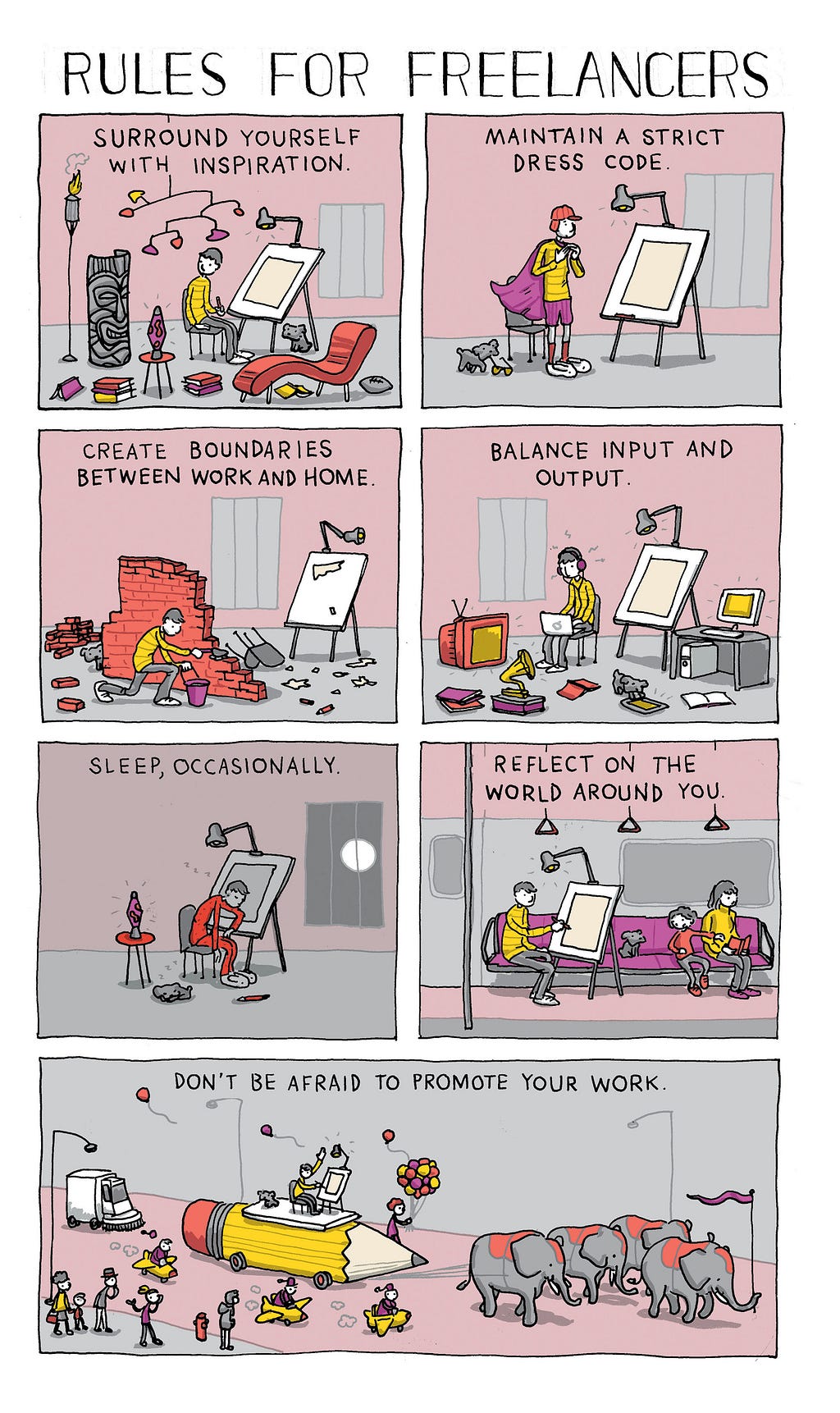
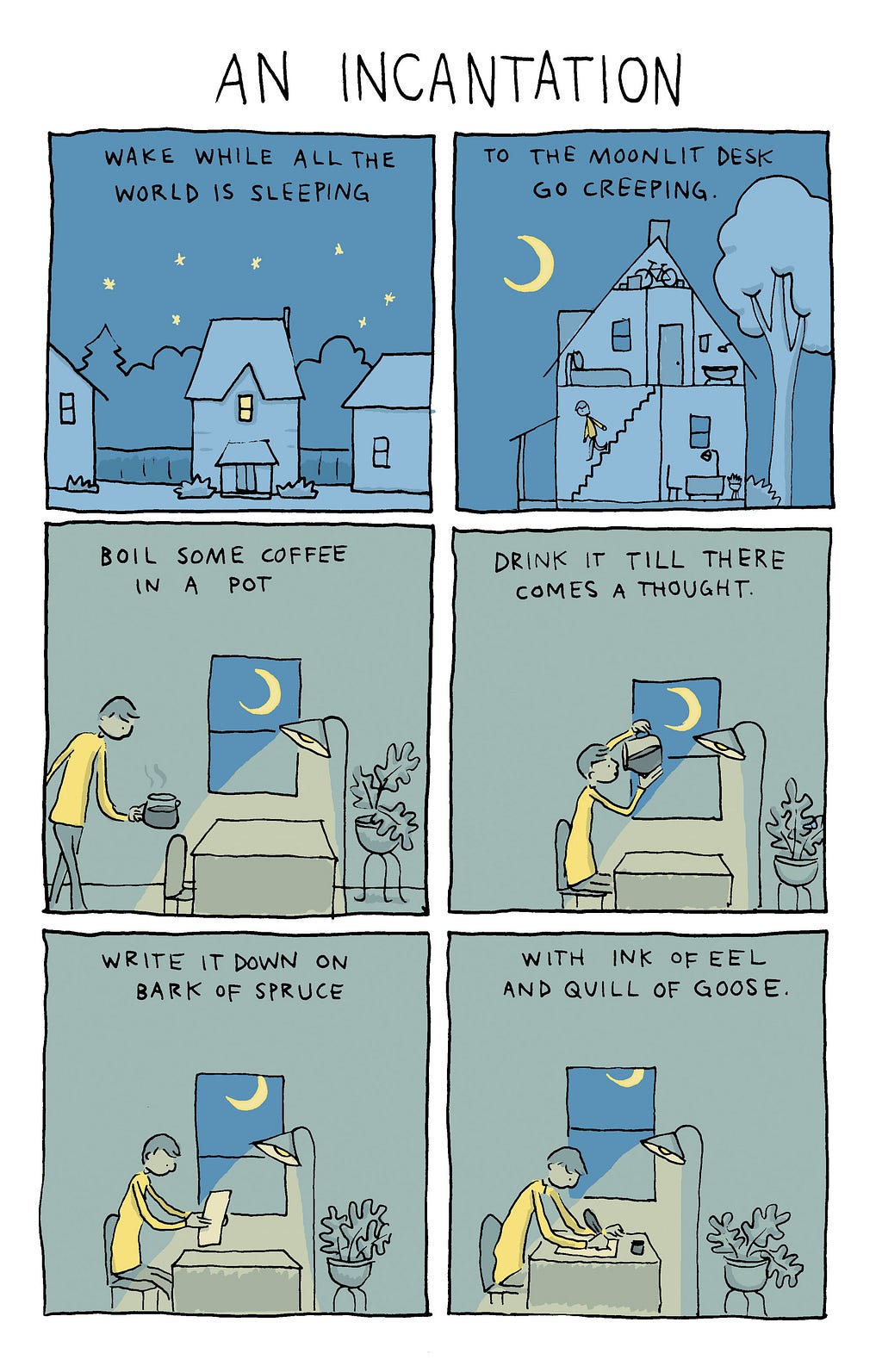
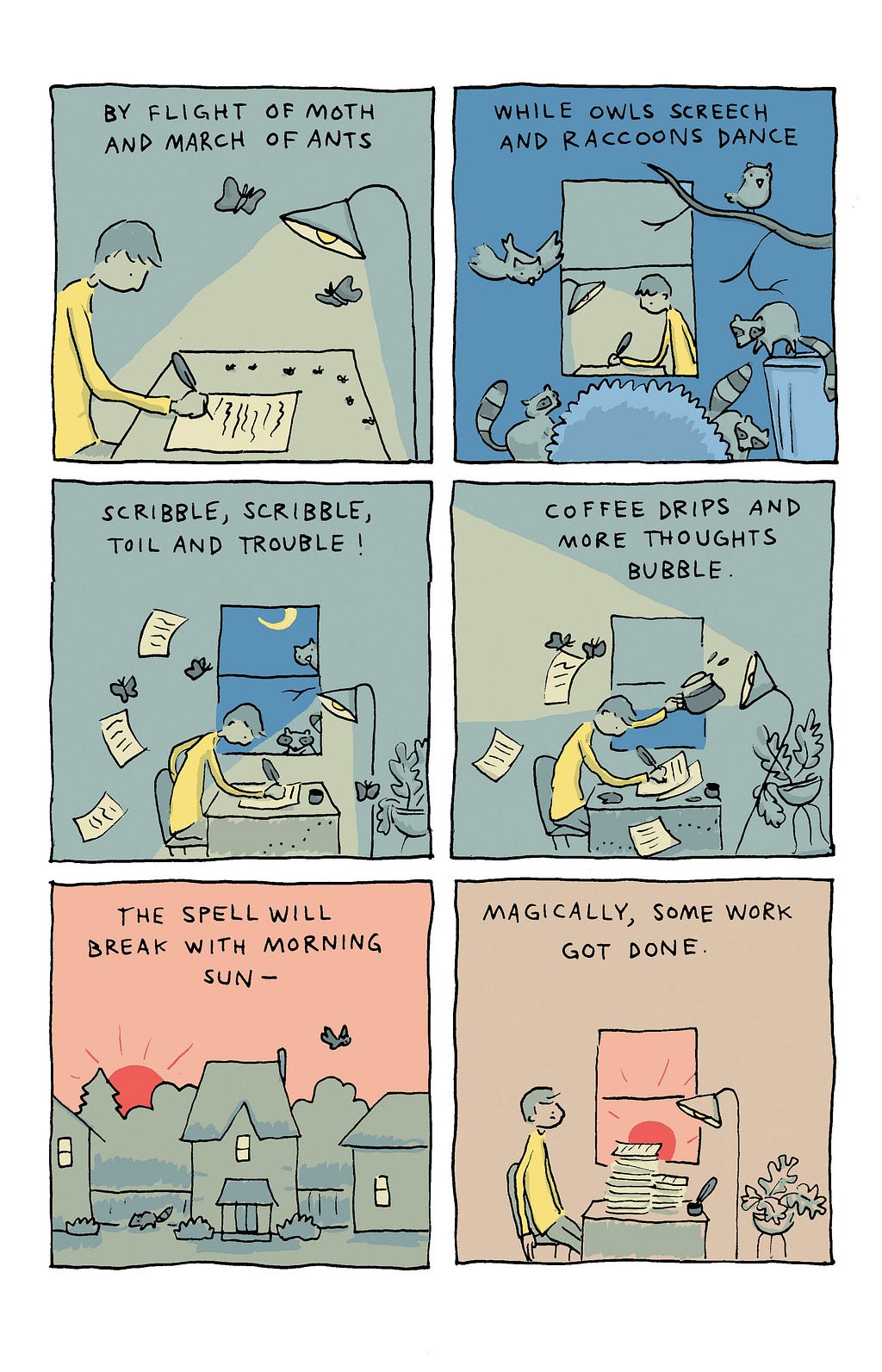
What is the shape of ideas? In Grant Snider’s new book, the comic artist uses pen and ink to draw the creative process from “inspiration” and “contemplation” to “desperation” and “daily frustration.” We’ve featured Grant Snider’s beautiful and thoughtful comics in the past, and are happy to publish three excerpts from the new book here. If you’re an artist or writer, you might recognize your own process in these panels.

On Not Writing: An Illustrated Guide to My Anxieties

The Many Faces of the Palestinian Diaspora

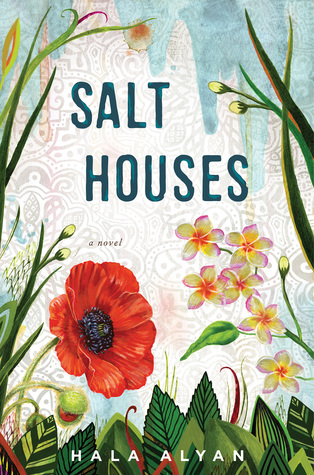
Leaving your home country, especially by force, is a trauma that continues to reverberate long after the boundaryline is crossed. I often think of what Salman Rushdie wrote in The Satanic Verses: “Exile is a dream of a glorious return…It is an endless paradox: looking forward by always looking back. The exile is a ball hurled high into the air.” It is this motion of exile, the duality of being forced forward and back, that Hala Alyan — the poet, clinical psychologist, and now novelist — explores in her new book, Salt Houses.

The novel begins when Salma reads her daughter Alia’s future in a cup of coffee on the eve of her wedding. The grounds foretell the family’s unsettled life, and shortly thereafter the Six-Day War (also known as the War of 1967, among other names) forces them from home. The story follows the effects of this event across generations of the same family as they’re dispersed around the world.

The Palestinian diaspora is one of the major movements of people in history, and yet it’s largely underrepresented in literature. I had the opportunity to discuss the challenges of capturing that diaspora on the page, plus what it’s like to be a published poet writing her first novel, and more, with Alyan over email.


Carrie Mullins: Salt Houses takes on the situation of the Palestinian diaspora generally, but you also bring it down to the scale of one family. How did you decide to weave together so many generational strands?

Hala Alyan: I honestly think it was more a matter of curiosity than anything else. The initial idea was a short story; clearly that got a little out of hand! I found myself so interested (and curious) in the lives of the character’s mother and sister, and couldn’t resist trying to write from their perspectives. Pretty soon I realized that was the most satisfying way to tell this family’s story, both in terms of scope and remaining invested in the writing process.

CM: Diaspora is literally “the dispersion of any people from their original homeland” but obviously that fails to capture the complexity, the heartache, and the often involuntary nature of the situation — something that Salt Houses tries to remedy. I’m interested in how you see the intersection of literature and politics, especially the benefits and risks of addressing historical or current events in a fictional way.

HA: I think literature can play a powerful role in emotionally translating political events, allowing people to connect to the individuals and families behind history. One of the clear benefits is magnifying underheard and underwitnessed narratives and stories. The risk that accompanies any fictionalizing of a story that is based in actual historical and political events is that it will never be representative of the experiences of, say, all Palestinians who lived through those events. That’s why, in writing this book, I committed to the idea of doing justice to a single family, with a particular socioeconomic and diasporic background, nothing more, nothing less.

I committed to the idea of doing justice to a single family, with a particular socioeconomic and diasporic background, nothing more, nothing less.

CM: Speaking of the political, I was interested in the way that memory can be political for these characters. They’re haunted by what they’ve lost, but idealize it too, even generations who are further and further removed. That feels very relevant to the world today.

HA: Absolutely. Memory isn’t created in a vacuum, and history is made and remade through the generations. We are left with the legacy of our ancestors’ memories, and it becomes a malleable thing, a way of honoring and preserving and, in some cases, reconceptualizing history. That always comes with the risk of idealizing, which can in a way become an erasure of its own.

Carrie Mullins: You’ve published three books of poetry. What was it like to turn a poet’s eye to a much longer narrative?

Hala Alyan: It was such a relief in some ways. Poetry taught me to pay attention — to landscape, to dialogue, to emotion. That carried over nicely to prose, particularly because I realized pretty quickly how hungry I was to really delve into a longer piece of work. In many ways, I could trick myself into thinking that I was really just working on thousands of little poems, taking it a sentence at a time.

I could trick myself into thinking that I was really just working on thousands of little poems, taking it a sentence at a time.

CM: Because the characters in the book move around a lot, from Kuwait to Boston to Paris, the setting is always changing. It’s a challenge for any writer to get one setting “right”, and you’ve set yourself the task of many. How did you make each one come alive? Was there a process that you went through to make each one its own authentic, delineated space?

HA: I tried to stay away from settings that I wasn’t at least somewhat familiar with, to remain as faithful as possible to scents, landscape, sounds — what I think of as the personality of a city. I looked at old photographs, listened to old music. I asked people to describe their cities in their own words. But more than anything, I just walked. It’s my favorite thing to do in a new place — walk and daydream.

CM: Are there other books, whether fiction, poems, or non-fiction, that you’d recommend for people who want to read more about the Palestinian diaspora?

HA: Absolutely. People should check out poets like Mahmoud Darwish, Fady Joudah, and Suheir Hammad. As for more contemporary fiction, I love Randa Jarrar and Susan Abulhawa’s work.

An American Gods Reading List: 9 Stories of Deities & Men Mingling in the World

Fictional riffs on characters from mythology have an impressive staying power. Given the source, that probably shouldn’t come as a surprise. Neil Gaiman’s American Gods, now a Starz show that looks all but guaranteed to achieve hit status, takes on this classic premise, with a few strange and poignant twists: the setup of a conflict between the gods of bygone years and a host of new gods inspired by aspects of modern life; the skewering of certain genre tropes; and a winding plot in which allegiances shift and the nature of belief is challenged.

It seems like gods are just about everywhere you look in the pop culture firmament these days, including the host of deities that have worked their way into the DC and Marvel universes. (Are you ready for the divinities of Wonder Woman and Thor: Ragnarok?) It isn’t hard to see why these stories resonate. These are characters and ideas that have already endured for millennia — they tap into primal questions, desires, and debates that we’ve had over the course of generations. And more specifically, we want to know what happens when gods (or other mythological beings) meet in our world. It’s one of the central questions of American Gods, one that’s been explored not just by Gaiman but numerous authors over the years. Here’s a look at a 9 works that take that question head-on and, like American Gods, provide novel spins on how to bridge millennia-old concepts with modern concerns.

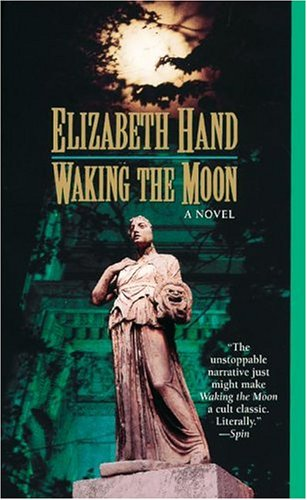
1. Elizabeth Hand, Waking the Moon

Elizabeth Hand’s sprawling novel begins in the mid-1970s. A group of college students become close on the campus of a university in Washington, DC, but other forces are gathering as well: a male-dominated secret society of occultists, and an archaeologist obsessed with discovering evidence of an ancient goddess now forgotten to time. Throughout the novel, Hand poses hard questions about worship, sacrifice, control, and secrecy, leading to a powerful conclusion.

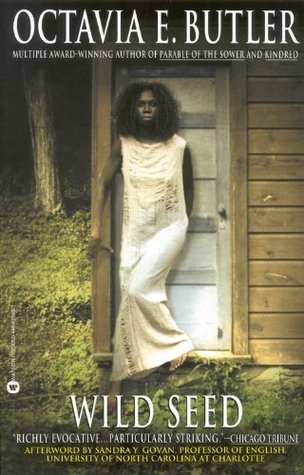
2. Octavia E. Butler, Wild Seed

In Octavia E. Butler’s fiction, expectations exist to be upended and deconstructed. Her novel Wild Seed is (chronologically) the first in a series of books exploring evolution and the rise of humans with paranormal abilities. Given their long lifespans and complex relationships with normal people around them, the story reads a lot like a science fictional take on the time-honored meeting of immortals with everyday people.

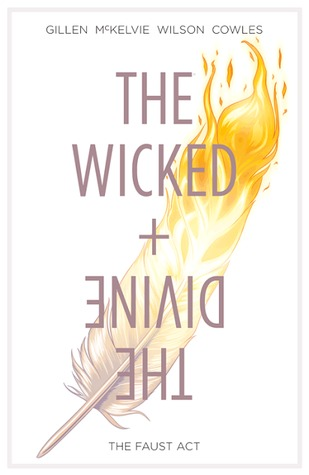
3. Kieron Gillen and Jamie McKelvie, The Wicked + The Divine Vol.1: The Faust Act

Frequent collaborators Gillen and McKelvie tackle the question of gods and mortals with their ongoing comic book The Wicked + The Divine, in which a host of gods are reincarnated every eighty years, where they live brief lives and then die. The juxtaposition of mythological traditions and knowing riffs on pop culture and celebrities makes this a thematically rich work; it’s also frequently gripping, and haunting in unexpected ways.

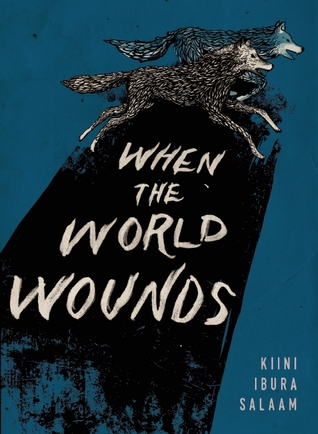
4. Kiini Ibura Salaam, When the World Wounds

Not all of the stories in Kiini Ibura Salaam’s recent collection of short fiction examine the paths of deities and humans converging, but two of the longest do–and juxtapose those meetings with wrenching moments in history. In “Hemmie’s Calenture,” a woman escaping slavery during the War of 1812 is pulled into the conflict between two ageless supernatural beings, while “Because of the Bone Man” features personifications of aspects of New Orleans navigating their city in the aftermath of Hurricane Katrina.

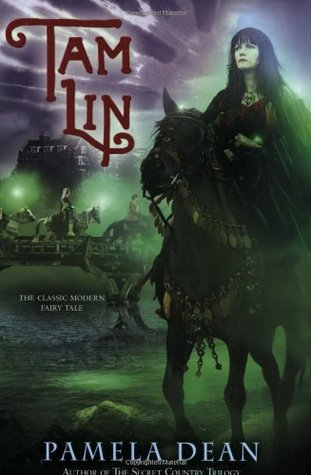
5. Pamela Dean, Tam Lin

At first, Pamela Dean’s novel Tam Lin appears to be a nuanced portrait of campus life at a college in Minnesota. Slowly, however, strange and surreal aspects begin to creep in at the edges; there’s a sense of ritual to the proceedings, and evidence of a wider understanding among some of its characters. Questions of mortality and immortality arise, and the border between our world and that of the supernatural becomes thinner. The resulting novel is one that balances heady concepts and emotional veracity.

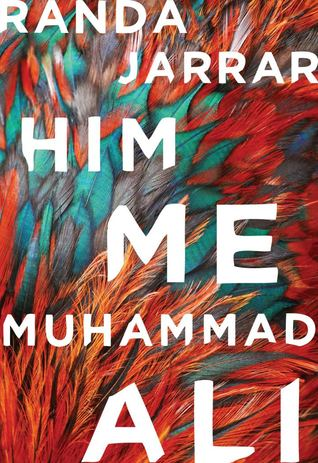
6. Randa Jarrar, Him, Me, Muhammad Ali

The stories in Randa Jarrar’s award-winning collection span a number of tones, from jarring realism to the surreal and fantastical. For instance, the protagonist of “The Life, Loves, and Adventures of Zelwa the Halfie” seems to have emerged from a myth–she’s half-human and half-ibex–but her concerns and anxieties feel decidedly modern.

7. Tim Powers, The Anubis Gates

Sometimes, the interaction of gods and humans can lead to other boundaries breaking down. Take Tim Powers’s novel The Anubis Gates, in which a nineteenth-century effort to bring back the gods of ancient Egypt ends up encompassing mythology, time travel, and a host of fantastical creatures. Powers isn’t a writer to shy away from big ideas, and this novel features them in abundance.

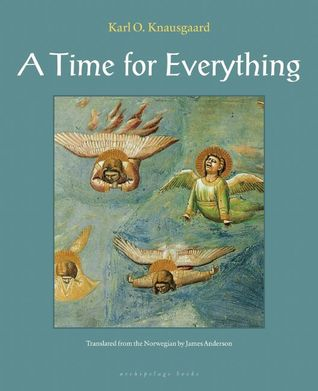
8. Karl Ove Knausgaard, A Time For Everything

While Knausgaard is best known to Anglophone readers for his acclaimed multi-volume work, My Struggle, he shows off a very different side in this strange, obsessive work tracking the conflicted relationship between humanity and angels from the time of the Old Testament through the present day. It’s a compellingly unhinged book, and one that brings the familiar together with the disquieting.

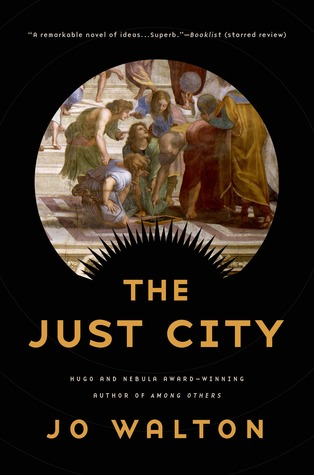
9. Jo Walton, The Just City

In Jo Walton’s The Just City–the first book of a trilogy that heads into a host of unpredictable directions along the way–the Greek pantheon of gods transports a host of people from across numerous centuries to a city in ancient Greece, using Plato’s Republic as the model for their society. Also, there are robots. Walton uses these disparate elements to ask bold questions about mortality, society, and the nature of consciousness, taking a host of risks that pay off along the way.

Bill Clinton & James Patterson Are Writing A Book Together and We Have Some Ideas

The President Is Missing will be released in 2018. Wait, say what?

According to a statement released today, Bill Clinton and James Patterson are teaming up to write a novel. The book, due out in June 2018, will be jointly published by Alfred A. Knopf and Little, Brown and Company and is expected to…WAIT, HOLD THE FUCK UP, WHAT DID YOU JUST SAY?!?

Let’s take this from the top and slow it down just a bit. William Jefferson Clinton, the 42nd Presidents of These United States, is working on a novel, and he’s doing it in cahoots with James Brendan Patterson, the thriller king, the emperor of airports, the bestselling author since Matthew the Apostle. That book will be called The President Is Missing — -baller title — and is being jointly released by two publishing houses because (presumably) no single company could afford to pay the ungodly advance these giants negotiated.

So, what do we know about The President Is Missing? (again, sweet title) As it turns out, we know a lot. Here’s what we gleaned from the press release:

(1) the book will be about a “sitting President”

(2) it will offer “an inside look into what it’s like to be President” and will “be informed by insider details that only a President can know”

(3) Clinton says he is “drawing on what I know about the job”

(4) the draft so far is “full of intricate plotting and detail,” according to a joint statement released by Sonny Mehta, Chairman of the Knopf Doubleday Publishing Group, and Michael Pietsch, CEO of Hachette Book Group (great titles, guys — almost as good as Commander-in-Chief, Leader of Free World)

(5) it is “a book that promises to entertain and delight millions”

Okay, so that gives us quite a bit to go on. First, the novel’s protagonist is almost certainly a serving President who decides he’s had enough of the pomp and circumstance and just wants to be a regular guy for a little while, and so during a state visit to a European capital, he gives his Secret Service detail the slip and goes out on a jazzy adventure in the big city. It’s your classic Roman Holiday scenario, mashed up with the “Tu vuo’ fa’ l’americano” scene from The Talented Mr. Ripley, including shades and sax.

That definitely has to be it, right?

Or should we maybe assume this is actually part of one of Patterson’s series? Could this be part of the beloved Alex Cross series, or maybe the Michael Bennett books, or even the Women’s Murder Club series, now sixteen novels deep and going strong? No, it could not possibly be part of any of those.

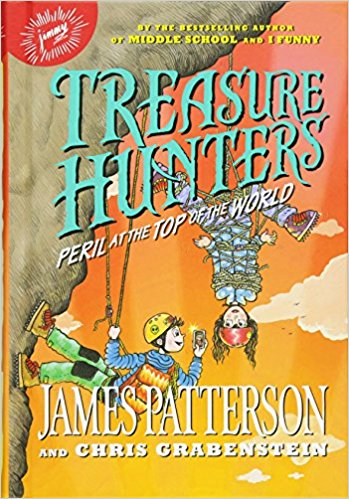
If this belongs to a Patterson universe, we can safely assume that it will be the Treasure Hunters series. How else to explain that cryptic note that the book will be “full of intricate plotting and detail” and those details will “entertain and delight”? Yes, the Treasure Hunters series is for children, but wouldn’t that be perfectly on-trend? Just about every piece of illustrated IP out there has taken a dark turn aimed at bringing in audiences age 5–85, so why not Patterson and Clinton? Name one reason why President Clinton’s in-office experiences would not be perfectly well-suited to a children’s adventure story.

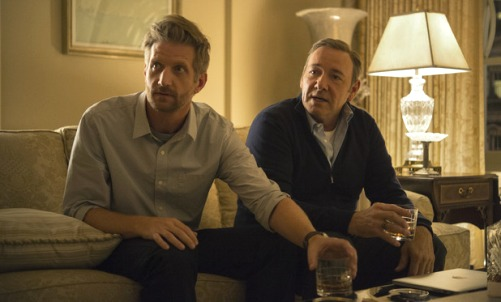
As for precedents, Clinton is not the first ex-President to go this road. Back in 2003, President Carter, a noted author of non-fiction and children’s works, tried his hand at a novel called The Hornet’s Nest. It was about the American Revolution in the Southeastern states, and was hailed by The Guardian as “an unreadable book, one which leaves other unreadables (like The Da Vinci Code) floundering in his lumpen wake.” With regard to partnerships, we’ve seen only one other case that compares: then-sitting President Frank Underwood, who collaborated with author Tom Yates on a never-to-be-released bildungsroman, which began with the unforgettable line: “The Fourth of July means nothing anymore. Overcooked hotdogs and fireworks that always leave you disappointed, bite size American flags made in China waved half-heartedly by five year olds who’d rather be playing Minecraft.”

In short, all this bodes super well. Fate smiles on The President Is Missing.

Now, let’s all go back to the dystopian tragedy that is our current regime.

Hitler Was a Secret Junkie — but Does It Actually Matter?

Milo Will Sue Simon & Schuster for $10 Million

Milo Yiannopoulos profits from controversy, so it’s not surprising that he has revived the one surrounding his defunct book deal with Simon & Schuster. The alt-right activist slash internet troll announced his plans to sue the publishing house for $10 million dollars in retribution for canceling the deal to publish his memoir Dangerous.

In December, when Yiannopoulos secured a $250,000 advance from Simon & Schuster’s conservative imprint, Threshold Editions, the publisher’s huge advance and tacit approval of Yiannopolous’s hate speech caused an outcry, particularly among the literary community. S&S seemed to put an end to the controversial deal in February, when a tape surfaced of Yiannopolous trivializing pedophilia and questioning the “arbitrary and oppressive” age of consent. Shortly after the tape came to light, the publishing house dropped Yiannopolous, who also resigned from his position as an editor at Brietbart.

Now Yiannopolous is plotting his revenge. Thanks to a claimed 12 million dollar investment from unnamed backers, Yiannopolous has started his own media company, Milo, Inc., which he has described as “a fully tooled-up talent factory and management company dedicated to the destruction of political correctness and the progressive left.” In his official press release, Yiannopolous added that he plans to “make the lives of journalists, professors, politicians, feminists, Black Lives Matter activists, and other professional victims a living hell.”

Add publishing houses to that list. In addition to suing Simon & Schuster to “send them a message,” Yiannopolous is establishing his own press called Dangerous Books to promote titles by authors who “can’t get published.” He will be the debut author. Yiannopolous will self-publish Dangerous this summer and promote it while on his Troll Tour of American colleges.

Which Novelists Are Writing for TV in 2017?

The Instruments of War: D-Day Then and Now

I was driving north out of Caen when I noticed the machine gun pointed at me. It was late October, 2015. I’d come to northern France for research on World War II, so I pulled over for a closer look. The gun sat in a metal dugout with a seat for the soldier who would fire it. The barrel was twice as long as my arm, painted thickly yellow for visibility and to prevent rust. It was aimed at the oncoming traffic.

I lowered myself into the dugout and sighted down the barrel. A flood of commuters flowed by, while the oddball American observed from their faces that they considered him more out of place than a weapon from seventy years ago.

I lowered myself into the dugout and sighted down the barrel. A flood of commuters flowed by…

What does it mean to leave the instruments of war in place? What lesson might these artifacts teach us? In the next few days, I would receive bloody instruction. So, in fact, would the world.

I had come to Normandy to find my town. A hundred pages into a novel, I had stalled despite a clear plot line, not to mention a contract with a New York publisher to bring it out the following year. I had never lost momentum on a book before. But the prose in this one felt shallow, and I knew perfectly well why: It lacked a sufficient sense of its setting. Imagine Huck without his river.

Somewhere amid the hedgerows of northern France, there had to be the place where my imagined people had lived for four years under Nazi occupation, then survived the D-Day invasion. To tell their story, I needed to know where it had all happened, the precise location.

I had already done my homework. There are many excellent books about D-Day. The Eisenhower Center in New Orleans contains hundreds of oral histories from the invasion’s combatants. Films make the battlefield vivid: Saving Private Ryan, Band of Brothers, The Longest Day. I interviewed a survivor of Omaha Beach. I held all kinds of guns, trying to imagine running with them.

All of these sources, however compelling, contained a hole big enough to write a novel in: They were all from the warriors’ perspective. They lacked the experience of the French.

Caught in a crossfire between democracy and totalitarianism, between America’s juggernaut of can-do gung-ho and Germany’s ruthless defenses, French people were slaughtered in Normandy in numbers that exceeded the Allies and Nazis combined. Yet their story, in the English language at least, has gone untold. I could not do them justice, unless I stood in their setting and felt the rain on my face.

Friends teased me before I left for France: Good thing I was willing to suffer for my art. I laughed along. We did not know what was coming.

There are two ways to assess D-Day, both of which explain why an invasion in 1944 still matters today. The first measure is in blood. Roughly 5,200 Americans died during the 13 daylight hours of the initial invasion. That’s about 400 per hour.

Friends teased me before I left for France: Good thing I was willing to suffer for my art. I laughed along. We did not know what was coming.

During those same 13 hours, the number of French people who died was 11,800. About 850 an hour.

The second measure is the severity of the subsequent campaign. After Allied armies invaded Sicily on June 9, 1943, they did not take Rome until June 4, 1944 — nearly a year. But the Allies came ashore in Normandy on June 6, 1944, and freed Paris on August 25. The liberation of France required only 80 days.

The effect of this pace was the opposite of Sherman’s march to Georgia in the Civil War, in which the Yankee general took the time to burn everything as he passed. The Normandy campaign was so swift, Allied soldiers simply left the artifacts in place.

My machine gun, for example. But I felt the impact of history more tangibly the next morning, at Pointe du Hoc. In any other locale, the outcropping’s beauty alone would be a tourist attraction. A hundred-foot cliff rises from beaches on either side, the highest point for miles. With the English Channel sluicing gray sand below, the view was lovely in the low autumnal light.

But in 1944, that promontory held heavily armed German forces, and the cliff stood between the beaches known on June 6 as Utah and Omaha. Holding such high ground, with concrete pillboxes to shelter them, Nazi soldiers could fire down without risk. Any men who came ashore would be committing an act of elaborate suicide.

U.S. Army Rangers had other plans. Their mission was to throw up grappling hooks, climb those ropes, and overwhelm the German battlements. The first officer assigned to command the attack declared it impossible, certain death, and he was relieved of his responsibility. His replacement led 225 Rangers in an assault on the cliff soon after dawn.

Germans poured down machine gun fire. The Rangers kept climbing, even as fellow soldiers fell by the dozen from above. Yet eventually they reached the summit, swarmed the defenders, and captured the point. About 90 men survived.

The pillboxes stand today at the cliff’s edge, undecayed but for a skin of lichen. They look like gray concrete helmets, thirty feet across. I ran my hand along the rough surface, feeling pock marks where Ranger bullets had ricocheted. No one stopped me, or even took notice. The only constraints at the site, in fact, were fences to keep people from stumbling off the cliff.

They look like gray concrete helmets, thirty feet across. I ran my hand along the rough surface, feeling pock marks where Ranger bullets had ricocheted.

I turned to look east, across a lawn the size of a football field. It was marred by bomb craters, holes in the ground forty feet on a side and thirty feet deep. There were hundreds, now grown grassy, and no one had bothered to fill them in. I didn’t need to imagine what happened there. The landscape explained everything.

This was an unforgettable place, but as a location for my imaginary town it would not work. Despite the Rangers’ heroism, it said nothing about the French.

Feminism and the Pursuit of Relentless Happiness

Other battle sites brought the same frustration. On Sword Beach, where the Scots came ashore, a bagpiper named Bill Millin had accompanied them, playing “Highland Laddie” to frighten the Germans and inspire his mates. Nearly half of the 1,400 Scottish commandos died in that assault, though somehow Millin survived. Just above the beach stands a bronze statue of a piper, kilt and all. It’s a striking image, but not French.

In Arromanches, a few hundred yards offshore lay a semicircle of metal hulks — remnants of the Allied effort to create a manmade harbor for resupplying troops. Any story the ruins tell does not concern the French, however, but the stubbornness of iron despite years of waves and tides.

At Juno Beach in Courseilles, where the Canadians landed, D-Day was memorialized in photographs mounted under glass and posted around the town. One that hung beside a building’s front door showed a line of soldiers on the march. They’d just made it ashore, and were now proceeding inland. That house in the photo’s background, with the unusual upper windows? It’s still standing, not a block away. The place is unchanged. And if a writer wanted to know what soldiers smelled there, invading at low tide, all he had to do was breathe.

I was getting closer.

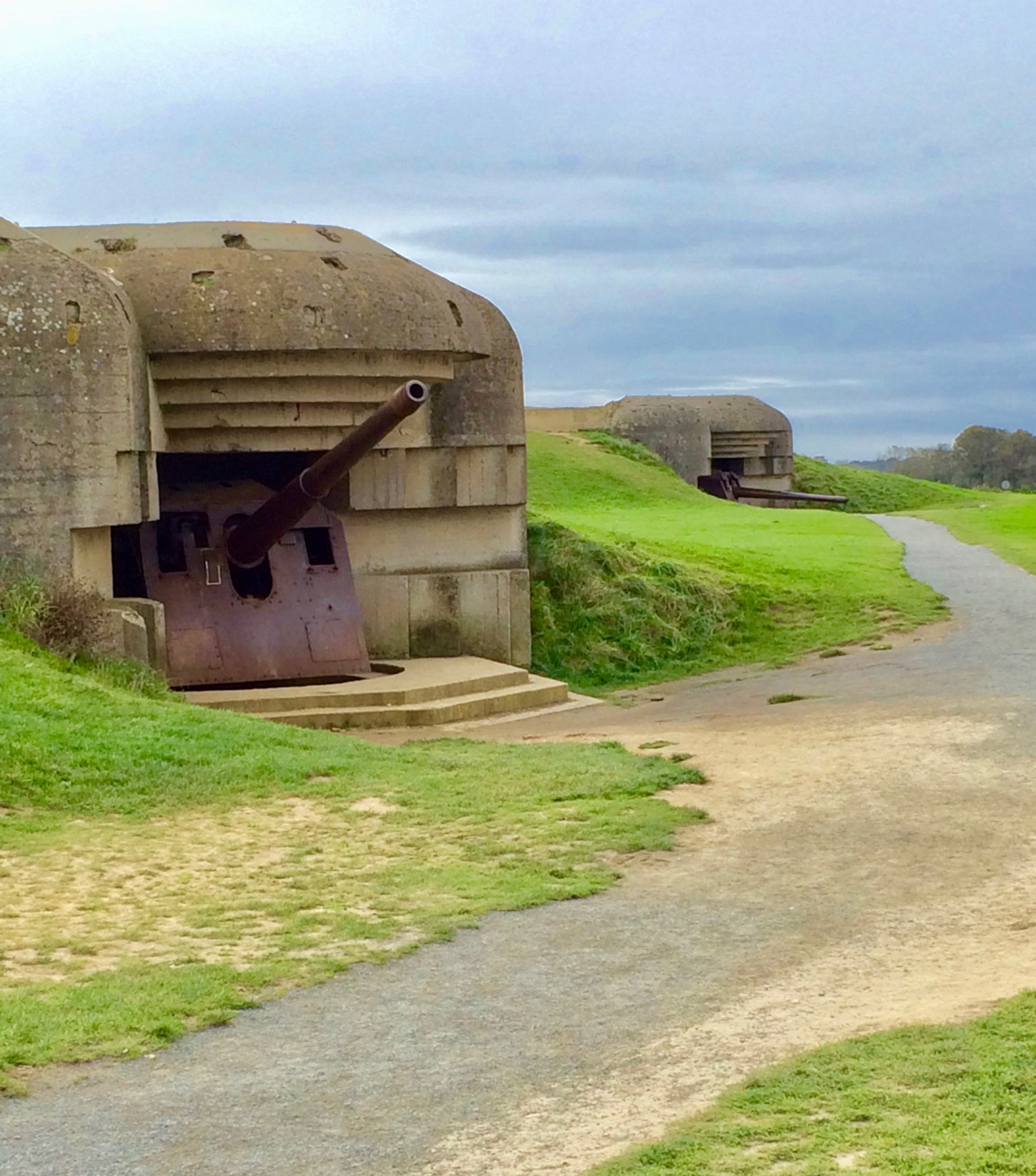
My next stop was Longues-sur-Mer. The Germans had built an especially effective gun battery there. It was a quiet place, winds gusting up the coast, a paved path through the grass. Following that path, however, brought me to a truly frightening weapon: a concrete and steel pillbox with room for a dozen soldiers, and the gun it took all twelve of them to operate. The machinery remained intact, as did a barrel easily thirty feet long.

Following that path brought me to a truly frightening weapon: a concrete and steel pillbox with room for a dozen soldiers, and the gun it took all twelve of them to operate.

Further along I saw three similar guns, identically massive. I knew from my reading that this battery had proved immensely capable, firing 170 rounds during D-Day, forcing ships to retreat, and in general presenting a mighty barrier. Though British shells damaged several of the guns, one continued firing until 7 that night. Today its barrel remains pointed high, as if aimed yet at some distant Allied ship.

Standing at the last giant gun, I could see how smart the set up was, how the casements had been arrayed to inflict damage in virtually all seaward directions. I placed my hand on the barrel, felt its surprising coldness, and realized the darkest lesson of warfare. I should have known sooner. But it took that battery, and its clever design, to teach me: War demands intelligence. It takes discipline, yes, and fanaticism, and patriotism, and many other qualities. But above all it requires brains. The deliberate, cold-blooded application of the human mind.

I was overwhelmed. I strode away from the sights, away from the sea, out of the historic area altogether.

From rocks to rifles, from gunpowder to the hydrogen bomb, few enterprises have been lavished with human creativity as much as our capacity to slaughter one another. The idea filled me with sadness. We are killers, we humans. When it comes to devising ways to end the lives of others, our minds are terribly good at it.

We are killers, we humans. When it comes to devising ways to end the lives of others, our minds are terribly good at it.

Eventually I stopped and looked around. I had come to the edge of an orchard. I live near an orchard at home, so I gazed on the trees with a familiar eye. They had already been harvested, not one apple left dangling. They were meticulously pruned, too; someone had shown dedicated husbandry to these trees for many years. And with a shiver of delight, I knew. Here, half a mile inland from the guns, this was where my town would stand.

I drew a mental map: the village square, the popular bakery, the steeple of St. Agnes-by-the-Sea. Also the German garrison, the mess tents, the stores of food and fuel guarded to prevent theft by starving locals. My villagers would not be warriors, though, nor members of the Resistance. They would be Yves the fisherman with a fine singing voice, Pierre the cowherd who constantly craved tobacco, Emma the baker with secret ways of feeding other villagers. They would be the kind of people who cared for their trees. And the intelligence of war would broil them alive. My poor people. I loved them already.

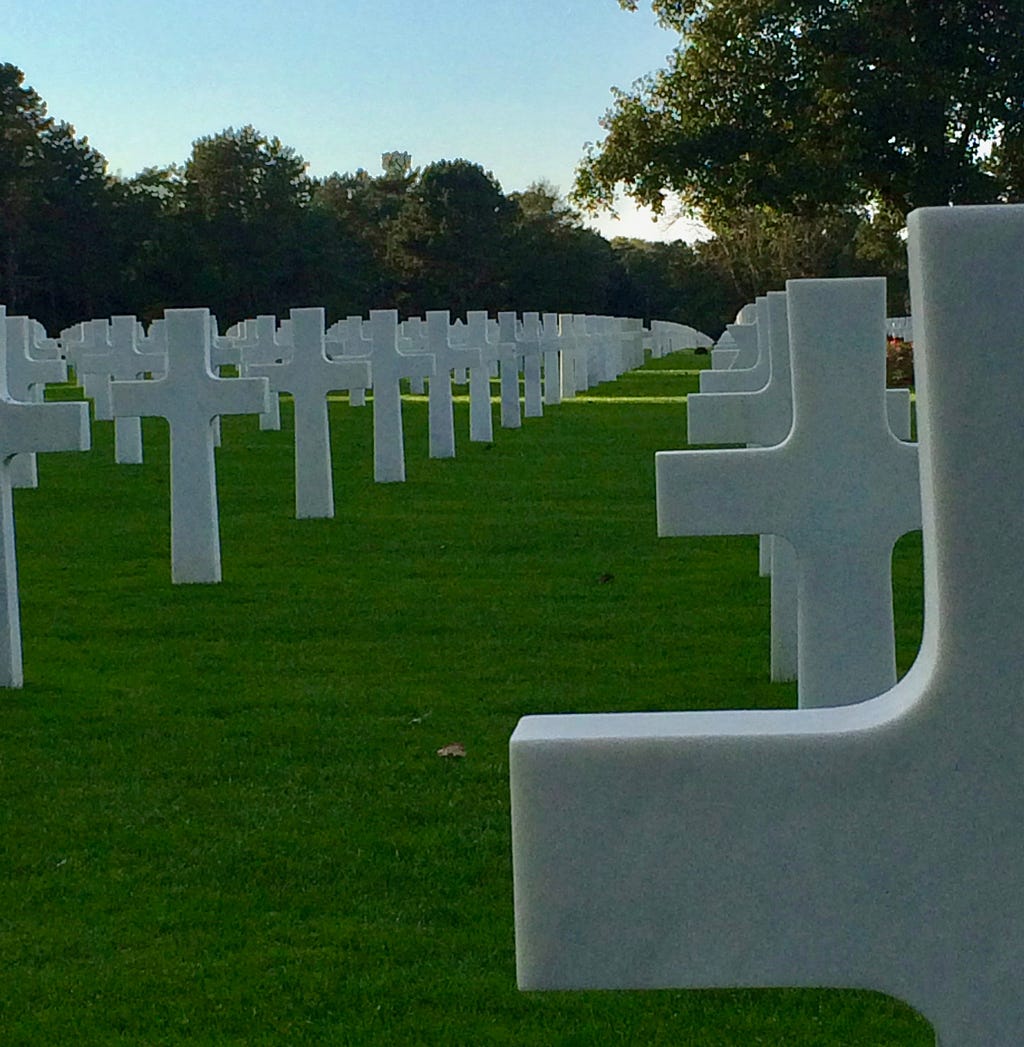
There was one more stop I needed to make, in Colleville-Sur-Mer. The place has a formal entryway, a flagpole, pillars around a statue. But the arresting image is not any of these objects. The sight that commands is of the crosses. No matter where you stand in the American cemetery of Normandy, they fall in a straight line, plain and white, and in sufficiently staggering number — 9,387 of them, on 172 acres — to silence anyone, to slow anyone’s walking.

Normandy American Cemetery and Memorial. Photo: Stephen Kiernan

I had already visited the Canadian cemetery, where maple leaves ornamented the markers. I’d seen the German graveyard too, its clusters of five small crosses, and the large burial mound in the center. Neither had prepared me for the impact of those long white rows, luminous in the seaside sun.

The American cemetery is as diverse as the nation it represents. At 1,213, Pennsylvania supplied more soldiers than any other state. There are Stars of David, hundreds of them. There are African-, Hispanic-, and Japanese-American soldiers. There are Native Americans, Navajo and Comanche, who were “code-talkers” — that is, whose language the enemy could neither translate nor decode. There are 307 graves of unknown soldiers, and a wall to memorialize 1,500 men still unaccounted for. There are three women.

It was difficult not to personalize the crosses as I read them. Not the names, but the ages. This one was 21, same as my son Will. The next was 19, same as my son Noah. My smart, beautiful, mischievous boys back home in the States, not in uniform but in college. So it continued down the row, Will and Noah, Will and Noah, all the way to the last white cross.

I reached the end, by the quiet sea, and had the day’s second realization. Despite having every imaginable background, motivation, and fear, these soldiers had served with valor by the thousands. If a mob has the power to reduce man’s capacity for reason, it also has the might to lift him to the highest aspirations of self-sacrifice.

If a mob has the power to reduce man’s capacity for reason, it also has the might to lift him to the highest aspirations of self-sacrifice.

What an idea. It felt nearly the opposite of what I had thought at the big German battery: We had changed. We had learned. The heroism of D-Day did not just defeat Nazism. It also was among the last marine invasions ever. After a few assaults in the Japanese islands, never again. Not once since 1945 have hundreds of thousands of young men rushed headlong into enemy fire.

That’s not all. Whatever you may think of the decision to drop atomic bombs on two Japanese cities, it is crucial to note that it has never happened again. In August of 1945 the American military possessed two more bombs, all built and ready, but it did not drop them. The devastation in Hiroshima and Nagasaki was so total, the world’s warriors learned a new form of restraint. Perhaps hope was possible. Perhaps our species was actually capable of evolving.

From behind, I heard the beginnings of a song. A recording of a trumpet, playing taps. It was 5 p.m. Descendants of a buried soldier came forward to assist the honor guard with lowering the flag. All of us visitors, spread here and there among the graves, walked toward that small ceremony as if responding to a shared internal command.

All of us visitors, spread here and there among the graves, walked toward that small ceremony as if responding to a shared internal command.

Over the following year I wrote my novel, The Baker’s Secret, without stalling again. I called my village Vergers, the French word for orchard. My characters displayed their own intelligence, a cunning by which they bartered, concealed, and shared, deceiving the occupying army while keeping as many of their fellow villagers alive as possible. Those who survived the invasion continued to care for their trees, and for one another, which I believe is a form of hope.

Before flying home, however, I spent a few days in Paris. It was November, the weather unusually mild. I stayed at a small hotel on the Rue Amelot, strolling to various museums or along the Seine. One day I chose the other direction, and after a few blocks noticed the maroon awning of a café called the Carillon. Well, well. The chapel belfry of the Catholic high school I attended had held a carillon — small bells of many pitches, played like a piano. A long forgotten memory returned to me, of leaving the gym after winter wrestling practice, my wet hair freezing, and hearing those bells chime in the early darkness. I decided to have lunch at the Carillon that day, and dinner on the night before I flew home. It was a pleasant place: small tables, good wines. I felt content, knowing the location of my town and the character of its people.

On Monday I flew home, ready to dive into the writing. The spell lasted four days.

On Friday afternoon, the news broke in the U.S. of terror attacks all over Paris. At a soccer game, a nightclub; 129 people were killed. I went online and saw the photos. The café where 12 people were gunned down as they ate dinner. The maroon awning. The Carillon.

I went online and saw the photos. The café where 12 people were gunned down as they ate dinner. The maroon awning. The Carillon.

If we do evolve, we troubled humans, is it not in learning new ways of peace. That was a fallacy I told myself, a manufactured comfort after seeing the colossal cost of D-Day. The Paris attack, and those pictures of bodies under white sheets among the Carillon’s overturned tables, forced me to admit the gritty reality. We are a murderous lot. Whether by friend or by foe, advances in brutality persist without pause. What was an arrow has become a drone. Today’s innovation is merely that the targets are unarmed. Tomorrow it will be something else.

But my mind cannot forget those trees behind the giant guns, tended with care for years and years, and I know that any novel of mine about the human race must contain hope. Even in wartime, people of humble circumstances ventured out into their orchards, bearing shears, pruning to maximize the harvest. May we remember them too, every time we bite into an apple.

Bones in Birds, Weakness in Poetry, Murder in Kansas

Politics of Fire

In the beginning, everything was volcanoes. The whole planet populated by fire. You are one of these fires. No body, no skeleton of char underneath, only the vulnerability of fire. You burn for years until something happens. Life with gills, life with lungs, life with government, etc. These humans, you notice, are nothing like fire. If anything, they are the absence of. You start to like people, though you have no comprehension of human emotion. So, you get into politics. You start kissing babies, searing their small bodies into darkness. Every hand you shake becomes skeletal. Horrendous, you say, absolutely disgusting that this should happen, that people should be maimed from your body of fire. This will never happen again, no one will ever burn. With this promise, people love you, people salute you. You are given money and American flags. You start burning down schools. You are elected governor of Kansas. You are given babies to kiss, again, and you burn them to death, again. Sorry, you say. Never again. You keep killing. You burn the entire state until it look like a stew of bones. It looks like the graveyard you are. Re-election.

Birds

You can tell everything about a fowl’s body by how quickly it allows you to break its bones, tie the legs together, and wait for the flesh to tighten against the ribcage and darken. What I mean is, should there ever be an answer to poetry, and do we deserve one? To answer is to give it language, and can you? Remember that this has bones, a structure. At least, it did. I don’t expect an answer, even from myself. Should we underline the meaning, italic the silence? Breaking silence, we say, as if you could push your hand against nothing. I’ll tell you everything about silence, I promise. Do you want it to be this way? You can always change your answer. Every poem has an answer, some are just disappointing. But who am I to take the magic from this world, and you to take this world from me? Take the poem and press against the joint of the leg — do you feel it? Hear the bone buckle, the ligament tear towards your movement, your direction. Is this what you wanted? Hunger: this is how we find meaning. Why are your bones breaking? Tell me. Will they make me choke? Do you promise? What is the point of these questions? Tell me, why do I want it to stay this way? I’m sorry for asking. Tell me, who is the hunter, who is the beast, and who cares? I mean it. There isn’t enough weakness in poetry. Or too much, I don’t know.

Birds (Neutered)

You can tell everything about a fowl’s body by how quickly it allows you to break its bones, tie the legs together, and wait for the flesh to tighten against the ribcage and darken. Can you? Remember that this has bones, a structure. At least, it did. Should we underline the meaning or italic the silence? Breaking silence, we say, as if you could push your hand against nothing. I’ll tell you everything about silence. Every bird has a silence, some are just disappointing. But who you to take this bird from me, to snap its neck? Take the bird and press against the joint of the leg — do you hear it? Feel the bone buckle, the ligament tear in your hands. Is this what you wanted? Hunger: is this how we find meaning? Why are your bones breaking? Tell me. Will they make me choke? Why do I want it to stay this way? There isn’t enough weakness. Or too much, I don’t know. Tell me, who is the hunter, who is the beast, and who cares? I’m sorry for asking.

Three Poems by Nora Hickey

The Personal Is Political in Every Revolution

These days, in America, the famous feminist rallying cry from the 1960s “the personal is political” applies universally. In South Korea in the 1980s, when the country was ruled by military dictatorship, the adage applied to many college students fighting for free expression and democracy in the years following the infamous Gwangju massacre, when hundreds of protesters were fired upon and killed. In Jimin Han’s debut A Small Revolution, the personal is political in every scene of this fraught and swift tale that is at once a hostage crisis, a campus love triangle, and a protest novel.

The book begins with the threat of a bang, in a dorm room in Pennsylvania in the fall of 1985 where Yoona and three of her friends are trapped by a gunman. The armed young man is Yoona’s disturbed friend Lloyd, with whom she became close on a summer trip abroad to South Korea. When the police arrive, Lloyd demands to meet President Reagan and the presidents of South and North Korea, ostensibly to request that they arrange the release of Yoona’s first love Jaesung. Yoona believes Jaesung died in a car accident in South Korea. Lloyd, who claims to have been there the night of the accident, believes that Jaesung has been kidnapped by North Korean spies. During this hostage standoff, Lloyd vacillates between states of coherent desperation and full-blown insanity, an ambiguity that raises questions about what really happened on the fateful night of Jaesung’s disappearance.

Narrated in second-person by Yoona to Jaesung, the novel alternates between the standoff in Pennsylvania and flashbacks in South Korea. Yoona, Jaesung, and Lloyd get involved in new pro-democracy protests in Seoul, where they find themselves learning what a real revolution feels like.

We can only brace ourselves as clouds of yellow smoke rise. I hold my hands over my face. The stench of rotten eggs. I bury my face in my shirt. I’m knocked aside. And suddenly there is space and everyone is running. I drop my hands and nearly lose my balance when someone knocks into me. And then it’s as if someone has thrown handfuls of sand lit on fire into my eyes. “Don’t rub them,” your voice comes through the screams now, and every which way people are running. I crouch, just want to crouch down and wipe my eyes until they stop burning. But rubbing them makes them hurt more.

And then a bigger panic sets in. I look but can’t see my hands. And then I feel your hand pull mine along and someone takes my other hand. Your voice calls to me and then Lloyd’s joins in. I’m dragged to one side and then another and then forward.

Yoona is pulled in opposite directions metaphysically: on one side, by her love for Jaesung, and the other, by the political rage represented by Lloyd. The portrayal of the revolution that led to South Korea officially becoming a liberal democracy by 1987 has very real stakes, stakes that make our recent protests against the current administration look quaint. In the following passage, the three college students speak about martyrdom as matter-of-factly as American college students might speak about safe spaces.

“It’s a protest for the world to see,” you said, and I could tell you admired them for it. I felt nervous. It was warm in the restaurant, but a coldness clawed at me.

“They actually think this crazy dictator who’s already killed thousands of his own people gives two shits about kids wrapping themselves in kerosene-soaked sheets, setting themselves on fire, and jumping out of buildings? He’s laughing at them. Fewer people to deal with.” Lloyd’s voice was grim.

“At least they died for something,” you said in a quiet voice, looking calmly at him.

After Jaesung’s disappearance, Lloyd and Yoona try to continue their friendship, but cracks begin to show as the former turns increasingly possessive and unstable. It becomes clearer, though not definitive that the three friends may have been in a love triangle all along with Lloyd and Jaesung competing for Yoona’s affections. Perhaps Lloyd had something to do with Jaesung’s death. The mystery surrounding the night of Jaesung’s disappearance remains by-and-large unsolved, right up until the highly dramatic conclusion. The reliance on unclarified ambiguities left this reader wishing for more pages that might’ve further developed what these characters represented politically. The specifics of South Korea’s historical journey from dictatorship to democracy is also left mostly off the page, as the author chooses to focus this slim novel on the personal ties between the main characters, leaving this reader scrambling to Wikipedia to fill in the historical gaps.

There have been some wonderful and timely protest novels recently. The Heart Is a Muscle the Size of a Fist by Sunil Yapa comes to mind. And in the current political climate in America, there promises to be many more. Han’s entry into this burgeoning genre is a worthy and cinematic debut.

Struggling with What It Means to Be Popular

Struggling with What It Means to Be Popular

Middle school’s hard. I wasn’t sure I wanted to think about it again until I read Claudia Cortese’s impressive debut poetry collection, Wasp Queen. It follows the presumably fictional “Lucy” from childhood to early adolescence as she, like each of us, tries to figure it all out: how to be popular, how to feel beautiful, who loves her. Lucy struggles with weight as a beauty standard, with popularity.

I wish this book had been around for me to read in middle school (maybe high school, due to some of the language — though none of it is language foreign to a middle schooler). Its situations are true for most young girls at any time, despite references that date the work (Cyndi Lauper and the phrase “I’m all that and a bag of chips” make appearances).

She’s most girls, but Lucy is unique. Within the first poem, she takes on a life of her own: she “decks the tree in Barbie heads, watches snow cut the landscape, all those little white knives.” She isn’t just a metaphor, a stand-in for the author or the reader. Immediately, she feels like a real person. Sometimes, she’s reminiscent of John Berryman’s popular persona “Henry” — part of the poems themselves, the reason these poems seem so utterly honest.

Wasp Queen is essentially an exploration of girlhood and growing up. When Lucy, in the poem “Lucy Loves Their Dead Edges,” “fought and fucked her way to adulthood,” she takes on the violence of growing from girl to woman, the implicit sexuality that often comes with an act as simple as entering teenagehood. The idea reappears in the poem “Blue Glint in the Woodshed’s Skin.” Cortese writes, “If you peel Lucy’s skin, you won’t find // Christmas white… // you’ll see her terror, almost sexual… Cute’s / opposite or rather its essence.” That relationship between “almost sexual” terror and cuteness, between sexiness and cuteness, is a pull throughout Wasp Queen. When, Cortese may be asking, does the switch happen? For whom does it not happen?

Life in the Hollywood Hills

This is a book full of beautifully told truths, essential knowledge to parents of young teenagers (girls especially), already inescapably known by girls themselves. Cortese writes in the fabulously, tellingly-titled poem “Lucy’s Guide to Surviving the First Day of 6th Grade in 1993 in an Ohio Town that Is 92.3% White, 3.8% Black, and 3.9% Other,” “The synonym for girl is dead opossum. Pretend you don’t know that.” Those kinds of images make these poems sing.

Particularly resonant is the poem “When Miss Johnstone.” It begins, bleeding from the title, “Says that Edna Pontellier walked into the ocean, let water close above her because it was her only escape from the Cult of Domesticity.” Lucy “wants to walk into the ocean before 9th period gym” and there’s a marked sense that even this young teenage girl Lucy already feels part of that “Cult of Domesticity,” or at least close to it, feeling it is some kind of inevitability for her.

Cortese gets that inevitability of confusingly domestic adolescence absolutely right. Much of this book is about body, physicality, and beauty. “There’s a tornado watch and the clouds look like cellulite,” she writes. And in the poem “Lucy Tilts the Mirror of the Cover-Girl Compact Between Her Legs:” “A part of her body doesn’t exist and then it does.” If nothing else in this book is, this moment is truly about growing up, as Lucy sees her own body, mid-book, finally, after everyone around her sees it.

There’s one more image I want to end on, from the poem “What Lucy’s World Feels Like.” Cortese begins it, “Lawnmower’s teethy jangle — / too pretty. Let me start again: drill // before anesthesia takes hold, nerve burn.” So let me start again: this book isn’t pretty. It is concerned with truth and reality. This is a book invested in all our stories, in growing up. It refuses to give us readers any consolation in its being easy, but gives us every sense that we’re in good company. With Cortese, we are.