Colossal Is a Good Film but Bad Surrealism

The new monster movie should have taken a lesson from The Lobster, Exit West, or Buñuel — with surrealism, less is often more

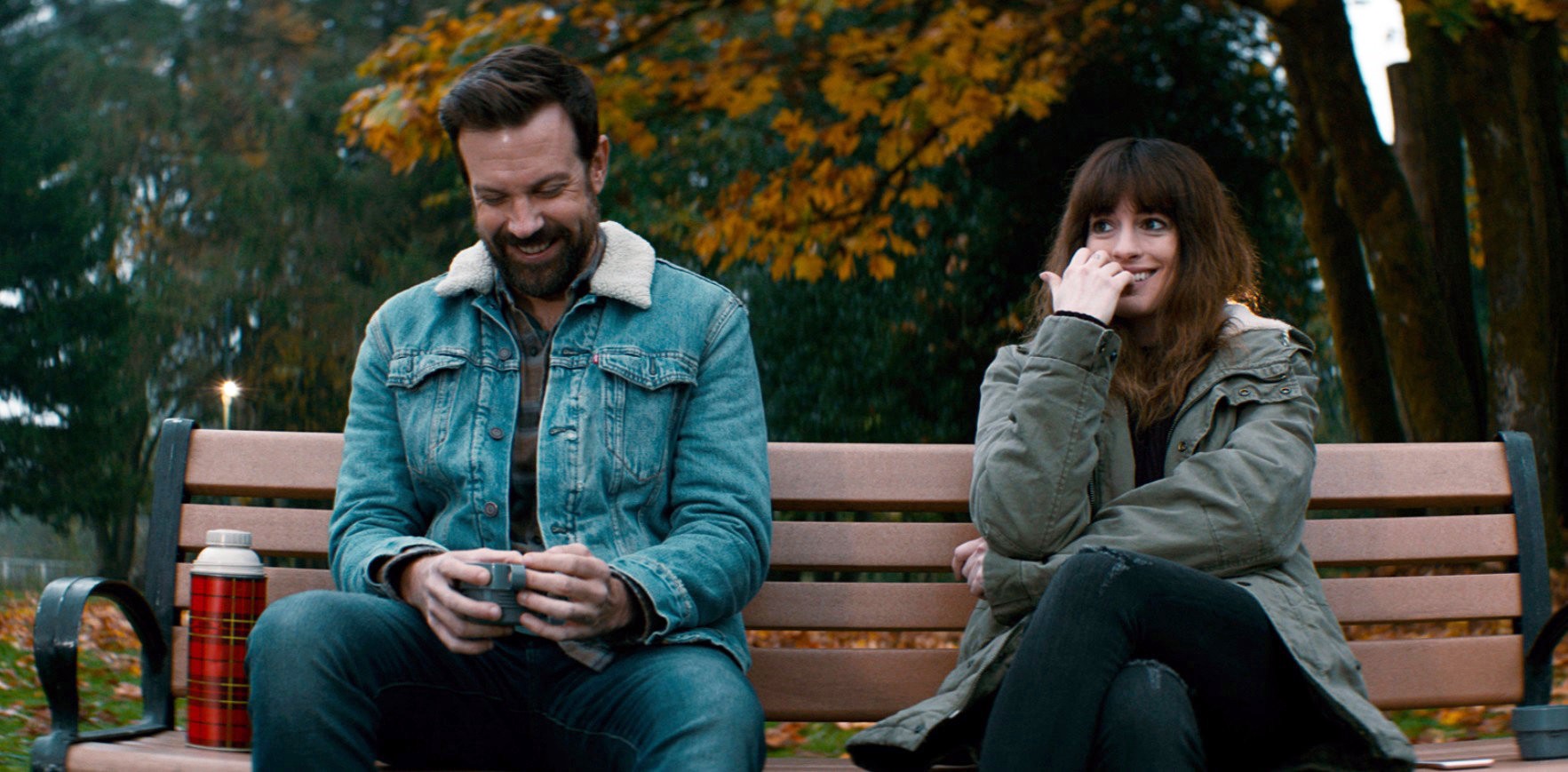
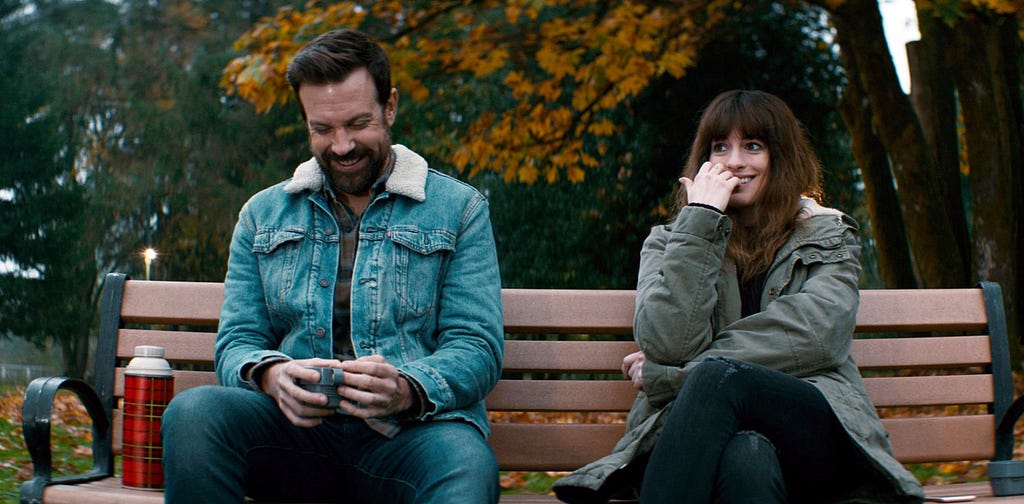
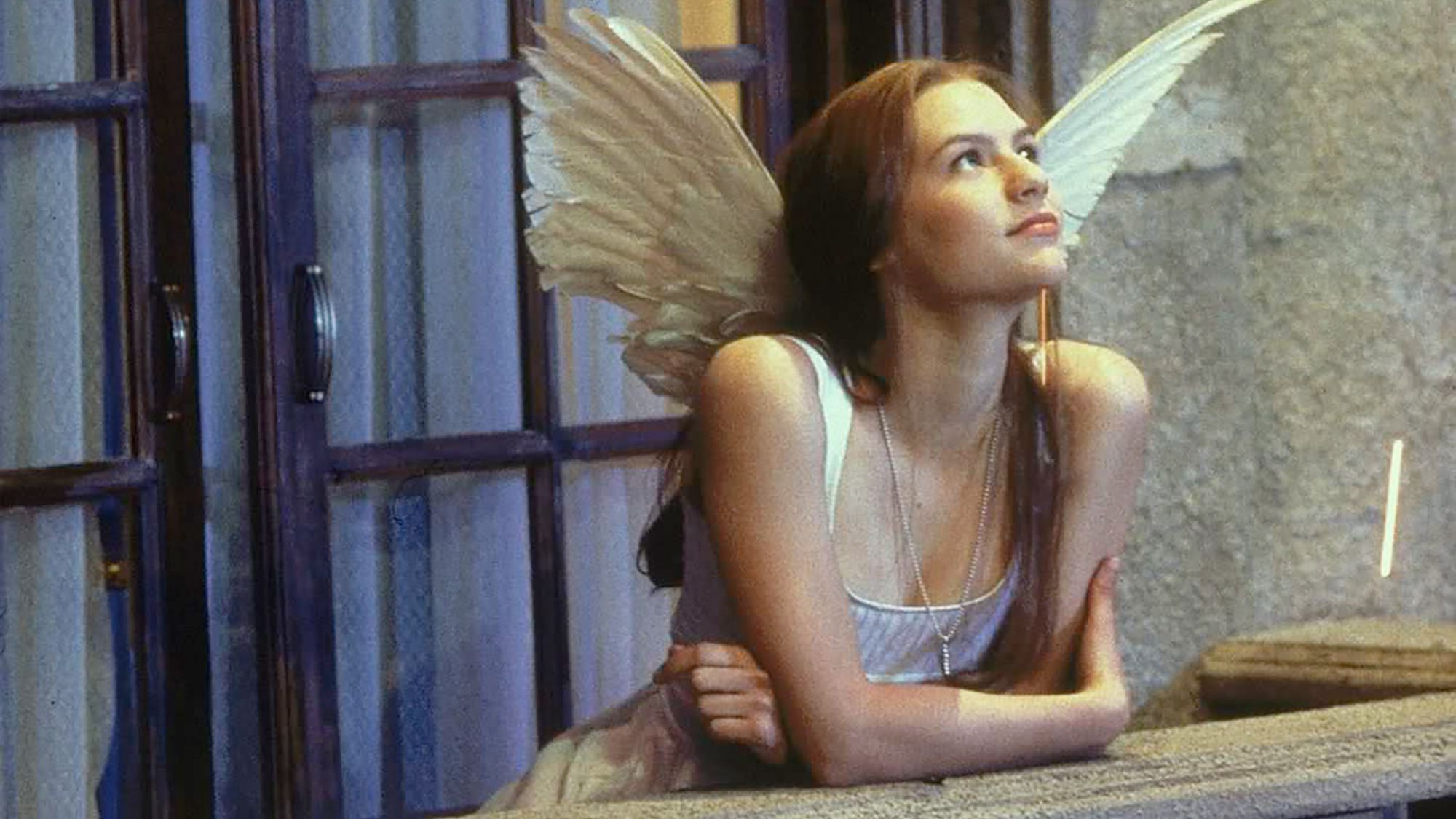
Oscar and Gloria in Colossal (2017)

Colossal, Nacho Vigalondo’s monster dramedy starring Anne Hathaway and Jason Sudeikis, has elicited a lot of strong reactions over the last few days, especially that part about Anne Hathaway controlling a city-stomping monster rampaging around Korea. It’s been described as having a “blithely bizarre conceit,” an audacious concept, and even as being “a delirious, moronic mess.” Most reviewers, even the haters, can’t help but appreciate its creativity. Gloria (Anne Hathaway), a directionless party girl bordering on alcoholism, returns to her hometown after being kicked out by her boyfriend. There, she discovers that she controls the movements of a giant monster that has been periodically crushing buildings and people in Seoul. The milieu is somewhere between monster movie, rom-com gone wrong, and what I’ll call the “magical portal” genre, which includes works such as The Wizard of Oz, Alice and Wonderland, The Lion The Witch and the Wardrobe, and, for a more contemporary example, Mohsin Hamid’s novel Exit West.

Each of these magic portals sets the characters on journeys to learn a lesson or facilitate a process of self-discovery. Alice, Dorothy, and the children of The Chronicles of Narnia learn bravery, sympathy, and a new appreciation for home. In Exit West, the lesson is more painful: Nadia and Saeed gain the phantom limb of a lost homeland. Colossal’s writer/director Vigalondo has described the movie as Being John Malkovich (1999) meets Godzilla (1956 & beyond), the former taking magical-portals further into surrealist territory.

Colossal, too, is organized around a surrealist conceit: Gloria manifests in two different places at once, in two different forms, while maintaining a single consciousness. (The monster has no consciousness — it cannot see, hear, or otherwise experience the world around it.) As Colossal delves deeper into its realist plot, which concerns issues of alcoholism and abuse, this surrealist conceit has the potential to amplify and deepen the film’s meaning through metaphor. If only that’s how it played out. Instead, Colossal falls victim to an old surrealist foe: the “rationalist” explanation.

How (and Why) to Write Realistic Aliens and Magic

I put rational in quotes because, despite the compelling originality and emotional urgency of the plot, Colossal’s keystone explanation is a failure. Every work with surrealist elements must strike an intricate balance between explicitly stating the rules of its surreality and leaving them loose or implied. Alice and Wonderland, for example, has clear rules for entering Wonderland — fall down the rabbit hole — but how to leave Wonderland is murky — fall asleep when the Queen comes for your head….? A trip to Oz, on the other hand, would be difficult to recreate (get caught in a tornado), but the route home is prescribed: tap your ruby slippers three times and appreciate Kansas with each click. At the intersection of surrealism and logic, there are rules which govern the fictional universe. In Colossal, if Gloria enters the boundaries of the playground near her house at 8:05AM, the monster materializes on the other side of the globe. Gloria discovers these rules and establishes them for the audience by watching live videos online of the monster and comparing them to her behavior, eventually testing her theory by making distinctive gestures and verifying that the monster mirrors them. This set of rules works: much of the subsequent plot hinges upon both the audience and the characters understanding their functionality. The problem comes when the movie starts asking why.

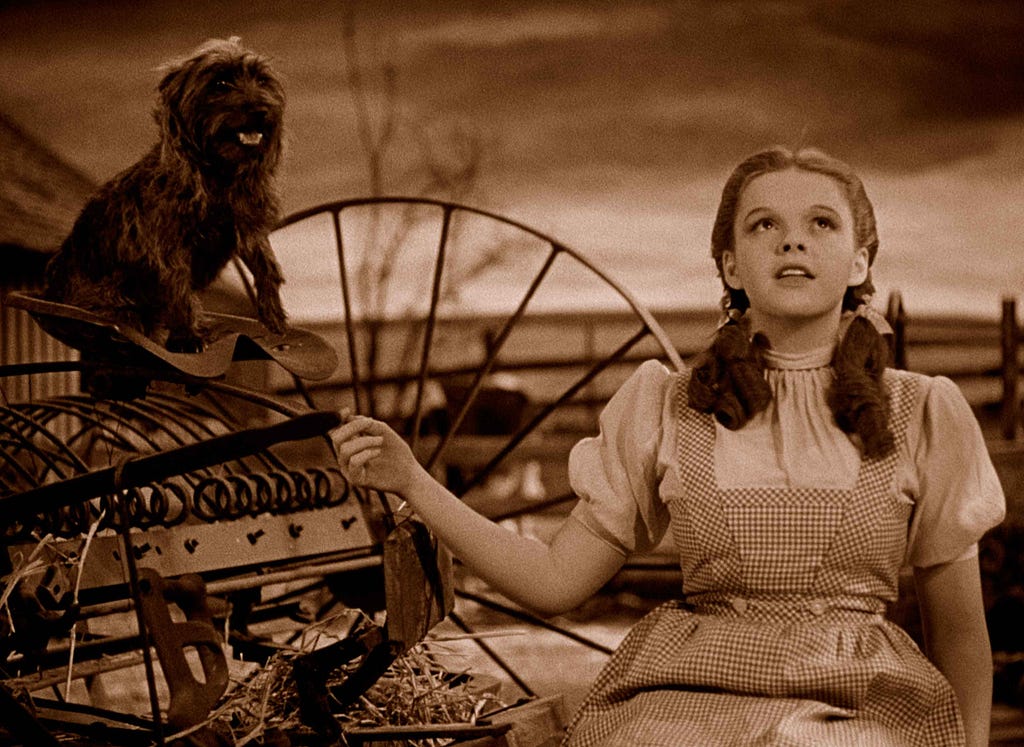
Dorothy and Toto wonder how to get to Oz in The Wizard of Oz (1939)

Resisting the impulse to (over-) explain has long been a hallmark of surrealism, at least when it’s done well. In Colossal’s spiritual cousin, Being John Malkovich, the magical portal leads to a person. By climbing into a closet on the 7 ½ floor of an office building, the characters discover they can enter the actor John Malkovich’s body for fifteen minutes; afterward, they are expelled to the side of the New Jersey turnpike. The workings of the portal are eventually explained in detail (it’s controlled by a company called LesterCorp and used by old men to extend their lives), but, thankfully for the audience, its physics never are. (Leave that kind of storytelling to Interstellar.) Similarly, in Mohsin Hamid’s Exit West, there are magical doors that lead from a war-torn country to new cities in the West. These doors are a fact of the world of the novel, and their existence is never explained.

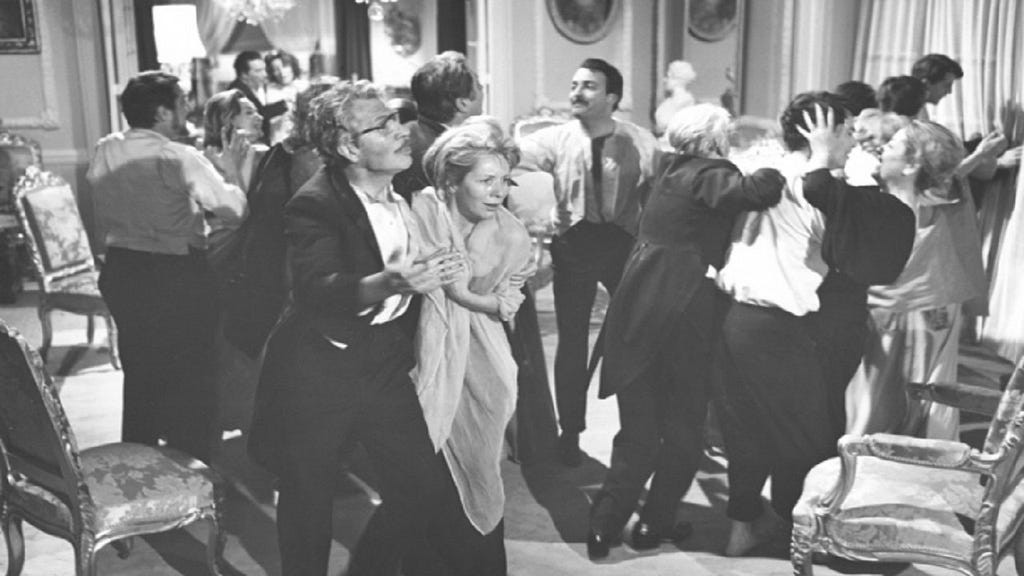
The Spanish director Luis Buñuel, one of the fathers of the surrealist film movement, is the king of knowing when, and when not, to explain the rules. In The Exterminating Angel (1962), guests become unable to leave after a formal dinner party. They’re trapped until starvation eventually leads to suicide and human sacrifice. Why they are trapped is never explained, the only rule is that they cannot leave, until they can. When the surrealist movement began in 1924, lead by André Breton, a rejection of rational thought was among its primary concerns. Surrealist cinema, developing around the same time, also prioritized irrational, dreamlike, and absurdist imagery.

Panicked dinner guests in The Exterminating Angel (1962)

For a rare example of a contemporary film that truly embraces the spirit of surrealism, look to Yorgos Lanthimos’ 2015 The Lobster (now on Amazon Prime). Buñuel’s fingerprints are all over the film, including the final scene, a direct allusion to Un Chien Andalou (1929). The Lobster is confident enough in its vision (its surreality, you might say), that there’s no need to delve into the motivations or explanations for its rigid, bizarre rules. Much of the film takes place in a grand hotel where guests are turned into animals if they fail to find a mate in 45 days. Why or how this practice was established is not addressed, but it’s understood by everyone to be inflexible. Guests may choose any animal — David (Colin Farrell), has chosen a lobster — but after the procedure, which takes place behind a closed door, the animals remain on the hotel property. The guests could just as easily appear as animals in another location, in their natural habitat. How will David, as a lobster, ever make it to the ocean? Why would anyone select a creature, such as a tropical bird, that could not survive in the cold, wet environs that surround the hotel? Who cares? The film has other concerns. By setting clear (surreal) boundaries, the rules of the film are neatly aligned with the rules of the hotel. The universe of the characters and the universe of the film are the same size.

How will David, as a lobster, ever make it to the ocean? Why would anyone select a creature, such as a tropical bird, that could not survive in the cold, wet environs that surround the hotel? Who cares?

Within these boundaries, the hotel has other rules. Guests can buy more time by shooting so-called “loners”: poncho-wearing singletons that live in the woods behind a hotel. When David escapes to join the loners, the universe expands only slightly during a trip into town establishes that, in this society, it’s illegal to be single. Thus far, the rules of the film have been about societal attitudes and science: in this society, which loathes single people, they have developed a procedure to turn them into animals. And yet in its final third, The Lobster goes further and contorts the very rules of attraction.

Earlier, another guest at the hotel smashed his face against a poolside to induce a nosebleed that would endear him to a woman who suffers from chronic nosebleeds. Initially, one assumes he is desperate and shy and the nosebleed will give him a reason to talk to her. His plan works, they connect, and his deception continues throughout their relationship. When David joins the loners, he takes an oath to remain exactly that: alone. Nevertheless, he and another loner, known only as the “Short-Sighted Woman” (Rachel Weisz), connect because they have something in common; he too is short-sighted. Soon, they are in love. As with the nose-bleeder, the film seems to be mocking the superficial ways people connect in modern romance — scanning online dating profiles looking for someone who likes the same books and music as they do, but rarely evaluating their partner’s deeper values until it’s too late.

When the leader of the loners learns that the pledge has been violated, she blinds the Short-Sighted Woman as punishment. Her relationship with David quickly falls apart. When David prepares to blind himself in the film’s final scene, it becomes horrifically evident that these couples’ reliance on common traits was never satire; it was yet another bizarre rule of this inspired, weird little film. Being changed into a lobster is funny and strange, but David’s self-mutilation is where the film becomes truly avant garde.

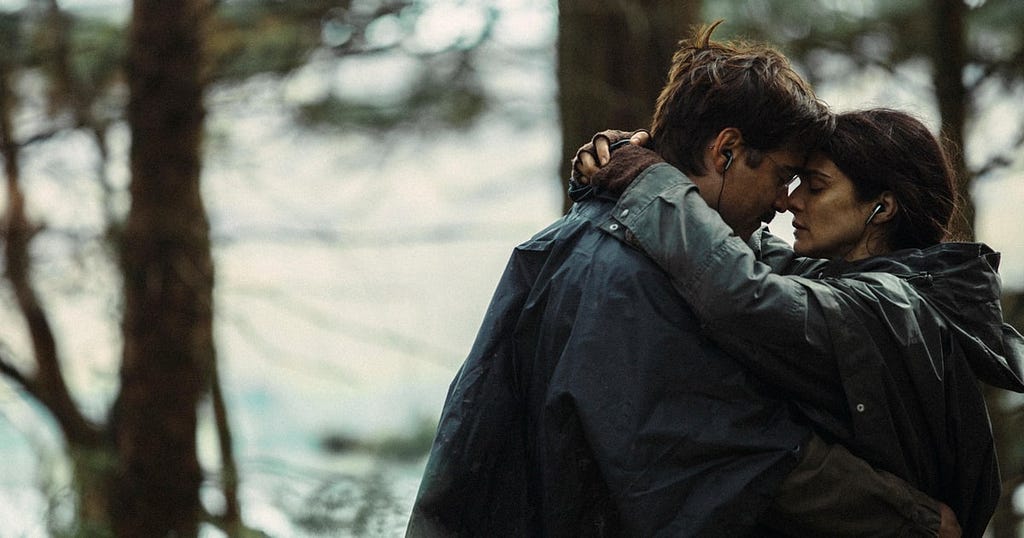
David and the Short Sighted Woman in The Lobster (2015)

The aesthetic and emotional cogency of The Lobster is proof that a film does not need to provide satisfying psychological explanations in order to be successful. On the contrary, The Lobster adamantly denies psychology in favor of its own internal logic. In The New Yorker’s review of Colossal, Richard Brody writes, “Metaphors, if they’re any good, distill complexity not into simplicity but into clarity, bypassing the details of particular situations to find and represent their unifying universal traits and ideas.” That may be true in almost every genre, including realism, fables, fantasy, satire and allegory, but decipherable metaphors have never been the project of surrealism. The Exterminating Angel is a take-down of the upper class, their indulgences and their petty inefficiencies, but what does it mean that the party guests are unable to leave the mansion until they re-create their dinner party scene at the moment they became trapped? What metaphor can be found in the arbitrary forces have governed this whole, sordid affair?

Foolish as it may be to explain metaphor with metaphor: Attempting to find the metaphor in The Exterminating Angel is an endlessly branching path, each possibility worth pursuing. Attempting to find the metaphor in The Lobster is like following a labyrinth that only leads to dead ends. Finding the metaphor in Colossal is like walking a poorly marked trail: it only goes in one direction, but the brightly-colored markings are sporadic and inconsistent.

Colossal is undeniably strange, ambitious and compelling. But that still leaves the question: “Was it any good?” The Verge summed up its response with a quote from The Simpsons: “Short answer, yes with an if; long answer, no with a but.” Despite more than one “if,” Colossal is good; it’s bold, inventive, playful, and arresting, but the film’s logic and metaphors are at once over-articulated and under-developed. A premise as illogical and fascinating as Colossal’s demands restraint — the rules of its world are inherently gripping. What’s interesting is watching how the characters navigate these rules, not the origins of this surreality’s creation. Unfortunately, just where restraint is called for, Vigalondo dives in.

Colossal is good; it’s bold, inventive, playful, and arresting, but the film’s logic and metaphors are at once over-articulated and under-developed.

(Now we’re really getting into spoilers, in case you’re reluctant…)

As revealed in flashbacks that grow subsequently longer, Gloria and her friend Oscar (Jason Sudeikis) entered the park in question 25 years ago on the way to school, at 8:05 AM. The wind took Gloria’s diorama of Seoul into the fenced-off area of the park, which was a construction site at the time. She believes Oscar is going to save her beloved school project, but when he retrieves it, he smashes it instead by stomping all over it like Godzilla. Gloria is furious, and as she watches in anger, lightning strikes them both and links them to their toys: he to a robot and and she to a monster. You can read all of Greek mythology without finding an origin story this literal. And yet the scene is shot confusingly, cut as if Gloria and Oscar are turned into the toys, and framed in such a way that it’s unclear if Gloria conjured the lightning with her anger, or if was some kind of metaphysical coincidence. Vigalondo also completely loses tonal control. The visual motif — darkly lit and half-remembered — is one often used for suppressed trauma. As the Gloria recovered the memory, I actually wondered if, as children, Oscar had molested her.

But Colossal’s fundamental flaw isn’t tonal control. Its real problem is offering one explanation too many, taking the rules one step too far. How did Gloria and Oscar enter a tear in the spacetime continuum to be cosmically connected to a monster and a robot? What does it mean that Gloria is a monster, not a lobster or John Malkovich?

What I would give not to know any of this. Surrealism has a proud history of turning humans into animals. We don’t need to know why Gregor Samsa turned into a cockroach. The more interesting question, the one Kafka takes on, is what Gregor’s going to do when the chief clerk shows up demanding answers. (Yes, The Metamorphosis predates Breton’s Manifestoes, but we can all agree that Kafka was the movement’s progenitor — Surrealism 101.) Colossal’s problem is that it can’t leave well enough alone. It has insists on explaining — taking the rules one step too far.

Rational explanations belong to the world of science-fiction. We’re all fortunate never to learn of some grave sin in Gregor’s past, or the scientific underpinnings of the person-to-animal procedure in The Lobster, or the details of the spell cast on the mansion in The Exterminating Angel or the magical doors in Exit West, or the inner workings of the closet to person portal in Being John Malkovich. The unexplained rules that govern fictional worlds imbue stories with authority, insight and wit. Despite a promising start, those belong to a surreality Colossal never quite manages to find.

The Very Best Episodes of Girls Are Perfect Short Stories

What Happens in Daycare Stays in Daycare

“Bears are Robbers of Bees”

by Matt Dojny

Jellybeans Daycare occupies the entire ground floor of a brownstone on North Dominick, and — apart from a childish drawing of a red jellybean taped beneath the bottom buzzer — its presence is nowhere acknowledged on the building’s exterior. Peter insists that this anonymity must be in order to prevent its location from being advertised to predators. But to Allison’s eyes, the lack of signage lends Jellybeans a disturbingly provisional quality, and every evening, when she arrives to retrieve Dashiell, she half-expects to find the building emptied of furniture, toys, and children.

Jellybeans is owned and operated by a woman called Anzhelika Nizhnyaya. Allison assumes she is Ukrainian, because all of the Lincoln Park daycares are run by Ukrainians nowadays, but in reality the woman was born in the Tuva Republic of southern Siberia. If Peter and Allison were to hear the story of her journey from Siberia to Chicago — crossing the Tannu-Ola mountain range at the age of thirteen, eating only zhimolost and myshey and rotten cheremukha, huddling in catchments after nightfall to avoid the red wolves, the black wolves, the white wolves — Peter would surely find the tale both glamorous and heartrending.

Allison would find it disturbing, yet somehow unconvincing.

When Allison visits Jellybeans for the first time, and attempts to pronounce Anzhelika Nizhnyaya’s name aloud, it is suggested that Allison should simply call her “Miss Niz,” as the children do. After that, whenever Allison addresses the woman by this name, she feels as though she is herself a child, or a hapless employee, forever on the verge of losing her job.

The woman — Miss Niz — is not unpretty. She is in possession of a fleshy ampleness that some men might find enticing, in that it makes her appear sexually available. She wears brightly-patterned peasant dresses without a brassiere, and is frequently barefoot in the classroom. Her waist-length hair is silvery white — despite the fact that she can’t be much older than 30 — and her cheeks are forever flushed pink, as though she is still on her journey through the mountains. Her eyes are wet and overlarge and the color of dirty snow.

Allison finds the woman’s body to be a bit excessive, its womanliness over-exaggerated, as though she were a primitive fertility statuette come to life. The woman’s immoderate breasts and hips and thighs seem like a direct reproach to Allison’s boyish chest and nervous skinniness. Allison is thought to be beautiful by many — a barista recently told her, “I would kill for your cheekbones” — and she is regarded with envy by the other mothers at Jellybeans. Although, after having Dashiell she has been steadily losing weight, and her beauty has tipped into severity, the presence of her skull too obvious behind the taut skin of her face. She has always had an underlying air of morbidity to her, with her bloodless skin and wine-red lips, and she continues to dress in all black, as she has done since she was a sophomore in high school. Allison has shed her other adolescent Gothic affectations. She no longer smokes cigarettes, no longer dyes her hair. But she feels like a liar every time she tries to wear color.

Another thing that won’t go away: there is a small white scar above Allison’s eyebrow where she pierced it when she was twenty-two, and sometimes at work she strokes it while deep in thought. She is ashamed of this scar, and likes to touch it.

There are thirteen children in Dashiell’s class, overseen by the woman’s two assistants — a pair of attractive and seemingly interchangeable girls who are, in fact, Ukrainian. Their role is to help Miss Niz herd the little ones from Breakfast Time to Play Time to Lunch Time to Nap Time to Circle Time to Snack Time, until the parents start trickling in from work to herd their children home. The two girls appear to be hardworking and capable caretakers, although Allison is often taken aback by their provocative outfits: the short skirts, the midriff-baring halter tops, the oversized earrings. They do not look like caregivers so much as employees at a mid-level escort service.

The Ukrainian girls treat Miss Niz with a deference bordering on fear. Without any words exchanged, the girls appear to intuit her wishes at any given moment, hurrying from room to room and retrieving the necessary snacks or books or baby wipes. Allison is reminded of the way ants communicate, using subtle sounds, scent, and touch.

Allison is never certain of the names of these two girls. After a time, it seems too late to ask.

The first morning that Allison drops him off at Jellybeans, Dashiell throws a tantrum, begging her to stay and clinging to her ankles. Allison is finally forced to scurry out the door as the woman, smiling serenely, wraps her arms around the sobbing child and pins him firmly to her chest.

All that day Allison waits for the inevitable phone call from Miss Niz, telling her that Dashiell is inconsolable and must be picked up immediately. But no such call comes. When Allison slinks out of work at 5:30 and hurries back to Jellybeans to retrieve her son, she finds him nestled against the woman’s bosom, sucking his thumb, half asleep.

“Dashy was brave soldier today,” says Miss Niz, petting the boy’s hair. Her voice reminds Allison of an actor doing a bad Transylvanian accent. “He cried in the start, but then I make him happy.”

Allison reaches for her son’s hand. “Let’s go home, honey. I’ll make you some piggies in blankets.” She feels an urgent need to get out of this place, this overwarm room with its insistent odors of sweat, gingerbread, bleach, sour milk.

Dashiell nestles deeper into the woman’s body, looking like he is part of it, growing out of it, like a mushroom spore on a rotten stump. “I couldn’t sleep at Nap Time,” he says proudly. “So she took me to the Jellybean Room. I got a red.”

“A red what?”

“A red jellybean!” Dashiell cackles at his mother’s ignorance. “Then I was soooooo tired, I was like this.” He spreads his arms, letting his limp figure loll between the breasts of Miss Niz.

“You’re a lucky boy, getting such a nice treat,” says Allison. “You know you aren’t allowed to have sugar unless it’s a special occasion. But the first day of school is special, I suppose.”

The woman shows her teeth in a quick grimace. “Dashy enjoy the Jellybean Room very much,” she says, then lowers her voice to a stage whisper. “Children are like the donkey. They answer to the promise of carrot — or the threat of the whip.” And then the woman beams at Allison, as though she has imparted some ancient wisdom, or perhaps made a terrific joke.

Allison presses her lips together into what she hopes is a smile. She grabs Dashiell in a single quick movement, before he has time to protest, and shouts her thanks over her shoulder as she carries him out the door.

That night — after Dashiell falls asleep, and Allison and Peter are on the couch, eating bánh mì and drinking Grenache and watching Shark Tank — Allison casually suggests, during a commercial break, that perhaps they should transfer Dashiell to another daycare. Busy Bubbles on North Elston, or maybe Little Einsteins, where Michael and Nicole send Sullivan.

“Why in the world would we do that?” says Peter, not taking his eyes off the television. On the screen is a beautiful young woman in a leotard doing the downward dog on a scenic hilltop, the sun rising behind her. She suffers from genital warts, but with the help of her new medication, she won’t allow this to prevent her from fulfilling her potential. Possible side effects include dry mouth, heart palpitations, vertigo, and premature death.

“I don’t know,” says Allison. “There’s something about that place. It doesn’t look clean, for one.” She is thinking about the uninterrupted black smudge that runs along the baseboards of the Play Space, as though the room had been inexpertly renovated after a fire.

“You seemed okay with it when we took the tour.”

“That woman calls him Dashy. Dashy. What an awful nickname.”

“What woman? Anzhelika?”

Allison gives Peter a side-eyed look, and opens her mouth to ask him a question, but does not ask it. Instead she says, “Oh, and listen to this.” She repeats what the woman said about the carrot and the whip.

“I’m sure it’s some old adage from the motherland. ‘Zee child, eet is like veal calf — you must keep eet in box all day long, until zee body become soft and delicious.’” Peter grabs at his wife’s stomach, giving it a squeeze, but Allison slaps his hand away. She is staring at the wall above the television as though watching some refracted scene play out there.

“Allie. What is it?” Peter mutes the commercial and touches her arm. In a low voice, he asks, “Are you thinking about Kidzville?”

“No,” she says. “I don’t know. No.”

“Because that was awful, of course. But it was just a random thing. Those people — ”

“I said that’s not it.”

“Then what’s the matter?”

But Allison cannot find the exact words to explain her concern. She’s thinking about the carrot, the whip. She’s thinking about refined sugar and the smell of sour milk. She is also thinking of the thick black hair that sprouts from the woman’s armpits — black, despite the whiteness of the hair on her head — and how this hair is somehow pornographic, forcing Allison to imagine the mass of black curls between the woman’s legs, the black spidery hairs crawling up towards her belly. She imagines Peter, kneeling before the woman on the carpet, burying his face between her flowing white thighs. He is suckling at the thing there as though he were a baby. The woman stroking his hair as she stares ahead, patiently taking her pleasure.

“Anyways,” says Peter, “we’d lose our $750 deposit if we took him out now. Let’s sleep on it.” And then Shark Tank comes back on, and Peter unmutes the television, and no more is said of the matter.

At work, Allison googles is my daycare licensed chicago and makes her way to the site for the Illinois Department of Children and Family Services. Jellybeans had been so highly recommended on the Working Moms listserv, it had never occurred to her to check its credentials. She types jellybeans into the Search and after an interminable wait, she is delivered to an empty page. No data to display. Her heart flashes with panic. She tries jellybeans, inc and jellybeans daycare and jellybeans, llc and jellybeans daycare, llc. With every unsuccessful search she feels as though she is sinking a little deeper into the floor. Then she searches for Little Snowflakes, the new daycare on South Halsted. No data to display. She searches for Little Einsteins, Tiny Bubbles, and Chickpeas, but none of them turn up. Perhaps she’s not entering the correct search terms? Or perhaps all of the daycare centers that she and her friends send their children to are unlicensed. Perhaps that’s normal, one of those things that everybody knows but no one talks about, an open secret.

Then her manager comes to her with a question and Allison closes the browser window, deciding in that moment that the site is clearly broken and that she will not return to it.

When Allison and Peter first started dating, she would lie in bed with him and enumerate her fears, beginning with the smallest and working her way up to the largest and most outrageous. A perceived slight by a coworker; the suggestion of a lump beneath her armpit; the possibility of becoming bipolar late in life, like her Aunt Mary. Allison once described to him a vision she’d had while eating lunch at Au Bon Pain: there was a nuclear war and she was somehow the sole survivor, caught eating a Roasted Eggplant and Asiago Hot Wrap, haunted by an entire city of ghosts.

Peter would listen quietly to these fears, touching Allison’s hair, running his hands lightly across her body beneath the sheets, and when she was finished speaking he would say to her in a quiet voice: All shall be well, and all shall be well, and all manner of thing shall be well. At the time, Allison did not know that Peter was quoting the medieval Catholic mystic Julian of Norwich. It sounded as though he were speaking from a position of authority and foreknowledge. Coming out of Peter’s mouth, the words had the ring of truth.

Peter was born and raised on Staten Island, not far from the area known as Fresh Kills. Originally a salt marsh, Fresh Kills was transformed into a massive garbage dump in the late 1940s. At its peak of operation, 650 tons of trash were added daily, eventually turning it into the world’s largest man-made structure — a range of small mountains molded from 150 million tons of solid waste. After 9/11, the site was filled with the wreckage and debris from Ground Zero, including the unidentified remains of victims from the attack. Soon thereafter, it was determined that Fresh Kills had reached full capacity, and the facility was shut down.

The mounds were covered over with layers of compressed dirt, rip-rap, water, plastic, concrete, and topsoil; the noxious landfill gas and leachate byproducts were sucked out of the mounds, siphoned off by an unseen network of drainage channels; and native grass and tree species were planted on top of the mounds, so that the site was ultimately transformed into a verdant public park that betrayed no signs of its former purpose. A visitor to this park could conceivably stroll the grounds without being aware of what lies beneath his feet.

It has occurred to Allison more than once that her husband, as he moves through the world, is not unlike a visitor to this park.

After the first day, Dashiell goes to Jellybeans without any fuss. When Allison retrieves him after work he is glassy-eyed, drunk with exhaustion. Over dinner he talks non-stop, rattling off the new information that his small, spongy brain has absorbed: Butterflies taste their food by standing on top of it. There’s a worm that eats itself if it can’t find any dinner. Baby humans are born with no knees. Rats laugh when you tickle them.

“They laugh? Is that actually true?” asks Peter.

“Eat your peas, Dashiell,” says Allison.

“It is true. Anzhelika said.”

“She might be confused,” says Allison. “There’s a slight language barrier.”

Dashiell’s face grows serious and thoughtful. “When Grandma and me was walking down the street, we saw a rat one time.”

Peter grins. “And did you tickle it?”

“No. We saw it in the street and Grandma went into Baskin & Robbins and got a snow shovel.”

“Someone at the Baskin & Robbins gave her a shovel?” Allison seems somehow vexed by this idea.

“No, Grandma bought it. It was made of gold.”

“Grandma has very expensive tastes.” Peter smiles and winks at no one in particular.

“And she took the shovel and killed the rat with it.”

Peter begins to laugh. “I have to say, Allie, this does sound like something your mother might do.”

“Dashiell, please stop talking nonsense and eat your peas.”

Dashiell picks up a pea, holding it in front of his nostril, as though considering whether or not to insert it. “Anzhelika says bears are robbers of bees, because they steal their honey.” He pops the pea into his mouth. “But it’s okay, because it’s Mother Nature. And you know what else?”

Right now, her son is reminding her of an ex who used to do too much coke and talk at her for hours, as if every single thought in his brain were worth expressing, moving from topic to topic without any discernible transitions. Dashiell’s voice is turning into a kind of white noise. Allison tries to tune back into it.

“What else,” she says.

Issue №257

Jump to story

AN INTRODUCTION BY HALIMAH MARCUS

Walking to work in New York City, no one waits for the light to change. I’ve heard you can get tickets for jay-walking, but I’ve never seen it happen. I stand four feet out in an intersection to peer around parked cars. If a fellow pedestrian finds an opportunity to cross that I’ve missed — seized a brief moment between passing cabs, for example — I feel left behind, a little jealous and a little impressed.

My Brooklyn neighborhood is favored by couples with young children, couples like Allison and Peter who we meet in Matt Dojny’s “Bears Are Robbers of Bees.” I notice these parents dutifully waiting at red lights, pushing a stroller or gripping the hand of a toddler. When I see these parents, I think, when I have a child, I too will diligently wait for the light to change, teaching my child safe habits. Then I wonder, will I always? What if there is no one coming, what if the streets are deserted, what if we have someplace to be? Will I stand there unmoving, too aware of the gruesome possibilities that may befall the precious life for which I am responsible, to cross against the light?

If coping with daily life requires a certain degree of acceptance by the childless, it requires self-deception by the parent. Driving on a highway, crossing the street, standing near the edge on a crowded subway platform: hold your habits in slightly different light and they become suddenly terrifying. “Bears are Robbers of Bees” is a wonderful, creepy story, cast entirely in that light, one where real-world daycare disasters and Grimm’s fairy tales have equal bearing on how a mother worries about her son.

Allison and Peter have just enrolled their son Dashiell in Jellybeans Daycare. The teacher, Miss Niz, as she’s known to the students, is indeed someone out of a fable. “She is in possession of a fleshy ampleness,” Dojny writes, and her eyes are “the color of dirty snow.” In one light she’s a doting school marm, a child-whisperer; in another, she is witch-like and sexually perverse. These observations are filtered through Allison’s insecurities about her own maternal signifiers and paranoias drawn from the nightly news.

Beyond her speculations, she has only Dashiell, her exuberant, playful son, from whom to get first-hand information. This is the same child who rattles off questionable facts he learned in school (“There’s a worm that eats itself if it can’t find any dinner”; “Baby humans are born with no knees”), and tells a story about his grandmother killing a rat with a gold shovel she bought at Baskin & Robbins. So when his reports of what goes on at Jellybeans Daycare become more disturbing, the reader is as unsure as Allison whether to believe it.

Through expertly layered uncertainty and subtle evocations of dread, Dojny demonstrates that the burden of the parent is also a virtue of the writer: the ability to see and describe the world as a series of strange, intertwining dangers.

Halimah Marcus
Editor-in-Chief, Recommended Reading

Reading In The Schools by Hannah Rahimi


Dashiell is changing. He is changing in subtle, almost undetectable ways — ways which only a parent would notice. Although even Peter does not seem to notice many of these changes.

When Allison tries to discuss the changes with Peter, he makes the observation that children are constantly changing, and how can one really keep track? “The Buddhists have an expression,” says Peter. “Life is change.” He sighs contentedly, because he feels that this is a satisfying way to end this particular conversation. Peter is a collector of quotations, pieces of wisdom — not trite banalities, but things that strike him as being so true that he has an obligation to commit them to memory. Many years ago, Peter told Allison that his motto was, “Be regular and orderly in your life, so that you may be violent and original in your work” — although Peter’s work is in real estate, which does not offer much opportunity for originality, or violence.

Dashiell appears to be losing weight, growing long and lean, emerging from a chrysalis of babyfat. Is he too skinny? He eats like a horse and he glows with good health but his ribs are so pronounced now. Allison doesn’t like being aware of the skeleton inside of her child.

Dashiell’s hair feels persistently greasy, despite the fact that Allison washes it every night. He has a new and distinct odor, or rather, two odors: the clammy tang of flopsweat, and also an exotic, smoky scent that reminds her of the joss sticks that she burned in college. He perspires when he sleeps and when Allison makes his bed in the morning she sees that his sheets are imprinted with a damp yellow discoloration, a vague body-shape that reminds her of the Shroud of Turin.

From time to time Dashiell awakes in the middle of the night jabbering and crying, inconsolable. Peter sleeps like the dead so it’s always Allison who runs into her son’s bedroom to care for him. During these terrors, Dashiell will scream at her that his hands hurt, his feet hurt, his tongue hurts. She gets him water and sings to him and rubs his back until he finally exhausts himself and dozes off. Dashiell is bright and happy in the morning, having no memory of the night before. Both he and Peter listen to Allison with blank politeness as she recounts the awful scene that occurred at 3 AM. She finds herself wishing that there were another witness to these night terrors. She shouldn’t be the only one.

There are symptoms during the day as well. Dashiell says there is a crawling sensation on his heart, as though it is covered with ants. He says it feels like there are feathers moving inside his blood. He says that he can smell electricity when he closes his eyes. Allison resists the urge to look up these symptoms on the Internet but at night she lies in bed wondering if her son has some rare disease — the type that’s so obscure and deadly, they don’t even bother fundraising for a cure.

When she can no longer stand hearing these complaints, Allison brings Dashiell to Dr. Keller for a check-up. He laughs when she describes some of Dashiell’s symptoms. Dr. Keller tells her that the boy’s health is fine, just fine. He speculates that the boy has an overactive imagination, and possibly low potassium levels. Dashiell needs to eat more bananas.

Dashiell had been a difficult and greedy baby, always wanting to nurse, always at Allison’s breast, always needing to be held. The moment he was placed into his crib he’d begin screaming. Maternity leave was hard on Allison. When Peter arrived home from work in the evenings, she would thrust the baby into his arms and go and lock herself in the study with a magazine and a glass of wine. When her leave finally came to an end, she felt a guilt-ridden thrill at the prospect of returning to the quiet and boredom of her cubicle.

Allison understands now that she is not temperamentally suited for having a child. She is not made of the stern stuff necessary to shepherd a child through this life. She was not like one of those frontier women who could have a child die in the morning and would resume harvesting grain in the afternoon — no, she was like one those barren and hysterical Victorian women who would lie in bed with a false illness, staring wild-eyed at the peeling wallpaper.

Dashiell continues to have daily complaints, and each description of each new symptom fills Allison with a fresh bout of anxiety. Peter listens to Dashiell’s symptoms with amusement, asking scientific-sounding questions, goading him on. Peter lacks the imagination to experience any fear of the unknown, and in this regard he is perfectly suited for parenthood.

Another new thing is the baby talk. It creeps in slowly — at first it’s just the occasional mispronunciation, the intentionally garbled syntax, gradually increasing in frequency until one day Allison realizes that there is nothing but baby talk coming from the mouth of her son. Dashiell is fully committed to this new mode of speech, a method actor who refuses to break character.

“Anzhewika says I’m huh wittle baby boy,” he explains at dinner, “so now me tawk wike a wittle baby.”

Peter jokes about it with their friends, saying his son talks like Edward G. Robinson in Little Caesar. But Allison cannot bear it. She imagines strangling Dashiell, very measuredly and gently, until he speaks normally again.

“You’re my little baby,” says Allison, stroking the fine blond fur on the nape of Dashiell’s neck. “But please use your big-boy voice.”

Naughty wittle baby,” he sings.

“Dashiell, I mean it.” Her voice has gone hard now. “Speak normally.”

“But me can’t, because me a wittle baby.”

Allison turns to Peter, her eyes imploring. Peter sighs and pats his son on the shoulder. “Buddy, we can’t understand you when you speak like that.”

“No! Me have to speak wike — ”

“Dashiell! Do you want a Time Out?” Allison glares at the chair in the corner of the living room. The Time Out chair is actually the nicest chair in the house — a white leather Eames knock-off that, despite its inauthenticity, was still outrageously expensive. Peter refers to it as the Chair of Sorrow. He often threatens to send Dashiell to the Chair of Sorrow, but rarely follows through.

Peter murmurs, “I read that we’re just supposed to ignore it, not punish — ”

“Dashiell’s a big boy,” says Allison, looking wildly back and forth between her son and her husband. “He needs to speak like a big boy. If he wants to talk like a baby, he can do it during his Time Out.”

Allison quickly gets to her feet, preparing to drag her son to the chair. But Dashiell slides out of his seat and hurries past her. He grabs a wooden spoon from the countertop and, grinning at his parents, hops up onto the Chair of Sorrow. “Naughty wittle baby,” he sings, smacking himself on the forehead with the spoon, keeping time. “Naughty wittle baby, buzz buzz buzz.”

“That voice makes me want to jump out the window,” says Allison, later, pouring herself more wine. Wine seems to have lost its effect on her, and has just become a kind of dry, mildly unpleasant water. But she keeps drinking it, hoping it will once again make her feel relaxed and adult.

“The Voice of Defenestration.” Peter smiles as though he’s been waiting for an opportunity to use that particular phrase.

“And he’s got a funny odor now. Have you noticed?”

“Funny how?”

“Remember the way he used to smell? His hair, when he was a baby?” Allison bows her head and closes her eyes and inhales, as though that baby is at her breast now. “He smelled like nothing at all.”

“He’s just going through a phase, Allie.”

“I don’t think so.”

Peter studies her curiously. “What do you mean?”

She doesn’t know what she means by that herself, but it feels true.

Dashiell comes into their room in the middle of the night. He stands over their bed. Allison wakes up to the sound of his breathing, sees his black silhouette.

I’m going to abduct you,” he whispers.

She sits up, unsure if she’s having a dream. “What?” She reaches her hand out to him but can’t find his body in the darkness. “Dashiell? What did you say?”

I was honest.” Dashiell sighs and climbs up into their bed, nestling between her and Peter. “I was honest, but I gave up,” he murmurs. His eyelids flutter, then grow still.

“What did you say?” Allison gently shakes him, peering down at his face. “Dashiell. What did you say.”

The following night, Dashiell returns to Peter and Allison’s bedroom, crawling over their sleeping bodies and sliding silently beneath the duvet. And suddenly that’s the new routine: Dashiell coming into their bed every night. Peter tries to put a stop to it, occasionally frog-marching Dashiell back into his own room — but he usually remains asleep, oblivious to his son’s presence.

Allison likes having her baby boy next to her. Dashiell slept in their bed when he was first born, a tiny thing crawling upon her in the night. However, Dashiell has grown so long-bodied, it is like she is sleeping with two men. In his sleep Dashiell turns and braces the bottoms of his feet against her side, a constant pressing. If she rolls away from him, he whimpers and once again finds her with his feet. It reminds her of how, before Dashiell was born, he would press his feet against the inside of her belly. As though trying to keep her at bay before he was even outside of her body.

Some nights, Allison lies awake, anticipating Dashiell’s arrival. When he finally enters the room, she feigns sleep, waiting to feel his feet against her stomach.

One evening Allison arrives a half hour late to pick Dashiell up at Jellybeans and can’t find him. She doesn’t see him in the Kitchen Area, or in the Toy Zone, or in Book Corner. There don’t seem to be any adults anywhere, only a few exhausted-looking children idly playing or just sitting scattered across the floor.

“Dashiell?” she calls, trying not to sound alarmed. “Hello?”

One of the the two Ukrainian girls emerges from the bathroom, holding hands with a crying child. The Ukrainian girl is dressed in an orange halter top and an A-line miniskirt with kitten heels. She wears donut-sized hoop earrings and smells like Obsession, which was the perfume that Allison herself wore when she was a very young woman.

“Sorry, um — ” Allison places a hand on the girl’s shoulder in lieu of saying her name. Allison has questioned Dashiell many times regarding the names of the two Ukrainian girls. He claims that they are called Poopy and Weep-Weep. “I’m looking for Dashiell? I’m a little late…”

The Ukrainian girl points toward a door in the back of the Toy Zone. “Jellybean Room,” she murmurs.

Miss Niz materializes in the doorway as though on cue. Dashiell is behind her, clutching her skirt. There is something wrong with his face — it appears puffy, with bright red splotches on the cheeks. He catches sight of his mother and hurries in her direction, emitting a low moan. Allison reaches out as he passes but she does not touch him.

“Dashiell,” she says as he disappears around the corner. There is the sound of a door slamming.

The woman walks up to Allison and wrinkles her nose. “He is going to make a Number Two,” she says.

“Is he okay?” Allison wants very much to go after him, but remains where she is. “He looked — tired, or something.”

“Dashy is very bad napper,” says the woman, shaking her head with disapproval. “You must fix the sleeping plan. He is too old for your marriage bed at night.”

“What?” Allison turns and looks at the woman. She is gazing serenely at Allison, eyes shining and bulbous. Her body appears particularly over-ripe today, breasts bulging at the fabric of her dress, as though she has the heads of two small children hidden under there. Allison wonders if the woman is pregnant, or is simply somehow succumbing to voluptuousness.

“Dashy tells me he sleeps with you and Daddy,” says the woman. “My advice is, this makes a bad attachment, and will confuse healthy sleeping. Also, for you to be a happy Mommy, you and Daddy must have…” The woman interlaces her fingers and pushes her chapped red hands together as though killing an insect. “Adult friendship,” she says.

Allison laughs brightly, looking away from the woman and her hands. “Dashiell doesn’t really sleep in our bed,” she says. “I’m not sure why he told you that.”

The woman turns abruptly and leaves the room, as though summoned by an unheard call. Allison watches her go, then lowers herself onto a child-sized chair and remains seated until the woman returns with Dashiell. He appears almost like a different child now, his face relaxed. He smiles at his mother strangely — the tight half-smile that one might give to a coworker on the street — then he retrieves his jacket from the coat closet and walks out the door.

That evening, Allison considers skipping the nightly ritual of Bath Time, but her desire to have a clean child triumphs over her ennui. When the water is the correct temperature she peels off Dashiell’s clothing and places him into the tub. He stands there, shin-deep in water, staring at her blankly.

“Sit down, honey,” says Allison. “I’m not in the mood to fight you tonight.”

“Tell me a stowy and it has to be twue,” he says quickly.

“Yes. Okay. Fine. Just — sit down.”

He eyes her with suspicion, as though unsure if she is going to keep her part of the bargain, then gingerly lowers himself into the water. “Tell it,” he says.

Allison and Dashiell both find Bath Time unspeakably boring. Allison has never quite gotten accustomed to cleaning the body of another, and as she methodically scrubs Dashiell’s armpits, his feet, his bottom, it always feels as though she’s overlooking some crevice where the grime is invisibly accruing. About a year ago, Dashiell informed her of his new policy: he would submit to Bath Time on the condition that Allison tell him a story while bathing him. It could not be a made-up story, it had to be a true story from Allison’s life — an adventure, a catastrophic near-miss, anything involving violence, embarrassment, disease, bodily functions, thievery. So Allison had dredged up a lifetime of memories, recounting every juicy story she could think of: being robbed at knifepoint in Venice; defecating into a backpack while stuck in a traffic jam; vomiting in the hot tub on her wedding night; on and on and on. Eventually, as she began running out of choice material, her stories became less and less interesting. Finally she had to resort to fibbing, claiming to have experienced things that had actually happened to friends of hers, or occasionally presenting a news item as a personal experience. Lately she had been forced to invent her stories from scratch, a new lie every night.

“Tell it!” says Dashiell. “Tell the stowy.”

Allison nods and begins to speak without knowing where her words will take her. “One time,” she begins, “when I was a little girl… I was very tired.” She yawns, stalling for time. “I was so tired, and, so I got in my bed and went to sleep.”

“Was it night time?”

“Yes. So I went to sleep, and I started to have a dream. And in this dream — ”

“Dweams is not weal,” says Dashiell. He is always very strict about the rules of Bath Time storytelling. “Tell a twue stowy.”

“This is true. Because, this dream wasn’t like a normal dream. In the dream, I was aware that I was in a dream. This is called lucid dreaming. And so when I woke up inside my dream, I realized that I could do whatever I wanted to do. I thought to myself, I want to fly, and I started floating around the room. My dog Lizzy came in and I made her start singing Happy Birthday to me.”

Dashiell laughs at this. “Dogs can’t sing!”

“I know, but, I was the boss of the dream, so I could control the whole world. Then I decided — I wanted to some dessert. And suddenly, right on my lap, a giant marshmallow appeared.”

“How big?”

“This big.” Allison holds her arms out in front of her like someone preparing to waltz. “So I started eating it. It was really, really yummy, and I ate and ate it, I couldn’t stop. But then, I began to feel full. I decided I wanted to wake up and get out of my dream. I woke up for a second, opened my eyes, and then went falling back down, down into the dream. This happened over and over. Like I kept getting sucked back to the bottom of a deep ocean.”

She pauses, and Dashiell snaps at her: “Then what?”

“I kept doing this for a while, trying to wake up. Whenever I went back into the dream, I was still eating the giant marshmallow. I felt so full, my tummy was about to explode. In my dream I was rolling around, eating this pillow, and then in real life I rolled out of bed and fell on the floor and woke up. And I saw that my pillow was all wet, and I realized that I’d been chewing on it all night when I thought I was eating that giant marshmallow.” Allison pauses, wondering if that’s the end of her story. She had thought she was making the whole thing up, but now it has the feeling of an actual childhood memory, accidentally unearthed.

Dashiell claps his hands together. “You ate your piwwow!”

“No baby talk. Yes, well, I was trying to eat it. Isn’t that funny?”

He chews on his lip, thinking. “Sometimes, at Nap Time, I fall asweep and have a fast dweam and get scared and start cwying.”

“Oh, honey. I’m sorry. Does anyone help you?”

Dashiell nods. “Anzhewika comes and takes me to Jehwybean Woom.” He lowers his voice and regards Allison slyly. “She says I’m huh fayvwit wittle boy.”

“Please, no baby talk. You’re her what?”

Fayvwit! She gives me a wed jehwybean, evwee day, and then…” He stops short, pressing his lips into a thin line. His eyes enlarge with some unexpressed emotion.

“And then what?” Allison drops the washcloth into the water and studies Dashiell. His body looks so thin and white beneath the water. It calls to mind a dying oarfish that she saw once while kayaking along the Gold Coast — which is ridiculous, because her son looks nothing like an oarfish. “And then what, Dashiell?”

He covers his face with his hands and whispers between his fingers, “I can’t tell you.”

“What do you mean?”

Shhhhhhh,” he says, glancing to the side as though addressing an invisible companion.

“Dashiell, I — ”

“It’s a secret.”

A dreadful prickling sensation gathers at the base of Allison’s skull, crawls up her scalp, and covers her forehead like a veil. A child with a secret seems like a precursor to calamity, tragedy. “Tell me,” she says. “Remember, no one can ask you to keep a secret.”

“Uh-uhn.” Dashiell farts in the water and laughs a cloying, babyish laugh.

Allison grabs his shoulders with such force that his laughter immediately pitches up into a shriek. “You do not keep secrets from Mommy,” she shouts, surprised by her own ferocity. Upon seeing the look of terror on Dashiell’s face, she quickly releases him. Two bright pink thumb-shaped marks glow on his pale shoulders.

“Sweetie,” she says, “I’m sorry, but — you have to tell me.”

Dashiell hesitates, then says in a small voice: “She give me a shawt.”

“A what? No baby talk.”

He sighs. “She gives me a shot.”

Allison becomes very still, watching her son. “What are you talking about? Who does?”

“Anzhelika.” Dashiell sticks his face in the water, blowing bubbles. “I’m not supposed to tell,” he adds, smiling at her radiantly.

Allison shakes her head. She does not believe him, of course, not for an instant, but she cannot stop herself: “Where on your body do you get this shot?”

Dashiell shrugs, bored now that his secret is out. “Different places. Today it was here.” He points to the crook of his left elbow. Allison grasps his arm and brings it to her face. There is a tiny red bump there. It is perhaps a bug bite, or a clogged pore. Some kind of birthmark. She should know every single mark on the body of her son, shouldn’t she?

“Dashiell, I know it’s fun to tell stories sometimes. But this is serious.”

“It’s twue.”

“It can’t be true. You’re just being silly.”

“It’s twue, it’s twue, it’s twue!”

“You swear to God? No baby talk.”

“Anzhelika gives me a shot. At Nap Time, when the other kids are asleep. Then she gives me a jellybean, and I can sleep.”

Allison sits back on her heels and runs a wet, soapy hand through her hair. “I know you are lying to me,” she says quietly, and starts to cry.

After Dashiell is asleep, Allison slips out of his room and goes into the bathroom. She slowly removes her clothing, watching herself in the mirror as she does so. She is thinking about what Dashiell told her, a shot, what could that possibly mean? She pushes the thought away, gazing at her body. A shot. Allison’s breasts seem to be receding into her chest. Her hip bones jut out like axe handles. Have they always done so? Her clavicles make her think of a cartoon character who has swallowed a coat hanger. A shot. She tries to picture the pendulous breasts of Miss Niz hanging from her own thin frame. She cups her hands in front of her and feels their heaviness in the air.

A shot.

When Allison emerges from the shower, Peter is in bed reading The New Yorker on his phone. She sits on the edge of the mattress and tells him what their son has confessed to her. She has to repeat it twice before Peter responds.

“Dashiell is a nut,” he says, not moving his eyes from the screen.

“So you don’t think it’s true.”

“Do I think it’s true that the sexy Siberian lady gives Dashiell a daily injection?” Peter inflates his cheeks, then deflates them, shaking his head. “I do not.”

“Sexy?”

“Don’t you think Anzhelika is a little bit sexy?”

“She’s fat.”

“She’s… Rubenesque. More cushion for the pushin’.” Peter falls silent for a long moment, then says, “Did you read about this chef who got tongue cancer?”

“Why are you being so awful?”

He finally lifts his head and looks at his wife. His expression changes, and he touches her elbow and says, “Hey, c’mon. You’re the only sexy lady I know.”

“I really don’t care if you want to fuck the daycare teacher.”

Peter squints at his wife as though performing a complex math problem in his head. After a long pause he says, “You’re worried about what Dashiell said.”

“No.” Allison gets into the bed, pulling the duvet up to her chin. She stares at the ceiling. “He kept insisting it was true. He would not crack. It was kind of weird.”

“Because your son is a weirdo.”

“I was thinking of asking Miss Niz about it. Just to put it to rest.”

“I don’t know, Allie. She’ll think you’re insane.”

“Could there be something happening at that school? Maybe it’s his way of telling us… something else?”

“This is about that whole Kidzville thing, isn’t it.”

“No. I don’t know.”

Peter places his palm on his wife’s forehead, as though taking her temperature. “That brain of yours. Releasing its black ink.” He removes his hand, then says, carefully, “You know how you were talking about going back on some kind of meds? My sister claims that Paxil has changed her life. Maybe — ”

“Why would you even say that?”

“I just want you to be, like, the best version of yourself.”

“Okay, Oprah. Thanks for the feedback.”

Peter grins and says, “How dare you call me Oprah.”

Allison drags her hand across her eyes. She’s quiet for a time and when she speaks again, her voice sounds small and uncertain. “It’s not just Kidzville,” she says quietly. “There was also all that horrible daycare stuff that happened in California, when I was a kid.”

“I meant to tell you — last month there was an article in the Atlantic about that. I didn’t realize how bonkers the whole Satanic Panic thing was. Kids were testifying that they were forced to have sex with clowns and robots. Forced to watch their teacher drown baby mice and then eat them.”

“God.”

“At one daycare in Dallas? These kids said they were put on a plane every day, flown to Mexico, and filmed having sex with Mexican soldiers. Then they’d be flown back home in time to be picked up by Mommy and Daddy.”

“I really don’t want to hear — ”

“My point is, it turned out all these kids were just making shit up. Almost every single case from that time has been overturned. The police coerced these crazy testimonies from four-year-olds. I’ll send you a link to the article.”

“I’m just wondering about Dashiell’s state of mind. How could he come up with something like that?”

“Didn’t he recently tell us that your mother killed a rat using a golden snow shovel?” Peter rolls onto his side and curls his arm around Allison, moving his face close to hers. “He’s four. He makes things up. Our job, as the adults, is to stay here. In reality.” Peter’s voice is like a warm blanket wrapping itself around her head. The relief she feels makes her skin tingle, makes her eyes wet. “All shall be well, and all shall be well,” Peter says, resting his palm flat upon Allison’s hip. “All manner of thing shall be well.”

Allison turns to her husband, lightly touching his chest. Then she switches off the lamp and climbs on top of him, taking him in her hands, worrying his body with knowing urgent fingers.

Peter looks up at her, startled, clutching his phone to his chest as though it might protect him. But it is too late: she has greedily surrounded his body with hers, moving over him as though he is a pile of earth that she is tamping down. After a short performance, she rolls off him, spent, and falls almost immediately to sleep.

Peter’s body continues gesturing upwards, towards nothing.

When Allison and Dashiell arrive at Jellybeans the next morning, Miss Niz is at the stove making Farina, and the two Ukrainian girls are getting the children settled at the little tables. Allison hangs up Dashiell’s coat and kneels in front of her son.

“Dashiell,” she says.

His eyes are elsewhere, scanning the room. “What, Mommy?”

Allison follows his gaze over to the woman, standing at the stove. The woman is watching them with a look of intense concentration as though attempting to memorize their features. Or perhaps she is thinking about something unrelated, a fight with a boyfriend, some unknowable Siberian reverie.

Allison turns back to her son. She takes hold of his chin and directs his face towards hers. “Dashiell!”

“What?” he says, blinking up at her.

I cannot bear the thought of you having to move through this world for another single second.

“If you play outside today,” she says, “please try not to get your new shoes all muddy.”

“Okay.” He kisses her distractedly, then wanders away, joining Harrison at the Science Table. The two boys put their hands into the Texture Bin, scooping up the dried multicolored pasta and heaping it into piles. Dashiell selects a piece of fusilli and takes a bite. Harrison laughs and Dashiell takes a bigger bite. He spits the dry pasta onto the floor, then looks around. Mommy is gone. Anzhelika calls them to the table, and the children eat their Farina with raisins and almond milk. Afterwards they clean the kitchen while singing the Tidy Up song. Natasza reads them a book about Volcanoes, then Agata brings them into the Art Room and they make volcanoes out of construction paper and pipe cleaners and glitter. They go outside to the fenced-in yard and play Parachute and Shadow Tag and Button Button until Anzhelika calls them back in. Natasza and Agata line the floor with sleeping mats and turn on the white noise and dim the lights and the children lie down on the floor. Dashiell is asleep, and then he awakes with a start, whimpering. He sits up in the darkness. His eyes are half-open and he is listening to the sounds of the room, the breathing of the children around him.

Anzhelika’s hand comes to rest on his shoulder. He whispers to her that he had a bad dream. Anzhelika nods and leads him silently through the maze of sleeping children into the Jellybean Room. She crouches down and whispers to him that she is his Mama Bear and he is her wittle baby, that she will make those mean dreams go away, she will gobble them up. She places her fingers on his brow, as though extracting unseen strands of dark thought through the wall of Dashiell’s skull. She cups her hands, holding the bad dreams within them like a bug she has captured, then lifts her hands to her face, pressing her palms against her lips. She chews the air, swallows.

Anzhelika smiles. She whispers, “Roar,” and shuts the door behind them.

Copyright © Dojny 2017. All rights reserved.

Let Haruki Murakami DJ Your Upcoming Wedding Reception or Bar Mitzvah

All the essential literary stories from around the web

We’re not saying that all these stories are connected in some kind of cosmic, pop culture-infused literary scavenger hunt, but come on, if you were trying to figure out where Jules Verne buried a time capsule, wouldn’t Haruki Murakami’s record collection be as decent a place as any to go looking for clues? Wait, is Verne the eggman or the walrus? Who’s the BBQ strutter?

It’s the start of the week, you deserve a puzzle. Go on, read the news…

Spotify Playlist Spans Haruki Murakami’s Record Collection

Prolific Japanese author Haruki Murakami started his fabled writing career after having a revelation while drinking beer at a baseball game: he should go home and write a novel. Since that fateful epiphany, Murakami has penned twelve novels, three short story collections, and several works of nonfiction. Loyal readers recognize a lyrical quality intrinsic to his writing, and his characters are well-known for dropping more musical references than your hipster next-door neighbor. Murakami even ran a jazz club for seven years with his wife. His lifelong devotion to music bleeds into his life as a writer, so much so that Scott Meslow of The Week says, “reading Murakami’s work can feel like flipping through his legendarily expansive record collection,” which is roughly comprised of over 10,000 vinyls. Well, now readers can officially get a taste of his musical obsession. Open Culture is hosting a 3,350 song Spotify playlist that spans the author’s vaunted music collection. Check it out below or access it on your personal account!

Librarians Call Out Ivanka Trump’s Superficial Tweet

Last week, Ivanka Trump, ever the prudent First Daughter, tweeted out a celebration of National Library Week:

Librarians were quick to react to the out-of-touch tribute (along with its glaring lack of an oxford comma). Several took to Twitter to point out that Ivanka’s father was in fact leading the charge against library funding.

HuffPo culled some sick zingers and we’ve added a few more to the list:

The non-profit EveryLibrary also used the opportunity to highlight the urgent implications of Trump’s plans for everyday Americans:

Once again, librarians prove not all heroes wear capes and that Twitter is a dangerous place to showcase tone-deaf hypocrisy…

The Waitlist to Check Out Atwood’s ‘Handmaid’s Tale’ Is Astronomical

While libraries need more funding so that they may continue to provide essential resources to national bookworms and internet fiends, it seems that a more specific reason for why they could use some extra cash flow has surfaced: libraries need capital to buy more copies of Atwood’s The Handsmaid’s Tale. The 1985 novel, which has reemerged as a primary text for those who oppose the Trump agenda and the rise of American fascism, currently has “546 holds on 96 copiesat the New York Public Library, according to a NYPL representative who spoke to the Huffington Post. Public libraries in Chicago, Houston, and San Francisco are likewise facing massive requests for Atwood’s classic work. If you’re dead set on checking out this book from the library, the wait is likely going to be a year or more. It may be worth biting the bullet and buying a copy from your local bookstore.

The Rise of Science Fiction from Pulp Mags to Cyberpunk

Did Researchers Find Jules Verne’s Time Capsule?

A time capsule, possibly belonging to Jules Verne, has journeyed from the center of the earth and into the light of the day. (I hate myself for that pun, but it had to be done.) According to Metro News, the vessel was found by Verne researchers in the Occitane region of the French Pyrenees, not far from the author’s tomb. Inside they found papers, books, and metal objects.

There’s still some debate about whether or not this is real or fake news, but L’Université Paris Descartes and the New York Explorer’s Club are pretty confident that what they’ve found is bona fide. Researchers plan to present their findings soon, though no press conference has yet been scheduled.

Side note: I can’t wait for 200 years from now when archaeologists unearth my fifth grade class’s time capsule and mistake it for Gertrude’s Steins experimental work.

A Graphic Memoir Looks for Meaning in Abandoned Places

A confession: before reading Kristen Radtke’s Imagine Wanting Only This — which I won’t wait another sentence to declare a miracle and a masterpiece — I’d read exactly zero graphic novels and only three graphic memoirs: Marjane Satrapi’s Persepolis, Alison Bechdel’s Fun Home, and Dominique Goblet’s Pretending is Lying. I thoroughly enjoyed all three, but had, throughout my reading experience, the sense that I somehow wasn’t doing it right. I did not grow up on comic books; I grew up on Ally McBeal. The pages of these aforementioned graphic memoirs were lousy with beauty and poignance, wit and wisdom, but I’d be lying if I said that they didn’t also defamiliarize and disorient me. What order was I supposed to read the squares — which I’d later learn were in fact referred to as panels — in? Vertically? Horizontally? In whatever way struck me? Every time I came across a panel with multiple dialogue bubbles — that there is actually a proper term for this I’m not privy to is something I do not doubt — I’d have to read it a few times before understanding enough to move on. This was not a case of “the book didn’t teach me how to read it.” It was a case of “probably everyone in the world who isn’t me knows how to read these, but I do have a wealth of useless trivia when it comes to the trials and tribulations of a fictional lawyer played by Calista Flockhart.”

All this to say that I was reticent, when I received a galley of Imagine Wanting Only This, to so much as crack the spine. I thought, I’m not going to be any good at making sense of this. This was, as it turns out, a terrific attitude with which to enter the text, as so much of Radtke’s phenomenal memoir is about unknowability and the impulses that attend our being met with it, namely an impulse toward narrativizing — that which we think we know enough to understand, as well as those hinterlands we can’t bear to leave unstoried. Sundered by the sudden passing of a cherished uncle — his death the result of an inscrutable and genetically inherited heart defect — Radtke develops an acute awareness of impermanence twinned with an interest in the ways in which abstractions like decay, rot, and ruin are made actual in deserted cities and abandoned mining towns. Imagine Wanting Only This adumbrates Radtke’s literal expeditions — from the once thriving and now eerily deteriorating Gary, Indiana to the kinder side of a village in Iceland, the other side of which remains buried by volcanic ash — while concurrently allowing the reader to witness the crossings and passages and navigations Radtke herself is making in her pilgrimage toward a place where she might reach an understanding of what is and is not reconstitutable in one short life.

Kristen Radtke is a thrilling cartographer of curiosity, grief, and grace, and Imagine Wanting Only This announces, like a siren in a sleeping city, the arrival of an unforgettable, undeniable talent.

As this (perhaps overlong) introduction and my (perhaps overlong, certainly rhapsodic) questions likely testify to, I was delighted to speak with Radtke by email about untenability, disaster, nihilism, and tomato plants.

Author Kristen Radtke. Photo by Greg Salvatori.

Vincent Scarpa: In your essay “‘identification’/identification,” which was published in 2010 — an essay that tracks, among other things, the seasonal activity of the cicada — you write, “They will not show themselves clearly, pulling their bodies from the dirt. Rather, they will surface outside your knowing.” This concept of something surfacing outside one’s knowing really resonated with me and with my reading of Imagine Wanting Only This, insofar as it seems to posit a kind of imperative in nonfiction writing: to write what one knows, surely, but also to be alert, as much as one can be, to that which is outside of one’s present knowing. I wonder if you could talk a bit about this, if it strikes you, in the context of how and when you knew that what you were working on was coalescing, perhaps outside of your knowledge, into the book we have before us, with its myriad interests.

Kristen Radtke: First of all, I’m embarrassed you read something I wrote when I was twenty-one and very serious (insufferable) about “The Essay,” but thank you for using it to construct such an interesting idea. I think so much of working on any project, especially one of some length, is spending a lot of time in that place of unknowing, taking every small win you can when something finally fits, and using that to push you forward toward the next piece. I’m always amazed when something starts coming together in front of me, because every time I sit down to make it I’m certain that I can’t. And, yeah, I couldn’t when I sat down, but then I sat there for a while. I love it when a transition finally clicks, or when I understand the relationship between two different ideas, or when I begin with four empty squares on a page and suddenly one is filled and I know what I’m going to draw in the other three, too.

VS: It doesn’t occupy a great amount of real estate in the book, but I found myself fascinated by the ways in which your being attuned to and captivated by processes of decay and ruin — which is to say ephemerality, essentially — calibrated the dynamics of intimacy in your relationship with Andrew. You write, of your travels with him, “Every city we visited afterward began to feel like the stock backdrop for some stagnant future, our imaginary kids stomping up the stairs next to photos of us twenty years younger, holding up the Leaning Tower of Pisa.” This struck me as the kind of observation only one who’s keenly aware of fleetingness could make. What does a personal preoccupation with impermanence bring to bear on interpersonal relationships? How does one acknowledge the untenability of the world while simultaneously attempting to make something tenable with another?

KR: Ha! I think a personal preoccupation with impermanence brings impermanence to interpersonal relationships. At least it always did for me when I was really focused on these themes. I’m still interested in them (decay, ruin) but I do feel done with them for a little while — or perhaps I’m just exploring them in a different way. Throughout the process of writing and drawing the book, I became resigned to ephemerality, but it didn’t lead to any kind of nihilism — probably the opposite. I wanted to write for a long time about things on a grand scale — declining civilization! the apocalypse! death! love! — but now I’m much more interested in small, even banal pieces, and what I can build with them. I’m writing and drawing about regular, everyday people, up close. I want to write dialogue that’s exactly how people actually talk. I don’t know if it has something to do with the fact that I’m coming out of my twenties and reaching a point where I want to make things that are a little more lasting in my own life, beyond my work, whether it be hanging art that I love in my apartment or planting a garden with my boyfriend or drawing something just for fun to see where it goes. I never would have allowed myself the time to do those things when I was working on this book. I’m well into another project, I feel like the person making that book is very different from the person who made Imagine Wanting Only This. So, I don’t know. I’m not suggesting we really outgrow anything, but I think we can come to terms, and I think those preoccupations can become quieter when we allow larger spaces to build something with another person. I could be completely wrong, but I hope I’m not. Check back in with me in a year and I’ll let you know how our tomato plants are doing.

VS: In reading the book, I had these two disparate lines from others hovering around my mind. One is a lyric from a Lucinda Williams song: “The temporary nature of any precious thing/just makes it more precious.” The other comes from Marcus Aurelius’s Meditations, in which he writes, “Short-lived are both the praiser and praised, and the rememberer and the remembered: and all this in a nook of this part of the world.” I was interested in what the Williams lyric is doing — ascribing increased value to that which is temporary — and then what I perceive in the Aurelius, though I may be reading pessimism into it, as a kind of negation of what Williams is proposing. He seems to be reminding us of our inconsequentiality. Which was a note that I felt Imagine Wanting Only This striking, too — or, at least, flirting with striking. Is there a way to acknowledge both our fundamental ephemerality and our fundamental inconsequentiality and still not call that nihilism?

KR: YES. What’s the point of making a book if you’re a nihilist? Why do it at all? There doesn’t have to be anything inherently terrible or demoralizing about the impermanence of our own lives. I still believe that everything we do matters — the way we treat each other, the things we write, what we put into the world. I will always think that. I’m not one of those people who hopes someday there’ll be a Radtke scholar at some university in a small American town. I’m not really that interested in making work that lasts much beyond my lifetime. I just want to make something for now.

“What’s the point of making a book if you’re a nihilist? Why do it at all?”

5 Emerging Women Authors Intimately Explore Place

VS: This is a long, labyrinthine, rhapsodic question, for which I apologize, though I hope you’ll take it as a compliment that reading Imagine Wanting Only This activated all these firing neurons. It requires some context for those who haven’t yet read the book, but I’ll try to be brief and non-spoiler-y: Early in the book, we watch as you wander through an abandoned cathedral in Gary, Indiana where you, without foreknowledge, find and keep a set of photographs scattered on the church’s floor. After doing some research, you learn that these were in fact photographs taken by a man called Seth who’d died after having been hit by a train in Gary; the photographs were what his friends left in the cathedral as a memorial to him. This, understandably, becomes a point of friction, as it produces a set of concerns about ethicality and allo-narrativizing that echo in other contexts throughout the book. Eventually, you decide to leave the photographs behind on a trip to Europe. I truly admired that you showcased in the text your unease and your uncertainty regarding this, where another writer might have been less willing to do so. There is something ineluctable in us, I think, that yearns to fit — or, and here’s the operative distinction, force — narrative onto that which we perceive as having been, in one way or another, razed of its capacity to tell us something about itself. I think here of what you relay to us about the discovery of Emperor Nero’s Domus Aurea: that when archaeologists began to uncover what had been preserved for centuries, they were simultaneously putting into motion a system of structural decay. In which case a well-intentioned pursuit for knowledge and understanding — not unlike what you’re engaged in with Seth and his photographs — can actually signal a species of violence. You arrive, toward the end of the book, at a space of hard-won awareness: “But mostly, when I thought about Seth, I tried to invent significance in my finding of him or the relics of him. As if taking his pictures to Europe and leaving them there had released him somehow, set him free from the corner of Indiana I had no evidence he actually felt stuck in.”

Lisa Olstein, a former professor of mine, writes in a forthcoming essay, “Epiphanic revelation (a form of mental creation) most often comes through distraction, slant association, accidental juxtaposition — that is to say, swerve.” I’ve always been so moved by this concept of swerve; that it might be the thing that delivers us, unexpectedly, into a state of profound comprehension. And I was thinking about it when I came upon that moment of recognition above; a moment in which you recognize “there’s nothing to understand except that I have no business understanding what I cannot feel.” All of this seems to be undergirded by the knots between intention, empathy, imagination, and assumption; knots which I think you navigate so beautifully throughout the book as you remain alive to the possibility that misstep and error — and swerve! — can often be more instructive and edifying than untroubled motion.

So I wondered if you might ricochet off of anything I’ve laid out above. Specifically I wondered if you could talk about the process of navigating those knots and how that maneuvering might have brought about something like epiphanic revelation, either in your lived experience or in the writing of it.

KR: I think we all have to be ready to admit when we’ve been totally wrong, and be willing to change course if we need to. I had a drawing teacher in high school who would say if you see something that isn’t right — if you put too much space between the big vase and the little vase in the still life, or drew the model’s fingers too short — don’t try to work around it and cover it up, or you’ll just get deeper and deeper into the mistake. The drawing won’t recover. I think all creative work is like that. It’s really easy to talk yourself into some lapse in logic you’ve written, or to a ignore structural problem, or to keep a character around whose function you don’t totally understand. You don’t know how to fix it, or you know how much work it’ll be to fix so you just don’t want to. But you have to erase the hand and draw it again.

VS: In the final chapter, you bring us to a vision of New York City underwater; something that’s not terribly difficult to believe could be a reality. “We all do it. Fantasize disaster,” you write. “We forget that everything will become no longer ours.” It seems to me that disaster fantasies are often functioning as a prophylactic; as though to imagine the contours of the fantasies would be to construct a parapet against their coming true. But, at the risk of sounding like a fatalist, it does feel like the disaster fantasies of twenty years ago have gained a startling sense of plausibility — maybe probability is the more appropriate word, when you have a political party actively seeking to gut what is literally called the Environmental Protection Agency and thereby grease the skids of doom. In Maurice Blanchot’s The Writing of the Disaster, a book that’s very dear to me, he writes, “The disaster is what escapes the very possibility of experience — it is the limit of writing. This must be repeated: the disaster de-scribes.” This had an uncanny echo with the book’s closing words: “You will have touched nothing on the earth.” I’d be curious to hear your thoughts about Imagine Wanting Only This entering the world in such a distressing, cataclysm-courting climate.

KR: Donald Trump is president, and I didn’t write this book when Donald Trump was president, and now that Donald Trump is president it feels ridiculous to me that I wrote a book at all. I hope we’re wrong and that global warming isn’t real (it is) and that it’s not going to kill us all (it is) and that all the progress we’ve made isn’t being undone at a rapid pace, but it is. I’ll still keep writing books. But I also think there are a lot of voices that are more important than mine right now, and on most days I’d rather listen than put my own noise out there.

VS: Well, in the spirit of ending on a note that doesn’t bring about a sense of existential dread, a final question, two-parted. The first part: I’d love to know who are the writers you most cherish, whose books you foist on friends; as in, who should we not fail to read? And, finally: although your book has barely yet entered the world — a world that eroticizes production and content creating, a world forever asking after the next thing — because I found Imagine Wanting Only This to be such a thrilling, accomplished work — a reaction I feel quite certain will be shared by anyone in whose lap it lands — I can’t resist asking if you might give us an inkling of what you’re working on next.

KR: I hate having to pick the writers and books that have influenced me most, because I feel pressure to be cool and pick obscure stuff so people will be impressed by my coolness, and also because I’ve never taken a literature course in my life so the early stuff I read was all junk, and I loved that junk. So I’ll say: The reason I love comics is because I read over 100 issues of Archie comics in middle school, and I was first introduced to Joan Didion around the same time via a quote in The Sisterhood of the Traveling Pants. I cherish every book and writer I’ve ever read, even those I hate (we can talk about those later). Right now, I’m working on a book project about urban loneliness and a graphic novel about terrible men (in color!). I hope I finish them before the world is underwater.

“The reason I love comics is because I read over 100 issues of Archie comics in middle school, and I was first introduced to Joan Didion around the same time via a quote in The Sisterhood of the Traveling Pants.”

What People Do When Things Turn Bad

A Little More Human is a dense, complicated, and funny novel. While some writers, like Rachel Cusk or Sarah Manguso, are finding ways to dispose of conventional plot altogether, Fiona Maazel’s plot barely stops.

Phil, a middle-ish aged man, blacks out. There is evidence that he assaulted a woman. His father, Doc, is suffering from dementia. Doc’s assistant, Ada, has to pay her mother’s astronomic medical bills and plans to steal money from Ben, Phil’s coworker and friend.

Phil and Ben work at an experimental medical biotech facility (founded by Doc and his late wife) that specializes in complicated procedures. One of these involves profoundly altering the brain activity of a patient known as Two-Way. Maazel uses Two-Way to literalize some of the theoretical questions that run throughout the book. It’s in Two-Way’s room that Phil considers the emotional implications of what he cannot be certain he did not do.

The stranger within was a literary concept. A Freudian concept — the unconscious. But now it was science. And now it was Phil. The stranger in his head who had begun to do things at odds with who he had thought himself to be — that stranger scared him to death.

We all have our limits, but A Little More Human explores the possibility that we don’t know them like we think we do. Maazel gives the reader less to hold on to with Ada, who doesn’t grapple with the distance from who she was in quite as direct of a way. Instead, we go back to before the novel’s beginning.

In law school, she’d often transcribed the logic of some heinous opinion — Rehnquist on abortion, guns, the Fourteenth Amendment, federalism — to see what it felt like to arrange words in this way. She thought it might help her to accommodate other points of view. She did not want to be an ideologue. But it never worked. Instead, she’d leave the practice feeling evicted from herself and disgusted by the state of her house on return.

Ada did not graduate law school, but there is no doubt she is nostalgic for a time when distance from her ideal praxis was an exercise. There is, of course, little room for principle in situations that are as dire as Ada’s mother’s is. When the family is selling everything of value, furniture and wedding rings included, in order to afford the necessary drugs, stealing a large amount of money from someone is, if not permissible, at least understandable.

Doc’s story, on the other hand, is more or less free from the type of moral politics that complicate Ada and Phil’s trajectories. His dementia is not a choice and his only option is to cope with it as best he can. What he grapples with, instead, is his wife’s passing. A few years prior to the book’s beginning, her car crashed into a pole and she died at the scene. There were no skid marks or any other indication that she had tried to stop, and Doc is still reckoning with what might have been a suicide, and his failure to prevent it. He recalls a romantic afternoon they’d spent at Ellis Island and the conversation they had afterward.

…she turned to him and said she wasn’t proud of the New World or her part in it. Just one of several self-benighting comments she’d made that summer or fall, such that he was able to see through to her less and less. Sometimes, when these thoughts piled up in Doc’s head, he conceded that suicide might well explain her death, and if he didn’t know why, it was because he hadn’t tried hard enough to find her in the dark.

His reflection is natural, and all the more heartbreaking due to his worsening intellectual position. As he begins to forget things, this process will be less and less available to him. His mourning is urgent because he does not know when he will lose the ability because of his lost memory.

All three of them begin to act with desperation, and the question that A Little More Human is essentially always asking is: are people more themselves when in a crisis or less? In other words: are we most ourselves when pushed to the brink? Or is our true self the person we are most of the time? Maazel, like any good novelist, refrains from offering a clear answer.

The structure of the book, however, may offer some clues. There are three sections: What Have I Done, What Do I Know, and What Can I Do. These are questions for the aftermath, which is where A Little More Human takes place. By the time the book starts, the things that send Phil, Ada, and Doc on their individual but intersecting paths are already in motion. Maazel knows it’s easy to be good when things are good. It might not be an expression of everyone’s truest self, but it’s what people do when things are bad that matters most.

Essaying the Vulnerable Self

Men Recommend David Foster Wallace to Me

Pre-Reading Impressions

For a while, I was seeing a guy who really liked David Foster Wallace. He once forced me to do cocaine by shoving it inside me during sex. He wasn’t the first man to recommend Wallace, but he’s the last whose suggestion I pretended to consider. So while I’ve never read a book by Wallace, I’m preemptively uninterested in your opinion about it.

These recommendations from men have never inspired me to read Wallace’s magnum opus, Infinite Jest, or his essays, or stories, or even to take the path of least resistance and see the Jason Segel movie about him. Said recommendations have, however, festered over such a long period that they’ve mutated into deeply felt opinions about Wallace himself: namely, that he was an overly self-aware genius who needed a better editor and that I’d hate his writing.

Wallace-recommending men are ubiquitous enough to be their own in-joke. New York Magazine notes that “Wallace, too, has become lit-bro shorthand…some women [treat] ‘loves DFW’ as synonymous with ‘is one of those motherfuckers’” (hi, it’s me). When conservative Supreme Court nominee Neil Gorsuch cited Wallace in a hearing, The New Republic asserted that “Wallace is the lingua franca of a certain subset of overeducated, usually wealthy, extremely self-serious (mostly) men.” Onion-esque news outlet Reductress clickbaited me perfectly with “Why I’m Waiting for The Right Man to Tell Me I Should Read ‘Infinite Jest.’” Wallace is on a list of books that literally all white men own.

Joking about this phenomenon, however, doesn’t make it stop.

Small, liberal arts colleges are spawning ground for Wallace fans; mine was no exception. The guys at my college — and this is not necessarily an attack on their characters — did many predictable things: played ultimate frisbee, rallied against multinational beverage corporations, listened to The Mountain Goats, and told me to read Infinite Jest.

The guys at my college did many predictable things: played ultimate frisbee, rallied against multinational beverage corporations, listened to The Mountain Goats, and told me to read Infinite Jest.

These guys persevere after graduation. A guy joked that you couldn’t live in Brooklyn unless you owned Infinite Jest. My longtime friend Nat told me Wallace’s writing was Faulkner-level good, Joyce-level good (“The Dead” is cool; I never got into Faulkner). A boyfriend lent me Consider the Lobster when I asked for non-fiction recs (I stopped reading after one essay). The cocaine guy.

But the first man to recommend Wallace to me was Robert Lanham, author of The Hipster Handbook, a caustic guide to early-2000s-Williamsburg-era culture that I picked up as a teenager in Virginia. I felt obliged to pay attention to a section titled “Hipster Literature: If You Haven’t Read These Works, At Least Pretend You Have,” where Infinite Jest appears between Haruki Murakami and Ben Marcus (the list is 93.5% male). “Actually, scratch this one,” Lanham concludes. “It’s too damn long. Hipsters just hear that it’s good. If they actually read it they’d see that Wallace is a poseur.” Despite this relatively sick burn, I wanted to know for myself. I wanted to become the right kind of person: savvy, culturally literate, respected by the metropolitan elite that might assume by default the cultural illiteracy of someone from Virginia.

For a long time, I’d respond to men’s Wallace recommendations with “he’s on my list,” or “I’ve been meaning to — totally.” And for a long time, I meant it. Now, thinking about becoming that kind of person makes me feel tired. This is how you become the right kind of person: if you’re not in a position of power, identify your oppressors — well-intentioned, oblivious, or otherwise — and love their art. This is why it’s hard to distinguish my reaction to Wallace from my reaction to patriarchy. This insistence that I read his work feels like yet another insistence that The Thing That’s Good Is The Thing Men Like.

Of course, I know female DFW fans. But when women have talked to me about Wallace, their commentary is usually “he’s funny,” or “I liked A Supposedly Fun Thing I’ll Never Do Again.” It has never been “Go read Infinite Jest,” or “You haven’t read any of his work?” It should also be noted that, upon hearing about this essay, male Wallace fans have specifically listed women they know who like Wallace — as if this invalidates my disinterest somehow.

The men in my life who love Wallace also love legions of stylistically similar male writers I’m not interested in (Pynchon, DeLillo, Barth). I began checking out of literary conversations with them altogether. Now, when getting into book discussions with a certain kind of man, I often say “I can’t read” as soon as possible. This is a pretty transparent defense mechanism, but it works for me, sort of.

Here’s the thing: I don’t doubt that Wallace is a genius. And it’s not that I believe there’s no value in self-indulgent works by men. It’s just that I’m not very interested in them. These men seem to think I’m saying the thing they love is bad, when really I’m just saying I don’t care about the thing they love.

Sure, some of this is personal preference, a desire for relatability in my fiction: I may not want to read a book about a sad white man, but many of my favorite books are about sad white women (The House of Mirth, White Oleander, The Yellow Wallpaper, The Torn Skirt). My issue with many self-indulgent works by white men (the ones I’ve read, the ones I’ve given up on, and the ones I’ve refused to try) is not that I think they’re evil or poorly written or even, necessarily, offensive (though plenty of them are), but that I can’t find any entry point — and nothing incentivizes me to find one except other men’s approval.

Now, the male editor of this website has asked me to read Brief Interviews with Hideous Men and write about it for money. This I can relate to.

Before I started, my boyfriend (who’s read everything Wallace has ever written, but has never recommended him to me) lifted the book off my bedside table. Flipping through, he laughed. “You’re going to hate this.”

Post-Reading Impressions

Reading these stories felt like being a tourist in the incubation tanks of other writers I know. I recognized narrative structures, stylistic idiosyncrasies, a detached anguish.

The book opens with a seventy-nine-word story called “A Radically Condensed History of Postindustrial Life.” The title’s attempt at humor through grandiosity instinctively annoyed me, but I related to the narrative: a pathetic interaction between three desperate people hoping to be liked. Who wouldn’t relate? We all want to be the right kind of person.

The first story to really stick with me was “The Depressed Person.” “Wallace writes depression the way Jason Molina sings it,” my friend Nat wrote to me in 2012. “Hits too close to home, but is absolutely riveting.” As a story, “The Depressed Person” is deeply claustrophobic: I’ve never read anything that made me feel as inextricably trapped inside depression’s bell jar, including The Bell Jar. I had to take many breaks while reading this thirty-two-page story to replenish my own levels of sanity. I’ve dealt with depression, though never major, and I’d go so far as to say that this story is perfectly executed. I did not enjoy the experience of reading it, but neither have I enjoyed the experience of being depressed.

I did not enjoy the experience of reading it, but neither have I enjoyed the experience of being depressed.

With regard to this particular collection, the praise I’ve most often heard is that it’s funny. “Octet” was the only story to make me laugh out loud, in part because I hated it at first. The story is structured as a series of pop quizzes written in the second person featuring morally questionable vignettes that leave the reader to decide characters’ culpability (among other things). This follows another tedious piece called “Datum Centurio,” which traces the etymological history of the word “date” through an insufferable series of definitions from a 2096 dictionary. I felt equally bored by “Octet” until, fifteen pages in, I arrived at “Pop Quiz 9” (actually the fifth quiz). It begins, “You are, unfortunately, a fiction writer. You are attempting a cycle of very short belletristic fiction pieces…So you do an eight-part cycle of these little mortise-and-tenon pieces. And it ends up a total fiasco. Five of the eight pieces don’t work at all — meaning they don’t interrogate or palpate what you want them to, plus are too contrived or too cartoonish or too annoying or all three — and you have to toss them out.” For the first and only time while reading this collection, I laughed out loud. There’s nothing like feeling superior to a piece of writing only to have its author acknowledge exactly what’s annoying about the work, apologize for it, apologize for apologizing for it, and funnel along through the remaining sixteen pages in an adorably overwrought trainwreck of meta commentary (but then, you have to admit that this probably exists to win over more cynical readers [hi, it’s me]). Wallace indicates that he, too, wants to be the right kind of person.

The main thing to talk about is the series of titular stories. There are four sets of “Brief Interviews with Hideous Men,” each following an unnamed female narrator as she interviews shitty dudes. The types of repulsive interviewees are deeply familiar: pickup artists, breakup artists, rape apologists, men who pontificate on what women “really” want.

Honestly, I don’t think there’s much point in my writing about the text — it’s been written about enough (if you’re looking for an intelligent essay by a woman who loves Wallace, Zadie Smith’s “Brief Interviews with Hideous Men: The Difficult Gifts of David Foster Wallace” is predictably wonderful). So I’m going to do one of the many things which, as a non-male writer, feels terrible, and I’m going to talk about my feelings.

It feels bad to read a book by a straight cis man about misogyny. It feels bad when this book contains some relatively graphic depictions of sexual assault. This is par for the course, when the course is reading books and the par is the Western canon. What feels worse is having this man’s work recommended to you, over and over, by men who have talked over you, talked down to you, coerced you into certain things, physically forced you into others, and devalued your opinion in ways too subtle to be worth explaining in an essay (as in the interviews, where the hideous men are the only characters we hear from). Either these Wallace-recommending men don’t realize that they’re the hideous men in question, or they think self-awareness is the best anyone could expect from them.

In the second iteration of “Brief Interviews,” one of the interviewees says, in explaining a rape victim’s revelation, “you can do anything to anybody or even to yourself if you want because who cares because what does it really matter because what are you anyway just this thing to shove a Jack Daniel’s bottle into, and who cares if it’s a bottle what difference does it make if it’s a dick or a fist or a plumber’s helper or this cane right here — what would it be like to be able to be like this?” The interview culminates in the subject saying to the unnamed female interviewer, “What if I did it to you? Right here? Raped you with a bottle? Do you think it’d make any difference? Why? What are you? How do you know? You don’t know shit.”

Wallace’s writing is effective in that it invokes both familiarity and repulsion. He knew what he was doing and did it very well. Many of the stories upset me. Many contained beautiful sentences. All were intelligent. I laughed once. But why have so many men been so insistent that I should read his work? What do they think Wallace has to teach me?

Why have so many men been so insistent that I should read his work? What do they think Wallace has to teach me?

Obviously work by women about sexual assault has received critical acclaim and attention (Morrison, Oates, Walker, to name a few). But men rarely recommend those books to me (excepting my dad, who gave me Morrison novels when I was a teenager), and as far as I can tell, men are far less likely to idolize those authors, aspire to their cultural status, or blatantly copy their stylistic idiosyncrasies. More mundanely, I’ve never heard a woman express shock or horror on hearing that a man has never read Beloved. It wouldn’t occur to most women to recommend books by women to men the way men recommend books by men to women.

I opened this essay with the cocaine story because exploiting my own physical experiences, especially sexual, establishes and theoretically validates my reflexive resentment toward Wallace (by way of his fans) before anyone has time to question me. It also encourages continued scrolling. Then I considered cutting the paragraph because I don’t necessarily want the internet to know that story. Now it does. Yet in either case, the choice was mine to make, and this is, of course, why it enrages me so much when men exploit women’s sexual suffering for Art.

It is enraging to have a straight man tell me a story about straight men telling stories to a woman about straight men acting like shitheads. I understand that this is the point of the text. I know. I understand that maybe other men wouldn’t absorb the message unless it was being told to them by another, probably smarter and better educated man. But then why do men keep recommending his work to me? BECAUSE I KNOW I KNOW I KNOW I KNOW I KNOW I KNOW I KNOW I KNOW I KNOW.

Let me condense Brief Interviews with Hideous Men to its most quintessential line: “Men mostly are shit, you’re right, heh heh.” Fine, Wallace: you’re right. Heh heh.

The Greatest Resurrections in Literature

It’s one of our oldest stories: a return from the grave. As long as humanity is flesh-and-bone (until we upload to that great silicon cloud in the sky, that is), we’re going to challenge the old ashes-to-ashes adage and wonder whether there isn’t a chance of coming back for one more wondrous go.

What if the afterlife was just…more life? Priests aren’t the only ones who grapple with the question, and Easter isn’t the only time to dwell on it.

Throughout the ages, artists have imagined reversing the irreversible: a character, a beloved, a villain back from the dead. In literature, it’s one of the oldest devices around. A hero comes back, against the greatest odds of all, to save the day. But for every kingly lion or super wizard who breezily returns to life more powerful than before, our authors offer up a resurrection gone wrong: a decomposing corpse an embittered bride. And then sometimes life just carries on as it always has: the humdrum revival.

There’s no one vision of what it means to defy the Grim Reaper (Mot, Thanatos, King Yan, Mahweth, Azrail, Giltinė — an angel of many names). But what everyone seems to agree on is this: you can’t cross earthly boundaries without being irrevocably changed. Whether that’s a blessing or a curse depends on who’s doing the returning, and who’s doing the telling.
Here are eleven books that tackle that great question: could we come back?

(And for the record, yes, we understand this is a weird topic for a book list. That’s why we did it! No blasphemy intended. Hints of blaspheme, sure…)

1. Melquíades in One Hundred Years of Solitude, by Gabriel García Márquez
Melquíades the gypsy floats in and out of this epic novel like the ghost he eventually becomes — introducing new technology (magnets! ice!) and narrating the Buendía family’s story. Thanks to Garcia Marquez’ genius, it doesn’t sound that strange at all when Melquíades reports (in the flesh) that he died in the sands of Singapore, not from a giant squid attack as some had claimed. It’s all part of the magic added to that old literary stalwart, realism.

2. Herbert White in The Monkey’s Paw, by W.W. Jacobs

Published in England in 1902, this short story by W. W. Jacobs combines elements of the Arabian Nights with Kipling’s tales of the British Raj. The story is also an allegory for the old advice: “be careful what you wish for.” The White family is struggling to get by when they are visited by their friend Sergeant-Major Morris, who recently returned from serving with the British Army in India. Morris has a magical object in his possession: a wish-granting, mummified monkey’s paw that has caused him nothing but trouble. Mr. White invokes the paw despite Morris’ warnings, and when he wishes for 200 pounds to pay off his house, the money comes by way of a reparation payment from his son’s untimely death at the factory. Mrs. White then wishes her son back to life, but the corpse who shows up at the door is so disgusting and half-rotted that they have to use their last wish to…well, you’ll find out.

3. Emma Wintertowne in Jonathan Strange & Mr. Norrell, by Susanna Clarke

Susanna Clarke’s epic novel imagines an alternative history of England where magic is just another long-forgotten art like hieroglyphics. Mr. Norrell is on a quest to revive the practice of magic, but it quickly intensifies from fun spells like moving statues or conjuring ships out of fog. When Norrell agrees to resurrect the recently deceased Emma Wintertowne, she comes back without her finger and is slowly driven insane.

4. Aslan in The Lion, the Witch and the Wardrobe, by C.S. Lewis

Along with his friend J.R.R. Tolkien, C.S. Lewis was a proud and well-known Christian, so it’s not that surprising that the king of Narnia is often read as an allegory for Jesus Christ. Aslan is a noble leader who sacrifices himself to save Edmund, an innocent. The morning after the White Witch kills Aslan, his giant lion body rises from the dead and he vanquishes his enemy.

5. Gandolf in The Lord of the Rings, by J.R.R. Tolkien

Tolkien also included a major resurrection in his famous series. In The Lord of the Rings, the wizard Gandalf dies on Zirak Zigil, only to come back to life as the even more powerful Gandalf the White. Thanks to Tolkien and Lewis, this trope — an important-and-wise character dies, then comes back to life — is now firmly-entrenched in the fantasy writer’s bag of tricks. Perhaps too much so.

6. John Harmon in Our Mutual Friend, by Charles Dickens

Dickens’ last novel employs the old plot device of “resurrecting” a character who never actually died. In this case, a young man named John Harmon pretends to have drowned in the Thames so that he can gather more intel on his sudden inheritance and the man who accepts the money in his place — one adorably named, Mr. Boffins.

7. Juliet in Romeo & Juliet, by William Shakespeare

In Romeo & Juliet, Shakespeare also makes use of the false death, but to much more devastating effect. After Juliet imbibes a liquid which makes her appear dead, she’s laid in the Capulet family crypt. Romeo doesn’t get the message that she’s only pretending, so he drinks a vial of poison to be with her. When Juliet wakes up to find Romeo dying, she stabs herself with his knife. Life before cell phones could be brutal.

8. Harry Potter in Harry Potter and the Deathly Hallows, by J.K. Rowling

During the ultimate showdown between Harry Potter and Lord Voldemort, Harry is injured and sent to limbo, which looks like a ghostly version of King’s Cross Station. Rowling has said that she wanted Harry to be forced to choose between life and death. Harry chooses life because he’s a hero and because really, who wants to be stuck in a train station for eternity?

9. Ligeia/Rowena in “Ligeia,” by Edgar Allan Poe

Poe published this haunting story in 1838. The story’s narrator is crushed when his beloved first wife, Ligeia, dies. He’s only partially recovered, in part thanks to using opium, when he marries his second wife, the blue-eyed Lady Rowena Trevanion of Tremaine. One night Rowena is struck down by illness. When her corpse rises from her deathbed and walks into the middle of the room, the narrator realizes she has come back to life as his first wife Ligeia. That’s where the story ends, though we might assume the postscript is that the narrator, too, dies, from overdosing on opium at his wife’s bedside.

10. Jon Snow in A Dance with Dragons / (presumably) The Winds of Winter, by George R.R. Martin

As it stands, HBO’s “Game of Thrones” series has outpaced George R.R. Martin’s published novels. Martin killed off his hero, Jon Snow, in 2011, but he hasn’t yet published the next book in the series. However, Martin has confirmed that the general conclusions of his books will match the television show, meaning we can safely assume that the next installment of A Song of Ice and Fire will include Jon Snow coming back to life and kicking some traitorous Night’s Watch hide.

11. Aunt Bernie in Sea Oak, by George Saunders

Published in Saunders’ short story collection Pastoralia, this funny, weird, gory story is about consumerism and poverty in America — and more literally about a male stripper whose once-optimistic aunt comes back from the dead. Aunt Bernie’ s reanimated corpse is bitter yet determined to help her nephew prostitute himself into financial security and out of their crumbling apartment.

9 Memorable Visions of Alternate Today

On Our Nightstands: What Electric Lit Is Reading This Week

From Kathleen Collins to John Crowley, here are the books our staff is currently enjoying

Beasts by John Crowley

I read a short John Crowley book published in 1976 called Beasts. Despite its brevity, it contains an awful lot, more than can be covered in this short paragraph. I suspect that in light of recent discussion pieces I’ll get in trouble for making this claim, but I would say it’s a dystopic, speculative novel that slips between sci-fi and fantasy. It considers a future U.S. after it has been divided into various territories. The country is controlled by a thinly veiled dictatorship, but in the outlying territories, there are various communist enclaves and eco settlements. Scientists have recently developed a genetically modified species known as leos that crosses humans with lions. That species is now fighting for its rights and survival from human hunters. There is one character, Reynard, who is a cross between a fox and a human, but he’s the only one and is, unlike the leos, very powerful with a high position in the government. For the most part, Beasts follows three main characters: a leo called Painter who’s on a vengeance mission, Reynard, and a falconer who leaves his bird tower for a job as caretaker to the ruler’s children. As you might imagine, there are a lot of ideas being tossed around, and sometimes the writing feels that way: a salad of genre tropes. At other times, though, the writing is beautiful and the scenes distilling. And considering the book was written in the ’70s, there are moments that feel prescient. I’m excited to read some of Crowley’s more recent and developed work.

Lucie Shelly

High Art by Rubem Fonesca

As reported in my last update, I’m digging into more from Rubem Fonseca. This time it’s High Art, which so far reads like Cortázar by way of Raymond Chandler and ends the first chapter on the excellent line, rendered in English: “At times I have interpreted events and behavior. Am I not a lawyer professionally accustomed to the practice of hermeneutics?” Until further notice, I will continue reading Rubem Fonseca and only Rubem Fonseca.

Dwyer Murphy

I’m reading Whatever Happened to Interracial Love? by Kathleen Collins. The story behind this collection is fascinating and heartrending tale of under-recognized black female genius. Collins’s only feature film “Losing Ground” (1984) was “rediscovered” in 2015 and given its first official release at Lincoln Center, soon to be followed by this collection of story stories, written the decade before. The New Yorker describes it as, “a multidimensional revelation whose invisibility until now is as grievous a loss to literature as the near-disappearance of Losing Ground has been to the world of movies.”

The stories themselves are even more remarkable, each experimenting with different voices and styles. How’s this for an opening gambit: “I had an uncle who cried himself to sleep. Yes, it’s quite a true story and it ended badly. That is to say, one night he cried himself to death.”

I was recently lamenting with a colleague how white the MFA short story cannon is, with Cheever, O’Connor, Carver, and Munro as its patron saints. Whatever Happened to Interracial Love? was written during the MFA workshop heyday, and serves as a reminder that should be obvious, but is unfortunately still very much needed: that the whiteness of the short story cannon is not for lack of extraordinary writing by people of color. Kathleen Collins died of breast cancer at 46. If there’s an upside to her stories being posthumously published, albeit a small one, it’s that the stories benefit from being, presumably, untouched by an editor, who would have tried to turn them into something more traditional. They are deceptively humble; often short but never slight, and totally original.

Halimah Marcus

Civic Memory, Feminist Future

Essaying the Vulnerable Self

Already established as a poet with two published collections, Brian Blanchfield dives into the world of lyric prose with Proxies: Essays Near Knowing {a reckoning}. Part memoir and part intellectual discourse, this project draws on the writer’s academic background to enrich a web of deeply personal stories spanning from early childhood to the time of the essay collection’s composition.

What makes Proxies unique is that the source material is strictly memory-only: any information or references — whether a line from a poem or findings from a study once featured on NPR — must be something Blanchfield remembered in the writing process, without the aid of a search engine. The final essay, “Correction,” sets straight some of the details from the previous twenty-four.

In his preface, “[A Note],” Blanchfield lays out the productive constraints: that the essays will be “unresearched… analytic but nonacademic” and that he will “stay with the subject until it gives into an area of personal uneasiness, a site of vulnerability, and keep unpacking from there.” He refers to Montaigne asking his bookshelves the question, “Que sais-je?” (“what do I know?”) and decides that it “seems like a good start.”

Each essay unpacks a chosen topic — e.g. “On Foot Washing”; “On Confoundedness”; “On Peripersonal Space” — and each contains this refrain as its subtitle: Permitting Shame, Error and Guilt, Myself the Single Source. Blanchfield is cracking open the lyric essay while also cracking open himself; half-remembered knowledge mingles with half-remembered lived experiences, and gradually, the poet himself emerges.

By queering the essay form in this way, Blanchfield also constructs a new way of looking at his own identities, where “self” and “other” are perpetually braiding into each other in a radical vulnerability. This vulnerability sometimes emerges in subtle ways, as in the essay “On Housesitting” —

Housesitting, like playing house, is identity rehearsal — practice, of course. For what? You’re writing a future into a present, you’re writing an other there onto the self here, and quote yourself back to yourself.

The displaced self, as house sitter, experiences a simultaneous gain and loss of control. I won’t spoil his anecdotes of housesitting mishaps.

In other moments, the braiding of “self” and “other” produces an unsubtle vulnerability, piercing and dangerous. The essay “On Frottage” reflects on Blanchfield’s coming of age as a gay man during the height of the AIDS crisis — “I never had a sex life without having a status” — and being part of the younger generation of gay men who, because of HIV risk and stigma, shunned the older generation and often exclusively explored non-penetrative sex. He writes, “What did we solve (a metaphysics, a phobia?) each time we made our mutuality exterior? We met each other there.” When HIV status is such a critical aspect of developing selfhood, interiority and exteriority take on whole new meanings. “On Frottage” is one of the most memorable and moving pieces in the collection.

The South Is Sufficiently Haunted

In the framework of Proxies, selfhood and identity are inextricably linked with memory and knowledge. Several other essays further explore queer identity through this lens, veering away from known narratives of “identity politics” in favor of a queer selfhood that centers relationships and vulnerability rather than structures of oppression. (Blanchfield’s relative privilege as a white member of the queer community grants him the ability to de-center oppression in his narrative; the failure to address this nuance is perhaps one of his shortcomings.)

The essay “On Containment” threads through different forms of this approach, wandering from place to place in the way lyric essays often do. First, we encounter a threat to literal bodily containment — a childhood memory of Blanchfield’s own exposed jawbone after a severe dog bite (vulnerability is wound-ability, after all); then, taking a step back, a meditation on the threshold of unbearable tickling —

It’s my recollection that the Winicottian psychologist and essayist Adam Phillips himself extrapolates broadly from his analysis of tickling; but, if not, the generality I have found so insightful is mine: beyond any fear is a great circumambient fear — a terror — that one will be insufficiently able to hold the fear. That if the stimulus is present and ongoing, unchecked, one might fall apart, come to pieces, in her faculties disintegrate. In sustained tickling we know (we learned) there exists an outer lip or membrane between the simpler immediate excitement of fear and the shameful and complete loss of bodily control and mental composure…

Then, from the topic of tickling, Blanchfield drifts into another kind of containment: the containment of one’s sexuality, always initially “secret” in a world that assumes heterosexuality unless told otherwise. But instead of the self being trapped inside of the secret (as with the common dialectic of “in the closet”/“out of the closet”) he makes another move, flipping the traditional narrative on its head —

Early on you have a secret. It is almost as if the secret is there before you. You are ever in relation to it; you are its container, and because by definition the one imperative is that you cannot share the secret — perhaps you develop the understanding that no one in your small world may be entrusted with the knowledge of what’s inside you — you become, through and through, a holding environment for the secret.

When Blanchfield takes the imagery of being “in the closet” and turns it literally inside-out, the relationship of the self to the outside world looks radically different.

The passages quoted above already provide an impression of the overall tone: a conversational intimacy intersects with a deeply analytical backbone. Blanchfield’s introductory claim to being “nonacademic” might be a stretch — anyone who frames his essays by quoting Montaigne in the original French can’t place his work entirely outside of academia. Though the essays are accessible for the most part, they do require a willingness on the part of the reader to interact with certain “Ivory Tower” greats, both canonical and obscure. He demonstrates a self-awareness of this quality in “On Confoundedness”: “One might even say [I am known as] a poet’s poet. Though less baffling the stronger I grow as a writer, my work is not especially welcoming to the uninitiated and one can feel excluded there…”

In Proxies, the self absorbs everything it touches. For a well-read person like Blanchfield, it seems that pulling from the likes of Sophocles and Barthes comes as naturally as drawing on his own childhood memories. Like his peer Maggie Nelson, he manages to integrate source material — from King Lear to Hart Crane — in a way that usually feels organic. In this endeavor, his “internet off” writing restriction may have been more beneficial than restrictive.

But why Proxies? Let’s return to Blanchfield’s preface:

A proxy in one sense is a position: a stand-in, an agent, an avatar, a functionary […] In sciences I think proxy additionally expresses a kind of concession to imprecision, a failure. It’s the word for a subject you choose to study to produce data that can approximate the data you’d get from the actual, desired subject, if it were not prohibitively hard to apprehend.

In a way, these twenty-four essays — and the twenty-fifth essay of corrections and amendments — are proxies for the self, the “desired subject” (or, sometimes, object) that cannot be directly examined or defined. Like the imperfect memories that circumscribe it, the individual self-as-writer must always be beholden to the changes of time. That’s part of what makes memoirs so interesting to read: memory becomes a character in itself, unfolding through the writing process. Here, Blanchfield’s memory-only restriction focalizes his own conceit, where memory serves as the foundation for the essays as well as the self. And, like many writers, the core of his memoir ends up being — surprise! — about writing and living as a writer.

The age of “fake news” has ushered in a new need to interrogate the different meanings of truth and truthfulness, and nonfiction writing outside the realm of journalism still has a role to play. The genre of “creative nonfiction” occupies a fascinating and ever-changing position in today’s literary culture; Blanchfield’s essays, simultaneously genuine and flawed, stand in as proxies for the examination of a genuine and flawed self. Like Tim O’Brien’s The Things They Carried, this collection demands a reader who can question different modes of truth and storytelling. Identity, memory, and trauma are never straightforward.

In “On Withdrawal,” Blanchfield begins by discussing his preference for facing backwards on trains. He writes, “I like the illusion of being drawn from the present into the future […] I have my eye on what I’ve left.” This “illusion” is fitting for the experience of reading his essays: the sensation of looking into the past yet being drawn ever forwards.