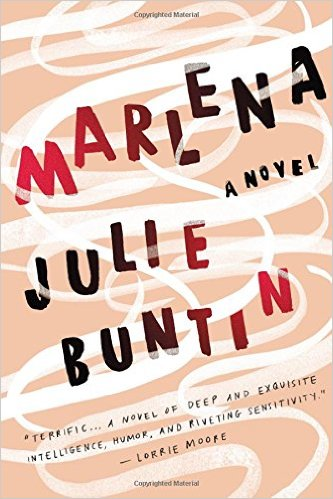
I should get this out of the way up front — for me, music is for singing, and for feeling. My taste trends sentimental. I like country more than I want to admit. Folk music is my drug of choice, anything nostalgic, women with hard-living voices, and yes, I love a good sad man with a guitar. I grew up in rural northern Michigan, incongruous land of both country music radio and months of endless snow. And so perhaps it’s not a surprise that my debut novel, Marlena, is set in this remote and beautiful place, and that the girl at the heart of the story harbors secret dreams of becoming a singer.
The book came out earlier this month, and in the last couple of weeks, I’ve been asked over and over again how autobiographical it is. I find this question annoying, but it’s not totally unjustified — the narrator of the book, Cat, is a woman slightly older than me, also from northern Michigan, looking back on an adolescent friendship that ended in tragedy and changed the course of her life. I have written nonfiction about losing a close friend from high school; it’s no secret that certain elements of the novel are influenced by real experiences. But the plot is fictional, the girls are characters, and the story is not my own.
Except for the music. That’s one hundred percent ode to the songs I loved as a teenager. I was in high school in the early 2000s, a few years before Cat and Marlena were — but like them, I preferred the older stuff, and was a bit of a snob when it came to Top 40 radio (except for the Dixie Chicks). And when I grew up and moved away from the midwest, as Cat does, to New York City, I found that my taste had mostly cemented, that the songs I played on repeat while waiting for the subway were the folk and country songs I thought I’d left behind like the parts of myself I didn’t much like. Turns out, those parts were just as stubborn as my taste in music. And that’s what those songs capture so well — the impossibility of ever outrunning yourself, no matter how far you go.
This is a soundtrack for city people from small towns — the leave and I’m never coming backers, the runaways. The list can be split into roughly two groups — there are the tracks that make you long for where you come from, that fill you with yearning, and the ones that remind you of the promise of the place that took you in. No explanation can evoke what I’m trying to get at as deeply and fully as Jackson C. Frank singing “Blues Run the Game,” or Gillian Welch singing pretty much anything. You just have to listen; you just have to feel it.
1. Joni Mitchell, “River”
Marlena, the title character of my novel, is a 17 year-old girl with perfect pitch and wide ranging taste in music — from folk to country, pop to punk to blues. But Joni Mitchell is Marlena’s favorite. Her voice, as I imagine it, is a cousin of Joni’s — a little more textured, but full of that same trembling strength, a similar ability to make high notes pierce and shimmer. In the opening pages of the book, Cat, the narrator, remembers Marlena singing “California,” one of the anthems of small town girls, no matter the decade. That aural memory will haunt Cat for the rest of her life. But when I thought about what I wanted my novel to be, how I wanted it to make readers feel, I thought of “River.” I wanted to write that song in novel form.
2. Neko Case, “I Wish I Was the Moon”
In the second half of Marlena, Cat records a video of Marlena singing this song. Both girls want to be famous, or feel famous already, in that bashful way that all teenagers sort of believe they are the true center of the universe. But Marlena really is talented. She’s got a musician’s ear — and like so many teenagers, a hubristic faith in her own instincts. Marlena’s rendition of this song — slowed down, a little angstier, inflected with a vocal crack and tear here and there for slightly misguided and melodramatic impact — is the embodiment of her aesthetic. If Marlena had lived, I imagine she might have tried to write her own version.
3. Gillian Welch, “Look at Miss Ohio”
Gillian Welch’s “The Revelator” is a sacred album to me, and this track my favorite. I don’t want to ruin it with words — just hit play.
4. Dixie Chicks, “Wide Open Spaces”
The Dixie Chicks are wonderful and many of their songs would work for this list. But it had to be this one, this wailing, emotional, even playful tribute to the desire to break free from your life, from the place that defines you, and strike out for somewhere new, somewhere you can write your own story. “I need wide open spaces / room to make a big mistake…” You can hear the teenage girls the Chicks were in every note.
5. Prince, “Purple Rain”
Another thing that all these songs have in common is they’re especially good for driving. When I was a teenager, my friends and I used to drive around the back roads singing this song at the top of our lungs. (Is anyone more fun to sing than Prince?) Prince is the patron saint of midwestern kids who dream of bigger, brighter lives — and we loved him like a god.
This goddamn beautiful song. Jackson C. Frank released a single folk album — it’s called, simply, Jackson C. Frank, and it contains ten plaintive and moving and perfect tracks. After the record was released, Jackson’s life took a downhill turn — he was mentally ill, diagnosed with schizophrenia and depression, and died in 1999 after years of living in poverty, often homeless. There’s something about his story — all that promise, the single influential and striking album, the bright future canceled out by forces he couldn’t control — I always think I can hear what happened to him in these songs, the texture of his voice, the yearning and heartbreak in every note, but maybe that’s just because I know how his life ended. I thought of him a lot while I was writing Marlena, in its own way about a real talent snuffed out too soon, and must have listened to this album a thousand times.
7. Fire & Rain, James Taylor
I considered an alternate version of this playlist that was just the album “Sweet Baby James.” If you’re from a small town anywhere in the midwest and you can hear a James Taylor song without being overtaken by a knee-weakening sense memory, I would be very very surprised. When James sings, “But I always thought that I’d see you again,” I don’t think of a person, I think of being sixteen and taking a running jump off a pontoon boat into Walloon Lake, or how it felt to lie in the grass in my backyard with my best friend, how I took the starry sky for granted. I had no idea that I’d grow up to live in a place where being able to make out four stars in the sky at night would be a rare occurrence.
8. Journey, Don’t Stop Believin’
The ideal condition for listening to this song is in a car going over the New Jersey Turnpike at night, while Manhattan comes glitteringly into view, the volume turned up so loud it hurts a little and the windows all the way down, in hour fifteen of a drive that started in northern Michigan and wound through Canada, your throat sore from at least two packs of Camel Lights. Honestly, if you can’t replicate that exact circumstance, there’s no reason to put this one on — it’s corny as hell, and listening to it casually (if it appears your playlist, say, while getting ready for a dinner party) will just fill with you vague embarrassment. But if you can set it up just right — the car, the night, finding yourself in a great city after a long, long drive from nowhere — every chord will make you feel like anything is possible.
9. Peter, Paul & Mary, 500 Miles
This is a drinking alone song. This is a sitting on the fire escape of your crappy Brooklyn sublet with a bottle of two buck chuck and seventeen dollars to your name, can’t even afford cigarettes kind of song. A what have I done song, an I want to go home song, a song for that exquisite brand of sadness that’s closer to joy than heartbreak — because yes you’re lonely, yes you’re broke, but you got out, and isn’t that exactly what you always wanted?
10. Alabama Shakes, Heartbreaker
The Alabama Shakes are a blues rock band that scratches my country music itch while managing to be totally appropriate — even cool — to listen to as an urban twenty-something. Also, they are incredible, and Brittany Howard’s voice is the stuff of legend.
11. Alicia Keys, Empire State of Mind
I know, I know, everyone on earth is sick of this song — there was that summer after it first came out when you couldn’t go into a bodega in any of the five boroughs without hearing it on blast. But tell me it doesn’t perfectly capture the mystique and allure of the city. Even though I’d lived here for nearly ten years by the time it was released, hearing it at just the right moment still gives me shivers. Sometimes, if I’m splurging on a cab home and we’re going over the Brooklyn Bridge I put in my earphones and play this song and look out at the whole gorgeous mess of New York City and think yes, this is the place that saved me.
Julie Buntin is the author of the new novel, Marlena. Her work has appeared in the Atlantic, Cosmopolitan, O, The Oprah Magazine, Slate, Electric Literature, and One Teen Story, among other publications. She teaches fiction writing at Marymount Manhattan College, and is the director of writing programs at Catapult. She lives in Brooklyn, New York.
We had it together but we also had it when we were apart. We got it in that comedor in Oaxaca, we both agreed. Or maybe it was that little town, just a few palapas actually and a beach with a deceptive number of black dogs, called San Angelino. But it’s also quite possible that we had gotten it on the subway. Don’t forget about a head of lettuce! our naturopath said. They caravan those heads in from anywhere imaginable. And water these days — it’s no good washing with it.
We made a list of what was now okay and what wasn’t. Sugar, yeast, all the essentials — out. Enter: lines and lines of herbaceous esophagus-jamming pills we swallowed noon dinner and night.
“It’s not so bad,” you said. “We weren’t into that kind of junk anyway.”
But who could tell? What we were and weren’t into? For instance, Bloody Marys at Giondo’s, what about that? And occupation politics — was it possible our parasite was affecting those too? Before, we’d been heavily committed: gotten arrested even, clubbed by the militia-era NYPD.
“Let’s take it back to where it came from,” you said. “Niagara Falls or the Jurassic period or what about that town you like, Boring, Oregon? It really feels like it came from there.”
What we shared had sticktuitiveness. You had to give it that.
When we looked it up online the definition said: “one who eats at the table of another,” which seemed kind of cordial, so 1950s, like a neighbor plus misshapen apple pie dropping by.
But who had neighbors like that?
Ours were more like that guy we knew, Raif, who on his way home sloppily inserted himself into our kitchen, slogging through our sole bottle of scotch, probably shoveling coke up off the back of our toilet seat without offering any, probably crying even — before wheeling away again into the splashes of light and dark, the leafy trees and trash that made up our block.
We had it together, this relative of giardia partying in our now shared intestinal tract, but we reminded ourselves — we could have picked this thing up anywhere. The lack of fault was comforting. Plus the parasite wasn’t all. In our Greenpoint yard hard pink asparagus-like weeds were erupting everywhere, pubing skyward with a level of tenacity I no longer recognized.
When I was young I knew that everything was sentient and I was capable of great harm. Moreover, I knew that things should not be separated — that pairs, no matter where you found them, should stay intact. Under everyday pressure, that feeling had gone underground. Now, looking out at our yard, a spray of turf between the parallel avenues of McGuinness and Manhattan, it swam up again.
The stalks seemed so invincible, thrusting through the heavy metals and constant turnover of Popov bottles that made up our soil. Should I inject them with syringefuls of recently outlawed weed killer, as RAT574, my new buddy in the underground chat rooms, urged? The kind that gives everything gooey eyes? I could do it at night beneath the pale gray dome of light pollution we lived under.
Or what if I let the stalks showboat, have their time in the sun? Nothing else was growing.
“Make a choice,” you sighed. “I don’t care.” You’d been saying that a lot lately.
Still I was locked in an intractable standoff. It distracted me no end. I often stood on the pitched steps, dolefully. Then I would descend into the dirt and snap off their waist-high heads, pinching the magenta frill between my finger and thumb. That barely slowed them. Even pulling at them did no good. It was Japanese knotweed, and, as you liked explaining, their roots flanged out at the base like butt-plugs.
Around that time I got fired from the Baltic, a ramshackle tavern on a drifty block of Avenue C, left smoldering from an older, more terrifying era. It was huge, draped in once-regal green felt, with smoke stains that stippled the floors and ceiling like Sherwood Forest fungus.
“Too bad about that Big Fuck Up,” said my boss, Terry, a pleathery fag in white Keds. He shook my hand in a friendly way.
I’d been there for years, dutifully slinging Yuenglings. But I didn’t have the heart to fight for my job. I knew he was trying to get rid of us, his loyal few, so he could bottom for the Pinnacle Corporation. In the last month their goons had come around nonstop, checking the place out while Terry twisted them a fortune of cold beer.
I faced the barroom for the last time. Ooooh I feel good I feel good I feel good, said Donna Summer. Gerald sat on his stool with his long braid dangling behind him, drinking E&J. I walked over to him.
“Well,” I said.
He grimaced. He’d been tall but now his body was cinched up.
“I hate to go home,” he said. Gerald was stuck in the eighties. His nightmares were endless hospitals. I wedged a twenty under his glass snifter.
“Not tonight, pal,” I said. I wanted him to keep getting good and drunk.
“Try to remember,” I said, arranging his lapel. “We’re safe now.”
I stood on the Bowery platform and waited for the late-night J train. My gut yowled. Our parasite was a new and mysterious development. It was gross, but it gave us something to talk about. I glared warily at the track. Did everyone want to jump in front of the subway as much as I did? Not necessarily to die, although that was, of course, likely. Help! I’d shout. Someone would come. Still, once the thought occurred, it felt impossible to resist. Persuading myself that everyone was gripped by the same mania — a mania so regular it was boring — made it less awful when I shrunk from the inevitable approaching train, scrunching my eyes against the finishing blow.
That night I sat for a long time in the dark of our kitchen, looking past the window’s reflection, out into the yard. Then I went to bed as usual. Our apartment was so narrow it seemed as if we together were Jonah, inhabiting the “inner whale.” You’d disagree, scoffing into your hand: as early as 1520, Rondelet knew it wasn’t a whale but a Great White Shark, you’d say — but for once, you were sleeping quietly. Your job at the new pot shop was wearing you out.
“Can anyone really live in a shark?” I thought drowsily.
Then the Casio was flashing 3:47 and a voice was peeping up from the blankets, urging me awake.
I sat alert, staring at the tapered gloom. Pressing my hand to the wall for balance, I tried not to wake you. But focusing on your warm skin, I found myself in a panic.
Earlier, we’d fought.
You’re so full of shit your eyes are brown, I heard myself saying, a perennial favorite of my father’s. I’d followed it with something ridiculous, light-headed, unhinged even. You hadn’t responded. Was this why I’d stayed up so long, staring out? There was a new edge to everything, wasn’t there?
“Gabriel?” I said.
“Let’s begin,” the voice insisted.
My bladder thickened. You continued to sleep, coma-like.
I wriggled around you, clicked on the sound machine standby, “Gurgling Brook,” and crept into the also sloping kitchen. The boards were old, shards of gone forests. The Famous Grouse was capless on the table where I’d left it.
“Leon,” the voice said.
I stood there dimly and searched for its origin. In plain view was a giant mason jar of kombucha plus dividing mother. A pair of gunk-smeared garden gloves. An ancient Vogue with Tilda Swinton on the swanny-white cover.
“It’s me!” the voice said.
The room smelled like snapped pine needles. In my chest, a river was bludgeoning heavy stones.
“Ms. Swinton?” I stammered.
Her alien parts and cinnamon hair, I’d always loved her, the queasy look she gave me!
But the voice came from somewhere closer, near my belly.
“You have a problem,” the voice said.
I digested this halfway.
“I do?”
I thought hard. I pointed, finally, to the garden.
But our parasite disagreed.
“Do you know anything AT ALL,” it said, “about the history of Mexican art?”
When I woke again, a belt of sun was cinching my eyes. Your bare torso moved around the kitchen, pouring maté water, stretching. Outside silent cars were starting up their phony, pre-recorded engines. “Safety first!” an automated voice announced.
I raised my head from my cardboard arms. I’d finished the night at the table with Tilda. Turning my cheek, I followed your movement. Your darker areolas met the fawn of your chest with the casual kismet of belonging. I suffered to join their easy glow.
“So that’s it, I’m gone, blitzed, finally cooked,” I said instead.
Your nostrils tightened.
“What happened.”
“Gay bars are out!” I snapped my fingers to my thumb. I wanted to be back in your good graces but I resented working for it.
“Terry called,” you said. “Did you really do something as substantially dumb as that?”
I sighed. My relationship to right and wrong had always been murky. I had a healthy, some said Catholic approach to guilt. But in recent years I’d begun to wonder if my guilt was so all-encompassing as to be irrelevant to any motive or consequence. The realization stranded me without a barometer. It was clear, I didn’t trust myself with much. But I was also sure I could do no wrong. I toed every line almost religiously but was given to taking wild risks without any forethought at all, then, overcome with denial, hiding them.
“Gabriel,” I said, “Giga,” throwing my arms toward your waist.
“I have to go,” you said. “Work.”
A new relationship was being drawn. You worked. I didn’t.
I drifted around the apartment drinking expensive single-source coffee and clicking back and forth between Manhunt and my newest discovery, YardHard. The homepage was full of popups about “green bums” and “top tips for hoeing,” but RAT574 seemed to know something.
Him: Man knotweed is Axis of Evil numero uno. You got to be tenacious. Know how to spell that?
Me: You just did.
Him: Ok first let those suckers get big and hard. Then when they’re dick thick ? ? ? you machete o the tops RAMBO-style.
Sun was banking off the window, showing all the grease on the thin glass.
Got me???
I twisted on my stool, staring at the yard’s newest growths.
Got you.
Him: Then you dump your kill juice down the stalk. Kill juice? It seemed extreme.
Me: Can “kill juice” be organic?
Him: No way! Its got2be poison!
Me: . . .
Him: Great band by the way.
When I tried to remember why we’d fought, a gelatinous feeling descended. I was growing increasingly more wired from the caffeine plus somehow I was starving. The combo made me pharmaceutically woozy. Had our parasite, a microorganism who was leeching my precious nutrients, all those hard-earned dollars spent on kale and handpicked cashews, actually talked to me last night? Given me a lecture on art? I mean, there was Rivera of course, and Kahlo to be sure. But that was baby stuff. It was true, I knew next to nothing about Mexican art!
I depended on you to teach me things. Your father was a writer from the outskirts of Mexico City. Your mother was an engineer from Ottawa. You were the New North American: impervious — perfectly sealed off. That was why one night during our recent trip to Mexico, when we were refueling in central D.F., I wanted to go out alone. You were so chulo, so natural in the wide avenidas and plazas that nobody spoke to me and I was anxious to try out my Spanish.
“You stay here,” I begged. We had taken over your friend’s newly emptied Condesa apartment. “Go talk to your abuela or something.”
Your father was her baby, which made you in every way preferential.
“On the telephone?” you said, rolling your eyes. “It’s a big city, maricón.”
“I don’t know, eat flan then.”
I was suddenly desperate to be alone.
“Grow up,” you said. But instead of shoveling into your jacket you watched me go.
At noon it was time to take a Paradex from the naturopath. I grimaced and unscrewed the cap. Then I walked out into the yard. The season was changing. It would be light for hours and hours and hours. Pink shoots raved in the breeze, their heads glistening. They were much taller, already, since yesterday.
My feelings about objects had always been orphic — they penetrated my deepest levels. It was painful to be alive, I knew. Worse, I was somehow responsible. Undisturbed — walls, chairs, rocks, et cetera could fend for themselves. But my presence troubled the atmosphere. If, while walking, I kicked a rock but not the rock next to it, I created an imbalance, pointed at a wound. It then followed, it was the rule, that I turn around and similarly move the other rock. But what if I touched that second rock (it was bigger and so my toe needed more force to push it) longer than the first? Things were now severely out of whack.
“Sorry,” I’d whisper, retracting my foot at hyper-speed.
Small crises like these followed me everywhere I went. Throwing out a dirty chopstick if its mate was clean made me pause at the trash can like an awful, disloyal god. Other times, lone discarded shoes or cracked bathroom tiles leered out to me. Don’t notice them! I’d mutter. But their suffering was insistent.
Now my stomach gurgled but gave no further orders. Above me, a flight of molting pigeons swooped low. I juggled the pill anxiously. It was sweaty in my wintersoft palm. As if on auto-pilot, thinking about nothing, I used my thumb against the soil to dig a small indent. Then I plopped the dark gel cap in.
That night the clock dragged. You were late. I went to bed and kicked around. Our mattress felt like it was filled with overturned traffic cones. For half an hour, I read about Rufino Tamayo. What, I began to wonder, did our parasite think of his 1978 work La Gran Galaxia? In it the figure, who wore something like a jailbird’s smock, was staring over a bowl of sea. As if a mirage, the inner pink organelle of his body was reflected out, shimmering over the blue expanse, while above the horizon line, a luminous geometry of constellations flexed.
The figure appeared to be yawning.
In quick succession, I sent you some texts.
One said: Our parasite’s kicking, is yours?
No response. I continued.
I think I’m having contractions.
Silence. I switched tacks.
What’s eating you? ?
Tired of looking at an empty screen and the arrow that said slide to unlock, I turned off my phone.
I dreamed but my sleep was disturbed, watery. In it, I repeated a scene from my childhood. I had grown up near islands — rocky, fir-smothered pods on the north-northwest coast. As a kid I often accompanied my father in his boat.
One morning he woke me up early.
“There’s been a wreck,” he said.
We went down to Fidalgo Marina. Behind us, the sun simmered up over the Cascade range. The consensus among the boat owners was: Drunk Indians. There was a reef between the Lummi-owned Gooseberry Point and a local casino. During the night, a small Bayliner had hit it going full speed.
The men refilled their Styrofoam cups of coffee. Someone handed me one, topped to the brim. Drunk Indians. A no-brainer, everyone agreed. I was ten or eleven, newly effeminate. I liked to wear a solo rubber band in the back bud of my hair. I felt a chill and clutched my cup.
As the day went on, more news came in. There’d been six passengers, all still alive, but some were in pretty bad shape at Harborview and other trauma hospitals nearby. They’d been ejected forward from the boat, thrown like sacks onto the sharp rocks.
Toward evening my father let go of his usual German clamped lip. There weren’t any deliveries to make. He could be wily, even impish at times. He closed the engine compartment where he’d been slowly tinkering at the fuel lines.
“Let’s go,” he said.
We untied and cut out across the strait. I struggled to nice up the buoys. I loved helping my father and did it with a silent pride. But I was brimming with the idea of the wreck. Violent pictures filled my mind. I found myself searching the waves for a sign of tragedy. In all directions, there was nothing. The after- noon was calm and hot.
Then the small tan boat tilted into sight. It lay halfway across the reef, which was, at low tide, a dwarf island.
My father cut the engine and brought in our bow.
“Go on,” he said. “See what’s in it.”
I jumped onto the wreckage with a thud. Suddenly alone. I snooped as best I could. The category “Drunk Indians” dominated. I expected its presence to look fundamentally different from what my father and his brother did together with pails of Coors most nights. Fuck you, I muttered. Fuck you, fuck you. But here was no mess, no beer cans or incriminating plastic jug of booze. Just a small suitcase on the ripped-up fiberglass floor and the bracing zing of being this far away from land.
“Open it,” my father pressed, his voice still close to me.
I hesitated. Drugs, I thought. Big plastic bags of coke powder like I’d seen on TV. My imagination was limited. Money, Uzis.
We were trespassing but my father had his own law.
Queasy, I unzipped the stiff fabric and looked down. A stack of clean washcloths crouched in the web of the opening, starched and tightly folded. I poked them. Towels, shirts. The bag was immaculately packed with someone’s laundry, as if the person who owned it was going on a trip.
“Leon!” my father shouted.
The tide had flipped and the current was ripping sideways. Our bow dragged closer to the reef. We were a team; now he needed me. Dutifully, I hurdled aboard.
“What was it?” he said, as he slammed us into reverse. Freezing green water foamed over the transom.
“Nothing,” I reported, facing ahead.
But that night I was stricken.
I’m sorry, I said again and again to my lowering bedroom ceiling. I’d done doubly wrong. I’d pro ted from someone else’s bad time. But worse, what really concerned me, was that I’d left the bag abandoned with all that dark water surrounding it — the cloth open, its contents exposed.
I tried to tell you this once but you just shook your head.
“Your dad is nuts.”
Now it was almost midnight and very hot. I thought about the small graveyard, a day’s worth of pills, out in the yard. I fuddled with my phone’s screen. A picture of your face flashed up when I touched your name. Your hair was short and your jaw was feral.
I paused.
Is this about Mexico? I jabbed down onto the screen.
In the D.F., having left you, I walked toward the park that I remembered marking the center of Condesa. Earlier in the day kids had been playing soccer on the concrete monument. Next to the fountain stood a series of columns whose plinths were covered in vines that evoked a jungly snarl without actually being unkempt. Together we’d sipped cans of Bohemia in the sun.
The entire trip, you’d been trying to show me something — at least, I thought you had. In front of me Parque México was blue and empty. I pulled another can of beer out from under my sweatshirt and sat with my back to a column’s shaft. I wanted to go to Tropezedo — a club I’d read about in El Mercurio. Along the path that led out of the park, sodium lamps flashed on, popping and fuzzing into cold arcs. A figure moved between them with his head down. He seemed to be walking toward me, but without actually getting much closer or larger.
Watching him, I was furiously sad. We need separate, differentiated points, I realized, to understand the concept of space. The figure was of course you and the gap between us was only growing. No matter how hard you walked, you couldn’t get to me. In between the lights, the shadows completely overtook you.
My palm was damp, wrapped around the can. I looked down, adjusting my grip. But when I raised my head again, the figure was suddenly directly in front of me. He wore Levis and black high-tops and his hair was long. How could I have thought he was you?
He paused, shifting from foot to foot. His breath was heavy from the effort.
“You want something?” he said in English.
“These are Megaspores,” he grinned, uncapping his palm.
His fingers were smooth and his hands were big. Steam drifted from his body.
“No,” I laughed, embarrassed.
Untroubled, he repeated himself and smiled again. “These are Megaspores.”
He crouched over me and slipped his hand into mine so now I was holding the mushrooms too. We stayed like that under the monument, touching.
Now I was pacing, far from sleep. I pushed into my jeans and a windbreaker; it was humid out and it seemed like it might rain. I descended into the subway. There was a stilled train that felt like a mirage of the train I needed to catch. Lucky. I loped on. Inside, the G was bright and yellow. It dragged through its dark funicular caverns and at Lorimer, the L platform was for once empty.
It’s Friday night, I realized. I considered my options. The problem was, Terry was missing a case of top shelf. He thought I’d fenced it, used it at the BALLZDEEP party I occasionally threw. The accusation was lazy — easy to ignore. But the more I thought about the case I didn’t steal, the more I realized how easy it would be to take.
To my left, the tunnel gaped sourly, waiting to spit out the next train.
“Don’t you get it,” I’d said to Gerald. We were adrift in the horizonless midpoint of a happy hour east of A.
“Between what I might do and what I did do — there’s no difference at all!”
He stared at his brandy hand, planted thickly around his perpetual snifter.
“Have you ever eaten crêpes Suzette?” he said.
I knew by now that he’d cooked for Samuel, stubbornly brought him dishes at St. Vincent’s even when Samuel was intubated, practically gone.
I spilled out for another round. “Yeah, yeah.”
But he described the crêpes to me again in careful detail, so careful that even half-listening, I was sure I could smell them and taste them — the liqueury tangerine syrup, the brown crispness around the broken bubbles where the batter met the scorching, heavily buttered pan.
This train was taking forever.
“Yo,” interrupted a voice I recognized, sounding less like an art professor and more like an East Village court rat.
“Yo, B-boy. You sure about this Tamayo cat?”
I grabbed my gut. Was I sure about Tamayo? I mean, of course I should dig deeper, I had only just started to research.
“Shh!” I hissed into my windbreaker pouch.
But he was onstage now, looking for an audience.
My cheeks baked. It was my fault, I reasoned. Only I had stopped taking the pills — you were racing toward health. The more I thought about it the more it irked me. What was your rush? Let’s convalesce together, baby, I wanted to shout. Yoga retreats, long raw food dinners — once we had planned to go to meditation on Tuesday nights.
I should get my own life!
I stared at the subway map of Manhattan. It had always looked like the pro le of a big west-facing cock. Now a single beam glared out from the tunnel. I watched as it grew bigger and bigger to the point of engulfing me — then suddenly sliced into two.
I emerged through the mechanized subway door at First Avenue limp-legged. Under my windbreaker, my T-shirt was sweat-logged and I wrung the left corner of it until my fingers made prints in the cotton. The rest of me was wiry but no matter how many pull-ups I did my chest was soft. The wet fabric pooled there expectantly.
I slid through the turnstile cage with my head down. The message I’d sent you drifted in space without defense. I jammed my phone from my pocket, waiting for the signal to show.
It had rained while I’d been underground, and a tuberous smell came up from the pavement. I wiped my face, finally street-level. In this early-summer heat and quickly hosed sky, thousands of safety bulbs speckled the half-built condos: mutant-sized fireflies.
I no longer felt capable of being out. Shapes walked around in the dark with their shoulders bunched. I checked my phone again: blank. Mindlessly I logged onto YardHard as I moved. Rat574 ballooned up — he was perpetually “in the garden.”
Me: nice night.
Him: want to score?
I’d followed Megaspores toward what I guessed was Avenida Michoacán, trailing at a distance. Lebanese cypress lined the path, shooting upward, roughly rimmed by giant palm fronds. He walked briskly. I’d entered an alternate universe and was meeting an unknown version of myself who could have easily starred in Cruising.
Branches stretched over us like arms. Stuffed in my pocket, my left hand prickled where he’d held me. He walked faster, taking a staircase two at a time toward the corner of the park. His hips were narrow. Exposed, they’d be sharp. Yours are like that too and when you let me, I grabbed them as if you were a view scope and I was trying to stare inside. I imagined you back at the apartment moving around with purpose, turning the pages of a book or licking a joint.
At the top of the stairs, there was a small plaza. Megaspores stopped. We stood there, again very near. His long hair was oiled, glimmering in the light. Around us the atmosphere of the city buzzed and blared. I tipped the rest of my beer down my throat.
“Duck pond,” he said, pointing to our left. Helpless, my eyes followed. Where the concrete broke off, there was a low patch of water and, I supposed, a fountain. Then he grinned again and under the sodium lamp I could see the ’shroom caps hiding between his gums and teeth — he’d been chewing and chewing as we walked.
“Duck pond,” I repeated lamely.
Then I was mashing my lips against his open mouth, running my tongue everywhere. Duck pond, I thought again. His saliva was casting a kind of spell. Now my mouth was full of wet brown caps. Duck pond, my brain insisted. The substance was leathery, crumbly, and underneath, fecal, soft.
I shoved him against the cement base of the lamppost. He was my same height exactly. I felt his hips warm and springy on mine. But this had nothing to do with him! I was only finishing an act of balancing that he’d started when we asymmetrically touched. Meanwhile my cheeks had begun to fizz. I felt full of goop and light. I saw you at the balcony window waving. You and I hated each other sometimes but together we’d be fine.
“Tentigo.” Megaspores pointed, laughing.
I shrugged o my hard-on. So what? But I was becoming confused about which parts of me had touched him and which hadn’t. That morning in the shower you’d bent down wide for me to fuck you but I couldn’t relax and you’d turned off the water with your hair full of soap.
Now my upper lip was coated in sweat but when I ran my tongue along it the hairs were sour. He moved farther away. My brain was whirring. He must know Tropezedo, I thought. Light pooled around him in bright beams. My nipples pulsed where his chest had been. The distance was suddenly constant: unbearable. I closed the space with my arms but as if disconnected from my brain my hands crashed into his denim-covered ribs and crotch and then whacked at his chest.
“I’m hitting you,” I heard my voice saying.
I sounded hysterical.
“ESTOY fucking PERFORADO.”
He sidestepped me easily, dropping to the ground in a kind of squat thrust. Then he put his face down into the weeds. Beyond my panting I heard cars and sirens parading the boulevards. Blandly, as if he were at the clinic about to get a booster shot, he inched his jeans over his chonie-less ass.
“I’m Carlos,” he said, turning his misty head to me.
I passed through the Friday night party tents and teepees of the East Village in a hurry. This season everyone was tall and leafy. A girl with flaming hair smoked under the spastic yellow of Gray’s Papaya. Tilda again. She was like you. Safe from pain — emotionally no holes at all.
At the corner of C and Tenth, I bent over. All those pills in the dirt, now my bowels were involved. The leftover vegetarian gumbo I’d geniusly eaten for dinner slushed back and forth. I concentrated on squeezing my ass closed. Any port in a storm, I thought, whimpering my body through the fudge-colored door of the Baltic.
I stared around the familiar scape. Behind the long run of oak laminate, the cracked stools, the bartender’s skin emitted a neon sparkle. The new guy was just Terry’s type, as twinky as they come.
“Hey,” I said.
“Uh-huh.”
He swished his towel over a chalky spot I’d scrubbed a thousand times before.
“I need the staff bathroom,” I said. “I work for Terry. I run, you know . . .”
Wincing, I paused, giving him the chance to make something up.
“Uh-huh.”
“Give me the keys.” I stretched out my palm. “Right?”
“I should call Terry.”
Casually I rejoined a stray straw to its holder.
“You could,” I said. “In this shitty economy where no one trusts anyone, it’s one of those things you could do.”
I was yelling, the Baltic had become ear-splitting. Out near the dance floor and the wall gallery of second-rate reindeer heads, a karaoke machine blared. Someone was murdering Meatloaf. A guy with a bristly beard stood up on a chair and waved his arms. I would do anything for love! he shouted.
The bartender shrugged. His eyebrows said: I’m hot?
Fields of Japanese knotweed plowed through my brain. I caught myself in the long barroom mirror. My eyes looked like meatballs. I thought suddenly of RAT574. What a guy, he really cared . . . thick-chested, chest hair glistening, a warrior with Teutonic strength blasting our personal scourge from the face of Brooklyn eternal.
Would it really be so bad to have a clean yard? I saw us sitting there in it, drinking icy things. Weeds are like hair on the body of the earth, I said to myself. Not personal.
My pocket buzzed. I took a deep breath. One message. Slide, yes.
The text bubble popped. I squinted down.
Mexico??? you said.
I took the master key ring and made o into the annals of the bar with my heart wacking. Past the urinals, the pool table, the broken-off pay phone and its Sharpie forest. I had no idea what I was doing, only that Terry owed me my last check. I stood in the small liquor-barricaded office. Hundred-dollar scotches stared me down.
I wanted to know. Had you taken Terry’s side? When it came down to it? Or did you believe me?
It was dawn when I got to the Condesa apartment and the fruit vendors were unlocking their carts. I slid under the crisp sheet.
“How was Tropezedo?” you said, petting my abdomen. “Same old pinochas?”
I nodded.
But Tropezedo had been black and shiny, practically Scandinavian, packed with Carlos’s friends and bowls of metallic condoms sitting everywhere like grapes. Then there was Cockspot and a series of other bars with similar names. Over the course of the night my body had become big and dim and I floated in it like a visitor.
The next morning, we left for Oaxaca on a small seven-seater plane. I sat next to the pilot, a gaucho in polished aviators. As we skidded over the dark green hilltops, my hands crept under the backs of my heat-pancaked thighs. My head was in a tequila-made vise. With the copilot’s controls in front of me, I was sure I was about to wrench the plane down into the jungle floor.
Later, at the airport cafeteria, you were ebullient.
“Did you see it?”
My face was gray. “Giga,” I confessed, staring at your beautifully remote nail beds.
You grabbed my shoulders as if I was made of rocks.
“Earth to Leon,” you said, cradling my head, laughing. “We landed, we’re safe.”
A sick feeling spooled inside me. My vision turned to pixels and points. Our parasite rammed my sphincter. And my sphincter was just a weak wall! I could crawl to the bathroom but for what? For once I was exactly where I needed to be. Sweating, I unbuckled my belt and crouched down. Hanging my ass back past my heels, I squatted wider, my ankles pitching forward. This would disgust you. “Raunch factor ten,” you’d say. But what about Herrera, Bustamante, and No Grupo? Our parasite and I — we were careening toward a more conceptual kind of art.
I palmed the cash shelf for balance, breathing with yogic purity. The carpet smelled of large cat. Forget about order. I opened and a sheet of water and rice poured out, then I was sure I felt something tug free from my stomach lining and whoop down the chute. I stared between my legs — I felt suddenly better than I had in months. Out out! I chanted. In this zen state I could finally give as much as I wanted and more would come gushing down to fill the void always.
My phone rang.
I wiped with a discarded bar rag and quickly stood up.
“Hello?” RAT574 said. He sounded different than I’d expected, breathless and old, like he’d been sitting for too long with something in his hand.
I eased the office door closed and gave it a quick twist. The Baltic was blurry, more crowded. “Leon!” Gerald called from his appointed stool, but I barely recognized him. I threw the keys in the direction of the bar and ducked out into the cooling night, shoving the curtain out of my way.
At Fourteenth Street, a wad of guys with gym hats padded past plus all the regular queens but this time they must have been joking, their makeup caked thick and droopy.
I dropped down into the First Avenue subway.
Drunks plastered the lavender seats. A Poetry in Motion poem attacked my eyes, then an ad for Botox. Halfway through the tunnel I slammed a cartoon hand onto my forehead: you were in Chinatown at your brother’s, a plan you’d made weeks ago, probably under a roll-neck of Xbox and bong smoke.
It didn’t matter, I told myself. In Terry’s office I’d remembered my only rule. This rule trumped all others, which perfectly explained the crumpled shape of my life. As a kid I had another habit. Whenever something was too ruined, too bereft, or sick — say a saucer with no matching cup, a napkin mostly unused but with a splotchy stain, a baby mole tugged half-dead by a dog — I crushed it. More than anything I couldn’t stand to see suffering.
“Giga,” I said into your voice mail, as I stood on our corner of McGuinness and Nassau, waiting for who knows what.
I took a breath.
Then I confessed all kinds of things into the at receiver — disgusting attachments, lies blotting back as far as I could see, betrayal upon teetering betrayal — anything and everything that ran into my mind.
Check Out the First Teaser Footage of the Stephen King Adaptation
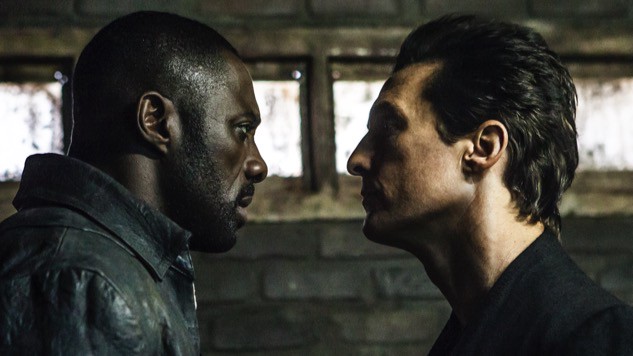
We have a first glimpse of the hotly anticipated adaptation of Stephen King’s Dark Tower series, thanks to the stars Idris Elba and Matthew McConaughey.
The first teaser features McConaughey’s Man in Black — the story’s villain — traversing a field filled with dead corpses. In the second, Elba, who stars as hero Roland Deschain (The Gunslinger) loads his revolver. Check out both videos, and some banter from the actors, below.
No list of five books could give a sense of the vibrancy and diversity of gay male writing today. Each of the books below stands in for ten or a dozen others.
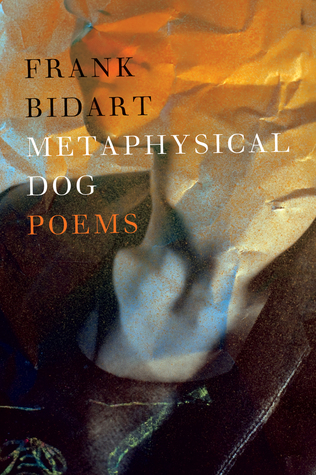
Metaphysical Dog by Frank Bidart
Later this year, FSG will publish Half-Light: Collected Poems, gathering more than fifty years of poems by Frank Bidart. Desire, especially disastrous desire, has always been Bidart’s central subject. His recent work, like that collected in Metaphysical Dog, has seen him expand his already impressive range, adding to his extraordinary candor and fearlessness both lyricism and a new political urgency. He is an essential writer.
Proxies by Brian Blanchfield
A remarkable group of writers — Hilton Als, Olivia Laing, Maggie Nelson, and Melissa Febos, among others — are together creating something we might think of as the new queer essay, extending the tradition of Montaigne, Barthes, and Guy Davenport in writing that combines philosophy, confession, and criticism. Brian Blanchfield’s Proxies is a marvel, a kind of fractured autobiography in which the most seemingly haphazard subjects — tumbleweeds, Man Roulette, frottage — open into territories of intellectual and emotional risk. It’s among the most brilliant books I’ve read in years.
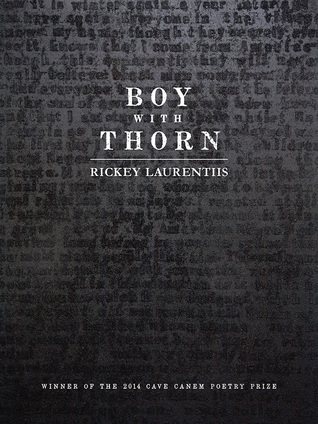
Boy with Thorn by Rickey Laurentiis
Much of the most exciting writing being done in America today is coming from young queer poets of color, among them Eduardo Corral, Ocean Vuong, Saeed Jones, Danez Smith, Derrick Austin, and Sjohnna McCray. Rickey Laurentiis’s poems are disarmingly gorgeous and armed to the teeth — with intellect, verve, insight.
My Cat Yugoslavia by Pajtim Statovci
Statovci’s surreal, compelling debut novel has just been published in the US, translated from the Finnish by David Hackston. It centers on Bekim, who was born (like Statovci) in Kosovo and immigrated as a child to Finland. A novel of dislocation and the search for connection, it explores a range of relationships — from internet hookups to Balkan weddings — seeking through an invigorating mixture of realism and fantasy to get at something new about identity in a fractured and ever more mobile world.
Infidels by Abdellah Taïa, Infidels
Taïa’s dream-like, urgent novel (translated from the French by Alison Strayer) centers on Jallal, the gay son of a prostitute, following his life from Morocco to Belgium and exploring stigma, immigration and extremism. Along with books like Saleem Haddad’s Guapa and Hasan Namir’s God in Pink, Taïa’s work — Infidels is his eighth novel — offers a crucial portrait of queer lives in the Muslim world.
— See Garth Greenwell live in conversation with Ali Asgar, Edouard Louis, and Tobin Low at the PEN World Voices Festival — on Wednesday, May 3rd.
Maman died tomorrow. Or today maybe, I don’t know. Today is Sunday where I am in New York but tomorrow where she was, Iran.
My father calls me on Sunday to tell me he wants me to write something. He says it to me like he doesn’t even have the words to tell me my mother died but says it like all he can say is for me to repeat after him, My mother died today.
I don’t know what to say, so I ask him what he wants me to write.
Then time stands still, no, not time. It’s me that is standing still, but for a second there we are the same after not being on the phone for some time, my father and me. We’re standing there on either end of the line and between us is some memory of Maman.
Maman. Mother in Farsi, informally. Maman. It sounds more motherly than mother, Maman.
The word Maman written again and again when I was a child trying to learn Farsi and there was still the matter of trying or not trying enough.
My earliest memory of Maman might be one of my earliest memories too. The word Maman written again and again when I was a child trying to learn Farsi and there was still the matter of trying or not trying enough. Maybe if I had tried harder I would have learned Farsi, but most of the words I still remember now in Farsi seem to stem from some French like Maman and merci. Stranger still is that most of them seem to begin with an M like morte. Maybe not all the words, but there are worse first words to remember in a second language than Maman.
Maman naan daad.
How many times had I written the same words, Maman and naan and daad. I don’t remember any other lines I read at first and wrote as a child and repeated more than Maman naan daad.
Maman naan daad means Mother gave bread.
The way it is though, translated word for word, where each word is, Mother bread gave.
There are however many languages there are unlike English that will have sentence structures composed with their verbs at the end, subject and object right up against each other in the interim — the subject-object-verb counterpart to the English subject-verb-object — German being one language that comes to mind, but Farsi also all subject-object-verb like Maman naan daad.
My mother, my father starts to say in Farsi on the other end of the line. Mamanam morte.
Maman Mother
am my
morte died.
My father doesn’t have the words to tell me my mother died because he isn’t trying to tell me my mother died but his mother has died.
My father doesn’t have the words to tell me my mother died because he isn’t trying to tell me my mother died but his mother has died.
Maman naan daad I remember now isn’t the line from my childhood but Baba naan daad.
Baba, or Father, gave bread in a Lord’s prayer sense of give us this day our daily bread. I must have misremembered it as Maman naan daad because it sounds better in my head, but either way my mother will call me tomorrow to tell me my father’s mother died, Mamanesh morte.
Maman Mother
esh his
morte died.
His mother died this morning, my mother says again in English but it isn’t the same as Mother his died. What a difference there is between his and has, the same difference between I and a.
I have nothing to say but something like we all die from mourning in the end, so say nothing.
Maman tomorrow died.
2.
Maman died today. Or, not my Maman, and not today if in Iran, but I still haven’t told anyone.
I did drink a lot last night. I like drinking at bars a lot because I can tell the same story a lot of times, a lot of times to the same person, but they won’t remember it or even if they do they won’t remember it the same.
My father is a lot older than me, I said.
Isn’t everyone’s father older than them.
Yeah but he’s a lot older, I told them. My father could be my grandfather.
Then they tell me about theirs or they don’t and we think our way through the rest of our drinks.
I wake up in the morning and count my teeth and ears to make sure everything is still there or more or less where it was before. I have heard more than once how the ears are supposed to keep growing even after one’s hair and teeth have fallen out, so I run my hands through my hair and I see the fallen-out hair between my fingers as I stare at my hands. I think I’ll take a shower to see what my hands will look like when I am old, but I still bring two bottles of beer with me into the shower, one to drink and the other to drink and to piss inside because the water doesn’t drain fast enough for how long I’ll be in here.
I bring two bottles of beer with me into the shower, one to drink and the other to drink and to piss inside because the water doesn’t drain fast enough for how long I’ll be in here.
I open up the beer and back into the shower and the warm water outside me and the cold beer inside me feels good. I drink most of the beer with the water up against my back before I start to worry how long I’ve been in here. I try not to look at my hands, but they hurt.
The water at the bottom of the tub is up over my feet and I step in and out of it and it makes a different sound than the water hitting it from the shower head when I turn around to set the beer down on the shelf between shampoo bottles. I don’t piss in the shower now because I don’t like to stand in myself.
I don’t throw up as much as I used to, but I don’t drink as much as I used to, which isn’t saying much to how much we all want to keep our insides inside. I’ve thrown up a lot in my life because I’ve drank too much in my life, but what worries me more is pissing or shitting myself. Pissing or shitting oneself is something most someones my age must not find too worrisome, but maybe my grandmother must have before she died.
My grandmother died before she ever met me. I don’t remember much of last night, but I have yet to tell anyone, though it’s odd to think my body can be somewhere without me for some time, but what would I tell them if I told them. I’ll say, I’ll never know someone I never knew.
Who.
I don’t even remember her name, I’ll tell them and drink and I’ll try not to think how mourning is louder than dying.
I don’t even remember her name, I’ll tell them and drink and I’ll try not to think how mourning is louder than dying. The nonmemory stays with me though because forgetting is still something. Forgetting is all we had.
Maybe I would have felt something if I knew her name or if it had been my mother, but I only finish the beer and open another bottle to drink from one while I piss into the other one. It feels good to feel something within me and without me.
3.
Maman died yesterday and is behind me now and no longer ahead in time because she is dead. It is still tomorrow where she was, but she isn’t.
The ambulance is red and white and loud passing by the bar and it’s been passing by for some time now, but sirens are supposed to pass by and sound higher pitched when they do, but when I turn to look I see the siren is still going even with the ambulance standing still. It is standing still long enough that I remember sometimes I forget there is someone in there. Some of the others in the bar cover their ears with their hands and they stare at the ambulance because being deaf must not hurt as much as seeing the lights.
The word ambulance sounds like ambulance in French like in Farsi even if it isn’t pronounced the same, but sirens don’t always sound the same.
Life and death, I say to their deaf ears. Life and deaf. Death after all the dying is quiet, isn’t it.
Once I tell someone she is dead, I tell everyone because all I can do after I tell someone is tell everyone else. Maybe I tell them only to hear what they say, because when someone else is dead you can always say how sorry you are to have heard.
Once I tell someone she is dead, I tell everyone because all I can do after I tell someone is tell everyone else.
I say it because it is something to say, but my father wanted me to write something for him in English to say something about her passing, so he had something to say.
My father hadn’t seen her for forty years and he was in his forties when my mother had me, so I’m at the same age he was when he last saw his mother. I try to remember what my mother looks like, but a photograph my father sends me of his mother comes to mind instead and I see how she looks like him, or he looks like her rather, but everyone starts looking the same nearer to the end. Maybe soon I’ll stop looking like my mother and my mother will start to look like me.
My mother and father married and left Iran around the time of the Iranian Revolution and left for Germany where my brother was born then Los Angeles where I was born and when we were children and they would argue they argued in German because we both sort of understood Farsi, so it just sounded like sounds, though I’ve heard English is made up of French and German, but I still don’t know it as anything more than sounds, sounds that sound like words sound.
Non-experience is an experience though. I still don’t remember her name but namelessness is something else. We have so many names and still some of us have the same names, what matter is her name and if she isn’t my Maman. Maman is still Maman whether or not it is Maman.
Someone tells me I look like someone else, so we drink a round or two together.
It’s better than looking like something else, I say.
We see everything through similes to the point that we see through the similes, to the point that we explain everything in our lives through something else in our lives or someone else’s life. It’s just like something it isn’t.
Maybe there is some verb, some word in some subject-object-verb language, that will come at the end to make some sense of this mess.
Maybe there is some verb, some word in some subject-object-verb language, that will come at the end to make some sense of this mess, but for now there are words that only sound like sounds to me, but are they words if they’re just sounds, if there are words like Maman and naan and daad I will never remember and will never have tried or not tried enough in childhood to have remembered.
I walk home wondering how I am thirsty and have to piss at the same time.
My memory is only as good as my writing because there is a give and a get, for we don’t have to remember when we have something else to remember for us. All we do is forget to remember, because something has to be a memory to be remembered.
We don’t have to remember when all we have to do is remember to remember.
4.
Knausgaard says something and I have trouble hearing him over the laughter. I won’t remember what he said, but I do remember he is larger than life in front of his hundreds of fans here in this bookstore in Brooklyn, all the ones here to see him for his My Struggle: Book Four. He is larger than life simply because he is alive.
For some, life is enough to be alive. You live and then you live and then you die and then you lived, but Knausgaard is our self-obsession with ourselves and with a self. We overlay ourselves on the lives of others because it is after all, before all, an age of self. Knausgaard is you and me. You as subject and me as object and the verb, of course, Knausgaard.
We overlay ourselves on the lives of others because it is after all, before all, an age of self. Knausgaard is you and me.
It is not to Knausgaard or not to Knausgaard because it isn’t a question, though questions are an instance in English’s subject-verb-object language in which one might invert the natural order to verb-subject-object, which isn’t that as close as one might get in English to subject-object.
They laugh at what he says that isn’t funny and don’t laugh at what he says that isn’t funny, so it’s hard to say who is humoring whom, but they still get in line to have him write his name again and again, signing hundreds of copies of their My Struggle: Book Four.
I’ve worked as a bookseller in this bookstore almost more than a year now and I couldn’t even remember how many books of his I’ve sold and how many I’ve not sold, but I have seen his face a lot, not more than I’ve seen my own, but maybe more than he has.
Someone hands me a lager and says no one drank from it, not even Knausgaard. Knausgaard’s people got it for him, but he doesn’t drink, so here is this beer that was his. I suppose we’d get along because I wouldn’t drink a lager either, but some people Knausgaard must have.
Maybe they misheard, but maybe it’s how he sounds. I’ve heard that Norwegian sounds closer at its roots to the first sounds man made, like in caves. That sounds too true to be true, but I’m no linguist. There are a lot of writers that are that must be better writers than I am, in a phonological sense, but all I do know is how we respond to sounds that sound sort of the same because that’s a way to make sense of what we don’t know.
All I do know is how we respond to sounds that sound sort of the same because that’s a way to make sense of what we don’t know.
The beer is warm and someone else tells me he saw Knausgaard drink some before he started signing. I don’t remember that but I do remember Knausgaard saying, “For me length is a failure.”
When I started to write this, the first thought I had for a first line was for it to start like, It ended like it had started like it would end like it ended.
Because it’s always good to go from beginning to end, ending like it did because it started like it did, now it doesn’t start like it had started or end like it ended, like My Struggle: Book Four. It became more like something lost in transliteration that, in translation, is found, like Struggle My: Book Four.
5.
For three days two summers ago I saw, no, not saw, heard all of time as if it were at once.
I was hearing every voice I had ever heard in my life, in that it was all in my head, a thousand thousand — thous and thous — voices like a Greek chorus I was hearing over everything not in my head. It was like the opposite of someone speaking in tongues, in that it wasn’t one person making no sense, but everyone I’d ever heard now in my head and all of them together making some sort of sense.
I don’t remember much from the three days, but then there I was in an ambulance and I know there weren’t any sirens because I wasn’t dying enough to have everyone we were passing cover their ears. I told them, I hope the only other time I’m in an ambulance it’ll be worth the sirens.
In the ward I asked one of the doctors if I could have tinfoil for my head, but he only laughed at me, so I was sure he was there, which was good, but laughter isn’t always the best medicine. I made two horns with my hands against my head and my index fingers spinning into antennae to show him I wasn’t serious, but that he didn’t laugh at.
Once they were sure there weren’t any drugs in me, they put drugs in me.
In the morning I had stopped hearing voices and when I was being held in there and couldn’t get a line to non-New York area codes to reach my mother or father I asked one of the doctors when I could leave the ward.
Once they were sure there weren’t any drugs in me, they put drugs in me.
Maybe you should brush your hair.
I tell him, I can hardly keep my head on straight and now I have to straighten my hair.
He doesn’t laugh, but he does smile at me. He sees my name and knows I’m Iranian-American because he is Iranian, so he speaks Farsi to me and I smile that I don’t understand too much Farsi. You’re a writer, right.
Right.
You should talk to the other patients. Maybe that’ll give you something to write.
He gives me a half pencil and a blue book like for a blue book exam, but I don’t write in it as I am afraid they will read it, so I keep all of my thoughts in my head and try to remember all I see, but what was there I heard in my head for three days and what was there I saw for the four days I was in the ward.
Everyone in here has their insides on the outside.
Out of mind, out of sight. Out of sight, out of sound.
The only reason I’m here is I’m here.
It is one thing to go up the mountain, but it is another thing to come back down.
Everyone in here has their insides on the outside.
Back on the outside everything is still the same. Everything was as it was then everything wasn’t as it was, but then everything was as it was again.
My father calls me and I hear his voice in my head through the phone and here we are in another time on either end of the line and between us is some memory. I remember I don’t like talking on the phone because it reminds me of things that aren’t there.
I try to remember if I heard Maman in my head, but my memory isn’t what it once was.
6.
New York is full of sirens and shit, so I go to a bar to drink. I think I’ll tell the bartender, I’m here waiting on an ambulance. Everyone everywhere is waiting on an ambulance, I think he should’ve said. He doesn’t because I didn’t.
I wrote a lot of this out then went out and I did a lot of this I said I would do and I said a lot of this I said I would say, so where would this fall between fiction and nonfiction.
Fiction is to nonfiction as experience is to non-experience, in the sense that the latter two start with the prefix non, in the sense that Maman non daad or the sense that we’re all prefixed.
Fiction is the truth over time, but where does that put it in the past and present. What about all the things I said I’d do that I didn’t do, the things I said I’d do that I’d said I’d never do.
Fiction is the truth over time, but where does that put it in the past and present?
I come home drunk and like to look at myself when I’m drunk because I look less like myself. My hair is still black and my skin is brown, but I am worried I am growing bald, though my hair has never been that thick. My father told me when I was a child that I showered too much and I’d lose my hair because I washed it too much.
Now he tells me that I’m going to lose all my hair because it’s long, but it’s been long and thin for as long as I can remember it being long.
I always part it to the left to hide how thin it is on the top and show how thin it is on the side. My hair is thinning but has always been thin like my mother, like my mother’s, thin like mother was when she wasn’t my mother.
Maybe my father is right after all. The shower drain must be full from my hair, so right now I have to drink another bottle to piss in the shower, but tomorrow I clean myself up and after three days of mourning I take some time off after all the drinking and I even think I’ll write something, but then I find a hair in my hair that isn’t my hair but gold.
It’s dyed bright blonde and I take it out of the shower with me to see it in my room and see it shines in the sun. I don’t even know all the hairs on my own head, but everyday I lose more and more of them because my hair is too long and life is too long. Life is too long it feels short. If it was shorter it would feel a lot longer because there wasn’t so much.
Maybe this is the closest I’ll ever get to writing a multigenerational novel, but it’s always been more subject-object than Iranian-American for me, more only begotten than begat and begat and begat for me, more you-me to Knausgaard.
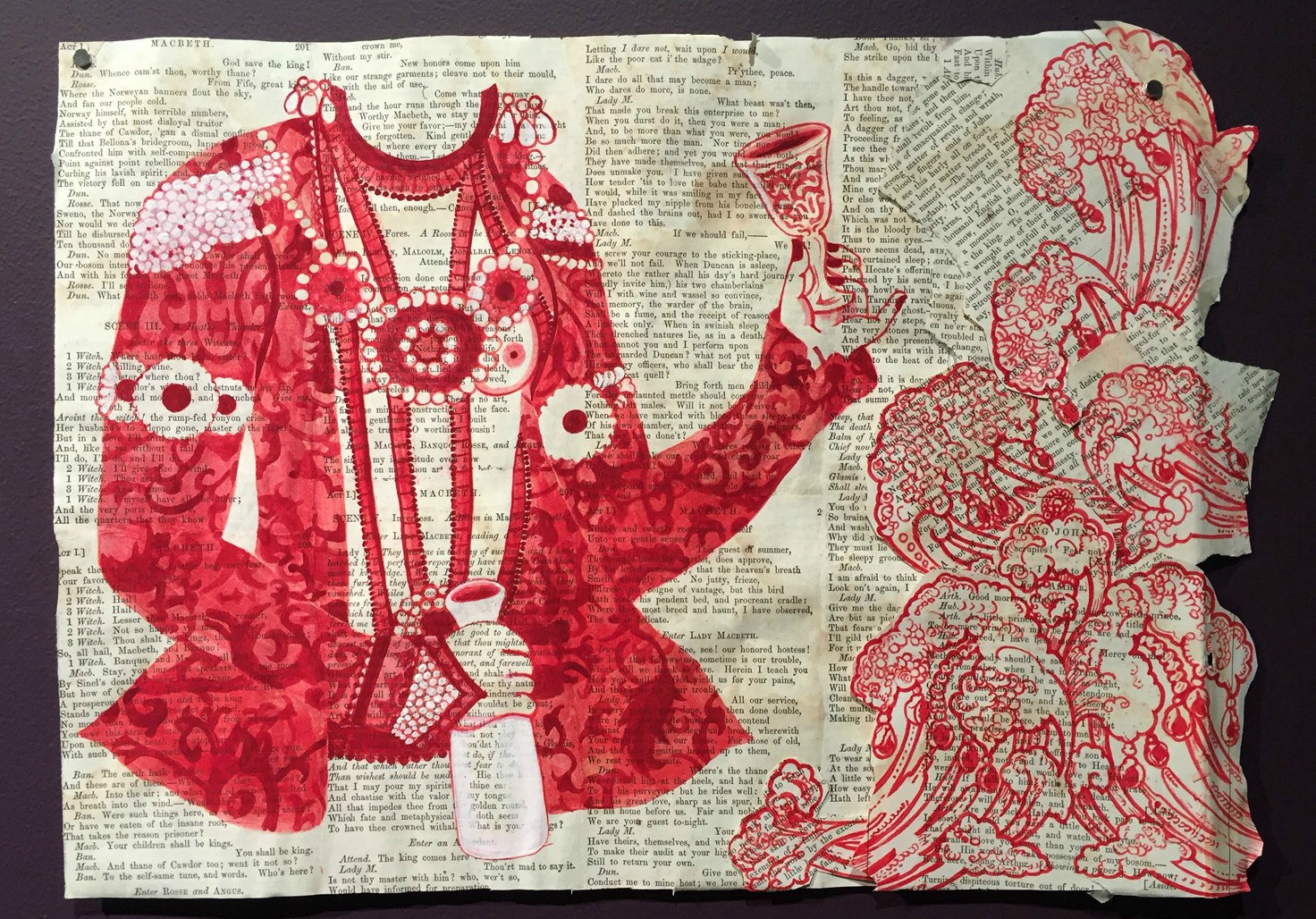
Italian-born artist Michela Martello draws and paints, more often than not, on materials that have previously served some other purpose. At her current exhibition Future is Goddess, there are a handful of paintings on traditional canvas, but some of the most intriguing works are created on kimono fabric, loose sheets of Italian cotton, vintage quilts, and disassembled army bags.
Martello freely incorporates words in her paintings. One especially striking piece includes a hot pink painting of a fetus on a turtle skull, with the text “is going to be easy is going to be Wonderful” in gold script underneath.
When I noticed that several of Martello’s paintings are on the surfaces of pages from Shakespeare plays, I wondered about the relationship of literature to her artmaking practice. We chatted in person at her exhibition and in more detail via email, about the creation of a narrative in literature versus art, and about her thoughts on David Foster Wallace and Haruki Murakami, among other topics.
Future is Goddess is on view through May 20, 2017 at Pen and Brush in Manhattan, a nonprofit dedicated to promoting the work of women in the literary and visual arts. In addition to curating exhibitions in their gallery space, Pen and Brush hosts writing groups and mentorship programs, and they have created an imprint, Pen + Brush Publications, to electronically publish literary fiction and poetry.
Catherine LaSota: In the exhibition catalog, you state: “There is a secret place within every woman, a garden of Eden with darkness and light where we can have access using the keys of knowledge, courage, and confidence. Inside this place we find that everything manifest is not as we are told to believe; instead, we are pulled into a spiral of compellingly beautiful anonymity.” Is the beauty of anonymity in opposition to the use of labels to identify people and things? If so, how can we avoid interpreting words, or cultural symbols (which you also utilize in your artwork), as some form of identification of what we are looking at?
MichelaMartello: If we dare to dive within the secret/sacred place and to hold onto its energy, we find ourselves automatically outside our comfort zone, where lack of labels are paramount for us to create a new perception. Creating an empty space allows us to receive the meanings of symbols and words in their original purity. It is an endless process, since we always tend to identify and put labels on things to feel safe, but if we keep that sacred door open, we can always reawaken and recreate ourselves. At least for me, it works in this way. It has to do a lot with that special moment right before the intellect manifests — there is always a sparkle of intuition. It’s like the first impression, that we have to trust fully — that experience comes right from the sacred place, and it is very precious!
LaSota: Some of your pieces in Future is Goddess are drawings and paintings done directly on pages of books of Shakespeare plays. Can you talk about your decision to make images on top of existing text? You also repurpose materials such as vintage kimonos and dismantled army sacks — do you view these unorthodox canvases in a similar way to working on pages of books, or is there a difference when language is part of the “canvas”?
Martello: Years ago, I found an antique beautiful collection of Shakespeare plays. Most of the pages were changing colors, showing signs of decay, but the quality of the paper was very good, as they used to make books fifty-sixty years ago at least. As soon as I went through the pages, I felt a strong desire to create art on the surface of those amazing plays.
Shakespeare’s genius is ageless — he knew how to speak to the masses using very simple/subtle yet sophisticated words. Between the lines, I often find answers to my anxiety, because he understood the darkness of human complexity and used comedy to display it. So this was the inspiration that led me to use his words as a background with specific plays. I used pages of The Comedy of Errors for three of my artworks where I explore the theme of mirror — identity and unity of time. I used The Taming of the Shrew, inspired by the always-changing roles in life from one opposite to another once we discover the interdependency that connects us all, painting among others a little paper called Family Constellation. I used Henry V, and many others, always finding in each play infinite inspirations.
For sure, backgrounds play a big role in my artwork process — from an old paper with Shakespeare’s words to a certain textile, fabric or embroidery, the background can really provoke the idea of my next painting. I like to use material that tells a story and has a memory because I like to give continuity to that material that maybe is old or damaged. For instance, when I found these old vintage army sacks, I was immediately inspired to paint on top themes related to the opposite subject, from spiritual to magical to introspective, and so I dismantled the bags, sewing them back together to create a flat canvas, and I repurposed them juxtaposing the opposite.
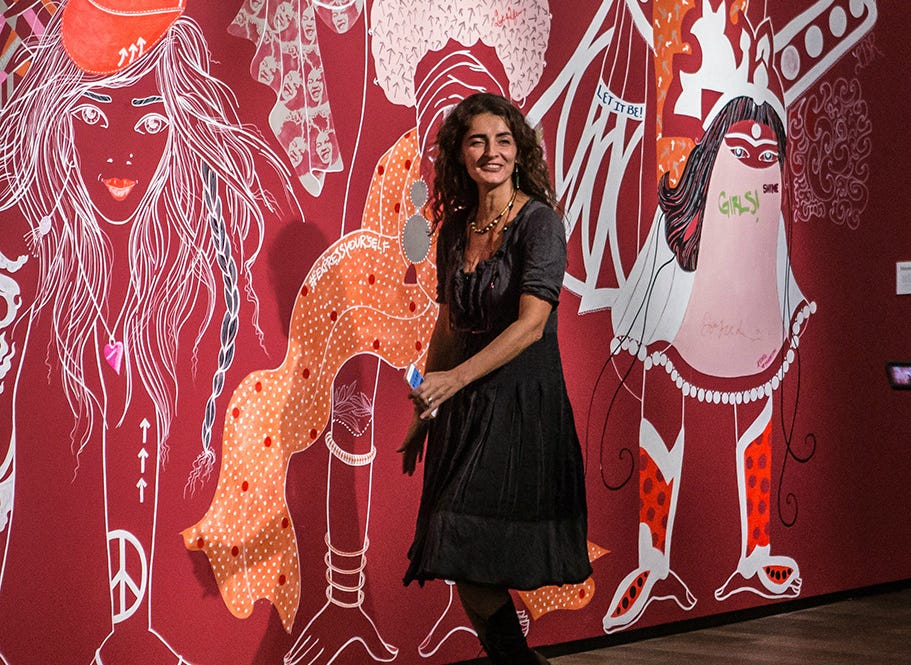
Michela Martello & the Graffiti Goddesses. Photo by Manny Fernandes.
LaSota: The way you talk about background materials inspiring the direction of your artwork…it reminds me of authors who draw on the geographic location or physical landscape where their stories take place, sometimes to the point of writing about the location as if it is another character in the story. There are some stories, for example, that could only take place in New York City, or in the rural American South, just as the paintings you make on a repurposed army sack or on the pages of Shakespeare plays could not exist in the same way on a different surface. If this is an accurate comparison, and your background materials act like geographic locations in a story, are there other aspects of your paintings that you view as pieces of a story, in terms of character, conflict, narrative arc, etc.?
Martello: Sometimes yes, but it is not a prerequisite condition. For instance, I will have an idea of a painting, using references that I feel will create a narrative I am very fond of, and then, when I start the painting, everything takes a completely different direction. So I just let the process flow, and I understand that those specific references were just symbolic tools that led me into new dimensions. Sometimes, I use animal skulls, and in that case the work is very much related to the idea of impermanence — therefore, the skulls are essential, and the work manifests exactly as I thought about it. But of course, in this case, I am not talking about a background — this is a very specific tool.
LaSota: You mentioned to me that you have been making artwork with a relationship to the writing of David Foster Wallace and Haruki Murakami. What about these particular writers are you drawn to, and how do their words influence your artmaking?
Martello: Shakespeare is present here as well! I painted two little artworks in homage to two of my favorite writers, David Foster Wallace and Haruki Murakami, using the inside cover of the collection of plays. The background is illustrated with a graceful decorative motif aged by time, and I felt a strong desire to pay homage to these two writers using an inside cover of the master.
David Foster Wallace has a unique quality that I have never experienced with any other writer, the perfect schizophrenic balance between intellectual mental clarity and amazing spiritual insight — these two aspects, if well nurtured, can either create a guru or a madman. Wallace makes me feel compassionate about reality in the way it is supposed to be — he really helps me to see things straight and therefore he becomes my muse, creating the necessary void for inspiration to shape it up. Sometimes I do have a mystical experience beyond pure enjoyment reading some of his lines. He was a great mind, a great intellect, a great soul.
Haruki Murakami is therapeutic in a marvelous way. His style of course is superb, but it is not just that. I definitely am inspired by the surrealistic vision of his writing, and also I feel empowered by his enhancing way of portraying women — always very feminine, mysterious, and magical, with a perfect balance between strength and delicacy. He encourages me to work on paradox and juxtaposition. Murakami allows us to see forbidden landscapes, making us believe everything is possible in the most paradoxical way.
LaSota: You were born in Italy and studied illustration there, then moved to New York ten years ago. You make art that incorporates the words of different languages, but the predominant language you use in your work is English. Are you particularly drawn to the English language as an art element, and if so, why?
Martello: Well, when I was a child, I always dreamed about coming to live in New York. I used to pretend I knew English, and mimicking the sound of Americans made me feel almost there…and, I guess, for an Italian child dreaming of coming to America, I thought I was very “cool,” sounding English. Besides this, English language is universal; therefore, there is a certain usefulness in adapting English words to my paintings. It is quite useful! In the Italian language, for instance, to explain a concept you really need to compose a paragraph, versus English, where, quite often, only one word is needed — paradoxically that word can open many doors.
Sometimes I am criticized because I use words in my paintings — some say that using words makes me less universal because I personalize too much, giving direction to the public’s reaction. Well, for me it is exactly the opposite: words are magic like symbols. I never explain a concept with words — I just use words following an instinct, and I let the perceivers have their own experience.
“Some say that using words makes me less universal because I personalize too much, giving direction to the public’s reaction. Well, for me it is exactly the opposite: words are magic like symbols.”
LaSota: Do you think that your years of studying illustration, which certainly have an influence on your variety of artmaking techniques, had an impact on your decision to include language in your paintings when you returned your focus to the fine arts?
Martello: That is a very interesting question — honestly, I never thought about this. Certainly it could be a consequential reaction since I had to interpret words to create illustrations. I now mix the process. For sure the narrative element is very important in my work, but I tend to believe that I build up a narrative using symbols and shapes instead of words, and that is probably why I do it, since I was trained with language narrative, being a children’s book illustrator. It’s interesting to see how we reinvent ourselves using the tools we learned at the beginning of our studies, and sometimes this happens in a not premeditated way.
LaSota: Do you have a favorite book? Are there any individual stories or works of literature that you return to again and again or that have had a particularly strong influence on your artmaking practice?
Martello:This is Water by David Foster Wallace always helps me to reground myself and make space within — it is a great source of inspiration in the most nonjudgmental way, but it is not my favorite book by him. Strangely enough my favorite book by him is The Broom of the System.
My favorite book by Haruki Murakami is Kafka on the Shore. Some of its passages are so powerful that I just have to close the book to either laugh, cry, or draw my immediate ideas — many of his books have this effect on me.
Other favorite books include almost every book by Banana Yoshimoto; Zazie nel metro by Queneau; L’isola di Arturo by Elsa Morante; the travel stories of Alexandra David-Néel; Memorie di Adriano by Marguerite Yourcenar, Bulgakov’s The Master and Margarita; almost every book of Somerset Maugham; Italo Calvino’s Il Barone Rampante and Il visconte dimezzato; the list can go on and on…. I am also an avid reader of biography, especially artist’s bios, and no matter what, they are always inspiring.
Ahh! Another book that I go back to on and off is (Salinger’s) Franny and Zooey. The last three pages are always a great source of inspiration for me — it’s like a catapult into compassion mode.
Flanked with 100,000 copies of banned books, Argentinian artist Marta Minujín announced she is constructing a massive art installation, The Parthenon of Books, to honor the tenets of democracy and creative freedom. According to Open Culture, the structure will be built in Friedrichsplatz in Kassel, Germany, which is a former site of the Nazi regime’s infamous ideological book burnings. Minujín will utilize books that are restricted from around the world in various countries — some of the titles date as far back as the early 1500s. If you want to peruse the full list of the books, you can do so, here. The public is also welcome to submit their own text suggestions, and in pretty much all senses, this project aims to include and benefit the international community of readers. Those who visit the site are permitted to take a book with them when they leave. Minujín hopes that every single copy will be gone by the end of the installation’s run.
The Economist predicts that the construction of the banned book Parthenon will be a top ten moment of 2017. They put together a short video outlining Minujín ambitious plans, which believe it or not, they’ve been executed before in Argentina in 1983. Enjoy!
“Double Take” is a literary criticism series wherein a book goes toe-to-toe with two authors as they pick apart and discuss its innermost themes, its successes and failings, trappings and surprises. In this edition, Liz von Klemperer and T.A. Stanley go in-depth with the dystopian sci-fi masterpiece, The Book of Joan, by the bestselling author of The Chronology of Water and The Small Backs of Children, Lidia Yuknavitch. An incredible reimagining of the myth of Joan of Arc, the novel transports the reader into a world of endless war. World wars have turned earth into a battleground. The violence therein has affected humanity itself, humans are now sexless, hairless, creatures of isolation where they write stories on their skin. This is the world as readers begin the book, and you bet Liz von Klemperer and T.A. Stanley dig deep into the multi-faceted layers of this complex and timely narrative.
Liz von Klemperer:The Book of Joan is directly based on the story of Joan of Arc. In the original tale, Joan of Arc heard God from a young age and was inspired to lead an army to help France defeat England. Joan was ultimately captured and burned at the stake, and thus became a saint. Joan of Arc is often called “the virgin warrior.” Yuknavitch seems to be satirizing this story in multiple ways. Instead of Joan communicating with God, Yuknavitch’s Joan has a mysterious blue light lodged in her temple and a song continuously playing in her head. Joan’s power comes not from her connection to God but from the fact that she is fundamentally connected to the earth, as the light connects her to the earth’s electrical current. In addition, instead of wanting to save her country, Joan ultimately destroys the entire world as an act of compassion as the world is being ravaged by wars staged by selfish, power-hungry leaders.
There’s also a lot to discuss from within a queer theory lens, particularly Joan’s relationship with Leone, her beloved longtime companion, and occasional lover. The concept of self-sacrifice and martyrdom ring true throughout the book, as Joan is fiercely committed to foiling Jean de Man, an evil warlord.
Yuknavitch mentions multiple times throughout the book that hers is a godless reality, and her characters have given up on the past notions of religion. I can’t help but think, however, that Yuknavitch is proposing a different kind of religion, one that is radically different from current earthly theology. I’m curious to hear about what you thought of how the narrative simultaneously plays into the classic tale while subverting it.
TA Stanley: I enjoyed the ways in which Yuknavitch played with the story of Joan of Arc. Before starting the novel, I contemplated my preconceived ideas regarding Joan of Arc and I thought it was interesting that she has a sort of historical yet mythological place in my mind.
While I know she was a real person, her story rests in a murky, mythological space in my consciousness, which is also something I think Yuknavitch was playing with, especially in the first part of the novel before we directly interact with Joan. There is a lot of emphasis on story and storytelling throughout the novel via the practice of skin-grafting.
Christine’s way of passing along the story of Joan in the first section seems to be riddled with history and yet a mythic force which somehow is part of keeping the story alive. Joan is not just a true figure in the narrative — who she is and what she can do is somehow beyond history. She is part of a story that Christine grafts onto her body. It’s as if the myth and possibility of Joan is more important than the physical reality of her historical being, but over the course of the novel I think this notion is changed. It is exactly her physical being that is the most important aspect of her. Where Joan of Arc remains in this mythical history and the story of her body is insignificant (was she hearing God or was she crazy?), Joan’s body is the site of her power and it cannot be erased or made into myth.
I definitely think this feeds into your idea of the new religion that Yuknavitch is proposing throughout the novel. I think Joan is canonized as a saint of this new religion the way Joan of Arc was of Christianity, but this Joan’s religion is a dedication to earth and the material reality of the body.
There is a lot we could read into this in terms of a warning of global warming and other ways in which humans destroy earth and the miracle of their own lives through war. Joan spends a lot of time contemplating humanity’s desire to look up for answers, i.e. the desire to believe in a cosmic force such as God, who operates from the heavens. She asks at one point —
“What if everything that mattered was always down?”
It seems to be a call for humans to care as much about the soil, the “worms and shit and beetles,” beneath our feet as about the large cosmic “Other” who is so vast and unknowable. How Yuknavitch describes the earth and the human body shows a certain amount of religious reverence. If there is a new religion being proposed, it is one that seeks for mankind to care about the earth and the body as much as it does (or more so) about the grand proposals of life after death and capital “R” Religion.
If we don’t care, we will no longer have an earth to care about or even a species that evolutionary cares to reproduce itself. “There is only being,” Joan writes in her letter to Leone. If one thinks on Christianity, it is the “Tree of Knowledge” that leads to the downfall of man, and I think Joan would agree. The pursuit of philosophical knowledge and seeking God in this way only promotes the life of the mind separate from relationship to life itself and all the alive things on this earth. It leads to destruction because we are not present to being on this planet.
There is so much here and I’m very curious about your thoughts on the skin-grafting and what it says about the role of the storyteller in this narrative and how you felt it spoke to you as a writer. But also in terms of queer theory, what is the role of queerness in a narrative where many of the characters are sexless?
I think the erotic and loving force of the relationship between Joan and Leone is significant, especially in that it is between two women. I think the powerful companionship that can occur between two women is often more significant of a story than that between a man and woman, especially because it removes the implication that their relationship is a simple biological metaphor for the creation of life. I think there is something else at stake in their relationship — in their commitment to one another — that plays a role in how Yuknavitch sees human relationships in this new religion which worships “being,” the earth, and the body, and I am curious on your thoughts.
Why is this relationship so central? And what about the relationship between Christine and Trinculo? I felt a real softness for their companionship and commitment to finding sexual joy in bodies that didn’t really allow for it. I was curious about Yuknavitch’s discussion of sex and sexuality, so hopefully we’ll get into that too at some point.
Liz von Klemperer: Yes, I also noticed Yuknavitch playing with the distinction between Christine’s admiration for Joan as resistance fighter and the predominant fear-based idolatry of Jean de Man. There’s a passage where Christine chillingly evokes our current political situation, saying that Jean de Man is —
“A figure who takes power from our weak desires…[he is] some strange combination of a military dictator and spiritual charlatan. A war-hungry mountebank…yet another case of something shiny that entertained us and then devoured us. We consume and become exactly what we create. In all times.”
That’s pretty Trumpian, if you ask me. Christine is attuned to the danger of viewing Joan in the same warped light. Christine thus vows —
“Body to body, then, I join Joan in rejecting the teachings of a pseudo messiah figure. I join Joan in rejecting messiahs altogether. The story born of her actual body will be burned into mind not to mythologize her or raise her above anyone or anything, but to radically resist that impulse.”
The body, not the idea of the body, is paramount. Joan is referred to as Joan of Dirt, and it’s ironic that her temporal and physicality is her ultimate power. Jean de Man, on the other hand, represents human desire severed from our inherent connection with the earth.
I don’t think we can talk about the queer theory aspect of this book without mentioning Jean de Man’s obsession with repopulating the human race despite the fact that humans are devolving into sexless, translucent creatures. Jean de Man goes so far as to sew penises and cut vaginas into his citizens, but to no avail. This hunger for human dominance is drastically different from Christine’s philosophy behind skin-grafting, in which she, “married Eros with Thanatos and began re-creating the story of our bodies, not as procreative species aiming for survival, but rather, as desiring abysses, creation and destruction in endless and perpetual motion. Like space.”
Here she’s comparing the act of skin-grafting, the dystopian version of writing, to non-reproductive queer love, specifically the love she and Trinculo share. In it, there is no desire for self-advancement. These acts of writing and loving are means to their own ends. As both a queer person and a writer, this concept is so affirming.
I agree that Joan and Leone’s relationship completely negate the archetype of romantic love as an ultimately reproductive, life giving force. For example, Leone helps Joan commit suicide immediately after they finally have sex. Instead of biologically reproduction, the result of their consummation is that Joan’s body returns to the earth through decomposition.
You asked me why I thought the relationships between Joan and Leone and Christine and Trinculo are so central. I think it’s because they illustrate one of Yuknavitch’s main points: reproduction serves no purpose in Yuknavitch’s dystopia, as the earth is no longer a hospitable place to live. In this reality queer love becomes the only viable option, and regeneration through bodily decomposition becomes the alternative to reproduction.
Jumping off your comment on sex and sexuality, what do you think of the scene in Jean de Man is stripped, and a body is exposed? I’m still muddling over what the significance of this reveal is. It seems like a plot twist/turning point. If that discussion point doesn’t tickle your fancy.
What do you think The Book of Joan’s significance is today, right now in the world we live in? It feels very pertinent to both our political and ecological realities.
TA Stanley: Oh there are some definitely eerie Trumpian passages. Even just a page before where you cited, I found this way too creepily exact:
“His [Jean de Men’s] is a journey from opportunistic showman, to worshiped celebrity, to billionaire, to fascistic power monger. What was left? When the Wars broke out, his transformation to sadistic military leader came as no surprise.”
I almost wonder if some of these lines were added in after the Trump election because they seem to prescient, but that is neither here nor there. The novel has an undeniable sense of foreboding within the context of our time, Trump or no Trump. We are part of a militaristic, power hungry, capitalistic nation that is part of a globalized militaristic world. And part of what has gone hand in hand with the militarism and capitalism of our global economy is a pillaging of resources and an utter disregard for the well-being of our planet and the living things that inhabit it, including much of humanity. There is always a Trump, there is always a Jean de Men.
These sorts of characters in novels end up feeling like prescient, direct parallels to characters we see in real life, but I think that’s ultimately because they are inevitable somehow due to the current paradigms we use to run our world. Under a new religion that worships the material reality and beauty of the body and the earth, but refuses the idolatry of the individual, would such characters as Jean de Men be possible? There is hope that they would not. Hope that this proclivity of such men is not part of basic human instinct, but part of a corrupt system that fosters a hunger for power.
I absolutely love what you are saying about Christine’s description of skin-grafting. This act of loving and of writing for simply what they are is so beautiful, which is why I was so strongly pulled into the narrative of Christine’s skin-grafting as well as her descriptions of Trinculo and their attempts to have sex with their stunted sex organs.
There was such pure joy in these scenes, and though I do not identify as queer, I felt a wonderful connection to this celebration of love as a thing without the (as you so beautifully put it) self-advancement of reproduction. Sometimes the idea of having sex simply to make little facsimiles of yourself is so off-putting, to be honest.
I loved this celebration of the body and the marriage of writing and the body through the art of skin-grafting. “Words and my body the site of resistance,” Christine narrates at one point. This radiated so much in my own body. The body as a site of resistance, the body as a story, story as resistance.
It’s all connected.
You beautifully put the ways in which these two love stories cement the affirmation and necessity of queer love in Yuknavitch’s world (and in our own). It is so powerful and life-affirming, in that we can affirm life for the sake of itself, not to a biological end of sexual reproduction. And through Yuknavitch’s conclusion we are bound directly to the earth, to that which is below us and that which “we have ignored and taken for granted.” We need to acknowledge the life generating forces of the earth and give what we can of ourselves to help foster these natural cycles. In turn, we should focus less on the power mechanisms that are at play when we enter into the patriarchal dynamics of sexual reproduction and all the destructive “isms” that follows in its path (colonialism, militarism, capitalism,etc).
I guess this would be my answer to your second question: What is The Book of Joan’s significance today? I think it’s a call to look less at how to further our individual selves and familial units and instead focus on healing our social structures and our planet before it’s too late. I think it acts as a guide for how to turn our attention to our reality, to not always look up for escape out of it. Rather, to look at how we can give of ourselves to fix it and how we can foster loving companionships that are not self-contained, but rather are part of a whole organism — this planet. “Dust to dust,” came to my mind a lot in reading this.
There were clear parallels to this common phrasing of the cycle of life and death throughout the novel, but I think with a bit more of a positive outlook on it. It’s not just meaning something along the lines of “when you die, you return to the dirt and that’s it.” Instead it means you have the opportunity through your life and death and return to the dirt to give back and create new life from the earth itself. And that should be our goal. It is a system of care, not just for humanity (although for us as well), but for the whole of the organism of the planet earth.
As for the reveal of Jean de Men, I am intrigued be what this means for this larger narrative we’ve constructed as well. I won’t say I have an answer. It seems to be such a big reveal that Jean de Men’s body appears to have been originally female, that it is revealed twice, once from the point-of-view of Christine and then from the point-of-view of Joan. But we also see that he has “worse, several dangling attempts at half-formed penises, sewn and abandoned, distended and limp.”
From this, I gather that Jean de Men attempted some of his experiments regarding sex organs on himself. The scene in which “children begin to materialize from nothingness and rise” at de Men’s feet after he has been “ravaged” by our main characters seems to simply fulfill part of the Greek creation myth that Yuknavitch is playing with throughout the course of the novel, namely the part in which Cronus vomits up the children (the Greek gods) he had previously swallowed in an attempt to avoid the prophesy of his son (Zeus) dethroning him as a ruler of the gods. There are many parallels to the Greek myths (Nyx, I just learned, is part of Greek mythology too), but I’m still puzzled over what, if anything this means for the themes we have constructed around queer theory and this new religion. How do these parallels to Greek myth benefit Yuknavitch’s story and message?
Liz von Klemperer: I think you’re onto something when you say the classic “dust to dust” ideology is an oversimplification of Yuknavitch’s message. Death conventionally represents passivity or defeat, but her characters transform death into an act of intention and power. Joan, for example, chooses to die twice, once when she is burned alive and finally when she asks Leone to assist in her suicide. Trinculo is also tortured to the brink of death after he commits an act of political dissidence. I had to put the book down for a bit after reading the scene where Trinculo anticipates becoming a victim of “The Blood Eagle” technique of execution. I’ll just say its on page 188 if anyone is interested. My point is, for Trinculo, death is not an indication of defeat but a radical choice. Finally, the fact that Christine’s nickname is Christ is another blatant reference to martyrdom, and how Christ’s death through public torture is said to have saved humanity.
I was so absorbed by the allusions to Christianity (what can I say, Catholic school did a number on me) that I hadn’t even noticed the references to Greek mythology! Christine describes CIEL as “an obscene techno-burlesque of ancient Greece,” which certainly speaks to your comment about the Greek creation myth.
I think the allusions to Greek mythology act to fortify Yuknavitch’s idea that action summons its own antithesis. In other words, the force of the universe is yin and yang. For example, Nyx is the goddess of the night, and was the child of Khaos, the god of chaos, and Erebos, the god of darkness. Nyx then produced Aither, god of light, and Hermera, god of day. You can’t have dark without light, and you can’t have obscurity without clarity. Similarly, the acts of living and dying are interconnected and feed into each other.
Christine indicates that, in this godless world, human leaders become stand-ins for deities. With that in mind, the allusions to Greek myth highlight the irony of Jean de Man’s deluded quest for power. You mentioned Zeus’s father, Cronus. Jean de Man is another kind of father, as Christine says “in our fear and despair, we’ll take any father, even if his furor is dangerous…perhaps especially then, we mistake heroic agency for its dark other.”
Both Cronus and Jean de Man are power hungry father figures, but they have opposite methods of preserving their power. The citizens of CIEL have chosen their father, their god, for better or for worse. Jean de Man is followed because of his false pomp, and instead of creating, he dismembers. Cronus, on the other hand, is a legitimate creator, as he is the titan of the harvest. They are similar, however, in that they both desperately want to evade death. Cronus fears one of his children will kill him, and so he eats them all. Conversely, Jean de Man works to maintain power by perpetuating the devolving race on CIEL. Ultimately, Cronus cannot thwart the inevitable and is killed by Zeus. Jean de Man is literally cut to pieces by our hero’s, and it is ironically through his own mutilation that children emerge from the earth. Both are powerful, but their ultimate, lasting power comes from their ability to relinquish their control to those they create and rule. Only through their own destruction do the fruits of their dominance prosper.
Jean de Man also acts as a foil to the Christian God the Father, who allows Christ to die. While being crucified, Jesus cries out: “God, why have you forsaken me?” Of course, Jesus rises from the grave three days later, and his ultimate accentuation to heaven is the most significant event in the Christian religion. By allowing creation to die, humanity is saved.
Ok, this was a lot! Phew. Theresa, is there anything you think we’ve missed/anything more you’d like to hash out?
Did you have a favorite passage that spoke to you?
TA Stanley: Liz, this has been amazing. I loved your discussion of the Greek mythology allusions and this idea of the father figure, represented in Jean de Men versus Cronus versus the Christian God. It is interesting that only through the death of these figures is creation and salvation possible. I want to make it a simple parallel to the death of patriarchy that allows us to create a new world, but I’m sure it’s not that easy.
There is a lot to unpack in this book, and I feel confident that we got through a good amount of it. I think if I were to mention anything else it would be that this book, while containing all of these deep culturally impactful themes and theories is also a thoroughly enjoyable and vividly drawn out sci-fi book. It fits in well with the best of the dystopian novels out there.
It’s a sci-fi dystopia for our era — addressing both political and environmental concerns of today. I was hooked by the premise immediately and Yuknavitch’s writing never let up and never felt heavy handed, the dialogue never stilted the way it can in sci-fi. It was truly a beautiful architecture of story, character, theme and imagination.
So many lines and passages punched me in the gut while reading this, but I was most dazzled by the imagery of skin-grafting, so I’ll quote this passage from Christine early on in the book —
“What gave my literary challenge epic impact? What added epic weight to the literary representation, was skin. The medium itself was the human body. Not sacred scrolls. Not military ideologies or debatable intellectual theories. Just the only thing we had left, and thus the gap between representation and living, collapsed. In the beginning was the word, and the word became our bodies.”
The reverence Yuknavitch has for the material world and for the body is perfectly summed up here. She is literally replacing the word “God” with “our bodies” and it feels right and it feels spiritual. We don’t need to shame the body and its functions and we certainly shouldn’t be destroying the material world simply because there is or may be another world in the hereafter. The spiritual and the material don’t need to be separated. Our bodies and their biological functions are transcendentally spiritual, our earth is a heaven. We need to learn how to worship these things properly and care more substantially for all living things, not just those in our immediate circle of care. And we should do this not for some celestial being’s or father figure’s approval, but simply for the beauty of the world itself. Who wants to join in on this new religion?
Liz? I’m in.
Liz von Klemperer: I’m all about this new religion, but I don’t know if I have what it takes! There’s something so extreme yet simple about this ideology. Adherents must be willing to extinguish themselves for the greater good of the whole. It requires a significant loss of ego, and yet it merely requires letting go and allowing yourself to be consumed. I can’t say I’m quite there yet, but I think applying a dose of this philosophy to daily life is healthy.
If I had to choose a description for my overall experience of reading this book, I’d also go with “gut-punching.” The graphic scenes of torture, severed bodies and charred skin were emotionally exhausting. This aspect stalled the readability of the book for me, but the plot was so engaging and suspenseful that I never wanted to put it down for good.
My second takeaway is the sheer abundance of allusions in this book. For example, we didn’t get to the significance of Trinculo’s name, which I read as a double meaning. Trinculo is the name of the fool in Shakespeare’s The Tempest, as well as a retrograde irregular satellite of Uranus, which was discovered by astronomers in 2001.
This means it’s a moon moving in the opposite direction of Uranus’s orbit, and in varying, inconsistent paths. Both of these allusions fit Yuknavitch’s Trinculo: He acts simultaneously as comic relief and as a persistent force that counters Jean de Man’s regime. This allusion also foreshadows what Trinculo becomes at the end of the book: matter returning and merging with space. I think this technique is meant to drum up our nostalgia for planet earth. We may destroy the planet through greed and violence, but stories of the Greek, Christian and literary gods bring to mind what humans have done to create meaning. It could all so easily vanish, perhaps for the best.
I love the quote you shared, and I think it’s a great note to end on. What a self reflexive nod to her own work as well as to her readers about the dire necessity of words and language. At the end of the world, our ability to recount stories is our only form of agency and protest. On that note, I’d like to end with the two images that frame The Book of Joan.
The novel begins with Christine grafting her skin. It’s a visceral affirmation of the living body, as Yuknavitch describes the smell of burning skin, and flesh quickly rising, puffing and stinging. The novel ends ends with the image of Joan decomposing, her cells slowly descending into soil. The final clip of text in the book is a letter written by Joan to Leone on the last piece of paper on earth. What Christine and Joan are communicating is absolutely essential, as they both know it’s the last message they’ll ever write. This union between two women writing on the only surfaces they have left both greets and leaves the reader with urgency and power.
Four deaf kids are talking shit about me on the other side of the car. I can tell it’s me they’re talking about because every so often they look my way and start in with the hands and fingers. I have in my headphones so they probably think I’m showing off. There are maybe ten people with headphones in so I don’t know why they have singled me out like this. I tried smiling at one of them, the girl, but she took it the wrong way, I think. Something in her face told me I should fuck off because she doesn’t take kindly to older men who try smiling at her on the subway and have only one thing on their mind. I’m not sure why she thinks this about me because I wasn’t thinking about anything specific. I almost want to tell them about my tinnitus, that I have it in both ears now and that it’s awful. I could tell them that I’m losing my hearing, too, particularly in my left ear and then what. I’m probably too old to learn sign language. I could never go on a subway and talk to anyone after I’m deaf, so these kids don’t know how lucky they are. They’re all spread out in the car, occupying different benches and still they can talk to each other and not bother anyone. This is probably the greatest gift but instead they go around in pity for themselves. I don’t talk to anyone on the subway, not if I can help it and I almost never take the subway with someone I know, either. And the girl I smiled at, it had nothing to do with what’s spilling out of the top of her blouse. I can try telling them this, I can try schooling them, but what then. These kids, they don’t want to hear anything from the likes of me and maybe they’re right. The song I’m listening to has somebody asking to borrow lungs because his are collapsing. This is another thing I don’t tell the kids. I can take one look at these kids and know that no one will lend or borrow anything between us and it doesn’t matter what is or isn’t collapsing.
A Better Class of People
They ask a woman with a baby papoosed to her chest if she’d like to sit down. Two or three of them ask at the same time and she says yes to one and sits herself down like she is the queen of Manhattan Island. How come they never ask me if I’d like to sit down is what I ask them after her highness sits down with her baby, the prince or princess, I can’t tell. I was standing right next to this woman and was there when she got on the subway in the first place. I tell them this and then I say you can’t see what I have papoosed to my chest now can you. I tell them if they knew what was wrong with me they would start a fundraiser or candlelight vigil. By this time the people have all gone back to their own lives and the woman has either fallen asleep or is nursing her baby right in front of everyone. I can’t tell what she’s doing because I’m trying not to look at her because I am a gentleman and try hard not to bother anyone. Meanwhile I’m still standing up and trying to balance myself because I don’t want to touch the pole or the bars or the straps. They did a study once on the germs people leave on the subway poles and you wouldn’t believe it. This is only one reason people should offer me a seat on the subway but they never do. I can tell they all think they’re a better class of people and maybe they’re right. The truth is whenever I am sitting down I don’t get up for anyone, not until I arrive at my stop. I don’t care who they are or what they have on their chest I treat them all the same.
Conversation Over Mixed Signals
Be prepared for me to be awful. This is what the woman next to me says out loud to the woman next to her. I don’t know either of these women and I don’t care to. I’m on my way to the doctor because I can’t sleep through the night without waking up ten times to empty my bladder. I’m sure one day I won’t wake up because I will have dehydrated and lapsed into a coma during my sleep. I know there is something wrong with me as I’ve tried everything you could think of like spending a whole day without drinking a single glass of water. I know it isn’t good to go a whole day without water but I don’t care anymore. I’ve seen this show on TV where two idiots get put someplace awful and told they have to stay there for three weeks. They have no food or water or shelter or clothes. Sometimes they go days and days without water and it’s funny to watch them bitch and moan about the heat and the humidity and how they’re starving and thirsty. I don’t feel sorry for these people because they have signed up for this and that’s the difference. Me, I didn’t sign up to go to the bathroom every fifteen minutes. I’m an innocent victim in the blind back-alleys of our city in this regard. But nobody cares and so I keep it to myself. Sometimes I think it’s my diet, which is terrible. I eat only fast food because I don’t have time for anything else. When I say I don’t have time I mean I don’t know how to cook and even if I did I wouldn’t know what to make. This is why I go to one of two fast food restaurants every day. What’s funny is the kids that work there act as if they don’t recognize me in either place, which is fine with me. When I wake up in the middle of the night to go to the bathroom I sometimes turn on the light and look in the mirror and I don’t recognize myself, either. I don’t blame the kids for treating me like a stranger and I don’t blame the woman next to me for being awful. I don’t blame anyone for anything, except maybe the doctor later, who I’m sure can’t and won’t help me.
By the fall semester of my junior year in college, my nomadic family had relocated from Acworth, Georgia to Edison, New Jersey. Our house had been sold: another home added to my mounting catalogue of ex-homes. Less than two years prior they had relocated from Pennsylvania to Georgia. My little old red Chevy Nova, which I had saved for and purchased while working at McDonald’s and at Stauffers of Kissel Hill, had been hastily disposed of by my mom before she and my father packed up and vamoosed. I had left the car under her care at the onset of the academic year, unaware that it would be the last time I’d see it. My mom had driven it, parked it at the Getty gas station on Oregon Pike, and some lucky person had purchased it — a bargain for them, a loss for me. Our family had experienced so many gains and losses as we relocated from one place to another within the US, let alone to the US from Nigeria. How many more?
Betrayal was on my mind that semester. Old life deserted in exchange for something new. New life also deserted. My family was gone, meanwhile I remained in Pennsylvania. It was autumn. It didn’t escape me, either, the way the weather seemed to be betraying the trees. The way their leaves would soon become unhinged and fall, beautiful to the eyes, but also on the verge of an ostensible death. And then, a season later, a rebirth.
I was a student at Penn State, and it just so happened that that semester was my introduction to Mariama Bâ’s So Long A Letter. The weather, the trees, betrayal, loss, and rebirth became metaphors for my understanding of the book. In the novel, Ramatoulaye Fall becomes a widow, a sort of death of her previous existence. In her process of being “reborn,” she writes a series of letters to her friend, Aïssatou Bâ. The big, unifying theme of the letters — at least one of the big themes that stuck out to me in Bâ’s epistolary novel — was the pain of the emotional betrayal of a woman finding out that her husband has taken a second wife.
Ramatoulaye’s understanding of herself, as written in her letter to Aïssatou, is perhaps to be expected of any woman of her time: “I am one of those who can realize themselves fully and bloom only when they form part of a couple. Even though I understand your stand, even though I respect the choice of liberated women, I have never conceived of happiness outside of marriage.” This was a sentiment that I, in turn, understood and respected, but which also saddened me — this constriction of the imagination, this limited, strangling notion of happiness.
Perhaps I recognized it in my parents’ marriage as my mother underwent one painful and exhausting move after another, following my father everywhere he went, because, she too, had not yet conceived of happiness outside the realm of marriage.
In my novel, Under the Udala Trees, I explore the themes of betrayal and rebirth and happiness in the context of gender and power. In writing the novel, I imagined, unlike Ramatoulaye, a sort of happiness that existed outside of the traditional schema of marriage. Or rather, I imagined the pursuit of that sort of happiness. The fundamental desires of my protagonist, Ijeoma, are unconventional in her West African setting in the sense that she does not find her value via an attachment to a man. Lately, I’ve been interested in finding other West African authors who are also unconventional in their portrayal of love and marriage, of gender and power. The following are my top six:
Akin and Yejide have trouble conceiving a child. Years of struggling leads Yejide to a prophet who stipulates that she find a goat and engage in a goat ceremony. Yejide even winds up breastfeeding the goat. With expertly maneuvered, almost incredible, certainly unpredictable plot twists, the end result is a deconstruction of the concepts of masculinity and femininity and a rejection of traditional customs of marriage. The novel asks us: What does it mean to be strong? Is strength a woman who carries on serving her husband his meal even after he has betrayed her, or is she in fact weak? Is weakness a man who acquiesces to his mother’s persistent demands, rather than resisting — rather than summoning up the strength to stand proudly by his wife?
In this collection, we see love in many forms, but particularly, we see stories with young Nigerian women whose sexuality is not boxed up like some shameful secret, tucked away beneath a pile of blankets. These young women do not apologize for their existence as sexual beings; or at least they do not apologize in the traditional, self-deprecating sort of way. “Wild” presents a young woman who has had a baby outside of marriage and refuses to give in to her mother’s condemnation of her. The story itself is not quite an embracing of untraditional ideals, but a lifting up of the veil of taboo enough that by the end of this story, the young woman and her child are still portrayed with dignity. “Light” begins with the beautiful description of Enebeli’s fourteen year old daughter, who sends a boy a note, and it is not the first time. She writes, “Buki, I love you. I will give you many sons.” What is beautiful about this declaration is the girl’s own ownership of her intentions. The script is flipped here, which is to say that the demand is not being put upon her. NOT: “You must give your husband many sons.” Rather, she is the one in the power position here, and she acknowledges not only her authority to give, but also the fact that it is her will.
Two half-sisters grow up not knowing about each other. One sister becomes the “wench” of a British officer, unable to claim the title of “wife” — “wife” being a word reserved for white women. The other sister becomes a slave to the British, and goes on to give birth to a girl who also becomes a slave in Mississippi, USA. The bulk of literary criticism on Homegoing thus far has focused on the slave narrative and the purported complicity of Africans in selling themselves. What interests me, however, is the highly women-focused bent of the novel, the story really beginning with Esi and Effia. Though men certainly have their parts in the novel, these women are at once the subject and object of the story, both the water and the fire, whose lineages scald and flow into contemporary times. Effie and Esi are the ancestral characters whose spirits linger, long after they themselves, and their husbands, are gone.
Embracing desire, 55-year-old widow Binta falls into a love affair with a twenty-five year old gang leader and weed dealer named Reza. And why not? After a marriage marked by sexual repression, she craves intimacy. Set in Northern Nigeria, this bold new narrative tackles romance and eroticism in ways that defy the conservative culture of the North. Things get a bit tricky when Binta’s son confronts Reza about the affair.
This beautiful, compact novel is a meditation on female aging and desire, as Dr. Morayo Da Silva, a 74-year-old Nigerian woman living in San Francisco, narrates aspects of her life, past and present, in delightfully witty and poignant prose. Aging was never so hip, femininity never as powerful.
There is a married couple here. In fact, no, there are two married couples in this utterly beautiful and absorbing novel — Cameroonians Neni and Jende Jonga, and Americans Cindy and Clark Edwards. And yet, it is a triangular affair. Imagine an equilateral triangle where two sides are represented by each couple and the third by a country. You see, both couples are also in the midst of a tumultuous love affair with America. America becomes a genderless character whose power crumbles as the financial crisis takes root and the human story progresses.
DON’T MISS OUT
Sign up for our newsletter to get submission announcements and stay on top of our best work.
YOUR INBOX IS LIT
Enjoy absorbing fiction from Recommended Reading on Mondays, strange, diverting work from The Commuter on Wednesdays, and a roundup of our best work of the week on Fridays. Personalize your subscription preferences here.