From Kathleen Collins to John Crowley, here are the books our staff is currently enjoying
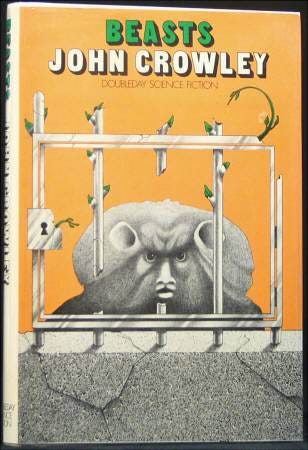
Beasts by John Crowley
I read a short John Crowley book published in 1976 called Beasts. Despite its brevity, it contains an awful lot, more than can be covered in this short paragraph. I suspect that in light of recent discussion pieces I’ll get in trouble for making this claim, but I would say it’s a dystopic, speculative novel that slips between sci-fi and fantasy. It considers a future U.S. after it has been divided into various territories. The country is controlled by a thinly veiled dictatorship, but in the outlying territories, there are various communist enclaves and eco settlements. Scientists have recently developed a genetically modified species known as leos that crosses humans with lions. That species is now fighting for its rights and survival from human hunters. There is one character, Reynard, who is a cross between a fox and a human, but he’s the only one and is, unlike the leos, very powerful with a high position in the government. For the most part, Beasts follows three main characters: a leo called Painter who’s on a vengeance mission, Reynard, and a falconer who leaves his bird tower for a job as caretaker to the ruler’s children. As you might imagine, there are a lot of ideas being tossed around, and sometimes the writing feels that way: a salad of genre tropes. At other times, though, the writing is beautiful and the scenes distilling. And considering the book was written in the ’70s, there are moments that feel prescient. I’m excited to read some of Crowley’s more recent and developed work.
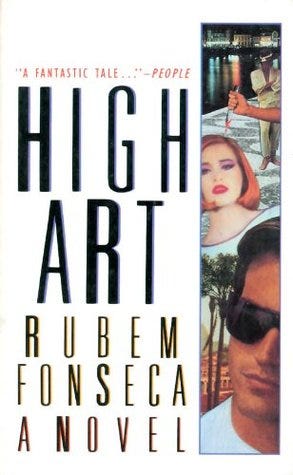
As reported in my last update, I’m digging into more from Rubem Fonseca. This time it’s High Art, which so far reads like Cortázar by way of Raymond Chandler and ends the first chapter on the excellent line, rendered in English: “At times I have interpreted events and behavior. Am I not a lawyer professionally accustomed to the practice of hermeneutics?” Until further notice, I will continue reading Rubem Fonseca and only Rubem Fonseca.
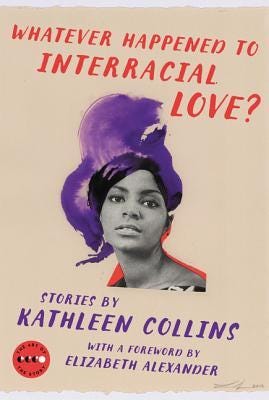
I’m reading Whatever Happened to Interracial Love? by Kathleen Collins. The story behind this collection is fascinating and heartrending tale of under-recognized black female genius. Collins’s only feature film “Losing Ground” (1984) was “rediscovered” in 2015 and given its first official release at Lincoln Center, soon to be followed by this collection of story stories, written the decade before. The New Yorker describes it as, “a multidimensional revelation whose invisibility until now is as grievous a loss to literature as the near-disappearance of Losing Ground has been to the world of movies.”
The stories themselves are even more remarkable, each experimenting with different voices and styles. How’s this for an opening gambit: “I had an uncle who cried himself to sleep. Yes, it’s quite a true story and it ended badly. That is to say, one night he cried himself to death.”
I was recently lamenting with a colleague how white the MFA short story cannon is, with Cheever, O’Connor, Carver, and Munro as its patron saints. Whatever Happened to Interracial Love? was written during the MFA workshop heyday, and serves as a reminder that should be obvious, but is unfortunately still very much needed: that the whiteness of the short story cannon is not for lack of extraordinary writing by people of color. Kathleen Collins died of breast cancer at 46. If there’s an upside to her stories being posthumously published, albeit a small one, it’s that the stories benefit from being, presumably, untouched by an editor, who would have tried to turn them into something more traditional. They are deceptively humble; often short but never slight, and totally original.
Already established as a poet with two published collections, Brian Blanchfield dives into the world of lyric prose with Proxies: Essays Near Knowing {a reckoning}. Part memoir and part intellectual discourse, this project draws on the writer’s academic background to enrich a web of deeply personal stories spanning from early childhood to the time of the essay collection’s composition.
What makes Proxies unique is that the source material is strictly memory-only: any information or references — whether a line from a poem or findings from a study once featured on NPR — must be something Blanchfield remembered in the writing process, without the aid of a search engine. The final essay, “Correction,” sets straight some of the details from the previous twenty-four.
In his preface, “[A Note],” Blanchfield lays out the productive constraints: that the essays will be “unresearched… analytic but nonacademic” and that he will “stay with the subject until it gives into an area of personal uneasiness, a site of vulnerability, and keep unpacking from there.” He refers to Montaigne asking his bookshelves the question, “Que sais-je?” (“what do I know?”) and decides that it “seems like a good start.”
Each essay unpacks a chosen topic — e.g. “On Foot Washing”; “On Confoundedness”; “On Peripersonal Space” — and each contains this refrain as its subtitle: Permitting Shame, Error and Guilt, Myself the Single Source. Blanchfield is cracking open the lyric essay while also cracking open himself; half-remembered knowledge mingles with half-remembered lived experiences, and gradually, the poet himself emerges.
By queering the essay form in this way, Blanchfield also constructs a new way of looking at his own identities, where “self” and “other” are perpetually braiding into each other in a radical vulnerability. This vulnerability sometimes emerges in subtle ways, as in the essay “On Housesitting” —
Housesitting, like playing house, is identity rehearsal — practice, of course. For what? You’re writing a future into a present, you’re writing an other there onto the self here, and quote yourself back to yourself.
The displaced self, as house sitter, experiences a simultaneous gain and loss of control. I won’t spoil his anecdotes of housesitting mishaps.
In other moments, the braiding of “self” and “other” produces an unsubtle vulnerability, piercing and dangerous. The essay “On Frottage” reflects on Blanchfield’s coming of age as a gay man during the height of the AIDS crisis — “I never had a sex life without having a status” — and being part of the younger generation of gay men who, because of HIV risk and stigma, shunned the older generation and often exclusively explored non-penetrative sex. He writes, “What did we solve (a metaphysics, a phobia?) each time we made our mutuality exterior? We met each other there.” When HIV status is such a critical aspect of developing selfhood, interiority and exteriority take on whole new meanings. “On Frottage” is one of the most memorable and moving pieces in the collection.
In the framework of Proxies, selfhood and identity are inextricably linked with memory and knowledge. Several other essays further explore queer identity through this lens, veering away from known narratives of “identity politics” in favor of a queer selfhood that centers relationships and vulnerability rather than structures of oppression. (Blanchfield’s relative privilege as a white member of the queer community grants him the ability to de-center oppression in his narrative; the failure to address this nuance is perhaps one of his shortcomings.)
The essay “On Containment” threads through different forms of this approach, wandering from place to place in the way lyric essays often do. First, we encounter a threat to literal bodily containment — a childhood memory of Blanchfield’s own exposed jawbone after a severe dog bite (vulnerability is wound-ability, after all); then, taking a step back, a meditation on the threshold of unbearable tickling —
It’s my recollection that the Winicottian psychologist and essayist Adam Phillips himself extrapolates broadly from his analysis of tickling; but, if not, the generality I have found so insightful is mine: beyond any fear is a great circumambient fear — a terror — that one will be insufficiently able to hold the fear. That if the stimulus is present and ongoing, unchecked, one might fall apart, come to pieces, in her faculties disintegrate. In sustained tickling we know (we learned) there exists an outer lip or membrane between the simpler immediate excitement of fear and the shameful and complete loss of bodily control and mental composure…
Then, from the topic of tickling, Blanchfield drifts into another kind of containment: the containment of one’s sexuality, always initially “secret” in a world that assumes heterosexuality unless told otherwise. But instead of the self being trapped inside of the secret (as with the common dialectic of “in the closet”/“out of the closet”) he makes another move, flipping the traditional narrative on its head —
Early on you have a secret. It is almost as if the secret is there before you. You are ever in relation to it; you are its container, and because by definition the one imperative is that you cannot share the secret — perhaps you develop the understanding that no one in your small world may be entrusted with the knowledge of what’s inside you — you become, through and through, a holding environment for the secret.
When Blanchfield takes the imagery of being “in the closet” and turns it literally inside-out, the relationship of the self to the outside world looks radically different.
The passages quoted above already provide an impression of the overall tone: a conversational intimacy intersects with a deeply analytical backbone. Blanchfield’s introductory claim to being “nonacademic” might be a stretch — anyone who frames his essays by quoting Montaigne in the original French can’t place his work entirely outside of academia. Though the essays are accessible for the most part, they do require a willingness on the part of the reader to interact with certain “Ivory Tower” greats, both canonical and obscure. He demonstrates a self-awareness of this quality in “On Confoundedness”: “One might even say [I am known as] a poet’s poet. Though less baffling the stronger I grow as a writer, my work is not especially welcoming to the uninitiated and one can feel excluded there…”
In Proxies, the self absorbs everything it touches. For a well-read person like Blanchfield, it seems that pulling from the likes of Sophocles and Barthes comes as naturally as drawing on his own childhood memories. Like his peer Maggie Nelson, he manages to integrate source material — from King Lear to Hart Crane — in a way that usually feels organic. In this endeavor, his “internet off” writing restriction may have been more beneficial than restrictive.
But why Proxies? Let’s return to Blanchfield’s preface:
A proxy in one sense is a position: a stand-in, an agent, an avatar, a functionary […] In sciences I think proxy additionally expresses a kind of concession to imprecision, a failure. It’s the word for a subject you choose to study to produce data that can approximate the data you’d get from the actual, desired subject, if it were not prohibitively hard to apprehend.
In a way, these twenty-four essays — and the twenty-fifth essay of corrections and amendments — are proxies for the self, the “desired subject” (or, sometimes, object) that cannot be directly examined or defined. Like the imperfect memories that circumscribe it, the individual self-as-writer must always be beholden to the changes of time. That’s part of what makes memoirs so interesting to read: memory becomes a character in itself, unfolding through the writing process. Here, Blanchfield’s memory-only restriction focalizes his own conceit, where memory serves as the foundation for the essays as well as the self. And, like many writers, the core of his memoir ends up being — surprise! — about writing and living as a writer.
The age of “fake news” has ushered in a new need to interrogate the different meanings of truth and truthfulness, and nonfiction writing outside the realm of journalism still has a role to play. The genre of “creative nonfiction” occupies a fascinating and ever-changing position in today’s literary culture; Blanchfield’s essays, simultaneously genuine and flawed, stand in as proxies for the examination of a genuine and flawed self. Like Tim O’Brien’s The Things They Carried, this collection demands a reader who can question different modes of truth and storytelling. Identity, memory, and trauma are never straightforward.
In “On Withdrawal,” Blanchfield begins by discussing his preference for facing backwards on trains. He writes, “I like the illusion of being drawn from the present into the future […] I have my eye on what I’ve left.” This “illusion” is fitting for the experience of reading his essays: the sensation of looking into the past yet being drawn ever forwards.
Hello, and welcome to my week-by-week review of the world. Today I am reviewing orchestra conductors.
If you’ve ever been to an orchestra, or seen one in a cartoon, you’ve probably wondered who that guy is rudely standing with his back to the audience, waving his arms, and blocking your view of the musicians. He’s the conductor. Sometimes he’s a she, but very rarely. Men make up a disproportionately large number of existing conductors.
A lot of people wonder what conductors actually do. The truth is, no one really knows. Musicians can still play the music without a conductor, and frankly it seems like a distraction to have someone standing in front of you and waving their arms wildly, vying for your attention. “Hey look at me, look at me!” It’s a bit desperate.
I don’t begrudge the conductors having jobs. Everyone needs a job even if it’s just busy work, like a crossing guard or a doula. I just wish the conductors could do their job off to the side so I could see all the musicians.
And musicians shouldn’t be obligated to look at the conductor. It should be an optional thing. If they want to look at someone gesticulating wildly, there’s one over on the side of the stage. If not, go on about your business playing beautiful music.
Orchestra conductors should not to be confused with train conductors, who only wave their arms when they’re trying to warn someone to get out of the way of the train. If you ever see that happening, look down to make sure you’re not standing on train tracks.
I plan to get a job as a conductor, and for my first performance — right when it’s time for me to start waving my arms around — I’ll instead whip out a tiny folding chair from underneath my tuxedo, sit down, and let the orchestra do their thing while I sit back and watch from the best seat in the house with no one blocking my view.
BEST FEATURE: They wear tuxedos. WORST FEATURE: They don’t even sing. If you’re going to stand in front of a bunch of musicians on a stage you should be singing.
Please join me next week when I’ll be reviewing botox.
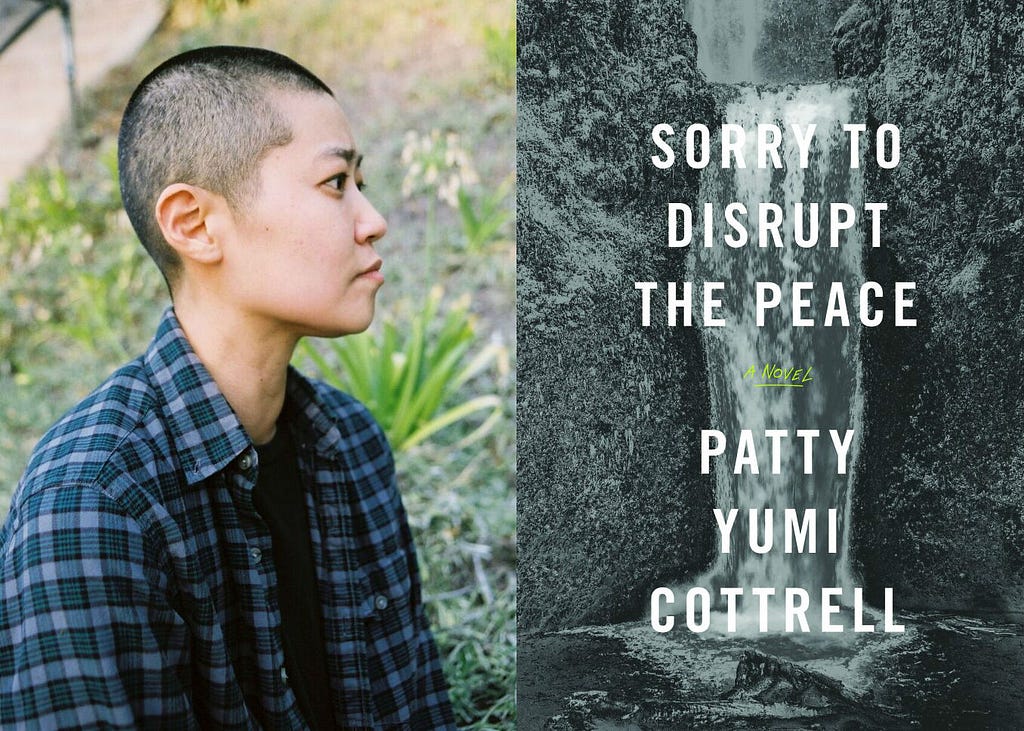
Patrick Yumi Cottrell’s Sorry to Disturb the Peace introduces readers to Helen Moran, a woman who, upon learning of her adopted brother’s suicide, returns to her adoptive parent’s home to investigate the causes. With grim humor, Cottrell writes toward and around the experience of alienation — from identity, family, and society — and the unsolvable mystery of another person’s consciousness. When Cottrell’s singular character calls herself Sister Reliability, but proves to be anything but, it underscores the cognitive dissonance between what a first person narrator says and believes and what a reader understands.
Over email Cottrell and I talked about the allure of first person point of view, perceptions of mental illness, and the authorial choices she made in writing this novel.
Author Patrick Yumi Cottrell
Adalena Kavanagh: Your novel is in the first person, and though your protagonist gives herself the task of investigating her adoptive brother’s suicide, we learn much more about her interiority than the brother’s life and death. Why tell this story in first person? What is it about that perspective that you’re drawn to as a reader and writer?
Patrick Yumi Cottrell: I think first person narratives are seductive and neurotic. Writing this book was like being trapped inside a person’s mind. It was uncomfortable at times, but also necessary for this particular story. In a lot of ways, I didn’t know what I was doing. I figured it out as I wrote. The voice was my priority. I wanted it to flow easily, like a river going down the side of a mountain.
I don’t know why, but it’s always been difficult for me to write in third person. I like figuring out the particular texture and fabric of a narrator’s voice. For some reason, I associate third person with control and manipulation. I’m probably wrong about this, but that’s my sense at the moment.
Kavanagh: To press you a little bit, why was it necessary to tell this story in first person?
Cottrell: It was necessary in the sense that I wanted to follow this very particular voice that had arisen out of the confusion and murk of my life. The voice sounded strong to me. I wanted to follow it to see where it would go.
Kavanagh: Did any specific event or piece of art inspire you in crafting the voice? I ask because I can pinpoint certain ah-ha moments that completely change the trajectory of a piece. I like hearing those stories.
Cottrell: What inspired this book was not reading contemporary fiction for a couple years. And working full-time in Manhattan. And riding the F train into Manhattan at 5 in the morning. And walking around the West Village. I wouldn’t say there was one event or piece of art, but rather an accumulation of experiences. One piece of art that I do remember from the time of writing the book is the Sugar Sphinx by Kara Walker.
Kavanagh: You mentioned associating the third person perspective with “control and manipulation.” Do you mean omniscience? If so, I can see what you mean. That said, because your narrator is first person we’re forced to figure out how reliable she is (in as far as any person with varying degrees of self-awareness and self delusions can be said to be “reliable”). It took a while for me to understand that Helen is very straightforward, but her sense of reality might be compromised. You tease out some of the questions about Helen’s mental state without making clear what her mental state is. Why leave it open ended?
Cottrell: I think the word compromised assumes there’s some kind of truth that has been distorted. We all do that. Who is truly reliable? What is Truth? The thing is, I don’t think Helen is schizophrenic or bipolar. That’s something her brother writes about her, but how reliable is he? I don’t think anyone’s mental state as diagnosed by the DSM is pertinent to this story. I could have deleted that line about schizophrenia or whatever, but in the end, my editor and I made the choice to keep it, because it seems like something the brother would say. He enjoys throwing out suggestive crumbs as clues, but the crumbs don’t always lead anywhere. He’s an enigma. I believe Helen and her brother are both sane people, and resourceful in terms of how they deal with the world.
Kavanagh: Did you have any blocks while writing this?
Cottrell: I didn’t have any writing blocks, but I did take long periods of time away from the book. I was teaching at a charter school and that took up countless hours and days.
Also, I think at some point, I went down the wrong path for the book, and I had to delete a third of it. Or maybe it was half. Looking back, I don’t see this as an obstruction, but rather a moment of good fortune disguised as a crisis. That moment of uncertainty was clarifying in a way. I wasn’t sure I would be able to finish this book. I didn’t feel confident about it. But I knew I wanted to try.
Kavanagh: Would you mind expanding a bit on what the wrong path was?
Cottrell: I was writing more directly about Helen’s past experiences in New York City, for example, doing drugs in New York City with the troubled young people, but it was way too trippy and druggy, like a car filled with weed smoke and ecstasy and teenagers. This went on for a hundred pages. Writing those parts, I felt like I was on drugs, tripping. The narrative became unsteady, and I needed to bring it back to a place where Helen had more authority in terms of what she was saying. The drug section was too ephemeral. It wasn’t working at all. It was a dead end.
Kavanagh: I was struck by the narrator’s choice of referring to her adoptive parents and her adoptive brother as “adoptive.” This reminds the reader that the family dynamic is almost always influenced by the act of adoption. Was this conscious? If so, why?
Cottrell: It’s something that came about naturally. It’s part of her delivery. A few people have commented on it, like, “Oh she never lets you forget that she’s adopted.” That seems fine to me. Why should she let the reader forget she’s adopted? The repetition of the “adoptive” qualifier signals not only an estrangement from her family, but also an estrangement from her circumstances of existing in the world as a Korean adoptee.
Why should she let the reader forget she’s adopted?
Kavanagh: I found her references to her adoption both self-conscious but completely understandable (and maybe inevitable). I’m sure there are adoptees who don’t feel any sense of self-consciousness around adoption but I imagine it would be nearly impossible to forget, especially for transnational adoptees adopted into families of a different race.
At one point the narrator recalls a conversation she has with her adoptive brother (adopted from Korea, like the narrator, by white parents). They both talk about wanting to be white, and then the narrator says:
“We were nothing less than disappointed about being Asian and very ungrateful about being brought into this country, a country neither of us had asked to come into, and neither of us identified as Asian, we never checked the Asian box. If someone asked us our nationality, we usually said, adopted.”
This struck me as the core of the book, both for Helen and her adopted brother. It’s also a unique take on race, which for obvious reasons, people have much invested in, as self-identification, but also because in America it so often affects how you are seen, and treated. But in this passage you highlight that the internal parts of the experience of race are often cultural and situational. For two Asians raised by white Midwesterners who don’t make any accommodations for their adopted children’s birth culture, in place of the cultural experience of race, instead they have the experience of adoption.
I guess this resonated with me because if people asked me my race saying “mixed” feels most accurate, both as self-identification and as experience. I’ve talked to different mixed/and or biracial Asian writers and I was struck by their common determination not to write mixed/biracial characters because they feared their fiction being read as autobiographical. (I’m not sure why I was surprised to hear this — but I always figured that if someone thought my fiction was autobiographical that was their problem, not mine.)
As a Korean adoptee (and forgive me, I am not reducing you to those two identifiers) did you ever fear your novel would be seen as autobiographical? If so, how did you get beyond that? And if not, why not?
Cottrell: I never had that fear, strangely enough. I will say I dislike psychological and psychoanalytic interpretations, often those readings say more about the reader than anything in the book. There are elements of the book that overlap with my life in obvious ways, for example, as you point out, I am a Korean adoptee writing about other Korean adoptees, but the book is a work of imagination. Events, characters, places, etc. are all shaped and constructed deliberately. Reading is a private and subjective experience. If people read the book a particular way, that’s none of my business.
Kavanagh: By psychological and psychoanalytic interpretations do you mean psychological and psychoanalytic interpretations of the text or of the author (and her intentions) through the text? I think they’re two different things. I object to a psychoanalytic interpretation of an author through her text but I probably read text with a psychoanalytic lens — I’m interested in why people do what they do, and though flawed, I do think psychology can give us a way in.
So if not those critical lenses, (of text, and or author through text) which do you prefer to read through and be read through?
Cottrell: I mean psychological or psychoanalytic interpretations that dismiss the narrator as simply crazy, schizophrenic, bipolar, etc. I haven’t given much thought to those types of interpretations being applied to the author. I like readings that assume the death of the author (for example, deconstructive). The other way the book can be read is under a tree, or in a park, or in the midst of an argument with a loved one, or in the Walgreen’s parking lot.
Kavanagh: Helen sets out to solve the mystery of her adopted brother’s suicide and as much as you can ever understand such a personal decision, she does come to an understanding. What felt different for me as a reader was the fact that in many first person narratives (and in novels in general) we expect the narrator to come to a better understanding about their own interiority and life but you almost completely sidestep the epiphany model! She even says “If someone asked me to describe myself, I would say I was the adoptive sister who missed her adoptive brother’s funeral.” She doesn’t tell us how the experience has changed her, but she does reach a final acceptance of her brother’s suicide. The reader gets inside her head and comes to a fairly deep understanding of the narrator but the narrator herself lacks a certain sense of self-awareness, which strikes me as uncommon for a first person voice (it would be easy for a writer to unintentionally write a first person who is too self-aware).
Was Helen’s lack of self-awareness a conscious decision? And if so, did you have any models in mind?
Cottrell: I thought her confidence and lack of self-awareness was funny. I wouldn’t say it was a conscious decision, but that it came about naturally because of the person she is and her circumstances that could be considered destablizing. I like how she doesn’t question her actions. She feels strongly about what she’s doing. Many confident people lack self-awareness. Then there are the people who are very confident because they’re actually good at what they do, like Russell Westbrook or Ottessa Moshfegh. So it all depends.
Kavanagh: What are a few of your favorite first person novels or characters? What about them resonates with you or influenced your writing?
Cottrell: I like Lolita by Vladimir Nabokov. Humbert Humbert is such a monster, he ruins Lolita’s life, his self-awareness is only in service of himself, and he’s quite cruel, yet he can be charming, intelligent, and he seduces the reader into seeing things from his point of view, no matter how fucked up it is or distorted. Lolita is a work of cold genius. No one can touch it.
Kavanagh: Lastly, I want you to imagine a book not yet written but one that you desperately want to read. What is it? What does it do?
Cottrell: I want to read a book by Jesse Ball that channels W.G. Sebald. The fabric of this imaginary book would be incredibly fine and light. It would change me upon reading it.
Easter is almost here, which means that children across the world will be hiding in their bedrooms, trembling in fear of the grotesquely large Easter Bunny — a frightening mythological monster as large as a man with hind legs able to crush human bones like matchsticks. This weird creature is said to stalk around houses, secreting “eggs” from its quasi-mammalian glands in hiding places for unlucky children to find.
Or something like that. It’s been a while since I went to church.
In any event, in anticipation of the Easter Bunny’s visit here are five of the most disturbing stories about bunnies:
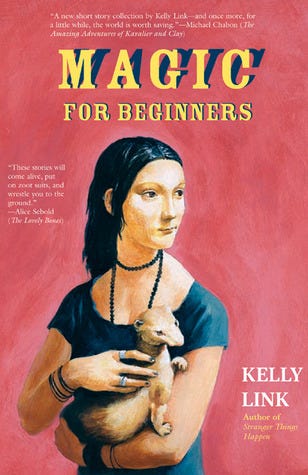
“Stone Animals” by Kelly Link
Kelly Link’s wonderfully creepy short story “Stone Animals” isn’t just the best horror story about rabbits, it’s one of the best horror stories I’ve ever read period. (We published the story in Electric Lit’s Recommended Reading, which you can read here if you are a member.) The story centers around a family that moves out of the city into a house where everything is somehow a little off. The small disturbances grow more and more bizarre, and most of them center around rabbits that appear on the lawn:
In the other bed, Tilly was dreaming about rabbits. When she’d come home from school, she and Carleton had seen rabbits, sitting on the lawn as if they had kept watch over the house all the time that Tilly had been gone. In her dream they were still there.
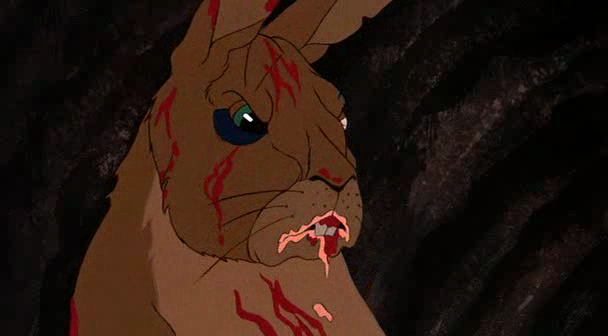
General Woundwort in the animated adaptation
Watership Down by Richard Adams
Watership Down is probably the best-loved novel about rabbits, and for good reason. The adventure story is moving and filled with wonder, readable for children and adults alike. The story follows rabbits in a warren who are dying out without any female does. They end up struggling against a brutal militaristic rabbit warren run by a dictator bunny named General Woundwort. While hardly a horror story overall, there are plenty of frightening moments with Woundwort and his army.
At that moment, in the sunset on Watership Down, there was offered to General Woundwort the opportunity to show whether he was really the leader of vision and genius which he believed himself to be, or whether he was no more than a tyrant with the courage and cunning of a pirate. For one beat of his pulse the lame rabbit’s idea shone clearly before him. He grasped it and realized what it meant. The next, he had pushed it away from him.
From the film adaptation of Jesus’ Son
“Emergency” by Denis Johnson
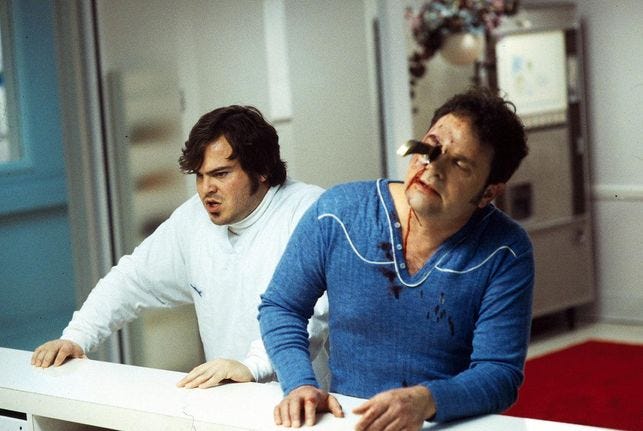
Denis Johnson’s hallucinatory short novel-in-stories, Jesus’ Son, contains more memorable moments than most writers can fit into a career. It’s hard to say any of the stories stand out — they are simply all that good — but if push came to shove “Emergency” is probably the best. In that story, which features a man coming to a hospital with a knife in his eye (played by Denis Johnson himself in the film version), the narrator Fuckhead and fellow addict Georgie find a dead rabbit and slice it open, only to find it was pregnant:
Georgie came back to my side of the truck with his shirtfront stretched out in front of him as if he were carrying apples in it, or some such, but they were, in fact, slimy miniature bunnies.
Like most things that enter Fuckhead’s life, these slimy bunnies don’t make it out okay.
“Letter to a Young Lady in Paris” by Julio Cortázar
Rabbits are normally cute and furry, but not when you are vomiting them magically out of your mouth. In Cortázar’s bizarre and beautiful story, “Letter to a Young Lady in Paris,” a man writes to the woman he is house-sitting for while he vomits up rabbits:
When I think i’m about to vomit a rabbit I put two fingers down my throat like an open set of tongs, and I wait until I can feel the warm hair rising like the fizz of an alka-seltzer.
Despite the premise, this is not a whimsical story in the least. Like much of Cortázar’s work, it’s philosophical and ends on a dark note.
(I love this story so much that I once wrote a sequel where a rabbit vomits up tiny men.)
Alice’s Adventures in Wonderland by Lewis Carroll
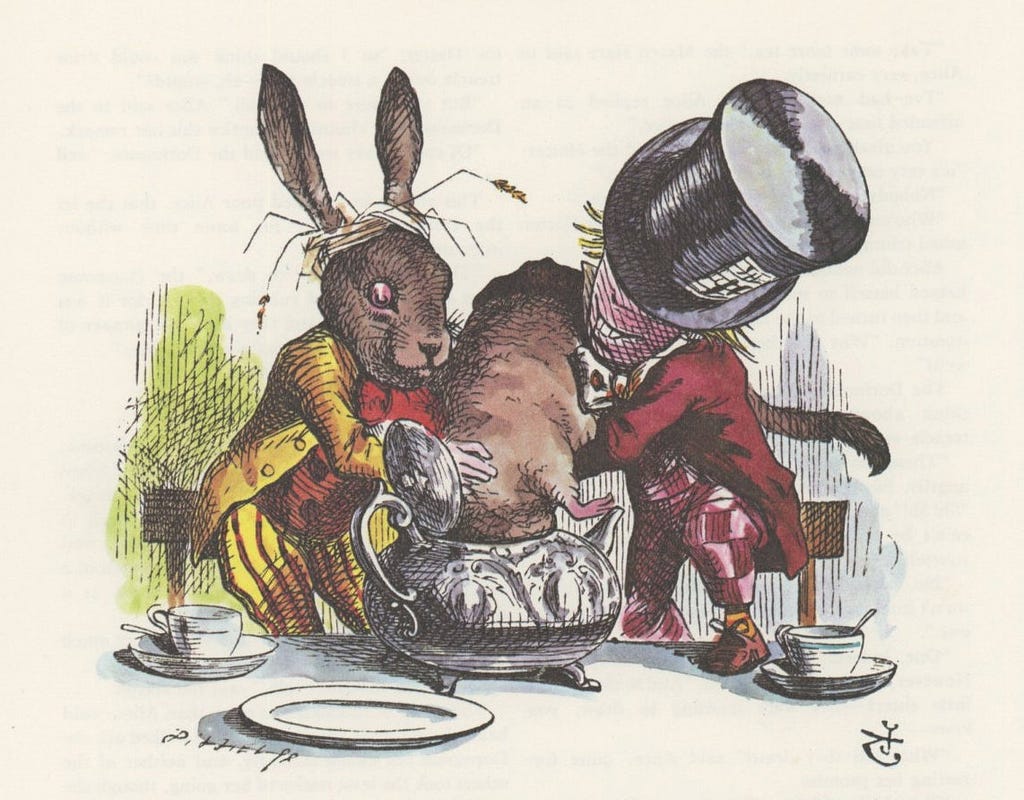
While the White Rabbit who leads Alice down the hole is the most famous bunny in Wonderland, he’s no match for the March Hare when it comes to the disturbing (or disturbed). The March Hare always thinks it is tea time because his friend the Mad Hatter “murdered the time” in a song:
The March Hare took the watch and looked at it gloomily: then he dipped it into his cup of tea, and looked at it again: but he could think of nothing better to say than his first remark, “It was the best butter, you know.”
One of the things that writing teachers, and, increasingly, literary journal guidelines, warn writers against is this: Don’t, they say, ever, they say, write a story or novel about a writer. Worse, they say, is a story or novel about a writer writing about writing. The best stories and novels often break the rules, though, and this is the case with the original, astute debut novel, Oola, by Brittany Newell.
Newell is, frustratingly to this mid-twenties writer, only 21 and graduating from Stanford this spring. It’s also frustrating to know that many, if not all reviews, will mention this fact and possibly focus on it. It’s a shame, because whatever her age, Newell’s insight, intelligence, and prose are all clearly prodigious, which is obvious in her creation of this book, which is both subtle and outrageous, wonderfully readable yet philosophically challenging.
The novel opens with a short prologue chapter, followed by an odd scene, which Newell’s blog (she is a “drag queen” and performance artist who goes by the name Ratty St. John when not writing brilliant novels) suggests may be somewhat autobiographical (I only mention this because I was struck by how bizarre and specific the image in this scene was, and knowing there may be some personal experience with it allows me to feel that image all the deeper for its likely accuracy). In this scene, which takes up the whole of the second chapter, narrator Leif and titular Oola have made up a game. They gather in the living room of the house they’re house-sitting, wearing bits of clothing belonging to the house’s usual occupants. “Then, when she felt moved to, Oola would put a pair of nylon stockings on her head.” Quickly it becomes clear that the pantyhose are on Oola’s face:
Through the stretched fabric, her features were blurred, as if a left-hander had been penciling her, smudging the last stroke as he made the next. Her eyelashes were crimped, her nose squished, her mouth forced open, her cheeks Botoxed back.
Then Leif also wears the stockings, and they take turns until it turns light outside and the game stops with some embarrassment.
This scene, so early in the book, before we really know who Leif is, who Oola is, or what their relationship is, serves two purposes: one, it shows us these characters’ ability to act very, very weirdly, to enjoy it, and to be self-aware about their oddity. Two, it demonstrates a theme that will be present through the book: the blurring of the self, the other, and the perception of that difference.
In terms of plot, the book is quite simple. Leif is a WASP with wealthy parents who have wealthy friends who go out of town and need house-sitters, a perfect situation for Leif, who is traveling around Europe in an attempt to be a writer. Or maybe more accurately, he is attempting to become a writer through the tried and true method of being very privileged and traveling a lot and hoping that worldliness will lead to wisdom. Oola is a conservatory dropout, a pianist taking time off to wander around Europe and sow her wild oats (some more). The two meet, have amazing chemistry, start traveling together, sleeping together, and as far as we can tell, falling madly, deeply, truly in love with each other. Eventually, they end up in Big Sur, California, indefinitely living in a cabin belonging to a relative of Leif’s who’s gone, also indefinitely, into hospice care.
In Big Sur, Leif’s project, alluded to earlier in the book and which has clearly been developing in his mind for some time, starts in earnest. Leif is attempting to write a book about Oola — maybe and maybe not the book readers have in hand; it’s never made 100% clear whether we are reading Leif’s thoughts, his notes, or the finished product of his labors. Oola, by the way, has consented to this project, a fact that Leif sees as excusing everything he goes on to do. Her consent is in the first pages of the book, as if in order to prove it beyond a shadow of a doubt; but her consent is flippant and flimsy, not the “firm and enthusiastic yes” we’re taught in consent workshops. On page 3 of the book, when the couple is climbing into bed to go to sleep, Leif announces that he is thinking of a new project in which Oola will either be the main character or the person on whom the main character will be based. The extent of Oola’s consent is this: “Me? Well, fuck, I’d read it. Guaranteed five-star rating. I turned the light out last night, by the way. So scoot, fatty.” I’d say that’s a half-hearted consent at best, but Leif takes it firmly, enthusiastically, and quite too far.
In order to write the book about Oola, Leif is determined first to know his subject inside-out. He watches her closely from the very beginning of their — for lack of a better, more precise word — relationship. In Europe, he goes so far as to begin tallying the various ways men look at Oola, creating a point system and scale on which he places everything from casual glances to leers and beyond. She notices the fact that he’s watching how others watch her and gets frustrated by it. She, a tall blond American woman who knows, because she has always been told, that she is both beautiful and desireable, is well aware of how men look at her. Women in general are aware of this, and especially those who society has deemed particularly attractive. They have no choice by to notice, and learn to ignore, the male gaze. Leif, however, whom Newell imbues with a truly believable liberal male mindset (he apologizes for using the term “Indian summer” despite its un-PC-ness, for example) is paying attention to this phenomenon for the first time in his life in a concrete rather than abstract way.
But Leif doesn’t stop at watching those whose gazes eat up his beloved Oola. In Big Sur, he collects her orange peels, her toenail clippings, the hair caught in the shower drain. He learns to identify the names of the shades of makeup Oola wears, the fabrics her clothing is made of, the gestures she makes in each of her moods. He goes further, into a territory that is so rife with interpretive possibilities that the mind reels at trying to tally them all, but to discuss this in particular would be to ruin a big part of what the book’s climax is about, which I cannot, in good faith, bring myself to do.
In looser terms, it’s worth commenting on the themes Newell seems to be exploring in the book as a whole. One theme is love, the kind of love that can either destroy the self or the loved one, and sometimes both at the same time. It is the kind of love that is violent in its need to possess, even if the actions are not aggressive in the physical sense of harming another person — they are aggressive in the denial of personhood and selfhood to another human being instead. Another theme is male privilege, and how men, even in their deepest devotion, even enlightened, always have more power than even the most beautiful, goddess-like woman. Newell seems to be questioning that very notion of female beauty, how it can utterly destroy a person even though it gives her a kind of power and social cachet; beauty is so commodified, so absolutely beloved and worshipped in our society, that it can erase the person inside the meat suit that is her body. There is also a tricky and rather extensive and complex conversation about gender and gender performativity that is likely to emerge from many readings.
On a slightly personal note: I started this piece by mentioning how writers are supposed to never write about writers or writers writing; Newell, in breaking this unholy rule, besides writing a brilliant book, has also written some of the most resonant writerly truisms I’ve read in a long time. One such, that is so true as to make me want to weep with gratitude that someone has written it, is that “writers have a natural terror of the afternoon… This terror is least defined in the morning, when the world is hushed and manageable, the body limp and emptied, while the night at least promises morning’s return. The afternoon, on the other hand, is an armpit. One never knows what to do with it. Is it funny or neutral or a little bit sexy? It never feels quite right.”
The afternoon is indeed an armpit, and Britanny Newell’s prose is full of such witty moments that will make even the most skeptical reader yearn to love Leif — and, as mentioned, love can be very, very dangerous in Oola.
I hoped to have a conversation with a writer about games that went a little deeper. There were two main reasons I turned to the Whiting Award-winning writer Tony Tulathimutte. The first was because of his response in an interview with Playboy, in which he said that his interest in gaming probably “had something to do with my desire to bend or break formal conventions in fiction.” The second was his three thousand word essay about Clash of Clans, “Clash Rules Everything Around Me,” which was exactly the type of essay about gaming I wanted to see more of. Tulathimutte is the author of Private Citizens, which we listed as one of the 25 best novels of 2016.
What I want is long-form literary criticism. But writers should just write what they want to read. The body of work will be there and the audience will follow it. The ‘Field of Dreams’ approach.
Graham Oliver: Can we have this conversation without getting stuck trying to legitimize video games as a medium?
Tony Tulathimutte: “Are video games art?” “Have we had the video game Citizen Kane yet?”
GO: That’s such a boring and overdone conversation. I think it’s more interesting to look at the ways in which video games actually do interact with literature, and not to hold the conversation just as a demonstration of our respect.
TT: Take the respect for granted and go from there. I thought about starting a literary magazine about video games a while back, but the discourse had by then become so toxic that, even with the most anodyne academic essay you could write, the best you could hope for was that it would be ignored. There needs to be more space for this kind of writing, but I just didn’t want to wade into it then. I feel a little better about it now, which is why I did the Clash of Clans essay.
GO: What is the difference between video game-related essays showing up on a literary site, versus a site where the primary purpose is the intersection of video games and literature? What could that site do that can’t be done (or isn’t being done) otherwise?
TT: Part of it is just volume. You can’t have a general interest magazine like the New Yorker covering video games to the same depth or degree as it does film or music or even theater. Every big magazine at this point covers video games occasionally — I know the New Yorker has written about Minecraft and No Man’s Sky, for instance. New York Magazine just did a big essay on gaming more broadly.
Gameplay still from ‘Clash of Clans’ (top), and footage from ‘No Man’s Sky’ (bottom)
But for some reason, there’s no video game editor at the New Yorker, no dedicated departments or verticals, except at newer places like VICE, Vox, The Verge. Unlike music or movies, video games aren’t equally distributed through the culture; it’s more compartmentalized. This owes in part to a marketing apparatus around games that caters to and fosters a specific audience, and because the audience for certain genres — responding to these pressures — became self-selecting, especially with respect to gender. Video games may be art, but they are also a STEM [Science, Technology, Engineering, and Mathematics] industry, which makes them no different from any other STEM field in that regard.
GO: It’s a question of access. I was thinking about your Clash essay; you have this entire paragraph that has to explain this massively popular and mechanically fairly simple game. Does that automatically turn off an audience who are already proficient in those basics? In which case, are you only writing for people who don’t game? I suppose that’s another conundrum of coverage in a general interest publication…
TT: If you read an essay by Susan Sontag or Martin Amis about the great books, or by André Bazin about film, they can assume a certain level of knowledge about the text or film from their audience. I can write that way about games on my own time and my own dime, but there’s no presumed canon or general readership for games, because they’re not taught in schools and not regularly discussed in big publications. So you either write for the diehards — the equivalent of film buffs or bookworms — or for novices.
GO: Is that why we haven’t had novels which interact with video games the way David Foster Wallace did with tennis, or Ann Patchett with opera? Neither of their books included explanatory paragraphs; it’s so ingrained in our culture that it seems almost impossible to have grown up without some idea of what tennis or opera are.
TT: Most people have played a game, and the average gamer spends six hours a week playing them. I think it has less to do with the medium inherently than just the failure of writers who have approached the subject. I haven’t read everything on games, but so far, the fledgling efforts have been too literal or kind of corny. Some writers seem to think that you’re supposed to transpose the form of games into fiction — to provide this very lightly remediated experience of reading a book so that it feels like you’re playing a game.
The last thing you want to do is create a watered-down experience of gaming in a text. A book should still work as a book. It’s the usual difficulty of writing about other mediums; there’s that old chestnut that writing about music is like dancing about architecture. But there are special considerations for how to write about any form in a way that conveys deep presence and vividness comparable to the experience itself.
GO: When you’re writing about games in one form or another, do you find you prefer to write for someone who is like you — very interested in both writing and video games — or is your preference for someone in that liminal space somewhere between them?
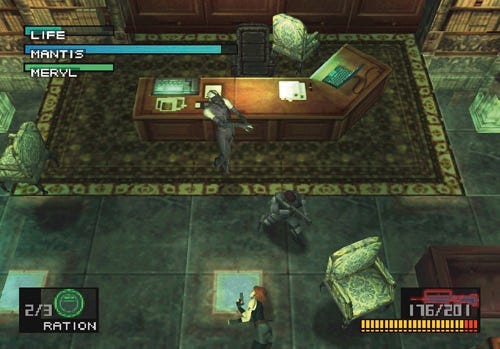
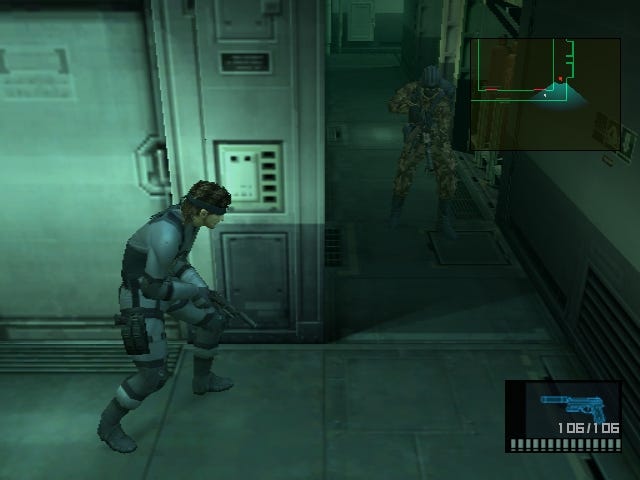
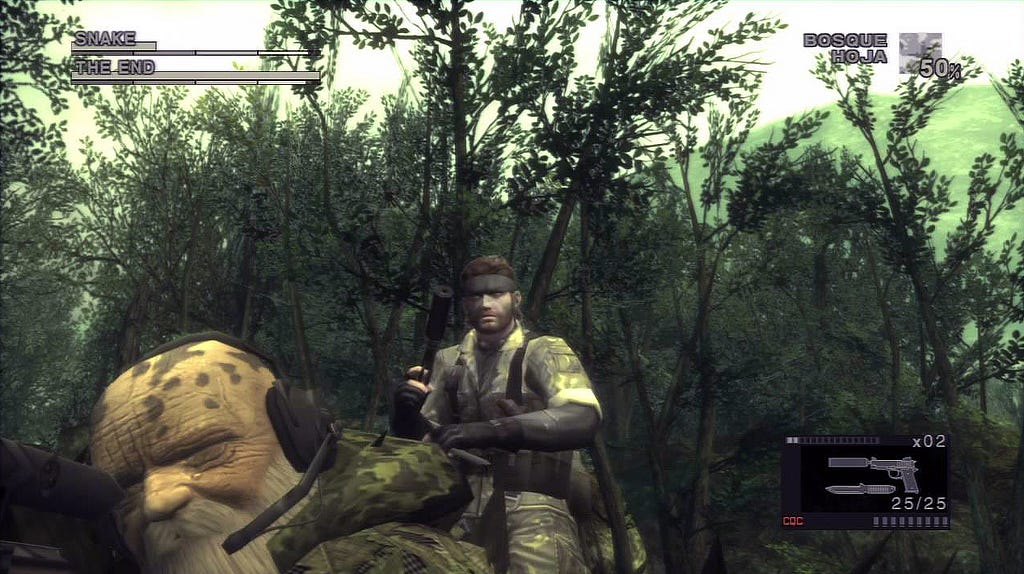
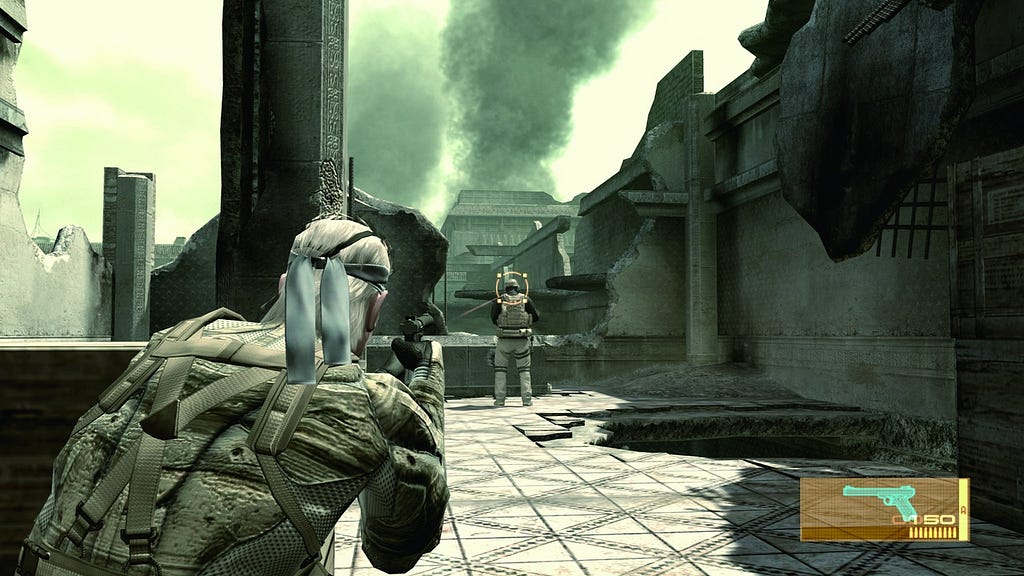
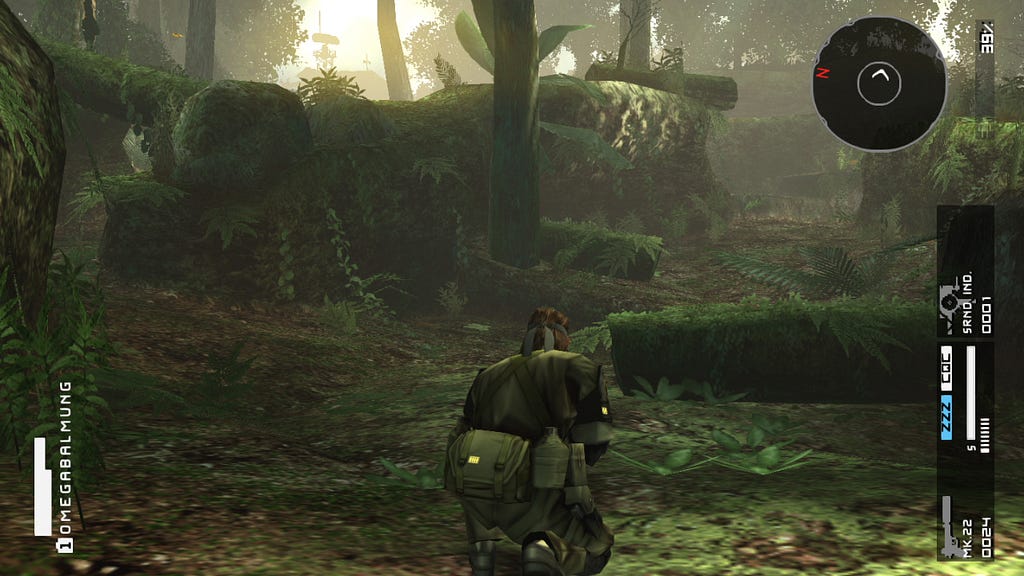
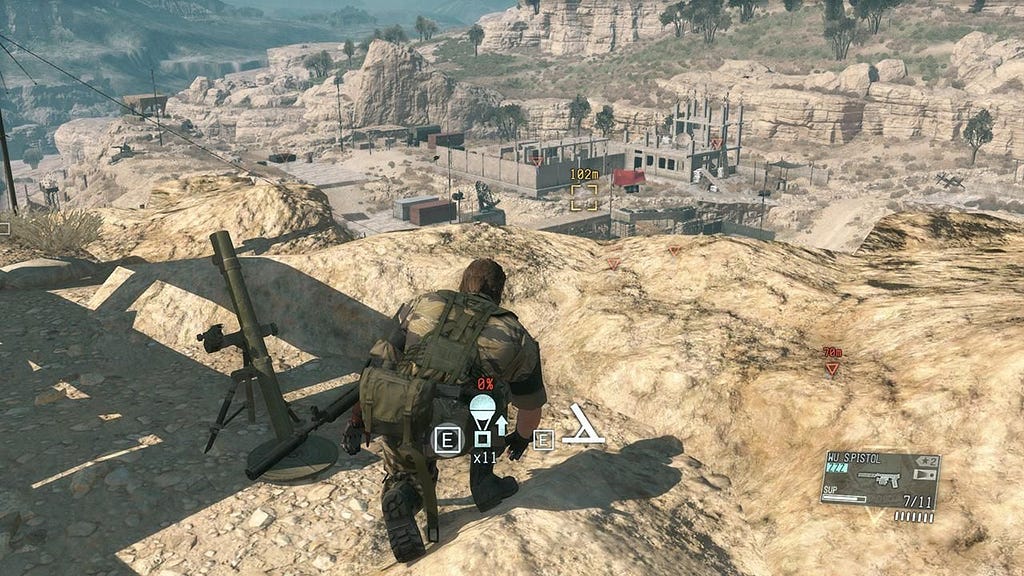
TT: I approach it as I do with all my creative writing, which is to write for the audience of Tony. That frees to me to write things irrespective of their publishability. Right now I’m working on a long essay about Metal Gear Solid — the whole series. That’s between ten and twenty games, depending on which ones you call canon. The dialogue alone stacks up to something like sixty thousand words each. And the companion synopsis is almost three thousand words. I’m just trying to make points about the series that haven’t been made before. Would Kill Screen or The New York Review of Books ever run that? Hell to the fuck no.
Gameplay stills from across the Metal Gear Solid series
If writers keep doing this, eventually there will be a readership equipped to deal with it. For the longest time there have been really smart people playing video games and wondering where all the good criticism was. It’s a discoverability issue, to a certain extent. There’s so much good writing out there about games, but most games-writing outlets cater to fairly niche perspectives. Action Button is extremely good, irreverent creative criticism, probably my favorite. Five Out of Ten is academically oriented, Kill Screen is mainstream journalism. What I want is long-form literary criticism. But writers should just write what they want to read. The body of work will be there and the audience will follow it. The Field of Dreams approach.
GO: You said earlier (and you’ve also mentioned it in your Playboy interview) that the discourse around games is toxic and partisan. Are you talking about within or outside of the gaming community?
TT: All of it. Partisan lines have been drawn within it for purposes far beyond aesthetic disagreement. In part because so much of this discourse occurs in a medium where people are not held accountable for their words, i.e. on the internet.
TT: I want to do my part to de-estrange gaming discourse. Not de-stigmatize or demystify, but de-estrange. This cancerous shit happens everywhere — it just happens in a spectacularly aggressive and organized way in gaming.
GO: When you’re not actually writing about video games, what place do they hold in your life? Are they the stress relief at the end of the day, the reward after two hours of writing? Or something you try to avoid when you’re in the middle of a big project?
TT: I’ve played video games since I was three years old. I have loved video games a lot longer than I’ve loved literature — which is not to say more. Actually… yeah, probably more. It just so happens that I’m a writer. I don’t feel the guilt that some people do who, even if they enjoy gaming, approach it feeling as if it’s a waste of time, or a form of entertainment which takes them away from their “real life.” You wouldn’t condemn a cineaste or a lover of literature. But a fug of non-respectability still attends video games.
That said, the reward mechanisms in most games are designed to get you hooked in cognitive motivational ways that don’t apply to most literature. So it’s absolutely possible for games to displace other things that you would want to do just as much. I don’t struggle to fit them into my life, but I probably would, if my life consisted of much more than just teaching and writing.
GO: I suppose I was thinking more about the effect on your mental state. For instance, I have to save video games for the end of the day, because I have a hard time going from the almost meditative state of game-playing into writing. How does it fit in, not in the sense of time but in how it interacts with your ability to produce writing afterwards?
TT: If a visual narrative enters my head before I start writing, it’s enormously difficult to pull myself back into writing. A huge amount of psychic inertia has to be overcome to transition from consuming a narrative to assembling one. I have a lot of wacko bird theories as to why. Perhaps language is such an information-poor medium that it demands a sparseness of input, so that you can have room to envision or create new stuff in your head. Maybe the act of viewing, which puts you in the posture of evaluation and judgment, beefs up the inner critic that makes it hard to write. That’s all pure superstition, I have nothing to base that on.
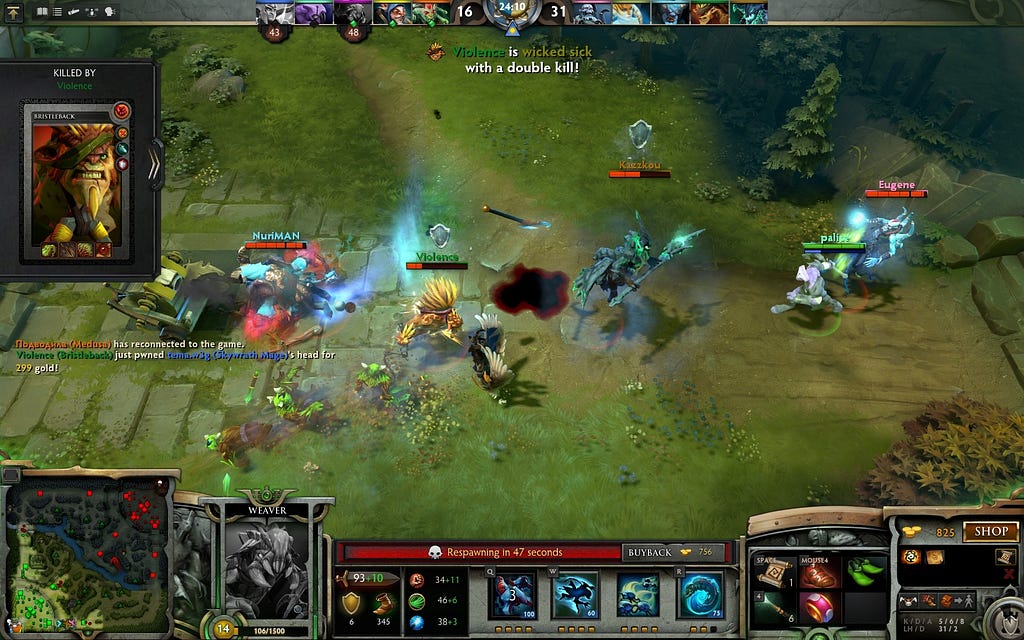
GO: What about when it comes to the type of video game? You’ve mentioned playing DotA 2 in other interviews, which is very different from more narrative-heavy single player games. In the middle of a big writing project, do you find yourself drawn more to one type of game over another?
TT: With the caveat that writers are the worst self-appraisers, I’ll say that I have not noticed any influence from the type of games I’m playing on what I write. I think games engage an entirely different part of my brain, which might also account for the difficulty I have toggling between those two modes. That said, I think longer games can work like long books — immersively — where you have to pinch your nose and take a deep breath before plunging into the Neapolitan books and it just becomes the medium you swim in for months. Some games demand a higher or more frequent degree of engagement to get any kind of nuance at all. You can play a thousand hours of DotA 2, without coming anywhere near understanding it.
Gameplay still from ‘DotA 2’
GO: How does that compare to the relationship between reading and your own work? Do you avoid other people’s writing when working, or do you keep books on your desk for the sake of referencing them?
TT: I do. I try to keep a messy puddle of books around my work area, in case I want to steal something from somebody else. But I Google as much as I refer to other books. I don’t disconnect from the internet when I’m writing, like some writers who have this almost mystical anathema against technology. I generally find I benefit from my procrastination.
You can have a rom-com game, a campus game, an adultery game, or a boring-but-important game that will get taught in high schools circa 2110.
GO: You referred to language as being information-poor a minute ago, which reminds me of the AGNI essay you wrote on boredom. The thesis of that essay was basically that boredom in literature is okay. Can you also apply that idea to video games? Can there be meaningful or productive boredom while playing, through the act of repetition, for instance? I just played Her Story, which I know you enjoyed, and while it has a super interesting story you have to slog through a certain amount of repetition to get to it.
TT: The democratization of game creation is producing a wider range of games, like the Super 8 camera did with film. You can have vignette-style games like Nina Freeman’s — Cibele, how do you Do It?, Freshman Year, etc. You can have “walking simulators” that are almost purely meditative, like Gone Home, Firewatch, or Dear Esther. I just saw a piece on a game based on Thoreau’s Walden.
The impulses and tendencies that make people want to create literature are present. It will happen more as people are able to do what they want to do, without enormous corporate financial support or even crowdfunding, which, to an extent, just moves the bottom line to having to be crowd-pleasing. Games can be plenty boring in spite of themselves, even if that’s not what they’re trying to do. It’s a cliché by now to point out that the most time investment-heavy games like World of Warcraft consist largely of “grinding.” Or, if you play something like DotA 2, queuing for a game.
GO: For DotA 2 you also have to spend a lot of time reading up on viable builds. Work that’s not in actually playing the game.
TT: Yes, although I will say that that intellectual work doesn’t feel like tedious labor to me. I have fun looking up builds. The deep strategy and understanding are coextensive with the pleasure of playing the game.
Moments of boredom are built into games for reasons that range from comedy to suspense. I think a lot about the moment in Final Fantasy VI where you’re directed to just wait at the edge of a floating continent for a character to come along. On the one hand you’re sitting watching a clock tick down. On the other hand, it’s extremely tense.
Contrasting aesthetic effects in games to those in other media is not always productive, because it’s like playing Twenty Questions. Can games do X like books? Can games do Y like films? In the same way we should assume games are art, and that there’s an audience out there hungry to make something of them, we should assume that games can do anything. You can have a rom-com game, a campus game, an adultery game, or a boring-but-important game that will get taught in high schools circa 2110.
GO: I go to these academic conferences where a similar conversation is happening among professors who write in the field of gaming studies. Some bring in literary and film theory, and try to lay that on top of video games, while others reject that. The tools and the language are already there from other fields, so it seems easy. On the other hand, it can be kind of reductive, and perhaps prevents you from having the more meaningful conversation.
TT: Right, or even just the conversation you’re trying to have. There are also those efforts to create a language around game studies, partly I think try to legitimatize it in the eyes of the academy. You get people going on about the Ludologists versus the Narratologists, about ludonarrative dissonance, copping these quasi-academic terms. I can see the point of systematizing things, but my favorite criticism helps you not to just describe and understand, but to enjoy stuff more.
GO: How much do you worry about the effect that being an “out” gamer will have on your literary career?
TT: If I were bashful or coy about my love of video games I wouldn’t do this interview. The same goes for pornography or television. Even the language of being “out” implies a political and social pressure or an importance that just doesn’t exist. I’d hate to believe that being a writer means living in a constant state of deposition, publicizing everything you do, think, or feel. The fact that I like video games isn’t interesting. Video games are interesting. I love talking about them with smart people, both within and outside of gaming culture. But I’m also perfectly happy to be left alone with them.
GO: Do you hope there’s a day around the corner where a game developer decides to make a narrative-heavy game like Life is Strange, Her Story, or Kentucky Route Zero, and they look at a list of literary authors to figure out who should write it?
TT: Not at all. I believe that I can do a lot of things in writing, but I haven’t felt an urge to create a video game since the third grade. It’s always good to have some kind of interest that is totally pure, where you’re going to be an eternal fan, because sausage-making can disillusion you fast. If part of the charge of art comes from mystique or sheer baffled admiration, that’s something I want to preserve in at least a few departments of my life.
GO: As a writer, you’re expected to be both a creator and a thoughtful critic as well. It seems like once you publish a book, there is an expectation that you’ll be reviewing or blurbing for other books for the rest of your life. How does your approach to writing about literature differ from your essays on games?
TT: I review books as a practitioner; I know what goes into putting one together, so I can pan one that isn’t well-made. I write about games as an appreciator, in that I want to take something I like and enlarge people’s sense of pleasure or wonder at it. This doesn’t mean that I can’t be critical of a game. I have negative things to say about everything. But because I’m not highly qualified to trivialize or disparage a game on the level of craft — for instance, a sunbeam in a video game might look shitty and aliased because of technological or budgetary constraints that I’m not aware of — my main task is to study its narrative and to add value.
GO: You’ve been thinking about games critically for a long time. I read that you wrote your theses — both in undergrad and for your first master’s degree — on video game interaction. What were you looking at in those?
TT: I majored in something called Symbolic Systems, which would be called cognitive sciences anywhere else. They add linguistics and philosophy to the standard curriculum of formal logic, computer science, and cognitive psychology. I applied the extremely specific language of human-computer interaction studies to video games. So I wrote pretty dry literature surveys of game-writing and interaction theory, and how the latter could be applied to the former.
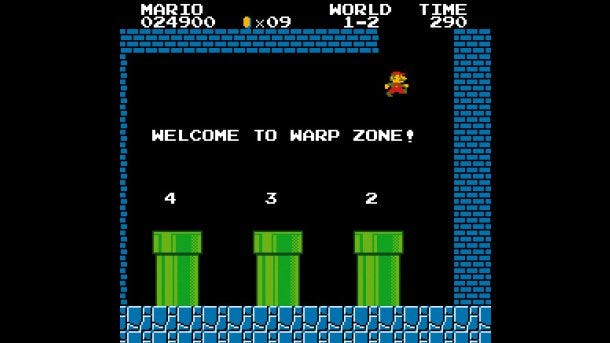
One was about game controller design, which ended up anticipating the Nintendo Wii controller by a couple of years. I talked about the potential for modular design and gestural input. The second thesis was about menus. They’re the basis of turn-based RPGs, and in games their definitional boundaries are weird. Take the Warp Zone Pipes in Super Mario Brothers. You go over a ceiling and drop into a room where you’re invited to select one of three pipes to go through. It is very clearly a menu, where you’re selecting one of three options, but it’s also a part of the action.
God, I sound so stoned when I talk about this.
Gameplay still from ‘Super Mario Bros.’
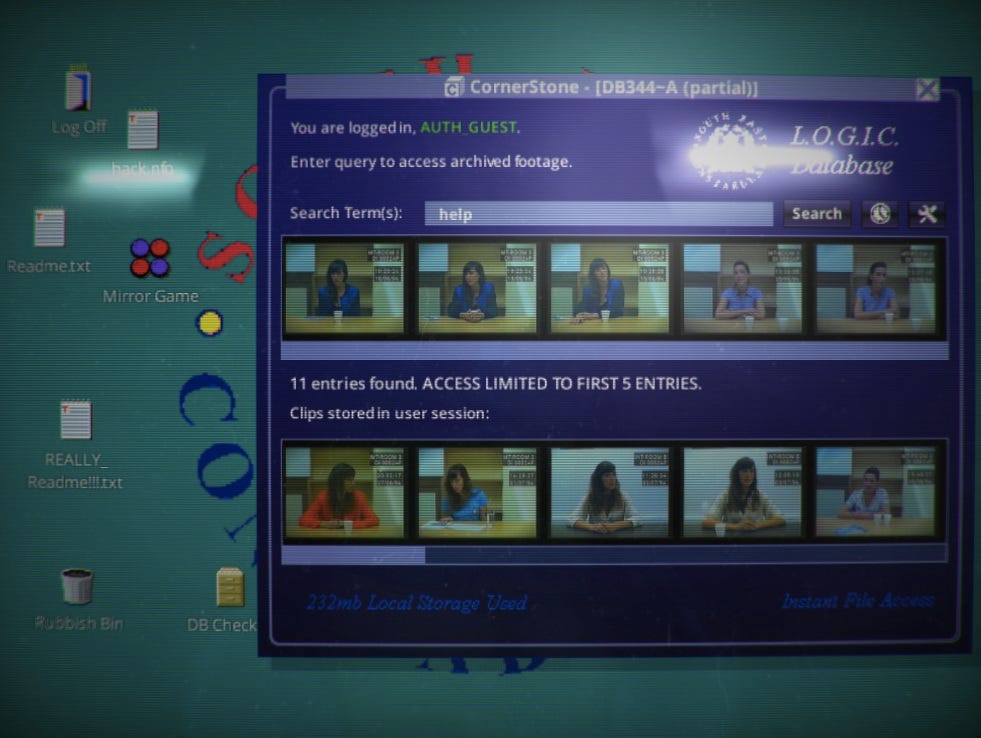
GO: I hate to keep mentioning Her Story, but I just started it today. In that game, the user interface also has this blurry boundary. You read a ReadMe file to learn how to use the system, but that’s all part of the in-game computer you interact with as part of the story.
TT: Yeah, it’s brilliant. Any computer interaction can be extrapolated into a game premise. Here it’s basically Database Search: The Game, but it’s fun and well written. To analogize with literature, there are plenty of stories whose premise comes from its formal conceit. My favorite is “Going for a Beer” by Robert Coover. He takes a simple sentence gimmick — where two things that happen at different times are written as though they’re simultaneous — and it becomes the conceit of the story. The story is, “what if your life was composed of moments with endings and beginnings but no middles?”
GO: Form matching content. That happens in all types of art, right? There was a piece on Hamilton which pointed out that, as the first half progresses, the Marquis de Lafayette’s rhymes get denser and faster, coinciding with him being in America and increasingly speaking English. The music reflects the plot.
TT: Form generating content, I would say. It’s a classical idea. Sometimes it’s done very explicitly, like with Oulipo. It can be super corny, but it’s a dependable source of inspiration.
It’s Tristram Shandy-levels of batshit.
GO: Going back to your idea for a game-writing website, were you imagining a place that just collected the kind of long-form writing you want to see, or were you also imagining a community that would be built around it?
TT: I am not too concerned with building community. The idea was simply to get critical essays on games — not fiction, poetry, reviews, or personal essays, but literary analysis. Like the essay I’m working on about the Metal Gear Solid series… So many of the male characters lose their hands and are sterile and have daddy issues and misinterpret the will of one female character, The Boss. Aside from the glaring Freudian overtones, what’s that about? This is not stuff that figures into the plot as it plays out, but is something that I think screams out for conversation.
GO: I was a Nintendo kid and then jumped to PC gaming, so I never got into the Metal Gear games.
TT: It’s like the Infinite Jest of games. As far as I know, it’s the longest continuous scripted narrative in games. You can make a strained case for things like Zelda or Metroid, but this is the most sustained vision from an auteurist figure, Hideo Kojima, and it’s just bonkers. It’s Tristram Shandy-levels of batshit.
GO: Well, that sells it. I now have to ask the big, speculative question, since you just called it the Infinite Jest of games. What do you think David Foster Wallace’s writing would have been like, had he been obsessed with video games rather than television?
TT: This question is so enormously counterfactual it might as well be a novel. The guy was hugely tech-avoidant. He typed with one finger on an old computer. But games seem very contiguous with his concerns in Infinite Jest. Though who’s to say Virginia Woolf wouldn’t have also gotten equally invested in games? Wallace is a gimme because of the technological overlap, but to me the more interesting speculative question is, What would a game written by P.G. Wodehouse be like? I want to see an essay on that.
Girls, Lena Dunham’s groundbreaking comedy about short-sighted, well-meaning millennials in Brooklyn, will air its final episode this Sunday. The show invited early comparisons to Sex and the City with its premise — four friends in the city, each a type: the free spirit (Jessa/Samantha), the type-A (Shoshanna/Miranda), the image-obsessed (Charlotte/Marnie), and the charismatic narcissist (Hannah/Carrie). Though some episodes of Sex and the City have aged better than others, that show’s focus on the enduring friendships of single women marked a cultural sea-change. “Maybe we could be each other’s soulmates.” Charlotte says to her three best friends in Season 4, Episode 1, “And then we could let men be just these great nice guys to have fun with.” This moment is Sex and the City’s thesis; the emotional equivalent of a BFF broken-heart necklace.
But it’s clear, as we near the end of the sixth and final season, that the thesis of Girls could not be more different. In last week’s episode, when Hannah tells Elijah she’s considering moving upstate for a teaching position (did you know that publishing a handful of essays online can land you a full professorship, with benefits, at a leafy university?), they make a direct nod to that Sex and the City ethos. “But you’ve made so many wonderful friendships here,” Elijah says, and they both burst out laughing.
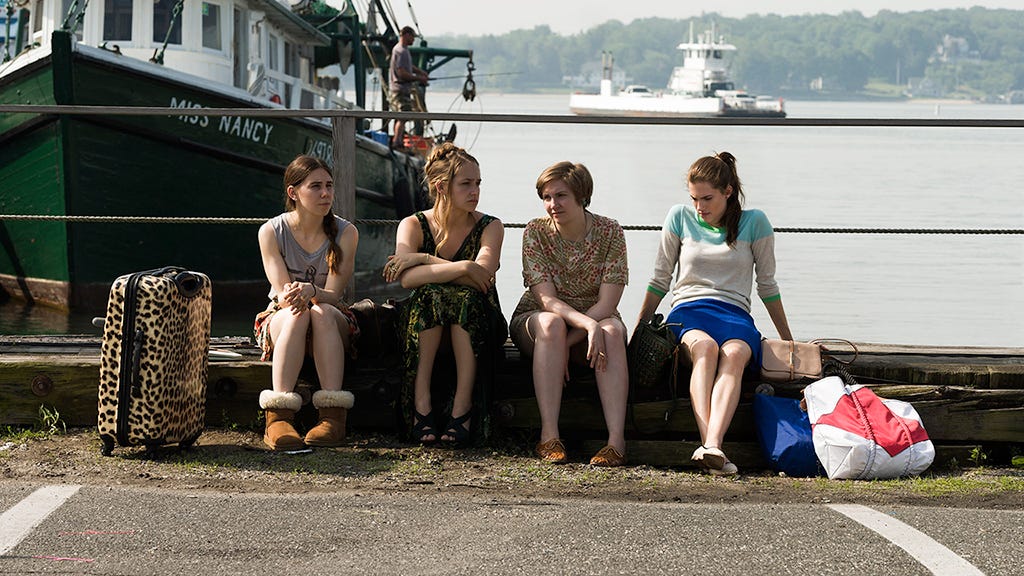
Hannah, Shoshanna, Marnie, and Jessa aren’t each other’s soul mates. In fact, these women don’t even like one another, and they haven’t for years. In “Beach House” (Season 3, Episode 7), Marnie calls a seaside friendship summit to “heal” and “prove to everyone via Instagram that we can still have fun as a group.” The weekend ends with drunken Shoshanna evisceratingher so-called friends with what will come to be her signature, cutting tongue: “Sometimes I wonder if my social anxiety is holding me back from meeting the people who would actually be right for me, instead of some fucking whiny nothings as friends.” Last week, the plot of the “Beach House” episode was replayed in a single scene. Marnie calls a “group meeting” in a crowded bathroom, where Shoshanna delivers the perfect rejoinder to Charlotte’s sentimental proclamation. “I have come to realize how exhausting, and narcissistic and ultimately boring this whole dynamic is,” she says. It’s a perfect Girls thesis: self-deprecating, ironic, and self-referential. The emotional equivalent of retweeting your trolls.
As the series draws to a close, each character is growing up and moving on. Hannah has embraced her pregnancy and a new life of responsibility. Shosh fulfilled her wish from season three: she has gotten engaged and found a new group of friends. Jessa, whose emotionally reckless behavior no longer suits her, seems about to turn a corner toward kindness and reciprocal love. Marnie, who finally knows what a high person looks like, is doing some serious soul-searching on her mother’s couch and may soon find gainful employment. Elijah has rapidly discovered and realized his acting ambitions, and, despite his protestations, will be absolutely fine when Hannah leaves the city. Given all of these character’s trajectories, it’s clear that Girls is not a show about friendship; it’s a show about self-knowledge.
There will be no central love story (other than the one between Hannah and Elijah, perhaps) or dramatic conclusion. Re-watching old episodes, I realized I had forgotten so many of the plot points, hook-ups, and exes: Elijah’s brief relationship with Doyle from Gilmore Girls; the time Shoshanna dated Jason Ritter from Parenthood; Jessa’s job as a nanny and her flirtation with the kid’s father. Desi, Charlie, Sandy (Donald Glover), Mimi-Rose (Gillian Jacobs), Fran… Then there’s the time Marnie slept with Elijah, the time Hannah blew Ray, when Shosh dated Ray, when Hannah dated Elijah, when Marnie dated Ray, when Hannah dated Adam, when Jessa dated Adam. In the end these relationships matter as much as relationships from your early- to mid-twenties are supposed to matter, which is not as much as you thought they would at the time.
It’s fitting that the show’s best episodes are not about these relationships and interpersonal dramas of its characters. The masterpiece of Girls, in the end, is not plot but character-craft, achieved through nuanced dialogue and sensitive observation, epitomized in three standalone episodes. Each focuses on a mini-arc of a single character and is self-contained and satisfying unto itself. The industry term for these would be bottle episodes, but I prefer to think of them as short stories — alive on-screen but written for the page. Watching them for the first time, and again, I was reminded of short stories I’ve loved. The fraught sexuality and intelligence of Mary Gaitskill, the wry asides of Lorrie Moore, the urgency of girlhood in Jamaica Kincaid, the tightly wrapped, but still unexpected plots of Alice Munro. The satisfaction one can get from a well-crafted short story is not often found in television in its serial, increasingly bingeable form, but as evidenced here, the two are unexpectedly compatible.
Hannah & Joshua, “Another Man’s Trash.” (2013)
“Another Man’s Trash” Season 2, Episode 5
Watch if you like to read: Lorrie Moore or Jhumpa Lahiri Story type: Close quarters Subset: Unlikely friendship/romance
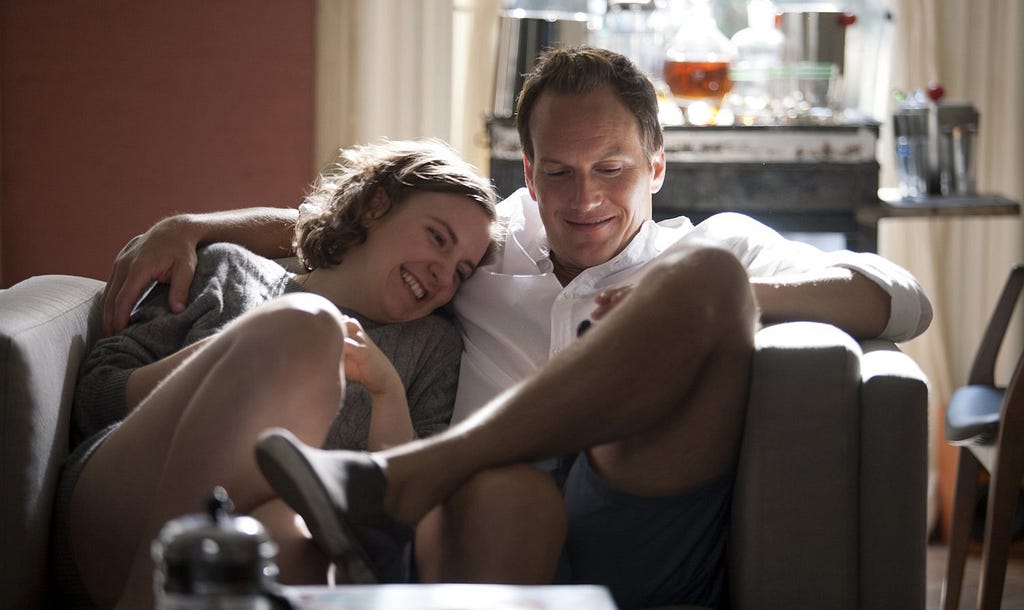
Hannah spends two days shacked up with handsome older man — Joshua (not Josh), played by Patrick Wilson. If you’ve forgotten the details of the episode you may remember the attendant internet furor: this was early in the series when people were enraged by the site of Lena Dunham’s naked body on television. Probably, they still are; I’ve stopped paying attention to their childish fits of misogyny. “Another Man’s Trash” was the ultimate affront to these trolls — why would a man as gorgeous as Patrick Wilson go for pear-shaped Hannah Horvath? If I recall, topless ping-pong was her greatest offense. Being naked during well-lit sex requires a certain amount of confidence, but playing topless table tennis requires a level of comfort with one’s own body women are actively prevented from ever achieving.
The backlash has little to do with the plot, which is subtle and sophisticated; and the interaction of the story’s themes with the visual politics and public perception only deepens their meaning. Hannah is working at Ray’s coffee shop, and after confessing to a neighbor that she has been disposing of the shop’s trash in his garbage bins, they end up having sex in the living room of his brownstone. At Joshua’s urging, she stays, spending the night, and the next night, luxuriating in his cashmere sweater, visiting his life the way one visits a luxury hotel. She is equally impressed by his belongings as she is by the ease with which he possesses them. The lemonade in a highball glass, a grilled steak (“Were you planning for guests, or…?” “No, I was planning for steak.”), the fireplace, the shower, which she makes so hot and steamy she passes out.
Of course Joshua rescues her, wraps her in a plush bathrobe and comforts her sweetly. This is when she has her epiphany: she wants something traditional. She wants a nice place to live, and she wants to be happy:
“I made a promise such a long time ago that I was going to take in experiences and I guess tell other people about them and maybe save them but it gets so tiring. Taking in all the experience for everybody. Letting anyone say anything to me. Then I came here, and I see you, and you’ve got the fruit in the bowl and the fridge with the stuff, and the robe and you’re touching me the way that you… And I realize, I’m not different, you know? I want what everyone wants. I want what they all want. I want all the things. I just want to be happy.”
Over the last day and a half, Hannah has realized what it takes most people all of their twenties to accept: that she wants the comforts of a upper middle class life. It’s almost a sweet moment; Joshua seems to understand the emotional place she’s in. But Hannah, being Hannah, can’t stop there. Like any good epiphany in literature, this one is false, undercut by an inability to change. She sabotages the moment by confessing the worst things she can think of: she once asked a guy to punch her in the chest and then cum in that spot. When she was three, she lied, or maybe didn’t lie, and told her mom a babysitter touched her vagina in the bath. Joshua tries to reciprocate her non-sequiturs by telling her he once let a boy give him a hand job when he was nine, be she dismisses his attempt to connect: “Well I think that’s pretty different because you let him and this wasn’t my choice.”
Like any good epiphany in literature, this one is false, undercut by an inability to change.
She explains she is too smart, and too sensitive, and “too not crazy” to not want to feel all the feelings (the logic is tangled). It’s a tantrum of sorts, and it has the desired effect: she ends the weekend’s romantic charade while maintaining the posture of the powerless party. The cocoon of their affair is broken by her actions, but she blames Joshua when he pulls away.
In the morning, Joshua is gone. Hannah makes the bed and, the finishing touch: she takes out the trash as she leaves. (“Say Yes” by Tobias Wolff, which is structurally similar, also ends this way, with a character taking out the trash.) In the shot of her walking away down the street, I was struck that she has no purse, and probably no phone or wallet. She had just stepped out to apologize to a stranger, and she lost two whole days to impulse and spontaneous connection.
Hannah & Philip, “American Bitch.” (2017)
“American Bitch” Season 6, Episode 3
Watch if you like to read: Raymond Carver or Mary Gaitskill Story type: Metafictional polemic Subset: Story in dialogue
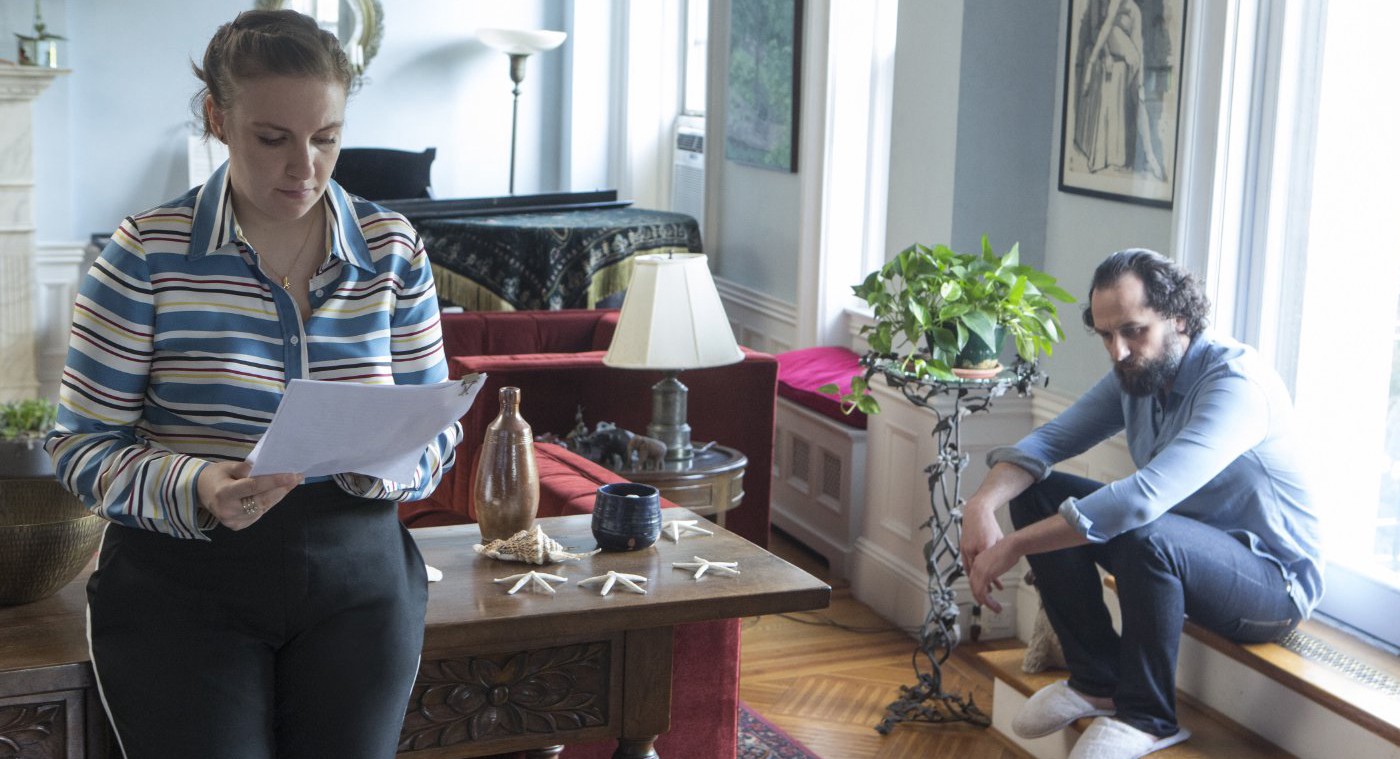
“American Bitch” works beautifully as a coda to “Another Man’s Trash.” Besides Hannah, no other characters from the regular Girls cast appears. (“Another Man’s Trash” includes Ray in the opening scene.) Hannah again arrives at a nice home, only this time she has been invited. It’s a beautiful apartment on Central Park, owned by the novelist Chuck Palmer (Matthew Rhys), who has summoned Hannah after she wrote a blog post responding to accusations that he had coerced a college student into giving him oral sex while on book tour.
Chuck’s apartment is introduced with a Wes Anderson-esque survey of objects set to courtly music (the same tactic is used in “Beach House”), but Hannah is notably less impressed by the well-appointed apartment than she was by Joshua’s renovated brownstone. “I didn’t know novelists could make this much money,” she says, almost disparagingly. She’s more concerned with her self-presentation this time; she applies lipstick in the mirrored elevator, wipes armpits in the bathroom. The proximity to a life she covets — even one that so closely aligns with her career ambitions — no longer destabilizes her sense of self.
The episode is like a play, or a short story made entirely of the dialogue of a debate. (Think “Bangkok” by James Salter or “What We Talk About When We Talk About Love” by Raymond Carver.) The topic is, as Chuck puts it, “How exactly does one give a non-consensual blow job?” It’s useful here to consider the old writer’s adage “show don’t tell.” The episode does both. First the telling. Hannah starts with a quip: “It would be very chokey,” and goes on to argue her point more adequately, through dialogue. But, like the best stories, the question is eventually answered, unequivocally, by action.
Chuck argues that Hannah, who is “clearly very bright,” should write about topics that matter. Hannah argues that this topic does matter, because of “the larger significance” which she defines as “the power imbalance,” and which is apparently lost on him.
“The part where she looks like a Victoria’s Secret model and I didn’t lose my virginity until I was 25 and I was on Accutane, that part’s not lost on me,” Chuck retorts.
“Ah no,” Hannah says:
“I’m talking about the part where you’re a very fucking famous writer and she’s working really hard to get just a little bit of what you get every day. So you invite her back to your hotel room. What’s she supposed to say? No? She admires you. Then you unbuckle your pants. What is she going to do next? You’ve got it wrong; it’s not so she has a story, it’s so she feels like she exists. And by the way, people don’t talk about this shit for fun. It ruins their lives, you know that.”
Hannah has done an excellent job arguing how someone can end up giving a non-consensual blow job, but Chuck, a charismatic, intelligent manipulator, is still not convinced. He senses Hannah’s vulnerability when she tells a story about an elementary school teacher who massaged her neck and shoulders in class (an appropriate story for the moment and the context, unlike the ones she told Joshua). Chuck listens respectfully. He says he’s sorry that happened to her. He asks if he can read her something.
The story he reads is about the night in question, and casts him as alienated and lonely, sympathetic and sensitive. He stops reading aloud and asks her to take over, stepping aside in a revealed attack. Now she literally has to say his words, and it’s enough to convince her to see his side.
From there, they connect easily. Chuck flatters her by calling her “not just a pretty face” and telling her she’s “a fucking writer.” Though Hannah has already called herself a writer many times during their visit — in fact, it’s the first thing she wanted to say to him — you can tell by her face that it has more weight coming from him.
He shows her a book in his bedroom; a signed copy of When She Was Good by Philip Roth, which he tells her to keep — “I like how happy it makes you.” Then he asks her to lie down with him on the bed for “just a moment.” He’s already lying down when he says, “I’d encourage you to keep you clothes on to delineate any boundaries that feel right to you, but I just want to feel close to someone in a way I haven’t in a long time. If you please. If you please.” He says that last part twice. She frowns, but joins him, clutching the book. The silence is awkward. “I’m sorry I wrote something about you that upset you so much,” she says, probably to fill it. “Without considering all the facts.” Chuck tells her it’s all right. He’s not angry. He shifts his weight and then turns over. He has an erection and he’s taken it out of his pants, and placed it right on her leg. She looks down, and grabs it, still clutching the book. Then she snaps out of it, jumps up, and exclaims, “You pulled your dick out, and I touched your dick.” She’s stating the obvious but the obvious is remarkable. It was like a reflex, like he’d tossed her something breakable and, like any reasonable person, she’d caught it. Chuck smiles. Checkmate.
She’s stating the obvious but the obvious is remarkable. It was like a reflex, like he’d tossed her something breakable and, like any reasonable person, she’d caught it.
Had Hannah still been the girl she described to Joshua, the one who “took in all the experiences for everybody” and wanted to have all the feelings, her brief grip would have surely turned into more. And THAT, ladies and gentlemen, is how exactly one ends up giving a non-consensual blow job. The writing has answered the episode’s central question, undid its own answer, and through the art of showing, answered it here, again.
Watch if you like to read: ZZ Packer or Alejandro Zambra Story Type: One-thing-leads-to-another, road trip Subset: Unreliable narrator
“Panic in Central Park” is Girls’only episode completely dedicated to a secondary character. In it, Marnie shows that she can be spontaneous and honest. For perhaps the first time, the Girls audience sees her with her guard down, having fun, acting on impulse, and forgetting about appearances. After a fight with Desi, she leaves her apartment and runs into her ex Charlie, who looks like he’s been to prison. He’s beefier, has a new amorphous Brooklyn accent, and a tattoo across his chest that says “Humble Life.” He convinces her to come to a party uptown, basically by telling her he was only mean to her when they broke up because his dad committed suicide. On the way, they buy Marnie a shiny red dress with a plunging neckline, in which she will later be mistaken for a prostitute. Charlie is always going to the bathroom, but foreshadowing Marnie’s future problems with Desi, she doesn’t think anything of it. When he leaves her alone in the consignment shop, Marnie, unbidden, delivers a perfect puff of self-infatuated hot-air to the disinterested salesclerk:
“That guy’s my ex-boyfriend. I haven’t seen him in literally, almost two years until just now. Or, just before right now. He left without literally any explanation, and now I’m married to like an entirely different man, who’s also my musical partner. [Salesclerk: “Cool…”] I know you might be wondering, like, how does someone fit that much action in such a short amount of time? Yes, I am only 25 ½ years old, [Salesclerk: “Mmm, sounds right.”] but somehow I’ve managed to live so much. I feel like I’m looking out with the eyes of a women at hands that have touch and have been touched… Does that make any sense?”
Charlie returns from the burrito shop bathroom and pulls her aways just as her monologue goes comically off the rails. But later, there’s a delicious touch. When Marnie asks the age of the Eastern European girlfriend of a man soliciting her for sex, the woman’s answer, perfectly, is 25 ½. “Sounds right,” Marnie says. This is a trick of a restrained writer: it didn’t seem like Marnie had even heard the salesclerk, but with this bit of call-back dialogue, it’s clear she’d heard it, internalized it, and is now using it to appear more mature than she is.
They leave the party, get drunk at an Italian restaurant, steal a boat in Central Park, fall in the water, get robbed, plan to run away together, and have sex. Afterward, while Marnie takes a shower, Charlie shoots up, and Marnie walks home barefoot, abused and betrayed by smoke and mirrors of her own invention.
On the steps to her apartment, she finds Desi, waiting. “I don’t want to be married to you,” she tells hims. And then, my favorite line in all of Girls, one that perfectly captures Desi’s mood swings and hysteric condescension, he says: “I mean, Probably you’re going to get murdered. I mean that is how little of a sense of the world you have.”
All Girls, “Beach House.” (2014)
Further Viewing, or Honorable Mentions
“Meanwhile, on the other side of town,” was a familiar editing tactic of Sex and the City, one that allowed each episode to jump between its four characters as they lived their lives from tip to toe of Manhattan, very occasionally visiting an outer borough. Looking for other bottle episodes in Girls, I loathed the legacy of that trick. So many I remembered as possible bottles actually jump back-and-forth to the plot lines of other characters. “Hello Kitty” (Season 5, Episode 7), in which the characters attend a play recreating the Kitty Genovese murder, cuts to a party at Elijah’s boyfriend Dill’s house. “All I Ever Wanted” (Season 6, Episode 1) finds Hannah on assignment at a surf camp, where she learns to stop worrying and love the ocean, but then also features a subplot involving Marnie’s divorce. “Hostage Situation” (Season 6, Episode 2), in which Hannah and Marnie take a strung-out Desi to Poughkeepsie, also includes some bullshit about start-ups and blue jeans. Earlier in the show, they are self-contained, ensemble episodes. “Beach House” (Season 3, Episode 7), is topped only by “Welcome to Bushwick, aka The Crackcident” (Season 1, Episode 7), featuring all of the main characters at a warehouse party in Bushwick. The titular “crackcident,” which leads to Shoshanna running down the street pant-less, remains the funniest scene in all of Girls history — a perfect short story all on its own.
Sylvia Plath letters reveal abuse, while United Airlines squares off against a new foe — the dictionary
Just your typical flight on United Airlines…but wait, what does ‘typical’ really mean?
Today we saw sassy dictionaries, the launch of a campaign for a new kind of bookstore and some dark allegations about Sylvia Plath and Ted Hughes’ troubled relationship. Never a quiet day in the book world. Want to feel a little better about things? Maybe take a trip to your own local bookstore, pick up one copy of The Bell Jar & one book written by a POC. Then repeat.
Merriam-Webster Dictionary Weighs in on United Airlines Controversy
'Volunteer' means "someone who does something without being forced to do it." https://t.co/qNAcMyplhZ
Since searches for the word “volunteer” are up 1,900% since United Airline’s curious interpretation of the term (by now you’ve seen the video of Dr. David Dao being forcibly removed), Merriam-Webster weighed in with the word’s official definition, which, predictably, doesn’t jibe with United’s usage. The dictionary also weighed in on United’s misuse of “overbooked”:
“News accounts of the incident made mention of the fact that the flight was overbooked, but, as dictionary people, we also notice that the airline’s statement used overbook adjectivally to modify a noun, a definition that we don’t yet include. This use probably shows one way that language evolves: specialized words that are frequently used within an industry sometimes undergo functional shift and may or may not spread to common usage. We volunteer to watch this one.”
Kickstarter Is Live for Duende District, a Diversity-Focused Bookstore
Washington D.C. resident Angela Maria Spring has launched a Kickstarter campaign to open a bookstore that will be “owned, operated, and managed by a majority of people of color.” Spring, who is a veteran bookseller at the D.C. literary institution Politics and Prose, has set a goal of $9,000 for her shop, Duende District. The campaign is already making great progress.
Unseen Sylvia Plath Letters Assert Abuse By Ted Hughes
A new batch of letters written by Sylvia Plath have been revealed. Dated from February 1960 to February 4th, 1963, a week before her death, the letters were sent to her therapist, Dr. Ruth Barnhouse, and help to illuminate biographical doubts about the writer’s highly productive final years. In the nine documents, Plath discusses abuses perpetrated by her husband, the poet Ted Hughes, as well as her emotional processes after discovering his infidelity. The most harrowing account recalls a beating from Hughes that took place two days before Plath miscarried. It may take some time for the letters to reach a wider audience, as their sale is currently on hold due to a legal challenge regarding their ownership.
John Green and Chuck Palahniuk are among the authors challenged this year
The US Office of Intellectual Freedom, part of the American Library Association, has released its yearly list of books that parents and administrators have attempted to ban in American school libraries. According to a report fromQuartz, this year’s challenge total is up 50 from last year with 323 in total. OIF director James LaRue noted that because the organization only has access to self-reported data, these figure likely account for only about 18% of all challenges.
Mariko Tamaki’s graphic novel This One Summer (illustrated by Jillian Tamaki) received the most ban attempts, with complaints focusing on the book’s queer characters and drug use. Issues with character’s gender and sexual identities dominate the top of the list, with the five most banned entries featuring LGBT protagonists. Further down, YA stalwarts like John Greenereceived dings for merely acknowledging the existence of sex. The only entry not challenged for its content was Bill Cosby’s Little Bill series, which came in at number nine.
See the full list here:
This One Summer (2014), by Mariko Tamaki, illustrated by Jillian Tamaki (Macmillan)
Drama (2012), by Raina Telgemeier (Scholastic)
George (2015), by Alex Gino (Scholastic)
I Am Jazz (2014), by Jazz Jennings and Jessica Herthel, illustrated by Shelagh McNicholas (Dial Books)
Two Boys Kissing (2013), by David Levithan (Borzoi)
Looking for Alaska (2005), by John Green (Dutton/Penguin)
Big Hard Sex Criminals (2015), by Matt Fraction, illustrated by Chip Zdarsky (Image Comics)
Make Something Up: Stories You Can’t Unread (2015), by Chuck Palahniuk (Anchor)
Little Bill (1990s; series), by Bill Cosby, illustrated by Varnette P. Honeywood (Simon Spotlight)
Eleanor & Park (2013), by Rainbow Rowell (Saint Martins)
Sign up for our newsletter to get submission announcements and stay on top of our best work.
YOUR INBOX IS LIT
Enjoy absorbing fiction from Recommended Reading on Mondays, strange, diverting work from The Commuter on Wednesdays, and a roundup of our best work of the week on Fridays. Personalize your subscription preferences here.