True stories that are strange enough to be fiction
Stuck on an idea for your next short story? Every now and then we gather news headlines that are strange enough to be fiction. Here’s a batch of headlines to get your creative juices flowing along with suggested genres:
Saunders, Offerman & Mullaly say they’re in ‘artistic cahoots’
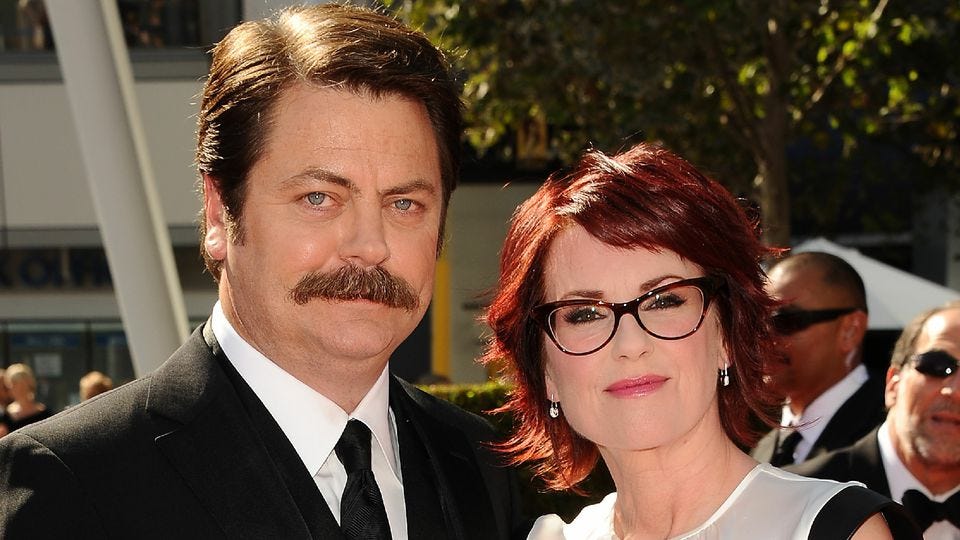
It’s been a little over a month since beloved short story writer George Saunders debuted his first novel, Lincoln in the Bardo, butNick Offerman and Megan Mullally have wasted no time in acquiring the bestseller’s movie rights. Everyone’s favorite Hollywood power couple will produce the film adaptation alongside Saunders, who sounds ecstatic about working with the pair. So ecstatic, a simple term like “working” wasn’t going to be enough. “I am thrilled to be in artistic cahoots with Megan and Nick, two artists I’ve long admired,” Saunders told Deadline, where the news was first reported. “My hope is that we can find a way to make the experience of getting this movie made as wild and enjoyable and unpredictable as the experience of writing it — I am so happy to have such fearless companions on the trip.”
As though Saunders hadn’t already given us enough in the way of verbal invention. Forget that “job” you work with “colleagues” in an “office.” You, friends, are in “artistic cahoots,” just like Offerman, Mullaly and Saunders.
The new production won’t be the first time Saunders has teamed up with comedy’s first couple. The audiobook for Lincoln and the Bardo features an enviable cast of 166 actors, including: Don Cheadle, Julianne Moore, Bill Hader, and David Sedaris. Among the first artists to sign onto the project were Offerman and Mullally, who respectively voice the characters Hans Vollman and Betsy Baron. You can listen to an excerpt of the audiobook, featuring a generous snippet of Offerman’s smoldering voice, right here:
Lincoln in the Bardo takes place over the course of one night and tells the story of Abraham Lincoln’s grief over his recently deceased son, Willie, through the narration of several ghosts. In an interview with Electric Literature, Saunders revealed that he had originally written the novel as a play, though that material didn’t make it into the final novel. But might it make the screenplay cut? We can’t wait to see what their cahoots will yield.
This is the west of Ireland and the partnership is not one you’d expect in this rich debut novel from Irish writer Jess Kidd.
At first sight the little village of Mulderrig in County Mayo, the wild west of Ireland, is benign. Nay, sleepy. But when handsome stranger Mahoney blows in from Dublin to take a break from city life, everyone and everything in Mulderrig and its frame of ancient trees begins to wake up. Twenty-six-year old Mahoney has been away from this place for all the years of his life and is only recently in receipt of the news that it is where he was born, and of who his mammy was. Except that all he knows is that her name was Orla Sweeney, she was young and “she was the curse of the town, so they took her from you.”
Not that Mahoney is going to share this new-found knowledge with the folk of Mulderrig in a hurry, for he has also been told that “they all lie, so watch yourself.”But although he declares himself to the first locals he meets to be there in search of peace and quiet, he is a man who invokes the opposite by his very presence. He disturbs not just the living souls in the place, but the dead too, and they play a big part in what is to unfold in this rollicking story.
The dead join a cast of vivid living characters in Himself, starting with Tadhg Kerrigan, a man of prodigious girth with a love of fast cars and rock ’n roll, who, after sharing several pints, offers to take Mahoney in search of lodgings. But before he even gets a place to lay his head Mahoney is disturbed by a meeting with one of the important cast of the dead. She’s a little girl with scuffed shoes who looks like any other, except that she has no back to her head and her voice sounds like someone on a bad phone connection. Her name is Ida and she will, in the fullness of time, skip ahead to lead him to a place of secrets in the woods.
But first Mahoney will settle into Rathmore House, where Shauna Burke looks after the day-to-day needs of Mrs. Cauley, “who lies in state in the library,” bald, spider-like and literally surrounded by books but very much alive. On his first night in the house the dead gather. They want to be seen, and heard:
“For the dead are always close by in a life like Mahoney’s. The dead are drawn to the confused and the unwritten, the damaged and the fractured, to those with big cracks and gaps in their tales, which the dead just yearn to fill. For the dead have secondhand stories to share with you, if you’d only let them get a foot in the door.”
Jess Kidd’s descriptions of the departed show them not as wraiths, but the shades of real people who have passed on. In the book we learn how they differ from the living. But it would be misleading to call this a ghost story, for the central mystery is very much about the living. Mahoney finds that he and Mrs. Cauley share the same kind of honesty — “The twisted kind: when something gets so wronged it gets righted” — and he tells her the real reason he has come to Mulderrig, to solve the mystery of what happened to his mother. Neither of them believes the official version that she willingly left town or gave up her child.
Mrs. Cauley, one-time renowned actress on the stage of the Abbey Theatre in Dublin, gets her books to identify — literally! — the play she should direct as her swansong for the St Patrick’s annual fundraising production. The playbill for Synge’s “The Playboy of the Western World” emerges and is presented to her by the ghost of Johnnie, best-beloved of her former lovers. This will be the vehicle for her joint pursuit with Mahoney, starting with the auditions, where interrogations of all potential suspects will begin.
It is a fine conceit, and makes an excellent container for the unfolding story, which could otherwise threaten to spill over into confusion. But Jess Kidd marshals her motley cast with sharp and affectionate definition, amongst them the lovely Róisín Munnelly, mother of skipping Ida, weasel-faced Father Eugene Quinn and his housekeeper Bridget Doosey, “the second sharpest old biddy in town,” the elusive Tom Bogey for whom the villagers leave sandwiches, soap and pipe-cleaners on a roadside shrine, and so on, not forgetting Miss Mulhearne (spinster, deceased).
These are glorious characters, worthy successors to those of Dickens and Dylan Thomas. And it’s not just the characters who bring to mind those who inhabit the Welsh village of Llareggub in Thomas’s “Under Milk Wood.” Jess Kidd is an author who shows a poet’s way with words and rhythm in her evocation of Mulderrig at night, silent but for various soft sounds around its sleepers, including:
“Mulderrig is silent but for the bats that sing in the key of darkest sonar as they spool in and out of the attic of Rathmore House. Where Mrs. Cauley sleeps in her magical library, hairless and open mouthed, fat-bellied and spindle-armed. She’s treading the boards again tonight, all night.”
And, sewing the pieces together, a plot of which Agatha Christie would have been proud. There is murder most foul involved and Mahoney soon realises that he is at risk himself. After the performance of the play as the action accelerates to its climax there is a car chase in which you can almost hear the screeching of the brakes of Tadhg Kerrigan’s sky-blue Eldorado as you turn the pages.
Aided by supernatural forces swirling through the village, which include a Holy Well appearing in Father Quinn’s library, complete with frogs, Mrs. Cauley and Mahoney — now accorded the respectful Irish epithet ‘himself’ — do pull off a triumph with the play. And they do solve the mystery. Or rather, a part of it. Mahony may have reached a way of moving on, but there are things which remain mysterious in Mulderrig, stories started and awaiting an ending, characters whose future is uncertain.
Father Quinn runs out of the story in his underpants to who knows where and the new priest who inherits his damp library wonders vaguely why it is so. But isn’t this just like life? The bees can understand it all, for, we’re told, “they know all things,”but the rest of us must simply muse upon it all or wonder whether Jess Kidd might be writing a sequel to this beautifully paced, sometimes funny, sometimes sad and ultimately heart-warming book. I’d say a definite “yes please” to that.
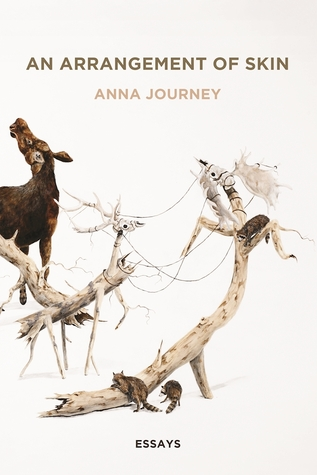
I came late to the party of Anna Journey’s wisdom and wit, but I was thrilled to be ushered into the room after reading her latest collection of poetry, The Atheist Wore Goat Silk (Louisiana State University Press), and then devouring her stunning debut collection of essays, An Arrangement of Skin, out now from Counterpoint. In both her poems and her essays, Journey makes the imprecise and the expected her enemy.
Journey has a preternatural gift for artful swerving and associative shifting, so that—in the title essay, for example—a recollection of a breakdown and an ensuing call to a suicide hotline opens into a consideration of taxidermy and lyric time. In writing about her mother’s penchant for telling macabre stories at the dinner table, Journey makes a connection to campfire songs, and suddenly we’re delivered into a new space the essay has created to argue for the cultural importance of American roots music. And in providing the reader with a portrait of a tattoo artist named after a pirate-themed rum, Journey is concurrently turning our attention to the ways in which we inscribe our skins and spirits through the intimate gestures of ink. All of this without the work ever feeling as though Journey has her thumb on the scale, which is no small feat. This restraint is a mark of brilliance as well as an act of generosity. It’s a vote for the reader’s autonomy and an invitation to wonder and wander inside the latitudes laid out in the work; spaces in which Journey is both our cartographer and our fellow traveler.
It was a galvanizing gift, having the chance to speak with Anna via email about her work.
Vincent Scarpa: One thing I admire about the essays in An Arrangement of Skin is that what seems to motivate so many of them (their origin story) is as simple — and as complicated — as curiosity. It isn’t hard to imagine someone asking you, “So, why did you take up taxidermy as a hobby?” you responding, “I was curious about it,” and the other person being unsatisfied by that, if not suspicious. But I love that the essays advertise that curiosity as their raison d’être in favor of constructing some kind of false framework upon which to build. Reading them, I felt as though you weren’t seeking to indict, to expose, to philosophize, to self-evaluate, to self-synopsize, et c.— though, of course, much of that happens via the act of writing, and is deeply pleasurable — so much as you were seeking to be a student of swirling environments — personal or otherwise — and to report back from that place. Is this totally off-base, or does it strike you as at least somewhat like your modus operandi?
Anna Journey. Photo by Stephanie Diani
Anna Journey: I would definitely call curiosity my modus operandi. What’s it like to slice open a starling and taxidermy its body? How does this gesture connect to our narrative impulse? To aspects of beast fable? To freezing time in lyric poetry? Why did my dad buy a leather trench coat from a German immigrant at a Bolivian airport in the seventies if he believed the salesclerk was probably a Nazi in hiding? Interrogating one’s own curiosity makes for an exciting mode of inquiry for essayists — it keeps us circling.
I think curiosity always informs my choice in subject matter. I also think it helps me navigate and develop metaphor. In my essay “Modifying the Badger,” for instance, based on the second class I took at the taxidermy studio Prey, in Los Angeles, I arrived at a metaphor for the ways we shape-shift throughout our lives, becoming different versions of ourselves. During the taxidermy class, we got to choose our specimen (coyote or raccoon) from a pile of tanned hides. My instructor had mentioned that the person who picked the largest raccoon — the “boar” — would need to modify a cast polyurethane badger form (with a Dremel tool and several saws) to fit the skin, since the commercial raccoon forms were too small for the big guy. I knew I had to choose that specimen. The whole scenario seemed to me like a macabre fable or Ovidian myth set in a hip, ethically sourced taxidermy studio. Transforming a badger into a raccoon? How could I resist that metaphor?
In another essay, “Little Face,” my curiosity about and fascination with the renowned cosmetic dermatologist Dr. Fredric Brandt — whose suicide and blank, Botoxed face haunted me — lead me toward the essay’s governing metaphor. I began a meditation (etymological and personal, social and lyrical) on the image of the face. The trope of the face and the facet (derived from facette: a “little face”) suggested a “faceted” structure I might use to juxtapose various narratives in the essay. So finding that figurative thread helped me stitch together a number of anecdotes: Dr. Brandt’s ghoulish alterations of his mask-like face; my own dermatological adventures in chicken pox scar removal; a Grimm fairy tale about youthful transformation gone grotesquely wrong; and an ill-conceived art project at the elementary school at which my mother works that involved digitally aging photographs of first graders so the kids could glimpse approximations of their future wrinkled, one-hundred-year-old selves. I think curiosity has a lot to do with my compositional approach as well as my interest in the layered textures and associational possibilities of metaphor.
VS: The Atheist Wore Goat Silk begins with the poem “Upon Asking the Cashier at Kroger to Scan That Old Tattoo of a Barcode on My Forearm,” in which we learn that the speaker, when she was nineteen, tore a barcode from a grocery store coupon and got it tattooed without ever having known what the barcode designated. The cashier tells her the barcode is for “a dollar sweet potato,” and later the speaker wonders why she’s waited ten years to investigate this, to learn — or relearn, as the case may be — “I’ve always been sweet but slightly / twisted, I’ve always been // waiting to disappear like this, / bite by bite, into someone’s mouth.” This struck me as an interesting entry point into asking an otherwise not terribly interesting question about how long the essays in An Arrangement of Skin have been accruing on your end before making their way into the container of this collection. Did you desire a sense of delay between what a given essay adumbrates — which, in my clumsy analog, I suppose would be the tattooing of the barcode — and then the writing of the essay itself — the scanning for meaning?
AJ: The delay depends on the essay’s subject. Sometimes I’ve been trying to write about a subject for years (like my childhood in South Asia) and in other cases the time frame will be much shorter. Sometimes there’s barely a delay at all and I’ll begin an essay, believing I’m writing about one thing, and then stumble into the piece’s deeper subject.
In the case of the title essay, “An Arrangement of Skin,” I’d planned to write about my visit to Deyrolle, a spooky two-hundred-year-old house of taxidermy and museum of oddities in Paris, on the Left Bank’s rue du Bac. I thought: I’m going to write a meditation on taxidermy. After Paris I rented a dark, narrow apartment in Prague with exposed cedar beams and an ornate green-and-white tiled ceiling whose pattern I’d describe as medieval Czech psychedelic — it looked like an Airbnb decorated by Baba Yaga. This was the perfect place to begin my taxidermy essay, I figured, sitting at the kitchen table while my husband taught a morning poetry workshop for the next two weeks. I described Deyrolle’s white peacock, spiny anteater, stuffed zebra, and intricate diagrams of fluted French mushrooms. A couple of pages into the essay, however, I moved away from the dead animals and toward other aspects of mortality, including my phone call, several years earlier, to a suicide hotline and the context for that desperate gesture. Writing about the taxidermied animals at Deyrolle — their bodies, their mortality — made me consider my own body, my own mortality. The etymology of the word taxidermy, too, began to reveal itself as a potential metaphor to which I might return in future essays: taxis (“arrangement”) and derma (“skin”) — “an arrangement of skin.” The act of arranging seemed to speak to the art of the storyteller or poet while the image of skin began to resonate as a metaphor (for family members, friends, lovers, animals, poems, stories, the different selves we inhabit in a life).
I didn’t plan to write about my breakdown when I started what I thought would be a meditation on a Parisian shop of oddities. In fact, I was so horrified by the essay’s pivot from taxidermy to my scandalous personal business that I put away the draft for an entire year. I finally returned to the essay, though, revising the piece so it began with the phone call to the suicide hotline. The unexpected swerves in metaphor and narrative in “An Arrangement of Skin” reminded me how much I value these sudden associative leaps, how they make writing an ongoing process of discovery.
“I didn’t plan to write about my breakdown when I started what I thought would be a meditation on a Parisian shop of oddities.”
VS: I’m wondering what your feelings are about perceived truth-content in writing poetry, and how those feelings might have carried over, or perhaps changed, when writing personal essays. We don’t ask of poetry, in the way that we do of (most) prose, that it be designated as “true,” whatever that word might mean, or “fictional,” whatever that might mean, but — though I’m not really a poet — it does seem that a poem in which the writer is using “I” is presumed by many readers to collapse any distance between the writer and the poem — eliminating the possibility that “the speaker” of the poem might be someone altogether different from the writer of it — and thereby shifts the poem into the terrain of autobiographical writing. A distillation of this (rather knotty) inquiry might be something like, How, if it all, does the expectation that the content is “true” affect your process in writing both poems and personal essays? Do you feel like there are strictures — or, conversely, immunities — that present themselves in either form in this regard?
A moment that comes to mind here — and it’s one that I really love — is that scene in your essay “The Goliath Jazz” in which you emphasize the ways in which, over the course of the essay, you’ve been thoroughly misremembering details about a character from your past, and how that misremembering has calcified into a species of “fact” that both you and the essay itself now have to confront, to dislodge.
AJ: The self is always my subject in a personal essay, even when I’m writing about taxidermying a raccoon or examining the fairy tale “Bluebeard” or considering the directions wisteria spirals. In “The Goliath Jazz,” an essay about a guy I knew who ended up murdering his sister, the problem I encountered while writing the essay (learning a certain detail I’d taken for granted as a “fact” was actually a distortion of memory) opened into the piece’s deeper subject. Why had I remembered things this way? Questioning my own contradictions and limitations became just as urgent to me as reckoning with a curly-haired choirboy from my past who grew into a knife-wielding murderer.
As a poet, I used to get cranky when people made assumptions about autobiographical content in my work. Like they weren’t giving me credit for having an imagination. I’ve learned to take this particular form of naiveté as a compliment, though, as I hope it has something to do with tonal authority: a certain matter-of-fact attitude my poems’ speakers often take toward the strange or macabre. Recently, an established author emailed me to say that he liked a poem from The Atheist Wore Goat Silk (the one you mentioned earlier: “Upon Asking the Cashier at Kroger to Scan That Old Tattoo of a Barcode on My Forearm”). I could immediately tell, from the way the writer talked about the poem and from certain details he shared with me, that he believed the poem’s dramatic circumstance was entirely autobiographical. He was convinced that I’d once gotten a tattoo of a barcode on my forearm, based on a grocery store coupon, and that my body had rung up under the clerk’s scanner, ten years later, as a sweet potato. I love that this outrageous scenario seems at all plausible. And this writer’s total faith in possibility charmed me.
VS: If I can follow that thread a bit further, I’d love to hear your thoughts about some broader questions regarding genre. It seems to me that we’re getting closer and closer to a place where it’s universally agreed-upon that genre distinction is mostly useless to begin with; if we’re not at that place yet, then perhaps we’re at a place wherein the lines between genres have never been more flexible or blurry and the forms themselves have never been more capacious and undiscriminating, and this is good. (I’m reminded here of that great Eula Biss line: “I think genre is as much a lie as gender is.”) I am, however, interested in how you specifically — having written three collections of poetry prior to An Arrangement of Skin — navigate genre.
Is it an interest of yours to trouble what an essay might look like or how it might function? For that matter, I could ask the same about your intentions in writing poetry. The poems in The Atheist Wore Goat Silk are mostly propelled by narrative, and evoked in me the kind of readerly experience that perfectly executed flash nonfiction does.
I’m also curious to know if there are other writers whose work is often designated as genre-defying — either by the writers themselves or by a readership — that you felt instructed by in composing this collection.
AJ: Although I worked on An Arrangement of Skin for five years, I wrote over half of the essays in a stretch of focused attention during the last year. I began to see the shape of the collection coming together and that clarity and excitement galvanized me. During this time I read English poet and nonfiction writer Helen Macdonald’s H Is for Hawk, which combines aspects of grief memoir, environmental writing, and literary criticism. I loved Macdonald’s lyrical prose style — all those striking metaphors, images, internal rhymes, and assonance — and I admired her book’s structure. As a writer who often works in the braided form on the scale of the essay, I felt a kinship with the way she weaves personal, literary, and historical threads in her memoir. So H Is for Hawk was an important book for me as I completed my nonfiction collection.
I’m especially drawn to the work of memoirists who, like Macdonald, began as poets. I admire Maggie Nelson’s fluid interweaving of theoretical inquiry and personal anecdote in The Argonauts, for example, as well as the fascinating intertextual resonances between her poetry collection Jane: A Murder and her courtroom narrative/memoir about sexual violence, The Red Parts. Mark Doty, Nick Flynn, and Mary Karr started out as poets. Nabokov, too. I like to read his dazzling autobiography, Speak, Memory, slowly, as I would a book of poetry, savoring his imagery’s rich synesthesia. And, of course, I always read poetry. When I was a young writer, reading Larry Levis’s collections Elegy and The Widening Spell of the Leaves changed the way I structured time in my poems. His approach to orchestrating motifs, repeating images, and braiding temporalities helped shape my sensibility.
I also seek out essays in journals and magazines to which I subscribe as well as collections of literary nonfiction. The growing audience for essays should be encouraging to us all — just look at the broad interest in Leslie Jamison’s The Empathy Exams and Roxane Gay’s Bad Feminist. I’ve admired a number of other recent essay collections, too, such as Eula Biss’s Notes from No Man’s Land,Charles D’Ambrosio’s Loitering,andAleksandar Hemon’s The Book of My Lives.
VS: In your experience writing these essays, did you ever feel as though the form was granting you access to do something — with language, with movement, with engaging the content, etc. — that a poem might have made difficult? I suppose the reverse also interests me; if anything you found possible in writing poetry felt distant or even inaccessible when writing these essays.
AJ: While I enjoy employing narrative strategies in poetry, most of my poems tend to fall farther along the lyric end of the spectrum. They’ll often evoke a particular moment rather than narrate a series of events, and they’ll use fragments of stories to suggest partial glimpses of larger ones. In a poem, I’m interested in concision, brevity, mystery, and metaphor. I want to make a single clear gesture. In the essay I’m interested in being more expansive and engaging with narrative in a more sustained way. I hope to push the lyric capacity of my prose — in terms of figurative language, imagery, and sound — though I’m working in a more capacious form, which gives me room to sprawl out, to tell more of the story.
Then there’s the issue of subject matter in the poems and essays. If I’m writing a poem called “As a Child, My Mother Took a Girl Scout Field Trip to the Men’s Ward of a New Orleans Prison” (this is an actual poem title and the event did happen), I’ll feel free to make up a bunch of details about the experience and maybe exclude others that seem too crazy (like the fetuses preserved in jars of formaldehyde that my mother recalls seeing on shelves in the prison’s basement morgue). If I wanted to write an essay that involved my mother’s Girl Scout prison adventure, I wouldn’t go nuts and make up a bunch of details the way I would in a poem, but I’d find other areas in which to be inventive: with metaphor, with syntax, with a surprising countertheme. I’d also think: Include the fetuses.
VS: Entering into the framework of understanding you bring to bear on taxidermy and then revisiting Rachel Poliquin’s The Breathless Zoo: Taxidermy and the Cultures of Longing — a book that really stunned me when I read it only a few months before reading An Arrangement of Skin, so it was a thrill to see you engaging with it — I was detecting certain parallels between taxidermy and autobiographical writing. Specifically, I was thinking about the fraught nature of what one might call the ontological impulse or impetus to have something taxidermied or to write autobiography. For as much as taxidermy is about preservation of some kind — the urge to freeze time, to keep alive what isn’t, to suffuse something gone with a sense of continuance, to make oneself a kind of god — it also strikes me as a way to make that very same thing end; to force a coda of one’s own fantasy over reality. And I wondered if the same couldn’t be said of the nature of autobiographical writing, too. The taxidermied object is, as you so wonderfully put it, “arrested in time and posed to emulate everlasting life.” When I landed upon that line I thought — well, hey, that’s the essay in a way, too, right? I admire that the essays don’t bully the reader into forced recognition of the possibilities of these parallels, which seemed to me, so excited as I read, a mark of authorial restraint that I often associate with poets. But speaking outside of the essays, I wonder what was going on in your thought process with regard to all of this? In “Birds 101” you write, “The taxidermist’s ability to hide the seams — those threads that join dead flesh to fabric — is what makes the vanished animal flutter back to life.” Do you feel you were seeking something similar in writing certain of these essays?
AJ: Yes, I do. I discovered Poliquin’s cultural and poetic history of taxidermy, The Breathless Zoo, about five months after I’d written my collection’s title essay in the Baba Yaga apartment in Prague, so when I finally revisited the draft I brought to it a keener awareness of taxidermy’s storytelling and lyric capacities. Her argument that seven “narratives of longing” compel people to create taxidermy seemed to describe many of the reasons that drive writers to make art, too: “wonder, beauty, spectacle, order, narrative, allegory, and remembrance.” So Poliquin’s notion of the taxidermist-as-storyteller or lyric magician inspired me to Google “taxidermy classes, Los Angeles” and locate Allis Markham’s taxidermy studio Prey, where I took my Birds 101 weekend workshop and my Mammal Shoulder Mounts class. After reading Poliquin’s book, I also kept thinking of Rilke’s famous poem about the unicorn (“the creature that doesn’t exist”), in The Sonnets to Orpheus, in which he suggests that the mythic beast can become a living creature if people nourish it with the strength of their belief. “They didn’t feed it with corn,” Rilke writes, “but always with the chance that it might / be.”
“Desire drives taxidermists, it drives writers. I think the erotic dynamic of lack — I had this, I want it back — has everything to do with why and how we create literature.”
So you’re right to describe the imaginative drive of the taxidermist and personal essayist as a similar forcing of a “coda of one’s own fantasy over reality” in that we project our longings onto our subjects — a posed starling, a powerful memory — and use these narratives to tell essential stories about ourselves. Desire drives taxidermists, it drives writers. I think the erotic dynamic of lack — I had this, I want it back — has everything to do with why and how we create literature.
James Baldwin: But that demands redefining the terms of the western world…
Audre Lorde: And both of us have to do it; both of us have to do it…
James Baldwin: But you don’t realize that in this republic the only real crime is to be a Black man?
Audre Lorde: No, I don’t realize that. I realize the only crime is to be Black. I realize the only crime is to be Black, and that includes me too.
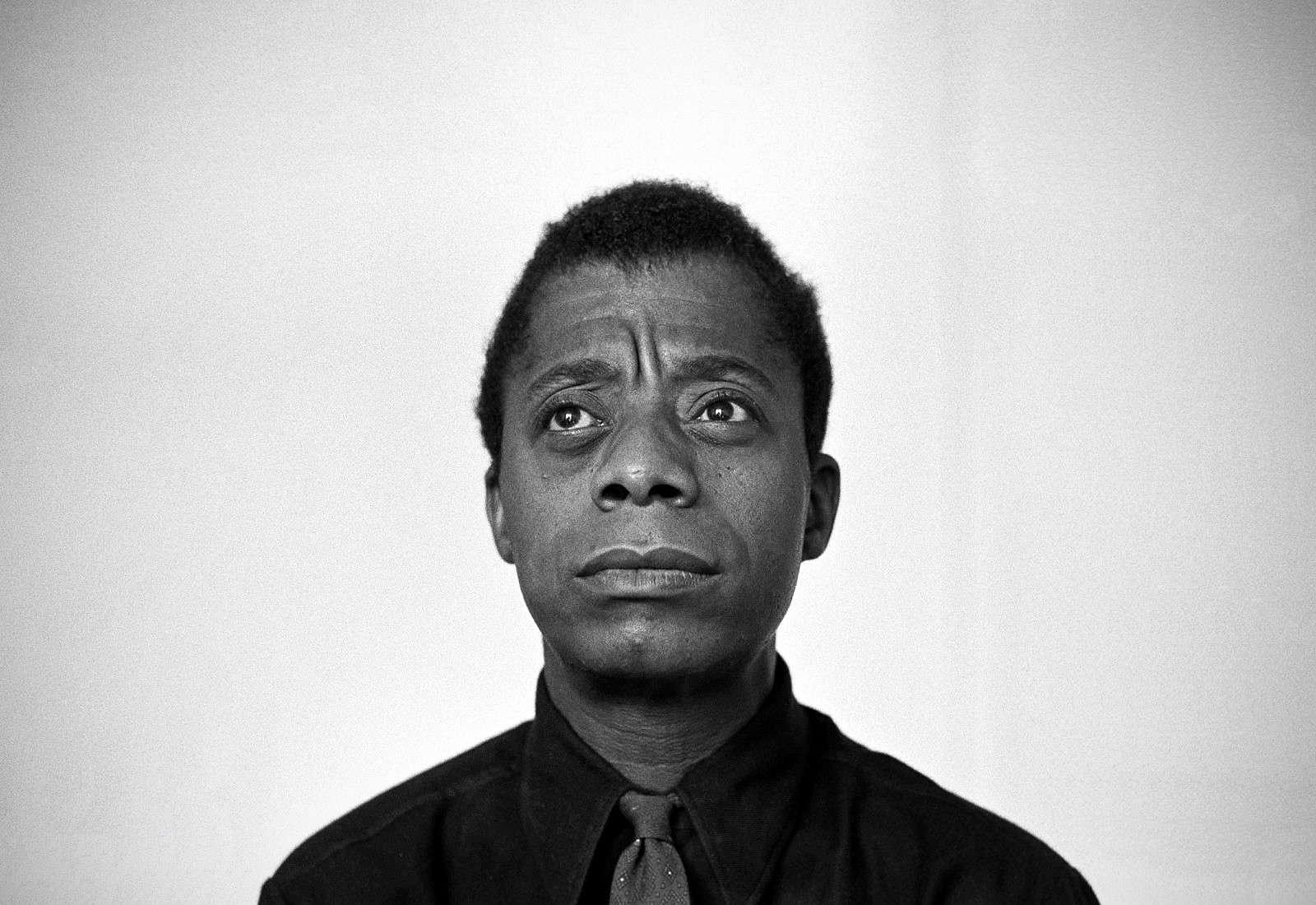
The year is 1984, and two now-legendary Black queer icons debate, one mansplaining to the next. Their conversation will end up published in Essence Magazine, three years before James Baldwin’s death and eight years before Audre Lorde’s. Baldwin confidently states that in America being a Black man is the only “real” crime, thereby delegitimizing Lorde’s struggle as a Black queer woman dealing with many systems of oppression. For all of his poignant work on white supremacy as a poison to us all, he sometimes failed to recognize his privileges while centering his own struggle as a Black man in the fight for liberation. And yet, as a writer who lives queer Blackness in a very heteronormative white world, Baldwin speaks to me in a way no other writer has.
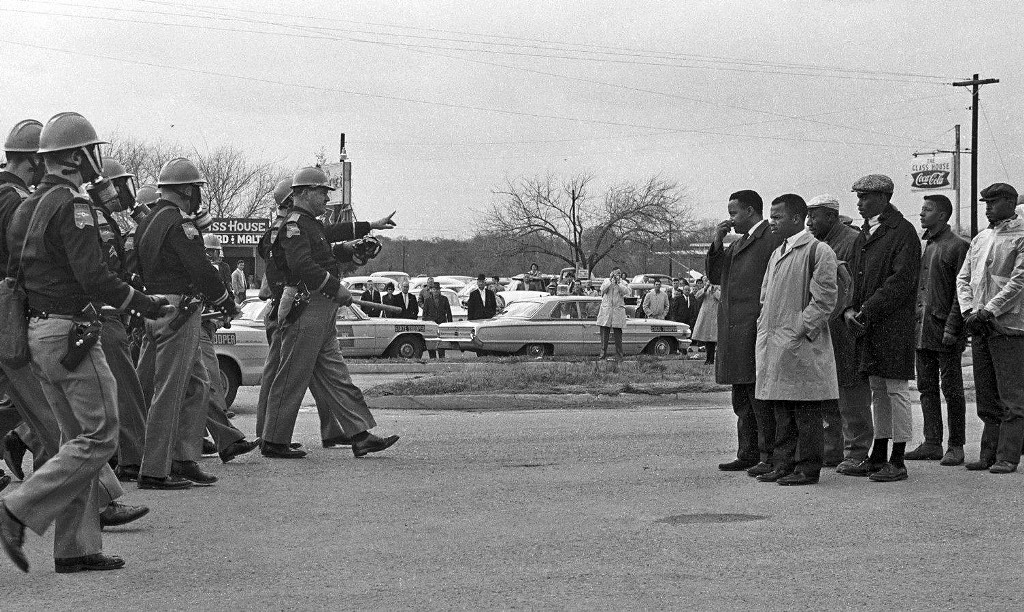
Baldwin’s brilliance as a political essayist is unmatched, and Raoul Peck’s 2017 documentary I Am Not Your Negro gives an important glimpse into the thought process of a visionary. Based on the scant thirty pages of a manuscript by Baldwin, unfinished before his death, the film introduces him to new audiences and also serves to remind us that ain’t shit changed. Both the greatest strength and weakness of the documentary is in Peck’s mission to ensure that “every single word was pure Baldwin.” With the intention of telling the story of the deaths of Medgar Evers, Martin Luther King, Jr., and Malcom X solely using Baldwin’s notes, the director succeeds by overlaying Samuel L. Jackson’s narrated reading with a series of contemporary and archival visuals.
However, as some commentators such as Dr. Eve Ewing have suggested, to create a full-length documentary out of a series of loose unfinished pages is a risky endeavor, one that creates a slight unease for the viewer. The film points to the chalk outlines of Medgar, Martin, and Malcolm not as discrete and unconnected events but as part of one world, and yet falls short in explicitly tracing our government’s history in repeatedly targeting Black revolutionary thinkers. What actually sticks out in the film are the modern shots of #BlackLivesMatter protests, footage of lily-white women, and the interview clips from Baldwin’s prime that serve as a testament to his oratory prowess.
Peck’s faithfulness to the original manuscript may at times be thrilling, but this is also a documentary where the FBI provides the only voice to speak on Baldwin’s sexuality, rather than Baldwin’s own. I Am Not Your Negro cites an official Federal Bureau of Investigation document which refers to Baldwin as a “suspected homosexual.” This brief memo is the sole mention of his non-heterosexuality, and of his non-compliance with the expectations of Black men in this country. What might seem like an insignificant biographical notation should actually be read as an act of violence, considering how the Counter Intelligence Program (COINTELPRO) worked at that time to literally and figuratively assassinate activists, community organizers, and public intellectuals such as Baldwin. The efforts by former major players like J. Edgar Hoover and Richard Nixon did not end there, however, as demonstrated within the current Movement for Black Lives on more than one occasion. But it follows a long history of erasure by historians to make those who are marginalized even at the margins appear more palatable for Black, white, and heterosexual audiences alike. It is in light of these details that we must renew our focus on how Baldwin’s Blackness was queer, and his queerness Black. Much as his Blackness informed his work so too did his queerness, and there is no way — as the film attempts — to separate those two identities from each other.
Even considering my qualms, I am lucky to say that in the last year I have consumed more accurate representations of my full Black queer self through films like Moonlight and parts of I Am Not Your Negro than I have in my entire life. I do not intend for that to stop, but encouraging the production of Black queer intellectual work is a different endeavor than taking responsibility. The enduring writing by Sojourner Truth in the 1800s and James Baldwin in the 1900s can finally lose some relevance in the late 2010s when we push for new work and also hold ourselves to a higher critical standard. Although we should celebrate Peck for successfully summarizing and historicizing white supremacist violence in North America, producing a well-received documentary that only gives a partial accounting of Baldwin’s work is simply not enough.
This spirit of loving critique for Peck and loving defense of Baldwin’s life comes out of my recognition of both the author’s irreplaceable brilliance and of his culpability as a blueprint for mistakes which we continue to make, as evidenced in his debate with Audre Lorde. It’s true that when looking at the entire Black queer literary canon, few artists have embodied Baldwin’s unrestrained sociopolitical commentary. Even putting myself in the same theoretical arena as Baldwin requires balancing ego against imposter syndrome. But as a fellow Black queer male essayist, I have an awareness of how the architects of popular narrative can reshape our history to diminish or dismiss those less favorable aspects of our identities. We would do ourselves a disservice by allowing Baldwin’s immortalization as an untouchable pillar to stop us from assessing the ways in which we collectively entrench the very systems of oppression that necessitated such raw work in the first place. Avoiding the subject forces us to keep quiet about those parts of ourselves that have long gone unspoken. The only way we embody Baldwin is by honoring our truth.
I was first introduced to James Baldwin, by name only, in 2013. I had been planning to study abroad in Cape Town, South Africa, with the intention of creating art in the week just before classes began. A white community college professor of mine — the head of the acting conservatory I had attended right after high school — suggested that I do a one-man show on James Baldwin. I had never heard of him, and as I collected more ideas for the “what to create for the Grahamstown National Arts Festival” bucket, Baldwin remained little more than a name. I think there was a nagging sense in my mind of, what does this white man know about Black queerness? This was at a time in my life where I did not openly consider myself a writer and, further, it was not clear to me why I should care. Looking back I believe his suggestion was a combination of benign intent, problematic projection, and a profound difference in cultural capital.
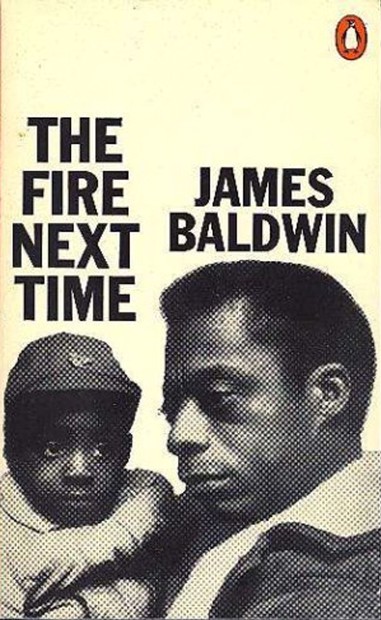
It wasn’t until 2015 that I finally read The Fire Next Time while on a plane. Much like I Am Not Your Negro director Raoul Peck, the sense of recognition was such that I could not stop thinking about Baldwin after reading only a few words. I devoured the last bit of the thin novel as I flew into Baltimore for an HIV/AIDS prevention, treatment, and advocacy conference. Encountering that book upon attending an all-queer, all-Black conference brought me even more clarity than had the experience of the beginnings of #BlackLivesMatter in 2014, while I was living in a former Apartheid state. Or rather, the encounter with his work built on what I had already begun to see, once I’d stepped outside my own privileges.
I returned home and began to understand that for most of my life I was the negro whom Baldwin had spoken about. In many ways white societal expectations had groomed me to be “their negro,” through my socialization as a child of military parents and a keen sense of awareness on my mother’s part. There is a profoundly cruel irony in successfully protecting Black children from the ill-will of humans who see them as inhuman, by teaching them to be respectable negroes. Many Black children unintentionally adopt a politic of respectability by forcing our younger selves to silence pride in the face of structural and interpersonal racism. We want to survive, meaning that we sometimes ignore when we are not paid as well as a less-qualified peer. We want to survive, meaning that we enter interracial relationships without critically interrogating the elephant in the room — the toxic pervasiveness of white supremacy. Studying abroad on a scholarship accelerated my personal process of decolonization, the anti-apartheid activist Steve Biko’s I Write What I Like expanded my global political consciousness on Blackness, and James Baldwin’s The Fire Next Time cemented the dawning truth that he so eloquently states in the film: “white is a metaphor for power.”
More importantly, Baldwin taught me a lesson that stood contrary to everything else I had learned in life up till then. As Black folks we do not tell our business, and we definitely do not disparage fellow Black folks in front of white people. In fact, our business is really only safe at home, where white and non-Black people of color are out of eye and earshot. Not only does whiteness have a way of using truth and vulnerability against the Black body, it also has a tendency to appropriate Black pain, Black joy, and Black ingenuity. Black folks are not allowed to publicly display weakness or incompetence, which may even contribute to suicide rates among young Black boys when the solution lies in the opposite direction, in greater openness and increased mental health advocacy to end the stigma. These are silencing norms preached in many Black communities for the sake of our collective survival. Baldwin defied what I was personally taught when he told all the business, in what read like a single, rugged, run-on sentence.
Externally, white television hosts would invite Baldwin on their talk shows only to dismiss him, in spite of the furor of audience applause frequently shown in the documentary. And it is clear that Baldwin’s precise diction aided in his presentation to the white folks who could — and did — just as easily hate him.
The shift in the audience came after the November 17, 1962 issue of The New Yorker, where Baldwin penned his “Letter From a Region in My Mind.” He had published in a white periodical that largely pandered to that very same audience, although the difference was he was actually speaking not only to white folks about themselves, but to Black folks about ourselves. The essay, republished later in The Fire Next Time, details the minutiae of his meeting with the Honorable Minister Elijah Muhammad, who held an enormous amount of power at the time not only among Black Muslims but also many Black Americans searching for a leader. Under Baldwin’s pen, the suggestion was that not everyone who is our skinfolk is our kinfolk. This risky candor — which came through in the piece’s many biting observations, such as that “Elijah’s power came from his single-mindedness” — taught me the necessity of intra-community critique and self-reckoning, particularly as an openly queer Black man with mental illnesses.
Writers like Baldwin, Biko, and Lorde eventually became, for me, portals of rediscovery. I had always loved to read, but it was only in poring over their work that I saw my full self on the page for the first time. My personal narrative became less “special,” but at the same time more robust when not overrun by the suffocating gauze of whiteness. I highlighted or underlined damn near every word of The Fire Next Time — I’d found a written testament to so many of the feelings I had experienced in my own life, but which had never before been reflected back to me. It was like being under the same mentorship that Baldwin had guided his nephew by, when he wrote that, “You can only be destroyed by believing that you really are what the white world calls a n*gger. I tell you this because I love you, and please don’t you ever forget it.” Whereas the value of Biko was in expanding the bounds of the diaspora, Baldwin gave me something else: a quiet permission to be Black, queer, vocal, and critical.
I Am Not Your Negro is America’s opportunity to peek into Baldwin’s boudoir for the first, fifth, or fiftieth time. The author’s mission, to heal us from the ongoing perils of whiteness, is a message for all ages, nationalities, abilities, sexualities, races, ethnicities, and gender identities. Although Peck disappoints by prioritizing the FBI and generally downplaying the question of Baldwin’s sexuality, we have writers like Dagmawi Woubshet who have written extensively about such mistakes, pointing out that slack. We need more authors who force the audience to chew on what we have to say like it’s the gristle in their steak, and who also make us wrestle with our own responses. For me, Baldwin held up a daunting — if blurry — mirror that revealed the essayist, critic, and intellectual inside myself that I never knew existed. And I firmly believe that when Baldwin wrote that he thought “all theories are suspect, that the finest principles may have to be modified, or may even be pulverized by the demands of life,” he also meant for that to apply to how we tell our stories and define ourselves. I see myself as more than just a conduit for his political musings, a frame for his work, or a retreading of the past. The greatest effect the film can have is to get people to go back and read Baldwin, to reread and critique him, and to start on documenting their own narratives. There is no other way.
10 promising writers just received $50K each. Time to celebrate.
The winners of the 2017 Whiting Awards have just been announced, which means that 10 talented writers will soon be walking the streets of Manhattan’s Upper West Side with a skip in their step and a cool $50K in their pockets. Or maybe this is a giant novelty check situation? Either way, you can likely catch them at the Columbus & 77th Shake Shack, where flush literati go to celebrate. Electric Literature is live-tweeting from the scene.
Enough ado. The 2017 winners are:
Kaitlyn Greenidge Fiction Tony Tulathimutte Fiction Clare Barron Drama Lisa Halliday Fiction Jen Beagin Fiction James Ijames Drama Francisco Cantú Nonfiction Clarence Coo Drama Simone White Poetry Phillip B. Williams Poetry
The Whiting Awards annually identify “exceptional new writers who have yet to make their mark in the literary culture” and aim to provide them with funds to afford “a first opportunity to devote themselves fully to writing.”
You can get a taste of the winners’ work right here in Electric Literature.
To date, the Whiting Foundation, with an endowment from the late Flora Ettlinger Whiting, has awarded more than $7 million to over 300 writers. Past winners include Colson Whitehead, Elif Batuman, David Foster Wallace, Tony Kushner, Denis Johnson, Mary Karr, Ocean Vuong, Jonathan Franzen, August Wilson and Adam Johnson. Congratulations to this year’s grantees.
The drivers for Evergreen Dairy argued that without an Oxford comma, “shipment or distribution” signified different types of packing, removing the act of distribution from the law’s jurisdiction. Previously a District Court had ruled against the drivers. Following a Circuit Court appeal reminiscent of an SAT tutoring session, judge David J. Barron ruled that once again the interests of laborers and grammarians have aligned
As one of the most contentious and controversial relationships in the world, the Israel-Palestine conflict has found its way into the headlines for various reasons over the last few decades. Often, those reasons are tied to the reignition of tensions or the crumbling of peace talks. It is a particular hot-button issue within U.S. politics with large contingents in both major parties weighing in on the issue — most on the side of Israel, although there is a growing progressive movement advocating for Palestinian rights.
“We deserve better than this. American writers and artists deserve dependable, sustainable, career-long government support, and we deserve, like all Americans, affordable healthcare and housing, and the social safety net that makes it possible to do the work we do..” — Jess Row
Winona Ryder recently did an interview with New York Magazine about acquiring the label ‘crazy’ — how speaking openly about “common emotional challenges” landed her there, how this phenomenon is born of the tendency to “[shame] women for being sensitive or vulnerable.”
Women in and out of the public eye have long been consigned to the rank of ‘crazy’ at rates that should overwhelm our mental institutions and suggest that some staggering proportion of the population is barely making it through the day. In her once-anonymous advice column Dear Sugar, Cheryl Strayed asks the tongue-in-cheek question of the century: “How can it be that so many people’s ex-girlfriends are crazy? What happens to these women? …is there some corporate Rest Home for Crazy Bitches chain in cities across the land that I am unaware of that houses all these women who used to love men who later claim they were actually crazy bitches?”
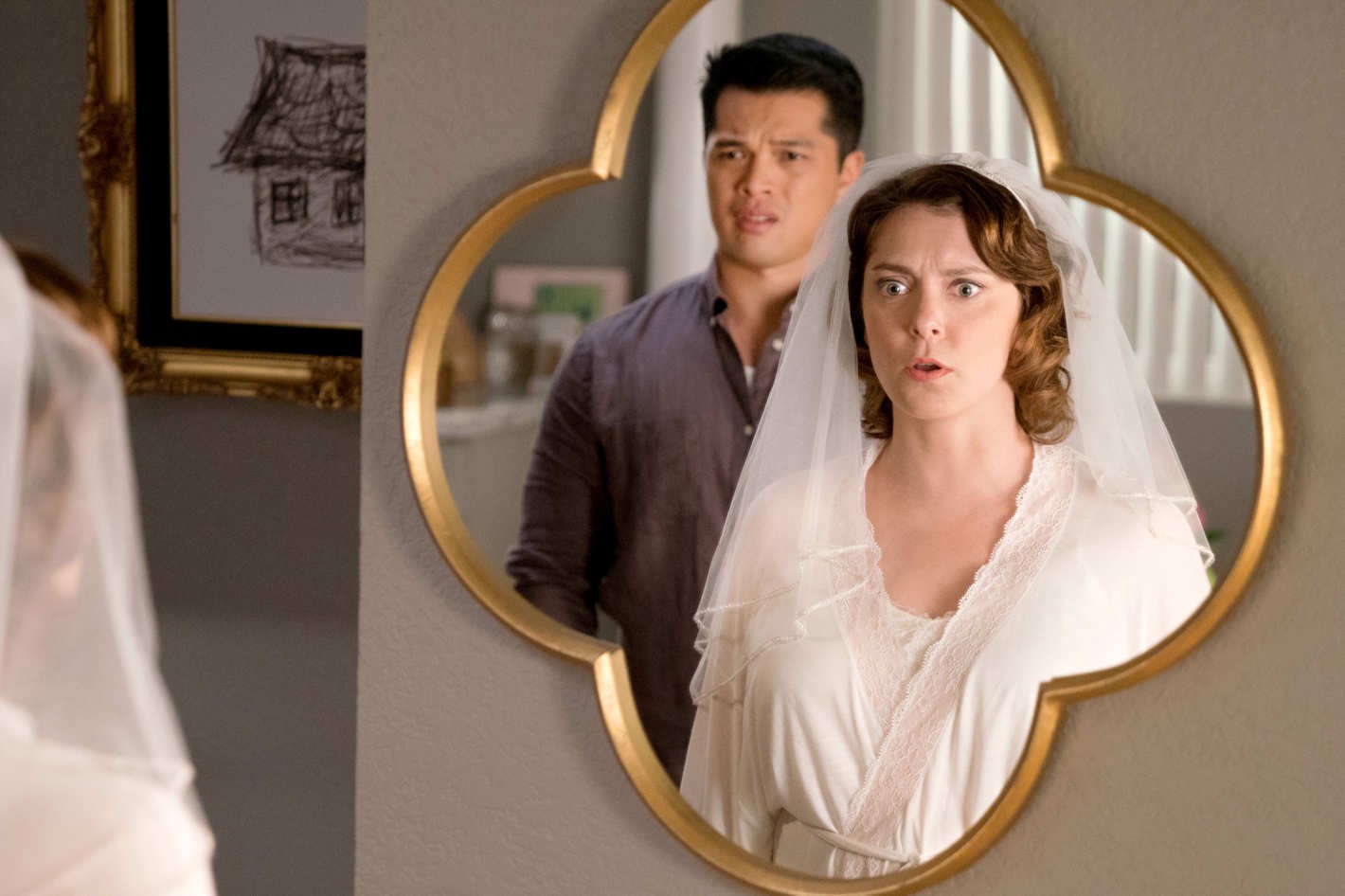
When I first heard about the CW’s Crazy Ex-Girlfriend — from several of my smart, feminist friends and just about every critic at a major media outlet — a glimmer of hope shone through the sea of crazy. Its title suggests the show will be one of two things: either playing into the oldest gender clichés or directly challenging them. And according to the creators, the series is “a feminist deconstruction of the word ‘crazy.’” The theme song and intro credits indicate the same thing. “She’s the crazy ex-girlfriend,” a cartoon cast of characters sing from the sidelines, to which Rebecca, the show’s protagonist, responds, “What? No I’m not.” When the cartoons repeat, “She’s the crazy ex-girlfriend,” Rebecca insists, “That’s a sexist term.” From the outset, the show promises to debunk the notion of the crazy ex-girlfriend and illustrate sexism’s role in promoting it.
Last month, the second season wrapped on the CW, which means it’s now available on Netflix to a new and broader audience. In January, it was approved for a third season. Much to celebrate if, in fact, this show is the feminist manifesto it claims to be, saving grace of maligned ex-girlfriends everywhere.
What I found, though, when I finally sat down to stream it, was a show that does something far more insidious than the worst of the anticipated options — a show that purports to challenge gender stereotypes while actually playing directly into them. Crazy Ex presents Rebecca Bunch, a Harvard-educated, self-described feminist who moves across the country to convince someone she dated ten years ago at a summer camp to be with her — Josh Chan, around whom the show’s characters and plotlines orbit. Once in her new town of West Covina, California, Rebecca befriends character after character who promises to increase her proximity to Josh, while full-on stalking him (think binoculars and web of lies).
The show seems to want to discuss the word “crazy” in regard to mental illness, but it fails to follow through on that either. In the first episode, Rebecca gleefully dumps out her pills, only to later realize that going cold turkey on medication might not have been the wisest choice. But the issue of returning to medication or finding the right one only serves to provide the show with a quick drama — she so badly wants some uppers that she breaks into a therapist’s house to steal some — and then, once it’s no longer narratively expedient, the question of medication vanishes. She does (very occasionally) meet with said therapist — but mostly to complain about Josh while the therapist rolls her eyes, as if to indicate that Rebecca’s a lost cause. Instead of actually engaging with mental illness, the show presents a lying, manipulative, self-obsessed woman with a vague and undiagnosed mental health problem, a woman who takes one or two steps toward getting help and then stops short when it would spoil a plotline. Help is not what the show wants for Rebecca. If it were, any one of the ritualistic epiphanies that she has about her own behavior would stick — but they never do. Like clockwork, Rebecca makes a poor life decision in pursuit of Josh’s affection, realizes her folly and then unrealizes it in time for the drama of the next episode to gather and unfold. In short, it presents nothing more nuanced than the word “crazy” itself, nothing that might make viewers consider the difficulties and realities of living with mental illness or the way the word “crazy” can reduce the wide-ranging struggles to one distant, hazy other.
Even worse, the show attempts this exploration of mental illness while simultaneously attempting to address the sexist notion of the crazy ex-girlfriend, which muddles its message further and ensures that it fails on both counts.
What this leaves us with is not an investigation of how the phrase “crazy ex-girlfriend” gets used and why it is so pervasive, but an underlying assumption that the right combination of devotion and rejection will send any woman into psychosis. The men of the show are nothing to model yourself after, certainly, but their own poor decisions pale in comparison to Rebecca’s. Josh is a little dense and seems incapable of being alone. Greg pines after Rebecca even as she repeatedly treats him like her second-rate plaything. Darryl insists that Paula is his best friend, despite her indifference, if not disdain for him. But Rebecca does only that which benefits her directly. She is seemingly incapable of being a good person if it involves sacrificing any moment with Josh or opportunity to be near him. (She can’t get a crucial recommendation letter written on time for Paula, who is supposedly her best friend, because she spends the week chasing Josh from event to event; when she agrees to babysit Paula’s son, she drags him to a nightclub where she suspects Josh will be and subsequently loses the boy; she breaks into Josh’s apartment to delete a text she regrets sending; she lies to Josh about being pregnant with his baby to get his attention). And with the exception of Paula, who plays out her own crazy ex-girlfriend tendencies enabling and provoking Rebecca, the rest of the show’s women each become the ‘crazy ex-girlfriend’ themselves at some point. Once again, there is no nuance, as the theme song assures us, there is no closer look into Rebecca’s character that reveals complexity and allows us to sympathize. There is only reinforcement that — yup, bitches be cray.
There is no closer look into Rebecca’s character that reveals complexity and allows us to sympathize. There is only reinforcement that — yup, bitches be cray.
It’s a show that nods at character development in a way that might allow you to mistake it for character-driven narrative. We learn that Rebecca’s father abandoned her as a child and that she has since been hell-bent on filling his place with the love of a man. We learn that her mother has been critical of her in a tough-love kind of way, so that she now desperately seeks approval. But none of this is sufficient to humanize decisions like planting ten thousand dollars in someone’s suitcase before she leaves the country in the hopes of getting the woman arrested and charged with a felony. Or breaking into Josh’s new girlfriend’s salon to delete footage of Rebecca running over the new girlfriend’s cat. The plot is a series of lazy narrative choices which the writers try to counteract with questions like, “But why did you really do that?” in reference to the latest unbelievable action of a character who is not fully human, who exists more as stereotype than individual.
What makes the whole thing so infuriating is that the show is not without its merits — there are plenty of norms it does subvert. It casts an Asian male, for example, as the show’s romantic lead — a shockingly rare occurrence in network television — and takes care that his Filipino background is never used as grounds for cheap comedy. The second Josh in this group of friends is referred to as “White Josh.” The white character, for once, is the “other,” while Josh Chan is simply Josh. Once Darryl comes out as bisexual, his orientation fades into the background and becomes just another feature of his life. It never drives the humor of a scene, as for so many sitcoms it would. In the second season, Paula has an abortion and the drama relies on her failure to share the experience with Rebecca, not on the morality of the procedure. Throughout, Crazy Ex is making plenty of careful decisions to undo harmful cultural assumptions and at times can do so quite gracefully. It’s so explicit and clearly capable in its aims that, when it comes to the one in the title, the omission is glaring. For the biggest promise of the show, the one it premises and sells itself on, we get essentially a giant, narrative shrug.
It’s so explicit and clearly capable in its aims that, when it comes to the one in the title, the omission is glaring.
So why has this shortcoming been bothering me since the earliest episodes, when I first lost confidence that the show would make good on its promise? Why does the series matter? Several of the smart, feminist women I spoke to who like Crazy Ex admitted that they had fairly low expectations and were able to enjoy it on those terms. Or for its songs, which are catchy and often smart. Or its pockets of effective satire. The show certainly has its charming moments and, stylistically, is downright groundbreaking. Why, then, is it important that it rise above sitcom standards when it comes to depicting women? That we not meet it where it currently operates, in the world of boring, recycled gender presumptions?
Because in light of what the show does challenge, something dangerous is being conveyed about gender: that this stereotype — the crazy ex-girlfriend — does not warrant challenging, that this might be something society has right. Or right enough.
And because the word “crazy” is not harmless. With regard to mental illness, it flattens and others. And with regard to women more broadly, it insists that emotions and motivations are rooted in something illegitimate, that they are inhuman tendencies not to be taken seriously. And when women are not taken seriously, as for so much of history they haven’t been, as so often they still aren’t, their safety is at risk. Based on the theme songs (there’s one per season), I suspect that Crazy Ex is aware of these things and imagines itself to be helping. But the result is a show which presents itself as “a feminist deconstruction of the word ‘crazy’” and in reality suggests that, even from that angle, you can only expect women to act so rationally. It accepts a premise of women as irrational in order to point fingers at rom com culture and societal expectations for making women that way. The effect is even more damaging than the rom coms Crazy Ex wants to blame because it’s cloaked in feminist ideals. At various points, Rebecca explains body dysmorphia to Valencia and laments beauty standards for women. She even cites the work of Roxane Gay as transformative. But none of this gets the show where it wants to go — a deconstruction of the word ‘crazy.’ In fact, the pockets of effective satire or commentary are all undermined by a basic premise in which the woman is little more than a stereotype. (If you are about to argue that she is Harvard-educated and well-read and a good lawyer, then note the important client meetings in which Rebecca texts Josh instead of paying attention or the fact that she devotes herself to “the largest class-action lawsuit LA county has ever seen” so she can spend time with Josh and he’ll be proud of her).
The show is not alone in understanding female emotion and motivation through the blurred lens of irrationality. This is older than Aristotle, who insisted that women lack the rational capacity to control their irrational impulses and for this reason require subjugation to men. Older than the word ‘hysteria’ which, of course, has its roots in the Greek word for ‘womb.’ It’s a millennia-resistant cultural mainstay that landed women in institutions or attics when the emotions they exhibited exceeded the understanding of the men around them. Our current, wildly pervasive use of the word “crazy” is a direct descendant of this impulse, if not, at its core, the very same one.
It’s a millennia-resistant cultural mainstay that landed women in institutions or attics when the emotions they exhibited exceeded the understanding of the men around them.
A few months ago, I was visiting my boyfriend at the time in Washington, D.C. It was December 2016 and there was worse news every day coming out of Aleppo. That morning, the BBC ran an article about the collapse of the ceasefire and how, contrary to Assad’s claims, tens of thousands of civilians were still waiting to leave. Embedded in the article was a video of evacuees crying and running amidst the sounds of gunfire, interviews with families separated, a photo of children who could see the evacuation convoys from their home — convoys that would do them no good now that evacuation was halted. Heavy, horrible things.
That evening, I was working at my computer while my boyfriend played a video game on the couch — a first-person shooter game, set in a monochrome, rubble-strewn landscape. I have never liked first-person shooter games, the realistic depictions of human beings that you can set your crosshairs on and imagine killing. Growing up, my brother and I weren’t allowed to play video games like these, and I’m sure that has something to do with my distaste for them. As kids, violence and simulations of violence were strictly forbidden from our play — toy guns were never allowed in the house, our Halloween costumes were blood-free. Even now, violence as play causes me some discomfort. With real human destruction such a constant in the news, with our increasing ability to dissociate from that which doesn’t directly touch us, this crossover of violence into entertainment represents something deeply sad to me about the human condition. But this particular video game, that so strongly recalled the terrain of Aleppo, especially unsettled me. My boyfriend had been ill that year and video games were one of the few things that helped distract him from an otherwise constant nausea and pain. So I decided to take my computer into the hall — the only other available space — and work there. On my way out, he asked if something was wrong. I was having trouble focusing, I admitted. He offered to put the game on mute. It wasn’t the sound, I said, it was just bumming me out. “You should keep playing,” I told him. “It’ll be easier for me to focus in the hall.”
The next day, during an argument, he brought it up: “That was some crazy shit last night.”
“Last night?” I asked. I wasn’t sure what he was referring to.
“The video game,” he said. “I mean, only an insane person would react that way to something so trivial.” A month later, he would stand by this interpretation.
I walk you through the minutae of this interaction because, in my experience, this is so often how the word “crazy” gets used. By men engaging in the most superficial way with the externalized emotion of a woman. It is not only men doing this, of course — women are plenty disposed themselves — but in my experience it has often been gendered. When people don’t take the time or energy to imagine why someone might be feeling or acting a certain way, they arrive at a faster conclusion: she’s crazy. She’s acting crazy. When another’s emotions are different in nature or degree than one’s own, how easy it is to arrive there.
When people don’t take the time or energy to imagine why someone might be feeling or acting a certain way, they arrive at a faster conclusion: she’s crazy.
I should stress that the person in question, my most recent boyfriend, is a brilliant, thoughtful person and a feminist. That in group settings, he made sure to amplify my voice and never talked over me. That he values women as human beings and values women’s rights. So, yes, his comment was made in a moment of anger, but the fact remains that even my thoughtful feminist boyfriend was susceptible to this kind of thinking. That all of us are.
And this is only the petty, everyday use of the word. The experience I described is inconsequential compared with the experience of sexual assault survivors whose stories are not heard, whose testimonies are not believed. The experience of women who are murdered by spouses or coworkers after someone did not believe them. But they are built of the same failings of empathy, the same disinterest in parsing emotions or actions we don’t understand.
So, yes. Crazy Ex-Girlfriend does harm. It may be a mere formulaic sitcom, but there’s plenty of ground that it is breaking and none of that ground involves the word ‘crazy.’ Hundreds of thousands of people watch the show and receive the message that — yes, their ex is crazy, they always knew women were secretly plotting their every move around a man, manipulating freely and irrationally. The underlying assumptions about gender are of a piece with the forces that kept Hillary Clinton from office, that made it so easy to paint her as calculating and untrustworthy and not rational enough to lead. We still have a problem with the word ‘crazy’ and this show, despite its feminist packaging, is doing nothing to alleviate it.
If Crazy Ex won’t do the work, then someone else write the show — The Ex-Girlfriend Labeled Crazy by Lazy Thinkers and Empathizers, Who is in Fact a Complex Person with Human Motivations. That’s a show I want to watch.
“We work in the dark — we do what we can — we give what we have. Our doubt is our passion and our passion is our task. The rest is the madness of art.”
— Henry James, “The Middle Years”
Click to purchase the Kindle edition.
This, what follows, would be the story I planned to write, had I not, in sitting down to write it, forgotten what it was. As almost all my stories tend to be about love or its absence, I have to believe that this one, the temporarily lost and forgotten event, would fall or slide on its self-created ice into that approximate mode. It may be, this story, about a man and woman, who have been close friends for a long time, each married to another, who discover when it’s too late or almost too late that each has been the great love of the other’s life. That could be the story I had in mind, but I tend to doubt it. In the story I might have conceived, only one of the friends would discover that he loved the other and the other would resist believing her friend’s revelation. And then they would fall into bed and one or the other or both would regret acting impulsively. The needs of self, of perceived love, would not be repressed. The act itself, the acting out of long-denied imperatives, the violation of moral restraint, would be glorified, if uneasily acknowledged, by the trick of memory.
Or it could well have been the story of a couple, each married to someone else, who have an off-and-on affair over the years and finally decide that they want to be the main event in each other’s lives for as much time as they have left. It’s a delusion of course and they discover, in short order, that their relationship in order to survive needs the space their decision to live together has deprived them of. Or at least one of them feels that way. And the other, or the same one, much as he has justified his behavior by finding fault with his former spouse (who had taken him for granted, had failed to appreciate him sufficiently, had renounced sex or at least sex with him), feels debilitatingly guilty for causing his deserted wife pain. When he and his lover got together for their once a week liaison, there was a lot to talk about — it was a time of catching up — or talk itself was less important than the fast-fleeing time they had to make illicit love. Once they move in together, the exhilaration of urgency is hopelessly lost. So what comes of it, what’s the implication of the story? They can’t go back to what they’ve willfully destroyed. So they pretend to be happy in the new arrangement — they can’t do otherwise — and so suffer in begrudged silence, displacing their regret. This story is too unrelentingly sad. Even the ironies are unamusing. If this was the forgotten story, which I doubt, letting memory trash it, even if circumstantial, is undoubtedly the right choice.
Possibly the forgotten story had been about a married writer like the author, though younger, more like a former self, in residence one summer at an artist’s colony in upstate New York being visited, unannounced, by a married woman with whom he had a brief affair, which separation had ended several months earlier. The day of her arrival is the day, as it turns out, of a trip he has planned to take to the college town of Copington on the border between New York State and Vermont to visit this famous writer, I.M. Tarkovsky, whose latest novel he, Joshua Quartz, had reviewed in The New York Times. The review, admired by its subject, has elicited the celebrity’s invitation to come to dinner. Josh has no choice but to invite his inconvenient guest to join him on this trip, which will include another more established writer from the colony, a sometime friend and rival of the celebrated Tarkovsky, and an older woman painter, with whom the other writer, who is fucking his way through the female population of the colony, is presently involved. That’s the down payment of the story.
The story itself is an old one or a version of something that had actually happened that I had been holding on to in the hope of reimagining eventually into something livelier and more complex, but it is probably not the forgotten story of this occasion. That doesn’t necessarily exclude its possibility. If we are to go on with it — it may be all we have at the moment — we’re going to have to give our four characters greater definition. But then I think the reason the story has not been written before is that, beyond the charge of its given, nothing of consequence is in the cards for the two illicit couples making the trip. The character revelations are for the most part predictable and consequently trivial.
Say they get lost on the trip over, take a wrong turn which goes undiscovered for an extended period of time. Or they have a flat tire that neither of the men seems able to contend with. That the story takes a comic, even a farcical turn does not preclude it from an ultimate seriousness.
Or Harry Berger, the other writer on the trip, a mid-level celebrity in his own right, makes himself charming to Joshua’s aggrieved guest, offering the smart and sexy Genevieve an occasion to get back at Josh by making him jealous.
Or, more likely, they arrive uneventfully at Tarkovsky’s house in Copington, make small talk, munch peanuts, take a turn around the college grounds, return for a sit-down dinner of roast chicken, mashed potatoes and string beans. Perhaps not string beans, perhaps carrots and peas. The stack of sliced white bread on the table, even for the 1960’s, suggests a kind of unsophistication with potentially comic implications. Everyone is exceedingly civil until Mrs. Tarkovsky, Anna, mentions an interview given by Berger in which he off-handedly disparages one of Izzy Tarkovsky’s recent novels.
In defensive astonishment, Berger insists that he has been misquoted.
But Anna Tarkovsky comes back at him with a wholly different occasion in which Berger is also perceived to deprecate Tarkovsky’s work.
Berger mutters something unintelligible, furious at being put in the wrong, though in truth he is not a fan of Tarkovsky’s more recent work.
Genevieve, who has been silent throughout dinner — it is her mode these days not to give up words in the company of strangers — speaks up in Berger’s behalf in a gesture that surprises virtually everyone. “Harry didn’t volunteer these negative remarks you cite,” she says in her dreamy way. “Someone, some journalist looking to make noise, asked him a question which he tried to answer honestly. Journalists are always looking to create melodrama through overstatement.”
“Exactly,” Berger says.
“Let’s let the matter drop,” Tarkovsky says.
“Oh Izzy,” his wife says. “Stand up for yourself. These people aren’t your friends.”
Anna looks as if she has something more to say, but censors herself with notable displeasure. Izzy will hear about it again after these guests are gone.
To break the tension, Josh compliments Anna on her cooking.
“It was very simple,” she says. “I only do simple things.”
“Yes,” Lisa Strata says. “Simple is good. Making a meal is like making art. And art should always be simple. Of course cooking a meal is more useful than making a painting.”
“You may mean well,” Anna says, “but I don’t believe a word of what you say.”
During the dessert course (ice cream and cookies), Tarkovsky, apropos of nothing, delivers a lecture on the deficiencies and presumptions of the recent trend toward a “heartless formalism.”
“To deny the human in art, is, in the final analysis, to leave out everything that matters,” he says, stopping himself momentarily to take stock of his audience. No one has moved. Everyone is in place.
“I understand what you’re saying, Izzy,” Berger says, his willfully denied condescension showing through invisible cracks.
And where can the story go from here? The alert reader has already noticed that the story has virtually foreclosed itself.
Berger’s flirtation with Genevieve (or is it the other way around?) has no place to go while the characters remain, sitting at the dinner table, in Tarkovsky’s house on the Copington campus.
Rudimentary courtesy keeps the competitive tension between Berger and Tarkovsky from reaching the level of narrative-defining melodrama.
Tarkovsky has been Berger’s mentor, but Berger, insofar as he reckons his own accomplishment, has not only surpassed his former master but has become unwittingly privy to the other’s hitherto concealed weaknesses.
Josh, on the other hand, is still emerging as a writer and concedes a certain minor indebtedness to Tarkovsky’s early work. In the unacknowledged war between Berger and Tarkovsky, Josh is a relative neutral with one foot perhaps in the Tarkovsky camp. Lisa Strata is a bemused observer. Genevieve wants Josh, imagines she is in love with him, but remains, enclosed by silence, protected by vagueness, not quite explicable even to herself.
If there is no story to this point, there is at least a dynamic to its embryonic possibility.
After dinner, Tarkovsky will address himself to Josh away from the others.
“Are you working on a novel?” he asks him. “Isn’t that what you told me over the phone?”
“I am,” he says. “I’m hoping to have my rewrite finished before I leave Dadda.”
“Send me a copy when you’re ready to show it,” Tarkovsky says.
Josh merely nods, too pleased by Tarkovsky’s unexpected offer to find the appropriate language with which to thank him. “I’ll do that,” he says.
Later Josh will mention Tarkovsky’s offer to Genevieve, underplaying his elation in a way that gives it away twice.
“Congratulations,” she says. “He’s showing you that he’s a better person than Harry Berger.”
“Is that what you think?”
“It’s one reason,” she says, “but probably not the main one. It’s obvious that he respects you a lot.”
“He said that my review was the best thing ever written about one of his books.”
“You don’t need his praise,” she says. “You’re too good for that.”
Lisa Strata helps clear the table overriding Anna’s awkward protest that such a gesture is unnecessary. Berger wanders into the living room, checking out Tarkovsky’s library. He notes that two of his five books on these carefully alphabetized shelves are a notable absence.
And then, following an after-dinner drink, which Josh alone foregoes, it is time to return to Dadda. Handshakes are exchanged. This is not a period in which men embrace in public. Anna remains in the kitchen, calls out a goodbye when it becomes clear that Izzy’s guests are clearing out.
And still there is no story of consequence beyond what I think of as the unacknowledged unspoken. Our story, if it ever claims itself, is embedded in unimagined, perhaps unimaginable possibility. Of course there is the trip back to be dramatized with Lisa and Harry in the back seat, amusing themselves at the Tarkovskys’ expense. Josh, on the other hand, is an unwitting eavesdropper, ashamed of his unwillingness to defend the older writer from his cruel satirists. There is some compensation, however, in his situation. He can imagine writing the story of this dinner at the Tarkovskys one day to Berger’s disadvantage And there’s the more immediate compensation of Genevieve’s sly hand in his lap as he drives. They will have great sex that night, perhaps their best ever, fueled by the fallout of the visit. Genevieve will leave the next day to attend graduate school in California and they will not see each other again for almost a year.
Berger and Lisa Strata will sleep this night in their own rooms, which one assumes, has been Berger’s decision, wanting to keep something in the tank for the final gestures of his book, which is stored each night in a refrigerator to protect it from nuclear attack or local conflagration. We are still in the era of typewriters and longhand and it is not easy to protect ones creations from the unforeseen.
Lisa will reward this slight by doing a painting of Berger from memory, showing the back of his head neatly coiffed, doubled in surreal surprise by a mirror image of the same. The painting entitled “The Other Side of Fame” will be a critic pleaser in her next one-woman show, singled out for praise in virtually every review.
Tarkovsky will write a generous blurb for Joshua’s first novel which will appear in large type on the back cover and, had there not been a newspaper strike at the novel’s appearance, would have played a significant part in the book’s reception.
In short order Berger will publish the novel he had completed at Dadda and he will win a Pulitzer for it, his first of several.
None of these consequences is a particular surprise to the attentive observer and none is a direct consequence of the trip from Dadda to Copington to visit I.M. Tarkovsky.
Something seems to have been left out, something important that has slipped our attention.
Eighteen months after the Tarkovsky visit, Joshua will separate from his wife and move into a furnished room not far from Genevieve’s loft apartment in what will later be known as the East Village. A year or so down the road, a time punctuated by a series of agreements never to see the other again, Joshua and Genevieve will move in together, marry, have children, separate, divorce.
Let’s backtrack a moment, not all the way back to that summer at Dadda, which is at the center of our narrative, but back to a period when Joshua and Genevieve have temporarily broken up.
During that period, Berger and Genevieve run into each other circumstantially and Berger bestirs himself to be charming, remembering how smart and sexy Genevieve seemed that evening at Tarkovsky’s. As they are going in the same direction, they walk together for a while at Berger’s urging. When they are about to separate, he invites her to come up to his place for a glass of wine. Genevieve declines — she has an appointment with her therapist in twenty minutes — but promises she will come by another time. Berger takes her number, but never gets around to calling. Two weeks later, they run into each other again at the very moment Berger is wondering where he had deposited the slip of paper with Genevieve’s number on it.
This second meeting, in which the fingerprints of fate seemed notable, offers the opportunity for each to make good on failed promises. “I’m just around the corner,” Berger says. “Why don’t you come up for a glass of wine.”
“I don’t know,” she says, which is not so much a rejection of his offer as an opportunity for Berger to make his petition easier for her to accept.
“What don’t you know?” he asks. “What makes this such a hard decision for you?”
“One glass of wine and that’s it,” she says. “Okay?”
“Absolutely,” he says. “I never urge anyone to do anything she doesn’t want to do. I think we understand each other.”
And so they walk together (and apart) to Berger’s brownstone duplex apartment , which is actually three blocks away from where they had been. They chat as they walk. He seems interested in her story, which in her telling is never quite the same story twice.
What is Genevieve thinking? one wonders. She can always say no, she might be telling herself, if it comes to whatever it’s likely to come to. If she doesn’t say no — perhaps he won’t even make a pass — she can always tell Josh she had, assuming that she and Josh get together again, which remains an angry hope and an inescapable expectation. More to the point, she gets off on living dangerously, she always has, so however it plays out, the frisson of her visit is likely worth whatever the ultimate price of admission.
The apartment is unexpectedly incomplete, bookcases partially filled, unpacked boxes on the floor, paintings guarding their potential space on the wall. This is mostly true of the living room where they sit, facing each other across an oversized slate coffee table, drinking expensive French wine.
“How are things going with you and Josh?” he asks her.
“Okay,” she says. “Why do you want to know? I wouldn’t think that would interest you.”
“Everything about you interests me,” he says.
“You’re just making conversation,” she says.
“Yes,” he says. “Do you like the wine?”
She knows or thinks she knows or doesn’t know she knows that if she wants to be in charge of herself, a second glass of wine is a mistake. She knows that, doesn’t she? She has cautioned herself in advance not to have more than one glass of wine, though at the same time she wants to be open to the moment, to collaborate with the moment in making her decision.
It is already too late. She has with a self-effacing laugh let him fill up her glass for a second time.
She also knows, or some part of her does, that if she sleeps with Berger, which is the obvious end game of his determined kindness, that Josh would hold it against her virtually forever. That’s his problem of course and only marginally hers. And it is very good wine to which the label attests and her taste buds insistently acknowledge.
And still she thinks, not now, not this time, or why not? She sips carefully, savoring the wine.
“How is it you’re not living with anyone?” she hears herself ask him.
“I don’t know,” he says. “That’s just the way it is at the moment.”
“Is it?”
“It is,” he says. “Do you think I should be living with someone?”
A laugh escapes her, occupies the space between them. She wonders at the source of the laugh and considers, against her saner judgment, turning her head. “It’s none of my business,” she says. “With someone like you, it probably makes no difference anyway. Whoever you’re with, you’re always alone.”
Berger says nothing, looks away, looks back, looks like someone on the deck of a ship with the wind blowing in his face. “That’s a cruel thing to say,” he says. “It’s also very shrewd, possibly even true.”
She feels flattered by his compliment, though it is not an unmixed pleasure, and she chokes back a ‘thank you,’ which is all too readily and embarrassingly available.
And when is he going to make his move? she wonders. Berger may well be wondering the same thing himself.
“I’d better go,” she says.
“Must you run off? Finish your glass first.”
“It’s wonderful wine,” she says. “Are you trying to get me drunk?”
“Do I get any points for making that admission?”
Another laugh gets the better of her private decision not to be amused. “I don’t give out points,” she says. “If I did…”
He stands up. “Did you have a coat?” he asks. “I really have to get back to work. We’ll do this again soon, I hope.”
“My coat, it’s lying on one of your boxes,” she says, unsure of what’s going on.
He holds her coat for her and she gets up, feeling a bit unstable, to accept his gesture, wondering if he is protecting her from herself. Nevertheless she feels, as she works her arms into her coat that she’s the one that’s being deprived. At the door, where she initiates a kiss, she notices that her wine glass, her second glass of wine, perhaps her third, is approximately half full.
She will go to bed with Berger on her next and last visit to his apartment. And ten years later, she will confess it to Josh, who is her husband now, during a stay in the south of France.
The confession is the beginning of the end of her marriage, which will last another two and a half years, coming apart as if it were a slow motion replay of its burgeoning failure. She knows Josh will never forgive her for sleeping with Berger and she will grow to hate him for being so unforgiving.
This is the forgotten story or at the very least its stand-in. For the moment, if you can imagine it, we are back in Josh’s five year old Volvo, his inamorata Genevieve in the passenger seat, Lisa Strata and Harry Berger in the back, en route to Copington Vermont to have dinner at the home of the celebrated writer, I.M. Tarkovsky. We are frozen forever in a moment of unbridled expectation.
The beloved and bestselling crime writer died at home in Oxford
Author Colin Dexter.
Colin Dexter, the British crime writer and creator of the Inspector Morse series, passed away this morning. His longtime publisher, MacMillan, made the announcement and said that the beloved author “died peacefully at home in Oxford.”
Dexter sold millions of copies of his 13-book Inspector Morse series, which he wrote between 1975 and 1999. Like a certain other famous literary detective, Morse is best known for his curmudgeonly and idiosyncratic behavior; although, where Sherlock Holmes had a soft spot for morphine, violin music, and Irene Adler, Morse’s passions were British ale, crosswords, Wagner, and subverting authority. Dexter threaded the line between creating a prickly character and an unlikeable one by calling out Morse’s shortcomings through the presence of Robert Lewis, Morse’s Sargent, a working-class counterpoint to the sleuth’s intellectual elitism. Dexter’s mysteries took place in Oxford, an inspired setting — one that was both charmingly atmospheric (where mysteries could be plausibly connected to Greek cults and medieval alchemy), and one that allowed Dexter to explore social themes, like the problematic ‘old boy’ network of England’s elite universities.
Dexter’s popular characters became even more so when the books were adapted for television. Inspector Morse ran on ITV in the U.K. and PBS in the U.S. from 1987 to 2000. Dexter himself played cameo roles in all but three of the thirty-three episode series. Lewis, a spin-off, also proved widly popular during its run from 2006 to 2015. Most recently, Dexter consulted on a prequel of Morse’s life called Endeavor, which is going into its fourth season.
Dexter won numerous awards for his work, including two Gold Daggers and an Officer of the Order of the British Empire for services to literature.
He was eighty-six years old.
DON’T MISS OUT
Sign up for our newsletter to get submission announcements and stay on top of our best work.
YOUR INBOX IS LIT
Enjoy absorbing fiction from Recommended Reading on Mondays, strange, diverting work from The Commuter on Wednesdays, and a roundup of our best work of the week on Fridays. Personalize your subscription preferences here.