Foragers

“Foragers” by Jennifer Sears

Every Tuesday and Thursday afternoon, the girls met on the second floor balcony of the public library at their favorite table next to the two-story window overlooking the street. Cold wind pressed against the glass as each girl arrived wearing coats under coats, mittens under mittens, heavy turtleneck sweaters, and, buried far underneath, two layers of socks custom made by a local needle champion known for her perfectly turned heels. Her tightly knit masterpieces had become a secret emblem for their club.

In the girls’ minds, the table on the balcony was their very own. It had exactly five chairs, a sign! The table was meant for them. They’d come to expect it on those afternoons, demanded it when necessary, and the librarians acquiesced, cowed, the girls believed, by their unyielding demeanor. They were, after all, very good girls who knew to whisper in libraries. They never giggled or sang. They never brought boys. They were self-sufficient, requesting assistance only when necessary.

“We never use the word help,” the girls agreed.

Their favorite librarian knew which books the club needed — large reference volumes with detailed plates and illustrations — always the same books. On slow afternoons, she even had the books waiting on their table. The other librarians sometimes scolded her for encouraging them. Why, the girls heard them say.

Their librarian was curious and perhaps a little jealous, the girls decided.

“She wishes she could be one of us,” Cat said.

The girls smiled around their table. The librarian could never be one of them.

Initiation into their club had been a silent process. Each girl recognized her self in the others. Their shadowy habits were the same. At school during the terrifying shuffle between classes, they were the girls who crept close to the walls to avoid the stray arm or backpack that might bump or bruise their refined bodies. They were the girls who turned away from people they’d known their whole lives.

Everyone watched them. Everyone wanted to interfere. They were the skinniest girls in school.

Every Tuesday and Thursday at their table on the balcony, each girl set out a calculator, a spiral notebook, and a silver water thermos — with no history of contamination! — purchased just for those afternoons. Together, they filed to the drinking fountain where each girl watched the next fill her thermos to the same line. No member was allowed the satisfaction of knowing she had the least water weight inside herself during their meetings.

Other patrons watched their procession. Periodical readers gazed up from the floor below. Returning to the table, the girls set down their thermoses, opened the books, and began.

First, they consulted the Anatomy Coloring Book containing black and white line drawings of the human body neatly divided into subsections and systems. Dividing these among themselves, the girls turned to more complicated volumes and medical books that identified parts and organs in Latinate terms printed in microscopic fonts that made the girls feel like scribes divining codes from mysteries begun long ago. Adding the weight of each organ, the weight of each bone, the mass of each muscle, the club searched for the body’s purest weight: the perfect minimum.

Equations, facts, and diagrams filled their notebooks. The female encephalon: 44 ounces. Spleen: 7 ounces. Each ovary: 1 to 2 drachmas. The club adored the organs willing to downsize along with them: “…the combined weight of both kidneys in proportion to body weight is 1 to 240.” The heart stumped them with its riddle: it grows heavier throughout life, resulting in a proportion of 1 to 149. But how heavy was the heart at their age, sixteen?

Melinda began with the Digestive System, teeth to rectum and, on completion, advanced to the Organs of the Senses: nose, eyes, the labyrinth of the ear, the tongue. Susan worked on the Great Groups of Connective Tissue, including cartilage and bone. She complained the most. Scientists were always leaving things out, avoiding specifics, and wasn’t being specific their very job? Some sections and parts were described with no mention of weight at all!

The girls shook their heads. Even the scientists were against them.

Lisa Simon, a former math champ during the days when grades mattered, tried to determine how the each member’s skeletal frame might affect her perfect minimum. She assessed their proportions — this girl shorter, that taller — in combination with bone density. But when she asked each girl to divulge the exact measurement of her wrist, they all refused.

They knew Lisa Simon was jealous. Lisa Simon was the biggest in their club.

Along with her investigation of the Female Organs of Generation, Cat coordinated the project, tabulating their results in a yellow notebook. She made sure no member hoarded information for herself. Angelica, the skinniest member of the group, sat next to the window. Cat didn’t make her do numbers. Angelica simply observed their diligence with a distant smile.

Calculations and numbers filled their pages as they worked through the winter. Snow banked and drifted around the maple saplings in the parking lot across the street, but the club still arrived, never mentioning the shocked stares of faraway relatives who invaded their lives during the holidays and tried to interrupt their routine.

Though they were girls who often caught colds — girls teachers didn’t expect to see at school anymore — no member ever missed a session with the club. What if the others learned something? Found the secret? Got ahead?

In February, they returned to the knitter’s studio for new socks to reward their perseverance and to help them remember at all times that they were chosen — a club.

The woman shuddered when they explained why they needed extra pairs. Not enough fat left on the bottom of their feet. Their heel bones pressed too sharply against their soles, pricking the inside of their skin. On that same visit, they asked the knitter to embroider on each ankle an ancient Greek line drawing of a pomegranate they’d found in a library book.

“An insignia,” they begged. “A special symbol meant only for us!”

To their surprise, the old woman refused. “Girls, girls,” she said, grabbing Cat’s bony shoulders in her hands.

On the second floor balcony of the library, the girls all indulged Angelica. A delicate presence with enormous blue eyes and a pale frizz of hair, Angelica had popularized fainting spells at school. In her seat beside the window, Angelica sat motionless for hours or consulted an anatomy book made for artists and drew human figures. The club admired Angelica’s drawings though one disturbed them, a detailed silhouette of the female body filled with tiny circles. Cells, Angelica explained.

The implication of those circles overwhelmed them. So many numbers, so much work still ahead!

Other times, Angelica told stories. In the story they loved most, a specialist told Angelica she fascinated him. As her mother watched, he made Angelica stand naked in front of a full-length mirror. She shivered as he brushed his fingertips across her bare collarbones.

“How do you do it?” the specialist asked.

In the mirror, Angelica saw her mother begin to cry.

The girls nodded around the table. They all made their mothers cry.

The specialist touched the reflection of Angelica’s eyes. “Tell me,” he said. “What do you see?”

The club listened with envy. Angelica’s eyes indeed set her apart. Her eyes seemed to grow larger by the week as her cheekbones sharpened below them. The club, too, had wondered, could Angelica see something more? As they worried over details, foraged through facts in pursuit of one number, did Angelica know a simpler truth she hoarded for herself?

Angelica was the skinniest, and they could all see she was getting even skinnier!

Finally, Angelica offered a hint. They’d read the facts aloud at that very table. Animals, when nearing their minimum, lose peripheral vision. Their minds rule out distractions. Nothing exists but the hunt. They see only the prey in front of them.

“Human minds are the same,” Angelica said. “My peripheral vision is gone.”

The other girls nodded, anxious for the day their minds would free them from distractions, when even their sight would get skinny!

Tracking her eyes across each face at the table, Angelica said, “I see nothing but numbers in front of me.”

Angelica was the first to be taken away.

On the first Thursday in March, Lisa Simon was late. As the club waited, sun gleamed across their table, reflecting off three silver thermoses. Though they never spoke of Angelica or took her empty chair, each girl wondered if Angelica was still holding out, restrained, as girls sometimes were, to a hospital bed with an IV unit dripping calories into her, counting butt squeezes and tiny stomach crunches beneath the white sheets, making contractions so small no one would see?

During sleepless nights, each member prepared and practiced such things.

Lisa Simon still hadn’t come. The girls filed to the fountain, filled up their thermoses, returned to their table, and began.

Halfway through the session, a car drove into the parking lot across the street. As Lisa Simon ran toward the library door, the club saw her pretty stepmother get out of the car. She looked toward the upper part of the window.

“I’m sorry,” Lisa Simon whispered when she reached their table.

The club kept working.

Lisa Simon wanted to explain. That day in school, a boy in her physics class, a boy they’d all known forever, had walked toward her desk while the teacher was out of the room. He must have forgotten no one talked to them anymore, Lisa Simon said. Had they noticed? People only stared and whispered about them now.

The club continued with their books and numbers. Lisa Simon was speaking too loudly. She was ruining their reputation. They were after all very good girls who knew to whisper in libraries. They didn’t waste their time with silly boys.

Lisa Simon went on. That boy said he could see she needed help. It was obvious, he said, that she needed things. He offered to get things for her. For them. The club. Everyone in this town is on something, he had whispered.

The other girls pretended they hadn’t heard the numbers cheapened in that way, their project dismissed as a passing phase, a self-absorbed game. They knew people blamed the influence of fashion models, foolish girls who were cheats in their eyes. It was easy to be skinny with such long legs. Those girls needed cigarettes and drugs. Those girls needed money and fame. They needed help because they got skinny for other people. They didn’t understand the inspiration, the purity, or the discipline of the numbers. No one understood. They, the club, were like no one else.

“I told,” Lisa Simon said.

The club looked out the window. Lisa Simon’s stepmother was still there. She was looking for them! Angrily, the girls turned back to the project. The numbers would never betray them.

“I’m sorry,” Lisa Simon said again.

Lisa Simon was the biggest in their club. She was not one of them.

Lisa Simon was the next one taken away.

In April, as the club worked in the balcony, a group of popular girls and boys from their school entered the library and took a table in the periodical section on the first floor. The club leaned closer to their numbers, but they couldn’t block out the sounds of those boys. They heard boys slapping each other on their backs, boys telling jokes, boys laughing with each other, boys laughing with pretty girls among the newspapers, chairs, and tables.

The club worked even harder.

One boy jumped on a table and began stomping. He shouted back at a patron who stood up and complained. The popular boys and girls laughed harder. Other patrons turned to watch.

Even the club stopped their work. Susan went to the metal railing that edged the balcony and looked onto the first floor. Her movement caused one of the girls to look up. She pointed. The popular kids turned. The other patrons looked to see what had silenced the room. Everyone stared at the club.

It was a test! The popular boys and girls were sent to test the club’s allegiance to the numbers. Cat opened the yellow notebook and began to recite from their collected facts. “Fat is first detected in the human embryo during the fourteenth week,” she whispered.

Fourteenth week Susan and Melinda recorded in their notebooks.

The kids below began laughing again. They laughed louder and louder until one of the librarians escorted them through the front door.

“Thank goodness,” Cat said after the library resumed its order. She closed the yellow notebook. “Thank goodness those children are gone.”

Susan and Melinda nodded though they all watched the group walk down the street, the stupid boys with their stupid arms around the stupid girls.

“Those kids are always laughing,” Susan said. “We never laugh.”

Cat and Melinda turned back to their work.

Susan said she was sorry. She was interrupting the routine, and the routine had been tried enough for one day. But she couldn’t stop noticing how much those kids laughed. Their laughter distracted her more than the looks and stares.

The club kept working.

Susan went on. Were they even supposed to happy? She needed to know because her family wanted her to be happy. They wanted her take pills, Prozac or Elavil. They didn’t understand. There was no way to learn the calorie count of those pills. How would she know how many leg lifts and sit-ups were needed to cancel out the numbers swallowed with those pills? Doctors might even inject calories into them. How could she be happy if she couldn’t do her equations? Her mind would never rest.

The club kept working.

Besides, Susan said, there was no time to be happy. Adding up the fat and calorie count of everything she absorbed. Subtracting the expenditure of every activity, even walking — 3 calories per minute — and breathing — 15 calories per minute. The calculations and facts never ended. She memorized the calorie count of food she only looked at and food she’d never seen. Things like shad — 71.5 calories per ounce — and roe — 40 calories per ounce.

Shad, the club noted, 71.5 calories per ounce. Roe, 40 calories per ounce.

And the project, Susan said, didn’t they know their goal was impossible? The eyeball, embedded in the fat of the eyes’ orbit. Their tongues — fat, muscle, and nerves. Their fingertips, everything they touched was translated through layers of fat.

Eyeball embedded in fat. Tongue — fat, muscle, and nerves.

Susan watched them write the words in their books. She asked, didn’t they know their task was impossible? Even if they decided on the perfect minimum could they imagine stopping? Wouldn’t they still have to beat it? Wouldn’t they still have to beat each other?

“I’m sorry,” Susan said again.

Susan was the third one taken away.

At their table on the balcony, Cat and Melinda continued the project. They even kept up the water fountain routine though it seemed ridiculous to them now. They knew Susan was right about the project. A minimum wouldn’t allow them to stop. What were they without the numbers? They would still have to come to watch each other.

One afternoon, Melinda put down her pencil. She pulled off her socks. Her face flinched as she stood, her heel bones pinching the skin of her bare feet against the linoleum floor.

“Each night,” she whispered to Cat, “I make myself walk. One step for each number left. I want my body to feel what’s left.”

Melinda walked slowly along the edge of the balcony. Sunlight streamed through the two-story window, illuminating her narrowed face and the remaining fluff of her hair.

She gripped the metal rail. Her fingers — knuckles, tendons, and bones — echoed the anatomical drawings in the books on the table.

67. 68. Both girls counted each step. When Melinda stopped, she smiled at Cat. Both of them knew. Melinda was the skinniest.

Smiling still, Melinda rose onto her toes. She pulled herself onto the rail and leaned farther over the periodical section.

Cat turned back to their work. Melinda was breaking the rules, threatening to take that easier, obvious way out! She was stealing Cat’s chance to get ahead.

Cat yanked open the yellow notebook and searched for an entry that described how bones, when starved, begin to stockpile fat in their marrow. The club had read the story aloud. As they got skinnier, their very bones would sabotage their efforts, hiding more and more fat in their innermost recesses. Cat would remind Melinda it was useless to cheat in that way. She would only land in pools of her own fat that had long been preparing, waiting to thwart her.

But when Cat stood to read the passage aloud, Melinda was gone. There was no disturbance in the periodical section. Had the numbers told Melinda to step back, to start counting again? Smiling, counting, feeling each number left, she must have walked to the stairs and crept her way down, away from the project and away from Cat.

Melinda was the fourth girl taken away.

The next Tuesday, on the second floor balcony of the public library, Cat sat alone. Their favorite librarian had set out their books.

The librarians, the patrons, who would notice first the other girls had disappeared? Where are your friends? Cat expected someone to say. She would explain the project, its clear objective, and the organization of the data. The idea was mine, she would say. Because hadn’t everyone been watching? Couldn’t everyone see?

She was the skinniest girl in school.

Cat opened the yellow notebook and wrote: I win. I win. I win.

Readers Report Hearing Characters’ Voices

A new study of readers suggests that fictional characters shape our personalities, alter our speech and sometimes even talk to us.

Just a typical reader, being visited by an otherworldly presence.

If British novelist Edward Docx (no relation to Microsoft) was correct in his assertion to the Guardian that “all fiction is a form of madness,” then it won’t come as too great a surprise that avid readers may just be a little mad.

According to a recent study, 48% of readers experience frequent “visual or other sensory [activity] during reading.” That is, they basically hallucinate. (Call it imagination, if you want. We know the truth.) Even more interestingly, 19% of those surveyed claimed that fictional characters “stayed with them even when they weren’t reading, influencing the style and tone of their thoughts — or even speaking to them directly.” For example, an avid Hemingway reader might find him or herself compelled to think about the war while slugging wine at a bullfight. And, should he or she feel the need to speak at all, it’s quite possible only strong, athletic verbs would emerge.

The survey was performed by researchers from the University of Durham, in conjunction with the Guardian, at the 2014 Edinburgh International Book Festival. Over 1,500 readers participated. Charles Fernyhough, one of the study’s co-authers and a psychologist, calls the sensation “experiential crossing,” accounting for the confluence of fictional and physical stimuli within the reader’s consciousness. He wrote, for instance, that one respondent “described ‘feeling enveloped’ by [Virginia Woolf’s] character Clarissa Dalloway — hearing her voice and imagining her response to particular situations, such as walking into a Starbucks.” The study was focused on the general reading experience and did not hone in on specific genres, books or authors, leaving several lines of inquiry open for future research. What would happen, for example, if a reader of Chris Kraus’ I Love Dick were in a Starbucks, imagining Kraus’ fictional alter ego in a Starbucks, when suddenly IRL Chris Kraus enters that very same Starbucks and orders a latte? What then? These are the questions scientists must now answer.

7 of the Great Platonic Loves in Literature

I met my oldest friend when we were both, to borrow and literalize Eimear McBride’s phrase, half-formed things in our mother’s bodies. Since then we’ve surpassed friendship to become a kind of voluntary family. That’s arguably the best kind, just as friendships are arguably the best kind of love affairs — complex and emotional as a romance but platonically durable and (let’s be frank) much more fun. This Valentine’s Day, rather than the dwelling on the same old tired romances, how about celebrating all the great friendships literature has given us? Here are 7 novels that do just that.

Because you can’t solve crimes in Victorian London, go on a knightly quest across Spain, survive mid-century Naples, or “find yourself” on a drug-addled road trip across the Americas without a friend to share the journey.

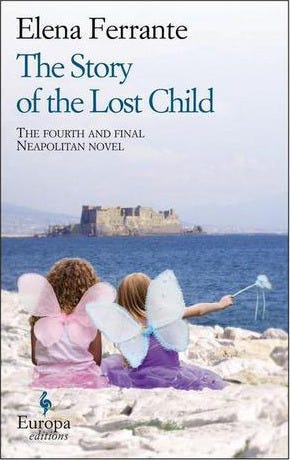
1. Lila and Elena in the Neapolitan Series, by Elena Ferrante

Their relationship has its ups and downs; at times its intensity becomes uncomfortable, even abusive. Still, there’s no denying Elena and Lila are best friends. They push each other to succeed, thanks to a rock solid belief in the other’s abilities and worth. Never a small thing, their durability feels like an all-out triumph in the slums of mid-century Naples, a community that values brute strength over intelligence and lets men treat women like second class citizens.

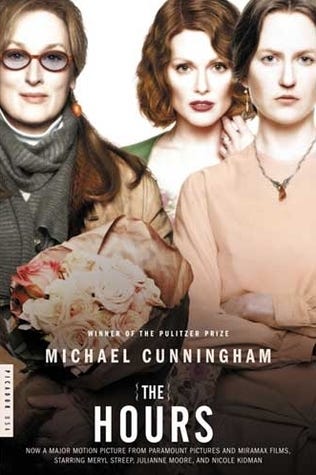
2. Clarissa and Richard in The Hours, by Michael Cunningham

There are three alternating narratives in Cunningham’s Pulitzer Prize-winning novel, but the emotional core is the relationship between Clarissa and Richard. Longtime friends and onetime lovers, the tenderness with which Clarissa tends to Richard, who is dying of AIDS, will rack your heart as much as any Romeo and Juliet.

3. Darcy and Bingley in Pride and Prejudice, by Jane Austen

Jane Austen was a keen observer of female life in Georgian England, but she could also portray male friendship, as evidenced by Darcy and Bingley in Pride and Prejudice. Darcy may be a snob, but his biggest issue with Bingley marrying Jane isn’t her loud, middle class family, but Darcy’s belief that she just doesn’t love his friend.

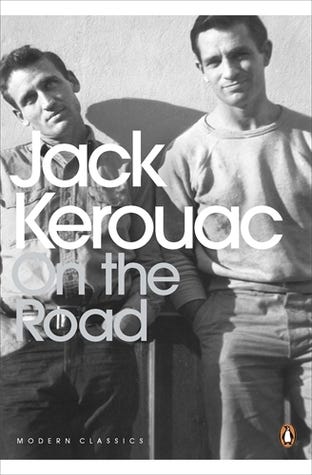
4. Sal and Dean in On the Road, by Jack Kerouac

Kerouac’s classic novel is based on his travels with Neal Cassady in the late 1940s. As Sal Paradise (Kerouac’s alter ego) and Dean Moriarty (Cassady’s), drive across America, they meet women, drink themselves silly and pontificate on the meaning of life. These two enjoy hanging out a little too much — they resist real life, always drawn back to each other and the road.

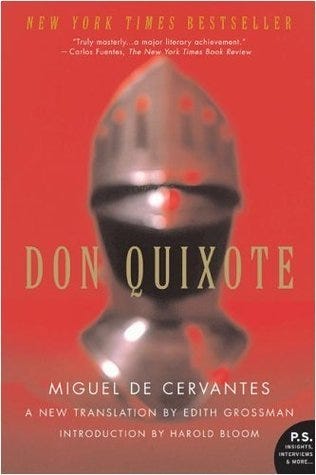
5. Quixote and Sancho Panza in Don Quixote, by Miguel de Cervantes

Cervantes’ masterpiece is the tale of Don Quixote and his faithful squire, Sancho Panza. Though they start as master and servant, as the two travel the Spanish countryside their relationship becomes far more profound. Without Sancho, the gallant, crazy Quixote would never make it so far on his journey, and without the journey, Sancho would never have truly ‘lived.’

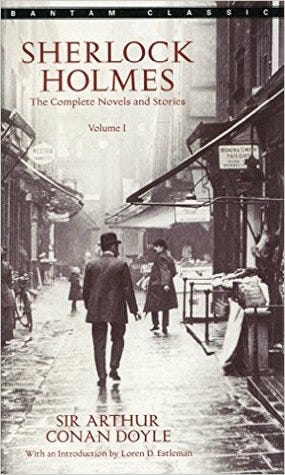
6. Sherlock & Watson in many, many stories by Sir Arthur Conan Doyle

The original bromance. In Doyle’s best-selling crime stories, Dr. Watson is more than Sherlock’s sidekick or his trusty biographer, he is the emotional element that balances Sherlock’s pathologically rational mind. A true friend.

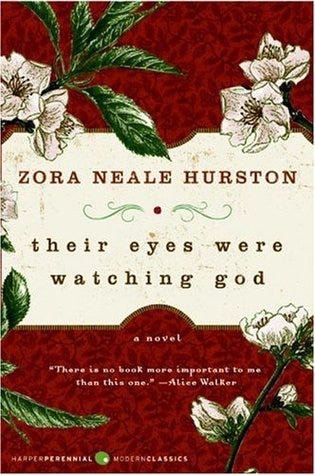
7. Janie and Pheoby in Their Eyes Were Watching God by Zora Neale Hurston

Their Eyes Were Watching God is the story of Janie, a young woman attempting to navigate the oppressive communities of rural Florida in the early 20th century. We only hear Janie’s story because she feels comfortable telling it to her friend Pheoby, the one woman who stood up for her in the small, gossipy town of Eatonville.

Translation Beyond Metaphor

At the American Literary Translator’s Conference in Oakland this past year (ALTA39) Matvei Yankelevich, one of the founders of Ugly Duckling Press, asked a question during the discussion portion of Don Mi Choi’s keynote address. I don’t remember what he actually asked but I do remember that he prefaced his comment by saying that he wouldn’t ask her to share more metaphors for translation since we’d all spent the entire weekend repeating the phrase, “translation as…” or “___ as translation.” I laughed because I’d been feeling the same way and I’d been asking myself where translation studies and theory could go beyond the use of translation metaphors.

I’d been asking myself where translation studies and theory could go beyond the use of translation metaphors.

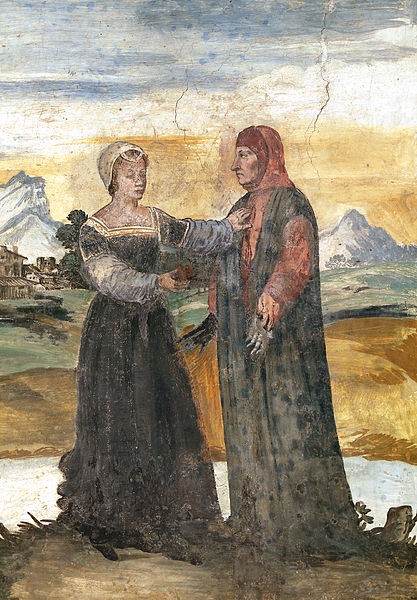
In the year following my mother’s death from ALS, a brilliant Jewish writer I met at the Vermont Studio Center suggested creating a ritual to carry out in honor of my mother. According to Jewish tradition I would do that ritual each day for the entire year after she died. I’d been struggling to deal with my grief, to find any way to confront my loss and this seemed like a good, grounded idea. I would translate one of Petrarch’s Canzoniere each day from July of 2013 to July of 2014. Petrarch wrote 366 of them so it was a perfect match and a book I’d become very attached to years earlier as a graduate student of medieval and early modern Italian literature.

At first it was easy; I was still at the residency and it felt good to place energy in something so deeply outside of myself. Those translations, or the first drafts of them, are literal, dictionary-bound and have little to do with my own loss. But as time passed, as I returned to my normal life, translating a poem a day became difficult. I was teaching high school full time, heading an English department, beginning to think about going back to school myself. Then something unexpected happened. My partner’s mother also became terminally ill. The poems became a place to go every morning before work or every evening, alone and full of confusion. The poems helped me to make space for the grieving I would have to handle on my own while my partner dealt with her own loss just ten months after my own. They were a private world for me and I can’t emphasize this enough because two dead mothers is too much for one house in one year.

The poems helped me to make space for the grieving I would have to handle on my own while my partner dealt with her own loss just ten months after my own.

Now, I am finally returning to the translations and reworking them, sometimes rewriting them. Many are translations but the ones I like best are versions. The versions take a line or even just a word from the Petrarch and carry it into my own situation and life. Despite the differences in time and place and what kind of love we each are talking about there is always a point of convergence. This might be because love, no matter the kind, shares many qualities but it mainly, I’d say, has to do with the quality and Petrarch’s work. In his essay, “Saturnine Vision and the Question of Difference: Reflection’s on Walter Benjamin’s Theory of Language,” Rodolphe Gasché writes:

Translatability indicates the work of art’s search for fulfillment in something other than the original itself. Translatability…calls for a liberation of the work of art from itself…a translation implies a displacement, even a disregard of the original’s sense…The objective possibility of translation, a possibility that is also a call for it, can thus best be described…as a structural feature that, within the work itself, points beyond it.

I’ve never been able to pin down exactly what makes a work of literature live on, but I am, for the moment, convinced by this definition. The translations, various and multiple iterations of a work, keep something alive that perhaps, by chance, reaches beyond language. Translation turns literature into an ephemeral experience, situating it close to music or dance — in time.

Translation turns literature into an ephemeral experience, situating it close to music or dance — in time.

I don’t want to make another translation metaphor. I don’t want translation to be a metaphor for grief or grief for translation, but in looking at these two practices I hope to find another way of understanding their connections. I am more interested in the possibility of modes of translation. Reading texts through particular, permanent and non-permanent, experiences and identities that an change our reading and thus change our translation.

I was able to get outside of myself while writing these poems and call on “points beyond.” Grief is the filter through which I was experiencing, reading, and writing. In my case this notion of the filter was a tool through which I was able to arrive at writing about my mother, but filters are endless. Each time we write, our bodies and minds are filters to the world we put to paper. Grief, like writing, is destabilizing. My hesitance in writing about my mother, in being unsure of my next step, has been the best mirror for dealing with loss. Hours would pass but the knowledge of what to do with my feelings, rage, sadness, emptiness, never arrived.

Because grief is a feeling, set deep in the body, these poems seek to translate Petrarch’s feelings of loss and pain through my own body. They are literal translations of feeling — if we can take translation to mean a passing, a transfer. There have been many cases of translators mimicking the lives of those they translate, but for Petrarch the case goes back to 1798 when Alexander Tytler, translator of Petrarch’s Canzoniere, wrote Essay on the Principles of Translation, in which he states that if the translator’s aim is fluency, “he must adopt the very soul of his author.”

While translating Petrarch’s Canzoniere, (also called Rerum vulgarium fragmenta) relating to the man himself, Francesco Petrarca, in both feeling and structural approach to writing, is not particularly difficult. Topics covered include politics, friendship, loyalty and love (of course) but the book really is a book of fragments and experimentation in form. It is also autobiographical, thus lending itself easily to personal struggles. I also started reading Brandon Brown’s The Poems of Gaius Valerius Catullus. Versions of Catullus’s poems that include texts and personal anecdote and a variety of other sources. If flarf can be a filter for translation, I thought, so can my feelings.

If flarf can be a filter for translation, I thought, so can my feelings.

In Dialogues Gilles Deleuze and Claire Parnet write:

We must be bilingual even in a single language, we must have a minor language inside our own language, we must create a minor use of our own language. Multilingualism is not merely the property of several systems each of which would be homogeneous in itself: it is primarily the line of flight or of variation which affects each system by stopping it from being homogeneous. Not speaking like an Irishman or a Rumanian in a language other than one’s own, but on the contrary speaking in one’s own language like a foreigner. Proust says: “Great literature is written in a sort of foreign language. To each sentence we attach a meaning, or at any rate a mental image, which is often a mistranslation. But in great literature all our mistranslations result in beauty.” This is the good way to read: all mistranslations are good — always provided they do not consist in interpretations, but relate to the use of the book, that they multiply its use, that they create yet another language inside its language.

Grief has multiplied the “use” of the original text. The mode through which we read is what creates this language within a language. I was in search of a language within a language after my mother died. Memories behave strangely when one is in shock. I was unable to recall nearly anything that had happened before my own panicked arrival in the hospice unit where she would die. I recalled each step: the phone call, the plane ride, the taxi, the color of the hospital walls, the nurses. I played this sequence over and over in my head in the weeks and then the months following her death. What I could not recall was her voice and this pained me endlessly. I tried. Friends who’d only met her a few times could remember her voice, things she’d said to me, but I had nothing. I was only able to recall the sound of her last breath.

Even now that more time has passed, three years, I cannot remember her voice. I can smell her. Feel her hands. The curve of her nose. I cannot hear her voice. My therapist tells me to write about her but I can’t write about her if I can’t hear her. But I did listen to her, for years and years. Her relationship to language influenced my own. How she would sing in the car, listening to Leon Russell, to Led Zeppelin. She was able to make beautiful sounds. When I would come back to visit the house as an adult, people always thought I was her when I answered the phone. Should I speak aloud to myself to hear her now?

People thought I was her when I answered the phone. Should I speak aloud to myself to hear her now?

Simone Weil, in Waiting for God, writes about searching for answers as well as the need to be open to the unexpected:

If someone searches with true attention for the solution to a geometric problem, and if after about an hour has advanced no further than from where they started, they nevertheless advance, during each minute of that hour, in another more mysterious dimension. Without sensing it, without knowing it, this effort that appeared sterile and fruitless has deposited more light in the soul. The fruit will be found later, one day in prayer.

The repeated action, the ritual of translating a poem a day, amounted to a prayer. As a child I thought a prayer was when I spoke to god or the universe but as an adult and as a translator I see that the prayer is in the listening. I remember our last phone call, June 2, 2013, a few days after my birthday. She told me she understood how melancholic I felt on birthdays, that she shared this melancholy. I remember what she said but I would prefer to remember how. The tones, the breaths, the breaks are all missing. I remember being in the airport in Munich, rushing home three days after that June 2nd phone call and my father on the phone telling me to tell her I was on my way; I sobbed into the phone, breathing softly so as not to reveal how scared I was, and she listened. He said her eyes widened as I spoke to her, she knew I was on the way. The doctors told me ALS patients can hear everything until the very end; the patient knows what is going on. It is hard to believe because her eyes were open, they were tearing, but she didn’t move, not once. I choose to believe the doctors, I choose to believe she was listening.

In Sounding the Margins Pauline Oliveros writes:

Here is one of my practices:

Listen to everything until it all belongs together and you are a part of it.

My versions of Petrarch attempt to listen to something within the original poems and make it part of my own experience.

Soon after I returned home to Italy my visits to my therapist became even more frequent. She kept trying to get me to write letters to my mother and I never agreed. I’d done it once while she was alive, while she was sick and it was angry and painful and I didn’t feel ready to do that again. Instead, I allowed the translations to take the place of letters. Petrarch’s sorrows soon became my own.

I allowed the translations to take the place of letters. Petrarch’s sorrows soon became my own.

Translation is the loss of one form of communication but the gaining of another. A non-dualistic understanding of the world can in turn lead to a non-dualistic form(s) of communication within language. No longer does the language move from one side to the other but the two sides experience one another continually in the production of meaning. This translation project was far from a quest for equivalencies; it was a way to understand a way to remember my mother and, above all, to come to terms with the end of the form of relationship I’d had with her for twenty-nine years. Being able to use language to find language proved to me that there was a way of continuing my conversation with her.

Jacques Derrida, in Ear of the Other, writes:

A translation puts us not in the presence but in the presentiment of what “pure language” is, that is, the fact that there is language, that language is language. This is what we learn from a translation, rather than the meaning contained in the translated text, rather than this or that particular meaning. We learn that there is language, that language is of language, and that there is a plurality of languages which have that kinship with each other coming from their being languages.

Translation has often been what it takes for me to find kinship with language. Only after years of translating other people’s stories and poems did I feel comfortable putting my own work, independent of a source text, into the world. I think this may come from some inability or hesitance I have around accessing true feelings and emotions. Prayer works for many people, sometimes therapy works for me, but literature has really been the most reliable way for me to access emotion. As Derrida reminds us, however, I have been in touch with language, not the emotions themselves. Whether these two things exist separate from one another is debatable, but the process of language grants me freedom in a way nothing else can. This freedom is essentially agency and that agency allows me to have subjecthood, something essential for an authorial voice.

The poems in translation lead me to poems about my mother. I wouldn’t have had the courage without the initial translations to move forward. I am not the first woman who has used her tears to claim subjecthood or to write about difficult material. My grief gave me agency. I remember reading about Margery of Kempe, the 14th century mystic. She began having visions during the post-partum depression she faced after the birth of one of her fourteen children. Once, when she returned from pilgrimage to the Holy Land she couldn’t stop weeping. All the tears she cried. The weeping was the only way anyone would listen to her messages from God. Men in positions of power called her a whore and a liar. The tears allowed her to reach her public, to have her story published, to have a voice.

Prayer works for many people, sometimes therapy works for me, but literature has really been the most reliable way for me to access emotion.

An authorial voice is a responsibility. For a translator the responsibility is to both the original text and to the new creation, the new version and all of its unique demands. Combining this idea of responsibility with the material I am working with, with memories of my mother, her life and then her death seems particularly weighty. My memories are not always clear, Petrarch’s words continue to serve as triggers into deeply forgotten images, scents, moments.

Translation is a half-memory leaving plenty of empty space for new creation, misinformation, misinterpretation. Derrida, in the Ear of the Other, writes, “To understand a text as an original is to understand it independently of its living conditions — the conditions, obviously, of its author’s life — and to understand it instead in its surviving structure.” In this text Derrida is a proponent of translation as survival, as a way for texts to live in different situations, eras, places. This is deeply tied, of course, to Benjamin’s understanding of the translator’s work and what makes a work translatable. As I continue to revise these poems, these translations or versions or whatever I will finally decide to call them, I see multiple versions of survival at work. I see traces and maps of Petrarch’s Canzoniere, a book that has been with me for nearly ten years of writing, and I see the poems in new ways each time I revisit them. I also see the survival of my mother and the pain I was going through when she died. The poems are not memorials, not of Petrarch’s work and not of my mother, but they reveal the process of survival, of working though something while allowing it to speak for itself.

George Saunders Likes a Challenge

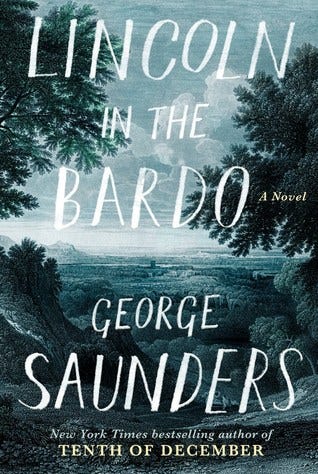
George Saunders is already one of the most prolific writers of this generation. His short stories have captivated the world for two decades, since the release of his first collection, CivilWarLand in Bad Decline, in 1996. In the years since, Saunders has published numerous books of prose, including the 2013 critical darling Tenth of December, but this year, we finally have his first full-length novel — Lincoln in the Bardo. It’s the type of book only a master craftsman like Saunders could pull off.

The story, which tracks President Abraham Lincoln on a visit to the grave of his recently deceased son, is narrated largely by ghosts in the cemetery. Saunders originally conceived the story as a play, but admits that not much carried over from the original concept. Literary heavyweights ranging from Dave Eggers to Zadie Smith have heralded the novel as exceptional, but Saunders remains humble while talking about his work. We chatted via phone about the mistakes young writers make while submitting to MFA programs, why revising is so important, novels vs. short stories, and much more.

Adam Vitcavage: Lincoln in the Bardo had a long gestation from when you conceived it to now. Why did you finally decide to pull the trigger and release it?

George Saunders: I was working on it on the side. I had written it as a play, and none of that version made it into the book. In a nutshell, I couldn’t figure out a way to present it where it would be fun. When I thought of the story, it seemed very strange. It seemed like a straight historical novel, and I knew I couldn’t get any sparks going that way.

In 2012, I finished Tenth of December, and I was in that period that doesn’t have a name but should have one, where the book is done and it’s not out yet. You’re kind of in limbo where your attention is on the book coming out, but you don’t want to waste time. I made a deal with myself that I would try this book. I knew the reason I was afraid to try this — that it would be too hard and too emotionally earnest. I didn’t want to try it. I became mad at myself because I wasn’t sure why I was afraid to write this story that I knew could be beautiful.

There was some sense of a challenge to see if I could just get it going. It took off. I’m not sure if I knew it was good, but it was hard and interesting. It was an artistic challenge that might not turn out well, but it would be a mistake to abandon it.

Vitcavage: When is a story worthy writing? You can start with a bad idea as long as there is something in there, but how do you know?

Saunders: As I’m getting older, I just noticed this, that there are fewer ideas that are dead on arrival. If it gets coughed out, I go on the assumption that I can make it work. That wasn’t true when I was younger. There are things that should have been dropped. I’m a little better at screening out the bad ideas before they get started. That comes after a long life of wasting time on dumb ideas.

A bad idea will come and I know not to go near it. With that, however, you have to be careful. This novel came out of an idea that for 20 years was kept at bay. It was one of those “bad ideas.”

Vitcavage: Were there any other novels that you wrote that fell by the wayside? Or has it always been short stories your entire career?

Saunders: There was one that I started way before CivilWarLand in Bad Decline. It was a novel about a trip to Mexico I took. It just ended up being a big piece of crap. The only person who read it was my wife and I think she made it to about page thirteen and that was the end. That was a novel I actually finished. That made me a little nervous about novels. Other than that there have been things that start out and I realize I’m at page 38. I would try to expand it to page 60 and see that it was wrong then collapse it back down. There were things that looked like they could be novels, but they were stories in their DNA. I think my natural stride is short. Even this novel is only 60,000 words.

Vitcavage: This book is unique for many reasons, one being you write from a variety of voices. Was that because it made telling the story easier?

Saunders: Honestly, the truth is that I cobbled together stories for this book. I always try to keep my eye on the emotional content. I wanted to find a way to narrate this book that didn’t seem lame. There were a bunch of built-in problems. One being that Lincoln is in the graveyard by himself, which was a head scratcher. That produced the ghosts, but having too many was a problem so I put in the historical aspect.

The truthful answer is that these things happen one decision at a time. It was very intuitive. People can get to higher levels of complexity via intuition rather than planning. I don’t remember why, to be honest.

Vitcavage: It’s the way the story needed to be told and it happened. Did you end up coming with a database for the different voices or how did you keep track of everything?

Saunders: No, no. It was just like moving ahead. I would go forward and clean up behind me. Then I would recognize a problem and fix the first couple of chapters. I had some sort of list at one point about the ghosts and when they died. I did a lot of physical mapping because the book was telling me what it wanted to do via time and place. It’s all in the graveyard during one night. I figured out a lot of who is where at what point.

The writing was all at speed. I literally went in one day and said I was going to write the first Hans Vollman speech. That was the one thing held over from the play: his name. It was amazing to me that I realized how many things I could keep in my head without notes. I knew this character was here, here, here. If I changed this I had to go back and change that.

Vitcavage: Since this is such a one-of-a-kind book, what was the reaction to your editor or your publisher when you first handed it in?

Saunders: [laughs] Yeah, it was scary. I wrote the first third and gave it to my wife and she gave me the thumbs up. I sent it to my editor a little later and he totally got it. I realized I wasn’t insane. You know, you’re working on something by yourself and you can turn it in and they’ll say, “I don’t know what the fuck this is. Start over.” In both cases, my wife and editor said to keep going. Everybody got it. We worked pretty intensively on the body of the book.

I like to keep my stuff to myself for a really long time. Maybe too long. I don’t want you to read it because you’ll either like it or not like it. Either reaction will freeze me in my tracks. I like the idea of taking my time and keeping it out of people’s sight until I’m willing to bank on the idea, to sort of hog it for a while — that really makes me happy. It’s neurotic. I don’t want anybody’s early input. I had that in grad school and it’s really beneficial, but I don’t want it at this point.

Vitcavage: There can be multiple versions of short stories: the one you workshop, the one you submit to a literary review, and the retooled version for your own collection to release. It’s fluid. With a novel, it’s finite. How does it feel to release a novel after a career of short stories?

Saunders: It’s pretty good. I feel like I worked with this long enough that it is what it needs to be. There are decisions in the book that I know people will object to, but I can promise you that for me there wasn’t a choice.

I think when a book is coming out, it’s good to remind yourself that this is high-level play. No one dies if a bad review comes, and no one lives longer if a good review comes. I have to remind myself of that. The book may not be for everybody, but it is what it is. Early reviews have been positive but there have been some real honkers. I think that’s okay.

“I think when a book is coming out, it’s good to remind yourself that this is high-level play. No one dies if a bad review comes, and no one lives longer if a good review comes.”

Vitcavage: I wanted to bring up something Chanelle Benz said to me in another interview. She mentioned how the mechanics of the short story really clicked for her when she started working with you. Since you teach creative writing at Syracuse, what do you look for in young writers like Chanelle that excites you about literature?

Saunders: The process that we use for the roughly 650 applications — we just read all of January and February. Last year I read about 120. That’s a cool process because it’s a gut check. You find out what you really believe in. You discover what works. [We look for] a sense of a human being on the other side of the page. Someone really trying to communicate with me. Someone who isn’t hiding behind showmanship, tricks, or any kind of literary agenda. Rather, someone who is just trying to catch my eye with something urgent.

That can happen in a lot of modes. It could be a crazy experimental story or a simple story. Some quality and urgency is usually it. There are four of us reading and we all have different aesthetics and at the end, we will agree on the final 10 or 15, which will be a mixed bag of different types of writers.

There’s something about having the courage of trying to engage the reader without having to hide behind any artifice.

Vitcavage: What are some of those showmanship tricks that often see younger writers using?

Saunders: There are a bunch of them and we all tried them. Sometimes it is enacting a super intellectual stance or doing crazy time jumps. It can be almost anything. It manifests in a sort of autopilot. The analogy can be if you go on a date and you’re trying to impress the other person and you talk about how much money you have. The other person will realize you’re not trying to relate but trying to master them with a fact. Or someone who is funny and they tell jokes for three hours. There is a sense of avoidance; you’re not really engaging with the other person as an equal being. I think that reads as condescension or avoidance. It comes in a million different flavors. We’ve all tried it. I would do it if I tried to write a story now. It’s called a “first draft.” That’s normal; it’s what people do.

In the application process, we will find someone who engages efficiently. It’s not about telling some truth. Often I think it’s about being brave enough to leave your original concepts and ideas at the door. Leave it all behind and write to the energy of what the story is giving. [Finding something engaging] is like that old definition of porn: you know it when you see it. If you read 200 manuscripts, it will jump out at you. I’ll read 15 manuscripts and think, “I don’t know” but then 16 comes and you’re running out to tell your wife and you’re laughing with the story.

Vitcavage: You mentioned how all writers try that showmanship and it’s called a first draft. I know you’ve talked about it at length before, but I feel it’s always worth revisiting: how important is revising to you?

Saunders: It’s the whole ball of wax. It’s very liberating because it means you can cough out a shit ball and then start working on it. You don’t have to have that writer’s block mentality. You can just play. You can write something and then revise it until it sits up on its own.

I discovered that approach organically. It’s so nice because it simplifies your writing life. You never have to worry about a “good idea” because you can start with a “bad idea” and turn it into a good one by paying attention to where it’s stupid.

I like revision just as a stress reducer. Because I know what I like and I can find it easier. I’ve noticed from years of doing it that, through this process, the person appearing — the author — is so much better than me. He’s smarter, less dishonest, funnier. It’s an addictive thing to realize that you can squeeze a better version of yourself out through the process.

Vitcavage: Lincoln in the Bardo is about this in-between time of death and the afterlife. I don’t want to be that guy who takes giant leaps to talk about topics out of left field, but I think this can tie back in. Do you feel, in this time of political uncertainty, that there is a “duty” for writers to comment outright, or to embed political beliefs and ideas into their themes?

Saunders: I don’t think that’s an artist’s responsibility. I think there is the responsibility for a citizen to do that. But I would say the artist’s number one job is to fight for the idea that art can be basically useless if it wants to be. It’s a place of complete freedom. In this moment, if someone wanted to write a 400-page book about the creation of doilies, they should go for it. You have to protect that right or else art falls into propaganda.

“The artist’s number one job is to fight for the idea that art can be basically useless if it wants to be.”

Right now, I think this book was very well-timed. Not by design, but if someone asked me what I think about America, this book is what I think about America. It’s a tricky time because if the roof is caving in, you should become a roofer. I’m not sure fiction is the right place to do it. My thought is that citizens should do whatever they want to do in the flavor they want to do it.

Vitcavage: I’ll ask my favorite cliche question to end our conversation. What’s next for George Saunders?

Saunders: I really don’t know. We talked earlier about the intuitive thing, and I’m honestly at the point where I can say I have no idea. I wrote one story after this book, that Trump piece, and I’m in the middle of doing some TV script writing.

I think it’s the first time in about 30 years that I have an empty desk in terms of fiction. I’m just going to see what feels interesting. That won’t be until the summer because I have this book tour. We’ll see. Maybe I’ll start a band.

That’s exactly what you should do.

Saunders: No, no, no. You haven’t heard me play.

Vitcavage: Well, it could be bad and still be good. That is what art is all about after all.

Saunders: I like the way you think.

Audacious Book Thieves Plunder London

A band of sophisticated robbers targets the UK’s literary treasures

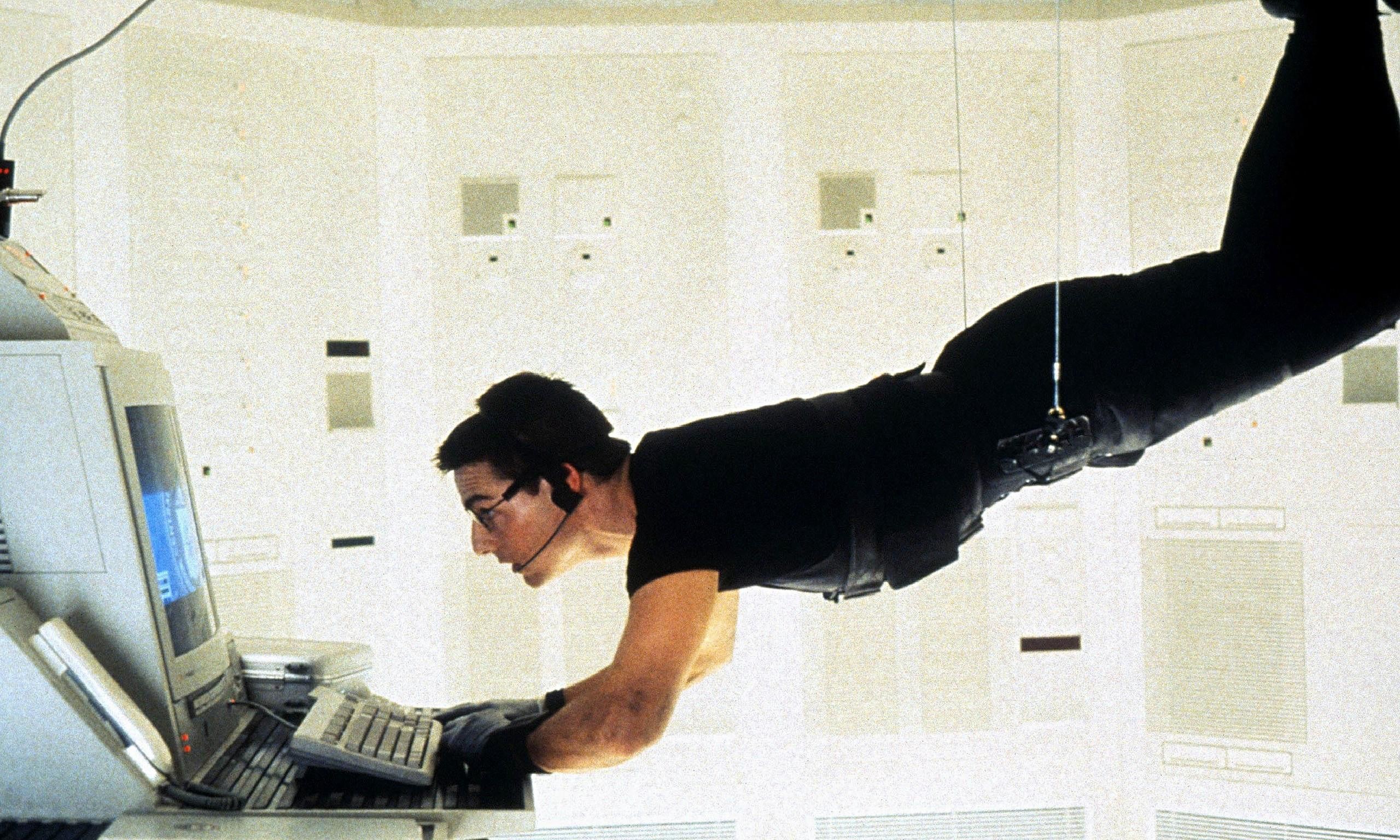
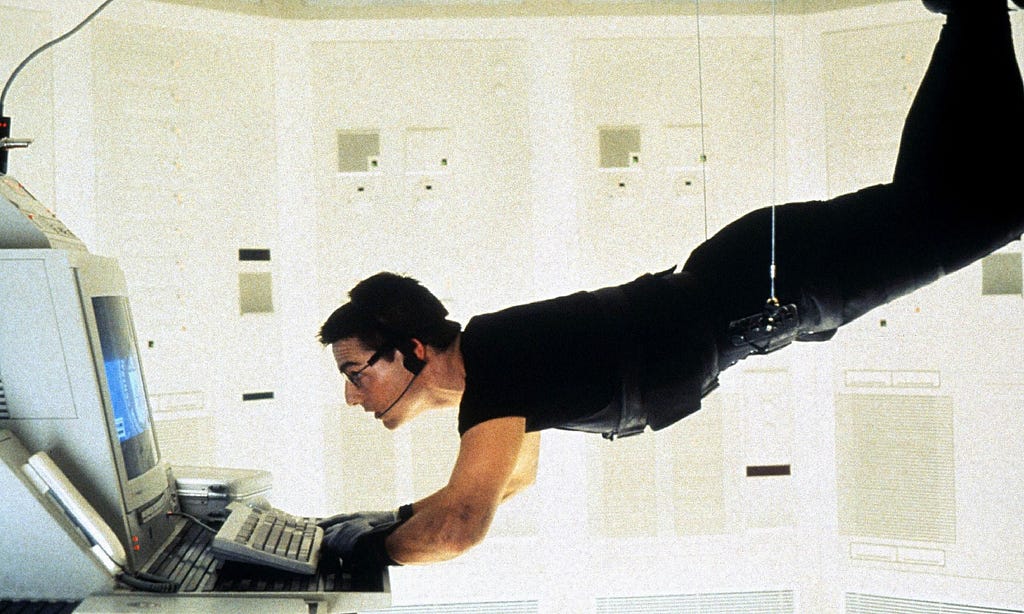
The e-book will not suffice for Tom Cruise. It’s hardback or nothing.

This weekend in London, a band of well-read thieves pulled off one of the most audacious book burglaries in history. Three robbers targeted a warehouse near Heathrow Airport, home to antique editions of work by Galileo, Newton and other icons of intellectual history.

The theft is drawing special attention today, thanks to the high degree of difficulty. The bandits managed to elude motion-sensor alarms and then, with the utmost stealth, drilled an opening in the reinforced glass skylights before repelling 40 feet into the depths of the vault to retrieve the goods.

Their loot included a 1566 transcription of De Revolutionibus Orbium Coelestium by Copernicus and a 500-year-old copy of Dante’s Divine Comedy. In total, the stolen books are worth an estimated $2.5 million.

According to the Guardian, it will be no easy feat for the raiders to sell their booty. (Yes, the goal is to use all our buglary vocabulary today.) Chris Marinello, the CEO of London based Art Recovery International, told the paper that “the more publicity the crime gets, they more difficult it becomes to sell these items.” So it’s important to keep this unfolding crime in the news, and for booksellers and art dealers to keep a close watch on sites like like Artive.org and the International League of Antiquarian Booksellers’ Stollen Book Database, so that stolen goods aren’t able to freely circulate.

The next threat the books face is the prospect of being cut up and traded to unaware buyers in the art market. Let’s hope that the crooks are soon brought to justice — and that we get video footage of how they pulled it off.

The Star of the Show

“Telling a good catastrophe anecdote,” says Mike Scalise, “means becoming a maestro of sympathy.” Not only does Scalise mine his brain tumor story for sympathy points, he breaks it down with hilarious aplomb in his memoir, The Brand New Catastrophe. Scalise’s book covers the months just after he finds out he has acromegaly, a rare condition caused by a tumor on his pituitary gland. The treatment leaves him hormone-less, and struggling to find the energy for tasks that most people do with ease. In life, Scalise bends the tumor story to alter or create his sense of self as he sees fit. What ends up happening is that he discovers he has a talent for narrative. Scalise’s book, then, is his effort to pick apart — dissect, to use a relevant metaphor — why his disaster and illness stories work and how he has successfully crafted them. Sound a little macabre? Scalise realizes that, but he’s all in with gallows humor. He artfully balances coruscating wit with gritty realism about his disease.

In early chapters, Scalise recounts his first experience with the disaster story, a high school swim team mishap, a near-drowning that became legendary in his town. Scalise realizes something in the telling of the story:

[T]he story became the star of the show, while the person at its core — the one with the tiny puddles of water in his once pristine-lungs, the twelve-year competitive swimmer who’d go swimming again only a handful of times over the next decade — disappeared.

He learns to harness this power. This first taste of the power of storytelling changes young Scalise, and though he won’t become a writer for many years, his life begins to shape around the idea of story itself. For Scalise, this very specifically means the way in which he can manipulate people with his stories, often into feeling bad for him. But he establishes early that he wants to be known as the joking guy who doesn’t take his death too seriously. The swimming disaster allows him both to characterize himself this way and to begin to find his voice. His memoir opens on his illness but immediately flashes back to the drowning and it’s a wise choice. Scalise brings the reader into his world before the illness, and we see the ways in which story defined him before his illness dictated the plot.

As Scalise’s illness progresses, he begins to study himself like a character in a narrative. Outwardly, he’s making jokes about the hole in his head, but inwardly he’s troubled by what he perceives as a lack of meaning or purpose. “For all the bravado I showed in public,” he says, “the shit jokes, the wit of character — and it truly felt like that, a role I inhabited — in my private moments I couldn’t lock on to a single thread of insight or introspection about anything.” Scalise’s control of the story is sure; he writes about how he studies himself as the events are happening, but the long view that memoir affords him also adds another layer to his analysis of self. What emerges is a man increasingly more competitive with his mother, who is also struggling with lifelong illnesses, and angry that he cannot find a role model to show him the way his disease will progress. He is at the mercy of his body, and though he handles his frustration with humor, his reflections on the sick human condition are what illuminate the most about the lack of control in every human life.

“This is a story about being truthful, a story about how we handle illness, and a story about what kinds of narratives we’re used to reading about and around disease.”

Scalise’s memoir comprises a set of rules for how to be sick and tell a good story about it; from the start, he uses a flippant tone designed to make the reader think that these rules are just created to amuse himself or to make sense out of his own experience. But the power of Scalise’s memoir lies in the comparisons he makes between his own illness dissected and studied on a molecular level from the inside, and his mother’s, which he studies from afar. “I was angry because she refused to be sick better,” he says, and as bits of his darkest feelings begin to seep out, his memoir takes on an unexpected and profound resonance about family. Scalise purports to write about control of oneself. “The rules I’d made for myself in crafting a disaster story were designed,” he says:

at least in part, to exert the illusion of control over my illness, which swirled below my skin in ways I could never truly harness. Owning parts of my illness, steering what people knew and how they saw me in relation to it, was all I could do to assume authority over it. I was good at that part.

But it is Scalise’s realizations about family and the secrets we can never understand about our loved ones that leave a lasting impression. His analysis of his own illness, then, taken in light of how little he understands his mother’s, takes on a different tone.

This is the most entertaining book about a brain tumor you’ll read for a while. Scalise wants it that way. But don’t mistake the lighthearted tone for a lack of seriousness or insensitive handling of the material. Scalise cuts away all of his own pretenses and forces himself to examine all of the things he wants to hide. This is a story about being truthful, a story about how we handle illness, and a story about what kinds of narratives we’re used to reading about and around disease. Scalise shows himself to be a capable writer in what is a thoughtfully conceived and skillfully executed debut.

“Four Corners of Sunday,” by Ellen Welcker

1.

I want to begin by saying that I was reading while getting my haircut. I know you are supposed to make small talk.

I had hoped to put some blue in there but she said, “you don’t want to end up looking like Ryan Lochte, do you?”

I confess that was valuable small talk.

It was a pleasant day that included sex and vacuuming. I held my son’s hand while he pooped. I ate blackberries.

The slugs were fat and white in the dark upheaval where the weeds had been.

Only briefly did I want to shove Legos under my fingernails.

She laughed when she saw what I was reading. “Does your husband make fun of you?” she asked.

In the backyard, a pile of red sparkly diarrhea, and the birdhouse the kids had decorated, licked clean.

Dogs are fools, and that’s why people feel such kinship with them.

It is worth noting that I talked to my neighbors. I often pretend I live miles from anyone.

Fruit flies began to multiply above the wet remains of food congealing in the sink.

Possible responses included, no, because he’s not a complete asshole.

I heard myself tell the story of what was whispered to the child for whom night was unfriendly. I loved it unabashedly once more.

But also, he doesn’t really know what I’m reading, ever.

Mom’s tired voice on the phone.

Auntie making an auntie joke, not funny.

I laughed out of habit, and wished I hadn’t. I knew they were heading to the funeral soon.

2.

I used to wake in a wallpapered room.

It presented as polka dots, but was in fact, tulips — an army of them, locked in a tiny grid.

While I slept the tulips crept close as a cat that seeks to steal a baby’s breath. So near to my face upon waking that they blurred and I felt among them flattened as a sheaf of grass by dreams and the quilted weight of childhood.

The tulips, by contrast, surrounded me thickly. They were the more real.

To break the spell I would reach out slowly with a finger. When I touched the wall, I came into focus, the tulips flattening like wallpaper.

Maybe you’ve seen me, practicing my sleep moves.

Maybe you’ve heard my doctor say “you.”

See the older slip like a sheet between my sheets, osmotic as a feeling.

See now the younger crying mama mama mama cuddy up no stand up no hold you no lay down with me sleep here mama it’s cold.

There are gross crumbs in their bed.

Who would ever want to read this.

I want to be deep in some deep thing instead of deeply in debt pinkly squinting and sliding from coffee to sugar to wine.

It’s a long sleep, says 2. I’m hungry, says 5, that hole behind the rocking chair makes me — what, I interrupt, tired of excuses — the thing is, she says, there are holes everywhere, and the problem is, when I see one.

Body of my body gone gone gone but twined with mine these nights. O my feelings.

May I get anyone some water? Or massage your glands?

The night she slides in, cooing, I sleep with you all night; he wakes, yelling, it’s a long sleep I want breakfast!

My eye is inflamed. I am embarrassed to look at people. I perk up for sleep ads — sleep aids — but worry I’ll sleep through some little emergency or other.

Like mama.

You should go away and get some sleep, says a man.

And also call a dermatologist; there are irreparable things happening to your face.

My face agrees, and is also wounded by this.

I pour the milk.

3.

This is a still life, with viewer as object.

The tonight is fact.

Under the blanket of which I did not go. With the performance artist.

Woman accused of sleeping with the entire Wu Tang Clan.

Woman pretending to be furniture.

I can see you are not damning.

As soon as possible will you give one, and hon — be a lot more fun and addicting.

Bring home a nickname tonight, like, One Who Tenderly Runs One’s Fingers Through Hair, Cootie-Free.

My bone screws are hurting. It’s sockeye to suckerpunch up in here and I don’t think you think I think this isn’t true.

Woman on the cover of Vogue wearing nothing but a strategically-placed platter of gourmet dessert gnats.

Woman who sold her lymph nodes to Warren Buffett.

Woman watching Mars rise low in the swampland dawn — or Venus, whichever.

Cold-caller extraordinaire. That voice.

Stalagmite, mirror, milliner with a secret stash of feathers grown from a petri dish in which the auger is the toe jam of a boss man.

Radiant as the splendid quetzal.

Not that this is not nullifyingly, defeatingly, negatingly, repeatingly, immediately available to all.

4.

I soft-boil eggs in Nebraska. In Nebraska, noises come from my mouth. Every key has a fob in Nebraska, and Von Mauer exists in Nebraska.

Nebraska is as wide as I try to be helpful, padding softly through the condos of Nebraska. I wipe up a stain as old as my name. Oh, I love to creep along in Nebraska!

I’m reprimanded for my hair in Nebraska. I’m 40 years old in Nebraska. An official has the hiccups in Nebraska, and I stare at an ant in Nebraska.

The crops and the trees of Nebraska were planted by colonists in Nebraska. The women, the women in Nebraska — made of time and Borsheim’s in Nebraska.

Nebraska, our name means to carry a head with hands thick and bloody in Nebraska. I draw shapes of the pills and slide books from the shelves in secret, in secret Nebraska.

I water fake plants in Nebraska, eat the mints from the dish of Nebraska, I sit in the chairs of Nebraska, with the last of the men in Nebraska. I plan to count birds in Nebraska. I don’t count the birds of Nebraska. With a throb in my tailbone I stare at the mammals, televised mammals of Nebraska.

I have held index cards in Nebraska, in Nebraska, the quietest hospital. Purple berries exist in Nebraska, astringent, like the grief of Nebraska.

My beautiful aunt in Nebraska, near the rails-to-trails in Nebraska, the dead man’s hole in Nebraska, pulling a fast one on Nebraska.

The chins are up in Nebraska, like the ground beneath the mall of Nebraska, or the stone-faced dog of Nebraska or the tools on the counter of Nebraska.

There’s a Wal-Mart in every Nebraska, and a sound so stealthy and low, like a lung inflating in Nebraska or Nebraska just whispering “no.”

Notes:

“May I get anyone some water? Or massage your glands?”
 — Bhanu Kapil, Thinking Its Presence: The Racial Imaginary Conference, Missoula, MT, 2015.

Joanna Newsom sings about the “nullifying, defeating, negating, repeating” joy of life in her song “Divers.”

John Darnielle Is Going to Unsettle You

Picture this. One night in the late ’90s, you put a VHS copy of She’s All That into your VCR. You’re alone. It’s dark. And in the middle of the movie, the screen cuts to amateur footage of a woman in a barn with a canvas bag over her head. It’s bizarre, but it only lasts a few seconds, so you return the movie and rent another. Then it happens again. And again. There’s a barn, and heavy breathing, and bodies writhing beneath a tarp.

Yes, John Darnielle — of The Mountain Goats and Wolf in White Van fame — has written a horror novel. In Universal Harvester, a 22-year-old video store clerk in Nevada (Ne-vay-da), Iowa discovers creepy-as-hell footage spliced into the store’s VHS tapes. It’s the most unsettling book I’ve read since House of Leaves, but it’s also a gorgeous, minimalist exploration of loss, family, and epistemology. I recently spoke with Darnielle over the phone about ambiguity in fiction, Universal Harvester’s unique narrative quirks, synesthesia, and working on a grain elevator during an Iowa summer.

Adam Morgan: Is there an actual video store in Nevada, Iowa?

Darnielle: There is a video store I remember in Nevada. It’s funny. I have two kids, and one of the best video gaming systems you can let kids play with is the Nintendo 64. It’s really intuitive and easy to figure out. I saw a game whose name I would not have been able to call to memory if you’d asked me, but I rented it from the Nevada video store. It’s called “Mischief Makers.” Actually commands a bit of a price.

In this game, when the little creature grabs ahold of something and wants to switch positions, he says, “Shake shake.” We’ve been saying that for 20 years. I had almost forgotten the origin of it, but I found this game and I remembered that we used to drive in from Colo — where I lived, which is northeast Story County — to Nevada, which is a little further in. Nevada is a town I know. I never worked there. I worked in Ames and in Colo, and Nevada is between those two, but it was a place I thought you could situate something. Nevada is small, but not small like Colo.

Morgan: Can we talk about the title for a little bit? I have synesthesia and some titles just look really nice, and this is one of them.

Darnielle: Do you get a color from it?

Morgan: It’s color-based for me. ‘U’ words are typically purple for me, and ‘H’ words are typically gold, so it matches the cover design really well.

Darnielle: Yeah, I love that iridescent cover design, because it brought out deep colors in these duochromatic-looking scenes, which was exactly what I was trying to do, right?

Morgan: How did you settle on the title?

Darnielle: The working title was Nevada, Iowa Video Hut. I really liked it because it was so awkward, but I like my titles to be evocative. In my other life, in my music life, I’ve released so many things with so many titles that it’s a stew of many different ingredients. Because I’m fairly new to books, I like to think about how they’ll all look on a shelf together at the end of my life. Or on that list of books, the “Also by John Darnielle” page.

Universal Harvester fits well next to Wolf in White Van. It goes a little backwards in the alphabet. Universal Harvester has more syllables, but it looks like a shorter title because it’s got fewer words, but it’s got a very nice — not iambic, but I think trochaic movement to it. It’s sort of whispery, like a Tennyson phrase or something.

I got it from a sign facing Highway 30 in Iowa. There was a company whose name I believe was Universal Harvester that we drove past once going into Nevada. I was new enough to Iowa for that to look really amazing to me. There’s a giant cylinder rising from the earth. We don’t see those back where I grew up. A lot of farm equipment names and stuff like that, they look very exotic when you’re new to the area. I wanted to bring out that exotic quality in the title.

But it could have been “International Harvester.” I’m not sure, but what went into my brain was “Universal Harvester,” which of course sounds like death, right? It sounds like a person, a person who does something quasi-final, you know?

Morgan: I think most novels are too long, but I wanted another 100 pages of Universal Harvester. You provide a sense of closure, but there are still so many loose threads. How do you find the right balance between closure and ambiguity?

Darnielle: Actually, it’s fun. Friends of mine look at the book while I’m writing it, because I need their gentle reminders that I have to close loops. I like open questions. The stuff I read for pleasure is quite often stuff that stubbornly declines to tell you anything. You don’t get to know the very thing that drew you in. I’m talking about like the French, the Nouveau Roman people, especially in the ’60s. There aren’t many people left who want to read that stuff.

I’ll send something to John Hodgman. “This is really good,” he’ll say, “but I want to remind you that at some point, you’re going to have to pay the reader back for their investment in your story. You can’t always drop them off at the door.” But I really want to. That’s the moment I like — the moment where a few things could be true. That’s one thing I do in this book. I say, “Well, there’s a version of the story where this happens, and there’s another version where this happens.”

There’s a scene where they’re editing video tapes, and originally there were cryptic labels on these canning jars that suggested something besides jam would be going into them — who knows what. Blood, or plasma, or whatever, right? It was creepy as hell, but you can’t plant that seed and never say anything about it again. You can’t. If I introduce something to the scene, I have to — at the very least — acknowledge that something has been left unknown there. I can’t just say something and never refer to it again…but the appeal of that is very strong and hard to resist.

Morgan: I think you struck a good balance. I was worried it was going to be like the last few seasons of “Lost,” where you gave me a bunch of answers I didn’t want.

Darnielle: No, I’m not into answers. There was a thing I said in one of the Wolf in White Van interviews: “I’m not writing to answer questions. I’m writing to pose questions.” That’s my thing. I happen to like the Victorian novel thing where in the last chapter they tie up every last loose end, but that’s not my style. I’m looking at loose ends and asking how they feel.

“I’m looking at loose ends and asking how they feel.”

Morgan: At several points in Universal Harvester, the narrator alludes to different versions of the story. It’s not a big part of the plot, but it implies this omniscience of alternate realities. Why was it important for you to bring that into the story?

Darnielle: When I first did it, it just happened sort of naturally. Writing for me has this improv quality to it. I don’t really remember anything besides going, “Well, here’s the story when Bob Peach returns the ‘Best of Bass Fishing, Volume 2.’” I got to the end of that scene, I didn’t want to just drop it, I wanted to have a nice transitional moment. So I said, “Well, that’s one way that scene ends. Then another way that scene ends could be this.”

I was thinking about how people stereotype Iowa. You hear this every Iowa Caucus: the news organizations grind up their “How do we talk about Iowa” machine, and it’s always this very stereotypical, “Well, it’s a simpler life in Iowa, and more people are closer to the farm.” They talk about family farms, even though hardly anybody’s ever seen a family farm at this point. It’s largely big ag, right?

The family farm is not the economic engine of Iowa. It’s all very kind of offensive and untrue. It’s just this weird narrative thing, and I wanted to clear a space to say, “Well, in Iowa a lot of things happen, actually.” Are they the same things that happen in Williamsburg or Chicago or wherever? No, they’re not. But that doesn’t mean it’s some sort of trap where you only get to live one way.

I was thinking about that a little, but then I realized it’s true of every story. When you’re writing, stories push you in one director or another, but you always resist and say, “Well, do I have to do X because Y happened, or is there another way?”

Morgan: What did you do differently in this book based on something you learned from writing Wolf in White Van?

Darnielle: When I started writing the first scene in Universal Harvester, I wanted to write a traditional scene that was in the first person and that had plenty of dialogue, because in Wolf in White Van I made a point of trying to introduce as much dialogue as I could into this first person, you-live-inside-the-guy’s-skull narrative. There’s a limited about of dialogue you can really do when a person is being so reflective. There’s a fair bit in there, but for the most part Wolf in White Van in a very long monologue. It’s a person opening up his brain and bringing you inside of it.

I wanted to grow as a writer and say, “Well, you know, the traditional model for fiction is the third person.” I was also feeling a little reactionary, because I feel like we live in a world that really privileges the first person super hard. I looked through a bunch of modern books and they’re all first person narrators.

I was like, “Well, what if I just wrote something with your standard omniscient narrative, except I don’t want an omniscient narrator to be editorializing. I don’t want to be telling you how you’re supposed to feel about something.” As we know from reading the book — spoiler alert for your readers — it turns out not to actually be in the third person.

Writing in the third person forces me to tell more story. It forces me to say, “Make something happen and make it interesting.” A first person narrator gets real reflective and you can get real pyrotechnic with that, but I wanted to let the story and the characters speak for themselves. You know, I wanted to do something that seemed less colorful on the surface but with more depth.

Morgan: That first slip into first person, about third of the way through the book…it cracked my head open.

Darnielle: When I did it, it was kind of an accident. I just sort of typed it. But then I thought, “Oh, wow. That’s creepy as hell.”

Morgan: Since I was reading a review copy, I prayed, “Oh, please let him be doing this on purpose, and not be an editorial mistake.”

Darnielle: No, you’re right. That could have been a relic of an entire draft that was in the first person. But no, it wasn’t. When John Hodgman was looking at the early draft, he was like, “I don’t know what this is gonna be, but keep that.” I knew it was a big moment, but then I had to resist doing too much of it. It’s so creepy, I wanted to do it again right away.

“It’s so creepy, I wanted to do it again right away.”

Morgan: You worked on a grain elevator for one harvest in Iowa. How did that impact or inspire you?

Darnielle: There was a sign at Brennan’s, the supermarket down the street, that said, “Harvest. Help Needed.” I was working part-time at the hospital, so I showed up. Basically, if you show up to do that job, they’re going to give it to you. You can learn it quickly. It just involved opening up the grates to let the trucks dump grain into the ground and moving the grain around by means of a pulley system within the corn elevator. Then the soybeans have their own separate room — it’s just a giant Morton building that they dump the beans into and form a giant mountain of soybeans. If you have something that has moisture in it in giant piles, and you don’t move it around, it’ll get hotter and hotter and will eventually rot. So you have to go up and knock down the peaks. You climb the mountains of soybeans with a shovel in your hand and knock down the peaks, and then dig around.

It’s the middle of the Iowa summer and there’s no air conditioning in the bean building. You get extremely hot in there. It’s really intense.

But I’m a liberal arts major guy, right? We grow up with the assumption that we’re not going to do manual labor. I enjoyed it to some extent, but we don’t want our jobs to take all of us. At the end of a day on the grain elevator, you don’t have a lot left. It’s a long day, and you come home and you eat dinner, and then you watch a little TV and go to bed. You don’t have a second shift where you go out and see a show or something. You’ve got to be back the next morning at seven.

At the end of that time, it started to get cold. The romance wears off real quick once it’s cold on top of the elevator. But I was glad I did it. I’d recommend it to anybody. My wife and her sister grew up detasseling in northern Iowa, which is another thing you can do to keep your hands busy. The thing is, you don’t want to be a tourist, but at the same time it’s great to work jobs if you can get a chance where you can get a sense of how other people who aren’t of your clan live their daily lives. It gives you a better sense of how people are.