The Self at the Bottom of the Toilet Bowl

People were talking about Don DeLillo’s Underworld, and I wanted to contribute. My feeling is, if you’ve read a giant novel, you should be able to get conversational credit for it. The problem is that in spite of being an avid reader, I have terrible recall. Even basic plot points tend to vanish from my memory after about a year. So it seemed to be with Underworld, which I must have read a decade before. I stood there trying to muster a coherent assessment from the muddled detritus of my memory — baseball, New York, postmodern… nothing here was going to give me any talking points.

My feeling is, if you’ve read a giant novel, you should be able to get conversational credit for it.

Then I realized I did remember something. Something specific.

“Remember when that guy goes on a honeymoon with his wife and the farther they travel across Europe, the worse his shit stinks?”

I didn’t realize how strange that comment sounded until after the words were already out. Yes, the others remembered, yes they even laughed a little, but uncomfortable questions remained. Why had I brought up that plot point in particular? A bit of backstory meant to characterize, salient neither to the plot nor to our conversation. Things got stranger still when it became clear to everyone, not least myself, that I had nothing more to say about the novel. The description of Marvin Lundy’s excrement was literally the only thing I remembered about the book.

Sheepishly, I retreated. But that wasn’t the end; it happened again, this time in a conversation about David Mitchell’s lovely autobiographical novel Black Swan Green. This time, I did remember a few things about the book. But three words kept hovering under the surface of my thoughts: good clean crap. I resisted saying them. Then I went home and put those words into an Amazon “look inside” search box for the novel.

This time, I did remember a few things about the book. But three words kept hovering under the surface of my thoughts: ‘good clean crap.’

The phrase good clean crap does in fact appear in the novel, in a scene where protagonist Jason is listening in on a tense family conversation from the bathroom. It’s a thousand times more of a throwaway line than Don DeLillo’s shit reverie. And yet, I’d remembered it perfectly. The implications began to dawn on me. I tried to think of other shit-in-literature moments. Within the next thirty seconds I had unearthed:

· “Big Boy,” the eponymous un-flushable turd in one of David Sedaris’ stories from Me Talk Pretty One Day.

· Humbert Humbert’s TMI revelation, right after he has sex with Lolita for the first time: “I was unbathed, unshaven, and had had no bowel movement.”

· The recovering alcoholic in Infinite Jest who testifies in an AA meeting that, after years of diarrhea, he can finally produce a well-formed turd.

The more I paid attention to shit in the books I read, the more I realized I have some kind of cursed superpower. If a book doesn’t have shit in it, I won’t remember it. If it has shit in it, I won’t ever forget it.

Freud has something to say about this, of course, but it’s not pretty. I’m stuck in the anal stage, a toddler refusing to give up what’s in his diaper. My fixation on poop, however unwitting, represents an overexertion of the superego, a ridiculous ploy to control the chaos around me — and yes, I do love control. (“I like to experience nature inside museums,” I recently told a friend.) Hard as this self-knowledge is to bear, I know that willing subconscious obsessions away only makes them worse. That’s why I decided to face the textual toilet bowl and bring the sublimated to the surface. I began, in other words, to look at shit in novels analytically, re-reading the scenes in question with an eye (and nose) towards their formal and thematic functions.

I know that willing subconscious obsessions away only makes them worse. That’s why I decided to face the textual toilet bowl and bring the sublimated to the surface.

First, the obvious, but it bears stating: The ratio of shit to not-shit is much greater in real life than it is in a novel. Meaning, whether or not your “erotogenicity” is fixed in the “anal zone” — as Freud would say mine is — by necessity you end up thinking about shit more often than you read about it. As E.M. Forster observes in Aspects of the Novel, we spend our lives eating to keep from going hungry, but characters in novels seldom eat for such prosaic reasons. Instead, food consumption in novels tends away from the naturalistic and toward the representational. So it is with the other side of consumption. If there is shit in a novel, chances are it’s not there to give a factually accurate portrayal of a character’s day. It’s meant to mean something. Even Joyce’s seemingly-banal description of Leopold Bloom on the toilet with a newspaper, letting “his bowels to ease themselves quietly as he read…that slight constipation of yesterday quite gone,” reads to me as Joyce commenting on the reader-as-consumer. As anyone who has read any part of Ulysses can attest, you can’t passively consume the text; you have to produce your own knowledge (shit).

If there is shit in a novel, chances are it’s not there to give a factually accurate portrayal of a character’s day. It’s meant to mean something.

I get ahead of myself. Most literary deployments of shit function as characterization rather than meta-commentary. This characterization, more often than not, centers around control. Take young anal retentive Karl Ove Knausgaard, discovering (in Book Three of My Struggle) that he can hold in his own excrement: “I had such a fantastic feeling in my body if I didn’t let nature take its course, if I squeezed the muscles in my butt together as hard as I could and, as it were, forced the shit back where it came from.”

You don’t need 50 minutes on a couch to speculate on the source of Karl’s control issues: his domineering, verbally abusive father. Since young Karl spends his days painfully aware of his father’s every motion, calibrating his actions according to his father’s moods, he can claim little control over his own life. Except, that is, in one area. When the shit hits the fan and childhood becomes too overwhelming, we control what we have.

As with young Karl’s fixations, a young character’s relationship to shit can tell us a lot about the kind of adult they’ll become. Even before Kevin, the titular character in Lionel Shriver’s novel We Need to Talk About Kevin, murders nine of his high school classmates, we know he’s bad because of the way he manipulates his poop. Kevin refuses to be potty-trained; his mother, Eva, is still changing his diapers at age six. Kevin times his next bowel movement for the minutes after Eva has finished cleaning his first. “Kevin…had learned to form a weapon from shit,” we learn, foreshadowing Kevin’s later obsession with another kind of weapon.

Even before Kevin, the titular character in Lionel Shriver’s We Need to Talk About Kevin, murders nine of his high school classmates, we know he’s bad because of the way he manipulates his poop.

After one maliciously-timed diaper dump, Eva becomes so upset that she literally throws her son across the room. It is the only instance of physical abuse in his childhood, and she later wonders if it made him what he’d become. In the moment, however, she feels blissfully free, finally able to admit that she doesn’t love her son: “When hoisting Kevin’s body in that fluid adrenal lift, for once I’d felt graceful, because at last there was an unmediated confluence between what I felt and what I did.” This confluence is the privilege of childhood, when you can say what you feel without consequence. The time before you have to hide your shit.

Growing out of childhood involves learning to manage our shit in civilized ways. Freud believed that a key point in the evolution of both crawling children and humans as a species came when raised our noses from the ground. Civilized people walk on two legs, far removed from the stench of the earth. Thus when shit crops up in novels it often signals a return to a pre-civilized life. In Gary Shtyengart’s dystopian fiction Super Sad True Love Story, a near-future New York City dissolves into chaos: “By the razor-wired fence delineating a failed luxury-condo development, a drunk in a frilly guayabera shirt pulled down his pants and began to evacuate.”

The links between shit and civilization take on more complex dimensions in a post-colonial context. Obinze, one protagonist of Chimamanda Adichie’s novel Americanah, immigrates from Nigeria to London, finding work as a janitor for an estate agent. The office toilets aren’t as dirty as those in Nigeria, which makes Obinze think the British are more civilized. But then he sees “a mound of shit on the toilet lid, solid, tapering, centered as though it had been carefully arranged.” Whether or not the shit was left there for him specifically, Obinze finds symbolic connections between it and his experience as an African immigrant struggling to make his way in 21st century London. No one will overtly tell Obinze that he is less than a white Brit; still, the racism he encounters seethes below the surface of his daily life. Now that the shit is on top of the toilet, Obinze feels the truth of his social status. As with Eva’s flinging of a dirty-diapered Kevin across the room, shit breaks through the veneer of civilization to join action and intent.

No one understands shit’s antagonistic relationship with civilization more than the talking turd in Jonathan Franzen’s The Corrections. The talking turd (which has to be either an homage to or a rip-off of South Park’s Mr. Hankey) is an hallucination of the dementia-riddled Alfred, a retired railroad engineer on a cruise ship vacation. Early in the morning in the ship’s cramped bathroom, Alfred and the turd debate the finer points of civilization. “‘Me, personally, I am opposed to all strictures,’” the turd says. “‘If you feel it, let it rip. If you want it, go for it.’” “‘Civilization depends on restraint!’” Alfred protests. The turd counters by accusing Alfred of complicity with the erasure of people deemed “uncivilized,” from Italians to African Americans.

No one understands shit’s antagonistic relationship with civilization more than the talking turd in Jonathan Franzen’s The Corrections.

It is as if Franzen’s talking turd has read Dominique Laporte’s 1978 History of Shit. Laporte’s delightfully provocative (if not very historically rigorous) treatise focuses on a key moment in the antagonism between shit and civilization: a 16th century French edict requiring “cesspools” to be confined to private dwellings. That people couldn’t shit in the streets anymore would seem to be a boon, hygienically speaking, but Laporte finds a sinister motive. In their efforts to cleanse the streets, the French government and others undergoing similar initiatives catalyzed a discourse of purity that has dogged modernity since. “This compulsive purification makes most sense when understood not as a step forward in history, but as a regression that paralleled the Renaissance’s return to the values of antiquity in other spheres,” Laporte writes.

Laporte’s theory of forced linguistic cleansing makes sense in light of Francois Rabelais’ famously lewd series of novels, The Life of Gargantua and of Pantagruel. Rabelais published his ribald, scatological prose only a few years before the French cesspool edict; almost five centuries later, his glee in grossing us out still feels deeply radical, lending weight to Laporte’s theory of the irrevocably diminishing effect of removing disgust from language. It’s difficult to imagine a birth scene as unapologetically disgusting as the one that follows appearing in print today.

It’s difficult to imagine a birth scene as unapologetically disgusting as the one that follows appearing in print today.

Pregnant Gargamelle, Gargantua’s mother, is enjoying a light lunch of sixteen barrels of tripe when she mistakes her understandable gastrointestinal discomfort for labor’s arrival. Midwives are summoned: “Groping around underneath, they found some fleshy excrescences, which stank, and they were sure this was the baby. But in fact it was her asshole, which was falling off, because the right intestine (which people call the ass gut) had gone slack, from too much guzzling of tripe, as we have already explained.”

Despite the proffered explanations, I’m still not sure I understand how Gargamelle’s ass gut went slack. Anyway, Rabelais doesn’t seem to have been striving for anatomical accuracy. Gargantua ends up being born up instead of down, emerging out of his mother’s ear. It’s a reversal that signals the text’s own radical intentions. Gargantua and Pantagruel was intended to upend the sacred cows of the French monarchy. Bolstering Laporte’s claim that the privatization of shit scrubbed language of excess, Rabelais’ novel series features hundreds of made-up words. The scatological is radical here, a way to mock the textual censors while reminding them that everybody poops.

As Rabelais suggests, shitting and giving birth both require releasing control. Expectant mothers are often counseled not to be afraid to poop during birth; still, for many mothers the association of birth and shit is fraught. “All through my labor, I could not shit at all, as it was keenly clear to me that letting go of the shit would mean the total disintegration of my perineum, anus, and vagina, all at once,” writes Maggie Nelson in her “auto-theoretical” memoir The Argonauts. “I also knew that if, or when, I could let go of the shit, the baby would probably come out. But to do so would mean falling forever, going to pieces.

Nelson’s realization that she must cede control over both her shit and her baby resonates metaphorically with the birth of her memoir itself. The Argonauts is at once deeply intimate and pervasively analytical, requiring Nelson to extend the most vulnerable parts of herself to her readers. This project is a feminist one, part of Nelson’s efforts to reclaim motherhood as a space for theorizing. To do this she must be willing to give up the masculine control of the sphincter, to go to pieces, to birth the shit as well as the baby.

Nelson’s realization that she must cede control over both her shit and her baby resonates metaphorically with the birth of her memoir itself.

The deepest connection Laporte makes in his History of Shit links the privatization of shitting to the construction of a self. By bringing shit indoors, Laporte argues, the French government established its place in the domestic sphere. As bathrooms evolved and Western excretory habits became increasingly private, the doors separating the toilet from the rest of the house delineated the boundaries between self and other. For Laporte’s communal ethics, this separation speaks to the disintegration of the public sphere. Taken positively, it promotes the identification and solidification of an individual’s self.

The inextricability of shitting and selfhood must explain why so much literary shit exists to help characters know themselves better. Joey, in Franzen’s Freedom (what is it with Franzen and shit?), has a hapless adolescent’s haziness of self; he is so indecisive that goes a secret vacation with one woman while being engaged to another. On this trip he accidentally swallows his engagement ring. The only way out of this predicament, he discovers, is through. Hunched over the toilet handling his own turds, Joey reaches a turning point in his self-conception: “He was the person who’d handled his own shit to get his wedding ring back…there was something comforting and liberating about being an actual definite someone, rather than a collection of contradictory potential someones.”

The inextricability of shitting and selfhood must explain why so much literary shit exists to help characters know themselves better.

There’s something irrevocable about the self at the bottom of the toilet bowl. It can be difficult to face this self, but it can also be comforting. This is the case for Shadrack, the traumatized WWI vet in Toni Morrison’s Sula. Back from the war, addled with PTSD, Shadrack wanders rural Ohio looking for home. He feels unseen by the white people he encounters, who are confused by his behavior and place him in a jail cell. That’s where he sees his mirror image in the toilet: “There in the toilet water he saw a grave black face. A black so definite, so unequivocal, it astonished him. He had been harboring a skittish apprehension that he was not real — that he didn’t exist at all. But when the blackness greeted him with its indisputable presence, he wanted nothing more.”

It’s not that Shadrack has low self-esteem, that he is seeing himself as shit. Instead, looking into the toilet confirms his blackness, and his blackness confirms his realness. In this novel about the close-knit African American community of Medallion, Ohio, blackness acts as an anchor, a self to hold onto amid Jim Crow-era white mistreatment and neglect.

If the self at the bottom of the toilet bowl seems the truest, it’s because shit, in all of its stinky solidity, gets to the vulnerable core of who we are. In David Foster Wallace’s Infinite Jest, the alcoholics attending an AA meeting for the first time don’t respond emotionally to vague platitudes about hope. Then a veteran member, a hyperbolically accented Irish man, gets up to testify about his own recovery journey, specifically about how being sober allowed him to finally produce a solid shit: “T’were a tard in t’loo. A rail tard. T’were farm an’ teppered an’ aiver so jaintly aitched. T’luked… conestroocted instaid’ve sprayed.”

If the self at the bottom of the toilet bowl seems the truest, it’s because shit, in all of its stinky solidity, gets to the vulnerable core of who we are.

Meanwhile, the crowd is enchanted: “the lightless eyes of certain palsied back-row newcomers widen with a very private Identification and possible hope, hardly daring to imagine…A certain Message has been Carried.” The Irishman has intuited the way to get past the superficial rhetoric of motivation to arrive at the real reason to recover, the truth of which lies in the texture of his very shit.

Despite the many shit scenes I’ve discussed (and there are more!), the fact remains that books acknowledging the existence of shit are the outliers. It’s the rare book that is willing to face the farshtinkener, the Yiddish word Marvin Lundy uses to describe the smell of his bowel movements in Underworld, the book that first revealed my anal fixation. The subconscious propriety that keeps authors from writing shit into their work actually reveals the power it retains. “We dare not speak about shit,” writes Laporte. “But, since the beginning of time, no other subject — not even sex — has caused us to speak so much.” Consider that when we talk about control, or civilization, or the chaos that attends birth and death, we are in some ways talking about shit. If the smell is there anyway, why cover it with Poo-Pourri? Why not lower your nose to the earth and sniff?

Ted Wilson Reviews the World: Aging

★★★★★ (5 out of 5)

Hello, and welcome to my week-by-week review of the world. Today I am reviewing aging.

As you move through life, you’ll find that you are always older than before. You’ll never be who you were, and you’ll never be who you are. But you will always be who you will be.

My favorite thing about aging is that whereas in my youth I was only mediocre looking, I am now just as wrinkly and foreign looking as my previously handsome contemporaries. Less attractive people, you can breathe a sigh of relief! We all age into the same, equal level of unattractiveness!

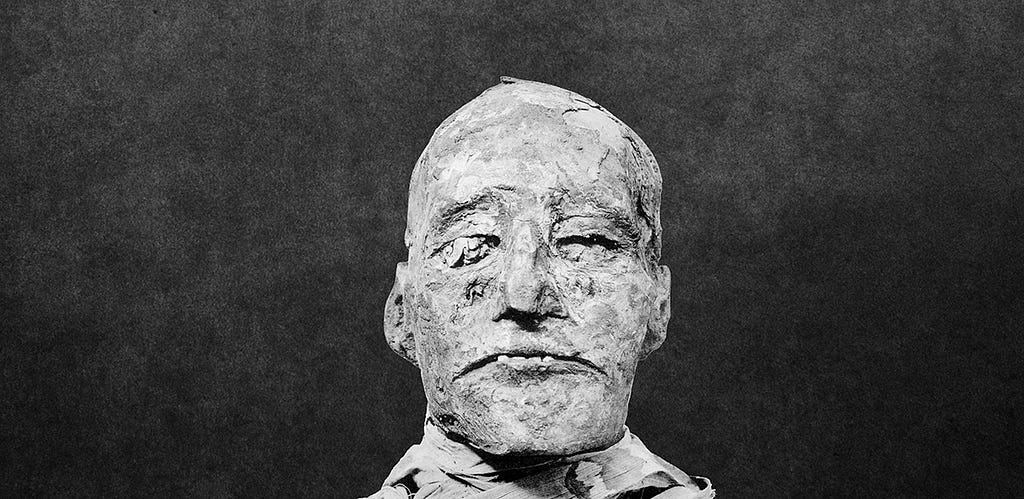
There’s no cure for this. Being mummified can make you look hundreds of years younger, but leaves your skin waxy. Plastic surgery definitely tricks everyone, but is prohibitively expensive. The only real way to stop aging is to move at the speed of light.

Once you embrace the futility of fighting aging, it becomes much more manageable. I leverage my old age as much as possible. It’s amazing how many people will pick things up for you if you wince and say “Ohhhh, my back.” My back is fine, but I like letting people help me. It makes them feel good and I drop stuff a lot.

What I’m saying is, aging doesn’t have to be so negative. One fun aspect is all the new and surprising things your body will decide to do. Mine decided to start growing hair out of my ears. Why? To make hearing even harder? I don’t know and I don’t want to know. I’m happy to have built-in earmuffs. It saved me a few dollars and I never lose them.

A lot of people who aren’t old think of older people as a vast well of knowledge, as if we’re wiser or something. This isn’t really the case. It’s like having 200 channels on your TV — more options, but more uselessness. I can tell you what the price of a toothbrush was in 1953, but so what?

The only real downside to aging is that there are fewer people to talk to, either because your friends have begun dying off, or because in general people don’t care to talk to older people. It means I have to make more of an effort and that can sometimes come across as desperate. Like when I start dialing random phone numbers to see if anyone wants to talk. Usually the people who do want to talk to a stranger on the phone, I quickly discover are not people I want to talk to.

Fortunately I’ve recorded most of my phone calls over the past 20 years and I’ve memorized all my lines from my favorite conversations. When I play them back and recite my lines aloud it’s like I’m having the conversation all over again, even if the other person is dead. It’s like watching a rerun .

BEST FEATURE: I no longer need to brush my teeth because they’re all fake.
WORST FEATURE: I don’t know what EDM is and when I ask people they laugh and tell me I’m cute but no one will answer me.

Please join me next week when I’ll be reviewing ants.

Watch the Official Trailer for ‘The Circle’

Which begs the question: Are you watching The Circle or is The Circle watching you or is Dave Eggers watching all of us right now?

Emma Watson IS The Circle. Wait…is that right? Tom Hanks is in this, too. Is Tom Hanks The Circle?

As fans of blockbuster literary adaptations and cyber-thrillers are no doubt aware, we are only a few short months away from the premiere of The Circle, starring Emma Watson and Tom Hanks, adapted from Dave Eggers’ 2013 bestselling dystopian novel. That means it’s time for an official trailer. (That snippet back in December? That was a teaser, apparently. Do you feel teased?) The Circle’s story follows an ambitious young woman, Mae, who lands her dream job at the world’s most influential internet company, The Circle. (Are there any lawyers reading this? The company is definitely not Google, okay?) While Mae is initially ecstatic about her new position and the company’s world-changing potential, she slowly begins to question the line between privacy and democracy. From there, thriller-ish stuff unfolds.

The movie arrives in theaters on April 28th. So if you haven’t polished off the doorstopper already, that gives you about two-and-a-half months to read it and then pretentiously tell all your friends that the book was far superior.

Historically Accurate Mr. Darcy Isn’t Sexy

Well, at least by 21st century standards…

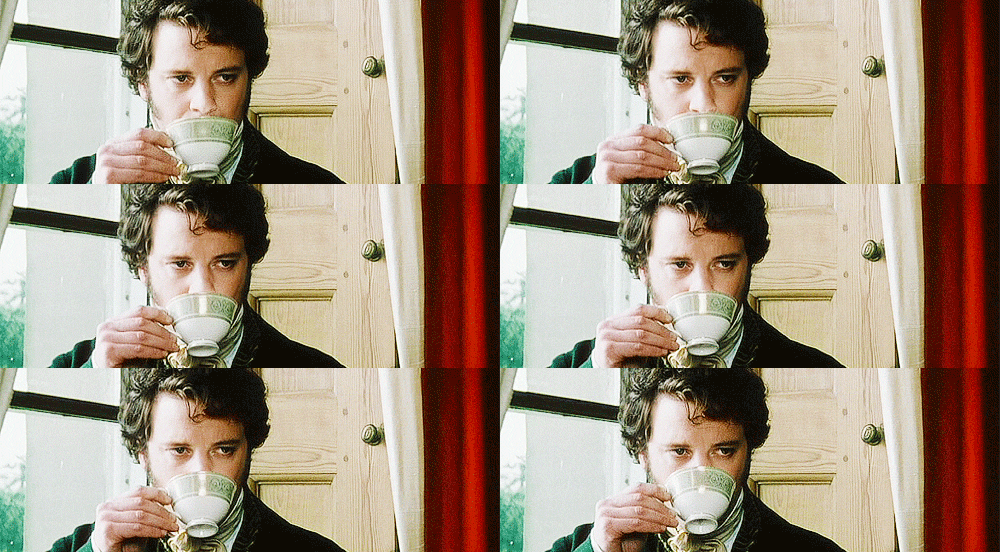
The folks over at the Drama Channel recently sought out academics to create a historically-accurate rendering of what Jane Austen’s famed fictional hunk, Mr. Darcy, would have looked like in “real” life. The result is burst bubbles everywhere. According to John Sutherland and Amy Vickery, the Drama Channel’s experts, features that passed for “handsome” in Austen’s day are a far cry from what contemporary readers and Hollywood casting directors would find agreeable, never mind swoon-inducing. (Sorry, Colin).

Per today’s Guardian, Vickery explains: “As Austen wrote Pride and Prejudice in the 1790s, our Mr. Darcy portrayal reflects the male physique and common features at the time. Men sported powdered hair, had narrow jaws and muscular, defined legs were considered very attractive.” In fact, the rugged, brooding, broad shouldered typecast frequently seen in modern adaptations wouldn’t have done it for Austen’s Georgian era characters. Those physical traits were all too typical of the poor working class.

Since most 21st century people don’t think it’s sexy to run their fingers through their lover’s hair only to have their hand turn white, readers may be understandably disappointed by the new revelation. However, Sutherland points out, “There are only scraps of physical description of Fitzwilliam Darcy to be found in Pride and Prejudice,” so as with any novel, the reader has the ultimate say in how they want to envisage the characters.

Let’s all be thankful for imagination today.

Midweek Links: Literary Links from around the Web (February 9th)

All the best literary links that are fit to, well, link

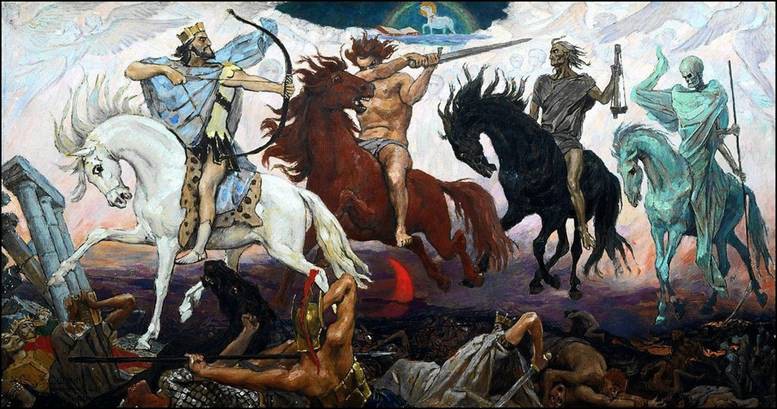
Ten essential apocalypse reads (since the world seems to be heading toward one soon…)

Judge sentence vandals to… read books: “[T]he defendants have been given a list of thirty-five books and will submit monthly book reports from that selection. As part of the deal, they will also visit the Holocaust Memorial Museum and the National Museum of American History, which is running an exhibit on the internment of Japanese-Americans during WWII, and will submit to the court research papers on the use of hate symbols.”

Looking for new books to read? Kevin Nguyen picks the best of February.

Will the great millennial fiction be in the noir genre? “[T]he generic pillars of network television have always been the cop show, the hospital show, the high school show, and even the FBI G-man show of the 1950s — shows grounded in a friendly fascination with US institutions. But nothing feels more appropriate for the present moment — another Golden Age for TV and a dark era for civic life — than the rebirth of noir on network television.”

Are you a writer in D.C. for the AWP conference? Read Electric Literature’s 2017 AWP guide.

Donna Tartt in conversation with John Darnielle:

Darnielle: [A friend and I] invented a game that you can play while driving through Iowa. It’s called What’s Growing? It’s a very simple game in which one person says What’s Growing? and the other person says Corn. And the thing is, it’s funny, but there’s something about it, if you’re not from out there, that is other and alien. It’s just an unfamiliar thing.

Tartt: It’s scary to me. I’ve only been there once, and I felt like rifles were trained on me the whole time. The sky is too big.

Looking for a dose of optimism? Six writers and thinkers on what optimism means for today.

Phillip Lopate on the letters of Ernest Hemingway: “this contradictory, alternately smart and stupid, blustering, fragile man who was also a giant of modern literature.”

JoAnn Chaney on Murder, Marriage and Secrets

JoAnn Chaney’s debut thriller, What You Don’t Know (Flatiron Books) opens with detectives cracking Denver’s most notorious serial killer case. Jacky Seever is hauled away to prison as bodies are dug up from his crawlspace. But that’s just when things begin to spiral for those in Seever’s orbit. Seven years later when a string of similar murders occur, the reporter who covered the case, the detectives, and Seever’s wife are all pulled back into the warped world of a man who is locked away in prison. Chaney’s work is a careful study in characters and deception. The author answered questions over email recently about lies, the people who can hurt us the most, and her suspenseful debut.

Heather Scott Partington: Does anything scare you? I’m such a wimp that I read this book with my breath held and the lights on, and I kept thinking what a badass you are to write about creepy clowns and bodies in crawlspaces and skin peeling off corpses — all while maintaining tension and a kind of macabre chic. What was the first book that really scared you? Was there a quality of that first scare that wanted to bring to What You Don’t Know?

Joann Chaney: Things that scare me: something bad happening to my kids. Spiders, especially those huge ones people are always trying to cover with a bowl in YouTube videos. Being sideswiped on the interstate and crashing. So, you know, the typical stuff.

I can’t remember the name or author of this short story I read when I was a kid, but I remember exactly what it was about — a single woman has her home renovated and takes the contractor as a lover, and when the work is done she ends the relationship. But she doesn’t realize that the contractor has built tunnels behind the walls so he can creep around and watch her. He says he’s in love with her, but he’s obviously a nutcase, and decides if he can’t be with her, well — she’s gotta die. Boy oh boy, that story freaked me out. It was about obsession and lust, and the idea that none of us are safe, not even in our own homes.

I think a lot of writers have themes and ideas and issues they revisit time and time again, and that short story laid the groundwork for what I write about now. I have an ongoing fascination with the idea that things are never what they seem, that everything can look amazing and perfect on the surface and be rotten and stinking underneath. Like the home renovation in that short story — all the paint and drywall and plaster are hiding something much more sinister than you can possibly imagine.

“Everything can look amazing and perfect on the surface and be rotten and stinking underneath…”

Also: if anyone knows what short story I’m remembering, let me know. I’d love to read it again.

HSP: There’s also a lovely grown-ass Nancy Drew-ness to the novel. The reporter at the heart of the story, Sammie Peterson, is both solving the crime and finding herself hopelessly entangled in the world of the killer. She’s no victim, and yet she keeps getting caught up. Was that something you wanted to balance? How did you conceive of Sammie from the beginning?

JC: I love Nancy Drew. Just wanted to put that out there.

I think Sammie’s character is really interesting, because she’s a woman trying to get places and maybe not always going about it in the best way. It’s something of a man’s world she’s living and working in, so she’s constantly battling it out with men — her husband, Hoskins. I’d like to think she’s a modern day Lois Lane/Nancy Drew — strong, smart, willful. But she’s got issues — hell, if she didn’t, she wouldn’t be realistic. And I wanted Sammie to seem real, and I think all her quirks help make her believable. Sammie’s tough, but she’s also soft. She’s strong, but she second-guesses her choices. She makes bad decisions. Sammie’s multi-faceted — but aren’t all women?

Quite a few people have had a very strong, negative reaction to Sammie’s character — she’s unlikeable, she’s a sexual deviant, she’s an all-around terrible person. But I’d argue that those things all make her a believable, balanced character.

HSP: One of the characters says, “knowing things another person is capable of, well, those things stay with you, they change you.” Everyone in What You Don’t Know is damaged at the start of the story by knowing Seever; but I think what readers will find rewarding is the complexity of characters who we come to find are damaged well before they meet him. What You Don’t Know makes a compelling argument for being alone, or at least guarding against the compromise that comes from close association with other people. Did you start to look at people differently as you got further into writing it?

JC: That’s a good question, and one I hadn’t even considered. I wouldn’t say I started looking at anyone differently as I wrote WYDK, but I’ve always believed that the people closest to you can cause the most damage. They know you, what makes you tick, your deepest darkest secrets and fears — and anytime you get close to anyone else you run the risk of them hurting you.

I feel like at its very core What You Don’t Know is about the secrets we keep from each other, and for each other. The characters are constantly in a kind of battle, both against other characters and themselves, trying to protect these secrets and their hidden motives. And I think those sorts of relationships can make for compelling reading.

HSP: My favorite line in the book is “You can make a person believe anything.” What’s the biggest lie you’ve ever made a person believe?

JC: When my oldest son was about six or so he asked me who invented padlocks, and why. I honestly don’t know the answer. But instead of just telling him the truth, I came up with an elaborate story about a gentleman-farmer named Jebediah Masterlock who was having some problems keeping his sheep in the pen. I’ve also told my kids that a certain button under my car’s steering wheel is an emergency self-destruct in case of the zombie apocalypse. When we saw a street getting repaved I told them the old pavement was never scraped off — it was just layer after later of asphalt, and when it got too high the buildings would all be cranked up a few inches so everything was the same height.

You get the idea. I’m pretty sure my kids don’t believe a word that comes out of my mouth, but they keep asking questions and I keep spinning stories. It’s a fun tradition.

HSP: The two marriages — Jacky and Gloria’s and Sammie and Dean’s — are in some ways such interesting mirrors because they both involve the idea of turning a blind eye to a partner’s shortcomings. “Every marriage has rules,” Gloria muses, “not ones that are written down or set in stone, but they’re there just the same, creating invisible fences that only two people can see.” As the story progresses, you do a really nice job of reminding the reader that it’s what we can’t know — or what we choose not to see — that’s what we should worry about. Have you done research into the spouses of historical serial killers? (Do serial killers have spouses?) Was marriage initially a focus of the book, or did that evolve with the plot?

JC: I’d have to say that marriage has always been a key focus of this book, because in many ways marriage is one of the closest, most personal, and (sometimes) the most damaging, warped relationship a person can be in. Your partner knows you at your best, but also at your worst, and is probably privy to all sorts of information about you that no one else has. I’ve been married for fifteen years, and my husband knows things about me that no one else ever will — not my parents, not my kids. No one. Your spouse keeps your secrets — or they don’t. There’s a fantastic line in Stephen King’s Bag of Bones I kept thinking about while writing: “…marriage is a secret territory, a necessary white space on society’s map. What others don’t know about it is what makes it yours.”

“Marriage is one of the closest, most personal, and (sometimes) the most damaging, warped relationship a person can be in.”

The idea for What You Don’t Know actually first sparked because of an article I read about Jerry Sandusky, the convicted child molester who’d coached college football. The article asked the question: Did Sandusky’s wife know about her husband’s crimes, and if she had, why did she keep this terrible secret? That piece really stuck with me, and ultimately turned into the plotline involving Gloria Seever.

I haven’t done much research on the spouses of serial killers, but I do know that John Wayne Gacy (who is the inspiration for Jacky Seever) had been married, although it ultimately ended in divorce before his arrest. And Ted Bundy had several relationships while he was operating as a killer. It’s interesting because it appears that these men were able to have “normal” relationships while they committed their crimes, but it also makes me wonder what sorts of things these women experienced or saw that they overlooked or ignored.

HSP: The book is written like a movie, so I have to ask: What’s your dream cast?

JC: I’ve been asked this question many times before, and I’m embarrassed to say I still don’t have a really good answer — especially since the first line in the book is If this were a movie…

(A day later) But…after some thought and a lot of time paging through IMDB, here’s my cast list of the main characters:

Jacky Seever: Stacy Keach

Gloria Seever: Sissy Spacek

Paul Hoskins: Christopher Meloni

Ralph Loren: Patrick Kilpatrick

Sammie Peterson: Robin Tunney

HSP: There’s a scene in the bookstore where Sammie goes and finds the spot where her book will sit on the shelf someday. Where will this book sit?

JC: Dream scenario: A big stack of What You Don’t Know would be sitting on a table right in the front of a bookstore, with a glowing personal recommendation from one of the booksellers. That’s important. There’s nothing better than having someone you don’t know, a person who doesn’t give a damn whether they’ll hurt your feelings or not, say how much they love your story. How it made them think or feel differently, or how it kept them up all night.

And when What You Don’t Know goes home with a reader, maybe it’ll sit on their nightstand. Or the corner of their desk. Or on their shelf of favorite books. On the back lid of their toilet. Or wherever they put the books they love.

HSP: What’s the best thing you’ve read lately?

JC: I read Sarah Pinborough’s Behind Her Eyes and Jane Harper’s The Dry — both really great, smart thrillers that were recently published. I’ve also been doing a lot of re-reading my old favorites: Rebecca by Daphne du Maurier and A Kiss Before Dying by Ira Levin, to name a few. I’ve also been reading the Harry Potter series with one of my kids.

HSP: What’s next for you?

JC: Writing: I’m working on my next book. It’s set in the same world as What You Don’t Know and features quite a few of the same characters, but I wouldn’t necessarily call it a sequel. It’s the story of a marriage gone terribly wrong — early readers have compared it to The War of the Roses, which I take as a huge compliment.

Personally: I’ll be doing a bit of traveling over the next few months for What You Don’t Know promotion, and my family will be tagging along — it’ll be business, with a good deal of pleasure. Disneyland, we’re coming for you!

Virginia Vandals Sentenced to Read

Teenagers who vandalized the Ashburn Colored School assigned to read Richard Wright, Margaret Atwood and Ta-Nehisi Coates

The Ashburn Colored School, or the Ashburn Old School, now being restored by the Loudoun School for the Gifted.

A county prosecutor in Ashburn, Virginia, has designed an unusual plea deal for two young men who vandalized a historic schoolhouse with racist and anti-semitic graffiti. According to a report from local news outlet WUSA-9, the defendants have been given a list of thirty-five books and will submit monthly book reports from that selection. As part of the deal, they will also visit the Holocaust Memorial Museum and the National Museum of American History, which is running an exhibit on the internment of Japanese-Americans during WWII, and will submit to the court research papers on the use of hate symbols. The young men were charged with spraypainting the side of the Ashburn Colored School, which is currently being restored, with swastikas, dinosaurs and slogans such as “white power” and “brown power.” The community was outraged, but goverment officials came to believe the vandalism was an example of dumb teenagers who did not understand the significance of the hateful crime they were committing.

Alex Rueda, the county prosecutor who conceived of the deal, said that because the young men had no criminal records, “it would be very easy for them to to just walk into court plead guilty and the judge would just put them on probation and then they would just be meeting with a probation officer once a month, and…peeing in a cup to make sure they weren’t smoking weed.” Instead, she wanted to seize on “a teachable moment.”

Rueda is the daughter of a librarian and went about creating a list of thirty-five books and fourteen movies for the defendants’ edification. The list includes Richard Wright’s Native Son, Elie Wiesel’s Night, and Margaret Atwood’s The Handmaid’s Tale, as well as contemporary work from Colson Whitehead and Ta-Nehisi Coates. Rueda expects that the reading will change the young men’s outlook more than any probation or diversion program could. “Hopefully,” she said, “what they get out of this year is a greater appreciation for gender, race, religion, bigotry. And then when they go out in to the world, they are teachers.”

Below is the complete list of thirty-five books assigned. A little Leon Uris heavy, you say? How about subbing in some Baldwin? Just remember, justice takes many forms, and punishment is more art than science.

1. The Color Purple — Alice Walker
2. Native Son — Richard Wright
3. Exodus — Leon Uris
4. Mitla 18 — Leon Uris
5. Trinity — Leon Uris
6. My Name is Asher Lev — Chaim Potok
7. The Chosen — Chaim Potok
8. The Sun Also Rises — Ernest Hemingway
9. Night — Elie Wiesel
10. The Crucible — Arthur Miller
11. The Kite Runner — Khaled Hosseini
12. A Thousand Splendid Suns — Khaled Hosseini
13. Things Falls Apart — Chinua Achebe
14. The Handmaid’s Tale — Margaret Atwood
15. To Kill A Mockingbird — Harper Lee
16. I Know Why The Caged Bird Sings — Maya Angelou
17. The Immortal Life of Henrietta Lacks — Rebecca Skloot
18. Caleb’s Crossing — Geraldine Brooks
19. Tortilla Curtain — TC Boyle
20. The Bluest Eye — Toni Morrison
21. A Hope In The Unseen — Ron Suskind
22. Down These Mean Streets — Piri Thomas
23. Black Boy — Richard Wright
24. The Beautiful Struggle — Ta Nehisi Coates
25. The Banality of Evil — Hannah Arendt
26. The Underground Railroad — Colson Whitehead
27. Reading Lolita in Tehran — Azar Nafisi
28. The Rape of Nanking — Iris Chang
29. Infidel — Ayaan Hirsi Ali
30. The Orphan Master’s Son — Adam Johnson
31. The Help — Kathryn Stockett
32. Cry the Beloved Country — Alan Paton
33. Too Late the Phalarope — Alan Paton
34. A Dry White Season — Andre Brink
35. Ghost Soldiers — Hampton Sides

Unheard Murmurs: Lyric Nonfiction in Space

“This ring in which you are but a grain will glitter afresh forever.” — Nietzsche

First, you see a circle. Next, the location of our sun as measured via pulsars, depicted in binary code. A legend explaining the units of measurement / length used. The sun. The surface of the moon. Several slides later, you see the Earth; more precisely, you can see the Horn of Africa and the Fertile Crescent, the ancient site of the origin of the story being told by these images and their accompanying soundtrack, a story that is a history, a record.

More slides and then you get the partial portraits of a human body, the type I remember from the encyclopedia, which you could add layers to by turning transparent pages — muscles, organs, skin — to overlay the skeletal base. There are two images of sperm entering an egg, and an image then of cellular division. Next, images of a fetus — alone and then in the womb — and finally an image of a boy being born.

I was born in the lame duck presidency of Jimmy Carter, just after America elected Ronald Reagan, a celebrity who campaigned on “Let’s make America Great Again.” I was born between the first and final episode of Cosmos: A Personal Voyage, Carl Sagan’s famous TV show, which began with him intoning, “The cosmos is all that is, or ever was, or ever will be,” the story of which he says is also “a story about us.”

“The cosmos is all that is, or ever was, or ever will be,” the story of which he says is also “a story about us.”

I was born between the end of the solar system mission of the Voyager I probe — four days after its flyby of Saturn, in fact — and the beginning of its extended mission, its long trip out of our solar system, out and out, far past the famous pale blue dot, to drift forever or until found.

My discovery of the Voyager Golden Record was by chance, and (it turns out) late. I came across it via research on Blind Willie Johnson’s “Dark Was the Night, Cold Was the Ground,” which I was listening to as I read that his song (a sort of wordless dirge) was one of 27 selected to be sent to interstellar space as an emissary of humanity to any alien audience.

I tracked down Sagan’s Murmurs of Earth, the 1978 history of the making of the records, at the library of the college where I teach. It hadn’t been checked out in seventeen years, since I graduated high school. The book is a cultural artifact, like the Golden Record it describes: a glimpse of humanity sent out across space and time with the unlikely hope of reaching some future consciousness — or as Sagan himself wrote, “…receipt of the message by an extraterrestrial civilization was chancy at best, while its receipt by the inhabitants of Earth was guaranteed: the public would eventually have access to the message contents, as is in fact accomplished by this book.”

What struck me as I read Murmurs of Earth, especially Sagan’s brief history of the endeavor in the first chapter, was the profound hopefulness that drove the whole effort. Beyond the hope for contact inherent in sending a gold LP into space, the contents of the record (or records, since there are two copies, one affixed to each Voyager probe) illustrate a pluralistic and open vision of a global society. Some of the images and sounds are explanatory; some are banal (a woman in a grocery store); some — the 27 musical tracks — are emotive.

Beyond the hope for contact inherent in sending a gold LP into space, the contents of the record illustrate a pluralistic and open vision of a global society.

What it depicts is the world circa my birth, which felt deeply important to me, looking back, discovering this book’s record of the record, from our contemporary moment. Part of this is our current political environment — “Make America Great Again” again — and maybe part of it relates to the fact that my wife and I are expecting our second child, a boy, this fall, right around my birthday in fact, more or less on the date Murmurs of Earth is due to be returned to the library.

As I said, my discovery of it was in a sense late. I came across the record and immediately then found I was not the only one it had recently reached. A 2015 episode of Drunk History detailed the story of Carl Sagan and Ann Druyan falling in love as they discussed the music to include, the music that moved them; Atlas Obscura published an essay by Cara Giaimo in May 2016 focused on the embarrassing and dated contents of the record, a sine qua non of all time capsules; and, in that same month, Anthony Michael Morena published his slim, smart Voyager: A Transmission, a book-length essay in fragments that is at once an exploration of the record, a response to receiving its (and Sagan’s book’s) message, and an ekphrastic project dedicated to the act of sending the record out.

Though the record (debatably, as Morena notes) left our solar system in 2012, you can easily find the images online. The greetings, sounds, and music included can now be streamed on Sound Cloud. NASA also released a CD of the Golden Record in the 90s, though it didn’t include the 90 minutes of music. (An Amazon reviewer named David B gave the CD version three stars, writing an alien reply — signed “Zorg” from “the sombrero galaxy” — less witty than Steve Martin’s [“Send more Chuck Berry”] and focused mainly on the criticism that any audience might well not be able to make sense of the messages even once decoded, i.e. “To the representative of [Nigeria]: you say your country is ‘as you know, located in West Africa, a land mass more or less shaped like a question mark’…btw: what’s a question mark?”)

Morena’s project is inspired by David Markson’s employment of fractured narrative where facts arise and are later revisited or echoed, while section by section there is some amount of disconnect. Using this Marksonian art of bricolage, Morena goes on to survey the project itself but also to respond to it and expand upon it, offering suggestions for what music he would include — a Philip Glass piece, a GirlTalk mashup, early hip-hop — noting along the way that he used to make mixtapes, thus imagining himself into the problematic position of Sagan et al. trying to select what music to send that would represent the world, all of humanity.

What the record contains is the story of us, a sort of origin story, told chronologically via sounds (and, as Morena points out, language: the “55 greetings begin with Sumerian…so did writing”). He notes the evolutionary perspective conveyed in the order of abstracted sounds, especially the “The Sounds of Earth” collection, “[which follows] the same trajectory as evolution, from a human point of view.” Meaning the first sounds are meant to convey the music of the universe, and from there they proceed through the first tools, fire and speech, mud pots, a horse and cart, a train, a car, etc. (This portion ends with “EEG patterns of brainwave activity, specifically Ann Druyan’s…thoughts about Carl Sagan, with whom she’d fallen in love,” suggesting perhaps that love is the ultimate point of human development.) The music, however, does not bother with this chronological story of us. As Morena notes, a listener may well not know Chuck Berry is the most recent addition but instead hear Bach and assume “that his music is the latest development, disembodied aesthetics, endpoint in humanity’s linear progress from simple to complex.”

The first sounds are meant to convey the music of the universe, and from there they proceed through the first tools, fire and speech, mud pots, a horse and cart, a train, a car, etc.

Elsewhere Morena comments on this idea of linear progress, considering the robotic nature of Voyager versus a manned mission like the “difference between a linear narrative and a cyclical one,”

We want people to come back to the circling world, like a record, so we can start again. From scratch. A cycle’s humanity is its finality: it has to end somewhere; it has to begin again. Voyager, on the other hand, may never stop.

Like David B’s Zorg from the Sombrero Galaxy, Morena envisions and re-envisions what the receipt might look like: space-junk scavengers who indifferently destroy the record in collecting it; always-aflame aliens who melt the record on contact; earless aliens; corporate aliens (a joke on the contemporary American view, e.g., “Corporations are people, my friend”); a paranoid military culture; an advanced race that makes the record sentient and sets it searching for its maker, “S’gan” (a reference to the 1979 film Star Trek: The Motion Picture where V’Ger, a fictitious successor to the probes, has become sentient and returns to Earth to find its creator); aliens with “testicle-shaped heads”; aliens confused by the need to communicate a common greeting in 55 different languages (elsewhere, Morena asks, “what does it say about a planet if the people there don’t know how to say hello to one another?”); a form of life so small the record crushes one of their cities; a society so impressed they reverse engineer the technology and ultimately create a Borgesian mirror-world, an “Alien United States of America,” that sends its own exact replica of the Golden Record, and thus, “We are confused when it returns to us, apparently untouched.”

In one instance, written in second person, he envisions not its receipt but “your destruction” in the Oort cloud, “by a thousand micro-impacts spread out over time in the empty regions of space.”

At the very end of the book, he again addresses the record directly, “You are getting so far away now. Does your distance mean your irrelevance?” But, to me, this is the wrong question.

Morena and I are coevals, but in his framing, “Carter’s message was meant to speak for all Americans, so, by extension, it’s my message too.” As with the Atlas Obscura piece, I think this mistakes “the recipients” (as Jon Lomberg suggested the hoped-for audience be called) for the senders: the message is not ours. We can look back at the time that sent it as recipients and be reminded of — better: connected to our own histories. I don’t give a shit about aliens discovering it and the message contained being mine; they won’t; it isn’t. But I’ve received the message sent up as a hopeful statement that there was something somewhere out there and a believer’s vision in the good of humanity.

I don’t give a shit about aliens discovering it and the message contained being mine; they won’t; it isn’t.

As noted above, Morena made mixtapes and he mentions offhandedly a time when a girl he was dating mistakenly assumed a mixtape he’d made was made for her, “That romantic cliché of guys making mixtapes for girls.” She may have understood his evident care in making it as his feelings for her; she may have received a message he never intended to send, or sent subconsciously to no particular audience. Where Morena identifies with the makers of mixtapes (he calls his book “a transmission” after all), I identify with the girl who announced her misheard intimacy to the car, “Anthony made this for me.” To me, this is the power of the Golden Record. It’s the personal contact in the universal signal; an interstellar mixtape that feels like Carl Sagan made this for me.

Because here’s the thing: I feel fully confident the Golden Record will never be played. It will never be heard, never be found. There is nothing anywhere out there for it to connect with. What animates the effort of sending it is not, I don’t think, any confidence in its being received (Sagan admits as much: “Perhaps the Voyagers would never be recovered by some extraterrestrial society”) but rather something else, something along the lines of Kierkegaard’s knight of faith, who would believe “nevertheless” that the record will be received, decoded, played, “in virtue…of the absurd, in virtue of the fact that with God all things are possible.”

I feel fully confident the Golden Record will never be played. It will never be heard, never be found.

Because the gesture of sending Beethoven and Bach and Blind Willie Johnson out to the unimaginable vastness beyond us is a spiritual one; it is an act of faith, not only in us (the better angels of our nature) but in the possibility of a universe that contains some Other, whatever form that other might take. As Roland Barthes writes in “Jet-man,”

In fact, and in spite of the scientific garb…there has merely been a displacement of the sacred….as if even today men could conceive the heavens only as populated with semi-objects.

Though it is a physical object, borne on the side of a probe that reflects the outer limits of our science and technology, shot into space on a rocket, it may as well be an orison murmured to the vastness we hope — we believe — to be populated, an offering we hope and believe will be heard.

It is a truly stupefying act to try conceiving of the long drift of the gilt LP before it approaches the nearest star, a length of time equal though in the opposite direction from us, in 2016, back to the arrival (OOA) of homo sapiens in Europe, back to the makers of the earliest cave art, the hand stencils and clay-red disks found in Cueva de El Castillo: 40,000 years before it even nears a possible receiver, which would of course be a crazy bullseye if the first star it approaches happens to have a life form capable of scouring the emptiness for sounds of “footsteps, heartbeat, laughter.”

In the letter he included, Jimmy Carter wrote to the imagined audience, “We are attempting to survive our time so we may live into yours.” Of course, we will not live into the time of the record’s putative recipients. As Sagan concludes his chapter in Murmurs of Earth, “Billions of years from now our sun, then a distended red giant star, will have reduced Earth to a charred cinder.” The Golden Record, however, will indeed survive our time, will outlast us, “will still be largely intact,” as Sagan continues, “in some other remote region of the Milky Way galaxy, preserving a murmur of an ancient civilization that once flourished.” The Golden Record is thus, in a very real sense, like Keats’ urn, which when those billions of years “shall this generation waste…shalt remain, in midst of other woe,” lasting out there long beyond our lives, our deaths, beyond our whole history. It will be our whole history, and its message could well be summed up, “Beauty is truth, truth beauty — that is all / [we knew] on Earth, and all ye need to know.”

The Golden Record is thus, in a very real sense, like Keats’ urn.

In the midst of a campaign driven by woe, the desire to project an incomplete catalogue of the best of us into the future — to send a message of hope out to the unknown audience of the future, to try to survive my time so that I may live on into my son’s, my daughter’s — resonates. The launch of the Voyager Golden Record seems, to me, profound in a way: a golden text striving to shape the culture of tomorrow, of the world we’ll never meet. Its most important message is not in the contents but in the fact that it was sent at all, and not to any alien audience, but to us. Its central message not the contents, however dated, and not to any alien recipients but much more meaningfully to us, to a culture in the shadow of its launch that has forgotten the strident hope that propelled it into interstellar space; this message is closer to that which Sagan recalls from the 1939 NY World’s Fair, “there were other cultures and there would be future times.” Of that edge-of-WWII World’s Fair and its time capsule, he adds, “Because there was something graceful and very human in the gesture, hands across the centuries, an embrace of our descendants and our posterity.”

I feel this embrace, reading Murmurs of Earth, playing the greetings, hearing the haunting hour and a half of world music, and it makes me feel nearer to myself, nearer to my history. It restores not an aspirational upward-looking desire to map the skyways but rather a sort of horizontal awareness of my present, of the sometimes invisible asterisms of its nearest context. It is an argument that there is something here worth recording, worth remembering, worth projecting out to the greatest plane imaginable. The reach of the probe connects us to far distant space and time; it also connects us to ourselves, nearly 40 years back, and instead of something unfamiliar, something alien, what begins to play are images like our own childhood memories, our own dimly understood first moments on Earth.

It is an argument that there is something here worth recording, worth remembering, worth projecting out to the greatest plane imaginable.

Morena ends his book with a litany echoing and extending Steve Martin’s joke, using “Send more” as a refrain. This seems to be at once from the imagined alien recipients and from Morena himself. It articulates the desire for connection, for communication, that is at the heart of the record’s creation as much as the heart of its receipt. The Golden Records are far from us, and within a decade will go silent, no longer capable of contacting us back here at home. But it is not the probe — nor even the glittering object on its side — that matters. Sagan’s desire to communicate informs our desire for more. It inspires a little shiver like the one I get reading Whitman’s “On Crossing Brooklyn Ferry,” i.e. “What is the count of the scores or hundreds” or tens of thousands or billions “of years between us? // Whatever it is, it avails not — distance avails not” and later, “Who knows, for all the distance, but I am as good as looking at you now, for all you cannot see me?”

Before that litany, Morena imagines Sagan at the launch and, later,

[that] night, in a darkly lit room of a motel, Carl Sagan and Ann Druyan had sex…they were in love. They didn’t care that they were being loud….In the next room, someone turned the volume of their television set all the way up. It was the late movie: Ronald Reagan being screeched at by an ape.

After this, Morena describes Sagan years later seeing the famous pale blue dot: as opposed to the more familiar images from space — showing “Africa, more or less in the shape of a question mark” — he thinks, “There was no way to tell anything about humanity from this picture.” This is what it looks like to truly get outside of our limited perspective, to briefly glimpse what an alien observer would see of us: nothing like what the Golden Record holds, but merely a faint blur of blue, which in no way suggested we were here, that we existed, that we ate, drank, laughed, and were, fundamentally, lonely, yes, but also filled with the capacity to imagine someone to satisfy that existential loneliness.

Sagan himself describes the scene of the launch by evoking both joy and mourning, a hope whose contrail is quickly fading into the early-morning sky; he writes, “We kissed and embraced, and many of us cried.”

“Malati” by Vivek Shanbhag

Malati had always been unstable — a pile of gunpowder waiting to go off. All it took to light the fuse was our improved finances. She was in college when we moved to the new house. We’d been painstakingly frugal until then; what choice did we have? We consulted each other when money was to be spent, gave precise accounts. We thought of the family as being interdependent: a person who spent money was also taking it away from the others. All that changed overnight. There was enough now to buy things without asking for permission or informing anyone or even thinking about it. Appa’s hold on the rest of us slipped. And to be honest, we lost hold of ourselves, too.

We needed things for the new house, and this freed us in the matter of making purchases. For the first few weeks we bought as we had never bought before. Amma and Malati obeyed Chikkappa’s instructions with diligence and emptied his friend’s furniture shop. Soon the house was crammed with expensive mismatched furniture and out‑of‑place decorations. A TV arrived. Beds and dressing tables took up space in the rooms. In retrospect, many of the new objects had no place in our daily lives. Our relationship with the things we accumulated became casual; we began treating them carelessly.

Malati personified the chaos in our family. She’d always been quick to anger and inconsiderate of others, and those attributes found fuller expression in our new way of life. Her restlessness revealed itself in the harsh tone she took with others, and in violating the household’s unwritten rules. She was the first in the family to start eating out whenever she felt like it. Then she’d pick at her food at home, which would lead to a tussle between her and Amma.

Until then, eating at a restaurant had been an infrequent treat. Every fortnight or so we would all go out for tiffin on a Sunday afternoon. Appa was in the habit of taking a nap after lunch on Sundays, and on the appointed day we’d wait impatiently for him to wake up, Malati growing increasingly desperate for her masala dosa. The budget was fixed — it bought a masala dosa for each of us and a single coffee shared between Appa and Amma. Sometimes one of us would ask for another snack. Then, Appa wouldn’t feel like a coffee. You only had to see the plates off which Malati and I had eaten to know what we thought of the food — not a trace remained, even the chutney licked clean.

It wasn’t easy to confront Malati. You’d have to listen to ten words for each one you spoke. Amma asked Malati once with some hesitation if she had eaten out. “Yes, Amma, I ate out,” she said loudly. “I ate till I was full and then I drank coffee, too. What about it?” If anyone asked Malati where she’d been, she would give it back to them: “Do I ask you where you go? Why is it that everyone only asks me? Don’t you trust me?” There was no one in the house who could stand up to Malati in a battle of words. Rather, there was no one until my wife Anita joined the household.

It’s true what they say — it’s not we who control money, it’s the money that controls us. When there’s only a little, it behaves meekly; when it grows, it becomes brash and has its way with us. Money had swept us up and flung us in the midst of a whirlwind. We spent helplessly on Malati’s wedding. No one asked us to; we simply didn’t know how to stop. The main actors in that month‑long orgy of lavishness were Amma and Malati. I don’t think even they knew what they wanted. They’d set out every morning to shop, and when they were at home they spoke of nothing but saris and jewelry. The most expensive wedding hall we could find was booked. The caterer was dumbstruck by the number of dishes he was asked to serve. He would come to inquire about the menu and when he gave options of chiroti, holige, jalebi, pheni for the sweet, they’d say yes to all. He had only to mention a vegetable for them to say, “All right. Add that one, too.” On the wedding day, after the ceremonies were over and the guests had been served, we all sat down to eat in the last round. Amma was weighed down in gold, beaming as she accepted compliments about the food. The couple was having their photo taken as they fed each other. Appa was sitting at the end of the table, looking dazedly at the plantain leaf crammed with food in front of him.

Perhaps it is not right to conflate Malati’s short‑lived marriage with the wedding expenses or our family’s wealth. But I can’t help wondering if she would have given up as easily if Appa had still been a salesman. Maybe she had gotten used to having whatever she wanted and it diminished her capacity for making the inevitable compromises that ac‑ company marriage. Her husband, Vikram, was not a bad man. He ran the family business — a large sari shop — and worked from morning to dinnertime. He was free only on Sundays, but Malati expected him to spend more time with her. Initially they had small fights after which she’d come home in a huff. “He doesn’t care,” she’d say. “He would die for that shop of his.” Perhaps her vision of an ideal life lacked room for hard work. Vikram, too, was helpless, having no source of income other than the shop. Her breaks from her husband’s house began to grow longer and longer. In less than two years, she announced she wanted to leave him. Appa, Amma, and I went with her to Vikram’s house to see if a reconciliation was possible.

We went on a Sunday afternoon around four. It had been cloudy all day. By then Malati had not lived there for three months. They received us in their large hall, where Vikram and his father engaged us in inconsequential talk. Malati was in the kitchen with her mother‑in‑law. I suppose we — all four men in the hall — were struggling to get to the point. We didn’t have to. Just then there was a crashing noise from the kitchen. Malati stormed into the hall. Her mother‑in‑law, who was arthritic, limped out behind her, looking distraught. “Look what she has done,” she said. “She’s broken the whole tea set. It was such a good one.” She was panting with rage and exertion.

“Tell them what you said first,” said Malati, with a familiar curtness.

“What did I say wrong?” her mother‑in‑law asked. “I asked why she unpacked a new tea set, that’s all.”

“Why not a new tea set for my family? Why serve them in old, chipped cups?”

“We’ve never used old or chipped cups in this house. There’s nothing wrong with the cups we use every day. I only asked what need there was to open a new one, that’s all . . .”

“And that’s why I broke it. There’s no need for it after all.”

Her mother‑in‑law couldn’t resist. “Is this what your parents have taught you?” she asked, in front of them.

“Yes. This is what they have taught me. You can ask them yourself since they’re here. Go on, ask!”

It had all gotten out of hand. Vikram’s father said to Appa and Amma, “Look, now you’ve seen for yourselves. How is it possible to get along when anything we say leads to a scene?” Malati’s mother‑in‑law was in tears.

Vikram couldn’t stay quiet any longer. “Why are you weeping, Amma? Everyone’s seen how she behaves. Let her go stay in her parents’ house if she doesn’t like it here.” His tone was not particularly harsh, but there was an obvious touch of male authority in his words.

His father raised his voice now. “Look,” he said, pointing to his wife. “I’ve lived with her all these years and not once have I made her cry. It’s only after this girl has arrived that I’ve seen her in tears.”

Malati could hardly be expected to stay quiet. “Yes, yes, it’s all my fault. You’re all very gentle people.”

Her mother‑in‑law wiped off her tears and said, “You can’t buy graciousness. It’s something that’s handed down through the generations. They say the newly rich carry umbrellas to keep moonlight at bay . . .”

Amma was wounded by this. “Yes, it’s true we’ve lived in poverty. That doesn’t mean our heads have spun around because some money came our way.”

It was clear that all this was not going anywhere. We rose to leave. They didn’t ask us to wait. Nor did they come to the door to send us off. Malati led the way, still fuming. I felt it was mostly her fault, but I wasn’t going to say anything while she was in this frame of mind. Appa hadn’t said a single word all through the afternoon’s farce.

The next Sunday I went to see a film in the afternoon.

When I got back home, everyone including Chikkappa was sitting in the hall. Something about the way they were gathered struck me as ominous.

Appa and Amma were on the sofa. Malati was sprawled in a chair. Chikkappa was in the chair opposite her. Malati was somewhat triumphantly ticking items off on a list of jewelry. I knew there had been some concerned talk of recovering her jewelry from her husband’s house. It seemed to have been done while I was out. Chikkappa greeted me as soon as I entered: “Come, come, you were the only one missing.”

Malati started from the beginning for my benefit. “I went there at one in the afternoon,” she said. “I knew they’d all be home between noon and two. Chikkappa’s friends were waiting in the park nearby. Their leader is called Ravi. He’d told me, ‘You just get there and give me a missed call, sister. We’ll be there in no time.’

“I went there and rang the doorbell. My mother‑in‑law opened the door. She refused to let me enter. ‘If you don’t let me in, I’ll scream and make sure all the neighbors know what you’re doing,’ I told her. She said, ‘Go ahead. I’m tired of your antics.’ I quickly called Ravi from my mobile. He and his friends were there in no time, six of them, hefty men. My mother‑in‑law was scared. ‘Who are these people?’ she asked me. ‘Just my uncle’s friends,’ I told her. ‘Are you trying to scare us?’ she asked. Just then Ravi pushed her aside and entered the house. Vikram and his father emerged from within. ‘What’s all this? Who are these people?’ Vikram shouted, looking at me. ‘I’m going to call the police,’ he said. And then you know what? Ravi simply stepped up to him and gave him a sharp slap. You should have been there! Vikram was so scared. ‘Please, sir, don’t hurt me. Please,’ he started saying. I wanted to laugh. He was actually calling Ravi ‘sir’! I told Vikram, ‘Look here, I’ve just come to take my jewelry. I only want what belongs to me. You can keep whatever your parents gave me.’ He didn’t say anything. ‘What? Did you hear what she said?’ Ravi asked, taking out a long knife and placing it on the table. One of Ravi’s guys shut and bolted the front door from inside. I went into the bedroom. The keys to the almirah were still where I remembered them. My gold was all in one box, lying there since the wedding. I brought it out with me. I took my taali and the bangles they had given me and threw them at my mother‑in‑law’s feet. You should have seen their faces! Vikram’s father was sitting mute in a chair. Ravi was speaking to Vikram in a low voice. Every time I heard Vikram calling him ‘sir’ I had to stifle my laughter. I opened the box in front of him before leaving. ‘I’ve only taken what is mine. See for yourself,’ I said. He didn’t look. He didn’t say a word. I left. Ravi called sometime before you got here. He said they sat there for a while after I left and even had my mother‑in‑law make tea for them. He’s warned them that the matter better end here, peacefully.”

Chikkappa was sitting in his chair, looking very pleased with what Malati was reporting. Amma didn’t approve of the phone call. “Was it so important to report that they had tea?” she asked.

Appa didn’t seem happy with the day’s events. “This means we’ve broken all relations with them,” he said to Malati. “You shouldn’t have gone there and frightened them like that.”

Chikkappa cut in: “They’re all my friends, nothing to worry about. Don’t family members go in these circumstances and bring back valuables? Same thing. It’s also their work. They call themselves recovery agents. It’s these times we live in . . . Nothing is straightforward. If I didn’t use their help to get payments due to Sona Masala, all I’d be doing is walking from street to street, knocking on doors.”

Appa got up and left the room. My guess is that Amma didn’t approve of these rough methods, either, but she would never say that. “Where’s today’s paper?” Chikkappa asked, indicating there was nothing more to be said. Malati went to her room. I followed soon after. When I passed the closed door of her room I thought I heard sobs from inside. Perhaps it had all gone too far, and she was being pushed down a path she really didn’t want to take. I wanted to go in and console her, but I didn’t know what I would say. And what if she thought it a loss of face to be seen crying? I went on to my room.

Amma had hopes that Malati’s marriage could be salvaged. I suspected that Malati was not entirely indifferent to Vikram either; perhaps she even loved him. But she settled in at home and attempted no reconciliation. Nor did he. None of us had the courage to ask her where she went or what she was up to. Occasionally, she halfheartedly helped Amma with the housework. But this was aimed only at asserting her position in the house, and it became more conspicuous once Anita joined the household. The rest of the time she was thumbing messages into her phone. Sometimes I heard her on the phone late at night and wondered who it could be. That Ravi? Or was it possible she was softening toward Vikram and meeting him without the knowledge of the families? Malati forever invoked a friend named Mythili with whom she would watch films, at whose place she would stay, in whose company she would take trips to Mysore and Madras. I suspected this Mythili was a front behind which she was having an affair with someone. But even if that were true, what could I have done?

Malati’s restlessness, her lack of peace, touched all of us. She was outspoken, rude, aggressive, it’s true; yet we had lived for years in some sort of harmony. How could that aspect of our life together have vanished entirely? In the middle room of the old house where she and I used to sleep, sometimes we’d chat late into the night and she would confide in me. She told me about her college, her classmate Vandana, whose stepmother served her leftovers, and who was in love with a boy they called Koli Ramesh. It was Malati who carried letters between them. In the new house, we were locked in the cells of individual rooms, and there was no opportunity to ex‑ change casual confidences. Lying alone in my room, I sometimes wondered if Malati’s happiness would have been better served had Sona Masala not existed at all.

It isn’t easy for a woman to leave her husband and live in her mother’s house. In our case, the trouble was not so much the people who lived there — we were ultimately on Malati’s side after all — but others: guests who visited home, people we would run into at weddings, well‑wishers ever eager to put us on the defensive, busybodies. We all grew a little paranoid, suspecting malice on the part of anyone who spoke to her. Terrible stories spread about her after she got back her gold from Vikram’s house, stories in which she was made out to be an incarnation of Phoolan Devi: she had led a band of goons and ordered them to vandalize the house; she had herself held a knife to her husband’s throat. I know she could have done without all the talk. I’m sure she, too, wanted to live a regular, happy life, but things had somehow gone awry. I’m not sure how. Perhaps it isn’t right to place the entire blame on Sona Masala, I don’t know.

Would You Read a Subjective Encyclopedia?

A Norwegian bookstore invented “The Conversational Lexicon”

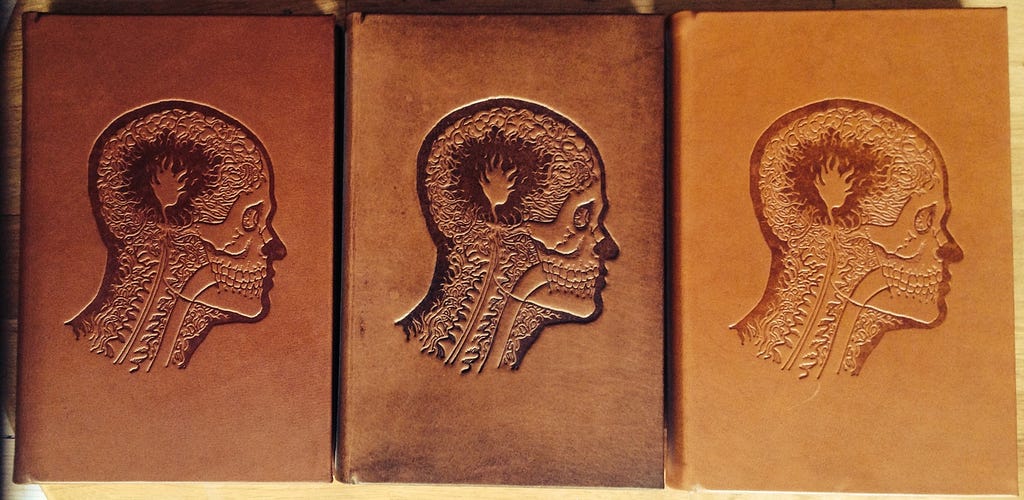
When a Norwegian independent bookstore, Cappelens Forslag, started going under, the owners devised an ingenious plan to keep their establishment afloat. According to The Guardian, booksellers Pil Cappelen Smith and Andreas Cappelen concocted The Conversational Lexicon — an encyclopedia that would compile subjective definitions from renowned artists and writers. The varied entries were to be “freed from the demand for factual accuracy,” and instead have the essential purpose of generating discussion.

The concept took off. In fact, there was so much interest that they doubled their original fundraising goal. The bookstore in Oslo raked in $54,235 (or €50,524), and is safe from going out of business. Every edition they’ve printed since 2014 has quickly sold out. The latest avant-garde version of the encyclopedia has just gone on sale.

The folks at Cappelens Forslags invest in the utmost quality for their beloved book. “Each [encyclopedia is] hand bound in calfskin leather by a third generation bookbinder,” which certainly comes at a cost for the buyer. The cheapest edition is roughly $80, while the earlier, limited editions can cost over $1,000. If that’s a bit above your pay grade, it’s still fascinating to watch the artistry involved in putting these babies together.

You can also see a handful of the entries on the bookstore’s website, and they’ve attracted some big names to their project. George Saunders is among the latest contributors. Here’s his take on people who play with puppets:

“Ventriloquist, a person inordinately fond of a puppet. This relation is often dysfunctional and may become abusive. This psychological condition may become so pronounced that the ‘ventriloquist’ will claim to be speaking for the puppet…”

See, isn’t this a lot more fun than your old dusty Britannica? Who knows, maybe one day they’ll give Wikipedia a run for their money. Enjoy entries from Jonathan Lethem, Jarvis Cocker, and more on the company’s website, here!