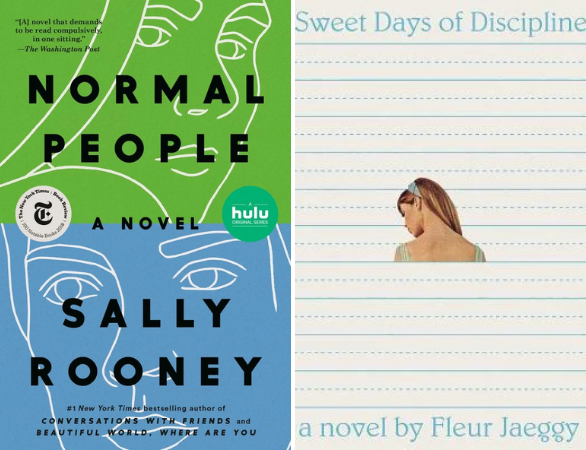
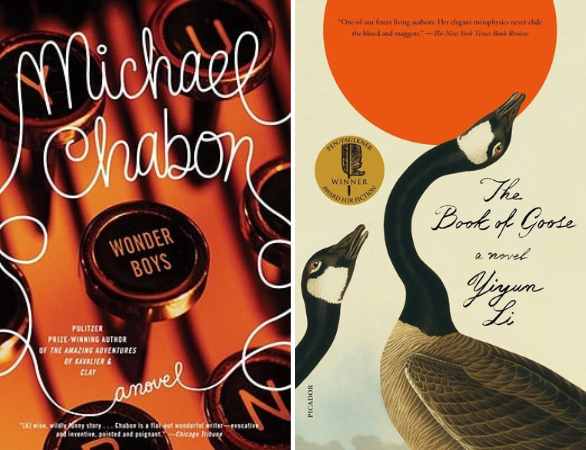
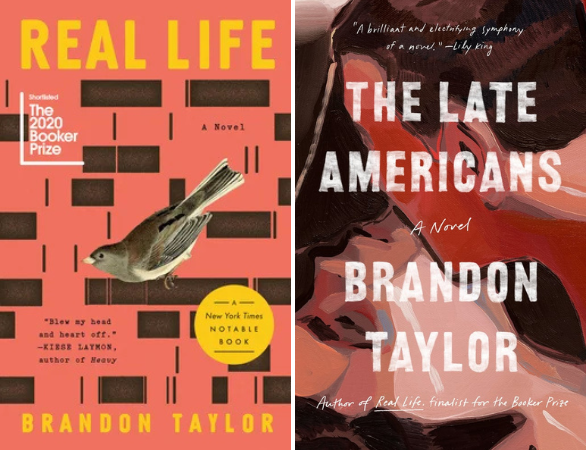
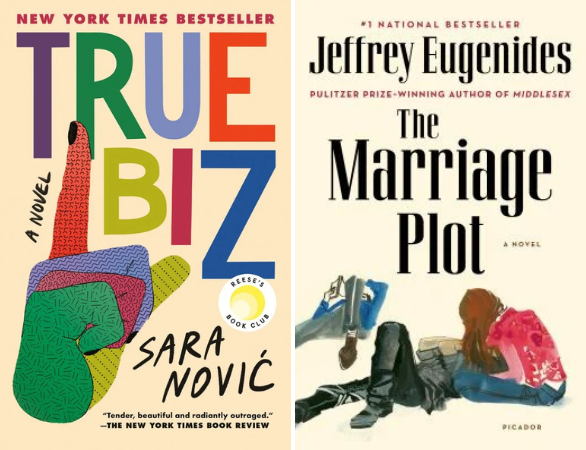
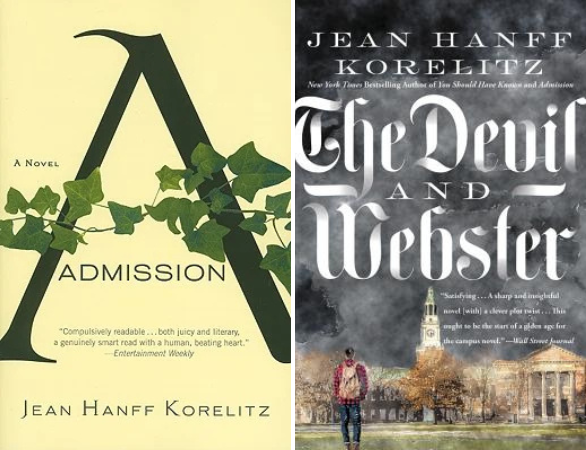
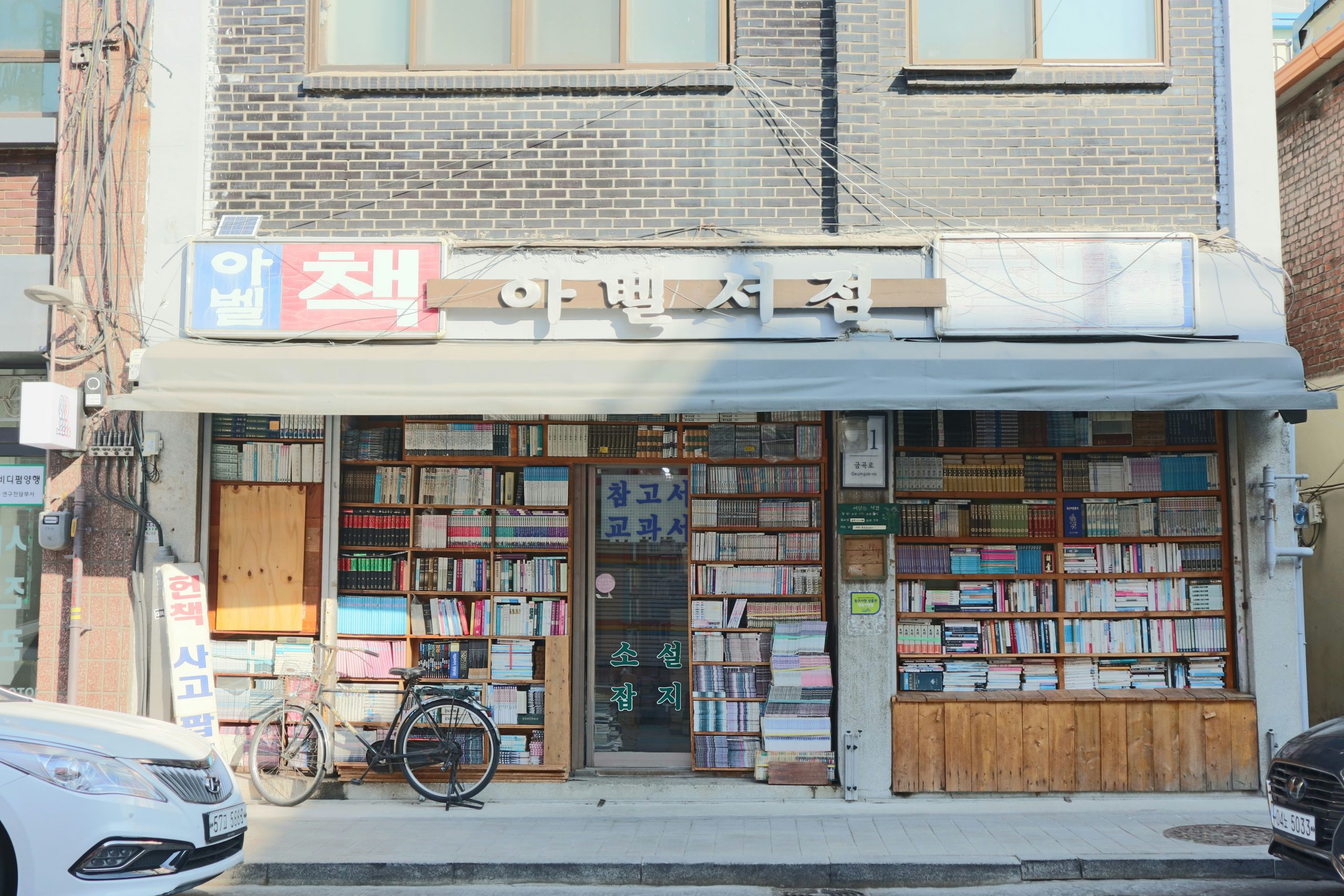
Last year, you helped us decide the saddest book of all time in our March Sadness bracket. Now we’re back again with yet another pun-based book competition: March Gradness, a quest to find the best campus novel out there.
You may be asking yourself: how long could they possibly keep this up? Surely there are only so many book-themed March Madness puns they can make? But don’t underestimate us—we’re just getting started!
Voting will begin Monday, 3/24 at 12 PM Eastern, and this year, we have a couple new twists:
Firstly, we have prizes! Download the bracket here, fill it out with your picks, then email it to us at books@electricliterature.com by 9 AM Eastern on Monday, 3/24 as a .pdf, .jpg, or .png file, using subject line BRACKET: followed by the title of the book you’ve chosen as the winner (e.g., “BRACKET: The Secret History”). The person whose bracket is closest to the real results will win a free manuscript consultation with an EL editor and a Reading into Everything tote! Two runners-up will each receive a tote as well. We’ll reach out to our winners the week after results are in.
Click to download a printable PDF.
Secondly, we have a new way to cast your votes. While you’ll still be able to vote in our Instagram stories as usual, you’ll also have the option of casting your votes right here on electricliterature.com! Stop by Monday at noon Eastern to vote in Round One.
Below is a sneak peak of the Round One match-ups, featuring 64 of the best campus novels out there, ranging from classics to contemporary takes on the genre.
Round 1 – Lefthand Side
The Secret History vs. The Maidens
Ninth House vs. The Magicians
If We Were Villains vs. The World Cannot Give
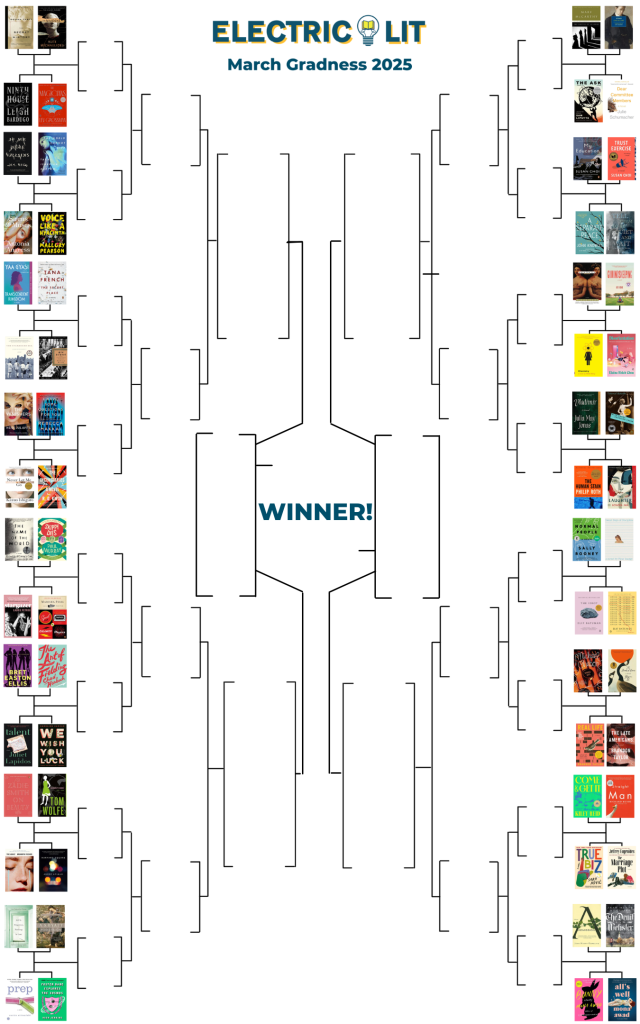
Sirens & Muses vs. Voice Like a Hyacinth
Transcendent Kingdom vs. The Secret Place
The Starboard Sea vs. Old School
The Vanishers vs. I Have Some Questions for You
Never Let Me Go vs. The Incendiaries
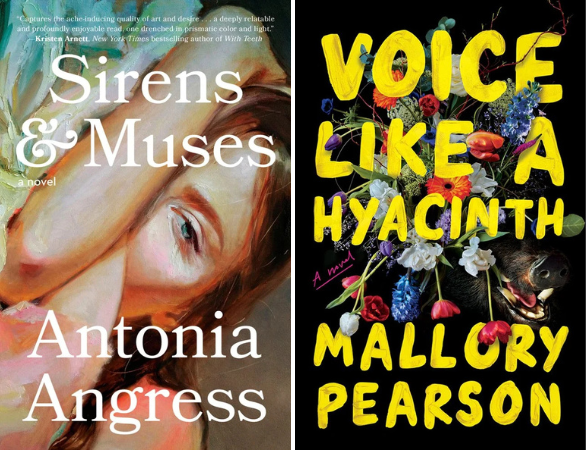
The Name of the World vs. Skippy Dies
Stargazer vs. Special Topics in Calamity Physics
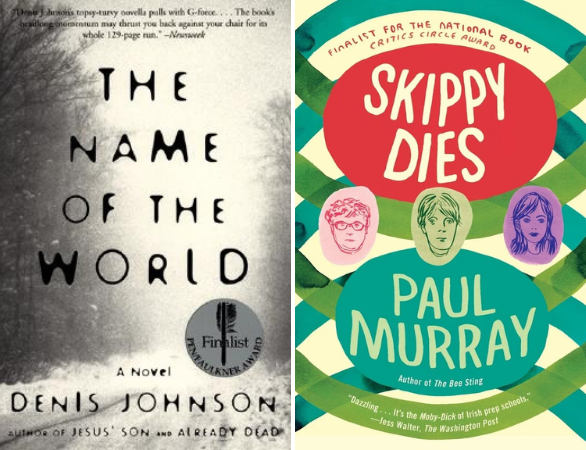
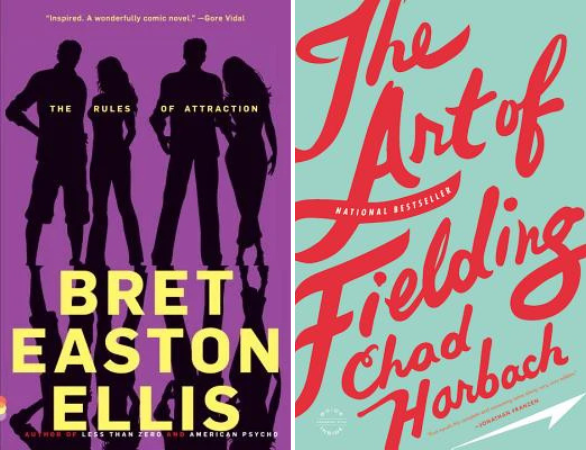
The Rules of Attraction vs. The Art of Fielding
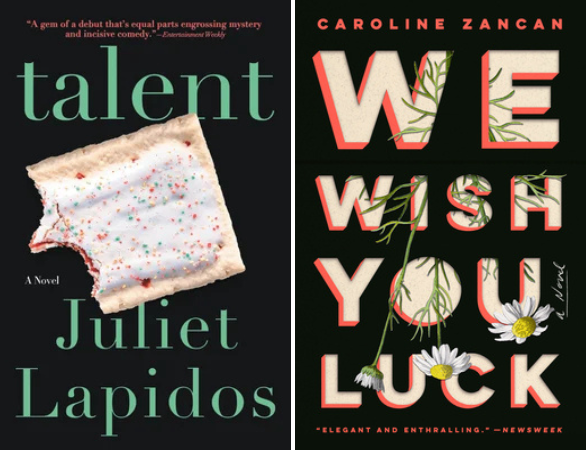
Talent vs. We Wish You Luck
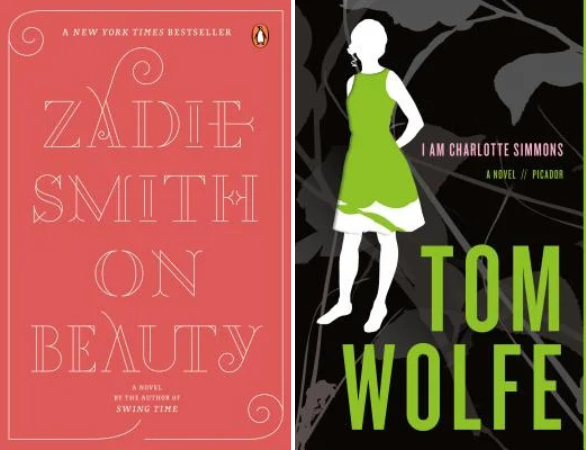
On Beauty vs. I Am Charlotte Simmons
The Adult vs. Harvard Square
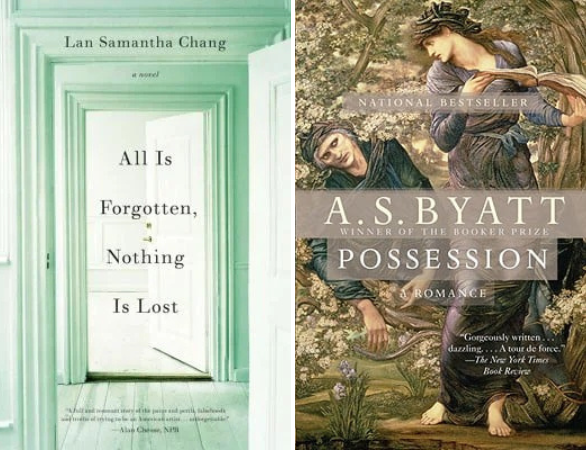
All Is Forgotten, Nothing Is Lost vs. Possession
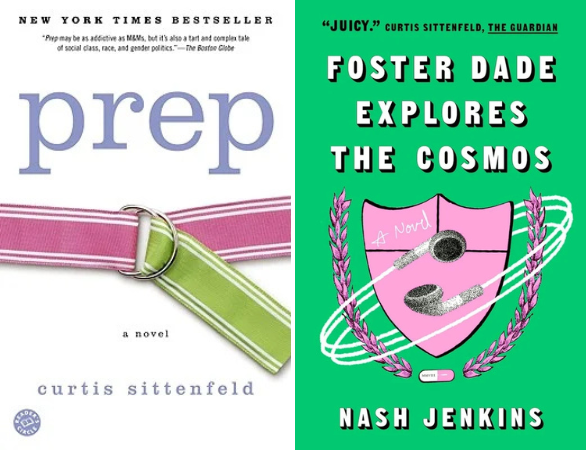
Prep vs. Foster Dade Explores the Cosmos
Round 1 – Righthand Side
The Groves of Academe vs. Stoner
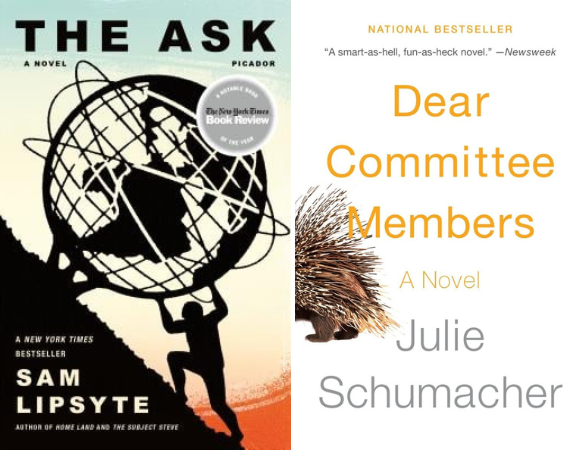
The Ask vs. Dear Committee Members
My Education vs. Trust Exercise
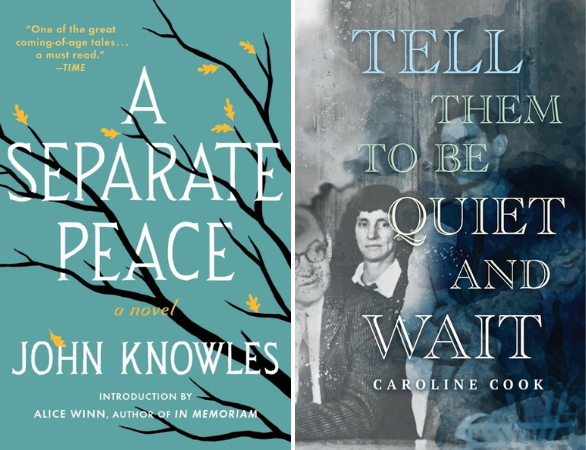
A Separate Peace vs. Tell Them to Be Quiet and Wait
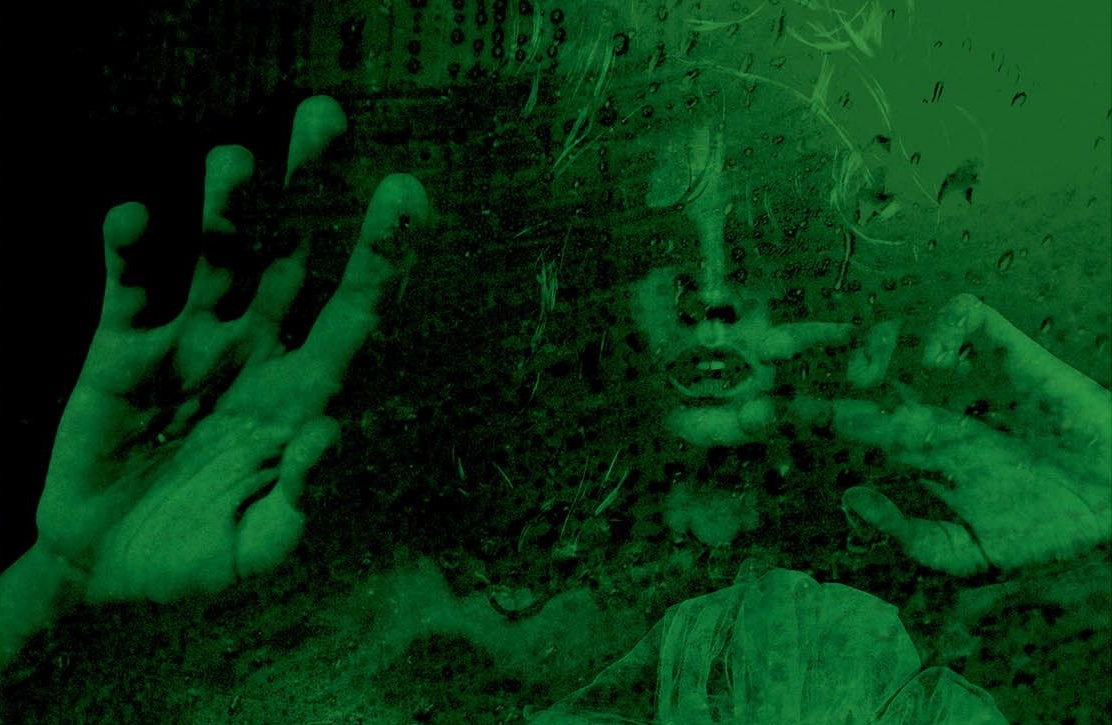
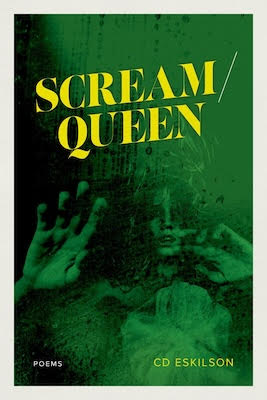
“I chafe against a want for what is owed: / a movie in soft focus with warm colors, / perfect lighting, every scream queen / flagrant with her brilliant smile,” writes CD Eskilson in their imaginative and playful debut Scream / Queen, which interrogates monstrosity and the monsterification of trans, queer, and disabled/mentally ill bodies through the lens of pop culture, particularly horror films. The collection juxtaposes classic horror tropes—demons, jumpscares, haunted houses—with the real-life horror of transphobia and legislation targeting trans youth, as well as the more nuanced horror of inherited familial traumas.
Inhabiting a wide range of personae and formal traditions, Eskilson imagines a world in which HIM from The Powerpuff Girls is a genderqueer barista, Icarus posts thirst traps in drag on their finsta, and the women of the speaker’s family twirl into the teal waters of the Aegean Sea like Meryl Streep in Mamma Mia!, unburdened by their ghosts. By radically re-envisioning familiar characters and tropes, Eskilson breathes new life into their stories, granting them agency and also allowing readers who have been marginalized or flattened by harmful language and representation to see themselves reflected, perhaps for the first time. Scream / Queen is a testament to the liberatory power of queer imagination, creating “Not simply / a new ending, an entirely new script.”
I spoke to CD over Zoom, where we talked about queer origin stories, mythmaking, and the subversive potential of monsters.
Ally Ang: What was your first introduction to the horror genre and how did you come to fall in love with it?
CD Eskilson: I’ve been interested in horror movies, monsters, and horror as a concept since I was a little kid. For some reason, I was really enamored with monsters. I have memories of, before going to kindergarten, watching The Wolf Man on VHS or Creature from the Black Lagoon. I became fascinated with the more technical aspects of movie-making when I got to undergrad. I was a Media Studies minor in addition to being an English major. As I became an adult, rather than just being like, Cool, monsters! I was more like, How do these movies get made? or, What stories are they telling? So much horror today, like I Saw the TV Glow by Jane Schoenbrun, tells stories in really subversive or unexpected or radical ways. Monsters as a concept can be this liberatory radical utterance against the thing that’s being made into a monster.
AA: Yeah, totally. I was a scaredy cat as a kid, but I felt that same pull towards creatures and monstrous beings as I got a little older. I think a lot of queer people do.
CDE: For sure. I think it’s a sign, right? Everyone’s always like, Yeah, I was really into monsters as a kid too. And then I ended up being a trans person. Being in marching band is another big thing, or playing an instrument in general.
AA: Let’s start with the titles of both the book itself and the sections within the book, all of which take particular tropes and subgenres within horror (found footage, body horror, jump scare, etc.) and divide them with a slash. The slash can be interpreted in a lot of ways (the term “slasher” immediately comes to mind), but I was hoping you could tell me how you decided to structure these sections and what the slash signifies for you.
CDE: So within the sections themselves, the poems speak back—whether directly or in an emotional or lyric sense—to the titles. The BODY/HORROR section talks a little bit about chronic illness and the experiences of the trans body. Other sections, like FOUND/FOOTAGE, are a little more abstract, more like making sense of the past, childhood, experiences of dysphoria that you didn’t know were dysphoria, trying to figure out where you got to the point of realization about your identity. With the slashes, I’ve been really interested in how language works and how we connect to and identify with words. In the book, you start with FOUND/FOOTAGE which is two words, and as the book progresses, the last section, SUPER/NATURAL is one word that’s been divided. There’s this forced rupture in the word, but we can still identify it as the word. I’ve been thinking about that as a way of interrogating binaries, thinking through the ways in which we put up these arbitrary distinctions between parts of a whole or a spectrum. It’s a way of interrogating that violence and exploring how we can continue to identify something that’s had this violence enacted on it. And “slasher” is something I’ve been excited to see people pick up on. It’s that forceful happening within language and how we can resist it or make something new out of it.
AA: Scream / Queen doesn’t only use horror movies as references, but also Greek mythology, including Medusa, Icarus, and Geryon, imagining them as contemporary queer figures. What led you to draw upon that particular mythology, and where do you see the parallels between Greek mythology and contemporary horror?
CDE: Another thing I’ve noticed is that a lot of queer and trans folks I know have an interest or obsession with Greek mythology as kids. To be a linguistic nerd for a second, the word “monster” comes from the Latin “monstrare,” which means “to demonstrate.” So quite literally, monsters demonstrate something, which is very similar to a myth. It’s supposed to point towards this social truth. In the case of Medusa, who’s typically portrayed as a monstrous figure from the ancient past, there’s a resonance with monsters and horror movies today. And with Icarus, I was wondering what other story could be told about that figure? How could it be revised or reimagined to say something new that still speaks back to the idea of flying too close to the sun, defying expectations, defying possibility? I’ve been thinking through myth and horror as drawing from a similar idea, if that makes sense.
AA: There’s a moment in “During Intro to Film Theory” that really struck me—when talking about the real life horror of legislation targeting trans youth, you write, “What angle could I / film from to grip an audience and capture / all the care inequities? Without red dye, / people shrug, stay unfazed by our loss.” The weight of that responsibility as a trans person to make our humanity visible and legible to cis people is something that really resonated with me, and I’d love to hear more about how you thought about audience while writing this book. Did you feel the impulse to try to represent transness in a way that cis people would understand, or was that something you didn’t think about or actively rejected?
CDE: I think that’s really important to be thinking about as someone writing into identity or writing towards something that’s very personal and also very political at this particular moment, with the giant magnifying glass that’s on trans folks today. As I was writing the book, I wanted to imagine my audience as first and foremost trans and non-binary folks, particularly trans youth. The audience is also anyone whom language has othered or marginalized in some way and who are interested in reclaiming and revising the stories and language that are leveled against them. When I was writing, I was contending with the idea of language as something that can be so violent and so creative at the same time. It’s not like it’s inherently benevolent. We have to be part of the process of interrogating it, forming it, creating new forms of language that see us or help us be who we feel we are. I definitely wrote this as a way of hoping or praying for continuation of survival for trans folks, but hopefully it also allows people to see the radical performance that language can do outside of that—for folks who are neurodivergent or chronically ill as well. Hopefully people can see the possibility that can open from that.
AA: In “At the Midnight Show of Sleepaway Camp,” the speaker attends a showing of the film Sleepaway Camp with a group of queer friends who have differing reactions to the film’s big twist in which the main character is revealed to be a trans girl. You write, “Can’t we / hold both readings of the movie to be true? / Know there’s risk in our vindictive gore / but that it offers a resistance.” Later, in ”My Roommate Buffalo Bill,” the character of Buffalo Bill is presented as a confident, self-actualized trans woman in contrast with the speaker, who is more insecure and earlier in their transition. Can you speak more about your relationship to films like Sleepaway Camp, Dressed to Kill, The Silence of the Lambs, which contain depictions of trans women that could be considered transmisogynistic, problematic, or harmful? Do you think films like these are reclaimable or redeemable?
The audience is anyone whom language has othered and who are reclaiming and revising the stories that are leveled against them.
CDE: Horror can be an incredibly reactionary and violent space for a lot of folks, particularly trans folks, like with the trans panic trope going back to Psycho and Dressed to Kill, which also comes up in the book. I spend a lot of time thinking about these movies and what impact it has to see that or to see people so interested in that. When people decide that “The Silence of the Lambs did nothing wrong” is the hill they want to die on, it can be very frustrating.
In terms of reclaimability, I think that’s what the project of the poems, these reimaginings, is. With questions about whether a movie like Sleepaway Camp has a redeeming quality, I think a lot of that is for trans folks to decide whether that’s a piece of media they want to engage with. But for me, writing these poems, I was thinking how I could reimagine these characters as having the lives they wanted to live or as being recognized as a trans woman, which The Silence of the Lambs blatantly does not do. The way I’ve reckoned with that is by creating a reinterpretation, like making a movie into a myth—you know, how myths have so much revision around them, where we tell different versions of the stories. So mythologizing it allows me to participate in the storytelling or make it something I can claim ownership over.
AA: Yeah, that’s similar to how a lot of young queer people are so drawn to fanfiction.
CDE: Yeah, very similar to that. Fanfiction allows for the possibility of participating in the story in a way that allows queer folks to see themselves, like queer fanfiction about Twilight.
AA: I love that. Those reimaginings were my favorite poems in the book. I don’t have a question about this poem, but I just loved “Update on HIM from Powerpuff Girls.” I think that was my favorite one.
CDE: Yeah, HIM is so special, at least for me as a kid. Talking about introductions to horror, I remember being completely terrified of HIM and also utterly transfixed every time HIM was onscreen. I’m always excited that people loved HIM so much.
AA: Another major theme of this collection is the speaker’s relationship with/inheritance from their biological family; in particular, a mentally ill father and grandmother, an uncle who’s passed, and a sibling who is also queer/trans. The presence of these family members and their impact on the speaker’s life and sense of self feels like a kind of haunting, which is explored most directly in “Our Family Leaves the Haunted House.” But I wanted to talk about the last poem in the book, “Draft Message to My Sibling after Top Surgery.” I thought this was a beautiful place to end the collection, with the image of the speaker and their sibling running along the shoreline of a beach side by side. How did you decide to make this the final poem in the collection?
CDE: That wasn’t originally the last poem; I think I previously had a different one in the same section, but it was still towards the end in very early drafts. There was a certain point when I realized that horror is such a big part of the book—it’s where we start, and so much time is spent talking about monsters and the horror of certain experiences. In wanting the book to present some sort of growth or journey, I figured it would open things up more to end outside of that genre, looking beyond the confinement of haunting or monstrosity. Just being alive and being aware of one’s body through something like top surgery or the experience of being on the beach. It felt like a very natural place to end, returning to a place that feels safe and full of possibility.
AA: Are there any horror films or characters that you wanted to write about but didn’t make the manuscript?
Fanfiction allows for the possibility of participating in the story in a way that allows queer folks to see themselves.
CDE: One that I got really held up on that I didn’t know what to do with outside of the title being fun was this 1950s monster movie that’s just a bunch of Cold War propaganda, like The Blob—it’s called Them! and it’s about giant ants; they take over the town in a way that’s a veiled anti-Communist message. But the title was really cool.
I really like watery monsters—being from Southern California on the beach, I spent a lot of time thinking about what could live in the water—so I had a The Shape of Water poem that sort of just fizzled out because I like Creature from the Black Lagoon better and I couldn’t do both. I had to pick and my heart lies with Creature from the Black Lagoon. Sorry, Guillermo!
It was interesting thinking of what didn’t “make the cut” in terms of what kind of story I wanted to tell or what different angles to present monstrosity from. I’ve still been hung up on Greek myths, so I’ve continued to write about that after the book and carried stuff over that didn’t end up in the book.
AA: I guess that’ll be in the next one! Those are all my questions; is there anything else you’d like to mention that you didn’t get to yet?
CDE: I think the biggest thing as we move through this time is to continue to support trans and non-binary writers and people, especially Black trans and non-binary folks. And being mindful of how the things in the book are things that happen to people. Poetry is also speaking to a lived experience. So support people through books and in daily life through mutual aid and organizing as well.
Human oddities compel and repulse us, even given the enlightenment we claim today. It’s the old car crash dilemma: we don’t really want to see it, yet we can’t help but stop and look. My interest in sideshows dates to the 1960s-era North Florida fair and to the first time I saw the 1932 Tod Browning movie “Freaks.” What were these folks’ lives really like? What did they dream of or hope for, or despise? I’ve learned that their difference often spawned strife with their families, as parents hid children they saw as unnatural, or sold them if they thought there was a profit to be made. Weirdness was scorned or neglected, or sometimes revered. The lure of such wonders has speckled our history, from the Romans’ intrigue with all malformed things to the persecution and abuse wrought by the Middle Ages. It’s not hard to find demonization of “unnatural” people even now.
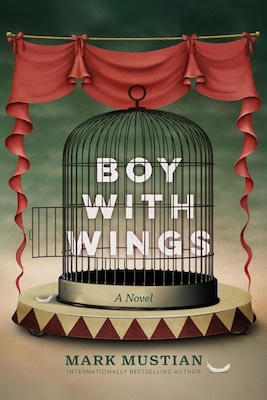
My novel Boy With Wings is the story of a boy Johnny with strange appendages on his back, who after a series of misfortunes ends up in a freak show traveling the South. There he meets others who are like him but not: a “dog-faced man” seemingly covered in hair; the woman dwarf who runs the show; even a man with the visible arms of his twin in his chest. All have stories to tell, and hardship and trauma they’ve endured due to their uniqueness. Johnny must learn from them and come to grips with himself, to survive and stake out his own place in the world.
Boy With Wings takes place in the 1930s, but sideshows existed from the late 1800s through the end of the 20th century, with a few even still around. The milieu is ripe for interesting conflicts: the “working acts” or cons pressed against oddities of nature; questions of exploitation versus what might be a better life; links to the divine or its opposite for things that seem beyond this world. What does it really mean to be different? Does being gawked at affect your life?
Here are seven novels that dig into the weird in different ways:
In turn of the century New York, two twins who grew up in their mother’s circus theatre on Coney Island are separated when one disappears. A “night-soiler” who removes ordure from tenement privies finds an abandoned baby. A woman wakes up in an asylum and can’t remember why she’s there. The stories of these four characters weave among each other and intertwine with the “freaks” who formed a part of the original circus show. No one is normal or necessarily what they seem. Can the two sisters reunite? How to escape an asylum in the middle of the East River? Balancing these dilemmas and the change from one century to the next, Parry gives us characters who must lay claim to who they are.
Sideshows are at their height in Victorian London, and tickets are coveted to The Carnivale of Curiosities and its assembled marvels. The show’s proprietor and illusionist, Aurelius Ashe, is rumored to be more than the average magician, and Lucien the Lucifer, the show’s star attraction, has the ability to create fire.
When a wealthy London banker comes seeking a true miracle for his 23-year old paramour Charlotte, he threatens Ashe with revealing devastating secrets about the carnival and Lucien if he refuses to help. Lucien finds himself drawn to Charlotte, and gothic intrigue settles into the troupe that includes a disappearing juggler, an albino aerialist and more. Faustian bargains are in the works, murder and secrets that if discovered can only hurt.
“You would think it impossible to find anything new in the world, creatures no man has ever seen before, one-of-a-kind oddities in which nature has taken a backseat to the coursing pulse of the fantastical and the marvellous.”So says Coralie Sardi in Alice Hoffman’s lyrical The Museum of Extraordinary Things. The book’s title is a reference to the museum run on Coney Island in 1911 by Coralie’s father, where she lives above the exhibition. When Coralie turns twelve, she is added to the show, in part because she was born with webbed fingers and toes. Dressed up as a mermaid, she performs in a large water tank.
Coralie meets Eddie Cohen, an immigrant photographer whose photographs of the devastation following the infamous Triangle Shirtwaist Fire embroil him in a mystery behind a young woman’s disappearance. New York itself becomes a character as the book explores what life is like for the exhibitionist, the exploitation involved but also the opportunity, even the thrill of being unique.
The 1898 Omaha World’s Fair is the setting for this tale of magic and deception. Cecily works in the Midway’s Chamber of Horrors, where she loses her head several times a day playing Marie Antoinette. Ferret is a ventriloquist and con man. Are frauds also freaks? What, after all, is really what it seems?
The book begins with a deflated hot air balloon landing on a house and bringing with it an injured Ferret, now an older man. He recounts to the sisters who find him the dreams and glitter the fair provided, including the oddities shown there—a gay man selling “tonics,” an anarchist selling tasteful “nudies”— and things that he can’t explain, including the complexities of a long, lost love.
In 1866 in southern England, Nell is sold by her father to a traveling circus, due to the birthmarks that dot her skin. She becomes the “leopard girl,” and at first the fame and camaraderie with other show members seems a blessing from the shunning she’d experienced in her life before.
As Nell’s fame starts to eclipse that of the showman who bought her, though, trouble ensues. The author shows us that the adoration of the crowds is much more for the spectacle than for the performer herself. Nell must rely on her own inner strength to navigate life and its trials, helped through her relationships with the other women on the show: Stella the bearded woman, Brunette the giantess, and Peggy the dwarf.
Dropped off as a four-year old at a Chicago orphanage in 1924, Cecily Larson waits for her mother to return, but she never does. Cecily is sold as a seven year-old to a traveling circus to perform as a “little sister” to an alluring bareback rider. After a while, though, the glamour of show life begins to fade and crack, and her attraction to a young roustabout throws her life on a dangerous course.
Fast forward to 2015, and Cecily is living a quiet life with her family when a surprise at-home DNA test throws her past life into question. The unexpected results bring to light an odd and tragic past, and secrets that she has long withheld about her time as a girl on the show.
Yes, there’s the movie (or movies, the 1947 version with Tyrone Power, the 2021 remake with Bradley Cooper), but the book on which they’re based is its own brand of freakishness. This is the sideshow in its essence, featuring true oddities but with the focus more on the working acts: the geek who bites the heads off chickens, the “mentalist” with his fakery, the “pickled punks” pawned off as fetuses. It’s all about the con, and the book is a dark, unforgettable depiction of the “bottom level” of the circus show.
Stanton “Stan” Carlisle is the main character who falls in with the carnival, adapts to its shifting ways, and takes them further when he leaves. Stan seduces and then leaves a number of women as the novel pivots to their points of view, exposing their deception but their desperation (and Stan’s) as well. The life of the author shows a similar downward trajectory, as Gresham dabbled in Marxism, psychoanalysis and Christianity before committing suicide in 1962.
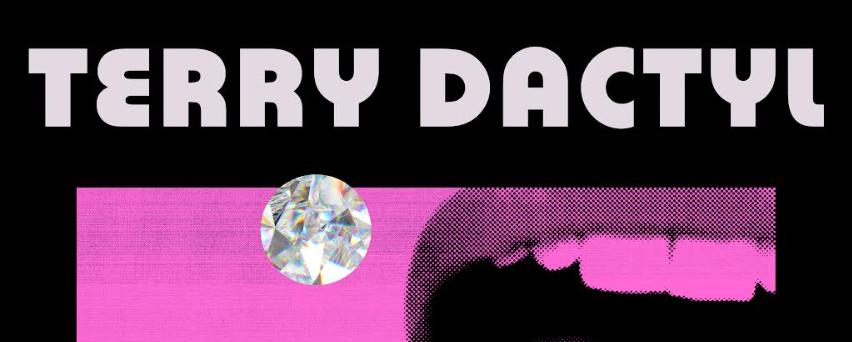
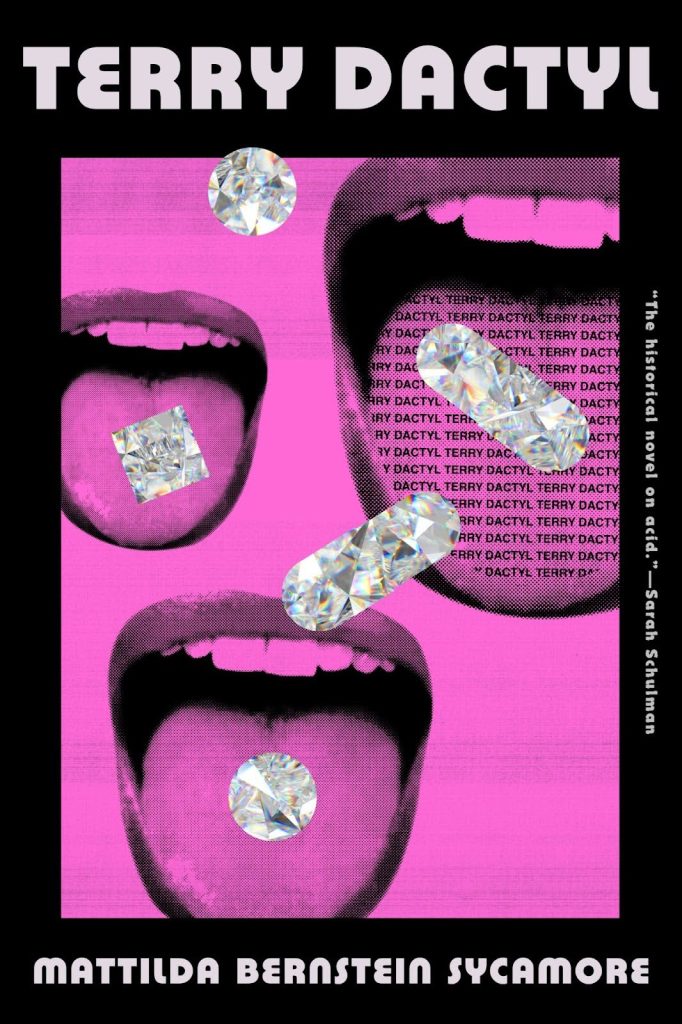
Electric Literature is pleased to reveal the cover of Terry Dactyl by Mattilda Bernstein Sycamore, which will be published by Coffee House Press on November 11, 2025. Pre-order your copy here.
From iconic author and activist Mattilda Bernstein Sycamore comes a breathless search for intimacy and connection, from club culture to the art world, from the AIDS crisis to COVID-19.
Terry Dactyl has lived many lives. Raised by boisterous lesbian mothers in Seattle, she comes of age as a trans girl in the 1980s in a world of dancing queens and late-night house parties just as the AIDS crisis ravages their world. After moving to New York City, Terry finds a new family among gender-bending club kids bonded by pageantry and drugs, fiercely loyal and unapologetic. She lands a job at a Soho gallery, where, after partying all night, she spends her days bringing club culture to the elite art world.
Twenty years later, in a panic during the COVID-19 lockdown, Terry returns to a Seattle stifled by gentrification and pandemic isolation until resistance erupts following the murder of George Floyd, and her search for community ignites once again.
In propulsive, intoxicating prose, Terry Dactyl traces an extraordinary journey from adolescence to adulthood, delivering a vital portrait of queer identity in all its peril and possibility.
Here is the cover, designed by Sarah Schulte.
Mattilda Bernstein Sycamore: “Picture yourself late at night on that dance floor in the flashing lights, your head flipping with the beats and, yes, those pills and potions floating right into your mouth opening up to all that experience, honey, you are there in that magenta light, yes, Terry Dactyl starts on the dance floor at the Limelight in New York in 1991 and do you see how this cover does such a great job of conjuring that experience, the way those iridescent three-dimensional pills and potions and papers sparkle in the light of the disco ball maybe they are the disco ball maybe you are the disco ball but also how everything is flattened for the photocopier in your mouth, do you see the title there, TERRY DACTYL TERRY DACTYL TERRY DACTYL TERRY DACTYL and Sarah Schulman’s blurb illuminated out there in the dark on the side, “Historical fiction on acid” because, yes, tear open the gates of literature with your mouth, yes, let’s take another hit of those glittering gems on the cover, that sense of light but also fracturing or fragmenting, mouths open wide, pink tongues hanging out inside that dark frame of night, right, and, yes, it’s true that the book starts on the dance floor at the Limelight, but also it starts in Seattle where Terry grows up with lesbian mothers in the midst of the AIDS crisis, her mothers are party girls so that disco ball those pills those potions are in their living room with all the dancing queens who are Terry’s role models as a trans girl who knows she’s a dyke in a world that doesn’t offer these options but she is ready still with that open mouth, right, open to possibility but actually the present day of the book is 2020, just before COVID lockdown, our mouths hanging open in shock, in trauma, in trying to breathe in spite of it all, and at this point Terry has been working in an art gallery for two decades so you see the art of the cover once again, the creative mess we’re all in. And I love how this cover shows everything at once—the spectacle, the celebration, the excitement of walking into those night lights, the frenetic movement of the book, the floating between and beyond, the shrieking and crying and laughing and flying and dying and living, yes, living, in spite of it all.”
Sarah Schulte: “Terry Dactyl is edgy, gritty, colorful and loud. There is a bright, dizzying club scene energy that pulsates throughout the story — an undercurrent to a world full of binaries, tensions, and extremes. My design notes read: glitter eyelashes, furry fuchsia dress, wings made of trash, stuffed animals stapled to the walls, anything bright and plastic or shiny and ruined. The cover design we landed on draws inspiration from the photocopier poster aesthetic of the 90s NYC club world. The bold, vocal mouths paired with the shimmering pills speak to a flawed flamboyance; a world of glamour, activism, and excess marked by addiction, sadness and loss.”
In front of a stranger’s TV, on a stranger’s scratchy, tangerine carpet, my brother Chris and I sat side by side, criss-cross applesauce. We were watching a movie called “Midnight Offerings.” It starred Melissa Sue Anderson as Mary Ingalls from Little House on the Prairie. In “Little House,” Mary was a darling, a sweetheart, but a nerd. She got solid straight A’s, wore glasses everyone gave her shit for and then went blind anyway. In “Midnight Offerings,” Melissa played a high school cheerleader named Vivian. Vivian was a bitch. She had a shag haircut and a perm. She socked her mom in the face when they argued. She also had telekinesis, which Vivian used to fling nails and saw blades at the new, pretty girl who giggled too much around Vivian’s ex-boyfriend.
“Oh my gosh,” I said. “I wish I could do that.” Six years old, I wasn’t interested in Vivian’s bloodthirstiness, but simply the scope of her power, by the potential it gave her to do whatever she wanted. I might not whip nails and sawblades around, but I’d let everyone know that if I wanted to, I could.
Chris turned to me. “Oh, I can do that. I can do what she’s doing.”
I turned to him, searching for cracks in his gaze, for a hint he was lying. There was nothing. I brushed my hands back and forth on the carpet. Bright tangerine burned my fingertips. “Really? You can do that?”
“Want me to teach you?”
“We should do something fun for Spring Break,” Mom had said. “Get out of the house. Get in the car and just go. What do you boys say?” Chris and I were six and nine; we turned to rubber. We bounced from living room to kitchen, and finally, to our bedroom, swept up in an ocean of joy. It was a Monday, the first day of Spring Break. Had Mom ever taken us on vacation? We didn’t think so. We roared through the house fueled by our glee. “Make sure you pack socks and underwear, too,” Mom had said. “Chris, help your brother.”
In the car, Mom tapped her thumbs on the wheel as she drove. No radio, only the tense, muffled taps of her skin on the steering wheel.
Tump… tump tump…
“Can we have the radio?” Chris asked from the back seat.
Tump! “No.” tump! tump! “I need quiet, okay? Mom needs to think.”
No radio, only the tense, muffled taps of her skin on the steering wheel.
Out of town, Mom parked her car in the lot of a grocery store I didn’t recognize. She turned to us. “I’ll be back in a few minutes.” She got out and hustled into the store, her arms chopping the air as she moved. I drifted away in my seat, watching cars come and go, hypnotized as their shadows melted into the late April sunlight. The sudden jerk of the driver’s side door broke the spell. Mom slid in then turned to us. “Here.” She thrust out a hand. M&M’s for me, Starburst for Chris. Mom rarely bought us candy, no matter how hard we begged or bawled or threatened to die. Chris and I snatched it from her hand, and she turned back to the highway.
Two browns, one yellow, and an orange. I always ate my M&M’s in fours—that was the best and only way to do it. I was crunching my way through the bag when I heard the metallic scrape of a lighter. And then the swift, sour sweetness of nicotine. A thin stream of smoke burned my eyes.
“Mom! Are you smoking?” Chris asked.
Mom plucked the cigarette from her mouth. She dangled it between her index and middle fingers, glancing between the smoldering paper and her son’s shocked reflections in the review mirror. She shrugged. “I’ve always smoked.”
I shook my head. “No, you haven’t.”
Mom exhaled a slender ghost from her lips. “Yes, I have.”
“Okay,” I said. But she hadn’t.
In a bedroom that wasn’t our bedroom, on the floor in sleeping bags, Chris whispered. “Take my hands.” I turned on my side and reached for him, hunting blind in the darkness. My fingertips brushed against his fingertips. His hands wrapped around mine.
“Okay. Are you ready?”
In the stillness, I nodded. Chris couldn’t see me nod, but he heard it, my hair scratching back and forth in the sleeping bag. I heard it too, along with the giddy, hammering thrash of my heartbeat.
“Okay,” Chris said. “Now think…”
He squeezed my hands.
“Think of my skull. Think about what it looks like. Try and make yourself see it.” Seeing skulls was one of Vivian’s tricks. From afar, she could rip someone’s skin off in band-aid size chunks. Up close, touching you, she’d peer through the flesh of your face and into your skull, see what it was you were thinking. There wasn’t a thing you could hide from her.
I conjured Chris’s skull in my mind. In silence we stared at each other, his face, my face, just round, blurry outlines. I felt my heartbeat in my breath. Chris leaned close to me.
“Can you see it?”
“Your skull?”
“Yes.”
I squinted, waiting for his flesh to evaporate, for the bony white of his skull to become visible. Holding hands, I wanted to say, yes, oh my God, I saw it, the way Vivian saw it. I wanted to feel that potential.
“I can’t see anything.”
Chris kept his grip on my fingers. “I can see yours.”
In a bedroom that wasn’t our bedroom, in sleeping bags that weren’t our sleeping bags, the darkness closed in on me. Cold, like fat, winter rain on my skin. My brother said he could see my skull. I believed him. Fear ignited every one of my senses – I smelled my skin and heard my breathing and felt the air swirling around me. My spit tasted like steel in my mouth. Under that fear, at the base of it, was more than a little excitement. And potential. I latched onto it. “You can see it? You really see it?”
“Yeah,” Chris said. “Don’t worry. We’ll keep practicing. You just have to be calm. You just have to concentrate. You’ll do it.”
My brother said he could see my skull. I believed him.
Letting go of my hands, Chris turned away from me. In school, Chris had played soccer one year, basketball the next. His favorite tv shows involved cowboys, war planes, and gun fire. His favorite toy was his pocketknife. My favorite toy was my stuffed, puppet monkey. My favorite hobby was drawing flowers on construction paper with glitter pens and crying over drowned flies in the toilet. Chris was tall, tan, with dark, wavy hair. I was small, blonde, and as pale as the bones Chris said he saw in my body. Physically and personally we were opposites, but suddenly, now, we had this one special thing. In the darkness we were alike.
The steady hum of the highway had knocked me unconscious. Gravel popping and crunching awoke me, Mom turning up a long, narrow driveway. A frumpy, one-story house sat at the end of it. Foreign hills cut into the sky and I knew we were nowhere near home. Mom brought the car to a stop. We swung our doors open as someone inside of the house did the same.
“Boys, this is Patty.”
Mom didn’t get many phone calls at home, but when the call was for her, it was Patty. Neither Chris nor I had seen her before. We stared. Patty had long, dark hair pulled back in a pony. Her bangs erupted from her head like a claw. Heavyset, in a white, short-sleeved blouse tucked into her belted, high-waisted Levis. She was standing still on her porch, gripping the railing, smiling a polite but not entirely welcoming smile at my brother and me. When Patty shifted her gaze to Mom, she softened.
“C’mon, Mel. Grab your stuff. Get inside.” Patty turned to Chris and me. “Make sure you wipe your feet on the doormat.”
Patty’s house was roomy, yet cluttered. There wasn’t a wall or shelf that wasn’t choking on pictures, books, or dime store antiques. One table in her living room was dedicated solely to an army of miniature, porcelain dolls. I recognized them as the same porcelain dolls owned by our grandmother – dainty, parasol twirling ladies that twisted apart at the waist to reveal the musty, Avon brand perfume in their bellies. By their just-so arrangement and unblemished features I knew Patty didn’t have children. The air stunk with the dueling aromas of cinnamon candles and cigarettes. I squinted. Heavy, rust-colored curtains hid the windows, blocking the sunlight. Outside Patty’s house it was the brightest, warmest part of the day. Inside, it was dreary, and damp. Unease slowed my walk to a crawl, wary of what was hiding in corners, out of sight.
Patty showed Mom to her bedroom, then took Chris and me to ours. There were two sleeping bags on the floor and a dresser next to the closet. On the walls, grim, black and white photos of people I didn’t recognize glared straight ahead. I felt their eyes on me, the weight of their blank, lifeless stares, and I wondered if Patty knew anyone who smiled. The bedroom carpet was bright tangerine, the same as every other room in the house. The blinds on the windows were closed. Dead flies lay mummified on the sill just beneath them. I sighed.
Mom saw the questions taking shape in her sons’ eyes and answered before we could ask.
I felt their eyes on me, the weight of their blank, lifeless stares, and I wondered if Patty knew anyone who smiled.
“Think of it like camping, except we’re staying in a house instead of a tent. And did you boys see?” Mom ushered us outside through the sliding glass door in Patty’s kitchen. She pulled us outside to the back of the house and pointed. Close by, a colossal explosion of oak trees.
“You boys can explore the forest all you want. Climb the trees, build a fort. Whatever you want.” Mom glanced at Patty, who nodded. “Why don’t you guys go explore for a while and when you get back we’ll have lunch? Sound fun?”
Chris and I nodded. More rare than Mom buying us candy was Mom letting us go off alone. And that did sound like fun. I couldn’t imagine any of this being fun for Mom, though, since Mom hated camping. Before Chris and I took off I made a request. “Can I have something to drink?”
“Oh,” Patty said, disappearing back into her kitchen. She reappeared with a pair of mini juice boxes. “I guessed when I bought these.” She shook her head at Mom. “I mean…boys like apple juice?”
Straws clamped in our teeth, Chris and I made our way toward the forest. I stopped for a moment, looking back toward the house. I saw Patty and Mom through the sliding glass window. I thought Mom was laughing. Then Patty put a cigarette to her mouth with one hand and with the other grabbed Mom by the shoulder. Mom threw her hands over her face like a mask made of fingers. Her head and her shoulders began shaking. I held still, swallowing syrupy sweet apple juice, watching Mom as she sobbed.
A pair of delicate, pint-sized ladies faced south. They were supposed to face north. Chris had turned them that way. With his mind, he’d told me, just before we’d walked into Patty’s living room. It was my job to turn them north again.
“With your mind,” Chris said.
As the older brother, Chris was inclined to be bossy, to give orders. For the most part I ignored him, but since his Midnight Offerings revelation, I didn’t question his demands. Inches away, I stared down at the figurines. I focused. I imagined them turning slowly around, and hearing the faint scuff of their stiff, pastel dresses on worn, lacquered wood. I imagined the thrill if I did it. I balled my hands into fists. Focusing, focusing.
“What are you two doing?” Patty was standing behind us. She’d given Chris and me instructions to spend the day in our room. In our bedroom at home we slept in bunkbeds, which did double-duty as our impromptu playground. On bad weather days, we’d climb the frame like a jungle gym or hang blankets to make it a fort. Now, with just sleeping bags and a floor, there wasn’t much we could do. And our backs hurt from sleeping on a hard, itchy carpet.
“We’re just playing,” Chris said.
Patty pushed us aside, turning the wrong facing ladies around. A few days in her presence was all it took for Chris and I to learn to avoid Patty. Whenever she looked at us, whenever she spoke to us, it was as if we were pets she’d reluctantly let inside. “These aren’t toys,” she said. “These aren’t things you play with. Get back to your bedroom right now. And stay there.”
Whenever she looked at us, whenever she spoke to us, it was as if we were pets she’d reluctantly let inside.
Mom had been on the phone most of the day, unapproachable. Her voice had been coming in and out like the tide in a hurricane, crashing and pounding. I’d never heard her so loud before. With her decommissioned, we were at Patty’s mercy. Walking back to our room, I leaned into Chris.
“You should have told her,” I whispered. “You should have shown her.”
Chris whispered back, “We’re not showing anyone yet.”
Shutting the door to the bedroom, I heard Patty shuffling her dolls. Arranging and rearranging, assuming if Chris and I had been messing with two of them, we’d been messing with all of them. They clacked and tapped on the table, and I concentrated on them, still focusing, focusing, imagining the tiny dolls on the table, their dresses, their bonnets, their fans and their flowers, exploding before Patty touched them. I tried not to smile at the thought of it.
Mom was sitting by herself on the couch, a cigarette smoldering in her mouth. I’d thought the cigarette she smoked in her car days ago was a fluke. But she was a pro after all. She flinched when she saw me, as if the world were hidden behind the smoke she was making. She grabbed a yellow, sludge coated ashtray and crushed her cigarette into it.
“Can we go to the store?”
Mom shook her head. Her mouth became a tight, anxious line. “No. We don’t need to go to the store. Not right now.” She spoke quickly, anxiously, as if she might crack if I asked hard enough. “Go outside and play if you’re bored. Ask your brother to go with you.”
“Can we go later?”
“No, we don’t need to go later. Go watch tv. Or go outside.”
Watching tv and going outside is what Chris and I had been doing for days. Patty had come and gone several times – to the store, to the bank, to the gas station – but Mom had stayed put and kept Chris and I with her. It was like being shipwrecked on an island – confined in a limited, desolate space, with Mom the ocean surrounding us. And except for the sliding glass doors, Mom demanded we keep every curtain in Patty’s house closed.
“What about tomorrow?”
“I said no.”
“Why can’t we go anywhere?”
Squinting, I willed them to move. An inch. A half inch. A centimeter. Just the tiniest movement, that’s all I wanted.
“Because…” Mom said. And now her whole body was twisting. She blinked, as if her thoughts were visible behind the blue of her eyes and she didn’t want me to see them. “Because we have to stay put for a while.”
“Because why?”
Mom grabbed the ashtray and flicked through the butts. Mom, who would squirm at dust on her fingers, now dragged them through ashes. “Because for now we just have to.”
I had the bathroom door locked. Standing in front of the sink, I stared at the handles of the flecked, metal faucet. Squinting, I willed them to move. An inch. A half inch. A centimeter. Just the tiniest movement, that’s all I wanted. A sign that all my practice was working. A hint that I had some potential. The last several days I’d tried to move cups and silverware. I’d tried twisting the knobs on the oven, opening the doors to the fridge and the closets. Nothing. Now, I imagined invisible hands reaching out from my head, grabbing the nobs on the sink by the base and then twisting. I tried to feel it, these mental appendages, this force, flowing out from my brain like an anchor sinking into deep waters. My heart raced as I held my breath in, pouring every bit of my will, every bit of my hope, into trying to make the nobs swivel. They held still.
Beyond the bathroom door, there was shouting. Mom and Chris, their voices butting heads with each other. We’d only packed clothes for this vacation. All of our toys, our games, everything we used to pass the time when indoors, had been left back at home. Our home. Where Chris and I had our own bedroom with actual beds and curtains we pulled open to let the light in and no smoke at all anywhere. And no Patty to loom over us. Chris had been complaining to me, and now he was complaining to Mom. Mom wasn’t happy to hear it, which made Chris complain even louder. Their shouting was like quick stabs of lightning, charging the air with its energy. Behind a locked bathroom door, in silence, I waited. Waited for Chris to tell Mom what he’d told me, about what he could do with his mind. I was waiting for him to show her. Maybe the same way Vivian had shown her mom when they fought. I was waiting to hear her shock, the commotion it would cause. Waiting for Mom, terrified, to come banging on the locked bathroom door, shouting that I let her in. I was waiting to see if I’d let her.
Mom and Patty were laughing. Above the sound of the TV, above the sound of my thinking, above it all was the sound of their laughter.
Slowly, this Mom was becoming the woman behind her, someone who didn’t seem to know much about me and someone I didn’t know at all.
I found them both in the kitchen. Mom was sitting upright in a chair, a white, ragged towel engulfing her neck. With gloved hands, Patty was squirting a brown, stinking something all over Mom’s shoulder-length hair. Her hair had been as blonde as my own. Now, it was buried under a mud-colored slime. It dripped from Mom’s head to the towel, staining it in BB-sized droplets. In her hands, a glass filled with ice and something clear. Patty had the same sort of drink next to her on the counter. She took sips as she messed with Mom’s hair.
“What are you doing?” I asked.
“Patty’s fixing my hair,” Mom answered. She brought her drink up to her mouth. She sipped, wincing as she swallowed. “You’ve seen me change my hair color before.”
“No I haven’t.”
Mom smiled, but it was Patty’s porch smile, neither friendly nor welcoming. “Yes, you have.”
Chris was still in the living room, watching TV. And I wanted to go back to him. When he laughed it was still him. When he spoke, it was still him, even if we were arguing. Here Mom was laughing and talking but there was nothing about this Mom, right now, that I recognized. When we’d first arrived, Patty had insisted we eat dinner every night at her dining room table. At first, Chris and I were part of their conversations. Soon enough, Mom and Patty excluded us. They smoked and laughed and drowned us out with their volume, leaving Chris and I to finish our dinners in silence. Slowly, this Mom was becoming the woman behind her, someone who didn’t seem to know much about me and someone I didn’t know at all.
“How come you’re changing your hair color?” I asked.
Before Mom said anything, Patty spoke up. “Because your mom gets to do what she wants.”
Mom took another drink from her glass. I turned to go back to the living room. Mom shot out a hand. “Wait…” she said. She pulled me close to her. Her hair and her breath made my eyes burn. “I’m still your mom. You know that? You know I’m your mom?”
I nodded my head. “I know.”
“And we’re here to have fun. Remember? Are you having fun?”
I nodded my head again. “I guess.”
“Okay,” Mom said. She took another drink from her glass. “Okay, good. Me too.”
The weather had changed. Clouds flocked into silver-gray clumps like paint spilling over a canvas. Abruptly, Spring felt and smelled and tasted like Fall. Mom had said there were miles of forest. Mom had told us to explore, and we had. Chris and I had found our way to a meadow. No coats at Patty’s, we shivered in our T-shirts and jeans. The trees surrounding us cast dark, cooling shadows. The wind through the forest sang softly at first, building into a chant, then a choir. Together, we watched the trees dance to it.
“I’m so tired,” Chris said. He picked up a stick from the ground, stabbing it into the earth. Outside, we smelled how much we both smelled like smoke. “I’m tired of sleeping on the floor. I hate being here. I want to go home.” The last day of Spring break had been on a Friday. That had been days ago. Chris wanted to be back in school, with his friends. I didn’t share his concern, didn’t mind not being in school, but I felt the tug of time slipping by me. How many days would Mom keep us out here? How much of this vacation was left?
“I hate being here too,” I said. And I meant it.
I imagined those invisible hands again, reaching out from my mind, wrapping around him.
I picked up a stick of my own, and, spiked with a small burst of anger, I threw the stick at the woods. It flew end over end, bouncing off a tree with a smack. A fresh burst of wind rushed around us just then and with it, the first drops of rain bit my skin. Tree branches whipped and shuddered. I looked from Chris to this tantrum of bad weather, startled. And delighted. Maybe I couldn’t move dolls or faucets or peek inside flesh, but maybe I could make wind and the rain that it carried. And maybe that’s what I needed to practice. Days ago, Chris had said I had to be calm to do things with my mind. Maybe I had to be angry.
Chris and I saw it together. A cat under Patty’s back porch. Gray, with black stripes and emerald eyes. It stared at us from between the slats of the stairs. We called and called for it, trying our best to sound friendly, but it just stared at us, flicking its tail in the air. Patty didn’t have any pets, so its arrival was thrilling.
“Use your powers,” I said to Chris. I hunched down to make myself smaller, hoping, from the cat’s point of view, this would make me less threatening. “Make it come out to us.”
Chris turned to me. He half grinned, half grimaced. Then he sighed. “I don’t have any powers. C’mon. That was just a game we were playing. I don’t want to play anymore.”
He said it as if I’d never believed him. He said it as if I’d known all along it was all make believe. Like playing hide and seek or freeze tag in the yard. Just another thing we were doing to kill time. Chris said he didn’t have powers as if it were nothing, but his words knocked the wind out of me. I glared at him. I imagined those invisible hands again, reaching out from my mind, wrapping around him.I imagined tossing him back, sudden wind and rain rushing, the shock on his face when he realized he was wrong, wrong, so terribly wrong. I focused and focused, pushing, driving, prodding with my mind, waiting for my anger to do what I wanted, what I willed it to do. But there was nothing. No potential.
Chris played soccer and basketball. Chris liked warplanes and gunfire. Chris walked around with pocketknives. All the things that I hated, all the things that screamed out the widening gap in our interests, in each other. For a handful of days I’d felt that gap close. Though it was just Chris and me side by side on the floor, just Chris and me enduring a stranger’s house together, I still understood we were separate. Then he told me he’d teach me to be special. He’d told me that I had potential. And then, as if it were nothing at all, he took it all back, and the gap between us tore all the way open.
That afternoon, in front of Patty’s fridge, I was helping myself to a juice box. It was one of the few amenities I hadn’t grown tired of. Chris was off by himself in our bedroom, and I was happy to leave him that way. I chewed on the straw of the juice box, staring into the fridge, at nothing at all, until Mom’s screaming slammed into me.
“Hide!” she shrieked. Mom stormed into the kitchen, her feet hitting the floor in the unmistakable thunder of panic. With her newly brown hair, she was just an impersonation of Mom. Close, but not quite the real thing. She grabbed me and flung me into her bedroom. Through my delayed shock, I realized it was the first time I’d stepped foot inside it. I was stunned to see she had an actual bed. And a lamp. And a chair in the corner. It looked like a nice place to sleep. She left me in front of her bed, dragging Chris back seconds later.
“Get under the bed!” she screamed. “Both of you hide!” There was no room to question Mom in her screaming. We crawled under the bed. It was like we were playing a game, some strange Hide and Seek. My nose pressed against the thick, wooden slats of the bed frame. In my fear I focused on their smell, earthy and sweet. Again, I heard the fast rumble of feet on the floor. Then Patty was inside Mom’s bedroom. Like Mom, she was shouting. Something big was roaring fast up her driveway.
“He’s here!”
More rumbling, Mom and Patty sprinting out of the bedroom, slamming the door shut behind them. Chris and I crawled out from under the bed. We walked over to the window, pushing the curtain aside.
I realized, in dumb fascination: I hadn’t once thought of Dad since getting to Patty’s.
There he was, standing in Patty’s rough, gravel driveway: Dad. Even from far away he was formidable. He seemed as tall as the oak trees and easily as wide. His arms strained out from his T-shirt, his heavy work boots kicked the dirt. Behind him, growled his behemoth 4×4 pickup.
“Mel! Get out here! Now!”
Shock worked its way through me as I realized, in dumb fascination: I hadn’t once thought of Dad since getting to Patty’s. I’d been too caught up by Mom and her strangeness and the allure of being like Melissa Sue Anderson’s “Vivian” to consider him. Chris hadn’t brought him up, either. It was as if we’d been under a spell this whole time. Under this spell, nothing existed beyond Patty’s house – no stores to shop at, no schools we should be going to, and no Dad’s who’d been searching. But Dad was here now, in Patty’s driveway. He shouted again. “Get out here, Mel. Get my boys out here!”
Mom appeared in the driveway. With her back to us, her brown hair in a braid, it was only her voice that revealed her. “Get out! Get out of here! Get out of here now!”
Dad stared at Mom. He laughed, but he didn’t seem funny. “You think changing your hair would fool me?”
Mom screamed again. “Get out here!”
Chris had said it was just make-believe. He’d said it was all just pretend. But we’d both seen Mom and Dad fight. We’d both seen and heard them scream at each other, throw words at each other, until words became plates, became glasses, became fists. Chris had said it was only playing, but we’d both seen Mom and Dad’s power. We’d felt it our whole lives, over and over and over.
Patty stomped out and stood next to Mom. Her fists were stuck to her hips. “Get the hell off my property! I’ve called the police!”
And when Dad punched his truck, when he kicked at the earth with his boots, I felt his power in the air, wild and dangerous, and I worried about what would come next. I let go of my side of the curtain, moving away from the window, from Chris, and crawled back under the bed. Whatever was coming would come fast. I knew it. Chris could watch if he wanted to, but I’d protect myself under the bed and I’d wait. Eyes closed, I’d pretend I had the power to make it all stop. Focusing and focusing, I could make it all go away.
The rise of authoritarianism is a global problem, with political rights and civil liberties declining across countries for the 18th consecutive year, according to Freedom House. Democracy is hanging on by a thread. Fifty-two countries saw setbacks, and the majority of the world’s population now live in what the organization considers “partly free” or “not free” states.
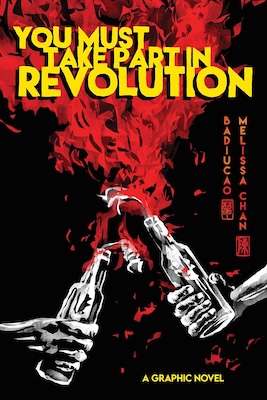
My co-author Chinese activist artist Badiucao and I set out working on our debut graphic novel, You Must Take Part in Revolution, in part because we wanted to sound alarm bells about this. Our story is about a near-future war between a fascist U.S. and techno-authoritarian China. Taiwan is divided in half along a DMZ, and there is also a nuclear threat. Both of us once lived and worked in China. I’ve also reported from Russia, Cuba, and North Korea. We felt an urgency to go beyond the scope of our usual work, Badiucao with his political cartooning and I with my human rights reporting, to reach a wider audience.
In this reading list, these graphic novels use text and illustration to examine the rise of authoritarianism in several countries, highlighting the subtle and insidious ways that democracy crumbles. We live in frightening times. If there’s a through line across the books on this list, it is that resistance comes at great personal cost—but the consequences of failing to fight back are even greater.
From the author ofPersepolis—one of the most important graphic novels of the past 20 years—comes Woman, Life, Freedom. This new collection delves into the 2022 pro-democracy protests sparked by Mahsa Amini’s death in police custody for allegedly not wearing her hijab correctly. Produced in collaboration with Iranian activists, artists, journalists, and scholars, the book offers a primer on contemporary Iran, with chapters drawn by different artists, touching on everything from contemporary state surveillance to heartache and loss.
Artist Brian “Box” Brown’s aesthetic matches well with the Soviet-era Brutalism into which Vladimir Putin was born. That’s where author Andrew S. Weiss starts — from the very beginning, examining Putin’s childhood, to his relatively middling years as a KGB officer, all the way to his unlikely rise to absolute power. In retelling his journey, the book also provides insight into contemporary Russia, particularly when it comes to connecting the vigilante decade of the 1990s when the economy collapsed, to why most ordinary citizens continue to support Putin’s strongman leadership today.
You may not recognize the author’s name, but you’ve almost certainly have come across his art. Edel Rodriguez—a stalwart of the graphic arts community—shot to global fame during Trump’s presidency with searing imagery: the president as a terrorist beheading the Statue of Liberty, as a Klansman in a white hood. His bold, unflinching work landed on the covers of Time and Der Spiegel, cementing his place as one of the most incisive political artists of our time. In Worm: A Cuban American Odyssey, Rodriguez shifts styles but loses none of his power, turning his gaze inward to tell the gripping story of his childhood in Cuba and his escape to Florida during the 1980 Mariel boatlift.
Berlin captures one of the freest periods in the city’s history — and also one of its most foreboding: the Weimar Republic of the late 1920s and early 1930s. Jason Lutes spent 20 years crafting his story, balancing historical precision with captivating characters fighting to hold on as the rot of Nazism seeps into society. He takes readers from the wild nightclubs and private salons to the quiet huddle of Communist recruitment meetings. It’s a massive opus at almost 600 pages——one worthy of a city as complex and beloved as Berlin itself.
The Death of Stalin, made into the 2017 Armando Iannucci film of the same name, is political satire at its finest. The story focuses on the power struggle following the death of the Soviet leader in 1953. The book’s scenes may be too absurd to have been historically factual, but they nevertheless hit at fundamental truths of Politburo politics — dynamics which remain relevant today for Putin in his palace. Succession is a messy business of scheming and backstabbing, and Nury’s graphic novel is a preview of the bloody infighting we might expect to see when any despot dies.
Orwell’s masterpiece and final book of his lifetime is the story of Winston Smith, who serves the Ministry of Truth by manufacturing its lies. As he toys with joining the resistance, Smith will learn that Big Brother is always watching… The graphic novel version of the George Orwell classic is part of a trend in recent years of comics adaptations of classic dystopian literature. There are also graphical versions of Aldous Huxley’s Brave New World and Margaret Atwood’s The Handmaid’s Tale. Fido Nesti’s artwork here, especially his palette choice of ombre grays and crepuscular reds, is an excellent way to revisit the novel, or read it for the first time.
Alan Moore and David Lloyd’s classic is set in a post-nuclear and totalitarian London. After a global war leaves the U.K. in a political vacuum, far-right extremists take power. The diverse capital is cleaned out, with ethnic minorities and queer people shipped off to concentration camps. The book’s cultural impact is undeniable. Thirty years after publication, Hong Kongers in 2019 donned the book’s signature Guy Fawkes masks as they protested against the Chinese government’s authoritarian-totalitarian control over the city-state. The same maniacal smile has become the symbol of Anonymous, the online hacktivist collective. Around the world, life continues to imitate art as new generations draw inspiration from V’s anarchist revolution.
It would be malpractice for any book list on authoritarianism to leave out Art Spiegelman’s Maus, possibly the best-known graphic novel in the world. It was the first one in the genre to win the Pulitzer Prize, in 1992, and has become a staple of high school curricula. Spiegelman takes the dehumanizing verbiage used by fascists to describe minorities and redeploys it, drawing Jews as mice and Nazis as menacing cats. The story itself examines what happens to the author’s father, a Holocaust survivor — from the pre-war years to liberation from the concentration camps — plus the subsequent intergenerational trauma as Spiegelman grapples with the difficult relationship he has with father.
Spanning countries as far and wide as South Korea, Colombia, and Denmark—and including both emerging and acclaimed authors—the year is off to an exceptionally strong start. From the latest novel by Nobel Prize winner Han Kang to the outlandish fiction of Sayaka Murata and unapologetic new voices like Asta Olivia Nordenhof and Hon Lai Chu, these 2025 titles promise to confront the established order, speculate about potential futures, and resonate across borders.
South Korea
We Do Not Part by Han Kang, translated from the Korean by e. yaewon and Paige Aniyah Morris
Nobel Prize and Booker International winner Han Kang, best known for Human Acts and The Vegetarian—returns with We Do Not Part, a novel steeped in her signature themes of memory, violence, and the fragility of existence. We follow Kyungha, an author who, asked by an ailing friend to travel to the southern isle of Jeju to care for her pet bird while the friend recovers, embarks on a journey that proves both physically and mentally taxing. Complex in form and deeply introspective, We Do Not Part delves into a largely forgotten part of South Korea’s painful past. Kang’s prose is sparse yet lyrical, creating an interior world where emotions take physical form, blurring the line between dream and reality—and offering a chilling call for remembrance.
Colombia
Río Muerto by Ricardo Silva Romero, translated from the Spanish by Victor Meadowcroft
Set in the forgotten village of Belén del Chamí, somewhere in Colombia, and told from the perspective of the ghost of a mute man, Salomón Palacios, Río Muerto is the story of a forgotten village living at the mercy of Colombia’s dark underbelly. The novel begins after the murder of the mute man, as his wife, Hipólita, is driven to madness and decides to confront the paramilitaries and politicians she holds responsible for her husband’s death. Refusing to go in peace until he knows his family is safe, Salomón gives voice to the voiceless, telling a story of collective trauma and personal resilience. In less than 200 pages, Ricardo Silva Romero grapples with the ripple effects of societal upheaval and state violence, in what is described as both an intimate and politically charged portrayal of Colombian village life.
Denmark
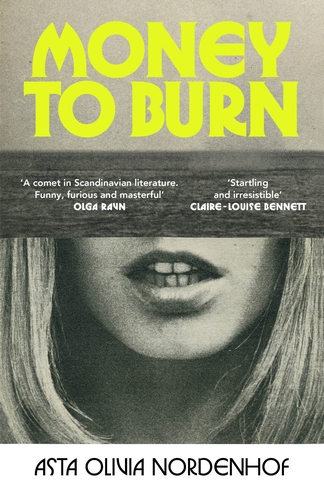
Money to Burn by Asta Olivia Nordenhof, translated from the Danish by Caroline Waight
The first book in the Scandinavian Star series—named after the 1990 Scandinavian Star ferry fire, killing 159 people as part of an insurance scam—Money To Burn is an incendiary novel that follows empty-nesters Maggie and Kurt, who are struggling to keep their marriage afloat. At one time poor but deeply in love, the couple now finds themselves comfortably settled yet deeply unhappy. Exploring the brutality of capitalism through the lens of Maggie and Kurt’s relationship—who may or may not be connected to the Scandinavian Star incident—Nordenhof weaves a civic satire about how to love and care for each other in a society that demands constant productivity. The sequel is set to be published in September.
South Korea
Snowy Day and Other Stories by Lee Chang-dong, translated from the Korean by Yoosup Chang and Heinz Insu Fenkl
In his first collection of short stories published in English, Lee Chang-dong, one of South Korea’s most celebrated filmmakers and literary figures (best known for movies such as Burning and Poetry) explores domestic tensions, existential crises, betrayal, and injustice. Originally written in the 1980s—a time of great political unrest and military rule—the stories in Snowy Day touch on various aspects of South Korean life, both on the individual and collective scale. From the title story, based on Lee’s own time serving in the military, where the class divide between a university-educated private and working-class corporal ultimately has tragic consequences, to the novella “A Lamp in the Sky” wherein a woman gets brutally interrogated by the police, this collection offers an exploration of guilt and innocence, underpinned by loneliness and longing.
Japan
Hunchback by Saou Ichikawa, translated by Polly Barton
Winner of the 2023 Akutagawa Prize, Saou Ichikawa’s Hunchback takes place in a care home and follows protagonist Shaka Isawa, whose physical differences—due to a congenital muscle disorder—keeps her wheelchair bound and shapes her sense of self, not to mention how the world perceives her. Spending most of her time online, studying, tweeting, and writing outrageous erotica, she one day makes an indecent proposal to her male carer, setting off a chain of events that are at once unsettling and funny. Hunchback promises a psychological exploration of desire, deformity, and the gaze of others, ultimately asking who is allowed to express their sexuality, and how—and inviting readers into a space where the body is at once a burden and a source of power.
Argentina
The Unworthy by Agustina Bazterrica, translated from the Spanish by Sarah Moses
Following the unsettling dystopian horror of Tender Is the Flesh, Agustina Bazterrica returns with The Unworthy, a novel that once again examines violence, hierarchy, and survival. This time, Bazterrica shifts her gaze toward a cataclysmic world where the very air could kill. To find shelter, a group of women have turned to the House of the Sacred Sisterhood: a brutal religious order run with an iron fist by Mother Superior, who herself only answers to a mysterious entity referred to as ‘Him’. In a series of letters, the protagonist recounts ceremonies, events, and nightly discoveries as Bazterrica touches on climate disaster, religious fanaticism, and, in the midst of all the darkness, the potential power of friendship. Gory and grotesque, this may not be for the faint of heart but for those who wish to delve deeper into the dark recesses of human nature.
Hong Kong
Mending Bodies by Hon Lai Chu, translated from the Chinese by Jacqueline Leung
Originally published in 2010, Mending Bodies is a surrealist novel about a young woman squaring up against the forces of late capitalism, about bodily autonomy, and about what it might mean to be ‘free’. Set in a near-future dystopian city reminiscent of Hong Kong, a new law called the Conjoinment Act incentivizes men and women to physically stitch their bodies together once they come of age. As our protagonist—a student researching the history of the Conjoinment program—heads towards graduation, she starts to suffer from insomnia and attempts to resist her own joining. In doing so, she must confront forces in society, both bureaucratic and familial, urging her to conform.
Japan
Vanishing World by Sayaka Murata, translated by Ginny Tapley Takemori
Sayaka Murata—the author behind Convenience Store Woman and Earthlings—returns with Vanishing World, another unsettling vision of a not-so-distant dystopian future. In a world where everyone is conceived through artificial insemination, Amane is not like everyone else. The product of a love marriage and born to parents who had sex to procreate, Amane does her best to fit in. So when she and her husband hear about an experimental society where residents—including men—are selected at random for artificial insemination, where children are raised collectively, and where the family unit does not exist, they decide to give it a go. With Murata’s signature deadpan prose and bizarre takes, Vanishing World delves into themes of erasure, identity, and belonging.
A runaway bestseller in Sweden and reminiscent of Fredrik Backman’s A Man Called Ove, Lisa Ridzén’s When the Cranes Fly South is an elegy to the passing of time. Set against Sweden’s stark northern landscape, the novel follows Bo, an elderly man drifting in and out of a restless sleep as his care givers come and go. With his wife at a home for dementia, Bo takes comfort in his trusty companion, the Swedish elkhound Sixten, weekly phone calls with his long-time friend Ture, and the occasional visit from his son and granddaughter. But Bo is not happy with his son, who is trying to take Sixten away from him. In a more somber tone than that of Backman, Ridzen’s debut novel explores old age, regret, and how to live your last years with dignity when all you have left is time—something you will still never have enough of.
Following her acclaimed novel When I Sing, Mountains Dance, Irene Solá’s I Gave You Eyes and You Looked Towards Darkness is a novel set high up in the remote Catalonian mountains. As an impossibly old woman lies on her deathbed, all the women who have lived and died in the house before her wait for her to join them. Through this ensemble, Solá begins to unspool 400 years worth of history, rooted in the landscape and in folklore. Expect poetic prose, shifting perspectives, and an intricate interplay between myth and reality from one of Catalonia’s most prominent contemporary authors.
“Where do we go to find the myths that make us?” asks Patrycja Humienik in her debut poetry collection, We Contain Landscapes. This question, explored in Humienik’s crystalline voice that wields imagery with sensuality and aching precision, takes her readers to the mouth of a river, to letters exchanged with immigrant daughters, and to the gaps in memory that migration leaves behind.
The speaker of We Contain Landscapesis “unbearably present. Permeable to the world,” as she interrogates familial inheritance, place, and beauty itself with devotion and candor. Ultimately, these questions about belonging and desire prove to be unanswerable; yet there is something sacred in the asking, and this is the space where Humienik’s poems urge us to linger: curious, attentive, questioning.
In the epistolary spirit, Patrycja Humienik and I corresponded via letter over the course of a few months about rivers, surrendering to desire, and writing as a collaboration with time.
Ally Ang: The “Letter to Another Immigrant Daughter” poems were among my favorites in the book, in part because of the tenderness & intimacy between the speaker and the various addressees, and in part because of how these exchanges give the speaker an opportunity to ask questions of memory and intergenerational loss that resonate deeply with me as the child of an immigrant. Your note says that this series grew out of an epistolary exchange with the poet Sarah Ghazal Ali; can you share more about how the series began, and can you speak to the role that community with other immigrant daughters has played in the making of this book?
Patrycja Humienik: Sarah and my epistolary exchange began back in May 2021, before we’d even met in person, after taking a virtual class together with Leila Chatti. I was, and remain, compelled by Sarah’s attentiveness to image and sound. Via a flurry of texts and voice notes, we bonded over shared grappling with questions of lineage, inherited faith traditions, omission in immigrant family stories, and the limits and possibility of the lyric.
Relationships with other immigrant daughters have been crucial to making this book. Reaching intragenerationally gave me the space to articulate questions, longings, that I have been unable to pose intergenerationally. While I’ve been grateful to think together about daughterhood, my writing and life are nourished by relationships with children of immigrants across gender. The epistolary impulse throughout the book is aspirational, too—I want to be in conversation with my beloveds for years to come, beyond this first book.
AA: The most striking recurring image in WCL is the river, which appears both literally & metaphorically, transgressing borders, evading possession, carrying life through the land. In the call for submissions for The Seventh Wave anthology “On Rivers” that you edited, you write, “I return again and again to rivers, real and imagined.” What role have rivers played in your life & in shaping your poetics? Did you always intend for rivers to be an anchoring image in this collection, or did that develop organically?
PH: Rivers are a heartbeat of WCL, and core to my preoccupations and obsessions as a writer and artist beyond this first book. I didn’t plan anchoring images for the book—I find I cannot write that way. My love of rivers, though, is eternal. It’s impossible for me to look at or be near a river and not think of both the self and the collective, of interiority and ecosystems. Rivers at once ground and destabilize any questions about time, movement, possession, scale, and interiority. To me, the river is the site of our most fundamental questions about being alive. I mean this both materially and metaphysically. Those veins of the earth hold, and reshape, memory.
AA: Can you take us through the evolution of WCL from chapbook (or maybe even pre-chapbook) to full length? What has grown in your thinking and/or in the poems throughout this journey?
PH: I thought for a while that the we contain landscapes chapbook was a separate project from my first book, initially titled Anchor Baby. Prior to the chapbook was a tiny minichap project that Ross White at Bull City printed a lovely very limited edition run of in 2019. I could only seem to write in fragments back then—I refused the sentence, punctuation, the “I.” That distrust of the lyric “I,” a reckoning with it, can be worthwhile. But for me, it was also a kind of self-censorship. Was it also a distrust of myself? I started writing into that. We Contain Landscapes engages with those questions, including the idea of self-deceit—the ways a person can attempt to hide parts of themselves away, and the cost of that.
AA: I’m interested in the speaker of WCL’s fraught relationship with beauty. While the speaker revels in wonder at the beauty and pleasure that she witnesses in her body, the natural world, and her friends & lovers, she is also distrustful of it. In “Recurring,” you write, “beauty exists with no regard for goodness or the living, / and if I’m inside, even if I cannot see that weather, / I can feel it, eroding the floorboards, disintegrating / reason, ceaseless. It has an appetite,” and you’ve also explored the connection between beauty as regime and immigrant daughterhood in more depth in your essay “Unlearning My Immigrant Mother’s Ideas of Beauty” for Catapult. Could you speak to how you pursue beauty through language & devotion in your poems while also remaining critical of the ways that beauty has been used as a tool of discipline and subjugation?
PH: There’s a passage in Mahmoud Darwish’s long poem “Mural,” translated by Berger and Hammami, that reads: “Beauty takes me to the beautiful / and I love your love, freed from itself and its signs.”
Whether I like it or not, I’m a romantic and a lover. I am moved by the sensuous, by beauty. I am drawn to texture, color, and shape, and am suspicious of my relationship to the visual, to beauty that remains surface-level. But beauty, much like the poet’s understanding of the image, is not just visual but felt. Even mirage alone is indicative of desire. Despite desire’s deceptions, or perhaps our mistranslations of it, it is a life force. Like many writers, I surrender to that force, am endlessly moved and troubled by it. What one finds beautiful can be the source of our deepest pleasures and even self-knowledge. Of course, that can also be a mere product of our conditioning, what we’ve been disciplined into. I do not claim to be free of all kinds of troubling influences, including heteronormativity’s boring expectations—the limits unimaginatively drawn around our lives. The idea of beauty can be, as you articulate, a regime, weaponized as a mechanism of control, subjugation, the thoughtless consumerism that wreaks havoc on our planet.
As suspicious as I am of beauty, including lyric poetry and its limits, I relish the music of language. I need beauty to survive. And I believe in the beauty that touches all senses, and reaches beyond—for that part of us poets have been writing toward for centuries.
AA: Something I admire about your poetry is how it resists the didactic and avoids neat conclusions and overdetermined endings. The speaker of WCL reaches, searches, questions, but rarely seems to find answers. How do you see the connections between poetry, questioning, and discovery? Does poetry help you find answers, as a reader or as a writer?
PH: I’ve lived long enough to be wrong many times. Poetry is capacious enough for that.
AA: In addition to being a poet, you are also a dancer and performance artist. This gives you a particular attention to embodiment that feels present throughout the book but especially in “On Chronic Conditions,” where you write “It wasn’t just that I knew the names of body parts—I spoke to them. / I said things I can’t explain.” How does that attunement to your body & embodiment that you developed as a dancer show up in your poems? How do you view the relationship between dance and poetry?
PH: Dance was one of my first loves, and dance and poetry are modes of inquiry I cannot exhaust. At their best, both art forms offer ways of moving through, looking at, and engaging with the world that center question-asking and curiosity. Being curious about our own thoughts and bodies as sites of learning and unlearning takes ongoing practice. It also takes time. In this era of shortcuts and the illusion of urgency for the sake of maximizing profit—at costs we cannot yet fully measure, costs I’m not sure can be overstated—art demands practice and attention of us.
To feel and think deeply are practices that can hurt us. It’s part of why I insist this work is relational—we need each other.
Attunement to one’s body, though, can be painful—just as attuning to one’s thinking can be. To feel and think deeply are practices that can hurt us. It’s part of why I insist this work is relational—we need each other. I love to learn alongside others willing to put up with my experiments in writing & movement workshops I teach. Documenting more of my embodied experiments is something I’m working on in the coming seasons, as well as writing about dance.
AA: In 2021, you had a column in The Rumpus titled “Before the First Book: A Roundtable Discussion,” where you interviewed different emerging poets about their creative dreams and first book projects. Now that your first book is entering the world, I wanted to ask you one of the questions that you asked in those interviews: Is there an idea about being a writer/artist that you used to believe and have come to let go of? Or, is there an idea about being a writer/artist you’ve come to believe more strongly? Specifically, through the process of making and publishing We Contain Landscapes.
PH: It was a delight interviewing poets for that series years back, all of whom now have books out in the world or forthcoming! The process of making We Contain Landscapes deepened my love of revision and the idea that writing is a collaboration with time. A younger me was impatient, even sometimes arrogant, about this, demanding my poems be “done” sooner. But poems refuse to be disciplined! If we are lucky, they write us.
When I first told people I was working on a comic about trauma, I sometimes got funny looks. I can’t be certain, but I think the correct translation of this type of body language would be something like this: “Why are you doing a comic about that? Aren’t comic books supposed to be silly, or surreal, or written for young adults?”
My book is called The Murder Next Door: A Graphic Memoir, and it concerns the murder of my next-door neighbor when I was a child, and the ways that this event has impacted me throughout my life. Working on this book involved drawing on certain memories that were painful to recall. At times I had to stop working, either to break down sobbing, or to just stare at the wall in numb silence.
I sometimes joke that the process was healing, since it allowed me transform trauma into boredom, thanks to the long hours and tedious work that is involved in any work of graphic literature. But truthfully it did provide me with a lot of time to think about my memories, and what it means to both draw and write about trauma.
The skeptical reactions that my friends had to my chosen topic is understandable, but a little misplaced. The list of graphic novels about trauma is a long and distinguished one—in fact, trauma might be one of the core subjects of this type of literature! Here’s why:
Our minds encode traumatic experiences as images, but they may not always be the most coherent images. A survivor may recall only flashes of imagery, appearing out of order, shorn of context. I believe this happens because the mind wants to etch the experience into our consciousness in indelible ink (so that we can avoid danger in the future), while also scrambling the information, to protect us from overwhelming anxiety.
And this is where comics are so ideal. When you, as a reader, pick up a comic book or graphic novel, you’re encountering a collection of images—hundreds of frames, sometimes confusing or chaotic. As you read, in your mind’s eye these images are threaded together, woven into a new meaning, and assembled into a coherent narrative.
This process mirrors what the mind does, or needs to do, to manage traumatic memories! So, I believe that comics are a natural forum for addressing trauma, because of the way they mirror our minds’ process of encoding and re-encoding memory. The comic artist Seth called comics “memory machines.” And it is memory that is the most needed, but sometimes the most fugitive, when something terrible happens.
Below is a list of powerful graphic novels that address trauma. I highly recommend all of them.
This book, by an absolute master of the comics medium, depicts what I might call “ordinary trauma.” A person need not be a victim of some spectacular violent crime to experience trauma; sometimes, all it takes is being born as a person of color in a racist society. Or, too, being born into a family of addicts, in a society that profits from addiction.
In this book, Jim Terry beautifully describes growing up as an indigenous person, evoking his family life with love, tenderness, and raw anger. As a child, he is exposed to racism from the very start, while also suffering the indifference and sometimes hostility of adults. Addiction is part of the fabric of this life, and he faces its effects — and the process of overcoming it — with heartbreaking honesty.
Did I mention that Terry is a master of this art form? Pick up this book to see what the language of comics can do in the hands of someone who has true control of his brush, who loves language and pictures, and who knows how to make black and white lines come alive.
This book is another example of “ordinary trauma.” As a child, young David has a comfortable home life in France, and he is lucky enough to possess a precocious talent for art. But his childhood is plagued by the turmoil and turbulence of his brother’s epilepsy, which can turn an ordinary day into a nightmare of violent seizures and tedious hospital visits. He is faced with dueling feelings that would confuse and
trouble any child or adult: love for his brother, as well as resentment at the way his brother’s ailments can deprive David of love and attention he also deserves.
The artwork in this book is inspiring, and entirely unique. Images are drawn with a confident hand, using a heavy black line that can sometimes describe incredible detail, and sometimes allow for pure simplicity. At times, the images spill and spin across the page, with a dreamlike effect. There are very few books that evoke the inner lives of children with so much honesty. (Note: this book is a few decades old, and may be difficult to find in some comic shops, but is easily found online.)
One trauma that is all too common in our world is the trauma of dislocation experienced by immigrants and refugees. Thi Bui and her family immigrated from Vietnam to the US, in the 1970s, following that terrible war. This book is the result of her efforts to reconstruct her family’s history from her own memories and the memories of her parents.
The Best We Could Do beautifully depicts intergenerational trauma. As her parents describe the many different forms of oppression and colonization the Vietnamese people have suffered over the decades and centuries, you can see how suffering is passed down from generation to generation, but also the ways that love and hope are shared as well.
I’m a bit hesitant to list this book because of its fame and status. For many people, this is the only graphic novel they have ever read. It is probably the first graphic novel to gain mainstream literary acceptance in this country. That said, there are still far too many people who have never read it, or never heard of it, and don’t know what they are missing! I’ll suggest this book for those readers, since it really is essential reading for anyone who cares about the ways that people survive history.
Spiegelman describes in painstaking detail the struggles of his Jewish parents in Poland under Nazi rule. The suffering they endure is immense, and the author gives us an up-close view of how their lives were upended, their communities and families destroyed, and how they managed to survive. But he is equally honest, and equally detailed, in describing the ongoing suffering that he endured, as a relatively privileged child of two survivors, growing up in America. He uses tiny pictures to show his readers how trauma never really goes away. It remains in our minds, in our families and homes, waiting to be uncovered, offering us lessons, if only we can begin to listen.
I was given this book by a mentor who suggested I might find it interesting, since the themes of this book were so similar to my own. They were right! Trembley tells the story of her encounter with a dead body in the course of an ordinary day, and the immense impact this experience had on her. Just as I described earlier, the encounter left her with fractured images, flashes of memory, that she later worked to thread together into a coherent narrative. In describing the experience, she tells the story several times, each time with a slightly different emphasis, or slightly different details. The meaning shifts, and becomes richer, but doesn’t really change. And this is so much what it’s like to face a traumatic experience: it has to be peeled back, layer by layer, like an onion, to uncover the meaning, and to find the narrative. This is a wonderful book, and very well informed by the latest psychological theories of trauma.
Although this book is fictional, it closely tracks with Gloeckner’s autobiographical comic work, collected in another book titled “A Child’s Life.” It tells the story of Minnie, a young girl growing up in San Francisco in the 1970s—experiencing sexual abuse by her stepfather, drug use, and prostitution. The story is told with a combination of comics pages, diary entries, and illustration, and it showcases the cartooning talents of a person who has been drawing comics since childhood, and who also works as a professional illustrator of medical textbooks. One thing this book addresses is the ambivalence a victim can sometimes feel towards their abuser. Minnie’s stepfather is portrayed as a creep and a predator, but we see that Minnie’s emotional response is complex: she’s angry and hurt by the abuse, but by the end of the book, we see her taking back some of her power. And in her final encounter with her stepfather, we see that see feels some pity and disdain for him. This book may be fiction, but it holds a lot of truth.
If I’m right that trauma is often experienced as random flashes of imagery, and that comics as a medium can sometimes mirror the process of recovery, by showing us how the mind can create coherence out of disconnected images, well then, this book is a prime example.
The trauma in the case of this author’s experience is multiple: there is the trauma of the child suffering dislocation through immigration; the trauma of the “outsider”; there is the trauma of addiction; of an eating disorder; and finally there is the trauma of sexual abuse. This book describes it all, with brutal honesty and stunning artwork.
It’s a tribute to the author’s abilities that we know it’s coming, even before the truth arrives. There’s a dread, an anxiety, that she communicates perfectly. The suffering she describes is real, but so is the empathy that we, as her readers, feel for her.
DON’T MISS OUT
Sign up for our newsletter to get submission announcements and stay on top of our best work.
YOUR INBOX IS LIT
Enjoy strange, diverting work from The Commuter on Mondays, absorbing fiction from Recommended Reading on Wednesdays, and a roundup of our best work of the week on Fridays. Personalize your subscription preferences here.