The 13 Most Terrifying Apocalypses in Literature

Is there any such thing as a pleasant apocalypse? Probably not, although the cozy catastrophes of post-World War II seem to suggest that a global cataclysm might do the world a favor by wiping clean the slate, enabling the “right sort” of people to reclaim it.

There’s no shortage of dystopian and post-apocalyptic literature out there — over 3,000 novels deal with nuclear aftermath alone. In my debut novel, Lotus Blue (Talos, 2017), I envisioned a future ruined through corporate greed, careless governance and unregulated technological experimentation, a logical extrapolation of climate change denialism coupled with military applications of artificial intelligence and autonomous weapons systems. Dune was the novel that initially inspired me, but what I ended up with is more along the lines of Fury Road.

End-of-the-world scenarios leave us wondering who or what we might become, and if our species might end up getting precisely what it deserves.

From Capitalism to Underpopulation, here are the top 13 horrible apocalypses that make people question their faith in humankind.
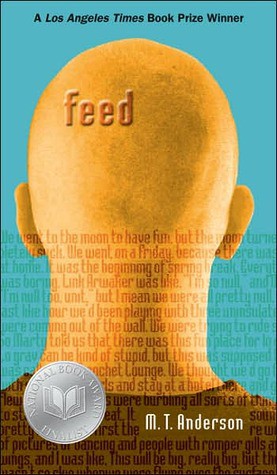
Capitalism: Feed by M. T. Anderson

Protagonist Titus isn’t a bad guy, really, he simply possesses no mechanisms for thinking for himself. This YA novel interbreeds neoliberal capitalist consumerism and social media, pushing them to their logical conclusions and farthest extremes — what happens when all the shouty infomercial advertainment chitter chatter lives permanently inside our skulls? The answer is, of course, varying degrees of nothing good. The apocalypse will be digital…
Cannibalism: The Road by Cormac McCarthy

A man and his young son travel the frozen roads of North America, heading south towards the ocean and whatever hope it might provide. Why the father, as an expression of his undeniable love, doesn’t put a bullet in the boy’s head early on to spare him from the lingering horrors of a barren, resource depleted ash and dust encrusted wasteland replete with murderous, marauding cannibal gangs, we will never know. All the love left in this world will never be enough. Despite the many rough-road tales to come before it, The Road still manages to emotionally bludgeon readers with a couple of specific scenes. If you’ve read the book or seen the movie, you’ll know.
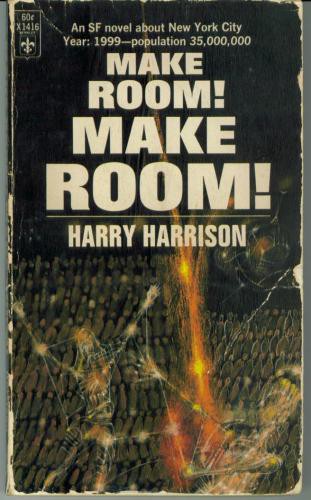
Overpopulation: Make Room! Make Room! by Harry Harrison

Human overpopulation was one of the chief concerns of science fiction’s ecocatastrophe writers of the 60s and 70s. Even if you haven’t seen the film, you’ve likely heard the catchphrase: Soylent Green is people! The novel contains no mention whatsoever of cannibalism via humans recycled as luridly colored protein bars but it is more stifling and relentlessly claustrophobic than the movie, with its utter lack of spectacle or punch line. Just more and more people scrambling for crumbs, squeezed into less and less space.

Underpopulation: The Children of Men by P.D. James

The novel interrogates the shapelessness of existence once all human fertility has ceased and cities increasingly become peaceful repositories of the docile aging. Despite resources aplenty, the Warden of Britain encourages atrocities against foreign workers, the feeble aged and troublemakers in general, running the country as his own private fiefdom.

Alfonso Cuarón’s 2006 movie is arguably more visceral, chilling and sophisticated than the book, focusing on acts of government brutality rather than the protagonist’s inner turmoil — it is impossible not to draw parallels to harsh contemporary world treatment of refugees. If Children of Men is a cautionary tale, then we clearly missed the message.

Biopunk: Oryx and Crake by Margaret Atwood

Wrapped in a decaying bedsheet, Jimmy, aka Snowman (as in, abominable), picks through the ruins of society, worshipped by genetically engineered Crakers, a designer humanoid species with lurid blue genitals, no smarter than they need to be. They’re set to inherit a nightmarish anti-Eden crawling with monstrous biological blends such as rakunks, pigoons, wolvogs, snats and ChickieNobs, animals recklessly engineered for their commercial usefulness back before a deliberate pandemic wiped out most of the human race. Which pretty much had it coming.

Ecological: The Death of Grass by John Christopher

Many kids loved Christopher’s Tripods novels: The White Mountains, The City of Gold and Lead, and The Pool of Fire, where the kids get to fight back against alien invaders. Written for adults a decade earlier, The Death of Grass portrays self-centered human survivalism at its most despicable: a convoy of London refugees enacting across two days an analogy for the fall of civilization, committing whatever violent acts they deem necessary to reach John’s brother’s farm, deciding their own survival is all that matters.
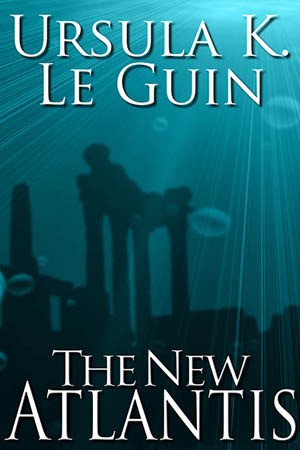
Climate Change: The New Atlantis by Ursula le Guin

Belle’s husband Simon, newly released from labor camp, meets in secret with their scientist cohorts to discuss their solar battery that could solve the world’s energy crisis. They know it’s hopeless but they continue anyway, because that’s the essence of who they are. The most depressing element of this story is not its horrendous, unholy blend of neoliberal capitalism and totalitarian collectivism governance, but the fact of how casually polar ice melt, rising oceans and other realities of climate change are mentioned in passing as a backdrop to the narrative. This story was published in 1975 by one of speculative fiction’s greatest voices, and yet, here we are today.

Available to read free at Lightspeed.

Fundamentalism: The Orchid Nursery by Louise Katz

Mica and Pearl are girlies, raised and schooled in the virtues of CHOM: compliance, humility, obedience and modesty; palliation vehicles for the desires of Men. The luckiest among them will be selected as womanidols, living out their allotted time in perpetual and glorious sacrifice in the Orchid Nursery. You really don’t want to know what that entails. It is not the first SF novel to tackle the brutalism of enforced female purity, but the one that leaves the worst taste in your mouth. Religious fundamentalist sexism taken to its farthest and most hideous extreme.

Post Peak Oil: The Drowned Cities by Paolo Bacigalupi

Young orphaned Mahlia assists kind-hearted Dr. Mahfouz, despite having had her right hand hacked off by Army of God soldiers. The jungle infested shattered ruins of Washington DC crawl with squabbling warlord factions, coywolvs, panthers and monstrous half-men bred from a DNA cocktail of tiger, dog and hyena. When Mahlia and fellow orphan Mouse discover a killer Augment named Tool half dead in a swamp, an unlikely partnership is formed.

One of those YA titles that seems too relentlessly horrible for its marketing category. Still, it’s a damn good read.
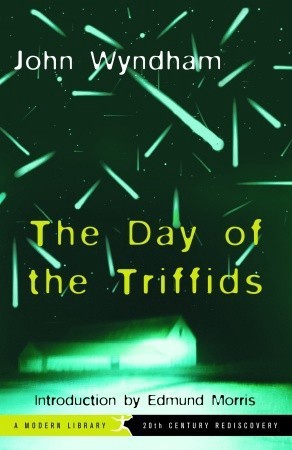
Disability: The Day of the Triffids by John Wyndham

Almost the entire population of the world is rendered blind overnight after witnessing a pyrotechnic meteor display, the result of an accidental weapons malfunction in orbit… If that weren’t bad enough, aggressive monster plants, triffids, the outcome of ingenious biological meddlings, roam the streets, attacking helpless humans.

The triffids are by no means the scariest aspect of this story, they are nothing compared to the abject horror of an entire world fallen blind and helpless. The few remaining sighted have the upper hand and the world is now their playground.
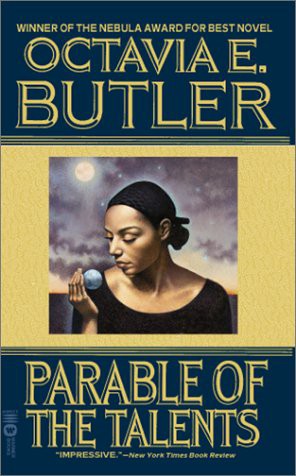
Demagogue: Parable of the Talents by Octavia Butler

It’s 2032 — a variety of wars are raging all around the climate change afflicted world, but the members of Acorn, led by Lauren Oya Olamina, have built a relatively secure, workable community. They follow Earthseed, a faith developed by Lauren on the road. But when far Christian right Senator Andrew Steele Jarret is elected as POTUS, promising to ‘Make America Great Again’ (sound familiar?), Acorn is destroyed and its people slave-collared with devices that deliver painful punishment at the whim of their controllers.

Parable gives the reader the experience via the power of literature of what it might actually feel like to be a slave. In a nutshell: furious and powerless.

Nuclear: A Boy and His Dog by Harlan Ellison

Vic is a solo, part of Our Gang, who run the local Metropole cinema, where men sit around jerking off to ultraviolence and beaverpicks in the ruined aftermath of the Third World War, which killed off most of the girls. Rovergangs run everything that matters aboveground: from power plant to reservoir to marijuana gardens. The middle-classers escaped to enclaves underground. The smart ones stay down there.

Vic’s best friend is a talking dog called Blood, who, as well as having taught Vic to read and write and correcting his gangland grammar, uses his enhanced psychic abilities to sniff out women for Vic to rape. Utterly charming. Especially the end.

And the award for most horrible apocalypse goes to…
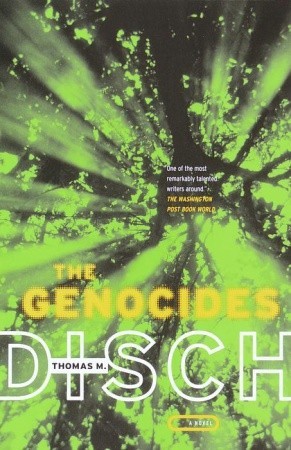
Aliens: The Genocides by Thomas M Disch

The Earth has become overrun with fast-growing alien plants, 600 feet tall with leaves the size of billboards. As arable farmland is consumed, the human population dwindles, from famine, violence or spherical alien incendiary devices, which eventually force survivors underground into the roots of the alien plants. Protagonist Buddy isn’t much of a hero. His pregnant wife is forced to survive on the food scraps he leaves in the pot.

Readers will find themselves rooting for the plants way before the humans start burrowing, because these nasty brutish stragglers are way past being worth saving. The cannibalism might be forgivable, but not their fierce, unreasoning Calvinist cruelty.

Bonus story: Disch also penned “Casablanca,” hands down the most disturbing short story about tourism gone wrong ever written.

Ted Wilson Reviews the World: Butter

★★★★★ (5 out of 5)

Hello, and welcome to my week-by-week review of the world. Today I am reviewing butter.

It surprised me to learn butter is made from milk, due to the contrast between milk’s grossness and butter’s deliciousness.

To make butter, first, a farmer has to squeeze a cow’s breast until milk shoots out and into a bucket. Then that farmer puts it into a butter churn and churns it about until it becomes butter. A simpler solution would be to go to the supermarket and just buy some butter. Then the farmer wouldn’t have to get up so early.

A lot of people will tell you to limit your butter consumption because it contains large quantities of fat, which can lead to health complications. Those are people who care more about rules than flavor. I am not such a person. I believe in breaking the rules even if that means risking heart failure. Some of the world’s most famous people have died of heart failure.

Anti-flavor opportunists created a butter substitute called I Can’t Believe It’s Not Butter. Only I can believe it’s not butter because it says so right on the package. They may as well have called it This Isn’t Butter But We Think You’re too Dumb to Tell Even Though We Just Said It’s Not Butter.

Then there’s something called margarine but honestly I have no idea what that is.

I love butter so much I will sometimes eat a stick of butter all by itself. If it’s hot out, I’ll drink the stick of butter. Butter goes with any food, from salad to steak. I dare you to put butter on something and not like it — even non-edible things. Sandpaper won’t feel good if you lick it, but put some butter on and it will at least taste good.

I guess what I’m saying is sometimes I’ll fill my bath with melted butter and bathe in it. And I know this is not a common practice but I feel like I shouldn’t be ashamed for being who I am. And no, I do not derive any sexual pleasure from a butterbath. But if I did, that would be fine though. We’re all just people on this crazy planet and as long as no one is getting hurt, so what? That’s what I told my plumber when he had to unclog my drain which had become filled with congealed butter. Turned out to be a pretty expensive fix. Next time I want to take a butter bath I’ll do it at a hotel.

BEST FEATURE: It floats.
WORST FEATURE: They confiscate it at the airport even if you have a note from your doctor explaining it’s for a medical condition.

Please join me next week when I’ll be reviewing smallpox.

Through the Desert Fog

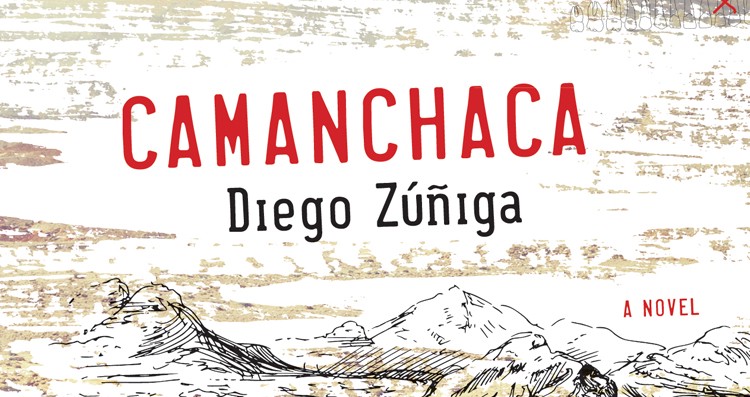
Camanchaca has one of the strongest novel openings I’ve read in years, a knockout vignette that disarms the reader with a few beats of unnecessarily specific detail, and then seamlessly shifts into fast and steady motion while glancing across a violent mystery all in just a quarter of a page:

My father’s first car was a 1971 Ford Fairlane, which my grandfather gave him when he turned fifteen.

His second was a 1985 Honda Accord, lead gray.

His third was a 1990 bmw 850i, navy blue, which he killed my Uncle Neno with.

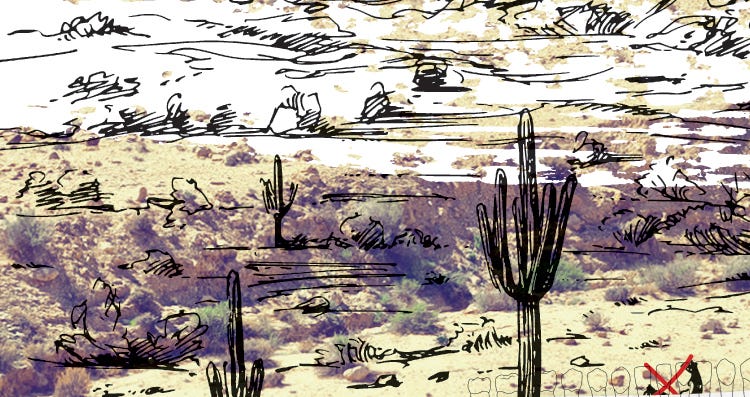
His fourth is a Ford Ranger, smoke colored, which we are driving across the Atacama Desert.

Diego Zúñiga’s book is constructed of crisp snapshots — 110 of them — that take place in locations in Buenos Aires and Santiago and small towns across Chile. Our narrator is an aspiring journalist, trying to understand and process the traumas of his fragmented family.

Though the narrator in Camanchaca is 20 years old, his social and emotional growth is stunted and he’s badly overweight. He’s dependent on one parent who’s unable to provide for him, and another who’s unwilling. They’re tragic monsters: his dad is a suave deadbeat who left when the narrator was four. His mom is lonely, obese, and desperate for human touch. While he seeks to uncover what happened to his Uncle Neno, our narrator captures his family in clipped recollections.

“We’d sit in the living room: two glasses of water, an ashtray, her cigarettes and lighter, the recorder, the microphone, and a radio,” the narrator says of a series of nights with his mom in their home in Santiago. She liked talking about her childhood, and is haunted by the memory of her mother packing a suitcase and leaving forever when she was just a girl. When telling stories, she often wanders off track or disappears into silence. The narrator nudges her back. He asks about the accident with Neno. “She looked at me and told me that someday she’d tell me the truth, but that for now, I wouldn’t be able to understand.”

Left throughout her life, the narrator’s mom has a crushing fear that he’ll leave her, too. When the narrator and his mom moved away from the father, they ended up in a private and oppressively co-dependent world. “When we came to Santiago we decided we would sleep together,” the narrator remembers. “Although, really, it was my mother who made the decision. She told me there was no money for gas, we couldn’t have a heater, and it would be best for us to sleep in the same bed, like when I was a kid and we still lived in Iquique.”

The narrator remembers points of high-uncertainty and pain in his life — at the age of four, ten, fourteen, etc. — but the most chronologically recent thread of the story takes place with the young man’s trip across the desert with his father’s new family. The trip is hazy and surreal, with vast stretches of nothing but sand and orange horizon. Then the narrator wakes up to streetlights he doesn’t recognize. “When I left Iquique, Alto Hospicio didn’t yet exist,” the narrator thinks. “There were five house in the middle of the desert, along with a couple of illegal garbage dumps. Now it’s a city, I think to myself, a city with lit streets.” Despite the narrator’s attempt to understand his world, it slowly but powerfully shifts beneath him.

Though the chronological jumps are frequent and the scenes are compact, Zúñiga deftly threads the storylines with evocative anchoring sensations. The dark deterioration of the son’s relationship with his mother, for example, is paired with the visceral decline of the family dog. One night the narrator and his mom hear her whining outside. The narrator says, “We went to the yard and there she was, thin, her cocker spaniel ears covered in dirt. She was lying in her house and crying. “I don’t know what to do,” said my mom.”

The narrator says, “Me either.”

Camanchaca is a fog that forms across the Atacama Desert along the Chilean coast. Though the actual weather-event doesn’t descend upon our characters until the final page of this novel, the sensation of the sprawling unknown hangs across each page, and Zúñiga lures the reader through with lucid, short-range glimpses of the surrounding world.

I’ve read this short, poetic book several times and I still don’t entirely understand what happened to Uncle Neno — there’s a series of infidelities with the mother and father. There’s a bad accident out on a desert stretch of road — but maybe it’s better that way; maybe it’s more representative of the fragmented way a person might inherit trauma.

Between each short burst of lyric storytelling, there are huge empty spaces. “At first my mother answered the way she always did, leaving loose ends, silences, the kind of things that seem so much a part of her life.” The narrator tells her she can’t do that — stop without explaining things fully. “She said she didn’t know how to do it any other way.”

Soundtrack for a Mysterious Separation

I never listen to music when I write, even purely instrumental music unleashes too many voices in my head.

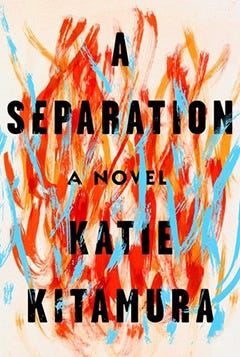
But I had music in mind while I was writing my most recent novel, perhaps because it’s a novel that relies on atmosphere more than plot. A Separation is about the disappearance of a man and the end of a marriage, but I tend to think of it as a love story. So here are a few love songs that were playing in my head as I was writing the book.

1. I Only Have Eyes For You — The Flamingos

Something about this song — maybe the tempo, leisurely to the point of narcotic — has a touch of darkness to it, an undercurrent of cynicism. Its thick swoon almost feels pointed in its proximity to stupor.

2. Smoke Gets in Your Eyes — The Platters

When I sat down to choose these songs, I thought about focusing on love songs about betrayal. But so many of the best love songs are already about bad faith and disillusionment. Here, the pastel-colored romance of the early verses gives way to stinging humiliation in a perfect lyrical turn.

3. Perfidia — Phyllis Dillon

I love the relentlessly upbeat tone of this song, which is so at odds with the actual lyrics. Dillon adds an inflection of heartbreak into every note she sings, even the ones in a major key. There’s also a version by Xavier Cugat, which Wong Kar-Wai used in Days of Being Wild — as well as In the Mood for Love and 2046.

4. I’m a victim of this song (Wicked Game) — Pipilotti Rist

Artist Pipilotti Rist’s cover of Chris Issak’s Wicked Game is total deranged perfection. She scream-sings her way through the lyrics in a way that has more or less obliterated the original from my memory; it might do the same for you.

5. Midnight, the Stars and You — Al Bowlly and Ray Noble

My novel is set in a hotel in Greece during the off season. This song was used at the end of Stanley Kubrick’s The Shining — the ultimate story set in a hotel during the off season, and also, inter alia, a movie about writing.

I’ve often found that I only really figure out what I’m writing about when I’m done writing. In the case of this particular book, it turned out that I was writing a book that was as much about grief as it was about marriage. In fact, most of the music that is actually referenced in the book is in one way or another about loss. Here are a few:

6. Prologue, Billy Budd — Benjamin Britten

By chance, I went to see a production of Billy Budd at the Brooklyn Academy of Music just as I was starting to write my novel. The opera’s themes of loss and ethical indeterminacy were central to the book I wanted to write, and a direct inspiration. In this unsettling prologue, the character of Captain Vere is wracked with guilt as he recalls his role in the death of Billy Budd.

7. Mirologi-Epirotiko Makedoniko — Elias Karathimos

Professional mourners — women who are paid to issue laments at funerals — feature heavily in my book. Why The Mountains Are Black is a compilation of Greek village music assembled by record collector and curator Christopher King. It provides the musical context for the phenomenon of the professional mourner. This particular track is a Macedonian mirologi, an instrumental version of one of these ancient laments.

8. Defixiones, Will and Testament — Diamanda Galás

Galas draws from this tradition of laments, as well as many others, to create her own tornado of grief — as in Defixiones, Will and Testament, a memorial to the victims of the Armenian genocide. The effect is majestic, unsettling, the work of a musical shaman and a virtuoso.

About the Author

Photo: © Martha Reta

Katie Kitamura is the author of the new novel, A Separation (Riverhead, 2017). Her previous novels are Gone to the Forest and The Longshot, both of which were finalists for the New York Public Library’s Young Lions Fiction Award. Kitamura has written for The New York Times, The Guardian, Granta, BOMB, Triple Canopy, and is a regular contributor to Frieze.

Benedict Cumberbatch Will Star in TV Adaptation of Edward St. Aubyn Novels

From Sherlock Holmes to Patrick Melrose.

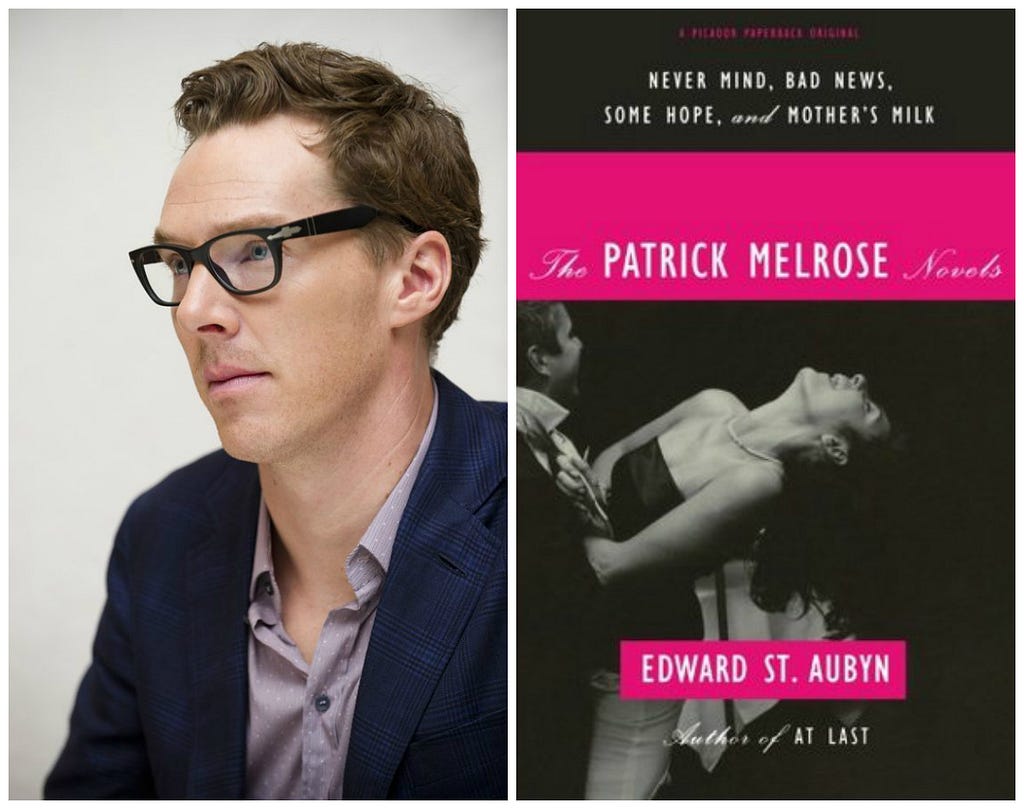
Benedict Cumberbatch is no stranger to literary adaptations, and now the star of Sherlock and Parade’s End is set to play the lead in Melrose, a five-part TV miniseries based on the Patrick Melrose novels by Edward St. Aubyn.

According to Deadline, the series, a Showtime-Sky Atlantic co-production, will be written by David Nicholls, the British novelist who has adapted books such as Far From the Madding Crowd and Great Expectations for the screen. Each episode will correspond to one of St. Aubyn’s five Melrose novels: Never Mind, Bad News, Some Hope, Mother’s Milk, and At Last .

St. Aubyn’s semi-autobiographical novels chronicle the tragic, dizzying life of Patrick Melrose, a boy raised in a blueblooded family that’s as emotionally bankrupt as it is historically affluent. Patrick’s story certainly has the potential to make for compelling television: a monstrously abusive father, infidelity, a life of heroin addiction and hotel rooms, all set in locales from the 60’s South of France to New York City in the 80’s. And Cumberbatch, perhaps more than any actor working, seems well-equipped to capture the Melrose world of decadence, high culture, wit and emotional torment. It’s apparently a role he’s been after for quite some time. In a 2013 Reddit Q&A, Cumberbatch said that if he could play any literary character, it would be Patrick Melrose. Filming is set to begin this summer, which should put the premiere on target for 2018. In the meantime, the literary Internet will patiently await…wait, huh? This is Cumberbatch! Bring out the memes…

The Obamas Sign Joint Book Deal Rumored to Be Worth 60 Million

The former president and former first lady signed a joint deal with Penguin Random House

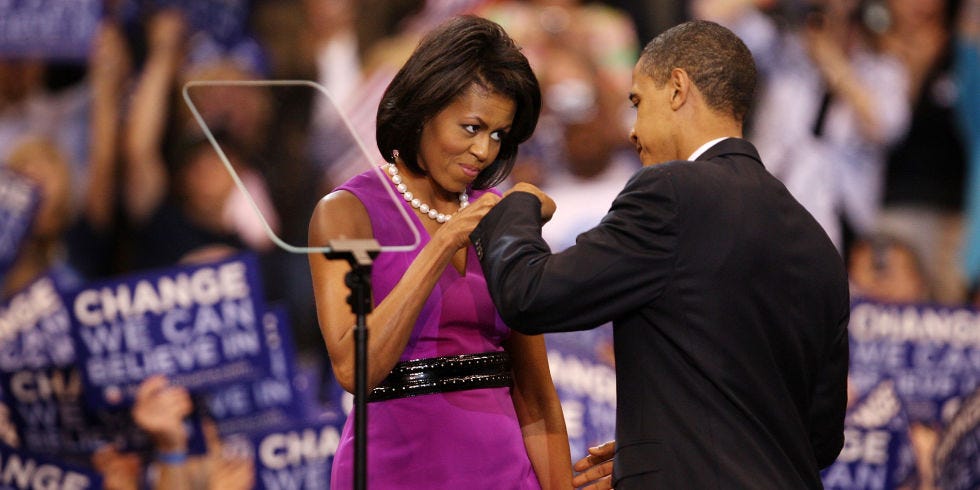
Last night, Penguin Random House announced that after a heated auction they had secured the rights to forthcoming books from both Barack and Michelle Obama. For the former President, this will be his fourth book following best selling memoirs Dreams of My Father and The Audacity of Hope, and a children’s book Of Thee I Sing. The former first lady published American Grown in 2012, which told the story of the White House Garden.

While the details of the deal have not been released, The New York Times reported “the opening offers for Mr. Obama’s book alone were in the $18 million to $20 million range.” The total is rumored to be about $60 million. If true, the sum significantly outpaces Bill Clinton’s and George W. Bush’s $10 million post-presidential memoir advances and Hilary Clinton’s $8 million sum for her 2003 memoir Living History.

The Obama’s plan to donate a portion of their advances to charities, including the Obama Foundation. Additionally, Penguin Random House will donate one million books in the Obama’s name to First Book, a literacy focused non-profit, and Open eBook, a partner of the White House Digital Education Initiative.

There has yet to be a definitive announcement about what subjects the books will cover — or what imprints they will appear on — however many hope Barack Obama’s text will draw from the journal he kept in office. The New York Times speculated, “his memoir could include behind-the-scenes moments that were captured as major events unfolded.” Considering the announcement came on the night of Donald Trump’s first address to congress, hopefully it will also include some less-than-subtle thoughts on the current administration.

Midweek Links from Around the Web (March 1st)

All the best literary links that are fit to, well, link

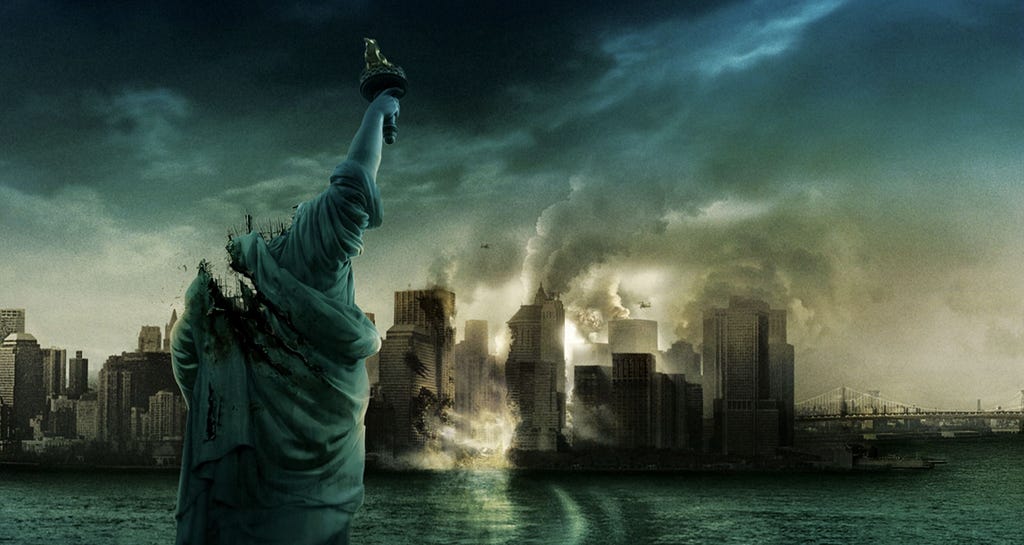
From the Cloverfield film poster

Our offices are in Manhattan, so we’re glad these five books about the collapse of New York City are fiction.

Over at BOMB, Sam Lipsyte talks to George Saunders:

SL You were talking about the label of the comic writer. I’ve always felt like all the writers I like could be called comic writers, and it just means that life is funny and tragic.
GS Serious writers are often just the ones suppressing the funny shit.

Depressingly timely: movie theaters are going to simulcast 1984.

Kate Zambreno talks about writing the impossible book:

I really love books that are kind of thin, but sort of heavy. Thin but incredibly intense. Books that seem like they took 10 years to write, but are almost like the notes for a book that is actually impossible.

Need a short story idea? Try our fiction prompts culled from the news.

Gardening lessons for frustrated writers:

When those first precious basil leaves sprouted, my first novel — which I had written in a prolonged state of panic, knowing I had absolutely no idea what I was doing — was in the process of being rejected by every agent and editor in New York whose contact information I could wrangle from the internet. I received literally hundreds of rejections. Mostly, they were form letters that I still read carefully for clues, as if upon the 35th reading I would discover some new information beyond what they plainly stated. None of the notes shape-shifted.

A new Zadie Smith short story in the New Yorker.

In between protests, don’t forget to make and think about art:

Cultural critique is in a tricky spot. Living as we do under an extremist government, it is hard to know what to do with criticism, or how to consume art that does not carry a big rubber stamp declaring it “political.” It’s hard to defend doing anything except being in the streets.

“The Thing Between Us” by Julie Buntin

“The Thing Between Us”

by Julie Buntin

Tell me what you can’t forget, and I’ll tell you who you are. I switch off my apartment light and she comes with the dark. The train’s eye widens in the tunnel and there she is on the tracks, blond hair swinging. One of our old songs starts playing and I lose myself right in the middle of the cereal aisle. Sometimes, late at night, when I’m fumbling with the key outside my apartment door, my eyes meet my reflection in the hallway mirror and I see her, waiting.

Marlena and I are in Ryder’s van. That morning, while he was still asleep, she stole the keys from the pocket of his jeans. The spring’s burst gloriously, stupidly into summer, and we’re wearing drugstore flip-flops, hair tacky with salt at the temples, breath all cigarettes and cherry lip gloss and yesterday’s wine. I kick my sandals off and unfold my legs on the dash, press my toes against the windshield the way I do when it’s just Marlena and me. Ryder says I’ve ruined his car, that the spots won’t rub off, but I don’t care. Marlena painted my nails, propping my foot on her thigh. High-alert orange — her color.

Our windows are rolled all the way down. The breeze loosens the hair from my ponytail, sends it in tangles across my face so that everything I see is broken. We’re on our way to the beach, for a normal day. For holding our breath underwater until our lungs beg. For the breath-stealing slap of a wave against our stomachs and sour, fizzy mouthfuls of beer stolen from unattended coolers. We’ll track the sun’s movement with the angles of our towels and pass the same two magazines back and forth until the light sinks into the water. When we leave, unburying our feet from cold sand, we’ll have sunburns, then fevers.

We’re pretending to be girls with minor secrets, listening to Joni Mitchell with the volume turned up. Every line is a message written just for us. I sing so loud Marlena can’t hear herself, tells me shh, tells me I’m making her brain hurt. But in this memory, I only sing louder.

Marlena puts pressure on the gas and the car climbs the big hill on the dead-end road that leads to the lake. The speedometer leaps — we pass fifty-five, the limit on country roads, and hit seventy within a minute. The car fills with wind, so pushy and loud my hair whips against my neck and I can’t hear the music anymore. My voice hitches and I swing my feet to the floor. I try to roll my window up but Marlena locks it from her side. When she looks at me, grinning, I feel the car edge over to the shoulder, tires spitting gravel. She swerves back into the lane and the speedometer quivers before it jumps past eighty-five. Marlena’s ponytail has fallen almost out, and I wonder whether she can see, if maybe she doesn’t realize that we’re up to ninety now, and that underneath the wind there’s a new smell, bitter and hot, the van’s organs burning. We go faster and faster. I giggle a little and tell her to slow down, and a few seconds later to slow the fuck down, and when she doesn’t answer I shout that she’s crazy and scaring me and I want to get out of the goddamn car and that we’re going to die, please, she’s going to fucking kill us. We hit a hundred miles per hour, zipping up another hill, the car thrumming. When we reach the top the tires lift off the pavement, and when we land I slam against the glove compartment, catching myself with my forearms. She doesn’t brake and I wrestle my seatbelt on. Lake Michigan, Caribbean blue and winking light, rears up in our faces. We’re half a mile or less from the drop-off, the parking lot, the path to the beach.

She’s not going to stop, and for a second I feel something foreign, a rage that’s equal parts hunger and fear. Do it, I think, do it, and my stomach’s in my throat but I’m so tired of being the one to say no, be careful, stop. “What if I just keep going?” she shouts. Later I realize she was probably very high, because that would have been around the time of the pharmaceutical bottle of Oxy, forties, pills that loom in my memory of her like an extra feature; her eyes, the scraggly tips of her unwashed hair.

Now the lake is bigger than the sky. After we go under, how long will it take me to kick out the passenger-side window, my flip-flops floating to the roof of the car, my body shrieking for air? Marlena is a bad swimmer.

But then, no more than a dozen car lengths from the drop-off, we start to slow. The van weaves back and forth across the dotted line, careening onto the outer edges of its wheels. We stop with a shudder and a squeal. I jolt forward, the seat belt knifing into the space between my breasts. The headlights nose the slatted fence that marks the place where the land plummets a steep quarter mile to a crescent of stony beach. The car sighs, its engine ticking with relief. I am almost crying, my pulse a gallop, and I hate her for knowing it.

“Oh, come on,” Marlena says, but she’s out of breath and it takes her too long. “Do you really think I’d let anything bad happen to you?” Hives, the kind she gets when she’s anxious or excited, spread in a fine red lace from her collarbone up along the jumpy tendons of her neck, ending at her jaw. She scrapes a set of fingernails against my kneecap, a small circle that opens outward, shivering through me.

I want to spit right in her face. I want to walk away from everything she’s made me do and all the ways I’ve changed so bad that for an instant it’s possible, I almost do. I tuck my hands under my thighs so she won’t see them shaking, and stare at the pinetree deodorizer. It flutters like we’re still moving. “Cat,” she says.

It’s not a question. I love this wildness. I crave it. So why, when something in me asks if it’s worth ruining my life over, do I hear No?

I blink hard, until the tears are gone. When I laugh, shaking my head, she laughs too, and the horrible thing between us disappears, except for one indestructible sliver, mine forever. We grab the plastic bags of snacks from the backseat and trip down the path to the beach. Already I’m forgetting the feeling that seared me minutes before. Do it, just do it already, you bitch. She’s singing again, “California,” the part about kissing a sunset pig, the part about coming home. I chase her voice with mine.

Joni Mitchell songs fit Marlena. She was comfortable in higher registers, landing fast on each note, and she could perfectly mirror Joni’s trembling strength, the way she turned syllables into hard bells, ringing. That’s the last time I can remember hearing Marlena sing “California,” though it couldn’t have been. It was one of her favorites, and this was four months, at least, before she died. She drowned, technically. Though not in the way I’d feared that day, Ryder’s van, shooting through a guardrail. There was no great splash. No screams from the beach, no rushing lifeguard. She would have liked that better.

Marlena suffocated in less than six inches of ice-splintered river, in the woods on the outskirts of downtown Kewaunee, a place she had no reason to be at twilight in November. She was wearing one of my old coats and a pair of chewed-up Keds that the police would make much of. The tote bag she carried was full of loose change that must have rattled, as she walked, against that prescription bottle, her pay-as-you-go flip phone. She struck her head neatly, brutally, on a river boulder, and, it is assumed, her body slid just so, unconscious, until mouth and nostrils were submerged in water.

Some of the details are facts, but very few — where she was found, what she wore and carried. She was last seen alive at 5:12 p.m., according to Jimmy, my older brother. His memory of those three numbers blinking on the car clock is distinct. Though, he told me later, frustrated, drunk, he could be remembering what the clock read in the minutes just after she got in the car. It’s possible, he said, that 5:12 p.m. was the time he left the house, before he even picked her up. I understand why it bothered him so much, not knowing the time line for sure. Neither of us really believes that what happened to her was pure accident.

At a little past one in the afternoon, almost twenty years after that day in the car, I received a phone call from a ghost. I was walking through a corridor of faceless skyscrapers on Fifth Avenue, congested with men in long wool coats who collectively bristled when I slowed and pulled my phone from my pocket. I had a hangover, a dull knot between my eyes, a flutter in my pulse. When I saw the area code, 231, I hit Ignore. I leaned against a deli window, my chest tightening. I had no business with anyone in northern Michigan anymore; Mom lived in Ann Arbor with Roger, who even after a decade I still thought of as her new husband; Jimmy was in the UP, working for a construction company that built overpriced vacation houses.

The caller left a voicemail.

Hi, the voice said, a man, a nasal tilt to his vowels that reminded me of home. I’m sorry, he said, and then said it again. This is weird. Is this the phone for the Cat, the Catherine, from Silver Lake? This is Sal.

I saw Sal the boy, the landline’s cord corkscrewing around his fingers, speaking, as if by magic, with a grown man’s voice. It almost made me laugh. Sal Joyner. I’m in New York. He stopped for a second and then said, drawing out the words, The Big Apple, as if to prove to whoever was listening that he meant it, that it was both incredible and real. You probably don’t even remember me, he said, and then I did laugh, something like a laugh at least, a sharp intake of breath that curved up at the end, a not-unhappy sound. I hope it’s okay that I called. I’m wondering if you might have some — an hour or whatever, to meet. To talk to me about my sister.

And it all came back, of course, the edges sharper, clearer, than the city around me, the city that had seemed to blur and then fall away as soon as Sal said his name. Though it was there already, wasn’t it? A period of my life so brief it was over almost as soon as it started, and still there’s something I want to know, a question ticking in the deep, a live mine.

231. For a second I had thought it was her.

Beloved Australian Author Detained By US Border Control

Mem Fox doubts she’ll ever return to the US again

Popular Australian children’s author, Mem Fox, was recently detained by the United States border control as a result of Trump’s travel ban (or “not a ban” or “bad people” ban or whatever he is calling it now).

After nearly two-hours of exhausting interrogation, border control agents finally determined that Fox, a 70 year old woman who has traveled to the United States 116 times, was in fact not a bad person. However, it appears that irreparable damage has been done as far as the author is concerned. In a statement obtained by the Guardian, Fox says, “I felt like I had been physically assaulted which is why, when I got to my hotel room, I completely collapsed and sobbed like a baby.” She was taken aback by the “so many insults and…so much gratuitous impoliteness” she received, that at this point she “couldn’t imagine” returning to the United States again.

The writer of over 30 books, including the classic, Possum Magic, filed formal complaints with the Australian and US embassies. While Fox’s ordeal is a downright embarrassment for the United States, let us not forget that this is a frightening reality for millions of our local community members who have far less agency. If border control is treating a darling, 70 year old, visa-carrying author this way, we should be worried.