Ted Wilson reviews the World: Patreon

★★★★☆ (4 out of 5)

Hello, and welcome to my week-by-week review of the world. Today I am reviewing Patreon.

As robots continue to replace the workforce, the workforce is forced to work out a way to make money. Luckily for some, many new types of jobs have appeared in recent years, from taxi drivers who uses their own cars to computer screen prostitutes.

One of the most intriguing new models of employment is one where instead of a boss in a suit who watches his watch while you eat your lunch, your boss is a bunch of strangers on the internet who just give you their own money out of their pockets and the goodness of their hearts.

With the help of a librarian and two people who looked like teenagers I was recently able to get my own Patreon website page. Patreon is a website where you ask strangers for money in exchange for a job they never hired you for in the first place. You decide what your job is and strangers decide if they want to pay you for it.

Via Patreon I’m inviting you to become my boss for as little as $1 or as much as whatever it takes to put you into crippling debt. My salary goal is a collective one million dollars because I want a million dollars. At the time of this writing, I’m 0% of my way toward that goal.

Anyone who becomes my boss and pays me more than $5 a month will receive a personal review of themselves. DISCLAIMER: I can’t guarantee you will be reviewed favorably, but I will review you.

At it’s heart, Patreon allows people to put a literal price on how much they value a person’s life’s work. If Patreon had existed when Van Gogh was alive, he would have had zero patrons. And then he would have Photoshopped his ear off.

What am I worth to you? Nothing? Or something?

BEST FEATURE: The potential for all my financial dreams to come true.
WORST FEATURE: Internet access is required to pay me. There is no cash option. If you would like to pay me in cash, please call me at (617) 379–2576 and I will give you my address. I don’t want to put my address on the internet because I don’t want white supremacists to know it.

Please join me next week when I’ll be reviewing Wade Boggs.

Writers To Protest Trump at AWP 2017

Add ‘join the resistance’ to your itinerary as AWP goes to D.C.

In a little over a week, writers, editors, students, teachers and publishers from around the nation will gather in Washington, D.C. for the 2017 AWP (Association of Writers and Writing Programs) Conference and Bookfair. The event regularly attracts crowds of over 12,000, and at this year’s gathering, participants plan to capitalize on the convention’s fortuitous location by organizing protests and rallies against the Trump train wreck.

Earlier this week, Flavorwire reported that the Facebook group, Writers Resist Trump (with almost 900 members) is planning a “field trip to Capitol Hill” on Friday, February 10th, so that writers and other members of the literary world can drop in on their legislators to demand action against the Administration and its racist policies. Any and all are welcome to join.

On the evening of Saturday, February 11th, a “Candlelight Vigil for Free Speech” will be held at Lafayette Park, across from the White House. Numerous publications are co-sponsoring the event, including Community of Literary Magazines & Presses, Lambda Literary, The Rumpus and Tin House. Kazim Ali, Gabrielle Bellot, Melissa Febos and many others are scheduled to speak. RSVPs for the event currently stand at over 500.

If you’re not going to AWP this year, there are plenty of other ways to get involved in literary demonstrations. Write Our Democracy is a budding initiative that was born after poet and VIDA co-founder, Erin Belieu, encouraged writers to organize community events on MLK Day. In less than a month, her original call to action has inspired more than seventy-five global events. The group’s website does an excellent job of keeping tabs on upcoming gatherings worldwide. Check out their ever-growing list, and discover ways to get involved in your neck of the woods. Do you live in East Bumble, devoid of revolution? Organize your own resistance.

We’ll update you with more information on rallies and protests forming at AWP over the coming week.

Midweek Links: Literary Links from around the Web (February 2nd)

All the best literary links that are fit to, well, link

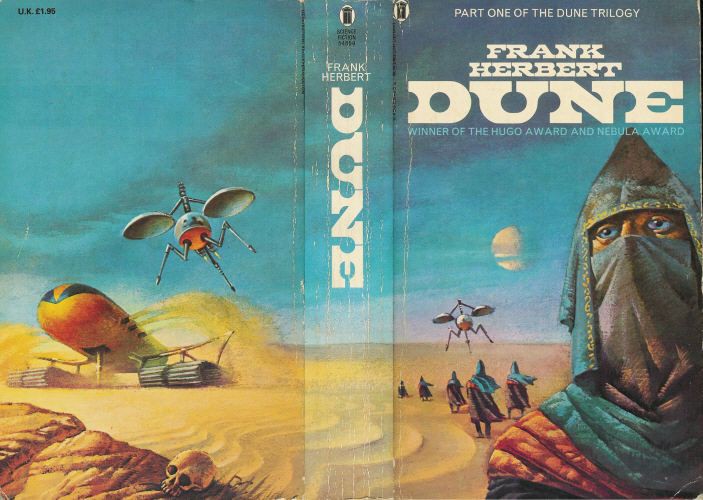
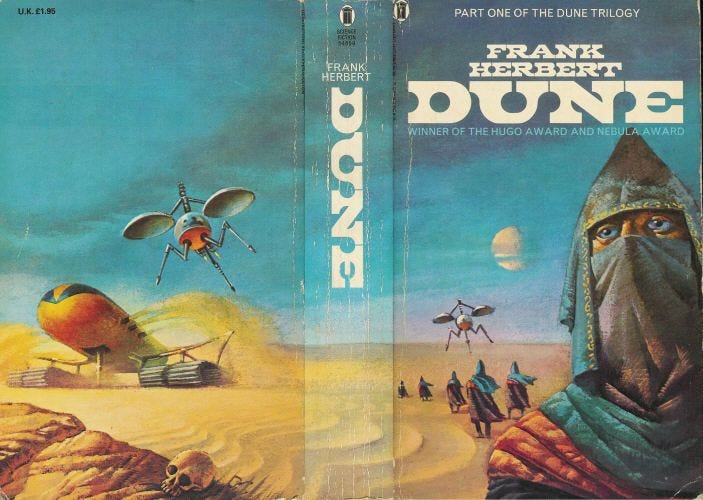
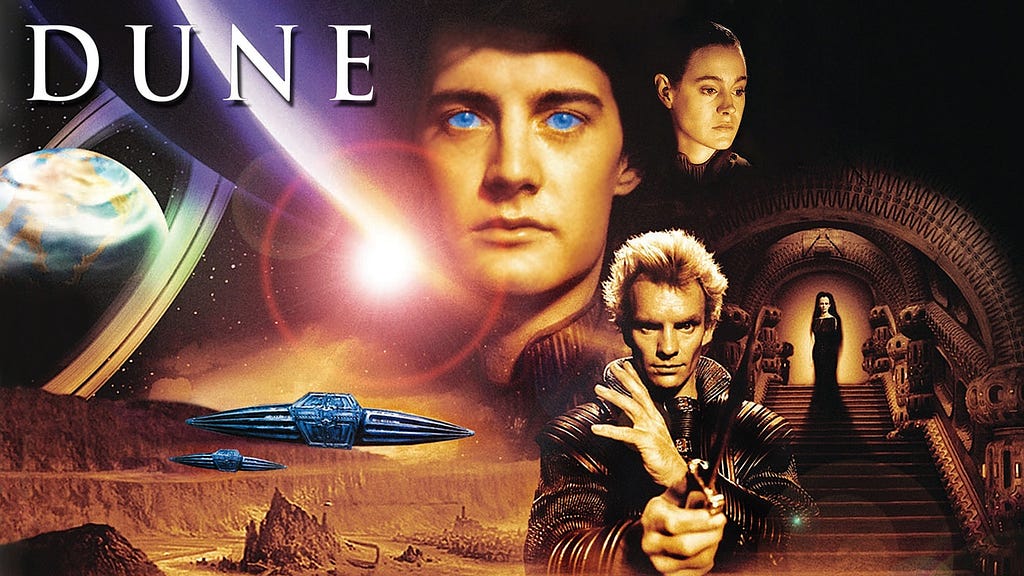
Frank Herbert’s science fiction classic, Dune, is getting a new adaptation. This time from Denis Villeneuve (who most recently directed the Ted Chiang adaptation Arrival).

Publishers Weekly profiles author (and The Mountain Goats frontman) John Darnielle: “Bending over his writing desk, Darnielle opens a drawer, pulls out a black drawstring bag, and from it pours dozens of multi-colored gaming dice onto the desktop. Picking up a particularly pointy die and rolling it around in his fingers, he explains its idiosyncrasies.”

George R. R. Martin is publishing a new A Song of Ice and Fire work! But it still isn’t book six *shakes fist*.

How Yukio Mishima’s work made a writer move to Japan: “Mishima himself was a controversial, even repellent, figure: obsessed with bodily perfection, militarism, and imperialism. He committed ritual suicide after staging a failed coup. Yet this ugly tale is told in some of the most exquisite prose I had ever read, beautifully rendered by translator Alfred Marks.”

Britain’s celebrated woman’s prize for fiction has lost Bailey’s as a sponsor.

Valeria Luiselli once tried to write a novel from an, uh, unusual perspective: “It was a really bad novel at the beginning. My idea was that it should be narrated by this plant. It was like, well, how would this plant know, see what happens in my apartment now and what happened in his apartment back then. Imagine the boredom of this plant, seeing the world from only one corner. It was a very bad idea, but it led them to other explorations that were much more worthwhile, and that eventually became a novel.”

9 great books that continue on after the adventure is done.

Got some new work? Okey-Panky is open for submissions! There is no submission fee, and we pay.

Turning the Ordinary into Something Extraordinary

Lewinter is one of those writers who you’ve never heard of before, but who, once you read him, you can’t understand why he isn’t better known. He is well known in France (like Jerry Lewis, who he doesn’t resemble at all), but virtually unknown in the United States. The two translations of his excellent slim books that New Directions has just published are the first pieces of his work to be translated into English.

I only heard of him because I was translating a book from French, Jean Frémon’s Proustiennes. There, Frémon puts Lewinter in the company of writers such as Samuel Beckett, Robert Musil, Michel Leiris, and Edmond Jabès, all writers I admire greatly, most of them (not Musil) known for their precision and restraint. But even among such company it is Lewinter who gets signaled out for giving us “a book stretched to the limit.” Frémon reserves his highest praise for Lewinter’s audacious who — in the order — to the evening redness — words, which consists of “five dense pages without an opening capital letter or closing period, followed by a gap that inserts the same five pages in a slightly different version. The fanatical care with which each displacement, each inversion is brought about in the most perfect control of its effects.” For writers working at this level of care, the shifting of a word, a comma, can have a tremendous impact, even a secret drama.

Some writers make fiction out of the exceptional moments of a life: the turning points, the moments where relationships fall apart or come together, the moments where politics shift such that you suddenly feel threatened, and so on. Certainly that’s the more usual way to put literature together, and it’s based on a model of history that favors the dramatic: what matters are important men making big decisions. At the same time, there’s an undercurrent in fiction that does just the opposite of that, that deals with the mundane, with the domestic, and which looks for small moments of vision or clarity that individuals stumble upon, and which are better understood in terms of specific lives rather than generalized to larger groups. In America, the best writers in this mode are predominantly female: Lydia Davis, for instance, who can employ the slightest scrap of fabric from an ordinary life to make something luminous, or Lucia Berlin who makes a great deal out of lives that many of us ignore, or Rivka Galchen, whose Little Labors passes lightly over a number of disparate things in a way that renders a new mother’s situation with startling resonance and power. These are all books that rely on their syntax and the care of their word choice to carry them forward, using language to alchemize the ordinary into something extraordinary. Lewinter is one of the few male writers I know who manages to do this well.

Jean Frémon speaks of Lewinter’s The Attraction of Things as being more a sort of music than a novel: “a melody that was sinuous, secret, haunting and, finally, dazzling.” The Attraction of Things is a book composed of the simplest things, the bits and pieces of the life of a man who seems in perhaps every respect to be Lewinter himself. It is a book that confounds the distinction between fiction and autobiography. Its narrator is a man who, like Lewinter, has translated Georg Groddeck and Rilke, who spends a fair amount of his time searching for old Opera recordings in the flea market, who is obsessed with finding a particular Kashmir sweater, and who has to sort through the complexities of his father’s illness. Over the course of seven chapters, in less than eighty pages, and with long, sinuous sentences, The Attraction of Things lays out the details of a life in all its blunt honesty: phone calls, visits to friends, little moments of personal joy and desolation. It is a profoundly personal book, intimate in the same way as Bastien Vivès’s almost wordless graphic novel A Taste of Chlorine is: you go away from the experience feeling that you’ve really entered another person’s skin.

In Story of Love in Solitude, instead of a fragmented view of the small moments of a life, we have three stories less than forty pages long in all, each of which walk that same line between fiction and autobiography. These are not plotted stories but reflections, simple moments described with clarity, accuracy, and perception and which can suddenly open into places of great — and always surprising — intensity. The title story, just two and a half pages long, is the story of a spider that keeps coming into the house and that the narrator keeps putting out. Just that, nothing else, but it somehow still gets at the heart of how we think of the places we live and the creatures that come into them. “Passion” is about a camellia plant and how the narrator interacts with this plant in his living place as it suddenly begins to wane. “No Name” is about a man the narrator keeps seeing at the street market and his interest in him: the way in which individuals can call to us without they themselves necessarily knowing and without us being sure exactly why.

In short, these are moving and sonorous stories despite their intense simplicity. These stories, taken with the longer narrative that is The Attraction of Things, suggest that Lewinter is a writer to be reckoned with, and that our literature would be better if more writers were willing to take the kinds of chances he takes.

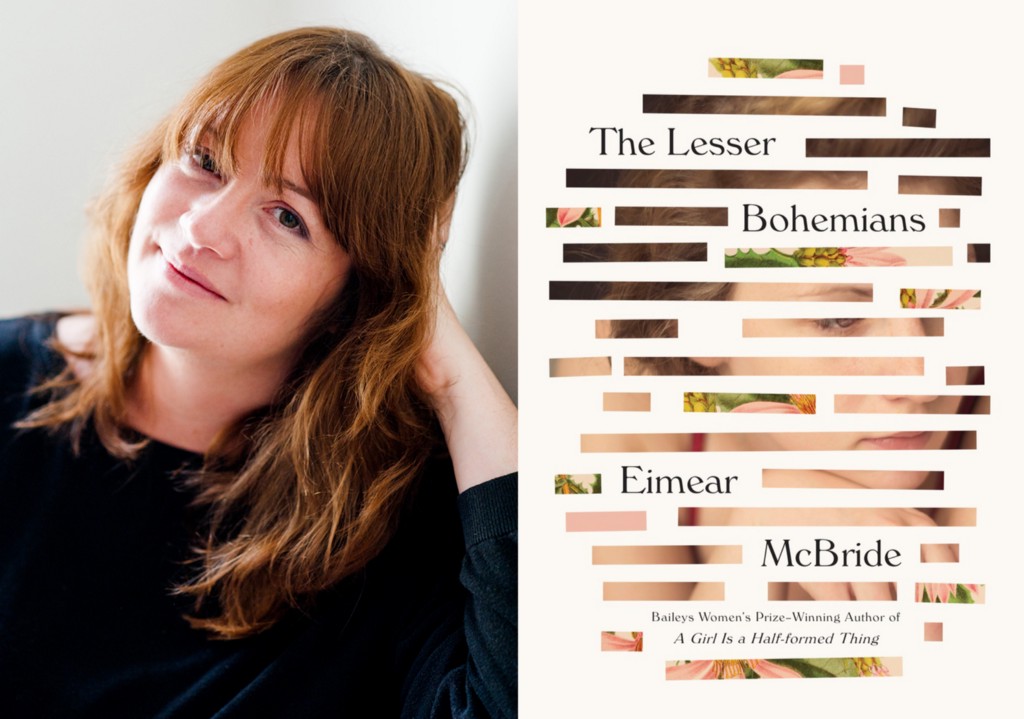
Eimear McBride Is Not Afraid of Cruelty

Eimear McBride is not interested in linear sentences. She is not interested in “endless heaps of description,” or “being told what something is like, instead of what it is.” She gives me an example, an elaborate, figurative description of a girl going down the stairs, and then cuts herself off: “I think, ‘Oh god, just go down the stairs!’”

Don’t waste time, she seems to be saying, because life doesn’t waste time — it rushes forward, all the way to the end.

Like the narrator of her newest novel, McBride trained as an actor in London in the 1990s, and I find myself awed by her ease with words as she sits across from me in an empty office above the NYU Creative Writers House, drinking tea someone brings her in a Styrofoam cup. (“Oh lovely, thank you very much,” she says, as he ducks out of the room.) She is warm and expressive and straightforward. She answers every question, and says exactly what she means.

“I like reading women who write cruelly,” she tells me. “It’s not something that we’re supposed to do — and of course it’s a huge part of us, as big a part as it is of men.” There are typical female subjects — motherhood for one — which are interesting to McBride in their own way, but she’s also interested in women who are unafraid to write outside of those conventionally female concerns — “women who just don’t.”

When I first read McBride’s astounding debut novel, A Girl is a Half-Formed Thing, in 2013, I went around for a while shoving the first page in people’s faces: “Isn’t this amazing! No one else writes like this!” Also, I was terrified. I was sucked completely into the world of the girl, whom we follow from the womb and into life — but who never gets a name, and never gets to “become.” Instead she spirals backwards through abuse, deaths, guilt, and her brother’s sickness; she keeps hurting herself, or letting herself be hurt, even as she keeps reaching for some kind of rebirth, some kind of life. I read Girl through the day and the night without stopping, without moving, feeling awful. I went for a swim and panicked, for a moment, that I might get dragged under. I knew, while reading Girl, that death was much nearer than I’d ever noticed.

All this to say that McBride is not afraid to write cruelly. She is unafraid, period. Her second novel, The Lesser Bohemians, now out from Hogarth in the US, is similarly riddled with pain and guilt and sexual violence. In the turns and eddies along the characters’ paths, McBride here proves herself unafraid to write in the other direction, too — towards joy, growth, tenderness.

“Is it Virginia Woolf who talked about the angel on the shoulder? I don’t have that.” No one is going to step between McBride and her pen, warning, as Woolf’s angel did, “My dear, you are a young woman…. Never let anybody guess that you have a mind of your own.”

Woolf wrote, in “Professions for Women,” that this angel of propriety “bothered me and wasted my time and so tormented me that at last I killed her.” But she also wrote, in the same essay, that she had never been able to speak truthfully “about the passions,” “about my own experiences as a body.” She doubted that any woman writer in her time had managed it yet.

Thankfully, this modesty has never gotten in the way of McBride’s writing. I ask where she finds the courage to write explicitly about the life of the body, which even today still feels transgressive. “It’s not really bravery. It’s more of…” she laughs, “stubbornness, I suppose; an unwillingness to be told that I can’t, or that I shouldn’t.” What would happen, she asks me, if women decided not to be ashamed? “We are told everything about us is shameful, in every aspect of our lives…. What if we just said, ‘I won’t be shamed. I am not shamed.’”

“We would rule the world,” I say, and we laugh. (This was before the US election, when we could laugh about these things and still believe — or at least I believed — that this future was at our doorstep.)

“I find that I’m very interested in shame,” McBride goes on. “Even creating an experience in which I feel shame, as in writing a novel which is full of explicit sexual description, sort of gives me a thrill I suppose!” There is shame throughout McBride’s two novels — characters humiliating one another and hurting one another in extremely intimate, complicated ways. In their broadest terms, so many of these scenes are “two people being vulnerable in a room together,” which “isn’t always a nice experience.”

“Sexuality is such a huge driver in human interactions,” McBride tells me, “and it’s so badly served by literature. There’s an argument that women [today] write about the body because that’s the only way to make room for themselves in the canon — because men don’t write about it — and I don’t necessarily think there’s anything wrong with that.”

In a society where women are brought up to live far outside our own bodies, writing is, for McBride, a way to reconnect with the physical world. “I’m trying to write truthfully about experiences which are not easy to speak about, but which are fundamental to who we are, to the choices that we make in our lives for ourselves.”

McBride’s sentences are what get her deep into the life of the body — their quickness, their rhythms. They turn language on its head; they let words do things we didn’t know they could do: spin and tumble out the way sensations move through our bodies and thoughts move through our minds.

“I am able to sit on this chair,” she explains, “keep my balance, think about your question, think about my response, think that my ear is a little sore from the flying, think that I miss my daughter back in Norwich…the brain can do all of that at once. So I wanted my sentences to do that.”

When she first began Girl, McBride knew that she wanted to write from a different perspective than we often get in literature, from something “deeper, much further back in the psyche, and in the body,” so that reading becomes “a physical experience rather than an intellectual experience.” In reaching for that kind of “immediacy and intimacy,” the linear sentence becomes redundant — it simply takes too long.

That closeness of perspective continues through the narration of Eily, the narrator of The Lesser Bohemians:

“River run running to a northern sea. Thames. Needle skin brisk and eyefuls of concrete. Lead by the. Strip for the. National Theatre. Go on. Get a ticket. Go in.”

She is thinking of the beginning of Finnegans Wake with “river run,” and in fact the voice of this book does sound a bit like that one, in its rhymes and echoes, knocking about on the page. Unlike Joyce’s famously difficult final work, The Lesser Bohemians is perfectly intelligible on the first reading, once you get into it — and more so the further you get in; everything “begins to connect up,” McBride says. “As the book goes on, as [Eily] begins to make the connections within herself, the language begins to connect as well.”

The Lesser Bohemians is a book about “becoming.” Arriving in London from a traumatic and intensely religious childhood in a small town in Ireland — “Ireland is what it is,” Eily reflects, “Sealed in itself, like me.” — she now wants “to feel connected to life.” The river in “river run running” is “all the rivers of the world,” for Eily as it is for Joyce; being in London is being a part of the world.

“Go on. Get a ticket. Go in,” Eily tells herself, and in she goes: into the high tide of people, into the streets, the art, the messy drunken nights, the violence, the mess of sensations and emotions. “This is the finest city,” she thinks, after losing her virginity in a painful and humiliating night with an older man, “and no matter how awkward or bloodily, I am in it now too.”

Eily is “voracious;” she wants to feel everything — the good experiences and the bad ones. “There is a hunger in her for life”; it’s something McBride likes about her. Eily is unpredictable, illogical, often unkind to herself, but young and pure-hearted and lusty. This is, perhaps, what kept McBride going through the nine years it took to write the book.

She had written Girl at twenty-seven — three drafts in six months, followed by nearly a decade trying to get it published. After the first few years trying, she put the book in a drawer, and then had to decide if she was still a writer, even if she was a “failed” writer, an unpublished writer. The pragmatic part of her thought she should be “useful,” retrain as a teacher, even though she didn’t want to be a teacher — “but you know, life is slipping away and you’re just the person with this book in a drawer.”

“And then I just thought, ‘I can’t do anything better! Even if I can’t get this book published, I know that there’s nothing I can do better in the world, so I’m kind of stuck with this’.” She started writing again, and once she made it to the second draft of The Lesser Bohemians, once she fell in love with the book and started to feel that “rush,” publishing or not publishing didn’t seem to matter so much.

‘I can’t do anything better! Even if I can’t get this book published, I know that there’s nothing I can do better in the world, so I’m kind of stuck with this.’

Then Girl was published “out of the blue” in 2012 by Galley Beggar, a tiny, new press in the UK, followed by Coffee House Press out of Minnesota in the US, to enormous acclaim and the Baileys Women’s Prize for Fiction in 2014 — following which, of course, there were the nights when McBride would wake up in a cold sweat, worrying “what if I can’t write another book as good as Girl!” But by then she’d been working on The Lesser Bohemians for six years. She was “swept up” with the book; she felt “this tremendous weight of responsibility towards the characters, like this was the only life they were ever going to have, so I had to get it right!”

It is November 2016 when McBride and I sit to talk in a florescent-lit office above the space where she’ll give a reading, at the beginning of her packed US tour for the release of The Lesser Bohemians. “It’s such an honor to meet you,” I squeak out as we sit down, my voice several decibels higher than normal, and McBride laughs and responds on her jolly Irish accent, “Well, that’s very nice. It’s only me, though!”

I am struck again by her generosity — towards me, nervous and shivering in the chair across from her; and towards her characters, for whom she wrote and wrote and rewrote to “get it right,” to let them feel — as Eily so desperately wants to feel — alive. She is generous, too, towards her readers. She wants to give them the space to “take their own position,” to step inside her fragmentary sentences and, as Jeanette Winterson suggests in the New York Times Book Review, “fill in the gaps.” The “openness” of McBride’s writing is a departure, that review notes, from the controlling hand of the “old-fashioned despot writer,” the “take-it-or-leave-it arrogance” that we find in writers like Joyce.

Does that openness, that generosity, have something to do with writing as a woman? Certainly many male writers in our canon are the supreme rulers in the worlds of their novels. “I don’t know,” McBride responds, when I ask if we can attribute this difference to gender. “I know that as much as I love Joyce, it is a barrage…. Joyce is always present, and for me the point of writing is to make myself as a writer completely absent — so that everything that happens happens between the character and the reader. The reader should feel that it’s unmediated, that I’m not there with my moral views and my political opinions telling them what they should be thinking about all these things.”

‘Joyce is always present, and for me the point of writing is to make myself as a writer completely absent.’

This refusal to control the reader’s experience is certainly not a refusal to color it. McBride deeply admires Dostoyevsky’s ability “to create a whole atmosphere that you can’t escape from, that you almost suffocate within.” Her sentences could not be more unlike Dostoyevsky’s, but she creates this sort of all-encompassing atmosphere in her work too: “you just move through that whole world and it all feels like it’s the same color, and everything belongs there” — even the characters’ voices are part of the same fabric.

But the fabric is moving; it’s permeable. There is a lot of “room” in her writing — room for the reader to “go in” like Eily, to be a part of that world, to make of it what they will.

McBride reminds me of a sentence toward the end of The Lesser Bohemians: “When I first came here I wanted the world to look at me and now I might prefer to be the eye instead.” It’s part of growing up, she says, being able to connect with something outside of yourself; being a part of the world. This is where the unnamed narrator of Girl falls short. She wants to live, to feel, just as voraciously as Eily, but — to put it simply, which is of course a disservice to the nuance and extremity of the girl’s experience — family and disease and violence and trauma push her back, keep her “half-formed.” She is trapped in; she collapses inwards.

We all love a tragic heroine. We love to cry over Anna Karenina, Ophelia, Madame Bovary, and now Girl, squashed down by the weight of the world. But Eily — coming from similar circumstances as the girl from Girl, and connected to her in many ways (she once even dreams of the girl drowning) — Eily gets a ticket; she gets to London; she gets a start on that tangled path of “becoming.”

We talk about the book’s ending, which I won’t give away because, of course, you have to read it yourself. But in abstract terms I will say that like the best endings, it is also a beginning, and that like McBride, it is unpredictable. “You know that it shouldn’t work out that way,” she says, “it should resolve in a more comfortable, ‘normal’ way…but of course that’s not how life is. People do messy things all of the time, and sometimes they work and sometimes they don’t work. It just felt more human and more risky — to let people want to be happy.”

Here McBride’s bravery, or stubbornness, or whatever you’d like to call it, takes a new form: the audacity to let a young, naïve girl — from a traumatic past, in a traumatic present — live.

Hillary Clinton Will Author a Book of Essays for Simon & Schuster

Meanwhile, the nation plunges into authoritarianism

Simon & Schuster issued a press release earlier today announcing that Hillary Clinton will author a new collection of essays, to be released by its trade imprint in the fall. Inspired by the “hundreds of quotations she has been collecting for decades,” Clinton will use these words of wisdom as jumping-off points to tell stories from her life “up to and including” the 2016 campaign. The former Secretary of State says these quotes “are the words [she] lives by.”

We should all be excited for the anecdotes surrounding time-tested Clintonian aphorisms like ‘don’t worry, Ohio is definitely wrapped up’; ‘the best way to inspire the base is a pro-life VP!’; and, a personal favorite, ‘Wisconsin? Why would I ever campaign there?!?’ (Everyone was thinking that. Right? Right??)

The announcement comes at what could politely be called an interesting time for Simon & Schuster. Following news that its Threshold Editions imprint would be publishing (and overpaying for) a book by twitter-famous racist, Milo Yiannopoulos, the publisher has faced a steady stream of criticism and boycotts from the literary community. Most recently, all-around badass Roxane Gay withdrew a book that was set to be released by TED Books, yet another Simon & Schuster imprint.

Roxane Gay Pulls Book from Simon and Schuster, Citing Milo Yiannopoulous Deal

Maybe Clinton’s reemergence in print will help quell Simon & Schuster’s bad press. Perhaps her power to inspire the American people will bring about a bi-partisan resolve — a high-spirited cheer, even — while our democracy goes haphazardly down the proverbial toilet. Maybe we really are stronger together. What’s that? Who just got confirmed? Never mind…

Denis Villeneuve Will Direct Dune

A sci-fi classic’s colorful screen history continues

Fans of high-minded sci-fi and moody cinematic dread rejoiced this morning with news that possibly the hottest director in the world, Denis Villeneuve, had signed on to helm a new adaptation of Frank Herbert’s classic Dune.

Rumors of Villeneuve’s involvement have been swirling since a December report in The Hollywood Reporter. This morning, the author’s son, Brian Herbert, tweeted to confirm the news.

The movie is being developed by Legendary Pictures, which has some experience with smart sci-fi, having produced Interstellar, Inception and The Town. (editors note: The Boston geography doesn’t line up. A wormhole is the only logical answer for all those escapes.)

With the new project, Villeneuve will have some large, bizarre, shoes to fill.

Notable eccentric (official title) David Lynch took on the novel back in 1984. His adaptation was a critical and financial failure, but the film is, without a doubt, memorably strange. Twin Peaks regular Kyle MacLachlan starred as Paul Atreides, the nobleman/chosen-one/warrior who attempts to bring order to the desert planet Arakis after his father’s murder. Toto and Brian Eno contributed to the soundtrack, and, generally speaking, the movie doesn’t make a whole lot of sense. In fact, the final product was such a debacle that Lynch has replaced his name with various pseudonyms for the credits on most circulated versions of the film.

However, the oddest attempt at translating Dune to the screen is certainly that of Alejandro Jodorowsky. In the mid-70's the French-Chilean director assembled a mind-boggling cast that included Orson Wells, Salvador Dali, and Mick Jagger to perform his fourteen-hour script, which, according to rumor, had only a loose relation at best to the novel’s actual plot. Unsurprisingly the project was deemed unmakeable. The documentary Jodorowsky’s Dune covers a great number of the failed production’s innumerable absurdities. Perhaps most memorably, Dali’s involvement was contingent upon — in addition to his $100,000 per-minute-of-screen-time rate — a burning live giraffe appearing in the background of all his scenes.

But if anyone is up to the task of realizing Herbert’s original vision on the big screen, it‘s Villeneuve. The director’s most recent release, Arrival, based on a short story by sci-fi favorite Ted Chiang, was a hit with movie lovers and fanboys alike and is now an Oscar darling. For a follow-up, Villeneuve took on the beloved Blade Runner story, with a new reboot, Blade Runner 2049, starring Ryan Gosling and Harrison Ford. As long as the movie doesn’t break the Internet or cause some other kind of blackout, it will be out in October.

The Legendary Ted Chiang on Seeing His Stories Adapted and the Ever-Expanding Popularity of SF

With titles from Herbert, Chiang, and Philip K. Dick on his resume, Villeneuve might be the J.J. Abrams of literary sci-fi, or maybe the Hitchcock of space. Go ahead, come up with your own comparison and slap it on him.

Regardless of what you call Villeneuve, the Blade Runner 2049 trailer looks great, despite a complete lack of giraffes:

Black-Eyed Women

“Black-Eyed Women” by Viet Thanh Nguyen

Fame would strike someone, usually the kind that healthy-minded people would not wish upon themselves, such as being kidnapped and kept prisoner for years, suffering humiliation in a sex scandal, or surviving something typically fatal. These survivors needed someone to help write their memoirs, and their agents might eventually come across me. “At least your name’s not on anything,” my mother once said. When I mentioned that I would not mind being thanked in the acknowledgments, she said, “Let me tell you a story.” It would be the first time I heard this story, but not the last. “In our homeland,” she went on, “there was a reporter who said the government tortured the people in prison. So the government does to him exactly what he said they did to others. They send him away and no one ever sees him again. That’s what happens to writers who put their names on things.”

By the time Victor Devoto chose me, I had resigned myself to being one of those writers whose names did not appear on book covers. His agent had given him a book that I had ghostwritten, its ostensible author the father of a boy who had shot and killed several people at his school. “I identify with the father’s guilt,” Victor said to me. He was the sole survivor of an airplane crash, one hundred and seventy-three others having perished, including his wife and children. What was left of him appeared on all the talk shows, his body there but not much else. The voice was a soft monotone, and the eyes, on the occasions when they looked up, seemed to hold within them the silhouettes of mournful people. His publisher said that it was urgent that he finish his story while audiences still remembered the tragedy, and this was my preoccupation on the day my dead brother returned to me.

My mother woke me while it was still dark outside and said, “Don’t be afraid.”

Through my open door, the light from the hallway stung. “Why would I be afraid?”

When she said my brother’s name, I did not think of my brother. He had died long ago. I closed my eyes and said I did not know anyone by that name, but she persisted. “He’s here to see us,” she said, stripping off my covers and tugging at me until I rose, eyes half-shut. She was sixty-three, moderately forgetful, and when she led me to the living room and cried out, I was not surprised. “He was right here,” she said, kneeling by her oral armchair as she felt the carpet. “It’s wet.” She crawled to the front door in her cotton pajamas, following the trail. When I touched the carpet, it was damp. For a moment I twitched in belief, and the silence of the house at four in the morning felt ominous. Then I noticed the sound of rainwater in the gutters, and the fear that had gripped my neck relaxed its hold. My mother must have opened the door, gotten drenched, then come back inside. I knelt by her as she crouched next to the door, her hand on the knob, and said, “You’re imagining things.”

“I know what I saw.” Brushing my hand off her shoulder, she stood up, anger illuminating her dark eyes. “He walked. He talked. He wanted to see you.”

“Then where is he, Ma? I don’t see anyone.”

“Of course you don’t.” She sighed, as if I were the one unable to grasp the obvious. “He’s a ghost, isn’t he?”

Ever since my father died a few years ago, my mother and I lived together politely. We shared a passion for words, but I preferred the silence of writing while she loved to talk. She constantly fed me gossip and stories, the only kind I enjoyed concerning my father back when he was a man I did not know, young and happy. Then came stories of terror like the one about the reporter, the moral being that life, like the police, enjoys beating people now and again. Finally there was her favorite kind, the ghost story, of which she knew many, some firsthand.

“Aunt Six died of a heart attack at seventy-six,” she told me once, twice, or perhaps three times, repetition being her habit. I never took her stories seriously. “She lived in Vung Tau and we were in Nha Trang. I was bringing dinner to the table when I saw Aunt Six sitting there in her nightgown. Her long gray hair, which she usually wore in a chignon, was loose and fell over her shoulders and in her face. I almost dropped the dishes. When I asked her what she was doing here, she just smiled. She stood up, kissed me, and turned me toward the kitchen. When I turned around again to see her, she was gone. It was her ghost. Uncle confirmed it when I called. She had passed away that morning, in her own bed.”

Aunt Six died a good death, according to my mother, at home and with family, her ghost simply making the rounds to say farewell. My mother repeated her aunt’s story while we sat at the kitchen table the morning she claimed to have seen my brother, her son. I had brewed her a pot of green tea and taken her temperature despite her protests, the result being, as she had predicted, normal. Waving the thermometer at me, she said he must have disappeared because he was tired. After all, he had just completed a journey of thousands of miles across the Pacific.

“So how did he get here?”

“He swam.” She gave me a pitying look. “That’s why he was wet.”

“He was an excellent swimmer,” I said, humoring her. “What did he look like?”

“Exactly the same.”

“It’s been twenty-five years. He hasn’t changed at all?”

“They always look exactly the same as when you last saw them.”

I remembered how he looked the last time, and any humor that I felt vanished. The stunned look on his face, the open eyes that did not inch even with the splintered board of the boat’s deck pressing against his cheek — I did not want to see him again, assuming there was something or someone to see. After my mother left for her shift at the salon, I tried to go back to sleep but could not. His eyes stared at me whenever I closed my own. Only now was I conscious of not having remembered him for months. I had long struggled to forget him, but just by turning a corner in the world or in my mind I could run into him, my best friend. From as far back as I can recall, I could hear his voice outside our house, calling my name. That was my signal to follow him down our village’s lanes and pathways, through jackfruit and mango groves to the dikes and fields, dodging shattered palm trees and bomb craters. At the time, this was a normal childhood.

Looking back, however, I could see that we had passed our youth in a haunted country. Our father had been drafted, and we feared that he would never return. Before he left, he had dug a bomb shelter next to our home, a sandbagged bunker whose roof was braced by timber. Even though it was hot and airless, dank with the odor of the earth and alive with the movement of worms, we often went there to play as little children. When we were older, we went to study and tell stories. I was the best student in my school, excellent enough for my teacher to teach me English after hours, lessons I shared with my brother. He, in turn, told me tall tales, folklore, and rumors. When airplanes shrieked overhead and we huddled with my mother in the bunker, he whispered ghost stories into my ear to distract me. Except, he insisted, they were not ghost stories. They were historical accounts from reliable sources, the ancient crones who chewed betel nut and spat its red juice while squatting on their haunches in the market, tending coal stoves or overseeing baskets of wares. Our land’s confirmed residents, they said, included the upper half of a Korean lieutenant, launched by a mine into the branches of a rubber tree; a scalped black American floating in the creek not far from his downed helicopter, his eyes and the exposed half-moon of his brain glistening above the water; and a decapitated Japanese private groping through cassava shrubbery for his head. These invaders came to conquer our land and now would never go home, the old ladies said, cackling and exposing lacquered teeth, or so my brother told me. I shivered with delight in the gloom, hearing those black-eyed women with my own ears, and it seemed to me that I would never tell stories like those.

Was it ironic, then, that I made a living from being a ghostwriter? I posed the question to myself as I lay in bed in the middle of the day, but the women with their black eyes and black teeth heard me. You call what you have a life? Their teeth clacked as they laughed at me. I pulled the covers up to my nose, the way I used to do in my early years in America, when creatures not only lurked in the hallway but also roamed outside. My mother and father always peeked through the living room curtains before answering any knock, afraid of our young countrymen, boys who had learned about violence from growing up in wartime. “Don’t open the door for someone you don’t know,” my mother warned me, once, twice, three times. “We don’t want to end up like that family tied down at gunpoint. They burned the baby with cigarettes until the mother showed them where she hid her money.” My American adolescence was filled with tales of woe like this, all of them proof of what my mother said, that we did not belong here. In a country where possessions counted for everything, we had no belongings except our stories.

When knocking woke me, it was dark outside. My watch said 6:35 in the evening. The knock came again, gentle, tentative. Despite myself, I knew who it was. I had locked the bedroom door just in case, and now I pulled the covers over my head, my heart beating fast. I willed him to go away, but when he started rattling the doorknob, I knew I had no choice but to rise. The fine hairs of my body stood at attention with me as I watched the doorknob tremble with the pressure of his grip. I reminded myself that he had given up his life for me. The least I could do was open the door.

He was bloated and pale, hair feathery, skin dark, clad in black shorts and a ragged gray T-shirt, arms and legs bony. The last time I had seen him, he was taller by a head; now our situations were reversed. When he said my name, his voice was hoarse and raspy, not at all like his adolescent alto. His eyes, though, were the same, curious, as were his lips, slightly parted, always prepared to speak. A purple bruise with undertones of black gleamed on his left temple, but the blood I remembered was gone, washed away, I suppose, by salt water and storms. Even though it was not raining, he was water-soaked. I could smell the sea on him, and worse, I could smell the boat, rancid with human sweat and excreta.

When he said my name, I trembled, but this was a ghost of someone whom I loved and would never harm, the kind of ghost who, my mother had said, would not harm me. “Come in,” I said, which seemed to me the bravest thing I could say. Unmoved, he looked at the carpet on which he was dripping water. When I brought him a clean T-shirt and shorts, along with a towel, he looked at me expectantly until I turned around and let him change. The clothes were my smallest but still a size too large for him, the shorts extending to his knees, the T-shirt voluminous. I motioned him in, and this time he obeyed, sitting on my rumpled bed. He refused to meet my gaze, seemingly more fearful of me than I was of him. While he was still fifteen I was thirty-eight, no longer an exuberant tomboy, reluctant to talk unless I had a purpose, as was the case when I interviewed Victor. Being an author, even one of the third or fourth rank, involved an etiquette I could live up to. But what does one say to a ghost, except to ask why he was here? I was afraid of the answer, so instead I said, “What took you so long?”

He looked at my bare toes with their bare nails. Perhaps he sensed that I was not good with children. Motherhood was too intimate for me, as were relationships lasting more than one night.

“You had to swim. It takes a long time to go so far, doesn’t it?”

“Yes.” His mouth remained open, as if he wanted to say more but was uncertain of what to say or how to say it. Perhaps this apparition was the first consequence of what my mother considered my unnatural nature, childless and single. Perhaps he was not a figment of my imagination but a symptom of something wrong, like the cancer that killed my father. His was also a good death, according to my mother, surrounded by family at home, not like what happened to her son and, nearly, to me. Panic surged from that bottomless well within myself that I had sealed with concrete, and I was relieved to hear the front door opening. “Mother will want to see you,” I said. “Wait here. I’ll be right back.”

When we returned, we found only his wet clothes and the wet towel. She held up the gray T-shirt, the same as he had worn on the blue boat with the red eyes.

“Now you know,” my mother said. “Never turn your back on a ghost.”

The black shorts and gray T-shirt stank of brine and were heavy with more than just water. When I carried them to the kitchen, the weight of the clothes in my hands was the weight of evidence. I had seen him wear these clothes on dozens of occasions. I remembered them when the shorts were not black with grime but still pristine blue, when the shirt was not gray and ragged but white and neat. “Do you believe now?” my mother said, lifting the lid of the washing machine. I hesitated. Some people say that faith burns inside them, but my newfound faith was chilling to me. “Yes,” I said. “I believe.”

The machine hummed in the background as we sat for dinner at the kitchen table, the air anointed with star anise and ginger. “That’s how come it took him so many years,” my mother said, blowing onto her hot soup. Nothing had ever daunted her appetite or dented her cast-iron stomach, not even the events on the boat or the apparition of her son. “He swam the entire distance.”

“Aunt Six lived hundreds of miles away and you saw her the same day.”

“Ghosts don’t live by our rules. Each ghost is different. Good ghosts, bad ghosts, happy ghosts, sad ghosts. Ghosts of people who die when they’re old, when they’re young, when they’re small. You think baby ghosts behave the same as grandfather ghosts?”

I knew nothing about ghosts. I had not believed in ghosts and neither did anyone else I knew except for my mother and Victor, who himself seemed spectral, the heat of grief rendering him pale and nearly translucent, his only color coming from a burst of uncombed red hair. Even with him the otherworldly came up only twice, once on the phone and once in his living room. Nothing had been touched since the day his family left for the airport, not even the sorrowful dust.

I had the impression that the windows had not been opened since that day, as if he wanted to preserve the depleted air that his wife and children had breathed before they suffered their bad deaths, so far from home. “The dead move on,” he had said, coiled in his armchair, hands between his thighs. “But the living, we just stay here.”

These words opened his last chapter, the one I worked on after my mother went to sleep and I descended into the bright basement, illuminated with fluorescent tubes. I wrote one sentence, then paused to listen for a knock or steps on the stairway. My rhythm through the night was established, a few lines followed by a wait for something that did not come, the next day more of the same. The conclusion of Victor’s memoir was in sight when my mother came home from the nail salon with shopping bags from Chinatown, one full of groceries, the other with underwear, a pair of pajamas, blue jeans, a denim jacket, a pack of socks, knit gloves, a baseball cap. After stacking them next to his dried and ironed T-shirt and shorts, she said, “He can’t be wandering out in the cold with what you gave him, like a homeless person or some illegal immigrant.” When I said that I hadn’t thought of it that way, she snorted, annoyed by my ignorance of the needs of ghosts. Only after dinner did she warm up again. Her mood had improved because instead of retreating to my basement as usual, I had stayed to watch one of the soap operas she rented by the armfuls, serials of beautiful Korean people snared in romantic tangles. “If we hadn’t had a war,” she said that night, her wistfulness drawing me closer, “we’d be like the Koreans now. Saigon would be Seoul, your father alive, you married with children, me a retired housewife, not a manicurist.” Her hair was in curlers, and a bowl of watermelon seeds was in her lap. “I’d spend my days visiting friends and being visited, and when I died, a hundred people would come to my funeral. I’d be lucky if twenty people will come here, with you taking care of things. That frightens me more than anything. You can’t even remember to take out the garbage or pay the bills. You won’t even go outside to shop for groceries.”

“I’d remember to take care of your soul.”

“When would you hold the wake? When would the celebration of my death anniversary be? What would you say?”

“Write it down for me,” I said. “What I’m supposed to say.”

“Your brother would have known what to do,” she said. “That’s what sons are for.”

To this I had no reply.

When he had still not appeared by eleven, my mother went to sleep. I descended to my basement once more and tried to write. Writing was entering into fog, feeling my way for a route from this world to the unearthly world of words, a route easier to find on some days than others. Lurking on my shoulder as I stumbled through the grayness was the parrot of a question, asking me how I lived and he died. I was younger and weaker, yet it was my brother we buried, letting him slip into the ocean without a shroud or a word from me. The wailing of my mother and the sobbing of my father rose in my memory, but neither drowned out my own silence. Now it was right to say a few words, to call him back as he must have wanted, but I could not find them. Just when I thought another night would pass without his return, I heard the knock at the top of the stairs. I believe, I reminded myself. I believe that he would never harm me.

“Don’t knock,” I said when I opened the door. “It’s your home, too.”

He merely stared at me, and we lapsed into an awkward silence. Then he said, “Thank you.” His voice was stronger now, almost as high-pitched as I remembered, and this time he did not look away. He still wore my T-shirt and shorts, but when I showed him the clothes that my mother had bought, he said, “I don’t need those.”

“You’re wearing what I gave you.”

His silence went on for so long I thought he might not have heard me.

“We wear them for the living,” he said at last. “Not for us.”

I led him to the couch. “You mean ghosts?”

He sat down next to me, considering my question before answering.

“We always knew ghosts existed,” he said.

“I had my doubts.” I held his hand. “Why have you come back?”

His gaze was discomforting. He had not blinked once.

“I haven’t come back,” he said. “I’ve come here.”

“You haven’t left this world yet?”

He nodded.

“Why not?”

Again he was silent. Finally he said, “Why do you think?”

I looked away. “I’ve tried to forget.”

“But you haven’t.”

“I can’t.”

I had not forgotten our nameless blue boat and it had not forgotten me, the red eyes painted on either side of its prow having never ceased to stare me down. After four uneventful days on a calm sea under blue skies and clear nights, islands at last came into view, black stitching on the faraway horizon. It was then that another ship appeared in the distance, aiming for us. It was swift and we were slow, burdened with more than a hundred people in a fishing boat meant to hold only a fishing boat’s crew and a fishing boat’s load of cold mackerel. My brother took me into the cramped engine room with its wheezing motor and used his pocketknife to slash my long hair into the short, jagged boy’s cut I still wore. “Don’t speak,” he said. He was fifteen and I was thirteen. “You still sound like a girl. Now take off your shirt.”

I always did as he told me, in this case shyly, even though he hardly glanced at me as he ripped my shirt into strips. He bound my barely noticeable breasts with the fabric, then took off his own shirt and buttoned me into it, leaving himself with just his ragged T-shirt. Then he smeared engine oil on my face and we huddled in the dark until the pirates came for us. These fishermen resembled our fathers and brothers, sinewy and brown, except that they wielded machetes and machine guns. We turned over our gold, watches, earrings, wedding bands, and jade. Then they seized the teenage girls and young women, a dozen of them, shooting a father and a husband who had protested. Everyone fell silent except those being dragged away, screaming and crying. I didn’t know any of them, girls from other villages, and this made it easier for me to pray I would not be one of them as I pressed against my brother’s arm. Only when the last of the girls had been thrown onto the deck of the pirate ship, the pirates climbing back on board after them, did I breathe again.

The last man to leave glanced at me in passing. He was my father’s age, his nose a sunburned pig’s foot, his odor a mix of sweat and the viscera of fish. This little man, who spoke some of our language, stepped close and lifted my chin. “You’re a handsome boy,” he said. After my brother stabbed him with his pocketknife, the three of us stood there in astonishment, our gaze on the blade, tipped by blood, a silent moment broken when the little man howled in pain, drew back his machine gun, and swung its stock hard against my brother’s head. The crack — I could hear it still. He fell with the force of dead weight, blood streaming from his brow, jaw and temple hitting the wooden deck with an awful thud still resonant in my memory.

I touched the bruise. “Does it hurt?”

“Not any more. Does it still hurt for you?”

Once more I pretended to think about a question whose answer I already knew. “Yes,” I said at last. When the little man threw me to the deck, the fall bruised the back of my head.

When he ripped my shirt off, he drew blood with his sharp fingernails. When I turned my face away and saw my mother and father screaming, my eardrums seemed to have burst, for I could hear nothing. Even when I screamed I could not hear myself, even though I felt my mouth opening and closing. The world was muzzled, the way it would be ever afterward with my mother and father and myself, none of us uttering another sound on this matter. Their silence and my own would cut me again and again. But what pained me the most was not any of these things, nor the weight of the men on me. It was the light shining into my dark eyes as I looked to the sky and saw the smoldering tip of God’s cigarette, poised in the heavens the moment before it was pressed against my skin.

Since then I avoid day and sun. Even he noticed, holding up his forearm against mine to show me I was whiter than he was. We had done the same in the bunker, splaying our hands in front of our faces to see if they were visible in the dark. We wanted to know we were still all there, coated in the dust that sifted onto us after each impact, the memory of the American jets screaming overhead making me tremble. The first time we heard them, he whispered in my ear not to worry. They were only Phantoms.

“Do you know what I liked the most about those times?” He shook his head. We sat on the sofa of my basement office, warmer than the living room in November. “We would come outside after the bombing, you holding my hand while we stood blinking in the sun. What I loved was how after the darkness of hiding there came the light. And after all that thunder, silence.”

He nodded, unblinking, curled up on the sofa like me, our knees touching. The parrot crouched on my shoulder, roosting there ever since we let my brother go into the sea, and it came to me that letting it speak was the only way to get rid of it.

“Tell me something,” it said. “Why did I live and you die?”

He regarded me with eyes that would not dry out no matter how long they stayed open. Mother was wrong. He had changed, the proof being those eyes, preserved in brine for so long they would remain forever open.

“You died too,” he said. “You just don’t know it.”

I remembered a conversation with Victor. A question struck me one night at eleven, so urgent that I telephoned him, knowing he’d be awake. “Yes, I believe in ghosts,” he said, not surprised to hear from me. I could see him curled up on his chair, head aflame on his candle-wax body, as if he were lit up by the memory of the airplane crash that had taken the lives of his family. When I asked him if he had ever seen any ghosts, he said, “All the time. When I close my eyes, my wife and children appear just like when they were alive. With my eyes open, I’ll see them in my peripheral vision. They move fast and disappear before I can focus on them. But I smell them too, my wife’s perfume when she walks by, the shampoo in my daughter’s hair, the sweat in my son’s jerseys. And I can feel them, my son brushing his hand on mine, my wife breathing on my neck the way she used to do in bed, my daughter clinging to my knees. And last of all, you hear ghosts. My wife tells me to check for my keys before I leave the house. My daughter reminds me not to burn the toast. My son asks me to rake the leaves so he can jump in them. They all sing happy birthday to me.”

Victor’s birthday had been two weeks ago, and what it was that I
imagined — him sitting in the dark, eyes closed, listening for echoes of birthdays past — became the opening of his memoir.

“Aren’t you afraid of ghosts?” I asked.

Over the line, in the silence, the static hissed.

“You aren’t afraid of the things you believe in,” he said.

This, too, I wrote in his memoir, even though I had not understood what he meant.

Now I did. My body clenched as I sobbed without shame and without fear. My brother watched me curiously as I wept for him and for me, for all the years we could have had together but didn’t, for all the words never spoken between my mother, my father, and me. Most of all, I cried for those other girls who had vanished and never come back, including myself.

When it was published a few months later, Victor’s memoir sold well. The critics had kind things to say. My name was nowhere to be found in it, but my small reputation grew a little larger among those who worked in the shadows of publishing. My agent called to offer me another memoir on even more lucrative terms, the story of a soldier who lost his arms and legs trying to defuse a bomb. I declined. I was writing a book of my own.

“Ghost stories?” Her tone was approving. “I can sell that. People love being frightened.”

I did not tell her that I had no desire to terrify the living. Not all ghosts were bent on vengeance and mayhem. My ghosts were the quiet and shy ones like my brother, as well as the mournful revenants in my mother’s stories. It was my mother, the expert on ghosts, who told me my brother was not going to return. He had disappeared when I turned my back on him, reaching for a box of tissues. There was only a depression in the sofa where he had sat, cold to the touch. I went upstairs to wake her, and after putting the teakettle on the stove, she sat down with me at the kitchen table to hear of her son’s visit. Having cried over him for years, she did not cry now.

“You know he’s gone for good, don’t you? He came and said all he wanted to say.”

The teakettle began rattling and blowing steam through its one nostril.

“Ma,” I said. “I haven’t said all I wanted to say.”

And my mother, who had not looked away from me on the deck of the boat, looked away now. For all the ghost stories she possessed, there was one story she did not want to tell, one type of company she did not want to keep. They were there in the kitchen with us, the ghosts of the refugees and the ghosts of the pirates, the ghost of the boat watching us with those eyes that never closed, even the ghost of the girl I once was, the only ghosts my mother feared.

“Tell me a story, Ma,” I said. “I’m listening.”

She found one easily, as I knew she would. “There was once a woman,” she said, “deeply in love with her husband, a soldier who disappears on a mission behind enemy lines. He is reported dead; she refuses to believe it. The war ends and she flees to this new country, eventually marrying again decades later. She is happy until the day her first husband returns from the dead, released from the camp where he has suffered as a secret prisoner for nearly thirty years.” As proof, my mother showed me a newspaper clipping with a photograph of the woman and her first husband, reunited at the airport some years ago. Their gazes do not meet. They look shy, uncomfortable, forlorn, surrounded by friends and reporters who cannot see the two ghosts also present at this melancholic meeting, the smudged shadows of their former selves.

“These kinds of stories happen all the time,” my mother said, pouring me a cup of green tea. This evening séance would be our new nightly ritual, my mother an old lady, myself an aging one. “Why write down what I’m telling you?”

“Someone has to,” I said, notepad on my lap, pen at attention.

“Writers.” She shook her head, but I think she was pleased. “At least you won’t just be making things up like you usually do.”

Sometimes this is how stories come to me, through her. “Let me tell you a story,” she would say, once, twice, or perhaps three times. More often, though, I go hunting for the ghosts, something I can do without ever leaving home. As they haunt our country, so do we haunt theirs. They are pallid creatures, more frightened of us than we are of them. That is why we see these shades so rarely, and why we must seek them out. The talismans on my desk, a tattered pair of shorts and a ragged T-shirt, clean and dry, neatly pressed, remind me that my mother was right. Stories are just things we fabricate, nothing more. We search for them in a world besides our own, then leave them here to be found, garments shed by ghosts.

Book World Responds to Immigration Ban

Writers and publishing houses worldwide announce boycotts

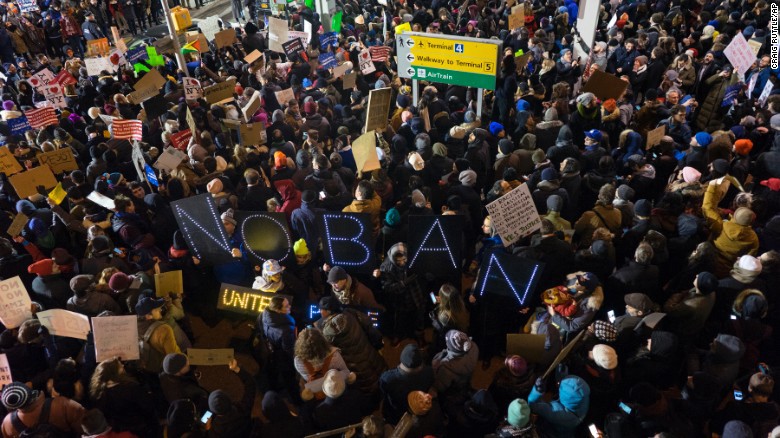
In the tumultuous days since the President issued a discriminatory and illegal executive order restricting immigration and travel into the United States from seven predominantly Muslim countries, the worldwide literary community has taken notice. Publishers and authors are gearing up for the fight.

As reported earlier today in the Guardian, UK publishing house Comma Press was among the first to take action, announcing plans to only translate writers from Yemen, Somalia, Libya, Afghanistan, Iran, Iraq and Sudan (the seven nations targeted by the ban) during 2018. Comma CEO and publisher Ra Page made the announcement after an emergency conference with staff on Monday. “If the only narrative America wants to export right now is the narrative of hate, then we need to look elsewhere. We need to consciously turn our backs on the circus that America is descending into,” he told the Guardian. “We need to fight this. And make no mistake it will be a fight.”

Comma, a not-for-profit press, has writers on its roster already affected by the ban, including Hassan Blasim, the Iraqi broadcaster and author of the acclaimed novel, The Iraqi Christ, who is currently unable to enter the U.S.

Individual writers have taken public action, as well. Former UK Children’s Laureate, Calorie Blackman, plans to boycott the United States indefinitely, Earlier this week, she tweeted: “thank you to all those who have invited me to various US lit fests/events but I won’t be visiting the US any time soon.”

The Humans author Matt Haig has also promised not to return to the United States while the ban remains in effect. He described his motivations to the Guardian: “It just seems like a lack of solidarity at this present moment to go on holiday there with the ban in place.” While recognizing his choice is only a “small gesture,” Haig hoped it would help inspire more collective action.

Additionally, London-based Arabic press Saqi Books will publish a satirical collection titled Don’t Panic, I’m Islamic that will feature affected authors. Due out later this year, it would be a more ethical purchase than any title from a certain white nationalist-supporting American publishing house.

Canadian-American author Linwood Barclay will also be forgoing travel to the United States during the ban, cancelling multiple appearances in the process. While detailing his decision for The Global Mail, Barclay remarked on criticism he has received for his choice, “one person messaged me the other day and said writers should keep quiet about their opinions, which struck me as amusing. Right, that’s why authors decide to do what they do, so they can keep their thoughts to themselves.”

No word yet from US-based publishers, but in the meantime, an important reminder for all of us, from Colson Whitehead, laureate-of-the-resistance:

We’ll keep you apprised of more book world actions as we learn of them.

Update (2/1/2017)

Virginia Rejects Move to Ban Books

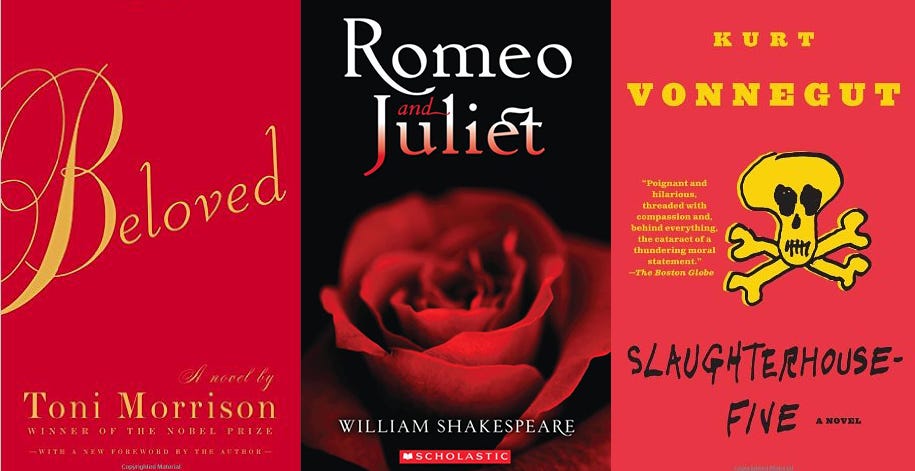
A proposal would have allowed parents to nix “sexually explicit” work like Beloved and Romeo and Juliet from school reading lists

The Virginia Board of Education has rejected a proposed regulation that would have granted parents a line item veto on class reading lists with books containing “sexually explicit content.” The ACLU of Virginia has been highly critical of the measure and argued that the ambiguity of the term “sexually explicit” would produce a slippery slope of suppression. In a letter to the Board, ACLU representatives warned of the possible ramifications for classic titles, including Romeo and Juliet, Beloved, and Slaughterhouse-Five.

The proposal was hotly debated, but ultimately rejected by the Board, which instead approved a compromise measure that would guarantee parents the right to know what their children are reading (but no right to veto books).

Summing up the Board’s current stance, member Daniel Gecker told the Richmond Times, “We are addressing this by saying we are not going to address the sexually explicit issue in the classroom and we are going to rely on local policy to deal with those issues.” (Talk about ambiguity.)

The standoff has been years in the making. Back in 2013, local parent Laura Murphy was outraged to learn that her son had read a sex scene in Toni Morrison’s Pulitzer Prize-winning novel Beloved. Murphy devised a rule that would require teachers to provide parents with a complete reading list at the start of each term, with potentially objectionable titles highlighted; parents would then have a right to replace those texts with substitutes. The plan initially appeared last year in the Virginia State Legislature. It passed both chambers, but was vetoed by Governor Terry McAuliffe (D). The measure was then revived as a proposed regulation before the Board of Education.

Unfortunately, the Virginia debate does not appear to be anomalous. Recent Tennessee protests have sought to ban a text book for its propagation of “Islamic propaganda.” Elsewhere in Virginia, Huckleberry Finn and To Kill a Mockingbird have come under fire.

While it unfortunately appears that teachers’ opinions have been minimized in the debate, Charles Miller, a Virginia educator with 40 years of experience was allowed to address the board during the hearing. He told members that “unfiltered sexually explicit messages bombard our kids every day…ironically, these regulations seek to reduce some of the greatest works of literature to nothing more than one of those messages.”