“You Wouldn’t Have Known About Me”
Calvin Gimpelevich
We’re sitting in the commons when Annie says I look like a man. She says it like this: “They did a good job with her. She looks just like a real one.”
Lisette corrects her, but her mother gets confused about the difference, so Lisette repeats herself, enunciating very clearly. “He is a man. He doesn’t look like one. He is.”
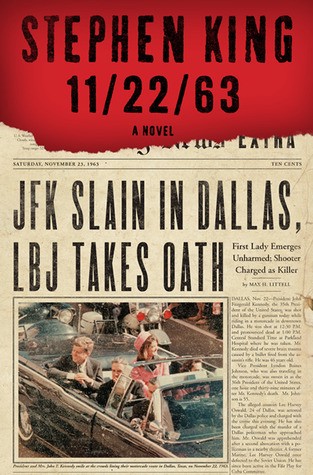
You Wouldn’t Have Known About Me (Electric Literature’s Recommended Reading Book 249)
“But not everyone passes,” her mother says. “Right? Isn’t that what you meant?”
“Oh yeah,” Annie says. “The boys are lucky. I wouldn’t have known. With us girls, it’s completely different. I can always tell.”
Lisette drops her face in her hands. They’ve been at it a while. “Oh my god. No you can’t.”
She is the youngest, while Annie, at sixty-two, is older than everyone here. There are six in the new batch, all women, plus two: Lisette’s mother — whose name I don’t catch — and Cecily’s younger amant. The patients arrived with two and three rolling suitcases apiece, shedding coats and stacking their boots in the foyer. Shoes are not permitted inside, excepting the nurses’ bleached clogs.
It’s all very sterile.
Annie, Lisette, and her mother have camped in the television room with the couches, while the others check out their rooms, and Cecily harasses the cook about her diet. “Beef if it’s grass-fed,” she says, “Chicken or turkey if not, no fish, and vegetarian if none of the meat is organic.” The cook repeats, “Organic,” and Cecily says it again, drawing each syllable out, “Or-gan-ic,” to correct the cook’s heavy accent. Cecily’s boyfriend is Quebecois and she asks him to translate. The nurses and staff are bilingual-French. The guests are all anglophonic. “You know what?” she says to her boyfriend. “Never mind. Can you just pick something up? Does Canada have a Whole Foods?”
Cecily and I are Americans, as in, The United States of, but the rest are Canucks. There is a push-pinned map of the world on the wall, showing each country, province, and state their patients have come from. Beside it is a thank-you painting, whose butterflies, on closer look, are actually fluttering vulvas.
The women talk. I don’t. I’m still in a lot of pain. My surgery happened a few days ago, but I had some kind of reaction to the oxy and have only begun to leave bed. Other than that, it was simple. They took the fleshy remnants of my breasts and cut the excess before trimming down and re-attaching my nipples. They put stints on the nipples, drains in my ribs, and wrapped me up in a compression vest — an attractive foam pad held still by wide white elastic — to keep the pressure up on my chest. Not at all like what they’re here to get.
Lisette wears a pentagram-covered quartz necklace. She has eyeliner and is current on all of the terms. Annie isn’t. Lisette can’t resist. She says, “You wouldn’t have known about me,” but Annie swears that she would. “It’s the Adam’s apple,” she says and taps on her own. “Can’t hide that or the hands.”
Lisette’s mother says she read an article about a girl who transitioned while very young and how she’d never have guessed. Annie says it’s different when they catch it young, and I turn up the TV, which has something about a psychic. Everyone is off hormones — you have to be, for the surgery — and volatile. Hormone withdrawal brings mood-swings and unwelcome sensations and smells. It’s a betrayal, that bodies revert — though theirs won’t anymore if all of the surgeries go well.
Annie is wind burnt, bottle blonde, and wearing pink slippers. She was a pilot. Like me, testosterone has squared her face out, which makes her insist she can’t pass. Lisette, disagrees, says she’s just middle-aged. Lisette, herself, is narrow and golden, hair pulled in a loose bun. Her mother, darker, petite, worries her hands. She wants my thoughts on the surgeon, but one of the nurses cuts in to announce dinner and help me get off the couch. I lock my elbows into my ribs and let her pull on my hands. With enough clench my stomach takes most of the pressure and my shoulders don’t shift and then it isn’t so bad.
Lasagna and salad. Everyone gets to the table, introduces themselves, I meet Lily, Marion, and Diana, and the usual questions ensue. When did you come out? How did you know? Was it hard? Was there loss? Your job, your parents, your friends?
“I, for one, think it’s amazing you flew out here for her,” Lily says to Lisette’s mother. To Diana, “Can you imagine our parents doing that? I would have killed,” and Diana, whose parents are dead, doesn’t answer. Marion has a girlfriend who wanted to come, but whose flight was delayed. Annie’s children don’t know she’s here because they’ve got enough on their plates. Cecily serves herself, picks at the lettuce, and throws the rest out when her boyfriend returns with a shake.
Lily says, “I can’t believe it’s going to happen. Two years on the Medicare waitlist — I thought about flying to Thailand, but — ” she shrugs. Marion blames rich Americans cutting in line. “That’s why the wait is so long for our insurance.” To me, “No offense.” Cecily, opening a fashion magazine at the table, says, “Supply and demand.”
“If Americans cared — ” Marion starts, but Cecily tells her amant that it’s time they looked at the room. The pairs leave and Marion says, “They could fix their own bloody system before mucking up everyone else’s.”
My stomach’s still tight and the food seems plastic. Play food. I’m tired. I want to go to my room, but it’s upstairs and the nurses are on break in the office. I try anyways, leaning forward with my elbows tucked in. I look like a raptor. There’s snow blowing against the window. With a lot of effort, I manage three steps.
Lisette’s eyes light up when she sees me, coming out into the hall. The expression gets to concerned pretty quickly and she runs up to support me in case I fall. My breath is heavy. It’s kind of pathetic. Everyone else is at dinner. I ask her if it was the food or the company that was bad.
“Both.” She laughs. “Everyone’s awful.”
“What? You don’t like Annie?”
“Oh my god. She’s my roommate. I hate everything.” Away from her mother, Lisette seems older — more self-possessed. “Do you want to just hang in my room?” she asks. “I’m around the corner, so, uh, no stairs.”
“Yeah,” I tell her, “Okay.” I’m still leaned up on the railing. “Not that I couldn’t do it.”
She laughs, even though it wasn’t funny, and wraps her arm around my shoulders in a way that brought us together more than it offered support. We hobble down the steps and into the hallway. I haven’t showered in days. The rubber tubes hurt when they jostle and so does the fluid that comes out and sets in the drains. Twice a day I have to dump it, or a nurse does and marks off how much collected, and it stinks.
“Do you work out?” she asks.
“A little.”
“It looks like you do.”
“Thank you.”
“I mean, you have nice shoulders.”
“Thanks.”
Her room looks exactly like my mine, with two beds stuck in a little bland room and a window, except for the luggage and the clutter all over the beds. I can tell right away which one is Annie’s because it looks like a little girl’s. Everything pink and purple. She brought her own bedspread.
Lisette’s nightstand has an arrangement of crystals. I recognize the quartz and pyrite, but none of the rest. They’re laid in a half circle around a big one, and behind are some tall candles in glass — missing the Mexican saints. On her bed she has a denim vest and a pile of Christian inspirational pamphlets. They’re the ones people hand out at bus stops — all kinds. I see a Jehovah’s Witness pseudo-science kind of textbook asking Cat Whiskers: Chance? Or Design? with insert captions and quotes. Then there’s the fire and brimstone-type black and white comics, with pictures of hellfire, damnation, and an evangelical chick tract calling Halloween a satanic slap in the face. People hand me those, and I toss them, but she’s got a whole dog-eared collection. She pushes them off of the bed. The vest is covered in patches. I know people like her.
Her mother is driving her crazy. She’s treating her like a baby — as if she hadn’t, you know, cut her off when she told her, tried to, like, starve her back into the closet, or settle for just being gay. “And now she keeps buying me things, you know? Like, retroactive guilt money. Like, I don’t need a fucking, uh, Martha Stewart brand toaster or air purifier or shit. I live in a commune.”
Lisette’s sitting on the bed and I’m beside her and she’s the same height sitting I am when I stand. I’m surprised she hasn’t brought posters. I could see something political or explicit tacked up over the bed.
“It’s, like, a half-squat group house in Vancouver, and I’m just like, how out of touch can you get?” She looks at me. “I’m sorry. That’s boring.”
“It’s fine.”
“Do you have parents?”
I shrug. “Fuck ‘em.”
“Right?”
“If they don’t like how I am — if they’re not willing to help pay, then who the fuck cares?” There’s more vehemence in that than I meant. It sounds bitter. “Not that I’m bitter,” I say.
She laughs again. “I like you.” She talks more about her relationship with her mother, lying back with arms crossed behind her head. I can’t do that. I can’t get up if I lie back again. I don’t want to be stuck there. She keeps talking. I’m in so much pain.
“Are you nervous about the surgery?”
“A little. It’s worth it.” She touches the elastic wrapped over my back. “How long do you have to wear that?”
“Just a couple more days.”
“Have you seen it?”
“Not yet.”
“Does it hurt?”
“It’s okay.”
“Can I see?”
“Yeah. When they unwrap it.”
“You can see mine when it’s done.”
There’s a knock and Lisette’s mother opens the door. “Oh!” she says. “You’ve got company. I had no idea.”
Lisette says it’s fine without getting up.
“Okay, well, I’m heading out soon. Do you need anything? Are you sure? Alright then — well, you know where to find me.” To me she says, “I’ve got a room nearby at the little motel.”
“Bye, Mom.”
“Come give me a hug.”
Lisette groans.
“That’s right, I’m just your mother.”
I didn’t think they looked similar, when I first saw them, but it’s starting to come together. Different colors, but they have the same hands, the same rounded face. They move their hands the same way. Her mother sees me watching. “She takes after her father. Took after.” She gasps and covers her mouth with both hands. It’s a large gesture. “Was that offensive?”
“It’s fine.”
“Are you sure?”
“Yeah, mom. You can say that.”
“Really? Okay. You know I’m still learning. I’m just trying to make sure.”
América is the last arrival and she comes the next day. She’s here for revision, so she’s already got one, which sets her apart. She has to spend an hour dilating, because it’s still fresh. She’s doing that when I find her, lying splayed out and naked on the bed.
Not technically naked. She still has a dress, but it’s pulled up to her shoulders and there’s nothing beneath but the dilator, which is in her. I notice that she’s still on the smallest of three. I’m not in her room, but the door’s open. She didn’t fully shut it and it’s crept open, widening out of a crack.
In the main room they’re watching Disney, but not really, an old princess film. They don’t have a video player, so it’s whatever is on the TV. A bunch of it is in French. Annie, Diana, Lisette, Marion, and Lily. Cecily went out to sneak a cigarette. It’s against the rules for surgery, but the nurses will only scold her. She’s not Canadian, so it’s all out of pocket. They won’t stop her. She doesn’t care.
They’re talking about sex. Also the surgery, but everyone’s always talking about surgery, so that doesn’t count.
Marion is fretting about her girlfriend because she wants to have sex one last time, the old way, before surgery, but her girlfriend won’t come until later. The blizzard still has her delayed. She leans in, talking about it as though it’s scandalous, the kinkiest thing you could do, and Annie takes the bait. She says, “I could never do it that way.”
Marion loves it. She pushes. “Why not? It’s fun.” She has a dark A-line. She winks.
“Oh, no,” Annie says. “Never. I haven’t even once since I realized.”
She lets that sink in.
“Wait,” Lisette says. “Nothing?”
“Not for twenty-five years.”
The room is quiet. A princess, onscreen, gets her new gown.
“I can’t wait for a pussy. Let me tell you. I’ve got it on my calendar. Six months and then we are going to have some good fun.”
Lisette is so horrified that she has to leave. “No sex,” she tells me. “How does she live? No sex at all.” We pass América’s room and she’s still at it, stretched over her bed. I’m better today, walking better. América sees me looking. I ask if she wants me to shut it, but she says it doesn’t matter. “Who’s ashamed? I’m not.”
“Have you seen one?” she asks Lisette.
Lisette has seen pictures.
“Well, why are you waiting? Come in.” She has the middle sized dilator in. The other two are on the blanket, bright as Legos, with lube. The big one’s impressive. I tell her, I was born with a cunt and I still don’t think that would fit.
América says everything’s wonderful and Lisette shouldn’t worry and the surgeon did a great job. She has a beautiful pussy. I see scars, but they’re minimal, one on each labial lip. They look cosmetic. “Racing stripes,” I tell her, and we all laugh. “For speed.”
She goes up to the big one, the whole time very detached. Clinical, rote, tooth-brushing chores, in the beige and white hospice-care room. It’s attractive. She has an accent. Is forty, perhaps forty-three. “Why that name?” I ask her, and she says it’s because she has everything in her, North and South and all of the countries within. She comes from the Caribbean.
Lisette touches my arm. I look at her. We leave and go back to my room. I’ve still got the foam, but as soon as we’re in, she tears at the rest of my clothes. I go for hers, lifting the shirt with my raptor arms, getting past the pointed young breasts. My pants are down in a pile of flannel. She kneels down and then bends a little further and puts my little cock in her mouth. She does that and then gets with me in the bed. I rub her long clit. It stays soft, but she rubs it along my junk some, pushing at the entrance, and then we give in. Nobody’s going to climax. I could masturbate, but it’s honestly not worth the pain.
We lie next to each other, not touching. “That’s probably the last time…” she starts. I wait. “I can’t believe Annie. How hard are pronouns? She was talking about Diana and kept using ‘he,’ and I’m like, ‘You’re trans. How can you not get this?’ and then she was still saying ‘he’!”
My incisions are pulsing. I can feel the heat coming off them, a sharp endless ache.
“She’s driving me up the wall.”
I am only wearing the binder. I say, “She’s older. She doesn’t know.”
“She should.”
“She’s uptight.”
“Because she hasn’t been fucked in my lifetime.” She is daring me to answer. She arches her brow.
I tell her I need a nap and she obviously isn’t impressed, but she can’t say anything because we’re all here for surgery, so you have to be considerate of all the failings, of the hygiene slips and the shuffling, to keep the awareness from working both ways. If she can convince herself that I don’t look geriatric and wretched, that I’m attractive post-surgery, the gauze will also shield her.
I can’t sleep when she leaves, but do arrange myself on the cushions so I’m propped up and reclining, because that’s the most comfortable way. I can’t take the painkillers after my bad reaction, so I’m just stuck here breathing, feeling my lungs stretch and pull on the stitches and trying to manage that pain.
Nothing that happens here matters. It’ll collapse into a sentence — that time I went to Canada for my surgery — and all the patients and nurses and hospice-stuff will disappear. If I had a family, I’d let them coddle me, fetch pillows, get water, basically make me an infant. They should be here, but they aren’t. The Canadians don’t realize how lucky they are to have their surgeries paid by insurance. Lisette doesn’t know.
Eventually I must have drifted off, because I wake to the pipes starting up. All the ladies have to shave their lower halves, under threat of the nurses re-scraping if they do a bad job. They take up all of the bathrooms for hours, trading off one-by-one.
At the hospital, they’re assigned different rooms. Now Lisette and Marion are together, Cecily bunks with Diana, Lily and Annie are together, while América and I stay in hospice. She transfers tomorrow. It stopped snowing and the sky shone, darkening, as we crossed the grey car-splattered slush into the building next door. Here was the hospital, everything medical, none of hospice’s careful touches, it’s sterile-informal décor.
Lisette and Marion like the same music. They play witchhouse off of a laptop on the faux-wood meal tray. There are different nurses giving different orders to different women (in the same accents) on how to prepare. It’s a night here, surgery all day tomorrow, then two days of recovery before returning to hospice for more care.
There is no common space — just the lobby — and no internet or TV. The women are restless, opening and closing books, journals; wandering into new rooms. I look out the window. There’s a street, the snow, and the streetlights. Lisette and Marion get up and sit down. Even Cecily comes, wearing a satin kimono over the hospital gown. Her boyfriend follows, moon-eyed and silent. They’re too restless for conversation. I don’t stay long.
Lisette’s mother is already here when I come the next morning. They haven’t started. The nurses are eating bagels and I see the surgeon walking with his assistant, snapping his blue rubber gloves. A nurse comes out with a schedule and when Annie is first, not her daughter, Lisette’s mother leaves.
It’s early. I’m tired, but don’t want to miss anything. There’s some excitement as Annie gets strapped to the gurney, but then they take her and the lobby goes quiet. I look at a French magazine. It takes two hours.
She comes out in her blue gown on the gurney, hooked to a few tubes, looking ecstatic. Also, exhausted and drugged. They used a local anesthesia, so she was conscious, sometimes, and says it was worth it. She is so happy. They did it. She did it. It’s done.
They roll her out.
Next up is Lily, then Marion, then Lisette, then Cecily, and finally Diana goes last. Twelve hours of surgery. I don’t know how they do it, the doctors, or why it has to be in a day. I wonder if they’re drug addicts, or how else they stay awake and in shape.
Most of the women are sleeping. Lily’s gown wants to open, and, while adjusting, she starts to cry. “Don’t mind me,” she says. “It’s nothing.” A nurse hands her a tissue. “I’m just nervous. I’m fine.” They wheel her away and another nurse asks me to follow her into the examining room for a checkup. I’m wearing the binder under an open flannel, which she carefully tugs back and over my arms. Beneath that are jeans — I was sick of pajamas — but those are left alone. She opens the binder and the pressure lets up from my ribs.
I can finally see what they’ve done.
The cuts go across my whole chest. Red raw lines held together with a yellowing plastic thread, and curved up at the sides. She holds up a mirror. I see wrinkles where the seam pulled my skin in. “Good, yes?” The nurse traces the line, showing me how the incision both sits under and helps to define my pecs. “Soon, you don’t even see.”
My drain tubes go into the corners, and the cuts around them look open, like the stitching might come undone. It is so red underneath. And tender. Now it’s exposed, my chest feels tender and young.
She has to remove the drains. I lift my left arm as high as I can while she snips the threading around the first tube. She pulls. It hurts more. Three slippery inches of plastic leave me, and I’m in a bit of shock, seeing how far in they had gone. She does the other side before I’ve really processed the first, and it hurts, but I feel so much better when it’s all done.
I have a new chest. There is no extra. There are no tubes. There are no breasts.
I haven’t had a chest like this since I was eleven, and then it all went to hell. I mean, I put up with it — thought, I don’t like it, but I can deal. But now I am so much lighter. Happier, in an indescribable way.
I want to see how my shirt fits, buttoned, without the binder — I’d like to never wear a binder again. No more Velcro or bras or getting too hot in the summer or checking, re-checking, the mirror to see if it actually is hiding my breasts.
But, of course, I have to wait while everything’s raw. The nurse puts the foam back over my chest and seals the white Velcro tight enough that I feel the pressure with every small breath.
At least I know what it looks like. That’s good. I’m kind of winded. Sweaty. I smell like a man. The nurse leaves and I sit there for a while, thinking that it was all worth it, that I’d do every part over again. My body is already healing, trying to close up those holes. It makes me so tired. I need a minute. Marion’s under the scalpel when I come out.
Lisette and her mother are in the lobby. Her mother has takeout coffee and a memoir. She has the book open, but isn’t reading. She’s watching Lisette apply makeup, and asking if that’s really necessary for a medical procedure. She seems worried that it will increase the chances that she might infect. “Besides,” she says, “it’s a little bit much, don’t you think?”
Lisette has her eyes done up like an Ancient Egyptian portrait, with the black line over her eyelid that spikes up off to the side. She has sparkling wine-colored eyeshadow that matches her lips, and the effect is very high art.
“It’s, well — ” she drops her voice. “It’s not womanly.”
“Mom!”
“It just — I don’t know, you’ve worked so hard to look like a — well, to look like yourself and I don’t want people to think you’re, you know, a, well, like a drag queen.” Lisette doesn’t answer. She’s darkening her eyebrows. “I don’t want you being misunderstood.”
Diana comes out and asks the reception desk nurse if she can re-check the schedule. The nurse tells her nothing has changed.
“I’m a mom,” Lisette’s mother says. “I want mom things.”
Diana takes the paper schedule. “For my peace of mind. Just to see.”
There are more nurses heading back and forth through the lobby, holding objects and clipboards, telling things to each other in French.
“Look, she’s not wearing makeup,” Lisette’s mother says of Diana.
Her daughter snaps the compact. “This is my armor. I’ll do it my way.”
“It’s just that it makes people think you have something to prove.”
Diana’s listening, pretending to look at the schedule. She moves her lips like she might say something. She looks pained.
I tell Lisette she looks great.
“Really?”
“Yeah. And I just got my drains out and saw my chest and — ” I stop because she’s turned back to her mother. Lisette says, “Drop it already, okay?”
Her mother frowns and goes back to the memoir. Her coffee lid is covered in tooth marks. She bites the lid as she drinks. Diana returns the schedule. I sit in the chair nearest me. There is an uncomfortable, avoidant silence, until Diana’s attention is caught and she points behind me and claps. “Will you look at that?”
I try twisting around. Slow going. There is, as always, the pain.
“I can’t believe that you’re up!”
Annie walks into the center, shuffling in her gown and pink slippers, hooked to a rolling IV. She looks fine. A little bit tired, but not like she’s had a big surgery. I thought she’d be out for a while, given her age, but nothing seems to phase her ex-military endurance, or healthful orange suntan. Diana asks if she should be walking and Annie waves off the concern. “I’m doing just fine — hurts less than when I lie down.”
Her slippers are the cheap fuzzy kind that are soft and then quickly matted — dirty and stiff, but hers still have the new tag. She asks what she missed while she’s out.
Diana tells that Lily and Marion have both gone. “And Marion’s should be almost done.”
“Very good,” Annie nods. “And I see we’ve kept our young man.” She winks, dramatically, at Lisette. “He wants to keep an eye on you, doesn’t he?”
Lisette looks away. I say that I came for a checkup. Time to take out the drains.
“Well, that’s wonderful. I mean it: you boys are lucky. The hormones do everything. Next they can make you a willie and then no one will ever be able to tell. I’ve still got a while. I’m thinking about those facial feminization surgeries. I’d like to shave my jaw down.”
I don’t want another surgery. Maybe a hysterectomy, someday, if I get cancer or if it stops working — because I’ve heard testosterone does that, makes your uterus sick — but I’m not getting a dick. Annie tells me I’ll change my mind. Lisette tells her I know myself best. I say that even if I wanted one, I couldn’t afford it. Forty-five thousand dollars. That’s what it costs for a dick.
Diana says that’s positively barbaric. “Your country makes you pay the whole way, doesn’t it? I keep forgetting you’re from the US.” She asks how I paid for my chest and I tell her I put it all on a card and she tells me it’s awful that I’d have to do that — the interest, the credit, and I tell her it wasn’t my card.
“Come again?”
This is a long story. There is a compressed version in which I do not talk to my parents, but they talk to my brother, and I visit my brother, and help myself to the emergency credit card that they gave him, because, I think, I’m family. It’s a medical family expense. “I mean,” I tell them, “It’s not like they can’t afford it.”
Annie, Lisette, her mother, and Diana are all looking at me. “They should have paid in the first place,” I say.
Lisette’s mother closes her book. “That’s awful.”
I start saying it isn’t so bad, but —
“How could you do that to them?” She leans forward in her chair. “They’re your parents. You can’t cut them out of your life and expect — that is just so selfish,” she says.
Lisette says, “Maybe he didn’t cut them out, Mom, did you think about that?”
“Lisette, I do not like that tone.”
“Maybe cutting your kids off is fucked up and oppressive and maybe he’s doing his best to survive.”
“Lisette, I am sorry if I wasn’t perfect, but I am doing everything I can to support you. This isn’t easy for me.” She pauses. “It isn’t easy to wake up one day and find out that everything you did as parent — even though you did your best — that it was all wrong and your ideas have been wrecked.” She’s someone who cries when they’re mad. “I thought I did the right thing.”
“Well, you didn’t.” Lisette says. “I’m taking a walk”
The nurse says she has to stay in. Marion is nearly finished and Lisette must put on her gown. She leaves. Her mother doesn’t. She’s still tearing up. Diana pats her shoulder. “I wanted grandchildren. Is that so mundane? She’s showing me all these articles and theory and I just had this vision,” her voice broke, “of going to his wedding and holding my grandson.” She wipes her eyes. “No, thank you, I’m fine. It’s all fine. I’m here aren’t I?” She smiles. Her face still looks tight. “I need a cigarette.”
Lisette’s mother bundles up into her winter coat and snow boots and takes a breather. Lisette enters surgery. Marion sleeps. Lisette comes out. Cecily’s awake enough, after her surgery, to tell her amant to shut off the camera. Diana goes last. It’s so late. Marion’s girlfriend finally arrives and they spend a long time kissing, the girlfriend’s long hair functioning as a curtain to shield them from view.
Most of them are bedridden, save Annie, who glides around with her IV. They all have plastic bracelets. They all have blue blankets, blue gowns, and white sheets. Lisette has lost her makeup; they wiped it off in surgery. She doesn’t notice. She sleeps.
Her mother isn’t talking to me. I think, Nobody cares about me. Melodramatic. That’s wrong. I’m off hormones, my feeling are going all over. It’s like PMS, with the estrogen spiking, but worse. At least I still have my chest. In a few days I’ll leave and it’ll be over. I don’t need a family. I stopped talking to them when my parents refused to switch pronouns. Nobody cares about me.
América checks in as I leave. Her revision will be easy. She’ll go home the next day. I put on my coat, slowly, alone and slip on my boots. Today it didn’t snow, and the ground has mottled, pocked with footsteps and grime and more slush. It’s dark out. The nearest streetlight is dim, yellowing in a way that suggests the bulb is in its last days.
The hospital seems unnaturally bright. I can see into each window, illuminated by white fluorescents, and doubt that they can see me. Lisette and Marion are both in their beds, Lisette’s being the one by the window. Her mother sits on the sill. I can see her back, the heather cardigan and slacks riding low, and I can see her hand on Lisette’s sleeping forehead. Her purse is on the sill, as well as the open memoir.
I have my chest, I think. And I don’t have to be jealous. I’m older than Lisette by a couple of years. I don’t need to be coddled.
It’s hard for most of them the next day. Hard to eat, hard to sleep, painkillers. América’s surgery is done before I arrive, and she feels okay, but the rest are nauseous or hurting or both, and irritated at the mixture. Annie still can’t settle down and goes from room to room, checking on the patients. The others don’t get up for anything but the bathroom. The nurses are more obtrusive than before, checking-in and handing out pills. Cecily complains that the nurses are too brusque, too medically efficient. She had a breast job in the States, and was the only patient that day, bathed in the entire staff’s solicitous attentions.
Of course, that was a plastic surgeon, Diana points out, with something to sell, not a state-run medical doctor. I have to agree. They act like the nurses I’m used to seeing at my stateside community clinic — efficient people taking care of a medical necessity — not selling something cosmetic.
Cecily isn’t convinced. She sends her (notably handsome) young man into Montreal for a few odds and ends she is missing. He has hinted that Cecily works in LA, doing something glamorous and important.
Diana, by contrast, does not. She has her career in preschool. She’s also managing fairly well, the only one to have eaten her whole lunch of bread and soup and jello.
I’m also better. I slept the whole night, without breaks, and this morning I took my first shower. There are only two more days with the compression vest and, after that, I’m done with binders forever. It feels like I could lift my arms over my head, but try not to get that excited.
Lisette is in a terrible mood, trapped and fighting nausea. She has an eighties cult television show on her laptop, which she half-watches while flipping through Christian pamphlets. She has a thin blonde beard dusting her lower features. There is nothing unfeminine about this. Her face is soft, softer, even, with the hair and it took me a moment to realize what was different, to remember that most women don’t grow facial hair.
I can’t move my shoulders enough to shave and have grown my own patchy beard. The effect is not the same, especially with my (diminishing) acne. Trans women, on the whole, get better skin on hormones. Trans men tend to the other direction.
Lisette disagrees about hair. She wants to know if the nurses will shave her. I tell her I’ll ask, but she doesn’t want me to leave. Her mother’s in town and Marion is still kissing her girlfriend. She says, “I’m sorry I’m such a brat.”
We watch her computer. She holds her bladder in for an entire half-season, but then a nurse has to help her out with the catheter. I stay with Marion, whose girlfriend went to forage. She asks if I want to see something.
“What?”
She arches her brows. “You know.”
“Okay.”
She hands me her cell phone and I look at the picture. “I had a big one, didn’t I?” she says. “It’s gone now, so I don’t have any shame.”
Annie rolls in and wants to know what we’re seeing. Marion switches the picture. “Cats,” she says. “Isn’t that a cute little cat?”
Annie oohs over it. What a sweet little kitten. Is it Marion’s? It is. She and her girlfriend adopted him over Christmas. “Oh, a boy cat,” Annie says. “I always think about them as girls — though I suppose they do have the whiskers.” She tells us a story about electrolysis, how that was the first thing she got done, even before starting hormones. She’s surprised Lisette hasn’t had her hair removed yet. “He’s never going to pass with that stubble.”
Marion says, “She.”
I say, “She passes.”
Annie assures me I’m wrong.
“Does it even matter?” I ask. Annie thinks that it does. Lisette overhears, coming back, and tells Annie she’s going to grow a big bushy beard. “Like a lumberjack woman,” she says, and Marion laughs. She thinks that’s a wonderful joke.
By the time they return to hospice, everyone is up and walking. It isn’t much, maybe a few steps at a time, but enough to get the blood going.
Nobody wants to be shunted back into her bed, so most everyone’s in the commons. Five women, three guests, and me. América left that morning. I’m gearing up to leave too. I’m heading out tomorrow. The thought isn’t great — I don’t know what I’ll do back in the States. Absolute worst case, my parents will have me arrested. What I did counts as grand theft and, if they prosecute, a possible felony. I don’t think they’ll do that, though. Who does that to their kid? It’s not like that’ll return the money. And they can afford it, I think. It isn’t about the money.
Lisette and her mother talk about family. So-and-so gambles too much, So-and-so lost his kids, So-and-so-and-so-on-and-so have all of these problems. “It makes me look like a success, doesn’t it?” Lisette says. “I got a sex change, but I’m not that fucked up.”
Her mother says she ought to go back to college.
Lisette says, “Oh my god,” and I think it’s her response, but then she moans and puts both hands on her vulva. “Ow,” she says. “Jesus fucking Christ.”
Her mom sits up. “What’s wrong?” Cecily, Diana, and I all ask the same question. “Oh,” she says. Her face is screwed up. “Oh, it hurts really bad.”
Cecily’s boyfriend goes for a nurse. Lisette tears up. “It’s like a stitch ripped.” The first nurse comes to her side. “Where are you on the pain scale?” the nurse asks, as a second one hands her some pills.
“Eight,” Lisette says. “Maybe nine.” She bites her lip. “Fuck!”
A third nurse comes with a gurney. They lift her up and Cecily’s boyfriend offers to help, but they shunt him away. I’m worried her body’s rejecting. Lisette’s mother follows them to her room. I come with. A nurse tries to shoo me away, but Lisette tells them I should be there. We’re each holding one of her hands, Lisette’s mother and I, as they park her into room.
Annie’s in there, taking a nap. She’s felt worn out and sick, since getting back. Everyone says it’s from all the walking.
The nurses cut away Lisette’s clothes. They take the ice pack off of her crotch, and cut through the surgical tissues. Someone has called the surgeon and he’s on his way. Annie wakes up and wants to see what’s going on. She’s wearing her pink pajamas.
Lisette is trying hard not to cry as the nurses remove the last of her coverings. I can see it, the two big incisions on either side, and the puffy new vulva in center. It’s all so swollen, I can’t tell what’s wrong. It looks like an angry vulva.
“I want to see,” Lisette says while the nurses are checking. Her mother is crying. Annie has a hand mirror. She angles it up and tells Lisette everything will be fine. “They’ll be able to save it, I’m sure. They’ll still make you into a woman.”
Lisette screws up her face. Her mother says, “It looks just like you gave birth.”