Andalusia Dreaming

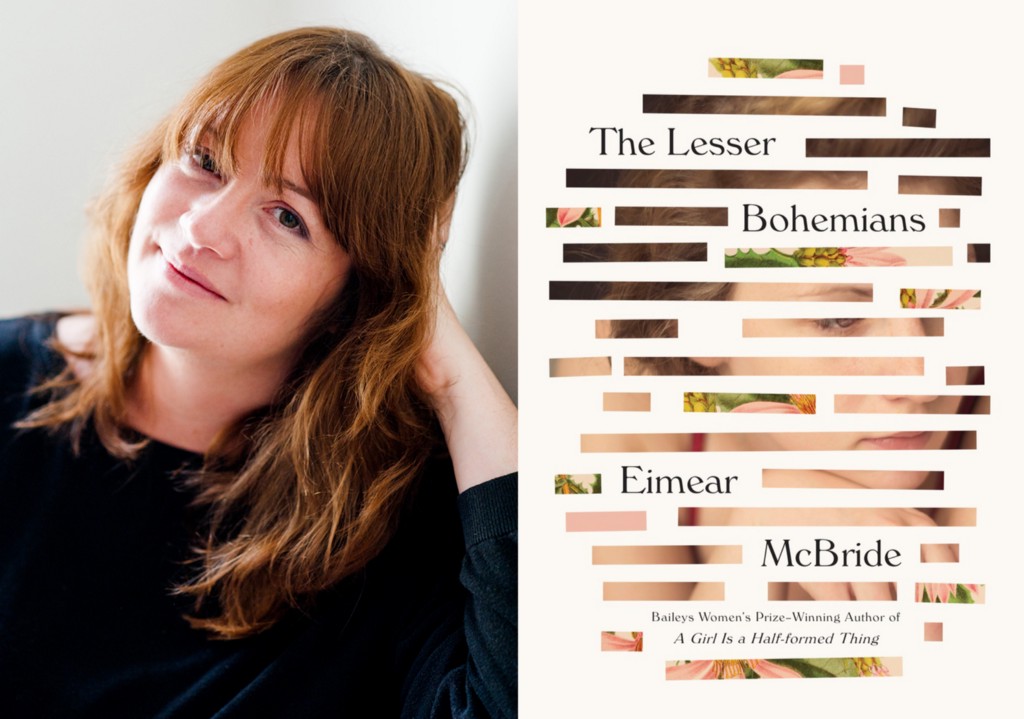
“I will rely on those oscillations of the mind that we call memory,” says the nameless narrator toward the start of Cabo de Gata, Eugen Ruge’s second novel. The conceit of the novel is as simple as a grade-school composition, complete with the cliché-classic prompt:

What did you do on vacation?

“I remember,” the narrator answers, I remember… I remember…” the narrator answers, the way a child would answer, but with a child you wouldn’t expect 107 pages (in translation by Anthea Bell, who gave the English-speaking world our version of Austerlitz by W. G. Sebald, and whose rendering of Ruge’s German into limpid, flowing English I have tried to quote extensively) of perspicacity and wit to follow.

The narrator recounts when, not long after Germany’s reunification, stifled by his “regular, mechanical lifestyle” — not to mention his manipulative ex-girlfriend; his girlfriend’s daughter, who still thinks he’s her father; uneasy dreams of his recently deceased mother; and (worst of all) the scourge of yuppies overrunning Berlin’s cafes — he dropped everything in his life and searched for someplace “warm in winter, at the same time inexpensive, and preferably can be reached traveling by land.” He eventually settled on Cabo de Gata (“The Cape of the Cat”) a national park and a fishing village in Andalusia, on the southern coast of Spain:

Andalusia not only sounded strange and far away, like the names of all those places that lay out of reach behind the Iron Curtain; it was, I thought, a fairy-tale place, an invention — until I saw it on the weather map of that Spanish newspaper, and then, when I read in my travel guide that Cabo de Gata was “the last romantic fishing village” in Andalusia, where the boats, said the guide, were “still brought up out of the water by a hand winch.” When I read that in the national park of Cabo de Gata you already felt “a breath of Africa,” I realized that this was the place I had been looking for.

Cabo de Gata turns out to be cold in the winter, and its fishermen have long since abandoned hand winches. Still, the narrator finds the place enchanting. He haggles for room and board and stays for one hundred and twenty-three days. Other travelers — fellow disaffected men — arrive and depart. The locals are initially standoffish, but they grow accustomed to him, even warm. He walks. He plays billiards. He tries to write. He meets a cat.

And that’s it. You’ve heard this before, I’m sure: a lonely white man hangs out in a foreign place; a writer writes about writing; a small, cute animal allows someone to discover deep wells of feeling within himself. A superabundance of precise observations brings Cabo de Gata out of the realm of the commonplace. For example, here, the narrator has seen a limping woman who reminds him of his old civics teacher:

She chanted in just the same soporific tone of complaint as she walked — slowly, slowly — between our rows of desks, announcing the basic laws of the dialectical method — making the pauses in the words long enough for you to go to sleep — as she asked the fundamental philosophical question for the hundredth time.

Can. Pause. The world. Pause. Be. Pause. Perceived?

Perception of the world is at the center of Ruge’s project in this book. Many are clever observations, how tassels on a yuppie’s loafer leap “like dachshund puppies,” or how food always seems to taste best at its place of origin. But mainly, for Ruge, perception seems to hinge on finding the harmony in contradictions:

I remember smells only when I am smelling them.

…although I am not a Christian all at once I felt it was intolerable for [a crucifix] to be so shamelessly exploited.

…the more difficult and laborious it subsequently became to extricate myself from that entanglement, the stranger my urge to do so became, until I was possessed by a positive mania for giving notice.

I entertained the admittedly philosophical rather than scientific idea that what Heisenberg described on the nuclear plane (to wit, the incomprehensibility in principle of the subject) is a quality immanent in the material, and one that consequently, indeed inevitably, must be continued in the visible world: it was impossible for me to find the right place. I liked this realization, and indeed it actually cheered rather than alarmed me.

Many of these contradictions emerge from the conflict between the narrator’s deep skepticism and the tentative wisps of spirituality beginning to stir in him. In a more mawkish book, gorgeous Andalusia would be the mainspring of his schmaltzy awakening to transcendence. Not in Cabo de Gata. The narrator is already offended by the crucifixes in Berlin, and he retains his skepticism in Andalusia, even after his fateful encounter with the cat. Nevertheless, the sunrise on the Sierra Nevada makes him think it’s “entirely absurd, positively deranged, to doubt the existence of God.”

Then the cat appears. She’s red: the color of another cat — the corpse of one, at least — the narrator came upon en route to Cabo de Gata; the color of his mother’s hair. In his dreams, he had seen his mother resurrected, which leads him to feel, if not wholly believe, that the cat is his mother. This fiction he creates absorbs him totally, until he reaches what feels like an epiphany, one that can’t be said in a cogent way, “for the words in which I wrote it down later seemed to me a very poor paraphrase of that cat’s message, and the poverty of my words seemed to be a part of that message in itself.”

Cabo de Gata’s depth is belied by the simplicity of its form. Of course, its apparent lack of artifice (“I remember… I remember… I remember…”) is just an artifice of another kind, but one, that brings us nearer to life — which is the goal of art, as George Eliot said. Memory, after all, is its own kind of fiction. If one can, in fact, perceive the world, it would be primarily through memory — thus through fiction.

The narrator’s claims of authenticity also allow Ruge to dip his toes into tropes: dreams his narrator had, and sunrises he admired, and novels he never finished writing. But who among us has not been startled by our dreams, or basked in the glory of the dawning sun, or tried to write a novel and failed? Ruge asks his readers to surrender to the experience, in much the same way his narrator learns to surrender, to exist within life’s harmonious contractions.

One-Star Reviews of Christmas Classics

Bah Humbug! These Amazon readers are completely unimpressed with Dickens, Thomas and all your other so-called holiday classics.

We here at Electric Literature love the holidays, and of course we love holiday books, too. But we also believe in dissent, debate and the steadfast truth that Amazon one-star book reviews are a national treasure. The Polar Express? More like The Local to Boring-town. Dickens? Who the hell is he? That kind of crankery was once the reserve of drunk uncles in ugly sweaters, but now, thanks to Amazon, all the world’s readers have a suitable megaphone for their contrary opinions. In the spirit of the holidays (that’s a pretty broad concept, right?), we’ve curated a truly marvelous selection of online critiques to some of the best-loved books of the holiday season. So, put on some Andy Williams, pour yourself a glass of disgusting egg-nog, scroll down, and prepare to enjoy the Ebenezer Scrooge-level sourpussery.

The Polar Express, by Chris Van Allsburg

— “I seriously do not understand what the hype is. Bought on my husbands insistence, but it is a pretty lame book.”

— “such a famous story. so disappointing. no plot, not a story — just a whimsey thought. lovely drawings. nice last line. wasted money. wasted expectation.” [ed. note — Could this review be from our President-elect?]

— “This book is too dark for a 4 1/2 year old.”

How the Grinch Stole Christmas!, by Dr. Seuss

— “Very weird book. Strange rhyming and nonsense ‘words.’ The people are drawn like some kind of aliens. And this Grinch character — I don’t know if it’s a talking animal or if he’s also an alien. Apparently the author is NOT an actual MD or PhD.”

A Christmas Carol, by Charles Dickens

— “I got bored. Maybe this book wasn’t my cup of tea.”

— “Charles Dickens stole this story. Ive seen this premise in several tv shows and christmas specials…”

— “I am bored with this story. It’s not as great as it is made to be.”

A Child’s Christmas in Wales, by Dylan Thomas

— “[F]rom previous reviews i thought it would be a great book to read to the children before christmas, to get them in the mood for christmas it is boring and just waffles on with no real story.it didnt make me feel christmassy at all.”

— “I could not get into it.”

Rudolph the Red-Nosed Reindeer, by Robert L. May

— “An abominable snow monster that eats reindeer and a mountain man that rips his teeth out?! I wanted some Xmas stories for my 2yr old…this is not what I had in mind”

A Christmas Memory, by Truman Capote

— “Well, his writing style is fabulous but i never seem to understand what he’s trying to say except the obvious itself”

— “I really didn’t care for this book at all.”

The Gift of the Magi, by O. Henry

— “The book really did not reach out to me as a reader and I could hardly tell what was the message in the story. For me, this was deceiving and this is the worst book I have ever downloaded. I am not sure if this is even considered as a book. The story was very dull and out of topic.”

The Little Match Girl, by Hans Christian Andersen

— “This is a very sad book and should not be read on school grounds without the approval of a parent. These were very damaging thoughts that most 8–9 year olds would never have imagined in their life by this age. If the message is “be lucky to have what you have” then it should be left up to the parents and not the schools.”

— “Completely agree with all the 1 star ratings here. There are MUCH better ways to instill gratitude and compassion in young children than by fear. Wish I could return this book. I don’t even want to donate it because I don’t think any young child should read it.”

Midweek Links: Literary Links from around the Web (December 21st)

All the best literary links that are fit to, well, link

What are the best escapes in literature? Greg Mitchell picks his top 10.

R.O. Kwon celebrates the amazing Asian-American fiction published in in 2016 that countered “a year full of xenophobia.” — “Donald Trump, Brexit, Marine Le Pen, Alternative for Germany (AfD), the Netherlands’ Geert Wilders — 2016 has been a banner year for nativists and white supremacists, and I’ll join in with all those lamenting a catastrophic year’s events. Not everything’s been hateful, though. I’ve loved, in particular, one heartening trend countering the upsurge of xenophobia: this year’s bonanza of English-language fiction published by writers of Asian descent.”

Kevin Nguyen talks about the problems of race and politics in the publishing industry: “After the election, there was no soul searching on Book Twitter. No one questioned the power structures of publishing. Can we talk about how one of the Big Five publishers is owned by News Corp? Often the publishing of things like Bill O’Reilly’s twisted histories is justified as a means to support literary fiction. But does anyone ask if that trade-off is worth it?”

Big publishing gets all the attention, but indie presses publish some of the best writing. At Bookriot, Liberty Hardy writes about the best indie press books you might have missed.

Your favorite authors pick their favorite books of 2016 at Google Play.

Pamela Paul gives a behind-the-scenes look at how the New York Times Book Review covers books: “The Book Review at The Times reviews about 1% of the books that come out in any given year.”

Do you need a last-minute gift for a book lover in your life? This list has you covered.

Fantasy authors Ken Liu and Kate Elliott talk about portraying powerful women in fantasy fiction: “Frankly, a person doing research has to deliberately avoid or reject modern scholarship to pretend that in the past women were ciphers with no influence upon the societies they lived in and no access to power, education, skills, work, travel, art, and so on.”

Finally, happy holidays everyone! And if they aren’t happy, well, take comfort in these 10 amazing books about horrible holidays.

“Youth” by Swati Pandey

My betrothed, a girl I had not yet met, lived in an even smaller village than mine, and to reach it, my father, three brothers, and several uncles and male cousins took a series of horses on a twenty-five-kilometer wedding processional. At the end of the line, crowded into a grand carriage, I sat with my father and my father’s friend, our village’s landowner, the man who loaned us all the horses to pull all the carts and who did not tire of reminding us of it. In other parts of the world, even in other places in India, there were automobiles. It was 1941, after all. But in my low corner of the world, for my village wedding to a village girl, we bragged about horse carriages. He had them draped in garish fabrics and the flower garlands the women of our family strung together in a mess of unpatterned color. The horses had their finery, even, and I was the least decorated of all, in the plain cottons of a Brahmin wedding.

“How could I not give my horses to see our town’s favorite son Ram be married, hmm?” the landowner said. “And soon we will have a new favorite daughter.”

I was nobody’s favorite son and he knew it. The favorite son was my eldest brother, leading our procession on a horse, simply to show he did not mind twenty-five kilometers on a horse, that he was a civil servant — a geologist at that, nothing special — with the spirit of an officer. Of course, not one of us was rushing to sign up for the army, no matter how much the British exhorted us. I was even unqualified for the civil service, having failed the exam. I knew exactly what I was: a too-thin layabout who could be no better and go only slightly further than my father, a mostly illiterate tenant farmer.

But at least I had the horses. My brothers did not have so many for their marriages — though their celebrations were far more joyful than mine would be. One grows exhausted by the time it is the fourth son’s turn. The landowner did not own so many horses, and my father was not so entangled with him, until recently. There was no need for entanglement then. Survival was less of a concern before the war.

My father was silent in the rear-facing seat. My marriage was a task he needed to complete, like those of my brothers before me. Two were married to the nearest girls in the village and still lived in our growing household with their children. One, my eldest brother, went to a city woman. He could manage such a creature, it was decided, because of his stature. Were my mother still alive, there would at least be some joy to these weddings, possibly laughter, or song, I imagined. Our mother had supposedly been a terrible but loud singer. She died before I could form my own memories of her. Without her to produce happiness, my father whittled my marriage down to what it was, a profitable transaction.

I was the youngest in the family, though, everyone agreed, far too old to not be married. The delay in my marriage was never explained to me. I was handsome enough, but we knew no one suitable in our town, so the search expanded further, to some business partner of the landowner’s in some different village. I was not told the bride price, but I was certain it was piddling. I was not shown a photograph nor was I offered the opportunity to meet her, to make sure her voice was not so shrill or that she did not have some obvious physical deformity.

“What is our soon-to-be favorite daughter’s name again?” the landlord asked.

I did not remember and my father did not answer. I had been told she was beautiful and serious, with thick hair down to her thighs, a perfect swaying walk and good teeth. And maybe we would have strong children and a steady life. Even if she was just a girl, she could make me more than I was. What else was there to a woman? I did not know.

Everything I learned of women came from one girl, Mala, thin as the malnourished trees that ringed our village and just as rough-skinned, with hair that refused to stay braided. She was two years older but I sat next to her in school starting in the third form, aged eight, because I was ahead of my peers in numbers and she was behind, always distracted by a pet lizard she carried in her little fist. Its tail and head lolled on either side of her closed hand like disobedient, demonic extra fingers. She liked to drop the poor pet on the heads of students she hated, including me, until the day I decided not to react. This required a constant vigilance — every moment I anticipated the lizard suddenly falling on my head and clamoring with its sticky scaled feet down my neck. When it finally happened, after days of meditatively accepting the fact of possible lizards on my head, I did nothing, not even the slightest squirm as it acquainted itself with my hair, sent scared nerves running electrically from my scalp to my spine. I did not move a millimeter until, finally, I turned to look at Mala. Her mouth was a perfect o. I had awed her. This was what it meant to impress a woman, I learned. This warm feeling, the heat from her mouth, the way it stopped the shivers along my spine, was what I had always wanted.

She was the daughter of people new to our village. While our family had lived there for all knowable time, hers arrived in the last generation, landless, as they still were, performing metalwork and other such crafts to support themselves. Transient people were suspect, and every adult, my father, my teacher, my older brothers, hated my new friendship with Mala, which outlasted the lizard’s little life, prematurely ended by the foot of another classmate. Mala spit on him, a great thick wad, in retaliation, and suffered a beating from our teacher for it.

She adopted more dangerous pleasures after that, like racing locomotives along the tracks. The trains ran often then, before the war required the cars to be shipped elsewhere and the tracks to be interrupted. I ran with her a few times, holding her hand, but I could never last as long, my legs crumbling, my heart threatening to jump. This did not impress her. I practiced running without her but I could never match her speed. She was ten and not very smart but she was right about this: the train, or at least its movement, was the most interesting thing in our small lives.

I had to exorcise her from my thoughts. If there was one thing the village tried to teach us, it was that we could not change the course of lives. We could make all the minuscule decisions of daily living, of which way to walk where, of how to react to a lizard on our heads, of whether to run on train tracks, but we had no say in the bigger story. Only men like the landowner did.

So here I was, following along with the story of my life in a swaying, slow horse carriage that I could easily outrun if I had the nerve to simply step off it. But there was a woman at the other end, my future wife. Even if she was a village girl, even if we would just come back to my village and live as people had always lived, our lives would be ours.

The trees grew more luxurious by the river, with branches draped thickly in leaves and vines, and the soil darkened. We were in the final stretch of our journey. I focused on my betrothed’s imagined walk and her mouth and her hair, thick long dark hair, the path it traveled from her thin neck between her shoulder blades past her waist and then down. Sitting next to the landlord on that stiff wooden carriage seat, I had fits of hot, shameful excitement.

The river came at exactly twenty kilometers. Her waters were higher than usual from recent rain and the villagers had clambered up the dirt to the flood plain. Their colony was a few hundred people, a few cows, and several dozen children. A place we simply had to pass, a thing engineered specifically to allow passage, the bridge, was their entire world. And the river was where people came, if they could not afford to travel to the Ganges, to leave their dead. The river people lived in limbo. It was easy to imagine that nothing ever happened to them, no movement, no fate beyond serving as part of this landscape, as limited as the trees and the grass.

As we approached the bridge, the boys came to sell us roasted nuts in newspaper cones and charred ears of corn doused in bitter lemon juice and black salt. I stared directly at the horse ahead of me, as if the boys’ stony black eyes weren’t drilling through my skull, their plaintive voices ringing in my ears. They took fake tolls at this bridge, I had heard, simply because they could, and my brother was no doubt negotiating with them by mentioning the names of his various bosses and what previously unenforced rules about bridges could come crashing down on this poor encampment if they did not let us pass. As if a geologist knows anything about bridges.

“We still have much time to arrive before the wedding hour,” my father said for no reason. His age-spotted head beaded with sweat and he patted it. In my mother’s absence he had grown quiet and thin, but he was still strong, like rope. He had not taken another wife, leaving the village to speculate that he was impotent. As if to contradict the rumors, to give his wifeless existence a structure, he clutched at whatever thin prestige there was to be had by a man like him in circumstances like ours.

“Of course, of course,” the landowner said, buying peanuts from a boy who looked like he had just learned to walk. “When the wedding hour is appointed by priest, when it is declared the only auspicious hour for this marriage, then it will happen. It must happen, and so it will happen.”

“But what is this delay?” my father said. “By now the toll must be paid. Only my eldest would care so much about a toll. Just pay the poor bastards.”

“They barely know what money is. To them it is just something that shines,” the landowner said. “Not something with which to build themselves up. Make something of themselves. Do you hear, Ram? You understand money, yes? There are ways to make money that don’t involve dirt.”

My father said, “And haven’t we had it better than when you were a child?”

“Yes, father,” I said.

When we were younger my father worked the ground. It was a miserable life. We worked all the daylight hours and we paid taxes to the landowner for everything. We paid a tax to work our own land, which legally was not ours. Nothing smoothed the good years and the bad years, there was no way to prepare for or mitigate the moods of the sun, the rain, the dirt, the landowner suddenly feeling poor and asking for more money. They say it was worse before I was born, when people like us also paid taxes to use the well, the pond, the open field where families held funerals. Eventually the law changed, and we had free use of the well, the field and the pond. But the land — that was the landowner’s, even though he simply sat on it.

I supposed I could not blame my father for accepting the landlord’s offer of a job. We’d had minor luxuries from the landowner, and minor resentments from our neighbors, ever since. There was the wedding procession, but before that, there were batteries and bulbs; good shoes that made walking and even running feel like gliding; and blankets, as many blankets as our family could use in a winter. The landowner, who was growing old and lazy, was grateful to have the still relatively lively body of my father to send around town. A wifeless man made a good tax collector — the kindest description of my father’s work — because he lacked sympathy and had no vulnerable places.

From the side of the carriage, standing perilously close to my leg, a leprous woman lowed at us. The landowner passed money to my father, who tossed coins toward her grasping deformed hands. She touched the coins to her head and bowed repeatedly. I felt for her a version of what I felt for my father: murderous pity mixed with disgust. She was once a full woman, maybe even a beautiful one.

“River people,” the landowner said, “are as close as our kind can be to the animals.”

“Sister,” my father said to her. “Tell us, what is the delay ahead? We are humble people, like you, please let us pass. We have given you what we have.”

“There are no humble people in horse carriages,” she said.

My father persisted. “It is borrowed, sister. You see, we have a wedding. My youngest son must be married before sunset. This is what the priest has said.”

She stared at me with her one good eye and smiled.

“So thin, but handsome,” she said. “For more coins, I give blessings. I have great power for blessings, sir. I myself am diseased but no one who touches me sees the marks. I am a healer. No one here at the river marries without my blessing, and all who come to leave their dead come to me as well. Whether you are alive or dead, I bless you. For such a good blessing, it costs very little.”

“We don’t need healing or blessings,” I said. “Please, madam, just tell us the toll.”

“Madam,” she said. “I am not your madam.”

“It just means sister, with more respect,” I said. I could not convince her. She slumped away, squawking about the awful city people in the awful carriage and cursing my wedding and my life. I thought of the curses we learned in school, the ones that started all the great stories. The gods cursed to be born on earth, in their same lot, again and again. Valmiki’s curse on the hunter to live restlessly for all his lives, to never be at rest.

My father and the landowner laughed and I tried to join in, but it was me she was cursing, not them.

My brother finally told us the problem. He trotted back to our spot in the line. In his white silks and black boots, he was the only one among us who looked like he belonged in our fine carriage. Even the leper crawled back to look at him, and the children briefly stopped trying to sell things, such was his air of authority. He was angry, to judge from his posture, even more rigid than usual, and he spoke without dismounting.

“The bridge is out,” he said. “We can either cross the bridge on foot, or cross the river with the horses and the carts at a shallow point here. But the carts and horses cannot go on the bridge.”

“How can a bridge go out?” I said. I imagined it blinking off, like electricity. I had never had to cross a bridge before, and now perhaps I never would.

“You’re an idiot,” my brother said. “Bridges aren’t like the ground. They give.”

“What happened?” the landowner said.

“The last rainfall took out pieces of it,” my brother said. “It won’t carry as much weight. Just pedestrians. No wedding processions.”

“There must be a way,” my father said.

“Leave the carriage here,” my brother said. “It’s come far enough. You’ve had your fun playing rich man, Ram.”

“We cannot leave the carriage,” my father said.

“I don’t care to play rich,” I said. “It wasn’t my idea.”

“But you are enjoying it now, yes?” my father said. I felt my face redden.

“What fun is it to go to your bride without a proper carriage?” the landowner said. “Don’t you want to impress her? And make everyone envy her? Women like this sort of thing. Come, come, let us find a way.”

“She won’t care one way or the other,” my brother said. “She doesn’t know better.”

“Have you met her?” I said. “How would you know?”

“I don’t need to meet her,” he said. “She’s a villager.”

“Quiet, both of you,” my father said.

“I don’t need a carriage. I can walk,” I said. It was a lie of course. The distance was not too far, but I did not want to hobble to my bride. But I was ashamed at how quickly I’d grown accustomed to the horses, the pomp, and how much I wanted her — this woman I did not know and whose duty it was to stay with me no matter my wealth or poverty — to see it.

“In your silk slippers?” my brother said.

“Barefoot,” I said.

“A regular ascetic,” he said. “Why not skip marriage entirely and go to live at a temple in the woods? I can tell you, marriage is simple hardship. Another job after your first job, and rather than salary, you have to pay for it.”

“It will be different for me,” I said. My brother’s wife was like a well-groomed cat. I wanted a real woman, a hard worker, a good mother, and surely my betrothed would be such. Village girls are that way, as far as I knew. Though Mala was nothing like that. She stayed the same, just as dangerous, as unkempt, even after puberty, when they began to plan her wedding.

The landowner stepped impatiently from the carriage, letting the reigns slack at last, the horses ease. My brother leaned against the carriage and pinched snuff into his mouth, yielding leadership to the landowner, whose ample stomach tumbled over his too-tight waistband when he stood.

“Get me the toll-master,” he said. His collar strained against his bulging neck, and he seemed reluctant to step away from the carriage, as if it were a shield against the river people. For a moment I wondered if they would slit us all open for the offense of being better born than they. It had happened once, they say, before I or any of my brothers were alive; farmers rose against the landlord. They gutted him like a fish, burned down his house, stole those luxuries. But a new landowner was simply installed, a new estate built, where my father now went for tea while everyone else was still working.

“Where is the toll-master?” he said again, and finally a spiny man in oversized, dusty trousers and Oxford shirt stepped forward. The landowner pulled him aside. When he wished, the landowner could act the everyday man, slapping backs and making simple jokes. He could hand money away without the chattering anxiety my father always betrayed when paying for anything. Perhaps one had to be born with money to treat it so carelessly. My father could drink all the tea in all the rich men’s houses in the world, but he would still think about the cost of every cup, and how it was to not have them. The weight of wool blankets and the comfort of good shoes were their own sort of bondage.

The landowner and toll-master were both smiling at me, even leering. They were undoubtedly discussing what awaited me across the bridge and why I was in such a hurry. Why couldn’t I remember my bride’s name? I could only recall Mala, that plain name of hers. We tried, once, to do what grown men and women do, before she was sent to be married, so I knew what it was they were whispering. She had laid on her back calmly behind an old dead tree trunk on our land, pulling off her underwear and hiking up her skirt. At first I couldn’t bring myself to look anywhere but her face. Then I glanced down at the appallingly pink gap between her legs. I knew what I was supposed to do, my brothers had told me the mechanics of it and how and where to put my hands and legs and the other limb. But all I could do was thrust toward her without entering her. I kept repeating the motion, thumping aimlessly, limp as that lizard in her little hand.

My face flushed and I looked away from the ogling landlord.

“Father?” I said.

“Hmm?”

“What is her name?”

“Whose?”

“My bride’s,” I said.

“You are not to utter it until you are married. It is best you do not know,” he said. He was superstitious when it was convenient, but otherwise, my father was devoutly pragmatic.

“But you told me once,” I said.

“And I won’t tell you again,” he said.

“A first initial?” I was desperate to have something of hers on my mind and my mouth.

“No. Now, I must relieve myself.”

I watched him walk to a nearby tree that leaned perilously toward the river, snaking limply over the land, an indifferent barrier. How long had people lived here, I wondered, and how long had they scattered their dead here? How many particles of ash were floating just under that murk, still as death itself? Centuries of dead, centuries of mourning, centuries of importance, until the bridge made it all scenery flying by. How I wished it would become scenery for me soon. I did not believe in love and I had no interest in a woman who did. I just wanted her, and all the moments with her, to begin.

My father propped up with one hand while holding himself with the other, making a thin trickle on the knotted tree trunk before shaking off and returning to the carriage. I thought I saw the villagers grimacing at him, or mocking him, or both.

“You should go as well,” he said. “Who knows how long we will be stuck here.”

“What if we don’t arrive in time?” I said. “What happens to the wedding?”

“My son is worried, yes?” he said, taking satisfaction, suddenly, in being the father. “Let us see what my friend tells us. He is a good friend to have.”

The landowner was ambling back. He spat on the ground to punctuate whatever deal he must have made. The toll-master was calling for a few other men. Everyone else who had surrounded us grew bored with our procession and resumed their business.

“What did you get them to do?” my brother said, clearly annoyed he hadn’t succeeded in the same.

“You go ahead with the horses across the river,” the landowner said. “And we will be pulled along with those logs they are roping together, see? We place the carriage atop them, keep it clean that way instead of dirtying all of our wedding materials. They hoist and we move along. The river is shallow enough for them to cross this way, walking and pulling. An easy way to make the kind of money I gave them.”

My brother walked back to his horse to start crossing the river. Men waist-deep in its sludge were tying old logs together so that they would float with a good tug. The river looked wider than it had before and the sky meaner. The men in the water probably couldn’t see their own feet, the water was so black.

“We’ll see you at the other bank,” my brother said, already to his boots in the river. He seemed eager to get his clothes muddied, as if it were a proof of valor to wade through mud.

“What an enterprise,” my father said.

“It is nothing,” the landowner said. “They do it for bigger loads than ours when the bridge is out. Goods need to move from place to place, do they not? They can’t stop commerce for a storm. Or else what are we, hmm? Animals.”

“Should we help them?” I said.

The landowner laughed. “This one wants to get dirty with the river people on his wedding day.”

“He’s right that there aren’t enough men,” my father said. “The carriage is heavy, is it not?”

“There are as many men as we need,” the landowner said.

“Why don’t we just leave the carriage?” I said. “We can return in it, and my bride can be impressed then, yes?”

But my father was already out, walking across the bridge to lighten the load. “Until the other side,” he said, and waved.

“Let us walk as well,” I said.

“I must sit in the carriage, son,” he said. “Make sure they don’t float it off course or sink it from spite. And the groom sits with me. Come. You only get a good wedding once, even if you get married again.”

I sat back down on that hard bench, feeling like I had lost a battle I had never started to fight. We drove slowly onto the raft of logs.

I had never touched a body of water larger than the village pond, which cooled us on summer days. The river was a different beast. It moved like a serpent, darkly and unexpectedly. We were swaying unnaturally in that unknowable muck, and I regretted every sweet they put in my mouth before starting the procession that morning. Nothing helped me feel well. Staring at the water made it worse. Staring at the sky made it worse. Staring at the men made it worse, their stringy muscles straining under their dark skin, up to their shoulders in that brown water. They were sweating despite the cold, such was their labor. I never prayed, so I closed my eyes and tried to count to 500 by fives, just to give my mind something to do other than worry. It was enough to keep me somewhat occupied but it ended too soon. The river was wide, and our progress slow.

“You know the film Jhoola?” he asked me.

“No,” I said.

“Well we should sing, people sing for weddings yes?” the landowner said.

“Women do,” I said.

“Na jaane kidhar aaj meri naav chali re,” he sang off key. “Best song in years, my son.”

“What is this feeling? From the water?” I said.

“You are looking a little yellow,” the landowner laughed. “Seasickness. It is very common. It will end when you are on land. Just like that, gone.”

“The sea has its own sickness?” I said. “As it should.”

“Or you are nervous to see your bride, perhaps?” he said.

I didn’t reply, but he kept speaking.

“Don’t worry. Women are simple. All they want is kindness,” he said. “And a good giving every month or so.”

“What do you mean?”

“No one ever taught you? I thought you people came to know such things early in life,” he said. “People of the land like you I mean. It’s what the animals do. Just the same. Women complicate it unnecessarily, yes, but it is just the same. Some caressing is required first. And perhaps afterwards as well. Don’t worry, my son. It is natural. Though I must say, it is surprising you have never had a girl before.”

“I have,” I said, thinking sharply of her twig legs spread in the dirt. “A girl in our town. Mala,” I added. To prove it was true.

“Mala, who is her family?”

“I can’t recall,” I said. Of course I knew, but I would not give him the satisfaction of knowing. Mala. Her boy’s body and choppy black hair. In my seasickness I remembered more clearly than ever before the feeling of that day, the heat of humiliation, the prick of the sharp ground against my knees and palms, her breath, oniony and sweet, hitting my face in gusts from her laughter. The way my brothers caught us in the act and tried to help me pull it off, laughing when I stayed limp. My Mala said, “Even animals do it, Ram, how stupid can you be?” Of course I recalled her family name.

“Good boy. Doesn’t matter for girls like that,” the landowner said. “Your wife? She is different. Better. Her father has the same stature, maybe a little better, than your father. He works for me, similar work, in that village. He manages to collect more than your father, and in a more timely way. I am not sure how he does it, and if there is something unsavory about it, I do not condone such things. But I also don’t bother with such information, you see, because I can’t afford the time it takes to worry about such things. This is what I know. I know the money comes to me. I know that sometimes, it is more than I expect. And I know that is how your family receives its little bonuses. In a way, the bride price has been paid many times over.”

I said nothing. I counted higher, to a thousand, let him speak.

“So this bride of yours,” he said, “while she is a village girl, she is accustomed to certain things, the same as you. And I am glad we have this time together so I can tell you that you must work for me. If you like, I mean. There is work in my business, and it’s good work. Your father, he does some things for me these last few years, he keeps my investments sound. You understand? But he is getting old, and it helps to have some youth for the work. Some muscle. You are thin as cane but I can tell you have some strength in you. Maybe you can surpass your bride’s father, even. That’s how you earn respect from a woman, by the way.”

I counted still more, imagining every count as one step further from the moment in which I appeared trapped. The numbers were comforting and steady, like my life with my betrothed could be, if I survived this river.

“To maintain a woman and children,” he continued, “you need more than what land provides. Your father learned this too late, so you had to be poor. Your mother hated ambition. Women are such, you will see. You have to avoid listening to them on any subject but the home and the children. This was your father’s weakness, surely you know. To listen too much. To be too kind. You want to be a better man, don’t you?”

He knew how to persuade. How is it that he could name the weakness in my father that I never could? Perhaps he did understand the world. Perhaps there was something to be said for his life, my father’s new life, this carriage, our luxuries, the luxuries my wife expected. A girl like Mala knew nothing of such comforts. A girl who would let you touch her in the dirt.

That day, when I finally gave up, Mala stood and put her underwear back on, shamelessly bending over, letting me see her again, for the last time. I tried not to cry from embarrassment and the pain in my knees and palms from the ground rubbing them raw. When my father saw the cuts and asked what happened, my brothers implied I had dirtied myself with a girl, that there was no other way for a boy my age to get those marks.

“Check his palms,” they yelled. I imagined it is the lot of youngest sons to be mocked. My father, who had hair then, and broad shoulders and the body of a bull, poured near-scalding water on my knees, which he said would heal them. But there was no beating.

“Now go, play with your brothers,” he said.

“I got a beating for fooling with girls,” my eldest brother said.

“You think I am an idiot?” my father said. “Look at him. If he had slipped in, he would look happy, would he not? Nothing happened except a little fun, am I right, son?”

I nodded.

“Say it,” my father said.

“Yes, father, you are right,” I said. I had never wanted a beating more in my life.

Within a year Mala was married, when she was fourteen and I was twelve. A groom came for her from some other village. The rumor was he had already run through two wives who bore no children. He had gray in his hair and dark teeth. What would Mala do with an old man, I wondered, an old hard man. Out of spite for him, I did not attend the wedding or wish her goodbye. Instead I ran to the railway to walk alone along that perfect, precise line of wood and metal, counting tracks, letting the locomotives deafen my ears. Her family left not long after her wedding, moving who knows where, some place that required more metal, a city, maybe. And Mala, Mala could be anywhere.

People left places now, even people like us, not just the landlord, not just the landless, like Mala. I could take my wife and go. People could choose to leave, no matter where fate put them, no matter the luxuries they had to leave behind. I could be free of my father, of the landlord, of that village and who I was in it, a lizard of a man, desperate to be clutched in Mala’s little hand.

We had made it halfway across the river when the landowner was finally silent, staring straight ahead, at the bank where my brothers and father already stood. I watched the men in the water. They must have been cold to their marrow despite their grunting labor. I started to feel a rhythm to our movement, to the water, and I matched my counting to it like a hymnal. My stomach churned as if the river were inside it. The longer we were on the water, the sicker I felt, the more convinced I was that we would never be on ground again.

The landowner began speaking again: “It is honest work, too, son, let me be clear. I can tell you care about that sort of thing. You are principled. But you are also your father’s son, are you not? You have a duty to him, and after today, you have a duty to your wife. These are not trivialities. You belong to him, and to me. Not as property, but as family. Yes?”

“Yes,” I said, my queasiness sapping my urge to disagree.

“The whole countryside, all you peasants, are angry at us landowners, and for what? The way a son vainly struggles against a father. Give it up, I say. We are bound to each other, just as roots are bound to the land, you are bound to me and to the village, and you will follow your father’s footsteps, one by one. Say it, yes.”

“Yes,” I said. I could no longer count, I could no longer imagine life leading me somewhere else, anywhere other than this watery trap, all I had were indefinite waves of nausea.

“And let me say this: there is nothing wrong, and in fact everything right, with making sure we are paid what we are owed, even if it requires some, let’s say convincing. Yes? Say it.”

“Yes,” I said. “I think I’m going to be sick.”

“For god’s sake, do it outside the carriage.”

I pulled aside one of the red drapes hanging over the cart and vomited onto the logs and nearly tipped into the river. The river men laughed openly and shamelessly at me. They spoke in some sort of dialect I didn’t need to understand to know what they were saying. A tumultuous memory of Mala, the river men’s laughter becoming my brothers’ laughter, rose as if from the river muck. I vomited again, my stomach filled now only with a bilious fear of my future.

“God, my boy, you’ll have nothing left inside you when we arrive,” the landowner said. “Be calm. There is the shore. Our crossing is almost complete. Before soon you and your wife will be taking your vows. Come, now, be calm, be a man, it is just a river.”

He had barely finished speaking when the carriage lurched low and one of the river men released a savage scream. I gripped the landowner’s arm and the carriage door to try to feel steady but I couldn’t. I was certain we were sinking and that somehow the river floor would open beneath us. A prayer ran helplessly through my mind. I heard screaming and wondered if it was mine before realizing it belonged to the man in the river.

“Get out boy, come on, let go of me,” the landowner said. He opened his door and stepped carefully along the logs, now tipped upward, the rope binding them unraveling. He hopped to shore, muddying his good leather shoes, his belly wiggling for a time after he landed, as if he were still on uncertain ground. My side of the carriage felt like it was still sinking. I opened my door.

“The other side, boy, the other side, don’t get in the mud, have some sense,” the landowner was shouting. I looked up to see him, my father and my brothers, full of reproach. I stepped out on my own side and found the logs. I set my feet down. The water came to my ankle, but then suddenly it was at my hip.

I gasped, feeling briefly as though my fall would not end. The water would pull me under, my bride would remain an unnamed mystery. Mala would be the only woman I would ever know, sweet young Mala, so ready, so free, landless, barreling into the unknown world like a train.

But there was the bottom of the river, silt slipping under my feet. Ground. I had never been so grateful for it. For a moment everything calmed in my mind. And then I saw the man in the river, his screams now pained grunts, his eyes an anguished grey, reflecting the clouds above. The other river men were trying to carry him to shore, tugging his floating, reluctant body. I roped my forearms around his legs and helped hoist him up. We waded the short distance to the bank and lay him on the dirt.

There, I saw the reason for the man’s screaming. The skin and muscle of his right hand had been wiped off, down to the eerie white bone. The limb must have been caught between the logs. Feeling like we were still on water, like we would always be on water, I took off my kurta and wrapped it around what was left of his arm. He looked at me like a dying cow, brown eyes full of base fear, mouth open but saying nothing.

“It is alright,” I said. “You will be fine. Just hold this.” I pressed the cloth onto his arm and watched it redden in seconds. I felt sick again. I looked up to find the other men but they were talking angrily with the landowner. More money passed to them and they pulled the carriage from the river and onto the road. Another conversation began. The landowner refused to speak and returned to the carriage as my brother harnessed the horses to it again.

“Come, Ram,” the landowner said. “Time is passing. Think of your wife. In just a few hours she will be yours. These bastards made me pay again just to lift the carriage the last few feet.”

The injured man had already bled through my kurta, now dripping heavily into the dirt. I started to take off my undershirt to put around him but my fingers shook too much. I tried to think of Mala, or even my wife, her long hair and white teeth, but all I could think of was what was under my kurta, that gleaming white bone.

“You can’t go naked to your own wedding, you idiot,” my brother said. He was back on his horse and his boots were already dry.

“Get up,” my father was hoisting me by the shoulders, my old father, who could barely piss a line. “Get up you dumb child.”

I stood. I wanted to say something to the man but what was there to say? I walked back to the beastly carriage. I heard the other men speaking to my father.

“He will lose the hand. No work. No earnings. No food. Please, sir,” one said in broken formal language.

“It only happened because of your groom,” said the second man. “The vomit.”

“We have paid you,” my father said. “Best of luck. Our apologies.”

“Fucking apologies, what are they?” the second man said.

“They are what civilized people offer and what civilized people accept,” my father said. I had never heard him speak with such cruelty. I watched as he pulled a wad of crisp bills from his pocket, more money than numbers I had counted on the wretched river.

“Take it. Take it and be well,” my father said. He patted the man who had cursed at him on the back like they were well acquainted. My father and the men looked down at the injured one, who was nearly unconscious, my coat now dripping with his blood. They shook hands.

13 Last-Minute Non-Book Gifts for Writers

Need a last-minute gift for a literary loved-one? Tired of wrapping the complete works of Jane Austen book-by-book? Read on for 13 fresh options.

1. For the Nobel Prize Wannabe Writer-Songwriter…

— Bob Dylan Discography as Bibliography Poster Paper

by Standard Designs, $22.87

2. For the Publisher /Sadomasochist…

— Writers Tears Copper Pot Irish Whiskey

by Walsh Whiskey, $41.99

3. For the White Whale Chasing Writer (pairs nicely with #2)…

— Moby Dick Literature Rocks Glass

by the Uncommon Green, $13.00

4) For the Stinky, Blocked Writer…

— Writer’s Block Soap

by Whiskey River Soap, $ 8.95
(also comes as a candle!)

5. For the Grammarian…

— Bad Grammar T-Shirt

by Booo Tees, $14.99

6. For the Poor Waugh-Lover…

Recession Books: Brideshead Remortgaged Literary Poster

by Standard Design, $22.87

7. For the Virginia Woolf Lover…

— I am rooted but I flow Pennant

by Rayon and Honey, $120

8. For Writers Who Like a Cuppa…

— The Sherlock Tea Collection

by RosyLeaTea, $20.97

9. For Writers Who Live (Quite Stylishly!) Off Spare Change…

— The Elements of Style Coin Purse

by Sweet Sequels, $20.00

10. For the Book Cover Lover…

— Original Watercolor Book Cover (Lahiri’s L’Interprète des maladies)

by Laureen Topalian, $85.33

11. For the Writer Who Wants to MAKE a Book…

— Anselm Bookbinding Kit

by Peg and Awl, $40

12. For the Writer Who’s Regressing to Early Childhood (or has a baby)…

— Baby’s Guide to The Great Gatsby by F Scott Fitzgerald

by Sweet Sequels, $35.00

13. For the Writer Who’s Rude and Well-Read…

— Papercuts: A Party Game for the Rude and Well-Read

by Electric Literature, $25.00

The Worst Holidays in Literature

If disappointment equals expectation less reality, then the holidays are primed to be letdowns. We hope for delicious food, beautiful decorations, and charming company, and find ourselves with badly cooked birds and gifts that need to be returned. Still, the truly terrible holidays, the ones that make you long for January 2nd and gag at the site of a Christmas cookie, are usually the result of your company. What could go wrong when you’re forced around a table with people with whom you share nothing but blood, or blood alcohol level?

Pretty much everything, which is why writers from Harper Lee to Brett Easton Ellis have written terrible holidays into their novels. These eleven books mine holidays for all their awkwardness, simmering tensions, and escalation into full-blown catastrophe.

The Ice Storm by Rick Moody

The Ice Storm is the story of the Hoods and the Williamses, two neighboring families in suburban Connecticut who are struggling to adapt to the cultural revolution of the 1970s. The tension that propels the novel is exemplified by Moody’s take on Thanksgiving, i.e. a forced, drunken convocation of people who are ideologically opposed. Simply put: “Thanksgiving dinner at the O’Malleys, as Benjamin had often pointed out, was like waiting for the end of a ceasefire.”

A Christmas Carol by Charles Dickens

The Christmas Machine has appropriated and resold Charles Dickens’ tale as a feel-good children’s holiday story. Don’t be fooled — A Christmas Carol is terrifying. Ebenezer Scrooge is visited by ghosts; that’s ghosts plural, four to be precise, including one visit from the re-animated corpse of his former business partner, Jacob Marley. When Marley, who is doomed to travel the earth in chains as penitence for his sins, takes off the bandage around his head, his jaw falls off and onto his chest. Eggnog, anyone?

Oscar & Lucinda by Peter Carey

Peter Carey’s Booker Prize-winning novel is the sweeping tale of Lucinda, an enterprising glass-maker, and Oscar, a gambling minister, as they make their way through 19th century Australia. Like so many of the worst holidays, Oscar’s childhood Christmas suffers from intergenerational strife. Oscar’s father, Theophilus, is a fundamentalist Christian preacher who believes that Christmas is a pagan feast. When he catches Oscar eating a forbidden plum pudding, he strikes him for eating the “fruit of Satan.” Oscar asks for a sign from God to justify his festive dessert, and when his father starts bleeding, Oscar shuns him and starts on the path that leads him towards Lucinda.

Holidays on Ice by David Sedaris

David Sedaris is the king of darkly funny personal essays, so of course he would have a collection of essays about the holidays. Holidays on Ice features a range of disasters, from “SantaLand Diaries,” which chronicles his experiences working as a disenfranchised elf at a holiday grotto, to “Dinah, the Christmas Whore,” about the Christmas when he accompanied his sister on a mission to rescue a prostitute from her abusive boyfriend.

To Kill a Mockingbird by Harper Lee

In Lee’s classic novel, Scout’s Aunt Alexandra and her terrible grandson, Francis Hancock, come for Christmas at Finch’s Landing. After opening presents (the kids receive air rifles, naturally), young Francis walks over to his cousin Scout and spews some bigoted remarks about Atticus. Scout lives out all our holiday fantasies of dealing with racist relatives and pummels him — though she gets a spanking from Uncle Jack as a result.

About A Boy by Nick Hornby

Marcus Brewer, the tween protagonist of Hornby’s sad yet comedic novel, is basically an ugly Christmas sweater personified. He’s so uncool that he’s cool, at least in the heart of the reader who follows his bromance with Will, an immature 30-something bachelor. Will, too, is a bit of the holidays come to life: he lives his responsibility-free lifestyle thanks to the royalities from his dad’s one-hit wonder, “Santa’s Super Sleigh.” When actual Christmas rolls around the Brewer household, it’s a gathering weirdos and emotional delinquents including Will, Marcus, Marcus’ suicidal hippie mom, her accident-prone ex-husband, and his new girlfriend.

Emma by Jane Austen

Jane Austen excelled at describing bad parties, specifically those moments when, to borrow a phrase from David Foster Wallace, a “supposedly fun thing” becomes demonstrably awful. For Emma, that experience is Christmas Eve dinner at the Randalls. After enduring John Knightley’s long-winded rantings, she is shocked by an unwanted marriage proposal from Mr. Elton. Emma then has to sit there and take it while Mr. Elton, wounded by her refusal, insults her to her face.

American Psycho by Bret Easton Ellis

Patrick Bateman is one of literature’s best known psychopaths and he celebrates Christmas accordingly. After insisting that his girlfriend leave her own party, he takes her to a club called Chernobyl where they snort “expensive Christmas frost,” and he gets into a fight in the restroom. Even aside from his murderous impulses, Christmas with Bateman sounds like the worst.

The Corrections by Jonathan Franzen

Enid and Alfred Lamberts want to spend one last Christmas with their three children at the family house in the archetypal Midwestern hamlet of St. Jude. The problem? The family has grown apart, both emotionally and physically (the kids, now adults, have fled for the East Coast). Enid’s desire for a final, perfect Christmas is tied up in nostalgia for a happy past that never quite existed.

Bridget Jones’s Diary by Helen Fielding

Even if you’ve had an otherwise enjoyable holiday season, New Year’s Day can be a potent cocktail of existential dread mixed with self-loathing and a pounding headache. Helen Feilding captures this in the opening of her first novel, when Bridget, having once again started the year in a single bed in her parents’ house, attends Una and Geoffrey Alconbury’s New Year’s Day Turkey Curry Buffet. Fielding wisely makes the point that it’s one thing to resolve to lose weight, ditch cigarettes, fix your job and get a love-life, and quite another to be publicly reminded that you need to do these things by an attractive man at a curry buffet.

White Teeth by Zadie Smith

Archie Jones starts New Year’s Day, 1975, sealed in his Cavalier Musketeer station wagon, waiting for the fumes to kill him. Attempted suicide is a pretty grim way to start your holiday, even if you are accidentally saved by an aggrieved owner of a halal butcher shop who doesn’t want your suicide box/car blocking his delivery zone.

Tragedies of Omission: On Philip Roth’s Adapted ‘American Pastoral’

After a rocky road to production — marked by lapses in development, recasting, directorial switch-ups, budget adjustments, and a tepid initial film festival reception — American Pastoral, directed by its star Ewan McGregor, opened wide in theaters at the end of October. Adapted from the Pulitzer Prize-winning Philip Roth novel, it tells the story of Seymour “The Swede” Levov (McGregor), a Jewish high school athletic phenom, his wife Dawn (Jennifer Connelly), their daughter Merry (Dakota Fanning), and the disintegration of their Norman Rockwell-like life.

I should confess here I first encountered American Pastoral in a graduate class focused on literary antiheroines, why they are written and why they are read, and that I was profoundly frustrated by both Roth and the book: at its focus on the father’s pain to the near exclusion of the suffering daughter. I endeavored to think no more about it, until I heard that Ewan McGregor was starring in a filmed adaptation, at which point I wondered whether my lifelong adoration of McGregor’s talents would counteract my skeptical stance to Roth and his book. Considering that McGregor is the only reason I’ve ever rewatched a Star Wars prequel (or anything as gritty as Trainspotting), it did not seem impossible.

Jennifer Connelly, Ewan McGregor and Ocean James in ‘American Pastoral’

On screen, even the Levovs’ challenges at first seem idyllic — the handsome sun-kissed father, his self-assured beauty queen wife, a daughter whose charm is only enhanced by her stutter. She becomes distraught after witnessing the live TV broadcast of a self-immolating Buddhist monk, and afterwards climbs into bed with her parents who nestle with her under the comforting lamplight. Eventually she grows into an angry teenager, turning on her devoted parents and on LBJ with an irrepressible fury — yet, in a sense even this is as it should be. This is how teenage daughters do.

After yet another teen-angst-versus-parental-patience showdown, Merry finally crosses a line. She plants a bomb at the local post office, killing its proprietor, and flees. The Swede is never able to move on, spending his life trying to pick up the pieces and to understand what went wrong. Or at least, that’s what Nathan Zuckerman (David Strathairn), the writer who worshipped the Swede in his youth (and who serves as the novel’s narrator), imagines the Swede did.

The adaptation’s most compelling qualities are its earnestness and the beauty of its visuals (qualities which coincidentally apply to McGregor himself). The film is thoughtfully shot, well cast, and John Romano’s screenplay stands as a model of how to cultivate the essence of a literary work in another form — it remains luminous and grimy at the same time. Narratively, the novel American Pastoral is as much about Zuckerman’s failure of empathy for Merry as our own struggle to feel compassion towards her (and girls like her). Roth evokes our deepest fears, that our families, our children, will be subject to forces we can’t control and don’t understand, and that we will find ourselves alone. The book is notable for its chaotic depiction of a man in a maelstrom, knowing he should let his daughter go but maintaining a visceral certainty that he must save her. In the movie, however, that aspect is flattened. It reads more as a straightforward comment on rebellious daughters and their heroic fathers, rather than as a critique of the American dream’s very existence.

We see McGregor, as the Swede, in pain, expressive and vital, and doggedly stubborn to yet find a way through to his daughter. But he and the film are both so crisp and beautiful, even in moments of disarray, that what should be unbearable is muted to dissonance. For Roth’s part I do think he “gets it,” that on some level Zuckerman’s focus on the Swede is a meta-commentary on how the affairs of men are centered socially and personally, and on how destructive that failing is. The squalidness of the book’s details is part of that — everything has a gross smell or a texture or a fetid undertone, as if to counter the artificial perfection of the halcyon setting. But some of what the film sidesteps ultimately undermines the Swede’s potential for growth.

Zuckerman, looking for early signs that should have indicated Merry was headed for trouble, imagines her in the front seat of her father’s pickup at age twelve: one strap of her dress slipping down nymphet-like, asking the Swede to kiss her like he kisses her mother. In the film the frisson of this scene arises out of the shame on McGregor’s face as he is goaded by Merry’s insistence into mocking her stutter, followed by Merry’s admission that she knows she goes too far — that she is prone to losing control of herself. But in the novel the Swede does kiss her, and spends the rest of the story convinced that this kiss ruined her for life. Not that she was inescapably confronted with the horrors of the Vietnam War at a young age, or that everyone in her life pathologizes her speech patterns to the exclusion of all else about her. The Swede is certain that Merry was somehow tainted by him. Eventually, in the novel, the Swede reaches the painful place of understanding and acceptance: “She is not in my power and she never was.” But McGregor’s Swede never does. He is the father of four daughters in real life — perhaps he hasn’t yet himself.

If, as Zuckerman clearly does, you buy that the “tragedy of the man not set up for tragedy — that is every man’s tragedy,” if you feel the Pulitzer was warranted and you are angry about Dylan’s Nobel on Roth’s behalf, then the plot is heart-rending enough. “You’ve done everything wrong that you could have,” a testy cop says to the Swede, and his protest — “What, what have I done wrong?” — is obviously not only about his handling of this situation, but of his entire life thus far. As a blonde-haired blue-eyed male star athlete, who married a former beauty queen and inherited his father’s glove factory, he has done everything right and he’s still not been handed the life he was promised. If that sounds unfair to you, you will probably enjoy this movie. However, the film struggles, just as the novel did, with a protagonist in possession of every single privilege imaginable, who is also on the periphery of far more interesting lives.

What of the tragedy of people who actually are set up for tragedy? The pathologized daughter. The wife whose only refuge is the pursuit of beauty and male attention. The widow of the man that Merry murders. The black student activists whose protests are met by the mobilized National Guard. The floor manager at the Newark Maid glove factory (Uzo Aduba, bringing far more to the screen than the underwritten role she was given) and the entire community of workers whose livelihoods are bruised by the Newark riots*. The tragedies that make this story timely and urgent and searing to more than just the fathers of daughters who do things which trouble them.

Uzo Aduba in ‘American Pastoral’

Yes, the monstrosity of Merry’s actions makes her hard to defend and impossible to like, but she did not become a monster in a vacuum. Casting Dakota Fanning — who is as expressive and talented a young woman as she was when a child actress — realizes the earlier Merry of the novel who was golden-haired and lithe-limbed, and ignores entirely adolescent Merry’s greatest sin in the eyes of her family and therapist (as written by Roth). Before she committed murder and became an unwashed Jain in atonement, she got fat.

She also stopped being apologetic for her stutter. In the book, Roth says, “by no longer bothering with the ancient obstruction, [Merry] experienced not only her full freedom for the first time in her life but the exhilarating power of total self-certainty.” What could be more thrillingly reckless than that for a teenage girl in America? No wonder we embraced Merry, and rained contempt down on her father and her author, in my literary antiheroines class.

Roth, whose depiction of female sexuality is either discomfitingly clinical or pitiably superficial, can apparently think of no better remedy for Dawn’s crisis of selfhood than a naked factory-floor breakdown in her old Miss New Jersey sash, followed by a facelift, a brand new house and an extra-marital affair. Is Dawn a tawdry, selfish materialist, as we are led to believe? Is there no scrutinizing energy left over for the external factors that might have contributed? Following Merry’s disappearance the Swede is contacted by young revolutionary Rita Cohen (Valorie Curry), and meets her in a hotel room where she demands sex in exchange for information on his daughter, who is presumably her lover. The seduction feels wildly out of the realm of possibility, that a vibrant young radical would prefer to test the character’s virtue and not simply take the $10,000 he brought with him. Are we meant to be repelled by Rita? Why should we find appalling these young women who reject the lives and values their fathers wanted them to live by, especially now as we move, grimacing and pained, through the debris of the 2016 election?

Valorie Curry in ‘American Pastoral’

The inevitable flipside of the Swede’s devotion to the idea of who his daughter should be is a failure to accept the person she is. Yes, his disappointment and anger — at the stutter that mars her perfection, at her sizzling anger toward him and her mother, her violent crimes, the violations she endured on the run, and her living in squalor — are understandable. But, in the final scene the father and daughter have together on screen, when he has found her working at a veterinary clinic and living the life of a Jain, wearing a mask and pursuing ascetic purity as penance, his final effort to reach her is a claim of ownership. He plunges his hands into her mouth, exclaiming that he made her and that she can’t live this way. The story’s transformation into a counter-pastoral is complete. Not only does he have nothing left that he wanted — no wife, no daughter, no idyllic New Jersey life — what he did want has been diminished and destroyed. Perhaps this impossible struggle is the point: he can never let go, a tribute to the dedication and sacrifice of fatherhood, which is what this movie is ultimately about.

It’s just hard — in the wake of the post-audio tape, “I am offended because I have a wife and daughter” rhetoric which came to nothing, the persistent unchecked police brutality, the violations of women’s autonomy on every front, the national demoralization at the hands of a demagogue — to feel worse for the privileged disappointed golden boy than for the daughter who is genuinely lost. The redeeming moment of the film comes near the end, and has nothing to do with the Swede at all. It is when Zuckerman acknowledges that he could be completely off-base: that this is what life is, the potential to be wrong. I am all for films that depict the self-deprecating humility of a male novelist confronting his weaknesses. In the novel, Zuckerman confesses to this early and often. He even comes close to admitting that he was writing all this for the sake of his own shattered idolatry of the Swede, and not for the man or his daughter at all.

American Pastoral is, at its heart, the tragedy of a father whose daughter is unknown to him. And that truly is a tragic thing. The trouble with the prioritization of this tragedy, overshadowed by the Vietnam War, by race riots, Woodstock, the Moon landing, and Watergate, and framed by the idealization of a former classmate, is just how little room it leaves, in the end, for the tragedy of anyone else’s destruction.

* I’m torn about Roth’s engagement with the black factory workers in the novel. On the one hand, the employment of black workers is something which the Swede and his father pride themselves on—in which case, are the workers just props for the novel? On the other, Merry ruthlessly mocks her father when he gets an award for doing the only decent thing in hiring the workers back after the strikes and riots. So, is Roth is making a meaningful statement here about race and representation, highlighting the folly of believing that you can be “one of the good guys” while also sympathizing with the National Guard? Or does he think the Swede and his father are doing something significant—something which outweighs the need for actual representation in the book? Is Roth critiquing their absence or actually just omitting them from the narrative? Are they meaningful participants in this story, or demonstrations of a self-indulgent vanity?

Electric Literature Belongs to You

Dear Reader,

As 2016 comes to a close, all of us at Electric Literature are taking stock of everything we’ve accomplished this year — from the great writing we’ve published to the new readers we’ve reached — and making resolutions for the year to come. Like many publishers and news outlets, these last few months have prompted serious reflection about our values and the service we provide to readers. What is the role of literature in speaking out against injustice, and what is our role in facilitating that speech?

Amidst these complex questions, there are a few things we know for certain. Electric Literature is a nonprofit driven by our mission: to support writers, preserve literature’s vibrancy, and to make great writing accessible to all. To serve a mission is a profound blessing and responsibility, and this month, I’m asking you to help us continue that work by becoming an Electric Literature member.

As member, you are an essential part of our organization, which, because it is a nonprofit and owned by no one, belongs to everyone. You also get full access to over 230 stories in the Recommended Reading archives, the option to submit your own fiction year-round, and 20% off everything in our store. All for just $5 a month.

Will you help us reach our goal of 100 new members by joining today?

Best wishes, and happy holidays,

Halimah Marcus
Executive Director, Electric Literature

The Bard at Work

In 2010 I was asked to teach a community college Kerouac class in his hometown of Lowell, Massachusetts. I didn’t have much knowledge of his work, but my punk rock background, I guess, made me the adjunct most qualified to teach his stuff. So I dove in, reading his novels one by one over a few months. While I’m not crazy about the guy, his writing, or the imitators he spawned, I became fascinated with presentation: all of his novels were intended to be read as one long narrative. But they weren’t written in the intended order– kinda like Star Wars, or William Vollmann’s “Seven Dreams” series — nor were they published in sequence. In other words, three distinct chronologies exist in Kerouac’s written work: intent, publication and authorship. Modern readers don’t follow the intended path and are none the wiser.

It was during this class that I became reacquainted with the work of William Burroughs. My initial Bill phase came on the cusp of college, when I was trying to fly a tarp of identity using bands, authors and directors to stake down the corners. Naked Lunch was a cool movie to like, so I chased down the book, as well as several others which I tried without much success to navigate. I had a pat response when asked about the man: “He invented the cut-up method, so I give him credit — but that doesn’t mean I have to read the stuff.”

But during one of my Kerouac prep sessions I had several books open and a football game playing on the television and two fantasy teams on my laptop while I texted a friend about Belichick’s failed fourth-and-two. Burroughs made more sense to me after that.

I’ve never been a theory guy, but the rearrangement of elements in both Burroughs and Kerouac at least resembles neutral monism, which says that everything is essentially made of the same stuff, even if it can be arranged in a certain physical way (like cut-up) or mental way (like the multiple orders of Kerouac).

Enter Jason DeBoer, a polymath director/writer whose new book, Annihilation Songs, takes the common trope of reimagining a crucial volume and turns it on its head by forging three new stories from Hamlet, the Tempest and Two Gentlemen of Verona, using only text from each source play.

I know, I know — it sounds precious, precocious, especially when taking into consideration some of the buzzwords DeBoer mentions in his author’s note: reintegration, restructure. Exercises in form can be engaging; they can also be tedious and fun-sucking. And I’ve never been crazy for Shakespeare. In college, it took me three tries to pass a course about the Bard and his work — I could get the gist of plays by watching them on VHS, but was never enraptured by the language like his ardent admirers.

But like the aforementioned Kerouac and Burroughs examples, there’s much more to consider than I initially thought. As unlikely as it sounds, there’s all the beauty and brutality, here reimagined for us to once again turn over in hand — even as it’s simultaneously the same stuff. Such is the power of the language therein.

Take the first of the three, “Puzzles of War,” which draws on the text of Hamlet. An army private named Cornelius is enlisted to dig mass graves following the battle of Normandy. On the brink of losing his sanity as “(t)he Norman sun made the dead bloat and split open…. like fat puppets with their strings cut” he kills his commanding officer, and absconds to a chapel wherein he finds a woman desperate to keep the memory of her deceased husband alive using any necessary means. All the while, the private reads a book on Nero and the fall of Rome.

The Nero text-in-a-text comments on Cornelius’s plight and brings to mind Tales of the Black Freighter, the comic-in-a-comic which comments on the main action in Alan Moore and Steve Gibbons’ Watchmen. The mood of Freighter is decidedly grim, what with its apocalyptic color scheme and with a cadre of sharks devouring a raft made of human corpses. DeBoer’s reimagination of Hamlet is similarly grim, both in its main and metatextual components — and the latter offers a wink. DeBoer knows how the concept of rearrangement sounds to skeptics. But he goes on.

The power of “Puzzles of War” comes from the same well of language — the same stuff — from which Shakespeare drew. As a modern reader, it’s easy to get tripped up by Shakespeare’s words and rhythms. Throughout DeBoer’s three reimaginations, I was struck by both the beauty and the modernity of his assembled verbiage. My conception of Shakespeare — like many readers, I suspect — has some roots in difficulty because of the age of the plays, and because, as the old chestnut goes, the stuff was meant to be seen, not read (once again, I’m reminded of checking out VHS copies from the college library to try to make head or tail). To say that there are surprises in Shakespeare after all this time and thought seems impossible, but DeBoer’s reordering of the prose draws attention not to the structure of the plays, or the characters therein, their plots, but to the language itself. And this is done in such a way that throughout I was not only dazzled by the way in which DeBoer pieced found fragments together, but the connotation of words, which had changed over time.

Witness this sample from “Here Swims A Most Majestic Vision,” which draws from the text of The Tempest:

“Often, she thought it was no rift between them, but a coil of closeness, and irreparable discord in which the hurt was tended between them as some fertile indulgence.”

Certainly the tortured psyche of Caliban in the source material carries some of the same twisted weight which DeBoer imbues here. But using words chosen five hundred years ago, Shakespeare, via DeBoer, discusses relationship dysfunction with modern nuance. Certainly we can look critically at characterizations in Shakespeare plays and apply our modern ideas to them; DeBoer reimagines different ideas that share a similar resonance — and he does so by using the same language. To me, this tonal similarity is the most fascinating thing about DeBoer’s successful experiment: that the feelings contained in these stories are just as strong and true as those in their sources, no matter the arrangement or lens.

I understand if this all sounds a little Pierre Menard. I was skeptical at first, too. But these aren’t just rote experiments — they ring out. Annihiliation Songs is transcends the ‘exercise’ tag in its readability and craft while yielding reflection long after its covers are closed.

I Love This Land; I Grieve

On election night, driving in a carful of lifelong Democrats, most of them white, all of us dazed, I said that, if I’d loved this nation less, I wouldn’t be in such pain. I don’t know this America, they said. One friend asked if I could explain the love I felt. I’m writing this, I think, in that attempt. But maybe I’ll start by telling you that, looking as I do, I haven’t, not once, been called a chink. No one has insulted me by pulling up the outside corners of his eyes, or hers. In the United States in which I’ve lived, I’ve seldom been hailed with racist slights: no hostile “konnichiwa,” few “nihao” catcalls. Every now and then, a white person insists on finding out where I’m from, but no American has advised that I go back to Asia. To date, I’ve often thought that I belong.

Part of this, I’m sure, is a result of the upbringing I’ve had, in a small California town so full of Asians I made it through junior high before I realized that people who shared my ethnic traits formed, in America, a small constituent. I assumed the nation included a lot of public schools like mine, the class rosters crowded with the last names Kim, Lee, and Park. In time, I began to understand I was wrong: that being Seoul-born, a woman, I’d withstand challenges that white, straight, male friends might not undergo.

I assumed the nation included a lot of public schools like mine, the class rosters crowded with the last names Kim, Lee, and Park.

But even so, in all the U.S. cities I’ve inhabited since I left my town — in New Haven, D.C., New York, Palo Alto, and San Francisco — I haven’t felt out of place. No one stares at me, or fancies I can’t understand English. One could suppose this is because I’ve lived in such diverse cities, liberal enclaves on both coasts, but I’ve felt the same ease upon visits to New Mexico and Virginia; in rural, upstate New York; in off-season Colorado ski towns; and in Texas, Louisiana, and Florida.

Please don’t think I fail to realize what luck I’ve enjoyed, the relative privilege I’ve experienced: this isn’t the nation most non-white friends have known. But I’ve also lived in foreign places where I’ve felt alien, exotic, ogled, and plain intimidated. In my peripatetic twenties, I picked up jobs or fellowships that let me live in Paris, Madrid, Budapest, Siena, and Buenos Aires. In all of these cities, in spite of how fluent I was or wasn’t in the local language, I heard the onslaught of sidewalk “nihaos” at last. Strangers at parties kept asking where I was from. I said America, and they pushed: No, but where was I really from. America, I said, blood up, a patriot. Even when I tried living in Seoul, the city of my birth, I stuck out. If I said five words, taxi-drivers could tell by my accent that I was just visiting. They asked if I was Korean, inquiring, in one of the question’s literal translations, Are you a person of our land? Yes, but no, I replied. Each time I’ve returned to the States, I’m moved to tears by passport officials who tell me, without fail, Welcome home.

Even when I tried living in Seoul, the city of my birth, I stuck out.

I write this from a tranquil artists’ residency, a mansion-turned-idyll where I’m housed and fed, at no cost, a month-long paradise where all I’m expected to do is to write. Even so, as I walk through the bucolic estate, ginkgo leaves crackling with each step, I’m aware of how white I’m not. That I’m a woman. I’m conscious that, nationwide, hate incidents are on an upswing. I sit down to work, and sight blurs. I blot the useless tears so that I can write again.

I’m here to finish a novel about a group of born-again, hard-line Christians who, in the name of good, bomb abortion clinics. It’s taken almost a decade to write this book. For close to a third of my time on this earth, I’ve inhabited, and I’ve loved, the fictional minds of the fanatical pro-life. Disciples of Christ who, in the real world, like some of you, might have voted for the Republican on the ticket not with the intent of being racist, and hateful, but because they exalt a God who’s said to revile abortion. Before that, I was one of you: raised religious, I believed I was called to be an evangelist, a life plan that lasted until, at sixteen, I left the faith. This past month, I’ve also tried to imagine thoughtful citizens voting for a candidate because he promised he’d prevent their jobs from being shipped overseas. Or maybe — and this requires more of a cognitive stretch, but here I am, trying — you feel nostalgic for a past epoch, one in which you felt less often in the wrong. I’m a novelist; it’s part of my job, I think, to strive to see people as they see themselves. I’m trying.

I’m a novelist; it’s part of my job, I think, to strive to see people as they see themselves. I’m trying.

I write fiction, as I’ve said. This is the first time I’ve attempted writing like this, a song of fact. It feels indecent, all but obscene, to exhibit such wounds. I’d rather strip naked in public. I want to tell you, though, without the veil of invention, about this pain. It hurts so much, in spite of all I’ve tried to understand, to learn how many of you voted into office a presidential candidate who promised to build a wall to keep out Mexican immigrants. Pledged to put all Muslim people on a list, and boasted, on tape, about assaulting women. Who excluded black would-be renters from his properties, and vowed to jail political rivals. Admires Hitler’s collected speeches.

This month, I’ve thought so often of James Baldwin’s glorious assertion that it’s because he loves America that he insists on the right to perpetually criticize the place.

When I’m not writing, I’m often reading. In what I’ve read, I’ve studied the marginalized, exiled, gulag-banished, suppressed, and killed. I’ve learned from Primo Levi, Oscar Wilde, Simone Weil, Liao Yiwu, and Osip Mandelstam; I’ve an inkling of how fast, and on what absurd pretexts, human beings can stop belonging. But I’m an immigrant, and it’s possible I have the convert’s zeal: I persist in longing to have faith in this shining, fragile experiment of a republic. Meanwhile, the news worsens. White supremacists are recruiting. Hope flails. I’ve seen some of you who supported the president-elect explain you’re not racist, homophobic, and sexist, in which case, I wonder, when the lists are made, will you stand with those of us who are chinks, or — what are the other terms? Dykes, kikes, bitches, towelheads, fags; if we’re uppity, if we’re spics, documented or not, in all possible hues of skin; while we might not all be white, straight, Christian men, will you uphold the truth that we’re as American as anyone else?

This month, I’ve thought so often of James Baldwin’s glorious assertion that it’s because he loves America that he insists on the right to perpetually criticize the place. I love this land; I grieve. I know the next four years have just begun. What I’m writing could well prove to be a dirge, but this American would like to tell you it’s still a love song.