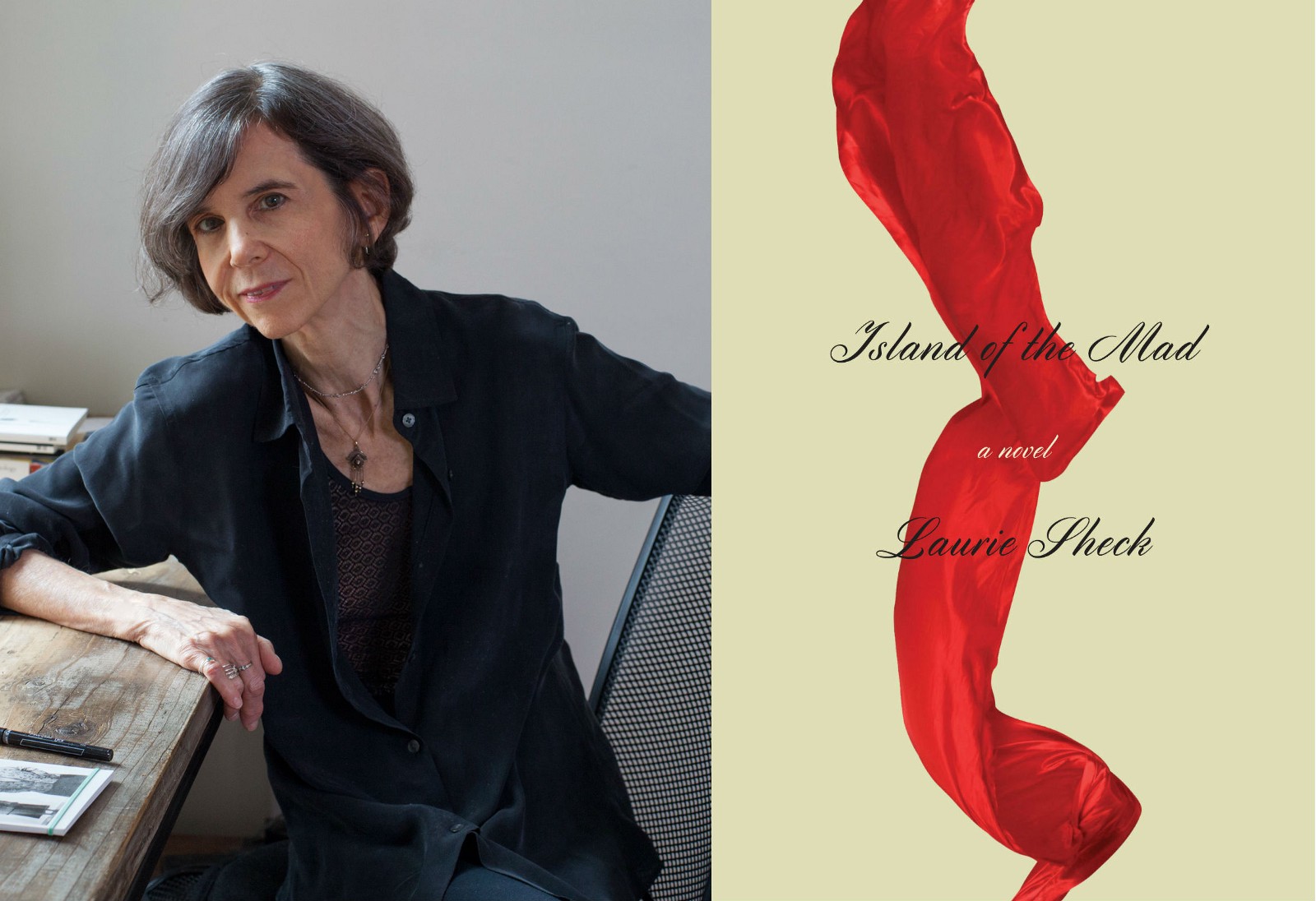
Laurie Sheck is the author of five books of poetry, including Willow Grove, which was a finalist for the Pulitzer Prize. In recent years, however, Sheck has written two genre-bending novels to great critical acclaim, including A Monster’s Notes (2009), narrated by Frankenstein’s monster, which the Washington Post described as “a remarkable creation, a baroque opera of grief, laced with lines of haunting beauty and profundity.” Her most recent work, Island of the Mad, features more of Sheck’s unique approach to novel-writing, in which the narrative consists of notes from a hunchbacked man’s journey to Venice to seek a notebook. The man ends up on the island of San Servolo, the site of one of Venice’s isolation hospitals, and there he encounters a number of characters, some historical, some fictional, including Pontius Pilate, Bulgakov’s Margarita, Titian. But the character who haunts Island of the Mad is Dostoevsky, whose suffering makes for a timely reminder of what happens to art under despotic regimes. Soon after the novel’s release, I corresponded with Sheck over the course of two weeks. We discussed Dostoevsky’s terrible trauma, exile, illness, Frankenstein’s monster, and the “radically ungraspable” nature of today’s technology-soaked reality.
Lorraine Berry:Neither of your novels follow a traditional narrative structure. Some have described them as a series of prose poems whose connections are as intricate as spider webs. Are you comfortable with that description?
Laurie Sheck: It’s intriguing to me that the issue of structure is initially framed in terms of what the books do not do. In a sense the scene is set against a background of what’s considered the norm — which would seem in this case to be traditional narrative structure. But which tradition? Whose? From where and when? For me, part of what books give us, and I think we become active participants as we read, is the enactment of a freedom of the mind, the whole being, or at least a keen striving for it, through the medium of language. And by freedom I don’t mean formlessness or being freed from constraints, limitations or one’s own narrowness. I think of freedom as allowing for a striving toward the genuine.
This freedom includes the liberty to explore anything that feels necessary, however fraught, confused, contradictory, including feelings of enslavement, sorrow, oppression, entrapment, as well as states that are more calming or joyous. If we use the word “text” do we approach a book with a more open, flexible curiosity than if we say “novel”?
The notion of genre has uses, but it also risks being reductive, misleading. Did Proust use traditional narrative structure? Did Melville? Did Dostoevsky? Sebald? Woolf? Certainly not Stein! Isn’t one of the joys we find in books the ways they’re sites of great diversity and idiosyncrasy. That there’s a kind of unbowed spirit.
Writing is deeply architectural. And as with architecture there are period styles, but also much that’s divergent, and some that’s totally outside the dominant framework. How does a text, like a building, grow out of its own particular necessities? How does it stay true to them, make them palpable? To me what counts is that a text is a site of vital becoming — imperfect, flawed — but its flaws are just as beautiful a part of its being as anything else because they’re genuine and necessary.
It doesn’t matter if I’m comfortable with how a book I write is described. My comfort is irrelevant. The book is a language-act, a world of language that came out of me, but I’m not its owner. I was a controlling, partly pushy, partly baffled participant in this process that involves language, and somehow the interaction between myself and the language, the books I’ve read, the art I’ve looked at etc., brought it into being.
In the case of Island of the Mad and A Monster’s Notes before it, I assembled for myself initial areas of fascination, in the earlier case Mary Shelley’s Frankenstein and the ‘monster’ as well as the Shelleys, and now in Island of the Mad Venice and Dostoevsky, and then set forth as best I could to have an experience within the medium of language. How I came to this was hardly straightforward, but it involved a desire for a different kind of experience with language than I was having with poems, and a pretty deep dissatisfaction with what I’d been doing. It involved, as well, a period of illness, first mine, then my husband’s. Those things change you. I also felt a strong pull to do research that wouldn’t just inform the work from outside but become in itself an intrinsic part of the text. I was curious about the interaction of fiction and non-fiction.
Certain events had pressed down pretty hard on me and I wanted to think about how strong facts are, how brutal, how the imagination is real but so are facts you can’t change or break free of. Beyond that, I was pretty clueless. Certainly clueless about how I would feel and hear the various voices involved in such a pressing, sustained and immediate way. Their intense presences. I was just clueless about most all of it. All I knew was I was bringing to what I was doing my poet’s experience and interest in structure, in words, syllables, language on an almost cellular level. I didn’t label what I was doing — still don’t — I had no word, no category, for what I was writing. Somehow there seemed a kind of justice in that. Rough, not smooth. I see now how that very concern runs through both books, the interrogation of categories, assumptions, labels — In what ways do they harm, comfort, betray, mislead, seduce, promise? How do they reinforce particular thought patterns, privilege certain actions over others?
Berry: In several of your poems and in your two novels, you are engaged in relationships with other writers: Mary Shelley, Dostoevsky, Gertrude Stein, etc. How would you describe these relationships? And what called you to these particular writers?
Sheck: To live with these writers brings me great comfort. Through their work I am in the presence of these amazing questioners, these explorers. I feel very strongly Mikhail Bakhtin’s notion as set forth in his book on Dostoevsky and elsewhere, that a self comes into being in the process of active dialogue with others. And some of this dialogue is not through speech, but through the written word, through books. Books, too, are living, changing beings. The book is changing and I am changing. We both have unvarying identities, but there is also flux, shifting contexts, there are shadows, angles, time, space, history. When I was younger I felt a writer had a vision and that vision was expressed through their books and it was my obligation, my privilege, to see what they “meant,” to enter into their line of vision. But I think Bakhtin is right — the author is one player among several. How fully does the author know and control the work? What happens beyond intention? In a good book, a whole lot. The texture of human consciousness can be served by intention, craft, discipline, but that’s different from being owned or controlled by it.
Books, too, are living, changing beings. The book is changing and I am changing.
Even though I’m finished with Island of the Mad I’m still in the thrall of Dostoevsky. As I’ve mentioned elsewhere, to my mind The Idiot contains one of the most daring, tender, radically re-defining scenes in all of Western literature — the night when Prince Myshkin, vulnerable, epileptic, stays and comforts the murderer Rogozhin. Dostoevsky is criticized for dwelling on “cruelty,” the perverse etc., for indulging in the melodramatic, but in fact he is an astonishingly tender, compassionate, realistic writer. And so brave and intricate. Well, he was a genius. And as a person he was very brave and his biography moves me.
They all suffered. Even Stein, who seems so willingly combative, provocative, playful, jaunty, a real fighter — I read a comment of hers that’s stayed with me — I haven’t been able to find it again but I’m still looking —
She spoke about what it cost her and other artists to be up against so much ridicule and misunderstanding. It was said strongly but almost in a whisper, as if there were an element of danger in letting it out. And in Patriarchal Poetry she makes a kind of plea to be heard, part nursery-rhyme, part insistent command, to let women’s voices in, to let them be heard. “Let her be.”
Writing is both very lonely and not lonely at all. Everything that’s most hurt in me, most despairing, has found a home with these writers. And as Bakhtin pointed out so wisely, it’s not that I merge with them. Part of what makes the experience of being in their presence feel right and stringent, convincing, is that I can’t. I stand outside them. It interests me that Bakhtin developed his ideas about dialogism and the polyphonic novel — that is, the necessity of a self continually coming into being by being in the presence of others, an active, receptive part of an inter-change — under very isolated circumstances. That isolation partly brought him to this insight about connection. He lived in internal political exile in Russia and suffered with Osteomyelitis, a very painful, incurable infection of the bone he contracted in boyhood and that kept him periodically bedridden. Eventually one of his legs was amputated. Hardly any of his work was published in his lifetime.
There is a way these isolate figures — Bakhtin, Dostoevsky enduring an epileptic seizure, Mary Shelley’s abandoned “monster,” Prince Myshkin who ends up mute in a Swiss Sanitarium — all echo each other. I can’t imagine my life, my thinking, who I now am, apart from them.
Berry: How did you develop your style of prose? Had you written much prose prior to your career as a poet? What did you write as a young woman? A child?
Sheck: I always loved words. From the very beginning. Their sounds, shapes, how some letters seem shy or almost starving while others are brash, still others more cryptic, hard to decipher. But I was never a storyteller. From early on I was a mixture of concentration and distraction. The whole idea of learning, of having to learn and retain information made me anxious, at times to the point of panic. As a child if I tried to write a story I think I would have felt on some level I was being too overtly forceful, taking up too much space. Thinking was alluring but also frightening.
There must have been something about the contained space of a poem, so small yet immensely kinetic, partly secretive but secretly bold, that drew me. If I had any expectations at all, it was to spend my life within and among poems. It simply didn’t occur to me I would write anything, ever, that would be called a “novel.” It didn’t occur to me until it started happening.
I think largely in images, symbols — or I guess I should say I did. But I also felt like my brain was partly asleep, muffled. I felt my writing was quite limited. And I had many psychosomatic symptoms. For all I know my body was struggling toward a more expansive mental state to move around in, a space open to more of the world, to non-fiction.
I lived for a number of years with a painful neuralgia on right side of my face. Often the pain intensified and when it did it spread through my entire right side or further and all of me would stiffen. As many people do in such circumstances, I thought what a great gift normal everyday life is, just to have that basic sense of well being, to sit, read, work, talk with friends, make coffee. I’d been born into the middle class of a wealthy country without wars on its soil, and I felt I was squandering what I’d been given. How many people on this globe even have adequate shelter, food, sanitation? Not all that many. When the neuralgia was finally diminishing, and by then my husband was falling ill with a genetically-linked illness that lasted for four years until it started to burn itself out, something in me had finally sharpened. My desire to learn was intense. There were still a lot of glitches but also a kind of fierce, excited curiosity and determination.
My husband was very ill and in a sense I had lost him, had lost, certainly, our long, sustained conversations. For various reasons I picked up Mary Shelley’s Frankenstein. Before I knew it, it seemed the monster was always with me. I felt him, or my version of him. If I went to the movies he came with me. If I picked up a book he was reading it also. But he was with me in a way he could never know and that kept him lonely. I started to wonder what would interest him. If he could choose, what would he read? Soon I was pursuing various areas of investigation…or in part he was pursuing them through me. Maybe this sounds a little crazy, but it felt clear, systematic. I started taking notes — on genetic engineering, robotics, genetic privacy, the Geneva Accords, the nature of time, space, perplexity. These notes were in prose. And along the way I’d become fascinated by the Shelleys.
Before I knew it, it seemed the monster was always with me. I felt him, or my version of him. If I went to the movies he came with me.
Claire Clairmont, Mary’s step-sister, had run away to France with Mary and Percy. They were teenagers. Percy was the young, married father of two children. Claire eventually had a child, Allegra, by Lord Byron, who was taken from her and put by Byron in a convent where she died at the age of 3. Claire kept a journal; there was also a volume of her letters. Not to mention Mary’s, Percy’s, Mary Wollstonecraft’s, the Frankenstein manuscript’s first 40 or so pages overwhelmingly in Mary’s hand but Percy’s was there also. I was writing my way into all of this material. Just writing. And it was in prose. I found the interaction with facts thrilling. I tried to make each page justify its existence, while feeling my way forward. I paid a lot of attention to the felicities of chance, to the reality of a multiplicity of voices, to the integrity of the texts I was using. Nothing is more radical than the real. The prose seemed to open a way to being more attached to the world, less reclusive, it allowed a greater waywardness and questioning.
Berry: In Island of the Mad you include the details of a true story I had no idea about, I’m embarrassed to say. After reading it, I had to put the book down for a few minutes because it had made me cry. On page 214, you detail Dostoevsky’s enormous suffering in the Russian prison system. You said he was arrested but “confessed nothing Refused to be destroyed ‘by an empty word.” And one of the ways he was punished was that he was read the death sentence, dressed in execution clothes, and marched to the place of execution. At the last minute, he was given a reprieve.
The psychological terror inflicted on him just seemed unbearable. Do you have a sense of how he survived his experiences?
Sheck: It’s an astonishing story. His life was full of excruciating extremity. People said he always looked ill. You can see this in the photographs. But even in regard to this, Dostoevsky came in from an uncanny angle: “…a person does not always look like himself,” he wrote in his essay Apropos the Exhibition.
After the mock-execution at Semyonov Square he was sent to Siberia, to the prison camp at Omsk where he remained for four years (he’d been convicted of political sedition), and then served another five years in another part of Siberia in enforced military service. During his years at Omsk he wore five pound shackles on his ankles, as did all the prisoners. Joseph Frank’s magisterial 5 volume work on Dostoevsky’s life and work is one of the best books I’ve ever read on anything. All the details are in there, and much more. There’s a short book by Robert Bird that’s also very good as a basic overview.
The timing is somewhat in dispute, but it seems most plausible that Dostoevsky’s epilepsy started shortly after his arrival at Omsk, possibly triggered by the extreme shock of the mock-execution. Another member of that group afterwards went mad. After prison Dostoevsky was also for a period of time a compulsive gambler, which may also be traceable back to this trauma, and one reason her went abroad for a few years after prison was to escape his creditors. He wrote The Idiot, the book I explore in Island of the Mad, while in Geneva. At least he started it there. He finished it in Florence where he and his wife lived after the death of their first child, Sonya, who was born during the writing of the book and lived for only three months. They couldn’t bear to stay in Geneva after she died. They were both broken, and yet somehow he finished The Idiot. There are very strong currents of grief in that book’s second half.
Robert Bird writes of Dostoevsky’s radical doubt. I think that’s a good way to put it. As a novelist (as opposed to in his journalism) he questions everything, lets in all sorts of angles. Nothing is stable. One could speculate that trauma partly made him the great writer he became. There were many other difficult aspects of his life as well. In The Idiot Prince Myshkin speaks at length about the inhumanity of state sanctioned executions. He’s also epileptic — his whole being inseparable from disruption, extremity, unstoppable neurological events that come without warning and over which he has no control. Dostoevsky himself often felt humiliated and ashamed about his seizures. This shame was especially deep when one occurred at the very time his wife was giving birth to his daughter.
But extremity isn’t all negative. Dostoevsky wrote in The Idiot and The Possessed of the ecstatic aura that preceded the seizures. It lasted for just a few seconds, but that transcendent experience had a profound effect on him. So, too, living among the other prisoners at Omsk for four years, most all from much lower classes and from deprived and violent backgrounds, taught him things it’s hard to imagine he would have otherwise known. His experience at Omsk is most directly presented in House of the Dead but it infuses all his other work as well.
All of this is crucial to his ideas about realism. I mean, his biography is such that had a novelist written it, that writer could easily be accused of crossing over into the unbelievable. He deeply, deeply felt and understood how extreme and brutal reality is. And one part of what makes him so amazing as a writer is how along with casting an unsparing eye over everything he held his characters with such careful and abiding tenderness.
Berry: As I mentioned to you in earlier correspondence, I read an advance copy of Island of the Mad during the week that I had been evacuated from the barrier island where I live during Hurricane Matthew. I felt as if I were reading the perfect novel during that time period because of the theme of exile that plays such a large part.
I also know from your writings that you have been a quasi-Luddite when it comes to adopting the technological “wonders” of the past 40 years. As a writer, do you feel a sense of exile from a culture that seems less interested in the written word and more interested in the whizz-bang of wherever technology is leading us?
Sheck: Despite not owning a smart phone (though I plan to get one) and never having sent or received a text message, I find a lot of the new technology and specifically what’s happening with the internet, exciting. Even if the culture is moving and changing in ways it’s hard for me to relate to or understand, in certain ways I’m following as best I can.
Certainly the internet’s been enormously important to me as a writer. I can’t imagine I’d have written my most recent books without it. It’s given me access to all sorts of information, and just as importantly, it’s modeled and enacted a web-like structure, and taught me a great deal about movement, linkage, recombination.
But it’s also overwhelming, and in our world as it is technology is inextricable from danger, aggression, mistrust, deceit, annihilation. I’m thinking now of Eliot’s “human kind cannot bear very much reality.” Given our century our various terrors are, and will be, wound up with technology, especially as ours is a very powerful, militarized, crudely profit-driven nation.
But so many of our beauties are wound up with the technological as well. I can go online and see Emily Dickinson’s manuscripts with their variations uncensored, intact. I can see Virginia Woolf’s typed and handwritten drafts. Or take another manifestation of technology — glowing screens. While it’s true they can be used in garish, disturbing ways, as in Times Square, at the same time architects are turning to them as an almost moth-like, sensitive alternative to walls — more vulnerable than drywall, more skin-like, less imposing, static, monolithic. So in feeling and tone they’re kind of like Bakhtin’s vision of the dialogic — porous, flexible, receptive boundaries, but embodied in the material world rather than in language.
I live in downtown NYC, I was here during 9/11. The smell of it, so many things, the hundreds of ash-covered people walking past my building, the sky weirdly quiet, no cars, no buses, no mail delivery, xeroxed faces of the “missing” on buildings and fallen onto sidewalks, all of that’s so vivid. And now every year in September two faint, blue columns of light are cast into the sky as a memorial. They look frail, dignified, almost unbearably gentle. In this way technology makes possible the apprehension of the deepest human feelings.
I find really interesting Giuliana Bruno’s exploration of the virtual in her book Surface, as she works through the ways in which surfaces are also depths. Screens, computers, smart phones, 3d printers, none of them invented human sadness or alienation. Like so many others, I think the bedrock cruelty in our culture lies elsewhere, in economic, racial and other injustices, and also in the belief in meritocracy which turns the gaze away from where it truly belongs, which is on inequality.
To be living now, for me, feels kind of like a strange mixture of closeness and distance, as if skin is flesh but at the same time virtual.
I don’t own a TV, I don’t really understand social media, though these words I’m typing are meant for the internet. To be living now, for me, feels kind of like a strange mixture of closeness and distance, as if skin is flesh but at the same time virtual. A few clicks on my laptop and whole stretches of outer space appear, captured by the Hubble telescope. There are lunar events in real time. Astronauts describing the smell of outer space — distinctly metallic but mixed in with something that’s acrid, burnt but also un-nameable. It all goes back in a way to what Dostoevsky knew about reality and never pulled back from — how extreme it is, how radically ungraspable.
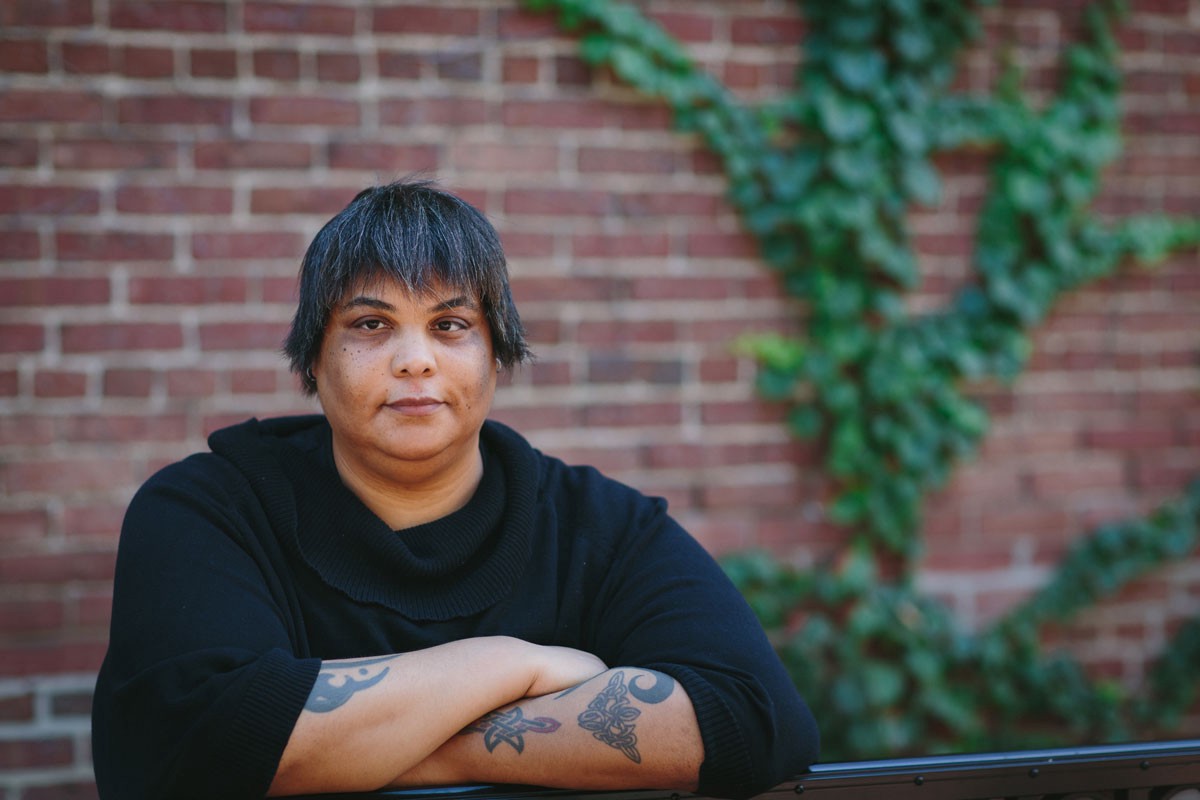
Responding to Simon and Schuster’s plans to publish “alt-right” troll Milo Yiannopoulous’s new book, Roxane Gay has officially pulled her forthcoming title, How to Be Heard, from the publisher’s TED Books imprint.
Gay spoke with BuzzFeed News about the decision: “I kept thinking about how egregious it is to give someone like Milo a platform for his blunt, inelegant hate and provocation. I just couldn’t bring myself to turn the book in…I guess I’m putting my money where my mouth is.” On Twitter, she added, “I can afford to take this stand. Not everyone can. Remember that.”
At the end of last year the publishing house announced that its Threshold Books imprint had reached an agreement to publish Yiannopoulous’s forthcoming memoir, the cover of which resembles a cologne advertisement, and that Yiannopoulous would be paid a $250,000 advance. Electric Literature covered the initial book world backlash, but if you need any further confirmation that Milo Yiannopolous is a resoundingly horrid person, try reading literally any of the content he has ever produced.
Earlier this week, Carolyn Reidy, Simon and Schuster’s President and CEO, wrote to the house’s authors, assuring them that Yiannopoulous’s book would not contain hate speech: a bold claim, considering hate speech encapsulates nearly the entirety of the author’s public persona.
Roxane Gay — the author of Bad Feminist and Difficult Women, not to mention an incisive cultural critic — was unswayed and asked her agent to sever her relationship with TED Books. While the future of How to be Heard remains unclear, we hope the book finds a new home and sells wildly.
“A dark farce that will keep you on the edge of your seat wondering when it will end.”
Photo by Gage Skidmore
One of the most annoying aspects of the book world is blurbs. All books have them, and all publicists have to blast them out in emails to reviewers. But writers hate asking for them, and readers complain about how universally positive they are (no book ever gets bad blurbs). Typically, though, blurbs are reserved for book covers and movie trailers, not politics.
Trump is changing that.
Today, the Trump administration — which has spent the past several days whining that he hasn’t been able to “enjoy” his presidency because he of the criticism leveled against him — decided to counter the millions who marched in the streets with a round-up of blurbs:
Yes, that’s real. Like any good set of blurbs, the Trump team selectively pulled quotes to make mixed or even negative articles seem like rave reviews. Take, for example, the first blurb from The Atlantic in context:
“[I]t’s a lot harder to use that bully pulpit if you’re not always viewed as a winner, so Trump insists he’s a winner even when he is not.
The result, paradoxically, is that he’s coming out as a winner on many issues. Some of these victories may prove to be pyrrhic. Getting shaky and unprepared nominees confirmed is a good way to produce shaky and unprepared Cabinet secretaries. Retaining manufacturing jobs works well until companies start automating and laying people off anyway.”
So that’s where we are at. A famously thin-skinned president starting his administration by lying about how popular he is and sending out blurbs.
No word yet on what Kirkus or Publisher’s Weekly have to say.
I was twelve years old doing homework at the kitchen table, and Greg had already finished. We had tried working at the same time, but between Greg needing our mom to help him with every assignment and her need to check that we were not only finishing but excelling at our work, there was not enough Mom for the two of us.
I was making what my teacher called a spider chart to prepare for our first essay of the year. The center of the spider chart was supposed to be the spider’s body, and in that body we were supposed to write the “big idea” of the essay: a person, real or fictional, who was quirky.
I wrote the word “quirky.” The legs were splayed across the page, and on them I wrote my topic ideas: Homer Simpson from the Simpsons and Stu Pickles from the Rugrats. I looked at my spider; it looked stupid. It looked like a spider I would rather squash than make into an essay.
I looked at my spider; it looked stupid. It looked like a spider I would rather squash than make into an essay.
“What about Greg?” I asked my mom. The idea didn’t come from anywhere — it just happened. One second I was crushing spiders, and the next the spider had become my brother.
“What do you mean ‘What about Greg?’” she asked. “Are you saying that Greg’s quirky? Are you saying that he’s weird?” My mom was a pufferfish — frightening and sharp-looking. I felt small. I felt like I had pushed a button I hadn’t known existed.
“Yeah,” I said. “He is. It’s not a bad thing. He just marches to the beat of his own drummer, you know?”
My mom deflated. “You know, Matt, that’s a really great way of putting it. That sounds like a great idea.” I knew that already, but liked that she thought so too.
I called my essay “My Quirky Brother.” Even though the idea was mine, and the majority of the words were mine, the effort was ours. There was my desire to write about my brother. And my mother’s humility, her tacit acceptance that she had jumped the gun, the thought that maybe there could be people who could see the eccentricities and not think WARNING: DISABLED CHILD. My mother learned the word “quirky.” I learned the word “autism.”
My mother learned the word ‘quirky.’ I learned the word ‘autism.’
I didn’t tell Greg about the essay even though the essay was about him. Was it embarrassment? Fear? That my brother wouldn’t find it particularly it interesting? Or maybe on some level, I knew it wasn’t really about him. Even though I wrote about how he “marched to the tune of his own drummer” and “taught me to be empathetic,” this is not what I thought about when I stood up and read my essay to the rest of my English class. It felt like I was reclaiming my identity. I knew the word ‘autism’ had power, that even though I wrote my essay about Greg, it was about more than him. It was an idea I could mold and twist in ways I saw fit. No matter how I manipulated this idea, though, Greg would always remain Greg.
By the time I was 14, we no longer shared our mother at the kitchen table. As Greg’s work took longer, my mother trusted me to complete my work on my own. But she still held standards that felt impossible to reach. She was certain that if she pushed me hard enough, I would get into Princeton or Yale. For Greg, she just wanted a college education.
She was certain that if she pushed me hard enough, I would get into Princeton or Yale. For Greg, she just wanted a college education.
My parents refused to compare us; I could do nothing but.
“Greg has it so much easier than me,” I told my mother one day. “He could get all Cs and you’d be totally fine with it.”
“I could bring you to a hypnotist, you know,” she threatened. “You could switch minds with your brother for a month and see how easy you think it is.” I was old enough to believe the threat was baseless but young enough to doubt my intuition. To even consider living my brother’s life was enough to make me balk. If I could re-live this moment, I would call my mother on her bluff, not to be a smart-ass but to try and answer the question that continues to nag me: Who is my brother?
My brother the quirk. My brother the martyr. My brother the autistic. At the end of my junior year of college the question became more and more urgent. Who is this person I grew up with? What is it like to live inside his head? I began to work on a collection of linked short stories — mini-explorations into the life of a family with an autistic son. For research I read Boy Alone, Karl Taro Greenfeld’s memoir about growing up with a severely autistic brother.
The question became more and more urgent. Who is this person I grew up with? What is it like to live inside his head?
Even though Greg is not severely autistic, and rarely reads as autistic to strangers, I felt a kinship with Greenfeld. While our personalities and situations were vastly different, there were moments of interiority that felt as if they were taken from my own mind (“I always tell them: I don’t know what it feels like to have any other kind of brother.”). Moments that evoked the fears that I had yet to articulate (“I don’t know [my brother]. He is, I suspect, unknowable. Yet he remains the center of my life.”). Moments that reminded me of the unfairness of being told that Gregory and I are equal, that there is no difference between us, and yet there were the constant reminders of how lucky I should consider myself to not be autistic (“How wonderful that must feel. To not have to try or study or observe but to just be and for that to be enough.”).
Before Boy Alone I had not met anyone willing to so candidly discuss their experience as the sibling of an autistic person. I had my parents, and the families of children I worked with through my town’s recreation program, but nobody whose struggles I could identify with.
For my high school graduation my godfather gave me a copy of The Giving Tree and inscribed it with a note of how proud he was of me for being such a strong, courageous, older brother to Greg. It was a kind, entirely sincere gesture, and I knew that nobody would understand how angry this made me. (When I showed an earlier draft of this to my mother, she said I had to emphasize the kindness of the gesture). Gregory was the only kind of brother I knew, and I was the only kind of brother I knew how to be. That is not bravery; that is necessity.
It was a kind, entirely sincere gesture, and I knew that nobody would understand how angry this made me.
Maybe Greg needed to feel this, too. I tried to point him towards books like John Elder Robison’s Look Me in the Eye: My Life with Aspergers, hoping that, despite his lifelong animosity towards reading, he would find the same kinship I felt with Greenfeld. But after the first chapter he stopped. He just didn’t feel that connection.
Despite this, I insisted that Greg would benefit from seeing other autistic young adults, or even a fictional character like him. And it made sense that if anyone could write a fictional character that talked like Greg, it would be me. I was working on that collection of linked stories about him anyway — why not try writing as him, too?
I knew the way he talked, how he spent time, but even after growing up together I understood little of the way he processed the world around him. I asked him if he would mind keeping a journal for me. He seemed hesitant, unsure of exactly what I was asking for, but he agreed. Two months later, when I was home for a weekend in the summer, my mother proudly gave me the journal entries he wrote and recounted how eager he was to help me. He had messaged me several times asking me for more specifics: What was he supposed to write about? What did I mean by “write about his life?”
If anyone could write a fictional character that talked like Greg, it would be me.
I was nervous when I began reading. Who was this person I had been writing about for so long? How would reading this journal change the way I felt about my brother? Would I still be able to call him autistic after reading about his inner life? For so much of my life I had taken on the identity of “sibling of autistic person;” if I couldn’t call Greg autistic, then what would I call myself?
There were four journal entries, none spanning longer than a paragraph. “Today I went to work and then I went to class.” “I had a test today and it was pretty hard but I’m glad it was done.” “I’m excited to go to Lake George next week with my family for vacation.”
I was hoping for something that felt authentic, something less concrete. What did he think about that class he went to after work? Did he think it was pointless? Did he think about how he’d rather be at the pool than taking a biology lab? What does he worry about? What are his dreams? How often does he think about sex? Does he like anyone? Does he like me? What does he think of me, as a person? Do I exist as a person to him or just as an older-brother figure?
Why did I not ask him these questions afterwards? Why did I not ask him to write more, to expound more? I don’t think it was because I was afraid of insulting him; I have edited so many of Gregory’s essays, pushed him to clarify his arguments so many times, that I know exactly how to frame this:
“Thanks so much for these, Greg. These are great, but can you write a few more? Would you mind elaborating on your feelings a bit? Can you tell me the kinds of thoughts you have throughout the day?”
Was I afraid to see what he actually though about, what fantasies he conjured when nobody was looking? Not quite — it was the possibility that I would learn nothing. It was the idea that, just like in any other relationship, learning his innermost thoughts would not change the way I see him: that Gregory was, at his core, my quirky, autistic brother.
Was I afraid to see what he actually though about, what fantasies he conjured when nobody was looking? Not quite — it was the possibility that I would learn nothing.
“Quirky” stuck. Greg was quirky. The fact that he re-watched three second segments of cartoons over and over again was quirky. His compulsion to never be late for anything was just him being quirky. “My quirky brother” soon became “my quirky son” and “my quirky nephew” and “my quirky cousin.” When my brother turned 12, my mom explained to him the root of this quirkiness.
“Your brain’s wired differently,” she said. “It takes you longer to figure some things out, but if you work really hard you can. The brain is just a bunch of filing cabinets, and you need to look through more of them than we do. It means some good things too, though. You have a great sense of direction and you’re a kind person and you’re fantastic at videogames.”
To say that my brother has a great sense of direction is an understatement. One day, while my mother was driving Greg back from the Allegro School, a preschool designed for young autistic children, she took a wrong turn. She kept making wrong turns until she was helplessly lost in Morris County, New Jersey with her five-year-old autistic son. I don’t know what my brother saw — maybe it was a certain crossroads, or a statue, or even just the way the trees clustered in peoples’ front yards, but it triggered something. A memory, a sequence of places and words and actions that he had relived every weekday, a stream of consecutive images that burst forth from his memory.
She kept making wrong turns until she was helplessly lost in Morris County, New Jersey with her five-year-old autistic son.
“Take a left up at the light,” he barked. And from there more instructions: right here, go straight until you see the McDonalds, left at the Home Depot (or, as Gregory called it, “Home De-pot”). It only took them fifteen minutes to get home. We called him “the human compass” and then later “the human Mapquest.”
My brother understood “human Mapquest” and having “a differently wired brain,” but we should have known better than to assume this understanding would be generalized. I should have known better. Born 18 months apart, he may as well be my twin. We shared the same room, the same teachers, the same soccer coaches, and too often the same clothes. We share a streak of aggression and a fierce competitiveness. Growing up, we would have brutal, physical fights over the stupid small things: who would get to have the middle seat in a car ride, or who got to be Player One when we played videogames.
I knew that he didn’t understand reference. Whatever part of Greg’s mind that was supposed to interpret metaphor as something beyond its literality had never fully developed. One night in one of the many summers we stayed up late playing videogames and watching Disney movies we were too old for (more Country Bears than Toy Story), I asked him if he knew the truth about Santa Claus.
“Yeah!” he said. “Dad is Santa Claus, and did you know that Mom is the Easter Bunny too? It’s so awesome!” Instead of telling Greg that Santa and the Tooth Fairy were imaginary, my mom tried to go the more merciful route: “Well Greg, I just wanted to make sure you understand that Dad and I are really Santa and the Easter Bunny.” I then explained to him that, no, our parents were not actually Santa and the Easter Bunny. They were imaginary; what our mother had said was just a figure of speech.
Was autism just another Santa Claus for my brother? Before he learned how to name his disability, could he have possibly believed that, as our mother told him, our minds really were just made up of file cabinets? No matter how many times you say, “Greg thinks literally,” you inevitably return to a metaphor.
No matter how many times you say, “Greg thinks literally,” you inevitably return to a metaphor.
In his junior year of college, my brother confessed to me that he was terrified when he found out about autism. “I thought that I wasn’t going to survive in my journey when I experienced autism,” he said. My brother is most comfortable reciting his emotions in platitudes (Me: “What was it like to work as a camp counselor for children with special needs?” Greg: “I felt that I learned a lot from working with kids that need support, love, and guidance.”), but I had a hard time doubting this fear. Anxiety is finely ingrained within our blood; it is more us than our dreams are.
When I was a senior in high school, my friends and I often talked trash about a girl who became friends with a classmate’s mother. The two of them would get dinner together, shop together, and gossip about boys together. I was disgusted that my classmate could try and replace her own flesh and blood, that she could feel that desire.
I think about this girl whenever I write about Gregory. When I try to pin him on the page I can’t help but feel connected to her. When I sit at my computer, figuring out how to twist and break my memories to fit the confines of my container, I feel like I am trying to replace him. When I was twelve he became the syncopated drummer for my composition class. When I was eighteen he became the nucleus of my life for a college essay. These changes were comfortable. What harm is there in making your brother into a martyr, in turning your parents into saints? I wonder if the people who read my essays feel the same disgust I felt.
What harm is there in making your brother into a martyr, in turning your parents into saints?
I took my first nonfiction writing class when I was 21, and, for a fact-embedded piece, I again wrote about my brother. I wove together the history of autism theories with my vision of Leo Kanner’s experience writing “Autistic Disturbances of Affective Contact,” the first medical paper to define autism. I wrote about how my teenage dream was to go to Brown and become a geneticist. Then I tacked on a piece about my brother. I remember feeling so accomplished, that my writing had matured so much since I the last time I had written about him. The final line came fully formed, three pages before I finished the draft: “Gregory is my Donald Tripplet; people deserve to know that he exists and that he is not just a list of symptoms.”
The critique was rough. My essay was really two different pieces smashed together: one about my brother and one about the history of autism. The prose was too florid. Someone in the class mentioned how they did not see enough of my brother. “You talk about how he is not a list of symptoms, but that’s all you talk about in this piece. I wish you had actually shown us who he is as a person.”
“I just don’t think you like your brother,” my mother said. It was a quarter to 11 at night and I was nursing a hangover. My parents and I were driving home after spending the day, a hot, sunny July day, up at my aunt’s house drinking by her pool. My father and I were stunned.
“No, I’m serious. I just don’t understand the double standard. You want to work with kids with special needs but you can’t stand being around your own brother.” There were forty minutes left in the car ride — forty minutes of arguing, and, eventually, a silence that threatened to collapse from under us.
I had gone to the local fireworks show with some friends from high school and did not invite my brother to come with us, even though I knew he did not have other friends to go with. He was upset. He went by himself. I saw him, but did not call out to him to join us. Nobody would have minded; Greg is kind and earnest, if a bit awkward around others, and he had grown up with us.
I saw him, but did not call out to him to join us.
But I didn’t want him there. I lived with him, shared a room with him for almost my entire life, and I wanted space. I knew how lonely he was, how much it would have meant for him to spend time with my friends and me, but convinced myself that I could treat him as one of two things: my brother or an autistic young man. I would rather see him as a peer than as a charity case. What my mother saw as cruelty, I saw as a kindness.
She was not entirely wrong. I did like my brother, but not as a friend. I did like my brother, but only parts of him: the parts of him that giggled but wouldn’t tell us why, that would get flustered when I antagonized him, that would get too competitive when we played Mario Party.
But how could I ever truly like him if I insisted on defining him as exclusively “brother” or “autistic?” How could I truly treat him as a peer if I had to excise an aspect of his identity is in order to do so?
When I read past essays I’ve written about him, it is impossible to ignore that the Gregory I wrote about is a caricature, a conflation of symptoms and exaggerated pity. I cringe at the realization that I was not my brother’s advocate, as I so claimed. In these essays, I was nothing less than exploitative of his disability, seeking out the cheap emotional beats that made me seem more mature and talented than I actually was.
The Gregory I wrote about is a caricature, a conflation of symptoms and exaggerated pity.
I hope that I have matured, that I have learned to not use my brother’s disability as a garish pedestal upon which to stand. I have revisited the linked short stories I started in college. A year later, all I can see is a gimmick: a devaluation of my brother’s life, of all of my family’s lives, for the sake of standing out from other young fiction writers. I read one story, and I see a young man who feels so much anger at his family that he fails to see his own shortcomings. I read another, and I see a revenge fantasy on behalf of my brother. The Greg in these stories is less a character than a thematic prop.
My brother, obviously, did not need this. What my brother needed, and still needs, is to discover a way to navigate a world that will not hesitate to reduce him to a word. This past year he graduated cum laude from a college he loved. While there, he joined a fraternity in which he felt appreciated and liked. It’s wonderful, without a doubt, but along with this wonder came the end of his time as a student. There is no more homework that our mother can double-check.
Sometimes I was still awake when Gregory left for work. We both still lived at home, but we no longer shared the same room. I rarely knew if he was awake or asleep or even home, but I could expect to hear his car scraping the bottom of the driveway on his way to work.
What my brother needed, and still needs, is to discover a way to navigate a world that will not hesitate to reduce him to a word.
He lifeguarded at our community center’s pool, and twice a week he worked the opening shift, 6am to 10:30am. It paid poorly, and he was the oldest lifeguard there. He covered any extra shift that was asked of him and was always on time, but still the owner threatened to fire Greg after he was unable to persuade a cantankerous swimmer to follow his instructions. He came home from that shift rattled, left the anger to our parents and me. We had all known his job could not last for too long but kept putting off the full-time job search. None of us missed the kitchen table routine, the hours of researching and helping him study and looking over his work and checking in to make sure he did not miss any of his deadlines, and we all dreaded its eventual return. This time, however, there would be no flashcards to memorize and no essay to craft. Gregory needed a resume, and he needed to learn how to interview.
I was almost two years out of college and still underemployed — an unpaid intern who scraped together freelance and part-time work and paid off his private-school loans with borrowed money. Despite this, I was the one my parents turn to when faced with the challenge of Greg’s employment.
“Do you think you can write Greg’s resume and cover letter?” my mother asked the night Greg almost got fired. I looked at her bug-eyed.
“You’re kidding, right?”
“Well, it would be a huge help.” After almost two decades of working with my brother, from spending hours allaying his meltdowns as a toddler to quizzing him before college exams, my mother was tired. “I know that you’re applying for jobs too, but you’d do such a better job of it than I would.”
“I can do the resume, but I won’t do the cover letter.” I conceded. “But this is really unfair of you to ask.” She knew that, of course, but I wanted her to feel it.
The resume was easy — I used my own as a template and just filled in the blanks. But where I could write about my accomplishments conducting independent research and holding leadership positions in clubs and groups, Greg had only his fraternity (which had only officially formed in his junior year), a few volunteer projects with his church parish, and the various lifeguarding jobs he held throughout college. His resume was a sad husk, more blank space than ink; it did not look like my brother.
His resume was a sad husk, more blank space than ink; it did not look like my brother.
My mother agreed. We decided it would be best to ask my aunt, a former marketing executive, for help. She had critiqued my resume and coached me for interviews when I first started hunting for internships, and she would be back from a consulting job in the Philippines soon. I was not expected to help anymore; Jean would be enough.
The day Jean came, I joined her and my mother for lunch at the kitchen table. I had not expected to help, but when Greg came up to the table, I did not leave. Jean, my mother, and Greg rehashed the past four years while I wrote. I had forgotten that Gregory was originally an education major, had completed internships and teaching practicums before realizing he would not be able to pass the Praxis and switched majors, that he had been a guest speaker for a conference on disability at a local university. I took two pages of notes in the hour and a half they talked.
There was no comparing this to the first draft — they looked like they belonged to two different people: one to the idea of my brother, and the other to Gregory.
While Jean and my mother taught Greg how to interview, I formed the notes into a cohesive document: cutting phrases, playing with kerning, and spinning duties into accomplishments. By the end, Gregory’s resume looked largely like mine, margins blown out and type spaced just widely enough to not look cluttered. There was no comparing this to the first draft — they looked like they belonged to two different people: one to the idea of my brother, and the other to Gregory.
This resume, a narrative unto itself, was the best essay of Gregory I have ever written. Tracing his employment, the fraternity, the internships — it is the only story I have ever truly told about my brother. In every other essay I’ve written, Gregory is not a person but an idea — the event that changed my family, the reason I am the way I am, the response to a prompt. I have been writing my own story and naming it after my brother, taking his history and transposing it upon my own. In trying to construct Gregory’s identity on the page, I have ignored the fact that I will never understand someone as intuitively as I do my brother. We have shared bathrooms, teachers, and hotel beds; I have woken up to his ragged snoring. Insisting to treat Gregory as either autistic or my brother is rejecting the obvious truth; he is both. He is my quirky brother.
“Were you staring at that girl’s ass?” This was Emma, my wife, speaking to me. “Hello? Are you in there?” She peered doubtfully at me, as though something suspicious had flashed across my forehead.
“Who? Me?” I blinked at her. “No. I was thinking about the future, and how it is by definition sort of monstrously beautiful and yet quite literally unimaginable…”
My wife sighed and shook her head. “Well I was. How can you not stare? It’s a great ass but really, day-glo green panties?”
We were in New York to debut our spring collection, which showed in Fall of course — the fashion calendar being six months ahead so that clothes could be made and delivered in time — and with two main seasons, this was “Spring” though we were in September. It was our biggest show ever, the culmination of years of hard work, a major production, complete with corporate sponsorship, meetings at Vogue, models, casting calls, stylists, hotel rooms, everything. I was her sidekick, co-owner of her small clothing line. I wanted to die.
Don’t get me wrong: it was fun at first, being fashionable. After all, I had little going on back then, late in the last century, aside from a bit of freelance copywriting and vague hopes of starting a novel (well the hopes weren’t vague, they were core-deep and exquisitely anguishing, but the novel was). Helping run Emma’s new company seemed like an adventure. Who knew what I’d discover? Turns out, I discovered that I hate the fashion business. In retrospect it shouldn’t have been so surprising, since I hated fashion and hated business. Every morning, as I lay in bed, I prayed to the brownish stain on the ceiling, please let my wife get bought by the Japanese! (Her business I mean.) Then we can have babies and I can write and be a happy house-husband. And please, Brownish Stain, don’t be a leak or anything else too expensive or dangerous.
In the meantime here I was, in New York, with her and Clark, our stylist, watching models traipse back and forth in the clothes, while our rep, who sold the line here in her wholesale showroom, hovered nearby. The particular hopeful under discussion — all sexy bones and blades with her nipples upright in the sheer cotton dress and her pelvis jutting out and her shins bruised — had her bright green panties shining through the fabric. My wife was scolding her: “Of course we’re all staring at your ass, how can we not when it’s radioactive green?” She raised her voice, clapping for attention: “Hello! Everyone listen up! How many times do I have to say it? Rule number one: no panties!”
The models blinked and nodded their heads on their long stalks, like giraffes, absorbing this morsel with utter seriousness. Some were in or half-in my wife’s samples. Some were in their street clothes, sweats and jeans. A few were more or less nude. I took it all in with the glazed, deadeye expression I had developed for facing aggressors on the street and subway. I saw but I didn’t see. I gave up nothing.
“What do you think of her otherwise?” she asked me.
“Great!” I said. “Pretty.” It was true, she was greatly pretty, but they all were. “Tall,” I added. My wife rolled her eyes and turned to Clark, whose opinion counted far more than mine. He was British for one thing, with a suave accent. And gay. And his taste in all things was exquisite. In fact, he was one of the few live souls we both really liked, as he was expert in both of our fields, hers being fashion, design, and status, and mine being… I don’t know exactly, the things that bright but dim, sensitive but senseless men are into: hard books, long movies, complicated music without words or with unintelligible words. James Joyce, Miles Davis, Bob Dylan, Bruce Lee. You know.
“What do you think, Clark?”
He gave a discreet nod, one lip curled slightly into a hint of smile. “I believe we’ve found our bride.”
“Sophia!” Emma yelled at the lucky girl. “Get out of those awful panties and into the wedding gown.” Sophia trotted off eagerly. The wedding dress was black macramé. The theme of the season was Black Spring (I had suggested the title as a nod to Henry Miller when my wife had shown me her daringly dark palette.) “Next!” Emma called. A brunette stunner stalked out. Emma pursed her lips.
“Clark?” she asked.
He raised one eyebrow a millimeter. The girl was right there mind you, listening for his answer too, as if this were a quiz show. “Ankles,” he whispered.
My wife nodded, wincing slightly as at a hard truth, and turned to Fran, our rep, a supersized woman dressed in a black cloak and dark bangs, sort of a like a boss monk. “No,” Emma told her.
“Next,” Fran called, and the girl skittered off. “Sorry. I know she has fat ankles, but she’s my niece so I had to give her a shot.”
Next out was an almost identically perfect specimen, except this time with a tattoo of a Renaissance angel on her back when she turned. Clark twitched his nose. My wife yelled, “No!”
“Next,” said Fran.
Meanwhile, from the fitting room behind us, Kelli, a six-foot tall Chinese girl wandered out, bored and topless, wearing only a G-string and waving like a willow on her high heels. She sat beside her mom on a couch. The mom — half her daughter’s height and clutching a gigantic Louis Vuitton bag — had just been asking my advice. Should her daughter get new pictures for her portfolio? A new agent? Should she workout? “I don’t want to get too bulked up!” The daughter blurted, wrinkling her nose at me. “I like my legs like this, don’t you?” she asked, extending one before me. I did, but I didn’t think I should. I had a hard time seeing how they’d carry her. If that long hair got caught in the wind she might bend too far and snap. My wife noticed her loitering.
“Kelli! What are you doing out here? Go find Annie and change into your first outfit.” Annie was my wife’s assistant and Kelli would be our opener, in a hand sewn goth-hippy number and a long tattered veil. She skulked away sheepishly, despite the fact that my wife was almost as little as her mom. Tiny but imperious, gorgeous but fierce, immaculately costumed but with a crooked tooth, glasses and a few scars, my wife had morphed from a high-spirited, soulful-eyed, but not terribly ambitious girl, an ex-punk happy with tacos and a beat-up convertible, who started cutting up her old rags to make new clothes on her used sewing machine, into a high-achieving, hard-driving, multi-tasker, bossing around models, employees and, increasingly, me.
“Honey can you arrange lunch for fifteen? I’d have Annie do it but she’s busy and you can’t sew.” She frowned slightly as if that were something I’d lied about on my resume. “And anyway you’re a New Yorker.”
That I was. And happy to escape into the autumn glory even on an intern-level errand. I went to my favorite pizza place and tried to order four pies, but along with being the best they were also the grumpiest and said it would be an hour, so I went to my second favorite of those downtown on the Westside. But my victorious return did not meet with the joyous fanfare I expected.
“Pizza?” Emma asked.
“That’s what New Yorkers eat.”
“I didn’t say New Yorkers. These are fashion people. They don’t eat carbs and a lot of them are lactose intolerant.”
Across the room a model skinned the cheese from a slice and licked it.
“I’ll run out for a head of lettuce,” I suggested. “They can peel off leaves.”
“I’ll just have Annie hand out mints and water,” the wife said, checking her phone and walking way.
I sighed and grabbed a pepperoni slice. Clark calmly sliced his up with a fork and knife he’d gotten from who-knows-where.
“Excellent choice,” he told me. “Second best in the vicinity, I believe.”
That night in bed Emma rebuffed my advances. Her reason was reasonable enough — Clark was sleeping next door in the two-bedroom apartment we’d rented as HQ — but as I lay there, sleepless and rebuffed, I could not but wonder, when was the last time she’d buffed me? I mean really buffed. It felt like ages. In fact it had been the night before we’d come to New York, but that had just been a dutiful side hump with the TV on. Not like the old days when we’d romped passionately in the sheets, and out of them, grappling and groaning in cars, stairwells, shady parks, empty beaches and other people’s bathrooms at parties.
Our love life had cooled, and that was how I thought of it, “our love life.” I was, in reality, kind of an innocent, despite my social and cultural sophistication. I was attractive (more or less, if you didn’t mind the crooked nose, ghost-pale skin, dark eye baggage, and permanent bedhead), smart (if only in select question categories, none of which boasted big cash prizes), and could be awkwardly charming (or so I’d always been assured by women who preferred to remain my platonic pals). But shyness, intense self-consciousness and the self-loathing that intense self-consciousness breeds had kept my relevant experience to a minimum and I remained pretty much clueless. Of love, passion, sex, I possessed a great body of abstract theory, but little or no practice. In general, most of what I knew of life came from books and movies and songs, so I tended to think of women as poetic constructions, beautiful and deep, doomed and dooming. Or else, having been raised in a liberal ’70s New York household, I thought of them as slightly better than “equals”: smart men with larger breasts and something different but honestly pretty vague between their thighs. The truth was all hidden in dense hair back then, too. Morally they were superior of course: It was an accepted, self-evident fact, around my kitchen table, that there would be no war, poverty, or pollution if women ran the world.
Imagine my shock when my first girlfriend blithely dumped me for someone cuter and taller, but also idiotic and mean. Or when a girl picked a vicious fight with me for no apparent reason. Or cried, on my shoulder, for what also seemed, as far as I could see, no reason. Was she on her period? I knew that the guys who said that were assholes, refusing to acknowledge the validity of female feelings, of female rage, but what about when the girl said later, about herself, “I must’ve been on the rag”? Was that still misogynistic? Or just gynecological?
Muddying my stream of consciousness still further was the fact that I got along very well with women as friends, better than men really. I hated all sports, was useless with tools and machines, bored by video games, and horribly, blushingly embarrassed by male discussions of women, whom they seemed to desire to the point of hatred, the way a starving man might both worship and resent a gourmet chef broiling steaks before him. It was as if douchey frat-bros and radical Lesbian separatists agreed: having a penis was in fact a terrible affliction for which women were the only cure.
Thus, through my college years and beyond, I continued to pal around with gals, to watch them fall for brutish dudes or marry dullards, to hear them wistfully muse on how they needed to find a nice guy like me (but not me, obviously), or urge me to be more aggressive and assertive, in fact more of a dick about inserting my dick into girls (but not them, obviously). That would ruin the friendship.
So this, in brief, was the confused corner — post-feminist, post-porn, post-modern, post-graduate — into which I’d thought myself by my mid-20s. Imagine my relief when the wife came along. She was another beautiful friend, a movie, dinner, shopping companion, even joining me on hikes, showing up outfitted in safari shorts, cute vintage boy-scout top, neckerchief and sassy slouch hat, till finally one night, she confessed that she had feelings…and they were for me! Good feelings, as it happens, some located below the waist. I was amazed. That was the main emotion I experienced throughout the courtship phase. Amazement. When we kissed that first night, when I held her in my arms, even when we were having sex I thought: This is so amazing!I can’t believe this is happening. To me! And when she said she was in love. (With me!) When she said we should move in together. When she said we should work together. When she said we should get married. To each of these, I said, Yes, yes, yes. But what I meant was Thank you. Yes, please and thank you. Thank you for saving my life.
The fashion show was a triumph.
Right from the start, everything went well that day. We fucked in the shower. This was a good way to relieve some stress and anxiety, the wife felt, ensure her skin was taut and her eyes clear, and Clark couldn’t hear us over the water. Also it was wise time-management; she bent over and slid me inside her while the conditioner was in her hair. Then she shooed me out so she could seriously prep, an enterprise involving potions and tools that still baffled me even after all our years together. My own regimen was simpler, brush my teeth and deodorize my pits, put on the pants and shirt she’d chosen long before we left LA, and dab a little dip on my do to keep my unbrushable mop somewhat kempt. Clark helped me with the half-windsor. But I tied (and chose) my own shoes. I want to make that clear.
We’d rented a tent, or a section of one, in the high-end circus that camped in Bryant Park for the runway shows, a white caravan filled with black-clad fashion nomads, doors, or flaps, I suppose, guarded by gentle black giants in black suits and shades, and shrill little white witches in high heels and headsets, the whole carnival ringed by bored, hungry photographers, forlorn fans, and confused tourists waiting for someone famous to turn up. We headed over early, picking up the clothes from the rep’s in Soho, and driving them there in two cabs. We’d hired Frankie, a former delinquent I once scampered about with, and who had grown into a semi-adult carpenter, to show up with his dudes and build a stage. (They were cool carpenters with cool wives and cool kids, of course, who lived in Brooklyn before anyone, except the millions of people who had always lived there, and built bars and skate parks and bookshelves for millionaires. In Chuck Taylors and Dickies and shaggy hair, they looked like a band, which they were, off-hours, called Sorehorse.)
Hair and makeup set up shop on folding tables and we made a dressing room behind a scrim so the audience could see the girls stepping in and out of their outfits in silhouette. (That was one of my ideas. Another was to have them walk with G-strings around their ankles, as if they’d had to jump up from the toilet and run to the phone. Sophia had giggled appreciatively and said it was brilliant. Clark had raised an appreciative eyebrow, but the wife had snorted, “Figures you’d come up with something ridiculous. Anyway they’ll fall over and we’ll get sued,” and moved along, although she did end up repurposing the day-glo panty problem and having an assortment quickly stenciled with her logo, which peek-a-booed through lace dresses, white leggings, sheer skirts.)
Marlon, our hair maestro, whom we’d flown in from LA, was marshaling his forces, explaining the “concept” he’d worked out with my wife and the makeup person, a girl we didn’t know named Dutch who dressed in that goofy Goth-puppet look: Frankenstein boots, Halloween-themed leggings, baggy black band shirt, long Crayola hair extensions that seemed to be made of yarn. Her own makeup was clown-like and her skin was not good, so it was remarkable that she did indeed achieve a dewy-fresh springtime glow on the young faces, some still sprinkled with just enough acne to be adorable, that she held in her hand and sprayed like flowers, and which perfectly accompanied Marlon’s princess tresses and wild-child manes, his nests and crowns and storms. He meanwhile had sported the same shaved head, black T-shirt, and black jeans since the day we’d met, years before.
Such is the mystery of Art. It reminded me of my chef friend, a wizard in the kitchen who, as soon as he was off, refused to even boil coffee, trundling to Starbucks every morning as he lit up his first joint, eating McDonalds and Taco Bell, crap I would never touch, then morphing back into a hyper-aesthetic workaholic as soon as he donned his whites. We expect the artist to be an embodiment of his or her art, a walking incarnation of what they do, when in fact it is often the opposite: the art is buried within, invisible, silent, until it is expressed, blooming like a weird flower into the world, and we realize what has been sleeping inside this ordinary person all along.
And what of we who never deliver? Who let our secret life die within us like a cold seed? I can only speak for myself, but I’ve chosen deferral: Emma once noticed that when I was permitted to wander freely, in the Louvre museum, say, or a field of flowers, I had a tendency to always turn left — she surmised because I am a very serious lefty, footed as well as handed, I guess. Whether that is true or not in terms of brain-lobes, her observation seemed striking: I thought I was making random choices, but I was following a pattern, a path. Perhaps it is the same with life: I thought I had set out trodding a more or less straight road to literary greatness, one that had many hills and valleys no doubt, but which I thought led ever forward. But really I had wandered my days away in the garden of deferral, always veering left along the forking paths. And while two wrongs might make a right, a thousand lefts make a circle, a spiral, perhaps a maze. They definitely don’t make a novel.
Really, looking back on my writing career, I was most successful in the early stages, circa ages one to thirteen. My collected crayoned tales are voluminous; I could knock off a haiku about Thanksgiving in ten minutes. But in high school things changed. I decided that I needed to get more Experience (experience consisting mainly of drinking, getting high, and imaginary travel and sex) in order to have something to “say” in a full-length novel. That’s right, I said novel. The unfinished poems and never-started stories littering my desk were no longer sufficient to contain my ambitions: I needed to start not-writing whole books. However, in college I realized I was an illiterate fool who needed to read deeply and discover my “voice” before I could presume to carve the first word of this now towering and epochal novel. Then it occurred to me, I could use a job and a girlfriend, just to get those crossed off the list before I finally dove in to the novel, so most of my creative energy went into com- or ex-plaining about not getting various girlfriends and jobs. Thus time went on, and The Novel continued to refine itself, to evolve and mutate in my mind, if that is even the spot I mean, since I cannot really call it “thinking” or “writing,” this vague activity that seemed to take place just above my head. Perhaps the book was growing in my hair.
In any case, I plained, to my self and my friends, as we sat on the porch or sat in cafes or drove around looking for experience, there were too many important decisions to be made before I could really get down to writing: Point of View for example was essential. All the best novels had them. But what was mine? Close Third? Distant Second? Vague First? What style suited me? Maxi or Mini? Did I favor a neatly trimmed Hemingway or a long and flowing James? Or a sparse but prickly Stein? In real life, I gave style little or no thought, but on the page it seemed a matter of life and death. Then there was my Voice, for which I lay awake, ears cocked, listening.
My girlfriend volunteered to become my wife and, soon after, her home business took off, as local hipsters, then international hipsters, celebrities, and finally stores started buying her clothes. She suggested I put my novel on hold and help. And I graciously agreed to temporarily set aside my now monumental masterwork.
Five years went by and, as it happened, I was far too busy to even think about writing novels or whether my wife still wanted to have sex with me or really much of anything. I woke up by seven (five or six if a fax from Asia was ringing in), and was at the desk in what I had once imagined as my study but was now my office, by 7:10, rarely finishing up before six or seven at night. The day rushed along in a river of phone calls, faxes, mail, and increasingly, email.
Email, you may recall, was still new then, in the late ’90s, and so was the Internet, which I largely disdained as a gimmick that would never catch on. The information was so spotty and so silly that it was actually more efficient for me to drive to the main library, park, and look something up than try to find it online. (We can still question the usefulness and veracity of online information, but the problem is hardly one of speed or scarcity.) Soon, too, I would stumble across the first online sex ads, simple posts for people looking to meet other people. I don’t recall seeing much about odd fetishes or hookers, but I do remember that several were married. I was rather shocked. Even the terms “attached” or “discreet” struck me as new and I remember struggling to figure out what “bf” stood for — “I have a beautiful bf but I need hung.” I had never and would never cheat on my wife. Nor had I on any prior gf. Nor had I ever even considered cheating. Nor, to be honest, had the opportunity ever arisen.
Although I lived in an atmosphere of free-floating sexuality, of half-nude models and piles of undies, of LA babes in bikinis and yoga clothes, to my knowledge, none of the comely figures who crossed my path had the slightest interest in touching me. One might say that this element I breathed was simply Desire, floating about in an abstract and impersonal if concentrated form: a perfume and not a presence. Also, despite the extreme liberality of my own views, and the openness of every mind around me, I was actually very conventional, even innocent: Gay or straight, married or divorced or living together, I presumed that everyone was seeking what I had found: true love with a single soulmate forever, and that any divergence from this, any perversion of love’s righteous course, any impediment to the marriage of true minds, was a mistake, a pity and never a preference. When cutting-edge photographers showed us elaborate bondage shoots over dinner, or we watched an arty foreign film about threesomes and ménages, I chuckled knowingly and sipped my espresso and discussed the lighting and the editing technique, but I never considered the possibility of real people really doing such things. I was, after all, an educated man: I had read Deleuze on Sacher-Masoch, Lacan on Freud, Laura Kipnis on the Bahktinian carnival of pornography, Laura Mulvey on the Male Gaze. I had read all of Sade without once getting an erection — in fact it bored me senseless, proving it was Literature after all — and all the filthiest, gayest sex scenes in Genet and Burroughs without a blink because — fair is fair — that was Literature too. And Literature has nothing to do with real bodies and their live, squishy organs. That was shallow. Real people didn’t actually want the endless number of perverse and ridiculous things they seemed to want. They wanted to escape the isolation of the self, the trap of representation, of identity, which was produced by bourgeois capitalism, in its endless chain of signification, of exchange without fulfillment, of symbols and absences, instilled in us by the Oedipal drama, the separation from the Mother, from wholeness, which is our symbolic entry into selfhood, the birth of Desire, which was really Language too. If I’m not mistaken.
It never crossed my mind that anyone — even Bataille — actually lived like this. Or that any non-theoretical woman really wanted to perform these non-fictional acts. Or that these images and ideas boiled in their minds as they did mine. That perhaps the models, makeup artists, photographers, PR flacks, and reporters, the bitchy or gushy buyers, and ditzy or glitzy stylists whom I moved among all day could possibly be thinking such things. That when I flopped into bed at night, too exhausted by the Labor of Desire to fuck, too dazed by the Labyrinth of Language to write or even read, maybe my wife was actually pondering such wild and wondrous ideas, lying right there in bed beside me, grinding her teeth in her dreams. Maybe…or maybe she was dreaming of the sharpest heel for the softest boot. The blackest, whitest lace, like smoke breathed on skin. Of panties with her name on them. Maybe she was dreaming of socks.
There was, I had learned, a kind of alternate world, or at least an alternate economy, which continued to elude my understanding, despite that fact that I made my living from it. When I left the showroom to hunt up that pizza in Soho, I’d passed a shop selling nothing but fancy soap and candles. Two young women in tight jeans and expensively distressed extra-thin T-shirts were handing out samples and the smell was so sharp I sneezed just passing the open door. My eyes stung. I couldn’t step inside without suffering a full blown allergy attack, but I peered through the window and saw more girls in cut-offs and tanks and headscarves, sweeping, packing, pouring, rubbing the stuff onto customers, who eagerly forked over wads of cash and plastic. I felt as if I were peeking into a secret sorcerer’s workshop, a crystal cavern hidden in a magic mountain, where elves mined and forged strange treasures — soap, wax, creams, lotions, powders — that were toxic to me, yet adored by the fairies.
Not that I looked down on female-fairy-magic. One thing my wife had taught me was a respect for fashion, in exactly this aspect: as an art, a private language, and as such, not addressed to my kind. More than once she had scandalized me by leaving the house in a ludicrous costume that struck me as clownish or bag-ladylike, only to have some other stylish woman compliment her. One dark night in New York, we saw Rei Kawakubo, the designer for Comme des Garcons, and as we passed, the great lady glanced over and took in my wife’s clothes. “Rei checked me out!” Emma squealed once we’d turned the corner.
It was then that I realized, high fashion, avant-garde fashion, was in fact an intricately coded means of expression developed by exquisitely refined and sophisticated women and gay men. My failure to understand why she wanted to wear what looked like a dead possum on her head, or drape her body in an asymmetric coal sack, or put on two mismatched shoes and leg warmers, or jeans under her dress, was like a philistine giving Proust one star on Amazon for not sticking to the plot, or declaring that his kid could paint better than Picasso. It wasn’t just that we were wrong. We were like visitors to a foreign country complaining that other people’s private conversations didn’t make sense. It didn’t matter if I understood or not — no one was talking to me anyway.
Thunder broke. A gaggle of models shrieked and then everyone laughed. Rain spattered the roof of the tent. The day had turned stormy and I worried about how this might affect the harried buyers, reporters, photographers and stylists for whom we were mounting this show. We were a small line, and if they found themselves caught in traffic or if they got mud on their new shoes, the small lines might get a miss. But the rain sounded good, thumping the tent’s white skin like fat fingers on a drum, the light outside changed to blue and grey, and even inside, under electric bulbs, some quality in the atmosphere shifted; it felt closer, yet theatrically heightened, as costumed performers and busy workers moved through dramatic lighting and ion-charged air.
“Sophia is lost and it’s raining!”
“What? Who?” That was me, shaken from my musings.
“Sophia? My star model? She’s lost? And it’s raining?” That was my wife, hair up, measuring tape over her shoulders, taking deep breaths between frantic utterances.
“Tell her to just get in a cab.”
“She doesn’t have money. She was going to walk over from the hotel but she got lost and then the storm started.”
“Ok, Ok where is she?”
“On her phone.” She handed me her own chunky cell. I pressed it to my ear like a shell. I heard the rain and an ocean of static, roaring and fading.
“Hello? Hello? Sophia?”
More thunder crashed above the tent-roofs and the voice on the phone squeaked. At least that meant she was close.
“Sophia? Hello?” I was yelling into the phone, but I always did. These were early cell days, and I still felt like I was on a kid’s walky-talky. “Hello!”
“Hello?” A small voice came out from the whirlwind. “Hello?”
“Sophia, it’s Daniel. Where are you?”
“Daniel?”
“Yes. Remember, we met at the casting? Sort of. You were…” I was about to say in green underwear. “Being fitted.”
“Oh yeah. Hi.”
“Hi. How are you?”
“Ok. You?”
“Fine, but we’d be better if you were here. Where are you?”
“In a store?”
“Ok, where?”
“Hold on. Excuse me, Sir? Where is this store?”
I waited. A short round Asian girl in thick round glasses ran by me holding two huge clumps of hair like captured animals, one blonde, one black.
“Hi. He said it’s on 40th and Ninth? Does that make sense?”
“It does to me. Can you get here from there? It’s two blocks uptown, then…”
“Which way is up?”
“North. Up is North.”
“How do I know it’s North though?”
“The numbers. The street numbers go up.”
“Just fucking go get her!” My wife had reappeared, wielding a giant pair of fabric shears. I flinched.
“Don’t you need me here?” It was raining after all.
“No. Of course not. What do I need you here for? I need her here!” She waved the shears in my face — just for emphasis I assumed — but I leaned back in my chair anyway. “Just go,” she yelled. “Go!”
“You know what Sophia? I’ll come get you, Ok? What’s the name of the store?”
“Um. Hold on. Sir? What store is this? The name? What is the name of the store?”
I held a hold finger up to the wife. “I need my phone back,” she whispered throatily, but the shears were half-cocked at least.
“Excuse me, Sophia?” I said. “Hello?”
“I have a business card. I’m at…Lady Fascination dba Strange Destiny. It’s a subsidiary of Erotic Imports Limited Liability Corporation.”
“Where is she?” the wife demanded, shears rising.
“Close,” I said to her and into the phone: “I’m on my way, Sophia. Stay right there. And try not to touch anything.”
The rain was picking up, and I’d forgotten my umbrella, but I didn’t want to turn back. As soon as I left the tents, relief coursed through me. I silently prayed that the Japanese buyers’ flight was not delayed, that no lightning struck the plane.
When it came to high fashion, the Japanese were such important customers that many showrooms made sure at least one of the girls they hired to fetch water, answer phones, and try on samples for buyers also spoke Japanese. But tonight’s buyers were extra-VIP. They were high-end retailers, among our biggest customers, who had now expressed an interest in investing: essentially they would buy a share of my wife’s name and then replace me as her partner. I was actually afraid to admit to Emma how desperately I longed to be replaced.
Just stepping away from it all for five minutes, to fetch pizza or shepherd a lost lamb through the rain, I felt a rush of freedom, like a kid when the school bell rings, like a rabbit sprung from a trap. I usually hated midtown, the crowds, the business busy-ness, the ten-dollar pretzels, but as a fall evening fell, and rain dimmed the lights, shined the streets and blurred the windows, another city emerged from the bedrock: older, darker, cut from stone. The passing crowd, hushed by rain and the whisper of tires, filed through streets and around corners and down flights of steps into trains, blank figures in black and grey rain coats, holding their umbrellas up like empty thought bubbles above their heads.
I found the store. The sign actually read “Fascination Lady” but it was the only glittery red and gold banner on the dreary grey block so I took a chance. The window held mannequins with extra big boobs and booties in body suits of red and black and one dressed as Wonder Woman, along with an unappetizing display of dusty wigs on plastic heads whose machined features and painted-on eyebrows, eyes, and mouths made them seem like barbaric trophy-heads or a row of sawed assistants, abandoned mid-trick by the magician. I went in out of the rain. Inside, it was a costume shop or maybe a novelty place gearing up for Halloween, filled with those slightly sleazy short-skirt outfits that women supposedly wear to parties, though I had never seen one: slutty schoolgirl. Slutty cheerleader. Slutty maid in French black or pastels. Slutty nurse. Slutty cop. Slutty firegirl, weirdly, in a plastic yellow slicker and short skirt. Slutty Batgirl. Slutty Catgirl. Slutty Spidergirl was a surprise. Was there even real a Spidergirl? (If real is the word I want here.) There were masks of all sorts, monsters, presidents, devils and birds. There was a rack of noses and glasses and beards. The strangest touch was how each of the outfits displayed on the wall was sealed in plastic, no doubt to protect it from dust, but in the garish light they hung as if shrouded, empty bodies, hollow masks and gloves, floating in embryo above us, a shining cloud.
“Welcome my good friend, to Lady Fascinations!” The voice was loud, but it took me a second to locate the source. The counter was raised, so that one had to look up, and there, poking over the edge, were two little old heads, one tan, male, and bald, with round glasses, one pale and female, topped with a fine haze of red fuzz. His accent was South Asian, like the obsequious waiter at an Indian restaurant trying to sell you on the questionable fish special. She, when she spoke, sounded like a Brooklyn yentah. “Come on in owdah that rain, My God, you’ll catch your death out theah.”
“Hi.” I stepped up to the counter, but then I couldn’t see their heads, so I stepped back. “Hi.”
“Yes, sir how can we be of assistance?” he asked. “Are you seeking a specialty item perhaps, for a party or memorable occasion or a thoughtful gift for someone precious?”
“The precious someone can be male or female, hon,” she added. “We’ve been here thirty years. We seen it all. If you’re happy and you’re making someone else happy, God bless you.”
“Yes,” the fellow added, “God bless you very much.”
“No,” I said. “I mean thanks, but I’m just looking for someone. A friend.”
“Ah I see…” the man said. “May I enquire if it is a lady friend?”
“Yes actually…”
“She’s in the back, hon.” I looked around. The store looked empty. “Right through the curtain.”
I realized that, beyond the shelves and racks, was a red plush curtain, like in an old movie house, dividing the space. Probably Sophia was trying something on.
“Here?” I wondered aloud.
“Go on,” the little woman’s head said. “Nothing to be afraid of, darlink.”
“Yes my good sir,” the little man nodded. “The one you are seeking awaits you.”
“Ok,” I said. “Thanks.” I put my hands out and walked. The stiff folds flapped around me and I had to swim through, smelling old smoke and mildew. I found myself in a short hall of curtained booths, with a mirror at the end. I looked at my reflection and was surprised to see I seemed a little frightened. Annoyed, I shook it off and squared my shoulders as I stepped toward my image, as though about to fight my double. “Sophia?” I called, in a high whisper. Louder, again. “Sophia!”
Then I saw the shoes. There were people in the booths. Awkward. What if a half-changed woman caught me sneaking around? Then I noticed, all the shoes — basketball sneakers, construction boots, loafers — were men’s, and I understood. This was a peepshow, not a dressing room. But what was my lost model doing here? Now that I was listening, the sound of breathing and grunting behind the curtains seemed to charge the air with an added menace. Plus the booths, with their pairs of feet, some draped in sagging trousers, had a men’s room vibe, even a men’s room smell: bleach and mildew and sad sweat. I had never been in a place like this. Once at a bachelor party, I was obliged to visit a strip club and found it horribly depressing, even humiliating. I felt awful for the women and, if it makes sense, I felt ashamed for the men too, as if we were all being exposed, stripped of more than just clothes: they were nude or mostly nude, but we somehow were transparent, skinless, raw. We were dressed but wounded. They were naked but armed.
I heard a female murmur from a booth. The curtain hung open. “Sophia?” I whispered harshly now, like a scolding parent in the library, but when I stepped inside, Sophia wasn’t there, just a folding chair set before a plexiglass square in a wall. Beyond the glass, a boney pale woman in boots and a fishnet body suit was paddling a very fat Hispanic girl in a girl-scout skirt, uniform cap and nothing else. I could see other dim figures watching from other booths. Most were just hunched men staring in stillness, like mannequins themselves, but a couple were clearly masturbating, and in one booth I thought I could make out two men, both in uniform, a mailman and a UPS guy maybe, one kneeling before the other. As the tall woman brought the paddle down, the scout’s massive thighs quivered like a flan, the smacks left red welts, her gigantic tits swung low, nipples stiff. But when she turned to face me she was smiling placidly. Her punisher looked exhausted. She paused to wipe the sweat from her brow.
“Holy shit,” I gasped, but I felt stuck, as if I’d stepped in a glue trap. My legs wouldn’t move, but my knees trembled. I’d never seen anything like this. I’d read about it, in theory, but this was not the same. This was praxis! The big scout smiled at me again and gave me a nod, as of recognition. She mouthed something I could not understand.
Just then a lid snapped over the window and they were gone. A stenciled note read: One dollar per minute. Tokens at front. I noticed the mechanized slot. Did I have a dollar in my pocket?
“Hey, there you are.” It was Sophia. I jumped.
“What? Hey! Where were you? They said you were trying on clothes.” I stammered, growing even more embarrassed as I felt myself blushing. My armpits burned with shame. “I thought this was a changing room. Which is the only reason I am back here.”
Sophia leaned in to whisper, her long hair tickling my ear: “It’s not really a changing room. It’s a peep show.”
“What? Really?”
“Shhh. We’re late. I’ll tell you outside.” She led me down the hall, backpack bouncing, and out through the shop. “Thank you,” she trilled to the couple, who bobbed their heads happily and blessed us. It was raining harder now.
“Fuck,” I said, waving pointlessly, like a drowning fool. “We’ll never find a cab.”
Sophia laughed. “So oh my god there was totally like an S&M lesbo schoolgirl scene going on in there. You missed it.”
“What? Really?”
“Yeah. Dudes were whacking off too,” she reported in a chipper tone. “I think one was getting a BJ. From a guy.”
“Wow,” I said. Then, experimentally, “Gross…”
“Hey whatever gets you off, that’s NY right?”
“I meant gross that it has to be like hidden and paid for and all, when everyone should be free to express themselves openly. With full consent.”
“I don’t know. I think it’s sort of cool how it’s all underground. And sleazy. Like a secret world.”
“Exactly,” I agreed. “It is definitely cooler as a secret. We probably shouldn’t even tell your agent about this or my wife. She’s really stressing.”
“We’re so late too. We’d better grab a car.” In her now wet T-shirt, black bra shading through like the shroud of Turin, she waved a thin arm in the rain and a towncar instantly halted. She got in back and I followed.
“Um, the tents please,” she said.
I leaned toward the driver. “How much to Bryant Park from here?
“Thirty dollar.”
“But it’s like five blocks, that’s crazy.”
He shrugged, as if acknowledging that it was indeed remarkable but what can you do? The world was a crazy mystery. Meanwhile we were already moving, sort of, nosing back into the stalled traffic. I reached into my pocket to count my damp money. Sophia pulled out a book. “Speaking of your wife, she said I should ask you to explain this to me. She said you were like a super bookish nerd. I have to read it for a class.”
It was Clarice Lispector’s The Hour of the Star, a difficult, beautiful, and disturbing book by a difficult, beautiful, and disturbing Brazilian-Ukrainian-Jewish writer. I’d read it decades before in a Women’s Studies class called “Truth To Power: Speaking for Women of the Developing World.”
“Well,” I said, clearing my throat. “What does it mean to you?”
“What I want to know specifically is why she uses a male narrator. I mean, she’s telling the story of a poor rural indigenous woman of color who is systematically destroyed by male brutality, religion, capitalism, racism and patriarchy, but instead of using the woman’s own speech and giving her a voice, she has her tale told by a male narrator who is educated, privileged, he even has a cook. So is that like acquiescence or appropriation? Or is she saying, this woman has no voice and can’t speak? Or is she critiquing his very idealization of her, his romanticizing of her suffering as a kind of martyrdom and generating a dialectic through satiric distance? Or is she simply returning the male gaze, focusing it onto the scene of subjecthood and subjugation to implicate the reader in her abjection?”
“Um,” I said. “I think it’s a combination of those. Where do you go to school?”
“Yale,” she said. Her phone rang. “Fuck. Hello? Where are you? What do you mean? You promised. Ok, Ok pick me up after. Fine. You totally do owe me big time.” She closed the phone. “Ugh. Don’t ever date a trader. It’s like he’s cheating on you with JP Morgan or something instead of another girl.”
“I’m already married,” I pointed out. “And I’m straight.”
She laughed loudly, mouth wide, and slapped my arm. It was rather charming. “That’s not what I meant. It’s just that you’re Emma’s husband. So I don’t think of you as a man, you know?”
The rain halted and the air was clean. It was a beautiful night. Traffic eased and the important people made it to our show. Fran escorted the Japanese buyers backstage for a peek then set them in the front row, cooly mild-mannered men in polo shirts or soft button-downs, khakis and vintage sneaks, teenage-looking girls who cooed “kawaii” at everything but represented millions in buying power. We ceremoniously presented each other with business cards.
Wind rippled the tented ceiling slightly. The assistants stepped out to smoke. Through the scrim, the audience watched the models being readied, slipping into dresses, lining up. The lights went down behind the scrim and up over the catwalk. The music started on time, only twenty minutes late. The curtains parted. And fifteen minutes later it was done. Six months of work, hundreds of crazed hours over the last weeks, many thousands of my dollars, all shot in a delirious wad for an audience of a hundred people, of whom only a few dozen really mattered. As artforms go it was one of the most absurd, and yet oddly compelling. A kind of contemporary potlatch, a theater of nothingness in which nothing happened, and the only drama was the parading of the costumes themselves through the sets and lights, a stunning waste of resources which nevertheless served a specific function: based on this carefully orchestrated insider commercial, buyers would come to the showroom over the next weeks and write orders, perhaps for hundreds of thousands of dollars, reporters and photographers would decide whether or not to run reviews and pictures, stylists would take note and return later to pull garments for photo shoots or equally ritualized celebrity appearances, and we, hopefully, would pay our bills for another six months.
There was magic too, I admit. There was glory. The thoroughbred long-step of the models stalking out, hard on heels and glare-blinded, bewitched into fantastic species: birds, ghosts, warriors, demon-children, tigers and gazelles. Their hair flared in the fake wind. Their faces were ancient masks. Hips and pelvis, fists and teeth, spoke to all the longings and greeds and buried fears in the room, and at the end of the walk, a phalanx of cameras blasted, without cease, as each girl stopped before the firing line, posed, bared her face to the light, and turned it away. At the end, the bride emerged, as from a tomb, taller than anyone, as though standing on her own column, holding her gay husband by the hand and with delighted, frightful children, flower girls, train-bearers, drum-boys, scampering before her and stumbling in her wake. It was Sophia of course but I didn’t know her, I mean I wouldn’t have. She had vanished into her own appearance, become a vision of my wife’s, the skeleton bride, the dead maiden, an Ophelia risen from the black lagoon, white faced, black eyed, a cloud of blond, arms like claws and legs like knives, body powdered to death, under black yarn woven by the arthritic hands of a club of old Chinese ladies in Gardenia (I knew because I drove out there and paid them) and under that, black lace (sewn by the strong plump hands of Guatemalan single moms in basements in downtown LA), and under that, invisible yet pantie-less, unseen yet the burning focus of every eye and camera and light in the room, the secret that all the money and stupidity and boredom could never hide, like the sweat soaking through the makeup: sex, birth, death, pussy, cock, ass, and blood.
There was applause and backstage kissing. Fran said the buyers were pleased, making appointments for tomorrow. Big ones too, Barney’s, Bloomies, B Altman. Some who weren’t there were calling in already, a sign that word was spreading. And best of all, the Japanese wanted a meeting, with their money people and their legal people to discuss partnership with our money-and-legal people, who were, unfortunately, me. The models turned themselves back into gawky kids and rushed off with cheek-kisses and the bartered clothes they’d snatched from our racks, to other jobs and parties. Sophia vanished with her boyfriend, a tall fellow in a white shirt and yellow tie with a jacket over his shoulder and a phone attached to his ear. She didn’t say goodbye. In a mood of jubilant exhaustion, we took everyone out to Odeon for steaks and/or salads. We toasted Clark, Marlon, Dutch. We ate victory soufflé, drank victory espresso and the most expensive water they had, the naturally carbonated tears of Icelandic virgins. We kissed everyone on both cheeks and paid for it all on a credit card. Then we went home to our rented bed and fucked.
We slept in or tried to. The neighbor woke us with her crying and carrying on. A typical New York annoyance, the kook next door, wailing and whining, “No God, please no…” Most likely crazy, or drunk and reliving the past, first thing in the morning. I rolled over and covered my head with a pillow to blot her out along with the usual cacophony of honks and shouts and sirens that I was no longer used to. It didn’t work. I was up and now I had to piss as well. I staggered to the bathroom, then pulled on my clothes and moved into the living room where I smelled coffee. Clark was brewing a pot and had turned on the TV.
“What movie is this again?” he asked, drawing on one of the few fields where I just might know something he didn’t — dumb American movies. The screen showed billowing smoke.
“I don’t know. Sorry.” I filled a cup.
He changed the channel. “Pardon me, Daniel,” he said, in a flat low voice, a whisper almost, that immediately made me afraid.
“Yeah?” I came back in.
He was flipping through the stations. They were all the same. “I don’t think this is a movie.”
We both ran for our shoes, and by then my wife was up, and staring at the TV and crying, and in a panic she tried to stop us from leaving, she actually blocked the door, but we pushed past her and so she followed us, down the stairs and out onto Fifth Avenue.
“Where is it?” she asked and I pointed down the street to Washington Square Park and to the column of smoke that for my whole life had been a tower. Then the second plane hit.
Everyone remembers. Everyone already knows. I have nothing to add. I remember the people walking out of ground zero, bewildered and covered in ash. I remember the passersby sitting them down and helping to wash them off with Evian, with Fuji water, with Poland Springs. I remember the line for cash at the ATM, the line at the deli buying peanut butter and canned soup and bread. I remember the frantic calls to my family, the overloaded circuits. To my father who worked nearby and watched from his window and said he stopped watching when he saw people hold hands and jump. To my cousin whose company had an office in the towers, but who was at the Midtown branch that day. To my mother at home and to my sister who worked for a hospital and was essential personnel and had to stay. I remember walking around after dark with bandanas over our mouths for the smoke and the burnt odor, and not wanting to say out loud what everybody knew, this is the dust of vaporized people we are inhaling. I remember restaurants handing out food, and the servers, most with thick foreign accents, many having already fled other disasters to come to New York, the place where old hates, old curses, old nightmares were supposed to be left behind. Now history had caught us here. I remember an old neighborhood character, born and bred on the LES, raging to his neighbors in Tomkins Square Park, they fucked with the wrong people, those camel-fuckers, New Yorkers fight back. I pictured a planeload of gold-chained cornerboys and fat dudes with baseball bats heading to Afghanistan. I remember little kids running around, playing fiercely, despite everything. I remember the pictures, the pictures and the notes posted on the Armory, letters to the missing and the dead. I remember thinking, this is a new world and who knows how we will live in it? Perhaps we will be fighting for water now. Perhaps we will be hunting for food. For all we knew it was the first strike in the final, the total war. Using Amex to buy lunch you thought: does this mean anything anymore, this plastic card? Will this bill ever come? I remember the fire trucks and dumptrucks and police cars and ambulances, up and down the West Side Highway. I remember the people lined up all along the road to watch them, cheering, with flags and signs reading Our Heroes and We Love You and Nothing Can Stop NY, and I thought look, let the world see, let our enemies see, let those Americans who hate us see who we are, here in the most famously kooky neighborhood in the most liberal city of all, the gayest, artsiest, fartsiest, Jewyest, blackest, brownest, yellowest, pinkest, leftist piece of real estate on the map, let them see: No one running. No one hiding. People on the street cheering and saluting and hugging and crying and waving flags. Standing up, shoulder to shoulder. And for the first time I can remember actually stopping to realize: how proud I am to be from New York, the greatest fucking city in the world.
We drove back to LA. The airports were closed of course, then the flights were jammed, and although I suspected (and Clark, who went off to connect with other friends, later confirmed), the smart thing would have been to catch a later plane, my wife couldn’t wait. She was in a panic. Before, she couldn’t move. Now she had to move, to leave the city, right then. So we joined forces with a gang of Californians and rented two cars that we picked up in Hoboken, driving day and night shifts with Marlon and Dutch. That morning, New Jersey was smothered in grief. Ohio was brick houses and old trees. Indiana was fried steak in a diner and the tear-stricken waitress hugged us. In Illinois the gas station attendant said God bless you all and the cops shook our hands. Missouri was green and rivers and a nap in the back. Across Oklahoma we stopped for coffee in styrofoam cups at a store on a reservation and it was the one place where it was like it never happened. Even their black and white TV was showing an old Western. We stopped, finally, in a truck stop motor lodge, herds of giant semis sleeping on acres of parking lot. In the morning we saw the lot lizards creeping out of the trucks, sleepy hookers like early birds with crumpled plumage, a crack-skinny white girl in fishnets stumbling on her heels, grabbing the shoulder of a big black girl in red hotpants as they tottered off into the dawn. Texas scared me at first, grim weather and a sign directing us to the world’s largest cross seemed like a bad omen, but maybe for the first time it was a plus to be from New York: everyone treated us with grave respect, even the highway patrol, who drove alongside for a mile like an honor guard and tipped their hats. There was a rainbow crossing into New Mexico and the valley was red and green and sage-grey. Arizona was tacos and almost like home. LA was the same as when we’d left. We stopped in at the neighbor’s barbeque, thinking we were carrying news from the front, but everyone was busy, drinking beer or iced tea, chasing kids or worrying about the coming week. They stared and listened when they heard where we’d been but they didn’t ask questions and wandered off as soon as they politely could. We were making them uncomfortable. The veggie burgers and turkey dogs were ready. A kid jumped into the pool, opening a white flower in the chlorine blue. New York seemed very far away.
Arrival leads the list of literary adaptations to get Oscar nominations today
Nominations for the 2017 Academy Awards were announced today, and films based on books racked up a total of twenty-two Oscar nods. Arrival, which is based on Ted Chiang’s short fiction piece “The Story of Your Life,” led the way with eight nods, including best picture, best director, and best adapted screenplay. You can read our interview with author Ted Chiang here:
Non-fiction adaptations Lion (6)and Hidden Figures (3) — based on Saroo Bierley’s A Long Way Home and Margot Lee Shetterly’s Hidden Figures, respectively — also got best picture nods.
JK Rowling’s Harry Potter spinoff, Fantastic Beasts and Where to Find Thempicked up two nominations. The film, which also marked Rowling’s debut as a screenwriter, drew from the 2001 book she wrote under the alias Newt Scamander.
Comic book favorites Dr. Strange and Suicide Squad each earned single nominations (visual effects and hair styling), proving, in the case of Suicide Squad, some categories do not actually require a film to be any good.
Finally, Tom Ford’s second directorial effort, Nocturnal Animals, received a supporting actor nomination for Michael Shannon’s performance. The film was adapted from Austin Wright’s novelTony and Susan.
Finks — Joel Whitney’s new book about how the CIA used The Paris Review and its writers as propaganda tools during the Cold War — is vital to our understanding of American literary history and how it intersects with global politics. The book is a wide-ranging, slo-mo scorcher. The names implicated have been etched into the cultural landscape: Baldwin, Plimpton, Hemingway, Matthiessen. Whitney handles their history, a complicated web of secret handshakes, hidden patrons, and unsavory affiliations, with the skill of a tireless researcher and natural storyteller. Over the course of a month, I spoke with Whitney about America’s great literary voices of the fifties and sixties, how some were co-opted and others resisted, and how the experience of the cultural Cold War resonates with today’s political scene.
Darley Stewart: In your original Salon essay, you write that the ties between The Paris Review and the CIA “started modestly” — beginning with ad exchanges and reprints of interviews in the Congress’s official magazines, then intensifying to such an extent that our most celebrated apolitical literary magazine became a “covert international weapon of soft power.”
Can you tell me a bit about the significance of covert power, and what it meant to you to write the first Salon essay that eventually became Finks?
Joel Whitney: I talk about the modest start because I didn’t want to overstate things. I do see how easy and innocent it feels to let other outlets amplify your work.
The Congress for Cultural Freedom, the CIA’s cultural propaganda front, began syndicating The Paris Review’s author interviews in the 1950s and this syndication casually aligned with the Congress’s need to show that the United States had more gifts beyond Cadillacs, hamburgers and tanks. We had cultural creators and literary and artistic and musical geniuses. And we still do.
How fine it would have felt to get extra subsidies in the form of syndication payments.
The Paris Review selling its author interviews to magazines like Mundo Nuevo in Latin America, Der Monat in Berlin, Jiyu in Japan or Preuves in France would obviously not have seemed like a big deal and would have seemed like an opportunity. But when you look more closely you see that the interview subjects were not being consulted.
Stewart: How so?
Whitney: In some cases left-wing writers who had been interviewed by the magazine which boasted of its apolitical identity in its earliest manifestos — these leftists like Hemingway — could wind up in a magazine sponsored by the CIA. This would have been a step further, thanks to secrecy, and a step too far for many of them. They might have demurred, had they been consulted. But the syndication deals with friendly magazines like The Paris Review grew so that the Congress could just take what it wanted and pay what it could haggle The Paris Review to accept later on. The secrecy of this was what enabled The Paris Review to scheme to share a staffer with the Congress — who would go through a security clearance of sorts — to work at a literary magazine, salary paid, half by the magazine and half by the CIA.
A modest start, a slippery slope.
Stewart: Why did The Paris Review want to establish its early reputation as apolitical?
Whitney: This seems to have been a sincere desire on the part, say, of Doc Humes, and maybe James Baldwin, to be the antithesis of McCarthyism, cultural or political, back home. Immy Humes talks about how the vision for The Paris Review morphed out of conversations between her dad, the writer Doc Humes, and author James Baldwin. Baldwin was reading Partisan Review and was in Paris as an admirer of Richard Wright. There may have been strains of leftism in Baldwin then. And he was part of the milieu of New York Intellectuals, Baldwin much younger, and merely reading them, who followed Trotsky’s view that aesthetics should be shielded from the needs of the state, or the needs of politics.
Baldwin never got credit for his early involvement in the magazine as he focused on his writing while The Paris Review launched. But this sense of the safe space aligned with their fear of the McCarthyite witch hunts which really got moving when they were already in Paris. Then Peter Matthiessen came in and he was in the CIA looking for a cover. If the magazine had no politics, we can surmise, this would have better aligned with his need for a cover project. Not to mention that some of The Paris Review founders proved to be pretty conservative. An apolitical outward stance would allow the editors to form around a kind of early bellelettrist detente and it would have felt like a more relaxed space where these contradictions and possibly competing impulses could rest while one encountered their first Philip Roth story or early poems of Robert Bly.
Stewart: What was the messiest part of the process in working on Finks, and how do you expect that experience to inform your other projects?
Whitney: The messiest part was turning in sections while still feeling like I was researching other sections. I saw all the stories of the various writers as linked, and I felt usually that someone who lived through this world would possibly have been less mesmerized by it — of course the CIA had its fingers in magazines and abstract expressionism, etc. — and that sense of wonder was tied to my sense of needing to know more before publishing.
I could go on reading biographies of these figures for decades. It helps me understand how my old Columbia professor, Michael Scammell, could take twenty years on his biography of Arthur Koestler. But I don’t think any of us, my publishers or myself, wanted to sit on our hands that long. So to let myself off the hook a little I told myself I was writing a long essay, and that anything that I’d left out I would write as smaller essays in support of the book. But I was literally getting back the finished copy-edit from my editor and holding it past the deadline he set for me, and adding whole or partial chapters after he’d thought I was done. It grew to about three times the length I’d pitched. I believe he wanted to kill me.
Stewart: That sounds intense.
Whitney: All in the service of telling the best version of this story. I was attempting to show the hypothetical size and breadth of the patronage program, hoping the reader would say to herself, If all these writers were involved, it must have been quite vast.
Stewart: We have discussed your love of reading letters. Reveal something for us in one of the letters that sparked some of your work but didn’t make it into the book.
Whitney: When Hemingway died, Dwight Macdonald attacked him in Encounter, the CIA’s London magazine. The opening scene, parodying Hemingway’s style, depicted Hemingway’s suicide, from the walk through the house to the pulling of the trigger. It was grotesque. He also tried to tie Hemingway into this area he would champion that was critical of the blending of kitsch and higher art. Plimpton noticed tons of errors in the piece. Plimpton the participatory writer was finally a critic. He wrote a twelve-page correction, yet Macdonald waited for the book version to come out and printed it as a sort of alternative view. In other words, rather than acknowledge specific errors, he tucked it into the back of the piece as an alternate take, which wasn’t Macdonald’s most intellectually honest moment. But better than nothing.
Stewart: That’s fascinating.
Whitney: Poor Plimpton; he loved Hemingway and had to tell Macdonald that the gun with which Hemingway literally blew his brains out was too long for Hemingway’s arms to reach the trigger. So in the distasteful scene attempting to spoof Hemingway while showing his darkest moment, Plimpton had to inform Macdonald that Hemingway shot himself using his toe, not his finger. It made me feel a lot of compassion for Plimpton and his love of Hemingway.
Their conversation was also part of where Plimpton would have formed the friendship with Macdonald that may have led Macdonald to dissect the Congress for Cultural Freedom’s complicated ties to the state for Plimpton. But at this moment in my research I hated Macdonald, I have to say, as dispassionately as I tried to take in the research and reading. But then later, when the CIA subsidies were revealed, Macdonald was the one who best encapsulated for his peers what Plimpton’s colleague Doc Humes believed: that secret patronage is antithetical to transparency and a free press. I read this exchange between Plimpton and Macdonald and saw Macdonald as cursing the dead man before his body was cold but then I reenvisioned Macdonald as courageous when he wrote his piece in Esquire to explain to his peers the very American value of transparency and how the CIA’s subsidies paid in secret perverted that. Doc Humes made the same case in a private letter to Plimpton the year before. Now a small chorus was forming. All hope was not lost.
Stewart: Some of the most fascinating parts of Finks are the chronicling of the unsung forbears to The Paris Review in its embryonic days. The influence of James Baldwin is particularly inspiring, wincingly beautiful, and we need that enrichment from authors who feed us on every level, from the aesthetic to the intellectual to the political. We need James Baldwin more than ever now, or so I feel. Baldwin: “I have never been afraid of Russia, China or Cuba but I am terrified of this country.” You argue that Baldwin’s essay, “Everybody’s Protest Novel,” published in Zero, prior to the launch of TPR, has its more subversive ideas masked “under a mainstream anti-social realist (read, anti-Communist) title.” How does this title transform Baldwin’s piece into a protest essay?
Whitney: Arguing with your heroes and others’ heroes is the beginning of dissent, whether aesthetic or social or both. When Baldwin trolled social realism in the title with the phrase “everybody’s protest novel,” he was enacting a gesture that was fairly common to the New York Intellectuals. Having come up, many of them, as Trotskyites, they didn’t believe per se that politics trumped aesthetics, like socialists and leftists are still constantly accused of.
That was in Baldwin’s cultural DNA from a mix of sources, not just from reading the former Trotskyites of Partisan Review but also from some of Baldwin’s purely aesthetic sources, including his worship of Henry James. But while criticizing the protest novels of Harriet Beecher Stowe and his hero Richard Wright, he was also engaging in social and aesthetic critique, and was therefore protesting after a fashion. That was all I meant; it was playful. He was killing his cohort’s and his own Buddhas and darlings and leaving them on the road. These were sacred cows he impaled and was tearing down in search of a better blend of aesthetics, character and social justice. Both books (Uncle Tom’s Cabin and Native Son) were written in a quest for social justice; Baldwin just wanted the characters, in the spirit perhaps of Henry James, to be more complex and human, rather than sentimental (Stowe) or demonic (Wright).
When it came to the Congress of Black Artists and Writers which Baldwin covered for Encounter, he was there, he may have vaguely known, writing about the American image among black writers in Paris and being paid by the CIA. He knew this later. Many of the writers came directly or indirectly to that conference from African and other developing nations. They were crawling out from the yoke of colonialism. And they were justifiably, rightly, angry. Baldwin winced at their anger, but then he heard them laughing at the US.
Stewart: Why?
Whitney: Because the US refused to let W.E.B. Du Bois attend. He was too dangerous. This was ridiculous of the US to do, refuse a citizen a passport. So the delegation that was more centrist, the official delegation which included a now more anti-communist Wright (this is 8 years or so after Baldwin’s attack on Wright) watched as the more leftist among them read out Du Bois’s letter criticizing the United States for not letting him attend.
Baldwin takes all this in from everyone’s point of view: the CIA-sponsored delegation there to defend the US’s record, those there to criticize the US and other major anglo and Western colonial powers, and those trying to decide whom to align themselves with as they became independent. Baldwin seems to sympathize with all views, including the view that both the Soviets and the Americans were equally debased in their quest for domination. But he reports honestly to his paymasters, knowing they won’t like it, that the delegation’s influence in favor of the American image, its ability to do positive propaganda, was neutered and hamstrung by the US’s use of coercion and hypocrisy in not letting du Bois have a passport.
…I wish the US could learn that of all the places on earth, with such high ideals and so much advice for other peoples, our hypocrisy always stands out.
I reported moments like that because I wish the US could learn that of all the places on earth, with such high ideals and so much advice for other peoples, our hypocrisy always stands out. But it also revealed these conversations with his book editor, Sol Stein, a Congress operative via the American wing, who told him if he wrote with the proper focus the government would buy his books “in quantity” via the US Information Agency.
Stewart: The chapter on James Baldwin is devastating, for so many reasons, especially the passages on Faulkner’s Mississippi (and later, his “racial apologetics”), the bigoted discussion at Matthiessen’s house where Baldwin endured an hour of anti-gay statements among the expats, the censorship of Baldwin’s most direct political commentary in the USIA-sponsored TV panel on the day of the August March on Washington. And our racial politics now . . . I have no words of my own.
“They read books. They watched films. They adopted the language of social justice. When they came around, we hugged, tossed nicknames back and forth, and exchanged complex handshakes. But they, unlike us, were shocked at the appearance of the disease, ugly blotches on the national MRI, because they didn’t live in our world. They only visited our world from time to time and despite their best efforts, the effects of white supremacy are non-transferable.”
Whitney: That’s an astounding quote that I hadn’t seen and it makes me shiver.
Stewart: Speaking of the shivers, what do you say to everything now? The reviews of Finks have been glowing and have rightly pointed out correlaries between the prehistory of our political and cultural corruption and our current political climate with a Trump presidency just around the corner.
Whitney: I’m hesitant to overstate how a book looking mostly at the cultural propaganda wing of the CIA in the 1950s and ‘60s pertains to our current moment. But there are obviously some overlapping concepts. The one major thing that has remained intact in the CIA’s DNA from that era until now is its secrecy, and how this secrecy leads to a kind of blurring — and the use of spectacle.
Stewart: Could you expand on that?
Whitney: From what I have read and mulled over, I remain suspicious, as a citizen, of any story we are coerced to accept as true with little more than an anonymous official’s word, and so little detail. But that’s a general thing. When it comes to the Russian hacking story, I have a ton of sympathy for my fellow Americans who are confused and animated by all this. But I feel like our rightful reflex to discredit Trump (who clearly lost the popular vote) has blurred with something that might be distracting us. We’ve believed that someone with government experience should run the government and that unfair coverage and expectations may have affected her prospects. I have sympathy with that view but I fear it may not go far enough. I’ve been watching the story unfold with tons of wonder but also with a feeling of great unease.
Stewart: Right.
Whitney: The unease is the result of a sneaking suspicion that the Russian hacking story is distracting us from our own election hackers. It all feels to me like an amazingly spectacular story that happens to conveniently change the subject. Republicans, after all, have been trying to overturn the Voting Rights Act provisions of the Johnson era with some success. They want and have implemented voter ID checks in dozens of states which turn minorities and the poor away. They redraw districts to make minorities into seeming — or at least electoral-map-based — majorities.
And Trump’s campaign strategy and those in the Republican-controlled states appear to have been a marginalization campaign. Greg Palast has made a compelling film that suggests just this. Republican cheating reared its head a number of ways in 2000 and 2004; it’s not unprecedented. Republicans have been engaged in something called Cross Border Check. No one wants to talk about this Putinism at home, if you will, so it gets normalized first by the major party of the reactionary right here in the United States and then by the one the rest of us vote for. I worry that the candidate taking the White House is not just the one who lost the popular vote, but even lost the antiquated electoral college vote, if you take away what looks from some angles like rampant electoral cheating.
Stewart: I’m more than a bit terrified. But I want to thank you for writing Finks. It feels urgent. You’ve told the truth about something you love, which as I recall we spoke about casually in early December, you said is the only way to love it. I agree.
10 Machines that have leapt from fiction to reality
Okay, so it’s 2017 and we still don’t have flying cars… yet. But science fiction ideas have influenced actual vehicles for decades. Check out this infographic showing how Sci-Fi continues to inspire and influence the direction of technological advancement.
Book borrowing and internet at St. Louis library have been shut down
Last Thursday, library staff in St. Louis, Missouri were befuddled to find their computer system had been compromised by one of the most egregious strains of internet viruses — ransomware. According to The Guardian, the hackers demanded the public library system cough up $35,000 by way of the cryptocurrency Bitcoin. CNN reported that the library authority and the FBI refuse to negotiate with criminals, and have instead opted to construct an entirely new computer system from scratch. It may take weeks for the 16 libraries that are affected to be fully functional. As it stands, the city’s patrons cannot check out the 4 million title offerings, and the 700 computers are unusable.
Luckily, the public library system took back control of its servers on Friday, and is able to provide onsite services for local residents. In an official statement, PR spokeswoman Jen Hatton noted how the true victims of this hack are the poorer residents of the city: “For many of our patrons, we’re their only access to the internet. This is their only access to a computer. Some of them have a smartphone, but they don’t have a data plan. They come in and use the WiFi.”
It seems that in 2017, no entity is safe from hacking, whether it be libraries or, you know, democratic elections. These are dangerous times to be a reader.
Joanna C. Valente’s Marys of the Sea is a rare poetry collection that deserves to be called many things, but perhaps uncomfortable is the only one that sets it apart and does it justice. Raw, real, and painfully honest, the poems in this book touch on subjects that range from physical abuse and loss to maternal love and the emotional connective tissue that turns physical pain into the shattering of the spirit. These poems are made from feelings distilled from profound, life-altering experiences, and they echo with truth and the strong, even voice of a true survivor.
From page one, Valente makes it clear that her poetry will tread on everything sacred in the name of catharsis, and that the treading will, through internalized and shared suffering, create its own religious experience. However, in order to participate of this communal experience, the reader must first endure the onslaught of violent, aching, spiritual imagery. And that is no easy task. Valente’s sharing is brutal and relentless; a bloody, tender wound that becomes a screaming voice that hopes for justice and demands healing, love, and rebirth through remembrance, through the tender celebration of all things lost.
“One day, I had come home from school knowing there was a sickness in my gut. When the doctor asked me where it hurt, I pointed. Bury it in the soil, he instructed — there was no chance unknowing. Dying children are only getting lonelier. No one likes children but that doesn’t mean you don’t have them.”
Perhaps the most impressive element of Marys of the Sea is that, while very obviously anchored in personal experiences and with communication and release as its main goals, it ends up being a powerful text that bridges the gap between Kant and the blind faith of the strongly devout. In this way, the collection, despite being emotionally gritty and concerned with both the past and the present, almost approximates transcendental poetry in the sense that, under all that ugliness and awful experiences, there is something that keeps the poet going, something that points to an inherent goodness in them and those around them and that makes survival the only viable option. Furthermore, the corruption of body and spirit is not a insurmountable obstacle but rather something that gives new shape to those who overcome it.
The difference between forgettable poetry collections and those that fly into the middle of the collective consciousness is sometimes timing, and this book comes at a perfect time. At a time of political tensions and upheaval, a time in which race and the female body have been thrown into the discussion as elements over which hegemonic powers can make decisions over the wishes of the overpowered Other, Valente’s words are a rebellious scream that refuses to speak anything but her truth. This is personal poetry that can be easily adopted and turned into flag by those inhabiting Otherness, those who feel like they don’t belong:
“We are two people at the bottom of a fish tank & sometimes we recognize
each other as open/closed parentheses.
Most other times, we don’t. We read self-help books to make us passionate
because our heart valves switched off
& things feel bad on the inside now in new America, my America full
of everyone but me.”
Marys of the Sea explores the universe of memories inside Valente and the world outside, and does it all in less than 100 pages. This collection is and simultaneously is beyond being feminine and feminist because it is too universal to be exclusive. These are poems about loss and desire, love and wanting to be loved, the shattered psyches and the body that accompanies it in an eternal ouroboros where pain might come to either first. These poems are a gospel for our times, and they deserve to be read as such.
DON’T MISS OUT
Sign up for our newsletter to get submission announcements and stay on top of our best work.
YOUR INBOX IS LIT
Enjoy absorbing fiction from Recommended Reading on Mondays, strange, diverting work from The Commuter on Wednesdays, and a roundup of our best work of the week on Fridays. Personalize your subscription preferences here.