Who’s walking out of the White House with the biggest book deal?
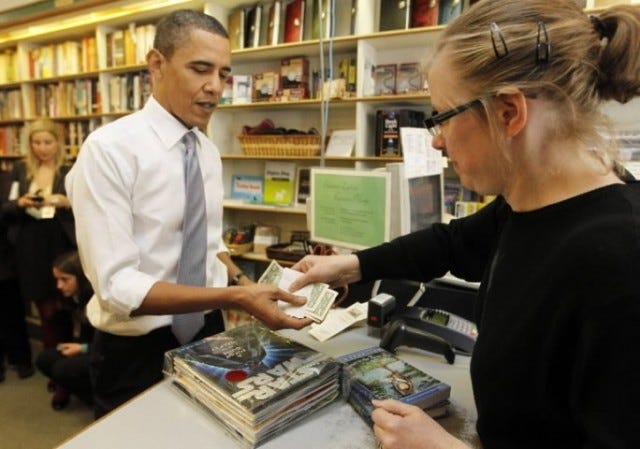
The Wall Street Journal is kicking off a new season of political speculation — this one about Obama’s post-presidency literary plans. History shows that leaving the oval office is one of the most opportune moments to shop a book. Just look at Bill Clinton, who brokered a $15 million contract for his presidential memoir, My Life. Given President Obama’s already tremendous literary success (both of his previous memoirs won Grammys for Best Spoken Word Album, among other accolades), he might have more leverage than any other President before him to cash in on a mega book deal.
According to the WSJ, in 2004 Obama signed a contract with Random House to deliver three books. He still owes one non-fiction volume, but the arrangement is flexible. Who knows, perhaps after eight serious years in the White House, Obama would like to try his hand at penning a novel for another publishing company. He’s a known lover of fiction (Lauren Groff, Colson Whitehead, et al.) It could be that this nauseating election season, coupled with having read Neale Stephen’s Seveneves over the summer, provided Obama with the right amount of inspiration to write the earth-shattering dystopian novel we’ve been waiting for since Orwell’s 1984.
But POTUS isn’t the only one who will have the opportunity to cash out on a lavish book deal. First Lady, Michelle Obama’s high approval ratings suggest that her hypothetical memoir would be a big success. The much loved Joe Biden has also expressed an interest in writing a book. Political memoirs are anticipated from aides in the Trump camp, too. After every election season, there’s a glut of political tell-alls, and 2016 promises plenty of dirt. However, if Trump plans on writing about his valiant campaign, it looks like he’s SOL with his original ghost writer. It will be interesting to see how the race for all of these book deals pan out in the coming months. One thing for sure is if Obama’s next book is anything like his previous works, no matter the genre, it will definitely be something for readers to look forward to.
In 2008, my brother and I sat in a bar with some friends, watching Obama give his now famous “Yes We Can” speech after the New Hampshire primary. We were amped, all of us, on what the possibility of his presidency might mean. Change and unity and maybe even the beginning of the end of racism (how little we knew of the backlash that was coming on all fronts).
A few minutes into his speech, I turned to my brother and asked, “Does he remind you of Dad?”
Matt’s eyes widened. “I was just thinking that,” he said.
It had taken me a while to figure out why Obama felt so deeply familiar to me and when it hit me, I’d laughed into my drink. The similarity was remarkable: the quiet confidence in the way he carried himself, his gestures, his intonations, even the length of his pauses recalled my father. The more I thought about this, the more the similarities accumulated. It was the entire ethos of Obama which I recognized: the balance of hopefulness and realism, the way his respect for — even admiration of — his wife showed on his face, his tendency to listen when people spoke and respond thoughtfully to their question, the dual registers of gravity and levity that he slid comfortably between and, above all, his seemingly inhuman patience in the face of ignorance, prejudice and vitriol.
I was recently accused by a friend of succumbing to Obama’s charisma. And perhaps this is true. His personality was certainly part of what inspired me. But charisma to me implies something superficial and distracting. What does it really tell us about the policies someone will implement or the President they’ll be? Well, according to the rules of fiction writing, a lot.
I teach creative writing at Cornell and something I hear constantly in the workshop (indeed, a favorite line in all the workshops I’ve participated in) is, “I don’t buy it.” Usually, because character X wouldn’t do Y or say Z. I had a student confess recently that they didn’t understand this reaction. They’d invented the character after all, so weren’t they free to invent the character’s actions and dialogue?
Actually, I replied, this is what writers mean when they talk about “the work taking over” or “the characters acquiring a life of their own.” It sounds like mystical mumbo jumbo, but really what it means is that all the actions and dialogue you construct have to be rooted in the personality you’ve built for your character. So, yes, you can obviously write a bombing or an affair or a murder if that’s what you want to write, but you have to first create a character that would conceivably do these things.
Or put another way: Get to know the character you’ve created and you’ll have some idea of where the plot can feasibly go. This is what inspired me about Obama. He was not my Dad, of course, but so many of his fundamental characteristics were things I saw in my father, and I’d had a front row seat to watching those traits play out over my lifetime. They were the things that made it possible to anticipate my Dad’s reactions to setbacks and major decisions — the reasons he was and remains an exceedingly reliable parent. The same is true of Obama — it’s an issue of being able to anticipate the actions to come. It was easy for me to imagine Obama focused and graceful under pressure, listening to the concerns on the table, making informed and thoughtful decisions. And it’s been widely reported by the people with him in the Situation Room that this is indeed how things have gone. Faced with a sudden economic recession, an oil spill, an Ebola outbreak, he has demanded sober action and rejected hysteria. Just last week, no one was surprised to see him respond to a heckling protester with a call for respect.
Electing a president is an act of imagination. How will they interact with foreign leaders? How will they respond to the next mass shooting? Will they abuse their power? What will they do with the nuclear codes?
Electing a president is an act of imagination. How will they interact with foreign leaders? How will they respond to the next mass shooting?
A phenomenon I often hear writers discuss is the surprise of watching reality come to mirror their fiction. Donald Barthelme wrote about trying to save the life of Bobby Kennedy; only two months after the story was published, Kennedy was killed. Jennifer Egan wrote about a terrorist plot in New York City shortly before 9/11. On a micro-level, I’ve heard writer after writer confess that a story they based on someone they knew has played itself out in reality. Writers aren’t clairvoyant, of course, but these aren’t necessarily coincidences either. With a clear enough handle on your character, it makes sense that you will sometimes accurately predict where that character winds up.
This is where the right-wing narrative of doom comes from. Put aside for just a moment the fact that Hillary Clinton is a woman (which is its own, towering hurdle about which essay after essay after essay could and should be written). Despite a surplus of evidence to the contrary, Trump and a bevy of Republican leaders have pushed the notion that Hillary is the most corrupt, least honest candidate the nation has ever seen (projecting, much?). And when so much of the country comes to believe these attributes are central to Clinton’s character, it’s no surprise there’s so much fear surrounding her potential election.
But what we actually know about Hillary Clinton is that she’s a relentless fighter. That she listens to concerns of the public. That she is willing to accept blame. To apologize. To learn from past mistakes. That in the face of abuse, she continues working. That she has held her cool for forty years in the public eye and that no amount of pressure seems liable to shake that.
No, under President Clinton, we’re not likely to see a sudden dissolution of government gridlock. But the President we can imagine her being is one who continues the steady growth of our economy. One who strives for further inclusiveness of marginalized communities. One we can depend on not to antagonize our allies or embolden our enemies.
Let’s stick for a moment with things we do have evidence of. We know that Donald Trump has an ego that bruises easily. That his impulse is to silence his critics, to perceive slight and ensure that the offending party suffers for it. That he makes no apologies. That he’s impulsive and unwilling to take advice. That he has no interest in educating himself on matters beyond his expertise. That his sense of fairness and justice revolves around that which benefits himself. That women are objects to be attained or discarded or used as he sees fit. That people of color are an “other” in whom he consistently fails to see humanity.
We know where the plot goes with a President Trump. Any fiction writer or reader can tell you the end of that story. The particulars of how things go awry will vary from telling to telling. But the consistency — the certainty about Trump as protagonist — is that the story ends in destruction. Whether it’s of a certain marginalized population or another country or the freedom of the press or American democracy, we know there is wreckage ahead. It’s a tragicomic writer’s dream and a human being’s nightmare.
Today, we gather for an act of collective storytelling. Which narrative do we want to live out?
Shortly after the flight left Newark, a man walked a stewardess up the aisle of the airplane, past all the passengers, with a ten-inch steak knife pressed against her throat. A moment later the pilot, Captain Jack Moore, was on the intercom. “Well, folks,” he said, “it looks like we’re going south of Miami today.”
A particular fear of hijacked planes had lingered over the country for years. It caused people to board planes cautiously, eyeing each other, pointing out those who looked suspicious. And now their fears were confirmed. Panicked cries rang out, voices pleaded, but there was nothing to be done except to wait for their fates to be decided. But then, suddenly, their pleading prayers were answered. There, sitting in first class, hidden a bit from the open aisle, was Allen Funt. News spread among the terrified passengers; sighs of relief echoed through the cabin. According to later reports, people lined up with their sick bags to get autographs and stewardesses popped champagne. A new certainty took over: This was all part of a show. None of this — the hijacker, the knife, the threat — was real.
Landing in Miami
A voice says, Her thirty years versus his.
Then a second voice: At least his thirty years have been successful years.
Success for himself only.
What’s wrong with that?
What do I care if he’s been making himself rich for thirty years? How is that the necessary qualification?
My driver turns down the radio. “How come you don’t know how to get out of an airport?” he says to me, not trying to conceal his anger.
“I’m sorry,” I say. I was supposed to meet him in the arrivals landing, which was a level below where I’d stood, looking for his car. The driver called me yelling that I was in the wrong place and that he would leave, but I asked him to wait and he did.
“You don’t pay attention,” he says. My receipt would tell me later that his name was Sergio. “If you don’t want to pay attention, you just take the bus or something. Don’t waste my time.”
It is raining in Miami. My plane had landed at the same time as Air Force One which caused delays on the tarmac. President Obama is scheduled to give a talk about healthcare that afternoon at the University of Miami.
“You never seen an airport before?” Sergio says. A sullen French woman named Corinne is sitting next to me, sharing the ride. She, too, had failed to go to the arrivals level and Sergio had stood outside his car yelling, “Corinne! Corinne!” He tried to explain, screaming into his cellphone, that she, like me, was waiting on the wrong level, but he spoke with a heavy accent and she spoke almost no English. As I listened, it occurred to me that I could have offered to help — I spoke just enough French — but I said nothing. I wanted to see how the plot would unfold. We found Corinne eventually, but not before Sergio had wasted thirty minutes on our mistakes.
I look past Sergio to the wave of cars standing still on the highway ahead us. I’d overheard a flight attendant complaining about what the President’s motorcade would do to traffic.
“You don’t have airports where you’re from?”
“Different airports are set up different ways, I guess.”
“Where’d you fly in from?” says Sergio.
“New York.”
“Oh,” he says, his tone changes. “New York City?” We are suddenly on the same team. “Manhattan. So beautiful. I love Manhattan. You live in Manhattan? I got a cousin who has a friend paying $3,000 a month to live in a shoebox in Manhattan.”
“I live in Brooklyn.”
“When I first came to the states, I lived in New Jersey,” he says. “I went to Manhattan a few times. So beautiful. But better is Spain. I’m Cuban, but I went to Spain for a few years. Now I’ve been in Miami for ten. Miami is good, but Europe is better.”
Rain pummels the top of the car. A voice on the radio claims that Hillary had won the debate the night before, the third and final debate of the election. Sergio scoffs.
“Did you watch the debate last night?” he says. Corinne stares into her cellphone as if down a deep well.
“Yes,” I say.
“They’re talking about Hillary like, ‘Oh, I guess she was the winner.’ But of course she was the winner. People think maybe she didn’t win just because Trump survived without too much nonsense. That puts him in the running? I don’t think so. It’s amazing what people can get used to.”
“People think maybe she didn’t win just because Trump survived without too much nonsense. That puts him in the running? I don’t think so. It’s amazing what people can get used to.”
Captain Moore heard the commotion from the cockpit. It was not the first hijacking for Moore who would later tell the press that it was “easier the second time around.” It was the twelfth hijacking that year, the fifth for his company, Eastern Air Lines. It wouldn’t even be the only hijacking of that day. Later, in another part of the US, a young American man, a student, would hold a hairspray bomb to the head of a stewardess. The student told her he would be eligible for the draft in six months and that he did not believe in war and wanted to live a simple life of hard work in Havana. It was February 3rd, 1969. He cried as he begged to be able to leave the United States. His girlfriend stood by silently, staring down at a black leather flute case in her hands. Between 1968 and 1972, planes were hijacked and forced past Miami to Havana with shocking regularity. When the student and his nervous girlfriend made their attempt, the stewardess walked in the cockpit and to the pilot she casually said, “Guess what?”
“I’m not a citizen,” says Sergio, “so it doesn’t matter what I think, but if I could vote, man, it would be a very hard decision for me. Very hard choice.”
“Really?” My surprise is audible. “Does it bother you what Trump has said” and then I add tentatively, “about immigrants? You’d still consider voting for him?”
“He doesn’t mean it. Everyone knows that. He doesn’t hate immigrants. It’s all a show. Look, his mother is an immigrant. It’s an act. His wife is an immigrant. He doesn’t hate immigrants. He just has to say it so get a certain type of voter. He’s performing.”
“Do you worry that his comments about immigrants, whether he means them or not, will stir up hatred? Do you fear that?”
“Me? No. I’m a Cuban living in Miami. This city welcomes me with open arms.” Sergio laughs and gestures out the window to a Miami blurred behind a sheet of rain. “It’s you, not me,” he says, “You are the stranger here.”
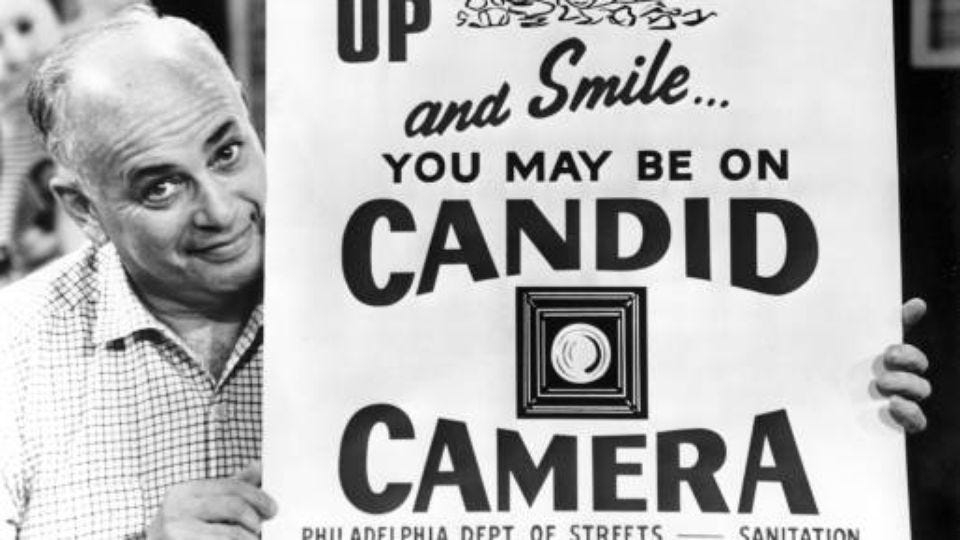
Smile… You’re on Candid Camera
Allen Funt was on the plane with his wife and their two daughters. He planned to shoot scenes on South Beach for his first film, a feature called What Do You Say to a Naked Lady? It was to be made in the style of Candid Camera, Funt’s hugely successful television show which put ordinary people in unusual situations and filmed their reactions without their knowledge. In an episode which aired originally in 1953, an unsuspecting man wearing a nice hat goes into a shop and begins a conversation with who he assumes is the shop’s clerk. Allen Funt appears behind the man in the hat with a carton of eggs and says, “Let me see that hat for a moment. It is an expensive one, isn’t it?” The man nods and Funt says he’d like to perform a trick. The clerk, who is really an actor, encourages the moment, “This guy’s a magician!”
The man does not want to give over his hat, but Funt convinces him and then proceeds to break raw eggs directly into its well. “Now watch,” says Funt and he covers the opening of the hat with a piece of paper and says a few magic words. Then Funt lifts the paper. The unsuspecting man sucks his breath in a bit with anticipation and peers down into his hat to find, of course, the raw eggs are still there. What he thinks is real, we, the viewers know, is just narrative set up leading to the conflict.
Candid Camera began as a radio show called Candid Microphone, the tagline for which was, “The show that brings you secretly recorded conversations of people in real life as the react to all kinds of situations.” Funt found out quickly that just recording ordinary people talking yielded incredibly boring results, in part because everyday conversations do not adhere to narrative arcs. By the time his show moved from radio to television, Funt figured out that if a conflict was introduced, it would force reality into a more interesting shape; and the more confusing and frustrating the conflict, the more compelling it was to watch people reacting candidly.
But the formula wasn’t perfect yet. Instead of humorous, the practical jokes often felt mean-spirited. A reviewer writing in 1950 for The New Yorker wrote that Funt was demonstrating how “most people are fundamentally decent and trusting and, sad to tell, can readily be deceived. Persuading his subjects that he is something he is not, he succeeds in making them look foolish, or in forcing them to struggle, against unfair odds, for some vestige of human dignity.”
It is painful to watch the man as he looks down at his ruined hat, and not just because he is excluded from the joke that we are all in on. It’s painful to watch him suppress his frustration for the sake of social politesse. His face contorts with the effort. His words come out first as a mumble. “You’re got to be kidding me,” he says quietly.
“For my money,” stated the review in the The New Yorker, “Candid Camera is sadistic, poisonous, anti-human, and sneaky.”
When the passengers on the hijacked plane see Allen Funt, they began to laugh and dance in the aisles. They made so much noise, the hijacker was alerted and when he emerged from the cockpit, knife in hand, the passengers gave him a standing ovation.
When the passengers on the hijacked plane see Allen Funt, they began to laugh and dance in the aisles.
South Beach 2016
Traffic eases and soon I’m given my first real look at Miami. I stare with greedy eyes and am struck with the feeling that I’d arrived, not in a city, but onto a set for a TV show. I’d felt this way my first time in New York City, in Los Angeles, in Venice, all real places made familiar to me first through a screen. It is my first time in Miami and yet I know it well. Here come the opening credits.
Tomorrow I’ll be sitting in the hot sand on South Beach, my sight jump cutting from scene to scene of the expected: neon swimsuit, beach umbrella, big, big beautiful boys and babes, pink drinks, jet ski, speed boat. Directly in front of me on the beach I’ll see a group of teenagers who look as though they’ve made by a machine that spits out human bodies designed to reflect up-to-the-minute beauty ideals. The teenagers pass around a plastic bottle of vodka as big as a torso, each filling a red cup. The boys wear hats with the bills turned backwards, leaving their burnt cheeks and red noses exposed. The boys approach the girls, throw footballs too close to their heads. Girls squeal, girls giggle. More join in, some carrying cases of beer the color of urine. They grow so large in number that they block the shoreline from view. I think to move. There are other free spaces on the beach. I think to read my book or swim or take a nap, but I don’t because I’m riveted. I’ve seen enough to know that this scene will soon include either a shark attack or orgy. I’m waiting. Then, finally, some action. Police appear, but, to my dismay, they do nothing interesting. They warn the teens in low tones and leave. Bodies flood back together, now with voices, on edge, jittery with the encounter, and stuff up my view.
I’ve seen enough to know that this scene will soon include either a shark attack or orgy. I’m waiting.
What they don’t show you on television is how the officers are undermined by the sand sifting into their sneakers. They cut the scene where the cops lean against a railing somewhere up on the boardwalk, sweating in their black uniforms, gun belts digging in their soft sides, bending to unlace their shoes and shake them free of sand.
Teens dive in the water. A boy in the yellow hat pulls at a girl’s bikini top, successfully flipping it off her breasts and over her eyes. She stretches her arms out in front of her and staggers around in the waves. I look impatiently for a shark fin on the horizon.
Sergio drops me off at Garcia’s Seafood and Grille whose website promises me the day’s catch in a large open air space overlooking the Miami River, but when I walk in all I see is a stout woman behind a case full of ice and fish and, to her right, a long, narrow industrial kitchen. There are no tables and no customers eating; no one greets me or explains where I should sit. The woman at the fish case says something to me in Spanish, but I don’t understand.
I see a few stools pulled up to the kitchen’s counter and so I climb on one and wait. The woman glares at me, but says nothing. I watch the cooks in front of me ladle thick soups into bowls. They move quickly, shouting to each other in Spanish. A man wearing a blue Kansas City baseball hat emerges from the kitchen holding a sandwich. I think that at any moment he will notice me and ask me for my order, but he doesn’t. Instead, he leans against the counter and rips into his lunch. He stares blankly out the window ahead of him and eats. Bits drip from his mouth to the bare kitchen counter at which I, too, am sitting. His is the face of a boss on a break. He’s slumped forward, his elbows hard on the counter, but his expression is serious and I can tell he’s listening to everything that is happening in the kitchen behind him.
“Go Royals?” I say, but not loud enough for him to hear or maybe he does hear me and doesn’t care.
His eyes land on something and he stands up straight and shouts in Spanish over his shoulder. A voice from the back of the kitchen responds and the two speak rapidly until the front door clangs open and in walks a tall, white-haired man in a rumpled suit. They fall silent.
“My man,” this stranger says.
“Hey, Abe,” says The Boss.
“How’s the baby? Sleeping through the night?”
“I guess,” he lifts his blue cap and scratches his scalp.
“That’s a no, then.”
Abe runs a hand through what is left of his white hair and thuds a heavy briefcase onto the counter. He opens it and takes out some papers, they’re contracts.
“What’s up, Abe?”
“I got something important for you to hear. Something big.”
“Oh, yeah?”
“But first things first. You want the news?” and they begin talking to about someone they both know — a Yuniel — who’d recently left his wife for a lover. The lover lives in Abe’s building.
“You’d think I’d see him all the time now, but no,” says Abe. “He’s in there with that woman. He can’t stop fucking her, he can’t take his dick,” he’s talking too loudly now, “out of her long enough to say hello to his friends.”
“You didn’t talk to him about Lucy?”
“Of course I did.” Abe’s voice is thin and shrill, like he’s forcing an unpracticed accent. “I gave him hell. I said, how could you do it to Lucy? I said, I’m going to go over there and fuck her myself. How would you like that? I’m going to go there and fuck your wife. But he doesn’t care. He’s stuck inside this other woman.”
A younger man, a waiter perhaps, joins the two men at the counter. He greets Abe with a shy smile then sees me. He regards me curiously for a while and I wonder if he only speaks Spanish and so, to help the situation, I point to a special written on a chalkboard I see hanging in the kitchen.
“Please,” I say. And the young waiter nods slowly and then disappears.
All an Act
It’s not real. It’s a joke, an act, a performance for ratings; it’s for Trump TV, all a ploy, just bragging, just the way he talks, just the way men talk, it’s for certain constituents, it’s just all a gag, it’s for show, it’s just locker room bragging. But he’s a straight shooter. He doesn’t play politics. He says what he means. Except when he doesn’t really mean it.
But he’s a straight shooter. He doesn’t play politics. He says what he means. Except when he doesn’t really mean it.
Like Funt, Trump has a magic trick; somehow he has managed to bewitch a percentage of the electorate into redefining what it means to mean what you say. The morning after the third debate, Trump’s surrogates appeared on television news programs to say that — despite Trump’s claims that he may not accept the results of the election — Trump would, really, truly, actually, accept the results and, no, he didn’t mean he wouldn’t when he said he wouldn’t, what he meant was he would accept the results, that’s what he’d meant, trust us.
Later on, after dinner, I’d check into my hotel and then wander down to its bar and there, flickering before on a television mounted on the wall, I’d catch a glimpse of the great and powerful Trump, wiggling his fat, magician’s fingers at me, saying, “Ladies and Gentlemen,” he says to the audience. “I want to make a major announcement. I would like to promise and pledge to all my voters and supporters and to all of the people of the United States. That I will totally accept the results of this great and historic presidential election — If I win.”
My bartender laughed. I asked him what he made of such a statement. He explained to me in a heavy Haitian accent that I’d have to shoot him before he’d vote for Trump, not that he could vote anyway.
“But, at least he says outright exactly what he means. He’s not playing politics. Putting on a nice face in public and then hiding behind racist, anti-immigrant polices. No, he means, ‘Get out’ and says, ‘Get out.’ I respect that. With Trump, you know just what you’re getting. But it doesn’t matter. Everyone knows he doesn’t actually want the job. Every morning I wake up expecting to see news that he’s dropped out of the race.”
“But, at least he says outright exactly what he means. He’s not playing politics. Putting on a nice face in public and then hiding behind racist, anti-immigrant polices.”
It is possible that, before Allen Funt, we can imagine a time when we would not have thought of reality as so manipulated. Candid Camera changed that forever by introducing the idea that a strange occurrence might come with a plot twist. It originated what is now, in our current age, an advanced awareness that reality might not be real.
“Now, here’s the real news. Listen to this,” says Abe and he makes a show of looking over his shoulder and past The Boss and into the kitchen. “You like the Heat?”
“They’re no good.”
“Yeah, but you watch the Heat,” says Abe. “You go to the games.”
“They’re trash now.”
“Yeah, but you like the Heat.”
“Sure.”
“I got tickets. Forever I’ve had these seats. Amazing seats. Not quite court side, but VIP, I’ll tell you. Better than court side. You’re right there. You could reach out and trip Wade.”
“Wade went to the Bulls.”
“You can trip anyone you want.” Then Abe began a long story about how he knew all the big VIPs who sat in the lower sections of the arena and how they were mostly old-timers like him, and there’s was this one guy, old guy, who didn’t want his tickets anymore and had tried to give them to his kids, but they had families of their own and were too busy for the Heat and so this guy didn’t know what to do with his tickets.
“Could make big money on those tickets.”
“Yes, but you see,” and this is where Abe started to lose me. His voice wavered, betraying him. He was lying. “We have a sort of gentleman’s agreement, you see. We like to keep these tickets within a certain circle, you know, so that when we go to the games there’s someone to have fun with. Can’t sell the tickets to just anyone. Can you imagine?”
“Sure.”
“Exactly.”
“My old friend is out, he’s done with the tickets. He’s had them so long, they’re dirt cheap. Couple thousand for the season. Nothing to a guy like you, right? Amazing seats. And have you seen the women who sit close to the court? They don’t wear underwear. They spread their legs for the players and we get a free show. You wouldn’t believe these women. Fake tits don’t bother me. You get these tickets, we go to a few games, have fun, couple thousand. That’s it. The tickets stay in my old buddy’s name, but they’re yours.”
“I pay for the season, but the tickets stay in his name?”
“Yeah, but he don’t want them back.”
“Ok, but what if we pick up a good player in a trade, you telling me he won’t want his seats back then?”
“No, never. Listen, I know this guy thirty, forty, fifty years. He says he’s done with the tickets, he’s done.”
Abe is selling too hard and The Boss knows it. There are too many details, none of them specific. I look over at his contracts spread out on the counter and the scam becomes clear. He’s a lawyer selling off the assets of clients who’ve died, assets the family doesn’t know about or doesn’t care about. Sergio had told me just how rich people were in Miami. “You think you got rich people in New York and you do, but it’s a different kind of rich here. People have stuff here. So much stuff.” I wondered if it was common for rich people to have so much stuff that a lawyer specializing in wills could keep some stuff for themselves without the family noticing. If the Heat tickets were sold on an open auction, the family might find out. But if they were sold quietly and stayed in the dead guy’s name who would know? I was onto Abe and started to watch him very closely, taking note of his every move, cataloguing details, his clothing, the brand of his suitcase, the names on his contracts, because this is what the detectives I saw on TV would do.
“Give me your number,” Abe said to The Boss.
“Give me your card before you leave. I’ll call you if I’m interested.”
“Come on, give me your number. Where’s your phone. I’ll put my number in your phone and then you text me so I got your number. Your phone’s right there. I see it. Plugged into the wall right there.”
Abe notices me now. I writing all this down. He leans over clamps a hand on my arm. His hand is large and warm.
“What’s that, a diary?” he says.
“No,” I say too defensively.
“Don’t see many girls writing in a diary these days.”
“Writing notes for an article,” I say. “Obama is in town.” The two sentences are unrelated, but not false.
“Trump should be disqualified. The things he says! How is he not disqualified? What does it take, really? How did we all get so used to the vileness coming out of this man? Look at this,” Abe hands me his phone to show me a picture of a homeless man holding a sign that reads, Give me a dollar or I’ll vote for Trump. “Saw this guy yesterday downtown.” Abe flips through other pictures, most of which are Internet memes. He shows me an image of Bill Cosby with the caption, It’s easier to grab their pussies if they’re unconscious. “My buddies send this shit to me,” says Abe. “Best part of my day. I look forward to it so much.”
Abe hands me his phone to show me a picture of a homeless man holding a sign that reads, Give me a dollar or I’ll vote for Trump.
Very Real Danger
Allen Funt began to beg the passengers to listen to him. This is not a stunt, he pleaded, but no one listened. Women applied fresh lipstick and turned around in their seats, looking for the hidden camera. Sitting behind Funt was a priest with a serious look on his face. Funt turned to the priest and said, “Please, you have to help me convince everyone of the very real danger we’re all in.” The priest regards Funt for a long time and then slowly breaks into a smile, “You can’t fool me, Allen Funt.”
The public turned in favor of Candid Camera as soon as Funt added what can be called “the reveal.” At the exact moment when the man, gripping his ruined hat, seems ready to yell or cry or break something, Allen Funt puts his arm around him and says, “You’re a wonderful fellow. Let me explain. You’ve just been on a television show. See that camera behind there? Can you see it behind the glass?” The man nods. The truth has been revealed. He laughs with relief.
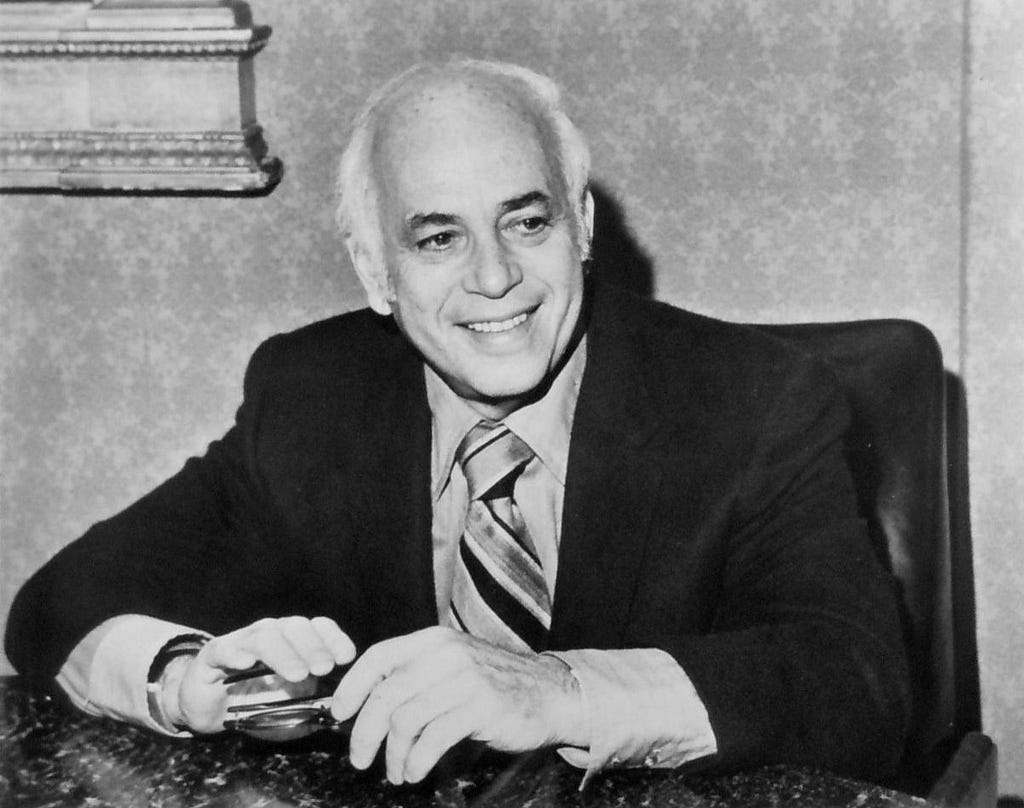
Allen Funt, photo by ABC Television
The passengers were waiting for the reveal that wasn’t coming. The plane skidded onto the tarmac in Havana and it was then that passengers realized the very real danger they’d laughed off. The Cuban military police burst through the cabin doors, rifles drawn.
Abe leaves and The Boss in his blue cap whispers to the young waiter who has reappeared, but not with my food. They go on like this in Spanish and then stop suddenly and look at me, both realizing at the same time that I am still there, watching them. I smile. My mother told me once that she thought I was brave to travel alone, not because I was in a new place by myself, but because I inevitably would have to eat alone. I think it is suspicious to eat alone, she’d said. Whenever I see someone eating alone, I think, ‘What’s so wrong with that person that they don’t have someone to eat with.’
The Boss walks toward me. “Let me ask you a question,” he says. “What do you think of that guy who was just in here?”
I don’t know what to say and so I say nothing, but my silence is read as too meaningful and The Boss lights up.
“See!” he says, pointing to me. “I don’t trust him either. For the last month he comes in here and sits at the counter like he’s my best friend. He’s talking too disrespectfully, I think. He thinks we like it. That’s what he thinks of us.” The door clangs open again and we all look up nervously. A couple walks in looking confused.
“Restaurant?” They say.
“There,” He points to a door adjacent to the one they’d come through, the one I’d come through. “That door and upstairs. This is just the kitchen.” I’m certain that my face is bright red with embarrassment. The woman at the fish case is looking at me with raised eyebrows. She points to the couple. I watch as they exit the kitchen and go through a different door, clearly marked with a sign that reads, “Restaurant.”
The Boss is watching me. “So, what do you think of that guy?”
I worry about what to say and buy time by looking as if I’m weighing my words carefully. He’s forgiven or chosen to overlook my invasion of this space, although the woman at the fish case has not. If I say the wrong thing, I’ll be ousted without my meal and I’m very hungry after a long flight and a long car ride with Sergio. I don’t know this man or Abe or this city, which, before this moment, I was pretty sure existed only to be a backdrop for crime shows. My plan is to shrug politely, say nothing, eat my food, and go. Speaking will cause trouble, that seems evident. I take a breath. The Boss leans in.
“It’s a scam,” I say gravely and then, just like a TV actor, I tap my notebook and raise my eyebrows. His eyes widen.
“It’s a scam,” I say gravely and then, just like a TV actor, I tap my notebook and raise my eyebrows.
“Oh! Wait? Are you keeping tabs on him or something?” Pieces of a false puzzle are aligning and though he clearly doubts what I’m saying, he also smiles, relieved. My presence has an explanation for him and I’m glad.
I’m hungry and I want to eat and leave. As I sit there, national polls are reporting results: The race is tightening. The Boss is watching me, waiting for me to tell him truth. I nod. Then shrug. My food arrives.
Update, Nov. 15: We are now accepting scholarship applications! Apply here.
Exciting news! Electric Literature has received support from the New York City Department of Cultural Affairs to offer full scholarships to a series of writing workshops and masterclasses co-presented with Catapult. New York city-based writers of all ages and experience levels are invited to apply through a simple application process, which will open on November 15th.
“Most writers struggle to fit a regular writing practice into their busy lives, especially in New York City, where time comes at a high cost,” said Electric Literature’s Executive Director Halimah Marcus. “We’re thrilled to be able to offer financial support in addition to the incredible community and instruction these classes provide.” Electric Literature is equally grateful that Catapult will be matching the DCA’s support, which will make it possible for the literary non-profit to provide the abundance of 20 scholarships.
Another Catapult bootcamp with Chloe Caldwell and Ashley Ford
Although Catapult is a relatively new company, it has undoubtedly secured its foothold in the New York writing scene. “Over four hundred emerging writers have taken our classes,” said Julie Buntin, Catapult’s Director of Writing Programs. “They’ve gone on to top-ranked MFA programs, won fellowships and awards, signed with agents, published books. We believe that a strong literary community, one that matches emerging writers with engaged mentors, can change an artist’s life.” Their success provides all the more reason for EL’s enthusiasm about the impact these scholarships will have. (It also doesn’t hurt that The Village Voice recently included Catapult classes in their annual Best of NYC Culture list.)
Electric Literature to Offer Writing Scholarships with Support of Catapult and NYC Department of Cultural Affairs
New York, NY, November 7, 2016: Electric Literature has received support from the New York City Department of Cultural affairs to offer full scholarships to a series of writing workshops and masterclasses co-presented with Catapult. These scholarships offer the opportunity to writers of all economic strata in New York City to hone their craft, develop their individual voice, and make their stories heard.
Catapult will match the DCA’s support, allowing Electric Literature to offer over 20 full scholarships to students in the NYC area. “Most writers struggle to fit a regular writing practice into their busy lives, especially in New York City, where time comes at a high cost,” said Electric Literature’s Executive Director Halimah Marcus. “We’re thrilled to be able to offer financial support in addition to the incredible community and instruction these classes provide.”
Catapult began offering classes in their Manhattan offices in April 2015, and has since grown the program to over 60 classes per year. Workshops topics relate to the instructor’s unique skillset and literary sensibility, and single-day masterclasses offer students the chance to dive into subjects like narrative voice and story structure. These craft-oriented classes are offered alongside courses designed to help emerging writers navigate the publishing industry. Past instructors include Mary Gaitskill, Angela Flournoy, and James Hannaham, in addition to professional editors and literary agents.
“Over four hundred emerging writers have taken our classes,” said Julie Buntin, Catapult’s Director of Writing Programs. “They’ve gone on to top-ranked MFA programs, won fellowships and awards, signed with agents, published books. We believe that a strong literary community, one that matches emerging writers with engaged mentors, can change an artist’s life.” The Village Voice recently included Catapult classes in their annual Best of NYC Culture list.
Scholarships will be awarded on the basis of both need and merit through a simple application process open on November 15, and will be available for 6 to 8 week writing workshops as well as single-day master classes. One scholarship will be available for a 12-week novel-writing course, in which students will produce a complete novel draft.
Listen, carefully. The whine of a seaplane. The crackle of my crumpled-paper thoughts tossed onto the floor.
Listen carefully. I’m sitting in a clinic exam room trying to obtain a coherent medical history from a 45-year-old homeless patient, her grey sweatshirt dribble-stained, a miasmic aura of tobacco and brew. I listen to her story — or rather to her looping, swirling, spitting, splitting multiplicities of stories — but am distracted by her pinched face, wild-flying hands, charred stubble teeth. She pauses, coughs in my direction. I hand her a tissue and lean back, away, on my exam stool. “What kind of operation did you have on your foot? How long ago?” I need you to answer my questions, succinctly please.
She’s a difficult patient. She’s a slovenly patient. Slovenly, there in the list of patient descriptors in the electronic medical record system on the screen in front of me. That sounds right. Oxford English definition of slovenly: low, base, rascally, lewd — nasty and disgusting.
Listen carefully. To our medical words, the terms we use, the terms I use. Difficult patient, as in annoying, angry, afraid, ambivalent, noncompliant, questioning, confused, sad, list-bearing patient.
If you stop to listen, you may not get past the history-taking part. How do you take a history? Chief complaint, history of present illness, past medical history, family medical history, social history, and review of systems — the history of your organs. This is our common language, standardized, logical, neat, no room for chaos. History-taking is stealing, erasing, editing. History-taking is what you hear from the messy illness narrative the patient coughs up. Your job is to select a few words, perhaps a pithy phrase, to place in quotation marks under Chief Complaint, in the Subjective Findings, in the patient’s own words. Subjective belongs to the patient. Subjective is suspect, suspicious, specious. Objective is me, my words, my physical exam and test findings, my diagnosis, my treatment plan. There is no room for subjective me.
Listen carefully. I have time for one chief complaint. If you tell me many I’ll choose the one I want to pay attention to, the one I think the simplest to diagnose and treat so I can send you on your way and wash my hands, remove your skin cells, your germs, your odor. At the end of the day I peel my clothes into the washer. Standing in the flow of shower, I remember where the patient coughed, where the touch occurred, where the transfer of mucous, skin cells, bacteria, virions, fungi spores — of words — occurred. I scrub them clean. Only the words remain. Their words, my words, the silent spaces in between.
Listen, carefully. I must remember: there is no room for subjective me. Do not question what you’re doing, I tell myself, it will only drive you crazy. It will drive you away from this place of work; it will drive you never to return, here, back to the chief complaint, history of present illness, past medical history, family medical history, social history, and review of systems — the history of their organs.
Listen carefully. To the pregnant pause, uncomfortable silence, wise silence, silent treatment, silent infection, silent prayer — to the poet’s silent-speaking words. What to make of silence?
Silence is censure, stricture, repress and suppress. Silence is submissive, resistless, yielding. Silence is looking away; silence is not speaking up.
Silence is space, resistance, stance, stone. Silence is protective, private, present. Silence is power.
Listen Carefully. To the patient’s illness narrative. Listen first to the patient description of symptom, duration, location, precipitating events. Listen also for the story, time scaffolding, structure, frame, and diction. Listen for their use of metaphors. I am as cut off from life as sitting inside a car on a rainy day. There’s a shackle on my left foot dragging me down, an ice pick in my eye. The ringing in my ears is like a thousand cicadas have landed on my head in the heat of a summer day.
Listen, carefully. If I told you at the beginning to pay attention to my diction, metaphors, use of time, tone, the structure of this story, how would you listen?
Listen carefully. To the pinched face, wild-flying hands, charred stubble teeth. To the crackle of crumpled-paper thoughts tossed onto the floor. To the history of our present illness. To a thousand cicadas in the heat of a summer day.
In Freud’s worldview, sibling dynamics are an extension of Oedipal/Electra complexes, focused on competition for parental attention. It’s a model that reminds me of what I’ve read about opossums, which are born smaller than honeybees and crawl up to their mother’s pouch: once all her teats are claimed, latecomers starve to death. While Freud’s theories don’t present the stakes as literal survival, one child receiving sustenance means another will be left wanting.
I’m interested in how complicated and essential siblings can feel to one another. A sibling attachment can be as real a partnership as any, based on love and connection — and also on missed chances and misunderstandings, petty grudges and silly inside jokes, moments of deep affinity and total alienation, the chemistry — that we more often associate with romantic relationships.
In my latest novel, Meantime (Grove, 2016), Claire’s husband Jeremy gets drawn back into a relationship with the woman he loved in high school. Claire, who has always prided herself on her originality and independence, becomes preoccupied with her marriage to the degree that she loses sight of herself. But her truest and deepest connection is to her stepsister, Nicole. When both girls were young, Claire’s father and Nicole’s mother fell in love, and the two families decided that living together would be the least disruptive course. Claire’s parents try to sell her on the idea of merged households by declaring that it’s lucky to choose one’s family. Claire is too young to recognize the flaw in this logic — that she actually hasn’t been given any choice in the matter — but as an adult, she and Nicole do choose each other as family.
And so it’s probably unsurprising that some of my favorite books concern siblings whose lives are tangled up together. George Eliot and Jane Austen and James Baldwin and Christina Stead have all written unforgettably about siblings, and there are intense sibling relationships in Renaissance drama and the Bible and fairy tales and the legends of King Arthur and mythologies from around the world. For this list, though, I’ve restricted myself to some recent books I love: novels, and also essays, and poetry, and comics, all with complicated sibling bonds. These siblings feel love, hate, envy, and fierce protectiveness — sometimes in turn, sometimes all at once.
Akhil Sharma, Family Life
When Ajay is a child, his brilliant older brother, Birju, knocks his head on the bottom of a swimming pool and is without oxygen for several minutes, leaving him blind and severely brain damaged. This novel is beautiful and devastating, and yet manages to be darkly funny. (What’s more, God appears to Ajay as Clark Kent.) As much as Birju shapes Ajay’s life before the accident, he continues to shape it after, a shadowy half-sibling to him.
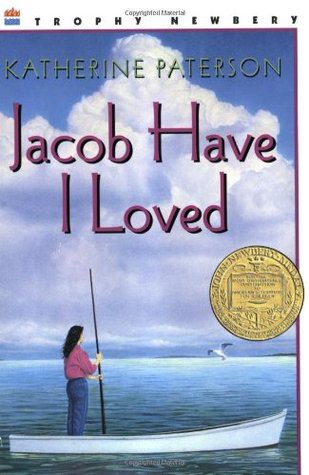
Katherine Paterson, Jacob Have I Loved
I first read Katherine Patterson when I was eight, and I still remember the electric moment — the jangle of confusion and excitement — of realizing that her protagonists had bad thoughts and still got to be protagonists. Gilly Hopkins is a racist and a bully; Jesse Aarons is jealous of his friend Leslie even though he loves her. And Sara Louise (“Wheeze”) Bradshaw hates her golden sister Caroline. Because this is fiction for kids, you expect Wheeze to be corrected at some point, taught by the narrative to be nicer — but there’s no falsity in Paterson, and Wheeze and Caroline never come to like each other.
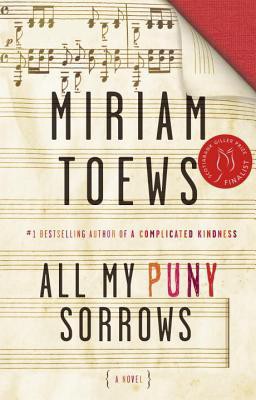
Miriam Toews, All My Puny Sorrows
Elfrieda is a world-renowned concert pianist, married to a man she loves, and so desperately sad that she’s attempted suicide twice. Her sister Yolandi would do anything for her except the one thing Elfrieda actually asks. As Yolandi puts it: “She wanted to die and I wanted her to live and we were enemies who loved each other.” It is this kind of sharp insight and clear-eyed rendering of emotion that makes the book gripping where it might otherwise be unremittingly bleak.
Marie Howe, What the Living Do
The title poem of this collection is addressed to Howe’s brother after his death from AIDS; it begins with the mundanity of “Johnny, the sink’s been clogged for days, some utensil probably” and rises to a lyrical cry of grief and longing and impossible joy at the prospect of living on in a world that feels broken apart. Many of the other, less famous, poems in the collection are also about the poet and her siblings, banding together in childhood against their father’s violence, or, as grown ups, trying to leave behind the toxicity of their family while still holding onto one another.
Jesmyn Ward, Salvage the Bones
One of the most moving depictions I’ve read of siblings caring for (in both senses of that phrase) one another. In a small-town Mississippi, Esch and her brothers try to brace for the coming Hurricane Katrina. Esch is fifteen, sometimes sullen, in love with the boy who got her pregnant and with Greek mythology; that she is such an unconventional heroine is part of what makes her a great one. Ward dedicates this book to her late brother, Joshua, whose life and death she writes about in the (also terrific) memoir Men We Reap.
Lynda Barry, The Freddie Stories, My Perfect Life and The Greatest of Marlys
Choosing three of Lynda Barry’s books may look like cheating, but I’m going to treat these three books as a trilogy, one from the perspective of each of the Mullen siblings. In our post-Maus, post Persepolis, post-Fun Home landscape, most of us acknowledge the greatness of the graphic novel as an art form, but the comic strip — which is how Barry describes the work collected in these volumes — is still undervalued. Childhood here burns so fiercely with betrayal and sadness and self-protective self-deception that even the occasional moment of joy comes singed around the edges. Barry’s work almost looks like it could have been drawn by a kid, which just drags you all the more sharply back to that time.
Antonya Nelson, Living to Tell
Antonya Nelson is best known for her short stories, but it’s her novels I find myself returning to again and again. The siblings at the heart of Living to Tellare drawn without any sentimentality — Winston, recently out of prison, is sleeping with a sad neighborhood man for money; Mona has just been dumped by her married lover; together-seeming Emily is barely happier than her more obviously flailing brother and sister. By the end of the novel, the siblings have found a fragile happiness that Nelson lets you know is no less important for being temporary.
Junot Diaz, Drown
On their surfaces, these stories have different concerns, but running underneath many of them is the relationship between Yunior and his older brother, Rafa. Yunior is proud of his fierce intelligence, but he believes he’d trade it in a second to be more like Rafa: handsome, cool, promiscuous. Don’t mirror me, Rafa tells him at one point when they’re teenagers, and Yunior mirrors back, Don’t mirror me. But of course, Yunior can’t truly turn himself into Rafa, and his sense of the luckiness and unluckiness of this limitation shifts constantly.
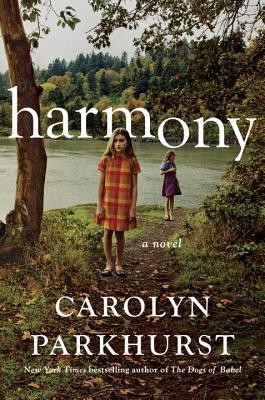
Carolyn Parkhurst, Harmony
There’s a trend in the books I love: funny, dark, without pretense. Tilly is thirteen, struggling with a constellation of cognitive and emotional issues that no one has been able to diagnose, but the book is just as much the story of her neurotypical younger sister. From page six, when eleven-year old Iris reports on her sister sing-songing to their father, “Daddy, gonna to suck your cock” — and the father’s weary “Cut it out, Tilly” — you know this novel is going to be taking no prisoners. Among the many things for which I’m grateful here: staring at this book’s beautiful but somehow unsettling cover, I saw for the first time that the word “harm” is embedded in “harmony.”
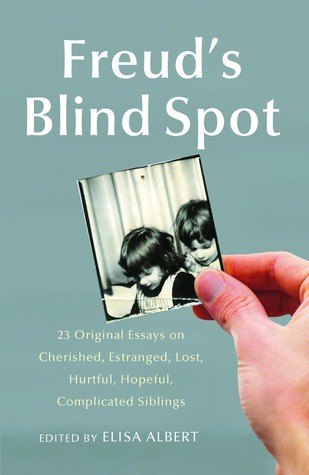
Elisa Albert, editor, Freud’s Blind Spot
These twenty-four essays are filled with love and wit and irony. In Elisa Albert’s introduction, she writes of siblings, “They may love us and support us, they may baffle and annoy us, they may let us down, fail us utterly, but there they are, forever, blood peers from whom we can’t ever quite escape.” And then, because this is Elisa Albert, too smart to ever rest in even a complicated generality, she admits, “Or maybe that’s what I imagine, since in truth I have no fucking clue.” (I’m going to sneak two more suggestions in here: Elisa Alberts novels don’t quite fit this list, though the protagonist of Book of Dahlia has an estranged brother, and the protagonist of After Birth tries to turn her friends into sister figures, often disastrously. But they are furious, brilliant books and you should read them.)
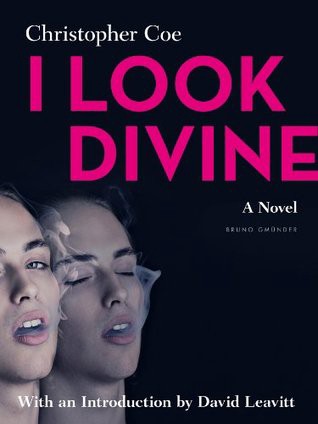
Christopher Coe, I Look Divine
When this novel came out in 1987, I was a teenager in a Mid-Atlantic suburb. It was a fine place to grow up, but without much glamour: my friends and I had afterschool jobs at mini-malls; the height of sophistication was ordering pizza topped with Canadian bacon and canned pineapple. I Look Divine was like nothing I’d ever read before. The unnamed narrator cleans out the beautiful, ruined apartment of his younger brother Nicholas, who has been murdered by an anonymous pick-up. Nicholas’s hyper-stylization, his obsession with presentation and appearance, is mirrored in the novel’s hyper-stylized language and structure. A writer could do such a thing! I’d had no idea. I lay on my bed in what had been intended as the basement rec-room — fake-wood paneling, the occasional centipede, pretty much the opposite of glamour — reading and re-reading Coe’s sentences, sharp and glittering as broken crystal.
Carol Anshaw, Carry the One
After a wedding, the bride’s brother and sister — a little drunk, a little sleepy — are partially to blame for a terrible accident. The novel ranges over the next twenty-five years, tracing the siblings divergent — but never truly separate — paths. As Carmen, Nick and Alice variously move in and out of love affairs and marriages, making lives that seem to center on having children, or making art, or doing drugs, it is their connection to one another that is the book’s true center.
I moved to Wilkes-Barre, Pennsylvania in the summer of 2000, where I found myself living among men who were not much like me. My best friend was an ardent gun owner for whom handgun ownership was both an essential part of his identity and so commonplace as to hardly be worth a remark. One day he was showing me an automatic―I think it was a .32―he kept in the drawer of his kitchen table in his apartment, when the firearm discharged. The slug blew most of the linoleum tabletop apart before lodging harmlessly enough in a baseboard. We both laughed it off.
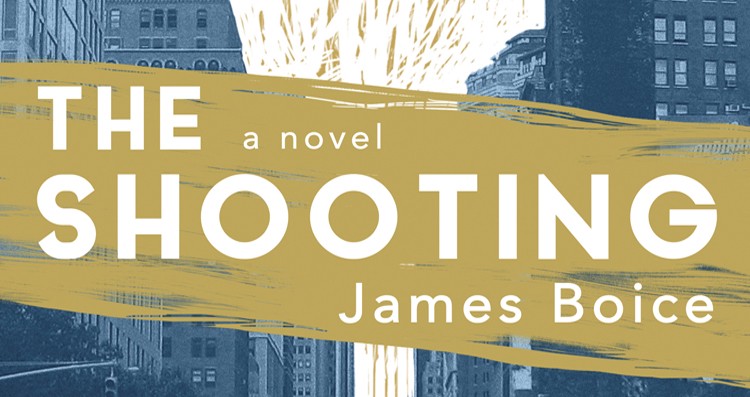
The reason I bring this story up is that I am tempted to put my copy of James Boice’s stunning novel The Shooting in the mail to my friend and ask him what he thinks. The Shooting (Unnamed Press, $16) is not perfect, but it’s been a long time since I’ve read a novel as powerful, angry, courageous, and messy as this one. Boice has no time for polite debates or liberal hand-wringing or timid vignettes of domestic life; he goes straight for the raw beating heart of gun violence in America, and the result is a novel of piercing power and unforgiving vision.
“The Shooting tracks the tragic intersection of two lives.”
The Shooting tracks the tragic intersection of two lives: of Clayton Kabede, the brown-skinned teenage son of a hard-working immigrant couple, and Lee Fisher, a reclusive gun-rights advocate. When Fisher shoots Kabede dead late one night when the latter has unwittingly trespassed onto his apartment, it sets in motion a whirlwind of recrimination, protest, and racial unrest that feels wrenchingly familiar in these convulsive times.
Described this way, The Shooting sounds like a straightforward piece of advocacy disguised as fiction but the reality of its author’s accomplishment is much more nuanced and impressive. Boice, who despite his youth is the author of three previous well-received but little-read novels, is almost preternaturally gifted; his prose has a fluid intensity that is often hypnotic, and his way of inhabiting the interior lives of his characters is unsettlingly accomplished. The Shooting is full of ugliness and pain, but it is the work of a romantic at heart―of a man who believes that people can find their way, however haltingly, to grace.
With this mixture of cruelty and tenderness, The Shooting reminds me―and this is guaranteed to piss everyone off―of Jonathan Franzen at his best. It also feels to me, weirdly, like a verbal 21st-century updating of Robert Altman’s great, sprawling film Nashville―another freewheeling narrative that careens towards a violent denouement, and that features a rotating cast of supporting actors whose stories suddenly veer into centrality. Some of the most affecting passages of the book are the micro-narratives that spiral off from the main course of events, highly compressed excursions that read like little parables of tragedy and redemption.
“The Shooting is too passionate to be satire, and too empathetic to be propaganda.”
It is tempting to celebrate The Shooting as an example of a social protest novel, of political fiction, that often seems missing from so much of our contemporary literature, but I am not sure that is exactly correct. A lot of political fiction seems somewhat one-dimensional, either satirically exaggerated or shrilly pedantic. The Shooting is too passionate to be satire, and too empathetic to be propaganda. It is equally tempting to view it as simply a terrific novel that happens to be about a hot-button political issue. In the end, I think, neither is exactly right.
The reason is that Boice is able to endow all of his nearly all of his characters with a well-rounded presence and reality. Fisher is ostensibly a monster, a man who kills a teenage boy with no remorse whatsoever, but at times he is also rendered understandable, even sympathetic; it’s entirely possible my friend from Pennsylvania might consider him, without a shade of irony, the hero of the novel. Boice has managed to make his mental landscape fully inhabited. Similarly, the gun-rights activist Jenny Sanders, whose life work is the repeal of the Second Amendment, is depicted as an unbalanced and manipulative zealot who regards even fellow gun-death mourners as tools to be used and discarded.
About the only people who are not given deeply rounded portraits―and I think that this, along with the African American argot Boice attempts to reproduce in the section narrated from Clayton’s perspective, is a mistake―are the immigrant family themselves. Theirs is the only experience that flattens out. It’s a minor failing, and one that is perhaps even necessary for the novel to function as the exquisitely-tuned yet unflinching look at the dark heart of America that it is. When Fisher finally goes to trial, the prosecutor mocks his western accent, saying, “are you sure the kind of guy you are? A cowboy?” Fisher responds:
―Yessir.
―But that kind of guy’s not real, is he? He’s never existed. He’s a myth, isn’t he?
Lee’s answer is immediate but calm.―He ain’t a myth. He’s real.
A remarkable government effort to make reading a fundamental part of the country’s culture
Forget the towering skyscrapers, luxury hotels, and beaches — the United Arab Emirates has a new reason to be the object of global envy. According to the Guardian, Vice President of the UAE, Sheikh Mohammed bin Rashid al-Maktoum, has implemented a groundbreaking initiative which requires government employers to give workers an allotment of free time for reading. The books must have some value related to the workplace or personal growth, but the mandate reflects a national effort to make literature and reading a mainstay of their culture.
The law also has implications for the UAE educational system. When their youngest citizens are still in diapers, a “knowledgeable briefcase” will be bestowed upon them. It will act as a sort of reading bag, where children can collect books, and the system will ensure that all reading materials are recycled or donated so that no books ever go to waste.
Sheikh Mohammed told the National, a UAE government owned publication, that, “The law will encourage the private sector to invest in the establishment of libraries and cultural centers. This will be done by providing the private sector with facilities, incentives and discounts.” The ultimate goal is for reading to infiltrate all aspects of society. There are even plans for library branches to be put in shopping centers.
The vice president has been applauded by many, but perhaps most notable was his pat on the back from novelist, Paulo Coelho. He responded to the author by saying:
“Did you know, Paulo, that in the 9th century, our region had over 100 publishing houses on the outskirts of Baghdad alone? … When its life was centered on books, Baghdad was, my friend, a beacon in the worlds of astronomy, medicine, mathematics and philosophy. Where is Baghdad today?”
Sheikh Mohammed makes a very serious point. What country wouldn’t benefit from a reading law?
Political commentators on both sides of the aisle have used up plenty of ink and screen time decrying the 2016 Presidential Election as the craziest one yet. Clinton v. Trump may very well go down in history as “the election that drove America nuts” and the campaign that definitively steered American politics off the rails and into the abyss of insanity. Truly, the rhetoric fueling this election cycle sometimes seems like it was borrowed from the DSM V.
In times like these, books are there to offer us some comfort and a little perspective. With the constant barrage of the 24 hour media cycle, it’s easy to forget that, hey, American politics has had a lot of dark moments, and we’ve dug ourselves out of deeper trenches before (see #2). We’ve made it through polarized elections (#8), and Joan Didion reminds us that every Presidential cycle seems more improbable than the last. In sum, human nature hasn’t changed, only maybe a few of us have gotten more orange.
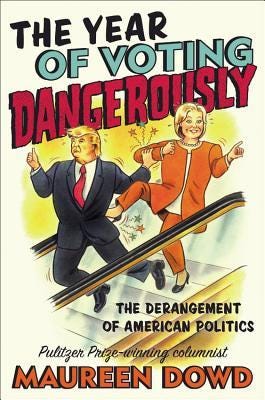
1. The Year of Voting Dangerously by Maureen Dowd
Before the victor has even been announced, Pulitzer Prize winning journalist Maureen Dowd has tackled the madness of the 2016 Presidential Election. Dowd discusses her personal history of covering both Trump and Clinton since the ‘90s and wrestles with how America ended up with two candidates boasting the lowest approval ratings ever.
2. Adams vs. Jefferson by John E. Ferling
Our current low road politics has a long and winding history. John Adams and Thomas Jefferson liked each other well enough at the founding, but despised each other by 1800. Their campaign was a ruthless collection of fear mongering and insults (sound familiar?). Jefferson claimed Adams had a “hideous hermaphroditic character.” Adams responded by calling Jefferson “the son of a half breed Indian squaw.” Ferling does an excellent job of rendering young America and showing how this turbulent election threatened to irrevocably fracture the country.
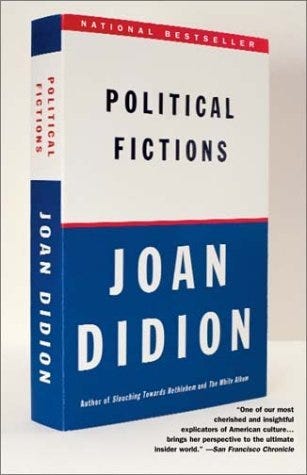
3. Political Fictions by Joan Didion
Unsurprisingly, Didion’s collection of essays takes a harsh look at how politics contribute to the demise of American morals. The pieces trace three presidential campaigns — ’88, ’92, and 2000. It includes essays on the Clinton sex scandal and the House’s failed impeachment proceedings. With acute observations and a journalistic edge, Didion scrutinizes how every election year is controlled by a small few who shape “the narrative of public life.”
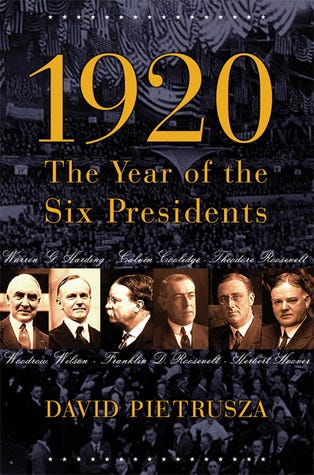
4. 1920: The Year of the Six Presidents by David Pietrusza
The 1920 election was groundbreaking for many reasons. First and foremost, women’s suffrage was ratified in August that year, which finally made it possible for the other half of the population to vote. Historically, it was an unusual election because six past and future presidents were competing for the Oval Office: Woodrow Wilson, Warren G. Harding, Calvin Coolidge, Franklin Delano Roosevelt, Herbert Hoover, and Theodore Roosevelt. Historian David Pietrusza delves into all of the different personalities and platforms that made up the dash for the White House, confirming the old adage that truth is often stranger than fiction.
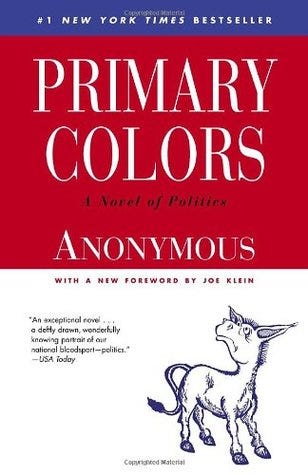
5. Primary Colors by Anonymous (later revealed to be Joe Klein)
Joe Klein’s incendiary novel was published anonymously, until speculation and handwriting analyses uncovered his identity. While the book has been presented as fiction, it’s easy to recognize the story of Bill Clinton’s 1992 presidential campaign. The protagonist, Henry Burton, works on the campaign team for Southern governor, Jack Stanton (the fictionalized version of Clinton). Burton becomes disillusioned with the governor’s two-sidedness, and is confronted with the reality of how shady presidential campaigns can appear from the inside.
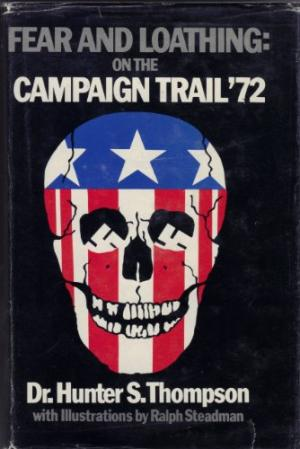
6. Fear and Loathing on the Campaign Trail ’72 by Hunter S. Thompson
Thompson’s book is a compilation of articles he originally wrote for Rolling Stone while reporting on the 1972 presidential race and doing lots of drugs. The race was between Republican Richard Nixon and Democrat George McGovern, but Thompson focuses his attention mostly on the latter. Full of wit and the usual Gonzo adventures, this one makes for a quick, wild read.
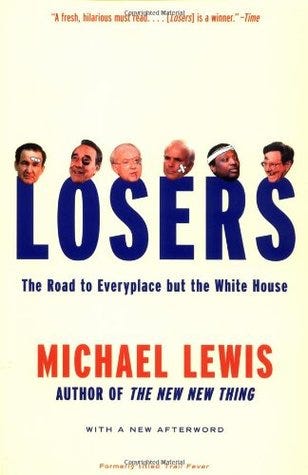
7. Losers by Michael Lewis
After the dust settles, most Americans swiftly forget about the losing candidate in the presidential election, but not Michael Lewis. The author is fascinated by what led to the demise of the six failed hopefuls in the 1996 election. In Losers, he deconstructs the political downfall of Pat Buchanan, Phil Gramm, John McCain, Alan Keyes, Steve Forbes, and Bob Dole. The title extends beyond the obvious and also contends that everyone involved in the election — from the candidates, to the media, and the voters — came away losers in some way.
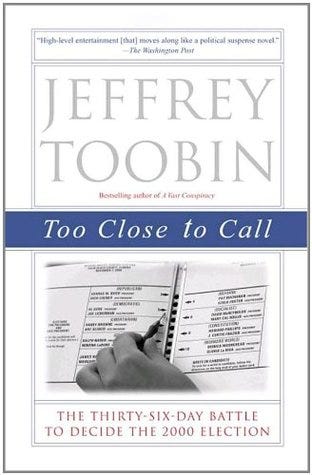
8. Too Close to Call by Jeffrey Toobin
Political and Legal Analyst, Jeffrey Toobin, uses his expert eye to assess the Bush Gore Florida recount. The incredibly close election uncovered a tangled web of political questions, in a race ultimately decided by the U.S. Supreme Court voting along apparently political lines. Might be worth taking a closer look in case Trump refuses to concede…
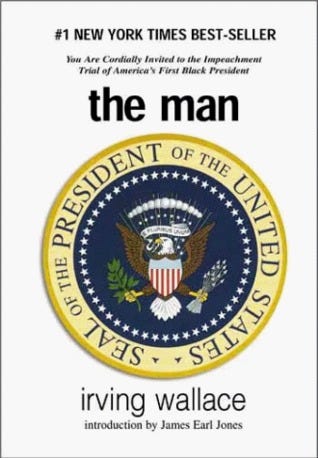
9. The Man by Irving Wallace
When Wallace’s political novel was published in 1964, it was considered groundbreaking. The plot focuses on the unforeseen inauguration of the first black President of the United States, following an accident with the former president and a chaotic succession plan that results in an obscure senator, Douglass Dilman, being named the new Commander-in-Chief. Dilman has to learn to balance his new role and family life, all while facing the pressures and difficulties of being a black president in the 1960s political landscape.
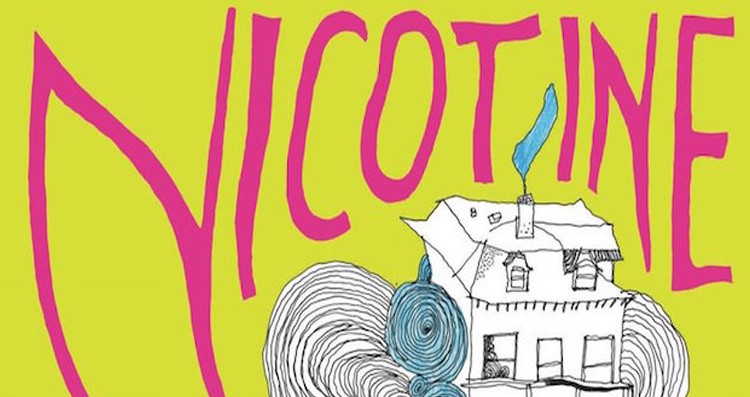
Nell Zink is back with her third novel Nicotine, a wry social commentary in which a Jersey City squat is coopted by a nefarious businessman. The squatters are forced to scatter, and rooms that were built from scavenged material are transformed into state of the art yoga and puppet making studios. The kitchen where residents prepared meals foraged from dumpsters is converted to a café with expensive drinks. In this darkly comedic feud between anarchists and capitalists, Zink lays bare how the aesthetics of idealism are appropriated by corporate opportunists and subsequently fed to an unwitting and unquestioning public. As the title suggests, this novel is both addictive and jolting before leaving a final harsh, corrosive taste.
Zink lays bare how the aesthetics of idealism are appropriated by corporate opportunists.
At the beginning of the book, protagonist Penny Baker has just graduated business school and has taken on the responsibility of caring for her dying father. Norm Baker is a spiritual leader with a cult following, but despite his teachings of openness and transcendence, Norm’s death is common. It is slow, and he is scared. Penny is overwhelmed by grief, loss, and classic uncertainty of an unmoored post grad.
The novels tone changes drastically when Penny makes a pilgrimage to visit her fathers’ childhood home in Jersey City. When she arrives she is surprised to see the word “Nicotine” in bold letters on the façade of the house. She knocks on the door and meets Rob, a resident who runs a bike coop in the garage. Rob gives Penny a tour of the house and introduces her to Sorry and Jazz. She soon learns that the squat is named Nicotine because its residents are chain smokers who resent being penned out of many public spaces. Penny, an avid smoker, decides to move in.
Matt and Rob embody two extremes: crude capitalism versus a radical denial of consumerism.
Matt is driven by desire to acquire money and power, and sees human emotion and sentimentality as weakness. Rob, on the other hand, is gentle and welcoming, and believes that community goodwill and effort can trump capitalism. These two polar ideologies butt heads and mingle in Penny, who is young and navigating the adult world for the first time. Zink notes multiple times her attention to her wardrobe: she adorns herself with bangles and flowing skirts when she goes to squatter functions, and wakes up early to clad herself in a business suit and a tight bun. She is able to try different lifestyles on for size, and her ultimate style is a patchwork of these two disparate worlds.
The scene in which the Norm Baker Center opens is perhaps Zink’s most bitingly satirical. A crowd of Norm’s followers gather to pay homage on opening night. A crossfaded Penny is called up to the stage to make a speech. She stutters before attempting to invoke the buzzwords of Norm’s philosophy. Despite the fact that these phrases come out warped and meaningless, the crowd enthusiastically repeats her chant. When the rally ends, there is a “final round of cheering and applause,” and, “in response, several people come inside to drink tap water and use the bathroom,” a comically disjointed response. Over the next few days, Rob, who has returned, witnesses “puppeteers in various stages of blissful self-delusion,” and supposed anti capitalists sipping expensive cappuccinos. The tussle between squatters and profiteers doesn’t stop there though. You’ll have to read the rest of the book to see who claims Nicotine.
DON’T MISS OUT
Sign up for our newsletter to get submission announcements and stay on top of our best work.
YOUR INBOX IS LIT
Enjoy strange, diverting work from The Commuter on Mondays, absorbing fiction from Recommended Reading on Wednesdays, and a roundup of our best work of the week on Fridays. Personalize your subscription preferences here.