Electric Literature’s 25 Best Short Story Collections of 2016

Each year, Electric Literature polls our staff and regular contributors to pick our favorite books of the year. Whichever books get the most votes make the final list. Here are the 25 amazing, diverse, innovative, and moving story collections from 2016 that we are proud to recommend. Check them out at an independent bookstore near you.

(You can read our 25 best novels of 2016 list here.)

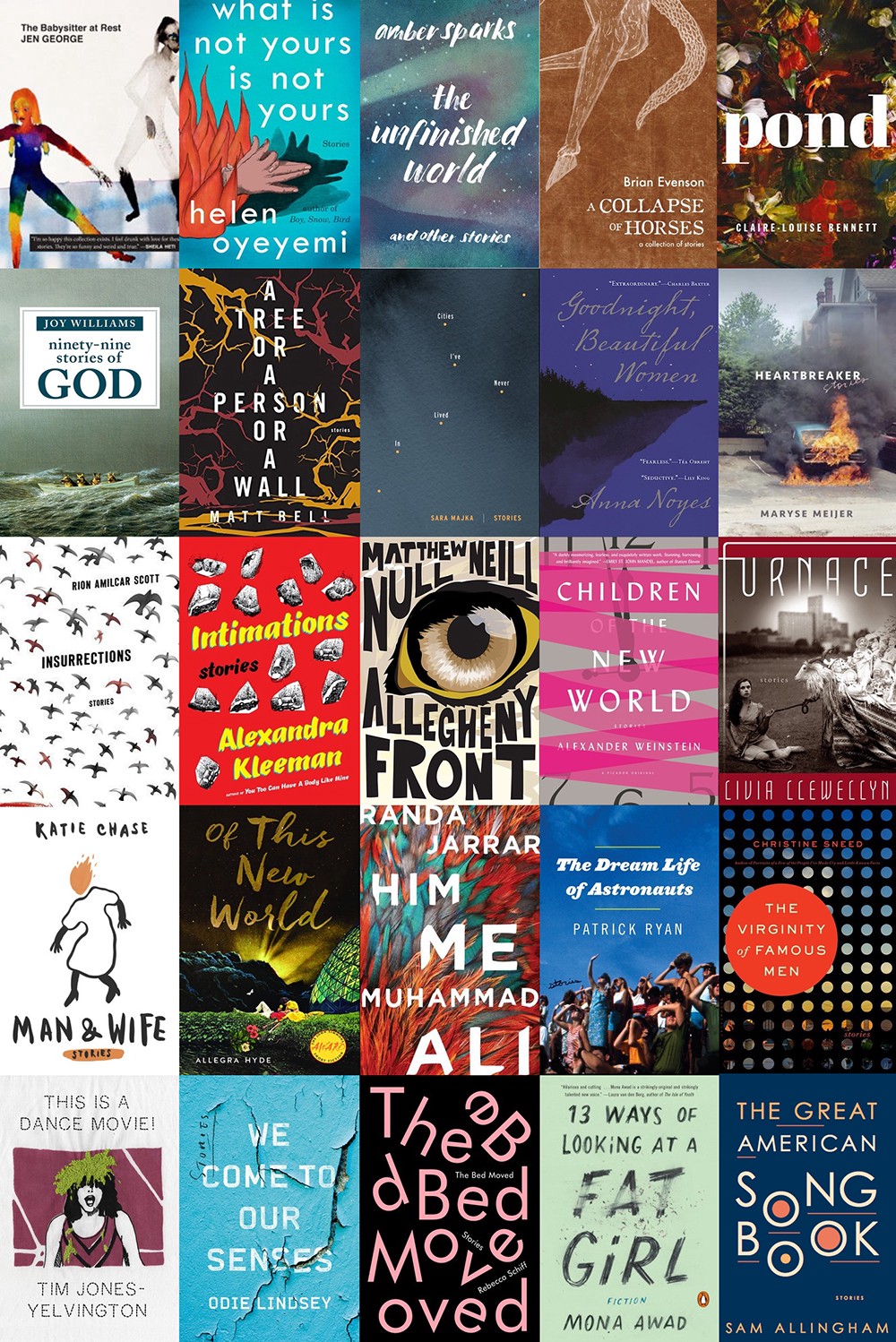
The Babysitter at Rest by Jen George

Chasing greatness spurs doubt, self-hatred, and pain — especially when the conditions for greatness are determined by the sort of egotistical men that reappear throughout George’s collection. Despite its criticisms of greatness — or perhaps because of them — The Babysitter at Rest is an undeniably great debut collection of stories. George’s writing is funny, courageous, smart, surreal, seductive, and terrifyingly vulnerable.

— Alex McElroy in our review of The Babysitter at Rest

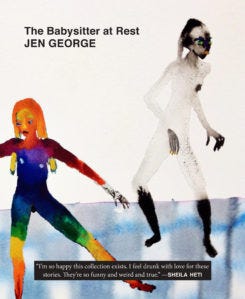
What Is Not Yours Is Not Yours by Helen Oyeyemi

Helen Oyeyemi is one of those writers who, no matter when you discover them, makes you wish it had been long ago so you’d have extra hours left in your life to read the rest of their work. She published five novels by the time she turned thirty, and now, at the ripe old age of thirty-one, she’s coming out with a beautiful, brilliant, evocative collection of (somewhat) linked short stories. She is also, incidentally, one of those artists whom you cannot hate for such early success, not even a little tiny envious bit, because she’s clearly so, so talented.

— Ilana Masad in our review of What Is Not Yours Is Not Yours

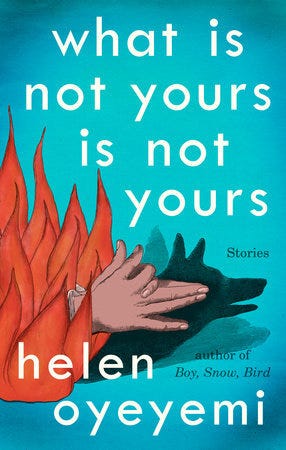
The Unfinished World: And Other Stories by Amber Sparks

Amber Sparks’ work in her collection, The Unfinished World, is an imaginative exploration of what-ifs. What if Lancelot was lost in a jungle? What if we could time travel, but we did more harm than good? What if a couple’s romance was linked in some way to a cabinet of curiosities? … Sparks understands timing, juxtaposition, and how to create original characters within the confines of a short work.

— Heather Scott Partington in our review of The Unfinished World

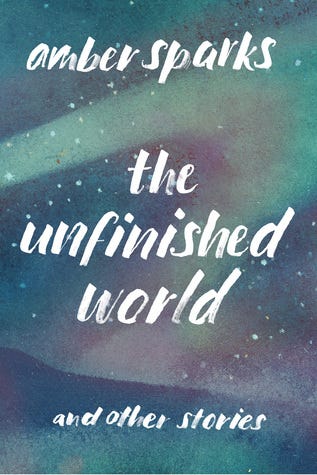
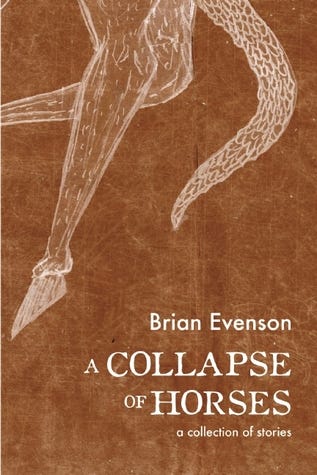
A Collapse of Horses by Brian Evenson

A Collapse of Horses is a master class in unnerving storytelling; seventeen short narratives that range from horror to science fiction and from surrealism to noir. The variety is outstanding, the writing is superb, but what makes this collection deserving of attention is how Evenson manages to achieve a perfect balance between what is on the page and what is left out.

— Gabino Iglesias in our review of A Collapse of Horses

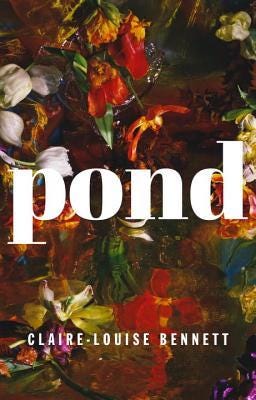
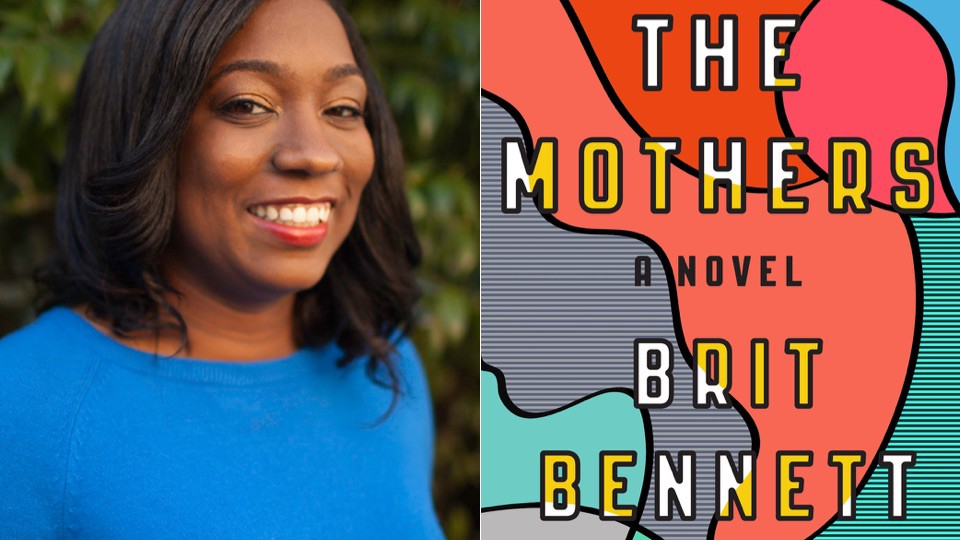
Pond by Claire-Louise Bennett

Readers and reviewers of Pond have questioned whether it is a collection of stories, or a novel, or some hybrid of the two. This woman’s voice is the one you will hear throughout the book. Individual pieces from it were initially presented and published as stories though, and here now is “Morning, 1908,” standing alone again. The classification does not seem to me to be very important — my only concern being that imposing one classification over another might deter readers or limit the book’s success in any way.

We are very proud to have published Claire-Louise Bennett in the magazine and with the press. Discovering a writer of this caliber among the submissions and then getting to share her work with readers really is what it’s all about.

— Declan Meade, Publisher and Founding Editor or The Stinging Fly, in the introduction to “Morning, 1908” in Recommended Reading

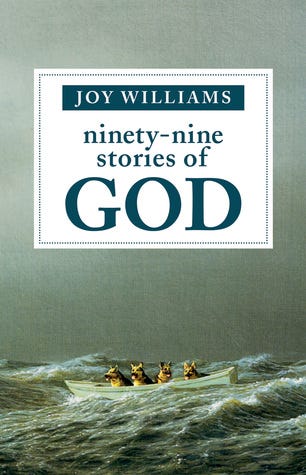
Ninety-Nine Stories of God by Joy Williams

Every Joy Williams publication is a cause for celebration, and Ninety-Nine Stories of God shows Williams in her usual biting, insightful, and darkly humorous form. As the title implies, this is a collection of 99 flash fiction pieces. Some read like short stories, others like fables, aphorisms, or newspaper columns. But all of them are exquisitely written and thought-provoking.

— Lincoln Michel, Editor-in-Chief of Electric Literature

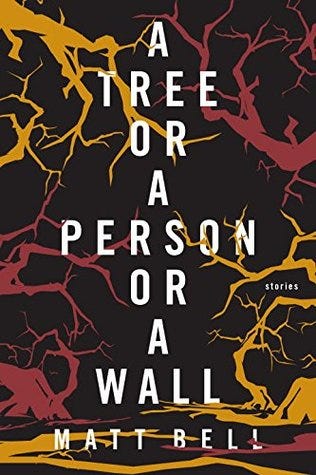
A Tree or a Person or a Wall by Matt Bell

A talented, at times even daring, stylist Bell is a literary experimentalist who never lets his experiments overtake his fiction’s need for dramatic effect, that necessary quality of making the reader want to read. This is something many literary writers forget or even disdain: the fact that it’s their responsibility to attract readers and keep them interested, not the other way around. And it’s a lesson Bell seems to have learned from an early age. Fearless in terms of the subject matter he’s willing to write about and perhaps ever more so in the unexpected, sometimes extremely dark angles he takes in fleshing out his stories, Bell has the goods, no question.

— Kurt Baumeister in our review of A Tree or a Person or a Wall

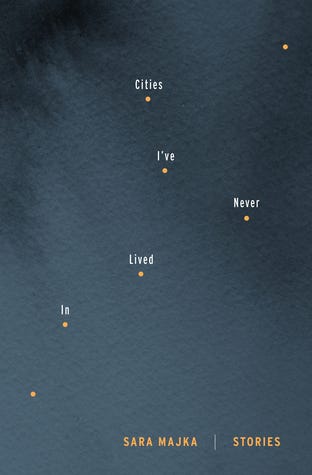
Cities I’ve Never Lived In by Sara Majka

The narrator who frames each of these fourteen stories is vulnerable — she’s caught up in the tumult of an ended marriage, and the poverty of an artist without a back-up plan — and her vulnerability resonates across the desolate landscapes she stops in. […] The stories in Cities I’ve Never Lived In are high-cost, and also necessarily gentle. In addition to the narrator reporting on her own life, she also tells the stories of the people she meets.

— Nathan S. McNamara in our review of Cities I’ve Never Lived In. You can also read our interview with Majka.

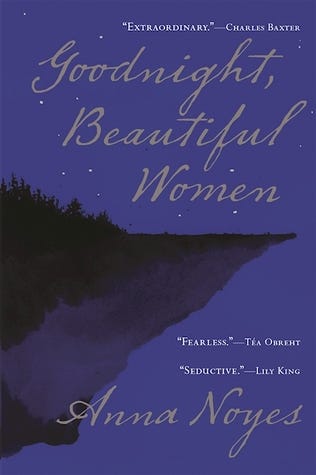
Goodnight, Beautiful Women by Anna Noyes

Within these pages, love is cut with many poisons — paranoia, indifference, circumstance, violence — and the New England settings seethe with suffering and shame. Loosely connected, the stories create a web the reader walks into without realizing it: A woman carries memories of a girlhood love into her brutal marriage; a college student’s relationship with her boyfriend and his mother changes dramatically during a summer vacation; a woman meets someone who might be her mother on a bus to Boston; a teenager’s love affair with an older man comes between her and her young sister. Below the tranquil surface, these beautiful women — and the beautiful girls they used to be — are screaming at the top of their lungs.

— Carmen Maria Machado in her introduction to our interview with Noyes. You can also read a story from the collection in Recommended Reading.

Heartbreaker: Stories by Maryse Meijer

Maryse Meijer shreds readers’ hearts and souls in her debut collection Heartbreaker. Her characters are lonely, obsessive, and sometimes otherworldly. In the title story a high school student named Natalie molests a mentally handicapped boy. In “The Daddy” a woman hires a younger man on Craigslist to play her doting father. In “Love, Lucy,” the antichrist emerges on Earth in the form of a little girl. “The Cheat” involves an actual fox that seduces a teenage girl with junk food at a Christian weight loss camp. The rest of the stories also unmask humanity’s worst creatures so that every instance feels dangerous and leaves you with images that are impossible to forget.

— Andrea Arnold in her introduction to our interview with Meijer. You can also read a short story from the collection in Recommended Reading.

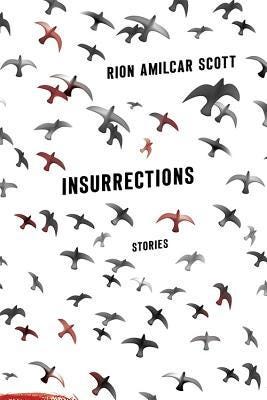
Insurrections by Rion Amilcar Scott

Some stories — usually the best ones — come to life and carry you along with their own special, inexplicable gravity and when they’re over you’re not even sure what it was that pulled you in and wouldn’t let go. No literary mechanics or plot devices came into play; the writer, now magician, simply won you over and off you went.

This is how I feel about Rion Amilcar Scott’s writing in general, and particularly his story “202 Checkmates.”

— Daniel José Older in his introduction to “202 Checkmates,” excerpted from Insurrections in Recommended Reading

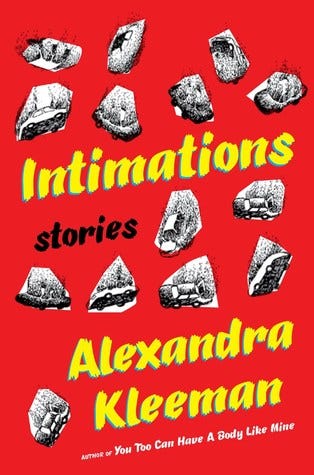
Intimations by Alexandra Kleeman

Books and stories are a form of escapism for many of us. We read to go away from our current lives, or to learn about people who are vastly different from us, or to be swept up by language, or — well, a list of reasons we read would be endless. But escapism is definitely there, whether it’s something we seek or only a byproduct. The stories in Alexandra Kleeman’s new collection, Intimations, both distressingly and beautifully convey a different message: there is no escape.

— Ilana Masad in our review of Intimations

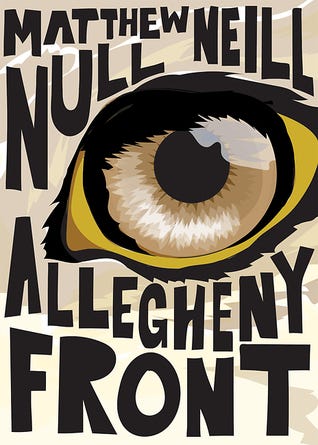
Allegheny Front by Matthew Neill Null

Matthew Neill Null’s collection Allegheny Front is as notable for the strength of its prose as it is for the ways in which it eludes expectations. One story focuses entirely on the shifting relationship between a group of bears and the humans living nearby; another story leaps ahead several decades at its conclusion to show how the aftereffects of its violent resolution are perceived in the decades to come by people with no knowledge of the events described. It’s a way of finding compelling drama in the spaces normally left blank in histories and stories, and it’s to Null’s credit that these stories never feel academic or dry. Instead, they’re as visceral and tense and the landscapes and relationships that they describe.

— Tobias Carroll in his introduction to our interview with Null. You can also read the story “Gauley Season” in Recommended Reading.

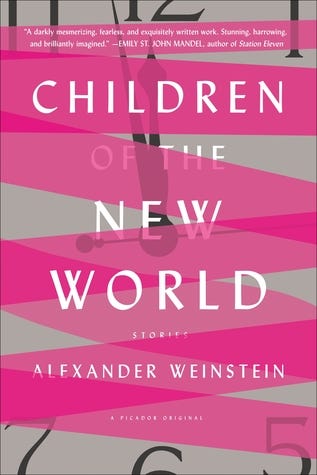
Children of the New World by Alexander Weinstein

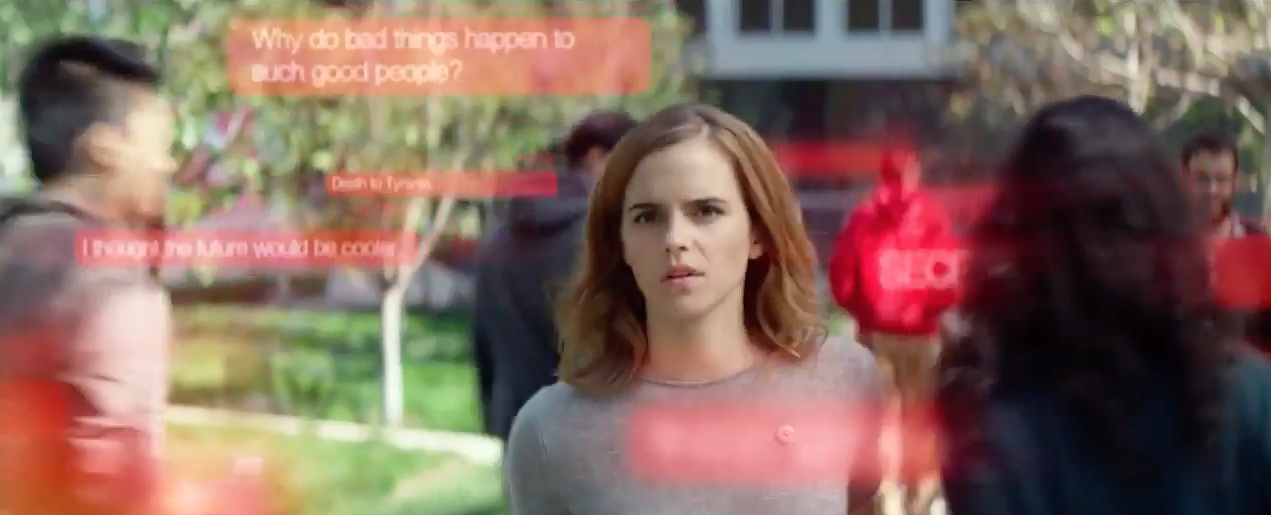
For lovers of the TV series “Black Mirror,” and anyone who racks up hours on Twitter, this is your short story collection of the year. The 13 stories are set in a future an arm’s length from now, and consider how technologies we can already see on the horizon affect the most intimate aspects of life: sex, breakups, illness, and, as the title suggests, family and parenthood. Think those Facebook “Memories” posts are a little much? In Weinstein’s world, try recreational memory implantation.

— Lucie Shelly, Associate Editor of Electric Literature’s Recommended Reading

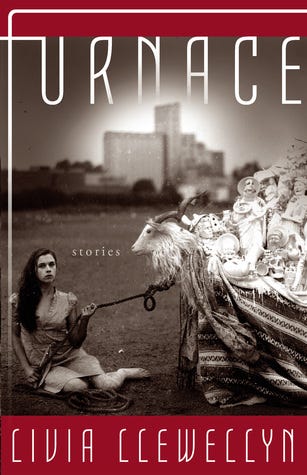
Furnace by Livia Llewellyn

Furnace is Livia Llewellyn’s second short story collection. NPR’s Jason Heller, describes her latest horror stories as “beautiful and hideous in the same breath,” and commends “its 13 tales of erotic, surreal, existential horror [which] pack a logic-shattering punch.” Llewellyn is a household name in dark fiction and has been nominated for the Shirley Jackson Award several times. These might not be the best stories to read right before bed, but they’re the cream of the crop for horror fanatics and disturbed readers (so every reader) alike.

Man & Wife by Katie Chase

Puberty rites, a child bride, a burning city, comically horrific families? Yes please! Man and Wife hits the story collection trifecta of story, sentences, and book-ness. Each story is excellent; there are no duds or space-fillers. Chase’s writing is addictive and clean, a perfect vessel for her fantastically creepy imagination (“They say every girl remembers that special day when everything starts to change,” begins the title story, a mundane enough sentiment that nevertheless gives me goosebumps every time I read it). And the stories work together without feeling repetitive.

—Kelly Luce, contributing editor at Electric Literature

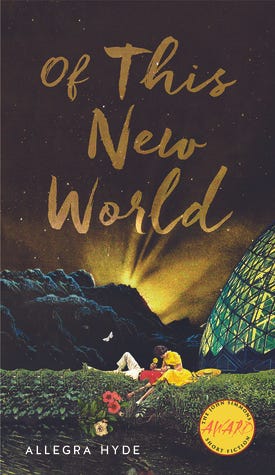
Of This New World by Allegra Hyde

Each story, in its own way, is asking deft questions about the possibility of improvement, both on the micro and macro level, and where other writers could have fallen into didactic or moralistic traps, Hyde’s stories move effortlessly and gracefully, never once causing the reader to feel as though she has her authorial thumb pressed on the scale.

— Vincent Scarpa in his introduction to our interview with Allegra Hyde

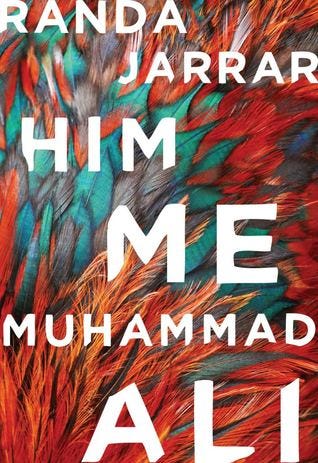
Him, Me, Muhammad Ali by Randa Jarrar

In “Building Girls,” Jarrar captures the complicated dynamic between Aisha and Perihan, childhood friends now separated by geography, race, and class (and their daughters separated by all that, plus language). Wealthy Perihan only visits Egypt during the summer, whereas Aisha lives there full-time and even then rarely ventures beyond the paths of her daily routine. On a trip to the beach, she compares Perihan to a soaring kite and herself to a novelty pet crab on a leash, an image that manages to be all at once weird, hilarious, melodramatic, gorgeous, and sincerely resonant. Like the rest of the book it comes from, I can’t get it out of my head.

— Mia Nakaji Monnier in our review of Him, Me, Muhammad Ali

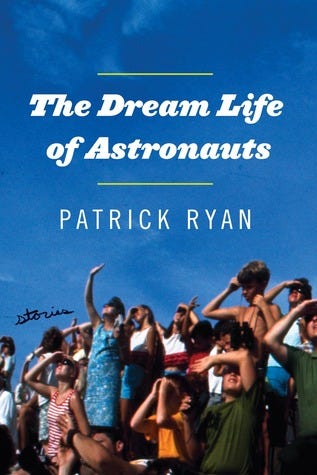
The Dream Life of Astronauts by Patrick Ryan

Patrick Ryan’s latest, The Dream Life of Astronauts (The Dial Press, 2016), is an exquisitely crafted collection of short stories set in Merritt Island, Florida — better known as the home of Cape Canaveral. The space program forms the backdrop to each of the book’s nine tales, which span the period between the 1969 Apollo 11 launch to present day. But the author’s intimate, character-driven narratives draw their power more from family dynamics than they do launch pads or rocket boosters (even if both of those make appearances).

— Jonathan Durbin in his introduction to our interview with Patrick Ryan

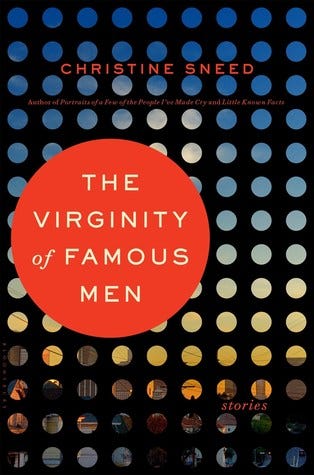
The Virginity of Famous Men by Christine Sneed

Though taken from a story within, the title of this collection is a clever deflection; Sneed’s stories consider sex and men, but they’re as much about the nuances of life’s mundane moments, and the surprising ways that such moments change the desires and aspirations of women. From a mother vacationing with a reluctant teenage son, to woman who is anti-wedding but throws a Couplehood Jubilee, to an over-zealous applicant for an HR job at a t-shirt manufacturing company, the characters we meet in the 13 stories will upset your expectations every time.

— Lucie Shelly, Associate Editor of Electric Literature’s Recommended Reading

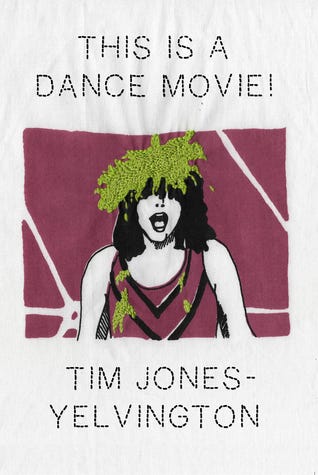
This Is a Dance Movie! by Tim Jones-Yelvington

Jones-Yelvington’s debut short story collection This Is a Dance Movie! has been met with plenty of acclaim. Alexander Chee praised his deft ability to juxtapose the playfulness of a dance party with serious modern social concerns, and described Jones-Yelvington’s stories as “a remix of pop culture, gay sex and celebrity, ranging from the confectionary to the visionary.” And you know that when Roxane Gay says, “Tim Jones-Yelvington doesn’t push the envelope. He kicks the shit out of it,” it must be worth the read.

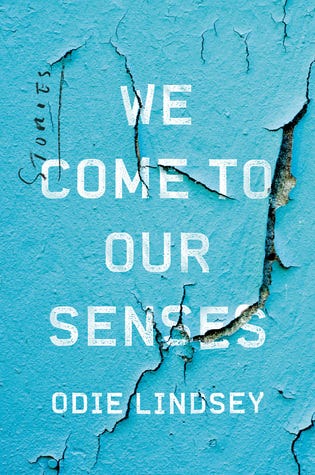
We Come to Our Senses by Odie Lindsey

I loved his collection, We Come To Our Senses, and “Colleen” is one of my favorite stories. It begins with twenty-two-year-old Colleen back at home in her childhood bed in her childhood bedroom in Mississippi, staring at the pink walls while a box fan blows, which is the same place I’ve found myself on too many occasions throughout my adult life. […] There is no love story here. This story will crush you, and I don’t mean that in a hyperbolic way. I mean pulse-racing-aw-hell-no-I-need-to-lie-down-for-a-while crushed.

— Mary Miller in her introduction to “Colleen” in Recommended Reading

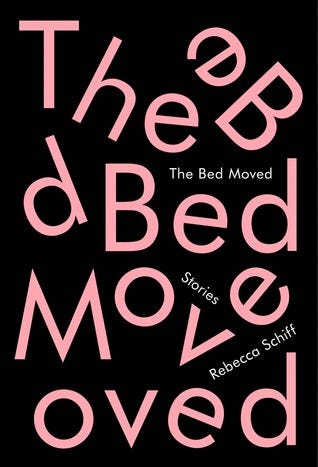
The Bed Moved by Rebecca Schiff

There are a whopping 23 stories in Rebecca Schiff’s slim new collection The Bed Moved, and this is just one of Schiff’s many sleights of hand. Each story is a delight — drily funny, irreverent, original. But just as they’re refreshingly candid and witty — they are very witty — Schiff’s stories also offer tender, but stubbornly unsentimental emotional truths. The stories in this collection are interested only in being honest, and that means shedding light on grief, pride, promiscuity, and loneliness in ways that are surprising, funny, and frank.

— Claire Luchette in her introduction to our interview with Schiff

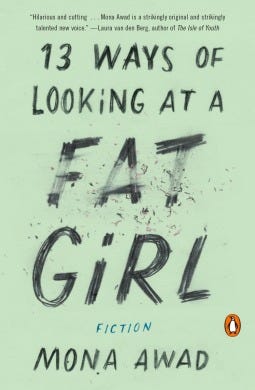
13 Ways of Looking at a Fat Girl by Mona Awad

In “If That’s All There Is,” a story taken from her gutsy and glorious debut Thirteen Ways of Looking at a Fat Girl, the narrator is the recipient of a dubious overture from her co-worker, Archibald. She contemplates his offer and decides — though it is a decision saddled with ambiguity — to take hold of the door he has shaken loose and pull it open a little wider. […] As the story hurtles toward its destination there is the sense that we are plunging deep into a moment of raw and exhilarating truth — and then, like lightening, we are there.

Mona Awad is one of the most exciting new voices I have read in a long time. Welcome to her world.

— Laura van den Berg in her introduction to “If That’s All There Is” in Recommended Reading. You can also read our interview with Awad.

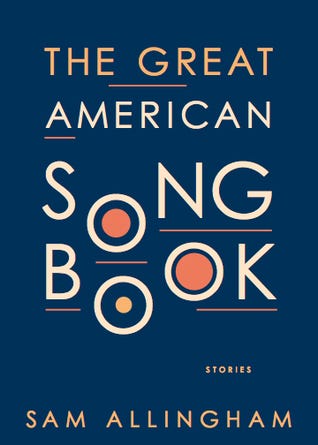
The Great American Songbook by Sam Allingham

Sam has said that his stories are his attempt to cover songs he loves, and surely the stories in his debut collection, The Great American Songbook, are linked inextricably to music, to song, to chord changes, and voiced heartache. The nine stories in the collection take the Talking Heads literally. They follow Rodgers and Hart as they negotiate parallel realities and their relationship with each other. They employ humor and formal invention to build and crescendo, to speak melodically, jazzily, out of human experience.

— Callie Collins in the introduction to “Tiny Cities Made of Ashes” in Recommended Reading

I Relate It to You

In an early description of — of all things — a shirt wrapped around a broken finger, a character in T.C. Boyle’s new novel The Terranauts perfectly articulates the joy and wonder of a well-placed specificity inside a work of fiction: “I relate it to you” — you being the reader, it being the bloody shirt — “because it’s one of those maybe overlooked minor details that underpin the meaning of everything that happens in our lives, from the prosaic to the tragic. And this was tragic.”

It’s neither coincidence nor laziness that accounts for Boyle’s characters’ familiarity with the craft of narrative. The Terranauts is told in three first-person accounts, each delivered (and presumably written) by a character intimately tied to the novel’s central drama: the comings and goings of an experimental biodome community in nineteen-nineties Arizona, a high-tech experiment meant to mimic a future colony for human beings away from Mother Earth.

Readers who’ve seen the cover — with its space opera-inspired imagery and Creature from the Black Lagoon-like typeface — may find themselves surprised to discover Boyle’s novel is a realist, Earth-bound one, but those familiar with Boyle’s oeuvre won’t be shocked to discover that, like many of Boyle’s previous novels, The Terranauts is rooted in strange and recent history. Unlike The Inner Circle (“the Alfred Kinsey one”) or The Women (“the Frank Lloyd Wright one”), The Terranauts’s protagonists are not historical figures, per se, though Boyle’s prefatory Author’s Note reveals the glut of sources to which he turned when creating his on-planet astronauts; and the connection to history reminds the reader yet again of a theme present in much of Boyle’s works: that truth is at least equally as strange as the invented.

“A novelized discussion of the paranoia […] à la Stephen King’s The Stand or, more fittingly, Under the Dome, but The Terranauts […] throws this format for a loop.”

One might anticipate from the set-up — eight men and women locked inside a glass structure for two years — a novelized discussion of the paranoia that comes from limited quarters and a small cast of characters, à la Stephen King’s The Stand or, more fittingly, Under the Dome, but The Terranauts braided narrative throws this format for a loop. Boyle welcomes the reader into the ecological experiment with the help of three first-person voices, but only two such voices are Terranauts themselves; the third, belonging a woman named Linda, is of a jealous scientist who didn’t make the cut for the two-year inclusion, and her voice of rejection and boredom contrasts mightily with sexual and political dramas on the other side of the wall.

I won’t spoil any surprises, except to say that there’s as much turmoil in Linda’s world as there is in the artificial, anesthetized one (as one character says, “There’s no closure on gossip”); which makes Boyle’s novel less a closed-room gimmick of narrative limitation and more an absurdist drama that never forgets the reader’s lived experience, either. As the Terranauts inside the glass compound confront jealousy, disease, and rape culture, the novel makes a delightfully old-fashioned commentary about the soul of men and women: that their tragedies can’t be avoided by changing their environment alone.

Boyle achieves all of this through pitch-perfect detail work — the kind of work to which his character pays tribute in the quote from the beginning of this review. Each detail of life inside the shut-off compound, from the acidity of avocados to the migratory patterns of sparrows, pumps blood into the voices of Boyle’s scientists.

The novel is a page-turner, and a strong one; the Stephen King comparison holds. While Boyle’s language is scientific and sophisticated, it is also first-person language that falls prey to the limits of his characters: the voices are idiomatic, at times easy, and occasionally (pardon this condescending phrase) unliterary — so matter-of-fact that Boyle’s character will never be mistaken for poets. But in a novel of this length, with this ambition, the reader does not balk when authenticity-of-voice trumps poetry.

By creating three distinct narrators — one who loves nobly, one who betrays thoughtfully, and one who covets powerlessly — Boyle has made for himself quite the juggling act, and skeptical readers ought to remind themselves of what one Boyle character says of their created world: “Just keep in mind that this was an experiment, not a perfected and finished product, and that in any experiment there are limitations and that things can go wrong, things do go wrong — that’s the whole idea.”

Reviving India’s Heroes & Heroines

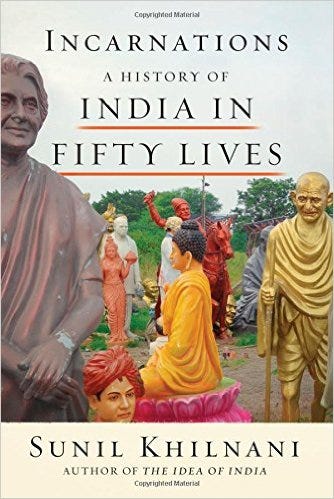
From the outside, India evokes so much — the Taj Mahal, yoga, the caste system and so on — but save for a few deified figures such as the Buddha and Gandhi, India’s history, as Sunil Khilnani writes in the opening of Incarnations: A History of India in Fifty Lives (FSG, 2016), is a “curiously unpeopled place.” The collection of essays does much to correct this impression by introducing and re-introducing readers to the leaders, poets, performers, and rebels who’ve shaped India.

Incarnations’ cast is extremely characterful. A random selection: Muhammad Ali Jinnah, lawyer and founder of Pakistan; actor and Bollywood patriarch Raj Kapoor; Indo-Hungarian painter Amrita Sher-Gill, and Ethiopian-born Malik Ambar, who went from being an enslaved mercenary to a power broker and the military bane of the Mughal Empire.

All fifty subjects are dead but Khilnani renders them in an intimate light. In doing so, he complicates any glory they’ve enjoyed as figureheads of contemporary causes in India. I spoke to Khilnani about how he populated the book and Indian history, beginning in the fifth century BCE up until the early 2000s.

J.R. Ramakrishnan: Incarnations narrates the long arc of Indian history from the Buddha onwards through the stories of fifty lives. What an impressive project of curation these profiles must have been! How did you decide who made the cut? And how long did the entire project take? I was also wondering which characters did not make the cut (or almost made the cut) if you’d care to share that.

Sunil Khilnani: It was a real sweat cutting down to the 50 individuals I’ve ended up with! I wanted figures drawn from a broad range of creative activities (so I have poets and painters, mathematicians and musicians, emperors and freedom fighters, photographers and philosophers, scholars and businessmen), drawn from all parts of India, and across 2,500 years of history. Most of the lives I’ve chosen also allow me to explore many of the persisting contradictions and conflicts in Indian history: they straddle the fissures of religion, caste, gender, region, and individuality and social norms. Very many of them have also had afterlives — recycled at different points in history, and deployed to fight current battles. Indeed, that’s one of the meanings of my title, Incarnations: lives that get revived. Finally, all of the 50 had to be real historical people (not figures from myths or epics), and all had to be dead.

I have been thinking about Indian history and how to tell it for many years. In the end though, it took me two years of concentrated work to write the book and to make the 50 podcasts and radio programs which I did with the BBC. Working with multiple deadlines, in different media, and with a great deal of travel involved, was at once exciting and a huge strain — not least on my wife, Katherine Boo!

The names that didn’t make it, well, you know, it’s like a limb you may have lost. Once it’s gone, you no longer dwell on it, you take satisfaction in what you have and not in regretting what you may be missing.

JRR: I imagine that your choices, your critical eye upon certain legacies, and your shedding of light on now-appropriated figures, must have elicited some strong responses. Indeed, you write in the introduction that this what you hope for but I am curious to know what you think of conversations that have resulted since the book’s publication, especially in India.

SK: The reception of my book, both in India and in Britain, has been incredibly generous and positive. I’m particularly heartened by the response in India — it seems to have caught the imaginations of younger readers, whom I really want to reach (a special edition for young readers will come out next year). Most young Indians have encountered the people I write about only in boring school lessons, or as hollow statues, glamorized images, or road names. So, to be able read about them as real human beings with all their foibles and quirks, can open up new ways of thinking about the past — and its relationship to the present. In my book, you encounter legendary or mythic figures — like, for instance: Ashoka, Kabir, Guru Nanak, Amrita Sher-Gil, Subhas Chandra Bose, Jinnah, Indira Gandhi or Dhirubhai Ambani — as complicated human characters, with weakness and failings as well as with extraordinary qualities. I wanted to de-mythologize these figures, in order to re-humanize them a little.

I wanted to de-mythologize these figures, in order to re-humanize them a little.

Many of the conversations I’ve had since the book came out center on all figures who people feel I should have included: why not a sports player, what about that musician, or this scientist, that leader, and hey, how about this actress and so on! Now, I welcome that sort of discussion. I want this book exactly to provoke such conversations: about who are the people who have made India’s history, why they are important, why they deserve our consideration. I never intended my book to install a pantheon, or to close down argument about which figures are important. Incarnations is an invitation to a conversation, a debate, about India’s past — and its future!

JRR: You write about the recycling (and often deification) of historical figures for use in various contemporary projects (e.g. first century military strategist Kautilya being used in Pakistani military schools or the poet Kabir at the Jaipur Literary Festival). Would you say that this is an especially Indian characteristic?

SK: I don’t think it’s an especially Indian characteristic, if by that you mean something like a cultural trait. After all, many societies turn to their past heroes for present purposes: in the US, George Washington, Jefferson, Hamilton, Roosevelt are constantly invoked. In the UK, it’s Churchill, and so on. But it happens even more in India, because of the current political situation there, which is a very divided one, with different caste and religious groups, different regions, each seeking to assert their own interests. And they all use history to try to do that. So you get a much greater investment in historical figures, and many more of them are invoked in current political argument. Something which might be more of an Indian trait, though, is the deification and mythification of these figures: the reluctance to see them as human beings in the round, with their flaws as well as their qualities.

JRR: In your profile of Periyar, the anti-Brahmin activist, you write that based on his look (“a bulky man in a black shirt with a bald head, untamed white beard, and beside him a little pet dog to scare away Brahmins”) you felt that you were in the company of a beat poet. You certainly offer close insight into the personalities of these characters, which is impressive since quite a few have been dead for centuries. Could you tell us about your research and reporting process? I imagine you must have travelled a great deal. What were the most memorable stories of the book’s journey for you?

SK: Thanks. So many of these figures are remote from us in time, culture and beliefs, and so I really did work hard to try to bring them alive, and to give readers an intimate sense of what it was like to inhabit their worlds, and even their minds. To do that, I worked with primary materials wherever they existed, with the direct words or writings of the people I was studying — as well looking at how those around them saw them. In addition to archives and texts, I also travelled to the places where they lived or worked — soaking up the land and streetscapes, the sounds, the light — and used all of those details to imagine their worlds, their anxieties, and hopes.

Let me give you an example. When I was researching the life of Kabir, the 15th century radical poet who lived in Benares or Varanasi, I spent time in one of that city’s poorest neighborhoods, where a community of Muslim weavers live, barely scraping an existence. This was the same community from which Kabir came, and seeing the conditions in which the present-day community live, I could really grasp the sheer rage which motivated Kabir, and which shaped into his unforgettable poetry.

I should also say that I was privileged to be able to talk to some of the finest scholars of and intellectuals from India, and through them learn more about these individuals and their times.

JRR: My personal favorite was the profile of the mercurial V.K. Krishnan Menon, Jawaharlal Nehru’s political operative. My father’s family has roots in Kerala and the temperament you described seemed more than a little familiar to me. I wasn’t aware that he’d a hand in the founding of Penguin Books so that was an exciting discovery for me. The story about you sitting down with what you hoped was an important box of his archives only to find instead his old hairbrush had me in stitches. Could you talk about the humor of many of your characters, and the role it played in constructing the profiles of this book?

SK: I’m so glad you highlighted this. I’ve tried always to bring out the humor of my characters, as well as the ironies and absurdities of how they are nowadays memorialized. Too often these ‘greats’ are presented as po-faced, venerable elders. Yet the fact, is that when they made their reputations they were almost all young, brash rabble rousers, with sharp tongues and scathing wit. Periyar would be a good example; or even Guru Nanak, in the provocative way in which he chose to dress — a sartorial farrago, as I describe it. Or take another example, Lakshmi Bai, the Rani or Queen of Jhansi who led an uprising against the British in 1857. She’s treated as a demi-goddess in India. She appears everywhere frozen in a ubiquitous icon: astride a horse, sword held high, her son cling to her back, as she leaps over the ramparts of her besieged hilltop fort. But, drawing on the contemporary memoirs of a Brahmin who spent time at her court, I was able to show how, while she engaged in strenuous physical routines and exercise (unlike her cross-dressing husband), and was physically impressive, in fact she probably slipped out of the fort by a special back door. Or another example: the way I show Mahatma Gandhi to be a brilliant, painstaking manager of the media, even while he claimed always to be guided by his spontaneous ‘inner voice.’ There is something laugh-worthy in this gap between burnished reputation and actual human choices though noticing such a gap does not diminish the people I write about. If anything, by seeing them as human like us, their very real achievements become all the more remarkable.

JRR: You link the lives in Incarnations to the contemporary moment in not just in India, but also the rest of the world. You liken Kautilya’s torture methods in his Arthashastra treatise to the 2014 U.S. Senate Select Committee on Intelligence report on the CIA’s interrogation techniques and later on, you open the profile of Ambedkar, the Dalit statesman who drafted the Indian constitution, with a quote from Ta-Nehisi Coates and compare the Dalit cause with the struggle for civil rights in Black America. What do you hope will be the greatest take away from the book for those less familiar with Indian history, say perhaps your non-Indian, non-Indian diaspora and non-Indophile readers?

SK: There are two big takeaways. First, that India’s history and the people who made it — even if you go back 2,500 years to figures like the Buddha or Ashoka — are living presences in contemporary India. Present-day Indians turn to these historical lives in their struggles to make their own lives better. Second, that Indian history is not a niche interest, for a couple of reasons: because India, which is home to almost 20% of the world’s population, and to an economy growing faster than any other major economy, matters more and more to the world. And because the dramatic sweep of the Indian past, the reach of Indian ideas, the stakes of India’s struggles both with itself and with alien colonizers, are central to the story of human history as a whole: to our ideas of power, of justice, of economic growth, and of freedom, as they apply to the entire human race.

The stakes of India’s struggles both with itself and with alien colonizers, are central to the story of human history as a whole…

JRR: And finally, who is your most beloved character of the fifty?

SK: I was most moved by the story of Birsa Munda — born into an Adivasi or tribal community in central India towards the end of the 19th century, he grew up wandering the forests around his village and mastering special healing skills. But he saw his people being dispossessed by the the British colonialists, by Christian missionaries, and exploitative Indian middlemen. And so he decided to fight for the rights of his people over the forest and the land. He became something of a religious teacher, and led an uprising. It was suppressed, he was captured, and died in jail, barely 23 years old. His story resonates very powerfully with the present-day struggles of India’s Adivasis and all the country’s dispossessed citizens.

The Best Literary Adaptations of 2016

In an era of superhero mashups, Angry Birds, Hemsworths and boardgames-on-the-silver-screen, that delicate old relic — literature — might not seem like the hottest IP in Hollywood. But then each year, somehow, somewhere a producer or a hot young director with green-light cachet goes home to a hillside neo-Mediterranean villa, pours a glass of something stiff, and cracks open the latest Max Allan Collins novel or a collection of Ted Chiang stories, and through some dark alchemy of inspiration, screenwriting, double-entry bookkeeping, star power, union rates, overseas funding, and merchandise synergy, literature makes its way off the page and onto our beloved screens.

Now, with pedigreed clunkers like American Pastoral and The Girl on the Train, it might not be fair to call 2016 a banner year for literary adaptations, but there were some memorable successes. (Dammit, every year can’t bring us The Imitation Game! Yes, that won an Oscar for Best Adapted Screenplay. In 2014. Really. Go ahead and check. It beat out Inherent Vice.) This year saw more than its share of quality productions — stories of first contacts, last rites and whatever it is that’s going on in Park Chan-wook’s latest rom-com.

In the spirit of the season, and because it’s going to be a couple years before Barry Jenkins can turn Colson Whitehead’s The Underground Railroad into a limited series, we wanted to celebrate the year’s best literary adaptations.

Arrival

Adapted from “Story of Your Life,” by Ted Chiang

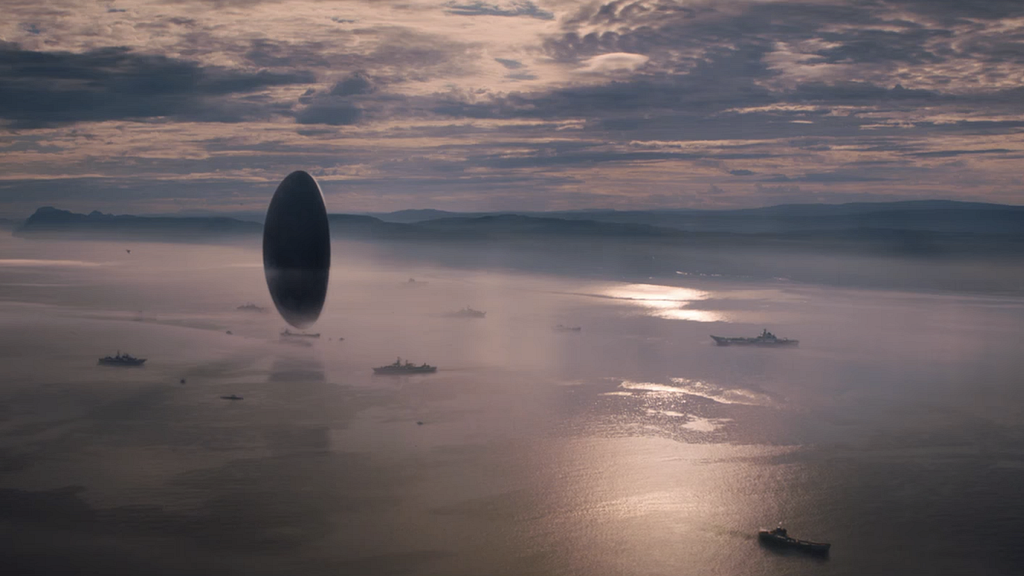
It looks like 2016 might be remembered as the year Ted Chiang broke through from cult-favorite to Hollywood darling, with Arrival pulling in big numbers at the box office and looking poised to grab up end-of-year honors. Denis Villeneuve has to be near the top of any list of the most ambitious directors working today, and Chiang’s first contact story gives him all the room he needs to ponder and probe and brood on man’s fundamental nature. Amy Adams stars and there’s a hell of a good twist that your friends and colleagues want desperately to spoil. But best of all, Arrival, whatever its flaws, is that increasingly rare thing — motivation to go out to the theater.

The Night Manager

Adapted from The Night Manager, by John Le Carré

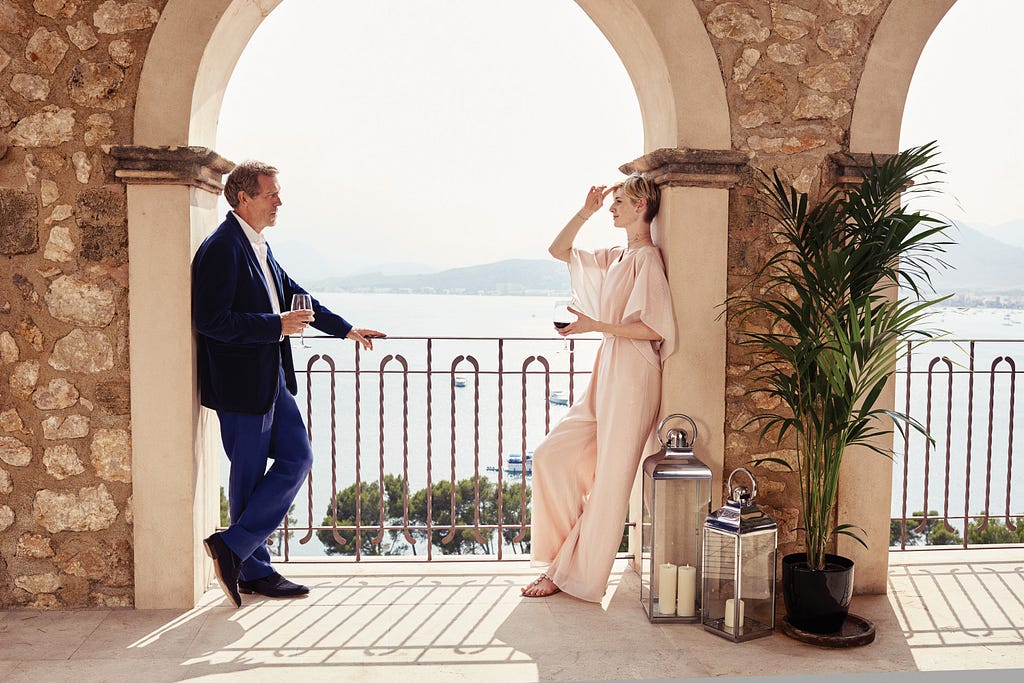
The six-part miniseries might just be the perfect form for John Le Carre flicks — enough time to think and to dwell on the banality of deception, but not so much time that Le Carré’s carefully crafted plots need be unspooled for the sake of a multi-season arc. Tom Hiddleston, well-known boyfriend of the Internet, was in his element as Jonathan Pine, poised and quick to smile and hell-bent on avenging a woman’s honor. Hugh Laurie got to show off his charm, too, of the slightly more evil variety, with the always superb Angela Burr hot on his trail. All that gun-running intrigue was served up with a healthy portion of travel porn — Cairo, Switzerland, and of course a stunning seaside villa in Mallorca. Of the recent Le Carré adaptations, only Gary Oldman’s Tinker, Tailor, Soldier, Spy and The Constant Gardener top The Night Manager. With any luck, AMC & BBC One will just option the entire oeuvre and put it into production. Who doesn’t enjoy a well-made spy thriller?

Game of Thrones

Adapted from…some obscure indie title, you probably haven’t heard of it…

The sixth season of Game of Thrones brought us to a pivotal moment in the annals of literary adaptation, when the biggest show in the world finally outpaced its source material. Sure, that guy at your office who’s read and re-read A Feast for Crows and A Dance with Dragons still had a few insights and theories that left your head spinning, but at a certain point we were all just speculating as [minor spoiler alert…] Jon Snow and Sansa were reunited, the Faith Militant cracked down on King’s Landing, and Daenerys, her dragons and the Dothraki were finally reunited. Benioff & Weiss were in fine form this season. Episode 9, “The Battle of the Bastards,” stands up against any piece of filmmaking in recent memory. And in terms of literary penetration into pop culture, Game of Thrones remains the undisputed king.

Luke Cage

Adapted from the Marvel comic series, created by Goodwin/Romita/Tuska

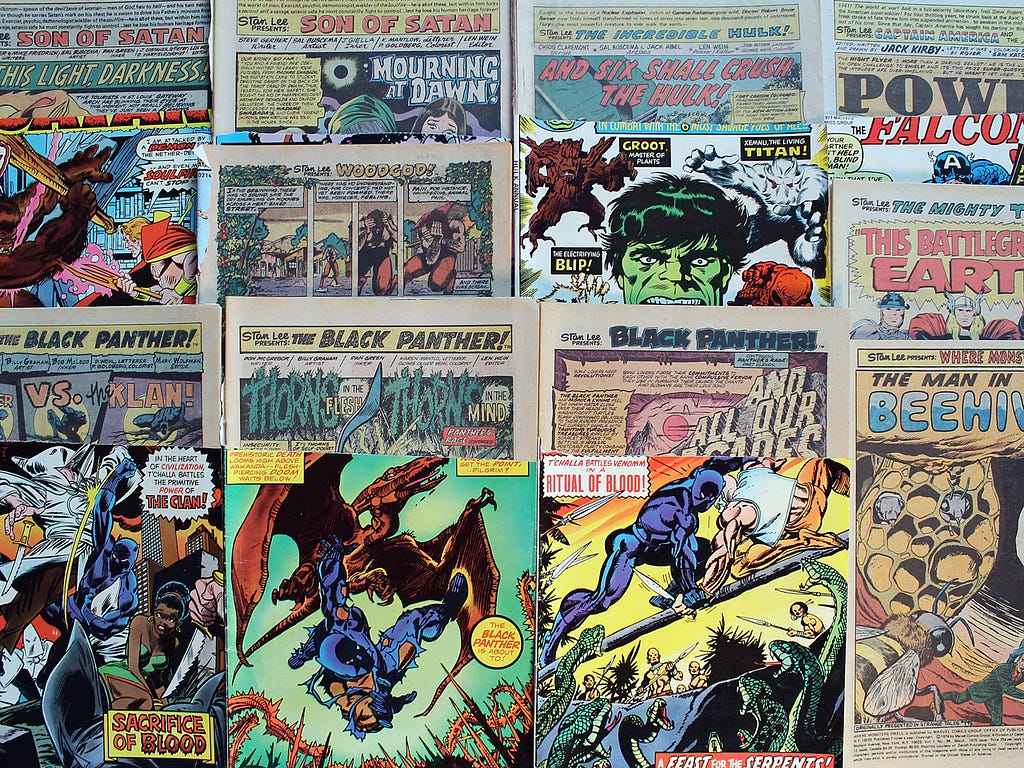
Cheo Hodari Coker stepped into the Marvel universe this year with one of the more ambitious tasks in Hollywood — bringing together the sensibilities of superhero comics, Blaxploitation film, socially conscious noir, and hip-hop to tell a story about black lives in contemporary society. No easy feat, but Luke Cage turns out to be an irresistible watch, thanks to a top-notch cast — especially Mike Colter and Mahershala Ali — vibrant cinematography, and the kind of cultural references — from Gang Starr to Kristaps Porzingis to Walter Mosley — that ground the sometimes operatic storytelling and manage to build a world far more effectively than the clunky backstories Marvel stories so often succumb to. No word yet on when season 2 will air, but most likely production will take a backseat to a unified Defenders series.

Certain Women

Adapted from Both Ways Is the Only Way I Want It, by Maile Meloy

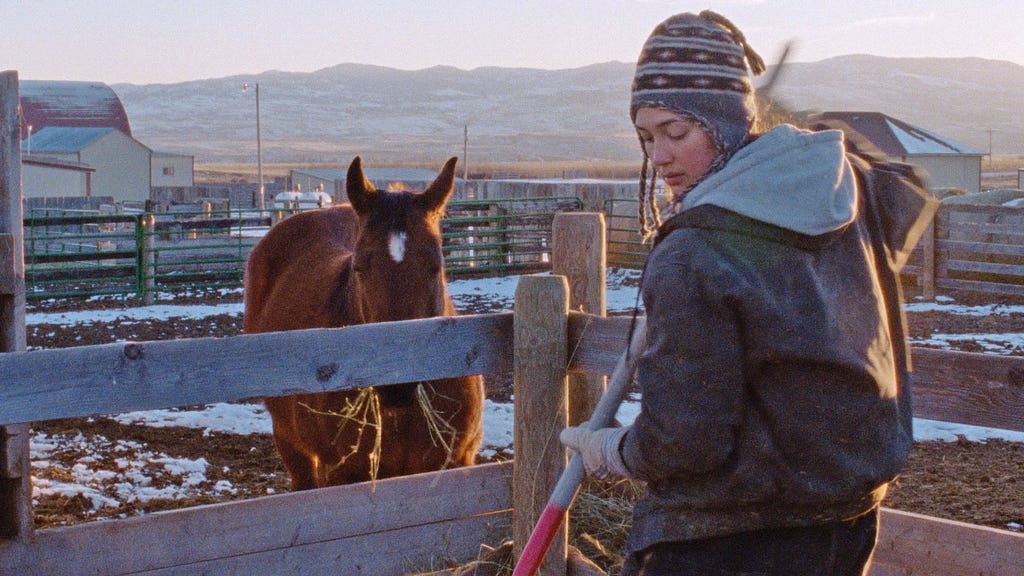
Writer/Director Kelly Reichardt gets extra credit for the level of difficulty on this adaptation, which was based on Maile Meloy’s 2009 collection of short stories. Certain Women has a few unifying strands, but largely it’s a matter of tone and insight that bonds the stories of three different women in Montana. Laura Dern, Michelle Williams, and Kristen Stewart star, and all turn in strong, subtle performances (not to mention the excellent Lily Gladstone, in a supporting role). But it’s Reichardt’s (and Meloy’s) lived-in, deeply felt connection to the landscape that leaves the strongest impression of all.

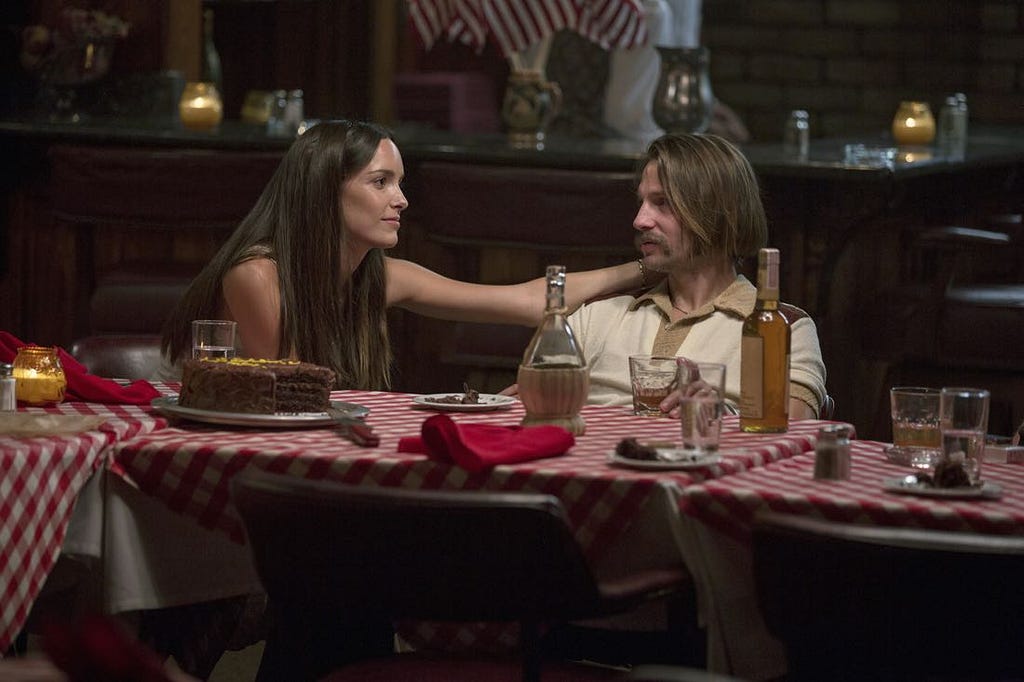
Quarry

Adapted from the Quarry series, by Max Allan Collins

Mac Conway leaves Vietnam and goes home to Memphis in 1972. He’s hardened by war, disconnected from his family, and known to enjoy the occasional drink. Naturally, he’s preyed upon by the Delta/Mississippi River criminal element and eventually pressured into taking on a new trade — as a hit man. Quarry was adapted from the novels of Max Allan Cullins and stays brutally true to the hard living, hardboiled world that earned the author a cult following. The show’s impeccable eye for era detail isn’t quite on Matt Weiner’s level, but it’s not too far off, and the dialogue is sharp enough to provide a bit of light amidst the bleak world-view, especially when delivered by quality actors like Damon Herriman. (Somehow it makes sense that between Justified and Quarry, it’s an Australian actor giving us these unforgettable characters from the underbelly of the US South.)

The Handmaiden

Adapted from Fingersmith, by Sarah Waters

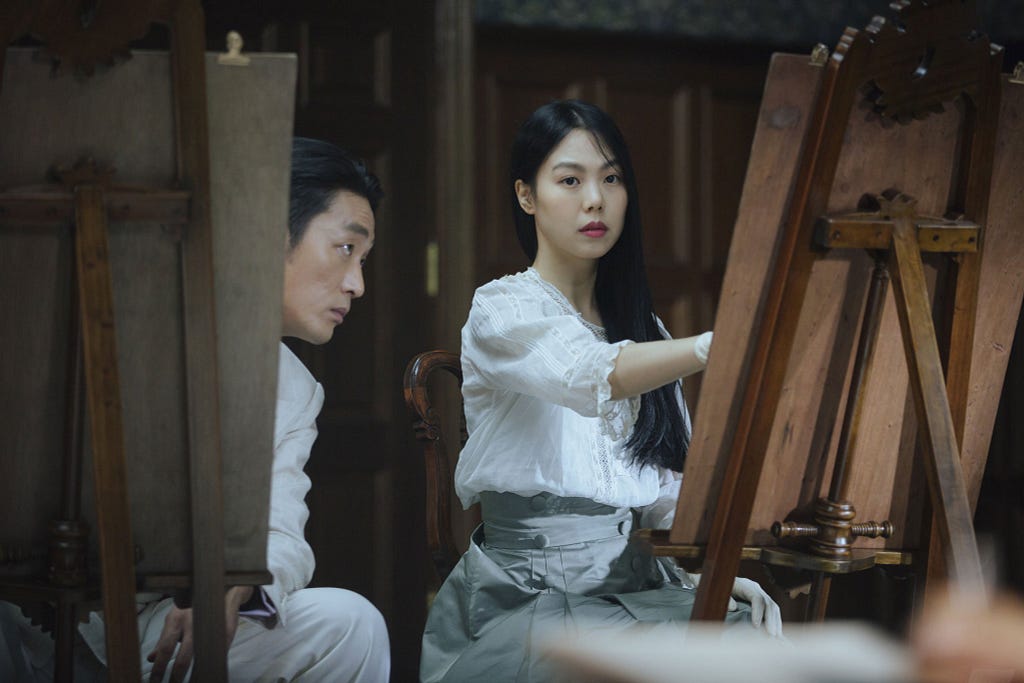
Sarah Waters’ Fingersmith is a Dickensian tale of orphans, inheritances, and corruption in Victorian Era England. Park Chan-wook’s The Handmaiden is an erotic thriller set in an asylum in Korea during the Japanese occupation. Aren’t adaptations great? Both film and book will leave you unsettled, and maybe that’s more than enough of a connection, so long as two big storytelling talents are communicating in their own strange way. Like Oldboy, The Handmaiden will have you clawing at the armrests from time to time. It will also burn some truly astounding images into your memory bank.

The People v. O.J. Simpson: American Crime Story

Adapted from Ride of His Life: The People v. O.J. Simpson, by Jeffrey Toobin

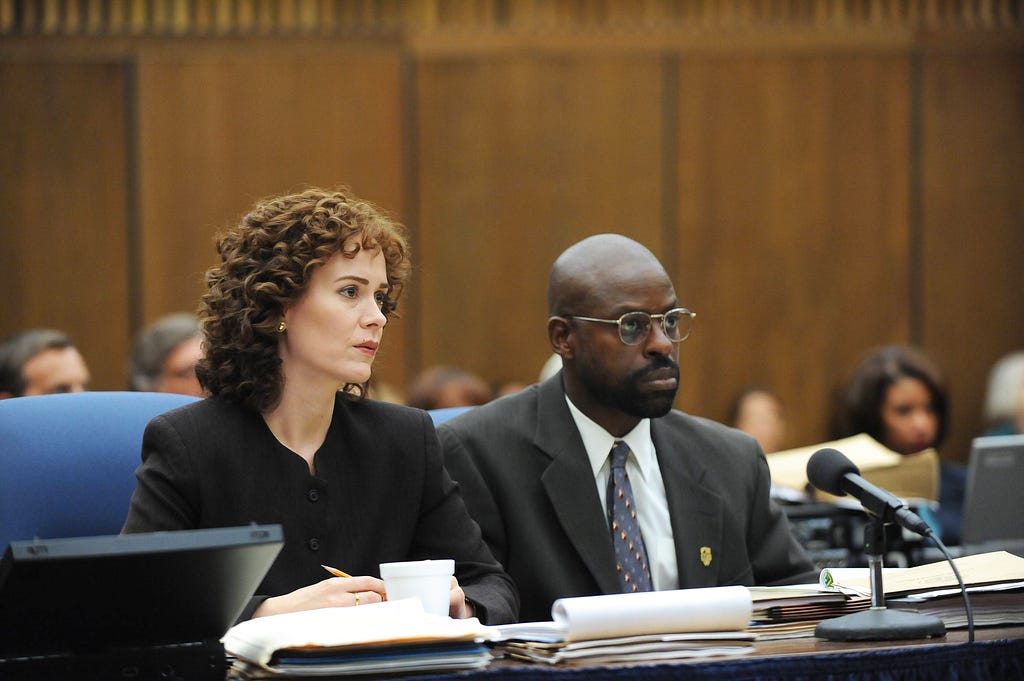
In 2016, FX’s OJ mini-series dominated the pop culture conversation like no other series, except maybe that one about “tits and dragons.” Ryan Murphy and his insanely productive team managed a pretty remarkable trick — luring us in with what we knew (the trial was, after all, one of the most covered events in modern American history), then teasing out everything we didn’t. Historical legacies were entirely reshaped, most notably those of Johnnie Cochrane (played by Courtney B. Vance) and the rising feminist icon, Marcia Clarke (Sarah Paulson). For a couple months, we were all re-living the insanity that was the OJ Trial, only this time we had another twenty years of celebrity worship, racial tension, and police misconduct to reckon with.

Preacher

Adapted from DC Vertigo comic, created by Garth Ennis and Steve Dillon

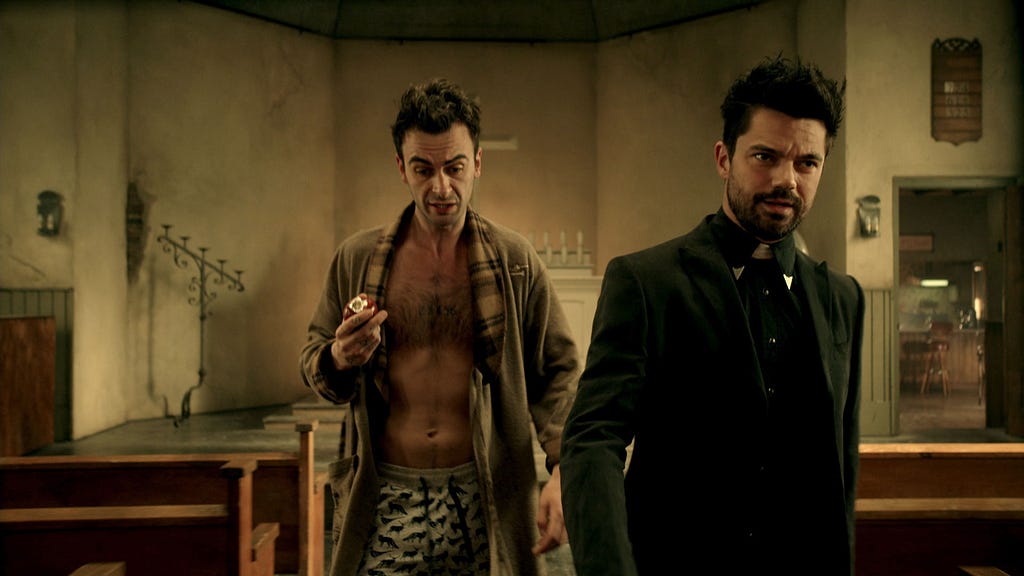
Preacher, the comic series created by Garth Ennis and Steve Dillon, was long thought to be immune to adaptation — too violent, too obscene, too all-around batshit crazy. But the unlikely team of Evan Goldberg, Seth Rogen and Sam Catlin actually pulled it off, bringing to AMC a show that doesn’t skimp on the gore, but pulls it off with wit, visual style and — yes — real emotional connections between multi-faceted characters. A Texas preacher, an Irish vampire, a single mom organist, a gunslinging man-chewing ex — in its own way, Preacher has as rich a tapestry as any show on television, and at least with Leftovers on hiatus and Young Pope still to come, it offers up one of the more complex (and troubling) visions of religion’s place in our culture.

Nocturnal Animals

Adapted from Tony and Susan, by Austin Wright

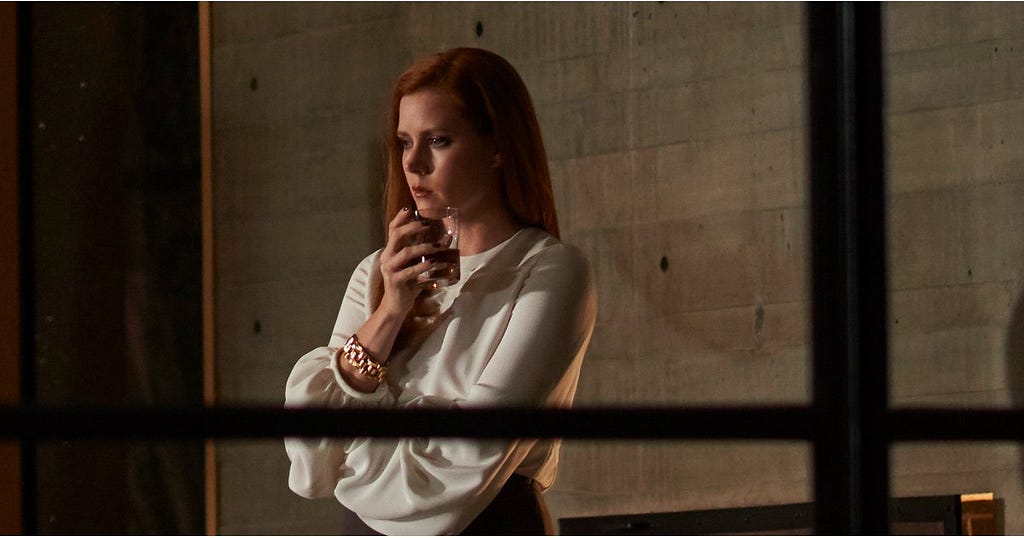
Tom Ford’s newest film, based on Austin Wright’s 1993 novel, isn’t the quiet meditation fans of A Single Man might be expecting. Yes, the framing is poignant and beautiful, and okay, the movie allows for meaningful silence, but there’s enough story packed into Nocturnal Animals to fill up a multiplex. Three layers of fiction to be precise: Amy Adams’ present-day gallery owner, whose ex-husband sends a manuscript dedicated to her; her recollections of their relationship, played out in another strand; and the plot of the ex’s manuscript, a high-octane thriller. The perspective shifts are dizzying in the best possible sense, and the result is a surprisingly intimate and powerful portrait of a relationship gone bad.

Fences

Adapted from Fences (play), by August Wilson

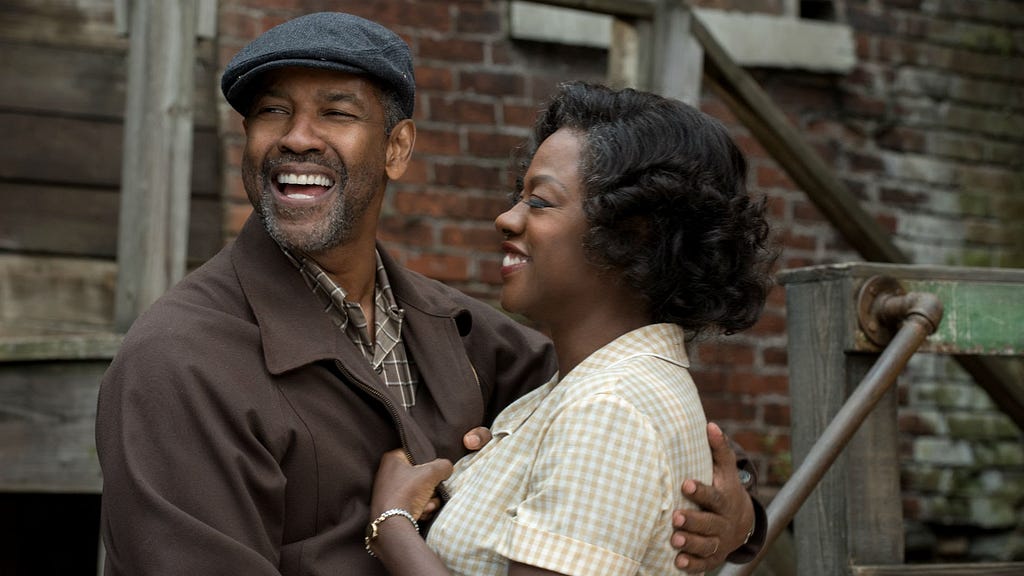
Okay, this one hasn’t come out yet, so really we’re just guessing, but come on — it’s August Wilson and Denzel Washington. And Viola Davis. At the moment, it’s the odds-on favorite for the Best Adapted Screenplay Oscar.

Honorable Mention

Moonlight

Look, this would have been on the list. It would have topped the list, if we were doing things in order. But apparently the screenplay is being treated as an original, rather than an adaptation, possibly because Barry Jenkins wrote the script (with story by Tarell Alvin McCraney) based on an unpublished, unperformed play that McCraney was working on at the Borscht arts collective in Miami. It’s all too complicated to piece together here, but for the record, Moonlight is phenomenal. Everyone should see this movie.

The Man in the High Castle

It’s not the greatest show on TV, but it’s pretty good, and based on the Philip K. Dick novel about a fascist America that’s suddenly looking fairly prescient.

Love & Friendship

Do you like Whit Stillman? Do you also like Jane Austen. Then here you go.

Lion

A helluva story. Really, just a helluva story. The movie will shatter you.

Bad Little Children’s Books Cancelled After Backlash

Abrams halts publication for its “offensively tweaked” kid lit parody book

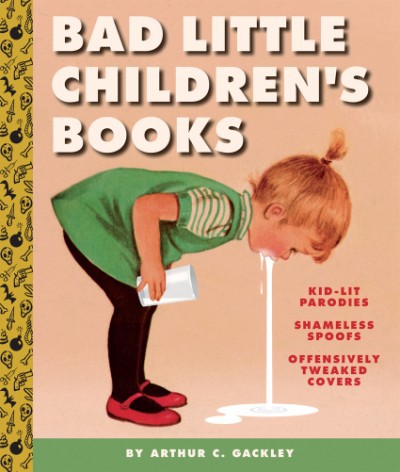
After an extensive social media backlash, pseudonymous author Arthur C. Gackley has requested Abrams (his publisher) to discontinue his crass kid-lit spoof Bad Little Children’s Books.

The illustrated humor title, which was released in September, features parodies of classic children’s book cover illustrations that incorporate both obscene and racially insensitive subject matter (to put it mildly). The book is intended for adults.

The backlash began in early December when Kelly Jensen wrote a piece titled “It’s Not Funny. It’s Racist.” for BookRiot. While she wasn’t a fan of the book in general (“They’re not especially funny or novel or creative, but they’re also not horrible (sic) offensive”), her critique centered on three particular covers that depict islamaphobic and racist scenes. The images can be found in her initial post.

After the article went viral, the predictable series of events transpired: a Twitter firestorm, a statement by Abrams in defense of Bad Little Children’s Book, and a public assertion (via press release) by Gackley that the current political climate (read: PC culture) prevented the “kind of dialogue [he] had hoped to promote through the publication of Bad Little Chinen’s Book” and that “this act of censorship is dangerous on so many levels…satire and parody are tools to help make us a stronger society.” Ultimately, however, the author concluded the book was not “being read by some in the way [he] had intended,” so he requested an end to its publication.

The controversy plays into recent debates about satire’s role and efficacy in contemporary culture, particularly in relation to identity politics. Often, this gets wrapped into a discussion of punch directionality, i.e. a question of whether a satirical work should mock people in subjugated positions within the cultural power structure. However, leaving aside issues of “who has the right to say what,” and even “how that what is said,” Gackley runs into trouble because of his failure to actually craft coherent satirical content. The images, while stylistically referential to the virulent racism of early 20th century children’s books, don’t actually provide much commentary beyond “ah yes, culturally conditioning prejudice within children is still a thing.” What’s more, the politically satirist bent of the book isn’t a consistent presence, as Gackley more often than not reaches for cheap laughs over thought provoking insite. It’s much harder for a reader to perceive social commentary, rather than blunt offense, when racial illustrations are preceded by a bevy of dildo jokes and pastiches familial molestation.

In short, the fact this book drew offense is totally reasonable and it appears Gackley and Abrahams have possibly recognized its flaws. That doesn’t mean the issue is totally over. The National Coalition Against Censorship has been trying to organize a meta-backlash (backlash to a backlash), although they hopefully will be informed soon that a non-govermental institution using private guidelines to determine the scope and amount of publicly available literary content is called publishing. Not censorship.

“Better Homes” by Emily Temple

My plot is about halfway down the beach, counting from where it turns into that sort of sandy marsh at the north end, and close to the access road that leads into town. The beach is more than a mile long, maybe even two miles, and it’s covered with plots like mine. I’m lucky: I’ve got a good spot; there’s even a little shade. Not everyone gets shade, and it can really be a lifesaver, especially in these early stages, when you’ve got nothing to lean against and no place to hide and the California sun just keeps on galloping down your neck. The man in the plot to my right has even more shade than I do, but the woman in the plot to my left (this is left and right when facing the water, of course) has zero. So I’m feeling pretty good.

I’ve seen the man before, at last year’s competition. I don’t know his name, but I remember the castle he built, huge and smooth like a skull, with a narrow hole in the crown, just big enough for him and his necessities. I heard he lasted a long time. I wave to him as I measure out my plot in paces. He waves back. He’s not handsome, but there’s something about his wide, clear face, sand-colored itself, that I find appealing. He’s pacing too, and we must look strange, taking wide parallel steps and waving to one another. Like queens. But these early decisions are crucial: set your foundation too close to the water, and it’ll be washed away like that. Set it too close to the rocks, and you’re dealing with the stiff slope of the beach, the coarser sand, and the high winds, not to mention longer toting distances. You have to find the perfect balance. Which I do. I draw a line in the sand with my toe. Then I unpack my backpack and line up my tools along the toe mark: shovel, bucket, spade, and the biggest palette knife I could find at the art-supply store down the street from my new apartment. The rest of my supplies I leave in my backpack in the pool of shade.

The woman on my left does not respond to my wave. She is pacing quickly, measuring tape flipping around, all her other supplies strapped tight to her body with fancy Velcro straps and harnesses. Her brown hair is sleek and shiny, and she keeps reaching up as if to tuck it behind her ears, finding it untuckable (that is, already tucked), and then going back to work with extra ferocity. This woman means business. I’ll have to keep an eye on her. I grab my bucket and head down to the water.

Everyone builds sandcastles as a child. Even I did, though I didn’t see a real beach until I was an adult. I always loved sand, though. I used to sit in the community sandbox down the street from our crooked little duplex for hours, turning a cracked plastic cup over and over to make towers, digging out windows and outlining bricks with a dead pen my mother had given me to play with. Or maybe we had found it there, buried. I can’t remember. I do remember my mother watching me while I worked, sitting on a peeling park bench, smoking a cigarette. Once, I picked a lipsticked butt out of the sandbox, waddled over, and climbed up next to her on the bench, copying her movements. It took her several minutes to notice me and knock the sandy cigarette out of my mouth. She didn’t say anything, or gasp in disgust, or even sigh. She recrossed her ankles and tapped out some ash.

When you grow up, you stop building sandcastles, of course. Unless you don’t. Unless you discover a talent for it, or at least a passion. If you don’t want to give up your sandcastles, you become a Builder.

Most of the time, that doesn’t mean much. You have a particular affinity for beaches, maybe. You spend hours playing in the sand with your kids, or your sister’s kids, or your neighbor’s kids, or whatever kids you can find lying around. You take a pottery class, and all of your pots end up with spires and draw-bridges. You get into sand art. You move to Florida. It depends on your temperament, really. But once a year, there’s a competition for all the Builders in the country, or at least all the Builders who can get to this particular stretch of beach in California. It’s called the Sandcastle Experience.

Honestly, I felt grateful to get the invitation this year. I hardly get any mail anymore, and I didn’t know if the organizers had my new address. But somehow that intrepid little card made it to my mailbox, and I knew that it meant that this was the year I was going to win.

Here are the rules: Everyone is randomly assigned a plot. No switching. You are allowed one medium-sized backpack — they have a sizer at registration, like the ones for carry-on luggage at the airport — which must contain all of your tools, food, water, and whatever other niceties you think you need to survive. You have twenty-four hours to build your sandcastle, during which no one else may enter your plot for any reason. After that, it’s simple: the last castle standing wins. If you are inside your sandcastle, no one (except the sea, or the wind, or other external forces such as God or coyotes) can knock it down. If you are not inside your sandcastle, your sandcastle is open to attack. You may, of course, defend your castle if you are not inside it (and to be clear: “inside” means “enclosed within” — Dadaists take note: even if you have an army of disconnected walls scattered around your plot, it doesn’t count). When your castle is knocked down, you are out. You are not allowed to use any mixers (cement, tar, egg whites) in your sand to increase the strength of your castle walls. Also, no guns. I heard that one year some guy built himself a thick brick of sand and just camped out inside of it with a sniper rifle. Most people were happy to walk away once they saw that, but there were six dead, in the end. After that they added the “no guns” part.

There are different strategies. Some Builders swear by simplicity: four ultrathick walls and nothing else. Their packs are filled only with food and fresh water. Some people spend all their time building moats threaded with wooden spikes to keep out would-be attackers. Some are in it for the design aspect, the challenge of building something extravagant and beautiful in just twenty-four hours, and they go big with the drawbridges and barbicans. Some try to use that beauty to their advantage. This one guy, two years ago, built his sandcastle in the shape of an enormous pair of praying hands, big enough that he could fit between the palms. The hands were amazingly detailed: they had fingernails, and knuckles, and even little errant hairs. One hand had a long scar down its side. The other had a constellation of freckles. I like to think that when the man was inside, he was reading the creases of the giant hands’ palms. I like to think that he gave whoever it was a good, long lifeline. He counted a bit too much on other people’s respect for his castle’s religious overtones, though. When he went to refill his water bottle at the gas station across the street from the beach, his neighbors dusted it.

Me, I’m not too big on the religious overtones or extravagant curlicues (or not anymore, anyway). My plan is to go simple, but with some frill so it’s clear I’m not just one of those survivalists who don’t even care about making their castle look like a castle, who just want to wait everyone else out without really participating. One way or another, those people tend to get eliminated pretty quickly.

This is my third Experience. The first year, it was just for fun. My husband and daughter came to California with me, watched me build and took pictures inside the castle I built. There’s one — of my daughter holding up a spade, grinning, her ponytail dipped in sand, while my husband tries to wipe his hands clean in the background — that I just love. I’m not in any of the pictures, of course. I was always the one taking them. That year, after I’d stuck it out for a couple nights, a respectable length of time, I collected my gear, abandoned my post, and treated my family to a huge pasta dinner at a little Italian restaurant across town from the beach. I’m sure my castle was knocked down within the hour, but I didn’t mind. I didn’t even go back to check.

Last year, they didn’t come. Last year, the Experience was held the same week my daughter left for college, which she did with more of her things than I thought possible and with a promise to not ever come home for the holidays. This was, incidentally, also around the time my husband left me for — get this — a much older woman. She’s a paleontologist. He finds her distinguished. So perhaps you won’t judge me when I say that I can barely remember last year’s Experience. I admit it: I was a wreck. I think after I’d blown my nose on everything that wasn’t covered in sand, I just wandered off looking for tissues and/or whiskey and got eliminated that way. But this year will be different. I’ve had enough of losing.

There’s no official information about what you get if you win the Experience. I’ve heard they give you an actual castle of your own, somewhere in New Zealand or rural France, and your property taxes are paid every year by everyone else’s exorbitant entry fees. But that’s just a rumor. After the closing ceremony, which very few people are usually around to see, no one ever really hears from the winner again. Probably on account of his or her life being completely changed by all that money and happiness.

One year, the winner was a woman who built a tiny castle, the size of a tennis ball, and actually kind of the shape of a tennis ball, too: just a mound of sand hastily pulled together, with a toothpick flag stuck in the top. She hid the castle under her bucket and left her tools scattered everywhere, so that when other Builders came marauding, looking for castles to tear down, it looked like she was out and they ignored her plot completely. The woman wandered around for a week, waiting for other people to sneak out of their castles so she could knock them down. Finally, after she razed a fortress (it could have fit a family of four) whose owner was out desperately looking for the other holdout on the empty beach, she was declared the winner. She’s not back this year. I heard her parents’ home, somewhere in Pasadena, burned down under suspicious circumstances.

I begin by tracing the shape of my castle in the sand. It’ll be a sort of squat square, with rounded edges and, if I have time, some nice battlements. Nothing fancy. It’s boring, but I’m trying to maximize my chances. I build the sea-facing wall first, tiring out my legs going up and down the beach to get the good, wet sand. It takes a long time. My legs burn. Note for next year: incorporate hills into my daily run. (Unless next year I find myself living in a castle in New Zealand, in which case there will be no running of any kind.) For a while, I keep pace with the guy on my right. We chat as we carry our buckets of sand. His name is Leonard. It’s his sixth year in the contest. Last year, he confirms, he got pretty far.

“What’s your secret?” I ask him.

He tries to wink, but he’s panting a little from hauling sand, so he ends up looking sort of like he got caught in the middle of a sneeze. It’s cute.

The woman on my other side does not respond to my polite greetings or questions. She is methodical, almost robotic. All her tools are brand new and have matching sky blue handles; she is also wearing new boots. Most people, including me, go barefoot in the sand, both for the comfort and for the nostalgia factor, but I can see how the boots give her extra traction walking up and down the beach to the water. I picture her home, which must be spotless, her children, who must sit all in a line on her couch in identical sweaters, raising their hands when they have something to contribute to the conversation. Her children would never leave her. They’re far too polite.

Electric Literature’s eNewsletter

To be clear: it’s not that my daughter isn’t polite. She’s plenty polite to other people; she must be, or she wouldn’t have gotten anywhere in life (and she’s a neuroscience major at a fancy school, so). But she was never polite to me, even as a little girl. It was always about her daddy. She forgave him everything: when he missed her soccer games, when he forgot about her choral concerts. When he drank so much he passed out at the dinner table, one ear sunk into his coconut cream pie. Even when he slept with one of her teachers — her math teacher, a prim woman who was, now that I think about it, also older than me — she cried and cried but called him at the hotel every night so he wouldn’t feel alone. (He wasn’t, of course, alone.) I’m sure he told her it was all my fault. That I hadn’t loved him right, that I had driven him into the arms of another — that old story. She forgave him. She got an A in math, which was not her best subject, and after that she forgave her teacher too. But me? Nothing I do is forgiven. When they finally left, my daughter told me I was a monster. My husband told me I was disgusting. People in glass houses shouldn’t throw stones, I told them, but they didn’t seem to know what I was talking about. I guess my daughter’s precious father never taught her about proverbs.

By the ten-hour mark, I’ve built two walls: the seaward wall and one sidewall. I’ve left the wall toward Leonard open. I feel more comfortable about the idea of him watching me sleep than the woman. She’s someone my husband would probably want to fuck. When we still lived together, he constantly admonished me for my messiness, my laziness, my lack of matching tools. He likes order, refinement. Maybe he’s even slept with her already. But I think that about everyone now.

When I’m spent, I lie down on the little bed I’ve made from the driest sand I could find (you think sand is soft until you try to sleep on it) and sink my face into the inflatable pillow I brought in my backpack. I have to force myself to eat a granola bar before I fall asleep. I’m nervous, and I never want to eat when I’m nervous. I set my watch to wake me up in six hours exactly. I have a lot of work left to do, but I’ve seen what happens to people who don’t sleep in the first twenty-four hours. I won’t take any chances.

At hour twenty, my shovel breaks. The handle snaps clean off. I still have half a wall to build, and now all I have to work with is a sharp-edged metal pan and a wooden stake. I could slay a vampire or, I don’t know, enter a discus-throwing contest, but I can’t finish my sandcastle. I can’t help it: I start crying. The woman to my left looks over and frowns. I wave again, even through my tears, because screw her. She turns her back to me. She’s putting the finishing touches on what looks like a smaller version of a tower that might hold some kind of crooning, follically blessed princess. She’s even outlined bricks the way I used to when I was a child.

“Hey,” Leonard says from my other side. “Yikes.”

“Don’t mind me,” I say, waving the pieces of my shovel at him. “Just another loser, here.”

Leonard disappears into his egg-shaped castle for a moment (this time, he’s put the entrance at the bottom so it looks a bit like a tall yurt) and then pops back out again. He waves a shovel like a flag. It’s not the one he’s been using; this one’s red. “You want?” he says.

“Are you serious?” I say.

Leonard shrugs. I hear the woman on my left clear her throat dramatically, but I don’t turn to look at her.

“It’s not the best,” he says. He walks up to the edge of his plot and sticks the shovel in the sand on my side. I come forward and pick it up. There’s a crack in the handle, and it wobbles a bit, but it’s a whole shovel.

“This is really nice,” I say.

“It’s extra,” he says.

“But you didn’t have to,” I say.

“It’s no big deal,” he says. He looks less tired today. His egg-yurt is mostly done, so it looks like he’ll have time before the next stage to cross the road and get extra supplies from the gas station, if it hasn’t been completely cleaned out by the survivalists.

I thank him again and then we stand around smiling at each other for a few seconds, neither of us sure what to say, until he shrugs, turns, and goes back to work. I do the same, filling in the final piece that will make my sandcastle a viable building and not just a series of packed lumps waiting to be kicked apart, but I keep looking up to see where Leonard is. I want to wave my new shovel in the unnamed woman’s face, but I don’t have the time to spare. It’s hour twenty-three when I finish. I’ve left a small hole in the back wall for a door, but otherwise I am completely enclosed in my castle. I get to work on the battlements. They’re just for show, but they make my castle look more like a castle, and I’m feeling pleased with my new shovel and also with myself for having finished in time. I look over at my neighbors: Leonard, back from the gas station with a few bruised bags of Flamin’ Hot Funyuns, is drizzling water over his perfect egg to cement the outside. The woman is already sitting in the top of her tower. She has little windows built in, and through them I can see the curve of her brown head, but nothing of her face.

The second day is quiet. No one in my line of sight down the beach leaves his sandcastle. Most people have brought enough supplies that they’re still comfortable, or as comfortable as they can be, and the weather is holding, so there’s no real reason to even try to sneak out, other than boredom. To that end, Leonard and I have discovered that we can talk to each other quite easily while remaining safe in our castles, me resting my chin on one of the little indents I carved out, him just sort of yelling from inside his egg. He tells me he’s a widower with two sons in the army and that he lives on a little plot of land in Atascadero with an old basset hound named Bongo and six chickens.

“Ah,” I say. “Hence the egg.”

“It’s one of the strongest shapes around,” he says. “That and the female body.”

“I don’t know about that,” I say.

“That’s normal,” he says. “But I’ve got a feeling about you.”

A thin laugh spools from the tower on my left, and I realize with a jolt that of course the woman can hear us. The piled sand had given me a sense of privacy, like a cell phone held to your ear in public. I feel my face get hot.

Leonard doesn’t notice the laughter. He asks me about my daughter. What he actually says is “That strong body of yours has given birth, I’ll bet.”

“She’s a smart girl,” I say. “She’s majoring in neuroscience.” I don’t tell him that I haven’t spoken to her in almost a year, or that I actually have no idea what she’s majoring in now, because no matter who picks up when I call her school, they won’t release any information about a student without that student’s consent. I don’t tell him that the last time I saw my daughter, she was sitting in my husband’s car, refusing to look out the window at me, while he told me about the papers I could expect to receive and what I ought to do with them. Even when I pressed myself against the glass and said her name over and over again, smearing up the window with my lipstick, she wouldn’t look.

“You must be a wonderful mother,” he says.

I start to cry again. At least this time no one can see me through all the sand.

That night, Leonard slips through the makeshift doorway in my castle wall. I hear him coming and sit up.

“Hi,” he says.

“Hi.” I’m wearing a purple flannel nightgown that’s seen better days. It gets cold at night on the beach, but any sleepwear gets, as you might imagine, more or less completely ruined in the sand. He’s wearing a ratty sweatshirt that says YUKON on the front and a pair of baggy sweatpants that say SYRACUSE down the leg, so I don’t feel so bad.

Leonard comes over to where I’m sitting. He has to sort of scootch/crawl because the walls of my castle aren’t very high and he doesn’t want to be seen.

“I couldn’t sleep,” he says.

“Why not?” I ask.

“I was thinking about you.”

“Thinking what?” I ask, although I think I know.

“I want to know all your secrets,” Leonard says.

“I don’t have any,” I say. “I am secretless.”

Leonard smiles, as if I am a naughty child caught in an obvious lie. “You remind me of something,” he says. He puts his hand on my breast.

“Something like what?” I whisper. He kneads my breast thoughtfully. It’s the left one, the smaller one. I wish he had chosen the right. My nipple stands up inside my nightgown.

He is quiet for a long time, kneading. I have to work hard to keep from breaking the silence.

At last, he says: “Home.”

I sit back a little bit. Then I reach down, pull off my underwear, and spread my legs wide.

I wake in the morning to the sound of Leonard’s screaming. I’m curled up, the way I always used to sleep with my husband, only of course my husband is not there and I’m covered in sand. Leonard stamps a foot and more of it flies into my face.

“You bitch,” he says. “You stupid whore.”

I sit up. “What?” I’m hurt, and a little sore from the sex, and I’m starting to think there’s some sand up inside me, and now there’s sand in my eye.

Leonard kicks more sand at me, then leaps away. I look around and see, through my battlements, that his beautiful egg is nowhere to be seen.

“I can’t believe I fell for this,” Leonard says. He picks up his cracked shovel and shakes it at me. I don’t point out that it was he who offered me the shovel, not to mention came into my sandcastle all on his own in the middle of the night and started in on the sweet talk and fondling. Instead, I just stare at him.

Leonard crouches to leave my castle, but then suddenly rights himself. He turns and looks at me. Then he spits in my direction. The spit doesn’t get far because he’s a little dehydrated, like all of us, and as I’d recently discovered, he has only average tongue strength, but I still understand the message and feel wounded.

“I take it back,” Leonard says. “All of it.” Then he whips around and crashes straight through the doorway without ducking, in fact swinging his reclaimed shovel, taking half of the back wall down with him.

I jump up, all insult and soreness forgotten. “Cheater!” I yell. “Cheater!”

Leonard begins to kick at the crumbling wall. “Oh yeah?” he shrieks. There’s more yelling and swearing and name-calling, but his voice soon thickens to a clod in my ears, and I can’t differentiate one word from another. He sounds like my husband, only less so, because he doesn’t know which words will hurt me most. It’s during this torrent of abuse that the Castle Guards appear, wearing their bright blue T-shirts and plastic helmets. The shorter of the two has one of those decorative broom things sticking out of the top of his helmet, like a Roman soldier, and it’s bright red. Everybody knows the Guards have Tasers in their scabbards.

“Plot 83?” says the broom-headed Guard. “You’re out.”

“Also, illegal destruction, two counts,” says the other. “Destruction while occupied and destruction after elimination.” He’s writing this, or something, anyway, down on a little pink pad.

“You’re going to have to come talk to the eligibility council,” Broom-head says. “And you better come along right now. You’re definitely going to be facing a fine. And this could bar you from participating next year.”

The other guard is now taking photos of my destroyed wall. “Big, big fine,” he says, as though he finds the idea sexy.

“This is horseshit,” Leonard says. “It was her fault!”

The Castle Guards shrug. “You know the rules, Leonard. Now come with us.”

After Leonard and the Guards disappear behind a dune, I notice the woman in the tower staring at me. I wave. She raises her eyebrows at me and gives me a weird sort of smile. I almost give her the finger because, again, screw her, but I don’t. I might not want to make any more enemies just yet.

I spend the rest of the day repairing my wall. You’d think the Guards would grant me some special dispensation or something, but they don’t return, so I make certain to stay inside of the structure as I’m working. I want to ask the woman to keep watch while I get the wet sand from the water line, but I don’t trust her. Instead, I dig a hole. It’s hard work without a shovel, and by the time I hit moisture my hands are red and raw and I’m bleeding from somewhere underneath my fingernails. But I don’t care. I repair my wall from this new well of wet sand, slathering it on and packing it together, making it even better than it was before. I’ve already had to move once this year. I won’t let another home get destroyed.

After the third night, people begin getting bolder. Most of the Builders who came only to show off their construction skills or build their art portfolios or meet other Builders and have weird sand-fetishist mermaid sex have been eliminated — they’ve carefully photographed their castles for posterity and walked down the beach to stretch their legs and admire everyone else’s work and maybe find some good shawarma and then come back to empty plots. As they knew they would. They don’t care. They’re just like I was my first year. They all have real homes to return to. But the rest of us are getting antsy. Most of those people won’t be back, anyway. You could say that they’re in the Experience for the experience. The Builders who come back year after year, who need it, who feel more accepted, more normal on this stretch of beach than they do anywhere else, or who just want their escape from the world to last forever — those are the people who really belong here. And if you belong, it’s more likely that you’ll last.

Now I can see people sneaking up and down the beach, looking for unoccupied castles to ransack. I wonder where their own castles are. It should be obvious by now that if you go out to destroy someone else’s castle, you’re leaving your own undefended. Unless you’ve worked out some kind of system, of course. I’ve heard some people put knives in their moats. I’ve heard some castles are booby-trapped. I don’t have a system. I still have some food left, so I’m staying put. I figure, why not wait for everyone else to fight it out for a little while?

“Hello,” someone says. It’s the woman. She’s standing on the edge of her plot, looking at me through the battlements.

“Hi.”

“Getting interesting out there,” she says.

“I guess.”

“I call it stage three,” she says.

“Have you gotten this far before?” I ask.

“We should team up now,” she says. “We’re more likely to survive stage three if we team up. One of us can run interference while the other goes destroying.”

“How can one person guard two castles?” I ask.

She smiles. “Mostly by trickery,” she says.

I look over my shoulder at Leonard’s empty plot.

“You might prefer that kind of teaming up,” she says, following my gaze. “But I’m afraid that’s not really on offer. Mostly because it never works.” She has a smug little smile on her face. I notice suddenly that she still looks completely clean. There’s no sand in her hair or mashed into her knees, and her manicure is still in place. She might as well be sitting in her living room at home, waiting patiently for a set of illustrious guests to arrive. She has that vibe.

“I prefer to go it alone,” I say. “But thanks.”

“Don’t be stupid,” the woman says. “They go for the castles that look easy to knock down first.”

“Yours looks easier than mine,” I say, without knowing if this is true.

The woman snorts but quickly collects herself. “Fine,” she says. She climbs back into her tower.

That night, I decide I’m tired of waiting. The woman to my left is still in her tower, apparently asleep — I can just barely see her ponytailed head through the little window — so I sneak out. Leonard took his cracked shovel with him when he left, and so I bring the pieces of my old one, which are better than nothing. I clutch the broken handle in my hand as if it were capable of emitting light. On the other side of Leonard’s plot, an old man sits in a little square castle, barely wider than a telephone booth but with a pretty peaked roof, holding a camp flashlight under his chin. Move along, his face tells me. I force myself not to look back at my now-unguarded home, so as not to give anything away. Not home. Castle. I keep moving.

Farther down the beach, I find what I’ve been looking for: a castle that seems unoccupied. I approach it warily. It is small and bowl-shaped, with a circular opening at the back. Inside I find the typical backpack full of clothes and supplies, plus a pink blanket, a pillow, and a little battery-operated clock radio. Someone has painted little hearts and stars on the clock radio in glow-in-the-dark paint. I can imagine it: mother and daughter painting the little hearts and stars together, then turning out the lights and going ooooooo. It’s love, this little clock radio. I throw my body against the back wall of the castle. It doesn’t budge. I back up a few steps, treading sand all over the pink blanket. Then I run again, and this time I break through the wall, landing hard on my shoulder on the other side. After that, it’s an easy task to dismantle the castle. I am like a whirlwind, with the slice of metal in one hand and the stake in the other. I am like death.

When the curved walls are completely decimated, reduced to little piles of loose sand, I take one final look. Somewhere in the process, I’ve stepped on the clock radio, and I can see its weird metal guts poking out into the sand. It’s bad form to destroy a fellow Builder’s personal belongings in the process of attacking their castle, but it’s recognized that it happens. I feel a little sorry. Then I stomp on the clock radio again and again and again, grinding it into the sand.

I run back to my own castle, lungs raw. It might be over for me now. I’ve been gone for a while. But when I get there, I see that it’s still standing, and the relief I feel is like dropping into a bath. Or like coming home. This could be my new home, I think. My husband took my home away, and not only my home, but my house too, claiming that having bought it meant it belonged to him. But he didn’t even live in it. He just cleaned it top to bottom, threw out everything that had been mine, and then sold it to the first person to make an offer. I wrote an anonymous letter telling the buyer all about the asbestos, the leaky roof. I got a letter back, from my husband’s lawyer, but I didn’t open it.

On the afternoon of the sixth day, I’m lying on my back inside my sandcastle, watching clouds. Once or twice, sand-covered people poke their heads over the walls to see if anyone is inside. I wave at them, and they go away. The clouds are moving quickly, and they seem to be changing color, gaining weight and darkness, though it can’t be later than two. No, it’s not just the clouds. It’s the whole sky that’s getting murky. At first I think I’m just falling asleep, or maybe passing out — I’ve been rationing the hell out of my water — but then I hear what is unmistakably the screech of a megaphone. Castle Guards begin walking up and down the beach, informing us of the THUNDERSTORM WARNING. COMPETITION IS SUSPENDED UNTIL FURTHER NOTICE. PLEASE MEET AT THE SAFETY POINT.

Panic pinches me. I have no idea how my castle will fare in a downpour. Better than those intricate confections some people make, probably, but what if it’s completely washed away? What if all the castles are completely washed away? What will happen then? I gather my things as well as I can while keeping one eye on the clouds, which at this point might as well have glowing red eyes and outstretched claws and be calling out my name. Before I leave, I nestle my bucket upright in the sand, to catch myself some extra drinking water. Do I congratulate myself for this foresight? I do indeed.

The safety point is a high school gym located a few streets inland from the beach’s midpoint, as fair a location as possible, we were all assured, but still a significant distance from my plot. As I walk away, I can see for the first time the spread of remaining castles, and the many blank spaces where castles used to be, like a long row of brown teeth — once strong and now rotting, knocked out and broken. There must have been more than two hundred castles at the beginning, and from what I can see now, it looks like less than a third are left. Other Builders are walking toward the safety point too, but no one speaks, or even gets within range of speech, except one group I see far ahead of me, who seem to be walking together and talking, even laughing and touching one another. I realize I might have waited for the woman on my left, looked for her, walked with her. She wanted to be my teammate, after all. But still, it seems better this way, just moving silently forward through the sand to the place where they’ll tell us what to do next.

The gym is small and dingy; I can only imagine what the high school it belongs to must be like. Then again, everyone’s high school experiences are small and dingy, once you get a little distance. There’s a big red M painted on the floor of the gym, along with thick curving lines that undoubtedly have meaning to those who watch basketball. One of the hoops has no net. Blank pennants hang on the walls: the students here have not won very many state championships, except for Girls’ Lacrosse ’04, which is something, at least. My heart fills for Girls’ Lacrosse ’04. The bleachers have been pulled out from the wall, and there are rickety tables set up in the middle of the room with what looks like bug juice and little packets of snacks in little plastic bags: one per person. Castle Guards tick your name off on a little sheet when you collect your food, so it’s fair to everyone. I get my juice and snack pack and, feeling like a fourth grader, find a spot on the bleachers to wait out the storm.

The last time I was in a room like this, my daughter was in eighth grade, putting on a Christmas pageant. I remember they had all the kids walk in with penlights clutched below their chins, singing a song: It is better to light just one little candle than to stumble in the dark. I thought it was ludicrous at the time, all those kids walking toe to heel like brides, singing a repetitive and obviously metaphorical song, but now I’m tearing up just thinking about it.

The gym begins to fill with people. By the first crack of thunder, there are some seventy Builders milling around, talking, eating, or napping, and I’m surprised to see that we’re actually a pretty diverse group. There are, perhaps, slightly more men than women, but the ages and races and sizes vary wildly, from the short, fat black teenager flirting for extra juice to the old, translucent woman hovering under the netless basketball hoop, looking up at it, or maybe through it, as though it’s going to hand something down to her. One man has curled himself into a ball in a corner. Two women are sitting back-to-back on the bleachers, spades out, alert to attack, even here. A middle-aged man with a rapidly deflating paunch is crying in the middle of the room, even though two women, equally middle-aged, are vigorously rubbing their breasts against him, petting his wispy hair, and making cooing sounds. Lots of people are sitting alone, but lots of people are also talking to one another, just socializing, perhaps, or maybe making deals, plans, pacts. I should, I think, join them.

But I don’t move. It’s not that I’m afraid to talk to people. I’m not. People like me. Or, I should say, they like me at first. It’s around month six that something sours. That’s when people seem to decide they’ve made a mistake. It’s not something I understand; I feel like I’m the same person at month six as I am at month zero, but the pattern is unmistakable. I tend to get fired after half a year at any job. Other women decide they’re allergic to my perfume, nothing to be done, it’s really too bad, sorry! Even the Korean pen pal I had in the third grade gave up on me after a few months. (That or she died. I never found out.) I saw it happen to my husband, saw the love drain out of him, almost immediately after we were married, even as I loved him harder and harder. But I was pregnant, and he was stuck, and he stayed for a long time. I guess that makes him a good man.

I used to torture myself, trying to figure out what it is that people dislike about me. But I suppose most of what we feel about other people, good or bad, can’t be explained. It’s chemical, or subconscious. Maybe it really is my perfume. Now, I feel lucky. Some people don’t even get those six months of like-ability. A lot of those people are, from the look of things, here in this gym.

“You know Aaron Spencer?” I overhear a muscular woman say to a small group. “Well, Mark and Frank and Michaela snuck up on him last night and began to tease him about his divorce. Apparently after only ten minutes Aaron came storming out of his castle to punch Frank in the face, and that’s how they got his castle down.”

“Isn’t Michaela out?” someone asks.

“Oh yeah,” the woman says. “She’s been out for days. But there are no rules saying you can’t hang around with your friends while they compete, as long as you don’t actually help in the destruction. You can say whatever you want. And you know how mean Michaela gets, especially after she loses. Remember last year, when she lured Camilla out of that monstrous castle by just mentioning her son who overdosed?” There is general laughter and head nodding. Part of me longs to join this group, to smile and snicker with them, to be part of them. Isn’t that why we’re all invited to the Experience? Because we share something, because we’re the same? But just looking at the talking woman, with her sharp smile and calloused hands, makes me tired. If, as I am starting to believe, the Experience is the final vestige of the rejected, the stunted, the cruel, the absurd, then joining her hyena pack would mark me irrevocably as one of them. But I am not one of them. I am a winner.

I see the woman who has the plot to my left over by the basketball hoop. She’s conferring with a group of four men with their backs to me, all in tight black shirts. I wave. She ignores me.

Thunder booms overhead. A fight has broken out on the other side of the gym. Two men are silently pushing each other up against the red mats that line the far wall. I can only hear their outbreaths and see their bodies mashing together; from a distance, they might be fucking, or hugging each other through abject despair, or both. Their faces are as red as the mats, but their expressions are somehow serene. A pair of Castle Guards power walk past me to break it up.

“None of these lunatics should ever be allowed out in public,” I hear one mutter to the other.

“At least they have each other,” says his friend. I wonder: Is that what we have?

Around ten o’clock, the Castle Guards declare the thunderstorm threat passed, and we’re given half an hour to resituate ourselves in our castles before play resumes. I look for my neighbor and see her ahead of me, walking briskly back to her tower. The black-shirted men are nowhere to be seen, so I hustle to catch up.

“Hey,” I say.

“Oh,” she says. “You.”

We power walk in silence for a while.

“So who were those guys you were talking to in the gym?” I ask finally. “Your friends?”

She scoffs. “Entirely not,” she says. “Just colleagues.”

“Where are you from?” I ask.

“Why?”

“Do you have kids?”

“Look,” she says, without slowing her pace. “You had your chance to team up.”

“I’m just talking.”

“I’m just walking,” she says, and then she stops walking. “Yes!” she hisses. I follow her gaze and see her tower, still standing. My castle is standing too. “It looks like the storm missed us,” she says. This, I think, is the nicest thing she has yet said to me.

“Thank God,” I say.

“Don’t be stupid.” She rolls her eyes and disappears into her tower. She’s right, though, about the storm. The bucket I left to catch rainwater is empty, and so, nearly, is my water bottle. I probably should have saved some of that bug juice.

At the ten-day mark, I am severely dehydrated. I haven’t had the strength to go out and attack any more castles, or to do much of anything. I can only sit between my four sand walls to thwart those who now roam in packs up and down the beach. The woman in the tower seems to have the same strategy as I do. I try to talk to her, calling up to her in her tower, but she ignores me.

I can’t see any castles except for my own and the woman’s, but I think there must be more still standing around the bend of the beach. I eat the last bit of food I have, an apple that’s so red it looks like it must be evil. I wipe it off, of course, but the sand still squeaks in my teeth.

Maybe it’s a day later or maybe it’s a week. Whenever it is, it seems as though I’ve been in my castle for an uncountable number of days, an uncountable number of hours, when my neighbor approaches, seemingly from the water, as if she’s been birthed there. She even looks wet. Like a Bond girl, you know? I’m having a hard time standing up, but I call out to her.

“Woman on my left,” I say. My voice is all sandy. “Ahoy.”

“Come out,” she says.

I don’t know what she means. “Have I won?” I manage. “Have I won yet?”

She says nothing. I wonder what she’s doing out of her tower. I look up at it blearily and can still see the shape of her head through her little sand window, leaning against the wall as if in sleep.

The woman has followed my gaze and is now smiling toothily.

“How are you here?” I demand. “I can see your head up there.”

“I told you, the only way to win is by trickery,” she says. So she hasn’t been ignoring me. At least not every time.

“You’re smart,” I say. “But I’m going to win.”

“You’ve already won,” she says. “So come out.”

I’ve won! But where are the Castle Guards, coming to give me my prize? It doesn’t matter, I think. They must be on their way.

I look around my castle. I don’t want to leave. I could just stay here, prize or no.

“I won’t come out,” I say. “I live here now. This is my home.” The woman scowls at me and then disappears. Aha, I think.

But then I see Leonard, my Leonard, bent down and smiling at me through the door of my castle. He reaches one large hand toward me.

“I’m sorry about before,” Leonard says. “I was a fool.”

“Yes,” I say.

“Come watch the sunset with me,” he says. “We can live here forever. You and me.”

“Did I win?” I ask.

Leonard smiles. “Almost,” he says. “Come on.”

So I take his hand. As we walk toward the water, I notice his black T-shirt, and the black T-shirts of the other men who have appeared silently around me.

“Wait,” I say. I turn, but the woman on my left has already begun. I try to go back, to stop her, but suddenly I feel myself held down, pressed into the sand by eight strong hands, all applied carefully to chaste body parts — knee, shoulder, head — so I can’t complain about harassment, and then the woman proceeds to take my castle down, piece by piece. Leonard pets my hair, makes soothing sounds. The woman slices through my battlements with her knife. She punches through my walls. She looks wild, and finally dirty, and thick with passion and anger. She looks, suddenly, just like me. I lie on the sand, under so much polite weight, captured, held, cradled safely between man and sand, waiting for it to be over, so I can start again.

Thank you and happy holidays!

Dear Electric Literature members,

2016 has been an exciting year for Electric Lit, and we couldn’t have done it without you!

We’re holding a membership drive during the month of December, and we want to take the opportunity to thank you, our devoted members who need no recruiting. As a small token of our gratitude, we’re offering a special members only discount to everything in our Etsy store — including our new card game, Papercuts — for all your holiday shopping needs! Just enter the code ELECTRICIAN for 20% off at checkout from now until the end of 2017.

We’d also like to remind you of your regular membership benefits, which include full access to over 230 stories in the Recommended Reading archives and year-round submissions. Some exciting additions to the archive this year include: stories by Ted Chiang, J. Robert Lennon, and Jennifer Haigh; poetry by Morgan Parker; and novel excerpts from Karan Mahajan, Brit Bennett, and Jonathan Lee.

If you misplace any of the information above, you can always check the membership benefits page, and, to be sure you’re satisfied with your membership, we invite you to email editors@electricliterature with questions, suggestions, and concerns throughout the year.

The best experiences of reading literature are incredibly intimate, and yet, as an online publisher, our audiences can sometimes feel distant. Your membership crosses that distance; we know we can count on you to appreciate great literature, and that makes the work we do worthwhile. So, thank you!

With best wishes for the holidays,

Halimah Marcus
Executive Director, Electric Literature

As a 501©3 nonprofit, your membership is tax-deductible. We’ll send you a gift acknowledgement for your taxes in early 2017.

Watch the Trailer for Dave Eggers’s The Circle Adaptation

Emma Watson, Tom Hanks, and John Boyega will star in the tech-dystopia film

“Knowing is good. Knowing everything is better.” At least, that’s what Eamon Bailey (Tom Hanks playing a Steve Jobs tech baron type) thinks in the first trailer to The Circle. The dystopian film about a world where social media has run amuck and people share every single thing thanks to tiny cameras is based on a 2013 Dave Eggers novel of the same title. If you are a fan of the TV show Black Mirror, then this trailer might get you excited for the film’s release next April.

Black Panther and the Promised Land

My best friend growing up was Bart. Bart had an aunt who owned a convenience store, and at this store, among other things, you could buy comic books. The thing with comic books and magazines generally is that people thumb through them more often than they buy them; as fresh stock cycles in, the old unsold titles must relinquish their places on the spinning racks. In the world of publishing, retailers can return unsold comic books to their distributors for credit; but instead of shipping the whole comic back, which can become weighty and costly, they simply tear off the covers and send those for the distributor to tally and tick in their ledgers. The rest of the then-stripped comics are supposed to be destroyed, trashed, or incinerated in four-color flame.

Bart’s aunt didn’t destroy them. Instead she gave them to her nephew. Not in dribs and drabs, either: she threw them in a box and when she happened to visit, presented him with this box. It contained upwards of a hundred issues. I remember that first meeting with the box, descending from the South Jersey summer into the coolness of his paneled basement, finding Bart sitting like an Indian chief before a mound of pulp. It took us a good couple of days to comb through it all, and more days after that when the heat stifled and we sank with relief into the shag carpet of his cellar boy-cave.

It took us a good couple of days to comb through it all, and more days after that when the heat stifled and we sank with relief into the shag carpet of his cellar boy-cave.

The box eventually migrated under the basement stairs. Then finally when I was over — which was every day Bart wasn’t at my house — he announced his mom had had enough, that the comics would meet their inescapable fate: she was throwing them out. I was told I could take whatever I wanted. In a kind of mild panic I grabbed a bunch, an amount equal to the number I could carry one-handed while riding a BMX bike. I think I had to stop more than once to pick up issues I dropped on the asphalt.

I still have them. None are top-shelf; keep in mind they were the titles that had gone unsold at the store: there was no Batman, no Avengers. Bart’s serendipitous library consisted uniformly of B-listers. An issue where Hulk fights Groot. The origin of a genetically created satyr called Woodgod. And three issues of Jungle Action, featuring the superhero Black Panther. All of them worthless to collectors because they’re missing the top halves of their covers, dating from 1975 and ’76, a couple of years old by the time we tore through them. Bart’s aunt had been working on that box for a while.

Two of those issues — Jungle Action 15 and 16 — particularly fascinated me. They’re part of a greater story arc called “Panther’s Rage.” The writer, Don McGregor, is credited with inventing the form; prior to this, cliffhangers in comics were common but stories rarely lasted more than two or three issues. “Panther’s Rage” spanned an entire thirteen issues — but because Jungle Action was bimonthly, the storyline took two years beginning to end. I pored over those issues like a Benedictine over scripture. Black Panther is ambushed and tied to thorn bushes to die. He escapes and rides a pterodactyl to his high-tech palace. There’s a bizarre goblin creature and various deformed villains working for a master villain named Killmonger, seen only briefly. None of it made a lick of sense. I spent hours trying to unravel the story, piecing together clues from individual panels, from the characters and their dialogue, trying to reassemble an Australopithecus from a jawbone and a tooth.

I pored over those issues like a Benedictine over scripture.

I had to wait close to thirty-five years to figure out what the hell was going on when, this past October, Marvel reprinted “Panther’s Rage” in a 400-page omnibus. The book also includes McGregor’s subsequent storyline “Black Panther vs. the Klan” and the hero’s 1966 origin in Fantastic Four. Black Panther is a hero in the Bruce Wayne or Tony Stark mold, a super-wealthy bachelor who uses science and athleticism to pound on bad guys. There are no secret identities — everyone knows who BP is: he’s T’Challa, the king of the African nation Wakanda, which is a mix of grass huts, deep jungle, and 1970s futurism.

Attention to Black Panther often focuses on the black. At a fiftieth-anniversary panel featuring McGregor, current BP writer Ta-Nehisi Coates, and others at this year’s New York Comic-Con, a recurring point made by both panelists and audience members was the impression a black superhero of Panther’s caliber — a main character, not a sidekick; a king and a scientist — had on them as young black kids. “It was just fun to see someone, I know this gonna sound a little cliché, that looked like me,” said the actor James Iglehart. Strange then that a white kid from the suburbs would become so enamored by that world, and specifically the land of Wakanda where the cast of “Panther’s Rage” is, with very few exceptions, monolithically complexioned.

Stabs have been made at black utopias over the centuries; like regular old utopias, most didn’t last. In 1826 Frances Wright founded Nashoba, Tennessee as a manifestation that a peaceful transition for blacks from slavery to freedom in the south was possible; four years later she threw in the towel and transported the town’s population en masse to Haiti, where slavery was outlawed. More than one attempt was made to forge towns for freed slaves after the Civil War, including in the Pine Barrens. Soul City was contemporaneous with McGregor’s Panther run, a planned community in rural North Carolina that couldn’t escape the racism just beyond the town line. Liberia, utopian in the sense that it was a planned settlement, is not without problems.

Stabs have been made at black utopias over the centuries; like regular old utopias, most didn’t last.

Wakanda resonated with me more than the geography of most comics, set as they were in New York and Gotham and Metropolis. Black Panther leaped through trees and dove off waterfalls and wrestled megafauna. Cities were largely foreign to my experience; our town perched on the periphery between Philadelphia in one direction, orchards and blueberry fields and the Pine Barrens in the other. My mom hated Philly so we never visited, twenty minutes away. Bart once described our childhood afternoons as either climbing trees or not climbing trees. We soaked our sneakers in bogs and streams chasing turtles and frogs.

My dad is an industrial engineer, now retired, and a lifelong member of the World Future Society. They’re a group of practical science-fictionists, visionaries who extrapolate present technology into Nostradamic tomorrows. Dad would often leave copies of their magazine The Futurist laying around the house, chock full of conceptual art depicting artificial islands and elevated forests deep among the next century’s concrete and glass landscapes. The WFS conceived seasteading before a single libertarian foundered on the reefs of Minerva, they imagined the High Line while locomotives still rumbled over New Yorkers’ heads. And sod-roofed houses, half-buried under earth and grass to keep their interior temperatures stable — I distinctly remember the sod-roofed houses.

Dad would often leave copies of their magazine The Futurist laying around the house, chock full of conceptual art depicting artificial islands and elevated forests deep among the next century’s concrete and glass landscapes.

I grew up in a house with solar panels. My dad still lives there and the panels still work. During the 70s he taught a course at the community college on solar power. Sometimes my mom was working or something and he would take me to the class where I would sit in the back and read or putter at some home-made board game of mine. Years later, with fresh interest in renewables everywhere, I asked him why he stopped teaching it. He told me enrollment dropped to the point where there were barely any students. “Once the oil crisis ended, interest died away,” he said.

Among the jungle and lost valleys full of dinosaurs of Wakanda, Black Panther lived in an ultra-modern palace of sliding Star Trek portals and African folk art. Located outside the palace was the source of this technology, an enormous meteorite composed of an alien metal called vibranium, exclusive to Wakanda. By selling off small amounts of the metal, Panther funded his flying cars and laser weapons with the goal of protecting his citizenry from invaders. In Black Panther’s origin story, we learn the palace cannot be seen by the Fantastic Four from the air because it is disguised beneath the jungle canopy; when the Four land and inevitably battle Panther (only later to work together, natch) among the Jack Kirby gizmos and inexplicable tech, it’s impossible to tell if they’re inside or out. Are they under a dome? There are no smokestacks or emissions, and lights and generators hum away without explanation, making Wakanda more than a black utopia: it’s an eco-topia that just so happens to be run by black people.

This month Marvel will debut a new comic, World of Wakanda, a spin-off of Coates’s run on Black Panther. Both titles, just like McGregor’s “Panther’s Rage” forty years ago, deal with political instability and the difficulties of maintaining a monarchy, no matter how high-tech, in the modern world. Throughout “Panther’s Rage,” T’Challa endures criticism from his lieutenants bordering on the seditious while putting down a coup orchestrated by Killmonger — he can’t catch a break. Wakanda, steely and green, is no Eden. Perhaps the Blade Runner future of Lagos imagined by artist Lekan Jeyifo is a more relevant vision than 1970s Wakanda, omitting any attempt at perfection with its dapper gents among satellite dishes and traffic congested by concept cars. Enthralling, engrossing. And imperfect.

Brit Bennett on Family, Religion, and Upending Expectations of Black Narratives

Brit Bennett is the author of The Mothers, a debut novel about the coming-of-age of Nadia, a young African American woman growing up in a Southern California beach town. Bennett, who until recently had gained prominence for her essays, has just been named one of the National Book Foundation’s 5 under 35, a recognition of the best rising stars in American literature. Jacqueline Woodson, who selected Bennett for the honor, said to the LA Times: “I was truly struck by Brit’s ability to tell such a compelling and thoughtful story about community, the complexities of friendship, marriage, choices. The Mothers gives the world a glimpse into lives that are both everyday ordinary and, through Brit’s mastery, startlingly extraordinary.” Bennett lives in Los Angeles and is currently touring the US. I spoke to her on the phone on the eve of the book’s release.

Marta Bausells: How did you find out you had been selected as one of the 5 under 35? Were you surprised?

Brit Bennett: Yes, very. I was aware that the award existed, and writers I admired had been honoured, but I never expected this to happen. I have a few coffee shops I like to go to during week, and as I was working there I just saw an unknown number calling me from New York, and the first time I actually missed the call, but fortunately they called right back!

Bausells: The two main characters in The Mothers are teenagers who are growing up with absent mothers. What was the inspiration for that?

Bennett: I was drawn to the idea of this unlikely friendship between these two girls who, on the surface, you wouldn’t think would really get along, but they’re bonded by this lack of their mothers. I’m fortunate that both my parents are still alive, but losing my parents has always been a fear and it’s still something that stresses me out, particularly the idea of losing my mother and the idea of trying to grow up as a young girl without your mother there to help you. So I think those characters and their relationship originated from some of the anxiety I felt as a young girl.

Bausells: The novel starts with an abortion, which is present throughout the narrative. This experience is missing in many stories about young women in our culture, even though it’s a daily experience for many of them. Why did you decide to put it front and centre?

Bennett: Originally, Nadia and her abortion were a secret that was hovering in the background of the story. She was a minor character and, over time, as I worked on the book, I realised she was actually the engine that was driving the story forward; everything was hinging on this decision that she had made. So I decided to move her to the forefront. It’s not any type of a spoiler, it’s a plot point that is stated in the first couple of pages. Ultimately, I decided that if I was going to write about this, I didn’t want to hedge or make it this thing that was going to be swept under the rug.

Bausells: Have you been surprised by all the attention the abortion has received?

Bennett: Yes, I’ve been surprised that people are reacting so strongly to it and interested by that aspect of the book. It wasn’t an emotional decision for me to include it. I knew from the beginning that she wasn’t going to keep this baby, so it wasn’t something I really debated. But most people have responded with a degree of complexity and nuance that’s often missing from our political debates about abortion. They’re responding to the fact that these characters — who are human, and who are reacting in complicated, emotional ways — did it, and people have been very empathetic towards that, however they feel politically about abortion.

Bausells: The novel starts with Nadia coming to grips with her mother’s suicide, and she later decides to have the abortion. Her friend, Aubrey, also has an absent mother and will make a decision regarding a pregnancy. How did you conceive of a parallel between these two generations of women, between the girls’ motherlessness and their decisions over their bodies and potential children?

Bennett: For Nadia, I always knew that she wouldn’t have a mother. Originally her mother died when she was a lot younger, but as I worked on the book I realised that those decisions needed to be pushed closer together in time, her losing her mother and her getting pregnant, deciding not to be a mother. Because I thought the way that that reverberates off each other was interesting, the idea that you’ve just lost your mother in this very sad, confusing and tragic way, and you’re thinking “I’m not ready to be somebody’s mother.” I think at that point she really is looking for someone to take care of her, she’s not in any position to take care of somebody else.

Similarly, with Aubrey, having this really rough childhood and this very complicated relationship with her mother, and her mother not protecting her in a way that she should have, definitely affects the way that she thinks about the possibility of having a child and what her relationship to that child could be. This was something that came about a little later, but I realised that, generationally, we inherit these things from our parents, whether we realise it or not.

Bausells: The Mothers centers on these two girls’ relationship, and it’s a beautiful and precise portrayal of female friendship — with all its glory and drama, love and treason. Where did you draw that from?

Bennett: A lot of it is drawing from idea of being a young woman and thinking how important my friendships with my female friends are at this point in my life, and particularly when I was younger and in high school. Friendships, particularly friendships among women, are often trivialised and considered less important than the romantic relationship, which is supposed to be the real center of your life. But that’s never been true in my life. And it was something that I wanted to explore: the intimacy of friendship, and the way it can be source of love but also source of betrayal. The idea of having a falling out with my best friend is, in a lot of ways, more devastating than the idea of going through some type of romantic breakup.

Bausells: The story is narrated by this gossipy voice of wisdom, one of “the mothers” of the church who watch the story unfold. How did that come about?

Bennett: It happened by accident and pretty organically. I had written the whole book in the third person, with a gossipy tone — actually, the first sentence of the novel has been the same for years: “We didn’t believe when we first heard because you know how church folk can gossip.” Towards the end of writing it, I decided to play around with it and see what would happen if I actually located that voice, the Greek chorus of church mothers, as the ones who are observing what’s going on in the community, and narrating and commenting. I had a lot of fun writing that, and channeling the voice of these older women whose comments, judgements and indictments of younger people I’m used to receiving.

I’m the youngest person in my family, so I’m used to being the eavesdropper when older people are talking around me. I realize I have a lot closer connections to older people than I do to younger people. I don’t have children in my life, but I feel very comfortable sitting with a group of 60- or 70-year old women talking. Those voices came from thinking about these things I’ve grown up hearing, about life, and about men, religion, and what type of woman I should be.

Bausells: Where would you like to see the book placed in the culture? There seems to be a lot of attention to the fact that it’s about black characters, even though that’s not the focus of the story.

Bennett: Ultimately, my biggest dream for the book was for people to read it and connect with it. I love being able to go and talk to people, and to have people telling me they were moved by the book, particularly a lot of young women who have been reaching out to me about it. Young women who’ve had abortions who are just glad to see that experience represented in a non-judgemental way. So I’m grateful for that.

The two questions I get asked the most about the book are about abortion and about race, which is interesting. I don’t mind having those conversations, because I wrote about black characters who are engaging with ideas of race. It’s on the page, so it doesn’t bother me that people are reading that. But it’s a little surprising to me. I’m reading The Wangs vs. the World right now, about an Asian American family — and this is just the background of these characters, these are the terms of the work, in the same way that The Mothers is a book about family, and religion. It’s a book about black characters, but I think there’s a way in which people are reacting to the characters — and their not conforming to what is expected — which has been very telling of what people think or expect about black narratives.

I’ve lived my life in a lot of very white spaces. I know black lawyers; black doctors, black people who live in inner cities; who live in rural areas; but also black people who live in suburbs…and I went to Stanford, I remember meeting black kids who were friends with the Obamas! The gamut of all types of people from different classes and backgrounds, all types of people — black people are as diverse as any group of people, which should go without saying! But it’s becoming increasingly clear to me that that’s shocking or surprising to people in a way that I just didn’t think it was.

Black people are as diverse as any group of people, which should go without saying!

Bausells: I guess it’s the classic thing of taking whiteness as universal, and whenever a story features non-white characters, assuming it is about race, when no one would ever talk about The Mothers being about race if your characters were white.

Bennett: Exactly. It’s a book whose characters have racialized experiences and perceptions, but their major conflicts are not racism. There could have been any race of girl who finds herself in that situation, but I think it matters that Nadia’s black because she’s aware of stereotypes, she’s aware of expectation, so that affects her thought process and affects her emotions, but it doesn’t affect the plot in and of itself. Which I think is often how life is. I just wanted to write a novel that would show the lives of ordinary black people and their problems, and show these characters and these communities in ways that would be complicated and interesting.

Bausells: In your nonfiction, you have written essays on police violence and systemic injustice (like that Jezebel piece that led you to your agent). You’ve talked about feeling ambivalent about your professional success happening among profound suffering.

Bennett: After I wrote that piece, I just felt like I didn’t know what else I had to really say about this. I respect the people who are out there exerting the emotional energy and the creative energy to write in this moment, and I don’t want to feel like I’m sort throwing in the towel, but I also reached a point where I was like: I don’t know what else I have to say besides saying that black lives matter and that this is wrong and there should be accountability. Who am I writing for, who am I trying to convince of this? If you’re someone who’s not convinced by watching a video of someone being shot, why would my essay convince you?

If you’re someone who’s not convinced by watching a video of someone being shot, why would my essay convince you?

I don’t know, it could just be where I am right now. It’s something that I’ve been really thinking about, wanting to spend my emotional energy and my creative energy towards something that feels fruitful … And not screaming until I’m blue in the face that black lives matter to people who are unwilling to accept that black people should deserve full humanity and full freedom.

My ambivalence came from the fact that this Jezebel piece that was this great professional moment for me happened among this deep personal sadness about what was going on in the news. Also, there’s a way in which I think we feel like we have to constantly make black pain visible so that it’s real. It’s like no one will believe that police violence is a problem unless they see a video. And we’re going watch this video of a black person being gunned down over and over and over again, and that’s the only way, maybe, you might believe that this is a systemic issue. I just realised I didn’t want to necessarily participate in that, in this idea that I have to make black pain visible so that white people feel it or they realise that it’s real. I don’t know, I’m not saying never. I only want to write things that I feel are important or necessary, if I feel like I have something new and interesting to say, so that moment might pop up, but I sure hope it’s not because another black person is killed.

Bausells: What moves you, besides writing?

Bennett: My life is very boring! This is as exciting as it gets. I try to find things that are not word-related to do, because I spend so much time with words. I’m not writing or reading, I do really like TV — I’m almost overwhelmed by how much good TV is on right now and I’m really excited about a lot of fall TV — and I’ve been thinking about this idea of black narratives again. I recently watched Atlanta and then I followed it with Insecure — and again, they’re just contemporary stories, regular black people, regular problems, different parts of the country, different communities, different stuff happening with class — and it was just such a cool thing to watch shows with black-to-black conversations and all of these just characters who are complicated and flawed. But the fact that that was a moment I noticed is sad! It’s a sad state of media, because I’d never think that if I was watching a show with white characters. There’s something very exciting about what a lot of black artists are doing right now.
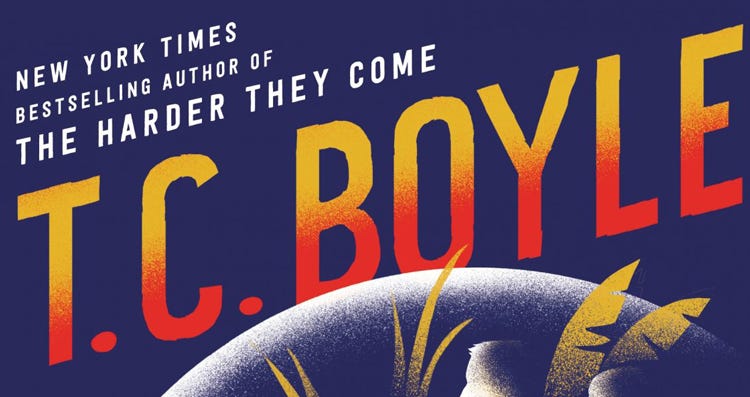
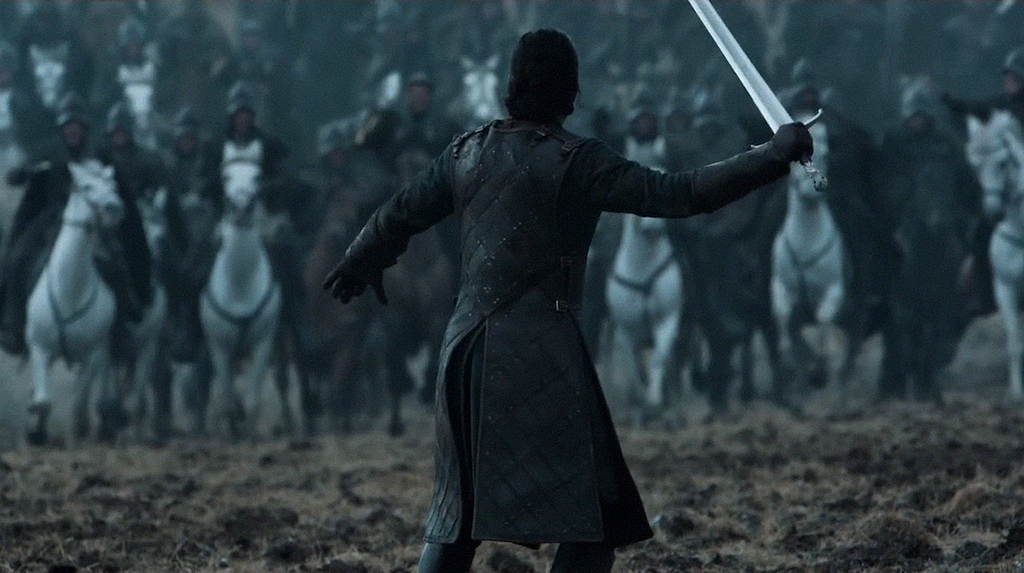
Bausells: What’s next?

Bennett: I’m currently halfway through the first draft of my next novel. It’s about a pair of sisters who get separated and one is trying to find the other. It begins in Louisiana. I still have to figure out what it is … I have no idea where it’s going to go.