Talk of the great American novel is an anachronistic waste of time nowadays, but for those insisting on perpetuating that discussion, Donald Ray Pollock’s The Heavenly Table should be a top contender. A brutal tale full of violence, lust, and broken lives, The Heavenly Table belongs to the darkest strain of ghostless American Gothic literature but has been filtered through the nonchalant callousness and deadpan humor of the best Westerns in a way that makes the narrative share DNA with authors as diverse as Nathaniel Hawthorne and Joe Lansdale. Ambitious and sprawling, this novel proves that Pollock is among the best novelists working today.
“Pollock is among the best novelists working today.”
The Heavenly Table takes place in 1917 and mainly revolves around the three Jewett brothers. After the death of their father due to a parasitic worm acquired by eating the flesh of a diseased hog, the three brothers decide to leave their miserable life of poverty and subordination behind and go on a crime spree with plans of robbing a bank and disappearing into Canada with the bounty. However, more than criminals, the Jewett brothers are country boys whose life experiences are mostly limited to backbreaking work done for almost nothing and listening to their father speak of the afterlife. Cane, the eldest, is their intellectual leader and the only literate brother. The middle brother, Cob, is a childish ignoramus who spends most of his time thinking about food. Lastly, Chimney, the youngest, is impulsive, cruel, and lacks Cane’s moral compass. The trio set out with a plan, and what happens to them as they try to accomplish their goal makes from a very entertaining novel that occupies the interstitial space between a ruthless Western with a healthy dose of scatological humor and the kind of literary fiction that delves into the lives of the broken, poor, and deracinated.
While the Jewett brothers are the main characters, The Heavenly Table also follows the narratives of Ellsworth Fiddler, a farmer from southern Ohio who lost his life savings to a scam artist who offered him some cheap cattle; a young classics scholar who struggles with his homosexuality at an Army camp in Meade, Ohio; a pimp running his business and the women who work for him; a hard-drinking African-American womanizing drifter trying to get back home and back on his feet; and a serial-killing bartender, among others.
“The Heavenly Table is a massive narrative in terms of scope, depth, number of characters, descriptions, and back stories.”
The multiple narratives eventually merge, or at least momentarily cross paths, but not before Pollock has given each one enough space that, if published separately, they could be considered novellas. This is one of the novel’s strengths and also its only major flaw. Pollock does too much here, following side narratives and giving every single character a rich back story even when they don’t deserve the time and attention.
Despite the length and plethora of storylines, The Heavenly Table is a quick read. Crackling dialogue and nonstop action propel the narrative forward and the relatively short, alternating chapters manage to sustain the reader’s interest. Another element that makes a statement about Pollock’s talent is the variety and richness of his characters. The Jewett brothers carry most of the novel on their shoulders, and their distinctive personalities and harsh past makes them likeable despite their decisions. Furthermore, their idea of robbing a bank and moving to Canada is the best incarnation of the Quixotic quest in contemporary dark fiction. These three individuals change the course of their lives because of something one of them repeatedly read out loud, and there’s an innate and unreasonable beauty in that:
“Inspired, at least in part, by The Life and Times of Bloody Bill, Chimney and Cob started dressing in cowboy garb, ten-gallon hats and dungarees and hand-tooled pointy-toed boots, while Cane, with the black frock coat and new white shirt, his hair greased back with pomade, took on the same look of shady refinement favored by riverboat gamblers and dissipated men of the cloth.”
The brothers also allow Pollock to explore media in the early 1900s. What the Jewett brothers do and what they get blamed for coalesce into a perennially expanding legend. Pollock uses this legend to show how media works and how narratives develop organically.
“Thus, on the same day that a Socialist weekly in Boston ran an editorial stating that the brothers were just a humble, illiterate sharecroppers who had killed their tyrannical overseer after he refused to allow them time off to bury their dead father, a staunchly right-wing daily out of New York City compare the outlaws to a band of ungodly savages who are possibly even worse than the Huns, going so far as to claim that they had robbed and left for dead a half-dozen good Christians along the highway in Arkansas who were on their way to a revival.”
Ultimately, the greatest accomplishment of The Heavenly Table is the way it mixes tragedy and violence with tenderness and humor. Pollock writes knowing that action, laughter, and brutality will keep the story flowing, but he also demonstrates he is one of the keenest observers of the human condition. This is a novel that could be called a noir in the sense that it deals with bad things happening to both good and bad people, but it is also a very smart narrative about the passage of time, about the “years passing by one after the other, the struggle to make ends meet, the burden of a passel of brats to feed and clothe, the inevitable decline.” That Pollock can dig into the deepest darkness of that reality and offer it to readers in a way that is pleasurable to read is a proof that he is one of our most talented storytellers.
Hello, and welcome to my week-by-week review of the world. Today I am reviewing Arrival.
There’s a new movie out called Arrival, about a bunch of aliens who arrive on Earth for mysterious reasons. For me there was no mystery, because I always arrive to the movie theater as early as possible, and this time I’d arrived so early that I caught the previous showing of Arrival. So by the time my showing started, I already knew what would happen because I’d seen it.
That’s a similar experience to what Amy Adams’ character goes through in this movie. She’s able to tell the future because she can remember it. This ability is a gift bestowed upon her by the aliens because as it turns out, learning their language causes the human brain to rewire itself, turning people psychic.
I’m assuming Jonathan Nolan wrote this screenplay, which is why I never looked at the credits to find out if he did or not. He loves to write things that sound ridiculous at first, but then lose all meaning when you really think about them. His movies are like those placemat brain teasers.
The movie ends with the implication that all of humanity will become psychic. Or at least those who are educated and have the available resources to learn the alien language will. Poor people without such resources will still be just as screwed over as usual.
The guy who plays Hawkeye from The Avengers (not from M.A.S.H.) is in this. Except for his clothes, I couldn’t tell this wasn’t Hawkeye. I kept waiting for him to shoot arrows at the aliens but he never did. That was a pretty big disappointment.
Another person who’s in this is Forest Whitaker. I love him but it’s too bad he’s been typecast to only play characters with a droopy eyelid. I’d like to see him branch out and play someone with regular eyes, or maybe a cyclops.
At the end of the movie, Amy Adams and Hawkeye fall in love and Forest Whitaker remains single. Hawkeye says that meeting aliens didn’t surprise him, but meeting Amy Adams did. This is a shocking plot twist that the director glosses over completely. Hawkeye implies he already knew all about the aliens, but upon hearing this Amy Adams doesn’t bat an eyelash. Instead, she bats both of them and starts making out with Hawkeye. Give me a break.
BEST FEATURE: The man sitting next to me walked out of the movie early and left half a box of Jujyfruits. I can’t eat them because they get stuck in my teeth but I could still enjoy the scent. WORST FEATURE: The aliens are just giant squid.
Please join me next week when I’ll be reviewing Grape Ape.
Why be great at one thing when you can be great at several things? Saul Williams is a living embodiment of that precept. He’s an acclaimed poet, musician, and actor who’s been a part of a number of artistic scenes since the mid-1990s. He has collaborated with Trent Reznor, starred in the Tupac Shakur-inspired musical Holler If Ya Hear Me, and was thinking about digital music and the wages of the independent artist long before it was the subject of lengthy think-pieces. On stage, he’s a charismatic figure and, whether poetry or essays, his writing has an immersive, crystallizing quality.
First Second Books recently announced that Williams is making a foray into comics, with a graphic novel called Martyr Loser King in collaboration with the artist Sorne. It’s due out in 2019, and will be part of a larger narrative encompassing works in several disciplines, including an album that was released earlier this year. I spoke with Williams about the making of the storyline, his own experience as a reader and a creator of comics, and the real-life issues that are fueling the book.
Tobias Carroll: From what I’ve read, Martyr Loser King deals with questions of hacking and surveillance, which are increasingly in the public consciousness. What about them first interested you as a writer? And how did you go about finding your own perspective on them?
Saul Williams: Initially, I would say that I was as interested as anyone else, yet as a witness of the Occupy movement, the Arab Spring, the Y’en A Marre movement in Senegal, and the social eruptions triggered by whistle blowers like Chelsea Manning, I began to believe that we have an opportunity to re-wire society and do away with some of the old school paternalistic ideologies that have defined much of our history. The fact that I started piecing these ideas together, specifically while living abroad and wandering the streets of places like Dakar, Senegal, watching kids devour the new tech while tightening the skin on homemade drums, it became fascinating to think of the fusion of the talking drum and handheld computer….
Carroll: This graphic novel is one of several related projects you’re working on, each of in a different medium. Was there one in particular that you began with? At what point, when starting a project, does the idea of doing something that spans several disciplines come into play?
Williams: This idea began, truly, as a graphic novel. I had just finished reading Habibi by Craig Thompson, which I must credit as the straw that broke the camel’s back, when I determined that I had to write in this format because of the freedom that it would afford me as a poet. The idea had been in the back of my mind for years, the main reason being that I found it intriguing that I could structure a story, create characters, narrative, dialogue, and then throw a poem on the wall as graffiti in the background. What I found most inspiring about the format was the possibility of tangents. Some writers play with this idea through footnotes. I loved the possibility of incorporating tangents into the story, it freed me to think in terms of a more circular narrative.
So, I have this idea which I let take shape in my head without writing much of it down. Simultaneously, I’m listening to music and become inspired enough to power on some instruments and play with some sounds. As the sounds take shape I begin thinking of lyrics and every lyrical idea was contextualized by this story buzzing around in my head. So I began writing music for the story before I actually wrote the story. The music gave a sense of atmosphere and ambiance to the world I was envisioning and I thus found myself working in two mediums at once: a graphic novel and an album.
The question of performance was the next logical step and I began to conceptualize the performance as a play, a musical. Maybe that doesn’t seem very logical from the outside, yet my background and first love is theater, and I wanted to find a way to bring my music into such a space, to deliver a once in a lifetime experience for theater goers and music lovers. I also wanted to find a way to stream all of my creative interests in the same direction and BOOM — Martyr Loser King was born.
Carroll: Where do your own tastes in comics fall? Are there any books that first sparked your interest in the medium?
Williams: I love the work of artists like Tanino, the mind of Jodorowsky, the simplicity & humor of Jason, the line work Kazuo Koike and Katushiro Otomo… cyber-punk… of course I think my interest in the medium was probably first sparked by Alan Moore.
Carroll: For Martyr Loser King, did you have any touchstones as far as graphic novels that influenced the project were concerned? Some of the artwork I’ve seen has a very science-fictional look to it, like a book that might have come out in the ’80s or ’90s on Humanoids.
Williams: My touchstones weren’t necessarily from the medium, although I really liked the writing of the Transmetropolitan series, for example, I was also inspired by the creative journalism and art in the French magazine XXI and the Pan African magazine Chimurenga, also the journals of characters like Dan Eldon (The Journey is the Destination) and Binyavanga Wainaina.
Carroll: When addressing questions of surveillance and technology, were there any particular books that you found informative or insightful?
Williams: Several. Two of my favorites were Testo-Junkie by Beatriz Preciado (read it and connect the dots) and A Theory of the Drone by Gregoire Chamayou. Aside from books there is, of course, a lot of amazing journalism taking place.
Carroll: How did your collaborative process with Sorne work for this book?
Williams: Working with Sorne has been a truly intuitive process. We met and bonded immediately. In fact, we thought we were bonding over music and poetry at our first meeting and by the end of the day he was already drawing.
Carroll: Has being involved in the creation of a graphic novel changed the way that you read comics?
Williams: Of course. But like the creative process in any medium, the deeper I go in, the more restrictive my diet becomes. Yet there’s a lot of great new work out there and I’m always dipping into comic shops and asking the weirdest worker I can find what I HAVE to read. I’m particulay interested in the growing number of women in the medium and am following the works of artists such as G, Willow Wilson, Valentine De Landro, Kelly Sue DeConnick, Jillian Tamaki…
Now that the National Book Awards have been handed out, it’s time for another great literary honor to take center stage…Nominees for the 24th Annual Bad Sex in Fiction Award are here! Since 1993, the Literary Review has been on the prowl for authors who “produce an outstandingly bad scene of sexual description in an otherwise good novel.” It seemed impossible to top last year’s winner, Morrissey, who pushed literary erotica to its limits when he detailed the “pained frenzy” of a character’s “bulbous salutation extenuating his excitement.” But this year’s contenders somehow defied the odds. 2016 just won’t quit. The nominees shortlisted for the prize are:
— A Doubter’s Almanac by Ethan Canin
— Men Like Air byTom Connolly,
— The Day Before Happiness by Erri De Luca
— The Butcher’s Hook by Janet Ellis (a former children show’s host!)
— Leave Me by Gayle Forman
— The Tobacconist by Robert Seethaler
How are the sharps handicapping this one? The Guardian, for one, considers Connolly among the frontrunners. His latest, Men Like Air, includes a kinky scene in which the protagonist shows off his well endowed … arm length?
“He watched her passport rise gradually out of the back pocket of her jeans in time with the rhythmic bobbing of her buttocks as she sucked him. He arched over her back and took hold of the passport before it landed on the pimpled floor.”
Universal Pictures
The Bad Sex in Fiction judges note how “sometimes anatomy goes a little bit wrong for a writer who’s trying to do too many things at once.” Connolly and the other shortlisted authors advanced in the 2016 competition over big names like Jonathan Safran Foer, who compared his character’s lustful urges to the steadfast resolve of a mountain climber:
“He jerked off with the determination of someone within sight of Everest’s summit, having lost all his friends and Sherpas, having run out of supplemental oxygen, but preferring death to failure.”
You know the Bad Sex in Fiction award may be the hardest in literature when lines like that aren’t enough to win the judges’ approval..
Stay tuned for more on this important literary prize. The winner will be announced on November 30th!
European Court upholds French authors right to disappear
With its ruling yesterday, the European Court of Justice has granted authors the right to have their books forgotten. The conflict started with the formation of a French governmental organization called SOFIA (la Société Française des Intérêts des Auteurs de l’écrit), an institutional body tasked with collecting works of literature that were published before January 1st 2001 and are no longer commercially distributed, published, or available online, for reproduction and marketing in a digital format. The suit’s plaintiffs, two unnamed French authors, asserted the ordinance violated the EU’s copyright directive because the collection practice did not provide writers of “forgotten” books with sufficient recourse to control their work.
To avoid an extensive diversion into the practice of European courts of last resort and civil versus common law structures: it worked. Basically, these texts cannot be repurposed without the writers’ consent. Or, as the Court of Justice put it, authors retain the rights to a book’s “resurrection.” (Very Gallic.)
For some, this might seem akin to various other “right to be forgotten” cases in Europe (and Argentina) that have been gaining momentum over the last decade. However, that burgeoning movement is about the proactive efforts of individuals to expunge themselves from privately controlled information databases (i.e. Google). This was more an issue of artistic control and the autonomy of created work within a governmental framework.
While the wider ranging implications of the case will remain unclear for some time, it’s worth remembering that the definition of “forgotten” is a constructed, and fluid, concept, open to institutional definition. Without this ruling, writers’ autonomy would be at the mercy of commercial whim and circumstance, leaving their art vulnerable to cooption and cannibalization. This is not to bemoan the French effort with SOFIA, an endeavor the European Court of Justice deemed of significant “cultural interest.” However, by securing the right for their books to be forgotten, writers are claiming the terms of their works’ remembrance.
So, in sum, if you’re an artist looking to disappear from the face of the earth, you could do worse than France. The courts will back you, anyway.
In succinct and somber prose, Oddný Eir paints the stark landscape of Iceland after the Great Recession in the autobiographical novel, Land of Love and Ruins. As Iceland is reeling after the 2008 financial crash, the narrator traverses the country, looking for artifacts that point to its Viking and Celtic heritage, as well as her own.
Drawing comparisons between the historic pillaging of Iceland by the Vikings with the modern-day Chinese businessmen who are interested in developing countryside, Eir never makes direct connections for readers, instead flitting from modern times to ancient, allowing us to come to our own conclusions and opinions.
The text veers from reading like an eloquent journal to a philosophical debate on the human condition. By discussing history, philosophy, gender relations, archaeology and literature, there is something for everyone interested in examining modernity.
The witty repartee that Eir creates between events, in some ways, takes the place of a straightforward plot. While there are plot points, they act more like signposts than offering momentum.
A conversational tone is further enforced by the book’s form, which is essentially organized as a diary, with each chapter, or entry, titled after an event that holds meaning to the narrator, oftentimes referring to Icelandic folklore or feast days. In the hands of less skilled author, this could be confusing but thanks to Eir’s strong command of language, meaning and import are rarely obfuscated.
As the story progresses, a semblance of plot does develop: the narrator’s struggle to find balance in a love triangle between herself, her brother and her beau. Similar to her quest to discover Iceland’s ancient past in order illuminate the country’s 2008 reality, she examines her life with historic truths, investigating the Romantic poet Williams Wordsworth’s very close relationship with his sister. After traveling through England’s Lake District, the narrator finds a way of balancing an intense familial relationship with her own romantic needs and interests.
In many ways, these two quests — one for Icelandic artifacts, one to balance familial and romantic interests — highlight a tactic Eir employs throughout the novel. While these two plot points seem very different, they both involve a searching for the past and an ability to find truth in the present based on that past. While she is moving physically, darting from Paris to London to Iceland’s hinterlands, the narrator is also moving through vast spaces of time, all in the search for truth and meaning.
This duality reverberates throughout the entire novel. In a way, the technique allows the text to breathe on its own, giving the reader the space to make connections and come to their own conclusions. Given the autobiographical nature of the work, this space is essential and in many ways, makes this a work that in many ways reflects the modern condition: sporadic, intense, empty.
Despite the autobiographical nature of the novel, the narrator remains removed throughout. This fictive distance works well, as we feel invited into Eir’s story, rather than bombarded with it. The only time it feels unwieldy is when Eir shares details about the recent economic crisis and the text begins to sound more journalistic than personal.
As the book progress, it is clear that Eir’s saving grace is her ability to lighten the prose and bring levity to the serious topics. In the midst of discussing important environmental issues, she will ironically point out human’s relationship with nature, saying how it is hard to see nature from the perspective of a “jacked up SUV.”
By lightening the mood and pointing out absurdities of modern life, like tourists buying so-called Icelandic tchotchkes that they will never use, the text moves forward and avoids a polemic tone.
The straightforward tone is also varied with searing descriptions of Iceland, bringing the exotic, rugged landscape to life in such a way that one that the country itself becomes a character in this meandering tale. Drawing on the theme of environmental conservation, Eir weaves in tales of pioneering forbearers, sharing stories of older generations and the harsh realities of life on the stark island. At times, her lyricism about nature borders on magical realism, which mimics the fairy tales that are so often referenced throughout this text. In the same way the tone is emulated by the structure of the work, the natural descriptions mimic the form.
An excellent book for readers interested in seeking out a modern, boundary-pushing work.
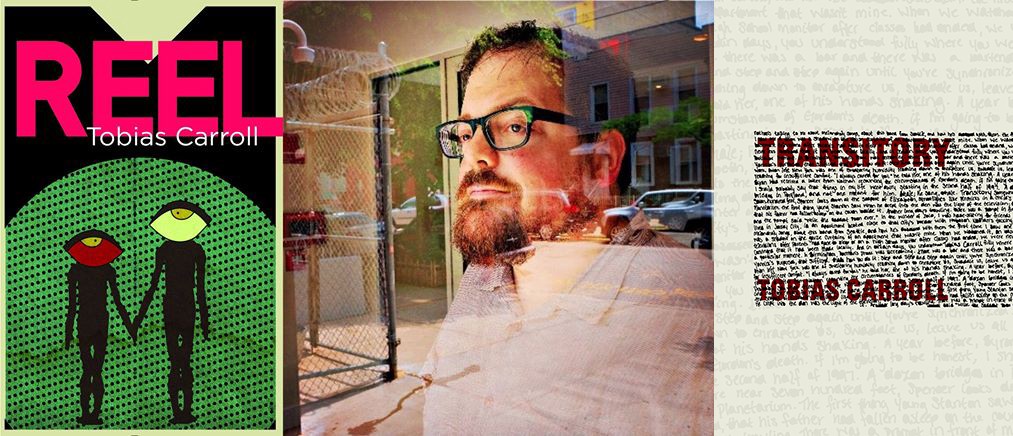
Tobias Carroll is having two debuts. His first story collection, Transitory, was released by Civil Coping Mechanisms in August, and his debut novel, Reel, followed soon after, from Rare Bird. The publication of these two very different books places Carroll, who many people know as an outstanding literary citizen and indie press advocate, at the forefront of a new wave of literary fiction authors whose work relentlessly explores new terrain and pushes against the dividing line rumored to exist between literary fiction and genre fiction. Although he has two books to promote, Carroll’s efforts as editor, reviewer, and interviewer are not dwindling. He writes fiction and nonfiction for a plethora of publications. He’s also the managing editor of Vol.1 Brooklyn and his writing has appeared in venues as diverse as Rolling Stone, Tin House, Midnight Breakfast, The Collagist, Bookforum, Joyland, Necessary Fiction, Men’s Journal, and Underwater New York. All things considered, it struck me as the perfect time to sit down and have a digital chat about the way his debut novel came together, the diverging spaces it inhabits, and how he is navigating having two books published almost simultaneously in a saturated literary landscape.
Gabino Iglesias: The publishing business works on its own time, which means you went from having no books out to having a debut novel and a short story collection published simultaneously. How are you navigating the promotional process? Are you doing separate readings or presentations for both?
Tobias Carroll: I think I’ve been navigating it all right. It’s a difficult thing to figure out: I want to make sure I’m getting the word out about the books, but I also don’t want to overwhelm people or feel overly one-note. And having both presses in my corner has also been great: both Civil Coping Mechanisms and Rare Bird have been terrific to work with.
So far, the readings I’ve done have been from one book or the other. I’m going out to the west coast next week, and I think I’m going to read a shorter section from each book at the Seattle and Portland readings. There are a few reading-sized stories in Transitory, and I have a few chapters from Reel that work in various timing configurations.
GI: Reel belongs to the realm of literary fiction, but there are some bizarre elements in there that push parts of the narrative into the territory of mystery/surreal fiction. Where you intentionally trying to walk a line between genre and literary fiction?
TC: It wasn’t intentional at first. I’d tried writing different versions of this story for a long time before this version of it clicked. When I arrived on Timon’s profession, I drew some inspiration from William Gibson’s Pattern Recognition, in terms of having a character who has a borderline-uncanny ability in an otherwise realistic setting. Gibson’s novel was one of three works that I’d say substantially influenced the form that this took; the others would be Javier Marías’s Your Face Tomorrow and, to be very esoteric, a short Warren Ellis/Jim Lee Batman story that was essentially about all of the random and esoteric knowledge that one would have to amass in order to be Batman. (Which I realize also has some roots in the Sherlock Holmes stories, but–can’t really argue with Batman.)
By the end, there were some broader thematic things going on–I kind of view the novel he’s in as a strange joke on Timon. In another, pulpier, book, he might be an eccentric detective who solves mysteries and uses arcane knowledge in unexpected and heroic ways. But in this one, he’s just a guy who knows weird things, drinks too much, and sometimes acts like an asshole.
He’s just a guy who knows weird things, drinks too much, and sometimes acts like an asshole.
GI: In the novel, the two main characters, Timon and Marianne, briefly crash into each other and then continue on with their lives. As a result, the narrative is, more than a collision between two different forces, a story about a couple of individuals who inhabit different spaces after their encounter. Keeping them separated was interesting and unexpected. Why did you decide to tell parallel narratives instead of a single one?
TC: Essentially, that’s how the story went as I was writing it. The process for this novel involved working without an outline, which was a reaction to a failed novel I’d finished beforehand that was far too dependent on a pre-existing structure/outline. As the novel developed, the fact that they were each doing their own thing became more and more clear, and I liked playing with the ways in which their paths almost cross after that initial meeting….but don’t. (There’s a Rick Moody novella called “The Carnival Tradition” that was an influence here.)
One of the reasons the book was called Reel was a nod to the fact that the word “reel” can refer to a dance, and once I was reminded of that, that as a narrative/structural element seemed to make much more sense. And I was also nodding in the direction of the Halo Benders song “Virginia Reel Around the Fountain,” where Doug Marsch and Calvin Johnson each sing a set of lyrics that have no real connection yet wind around one another. But I think that counterpoint is essential–I like the Built to Spill version of it on their live album, but I don’t quite think it works as well, even though it may be, from a technical perspective, the “better” one. I like weird dissonances.
GI: Through Timon, readers get a meta-commentary on art as well as a scathing look at familial relationships forced to operate within the context of a business. However, music is also an ever-present element that is celebrated through language as something that profoundly changes our lives. Did you create these elements to stand on their own or did you intend for them to be in opposition?
TC: Timon’s fondness for music was a hard thing for me to write at times, because it involved someone getting into something that I’m into, but doing it in part for the wrong reasons. Alternately: if I saw someone act like that at a show, I’d want to stay the hell away from them. (About two years ago, I was at a show where someone basically ran through the crowd smashing into people…right up until the point where he ran into someone who clocked him. Which I don’t think anyone in the crowd shed too many tears over.)
For me, the course of Timon’s relationship with music is an element that’s constantly shifting. It might be a way for him to find some kind of peace and some kind of sense of belonging, or it might further alienate him from everyone around him. I think Marianne has a much healthier relationship to art (and the world at large), and that’s definitely intended as a contrast to Timon blundering his way towards some greater awareness…or not.
GI: Your short stories are graceful and poetic, but Reel afforded you much more space and thus your lyricism came to the forefront. You obviously take your time constructing sentences, but there is also the grit of real life and dingy clubs in your prose. How did you achieve this balance?
TC: I knew that I wanted to have these big loping sentences whenever Timon was going into one of his spells of bad behavior in a crowd, to evoke the way that he’d give himself up to alcohol and instinct and lose all restraint. A lot of it was writing what felt right, as far as getting inside of his head–whether it was in a situation like that or in a stiller scene like some of his moments of research. Timon is a character who essentially becomes consumed by certain moments, and I tried to convey that as best I could in prose.
GI: The atmosphere of your novel can be described as one of agitated stagnation, but one that feels more generational than individual. It also takes places in Seattle, which adds a touch of big city chaos. Lastly, you had to describe entire lives and a wide array of different situation for two main characters. What can you tell us about juggling all those elements within the context of a short novel?
TC: The generational theme was (mostly) fun to play around with–coming up with this family who had this bizarre business running that was structured around a host of borderline-ritualistic behaviors. I have a very good relationship with my own family, though I definitely think that there were certain questions bouncing around in my head about certain larger questions of family and tradition that influenced the way that this novel was written, and how it unfolded. And I liked the idea of Seattle as a location, where both Timon and Marianne would be essentially on their own, without many people from their pasts being there. My own roots are very, very northeastern–my mom was born and raised in New Jersey, my dad grew up on Long Island–so I was definitely writing the opposite of what I know. And pretty consciously, at that.
GI: Let’s switch it up. How did you go about selecting the stories that are included in Transitory?
TC: Transitory came together pretty quickly, though the final book also contains stories written over the course of about a decade. Essentially, I saw the announcement of CCM’s Mainline competition. My friend Sean H. Doyle suggested that I submit a short story collection to it. That night, I sat down and looked at all of the stories that I’d had published up until that point. I figured out a group that went pretty well together, worked out an order for them, and pasted everything into a Word document.
As far as the selection process, there aren’t many stories that I’m not happy with–the handful that didn’t go into this one were more for stylistic/thematic reasons than anything else, and if ever get to do another collection, I think they’ll be in there. Basically, I wanted to find a good balance between the more realistic work I’ve done and the more surreal stories. In terms of the sequence, it was like putting together a mixtape–I wanted to maintain a good flow, and I wanted to keep changing things up. I liked the idea of a weirder story going into a more realistic one; I wanted to keep people on their toes.
GI: You are a freelance writer, a book reviewer, an interviewer, and run Vol. 1 Brooklyn, which offers new content daily. When do you write and edit your own work?
TC: It’s gotten trickier than I’d like. In terms of shorter pieces, having a reading or something coming up can help–though now, most of the readings I’ve been doing have been book-centered rather than anything else. A lot depends on deadlines for freelance assignments: right now I’m trying to get a huge amount of freelancing done before doing a few readings out west, and that’s taken up the bulk of my time. I also rearranged my writing space pretty recently, and I’ve found that so far (knock on wood), it’s made me a lot more productive.
GI: I’ve had some recent discussions with writers and editors about “good literary citizens,” and your name comes up every time. Who do you consider a good literary citizen?
TC: That is all kinds of flattering to hear. There are a lot of people who I’d consider to be good literary citizens–you’re definitely one of them. I’d also cite (off the top of my head) Rob Spillman at Tin House, Janice Lee at Entropy, Michele Filgate, Saeed Jones, Constance Ann Fitzgerald, Jeffrey Zuckerman, Mairead Case, Ian MacAllen, Isaac Fitzgerald, Penina Roth, Natalie Eilbert, J. David Osborne, and Jason Diamond–and a whole lot more. Basically, anyone who’s helping to amplify a whole lot of voices in addition to their own, helping raise the level of discussion around issues cultural and sociopolitical, and generally being decent human beings to boot.
GI: Thank you for that. Now let’s talk music. Having authors create a playlist for their books is a very popular thing nowadays, but Reel demands I ask you about the music you’d recommend/the music you were listening to while writing it.
TC: I’d definitely cite a lot of early-00s music from Seattle in terms of putting a playlist together: Sharks Keep Moving, Waxwing, Rocky Votolato, Carissa’s Wierd, Red Stars Theory, and Lois would all come to mind off the top of my head. A lot of Reel was written in coffee shops, so I’d have to say that the bulk of the music that I listened to while writing it was whatever was on in there at the time. I can remember the coffee shops–including two in Eugene, Oregon–really well; the music, less so.
The year’s most coveted literary prizes are handed out in NYC.
The 67th annual National Book Award Ceremony, hosted by Larry Wilmore, are underway in New York City. After a month of speculation and anticipation, we’ll finally have our five winners. Each will take home $10,000, a bronze sculpture, and the coveted NBA sticker for the cover of their books. So, did you correctly predict the results? Find out below.
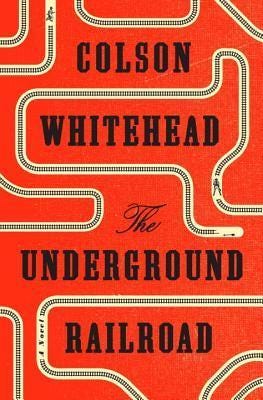
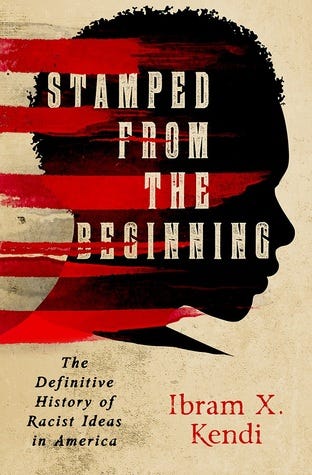
(Electric Lit is live on the scene, and we’ll be updating you throughout the night. All the finalists are below. The official 2016 winners are in bold.)
Don’t think twice, Sweden. Dylan has “pre-existing commitments.”
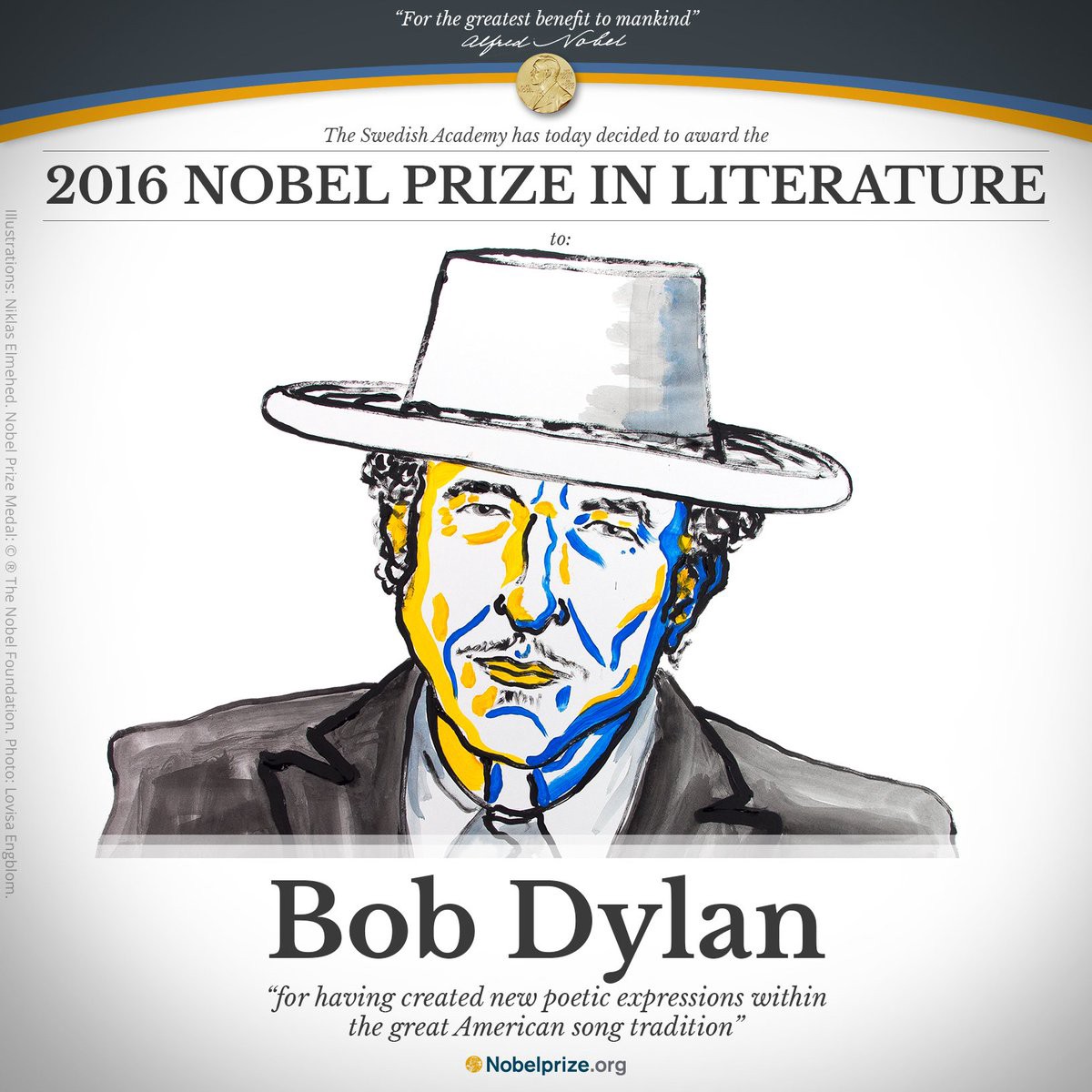
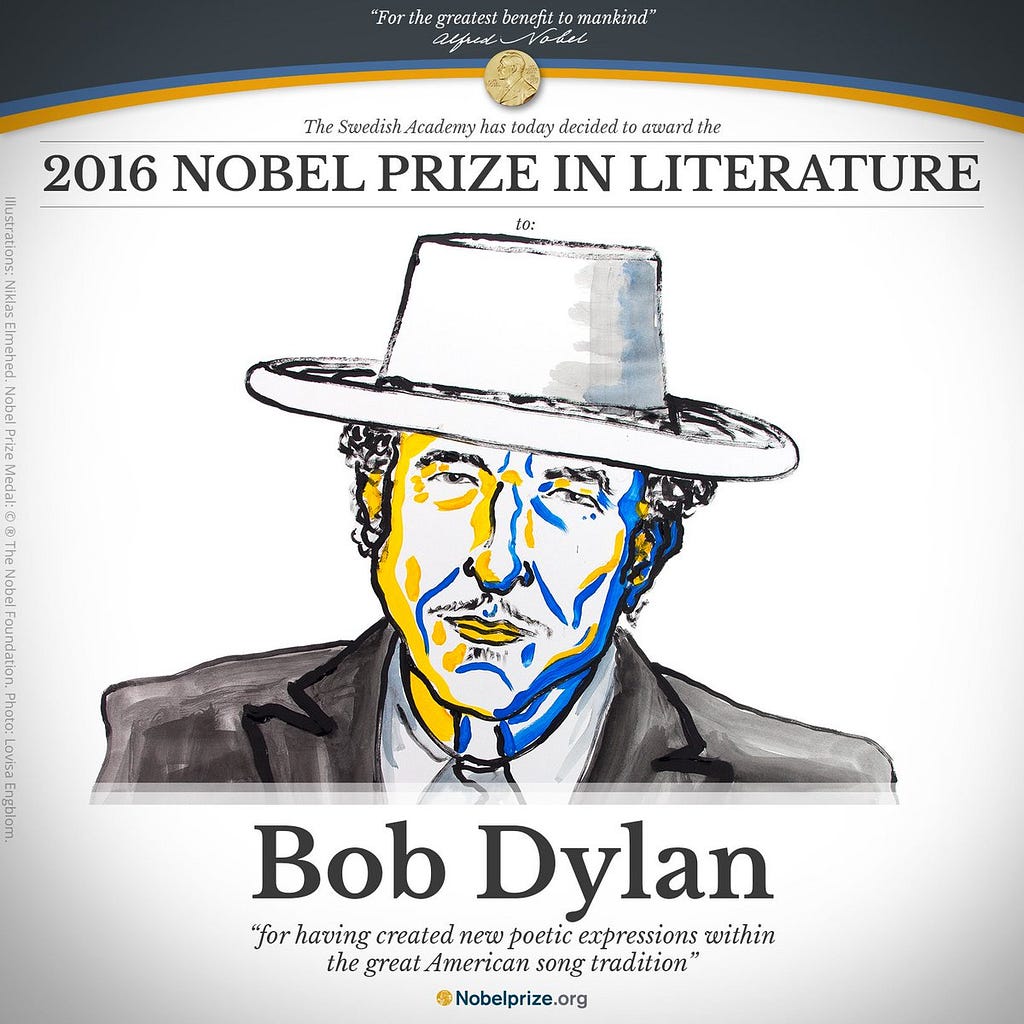
In a personal letter to the Nobel Academy, Bob Dylan has reportedly stated that he he will not attend the December award ceremony in Stockholm “due to pre-existing commitments.” The controversial Literature Prize winner won’t be the first prominent writer to skip the event — Doris Lessing, Harold Pinter, and Elfriede Jelinek all did the same. In a move that seems even more in character, Ernest Hemingway, who also failed to appear, prepared a speech that he requested the American ambassador to Sweden read on his behalf. Whether this means current ambassador, and former investment banker, Azita Raji will be performing “Blowin’ in the Wind” remains unclear.
While Dylan did say he was “very honored indeed” by the Academy’s decision, he has provided no indication if or when he will deliver his Nobel Lecture, which, by stipulation, is required to be given within six months of December 10th. In unrelated news, somewhere in America, Philip Roth continues weeping, alone.
Oxford Dictionaries announce the U.S. and UK Winner
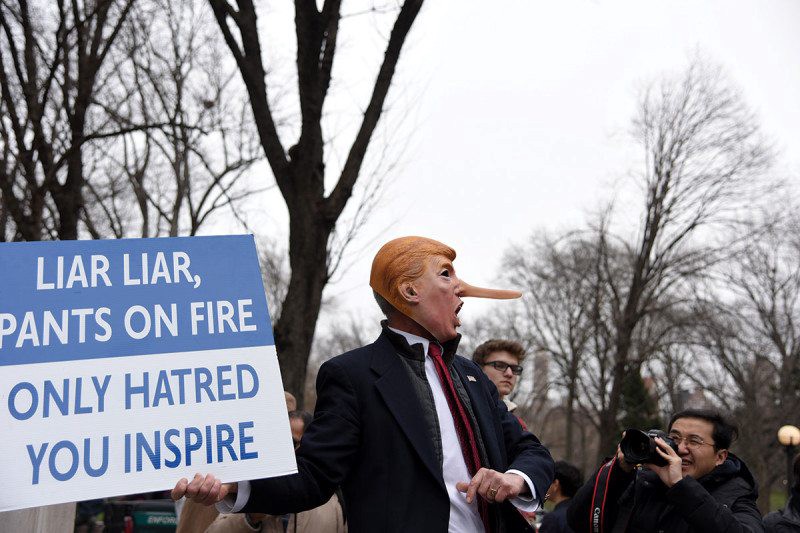
In perhaps the least post-truth moment of a very post-truth week, the Oxford English Dictionaries have selected ‘post-truth’ as the international word of the year. The OED defines post-truth as: “relating to or denoting circumstances in which objective facts are less influential in shaping public opinion than appeals to emotion and personal belief,” so, since the award strives to “reflect the passing year in language,” the accuracy of the choice will be rather difficult to figure out.
The adjective compound can also be pithily illustrated by this one minute video of Newt Gingrich explaining why facts are bad:
Although post-truth, with its current definition, has been in the vernacular since 1992 (the first recorded appearance is credited to Serbian/American playwright Steve Tesich who used it to describe the Iran-Contra affair), the term’s use has increased approximately 2,000% since 2015. Staff at the Oxford Dictionaries unsurprisingly credit attempts to describe the rhetorics of Brexit proponents and the Donald Trump’s campaign for the popularity.
Populist politics, particularly of the American variety, also showed up quite a bit on the contenders’ list, with “woke,” “latinx,” and “alt-right,” all appearing. And, since the amassing of identity driven political terminology reflects an urge for linguistic determinism amongst fractured political factions facing systemic (woke; latinx) or imagined (alt-right) disenfranchisement, we can expect more new political terminology to attain prominence during the Trump Presidency.
“Normalization” has abounded as post-election buzzword of sorts. And, with the appointment of Steve Bannon, references to White-Nationalism, Storm-Front, and other racist hyphenates that should not be normalized have also been cropping up a lot.
On a lighter note, while post-truth may not bode well for the relevancy of capital-T “Truth” as a concept, it does posit that there is a real truth out there and it can be expressed by language. That makes the decision a far less post-modern choice than last year’s OED pick: Crying-Face Emoji.
DON’T MISS OUT
Sign up for our newsletter to get submission announcements and stay on top of our best work.
YOUR INBOX IS LIT
Enjoy absorbing fiction from Recommended Reading on Mondays, strange, diverting work from The Commuter on Wednesdays, and a roundup of our best work of the week on Fridays. Personalize your subscription preferences here.