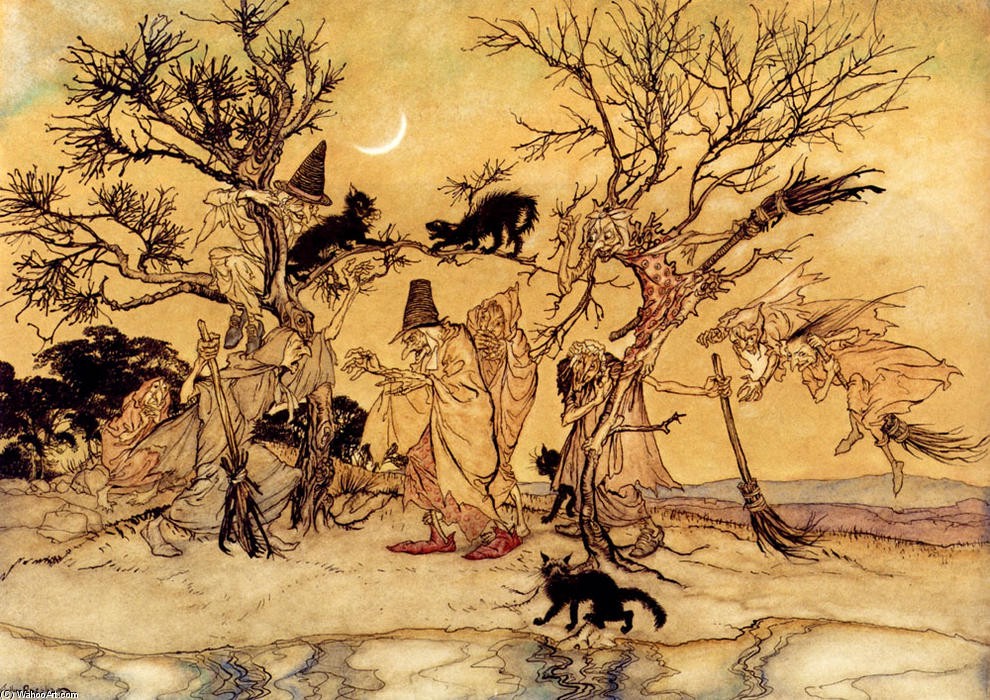
For everyone who doesn’t have a copy of JRR Tolkien’s The Silmarillion lying around, the names Beren and Lúthien may not mean too much. However, their story, tucked within the mythos of Tolkien’s high fantasy universe, is a thrilling legend of forbidden love. The “Tale of Beren and Luthien” takes place in Middle Earth, about 6,500 years before the events of The Lord of the Rings, and follows a mortal man and an immortal elf on a seemingly impossible quest devised by Lúthien’s father, an Elvish Lord, who disapproves of their desire to marry. Thankfully, HarperCollins has just announced the release (May, 2017) of a new volume titled Beren and Lúthien,which will give the narrative its first free standing publication. The release will also be the first time all the tale’s iterations are collected in one place.
Tolkien first composed the story in 1917, then titled “The Tale of Tinúviel,” after his return from World War One, where he served as a signaler at the Battle of Somme. The second prose telling crops up briefly in two locations — as a chapter in The Sillmarillion, and as told by Aragorn in The Fellowship of the Ring. There’s also an unfinished epic poem that was first published in The Lays of Beleriand. All three have been edited and organized by Christopher Tolkien, the author’s son. In their press release, HarperCollins stated, “to show something of the process whereby this legend of Middle-earth evolved over the years, [Christopher Tolkien] has told the story in his father’s own words by giving, first, its original form, and then passages in prose and verse from later texts that illustrate the narrative as it changed.”
The tale also has a touching personal link to the Tolkien family, as the headstones of JRR and his wife Edith are adorned with the names Beren and Lúthien, respectively.
Nadia hadn’t been to church since her mother’s funeral. Instead, she rode buses. One afternoon, she climbed off downtown in front of the Hanky Panky. She was certain someone would stop her — she even looked like a kid with her backpack — but the bouncer perched on a stool near the door barely glanced up from his phone when she ducked inside. At three on a Tuesday, the strip club was dead, empty silver tables dulled under the stage lights. Black shades pulled in front of the windows blocked the plastic sunlight; in the man-made darkness, fat white men with baseball caps pulled low slouched in chairs facing the stage. Under the spotlight, a flabby white girl danced, her breasts swinging like pendulums.
In the darkness of the club, you could be alone with your grief. Her father had flung himself into Upper Room. He went to both services on Sunday mornings, to Wednesday night Bible study, to Thursday night choir practice although he did not sing, although practices were closed but nobody had the heart to turn him away. Her father propped his sadness on a pew, but she put her sad in places no one could see. The bartender shrugged at her fake ID and mixed her a drink and she sat in dark corners, sipping rum-and-Cokes and watching women with beat bodies spin on stage. Never the skinny, young girls — the club saved them for weekends or nights — just older women thinking about grocery lists and child care, their bodies stretched and pitted from age. Her mother would’ve been horrified at the thought — her in a strip club, in the light of day — but Nadia stayed, sipping the watery drinks slowly. Her third time in the club, an old black man pulled up a chair beside her. He wore a red plaid shirt under suspenders, gray tufts peeking out from under his Pacific Coast Bait & Tackle cap.
“What you drinkin’?” he asked.
“What’re you drinking?” she said.
He laughed. “Naw. This a grown man drink. Not for a little thing like you. I’ll get you somethin’ sweet. You like that, honey? You look like you got a sweet tooth.”
He smiled and slid a hand onto her thigh. His fingernails curled dark and long against her jeans. Before she could move, a black woman in her forties wearing a glittery magenta bra and thong appeared at the table. Light brown streaked across her stomach like tiger stripes.
“You leave her be, Lester,” the woman said. Then to Nadia: “Come on, I’ll freshen you up.”
“Aw, Cici, I was just talkin’ to her,” the old man said.
“Please,” Cici said. “That child ain’t even as old as your watch.”
She led Nadia back to the bar and tossed what was left of her drink down the drain. Then she slipped into a white coat and beckoned for Nadia to follow her outside. Against the slate gray sky, the flat outline of the Hanky Panky seemed even more depressing. Further along the building, two white girls were smoking and they each threw up a hand when Cici and Nadia stepped outside. Cici returned the lazy greeting and lit a cigarette.
“You got a nice face,” Cici said. “Those your real eyes? You mixed?”
“No,” she said. “I mean, they’re my eyes but I’m not mixed.”
“Look mixed to me.” Cici blew a sideways stream of smoke. “You a runaway? Oh, don’t look at me like that. I won’t report you. I see you girls come through here all the time, looking to make a little money. Ain’t legal but Bernie don’t mind. Bernie’ll give you a little stage time, see what you can do. Don’t expect no warm welcome though. Hard enough fighting those blonde bitches for tips — wait till the girls see your light-bright ass.”
“I don’t want to dance,” Nadia said.
“Well, I don’t know what you’re looking for but you ain’t gonna find it here.” Cici leaned in closer. “You know you got see-through eyes? Feels like I can see right through them. Nothin’ but sad on the other side.” She dug into her pocket and pulled out a handful of crumpled ones. “This ain’t no place for you. Go on down to Fat Charlie’s and get you something to eat. Go on.”
Nadia hesitated, but Cici dropped the bills into Nadia’s palm and curled her fingers into a fist. Maybe she could do this, pretend she was a runaway, or maybe in a way, she was. Her father never asked where she’d been. She returned home at night and found him in his recliner, watching television in a darkened living room. He always looked surprised when she unlocked the front door, like he hadn’t even noticed that she’d been gone.
In Fat Charlie’s, Nadia had been sitting in the booth toward the back, flipping through a menu, when Luke Sheppard stepped out of the kitchen, white apron slung across his hips, black Fat Charlie’s T-shirt stretched across his muscular chest. He looked as handsome as she’d remembered from Sunday School, except he was a man now, bronzed and broad-shouldered, his hard jaw covered in stubble. And he was limping now, slightly favoring his left leg, but the gimpiness of his walk, its uneven pace and tenderness, only made her want him more. Her mother had died a month ago and she was drawn to anyone who wore their pain outwardly, the way she couldn’t. She hadn’t even cried at the funeral. At the repast, a parade of guests had told her how well she’d done and her father placed an arm around her shoulder. He’d hunched over the pew during the service, his shoulders quietly shaking, manly crying but crying still, and for the first time, she’d wondered if she might be stronger than him.
An inside hurt was supposed to stay inside. How strange it must to be to hurt in an outside way you couldn’t hide. She played with the menu flap as Luke limped his way over to her booth. She, and everyone at Upper Room, had watched his promising sophomore season end last year. A routine kick return, a bad tackle, and his leg broke, the bone cutting clear through the skin. The commentators had said he’d be lucky if he walked normal again, let alone played another down, so no one had been surprised when San Diego State pulled his scholarship. But she hadn’t seen Luke since he’d gotten out of the hospital. In her mind, he was still in a cot, surrounded by doting nurses, his bandaged leg propped toward the ceiling.
“What’re you doing here?” she asked.
“I work here,” he said, then laughed, but his laugh sounded hard, like a chair suddenly scraped against the floor. “How you been?”
He didn’t look at her, shuffling through his notepad, so she knew he’d heard about her mother.
“I’m hungry,” she said.
“That’s how you been? Hungry?”
“Can I get the crab bites?”
“You better not.” He guided her finger down the laminated menu to the nachos. “There. Try that.”
His hand curved soft over hers like he was teaching her to read, moving her finger under unfamiliar words. He always made her feel impossibly young, like two days later, when she returned to his section and tried to order a margarita. He laughed, tilting her fake ID toward him.
“Come on,” he said. “Aren’t you, like, twelve?”
She narrowed her eyes. “Oh fuck you,” she said, “I’m seventeen.”
But she’d said it a little too proudly and Luke laughed again. Even eighteen — which she wouldn’t turn until late August — would seem young to him. She was still in high school. He was twenty-one and had already gone to college, a real university, not the community college where everyone loafed around a few months after graduation before finding jobs. He knew things and he knew girls, college girls, girls who wore high heels to class, not sneakers, and carried satchels instead of backpacks, and spent their summers interning at Qualcomm or California Bank & Trust, not making juice at the pier. She imagined herself in college, one of those sophisticated girls, Luke driving to see her, or if she went out of state, flying to visit her over spring break. He would laugh if he knew how she imagined him in her life. He teased her often, like when she began doing her homework in Fat Charlie’s.
“Shit,” he said, flipping through her calculus book. “You a nerd.”
She wasn’t, really, but learning came easily to her. (Her mother used to tease her about that — must be nice, she’d say, when Nadia brought home an aced test she only studied for the night before.) She thought her advanced classes might scare Luke off, but he liked that she was smart. See this girl right here, he’d tell a passing waiter, first black lady president, just watch. Every black girl who was even slightly gifted was told this. But she liked listening to Luke brag and she liked it even more when he teased her for studying. He didn’t treat her like everyone else at school, who either sidestepped her or spoke to her like she was some fragile thing one harsh word away from breaking.
One February night, Luke drove her home and she invited him inside. Her father was gone for the weekend at the Men’s Advance, so the house was dark and silent when they arrived. She wanted to offer Luke a drink — that’s what women did in the movies, handed a man a boxy glass, filled with something dark and masculine — but moonlight glinted off glass cabinets emptied of liquor and Luke pressed her against the wall and kissed her. She hadn’t told him it was her first time but he knew. In her bed, he asked three times if she wanted to stop. Each time she told him no. Sex would hurt and she wanted it to. She wanted Luke to be her outside hurt.
Little Free Library-related crime is way up in Minnesota.
First reported by TwinCities.com, Little Free Libraries across St. Paul are being raided en masse by an unnamed burglar (or burglars, or possibly an international cartel of book thieves). Bethany Gladhill has had it the worst. Over the last two months, her fully stocked Little Free Library has been completely gutted over a dozen different times. None of the books have been returned, depleting her supply so much, she’s had to close down. Thankfully, the organization has some measures for this type of situation, including free book replacement and a stamping kit to denote the charitable origin of the texts, so that bookstores won’t accidentally purchase stolen copies.
For those unfamiliar, Little Free Library is a three year old non-profit that encourages communities to share literature through a network of mailbox like book-huts that families construct in front of their homes and register with the organization. The structures, which are left unlocked at all times, allow local residents of all ages to take and return books at their leisure. Or even contribute to the collection if they’d like.
As for who the Minnesota perpetrator is, other than a few witness sightings of cars darting off into the night, no one knows. Oddly, there’s essentially nothing to gain from the thefts. Even unstamped books that are, technically, sellable to bookstores, fetch prices of about $.15 per copy. If you factor in the cost of gas, the thieves could even be taking a loss. Still, the thefts haven’t yet slowed down, leaving the possibility open for a pack of vigilante detective novelists to set up a sting and secure justice for St. Paul’s readers.
Japanese publishing trend warns of an ugly future under Trump
In 20 days, voters will cast their ballots for the next President of the United States, but according to the Washington Post, Japanese writers have already written dozens of books envisioning what the world will look like if the Republican nominee, Donald Trump, were to win the election. The verdict? Pretty bleak. Is our close ally trying to send us a message through its authors? The titles certainly don’t hold back.
1. Trump Will Destroy U.S.-Japanese Relations by Yoshiki Hidaka
Tell us how you really feel, Yoshiki Hidaka. Jokes aside, the writer expresses a legitimate concern as Donald Trump continues to make inaccurate comments about the United States’s relationship and history with Japan.
2. Trump Fever: America’s Anti-Intellectualism by Masahiro Miyazaki
Political commentator Mashiro Miyazaki analyzes the potential repercussions a Trump presidency would have for Japan. In his book, he attempts to explain to his audience why certain Americans see Trump as an attractive option.
3. Collapsing America: The World Will Go Mad If There Is President Trump by Kumi Yokoe
Yokoe has been grappling with the rise of Donald Trump for awhile now. She wrote this book before Trump received the nomination, and in it she considers how the U.S.-Japanese alliance will evolve (or devolve) with Trump as the president.
For more information about the blooming Trump publishing industry in Japan, check out the full report from the Washington Post.
I’ve been reading Jonathan Lethem since I was eleven. Motherless Brooklyn was my grandfather’s favorite book; he gave it to me because he knew it would make me laugh, and it wormed its wisecracking way into my psyche and has stayed there ever since. I mean this by way of cards-on-the-table, so to speak: I’m a colossal Jonathan Lethem fan.
But how could I not be? He reinvents himself with every book, and his books are all so good. He’s covered all kinds of terrain, confused me all kinds of ways, and combined infinite ideas that just shouldn’t belong together — but of course they do. For example, would you consider Jimi Hendrix’s death relevant to innovations in brain surgery? Anarchist theory to burger-cooking? The international backgammon circuit to, well, anything?
Gambler Alexander Bruno has two problems. First, he keeps losing backgammon games. Second, he has a giant blot at the center of his vision. Turns out, both are the fault of a deeply rooted brain tumor, which he can have removed if he’s willing to become deeply indebted to his childhood semi-friend Keith Stolarsky, now a Berkeley real-estate mogul and slimebag. Oh, and he has to have his face taken off.
This is where we started our conversation.
Lily: Was A Gambler’s Anatomy always going to be a novel about faces?
Jonathan Lethem: I’ve had this long interest in the theme of faces. I associate it with certain films: Eyes without a Face, this incredible Pedro Almodóvar film called The Skin I’m In, even that silly John Woo movie Face/Off with John Travolta and Nicolas Cage — films about the destruction of the self from the outside in. It’s like a secret genre I’m into. And then there’s a thing a friend of mine said, one of those aphoristic utterances that you can’t figure out whether it’s real wisdom or fake wisdom. When we were teenagers, a friend of mine said this, and I’ve been thinking about it ever since: “You can’t be deep without a surface.”
LM: Speaking of genres, you’re so good at picking up genres and changing them. What are the genres at the root of this book?
JL: I’m reluctant to say this, but I think it’s a horror novel.
LM: I think so too! I had to make a rule that I couldn’t read it after 11:00 PM.
JL: That’s great. But I should say, I do think it’s an absurd novel, and silly, and the reason I’m reluctant to throw the word horror into the conversation is that people who have a proprietary sense of that genre would immediately and correctly say that it’s not scary enough; it’s not gory enough. It doesn’t really qualify, but that’s the narrative space I was working in.
There was also was a very powerful narrative pattern that I was excited to do with this book that I associate with not a genre but an archetype: the book that’s cleaved in two by a disaster, like DeLillo’s White Noise. The biggest thing that happens in the book happens in the middle, and the whole book is prelude and aftermath. I wanted the surgery to destroy the story as you’ve been experiencing it to this point.
LM: Is that why the story begins in Berlin, to set the reader up to think about splitting in two?
JL: No, I was in Berlin. I was on sabbatical, living in Berlin and thinking about what I wanted to do next, and I was tiptoeing closer and closer to the thought about the facial surgery and the thought about a gambler. I was reading a lot of Graham Greene, too. That was when it hit me how much Greene sunk into me during my teenage years. He was like my default setting for the novel: there should be a character in free-fall, and possibilities of romance that are thwarted. So that’s when the expatriate idea entered the picture. I thought, I’ve always responded to the dispossessed or expatriate character in allegorical or figurative terms, but I’ve never written it as a literal expatriate. So I thought, Okay, I could do this. I’m in Berlin. I’m going to do this.
I’ve always responded to the dispossessed or expatriate character in allegorical or figurative terms, but I’ve never written it as a literal expatriate.
LM: That’s interesting to me because I think Alexander Bruno is the most literal of your protagonists. He sees metaphors and pretty much says, “Nope. Not doing this.” I’m intrigued that you came at him from a more literal standpoint.
JL: It’s part of his refusal of depth and introspection. The saddest part of the book to me is his recollection of his childhood hospitalization, when he’s away from his mother, and he begins to create a sort of barricade around himself, and then later when he meets the waiter Konrad, who teaches him how to perform. The refusal of metaphorical thinking corresponds to his resistance to self-understanding.
LM: I think another genre this book fits into, or interacts with, is the quest for a lost father. And he picks such bad ones!
JL: Yeah! If you think of Konrad, his manager Falk, and, of course, Keith Stolarsky as a series of possible images of the father, it’s like Bruno is browsing helplessly among this series of very bad candidates. But the story of his face — Bruno thinks about his own face at the very beginning of the book. He thinks, “Looking in the mirror, I’m beginning to see my father, who I don’t know.” Every day he’s getting closer to his father, except that the surgery destroys this possibility.
LM: Instead he gets reverse-aged, in that the father figure he ends up with is Keith Stolarsky, who’s his peer.
JL: Younger, even. But Bruno is the consummate arrested-development character. His body signifies maturity and worldliness, but he doesn’t have any at all. Stolarsky runs rings around him.
LM: So where did Stolarsky come from?
JL: First of all, I grew up working in retail. I worked at used bookstores in New York City and at Moe’s on Telegraph Avenue. So I have a feeling for, and sensitivity to, that sort of entrepreneur, the king of a tiny kingdom. But there’s also a pattern I write about, an Orson Welles archetype: the corruptible innocent and the corrupting, charismatic worldly figure. It’s Prince Hal and Falstaff, too. I’ve reworked it in a number of places, but Stolarsky is also a reworking of Arthur Lomb, one of the most important characters from Fortress of Solitude. Arthur is the kid who stayed. He’s the kid who seems inconsequential when you’re young, but when you grow up he turns out to rule the world.
LM: Do you have your own Stolarsky?
JL: I have a few. One is my old friend Michael Seidenberg, who used to run his secret bookstore, Brazenhead Books. It was a real-world bookstore first — as a teenager, I worked for him — and then it was a secret bookstore and you could only get there by invitation, and it became a cult, and then of course it got too big and he had to squash it. He’s a very sweet Stolarsky in my life.
LM: Let’s talk about whether or not Bruno can read minds. I don’t want an answer — I love being confused by it. I just want to know what it’s about on a deeper level.
JL: Well, it’s metafictional. Bruno’s not self-reflective, so this is the way he thinks about whether he’s deep or not, and the way the reader can think about whether he’s connected to other human beings in any profound ways or not. It’s also me enjoying a strange aspect of my own sensibility, which is that I just love stories where you’re forced to do excess interpretive work. It’s like The Twilight Zone, where all the best episodes could be taken as allegorical stories of a mind devolving into madness. It’s “Occurrence at Owl Creek Bridge,” and the way I received Kafka when I first read him. I like that indeterminacy. I like that he’s testing his mind-reading all the time, and so the reader is too.
I just love stories where you’re forced to do excess interpretive work. It’s like The Twilight Zone…
LM: Something else I love in this book is the real-or-is-it-fake anarchist slider restaurant that Stolarsky opens so that his burger place can have some competition. It’s never clear if that restaurant, or, I should say, if its manager is an actual anarchist or not.
JL: This comes from the history of the left! It really was a Stalin thing. The best way to deal with discontent is that you build the oppositional entity so that you control it, but then who comes there? The real opposition! You build a place for people who want to destroy you. Stalin did this, but even in America, there were many committed Marxists who found themselves in cells run by the C.I.A. or the F.B.I.
LM: Yeah, or anyone who wrote for the Paris Review.
JL: And the Abstract Impressionists! The paintings of Rothko and Franz Kline and Arshile Gorky are where my soul lives. I contemplated those paintings as a child. The idea that they’re a counter-revolutionary con job is insane. It makes my head split open.
LM: What is it with sliders and burgers in your work, anyway? Motherless Brooklyn is full of White Castle.
JL: Burgers are German and American; they’re upscale and downscale; they’re for kids but you eat them for your entire life. My boys and I just discovered the secret menu at In-N-Out Burger. You can go to that drive-through, where you’d think you can only get a burger and fries, but if you know the secret you can ask for your burger animal-style, protein-style, all kinds of things. The place has a subtext. It’s like anything. It’s got a surface and it’s deep.
The Swedish Academy’s newest laureate doesn’t seem too interested in the prize.
Last Thursday the Swedish Academy announced its provocative decision to award Bob Dylan the Nobel Prize for Literature. Everyone seems to have an opinion on the choice — except Dylan himself. According to the Guardian, Dylan has ignored the Academy secretary’s persistent attempts to get in contact. Like any regular person who tries to rationalize the awkwardness of double texting, Secretary Sara Danius says she’s “not at all worried” about the superstar’s radio silence. Still, it must feel a little strange, especially considering that Dylan has been out in public and performing in concerts since the announcement.
Since the Academy overlooked more traditional “writers” like Don DeLillo, Ngugi Wa Thiong’o, and Marilynne Robinson, and since there’s a pretty big party that goes along with the official awarding of the prize, one can’t help but wonder whether the committee was at all influenced by the prospect of a free Dylan show. So far a concert isn’t looking promising, but there’s still time — the prizes are handed out in December. For now, the Academy will be waiting by the phone.
UPDATE: Rumor has it Philip Roth’s agent has contacted the Academy to let the powers-that-be know the author has started taking guitar lessons and will be ready to stand in Dylan’s place on the night of the celebration.
October is coming to a close and Electric Literature’s Genre Ball is just around the corner (Friday, October 28th), which got me to thinking about the long tradition of parties in literature, from Tolstoy’s opulent balls to Fitzgerald’s intoxicated soirees.
Writers send their characters to parties for the very same reason we all go: parties allow the unusual and encourage the unexpected. Parties are short stories within in our broader narrative; each has its own compelling arc that starts from the moment you walk through the door and ends the next morning with the groggy brunch post-script.
If you want to create a decadent costume party, choosing the time and place of Queen of the Night — i.e., 19th century Paris — is a smart choice. The main character, Lilliet Berne, is a soprano who is offered the role of a lifetime — an opera written just for her — only to discover that the production includes details of her life she’d hoped to keep secret. A party with Lilliet will never be dull. This singer knows how to up the ante at a ball, whether she’s leaving halfway through to change outfits or dramatically throwing her diamonds in the trash.
2. White Teeth by Zadie Smith
The opener to Smith’s much lauded first novel is one of my favorites in literature. After being saved from his own suicide by a flock of defecating pigeons, Archie Jones gains a new lease on life. Thanks to his new can-do attitude, when he sees a commune throwing an “End of the world party, 1975”, he wanders in, chats up the young drifters living there, and somehow comes away with Clara, a super attractive young woman who will become his wife. This is precisely the scenario I’m longing for every New Year’s Eve when I can’t find a cab.
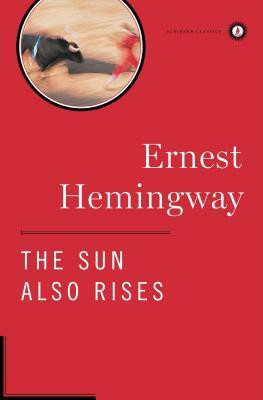
3. The Sun Also Rises by Ernest Hemingway
I imagine that the party in Hemingway’s 1926 novel will be familiar to many fans of Coachella: Jake Barnes and a group of fellow expats, including the alluring Lady Brett Ashley, go on a trip to the Festival of San Fermín in Pamplona. Though they’re technically in town to watch the bull fights, Jake and company spend more time partying — hard. The group drinks, flirts and fights. With this portrayal of young people in an intoxicated, emotional free-fall, Hemingway established himself as a voice of the Lost Generation.
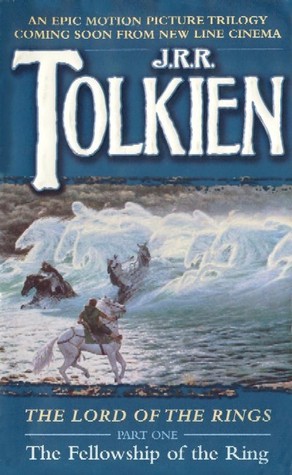
4. The Fellowship of the Ring by JRR Tolkien
You don’t throw any old fete for your “eleventy first” (111th) birthday, especially if it secretly doubles as your going-away-forever party. Bilbo Baggins knows that, and he has tents, fireworks, and cooks from every inn and eating-house for miles assembling a feast for the Shire. Bilbo’s party also has that elusive quality — intrigue — his gift to Frodo and sudden exit kicks off the saga The Lord of the Rings.
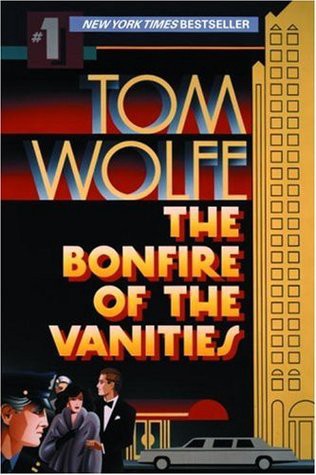
5. The Bonfire of the Vanities by Tom Wolfe
The New York City of Tom Wolfe’s The Bonfire of the Vanities is like one of his character’s 1980s party dresses; over the top and ugly, though glossed with a certain aggressive glamour. The party scene in particular captures a slice of New York society. WASPY wall street trader Sherman McCoy and his wife Judy attend a Fifth Avenue party titled “The Masque of the Red Death” (a nod to Poe’s story of the same name.) It’s a name-dropping, champagne swilling party where guests come to see and be seen. Things get awkward when Sherman finds out his dinner table seat is next to his secret mistress. It would be fun to be a — horrified — fly on that wall.
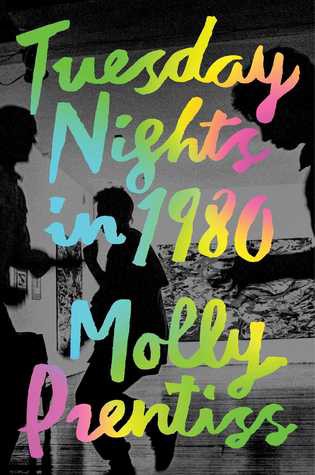
6. Tuesday Nights in 1980 by Molly Prentiss
It’s New Year’s Eve, 1979, and pretentious gallerist Winona George is hosting a swanky party for artists both established (Andy Warhol, Jean-Michel Basquiat, Keith Haring) and striving. This opener for Prentiss’ debut novel sets the stage for the rest of the book, which captures the electric, changing art scene in New York City in the ’80s.
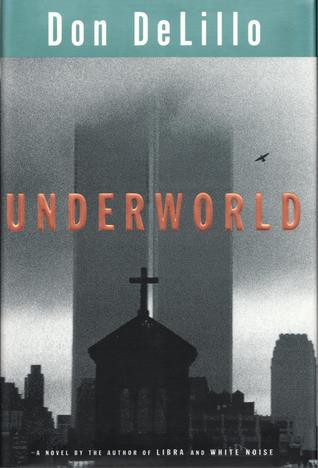
7. Underworld by Don DeLillo
DeLillo’s decades-spanning novel incorporates real people and events, including one of the greatest parties in history: Truman Capote’s Black and White Ball. The masquerade ball was held on November 28th, 1966 at the Plaza Hotel, and the guest list included everyone from Frank Sinatra to C. Z. Guest to the Maharani and Maharaja of Jaipur. Things got weird, in the best way. Example: Lauren Bacall did a spontaneous pas de deux with choreographer Jerome Robbins on the dance floor.
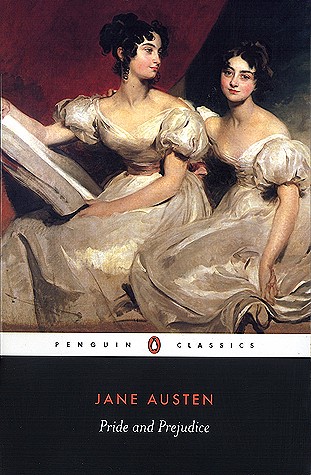
8. Pride and Prejudice by Jane Austen
Austen’s sharp, comic novel often depicts the misbehavior of the younger Bennet girls. But as much as they embarrassed Elizabeth and almost ruined Jane’s engagement, attending the Netherfield Ball with Lydia and Kitty Bennet is bound to be a good time. Those girls know how to drink, dance, and mingle. Besides, if you get tired, Elizabeth can always entertain you with her running jokes at the expense of the other guests.
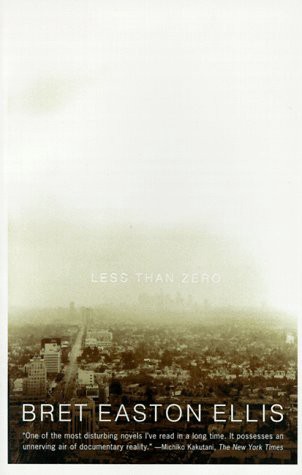
9. Less Than Zero by Bret Easton Ellis
A celebrity and model-studded anti-holiday party at the Beverly Hills mansion of a seriously messed-up couple: this is the kind of party that brunches are made for. If you’re afraid your friends won’t believe you, bring the invitation as proof of your host’s insanity: it read “Let’s F — Christmas Together.”
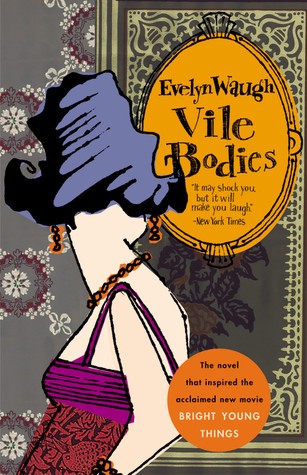
10. Vile Bodies by Evelyn Waugh
Evelyn Waugh excelled at social satire, and Vile Bodies is an overt snipe at the wealthy young “it” kids of the inter-war generation in England. The novel’s protagonist, Adam Fenwick-Syme, is always attending parties: “Masked parties, Savage parties, Victorian parties, Greek parties, Wild West parties, Russian parties, Circus parties, parties where one had to dress as somebody else, almost naked parties in St John’s Wood, parties in flats and studios and houses and ships and hotels and night clubs, in windmills and swimming-baths, tea parties at school where one ate muffins and meringues and tinned crab, parties at Oxford where one drank brown sherry and smoked Turkish cigarettes, dull dances in London and comic dances in Scotland and disgusting dances in Paris…” Unfortunately with all this partying, he fails to notice the war that’s coming to change his life forever.
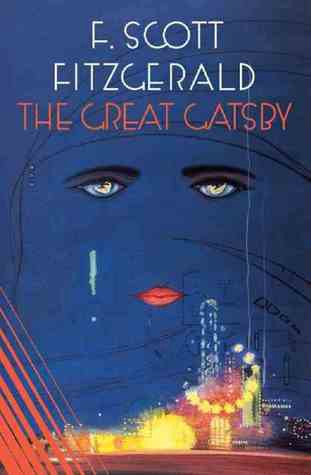
11. The Great Gatsby by F. Scott Fitzgerald
Jay Gatsby’s house parties at his sprawling West Egg mansion are perhaps the most famous in literature. Gatsby isn’t a casual host — he uses live orchestras, free drinks, and endless feasts to impress his long-lost love, the rich party girl Daisy Buchanan. Like Jake Barnes trip to Pamplona, Gatsby’s over-the-top parties came to represent the wild indulgence of the 1920s.
It would be a kick to take Margaret Atwood’s Shakespeare class. Reading her latest novel is as close as most of us will ever get, but it’s no poor substitute. The celebrated and prolific author takes on the Bard’s work with her latest novel, a retelling, a reteaching, and a mirror of Shakespeare’s island drama, The Tempest. Atwood’s Hag-Seed, the newest release from Hogarth Shakespeare’s contemporary “covers,” follows Felix Phillips, beleaguered director of a local Shakespeare festival, as he gets lost in obsessive fixation with his productions and his livelihood is usurped by a power-hungry underling. Felix loses his position of power and ends up exiled — stop me if you’ve heard this one before — and plots a big storm to trap his enemies, take revenge, and take back what was his. Felix’s “island” in Hag-Seed is a prison where he sets up a literacy program to teach Shakespeare to prisoners. His opportunity for some good old fashioned five act vengeance? A staging of none other than Shakespeare’s The Tempest.
If you’ve read or seen The Tempest, then you’ll recognize Felix immediately as Atwood’s Prospero; he appropriately has some daughter issues (Atwood names Felix’s daughter Miranda, but hold that “too on the nose” comment, because Atwood’s take isn’t so simple). Immediately it’s clear that there’s more to the alchemy of Atwood’s approach than the long in-joke, the wink and grin. Don’t get me wrong, I’m in. I’m so in — this is a treat for us nerds. That’s the fun of these books, right? The secret signals between author and reader, the treasure hunt as you read. Make no mistake that Atwood’s novel — like any good retelling or reworking, or new version of a tale — is a basket of Easter eggs. But as the reworking of an archetype, it succeeds on its own because of how Atwood employs the material she’s given — as a compelling story in its own right, undeniably augmented by the underlying magic of the original, and made better for being built upon such rich a rich foundation. In Atwood’s sure hands, the layers of reference are so delicately folded upon each other that an attempt to read Hag-Seed as just a straight retelling doesn’t do it justice. Atwood employs the archetype of The Tempest in three ways simultaneously: as a model for the structure of her own story, as a “play within the (retelling of the) play,” and — most uniquely, for this type of work — as a didactic text.
“Atwood employs the material she’s given — as a compelling story in its own right, undeniably augmented by the underlying magic of the original, and made better for being built upon such rich a rich foundation.”
Atwood has internalized the plot and history of The Tempest so thoroughly that she breathes it into every word. The myriad ways she’s employed the source are almost too enumerate to list; but she moves between a close hold of the original and a more distant, brushing touch with its plot points. Because her characters, Felix in particular, have such intimate knowledge of Shakespeare and The Tempest, they remark often on how much their lives mirror the play. In some ways even Atwood’s characters are in on the conceit; Felix shapes his destiny in Prospero’s image, even when he acts against his own interests: “This is the extent of it,” he muses when he begins to teach in the prison, “My island domain. My place of exile. My penance. My theatre.” Atwood has him speak Shakespeare’s lines constantly. He tells his actors, the prisoners, that “what’s past is prologue,” that their crimes don’t matter as much as their work ethic and dedication. Atwood molds Felix’s ambition and madness and sets the stage (pun intended) for his eventual meltdown, but she’s also having a ton of fun with the language and doing what Shakespeare, himself, did: packing puns and allusions into her lines that will run past ears of the audience, but these references reward a close read. Atwood’s text runs on parallel tracks: it’s an interesting story of vengeance by a guy who was booted from his theater job and gets bitter about it; but it’s also a variegated twist on an old story about Prospero’s loss and the creation of a revenge scenario for those who recognize the original. Atwood reanimates it enough to offer commentary. Atwood bends the archetype into something new through her use of metafiction and these parallel stories.
“Atwood bends the archetype into something new through her use of metafiction and these parallel stories.”
What sets Atwood’s work apart from other novels in the genre of tales retold is how she uses her authorial role to instruct. There are moments of direct reference to how Felix teaches Shakespeare’s plays to prisoners; his exercises are similar to the kinds of assignments that are taught in contemporary high schools and are not groundbreaking revelations in and of themselves. But once Atwood moves beyond the simple how-tos of Felix’s job, she gets to the delicious meat of what she, herself, believes and has discovered in her own research of the play. This is embedded in her characters’ discoveries of the work as they endeavor to stage it. In this way, her work resembles most closely the aims of Steinbeck’s East of Eden, which the author wrote as a philosophical exercise to examine the concept of Timshel. Atwood, here, through Felix, but more refreshingly through the voices of the prisoners, explores the many possibilities of what Prospero’s storm means, who Ariel and Caliban really were to the old man, and what it means for Prospero to let his daughter go. Through Felix’s delusions, Atwood asks important questions about the nature of theater and belief. She raises questions like a good teacher, playing devil’s advocate and offering new theories through the mouths of the prisoners as they discover Shakespeare. One actor, in a final assignment, remarks how Prospero is “careless about his own body, close to home…,” while another asks, “‘Is extreme goodness always weak? Can a person be good only in the absence of power?” Felix glows when he sees his students take Shakespeare and run with it — often awkwardly, and in directions he hasn’t planned. But what’s the harm? And as in life — in teaching — Felix’s students lead him to his own discoveries about the play. Atwood is the excited, enthusiastic teacher you want: she explores every aspect of the play in her work; she’s enjoying the work and she wants you to, too. Will she make you cringe from time to time with her earnestness? Sure. But you’re going to walk away thinking differently about the elemental storm Shakespeare created, and her novel accomplishes a kind of open-ended questioning that is unique, even among novels of its type.
If there’s a quibble to be had with Hag-Seed, it’s the lack of depth Atwood gives the players, Felix’s prisoners. We get little information about each man other than his rap sheet and nickname. While Felix and others are complex, fallible, and round, the prisoners exist mostly as a set of types to fill the cast of Felix’s play. Does Atwood want it this way, to shift the focus to Felix, who embraces his own delusion so wholeheartedly and decidedly that he crosses out of realism? “ [I]t was only a short distance from wistful daydreaming to the half-belief that she was still there with him…” Felix tells himself in the middle of a vision. “Call it conceit, a whimsy, a piece of acting: he didn’t really believe it, but he engaged in this non-reality as if it were real.” While Felix is assigned a full set of delusions and conflicting desires for revenge, his actors lack complicated motivation. While it’s possible to envision a book where the lives of the actors/prisoners are the thing, that’s not this book. Atwood’s layering of her story upon the original means that her characters are imbued with a kind of automatic characterization by association. We are given information about which other Shakespearean characters they have played in previous productions, but Atwood is counting on us, most certainly, to assign to them the traits of their counterparts within The Tempest. This elevates them from types to fully realized characters, but as a characterization strategy, this is limiting because not every reader of Hag-Seed will have read The Tempest.
People haven’t known what to do with The Tempest — as Atwood points out, it was performed as an opera; for centuries it includes more songs than any of the rest of Shakespeare’s plays. Atwood’s take is something new, not just for what she creates in her own retelling, but for how she uses the play so obtusely within it. There’s something refreshing about how she doesn’t play coy. She comes out and says yes, I’m doing this, and it’s up to the reader to look beyond the obvious references, the easy interpretation that says there’s a one-to-one correlation between the play and this new book. And Atwood can’t help herself: her excitement bleeds onto the page; she wants to share what she knows. She wants to challenge what we know, what we expect, and what we want from Shakespeare in 2016.
DON’T MISS OUT
Sign up for our newsletter to get submission announcements and stay on top of our best work.
YOUR INBOX IS LIT
Enjoy strange, diverting work from The Commuter on Mondays, absorbing fiction from Recommended Reading on Wednesdays, and a roundup of our best work of the week on Fridays. Personalize your subscription preferences here.