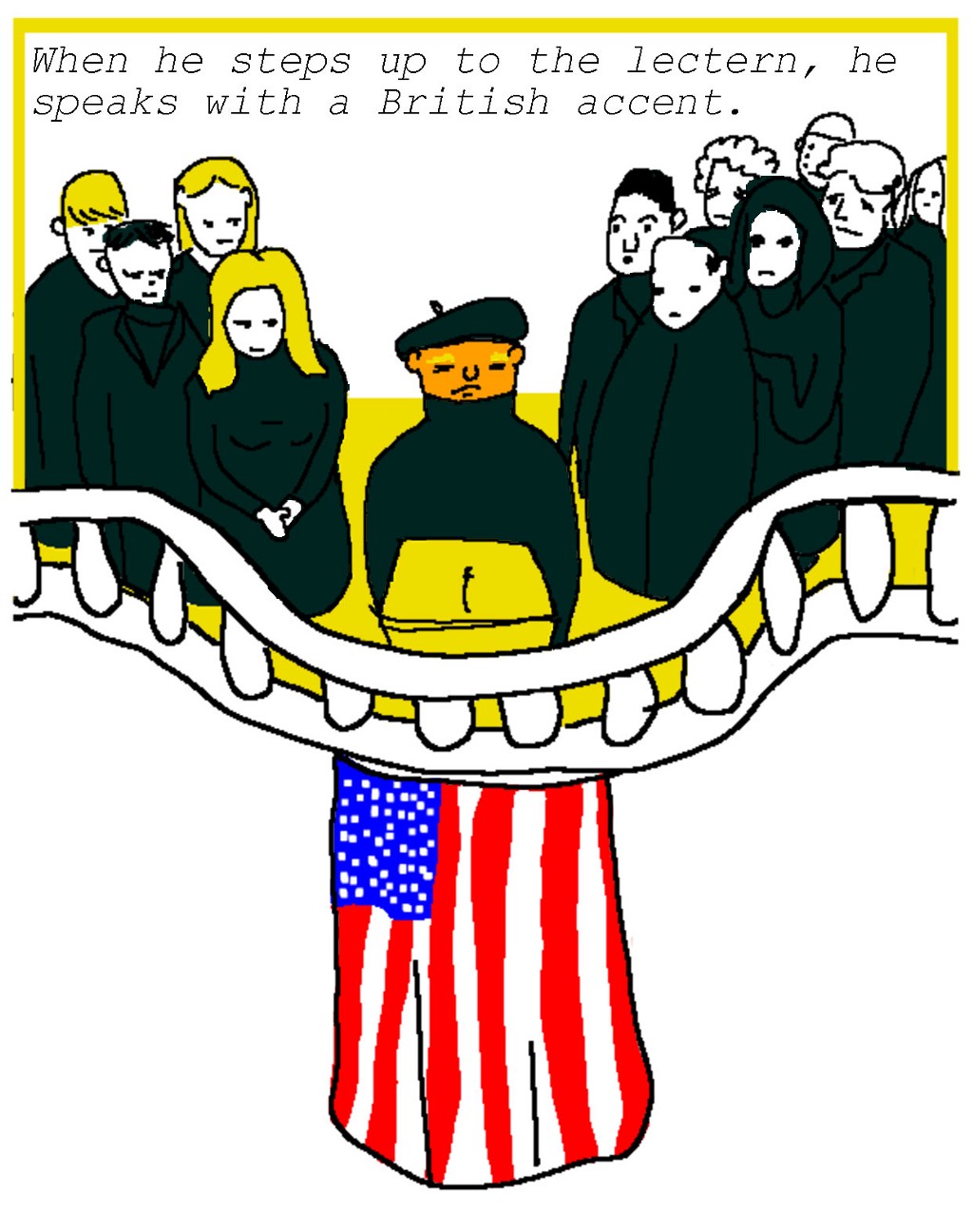
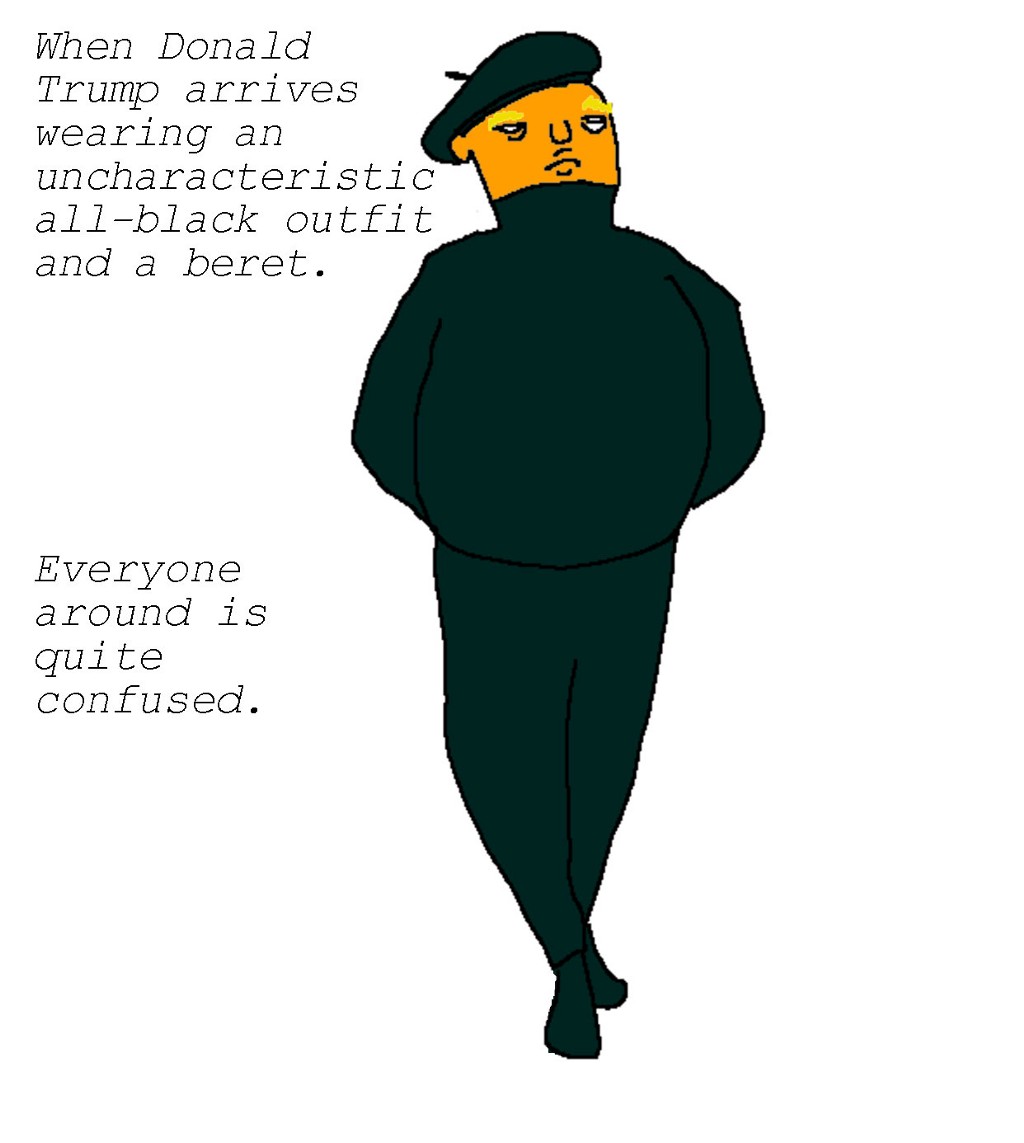
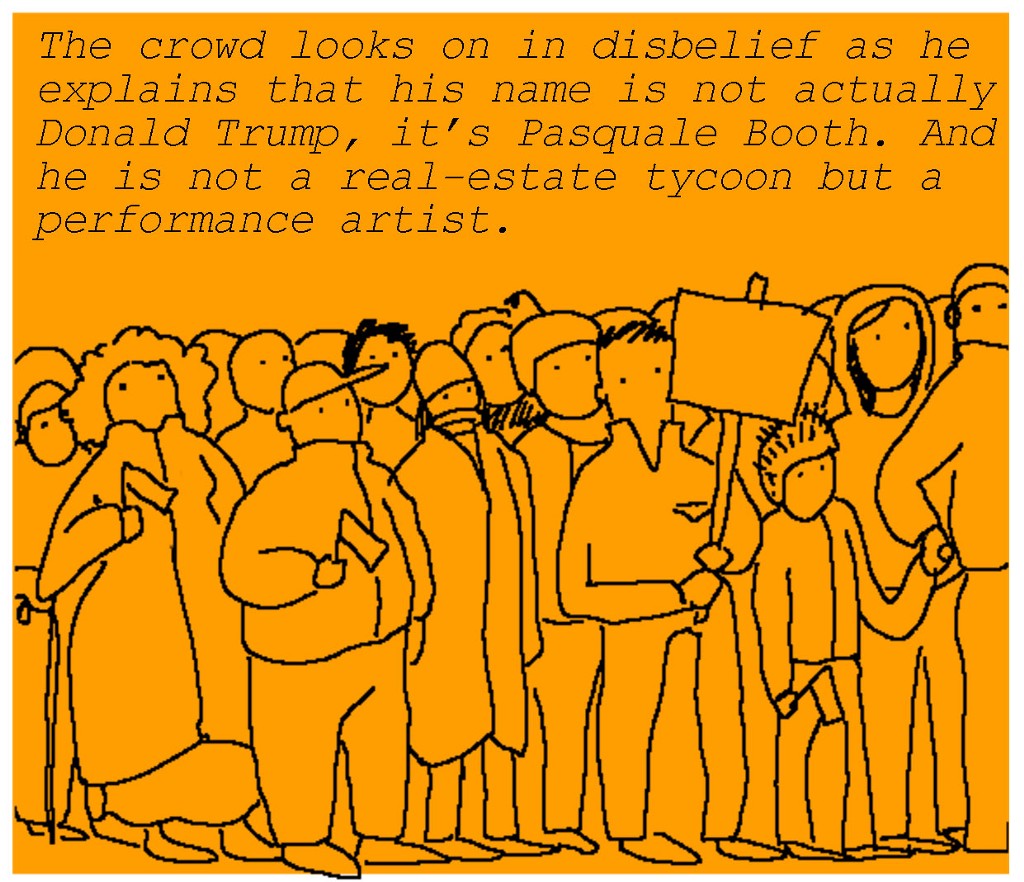
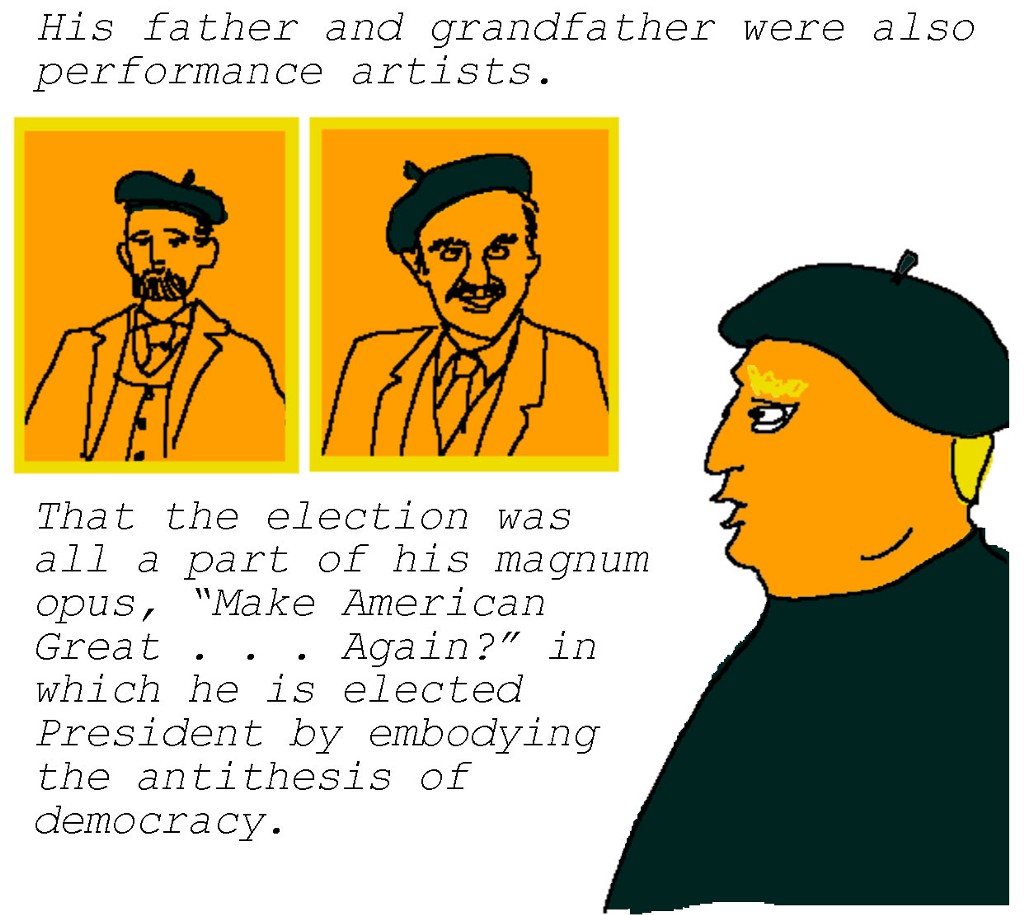
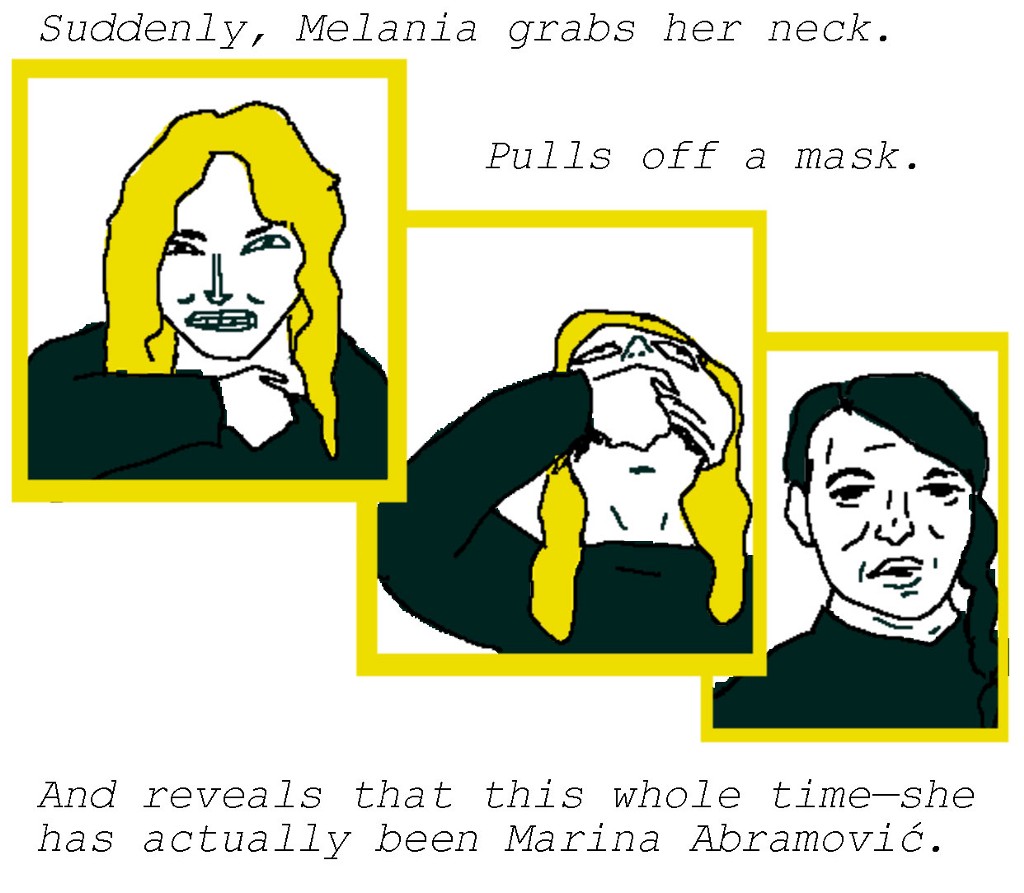
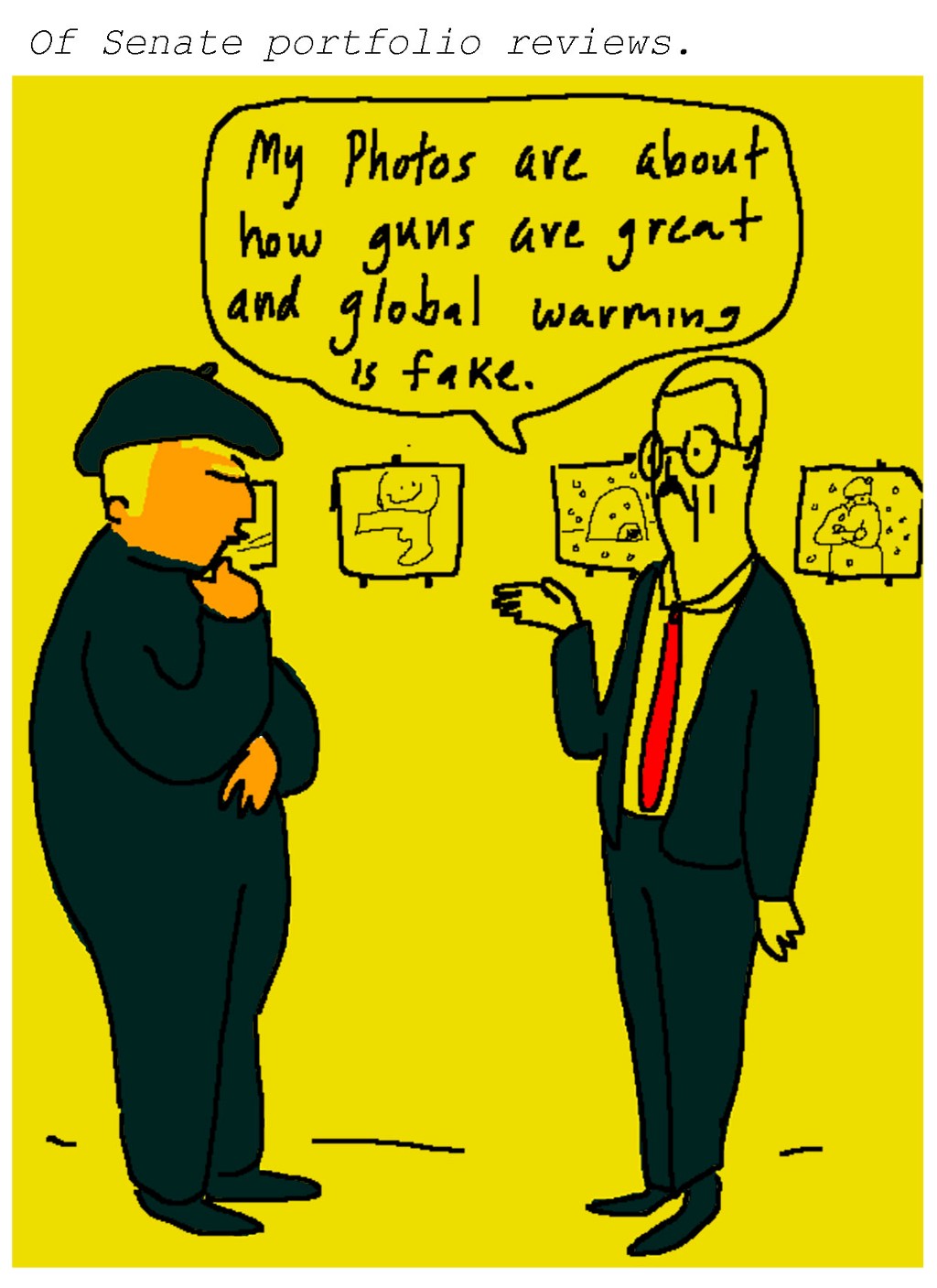
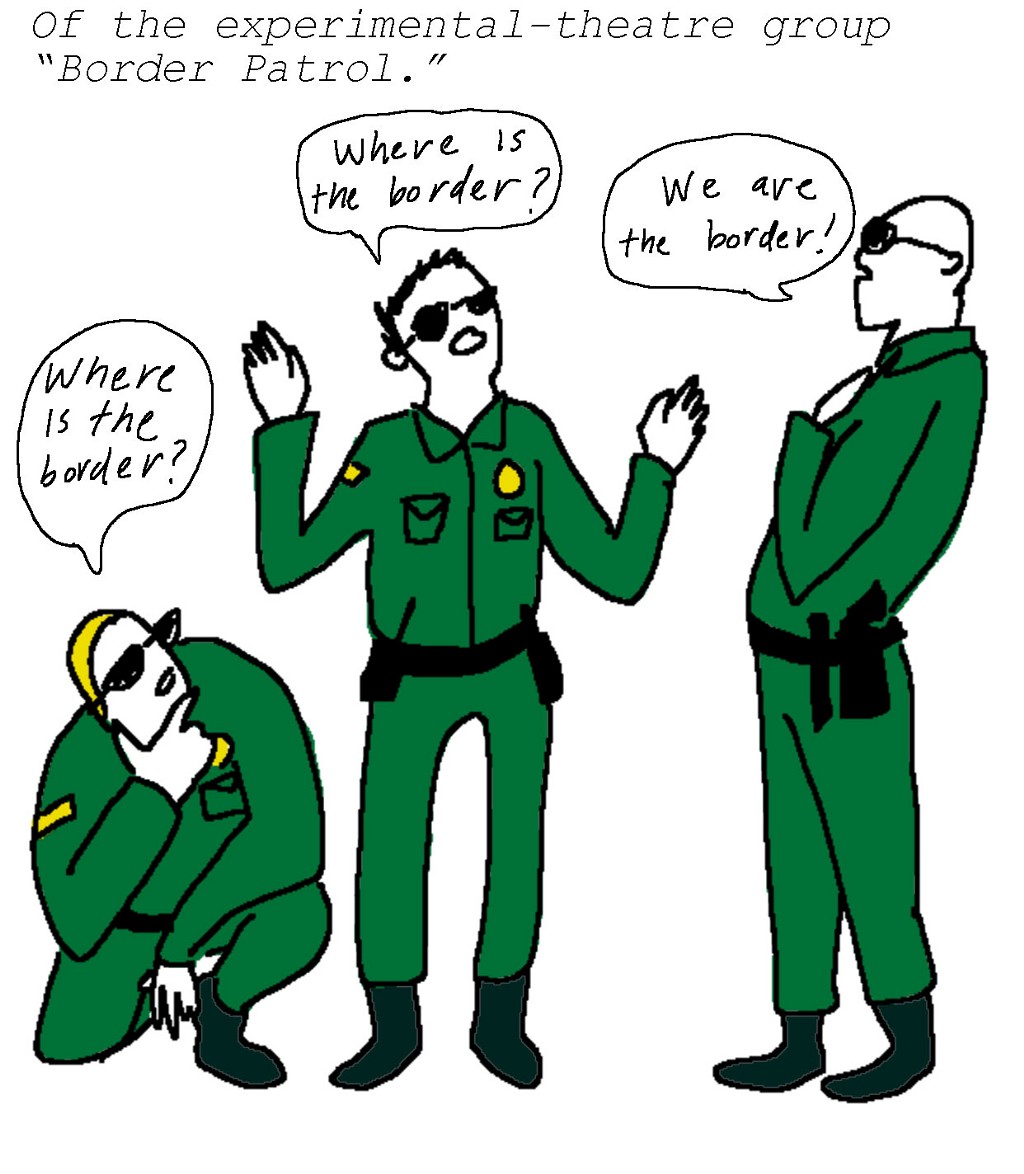
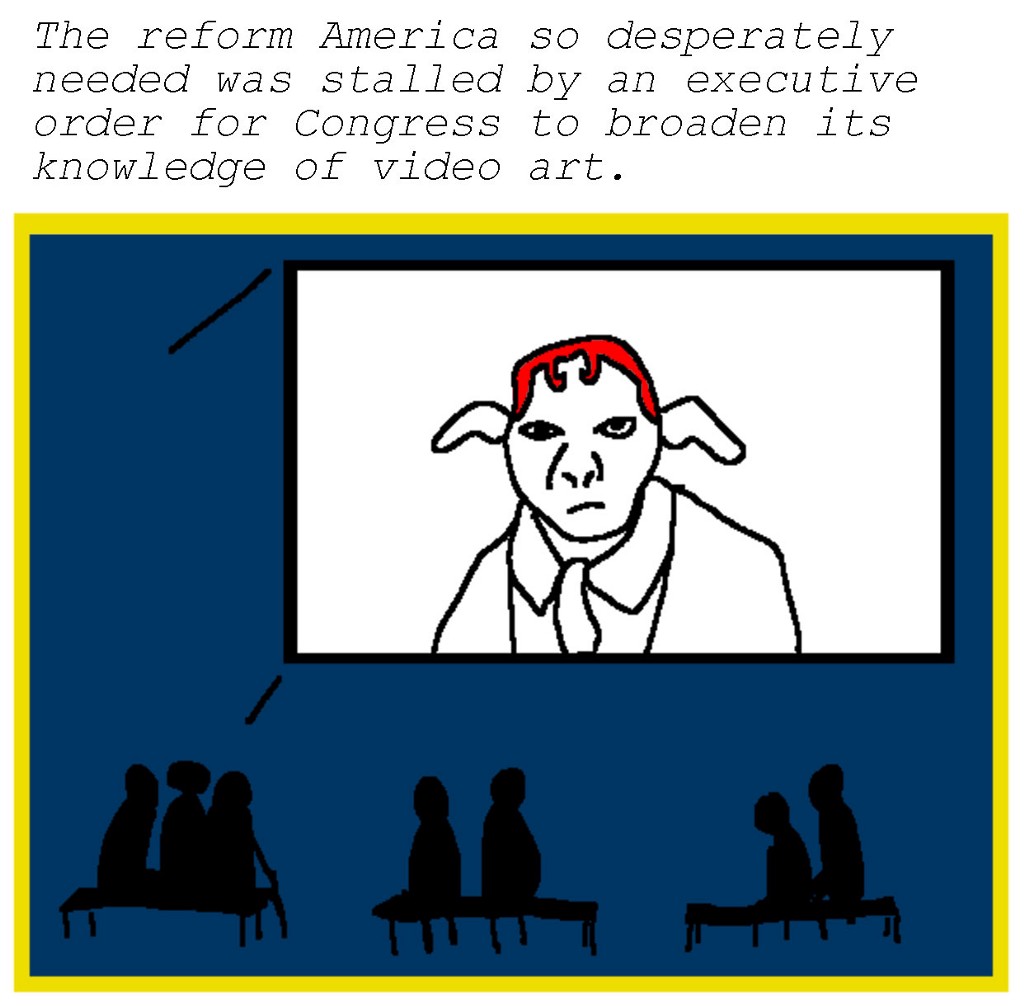
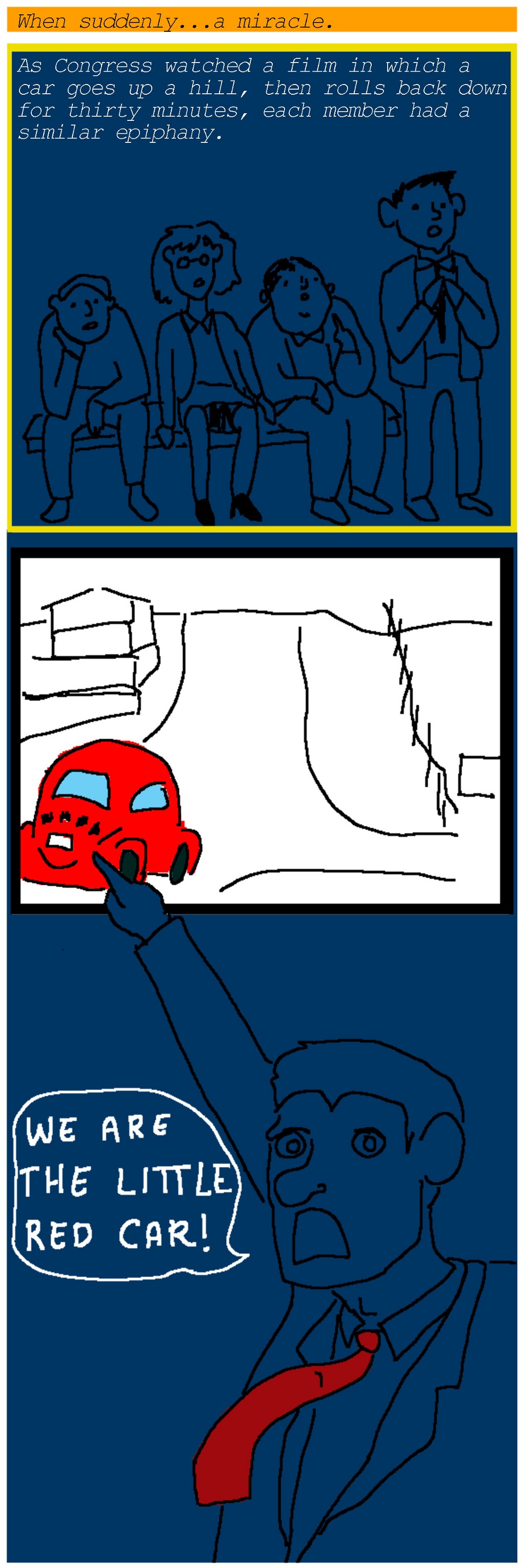
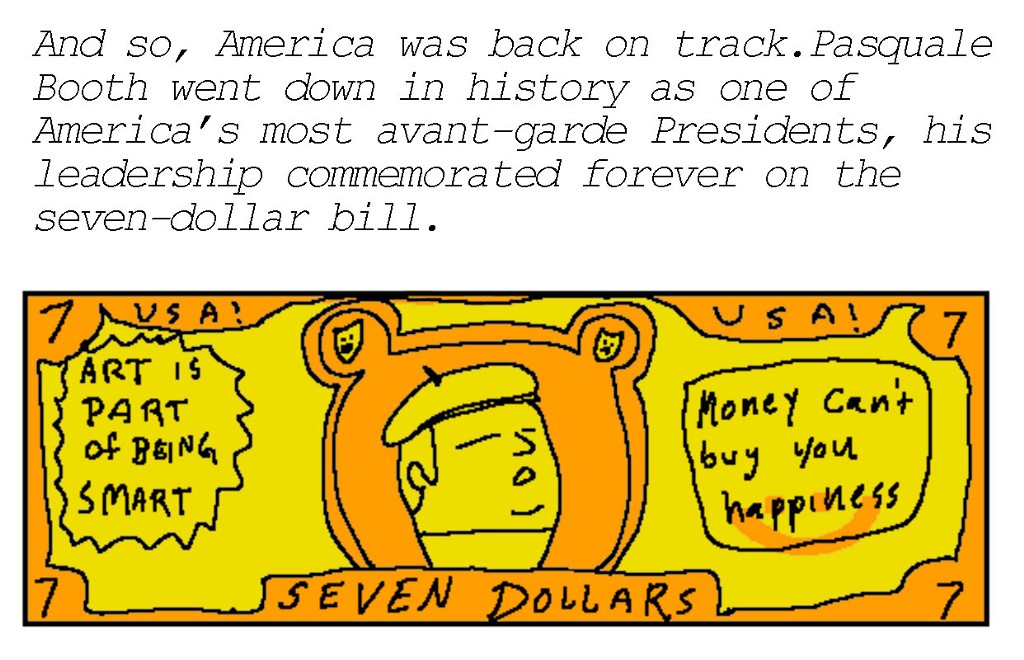
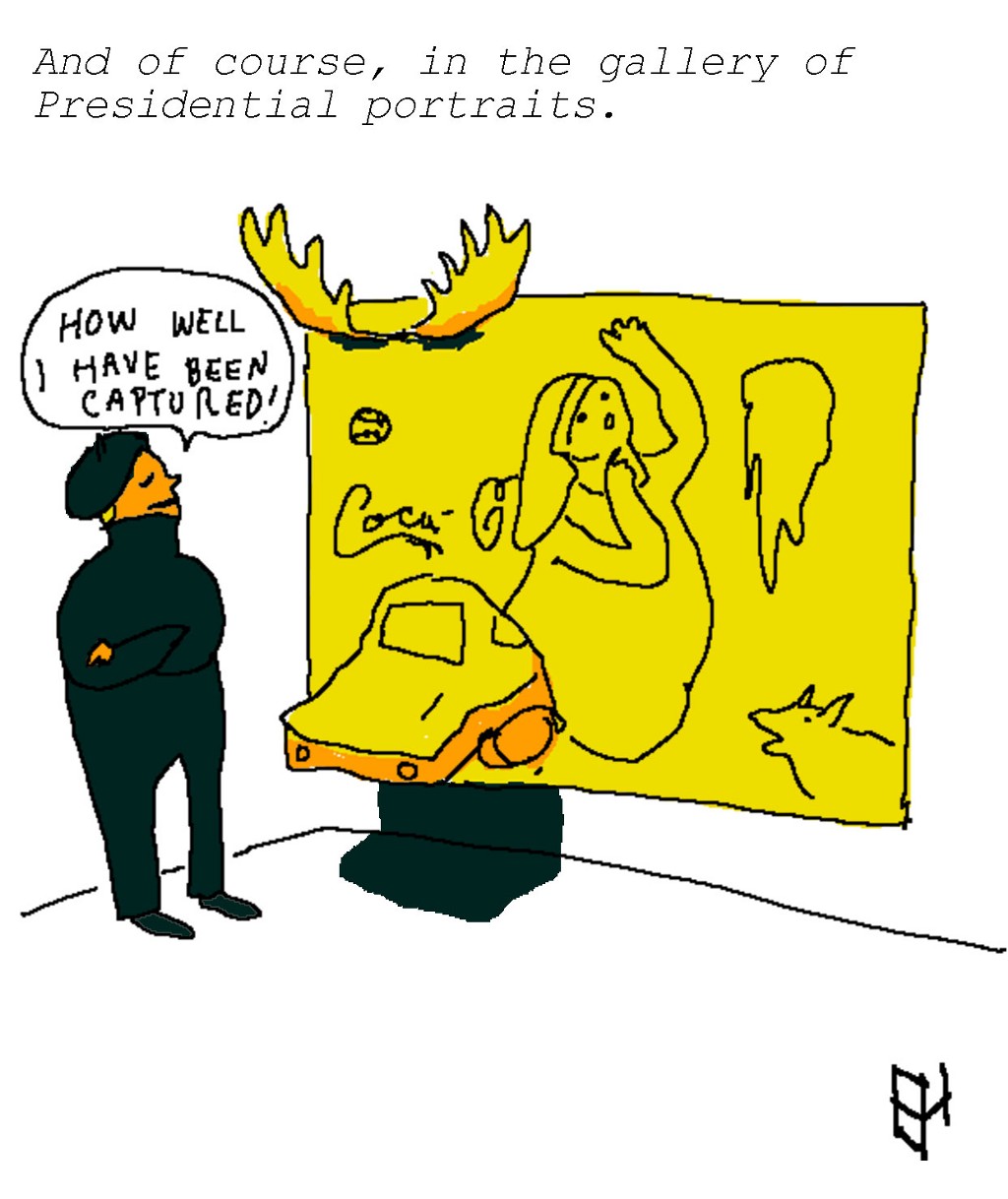
Hello, and welcome to my week-by-week review of the world. Today I am reviewing the 2016 Presidential Election.
If you’re like me, you voted for Donald Trump. If you’re also like me, you did it by accident because you had a brownie crumb stuck in your eye and it was hard to see what you were doing and there was a long line of voters behind you and you felt a lot of pressure to hurry up so you just checked off whatever and hoped for the best.
A lot of people voted for Donald Trump intentionally though, and it’s hard for me to understand why. I asked someone wearing a “Make America Great Again” hat why she voted for Trump but she told me to shut up. This made me understand her even less. That’s when I realized I’m never going to truly understand another person’s very specific life experience that causes them to think someone like Donald Trump could be a good choice to elect as President.
Divisiveness and anger seemed to be the prevalent themes for this election on both sides. Trump supporters hate Hillary supporters, and Hillary supporters hate Trump supporters. Beyond that, I’m not sure what anyone really was talking about.
That’s when I got the idea that if we all had a common enemy, we could come together. So I went to my polling place on election morning dressed in my Halloween costume as an alien. At first people just assumed I was a Trump supporter because they seem to wear lots of costumes, but then the Trump supporters thought I was a Hillary supporter making a statement about undocumented immigrants.
I had hoped people would think I was an actual extraterrestrial coming to conquer the planet, but this worked just as well. Everyone on both sides hated me. That’s when I pulled off my mask and said, “See? We can all come together in the face of a common enemy. We’re not so different after all.”
I spread my arms wide, expecting people to start hugging me, but one man claimed I was lunging toward him and he pepper sprayed me. Then someone posted a video of it online, my email got hacked, and people threatened to kill me.
There’s literally no part of Donald Trump that I like, but I’m reluctant to hate him. It’s clear he suffers from a mental illness. I would never hate someone for having cancer the same way I would never hate someone for being mentally ill.
When Donald Trump was born, he was an innocent baby and whoever raised him spent a long time hating him. Now he’s spreading that hatred because it’s all he’s ever known.
I guess in that way we’re all a lot like him. We all love to hate.
BEST FEATURE: Bobby Jindal’s unintentionally hilarious hidden camera announcement for his bid for the Presidency. WORST FEATURE: The legitimization of bigotry in the eyes of bigots.
Please join me next week when I’ll be reviewing a marshmallow.
In Affinity Konar’s Mischling (Lee Boudreaux Books 2016), we follow Stasha and Pearl, two twelve-year-old girls, as they arrive at Auschwitz. On the train platform, they hide under their grandfather’s coat until a guard discovers that the girls are zwillinge — twins. They are taken from their family and handed over to Josef Mengele, who they call “Uncle Doctor,” and who subjects them to the horrors of human experimentation. In alternating chapters, each girl narrates how they manage to survive. Stasha is in charge of “the funny, the future, the bad.” Whereas Pearl is the curator of “the sad, the good, the past.” The language of the novel is beautiful but also unafraid to fully describe the suffering that the girls are forced to observe and endure.
Mary South:Stasha and Pearl are closely bonded as twins. Their bond is so close it’s almost preternatural at times — for example, when they sit back-to-back and draw on the ground, they always depict the same pictures even though neither twin can see what the other is drawing. They are still quite distinct from each other, however. How did you go about developing the character and voice of each twin?
Affinity Konar: The book came Stasha-first. I wanted to write a kid rebel who dreamed of vengeance, a tomboy with a knife and too many feelings. A girl whose bond with another was so great that the loss of it threatened her own life. Initial inspiration came from the testimony of an eleven-year-old boy named Peter Somogoyi — the Nazis gave all the twins these dull little pocketknives that they could use to cut their bread, and this boy had other plans for his knife, he sharpened it and swore to take one Nazi with him before the end came.
Writing about twins can feel like a cheat, and then, when you see all the built-in risks and assumptions, it becomes a gamble. I was desperate to make Pearl more than the aspirational, polite sister, the whisper to Stasha’s howl. I worried that she would be the paler figure, but a strength asserted itself when I saw that the book needed a voice to bear witness. And so Pearl began to address what Stasha refuses to — she plainly acknowledges the deaths of other children, the likelihood of their family’s fate, the hierarchies within the barracks, the roles of the adults entrusted to oversee their care.
The only choice in their development that felt really calculated — and then, meant to be — was the one to make the twins girls instead of boys. There was something about handing a girl that pocketknife that broke the book open. I remember sitting with the new pages and feeling like I’d just managed to mount a very beautiful horse.
MS:The first half of the novel follows Stasha and Pearl as they arrive in Auschwitz and are chosen for what is called “Mengele’s zoo.” The second half follows each girl as they both struggle to survive in a world that is still unpredictable and brutal after Pearl is forcibly separated from Stasha and then Auschwitz is liberated. What led you to this structural choice and why did you decide to continue their story in lieu of keeping it confined completely to their life inside the camp?
AK: There were two big influences at play here. Children of the Flames, my initial source material, follows the stories of the twins post-liberation and into adulthood, so it was almost as if I couldn’t conceive of a narrative confined strictly to the life within the camps. And then there’s the fact that The Truce was my introduction to Primo Levi’s work, rather than If This Is a Man, so my awareness of Holocaust literature was led by a preoccupation with his fractured journey back to Italy. I leaned on all of Levi’s books, but the story of those travels made a true impression on me. It was probably the first book I read that made me wonder what it meant to rebuild your life in the aftermath of such extreme pain and dehumanization, and it captivated me doubly because it also offers up these odd moments of charm and humor while moving towards a future that remains full of peril.
MS:I read that Mischling took you ten years to write. Could you describe how the novel changed over time?
AK: When I read it, I still see the four other books it thankfully escaped being. Much credit is due to Lee, my editor, for it being in the state I dreamed of. It was a sprawl of a book, a three-parter at one point, always full of confusions. The research was always presenting a new figure or story I found important, and I kept shifting timelines and the ages of the girls. And then there were tonal issues, small things that had to be weeded out because they’d been written just to pull myself through, chapter to chapter. For instance, Feliks tended towards these lines that were tributes to my affection for the Marx brothers — he was my comic relief, along with Bruna — but I often had to recalibrate the lighter gestures, as important as they were. And there used to be a thread that explored the Nazi interest in animal breeding programs, the Third Reich’s obsession with resurrecting the auroch for hunting purposes. I was too taken with the telling absurdity of this — creating something to kill it in sport — and tried having Stasha look at the Zoo with a more pronounced interest in genetics. But that angle, as interesting as it might have been to me, didn’t serve the story of the twins.
The biggest alteration was Mengele himself. When I first thought of the book, I was very young, fixated on injustice in the way that only a sixteen year old can be, and Mengele was one of my main sources of ire. So the spectacle of him threatened to overtake the narrative at various points, and I’m very grateful I never wrote the book in the throes of that particular immaturity, because I doubt I would’ve rewritten it as many times as I did. Eventually, I found that the only way to deal with his monsterism was to portray him not as a man, criminal, or psychopath, but as a series of acts, and to do so only through the perspective of his victims. Any focus on his life distracted from those he so brutally ended and altered. The twins were the only ones who needed to be illuminated. In the end, I struggled with whether to even acknowledge his death within the novel.
MS:There are images and scenes that struck me as seemingly allegorical or something out of a fable. For example, there is Mengele’s wall of eyes and how Stasha calls herself and her friend Feliks “Jackal and Bear,” among other examples. But then, of course, I had to remind myself that these things weren’t allegorical at all. Stasha calls herself and Feliks “Jackal and Bear” because they are wearing jackal and bear fur coats that belonged to victims of the Holocaust. Mengele’s wall of eyes is a literal wall of human eyes he has saved in his attempt to try and artificially change iris pigmentation. Did you employ this allegorical mode that isn’t allegory at all as a way of demonstrating how these girls are trying to mitigate the suffering they’ve endured, or was it for us as readers to even more fully feel the horror of violence that’s so extreme it’s almost unbelievable?
AK: I think of the mode as “masking and unmasking.” Not all the masks are even pleasant — just fair and ready covers for the terror beneath — my hope is that when the masks slip, the terror is enlarged.
I am greedy though, because while emphasizing horror was foremost, I also hoped that the masking could speak to the coping mechanisms of the girls. Stasha’s fur was stolen from someone who is most likely dead. And with the guilt of survival at her back, she’s warmed, protected, and inspired to form a new, violent identity, because it doesn’t feel safe to live as a Jewish girl anymore. The very fact that she retreats into this persona immediately after liberation is meaningful, or so I hope.
And I have to note that I’m always grateful for this particular read, because I shudder a bit whenever I hear the word “magical” tossed about with respect to how the girls view the world. This is not magic. It’s an endangered life with a series of veils. Some of the veils might appear charming because they’ve been draped by the hand of a child. But they remain veils. And their arrangement within the book is a strange, fraught task, because there is an inevitable confrontation with the surreal that occurs while examining the camps. This was an anti-world within the world, it offers up the unimaginable. I tried to test the masks and the veils for their sensitivity, and their value to the characters, to not approach the array of sights as hinges for artistic opportunity.
MS:Theodore Adorno said that there can be no poetry after Auschwitz. What were the concerns and difficulties you had in writing about such an infamous historical setting? Did you worry about depicting trauma you didn’t experience firsthand?
AK: It’s a statement I encountered early and was paralyzed by, repeatedly. And I liked that paralysis, to be honest. It shut down the possibilities, and made me imagine writing something else. But I couldn’t write anything else, not in the way I wanted to. My stops-and-starts were flat, my characters were shams. I collected research, put down the book, took it up again, immersed myself in warnings about fictionalizing the Holocaust. I had this imagined conversation between the twins in my head and I kept trying not to think of it. When I couldn’t help but think of it, when I had no way but write, I’d always go back to Paul Celan and Edmond Jabes with their silences and estrangements and questions. Their effort to articulate the unspeakable, to pummel and peer into a world — it drew me in and it kept me there, and I knew I’d never know or understand such pain, but I felt that those poems were teaching me something beyond language and horror, something about what it meant to bear empathy. In those moments, the book would feel worth writing, as a private, hushed endeavor. I knew I probably wouldn’t be successful but I hoped to utilize language to create characters whose voices sought to restore their humanity. I hoped that this struggle, this desperate reach for articulation, would be evident in the text, and that the prettiness that would inevitably arise in the perspectives of children would travel not in the vein of “life is beautiful beyond all suffering” but towards the question of “may my life have meaning again?”
Many of the people who influenced this book suffered in ways my own ancestors escaped. So yes, I was concerned about depicting trauma that no research can contain, about portraying suffering that can never be relentless enough, or brutality whose blows and calculations will only be blunted by words. I wanted the twins to move only in tribute to survivors, and to serve, in their commitment to family and future, as an act of remembrance. Over the years, I questioned myself more than I actually wrote, and I’ve only recently come to accept that these questions may always be with me, and maybe they need to be. Maybe living with a perpetual sense of self-interrogation is the only way that I can honor the people and stories that have given this book its reason for being.
MS:The title of the novel, Mischling, comes from the Nazi term for those of “mixed blood.” Pearl and Stasha are mistakenly believed to be mischlinge because of their blonde hair. But you’ve said that the “mischling” of the title also comes from how trauma changes one irrevocably. I was hoping you could comment more on how you decided to have the girls cope with trauma or how the trauma manifested for them — from Stasha’s medical research that she undertakes almost in defiant imitation of Mengele and her belief that he has made her immortal to Pearl’s amnesia.
AK: Trauma imposes a lot of doubles, I think. There’s the loss of who you could have been, and then there is this other, altered person. That person might be a better person, but there will always be that mystery, and maybe the only way to live with yourself becomes finding a way to love that mystery. I wanted to write girls who fortified themselves with a curiosity about who they could be beyond their suffering. For Stasha, survival is disguise, the transfiguration of horror into something that remains terrible, but bears a lesser poison. She places herself beyond the limits of mortality because without this in question, she can begin to endure. And there are times when she sees herself not as a prisoner, but a trickster, one destined to end Mengele. Pearl, the one who has always committed herself to bearing witness with such clarity — trauma for her can express itself only in a series of blanks, of black-outs and emptiness, and since she doesn’t have Stasha’s contortionist thinking, her coping tactics are different, and ultimately, more optimistic. While Stasha would insist that a dark sky isn’t dark, or even a sky at all, Pearl would say that the sky is just dark, for no good reason, but maybe, someday, it will relent.
MS:You’ve said that initial inspiration for the novel came from reading Children of the Flames. What other sources, both fictional and nonfictional, were influential in writing Mischling?
AK: I hoped that the book might carry the texture of a Yiddish folktale, a vivid sense of the childlike amid struggle, marked with moments of humor, so I revisited a lot of legends and proverbs — at one point, the book actually addressed this literature directly, through Bruna’s voice. I reread Isaac Bashevis Singer, Bruno Schulz, Isaac Babel, and Kafka regularly while in the thick of writing, and sheltered myself rather ridiculously from voices that strayed from a sort of Slavic space, because I am easily distracted.
The memoirs of Gisella Perl, a doctor in Auschwitz, and Eva Mozes Kor, who was imprisoned with her twin sister Miriam Mozes Zeiger, were invaluable. Eva Kor is an extraordinary person who inspired Pearl’s message of forgiveness — being humbled by her life, day in and out, was the only way I could write.
Sara Nomberg-Prytzyk’s memoir was also really instrumental. Her observations and details are unlike any else I’ve seen, and she captures a strange lightness within her depiction of Auschwitz.
Charlotte Saloman’s art was a site of constant return. I often looked at Jewish papercuts before writing Pearl’s voice — I wanted that delicacy, even if it was obvious only to me, in that moment of writerly processing. And for Stasha, I wanted pure stance, so I’d look at the bold, blocky lines of woodcuts.
I returned to a lot of Eastern European poets, in search of a certain playful but grim feeling: Szymborska, Simic, Popa, Herbert, Milosz, Zagajewski. People have mentioned Plath to me after reading the novel; I didn’t consciously refer to her poems, but I’m sure the influence bled through.
MS:Are you working on anything new? What comes after Mischling?
AK: After this — chaos! I tell myself that I’m in “collaging mode,” just collecting conversations, descriptions, figures. A friend said to me once that the best books are ones that feel epistolary in nature; that gives me hope about my current book, because I think my real talent is not with words, but in missing people I’ve never known, and in bearing a drive to address them. So I am concerned that what I do next still carries the urgency of a letter. I’ll admit that I see this book as The Book, so it is hard sometimes to imagine finishing another, especially since, for better or worse, I feel a bit pinned to narratives that are childlike quests for justice. But I did manage to collect other stories while deep in this one, and I’m moving back and forth between two ideas that have been with years, ones that I likely would have written off previously as being too dark and intense. While writing Mischling introduced a lot of authorial fear into my life — fear that still remains — it has definitely vanquished that particular anxiety. And I know that what I do will likely still want to peer into an aftermath, to know what it might mean to rebuild oneself.
The President and the Executive Director of the Authors Guild will answer your questions on November 14th
Attention, writers! Electric Literature is hosting a Tumblr Answer Time with Authors Guild President Roxana Robinson and Executive Director Mary Rasenberger.
Answer Time: Ask Us About the Writing Industry Monday, November 14 Noon — 1PM EST (9–10AM PST)
As you may know, Electric Lit has partnered with the Authors Guild to launch the new Emerging Writer Membership. Now, for the first time, writers who are early in their careers can be a part of the oldest and largest professional writers’ organization in the country. As part of this exciting new opportunity, we’re hosting an Answer Time on our Tumblr for your questions about the writing industry.
The Authors Guild’s mission is to support working writers, and they advocate for the rights of writers by supporting free speech, fair contracts, and copyright. Together, Roxana and Mary will answer your questions about the Authors Guild, how to build a writing career, and how to protect your interests as a writer.
The format is simple, submit your questions here and check back on the EL Tumblr for Roxana and Mary’s responses.
In addition to being President of the Authors Guild, Roxana Robinson is the author of nine books: five novels, including Sparta and Cost; three collections of short stories; and the biography Georgia O’Keeffe: A Life.
Mary Rasenberger is the Executive Director of the Authors Guild. Prior to joining the Guild, Mary practiced law for over 25 years, specializing in media and copyright law, and served as senior policy advisor for the U.S. Copyright Office and program manager at the Library of Congress.
Because all strong personal essays strike a compelling balance between omission and disclosure, it seems fitting to begin this review of Chloe Caldwell’s exceptional personal essay collection, I’ll Tell You in Person, with the latter. Thus, full disclosure: I feel like I know Chloe Caldwell so well — about how she used to be a serious singer, about her parents’ divorce when she was in high school, about how she sometimes babysits Cheryl Strayed’s kids — that I am one of her oldest friends and therefore should not be allowed to write this piece of criticism due to a conflict of interest. How can one be impartial toward a person of whom one has such intimate knowledge?
But the truth is, I’ve never met Caldwell. I’ve never even read her previous books — the novella, Women, and the essay collection, Legs Get Led Astray — although after finishing this, her third, I intend to do so. I only recently began following her on Twitter — where to my delight, she followed me back — because I started reading this book and tweeted a photograph of the page on which she defines the concept of “participation mystique.” Writing about her own experience of getting hooked, at the age of 18, on the personal essay genre, Caldwell says of a piece by Miki Howald, which she found in a book on her older brother’s shelf:
But how did she do that? Take something from her life and craft it into this moving piece of art that resonated even though it had nothing to do with me? I inserted myself into the words and made her experience mine. I’ve learned this notion of not knowing where you end and the artist begins, while watching films and reading books, has a term: participation mystique. The concept is closely tied to projection.
So while it would be weird and untrue to say that I know Chloe Caldwell, after reading the 12 essays in this fantastic collection, I feel as though I know Chloe Caldwell, a statement which is a testament to the power and satisfaction to be found in her utterly funny, confiding, and self-aware skill as a writer.
Caldwell’s work shares similarities with other brilliant personal essayists. Sometimes she resembles the brainy, ebullient, under-achieving party-girl Eve Babitz, as in the piece “Prime Meats” which details her job as a jewelry shop employee in Manhattan as well as a zany-but-potentially-dangerous side hustle with her friend Ana meeting men through Craigslist to get steak and scotch. “Hey sexy bros,” their ad reads:
“Who wants to buy some prime bitches some prime meats and drink obscene amounts of liquor? Let’s kick it. P.S. We’re psycho (in a fun way) and we want to give you surveys.”
Other times, like in the essay “Failing Singing,” she resembles the self-interrogating, thoughtful, slightly neurotic approach of Meghan Daum in her wonderful collection, My Misspent Youth. “‘Singing changes your brain,’ TIME magazine says. ‘When you sing, musical vibrations move through you, altering your physical and emotional landscape.’ The articles about how good singing is for you almost hurt my feelings, as though they are written to make me personally feel bad,” writes Caldwell of her disappointment in herself at having given up her talent.
At still other times, she reminds the reader of the messy, heartfelt, and hilarious poignancy of Samantha Irby in her collection, Meaty. In “The Laziest Coming Out Story You’ve Ever Heard,” for instance, Caldwell uses eight deliberately shaggy, fragmentary, bullet-pointed pages to explore with great honesty and in vivid detail the “strife, grief, extreme distress” she sometimes feels in trying to come to terms with her sexual identity (or lack thereof) as a bisexual (probably) person who dislikes (but needs) labels. As she does so, she admits in a characteristically vulnerable and clear-headed way that:
I do not consider myself a political person. I never have been. A female author — I cannot remember who — once wrote something like, ‘I’m not political in my writing, why should I be? If you look at my life, I’m political in the way I live.’ It comforted me to no end. I do not watch the news. I read a little. I’m too sensitive for it and too dumb. But when I read that, I thought, Yeah! I don’t talk about women writers needing to be read, but I wrote a book that didn’t have any men in it without even noticing. Not tooting my own horn here, expressing my naïveté.
And that’s one of the traits that makes her book so much fun to be around, and what makes it stand out as free of many of the missteps that occur in even the best memoiristic and personal writing — Caldwell’s work is impressively devoid of horn-tooting. No humble-brags, no pity-parties. Just first-rate warts-and-all human complexity.
Not to mention that all favorable comparisons aside, I’ll Tell You in Person really does feel like an original and personal encounter with a singular individual, a conversation with an old friend you’re catching up with and don’t want to stop listening to.
In “Sisterless,” the piece about watching Cheryl Strayed’s kids, she includes a scene in which she and Strayed’s young daughter, Bobbi, are in “her mom’s library looking at the books on the shelves.” Caldwell points to one of her own books and Bobbi asks her what it’s about. When Caldwell says it’s about “My life,” Bobbi grows “uncharacteristically quiet. ‘Was your life sad?’ ‘No…’ I said. She perked back up and matter-of-factly said, ‘Good!’ ‘Why?’ I asked. ‘Because when people write about their life, they usually had a bad or sad life.’ ‘That’s a great observation,’ I said.” Nothing that terrible befalls Caldwell (thankfully) and she owns that many of the bad things that do arise are frequently of her own making.
Even though Caldwell examines big issues and experiences like falling in and out of love, getting and quitting jobs, and becoming addicted and un-addicted to everything from heroin to junk food, not all that much “happens” in these pieces, per se, and that’s not a problem. Her voice is so enchanting and engaging that it doesn’t matter. The book even acknowledges this relative plot-less-ness in one of its two epigraphs, the second one, from Patricia Hampl’s The Dark Art of Description, which says: “I get it. Nothin’s ever happened to you — and you write books about it.” Caldwell possesses such a masterful grasp of detail and tone that even the most banal anecdotes read like page-turners, and even the most dramatic incidents which could, in the hands of a less prudent writer, read as histrionic or self-involved, come across as sympathetic and in proportion.
Her inquiring mind, her sense of humor, and her personal responsibility make you want to listen to Caldwell all day and into the night. In “Maggie and Me: A Love Story” about her friendship with the late poet and writer Maggie Estep, Caldwell writes, “She’s had a unique and enviable past, and I want to hear everything about it.” Caldwell’s past is fascinating to that extent, too, and thanks to I’ll Tell You in Person, you can know everything about it — or at least she makes you feel like you can.
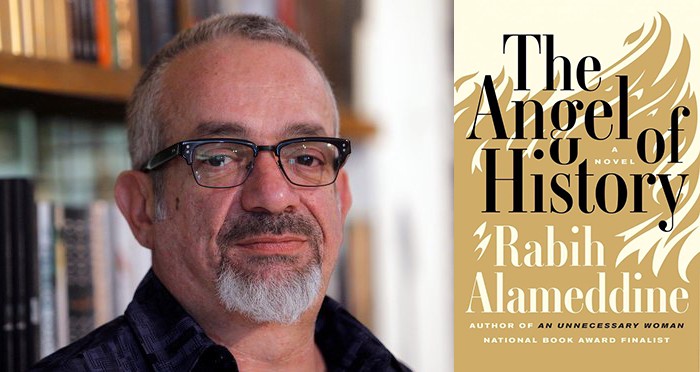
Rabih Alameddine is angry — he’ll tell you that himself — but it’s a useful kind of anger. An anger that rages against the dominant narrative, whether that comes in the form of American foreign policy, societal responses to AIDS victims and the LGBT community, or contemporary MFA literary stylings. If he has a strong opinion about something, by God he’ll let it out. Holding his tongue on an issue for fear of alienating a potential reader or sacrificing a potential sale has never been high on his list of priorities, and the tremendous commercial and critical success of 2014’s An Unnecessary Woman, which was a finalist for both the National Book Award and the National Book Critics Circle Award, has done little to change that. “Fuck the reader,” he said in a recent interview, “A lot of writers say it’s about communication. It isn’t. I write for me. I write because I have something to say to me.”
If this paints a severe picture of the man, it shouldn’t. Alameddine is, as I found out recently when we sat down to chat in the lobby of Manhattan’s Walker Hotel, fantastic company. Possessing of fiery opinions, sure, but also refreshingly candid, quick to laugh, and generous in his responses. We spoke about writing as a political act, the most daring authors at work today, his time spent in Syrian refugee camps in Lebanon and Greece, and the challenges and pleasures involved in the writing of his new novel, The Angel of History — an intense, fragmented portrait of a man in emotional and psychological crisis. Set over the course of one night in the waiting room of a psychiatric clinic, the novel follows Yemeni-born poet Jacob as he revisits the events of his life, from his formative years in the Egyptian whorehouse where his mother worked, to his experiences as a gay Arab man in San Francisco at the height of AIDS. Peppered throughout are wise-cracking conversations between Satan, Death, and the fourteen Saints that have watched over Jacob throughout his tumultuous life.
Dan Sheehan: In an early restaurant scene, Jacob explodes at two young gay men, enraged at how little they appreciate the incalculable loss that the previous generation experienced. To what degree do you share Jacob’s anger at the way the memory of the worst of the AIDS years is slipping from the public consciousness, particularly amid the younger generation?
Rabih Alameddine: Quite a bit. I mean, I’m not Jacob, there are many things that are different between us, but that feeling of rage is the reason why I started the book. I remember a similar incident, but it wasn’t about somebody dying. Two very good friends invited me over for my birthday dinner and I spent the entire evening screaming at them about the ‘It Gets Better’ videos. I just lost it. And I wasn’t angry with them, I was just trying to explain why these things upset me. About an hour in to it one of them looks at me and says, “well, this is a happy birthday isn’t it” [laughs]. I realized then that I was so angry, but it took a while for me to figure out what I was angry about. I would watch the ‘It Gets Better’ videos and I would be furious that we are telling these kids that life will get better. Life didn’t get better for those of us who went through the AIDS crisis. It never got better. It got worse and worse and worse. If you’re getting beaten up now, it doesn’t get better. We would never tell a woman who has been assaulted “don’t worry, it’ll get better” but for young gay boys and girls who are getting assaulted, we do. Stuff like that was driving me crazy and I couldn’t figure out exactly why. I started getting upset about drone attacks — another thing we pretend we care about. All these people were dying and nobody was paying any attention, and I started freaking out. It took some time to understand that my rage was directed at me, because I had put everything aside for a while.
DS: Was there are a catharsis then, in the writing of this book?
RA: I don’t believe in catharsis. I’m not a big believer in the romantic idea that art can heal. What it does do is bring things to the surface, and then I go see my psychiatrist [laughs]. For a while there I was seeing him about four times a week. I jokingly once said that I see a psychiatrist to solve the problems that are exacerbated by writing. So no, it’s not a catharsis. But I suppose it depends on how you define ‘catharsis.’ Bringing these issues to the surface could be considered cathartic, but it doesn’t solve the problem.
DS: The way that the novel is broken up into so many fragments seems to resist a single, easily digestible reading. It addresses, among many other issues, the value of traumatic memory, the devastating impact of AIDS in America, US drone strikes in Yemen, and the fetishizing and dehumanizing of Arab men. Can you tell me a little bit about the significance of this expansive, mosaic approach?
RA: One of the things that happens with me is that, so far, every book I write is not just in response to the last book, but it rebellion against it. The response to the last book somewhat surprised me, I did not expect people to like it that much, and I don’t expect people to like this one that much!
DS: How fun was it to take on Satan and Death as fictional characters? Taking the baton from Milton and Bulgakov. Was it something that you’d always wanted to do?
RA: For me, it was the most fun section. Even though there were some passages that proved difficult, for the most part the interviews were the easiest to write. I’ve always been fascinated by Satan as a character. Milton is not the funniest of writers, but Bulgakov was and yet I don’t know if my character was based on that version, even though I am such a big fan. What I was more interested in was the idea of Satan not being either a good guy or a bad guy, but rather being the guy who, at the end, says “all those who say ‘no,’ follow me.” As the one who refuses to follow the dominant culture. So in my mind he became the saint of not just gay men, but of all outsiders. The guy who says ‘no.’ So it fit into the whole idea of revolution — that some of us just say ‘no.’ And that’s where the character started taking shape as someone who just likes to fuck with people. The idea of good and evil never entered the picture really.
DS: This wonderfully entertaining back-and-forth between Satan and Death — between the dredging up of painful memories and the deadening repression of those memories — is so interesting because, for me, it seems like they both have a fair point. To bury all the pain of your past is to live a sort of disconnected half-life, but to fully engage with it, especially when that past is as traumatic as Jacob’s, would be too much for most people to bear. Do you think there’s something to be gained from landing somewhere in between these two stances?
RA: Of course. If I remembered everything, I’d be dead. It’s as simple as that. I specifically remember 1996 when my last friend died and things started to get a little better because we had access to drug cocktails. It wasn’t a conscious decision to say, “oh, I’m going to forget everything,” but I did put certain things aside, and I started writing my first book, which was about the AIDS crisis. If I hadn’t put those things aside, I would not have been able to progress. I would not have become a writer. But then, if you forget everything, you end up working for Trump. Where we fall on this spectrum is what I’m interested in, and I don’t have an answer. At one point Satan says, ‘well, it’s a dance, but I’d like to lead for a while,’ and that’s basically it. For the most part we live in a culture where we are constantly encouraged to forget. We go to war and then we completely forget that we’re in a war. But if we remembered everything, we’d go insane. So it’s somewhere in between.
DS: A recent Guardian review said of Angel: “Here is a book, full of story, unrepentantly political at every level. At a time when many western writers seem to be in retreat from saying anything that could be construed as political, Alameddine says it all, shamelessly, gloriously and, realized like his Satan, in the most stylish of forms.” Do you see yourself as a heavily political writer, or is this a mantle that critics have tended to thrust upon you because you’re Lebanese-American?
RA: Well, yes, I am a political writer. I remember being asked a question on a panel — which I hate, by the way, because I find panels incredibly stupid — called ‘Political Fiction,’ or something, and why they put me in there I don’t know, because it was to discuss An Unnecessary Woman, probably my least overtly political novel. Anyway, I went into one of my…tirades, shall we call them. I’ve been doing that a lot lately. I said, “what do you mean by ‘political fiction’? What fiction is not political?” The trouble with the United States is that there is this delusion that the written word can ever not be political, and that if something is political, it is somehow less than. I’ve said this one hundred times and I’ll say it again: if your country is dropping bombs in Yemen and you decide to write about a woman in Beirut who is seventy-two and doesn’t leave her house, that is a political book. If your country’s policemen are shooting unarmed black men on the street, and you write about a white couple in Minneapolis, that is a political decision. To write about the human condition is political; it’s one of the greatest political acts. Art has never been apolitical.
To write about the human condition is political; it’s one of the greatest political acts. Art has never been apolitical.
DS: So it’s just then a case of owning your politics after you’ve written them?
RA: And understanding your politics. I believe that walking down the street is a political act, we just never think of it that way. Seriously, everything is political. Now, this book is an overtly political novel in that Satan, Death and Jacob all state their political views, but it doesn’t have to be that way. Even when I write a novel about storytelling or about a woman having a nervous breakdown, I am still being political because we are political beings. The delusion is that we’re separate from all of this. We’re not.
DS: Authors are notoriously cagey when it comes to writing about sex. The specter of the Bad Sex Award seems to loom large, and even when writers do write sex scenes head on, it’s rare to find one that is integral to the plot or conveys any real emotional substance. Yet one of the most significant, and heartbreaking, moments in your novel is a graphic depiction of sadomasochistic sex with a stranger in a bondage dungeon. How do you approach writing sex scenes that are crucial to our understanding of a character’s development rather than just window dressing?
RA: I have no clue [laughs]. First off, it takes the ability to put what everyone thinks aside, and also to put what I think aside. When I wrote that chapter I seriously thought that it was going to kill the book. I mean, An Unnecessary Woman was received so well; I remember being at a festival in Adelaide where about three hundred or four hundred women came to my event and I looked out and I saw white hair everywhere and I thought I have a new audience! And then immediately afterward I thought what the hell are they going to think about that scene? [laughs]
I have this young writer friend who asked to read the book so I gave it to her in an early draft and she read it, and I wanted so badly to know what her response was, expecting her to be appalled. But she said that she loved the book, and of course my response then was ‘yes, yes, but what did you think about that scene? Were you shocked?’ and she just said ‘well, it’s not like I haven’t done some things.’ And the response from my publisher and others has also been ‘oh this is such a great scene,’ so I realized that maybe I’m still living in the 70’s and 80’s, thinking I’m being provocative, when maybe it’s all become common. We just don’t see it in contemporary fiction. We see nothing in contemporary fiction, except couples in Minneapolis.
We just don’t see it in contemporary fiction. We see nothing in contemporary fiction, except couples in Minneapolis.
DS: So who are the exceptions to that, for you? Who are the daring writers at work today?
RA: Sasha Hemon is one of my favorites. Junot Diaz for sure. I love Claudia Rankine and a number of young gay poets. I’m a big fan of that Irish boy, Colm Toibin [laughs]. He’s a close friend and one of my favorite people. It’s both about adventurousness and craft. What I like is someone who is giving me something that I haven’t seen before, and usually these are people who, even if they have gone through an MFA, they’ve somehow survived it. Most writers who go through an MFA program, for a long time their voice becomes the same. Oh they produce beautiful writing, but I hate beautiful writing.
DS: You recently spent some time in a number of Syrian refugee camps, both in Lebanon and Greece. Can you tell me a little bit about that experience?
RA: Well, I started because I was upset. There are one and a half million Syrian refugees in Lebanon and I just wanted to hear some of their stories. I wanted to talk to people. So for a while I was nothing more than a witness. And I wondered how helpful I was being, but I suppose I was helpful in the sense of ‘I’m here, I’m recording this, I’m hearing your story.’ And I don’t know how important it was for them, but I can say that it was interesting how many were willing to talk. It was only the people who were tortured who were not really willing, and I completely understand that. I had a different experience when I went to Lesbos, because I wanted to see exactly what was happening. That was traumatic, and it wasn’t just because of the refugees; it was a combination of the refugees and the disaster tourism: Volunteers, there to receive the boats, taking selfies as the boats were coming in.
Then of course I had to go through the entire process of saying, ‘well, what am I doing that is different to what they are doing?’ And one of the things that I realized is that I do it because I want to be someone who helps, and I want to be seen as someone who helps. So it’s the same thing; they’re just taking it the extra step by putting a selfie up. But it was difficult. As were other aspects. I mean, in Lebanon, for the most part, refugees integrate into society in one way or another. In Lesbos, aside from the fact that it was just a stopover, the feel of the place was more that of a prison camp. Police in riot gear, barbed wire. It’s supposed to be a safe place, but there were police in riot gear at the bottom of the hill.
DS: So there was no effort being made to give them a sense of even temporary home?
RA: Some, some effort. But again, there were police in riot gear at the bottom of the hill. How at home can you possibly feel when you’re surrounded by walls with barbed wire on top?
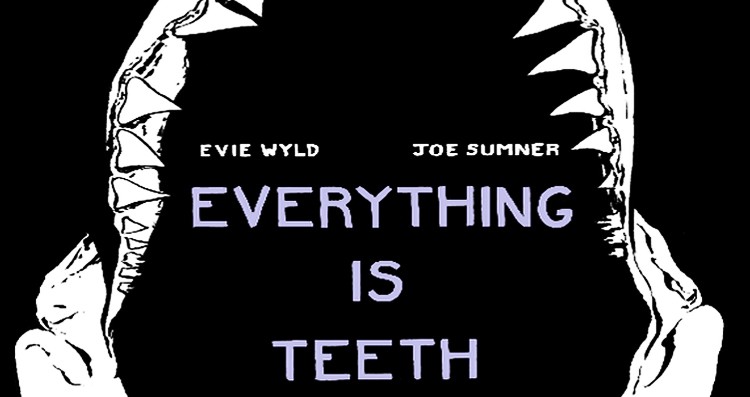
British novelist Evie Wyld is a rising star in the literary world. In 2010, The Daily Telegraph recognized Wyld as one of the twenty best British authors under the age of 40, and in 2013, Granta included Wyld on its list of the Best of Young British Novelists. To American readers, she is perhaps best known for her acclaimed 2014 novel, All the Birds, Singing, about a lonely farmer living on a British island. Now, she forges new ground in her most recent book, a graphic memoir titled Everything is Teeth.
Everything is Teeth is strange, but its uniqueness is one of the memoir’s greatest assets. This is a book that isn’t afraid to be what it is, which is a meditation on childhood obsession and anxiety.
The story begins with Wyld as a six-year-old girl recalling her family vacations to Australia. Wyld recounts stories her uncle would tell her about the nearby shark-infested waters. He warned her of their dangers and told her, “As a kid the safest thing to do when a shark comes is to float, pretend to be dead.” These are words that her childhood will never shake.
Wyld’s interest in sharks increases after her brother receives a shark’s jaw for a Christmas gift. When she is alone, she visits the fossilized mouth while wearing a pair of boxing gloves and rubs the impressively sharp teeth. She only becomes more curious in the underwater predator. She finds a book about famed shark-attack survivor Rodney Fox, and Wyld falls “in love.” But, in her newfound love, she also uncovers a deep fear that will paralyze her youth.
While bathing, she watches the bubbles, hoping not to spot a shark in the bathtub. She fears flying because the plane might crash into the shark-plagued ocean below. Sharks and the anxiety they bring become a very real part of her world:
“It’s important to be on the bed or sofa — you can’t have your legs dangling like chum. It’s too easy to imagine the sofa is a raft.”
“I make up stories about myself and my schoolmates getting attacked by sharks.”
Wyld’s obsession isn’t always a bad thing, though, as she demonstrates in a handful of brief sections dealing with her brother. At school, he’s bullied badly, and her stories about sharks are his comfort. “Talk to me, my head’s gone strange,” he requests. When Wyld ventures into tales not related to sharks, he tells her to “stick to shark stories.”
So much of Everything is Teeth relies on the physicality of the shark, but the shark functions on a metaphorical level just as much. The shark is a predator, and Wyld fears all of the dominant forces around her. She fears the bullies who mistreat her brother. She fears the adult world that is approaching. She fears the otherness that her father possesses in his manners of behavior and ways of dress.
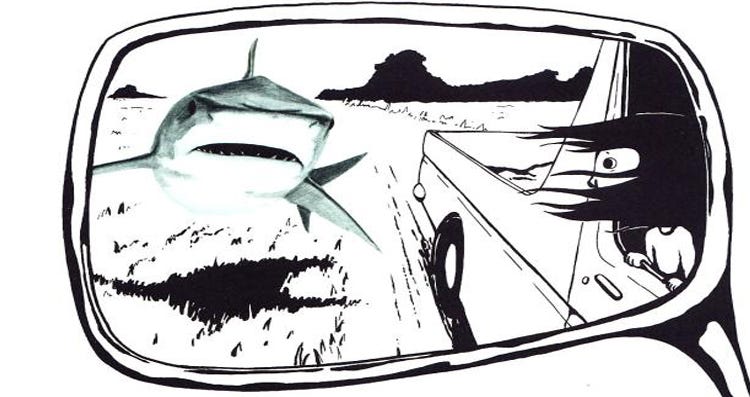
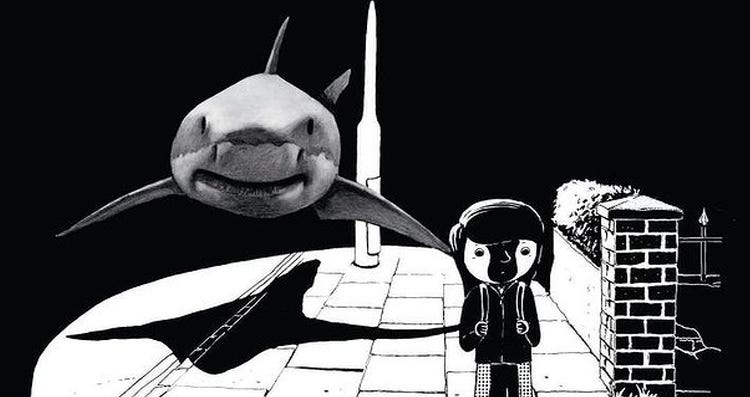
Wyld writes in such a lyrical prose that oftentimes Everything is Teeth has a poetic feeling to it. Joe Sumner’s gorgeous illustrations add a nice layer of beauty to the already fragile story. He employs a delicate, (mostly) monochromatic color scheme for much of the book; however, when intensity builds and the text explodes, he incorporates vibrant reds and photorealistic elements. Sumner’s additions create a rather magical landscape — one that’s easy to get lost inside.
Everything is Teeth is a short graphic memoir, but it packs the emotional punch of something twice its size. For readers craving something a little quirky, go ahead and take a bite out of Evie Wyld and Joe Sumner’s collaborative effort.
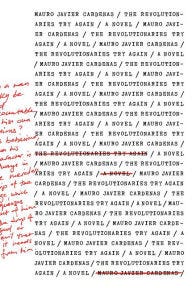
I had to train myself to write The Revolutionaries Try Again with music set to the highest volume, the same Arvo Part / Oliver Messiaen / Steve Reich playlist on repeat every day for twelve years, which was transmitted to my ears through oversized circumaural Sennheiser headphones whose headband would crack in the middle after a year or two such that my file cabinet has become a junkyard of cracked oversized circumaural Sennheiser headphones.
Although some of the tracks from this playlist surface explicitly in The Revolutionaries Try Again via Antonio, who tries to become a pianist and listens to this music as if it could provide him with an alternative life in which he doesn’t return to Ecuador (he does return to Ecuador), the effect of this music in the novel is mostly invisible, like the portable engine in god’s basement that makes waves.
1–4) Cantus in Memory of Benjamin Britten, Frates, Tabula Rasa & Litany by Arvo Part
To counter my cynicism while writing about so-called religious experiences, I would listen to Arvo Part and try to remember the apparition of the Virgin Mary in Cajas, the crying of my grandmother’s Baby Christ, my imaginary conversations with the Virgin Mary (the blank content of these conversations, because I don’t remember what we would talk about (— dear mother of god today I didn’t have a single bad thought? — )), simultaneously existing in hundreds of churches in Ecuador, in the musical landscapes of Arvo Part, and (not) in San Francisco. In The Revolutionaries Try Again, Masha, a Russian painter, listens to Tabula Rasa while remembering Antonio, a former lover, who, unable to resist the pull of imaginary beings, returns to Ecuador, his native country.
5–7) Quartet for the End of Time, Vingt Regards Sur L’Enfant Jesus, The Sermon of the Birds from Saint Francis of Assisi by Oliver Messiaen
Many years ago the San Francisco Opera had an adventurous director called Pamela Rosenberg who staged Oliver Messiaen’s opera about Saint Francis of Assisi. Messiaen used to voyage to canyons and forests around the world to transcribe birdsongs, some of which can even mimic the city sounds around them. He meticulously inked all of his birds, which he called, without irony, little servants of immaterial joy, into his opera about San Francis of Assisi. At the North American premiere of San Francis of Assisi, from the balcony section of the War Memorial Opera House, I watched San Francis praying about what he calls the perfect joy, in other words about the acceptance of suffering, which the orchestra and the ondes Martenots and the xylophones granted to him by performing an insistent, nerve-wracking squawk of every single birdsong Messiaen had ever transcribed. In The Revolutionaries Try Again, Antonio and Masha walk out of the North American premiere of San Francis of Assisi. Antonio also confuses the music he’d heard at his first meeting with a Jesuit priest in high school with part VI of Messiaen’s Vingt Regards sur L’Enfant-Jesus (music that follows no distinguishable pattern, roils, seems to progress in a scabrous direction, climbing to an altiplane to toll a bell).
8) Tres Rapide by Jean Barraque
I encountered Barraque in The Passion of Michel Foucault by Jim Miller. Apparently Barraque and Foucault were lovers, and because I tend to chase references that seem connected in some mysterious way to my own material, I immediately searched for Barraque and his atonal music. Years later it seemed so natural to pair Barraque discontinuous Tres Rapide with my attempt to compose a robotic monologue with errors by Rafael, known as Mazinger the Robot in The Revolutionaries Try Again.
9–12) Eight Lines & Different Trains by Steve Reich, Keyboard Study #2 by Terry Riley, Hommage a RILEY-REICHlich verGLASSt by Steffen Schleiermacher
The Revolutionaries Try Again contains four emdashed chapters, where the only punctuation allowed is emdashes and periods. These chapters, which on the page look like a horizontal version of the rapid, unattributed dialogues in JR by William Gaddis, required (according to me) rapid, recurring, phasing music, and that of course is (some) of the music by Steve Reich and Terry Riley. I listened to their music so much that, in The Revolutionaries Try Again, two pious ladies materialized to reenact the birth of Steve Reich’s “It’s Gonna Rain” with their tape recorders at a funeral. The Hommage by Schleiermacher begins with Steve Reich’s “Piano Phase” and then mashes up Riley and Glass, rushing toward what sounds like an electronic meteor apocalypse, which is probably why the characters in these emdashed chapters propel themselves towards destruction.
Last month, as I listened to “Different Trains” during a concert in celebration of Steve Reich’s 80th birthday next to my mother, who had come to San Francisco for the launch of The Revolutionaries Try Again, the propulsion of the music, which I have come to equate with the birth of my “performance of an impulse” sentences, sentences that eschew narration but create dramatic tension by obsessing on the impulse behind the sentence, electrified me so much that I almost felt compelled to start writing The Revolutionaries Try Again again. Thank you for everything, Steve.
About the Author
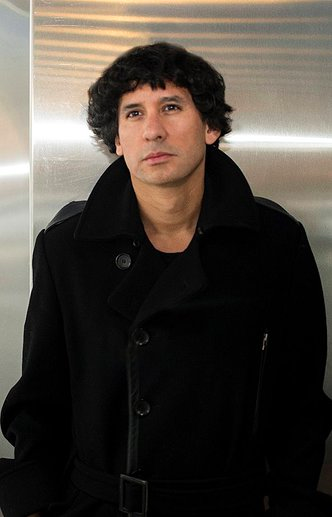
Mauro Javier Cardenas is the author of The Revolutionaries Try Again. Hegrew up in Guayaquil, Ecuador, and graduated with a degree in economics from Stanford University. Excerpts from his novel have appeared in Conjunctions, the Antioch Review, Guernica, Witness, and BOMB. His interviews and essays on/with László Krasznahorkai, Javier Marías, Horacio Castellanos Moya, Juan Villoro, and António Lobo Antunes have appeared in Music & Literature, the San Francisco Chronicle, BOMB, and the Quarterly Conversation.
Do what I do: come from a family, have parents, have done things, shitty things, over and over and over. There was the one day I got too friendly with my friend. The next summer, I welcomed men into the house while my mother and father were at work. I did this to the exclusion of everything else I was cut out for at twenty-two. The men passed through me one way or the other and came out narrowly mine.
That was the one summer my heart had clout.
In the early evening, I would sit on the patio while my father stooped among his flowers. I could never sit for more than half an hour without having to get up to walk to the bathroom at least once. I don’t know what I was expecting to come out, but I never once looked. I would put the lid down before I flushed.
Later, in the dining room, where the table would already be set, my father would say his piece. It always amounted to the same thing: if there was a problem, I should let Dr. Zettlemoyer know.
After dinner, I would go straight to bed. I crossed each night by linking one minute securely to the next, building a bridge that swung through the dark. I did my real sleeping in the morning sun, and around noon the first of the men would knock. The fact that they spaced themselves out assured me that they all knew one another and got along and were reasonable. Whoever was first was never a matter of surprise, but I think they would have liked the sequence to hold meaning.
My father never came home sick in the afternoon to find me on my knees in the living room with my mouth full of somebody’s grave, helpless perpendicularity. I never got to see my father eye to eye like that, the only way I wanted to.
My father: what stood out about him was that his life got put past him.
It was my mother who taught me the one worthwhile thing: when they ask if you like what you see in the mirror, pretend that what they mean is what’s behind you — the shower curtain, the tile, the wallpaper, whatever’s there.
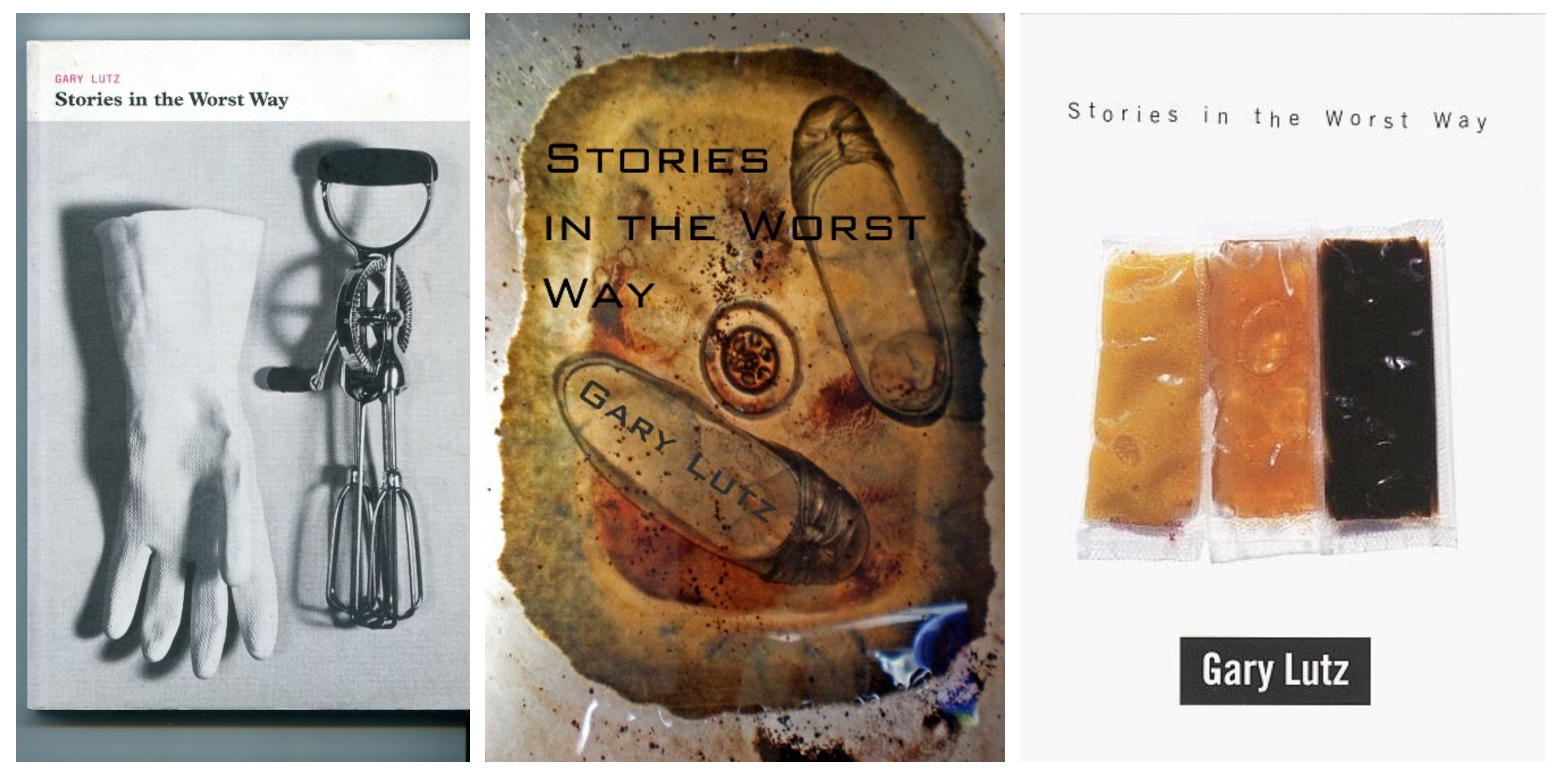
Certain Riddances
by Gary Lutz
The boss had a long list of reasons for letting me go — most of which, I am ashamed to admit, were generously understated. It’s true, for instance, that I hogged the photocopier for hours on end and snapped at whoever politely — deferentially — inquired about how much longer I would be. I was intent on achieving definitively sooty, penumbral effects to ensure that copies looked like copies, and that, of course, took time. Some days I spent entire afternoons reproducing blank sheets of paper, ream after ream, to use instead of the “from the desk of — ” notepads the boss kept ordering for each of us.
It’s also largely true that I had never bothered to learn the names of any of my co-workers. Everybody was either Miss or Sir. I am talking about people with whom I had shared a water fountain and a single restroom for years, people whose office wardrobes I had inventoried in pocket notebooks, people whose sets of genitals had often steamed only inches from my own. Actually, I had known their names but could just never stoop to using them. Most days what I felt was this: the minute you put a first name and a last name together, you’ve got a pair of tusks coming right at you (i.e., Watch out, buddy). But on days when I didn’t disapprove of everybody on principle — days when the whole cologned, cuff-shooting ruck of my co-workers didn’t repulse me from the moment they disembarked from the sixth-floor elevator and began squidging their way along the carpeted track that led to the office — my thinking stabbed more along these lines: A name belittles that which is named. Give a person a name and he’ll sink right into it, right into the hollows and the dips of the letters that spell out the whole insultingly reductive contraption, so that you have to pull him up and dance him out of it, take his attendance, and fuck some life into him if you expect to get any work out of him. Multiply him by twenty-two and you will have some idea of what the office was like, except that a good third of my colleagues were female.
My real problem, of course, was that I could dispatch an entire day’s worth of work in just under two hours. It’s not that I was smart — far from it. But I was quick. I knew where things should go. I had always liked the phrase “line of work,” because to me there actually was a line, raying out to the gridded, customered world from my cubicle, with its frosted plastic partitions that shot up all around me but gave out a few feet shy of the tiled, sprinkler-fixtured ceiling.
With so much extra time on my hands, I had to keep myself busy with undertakings of my own. For instance, there was a young woman, a fine-boned receptionist, who each day veiled her legs with opaque hosiery of a different hue, never anything even remotely flesh-toned. Every morning when I passed her desk, I would glance at her calves to note the shade. I soon began keeping track of the colors in a special file vaulted in the upper-right drawer of my battered dreadnought of a desk. Once, on my lunch hour, I made a special trip to a drugstore near the office to soak up the entire palette of hosiery shades — off-black, coffee, smoke, stone, mushroom, misty gray — because I wanted my record to be precise. Eventually I began to worry that beneath the cloak of the receptionist’s hosiery the flesh of her legs was crisply diseased. The worry enlarged and clamored itself into a conviction. Soon it became critical for her to understand the extent of what I had on her. On the first of each month, I began slipping into her mail slot a little unsigned booklet — an almanac, really — with unruled four-by-six index cards for covers. The booklet consisted of as many pages as there had been days in the previous month, and each page recorded the date, the shade of the hosiery she had worn that day, and an entirely speculative notation about the degree of opacity and what it implied about whatever man had been entrenched in her the night before (sample: “June 6, charcoal, glaucomatous — how remarkably hateful of you and your niggard”). All of this would be jittered out in a near-gothic script with a calligraphy pen bought especially for the purpose in a hobby store on an overbright Sunday afternoon. By and by, I would find each booklet tacked to the bulletin board above the Xerox machine, along with a memo from the boss saying: “This must stop.”
There was another woman, a pouncy administrative assistant, with a pair of succinct, pointed breasts — interrogative breasts. Even though I smeared past her in the corridor, wordlessly, no more than once or twice a week, I would feel grilled, third-degreed, for hours or even days afterward. At first, whenever the pressure to respond was acute — maybe every other day — I would simply slide an anonymous, index-carded “True” or “False” into her mail slot. But my responses eventually thickened into essays — with longish, interjaculatory asides about my lactose intolerance, my disloyalties, the gist and grain of my extracubicular life — and then into sets of dampish, insinuative memoirs, some of which kept me slumped over my desk for days at a time. These, too, which I photocopied until the words got shadowed and blurry, would wind up pinpricked to the bulletin board, with pealing cautionary memos from the boss.
The last response I sent her — and the only one that didn’t end up flapping at me from the corkboard — was a twenty-three-page streak of reminiscence about a belated birthday gift I had received from my grandfather a few days after I turned ten years old. What he had mailed me was a big, gleamless omnibus set of board games. On the lid of the box, the words my treasure chest of games: a different game for every day of every week of the year were spelled out in runny, unweighted block letters. Inside were an arrowed cardboard spinner, a pair of bleary, chalkish dice, an unwaxed deck of playing cards, some plastic markers, a dozen or so flimsy, tri-fold game boards, each printed on both sides, and an unstapled book of instructions. The whole set struck me as trappy and degrading. I felt as if somebody else’s life were being lowered over mine and that it would remain there, bestraddling and overruling, for a whole year. I remember tearing up each of the game boards — they were easy enough to shred — and bedding the pieces of each board on a separate sheet of construction paper and then balling it all up and depositing each scrumpled ball in a different wastebasket. Our house was full of wastebaskets, more than one to a room, because of the people we were intent on becoming. When my grandfather died, about a year later, and I got coaxed into attending the viewing, I noticed a spatter of paint — hobby paint, I was convinced — on each lens of his bifocals. Nobody had bothered to scrape it off, or else somebody had made a big point of not scraping it off. On a lamped lectern near the entrance to the chapel was a big book open to a page that everybody at the viewing was supposed to sign with a bead-chained pen. Where my name should have gone, I remember writing: “It goes to show.”
The intern I left alone. The intern was just some college kid, a carrel-bound girl with a face full of sharp, unkissed features. She was only twenty, twenty-one tops, and yet there she was, assigned as much square-footage as I occupied after nine soiling, promotionless years. I had banked a digital alarm clock atop a butte of telephone directories on my shelf, and after lunch I would watch 1:12 virus into 1:13, 1:14, 1:15, and I would wish for enough dexterity to fold a paper airplane and then deftly sail it through the space we shared above the partitions, landing it on her desk. But what would I have typed — and left starkly unphotocopied — inside? “Be glad you’re not the one who’s going to relieve himself on a certain something the next time the boss walks out of the restroom with his suit jacket still hooked on the back of the door”?
The boss was a large man with intricately redefined dentition — a mouthful of wirework and porcelain. His eyes were slow and halting: they arrived at what they were supposed to be looking at only after lots of embarrassed trial and error. The morning he summoned me to his office to recommend that I take the first of a series of renewable leaves of absence, I kept my eyes on the cuneiform scatter of golf tees on his glass-plated desktop. The boss inquired about my “home life” and my “social life,” but he talked mostly about his own. He had a teenage son, he explained, who was taking accelerated classes in high school and also a college course in art history on Saturday mornings. He had to chauffeur the kid to the college, because the kid was afraid to drive, and then he had to kill two and a half hours walking around the campus. The textbook for the course cost ninety dollars, he said, and, stealing through its glossy pages one night while the kid was out of the house, he discovered that the kid had styled tank tops and jockstraps onto the male nudes.
“What about you?” the boss said, reaching for a form I was supposed to fill out. “Are you involved with anyone?”
“Everybody,” I said.
Because my body was shacky and provisional, I kept it buried beneath flopping, oversized brown corduroy suits. I had exactly six suits — all identical, all purchased from the same discount outlet on the same day, almost ten years earlier. At first, people had predictably, pityingly, said: “He only has the one suit.” But eventually their tune changed to: “The guy must have a hundred suits!” The once steep and erect wales had been worn down until they were almost level with the wide gutters running between them.
It was in one of those eroded suits that I found some part-time work on the night shift at an office where two dozen or so employees, mostly students and housewives, looked up account numbers on microfiche screens and then penciled the numbers onto mint-green computer sheets. The turnover was high, and I was always the only male. Every time somebody new reported for work, she would see me in my suit and plump toward my desk. I would have to wave her off in the direction of the supervisor, a tasseled, doubtful black woman.
The supervisor began her nightly announcements, a third of the way through the shift, by bleating, “Listen up, girls.” I would always sense the eyes of my co-workers on me when, instead of cleaving to my work for a manful, face-saving half-minute or longer before lifting my head and swiveling in the direction of the supervisor, I would swing around secretarially at the instant the word girls was expelled from her mouth.
I felt privileged.
Unless the landlady counted the number of times water ran in the bathtub, there was no way for her to know that I was no longer living alone. By his own choice, the kid never left the apartment, and we never fought, so what else was there for her to hear? I dressed him in cotton skirts and sleeveless sweaters that I picked out in secondhand stores, using only one criterion: each garment had to be exceptionally confiding. The life of its previous owner needed to have bled vividly into the fibers to compensate for whatever would go unsaid or undreamed of in the new wearer. I had to apply this criterion harshly, because the kid was warm but otherwise unwieldable. I knew enough not to expect much from him in the way of help around the house. But I enjoyed arranging myself into a chair he had just absented for another bath or his hourly shave. He kept the bathroom door locked behind him and took his time.
What was between us eventually got beneath everything.
Who’s walking out of the White House with the biggest book deal?
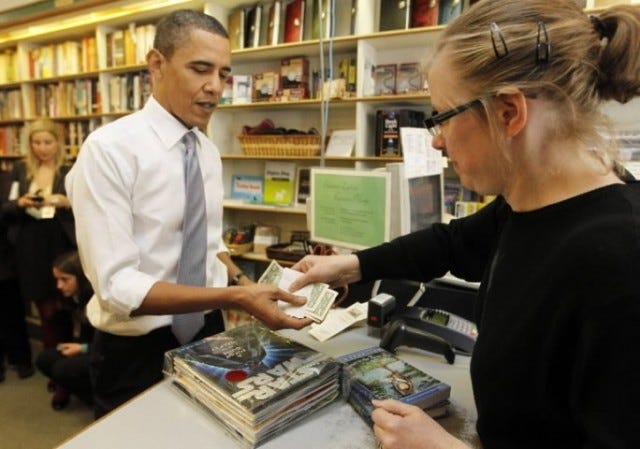
The Wall Street Journal is kicking off a new season of political speculation — this one about Obama’s post-presidency literary plans. History shows that leaving the oval office is one of the most opportune moments to shop a book. Just look at Bill Clinton, who brokered a $15 million contract for his presidential memoir, My Life. Given President Obama’s already tremendous literary success (both of his previous memoirs won Grammys for Best Spoken Word Album, among other accolades), he might have more leverage than any other President before him to cash in on a mega book deal.
According to the WSJ, in 2004 Obama signed a contract with Random House to deliver three books. He still owes one non-fiction volume, but the arrangement is flexible. Who knows, perhaps after eight serious years in the White House, Obama would like to try his hand at penning a novel for another publishing company. He’s a known lover of fiction (Lauren Groff, Colson Whitehead, et al.) It could be that this nauseating election season, coupled with having read Neale Stephen’s Seveneves over the summer, provided Obama with the right amount of inspiration to write the earth-shattering dystopian novel we’ve been waiting for since Orwell’s 1984.
But POTUS isn’t the only one who will have the opportunity to cash out on a lavish book deal. First Lady, Michelle Obama’s high approval ratings suggest that her hypothetical memoir would be a big success. The much loved Joe Biden has also expressed an interest in writing a book. Political memoirs are anticipated from aides in the Trump camp, too. After every election season, there’s a glut of political tell-alls, and 2016 promises plenty of dirt. However, if Trump plans on writing about his valiant campaign, it looks like he’s SOL with his original ghost writer. It will be interesting to see how the race for all of these book deals pan out in the coming months. One thing for sure is if Obama’s next book is anything like his previous works, no matter the genre, it will definitely be something for readers to look forward to.
DON’T MISS OUT
Sign up for our newsletter to get submission announcements and stay on top of our best work.
YOUR INBOX IS LIT
Enjoy absorbing fiction from Recommended Reading on Mondays, strange, diverting work from The Commuter on Wednesdays, and a roundup of our best work of the week on Fridays. Personalize your subscription preferences here.