Ted Wilson Reviews the World: The Sneeze I Had

★★★☆☆ (3 out of 5)

Hello, and welcome to my week-by-week review of the world. Today I am reviewing the sneeze I had.

Except for a woman I dated who had a condition that prevented her from sneezing or French kissing, almost everyone sneezes. When you sneeze, it feels a lot like what I imagine a really quick exorcism feels like. I’ve never been exorcised personally, so I’m going with my gut on this.

The sneeze I had came on so quickly I didn’t have time to put my hand over my face and the spray went everywhere. It made me wish I had been standing over a salad bar so there would have been a sneeze guard handy. That’s why if I’m about to sneeze at Olive Garden I immediately sprint for the salad bar. Maybe I should have one of those installed in my house. I’d get a lot of free salad that way.

Unfortunately without a sneeze guard anywhere near me, the spray drifted through the air, covering all my belongings in a light coating of sneeze. I couldn’t see it of course, but I knew it was there. So I had to cover everything in bed sheets to prevent the germs from spreading. It made my house look abandoned which I think attracted the raccoons.

The sneeze came just in time, though, because I had no idea what to review this week. Sometimes the overwhelming number of things I have yet to review can be paralyzing. Should I review a pen cap or should I review a different pen cap? What about reviewing the Great Wall of China or another different pen cap? There are too many choices! That’s when my sneeze happened and it was like fate stepped in and said, “Review that sneeze!”

It was a gratifying sneeze — not like one of those sneezes where you’re right on the edge of sneezing and it never comes and then you want to kill yourself. This one was hearty and made me feel as if I’d unclogged something deep inside me. Almost as if it was something spiritual. But it wasn’t, it was just boogers.

BEST FEATURE: No need for a tissue.
WORST FEATURE: I think I sprained my neck.

Please join me next week when I’ll be reviewing lint.

Blast Off! 11 Novels of Space Exploration

Space exploration has been in the news recently in a way it hasn’t in a number of years. That’s largely a result of the Elon Musk’s company SpaceX announcing detailed plans for a manned mission to Mars. If the most ambitious scenario succeeds, humans will set foot on the Red Planet by the year 2024. Not to be outdone, the CEO of Boeing vowed to get to Mars even sooner. It seems like a proper space race, albeit one in a form befitting the current age of privatized spaceflight. (For a nonfictional look at how we got to this point, Margaret Lazarus Dean’s Leaving Orbit is highly recommended.)

Looking at detailed videos and images that explain how a trip to Mars could be accomplished, and how permanent human habitation might be implemented, a host of fictional treatments of the same subject come to mind. Some novels about space exploration posit it as the next logical step for human society; others treat it as a necessity for the survival of the species. (Sometimes literally.) And still others use the idea of the exploration and colonization of space to explore the flaws and frailties of human society and humanity itself. Here’s a look at eleven novels that come at the notion of the exploration of space from a wide variety of angles and aesthetics.

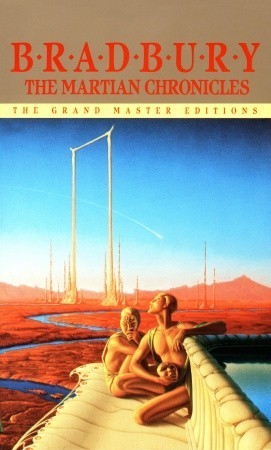
The Martian Chronicles, Ray Bradbury

Ray Bradbury’s collection of stories set over several decades as humanity colonized Mars wasn’t the first book about humans exploring a new world, but the emotional and stylistic range contained within its pages is what makes it impressive. Some of the stories evoke a sense of wonder, while others venture into the horrific. The changing dynamic between humans and Martians (and between Earth and Mars) evokes a number of disastrous and potentially disastrous human conflicts.

Nigerians in Space, Deji Bryce Olukotun

The space programs of two nations are at the center of Nigerians in Space, which focuses on a lunar geologist living in the United States who is recruited to help start a space program in Nigeria. After finishing his novel, Olukotun learned that some of its more speculative elements about a Nigerian space program were far closer to the truth than he had anticipated.

Radiance, Catherynne M. Valente

The idea of space exploration gets an alternate-universe spin in Radiance, set in an alternate 20th century in which the solar system has been colonized using the kind of technology that one might encounter in a Jules Verne novel. The furthest-flung planets from the sun have habitable atmospheres, and bizarre alien fauna complicate matters. Retro technology combined with heady plotting, and some left-field Big Ideas, deliver a compelling narrative about storytelling and new frontiers.

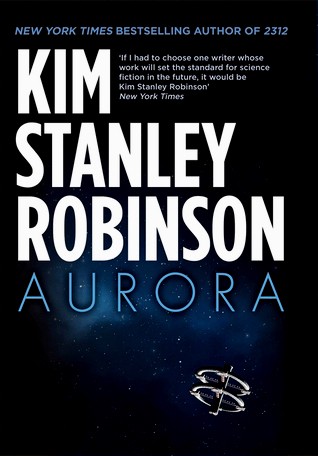
Aurora, Kim Stanley Robinson

Some tales of space exploration take place within the limited lifetime of their characters, and therefore focus on journeys to planets that can be conceivably reached. Other space stories deal with the concept of the “generation ship,” which is built for century-long treks (or longer) to reach the distant stars. Kim Stanley Robinson’s Aurora is a novel about the latter, and the aspiring inhabitants of a planet in the Tau Ceti system. The plot delves into the conflicts they face getting to their destination and settling there.

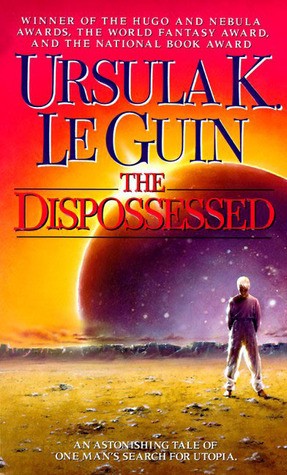
The Dispossessed, Ursula K. Le Guin

A number of the works of Ursula K. Le Guin are set in the Hainish Cycle, a group of stories and novels in the same universe. These books follow the spread human societies across a host of planets. Settlers in these novels stay in touch using a high-tech device known as the “ansible,” which allows for instant communication across vast distances. Le Guin’s classic novel The Dispossessed focuses on the political conflict between a pair of twin planets — one of which has a more utopian system, while the other is mired in a series of ideological clashes.

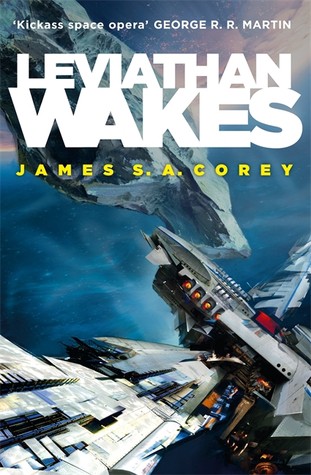
Leviathan Wakes, James S.A. Corey

Colonizing the universe’s planets may seem like a dream for some sci-fi lovers, but there are others who view the possibility as a mere expansion of the Earth’s geopolitical issues. Leviathan Wakes is the first installment of a six book series; you may also be familiar with the TV adaptation, The Expanse.

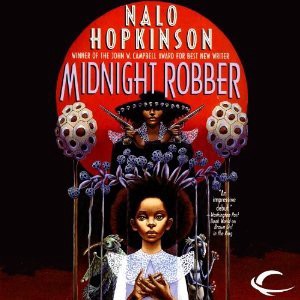
Midnight Robber, Nalo Hopkinson

In Midnight Robber, human exploration of space leads its characters to distant worlds and other dimensions. It begins on the planet of Toussaint, where the young protagonist Tan-Tan and her father reside. After an act of violence, they flee to an alternate version of the same planet, known as New Half-Way Tree. As Tan-Tan grows older she begins to understand the alien species living in this new world.

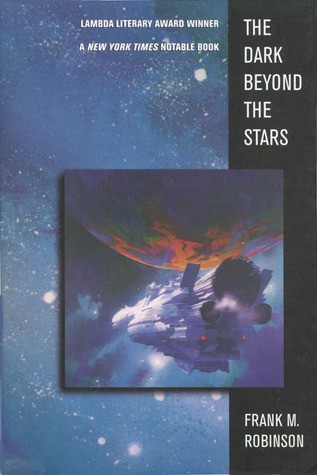
The Dark Beyond the Stars, Frank M. Robinson

Frank M. Robinson’s award-winning novel is set on a generational ship captained by an immortal human in search of extraterrestrial life. Robinson memorably captures what life on a long-running vessel might be like; shifts in the shipboard society, mechanical issues, and factional conflicts all play a part in how the book unfolds. Throw in an amnesiac protagonist and a host of mysteries, and the result is a compelling work where the journey truly is the destination.

Seveneves, Neal Stephenson

In some novels about space exploration, humanity’s primary motivation for venturing into the unknown is the desire to see the rest of the cosmos. In Seveneves, it’s done out of necessity; A mysterious event destroys Earth’s moon, leading to a planetary bombardment of asteroids that will render the planet’s surface uninhabitable. Stephenson takes the reader through the mechanics of devising a plan to create a sustainable society in space in a limited amount of time, and then leaps forward thousands of years to show how these events have altered human evolution and society.

The Dark Forest, Cixin Liu

Like other space exploration books, Cixin Liu’s Remembrance of Earth’s Past trilogy also features a spaceship traveling vast distances for a long period of time. What makes his novel unique is the ship’s occupants are aliens from a distant planet, and the world they’re looking to colonize is our own. In the trilogy’s second book, The Dark Forest, human technology has advanced to point where Earth has a state-of-the-art spacecraft of its own, with the ability to venture further than any techonology has before.

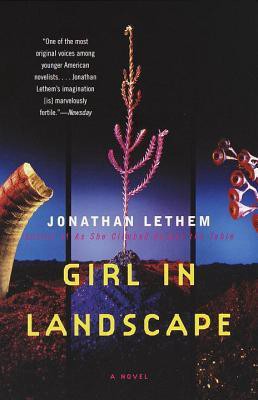
Girl in Landscape, Jonathan Lethem

Drawing parallels between space exploration and the United States’ westward expansion in the 19th century is something several writers have done across multiple mediums. (Firefly is probably the most prominent “space Western” that comes to mind.) Jonathan Lethem’s Girl in Landscape, offers a thoughtful spin on this; It is simultaneously a novel about human exploration (and colonization) of space, and a riff on the Westerns directed by John Ford (with a heavy dose of analysis and critique of John Wayne’s screen persona).

Someday Everyone’s Gonna Appreciate What You Are

A: My mom is so angry at me today.

S: Why?

A: Because I’m not up to date with my thank you notes.

S: You’re a punk.

She was the opposite of me in every way

S: …her name is pronounced not like GEN-uh-vieve, right? It’s Gen-VEE-ev? That’s the right one.

A: Yeah, I always say Gen-VEE-ev.

S: I was reading that Anders Nilsen profile on TCJ and that was the first thing. What other music were you listening to when you first heard her? What was your taste?

A: That was a really big turning point because it was the first time I heard the Microphones, which was what that song was. And that’s the first time I heard her voice —

S: “Solar System.”

The Microphones’ album Mount Eerie

A: Yeah. It was this incredible piece of music, and it came to me, but I didn’t know whose voice that was. I had no context for it. It was just this very interesting, beautiful voice. And it wasn’t until two years later that I saw her at a show and I was like THAT’S THE VOICE. Then that led me to Beat Happening, and all that other K Records stuff.

S: When you saw her, that thing where she said to stop smoking. Did you think it was cool that she was in command of her space? She was at work.

A: I thought she was the coolest woman I had ever seen. She was the opposite of me in every way.

Did you want to live in Olympia?

S: When we went to that Calvin Johnson show (in Baltimore in 2013), I don’t think I realized how special that was for you guys… I was just like, yeah, everyone likes Calvin Johnson. But you and Sarah were both like…

A: Yeah! That was really special. The last time I saw him I was photographing him in Montauk, and we stayed in a hotel with him and his mom.

S: How old were you?

A: I was 23.

S: Did you guys bond?

A: I was too nervous.

S: Did you want to live in Olympia?

A: Yes. My dad still makes fun of me because I always said I was going to move to Olympia after college. He was like, why.

S: In your imagination, what did you think it would be like to live there, at that time?

A: I think my idea of what it would be like… I think it was not that dissimilar from what it would actually be like, but I would be removing the actuality of who I am and the things that I need.

S: Was living in Baltimore more like what you imagined Olympia would be?

A: Yes, it was this level of more focused community… it was hard to leave. You put down roots. It takes two years.

S: It takes exactly two years.

Prisoners from the white-collar prison

A: …so once I found out who this woman was, I started listening to her. She became a star in the constellation of music I was into. And then the radio show…I didn’t know who was listening. It was almost this illusion of being able to share these things with people outside of my…actually people did listen to my show. There was one dude who I used to go to high school with who went to another school in the area, and he used to call in sometimes…

S: Was it a call-in show?

A: Not really. I told people to call in and they would sometimes. Prisoners from the white-collar prison…

S: Really?

A: Yeah. They used to call in and say that it sounded like I had a nice face.

S: Ew. There’s something grisly about that.

A: Or that the receiver wasn’t working, because I played all this lo-fi music and it sounded crappy and they were like, the receiver’s fucked up.

But the illusion of sharing things with people, especially since I felt so isolated all the time. That was important. Even though I wasn’t isolated, really. I was living with a bunch of friends. But all of this stuff happened while I was alone. I was in my bedroom. My friends didn’t know I wasn’t going to class, or sleeping fifteen hours a day. They didn’t know everything wasn’t fine, because I’d go to parties. And I never missed a radio show.

Everyone doing it together

S: Did you know about her visual artwork by the time you saw her play?

A: No. It all just kind of unfolded over the course of many years. I mean, relative to the fact that all this information was readily available online. I just never looked into it.

I had those two albums — the well-known one, Alone in the Forest, and then something she did with The Watery Graves.

Geneviève Castrée. Photo by Jason Saul.

But the way I absorbed music at that time…maybe we’re the last generation to even think about this. I personally didn’t do a lot of thinking about the lives of the musicians who were making what I was listening to. Any information I found out about them was just by happenstance.

S: Did you read music magazines?

A: Not really. I would listen obsessively, but I think on some level I thought I was the only one listening.

S: Maybe on the east coast at that time you could probably get away with preserving that feeling of privacy. I guess that would be in opposition to how it would be if you were on the ground in Olympia, having it be purposefully communal, everyone doing it together.

A: I was in suburban Connecticut. Dave Matthews land. For us, I mean, getting stuff. The internet was there, but it wasn’t like —

S: I just watched what my friends’ older siblings listened to and they gave us cool stuff.

A: I had camp counselors who turned me on to The Softies…and, like, Wilco.

S: Camp counselors! Were any of them riot grrls?

A: They were men. They were all dudes. Big brother types. They were like, here. Check out Wilco.

S: Oh!

Someday, everyone’s gonna appreciate what you are

A: I was into it. I just wanted to share. I think it [having a radio show] came from not having anyone to share that stuff with in high school. No one would listen to the Softies with me.

S: Did you make mix CDs for them?

A: All the time! I tried. There was this kid I had a crush on who was really into the band Brand New. And I was like, okay, how do we turn this into Black Flag, slowly spoonfeed…so I was like, okay, here, I’m gonna change your life. And then we can get married and go to NYU together.

S: Did you ever read the Jessica Hopper book? There’s this one story about when she was a young teenager, and she liked this guy, so she bought a Soundgarden t-shirt and wore it to the party, trying to get this guy’s attention by pretending to like Soundgarden. But in your case, you were the opposite. You were trying to fix him. You’re like wrong wrong wrong.

A: In the yearbook he wrote to me, he was like, someday everyone’s gonna appreciate what you are.

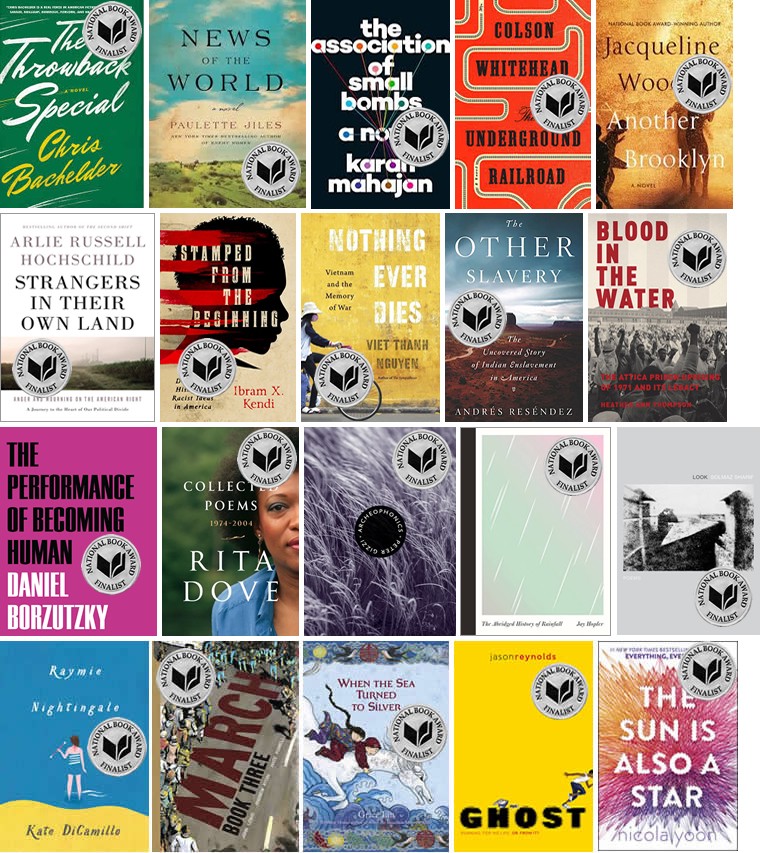
Here Are the 2016 National Book Award Finalists

Colson Whitehead, Karan Mahajan, and Rita Dove have moved to the last round

About a month ago, we posted the National Book Award Fiction Longlist, and today the wait to hear who the winners are is over. The National Book Foundation just announced the finalists in all of the categories, and noted how “memory, childhood, and the legacy of race in America are preoccupations that propelled works in each of the categories for this year’s finalists.” Nobody is surprised to see Colson Whitehead’s The Underground Railroad on the fiction list. The novel, which is arguably the most celebrated book of the year, takes the reader through a slave fugitive’s harrowing journey to the North.

Will Whitehead’s book be able clinch the ultimate prize? Stay tuned for November 16th when the winners of each category will be announced at the National Book Awards ceremony!

For now, here’s the list of the 20 finalists. Congratulations to all of the authors!

Fiction

Nonfiction

  • Arlie Russell Hochschild, Strangers in Their Own Land: Anger and Mourning on the American Right
  • Ibram X. Kendi, Stamped from the Beginning: The Definitive History of Racist Ideas in America
  • Viet Thanh Nguyen, Nothing Ever Dies: Vietnam and the Memory of War
  • Andrés Reséndez, The Other Slavery: The Uncovered Story of Indian Enslavement in America
  • Heather Ann Thompson, Blood in the Water: The Attica Prison Uprising of 1971 and Its Legacy

Poetry

  • Daniel Borzutzky, The Performance of Becoming Human
  • Rita Dove, Collected Poems 1974–2004
  • Peter Gizzi, Archeophonics
  • Jay Hopler, The Abridged History of Rainfall
  • Solmaz Sharif, Look

Young People’s Literature

  • Kate DiCamillo, Raymie Nightingale
  • John Lewis, Andrew Aydin & Nate Powell, March: Book Three
  • Grace Lin, When the Sea Turned to Silver
  • Jason Reynolds, Ghost
  • Nicola Yoon, The Sun Is Also a Star

I Came Here to Disappear

Melanie Finn’s second novel, The Gloaming, opens with the end of a marriage. The scene is a mutual friend’s home outside of Geneva, and the catalyst for the collapse is a young woman, Elise, who the novel’s narrator, Pilgrim, sees approach her husband while the three are on a group walk. Pilgrim continues on ahead of the pair, and she looks back occasionally to watch them chat. Her husband, Tom, leans toward Elise; Elise covers her face to laugh. They flirt in a “breathless air,” caught in a moment where everything seems “amplified, impulsive,” and yet Pilgrim never interrupts their encounter. It’s almost as if she knows a chapter of her life is coming to a close.

On paper, the exchange lasts just two paragraphs, yet the economy of language employed by Finn in this well-crafted opening is brilliant, relaying everything one needs to know about the gut-punch reality of seeing a life drift away via simple gestures and observation. Never does the author slip into tired melodrama, and this decision helps sets the tone for the entirety of The Gloaming, which, despite a somewhat deflated conclusion, offers an engaging take on redemption narratives.

Time passes. Tom and Elise, now a couple, have recently had a baby. Meanwhile, Pilgrim lives alone in Arnau, Switzerland, in the apartment she once shared with her husband. Her life is relatively solitary, and while she’s a year removed from that fateful walk outside Geneva, Pilgrim still tries to understand how to approach her new reality — as an American, for example, she isn’t sure why she remains in a small European town.

Then one day Pilgrim swerves to avoid a dog in the road and crashes her car into a bus shelter, killing three children. Though she is ultimately found innocent of any wrongdoing, her community cannot ignore the tragedy. They see her as nothing but a killer, and Pilgrim suspects the father of one of the lost children is regularly breaking into her home. Thus, saddled with guilt, disconnected from her surroundings, Pilgrim uproots herself — her name lends itself to such action — and relocates to Tanzania, first settling in the small community of Magulu before taking up residence in Tanga.

At this point in her novel, Finn could transform her protagonist’s story into something akin to an Eat, Pray, Love knockoff. Thankfully, she shies away from such epiphany quests, instead setting Pilgrim off on a far more ambiguous journey. The character has no particular ambition other than to hide from her old life, and so she sets up house and finds herself integrating into the day-to-day lives of the locals: police officer, Kessy; quirky doctor, Dorothea; and later, in Tanga, Gloria, who has come to Africa from the United States to build an orphanage for children living with AIDS; and Harry, a drunkard pilot. While Finn injects elements of danger into these locations in the form of Martin Martins, a mercenary who arrives one day out of the blue, as well as in the discovery of a mystery box containing shriveled body parts, her focus primarily falls on the limbo nature of Pilgrim’s time in Tanzania, where everything — safety, life, happiness — is tentative. Here, we see the novel’s title truly blossom, for just as dusk separates day and night, Pilgrim’s life slowly teeters between security and chaos in this unfamiliar land. Early in her residency, after she is mobbed and attacked by a group of local children, Pilgrim washes her face back at her room, and her mind — remembering her car accident — wanders between Switzerland and Tanzania:

Their gender and their number are a coincidence. A girl and two boys. From huts in the bush. But there, again, is the odd loosening, the wavering, and I force myself to look in the mirror. Here I am. Here. My hands are on the sink. The solidity of things. Touch my face with my fingertips. Feel my skull under the skin.

This tangent, and the others that introduce Pilgrim’s state of uncertainty to the reader, are potent, and despite the somewhat rambling nature of her travels, Pilgrim’s narrative grabs the reader. So it’s a shock when, a little over halfway though her novel, Finn abandons her protagonist’s first-person, diary-like chapters to spend the rest of her book looking at the world through the eyes of those Pilgrim meets. We travel back in time and location to spend a long section with Strebel, the police inspector assigned to investigate Pilgrim’s accident. Finn playfully uses these pages to retell scenes in which the pair interacts, rounding each out with the injection of Strebel’s thoughts and his attraction toward the striking divorcée, but she also employs Strebel to show what happens in Switzerland after Pilgrim flees. Soon enough, the policeman is on a plane to Africa himself, convinced that Ernst Koppler, the bereaved father of one of Pilgrim’s victims, has decided to hunt down and kill her.

From here, the author fills in the gaps of Koppler’s murderous quest, and, in turn, Pilgrim’s ultimate fate, by devoting other sections to Dorothea, Gloria, Harry, and Martin Martins. The move is bold, and it jars the reader from any sense of comfort, yet these sections, perhaps due to Finn’s decision to switch to primarily a third-person subjective perspective, only sometimes find the same precision in voice evident in the novel’s first half. As the final pages wind down, and Pilgrim’s story comes full circle (with a bit of convenient character shuffling), it’s hard to tell if this structural decision truly pays off. Yet there’s enough allurement throughout The Gloaming to stave off boredom. This is a pure example of a literary page-turner, one that begins with an ending and ends with a new beginning, written by a very smart author.

Chloe Caldwell Has Gained Control

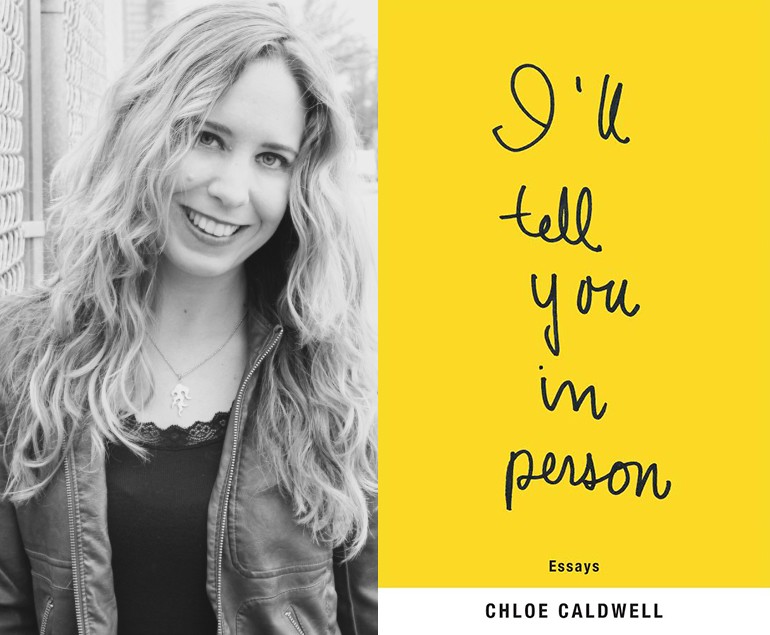
In 2012, Chloe Caldwell published her first book, the essay collection Legs Get Led Astray. She was only 26, and the book was warmly received by both readers and critics. Women, a restrained and beautiful novella followed in 2014. Her third book, an essay collection entitled I’ll Tell You in Person (Coffee House), was published Tuesday. The book covers a lot of ground, chronicling the life of a young woman who is in turns reckless, fastidious, self-aware, solipsistic, depressed, and joyful, and the combination of these contradictions makes the book both surprising and familiar. It’s a fun, funny, heartbreaking book, one that also happens to be compulsively readable.

I’ll Tell You in Person is the second release from the new Emily Books imprint under Coffee House. Emily Books isn’t new — they’ve been an eBook store run by Emily Gould and Ruth Curry since 2011, selecting “underappreciated novels and memoirs, mostly by women.” They published the eBook of Women, and other writers like Eileen Myles, Renata Adler, Nell Zink, Chelsea Hodson, and Melissa Broder (and also myself).

I interviewed Caldwell about the book, her publishing process, a substance called Kratom, writing about Lena Dunham, and other things, via email. Full disclosure: Caldwell and I are friends.

Juliet Escoria: I have had a hard time with figuring out the difference between fiction and nonfiction in my writing. Has it been easier for you? When did you know that Women was fiction and not an essay? Do you worry about bending the truth with your essays? Did any of the essays in I’ll Tell You in Person begin as something else?

Chloe Caldwell: I differentiate by structure. I’d never written in the structure of Women, like a novella, so that helped me fictionalize. For essays I go into them with some internal conflict, which you can see in most the ITYIP essays. ITYIP would never be a short story collection, for example. If I wanted to write a short story collection, I’d broach it completely differently.

I feel like your first book could read more like short stories, and you use plot more, whereas my essays don’t usually have plots other than emotional plot. When I’m using emotional plot, it’s just super nonfiction essay-ish to me.

I’d been working on Women for about two months before I began fictionalizing, bending truth, and adding characters. What freedom! I’d like to write in that style again. I’m pretty drained on the personal essay form.

No, I don’t worry about bending the truth in my essays too much because I’m usually not reporting on plot-like stories or quoting tons of people. Most my essays are my internal thoughts. I don’t bend the truth as far as I know. I dramatize it, sure, with emotions, but I don’t bend it.

JE: I love Emily Books, and think it is very cool that you are one of the first authors to be published under their Coffee House imprint. Can you talk about your publication & editing process with them?

CC: We are so lucky to live in a world where Emily Books exists. When they bought the collection it looked quite different. With their direction, I added “Failing Singing” and “In Real Life,” and developed most of the other essays. We kept changing the order and talking about section titles (which ultimately felt unnecessary).

After they bought it, Emily sent me a long “big picture” letter pointing out my strengths and weaknesses and discussing thematic ideas, essay by essay. I took that letter and went back to the MS for about four months, and then began the line editing process with Ruth. So they did all the editing stuff and then the Coffee House team came in with marketing questionnaires and cover ideas. It’s been a unique experience, especially since I was friends with Emily and Ruth ahead of time. That makes it even more special, because I can text them about TV shows and shit as well as professional stuff. Like I was just asking Emily which dress I should wear to my book party. It’s a lucky place to be in.

JE: One thing I like about writers who write nonfiction and/or autobiographical fiction is that the actual life of the author becomes art, and part of a larger story that gets more complicated and nuanced with each book. Do you think of your three books in that way? How do you see them in relationship to Chloe Caldwell, the person?

CC: I’m so close to it that it’s challenging for me to answer questions like this. The biggest thing for me is how they’ve organized my life. I look back at my books to remember where I was living, who I was dating, where I was working. Legs Get Led Astray was my move-to-Portland-start therapy-stop-doing-drugs book. After selling Women I moved into my apartment and got my shit together in many ways. With ITYIP I began teaching, bought a car, bought a couch. (Not off my advance, with teaching money.) That’s how I look at my books. Ha.

JE: The essay “Hungry Ghost” is about your experiences with a celebrity who you describe as “somewhere on the spectrum between Eileen Myles and Beyonce” and as “someone [you, the reader] admire too — or you might hate her and think she’s fat.” Did you feel weird or uncomfortable or hopeful when thinking about her reading it? Were you worried you were portraying her in an unflattering way? Was there any particular weight to it, considering you were writing about someone who is so famous? What were you considering when you decided not to name her, but to make it fairly easy to figure out which celebrity you were talking about?

CC: I suppose my superpower is not thinking about stuff like that when I write. I really let myself write the essay how I want to, because I’m writing for fun, and I can decide later to publish it or not. Mary Karr, I think, has what she calls a “compassion read.” I guess I do something similar and during line edits, by triple-checking if there’s any lines that are unnecessary or exposing or hurtful, and if so, then I delete them. I try to strike a balance of fairness. I don’t know if I achieve it but I attempt to.

I was extremely worried Lena Dunham would feel disrespected, and fretted a lot about it, which now seems funny now. When galleys were sent out, I sent her a copy and an email warning her. That’s my rule, not letting people be surprised. She was totally understanding and said something like, “When you do what I do, you can’t get mad at anyone else for what they do!” Later when she read it, she sent me a kind email and we processed a bit and that was the end. This has been my experience for the most part with nonfiction and writing about people: it’s never as horrible as you imagine it will be. She understood I wasn’t trying to call her a flake, it was just good ground for an essay and I tried to make myself look like the retard in the essay. Which was easy! I did consider sending her the essay pre-galleys but ultimately didn’t want to change anything I’d written and not using her name was a way for us both to feel better about it, I think. I’m talking openly now that it’s her because she said that’s fine.

Remember that reading we did in Chicago last winter? One chick came up to me afterwards and asked if it was Mindy Kaling!

This has been my experience for the most part with nonfiction and writing about people: it’s never as horrible as you imagine it will be.

JE: I’ve had this weird experience after publishing stuff I wrote that was based on the not-so-great parts of myself and my past. It always feels embarrassing at first but then eventually things shift, in a way that feels sort of like a healthy kind of compartmentalization. Is it like that for you? You certainly don’t seem to be concerned about making yourself out to be this person who has it all together, which is one of the things I most admire about your work.

CC: I’ve noticed when my books first release there’s total adrenaline and it’s absolutely mortifying and then over a year or so, it starts to feel more like “work.” You read so much from your shit and answer all these questions that there’s a distance, more like a chore. You get tiny chunks of money for different things. I read from Women the other night and honestly have a feeling now of like, who wrote this? It’s bizarre. I guess I’m good at disassociating. I do that when I give readings as well, thinking about baseball in my head as I read so I can disconnect from the material.

I just read an article in Psychology Today, which my therapist lets me take from her waiting room because it’s my guilty pleasure, about rewriting our life stories into a way you can live with. It says:

We can’t change the past, but we can change how it affects us and who it makes us. When we tweak what we tell ourselves about the past, we can redirect our future. In our relationships, through our life choices, or at our jobs, we can recognize our mistakes, move on, and start to embody a different story. Rewriting helps you gain perspective, sort out your emotions and increase narrative coherence — your understanding of who you are, how you became that person and where you are going.

That really resonated with me.

JE: ITYIP covers a lot of ground, both in subject matter and tone. You have funny, gossipy essays like “Hungry Ghost,” and then heavier, more devastating essays like “Maggie and Me: A Love Story” and “Berlin.” Were you conscious of making sure you covered a wide variety of emotional experiences? How did you decide on the arrangement of the essays, and the decision to break the collection into three parts?

CC: I’m glad it reads that way. I collected all of the essays I had into the MS, then cut some shitty ones and added others. I wrote a few specifically for the collection, such as “Sisterless” and “The Music & The Boys. There was no reason for it to be chronological so we played around with order. The segments aren’t labeled which I like because the reader can take away whatever themes emerge for them on their own.

Most collections are split into parts so I was just mimicking other books. I do sort of like how it starts off more druggie-like and self-destructive but then gives way to essays about women writers who have touched my life in some way. I don’t know how conscious I was. I just worked with what I had and prayed for the best!

JE: I thought it was neat that you open your collection with a short essay about your relationship to personal essays — your experience with reading and publishing them, and also reactions you’ve gotten from other people. And then there is the conversation you once told me about, with another writer who was acting as though there was something unsavory or unliterary about the personal essay as form. Do you feel self-conscious about publishing personal essays? Why do people hate on them, or act as though there’s something tawdry about writing about oneself? I mean, isn’t all writing, in some way, about ourselves? At least personal essays are up-front about it.

CC: I feel self-conscious about it in some ways, but not enough not to do it. I’d likely feel self-conscious about any career choice I’ve chosen.

I don’t know why people hate on them. I think when people write openly about flaws, it reminds readers of parts of themselves they hate or aren’t always in touch with. Some people are so embarrassed by the personal essay that they won’t publish them, where I’m not that embarrassed, and that makes the difference between what they do and what I do — I put mine out there. It takes all kinds. Sorry for being corny. I just like, don’t care anymore. About genre snobbiness and people’s thoughts on personal essays. It seems beat. I don’t care if people find me “literary” or not. I enjoy writing and that’s more than I can say for a lot of writers. Excuse the rant.

I don’t care if people find me “literary” or not. I enjoy writing and that’s more than I can say for a lot of writers. Excuse the rant.

People keep asking me why they’re hated on, but that’s not my experience. Sure, people think fiction is a higher art. But in my world I publish them, read them, and teach them, so I’m biased and in a bubble of people who love and support them.

My existential attitude of “We’re all gonna die who cares” has been helpful for me when it comes to this stuff. Because we’re all gonna die. Who cares? Let people write/read what they want. And yeah exactly — if I’m upfront about my flaws and stupid shit I’ve done, I guess I feel I’ve gained some control on that part of my life and since I’m calling it out first, it makes me in some way feel protected from what reviewers and people say.

JE: One time you gave me Kratom before a reading and all it did was make me feel shaky and nervous. What the hell is Kratom? What does it do for you? Why do you like it so much? Also just now while Googling to make sure I was spelling Kratom correctly, I came across this article, which says as of 9/30, the FDA will designate it as a Schedule I drug. How does this make you feel? WHAT ARE YOU GOING TO DO?!

CC: Juliet, I’m fucked. I can’t even get into it here. It’s too devastating and private. I don’t understand how Kratom did that to you, probably cause you mixed it with Red Bull or something. But I’m also relieved, I knew this day would come eventually.

JE: Have you seen the Pitchfork series “Over/Under”? (If not, I highly recommend the Kathleen Hannah, RiFF RAFF, and Earl Sweatshirt episodes.) Can we play over/under with the following?

CC: Never seen it, but I do love Erik Andre.

JE: Ben Lerner.

CC: Would anyone call Ben Lerner underrated? People cream their pants for his books.

JE: Elizabeth Ellen.

CC: HARD UNDER. EE is behind-the-scenes supportive of so many women writers and has helped me emotionally and financially. And romantically. Just kidding. Maybe.

JE: Bread.

CC: HARD UNDER. Why the fuck does no one eat bread anymore? Trust no one who doesn’t. In an ideal world, I eat bread every day.

JE: Hummus.

CC: OVER. Don’t get me wrong, I eat it, but you can just put chickpeas in a blender and make it instead of paying 6.99.

Geek Reads: If Trees Could Scream

“If trees could scream, would we be so cavalier about cutting them down?” the humorist Jack Handey once asked. “We might,” he admitted, “if they screamed all the time, for no good reason.”

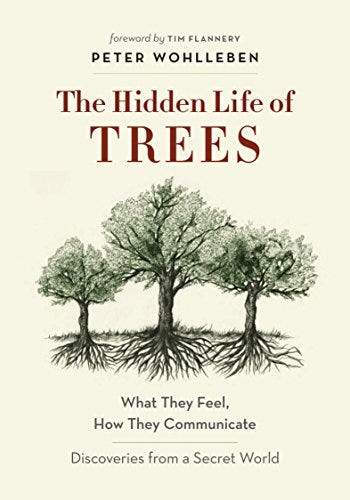
In his superb The Hidden Life of Trees, the German forester Peter Wohlleben indicates there may be some truth in Handey’s joke. “When trees are really thirsty,” he writes, “they begin to scream.”

Newly translated into English and subtitled “What They Feel, How They Communicate,” this revelatory book offers a numbers of deep thoughts about the towering giants in our midst. “We know how the sounds are produced, and if we were to look through a microscope to examine how humans produce sounds, what we would see wouldn’t be that different,” Wohlleben writes. “The trees might be screaming out a dire warning to their colleagues that water levels are running low.”

Could trees really be talking to each other? Now, don’t be hasty. “That doesn’t necessarily mean anything,” Wohlleben admits.

And yet.

Scientists at the University of Western Australia were able to record trees’ roots crackling at a particular frequency. And, Wohlleben notes, whenever “seedlings’ roots were exposed to a crackling at 220 hertz, they oriented their tips in that direction. That means the grasses were registering this frequency, so it makes sense to say they ‘heard’ it.”

So are trees really capable of communication? To University of British Columbia ecologist Suzanne W. Simard, “using the language of communication made more sense because we were looking at not just resource transfers, but things like defense signaling and kin recognition signaling.” In a recent interview, she added: “The behavior of plants, the senders and the receivers, those behaviors are modified according to this communication or this movement of stuff between them.”

These findings called to mind J.R.R. Tolkien’s Ents, the talking trees in The Lord of the Rings. Were those fantasy books even more prophetic than previously thought? The possibility made me eager to flip through a few other new volumes about biodiversity and the wondrous world in which we live.

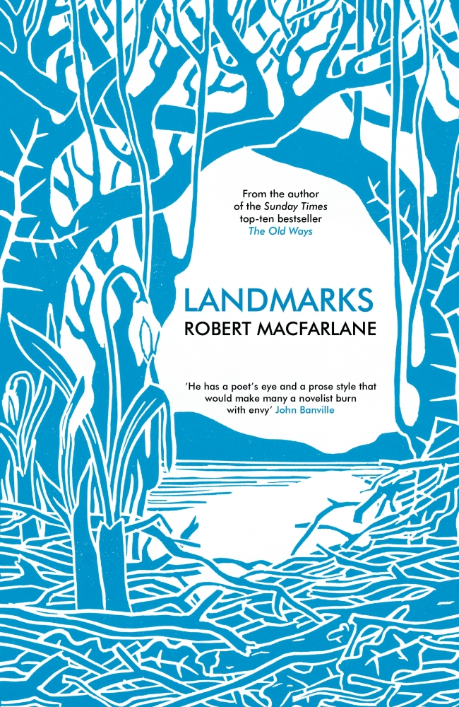
Robert Macfarlane has become my favorite living nature writer in large part because his passion for adventure and his etymological derring-do. His awe shines through in every sentence and he maintains a rare humility in the face of the natural world. He’s a Fellow at Emmanuel College, Cambridge and his latest book, Landmarks, revels in rescuing lost naturalistic words from obscurity.

Each chapter of Landmarks includes a glossary of odd words otherwise in danger of being forgotten. In Northamptonshire, he tells us, “brattlings” are “loppings from felled trees” and the “stump of a tree after the trunk has been felled” is a “nubbin.” He culls his naturalistic vocabulary from, among other sources, various regional dialects of Great Britain, nature poetry, and forestry manuals. Learning names for things I look at every day has helped me to really see them. Weeks after finishing the book, I still catch myself returning to his word-hoard time and again.

In Richard Fortey’s new The Wood for the Trees, the former paleontologist at London’s Natural History Museum describes a year spent studying four acres of woodland he purchased in Oxfordshire, England. He has the eye of a taxonomist or collector. “I wanted to collect objects from the wood, not in the systematic way of a scientist, but with something of the random joy of a young boy,” he writes.

It’s an understandable impulse. The window sill of my Philadelphia living room is cluttered with objects my wife and I have found while hiking, many from the nearby Wissahickon Creek Park. But my own materialism doesn’t always sit right. Perhaps I should have left these trophies — a hand-wrought key, a seashell, a hunk of coal — where they were.

Fortey’s is a lovely book and it provides a useful reminder to attend to the trees in our midst, but the assumption that the woods exist primarily for human pleasure — and plundering — is not one I’m entirely comfortable with. That said, Fortey’s love for the outdoors is entirely contagious. A few passages made me stop reading so I could absorb the imagery:

Overnight, several inches of snow have settled in the wood. A slow, steady fall of big flakes has left every holly leaf with a burden of white icing. The tiered branches of the small yews, usually so discreet and dark, are suddenly blatantly arrayed for a winter festival.

The book is subtitled “One Man’s Long View of Nature” and it crossed my desk during a transitional time at the end of the summer when — according to Wohlleben — trees begin to devote less energy to their leaves.

In the three years my wife and I have lived in our rowhouse, we’ve planted four trees in the small backyard: redbud and pagoda dogwood, coral bark Japanese maple and a small fig tree I adopted from a farmer in Amherst. Now that I’ve read The Hidden Life of Trees, I ask myself if I’ve done those trees and the others in the surrounding yards a disservice by introducing them into a foreign realm.

It’s difficult to imagine planting trees could be a bad thing, and yet it would be foolish to take our new scientific knowledge about trees lightly. Every year, it becomes more obvious how interdependent we are with the natural world — and how rapidly we are depleting its resources. By one account, 20,000 square miles of the Amazon rainforest vanish every year.

Even Tolkien’s Ents lament about their dwindling numbers. In The Two Towers, the wayward hobbits Meriadoc and Pippin meet the talkative Ent named Treebeard. “You see, we lost the Entwives,” Treebeard says.

“How was it that they all died?” Pippin asks, setting up the worst joke in all of Middle-earth.

“I never said they died. We lost them, I said. We lost them and we cannot find them.”

If Wohlleben is correct about the ability of trees to communicate — and I suspect he is — we all have a lot to lose every time a trees falls. Like Landmarks, The Hidden Life of Trees has me looking at my own little backyard with different eyes. That parcel of land doesn’t belong to me any more than it does to the squirrels and, now, to this fig tree. I am nothing more than a temporary caretaker. Wohlleben’s book makes me want to be a better one.

There’s so much we don’t know about trees, and likely never will. That’s perfectly OK with me, especially because my recent reading makes me want to adopt a less human-centric vision of the natural world. I’m certain that most trees would be better off without our meddling and the pollutants we belch into the atmosphere .

Every time I drive on the New Jersey Turnpike, for example, I am forced to wonder how many oaks and walnuts, pines and mulberries were chopped down to build a Service Area named for Joyce Kilmer (a man who wrote, “I think that I shall never see / A poem as lovely as a tree”).

Similarly — and I don’t mean to throw shade at these thoughtful nature writers — it’s also true that every time I read a book about trees I wonder if it’s worth the paper on which it’s printed. A precious few certainly are.

Midweek Links: Literary Links from Around the Web (October 5th)

All the best literary links that are fit to, well, link

Why do we love to write about witches?

Nell Zink isn’t “entirely demented” in an interview with The Millions

The Atlantic looks at two books about immigrant families and finding hope in the rubble of the American Dream

Elena Ferrante may have been unmasked, but does knowing actually help us understand her novels?

Novelist Rabih Alameddine is turning his Twitter feed into art

Alexander Chee, Emily Barton, and Whitney Terrell talk about taking 10 years to finish their second novels

Five books about creepy living dolls for your Halloween reading pile

Margaret Atwood, Etgar Keret, and others predict our dystopian future

Jess Row talks about writing while white and why we can’t deny fiction is political

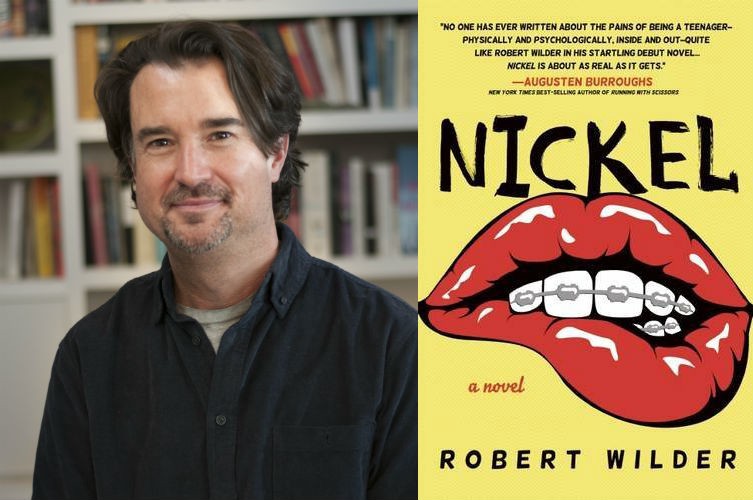
Robert Wilder’s Madcap Teenage World

In the new novel Nickel (Leafstorm Press 2016), we meet Coy and Monroe, two best friends with hundreds of pop culture references at their fingertips. Their lives are one long stream of jibs and jabs, a sort of zany Howard Hawks back-and-forth, madcap dialogue for the millennial. They sit comfortably on the fringes of their school’s social scene, comfortable in their comfort with one another. When Monroe starts getting sick, Coy’s world slips into harsh focus, raising questions about their friendship, and whether or not he can save it, let alone save his friend.

‘Nickel’ is not only a coin, it’s the source of Monroe’s allergy. But it’s the coin that kept popping into my head while reading — more money than a penny, but not enough to really get anywhere good. Larger than a dime, but worth much less. As big as the outsize emotions of high school, and just as undervalued.

I spoke with Robert Wilder over email about metal poisoning and teenagers.

Hilary Leichter: You did such convincing work creating the maximalist, pop-culture-soup of Coy’s inner monologue. He has a very specific way of articulating the world around him, and every sentence feels packed with allusions, puns, and slang. How did you go about building his vernacular?

Robert Wilder: All teenagers speak in some sort of code, not only to their friends but to themselves as well. This unique style of slang serves so many vital purposes and is constantly changing. I’ve studied my students’ slang for 25 years, not only in terms of their oral communication, but in their prose and poetry as well. Coy speaks code to his best friend Monroe because they are a unit and their unique shorthand unites and protects them. It’s really a form of intimacy. Coy also has an internal slang where he plays with language as a way to figure out a rather complicated life. My goal was to try to create a series of vernaculars for Coy to employ that shows how he navigates adolescence. I took pieces of slang from what I’ve collected over the years as a teacher and father and tailor-made it for who Coy is and who he wants to become.

HL: The book captures a lot of the cruelty of teenage-dom, the kind of merciless way that these characters see adults, see each other, and see themselves. Their gaze can be unforgiving. How did it feel to live in that space while writing the book?

RW: I have been doing a few school visits recently, and I tell students and faculty that being a teacher means experiencing a sad version of Groundhog Day, over and over. Every new academic year brings a whole new slew of teased kids or students sitting alone in the cafeteria or individuals feeling awkward class after class. Seeing this kind of pain always breaks a teacher’s heart and you can only do so much to prevent kids from suffering. Each new school year reminds me how both fragile and resilient teenagers are. I have deep empathy for all the characters in the book — teens, parents, teachers. All of us are so beautiful and so broken. I really carried all those emotions with me as I was writing Nickel.

HL: Are there any other young protagonists that informed the way you wrote the characters of Coy and Monroe?

RW: My own students and my son London and his friends were the best protagonists for me, but I also love Christopher John Francis Boone in The Curious Incident of the Dog in the Night-time, Holden in Catcher (of course), and many teen characters in Lorrie Moore and Antonya Nelson’s fiction. One of the best books written about high school is Ms. Hempl Chronicles by Sarah Shun-lien Bynum. I was also influenced by my daughter’s music recommendations of bands like Girlpool and Slothrust. Phoebe Gloeckner’s graphic novel Diary of a Teenage Girl and David Small’s Stitches are both honest and moving and treat their younger selves with a keen eye.

10 Great Teens In Contemporary Fiction: A Reading List

HL: Can you talk about how your time as a teacher inspired or allowed for the research-project element of the plot?

RW: In terms of Nickel’s plot and shape, I tried to focus on the way a school year unfolds — how things are new and exciting in the fall but can quickly become mundane and tedious as the year goes on if we are not careful. I was also interested in how quickly things can change over even a brief winter or spring break. A lot can happen in those two weeks. I’m really a student on how schools react when kids get into trouble — whether it’s illness or behavioral or family trauma and how those issues can really change the course of a school year. There is constant cause and effect in any school; you just need to watch for it.

HL: There have been a lot of books written recently about kids who are sick, and the struggle is often a terminal illness. You seem to be twisting that narrative into something different — a diagnostic mystery narrative, where the mystery is the struggle. Was this something that you were consciously working towards?

RW: Absolutely. So much of our lives are a mystery, and I think we dwell far more in that uncertainty than in conclusions, oversimplifications, and melodrama. We know so little about so much. Most of us really have no idea how anyone else is doing. We often don’t even know how we are feeling in any given moment. I wanted the mystery of Monroe’s illness to mirror the mystery of Coy’s life. He has no idea when his mom will get “better” or how Dan really feels about having to raise a teenager or what his future will bring. We don’t learn and grow by the definite and easy-to-solve. We swim mostly in murky waters.

We don’t learn and grow by the definite and easy-to-solve. We swim mostly in murky waters.

HL: You’ve included a note in Nickel that the plot describes a “fictional medical situation.” Nickel allergies are a real thing, but what kind of research did you do to extend it as a metaphor and create a new illness?

RW: I did a lot of research on heavy metal poisoning and nickel allergies. It’s a fairly rare condition, and I put that disclaimer in the end so kids wouldn’t cut off their braces if they read the novel. I also wanted Monroe’s illness to strip bare everything around her, so there needed to be a few possible causes that her family and Coy investigate. I think that passionate dedication shows how much they all love Monroe and how often our lives or the lives of others can be boldly interrupted.

On the Swish and Roar by Kawai Strong Washburn

It’s Wednesday night and I’m about to break hearts again even though we’ve been down forever and the clock is under twenty now. The crowd can’t stop watching because I’m And 1 Mixtape, my shoes is chirping off the stutter-step and the sick crossover and I’m breaking ankles, mongoosing between two suckers as I spin to the rim and when I finger roll for two the net goes swish like an air kiss to the crowd, and now they know who’s coming, and it’s me and it’s Lincoln High. We’re still losing but sometimes I swear we’re always losing until the end and for real it’s nothing now. It’s nothing and I’m unstoppable.
I could do this all night, I could do this every night. Obie rifles the ball to Jaycee and Jaycee draws the double inside the key and sends the ball to me. And I get five points, ten points, twenty from the floor. We all watch the ball rainbow down and the buzzer goes off and my shot’s through the net like swish.

You never heard a crowd so loud, yelling for me, but that was two weeks ago. I took that night and put it inside me somewhere I can still get at, even now, all the way back home in Kalihi, where the roof’s all bust with rust and the floorboards creak and got the sour of old beer and spam musubi pushing in from our neighbor’s kitchen. Every night Mom busting her bones at J. Yamamoto, while I’m on our couch, living that night at Hauloa over and over. Because after that game I had plenty college scouts talking about me, and my picture in the paper, and my name in the news, but maybe that’s all gone now. Because of what I did.

It was like this: the day after that Hauloa game I came home early on a rest day and there was my brother Nainoa at the counter going through Mom’s purse. It was maybe the fourth or fifth time I seen him doing it, but might as well it was four hundred.

And it was weird, because for real I still couldn’t look at him without thinking about how Mom and all our family was always bragging on him over the phone, at family get-togethers, to strangers at the bank or wherever, no matter how hard I balled. He even got into Kahena Academy his first try. Best school in the state and him the best student, and all of it like he doesn’t even have to work. No doubt there’s doctor-lawyer-president in his future, everyone can feel ’um.

Yet still, there’s him going through Mom’s purse.

From by the door I asked what he was doing and he said he wasn’t doing nothing and so I was all, Don’t you start with this shit again. He was all, What do you mean? And I’m like, I seen you do this before. That’s Mom’s money. He was all, You do it all the time.

That wasn’t fully true. Because yeah, sometimes I’d take from Mom’s purse but it was only when I needed small-kine for important things — a little more for some new Jordans or extra for the stash Kam hooks me up with — and I could always make it back four or five times over in a day, as long as I still had buds for sell. So that’s nothing like taking money just to take it. I think Noa was like, grades is good, awards is good, even a ukulele player now, so why not see what it’s like on the flip side. Bad like me.

So I said, “It’s not like you need it.”

“And what, you do?” he said.

“Stealing ain’t gonna make you any more popular,” I said.

He snorted — I hate when he does that, basically just saying I’m better I’m better I’m better — and was like, “I guess I’ll just have to try for your C-average and study hall, right?”

“It’s been working just fine for me.” If I grinned it still felt like hate. Before Noa ever tried Kahena’s entrance test I’d already been rejected choke times.

“Maybe I was putting money back in, you ever think of that?” he said.

“Bullshit you were putting money back in.”

“Whatever,” he said. We were close and he’d dropped his hand from Mom’s purse, then tried to push past me for our room. But I put a hand on his chest.

“Stay straight,” I said. “You don’t want this.”

“Hey,” he said. But that wasn’t what set me off. It was his face. It was his face. His eyes was louder than his mouth, and I could see he was fully thinking everything about me I was scared of.

If family was a tree, he knew which one of us was the rot.

So I hit him. Full-on false crack — my knuckles, his nose. When he went down I put my knee on his chest bone and got ready for lump him more. But Mom was there, out from the shower I guess. We’d fully forgot about her. Towel-wrapped and her dark Hawaiian skin all slick and still soaped, long hair part-kinked and shiny. She tried for hold her towel up with her armpits but also tried for get me off Noa.

The more she pulled at me and hollered to stop, the more her hands said who her favorite was — just like always — so I turned and hit her, too. Hard. I’d maybe been in a couple scraps at school and then mostly in like seventh grade or something so even hitting Noa with real heat was something new. But no one in our family ever hit each other like I hit Mom right then. I mean, when I touched her, like when I felt the meaty spark of bone hitting skin, I knew I was falling off into something new. The way I figure there was me before, then the fist, and what I am now.

Mom’s strong, though. Way stronger than me. She stood up straight-backed, didn’t even touch her cheek, and asked, “What are you doing?”

I started for say, I’m saving him, but then Mom’s towel coasted off her body. I didn’t want to, but still I saw the stretch marks, the wooly fan of her urumut, and when she bent to get her towel, her tits drooping down like goat udders. My stomach was fully spinning with shame. I was still straddling Noa’s chest.

“Get off me,” he said.

“Never,” I said. “You don’t know what you’re doing.”

“Like you do?” he asked.

Before when me and Noa argued, Mom’d be like I don’t need to keep you boys, I know just where to hide a few dead bodies and I can always make more kids, only this time they’ll be girls and that’s all I ever wanted. But she didn’t say none of that this time. She was staring at me like I was a car accident. I don’t know. She was still naked.

I let Noa push me off, and he made it to the door of our room. There was a scratchy tearing sound and then something flapped out and cracked the white hall wall and spread on the ground. I turned and seen it was my calendar.

“Your big game against the Academy is in two weeks, in case you forgot,” he called from our room. “You’re gonna lose, trust me.” He came back out of the room — dumbshit must have figured out there was nowhere to go and I would just walk in there after him — and he pushed out the front door and let the screen crack close behind him. The old wood bounced twice and stayed wobbled.

Mom was behind me pulling on her towel, not saying nothing. I just watched that screen door, listened to the hinges and figured, one more thing in this house that’s all bust up.

There was the rest of that night, then the morning after I hid away, hopped the bus to school without breakfast, then the day after I dipped in for a sandwich dinner while Mom was working a double and when night came again, I was out on an away game. Me all suited up on Waihe’e High’s home court. I think I felt good, but whatever, I played like ass: passing out of bounds, air balls from inside and outside the arc, crossover bouncing off my knees, turnovers turnovers turnovers. I couldn’t feel nothing of my flow. When the team rode back to Lincoln after, I tried not for look at my hands, but there they were. There was noise all around in that school bus, girls and boys both hollering at each other and usually I’d get Nic up on my lap, let her put her ass on my legs, crack her mynah bird laugh. Instead this time it was me just thinking, over and over, anyone can have one bad game. But even then I knew it wasn’t just one.

When I got home it was only Mom sitting on the couch. I figured I’d see the same bruise on her face that had been growing the night before, but her face was brown and unswollen. No light in the room except for the small side lamp by the couch and she was sitting with that, trying for read a J. C. Penney catalog.

I put my bags down just inside the door, took off my shoes, sat on the side couch. Whole time she snapped through page after page after page. Kept sounding like they’d tear but they didn’t.

“Shopping for new curtains?”

Snap-turn of another page.

“Maybe some of those Christmas-kine socks?” I said.

She lifted another page but didn’t finish turning it. “Let’s not bullshit around it all night, Dean,” she said. She was still looking down at the catalog. “Talk.”

“I’m sorry,” I said to Mom.

She shrugged. “You hit like a flight attendant,” she said. “I was in tougher scraps at Walmart Black Friday.”

“I don’t know why I did it,” I said.

“I don’t believe that,” she said. “Maybe I was one of the girls you’ve been hanging around with,” Mom says. “Or pretend Nainoa was your son. And then do what you did.”

“He’s getting stupid,” I said. “I was trying for fix it.”

“Trying to fix it,” she said. “Dean, seriously. Speak the way you were raised.”

“The hell is this? Why won’t you let me say I’m sorry?”

“Because you’re not,” she said, and we stayed there, staring at each other until I stopped.

Now. Monday night, a game against Saint Christopher and I go three for fifteen and brick four from the foul line. Might as well I’m a pregnant whale, how I handle the ball. It’s a home game but not feeling like home with our crowd quiet as a pop quiz. While we’re playing I can hear our shoes cheep over the hardwood and the other guys snort and gasp when I drive or cut and they try for stop me. I know my family’s watching me, most times the game moves too fast for me to find them in the stands, but almost always they’re here. I try for picture them clapping and standing in their seats but then I’m on Noa’s chest, arm cocked, Mom naked, and she’s got that look in her eyes again.

I flinch and come back to now, and it’s the court and I don’t got the ball.

Saint Christopher stomps us bad and I get benched while still get five minutes left. I drop a towel over my head and let everything be dark and stink and muffled. Just before the towel shades my eyes, I see two scouts up near the rafters, packing up their cameras and laptops and heading for the door.

Maybe they weren’t here for see me.

We get rest the day after the Saint Christopher game, ten days left to the Kahena Academy game, and I’m home after study hall watching SportsCenter. There’s the Top Ten with windmill dunks and over-the-wall catches, holes in one and right hooks for the knockout, all of it giving crowds that roar. And when I hear it I feel it, and when I feel it I go back to that Hauloa game and taste the roar I still got.

Then someone enters the room from behind and a sandwich bag of my buds comes plopping into my lap. Noa’s voice says, “Saw this in one of your shoeboxes.”

I roll my head back since he’s behind the couch, so now I’m looking at him upside down, and I say, “What, you’re going through my stuff now?”

“You need to be more original than a shoebox. Plus,” Noa says, “I thought you were done with this.”

I roll my head forward and look at the fat sack of joints sitting there, the lumps of sweet pakalolo inside the Zig Zag papers.

“Don’t you got some cancer to cure?” I say. “Ukulele masterpieces to write?”

“I thought you said you’d quit,” he says again.

“I did,” I say, which is true. I haven’t sold nothing since I hit him and Mom, since I gone cold on the court.

“If that’s quitting, then my farts don’t stink.”

“Might as well they don’t, the way you act,” I say. “You think you can do whatevers, yeah? Like you can just go through my stuff like Inspector Gadget.”

“I wouldn’t do it if you weren’t a criminal.”

I stand from the couch and turn. “What?”

“You don’t have to study, you can sell drugs, you can hit Mom just because.” He was fully counting with his fingers, popping each one from his fist as he went.

“Last time I checked you was the one going through her purse.”

He shakes his head, look on his face like he thinks I’m stupid. “That was only one time.”

“More like five,” I say. “Feels good, yeah? Slumming it? Just a minute of being like me, right?”

He laughs. Mom’s right, I’m not sorry. I figure if I hit his teeth hard enough he’d swallow ’um. “You see that? It always ends up being about you,” Noa says. “You’ve had your picture in the paper one too many times. Thank God you’re finally in a slump.”

“Slump nothing,” I say. “I’m fine.”

“You play us what, next week?” Noa asks.

“Ten days,” I say.

“Another chance to visit the Academy,” Noa says, like it’s a dream come true or some shit. “I know which stand I’ll be sitting in.”

How many times I tried for get into Kahena Academy, where they got scholarships for us Native Hawaiians but you gotta prove you’re worth it with a fully juice test, all haole words and useless math. Like, just because you can define ‘catalyst,’ you get in, and Noa did, and I didn’t.

“Just shut up,” I say. “I oughtta knock you out.” My muscles is all heat, and the only thing that keeps me from hitting him again is how it felt before. I turn and go back to the couch.

“Dean,” he says. He repeats my name but I just turn up the SportsCenter volume.

“I didn’t mean it,” he says.

“Whatever,” I say, but I know what’s in his voice. It wasn’t like this before — before Kahena, before him taking off like a rocket, before basketball — used to be we was just brothers.

We’re both quiet for a while and it’s nothing but SportsCenter and I don’t know if my brother’s left the room or not but still I say, “And I’m not selling anymore. I’m not.”

The whole next week practice hurts, Coach pulling two trash cans from the bathrooms and making us run suicides until someone palus and someone does every time. Never me, but it don’t matter I don’t puke because each day of practice I’m so off might as well I’m playing on the JV team. That Thursday, after Coach works us hard another practice, I stop by J. Yamamoto on my bus ride home even though I got the drunk head of too much workout and not enough water. I’m off the bus and walking through the mist from the hot rain that just finished sizzling on the blacktop, and the shopping carts is all hissing and crashing across the lot while the workers line ’um up. I stand at the huge J. Yamamoto front windows and watch my Mom. She’s in full work mode: green apron, fingers pecking at the keys, easy wrist flicks to close the register drawer every time after she gives change.

Her eyes go down and up when she looks from the groceries to the customer. It makes me think of my Kahena application days. That first letter, how when it came Mom started with a bright voice, all, Here’s one from Kahena Academy! And if the letter was lighter than we thought no one said nothing and then we were all ripping it open and Mom’s eyes swooped low with reading and then her eyes came back up wet heavy and she said, Okay. Okay.

Might as well I was falling through myself.

We regret to inform you. Our applicant pool is three to one and growing. We encourage you. Try again.

Seventh grade, eighth grade, ninth, me applying and the letters coming, one every year. And then the try for the next year would start: fat flexy prep books and Mom packing me J. Yamamoto Whole Wheat Crackers and I was all, No Ritz? And Mom was all, They’re twice the price and you’re only paying for the commercials, and so J. Yamamoto crackers with old peanut butter and me in the cafeteria as soon as school was out, sweating the prep books until practice. All those mornings on the bus to Lincoln, Jaycee guys would be talking about The Bernie Mac Show or Temptation Island, and I was all, FOIL method and quadratic equation, and they were all, The hell does that mean, and I was all, I don’t know but I feel like I’m having its baby.

And Mom some mornings and some nights — and if she’s lucky both — at J. Yamamoto, her going after extra shifts the way a crackhead goes after batu. And at the end of the night her coming home with work still banging around in her bones, might as well she’s saying Dean, can’t you see what we are? And every time, all the way back from the first time I tried for the test, felt like her punching me. Then Noa aces it like it isn’t nothing. Me wanting for say it don’t matter if I can’t get what they want on some stupid test, guess whose name everyone knows after Friday night? Guess who can tell you how the girls smell naked at almost every school in our division? I wanted for tell Mom I’d make us all something we never been before.

But maybe not, anymore.

I go into J. Yamamoto. I don’t let Mom see me. There’s all the aisles, long and sharp and bright-colored order, and I walk them from the back where I cannot get seen until I’m at an aisle right next to Mom’s checkout. Cleaning supplies. I grab a plastic mop bucket and flip it and sit down against the icy press of a shelf, and Mom’s on the other side, saying, “But you know how men are,” and then she laughs.

“For real,” the other woman says. “I tell you about Ikaika coming by yesterday?”

Mom says, “Oh God. What happened this time?”

“He had these two or three limp flowers in one hand, and some sorry little card in the other.”

“You’d think he’d have learned something by now.”

And Mom’s friend says, “He did learn something, he learned how to use the microwave for three meals a day.”

“You didn’t feel sorry for him?” Mom asks. “Not even a little?”

“The card was from a gas station. It still had the price tag on it. He didn’t even write anything inside but his name,” Mom’s friend says.

They go back and forth like this for maybe two or three minutes and then, “Hey ladies,” a man’s voice says, hard to tell the age. “Get a spill on five, over by the shoyu.” It’s like someone turns the lights on at the party, they shut up that quick.

“Okay,” Mom’s friend says.

“Can one of you take it? Remember, people come to J. Yamamoto because they want to feel like they’re at home. Nobody likes a messy home, yeah?”

“I like a messy home,” she says.

There’s a sigh, I’m guessing from the man.

“Trish,” the man says, “I thought we were all in this together, yeah?”

“And yet Darren guys are back there hanging out in the stock room, same as they do everyday.” Mom’s voice this time.

“Malia…” the man says.

“Room full of boys back there,” Mom says. “And yet here we are.”

“Are you saying — ”

“We just worked a mob of customers,” Mom’s friend says. “And the hospital shift change is about to happen.”

“Trish,” the man says, and even I can hear the warning in his voice.

“Never mind,” Mom says. “I’ll take care of it.” I can hear her shoes squinch away towards the spill.

I get up off the bucket when her steps are gone, don’t want her to see me. I just coast from aisle to aisle, all the way in back by the meats and cheese, the white milk, and cold air that gives me chicken skin. I find all the hemojang parts of the store before she can get to them, like where someone put a can of soup they didn’t want in the baking aisle, or where a kid maybe ran their hand across all the boxes of cereal and spun ’um sideways. Some weak-ass piano music is tinkling out of the speakers and everything smells lavender-vanilla-laundry something and I clean up. I put everything back. I take the soup where it belongs, I line up all the boxes, I check every aisle and I check ’um again, each aisle I can find when I know Mom’s not in it. I think about each thing as I put it back, how someday it’s gonna pass through her hands, how her fingers thick and strong but still soft is gonna grip whatever someone else is buying, and she’ll carry it over the laser and glass and into the crackling bag, paper or plastic. And all I got now is the stomach-burn feeling of I’m sorry.

Five days left to Kahena. Last one before, it’s a Saturday night home game and Ryan Lee from Palace — Palace! — crosses over on me nasty and I’m broke ankle as he drops it through for two. Later I get an open layup and the ball over-bounces the rim, might as well it’s my first time seeing a basketball. I’m benched by the end of the first half and in the locker room Coach is all Biblical-kine angry and paces, swinging his fists in the air at whatever he thinks he’s fighting, and he’s saying words like men and valor. We mob out the locker room to the court and then we lose by twelve and that’s only after Palace puts in their second string for the last five minutes. I’m all of that time with my ass on the bench.

On the way out after the game, Coach stops me at the door. He’s still jawing his gum and every word blows a soft mint smell over my face.

“Kahena Academy,” he says.

“I know,” I say. “Five days.”

“That’s our playoff ticket right there,” he says.

“I know,” I say.

He stops chewing. I can hear the operations people all clanging and rolling and squeaking back up the bleachers behind us, clearing the arena up for whatever comes next.

“I want you to come back from wherever you gone,” Coach says. He raises his eyebrows. “Lot of people worked hard to get you where you were. We need you back. You hear me?”

I hear him. I do. And there’s a million words inside my mouth but I don’t think he’s the right one for say any of them to, so instead I’m saying Yes I hear you, Yes I’m coming back.

Two days left and it keeps on: My flow is gone and I can’t get it back and the Kahena Academy game is closer, closer. Most times when it’s quiet and there’s space in my head it fills up with that punch and how much I wanted for hurt Noa and Mom both, like really wanted to break some part of them, how it had been there for maybe two years in my heart, and the way afterwards my knuckles felt like bee hives, full of all this small pain that’s still stinging me from the inside, trying to get out.

And it’s been a while but I still got that shoebox and I figure, Why not? I text Jaycee I’m too sick to practice and catch the bus to Ala Moana Park and hang out past the Hibachis to sell. The ocean sags against the rocks with a bubbling sound and there’s a dying-fish stink of old bathrooms behind me and past the sidewalk the grass is starting for die in a yellow way. There’s a few joggers, and some Asian power-walker grandmas, and a homeless guy in shredded jeans and a puffy jacket gimping his shopping cart up the sidewalk. I sit there for a little while before customers start rolling up, no one knows me or even sees me and I swear to God I’m thankful for it.

Some of the same customers from the last time I was here come through. Korean college kid with his baggy breaker jeans and braced-up teeth who’s always talking about choke pussy he’s getting at UH-Manoa, a twitchy hapa couple looking all pecked with bloody scabs and got that yellow batu tan on their blunted faces from all the ice they been smoking, two Japanese dudes off from the office with their fine creased aloha-wear and glossed hair that looks like it was parted with an axe blade. I move a lot of what I got way fast, shifting sacks from my backpack to my pocket in between sells. At least I still got my flow for this if nothing else. Inside the backpack, get one of my textbooks with a square cut out in the middle part of the pages where I keep the serious buds, and for the first fifty pages can’t no one even tell there’s anything but words in that book. I cut the stash pocket out when I was in the back of biology class one day, and I still feel cherry when I got it, like I’m carrying around something for James Bond.

The ocean’s going pink with the last of the sun when I hear their creaky voices to my right and feel stupid for letting anyone sneak up on me, “So what, you still got a little something, or it’s all gone?”

I turn to look. There’s no one but the two Asian power-walking grandmas I saw earlier, maybe in their sixties, their bright plastic visors and runner’s shorts, pink socks and soap-white shoes. I can smell what’s gotta be some crazy Chinatown lotion blowing off their skin.

“The bathrooms is right over there,” I say, flapping my hand at the dying-fish-stink building of low grey concrete.

“Don’t get smart. You heard us,” one of them says, the one that looks older.

“You need directions or something?” I ask.

“No,” she says. “We need buds.”

I open my mouth but nothing comes out. The one who first spoke keeps going.

“We walk this road every day this time. Every day. And we seen you and hear all the plastic crackles and the dollar dollar handshakes. So don’t play stupid. You still got something, or it’s all gone?” The one lady that’s maybe just a little bit younger — she’s got more makeup, less loose skin — squints her eyes and puts a hand on her hip.

There’s no way. Do cops use old ladies for this kind of stuff? I look around for a minute, check all the places stupid cops might be standing in plain sight, or patrol cars in the parking lot. Finally I ask, “You’re serious?”

“Fifty dollars,” the older one says.

“One hundred,” the younger one says.

“But you’re like sixty years old,” is all I got.

They just stare at me, slow smiles pulling across their teeth. I figure why not, let me get cashed out, so I whip out my James Bond and give them all of what’s left, and after I get paid one of them takes a joint from the bag and a lighter flares, and soon enough they’re passing the dutch and dropping clouds of that Kona Gold stink all over me. The older one lets the smoke curl out her nose while she eyes me with a frown.

“You’re just gonna smoke out right here? Right where you bought it?” I say. “Auntie, thanks for the cash, but you’re crazy.”

The younger one straight up cackles when she hears it. They both sit down next to me on the bench, either side. She says, “You get to our age, you get tired of waiting.”

“Waiting, waiting, waiting,” the older one agrees, “for whatever you want.”

The younger one says, “You know?”

I turn and look at the older one. Then I turn the other way and look at the younger one. They don’t know me and I don’t know them but I just start talking. “I don’t wait for nothing,” I say. “You never get anything, you do that.”

Laughter.

“He’s all business, Sharon, yeah?” the younger one says.

“All business,” the older one, Sharon, agrees. “He’s like one of those, how’s it called? Hip-hop.”

“One of those hip-hops,” the younger one says. “With the bandannas.”

“Guns,” the older one says. “Tupac, yeah?” She shakes her head and clucks her tongue. “Those boys don’t know nothing.”

“Right,” I say.

“Everyone ends up waiting,” the older one says. Smoke’s all ribboning from the joint in her hand. She passes it back. “Even hip-hop boys.”

She offers the joint.

I hit it once. Been a long time since I smoked. I don’t like thinking of all that blackness getting into my lungs. Better there’s nothing but pure oxygen torching through me while I run the court.

“Listen,” I say. I start to go about how used to be I could cut and mongoose and float and I got nothing of it now, and that I think we got screwed, me and the whole family, like we were all guaranteed something that’s fully getting taken back at the last minute, and that something was me, who I was supposed to be. But I stop talking pretty much as soon as I start — I can’t believe why I’m even talking to these ladies, like are you kidding me, it’s just customers, crazy old ones anyway — and they’re all passing the roach back and forth and watching me from under falling lids.

“Ah, calm down,” the younger one says. “I wish I was more that way when I was your age. Don’t be so sad, maybe you’re not a hip-hop.” She raises the last scraps of the roach, all burned out. She laughs. “You seem pretty good.”

“Yeah,” Sharon agrees. “Sure helped us a lot. Like a doctor.”

Doctor. If I’m nothing, I’m definitely not a doctor, not in my family. I get up off the bench.

“Awww,” the younger one says. They’re way stoned now, everything sharp about them blunted. “Stay a little bit longer.”

But I just sling my backpack over my shoulder, I’m looking up at the sky: there’s black clouds coasting in off the Ko’olaus, heading straight for us.

“It’s not going to rain,” Sharon says, following my look.

“Yeah it is,” I say. I nod towards the baggie slouched between them, their calf socks and visors. “You all let me know next time you need a hook-up.”

“Sure, sure, sure,” Sharon says, all syrup. “See you soon.”

“Yeah,” I say. I don’t think I’m ever coming back here. I hope it rains all night. I hope it rains tomorrow, too, and then the sidewalks and buses and the roofs like ours can get that clean soak and shine.

When I get to the front door at our house, I hear the popping rips of meat hitting oil in a pan and from the half-burned, golden smell of breadcrumbs frying. I know it’s chicken katsu and Mom’s in the kitchen. I stand at the door for a minute and think maybe I can go out again and walk one more time around the streets, or maybe I can get through my room from the window, but then Mom’s at the door and smiling a tired smile.

“I thought that was you,” she says.

I look over my shoulder. Not like there’s anyone or anything back there at the end of the cul-de-sac, but it gives me a second to think about what to do.

“I’m not feeling too good,” I say.

“Nainoa told me about the new study group you’re in after school. Must be hard to do that after practice?”

It takes me a minute to figure out what Noa did for me, and then I nod and say, “Yeah, it’s hard.” I step inside the door and put my ball on the ground. It starts rolling across the slanted-ass floor, towards the hall to our bedrooms. I take off my shoes.

“How was basketball?”

“No problem,” I say. “Short slump. It’s over now. Just one of those things.” My lips is all dry and sticky and I lick them and Mom turns the chicken and her eyes go down and come back up.

“I’m sorry,” I say.

“I thought we talked about this,” she said. “It isn’t about just sorry.”

But I want to hold out everything that’s around us, like, No, Mom, I’m sorry. The Linoleum that’s got all these moles of black and yellow from years of smokers and slackers that had the house before us; or that we’re eating the chicken ’cause I bet it went on sale at J. Yamamoto with the sell-by date way past and already Mom’s gotta bread the hell outta it for keep the real taste out. And here I am with easy one hundred dollars in my back pocket after just a few hours. I don’t got nothing like the right words for even start that thought, so I say, “So how was your day?”

Right after I say it I see it’s not something I ever ask. I don’t know why. She must know it, too, because I see her brighten and fully think. She takes a while before she answers.

“My day,” she finally says. She taps the tongs on the pan. “My day sucked dick.”

“Right, I get you,” I say. “What kind of dick, though? There’s all kinds, you’ve got your long horse dick, your furry goat dick, your hot bull dick…

“But,” I make like I’m thinking, even rub my chin, “that’s really more of a balls thing, with the bull.”

Mom laughs. It’s a good one, too, one of those ones where even she seems surprised, like it just firecrackers out from a place she didn’t even know was there. “God, boys. You’re all so sick. I should know better than trying to compete.”

“I’m a perfect gentleman,” I say, “once you get to know me.”

“A perfect gentleman can help set the table, then,” Mom says. After I set down my bag she asks, “How was your day?”

I shrug. “Another day another dollar.”

“Hm,” Mom says. “If only they paid you at study hall.”

God, I’m stupid, to say what I just did. I don’t look at her but I figure she really knows where I was this afternoon.

“This family needs you. Just remember that.”

“What’d I say? Slump’s over,” I say, get my best grin out. “Soon Harvard’s gonna make me president, just so I can ball for ’um.”

“Okay,” Mom says. She licks katsu sauce from the tips of her thumb and index finger. “You don’t need basketball to be president.”

“That’s Noa you’re talking about,” I say. “It’s basketball for me.”

“You know,” she says, turned back to the katsu. “I see the way you think about this.” She spins her finger in the air to be like, this whole house. “You know what I mean?”

I tell her I do.

“It’s more than you think it is,” she says. “Whatever else basketball might be.”

“You don’t think I can do it,” I say.

“I think you don’t know what it really is,” she says. “We love you. But nothing’s easy. So you better open your eyes.”

She asks me to go tell my brother that dinner’s almost ready, and that I should take my backpack to my room, and then she’s with the plates and the katsu, and her eyes is grocery-down again, and I sling on my backpack and feel the James Bond in there like it’s burning a hole in my back.

We have dinner and there’s some talking, but nothing real between me and Noa, we just throw words past each other’s shoulders and then listen to Mom. It’s not long before dinner is done and we all peel off and Noa’s in the garage with his ukulele, making these runs of notes and clucking chords and it’s nothing like the way most of us play, it’s way beyond. And I try for work on my econ homework but in the end all I can do is write The market clearing price is I’m fucked, and then I’m on the couch, watching SportsCenter, and everyone else is asleep.

I slip into our bedroom and there’s Noa’s sleep-weight in the darkness, I can feel him all heavy and gone in his breathing. Without the lights the wall is just something for push against but I know I got the calendar pinned back up and marked down to all but the last two days, then KAHENA ACADEMY written from border to border.

Okay then. I open the closet and suit up with my Jordans and Allen Iverson ‘Sixer away jersey and grab my basketball and feel all the places the texture bumps is wearing down. It’s after midnight. So for real, I got one day now until Kahena. I slip the money I made today out of my backpack and carry it with the ball back into the front room and there, on the counter, is Mom’s purse.

The refrigerator kicks on and grumbles. Ice clatters in the tray. I can see where Mom’s wallet is, right in front and the clasp is gold that’s rubbing itself out. I reach out with the cash I got in my hand. I can remember the first time I got caught selling and figured Mom would cry when she had to come pick me up from the station, but she didn’t cry at all, just had this hard flex to her jaw and torqued her hands around the steering wheel, and shot air from her nose, over and over, each thing stacking on the other until I felt my head drop and I stared at the floor mat all the way home.

The bills I’m holding now could be from the old ladies. Or the scratched-up addicts. Or the college kid with all his stories. But now it’s mine, maybe the only thing that is. That’s the thing about money, once it’s in your pocket it doesn’t matter where it came from, only where it’s going. I imagine saying that to Mom and I know it wouldn’t fly.

I pull the money back and put it in my pocket. I’m out the door and down the street.

I walk through Kalihi in the dark. There’s almost no houses awake. I’m across the long line of lamps leaking weak light down onto the sidewalk and I can hear the small pieces of the street sticking to my Jordans. The park is closed I guess this late but that don’t mean nothing, and there’s the backboard all mossy on the edges and streaked with mud from other people balling in the rain that finally came earlier tonight. The net is broke in one or two places that sag and hang into holes in themselves.

I bounce the ball a few times, listen to the ringy pound. The wind comes on and the trees clatter like applause. I close my eyes for the first shot, I don’t know why. I let the shot loose from my ankles, jumping clean, but when the ball comes off my fingers I know it’s all wrong, and then the clang of the rim and the bounce of the ball. It rocks against the chain link fence by the playground. I watch it till it stops moving. Forget it all. All of this.

I shag the ball and take another shot, eyes open, and it swoops in and out of the rim and bounces, bounces, right to the edge of the court. I quick-step and scoop the basketball. I cut to the corner and then crossover, turn, bent with my back to the rim like I got D on me, it’s Kahena Academy, or whoever else thinks they can try for defend me. And here’s the corner I’m pinned in, you gotta shake ’um off you, you gotta get free, and I do, I’m fadeaway spinning for the hoop, and I let my shot go high and right at it. I watch it rainbow down. I’m remembering that Hauloa game again, the one I keep in my belly, just grinding on the swish and roar. I know this shot is going in, I can see it drop through the chains already, it has to, it has to, it’s just like I was saying. I’m unstoppable.