The famous American author’s ashes were sold to an anonymous collector in LA
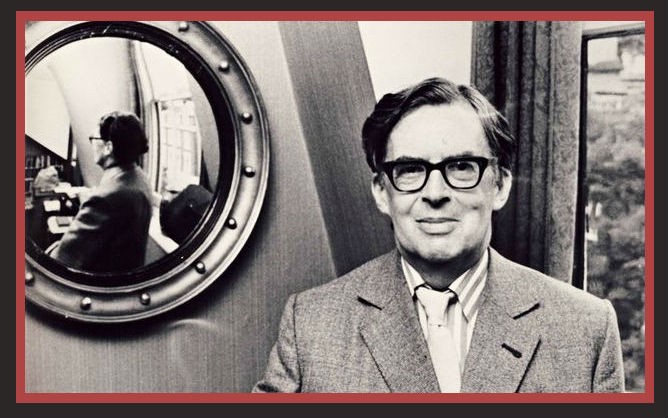
Truman Capote’s ashes were auctioned off to an anonymous collector for $43,750 over the weekend. They had — since his death from liver failure in 1984 — resided in the Los Angeles home of Joanne Carson, his close friend and wife of late-night star Johnny Carson. However, the ashes became homeless after her passing last year.
Initially listed at only $2,000, the ashes drew surprising interest, drawing potential collectors from Russia, Germany, China, and various South American countries, according to vendor Julien’s Auctions. The sale also included the clothes Capote wore at the time of his death ($6,400) and two prescription pill bottles ($9,280).
While the whole thing may seem slightly distasteful, it is worth noting that Capote, at least abstractly, granted his approval. As The Guardian reported, his will included instructions to Carson, stating, “ he didn’t want his ashes to sit on a shelf,” a point Julien’s Auctions president Darren Julien has taken quite literally, commenting, “I know 100% he would love [the auction]… it is just furthering the adventures of Truman Capote.”
Whatever your stance, there is no denying Capote cultivated his outsized pop culture presence with the same ferocity as his famed prose. So, at worst, he probably wouldn’t be totally displeased with a reentry into the public eye. Although, perhaps, it might be best to remember him through Breakfast at Tiffany’s, In Cold Blood, and his memorable T.V. appearances instead of relics.
Once upon a bleak set of years, I did nothing but drive back and forth across the country. I had no job, no house, no partner, no plan, and, in the wake of various concurrent losses, I no longer had faith in my own desires.
On one of these junkets, I pulled over at a roadside rest stop in Kansas. The landscape reminded me of Andrew Wyeth’s painting, Christina’s World, and so I tied the dog to a picnic bench, set up a timer shot, and somehow spent hours trying to reenact the painting. At some point later on, I tweaked the color on a single shot, posted it to Facebook, and promptly forgot that this particularly lonesome day (and its attendant series of photos) had ever happened.
Christina’s World by Andrew Wyeth
When I first sat down to write about these dog days of roaming, I went poking around an old back-up drive and discovered the forsaken photos I’d taken that day.
The images are poorly lit and lackluster, and they certainly don’t get into the logistical grit of the drama going on in my life at the time, but, true to the old creative-writing adage show-don’t-tell,the photos manage to conjure the emotional truth of the story without explicitly stating a thing.
The isolation is clear in the landscape. The repeated attempts to get the perfect shot reveal a mounting desperation. The light changes; the sun fades. The sheer number of shots belies the fact that I had nowhere to go and no burning desire to get anywhere.
I wrote a brief essay-ish sort of piece, almost as if captioning a contact sheet, but it was difficult to read on a small screen, so I tried to find a form that would function in service of both image and text.
Video essay? Slideshow narrative? Lyric filmstrip? I’m not sure what to call it, but even with the rudimentary skills I was able to work up in the crash course of a 14-day software trial, as is often the case with revision, this exercise in form furthered my own understanding of the story at hand.
Some shots were taken in such rapid succession that by setting them in video sequence, it’s almost as if I’m reset in motion. This animated humanity and my voice on the audio track, bring to the project an intimacy that I find both strange and pleasing. This pit stop in Kansas marks what I can only hope is the loneliest I’ll ever be; the dog was the only one to hear my voice not just for those hours in the field, but for days. By offering a belated chance to both speak and move, the multi-media form seems to do more than just capture the experience I had with the dog the day we got stuck in that field; it somehow seems to release us from it.
As may have been the case for some of you, Belle Boggs came on my radar in 2010 when Graywolf Press released her collection, Mattaponi Queen, a set of stories so wise, so elegant, so indissoluble, it seemed impossibly unfair that it was a debut. Two years later, I read her essay “The Art of Waiting” in Orion and thought, “Damn, that’s a book’s worth of material right there, and I’m dying to read that book.” Clearly, I was not alone in this line of thought. So it was joyous to hear that Boggs had indeed expanded that magnificent essay into this even more magnificent book, which is written with prodigious insight and a contemporaneous earnest, open-hearted seeking — a blend which makes for my favorite kind of narrative nonfiction. This book is an achievement of the highest order, and marks Boggs as master and commander of rendering the human heart.
It was an honor to speak with her, via email, about The Art of Waiting (Graywolf, 2016).
Vincent Scarpa: One of the things that I found so remarkable about The Art of Waiting is your gift for specificity and precision. For example, you identify yourself not as a woman who wants to be a mother, but as one with “child-longing.” “This is what I wanted,” you write. “To hold a child of my own, be clung to in that way that primate infants have — legs wrapped around my middle, a hand in my hair and another on my arm.” I suppose on the surface, to some, that isn’t much of a distinction, but it felt so integral to the book, to your self-sketching from a place where you “desperately want [your] body to work the way it is supposed to.” Knowing that you were writing into a sphere into which so many have contributed their stories, did such precision and specificity feel especially important to making the book singular?
Belle Boggs: I think I was lucky to have a specific, very smart audience in mind when I wrote some of the first material for the book, which was (in addition to my family) the readership of Orion magazine. Orion’s focus on nature/culture/place and my reading of other Orion essayists convinced me that to write about my experience of infertility, I needed to do a kind of closely-observed, specific, outwardly-focused kind of writing. I started my career as a fiction writer, and when I began writing nonfiction I tried to apprentice myself to the many science and nature writers I admire, people like Annie Dillard, Janisse Ray, Rachel Carson, Jane Goodall, Sarah Hrdy, Sy Montgomery — I love their clean, beautiful prose and the way their books teach you something while also being memorable, original, a pleasure to read. I had some idea when starting to think about the book that it would be like Pilgrim at Tinker Creek, but about fertility! It didn’t quite turn out that way, but I’m glad that river walks and cicada broods and bald eagles made their way into the book, and I hope they make it feel singular, as you suggest.
I also think it’s writing in this way, with detail and specificity, that makes it possible to address desire and motherhood and ambivalence and sadness — it makes the writing enjoyable, and makes it possible to turn away from those moments of disappointment and loss and sadness, toward something else.
VS: Another important distinction gets made early on; one that echoes the book’s title and its focus on waiting. “Nonhuman animals wait without impatience, without a deadline, and I think that is the secret to their composure,” you write, whereas humans have, “the conscious possibility of a new purpose, a sense of self not tied to reproduction.” I admire this exactness for so many reasons, but perhaps chief among them is that it places the human and the nonhuman on equal footing — something that you do so beautifully throughout the text, and something one rarely sees done. I know there’s an origin story regarding Jamani, a female gorilla at the North Carolina Zoo, but I wondered if you could talk a bit about what you were aiming for in the apposition of the stories of human and nonhuman animals. That the book is bookended by writing about Jamani felt especially lovely; a supremely wise structural choice.
BB: Oh, thank you for asking about Jamani! Her story was a fascinating one to me — when I wrote the essay that was the seed of the book, I followed Jamani’s pregnancy from the zoo’s announcement, which was momentous (it was the first gorilla pregnancy at the NC Zoo in 22 years), to the additional attention from veterinarians, the additional visitors to their enclosure, and the impact on her relationship with Acacia, the other female in her enclosure. I finished the essay, and worked with my editor on it, then learned that Jamani’s infant was stillborn; I added that information in (to the Orion essay) as a postscript. Later in the book, I write about how all the female gorillas conceive — Jamani conceives a second time, her new enclosure-mate Olympia conceives, and Acacia does too — and how these births change life in the enclosure, and life for these gorillas, forever.
We can’t know the mind of a gorilla, and anthropomorphizing is a dangerous temptation, but I think my own reactions to Jamani’s pregnancies, and the reactions of her keepers, for example, are fair game. I was interested in how important Jamani’s story began to feel to me — almost like we were in this fertility roller coaster together, which is ridiculous but also true. Returning to watch Jamani with her baby, wearing my baby in a carrier, was very emotional for me.
There’s something very powerful about our connection to other primates — I don’t like to see them in zoos, it feels wrong to me even as I understand the conservation work done there. The last time I visited the NC Zoo was with my daughter, Beatrice, and we watched the gorillas for a long time, in part because I was still writing about them. After she tired of the gorillas we went to a chimpanzee exhibit. Beatrice pulled herself up to the glass and stood watching, and very quickly a young chimpanzee ran up and put her hands directly against Beatrice’s hands, on the other side of the glass partition. They just stood there, gazing at each other.
VS: I think one of the readerly joys in narrative nonfiction, at least for me, is watching the writer run whatever she is investigating personally through the machinery of other narratives; to look at it through various other prisms. So it was a delight to see you contemplate fertility in films like Raising Arizona and Who’s Afraid of Virginia Woolf?, and not, I don’t think, because they just so happen to be two of my very favorite films. There’s this deepening and widening that takes place in that act of investigation, I think. [I was reminded, too, of Marisa Tomei on the porch in My Cousin Vinny, stomping her heels and talking about the ticking of her biological clock.] And I think you do a great service when you point out that, “We count on literature to prepare us, to console us, but I am shocked by how little consolation there is for the infertile.” Why do you think that is? Is it the same explanation for the lack of significant medical discourse around it, a void that has become at least partially filled by the abundance of online communities for women struggling with fertility?
BB: That is a great metaphor — running your investigations through the machinery of other narratives. Of narrative at all, which is sort of machine-like in its way. I think some people are very uncomfortable with a female body that ages or doesn’t work as they think it should, and I think pregnancy and childbirth is a useful narrative — it’s transformative and full of potential for conflict and growth. When I was trying to get pregnant, I noticed all around me these narratives that put the maternal-child bond at the center of life, and painted non-maternal, infertile, or childless women as deviants. I noticed it especially in my (high school) teaching and discussion of characters from literature, from Lady Macbeth to Miss Havisham to Albee’s Martha, and in my reading and writing, where even contemporary books I enjoyed or tried escaping into seemed to exalt pregnancy while using fertility treatment as a means of showing selfishness or privilege or a brittle nature that contrasts with someone else’s ease. I remember, for example, reading the noir page-turner Gone Girl and thinking, really? Intrauterine insemination (with all the details wrong) is going to be the means of this horrible character’s punishment of her (also horrible) husband? But then, I recognized it in my own writing — I’d used IVF (with the details wrong) to say something stereotypical about a minor character in one of my stories, too. And I regret it.
I think some people are very uncomfortable with a female body that ages or doesn’t work as they think it should…
But I love Raising Arizona — such a preposterous caper — as a depiction of long waiting and child/family-longing for the way Hi is able to go to two places in his mind, in the last, beautiful dream sequence. He sees a future in which he and Ed act as unseen well-wishers for Nathan Junior, and also in which they are old and gray-haired and somehow have the family they once imagined. This film is not about how others see the couple but how they choose to live together — Albee’s masterpiece Who’s Afraid of Virginia Woolf is like that too, when we realize the intimacy that actually unites George and Martha. I’m interested in the imagination as a tool for survival.
VS: I knew next to nothing about the fertility treatment industry, so everything you wrote about it here was surprising to me. Most especially, I was troubled, as you write being, by “the idea that investors are somewhere making money by exploiting the lack of coverage for a financially and emotionally risky medical procedure.” It seems such a dystopic, eerie capitalism. This is just one of many skilled and clear-eyed critiques you make of the industry, which feel even more pointed as you write from a place of having been in that system. I’m wondering what your impression is now, some years removed from that system, and if there’s any new information about which to be hopeful regarding coverage for women who are attempting to conceive?
BB: I’m glad that we had the opportunity to buy our so-called cost-share plan, which made it possible for us to pursue a safe, single-embryo transfer IVF, because we knew that we would have more chances (we paid a high, flat fee for the chance to go through IVF three times). But I’m also bothered that someone made money — above and beyond the high cost of treatment — because our lack of insurance coverage made us too afraid to pay per-cycle (I was afraid that if we had one failed cycle, I’d be too risk-averse to pursue a second cycle). The existence of these plans seems predatory to me, or at least opportunistic, even though I’d make the same choices if I had to do everything all over again. These plans are often not entirely up-front about the likelihood that you’ll even get all three or six of your chances: there are important details (aren’t there always?) hidden in the fine print.
And there isn’t really much new in the way of advances in insurance coverage: still just fifteen states mandate coverage, and among those fifteen states we see a lot of variation in what and how much they cover (you can find lots of information about state mandated insurance coverage at RESOLVE’s website). I recently met a woman in North Carolina who has had great success petitioning her employer to add fertility/IVF coverage to their plan. That’s not a possibility for many of us, of course — she works in a high-tech/high-demand field, but she actually started a similar advocacy campaign at a university when she was in graduate school, and she was successful there, too. I wonder what would happen if more of us spoke up about the need to cover this very common medical condition.
VS: More than just a personal investigation into your own struggles with fertility, and more than an examination of fertility through various cultural prisms, The Art of Waiting seems to me to be a call for new narratives on fertility, baby fever, motherhood. It seems a call to dislodge the culturally installed and reified narratives to which we have become attached and accustomed. Which I found so admirable and also so brave — this rallying cry to bust the mythos of one of society’s most ubiquitous narratives. Does that sound right?
BB: Yes! I have been a teacher for basically my entire professional life, and I think we need all kinds of narrative for young people, for all of us. I don’t think most of us are well-served by the narrative of “miracles” and things just happening to you — I’m for choice, and access to choices for everyone, and openness and honesty.
VS: As a fan of your fiction, I’m wondering if you foresee a return to that realm anytime soon, or if your interests have skewed toward the nonfiction realm for the time being. It’s kind of unfair how deftly you navigate both.
BB: Thank you, Vincent! I am always interested in writing both, and feel pulled all the time to write and research new nonfiction, but my next big project is finishing this novel for Graywolf, The Ugly Bear List. It’s set in the world of for-profit education and inspirational/Christian writing. I also have a lot of new stories I want to write…
PEN American Center “From the Missing Shelf” depicts a startling trend in banned books
Every year Banned Book Week falls on the last week of September. It’s an occasion to celebrate the freedom to read whatever our hearts desire despite censorship efforts from the easily offended.
PEN America is a hybrid organization that is deeply concerned with where literature and human rights meet. At the start of this year’s BBW they released a report that uncovers an alarming pattern in children’s literature. According to their research on commonly challenged or banned books, PEN America found that “books by or about people of color, people who identify as LGBT, and people with disabilities (“diverse books”) are significantly more likely to be challenged or banned even as they make up a disproportionately small fraction of all published literature.” The study comprehensively looked into how book bans have been reviewed in the news, diversity in publishing, and also featured interviews with authors and editors.
The most unfortunate consequence that PEN discovered from their analysis of banned books was that kids are not being exposed to a diverse range of characters in the stories that they read. Book lovers know just how important reading is in shaping one’s world and imagination. The report calls for action and change. We recommend giving it a read.
The prolific horror author is “terrified” of a Trump presidency
The monster hiding under Stephen King’s bed isn’t the terrifying clown from It, and it’s something the author finds far more fearsome than a deranged Jack Torrance. What pokes and prods at King from beneath his mattress is apparently Donald J. Trump. In a recent tweet the bestselling author said that Trump “is actually Cthulhu” and explained the Republican candidate’s “absurd hair” is a convenient cover for the tentacles.
King hasn’t shied away from expressing his contempt for Trump this election season. On Saturday at the Library of Congress National Book Festival, he appealed to his experience as a former English Teacher to explain why he saw a Trump Presidency as so disastrous:
“We live in a society where many believe that libraries and other cultural endeavours… are of minor importance. As if learning to think is a thing that just happens naturally, like learning to walk. Believe me, it’s not. Learning to think is the result of hard work and steady effort.”
King told the crowd that the diminishing importance of cultural institutions, such as libraries, has led to an “illiteracy or semi-literacy in a national population,” which makes it possible for candidates like Trump to have a real shot at becoming commander-in-chief.
King also pinpointed what he sees as one of Trump’s main campaign strategies: fear. “We’re afraid the government is going to take away our guns, we’re afraid that Mexico is going to invade the United States, we’re afraid of this, we’re afraid of that, we’re afraid of taxes, we’re afraid of transgender bathrooms — the whole thing.” King, the well known expert in the nuances of fear, said that frightening people was Trump’s way of keeping them from having a rational discussion.
King continues to fight his anxieties about national illiteracy by donating to small libraries, which was one of several reasons the National Book Festival was honoring him this past weekend.
However, come November, American libraries might need to look for a new benefactor, as King has threatened to move to Canada if Trump wins.
Narcissism creates privilege, and privilege feeds narcissism. The two create a cycle, rhythmically obsessing about, you guessed it, themselves. Earlier this year, in an article at The New York Times, Arthur C. Brooks declared narcissism as an “epidemic.” Brooks reported the alarming increase at which narcissism is infiltrating college campuses. The article spoke to our craving for social media attention, but it also did something else: it raised the point that narcissism and the privilege that it invokes can be dangerous. According to Brooks, narcissists “create havoc and misery around them. There is overwhelming evidence linking narcissism with lower honesty and raised aggression.” Loving ourselves is a dangerous game.
Teddy Wayne’s latest novel, the brilliantly terrifying Loner, shows how dangerous narcissism can be, but first, Wayne dabbles in sympathy. When we meet David Federman, he’s arriving at Harvard University. Both he and his teachers describe David as “somewhat of a loner.” The initial reasons for his isolation seem clear; he’s a misunderstood genius. He intentionally transposes words — it’s his special “social power” — in conversations: “tucitcennoc (Connecticut), citelhta (athletic), draynal (lanyard).” When he isn’t saying words backwards, he’s using such an advanced vocabulary that a person without a graduate degree would have a hard time following him. In the initial sections with David, it doesn’t appear that he means to be so overtly intelligent. He says, “I didn’t have the untrammeled intellectual curiosity of the true polymath. I was more like a mechanically efficient Eastern European decathlete grimly breaking the fish-line tape or heaving a javelin.” He’s someone on the outside — someone lost, searching for his way.
“Teddy Wayne’s latest novel, the brilliantly terrifying Loner, shows how dangerous narcissism can be.”
David’s status as a loner certainly isn’t an uncommon one — not by the world’s standards and not by literature’s own, either. In fact, some of 2016’s most celebrated novels revolve around misfits. Take for instance Jesse Ball’s How to Set a Fire and Why. The misunderstood Lucia is a both a sputtering and flaming ball of misdirected angst. In The Doubter’s Almanac, Milo’s brilliance sets him apart from anyone and everyone. Evie, the quiet heart of Emma Cline’s The Girls, craves acceptance. David’s situation in Loner, however, is different than those of his literary counterparts. His separation, we slowly realize, is deliberate. He wants — no, desires — to be a loner because the only thing he cares about is personal satisfaction.
At Harvard, David meets Sara, another young, social misfit. Initially, the two seem like the ideal couple. They give one another support, and they spend the evenings together. David tells her, “To be honest, you’re the only one here I’ve really talked to in any depth.” He knows what he’s doing all along, though, and it doesn’t take long for us to realize it, too. He’s trying to get something. He lies and manipulates Sara on repeated occasions. He takes her virginity. He fools her into thinking that he values her. Those acts are bad on their own, but the reasoning behind them makes them worse: he wants Veronica Wells, Sara’s beautiful roommate, and the only way to get her is to go through Sara.
“He wants — no, desires — to be a loner because the only thing he cares about is personal satisfaction.”
David basks in David. Every action he makes is methodically planned and calculated. His entire relationship with Sara is based on his narcissistic desire to attain something (or someone) that he deems as being better. In his personal life, he behaves similarly selfishly. He has a Facebook account, but he doesn’t use the social media site to socialize; instead, he uses it to get information to help him plan. He admits, “I don’t use the site myself except for voyeurism.” While he watches other people live their lives, he is careful to not allow his own life to be available: “I had hidden my list of friends and prohibited anyone from posting on my wall.” David is a man obsessed with control.
What makes David the most reprehensible is that he doesn’t care how cruel he is. The reason he behaves so narcissistically is because of his privilege. His parents are lawyers. His intellect seems to know no bounds. And, at the end of the day, he’s a straight, white young male attending Harvard. Why should a quiet girl’s feelings matter to him? Why shouldn’t he be able to manipulate a beautiful woman into a relationship with him? He believes the world is in his hands, so he behaves that way. Nothing other than his own satisfaction matters.
As cringe-inducing and upsetting as much of David’s actions are, it’s impossible to deny him our sympathy. After all, he is a lost person, alone in the world and void of any meaningful connections. Yes, he’s narcissistic. Yes, he’s cruel. And, yes, he does it all to himself, but, still, he’s alone. We can’t be so privileged as to deny him our pity. If so, what makes us any different from him?
“What makes David the most reprehensible is that he doesn’t care how cruel he is.”
Characters such as David, those being selfish, disturbed, alone, and ultimately privileged, aren’t uncommon. One of American literature’s most iconic characters, Ignatius J. Reilly, fits into the same mold.
Ignatius of John Kennedy Toole’s A Confederacy of Dunces is perhaps the classic narcissistic loner. Living as a young man in New Orleans in the 1960s with his mother, he struggles to fit in with in not only with his peers, but also with the society at large. Physically, he’s overweight, and he wears a green hunting cap. Those two things automatically provide Ignatius with some level of separation. However, it’s his unrivaled intellect and self-obsessed personality that completely take him out of normalcy. He doubts he’ll find a job because, as he says, “I suspect that they can see that I am forced to function in a century I loathe.” The culture doesn’t suit him, so he revolts against it. He’s constantly pessimistic. He’s sarcastic. He’s angry. He’s cruel. Mostly, though, he’s narcissistic. He refers to himself as having a “god-like mind.” Everyone who isn’t him drowns in faults. People who aren’t as educated as him are too vapid to understand life. He is so accustomed to such a privileged existence of being a white male intellectual that he doesn’t even recognize (or care) that he’s racist, homophobic, and sexist.
Holden Caulfield (J. D. Salinger’s The Catcher in the Rye), Jay Gatsby (F. Scott Fitzgerald’s The Great Gatsby), and Patrick Bateman (Bret Easton Ellis’ American Psycho) are others who possess a mixture of loneliness and privilege. These young men have so much — wealth, education, and opportunity, but, still, they carry on selfishly. The reason: because they can.
With Loner, Teddy Wayne has written a masterclass on the privilege found in white male narcissism. David’s story is difficult to read, but it’s necessary. How else are we to be reminded of how badly the world needs empathy?
A pilot carried us through night and we arrived as late revelers mingled with those who slept where they weren’t supposed to sleep. Tired and thus more given
to indiscriminate attraction, I fall for the Caravaggio hanging nearest: Judith traded sackcloth for gown, wooed then dispatched besotted Holofernes,
and though she’s jewel-less, the joke works: he’s a victim of fashion. Poor Holofernes, never to see the morning’s pigeons, the market draped
with fog until it isn’t — suddenly, the vendor’s dog is shining, sun doubles on its bare patch of skin. Hit with light like that, what creature wouldn’t glow
from the inside out. And what landscape, now clothed, wasn’t raised in the wild. Our ticket permits re-entry from now until the weekend. Beyond this, two
routes determine our revision. The first reflects the past; its concerns are familiar. The other covets fashion. The future. What will people wear then?
Reigning world’s highest paid novelist, mystery/thriller titan James Patterson, has cancelled the release of his new “fan fiction” novel, The Murder of Stephen King. Although, he claimed, via press release, the “book is a positive portrayal of a fictional character, and…the main character is not actually murdered,” Patterson also expressed concern for King’s comfort, likely motivated by recent uninvited fan arrivals at The Shining author’s house. King was not involved in the production of the novel.
Oddly, this wouldn’t be the legendary author’s first fictionalized appearance. King wrote himself into his expansive Dark Towerseries. That rather meta version of King writes a book within the book about the novel’s protagonist, gunslinger Roland Deschain. Much like his unpublished Patterson counterpart this King, despite many attempts on his life, also goes un-murdered (however he does suffer a car crash not dissimilar to the real Stephen King’s 1999 wreck in Maine).
Here are some other examples of authors appearing in novels they did and didn’t write:
The path of the writer is not generally associated with happiness and fulfillment, yet a new batch of keyboard-clicking hopefuls is always around the corner, with dreams that center on creating new work and expecting it to lead to just such a place. It behooves both the budding and experienced writer to reasonably look at their chances at such a life. For every Rowling, Franzen, and Strayed, there are tens of thousands — maybe hundreds of thousands — of wordsmiths stuck at some level of the game far below their expectations. It might not be too late to shake the habit and become a CPA, or get Microsoft certified.
Adam O’Fallon Price portrays writers on both ends of this continuum in his debut novel The Grand Tour. First, Richard Lazar is a middle-age novelist who, five books into a failed career, finds himself with an unlikely hit, a memoir of his time as a serviceman during the Vietnam War. This success has prompted press accolades and a national book tour, but it feels too little too late for Richard, who can’t quite summon enough sobriety and political correctness to play the game. Price best renders Richard’s state through the eyes of the people around him. “At [Richard’s] once-a-decade checkup, in March, the doctor frowned at him over the report on the clipboard — an exhaustive detail of Richard’s bad habits and inadequacies — and asked what he thought the life expectancy was for a fifty-three-year-old, one-hundred-pounds-overweight drinker.” Richard spends the novel trying to fight his way out of his malaise, and reader empathy sways along with him as he battles for both literary and personal redemption. “What did he need?” Price writes. “To mark the moment, to celebrate, to hear a sincere word of congratulations. For the tree of his present success to not fall silently in the woods of his past failure.” It’s Richard’s missteps and insensitivities that frequently make others cover their ears.
On the opposite end of the writer continuum is Vance, a nineteen-year-old fringe college student with an absent father, sick mother, and novel manuscript he hopes someday will lead to a life worth living. Vance — who considers Richard a literary hero — offers to drive the ersatz memoirist on his book tour. It’s a bold step for the young man, who struggles to connect with anything that doesn’t exist between perfect-bound pages. Price writes of Vance after he witnesses an accident involving a young woman, which unwittingly leads to the woman kissing him:
“Why, he wondered, thinking for the hundredth time about the car hitting her and her small, crumpled body rising as though lifted by invisible wires; the glint in her eyes as she looked at him; the funny sweet smell or taste, he wasn’t sure which, that emanated from her as they kissed. Why now, why her? This line of questioning always ended with a shrug, a tug, and a shudder, another damp tissue thrown in the plastic trash under the sick.”
His chauffeuring of Richard is Vance’s attempt at a deeper engagement with the world, which might be the best — or perhaps only — gift the older writer has for him.
Price also includes passages from Richard’s memoir in the novel, and these unfold naturally as the twosome travels from reading to reading. The memoir is a first-person account of the uncertain transformations brought about by war, written by a world-weary former infantryman at some remove from his fighting days. “Though we were young, most of us were not dumb or naive enough to pretend we knew how we’d respond in a real battle. That was why we imagined it and talked about it at great length — we were trying on the clothes of a soldier the way a child tries on a father’s suit. We hoped we were up for it and feared we weren’t.” Being a soldier was only the first of many roles Richard had difficulty accommodating, to go with husband, father, author, and mentor to Vance.
Despite probing deeply into the pairs’ struggles, the writer in The Grand Tour who offers the most promise for the nascent scribe is Price himself. He has constructed a story with the immediacy of a good script, and with metaphors that operate with sterling efficiency. For example, when Vance meets Richard’s daughter Cindy: “Vance came forward and stuck out his hand, as though he were presenting her with a piece of questionable fruit for her perusal.” At Richard’s San Francisco book event: “The reading … took place in the Mission District, in an event space, so called — an open warehouse that looked like the kind of place in the movies where someone gets shot in the back of the head by someone they trust.” Or when Richard, in an attempt to stay on the wagon, orders a water at a bar: “An unrestrained ripple of loathing lapped across the broad lake of the bartender’s face.” These tropes function as a sort of writerly redemption to offset Richard’s cynicism and Vance’s credulity. Price seems to be hinting that there’s a third way for the writer, one that leads to certain satisfactions through an engagement with craft, supplying even a small audience with compelling insights it didn’t know existed a mere sentence before.
Over the course of a career, every experienced writer is faced by someone — usually more than one — doe-eyed with the idea of putting words to paper. It’s tempting to want to impart that the life isn’t necessarily what one imagines for it, but it’s also wise to remember that the practice comes with its own rewards. Some of them are featured prominently in The Grand Tour, where Price’s finely hewn characters and deft language act to counterbalance his more extreme author portraits.
Hello, and welcome to my week-by-week review of the world. Today I am reviewing email.
Do you have email? Most people do. Here’s a tip: It’s pronounced like ‘female’ not like ‘uhmail’ as I had been pronouncing it for the past seven years. It’s pretty embarrassing that no one corrected me sooner.
Email is the perfect solution for anyone who forgets to mail a letter in time. Like if your friend only has a few days left to live and you forget to mail him a letter with a check for the $65.13 you owe him. Instead, you can send an email with a photo of the check, and then you can write, “You’ve meant so much to me and I’m going to miss you. Sorry I didn’t get this check to you in time. ”
Another great thing you can do with email is to email yourself from a fake account when you’re lonely — as if a stranger is reaching out to you. You can do that with a letter too, but by the time the letter arrives the loneliness may have subsided, and then a letter you wrote to yourself will come across as a desperately pathetic act that sends you into a downward spiral of self-pity. Email doesn’t do that.
Probably my favorite thing about email is how you can print them out just as if they were letters. Some emails have messages warning against this, suggesting that saving trees is more important saving memories. But are trees really more important than memories? It depends on the memory.
For all its advantages, there are also some big drawbacks. For instance, did you know email was probably invented by the Russians as a way to dismantle America’s infrastructure beginning with the postal service? And we’ve fallen right into their trap.
Email is driving the postal service out of business, leaving thousands of employees forced to find new careers as U-Tube stars or startup CEOs. I’m assuming, as these are the hottest new jobs.
Every time I send an email I feel a little tinge of guilt, knowing that I’ve played my part in the destruction of America. But that doesn’t stop me from using my email. What does stop me is when the library is closed, or if I lose the email window and can’t find it again. One time someone else at the library found my email window and emailed swear words to all of my friends.
BEST FEATURE: Obama sends me emails. WORST FEATURE: A man emailed me about a business opportunity and it didn’t work out as I had hoped. Now I’m selling magazine subscriptions and if I don’t sell enough in time he will own my house. You can contact me if you’d like to receive The New Yorker or PCWorld in your mailbox on a regular basis.
Please join me next week when I’ll be reviewing Brangelina.
DON’T MISS OUT
Sign up for our newsletter to get submission announcements and stay on top of our best work.
YOUR INBOX IS LIT
Enjoy strange, diverting work from The Commuter on Mondays, absorbing fiction from Recommended Reading on Wednesdays, and a roundup of our best work of the week on Fridays. Personalize your subscription preferences here.