D. Foy’s Gutter Opera

There’s a bit of me that’s felt lucky to survive D. Foy’s first two books. Characters in his 2014 debut novel, Made to Break, find themselves trapped in a cabin in the woods. Rather than detach once the narrative moved into horror genre, I felt like I was in that cabin. I got closer and closer and eventually something flipped. And this is the peculiar quality to Foy’s prose: the reader stands among other characters and is almost surprised that his own thoughts come free of dialogue tags. It’s a rare experience. It’s like if I were Robin Williams walking around a gothic reboot of What Dreams May Come — paint from the world around me getting on my hands, in my hair, because everything is fresh and not yet dry.

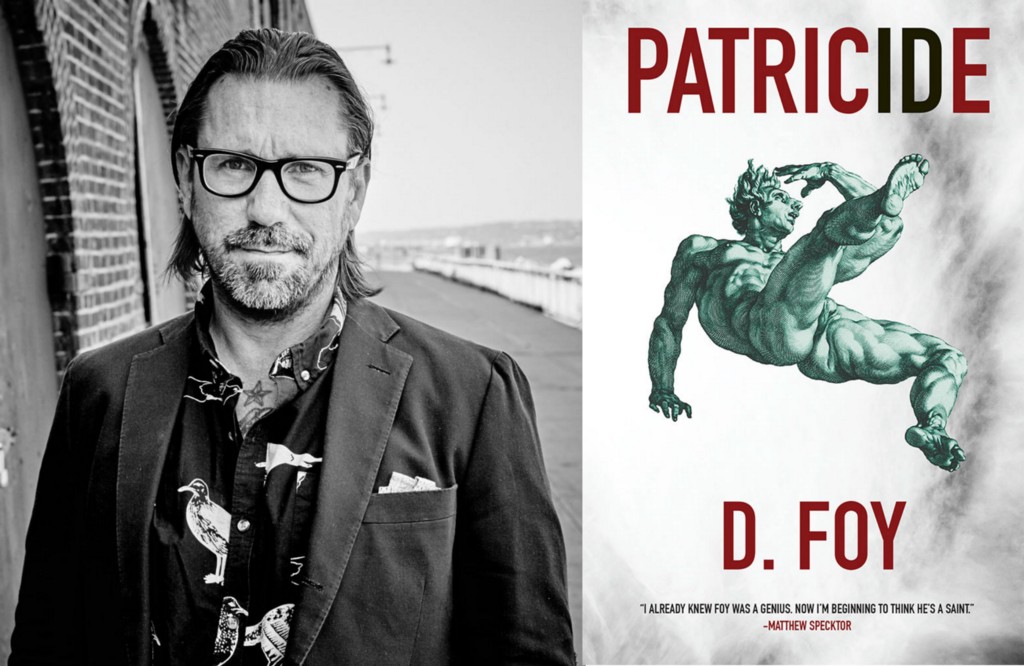
Today, Foy releases his second novel, Patricide (Stalking Horse Press, 2016). Describing it in emotions — shame, open-heartedness, burnt-heartedness, rage, love — would make more sense than providing a plot synopsis of how a young man named Rice orbits his father. There’s real genius in how Foy renders the elevated stakes of young adulthood. Your pulse will quicken with each transgression, or even the thought of transgression. And just like his first novel, Patricide will become your world while you’re in its pages.

I had the chance to talk with Foy in preparation for his book launch at BookCourt.

— Will Chancellor

Will Chancellor: Let’s begin at the beginning. What was the genesis of Patricide?

D. Foy: When I first began the work — and this is usually the case for me — I was just whistling in the dark, as it were. Really this book began by accident — which is also often the case for me. I’d been going over a passage in another, related project in which I’d written insufficiently about the same father who ended up as the obsession in Patricide. It was just a paragraph, not nearly what it should be, I knew, once I began to chew on it. It needed fleshing out, not a lot, I felt, but much more than was there. But once I began the work, it wouldn’t stop. I wrote five pages, then ten pages, then twenty-five pages, and by the time I’d hit seventy-five, I realized, “Goddamn, I’ve got a whole other book on my hands.” This thing was huge, a real beast, I remember thinking, too huge and too beastly, I thought, for me to grapple with. I was pretty scared, in fact. I wasn’t writer enough to match the work, I didn’t feel capable to treat it sufficiently, it was altogether beyond me. In the end, the thing that saved me was remembering and then relying on an old maxim: “The work will show you how to do it.” Rather than punch my way through the book using cleverness and willpower, I let go — to an extent — and trusted that I’d be shown the way by the work itself as it progressed.

WC: We’ve talked about this before, but you’re no stranger to manual labor. And “The work will show you how to do it,” was my takeaway from the first few shit jobs I had. Was that where you first heard this expression?

DF: I don’t remember where I heard it, to be honest. I only know that where on the whole it’s true for most things, it’s especially true with art. You set out to explore something only to learn you’ve gotten in way too deep. You can’t move on any more than you can go back, or so it seems.

The artists who fail at their work do so, in my opinion, because they didn’t give themselves the benefit of the doubt, that they have within them everything they need to accomplish their ends. What I’m talking about here is faith. Doubt may come — doubt will come — but rather than look at it as hostile, I’ve learned to see it as my guide. Doubt pushes you forward. You don’t know what you’re doing. This isn’t working. You have questions whose answers demand you move a bit this way or that to find the crack you can pry into an opening. Still, nothing’s giving. This is where faith becomes critical. Without it, this essential belief in yourself and in your quest, you’ll surrender and collapse.

WC: Did that happen with Patricide?

DF: I was just this side of that at many points in the work, a hair’s breadth off from despair. Finally, I don’t know how, I saw that if I turned my back on this thing, it would go away forever. The universe would see my weakness and strip me of any vision, I’d never have another chance, I’d be crushed. But in that same moment I saw, as well, the opposite — that if I persisted, if I stayed true to myself and my conviction, the universe would give me what I needed to see me through. So I did. Sometimes a bit of light appeared. Others I stumbled through black for days. No matter what, though, I kept going. Way in the depths of the work, I became overwhelmed with the sense that this book could actually kill me, literally, that if I didn’t watch myself, it would take me out.

WC: Because it’s such a relentlessly ambitious monster of a book?

DF: Well, relatively speaking. That might not be true for another writer, but it was for me. The book and its making became much more than just a behemoth by virtue of its subject. The Father is an entity in itself, what after a time I began to think of in the same category of Moby-Dick — this seemingly omnipresent, omniscient, insurmountable entity that no matter what I did was going to smack me down again and again, you know, like Moby-Dick crushes ships with the snap of his tail. It was this realization that led me to the next, that I’d never overcome this thing if I kept at it as I was, like a puny naked stupid man throwing himself into breach. The work made it clear, as I was saying, that I had to move around the father and The Father both, that I had to come at them from every direction — hence the variety of viewpoints and modes in the book. One way wasn’t enough. I needed every way. Meantime, I held fast and persisted and never turned away. Every day of work at a point became one of those don’t-quit-five-minutes-before-the-miracle-happens moments. Just when I felt I couldn’t go any further, I told myself to hold out just a bit more. And sure enough, every time I did this, the way appeared, and I moved on to the next impasse. And then after a thousand pages, and countless revisions and hackings and maimings and surgeries of every sort, it was over, I’d finished the thing, a book about a monster that was never born and will never die.

WC: Seems like the Anxiety of Influence is really deep in there. You’re not really giving me something familiar, “Father is a tree whose shadow blah blah blah;” or something lyrical, “Father is a carpenter, planing and joining the world in a shed . . .” Instead, if I’m reading you correctly, you’re giving me a straight up, “Father is Moby-Dick — the whale, but also the novel.”

DF: Well, it’s not that The Father isn’t a trope for something much bigger. It is. Really, given our culture for the last several millennia, dictated and determined by The Father, which is to say a psychotically overweening patriarch, we could go so far as to say The Father is The World, about as big a trope as you can ask for, I guess. I was talking about this elsewhere recently. Patricide isn’t simply a story about some kid struggling to escape a wretched father and the legacy thereof. It’s also an allegory of a world suffering its destruction by the Powers That Be — The Father — the dynamo of whose rule is a greed so profound His vision — and ours, too — is limited to His own obsessions and their effects. There’s a father in Patricide, and there’s The Father.

This is the history of mankind. Taught by The Father, ruled by the Father, punished and rewarded by The Father according The Father’s whim, The Father of course having devolved into the status of a wicked buffoon, we’re most of us ourselves a legion of fools scrapping around at the bottom of the cave The Father led us into.

I mean, it’s no coincidence — a thing, by the way, I don’t believe in — that Donald Trump has assumed such a hideously imposing stature. He is very literally THE FATHER. He is at once the product and the symbol of our time. He’s The Father at his most gluttonous, scurrilous, pathological, diabolical, idiotic, cowardly extreme, the worst of humanity distilled into a single repulsive villain, now a juggernaut, really, a stinking one-eyed fiend. And what is happening in the face of this moronic, tiny-handed, tiny-dicked Cyclops? By and large, obsequy and pandering, on a scale we haven’t seen, thankfully, for a very long time.

It’s no coincidence, either, that we’re now calling our era the Anthropocene — very literally The Time of Man. Without the least hyperbole, we could as easily call this time the Patercene. We’re living on the edge of the apocalypse, seriously, with no one to blame for how we got here but our ridiculous selves. Someone on Facebook recently posted a quote from Chris Kraus — “I think desire isn’t lack,” she says, “it’s surplus energy — a claustrophobia inside your skin.” She’s right in the first. Desire isn’t lack. But neither is it energy. It’s delusion pure and simple, and this delusion, our delusion, is the catalyst for the expenditure of our energy toward all the worst ends. It’s always been so, in the quote unquote civilized world, and exponentially more so now. We want shit we don’t need because we’re told again and again we need a lot of shit. And who is it telling us this lie that we need all this shit? The Father, no doubt, in the guise of Capitalism in the guise of the megalopolistic Corporation. And what have we done in the name of our frenzied grasping after all this shit? We all know. No one doesn’t know. The answer’s all around us. We’ve poisoned ourselves and our environment — the place we live in, our home — to the extent that it’s nearly uninhabitable. I dug into a lot of this stuff in the 1,000 pages I just mentioned, but ended up striking it in the name of the work, hoping that what remained would be infused with its essence. I could go on and on about this stuff. Just ask my wife.

We’re living on the edge of the apocalypse, seriously, with no one to blame for how we got here but our ridiculous selves.

WC: I love how you’re talking about circling the father — even little hidden circles like in the word “dynamo.” There was a similar word that stayed in my head while I was reading: radial. I’m wondering if this came from the subject matter or if you find yourself thinking in circles about everything all the time.

DF: Yes, I am a circular thinker, as opposed to a linear thinker — but this is intentional. I’ve trained myself to use intuition as a strategy and technique. The line is not the way of things. The circle is the way of things, and intuition is the way of the circle, which is the way that’s natural to us but which over time — really, since the invention of the technology of writing by the Sumerians roughly five-and-a-half-thousand years ago, and especially since the invention of the printed word back in the mid-fifteenth century — we’ve shackled ourselves to a very unnatural way of viewing the world, which is according to the logic of the line. In the face of language, written language, that is, this stands to reason. One letter follows the next to make a word, one word the next to make a sentence, and so on. And this is quite literally how we all see the world now, through the line. But that wasn’t how we saw things before, and in my art at least I strive to remember that daily. There’s more to be said, but my point is that eventually it became clear to me how stifling the logic of the line is, and once I understood this, I determined to free myself of it as best I could, if only in my thinking and my art. In any case, when we work according to intuition, whose law is the circle, digression becomes very important, or rather, I should say, it becomes inevitable. And digression in its turn is the way to vision. By vision I mean, sight, as in to see clearly.

WC: Do you ever second-guess an image in your head? Or do you just take it as a given that the story is going there?

DF: I wrote Patricide via intuition and digression, the writing itself directed by the work — a mode, actually that I call “gutter opera.” The work showed me how to see, dimly at first of course but with increasingly clarity as I progressed. I couldn’t approach it head on, I realized, but only from a variety of approaches, what amounts to a circling heteroglossia of sorts. The father was at first inscrutable. So was The Father, though it wasn’t long before I saw that He wouldn’t ever not be inscrutable. With no way to go through these entities, I had to go all around them, using every means I had. That the word “radial” was in mind as you read isn’t surprising. Everything about the book is radial. The narrative employs all three points of view, in a whirling sort of collaboration, and a slew of narrative modes, each of them slipping and spinning one from the next. The book’s structure, too, is patently, intentionally radial. It’s the structure of a tornado. A tornado continuously turns on itself such that nothing can escape it even as it moves forward according to a trajectory that for all intents and purposes is unpredictable, leaving a wake of destruction behind it. The book’s structure and approach are at once a reflection of the devastation of The Father and an act of patricide. They use the patriarchal framework within which the novel has until now largely been created to destroy that framework. The Father’s way is The Father’s death.

WC: The great thing about a circle, or anything radial, is that whenever you slice it through the center, you’re left with two equal parts. I read the chapters that way: each intuitive path you take at the beginning is a plane, a plane that’s going to split this whole fucker in two, so long as you pass through the father, who as it happens is always at the center. You could start off talking about addiction. If you hit that center, you can trust the result to be symmetric. And then there’s the center itself. To me, the Father in your book is a crushing black hole, absolutely nothing. Was this something you reminded yourself of mid-digression? Is it a view you agree with at all?

DF: Yeah, I agree with it! And that’s the paradox of this figure, isn’t it? The Father is everything and nothing, and everywhere and nowhere. I don’t think I reminded myself of this so much as it reminded me, every day I sat down to it. How do you grapple with such a thing? Can it be grappled with at all? What do you do when the strategy or approach or what have you — what’s at least given you the sense, however false, that it’s working — abruptly fails, and you’re left flailing in a void? You have to somehow find your way back and start afresh, though doubtless from a wholly different angle. The circling seemed never to end in this struggle, until it ended, of course.

WC: One of the most painful truths to experience in reading this book is to see this abusive tyrant of a father as a yes-man in his public life. It becomes a fight against our own empathy to say fuck you to the father. And, to borrow your example of the tornado, the damaging wind is our own emotion whipping around and howling. It seems like the first response is to dull it, but who’s done that successfully for long? In some ways the mock heroics, or, if we read with different eyes, the arch heroics of Quixote comes to mind as a way of putting wind to windmill, if only to have something to fight. Which is more of a menace, a publicly powerful father or a publicly impotent father?

DF: Man, that’s like asking the difference between an ape in the jungle and an ape on a chain. They’re both menaces, but in very different ways.

The publicly powerful father is The Father books are full of. He’s the man Tacitus writes about in The Histories, for example, a tome, not incidentally, I read with ultra-keen interest while working on Patricide. The Histories is many things, but foremost among them it’s probably the greatest record of mankind at its worst, indexing with brutal dispassion not only every wicked thing a person can think of doing, but also the means by which men turn those thoughts to plans and then, with diabolical prowess, actuate them.

The story Tacitus tells is the story just about any historian will tell. What we aren’t likely to see in these histories, though, is the ironic flipside of the equation, how it’s the fathers that spawn The Fathers, and vice versa.

On the whole, it seems to me, the publicly powerful Father is a direct consequence of the publicly impotent father, the father, that is, who in his humiliation and shame projects a lifetime of anguish onto his son, physically and psychically, to the extent that the son, in his own pain, dreams of power enough to take his revenge and prove himself mighty, while waiting for and searching out the means to do it.

There’s a bit about this in the book, the stories of Hitler, Stalin, and Mao, and the labyrinth of cruelties they were forced to navigate as children. It’s enough to make any feeling person weep. To feel compassion for these men in the aftermath of their destruction is hard, I know, but I think it crucial to remember they were once children, too — albeit children on whom the world bestowed supremely raw deals. Brutal men are almost always brutalized boys. This is the saddest thing. Every terrible act The Father commits is in the end a gesture toward the love He never got. All He ever wants is to be loved. But mangled as He is, He can’t do more than devise mangled ways to seek out that love, and in the process mangle everything He touches.

Brutal men are almost always brutalized boys.

So really the publicly powerful Father and the publicly impotent father are scourges of the same degree, diametrically opposed, the one in the mirror and the one in the world. Together they amount to a Janus of sorts who, whichever way he turns, can’t do more than wreak destruction.

WC: The boy’s mother in Patricide is frequently described as being even worse than his father. “Already my mother and shame were tantamount, Lee Harvey Oswald and assassination are tantamount, the way AIDS and death are tantamount, the way 9/11 and terrorists and war mongering and greed are tantamount.” And yet the novel isn’t called Matricide. Why does shame force acceptance rather than action for the boy? And if the mother is shame, is the father guilt?

DF: I’m not sure I’d say it’s acceptance that shame drives the boy into as much as it is dread and then, later, powerlessness so crippling and sheer that the only thing he can look to for relief, at first, at any rate, is the lie that is his hapless father. It’s only in looking back at these times that Rice, as a man, can clearly see the double bind his parents trapped him in, and, as well, the consequences of that bind. He couldn’t accept, much less admit, what he knew his father to be, he says. His knowledge simply festered. And then he tells us that no sooner had “oblivion called out with her promise” than he obeyed. His father is a drug addict. Very naturally he becomes a drug addict, too. But not only does he learn the lessons of his father, he masters them to the extent that in the end he makes his father’s detestable qualities look like virtues. This is Rice’s action, the action of no-action, the action of withdrawal, the action of submersion, the action of consciously obliterating, to the extent he can, his awareness of his life’s terrible conditions.

And, yeah, while I’d agree that the mother is, among many other things, shame, and that the father is, to whatever degree, guilt, his father is so much more than only that. Were that all that his father is, I wouldn’t have written the book. Labeling the father as guilt incarnate is too reductive, I think. Rice’s father is a swirling complex of delusion, fear, power, abuse, kindness, denial, love, avoidance, and so on and so forth, never one or the other long enough for his boy to make any sense of. He’s so radically shifty that Rice can’t understand him or his motivations from any single vantage. His father is insubstantial to the extent that to grapple with him, Rice is forced constantly to move around him in the circles we’ve been talking about.

About the Interviewer
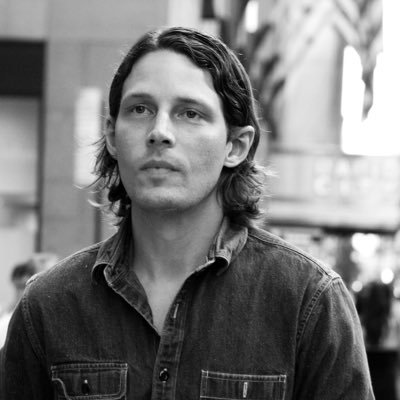
Will Chancellor is the author of A Brave Man Seven Storeys Tall, a novel about in between spaces, particularly those of father/son. He’s currently working on his second novel, To Test the Meaning of Certain Dreams.

Come Out to Lit Crawl NYC Tomorrow Oct. 1st!

If you don’t want a massive case of FOMO, come out and crawl

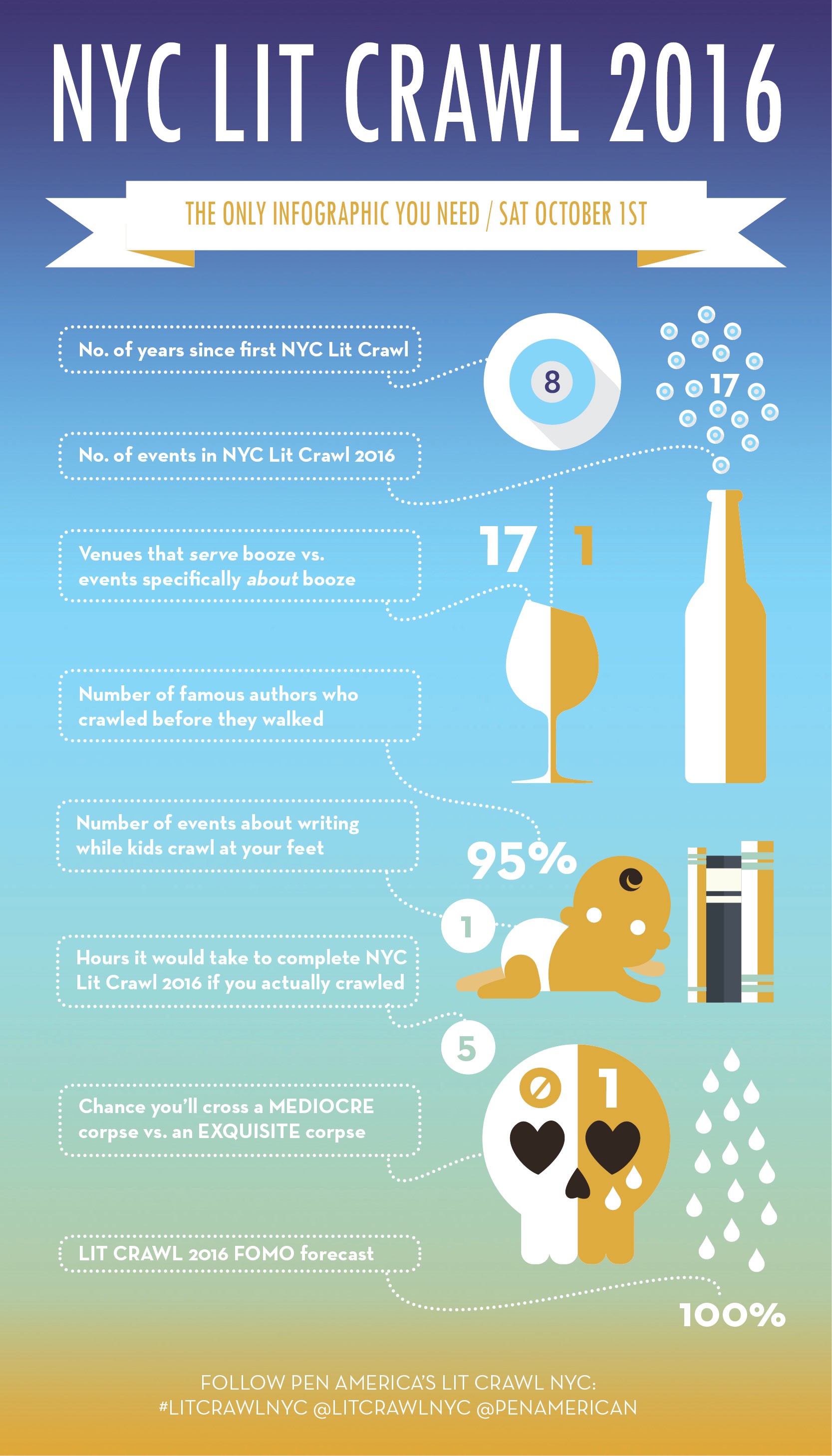
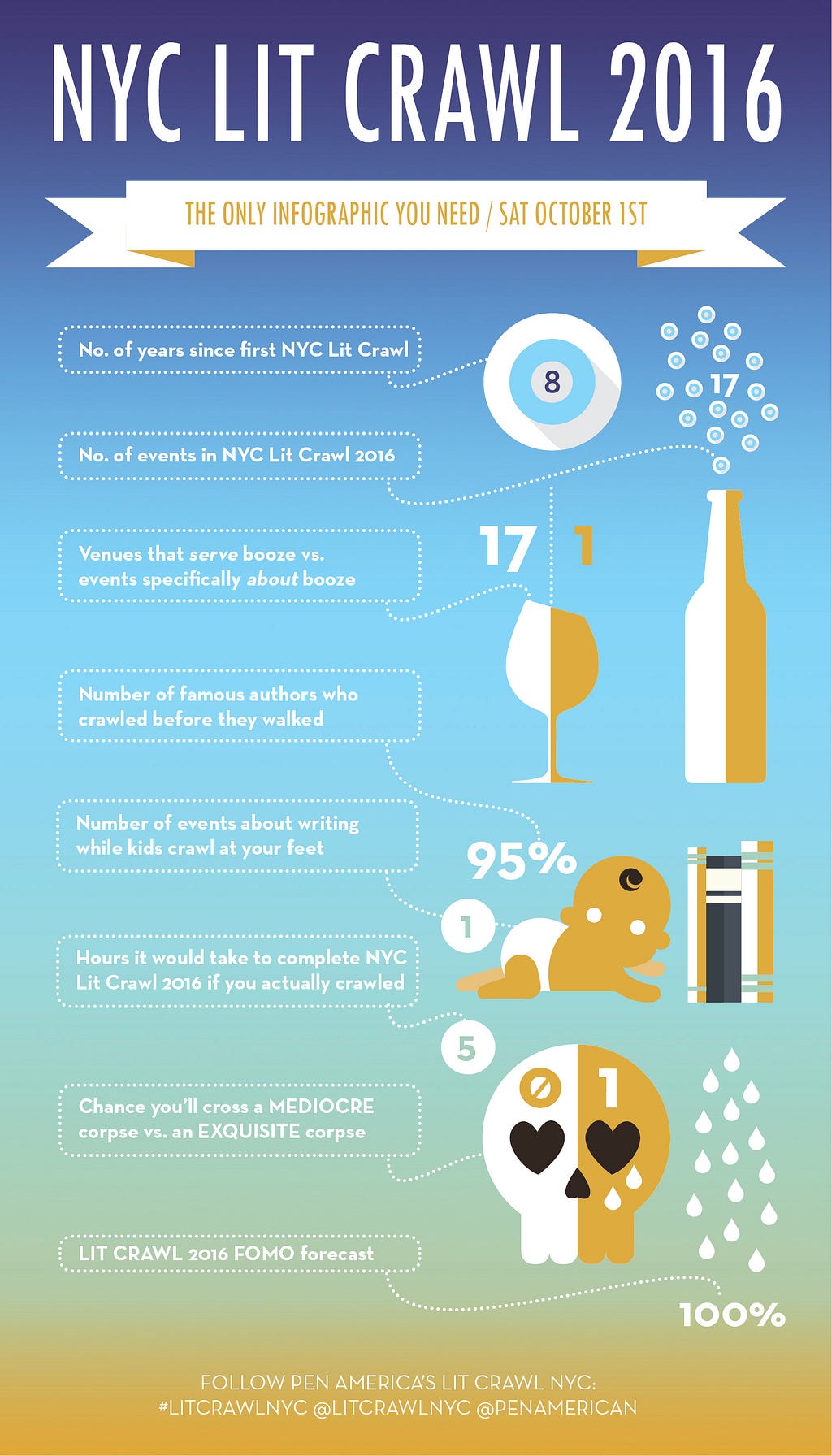
Do you love literature, booze, and fun? Do you live in NYC? Tomorrow, Lit Crawl returns to NYC and as this infographic shows, you’ll be missing out if you don’t go. Electric Literature is a proud media sponsor of the event, so we’ll see you there!

For a full list of events tomorrow, click here.

Game of Thrones to Be Republished in Interactive Ebook Form

Will the enhanced editions of the fantasy epic mark a new wave of innovation for publishing?

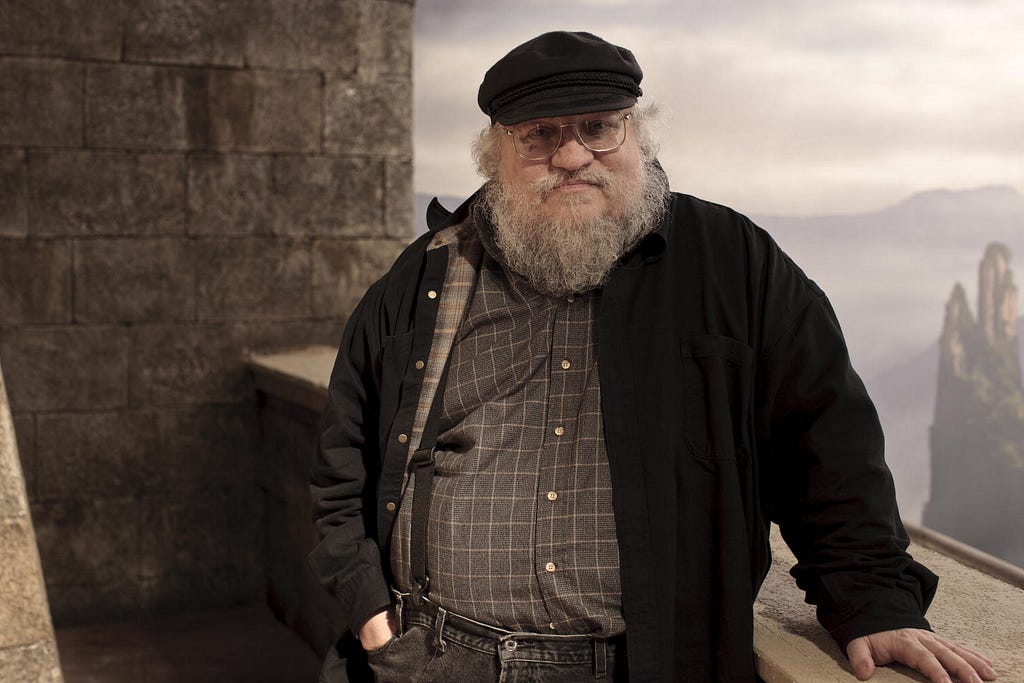
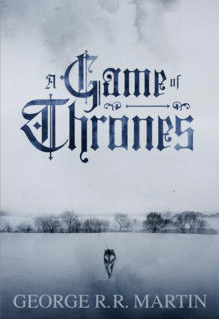
Twenty years ago, George R. R. Martin published the first installment of A Song of Ice and Fire, which has become a cultural obsession thanks in part to the HBO adaptation Game of Thrones. In celebration of the book’s milestone anniversary, Martin, along with Apple and HarperCollins, announced “a new period in the history of publishing” with the introduction of the Exclusive Enhanced Edition of the first book, with the next four soon to follow suit.

According to the product page on iTunes, the digital books feature “interactive maps, author notes, glossaries, family trees, and illustrations,” which will heighten the reader’s experience and certainly help keep track of characters’ journeys throughout the whole of Westeros.

Martin is very excited about how the release will impact his readers. He says, “Anything that confuses you, anything you want to know more about, it’s right there at your fingertips. It’s an amazing next step in the world of books.” In other words, he’s thrilled people will have this resource available so they can stop bombarding him with questions.

For now, only A Game of Thrones is available on iTunes. A Clash of Kings will be released on October 27th, followed by A Storm of Swords on December 15th. A Feast for Crows and A Dance with Dragons are respectively due in February and March of 2017. However you can go ahead and add them to your iTunes wish list as early as today.

One more note of excitement for diehard fans of the series: The enhanced edition contains an excerpt from the long awaited sixth installment, The Winds of Winter. It used to be up on Martin’s site, but now the sneak peak is exclusively in the iBook. So if the sigils, family trees, and glossaries weren’t enough, perhaps this added incentive will push you to purchase. There is still no word on an official release date for the forthcoming book, but we wouldn’t be surprised if it debuts in this avant-garde format too.

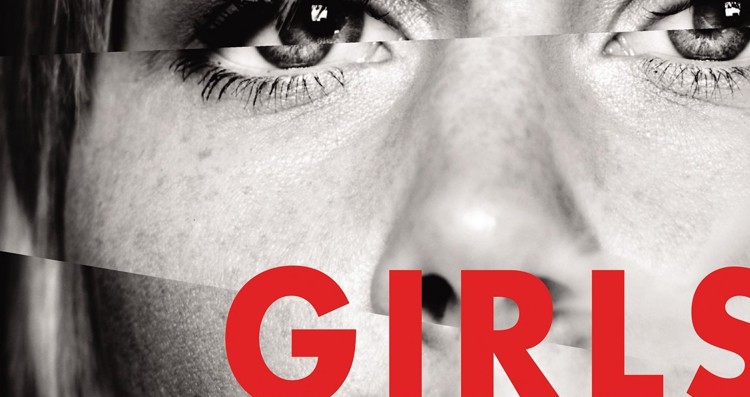
Don’t deliver us from evil: High school hell in Girls on Fire

With the novel Girls on Fire, Robin Wasserman does not illuminate what compels teenagers to murder each other and commit impulsive acts of violence. She zooms in on the frenzy of ideas whirring between two girls blasting music in a Buick until their urges exceed their grasp. She empathetically captures what is at work when one person is seen by another and somebody thinks: “I don’t know why I did it, except that life was small and this seemed huge.”

Prior to Girls on Fire, Wasserman wrote for young adults, and this book addresses in the older reader the desire to have read something like this when they were young, a little distance willed between that self and the present self. Some of the novel’s darkness comes from scenes of torture and cruelty, but just as frightening is the naïveté, the poses the characters assume, the reader’s knowledge that the urgency the characters experience will wane and keep life small forever compared to their consequences.

In the rust belt wasteland of Battle Creek, Pennsylvania, high schooler Hannah Dexter wants to become what classmate Lacey Champlain sees in her. Dex, who thinks of herself as an easily railroaded nonentity, needs Lacey to affirm that there is something not invisible in her, something cool and powerful that attracts dangerous Lacey. Lacey, who thinks of herself as too much, as offensive to the sensibilities of anyone who thinks of themselves as good, needs Dex to affirm that there is something out there she can’t destroy (all the while refusing to acknowledge Dex’s fortitude, chalking Dex’s commitment up to how she herself has captivated the girl).

The vivid flashes of sex and violence may be perceived as adult material, but they are the fruits of ideas about lust and power that coalesce in the teen years when one is straining to see what one can be in another, in their eyes and in their bodies. When Lacey contemplates testing Dex’s loyalty, she does so by taking advantage of Dex’s dad and his bad boundaries. It’s inevitable as weather that an older man will look at a younger girl and want to forget who he is and become only what she sees and (he wishes) needs. Wasserman depicts it as the low blow it is and does not let Dex’s dad off the hook for how he allowed his insecurity to inform his behavior.

Without Lacey, I was incapable of wildness, that’s what he was telling me. When I had Lacey, he had a little piece of her, too, could love me more for the things she saw in me. Now that she was gone, he expected I would revert to form. I would be the good girl, his good girl, boring but safe. He was supposed to want that.

Nothing feels genuine about the way the characters interact, especially when it comes to Dex and Lacey interacting with other teenagers, and that is because those interactions are not genuine — the baiting, posturing, and acting. The characters perform in order to live up to each other’s ideas of what they’re supposed to be, and it is one of the most effective facets of the novel. It makes for a chilling and familiar experience, like coming upon a Livejournal from high school that alludes to a crime you cannot remember committing.

Nikki told us how in sixth grade she’d gotten bored with her then best friend, Lauren, and convinced all the other girls in their group to ice her out for the rest of the year. I remembered this: I had joined the I Hate Lauren club — which never existed as anything more than a membership list circulated to half the class, then left anonymously on Lauren’s desk the next morning, just as the I Hate Hannah list had the year before — not because I did hate Lauren, but because it seemed to have slipped into the zeitgeist that Lauren was hateable, and it was safer to be against than for.

As much as Girls on Fire resembles real incidents of brutality between American teenagers, it explicitly recalls the true story that inspired Peter Jackson’s 1994 film Heavenly Creatures, about two high school girls desperate to get lost in each one’s idea of the other, to be seen as great and part of an epic tale, to become a piece of the art they make together. But the central characters in Heavenly Creatures, Pauline and Juliet, commit murder in order to prevent their separation and the shattering of their shared world, and as a result, they are unable to ever see each other again. Dex and Lacey feel themselves coming apart and commit murder in order to get fully lost in one another, prevented from truly being seen by anyone else ever again.

The fragmented incident that incites the climax — which sees Dex throttled through humiliation after humiliation — retrofits a current phenomenon to the novel’s Nevermind-era setting. The contemporary flavor of the brutality in the novel (readers are exposed to so many reports that sound like the events of Girls on Fire that it seems of a piece with daily events of 2016) relieves the trappings of small-town counter-culture, of corsets and lipstick and Nirvana, from being implicitly blamed as an accessory to the characters’ cruelty.

Narrating alternating chapters, Dex and Lacey get space to articulate their motivations as the humiliations accumulate — someone wakes up after a night of drinking covered in inked-on epithets, someone gets offloaded to a church — and when they take revenge, they do not pay for it. It does not feel right to characterize them as having gotten away with it, and the ambiguity is appropriate — it wouldn’t feel right to get satisfying closure from a story about violence. The reader of today knows better. The darkness and Satanic appurtenances of Girls on Fire are ornamental to the very relatable loneliness and longing that Dex and Lacey inspire in each other.

In that space, anything can happen.

Ted Wilson Reviews the World: Sprinkles

★★★★★ (5 out of 5)

Hello, and welcome to my week-by-week review of the world. Today I am reviewing sprinkles.

Not to be confused with sparkles, sprinkles are tiny, colored, flavorless cylinders made out of I think chocolate, or maybe just cardboard. I mistakenly asked the Walgreens employee for sparkles and she directed me to the arts and crafts section. I had glitter stuck in my teeth for a week. I should have brushed my teeth.

Sprinkles can take an ordinary cupcake and turn it into a cupcake that looks like a rainbow shattered and fell all over it, and then the leprechaun at the end of that rainbow hid inside the cupcake and the only way to get him is to eat it.

There are many ways to adorn your cupcake with sprinkles. Sprinkling them on is the most traditional way but I prefer to individually insert each sprinkle so it looks like my cupcake has hair — like it’s a little creature that I’m about to devour. I always enjoy eating things more when it feels like I’ve conquered them. That’s why I never allow myself to be spoon fed. It’s boring.

It’s not just cupcakes that can benefit from the addition of sprinkles. Try sprinkling some onto your meatloaf, spaghetti, or soup. It’s a great way to make your dinner special if it’s your anniversary and all you know how to make is soup. Your significant other will be like, “Soup again?!” Then when you pull some sprinkles out of your pocket and throw them onto the soup your significant other will shut up and eat the soup.

Or if you’re out of food altogether, sprinkle the sprinkles all over your tongue and watch what happens in the mirror. There’s an 80% chance you’ll eat them and I’m not even a psychic. I dare you to not eat sprinkles after you put them in your mouth.

What’s most amazing is that sprinkles never go stale. I bought a used van that ended up having 20 cases of sprinkles in it back in 1963 and I’m still eating them. I wish I knew the science behind the long shelf life of sprinkles and wish it could be applied to other foods. I found a sandwich in my luggage and it had definitely gone bad. I may as well have just thrown away that $8.99 at the airport vending machine.

It sounds silly to think that sprinkles may be the key to unlocking food shortages around the world, but the evidence speaks for itself. If anyone reading this is a scientist and needs some sprinkles to study, I’m more than happy to donate some of mine.

BEST FEATURE: If it’s warm enough, sprinkles can be melted together into a sprinkle ball that can be eaten like an apple.
WORST FEATURE: If you get too close to the sprinkles, their cylindrical shape makes them look like logs, which can be overwhelming if you think you have to eat a bunch of logs.

Please join me next week when I’ll be reviewing Metallica.

My Year in Re-Reading After 40 #5: The Sea, The Sea by Iris Murdoch

BEFORE RE-READING:

I read Christian Lorentzen’s piece on questioning whether it’s really the story that keeps us reading stories the other day. I was particularly struck by this part:

“The thin traces the plots of even the most memorable near universally read books can leave in our minds. If a work of fiction has any force to it, we close the book with a head full of images, lines, and emotions.”

Looking back at the first four entries in My Year of Re-Reading, I see that I can’t much remember the plots, or the names of the characters; what I’m chasing when I re-read is that experience, the one that remains lodged in the brain years later. A year or five from now, I’ll no doubt have forgotten those plots … again.

Like re-watching Season One of GoT and you’re all like, “Who the hell is that guy?”

Let’s try it out on some famous books. How closely can I recite their plots? Not at all, it turns out. A random sample (with help from Wikipedia):

Midnight’s Children: a guy gets lost in a swamp during a civil war in Bangladesh? (That happens, but the book is totally not even about that.

Wuthering Heights: a jealous jilted ex-lover goes and gets rich in order to get revenge on the object of his affection’s daughter, a more twisted Great Gatsby? (I mean, sort of …)

The Brief Wondrous Life of Oscar Wao: a nerdy Dominican kid learns who he is growing up in New York thanks to some charm and Lord of the Rings? (Yeah … not really.)

Freedom: lol, j/k, like I’d read this. There are enough ponderous bores in real life without reading one, too.

Despite the fact each of the first three books deeply moved me, I can’t even recall basic plot points about them. Lorentzen’s point that emotion and characters rather than plot forming the glue of what we love about the books we love seems self-evident to me. The best books envelope us in a fictive dream more real than reality. But like a dream, they fade with time, leaving only the glimmer of impression. How often does the shadow of a passing girl or certain peppery scent wafting on a spring breeze jar us suddenly back into a dream we once woke from smiling?

Which brings me to The Sea, The Sea. I love this book, unreservedly. I also couldn’t tell you the first thing about what happens in its pages. Some English dude — a poet, maybe? — takes a lot of walks along the craggy English coast in a sweater, drinks wine, and obsesses over a girl. I also can’t remember the names of the characters, or what they want, or why, or if they get it or not. Actually, I’m not sure much happens at all. I’m also one hundred percent sure I don’t care.

I recall looking up from the pages of The Sea, The Sea upon a first read to find the world atilt and vaguely unreal. Certainly dimmer in comparison to the world Iris Murdoch summoned, certainly a rougher and vastly less beautiful place. I had to get up from the couch, I had to fix something to eat, I had to sleep and the next morning there would be work and all the quotidian demands of the workaday world, and it all seemed horribly unfair that I couldn’t just crawl back inside those pages and stay there for good or at least a long, long while.

I don’t recall what, exactly, about the book propelled me to such fantastical heights, but I’m aiming to find out with this re-read.

AFTER READING:

Reading The Sea, The Sea felt rather like a magnificent High Mass I once attended in a Midwestern cathedral in a rundown Rust Belt city, replete with incense and organ chords echoing up to the rafters which seemed to ripple with ominous flapping. An odd sense of unreality attached itself to the proceedings, the prayers of the bishop at the altar, the clanging of the bells, the creaking of pews as the congregation engaged in Catholic calisthenics, stand, kneel, sit, stand, kneel, sit. Oh, the Mass was real enough to taste and smell, and the grand old cathedral with its pews worn smooth by generations of worshippers stood as solid as a human architectural construction can be. But watching those priests and bishops and their Hosannas before the glow of the altar and the congregation with their Missals and Christ crucified overlooking all, I was seized by an odd sense of detachment. As though I were observing myself from a distance.

Not from Hawaii, for some reason.

That’s the double bind The Sea, The Sea put me in: I was reading the words, all right, but somehow I wasn’t quite there. At 40, I’m too old and life is too short to construct a bunch of sentences about the various “meanings” I could extract from the text. Faced with having to have something substantial to say about this book, so pregnant with feeling and impressions, I can do no more than reach for analogies, it seems. No narrative thread has presented itself; no clever insights. Only tenuous, weak analogies.

In point of fact, I’ve been struggling for nearly two weeks now to come up with something meaningful to say about this book, which seems an odd thing to say about a book you love. I mean, ordinarily I’d say that my interest level in reading 502 pages about a poncy retired English playwright would hover at somewhere around less than zero; in truth, I plowed through The Sea, The Sea in only a few days (which is something of a miracle of speed with two children at home … did I mention it’s soccer season again? Somehow children’s soccer season seems to encompass roughly 47 weeks a year). Which is additionally remarkable because, as I suspected, not a whole hell of a lot happens in this book.

Oh, Charles Arrowby, gets in some scrapes obsessing over his long lost and now rediscovered childhood love. Nearly drowns, in fact, and would have, too, had his saint-like cousin not levitated down into a tidal surge to save him (I think). A young man dies, an old man dies, an old woman (Arrowby’s ex-lover) flees to Australia. Wine is drunk, friends from London come and go, betrayals and reunions abound. A bit of a muddled mess when it comes to plot, really. And what’s more, and more relevant, is that nearly two weeks later, the details have already escaped me. Because this marvelous hurricane of a book requires no foundation of mere plot to remain lodged in one’s consciousness.

A curious feature of The Sea, The Sea is that it is hard to summon individual sentences or even paragraphs to stand forth as representatives. The writing is not quotable, if you will, in the way that someone hilarious like Lorrie Moore or someone inspired like James Baldwin. Rather, the propulsive force of the words piled one upon another pummel you into submission, your brain a galley slave to Iris Murdoch’s imagination. This makes for looooooooong paragraphs, full of twists and perspective shifts, leavened by foreshadowing and symbolic gestures, but not pointing to any reality but that of the book itself (and let it be said, I chose a paragraph alluding to a “terrible thing” happening to show that you don’t even need to know about the terrible thing, which turns out not to be that terrible anyway, to appreciate and savor the prose):

After that, and until the terrible thing happened, the evening seemed quietly to break up, or to become diffused and gently chaotic like the later stages of a good party. Or perhaps it is all just confused in my memory. There was some light over the rocks, though I do not recall where it came from. Perhaps the clouds were still giving off light. A moon had made its appearance, randomly shaped and spotty, large and pale as a cloud itself. The fierce foam at the edge of the sea seemed luminous. I wandered looking for Lizzie, who had vanished. Everyone seemed to be walking about on the rocks, precariously holding glasses in their hands. An owl was hooting somewhere inland and the intermittent voices of my guests sounded equally distant, equally frail and hollow. I also wanted to find James, because I felt that perhaps I had been rude to him. I wanted to say something to him, I was not sure what, about Aunt Estelle. She had shone somehow upon my childhood. Che cosa e amor indeed. I went to the cliff and watched the waves pounding it. There was a soft growling of thunder. I could see the glowing whitenesses of the wave-crests out to sea. Gilbert’s babbling baritone started up not far off. Stay dainty nymphs and speak, shall we play barley-break tra la la? Then later on, in another quarter, Titus also by himself could be heard rendering Jack of Hazeldean. There was something absurd and touching about the solipsistic self-absorption and self-satisfaction of these drunken singers. Then at last I heard Lizzie’s voice distantly singing Full Fathom Five. I listened carefully but could get no sense of direction, so loud was the accompaniment of the restless rushing sea. Then I thought, how strangely her voice echoes. It seems almost amplified. She must be singing inside the tower.

Such baroque writing ain’t normally my cup of tea; but done this way, it’s easy to get swept up along in the tide, and I was only too happy to do so. Murdoch is a such virtuoso, you’d feel compelled to read her Fitbit updates (9,389 steps! Nearly there!). The writing reminded me of nothing so much as Proust, whose In Search of Lost Time I once read in its entirety. The prose rolls and roils your brain, leaving you a little dazed in its wake, and somewhat at a loss for words (ahem). I think that’s why I struggled for so long after re-reading to find something worth saying about this book.

As Christian Lorentzen intuited, emotion trumps plot. Or character.

But while we’re on the topic, let’s talk about Charles Arrowby. A horrid little man, the book’s protagonist has managed to, despite wealth and experience and age, attain exactly no wisdom. Selfish, sexist, condescending, utterly self-unaware. He wrecks the lives of others to keep himself amused, rather as a toddler will trash a dinner table just for the fun of seeing a mess. In his romantic life, Charles Arrowby makes mistakes worthy of a swaggering sixteen-year old; in his career, those of a petulant seventeen-year old; in his daily life, those of an ill-formed eighteen-year old college freshman living on his own in a dorm for the first time. By page 200 or so, when you start to realize how goddamn dumb Charles Arrowby is about damn near everything in the world he inhabits, it is not so much infuriating as it is irritating, like a splinter lodged in the flesh of your palm and you’ve got no needle.

At least this dummy had the virtue of being funny.

Charles Arrowby is the worst sort of narcissist, so unaware of his own self-centeredness that he almost seems written as an object lesson. Kids, the moral of the story is don’t be a selfish asshole!

Except Iris Murdoch could hardly have had so prosaic an end in mind. For all the petty rancor of its main character, the book as a whole is anything but petty or rancorous. In this lies the book’s strange magic, I think, and try as I might, I don’t know how else to put it.

Someday, years from now, the spell will have worn off again, and I’ll re-read it once more, and once more, be enchanted.

DOG-EAR REPORT:

The aforementioned difficulties with finding quotable quotes in The Sea, The Sea have not been surmounted upon review of the pages I dog-eared. Stripped of their context, the following quotes, while still great, have lost their original impetus; they are the desiccated fossils of a far greater creature. Take them in that spirit, because they’re still fuckin’ great.

For use the next time someone asks you why you aren’t married yet:

I wanted a wife once when I was young, but the girl fled. Since then I have never really seriously thought of marriage. My observation of the state never made me fancy it.

The speech all writers secretly dread they will one day hear:

You never did any good for mankind, you never did a damn thing for anybody but yourself. If Clement hadn’t fancied you no one would ever have heard of you, your work wasn’t any bloody good, it was just a pack of pretentious tricks, as everyone can see now that they aren’t mesmerized any more, so the glitter’s fading fast and you’ll find yourself alone and you won’t even be a monster in anybody’s mind any more and they’ll all heave a sigh of relief and feel sorry for you and forget you.

A sentence so nearly-maudlin you or I would never dare write … and yet, and yet …

The grass on the other side of the road was a pullulating emerald green, the rocks that here and there among the grass were almost dazzlingly alight with little diamonds. The warm air met me in a wave, thick with land smells of earth and growth and flowers.

Next: More fantastical yet.

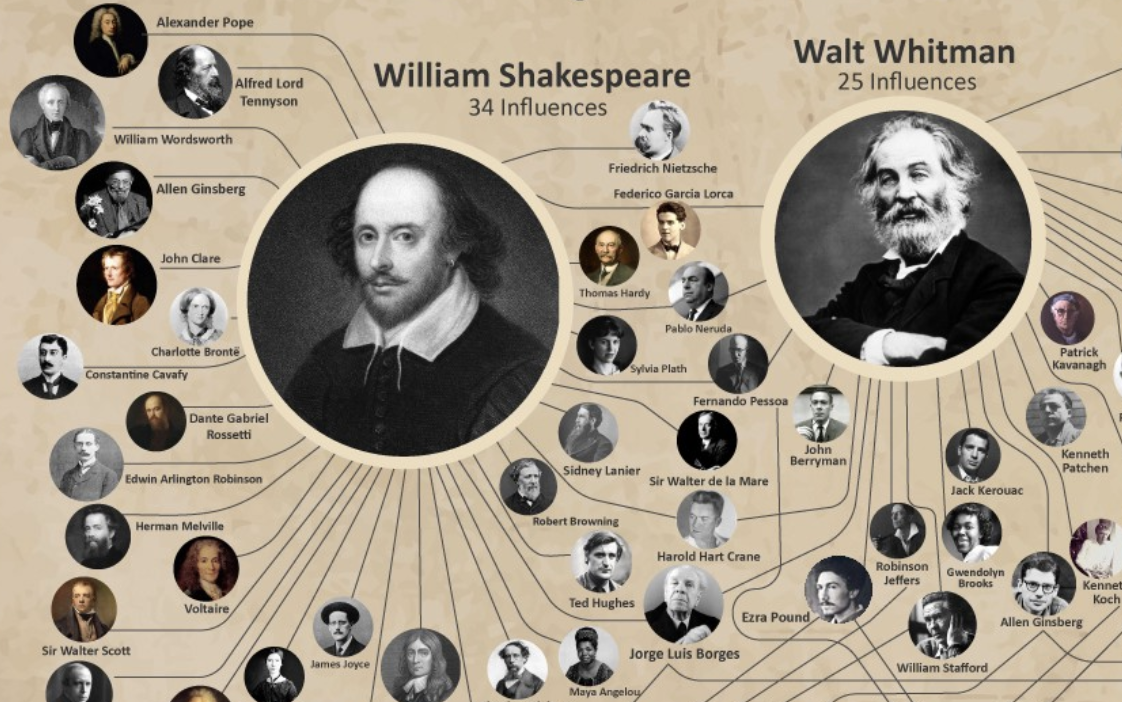
INFOGRAPHIC: The 10 Most Influential Poets in (Western) History

Although the title of the infographic implies it is looking at all poetry, it seems pretty clear that this is more a list of the most influential poets in Western English-language poetry, not all poetry from around the world.

How did they come up with this list?

We conducted extensive research to find out who the top poetry influencers were and studied approximately 250 poets to determine whether they were influenced by any other poets, and, if so, who. We entered more than 1000 influences into our database to come up with our top ten, which you can see in the infographic.

You can read more about their methodology here.

The Natural World as Governing Force

As long as there have been stories, humans have tried to assign meaning to nature. What is the natural world to man, if not a governing force, a collective of anthropomorphic beasts calculating our demise, or an arm of a vengeful god? Or is nature more appropriately considered as the perfect order of things, the model by which we are meant to live and let live, to surrender to the perfect imperfection of surprise? Ali Shaw challenges all of these perspectives and more in his novel, The Trees. Shaw opens the book with a great, creaking transformation — the contemporary world (from the vantage point of England) is suddenly interrupted by a thick forest. In a great burst, the earth groans, splits, and a snarl of fully grown trees choke out man’s development. Shaw’s work is imbued with the mystical feel of an older tale, but its inclusion of 21st century elements give it an apocalyptic sensibility. Though Shaw’s premise feels at first a little thin, like it would have been better suited to the confines of a short story, eventually it is the depth of his characters’ interactions and their subsequent understanding of each other, as well as those characters’ understanding of what the trees — the event of their growth — means to each of them that elevates Shaw’s work beyond a simple journey through an unknown world to a complex and otherworldly meditation on nature.

Shaw’s book is told from an omniscient third perspective that shifts between members of a small band of travelers, but he begins with former teacher, Adrien. An everyman eating takeout and watching Westerns at home when the trees come, Adrien’s life is entirely devoid of purpose. His wife is away on business with another man, in Ireland, and Adrien has all but given up on his own life. Shaw’s writing as he describes Adrien encountering the sudden growth is lush and reverent. As he describes the moment of the trees’ arrival, he establishes both his voice and the all-consuming power of nature:

The forest burst full-grown out of the earth, in booming upper-cuts of trunks and bludgeoning branches. It rammed through roads and houses alike, shattering bricks and exploding glass. It sounded like a thousand trains derailing at once, squealings and jarrings and ducklings all lost beneath the thunderclaps of broken concrete and the cacophony of a billion hissing leaves. Up surged the tree trunks, up in a storm of foliage and lashing twigs that spread and spread and then, at a great height, stopped.

“In the blink of an eye, the world had changed.”

Shaw’s musical diction and awe of natural world shine in his work. The opening scenes of destruction give his characters a push to leave — they want to find out if the trees blanket the globe; they want to find food; they want to get to their loved ones. Adrien joins Hannah and her teenage son and they set off for Ireland. Though Shaw’s pace in the 500-page tome is initially slow, it picks up. The journey becomes dark, and each character’s losses impact their world-view deeply.

Though The Trees follows a classical quest structure, Shaw deviates from a too-strict interpretation of the archetype because his protagonist is not the seeking hero who looks for retribution, salvation, or even a treasure. Adrien’s reluctance and laziness make him a more contemporary protagonist, and lend complexity to what could have become too simple or easy. He has to be pulled along his journey rather than pursuing a lofty ideal. Adrien “wanted to be a good man,” Shaw tells us:

“[I]deally a great one. A man who would go down in history as the solver of some global crisis or the architect of some peace treaty (he didn’t much care which). Yet he also wanted to get up late. He wanted, if at all possible, to sit for most hours of the day in his boxer shorts, eating junk food…”

Adrien’s lack of purpose drove a wedge into his marriage long before his wife left. When the trees come, it no longer matters that he’s jobless and listless. But the journey to Ireland with the others gives his life activity, if not immediate purpose. Adrien, who had never been one to spend time outdoors, has to reconcile his ideas about the natural world, his sense of right and wrong, and who — or what — he wants to be.

Shaw’s premise, the immediate and total growth of trees, creates a catalyst for personal consideration within each character. Relationships, likes, dislikes, and world-views are all heightened in the shadow of the new growth. While Hannah, a former worker at a nursery, sees the natural world first as perfection, she has to consider also its heartlessness and unaffected cruelty. “Now that things are back to normal,” a man they encounter says, “there isn’t fairness. There isn’t compromise. There is only the coming together of force against force. Stags locking antlers.” Hannah’s son, Seb, an amateur web designer and writer, has to live with the ephemeral nature of disappearing human creation. His friend, Hiroko, a Japanese student stranded on a field trip, struggles to put into practice the training of a mountain man who took her through America’s forested areas. “Look the world in the eye,” he told her — and yet staring murderers and a new, lawless existentialism in the face once the trees come is difficult. Shaw includes mystical beings — kirin, and what the characters call “the whisperers,” small creatures inspired by medieval carvings of natural grotesques — these familiars draw the characters onward, leading toward the realizations Shaw wants them (and us) to make.

While at times, Shaw succumbs to the temptation to overwrite his character’s conclusions (“Love was a trail through the forest of yourself,” he writes at one point), his sure hand shows in how he writes the journey of this haphazardly assembled band through a forested continent. Shaw’s language sings on the page whether he writes of the musty undergrowth of roots sinking into soil or the cool freedom of the ocean on his characters’ skin. The Trees is Shaw’s homage to both the destructive and generative power of the natural world.

Gina Frangello on Identity, Characters That Bleed and the Chasm of Language

Six lives converge for a surrogacy in Gina Frangello’s gut-punching novel, Every Kind of Wanting (Counterpoint 2016). Six people want, as Frangello says, “for [a] three-pound infant to save their lives,” and yet the desperation of each character — for truth, for acknowledgement, for legitimacy — consumes and ruins them. Some context: Frangello’s work centers on four Chicago area couples — Lina, an unreliable narrator and stripper, and her femi-nazi academic girlfriend and dom, Bebe; Lina’s brother, Miguel, who is haunted by his past in Caracas, and Chad, Miguel’s husband — they’re the ones who want a baby. Chad and Miguel involve various members of the moneyed North Shore in their quest: Gretchen, Chad’s sister, who donates her eggs to the cause, and Gretchen’s abusive husband, Troy, who she does not inform of her decision, the men also pull in Emily, the surrogate, and her husband, Nick, a playwright whose ties to Lina are questionable. In the midst of this tangled setup — one involving lies and pretense from every character as the baby is conceived — Frangello writes about how emotional vulnerability in relationships is as much a calculated decision as the lies we tell each other.

Frangello and I had the opportunity recently to discuss her story, as well as the satisfaction of telling stories through layers of perspective.

Heather Scott Partington: Lina says that “all empathy involves a kind of method acting.” In some ways, this novel looks at human emotion from an outsider’s view — many of the characters are trying to figure out how they should appear to feel as much as how they should actually feel. Every Kind of Wanting speaks to the duality of our persona — the interior vs. the exterior. Was that something you wanted to focus on? How has your approach to writing changed as you’ve published each successive novel?

Gina Frangello: I love this question because it was — yes — so much something I wanted to focus on, and there’s a thrill when an early reader identifies that. On both a craft level and a psychological level, I’m fascinated by what numerous points-of-view can offer a novel, in terms of the ways in which characters’ different truths contrast markedly. Perhaps nowhere is this more visible than in the schism between how a character perceives herself or himself, vs. how they appear in other characters’ narratives…so that, alone, is something I very much wanted to explore.

However, taking that a step further, yes: some of the characters in Every Kind of Wanting are also explicitly attempting to put on a kind of public face that contrasts significantly from their inner lives. The gap between who we may want to be seen as, vs. who we fear we are in the darkest corners of our psyches, is a deeply compelling space to excavate, for me as a writer.

I also love, in terms of point of view issues, creating the tension between whether the various characters’ points-of-view are even reliable and real. I was doing a lot of that in my early writing too, but back then I fretted over it, since I was often told that this kind of thing made my work unmarketable and too “cerebral.” I worried I’d never get published if I didn’t conform more to what the market expected, particularly of women writers, but I’m not sure I could have conformed to that even if it had been my desire. My brain just doesn’t work in those kinds of linear or binary ways, maybe. Janet Burroway has that great quote that, in fiction, “only trouble is interesting.” To me, only complexity and layers and contrasting truths are interesting. I’ve become unapologetic and don’t worry anymore about the “marketability” of things. There are amazing people like Counterpoint’s Megan Fishman to do that for me, but on a deeper level I also think “the market” is a diffuse and illusory entity and that making any attempts to cater to it just send a writer in wrong and inauthentic directions. It thrills me when a writer like Lidia Yuknavitch, who was once publishing on avant-garde imprints and definitely being judged as too damn weird and edgy for the mainstream market, is now a bestseller for essentially doing the same kinds of body-centric, language-centric work she’s always done. “The market” isn’t actually…you know…a sentient being. It’s just a set of conjectures posited by various disparate people in marketing meetings. A lot of times they get it wrong. Writers can only follow their own heat — that’s what makes writing compel us.

HSP: One of the most wonderful things about Every Kind of Wanting is how you write with sympathy for each character’s limited perspective. The idea that “we’re all the heroes of our own narratives” — there’s no clear bad guy in the story, although a case could be made for that role being shared a bit by everyone. Were you influenced by any stories or other writers as you took on that approach? I wondered as I was reading if your experience with trying to write the (capital letters) Other, which I’ve heard you speak on several times, informed how you tried to look into what makes people act in ways that unintentionally hurt those around them.

GF: In terms of literary influences, one of the pieces of fiction that made the biggest impact on me, and speaks in an implicit way to our all being heroes of our own narratives, is the section in The Unbearable Lightness of Being where Kundera gives us Sabina and Franz’s “Short Dictionary of Misunderstood Words.” Essentially, Kundera interrogates the deep meanings that various words or concepts hold for the two, and the chasm of misunderstanding that is often unavoidable between people, even lovers or siblings, who each bring their own deep subtext to everything, and to whom nothing can possibly mean exactly the same thing. That section of the novel — I know it’s not in vogue to praise Kundera these days, and that he’s become pretty stagnant and politically outdated in his current work — but he taught me more about the editorial omniscient point of view than any other writer, and he also taught me things about the subjectivity of truth that were explosive to me as a fiction writer creating characters who would, yes, be the heroes of their own narratives, rather than simply foils for one dominant worldview in a novel.

That all comes to play in issues of writing the Other, too, of course — whatever Other may mean to a given writer. I’m massively against the idea of “representation,” i.e. that if I write a character who is bi, or Latino, that character is supposed to somehow embody all bisexual or Latino people and serve in any way to “educate” the reader about cultural and political issues. A novel may engage cultural and political issues, obviously — arguably more American novels should do so, according to many critics, though I would actually say that many do, and that sometimes “political” is defined too narrowly. But what I mean is that no one expects a white character, or a straight character, to serve in these representational ways — no one thinks Jonathan Franzen’s characters, for example, are supposed to represent All Straight White People — but readers and sometimes even astute critics will sometimes read fiction about various marginalized or repressed groups through that kind of lens. The problem behind that phenomenon is that much of the public erroneously and offensively continue to view Whiteness or heterosexuality as somehow cultural default norms, against which everything else is seen as “alternative” or “exotic” or “other,” and therefore homogenous in their opposition to straight whiteness, which is granted multiplicity and individuality in the cultural consciousness while anything else is often reduced to collectivity alone. And basically, I think that’s grotesque and false. I wrote extensively about this for the Powell’s blog recently, but at the bottom line what I mean is that we all bring so much deep individual subconscious material to our own realities, and identity politics is, of course, a part of that whole, but the differences between any two people of any particular “category” — two Italian-American women raised in Chicago in the 1980s — are still going to be so enormous that any illusion of representation is going to be not only false but flat. Characters have to breathe and bleed. In order to do so, they can’t be object lessons or political agendas or allegories. Writers have to be fearless and irreverent about anyone whose skin they crawl inside on the page — I would rather make spectacular mistakes, ambitiously and out of love for and intimacy with the characters I’m portraying — than to create something bland and safe and reductively instructional.

Characters have to breathe and bleed. In order to do so, they can’t be object lessons or political agendas or allegories.

HSP: Can you talk about why you structured the book the way you did? I didn’t realize until after I finished it and went back to the beginning that you start with Act III, and then go to I, II, and IV.

GF: I’m very interested in characters telling their own stories, and in order to play with that, structurally, at least one of the characters needs to be speaking from a vantage point of already knowing what “happens,” so to speak. I’m less enraptured by stories where the characters are just getting whalloped in the face by the plot and we’re watching them reel and there’s no sense of retrospective perspective or volition as to what is revealed and when. I don’t like “this happened, so that happened, which made the other thing happen” and we just sit there like passive spectators, watching the collision. I like a character’s ability to have volition and a kind of curation of the narrative, and in that sense I have a tendency to open novels — all three of my novels have opened this way, to varying degrees and in different ways — from a point that isn’t “the beginning” on the timeline. I don’t believe in starting at the beginning, maybe, because only from a later lens can we really understand what the beginning even was of a particular story.

HSP: One of the characters mentions the adage that history is written by the victors. In some ways, and I mean without a hint of nuance that this is a thing I love, this story is a history written by beautifully damaged and well-meaning losers. Stories are how we bear witness — just like relationships — another point made by a character in Every Kind of Wanting. Do you think that’s the particular benefit of story over history? Or am I making too much out of this tiny distinction? What was the first germ of this story that came to you?

GF: I could not agree more that this is one of the great beauties of literary novels — the ability not to have a glossed over “version” of the past created by those who most benefitted from given events. Art — and I, too, mean without a hint of nuance or irony that this is a thing I love — is the imaginative space that allows us to enter terrain on which history has often closed the door. Many novels engage that space far more than Every Kind of Wanting, which is a story about contemporary times and primarily focuses on people who, although they are very troubled, are also educated and have ways of expressing their own voices and stories, should they choose. But I’m thinking of a novel like Laila Lalami’s The Moor’s Account — you know, art is the space where we can explore facets and hidden doorways and silenced stories that didn’t make it into the history books. My debut novel was a retelling of Freud’s “Dora” case in ways that attempted to allow the young woman to speak for herself rather than being reduced to meaning by a middle aged man in a role of authority over her, potentially acting out after the “rejection” of her terminating therapy. From Morrison’s Beloved to the down and out drunks and “losers” in, say, Bukowski, novels allow us to explore the underbelly of history and move outside of the accepted textbook view of what human life looks like. It’s important to note that of course often there are actual recorded histories that reflect similar terrain (12 Years a Slave is a powerful example), but many times those narratives aren’t widely accessed by the public until art somehow draws greater attention to them.

Every Kind of Wanting was inspired by a real-life gestational surrogacy, and like much in the way of fiction, I was attempting to get at certain emotional truths by changing the facts. It might be said that novels try to get at the emotional truths left out by history — things invisible from the outside by just looking at the “end result.”

HSP: “A word about desire: there are no words about desire.” This refrain appears several times, yet it hangs over the desperate wanting that we see from everyone. I love how the ineffability of loving children, siblings, parents, and lovers is interrogated. “I don’t need to tell you about that night,” Lina writes,

“I don’t want to write about our first night because of what it means to me, and how schmaltzy, how cliché the narrative of adultery is, and how the act of pinning the words to the page like butterflies no longer in flight will cheapen them […] I refuse to try.”

There’s a sense that pinning things to words immediately creates falsehood — that rendering them with shapes on a page makes them untrue. And yet… this is one of the most honest inquiries into the raw, sometimes ugly need that comes with love that I’ve read in a long time. It seems like you relished the challenge of writing about topics that fall so easily into clichés, like love, mental health, and cancer. I’m not going to say it’s brave, because ew. But you write those things without mercy for the saccharine. How do you keep challenging yourself to write about traditionally cliché topics and emotions?

GF: There’s so much to this question that I care about more than just about anything else in terms of writing. First, just the essential, constant struggle to bridge the gap between language and experience, which is an unattainable pursuit on the most basic level. The best writer on earth cannot make our skin bleed by writing “she bled” — on a literal level, there is an experiential gap between how language permits us to communicate and the lived experiences of being in our bodies. And I am…obsessed with that. I’m obsessed with the ways we both illuminate and reduce, in trying to pin things down into words. I’m obsessed with what reveals most, which is not always direct presentation, and with the awareness, which Lina is grappling with, that there is no amount of revelation that can ever equal or reproduce the lived thing.

But we try. Literature — both fiction and the growing body of narrative nonfiction that explores previously taboo terrain — is how we feel less alone in the world. Studies prove — which those of us who love books could have told everyone without needing a research budget — that reading literary fiction actually rewires and develops people’s capacity for empathy. Books also, on a very literal level, save lives. Many of the people I care about most only began to believe there might be a place for them in this chaotic and painful world once they began to read voraciously and find their emotions and experiences on pages written by strangers, in the unbelievably intense, meaningful and endless conversation-across-the-generations that is literature.

Many of the people I care about most only began to believe there might be a place for them in this chaotic and painful world once they began to read voraciously and find their emotions and experiences on pages written by strangers…

These things seem to be at odds, but they’re not. It is impossible to capture in language what it is like to be alive and to live a life — and simultaneously we must try to capture in language what it is like to be alive and to live a life. We need to read stories of other people, being alive, feeling, struggling, loving, and of course wanting. To shirk away from subjects that most easily fall into cliché is to shirk away from the subjects that are the greatest lightning rods, emotionally, in our lived lives: death, illness, sex, love. Those are the things that interest me. The things that are the absolutely hardest to pin down in words, that are so elusive and can be butchered and turned hackneyed with one lazy misstep. That is where all the electricity is for me, as a writer. It’s where character is revealed and where language is pushed to the limits of what’s possible and where individual consciousness butts up most against cultural stereotypes and group think and clichés. It’s simultaneously true to say something like I don’t find writing about sex or illness hard because those are the things that burn and therefore are the things that compel me to write to begin with, and to say, Sex and illness are utterly impossible to write about because there is no possible way for language to replicate physical ecstasy or physical agony. Having fallen in love, having had cancer, I am acutely aware of that essential chasm every time I sit down to write. And bridging the chasm of language and these transcendent or brutal human experiences is also why I sit down to write. We are both alone and not alone, and that’s the paradox of human life, and of art.

HSP: What’s next for you? You’re one of those people who always have multiple projects happening — you’re certainly an incredibly busy citizen of the literary community. Anything coming up that you’re excited about?

GF: Most of my adult life and career, I’ve been an editor as well as a writer, often of numerous projects at once — for a while I was running my own independent press, Other Voices Books, simultaneously with editing the fiction section at The Nervous Breakdown and serving as the Sunday editor at The Rumpus. These days, I have to work more paying jobs than I once did, so I’m not able to be involved in as many philanthropic or volunteer nonprofit projects as I was, and that’s been difficult for me, because I loved that work and I derived incredible meaning from that work and getting to know and champion so many writers. I’m grateful for the opportunity to be the faculty editor, right now, at The Coachella Review, which gives me a chance to continue to offer writers a platform and connect actively with bringing work to readers. I’m not sure I could have a satisfying literary life without the ability to do that in some capacity, regardless of how well my own books might be doing. I was weaned on “community” in the lit tribe — I started reading for a literary magazine in 1994 and have never not worn an editorial hat — so right now, I’m excited to be helping the MFA students who edit The Coachella Review begin to shape our next issue, forthcoming in December. There is just nothing like the rush of falling in love with a piece of writing, and being able to actually be in a position to say, “I’ll publish that,” and letting other readers out there also fall in love.