Little Free Library-related crime is way up in Minnesota.
First reported by TwinCities.com, Little Free Libraries across St. Paul are being raided en masse by an unnamed burglar (or burglars, or possibly an international cartel of book thieves). Bethany Gladhill has had it the worst. Over the last two months, her fully stocked Little Free Library has been completely gutted over a dozen different times. None of the books have been returned, depleting her supply so much, she’s had to close down. Thankfully, the organization has some measures for this type of situation, including free book replacement and a stamping kit to denote the charitable origin of the texts, so that bookstores won’t accidentally purchase stolen copies.
For those unfamiliar, Little Free Library is a three year old non-profit that encourages communities to share literature through a network of mailbox like book-huts that families construct in front of their homes and register with the organization. The structures, which are left unlocked at all times, allow local residents of all ages to take and return books at their leisure. Or even contribute to the collection if they’d like.
As for who the Minnesota perpetrator is, other than a few witness sightings of cars darting off into the night, no one knows. Oddly, there’s essentially nothing to gain from the thefts. Even unstamped books that are, technically, sellable to bookstores, fetch prices of about $.15 per copy. If you factor in the cost of gas, the thieves could even be taking a loss. Still, the thefts haven’t yet slowed down, leaving the possibility open for a pack of vigilante detective novelists to set up a sting and secure justice for St. Paul’s readers.
Japanese publishing trend warns of an ugly future under Trump
In 20 days, voters will cast their ballots for the next President of the United States, but according to the Washington Post, Japanese writers have already written dozens of books envisioning what the world will look like if the Republican nominee, Donald Trump, were to win the election. The verdict? Pretty bleak. Is our close ally trying to send us a message through its authors? The titles certainly don’t hold back.
1. Trump Will Destroy U.S.-Japanese Relations by Yoshiki Hidaka
Tell us how you really feel, Yoshiki Hidaka. Jokes aside, the writer expresses a legitimate concern as Donald Trump continues to make inaccurate comments about the United States’s relationship and history with Japan.
2. Trump Fever: America’s Anti-Intellectualism by Masahiro Miyazaki
Political commentator Mashiro Miyazaki analyzes the potential repercussions a Trump presidency would have for Japan. In his book, he attempts to explain to his audience why certain Americans see Trump as an attractive option.
3. Collapsing America: The World Will Go Mad If There Is President Trump by Kumi Yokoe
Yokoe has been grappling with the rise of Donald Trump for awhile now. She wrote this book before Trump received the nomination, and in it she considers how the U.S.-Japanese alliance will evolve (or devolve) with Trump as the president.
For more information about the blooming Trump publishing industry in Japan, check out the full report from the Washington Post.
I’ve been reading Jonathan Lethem since I was eleven. Motherless Brooklyn was my grandfather’s favorite book; he gave it to me because he knew it would make me laugh, and it wormed its wisecracking way into my psyche and has stayed there ever since. I mean this by way of cards-on-the-table, so to speak: I’m a colossal Jonathan Lethem fan.
But how could I not be? He reinvents himself with every book, and his books are all so good. He’s covered all kinds of terrain, confused me all kinds of ways, and combined infinite ideas that just shouldn’t belong together — but of course they do. For example, would you consider Jimi Hendrix’s death relevant to innovations in brain surgery? Anarchist theory to burger-cooking? The international backgammon circuit to, well, anything?
Gambler Alexander Bruno has two problems. First, he keeps losing backgammon games. Second, he has a giant blot at the center of his vision. Turns out, both are the fault of a deeply rooted brain tumor, which he can have removed if he’s willing to become deeply indebted to his childhood semi-friend Keith Stolarsky, now a Berkeley real-estate mogul and slimebag. Oh, and he has to have his face taken off.
This is where we started our conversation.
Lily: Was A Gambler’s Anatomy always going to be a novel about faces?
Jonathan Lethem: I’ve had this long interest in the theme of faces. I associate it with certain films: Eyes without a Face, this incredible Pedro Almodóvar film called The Skin I’m In, even that silly John Woo movie Face/Off with John Travolta and Nicolas Cage — films about the destruction of the self from the outside in. It’s like a secret genre I’m into. And then there’s a thing a friend of mine said, one of those aphoristic utterances that you can’t figure out whether it’s real wisdom or fake wisdom. When we were teenagers, a friend of mine said this, and I’ve been thinking about it ever since: “You can’t be deep without a surface.”
LM: Speaking of genres, you’re so good at picking up genres and changing them. What are the genres at the root of this book?
JL: I’m reluctant to say this, but I think it’s a horror novel.
LM: I think so too! I had to make a rule that I couldn’t read it after 11:00 PM.
JL: That’s great. But I should say, I do think it’s an absurd novel, and silly, and the reason I’m reluctant to throw the word horror into the conversation is that people who have a proprietary sense of that genre would immediately and correctly say that it’s not scary enough; it’s not gory enough. It doesn’t really qualify, but that’s the narrative space I was working in.
There was also was a very powerful narrative pattern that I was excited to do with this book that I associate with not a genre but an archetype: the book that’s cleaved in two by a disaster, like DeLillo’s White Noise. The biggest thing that happens in the book happens in the middle, and the whole book is prelude and aftermath. I wanted the surgery to destroy the story as you’ve been experiencing it to this point.
LM: Is that why the story begins in Berlin, to set the reader up to think about splitting in two?
JL: No, I was in Berlin. I was on sabbatical, living in Berlin and thinking about what I wanted to do next, and I was tiptoeing closer and closer to the thought about the facial surgery and the thought about a gambler. I was reading a lot of Graham Greene, too. That was when it hit me how much Greene sunk into me during my teenage years. He was like my default setting for the novel: there should be a character in free-fall, and possibilities of romance that are thwarted. So that’s when the expatriate idea entered the picture. I thought, I’ve always responded to the dispossessed or expatriate character in allegorical or figurative terms, but I’ve never written it as a literal expatriate. So I thought, Okay, I could do this. I’m in Berlin. I’m going to do this.
I’ve always responded to the dispossessed or expatriate character in allegorical or figurative terms, but I’ve never written it as a literal expatriate.
LM: That’s interesting to me because I think Alexander Bruno is the most literal of your protagonists. He sees metaphors and pretty much says, “Nope. Not doing this.” I’m intrigued that you came at him from a more literal standpoint.
JL: It’s part of his refusal of depth and introspection. The saddest part of the book to me is his recollection of his childhood hospitalization, when he’s away from his mother, and he begins to create a sort of barricade around himself, and then later when he meets the waiter Konrad, who teaches him how to perform. The refusal of metaphorical thinking corresponds to his resistance to self-understanding.
LM: I think another genre this book fits into, or interacts with, is the quest for a lost father. And he picks such bad ones!
JL: Yeah! If you think of Konrad, his manager Falk, and, of course, Keith Stolarsky as a series of possible images of the father, it’s like Bruno is browsing helplessly among this series of very bad candidates. But the story of his face — Bruno thinks about his own face at the very beginning of the book. He thinks, “Looking in the mirror, I’m beginning to see my father, who I don’t know.” Every day he’s getting closer to his father, except that the surgery destroys this possibility.
LM: Instead he gets reverse-aged, in that the father figure he ends up with is Keith Stolarsky, who’s his peer.
JL: Younger, even. But Bruno is the consummate arrested-development character. His body signifies maturity and worldliness, but he doesn’t have any at all. Stolarsky runs rings around him.
LM: So where did Stolarsky come from?
JL: First of all, I grew up working in retail. I worked at used bookstores in New York City and at Moe’s on Telegraph Avenue. So I have a feeling for, and sensitivity to, that sort of entrepreneur, the king of a tiny kingdom. But there’s also a pattern I write about, an Orson Welles archetype: the corruptible innocent and the corrupting, charismatic worldly figure. It’s Prince Hal and Falstaff, too. I’ve reworked it in a number of places, but Stolarsky is also a reworking of Arthur Lomb, one of the most important characters from Fortress of Solitude. Arthur is the kid who stayed. He’s the kid who seems inconsequential when you’re young, but when you grow up he turns out to rule the world.
LM: Do you have your own Stolarsky?
JL: I have a few. One is my old friend Michael Seidenberg, who used to run his secret bookstore, Brazenhead Books. It was a real-world bookstore first — as a teenager, I worked for him — and then it was a secret bookstore and you could only get there by invitation, and it became a cult, and then of course it got too big and he had to squash it. He’s a very sweet Stolarsky in my life.
LM: Let’s talk about whether or not Bruno can read minds. I don’t want an answer — I love being confused by it. I just want to know what it’s about on a deeper level.
JL: Well, it’s metafictional. Bruno’s not self-reflective, so this is the way he thinks about whether he’s deep or not, and the way the reader can think about whether he’s connected to other human beings in any profound ways or not. It’s also me enjoying a strange aspect of my own sensibility, which is that I just love stories where you’re forced to do excess interpretive work. It’s like The Twilight Zone, where all the best episodes could be taken as allegorical stories of a mind devolving into madness. It’s “Occurrence at Owl Creek Bridge,” and the way I received Kafka when I first read him. I like that indeterminacy. I like that he’s testing his mind-reading all the time, and so the reader is too.
I just love stories where you’re forced to do excess interpretive work. It’s like The Twilight Zone…
LM: Something else I love in this book is the real-or-is-it-fake anarchist slider restaurant that Stolarsky opens so that his burger place can have some competition. It’s never clear if that restaurant, or, I should say, if its manager is an actual anarchist or not.
JL: This comes from the history of the left! It really was a Stalin thing. The best way to deal with discontent is that you build the oppositional entity so that you control it, but then who comes there? The real opposition! You build a place for people who want to destroy you. Stalin did this, but even in America, there were many committed Marxists who found themselves in cells run by the C.I.A. or the F.B.I.
LM: Yeah, or anyone who wrote for the Paris Review.
JL: And the Abstract Impressionists! The paintings of Rothko and Franz Kline and Arshile Gorky are where my soul lives. I contemplated those paintings as a child. The idea that they’re a counter-revolutionary con job is insane. It makes my head split open.
LM: What is it with sliders and burgers in your work, anyway? Motherless Brooklyn is full of White Castle.
JL: Burgers are German and American; they’re upscale and downscale; they’re for kids but you eat them for your entire life. My boys and I just discovered the secret menu at In-N-Out Burger. You can go to that drive-through, where you’d think you can only get a burger and fries, but if you know the secret you can ask for your burger animal-style, protein-style, all kinds of things. The place has a subtext. It’s like anything. It’s got a surface and it’s deep.
The Swedish Academy’s newest laureate doesn’t seem too interested in the prize.
Last Thursday the Swedish Academy announced its provocative decision to award Bob Dylan the Nobel Prize for Literature. Everyone seems to have an opinion on the choice — except Dylan himself. According to the Guardian, Dylan has ignored the Academy secretary’s persistent attempts to get in contact. Like any regular person who tries to rationalize the awkwardness of double texting, Secretary Sara Danius says she’s “not at all worried” about the superstar’s radio silence. Still, it must feel a little strange, especially considering that Dylan has been out in public and performing in concerts since the announcement.
Since the Academy overlooked more traditional “writers” like Don DeLillo, Ngugi Wa Thiong’o, and Marilynne Robinson, and since there’s a pretty big party that goes along with the official awarding of the prize, one can’t help but wonder whether the committee was at all influenced by the prospect of a free Dylan show. So far a concert isn’t looking promising, but there’s still time — the prizes are handed out in December. For now, the Academy will be waiting by the phone.
UPDATE: Rumor has it Philip Roth’s agent has contacted the Academy to let the powers-that-be know the author has started taking guitar lessons and will be ready to stand in Dylan’s place on the night of the celebration.
October is coming to a close and Electric Literature’s Genre Ball is just around the corner (Friday, October 28th), which got me to thinking about the long tradition of parties in literature, from Tolstoy’s opulent balls to Fitzgerald’s intoxicated soirees.
Writers send their characters to parties for the very same reason we all go: parties allow the unusual and encourage the unexpected. Parties are short stories within in our broader narrative; each has its own compelling arc that starts from the moment you walk through the door and ends the next morning with the groggy brunch post-script.
If you want to create a decadent costume party, choosing the time and place of Queen of the Night — i.e., 19th century Paris — is a smart choice. The main character, Lilliet Berne, is a soprano who is offered the role of a lifetime — an opera written just for her — only to discover that the production includes details of her life she’d hoped to keep secret. A party with Lilliet will never be dull. This singer knows how to up the ante at a ball, whether she’s leaving halfway through to change outfits or dramatically throwing her diamonds in the trash.
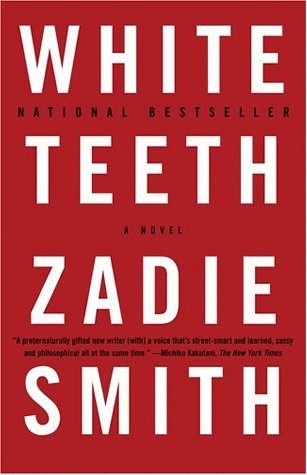
2. White Teeth by Zadie Smith
The opener to Smith’s much lauded first novel is one of my favorites in literature. After being saved from his own suicide by a flock of defecating pigeons, Archie Jones gains a new lease on life. Thanks to his new can-do attitude, when he sees a commune throwing an “End of the world party, 1975”, he wanders in, chats up the young drifters living there, and somehow comes away with Clara, a super attractive young woman who will become his wife. This is precisely the scenario I’m longing for every New Year’s Eve when I can’t find a cab.
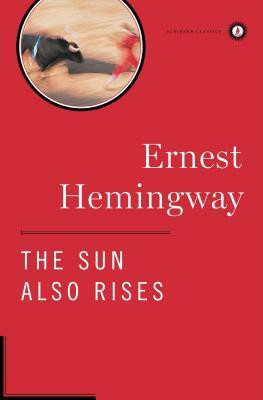
3. The Sun Also Rises by Ernest Hemingway
I imagine that the party in Hemingway’s 1926 novel will be familiar to many fans of Coachella: Jake Barnes and a group of fellow expats, including the alluring Lady Brett Ashley, go on a trip to the Festival of San Fermín in Pamplona. Though they’re technically in town to watch the bull fights, Jake and company spend more time partying — hard. The group drinks, flirts and fights. With this portrayal of young people in an intoxicated, emotional free-fall, Hemingway established himself as a voice of the Lost Generation.
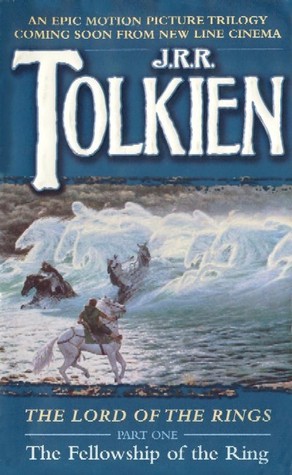
4. The Fellowship of the Ring by JRR Tolkien
You don’t throw any old fete for your “eleventy first” (111th) birthday, especially if it secretly doubles as your going-away-forever party. Bilbo Baggins knows that, and he has tents, fireworks, and cooks from every inn and eating-house for miles assembling a feast for the Shire. Bilbo’s party also has that elusive quality — intrigue — his gift to Frodo and sudden exit kicks off the saga The Lord of the Rings.
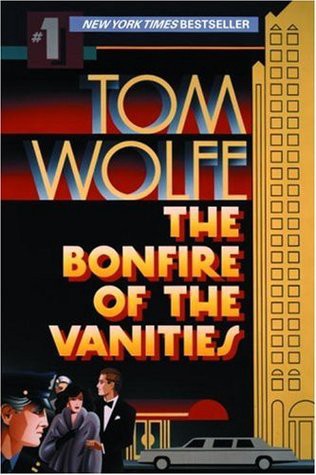
5. The Bonfire of the Vanities by Tom Wolfe
The New York City of Tom Wolfe’s The Bonfire of the Vanities is like one of his character’s 1980s party dresses; over the top and ugly, though glossed with a certain aggressive glamour. The party scene in particular captures a slice of New York society. WASPY wall street trader Sherman McCoy and his wife Judy attend a Fifth Avenue party titled “The Masque of the Red Death” (a nod to Poe’s story of the same name.) It’s a name-dropping, champagne swilling party where guests come to see and be seen. Things get awkward when Sherman finds out his dinner table seat is next to his secret mistress. It would be fun to be a — horrified — fly on that wall.
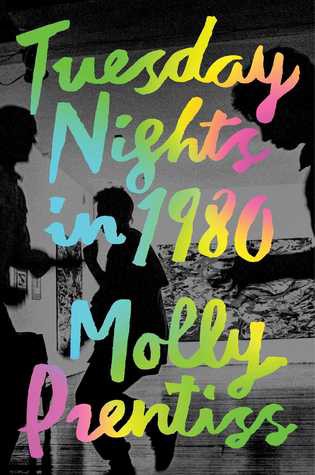
6. Tuesday Nights in 1980 by Molly Prentiss
It’s New Year’s Eve, 1979, and pretentious gallerist Winona George is hosting a swanky party for artists both established (Andy Warhol, Jean-Michel Basquiat, Keith Haring) and striving. This opener for Prentiss’ debut novel sets the stage for the rest of the book, which captures the electric, changing art scene in New York City in the ’80s.
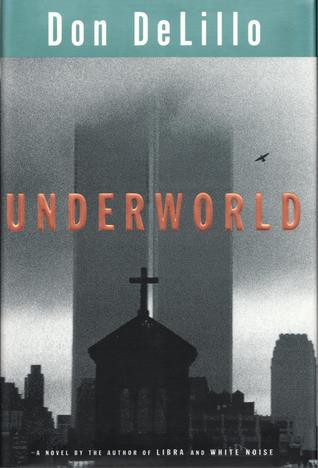
7. Underworld by Don DeLillo
DeLillo’s decades-spanning novel incorporates real people and events, including one of the greatest parties in history: Truman Capote’s Black and White Ball. The masquerade ball was held on November 28th, 1966 at the Plaza Hotel, and the guest list included everyone from Frank Sinatra to C. Z. Guest to the Maharani and Maharaja of Jaipur. Things got weird, in the best way. Example: Lauren Bacall did a spontaneous pas de deux with choreographer Jerome Robbins on the dance floor.
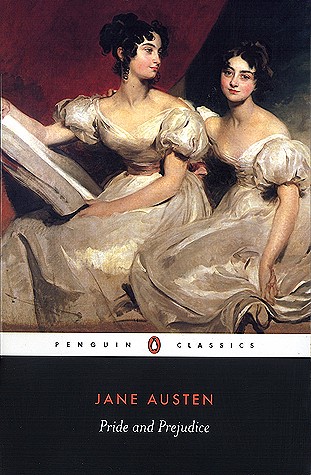
8. Pride and Prejudice by Jane Austen
Austen’s sharp, comic novel often depicts the misbehavior of the younger Bennet girls. But as much as they embarrassed Elizabeth and almost ruined Jane’s engagement, attending the Netherfield Ball with Lydia and Kitty Bennet is bound to be a good time. Those girls know how to drink, dance, and mingle. Besides, if you get tired, Elizabeth can always entertain you with her running jokes at the expense of the other guests.
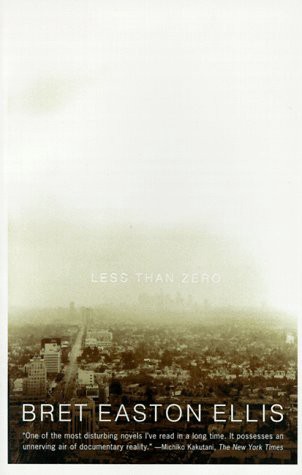
9. Less Than Zero by Bret Easton Ellis
A celebrity and model-studded anti-holiday party at the Beverly Hills mansion of a seriously messed-up couple: this is the kind of party that brunches are made for. If you’re afraid your friends won’t believe you, bring the invitation as proof of your host’s insanity: it read “Let’s F — Christmas Together.”
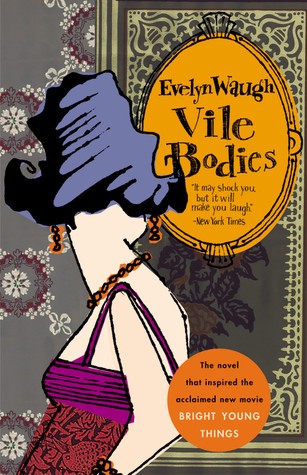
10. Vile Bodies by Evelyn Waugh
Evelyn Waugh excelled at social satire, and Vile Bodies is an overt snipe at the wealthy young “it” kids of the inter-war generation in England. The novel’s protagonist, Adam Fenwick-Syme, is always attending parties: “Masked parties, Savage parties, Victorian parties, Greek parties, Wild West parties, Russian parties, Circus parties, parties where one had to dress as somebody else, almost naked parties in St John’s Wood, parties in flats and studios and houses and ships and hotels and night clubs, in windmills and swimming-baths, tea parties at school where one ate muffins and meringues and tinned crab, parties at Oxford where one drank brown sherry and smoked Turkish cigarettes, dull dances in London and comic dances in Scotland and disgusting dances in Paris…” Unfortunately with all this partying, he fails to notice the war that’s coming to change his life forever.
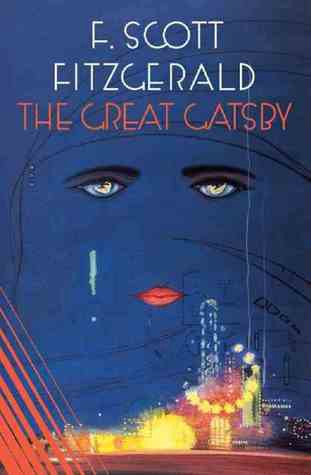
11. The Great Gatsby by F. Scott Fitzgerald
Jay Gatsby’s house parties at his sprawling West Egg mansion are perhaps the most famous in literature. Gatsby isn’t a casual host — he uses live orchestras, free drinks, and endless feasts to impress his long-lost love, the rich party girl Daisy Buchanan. Like Jake Barnes trip to Pamplona, Gatsby’s over-the-top parties came to represent the wild indulgence of the 1920s.
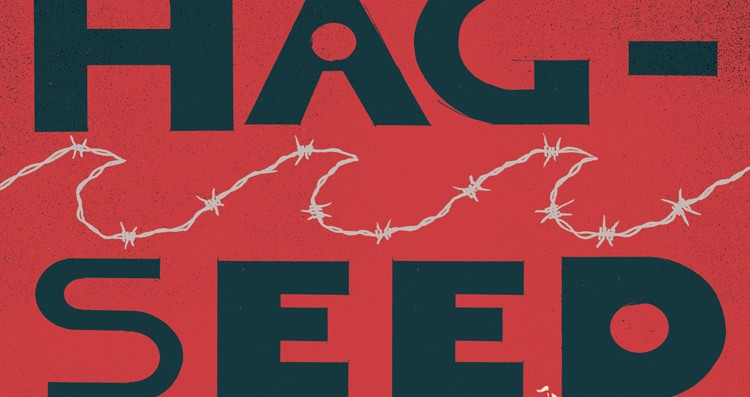
It would be a kick to take Margaret Atwood’s Shakespeare class. Reading her latest novel is as close as most of us will ever get, but it’s no poor substitute. The celebrated and prolific author takes on the Bard’s work with her latest novel, a retelling, a reteaching, and a mirror of Shakespeare’s island drama, The Tempest. Atwood’s Hag-Seed, the newest release from Hogarth Shakespeare’s contemporary “covers,” follows Felix Phillips, beleaguered director of a local Shakespeare festival, as he gets lost in obsessive fixation with his productions and his livelihood is usurped by a power-hungry underling. Felix loses his position of power and ends up exiled — stop me if you’ve heard this one before — and plots a big storm to trap his enemies, take revenge, and take back what was his. Felix’s “island” in Hag-Seed is a prison where he sets up a literacy program to teach Shakespeare to prisoners. His opportunity for some good old fashioned five act vengeance? A staging of none other than Shakespeare’s The Tempest.
If you’ve read or seen The Tempest, then you’ll recognize Felix immediately as Atwood’s Prospero; he appropriately has some daughter issues (Atwood names Felix’s daughter Miranda, but hold that “too on the nose” comment, because Atwood’s take isn’t so simple). Immediately it’s clear that there’s more to the alchemy of Atwood’s approach than the long in-joke, the wink and grin. Don’t get me wrong, I’m in. I’m so in — this is a treat for us nerds. That’s the fun of these books, right? The secret signals between author and reader, the treasure hunt as you read. Make no mistake that Atwood’s novel — like any good retelling or reworking, or new version of a tale — is a basket of Easter eggs. But as the reworking of an archetype, it succeeds on its own because of how Atwood employs the material she’s given — as a compelling story in its own right, undeniably augmented by the underlying magic of the original, and made better for being built upon such rich a rich foundation. In Atwood’s sure hands, the layers of reference are so delicately folded upon each other that an attempt to read Hag-Seed as just a straight retelling doesn’t do it justice. Atwood employs the archetype of The Tempest in three ways simultaneously: as a model for the structure of her own story, as a “play within the (retelling of the) play,” and — most uniquely, for this type of work — as a didactic text.
“Atwood employs the material she’s given — as a compelling story in its own right, undeniably augmented by the underlying magic of the original, and made better for being built upon such rich a rich foundation.”
Atwood has internalized the plot and history of The Tempest so thoroughly that she breathes it into every word. The myriad ways she’s employed the source are almost too enumerate to list; but she moves between a close hold of the original and a more distant, brushing touch with its plot points. Because her characters, Felix in particular, have such intimate knowledge of Shakespeare and The Tempest, they remark often on how much their lives mirror the play. In some ways even Atwood’s characters are in on the conceit; Felix shapes his destiny in Prospero’s image, even when he acts against his own interests: “This is the extent of it,” he muses when he begins to teach in the prison, “My island domain. My place of exile. My penance. My theatre.” Atwood has him speak Shakespeare’s lines constantly. He tells his actors, the prisoners, that “what’s past is prologue,” that their crimes don’t matter as much as their work ethic and dedication. Atwood molds Felix’s ambition and madness and sets the stage (pun intended) for his eventual meltdown, but she’s also having a ton of fun with the language and doing what Shakespeare, himself, did: packing puns and allusions into her lines that will run past ears of the audience, but these references reward a close read. Atwood’s text runs on parallel tracks: it’s an interesting story of vengeance by a guy who was booted from his theater job and gets bitter about it; but it’s also a variegated twist on an old story about Prospero’s loss and the creation of a revenge scenario for those who recognize the original. Atwood reanimates it enough to offer commentary. Atwood bends the archetype into something new through her use of metafiction and these parallel stories.
“Atwood bends the archetype into something new through her use of metafiction and these parallel stories.”
What sets Atwood’s work apart from other novels in the genre of tales retold is how she uses her authorial role to instruct. There are moments of direct reference to how Felix teaches Shakespeare’s plays to prisoners; his exercises are similar to the kinds of assignments that are taught in contemporary high schools and are not groundbreaking revelations in and of themselves. But once Atwood moves beyond the simple how-tos of Felix’s job, she gets to the delicious meat of what she, herself, believes and has discovered in her own research of the play. This is embedded in her characters’ discoveries of the work as they endeavor to stage it. In this way, her work resembles most closely the aims of Steinbeck’s East of Eden, which the author wrote as a philosophical exercise to examine the concept of Timshel. Atwood, here, through Felix, but more refreshingly through the voices of the prisoners, explores the many possibilities of what Prospero’s storm means, who Ariel and Caliban really were to the old man, and what it means for Prospero to let his daughter go. Through Felix’s delusions, Atwood asks important questions about the nature of theater and belief. She raises questions like a good teacher, playing devil’s advocate and offering new theories through the mouths of the prisoners as they discover Shakespeare. One actor, in a final assignment, remarks how Prospero is “careless about his own body, close to home…,” while another asks, “‘Is extreme goodness always weak? Can a person be good only in the absence of power?” Felix glows when he sees his students take Shakespeare and run with it — often awkwardly, and in directions he hasn’t planned. But what’s the harm? And as in life — in teaching — Felix’s students lead him to his own discoveries about the play. Atwood is the excited, enthusiastic teacher you want: she explores every aspect of the play in her work; she’s enjoying the work and she wants you to, too. Will she make you cringe from time to time with her earnestness? Sure. But you’re going to walk away thinking differently about the elemental storm Shakespeare created, and her novel accomplishes a kind of open-ended questioning that is unique, even among novels of its type.
If there’s a quibble to be had with Hag-Seed, it’s the lack of depth Atwood gives the players, Felix’s prisoners. We get little information about each man other than his rap sheet and nickname. While Felix and others are complex, fallible, and round, the prisoners exist mostly as a set of types to fill the cast of Felix’s play. Does Atwood want it this way, to shift the focus to Felix, who embraces his own delusion so wholeheartedly and decidedly that he crosses out of realism? “ [I]t was only a short distance from wistful daydreaming to the half-belief that she was still there with him…” Felix tells himself in the middle of a vision. “Call it conceit, a whimsy, a piece of acting: he didn’t really believe it, but he engaged in this non-reality as if it were real.” While Felix is assigned a full set of delusions and conflicting desires for revenge, his actors lack complicated motivation. While it’s possible to envision a book where the lives of the actors/prisoners are the thing, that’s not this book. Atwood’s layering of her story upon the original means that her characters are imbued with a kind of automatic characterization by association. We are given information about which other Shakespearean characters they have played in previous productions, but Atwood is counting on us, most certainly, to assign to them the traits of their counterparts within The Tempest. This elevates them from types to fully realized characters, but as a characterization strategy, this is limiting because not every reader of Hag-Seed will have read The Tempest.
People haven’t known what to do with The Tempest — as Atwood points out, it was performed as an opera; for centuries it includes more songs than any of the rest of Shakespeare’s plays. Atwood’s take is something new, not just for what she creates in her own retelling, but for how she uses the play so obtusely within it. There’s something refreshing about how she doesn’t play coy. She comes out and says yes, I’m doing this, and it’s up to the reader to look beyond the obvious references, the easy interpretation that says there’s a one-to-one correlation between the play and this new book. And Atwood can’t help herself: her excitement bleeds onto the page; she wants to share what she knows. She wants to challenge what we know, what we expect, and what we want from Shakespeare in 2016.
I first met Sonya Chung over crêpes in Paris’ eleventh arrondissement a couple years ago. I was immediately struck by her thoughtfulness, intellectual rigor, and wide-ranging curiosity, all qualities reflected in her work as a staff writer for The Millions and editor of the literary site Bloom.
In our subsequent meetings at a corner café on the Left Bank and at Maison Harlem in New York (yes, there’s a running theme here), we delved into discussions about race and literature, the frustrations and rewards of publishing, and the role of the artist in a world that sometimes seems to be in flames.
I was delighted to read an advance copy of Chung’s second novel The Loved Ones (Relegation Books, October 2016), a rich story of family, inheritance, and love told through the dual narratives of an African American father and a Korean American teenager charged with caring for the former’s biracial children. Intergenerational trauma and tragedy haunt the two families (who are both named Lee) in a tale that feels both intimate and ambitious.
I caught Sonya over email while she was in Key West for a residency to continue our discussions on exploring sensitive material and transracial writing. As I was in the midst of moving from Paris after a decade’s residence there, I couldn’t help but touch on the French connection, too.
— Sion Dayson
Sion Dayson: One of the epigraphs that opens your novel discusses “sankofa,” and is accompanied by its two common visual representations — a bird with its head turned backward and a shape like a stylized heart. The word comes from the Twi language in Ghana (where I spent some time as an undergrad!) and is often associated with a proverb about looking to the past to understand the present, or, as one of your characters writes in a letter, “it has something to do with going back to find something, but it’s also about going forward.” How do you see this concept of sankofa informing and infusing the novel? Why does it speak to you?
Sonya Chung: The sankofa proverb has been on my radar since my senior year in college, when I had the opportunity to travel in South Africa for six weeks. This was 1994, the year of the first free elections and Mandela’s presidency — a dramatic time, both euphoric and precarious. Sankofa was invoked by many black South Africans I met who felt strongly that retribution — certainly anything in the realm of violence — should be eschewed going forward: enough oppression and death was the gist; let’s learn from past wrongs and do differently now. This noble response of course echoes Dr. King’s nonviolence.
But my own engagement with sankofa via the characters in The Loved Ones is more ambivalent — which is why I included two graphics in the epigraph that are, intriguingly, quite different from each other (also, the accompanying quotation reveals varying meanings of sankofa, including one that references “taboo”). I’ve always been skeptical, for instance, of the psychotherapeutic idea that all emotional healing comes from cathartic explorations of one’s childhood. There’s truth in that, but there is also an undersung narrative of detachment, forward motion, and reinvention. An aside: last summer I fell down the rabbit hole of Dylanology, driven by my fascination with Bob Dylan as consummate self-reinventor — always evolving forward and dodging his background (family, geography, generation). The Loved Ones is in part about this: we are and we are not who our blood roots predetermine us to be.
Dayson: Yes, I can read those threads in The Loved Ones now that I hear you talk about them. You’ve evoked the word “taboo” here, too, which I wanted to ask about. A couple love stories in the novel, including the central one, are illicit, yet they don’t read as taboo. I credit the sensitivity of the writing, the full humanity you bring to your characters. How do you approach writing about delicate material?
Chung: Thank you for the kind words; I appreciate hearing that, because I did have concerns about the taboo. But a main “approach” was to silence those concerns — to follow the characters, and what was interesting to me about their connection, as faithfully and nonjudgmentally as possible. This wasn’t too hard, because my relationship with the characters had developed over a long period of time; I knew them, and when you know characters well enough, you are with them as opposed to standing over them. As with people.
A very useful comment I once received from a writing teacher was, “Where’s the danger?” There has to be danger — for the writer, the characters, the reader — in order for story to gain momentum and depth. So the delicacy was in fact a driving energy in the writing.
Dayson: Speaking of delicate or dangerous material, you’re a Korean American woman writing from the perspective of an African American man. Did this feel risky to you? Why did you make this decision for the novel?
Chung: It’s interesting to be asked “why” in regards to a creative impulse. In another context I might dodge and prevaricate: WHY? Why did Rothko paint blurry blocks of color? But here the question is apt, and I credit Chimamanda Ngozi Adichie for illuminating this recently. In an open Q&A at The Guardian, an older white male asked how to write about a young Bengali girl “without cliché or stereotype,” to which Adichie responded, “I think the first question is: WHY do you want to write about a young Bengali girl? There are still wonderful stories to be told about 50-year-old white men.”
Put another way: Jia Tolentino recently wrote, in response to Lionel Shriver’s Brisbane speech, “there are all sorts of ways to borrow another person’s position: respectfully and transformatively, in ignorance, or with disdain.” Condescension is another possibility; and I think that’s what Adichie was getting at (but do read the full exchange to judge for yourself).
My own impulse to write a story that includes a black male character’s perspective has to do with what I’d call an experiential tipping point. When a long-form project comes into being, it’s like a force welling up at the dam — a critical mass of material, emotions, intellectual and moral inquiry has accumulated over time and is rising, rising.
When a long-form project comes into being, it’s like a force welling up at the dam.
I was born in Prince George’s County, MD, a predominantly African American area, where our family lived for about six years; then we moved to the more affluent, white Montgomery County, while my father’s medical practice remained in Prince George’s. 99% of his patients were African American. As in many Asian immigrant families, there was negative, racist talk in our household (and extended Korean community) about black people; my parents lived in that complicated tension of being in and among black people every day, servicing and transacting and being rather intimate, and yet also wary and in conflict.
Fast forward to my young adulthood, as I developed my own world view and politics: for five years I lived in a (nongentrified) racially diverse neighborhood in South Seattle, three of those working full-time at a community development organization whose mission was to “serve and strengthen African American families.” The leadership and staff of the organization were primarily African American, and they, along with their families, as well as clients and volunteers and members of the partner church, became friends and mentors. These two formative, and vastly different, experiences began to layer for me in complex ways, as you can imagine.
More recently — and I am a bit embarrassed to admit this, but — The Wire, which I’ve watched backwards and forwards several times, has been a usefully synthesizing touchstone (though it’s not until this interview that I’ve reflected on why I was so obsessed with it). What The Wire did for non-black viewers is show vividly and memorably that there are as many possible representations of black people as there are human beings. It’s horrifying that a TV series had to do that work — countering both historical racism and decades of media stereotypes — but it did, and I think it was successful. I’d also like to give a shout-out to the NPR news program “Tell Me More,” with Michel Martin, which I listened to daily during its seven-year run: when you get your news from a source whose journalists are primarily people of color, and majority African American, your world view is shaped in a specific, valuable way. I still lament the canceling of that program.
There was also that summer I spent in South Africa. Too much to say about that, but it’s in the mix of experience.
So, the “why”: all that welling up at the dam. And feeling like there was something particular I might bring to my characters, and to the collision of an African American character (and his family) and a Korean American character (and her family) — something real, dimensional, perhaps surprising.
Then the Asian Americans for Black Lives Matter movement emerged this past summer, and it was like the leaky, rumbling dam totally burst! Hats off to Christina Xu and everyone who made that happen (fist-to-chest thump, peace sign).
Dayson: This all provides such illuminating context. It’s amazing to learn of these deep, varied experiences and to imagine them bumping up against each other. You’ve touched on Lionel Shriver’s speech here, too, and I wonder if we should talk more about that. There have been so many conversations lately related to writing across race. When I read your novel this summer, there was a lot of attention at that time focused on Ben H. Winters, the white author whose latest book features a black narrator, a former slave turned bounty hunter. As I write to you now in September, it’s a week when the Internet lit up following Shriver’s remarks. Not to make a parallel of those two cases as I think the authors displayed vastly different levels of awareness and responsiveness, but I’m interested on your thoughts about the topic itself. You must have considered the issue as you were writing your book, and it seems not insignificant that you are a writer of color writing across race.
Chung: Insightful, important responses have already been written about both controversies. I refer readers to the initial critical piece in Slate by J. Holtham, which includes Winters’s own response. And I would say this: Winters’s expressed writerly motive — “I wanted to explore a painful history and a painful present. And I wanted to ask white readers to think about these things as deeply as black people are forced to think about them” — along with wide praise for the work itself, has rightly redirected criticism to the ignorance of the NY Times reviewer who lauded him for his “courage” in writing from the perspective of a former slave — effectively erasing the courage of numerous African American writers who came before him. However, Winters will likely continue to benefit from this purported/perceived courage in ways that equally talented writers of color mining the same subject matter have not; there is some responsibility, I believe, to think about these inequities — in publishing, media attention, and financial opportunities that spawn from success — “as deeply as black people are forced to think about them.”
With regard to Shriver, I refer readers in particular to Jia Tolentino, Ken Kalfus, Danielle Evans’s twitter response, and Kaitlyn Greenidge. Greenidge writes about Bill Cheng, a Chinese American writer and author of Southern Dog the Cross, whose protagonist is a young black man on an odyssey through the deep south in 1927. She defends Cheng’s “right” to tell this story — to write a lynching scene in particular — “Because he was a good writer, a thoughtful writer.” She does not speak specifically to the fact that Cheng is Asian American, only that he is not black. Does it make a difference that Cheng is not white? Does it make a difference that I am an Asian American female writing a black male? If so, how so? I’m interested in these questions and am eager to engage in the continuing discussion; but I can’t say I have categorical answers.
Greenidge reminds us that we all have blind spots and must work hard at empathy when inhabiting characters outside our own experience: she uses herself, a black author who struggled with writing a white character, as an example. I completely agree, but I would also add: if you are a white American, and your social and professional world is largely white, your work in this area may be harder, your blind spots more numerous.
Dayson: It’s not just in the literary sphere that it feels we’re at a heightened cultural moment where we’re really talking about race — whether it be related to the criminal justice system, policing, systemic racism in many realms. Your novel is set before this contemporary time (spanning the years 1951 to 2005) and doesn’t speak explicitly about these issues, but the characters’ origins are important. What do you think a literary novel can lend to this current moment as we reckon with race? Or maybe that’s not its job?
Chung: The question is in fact a live wire for me, because the novel I’m working on now wades deep into these waters: the characters are confronted directly with questions about art’s relevance, and its obligations, in a context of racial injustice. My interest is in exploring these questions through characters whose gut relationship to both art and racism make the moral quandary complicated, personally and intellectually.
But I’m early on in the project and definitely don’t feel qualified to make pronouncements about The Novel or its potential to effect social change. I admire my artist-activist friends so much, while also having learned over time that I am more useful — most myself, and thus most truthful — at the desk, on the page, than on social media or at a rally. This sometimes feels like a personal inadequacy, especially at times like this (as of this writing, the video of Keith Scott’s shooting has just been released); but, I think what I can do, try to do at least, is bring human depth and complexity into a reader’s consciousness. Even supposedly literary readers — myself included — internalize static, unnuanced ideas of people and of life. Fixed, tidy perceptions — especially unconscious ones — are arch enemies of human dignity, transformative exchanges, and justice; they fuel fear, and fear is what fuels violence.
Fixed, tidy perceptions — especially unconscious ones — are arch enemies of human dignity, transformative exchanges, and justice…
Dayson: I am constantly grappling with these questions, vacillating between whether I best serve in a more direct, active way, or if my most effective role is as a writer. It’s helpful to hear your thoughts on this. I do want to return to your novel specifically and ask about the role of place. The Loved Ones is largely grounded in Washington, DC (and one house in NW, in particular) and in Korea. Can you talk about that and how your background may have come to bear on the novel?
Chung: I’ll back up and mention that The Loved Ones is my second published novel but the third I’ve written. That second novel is in a drawer (a box, actually, on a shelf); I’d spent nearly three years on it. It was rather sprawling and took place in multiple settings, none of which were places I knew from direct experience. When I recovered from that failure — which was devastating — I was gun shy and needed to start modestly. So I started closer to home, literally.
I spent most of my childhood in suburban Maryland, not far outside the city. But I knew DC more as a proximal outsider than an insider — and so imagining (and researching) a place that was already familiar generated good fictional energy. I think there’s a kind of sweet spot where fiction ignites most powerfully, and it has something to do with the way imagination and experience — fiction and fact — meld and dance and morph into something new. The same could be said for Korea: I was not born there, but it’s my parents’ native land, and I’ve visited several times as an adult. The imagination/experience layering happens very differently in this case — Korea is somehow simultaneously further from and closer to my psyche — but the idea is similar.
In retrospect, I suspect the imagination/experience balance was probably tipped too far away from experience with that second novel. As time goes on, though, it’s clear to me that the “failure” was extremely productive: craft lessons abound out of what I tried and what didn’t work. It’s like a tough writing class that just keeps on giving.
Dayson: Before we wrap up, I can’t help but ask about Paris and the influence of French, too, as that’s how we connected, and they feature in your novel, as well. The book is divided into three sections — les proches, les bien aimés, l’essence — and later Paris becomes one of the novel’s locales. I loved when Hannah notes “no one in Paris ever asked, So what’s your story?” As a long-time resident of the city, that remark rang true. I know Paris is an important place for you. Why does it speak to you as a writer, this place where people do not ask your story?
Chung: I sense in your question that perhaps “love” of that moment is tinged with irony? As in, Ah, Parisian aloofness! I guess Hannah is young enough that the disinterest doesn’t bother her; she’s reinventing, detaching and moving forward, Dylan-style. When I visit Paris, I’m there to sink into the city’s simple pleasures and to write, so I’m content to be anonymous; I can imagine that living there and trying to really connect is much more difficult.
But Parisians do value their artists more than Americans do. The expat writer Jake Lamar has said that when you mention you’re a writer to a French person, he won’t ask, “Have I heard of you?” or “What have you published?” but rather, “What are you working on?” What matters most, or at least more, is the act of creation, the fact of creation.
In an earlier draft, the epigraph to The Loved Ones was a quote from Susan Sontag’s journals: “Americans are obsessed with personal history; Europeans with expressions of essence.” So I’m looping back to my sankofa ambivalence here: it’s not always about your past, there is “essence” that is irrespective of personal history. And I especially love the wordplay of essence, which in French can mean soul or nature, as in English, but it can also mean gasoline — fuel for forward motion.
It’s not always about your past, there is “essence” that is irrespective of personal history.
Dayson: That seems like a perfect note to end on — fuel for forward motion! Thank you, Sonya.
I encourage everyone to go forth and pick up a copy of The Loved Ones, on bookshelves October 18.
About the Interviewer
Sion Dayson spent the last decade living in Paris where she chronicled the City of Light’s less glamorous side on paris (im)perfect. Her work has appeared in The Writer, The Rumpus, Hunger Mountain, and several anthologies, among other venues. Her debut novel, When Things Were Green, will be published in 2017.
You cannot eat at the Duke’s Diner anymore, because your sister once complained about her hamburger being overcooked and now the staff will spit in your food before it’s brought to the table.
You cannot buy anything at Barnes & Noble, because they were once accused of selling pornography. Also: forget about buying anything at secondhand bookstores. Bringing their stock home is highly unsanitary and therefore insane.
You cannot access the Internet at your house. Not because it’s the devil’s instrument — you don’t believe this anymore. Ever since you saw that thing on TV, about African kids taking free online courses at elite American universities, you’ve come to accept that the Internet can be a blessing, too. Something else you don’t believe anymore is that Wi-Fi signals will cook your brain. You still don’t fully comprehend how nuclear radiation differs from Wi-Fi radiation, but when a physicist explained it on that science channel, you briefly grasped it, and that was enough for you to get over your anxiety and say: the Internet will not kill me. So the real reason you cannot access the Internet at your house is that all your personal stuff is on your computer. You’ve deleted the most sensitive items, such as letters to your friends and family, yet the young man in the store told you that clever specialists can retrieve even the most erased files. That was a shock, because you already knew about hackers, how they lurked everywhere and would get to you, firewall or not.
For the longest time, you had no health insurance. The idea that your premium might fund clinics where they helped mothers murder their babies was too much for you. When they made it illegal not to be insured, your parents forced you to sign up. By letting them pay for your insurance, you have absolved yourself of Planned Parenthood.
You cannot trust PCs because they have viruses and, to your knowledge, it’s impossible to renew Norton without a credit card. (And credit cards are, obviously, open invitations to assault). You stay away from Macs, because they have scary, interconnected clouds.
When you dine at a new restaurant with your parents, you order the side dishes, such as creamy mashed potatoes and macaroni & cheese, unless your mother recommends something sufficiently similar to one of your favorite dishes served in another restaurant.
Speaking of food, you cannot eat at Cracker Barrel anymore. Once, while you sat outside in one of the rocking chairs, waiting for a free table, a man with a tattoo sat beside you and asked something about the Lunch Specials.
You have no passport. To acquire a passport, you’d have to hand over all sorts of personal information, including your social security number, and everyone knows not to give this number out to anyone. Not even the government.
After you visit your parents, you drive home before eight p.m. Later, the streets become nasty. Unlike your parents, you don’t have a wall around your house.
You have not moved in over twenty-five years, and for half of this time no one has visited your apartment. You encourage the kind of privacy that promotes loneliness.
Your teeth often hurt, so you never eat anything crunchy. Dentists, like all medical personnel, cannot be trusted.
Even though you have almost no contact with other people and complain about their intrusive behavior when you do, you consider yourself a thoughtful person. And here, I have to agree with you: you try very hard to be a good girl and never offend anyone. Every Sunday, you confess your sins, small as they are.
You are smart and educated, but you do not have a job. You live off the money your parents gift you tax-free. You do not work for a charity either and see nothing wrong with throwing away a perfectly fine pair of shoes after their interiors have gotten wet.
You know I would like to talk with you and lessen your fears. Regardless of our differences, we are related. It’s my love for you that makes me want to challenge everything you believe. But it’s also my love for you that makes me shut my mouth. So I accept: you are not sick and don’t need any help. You are merely a highly informed citizen of a dangerous planet, determined not to fall in harm’s way.
But things are looking up, you say. On television, you saw a man who said he wanted to make everything great again. You’ve never voted before, for the same reason you don’t have a passport, but you consider getting yourself registered now. The man promised to build a big and beautiful wall to keep all the bad stuff out. And, as ideas go, it’s one of the best you’ve heard in a long time.
Is it my moral duty to disagree with you now? The wall gives you hope.
Hello, and welcome to my week-by-week review of the world. Today I am reviewing my new car.
When my old car got stolen, I knew it was time for a new one. And when I saw my stolen car parked in my neighbor’s driveway, I knew I had just parked it there by mistake and it had never been stolen to begin with and I shouldn’t have purchased a new car so hastily.
To make matters more confusing, the new car I bought was the exact same make, model, and color as my old one. So with two identical cars in two driveways side by side, it made it hard to tell which house was mine. To the average passerby it would have looked as if I had two houses.
When the cops came to file a police report on a stolen car matching the description of the car in my driveway, I was worried they would arrest me for stealing my own car. Or if not me, my neighbor. Or both of us, and then let a jury sort it out.
Fortunately I had the presence of mind to wear my Halloween costume (a horse) from last year so as to distract them from noticing my car. My plan worked perfectly. Most of their questions were about why I was dressed as a horse.
After they left, I quickly switched my old car into my driveway and the new car into my neighbor’s driveway. When my neighbor came out and found a car identical to mine in her driveway, she asked me if I knew anything about it. To hide my shame and embarrassment I played dumb.
She was so excited to find a free car in her driveway and took to it very quickly. At first it warmed my heart to see her so happy, but when I realized that I had just accidentally given away a car worth several thousand dollars I started to sweat.
It seemed that my new car was bringing me nothing but grief. Every time I stepped out my front door the car was just sitting there, mocking me. It was a constant reminder of all my dumb mistakes.
So I had a tall, wooden fence constructed to obscure the view of my new car, and now I barely ever think of it. I know it’s probably on the other side of that fence but I never actually see it. I know eventually I’ll forget about the car entirely. It may take a long time but it’ll happen.
Unfortunately I also never see my neighbor anymore. I had to lose her friendship in the process.
BEST FEATURE: My new car had a better cup holder than my old car because the old one had melted in the sun and could only hold melted cups. WORST FEATURE: I cut my fingertip on the door handle.
Please join me next week when I’ll be reviewing a head of lettuce.
DON’T MISS OUT
Sign up for our newsletter to get submission announcements and stay on top of our best work.
YOUR INBOX IS LIT
Enjoy absorbing fiction from Recommended Reading on Mondays, strange, diverting work from The Commuter on Wednesdays, and a roundup of our best work of the week on Fridays. Personalize your subscription preferences here.