Electric Literature’s second annual Genre Ball is the literary costume party you have been dreaming of. The Friday before Halloween, come dressed as your favorite genre, book, or character for a night of dancing, carousing, and general merriment to support Electric Literature.
Cocktail Reception — VIP Ticket Holders Only Electric Literature Headquarters 6–8PM Electric Literature Headquarters (3 Blocks from Ace Hotel) 1140 Broadway, Suite 704, New York, NY 10001
The Genre Ball — VIP and Partier Ticket Holders Liberty Hall at Ace Hotel New York 20 W 29th St, New York, NY 10001 8–11pm After cocktails, we’ll go three blocks to the Ace Hotel to join the rest of the partiers for an evening of drinks, dancing to tunes, and a costume contest judged by our illustrious hosts. Onsite facepainting will be available from Sheila J. Faces and tunes will be brought to you buy Health Klub DJs.
Dress: Costumes are optional, and cocktail attire is suggested for those not in disguise. Those in costume will have a chance to win the grand prize in our costume contest: a one night stay courtesy of our friends at Ace Hotel New York.
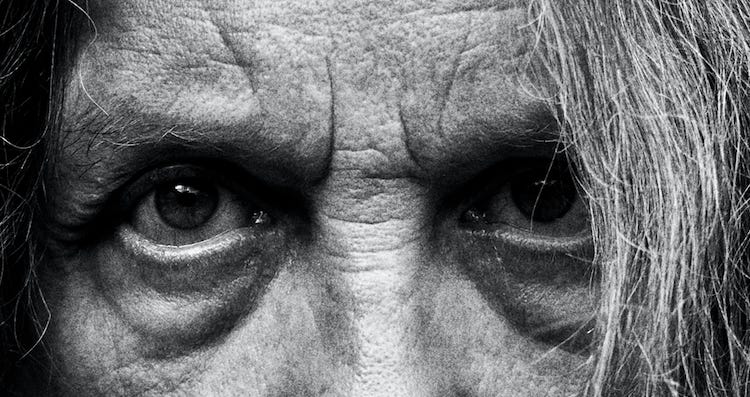
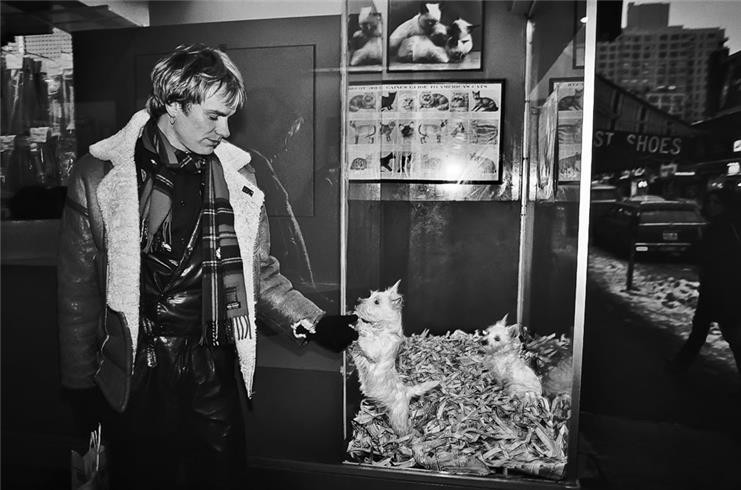
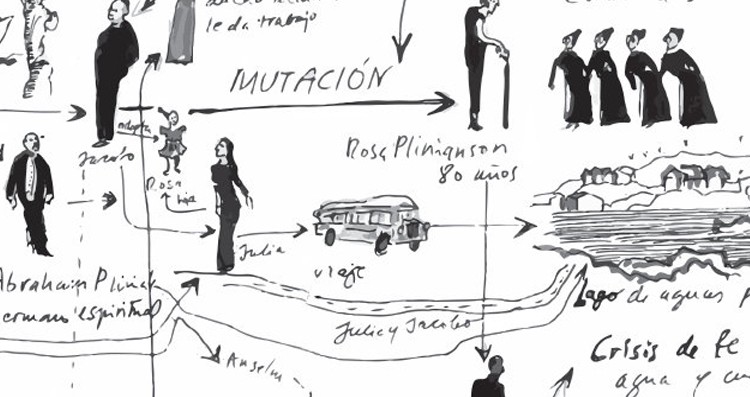
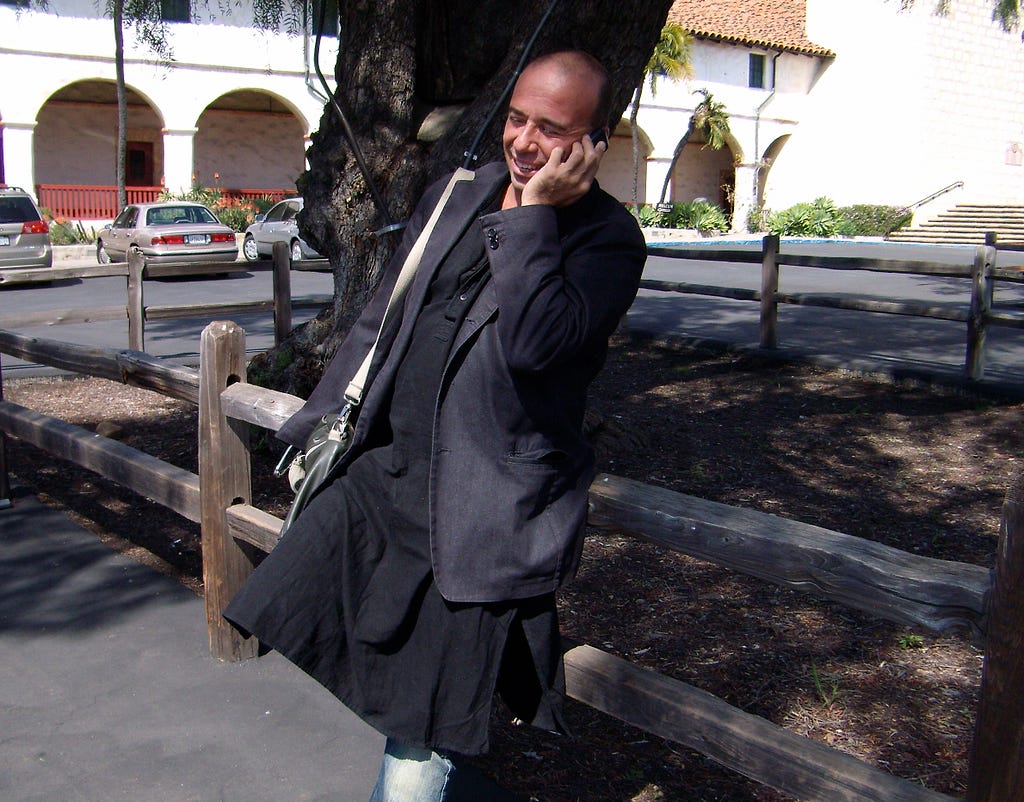
Pictures from the 1st Annual Genre Ball. Photo credit: Aslan Chalom
The 2016 Genre Ball is hosted by:
Nicole Dennis-Benn, author of Here Comes The Sun
James Hannaham, author of Delicious Foods
Heidi Julavits, author of The Folded Clock
Kelly Luce, author of Pull Me Under
Anna Noyes, author of Goodnight Beautiful Women
Helen Phillips, author of Some Possible Solutions
Hannah Pittard, author of Listen to Me
Tony Tulathimutte, author of Private Citizens
Lynne Tillman, author of What Would Lynne Tillman Do?
Teddy Wayne, author of Loner
Costume suggestions: apocalyptic bandit; adulterous aristocrat; teenage detective; product of an unfortunate lab incident; raised by nuns; raised by wolves; boarding school dropout; small town dreamer; adorable pickpocket; mysterious benefactor; ragtag team of misfits (group costume); space traveler; intergalactic queen; misunderstood outlaw; grizzled cop who’s seen it all; fun-loving orphan; mother of dragons; whatever pops into your head.
The lucky winner of the costume contest will receive a free one night stay courtesy of our friends at Ace Hotel New York!
There are three ticket levels available:
VERY IMPORTANT PARTIER — $200: Mingle with the Genre Ball literary hosts and guests of honor at the Electric Literature offices, just down the street from the Ace Hotel. Enjoy appetizers and drinks with us before the Ball begins.
PARTIER — $100: Attend the Genre Ball at Liberty Hall at Ace Hotel New York.
VIP ONLY — $100: Attend the VIP reception at the Electric Literature offices with literary libations, hearty appetizers, and prize-winning authors.
PARTIER IN ABSENTIA: Support the Genre Ball from afar with a donation in the amount of your choosing.
Alan Moore doesn’t do small. That’s true both in terms of the size of his works–sprawling comics narratives, a series of short films leading into a feature, or works in prose that could suffice for home exercise–and in terms of their density. Several of Moore’s comics have prompted extensive online annotations: Jess Nevins did so for his League of Extraordinary Gentlemen books, in which Moore mashed together several centuries of pop cultural history into a massive adventure story that became increasingly philosophical. Moore is currently most of the way through Providence, an H.P. Lovecraft-inspired story with artist Jacen Burrows; there’s a collaborative project underway to document all of the allusions in there, too.
All of this serves as a kind of prelude to the prediction that Moore’s long-in-the-works novel Jerusalem will likely prompt plenty of discussion about the references, cameos, and allusions made within it, which cover everything from historical references to literary homages, from narrative threads that take hundreds of pages to pay off to cryptically metafictional structural devices. To state that this is a book that swings for the fences–perhaps not a perfect metaphor, given the very English nature of the story being told–doesn’t quite do it justice. It swings for the fences beyond the fences in a way that would also like for an observer to question the notion of fences. It’s Moore’s Ulysses, his Dhalgren, his doorstopper engaging with grandiose themes and experimental styles. Which marks this as a mightily ambitious novel in both scope and style, but which can also lead to an occasionally uneven experience. Is it a bold work? Yes, and a singular one, for better or for worse. Moore has opted to zero in on a number of lives in the Midlands city of Northampton to tell a story about, well, everything.
It begins in 1959, as a five-year-old girl named Alma Warren travels through the city of Northampton with her mother Doreen and her younger brother, Michael. There are neatly witty moments to be found here: Michael’s enthusiasm for life causes Alma to suspect “that he was rather shallow for a two-year-old, far too concerned with having fun to take life seriously.” But there are moments here that defy logic: the strange use of dialogue, which seems both familiar and somehow alien; the presence of a group of barefoot men in a storefront working on carpentry; the sense of some knowledge that’s just beyond understanding.
One of these men is referred to as “The Third Borough,” and this sparks something in Alma: “Alma had heard of the Third Borough, or at least it seemed she had.” Soon enough, more mysterious terms come up: a Vernall’s Inquest, the Porthimoth di Norhan. Vernall is a kind of title, but it also refers to a surname found further back in the Warren family. And soon enough, this strange scene is revealed to be a dream, and Moore leaps ahead to Alma and Michael (now called Mick) several decades later. Shifts between decades in a handful of sentences, the porousness of the boundary between dreams and waking life, the long histories of places and families–all of these are the material from which Jerusalem is made, and they’re concepts to which Moore returns again and again.
The novel is composed of three parts. The first of these, “The Boroughs,” is a fragmented narrative, jumping between the novel’s present-day (in this case, 2006) setting and a series of vignettes from Northampton’s history over the previous centuries. Sometimes the jumps from chapter to chapter seem arbitrary; at others, there’s a seamlessness present–a supporting character in one chapter, such as Henry George, a black American haunted by his country’s history of racism, ends up at the center of the next, for instance. And Moore’s approach here is somewhat naturalistic: there are abundant scenes in which characters walk the streets of the city, noting buildings and structures along the way. (It’s not exactly a shock when a member of the Joyce family shows up, though in this case it’s James’s daughter Lucia.) And there are plenty of scenes of gritty realism: several generations of families living in close quarters, illnesses that carry off small children, the way that physical or mental health can collapse in an instant. And there’s also, in one early chapter, the presence of sexual violence–something that Moore has been criticized for using as a plot element in several of his works. (This article by Kelly Kanayama summarizes this criticism well, and points out certain issues with the handling of sexual vioience in Moore’s writing that could also, unfortunately, apply to Jerusalem.)
Slowly, Moore details in the narrative’s historical gaps, showing the reader several generations of Warrens and Vernalls. Themes and images recur: notably, a torus, a ring-shaped object that results when a circle is spun on an axis. Some chapters are wholly realistic; in others, characters have visions of angels, speaking to them in bizarre languages–“…aeond their cfhourvnegres orfflidt Heerturnowstry awre haopended”–that impart concepts over and above the words used. Other characters see things in the corners of rooms, sparking the sense that they’re being somehow observed by tiny people, or people at a distance. One character, shortly before his death, observes “how the corners of a building were made cleverly, that they could be unfolded in a manner whereby the inside of them was out.” Strange things are afoot here, and even with the narrative leaping through time, this sense of disorientation prevails.
For all of these invocations of the cosmic, the transcendental, and the boundaries of sanity (it’s not for nothing that the novel’s second part bears an epigraph from H.P. Lovecraft), what really suffuses the novel’s first part is a dread-inducing sense of mortality. Numerous characters ponder their finite lifespans; numerous characters conclude that there is no afterlife. The overall effect is incredibly bleak. A middle-aged poet named Benedict Perrit, a contemporary of Alma and Mick, wanders through the city in one chapter, musing on the changes to it over the course of his life and the way that he’s been tormented by writer’s block. In a handful of paragraphs, he thinks back on his own life and legacy.
He was thinking about dying, how he did each morning soon as he woke up, but now there was no hope the morbid thoughts would vanish with the day’s first drink, not when its last drink was just then expiring horribly beneath Ben’s tongue. He was alone there in his room with death, his room, his death, its inevitability, and there was nothing to defend him.
It gets even sadder from there.
The novel’s second part, “Mansoul,” exists as an extended flashback to a moment in Mick’s childhood, alluded to in the prologue, when he was clinically deceased for a while, only to be revived. If “The Boroughs” was largely a work of realism with occasional flashes of transcendence–think David Peace’s GB84 or William T. Vollmann’s The Royal Family–“Mansoul” is something else entirely. The novel’s tone becomes much more fantastical, as another layer of reality comes into focus and some of the stranger moments of the novel’s first four hundred pages are given a wholly different context. Or, to put it another way, readers wondering what the hell is going on with the corners of rooms will find their answer,
Emotionally, it’s something of an intentional rollercoaster, featuring the introduction of the novel’s one truly villainous character, along with a group of adventurers, the Dead Dead Gang, traveling through the borders of time and space. The book becomes much stranger here, at times recalling the Chums of Chance scenes in Thomas Pynchon’s Against the Day, a novel with which Jerusalem has much in common. But it’s also still a middle section: certain narrative threads are paid off, while others are started, several of which won’t be resolved until the novel’s closing pages.
Fundamentally, however, it’s also a more hopeful section. For all of the grappling with concepts of death, mortality, and frustrated ambition that went on in the novel’s first part, this exists as a kind of refutation of it–or, if nothing else, an expansion of the book’s horizons. It’s a welcome shift: this is a book that can become crushingly depressing in its initial pages, and so the more freewheeling chapters that follow allow for a beneficial change in mood.
There are multiple sides of Moore as storyteller present in Jerusalem. The detail with which Northampton past and present is rendered is impeccable; at times, the novel reads like a scale model of the city. (It’s probably no coincidence that a scale model of the city makes an appearance late in the book.) Moore’s skill at pulp storytelling is also on display here: the “Mansoul” section is gripping, a psychedelic chase sequence over hundreds of pages that manages to interpolate several powerful personal histories, a couple of narrative threads that pay off brilliantly at novel’s end, and a neat thematic counterpoint to the fatalism expressed by many characters in “The Boroughs.” But Moore is also fond of pastiche: several of his comics have included lengthy text sections written in a particular style or echoing particular genres: pulp serials especially. This was particularly true of The League of Extraordinary Gentlemen, the third volume of which contained a host of pastiches, ranging from a lost Shakespearean play to pornographic comics set in the world of George Orwell’s 1984 to (perhaps least successfully) The Crazy Wide Forever, a Kerouac-meets-pulp fiction tale. The last of these, unfortunately, indicates that even a writer as skilled as Moore with the emulation of other styles has their limits.
Which is to say that by the time the novel’s third part, “Vernall’s Inquest,” begins, the novel is roughly two-thirds over and has, so far, begun an intense narrative escalation. It is in the novel’s final third, however, that Moore fragments the narrative, shifting styles from chapter to chapter. “The Steps of All Saints,” which answers a number of narrative questions set up nearly a thousand pages earlier, is told as a stageplay, for instance. Sometimes this can be incredibly powerful, as with his juxtaposition of one man’s life in the 20th century with thousands of years of history leading up to him. At others, it stops the narrative dead in its tracks. “Round the Bend,” for instance, is told in a uber-stylized fashion–“At the frays marchins awf the cupse she treps amokst the betterclapsand dayzes…”–which reads less like a choice made out of necessity and more because Moore wanted to incorporate that style into this work.
There’s another wrinkle to this work as well. At the center of this work are siblings Alma and Mick Warren. They’re introduced in the novel’s opening, and their conversational give-and-take anchors the book, providing a recognizably human element amidst the stylistic flourishes and metaphysical explorations. Alma herself has moved into fine art after an early history of working in pulpier terrain, leading some invocations of the likes of Michael Moorcock along the way. But for all of the expansiveness of the narrative, there are also a couple of references that hit closer to home on first reading. (Moore’s Acknowledgements point to a few more figures taken from real life and his own history in Northampton.) The most interesting of them is the presence of artist Melinda Gebbie in the novel. Gebbie is described as Alma’s best friend, which, given the real-life Gebbie’s long history with comics and surreal art makes sense. However, absent from the novel is Gebbie’s real-life spouse: a writer who you might have heard of by the name of Alan Moore.
This, in turn, may lead to speculation as one reads Jerusalem: is Alma intended as a kind of fictional surrogate for Moore? Her pulp background and fondness for multi-disciplinary work certainly suggests it. Or are Alma and Mick a sort of joint surrogate for Moore: Alma the artist, Mick the participant in the ecstatic? It’s an additional wrinkle atop an already-turbulent work. And while trying to place the author into a work where they don’t specifically appear can be a tiresome critical game, one assumes that Moore had a goal in mind when he placed his romantic partner and frequent artistic collaborator into the narrative but left himself out.
What, then, to make of Jerusalem? I found large chunks of it to be breathtaking in their scope; I found many of the passages, especially those in its first part when characters wrestled with mortality, to be incredibly moving. Certain individual chapters, such as “The Breeze That Plucks Her Apron,” about a woman’s evolving relationship with death and the community around her in the late 19th and early 20th centuries, are beautifully self-contained narratives, moving in their precision. And that doesn’t even address some of the book’s most memorable scenes and motifs: the history of the hymn “Amazing Grace,” the glimpse of a near-future England, the way that art can both save and destroy lives, a character wandering through time eating a bizarre fruit called a Puck’s Hat, and the novel’s meditations on Englishness, which seem particularly relevant in this post-Brexit era.
The way that certain plot threads pay off over the entirety of the novel is a testament to Moore’s craft. But it’s also unwieldy in places–an aspect that Moore tacitly alludes to when, in the closing pages, Mick encounters a work of art that shares numerous qualities with the novel we’ve all been reading, and finds himself alternately fascinated and bewildered by it. Perhaps the filial relationship between Alma and Mick is a kind of evocation of the bond between writer and reader. That’s also of a piece with Moore’s approach here, in which the form of the novel takes on a number of permutations over the course of the narrative. This isn’t to say that it narratively insulates itself from criticism, but it does seem like a way of making some end runs around it. (Curiously, one could also read aspects of Jerusalem as Moore’s response to Grant Morrison’s The Invisibles–which, given the hostility Moore directed at Morrison in a 2014 interview, seems an interesting case of one-upmanship.)
Fundamentally, this is a novel about the interconnectedness of life, and of the shifting ways that people encounter life and death. It’s both a novel of stark urban realism and a hallucinatory work in which a shapeshifting devil can make an appearance. And while some of the ways in which narratives pay off don’t entirely click–the idea of one character’s tragic backstory helping them to save another isn’t one of the better narrative tropes at work here. But the ambitions of this project make for a book that remains compelling. “[P]overty lacks a dramatic arc,” one character notes about two-thirds of the way through Jerusalem. And in this narrative of humble lives amidst an epic backdrop, Moore makes his own humanistic correction of that.
Alexander Maksik’s excellent third novel, Shelter in Place, opens with a sentence so viciously specific that I spent the whole first page in a daze: “In the summer of 1991 my mother beat a man to death with a twenty-two ounce Estwing framing hammer and I fell in love with Tess Wolff.” This line serves as a good summary of the plot that follow, and also provides a clue as to the impact the book exerts. Set in the Pacific Northwest in the early 1990s, the novel follows the fate of Joseph March, a twenty-one-year-old college graduate from Seattle whose life takes an unexpected turn when his mother is sent to a correctional facility. He moves to White Plains, Washington, to be closer to her, bringing the love of his life along for the ride, but fails to anticipate the extent to which his mother’s taste for vigilante justice will prove infectious to those around her.
Shelter in Place is, like the women in Joseph’s life, forceful in a way that’s hard to pin down. In the novel’s exploration of violence and obsession, it brings to mind Patricia Highsmith’s work — sometimes the bruising Ripley novels, sometimes the damaging passion in The Price of Salt — and the unsettling questions Maksik raises about mental illness and its inheritance made me think of Mary Gaitskill’s great short story “The Other Place.” At the same time, Shelter in Place is a book suffused with real human warmth — a love story, albeit an unconventional one.
“I am certainly not the same person in the morning as I am at night,” Maksik tells me during the interview which follows. “I am not the same person in one place as I am in another.” His novels, too, are always changing, pushing into new terrain. I met him for the first time in 2012 and soon became a fan of his debut, You Deserve Nothing (2011), and of his next book, A Marker To Measure Drift (2013). The latter was a New York Times Book Review Notable Book and a finalist for both the William Saroyan International Prize for Writing and Le Prix du Meilleur Livre Étranger. Shelter in Place feels to me like an even more accomplished novel: a book to shake your sense of self, by a writer doing exactly as he pleases.
Jonathan Lee: How quickly did this first sentence come to you — 1991, the Estwing framing hammer, Joseph falling in love and a man falling down dead? What kind of work did you hope it would do?
Alexander Maksik: The sentence itself came to me very quickly, one of those you write and like, but don’t quite know what to do with. It wasn’t until the last few drafts that I made it the first sentence, the first chapter.
It is, of course, a writerly device: by beginning in this way I’m introducing two fundamental facts — falling in love and his mother’s crime — which have entirely altered and shaped Joey March’s life. I also like that the sentence introduces a narrator so unsure of himself, so suspicious of fact and memory and form, that he attempts to compensate by beginning with an impossibly tidy summary. He’s trying to tell a story, or several stories, without having any idea how to do it. A declarative line like that, absent any overt poetry, which appears to withhold nothing, seems to him the best way to begin. And from the outset, he struggles with the same question all writers do: What the fuck am I making? And like most writers, he begins with the necessary pretense that he knows.
Lee: Merritt Tierce has said of Shelter in Place that it poses a “hard, important, and perhaps unanswerable question — how do you live with your self?” It occurs to me that perhaps all of your work to date has grappled with that question. In what ways might this new novel connect with, or depart from, You Deserve Nothing and A Marker To Measure Drift?
Maksik: I hope it’s true that everything I write grapples with this question. Certainly, all of the writing I most admire does. How do you live with your self and how does that self live alongside the selves of others?
I have made a conscious effort to write about widely various people, in widely various worlds, but in the end, I suppose, on some level, I do keep writing the same book. How depressing. On the other hand, I like to think that over the course of my writing life — and it’s certainly true of Shelter in Place — that my characters have become progressively better at living with their selves and with those of others. And there’s something appealing in the idea of having a body of work wherein I might chart that progress.
Lee: What did you struggle with most as this novel took shape?
Maksik: Structure and voice. I wanted to move quickly and seamlessly across time, to write a book that would reflect an active memory. Added to that was the problem of a bipolar narrator whose patterns of thought changed according to his rapid shifts of mind. I wanted those changes to be provoked not only by his present environment and experience, but also by recollection. Memory incites both physical and linguistic response. To do all of that, I had to constantly move between different languages, moods and times. And to do it while also telling a coherent story was a challenge.
Lee: Are you a planner?
Maksik: I am decidedly not a planner. I begin everything more or less blind and try to find my way to the end.
Lee:And did it feel refreshing to return to the first person in this novel?
Maksik: In many ways, yes. It’s such an immersive experience, and I love that. I also like being free of the responsibilities of omniscience — and its falsity. The first person necessarily makes a story incomplete, which I think generally makes for a truer novel. The whole notion of a reliable narrator is a fiction. All narrators are unreliable. I despise books in which every question posed is answered. There’s an implicit argument in those books which says that somewhere there exists a series of answers, a perfect conclusion. In large part this is why I tend to write in either the close third or first person. Though I would like to take a shot at a sort of Tolstoyan omniscience, if only to move in and out of the minds of dogs.
Lee: What did you seek to sustain and erase from Joseph’s sentences as you revised?
Maksik: Joey writes sentences that I would not. He can be melodramatic, a bit baroque. He’s earnest and naïve, doesn’t always see the obvious, doesn’t ask certain questions that someone else might, doesn’t answer others. So the trick was trying to reconcile the language of the novel with his particular personality, his ever-shifting moods. On one hand you want to be true to character, but you also don’t want that character, that personality, to subsume the story. Or, more simply, you don’t want him to become so irritating that readers fling the book against a wall. While I was revising, I spent a lot of time searching for that balance.
Lee: Tell me a little about the structure of the novel, its short chapters — the gaping white space — and the way the narrative sways back and forth in time. Is that an intentional way of getting at Joseph’s sense of Tess — ”not as a physical thing, but as a tone, the way all the absent exist within me”?
Maksik: I wanted the structure of the novel to reflect the “structure” of Joey’s mind. The short chunks of text are a way for him to try, quite physically, to make order out of chaos. To convert the disarray of his mind, his history, his present life into self-contained, clearly-bordered objects. So much of the novel deals with his desire, and failure, to turn madness and disorder to symmetrical systems. He is moving so rapidly between the present and assorted pasts, trying so hard to apply a logic to his life, it makes sense to me that he would construct his story this way.
Lee: There are moments when the novel seems to imply something epistolary in its own form — ”Talking to myself. Talking to my parents. To Claire. To you.” Or, much later: “Dear Tess, Dear Mom, Dear Dad, Dear Claire.” Was this sense of address always there in the book?
Maksik: Joey refers to what he’s writing as story, love letter, eulogy, and prayer. It is, in turns, all of these things. The direct address aspect of the novel has been there from the start, but it’s changed significantly from early drafts. It’s far less prominent here and I removed some of the addressees.
Lee: Your last book garnered a good deal of admiration for its sentences — comparisons to the prose of James Salter, and so on. Did you find yourself in pursuit of the so-called “great” sentence in this novel, or something else?
Maksik: Honestly, I’m a little tired of writers talking about sentences. Years ago, under the influence of a certain academic cult and, not knowing what to say, I once told a novelist I admired that I was interested in “language-based novels.” Can you imagine speaking anything stupider, more redundant or hollow? What I meant was that I like to read writers who pay attention to music, to rhythm, who have control and precision, who avoid, at all costs, cliché. Or, more succinctly, I like good writing. But not at the expense, or in place, of unusual, compelling characters and stories. Writers are always saying that they read for language, for the beauty of sentences. Well, maybe so, but I’m never sure what that means exactly. What counts as beautiful? If I’m always noticing the “beauty” of an author’s sentences, then I’m going to stop reading very quickly. I read (and write) to feel, to communicate, to lose myself. Nothing is more irritating than a writer constantly interrupting me to demonstrate just how observant or sensitive he or she is — how the water sparkles, how the dust falls. I say this as someone who has sinned terribly in this regard.
Writers are always saying that they read for language, for the beauty of sentences. Well, maybe so, but I’m never sure what that means exactly. What counts as beautiful?
Lee: There’s perhaps a preoccupation in the book with each person holding different selves within them — with each of us being somehow more than one person, or at least being capable of quick transformation, whether that’s through mental illness or through everyday acts of naming: “Good morning Joe, Joey, Joseph.” What were you interested in exploring here?
Maksik: This goes to your earlier question about living with one’s self. Which is to say, living with one’s selves. It is, of course, a more pronounced problem in someone suffering from bipolar disorder, but it’s hardly one exclusive to the mentally ill. I am certainly not the same person in the morning as I am at night. I am not the same person in one place as I am in another. The woman before a flight is not the same woman after. We are constantly slipping between selves and often those selves are at war with one another. The notion of a single self is as much a fiction as the notion of a reliable narrator, or the possibility of a perfect conclusion. In many ways, nearly every character in this novel is struggling to make peace with her or his many selves. Tess, who you point out is always calling Joey by a different name, is as dramatically split as anyone in the book. Really, I think the central tension of the novel derives from this struggle.
Lee: This is also a novel that’s very aware of its status as fiction, I think. Was that important to you? “These are not the lies I want to tell,” Joseph says at one point, before steering us back in to his version of events, and there’s the great moment when Joseph follows a stranger around, watching his habits, trying to reassure himself of the reality of the man, but becomes aware that he can never climb inside his life, “this man [he’s] spent all day inventing.”
Maksik: I think, to some degree, all novels refer to the act of writing. And that’s particularly true when you’ve got a first-person narrator who is consciously recalling events, and, in Joey’s case, writing those events. In many ways, his struggles — how to tell a story, or many stories, faithfully, honestly — are mine in my role as novelist. I’m always suspicious of meta-fiction — even the term bothers me, the way all jargon bothers me. Still, in this case, I found real pleasure in writing about those struggles. I came to see just how closely aligned the act of writing a novel and the act of recollection can be. Both are hopeless efforts to communicate with the known and unknown, to make some sense of one’s experience in the world. To, in essence, turn experience into fiction.
Lee: Are you a writer who’s interested in exploring different forms of violence in your work? It seems to recur.
Maksik: It took me a long time to realize just how interested in violence I am. I know that sounds like the first line of a serial killer’s memoir. What I mean is that at some point a few years ago, I looked back at all the fiction I’d written and was surprised to discover how much of it dealt with sudden, unexpected and severe violence. I’m not entirely sure why that is, where the preoccupation comes from. Partly, I suppose, because it’s ubiquitous, because it frightens me, because I’m drawn to it. But more than anything, I’m interested in, and repulsed by, the idea that violence so closely corresponds with popular and regressive notions of masculinity and courage. In this book, I wanted to explore and subvert those ideas. Most of the violence in the novel is perpetrated by women. All the roles traditionally played by women are played by men, and vice versa. And as a result, it’s striking the way the novel changes, the way readers’ allegiances and sympathies shift.
It took me a long time to realize just how interested in violence I am. I know that sounds like the first line of a serial killer’s memoir.
Lee: There’s a lot of well-written sex between Joseph and Tess. Why is sex something Joseph obsessively narrates? I thought at one point of a line I like from A Marker to Measure Drift: “Desire focused the mind. It eliminated extraneous thought.” Does that hold any relevance here?
Maksik: I’m not sure I agree with you that his narration of sex is obsessive. Or even that there’s a lot of it. Certainly no more so than his narration of violence, or moments of platonic tenderness.The sex he does describe is fundamental to his longing to understand Tess, and is revealing of their relationship, of his intense attraction to her. She is an aggressive, highly physical and adamantly independent woman. She behaves, both sexually and otherwise, in a manner that is generally — and stupidly — attributed to men. All of this draws Joey to her. I think it’s essential that the reader sees these things — her strength, her power, and the way that Joey responds to it. But it’s also true that in the act of these recollections Joey finds refuge from his present life. It does, momentarily, eliminate extraneous thought.
I can’t understand why so often, even now, perhaps more now, there is so little sex in “literary” fiction. How is it that we’ve become so prudish? Why do writers so often dodge an integral aspect of human relationships? It’s such a missed opportunity and only makes writing fiction more difficult. It’s like writing without the use of verbs. I read those stories in which two people fumble with a set of keys, push each other against an entryway wall and then suddenly the sun is coming up and someone’s bringing someone else a cup of coffee. Why do we so often resort to that weak Hollywood device? Are we afraid that the MPAA is looking over our shoulders just waiting to slap an NC-17 rating on our novels? In a manner of speaking, I think, more than ever, we are.
Jonathan Lee is the author, most recently, of High Dive, a Barnes & Noble Discover Great New Writers Selection and a New York Times Editors’ Choice.
Ginger is neither ginger-colored nor the color of an actual piece of ginger. She is gray. “Great Dane” is a misnomer, too, although she is a large dog of I guess Danish descent. What she is is a fucking dinosaur, all muscles and a thin layer of what looks like a Muppet’s felt and a long neck and bright blue eyes that convey deep intelligence and, falsely, empathy. She is about my height when she sits.
“Ginger is an aggressive dog,” Mrs. F — — tells me. “You just have to…” The dog barks so loud it is like it is barking into a microphone. Mrs. F — — is long and beautiful like the dog. She is youthful in demeanor, and blonde. Her husband is an affable and handsome sandy-haired nurse who will have to come rescue me a couple times when I set off their house’s alarm. Dante used to go check on the dog for about an hour every day, for $15 an hour, and now I am taking over. Mrs. F — — gives me an IPA from the fridge and we sit on plastic chairs in the sun in the cedar-chip-covered backyard and she tells me how devastated she was when she visited Dante and saw the state he was in, hooked up to all those tubes. How she can’t sleep. Says to help myself to the beer in the fridge anytime. During the day, when there are no people around, the dog is kept in a big white metal cage at the center of the living room, in front of the hearth, so the layout of the house is kind of like a scene from the Inferno where the Cerberus-like Satan sits in the center of the ninth circle and all around him lie caverns of ice in which are frozen probably Hitler, Pol Pot, John Wayne Gacy, but if all that stuff was instead just nice furniture from Crate and Barrel, books, a chess board, framed diplomas and pictures of the F — —s’ wedding, their blonde kids posing with baseball bats… The dog bites her arm and shakes it around like a branch. “Ginger?” she says authoritatively. “Ginger? No. No. Down. Ginger! Ginger, no! No!” The dog lets go and takes off running across the house. “So you just have to be assertive.”
There are good and bad days with Ginger. Mostly she’s into fetching. Sometimes she gets into a part of the house where she’s not supposed to be and intimidates the shit out of me regarding her right to be there. Frequently her massive gray equine form will startle and she will start trying to communicate something to me urgently, she will put her big tragic mutant paws in my lap and bark in my face and howl.
One day I drink a glass of water in front of their sink and my hand slips and breaks a different glass. I clean up the broken glass and put it in the trash, and drink more water out of the first glass. I drink the whole thing before realizing that there are shards inside the glass I’m drinking out of, and all I can think of is the possibility of glass traveling through my digestive system right now, just fucking shit up left and right, and me dying suddenly and unexpectedly of internal bleeding on this family acquaintance’s kitchen floor, a monster dog lapping up my blood, no goodbye to anybody, no explanation, because all the glass is cleaned up.
It’s been nearly ten years since Roberto Bolaño’s epic Mexico City novel, The Savage Detectives, was published in English translation. It was a generation defining novel, the story of vagabond poets traversing the great federal city during the tumultuous 1970’s. The novel, translated into English by Natasha Wimmer, became a translation sensation, launching Bolaño into Gabriel Garcia Marquez-like lore.
Bolaño wasn’t Mexican by birth, and lived the latter part of his life in Spain and yet his shadow continues to loom large over Mexican fiction, and depictions of Mexico City. Bolaño and his Mexican contemporaries, who wrote about and lived in D.F. during the post-boom years, (including Carmen Boullosa, Daniel Sada and Juan Villoro) were themselves a bridge from the previous golden generation of Mexico’s Nobel literature laureate, Octavio Paz.
“We tend to see literature as cyclical, generational. And so it is. Like humanity, literature comes and goes in waves.”
Long the center of Latin America’s literature and art, mid to late century Mexico City was a place where writers and intellectuals sought refuge from the violent conflicts that ravaged central and south America — the reverberations of which are still being felt today.
We tend to see literature as cyclical, generational. And so it is. Like humanity, literature comes and goes in waves. Now, a new generation of Mexican novelists born in the 70’s and 80’s, and led by the recent astronomical success of Valeria Luiselli (Sidewalks; Faces in the Crowd; The Story of My Teeth; all published by Coffee House Press) has turned its gaze to the vast metropolis of 20 million people.
In the Transmigration of Bodies by Yuri Herrera (translated by Lisa Dillman) we’re taken into the depths of D.F. during a mysterious pandemic. As a fixer of sorts, the protagonist, known as the Redeemer, ranges back and forth across an unnamed capital city brokering a peace between two rival families, the Castros and Fonsecas — each holding the child of the other hostage. The book is written in the vein of Frank Miller’s tale of crime and underworld, Sin City, and tinged with classic, yet ironic, Shakespearian tragedy (one of the hostages is even called Romeo.
“[W]ritten in the vein of Frank Miller’s tale of crime and underworld, Sin City, and tinged with classic, yet ironic, Shakespearian tragedy.”
The city streets are nearly empty as the story begins. “For the past four days the message had been Stay calm, everybody calm, this is not a big deal.” Of course it is and it isn’t.
The Redeemer lives in the Big House, where he lusts after a neighbor, Three Times Blond, whose boyfriend won’t go outside during the epidemic to visit her. The Redeemer swoops in.
“This might be the last woman I’m ever with in my life, he said to himself. He said that every time because like all men, he couldn’t get enough and because, like all men, he was convinced he deserved to get laid one more time before he died.”
As the story proceeds we are introduced to many other characters — Neeyanderthal, the Unruly, Dolphin — few introduced by their proper name, adding to the dystopian feel of the tale. The Redeemer, with his muscle Neeyanderthal, goes back and forth organizing the exchange of hostages, but ultimately what is exchanged are their corpses. Romeo Fonseca was taken of his own asking, hit by a van and helped by the Castro brothers, out at the same nightclub. But the Fonsecas didn’t know this and kidnapped Baby Girl Castro, who dies from the mysterious epidemic, when they hear from witnesses that the Castros were seen putting Romeo into their car. It was, as the Redeemer says to Mrs. Castro, “A tragedy with no one to blame.”
Above all, Transmigrations is a character examination of the Redeemer, a story of how a man gets caught between two worlds. The Redeemer talks of his “black dog”, a presence he feels, like the hair pricking on the back of one’s neck, when a moral stand, a test occurs. He failed his first test as a kid in the barrio growing up, when a group of thugs beat up and carried off an already destroyed man. And since then, the black dog has haunted him.
“He learned to live with the cur, at times even to conjure him. […]His black dog was a dark mass that allowed him to do certain things, to not feel certain things, he was physical, as real as a bone you don’t know you have until it’s almost jutting through your skin.”
Herrera is best known for his novel Signs Preceding the End of the World a borderland story of going north and the grit of cartel violence. Transmigrations takes a different tack on that modern and yet distinctly Narco theme. Herrera’s Redeemer moves into and out of the drug-laced bordello and night club scene with it’s “juniors”, the sons of Mexico’s business and political elite, who live with the impunity provided by their family names. It is a land where no one is clean, nothing what it appears.
Mexico City has long been a safe zone where the cartel land violence rarely reached. But with the return of the long ruling, autocratic PRI party, under President Enrique Peña Nieto, drug violence has slowly but steadily crept into Mexico City. The recent, excellent Interior Circuits, by the journalist and novelist Francisco Goldman, digs deep into this phenomenon that Transmigrations hints toward.
To walk the long Reforma avenue, tuck into the many bookstores that line Mexico City’s famous Zocalo square, or happen upon a crowded, midday lit reading in the Palacio de Belles Artes — is to realize that Mexican literature is indeed thriving both at home and in translation.
Even more exceptional novels, set in and inspired by Mexico City, like Transmigrations (and the recent, excellent Among Strange Victims by Daniel Saldaña París) are on the horizon: I’ll Sell You a Dog by Juan Pablo Villalobos (And Other Stories) this August and Laia Jufresa’s Umami(Oneworld) this September — and next year Empty Set (Coffee House) by the groundbreaking visual artist Verónica Gerber Bicecci.
Loneris about David Federman, a freshman boy at Harvard running away from his suburban New Jersey origins, who becomes infatuated with a charismatic, upper-crust Manhattanite in his dorm, Veronica. His abiding attraction to her is not only about love and sex, but ambition, status, and class, and his belief that, through her, he can elevate his (already elevated) station in life.
Obsession is a popular topic to write about in fiction, in part because it resoundingly answers that most clichéd of MFA-workshop questions, “What does the character want?” (Or the actor’s question of “What’s my motivation?”)
Obsessive desire has a way, too, of isolating the monomaniacal subject, blotting out the rest of the world and ultimately leaving him alone in the grips of his crazed passion. As David’s obsession deepens in Loner, so does his sense of alienation among his classmates.
A great deal of pop songs are also about romantic obsession and loneliness (often in the same breath), and many ostensible love songs, when you examine the lyrics, are really avowals of stalker-like pursuit or thoughts of the object of desire; the British seem to have a particular fondness for this kind of ballad. Here are ten that in some way informed my portrayal of David:
1. “Every Breath You Take” by the Police
This is probably the most famous “stalking” song, with its verse-ending refrain of “I’ll be watching you.” David consistently watches Veronica through the novel — across the cafeteria and campus, in the classroom and her dorm suite, on Facebook. In an academic paper he discusses Laura Mulvey’s landmark essay on the male gaze in cinema, but doesn’t interrogate his own use of it, in either his lived experience or the text of Loner (which he has written, in the first person but addressed to Veronica in the voyeuristic second person).
2. “Always on My Mind” by the Pet Shop Boys
It’s been covered by hundreds of artists, but the Pet Shop Boys version is the first one I heard. David’s roommate listens to the song on repeat after he’s been dumped. The song is about regrets after the severance of a relationship, though, not about obsession, and David, who shows a very limited capacity to feel for others, can’t empathize in the slightest with his heartbroken roommate.
3. “Creep” by Radiohead
Aside from the chorus’s self-loathing assertion of being a creep and a weirdo, a few lines from this resonate for David. “When you were here before / couldn’t look you in the eye,” Thom Yorke sings, and David, too, is unable to sustain eye contact with Veronica despite his constant surveillance of her. Then there’s the lament “I wish I was special,” after detailing the loved one’s own specialness, which speaks to the narcissism behind obsession, that it’s ultimately concerned with the hole-filled identity of the obsessive himself, not the other person.
4. “No Name #1” by Elliott Smith
In an early draft, I had a minor character quote one of the lines from this song. I decided it was too on-the-nose and cut it, but still thought frequently about the lyrics, especially from the opening — “At a party / he was waiting / looking kind of spooky and withdrawn / like he could be underwater” — and then the ending, about the pain of feeling invisible and not fitting in (similar to “Creep”’s “I don’t belong here”): “Leave alone, ’cause you know you don’t belong / you don’t belong here / slip out quiet / nobody’s looking / leave alone / you don’t belong here.”
5. “Alone in My Home” by Jack White
Jack White’s song is about willfully and defensively closing oneself off from the world to ward off hurt. David, on the other hand, spends a lot of the novel in involuntary sequestration, sometimes in public while set apart from others, but often in his bedroom, where he feels the pain of his solitude most acutely.
6. “She Drives Me Crazy” by Fine Young Cannibals
Another British obsession song (“I can’t get any rest / People say I’m obsessed”) that’s sometimes mistaken for a love song thanks to the vernacular connotation of being driven “crazy” by a loved one (“She drives me crazy like no one else”), as well as to the exuberant electric guitar and synthesizer, up-tempo and thumping drumbeat, and falsetto singing. But the title evokes, more literally, being driven insane by one’s love and the desperation that accompanies it: “I won’t make it on my own / no one likes to be alone.”
7. “So Lonely” by the Police
A post-breakup song whose title is conspicuously about loneliness, it also feels of a piece with the Police’s “Every Breath You Take,” while sharing the conviction of obsession ballads (see above, “She drives me crazy like no one else”) that this is the one person who can do it for the speaker: “But I just can’t convince myself / I couldn’t live with no one else.”
8. “Empty Shell” by Cat Power
This is one of Cat Power’s most beautiful songs (again, about heartbreak and missing a former lover), which uses a jaunty fiddle and a few self-affirming lines near the end (“I don’t want you anymore”) to set up the devastating and vulnerable turn of the final couplet: “Every night, every night alone with you / every night, alone now.”
9. “Pictures of You” by the Cure
David snaps a clandestine photo of Veronica and looks repeatedly at her Facebook profile picture (until he later gains access to her complete trove of photos). People can develop compulsive fixations when seeing the same photo over and over of someone, letting it substitute for their conception of the subject — or, as this song goes, “I’ve been looking so long at these pictures of you / that I almost believe that they’re real.”
10. “Where Do You Go To (My Lovely)” by Peter Sarstedt
Like David, the singer is enamored of a woman from an elite social circle (“And when the snow falls you’re found in St. Moritz / with the others of the jet set / and you sip your Napoleon brandy / but you never get your lips wet, no you don’t”). And, also like David, what he most craves is access to her inner world, the one her jet set doesn’t know about, in the quiet moments when she, too, is alone: “But where do you go to my lovely / when you’re alone in your bed / tell me the thoughts that surround you / I want to look inside your head, yes I do.”
Hello, and welcome to my week-by-week review of the world. Today I am reviewing anxiety.
Anxiety is that crippling emotion you feel when you think horrible things are about to happen. I think Charlie Brown perpetually experienced this state. (He’s dead now, right?) At any rate, he was right to be anxious, because horrible things were always about to happen to him. He probably felt a brief sense of relief after each horrible thing happened, and then that was quickly replaced by more anxiety in anticipation of the next horrible thing.
What gives me the most anxiety is when I have to be somewhere on time in order to get a seat, like the movies or an airplane. That’s why if you ask me to play musical chairs I will slip into a mild catatonic state. I think that’s the worst game ever invented. Second worst is Russian roulette.
Some people have anxiety attacks. Fortunately I don’t suffer from those. Instead, my anxiety manifests itself in shivering, cold sweats, stuttering, and tunnel vision. When this happens my best bet is to go to sleep and hope everything has resolved itself by the time I wake up. If not, I got back to sleep and try again.
If that should fail, another great tactic to quell my anxiety is I make a piñata named Andy Anxiety. He is a manifested realization of my anxiety and I apologize that he’s Mexican. It’s not racist, but there is no such thing as an American piñata. The closest thing is a gumball machine.
I place Andy in the middle of the road and smash into him with my car, immediately getting out to collect all the candy before the neighborhood kids can get it. The revving of my engine is the only sound more intoxicating to the kids than the music of the ice cream truck.
Sleep indulgence and piñata effigies are great methods for treating my anxiety, but not for preventing it. The real trick is to never put yourself into an anxiety inducing position to begin with. For instance, if I want to see a film but I know arriving in time will make me anxious, I choose a different film that I know I don’t want to see and purposely go a day late. Or if I see a cute woman with whom I’d like to be acquainted, rather than walk over to her and ask her out, I’ll make my way toward a different woman for whom I have no interest and then continue right on past her.
My dream is to one day be anxiety-free. That’s how I imagine sloths to be. On the spectrum of anxiety in the animal kingdom, I think sloths are at one end and then hummingbirds are at the other. Their little hearts must race like crazy!
The only reason I am giving anxiety a star is because it makes me feel alive. It reminds me that there are scary things out there, and confronting them can be empowering. Not that I ever confront them, but it’s nice to know I at least have the option to do so if I ever grow emotionally.
BEST FEATURE: If you glance at the word it looks like it says “tiny axe” which sounds very cute. It makes me picture a tiny lumberjack. WORST FEATURE: Anxiety can turn a pleasant afternoon into a sweat-drenched pair of slacks that are hard to explain.
Please join me next week when I’ll be reviewing Botox.
If you’re from Delaware, Maryland, or Virginia and think having shat fall from your pinetrees is abnormal, then we have news for you: you are among the many Americans losing touch with your historical regional dialect. And let’s be frank: can our language, our literature really afford to lose fleech, fogo or goose drownder?
Okay, poop jokes aside, the Dictionary of American Regional English views the potential extinction of 50 American words and phrases as no laughing matter. DARE and the global podcasting platform Acast have joined forces and are starting a campaign to bring these colloquialisms back to “their former glory.” The game plan is for hosts of various programs on Acast’s network to start using these at risk words, in hopes that their millions of listeners will adopt them into their vocabulary.
This is not a bad strategy considering the growing popularity of podcasts in the U.S. The president of Acast, Karl Rosander, believes “learning through audio is a hugely effective educational method,” and “vummed” that there will be a vernacular revival.
And what about the written word? Well, readers, study up, make a point of using a few of these expressions in your own writing. Let’s all of us do Faulkner proud.
Here’s the full DARE list of endangered words and phrases:
Barn burner: a wooden match that can be struck on any surface. Chiefly Pennsylvania, southern New Jersey and Maryland.
Bat hide: a dollar bill. Chiefly south-west.
Be on one’s beanwater: to be in high spirits, feel frisky. Chiefly New England.
Bonnyclabber: thick, sour milk. Chiefly north Atlantic.
Counterpin: a bedspread. Chiefly south and south midland.
Croker sack: a burlap bag. Chiefly Gulf states, south Atlantic.
Cuddy: a small room, closet, or cupboard.
Cup towel: a dish towel. Chiefly Texas, inland south region.
Daddock: rotten wood, a rotten log. Chiefly New England.
Dish wiper: a dish towel. Chiefly New England.
Dozy: of wood, decaying. Chiefly north-east, especially Maine.
Dropped egg: a poached egg. Chiefly New England.
Ear screw: an earring. Chiefly Gulf States, lower Mississippi Valley.
Emptins: homemade yeast used as starter in bread. Chiefly New England, upstate New York.
Farmer match: a wooden match than can be struck on any surface. Chiefly upper midwest, Great Lakes region, New York, West Virginia.
Fleech: to coax, wheedle, flatter. South Atlantic.
Fogo: An offensive smell. Chiefly New England.
Frog strangler: a heavy rain. Chiefly south, south midland.
Goose drownder: a heavy rain. Chiefly midland.
I vum: I swear, I declare. Chiefly New England.
Larbo: a type of candy made of maple syrup on snow. New Hampshire.
Last button on Gabe’s coat: the last bit of food. Chiefly south, south midland.
Leader: a downspout or roof gutter. Chiefly New York, New Jersey.
Nasty-neat: overly tidy. Scattered usage, but especially north-east.
Parrot-toed: pigeon-toed. Chiefly mid-Atlantic, south Atlantic.
Pin-toed: pigeon-toed. Especially Delaware, Maryland, Virginia.
Popskull: cheap or illegal whiskey. Chiefly southern Appalachians.
Pot cheese: cottage cheese. Chiefly New York, New Jersey, northern Pennsylvania, Connecticut.
Racket store: a variety store. Particularly Texas.
Sewing needle: a dragonfly. Especially Michigan, Wisconsin, Minnesota, Massachusetts.
Shat: a pine needle. Chiefly Delaware, Maryland, Virginia.
Shivering owl: a screech owl. Chiefly south Atlantic, Gulf states.
Skillpot: a turtle. Chiefly District of Columbia, Maryland, Virginia, West Virginia.
Sonsy: cute, charming, lively. Scattered.
Spill: a pine needle. Chiefly Maine.
Spin street yarn: to gossip. Especially New England.
Spouty: of ground: soggy, spongy. Scattered.
Suppawn: corn meal mush. Chiefly New York.
Supple-sawney: a homemade jointed doll that can be made to “dance”. Scattered.
Tacker: a child, especially a little boy. Delaware, Maryland, New Jersey, eastern Pennsylvania.
Tag: a pine needle. Chiefly Virginia.
To bag school: to play hooky. Chiefly Pennsylvania, New Jersey.
Tow sack: a burlap bag. Chiefly south, south midland, Texas, Oklahoma.
Trash mover: a heavy rain. Chiefly mid-Atlantic, south Atlantic, lower Mississippi Valley.
Tumbleset: a somersault. Chiefly south-east, Gulf states; also north-east.
Wamus: a men’s work jacket. Chiefly north-central, Pennsylvania.
Whistle pig: a groundhog, also known as woodchuck. Chiefly Appalachians.
Winkle-hawk: a three-cornered tear in cloth. Chiefly Hudson Valley, New York.
Work brittle: eager to work. Chiefly midland, especially Indiana.
Mario Bellatin begins his “autobiography” by talking about his balls.
1 — During the time that I lived with my mother it never occurred to me that adjusting my genitals in her presence could have any serious repercussions.
In the first of three stories contained in The Large Glass, wonderfully translated by David Shook, Bellatin’s mother fashions a string to tie and bind his young testicles into a unique sort of undergarment. She then forces him to exhibit his bulging and enlarged testicles at the public baths in town. The shame and confusion Bellatin feels at this charade is compounded by the fact that the spectators at the baths in turn pay his mother for this shame-filled privilege by giving her some of the small objects she collects, such as tubes of lipstick. He’s an unwilling prostitute.
The routine mortification of the public baths also has the side effect of giving his skin a strange, waxy luminosity. “My Skin, Luminous” is the title of the first of three “autobiographies” in the celebrated Mexican writer’s latest book. The story is one of three that also appeared in Bellatin’s first English book, Chinese Checkers, in a translation by Cooper Renner.
In that tale, Bellatin’s mother forbids anyone from touching his luminous skin; his body is her property, another object in her feverish collection. She, in turn, imprints her lipstick all over him, to mark him as hers. Reflecting retrospectively, Bellatin imagines that he could have applied a sort of diamantine powder to his soften glowing skin — the same sort of white texturing powder used in the shop class at his special school to “give real body to objects.” He must separate from his mother to reclaim his body and his self.
Each paragraph of “My Skin, Luminous” is numbered, from 1 to 363, which gives the story an easily digestible structure, much like a collection of epigraphs, a Buzzfeed listicle or, in Bellatin’s case, a Sufi hadith:
62 — “The rumors are true,” my mother told me one morning when she had woken up to show me her lips covered in an oily patina.
63 — “Many details about genital-displaying women are remembered, but everything about their exhibited sons is forgotten.”
64 — Later I found out that they killed them mercilessly.
Bellatin, or the unnamed narrator, lives in a small room behind his grandfather’s oven and attends a special school. It’s only after his father has abandoned the family that his mother performs a series of “experiments” on his body, ostensibly so that he can gain admission to this special school. One of these “experiments” involves smothering him with a pillow.
Readers of English, unaccustomed to Bellatin’s style or history might be tempted to take his testimony here at face value. Many readers expect a uniformity of experience or authenticity when approaching a book called an “autobiography.” Bellatin explodes that concept fully by his third autobiography in this short book. In “A Character in Modern Appearance,” Bellatin tells us that he is, in fact, a forty-six-year-old woman who speaks Castilian, drives a Renault, and has a German girlfriend. But then he backtracks and admits “I think I’m something of a liar. I repeat that it is not true that I had a German girlfriend.”
Some imperfections eventually disappear. It’s what time does to memory and what flowing water does to old stones. If you have never seen a photo of the man, the defining feature of Mario Bellatin’s body is his missing arm. He types with only one hand. He often uses prosthetic hands that look more like metal sculptures than humanoid body parts. And there is the matter of his bald head and his arresting eyes, all of which might add up to an intimidating figure if it were not for his smirk.
The physical deformities that he refuses to define him, and those which his mother imposes upon him, give him the advantage of being unmistakable outside of the public baths, which represent society. His corporeal body need not be present for him to leave an impression, though.
“A face for radio,” they say. Or “Politics is Hollywood for ugly people.” And so then writing is the ultimate bastion of the ugly, the deformed, the unpleasant — all of whom can transform the images of themselves through language.
In a recent article about his publishing travails, the New Yorker called Bellatin a “prankster” which denotes a lack of seriousness and belies the complexity of his true character. Despite that smirk, there are no laugh-out-loud pranks here. The Large Glass is a vessel containing a serious argument for separating the self from the world — and not just the metaphorical self but the actual, physical self.
Bellatin was raised in Peru, but moved to Cuba, and then Mexico, where he has lived since 1995. His sense of “the world” is expansive and, as a Peruvian Sufi, Bellatin has managed to fashion himself as an outsider in Catholic Mexico and literature in general. The realistic style of fiction, often associated with Mario Vargas Llosa in Peru, is anathema to Bellatin. He prefers the short parable to the multi-generational saga, the short allegory to the plot of a detective novel.
Whether or not these stories are autobiographies containing 100% true events or not seems to miss the point. The setting, the characters, the details of the literature, only serve to reinforce the persona that Bellatin continually disavows and then reinvents. The sheer limitations of his physical body have pushed him into inventing fluid new identities and fictional doppelgangers. Bellatin’s latest work fits with the contemporary trend in literature (c.f. Knausgaard, Ferrante, Heti, etc.) that ignores or dissolves the smooth line between fiction and memoir, the traditional boundary between “material” and fact. The quality of the storytelling intentionally outmaneuvers categorization.
In his interviews, Bellatin is defiantly oblique and contrarian. His indirect method transfers between his fiction and what he considers autobiography. He stubbornly resists easy classification and interpretation. A fiction writer will often withhold vital information to add intrigue or mystery to a story, but for a person to obfuscate their life story seems more hostile to the reader. But with Bellatin, it’s clear that any hostility he harbors is directed against abstract forms and artistic challenges rather than the actual reader. His willingness to flay his inner demons on the page is what gives his writing vitality and verve. Even in translation, writers capable of punching through the barriers of the “self” bring more value to the conversation than the moralists or careerists angling for a way into the zeitgeist.
The second of the three autobiographies, “The Sheikha’s True Illness”, most purely reflects Bellatin’s obsession with Sufism. However, he begins that story by discussing the dog-owning protagonists of his previous book (presumably Hero Dogs), as if he is not sure himself whether or not they are real characters that can be mentioned in this story. The meta-narrative he invents involves a dream-story-within-the-story called “The Sheikha’s Illness” which Bellatin sells to Playboy. In both the story and the dream story, it is while he is at the hospital to treat the unnamed but “incurable illness I suffer from” that he runs into the Sheikha, the matriarch of his religious community. She is seated in a wheelchair pushed by a dervish named Duja. But ultimately Bellatin cannot write about the Sheikha’s illness without confronting his own medical problems and throughout the narrative he returns to his own suffering and “the apparatus that atrophied my shoulder and part of my chest.”
Bellatin is able to hide his body through writing. Meeting him on the page, even in an autobiography, allows us to see past his one-armed body, or not see his body at all. Like a Sufi mystic, he enchants our attention away from his self and even his words, back on to our own selves.
“The eye should be the size of what it perceives,” I heard the sheikha say more than once. I never dared to ask what it was that that meant. What I did understand in a clearer way was when she told us that when the human being loves something he only loves the human being — he loves himself, his own attributes reflected in that which he says he loves.
He also tells us that “Sufism posits that we have completely forgotten the ideal world we come from” and this partly explains Bellatin’s preoccupation with dreams as they constitute a time that truly does not exist. The reality of their unreality leaves his body out of the equation altogether and allows his mind to scatter and roam free.
Without the baggage of emotions, family, nation, or identity. At my age something has happened in my circumstance that makes me feel like this. I think that is the best state in which to practice my work. Without worrying any longer that the strangeness of my body might be exhibited even naked, like a popular attraction.
If literature aims to make us less alone, we need writers like Bellatin who reflect not just a different perspective on life, but can envision something separate and apart, a periscope rising above the self.
DON’T MISS OUT
Sign up for our newsletter to get submission announcements and stay on top of our best work.
YOUR INBOX IS LIT
Enjoy strange, diverting work from The Commuter on Mondays, absorbing fiction from Recommended Reading on Wednesdays, and a roundup of our best work of the week on Fridays. Personalize your subscription preferences here.