Examining Pain With Kahloesque Fascination

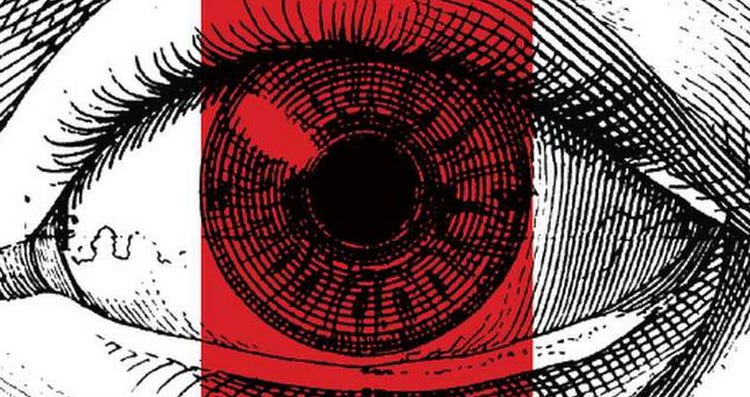
Lina Meruane’s semi-autobiographical Seeing Red is full of rhythmical jolts. At times, the reader is thrown to the end of a sentence, where she unexpectedly stops and teeters there, waiting. Then the next sentence reaches out and draws the reader on, plunging her into the smells, sounds, and spatial imbalances of the worlds around our protagonist, sometimes in the New York City where the fictional and real Lina Meruanes both earned their PhDs, and sometimes in Santiago de Chile, where the fictional and real Lina Meruanes both have Arab-Chilean families.

The book, translated from the Spanish by Megan McDowell, opens with a very small, but urgent, explosion:

It was happening. Right then, happening. They’d been warning me for a long time, and yet.

On the first page, blood vessels burst inside Lina’s fragile eyes, submerging her gaze first in blood, then in darkness. This isn’t entirely a surprise. For years, Lina has been having small explosions inside her eyes. Because of the brittleness of her veins, Lina’s doctors had asked her to follow a litany of impossible rules:

Stop smoking, first of all, and then don’t hold your breath, don’t cough, do not for any reason pick up heavy packages, boxes, suitcases. Never lean over, or dive headfirst into water. The carnal throes of passion were forbidden, because even an ardent kiss could cause my veins to burst.

So this explosion is not unexpected, and yet blindness was also impossible until it happened.

From this moment of darkness, the narrative hurtles forward, obsessed by Lina’s physical and emotional pains, which are examined with a vibrant, Kahloesque fascination. The narrative is also interested in how Lina’s pain stretches out, changing her relationships with the objects and people around her.

The plot of this short, tight novel is simple: Woman loses vision, woman waits, woman has operation. The sharply wrought and attentive prose, crafted here into compelling English, would probably be enough to keep our attention. But it’s the threat of what Lina will do next — amongst the obstacles thrown up by her family, the insurance company, the university, her love — that makes this novel un-put-downable.

At the opening, Lina’s relationship with her boyfriend, Ignacio, is held in a loose fist. She doesn’t even tell him, in these first moments, what has happened to her vision. They’re at a loud, raucous party, and he urges her to stay a while longer. She acquiesces. In the following days, as he discovers the extent of her loss, she simultaneously grips their relationship more tightly and hurls it away. She winds Ignacio in guilt and tries to shove him off. She both needs him and hates the smell of her neediness.

Just as Lina’s relationship with Ignacio grows more fraught, so does her relationship with the medical establishment. Both her parents are doctors, and no, she doesn’t want their advice. No, she will not have the operation done in Chile. She trusts only one doctor, Lekz.

In the beginning, Lekz is a cold, remote character who sits behind his instruments. He is a barrier, full of prohibitions and instructions, standing between Lina and the life she wants to live. After she loses her vision, she begins to rail against this barrier. Ignacio hushes her as she insists on reminding Lekz of her name:

Lucina, doctor, I told him officiously, knowing he’d be unable to pronounce it, while I reached out my hand, but you can call me Lina. He doesn’t know who the hell I am, I murmured then in Spanish to Ignacio, he doesn’t have the damnedest idea, this doctor to whom I’ve handed myself over in body and practically soul for two whole years.

As Lina’s prognosis worsens, she grows fiercer. By the end, she is so furious and demanding that she becomes something of a vengeful goddess. She demands increasingly more of Ignacio, and also of Lekz, whose position now changes. As Lina’s condition grows worse, Lekz becomes more vulnerable:

Lowering his voice impossibly, Lekz asked me to forgive him, it wasn’t me he forgot. I was everyone. Much as he struggled, he watched them enter his office and he didn’t have the slightest idea who they were, that’s what he told me, clearing his throat continuously, the magnifying lens raised before my eyes but still without examining me. With his hand suspended in the air, he confessed that patient after patient would come in and he would greet them all by name, something he’d learned to do mechanically.

In the end, Lekz shrinks before a furious, wronged Lina. The doctor reeks of cigarettes and exhaustion, and Lina asks him: “Am I going to die, doctor, or are you?” They are no longer in his office, with her quiescent behind his instruments. They are around a table, now equals, and the doctor is tied to Lina’s grief.

Lina’s mother is the only one among her inner circle to escape, pushed off by Lina’s desperate need for independence. Lina also knows too much about her mother to bear her presence. More than with any other character, Lina can see past her mother’s exterior. Just before her mother returns to Chile, post-surgery, Lina watches her sightlessly.

My mother trembled, while the doctor part of her demanded she get hold of herself, dry her tears on the sleeve of her blouse, not be late for her plane. We have to go, my mother’s other was saying, right now; and yes, I thought, both of you go, but especially the doctor you.

Lina’s observations are endlessly rich. Even when deprived of her sight, and relying on Ignacio’s eyes, she can still manage to paint us a detailed picture. Yet there is no facile conclusion that because Lina loses one sense, the others grow stronger. It is not Lina’s blindness that gives her x-ray vision, but her gifts as an author, her grief, and her fury. Lina might be blind, but she is desperate enough to see.

Ted Wilson Reviews the World: A Pineapple Upside Down Cake

★★★★☆ (4 out of 5)

Hello, and welcome to my week-by-week review of the world. Today I am reviewing a pineapple upside down cake.

At my age I know I don’t have much time left, so I try to live each day as if it were my last. Just kidding, I don’t really do that because I don’t want to get arrested and spend my last day alive in jail. Instead, I just try to do all the things I’ve always wanted to do. And when I can’t do those, I’m happy to do things I don’t want to do, because at this late stage in life beggars can’t be choosers. I’ll take what I can get and make the most of it. And when I can’t make the most of it, I’ll make something of it, even if that something isn’t much of anything.

That’s why recently, when I found a pineapple in the back seat of my car, I decided to make a pineapple upside down cake out of it. At the library I found a recipe from a Betty Crocker cookbook. I’d heard of Betty Crocker before, so I figured it should be good enough.

Now the name of the cake is a bit misleading. Yes there’s pineapple, but the cake is definitely NOT upside down. It’s not even sideways. I had hoped for some type of gravity-defying baked good. It’s only upside down if you turn it upside down, but that’s true of any cake. What a disappointment.

What is not disappointing, however, is the flavor. It tastes like a pineapple but even better! Like a super pineapple. Imagine a pineapple that when plucked fresh came covered in a sugary glaze and had a layer of buttercream frosting. The recipe didn’t actually call for buttercream frosting, but what kind of a cake doesn’t have frosting?

I hope eventually fruits may evolve to grow with frosting on them. If Monsanto can make that happen, I think they could really turn the tide of bad press they’ve been receiving.

I’m not exactly sure where my recipe went wrong, or if it was Betty Crocker’s fault, but my cake turned out less like a pineapple upside down cake and more like a pineapple inside out cake. Maybe I should have put the frosting on at the end rather than mixing it in with the batter, or maybe I should have used a recipe from Dole. I’ll never know.

(I had wanted to include the recipe here for you to try, but my lawyer recommended against it due to the risk of a lawsuit for copyright infringement.)

In terms of flavor I was satisfied, but what really made this cake exceptional was the sheer volume of it. I had enough for breakfast, lunch, and dinner, and still have some left over to feed to the squirrels. They didn’t seem interested though, so I put it in a box and dropped it off at the Salvation Army.

BEST FEATURE: It’s a great way to get rid of a pineapple.
WORST FEATURE: The pineapple can hurt your hands a lot when you’re peeling the skin off, but it will make your hands tougher once the scabs heal.

Please join me next week when I’ll be reviewing Tom Hanks.

Colson Whitehead’s Subterranean Odyssey

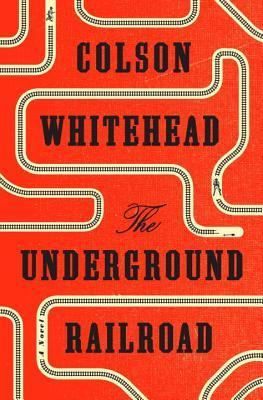
In The Underground Railroad, Colson Whitehead’s gripping new novel, we are introduced to a metaphor made manifest: an actual railroad, underground. A literal and literary engine for his incredible inquiry into slavery, humanity, and the true nature of America. When Cora is invited to leave, to escape the plantation where she has lived her whole life and take the titular train north, she climbs down the rabbit hole and through different states, both geographical and psychological. She runs through a world fueled by cruelty, ambivalence, and every so often, kindness. And we see this world with sober eyes by the light of her unsentimental telling.

When discussing this book with a friend (you will want to discuss The Underground Railroad, immediately and urgently), our conversation turned to another novel, Feeding the Ghosts by Fred D’Aguiar. In that book, the Zong, a slave ship headed for America, is overtaken with illness, and the enslaved men and women are thrown overboard. The protagonist, Mintah, manages to somehow lift herself from the water and climb back aboard the ship, perhaps buoyed by ghosts, or death. The middle passage is reframed through a fantastic and surreal lens, much in the way Whitehead reframes the metaphor of the railroad. These crossings — one headed towards slavery, and one towards freedom — are also somehow crossings-over, passages through time, and through the irreal. The journeys take on a particular and uncanny power. At a station stop in Whitehead’s novel, Cora stares into the abyss of the terminal, wondering where the railroad ends, where it begins: “As if in the world there were no places to escape to, only places to flee.”

Hilary Leichter: There’s something irresistible about the central metaphor to your book: an underground railroad that is an actual railroad. Sometimes it feels like descending into Hades, and sometimes it feels like the New York subway system — there’s one stop decorated with white tile. The railroad is a kind of character in the book. How did you go about bringing it to life? Where did the metaphor start?

Colson Whitehead: It came from that idea from childhood where you first hear about the underground railroad and think it’s an actual subway. That was my first association, when I was seven or eight. And then of course I’m not the only person — if you check Twitter for “underground railroad” you’ll find high school kids making fun of their friends: “Sam thought the underground railroad was an actual railroad!” So this sort of image stays with people. It’s majestic. Cora’s on the train a couple of times in the book and I wanted each station to have a different character. Sometimes it’s just a hole in the ground, sometimes it’s a nicely appointed place to wait, with tables and a candelabra, and wine. Sometimes the train is a great locomotive, sometimes it’s a boxcar, sometimes it’s a handcart. In trying to find a variety of experiences for Cora, I tried to come up with these different subterranean scenarios.

Leichter: When Cora makes her first trip on the railroad, she’s given this piece of advice that comes back several times in the book: “Look outside as you speed through, and you’ll find the true face of America.” After a while, this feels a bit like a joke because the tunnel is completely dark. But is that kind of complete blindness the true face of America? I was also thinking about how when you take a train at night, above ground, and you look outside the window, the face you see reflected is your own.

Whitehead: I think Cora struggles to decode those words of the first station master. Yes, if you look into a tunnel in the ground it’s just darkness, and if that’s America, what is that saying? When you’re on a train, for me, part of the joy is seeing the landscape, the different places you’re going through. And I’m sure there’s probably more than one Amtrak advertisement that says “Take Our Train, See the Country.” So I’m having a little bit of fun there, with what you can see, and what America you’re actually seeing outside the window.

Leichter: The book definitely plays with some surreal elements, but they feel completely subsumed by the terrible and violent realities of the plot. I felt that my disbelief was permanently suspended, because the horrors of slavery that you depict here continually left me in a similar kind of stunned disbelief. Was it important to you to use this surreal premise to talk about the realities of slavery? Or was it just the particular way that you found into the subject matter?

Whitehead: I wanted to talk about a variety of different things related to American-ness, and the changing concept of race in America. And once I made the choice to have this central fantastic element of a literal underground railroad, it allowed me to play with time and bring in elements of the Holocaust, the Tuskegee syphilis experiments, and things like that. While they’re all fantastic elements, I think the voice of the narrator is so matter of fact that they’re well integrated into Cora’s experience. So when she steps out and sees a skyscraper in 1850s South Carolina, she takes it at face value. When she comes to North Carolina and discovers a place where black people are outlawed and hunted down, it seems like a natural future of the world. So the voice works to integrate some of the absurd, but also the truthful elements of her world.

When she comes to North Carolina and discovers a place where black people are outlawed and hunted down, it seems like a natural future of the world.

Leichter: Can you tell me a little bit about the process of researching the book? Where did you start?

Whitehead: There are a few histories of the underground railroad, not as many as you’d think. The main one I started out with, Bound for Canaan, by Fergus Bordewich. It came out a couple of years ago. That was my survey of history of the movement. But my main research was slave narratives. The ones we’ve heard of that are famous: Frederick Douglass, Harriet Jacobs. But primarily the ones collected by the WPA in the 1930s. To get people back to work, the government gave writers jobs interviewing former slaves who were still alive in 1935. People who were eighty or seventy years old. It provided a real catalog of slave life. Small farms, big plantations. The mechanics of farming, and what they ate, and the culture of the plantation, all done in this matter-of-fact voice that I ended up using in the book.

Leichter: Was there anything you found that surprised you, or that maybe didn’t make it into the final draft of the book?

Whitehead: Things that intrigued me all found their way in, one way or another. I tend to do research to get going, and then if there’s something I have to research, I’ll do some more research along the way. It breaks up the writing, the monotony of just writing pages every day. So when Dr. Stevens appears in South Carolina, I thought his would be an interesting perspective, fleshing out a supporting character. So I studied grave digging and inanimate research in the early part of the 19th century. As the book progressed and different avenues of inquiry presented themselves, I pursued them, weaved them into the book.

Leichter: There are interspersed mini-narratives from some of these supporting characters, spread throughout the book. Was that something that you had intended to do, or did it come from being interested in one of those people, and wanting to spend a little bit more time figuring them out?

Whitehead: It wasn’t so much figuring them out, but using them as opportunities to expand the investigation into American history. Ajarry, the first section about Cora’s grandmother, was always the prologue. I wanted to have these character portraits in between the chapters, and I would juggle who should go in, and who should not go in. Should I focus on Martin or Ethel from North Carolina? Should I have Caesar’s voice, or Lovey’s voice? And you have to obviously be open to changing things, that’s the fun of discovery. As I would go along, different characters would provide different ways of talking about the broader themes.

Leichter: Each of your books is so different in scope, in tone, in everything. How important is it to you to immerse yourself in completely new projects and new challenges?

Whitehead: I’m so sick of one thing that the next project has to be pretty different. Whether it’s going from a first person voice that’s nimble and jokey, like in The Noble Hustle, my book about poker, or going to a third person expansive voice in John Henry Days after The Intuitionist. It’s a nice way of saying goodbye to the previous book. Before I started this book I had an idea about a writer in New York City, and the voice was very close to the voice of the narrator in The Noble Hustle, a version of me. It seemed if I had just done it in The Noble Hustle, why do it again? And so I set that book aside and started The Underground Railroad, which is very different from my last couple of books.

Leichter: There’s a moment early on in the book, where you’re describing Cora’s fraught relationships with some of the other women on the plantation, and the terrible experiences that they face together. And you write this beautiful sentence: “Sometimes such an experience bound one person to another; just as often the shame of one’s powerlessness made all witnesses into enemies.” I found this idea profoundly affecting, especially in a contemporary context, where it feels like we witness everything, horrible things, every day, online. Is that something that you were considering?

A plantation where everyone’s helping each other out, and is really pleasant to each other, didn’t fit my idea of humanity. It seemed that it would be every person for themselves.

Whitehead: I don’t think I was thinking about our contemporary experience of being in the world, but I was trying to create a plausible psychology for a plantation, using what we know in the early 21st century about how people behave, and post traumatic stress disorder. Of course these slaves aren’t “post” anything, they’re in that trauma, living it morning, afternoon, and night. But what is the damaged psychology of the slave? It seems to me, and perhaps this is a dark view of humanity, but if you put people in a room, ten are great, ten are terrible, and in the middle you have the other eighty, who sort of vacillate between being horrible and not-so-horrible. But if you have 100 people on a plantation who have been brutalized, assaulted, and dehumanized their whole lives, they’re not going to be on their best behavior. And so it seemed that a plantation where everyone’s helping each other out, and is really pleasant to each other, didn’t fit my idea of humanity. It seemed that it would be every person for themselves.

Party, Write, Repeat

I knew that by picking up Rob Spillman’s All Tomorrow’s Parties I would be reminded of many personal experiences from adolescence. For the qualifiers that we don’t share (I’m a 27 year old woman, for one) there were a multitude of life choices we did share: I speak German and lived there when I was younger; my teenage years were constructed by punk albums and friends who pushed me to go against my at-times baffling trust of authority; I also work in publishing. As Spillman rightly observes: “My friends were my collective alter ego.” So, when Spillman begins his memoir by running through an abandoned subway line in East Berlin, heading to a hidden rave and being handed questionable drugs by random Germans, I immediately remembered my first weekend in Berlin just a few years ago.

All Tomorrow’s Parties is at once a completely relatable and unique coming-of-age story. While Spillman, as a young kid in the US, details moments of self-creation — the first time he heard punk music, drinking and doing drugs, his first job — our own memory wheels start cranking. It’s hard not to remember all those times you totally fucked up, or were totally fucked up, and made it out okay. Spillman hasn’t quite lost his youthful vigor; in his recounting, it’s clear he loves the life he’s led and still itches for it.

“All Tomorrow’s Parties is at once a completely relatable and unique coming-of-age story.”

“Of course I’m going to throw myself into the abyss. That’s what I do — throw myself into the unknown,” he writes after moving to East Berlin in the 1990s with his wife, writer Elissa Schappell. His desire for an exciting life can be infectious, and his ultimate pursuit of it makes for an exhilarating read.

What sets Spillman’s narrative apart from most memoirs is the context. Born in Germany to traveling musicians who, while not entirely intentional, set out on a life outside of the norm, Spillman’s path was most likely set the moment his parents took up music. Picking up an instrument was a natural act; it was a part of their being.

“For my parents, music was a journey and a destination. Music allowed my parents to escape toward something.”

His childhood and youth played out backstage at operas and shows, sculpted by late-night conversations with musicians, directors, actors. These parties and dinners molded Spillman into being the “restless, heedless” wanderer we encounter in other chapters. While his parents’ identity was set in stone early on in their lives, Spillman struggles with identifying that one natural calling in his own life.

“Their stories of determination, drive and single-minded focus formed the stark background to my opposite childhood of indecision, lethargy, and scattered focus. I didn’t know what I wanted to do at age four, or eight, not to mention thirteen or sixteen.”

Spillman opens up with a candid level of honesty about his father and mother’s divorce, so much that we are grateful for his vulnerability. She left after they split, and it wasn’t until his pre-teen years that he would be reunited with his mother. “Her absence was a void, an unexplained vacancy. It was always there, but never acknowledged. Not by my father, and not by me, for fear of driving my father off as well. I felt responsible for her absence. And if she could disappear, so then could my father.” Spillman lived those pivotal years in Germany with his father, a musician who would let him tag along to dinners, performances and after-parties. While we’re told early on that Spillman’s father is gay, we’re not entirely sure if his parents divorced because of this until much later. Regardless, while he and his father steered clear of personally delicate conversation, Spillman was shaped by a sensitivity and earnestness that is compelling. “My father was living for art. I couldn’t image anything more romantic and ideal. I still can’t.” Throughout the memoir, Spillman reaches back to those quiet moments with his father like guiding lights; they inspire him to pursue a life outside the norm — which to him means a writing life as an ex-pat. He moves to Lynchburg, Virginia to live with his mother in his early teens. Her life of constancy and precision is starkly different from what he’s known until that point. These differing realities fuel Spillman’s restlessness and uncertainty: about his life and desires and about where he ultimately belongs.

“Spillman opens up with a candid level of honesty.”

Berlin after the fall of the Wall is wonderfully illustrated. Via certain Berliners’ narratives we learn about the after effects of reunification. The East Germans he encounters — Ralf, the particle physicist who reveals the fear of day-to-day life in East Germany through stories of his compulsory service or Ringo, an East Berlin insider with connections to abandoned apartments and Soviet tanks — remind us not only of the exciting artistic and cultural potential of the time, but also of the frightening and confusing future they were as yet unsure of but knew was around the corner. Moments like his laundromat escapade (which I won’t go too into detail, but which hilariously points out the otherworldly-ness of capitalist economics, all while pointing a mocking finger at the writer himself and his unchecked stubbornness) in East Berlin, and their adventures in the post-Soviet rave scene paint a picture of a Berlin on the brink.

Spillman’s strengths lie in his storytelling and ability to recall memories and actions. But while his crystal clear memory is appreciated in certain instances, like in recounting moments with this family or his adventures throughout Berlin, he fails to remind readers of the necessary years of introspection that no doubt led him to certain very well-formed perceptions or ideas. When Spillman moves to Baltimore with his mother, his identity as an outsider crystallizes. He rejects the way his classmates live and resents their privilege and brings up his own rejection of “White Male Privilege.”

All Tomorrow’s Parties is about more than those parties that make up Spillman’s youth. It’s a love story, between Spillman and his wife, Elissa, whose courage and smarts are amplified next to Spillma’s own ambitions and hunger for life. Leaving their NYC lives for Europe, the two have to confront those parts of their personality that set them apart from each other and what their true motives were for setting off on this adventure. “When I moved to the States I defined myself as being from Berlin. I was a Berliner removed from Berlin, and I would return home. What the hell was I thinking? Berlin is an idea. It isn’t my home. Elissa is my home.” This honest appreciation of his wife mirrors the earlier love we see towards his parents. While Spillman struggles with seeing who he truly is, it’s clear that his relationships determine that identity.

Midweek Links: Literary Links from Around the Web (August 17th)

The trailer for Arrival is here, a SF movie based on a great Ted Chiang short story (and here is our interview with Ted Chiang about being adapted)

A manifesto against letting people borrow your books

Fantasy books where language is used as magic

Do we really need more novels fleshing out the lives of minor Jane Austen characters?

Kyle McClachlan sums up Dune in emoji

Is reviewing a restaurant at all like reviewing a book?

An interview with cyberpunk master William Gibson

Reading Gertrude Stein’s weird children’s book

President Obama’s summer reading list is pretty darn good

7 recent books to pair with “problematic” literary classics

“202 Checkmates” by Rion Amilcar Scott

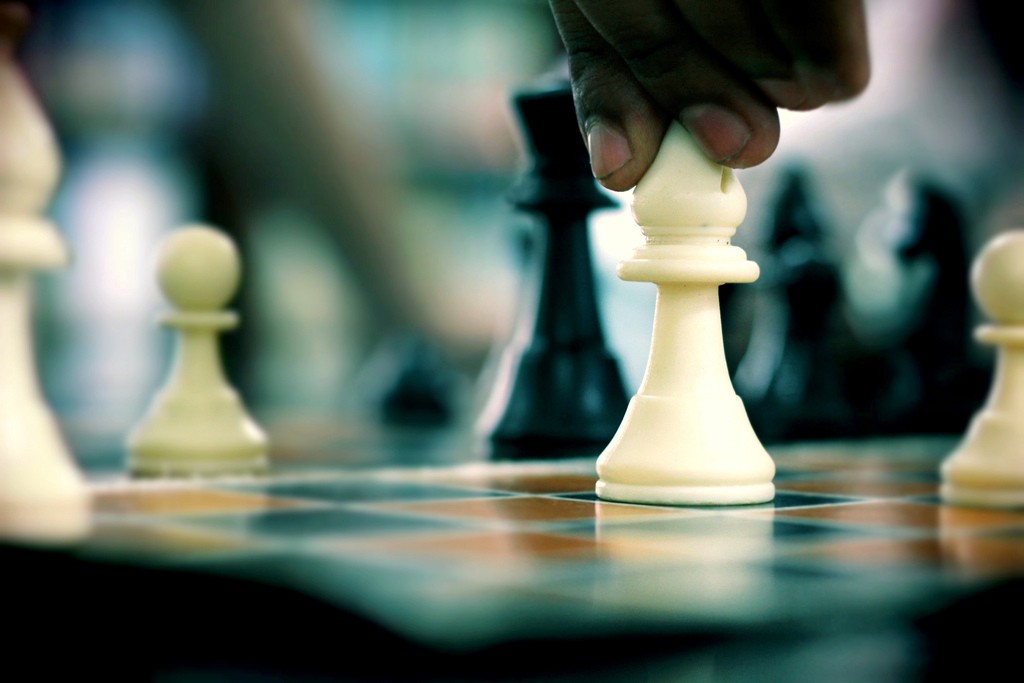
In my eleventh year, my father taught me defeat.

I sat with my back pressed on that old, scratchy brown couch. Tom chased Jerry across the television screen and then the image dissolved into a white dot in the center. I turned to see my father holding the remote control in one hand and a crumpled cloth cradled in the crook of his other arm.

What are you doing with that rag, Daddy? I asked.

It’s not a rag, girl, he said. It’s a mat.

He unfurled the dirty checkered mat onto the coffee table and dropped a handful of chipped and faded black chess pieces in front of me. He started setting up the white ones without looking at me. I tilted my head, watching my father curiously.

I tentatively set up mine, following his lead. Each piece looked like a veteran of many battles, with nicks and gashes exposing the wood beneath the paint.

Your queen always starts off on her own color square, he said. she’s a woman like you and your mother. She likes to match. He reversed the positions of my king and queen.

When my father explained the rules, I thought I’d never be able to keep them straight, especially the rules about the horse, because he moved like a ballerina, jumping to far-off squares, or rather he galloped. I grabbed hold of a horse and moved him to a vacant square.

Now hold on, little girl, my father said. Chess is like real life. The white pieces go first so they got an advantage over the black pieces.

With that I removed my horse and he inched a pawn one square forward. I was on my way to being checkmated for the first time.

He was the god of chess each time he spread the crumpled mat and set up the pieces with his haggard, dark brown hands. I used to look at the grime beneath his fingernails and the scars on his knuckles, wondering why his hands looked older than him.

And my father’s voice crackled when we played chess. Daddy often sounded like a kung-fu master in one of those movies me and my brother watched on Saturday mornings. He didn’t speak like that all the time, but he always spoke like that when we played chess.

Once, I was so deep in concentration that I didn’t look up when my father broke our silence. Instead I chose to imagine one of my horses speaking.

I used to play this game with your grandfather when I was your age, he said sitting hunched over the board, moving around the pieces he had captured, waiting for me to make a move. Pop was good, he said. I never beat him.

How come?

’Cause he was good. Naw, really, I could have beat him had I had the chance. He got real sick. Couldn’t even finish the game we had going ’cause we took him to the hospital. He told me to bring the game with me when I went to see him. Your grandmother wouldn’t let me take it to the hospital, though. Don’t bother your father with that foolishness now. Daddy’s impression of my grandmother was a high-pitched shriek that sounded like her only in spirit, and even then it was Granny as a cartoon character. You know how your grandmother is, he continued. Every time we went, he used to ask me about the set and —

My father paused as I moved my queen to a middle square. He swooped in swiftly and tapped it from the board with the base of a knight. It bounced once it hit the carpet.

Thought you had something, huh? Let that be a lesson, little girl.

With my queen gone, I made my moves lazily, waiting for the twentieth checkmate, and then my father said this: You playing like the game’s done. the game ain’t over until that king is pinned down and can’t go nowhere.

If a pawn makes it to the other side, he told me, it becomes a queen. I imagined a little pawn magically blossoming into royalty on that last square.

It became something I longed to see. sometimes when all was lost, I’d just inch a pawn forward, but the piece would never make it. the fifty-seventh checkmate was one of those games.

We woke early in the morning before I went off to school to continue a game carried over from the night before.

While we played, my father told me that when he was my age he imagined he’d be the first black grandmaster. He was the best chess player in school, winning casual games as easily as drinking a glass of water. He became king of the tournaments.

Yeah, figured one day everyone would call me Grandmaster Rob.

What happened?

Just didn’t work out that way, I guess. After a while, I wasn’t worrying about being no grandmaster or nothing like that. You stop thinking about these things at a certain age.

I’m going to be a grandmaster, I said.

My father stared hard at the board.

You know, Daddy, it’s never too late.

He chuckled, and in less than two minutes my king stood pinned by a bishop, a rook, and a pawn.

Checkmate!

He jumped and shuffled across the floor like the Holy Ghost had slithered up his pant leg.

Robert, she’s eleven years old, my mother said, passing by.

The girl ain’t too young to learn, he replied. Then he turned to me. Ain’t that right?

I nodded, thinking about my loss rather than whatever I was nodding about. My impotent pieces stood meekly, no longer any use.

He stuck his hand out for a victory shake.

You cheated me, I said, raising my voice a little, ignoring his hand and frowning, damning him for phantom moves I was sure he had made in my absence. Daddy, you cheated.

Don’t blame me because I’m better than you. You gotta start thinking two, three moves ahead. then you can challenge me. Don’t worry about me. Worry about your game.

My mother called out from the next room. Said I was going to miss the bus. My little brother had walked off to wait without me. My mother stood before us talking fast and loud. She got this way sometimes. My father placed his hand softly on my head.

Come on, baby girl, stop pouting and get your stuff together. I’ll walk you to the bus stop.

My father never walked me to the bus stop in the mornings. Most days he’d leave for work early before I even got out of bed. He’d return late in the evening long after I had come home from school, his clothes and skin covered in black grease. After a half hour he’d walk out of his room looking immaculate, his face clean and smooth, each hair lined up waiting on my inspection. His hands, though, were always stained with traces of thick oil and dirt that rested beneath his fingernails. He’d sit on the couch with his scarred hands wrapped around a green beer bottle that rested on his thigh.

As I stood from the game, Daddy took my hand in his, and there sat the grease, nesting beneath his nails, as much a part of his hands as the creases and veins.

Even though in my little girl mind he had cheated me, the thought of walking with him filled me with pride, making me the happiest girl in all of Cross River.

Dammit, Robert! my mother said. You made her miss the bus.

I peered out the window to see its yellow tail pulling off.

Well, baby girl, we’re going to have to take the l9 downtown to Ol’ cigar Station, my father said. But we got to leave right now, because I’m sure the buses are behind schedule.

We stepped out the door and I forgot to wonder why he wasn’t at work.

That was my fifty-seventh checkmate at my father’s hands. I refused to play with him after that and instead taught my little brother the game. He was six at the time and had a short attention span. I got tired of beating him, though. He never figured out how I could mate him in three moves.

Soon my father and I returned to the board. Around this time it became clear that my mother didn’t much like chess. She used to say things like, Chess ain’t gonna get your homework done. One night when she thought I was asleep I heard her tell my father, Chess ain’t gonna get you work. That was in the middle of a bunch of hollering from both of them. Then the front door slammed. my father was back in the morning to finish up the previous night’s game.

Sometime around the hundred-and-first checkmate, I cut through the park on my way home from a friend’s house late in the afternoon. There hung a sharp chill in the air. Around a picnic table stood a silent crowd looking severe and intense. Everybody pulled their jackets closer when the cold breeze blew in, but even as the heat left their bodies the people’s eyes stayed fixed on the game. Two guys — an older man with a white Afro and yellowish-brown tobacco stains soiling his white mustache and a younger man with smooth dark skin and thin, trimmed black hairs neatly resting on his upper lip — sat at the picnic table with its black graffiti on flaking maroon paint. The men were face to face, staring at a crumpled board more tattered than my father’s. A pale brown time clock sat near them, and after each move one of the men slapped a button atop the timepiece. The elder man had a grizzled face that looked as if it had been punched too many times, while his opponent’s was young, strong, and handsome, dimples passing over his cheeks when he flashed a transient smile.

Brilliant, a tall guy whispered loudly after the older man moved a pawn one square forward. then a few minutes later: Man, fuck a Bobby Fischer. We got two Bobby Fischers right here. And these Bobby Fischers ain’t crazy.

From the chatter I learned that the younger man was Manny, his opponent was Chester, and nobody had ever seen anyone defeat either of them.

Eventually Chester pinned Manny’s king. He didn’t get up and dance. Manny didn’t rip the black hairs from his upper lip and storm off in anger. The two slapped hands, complimented each other, and left in opposite directions.

When I reached home, I told my father all about the match. Speaking breathlessly, I mixed up parts of the story and corrected myself into an incoherence I knew only my father could understand. And he did make sense of it, even if he had to ask me to slow down a few times.

I heard about them dudes, my father said.

We should go out to the park, Daddy. You can beat Chester.

Baby girl, chess ain’t about who can beat who; it’s about life. He unrolled the board and set up the pieces. Now come let me beat up on you.

It wasn’t until checkmate one hundred twenty-one, or perhaps one hundred twenty-two, that I convinced my father to come watch the men in the park play. It was a mild day, coming off a string of cold ones, and he agreed that it would be a shame to waste the shining sun and pleasant warmth by playing indoors.

When we got to the park, Chester sat blindfolded at a picnic table. He had three games going at once. He’d make a move and then a woman would guide him to the next table to make another move. The crowd looked on silently.

He’s just showing off, my father said.

You can beat him, can’t you, Daddy?

He’s a showboat, my father said as if he didn’t hear me. Chester vanquished an opponent and walked slowly to a different picnic table to make a move as another challenger set up a board for defeat. My father said, He a good showboat, though.

You can beat him, right?

My father grabbed my hand and we walked downhill, away from the action, to a maroon picnic table of our own. He unrolled the crumpled mat and set up the chipped pieces. I played with the black ones as usual. He said I could be white when I beat him. My father took one of my knights and taunted me.

Now, little girl, you know you can do better than that. You gotta protect them pieces, girl.

I took his queen and laughed at him. He clenched his jaw, and his whole face became tight. Playing my father was no longer as hard as it had once been. I was getting used to his rhythms and seeing weaknesses in the creaky stiffness of his gameplay.

Now where did you learn a move like that? he asked.

Don’t worry about me, worry about your game, I replied, which made him laugh.

We both hunched over the board. There was no world outside the both of us, outside of this game.

Hey, little lady, you missed a chance to take back the game from your old man, a voice called out. My father looked up and frowned. It was Manny. He sat on a nearby bench studying our board, his right hand rubbing against his smooth dark chin.

Move your queenside knight —

Come on, man, let me and my daughter play in peace.

All right, brotherman, I’m just saying that if I was her, I’d move that queenside knight so I could castle and set up some opportunities to put you in check, otherwise the game is over in three.

Whatever, man, worry about yourself, my father said. I hear Chester did you like that computer did that Russian.

Aw man, fuck Chester —

Could you have some respect for my little girl?

Sorry, man. I ain’t mean to disrespect the little lady. Let me play winner, Manny said, and then he winked at me. I smiled.

Staring at the board, I could see Manny was right. My father knew it. His annoyance showed in his stiff brow and the nests of wrinkles at the corner of his eyes. There was only one way out. But winning wasn’t as important as doing so gracefully and on my own. The knight stayed in his position and I moved a pawn instead, hoping to get it to the other side of the board before the game ended.

Aw, little lady, you just signed your death warrant, Manny said. let me play winner.

Man, my father said, let the girl play. With a quick maneuver of his fingers he trapped my king. It stood there lonely and helpless, cut off from all its allies.

Checkmate! my father called with the drunken excitement of a midnight partygoer. You’re getting better, but you’re still not good enough to beat your old man.

My father gathered the pieces, snorting and grunting in a way that let me know he was pleased.

Come on, man, let’s go a round, Manny said with a dimpled smile.

Naw, man, I got to take my little girl home.

What you scared of? he asked.

My father barely even bothered looking up at Manny as he rolled his board and cradled it in the crook of his arm.

My dad’s not scared of you.

Looks like he is, Manny replied.

Come on, Daddy, you can play one game.

Naw, girl, we got to go.

Yeah, little lady. Y’all gotta go, Manny said. The way your pop plays, I’ll have him mated in two. He doesn’t want to embarrass himself in front of you.

My father unrolled the crumpled board and set up his pieces.

Manny removed a cigarette from the right breast pocket of his black leather jacket and made a ceremony of lighting it. then he took a long pull and blew out a cloud of formless gray smoke.

I’ll even let you be white, he said.

It’s my board, boy. I’m the defending champion. You can’t let me be anything.

Turn your head, little lady. I’m ’bout to beat your daddy like he stole something.

They didn’t just play one game. They played three, my father staring into the crumpled board as if that vinyl square held an opening to the abyss and the chipped pieces were Satan’s own demons flying out to wreak havoc. He was so still at times it was as if he had become one of his chessmen. But his face tightened with each falling of his queen, his bishops, his knights; and it dropped each time Manny calmly said, checkmate, and blew another plume of smoke.

Manny smiled in my direction after the last game, dimples sitting again on his cheeks. Then he winked. I looked away.

My father clutched my hand as we walked home in silence. I replayed each of his three games, mostly the endgames, in my head, still not believing what I had witnessed. All I could see walking up the streets were my father’s scarred thick hands clumsily moving pieces and Manny’s smooth brown hands, with their feminine fingers and strong snake veins, nimbly moving in confident counterattack. I couldn’t beat either of them, but I could see just where my father had gone wrong. For all his talk of thinking ahead, Daddy didn’t do it very well. And he couldn’t adapt to changing circumstances, always protecting his queen while his king stood exposed. Why did I never see his sloppiness when he was my opponent? As the image of my father’s leathery hand laying his king flat in surrender played in my head, my father spoke:

Sometimes you lose. A lot of times you lose. Sometimes you lose more than you win. That’s all.

My mind now drifted during our games, thinking about my father pushing over his king while Manny folded his arms across his broad chest and nodded in satisfaction. It was that slight nod, more than anything, that drew me back to the park day after day to watch the neighborhood chess heroes inch pieces forward and stare at their boards as if the world depended on each of their moves.

Manny sat before a board every time I wandered through Ol’ Cigar Park. He was as much a part of the place as the maroon wooden benches, the crumbly blacktop of the basketball court, and the dark green weather-beaten statue of the serious-faced man atop a galloping horse — sword in one hand, reins in the other, and a cigar between his lips — that sat in the center of things and watched over the whole area. Sometimes Manny would look up from a game while waiting on an opponent’s move. He’d smile or wink and then return his gaze to the board before I could respond with a smile or a wave of my own.

Manny checkmated a man once just as I showed up to watch the afternoon’s matches.

Little lady, he called, and waved a raised hand as his opponent slinked away. He returned the chessmen to their starting positions and offered me the white pieces. His board was vinyl like my father’s but smooth and new. When I made my first move, he told me it was all wrong. Manny had a comment after each of my turns. I clutched the head of a knight. He guided my hand instead to a pawn I hadn’t considered. When he removed his hand from mine, I slowly eased my arm back, knocking over my king and queen, and felt myself blushing. Manny laughed and placed them back on their squares. Chess had never made more sense; the game had never been more beautiful. I watched his smooth hands dance as they conducted the lesson. He took his eyes off the board to look up at me when I spoke and complimented me each time I did something unexpected.

As I moved my queen, a woman, tall and brown-skinned, holding a silver purse over her shoulder, walked up behind him and placed her hand on his back. He greeted her without turning from our game. Just after her arrival, he took my queen. The woman smiled at me. I kept a serious face and stared at the fallen piece. He mated me with his next move.

Manny placed an unlit cigarette at the corner of his mouth, lit a match, and cupped his hand around the flame to protect it from the wind.

Good game, little lady. He stood from the table, scooping up a handful of pieces and dropping them into the woman’s purse. He rolled the floppy vinyl board, and the woman stuffed that too into her purse. You’re going to be real good one day. Go home and show your daddy what I taught you.

Manny winked at me over his shoulder as he walked off with the tall woman. A board sat empty on an adjacent table. In my mind I filled it with pieces, reliving the game I had just played, trying to make all I had learned a part of me.

My twelfth birthday neared. It landed on a Sunday, so my father let me stay home with him on the Friday before the day. I floated between sleep and wake as my little brother rustled around, packing his stuff for school.

How come she gets to stay home? he asked. It’s not fair.

Life’s not fair, my father replied. Hurry up, boy, and get your stuff together before you miss your bus.

The two-hundred-and-first checkmate came that morning after my father made breakfast. The doughy scent of pancakes mixed with the sticky, sweet smell of maple syrup and filled every inch of our apartment. My king lay flat on the crumpled mat as my father jumped up and shuffled across the floor in celebration. He called it his James Brown dance.

What? Did you think I was going to go easy on you because it’s your birthday?

Watch out, Daddy, your dancing days are going to be over soon. Just wait.

It wasn’t idle talk for me. His game was weak and strained, and I could see his king toppled and defeated, lying at the feet of my queen.

He cooked us hamburgers for lunch, and while I ate I heard him on the phone arguing with my mother.

He disappeared for a long stretch in the afternoon while I watched Woody Woodpecker and Droopy and Bugs Bunny, and when he came back his eyes burned fiery red and puffy folds of dark loose skin bunched beneath them. His breath burned with the harsh-sweet scent of alcohol. He moved slowly, as if his joints had stiffened with weariness and pain.

He sat on the couch next to me and we watched the Roadrunner outsmart Wile E. Coyote.

This used to be so funny when I was your age, he said.

It’s still funny, Daddy.

I got something for you, baby.

He pointed to a rectangular box on the dining room table. It lay wrapped in two different types of paper that puffed out and wrinkled at the edges. My father had wound several strips of black electrical tape around the box. Daddy’s wrapping job was so pathetically cute I almost didn’t want to open the gift.

I know your birthday isn’t until Sunday, but you played such a good game this morning.

When I ripped the paper from the box, I could do nothing but stare at my gift. It was a green marble chessboard. I ran my fingers along the clear glass that covered the thick emerald base. the white pieces were a shiny crystal, the dark pieces a frosted gray. It was heavy. My father grunted as he moved it to the center of the table for us to play.

When my mother came home we were on our way to the two-hundred-and-second checkmate.

Look what Daddy got me, I said as she closed the door.

That’s nice, baby, she replied evenly and blandly, and her lack of enthusiasm irritated me.

My father and I played a long game, neither of us dominating. I had just taken his second rook when my mother made me go to bed. It was early. I frowned and sighed loudly in frustration, but I dared not talk back. There was no checkmating my mother.

The walls in our apartment were as thin as bedsheets. It didn’t appear as if my parents cared that night. It was long after I was supposed to have gone to sleep, but I lay awake thinking of my next moves. this time I was sure I’d defeat my father. An army of pawns would become queens on the far side of the board.

The soft drone of my parents’ conversation grew into muffled screams. I held myself still so the creaking of the bed wouldn’t obscure their bickering, and I even took shallow breaths so as not to miss a word. my brother slept in a bed across the room, not stirring a bit even when the shouting grew so loud it seemed as if we had no wall to filter the sound.

How the hell can we afford that? my mother screamed. It’s not even her birthday yet. I thought we talked about this. I told you we couldn’t afford it. You don’t think.

My father’s response sounded like muffled grumbling, forever lost between the paint and plaster of the walls.

We haven’t even paid the rent this month, my mother yelled. I got to go grocery shopping this week. Robert, you don’t think.

Why is everything such a big deal for you? I didn’t do anything wrong. I got the girl a nice gift.

You didn’t get that for her. You got it for yourself. When are you ever thinking about anybody but yourself?

We always pull through. You’re always predicting the worst and we always pull through. It’s never as bad as you say it is.

You don’t even know how we pull through.

Silence.

You want me to take it back? Fine, I’ll take it back.

It’s too late; you can’t take it back now. You already gave it to her like a fool. You’ll just be disappointing her. God, Robert, you apply for two jobs and then give up; got the nerve to spend the money I make on expensive gifts. I don’t understand you. It’s just like the garage. You never think anything through. All you had to do was apolo —

Could we not talk about that? I’m done talking about that.

Silence.

I don’t know how we’re going to get out of this one. We can’t live on that chessboard, Robert. Did you even try to think this through? I’ll tell you this, Robert, you’re not going to have Bobby out of school on his birthday so he can grow up to be like you.

Whatever —

You’re not a man, Robert. You don’t. . . .

Think.

At least, I believe she said think, but I can’t be sure because the door slammed on that word.

A moment later my door cracked and a sliver of light expanded into the room.

Baby, I heard my father’s voice say. The gentle tinkling of wooden chess pieces bouncing against one another accompanied his voice. Baby, are you awake? Want to play chess with Daddy?

I pretended to be asleep. My bed shifted and creaked. My father sat on the edge by my feet. He said nothing for a while, sitting still. He sighed. He whispered something angrily. Before long he was taking short, tortured breaths and whimpering like an infant or a wounded horse. I cracked open my eyes and peered at him through slits. A glint of hallway light landed on half his face; the other half sat draped in darkness. A dampness slicked his cheeks. I burrowed my head between pillow and sheet and tightly shut my eyes.

Neither of us said anything about that night as the days passed. the marble chess set sat in the living room, our last game frozen on its face. Both my father and I barely acknowledged its presence most of the time. every week, though, he removed the pieces, cleaned the dust from the board, and set them back just as we had left them that night.

One day it sparkled under the ugly yellow apartment lights while I sat across from it doubled over by an aching in my belly. My mother had cooked spicy wings for dinner; maybe that was the cause. I tried to ignore the pain by sitting on the scratchy brown couch and writing in my journal. As I wrote, I felt a new wetness between my legs. And there it was, a streak of brownish-red blood staining my underwear.

My mother knelt over the bathtub washing my underpants in warm soapy water, talking to me about babies and blood and all the ways my world would change. most of it passed over me, disappearing into the universe.

A few days later I went to the park by myself, though my mother now forbid it and my father sided with her, saying, What are you looking at me for? You heard your mother. I slid into a seat across from Manny. He slowly took my pieces, finally checkmating me after the tall brown-skinned woman showed up. Manny walked off with her, leaving me with a dimpled smile and a wink as he had done before. I shrugged, sitting there by myself wondering if all that talk of my world changing was just another one of those empty things adults say to children.

My father barely spoke during this time. He usually disappeared after dinner, and I would hear him return late at night, taking heavy steps, loudly banging into furniture and cursing in pain. In the darkness I stared up at the ceiling, thinking about games I watched in the park or something else entirely. He would be gone again in the morning when I awoke for school. In the afternoon there was my father, sitting on the couch, red-eyed with a green bottle of beer in his hand.

The day we returned to the board was an unusual one. It must have been a school holiday, because my brother and I were both home, but my mother wasn’t there. I remember my father’s coarse hands gripping a folded newspaper to his face as I ate soggy cereal. His hands made me think of his loss in the park.

After I had cleared the table and washed the dishes, I spread the crumpled chess mat on the table next to the marble board. Without saying a word to my father, I set up the pieces, both black and white. my father put down the newspaper and approached the table cautiously. He suggested I be white and started to take a seat before the black pieces, but I shook my head and spun the mat so that the white pieces sat before him.

We stared at the evolving board, barely speaking, feeling for the fallen pieces almost as if they were dead family. my father made a mistake and grunted angrily. one of his bishops went down, and his king stood exposed.

Who taught you a move like that? my father asked. I was too deep in concentration to respond.

He made a helpless move and hid a crestfallen brow behind a false smile.

I imagined my father’s mind racing, cataloging everything that had ever tumbled down around him. I put my hand on a bishop, my would-be assassin, and thought of my father’s heights when he won, how he galloped around. The depths of his despair at losing, I expected, would be equal to the peaks. He’d mope about, his face fallen and miserable, his posture stooped as if his back ached. I took my hand from the piece and leaned back in deliberation. He ran his left hand over his cheek and his upper lip as a sort of nervous gesture.

My bishop moved to an out-of-the-way square where it died at the hands of one of my father’s pawns, and my father chastised me for missing an opportunity to take the game.

It’s not over, I said. That’s all part of the plan.

His tight jaw eased. His eyes danced with life, and his down-turned mouth became a straight line.

I inched a pawn forward, anticipating that moment when it would reach the other side and take the rank of queen. We went back and forth trading pieces. My queen fell. The pawn I had been grooming fell, and I inched another one forward a single square at a time. My father’s moves were now of little interest to me as I eyed that determined black pawn. If it became a queen, I could still pin his king in three or four moves. I watched his spare pieces as he studied the board. He angled them into position, maneuvering his bishop and a pawn to kill my king. Doubling back, I blocked him. He made another move, and I focused again on my pawn.

It danced to the last square, transforming into royalty, that most powerful lady of the board.

And as I smiled at the pawn’s triumph, my father used a knight and a rook to seal my king’s fate. He slapped his hands together and rocketed to his feet, announcing his checkmate with a shriek while he paraded around the table laughing and applauding. I gave the victor the slightest nod and tipped over my dead king.

Kristin Dombek on the New Narcissism

For more than five years, Kristin Dombek has been a steady contributor of terrific essays for n+1, as well as serving as its chief advice-dispenser in her column “The Help Desk.” I’d always been excited to see her name in the table of contents, rightfully suspecting that I’d be in for a piece of nonfiction as clear-eyed as it was deeply intelligent. Dombek is that rare writer who seems exceedingly, almost eerily capable of diving headfirst into any given subject and coming up with an informed perspective uniquely her own, still with some breath left in her lungs. It’s an exciting occasion, then, to have a longform document one can hold in one’s hands that bears witness to Dombek’s determined curiosity and intellectual vigor. The Selfishness of Others (FSG Originals, 2016) is a book I devoured in one sitting, taken in by its masterful handling of its subject and the multitude of vantage points from which Dombek provides view.

Talking with Dombek by email only served to further cement my belief that this is just the first limb in what I venture will be a vital and vast body of work.

Vincent Scarpa: Perhaps the most obvious question — why narcissism? What prompted you to write a book length essay on narcissism, on the selfishness of others? You write in the first section, “But it won’t surprise you to hear that I have a personal stake in the subject, too. I’m an essayist; I write the word I all day long, and I’m nervous when I do.” But I imagine there must have been more that sparked your interest than this concern, no?

Kristin Dombek: It wasn’t narcissism that sparked my interest so much as fear of narcissism — the scary story that I started hearing everywhere about this contagion of toxic self-absorption. About how selfies and the popularity of memoir mean the end of the world. It seemed funny that the story was always about other people — the pathologically selfish who prey on us, and “we” the innocent victims. That’s the oldest story in the world, but the way the word “narcissism” was being used, this psychological diagnosis, felt new.

There are a couple of pages in Janet Malcolm’s The Journalist and the Murderer where she argued that sociopathy and narcissistic personality disorder are myths in the first place. When I started hearing the new narcissism end-of-the-world story, I remembered those pages and wanted to investigate whether she was right or not, and to figure out why these particular “myths” are now used to explain not just the worst among us, but more and more, all of us.

I’ve been writing about apocalyptic stories for a while, though. I’m obsessed with tearing apart their nonsensical oppositions — in this case, it’s self-absorbed millennials vs. generous boomers, and even the vanity of people who write about the “I” vs. the maturity of writers who focus on “you” or “we.” When I meet a sketchy opposition like that, I always want to explode it, and then dig our real lives out from the rubble. To try to get into language what things are really like.

In this case, it’s self-absorbed millennials vs. generous boomers…When I meet a sketchy opposition like that, I always want to explode it.

VS: I wonder, too, if, beyond the impetus to write this book, you can talk about the experience of it, its coming into being. What was the research-gathering process like? Reading the book, it seems as though you came across such disconnect and diametrical opposition from one piece of research to the next. Was that frustrating, or productive in proving a point about just how misunderstood narcissism is, how reductively we use the term? You also write, “Any book you write is its own asylum, but a book about narcissism is like the padded cell inside the asylum,” which made me wonder, too, if having finished it felt like an escape from the world you’d constructed in order to write it.

KD: I wrote it like that to try to evoke the feeling of what it’s like to try to get knowledge from the internet these days about minds, personalities, relationships: the overflow of information; the contradictions, every day, on the newsfeed; the uncertainty and complexity of the work of science behind the lightning-quick, certain summaries we get online. The way the kind of knowledge you get changes depending on the methods of the disciplines or scientific fields that are producing it, whether you realize it or not, and what a mind-fuck that is.

The weirdest part about the process was that the longer it took, the more psychology I read, the more people around me started acting like narcissists. Which challenged my belief that the epidemic and maybe even the diagnosis is a total myth at the same time as it confirmed my belief that the language of diagnosis can be uncannily powerful, and thus really harmful to relationships. Anyway, I can confirm that spending too much time immersed in the language of psychological diagnosis makes you crazy and also self-absorbed. I really hope every book I try to write won’t feel as much like going crazy as this one.

But there’s something there that’s very deeply funny, in this topic, and that’s what kept me going. If you meditate on the feeling of accusing others of narcissism, for more than a minute, it gets funny. Narciphobia is a joke that is always on you. Right under the apocalyptic feeling there’s this sweetness. If it’s all of us, it’s also none of us. Sometimes, at least, I think maybe it’s really that simple.

VS: Among many things, I was fascinated to learn about the industry built around narcissism, and the community it’s created. How specific it gets; that there exist such niche websites and forums and books purporting care, like www.daughtersofnarcissisticmothers.com. You report on this — calling it “the narcisphere” — mostly without judgment, but I do wonder if you can talk about what you make of it. I couldn’t help seeing it as anything but spiritual capitalism — itself a kind of narcissism, perhaps — at its finest, and was reminded of Gustave Le Bon’s work on crowd theory; the narcotic attachments made to that which sells itself as knowledge, and the way that spreads among and is buoyed by the congregating of others. But maybe I’m wrong, and there’s actually nourishing, productive, healthy, informed wisdom being given in these communities. Even if you do have to shell out cash for “bundles” of self-help advice.

KD: Wow — yeah. That’s a great way of describing it. I don’t doubt that people find comfort and fellowship and useful help on those forum boards. But what you say seems right to me, too — that the narcisphere replicates the thing it critiques, creating attachments and dependencies by offering a kind of new “knowledge” that’s actually an erasure of your own, even while it purports to help you build your self-esteem. How else could your life coach make money, but by getting you to need her?

How else could your life coach make money, but by getting you to need her?

The prophecies of a narcissism epidemic — Chris Lasch’s, and Twenge and Campbell’s The Narcissism Epidemic — are critical of that kind of self-help, too. But more deeply, they seem nostalgic for old-time religion, when we were all just better people, deeper, more generous, more dedicated to our communities, less likely to wear jeans when we’re forty. (That’s an actual example of the narcissism epidemic, forty year-olds wearing jeans.) But the kind of religion I grew up in, at least — evangelical Christianity — gave me exactly the story of the narcissistic boyfriend. There’s a guy, he’s the most beautiful and overwhelmingly powerful, and you’re supposed to realize you’re created in his image, that all you do has got to glorify him, etcetera, etcetera. It’s just that in religion, the guy is God. And that was a good thing, if that story scared us into doing our duty and being humble?

Anyway, the websites are trying to help you get out of the kind of situation where your boyfriend or your boss or your mother thinks they’re God. But I worry, like you, about the ways in which they situate readers as victims, and convince them that they need more and more knowledge about the diagnosis, and more and more support, and end up giving the story of their victimization more power than it should have.

VS: I think you make an excellent point about “the narcisphere,” too, when you say that they will “help you replace your own language for what until this point may have seemed a nebulous and hazy selfishness.” That installation of a specific vocabulary, a lingo for talking about what was once “nebulous and hazy,” seems like it also has the capacity to run roughshod over one’s experience in its replacement of that previous language. And one of your book’s many strengths, I think, is that it’s written with, and arguing for, a kind of knowledge and analysis that, to borrow from Eve Sedgwick, will “pluralize and specify.” I see you as making room for multiplicities of meaning regarding the definition of narcissism — questioning the fundamentals of how we get to that definition, questioning even the utility of definition and diagnosis — and making an equal amount of room for the ways in which one might go about labeling or interacting with a narcissist. The narcisphere doesn’t seem to me to be making that same kind of room; any site or self-help practitioner’s success is surely predicated on the assurance that the knowledge being dispensed therein is unequivocal.

KD: Thank you so much. I think that’s what I was after here, as well as always in The Help Desk advice column I write for n+1. It’s hard to talk about what things are really like these days without reckoning with the language of psychology. It has so much influence on the way we think about selves and relationships and even public life. And I’m as addicted to that language as anyone — to Buzzfeed or PsychCentral objectivity, to websites that claim to translate the latest studies into action items for improving my own personal mental health, or for understanding others. I love slash hate the totalizing, uncanny, spiritual thrill of having a psych post explain everything, rationalize my pain, affirm that I’m the good one, and my ex-boyfriend, or father, or whoever, was pathologically selfish, or secretly bipolar, or an undiagnosed whatever. The opposite of good therapy — to become obsessed with labeling everyone and everything. And for me, at least, it’s very hard to learn to trust my own ability to interpret my experience and change my life, and actually love people with all their particularities and surprises, when I’ve got those uncannily powerful stories in my head — like “cisdudes are like vampires, which explains everything your boyfriend does.” So I want to use that language, because it’s what we have, but slow it down, make it more multiple, or as you say, “pluralize and specify it.”

VS: Having done the research and analysis you’ve done, do you come away from this project believing there is, indeed, an epidemic of narcissism, or that narcissism has always been as prevalent as it is now, and all that’s different is the multitude of arenas in which that narcissism now has access to play out? Or are those multitude of arenas — the second life of social media, say — exactly what’s coaxing out a narcissism that the self might not otherwise be performing? And do you feel any closer to an answer for what I think of as one of the book’s fundamental questions: “Is this thing called narcissism something some people are, or something they do?” These are a lot of questions.

KD: No, I don’t think it makes sense to talk about an epidemic of narcissism. Of course we’re doing things differently, posting more images of ourselves more quickly, speaking more personally. But the second life of social media — I’m convinced this can be as much a force for good as for evil. I wanted the reader to, by the end, be absolved of anxiety about narcissism, and of fearing the epidemic. To remember that we need and long for the individual, secular, idiosyncratic, complex stories of real people, lots of them, for lots of good reasons: to know the world well, to stretch outside our limited local experience, to cultivate care for others — even others we might never meet — and to remember that this is a reason people write their stories, and post selfies, and so on: because we ask them to, we need them to, in order to know the world better.

Remember that this is a reason people write their stories, and post selfies, and so on: because we ask them to, we need them to, in order to know the world better.

VS: I’d love to know what you’re bringing your analytical prowess and deep, human curiosity to bear on now, or next, and what, if anything, about the process of writing this book was instructive in such a way that you feel you’ll carry that knowledge into your future work.

KD: I’m working on a book that’s an expansion of an essay published in n+1 called “How to Quit.” I’m pretty sure it will be shelved as memoir. Answering your questions has led me to a resolution for this book: less internet research. More life, close as I can get.

The Poet’s House: Seamus Heaney and the Literature of Violence

What do we say anymore to

Conjure the salt of our earth?

So much comes and is gone

That should be crystal and kept…”

— Seamus Heaney

The pictures show thousands at the poet’s funeral — rock stars and presidents and actors — but I was drawn to the faces of Seamus Heaney’s children, the two sons, Michael and Christopher, and the daughter, Catherine Ann. I remembered two boys regaling American college students with their favorite New Wave music — sounds we were barely hearing in the States in 1980. And the girl, seven years old, asking me to read from her book of folk tales before she went to sleep. I look at the young woman in the pictures, and remember those eyebrows, engrossed in her story, not, as they were now, drawn in grief. In a house across from the strand in Sandymount, Dublin, where I ate all her family’s bread.

There were ten of us — nine students and a professor, in a van, driving across England and Ireland to read literature where it had been written.

There were ten of us — nine students and a professor, in a van, driving across England and Ireland to read literature where it had been written. Hardy in the south of England, Brontës in the north. Yeats in Mayo, Synge on Aran, Joyce in Dublin. We read from Heaney’s latest book, Field Work, in Glencolumbkille in the far northwest, near Northern Ireland, but not over the border. It was 1980, during the Troubles; tourists weren’t traveling there, not even literature students seeking something “authentic.”

I had not expected to be able to take part in such an extravagant trip, but a scholarship from my college made it possible. Plane fare and other costs wiped out most of my savings. For the last week of travel before we got to Dublin, I’d carried a loaf of cheap, supermarket bread and a jar of peanut butter, and for the most part, that’s what I’d been eating. The professor who led the trip had some connections, and the day before we met Heaney, we’d been treated to a lunch at the Guinness factory, as well as a private tour. It was not a tourist destination as it is now, partly because of the threat of violence. That was the only real meal I’d eaten for a while.

The other connection the professor had in Dublin was to Seamus Heaney. I don’t know how they became friends, but we were invited to an afternoon gathering at his home, while he read from his poems and talked with us. I I remember the house as red brick, a low stone wall around a small front yard. Heaney introduced us to his wife and three children. We sat in a large, though narrow, book-lined room off the front hall. The kitchen was in back — a dish of butter and a loaf of homemade bread were left out on the counter.

Heaney talked to us about the Troubles, the political and sectarian strife in Northern Ireland. Lives lost. Scores settled and rekindled.

I mostly remember the poems from his latest collection at the time, Field Work. Descriptions of armored tanks and patrols and bullets and the deaths of young people were silted between images of green fields and grey rocks and eating oysters beside the sea. Heaney talked to us about the Troubles, the political and sectarian strife in Northern Ireland. Lives lost. Scores settled and rekindled. At one point, something he said sounded to me like an advocacy of violence in an uncomfortable way, but I said nothing because it was his house, his country, his world that was being shaken every day. I was a visitor in all ways.

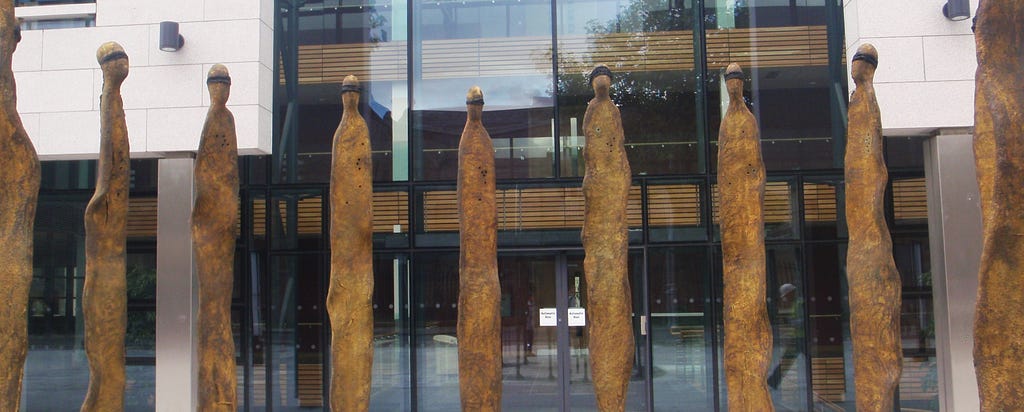
Sculpture outside of Kilmainham Gaol, commemorating the Easter Uprising Martyrs of 1916

And I remember also, he read the poem “Punishment” from an earlier book, which intertwines an account of rough retribution enacted against a young Northern Irish woman accused of consorting with the enemy who was tarred and feathered by her community, and the description of the mummified body of an executed Iron Age woman dug up in a peat bog. He showed us pictures of the bog people, their skin darkened by the seep of ancient mud. “Here is the girl’s head like an exhumed gourd” starts another of his Bog Poems entitled “Strange Fruit.” At that age, I did not know the allusion to lynching. I did not know the Billie Holiday song.

At that age, I did not know the allusion to lynching. I did not know the Billie Holiday song.

To repay Heaney’s generosity, the professor took him and his wife out to dinner the next day, and a couple of us students were recruited to “babysit” the kids (mostly hang with them and relieve the older boys of being responsible for their sister). So the boys, Michael and Christopher, told us about the Specials and played us Police songs that weren’t getting airplay back home yet (I remember listening to “Walking on the Moon” multiple times). Catherine Ann went to bed earlier, and she and I sat and read from a book of folk-tales from around the world, stories I knew she had listened to many times. She was fun and chatty and at ease with these random Americans who’d taken over for the evening.

The other student and I, when the boys had headed upstairs, basically fell upon the loaf of bread. We kept hacking off slices and slathering butter on, until, abashed, we realized we’d finished the whole loaf. When Heaney and his wife returned, she raised her eyebrows at the missing bread, but said nothing.

Afterward, our professor said that Heaney had told him he was disappointed we hadn’t challenged him on the subject of violence. I think, even looking back, it would have been wrong to do so in his house, as if I had any right or standing to question his world. But then again, I’m certain on how I feel on violence and its use as a tactic, no matter what the circumstances. Six years before, I had been in the Tower of London the day before a bomb exploded in it, killing one person and injuring many others. Exactly forty-one years from the day I started writing this. So, what sows the gap between certainty and willingness to speak out?

Afterward, our professor said that Heaney had told him he was disappointed we hadn’t challenged him on the subject of violence.

I knew the oppression in the North was wrong, but so were the bombings. Turning it again: two months before that Tower of London bombing, several car bombs exploded simultaneously around Dublin and a town to the north. Thirty-four people died, the most in one day of the Troubles. The Ulster Volunteer Force took responsibility for those murders seventeen years later. When I call it “oppression,” I am sugar-coating the horrors. Heaney and his family lived this.

I also knew, and know, the poetry. “Punishment” both fathoms and mourns violence. In “The Strand at Lough Beg,” a memorial poem in Field Work, Heaney washes the body of a dead cousin with dew and moss. He writes, “With rushes that shoot green again, I plait/ Green scapulars to wear over your shroud.” It’s a complicating of green life, and the green of Ireland and its flag; “shoots” are new growth, but to “shoot green” carries the inevitable connotation.

I wavered to speak then, just short of twenty-two years old, and I wonder what I could say now, thirty-five years later? It’s a question I’ve come back to many times over the years. I am older than he was when these American kids sat in his house. Mostly, I don’t feel surer of myself as I age, but rather less so.

Listening to the voices of those in the crosshairs is not condoning violence; it is what is owed to the truth.

The last few years have seen a litany of unwarranted killings of black men and women by those in authority. We recite the names and mourn: Michael Brown, Eric Garner, Sandra Bland, Freddie Gray. And now Alton Sterling and Philando Castile. People of color who died at the hands of, in the custody of, authorities who are supposed to represent me, a continuation of the violence portrayed in “Strange Fruit” — the Irish poem and the American song. Here is where I have no leeway for hesitation. Listening to the voices of those in the crosshairs is not condoning violence; it is what is owed to the truth.

My own house is in disorder.

When we were in Glencolumbkille, in the far northwest of Donegal, in a cottage overlooking a steep rocky hill down to deep, narrow bay, the folksinger David Hammond visited us and played several of his songs, and talked about life in Northern Ireland. His latest album was called “The Singer’s House,” which is also the name of the poem this essay starts with. Heaney wrote that poem for Hammond, who’d canceled a recording after a bombing. He writes at the end of the poem,

When I came here first you were always singing,

A hint of the clip of the pick

In your winnowing climb and attack.

Raise it again, man. We still believe what we hear.

Heaney’s death was a terrible, unexpected loss. For his family most of all, of course, but for all of us who listen. Who believe what we hear, when we hear with care.

At the poet’s house, I ate bread. I read folk tales. I listened to music. I looked at pictures. I listened to poetry. I listened to tragedy. I listened.

My Year in Re-Reading After 40: Sideshow by William Shawcross

Author Court Merrigan’s fortieth birthday led him to take the philosopher Seneca’s advice and spend a year re-reading books already in his possession. The books chosen contain some spark of brilliance, howsoever questionable, that have stuck with him throughout the years. The caveats: these are books he’s only read once, that he still owns (no Amazon!), and he can’t read any commentary about them before or after re-reading. How will they measure up? And should they?

BEFORE RE-READING:

No one much cares about Cambodia. Once, a section of its most famous monument was in the backdrop of an Angelina Jolie movie fifteen years ago, and there was that one other movie about fields of killing. But otherwise? Cambodia? What does anyone in America have to say about Cambodia? Nothing.

Mission accomplished, Henry Kissinger.

Look at that punchable, punchable face.

I first visited Cambodia in 1999. The place was something of a free-for-all for Western tourists back then. Piles of ganja littered the guesthouse tables, every moto-taxi driver asked if you wanted a boom-boom girl, a mango shake cost about ten cents, and there were no such things as fences or signs anywhere at Angkor Wat so you could literally climb the stairs to the sanctuary with your bottle of Angkor beer. Just don’t pay too much attention to the amputees in rags begging for change at the entrance: land-minevictims, we were told. We carried on, sweating tourists.

I got there before Angelina Jolie did.

A group of us took the river boat up the Tonle Sap from Phnom Penh to Siem Reap, the city outside Angkor Wat, watching the Cambodian countryside roll past thatched-hut villages and emerald rice paddies awash in tropical heat washing past. Back in Phnom Penh, we rode on the back of hired scooters across the red-dirt countryside, gorged on freshly-butchered chicken in the shadow of a temple that still bore the machine-gunned pockmarks of the Khmer Rouge’s hatred of Buddhism. A bit of real-life foreshadowing for the dark turn the trip was about to take.

Our scooter drivers took us to a nondescript-looking spot in the midst of the rice paddies a few miles outside Phnom Penh. I didn’t quite understand why we’d been brought there. Until we walked through a rusting gate inside to confront this:

That’s a small portion of the estimated 1.7 million (21% of the population) killed during the Khmer Rouge’s brutal regime. On a percentage basis, the Khmer Rouge genocide dwarfed that of Hitler, Stalin, or Mao. This pagoda of skulls stood as one small monument to the slaughter.

Sobered now, a good deal less the carefree Western tourists ogling Third World exotica from behind the shield of Western passports, our guides then took us to Tuol Sleng prison. Now a museum, this former elementary school served as the Khmer Rouge’s interrogation center where 17,000 men, women and children were tortured and killed.

Victims young and old in Tuol Sleng prison.
This wheelbarrow was inexplicably parked outside the prison that day — it says “I love you” on the side.

Which brings me to Sideshow. In those misty, AOL-internet days, you could buy bootlegged books in markets throughout Southeast Asia. I mean actual, physical books, poorly xeroxed on cheap paper and stapled together between a grainy manila cover. I found my original copy of Sideshow: Kissinger, Nixon, and the Destruction of Cambodia in one of those market stalls.

I can’t say that this copy of Sideshow was the definitive edition; whole chapters might have been missing. It also leads me to confess that I cheated on my own rules for this series, namely that I only re-read books I have in my actual possession. Somewhere along the line I lost that bootlegged copy. The copy I have now, though it bears the original 1979 copyright, came from Abe Books.

I recall devouring Sideshow in several large and shocking gulps. I had no idea. My God. My country — with the tacit approval of President Nixon and under the guidance of Henry Kissinger — made a very real attempt to bomb Cambodia to the Stone Age. For five years, as I recall, the US Air Force conducted an indiscriminate bombing campaign of the Cambodian countryside in an attempt to disrupt the North Vietnamese Army and the Viet Cong from conducting end-around attacks on South Vietnam. No one knows how many Cambodian civilians in the villages below were killed; hell, the US Air Force didn’t even have maps of the where the villages were.

I knew from history books about our firebombings of German cities in World War II and of course the nukes we dropped on Japan, but that was total war against implacable enemies. Cambodia was a neutral, non-belligerent nation that just happened to be next door to our dirty little war in Vietnam.

As I remember it, in the process of this bombing campaign, we managed to turn the populace against the Cambodian government, itself a US puppet, in favor of the rebel Khmer Rouge communists. When the US withdrew completely from Indochina in 1975, that puppet government collapsed, the Khmer Rouge took over, and four years later, 1.7 million people were dead. Did Henry Kissinger pull the triggers out on the killing fields? No. But he did create the conditions that allowed that genocidal regime to take over, and for that he is little better than a war criminal.

I returned to Cambodia this summer, 8-year old daughter in tow. The ruins of Angkor Wat remain wondrous, though economically speaking the country remains mired decades behind its neighbor to the west, Thailand. Perhaps this has something to do with the fact that the US didn’t secretly drop hundreds of thousands of tons of bombs on Thailand? Henry Kissinger’s legacy lives on in the dirt-poor villages whose inhabitants scrape out a subsistence from red-dirt rice paddies.

But of course it’s not that simple. Cambodia is wracked with endemic corruption, an autocratic government, and the fact that a mere 40 years ago its entire culture was razed to the ground by its own people, the fanatics of the Khmer Rouge. I know it can’t all be Kissinger’s fault. Right?

If there’s one thing I remember about Sideshow, it’s that it provides context. Lots and lots of context. It names the names, it gets the dates right, it has the maps. Trouble is, I don’t recall the specifics of that context. I think our memories of books like Sideshow — provocative, laying claim to truth — are important to re-evaluate. After all, years later, the details are forgotten. As with any book, what you take with you is the general impression. But over a course of years the details of the book transform into personal touchstones. Oversimplified, devoid of context.

For me, from Sideshow, I took the idea that Henry Kissinger is a war criminal, and that our dirty little war wrecked a once-beautiful and peaceful country. I wonder if these personal memes will stand up to a re-read. You shouldn’t go accusing someone of war crimes unless you’re awful sure those charges could stick.

AFTER READING:

If Sideshow is accurate — and given the exhaustive range of its research, there’s no reason to suppose it’s not — then that little touchstone I’ve been toting around all these years about Henry Kissinger being a war criminal is correct. Under the pretense of breaking up North Vietnamese supply lines, President Nixon authorized — and Henry Kissinger orchestrated — a massive secret bombing campaign of Cambodia, lying to Congress, the Pentagon, and the American people along the way.

Tough luck if you happened to live under any those red dots.

The bombing campaign culminated in a short-lived and doomed ground invasion of Cambodia itself in the early summer of 1970. Unnumbered Cambodian civilians were killed (no attempt was made to keep a tally) along with some Communists, American troops, and South Vietnamese soldiers. All these efforts failed as spectacularly as similar efforts in Vietnam. The Viet Cong and other Vietnamese troops simply retreated further into Cambodia, destabilizing that country, alienating the populace, and clearing the way for murderous Khmer Rouge cadres to emerge from the jungle when, inevitably, American troops retreated.

When Shawcross asked the deposed King of Cambodia, Sihanouk, about the lessons of recent history, the king said:

There are only two men responsible for the tragedy in Cambodia, Mr. Nixon and Dr. Kissinger. Lon Nol [Cambodian President, 1970–75] was nothing without them and the Khmer Rouge were nothing without Lon Nol. Mr. Nixon and Dr. Kissinger gave the Khmer Rouge involuntary aid because the people had to support the Communist patriots against Lon Nol. By expanding the war into Cambodia, Nixon and Kissinger killed a lot of Americans and many other people, they spent enormous sums of money — $4 billion ($17.8 billion in 2015 dollars) — and the results were the opposite of what they wanted. They demoralized America, they lost all of Indochina to the Communists, and they created the Khmer Rouge.

The king is himself deeply complicit in that tragedy — he allied himself with the Khmer Rouge in hopes of getting his throne back. Indeed, there is plenty of blame to go around. The puppet regime of Lon Nol was deeply corrupt and hopelessly incompetent at defending its own people; the Chinese shipped arms to the Khmer Rouge, as did the North Vietnamese; the Soviet Union supported chaos in Cambodia as an anti-American policy; the Khmer Rouge themselves were murderous ideologues. But the King is right: it all goes back to those two men, Kissinger and Nixon.

Nixon’s personality and history is, of course, well-known. Kissinger, once world-famous, occasionally surfaces from retirement for occasional op-eds and to be criticized by hopeless presidential candidates. These days, however, Kissinger is no longer a household name. Lucky for him, all things considered.

Most generously, you might consider Kissinger an intellectual “freak” and thus, in true intellectual fashion, incapable of understanding the actual world as it actually is, which led to his bloody blunders in Cambodia and elsewhere. Blunders such as:

The pilots of the 8th Tactical Fighter Wing actually complained that their maps “lacked sufficient detail and currency to pinpoint suspected enemy locations with some degree of confidence.” … [An embassy official] cut out, to scale, the “box” made by a B-52 strike and placed it on his own map. He found that virtually nowhere in central Cambodia could it be placed without “boxing” a village. “I began to get reports of wholesale carnage,” he says. “One night amass of peasants from a village near Saang went out on a funeral procession. They walked straight into a ‘box.’ Hundreds were slaughtered.”

More likely, it seems to me, Kissinger’s enormous ego and Trump-like penchant for self-aggrandizing rendered him indifferent to the consequences of his policies:

When asked about the exacting way he treated State Department officials, Kissinger once replied, “Why, Thomas Jefferson was a fine Secretary of State, and he had slaves.”

I, however, am prone to a more emotional response. This happens when you’ve gazed on a pagoda of skulls, sweltering under a washed-out tropical sky, or upon a bed frame where children considered enemies of the state were tortured to death. I do not think there is or ought to be forgiveness for the men who carried out such atrocities, no matter how strongly they believed in the pure truth of their creeds. Ought there be forgiveness for the man who created the conditions under which such atrocities were carried out from an office in the distant capital of a far-off superpower?

The end of the road for America’s Indochina policies.

Perhaps you are kinder than I am. Perhaps you think so. I’m not. I can’t.

Sideshow showcases the American political and military establishment at its nihilistic worst; lives destroyed, treasure wasted — and for what? What did we gain in Cambodia? What did anyone gain in Cambodia? Save a few years of blood-soaked power for the Khmer Rouge leadership — nothing. No one gained a goddamn thing.

And certainly the American establishment appears to have learned very little (nothing?) from the lessons of Cambodia. We’re still engaging in endless war (see: Terror, the Global War on) and the executive branch continues to flout the Constitution with its virtually unchecked power (see: Obama’s drones, Bush’s Guantanamo and black sites, Clinton’s cruise missiles). Meanwhile small countries and their people continue to suffer from the aggression of fanatics, powered by American weaponry and under conditions created by American geopolitical maneuvering (see: Afghanistan).

But it’s not the geopolitical fallout that got me most about Sideshow. For the most part, Shawcross stays laser-focused on the policies and the big figures. But sometimes he breaks from the political to the personal, and this the book at its most heartbreaking. Here he is on Khmer Rouge foot soldiers:

That summer’s war provides a lasting image of peasant boys and girls, clad in black, moving slowly through the mud, half-crazed with terror, as fighter bombers tore down at them by day, and night after night whole seas of 750-pound bombs smashed all around. Week after week they edged forward, forever digging in, forever clambering slippery road banks to assault government outposts, forever losing comrades and going on in thinner ranks through a landscape that would have seemed lunar had it not been under water.

Even amid the carnage and the corruption, there are moments of great courage and grace. Here is high government official and royal prince Sirik Matak refusing the American ambassador’s offer to join the airlift out of Phnom Penh as the Khmer Rouge closed in to conquer the city:

Dear Excellency and friend. I thank you very sincerely for your letter and for your offer to transport me towards freedom. I cannot, alas, leave in such a cowardly fashion.

As for you and in particular for your great country, I never believed for a moment that you would have this sentiment of abandoning a people which has chosen liberty. You have refused us your protection and we can do nothing about it. You leave and it is my wish that you and your country will find happiness under the sky.

But mark it well that, if I shall die here on the spot and in my country that I love, it is too bad because we all are born and must die one day, I have only committed this mistake of believing in you, the Americans.

Please accept, Excellency, my dear friend, my faithful and friendly sentiments. Sirik Matak.

America did abandon Cambodia. The prince was later executed by the Khmer Rouge.

And yet, for all the death and destruction, Sideshow throws out rays of hope in spite of itself. When the book was published in 1979, it must have very much seemed like Cambodia was destroyed. It was not.

I can report that thankfully, and despite Henry Kissinger’s best efforts, Cambodia still stands. The slice of Cambodia we saw this summer is booming. Thriving, even. Millions of tourists visit Angkor Wat every year and there are shiny buildings everywhere. True, it’s no paradise. There is still a great deal of grinding poverty, and the political system is rife with corruption and violence. While my daughter and I supped at a restaurant in Siem Reap with waiters and cooks and tour guides at our beck and call, we saw saw street kids , no older than her, huffing gasoline out of plastic sacks and begging for money at the tables. We spent some time talking about what a wonderful job she did choosing her parents.

We also met a remarkable man. Stephane de Greef, aka the Bug Man, has spent 13 years in Cambodia. A forest engineer from Belgium, he originally came to Cambodia to assist in de-mining efforts (another legacy of the Khmer Rouge). He’s also a cartographer, and has been heavily involved in efforts to map newly-discovered sections of the ancient city of Angkor. But de Greef’s true passion is insects. As is my daughter’s — the two were simpatico from the first minute they met.

In the Cambodian forest de Greef has discovered insect species wholly new to science, and documented dozens and dozens more. That is, when he’s not busy flying drones over that same forest, chasing down new ruins. The Guardian rates him as one of the Top 10 tour guides in the world, and I can report from the day my daughter and I spent with him, he lives up to the billing. He is a walking treasure house of knowledge on Cambodian flora, fauna, history and culture.

I mention de Greef because it’s pretty remarkable that a country that not 40 years ago was being ravaged by genocidal ideologues can now host a scientist, who in turn can lead an 8-year old into the forest to explore for insects utterly without fear. I’d like to think someday my daughter will be able to take children of her own into the mountains of Afghanistan. And more to the point, that the Afghan people, like the Khmer people before them, will be prospering despite the ravages of the past.

This old woman gave Ada an impromptu blessing.

I suppose such a view is hopelessly starry-eyed and naïve, and perhaps tinged with neo-colonialism (“I want these exotic places to be pretty and neat so my kids can visit!”). I’ll own both of those critiques; I do want the wonderful places of the world to be peaceful and prosperous enough for my children’s children to visit. And ultimately, I do have faith in humanity’s ability to weather the worst of what we can do to ourselves.

The alternative, it seems to me, is to let the Henry Kissingers of the world rule the world, spouting grandiose plans and raining down bombs. I decline to let such men go unchallenged. I choose to believe in a better world that can emerge from the wreckage they create.

My daughter, in Cambodia, 2016.

DOG-EAR REPORT:

Kissinger on his role in Cambodia:

“I may have a lack of imagination, but I fail to see the moral issue involved.”

Yes, Henry. You lack imagination. And a good deal more.

Sound familiar?

The invasion not only was disastrous for Cambodia, but it also had serious long-term effects on Vietnamization and on the nature of the Nixon administration itself. The way in which it was conducted broke rules of good policymaking, ignored vital intelligence, and disregarded political realities. Congress, to whom the Constitution assigns the power to declare war, was totally ignored. So was almost everyone else.

Republican Congressman Pete McCloskey after a tour of Cambodia shortly before it fell to the Khmer Rouge:

I can only tell you my emotional reaction, getting into that country. If I could have found the military or State Department leader who has been the architect of this policy, my instinct would be to string him up. Why they are there and what they have done to the country is greater evil than we have done to any other country in the world, and wholly without reason.

Next: A retreat to the pastoral.