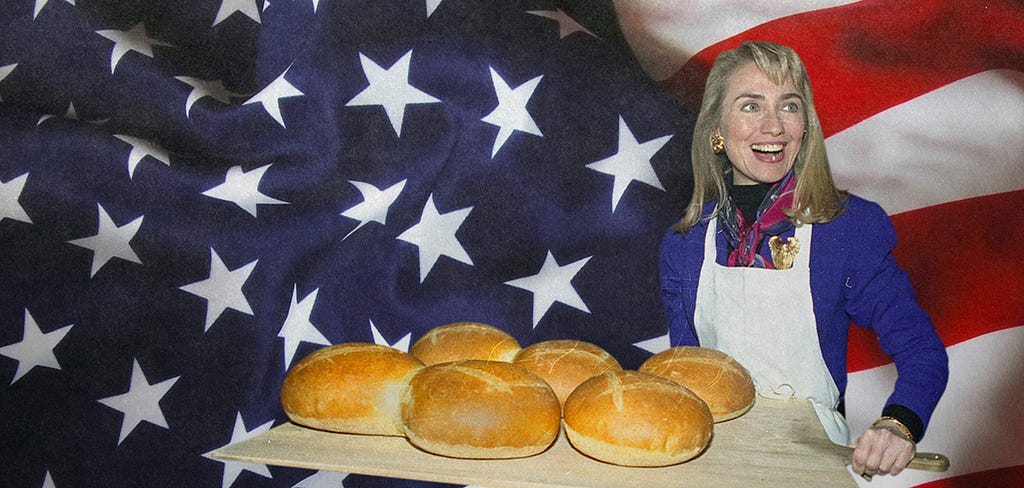
Many people know Hillary Clinton as the former First Lady and former Secretary of State. After last night, a new generation will know her as the first woman to be nominated for President and as Donald Trump’s greatest enemy, after himself.
Everything Donald says makes him sound so afraid of her, but aren’t we always most afraid of the things we don’t understand? Not to imply that Donald doesn’t understand women. After having been married so many times, how could he not? What I suspect Donald is having trouble understanding is how he truly feels about Hillary. She’s a smart, powerful, accomplished woman. Just like Donald. For a man who loves himself so much, how could he not love someone who is so similar?
Hillary probably wouldn’t be interested though. Ever since her husband cheated on her, I suspect she may be too hurt to even consider another relationship. Some people thought she should have dumped her husband, but being able to forgive someone takes a lot of strength and courage. If she could have made a forgiveness album like Beyoncé did, it would have been harder to criticize Hillary for her difficult emotional decision.
(On a side note, why aren’t Beyoncé concerts called Beyoncerts?)
Hillary sure is busy, and that’s probably my biggest misgiving. When I ran for President in 2012 I was busy campaigning but I still had time to watch movies and take naps and do some gardening. For a candidate who had only one real competitor, Hillary didn’t need to work so hard. Hopefully now that she’s received the nomination she’ll take it easy on herself.
A Democrat friend of mine says he won’t vote for Hillary because she’s corrupt and he wants to make a statement. I’m no fan of corruption in government either, but it’s sort of like being fed up with corn syrup in Sour Patch Kids when you’re lost in the desert and it’s all you have to eat. It’s not really the time to complain, especially not when we have the chance to see a woman become President.
I’ve wanted to see a woman become President for so long that I actually voted for Newt Gingrich one year, because I thought that was a woman’s name. I’m still not entirely sure Newt isn’t a woman, even after seeing pictures of him/her.
BEST FEATURE: In college Hillary could bench over 200 lbs. WORST FEATURE: I saw her at the beach once and she has a mole on her back I worry could be malignant.
Please join me next week when I’ll be reviewing applesauce.
The year is 2020, the not too distant future — one in which we can unfortunately completely believe. At the opening of The Sunlight Pilgrims the polar ice caps are melting and the banks are wrecking the economies of Europe. The deaths of both his mother Vivienne and grandmother Gunn within six months of one another have left Dylan MacRae facing the imminent repossession of his home, a tiny art-house cinema in central London called Babylon. His mother has left him one thing apart from unpaid bills:
“… when he got back from the crematorium he found an envelope containing the deeds for a caravan 578.3 miles away, with a pink Post-it note and her scrawl: Bought for cash — no record in any of our accounts. Mum x”
Dylan heads north, taking his mum and his grandma’s ashes back to Scotland, their homeland. His new home is one of a row of silver, bullet-shaped dwellings in a caravan park in a place called Clachan Fells, surrounded by vast mountains and star-filled skies. He falls asleep watching scenes of environmental protesters on the TV and wakes at 5am to the noise of one of his neighbors hoovering the lane, and the sight of her reaching up to polish the moon. A man accustomed to an unconventional lifestyle is not perturbed by such apparently strange behavior.
Thus begins the relationship between Dylan and the moon-polisher, Constance, and her twelve-year-old child Stella. In Dylan and Stella’s first conversation she tells him that her mother isn’t normal and he says that his wasn’t either. What, one may ask, is normal anyway? This story does not attempt to answer the question; rather it shows how, with an open heart, people can accept one another for who they are. And it isn’t simple.
Stella has, as an old woman who appears one day in their lane says,“two spirits”. She was born a boy, Cael, but thirteen months before “the girl that wore his body got up and told everyone to quit calling her by the wrong pronoun.” She wants to fit in and it isn’t easy. Boys she grew up with have physically attacked her. Her father, a taxidermist called Alistair who has an on-off relationship with her mother, sends her boy’s clothes and refuses to call her Stella. She wants a second kiss from a boy called Lewis. Or does she? Dylan understands about being born in the wrong body, because he comes from a race of giants. Or does he?
“Myths are stories that help us make sense of the world(s) in which we live.”
There isn’t a strict division between myth and truth. Myths are stories that help us make sense of the world(s) in which we live. Dylan’s mother liked to say he was “a child created by a fallen angel and a mortal woman”, but the fallen angel was a man from Hebden Bridge with whom she had a one-night stand. In The Sunlight Pilgrims Jenni Fagan paints a vivid picture of how people find diverse ways of getting through difficult circumstances: Constance is a survivalist, who lives off her wits and collects old furniture from rubbish tips to turn into “shabby-shit”; Stella uses the internet to connect with other trans-teens and see girls like her who have a penis; Dylan finds that the skills of distilling gin which he learned from his mother stand him in good stead as a money-earner as the cold intensifies over the winter. Lacing the story with gentle (and occasionally black) humor, Jenni Fagan creates remarkable, rounded and wholly believable characters. They all have a bit of craziness about them and are all the more normal and wonderful for that.
In her debut novel, The Panopticon, Jenni Fagan created the wonderfully feisty teenager Anais Hendricks, battling with a system which cannot cope with her wildness. Stella Fairbairn is made in the same mold of determined individuality, battling with doctors reluctant to prescribe her hormone-blockers. She and Dylan have more in common than is at first apparent, including knowledge of the sunlight pilgrims, monks from the islands further north who drink energy from the sun. Stella learns about them from the old woman who tells her she has two spirits.
“You can drink light right down into your chromosomes, then in the darkest minutes of winter, when there is a total absence of it, you will glow and glow and glow.”
Dylan had heard the same from his grandma, and this shared knowledge of the myth/truth draws him and Stella closer to one another. Dylan and Constance become close too, in this darkening, freezing winter, and not just for comfort, though that is an element of it. When they lie together in the glow of a three-bar electric fire as the snow continues to fall outside, Dylan feels that “there is an ordinariness to their strange.”Later, when they’re sitting out on the caravan roof watching the aurora swirl purple and green in the sky, he reflects on his life:
“… and this — the best seat in the house to watch the universe unfold, with a woman he loves, and a kid he loves too and a neighbour who is affable and a tin box for home — is as good as it gets.”
The scenery of the land and sky in Clachan Fells are major characters in this story. There are magical phenomena associated with the cold — parhelia or ‘sun dogs’, where there appear to be three suns in the sky; and penitentes, rows of snow figures high on the mountains which seem to be marching towards the sun. And up above when daylight recedes, early in these northern climes, is the so-bright canopy of the stars and planets. There is also the transformatory nature of the snow which blankets the land, and the light upon it which at moments turns everything gold. Both Stella and Dylan go alone up the mountains to address their fears and grief respectively in the vastness of nature. And at the end they and Constance, stir-crazy from being inside for weeks, go out together and scatter Gunn’s ashes towards the penitentes, enabling Dylan to feel, at last, lighter.
“The Sunlight Pilgrims is a story about light and darkness, the essential co-existence of the two.”
Fear and majesty sit side by side in this freezing winter. Out to sea an iceberg has drifted much too far south, putting Clachan Fells onto the international news alongside all the other dramas of this time. Up in the mountains magnificent stags and birds of prey survive against the odds. TheSunlight Pilgrims is a story, not a polemic, but is more than just an entertainment. As they look out from the harbor on the creaking majesty of the ice creations, Constance says to Dylan in a moment of candor:
“Sometimes you get a minute where it all seems worth it: all the stress, the struggling, life, death, all the shit in between. You see something like this and it all becomes sharper — oh yeah, you remember, this is it, this is it!”
The Sunlight Pilgrims is a story about light and darkness, the essential co-existence of the two, the life-force which drives us on into the light and its transforming power even when everything appears to be stacked against us. It is also about the spectrum of light, the different colors which it produces and the wide range of ways in which we can live. It is a beautiful story which itself illuminates, and perhaps above all it illuminates the importance of respecting difference.
Do you love literature and writing? Are you looking for an entry into the New York literary world? Consider joining the Electric Literature team! Electric Literature’s volunteer internships introduce undergraduate and graduate students and emerging writers to digital publishing and the New York literary scene. Because we are a small, not-for-profit publisher, we provide unique opportunities for professional development and resume-building. All volunteer interns are paid for writing published on electricliterature.com, usually one to three pieces per week.
As an Electric Literature volunteer, you are encouraged to become involved in any aspect of our work that interests you. Sure, you’ll go to the post-office, but you’ll also do things like contribute to editorial decisions, interview authors, write articles, and attend literary events.
Responsibilities:
Read submissions and participate in editorial discussions
Comb the web and social media for breaking literary news
Copy edit and proof read
Contribute content to electricliterature.com
Interview Recommended Reading authors
Staff events
Select images to pair with articles
Transcribe interviews
Maintain book reviews database and other databases as needed
Manage order fulfillment from online store
Other administrative duties as needed
Skills:
Knowledge of Twitter, Tumblr, Medium, and social media platforms
Basic understanding of Photoshop
Firm grasp of grammar and spelling, with a sharp attention to detail
The ideal candidate:
Has an educational background in literature or creative writing
Writes clearly and with personality
Participates in the contemporary literary scene
Regularly reads literary magazines and literary websites (including but not limited to Recommended Reading, Okey-Panky, and electricliterature.com)
Believes strongly in the Electric Literature mission: To amplify the power of storytelling through digital innovation
Is hard working, pays great attention to detail, and can work independently
This is a volunteer position (10–20 hours/week) located in the Flatiron district of Manhattan. Candidates must be able to come to the offices at least 2 days a week. Although this is an unpaid volunteer internship, interns will be paid for writing content for electricliterature.com, which they will have the opportunity to do regularly. We are happy to work with universities and MFA programs to provide course credit, though you do not need to be a student to apply. This 3 month position start at the end of August (exact dates are flexible).
Since writing for the website is an integral part of the internship, please include a sample “scuttlebutt” post (150 to 300 words) about a recent literary topic with your application. Feel free to put your personality into the post. You can see examples of recent scuttlebutts here. Please also include 3 sample 140-character tweets for three different stories or articles published on our site (9 tweets total).
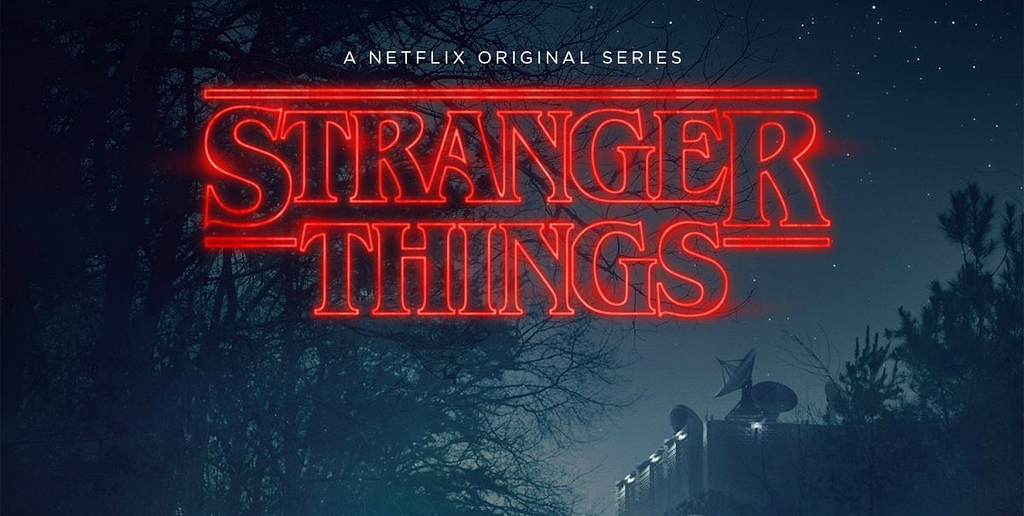
With its analog sensibility and Spielbergian visual cues, Netflix’s Stranger Things telegraphs its influences upfront, and part of the show’s success derives from our recognition of the 1980’s textures of Close Encounters or the first bars of Joy Division drifting over a montage of the Indiana-based Byers family mourning the disappearance of 12-year-old Will. Over the last two weeks, fans looking for a little distraction from the Republican and Democratic National Conventions have pointed point out how glasses-goddess Barb’s look is borrowed from Martha Plimpton’s in The Goonies or how teenage science experiment Eleven is frequently seen strapped into the headset from Flight of the Navigator, but the show’s literary lineage is slightly less obvious. But it’s easily done: it’s Stephen King. Even the show’s logo looks like the embossed titles of the self-described “literary equivalent of a Big Mac and Fries” and an honest list of the show’s bookish content would begin with King’s novella The Body (where a rag-tag group of children go in search of the corpse of a missing boy), go on to It (where a rag-tag group of children go in search of a shape-shifting clown), and wrap up with The Tommyknockers (an awful-even-by-King standard novel where a rag-tag group of adults look for a child kidnapped by aliens).
But, but, but…The delight of the show comes less from the light trappings of weird fiction and more from the strong whiff of suburban malaise and children on the cusp of an adulthood that’s just as forbidding as the Lovecraftian monster in the woods. This is the where real literature lives, and below are a list of non-Stephen King titles recommended to readers looking to extend their trespass into the yearning, haunted territory of Stranger Things. These books boast supernatural netherworlds, lost children, and suburban horror, guaranteed no killer clowns in sight.
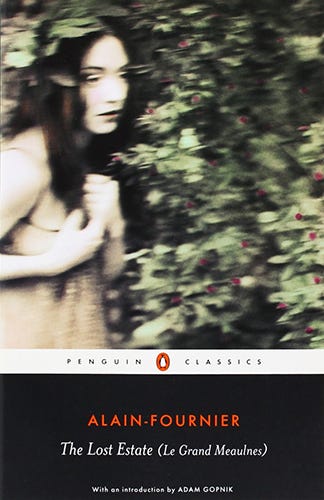
1. The Lost Estate
by Alan-Fournier
Published in 1913 under its French title Le Grand Meaulnes and also translated as The Wanderer, Alan-Fournier’s only book is a classic of childhood straying into a realm of mystery, to which the young protagonists spend their lives trying to return. The bare bones of Stranger Things is here in full: a disappeared youth, a mysterious newcomer, and the onset of the heart’s desire before it can even be known as such. It is also one of the greatest books in the world and a must for anyone trying to come to terms with nostalgia despite its famous warning that “It is better to forget everything.”
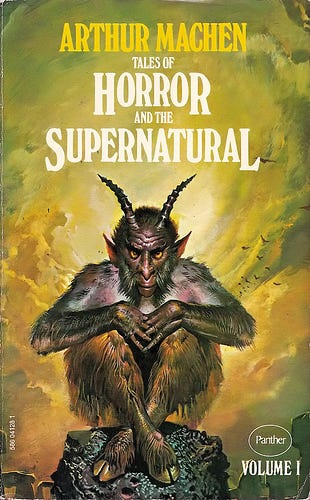
2. “The White People”
by Arthur Machen
Another book that owes more than a little to the 80s — the 1880’s, that is — Machen’s wonderful early Twentieth Century short story “The White People” is foundational weird fiction that inspired H.P. Lovecraft, but is a much more naturalistic venture into places unknown. Like Eleven in Stranger Things, the story revolves around a young girl who can enter a parallel realm that is equal parts psychedelic outlandishness and a metaphor for the separate domains of children and adults.
3. A Wrinkle in Time
by Madeleine L’Engle
Of course! No list of childhood confronting the bizarre could neglect L’Engle’s classic novel of a family of misfits who travel into a dark planet in the Fifth Dimension. Again, like Stranger Things, we have science-fiction trappings like the space-folding Tesseract which make more sense of the bizarre world of adolescence than all that Where the Wild Things Grow/John Knowles required-reading pap could ever dream.
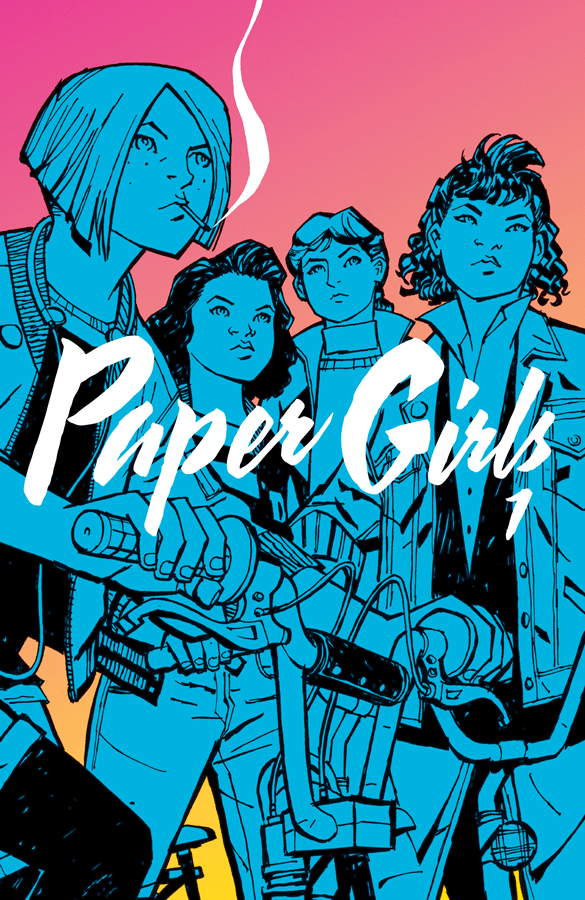
4. Paper Girls
by Brian K. Vaughan
The recent Paper Girls graphic novel collects an ongoing series stunningly similar to Stranger Things with one notable departure: the BMX bike-riding foursome that leaves the 1980’s for a pocket universe outside of time and space are all girls. It’s probably too early to call, but Vaughan, who wrote the acclaimed Y: The Last Man and Saga comic, has proved so far adept at capturing the wonder for bygone technologies (the titular girls are newspaper delivery professionals), just as Stranger Things films landline phones and ginormous walkie-talkies like objects out of time.
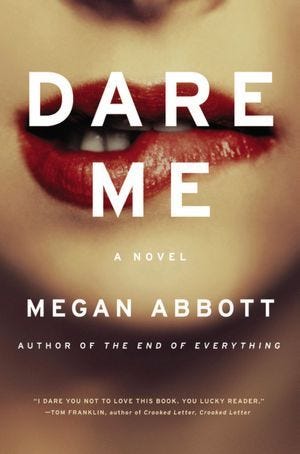
5. Dare Me
by Megan Abbott
Some critics have pointed out how amoral the teens of Stranger Things behave in the aftermath of Will’s disappearance, perhaps forgetting that teenagers are evil, desperate creatures. Abbott’s Dare Me captures a parentless world of insidious cheerleaders willing to go to enormous extremes for sex, power, and amusement. 16 year-old Addy, her Machiavellian best friend Beth, and their possibly murderous coach are a rejoinder to the sparkly carefree depiction of cool teenagers. Remember Weetzie Bat? This is Meansie Bat.
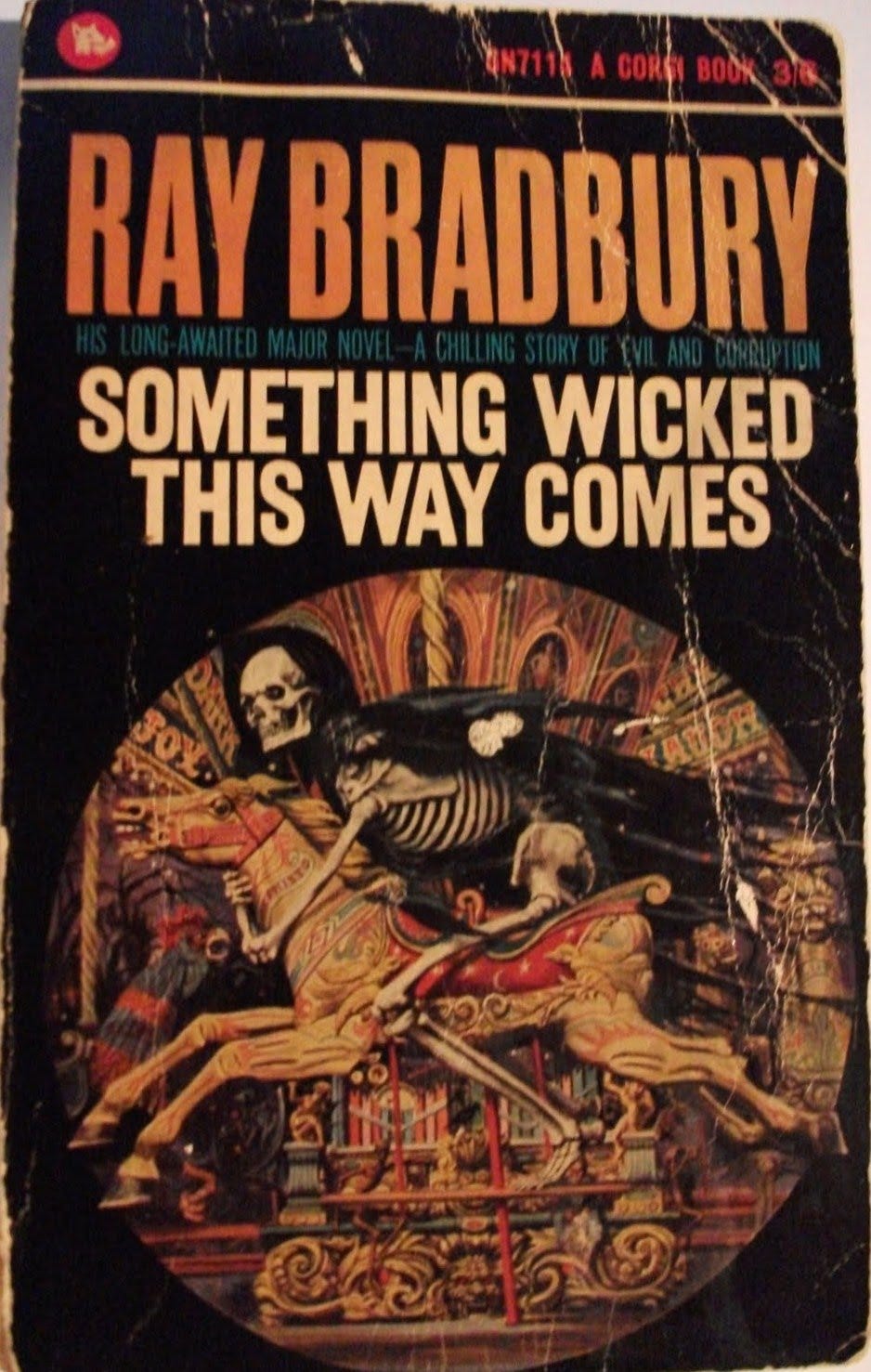
6. Something Wicked This Way Comes
by Ray Bradbury
Why is this terrifying, atmospheric book given to children? Why is the Disney adaptation PG? Because children used to be made of stronger stuff, clearly, and we weren’t afraid of a twilight carnival that rolls into town, intruding into childhood with a knowledge of mortality that comes at an evil price. Stranger Things has a monster out of nightmares that drags you to an invisible hive; but Something Wicker is still the standard because its darkness is all too visible.
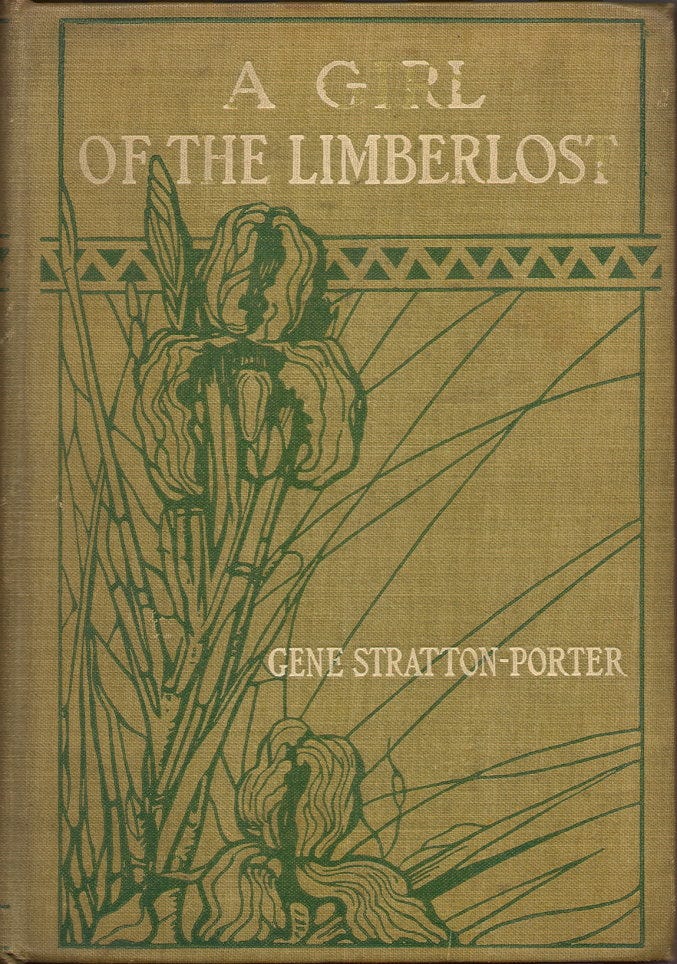
7. A Girl of the Limberlost
by Gene Stratton-Porter
One of the stranger things about Stranger Things is that it’s set in Indiana; non-Hoosiers might be surprised to discover that the Crossroads of America has a totally unique literary tradition that includes the Nineteenth Century classic A Hoosier Schoolmaster, Carol Shieds’ Pulitzer Prize-winning The Stone Diaries and, especially, Stratton-Porter’s A Girl of the Limberlost, a moody teenage romance set in and aroundthe Limberlost Swamp.
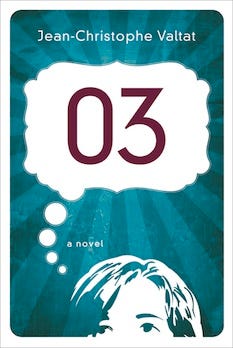
8. 03
by Jean-Christophe Valtat
A marvel of prose, translated in 2010 by Mitzi Angel, 03 traces a single thought by an adolescent piecing together the world through glimpses, bits of philosophy, and, especially, the lyrics of Joy Division and The Smiths. This slim novel seems to have little in common with Valtat’s ensuing steampunk trilogy The Mysteries of New Venice, but Valtat’s imagination is the rare one that can take us back to the mysteries of youth in a single evocative note, just as Stranger Things dresses its horror story in the familiar strains of New Order and Echo & the Bunnymen that were the companions of many a searching, lost adolescent.
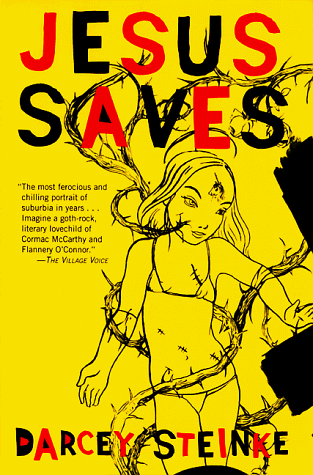
9. Jesus Saves
by Darcey Steinke
Like Stranger Things, Steinke’s novel has the disappearance of a child at its heart, as a town struggles to find faith after the kidnapping of little Sandy Patrick; but unlike Stranger Things, the monsters here are human, as Sandy drifts into a fantasy world that superimposes itself over a suburban hell that is darker than anything in Dante.
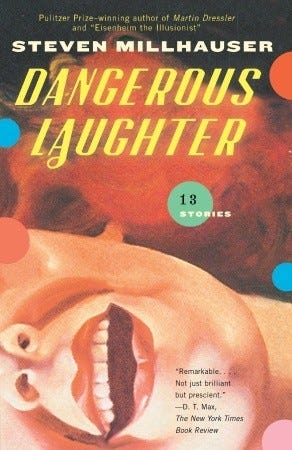
10. Dangerous Laughter
by Steven Millhauser
Stranger Things is Millhauser all over; he is the Borges of Americana and almost any of his books could fit the bill, from the brooding Portrait of a Romantic to the suburban fantasia of Enchanted Night. But Dangerous Laughter is a good place to dig in, featuring two of my favorite Millhauser stories, “The Room in the Attic” and “The Disappearance of Elaine Coleman,” both of which give form to what is missing from our memories of childhood, a terror of the world that is more terrible because we cannot name it and the adult world pretends to have forgotten.
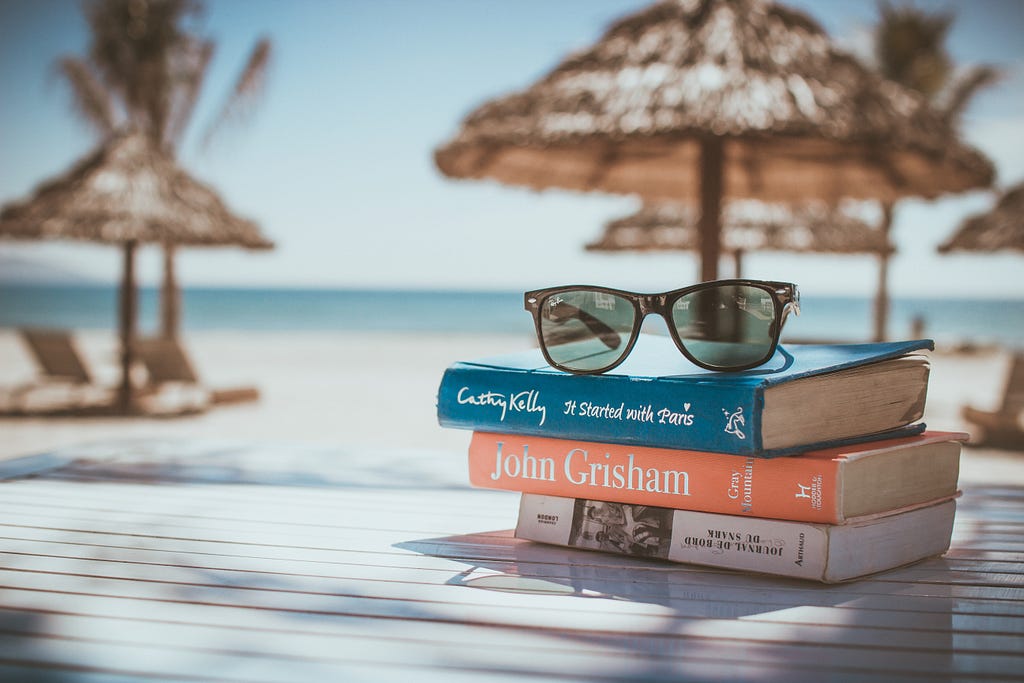
The Buch an Bord scheme permits one more kg of carry-on weight for books
A stack of books sporting stylish shades
You really don’t want to pay the extra luggage fee. None of us want that, but you especially. It’s summer and hot and you’re sweating at the airport. You’re one pound over the carry-on limit, and now you must expose the innards of your hand luggage to what feels like the unforgiving eyes of the entire world while you frantically search for something to take out, to reposition — for something to save you. This is quite the bind. You must make a decision: toss the recently-purchased moisturizer in the trash, or place that new DeLillo hardcover in your brother’s luggage, where it will undoubtedly bend and crease and take on that sweaty gym-shoes smell so vintage-him you won’t have time to explain your grievances to the TSA officer. How cruel.
To avoid this sort of scenario, Vorsicht! Buch (a marketing initiative of the German book trade) has come up with an ingenious plot: the Buch an Bord (Book on Board) campaign. Teaming up with Condor Airlines, the scheme is designed for the holiday season. Essentially, each passenger is allowed an extra kg of carry-on weight so as to be able to fit that recent Man Booker finalist or dystopian YA trilogy in their luggage.
How then to certify that the extra weight allowance will be used specifically for books? According to Alexander Skipis, managing director of the German Booksellers and Publishers Association, “All the 5,000 bookstores in Germany were equipped with the campaign stickers and the bigger part of them are participating.” Once you have the sticker, you are allowed the extra weight. Simple enough.
Perhaps even more importantly, the new offer not only helps passengers at the airport, but it helps better the relationship between local bookstores and new/returning customers.
The most notable downside of this news, however, is that it underscores the absence of American airlines’ bookish concerns. Until we have something like this, I suppose my new DeLillo hardcovers will continue to carry the rancid odor of weeks-long sneaker sweat.
Having read an extremely weird and wonderful story by Zachary Tyler Vickers’ that appeared in Hobart, and having interviewed him about said story, I thought I knew what to expect from his book, which came out at the end of May, 2016 from Indiana University Press. But Congratulations on Your Martyrdom! surprised me, in the same way that David Foster Wallace’s work surprised me when I first started reading it in earnest.
When encountering Wallace for the first time, it’s often through an excerpt or one of his cleverer short stories that are more digestible in undergrad writing courses. That is, the story or excerpt is likely good, even excellent, but it doesn’t convey the breadth and depth of what Wallace does in his work. Similar to encountering one story by George Saunders rather than reading a whole bunch of it, you may come away knowing that the author is very clever, intelligent, and has heart, but you won’t quite see the empathy that resonates within the lives of the often concept-driven story.
The stories in Congratulations on Your Martyrdom! are linked by space and time: they all take place in a small town that is struck by a tornado that has changed everyone and everything to some extent. Almost every story mentions another landmark occasion in the town — the time a boy jumped off the cliffs of the make-out area known, fittingly, as The Spot, and died. This is a small town that has a collective memory for such events, and the people who live there exist only in relation to one another. There is no story that includes a character who is entirely, 100% alone, because small town life simply doesn’t allow for it — and nor does Vickers (there is a story titled “Everything in Relation to Everything Else,” just to prove my point).
“Zachary Tyler Vickers’ work feels like a mix of Saunders and Wallace.”
Zachary Tyler Vickers’ work feels like a mix of Saunders (who blurbed the book and was a teacher at one point according to the acknowledgements) and Wallace (whom I know Vickers admires as we spoke about him at length) — but it is also entirely Vickers’ own. The qualities he shares with the Saunders and Wallace are a subtle and rather tragic humor, a sense of despairing hope or hopeful despair, and a fullness of empathy that is masked by intelligence so that one could skim the surface of these stories and enjoy them without seeing it if one were so disposed.
The language of the stories is impeccable, crisp and neat and tight, without superfluity, which is one of the ways skilled writers of a certain type allow, consciously or un-, the emotionality of their work to hide in plain sight. For example, take the first story, “Disfigured Paper Animals,” in which a Build-A-Bear-type shop begins using carcasses of real animals instead of the synthetic kind. The narrator of the story is the man who brings the stuffed animals to life with “Magical Foam Organs” and a stuffing hose dubbed the “Umbilical Cord” and sews them shut. He has overlarge hands, swollen and strange, and they haunt him.
Grammie described my hands as the manifestations of impure thoughts. But before the cobwebs, she mentioned it was genetic, gathering enough lucidity to recount Pop’s hands as fleshy oven mitts. He and Ma died in a plane crash. Pop was piloting. They were honeymooning. I was infantile. Grammie was babysitting. Sometimes I wonder if the plane crashed because of Pop’s inability to grip the controls.
The resonance of the sounds these sentences make — manifestations of impure thoughts; Pop was piloting — almost allow the reader to lose sight of the tragedy being described.
The stories aren’t in chronological order, but they share things that serve as clues to timeline, like the relation of each story to the tornado, to other characters, or to the kids who are always playing a game of Wiffle ball. In the single one where we get to experience the tornado, “Tornadic,” it serves only as an ending spot rather than as the point of the story. The point of the story also isn’t that the narrator’s ex-girlfriend keeps waking up with paper-cuts on her body in odd places and strange shapes, as haunting an image as that is. No, the point of the story, and of most of the others, is the loneliness of the narrator and how he deals with it.
Loneliness, in other words, is the martyrdom as I see it. The collection’s title is so brazen that it seems angry, as if telling off the characters in its own stories who aren’t doing enough to save themselves, to pull themselves up by whatever bootstraps they have and get to a happier place in life, whether that’s by pursuing a woman, getting over a death or five, or securing a better job. But these characters aren’t capable of what they wish they were capable of. Their martyrdom is in accepting their fates or in going against them but usually in a bit of a wrongheaded way.
“Vickers’ characters [are] deeply human, humane, yearning for love or satisfaction or recognition.”
In other words, they’re human. Vickers’ characters, like Saunders’ and Wallace’s, are — despite high concept moments, despite the humor inserted into their lives, despite the clever language their writer encases them in — deeply human, humane, yearning for love or satisfaction or recognition. They want to be seen. There’s a part of me that wants to reach into the pages of each story and stroke their faces while they sleep and tell them: you are seen. You are heard. But they live their lives unaware, which makes them so uniquely tragic.
In the penultimate story in the collection, “Tighter, Goodbye,” Vickers brings all these qualities together in a fantastic way:
The wreck during the ’92 snowstorm left Snapmare aphasic. Words jumble, linger at the tip of his randomly inarticulate tongue. Ma and Pa carpooled to heaven. Life insurance remedied little. Snapmare nine-to-fives at the KwikStop, clerking beside his freckled crush, Polly. He’s training to become the professional wrestling tag team partner of his buddy Nimrod. Wants Polly to be his redheaded ringside diva, hear her cheering him on from just outside the ropes. The scar on his head is an intimidating accessory, the difference between one heartbeat and the next. The difference being everything.
Snapmare, his sister Tiff, his buddy Nimrod, and his crush Polly are all tragic characters in this story, which ends in what is either elation or tragedy, depending on how you decide to read it. It hovers there, in between, leading to the next, and final, story, which deals with the woman beyond Tiff’s wall who listens to crying and game-shows and who is the grandmother of the dead boy who jumped from The Spot all those years ago.
The final stories in the collection own up to the theme of the whole — loneliness, connection, a desire to escape the former and reach the latter even if it’s by extreme measures of desperation — and as such make you want to start the whole thing over again and read the stories with eyes fresh with tears and a heart welling with the tight indescribable emotion that is the love for fictional characters who become so real you want to save them from themselves.
Maryse Meijer shreds readers’ hearts and souls in her debut collection Heartbreaker. Her characters are lonely, obsessive, and sometimes otherworldly. In the title story a high school student named Natalie molests a mentally handicapped boy. In “The Daddy” a woman hires a younger man on Craigslist to play her doting father. In “Love, Lucy,” the antichrist emerges on Earth in the form of a little girl. “The Cheat” involves an actual fox that seduces a teenage girl with junk food at a Christian weight loss camp. The rest of the stories also unmask humanity’s worst creatures so that every instance feels dangerous and leaves you with images that are impossible to forget.
A friend introduced me to Maryse in front of a taco truck in Los Angeles during the AWP conference. We hitched a ride to a party and spent the night chatting about our mutual love of California, Chicago, and writing. In person Maryse is anything but mean or weird or dark, like the people she produces in her work. She is kind, smart, and charismatic. She currently lives with her husband and daughter in Chicago, which is where she was when I called her months later for this interview about Heartbreaker.
Andrea Arnold: While dark, your stories are unique and memorable. I found myself relating every little detail back to my fiancé. Where do your characters come from?
Maryse Meijer: They certainly don’t come from my life, thank god [Laughs]. They’re mostly inspired, honestly, by other people’s art. I’ll listen to a song or watch a movie or read a book or look at a painting and I’ll think, I want to make something like that, I want to re-create the feeling that this scene or melody made me feel…and out of that comes these people and scenarios. It’s rare that I think of an idea and sit down to write it out. It really all comes from wanting to capture a feeling that I get from something someone else has made.
Arnold: How do you perceive someone like Kathleen in The Daddy? Who is she to you?
Meijer: She’s someone whom everyone else sees as just a nobody. But she has this secret life and in it she’s everything, she’s important, she’s powerful and desirable and loved. Going on to this site and hooking up with this other guy is her way of proving that she’s someone.
Arnold: Love, Lucy and Whole Life Ahead are almost genre fiction. One is seemingly about a werewolf-esque little girl and the other is about the undead. What genre do you consider your stories to be?
Meijer: That question didn’t come up for me until the book was being reviewed and people mentioned these stories as having “gothic” or “fantasy” elements. Often the stories are read as metaphors, but most of the time I’m being literal — for example, Love, Lucy is about the antichrist, and for me that’s what she really is.
“Weird fiction” is a genre, so maybe we should all just stand under that umbrella and call it a day.
If you take things literally, you’re usually considered a genre writer, but all of genre fiction works powerfully on a metaphorical level, too, of course, so I don’t know what the distinction is and I don’t particularly care. People like Kelly Link and Helen Philips and George Saunders and Amelia Grey are doing all kinds of weird things….and “weird fiction” is a genre, so maybe we should all just stand under that umbrella and call it a day.
Arnold: You play with perspective. In the opening story, “Home,” a girl asks to be taken. The relationship that ensues is puzzling because the reader doesn’t know if it’s the man or the woman who is the abuser, if either of them are. Did you mean for readers to almost look at that story in a fun home mirror so that the interpretation is different for everyone?
Meijer: One thing I noticed when putting this collection together with my agent was that most of the gender roles are reversed or another kind of role is reversed, and power dynamics shift in unexpected ways. In “Home,” the girl is in a situation where she’s almost a hostage, but at the same time she’s insisting on that role, while the guy is trying to get rid of her. It’s unclear who wants what and the ambiguity of the situation is what makes it feel, to me, so threatening.
I think a lot of the stories operate on this idea of a power reversal. What’s interesting to me is that in the reviews a lot of the people are applauding the female characters as champions of feminism. They are out there doing what they want to do. Which is curious to me because I think none of these characters are making wise choices. [Laughs] One of the ideas I was trying to get out was that romance under patriarchy, no matter what gender you are, is always going to be a little fucked up. Our notions of romance are influenced by shitty patriarchal notions of what love is. So I don’t see the reversal when it takes place in the story as necessarily a positive thing. It’s just another way to look at the same problem.
Arnold: In “Fugue” the roles are also reversed. Three boys consider threatening a girl, but instead she becomes an attacker of sorts. It’s such a violent story, but a fantasy many girls might have. Do you ever come to stories in that way, like by thinking, What would I do if only I had this special power?
Meijer: This is one of the few stories that has a real-life inspiration. My husband and I used to drive a lot cross-country, and we would stop at these twenty-four hour truck stops in the middle of the night. There would always be these young girls working by themselves in these convenience stores. Which seemed crazy to me. I thought for a long time about writing a story about one of these girls, about what would happen — what I imagine does happen — if a group of boys try to take advantage of the situation. We all know what could happen — she can go with those guys and something bad can happen to her, but that’s not quite the story I wanted to tell. So the story takes a different turn, but it’s still not exactly a happy ending. She has power in that particular instance, but in the bigger scheme of things she’s a damaged person using that damage as a weapon.
Arnold: You start out with damaged souls. I can’t stop thinking of the story “Stones.” I have to ask, why stones? Why not some other device? It’s like Fifty Shades of Grey but not.
Meijer: [Laughs] I think that should be the tagline of the book. It’s like Fifty Shades of Grey but not! Why the stones? I don’t have a good answer to that — the stones (which are used as a kind of fetish object) appeared and I kept them in because they felt right. I suppose they could be a metaphor of some kind, but, again, to me they serve a literal function. I leave the interpretation up to the reader.
Arnold: What is most remarkable to me is that you pull it off. Which one of these stories is your favorite?
Meijer: “Home,” which I wrote eight years ago, was the first story that I wrote that made me feel like, this is a story that I would want to read. I have a twin sister, and when we were young we had a hard time finding the kind of stories that wanted to read, so we made up our own. We still do that today. We have our paracosm, as they call it, like the Bronte family did, and we make up all sorts of crazy stuff together. She’s the person I write for. She’s the one who told me I had to be a writer. She said, “I’m going to be a scientist, you’re going to be a writer, and we’re going to take over the world.” She’s the boss.
Arnold: What is your writing background?
Meijer: I was writing pretty seriously when I was younger — I can’t remember a time when I wasn’t making stories. I took writing classes as an undergrad, and got my MFA, which was not the best experience. There was a very pronounced aesthetic at work there, which I found very traditional — it was all about Alice Munro, William Trevor, the great Chekhovian tradition. People kept saying to me, “You don’t know why anyone is doing what they’re doing, so you don’t really have a story.”
A lot of writers are really caught up in the psychology of characters and I couldn’t care less about psychology.
They wanted backstory. I was told to write this long essay on motivation. [Laughs] I was not very successful. They kept insisting I explain my work, which I refused to do because it just didn’t interest me. A lot of writers are really caught up in the psychology of characters and I couldn’t care less about psychology. I’m more interested in showing what people do than in telling anyone why they’re doing it. But maybe that goes back to being inspired by atmospheres, feelings, images, trying to pull narrative out of that, to get a feeling across rather than an explanation for that feeling, the explanation for a particular action. The action already has meaning when placed in context…and it’s the context a writer has to get right, and there are so many ways to do that.
Arnold: Did you have a writing mentor?
Meijer: There were so many supportive adults in my life when I was a young person, people who treated me as if I was creating stuff that was really worthwhile, who took me absolutely seriously. People who didn’t just pat me on the head. I had an eighth grade teacher who let me write during class whenever I wanted — he showed such respect for me, gave me so much encouragement. He saw how important writing was to me and he gave me the space to do it. And I had a high school English teacher who said I was a better writer than he was — in a world where young people are always treated as if they are “becoming” something, as if they are apprentices, never masters, this was a really profound thing to hear. And then I got my MFA and people told me that I was “too young” to know what I wanted to do, how I wanted to write…that was my first real experience of being treated as a child — in graduate school! But it can be good to meet resistance, to get some pushback — you can learn a lot in a defensive position, because you have to really know where you stand, what you stand for.
All artists should have a twin!
I was lucky, too, in that I had my sister always telling me not to give a shit about what anyone says. [Laughs] All artists should have a twin! All humans should have a twin, really, because a twin gets you. Your ideal audience is the person you were born with and so no matter what, there’s this one person, at least, who so totally supports you, it doesn’t matter so much if everyone thinks you’re making total crap. Your twin is a built in cheerleader, support system, editor, fan base. It’s a pretty good deal!
Arnold: Have you ever written a story about twins?
Meijer: No! I get asked that a lot. When I think about writing about a twin or a child — I have a daughter — I can’t imagine it! It’s almost too sacred a topic. [Laughs]
Arnold: Did you submit these stories to lit mags, and if so what kind of feedback did you receive? I’m wondering if editors were afraid to pursue them.
Meijer: Very little feedback. I probably made five hundred submissions over the years…. I was pretty diligent about getting out there. But before this book was sold I had only published seven or eight times. And it’s still true that 99.9% of the time when I submit I get a form rejection. I think that’s fairly normal for anyone, no matter what kind of work you’re doing. I know my work isn’t the most mainstream, and that might limit it, but there are tons of places doing experimental stuff…the fact is every market gets thousands of submissions a month and the slush pile is unavoidable. Most of the time you don’t know why you’re getting rejected because it’s all very impersonal. You just have to keep your chin up and press on and just do the work. And hope you get lucky.
Arnold: How is the Chicago writing scene?
Meijer: We have a couple of great homegrown presses, Featherproof and Curbside Splendor, who are putting out a lot of fresh voices (Featherproof discovered Amelia Gray and Lindsay Hunter, who are now with FSG), and there are tons of first-rate independent bookstores here packing people into events every day of the week…we’re home to several lit mags, poetry slams, book fairs…all proof that book culture is alive and well, even thriving.
Arnold: What are you working on next?
Meijer: I’m revising a first novel and working on a second collection. The novel takes place in LA. It’s about a girl that works at a taxidermist shop and she meets this guy in a morgue, who may or may not be dead, and she’s convinced she’s brought him back to life. Trouble ensues.
Meijer: Is the next collection also dark?
Meijer: It’s worse! [Laughs] But that’s a good thing, right?
I’ve been reading Jessica Winter’s writing practically since she started publishing. Back in the late ’90s and early aughts, we were both editing and writing at The Village Voice. She produced a seemingly endless stream of reviews and features — on film and books, mostly — that were reliably brilliant, whether it was a meditation on Russell Crowe or a look at a forgotten literary oddity of the 1950s (Nigel Dennis’s Cards of Identity). Her surname was almost too perfect, given the wintry clarity of her sentences. Elegant braininess! What couldn’t she write?
Jessica eventually did editorial stints at O and Time, while also contributing to a variety of publications, including Bookforum. Now an editor at Slate, where she frequently writes on politics and culture, Jessica has published her debut novel, Break in Case of Emergency, which is at once marvelously inventive and aimed straight for the heart. Just read the first few pages, and you’ll see that rare first-time fiction writer who knows exactly what she’s doing, one keenly observed sentence after another.
Jen is trying to find her footing in her early 30s, in the belly of the beast (aka New York City) — navigating work and art, longing to start a family, After a stint of unemployment, she finds a job at LIFt, a purportedly women-centric charitable foundation-cum-vanity project run by the gloriously named Leora Infinitas — a wholly original creation that nevertheless might remind readers of, say, Gwyneth Paltrow crossed with Arianna Huffington. Jen’s title is Communications Manager and Co-Director, Special Projects, a title she shares with a colleague: “Neither of them could have always stated with certainty which projects they were intended to manage, officiate, or codirect, or which qualities made any particular project special.”
Break in Case of Emergency is one special project — a precise mix of the absurd and the heartfelt. I caught up with Jessica via Gchat recently, a fun exchange in which, inexplicably, chunks of some of my questions appeared with lines struck through them. It occurred to me later that this was a detail that could have appeared in her novel, which among many things is a lovely contribution to the field of workplace literature.
Ed Park: We were colleagues long ago, working at the same newspaper, The Village Voice, often in the happy situation of editing each other’s pieces. If you don’t mind my saying, I’ve been a fan of your journalism basically since your first film reviews started appearing. “Who is this Jessica Winter?” I wondered, before I put a name to a face. There’s a precision in the thinking and a hotness to the prose — perhaps one demands the other — that I’ve always found exciting. Now you’ve written a novel, Break in Case of Emergency, which has those same virtues, on a bigger scale — and a magical something else as well. I’d love to know about the origins of the book, and any challenges or pleasures you discovered in turning your hand to fiction.
Jessica Winter: Ed, you are so kind! I remember that on my first day at the Voice, someone said to me, almost as if they were letting me in on a delicious secret, that “Ed Park is the funniest, smartest person here.” And I thought, well, I need to investigate this Ed Park fellow immediately. And they were right!
Park: That was actually me saying it, in disguise.
Winter: I was in my mid-thirties before it ever seriously occurred to me to write fiction. One of the nice things that happens when you’ve been writing and publishing nonfiction for a while is that, inevitably, these lovely people known as agents start asking you out for lunch to talk over ideas for books. That’s the expectation for your next step: “You’ve written all these articles; now you write a book!” I was always halfway decent at coming up with ideas for articles but really, really terrible at coming up with ideas for books — the two skills don’t necessarily have much to do with each other. A piece of advice that I kept getting was: “Whatever book you write, make sure it’s the kind of book you yourself would read and enjoy. You’re going to live with this book for years, so you have to be the ideal audience for it.” The truth is, whenever I have free time to devour books, those books are novels. So that’s how the seed got planted: “Why have I never tried to write one of these things that I love reading so much?”
I had two overlapping ideas for a novel rattling around in my head for a long time. One was a parody of a celebrity charitable foundation, specifically one that located itself inside the feminist-empowerment industrial complex. It felt like endlessly rich terrain, and I hadn’t seen it explored in a satisfying way elsewhere. The other idea was to explore the experience of infertility and early pregnancy in a workplace, specifically one that wasn’t especially sympathetic to people having bodies and lives outside of the office, and one where a kind of blind fealty to “openness” and “authenticity” would mean that an employee with reproductive health issues — or any health issues, really — wouldn’t necessarily be granted space or privacy.
At first I would just jot down little musings and vignettes and snippets of dialogue in spare moments and send them to myself in Gmail. It was the most haphazard way of starting a book.
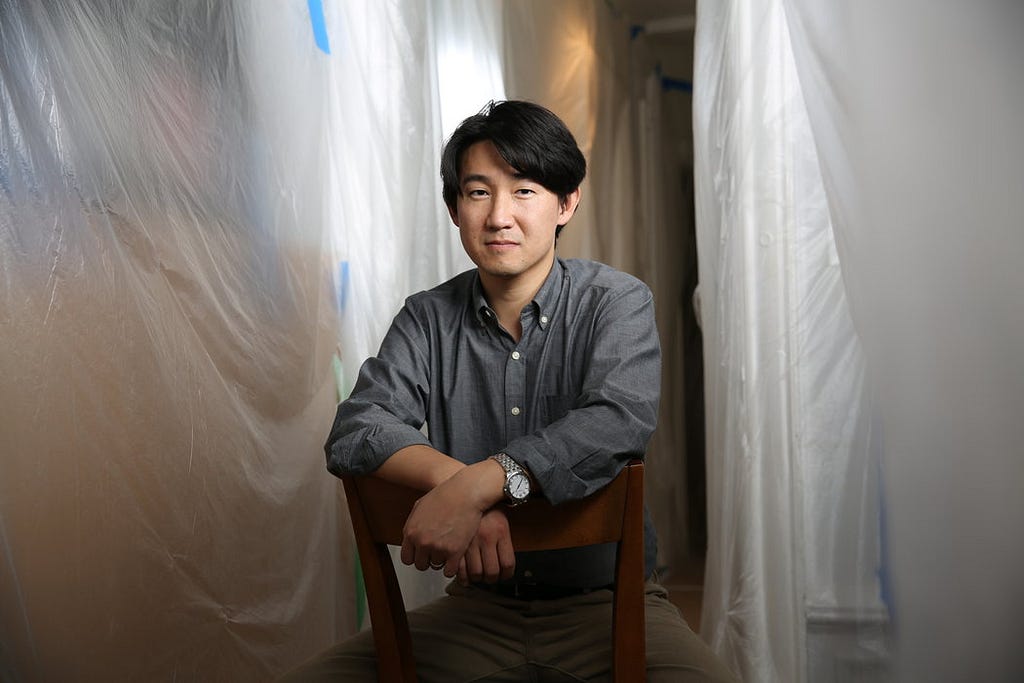
Author and Editor Ed Park
Park: I do that, too — email myself musings, character ideas, particularly inspired puns. And then they’ll pile up and get pushed further down the inbox, so mostly I don’t see them till I’m searching for something else entirely and then that message pops up.
Winter: Yes! I didn’t even really have a decent search-word or folder system worked out. It’s altogether possible that I have a scene or line of dialogue or half-baked theme buried in Gmail somewhere that I sent to myself and forgot about.
But gradually all those little scraps started to cohere, and I was devoting more and more time to making them come together, and the whole experience became addictive. When I’m writing a reported piece or an essay, I tend to love doing the research but hate the writing part, and I’ll do most anything to avoid it or procrastinate. But with this, I found myself itching to get back to it all the time, because the writing part of it was pleasurable in a way that I’d never really experienced before — maybe because it was such a new experience of writing.
Park: Break in Case of Emergency is so deftly way-we-live-now, and I do see that as the engine of the story. But what knocked me out, particularly at the beginning, was the sheer joy of the prose. Your articles can be very funny, but I loved the humor here — the sheer invention on display. Obviously we get into deep emotional territory as the book goes on, but I felt that the book comes out of the gate with this heightened take on reality, the sort of inspired satire that I love. The humor is situational but also resides on the language level — in the naming of things, and then going where the name takes you.
Winter: Well, we should say that BICOE is deeply, openly indebted to two office satires: one is Sam Lipsyte’s The Ask, and the other is your own Personal Days. If the reader of BICOE is a fan of either of these books, she will find Easter-egg homages to both books in mine. One of the many things I loved about Personal Days was how you captured office lingo, both in terms of bureaucracy and the kinds of excruciating formal emails you have to write to your boss at times, but also in terms of how office lingo can be a glue that helps colleagues bond with each other. Close colleagues can develop inside jokes and wordplay that becomes like the language of twins, and the way you translated that language and that intimacy for your reader was magical and hilarious and eventually quite moving. That pure delight in language is one of the ways office-mates keep each other going, and I loved that Personal Days celebrated that at the same time that it portrayed cubicle life as often bleak and existentially gnawing.
Park: Jen’s work situation is hilarious and cringe-inducing, but we also understand why Jen is there — coming off a spell of unemployment — and that a big part of her “real” self has been denied for years. Jen’s a talented artist, but lacks the ambition that her friend Pam has. The title of the novel, Break in Case of Emergency, is also the name of the central art installation in the book, which you bring vividly to life. Were Jen and Pam artists from the beginning, in terms of your conception of the story? And though you wrote extensively on film — a visual medium! — early in your career, I wonder how being married to an artist [the graphic designer and photographer Adrian Kinloch] might have shaped your thinking and writing around the subject.
Winter: Yes, I saw Jen and Pam as artists from the start. One of the things that interested me about Jen is that she felt caught between two designs for how to live, each of which she sees exemplified in her two best friends, whom she idealizes. Meg appears to Jen as a perfect straight-world figure, with the beautiful family and the worthy job. And Pam appears to Jen as a perfect rejection of that world, with her crazy installations and her starving-artist boyfriend and her threadbare apartment-slash-gallery space and her apparent lack of interest in money or marriage or having children or any number of other conventional expectations. So Jen does lack Pam’s ambition, but I think her bigger problem is that she lacks Pam’s or Meg’s sense of self, their sense of purpose and identity.
If you’re going to write a book that has photography and graphic design and art in it, I highly recommend being married to a photographer and graphic designer with a fine arts degree. Adrian helped me hone a lot of the passages where we see Jen or Pam at work in the studio, and his final-year project at art college in England was inspiration for some of Pam’s work. An early reader of the book read the passages about Pam’s senior thesis show and said, “No undergrad art department would ever let a student get away with this” and I said, “Oh, I can think of one!”
Park: The first two letters of the name aside, how much of your own experience of New York City have you mapped onto Jen? Would you ever consider writing a novel set somewhere else?
Winter: It took me an embarrassingly long time, and I mean years, before I figured out that many, many people in my industry and related and overlapping industries in New York City — media, book publishing, nonprofit work — don’t live on what they make from those jobs; a disproportionate number of them have family money, a trust fund, an aunt who bought them an apartment, or a spouse in a higher-paying field. If Jen and I have some traits in common — and we do — one was a long-lasting naïveté about how a lot of bills really get paid in New York City, and a general sense at that age of being completely out of our depths when it came to money and how to relate to it and talk about it. As for setting, my next novel takes place in a different city, albeit one that I’ve also lived in and know very well, so I’m probably taking the “write what you know” cliché a little too far at this point.
Park: I’m an old man now —
Winter: And I’m an old woman!
Park: — but I can remember that feeling of figuring it out. Maybe it happens in every city, but New York is the extreme example. And this reminds me that we’re both originally from Buffalo — same state, but as far away as you can get from New York City, pretty much. It plays into my next novel a little.
Winter: Mine, too! And of course you edited Buffalo Noir, which is a brilliant compendium of the city’s seamiest nooks and crannies. People from Buffalo tend to feel a little sheepish about their town, or a lot sheepish, because people not from Buffalo think of snow 10 months a year and four Super Bowl losses. Did you see the OJ documentary?
Park: I saw the first part on TV and was stunned. I’m ancient enough to remember OJ playing for the Bills — why am I talking about my age so much? — and having a poster of him on my wall.
Winter: It’s an astonishing, brilliant documentary. At one point one of Simpson’s former Bills teammates likens Buffalo to Siberia, and the film basically takes him at his word. I guess I can understand why a Californian would feel that way. But Buffalo is historically and architecturally fascinating — there’s so much to mine. And the summers are so nice! I wonder if part of the problem is just the name. The city as lumbering, hirsute beast.
Park: But it’s also mysterious, Jessica — because nobody knows how it got the name! Speaking of names, Jen and Meg and Pam have plain, minimal monikers, but nearly everyone else in BICOE has something sparklingly weird or fabulous to their names, Leora Infinitas being the apotheosis here. It reminded me of Perpetua in Bridget Jones’s Diary — a minor character, I think, but the name will never be forgotten. Pynchon’s names also come to mind. Maybe I can just ask: Where did that come from? Was it like John Lennon being delivered the name “The Beatles — with an a” via a flaming pie or whatever?
Winter: I honestly don’t remember how I came up with it. And I don’t know what came first: LEORA INFINITAS FOUNDATION or its anagram, ADROIT FELON IS IN A FOUNTAIN. But I do remember wanting very badly for her to sound like a character from Infinite Jest, which is one of my all-time favorite novels. That was my starting point — something that could aspire to be even in the same zip code as a name like Avril Incandenza, née Mondragon.
Coming up with names for secondary characters is so fun that it can be a form of procrastination…
I said earlier that I didn’t procrastinate much on this book, but I think that coming up with names for secondary characters is so fun that it can be a form of procrastination or avoidance — you know you have a really difficult transition or structural change to make, so you just keep coming up with silly names for characters who don’t exist yet.
I think I gave Jen and Jim and Meg and Pam relatively simple, generic names — my given name, too, is quite generic — because, on an intuitive level, I wanted as much as possible for the reader to assess them through their words and actions and through Jen’s own skewed perception of them. You might notice that there’s little or no physical description of them. There’s a passage in which Jen notices that Pam has lost a lot of weight that I agonized over and kept deleting and restoring, because even though the passage was important and necessary, I didn’t even want to disclose to the reader that Pam was thin. I kept it in, but overall I really wanted to leave it up to the reader to decide what they looked like, and I suppose having a common three-letter name helped keep that space blank. This is another place where Personal Days is an influence, I think. This is a spoiler, but your final passage, when your narrator reveals his ethnic background, creates a heart-flutter of a moment that has always stuck with me, both on an emotional and a technical level.
Park: I’m glad you liked it — it was unplanned and then very planned, in the moment of writing.
To give a character a name like Leora Infinitas is to announce something about the novel’s world — to announce its fictive nature, even though of course there are unusual names floating around IRL all the time. And then — to take us to the end — you have a great last line that I think can quote here without elaborating on the context: “I am ready to destroy my life.” It knocked me out. What am I saying? Maybe just that many of my favorite books do this — they are authored into being, shaped out of scraps of the real world and the lived life but quite definitely “signed” by the writer, and then, in the end, that world between the covers must cease to be.
Winter: I wrote that line first: “I am ready to destroy my life.” I knew from the very beginning that that was the end of this book, even if I didn’t entirely know how I was going to get there. And then I wrote the first scene of BICOE. I did the exact same thing with the book I’m writing now: I wrote the last scene — the last line — first, and then the opening scene. There’s something about having those bookends in place from the start that makes me feel safe and contained.
I wanted to ask you a question, Ed. When you are writing and you get stuck, do you ever dip into books that you really love to get unstuck? Or is that too scary, like “Ugh, they are so good, I give up!” I ask because I was surprised to find myself doing this in writing BICOE and it really helped me as opposed to being discouraging. I read James Salter’s Light Years while I was revising, and on one level it was completely terrifying, but on the other it left me with this very practical, can-do kind of feeling, like, “Welp, off to Salter-ize all my sentences!”
Rachel Kushner’s The Flamethrowers had a similar effect. I was totally thrown about how to do a scene between Pam and Jen that I knew I needed, and I read the first 30 pages of The Flamethrowers and thought, “I will never be able to write like this; however, I now feel ready to tackle this scene.” I’m curious about how you relate to other books when you are deep into your own novels and stories.
Park: Ha! That is a useful verb: to Salterize. For me it’s generally Portisizing or Wodehousing (to the extent that’s even possible). I’ve definitely had that feeling of “Oh I give up!,” but generally the books I go to are old standbys — it’s not so much that I’ll try to imitate, but maybe the spirit of that book will flow through me. Anthony Powell’s Afternoon Men is another inspirational text.
Winter: I live in futile hope of ever Wodehousing anything. Maybe in a WhatsApp someday. Wodehouse would have been so adept with bitmoji.
Park: The other thing I’ll do is read something that has nothing to do with what I’m writing — something “minor,” something not even remotely literature. Yesterday I leafed through a book of chess openings, written with a lot of zest. I’ve also been rummaging through UFO literature, thanks to a friend who collects it. I love reading transcripts, people talking about what they saw or what they thought they saw. Anyway, I’m going to go do some Winterizing now.
Winter: Your kids are both really into chess, right?
Park: Yes, they like chess. They trounce me.
Winter: I read mostly board books to my daughter, who’s not yet 2, and one of them is this kind of shockingly retrogressive Mother Goose book that we inherited from somewhere-or-other that completely freaks me out and has already wormed its way into my next book. I wrote a whole scene around it. But now I have to go Park-ify that passage, come to think of it.
The “Man Booker Dozen” includes Ottessa Moshfegh and J.M. Coetzee, among others
This year’s Man Booker Prize Longlist is indeed, as the 2016 chair of judges Amanda Foreman states, “one to be relished.” The novels, novelists, and even the presses/publishers behind the works are wholly varied. J.M. Coetzee, what one can consider a veteran in this competition as the only double-winner, is included alongside four debut novelists: Ottessa Moshfegh (Eileen), Wyl Wenmuir (The Many), Virginia Reeves (Work Like Any Other), and David Means (Hystopia). There are five books from independent presses, two from Simon & Schuster’s Scribner UK imprint, and six from imprints under the auspices of Penguin Random House. Of the independent presses, one may be a bit more widely familiar: Oneworld gained huge notoriety last year as the publisher of Marlon James’s 2015 Man Booker Prize-Winning powerhouse A Brief History of Seven Killings.
In any event, it is refreshing to see such multi-layered diversity in this year’s nominations. Remember, it was not so long ago that the competition was notably more limited. Without further ado:
Author (nationality) — Title (imprint)
Paul Beatty (US) — The Sellout (Oneworld)
J.M. Coetzee (South African-Australian) — The Schooldays of Jesus (Harvill Secker)
A.L. Kennedy (UK) — Serious Sweet (Jonathan Cape)
Deborah Levy (UK) — Hot Milk (Hamish Hamilton)
Graeme Macrae Burnet (UK) — His Bloody Project (Contraband)
Virginia Reeves (US) — Work Like Any Other (Scribner UK)
Elizabeth Strout (US) — My Name Is Lucy Barton (Viking)
David Szalay (Canada-UK) — All That Man Is (Jonathan Cape)
Madeleine Thien (Canada) — Do Not Say We Have Nothing (Granta Books)
DON’T MISS OUT
Sign up for our newsletter to get submission announcements and stay on top of our best work.
YOUR INBOX IS LIT
Enjoy strange, diverting work from The Commuter on Mondays, absorbing fiction from Recommended Reading on Wednesdays, and a roundup of our best work of the week on Fridays. Personalize your subscription preferences here.