
Have You Ever Gotten Stuck in a Book?



The winners of science fiction’s prestigious Hugo Awards have been announced! Despite another attempt by the conservative Rapid and Sad Puppies groups to stuff the ballots, this year’s Hugos awards went to a diverse set of authors and artists.
Congrats to all the winners:
BEST NOVEL: The Fifth Season by N.K. Jemisin (Orbit)
BEST NOVELLA: Binti by Nnedi Okorafor (Tor.com)
BEST NOVELETTE: “Folding Beijing” by Hao Jingfang, trans. Ken Liu (Uncanny Magazine, Jan-Feb 2015)
BEST SHORT STORY: “Cat Pictures Please” by Naomi Kritzer (Clarkesworld, January 2015)
BEST RELATED WORK: No Award
BEST GRAPHIC STORY: The Sandman: Overture written by Neil Gaiman, art by J.H. Williams III (Vertigo)
BEST DRAMATIC PRESENTATION, LONG FORM: The Martian screenplay by Drew Goddard, directed by Ridley Scott (Scott Free Productions; Kinberg Genre; TSG Entertainment; 20th Century Fox)
BEST DRAMATIC PRESENTATION, SHORT FORM: Jessica Jones: “AKA Smile” written by Scott Reynolds, Melissa Rosenberg, and Jamie King, directed by Michael Rymer (Marvel Television; ABC Studios; Tall Girls Productions;Netflix)
BEST EDITOR, SHORT FORM: Ellen Datlow
BEST EDITOR, LONG FORM: Sheila E. Gilbert
BEST PROFESSIONAL ARTIST: Abigail Larson
BEST SEMIPROZINE: Uncanny Magazine edited by Lynne M. Thomas & Michael Damian Thomas, Michi Trota, and Erika Ensign & Steven Schapansky
BEST FANZINE: File 770 edited by Mike Glyer
BEST FANCAST: No Award
BEST FAN WRITER: Mike Glyer
BEST FAN ARTIST: Steve Stiles
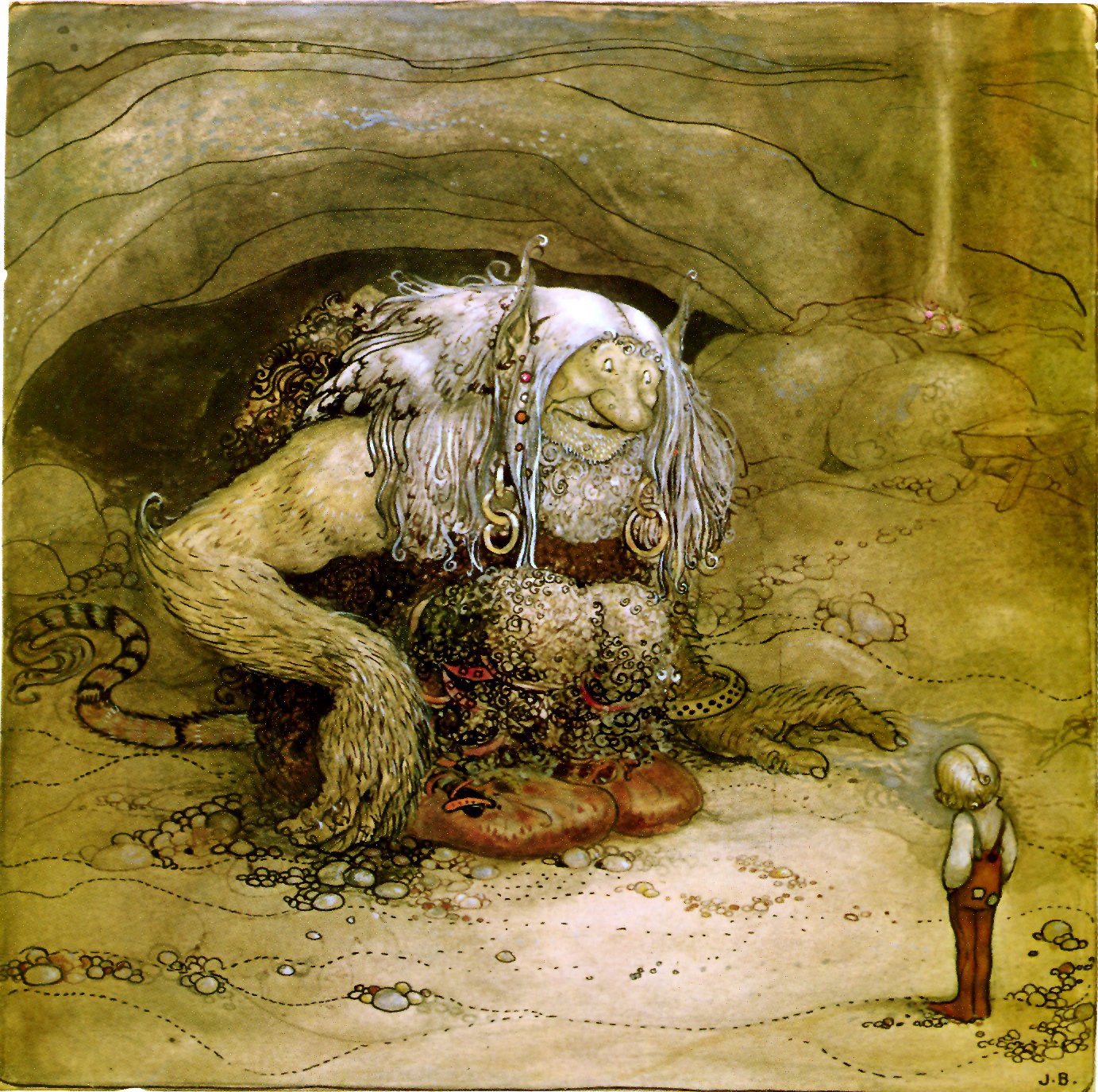
I’ve been reading lately about trolls, both the mythological monsters and those anonymous online ones who, per the Urban Dictionary, “purposely and deliberately (that purpose usually being self-amusement) starts an argument in a manner which attacks others on a forum without in any way listening to the arguments proposed by his peers.” Until recently, I had associated the current usage of “troll” with fairytales. The arrival on my desk of two bestiaries in particular, however, gave me a good excuse to reexamine what I knew — or thought I knew — about trolls and the way we use that word today.
In the 1840s, Peter Christen Asbjørnsen and Jøgen Moe collected a series of Norwegian folk tales, including the famous “Three Billy Goats Gruff.” In it, the smallest of the three goats is the first to attempt to cross a bridge guarded by a fierce troll. The goat implores the beast to wait for his big brother, who will make for a better feast. The middle sibling, of course, convinces the troll likewise. When the biggest of three goats reaches the bridge he knocks the troll into the water and the current carries away the creature, rendering the bridge safe forevermore. Here, a troll is an impediment to reaching greener pastures, whose greed causes it to pass up an easy meal in the hopes of a larger one. That does not, at first glance, immediately describe the kind of trolling we see on Twitter and online comments sections.
In the first half of the twentieth century, Ingri and Edgar Parin d’Aulaire published beautifully illustrated editions of Asbjørnsen and Moe’s tales. Their newly republished Book of Norwegian Folktales follows some other lovely editions of their stories we’ve seen lately, such as D’Aulaires’ Book of Trolls, and includes, as they translated it, “The Three Bushy Billy Goats.” Even more intriguing to trollology is the macabre “Cinderlad and the Troll” in which the youngest son of an impoverished man is bullied by his brothers and his king into confronting a troll. Trolls, it turns out, can be easily baited and thereby bested. The Cinderlad returns victorious, albeit after cooking the troll’s daughter in a pot and donning her clothes.
In The Golden Bough (1913), his landmark compendium of religious rites and superstitions, Sir James George Frazer wrote, “In many parts of Sweden firearms are […] discharged in all directions on Easter eve, and huge bonfires are lighted on hills and eminences. Some people think that the intention is to keep off the Troll and other evil spirits who are especially active at this season.” Even now, I might be might be supportive of our own open-carry laws if they served a similar purpose and really did keep trolls at bay, but I’ve seen no evidence that they do so.
Trolls are also particularly active on Midsummer Eve, which Frazer calls, “that mystic season the mountains open and from their cavernous depths the uncanny crew pours forth to dance and disport themselves for a time.” In troll country, the locals often “believe that should any of the Trolls be in the vicinity they will shew themselves.” When they do, I image the villagers know exactly how Bilbo Baggins felt when he encountered the ravenous trolls in The Hobbit (1937): “He was very much alarmed, as well as disgusted; he wished himself a hundred miles away.”
Jorge Luis Borges, in his Book of Imaginary Beings (1967), wrote “the Trolls of popular superstition are evil, stupid elves that dwell in mountain caves or in rundown huts.” Today, I imagine Twitter serves the same function; it is the dank mountain cave of many a troll. Trolls are also two-faced. Borges added that the “most distinguished among them have two or three heads.” The Dictionary of Satanism (1972) noted that a troll is “an earth demon or a personified nonhuman power.” That’s sounds a bit closer to our current usage, but it’s still not exactly accurate. I also suspect that a few online trolls might be decent — albeit confused — human beings IRL. The Trollusk in Mercer Mayer’s children’s book One Monster After Another (1974) has a more mundane but equally insidious purpose: it steals peoples’ mail so he can collect the stamps for himself.
According to the other excellent bestiary to recently cross my desk, trolls are chaotic evil. The excellent, fifth edition of the Dungeons & Dragons Monster Manual explains: “Born with horrific appetites, trolls eat anything they can catch and devour.” Furthermore, they “have no society to speak of” and are “difficult to control […] doing as the please even when working with more powerful creatures.” We might be getting closer here.
Most disturbingly, these D&D trolls are capable of regenerating lost limbs and are therefore very difficult to defeat. That happened in my own campaign just last month and it took a fireball to finally smite the poor thing. Similarly, in World of Warcraft, a troll’s health regeneration rate gets a 10% bonus. They are nothing is not tenacious.
I owe much of my interest in trolls not just to my research into video gaming communities, but to what philosophy professor Stephen T. Asma, in On Monsters: An Unnatural History of Our Worst Fears (2009), calls “the simultaneous lure and repulsion of the abnormal or extraordinary being,” but, again, that doesn’t seem to describe online trolls. I had to do a bit more digging into the etymology. According to the Oxford English Dictionary, to troll means “to fish for pike by working a dead bait.” In Webster’s New World College Dictionary, it means “to fish with a bait or lure trailed on a line behind a slowly moving boat.” That kind of trolling, perhaps even more of than the mythological ones, seems to describe the behavior of today’s online trolls, as we may very well see below in the comments-section responses:
Slavery may have been abolished in the United States in 1865, but that doesn’t mean its effects still don’t ripple throughout the country to this very day. This, at least, is the idea Colson Whitehead deftly unpacks in his harrowing sixth novel, The Underground Railroad. The New York writer sends the book’s fifteen-year-old protagonist, Cora, on a clandestine journey from the south to the north of America in search of a barely imaginable freedom, and in so doing he captivatingly depicts how the repercussions of a life in bondage can haunt and constrain people even when they’ve escaped their shackles. Yet more universally, the novel delves deeper into its brutal world by showing how the institution of slavery wasn’t simply a means of subjugating the African-American population, but also a subtle, systematic means of keeping the whole of American society in check as well.
Initially, however, the focus of The Underground Railroad is very much on the inhumanity of slavery, and how its pitiless control of African Americans went far beyond the purely physical. As the novel opens, we meet Cora’s grandmother, Ajarry, as she’s parceled around from one slave owner to the next in a shockingly blunt introduction to pre-Civil War life in Georgia. Not only do slave ships and the Randall tobacco plantation subject her to the harshest and most degrading conditions imaginable, but the yoke on her is so complete that she can’t even take her own life:
“She twice tried to kill herself on the voyage to America […] The sailors stymied her both times, versed in the schemes and inclinations of chattel.”
In fact, the slaves in The Underground Railroad have been so completely dispossessed of themselves that they don’t even own their own thoughts, instead perceiving themselves only through the internalized frames and values of their owners. For example, in one memorable early passage, the third-person narrator recounts that Ajarry learnt about how “the white man’s scientists peered beneath things to understand how they work.” Therefore, rather than knowing herself and her world in her own terms, Cora’s grandmother “made a science of her own black body and accumulated observations,” essentially looking at herself through the eyes of her oppressors and thereby alienating herself from herself in a radically fundamental way.
Such cases of almost complete self-alienation exemplify just how totalitarian Whitehead portrays pre-abolition America as being. Yet, aside from furnishing a remarkably unflinching illustration of 19th-Century slave life, the family history with which he opens The Underground Railroad serves another function, working to introduce the overarching theme of how, to a large extent, our roots, beginnings and formative environments determine the trajectory of our lives and make us who we are. This first comes out in a discussion between Cora and her friend Lovey in the second chapter, where Lovey asks Cora which day she’d pick if she could choose the date of her birthday, and where she receives the fatalistic reply, “”Can’t pick,” Cora said, “It’s decided for you.””
But it also comes out much more clearly in Cora’s mother, Mabel, who in being the only slave to escape the Randall plantation without being caught sets a precedent that her daughter is all-but destined to follow. It’s because her mother absconded without capture that Cora believes the taciturn Caesar asks her to join him on his own attempt to flee, telling him, “You think I’m a lucky charm because Mabel got away.” Something similar could be said of Caesar himself, who in being “born on a small farm in Virginia owed by a petite old widow,” was able to benefit from a master with an ambivalent attitude to slavery, and with a willingness to teach him how to read and to let “his family range across the county as they pleased.”
“Whitehead reiterates the notion that our beginnings determine our later lives to a significant degree.”
It was this relaxed upbringing prior to his removal to Georgia that sowed in him the seeds of his own freedom. Moreover, it’s in this consistent emphasis on the upbringing and pedigree of his protagonists that Whitehead reiterates the notion that our beginnings determine our later lives to a significant degree. This is undoubtedly true of pre-abolition slaves, yet it’s also highly relevant insofar as it’s still very much true of us all today, what with countless studies and Robert Putnam’s recent Our Kids, for instance, revealing that two of the most reliable predictors of where we’ll end up in life is the neighborhood in which we grew up and the social status of our parents. As such, the slavery in The Underground Railroad essentially becomes a metaphor for any (modern) society in which birth is still a major factor in how that society is structured.
However, as domineering and as complete as the hold of slavery is on the vast majority of its subjects, the novel soon finds Cora and Caesar running away from the Randall plantation. Aided by a racially diverse series of well-wishers, they travel to South Carolina via the eponymous underground railroad, an actual rather than figurative railroad that, “with its secret trunk lines and mysterious routes,” snakes underneath much of the country. Handed fake documentation, they begin living in the Palmetto State as manumitted slaves, yet Cora soon finds that freedom isn’t the all-or-nothing condition it’s cracked up to be.
For one, she encounters a public health system that, under the guise of helping African Americans, is actually imposing a drastically eugenicist scheme of mass birth-control on them. According to Sam, one of the men who helped her and Caesar navigate the railroad, the hospitals are practicing “[c]ontrolled sterilization,” with one participating doctor confessing to him:
“With strategic sterilization — first the women but then both sexes in time — we could free them [African Americans] from bondage without fear that they’d butcher us in our sleep.”
This not-so subtle program of population control is something confirmed by Cora, who has a doctor offer to cut her fallopian tubes, and by Caesar, who later tells Cora, “They wanted to know what part of Africa my parents hailed from.”
In the face of such disillusioning experiences, and in the face of a Museum of Natural Wonders that glosses evasively over the horrors of American history, Cora ends up concluding that slavery hadn’t really wound down in the north, but merely assumed a new, more deceptive form. Living in a dormitory with other freed black women, she muses to herself one evening:
“They had gone to bed believing themselves to be free from white people’s control and commands about what they should do and be […] But the women were still being herded and domesticated.”
More alarmingly, it’s Cora’s own reactions to the new world around her as much as this world itself that suggests that a formal end to slavery isn’t enough to dissipate its effects on her. Working in the aforementioned Museum one afternoon, she beholds three “large black birds [hanging] from the ceiling on a wire,” yet rather than appreciate their distinctness as a species or their beauty, “They reminded [her] of the buzzards that chewed the flesh of the plantation dead when they were put on display.” It’s because she’s stuck within the shadowy frame of her enslaved youth like this that she fails to imagine just what a fully realized freedom might be for her, and it’s because she can’t conceive of such a freedom that she timidly refuses to venture beyond South Carolina, where she’s eventually sniffed out by the merciless slave catcher, Ridgeway.
It’s from the flight that ensues that she begins to take in more of the American south. It’s also at around this point that The Underground Railroad expands its scope to address how slavery wasn’t simply a barbarous economic expedient, but also an institution that kept many parts of America glued together socially. As early as the second chapter, we see how slavery and the racism inherent to it enacts a kind of divide-and-conquer mechanism, giving lower-class whites someone to hate other than the upper-class whites who exploit and dominate them. This emerges when Cora and Caesar first escape, when the narrator reveals:
“Advertisements were posted at every public place. The worst sort of scoundrels took up the chase. Drunkards, incorrigibles, poor whites who didn’t even own shoes delighted in this opportunity to scourge the colored population.”
Rather than question the culture and system that conspires to keep them destitute, these poor whites simply terrorize their even poorer counterparts. In highlighting this historical fact, Whitehead highlights how slavery was integral to the areas of the country that perhaps were just so overloaded with poor ‘free’ people that they couldn’t risk eradicating enslavement, for fear of unleashing a potentially destabilizing force of white people who would have no one to loathe other than their uppity lords and ladies.
What’s more, beyond illustrating this key divide-and-conquer gambit, The Underground Railroad also shows how the fear and loathing that surrounded manacled African Americans was harnessed to ensure unity and conformity within white populations. This is most strikingly detailed in the excellent North Carolina chapter, in which slave patrollers conduct regular searches of homes and property in the hunt for hidden runaways, calling “at all hours, visiting the poorest trapper and the wealthiest magistrate alike.” The result is that the spooked locals begin lacking all confidence and assertiveness, remaining “slumped on their distracted circuits, looking this way and that, never in front.”
Such passages and sections threaten to make The Underground Railroad a thoroughly disquieting and sometimes distressing read, even if Whitehead’s prose is masterfully terse yet three-dimensional in its presentation of pre-abolition America. However, it must be emphasized that, throughout its 320 pages, there always lingers a persevering slither of hope, one best symbolized by the underground railroad itself. That is, as the closing parts of the book reveal, the railroad was built piecemeal by hundreds if not thousands of “men and women […] who excavated a million tons of rock and dirt, toiled in the belly of the earth for the deliverance of slaves like her.”
It’s through such florid descriptions that the railroad itself turns into the metaphor it initially denied itself to be, representing every African American and anyone else who ever contributed a single sentiment, thought, idea, act or practice to the unending struggle for emancipation and self-definition. Yes, one pivotal character giving a speech near the close of the novel may claim that slavery’s “scars will never fade,” but in arduously working together to build a new culture and identity to replace an older, repressive one, Whitehead and his ultimately inspiring sixth novel remind us that “Africans in America” are “new in the history of the world, without models for what [they] will become.”
Mark Osborne’s animated adaptation of Antoine de Saint-Exupéry’s The Little Prince (2015) opens with an image all too familiar to fans of the 1943 children’s novella. Over a blank page, a voice (Jeff Bridges) tells us that as a child he saw a magnificent picture in a book, True Stories from Nature, of a boa constrictor in the act of swallowing an animal it had wrapped itself around. The illustration, reproduced from the first page of Saint-Exupéry’s book, comes to life in the film before our eyes, and is followed by the narrator’s first attempts at becoming an artist himself.
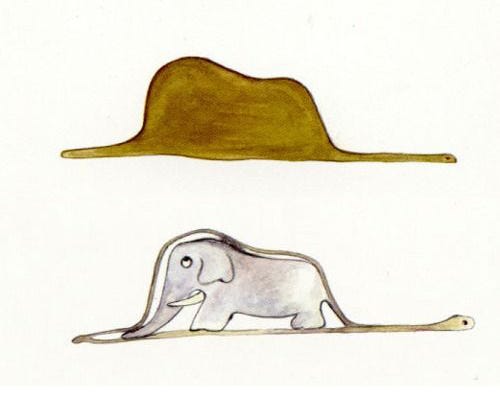
As an invisible pencil inscribes “Drawing Number One” and “Drawing Number Two,” he explains that grown-ups, odd as they are, have never quite understood his illustrations, encouraging him instead to concern himself with “matters of consequence.” It’s the reason, he says, that he became an aviator, and why he has never told the story of his friend the Little Prince to anyone. Before now, that is. As if on cue, many other illustrations from that famous French book flicker before us, setting the mood for what’s to follow.

More than that, this opening sequence promises (and quite literally delivers) what is so often expected of filmed literary adaptations: that they will present us the pages of the book brought to life, animated, in the case of The Little Prince, as if by the very spirit that so enchanted us when we first flipped through Saint-Exupéry’s book — a book in which the eponymous Little Prince, wishing for a sheep to help him ward off the baobabs threatening his small home planet, worries at the same time that it would also eat his treasured blooming flower. And yet, the moment we cozy to the idea, the film changes form into something else. Gone suddenly are the hand-drawn pictures in a throwback watercolor style, as we enter the world of 21st-century CGI.
A young girl (Mackenzie Foy) and her mother (Rachel McAdams) are in the hallway of the Werth Academy, where The Little Girl will soon face an admissions committee like something out of Kafka. Unlike the earlier hand-drawn images — near replicas of Saint-Exupéry’s illustrations, in the style of his pseudo-autobiographical narrating avatar — which evoked a vibrant texturedness and whimsy characteristic of the book, this pristine hallway with its Pixar-like characters looks outright flat and glossy. Eventually, despite her mother’s well-intentioned helicopter parenting, The Little Girl bombs the admissions exam and they move on to Plan B: purchasing a home in the neighborhood of the Academy, thereby ensuring that The Little Girl will be granted a spot there in the fall.
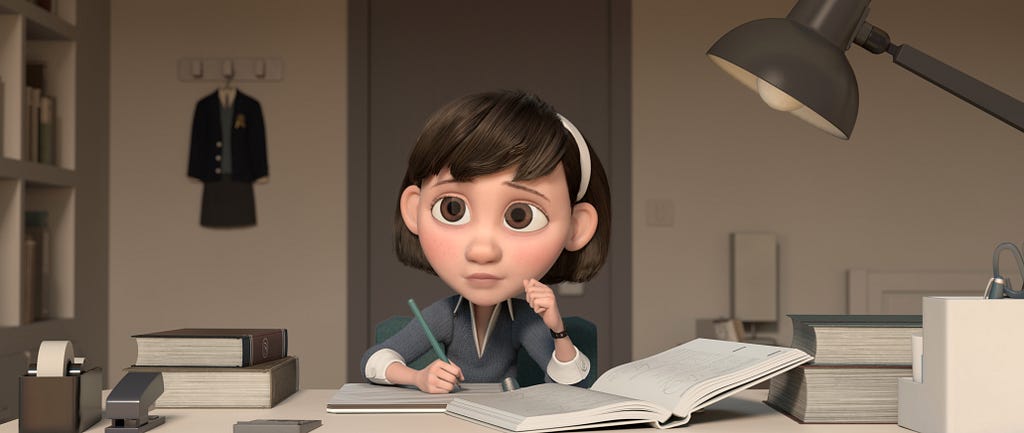
Adjacent to their new home they discover a rickety house, owned by an eccentric elder aviator with whom the girl develops a friendship, centered mostly around a series of stories he writes and illustrates for her. They are, of course, facsimiles of the first French edition of Le petit prince, and whenever The Little Girl reads them the audience is plunged alongside her into the narrative. To visually index the change Osborne and his animators forgo CGI, instead relying on stop-motion animation for these sequences, fleshing out, as it were, the tactility of the book’s illustrations. Not surprisingly these are the most affecting sequences in the film, beautifully rendering the simplicity of Saint-Exupéry’s story with just enough twee detail (stars that literally hang from a thread, a rose made more exquisite by its emphasized paper-like appearance, character design that is stridently minimalist) to warrant the leap from still to moving image.
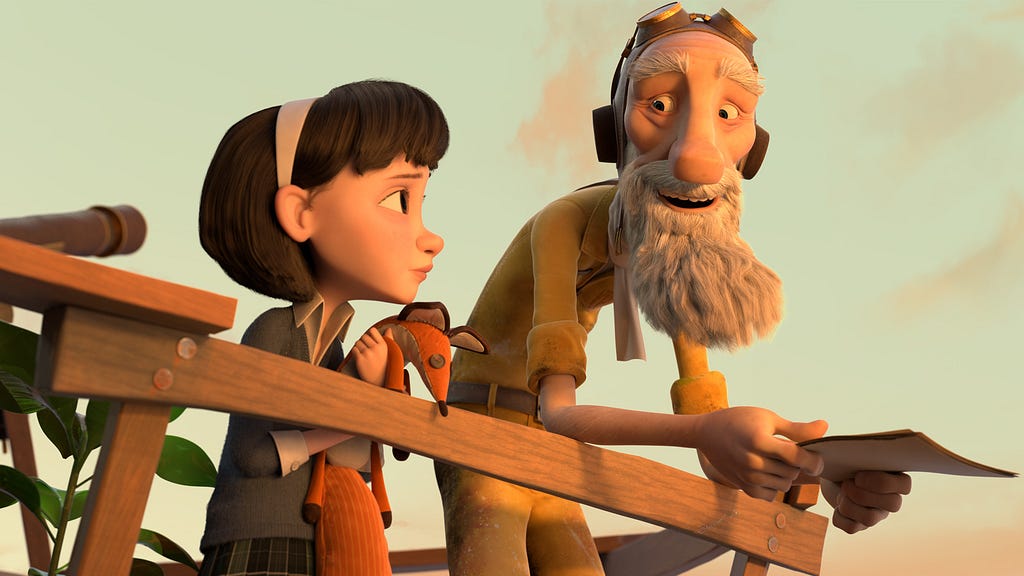
What one may first mistake as a mere framing device — not uncommon in adaptations that feel the need to explain their literary origins for the sake of the screen — the film constantly yanks us back to the Little Girl and the Aviator, and away from the Little Prince’s (Riley Osborne) narrative. In fact, given that Saint-Exupéry’s book is a collection of short fable-like stories strung together, it’s no surprise that Osborne (working off the screenplay by Irena Brignull and Bob Persichetti) quickly runs out of narrative for the eponymous and giggle-prone protagonist. It’s then one realizes that this adaptation is neither content in, nor intent on, merely bringing The Little Prince to screen, but rather that it seeks to model for us the very reading practice the story encourages, and thanks to which the book is one of the most beloved and iconic French properties in the world. In this sense, The Little Girl stands as the reader’s surrogate. Just as Saint-Exupéry’s narrator isn’t merely a passive presence in his own story (he’s compelled, after all, to author the story in the first place), and just as the Little Prince is a model for an active and engaged spectatorship (his incessant questions; his need for adventure), the Little Girl emerges as the contemporary extension of the book’s playful didacticism (when, for instance, in the book the Little Prince meets a vain man who only wishes to be flattered, we’re reminded that “conceited people never hear anything but praise,” the type of takeaway wisdom which recurs throughout the text).
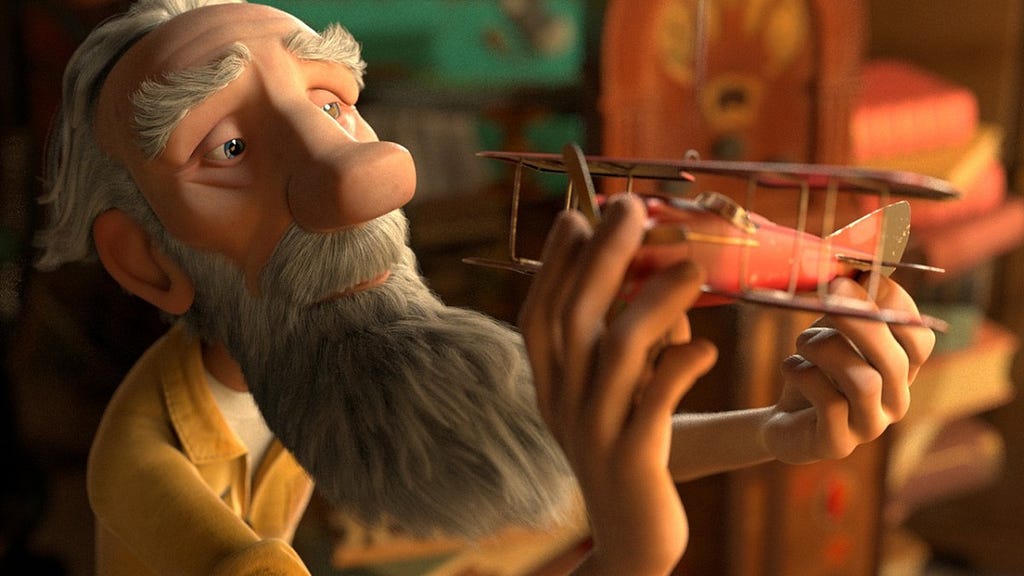
The latter third of the film follows the Little Girl alongside her plush toy fox, as she journeys to find the Aviator’s lost friend. When she does find him the film becomes its own version of Hook, with a grown-up and not so Little Prince (the older version, “Mr. Prince”, voiced by Paul Rudd) needing to be reminded of what made him an avatar for the wonders of childhood in the first place. As with Hook’s revisionist take on J.M. Barrie’s work, we are reintroduced here to Saint-Exupéry’s cast of characters, who have grown beyond the clear and strict allegories of their names to be deployed in the real world as bleak adult types.
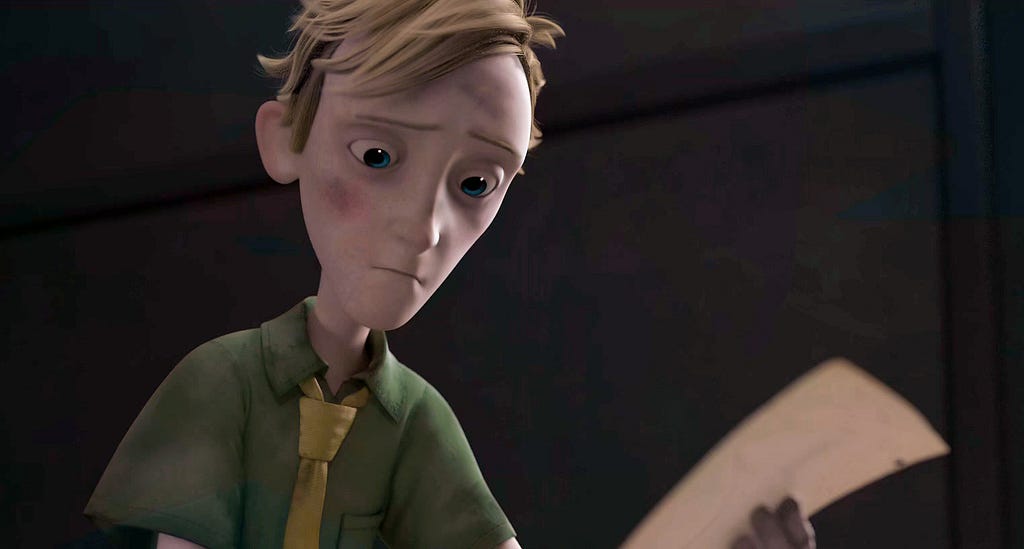
Just as children over the decades come to understand that the Businessman’s (Albert Brooks) avarice is absurd, and the Conceited Man’s (Ricky Gervais) vanity laughable, Osborne allows us to see how enshrined grownup values translate into a terrifying vision of an organized world, where the essential and purposeful are considered preeminent qualities — and where there’s little room given for children or their fancies. Admittedly didactic, this latter part of the film — which offers a third-act climax far more action-packed than the downturned ending of the book — functions as a narrative extension to the lessons Saint-Exupéry’s narrator threads throughout his wondrous memoir.
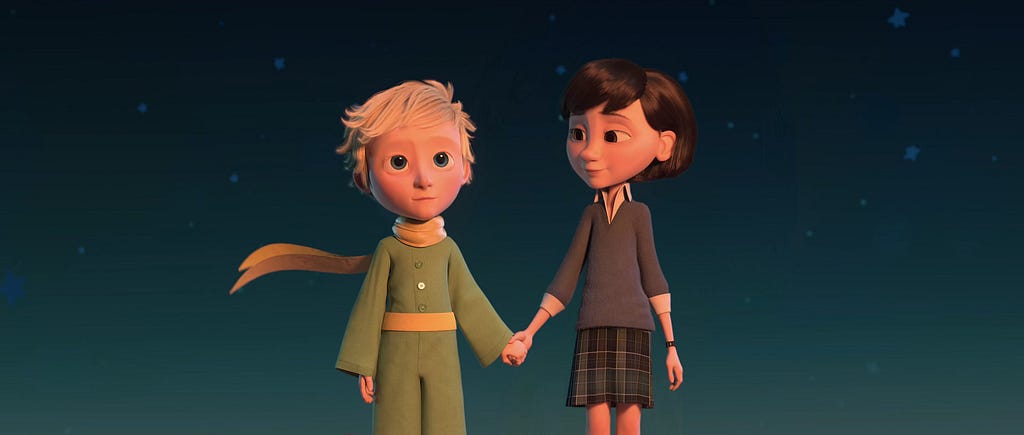
Osborne’s The Little Prince gives us a narrative of what it feels like to read that French story as well as what it looks like to embrace its life lessons: by the end, the Little Girl and her mother have settled into a much more relaxed rapport, one not determined or delimited by standardized tests or ideas of what it means to be an “essential” member of society. Just as Saint-Exupéry encourages his readers, here mother and daughter are seen looking up at the sky and its stars, asking themselves the question that still plagues the Aviator whenever he thinks of his young friend back on his home planet (“Is it yes or no? Has the sheep eaten the flower?”), and pondering the matters that are truly of the greatest importance.
‘The Little Prince’ is currently streaming on Netflix.
It’s the most wonderful time of the year, and it ain’t even Christmas yet! Mid-September in Brooklyn is coming up and you know what that means: The Brooklyn Book Festival is back for its eleventh year. To kick off the week of events, we’re hosting the Official Opening Night Party along with Catapult, Literary Hub, PEN America, and Tumblr. The Party is a Bookend Event and will most notably feature free drinks* and dancing. New York-based turntablist DJ Shiftee will be providing the tunes / to make you swoon.
*Drinks will flow freely like the ambrosial rivers of Ancient Greece, that is, only for the first hour or until we run out. The event is 21+.
Lina Meruane’s semi-autobiographical Seeing Red is full of rhythmical jolts. At times, the reader is thrown to the end of a sentence, where she unexpectedly stops and teeters there, waiting. Then the next sentence reaches out and draws the reader on, plunging her into the smells, sounds, and spatial imbalances of the worlds around our protagonist, sometimes in the New York City where the fictional and real Lina Meruanes both earned their PhDs, and sometimes in Santiago de Chile, where the fictional and real Lina Meruanes both have Arab-Chilean families.
The book, translated from the Spanish by Megan McDowell, opens with a very small, but urgent, explosion:
It was happening. Right then, happening. They’d been warning me for a long time, and yet.
On the first page, blood vessels burst inside Lina’s fragile eyes, submerging her gaze first in blood, then in darkness. This isn’t entirely a surprise. For years, Lina has been having small explosions inside her eyes. Because of the brittleness of her veins, Lina’s doctors had asked her to follow a litany of impossible rules:
Stop smoking, first of all, and then don’t hold your breath, don’t cough, do not for any reason pick up heavy packages, boxes, suitcases. Never lean over, or dive headfirst into water. The carnal throes of passion were forbidden, because even an ardent kiss could cause my veins to burst.
So this explosion is not unexpected, and yet blindness was also impossible until it happened.
From this moment of darkness, the narrative hurtles forward, obsessed by Lina’s physical and emotional pains, which are examined with a vibrant, Kahloesque fascination. The narrative is also interested in how Lina’s pain stretches out, changing her relationships with the objects and people around her.
The plot of this short, tight novel is simple: Woman loses vision, woman waits, woman has operation. The sharply wrought and attentive prose, crafted here into compelling English, would probably be enough to keep our attention. But it’s the threat of what Lina will do next — amongst the obstacles thrown up by her family, the insurance company, the university, her love — that makes this novel un-put-downable.
At the opening, Lina’s relationship with her boyfriend, Ignacio, is held in a loose fist. She doesn’t even tell him, in these first moments, what has happened to her vision. They’re at a loud, raucous party, and he urges her to stay a while longer. She acquiesces. In the following days, as he discovers the extent of her loss, she simultaneously grips their relationship more tightly and hurls it away. She winds Ignacio in guilt and tries to shove him off. She both needs him and hates the smell of her neediness.
Just as Lina’s relationship with Ignacio grows more fraught, so does her relationship with the medical establishment. Both her parents are doctors, and no, she doesn’t want their advice. No, she will not have the operation done in Chile. She trusts only one doctor, Lekz.
In the beginning, Lekz is a cold, remote character who sits behind his instruments. He is a barrier, full of prohibitions and instructions, standing between Lina and the life she wants to live. After she loses her vision, she begins to rail against this barrier. Ignacio hushes her as she insists on reminding Lekz of her name:
Lucina, doctor, I told him officiously, knowing he’d be unable to pronounce it, while I reached out my hand, but you can call me Lina. He doesn’t know who the hell I am, I murmured then in Spanish to Ignacio, he doesn’t have the damnedest idea, this doctor to whom I’ve handed myself over in body and practically soul for two whole years.
As Lina’s prognosis worsens, she grows fiercer. By the end, she is so furious and demanding that she becomes something of a vengeful goddess. She demands increasingly more of Ignacio, and also of Lekz, whose position now changes. As Lina’s condition grows worse, Lekz becomes more vulnerable:
Lowering his voice impossibly, Lekz asked me to forgive him, it wasn’t me he forgot. I was everyone. Much as he struggled, he watched them enter his office and he didn’t have the slightest idea who they were, that’s what he told me, clearing his throat continuously, the magnifying lens raised before my eyes but still without examining me. With his hand suspended in the air, he confessed that patient after patient would come in and he would greet them all by name, something he’d learned to do mechanically.
In the end, Lekz shrinks before a furious, wronged Lina. The doctor reeks of cigarettes and exhaustion, and Lina asks him: “Am I going to die, doctor, or are you?” They are no longer in his office, with her quiescent behind his instruments. They are around a table, now equals, and the doctor is tied to Lina’s grief.
Lina’s mother is the only one among her inner circle to escape, pushed off by Lina’s desperate need for independence. Lina also knows too much about her mother to bear her presence. More than with any other character, Lina can see past her mother’s exterior. Just before her mother returns to Chile, post-surgery, Lina watches her sightlessly.
My mother trembled, while the doctor part of her demanded she get hold of herself, dry her tears on the sleeve of her blouse, not be late for her plane. We have to go, my mother’s other was saying, right now; and yes, I thought, both of you go, but especially the doctor you.
Lina’s observations are endlessly rich. Even when deprived of her sight, and relying on Ignacio’s eyes, she can still manage to paint us a detailed picture. Yet there is no facile conclusion that because Lina loses one sense, the others grow stronger. It is not Lina’s blindness that gives her x-ray vision, but her gifts as an author, her grief, and her fury. Lina might be blind, but she is desperate enough to see.
★★★★☆ (4 out of 5)
Hello, and welcome to my week-by-week review of the world. Today I am reviewing a pineapple upside down cake.
At my age I know I don’t have much time left, so I try to live each day as if it were my last. Just kidding, I don’t really do that because I don’t want to get arrested and spend my last day alive in jail. Instead, I just try to do all the things I’ve always wanted to do. And when I can’t do those, I’m happy to do things I don’t want to do, because at this late stage in life beggars can’t be choosers. I’ll take what I can get and make the most of it. And when I can’t make the most of it, I’ll make something of it, even if that something isn’t much of anything.
That’s why recently, when I found a pineapple in the back seat of my car, I decided to make a pineapple upside down cake out of it. At the library I found a recipe from a Betty Crocker cookbook. I’d heard of Betty Crocker before, so I figured it should be good enough.
Now the name of the cake is a bit misleading. Yes there’s pineapple, but the cake is definitely NOT upside down. It’s not even sideways. I had hoped for some type of gravity-defying baked good. It’s only upside down if you turn it upside down, but that’s true of any cake. What a disappointment.
What is not disappointing, however, is the flavor. It tastes like a pineapple but even better! Like a super pineapple. Imagine a pineapple that when plucked fresh came covered in a sugary glaze and had a layer of buttercream frosting. The recipe didn’t actually call for buttercream frosting, but what kind of a cake doesn’t have frosting?
I hope eventually fruits may evolve to grow with frosting on them. If Monsanto can make that happen, I think they could really turn the tide of bad press they’ve been receiving.

I’m not exactly sure where my recipe went wrong, or if it was Betty Crocker’s fault, but my cake turned out less like a pineapple upside down cake and more like a pineapple inside out cake. Maybe I should have put the frosting on at the end rather than mixing it in with the batter, or maybe I should have used a recipe from Dole. I’ll never know.
(I had wanted to include the recipe here for you to try, but my lawyer recommended against it due to the risk of a lawsuit for copyright infringement.)
In terms of flavor I was satisfied, but what really made this cake exceptional was the sheer volume of it. I had enough for breakfast, lunch, and dinner, and still have some left over to feed to the squirrels. They didn’t seem interested though, so I put it in a box and dropped it off at the Salvation Army.
BEST FEATURE: It’s a great way to get rid of a pineapple.
WORST FEATURE: The pineapple can hurt your hands a lot when you’re peeling the skin off, but it will make your hands tougher once the scabs heal.
Please join me next week when I’ll be reviewing Tom Hanks.
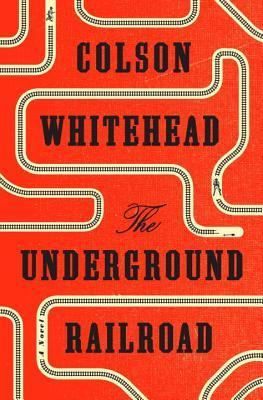
In The Underground Railroad, Colson Whitehead’s gripping new novel, we are introduced to a metaphor made manifest: an actual railroad, underground. A literal and literary engine for his incredible inquiry into slavery, humanity, and the true nature of America. When Cora is invited to leave, to escape the plantation where she has lived her whole life and take the titular train north, she climbs down the rabbit hole and through different states, both geographical and psychological. She runs through a world fueled by cruelty, ambivalence, and every so often, kindness. And we see this world with sober eyes by the light of her unsentimental telling.
When discussing this book with a friend (you will want to discuss The Underground Railroad, immediately and urgently), our conversation turned to another novel, Feeding the Ghosts by Fred D’Aguiar. In that book, the Zong, a slave ship headed for America, is overtaken with illness, and the enslaved men and women are thrown overboard. The protagonist, Mintah, manages to somehow lift herself from the water and climb back aboard the ship, perhaps buoyed by ghosts, or death. The middle passage is reframed through a fantastic and surreal lens, much in the way Whitehead reframes the metaphor of the railroad. These crossings — one headed towards slavery, and one towards freedom — are also somehow crossings-over, passages through time, and through the irreal. The journeys take on a particular and uncanny power. At a station stop in Whitehead’s novel, Cora stares into the abyss of the terminal, wondering where the railroad ends, where it begins: “As if in the world there were no places to escape to, only places to flee.”
Hilary Leichter: There’s something irresistible about the central metaphor to your book: an underground railroad that is an actual railroad. Sometimes it feels like descending into Hades, and sometimes it feels like the New York subway system — there’s one stop decorated with white tile. The railroad is a kind of character in the book. How did you go about bringing it to life? Where did the metaphor start?
Colson Whitehead: It came from that idea from childhood where you first hear about the underground railroad and think it’s an actual subway. That was my first association, when I was seven or eight. And then of course I’m not the only person — if you check Twitter for “underground railroad” you’ll find high school kids making fun of their friends: “Sam thought the underground railroad was an actual railroad!” So this sort of image stays with people. It’s majestic. Cora’s on the train a couple of times in the book and I wanted each station to have a different character. Sometimes it’s just a hole in the ground, sometimes it’s a nicely appointed place to wait, with tables and a candelabra, and wine. Sometimes the train is a great locomotive, sometimes it’s a boxcar, sometimes it’s a handcart. In trying to find a variety of experiences for Cora, I tried to come up with these different subterranean scenarios.
Leichter: When Cora makes her first trip on the railroad, she’s given this piece of advice that comes back several times in the book: “Look outside as you speed through, and you’ll find the true face of America.” After a while, this feels a bit like a joke because the tunnel is completely dark. But is that kind of complete blindness the true face of America? I was also thinking about how when you take a train at night, above ground, and you look outside the window, the face you see reflected is your own.
Whitehead: I think Cora struggles to decode those words of the first station master. Yes, if you look into a tunnel in the ground it’s just darkness, and if that’s America, what is that saying? When you’re on a train, for me, part of the joy is seeing the landscape, the different places you’re going through. And I’m sure there’s probably more than one Amtrak advertisement that says “Take Our Train, See the Country.” So I’m having a little bit of fun there, with what you can see, and what America you’re actually seeing outside the window.
Leichter: The book definitely plays with some surreal elements, but they feel completely subsumed by the terrible and violent realities of the plot. I felt that my disbelief was permanently suspended, because the horrors of slavery that you depict here continually left me in a similar kind of stunned disbelief. Was it important to you to use this surreal premise to talk about the realities of slavery? Or was it just the particular way that you found into the subject matter?
Whitehead: I wanted to talk about a variety of different things related to American-ness, and the changing concept of race in America. And once I made the choice to have this central fantastic element of a literal underground railroad, it allowed me to play with time and bring in elements of the Holocaust, the Tuskegee syphilis experiments, and things like that. While they’re all fantastic elements, I think the voice of the narrator is so matter of fact that they’re well integrated into Cora’s experience. So when she steps out and sees a skyscraper in 1850s South Carolina, she takes it at face value. When she comes to North Carolina and discovers a place where black people are outlawed and hunted down, it seems like a natural future of the world. So the voice works to integrate some of the absurd, but also the truthful elements of her world.
When she comes to North Carolina and discovers a place where black people are outlawed and hunted down, it seems like a natural future of the world.
Leichter: Can you tell me a little bit about the process of researching the book? Where did you start?
Whitehead: There are a few histories of the underground railroad, not as many as you’d think. The main one I started out with, Bound for Canaan, by Fergus Bordewich. It came out a couple of years ago. That was my survey of history of the movement. But my main research was slave narratives. The ones we’ve heard of that are famous: Frederick Douglass, Harriet Jacobs. But primarily the ones collected by the WPA in the 1930s. To get people back to work, the government gave writers jobs interviewing former slaves who were still alive in 1935. People who were eighty or seventy years old. It provided a real catalog of slave life. Small farms, big plantations. The mechanics of farming, and what they ate, and the culture of the plantation, all done in this matter-of-fact voice that I ended up using in the book.
Leichter: Was there anything you found that surprised you, or that maybe didn’t make it into the final draft of the book?
Whitehead: Things that intrigued me all found their way in, one way or another. I tend to do research to get going, and then if there’s something I have to research, I’ll do some more research along the way. It breaks up the writing, the monotony of just writing pages every day. So when Dr. Stevens appears in South Carolina, I thought his would be an interesting perspective, fleshing out a supporting character. So I studied grave digging and inanimate research in the early part of the 19th century. As the book progressed and different avenues of inquiry presented themselves, I pursued them, weaved them into the book.
Leichter: There are interspersed mini-narratives from some of these supporting characters, spread throughout the book. Was that something that you had intended to do, or did it come from being interested in one of those people, and wanting to spend a little bit more time figuring them out?
Whitehead: It wasn’t so much figuring them out, but using them as opportunities to expand the investigation into American history. Ajarry, the first section about Cora’s grandmother, was always the prologue. I wanted to have these character portraits in between the chapters, and I would juggle who should go in, and who should not go in. Should I focus on Martin or Ethel from North Carolina? Should I have Caesar’s voice, or Lovey’s voice? And you have to obviously be open to changing things, that’s the fun of discovery. As I would go along, different characters would provide different ways of talking about the broader themes.
Leichter: Each of your books is so different in scope, in tone, in everything. How important is it to you to immerse yourself in completely new projects and new challenges?
Whitehead: I’m so sick of one thing that the next project has to be pretty different. Whether it’s going from a first person voice that’s nimble and jokey, like in The Noble Hustle, my book about poker, or going to a third person expansive voice in John Henry Days after The Intuitionist. It’s a nice way of saying goodbye to the previous book. Before I started this book I had an idea about a writer in New York City, and the voice was very close to the voice of the narrator in The Noble Hustle, a version of me. It seemed if I had just done it in The Noble Hustle, why do it again? And so I set that book aside and started The Underground Railroad, which is very different from my last couple of books.
Leichter: There’s a moment early on in the book, where you’re describing Cora’s fraught relationships with some of the other women on the plantation, and the terrible experiences that they face together. And you write this beautiful sentence: “Sometimes such an experience bound one person to another; just as often the shame of one’s powerlessness made all witnesses into enemies.” I found this idea profoundly affecting, especially in a contemporary context, where it feels like we witness everything, horrible things, every day, online. Is that something that you were considering?
A plantation where everyone’s helping each other out, and is really pleasant to each other, didn’t fit my idea of humanity. It seemed that it would be every person for themselves.
Whitehead: I don’t think I was thinking about our contemporary experience of being in the world, but I was trying to create a plausible psychology for a plantation, using what we know in the early 21st century about how people behave, and post traumatic stress disorder. Of course these slaves aren’t “post” anything, they’re in that trauma, living it morning, afternoon, and night. But what is the damaged psychology of the slave? It seems to me, and perhaps this is a dark view of humanity, but if you put people in a room, ten are great, ten are terrible, and in the middle you have the other eighty, who sort of vacillate between being horrible and not-so-horrible. But if you have 100 people on a plantation who have been brutalized, assaulted, and dehumanized their whole lives, they’re not going to be on their best behavior. And so it seemed that a plantation where everyone’s helping each other out, and is really pleasant to each other, didn’t fit my idea of humanity. It seemed that it would be every person for themselves.

I knew that by picking up Rob Spillman’s All Tomorrow’s Parties I would be reminded of many personal experiences from adolescence. For the qualifiers that we don’t share (I’m a 27 year old woman, for one) there were a multitude of life choices we did share: I speak German and lived there when I was younger; my teenage years were constructed by punk albums and friends who pushed me to go against my at-times baffling trust of authority; I also work in publishing. As Spillman rightly observes: “My friends were my collective alter ego.” So, when Spillman begins his memoir by running through an abandoned subway line in East Berlin, heading to a hidden rave and being handed questionable drugs by random Germans, I immediately remembered my first weekend in Berlin just a few years ago.
All Tomorrow’s Parties is at once a completely relatable and unique coming-of-age story. While Spillman, as a young kid in the US, details moments of self-creation — the first time he heard punk music, drinking and doing drugs, his first job — our own memory wheels start cranking. It’s hard not to remember all those times you totally fucked up, or were totally fucked up, and made it out okay. Spillman hasn’t quite lost his youthful vigor; in his recounting, it’s clear he loves the life he’s led and still itches for it.
“All Tomorrow’s Parties is at once a completely relatable and unique coming-of-age story.”
“Of course I’m going to throw myself into the abyss. That’s what I do — throw myself into the unknown,” he writes after moving to East Berlin in the 1990s with his wife, writer Elissa Schappell. His desire for an exciting life can be infectious, and his ultimate pursuit of it makes for an exhilarating read.
What sets Spillman’s narrative apart from most memoirs is the context. Born in Germany to traveling musicians who, while not entirely intentional, set out on a life outside of the norm, Spillman’s path was most likely set the moment his parents took up music. Picking up an instrument was a natural act; it was a part of their being.
“For my parents, music was a journey and a destination. Music allowed my parents to escape toward something.”
His childhood and youth played out backstage at operas and shows, sculpted by late-night conversations with musicians, directors, actors. These parties and dinners molded Spillman into being the “restless, heedless” wanderer we encounter in other chapters. While his parents’ identity was set in stone early on in their lives, Spillman struggles with identifying that one natural calling in his own life.
“Their stories of determination, drive and single-minded focus formed the stark background to my opposite childhood of indecision, lethargy, and scattered focus. I didn’t know what I wanted to do at age four, or eight, not to mention thirteen or sixteen.”
Spillman opens up with a candid level of honesty about his father and mother’s divorce, so much that we are grateful for his vulnerability. She left after they split, and it wasn’t until his pre-teen years that he would be reunited with his mother. “Her absence was a void, an unexplained vacancy. It was always there, but never acknowledged. Not by my father, and not by me, for fear of driving my father off as well. I felt responsible for her absence. And if she could disappear, so then could my father.” Spillman lived those pivotal years in Germany with his father, a musician who would let him tag along to dinners, performances and after-parties. While we’re told early on that Spillman’s father is gay, we’re not entirely sure if his parents divorced because of this until much later. Regardless, while he and his father steered clear of personally delicate conversation, Spillman was shaped by a sensitivity and earnestness that is compelling. “My father was living for art. I couldn’t image anything more romantic and ideal. I still can’t.” Throughout the memoir, Spillman reaches back to those quiet moments with his father like guiding lights; they inspire him to pursue a life outside the norm — which to him means a writing life as an ex-pat. He moves to Lynchburg, Virginia to live with his mother in his early teens. Her life of constancy and precision is starkly different from what he’s known until that point. These differing realities fuel Spillman’s restlessness and uncertainty: about his life and desires and about where he ultimately belongs.
“Spillman opens up with a candid level of honesty.”
Berlin after the fall of the Wall is wonderfully illustrated. Via certain Berliners’ narratives we learn about the after effects of reunification. The East Germans he encounters — Ralf, the particle physicist who reveals the fear of day-to-day life in East Germany through stories of his compulsory service or Ringo, an East Berlin insider with connections to abandoned apartments and Soviet tanks — remind us not only of the exciting artistic and cultural potential of the time, but also of the frightening and confusing future they were as yet unsure of but knew was around the corner. Moments like his laundromat escapade (which I won’t go too into detail, but which hilariously points out the otherworldly-ness of capitalist economics, all while pointing a mocking finger at the writer himself and his unchecked stubbornness) in East Berlin, and their adventures in the post-Soviet rave scene paint a picture of a Berlin on the brink.
Spillman’s strengths lie in his storytelling and ability to recall memories and actions. But while his crystal clear memory is appreciated in certain instances, like in recounting moments with this family or his adventures throughout Berlin, he fails to remind readers of the necessary years of introspection that no doubt led him to certain very well-formed perceptions or ideas. When Spillman moves to Baltimore with his mother, his identity as an outsider crystallizes. He rejects the way his classmates live and resents their privilege and brings up his own rejection of “White Male Privilege.”

All Tomorrow’s Parties is about more than those parties that make up Spillman’s youth. It’s a love story, between Spillman and his wife, Elissa, whose courage and smarts are amplified next to Spillma’s own ambitions and hunger for life. Leaving their NYC lives for Europe, the two have to confront those parts of their personality that set them apart from each other and what their true motives were for setting off on this adventure. “When I moved to the States I defined myself as being from Berlin. I was a Berliner removed from Berlin, and I would return home. What the hell was I thinking? Berlin is an idea. It isn’t my home. Elissa is my home.” This honest appreciation of his wife mirrors the earlier love we see towards his parents. While Spillman struggles with seeing who he truly is, it’s clear that his relationships determine that identity.
 Thank You!