I recently received an email from a literary agent who read my work online and was compelled to reach out. Excited, I sent her some of my best work to read: a story from my story collection in-progress and the first chapter of a novel. She responded with an enthusiastic yes.
I’m concerned, however, that my style (lyrical language) and preferred literary sub-genre (magical realism) is not “on trend” these days. In fact, a very famous Latina novelist told me that “magical realism has been done” and to focus on more contemporary forms of writing.
Although I haven’t let her words deter me from writing what I love and feel most inspired to write, they have called into question the kind of fiction readers are craving these days. I realize contemporary writers like Karen Russell and Haruki Murakami have put their own spin on the magical realism form, but I’m still concerned that because my writing has a more cultural, historical-flashback, language-oriented feel to it, it might not be well received by readers looking for something more current to read.
Sincerely,
21st Century Magical Realist
Dear Magical Realist,
I recently attended a panel on dystopian fiction where one of the speakers was a YA literary agent who represents authors working in this style (a la The Hunger Games, Divergent, etc.). Someone in the audience asked her if she was still looking for dystopian YA novels, and she said no — by the time readers recognize a trend in the market, agents are already bored of it and looking for the next thing. They don’t want to be behind the trend, they want to be ahead of it.
Given how long it takes to write a book, find a publisher, and then see it into production — generally a number of years, even just in the latter stages — it is not realistic to attempt to be “on trend” during the writing process. Trends move fast, and writing, editing, and publishing do not. For all you know, by the time your story collection and novel are finished and published, magical realism will be all the rage.
As for the advice you got from the famous Latina novelist, I have to disagree. Magical realism “has been done,” yes, but so has everything else. Dystopia has been done. Vampires have been done. Suburban malaise has been done. They will be done again. Any genre becomes contemporary when contemporary writers do it. Further, I wouldn’t even say that magic realism is dated outside of America; when I read contemporary fiction in translation I’m often struck by how commonly elements of magical realism are present. YA and genre fiction aside, American “literary fiction” is pretty staunchly wedded to realism, but realism is so pervasive you could hardly call it a trend.
So, my advice to you is, forget about writing toward current publishing trends or for the readers who rabidly follow them. You should do what you do well and I’m sure you’ll find your audience (readers like your agent).
Dear Blunt Instrument,
I miss when poetry collections were just that — really good poems linked by the fact that they were written by the same poet. Will those kinds of collections ever come back in style? Are publishers just looking for linked/project-based books these days?
Thanks,
E
Dear E,
I’m not sure I agree that they’ve ever gone out of style. It seems to me that the poetry books put out by both large and academic presses tend to mostly be unlinked collections of poems; these also tend to be the books that win big prizes. I see the “project-based” poetry book trend as mostly confined to small presses.
I also see it as a somewhat false distinction; poems written by the same poet around the same time and intentionally grouped together tend to be linked in terms of style, form, and theme or subject matter, and whether you view those poems as unlinked or as a project is often a matter of perspective, not to mention marketing.
As above, as ever, I’d advise you not to worry about perceived trends in the market. Write good poems, find your audience, and let your future publisher worry about whether or not they qualify as a project.
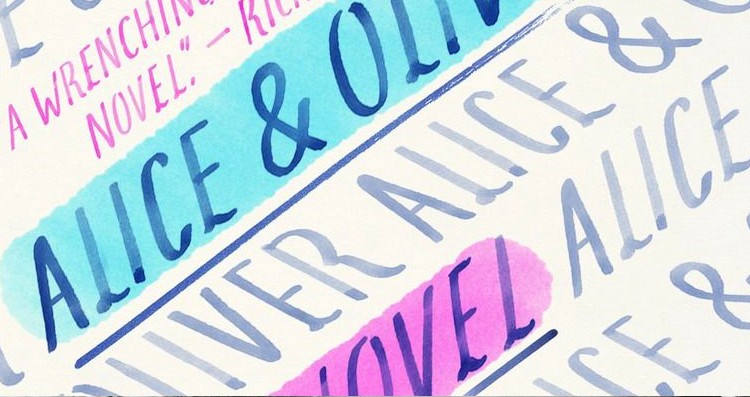
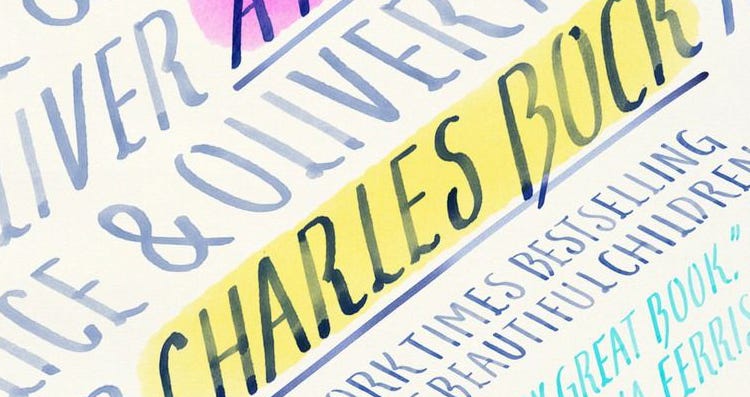
It would be easy to characterize Charles Bock’s Alice and Oliver as just another cancer novel. The book is inspired by Bock’s late wife, Diana Joy Colbert, who battled AML (acute myeloid leukemia) in her thirties. She underwent two stem cell transplants and passed away two-and-a-half years after diagnosis. As a stem cell transplant patient myself (twenty-one months later, I still hesitate to even consider uttering the word “survivor”), I was tempted to read Alice and Oliver as a detailed chronicle of the rigors of enduring one of the most harrowing and risky medical procedures in existence — just to connect with someone else who went through it.
As such a chronicle, Bock’s novel does not disappoint. Much like in the finest, recent cancer memoirs (Paul Kalanithi’s When Breath Becomes Air or Mortality by Christopher Hitchens), one can clearly imagine the experience of terminal cancer. Bock captures how you can feel dropped into an ocean of new clinical vocabulary, each word carrying life-and-death stakes. With every indignity faced by Alice (the fictive version of Bock’s late wife), I relived my own experience: each failed needle-prick into a collapsed vein, each performance of what Alice humorously refers to as “ass gymnastics” when providing those all-too-frequent stool and urine samples.
Bock also painstakingly renders our American healthcare system in all its logic-free anti-glory. You might ask yourself whether the daily hellscape of legalese, faxed letters, and maddening conversations with hospital bureaucrats is even worse than dying from cancer.
“As a stem cell transplant patient myself, I was tempted to read Alice and Oliver as a detailed chronicle of the rigors of enduring one of the most harrowing and risky medical procedures in existence.”
The novel is weaker, however, in its depiction of Alice and Oliver as individuals. A super mom with a fondness for Eastern religion and a passion for fashion, when we first see Alice, she is “rocking knee high boots” with her infant daughter strapped to her chest. Oliver is a computer programmer and entrepreneur with a short fuse who can’t stop observing how cool and gritty the Meatpacking District used to be. Both come close to being Manhatttanite clichés: well-educated, creative, and most notably, privileged.
Though facing serious misfortune, Alice and Oliver often seem oblivious of their level of entitlement. The fictional Whitman Hospital on York Avenue between East 67th and 68th Street is a thinly-veiled stand-in for the place I was lucky enough to receive my transplant: Memorial Sloan Kettering, the top cancer center in the country, maybe even the world. During an especially trying night in the hospital, Alice tries “to inhabit her best self” by asking each nurse assistant “to say her name,” so she can make “comic guesses as to the origin countries of their accents,” without any awareness of her condescension. She’s not above disobeying doctor’s orders or throwing a tantrum when she discovers she can’t see her child during treatment, even after her doctor explains that the germs any child under eleven might bring into the hospital could kill her and other severely immunocompromised patients.
In Oliver’s eyes, Dr. Bhakti, an Indian woman, is always saying or doing something insensitive, like daring to touch her hair while Oliver’s wife has to endure chemo-caused baldness. In a dispute over medical bills, Oliver agitates the hospital’s African-American account payable clerk to the point her English breaks down:
“My job, I make sure the hospital gets paid for the services it provide, okay? That ain’t me, that’s policy. If you need, we got all kinds of financial aid and payments options to our patients.”
No one in the book calls Alice and Oliver out on their difficult behavior, and neither character seems particularly bothered by the fact that every annoying person on their grim journey happens to be a person of color, while everyone helpful is white, leaving us to wonder whether these unsettling character notes are intentional.
As a novel about marriage, Alice and Oliver is at its most successful. Bock paints how marriage can help these two flawed individuals transcend their own limitations in a time of crisis. Together, as a couple, Alice and Oliver are warm, their rituals endearingly specific. They meet at a coding party in the late-eighties, and a twenty-seven year-old Alice nicknames Oliver “Bushytop” and loses “a fight against his oncoming smile.” She’s drawn to him because he’s “unlike everyone in the fashion world,” and gives “off a hetero vibe,” and is “not in any way uncute.” Years later, when facing their toughest moments in the hospital, they call each other “favorito.” In this astounding scene, a ravaged Alice tries to provide Oliver, whose life has been subsumed by caretaking responsibilities, some sexual relief:
Enveloping him, her mouth was warm, wet. His shoulders hunched and he let out an involuntary high sound; his head leaned back and he shut his eyes; his right hand went onto the back of her head. Oliver felt the barren desert of her skin. The air in the room warmer, her breaths coming at shorter intervals. She went at him, gallant and resolute, going faster, her eyes shut, cheeks pulsing.
But he was not close.
He was careful in lifting her off him, and he brought her to his face, and kissed her with all the tenderness in him, and on her lips tasted his own heat and salt.
Oliver pulled Alice’s bird-frail body to him. He took her face into his shoulder, caressed the back of her head, and laughed, amazed, holding her to him.
She was sobbing by now, and her sobs continued for a time, their force increasing, sending her body into racked, great heaves.
“Favorito,” he said. “Favorito.”
The scene is easily the best in the book — one of the more fraught and complicated portraits of the conjugal in recent memory. In the powerful and suspenseful final section of the novel, after multiple rounds of chemo, a bedridden Alice finally gets her desperately needed transplant, but the doctors are unsure if her frail body will survive the cure. In those make-or-break days, Bock hops between points-of-view, from Alice’s first-person journal entries to Oliver’s third-person perspective, then to all-too-short sections in the heads of Alice’s doctors and nurses — the people on the front lines of battling cancer for their patients. This break from the structure of the rest of the book creates a dramatic urgency that raises, for the reader, the possibility that Alice Culvert’s fate might differ from Diana Colbert’s.
Anyone — whether they’ve been through leukemia or whether they like Alice and Oliver or not — will empathize with the devastation that both the disease and its potential cure can cause. Bock’s fictive paean to his wife’s endurance reminds us that cancer leaves behind significant psychic trauma for both the survivors and those who are survived.
Hello, and welcome to my week-by-week review of the world. Today I am reviewing my antique musket.
★☆☆☆☆ (1 out of 5)
I’d been waiting for Antiques Roadshow to come to my town for months in the hopes they would appraise my 200-year-old musket for at least a few hundred dollars. If they did, I’d be able to afford the newest and best cell phone available until the next one comes out.
When Antiques Roadshow finally came to town, my musket and I were first in line to get in. Unfortunately, security wouldn’t let me in with a firearm. As I was about to explain that I didn’t have any gunpowder, lead balls, or a ramrod with which to arm the musket, the security guard yelled at me to stop arguing and then he pinned me to the ground by my neck and with his knee. He continued the yelling even though he was easily close enough for me to hear.
My chances of getting into the show at this point seemed slim, and even if I did, I wouldn’t want to be seen on television with a pee spot on my pants, so I gurgled, “Does anyone know how much this musket is worth and do you want to buy it?” Unfortunately no one responded because they were all too busy filming me with exactly the type of phones I wished I could buy.
When the police arrived in their riot gear they ran right past me and tackled the mustachioed man standing in line with a beautiful Persian rug. It must have been worth thousands. I had to wave the police over and explain that I was most likely the one they had been called for. Me, the guy with the knee on his neck.
After a long explanation, I was let up and the police passed around my musket to laugh at it. They told me that technically it only qualify as commercial grade fireworks, not even close to a firearm. They apologized to me for the confusion and arrested the mustachioed man just in case.
When no one was looking, one of the officers pulled me aside and said I’d never be safe with a musket, and that terrorists and the government were both trying to take my freedom, so I should probably upgrade to his assault rifle, which he then handed to me, before whispering, “Shhh.” He gave me a wink, got back into his armored vehicle, and they all drove off.
I tossed my musket into the trash, slung the assault rifle over my shoulder, and headed to the mall to buy a new cell phone.
BEST FEATURE: There was a spider living in my musket and I named him Roger. WORST FEATURE: The word musket always makes me think of the Three Musketeers, which is my least favorite candy bar.
Please join me next week when I’ll be reviewing Prince.
Bonnie Nadzam is my dear friend and favorite writer. We met in graduate school at the University of Southern California where we studied under T.C. Boyle, Percival Everett, and Aimee Bender, and bonded over too many beers at on-the-beach dive bars in Venice and Santa Monica. I immediately sought out Bonnie’s friendship, not just because she was the most talented writer I’d ever met, but also because I sensed in her a kindred spirit, someone who felt a dis-ease with conventional fiction and who sought to experiment and push against the boundaries of expectation and form. Her stories are often, and alternately, gorgeous, weird, and thrilling, written with a sense of urgency that comes from the sentence-level up, using language that reorients and rejuvenates the reader, both in terms of what’s on the page and what’s in front of them in life.
She’s also a deeply compassionate writer, capable of pushing readers to feel empathy for the most unexpected characters, and asking us to contend with the fact that humanity resides in all of us, even when we’re behaving at our most despicable and worst. Her 2011 novel Lamb is the story of child abduction told, mostly, through the eyes of the abductionist. It’s a thrill ride, a road novel, deeply unsettling, and also deeply moving. It won the Center for Fiction’s Flaherty-Dunnan First Novel Prize, was longlisted for the Bailey’s Prize in the U.K., and was recently adapted into a complicated, nuanced, and stunning film by Ross Partridge.
Nadzam’s second novel, Lions(Grove Press, 2016)is even better and more ambitious than her first. Set in the high plains of Colorado, it’s a ghost story, a love story, a story about stories, and a story about unimaginable sadness and loss. Bonnie and I talked in June 2016 about nonjudgment in fiction, the expectations of readers, writing what you know, ghost stories, and the particular pride of being from Cleveland.
— Bryan Hurt
Bryan Hurt: I thought Lions was so good. It’s expansive, elliptical, and haunting and is as much a story about the West as it is a story about the stories we tell ourselves, the ways we twist and delude ourselves into manipulating reality. But one of the things I admired the most about the book was its sense of generosity. The book isn’t just big, it’s big-hearted. You might be telling a story about how we Americans have led ourselves astray, but at the same time all of your characters sit outside of judgment. Leigh, Gordon, the mysterious drifter. Even if I didn’t agree with them, I felt drawn close to them, and as reality shifts for all of them I felt a great sense of sadness. This is something that I really liked about your first novel, Lamb, too. So I want to ask you about this impulse towards nonjudgment in your fiction. It puts a lot of pressure on readers because you’re not telling us how to feel. We have to make our own assumptions. Is this something that you’re explicitly aware of while you’re writing? It strikes me that making an assumption or a judgment is another way of telling a story and so this might be very empowering to readers. At the same time you might just be giving us a chance to further fool ourselves.
Bonnie Nadzam: Something I have learned about myself alongside writing four novels — two I’ve completely thrown away, two I’ve published — is that knowing a character is as complex a process as knowing myself. Both seem to involve a process of patience and observation, and of allowing space for unexpected things/motivations/behaviors to arise.
I’m sorry to say that I’ve often made choices, taken actions, uttered things… without having a clear understanding of why I was doing so, or of what might be the consequence (though I’m not sure I know anyone in this world who is fundamentally different in this regard). I’ve also discovered that, though for a long time I wanted to believe otherwise, I am not a “good” person. I’m also, however, I think, not a “bad” person. I’m a human being, and that’s a package deal — it involves a full spectrum of behavior. Maybe if I had myself all figured out, the characters I draw would be less ambiguous too. But I think the reality is that a person can always be more self-aware — there is always more about a person to pull out into the daylight; I try to practice this gently both with myself and others (even fictional others, I guess), because once you start rooting around in that shadow, as Carl Jung might call it, there are a lot of surprises. No one is off the hook, no one is above judgment. Curiously, I don’t think anyone is all good, but I do think there are people who are all bad — or at least, we might say more accurately, all “sick.” People who are lost, utterly. Maybe my thinking on this will change. To address the question on a simpler level, stories are predictable to the extent that their characters are predictable, aren’t they?
Finally, I wanted, with Lions in particular, to practice not judging the reader too harshly, either; I did try to make the reader a character in this story, to the extent that the reader is tracking signs and assembling and telling stories alongside everyone else in the book. And everyone is mistaken; and also, by the end, everyone is also peculiarly exactly right.
Hurt: Beautiful answer. To follow up let me ask you about something you and I talk about a lot, and that’s your distrust of “realistic” stories and the complicity and predictability of readers in telling routine or automatic stories — stories that we tell out of a kind of laziness that end up confirming or reaffirming our pre-established sense of the world. But Lions, especially, seems to shake us out of our comfort zones. It’s a realistic story insofar as the domestic, socioeconomic, and problems of the heart are all chillingly present and real. But it’s often told as a fairy tale or a ghost story and eventually becomes something else entirely, something that defies easy categorization. Just when I thought I knew what I was reading and was switching into autopilot, the story took a new turn and I was both made aware of my assumptions and had to throw them out the window. This isn’t a question so much as a long observation, but I’m wondering if you could talk about writing and reading against the grains of expectation.
Nadzam: I’m not sure it’s a good idea to opine on predictable readers when I have a new book out, ha ha, but I will say that something I’ve learned as a reader and scholar myself is that on a first read of anything, it’s a good idea to give the writer the benefit of the doubt, assume the book is well made, and take it for granted that everything in the text is there for a particular reason, even if the reason isn’t obvious to me. On a second read, that’s the place to get critical and inquisitive. And if I don’t have time for a second (or third or fourth read), I’m not likely to write or say anything about the text in question. It’s a way of greeting a text with an open heart — it’s a willingness to be changed by the text. And I wouldn’t love reading if this didn’t happen all the time. Also, readers of my own work never cease to amaze me. The range of responses on the same text — of both Lamb and of Lions — is just fascinating. I always think if a reader picks up on something I didn’t intend, that’s a good sign that I wasn’t steering too hard while writing, but still. It is amazing what some readers see and don’t see. It’s all tremendous fun. I can also say, along similar lines, that it would be no “fun” writing something if I knew where it was going — if the process is defying my own expectations and taking turns I don’t expect, that’s “good” to the extent that I’m not writing to communicate something I believe or think I know, but to dispense with — as much as possible — things I believe or think I know. But that’s probably all stuff we’ve heard before. Regarding a distrust of realistic stories, I of course love reading them. I love as much as the next person being so immersed that I look up from the book and forget who or where I am. But when it comes to writing, it’s just not the right form for me. I love the alphabet, but these lovely and arbitrary marks never fail to communicate what I’m trying to say, or to represent accurately the world of forms I think I’m perceiving (so you see, I don’t trust my limited human perception, either).
I can’t just write fiction as though language were functioning and reliable.
Everything is always slipping, not only the river itself, but these five letters we use to point to the mystery of running water. I can’t just write fiction as though language were functioning and reliable. I also, however, don’t want to write heady philosophical fiction. So that means experimenting to find ways to drop into stories that are as unreliable as the language in which they’re written.
Hurt: So much of your work — your novels and your short stories — is set in the West and deals with a very particular idea of the West: West as ideal, West as fairy tale, West as collective delusion. What draws you to this setting? The idea of this place?
Nadzam: Perhaps, given my resistance to acting as if language works and stories can be reliably told, the American West is the perfect subject matter. Almost no matter what you say about it, it will be a fiction if not a lie. Almost nothing Americans (non-Natives) have said about it from the beginning has amounted to more than destructive stories and lies. And despite the beauty and good friends and wonderful times I’ve had in many places in the West, I find most of it uninhabitable. Especially anywhere in Colorado. Two of my favorite texts on the subject are Wallace Stegner’s The American West as Living Space and Jonathan Raban’s Bad Land. Or you know, something like Bob Drury and Tom Clavin’s The Heart of Everything That Is, which I recommend. Loving and living in the American West is a very complicated proposition if you’re committed to peace and wildness. Also, I’m from Cleveland (which I’ve never written about); I have an outsider’s attraction to and resistance against the West. Somehow that is a source of energy.
Hurt: Why don’t you write about Cleveland? Sorry if this is a silly question but as you know I grew up around Cleveland too. I find myself coming back to it in my own writing, using Cleveland as shorthand for a certain kind of tragic Midwestern-ism. But I’m also pretty proud of my roots, especially in regards to writing. There are so many great writers who are from Cleveland or who have passed through.
Nadzam: The old saying is to write what you know. But in my experience, some things you know too well to say anything about. Writing about Cleveland — I haven’t had the skill for it. It’s like asking me to write a story about my hand, or how my skin feels from the inside, or the quality of my own breath. Add to this that I moved away at age 10, at a time when my parents were young and beautiful and alive and in love; we were surrounded by friends and wonderful neighbors; my mom sang songs as she played the piano; my dad taught us to fish and sand and hammer and paint; we had a huge garden, a swing set, a beautiful two-story deck my dad had built himself, with an iron bell he put up on a post next to a plum tree, which was surrounded by ferns; I shared a bedroom with my two sisters and we had a giant oak tree outside the window, and shelves and shelves of children’s books… so I have this wonderful, magical childhood perfectly preserved in a city I was forced to leave on the edge of adolescence. To top it off, we went from our wonderful, diverse neighborhood to Wheaton, IL, the whitest and most terrifying conservative Evangelical community imaginable. The only thing tragic in my mind about Cleveland is that I had to leave it. All of this said, I’m right now working on a long form story that takes place in Cleveland, on the South Side, where my grandparents are from…
Hurt: I can’t wait to read it. I want to ask a little more about “write what you know” because as I understand it Lamb was very personal. Not that you were abducted as a child, but the main issues of the novel — predation and victimization, innocence and complicity — all hit pretty close to home and draw from your own experiences. Lions strikes me as a pretty personal novel, too. You lived in Colorado, in a former cow town that maybe shouldn’t still be there (and maybe won’t once the craft beer economy goes bust). What makes some experiences more worthwhile for exploring through fiction than others? Why not write a long essay or memoir?
Nadzam: I suppose when I write fiction, it’s because there’s something I feel the need to express that I can’t get at intellectually. Either I’m not ready — as with Lamb — or I don’t know how — as with basically everything — or it’s just not a matter of the intellect. I was arguing with a woman a few years ago about whether or not, if pressed (e.g., if starving to death), we would eat our mothers’ dead bodies. I insisted I would not, even if my mother had told me to eat her as she was passing (imagine we’re abandoned on a ship out at sea, or something like that). This woman I was arguing with was a professional philosopher, and insisted that I had to have “an intelligible reason” for explaining why I wouldn’t eat my own mother’s flesh, when I didn’t necessarily object to eating roadkill, if pressed, or any kind of animal flesh, if pressed. But it seems to me one doesn’t always need intelligible reasons, explanations, or stories, because there is much more to being human than empowering the intellect and engaging the rational mind. My life would be very impoverished, and terrifying, and I’d probably be a psychopath, if all I entailed was intelligible reasoning. Our ability to reason, as humans, is a wonderful tool. But so is hammer, or a knife, and you don’t use either one for everything.
Hurt: In Lions I see you swapping out these “tools” quite frequently, often in the form of embedded narratives: shifting from story to story as told by Leigh and Gordon and the other inhabitants of the town. Most striking, I thought, were the frequent ghost stories that form a sort of connective tissue that holds the many different parts of the novel together. Why did you choose to focus on ghosts and ghost stories? Can you talk in context of the novel’s stunning first line: “If you’ve ever really loved anyone, you know there’s a ghost in everything.”
Nadzam: Well, I can start by saying that when I wrote that first sentence, which was fairly early in the process, I thought I knew what it meant. I don’t anymore. I think “my” process is fairly common and not at all mine — I make discoveries as I go and a lot of early work gets cut as a result, and those elements that don’t get cut are shifted around in a changing context I don’t feel in control of anymore — nor do I understand it. For better or worse, during the process, this sentence remained. Actually, I cut it several times, but it kept coming back. I knew also from the beginning — or sensed, perhaps I should say — that I was exploring around shapes and colors and ideas about the West that I understand to have been there from the earliest days of European exploration. Impressions I had from reading about fur trapping in the 1700s that were somehow the same mood and tone as things I felt myself when I lived out there on the high plains in the 2010, 2011 in an overpriced 1930 bungalow with no furnace and only wood heat… and the more I rooted around in my memory of American history, the more it seemed no matter what time period I landed on — the 1700s, pre-Civil War, the Homestead Act, the Great Depression, the day before when I was for the fourth consecutive day washing the floors with soap and water, sometimes actually with a bandana over my mouth and nose, and thinking things like: “This isn’t the life I signed up for” and “I wish I were in California.” Which as you probably agree is quite a fantasy that would ultimately land me — what’s the idiom? Out of the frying pan and into the fire. It seemed to me that in my life I was repeating a story that was no more than shadowy baggage from the culture I both serve and sometimes despise, and I wanted to pull whatever that was out of my unconsciousness so I could stop perpetuating it.
It seemed to me that in my life I was repeating a story that was no more than shadowy baggage from the culture I both serve and sometimes despise…
So I put the worst of myself into Leigh, and exaggerated her — the vanity, the envy, the longing to be in a better place — and let that play out against a character who embodied — again in the most exaggerated, fictional way — my better instincts.
Hurt: You’re talking about Gordon, right? What’s funny is that in my reading he’s just as selfish as Leigh, maybe even more so.
Nadzam: Huh. It’s interesting that I didn’t specify the character who is embodying better instincts. Yes, I was probably thinking of Gordon. But when I consider who really might be a “foil”, so-to-speak, of Leigh, it’s Boyd, not Gordon. Gordon is a bit of a wild card, an unknown. Though I do find it fascinating that you find him as selfish as Leigh. Just amazing. It gives me this feeling of being in an English class and wanting to argue with you, the texts before us, as if I didn’t write the text myself, as if I didn’t know the answer here, which, as you’ve pointed out, I don’t. What a mystery. The more I write, the more foolish and mistaken intentional fallacies look. I don’t even know what I intended.
Hurt: See that’s what we’ve been talking about — the power and danger of assumptions!
Nadzam: It’s really crazy that I could have created something I have no insight on. It’s so weird.
Hurt: Okay don’t kill me but I want to ask about the titles of your novels: Lamb and then Lions. It seems like you’ve got a theme going. I know the decision to call Lions Lions was somewhat agonizing, and I also fully acknowledge that I was one of the people pushing you in that direction.
Nadzam: My favorite working title for this one was Metalwork, but that didn’t fly with my publishers because, since I’m female, they were afraid people would think it was a book about jewelry-making. Lions was always the name of the fictional town, I think — and I’m not sure why. It felt right. Of course those early homesteaders would have named a town that was more of an idea than a fact after something grand and glorious and God-like but that has never existed there, nor ever could. I saved the document as “Lions” for a while, and went through dozens of alternative titles, but my editor at Grove liked Lions. Personally I still flinch a little when I hear it — Lions after Lamb. Many have asked me if it’s a reference to a passage from Isaiah, but it never consciously was. I suppose it’s appropriate, these books about delusion and misleading storytelling, because to my knowledge, that phrase “the lion lies down with the lamb” never actually occurs in the Bible. Someone out there will have to tell me what all of this means. It there’s a good explanation, I might run with it. Name the next book Young Goat or Fatted Calf.
Hurt: Your first novel, Lamb, was recently made into a movie by the great Ross Partridge (and is streaming now on Amazon Prime) and you also recently published a book of science fiction about climate change, Love in the Anthropocene, that you co-wrote with the environmental philosopher Dale Jamison. Writing is sometimes thought to be lonely work but you seem to thrive on collaboration (and also lack of sleep). Can you talk about the difference between working for years and years on a novel alone and working on a project with a collaborator?
Nadzam: I don’t feel at all like writing is lonely work; going to a party is lonely work! Writing Love in the Anthropocene with Dale was really interesting — on one hand, I moved a lot more quickly through scrapping ideas/passages I loved but that didn’t work, because there was a second person saying very early on: no, this doesn’t work. It was an instant ego-check, which was beautiful because awareness of the ego as an obstacle to love is something we focused on in the Coda, and also because cooperation is one of the “green virtues” Dale recommends in his opus Reason in a Dark Time. It is a characteristic that is almost entirely neglected by ancient and contemporary writers/thinkers on virtue. On the other hand, this sort of process had me walking a fine line between: “you’re right, you’re right” (after years of knowing Dale it’s almost automatic to defer to his experience and wisdom), and “No, I trust my instinct here — I’m right.” Working with Ross on the film was a lot different, because I didn’t really work with him — I loved him the minute I met him and trusted him to do whatever he wanted to with the story, and told him so. It was a privilege to watch him work; he did everything he said he was going to do, and then some. It’s true though that he and I are also working together on something new — it’s just good to work with other people, especially when they’re brighter than you! In my experience though, even with novels and stories there is so much collaboration. With Lions, for example, I had so many long exchanges with good friends — including you of course — about the early drafts. And spoke with my editor, Corinna Barsan, every other day, it seemed, for a while there; my agent Kate Johnson probably read the draft in pieces and in whole a dozen times. And I had some of the most beautiful conversations about belief systems with my father in the days when he was sick and dying, which I incorporated, too.
Hurt: Lions is dedicated to your father and so much of your experience with his long and painful illness resonates throughout it — obligation, grieving, loss. What’s so triumphant and wonderful about the book is that you turn this sometimes painful meditation into something absolutely beautiful, a stunning work of art. Did your father get a chance to read a final draft? What did he think?
Nadzam: What’s really strange is that I began and finished this book, about a father who is a master welder (my father was a master welder) and who dies, and the subsequent tremendous grief, before my father was even ill. It isn’t — as with the novel — that by telling a certain story I incarnated some reality, but that I was always worried about my father’s health, and knew the day had to be coming. Though he didn’t read it in its entirety, I hope he knows that much of the work was an attempt to articulate my love and admiration of him. He read some of it, and helped me with some of it, and was alive long enough to read the epigram, which made him and my mother cry. My father was a true artist, to the bone. In everything he did — designing and building a deck, making a meal, painting or drawing or writing, laying down a bead, or tying flies or designing a room — he had an artist’s eye. And so could sometimes, exasperating everyone, take an excruciatingly long time with even the smallest decisions. When he did a thing, he did it right. He was as much an expert and artistic welder as John Walker (in the novel) — and put all three of his daughters through college before he said it was his turn, and in his fifties, while continuing to work full time for Lincoln Electric, went to college too. He studied English Literature and got a 4.0 at a small liberal arts college (as a very nontraditional student!). I went to a religion class with him once, on campus; I’m so glad I did that. Before he died he gave me his library of books — hundreds of the most beautiful editions of the most beautiful books, and in 10 years he’d read and notated every one of them in his perfect handwriting. In decades of school, without a full time job or sometimes even a part time job, I didn’t read as much. He in fact also published before I did — a story based on a real night in his life when, in 1969, the night Neil Armstrong walked on the moon, he mistakenly brought a black friend, Lenny, to Fat Molly’s (now Cafe Isabella’s) in Little Italy, in Cleveland. To spare Lenny’s life he took a beating by a circle of men in their undershirts, wielding baseball bats — my dad was curled up against chain link fence, I can’t think of it without tears in my eyes — and spent days in the hospital. It was a life-changing, traumatizing event. Lenny was sick with cancer the same year my dad was. It was a hard, hard year — I still have a difficult time with memories of it, heart-stopping memories. I was there with my mother, and holding my father’s hand, as he took his last breath and gave his life back to the universe. He loved this world. I love and miss him terribly. More all the time. It’s incredible to me that loss on such a level is happening all the time, every day, every minute, to every one of us.
About the Interviewer
Bryan Hurt is the author of Everyone Wants to Be Ambassador to France (Starcherone) and editor of Watchlist: 32 Stories by Persons of Interest (Catapult). His fiction and essays have appeared in The American Reader, Guernica, the Kenyon Review, the Los Angeles Review of Books, Tin House, TriQuarterly, and many other publications. He lives in Columbus, OH with his family and teaches creative writing at Capital University.
Author Court Merrigan’s fortieth birthday led him to take the philosopher Seneca’s advice and spend a year re-reading books already in his possession. The books chosen contain some spark of brilliance, howsoever questionable, that have stuck with him throughout the years. The caveats: these are books he’s only read once, that he still owns (no Amazon!), and he can’t read any commentary about them before or after re-reading. How will they measure up? And should they?
BEFORE RE-READING:
I’m writing this from a village named Namsap in southeastern Thailand, my wife’s hometown. This is relevant for several reasons, one of which might turn out to be technical in nature, e.g., “my sweat short-circuited my laptop’s motherboard.” Seriously, Thailand in the rainy season is like living in a bowl of hot soup.
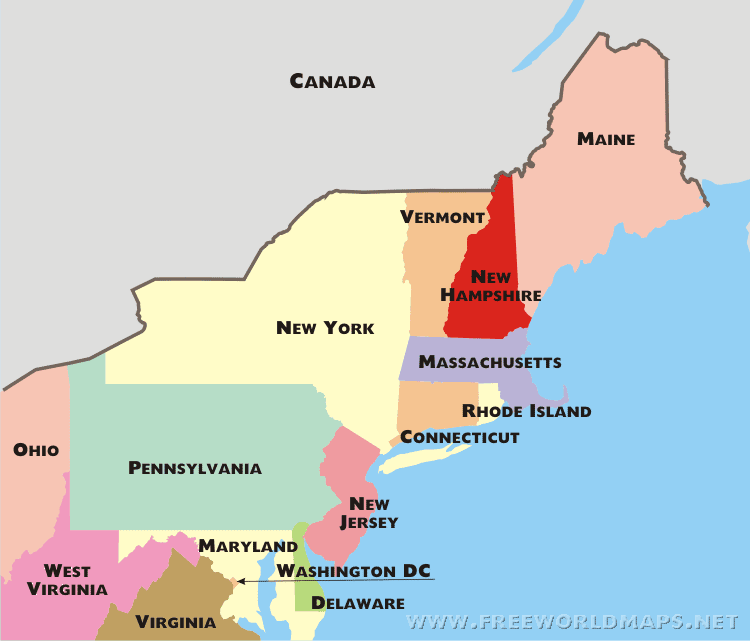
My general vicinity
But my location is also relevant for reasons directly related to this essay. Namely, that I ended up here at all. Let me explain.
When you grow up a million miles from the city, you not only develop a finely-tuned fantasy world, you also develop highly mixed feelings towards those distant cosmopolitan locales. As a teenager, when I shrugged off the consolations of fantasy books, I placed my hopes in the city instead. And not just any city. Nearby Denver was a cowtown, as far as I was concerned. The other cities I’d been to were Omaha, Las Vegas, Albuquerque, Casper. (Yes, a short list.) Also nope. LA giant freeways and movie-star sidewalks impressed me, but that teeming metropolis also managed to feel somehow empty. No, sir, for a farm boy like me, there was really only city to aspire to: NYC.
Not that I actually made it there (in truth, I never even visited the joint till 2012, when I was 36, and I haven’t been back since). I did spend a year in Milwaukee, a city to be sure, though a dreary, cold one. And then I finished college in Omaha, a city once specifically on my no-fly list. I ended up there for reasons involving a girl and poor decision-making skills. But I digress.
Three years of college at Creighton University made me bound and determined to go as far, far away from Nebraska or anything like it as I could go, and two months after I graduated, I was on a plane for Japan. Eventually I landed in Thailand, where I met my wife, and my life as I now know it actually began. We live in the States these days, but fly back to Thailand as often as we can, so the kids can get to know their Thai relations and my wife can preserve her sanity.
Aka Culture Shock
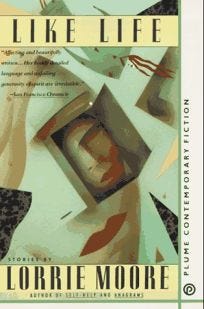
But back to Omaha, 1996. In a creative writing class, my teacher Brent Spencer assigned the short story “You’re Ugly, Too,” which appears in Lorrie Moore’s fine 1991 collection Like Life. He held it up as an example of all a short story could be. He wasn’t wrong, for reasons I’ll get into.
The 90s. So very, very 90s
As with my previous two entries, my memory’s ragged on this one, but I do recall the story as wickedly funny, as Lorrie Moore stories often are. Moore became one of my writing heroes after reading this collection. Your heroes do things you never could, and I could never be as mordantly sardonic as I recall Moore being in this story.
I do wonder, however, now that everyone’s a snarkastic genius on Twitter or retweeting someone who is: will that humor stand up? Back in the dinosaur days of 1996, when Independence Day was the summer blockbuster and mailboxes sagged under the weight of free AOL CD-ROMs, genuinely funny people were hard to come by. You had to meet them in person or catch them on HBO. A story like “You’re Ugly, Too” stood out like a sharp gem in a tasteless manila river — mainstream “literary” fiction was just as dull then as it is now.
The subject matter of “You’re Ugly, Too” as I recall it is mundane; a sophisticated New Yorker relocates to take a teaching job in a bland Midwestern backwater (a thinly disguised Wisconsin, I believe, where Moore lived at the time as a professor at the university in Madison). She finds the quotidian requirements of the job and the narrow worldviews of her students hard to take. In particular I recall one of her students objecting to learning about all those states Back East “because they’re all so small and squiggly.”
They are, though! Just look at them!
But when the narrator visits her sister back in New York, life there is no better. It’s all vaguely dissatisfying, somehow; where are the bright adventures we all were promised??? Nowhere, it would seem. Life is just sort of a dreary slog, and if you didn’t know it already, you will by the time you finish “You’re Ugly, Too.”
Despite the uninspiring premise and only reading it once, this story remained lodged in my mind for twenty years because of that aforementioned humor, which I think will strike anyone lucky enough to read Moore, but also because it struck deeply at that city-country divide that I felt myself so keenly.
I mean, of course a New York sophisticate would find life among my Midwestern brethren unbearable. At least she’s got a sense of humor about it! To me the story was a knife to the gut of my own longing — there I was stuck in Omaha, still a million miles from the (real) city. Back then, I’d have given anything to be able to look down my nose at my Midwestern brethren.
I’ve performed a one-eighty on such matters in the last two decades. I’ve been all over the world but am by choice a proud citizen of a tiny Wyoming town you’ve never heard of, and I’ve developed a minor hobby poking at purblind coastal elitists on Twitter. I hope the pendulum won’t have swung too far the other direction, and that I find myself as intensely disliking this exiled New Yorker as once I was envious. And I really hope the story is still funny!
AFTER READING
These days you hear a lot about privilege. The narrator of “You’re Ugly, Too,” a professor of history in her early 30s named Zoë (yes, spelled that way), is loopy with privilege. So drunk on it she doesn’t know what to do besides spin into angst over it.
I suppose it’s not exactly fair to hold a 25-year old story blamable for not being properly cognizant of a concept that’s only sprung into use in the last couple years. Still, though. The story is about a young-ish white woman who works as a professor, owns a home that she furnishes and re-furnishes as a hobby, has myriad romantic disappointments, and returns from Midwestern exile for brief, soul-nourishing (more on that later) visits back to New York, and yet can find happiness nowhere. It’s so hard, life!
Quote:
The trick to flying, Zoë always said, was never to buy a discount ticket and to tell yourself you had nothing to live for anyway, so that when the plane crashed it was no big deal. Then, when it didn’t crash, when you had succeeded in keeping it aloft with your worthlessness, all you had to do was stagger off, locate your luggage, and, by the time a cab arrived, come up with a persuasive reason to go on living.
Also, as will surprise you not one whit, “You’re Ugly, Too” was originally published in The New Yorker.
That said, and as those New Yorker editors no doubt noticed, this is a fine story by every technical standard imaginable. My old creative writing teacher was right about that. The dialogue is snappy and informative, the physical descriptions apt and poignant, and the pacing immaculate. Plus it’s funny. Man, is it! Here’s that part about little Eastern states I remembered so clearly:
Quote:
Her students were by and large good Midwesterners, spacy with estrogen from large quantities of meat and cheese. They shared their parents’ suburban values; their parents had given them things, things, things. They were complacent. They had been purchased. They were armed with a healthy vagueness about anything historical or geographic. They seemed actually to know very little about anything, but they were extremely good-natured about it. “All those states in the East are so tiny and jagged and bunched up,” complained one of her undergraduates the week she was lecturing on “The Turning Point of Independence: The Battle at Saratoga.” “Professor Hendricks, you’re from Delaware, originally, right?” the student asked her.
“Maryland,” corrected Zoë.
“Aw,” he said, waving his hand dismissively. “New England.”
Lorrie Moore doesn’t use humor merely to be funny: the jokes and irony mask the deeply-felt pain of Zoë, adrift in Illinois, adrift in her own life. A highly effective approach. If we can’t feel Zoë’s pain, exactly, we sure are certain that it is there.
In many respects, too, this story points to the ways in which we genuinely knew less before the internet: for a professor of history, Zoë seems to have a startlingly limited understanding of the historical context in which she finds herself. She doesn’t seem to question why she has “ended up” in Illinois, how the labor market of academia shifts its workers around with no less efficiency than a cattle feed yard. No wonder she, to cull a phrase, has ended up so alienated from her own labor!
These are things that anyone with even a marginal familiarity with academia today understands; graduate school grinds out hundreds of new graduates every year, desperate to take any job they can find. But we only know these things because of the internet, really; what is common knowledge these days would have been very hard to imagine in the early 90s. For Zoë, this is simply the way things are; she has to go where the work is, and her work happens to be in Illinois, and it’s impossible to imagine things being any other way.
But like I said, “You’re Ugly, Too” is technically correct in every facet. Except, perhaps, for those minor matters of plot and character development. As for a plot, there isn’t one; the smallest stabs at suspense are quickly snuffed out, and nothing much happens. Zoë herself ends the story the same woman as she began it, minus a potential gallbladder tumor or two. Anyone who remembers the 90s remember that ironic detachment was all the rage back then. You practically inhaled an inability to be sincere with the air you breathed. “You’re Ugly, Too” is a product of its times, when sentiment was too mushy to admit out loud.
So ironically intense!
Like an old Pearl Jam song on the radio with a killer hook you jam along to but never once think to search for on Spotify, “You’re Ugly, Too” plays all the right notes, but they don’t add up to much when they’re done. Where’s the anger, where’s the mystery, where’s the risk? By staying on the right side of every “literary” fiction convention I can think of, Moore’s story ultimately doesn’t add up to much. Ten thousand less well-executed stories just like it have swirled down into instant anonymity. What keeps “You’re Ugly, Too” above the waterline is its humor, and the fact that, for me, a portion of its subject matter just happened to be very close to my heart.
Yes, there was the casual disdain for the stolid Midwest, but for all its glittering glory, New York is itself only painted a slightly different shade of plaid. The problem here is Zoë, who takes herself everywhere she goes. I can only surmise I felt the slights to the Midwest so keenly back in my Omaha days because I had little, back then, to compare them to. Lorrie Moore was the worldly author, after all; she would know.
And that’s why the story stuck with me so long: by the time I realized where you are matters not at all compared to what you are, it was etched in my long-term memory. If I read it these days, I doubt I’d even finish, give or take a chuckle or two.
In short, this lightweight bit of re-reading didn’t yield up much in the way of insight. Your reading tastes always say more about you than about the reading itself, of course; I guess I’m at the stage of life where I don’t see much value in ironic detachment and a refusal to draw any hard lines. The story left me cold, I am sorry to report. Life’s too short, time waits for no man, etc. I found myself wishing hard that Zoë would see that, too.
DOG-EAR REPORT:
So while this story isn’t really my cup of tea any more, it still has some zingers. I count seven dog-eared pages. Not bad for a 25-page story!
The Pain of Property:
“Are you seeing anyone?” said Evan. “I’m asking for a particular reason, I’m not just being like mom.”
“I’m seeing my house. I’m tending to it when it wets, when it cries, when it throws up.” Zoë had bought a mint green house near campus, though now she was thinking that she shouldn’t have. It was hard to live in a house. She kept wandering in and out of rooms, wondering where she had put things.
Teacher of the Year:
“Maybe I sound whiny to you,” said the girl,” but I simply want my history major to mean something.”
Hello, and welcome to my week-by-week review of the world. Today I am reviewing Earl’s Spine.
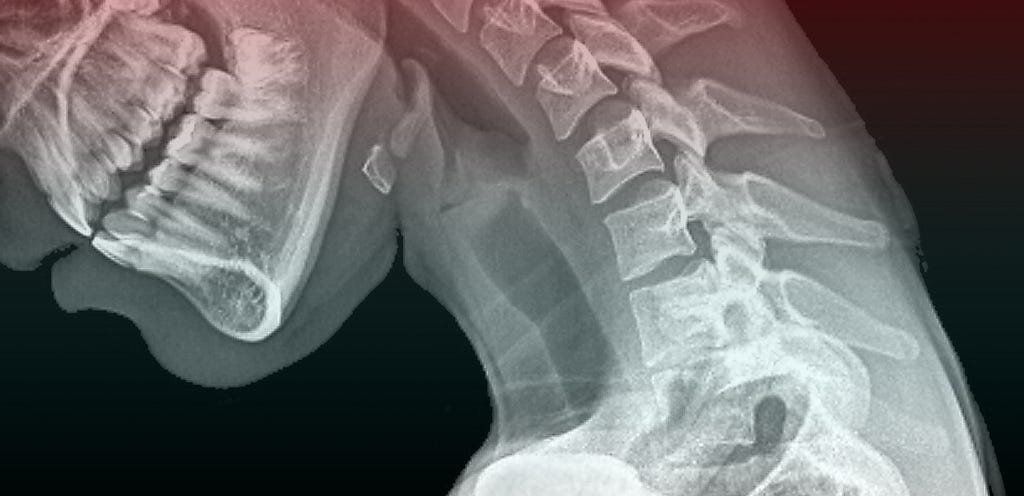
Unfortunately, I now know what Earl’s spine looks like. Earl is a guy I met immediately after he’d been hit by a car. For a guy who had just survived the blunt impact of an automobile, I have to say his spine looked pretty good. Except for the fact that I could see it.
Earl couldn’t see his spine himself, since it was behind him. There were no mirrors nearby for me to grab and show him how good his spine looked. The closest mirror was zooming away at around 45 mph, which is much faster than I can run. I usually don’t even drive that fast. When someone is in shock, as Earl was, you want to calm that person down and assure them everything is going to be okay. If I had been able to hold up a mirror and say, “See, look how good your spine looks,” he might have relaxed a bit.
The mark of a good spine is that it be full of marrow, and Earl’s seemed to have a surplus of the stuff. There was marrow everywhere. Foodies would have loved it.
Earl’s spine didn’t seem to be as useful as it had been a few minutes earlier. Whereas before he was upright and running away from an oncoming car while the driver screamed, “I’m gonna fucking kill you, Earl,” now his spine was causing him to writhe in pain on the ground.
I thought a spine massage might help ease the pain but every time I touched it Earl would scream out in pain and ask what was happening. I said nothing was happening, but also probably the pain he felt was his spine healing. It was better to fill him with confidence than to make him worry about the guy he just met touching his spine.
As I leaned in for a closer look, I began to feel uncomfortable. I was probably the first and only person to see Earl’s spine. It seemed too intimate a moment for him to share with a stranger, and I felt a sense of guilt as if I didn’t belong.
I didn’t want to see the spine anymore, so I leaned over to see Earl’s face. He couldn’t talk now, but he could still make eye contact. I stared at his eyes and wondered who he was, who he had loved, and where those people were at that moment. Why was I there instead of one of them? With our eyes locked onto one another, I began to cry, and Earl did too. Then his eyes somehow stopped looking at me but without closing. Earl died out in the open where anyone could see. I took my shirt off to cover his spine.
BEST FEATURE: His spine really hung in there for a long time. WORST FEATURE: The things it did to me emotionally.
Please join me next week when I’ll be reviewing The Price is Right.
These self-congratulatory attempts to reduce art to formula rarely tell us anything useful about stories. These formulas don’t tell us how stories function or how different narratives affect readers. They don’t tell us how great stories were written or what meanings the works can produce. Instead, these essentialist structures are parlor tricks that exploit the need for all mysteries to have simple explanations. But what the critic is invariably doing is generalizing to the point of nonsense.
When you lump the near-infinite number of stories into a few vague categories, you’ve ceased to say anything meaningful. This is exactly why there are so many of these formulations — “There are sixteen master plots!” “No, there are truly only seven types of stories!” “You’re both wrong, all stories are a stranger coming to town or a man going on a journey.” “Well I say five!” — and each are equally “right.”
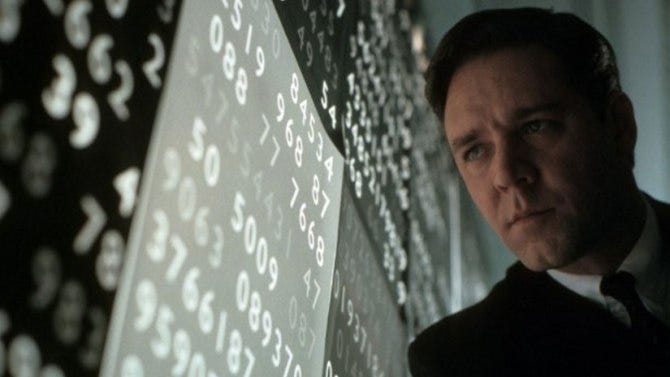
Well if you love pointless story structure analysis, especially when they are vaguely scientific, I’ve got a new study for you. According to the MIT Technology Review, “Scientists at the Computational Story Laboratory have analyzed novels to identify the building blocks of all stories.” The article also notes that there is no consensus about the number of story types but suggests this is because there hasn’t been scientific analysis. Now, Andrew Reagan and his team at the University of Vermont in Burlington have done a “sentiment analysis” to check out the “emotional arcs” of 1,700 stories.
The idea behind sentiment analysis is that words have a positive or negative emotional impact. So words can be a measure of the emotional valence of the text and how it changes from moment to moment. So measuring the shape of the story arc is simply a question of assessing the emotional polarity of a story at each instant and how it changes.
This is profoundly reductive. Human emotions are numerous and complex. The idea that all human emotion, even in the context of narrative storytelling, can just be reduced to “positive” or negative” is silly. (It would be far more interesting to see an analysis of emotion in stories that wasn’t binary.) And can you really judge a story’s emotional arc by counting words? Are “moon” and “child” really inherently “happy” words — as these researchers say — in context of storytelling? Tell that to the werewolf horror story I just read…
Additionally, this study of “fiction” and “stories” includes works of philosophy by Schiller and Kant alongside numerous collections of non-fiction essays and letters. There are many interesting possibilities with data analysis of literature, but sadly, I don’t think this is one of them. Even beyond the aformentioned problems, the conclusions drawn are pretty unhelpful.
Quick, without doing any computer analysis, answer this question: if we declare there are only two directions (up and down) that X can move, and we say X can only switch directions up to two times, how many ways can X move?
Well… X can just go up (1). It can just go down (2). If X switches directions once, it can go up and then down (3) or down and then up(4). If it switches twice, it can go up-down-up (5) or down-up-down (6). Those six are literally every permutation possible. Guess how many types of emotional arcs this study claims to reveal? Yes, six.
A steady, ongoing rise in emotional valence, as in a rags-to-riches story such as Alice’s Adventures Underground by Lewis Carroll. A steady ongoing fall in emotional valence, as in a tragedy such as Romeo and Juliet. A fall then a rise, such as the man-in-a-hole story, discussed by Vonnegut. A rise then a fall, such as the Greek myth of Icarus. Rise-fall-rise, such as Cinderella. Fall-rise-fall, such as Oedipus.
Put aside the fact that these examples don’t really fit — Alice does not purely rise, and Romeo and Juliet rise before falling — they didn’t even need to do any analysis because they defined these as the six possibilities from the start. But wait, you say, couldn’t there be more complex plots that vacillate between rising and falling with more than two direction changes? Of course. These are just the six “building blocks” and “stories that follow more complex arcs that use the basic building blocks in sequence.” So… there aren’t only six types, there are just six “building blocks” that are actually just two building blocks: rising or falling.
So there you have it folks, “science” has determined that all stories have characters who rise or fall or do both, perhaps multiple times, in some order.
Traditionally, white nights are those where you don’t go to sleep. White nights are also those where it never gets truly, 100% dark. While I can’t be sure which Annie DeWitt is referring to in her novel, White Nights in Split Town City, I presume it is physically the former though perhaps metaphorically the latter as well.
The sleepless nights are Jean’s, the novel’s narrator and main character, though both her name and the fact that she’s not sleeping well are mentioned rarely. What Annie DeWitt does best in this book is center you in each moment, which doesn’t automatically translate to stringing those moments together. It’s not a bad thing — it keeps the mystery of the book alive, and allows it to focus on the language and the eerie events, some of which aren’t fully described, rather hinted in such a way that you know precisely what’s going on.
Jean is a special creature, with an overbright brain that she doesn’t necessarily have an outlet for in her New England town.
The novel’s plot centers around Jean’s summer in 1990, a summer that I doubt she will ever be able to forget. She experiences a lot of “firsts” and becomes aware of things she’s never been truly aware of before. One of the most remarkable is her understanding of her parents’ sexuality towards one another, which isn’t something most adult children, let alone thirteen-year-olds, are able to dwell on without flinching. But Jean is a special creature, with an overbright brain that she doesn’t necessarily have an outlet for in her New England town, on her unpaved road, in her school that doesn’t seem to have anything remarkable to say for itself.
During this summer too, Jean’s mother leaves, leaving Jean and her little sister alone and needing to be babysat by various other women, from a teenaged “bleeder” to a series of older women whose lifestyles are as distinct as the way they speak. For a time, Jean woos a boy around her own age, an apparent orphan who’s part of a band of brothers — the Steelhead brothers — who’re looked down on by the town as motherless ruffians. She is also wooed by an old man who lives across the street from her, Otto Houser, whose advances may seem either subtle and innocent or leering and dangerous, depending on how you read his scenes (until a particularly crucial moment during which any doubts you may have one way or the other disappear, though I won’t tell you what happens).
More than a novel of plot, however, this is an atmospheric book, one that reads somehow like a Southern novel though it is set in New England. And yet, having been upstate NY recently, in a relatively rural area, I find I now understand this — people there speak the way we imagine stereotypical southerners do. There is a lilt and twang to their speech and a friendliness that is also calculating and a harshness that is loving. There’s a way of noticing the weather and looking around in a way that sees things city dwellers don’t. It’s this that DeWitt manages to capture so intensely in her scenes and in her narrator’s voice and the way she captures little turns of phrases so remarkably:
The streets skirting the radius of town were decorated by the types of homes with driveways that ran in a horseshoe and were lined in a reception of old town cars. Pillared porches and tall white fences enclosed trellises of wild roses and pots of imported tomatoes. Here decadence shifted in perennial storm. In winter, when the flowers and the tomatoes were under snow, images of horses in gingham blankets speckled the landscape…
Decadence shifting; images speckling a landscape — this is the language that makes this novel pop in moments that are unexpected. In quiet moments, she’ll bring forth a profound statement, like how Margaret, Jean’s mother’s friend, said that the “lawyer was suffering what every man faces after the death of his wife: the prospect of many sleepless nights bookended by two days of solitude” or Jean herself observing, “There was a distance to her silence that I appreciated.”
Jean’s mother is hard to pin down, which is part of what makes her character — who is not there for much of the book, but who crops up in memories — so wonderful. She befriends the one Englishwoman in town, the aforementioned Margaret, and the two women bond over literature and art. They’re part of a group of women whom Jean’s father mock-lovingly calls The Separatists. Margaret embodies much of what Jean’s mother seems t0 wish she could be, even though she herself seems to embody it far more than Margaret herself does. But Jean’s mother doesn’t see this, and feels limited by the town that Jean is growing up rather too quickly in. This is something that her mother recognizes, and yet still she seems almost destined to flee, especially after scenes like this, which describes something as simple as wanting to find a place to hang a painting, but which becomes far more complex in Jean’s narration:
The wall had been a focal point of Mother’s recent discomfort. It sat at the far end of the house onto which both the living room and the portico overlooked. The previous owners of the house had been an elderly couple with a fondness for stenciling pastoral scenes onto any stretch of wall that enjoyed some open expanse. To Mother’s mind, the kitchen offered a particularly unforgivable example. The laymen’s handiwork, she felt, was evidence of the house’s age and limited possibility.
Jean’s mother is truly the center of the book in many ways, for it is her absence that is most felt, and her return that is most dramatically dealt with as well. When she returns, she seems smaller to Jean, and yet still all-important: “All I saw was a tiny barefoot woman with a far off scare in her eye. Her chest was thin and hollow. For some reason I felt like crying. I had disappointed her, not because of what I had done but because I was still a child hanging on her belt who hadn’t grown up and out yet.”
Wise for her age in a way that she embraces, Jean epitomizes the idea that other authors are discussing these days too — that teenage girls should be taken seriously, that their sorrows and feelings and expressions are nothing to sneer at. Megan Abbot — whose writing is incredibly different from DeWitt’s, but whose subject matter and themes share something with her — said in a recent interview: “I think women are always trying to figure out their own adolescence. We never stop.” This hits the nail on the head where White Nights in Split Town City is concerned: there is a search for adolescence here from a woman who is both a teenager and a grown-up at the same time, and it is a marvelous, beautiful, and painful journey.
The Night Of, a new eight-part miniseries starring John Turturro and Riz Ahmed, premieres this Sunday at 9pm on HBO, the most prestigious slot in television. If the early returns are any indication, this might just be the blue-ribbon crime drama fans and critics have been waiting for since the summer of 2015, when True Detective proved all mustache and no sense. The Night Of is the creation of Steve Zaillian (screenwriter for Schindler’s List, among others) and one certified legend of literary crime fiction: Richard Price.
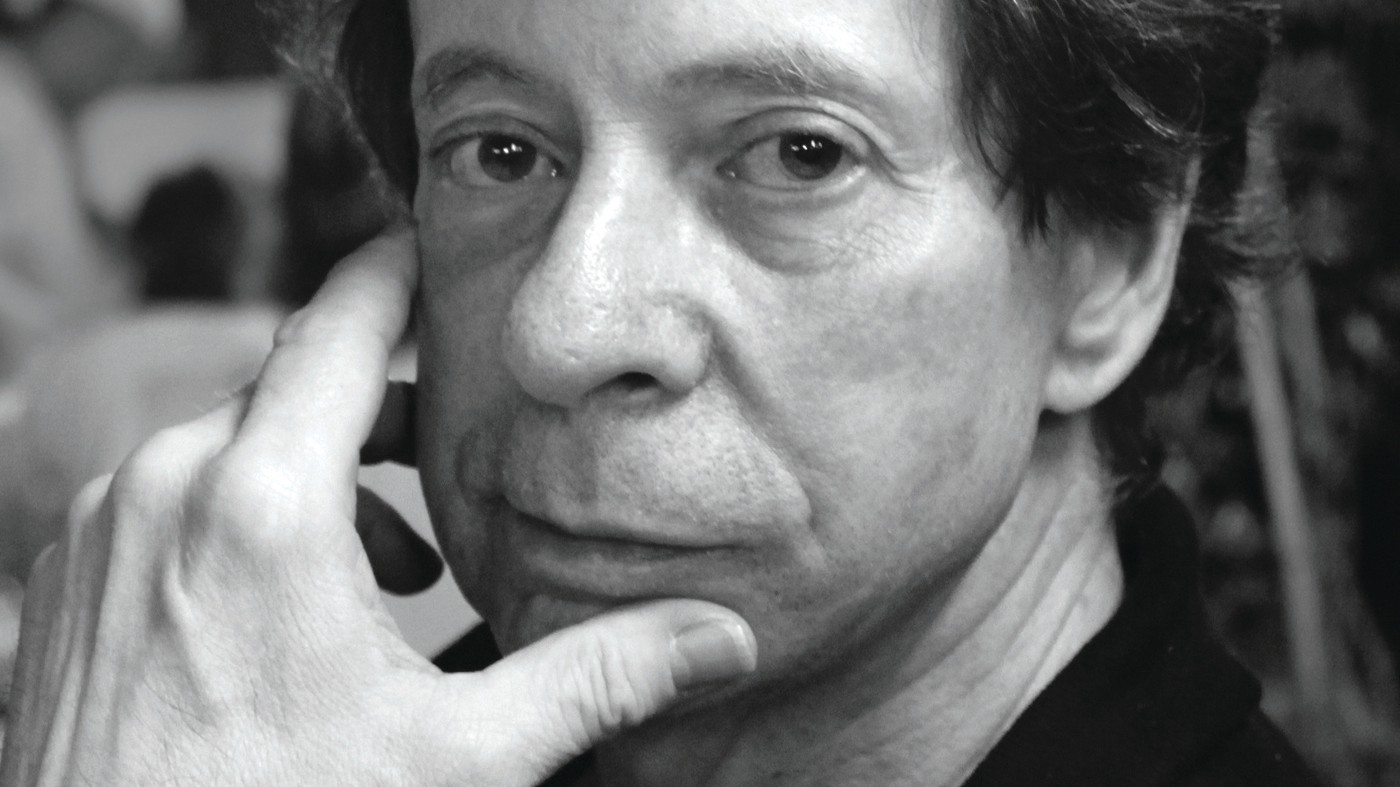
Price is the crime writer’s crime writer. One part Dickens, one part Ellroy, with a splash of Spike Lee. His books are grand affairs — hundreds upon hundreds of pages of urban decay, gallows humor, desperation, and moral vacuum. His screenwriting, for screens big and small, is just as ambitious.
The Night Of is Price’s first chance at the helm, and the plot serves up his favorite themes. Nasir Kahn (Ahmed), son of a Pakistani cab driver, borrows his father’s car for a night out and, on a whim, gives a girl a ride. When the girl turns up dead, Kahn is arrested. Later, John Stone (Turturro), a night-crawling, subway-advertising attorney is brought in to serve in his defense. This is NYC crime at its twisted, brooding best. This is Price’s wheelhouse.
To fully prepare for the next eight weeks of gritty urban noir, you’ll want a primer to Price’s work (or a refresher, if you’re already in the know). The first episode of the series is streaming now, and with the official launch coming Sunday night, full-on immersion might feel like a lost cause. But don’t worry, we have you covered. Listed here are the essentials: what to read, watch, listen to, and scan in the days before The Night Of premieres.
Read This
Okay, you don’t have much time to read, but this is a literary magazine, damnit, so let’s start with a couple books. (Allot yourself 4–5 hours, if you can.)
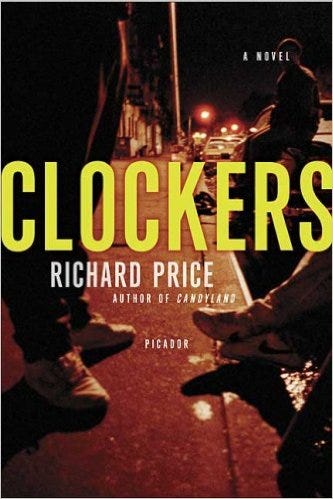
Clockers (1992)
Clockers is Price’s masterpiece, a vivid and sprawling account of cops and dealers in northern New Jersey. By all means, if you haven’t already, settle in and read all six hundred and some-odd pages of Clockers. But if you’re working on a schedule, the first one hundred pages stand up as some of the finest, most penetrating crime writing in contemporary American letters.
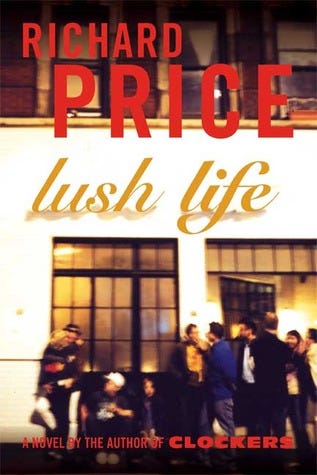
Lush Life (2008)
This is Price’s opus of a gentrifying New York, a tale of two Lower East Sides, with Price’s ear for dialogue on full display. Late one night a hipster is shot. The alleged killers reside in a LES housing project. Expect the many social tensions explored in Lush Life to rear up over the course of The Night Of.
Watch This
So, you’ve been lugging Price’s tomes around in your bag for a few days and you’re sufficiently impressed with his authorial chops, but now you want to find out what the man can do with live actors, scene cuts, and a union crew…
Fire up that streaming service. Price has an IMDB page nearly as long as Martin Sheen’s rap sheet. Here are a few of the highlights. (Set aside, say, 6 hours.)
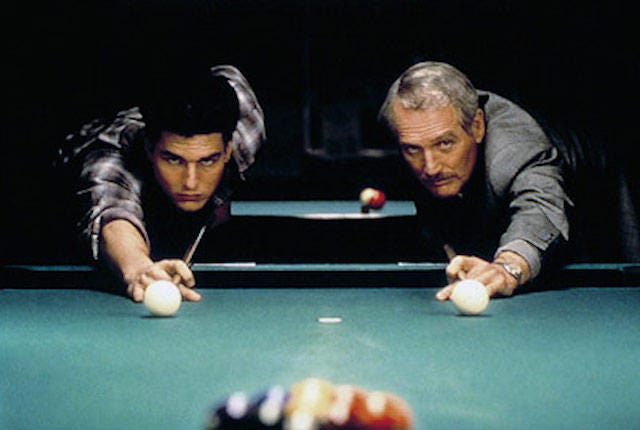
The Color of Money (1986)
Price gave up writing books for a while in the ’80s. He was tired of documenting the Bronx and needed to get out of town. Fortunately, Martin Scorsese came along and asked him to tour some pool halls in the South. The result? The Color of Money, Price’s first screenplay to hit the big screen.
Clockers (1995)
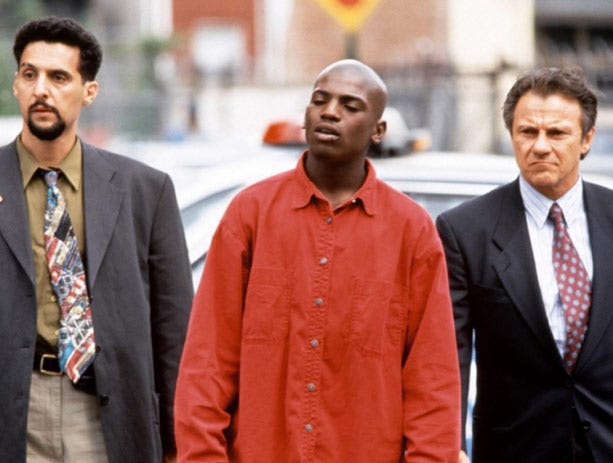
Yup, Price adapted his novel of the same name into a classic Spike Lee Joint. Also starring John Turturro.
“All Due Respect,” The Wire, Episode 27 (Season 3, Episode 2)
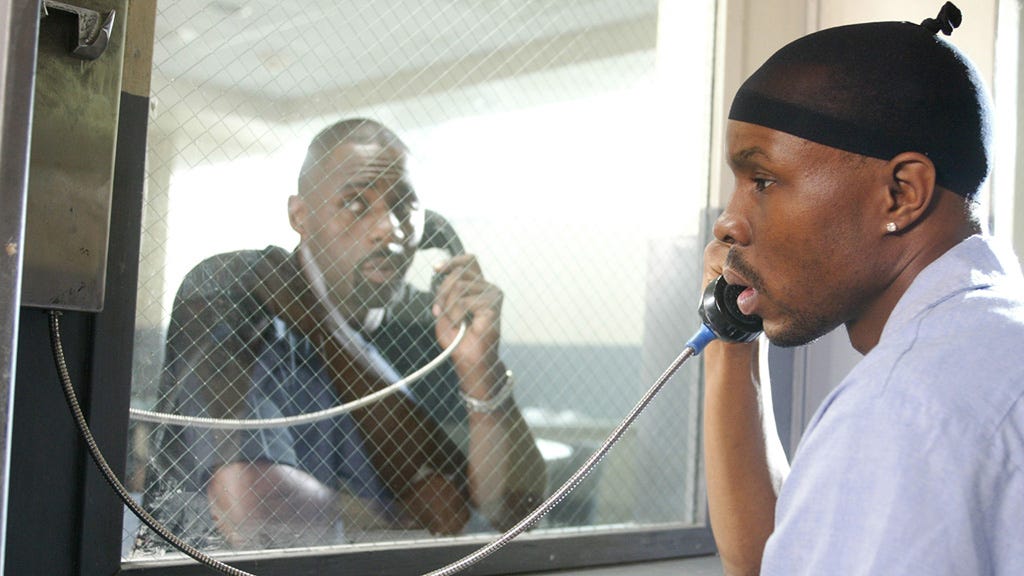
Price was brought into The Wire family by another luminary of crime fiction, George Pelecanos, in Season 3. His first episode, “All Due Respect,” brings Bunny Colvin (the architect of Hamsterdam) to the fore. But it is probably better remembered as the beginning-of-the-end for the Avon Barksdale and Stringer Bell relationship. Stringer pays Avon a visit on the inside and the two OGs lay out competing visions of where their organization is headed.
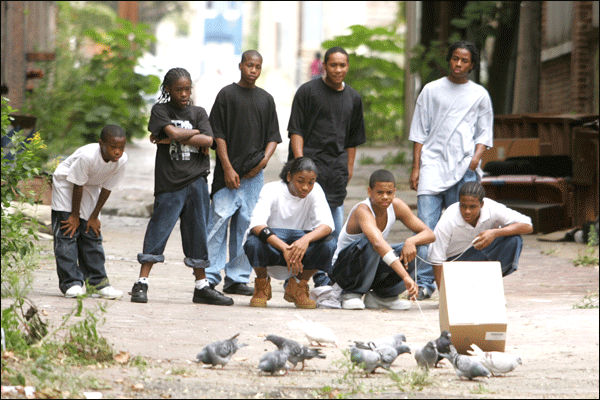
“Corner Boys,” The Wire, Episode 45 (Season 4, Episode 8)
Any episode where Snoop lays out the finer points of her craft is a winner. There are some solid Littlefinger… uh, Tommy Carcetti speeches here, too.
Listen to This
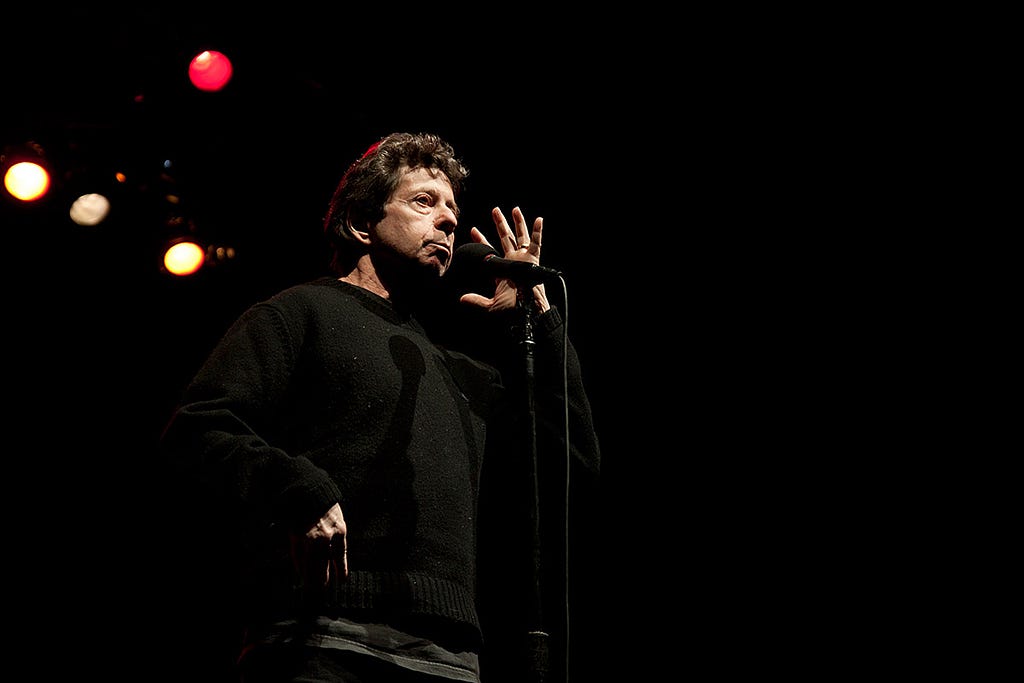
Want some Richard Price for your commute? Check him out at The Moth. This one clocks in under 15 minutes, so hopefully you’ve got a short commute.
Richard Price at The Moth (2011)
If the podcast summary doesn’t grab you — Richard Price and a wrestling obsessed grandmother — then you’re a lost cause, beyond all saving.
If you have a little time to kill before the show starts, Price is an insightful, compelling interview. Here are two of the best. (You’ll want about 1 hour.)
Richard Price and David Simon in Conversation at the 92nd St Y
The creator of The Wire interviews Price about his latest novel, The Whites.
You are now officially ready to watch The Night Of.
And when it’s all over, don’t fret. The whole gang — Price, Simon, Pelecanos, Nina Noble, James Franco (wait, what? — ah, just go with it)— will be back together next year for HBO’s The Deuce, a new series concerning the porn scene in 1970’s and ’80s New York.
James Franco, in ‘The Deuce’ (2017)
HBO — where good crime fiction goes to get rich. God bless them all.
DON’T MISS OUT
Sign up for our newsletter to get submission announcements and stay on top of our best work.
YOUR INBOX IS LIT
Enjoy strange, diverting work from The Commuter on Mondays, absorbing fiction from Recommended Reading on Wednesdays, and a roundup of our best work of the week on Fridays. Personalize your subscription preferences here.