There is a strange assertion going around the news dealing with the Orlando, Florida hate crime that took place at Pulse, a gay nightclub, in the early morning of June 12, during the club’s Latin night line. This assertion is repeated over and over again by various lawmakers and pundits, and paraphrased, it seems to be something like this: the victims weren’t just gay, they were Americans. A friend of mine wondered aloud on Facebook a few days ago how long it would be before us “gays,” meaning the LGBTQ community at large, would be demoted from the grand AMERICANS (which, by the way, not all of the victims were — there were several who were in the country illegally and the US oh-so-kindly agreed to give their families a whole week in our glorified country in order to attend to the wonderful task of funeral planning and body transporting) to being just “gays” again.
In that spirit, and directly after the massacre, I had the great pleasure of reading Arcade, by Drew Nellins Smith, a book that is both incredibly American and incredibly gay, and I’m pretty sure the latter trumps the former in this case when describing quality. It is also a book that very clearly sees and discusses the feeling of otherness that’s instilled in people questioning their sexuality and acting upon any deviant desires — that is, desires that aren’t het and cis.
Arcade, according to an interview with Smith in the LA Times, had some interest from one of the major publishers, but even after an editor told him to take out all the sex, the book still didn’t get out of the acquisitions process and was eventually turned down. When Olivia Smith — no relation to the author — editor at the excellent Unnamed Press, took on the book, her first editorial request was that the author put all the sex back in. And thank goodness, because without it, Arcade wouldn’t be what it is: a landscape of several months in which the importance of seemingly gratuitous sex scenes and the obsessions of a lovelorn man come together and are made equal, neither more important than the other.
[A] book that very clearly sees and discusses the feeling of otherness that’s instilled in people questioning their sexuality
The novel’s plot is not what the novel is really about, but in brief, it follows an unnamed narrator who occasionally goes by the false name Sam, as he very slowly overcomes an unhealthy obsession with “the cop” he was involved in (also never named) and the cop’s new boyfriend, “the kid,” who is 19, almost ten years younger than the narrator, and has replaced the narrator in the cop’s affections. It also follows the narrator’s discovery of a hookup spot whose front is an adult video store on the outskirts of the Texas town he lives in. And, finally, it follows his friendship with a gay man named Malcolm with whom he talks regularly and jerks off with.
The sex in the novel is nothing short of splendiferous — deserving of the word in that it is varied, fascinatingly intimate at times and completely detached at others, and unflinching to the point where some readers may be uncomfortable. Personally, I found it rather steamy. The arcade, which is really a series of booths in two corridors — one smoking and one non-smoking, very civilized — in which mostly men come together in various configurations and according to various codes is where the narrator spends much of the book. Though not meant as a manifesto by which to force readers to look at queer sex close up and accept it without flinching, it does have that unintentional side effect of presenting sex as both neurotic, which it is for many of us, and completely normal, as it is for many of the characters grazing at the narrator’s body and its outskirts (because the narrator doesn’t always participate directly but often watches from the corner).
There is something essentially satisfying about passages in books that present, intentionally or not, a metaphor for the novel as a whole. About halfway through Arcade there is one such:
One of the great gifts of the arcade was the way it put us all on the same level. Of course I could tell which men were rich or poor or middle class, but it didn’t matter out there. After the three dollar threshold, we were all the same. I went to the arcade when I was flush with cash, and at other times when I was so hard up for money I debated whether or not I could really drop a fiver on the venture. It didn’t change anything. It didn’t change my luck. It was the first and only level playing field I’d ever been on. I liked the idea that most of us never would have met or interacted if it hadn’t been for that place, divided as we were by our jobs and incomes.
This closes a chapter in which the narrator presents the arcade as incredibly different from his workplace (he’s a clerk at a motel, down on his luck after a career in real estate that ended with the crash of the housing market), and the next chapter begins with what struck me as a laughably apt continuation of this metaphor: “I drove to the cop’s house almost an hour away.” That is, chapters describing sex, chapters describing the narrator’s job, chapters describing his philosophy of the arcade, and chapters describing his outright obsession with his former lover — they are all presented as an equal playing field, none made more particularly important than others, even if we, as a society, would like to put some sort of claim on the importance of the narrator’s fascination with sex with other men, still a taboo subject in many parts of our society (and the novel is set, remember, in Texas, a red state with blue spots, but a red one nonetheless). The novel’s structure simply doesn’t allow that.
Another remarkable thing about Arcade is its refusal to be a coming-out novel. From its start, it’s clear that the narrator is interested in sex and romance with men, though at first he tries to explain to himself that it is just about the cop. He uses the philosophy of “I’m not into men, I’m into one man.” His actions belie this, of course, and he describes in passing how his coming out happened accidentally as he began to fall apart and cry obsessively about the cop whenever he was with friends or family. But that’s not what the novel is about; the narrator’s coming out is a byproduct of his personal realization that he’s gay, and even that isn’t what the novel is about. It almost doesn’t matter, except that it matters hugely because of the culture of the arcade (that of LGBTQ spaces historically occupied by gay men, spaces like bathhouses and other cruising spots) that the narrator becomes embroiled in and as obsessed with as he is with the cop.
Yet even so, it’s impossible to wrap the novel in any sort of simple “this is what it is about” narrative. As it’s a book in which both almost nothing and a great deal happens — both externally and internally for the narrator — it defies the notion of how we think of many novels. Still, there is a journey of sorts, and it is one that is worth following from its bitterly beautiful start to its bitterly wonderful end. The narrator’s frantic obsessiveness may be uncomfortable or overly familiar to readers depending on the state of each individual’s anxiety levels, but what is almost guaranteed is that the bafflement of the narrator’s actions, his difficulty in understanding himself even as he parses and analyzes every tiny thing he does, will be discomfiting because we’ve all been confused and lost and exactly where we’re supposed to be at one point or another.
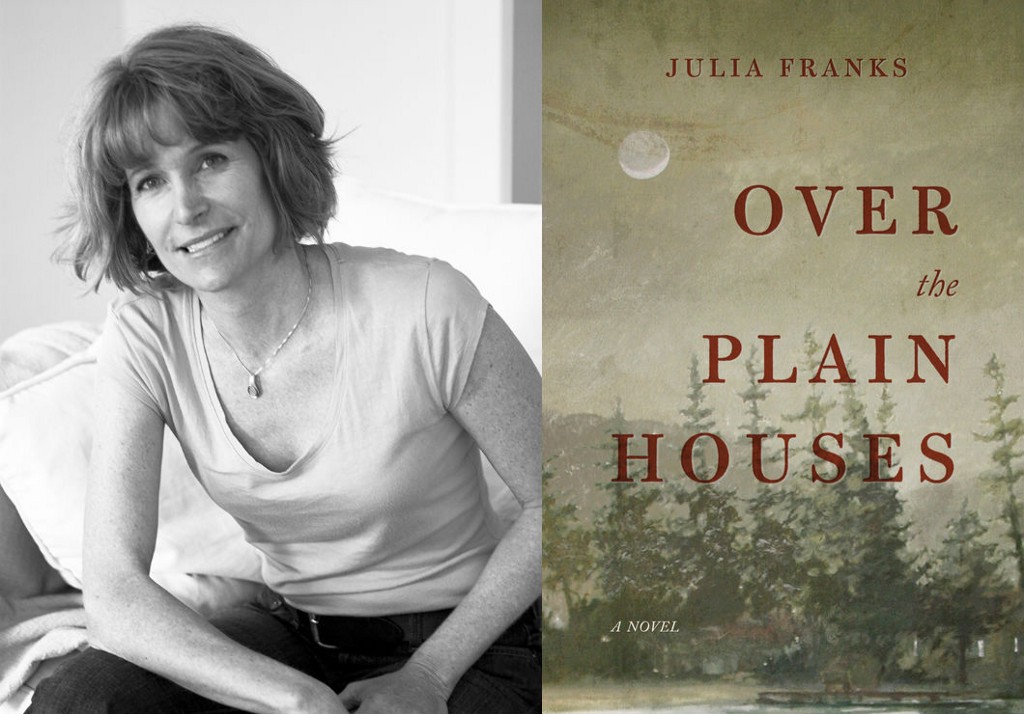
Set in a small Appalachian village in 1939, Julia Franks’ debut Novel Over the Plain Houses (Hub City, 2016) tells the story of preacher Brodis Lambey and his wife Irenie, who struggle with the forces of modernization that arrive unbidden into their sheltered mountain community and drive a wedge into their marriage. Dealing with such issues as the government’s role in the lives of individuals, the responsibility of humans toward the environment, and the place of women within their communities, the book feels at times remarkably contemporary. With careful attention given to the Appalachian landscape and an intimate feel for the tensions of society played out within a single family, the novel is a striking portrait of a place in transition, told by a gifted storyteller. I sat down with Julia recently in Atlanta to discuss her love of the outdoors, her literary influences, and her role as an educator.
Bronwyn Averett: The first thing I noticed about your novel was its incredibly vivid portrayal of the Appalachian landscape. Can you talk about your background a little, and what leads you to be so familiar with the mountains?
Julia Franks: I spent a lot of time outdoors growing up. And my parents are both very big outdoors people. So my dad was a Vietnam vet. Some vets come back and they go “Oh I never want to go camping again ever in my whole life.” And others, they want to be outside, you know, they want to be in the woods. My dad was the second kind, and my mom was pretty outdoorsy too. We just spent a lot of time in the woods. So other people would be going to Walt Disney World for their vacations and we would be going backpacking. You don’t really realize it’s weird until about middle school. But I was very comfortable going outside from a very young age.
Averett: Irenie is very much the figure of the Appalachian woman. She knows the woods so well she can walk them in the middle of the night. She knows how to go out and collect plants that have medicinal uses. She knows how to preserve all the food she needs. When I read her I was reminded of these Tennessee mountain women who are sort of legendary on my Dad’s side of the family. Was Irenie based on any women in your family, or anyone you know?
Franks: She is based on a person I never met. In 2008, my husband and I — I was married at the time — we bought a property in Western North Carolina, on the backside of Tennessee. And it’s a very long story but it was one of these homesteads that had been there since the middle of the 19th century. And the husband had died and the wife had lived there basically until her grandkids had taken her to a facility. And they never cleaned out the house.
So we get to this house that’s built in 1865 and it’s full of stuff. She collected stuff and she would save things in jars and she would label them. The house was full of these containers with these labels, and she saved weird things like teeth and fingernails. I never met her. But if you’re a novelist and somebody leaves you a house full of stuff that’s labelled, and boxes of letters and diaries, you’re gonna ask yourself: what were these people like? What were their lives like? So I guess you could say Irenie is based on how I imagined this woman. And her husband was a circuit preacher. They were both eccentric, and people told us a lot of stories about them. In fact, the story of the hawk is a true story. I wish it weren’t, but it is.
Averett: This is the moment in the book where Brodis traps a hawk because it is killing their chickens. And Irenie protests, saying that no one in her family has resorted to that kind of violence in the past. Between them, there seem to be conflicting ideas of how to run the land. Brodis wants to control it, and Irenie wants to live with it. Are these different ideas of stewardship?
Franks: Brodis has a very Old Testament view. He uses the word “shepherd” — that it’s his job, to shepherd his family and shepherd the land, and he has his way of doing it. And it’s not out of the question if you’re a farmer to kill hawks, to kill foxes. But really Irenie is the exception, saying that she doesn’t want to kill these predators, who are preying on their livelihood. If you take a step back, you can see where Brodis is coming from. It’s just that even he questions if that’s the right way to do things.
Averett: The conflict here is also indicative of Irenie being more connected to the land than Brodis. And it’s partly from her familiarity with the land that he starts to think she is a witch. Where did that come from?
Franks: I don’t know where the witch idea came from. It was very early part of the story. If I had to guess, I think it just comes from being a woman in this culture. This is what we do. When women don’t behave the way we want, we demonize them. Look at the upcoming election. There’s a certain demonizing that can happen when you’re strong. We might not call a woman a witch, but we find other ways to demonize her. If you’re fearless, you’re demonized. It’s a way of making you not as human. It’s a kind of marginalization.
When women don’t behave the way we want, we demonize them.
Also, Irenie is doing things she wants to keep from her husband. She has her own interior life that she keeps from him, which is the real thing that he senses, that she has this life that she has not shared with him. So Irenie is ascribed these powers that she doesn’t have. She’s just struggling with these really basic things, like how not to have a baby.
Averett: And that’s something that she finds help with through her friendship with the USDA agent. Why did you choose to focus on the story of a figure from the government who comes in and tries to modernize this “backwards” village?
Franks: It was a thing that happened in that area of the country. There were a lot of government agencies and charity agencies and church groups that came in and wanted to help, with good intentions, that sometimes went awry. The traditional way of farming was sustainable, in the sense that you’re growing everything you eat, and most of the things you use. So barely sustainable, subsistence farming. But it worked, and it was a model that had some advantages. And when the Depression came along, those people who were growing everything they ate were not that effected. They were already poor, and they weren’t as effected by the outside economy, because they weren’t interacting with the outside economy.
Averett: Did these conflicts, especially the distrust of the government, feel contemporary to you when you were writing?
Franks: We’re in this moment right now, where angry, rural, white men are in the spotlight. When I wrote this they were not. But now it does feel very contemporary. But Brodis does have reason to be angry. His wife left him and his economic livelihood is lost. And this profession that he used to love he no longer has access to. But what do you do with that anger? And this is the question that feels relevant right now — what do you do with this anger and frustration?
Averett: There is a certain timelessness to the theme of anger caused by a changing world. It’s something that all writers deal with in different ways, but it does strike me as something that Southern writers have been particularly attentive to. Were you influenced by certain voices as you began writing?
Franks: Well, Flannery O’Connor is a pretty clear influence. And Faulkner and McCarthy. And you can almost put Martin Luther King in the same pocket as them, in terms of syntax. They all use a lot of King Jamesian syntax. And then I have to say Charles Frazier, because he’s a personal favorite. His constructed linguistic world is wonderful.
Averett: Do you situate yourself in a particular Southern tradition? The South is composed of so many different communities, and there are so many different styles and concerns in the literature. Do you find yourself somewhere specific in all of that?
Franks: Now I’m being called an Appalachian writer. And my aunt is actually Mary Lee Settle — an Appalachian writer who won the National Book Award, which I’m hoping is a gene that can be passed down! So in terms of my roots, that’s the area I most identify with in the South, even though I live in Atlanta.
Averett: Does living in Atlanta at all influence the kinds of things that you think about and want to write about?
Franks: Yes, just because this is a lot more racially diverse than Appalachia. And that reminds me of another Southern writer I admire: Zora Neale Hurston. Everyone got so irritated by what she did with dialogue. But if you look at a huge percentage of Southern literature, white people speak in non-dialect, and black people speak in dialect, these ways that have been phonetically modified. White people drop their g’s. And white people don’t pronounce the “t” in Atlanta. But we never see it rendered phonetically on the page if the person is white. And I’ve seen it that way in history books too! It’s incredibly patronizing. So even though people didn’t like how Hurston rendered dialogue, at least it was even-handed.
Averett: I’m sure you find a lot of opportunity to discuss these kinds of things in the classroom. Would you mind saying a bit a bit about how you see your role as a teacher?
Franks: Some people teach because they want to write, but I’m actually very much an educator. One of the things I’m working on is to change the way we teach literature in secondary schools. I think what needs to happen is that kids need to have more choice. This is a bit of a crusade for me. I started a web-based business, Loose Canon, which is a resource for teachers to manage free choice in the classroom.
When you give them choice, the difference is crazy. I had all these seniors, a bunch of boys, and I could tell they weren’t reading. So I said at the beginning of the second semester: you can either read the books here on the syllabus, or you can read twice as many books that you choose. Of fifty kids, every single one of them chose to read twice as many books. And yeah, some of the books were lightweight, but a bunch of these boys got on a Cormac McCarthy tear. And really they’re these Cormac McCarthy experts now!
Averett: So how is that different than what the “powers that be” in education want for students and reading? What do you want?
Franks: They want kids to be reading books that are too hard. Fewer books that are harder. But we need volume. We need inundation. We need a firehose of books. And some of them will be powerful and some of them will be part of the water.
Averett: Here’s the hard question for you though. It’s obvious for people like us who love books, but for much of the world it isn’t. Why is it so important that young people read? Why shouldn’t they take more math classes?
Franks: To paraphrase Tim O’Brien, when you’re reading literature, it’s the only time you’re in somebody else’s head. It’s the only time you’re going to be inside the head of a 16-year-old cowboy. It’s the only time you’re going to be inside the head of a soldier in Vietnam. Narrative will always live on in these other forms, movies and video games. But nothing is like reading. People who read literary fiction have a different level of empathy.
Cormac McCarthy Is Dead. Long Live Cormac McCarthy
Cormac McCarthy’s fake twitter page
Yesterday, a fake Twitter account designed to look like Knopf (@aknopfnews) announced that Cormac McCarthy had died at age 81 from a stroke. USA Today quickly picked up on the news and retweeted it, leading to a frenzy of concern that the author of novels like The Road and No Country For Old Men had passed away.
It was soon revealed that the news was a hoax by Italian journalist Tommasso Debenedetti. Debenedetti has created fake accounts for authors in the past (DeLillo, Marquez, Munro) but Twitter seemed to enjoy the idea that McCarthy, he of guns, blood, and apocalypse, had survived death (or maybe as McCarthy would put it, survived being buried alive.)
Cormac McCarthy is alive and well and still doesn't care about Twitter.
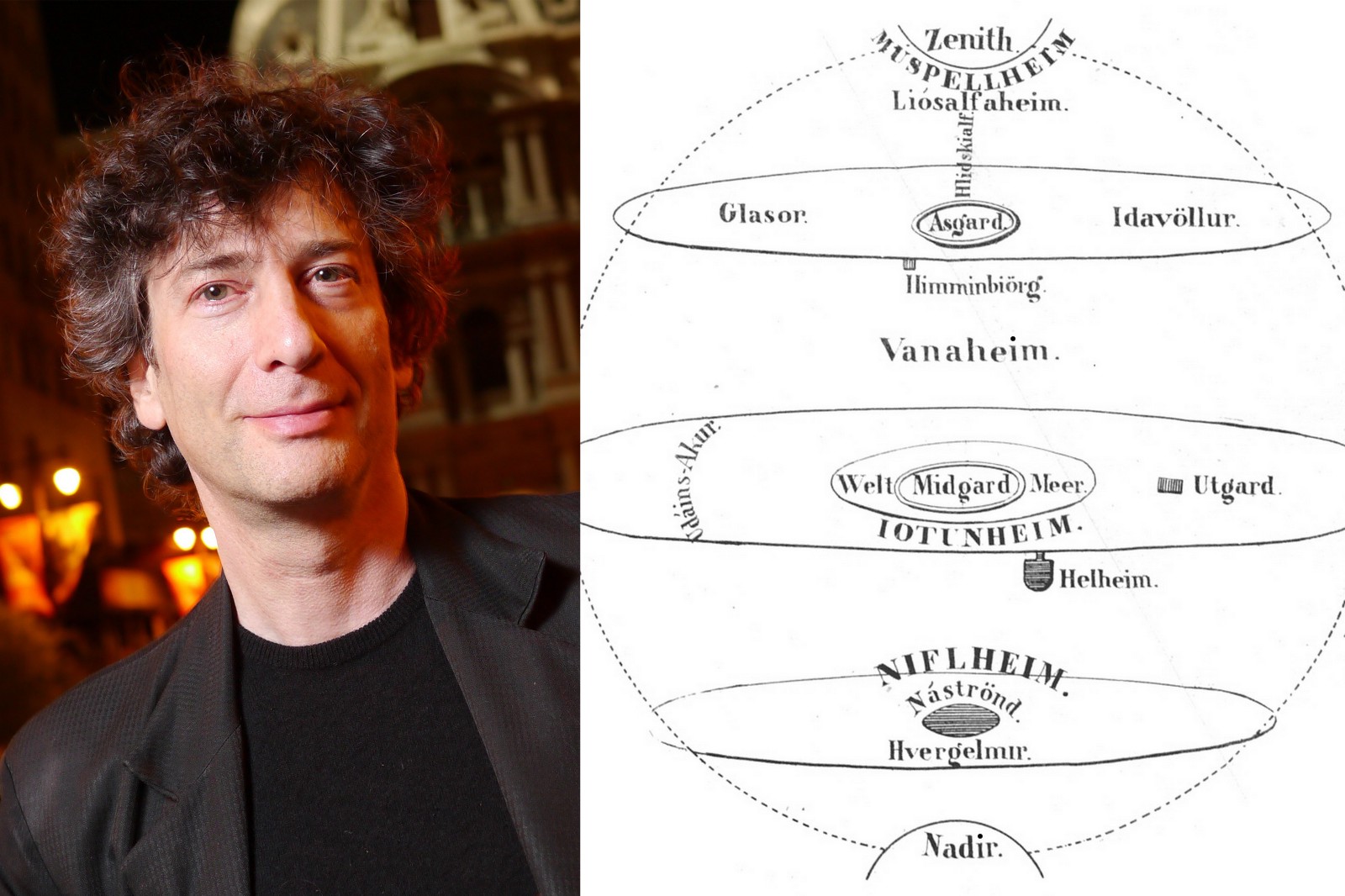
The gods of Asgard are coming, courtesy of the author of Coraline
8Author Neil Gaiman, The Nine Worlds of Norse Mythology
Neil Gaiman, author of Coraline and The Sandmanseries of graphic novels, has written a novelistic retelling of the Norse myths to be published by W.W. Norton in February. Gaiman has been interested in Norse mythology since he was a child and their influence is stamped on much of his writing, from the appearance of the Loki and Odin in his children’s book Odd and the Frost Giants to his fantasy novel American Gods.
The new book, Norse Mythology, will begin with the genesis of the nine worlds and continue through the tales of Odin, Thor, Loki, and the rest of the gods on Asgard.
Gaiman told his publisher, “To get the opportunity to retell the myths and poems we have inherited from the Norse was almost too good to be true. I hope the scholarship is good, but much more than that, I hope that I have retold stories that read like the real thing: sometimes profound, sometimes funny, sometimes heroic, sometimes dark, and always inevitable.”
The Fourth of July is just a few days away. What better weekend to do some revolutionary reading? There are thousands of books about the American Revolution you could pick up on your way to the beach or to that backyard cookout, from schooldays favorite Johnny Tremain to David McCullough’s monumental 1776. But the American colonists were hardly the first, or the last group of rebels to band together to fight for their independence.
This year, why not look abroad for your Independence Day fix?
The desire for independence seems to unite cultures around the globe. The Merriam-Webster Dictionary defines independence as the time when a country or region gains political freedom from outside control. Dictionary definitions can only go so far in the best of times, and here it falls far short of encompassing all that independence means. Fortunately, there is literature.
The novels on this list encompass the many aspects of the struggle for independence: the spark of freedom, the violence (often terrible), the loss of life, the stress of self-realization and the questions of identity that follow.
Revolution isn’t pretty, but the stories that emerge are always compelling.
It’s hard not to love the set-up for Rushdie’s Booker’s-prize winning novel: 1,001 babies are born at the stroke of midnight on the eve of India’s independence from Britain, each imbued with special powers. The book follows one baby in particular, Saleem Sinai, as he grows up and his family migrates around the subcontinent. Using a blend of allegory, magical realism, and historical fiction, Rushdie intertwines Salem’s growing pains with the growing pains of a new nation, and a country newly divided.
Like Ireland herself at the turn of the century, Henry Smart is born without status or privilege. Surviving the slums of Dublin with an alcoholic teenage mother and a one-legged, whore-house bouncer of a father prepares Henry to fight, and fight he does. Henry becomes a soldier and hit man for the (real life) leader of the Irish Citizens Army, Michael Collins. What makes Doyle’s novel such an interesting read is his ear for voices and setting. Lest you forget, the Irish revolution didn’t take place in a vacuum, it took place on the rowdy, rumbling streets of Dublin.
Set in the mid 1970s, Gordimer’s novel follows Rosa, a white Afrikaner whose parents are anti-apartheid activists in South Africa. Rosa’s parents are imprisoned for wanting to overthrow the South African government and, after they die there, Rosa is left to deal with their legacy. Gordimer’s book, which was banned in South Africa, asks some difficult questions about the fractured struggle for independence and how a multiracial society could come together after Apartheid fell.
The Iranian Revolution: Persepolisby Marjane Satrapi
Satrapi’s story of growing up in Iran during the Islamic revolution makes for a powerful graphic novel. The revolution occured in 1980, when Satrapi was six, and she details how her life changed under Islamic law, from wearing a veil to a sudden segregation from the boys at her school. Satrapi’s memoir reminds us that revolutions bring change, whether its welcomed or not.
The Mexican Revolution began in 1910 when President Porfirio Díaz was ousted from power. Fuente’s dreamlike novel begins years later, when ruthless ex-soldier and businessman Artemio Cruz is on his deathbed. The novel is a series of flashbacks recalling Cruz’s life and how he capitalized on the time of war to kill, blackmail, and bribe his way to power.
The October Revolution of Russia: Doctor Zhivagoby Boris Pasternak
This epic novel traces Dr. Yury Zhivago from his childhood in czarist Russia through the October revolution and the Russian Civil War, ending during Stalin’s regime in World War Two. As the revolution unfolds, it becomes clear to Zhivago that there’s more than one way to be a dangerous citizen: through violence, or by becoming a stooge of the revolution. It’s a sad revelation that after fighting for independence from the Czar, independent thought is crushed in the name of Mother Russia.
The American War in Vietnam: The Sympathizerby Viet Thanh Nguyen
In English-language literature and film, the story of the Vietnam War has mostly been told though the eyes of Americans. In his Pulitzer Prize-winning novel, Viet Thanh Nguyen gives us the view from the other side, namely a Vietnamese army captain who’s living in the US as a spy. This is a story of a war for independence; Vietnam had just freed itself from the shackles of French imperialism when it came under the American sphere of influence. But for the captain, as for most Vietnamese, there is an added layer of misery, because as North fought South, it was a civil war as well.
This novel by Dai Sijie takes on a different kind of war of independence. During Mao’s Cultural Revolution, two teenage boys are sent from their home in Chengdu to a mountain village to be “re-educated.” During their time in the village, they meet the “Little Seamstress” and all three become romantically involved. Love triangle aside, this novel is motivated by the boys’ relentless quest for the art and culture they’ve been forced to abandon. Mao’s forbidden music, literature, and films are a defining part of the boys’ identities and they risk everything to keep them.
Yusuf Idris set his award-winning novel in a specific time and place: Cairo, January 1952. The proceeding months saw the demise of the Egyptain monarchy under King Farouk, a puppet government controlled by the British. City of Love and Ashes is the love story of two young rebels, Hamza and Fawziya, as they fight for Egypt’s freedom and grapple with the question of how to shape a post-colonial identity.
A Tale of Two Cities is one of the most famous novels about the French Revolution (and has one of the most quotable opening lines). The novel jumps back and forth between London and Paris and a wide cast of characters, first exposing the brutal life of French peasants — and the British poor — in the years before the Revolution. As the French Revolution unfolds, the violence, unwarranted imprisonment, and general misery ramps up. The final scenes point to a hopeful future for France, but as with most revolutions, Dickens underscores that the cost to human life is high.
Translated by Maia Tabet
Recommended by The Common
HASSAN AL-MAZAZ AL-SHAGHOURI’S FINAL VICTORY
HASSAN AL-MAZAZ AL-SHAGHOURI HAD NEVER COMMITTED an ordinary, everyday crime: he hadn’t killed or robbed anyone, had never raped a girl, had not joined a party — either pro- or anti-government — and not once had he set foot in a police station, jail, or court of law. He did not smoke in places where smoking was banned, could not name the current president if asked, and would have had no use for the sword of Khalid Bin al-Walid himself, other than to peel an orange or cut open a watermelon. Nevertheless, the vigilant security authorities that knew the unknowable saw fit to detain him and jail him for nine years without charge until, at the start of his tenth year in detention, he was led into a court of law to appear before a judge. Head lowered, he stood to attention, stealing sideways glances at the judge, who sat engrossed in a book about Italian pizza while repeatedly blowing her nose into white paper tissues. Hassan was stunned: wasn’t she his old neighbor? The one who had been notorious for her love of money and her lust for young men, for the easy credit terms she offered, and for her devotion to numerous husbands and lovers? He was about to ask her, and as he parted his lips and licked them with the tip of his tongue before speaking, a guard poked him with the butt of his rifle, silencing him, and instructing him to speak only when spoken to. Hassan al-Mazaz al-Shaghouri looked at the stern-faced guard and suddenly asked him in a cheerful but quiet voice, “Your face is familiar. Weren’t we schoolmates at Muawiyah? You’re the guy who specialized in stealing students’ lunches from their bags, aren’t you?” The guard had to suppress a smile to keep a straight, and stern, face. “And I remember you,” he said. “Weren’t you the one who specialized in stealing people’s shoes from mosques?”
Pointing at her, Hassan al-Mazaz al-Shaghouri was on the verge of saying something about the judge, but the guard stopped him. “Shush. The world has changed,” he said. “It’s different now: those once below are now above you.”
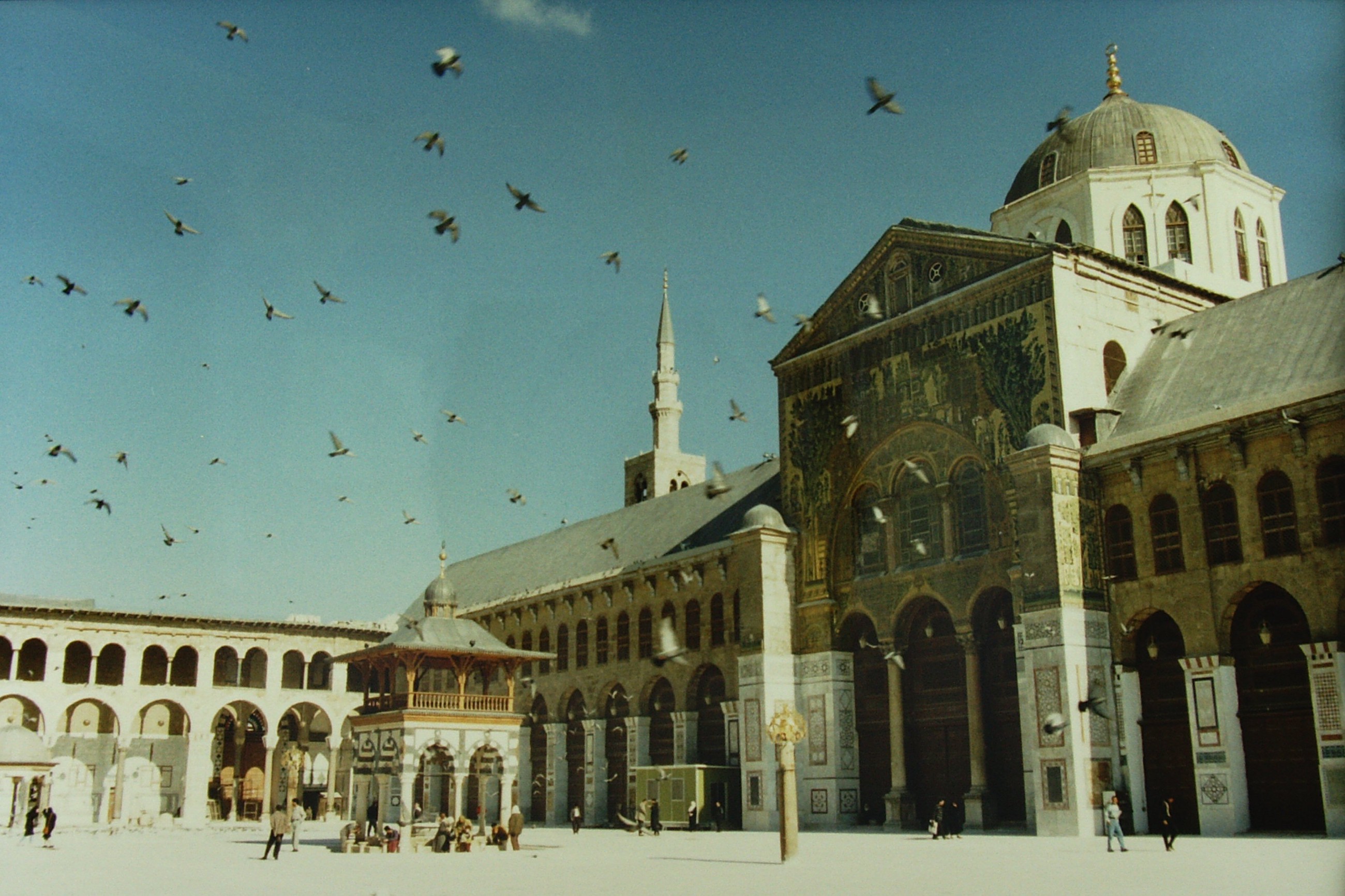
The judge closed her book and readied herself to speak. A fearful silence reigned over the room as she addressed Hassan al-Mazaz al-Shaghouri. In a stern voice, she told him that he was being released immediately and that, because he had been found undeserving of it, his citizenship had been withdrawn. He was therefore no longer entitled to remain in any of the country’s prisons. Dumbfounded, Hassan al-Mazaz al-Shaghouri told the judge that God’s earth was vast and that he and his wife and children would go someplace else as soon as he was able to sell his house. The judge informed him that the house no longer belonged to him following its sale at auction by the tax revenue authority to collect on unpaid taxes and the resulting fines. Hassan al-Mazaz al-Shaghouri replied with levity that the house was old, it was unbearably depressing, it had witnessed the birth and death of his father and four other of his ancestors, and the thought of dying there was not in the least attractive to him, whereupon the judge notified him that his wife was no longer his legally wedded spouse and that divorce proceedings had been initiated shortly after his arrest, to which news Hassan al-Mazaz al-Shaghouri retorted that were he a woman he would have ululated with joy, his wife having lost whatever beauty she once possessed and become a coarse-tongued gossip that he long ago would have divorced had it not been for the children. The judge now informed him that his small children too were no longer his, that they had been farmed out years ago to childless women who wanted to adopt them. That was the right thing to do, Hassan al-Mazaz al-Shaghouri told the judge, as his children were rowdy and quarrelsome and his heart had grown tired of filling the bottomless pits they had for bellies. His heart was also no longer his, the judge further informed him, since he had donated it for an organ transplant, to which Hassan al-Mazaz al-Shaghouri replied, “Good riddance to that which brought little besides pain and suffering,” and then begged the judge to also consider the donation of his stomach. His offer was accepted forthwith. The judge now ordered him to lie on the ground and for a pillow to be placed under his head, and as soon as those orders were carried out, both his guards and hers worked together on extracting his stomach, his heart, his kidneys, and his liver, following which, to the judge’s great surprise, a bloodied Hassan al-Mazaz al-Shaghouri stood up and beseeched her to let him go, that he might reach the border before nightfall. Although he appeared to be living, the judge pronounced him dead, and she refused his request as the guards carried him away and laid him down to rest inside a narrow hole in the ground, which they covered with cement while he carried on extolling the compassion of his neighbor, the judge, who by now appeared to have forgotten the deportation order she had issued and allowed him to remain within the bowels of the earth, enjoying a safe and peaceful life.
TABOO
AMINAH WATCHED HER elderly father getting ready to leave the house. “Who am I?” she asked him, smiling.
His response was instantaneous even though the question had surprised him. “Why, you’re my daughter! Who else might you be?”
“OK, what’s my name?”
“What kind of question is that? You think I’ve forgotten your name?”
“Never mind — indulge me.”
“Your name is Aminah.”
“And what day is it: Monday or Tuesday?”
“Today is Friday.”
“And where are you going?”
“I’m rushing off to the mosque for noon prayers… You know that good deeds cancel out bad ones, and our good deeds are all too few, as you are well aware!”
“And what are you doing afterward?”
“I will go and visit your late mother’s grave, may she rest in peace.”
“But it’s quite a ways from the mosque to the cemetery.”
“I’ll take a taxi.”
“Will you sit there and commune with her for hours?”
“Good heavens, I’m not so crazy as to start talking to the dead.”
“How long will you stay at the cemetery?”
“Just long enough to go in, read the fatiha, and come out again.”
“How will you leave the cemetery?”
“I will come out of the cemetery by the gate I used going in. Once on the street, I will hail a cab and go to your sister’s. There, I will spend time with her rambunctious children and cajole that husband of hers who’s always complain- ing that we don’t visit enough.”
“And how will you get home?”
“Your sister will call me a cab.”
The father chuckled, adding, “Look at me — I’m fit as a fiddle. There’s noth- ing to worry about. I’m sound of mind, and both my health and memory are just fine!”
Aminah thought this over in silence, smiling to herself, and then said, “So you’re basically saying that you’ll be gone three or four hours. How can you bear to leave me all alone that long in this big house?”
The old man chuckled and suggested she watch television or sleep. Aminah stretched lazily and declared that sleep was indeed the best thing.
She saw her father to the door and warned him to be careful crossing the street. He reminded her caustically that he wasn’t a small child. He promised to stick to safe routes where there were no crazy drivers and hurried off. Once outside, he slowly made his way toward the nearby mosque and entered, head bowed reverently, noting all the male worshippers lined up behind the imam. To stand right behind the imam was to ensure that the rewards and blessings of prayer were greatly magnified, and the old man therefore tried making his way to the front row, but he was pushed to the back by the shoving and jostling of arms and shoulders. This upset him, as he considered the back rows fit only for new congregants and not for long-standing ones like himself. He left the mosque muttering angrily, “It is He Who made you inheritors of the earth, and elevated some of you above others in degree in order to test you in what He bestowed upon you.” 1
No sooner had he taken a few steps toward the cemetery than he suddenly felt weak all over. Now, he no longer cared about any of the things he had meant to do and just wanted to get home. He walked back slowly, moaning under his breath, and beseeching the Almighty to let him die in his own bed and not sprawled at the feet of passersby on the street. He was groaning by the time he reached home, and he hastened to his room, noting the unnatural silence that reigned over the house. Aminah was surely asleep.
He was flabbergasted to find her in his large bed, bareheaded and naked, grinding down on a man younger than her whom he didn’t recognize, as if she wanted to make him plead for mercy and renounce his manhood. Horrified, the old man gasped in disbelief. He looked around the room desperately, and, catching sight of a white towel, he grabbed it with trembling hands and threw it over his daughter’s bare head.
“Do you not know that hair is taboo?!” he reprimanded. “And that it may not be seen by strangers? God help you in the next world!”
The old man was gladdened to see the blood drain out of Aminah’s face and to watch her shaking at the thought of what awaited her in the afterlife — praise the Lord, girls still feared the flames of hell! But he was offended by the rude conduct of the young man, who had run off without so much as a by-your-leave and left behind his cheap underwear — as if the house he’d been in had no owners.
IT WAS ALMOST TIME FOR LUNCH. The guests had grown tired of oohing and aahing over the properties, the streams, the lakes, the banks, the airplanes, and the beautiful women.
“You are about to behold a rare kind of sheep which you will soon be eating,” announced the master of the palace and surrounding farms, as he stood pointing with his right index finger at a giant television screen.
The guests stared at the screen, where a gaggle of beautiful young women, shapely and fair-skinned, their silky golden or jet-black hair streaming in the wind, picked flowers as they romped through a verdant garden filled with trees, cavorted in a turquoise pool, splashing one another and laughing, and finally sat around circular tables, surrendering themselves to ravenous and seemingly insatiable appetites as they devoured the finest foods. The master of the domain addressed his guests once more: “When sheep are upset or frightened, their meat is tough and leathery, and it tastes like sawdust. Our sheep enjoy only the happiest of lives, leaving their flesh succulent and juicy, so tender that it melts in the mouth and hardly requires chewing — moreover, they are all slaughtered in the prescribed, halal manner.” Turning to his eager assistant, the master added: “Yahya, please give our guests a brief summary of what is required for halal ritual slaughter.”
The assistant launched into the subject matter with alacrity, as if reading from a script. “Slaughter can be considered halal only if it meets the following requirements: the intended object must be alive at the time of slaughter and free of contagious disease; it must be led to the place of slaughter gently and without the use of force; the slaughterer must be a Muslim, who is of age, sound of mind, devout, and also skilled in his trade; before proceeding, he must invoke the name of God, intoning ‘Allahu akbar’ — ‘God is great’ — over the object of slaughter, or ‘Bismillah’ — ‘in the name of God’; the animal to be slaughtered must be positioned to face the qiblah, the direction of Mecca; the instrument of slaughter must be finely honed and made of metal, and the slaughtering cannot occur within sight of other animals; no part of the slaughtered animal may be cut away, and it may not be skinned or immersed in hot water before ascertaining that it has breathed its last and that it has bled in a manner commensurate with its size and type; further, the slaughter must be carried out manually, and the jugular veins, trachea, and esophagus must be severed.” The guests greeted the assistant’s words with audible sighs of impatience and loud yawns, prompting a chuckle from the master of the domain, who told them jokingly: “There’s also a fascinating and entertaining film of a sheep being slaughtered… Maybe you’d like to see that too, so as to be sure the meat is truly halal?”
The guests protested vehemently that it was time to eat — bellies and mouths needed satiating; this was no time for films and health education or nutritional counseling. The master of the domain led the way to the garden behind the house, where meat was grilling over charcoal embers, and the guests ate voraciously, insatiably, as he looked on, smiling, happy in the knowledge that his efforts had not been in vain, that they were recognized and appreciated. “God be praised,” he said in hushed and reverential tones. He expected that in the weeks to come, his guests would return his hospitality with banquets whose artistry would similarly delight and amaze diners.
With the British people voting to leave the European Union, world markets in tailspin, nativism on the rise, leadership faltering, and recriminations and regret dominating the international conversation, it seems the long and fruitful relationship between Britain and the continent may be coming to an end, at least in its current form. We decided, then, to take a look at some of the literary bounty of that relationship: books by and about Brits in Europe.
Nothing seems to inspire the British quite so much as getting off the island. From the Grand Tour to the Romantics to servicemen, black marketeers and modern-day expats, the British have always enjoyed their freedom of movement across the continent, those more or less open borders and the liberation of being far away from home and its many burdensome customs.
Here’s a list of 10 books by and/or about the British in Europe. (Coming soon, a reading list from the canon of transplants to Britain…)
1. A Time of Gifts
by Patrick Leigh Fermor,
The ultimate memoir of vagabond youth. A young Patrick Leigh Fermor sets out on foot from London to Constantinople. Along the way, he relies on the kindness of strangers, from innkeepers to barge masters to aristocrats. Fermor was quite possibly, the most interesting, charming Brit of all time.
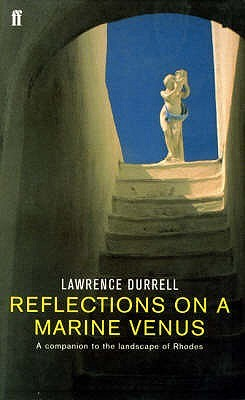
2. Reflections on a Marine Venus
by Lawrence Durrell
One of Durrell’s many travelogues, each of them learned, engaging and evocative. After World War II, during which Durrell traveled the Mediterranean as a press attaché, he secured a posting in Rhodes, took up residence in a Turkish cemetery, and wrote this poignant account of his stay.
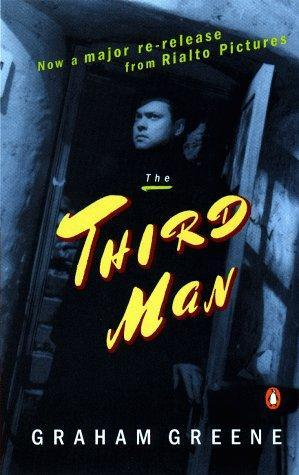
3. The Third Man
by Graham Greene
Yes, this isn’t Greene’s finest work (it was written as a novella in anticipation of the screenplay he was penning for Carol Reed’s great film noir), but the atmosphere — dark, lawless, ominous Vienna — is spot on, and combining the reading with the movie-viewing creates a special kind of Euro-alchemy.
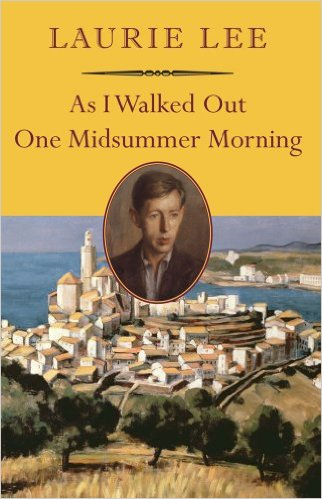
4. As I Walked Out One Midsummer Morning
by Laurie Lee
Lee’s memoir recounts his busking days in London and Spain, when he lived hand to mouth in villages across the countryside, playing the violin outside cafés and sleeping in whatever inn, barn or open field would have him. When Civil War broke out in 1936, Lee returned to England, but only for a short while, as he found himself drawn back to Spain, and the fight to come.
5. A Room With a View
by E.M. Forster
Turn-of-the-century Brits mingle in the grand cities of Italy hoping to find love and hoping to one day have their love stories made into a Merchant-Ivory film featuring a young Daniel Day-Lewis. That timeless romance.
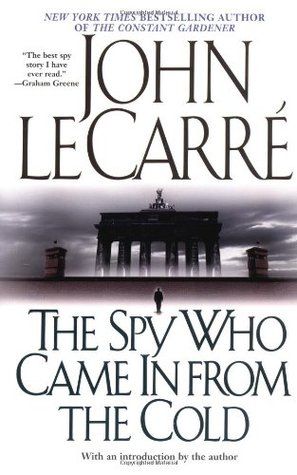
6. The Spy Who Came in from the Cold
by John Le Carré
Another tale of geopolitical tension and intrigue for the Brits in Mitteleuropa. Le Carré’s breakthrough remains, a half century later, a cultural touchstone and the gold standard for espionage thrillers. This one is a cat-and-mouse, double agent story out of newly-divided Berlin. It was a time when a new European war seemed all but inevitable.
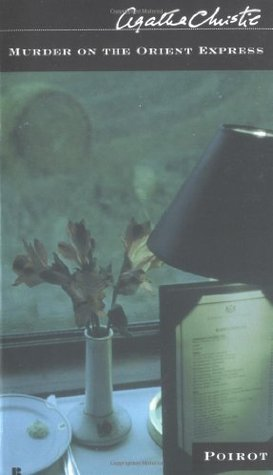
7. Murder on the Orient Express
by Agatha Christie
Here we expand (not bend) the rules slightly, but with good reason. Christie’s Hercule Poirot, once a detective with the Brussels police force, then a refugee settled in England, is one of fiction’s best-loved characters. And in perhaps his most famous mystery — Murder on the Orient Express — you’ll recall that the crime is committed at 12:37am in Vinkovci, Croatia.
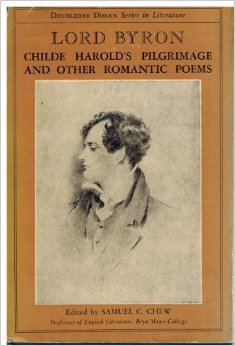
8. Childe Harold’s Pilgrimmage
by Lord Byron
The birth of the Byronic hero, the epic poem that launched a thousand disaffected, privileged youth on their jaunts from Britain across Europe.
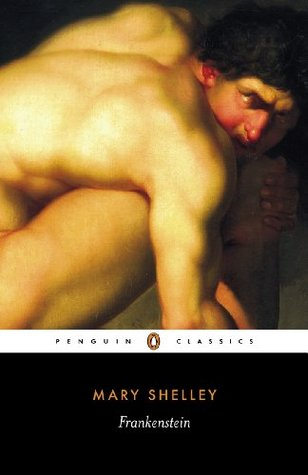
9. Frankenstein
by Mary Shelley
Shelley’s tale of the Promenthean monster isn’t about Brits, of course, but the Shelleys famously left the homeland for the continent, and one summer, on the shores of Lake Geneva they decided, along with Lord Byron and John Polidori, to put on a contest to see who could write the best horror story…
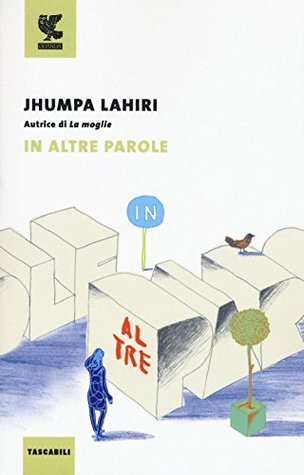
10. In altre parole
by Jhumpa Lahiri
Lahiri considers herself American (she was raised in Rhode Island), but she was born in London, and frankly, her recent transformation is too on-the-nose not to include here. After a long residence in Italy, the award-winning novelist wrote her latest book, a memoir, in Italian. She says she finds her writing to be “more essential” and her thoughts “less inhibited” in the language she has been ardently studying for years.
I owned an expensive suit that summer — the gift of a hopeful father — and I had a few practiced skills. I could open a matchbook and light one of the matches using only one hand, and without detaching the match in question from the pack (what you do is bend it around back with your thumb — note that you can burn your thumb this way). I could also recite big swaths of Shakespeare and improvise convincingly when I missed a line or flubbed it. That brace of talents, along with how to mix a proper stinger (two parts brandy, one part crème-de-menthe, highball glass, rocks) were about all I knew of the bigger world. I certainly knew almost nothing about the world that came to life at first light and hummed till 5 pm.
I was mistaken for a bike messenger at my first corporate interview (“Who sent you?”) and turned away with instructions to get a haircut and lose the earrings before I rescheduled. When I did land a job — in the mail room of a sleepy monolith — I found the sorting so numbing I often took a puff of marijuana at lunch and spent the next hour casing nooks where I might curl up to sleep. One afternoon it came to light that an exceptionally thin woman who worked alongside me had shined for a year as a tap dancer in New York.
I was mistaken for a bike messenger at my first corporate interview (“Who sent you?”) and turned away with instructions to get a haircut and lose the earrings before I rescheduled.
“You were a dancer in New York?” asked our boss, a shifty man who carried no bag or briefcase (“I like to travel light”).
“Oh sure, I was in shows. I danced off-Broadway.”
The copier washed us green.
“Why’d you quit? You’re still young enough.”
“Well,” her mien was blasé. “I just gave up and faced reality and got a real job. Like John did, right John?”
: : :
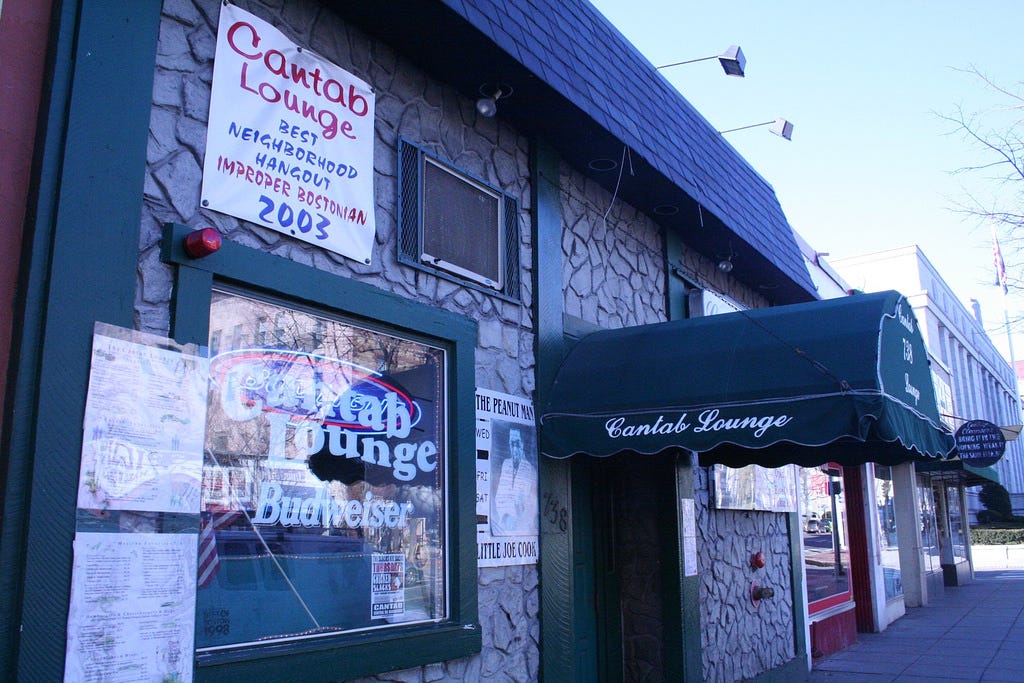
The basement of the Cantab Lounge in Boston was hosting the 1999 National Poetry Slam finals and it was lousy with audience. Some of the seats were filled with kids and some with ghosts who were still alive. A sly old devil with a handshake that could castrate bulls took my three dollars at the door and welcomed me as though I were a prodigal son. It was my first time there and I’d never recited a poem of my own in public. When I stood up to read the folded pages I’d brought along — some piece of surrealist nonsense with “a basket of rain” inside it — somehow the crowd stayed with me. When they clapped at the end the host said they’d like to see me back the next week. “And bring a basket of rain!” It was the doorman with the ordnance-grip. I’d found an audience.
It was my first time there and I’d never recited a poem of my own in public.
College had ended that spring, and until that night I hadn’t known there was a club around the corner. A friend from class had invited me out dancing and I’d taken philanthropic drugs and made some friends. 6’4’’, black leather and slicked hair, right side of my face obscured by a maze drawn with eye-liner in the dark, I was getting on well. I’d been kissed by a few strangers and the night was young.
I wasn’t a gifted dancer. A friend on the floor with me said, “No, not like that. Try to imagine you’re making love.” Seconds later: “Oh wait, no, don’t do that.” Later, by the bar, it came out that I’d been writing some poems, inspired then by my former teacher Bill Knott. “You’ve got to go to the Cantab,” my class friend said. “It’s practically next door. Let’s go now and come back in an hour.”
So we wandered down the steps of a dive bar filled with Cambridge locals (people who actually worked, as distinct from Harvard types) and into a room where I’d come to spend two years’ worth of Wednesday nights. Folding chairs and small Formica tables would always wait around a slightly raised black stage with a single microphone. The sign-up list would always fill up fast. Judy at the bar would always pour the well drinks strong.
That night, a woman my age — I’ll call her Vanessa — sat at a corner table with what I remember as two separate binders full of poems. They were her own poems and she and I started to flip through them and read them to each other, oblivious of the competition from the stage.
There are times when you feel attracted to a stranger simply because they’re attracted to you. That was Vanessa and me, both of us. We looked good together and people were good enough to note it. They’d tell us to get a room. But if they got a room, we decided, they wouldn’t have to watch us. Later that summer we’d go night swimming at Walden Pond, dance close at clubs, and talk about the real world not at all.
I’d only just met her — she’d just moved back to Boston from Cornell — but Vanessa made me proud when she reached the microphone that night. She looked at her notes and led us through our breathing by breathing herself, slowly. She backed away from the mic. The room settled back. She had that marvelous capacity to wave the room away and lure us into a kind of trance. How much of this was a put-on? And, in the context of performance poetry, does that question mean anything?
“Hush,” she said. The title? It seemed to be a known poem among the construction-job kids in the back rows and big-heeled barflies — they hooted. There were nods and hums. “Alright.” “Mmm.” Like some slam poets can do, she assumed authority by setting her shoulders, conjured the atmosphere of a Sunday service. We waited in attendance.
we children watch …
waiting for the marked to hum for lips to leak and for the evening
to shadow to hover …
It wasn’t a revolutionary story and it was far from being, I’d later learn, Vanessa’s strongest work, but the manner in which she told it — the pauses, the casual leap that drops itself into sacerdotal water — allowed her to make something marvelous of it. The poem wasn’t something from the page but something from the air, a song, almost:
We knew the white folks and their kitchens
and bathrooms and broom-closets and their money. We knew how to hold onto one another
“Hush,” she said again, and she held the hush. Slam poetry, then thoroughly derided in academic circles, is about as close as our culture comes to the kind of pre-literate half-chant of epics that Homer’s listeners would have known, or that Parry and Lord found in the Serbo-Croatian Folk Songs of the 1930s. Done well, it can have the same effect — like the best music, it makes us complicit in its progress; like the best stories, it moves quick and bright.
“And we hush.”
Applause.
: : :
“Hush your wild violet,” begins Tom Waits’ 1985 song “Hang Down Your Head.” Then: “Hush a band of gold.” I heard it nearly every day that year, and each time the story came fast: a gorgeous courtship, a marriage, but hush. He rumbles on: “Hush you’re in a story / That I heard somebody told.”
Has she been unfaithful? She has. “Tear the promise from my heart,” he whispers. There’s someone new in her life. He has to go and he’s broken about it. “Hush my love a train now …”
It’s standard ballad stuff, and you figure a ballad would be what he made of it, but he doesn’t. Instead he turns it into something that sounds like a pop song, maybe the Beatles. There’s syncopated drums, like Ringo’s in “Drive My Car.”The beat advances with a kind of lopsided rhythm. The baseline is tart and upbeat; the guitar is warm.
But because Waits is Waits, the parts don’t mesh, and therein lies the allure. A pump organ blankets the back with chords and harmonies, but from time to time it strays off-key. The lyrics resemble a Beatles song not at all. This is a song about shame: “Hang down your head for sorrow / Hang down your head for me.” The singer’s ashamed himself and yearns for the person who betrayed him to feel it too.
If anything, I dismissed the song completely when I first heard it on Rain Dogs, Waits’ masterpiece of 1985, because there was so much else there too. “Jockey Full of Bourbon” is the rocker, “Downtown Train” is the hit, and “Time” is the weeper (if you could watch Tori Amos sing the latter on Letterman right after September 11th and not choke up, then you were in a better place than the room full of people who saw it with me).
No, the first time I heard it, “Hang Down Your Head” head felt purely functional — something to transition the listener from what Waits calls a brawler to what he calls a bawler. In that capacity, it does its job, easing us into something more reflective while maintaining the drums and the electric guitar we’ve grown used to. But I didn’t see what else it did.
: : :
At the gig that succeeded my time in the mail room, I drummed out ad copy for Compaq’s high-end servers. It was regular work and I swallowed Vicodin and downloaded music from Napster to make the time pass. This until Carly Fiorina bought the company and disbanded it. Until then, for about two years, I made good money compiling booster pieces lauding the ProLiant DL380 and I did so to the sound of Rain Dogs, composing poems in my head that would sound good out loud.
And I read those poems out loud every Wednesday night. I was cocky at the Cantab, more so than I’d been before or have been since. I made friends at a heady clip. The kinds of verse they recited weren’t like the kind of verse I’d read on the page, and I liked that about them. Today, a settled snob, if I encountered that kind of poem-making, I’d call it bad poetry. But this is unhappy snobbishness and I didn’t hold it then.
Today, a settled snob, if I encountered that kind of poem-making, I’d call it bad poetry. But this is unhappy snobbishness and I didn’t hold it then.
Relying not on scansion or lexical delicacy but on the musicality of their delivery, the readers at the Cantab hummed and barreled their poems. I mentioned a church service above and I did so for a reason: slams and open mics and (some) featured guests at the Cantab felt more like such a ritual than anything I’ve experienced at a reading since — much more.
One night that February I sat between Vanessa and a woman I’ll call Ellen, a theater teacher from New York I’d dragged along. Ellen was skeptical, a mood that only deepened when it was revealed that the featured reader that night would be a towering and muscular poet named Zeus.
“Huh?” Ellen quietly scoffed. “Imagine if I started calling myself Zeus at school. Oh, here’s your professor this semester, Zeus.”
When Zeus himself appeared and it became apparent he was black (which Ellen and I are not) she waited until Vanessa had stepped out to smoke then added, “Does he realize ‘Zeus’ was the kind of thing slave masters used to call their property? It’s like what you’d name a mastiff. I just feel like … I don’t know his issues so maybe he knows and doesn’t care.”
Ellen was later described by a Wall Street friend we had in common as “a very unhappy young woman.” Probably because she rejected him. But there was something to it. She would change her identity periodically — her name, affect, milieu. There’s a book to be made about Ellen but she needs to write it. Suffice it to say I knew her in the drug-addled haze between her difficult girlhood in Appalachia and her suburbanite 40s as a mom. I loved her a little, and she loaned me good books. And we both loved Tom Waits more than we loved anything.
I loved her a little, and she loaned me good books. And we both loved Tom Waits more than we loved anything.
I don’t recall what Zeus read that night, probably the same sorts of pain and suffering every poet writes about. But his performance — his convincing, possibly authentic performance of sincerity — made Ellen bashful enough to quiet her. When Vanessa said, “That Zeus reading … I can still feel my skin tingling,” Ellen offered no retort. We made our way to my apartment in silence. Before that night I’d only seen Ellen that quiet when she was angry. But she wasn’t angry. I doubt she knew how she felt. That was me too.
: : :
On the uptown C to 81st Ellen and I sniggered over the college kid with the big grin at the end of our car. He was dressed in pointy buckled shoes with silver toes, a secondhand suit in carefully rumpled brown, and a porkpie hat. So of course we knew where he was going.
“It’s not a Tom Waits concert,” Ellen said, “it’s a Tom Waits lookalike contest.”
We thought ourselves superior out of habit but also, we reasoned, with cause. We both loved Tom Waits, and we were just as excited as the kid about the concert we were speeding toward, but we wouldn’t have imagined going so far as to dress like the guy. Was it cosplay or delusion? Surely he knew we were the only two to whom the mysteries had been revealed.
But then who had I pictured the audience would be made out of? Truckers on their final livers? Actual hobos from the ‘30s? You can sing all you want about Bowery bums — if you’re playing uptown, they can’t spring for tickets.
At the theater, we were incensed to discover that kid wasn’t the exception but the rule.
Even the old guys wore Tom costumes: fedoras and Cuban shoes and skinny ties. One especially dense example by the bar revealed himself only after a second glance to be Elvis Costello. Fellow lookalikes approached him for autographs. So this is what show business was: show, the careful re-creation of a slippery authenticity. Two or three years later the word hipster would be loaded with new carriage. So I had stepped away just in time, or just too late.
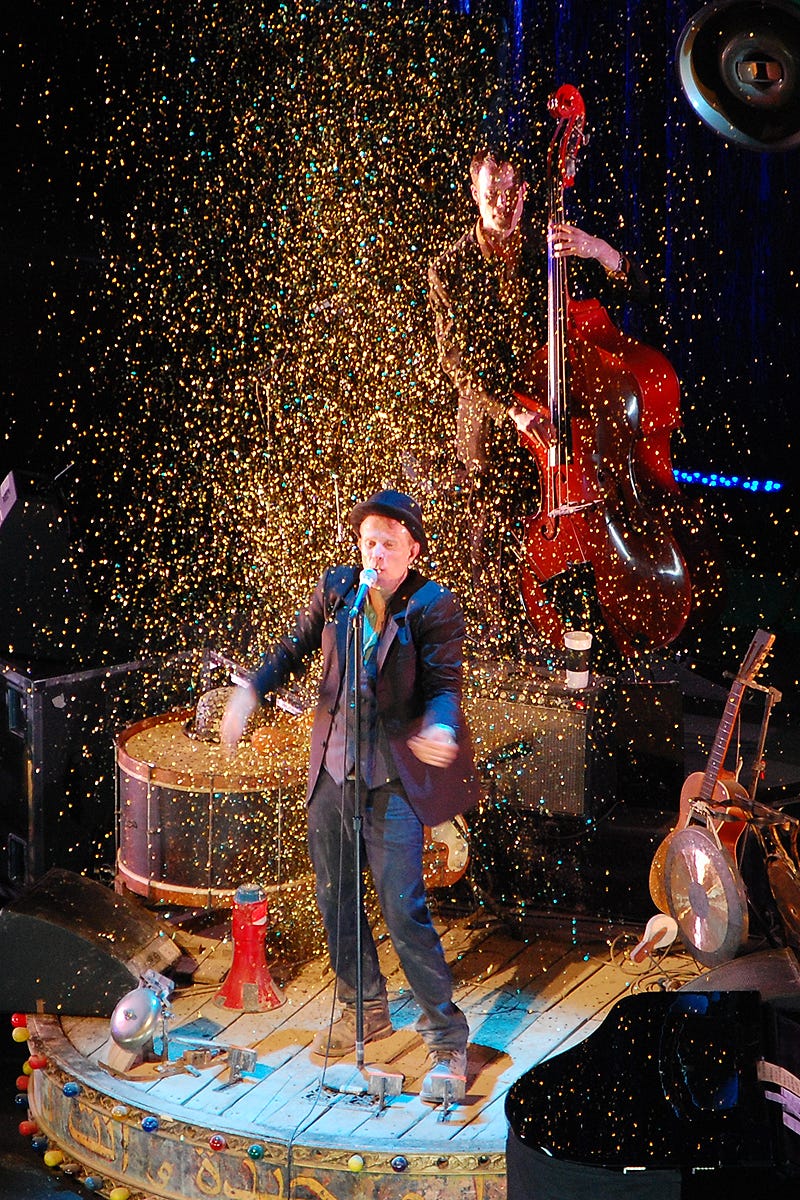
Once the show began, Tom was small onstage and he shouted through the first songs. He wore a bowler made of tiny mirrors, which I thought unbecoming. Cheering was compulsive and felt that way, as though there were Applause signs and points for the loudest. I was settling in for more disappointment when the lights dimmed and he sat at the piano for his solo set.
So this is what show business was: show, the careful re-creation of a slippery authenticity.
He began it with “Hang Down Your Head,” acoustic: Tom on upright piano and Greg Cohen on upright bass. All at once, the song opened up as it hadn’t before. I quit feeling critical of the dream, apart from it, and fell back into it. I was one with the song.
Tom only touched the keys as he sang — In pauses between verses the keys were quiet. Like Johnny Cash and Patsy Cline can do, he filled every word to capacity. “Hush, my love the rain now / Hush my love was so true.” I heard the trochees at the start of the lines, the spondees at the ends. Then in the chorus, everything’s stressed: “Hang down your head for me.” I’m ashamed, it says, I’m lost. Show me I still mean something to you. It’s please and sorry in the same breath.
It’s that moment of misfortune when you’re as humbled by the wrong that’s been done you as you are incensed at your betrayer. A fight with a love where you want her to be quiet and you also want to stop time, hush the clock. The one who says hush is both the betrayed and the betrayer who strays. The one who pleads hush can’t say more.
The one who says hush is both the betrayed and the betrayer who strays. The one who pleads hush can’t say more.
The act of empathy for fellow sufferers this slowed song evoked in me began in self-pity but didn’t finish there. Feeling sorry for one’s self is the mechanism by which we learn to feel sorry for others. I do you no harm because I know what harm is, how it feels. I’ll hang down my head, you hang down yours.
: : :
The doorman at the Cantab had bad lungs, so we smokers were advised to “please step outdoors.” We understood step as clamber and outdoors as the back stairway by the bar, within easy hearing of the stage. The steps wound up to an alley we never used and I was happy just to be hanging out on them with other poets in Cambridge. Vanessa was smoking Camel Reds that year but I’d wake up sore from them. Instead I’d share Dunhill’s and sips from flasks with the crowd Vanessa formed around her.
We were the hot shit that year, and we were fast becoming superior, chuckling over the bad poems, chuckling at anything. Vanessa sometimes joined the laughter, but more often remained serene, like the old woman in her poem, the one who chided hush. The rest of us, meanwhile, made fun of the way the worst of the open mic poets seemed more concerned with cataloguing their hardships than sculpting objets d’art.
We were the hot shit that year, and we were fast becoming superior, chuckling over the bad poems, chuckling at anything.
Probably, I ought to have regarded the least euphonious of the Cantab crew as the sort of writers Randall Jarrell described in Poetry and the Age, when he said, of bad print poets, “it is as if the writers had sent you their ripped-out arms and legs, with ‘This is a poem’ scrawled on them in lipstick.”
But if there’s a way to be a sophisticate and remain aesthetically egalitarian at the same time, I still haven’t found it. There’s a reason only magicians can make Shakespeare live out loud. The poets I wanted to read wrote about things that couldn’t be communicated simply, at exactly three and a half minutes in length, and onstage. My best poems were getting shorter and shorter as I pared my language down, cut out anything that seemed showy for its own sake, or that repeated itself, or that seemed too wordy. You can write a brilliant poem that’s both simple and short, but I couldn’t do it, and neither could 99 percent of the readers in Cambridge. Increasing sophistication narrows the spectrum of what we’re able to appreciate, or at least it did for me. To confirm I wasn’t misreading things, I’d read John Ashbery poems or Lyn Hejinian poems at the mic — I’d read them well — and all I saw greet them on listeners’ faces was apologetic confusion.
I’d read John Ashbery poems or Lyn Hejinian poems at the mic — I’d read them well — and all I saw greet them on listeners’ faces was apologetic confusion.
During the slam competitions (as opposed to the open mics) various audience members were deputized as scorekeepers. No special qualifications were required — democracy reigned. And in that reign it practiced every vice Polybius and Montesquieu warned us on and on it might.
: : :
The polity at the Cantab consisted of more-or-less the same audience every night; as a result, that polity developed relationships with one another and, when they were appointed judges, felt free to pursue any personal grievance that suggested itself.
More obviously, the listenership at the Cantab was generally unschooled. They didn’t read poems by people they didn’t know and they could have been a lot more critical of their own craft. Often, when a given poet didn’t have any new material to read that night, they’d read the same poem they’d read many nights before. This was encouraged as a way to perfect those poems. In all but a very few cases, I found it tedious. It reminded me of all the wrong parts of church, the parts I couldn’t stay awake through.
It reminded me of all the wrong parts of church, the parts I couldn’t stay awake through.
I did stay awake through the sex poems, mostly. Slam poetry remains the one medium outside of formal pornography in which I’ve seen the most naked expressions of human desire. There’s plenty of desire in music, of course, but it’s always more abstract. The sounds that go along with the words surround the performer and protect them, so do their instruments and the other musicians around them. The standard meter and rhyme of a pop song makes it seem less of a personal statement and more public, more of a ritual. The bodies of performers aren’t just bodies, they’re symbols.
The best songs immerse; the best slam dazzles. The simplicity, even anonymity of “Hang Down Your Head” remains with me in a way Vanessa’s “Hush,” much as I loved it then, does not. When I hear great slam I’m swept up, yes, but always with an eye on the performer. There’s a reason slam readings are judged — everyone without a scorecard is judging them too: judging the character of the reader, their looks, their right to brag or lament, the sincerity in their tone. Slam is confrontational, from reader to listener and vice versa.
Slam is confrontational, from reader to listener and vice versa.
The slam I admire doesn’t aim to comfort me. But the songs I admire do. Tom Waits, too, is just another white boy, but it doesn’t matter. I love his songs because they’re polymorphous. When a girlfriend strayed and I felt both angry and ashamed, it was “Hang Down Your Head” I played in the car. Likewise, when I began to lose my hearing — I’ll never again hear the song the way it sounded in my 20s — it was “Hang Down Your Head” that ran through me like a wound. Hush, I’d whisper to myself in loud restaurants. Hush I’d shout at the roaring tinnitus in my ears. “…the rain now … “ “ … because it takes me away … “ All I wanted was an echo of the sadness and beauty of the world, and I found it there.
Slam lives in the body, but it’s the performer’s body. You may admire them, or pity them, or desire them, but you won’t be them. When you hear a song you love, on the other hand, you’re both listener and speaker. Music has the ability, somehow, to do that. Both arts are necessary and both have their place: the one provokes empathy, the other sympathy.
I’ve grown more compassionate since 1999; a good deal of that was picked up from the hardship stories I heard at the Cantab Lounge, an apprenticeship that started in 1999 when the left side of my face was drawn with flowers, but a good deal also came from the practice of sympathy music can evoke, the spell it casts, the words and sounds that can bear your weight.
After an afternoon at a bad job lying for Silicon Valley, on my walk home through the Back Bay, the old money houses and the busy cars on Mass Ave and their Masshole horns, the word hush felt like the distillation of what I wanted the world to understand, to be for me and for anyone who needed it.
Martin Seay’s sprawling debut novel, The Mirror Thief(Melville House, 2016), has been described, and rightfully so, as a big novel with big ideas, clocking in at close to six hundred pages, and taking us as far back as 16th century Venice. Many are comparing the book to the works of David Mitchell, Thomas Pynchon, and Umberto Eco — but, really, The Mirror Thief is hard to pin down for comparison, and equally hard to summarize in just a few words. Via the miracle of email, I had the great honor of discussing the book with Martin, as well as the long road to publication, his process, the three Venices, and, of course, the mirror.
— Timothy Moore
Timothy Moore: There’s a lot to unpack here and a lot of different ways we could go with these questions, Martin, but I want to start with something small here, or, rather, something those of us not named Martin Seay often take for granted. To paraphrase a character in your book, I must first ask, why should we consider the mirror? And why did you?
Martin Seay: Thanks for asking! I have to admit that I myself started considering the mirror somewhat arbitrarily: I really just wanted to write about Venice, but I was lacking certain elements — e.g. characters, a story, yadda yadda — that would make it possible to do so.
Then I stumbled across a book by Sabine Melchior-Bonnet (The Mirror: A History) from which I learned about the two-hundred-ish-year monopoly that Venice had on the manufacture of flat glass mirrors, about the intrigues that resulted from the efforts of various foreign powers to steal the technology for themselves, and about the draconian measures that the city-state of Venice took to thwart them. That, I figured, was enough plot to hang a book on; it also led pretty naturally to themes of reflection and iteration, which allowed me to play with the idea of Venice as a city that keeps getting duplicated: versions of it have reappeared, for instance, in Southern California and in Las Vegas, to name only the two instances that are pertinent to my book.
But the idea of the mirror — its physical attributes, its role in culture, and so forth — quickly asserted itself as more than just a McGuffin and a motif. I started to think about what a big deal it must have been to see a flat glass mirror for the first time. People had had mirrors in their everyday lives for centuries, including large ones and flat ones, but the new methods of the Venetian mirror-makers yielded products that were both large and flat, and as such enabled people to see themselves for the first time as they appeared to others in social spaces: the way they moved, the way they took up space in a room. A flat glass mirror is not only a cosmetic tool, but also a tool for fashioning and rehearsing a public self; it becomes widespread in the culture at about the same time that we see the early-modern obsession with the public self and the private self — a distinction that hadn’t been firmly established before — really take off. (Think of all the Shakespeare soliloquies in which a character walks the audience through some elaborate strategy for deceit.)
It also occurred to me that in many ways the mirror is the first screen: a featureless surface that we look at to receive illusions that (in theory, and/or up to a point) help us better understand ourselves. There are, obviously, a bunch of other screen-based technologies that have succeeded it.
Plus, mirrors are just really weird. Right? They’re tremendously strange, disorienting objects. They have a defining property that’s very close to invisibility, in that we don’t really ever see them: we know them from their effects more than their appearance. You can easily understand why they came to carry so much mystical and superstitious baggage, to be the occasion for so many metaphors and anxieties. Encountering one must have been a deeply unsettling experience for somebody in the sixteenth century. It must have seemed like a gap in the fabric of reality: something their brains could barely navigate.
Moore: I love that you said “gap in the fabric of reality” here — for one, it’s a great point! But also, it allows me the opportunity to make a clumsy segue, as gaps in the fabric of reality really run throughout your book. Take, for instance, one of your main characters, con man Stanley Glass. A big thrust of his personal journey is, of all things, his obsession with a book of poetry. Not so much for its literary merits. Instead, he believes the book to be some type of map that will open him to another world — one that he suspects he belongs to. Would it be fair to say that your own obsessions may lie in these strange corners — at the edge of the real — call it mysticism, call it the occult — something just at the peripheral of the everyday?
Seay: It would probably be fair to say that, yes! But I’m not sure it would be a hundred percent accurate. I am very sympathetic to this kind of radical, gnostic sensibility — a punkish attitude memorably summarized by Greil Marcus as the belief that “the whole of received hegemonic propositions about the way the world was supposed to work comprised a fraud so complete and venal that it demanded to be destroyed beyond the powers of memory to recall its existence” — but ultimately I’m not sold on it. This attitude sometimes picks good targets and often reveals hidden injustices, but I think it generally proceeds from a place of unexamined privilege, and it’s pretty much always deeply irresponsible. (Stanley’s behavior as he pursues this aim is ultimately not super-admirable.) Lately I feel myself more touched and compelled by the beautiful, barely-effectual mess of small-scale democratic exchanges, where dissimilar individuals trip over each other, work through their shit, and build something genuine and earned.
I know it’s obnoxious to quote my own characters, but at one point Veronica, the art-historian-turned-professional-gambler, says something along the lines of: I don’t believe any of that mystical mumbo-jumbo, but I am very interested in what happens when other people believe it. That’s pretty close to where I’m coming from.
Moore: It’s interesting too — what happens to people who believe, but also what pushes them to believe, isn’t it? I’d like to talk about these rich characters you’ve developed here, but first I feel it’s necessary to bring up these three periods in your book — 16th century Venice, late 1950’s Venice Beach, and the Venetian Casino circa Las Vegas on the eve of America’s second war with Iraq. I feel like the characters in The Mirror Thief are shaped by their personal histories, but also by the traumas of history itself. I know that you started with wanting to write about Venice, but how did you decide on these periods in history? Did your characters develop after you figured out the setting?
Seay: I’m glad you asked, because this is something that I had honestly almost forgotten about: how I picked the specific settings, particularly in terms of their historical circumstances. From Melchior-Bonnet’s book I knew I wanted my Venice sections to fall somewhere between about 1500 and about 1700, during the period when the Venetian flat-mirror monopoly was in place. From my early reading on the topic, I learned that many written accounts of the mirror-making process are by alchemists; that in turn led me to cursorily investigate alchemy as it would have been practiced at the time, which quickly led me to learn a little something about the intellectual tradition that alchemy came out of: a counter-tradition to Thomist scholasticism that emphasized the value of pre-Christian “secret knowledge.” Dabbling in such stuff could get somebody in big trouble, even in a comparatively liberal city like Venice; I ended up deciding to set this portion of the story in 1592 because that’s when the poet-philosopher Giordano Bruno was arrested by the Venetian Inquisition. (He was ultimately burned at the stake in Rome in 1600.) Bruno ended up being more of an event than a character in the book, but I’m happy with the result.
…if you have a legitimate excuse to write something set in Vegas, you pretty much have to do it.
Once I’d decided to set the other two thirds of the story in copies of Venice, it was pretty easy to decide to make one of those a Venice-themed casino on the Las Vegas Strip — because, I mean, come on: if you have a legitimate excuse to write something set in Vegas, you pretty much have to do it. It’s a narrative-rich environment. (My decision was very swiftly reinforced when I learned that the world’s first mercantile casino, of the sort that now lines the Strip, opened in Venice in 1638.) The decision to set the Vegas sections in 2003 is one that I kind of backed into; I actually started sketching out the book in 2002 — with the notion that the Vegas sections would just be “the present day” — but I was writing slower than history was happening, so these sections too ended up being a period piece.
I very clearly remember working on outlines of the plot of the Las Vegas narrative and the various backstories of its characters while watching U.S. Marines pull down the Saddam Hussein statue in Firdos Square, and a lot about that moment — the anger and despair that I (and, of course, a lot of other people) felt about the invasion, and the untrustworthiness of the images that were being used to explain and justify the war — ended up being very important to the book.
It was slightly trickier to settle on Venice, California as my third Venice, but here again I let myself be guided by what seemed like richness of narrative possibility: I knew it had been a colorful place for a long time — a somewhat shady entertainment destination in the 1930s and 40s, a major flashpoint in the development of Beat culture in the 1950s, and a site for the flying of many a freak-flag ever since — so I figured it was a safe bet. Significantly, like the Venetian casino, it was also a place that was built to emulate the original Venice, and not just named because of a perceived similarity to it (which is, for instance, how Venezuela got its name): when developer Abbot Kinney built it in about 1905 he very deliberately sought to copy Venice, putting in copious ersatz Byzantine and Gothic architecture, as well as a bunch of canals, most of which were filled in after Los Angeles annexed the community in 1926. So far as the timeframe goes, I picked 1958 because it’s the year before the publication of The Holy Barbarians, Lawrence Lipton’s sensationalistic bestseller that made Venice nationally infamous as a hotbed of crazy Beat culture; it’s also the year that Ezra Pound — who wrote memorably about Venice in the Cantos, who’s buried there on the cemetery island of San Michele, who cast a huge shadow over midcentury poetry, and who provides a troubling case study of the role of a poet in wartime — was released from confinement in St. Elizabeth’s Hospital. I figured I might be able to use that.
And yes, I picked those times and places first, looked for things that linked them or were common to them, and then developed scenes and other plot elements from that. The characters showed up last of all.
Moore: Did your characters take shape organically from there? Or was there a struggle? It’s interesting because, while your central characters are shaped by their times and the events surrounding them, your book peers very closely into their interior lives — in a close third person perspective. We see what your main characters see, what they hear, feel, and fear. To sharpen my question a bit: was it difficult to balance these big ideas and settings with a sharp focus on your characters as well?
Seay: That’s an interesting question! As you mention, the narration is mostly presented in close — very close — third, and also (mostly) in the present tense; as it happens, my reasons for doing that were totally conceptual, at least in the beginning. I knew the book was at some level going to be about the not-so-great things that happen when a culture disproportionately privileges visual information and image-based ways of knowing stuff, and I wanted the narration to reinforce that and to function analogously: giving the impression that we’re always peeking over the three protagonists’ shoulders, and then gradually making it clear that that very closeness is hiding things even as it reveals them.
But for that point of view to work — for it to be honest and play fair — it had to be more than just conceptual, which meant that I had to really immerse myself in my made-up people’s embodied experience of my made-up world. For a couple of years after I started the project, I had to pretty much stop writing and just try to imaginatively inhabit the situations and circumstances that I planned to put my characters in, to think hard about their sensory experience . . . and not just somebody’s sensory experience, but theirs. Trying to understand them as physical presences helped me figure out their personal histories, which in turn helped me figure out what memories and anxieties and desires might be triggered by things they see and people they encounter.
…no real magic happens while I’m writing, but only when somebody reads what I’ve written…
This was a time-consuming process, and one that does not come naturally to me: I’m an idea-driven writer, not a character-driven writer. I’ve known a bunch of people over the years, many of them very accomplished novelists, who describe their creative process in terms of “hearing voices”: a character pops into their heads and starts talking, and a story takes shape from there. I’ve never been able to do that, or to convince myself that I’m doing it. Consequently my process never really feels organic — it feels more like growing crystals than growing beanstalks — and I never have the experience that many writers describe of “fighting” characters that seemingly develop their own agency and want do their own thing. I’m always very aware that I’m just building something out of language — in Aspects of the Novel, E.M. Forster refers to characters as “word-masses” — and that no real magic happens while I’m writing, but only when somebody reads what I’ve written and brings their own imaginative and interpretive stuff into play. That, for me, is when things get cool.
Moore: I’m sure that it must be such a rewarding experience then to have this book finally out there! From what I understand, you’ve been working on The Mirror Thief for nearly ten years, isn’t that right? And now it’s been released to enthusiastic acclaim from some really MAJOR publications (like the New York Times!). I’m sure all these readings and interviews have been a whirlwind — but can you talk a little bit about what it’s been like to jump into this new limelight, and having your work reviewed, scrutinized, and discussed after having such a long journey to publication?
Seay: It’s been pretty great! It’s very gratifying that people seem to be enjoying it; it’s even more gratifying that they also seem to be reading the book that I think I wrote: catching what I wanted them to catch, getting what I hoped they would get.
If I’m remembering (and doing math) correctly, it took me about five and a half years to write the book, and then an additional seven and a half to find a publisher — Melville House — that was willing to send it out into the world. Tack on another year for the publication process, and it makes a total of fourteen years between the release date and the day I first started working on it.
I definitely didn’t plan on that long gap between finishing the book and its publication, and I can’t honestly tell you that I’m glad it took as long as it did, but there are a few silver linings. One of them is that it gave me an opportunity to increase my critical distance from the book: I can go back to it now as a reader to a much greater extent than I was able to before, which is nice. I can also handle negative comments better than I imagine I could have back in 2007: it’s easier for me to think, “Well, I can understand why someone might make that complaint,” rather than feeling personally wounded or judged or whatever. I’m certainly no less enthusiastic about the book than I was when I finished it, but it’s easier for me now to separate myself from it, and to understand it as something that is finally able go about on its own legs.
About the Interviewer
Timothy Moore has been published in McSweeney’s Internet Tendency, the Chicago Reader, and Entropy. He lives, writes, and sells books in Chicago.
DON’T MISS OUT
Sign up for our newsletter to get submission announcements and stay on top of our best work.
YOUR INBOX IS LIT
Enjoy strange, diverting work from The Commuter on Mondays, absorbing fiction from Recommended Reading on Wednesdays, and a roundup of our best work of the week on Fridays. Personalize your subscription preferences here.