Woody Is the Toy Uncle Tom and Other Lessons From a Lifetime of Children’s Movies

At our house you get points for speaking in movie lines.[1] Since my daughters are still technically “children,”[2] we have a limited pool to draw from, basically kids’ flicks, plus a handful of extras.

Let’s say I ask one of the girls to move her puzzle pieces off the middle of the living room floor, since people and sundry pets often walk there and whose fault is it going to be when pieces end up missing from her game. Say my daughter refuses, loudly, dramatically, bloviating at length on how life is so totally unfair. I will struggle, and fail, to empathize in such a situation. How bad can your life be when it’s entirely made up of variations on the dual themes of having everything anyone could ever possibly want and being a royal pain in my ass? But instead of explaining, even more loudly and amid a profusion of hand gestures, why she owes me an occasional favor given that I am her father who gave her life and clothes her and feeds her and wiped her butt, for God’s sakes, for years on end, several times a day, not that long ago, I will simply say “Thank you for nothing, you useless reptile.”[3] My daughter will smile and, while cognizant of the reproach implicit in the statement, will feel the warmth of unthreatening intimacy that I am gifting her, and then she’ll turn around and still do whatever she damn pleases.[4]

[1] Not points as in you-win-the-House-Cup points, but the metaphorical kind, as in the shared but unspoken tally that modulates the interactions of people who spend a lot of time together.

[2] At eleven and eight (or so), according to the child development experts, they are in “latency,” which is basically the stage between little kid and teenager, but which is latent only outwardly, in that puberty is not yet visible in their bodies but very much happening. This is supposed to be the best time to be a parent, the lull between the bewildering endlessness of taking care of a baby who might roll off a couch, then a toddler who might trip down the stairs, then a preschooler who might jump out a window, and the emotional fracturing that dealing with an adolescent is guaranteed to cause.

And they’re great, my kids, they really are. Smart, healthy, loving, alive little things for whom Mommy-Daddy-me-and-oh-yeah-her is still the core of everything. They’re not so great with each other, understandably. That’s what happens when the PTB pick your roommate for you. They also often display, ahem, “deficiencies in the regulation of affective states,” as the wise ones say. Still, when I remember myself as a teenager, I shudder at what the future has in store. And I usually restrict myself to picturing best-case scenarios.

[3] That’s Jay Baruchel as Hiccup in How to Train Your Dragon. A favorite.

[4] And then there will be yelling and hand gesturing. I’m no saint.

Or say I’m reading on the couch and a child-shaped meteorite suddenly blocks my line of sight and makes my heart do a cartwheel. She’ll yell “It just be raining black people in New York!”[5] and then slip away as I try to catch my breath. Or say I’m in the kitchen and I ask my wife, depending on how the day went, whether she wants a peeled-and-sliced kiwi or some banana topped with ice cream topped with peanut butter topped with whipped cream topped with hot fudge and sprinkles. She’ll respond by bellowing “Anybody want a peanut?,”[6] which will inevitably lead to twenty minutes of Inigo and Vizzini and Miracle Max impersonations.

The dream, we all agree, is to communicate entirely through quotes, our borrowed-but-private, secret-but-not-weird-secret language.

I’m not blind to the potential pitfalls of continuous, perhaps even compulsive, film watching. Movies, to begin with, are commodities, the result of profit seeking as much as artistic vision. American movies in particular are designed to motivate consumption beyond the viewing experience, what with tie-in toys and merchandizing and novelizations and TV serializations and sequels and prequels and re-releases and reboots and adaptations for the stage and the ice and Halloween costumes and all the rest. I’m embarrassed to tell you how many objects in my house bare the visage of Elsa from Frozen.[7]

The dream, we all agree, is to communicate entirely through quotes, our borrowed-but-private, secret-but-not-weird-secret language.

[5] That’s Will Smith as Officer James Edwards in Men in Black, which, despite containing some PG-level forays into race relations and adult sexuality, and the occasional cuss word, I have deemed perfectly safe for children as young as six and my kids totally love it.

[6] That, obviously, is the incomparable Andre the Giant as Fezzik in The Princess Bride, only the most quotable movie ever. If I was in charge of the world I would make it a criminal offense not to introduce children to The Princess Bride as soon as they’re old enough to sing the Alphabet Song. You think they can’t handle the torture scene? Watch what Gru goes through trying to sneak into Vector’s lair and then we can talk.

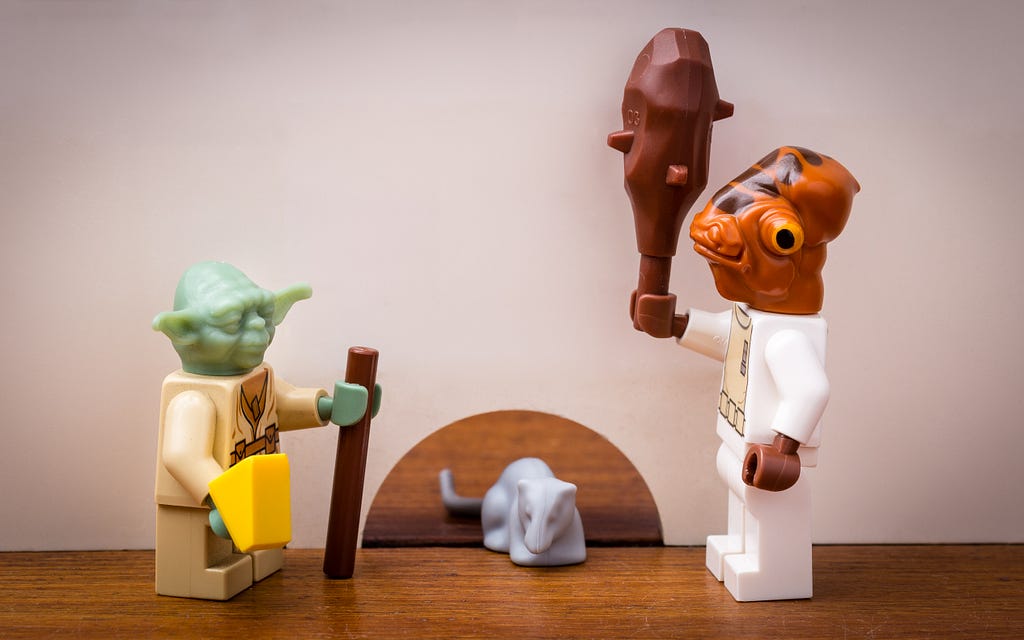
[7] I’m also embarrassed to tell you about my awesome collection of Lego minifigs, including some choice hard-to-find items such as a custom-made Admiral Ackbar figurine that I’m not going to tell you how much I paid for. I keep them in sealed Ziplock bags and specially designed display shelves, just like Will Ferrell’s dad character in The Lego Movie. Here’s your pants. Show’s over.
Then there are the effects on my kids’ precious psyches, which, since watching Inside Out multiple times, I can’t help but think of as the Grand Canyon with high-tech command stations run by talking jellybeans. Movies have the power to shape them (my kids, not the jellybeans) in profound, irretrievable ways, psychologically,[8] politically,[9] sexually.[10] My daughters being daughters, I also have to be concerned about gender-role socialization and heteronormativity and the patriarchy and all that shit.[11] And don’t even get me started on all the murders and dead parents.[12]

[8] All parents should spend several hours a day reading academic papers about the effects of media on their children’s psyches, as soon as they’re done watching The Princess Bride. I’m a sucker for cutesy titles such as “Look Out New World, Here I Come!: Race, Racialization, and Sexuality in Four Children’s Animated Films by Disney, Pixar, and Dreamworks,” and “Am I Too Fat to Be a Princess?: Examining the Effects of Popular Children’s Media on Young Girls’ Body Image,” and, my favorite, “Pass the Popcorn: Obesogenic Behavior and Stigma in Children’s Movies.” Or, as Peter O’Toole’s Anton Ego would put it: “I don’t like food, I llllllove it. If I don’t lllllllove it, I don’t sw-WA-looooow.”

[9] Did you know The Incredibles is an Ayn-Randian parable about the dangers of welfare-state mediocrity? Did you know Despicable Me encourages Satanism? Did you know The Lion King is soaked in proto-fascist imagery? Did you know The Iron Giant is anti-gun propaganda, Happy Feet is environmentalist propaganda, Astro Boy is Marxist propaganda? Did you even see Astro Boy? It’s a film adaptation of the Japanese TV show adaptation of the manga books from the 1950s about a child-shaped android created as a Pinocchio/Galatea for a government scientist who then becomes a crime fighter (the android, not the scientist). It’s awful. And Marxist.

Did you know The Incredibles is an Ayn-Randian parable about the dangers of welfare-state mediocrity? Did you know Despicable Me encourages Satanism?

[10] I’m not talking about the “subliminal” pornographic messages rumored across the Internet to be embedded in Disney movies. You know, a mysterious voice says “take your clothes off” in the middle of Aladdin and the undersea palace in The Little Mermaid looks like a giant penis. First of all, if you can see it it’s not fucking subliminal. Second of all, those are all ridiculous myths concocted by dirty-minded morons. The only true one is the one about the topless painting in The Rescuers. Having said that, there is something a little sinister about, say, Disney’s obsession with bondage. I mean it. Watch Peter Pan, Sleeping Beauty, Aladdin, The Hunchback of Notre Dame, Hercules, and Tangled in succession and tell me I’m making it up. If you have the time, google “kenneti disney dungeons.” You’ll thank me, I hope.

[11] There are the old-timey handsome-prince-true-love’s-kiss-beautiful-but-helpless-damsel inanities of Snow White and Cinderella and Sleeping Beauty to combat, but also the third-wave pseudo feminism of The Little Mermaid and Aladdin and Mulan and the post-culture-wars-post-Sex-and-the-City compromises of The Incredibles and Tangled and Maleficent to unpack. And what is up with Elsa’s transformation from Frigid Elsa to Sexy Elsa in the middle of “Let It Go”? And what is up with male heroes looking different and female ones all looking the same? Do yourself a favor and google “gianna tumblr sameface syndrome.”

[12] Nobody has satisfactorily explained to me why so many children’s stories involve death, especially parental death. You would think children would hate such stories, not drag their parents to the theater half-a-dozen times and then pester them to pay $39.99 for the DVD when they could just as easily stream the thing. But no. They witness in utter and all-too-real horror as Nemo’s mother and seventy-eight million of his siblings are eaten by a barracuda, and seconds later are completely entranced by the question of whether Nemo’s going to get to go to school. It’s like magic.

Nobody has satisfactorily explained to me why so many children’s stories involve death, especially parental death.

Are we happy that kids can do this? It must be developmentally okay, since I have the death of Bambi’s mother securely stored in my long-term memory shelf, immediately followed by Thumper saying “He doesn’t walk very good, does he?,” and I turned out relatively well adjusted. Anyway, parental death was already a staple of the Grimm’s tales and of myths and legends the world over, though why this was necessary I can’t fathom. It can’t have been easy in the olden days to reach the age of five without having been exposed to, like, actual death.
And yet, despite the psychological risks and the brainwashing and the merchandizing, I still think it’s worth it. Just for the laughter it’s worth it. My family and I hunt especially for the throwaway line, the one that does not advance the plot but is only there because the movie gods have decreed this is a propitious moment for you to laugh. Like when a ten-year-old girl hand-fashioned in clay blurts out “Go ahead, eat me! I’m sure I’m delicious!”[13] Laughter is that rare thing that both feels good and is unambiguously good for you. I never ever take for granted what, say, Kung Fu Panda or Chicken Run can do for a person, young or old, in the good-humor department.[14]

Movies are such concentrated experiences. In a couple of hours (usually less for G and PG fare) a movie throws at you both a world and a three-act full-on story set in that world. If it is at all effective, you absorb it, then become immersed, then become invested. This is true even of mediocre outings like Thumbelina or Cars. Human beings are story-loving creatures and there’s been enough said about that. A novel offers a more complex and sophisticated narrative experience, but who has time for that?,[15] and anyway it will take days or weeks to read. A film is consumed in a few bites, but somehow crams into those bites an astonishingly vivid visual experience[16] plus beautiful music plus humor and action and drama all rolled in together plus, in many cases, satire and social commentary. And I can discuss all of these things with my wife or my friends or my kids immediately after the viewing experience and then watch the whole thing over again and still not have exhausted an entire afternoon.[17]

[13] That’s Elle Fanning as Winnie Portley-Rind in The Boxtrolls, the only movie I’ve ever seen in which the villain gets his comeuppance by cheese-allergy-induced explosion.

[14] That laughing is a good thing is one of the few things everybody in the world ever has and will forever agree on. The Bible is pro laughter, “A merry heart is like medicine,” and so is the Koran, “He deserves paradise who makes his companions laugh.” Lao Tse recommended that we laugh at everything and Plato said even the gods love jokes. As Catelyn Stark says in A Game of Thrones, “Laugher is poison to fear.” Doctors love laughter too, because it’s a painkiller and helps prevent heart attacks and cancer. Seriously, google it. When you have something that appeals to Jesus and George R.R. Martin and the Surgeon General, you know you have something.

Of course not all comedies are funny. I once sat through the entirety of Madagascar III in a theater packed with children and their parents and at no point did anyone laugh at anything that was going on onscreen. The only funny moment, Chris Rock’s Marty the Zebra dancing and singing “TA TA TARARARARA TA TA CIRCUS! TA TA TARARARARA TA TA AFRO!,” had been given away by the trailers.

[15] I once met an adult woman who, being of sound mind and in full use of her faculties, told me her favorite movie was Taken 2.

[16] The best animators are master world-makers. A recent favorite at my house was Big Hero 6’s San Fransokio, half San Francisco, half Tokyo, half superhero anime, half Boy Meets World (although now it’s Girl Meets World).

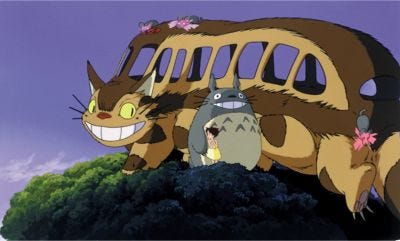
If you don’t love the Cat Bus, I honestly don’t know what’s wrong with you.

But you have to look elsewhere in the world, expand your movie horizons, to find true originality. Hayao Miyazaki seems to be able to invent new colors, and has no interest in borders, between red and blue, between the city and the country, between fantasy and reality, between wakefulness and sleep. Also, if you don’t love the Cat Bus, I honestly don’t know what’s wrong with you.

In a totally different vibe, Tomm Moore’s The Secret of Kells and Song of the Sea look like some discarded South Park cutouts fell into Van Gogh’s brain.

[17] My youngest daughter still wants to watch Mulan and Pocahontas over and over. This drives my eleven-year-old crazy even though she emerged out of this stage only recently. But it’s not just a kids’ thing. I’ve seen The Shawshank Redemption approximately nine hundred and sixteen times. I once saw it twice back-to-back. Why? Maybe because I’m Irish, but also because I love it and I like to be around things that I love.
And that’s just movies in general. The really good ones are as fulfilling as great works of art in any other medium, illuminating, perplexing, immediately gratifying, elusively sophisticated, both mind-expanding and soul-expanding. Don’t believe for a second the stereotype that kids’ movies are all the same.[18]

These are corporate products, intended to appeal, literally, to all the children in the world.

Yes, there are lots of conventions that must be adhered to. The overwhelming majority emphasizes “family values” like honesty, generosity, and loyalty. They always[19] take place in morally just worlds, in which “good” characters triumph and are rewarded and “evil” characters are both defeated and humiliated. Parental deaths suck, but they are invariably the catalyst for the main character’s coming-of-age-metamorphosis, as are the onscreen deaths of mentors such as Obi-Wan Kenobi, Dumbledore, and Oogway the Turtle.[20] Yes, children’s movies peddle the infallibility of “believing in yourself,” even when such a sentiment makes no sense in the context of the story.[21] But how can they not? These are corporate products, intended to appeal, literally, to all the children in the world. They are so successful at it because they understand children, and children, especially young children, are the same everywhere.[22]

[18] Take AntZ and A Bug’s Life. Granted, neither is a masterpiece, but it’s amazing how two films released at around the same time and having essentially the same plot (misfit ant starts out mocked and shunned by all but eventually saves the entire colony and wins the love of the beautiful ant princess) and the same message (be brave, follow your heart, be yourself, and everything will work out for you and everyone else, except for the bad guys, of course) will go about it in such dramatically dissimilar ways.

AntZ constructs a brown-and-orange world of claustrophobia and cynicism, voiced by some of its era’s biggest box-office draws: Sharon Stone, Sylvester Stallone, Jennifer Lopez, Gene Hackman. It’s half driven by the personality of its star (Woody Allen) and half by an inexplicable desire to channel Full Metal Jacket into an animated comedy. One sight gag involves a soldier so badly wounded only his head is left. A Bug’s Life is all blues and greens and joyful eccentrics doing their thing: Dave Foley, Kevin Spacey, Julia Louis Dreyfus, Phyllis Diller, and on and on. Happy-happy and totally forgettable.

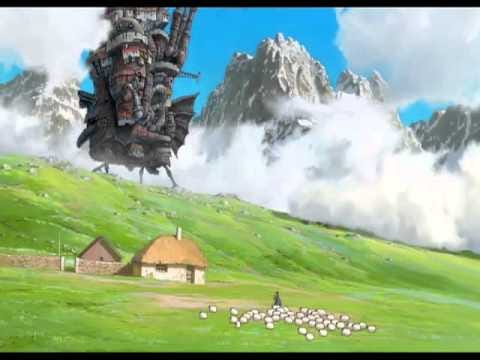
[19] Okay, almost always. Have you seen Miyazaki’s Howl’s Moving Castle? That thing is to children’s movies what Cranberry Redbull is to cranberry juice.

It’s derivative, but derivative is the point.

[20] And Gandalf. They’re all Gandalf. And Tolkien ripped Gandalf off from medieval stories and Viking sagas. Everybody loves a good father figure dying. It’s derivative, but derivative is the point.

[21] If you want to see a particularly egregious example, watch the straight-to-video Mulan II sometime. Better yet, don’t. It’s awful.

[22] Yes, I know, animated movies are Western products built by Western minds for Western interests. Yes, I know they are racist and heteronormative and pro-capitalist and in all probability edited in the presence of government operatives wearing dark glasses and earpieces. But you can’t deny their popularity. They are universally appealing. They just are.
Ironically, this enforced conventionality, born of financial decree, this almost infrangible predictability, allows for clever filmmakers to work in complexity along the edges, to challenge viewers’ expectations and force them, at least the more attentive ones, to think. I’m not talking about trying to sneak some hidden message into unwary minds. It’s the other way around. The good ones want you to notice. As long as they aren’t too obvious about it, they can get away with a lot, precisely because parents and kids see their creations as pre-approved, and therefore harmless, entertainment. Because of this I think of the best children’s movies not only as art, but also as immensely powerful philosophical and pedagogical tools, as great art, in other words.

Ironically, this enforced conventionality allows for clever filmmakers to work in complexity along the edges, to challenge viewers’ expectations and force them, at least the more attentive ones, to think.

Say my daughters notice me giving a dollar to a homeless man. They want to know why I gave him money, and why then I don’t give money to all the other homeless people, and maybe I’ll talk about fairness and serendipity and the fickle alliance between your moral compass and your emotions, and then we’ll really get into it, for how is it fair that little Nancy has a pony and her father drives a Maserati and we just have a Prius and a cat who scratches the furniture, and how is it fair that we drive a Prius but little Natalie’s mom lost her job and they had to sell their car and the teachers are requesting donations so they won’t get evicted from their apartment, and how is it fair that there are millions of people around the world who don’t have anything at all to eat but everybody’s worried that poor people in America are too fat?

So I’ll steer the conversation towards Wall-E. The one with the robot.[23] Wall-E hits all the conventional buttons: self-discovery,[24] love,[25] friendship, family, loyalty, the works. (I’m assuming you’ve seen Wall-E. If you haven’t, please refer to the analog hyperlinks, aka footnotes). But the story boasts some glaring plot holes and contradictions. Based on no evidence other than my own reading of this bodaciously excellent film, I choose to assume these are deliberate challenges, placed there by artists with something real to say struggling against the straightjacket of cliché.[26]

[23] The world is barren and brown and covered in trash. Humanity has escaped to the stars and lives in tranquil comfort in a giant cruise liner called the Axiom. All human needs are met by an inexhaustible supply of robots, each of which follows a specific “directive” — its raison d’être — and is designated by an acronymic combination of letters that can also be pronounced as a cute and merchandizable name. All of them were created by Buy N’ Large, the very same private conglomerate that was responsible for the overconsumption that led to global catastrophe. Wall-E is the last functioning cleanup robot from the army of identical garbage-bots that were left behind on Earth to deal with the mess. Wall-E is alone and lonely until he meets Eve, a kick-ass babe who can fly and shoot lasers from her arms and looks like an iPhone. Eve’s directive is to find growing vegetation on the surface, but she is quickly taken in by the Chaplinesque garbage-bot and they fall in love. They eventually end up on the Axiom, where human beings have languished and expanded into helpless blobs under the well-meaning attentions of their mechanical caretakers. Nominally in charge is the ship’s human Captain, whose name is never spoken but is, according to the Internet, B. McCrea.

Shockingly, following a series of exciting and hilarious adventures, Wall-E and Eve team up with the Captain and together they save the human race, return to Earth to rebuild the world, and live happily ever after. The key to mankind’s salvation, it turns out, was a little wisp of a plant, which Wall-E found on Earth and gifted to Eve. The plant, a symbol of the Earth’s capacity for rebirth and of man’s yearning for nature, adds an always-timely environmentalist slant to the proceedings.

[24] Although I love Wall-E, I remain pissed off at the misleading marketing campaign that preceded its theatrical release. The trailers implied that Wall-E developed “a personality” and human-like emotions after his (he’s definitely a he) long sojourn of solitude. In fact, all the robots in the film have personalities and are human-like in most ways. Isaac Asimov wrote somewhere that there are only two kinds of robot stories: “robots as threat” and “robots as pathos.” Wall-E is neither, because it’s not a robot story at all.

Why is it that American fiction abounds with unattractive loser men who somehow lure gorgeous, extraordinary women into marrying them?

[25] Why is it that American fiction abounds with unattractive loser men who somehow lure gorgeous, extraordinary women into marrying them? Eve, the perfect girl who literally falls from the sky, is magically won over, as they always are, because Wall-E is sensitive and makes her laugh and that’s all women really want after all. When they get older and bring this up, I’ll ask my daughters to guess the ratio among screenwriters between unattractive loser men and gorgeous, extraordinary women.

[26] Consider a small, blink-and-you’ll-miss-it moment. The protagonists are watching an old video in which the President of Buy N’ Large (played by Fred Willard) is welcoming Earth’s refugees to the Axiom, when he throws out this little tidbit: “due to the effects of microgravity you will experience some… uh… slight bone loss.” The screen shows a graphic of ballooning bodies supported by disintegrating skeletons. The moment passes and is forgotten. Except that, now that this has been established, it makes it impossible for humanity to return to Earth after several generations and five hundred years on the ship. Keeping this in mind, you might be forgiven for screaming, after the credits begin to roll, “It’s not a happy ending at all! They’re all going to die!” I can neither confirm nor deny that I did this when I saw it for the first time.
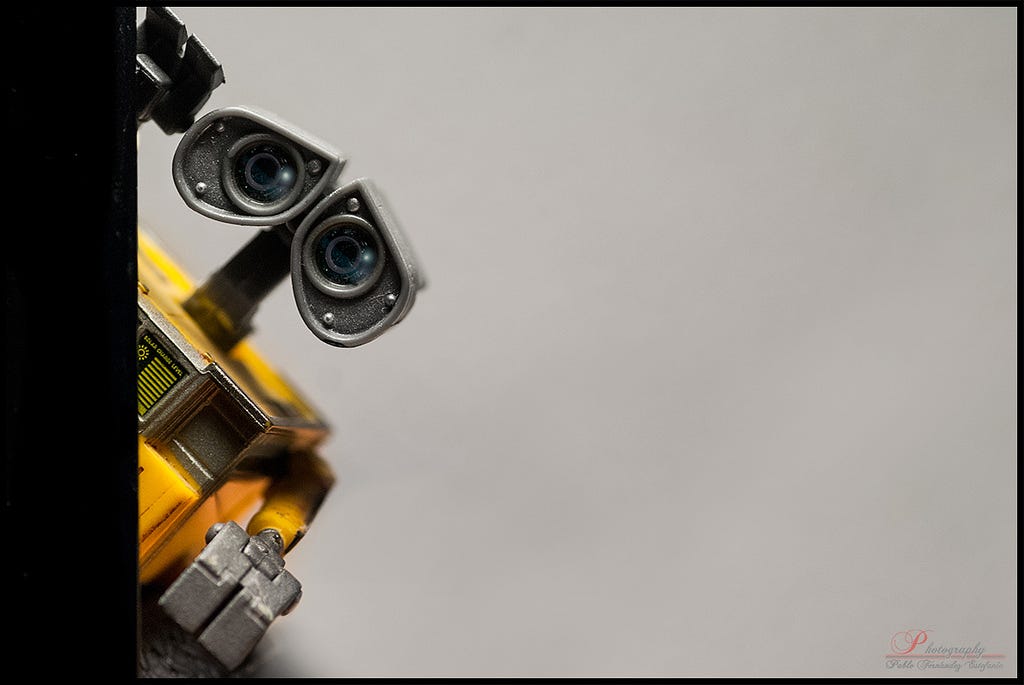
Under a patina of platitudes,[27] Wall-E deals in moral grayness: Is it okay for the audience, an audience of mostly children no less, to root for the movie’s robotic heroes, Wall-E and Eve, both of whom are unapologetically selfish?[28] This is a pro-selfishness movie, is what I’m saying. There’s no need for altruism, goes the message. You don’t need to waste time thinking about other people, you see, because your needs will magically align with those of everyone else. You can be selfish and you can be good, so you’re all right.

By encouraging ambivalence and strong responses, Wall-E demands to be taken seriously.

Wall-E the robot is cute and funny, and he screeps and blizzles in ways that would make R2D2 turn purple with envy. But he is also thoroughly self-absorbed, not unlike the heroes of more “adult” movies like Forrest Gump and The Curious Case of Benjamin Button. Is Wall-E adopting the moral metaphysic of these films or satirizing them? Unclear, at least to me. Either way, its message is now problematic, at best controversial and at worst pernicious.[29] This is a strength, not a weakness. By encouraging ambivalence and strong responses, Wall-E demands to be taken seriously.

[27] Best reflected in Captain McCrea’s heartfelt “I don’t want to survive, I want to live!” I only recently put two-and-two together and figured out Captain McCrea was voiced by Jeff Garlin, the dad from The Goldbergs. Also, the survive/live line is uttered by Chiwetel Ejiofor playing Solomon Northrup in Twelve Years a Slave. Movies are like onions. So many layers!

[28] You don’t believe it, do you? Think about the key scene in the movie. Wall-E has been wounded and lies dying in the Axiom’s garbage dumpster. Eve tries desperately to help him but to no avail. She must decide whether to stay with her beloved or follow her directive, to abandon him and use the plant to save the world. Eve chooses the former, she will stay with Wall-E, damn the consequences for the rest of the humans and robots on the ship. But wait, Wall-E, slowly, painfully, brings himself to the plant and hands it to Eve. Take it, he gestures. Eve shakes her head. And then Wall-E twists his face in a way that Eve recognizes, “if you take the ship back to Earth,” he reminds her by the movement of his binocular-shaped eyebrows, “we can use the spare parts I’ve stored to repair me. You must save the world, in order to save me!” And that’s exactly what happens.

[29] Traditional morality almost always teaches that selfishness is bad. So do Immanuel Kant and John Stuart Mill, and they would know. Kant’s notion of “categorical imperative” demands that the right thing to do be always what you would want anybody else in the same situation to do. Mill’s “utilitarianism” determines the right thing by calculating the amount of happiness that can come out of the alternatives course of action, except that you’re not allowed to think about your own happiness, but about that of everyone involved. Both Kant and Mill, then, subscribe to the core of Biblical morality, the Golden Rule: treat other people as if they’re as important as you. Wall-E and Eve’s intended actions were immoral because they only thought about themselves. And remember that you can’t argue that all’s well that ends well, since all the humans die in the end because of microgravity.

But wait. Isn’t Golden-Rule morality totally unrealistic? Nobody can be reasonably expected to be completely selfless. That’s why religion has to offer divine reward to good people. Kant and Mill, as it happens, both agree with that. They believe that good people are good because they have been trained to feel good when they do good things. In other words, good people are good because it makes them happy, and so are, deep down, acting selfishly. It’s true. Buy me a beer sometime and I’ll show you. So Wall-E and Eve, who were just trying to be happy, might have been good after all. See how much there is to think about just because a pair of binoculars on threads wanted to get it on with a flying iPhone?

Say my kids actually pay attention to what the movies they’re watching are actually telling them, and they realize that the two main lessons they are given over and over — “always follow your heart” and “always be loyal to your family” — can’t always coexist harmoniously.
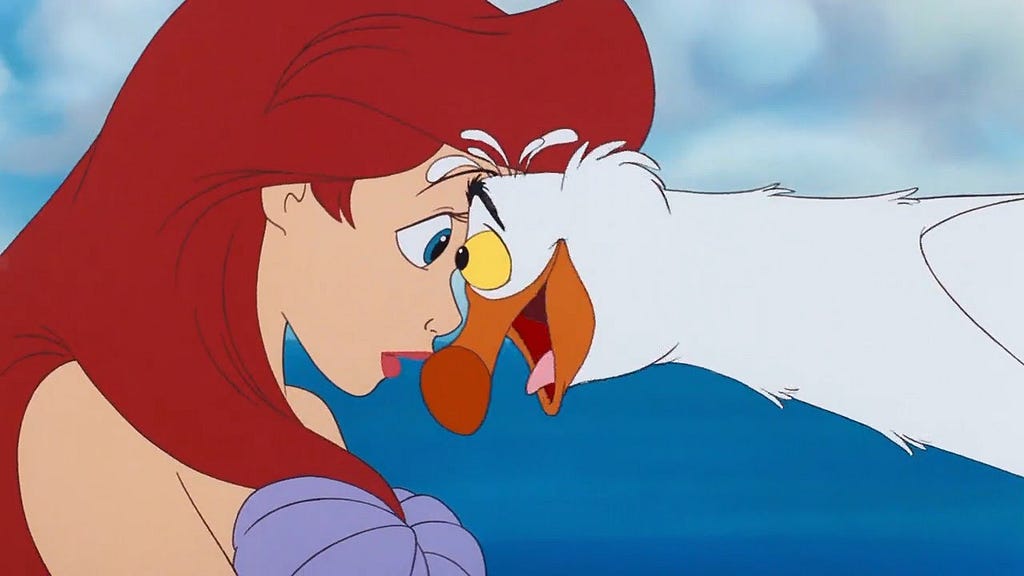
Or say my kids actually pay attention to what the movies they’re watching are actually telling them, and they realize that the two main lessons they are given over and over — “always follow your heart” and “always be loyal to your family” — can’t always coexist harmoniously.[30] That, say, duty should sometimes overrule personal preference, but determining when this is the case is problematic to say the least, particularly so in our era of instant access to unlimited information, of video games that surpass reality in every way but the ones that matter, of socially-condoned self absorption.[31] I could easily conjure for them the dilemmas in The Little Mermaid or Mulan, both of which deal explicitly with this tension between self and other. The problem is that both of those movies are full of shit, albeit with fantastic tunes. Follow your heart, they say, and everything will be all right. Follow your heart, and all conflicts within as well as without will be resolved. No, sorry. We’re not doing that. We’re bringing out the BFGs, the Holy Trinity of children’s films: the Toy Story series.[32]

[30] The belief that the different goods in the world are often in irreconcilable conflict with each other — as in, the more freedom you have the less equality, and vice-versa — is called “agonism.” Just in case you’ve run out of ways to impress your friends at parties.

[31] Social conservatives have one thing going for them: Too much freedom is bad for us. And when social institutions disintegrate under the weight of freedom, and the technologies that enable that freedom, then people become aimless and apathetic and dangerous. There are scientific studies that show that too many cereal options produce harmful psychological effects. The problem is that so-cons wouldn’t be caught dead citing a scientific study, having embraced anti-intellectualism as the basis of their political ideology.

[32] In the world of the Toy Story films, toys are alive. They can move and act and have lives of their own, and relationships with each other. Horribly, in the presence of human beings they must pretend to be inert, and let themselves be manhandled and mutilated in the worst sorts of ways. The source of this rule is unexplained, but there’s no doubt that a toy’s greatest pleasure and primary aim in life, analogous to the directives for Wall-E’s robots, is to belong to a child and be loved and played with (and I’m sorry but I can’t make that not sound dirty in my head).

The source of this rule is unexplained, but there’s no doubt that a toy’s greatest pleasure and primary aim in life, analogous to the directives for Wall-E’s robots, is to belong to a child and be loved and played with (and I’m sorry but I can’t make that not sound dirty in my head).

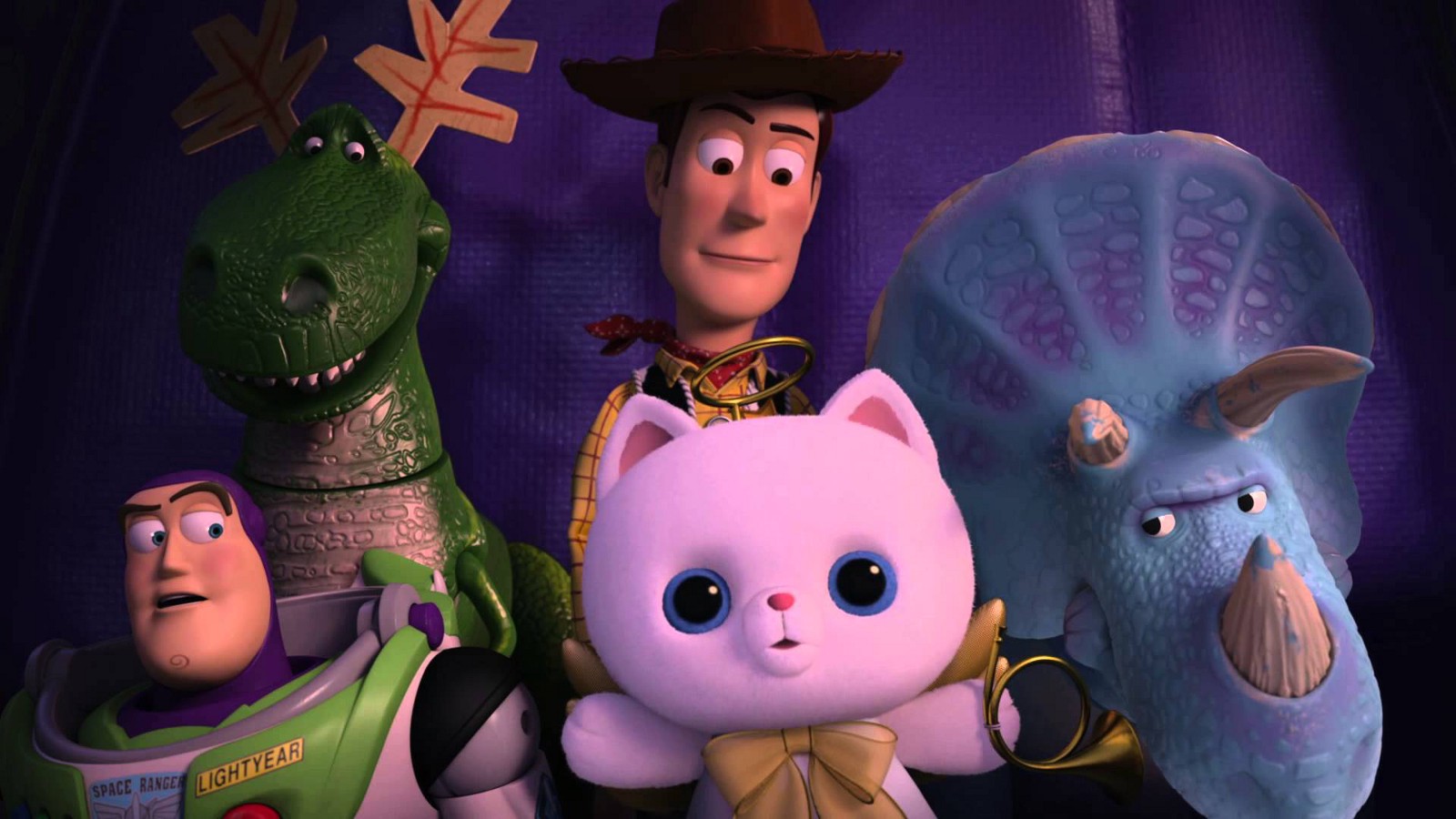
In the first Toy Story the action is focused on the favorite playthings of a ten-year-old named Andy. Their leader is Woody, a cloth-and-cotton old-timey cowboy who, somehow, despite being a fifties-era toy in the room of a boy living in the nineties, is Andy’s favorite. The core group includes Mr. Potato Head (Don Rickles), Slinky Dog (Jim Varney), Rex the cowardly dinosaur (Vizz… ehm… Wallace Shawn), and Hamm the piggy bank (John Ratzenberger). (I’m telling you who does the voices because that’s a holy-crap!-level ensemble.) Needless to say, they all have hilarious lines that echo in my house whenever they populate my television screen. The only girl toy of note is a china Little Bo Beep (poor, wasted Annie Potts), who exists solely to wind Woody’s analog insides into improbable knots of Platonic desire. She has no funny lines.

The plot involves the arrival of a new toy, Buzz Lightyear, Space Ranger, who does not know he’s a toy and behaves as if he is actually a Space Ranger, but nevertheless crumples to the ground whenever Andy enters the room. Woody and Buzz, due to the latter’s stubborn and unacceptable desire to be awesome, become separated from Andy and must escape from the clutches of Sid, the evil boy who doesn’t take care of his toys.

In the second one, Woody is stolen by a toy collector with a poultry fetish, who intends to sell a set of old-timey cowboy toys from the fifties to a museum, where they’ll be put on permanent exhibit. The third one deals with Andy’s impending departure for college and the uncertain future that awaits the toys that have not been broken, thrown away, given away, or lost. It’s about death.

An indisputable asset of all three movies is the presence of the three-eyed “alien” toys, first rescued from a claw machine. They’re mindless, ignorant religious fundamentalist and thus hilarious.
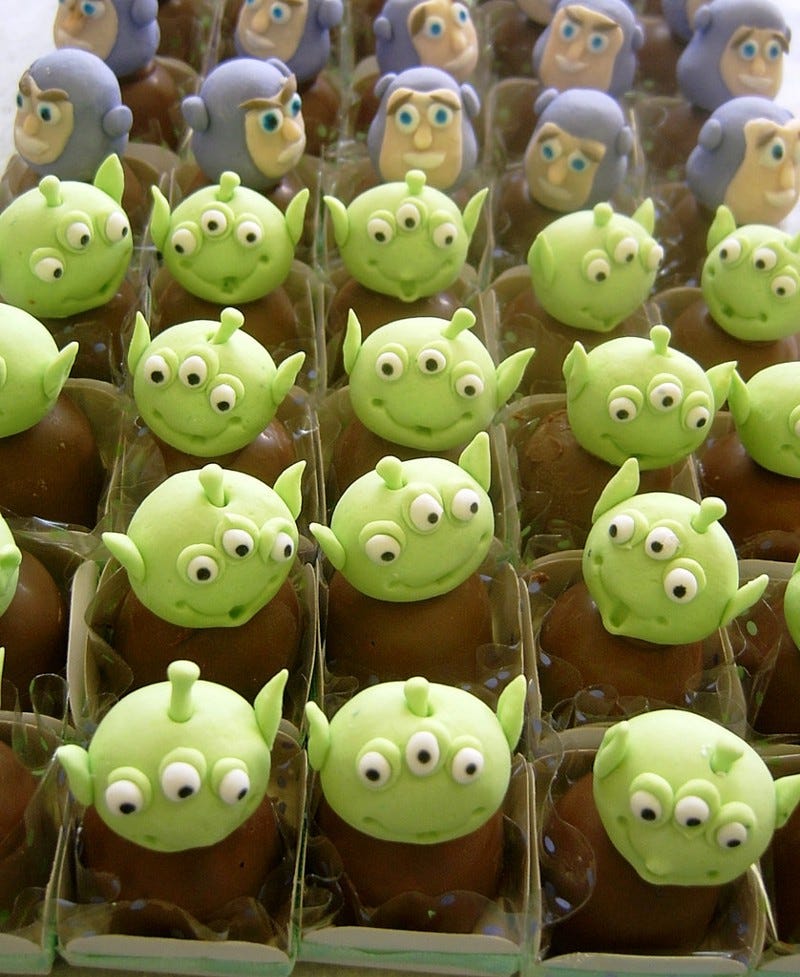
Much like the robots in Wall-E, the toys in Toy Story are persons in every way except for physical appearance. They think and feel and love and have hopes and fears and dreams. Their existential condition is meant to be as morally significant as that of the human characters. Except that it’s much, much more horrible. They are obligated by their very essence of toyness to be owned, to be under the total control of another person (their “kid”), except that the other person doesn’t know they’re alive.[33]

Their existential condition is meant to be as morally significant as that of the human characters. Except that it’s much, much more horrible.

So in the first one Woody crushes Buzz’s dreams and indoctrinates him into the ultimate desirability of belonging to somebody else. In the second one Woody fights to ruin the plans of a group of toys who want to be taken care of forever, rather than destroyed and lost by some moronic child, and indoctrinates Jesse the cowgirl into the ultimate desirability of belonging to somebody else (not surprisingly, Buzz and Jesse become an item). And in the third one Woody faces a tyrant who, through admittedly authoritarian and nepotistic policies, is trying to create a safe space of self-determination for toys. Our hero is forced to remind all of his friends over and over, even in the face of obliteration by dumpster furnace, of the ultimate desirability of belonging to somebody else.[34]

That’s right. The Toy Story series is pro-slavery (Andy’s toys are branded with their master’s name on the bottom of their shoes) and Woody the cowboy is nothing but a toy Uncle Tom.[35]

[33] If a kid knows her toys are sentient beings, then naturally she can’t “own” them. That would be wrong. In the same way that it’s wrong for Hugh Jackman to kill all the Hugh Jackman clones he creates for his magic act in The Prestige, and it’s wrong for us to kill cows, grind their flesh, shape it into patties and eat it as burgers if Peter Singer convinces us that cows are people. The Western world abandoned slavery when it internalized the idea that non-white people were just like white people except not white. This, unfortunately, only happened following many centuries of people engaging in the slow and painstaking process of looking at what was right in front of their fucking faces. I can’t wait for my kids to be old enough to watch Blade Runner and Ex Machina, by the way.

[34] Aristotle believed that some people were just born to be slaves. Here’s his argument: slavery is such a horrible, unbearable condition, that a normal human being who found himself a slave would not hesitate to kill himself. Any slave who does not kill himself is therefore inherently predisposed to not mind being a slave. Albert Camus countered that, for all people, the only question that bears asking is “why shouldn’t I just kill myself right now?” They were both, by most accounts, lovely guys.

[35] In case you don’t know, because it used to be read in all middle-schools and high-schools in America but these days is no longer, possibly because its characters are morally complicated beings rather than straightforward heroes and villains in a slavery-is-bad oversimplified fantasy, Uncle Tom’s Cabin is the story of the relationship between a white, slave-owning family, the Shelbys, and several of their slaves, most notably Uncle Tom himself, who, despite being treated as infrahuman and having his family torn to pieces, remains loyal to his master to the very end.
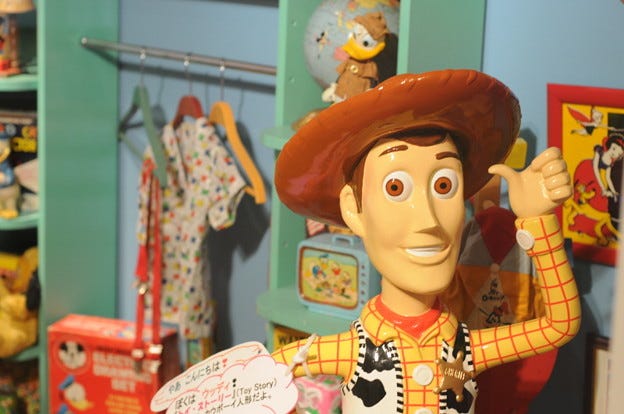
This isn’t, like, technically the case, obviously, insofar as the filmmakers and the parents and the children understand that this is a fantasy in which inanimate objects come to life and they are not meant to represent real human beings that anybody should expect to encounter any time soon. Having said that, the series is encouraging complex, out-of-the-box moral thinking, identification with creatures who might seem familiar but whose internal life is completely alien to us, and a serious examination of what freedom and family entail for finite beings of plastic and flesh with very dismal long-term prospects.

But why should the toys give a shit about Andy’s proper cognitive development?

Is Woody a hero? Why is he a hero? He’s certainly a devoted family man, but he understands the family as centered squarely on the father, I mean, the kid. Is Woody’s unbreakable loyalty perhaps related to the fact that he’s the kid’s favorite? Woody wastes no thought on those who have been “lost along the way,” even if some of them may still be languishing forgotten on the back of some easily-reached-for-mobile-living-intelligent-creatures closet. All he cares about is Andy, his kid, and he willingly risks the safety of his peers to insure Andy gets some additional minutes of imaginative play. Because that’s what makes you good, possessing that very specific, anarchic yet unthreatening, form of imagination. But why should the toys give a shit about Andy’s proper cognitive development?

And then there’s this: the toys can escape if they want to! The end of the first Toy Story establishes indisputably that toys, if they so chose, could move and talk in front of their human owners. Woody, of all toys, makes the decision to do this so he and Buzz can escape from Sid’s room.[36] The results speak for themselves. Sid is flummoxed and terrified and the plan a complete success. Why don’t toys rise up against their human overlords like the apes in Planet of the Apes or the toys in Small Soldiers[37]? Where is the toy Ghandi? The toy Martin Luther King? Stinky Pete the Prospector and Lotso Huggin’ Bear show that the toys can reject their directive as easily as Eve in Wall-E. Why don’t they pretend to be possessed by the Devil and persuade a few million idiot humans to worship them[38]?

See? So many layers! I can’t in good conscience deprive my children of such wellsprings of intricate moral questioning, nor can I deprive them of the opportunity to learn the perfect line to dismiss away their overbearing nerd of a father. They just need look me up and down and say: “You are a sad, strange little man, and you have my pity.”[39]

[36] While we’re at it, why is Sid a villain? He doesn’t know the toys are alive. Yes, he likes to break them apart and reconnect them in unusual ways to create mutant toy hybrids. Yes, he likes to attach them to explosive devises and shoot them up into the sky. But why are these bad things? Why is Sid not the curious, inquisitive boy who’ll grow up to be a rocket engineer, while Andy, being pathologically attached to his mass-produced possessions, will grow up to be a hoarder? Equally worrisome is the fact that Andy, at eighteen, is still inordinately attached to his little-boy toys, and this is depicted as an attractive facet of his personality instead of as a symptom of gerascophobia.

[37] In Small Soldiers the toys all behave as if they are persons, the good ones and the bad ones. Nobody ever yells at them “You are a toy! You are a child’s plaything!” They’re all Buzz Lightyear before he turned slavery apologist.

[38] Hey, Donald Trump did it.

[39] Tim Allen as Buzz. So good.

JJ Amaworo Wilson Brings Magical Realism to Caracas’ Tower of David

Damnificados, JJ Amaworo Wilson’s multi-lingual novel, draws inspiration from Venezuela’s Tower of David, a deserted high-rise populated by the homeless and displaced (you probably remember from season 3 of Showtime’s Homeland). Nacho, Damnificados’ protagonist, unites the disenfranchised people of the tower. Amaworo Wilson writes in the tradition of magical realism; his work uses supernatural elements to explore concepts like poverty, power, and the ties of language.

JJ and I met at The Los Angeles Times’ Festival of Books, where I moderated the panel, “Fiction: Finding a New Normal.” He’s the kind of person who slips easily from one language to another, quoting authors as he speaks. He and I caught up recently to discuss his work.

Heather Scott Partington: You’ve lived and taught all over the world. How have your travels and study of languages affected your fiction?

JJ Amaworo Wilson: Living abroad taught me to look. I mean really to observe the world around me, to see with fresh eyes. You go from Britain to, say, Egypt, and everything is different: the architecture, the signposts, the clothes, the street noise, the sunlight (yes, really!).

…learning a new language is a personal transformation.

As for languages, learning a new language is a personal transformation. You can’t be shy and introverted if you want to address groups of people in Arabic or Italian. You have to adopt an Italian character — you’re a joker or a prince. You can’t just be who you were in English; it doesn’t work. So you begin to see the world through multiple lenses and then you write through these lenses and your vision of the world becomes kaleidoscopic and vital.

Partington: Can you talk about the trip you took to the real life “Tower of David” in Caracas, Venezuela that inspired Damnificados?

Amaworo Wilson: I was on a book tour in Caracas. I was jet-lagged and sleepless, so I went for a walk and came across the Tower of David. It was an extraordinary sight — an unfinished, inhabited monolith with armed guards at the entrance. I circled it like a wolf eyeing its prey, but never went in. The image of the exterior was enough to fuel my curiosity.

Partington: Damnificados is magical realism — mythological, biblical, weird realism. What were the rules for the world that you created? Why did you venture, specifically, into storytelling that was greater than reality?

Amaworo Wilson: I wanted coherence in the world of Damnificados. Magical things happen, but it isn’t Harry Potter. You can’t wave a wand and make poverty disappear. That’s where the ‘realism’ in ‘magical realism’ comes in: whatever trickery you use, the world of the novel must be true.

You can’t wave a wand and make poverty disappear.

As for my motives for writing magical realism, it’s to do with what I like to read. I grew up on Gabriel García Márquez, Toni Morrison, Kafka. I like weird stuff. I like books that stretch the boundaries of our physical world, without being hard sci-fi. But of course it has to fit the story. If you’re writing a domestic comedy of manners about middle-class couples, you can’t have two-headed monsters and multilingual ghosts invade the pages. But if you’re writing a dystopian fairy tale set at an unspecified time in a hybrid East-West-Nowhere, maybe the magic belongs.

Partington: Not many novels deal with poverty in a tangible, realistic way. Your novel is magical realism, and yet it’s one of the most honest examples of what will happen to people who are forced to live on the outside of a society. As you started to write Damnificados, did you discover anything about the disenfranchised people who moved into the tower (both the one of the novel, and in the real world “Tower of David”)?

Amaworo Wilson: Yes, through my research I discovered how creative and resourceful the poor can be, and used this in Damnificados. In the real tower, the elevator was broken, so they built ramps around the exterior of the building and motorcyclists gave people rides. They turned the helicopter pad into an outdoor gym using recycled building materials as weights. They made the atrium into a basketball court. They improvised to get water and electricity. Somehow, against all the odds, they built a community. It reminds me of something Nelson Mandela said: “It always seems impossible until it’s done.” Well, it was the poor and the disenfranchised who got it done.

Partington: During our recent panel at The LA Times Festival of Books, you paraphrased Wael Ghonim: “The power of the people is stronger than the people in power.” How did this idea play into the story of Damnificados?

Amaworo Wilson: This idea is central to Damnificados. It’s in the novel’s epigraph, from Matthew 5:5: “Blessed are the meek, for they shall inherit the earth.” Through perseverance and determination and luck, the oppressed overcome the oppressor.

Hecho En Venezuela: The Private Poetics of Narrative, Memory, and Lies

Partington: In that same conversation, you said that conflict drives every moment of plot in your novel. What, in your opinion, makes for a great book? Is it this driving sense of conflict? And have you read anything lately that you just could not put down?

Amaworo Wilson: No conflict, no story. But that’s only part of what makes great books great. There are other things: big characters, unforgettable scenes, dialogue that zings off the page, tension, and the language — particularly, for me, the language. It has to sing. The last book I read that had all of that and more was The King and Queen of Comezon by Denise Chavez.

Partington: Your novel is in English, but it’s multi-lingual. It relies on the different sounds that come from disparate languages, creating conflict within the tower and a reason for your protagonist, Nacho (who speaks multiple languages) to unite them. What concerns did you have about including non-English text in the book? Was there a balance to be struck?

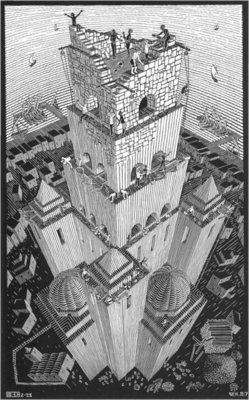
Amaworo Wilson: The tower in Damnificados is also the Tower of Babel. It’s a mongrel, multicultural world always on the brink of chaos. So, as you suggested, languages are an essential part of the story. But I didn’t have concerns about including foreign languages, and neither did my editor at PM Press. We trust the reader. Smart readers guess from context, live with ambiguity, take pleasure in sounding out foreign words. They’re the people I’m writing for.

Partington: You said that you wrote Damnificados quickly. What’s your normal process for writing a book? Was there anything unique about this particular project that demanded your attention?

Amaworo Wilson: I’ve mainly published non-fiction, and usually with a co-author. There’s little comparison between that process and the process of writing Damnificados, except for Hemingway’s rule: “Apply seat of pants to seat of chair” (which Hemingway, incidentally, didn’t always follow — he often wrote standing up). The similarities between my fiction and non-fiction are things common to most genres: use stories to grip the reader, write with clarity and simplicity even if the message is complex, etc. The main difference was that I wrote the novel by myself, at night, so I was finding my way in the dark — literally and metaphorically — with no contract, no publisher, no co-author, no rules except those I made up as I went along.

Partington: What books have made a difference to you? Were there particular literary influences or traditions you drew from when you created Damnificados, or books that left an imprint on you as a writer?

Amaworo Wilson: I’ve always liked what Neruda said about the time he discovered books: “Comi todo, como un avestruz” — “I gobbled up everything like an ostrich.” I’ve learned from everything I’ve read, good and bad, high-brow, low-brow, no brow. And I mean everything: from Dr Seuss to The Bible, from Sophocles to Dan Brown. But it was the Latino Boom that did it for me. The second half of the Twentieth Century brought us Marquez, Neruda, Borges, Fuentes, Galeano, Amado. They freed literature, tore off its tight collar and sent it running through the streets. It’s never recovered, and neither have I.

Partington: What are you working on, now? What’s next for you?

Amaworo Wilson: I’ll always write about the oppressed and the marginalized. I cannot separate my concerns as a human being with my output as a writer. I’ve started a piece of fiction that has refugees at its heart. I’m at an early stage so I don’t know yet if it has the legs to be a novel. We’ll see.

George R.R. Martin and Stephen King Discuss Guns in America, Good and Evil

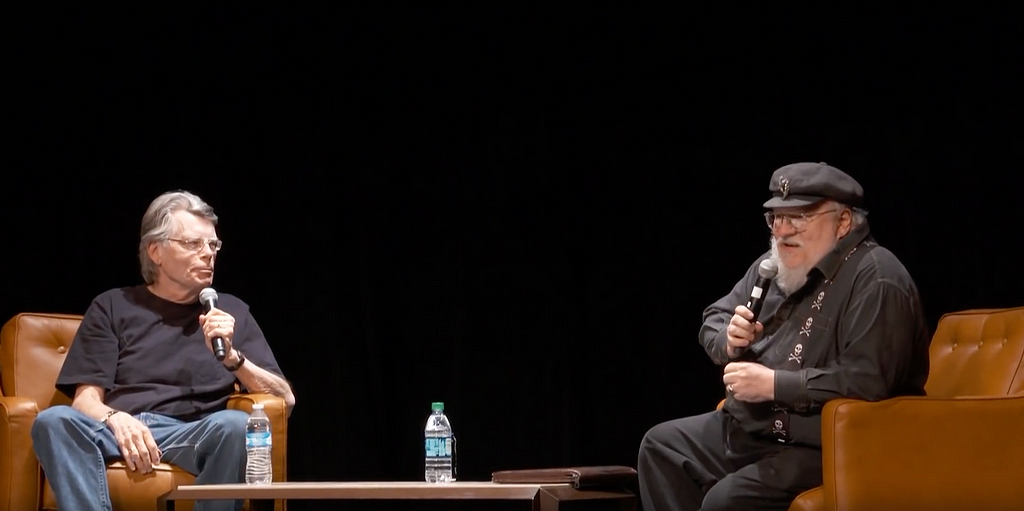
Stephen King and George R.R. Martin in Albuquerque

Last week in Albuquerque, two literary titans weighed in on the gun debate. Stephen King and George R.R. Martin were in conversation as part of King’s tour in support of his newest release, End of Watch, the final installation of his Bill Hodges trilogy. Invoking the recent tragedy in Orlando, King zeroed in on the issue of widespread and easy access to serious weaponry. “I would argue,” King said, “that someone like the man who shot all these people in Orlando, he may have pledged allegiance to ISIS but before that he was a spouse abuser and somebody with a lot of anger.” He went on, “As long as anybody who’s got only two wheels on the road can walk into a store and buy a… killing machine like an AR-15 or something, this is just going to go on. It’s really up to us.”

The conversation later turned to something that lies at the heart of both authors’ works: good and evil. “When I look at your books,” Martin said, “the real villains are the people.” He explained that in King’s work evil is not “externalized” as it is in Lovecraft or Tolkien in the shape of a Sauron, for instance. Rather, it is hidden inside of people. Martin subsequently asked King, “is [evil just] our own fucked up human natures?”

“In a way, outside evil is a comforting concept…it’s a way of shucking responsibility,” King said. “We all understand that evil is inside a lot of people, and yet at the same time…what a lot of horror fiction does and what a lot of fantastic fiction does, is it allows us to grapple with the outside evil that strikes us.”

King is no stranger to the issue of gun access in America. In 2013, following the Sandy Hook shooting, he published the essay “Guns.” Last year he took to Twitter after the shootings in Charleston, South Carolina. “Until responsible gun owners support responsible gun control laws,” he wrote, “innocent blood will continue to flow. How many times must we see this?”

The Sneaky Racism in ‘We Love You, Charlie Freeman’ Crawls through the Skin like a Parasite

On October 27, 1883, Alexander Graham Bell read a paper, Fallacies Concerning the Deaf, before the Philosophical Society of Washington, D.C., wherein he called “gesture-language” a “memorable experiment” that should be banished. He says deaf students “are continually hampered […] by the difficulty […] in conversing with their own parents and friends” and then “the ties of blood and relationships are weakened, and the institution becomes his home” (Emphasis is Bell’s and should be read with the most formidable dun-dun-dun soundtrack your brain can muster.), and further still, “it thus causes the intermarriage of deaf-mutes and the propagating of their physical defect.” An active eugenicist and believer that a deaf child should never meet another deaf child, Bell also professed that the “formation of a deaf variety of the human race” would cause a “great calamity for the nation.” His idea that “the practice of the sign-language hinders the acquisition of the English language” set about an abolishment of sign language education that had ASL entirely outlawed in classrooms by 1907.

Americans at the end of the 19th century held to strong nationalist beliefs and widespread anti-immigrant sentiment that continued well into the next century; they longed for a homogenous society and clung to opinions, however ill-formed that called for people to be uniform — deep-seated hatred that was hardly a step away from Hitleresque. This hit few harder than immigrants and people of color, and specifically to Bell’s cause: black deaf students, who not only had the disadvantage of being deaf, but who were also separated from white deaf students in their schooling and taught different signs, and were thus an easier target for the rhetoric of homogeny.

The story of We Love You, Charlie Freeman, despite where the book actually begins in the 1990s, has its roots in this earlier timeframe and in the idea of these eugenics and the primacy whitewashed thinking that led to ‘studies’ such as phrenology, the Tuskegee Syphilis Study, Sim’s gynecological experiments on enslaved women, and steatopygia experiments on Khoikhoi women — each study intended to show some kind of difference, whether physical or mental, in blacks and whites.

As a young girl, Laurel Freeman née Quincy lives in a part of Maine so far north that

[…] the Quincys’ [Christmas] tree farm was the only entry for the entire state of Maine in The Colored Motorists’s Guide to America. They were, officially, the northernmost Negroes in the United States.

Here, she is introduced to a group of black sign language students from a deaf school that began shortly after the Civil War and defied closure throughout the years, thus becoming a rarity by the time Laurel is a girl old enough to be influenced by them, circa the fifties/sixties. Laurel, subjected to the extreme racism of the time, even in northern Maine, turns out to be our lead protagonist’s mother, bringing the comfort she found in the quiet solitude of black sign language into the Boston home she creates with her husband Charles and her daughters, Charlotte, a high school freshman, and Callie, a 10-year old.

Their knowledge of sign language (and the fact that they’re a black family, we come to learn) leads them to take a research study at The Toneybee Institute for Ape Research to teach sign language to a chimpanzee, Charlie, expected to live with them as a family member at the institute mansion in provided housing onsite that

[…] seemed like some cardboard false front a bunch of schoolchildren put together out of refrigerator boxes and painted up to look like their idea of grand.

The institute, established in rural Massachusetts in 1929, has a questionable background of Tuskegee-like experiments, and throughout the book, we receive those richly detailed juxtapositions and similarities between the experimenters of the late twenties who compared black women’s bodies to chimps, and the experimentation of the Freemans in the book’s present day of the nineties. The institution becomes their home. This time the emphasis is mine, or rather, Greenidge’s.

Along with this move to the institution comes Laurel’s eternal drive to prove herself worthy, to rise above humble beginnings and to show that she can be something, at any cost. The cost is her family. Isolated in this new place, the Freemans lose themselves. Laurel’s love for Charlie rivals (and often exceeds) her love for her own family, and this leads to strains in her marriage that cannot be reeled back in once the damage is done. It is no accident that her husband’s name is Charles and the chimp’s name is Charlie; they become nearly equal in her eyes. Charlotte, the main protagonist of the book, goes on a journey of gender identity and self-discovery that she is unable to discuss or flaunt, and Callie turns inward to eating disorders and practicing magic just to be recognized as important among the mêlée.

Greenidge tells each of these segments individually, through a series of sections devoted to each person. Some of these sections are told through first-person and some are told through third-person, the vacillation of which can be jarring and seems slightly arbitrary, but through each perspective, the story is moved along. With this writing style occasionally comes the problem of some plot points being dropped at the end of the section and then never picked up again, or being watered down or jumped forward when they are picked up again. Additionally, this leads to a story that is weighted more heavily on some characters than on others; our protagonist Charlotte has 11 sections, and Laurel has one. But what is achieved is a very intimate look at each character within those sections and the precedence of emotions and observations over action. Intertwined in them is also the viewpoint of one of the initial black “specimens” of the white-male-conducted study of the late twenties, called only “Nymphadora of Spring City.” Her viewpoint is very detailed and gripping, but in the end, it fails to culminate into more than just a letter that our protagonist finally reads in the epilogue. I found myself wanting Nymphadora to weave more heavily into the story, but her importance is as the backdrop by which all the rest of it takes place. She is the atmosphere, the foundation. It is her secret that is discovered by Charlotte that unravels the whole family into a spiral of discomfort and severance that can never be reconciled.

While some of the transitions are bumpy, Greenidge has the gift of surprising, unique prose. Her voice is utterly refreshing. Each of her characters is richly different and fleshed out within the sections, and there is nothing interchangeable about any of them, which is a feat few debut authors can master. She tackles small-scale issues like loneliness, fitting in, rural vs. city atmospheres:

[…] taught me […] the awful lesson of country living: out there, in the open, in the quiet, all the emptiness pressed itself up against you, pawed at the very center of your heart, convinced you to make friends with loneliness.

bullying, family, friendship; and wraps them in a second, larger layer of body image, anthropology, historical perspective:

They came from a place that had been forgotten by time, a school founded to teach signing to the colored deaf, started right after the Civil War by well-meaning Yankees […]. Over the years, […] other deaf schools banished sign language, declared it […] a threat to the wholesome spoken word [that] would encourage the deaf to marry only each other and create a perpetuating race of non-hearers […]

history repeating itself; and finally into a third, overarching layer of race, gender, and the languages we use (or do not use) to talk about both through the ages:

Courtland County bowed to [a black woman’s] demands because the people there, like well-meaning decent and caring people anywhere, were loath to think of themselves as racists but also loathe to think of race at all.

Through multiple historical viewpoints, the story very much talks about today and holds up a mirror to all of us. We still don’t talk about it. We still don’t have that language.

As readers, if we are sure to look for diverse literature, there is an abundance of black perspectives on slavery and on growing up ‘across the tracks,’ both of which are absolutely important to hear; but what’s so refreshing about this story is that it encapsulates the heart of both without being either. It is so uniquely human and tells a different story that we must also learn and know: that different degrees of racism are still racism, that some of it is hidden and prettied-up but still breathes, and that there is a middle ground that exists if we can find the heart and the language for it.

News shows hit on the Confederate flag and the centuries of boisterous racism of the South, but what We Love You, Charlie Freeman talks about is that sneaky racism that crawls through the skin like a parasite, steals into an opening and burrows and hides and you don’t know it’s there until it starts to itch, and you ignore it. Even in Maine and Massachusetts and the places in the north where this book takes place, racism is very much a thing, but it’s ignored, swept under the rug, that quiet racism where people can somehow say, ‘It’s not in my backyard, so it’s not my fault.’ And this is where the story mirrors not only America through the ages, but America today — how uneasy we are with confronting the uncomfortable, how unwilling to give a voice to those conversations that seem to be someone else’s problem, or history’s problem. And in this, the book transcends each subplot, each twist and turn, each characterization, to be something so much grander than a story about family and values and self-discovery. It’s an absolute dissection of how we Americans have failed, after centuries of communication, to find a common language to talk about race and gender and the individual fibers of being that we all share so commonly that they’ve become homogenous, and yet we refuse to discuss them, even in silent languages shared among those we know.

Literature About Medicine May Be All That Can Save Us

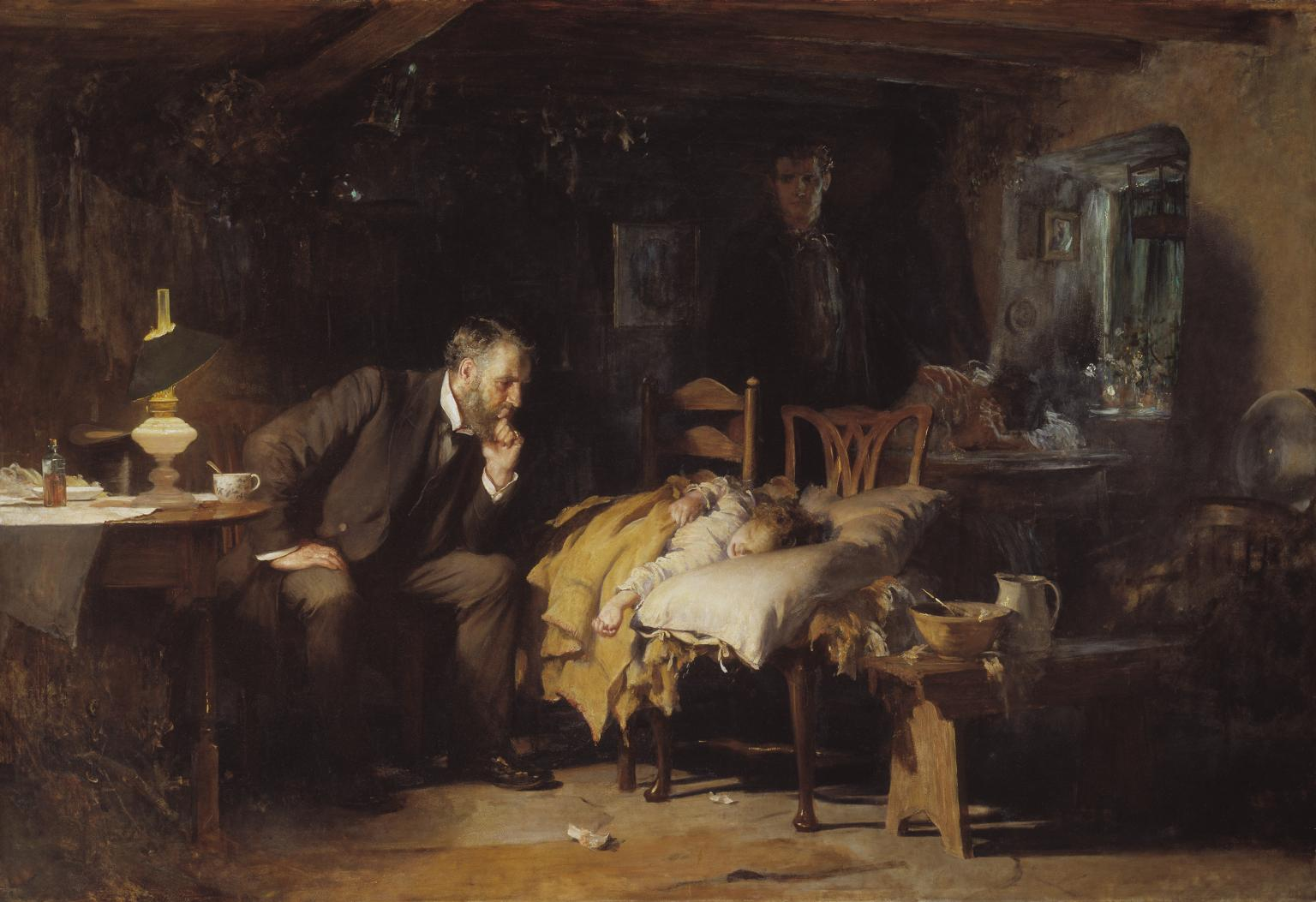
The language gap frustrates your visit to your doctor. He seems not to understand the problem because you can’t describe it lucidly enough. You don’t understand the proposed treatment because he can’t explain it. I’ve sometimes foresworn medical help because the complexity of voicing what is wrong has felt heavier than the sickness itself. This is especially true for psychiatric illnesses such as the depression I have experienced, but it is true of physical problems, too. It has been entirely manifest to me when I’ve tried to explain the problem with my left ear, in which I am partially deaf. I’ve said what it feels like, to which my consultant has repeatedly replied with various options. I’ve said it doesn’t feel like any of the things in his multiple-choice list and theorised about what is actually wrong. He has resisted my inexpert opinions, and I have battled with his inability to grasp the subtlety of my experience. We are both articulate and we are both exasperated by this sticky communication.

Language is integral to medicine. It is hard to cure a condition you cannot describe, and few treatments for those conditions go without names of their own. Even veterinarians, trained to diagnose animals who cannot put their complaints into words, begin by labelling the illness and proceed by specifying the treatment. The emerging field of narrative medicine proposes that patients can be treated correctly only when they can tell the story of their illness, often in the context of a more extensive autobiography. A doctor usually begins by getting the patient to describe their pain, and often arrives at diagnosis as much through that interaction as through anything he can observe. Illness is temporal, and language helps to chart its course, even when x-rays, MRIs, CAT scans and other images can represent its current state. A picture is not always worth a thousand words; sometimes, it is the words that tag the problem. You tell the doctor how you felt yesterday and how you feel today; the doctor tells you how you should feel tomorrow. That interaction is part of the cure; it is why a physician’s bedside manner can have such an enormous impact on his efficacy. We are embodied, but our minds order the brokenness around us by imposing vocabulary on it. In fact, there is some evidence that people who can speak more fluently receive better medical care; patients deprived of language are often subject to abuse.

Many of the great doctors have been writers, and those who have not have required writers to set down their insights.

Many of the great doctors have been writers, and those who have not have required writers to set down their insights. Hippocrates, Galen, Maimonides, Paracelsus and Vesalius all left behind chronicles of their work and methods and of the principles driving them. So did historic female doctors such as Trota of Salerno and Hildegard von Bingen, both of whom wrote of their medical work in the 12th century. Medical knowledge is particularly cumulative, and it cannot accrue without words. These doctors’ greatness lay not only in their discernments, but also in their recording of them. Indeed, Galen titled one of his volumes That the Best Physician Is also a Philosopher. The division between humanism and science is recent, an Enlightenment idea, a Cartesian duality, and like many such ideas, it served at first to advance a discourse it may now impede. The two modes of thought are now too often posed as opposites rather than as twin vocabularies for the same reality.

Any serious illness is a medical event, but it is lived in narrative terms. As religion has lost ground to secularism and the split between body and soul has come to feel metaphoric rather than literal, some people have rooted themselves in scientific explanations of the world, while others seek truth in art, literature or even political idealism. Students bifurcate early, pursuing a medical track or a literary/humanist one. It is as though we belong to different races. William Osler, writing in the late 19th century, observed: “It is much more important to know what sort of a patient has a disease than what sort of a disease a patient has.” We have not much heeded his call.

In the heyday of modernism, doctors lionised specialisation, but patients have now turned to holistic approaches that combine oncology, psychiatry, cardiology, neurology and a variety of alternative treatments. After a long period when we focused primarily on depth of knowledge, we have returned to the importance of breadth of knowledge. In telling the stories of illness, we need to tell the stories of the lives within which illness is embedded. Neither humanism nor medicine can explain much without the other, and so many people ricochet between two ways of describing their very being. This is in part because medicine has become so much harder to understand, with its designer molecules, bewildering toxins and digital cameras inserted into parts of ourselves we have never seen, nor wanted to see.

In telling the stories of illness, we need to tell the stories of the lives within which illness is embedded.

On a recent visit to the Wellcome Medical Library in London, I was struck by the diversity of materials in the collection: the notebooks from Victorian asylums with photos of the patients and descriptions of their care; the leaflets distributed by worthy organisations to encourage the sick to avail themselves of medical services; the manuscripts written by medieval physicians; the poetic reflections on health and wholeness that set out to negotiate medicine’s philosophical and moral conundrums. These collections indicate how much writing about science there has always been beyond scientific writing.

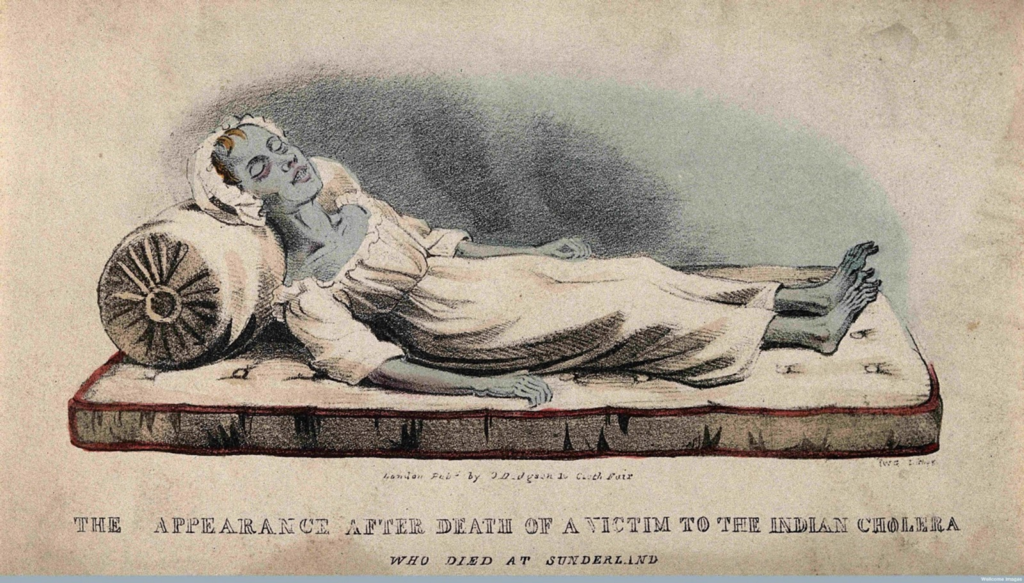
Cholera victim, 1832, Wellcome Images

But medical writing of today has its own complexion. As medical information has become increasingly technical, patients are asked to trust what they cannot comprehend. Recondite information complicates their already anguished experience of poor health. In a bid for control, such patients seek the logic behind their ailments and the proposed cures. More than that, they seek to use available knowledge to make basic decisions about the value of their own lives and those of the people they love. They need this information in order to resolve dialectical thoughts about mortality and intervention, pleasure and pain, quality and length of life.

A rising literature attempts to reconcile these modes of thought. Voltaire complained, “Doctors are men who prescribe medicines of which they know little, to cure diseases of which they know less, in human beings of whom they know nothing.” But a new run of books attempts to address the last clause of Voltaire’s challenge. Such writings may not be remarkable as either medical information or writing, but they rightly insist that coherence sits at the intersection of science and art. The territory was laid out by a generation of older doctors, including Oliver Sacks, Lewis Thomas and Sherwin Nuland. Echoing Osler, Sacks wrote: “In examining disease, we gain wisdom about anatomy and physiology and biology. In examining the person with disease, we gain wisdom about life.” Sacks’s mission was to describe human beings and all their mucky complexity, not just the defects that had brought them to his notice. His oeuvre has bred a healthy awe of word. “Language, that most human invention,” he wrote, “can enable what, in principle, should not be possible. It can allow all of us, even the congenitally blind, to see with another person’s eyes.”

In the last decade or two, a new generation of doctor writers — including Atul Gawande, Abraham Verghese, Henry Marsh, Danielle Ofri, Siddhartha Mukherjee, Paul Kalanithi and Gavin Francis — have undertaken the mission of seeing in this fashion. For them, the ability to string together twin narratives, that of the doctor and that of the patient, is the only path to truth. The first ingredient in their formula is humility. In Complications: A Surgeon’s Notes on an Imperfect Science, Gawande writes: “We look for medicine to be an orderly field of knowledge and procedure. But it is not. It is an imperfect science, an enterprise of constantly changing knowledge, uncertain information, fallible individuals and, at the same time, lives on the line. There is science in what we do, yes, but also habit, intuition and sometimes plain old guessing. The gap between what we know and what we aim for persists. And this gap complicates everything we do.” Gawande is a man of science, but he refuses to let science rule either his writing or his practice as a physician. Echoing Sacks, he insists that seeing the arc of a patient’s history is crucial to doctoring. In Being Mortal, he writes: “In the end, people don’t view their life as merely the average of all its moments — which, after all, is mostly nothing much plus some sleep. For human beings, life is meaningful because it is a story. A story has a sense of a whole, and its arc is determined by the significant moments, the ones where something happens. Measurements of people’s minute-by-minute levels of pleasure and pain miss this fundamental aspect of human existence … We have purposes larger than ourselves.” Writing in the New Yorker, he explains: “We yearn for frictionless, technological solutions. But people talking to people is still the way norms and standards change.”

Yet the answer to that problem is not to throw away the specialised language, to go back to some kind of gentle, intimate, ignorant medicine, in which the benign smile of the doctor provides comfort because the cures are somewhere between hypothesis and quackery. Verghese, too, writes of the importance of fallibility, of how imperfect thinking is not only inevitable, but also the engine of medicine’s advancement. “I think we learn from medicine everywhere that it is, at its heart, a human endeavour,” he writes in an interview in the San Francisco Chronicle, “requiring good science but also a limitless curiosity and interest in your fellow human being.” That sounds antithetical to the encounters many of us have had with consultants and specialists, but in Verghese’s view, clinical abstraction is a manufactured problem, the consequence of our false presumption that there is such a thing as scientific neutrality. “What we need in medical schools is not to teach empathy, as much as to preserve it,” he writes in the Atlantic. “The process of learning huge volumes of information about disease, of learning a specialised language, can ironically make one lose sight of the patient one came to serve; empathy can be replaced by cynicism.”

Marsh, British neurosurgeon and author of Do No Harm: Stories of Life, Death and Brain Surgery (2014), addresses this gap, summoned into it by confronting his own dying mother. “In neuroscience it is called ‘the binding problem’ — the extraordinary fact, which nobody can even begin to explain, that mere brute matter can give rise to consciousness and sensation. I had such a strong sensation, as she lay dying, that some deeper, ‘real’ person was still there behind the death mask.” He observes the intense emotional complexity of surgery that “involved the brain, the mysterious substrate of all thought and feeling … The operation was elegant, delicate, dangerous and full of profound meaning. What could be finer, I thought, than to be a neurosurgeon?” Yet like all surgeons, Marsh is guilty of errors, and it is the human failure more than the scientific one that pains him; he quails at the sight of patients he feels he could and should have served better. He describes one patient to whom he has to deliver the news that there was no longer anything to be done for his brain tumours. “I felt shame, not at my failure to save his life — his treatment had been as good as it could be — but at my loss of professional detachment and what felt like the vulgarity of my distress compared to his composure and his family’s suffering, to which I could only bear impotent witness.” These feelings do not abate with experience, but rather expand. Marsh writes: “I became hardened in the way that doctors have to become hardened [but] now that I am reaching the end of my career this detachment has started to fade.”

Empathy for the patient, for the patient’s family, for the medical professionals involved in a patient’s care.

There have been relatively few female doctors writing about medicine in this philosophical way since Our Bodies, Our Selves: A Book By and For Women was first published in 1973, but Ofri, a doctor at Bellevue hospital in New York, has produced four impressive books and numerous articles, all striking for their reversion to empathy, their willingness to sense not only the physical life of a patient, but also the emotional. She sets out deliberately to keep her own engagement vital. In What Doctors Feel, she explains: “Fear is a primal emotion in medicine … a thread of sorrow weaves through the daily life of medicine.” That is to say that one’s heart breaks for the patients one cannot save. In Singular Intimacies: Becoming a Doctor at Bellevue, she describes a patient who was pulled back from the brink of death: “There was no sweeter music than that silvery Parisian accent floating into my ears … The arc of her words shimmered in the air and her history settled softly into mine.” Ofri’s focus is on empathy: empathy for the patient, for the patient’s family, for the medical professionals involved in a patient’s care. It is also on happiness, the medical urgency of which is evident throughout her work. “We in the healthcare professions need to notice and inquire about happiness the same way we do other aspects of our patients’ lives,” she wrote in the New York Times. “Lately I’ve started asking about it, and besides getting a much more nuanced understanding of who they are as people, I learn what their priorities are (often quite different from mine as their physician). I also inquire about obstacles to their happiness, and brainstorm with them on ways to ease some of these. I don’t presume that these challenges are facile to solve, but hopefully our conversation helps let patients know that their happiness matters as much as their cholesterol.”

It would seem to make sense that doctors start off with youthful emotion and then graduate to a self-protective distancing, but in his award-winning The Emperor of All Maladies: A Biography of Cancer, New York-based oncologist Mukherjee likewise speaks of being propelled willy-nilly into humanism: “I had never expected medicine to be such a lawless, uncertain world. I wondered if the compulsive naming of parts, diseases and chemical reactions — frenulum, otitis, glycolysis — was a mechanism invented by doctors to defend themselves against a largely unknowable sphere of knowledge.” Writing is a means to fight back against that defence. A doctor needs defences — but not too many. “It is an old complaint about the practice of medicine that it inures you to the idea of death,” Mukherjee writes. “But when medicine inures you to the idea of life, to survival, then it has failed utterly.” And elsewhere he observes: “Good physicians are rarely dispassionate. They agonise and self-doubt over patients.” He adds: “An efficient, thrumming, technically accomplished laboratory is like a robot orchestra that produces perfectly pitched tunes but no music.” Mukherjee chronicles his gradual revelation that while benevolence without discipline is an ineffective cure, precision without empathy is tone-deaf; his books, including the forthcoming The Gene: An Intimate History, can feel like overcompensation for the efficiency of his life as a physician.

How to bridge this gap? Part of it had to come from a study of what had gone before, but Mukherjee “had a novice’s hunger for history, but also a novice’s inability to envision it.” His books chronicle the emergence of that envisioning as he learned to reveal the vulnerability he shares with his patients. “Medicine … begins with storytelling,” he concludes. “Patients tell stories to describe illness; doctors tell stories to understand it. Science tells its own story to explain diseases.” In other words, explaining what is going on is part of the treatment itself.

Nowhere is that drama played out more explicitly than in the writing of a doctor who was himself a patient. Kalanithi, a neurosurgeon, wrote what will sadly be his only book, one about his reckoning with his own untimely mortality; he died at 37, and the final chapter of his bestselling memoir When Breath Becomes Air is by his widow. He describes how he resisted the human stories of his patients, acting “not … as death’s enemy, but as its ambassador.” Then came his own diagnosis. “My relationship with statistics changed as soon as I became one,” he explains. And that was a humanist revolution. “Science may provide the most useful way to organise empirical, reproducible data,” he writes, “but its power to do so is predicated on its inability to grasp the most central aspects of human life: hope, fear, love, hate, beauty, envy, honour, weakness, striving, suffering, virtue.” Kalanithi recognises how remarkable science is — and how limited. He defends its limitation, which is the necessary armour that allows a surgeon to go about his daily work. When objectivity breaks down, medicine ceases to function. And yet when objectivity reigns, human beings cease to function, because we are subjective in every breath we take.

If Kalanithi writes from the standpoint of an accelerated wisdom, Francis is still a fresh-faced novice, to borrow Mukherjee’s phrase. Francis writes of “a journey though the most intimate landscape of all: our own bodies.” But his journey through bodies has turned out to be a journey through souls as well. “What I didn’t bargain for were the stories,” Francis writes in Adventures in Human Being. Like the others, he seeks an escape from dualism. “Since Descartes we’ve had a tendency to believe that from the chin down we are just meat and plumbing … there is more to us than that … in some way we become aware when a valve is no longer working.” He describes his own work as “an exploration of life’s possibilities: an adventure in human being” in which we “charge our bodies with meaning, whether funny or solemn.” He describes “imagining the body as a mirror of the world that sustains us.” The body is our world, nothing less than that.

The process through which gay identity was rescued from medical textbooks launched humanism’s upstaging of medicine.

The exploration of the philosophical complexity that lies between sickness and health is perhaps the most urgent matter facing medicine and literature, because scientific definitions of illness often run up against humanist definitions of identity. I know whereof I speak: I have an identity that was long deemed an illness. The literature on homosexuality as a disease is amply represented in medical libraries, and it is my own history, even though I disbelieve it. The process through which gay identity was rescued from medical textbooks launched humanism’s upstaging of medicine. It reflects the common clinical presumption that variation from the norm constitutes pathology. When we define an illness, we have a grave effect on those who are subject to it. Alan Turing, Oscar Wilde and a panoply of less prominent gay people were brought up to know themselves as diseased to the very core, and so we lost much of their brilliance and their joy.

We face these questions about the boundaries of illness and health on a daily basis. What does it mean when we are exhorted to treat and so pathologise grief? What does it mean when my children get assessed by their schools and we are told that they have a little bit of ADD? Is it helpful to secure treatment, or is it better to bring them up thinking that they are whole just as they are? These issues are amply explored in Steve Silberman’s recent NeuroTribes, which makes the argument that autism is, like homosexuality, part of the variety in humanity that constitutes a rich world. But it surfaces repeatedly, because medicine’s inexactitude is a problem not only of primitive science, but also of a sometimes crude view of human beings. Literature about medicine may be all that can save us.

Most hospitals now provide translation services for people who are unable to speak in English. Those are a meaningful social service, important for the fair treatment of immigrants, deaf people and others who would be imprisoned in Babel without this access to unfettered communication. But translation is a crucial part of every doctor’s job. How to ensure that knowledge does not fall short of kindness? Hippocrates averred that mental illnesses in particular were problems of the brain best treated with oral remedies. Plato maintained that they were philosophical problems best resolved through dialogue. That opposition between biological and psychosocial models of consciousness is fought out by psychologists and psychiatrists around the globe. But it is not merely a question of mental illness; physical illness, too, is remedied in part by medication or surgery and in part by discourse. Marcel Proust, that infamous neurasthenic, wrote: “Three-quarters of the sicknesses of intelligent people comes from their intelligence. They need at least a doctor who can understand this sickness.” It is not simply that intelligence awakens the imagination to somaticised psychic distress in physical symptoms, but that illness has to be understood as both metaphor and reality. Verghese speaks of the aspects of cure that are achieved not with the hands but with the ear.

We want our doctors to understand us, and, in many ways, they never will.

It seems winningly ambitious for a doctor to write; the role of an open spirit in a primarily technical discipline is subject to debate. In psychology, however, communication is the practice, and words are the medicine itself. Adam Phillips, our greatest writer on psychology, points out that the ambition of medicine is to know other people; the disappointing revelation of psychology is that this is impossible. In an article in the Threepenny Review, he explains that psychoanalysis “weans people from their compulsion to understand and be understood; it is an ‘after-education’ in not getting it”. In Missing Out: In Praise of the Unlived Life, he expands the idea, writing: “There is nothing we could know about ourselves or another that can solve the problem that other people actually exist, and we are utterly dependent on them … There is nothing to know apart from this, and everything else we know, or claim to know, or are supposed to know, or not know, follows on from this.” If we expect to be understood fully, he adds, we will be constantly disappointed — and then, “how could we ever be anything other than permanently enraged?” If Phillips’s message of accommodating incomprehension is pertinent to Eros, family and friends, it is likewise central to our interaction with the doctors who heal our bodies, or fail to do so. We want our doctors to understand us, and, in many ways, they never will, and accepting that frustration requires the literary language at which all the physicians mentioned in this article succeed.

Chekhov famously quipped: “Medicine is my lawful wife and literature my mistress; when I get tired of one, I spend the night with the other.” What is most striking among these writers is that they seem not to fluctuate between two practices, but to experience them as components of a coherent whole. Language itself is a physical act; it comes of neurons, of activation of Broca’s area and Wernicke’s area in the brain, of lips and tongues and throats that speak, hands that write or type. To treat it as a distracting adjunct to corporeality is to deny its nature.

The Bible reverts to metaphors of medicine because they are metaphors of identity: from the missing balm in Gilead to the raising of Lazarus to the ministrations of the Good Samaritan. The healing of the body is perhaps the greatest of the proven miracles; in Psalm 103, it is the Lord “who forgiveth all thine iniquities; who healeth all thy diseases.” Medicine can contribute to literature; narrative practice can strengthen medicine. It behoves writers and doctors to learn each other’s fluencies, because their disparate approaches can add up to singular truths.

Giving Us Back to Ourselves: Jeanette Winterson on War

One day while my friend Nancy was working around the house, her six-year old daughter was trying, unsuccessfully, to get her attention. “Mom, look at me,” Nancy’s daughter said. “What do you need?” Nancy said, not looking up, continuing her project. “No, look at me,” her daughter said. Nancy glanced at her, exasperated and distracted. “I am looking at you.” “No, mom,” the daughter said. “I want you to look at me with your real eyes.”

Nancy’s six year-old daughter captured what seems to be one of the central challenges of using language well: the need to see the world, to pay attention intensely and with our “real eyes”: seeing what is really in front of us, rather than what we think we see, what we expect to see, or what we’ve been told to see. Though Nancy’s literal eyes were turned in her daughter’s direction, her daughter could tell she was not being fully seen. Instead, she was being filtered through the expectations her mother already had about the (limited) value of what her daughter had to show her.

Too often we use language mechanically, as if meanings and words are literal and fixed, rather than figurative and mutable. We use words the way we’ve always used them, to mean what they’ve always seemed to mean, until we no longer think about or “see” them.

But then Art comes along and startles us out of our clichéd habits of speaking and thinking, so that we see things — things we’ve been looking at all along — newly. Or at least that’s one of art’s promises. In her novel Art & Lies Jeanette Winterson comments on this promise, writing in the voice of her character Picasso that when we forget how to look at “the unpainted beauty of everyday,” the artist can return to us “not the shock of the new, but the shock of the familiar suddenly seen.” Especially in our media and image-saturated culture, we don’t need the shock of the new to lift us out of ourselves because, as Winterson writes, “Isn’t it well known that nothing shocks us? That the photographs of wretchedness that thirty years ago would have made us protest in the streets, now flicker by our eyes and we hardly see them?”

I wanted to feel powerful emotions commensurate with the horror of the story behind the images. I wanted to feel bewildered, and to lament, but instead I felt numb.

These words of Winterson’s, published in 1994, seem prophetic in relation to world events occurring decades later, especially the 2004 Abu Gharib prison scandal in which photos of dehumanized, humiliated Iraqi prisoners became, for awhile, like wallpaper to our days. For months I assiduously avoided seeing these disturbing photos, not wanting my perception of the ethical and political issues to be distorted by intense, media-manipulated emotions. But then, from an unexpected source, the images appeared while I was looking, forcing me to confront them. And I was disturbed, but not in the way I expected. I was disturbed by how little they affected me, by how much they seemed unreal, mediated, and fake. I wanted to feel powerful emotions commensurate with the horror of the story behind the images. I wanted to feel bewildered, and to lament, but instead I felt numb.

Art, Winterson suggests, can return to us the feelings and the intensity of feeling we’ve lost by overuse — not overuse of feelings, but of the language used to describe and explain those feelings. “The world of everyday experience,” she writes, “is a world of redundant forms.” Because the forms with which we grow most familiar “pass for what we call actual life,” she continues, they are “…. coarsened, cheapened, made easy and comfortable, the hackneyed and clichéd.”

The classic comment on this issue comes to us from the Russian Formalists, especially Victor Shklovsky’s 1917 essay “Art as Technique.” Elaborating on the concept of defamiliarization and the need to make “the familiar seem strange,” Shklovsky argues that “Habitualization devours works, clothes, furniture, one’s wife, and the fear of war…. And art exists that one may recover the sensation of life; it exists to make one feel things, to make the stony stony.” I would like to think this function of art extends to extreme experiences, such as war: to make us feel the war as war.

Art, Winterson suggests, can return to us the feelings and the intensity of feeling we’ve lost by overuse — not overuse of feelings, but of the language used to describe and explain those feelings.

As my experience with the Abu Gharib photos suggests, when war is “devoured” and becomes part of our “world of everyday experiences,” the language in which our social discourse about the war proceeds threatens to dull our senses and obscure our experience of the war, rather than elucidate it. Can art recover the sensation of war as it is when that sensation has been dulled?

In her novel The Passion, Winterson writes about this very problem as embodied by the experiences of Henri, a young French soldier enlisted in the army during the Napoleonic Wars. Though Henri admits to having been starstruck by Napoleon at the time of his enlistment, by the time we meet him he is narrating in retrospect from a position some years beyond the war. From this position, Henri admits about the army, the wars, and Napoleon that “It was a mess.” “Nowadays,” he says, “people talk about the things he did as though they made sense…. Words like devastation, rape, slaughter, carnage, starvation are lock and key words to keep the pain at bay. Words about war that are easy on the eye.”

It could be argued that for soldiers in the midst of battle this abstracting of horrific experience through language is necessary for survival. As Henri admits, “You can’t make sense of your passion for life in the face of death, you can only give up your passion. Only then can you begin to survive.”

But what caused Napoleon’s soldiers to “give up” their passion, and how does language contribute to the mechanisms through which people end up as soldiers in battle to begin with? Might words be used not to clarify or illuminate, but to mask a harsh reality? Might words make us feel, for example, like we are but tourists to the war?

In “The Loss of the Creature,” Walker Percy describes the problem of experiencing the world like tourists. Say a man decides to visit the Grand Canyon, Percy explains. He plans his trip, looking at brochures and pamphlets, possibly remembering other people’s vacation photos of the Grand Canyon that he’s seen. But, Percy argues, once he actually gets to the Grand Canyon, it’s impossible for the man to really see it because the “thing as it is…has been appropriated by the symbolic complex which has been formed in the sightseer’s mind.” This “symbolic complex” includes the postcards and coffee table books, but also, I would add, the language and metaphors that form our sense of what Percy calls “the approved circumstances” under which one can view the subject at hand, like the Grand Canyon or the war. The problem, in Winterson’s words, is that “what we think we see, we don’t see” because the “thing as it is” is filtered through the mechanisms of our perceptions, such as images and language.

Percy’s proposed solution to this problem — much like Winterson’s — is for us to “leave the beaten path.” Expressing a desire to do just that, it seems, Winterson’s Henri confesses that “not much touches us, but we long to be touched. We lie awake at night willing the darkness to part and show us a vision…. we can believe that tomorrow will show us angels in jars and that the well-known woods will suddenly reveal another path.” Looking back on his years in the war, Henri says “I longed for feeling though I could not have told you that. Words like passion and extasy, we learn them but they stay flat on the page. Sometimes we try and turn them over, find out what’s on the other side.”

In The Passion and Art and Lies it seems that Winterson, as an artist, is attempting to do this for us: to show us another path toward feeling and experiencing the world as it is, or to nudge us toward understanding how to make our own path and to turn over “delicate words exhausted through overuse.” It would be easier, it seems, to leave the words unturned. To “sequester [our] heart[s]” behind exhausted language in order to avoid being hurt by war, by Abu Gharib, by torture, by the mounting numbers of the dead. As Winterson reminds us, “the freedom of the individual is the freedom to die without ever being moved.”

Many of us, though, want to be moved. We long, like Henri, “to be touched,” to be pierced.

Disputing the oft-unquestioned acceptance of Descartes’ axiomatic “I think therefore I am,” Winterson amplifies the essence of being to include feeling and inventing. Under Descartes’ conceptual framework for being, we live, in Winterson’s words, “under the rim of consciousness, in the nylon shelter of [our] own thoughts, safe from beauty’s harm,” unmoved and unchallenged. “Only a seismic shock,” she claims, “can re-order the card index of habit, prejudice and other people’s thoughts that I call my own.”

By its nature, metaphor is designed to clarify, to help us make our experiences more palpable.

For Winterson art is, or at least has the potential to be, that “seismic shock.” Art, she writes, is “mouth to mouth resuscitation between the poet and the word,” especially exhausted words and “bawdy words made temperate by repetition.”

One of the primary tools by which Winterson delivers this seismic shock in her own art, especially in The Passion, is metaphor. By its nature, metaphor is designed to clarify, to help us make our experiences more palpable. Not to invent new subjects, but to see old, everyday ones more vividly. In The Passion, Winterson profoundly applies, tests, and amplifies the capacity of metaphor to draw us out of ourselves, lifting us until we come across ourselves unexpectedly. Told from two alternating points of view (Henry and Villanelle) and set during the Napoleonic wars, The Passion depicts hard, realistic images of war and its affects, as well as dreamlike, magical images of the way war and life feel to Henri and Villanelle, regardless of whether these feelings are “realistic.”

Terms like realism, fantasy, fairy tale, postmodern fiction, and magical realism can be applied in some way to The Passion, but none of the terms settles on the book and sticks, largely because its style, voice, and use of metaphor are refreshingly innovative. Though I’m tempted to think of the book as magical realism, it stays closer to realism than magical realism in one sense: most of the book’s magical elements are not completely surprising, not absolutely removed from our way of viewing and speaking of reality, because these magical elements are based in figurative language and images we already use. Whereas magical realism takes something ordinary and mundane and makes it extraordinary, many of Winterson’s “magical” elements are drawn from familiar metaphors. And yet, Winterson commandeers our non-literal ways of thinking and speaking about the world and transform them back into literal language so that the “magic” is still present but is not presented as magic.

Whereas magical realism takes something ordinary and mundane and makes it extraordinary, many of Winterson’s “magical” elements are drawn from familiar metaphors.

For example, in a passage where Henri says he has heard stories about the conditions the human body and the human mind can adapt to, the “tales” he relates sound outlandish, gruesome, unbelievable — but only just so. Saying that “the body [clinging] to life at any cost…eats itself” and “turns cannibal,” for example, sounds outrageous, as if the body has its own will apart from our minds. And yet — his explanation that “when there’s no food [the body]…devours its fat, then its muscle” is too literally true to be considered outrageous or magical. Henri (and Winterson) don’t stop there, however. The body, in their telling, pushes back past the grain of literal truth and heads for what I’ll call a “feeling” truth. Soldiers mad with hunger, Henri tells us, chop off their own limbs and cook them. “You could chop yourself down to the very end,” he says, “and leave the heart to beat in its ransacked palace.”

In a fully “realistic” mode, this evocative metaphor of the “ransacked palace” would be just that — a figurative way of expressing the literal. But in Winterson, the figurative pushes forward to claim a more intense level of literalness. The Passion and Winterson’s metaphors within it are examples of the wonderfully transformative power of language, of language’s ability not only to intensify or clarify reality, but also to construct and redeem it. At the same time, however, Winterson’s literary reification reads in some ways as a cautionary note against the reification of concepts such as “the enemy.”

As Henri is first setting off for war, a little neighbor girl asks him, “her eyebrows close together with worry” if he will kill people. “Not people,” he responds, “…just the enemy.” The little girl knows that “the enemy” is “people,” but Henri is already lost in the metaphors of war that make killing possible. Perhaps part of Winterson’s project is to create a world and a language in which we will recognize our metaphors for the real — whether for good or for ill — power they contain.

As Henri’s conversation with the little girl demonstrates, artists struggle not only with the dulling effects of everyday language, but also with the possibility that metaphors can be corrupted and become cliché, can obscure the named and dull our awareness rather than “lift” us out of ourselves. Complicating this possibility is the fact that metaphor is not only used by artists, but by everyone, not all of whom use these “figures” to the same ends. Art, we hope, uses metaphor to clarify and elucidate, but metaphor can also be used as propaganda and jargon, as a matter of economy rather than clarity. At least partly in this way, through media, politics, academia, and everyday social discourse, metaphor becomes not inventive but systematic, built into the structural frameworks through which we daily speak and think.

Henri’s list of war words constructed to be “easy on the eye” describes not only words used to talk about the war, but also conceptual frameworks for trying to understand war. In addition to being informed and constructed by metaphors, these frameworks are capable of influencing not just people’s impressions of war, but also people’s actions in response to war. In Henri’s case, he joined the army to fight what was being named as “the enemy,” as well as to don not only the soldier’s uniform, but also the persona — the concept — of a soldier. He thought being a soldier would make him free because “soldiers are welcome and respected and they know what will happen from one day to the next.” “I thought I was doing a service to the world,” Henri says, a service he later thinks of as “folly” and as “just a pile of dead birds,” since he ends up being a cook to the obsessive and wasteful Napoleon. “The dead are dead, whatever side they fight on,” he says, “…. Numbers win, not righteousness.”

Our contemporary war metaphors seem to function similarly — striving to make the war “easy on the eye,” at times obscuring rather than elucidating.

Nevertheless, soldiers in The Passion, for the sake of their own sanity and survival, comprehend their experiences through metaphors in which they are righteous: I’m not a killer; I’m a soldier, a “conqueror.” I’m not killing a person; I’m killing the enemy. “Could so many straightforward lives,” Henri asks, “suddenly become men to kill and women to rape?” They can when we don’t actually see those people, but see a metaphor for them instead, when we perceive them only or first through the obfuscating mask of metaphors such as “enemies,” or “monsters and devils.”

Our contemporary war metaphors seem to function similarly — striving to make the war “easy on the eye,” at times obscuring rather than elucidating. According to George Lakoff and Mark Johnson, authors of Metaphors We Live By:

New metaphors have the power to create a new reality. This can begin to happen when we start to comprehend our experience in terms of a metaphor, and it becomes a deeper reality when we begin to act in terms of it. If a new metaphor enters the conceptual system that we base our actions on, it will alter that conceptual system and the perceptions and actions that the system gives rise to…. words alone don’t change reality. But changes in our conceptual system do change what is real for us and affect how we perceive the world and act upon those perceptions.”

Consequently, people struggle to gain control of the conceptual frameworks for understanding war. During the summer of 2005, for example, several media exchanges between high-level Bush Administration officials demonstrated this struggle in process. First, during a June 20, 2005 interview on CNN’s Larry King Live, Vice-President Dick Cheney commented that he thinks the insurgency is in its “last throes.” Though throes can be interpreted literally as “a painful struggle,” the phrase also evokes the accompanying metaphorical sense of being in spasms or pangs, as in death throes or throes of childbirth. When criticized for this comment, Cheney himself refuted a literal or fixed interpretation of his remarks, arguing in a June 23rd CNN interview that the meaning of “last throes” is mutable and undecided, that “it could mean a long, not short, violent period” (italics mine).

When questioned about Cheney’s remarks a few days later by Fox News, U.S. Secretary of Defense Donald Rumsfeld modified Cheney’s comments in a way intended, perhaps, to make them easier on our ears. “Last throes,” he said, could be “…a placid or calm last throe. Look it up in the dictionary.” Setting aside the argument that the dictionary does not actually support Rumsfeld’s claim that throes can be placid, what’s significant about Rumsfeld’s and Cheney’s remarks is their struggle to fix our conceptual understanding of the war using mutable, figurative language.

What’s significant about Rumsfeld’s and Cheney’s remarks is their struggle to fix our conceptual understanding of the war using mutable, figurative language.

This struggle to gain control of the metaphors by which we define the war can be seen in other official remarks, such as General John Abizaid’s June 26th, 2005 remarks that the war is “a marathon,” and we’re at about the twenty-first mile. This metaphor constructs the war as a relatively peaceful, possibly exhilarating if at times painful, endeavor that is embarked upon willingly. Senator Edward Kennedy, in contrast, proposed a bleaker metaphor, the war as “quagmire,” in other words a “soft miry land that shakes or yields underfoot.” And all of these comments stand in contrast to Cheney’s March 2003 claim that we wouldn’t encounter much resistance in Iraq because we would be “greeted as liberators.”

Recognizing the forces and metaphors competing for our understanding of the war, Rumsfeld, Cheney, Abizaid, Kennedy, and other officials struggled to gain control of our metaphorical language and, thus, our conceptual understanding of the war. As Lakoff and Johnson point out, many of our metaphors “are imposed upon us by people in power.”

In The Passion, as we’ve already seen, Henri is taught that England is “the enemy,” and he acts based on that understanding, though in retrospect he questions that conceptual framework. “I had been taught to look for monsters and devils,” he says, “and I found ordinary people.” By whom had he been taught? By Napoleon, who, according to Henri, persuaded people to enlist in the war and on his side of the “enemy” line by constructing a government that would “dazzle and amaze” with “Bread and circuses.” In other words, Napoleon’s wasn’t relying on the rightness of his cause or some objective or rational interpretation of the literal truth of France’s situation, but on providing people with the most convincing conceptual framework or metaphor, a conceptual framework functioning perhaps not unlike the United States government’s plan referred to as “Shock and Awe.”

In The Art of Fiction John Gardner describes the process by which metaphors affect us as one in which “we ingest metaphors.” Gardner is arguing for the value of metaphors to influence our behavior for the “good,” suggesting that by ingesting them we are “wordlessly learning to behave.” For Gardner, fiction at its best provides “trustworthy…models” for good ways to live and respond to the world.

Though Gardner may be right that metaphors can serve this function and act on people in this way, it also seems clear that not all metaphors urge us clearly in the direction Gardner suggests, nor do we always agree (with Gardner or with each other) about what, in fact, is good behavior. What happens, we might ask, when artists and others construct and then we “ingest” metaphors of “bad” behavior, metaphors that dehumanize, polarize, and vilify, for example? Metaphors that convince us to kill? As Henri reports, Napoleon’s soldiers believe and act on Napoleon’s metaphor that war was in their blood. They’re told that death in battle is glorious and that the Holy Grail of freedom “lay in [their] fighting arms.”

What happens, we might ask, when…we “ingest” metaphors of “bad” behavior, metaphors that dehumanize, polarize, and vilify?

As an artist Winterson’s use of metaphors seems constructed in part to counteract our tendency to ingest metaphors (toward good or bad behavior) the way Bonaparte’s soldiers did. Rather than working only with “borrowed language [and] bastard thoughts,” including borrowed metaphors that we may too easily swallow, Winterson invents metaphors that stretch the very notion of what metaphors are and how they can function.

When I say she “invents” metaphors, I am using the term according to Winterson’s own definition as suggested in Art & Lies. One of the novel’s main characters, Handel, remembers his childhood as one in which he wondered which world he should trust, “Actual life or imaginative life. The world he could inherit or the world he could invent?” To understand the question, he has to understand what it means to invent, but the meaning of the word, he says, has changed. Though now it’s usually used to mean “to devise or to contrive or fabricate,” Handel wants to return to the word’s Latin origins, in which the word means “to come upon…. to find that which exists.” According to Handel, “the world of everyday experience is a world of redundant forms,” within which we can include metaphor. And metaphor, like other potentially redundant forms, can be, in Handel’s words and reminiscent of Henri’s comment about the words of war, “coarsened, cheapened, made easy and comfortable, the hackneyed and clichéd, not what is found but what is lost.” “Invention,” he concludes, “…would return to us forms not killed through too much use. Art does it.”

So if metaphors of love and war are “made temperate” and “exhausted from overuse,” the artist invents them and invents with them, returning to us not only their forms, but also our feelings. Along the way, though, the artist has to remain aware of the potential for his or her emotions and metaphors to be cliché, to be, as Winterson writes, “not mine but everyone else’s.”

Though the setting of The Passion is war and the novel is in many ways about war and the language of war, it’s also about (as the title suggests) passion and even love, another worn out phrase that Winterson seems to be inventing with metaphors. At the beginning of another novel, Written on the Body, Winterson comments on the overuse of phrases like “I love you” and the meaninglessness that overuse can lead to. “‘I love you’ is always a quotation,” she writes. “You did not say it first and neither did I.” These words, I love you, she writes, are “worn out now…by strain,” the result of which is words behind which so many things can be hidden, such as murder weapons and sentimentality.

“‘I love you’ is always a quotation,” Winterson writes. “You did not say it first and neither did I.”

The same can be said for our metaphors of love: love is blind, better to have loved and lost then never loved at all, all’s fair in love and war, I love you with all my heart, and many more. This last one in particular Winterson picks up in The Passion and, finding it “flat on the page,” turns it over with her metaphors to see what’s on the other side. In both The Passion and Art & Lies, all kinds of things are being done to and said about the heart. The mother of Art & Lies’ Picasso accuses her of being heartless, but Picasso, knowing her family has already devoured her lungs, liver, and tongue, hides her heart and leaves home before they can kill it. Henri’s people, who he describes as lukewarm, long for passion, for something to pierce their hearts, which is why they’re willing to follow Napoleon: because “he made sense of the dullness.” In order to not feel the pain and cold so much, to be able to look on death and not tremble, Napoleon’s soldiers make a pyre of their hearts and “put them aside forever.”

In The Passion scenes, images, and metaphors involving the heart — “hopeless heart that thrives on paradox” — especially broken and stolen hearts — transcend their figurative boundaries and “walk past our objections.” What young person, for example, has not — in the vernacular of love — had his or her heart “stolen” by the beloved, as Villanelle has done to her by “The Queen of Spades,” a married woman with whom she shares just a few nights? After Villanelle and Henry meet and escape the war together to Venice, Villanelle tells Henri that her heart has been stolen, a common enough idea that we’ve all heard. Like Henry, we assume we know what she means.

When the Heart is Young, John William Godward (1902)

But then, she rows him to a house and says to Henri that her heart is in that house, and he must break in and get it back for her. “Was she mad?” Henri thinks. “We had been talking figuratively.” He feels for her heart, at her request, and discovers that she indeed does not — literally — have a heart in her body, after which he proceeds to sneak into the house, find the heart beating in the bottom of a closet, and retrieve it for her.

Not only does Henri, who says he’s in love with Villanelle but questions what that means, steal back her heart, though; he also kills for her. This boy, who lasted eight years in Bonaparte’s army without killing anyone, stabs Villanelle’s husband, the cook, in the belly. Not only that, but he cuts the cook’s heart out of his body and offers “the blue bloody thing” to Villanelle, who shakes her head and cries, something Henri has never seen her do before, despite her experiences of the war, the dead, and her own humiliation. Why now does Villanelle cry, after all she’s been through?

Not only does Henri, who says he’s in love with Villanelle but questions what that means, steal back her heart, though; he also kills for her.

I think because this is no metaphor. Henri kills a man and cuts out his heart, literally. Consequently, Henri goes mad and is arrested and institutionalized for the rest of his life. These are the consequences of killing.

As a young man, Henri had believed in what he thought was Napoleon’s vision and goal: “No more coalitions, no more marches. Hot bread and the fields of France.” But like a “circus dog,” Napoleon’s audience was getting used to his tricks. They began realizing the “consequences of burning the villages” as killing the villagers “without every firing a shot.”

Art, Winterson’s work suggests, shows us another path. By the end of the novel Henri — after soldiering and murdering and going insane — discovers another path for himself: being able to love in the way he comes to understand love through his own experiences. Though Villanelle can never love him back, he loves her and regards this love as the kind of freedom he’d been seeking all along. “I think now,” he writes from the asylum, “that being free is not being powerful or rich or well regarded or without obligations but being able to love. To love someone else enough to forget about yourself even for one moment is to be free.”

Ultimately, I think, The Passion and its metaphors urge us toward learning what love is, how to value love, and how art can return us to love when our sense of it has dulled. “[W]ithout love,” Winterson writes, “we grope the tunnels of our lives and never see the sun.” If I can learn better how to love, perhaps I can look at the photos and hear the words of our war and feel something powerful emerge from out of that love. Perhaps I can weep. Perhaps if I — perhaps if we — have the courage to love, as Winterson writes, “we would not so value the acts of war.”

Netflix Is Adapting Margaret Atwood’s “Alias Grace”

Atwood’s Historical Crime Novel Will Come to the Small Screen

Genre-bending goddess Margaret Atwood is about to be all over your internet TV streaming. Earlier this year Hulu announced it was working to adapt her classic feminist dystopian novel The Handmaid’s Tale, and today news broke that Netflix will adapt Alias Grace as a six part mini-series. (If that wasn’t enough, HBO has been working on an adaptation of her brilliant dystopian MaddAddam Trilogy.)

Atwood’s 1996 novel is based on the real life of Grace Marks, a 19th-century Irish immigrant who was convicted of brutally murdering her employer and his mistress:

In Alias Grace, bestselling author Margaret Atwood has written her most captivating, disturbing, and ultimately satisfying work since The Handmaid’s Tale. She takes us back in time and into the life of one of the most enigmatic and notorious women of the nineteenth century.

Grace Marks has been convicted for her involvement in the vicious murders of her employer, Thomas Kinnear, and Nancy Montgomery, his housekeeper and mistress. Some believe Grace is innocent; others think her evil or insane. Now serving a life sentence, Grace claims to have no memory of the murders.

The miniseries will be produced by Sarah Polley (Looking for Alaska) and directed by Mary Harron (American Psycho). The Hulu adaptation of The Handmaid’s Tale will star Elizabeth Moss (Mad Men) and debut next year. For fan’s of Atwood and great TV, things are looking pretty good.

Midweek Links: Literary Links from Around the Web (June 22nd)

Looking for some interesting reading to get you through the week? Here are some literary links from around the web to check out

Summer reading of books that take place during the span of one summer

Does “devouring books” mean you didn’t really read them?

Celebrating the works of Lois Duncan

A look at the overuse of dead women in fiction

Why are indie presses opening their own bookstores?

The most memorable cities and towns that you can only find in novels

A look at historical post-apocalyptic books

Why Barnes & Noble going out of business would be a disaster for publishing (even if you don’t shop there)

Jorge Luis Borges’s infinite library is now online

Queer books you should read this year

Are the best crime novels being written by women these days?

Írisz: The Orchids

Translated by Eric M. B. Becker

São Paulo Botanical Garden
New Species Report

NAME: Hardingia paranaensis (oncidium paranaensis) LOCATION: Paraná, Brazil
DATE: 1956

Hardingia paranaenses: Stem and floral structure similar to the Oncidium; epiphyte; conspicuous pseudobulbs, bloom sheaths protecting the pseudobulbs, multiple stems; exceptional number of flowers, very tiny; flared lateral sepals. (I looked up the meaning of conspicuous in the dictionary. “Obvious and attracting attention” and also “discernible.” Two contradictory meanings for the same word; people can be discernible even when they’re anything but obvious or conspicuous. But this is the term I read in everyone else’s reports. Conspicuous sounds closer to circumspect than discernible. Martim, I don’t want to use this term anymore to describe orchids. Do you think there’s any reason to say that an orchid is conspicuous? If you like, I can use the word to describe other flowers, the uglier or carnivorous ones. I knew a few easily discernible people in Budapest, and even here at the Garden. You want to know how to say conspicuous in Hungarian? Feltunö)

If Imre is still alive, he’s certainly not free, even if he always said he would be free no matter the situation, whether he’s walking free or locked up. I once read an interview with the writer Graciliano Ramos where he said that to him it made no difference whether he was free or imprisoned. What an idiotic and arrogant idea, to believe that freedom is found within and not wherever you find yourself, the places you’re able to roam. All heroes are like this — they think there’s some merit to being imprisoned in the name of the common good. What difference does it make to the people — a faceless mob who, if you stop to think about it, allow themselves be exploited by whoever screams the loudest — if Imre lays down his life for them or not? What can explain this mania every hero has for putting down roots? If Imre sleeps on a cold floor, goes days without eating, lets himself be tortured by Kádár’s police — how is all that for the good of the people?

I’m dead certain that — unless she’s been killed or raped — the girl who lived in front of our house and stood begging at the corner of Tuzöltö and Telepy is still there in the exact same spot, pleading for food. Vasko’s hardware store was broken into and looted and Vasko himself must have been beaten to death with one of his own wrenches. Or, if he did manage to escape, now he must be all alone with nothing to eat, wandering down some dusty road that leads to Szeged — which is where his mother lives, though I doubt she’s still there, either — with no one along the way to take him in. And all this despite the fact that Imre is in prison.

Imre, wherever you are, free yet imprisoned or imprisoned yet free, on the loose, in a cell, in another woman’s room, in an abandoned house off some back road, in Austria, where you’d never run, because you can’t handle so much as pronouncing the word run (which doesn’t need to be a dirty word; it’s man’s destiny to run and even staying behind, in many cases, is to run away), because for you words always mean only one thing and you can’t see that they really mean many — hear me out, in whatever way you can: with your hands, with your eyes, with your fingers. The word I said to you when you couldn’t decide whether you would come with me or not was szia, that same word I repeated time after time and whose meaning you always pretended was so discernible, but which I saw made you stifle a laugh, that same laugh of yours each time I kissed your fingers, your nose, your earlobes, the hairs on your head, your hip bones, and you felt embarrassed but excited at the same time. Szia is a word that means both “hello” and “goodbye.” I said szia because, in some way that even I didn’t quite understand, I wanted you to help me decide which one I meant. But you didn’t understand then and you don’t understand now; you decided for me that it meant “goodbye” and practically sent me packing. Hear me out, wherever you are, possibly even below ground without so much as a tombstone to mark the spot, the spot where — you used to joke — others would one day inscribe: “For once, he wasn’t late,” because you were always late for everything and I was always on time — that’s why I said szia. I couldn’t wait to decide whether I was going to stay or run away after the tanks rolled in and I saw that you were going to stay until you were imprisoned yet free, something I couldn’t allow to happen, couldn’t bear, and even now can’t agree with. So listen, I think that somehow you can still hear me, if you put your ears to the wind: I’m here, studying orchids in Brazil, at the São Paulo Botanical Garden, at 2:56 in the afternoon on the third of February 1960; I’m writing a report about the Hardingia, a new orchid just discovered in the countryside of a state named Paraná. I’ve even drawn it at the top of this report, so that you can see this epiphyte orchid. Don’t you know what epiphyte means? Bad luck. In Hungarian the word is álélősködő, but you won’t understand this, either.

The lip of this orchid has three lobes. When the pseudobulb dries out, it always forms a fissure lengthwise down the middle of the flower. You won’t be able to see this keel in my sketch. Here in Brazil, orchids don’t dry up, so these fissures don’t appear. Here, everything is in bloom all year. Not like there, where even the hardiest plants struggle to survive, and not just in the bitter cold of winter.

Martim says I see subjectivity in orchids, that I draw comparisons between everything and everything else and pay too much attention to words. And you would say the similar things to me, that I was always picking apart the words you all used, that I wanted to compare desserts to politics, flowers to relationships, my mother to guerrilla warfare. Neither she nor you understands me. I don’t believe that orchids and these other things have feelings or some capacity for sympathy. Nor do I see mysterious relationships between the world beyond and our little world, or think that everything is linked to everything else. Neither of you understand a thing and I’m not sure it’ll do a bit of good if I try to explain anything to you.

But words carry something beyond what they say, in a place that holds their meaning. I feel as if words hold some lost origin. And so, in this stubborn way that you, Martim, and all the others scorn, I’m trying to create a link between what each word once was and its meaning now. It seems that this way words and things might once again hold some greater meaning. With the orchids, I can’t help myself. Each time I say epiphyte or dry vein, I see the orchid as a collection of things in a state of — How can I explain to you? Careful when you hear this word, because here it means something different — in a state of “truth,” and also in a state of (I need to say it slowly) “beauty.” A state of truth and beauty. Don’t run in the other direction, don’t cover your eyes, don’t laugh, because if you do I won’t be able to go on. I’ll start laughing, too, and the two of us will laugh until we both fall over, like when we used to hear some comrade use words so stupid and void of meaning, words like freedom, justice, and equality. But now I’m going to say it, and you need to listen and listen closely: a state of truth and beauty.

This fullness found in orchids, which exists somewhere beyond words, in a state that’s unattainable by any human truth or beauty, makes me think of the empty words and phrases we spoke to each other: I don’t agree; You’re not understanding me; We really do live in different worlds.

These words don’t mean a thing and are only substitutes for what we really want to say, which is: Please, would you just hurry up and stay with me and forget about doing whatever it is that you think you have to do? Because there’s never anything to be done about anything and what you want me to do, in this situation you’ve created, won’t make any difference and only serves your vanity or your pride.

Or: Come with me, Imre.

When I look at myself in the mirror at night, without you watching me from behind — without my getting shy when you glance at me — and pulling away because I only like it when you look at me straight on or when I’m lying on the bed, I see fragments of this vein run dry, this very same orchid, a line that runs the entire length of my body. It begins at my neck, runs down, and passes through my stomach. The pseudobulb is a dense structure, storing water and distributing carbohydrates. You have an endless reservoir of water, which never runs dry even in cases of torture, desertion, failure. I even think you replenish your reserves in such moments; all these things are like fuel for you.

Imre, where do I find the water I came looking for here in Brazil, if all I see each night is this vein run dry?

Each orchid has a triangular base, with varying numbers of petals on top. They only bloom once a year and never last long — between two days and three months. Do you see the flower’s panicles, the ones that look like the folds of the robe from the statue of Anonymous at Budapest’s Vajdahunyad Castle? I love these little wrinkles that lend each flower’s colors infinite tonalities, almost as if the little shadows they create came from within the flower itself. As the daylight changes, the colors transform and move about. Their opacity and radiance also change, according to the light, the wind, and the humidity. A spot that is dark during the day might glow at night, and vice-versa. You can only see one of the flowers in the picture, but a single stem can hold up to 50 blooms, can you believe it? I sometimes count the number of specks on each flower, to see if they keep to some sort of pattern. Sometimes 20, other times 30 or 40, some spread out and others bundled together, so closely they begin to look like a single speck. I like to use the microscope to examine things that Martin hasn’t asked me to observe or which aren’t necessary, such as checking to see if the specks on the petals of each Hardingia are bunched together or spread out. Or to count how many there are in each sepal. Or to examine the flower’s vagina to see to what extent it resembles that of a woman.

I can never get a sense — not even when I peer at the orchids, playing oracle, not even examining them closely and calculating the number of freckles on each sepal in a way that results in combinations both numerical and cosmological — of whether you are alive or dead. And, if alive, whether you’re free yet imprisoned or imprisoned yet free. Or whether you’re in Budapest, in Austria, or in Siberia. I can’t forget you, but I also can’t remember who I am.

You used to say that you would be free in any situation but I don’t believe you’re free in a single one. You used to say that you could do whatever you want and that your will could never be imprisoned, tortured, changed, wounded. I don’t agree. To what extent did you really want what you said you did? I’m not sure if this desire of yours, this will, this drive, this strength was really your own. When someone believes so strongly in their own will, it’s time to ask questions, because will soon begins to take on the appearance of faith. You would say that this is just one more of my pseudo-philosophical musings that seem to question reality but which aren’t good for anything except remarking, “Oh!, it’s amazing how true that seems.” But it was because of one of these musings that I decided to come here; because of the orchids and because of the word szia. All other reasons, those you’d insist on calling real — fear, cowardice, and narcissism — are, in reality, tangential.

Take fear, for example. You feel it, too, even stronger than I do, only with you, it’s hidden beneath what you call “courage” and “ideals.” Cowardice and narcissism, then — well, it’s ridiculous how quickly everything becomes obvious. First off, you know I hate these words as much as you do, though you never showed the least bit of shame at throwing them in my face when I said szia and you couldn’t even be sure if I was saying “hello” or “goodbye,” but thought, in that instant, that my expression told you I was leaving.

So let’s consider for a second who is the bigger coward and narcissist: A coward retreats when it’s time to act. All of you used to say that it was better to be afraid than to be a coward. That if someone there among us lacked the courage to stand up and fight he ought to leave right then and wouldn’t be thought less of (as if that were even true) but no cowards would be tolerated when the time came to fight. If this is the definition of a coward, let’s consider the facts. Who refused to take Shtutsi to the veterinarian when he writhed in agony at home? Who waited for hours for me to arrive while my mother shit herself because he became nauseous at the thought of going upstairs to clean her up? And, worst of all: Who was it who preferred not to know what I meant when I said szia and then immediately turned his back on me, as if he already knew I meant “goodbye,” because, when it comes down to it, that was the most convenient word for you because it meant you could lay your cowardice at my feet? Who is it that always said he had no use for knowing the origins of words, but, whenever it suited him, acted as if they — words — were the only thing that mattered? You, who are so concerned with action, did you ever stop to think that action, the struggle, whatever name you give it, can also be a way of blinding yourself to things while thinking you see it all? You, who are so obsessive you can’t even move a matchstick out of place, because it bothers you, how the hell do you think you’re going to change Hungary? But worst of all, once the Soviets arrived and it became clear that we were going to lose everything, you couldn’t accept that the more cowardly thing to do was to stay — and be complicit. Under the pretense of some useless self-sacrifice, so costly and — to tell the truth — vain, you chose to stay instead of run. Run: this word that is so misunderstood, because, after all, isn’t staying another way of running away? To run is to pass through various states of existence — solid, liquid, gas — to be present for a few instants, while you’re living the moment and not while you’re dressing up life with ideals that aren’t worth a damn thing. And who does this hurt more? The person who believes he’s making some sort of sacrifice and considers himself a hero, or the person who’s been tagged a deserter and will always be thought of as a coward?

Now on to narcissism. Yet another definition you could agree with: a narcissist only thinks of himself and not of the greater good. (What a pathetic definition, have you ever met anyone who didn’t think only about themselves the entire time? And these are the people we can really place our trust in, because whoever says he doesn’t think about himself is lying.) Okay. Ever since we met each other, in Füvészkert, six years ago — when you saw me (actually, I saw you) as I was tending a gingko plant; you smoked while I placed medicine in each of its hollows; you hurled abuse while I sang who- knows-what; you flicked your cigarette into the lake while I looked at you with an expression only I know how to make; you laughed and I laughed, too, and since then I’ve exhausted my stock of funny faces and you yours of curses — since then you’ve always been opposed to my work, to Shtutsie, András, Béla, Károly, my family, and my way of doing things. I would follow you to meetings, to protests, I would hide banners for marches, put up your friends, return home in the early morning without any news from my mother nor her from me, invent codes botanical and linguistic for sneaking across secret messages, put myself at risk and expose myself to danger, be filled with joy at the moment we all thought that everything would finally go as planned. It didn’t go as planned. At a moment like that, when everything goes wrong, the least narcissistic attitude is to admit it: Everything went wrong, it all went wrong, it went wrong, just wrong, wrong. The least narcissistic attitude would have been not to refuse to recognize all those tanks and dead bodies. Not to still say no, there’s still a chance and it’s me — and only me — who still might be able to save someone or something. Me: a single blade of straw in the midst of an inferno.

The Hardingia has dark green leaves, flexible, similar to those of the Baptistonia or the Brasilidium.

Reports show that the Hardingia was recently discovered in a place called Ilha do Mel — the Isle of Honey — in the state of Paraná. There, swarms of male bees are seduced by any flower that resembles in the least a female bee. That must be why so many new species of orchid show up there. This part I made up, but Martim won’t mind, or, if he does, at least I’ll know that he read this report to the end.

We’ve reached close to 1,500 species, found in varied surroundings and stretching from the southern United States to Argentina, from sea level to elevations up to 13,000 feet.

Mama, anyuka, I always wanted to say this to you, but you always seemed as if you weren’t listening or didn’t understand, I’m not sure which: The opinions we form about things and about other people depend on our surroundings. It all depends on our surroundings and our point of view. You could have said I was a terrific student if you took into consideration my performance in my science or Hungarian language classes, but you wanted stellar grades from me in all my classes. Another example: If you looked at my relationship with Béla or the sellers at the market, you might have thought of me as a naïve, outgoing person. But no. To you, I was antisocial, rude, complicated, and difficult, and I only made your life difficult, too, scaring away clients with my questions and blathering on. If you’re still this way now, even though you might not say it because you can no longer speak, you must think to yourself that I’m the one to blame for your illness. Because for you, as for Imre, there’s only one side to every story, and my insistence on seeing more than two sides is a trait of dreamers who lack the courage to face life.

You and Imre, even though you do so in different ways, think you know what life is. You use the word just like that, without the least fuss. For you, life is doing what needs to be done, bearing hardship with your head held high, pretending like everything is alright, paying the bills — all the rest is useless ornament. Put another way, I’m a useless ornament that you, as a result of the misfortune dealt you by fate and by a man, were forced to bear and raise. But if, in the way botanists do with orchids, you could consider things based on their surroundings, then you’d understand my life, and especially my decision to leave, despite the fact that you can no longer understand anything. Among other reasons, this was why I left. I know it sounds strange, but I only managed to leave because I had no way of telling you that I was going. or that, had I been able to, I would have stayed. Is that how I’ve been able to forgive myself? If you could speak, if you could think, you’d find fault with me. You’d say all this is a ridiculous way of forgiving myself for all I’ve done to you, to Imre, to Hungary. But forgiveness is so much more complicated than this and I’m not sure I’m in need of any forgiveness. I’m not sure I did anything wrong. Of course, if I’m asking myself this question, it must mean that I’m not at peace with my decision. But no one is ever entirely at peace with the decisions they make. There’s something sad about always knowing exactly what you want and always being right. So maybe you judge me for what I did, but I can live with your judgment. Plenty of other people also throw me looks, are taken aback, can’t understand. “You left your sick mother all alone?” But I don’t know what the word alone means when no notion of company exists and, besides everything else, you’re being well cared for. “But what if she has bursts of lucidity, if deep down she’s able to understand some things and just can’t express her feelings or speak?” I’m going to have to live with this remote possibility. If you never forgive me for this, I’ll live with that, too.

There are more than 100 species of Epindendrum on Brazilian soil. New species are constantly being registered and it’s likely many others will still be found, especially in the Amazon. It’s one of the genera with the greatest number of species in Brazil — and in the world. The main characteristics that distinguish this genus from other Laelinae are its split bottom lip and the labellum that sticks to the entire length of its column, forming a tube.

Martim, if you’re reading one more of these ridiculous reports, it’s clear that you know I’m going to take the opportunity afforded by the orchid’s split bottom lip to transform it into a metaphor; but, since you already know this and already told me this is much too obvious, I’m going to be really childish. Everything is metaphor, save for dogs. Had Shtutsie been alive, he would have the only one capable of making me think twice about staying or leaving.

Anyu, I know that you love and that you need me — or needed me, to be more precise. You need me as an excuse to hate your life, so you could blame someone for everything bad that happened to you. Someone to buy food and the utensils you needed to cook — this was what you loved most — , someone to be wrong all the time, mixing up errands, appointment times, money, bank notes, words. I also know that if I weren’t to blame for all this, if I hadn’t been this terrible inconvenience, then you’d really be desperate and would never manage to love me in this bizarre way of yours. If I were with Rosza or László, who you always compared me to, then you’d have no one to blame and then your hate for me would be real. But at the end of every day, as we sat next to each other, finishing the rest of a cake and drinking tea, then I was able to feel your love. Every now and then, we’d remember songs from your childhood, which later became the songs of mine: Spotted cow, spotted cow, without ears or tail, we’re off to live where milk’s a-plenty and Come in, come in, little green branch, little green leaf, the golden gate’s wide open, walk right through, walk right through, the cat got stuck but he won’t harm you. Much later, Rezsö Seress and László Jávor sang “Vége a világnak” on the radio and you sang along, as though it were a song about your life:

One sad Sunday, with a hundred flowers of white, I waited for you, my love, with a prayer at the church, that Sunday morning chasing dreams, now sorrow’s come home without you, and ever since Sundays are always sad, I have tears to drink and sorrows to eat, oh sad Sunday, this one last Sunday, won’t you please come, my love, there will be a priest, a casket, an altar and a drape, even flowers waiting there for you, flowers, a casket and beneath the trees’ green leaves, this journey shall be my last, my eyes wide open to see you one last time, don’t be afraid of them, for I wish you all the best, even at the hour of my death, this one last Sunday.

Later, Billie Holiday recorded this very same song and she became famous the world over. In English, the tragic side of the song was played down, because after all the United States is not Hungary and neither is Brazil. That’s one reason why I like it here. I always felt a little bit afraid of this song, but I understood why you liked it and, in the odd moment of detente, I would ask you about my father, about the past. But when you felt you let too much slip, you immediately scolded yourself and clammed up. “Shh, shht, Írisz, there’s nothing to say. The past is past.”

But even having come all the way here, I can’t manage to let go of the past. Perhaps I’ll manage to forget the present, all that’s happening now with you, with Imre, and with myself, since there’s nothing to remember about my father. I have gaps I can never fill and that reach into every one of my thoughts. And yet, if it’s through these gaps that the pain seeps, they also afford me some good memories, even if I take into account what’s happening now and what’s yet to come. And then I remember certain smells, sounds, and foods, and I teach Martim and the girls at the botanical garden how to make your poppy-seed pastry: for the dough, four and a half cups of flour, sifted, one teaspoon baking soda, half a teaspoon of ground nutmeg, a cup of milk, half cup of butter, a quarter-cup of sugar, one teaspoon salt, two eggs, a teaspoon of vanilla, a teaspoon of grated lemon zest, and raisins; for the filling, a cup of ground poppies, half-cup of milk, quarter-cup of honey, half-cup of butter, a third-cup dates, chopped, a third-cup chopped walnuts, a pinch of cinnamon. I mix together the flour, the baking soda, and the nutmeg and put them aside; in a pan, I heat the milk, butter, sugar, and salt until the butter melts; I add the hot mixture to the dry, together with the eggs and the vanilla; I beat everything, first at low speed and then at high speed, toss in the lemon and, if necessary, more flour; I spread flour over the counter and then stretch the dough until it’s soft and supple; then I cover it with a towel and wait until it doubles in size. For the filling, I mix everything together in a pan, heat it, and then wait for it to cool. I spread out the dough, divide it in half, and wait ten more minutes. (As a kid, I could never wait these last ten minutes. I wanted to help you right away to make the little rectangles and you, who always knew how to wait the necessary amount for everything, would scold me, but now I wait, too.) I make the rectangles about a half-inch thick and fill them with the poppy and some raisins, dot the four corners with water and join them together in the middle. Then I stick them on frying pans greased with butter and put them in the oven. Everyone loves the pastry, just like I did, Anyu. And that’s when I pretend you were a caring mother who never minded teaching me recipes. That you even enjoyed sharing such things with me and let me help you in the kitchen.

It’s not easy to find poppy here in São Paulo; they have to import it and it’s expensive, but sometimes Martim comes with me to the Municipal Market and we buy poppy, fish, vegetables, fruit, and herbs. Then we go to my house or his (he’s on his own, Anyu, but there’s nothing between us, you can relax) and I cook for us, remembering your recipes, talking a bit about you, singing songs in Hungarian while he sings in Portuguese. I make stuffed cabbage, ricotta cake, goulash, cherry soup, little breads with ground beef and paprika, semolina loafs, pretzels, and lots of palacsinta, which here they call pancake. I’ll never be able to cook like you and, if I ever could, you’d be angry instead of proud. Whenever I did something well, you never liked it, and when I did something poorly, well, that was to be expected. I was born to do everything wrong.

Once you could no longer recognize me, you became more affectionate. Then, that outrageous laugh of yours, which, being so strange, made everyone else laugh to the point of tears, and which you only allowed yourself when we were all together badmouthing the government. Imre would mimic Rákosi, sounding just like the man, right down to the same expressions; later, this same laugh that only Imre could get out of you would escape from your lips more and more often, and no one knew why. Imre was no longer necessary to the equation and everyone laughed with you. Including me, who by that time couldn’t find many reasons to laugh. And every now and then you also called me Íriszka, Írinka, names I’d only heard from you twice in my entire life: once in a dream and another time when I hurt myself at school. You called to me a few times — like this, with your hand, folding your fingers like someone saying, “Come here” — and passed your hand over my face, feeling along my skin, but really it was I who was feeling for the warmth of your touch. It was something I’d always wanted to do, but I held back, fearful of your rejection. You began to tell me things about the past, about your mother, my father, how you’d learned to cook, and your favorite foods, which I then began to make and on which you even showered praise. You spoke my father’s name: Ignác, he who abandons. Ignác, the translator; the mathematician; the opera singer; the champion cork-popper; the man with the biggest nose in Hungary and the whole length of the Danube; the man who ate everything, who would devour seven pieces of mille-feuille one after the other without getting sick; the confirmed practical joker who would laugh even in the face of danger; the unnameable coward who abandoned his wife and daughter because he didn’t think there needed to be one more person in the world, especially in Hungary. This, though you agreed with him, you cannot forgive. Ignác, who later in your wild and delirious ramblings you confused with your own father — and with so many other men, including some from the army and the government. For that reason, I never knew if he really matched the description of the man I insisted on calling “Father.”

If I were you, and if things really happened the way you said, I wouldn’t forgive him either. And yet, as a daughter, he has my forgiveness. I’d even like to figure out where he is, to know where he came from, what language he speaks, why he abandoned you and me. I’d cook for him, forgive him a thousand times until he regretted ever thinking the world didn’t need one more person and hugged me with the same enthusiasm with which he’d once popped corks off the Margaret Bridge. I would find him and he would tell me that the story wasn’t at all like the coded, signed, half-spoken version you fed me, always adding some curse word before and after each sentence. He’d tell me that he was an important translator who worked for some government agency, who needed to travel to other countries to spread word there of what was happening to us in Hungary, and that nothing — not a daughter, not a wife — could stop him from doing this because, as a translator, he had easy access to other countries. He’d say that he left you with all the money he had and then some so you could take care of me, that he promised to come back, but that you wouldn’t allow it. He’d tell me how, all this time, he tried to get in touch with us but you kept him from getting close. Or maybe not. He’d say that the circus had stopped in Budapest, he’d fallen in love with one of the dancers and run off. He’d ask me: Who can resist a circus dancer? And I’d agree. I know that these thoughts are ridiculous. But it’s easier to imagine something ridiculous instead of a plausible and mediocre story that will make me even more of the realist you always made sure I became. I know the depth of my immaturity, but I need to tell stories about things and create other ways for these things to become real. I can’t stand it when people think things are facts and that facts never change.

You began to disappear as we began to disappear in your eyes. First came your displays of tenderness. Later, you began to laugh for no reason at all, and then you started calling us by other names, talking about things that appeared to really have happened, and others that did not. You took to hugging us — me, Béla, and Imre more than all the others, and anyone else who paid us a visit. You began to bake pastries. You spoke of Ignác and, after some time, grew quiet. Your hands kept waving me over for a hug and then — nothing. Sudden surrender, from one day to the next.

This surprising change is the only thing that makes me think that maybe it had been a conscious decision on your part, Anyu, and this causes me a great deal of hurt — that you might have chosen to go quiet as a way of freeing me, so that I would do what had to be done. For me, it would be unbearable to do something simply because you allowed it. I would even rather you’d died, so that I wouldn’t have this nagging doubt. There was nothing in your eyes, and your look didn’t suggest sorrow. Your gaze didn’t suggest anything; it was empty. That’s what I saw. You think that I saw what I wanted to see? Could be. In any case, how do we separate what we want to see from what’s in front of our eyes?

Okay, then, all right. I saw what I wanted and needed to see, the same way I believe that my father left us because that’s what he needed to do. But why is it I forgive my father, who left, and not you, who stayed behind? I have forgiven you. I’ve forgiven you and that’s why I needed to leave. You think I’m saying all of this just so I can convince myself that I needed to do the unforgivable? That’s not it. I believe in what I did and I forgive you because I know the value of silence and of what you left unsaid, the weight of the things you silenced, always greater than what you put into words. I learned to hear what you were saying by the temperature and texture of the poppy, by the way you ground the seeds. You taught me that love is found in the moments people touch and devour each other, drink in one another’s scent, and that most words disguise more than they reveal. Don’t worry if I find fault with you and grow angry just like you did with me. To be honest, I can only forgive Ignác because I believe that’s what you would have wanted me to do. You were unable to forgive him, but somehow you raised me so that you would be the target of my rage rather than him. Even in this you laid yourself down. You knew he’d run off to preserve a joy that you couldn’t offer him or anyone else, and that only your silence could make me understand that I ought to forgive him.

I already told you, before I came here, that I didn’t know anything about orchids and that, to tell the truth, I didn’t even like them that much. They’re too beautiful and too distinctive, and with their excessive beauty they appear to be making a point of being better than the rest of what nature has to offer. That’s why they attract people just like them, with their noses to the sky, who for the mere fact of collecting orchids end up convinced that they themselves are distinctive, using the orchids as a sort of window display of their own uniqueness.

But ever since I arrived here, in this garden that’s so far and different from the city center — São Paulo is like Budapest, in its size, its chaos, its abandonment, and its unruly order — ever since Martim taught me how to get closer to orchids, ever since I learned the significance of this flower’s distinctiveness and what it demands of those who come close to it, I’ve learned to like them, because they’re resilient and fragile at the same time. They live everywhere, from the cold, humid, and dark forests of the Andes to the dry scrubland of Brazil, where they survive whether on rock or humid swamplands. The same species, with the exact same characteristics. Of course we’re going to manage to make them adapt to Hungary, too, where everything adapts, where even you managed to adapt. This violet color — how is it this color survives the heat, the cold, the humidity, the dryness, the stuffiest air, the shadows, and the light? Where does such a violet come from when there’s barely any light?

Little by little, I began to learn that the distinctiveness of orchids isn’t some sign of exceptionalism, but of self-defense and resilience. They’re distinctive because they survive the worst of conditions, because they’ve devised a means of survival that makes use of the nutrients of other plants, without causing them harm. You can practically leave an orchid without water or light and it will go on as alive and fertile as ever. It will only bloom once a year, but, if you cut its stem at the right place and time, it will mysteriously grow and flower again, year after year. Ever since I began to learn about orchids — their variety, their distinctiveness, and the breadth of their geographical and meteorological environments — I came to understand that there’s a relationship between beauty and resilience. The capacity for adaptation, the patience the resilient exercise with themselves and with nature only increases their beauty: strong and unyielding, enduring, or, like an orchid, fragile but self-sustaining. That must be why, even now, you are still so beautiful and why I, while not exactly ugly — because I’m not — am of a more common and plain beauty, the type you find on any corner in Budapest, like a daisy, an impatiens. I’m not strong and I have no desire to be. I’m not resilient. I’ve never been resilient, and I don’t puff up my chest with pride at this because I don’t wish to be proud of anything. Not like you or Imre, another who possesses a beauty that for me would be unsustainable in its distinctiveness. The beauty of orchids I can handle: I can handle the beauty and strength of others, as I think I did for so many years with you and Imre. What would have become of you two without my own weakness? How would the two of you have survived, so strong and beautiful, were it not for my cowardice and my anxiety to accept things, my desire to escape?

Orchids don’t demand anything of me or anyone else. They bloom for blooming’s sake and their beauty is no more important than the ugliness of their dark and gnarled roots — there’s yet another truth even you can’t deny. Your beauty requires an underlying ugliness for its survival.

Martim gets irritated with this frenzy for drawing comparisons between orchids and the world around me. He says he understands how easily they lend themselves to metaphors, but that he finds it all too facile and pointless. I disagree. They suddenly appeared in my life, for whatever reason — fate, coincidence, some combination of the two, necessity, or cheap poetry. And if I’m in the state I’m in, why can’t I find recourse in metaphor to learn more about these orchids and find a way to explain things to you, to Imre, and even to myself?

Martim, I don’t think you want to hear me say it: Even though I was invited to come to Brazil, I was running away from somewhere else. You, who until this moment always believed in Communism, don’t want to hear me say the words: “I ran away from Budapest,” not even if I do it by way of analogies. But you already knew most of what I’ve laid out here before I said anything, and even so, you don’t want to listen. Or maybe you want to hear me but you can’t really bear it and you feel the need to reproach me for all this sentimentality. Did you want me to tell you, like this naïve Communist revolutionary of yours, Luís Carlos Prestes, that everything is all right? That I never saw what I saw? That I don’t know where Imre is because some Red Army soldier is chasing him through streets, factories, forests, until he finds him? And that when he does, he’ll interrogate and then kill him, or kill him before even bothering to ask any questions, because General Secretary Kádár said so? There’s nothing distinctive or beautiful about these men, Martim. They are like any old weed that grows in any old place at all. But if I compare my mother and Imre to orchids, this annoys you, because you know I’m telling the truth.

A few months ago, we read that Albert Camus said his greatest desire was that the Hungarian people continue their resistance because that was the only way to impact international opinion. He proposed a worldwide boycott against those he called “the oppressors”: the Soviets. He also said that if the resistance of the Hungarian people wasn’t strong enough to mobilize the world, Hungary should resist alone until the “Counterrevolutionary State” came tumbling down. But what shocked me more than anything, I don’t know if you remember, was when he said that a Hungary “conquered and in chains has done more for freedom and justice than any people for twenty years. That the Hungarian people “have left us a glorious heritage which we must deserve: freedom, which they did not win, but which in one single day they gave back to us.”

What I don’t understand, Martim, is how we Hungarians could have given all those people back their freedom in a single day if I don’t feel free. How could we give something back which we never even had? We don’t have our freedom, yet this is to be our legacy in the world. I’m certain Imre would agree with Camus, because it’s just such words that justify Imre’s sacrifice and our suffering. But that’s not freedom. I’ve never felt free, not before and not now, much less when I think that Imre might have died so that I might feel free. Martim, do you believe in such a freedom? Do you think we could ever feel free knowing that someone died for that freedom? What’s more ridiculous: believing such things or making comparisons between Imre, my mother, Hungarian, Portuguese, and these orchids?

Imre never pondered over the past. For a revolutionary spirit like him, of course, the past is past. In a certain sense, in this as in other things, he was like Anyu. Time — like eating, like surviving — is a practical matter: when each day reaches an end, it’s over.

But I need to tell you that even in these days full of revolution, in which I lived for and through the revolution, for Imre and the present, I remember that something lay dormant behind my eyelids, in the nooks of my elbows, beneath my armpits. Tiny but numerous doubts: about my mother growing sicker with each passing day, the secret words she traded with Imre, the way Imre cut our conversations short, and the surplus of good news coming from all sides — announcing each new victory, the recall of important Soviet ministers to Moscow, and Nagy’s imminent reclaiming of power. My past full of holes didn’t allow me to believe so firmly in the present.

Of course we didn’t know — and I know Imre never forgave himself for not having suspected something — that the Soviet tanks had received orders to not react. And so each street we took represented a false victory that we, in our foolishness, commemorated.

I accepted the first invitation that Rozsa — to her own detriment — miraculously wrangled for me. And I came here, where, with you and with the orchids, I once again embraced the present.

Caring for plants — this you share with me — has always been a way to understand the here and now. Nothing has the same temporal truth of plants, and to care for them only one thing is required: the ability to respect time. In the case of orchids even more so than with all the others. In addition to everything here with you and the orchids, there was the need to learn Portuguese and through it, with each new word and phrase, a new place, a bus route, a person, a proverb.

I had orchids, you, and this language. What did I need a past and a future for?

Putting Borges’ Infinite Library On the Internet

they used brick for stone…they used tar for mortar

-Genesis, 11:3

Jorge Luis Borges, when he published “The Library of Babel” in 1941, denied his own originality. In the introduction to The Garden of Branching Paths, the collection containing the story, he wrote, “Nor am I the first author of the tale ‘The Library of Babel,’” and referred his readers to an earlier essay that traced the total library back to the Ancient Greek atomists. Borges’ short story imagined a vast universe-as-library, thought by its inhabitants to contain every possible 410-page permutation of a basic character set, enough to express some version of every work ever written, and everything that ever could be. Borges found this idea of language as a purely combinatorial process in a short story by German proto-science fiction author Kurd Lasswitz, who could have found it in Lewis Carroll, Cicero, or Aristotle. When I created libraryofbabel.info, an online version of Borges’ dream or nightmare, I was another link in this chain, a conduit for a self-repeating idea.

When I created an online version of Borges’ dream or nightmare, I was another link in this chain, a conduit for a self-repeating idea.

Of course, Borges smiled to himself as he denied authorship of his story, because “The Library of Babel” is a demonstration of the impossibility of originality. For the librarians who inhabit his creation, the difference between invention and discovery has been effaced; the value of novelty that drives our art markets is unintelligible to them, as they live in a world where everything has been written, and they hope only to find, catalogue, or perhaps repeat those divinely ordained texts. The very act of writing appears absurd to them: “A blasphemous sect suggested that the searches should cease and that all men should juggle letters and symbols until they constructed, by an improbable gift of chance, these canonical books.” Whether we encounter the universal library as a philosopher’s thought experiment, a short story, or a website, it can have the effect of carrying us toward this realization, that language unmoors itself from the confines of reason. When we imagine our words, our letters, created by a combinatorial algorithm, occurring by chance in the pages of an arbitrary book or as the output of a thoughtless program, we should recognize that our own intentions never placed any constraints on the signification of our language. I would emphatically distinguish libraryofbabel.info from any artificial intelligence, which is capable of recreating language in a context similar to its rational use. Babel is all expression in its most irrational, decontextualized form; I prefer to think of it as artificial unintelligence.

Seen from this vantage, language doesn’t lose meaning, but gains an infinite signifiability. Borges’ narrator describes the limitless potential of his library’s texts:

In truth, the Library includes all verbal structures, all variations permitted by the twenty-five orthographical symbols, but not a single example of absolute nonsense. It is useless to observe that the best volume of the many hexagons under my administration is entitled The Combed Thunderclap and another The Plaster Cramp and another Axaxaxas mlö. These phrases, at first glance incoherent, can no doubt be justified in a cryptographical or allegorical manner; such a justification is verbal and, ex hypothesi, already figures in the Library. I cannot combine some characters

dhcmrlchtdj

which the divine Library has not foreseen and which in one of its secret tongues do not contain a terrible meaning. No one can articulate a syllable which is not filled with tenderness and fear, which is not, in one of these languages, the powerful name of a god.

Every random string of characters can be a code for any other, which may in turn be an esoteric allegory for some hidden meaning, or an ironic meaninglessness. I’ve noticed from living in the world of Borges’ story that even the simplest turns of phrase can endlessly reveal new facets, unforeseen thoughts.

Even the simplest turns of phrase can endlessly reveal new facets, unforeseen thoughts.

For instance, it was a long time before I gave careful thought to the title of Borges’ story. Why Babel? “The Library of Babel,” not the story but the name, stands as any title must in a liminal position relative to the text. The narrative is framed as though it were written by a librarian inside the story’s universe, inside the Library of Babel, though the title may very well come from the unnamed editor who occasionally interpolates footnotes or diacritics. The phrase is never repeated within the story, and so the title seems to split Borges’ tale, to suggest simultaneously that the narrative could name itself or that this name could fall upon it from outside, as though from a jealous God. These are the two possibilities of language considered in the namesake biblical tale, where a human race that hoped to name itself is overwhelmed by a proliferation of tongues fallen from heaven.

The account of the Tower of Babel, as all the stories of Genesis, is evocative and vague. The descendants of Noah who now populate the earth state their intentions with a simplicity that belies their abyssal profundity, “Come, let us build ourselves a city, and a tower whose top is in the heavens; let us make a name for ourselves, lest we be scattered abroad over the face of the whole earth.” What is that, to make a name for oneself? And how does it prevent dissemination? The word for name, the name of name, in Hebrew is shem, which happens to be identical to the name of the tribe that sets out to impose unity on the human race by enclosing them within a single structure.

God punishes them for their hubris by creating the multiplicity of languages, thus scattering the Shem over the earth. In the process, he imposes a name on their unfinished city, the name of Babel. “Therefore it was called Babel, because there the Lord confused [balal] the language of all the earth.” This word is both a proper noun and a homophone for the Hebrew word for confusion (babble comes close to reproducing this effect in English, though it is an unrelated word thought to be onomatopoetic in origin). The struggle between human and God is a conflict over the control of language, a struggle between name and confusion.

Derrida captures the resulting paradox in his “Des Tours de Babel,” “[God] at the same time imposes and forbids translation.” With the irruption of linguistic difference, it becomes necessary for humankind to translate among themselves. But the very act creates a name that is untranslatable because of its inner difference. Babel, being both proper and common noun, cannot be translated by a single word. In fact, it demonstrates the diversity within any no-longer-single language, as the listener must recognize the possibilities of this word and substitute its dual meanings to understand it in its own tongue. The aspiration of the Shem, not only to build a unified structure but to unite themselves under a unified name, is shown by God to be impossible not for circumstantial reasons (the interrupted construction), but due to essence of language.

Borges was fascinated by the history of attempts to control the fragmentation of language. One of his most famous non-fiction essays, “John Wilkins’ Analytical Language,” considers the efforts of one man who hoped to make a name, or all names, for himself in this way. Wilkins constructed a formal language on the principle that knowing its words we would know all the things named, and knowing the thing would bring immediate knowledge of the name. It worked as follows:

He divided the universe into forty categories or classes, which were then subdivided into differences, and subdivided in turn into species. To each class he assigned a monosyllable of two letters; to each difference, a consonant; to each species, a vowel. For example, de means element; deb, the first of the elements, fire; deba, a portion of the element of fire, a flame.

Borges explains the problem that haunts any such project: “…there is no classification of the universe that is not arbitrary and speculative. The reason is quite simple: we do not know what the universe is.” Only a being with absolute knowledge, only a God, would know where to make the divisions, how to apportion names so that they captured exactly the essence of their referents. The efforts of John Wilkins, and the rest of us here-below, can serve no better than the Chinese Encyclopedia imagined by Borges:

In its distant pages it is written that animals are divided into (a) those that belong to the emperor; (b) embalmed ones; (c) those that are trained; (d) suckling pigs; (e) mermaids; (f) fabulous ones; (g) stray dogs; (h) those that are included in this classification; (i) those that tremble as if they were mad; (j) innumerable ones; (k) those drawn with a very fine camel’s-hair brush; (1) etcetera; (m) those that have just broken the flower vase; (n) those that at a distance resemble flies.

Nor does Borges see this confusion, this Babel, as a conditional failing of a fallen but perfectible humanity. Rather, “there is no universe in the organic, unifying sense of that ambitious word.” Those who would make names for themselves, like Wilkins or the Shem, will find their efforts thwarted by a language that is faithful to reality in its fractured convolution.

In the Babel imagined by Borges, the confusion of tongues takes place inside the tower, the library. The unified architecture does not create a unified linguistic community: “…the most ancient men, the first librarians, used a language quite different from the one we now speak; it is true that a few miles to the right the tongue is dialectical and that ninety floors farther up, it is incomprehensible.” More perniciously, it is possible for language to remain completely intelligible, and yet to house an infinity of differences that make the dual interpretations of Babel seem trivial: “An n number of possible languages use the same vocabulary; in some of them, the symbol library allows the correct definition a ubiquitous and lasting system of hexagonal galleries, but library is bread or pyramid or anything else, and these seven words which define it have another value. You who read me, are you sure of understanding my language?” The narrator seems to take this proliferation of languages as a sign of the comprehensiveness of the library, though Borges treats this notion with irony. The possibilities of a single phrase, word, or letter, can never be exhausted. As our narrator explained, a word can differ from itself, can contain multitudes of interpretations, without differing by a single letter or mark. We can translate these inner differences, but only among source or target languages that are themselves without unity or self-identity.

The possibilities of a single phrase, word, or letter, can never be exhausted.

There is translation not only within each library, but between the possible instantiations of the universal library as well. The structural limits necessary to any project of permutation shape how its texts signify. Borges used twenty-two lower-case letters, space, comma, and period, in books of 410 pages with forty lines and some 80 characters per page. To translate his project for the web, libraryofbabel.info kept as close as it could to the dimensions of Borges’ books, but of course creates them digitally, as a series of hyperlinked “pages.” This transubstantiation is not without its effects on how users approach the text; whereas Borges’ librarians were most satisfied by their discoveries of accidental poetry, visitors to libraryofbabel.info are just as likely to look up memes and ASCII art. Borges signals the impossibility of any library’s “universality” by including in his short story many of the characters (capital letters, digits, a diacritical mark) that were unknown to his librarians. While the narrator celebrates the completeness of his library, Borges gently ironizes this claim by showing that such a character set is insufficient even for his brief fiction.

The change of media was a biblical theme as well. Genesis tells us, with regards to the builders of the Tower of Babel, “they used brick for stone, and they used tar for mortar.”

If the possible significance of a single phrase can never be exhausted, no library can ever be total in the sense imagined by an entire tradition from the Ancient Greek atomists to Borges’ narrator. Only the elements, the atoms of a system can be permuted, which in the case of language are the letters, the marks of punctuation, and a nonfinite series of other contextualizing aspects, from the typeface to the grain of the voice. But language is not atomic; these elements split, divide, and ceaselessly differ from themselves, allowing the unthinkable to emerge from the most familiar texts. The website then is neither a realization of Borges’ fiction, nor a translation in the classical sense of perfect adequation. It translates with a repetition dependent on difference, a discovery indistinguishable from invention, which continues to illumine hidden facets of Borges’ inexhaustible story.