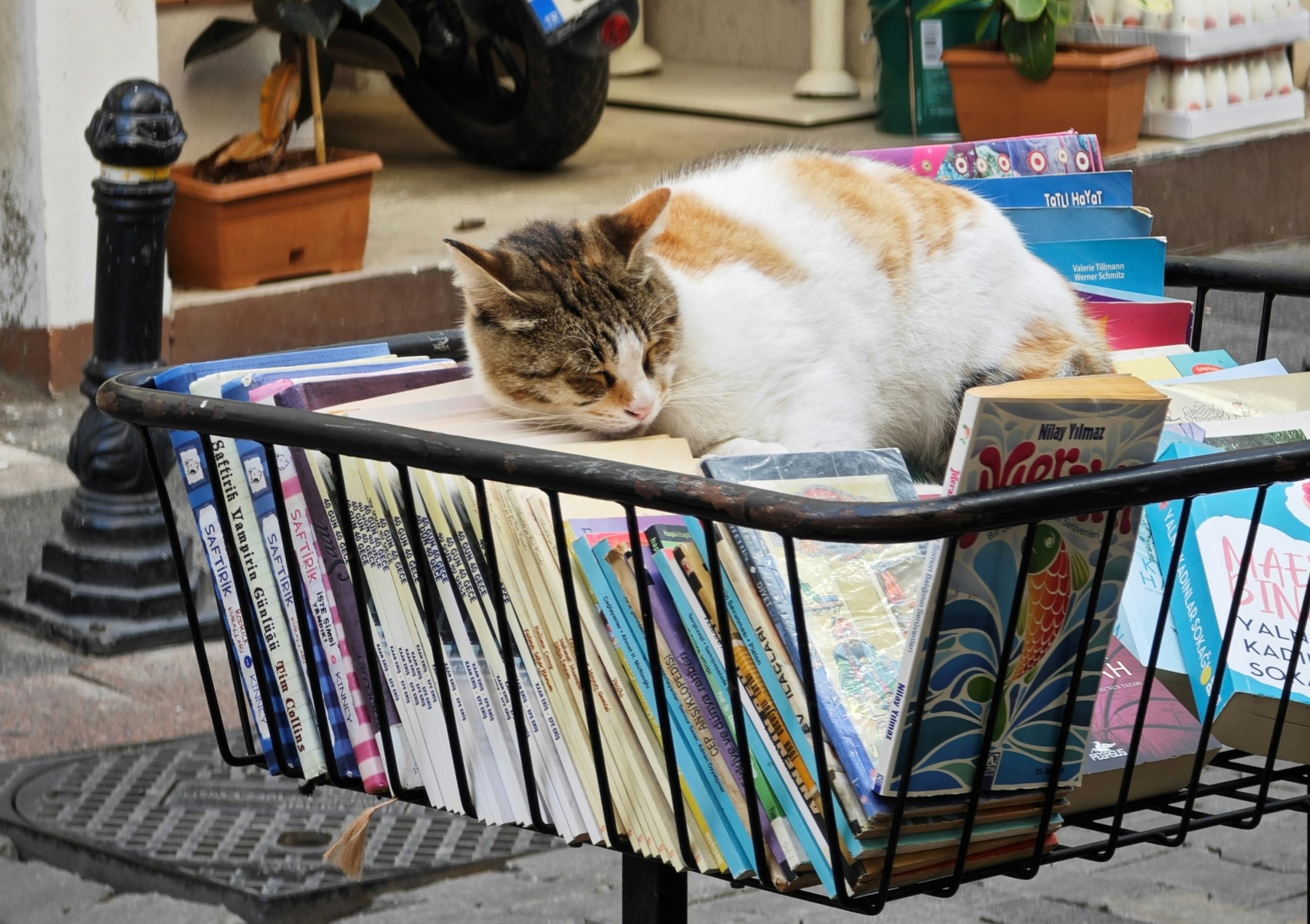
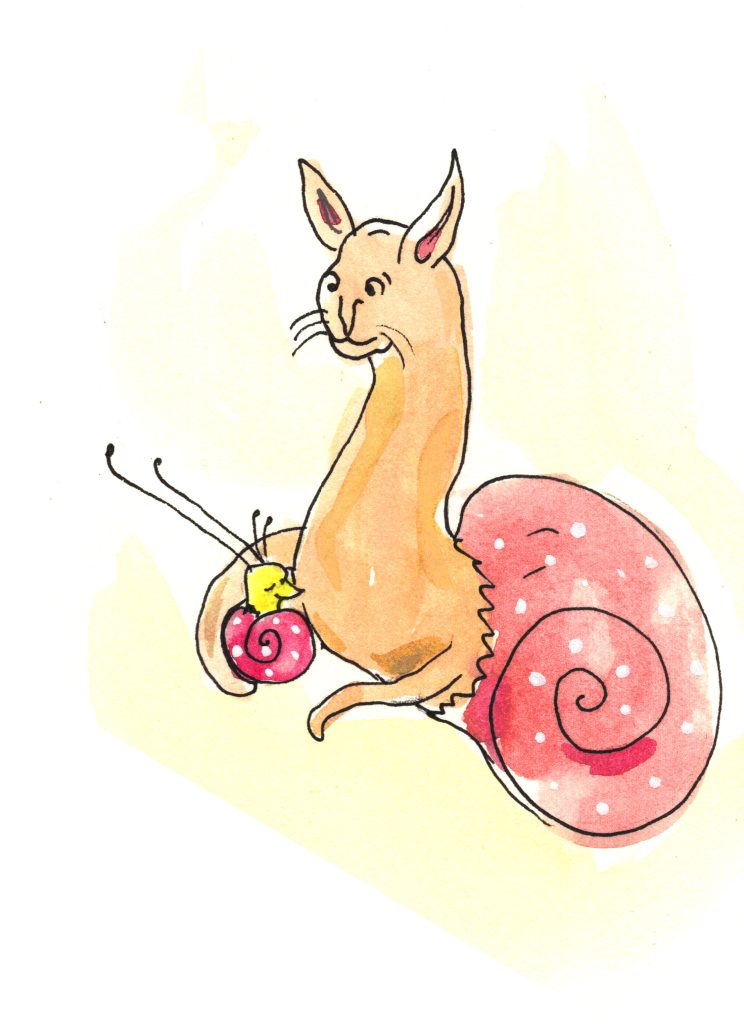
Have you noticed the cats-on-book-covers trend lately? I sure have. Clearly, someone in publishing has decided that cats on covers sell books. Today, there are approximately 600 million cats in the world, and in the United States, 25% of households have cats. So maybe this publishing trend is actually onto something.
As a diehard cat lover, I will pretty much buy anything and everything emblazoned with a cute cat design—household items, clothing, accessories, books and whatnot. Yup, I’m a sucker. So, I cannot stress how disappointing it is to purchase a new book with an adorable cat on the cover, only to find out there are no actual cats in the story. Zero, zilch, none whatsoever. What a total letdown—the same kind of letdown a hungry (or not-so-hungry) cat experiences when staring down at an empty food bowl.
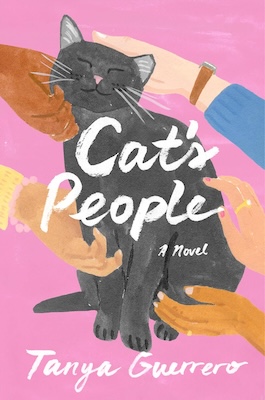
It’s one of the reasons I was compelled to write my debut adult fiction book, Cat’s People—a story for, and about cat people. Not only does my book have a cat-emblazoned cover in the loveliest shade of pink, but in its pages you will also find six points of view filled with heart, love, humor and kindness, one of which is a stray cat named Cat.
This reading list captures the full spectrum of catness, from mischievous troublemakers to wise companions, and everything in between. Whether you’re looking for a heartwarming or heartbreaking tale, a bit of mystery, a rollicking adventure, or even a little romance, these books celebrate cats in all their furry glory. So, if you’re tired of being duped by cat-covered books that have nothing to do with actual cats, this list of memorable feline characters is for you.
Many of you have likely read this extremely popular novel by Backman, but for those who haven’t, it combines two of my favorite tropes: grumpy old man with a heart of gold, and cat hater who begrudgingly transforms into cat lover. The cover is also pitch-perfect, allowing you a glimpse into the story about an old man with his back to the world and a scruffy-looking cat in need of a home Velcro-ed to his legs. As the central character Ove reluctantly allows the world back into his cold, deadened heart, his disdain for the stray creature he fondly calls Cat Annoyance is eventually replaced with care and affection, allowing Ove to fully evolve into the feline servant he was meant to be. Make sure to keep a box of tissues nearby, because I guarantee you will need them.
Over the last decade or so, Japanese authors seem to have cornered the market on ultra-cozy books featuring cats. It’s not all that surprising since cats have long been revered in Japan due to the belief that cats bring good luck and fortune. Who am I to argue with that? In fact, there are so many translations of Japanese cat-centric novels that I could have probably written this entire article about them. For the sake of variety, though, I have chosen to feature my favorite of the bunch. To me, The Travelling Cat Chronicles has it all—a main character named Satoru who is kind, in touch with his emotions, and overall the kind of human being you would want to be lifelong friends with; a cat narrator named Nana, who is funny, full of snark, observant, curious and somewhat in denial of his attachment to his human; a scenic road trip across Japan in a silver van; and a bittersweet ending that will have you once again reaching for that box of tissues. I promise, not all of the books on this list will make you bawl your eyes out.
We all know the saying, “curiosity killed the cat,” so it seems logical that cats and mysteries should go hand-in-hand. Except, in these cozy mysteries full of humor and heart, it isn’t the cats who are killed (thank goodness!). In the case of We Solve Murders, the new series by beloved author Richard Osman, Trouble the cat plays more of a supporting, therapeutic role for his human Steve Wheeler, a retired police officer. Steve, a homebody at heart, yearns for a quiet life where he can spend time at home with Trouble, watching TV, attending weekly pub quizzes with friends, and taking strolls around the picturesque village where he lives. When his daughter-in-law, Amy, is framed for the murders of her former high-profile clients, Steve must leave the creature comforts of home, and Trouble, to help her. As a cat lover, I know how very hard it is to leave my cats for extended periods of time. So it comes as no surprise that Steve will have to solve this mystery in a jiff so he can hurry home to his beloved Trouble.
In the Conrad the Cat series by L.T. Shearer, the first of the series being The Cat Who Caught a Killer, the cat character named Conrad is a former stray who plays a more central role in the mysteries. Conrad spends his days assisting his human, Lulu Lewis, also a retired police officer, as she solves murders. And when I say assist, I mean it in the most hands-on sense, or rather, paws-on sense. Because Conrad is a very special cat, one who can actually talk. Although he only chooses to converse with Lulu. Some readers might find it hard to suspend their disbelief with regards to a cat who can actually talk out loud. But that’s what makes this series so much fun. Haven’t we all looked at our cats or dogs at home and wished they could sometimes speak to us?
Romance lovers rejoice! It turns out that romance and cats are quite the winning combination. And if you’re a cat lover, the idea of strangers meeting and chatting about their mutual affection for cats, or one trying to convince the other that cats are not to be disdained, is likely a familiar scenario. I can’t tell you how often I’ve been in situations from my day-to-day life where I’ve struck up conversations with total strangers about cats. It’s a known fact, really, that cat people have a knack for finding one another. This, of course, creates the optimal condition for a meet-cute.
And a meet-cute is exactly how Get a Life, Chloe Brown by Talia Hibbert gets started. In the first scene between the protagonists, Chloe is failing miserably at convincing a stray cat to come down from a tree. She climbs up, and of course, gets stuck. Then along comes Red, not only to help Chloe rescue the cat, but to rescue her as well. It’s the absolute perfect start to this grumpy and sunshine romance.
Crazy Stupid Bromance by Lyssa Kay Adams, a friends-to-lovers romance, features Alexis Carlisle, a main character who is indeed mad about cats. So much so, that she has opened ToeBeans, a cat cafe that becomes a refuge not only to rescue cats, but to survivors of sexual violence as well. Unlike Chloe, Alexis doesn’t have a handsome stranger swoop in to rescue her. Instead, it’s her friend Noah who stands by her side. Except, well, he has been secretly in love with her for a long time—so in love that he has to pretend he isn’t scared of her somewhat deranged cat, Beefcake. The scenes between Noah and Beefcake are the absolute best. This line from the book pretty much sums it up: “Beefcake opened his mouth and dropped the remains of a dead mouse on his chest.”
If action is more your thing, boy, do I have some recommendations for you. Let’s start with Starter Villain, a wholly original, satirical sci-fi romp by the prolific John Scalzi. This book may just have the best cat-themed cover ever. Have you ever imagined your cat as an evil villain secretly plotting to take over the world? Well, that’s pretty much the vibes of the artwork here. And the plot is exactly that. The narrator, Charlie Fitzer, is a substitute teacher living in his childhood home with a cat named Hera, and another recent kitten rescue he names Persephone. One day, he suddenly inherits a supervillain empire from his recently deceased uncle. He is then whisked off to the volcano lair headquarters, because what is a supervillain empire without its volcano lair? Soon, Charlie will find out who really runs the show—a group of sentient genetically enhanced cats who unbeknownst to him, have been manipulating his entire life. If you’re a fan of the Austin Powers film franchise and popcorn books, this one is definitely for you.
Speaking of popcorn books, the Dungeon Crawler Carl series is definitely worthy of a big bowl of buttery popcorn. It features a unique, humorous and action-packed story set in an end-of-the-world scenario, after an alien invasion kills almost the entire human population. The survivors are left with two choices—to try and live on whatever is left on the planet, or to join a cruel and deadly intergalactic reality show. That’s when we meet Carl, a Coast Guard veteran, who was clumsily trying to rescue his ex-girlfriend’s show cat, Princess Donut from a tree when the world annihilating event happened. Half-naked, and wearing a pair of Crocs several sizes too small, he makes the split-second decision to join the games. Needless to say, Princess Donut is the real star of the reality show, with her supremely indifferent attitude and unexpected heroics.
Electric Literature is pleased to reveal the cover of Lightbreakersby Aja Gabel, which will be published by Riverhead Books on November 4, 2025. You can pre-order your copy here.
In the beginning, there was happiness. Maya, an artist obsessed with the nature of beauty, and Noah, a quantum physicist preoccupied by the mysteries of the universe, found in each other a shared curiosity about the world. But beneath the surface of their happy marriage is a third rail: Serena, the lost child that Noah had with his ex-wife, Eileen.
One day Noah gets a call from an eccentric billionaire, asking him to participate in a clandestine project aiming to unravel the secrets of time and consciousness. The couple agrees to relocate to the Janus Lab, deep in the desert, where Noah finds himself drawn into a dangerous kind of time travel that could result in seeing Serena again.
As Noah delves into this groundbreaking, fringe work, his past begins to overtake him. And when his ex-wife, Eileen, joins the project, Maya embarks on a journey back to her own past, one that takes her to Japan, to her family, and to a formative lover who once shattered her heart. As Noah, Maya, and Eileen grapple with the balance between holding on and letting go, new information emerges that the Janus Lab might not be exactly what it seems.
A heart-achingly moving novel, Lightbreakers plumbs the mysteries of human connection, and explores how to love in a world where time is both a healer and a thief.
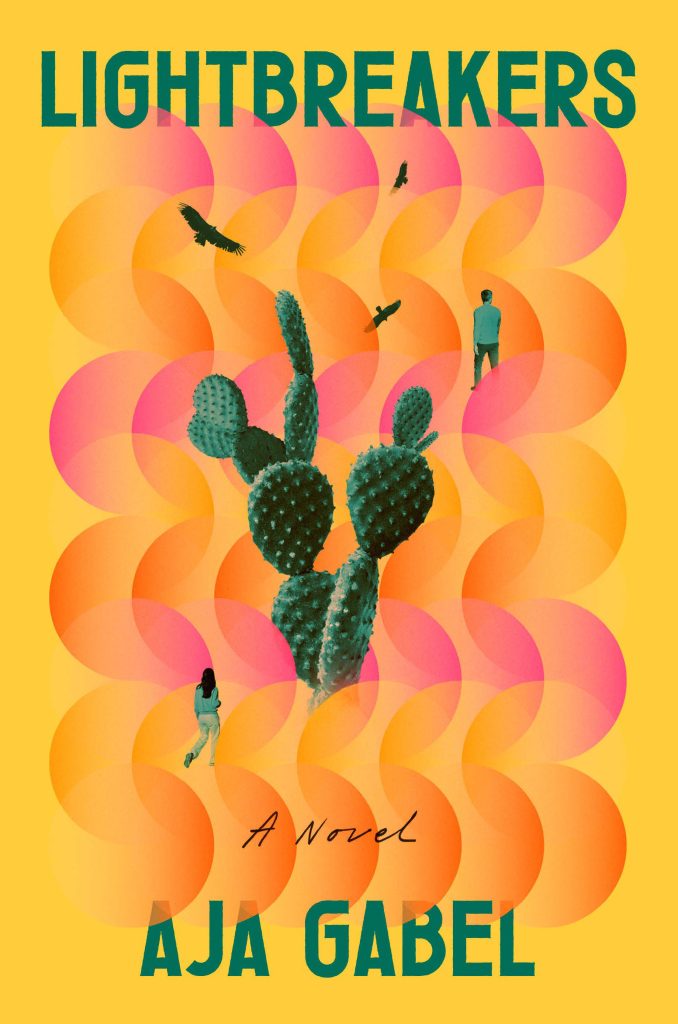
Here is the cover, designed by Sara Wood.
Aja Gabel: “My book is about grief, but it isn’t a sad book. It is about living: how to breathe in the wake of loss, how to love someone who has been changed by tragedy, and how to move between versions of yourself. So when it came to the cover, I wasn’t sure how we would find a way to communicate that balance between loss and love. But this cover achieves that beyond what I could have imagined. The design is viscerally alive with vibrant, warm colors, the shades of a sun either just rising or about to set. The graphic elements—the vultures, the man and the woman, the cactus—all have movement and shape, even as they exist on separate planes, in search of each other. And hands down my favorite part of the cover is the orange and pink pattern. For me it represents the speculative elements of Lightbreakers by making visual the idea of a time portal, of shifting between memories and possible lives, while also exuding warmth and hope.
There’s something else about the cover that feels personal to me. When I was a preteen, I found in my parents’ book collection a mid-70s edition of Walter Tevis’s The Man Who Fell to Earth, about an alien who comes to Earth in the form of a human, looking for a way to bring his people with him. I immediately read it and then read it again, and it was pivotal to my early love of speculative fiction. The cover featured David Bowie’s profile (he played the alien in the movie adaptation) in an upside down triangle set against a burnt orange planet, with lettering that was somehow both futuristic and antiquated. When I saw the Lightbreakers cover, I instantly thought of The Man Who Fell to Earth. In an almost Easter egg way, it subtly recalls those retro sci-fi book covers with its saturated graphics, a focus on geometric shapes, and an elongated mid-century font. I like to think of the resonance as a nod to that younger version of me who was first electrified by the idea of the impossible woven into the fabric of our reality, only visible if you had a flexible imagination and a borderless heart.”
Sara Wood: “For this cover I wanted to capture the shared and disparate journeys of Noah and Maya as they reach into their individual pasts. The pattern of repeated, overlapping circles represents the ‘episodic fold’ experiments conducted at Janus Labs, as well as the natural accumulations of human memory. You can see Noah and Maya each walking into this pattern, with the looming prickly pear cactus—a staple of the West Texan high desert—standing between them. Ominous turkey vultures—a persistent artistic symbol for Maya—circle above, signaling a passage from one life phase to the next. As much as these characters struggle with the push/pull of their quantum entanglement, there is so much warmth and beauty throughout this story, and I definitely had that feeling in mind when selecting the cover’s color palette.”
In late August 2014, we moved into an old white house with green shutters. It was within walking distance to the station where I and my husband would catch our daily trains. The middle school my six-year-old would someday attend was also down the street, a selling point that back then seemed like a far-off future, but now that he is older seems like an impossible past. This house has hardwood floors and leaded glass windows. The ropes inside the windows snapped ages ago, so we hold them open with thick sticks. You can feel the horsehair in the plaster walls if you run your hand over certain spots. There is a bedroom at either end of the hallway upstairs, and a tiny office with a pull-string light. Outside, a patio laid from old bricks and two walnut trees held up a hammock. The beach is nearby, only a very long walk or a moderate bike ride away. In The Sea Around Us, Rachel Carson writes, “Beginnings are apt to be shadowy.” I had just gotten remarried and was about to start graduate school. For the first three years we lived here, we were stalked. The men following us were brothers. They had grown up in and still owned, though no longer lived in, the little yellow house with which we shared a driveway. Jim spoke slowly and deliberately and wore gray-tinted glasses. Wes had a ponytail curling out from beneath a dark blue baseball hat. He spoke in chaos—repetitive, jumpy, and self-congratulatory. Both were White, tall, and in their sixties. They drove a silver Buick Century.
We were returning from a walk the first time we caught them in our driveway, standing close to our house, arms crossed and waiting for us as if we’d broken curfew. Days before, in a lawyer’s office, after we’d signed the papers and held the keys to our new house, our real estate agent told us these neighbors were nosy, but mostly harmless. Did she emphasize mostly? In our driveway, they introduced themselves with their hands out, walking closer and closer to us. Wes pointed at their yellow house and said, This is the house that was built for us, then Jim followed with, We know all the families who’ve ever lived in your house, and then one of them said, We gave Jerry that statue in your backyard. I didn’t realize we’d been walking backward. By the time they stopped talking, they had backed us up against our door. I am a woman who often feels afraid around men. My fear is gut-deep, learned through culture and history and also from my mother. I anticipate feeling afraid, or at least wary, in meeting rooms and in bars and on elevators and in parking garages because these are places where I have been shouted at, leered at, groped, and followed. But I did not expect to feel this kind of fear in my new house with my new husband. This house is on a street I had driven down countless times before, in a town I had already lived in for fifteen years. My husband had been my boyfriend for several years before we’d married. The familiarity of city, street, and partner were a comfort. The familiarity of fear, though familiar, was unexpected. “Fluency in fear—and making us police ourselves—is how women are kept in check,” writes Pumla Dineo Gqola.1 Even with my back against our house, as Matt opened the door and hurriedly let us in, I smiled at the brothers, nodded, and said, It is so nice to meet you.
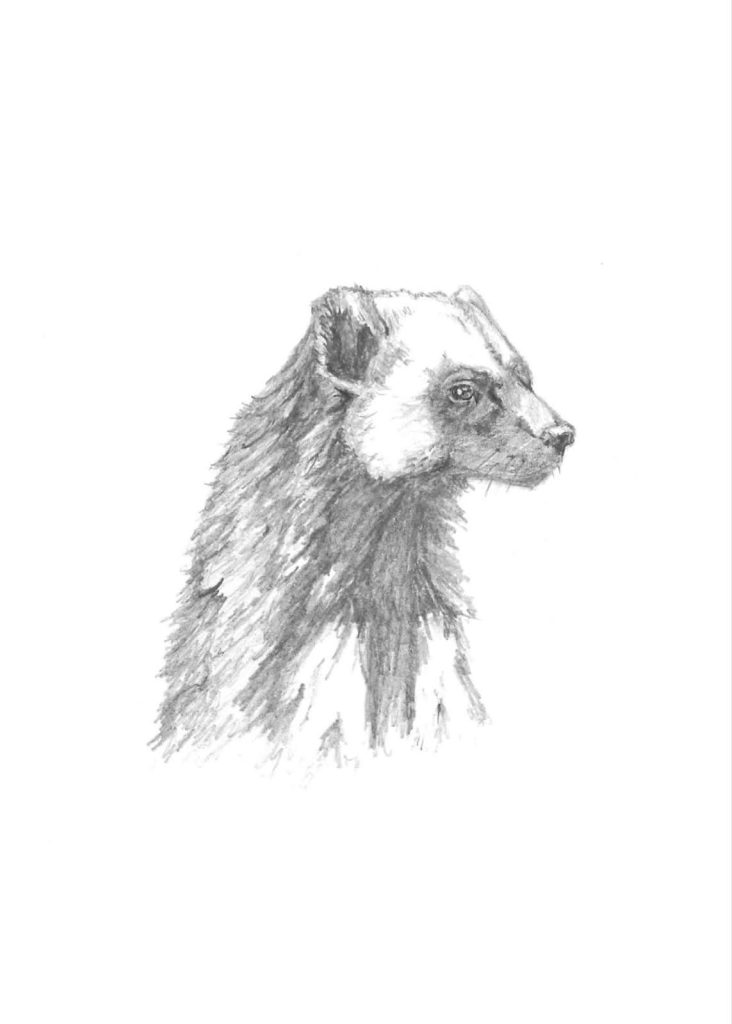
Badger: v. To haggle, drive a bargain. Also, to pester, to bother, to ply with repeated and irritating requests to do something. Probably an allusion to the baiting of badgers by humans. (See also fish, also clam.) Uses of badger in the seventeenth century allude to the supposed tenacity of the animal’s bite, gripping so hard its teeth meet.
Our house is nearly 150 years old. This means it wasn’t possible for Wes and Jim to have known all the families who’d lived here before us. As they backed us into our door, Wes told us they also knew where we had lived before. The way you decorated, he said, we can tell you are good people. (I would have thought, There is too much subjectivity to correlate a person’s “goodness” with their art, but they were standing so close to me.) We realized, after we told them we had to go, after we opened the door enough to get inside, after we closed and locked ourselves in, that this was another impossible claim. We had not lived together before. Whose house had they seen? Whether it was Matt’s house or mine, in order for the brothers to have seen the rooms we’d lived in, they could have come to an open house. Or worse, they peered in the windows. Imagine two faces pressed against locked glass. The boldness of daytime voyeurism.
Our real estate agent told us these neighbors were nosy, but mostly harmless.
I am not guiltless in the act of snooping. I have scrolled strangers’ social media accounts, have googled the names of people I am about to meet, or have recently met, or would like to someday meet. I’ve peeked through cracks in doors, pressed my ear against a wall to hear private conversations. The difference between their voyeurism and mine is I never told those I spied on what I had done. I knew to keep my acts a secret. Nosy, but mostly harmless. But Wes and Jim told us they had seen inside one of our houses, had copped to their nosiness. That could only mean they wanted us to know they had been looking.
In her book Staring: How We Look, Rosemarie Garland-Thomson writes “…staring at once provokes and paralyzes its object, eliciting both anger and anxiety.”2 Once inside our house, my fists clenched and ready, I wanted to hit them. For the rest of the evening, I worried over curtains—we hadn’t bought any yet. We rifled through unpacked boxes, found towels, a few blankets, some nails, and a hammer and covered up all the windows.
Garland-Thomson goes on to write about staring as an act of dominance, enforcing social hierarchies and regulating access to resources. Here is a conversation I dismissed when it first happened: Just after we put in the offer to buy this house, before we received word the sellers accepted, our real estate agent called. She said another bid had come in, higher, and in cash. We could not offer more money and did not have that kind of cash. We were nervous. We did not have a backup plan. And then, overnight, we got the all clear. The current homeowners are not interested in selling to anyone else. We mistook this as a sign of good luck. In our gratitude, we did not ask questions.
The day after our neighbors’ forceful introduction, they came back. I saw them in the yard when I left to catch my train. It was shortly after lunch. My classes all happened in the evenings, in the Bronx, a two-hour train ride away. I waved to them but quickened my steps. Wes shouted at my back as I walked away. We offered Jerry more money for that house, you know. And we offered him cash. He paused, waited for me to react, but I did not turn around. For a moment, I did not move at all; no fight or flight, only freeze. But they didn’t like us. They said they like you better. The brothers’ first attempt to own this house was to buy us out, and though it failed, it was quickly clear they were not ready to give up. I didn’t know how to respond to Wes, so I left. I got on my train and went to class. When I returned home, I found a note from them in our mailbox taped to a small gift bag. Inside the bag, a candleholder from IKEA. Inside the card, they had written: Congratulations Reilly family! May God bless your home. I threw it all away.
We didn’t see them every day. Mostly they lived in another town. In a house like yours. But bigger. Much bigger, they told us. Another flex of strength. (Did I look it up? Of course. I saw on Google Street View that it was a very large colonial, new construction. White like ours, but without shutters. Dozens of small American flags lined the garden and the walkway.) But at least once a week, they arrived next door. Several times, we caught them walking the perimeter of our backyard. Once, they lifted the lid and poked through our compost bin. During every visit, I watched them pluck at invisible tufts of grass in their front lawn until their plastic solar lights flicked on. After the grass, they picked up sticks, from their yard and ours, and then dumped the small twig—piles across the street, beneath a tree at the end of another neighbor’s driveway.
They wanted us to know they had been looking.
They learned our schedules quickly and pulled into their driveway twice a week at the same time I left to walk to the bus stop at the end of my son’s school day. When I started picking him up at school instead, I saw their silver Buick drive past us as we pulled into the doughnut shop. At home in our living room, whenever something cut across the outside light and cast a shadow on the porch, we froze, hair on end, eyes widened, and listened.
Their car’s loose muffler rumbled. I could hear when it crested the hill—a warning, and so my ears stayed tuned. Here’s Gqola again, on female fear: “This heightened vigilance requires that women consider how they will fight back, or modify their behaviour, to try and remain safe.” Running up to our attic, where the air was hot and dusty with exposed insulation, I watched them, unseen, from a small window. As I looked down, I questioned what they were capable of, worried whether we were safe. Mostly harmless, the real estate agent had said. They are a little odd, the previous owners told us. But if that’s all they were, then why did my skin go slick whenever I heard them pull up?
For the nine hundred forty-three days we lived next to them, I was always waiting for them to arrive. As I waited, I imagined what it would feel like to close Wes’s hands in my car door or hit him with sacks of oranges. I thought about running them over, or spraying their driveway with water and letting it freeze so Jim would slip and fall. Even though I have always hated guns, one night, I sat on our couch and started a whisper-debate with my husband about getting one, just in case.
I felt afraid, though for the first few months we lived here the reason for my fear was hard to pinpoint. In the beginning, there were no overt threats, but they stood too close, said peculiar things, stood in our yard uninvited and stared. Back then, I felt I should be able to dismiss these behaviors, that though I felt something off, I could have been overreacting. But the language in those warnings from the agent and Jerry felt coded, couched; mostly harmless, a little strange.
Even if I wasn’t immediately certain why I was afraid of them, I recognized my physical reactions to them. I hesitated to say hello, felt a yawning pit in my gut when I saw them. I always wanted to know when they were outside and then, when they did arrive, I’d shut all the windows. These were feelings I’d had before, moves I’d made in other situations in order to avoid men I’d perceived to be threatening. From Gqola: “Patriarchy runs on fear, fear of being an outsider, fear of being brutalized, fear of being too much, too inadequate, too vocal, or too different.”3
The hold they had over me was recognizable because it was familiar. And the more I watched them, it became clear that they saw themselves as a team—the two of them against the neighborhood, perhaps even me, specifically. The smirks, the repetitive door slamming, the dumped yard waste, the positions of their bodies as they stood in our yard and stared appeared to be strategic moves, as if they came here to play a game where only they knew the rules. French writer and filmmaker Virginie Despentes wrote that the exclusion of women’s bodies is the foundation masculinity is built upon, because it is in such moments “that their famous male bonding takes place.”4 Men together hold more potential for violence than a man alone.
When bell hooks wrote about a group of White men she observed walking in front of her in New Haven, she noticed how they become louder and stronger in a group. As she listened to them talk and categorize the women they had sex with, she also noticed how they “claim the body of the colored Other instrumentally, as unexplored terrain, a symbolic frontier that will be fertile ground for their reconstruction of the masculine norm.”5 Not only a game of exclusion, but conquest. hooks’ language evokes images of westward-driving settler colonizers. The women those young men were talking about rendered not as human beings, but as property, like land to be stood upon, claimed, owned. They hadn’t even noticed bell hooks walking behind them. Racism and sexism, as well as classism and ableism, intersect to perpetuate the power dynamics implicit in the brotherhood Despentes and hooks describe. Anyone outside of that brotherhood of straight, White, able-bodied men of some financial comfort becomes feminized, mocked, dominated, dubbed as Other. Before seeing us, Jim and Wes assumed economic superiority, tried to outbid us on our house. A year later, Wes tried to embarrass my husband with homophobic taunts. When they learned of my previous divorce, they repeatedly mentioned it as a failure of my character. In 2019, in a tweet echoing the ways men have been calling women hysterical, Donald Trump told teen climate activist Greta Thunberg to “work on her anger management problem” after she won Time Magazine’s Person of the Year award.6 In 2022, Kentucky senator Mitch McConnell voted against legislation that would protect interracial marriage.7 In August 2023, Texas governor Greg Abbott placed a row of buoys affixed with sawblades into the Rio Grande to maim anyone attempting to climb over the border.8 There is a comradery in cruelty.
There is a comradery in cruelty.
Whenever the brothers arrived, they brought stuff—boxes of Entenmann’s baked goods, stacks of newspapers and magazines. Once, I came home from the post office and there was a three-foot- tall stuffed banana propped against their garage. Each holiday, they put a new wreath on the door and a new garland on the railing. Nothing ever came back out of their house. I am reminded of the Great Pacific Garbage Patch off the coast of California, that floating tangle of plastic that will never go away, large enough to be seen from space. They never rolled out the bins on trash night, never moved the filthy car parked in their garage out into the light.Even though I watched them carry brown paper bags and canvas totes up their three front steps and inside their front door while thinking of and planning their deaths, (if not oranges, then perhaps a sock filled with loose change) I had also tried, we had also tried, to show them kindness. As if good deeds might work as a shield. The first winter we lived here, we cleared the snow from their driveway. I waved when I saw them outside, though averted my eyes from theirs. We said hellohowareyou quickly when they walked past us with fists full of sticks. All acts of self-preservation, kindnesses like stiffened elbows to keep them at arm’s length. But if we were only pretending to be nice to avoid getting yelled at, does that diminish our acts?
Ape: v. To imitate, to mimic (pretentiously, irrationally, or absurdly). To mimic the reality. (See also parrot.)
It is strange to write about feeling trapped in my house, afraid of our neighbors, given that we are living with a virus that had, when it began, kept us sequestered inside for so long, afraid of everyone. In the early days of the COVID-19 pandemic, as my family tried to adjust to endless time indoors, I grew feral with worry. When we could, we bought groceries in bulk, wiped them down with hand sanitizer and put them in empty coolers in the basement. We were squirreling away food. Upstairs, in an attempt to make us feel safe even if we weren’t, I piled the living room couch with blankets and pillows. Like a nest. It was during those first bleak days when I began making a list of all the animal names we use as verbs.9 The list became our family game. In the middle of eating dinner, or watching television, or taking a masked walk around the block, someone would shout out Peacock! Ferret! Upstairs, in our shared office, I looked up each animal in my OED, taking notes in the order we thought of them. And then I noticed something. Almost every animal, when reconsidered into its verb form, defines an act of violence, labor, or motherhood.
The violence of these verbs is, at times, overt. To bat, to ram, and to slug are all verbs connected to hitting. There is also to goose, which means to grab someone, likely in the rear, likely without consent. These are verbs of attack.
Then there are verbs like to fish and to hawk, which are verbs tied to labor. These are words of work. Additionally, the verb forms of these animal names often mean the hunting of themselves. We can see this not only in to fish, but also to clam and to louse. How often, especially under our American capitalism, is labor an act of violence? To hawk used to mean to hunt with falcons, but more commonly we use it to mean to sell. We also use to squirrel with away as a way of saying to store. Other verbs, like to hog, to wolf, and to swallow are connected to the act of eating, and therefore consumption, which brings us right back to labor and violence.
Labor is also connected to motherhood, both in the birth processes we call labor, and in the invisible work of mothering. The word labor itself means to work and to endure pain or suffer. Verbs like to bear are often used to describe childbirth, as in to bear a child, but we also use to bear in relation to guns, as in to bear arms. Nowadays, to pig is mostly used with out, as in to pig out, which we use to mean to gorge oneself, but to pig once also meant to give birth, though it was used derogatorily. There is violence in these mother-verbs, too, not just because of the inherent blood and pain of birth, but also in the statistics. According to a 2023 PBS News Hour podcast, the maternal mortality rate among Black women in America in the same year was nearly 70 deaths for every 100,000 live births, which is 2.6 times the rate for White women, regardless of income or education.10 America is a country without maternal leave or universal health care, but with endlessly increasing costs for childcare. More recently and with growing frequency, motherhood is a value signifier; politicians argue that a woman’s purpose is tied to motherhood and stay-at-home moms with seemingly endless wealth become social media influencers, while the right to abortion in many states has been restricted or banned.11
Taken collectively, these verbs become metaphors. Although the use of animals in language—as metaphors, dual noun/verbs, and idioms—isn’t unique to English, as I look up each of these words in the OED, I can’t help but think about how the British came here and spread their white violence everywhere. The language I speak is the language of violent power. These animal verbs seem to be a perfect representation of that power.
This is also how I see my neighbors.
Though at first I wasn’t sure why I was afraid, their behavior escalated to more overt acts of violence, of invasion and boundary crossing. My fear was validated, even when I called it into question. And as they threatened, stalked, and shouted at us, something else became clear—their behavior, though troubling, scary even, was not unique. They are just like many other neighbors throughout history and in other American suburbs.
Donald Trump (@realDonalTrump), Twitter (now X), December 12, 2019, 7:22 a.m., https://x.com/realDonaldTrump/status/1205100602025545730?lang=en. ↩︎
Senator Mitch McConnell is married to an Asian American woman. ↩︎
Khaleda Rahman. “Close-Up Video Shows Texas Floating Barrier Has Circular Saws.” Newsweek, August 9, 2023. ↩︎
Grammarians call the verbing of a noun denominalization. ↩︎
PBS NewsHour, “American Black women,” June 28, 2023. ↩︎
In late summer, 2024, fourteen US states have total abortion bans. These states are: Alabama, Arkansas, Idaho, Indiana, Kentucky, Louisiana, Mississippi, Missouri, North Dakota, Oklahoma, South Dakota, Tennessee, Texas, and West Virginia. ↩︎
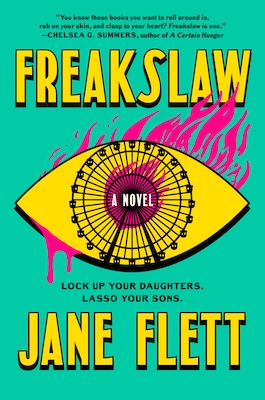
It’s just another grim and grimy summer in the small Scottish town of Pitlaw when a thrillingly deviant funfair pitches its tents at the town’s edge. It doesn’t take long for the neon charms and colorful company of the Freakslaw, which includes a contortionist witch and her fortune teller mother, a luxuriously sensual fat lady, and a variety of self-professed gender pests and agents of chaos, to begin working on the repressed town’s residents. The menfolk are dangerously riled and the teenagers seduced. The funfair works like one of its own warped mirrors, offering the townsfolk alternate visions of themselves: studious Ruth sees a future beyond the straight path to university, bi-curious Derek glimpses freedom from his violent father.
Not quite a horror or a fantasy novel, Jane Flett’s debut Freakslaw is delightfully dark and experimental, a celebration of the wild pleasures of living in the world and in every variety of human body. Populated by a dazzling cast of characters, the book delves into group dynamics and social mores, community and mass hysteria. In a deeply satisfying build of sex, violence, and mayhem, the novel descends into a kind of spiritual war between our animal—perhaps even magical—natures and the strictures placed upon them by society and the self.
I spoke with Flett in Berlin about witches, performance, and escape, and why we feel so bad about feeling good, and how good being bad can feel.
Olivia Parkes: What draws you aesthetically and emotionally to the funfair or amusement park? Why did you start there?
Jane Flett: Funfairs are purely based around the idea of pleasure. It’s right there in the name: fun. I love the idea that engineers and performers have worked together to make these rides that fly your body through the air and to give you overloaded sensorial experiences that bring joy or excitement. Entertainment, in that sense, is deeply wonderful to me, and is something I’ve always been drawn to. I become such a child in the space of the funfair, the colors and the neon, the brightness and movement, a giddy, joyful creature, dragging all of my friends to go on terrifying rides until they throw up. I understood over the course of writing the book that this was also about Scotland and the past, and my relationship to it. The amusement park seemed like such a perfect and explicit foil to this lingering Calvinist dourness that I grew up with, to the promotion of suffering as a moral good. It’s a space where instead pleasure and hedonism are explicit aims.
OP: You grew up in a small Scottish town and have lived now for many years in Berlin, a famously queer city in which communities play a major role. Freakslaw is a story of a clash between worlds. It’s not focused on its individual characters in the way we’ve come to expect from the novel. What made you want to write that kind of story?
The amusement park is a space where instead pleasure and hedonism are explicit aims.
JF: I’m deeply interested in group dynamics and in community, which I think aren’t explored enough in novels. I’m fascinated by how groups operate as places for people to find release and family and community, as well as in how group dynamics can work in the direction of mass hysteria: the ways in which ideas and mentalities can become contagious once you’re within the group. Of course, Berlin is really wonderful in being a kind of queer, magical wonderland, but I had some experience of this already in Scotland, when I first moved to Edinburgh, the big city. I got very involved in arts organizations there, in particular with the Forest Cafe, an alternative space where we ran lots of free events in literature, art, and music. I remember this feeling in my early twenties, of finding these other weirdos who also wanted to make a life around art. It’s being in a group of other people wanting the same thing that makes it feel like an option.
OP: The individual characters who are most important for the action of the book are in fact teenagers: Ruth and Derek from the town, Zed and Nancy from the carnival. What were the pleasures and opportunities of writing about that time of life?
JF: As a teenager, I was really interested in the idea of escape. It was the time when I personally felt the most trapped in my life, but also had the most imagination, a wideness of ideas, a sense of how things might be otherwise. This combination of a total lack of agency while being hyper aware of other possibilities is really interesting to me. I was listening to all of the punk music and reading all of the novels, but at the same time I had very little of my own money and was living with my parents in a small town. The gap between the life I wanted to be living and the life that was in fact living was larger than it has been at any other point in my life. And in some ways, that’s really exciting. I wanted to capture the feeling of the last summer before you leave school and everything is building up to this fever pitch. That feeling of pressure really increased what I was able to do with these teenage characters. There are a lot of external factors keeping them where they are, but at the same time, these rich internal feelings of opportunity, the sense that everything is about to be cracked open.
OP: The book is set in the late ’90s, when you yourself were a teen. It made me reflect on the ways in which the discussion now around gender identity and queerness is fairly different, but many of the social issues we’ve faced in those areas haven’t progressed much over 30 years. Why did you position the story in that time?
JF: On a practical level, there are so many more opportunities for stories when you don’t have phones. The way in which fate unfolds when you can’t contact people is completely different: you showed up at this place, you ran into this person. I didn’t realize this until after I wrote the book, but 1997, the year the action takes place, was a really interesting year in the U.K. It was the year Diana died, and the year that Labour won this massive landslide election and came into power, and there was this real sense of Britain under a force of change, as well as this pressure cooker of grief and emotion. And ultimately it led to nothing. I think that was also subconsciously behind that choice. That ‘97 is this year of potential and change and contains this hopefulness for something different, but also the pressure of everything remaining the same. Also, I wanted it to be 400 years since one of the great witchcraft panics in the northeast of Scotland, which was in 1597.
OP: I also felt that the kind of grimy, post-Thatcher vibe worked really well in conjuring the contrast between this small northern town and the colorful Freakslaw. The Freakslaw carnival does in fact center some “classic” freak show acts: you’ve got the pin girl, and Werewolf Louie, a man with hirsutism; you’ve got conjoined twins, and the fat lady, along with various types of queerness and otherness. The book gives us this joyful embrace of, to use its own term, freakery, but there is of course a real history of freak shows to contend with, which profited on the spectacle of other bodies. What tropes were you conscious of working with and against?
JF: That celebration was really the biggest thing that I wanted to come through. I can’t speak for physical disability or some of the other identities within the freak show depicted here, but it started for me from the point of queerness. For such a long time, queer literature occupied the position that being gay is awful and a thing of great suffering: You come out, and it’s the worst thing that’s ever happened. You admit your terrible defect to the world and are rejected for it. There’s the undergirding assumption that obviously you would be heterosexual if you could. And that’s just so far from the reality of the queer people I know. Queerness is the thing that has brought me all the joy and all the good things and all the good people. And I wanted to have that sense in the book, but also to have it around other forms of difference that have been considered to be “defects” or difficulties that imposed suffering. At no point do any of these characters say: Oh, I wish I was more normal.
I was also thinking a lot about the idea of performance and entertainment, and where the power is held in that dynamic: A performer does something for an audience, gives them something. In the inherited ideas around freak shows that can be seen as a disempowering act: You are a spectacle to be looked at, and people take something from you by looking at you. I was really trying to separate those ideas, to say that by putting yourself forward without shame, saying, this is me, and this otherness is the source of my power, my brilliance. You may come and you may give me your money, and I am getting something from you. I wanted to write a story that put the power into the hands of the performers, who are also like a family and who share and reinforce that power for each other.
OP: We haven’t talked about witches. One of the most unforgettable characters in the book is Nancy, a teen contortionist witch. She’s in some ways quite an ambivalent character, boundary pushing almost to the point of nihilism, but full of passion. We also discover that the town of Pitlaw has a history of burning witches.
If the revolution and what comes after doesn’t include pleasure, happiness, and happy endings, then that doesn’t feel like the fight I want to be having.
JF: I’m glad you brought up Nancy, because she is my favorite. I find that a lot of readers don’t like her, or they really love her. I’m fascinated by the way people judge books based on whether or not they like the main character, on that as a metric for literary merit. I mean I’ve had reviews in a major Scottish newspaper saying, well, this book is terrible, because this person, this character, Nancy, is bad, and she doesn’t learn any lessons.
OP: I would hate for Nancy to learn anything!
JF: I’m very drawn to “misbehavior,” to characters that don’t have to be good, characters who make up their own rules, especially when those rules are kind of chaotic. I wish I could embody Nancy’s total chaotic energy. And thinking about witches—that for me comes back to power and agency, and who holds it and who tries to take it away. Many “witches” were women with knowledge of herbal medicine, and they were persecuted because the power of medicine became questionable when it was in the hands of women. I’m also particularly interested in witchcraft in the context of Scotland, in that Scotland often views itself as this marginalized, maligned country who had terrible things done to it: We’re innocent, England did all the terrible things. But Scotland has a brutal history in terms of witchcraft—I think we killed like 15 times more people per capita than England did.
OP: I was struck by the fact that while the story does contain these supernatural elements, they’re also kind of incidental. It’s not a fantasy book. At the heart, it’s a story about social mores and social power. I got the sense that the actual “magic” in the book is a natural force that people contain within themselves and can either repress or allow to flourish. How did you see the magic operating?
JF: A bit like a Rorschach test, in that depending on where you’re coming from, you can see it either as a delusion or as a real phenomenon. There’s a scientific explanation for everything that happens in the book, and there are also levels of group hysteria. You can read Gloria, the fortune teller (and Nancy’s mother), as making up some weird ideas about what’s happening, or simply being more conscious of forces that aren’t visible but are present. I’m interested in places where these two kinds of belief come together. My own feeling is that they’re not so different. When you get down to the level of things happening in quantum mechanics, yeah, observation can change how an electron operates. If we’re saying that consciousness can change subatomic matter in the physical world, why then do you not believe that intentions can have an effect? I’m not really interested in magic as a fantastical force that comes in and solves or creates problems, but rather: what happens when people have focused intentions or different views of what even can happen? How can that push up against the world to create either chaos or transformation or both?
OP: Another big thread in this book is, I suppose, hedonism, but of a conscious kind: there’s a conscious embrace within the Freakslaw of desire in all its forms, as well as of ideas. There’s a sense in the book that some of the barriers placed on human freedom and experience are social, but some of them are self-imposed. How were you were thinking about the limits placed on pleasure?
JF: Embracing pleasure is not something that comes naturally to people in Scotland. We have a landscape of suffering and a history of valorizing that kind of suffering. That’s also something I feel in my own life. I can veer endlessly between hedonism and masochism and I’m really interested in those two aspects of sensation or behavior. I’m not really interested in comfort as a place to dwell: I would much rather go out for the long hike in the driving rain, and then come back soaked and sit by the pub fire and feel pleasure because the last thing was so bad.
I wanted to write about the complicated fight that so many people seem to have with pleasure, the permission they need to feel it. There’s immense guilt attached to “pure” pleasure-seeking: Even if these activities don’t hurt anyone else, if they don’t have a secondary moral impact—they’re not doing something to “improve” ourselves or for the good of the world—then they’re bad. I have a strong belief in tending to our own pleasure and making life a pleasurable experience, that our own personal pleasures are not negligible. I’ve come to think that enjoying moments does in fact makes the world better, not least because we then have more capacity to take actions that make it so.
OP: And there’s no pleasure without the body. The language around the body in this book is so varied and sticky and lushly weird and beautiful. Attention is drawn to all its difference and possibility as a carrier of pleasure, but also to its animal nature. What do you want to bring through in writing about the body?
JF: I’m always interested in disgust and desire and how they operate together. Disgust is so interesting to me, and the ways in which bodies are disgusting, and how that is key to the pleasure of them. I’m completely uninterested in the sanitized version of our bodies, how polished they’re supposed to be. I want instead to get into the sensation and the feeling, the open bits and the wet bits and the stuff that’s inside them that comes out of them.
OP: In some ways, this a very dark book: it’s a kind of horror story. But the sense I was left with, at the end, was of having read a romance. There’s also a lot of romance in it the book, and I mean true, sappy happy ending kind. What lingered for me were the love stories, Werewolf Louie and the local hairdresser, Derek and Zed.
JF: Yeah, I love joy. I am such an essentially cheesy person, all the way down. When we talk about endings in the classes I teach, I’ll sometimes ask what kinds of endings people like, and many of them say: ambiguous ones that are a little bit sad. And I’m like, No. I want to end at this point of pure joy. I think especially talking about queer people, talking about marginalized people—I want there to be hope. I want there to be resistance and power and anger against injustice, but the fighting isn’t worth anything if you don’t have the positive vision that you build in the place of that fight, and what you build in place of it has to be based in joy. If the revolution and what comes after doesn’t include pleasure and happiness and happy endings and all the good stuff, then that doesn’t feel like the fight I want to be having.
The March Gradness finals have arrived, and it’s shaped up to be a battle of genre classic vs. formidable newcomer. The Secret History has bodied the competition round after round, destroying each opponent with ease. Disorientation has had a few close calls, including in this last round against The Idiot; yesterday, the polls had The Idiot taking the win by a wide margin, but by this morning, the tides had turned. Instagram voters overwhelmed web voters, and Disorientation came out as the clear winner.
Will fan favorite The Secret History continue to dominate? Or will Disorientation, determined champion of several hard-earned battles, fight its way to one final defeat?
Check out the bracket below to see how the previous matches shook out.
The time has finally come to determine who will be named the greatest campus novel of all time! Cast your vote below before noon Eastern on Thursday, 4/3 to decide who will take home the gold.
Unfortunately, These Are the Things the Soft Animal of Your Body Loves
Editor’s Note: This work is an irreverent riff on Mary Oliver’s iconic poem “Wild Geese.”
Putting bugles on the ends of your fingers to make cunning little claws because you do not have to be good.
Being crushed under eleven weighted blankets like a cozycore Giles Corey. Meanwhile the world goes on.
Eating a deconstructed PB&J by putting a family of things (a peanut, a grape, a crouton) into your mouth all at once.
Honking and strutting around like a regal, wild goose, over and over announcing your place, while you wait for your Dunkin’ Donuts order to be ready.
Offering yourself to the world’s imagination by growing out very long bangs down to your chin and yelling “LET THE SHOW BEGIN” whenever you part them to reveal your face.
Accidentally “composting” in the crisper drawer until you create a terrarium, a landscape of deep trees and sprouting radishes.
Collecting a nest of small trinkets and clear pebbles of the rain because you have been oh so very good.
Walking on your knees, then crawling upon your belly and tonguing crumbs out of the carpet.
Curling up inside the harsh, exciting armpit of your mate and taking a small nap.
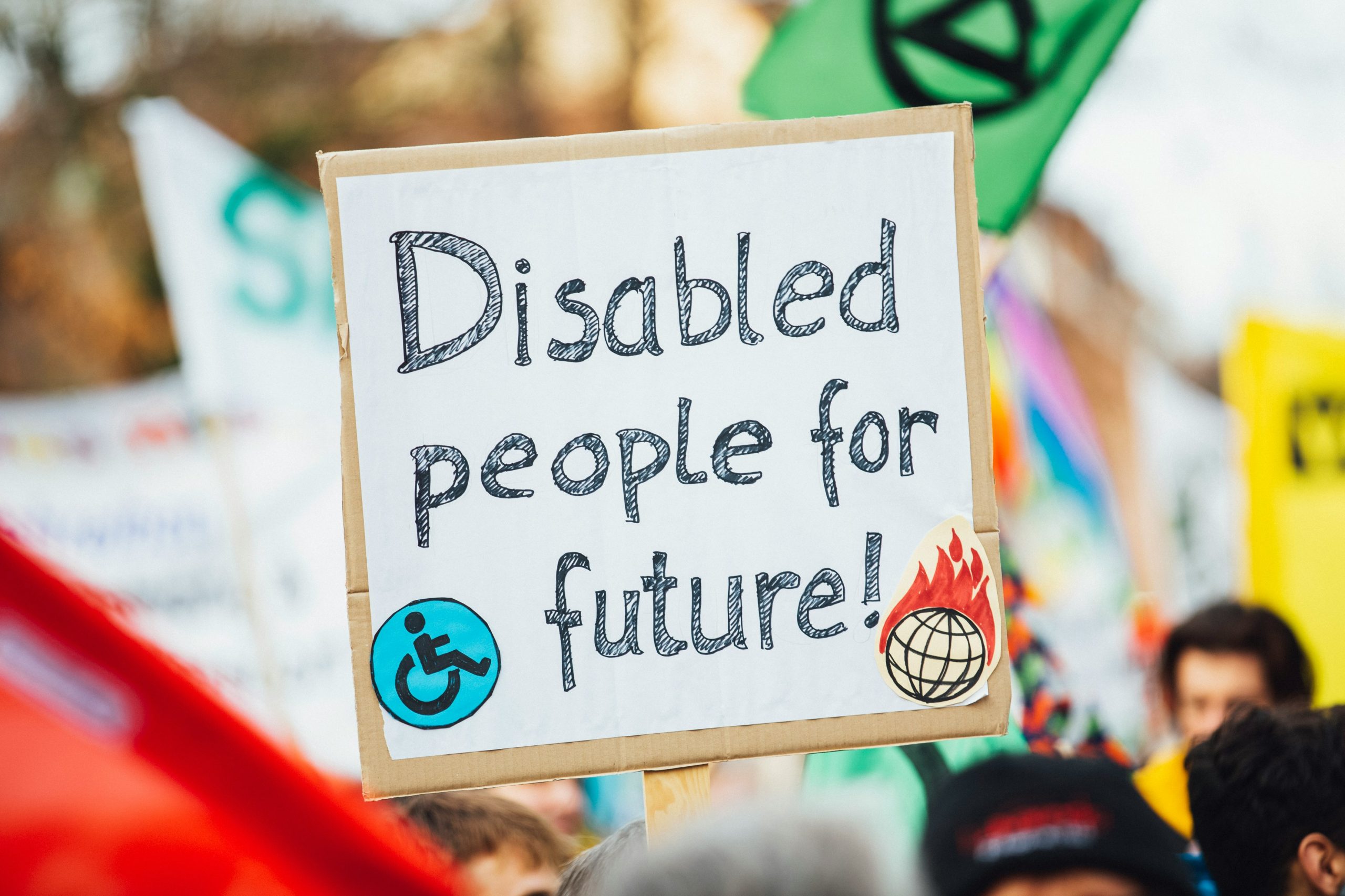
During my time as a disabled student, I read few books about identities like mine. Those I did encounter were often written by abled writers or for abled audiences who valued certain stories about disability, those full of tragedy and pity, hope and inspiration, miraculous recovery or certain death. Work about the actual lived experiences of people like me seemed as invisible in the classroom and the canon as my disabilities were from the outside.
When I began to publish, I wanted to write the kinds of books I’d needed as a disabled student but found this difficult given the ableist education I’d received. I needed not only disabled literary role models but a (re)education on how to be a writer. My latest book,Nerve: Unlearning Workshop Ableism to Develop Your Disabled Writing Practice, is the text I wish I’d had as a student, a craft book that interrogates power and privilege within the creative writing classroom, making space for disability to help writers best tell stories about their lived experiences. The various sections throughout the book provide readers ways to unlearn ableist craft advice they may have come across in traditional writing workshops, strategies for developing a disabled writing practice, techniques for designing disabled writing spaces, methods to discover disabled forms and structures for their creative work, practical tips for the business of being a writer, and various writing prompts. Nerve includes a bibliography featuring disabled writers and texts because visibility is essential in claiming our space in literature.
Here are seven poetry collections about lived experiences of being disabled.
Ultimatum Orangutan by Khairani Barokka
A careful examination of colonialism and environmental injustice, this collection explores the interconnections between humans, animals, and ecosystems, centering the stories of bodies of land and disabled physical bodies. These are poems about living in chronic pain, written from wheelchairs, amidst searches for medications, and during pandemics when vulnerable people are told to protect themselves despite living in an ableist world. They are poems about what it means to witness climate catastrophe and colonial violence, the body a resting place for rage, grief, and resistance. Here the speaker reveals the pains of histories and human systems, and the linearity of colonialism and apocalypse as compared to the fluidity of crip time and environmental design. Lyric and evocative, Barokka’s poems ask us to consider the bodies and environments we destroy and what it means to survive, as well as who has the power to decide, and at what cost.
A hybrid collection of prose poetry and lyric essays that defies expectation to claim and create meaning between categories, this book examines the ways a disabled life will not be contained by ableist boundaries. Utilizing the form of alphabetical encyclopedia entries, this collection shares the author’s experience with progressive vision loss and relearning to read and write braille as an adult, alongside philosophical meditations on the ways this lived experience connects to history, science, and medicine. Interspersed throughout the personal entries are reflections about etymology and writing systems, codes and cameras, tools and painting, and other rich connections to Cohn’s story and the way the world views disability. Cohn’s innovative form, which weaves linked micro-essays and prose poems to share personal grief and a remaking of the self alongside revelatory social insights, invites readers into a world where words must be remade in order to navigate the story of a life.
Formally innovative and lyrically charged, this collection’s examination of queer sex and desire centers the disabled body and gives language to the unspoken and unacknowledged. Deeply rooted in art, myth, etymology, and music, these poems are a mechanism of survival that allow the speaker to interrogate words and wounds, meaning and memory. This is a collection that honors and subverts poetic tradition, incorporating a wide range of familiar and invented forms that search for and speak of loving trans and disabled bodies, using this power to build community. These poems showcase a sharp rejection of medical, carceral, and legal systems and the words they weaponize to abuse and erase queer and disabled bodies. Full of blood and bloom, tongues and speaking, these poems reveal the significance of pain and medical erasure, and the stitches that bind us to the bodies we’ve been given. This collection is a reclamation of language and love, the stories we tell about seizure and scar, and what it means to survive in sickness, to desire and care for the disabled self and others.
Intimate and intense, Slingshot draws readers into a world that is unforgiving and unapologetic, sharply reflected and critiqued by a speaker whose intensity and force call forth radical revolution. These poems about Black, queer, and disabled lives are detailed and devastating, timeless and timely, poetic innovation necessitated by a deep understanding of poetic tradition and the urgency of lived experience. Innovative on the page and the tongue, these poems demand attention and recitation, fastening themselves into weapons against a world that would erase these speakers and communities. Johnson writes with intensity and force about black queer trauma, sex work, disability, societal devastation and radical social activism, and collective grief and community care. Restless and defiant, these poems pulse long after readers have closed the page.
A memoir-in-prose-poems, this collection examines the onset of obsessive-compulsive disorder in girlhood, moving with the speaker through adolescence and into adulthood to reveal a mind consumed by obsessive fears and compulsions. Though the fear comes from within, it is also fostered by the dangers of the outside world, the speaker haunted by angels and gun violence, accidents and God, and the tangled concepts of living and dying that impact her relationship to self, community, religion, and her role as mother. Hoffman’s use of second person throughout this hybrid collection creates a necessary distance between writer and speaker, writer and subject, repetition a means of connection but also reminiscent of her lived experience, just as her genre blurring exemplifies the blurred realities of many disabled people. Rich with unique and unsettling images, the poems throughout this collection are both magic and monstrous, moving between the innocence of a child new to her diagnosis and the wisdom of an adult who has lived a lifetime with a chronic brain.
This debut by deaf Indigenous poet Sage Ravenwood explores the trauma of colonialism, familial violence, and the grief and anger of an animal self wounded and devoured by others, but also capable of great tenderness and survival. The poems throughout this collection reflect the wilds of the natural world and the inner world, the poet’s hands used to tend to the earth, shield the body from violence, or sign to others. Throughout the collection, Ravenwood centers Indigenous stories, including those about Native American boarding schools and Missing and Murdered Indigenous Women. Just as she does not translate Cherokee words for readers, she also does not translate a disabled life for an abled audience, instead inviting readers to inhabit her lived experiences. This is a collection driven by rage and pain, violence and abuse, yet one that is also a tender reclamation of the self, one that asks us all to reexamine what it means to speak and listen.
Bold and provocative, this collection of poems about sexuality, queer identity, and the body celebrates cyborg life, and occupies the sexy intersection of disability and desire, human flesh and technology. Examining the machines of our lives like televisions, DMs, texts, and video chats, Weise rejects the ableist world to invent new forms on the page modeled after the forms disabled people inhabit off the page. Weise challenges readers to redefine access in an ableist world, incorporating video sonnets, images, collages, screenshots, artwork, and other forms to remind readers that disabled writers must remake and rebuild disabled worlds and words for themselves. A profound examination of disabled community, this book pulses with human connection, crip and queer bodies and desires, opiate use and BDSM, dark bars and brightly lit online spaces, all the vulnerable and fierce intimacies of a chronic life.
We’re getting down to the final rounds, and the battles for these last few slots have been intense. Never Let Me Go, which made it all the way to the finals in last year’s March Sadness bracket, was knocked out early by The Secret History. Instagram voters had Bunny leading the The Idiot by five, but our web voters ultimately helped The Idiot clinch the win by a margin of just twelve votes. On the flip side, Instagram voters overruled web voters on Disorientation vs.Trust Exercise, giving Disorientation the win. Beauty beat out The Art of Fielding in a clean sweep.
Check out the bracket below to see where the match-ups stand.
Cast your votes in the Semifinals below before noon Eastern on Wednesday, 4/2. Then stop back at the same time tomorrow for the FINAL ROUND!
An insufficiency of affirmations (See also: an exhaustion of friends)
A navel-gaze of memoirists
A nitpicking of copy-edits
A personal attack of rejections (See also: a wallowing of tacos)
A whiteness of canonical texts
An angst of novelists
A fiction of author bios
An overstimulation of literary festivals (See also: a statement of questions, a hangover of receptions, a conspicuousness of name drops, an imposter syndrome of networking events)
A heightening of comedy writers
A pandering of markets
A prestige of residencies
A vampire of what’s-at-stakes
A purgatory of freelance jobs
A $1.17 of Medium earnings
An enigma of 1099s
A GENIUS of editors (See also: an obviousness of flattery)
I have a soft spot for ghosts. I see them as a re-emergence of that which has been repressed, their hauntings as a return of the past, either in quiet encroaching or in violent invasion into the present. So restored, the exiled can be either re-integrated or banished, suppressed again. It can also, as it sometimes happens with queer things, and the word itself, be reclaimed. My relationship with the idea of reclaiming is somewhat uneasy because, at least on the surface, it rests on a history of violence that becomes definitionally inescapable: to recast something as benign or even empowering, you first need to have been abused with it. The reclamation is a disarming, a transfer of the weapon from the hands of the oppressor into the hands of the oppressed, where it can, hopefully, be put to better use. The idea is enticing, if vaguely alarming. Ghosts function similarly in making the invisible visible; holding on to the violence done to them, they force a reckoning.
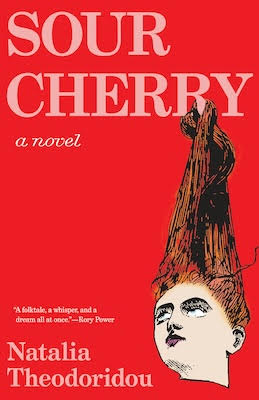
Domestic abuse, especially in queer relationships, has been historically such an invisible thing—threatening, even, to our narratives of feminist empowerment or queer liberation. I am haunted by so many stories of what abuse and violence look like, feel like, sound like; of who can be a victim of these and who a perpetrator; of who can survive them, and how. Is there anything here I’d want to reclaim? Domestic violence is a haunting in that its structures are always already in place thanks, in part, to the stories we tell about it, that we’ve been telling about it for millennia. In Sour Cherry, my debut novel, I chose to retell the story of Bluebeard not in reclamation but in proliferation. The ghosts are many, and they demand their stories told; if not their real ones, then at least the ones you already know.
The queerness of the book is sometimes overt, but usually it is subtle; I find it in the peelings of wallpaper, in the silent longing, in the camaraderie of ghosts. It is also in the dialogue with what came before—because to speak is to invite, to converse is to desire. So here are some books I hope my novel is in conversation with, desiring of, haunted by. These works speak to how hauntings and ghosts can become vehicles for identity-related anxieties, as well as for the unspoken and unspeakable violence and abuse faced by our LGBTQ+ community, and sometimes perpetrated within it. To summon queer ghosts is to counter queer invisibility; to speak of them, with them, through them, is to invent a language for what was before abject and inarticulable.
Audacious, thought-provoking, and very, very queer, this anthology is as devastating as it is affirming. Here, queer people are afforded the full breadth of human (and sometimes inhuman) complexity. Among these tales you will find a haunted porter of a sentient hotel, a queer kid who makes friends with a telepathic mummy, a serial killer falling in love with a walking corpse; violent delights and parasitic wonders by a host of exciting queer voices, brought together by Sofia Ajram’s dark vision.
A memoir about domestic abuse in a queer relationship, pieced together through an intricate overlapping of genres, tropes, and fairy tale motifs. I love everything Machado writes, but what I love in this book in particular is something that had always felt true to me: the conceptualization of intertextuality as haunting. Text, reader, and author are all haunted by the literary corpus that produces us. The book reads me as I read it, and that’s just the way I want it.
This is a novella, creepy and delicious like everything written by Khaw. A group of friends unite to celebrate the wedding of Faiz to Nadia, who has always wanted to get married in a haunted house. The house, a Heian-era Japanese manor, is haunted by a dead bride and the dozens of girls built into its walls. But the real haunting is, as in most of my favorite ghost stories, internal: the characters act out their resentments and dysfunctions with the diligence of ghosts compelled to repeat their pasts and carry out their grudges, inescapably, forever. The past is present, our tiny lives so flimsy we never even stood a chance.
A trans boy is haunted by the ghost of his mother, haunted by birds and names, haunted by his own body and a gender that isn’t. A book that resonates with the stories of the past, with longing, with art and all its treasures and losses. This is a jewel of a novel about family and community, and about queers finding joy without denying their pain. Because joy and pain are not opposites; that is a lesson only the most beloved of ghosts can impart.
This is a collection of weird, deeply moving stories populated by queer and trans characters that find themselves out of place. Jeremy has a poltergeist in his closet, unraveling his clothes (and, let’s be honest, don’t we all?); a team of murdered girls fight “monsters and undead menaces;” and—my favorite—Clay is haunted by keys that show up in his throat while ghosts roam the world. Cipri’s fiction is intelligent, irreverent, tender, and strange in the best of ways.
I read this book years ago, yet it remains one of my most memorable reading experiences. Both lyrical and horrifying, the novel revolves around a group of women haunted by their racist house. Miranda communicates with the ghosts of her mother and grandmother, but this seems to me the least of her hauntings: her body craves chalk, craves the Silver house, craves her girlfriend. She is a woman riddled with desires that seem forever unfulfillable. Both timeline and point of view feel faltering, stumbling, which, to me, creates the sensation of a slow, protracted suffocation.
I have been describing this novel as a book about a haunted house that is also the fascist heart of Britain—and in that way it seems to be in conversation with White is for Witching, too. There are queers in it. There are trans people in it who are neither monsters nor saints, but actual humans who can both hurt and be hurt. (This, in times of moral panics and virtue signalling, is actually refreshing.) There are TERFs (and some of them are human too). There are many things in it that could use content warnings (as there are in life). This is a book that captures something incredibly hard to explain about what it’s like to live as a trans person in the UK right now; it does so with a fierceness and rawness and tenderness that tore me apart (and I was grateful for it). The most heart-wrenching, brutal, and intoxicating book I’ve read in a long while.
How can I describe this book? It’s by far one of the most inspired and inspiring works I’ve encountered. It starts with a film watched by an audience of ghosts, the spirits of people who have died “hundreds of thousands of times, whether in war, under war, or astride war; in shootings and bombings and shellings and camps and pogroms and hospitals.” The book is made up in part from pieces that have appeared before elsewhere, which is only fitting: the novel is haunted by short stories that had always already been a novel in progress, a book in hiding, sticking out its ghost tongue. Is it queer? Why, yes, of course. Queer as in strange, queer as in gay, queer as in brilliant.
DON’T MISS OUT
Sign up for our newsletter to get submission announcements and stay on top of our best work.
YOUR INBOX IS LIT
Enjoy absorbing fiction from Recommended Reading on Mondays, strange, diverting work from The Commuter on Wednesdays, and a roundup of our best work of the week on Fridays. Personalize your subscription preferences here.