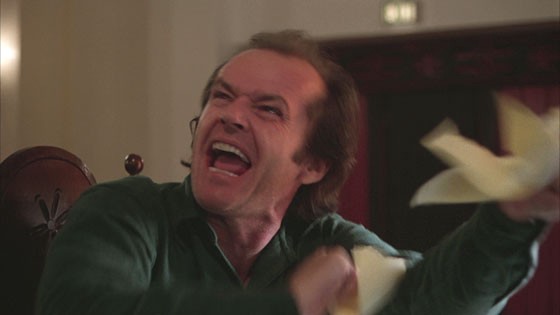
My Year in Re-Reading After 40: Pawn of Prophecy by David Eddings

BEFORE RE-READING:

Got in a minor Twitter brouhaha the other day about GMO and Roundup™ and the evils of Monsanto, etc. etc. etc.

GMO tweet

For me, the discussion is intensely personal because I spent whole chunks of my childhood summers with a hoe, amongst endless rows of soybeans, bandana draping my neck, and bottle of water perched in the dirt on one end of the field, engaging in hand-to-hand combat with weeds. This was in the day before the magic of RoundUp (TM), when farmers routinely mixed up a witch’s brew of pesticide chemicals using their own home-brew recipes, and it still wasn’t enough to keep the weeds from conquering whole fields. Hence, me, as a kid, with a hoe. (To say nothing of the legions of migrants, always Hispanic and invariably polite, who washed over the country each summer for $9-an-acre work.)

But of course this isn’t about big evil agribusiness multinationals or bragging about eating organic food (people on the Internet do this, if you can believe such a thing) or ignorant journalists who wouldn’t know a windrower from a one-pass. It’s about literature.

See, when you grow up like this:

1979-harvesting

Harvesting beans with my dad, 1979. Safety regulations? What safety regulations?

on a place like this:

1980-thefarm

The farm off Lake Alice Rd, Scotts Bluff County, Nebraska, 1980

you spend your days longing to be on an epic journey somewhere like this:

Thing

No, not NYC [Image credit: Mladjo00]

When you’re a farm kid with a big imagination and it’s a million miles to the city, you do things like make a sword out of a shovel to fell stalks of corn that serve as stand-ins for marauding orcs. (“Jesus, son,” my dad said when he saw the carnage, “we grow that corn to sell, you know.”). You pretend the hills beyond the bean field are magic mountains where goblins stalk and treasure is hid. That pretty girl from two towns over with a bob in her hair who you see at church every Sunday? She’s a princess who’s one burning castle away from setting out on an epic journey with you. (At the end of which I suspected we might kiss, though I wasn’t sure why. Nine year-old fantasies are chaste fantasies.)

Which brings me to this month’s book in my Year in Re-Reading: Pawn of Prophecy, by David Eddings, Book One of the Belgariad.

The main thing I remember about this book: Aunt Pol. She has a white streak in hair, as evidenced on the cover, and she’s a sorceress.

Christa Faust

Caption: This isn’t Aunt Pol, but I’m pretty sure Christa Faust stole Aunt Pol’s hairstyle.

Aunt Pol is the only character I can recall by name. There’s also an uncle who’s also a sorcerer, a princess, and a boy. The boy, needless to say, has a magical destiny. He’s a prince, or something, and that’s why he has a pair of sorcerers guarding over his youth. Until it’s time to leave the farm and head out on a grand adventure.

Not so hard to figure out why this book might appeal to a lonesome farmboy.

Hell, I’ve racked my brain, but for the life of me I cannot recall what epic adventure they are setting out for. Rescue a princess? Defeat the dark forces massing in the East? Retrieve a magical scroll? Storm a dark tower? Does it matter?

Not to me, not then, not at nine years old. Swords would get swung, bad guys would get slewn, adventures far, far from the farm would be had. As I recall, the book ends up with the boy-hero fighting a freakin’ god who stands taller than the Empire State Building and also for some reason has a sword, and winning. And getting to be king, or at least knighted. This after travel through dark and dreary forests and facing down a whole host of other, lesser enemies (basically the plot to every video me me from the ‘80s). Maybe those video games stole their plots from Pawn of Prophecy? After all, the book came out in 1982, when Pac-Man was still the height of arcade fun and you turned to Dungeons & Dragons if you wanted questing fun (though I wouldn’t have read it till 1985, or thereabouts).

To be honest, a lot of what I think I remember from Pawn of Prophecy is likely to be derived from any of the other dozens upon dozens of books I devoured as a kid, before some English teacher forced me to read Wuthering Heights and I began to discover that books could be vastly more than mere stories. I recall it was one of those books that I read with such enthusiasm that the very sentences and words almost got in the way of the story. It’s magical, that kind of reading, the kind you don’t get to have as an adult with critical faculties. Reading was a lot more fun back when it required no edification beyond entertainment.

That said, I’m more than a little afraid that the books will be painfully poorly-written, and that it might descend into a long slog to reach the end. I sure hope not. I mean, I don’t expect to be inspired to go attacking local corn stalks with a shovel again, but I hope I won’t be driven to take sanity breaks, either.

AFTER RE-READING:

Pawncover

You know when you watch one of those old-timey movies, black and white and ponderous, where some girl takes about a hundred and fifty years to look at herself in the mirror or the gumshoe walks up the dark alley for roughly seventeen nights? That’s what Pawn of Prophecy felt like at times. Those were a long 258 pages, friends. Though it was gripping in places, the book itself is one long set-up for the four books that follow, a time-honored cliffhanger tradition that reaches all the way back to the earliest pulps and cowboy dime novels from the 1800s. No epic swordfights with actual gods or ginormous battles where whole races of bad guys are exterminated: those come later, evidently. Pawn of Prophecy features a lot of walking and riding and boat-riding and even more talking around round tables, square table, inn tables, stable tables, in castles, inns, fields, forests, and on boats.

And after all that, I still didn’t get to find out exactly what the heroes, a young boy named Garion and his merry band of companions (yes, including Aunt Pol) are after. Only that they’re chasing a bad guy, who’s trying to get to even badder guys, for reasons which are unclear. Oh, there are broad hints: it’s clear Garion will be kicking some evil ass down the road, but if you want to know for sure, welp, read the next (four) book(s.)

No doubt my impatience says a lot more about my acquiescence to the Culture Of Now than it does about Pawn of Prophecy. It’s just the 40-year old in me, ever conscious of the minutes trickling away, irretrievable. Meanwhile, the farm boy in me? He was freakin’ thrilled.

Why? Because:

“At the top of the hill he stopped and glanced back. Faldor’s farm was only a pale, dim blur in the valley behind. Regretfully, he turned his back on it. The valley ahead was very dark, and even the road was lost in the gloom before them.”

Are you shitting me? ARE YOU SHITTING ME? This, this right here, this is exactly what I dreamed about, fighting corn stalks with my shovel. A secret destiny! An adventure with a sorcerer and a sorceress and a warrior and a thief into lands of legend! Enemies on every side, danger lurking about every corner, trusty sword at my side! Ditching the farm for a noble yet mysterious quest!

Practically the oldest story going, in other words. And thus guaranteed to thrill the heart-cockles of lonesome farmboys and would-be farmboys everywhere.

As a boy I loved — L-O-V-E-D — tales of fantasy and magic and high adventure like this book. As an adult? Superheroes annoy me, magic bores me, adventure tales send me a-snoozin’. I haven’t at all understood the resurgence of comic book movies and yeah, I watch Game of Thrones like everyone else, but my least favorite parts are when some sorceress births a demon shadow assassin in shitty CGI. Why? Re-reading A Pawn of Prophecy, I figured it out.

You see, all those years of longing to get somewhere, anywhere but the farm (and not just on some boring highway, but on the back of a noble steed, or maybe a dragon, or at least in a covered wagon with a wizard and a dwarf) left their mark on me. The older I got, the more magic kept on not happening. And as it dawned on me that I was gonna have to do the hard lifting when it came to this living thing and no magical destiny was going to sweep me up in its grand scope, I came to resent any suggestion otherwise. Wizardry? Epic quests? Great destinies? These are the daydreams of childhood, I wisely thought, turning sixteen.

fountainhead

Around which time I moved on to this phase. God, please don’t tell anyone.

Here, meanwhile, is what A Pawn of Prophecy has to say about a magical destiny:

“There’s a world beyond what we can see and touch, and that world lives by its own laws. What may be impossible in this very ordinary world is very possible there, and sometimes the boundaries between the two worlds disappear, and then who can say what is possible and impossible.”

The premise and the promise of a thousand fantasy books, and not a single one of them true. It’s a resentment I imbibed, then somewhere along the line decided it’d be too uncool to admit that I harbored such a resentment, and then forgot about it, and now when I see a tweet for some dumb superhero movie (see???), I’m dismissive.

Now, I don’t know that I’m going to run out and catch up on all the fantastical movies and books I’ve missed in the last couple decades or so (life is still short, and this time of year, it’s baseball practice that’s long) but next time Daenerys rides a dragon, I do resolve to give that nine-year old farmboy a chance to thrill along for the ride.

David Eddings, therapist.

HERE LIETH MONEY QUOTES:

The Medieval Bootstrap: “Don’t make things more difficult for your Aunt just because the world isn’t exactly to your liking. That’s not only childish, it’s ill-mannered and you’re a better boy than that.”

The Club of Moral-Lesson: “I now had more gold than I’d ever had at one time before, but it somehow seemed that it wasn’t enough. For some reason I felt that I needed more.”

“It’s the nature of Angarak gold,” Mister Wolf said. “It calls to its own. The more one has, the more it comes to possess him. That’s why Murgos are so lavish with it. Asharak wasn’t buying your services Jarvik; he was buying your soul.”

The Staff of The Training Montage: “Didn’t anyone tell you it’s customary to jump out of the way after the boar has been speared?”

“I didn’t really think about it,” Garion admitted, “but wouldn’t that seem — well — cowardly?”

“Were you concerned about what a pig might think of you?”

“Well,” Garion faltered, “not really, I guess.”

“You’re developing an amazing lack of good sense for one so young,” Wolf observed. “It normally takes years and years to reach the point you seem to have arrived at overnight.”

NEXT RE-READ:

Back to quotidian reality.

POSTSCRIPT:

So not three days after I turned in this essay, I watched that latest Game of Thrones episode where Danerys did in fact ride a dragon again. Unfortunately, though, I completely forgot my vow to give fantasy another chance, because this was my first reaction:

khaleesi

While it’s true that she does do a lot of speechifying, this does not exactly jive with my aim of regaining that long-lost sense of wonder. I suppose that means I better engage in more therapy.

James Franco Won’t Rest Until Another Stephen King Adaptation Gets Made

by Nick Politan

The moon will wax and wane, the sun will (also) rise, taxes will come due, and Stephen King will have another of his works adapted for the screen. These are the inevitable forces of our world. The author’s 2015 short story “Drunken Fireworks” is now set to be taken to the big screen after having been picked up by Rabbitt Bandini Productions and Rubicon Entertainment, according to reports from Deadline. You may have heard of Rabbitt Bandini before. Their notable productions include topless-Matthew McConaughey in Fool’s Gold, cult-favorite Spring Breakers, the ambitious Faulkner sojourn As I Lay Dying, and 2013’s Palo Alto. If you’re sensing a trend… the common link, of course, is stage-soap opera-actor-student-teacher-McDonalds cashier-writer-poet-producer James Franco. (Rabbit Bandini is his production company.)

Franco, famous for an inexhaustible number of reasons, is set to star in the new King project. (He recently worked on the generally well-received 11.22.63 adaptation for Hulu.) “Drunken Fireworks,” in typical King fashion, is a dark and quirky tale. A fireworks competition splinters life in a small town in rural Maine. Local Alden McCausland (to be played by Franco) finds himself embroiled in a strange and increasingly hostile rivalry with a retired mob boss who’s recently moved into the area. As Wendeline O. Wright puts it, “bottle rockets make bad neighbors.”

No word yet on who will direct. Maybe Franco will try his hand?

Carnivalesque Mayhem of Exceptions — Two Poems from Mark Halliday

LIKE IN SOMALIA

You’d better explain again about the mortality thing. As regards me, I mean. It’s not quite coming across, I’m afraid. You’re saying that I’m not the great exception, that there can’t be an exception, that the generalization holds in all cases. I realize you’re trying to be logical. It’s just that I’ve derived so much satisfaction from noticing exceptions to so-called rules. Life in my observation has been this carnivalesque mayhem of exceptions — some of them awkward or dismaying, but many of them exciting or delicious. So that’s where I’m coming from, orientation-wise. But I’m not denying the validity of what you assert as being, you know, the truth from your perspective, accurate on your terms. I’m sure it does apply in some areas. It’s just that nothing is quite convincing me of the relevance in terms of myself. Not to be conceited or anything, you know, but there is a loophole in every net, and I’ve always known myself to be the odd fish in the river, the frog that jumps the other way, the monkey in the tree over here rather than over there where all the chatter is coming from. No offense! If you want to explain your idea again, feel free. I’ll listen again. It’s just that I sort of see your lips moving but the words turn out to be strangely muffled. Like a bad connection. You said something about how the heart stops beating, and the lungs stop breathing. I don’t question it as a concrete fact in many, many situations, like in Somalia, or Haiti, or much closer to home. I saw my father — I was there — I saw that he went from asking for some cookies to just breathing very slowly, very softly on the tired old bed, and then when I looked again — when I looked again there was the stony quality — I saw that, I have seen that — a man turned into that strange thing, that stone — but still it seems an extreme leap to go from that, to infer from that — I mean there would seem to be a kind of arrogance, no offense, a kind of overreaching of so-called logic when you try to stretch the point and push me into that big dreary and frankly rather banal category! Okay? But still, seriously, I’m not just shutting you out, I’m a learner type of person, so if you have something to tell me, hey, give it to me straight.


BEING NOT HUGH

When I visited Hugh in San Francisco in 1974 the air of the city was blue-gray. We schemed to get through a day spending not more than seven dollars each. I was twenty-five, yet in memory more like twenty; Hugh was two years older than me, two huge years. Hugh accepted the modesty of fate. I walked with a bounce of unfocused energy. Hugh walked with irony. He hoped to develop a romance with Stephanie though he didn’t conceal the thought that it would be an experience only within beige limits as Stephanie was plainly not a source of endless joy, she was humorous but not wild, she was skeptical and faintly disappointed, but maybe vast joy was a myth anyway, maybe it was a tinsel illusion sold by movies, and the life to accept was the tolerant shuffle and hustle of the mildly humid tilting streets in the blue-gray air and the narrow comical angular apartments and the meals of cheese bread with olives and peppers. Stephanie liked to hear Hugh’s opinions about movies which he formulated with a kind of burlesqued difficulty, he conveyed how all descriptions turn out to be maddeningly imprecise, he liked evocations of the absurd strangeness of being alive at all, he liked the implication that meaningful success — in a career, or in art — is impossible, or so near to impossible that the possibility was tiresomely funny. Traffic went phush phush phush along the sloping streets and conversations slowed toward silence until someone had an idea about dinner. Hugh accepted the obvious extreme smallness of The Individual, the individual who drank California merlot trying not to doze over Robert Musil. My mind hummed trying to decide how I was different. One day Hugh bought the new album by Stevie Wonder, “Fulfillingness’ First Finale” and he accepted it as a big indication that life was good or at least desirable, and I was alarmed because I had never focused on Stevie Wonder and didn’t know how to locate him in relation to, say, the Rolling Stones. I was impressed and I wandered humming in the blue-gray air intensely considering how I was not Hugh, how I wanted to believe in vast joy and transcendent confirmationand how I would need to write a book and experience passion with Rosie back home or if not Rosie then another woman and soon.

Ted Wilson Reviews the World: My Mom’s Old Lamp

★★★★☆

Hello, and welcome to my week-by-week review of the world. Today I am reviewing my mom’s old lamp.

Even though my mother died many decades ago, I still think of the lamp that sits in my living room window as hers, because she wrote her name on it. I worry if someone else named Eunice Wilson were to get her hands on the lamp, I might not have much legal ground to stand on.

I considered painting over my mother’s name but it felt like I would in some way be erasing a little bit of her. That’s how I felt when she was buried in the ground. Like I was erasing her. A lot of her.

The man at the funeral home suggested taxidermy as an option for people having trouble letting go. He said it wasn’t legal, but he needed some fast cash before he left town. I considered it briefly, but it likely would have caused a lot of confusion, especially among my mom’s older friends with poor eyesight. Another option would have been to have her taxidermied and then placed inside a taxidermied bear with a removable head. Kind of like she died wearing a bear costume. I’m glad I chose not to do this. I’m scared of bears.

The lamp hasn’t worked in years. The switch is broken, wiring frayed, one of the legs came off, and there’s a crack from the time I fell onto a rock while hiking with the lamp. At this point it’s less a lamp and more of a paperweight with a lampshade. But I still can’t let the lamp go. It’s funny how we can become attached to objects.

My mother never cared much for this lamp but it’s literally the only thing she owned that I still have. For a while I had the couch she died on, but because she was murdered the police took it as evidence.

I saw an identical lamp in a thrift store and considered purchasing it so my mom’s lamp wouldn’t feel so lonely, on the off chance the lamp contains my mother’s ghost. But then I worried the thrift store lamp might have a ghost in it as well, and I don’t know if ghosts can get scared by other ghosts the way humans get scared by ghosts. It was a tough call because the other lamp was only $2.99, which is a good deal as far as lamps go these days.

A lamp very similar to my mom’s old lamp.

I have some photos of the lamp in a photo album if you would like to see them. Some are better than others. Please call me at (617) 379–2576 to arrange a time to come over. Unfortunately I can’t show you the lamp in person for fear that it could be damaged.

BEST FEATURE: Because the lamp doesn’t work, it means I can’t electrocute myself on it again.
WORST FEATURE: The lamps is in the shape of a dolphin, which I don’t care much for, because I’m scared of dolphins.

Please join me next week when I’ll be reviewing Elliott Gould.

Cultura de café

Mexico City, Mexico
Cultura de café, by Juan Villoro

translated from the Spanish by Philip K. Zimmerman

Built over a lake that was drained, overwhelmed by the exhaust of cars and the pollution in a valley encircled by mountains that don’t let the wind in, Mexico City is a bastion of dust mites. The atmosphere isn’t as aggressive as our winter is benevolent (although you suffer inside the houses, built according to the superstitious idea that heat is unnecessary), but spring asthenia thrives in the dirty air. The arrival of the rains, more torrential all the time, provides relief from allergies but not from flooding.

In this context cafés are not, as in other parts of the world, places where you can escape the snow for a while, but rather spots where you can combat the rush and, in some cases, breathe differently. Some modern coffeehouses have a system known as “washed air”; the more traditional ones don’t have it and don’t need it: they make up for the vapors of the Italian machine with a fan that simultaneously refreshes the air. The best atmosphere in Mexico City is in a café.

In his exceptional conversations with Bioy Casares, Borges lamented that there should be a literature of wine, of opium and of absinthe but not one of café con leche. Despite its galvanizing effects, the mixture lacks the glamour to justify an alternate vision of the universe.

In my adolescence people spoke of “café intellectuals,” not with the respect due to a sect that transmits ideas within the cramped space of a table but with the contempt reserved for those who turn their backs on reality and take refuge in vain speculation.

Nonetheless, the elusory cafés of Mexico City represented singular refuges for reinventing the real with words.

In my adolescence North American-style diners were beginning to develop, but there was only one Vips and only one Denny’s. Although Sanborns had several locations already, the franchise coffee shop wasn’t omnipresent yet. Those of us who were starting to read would search out secluded cafés to hold gatherings that resembled conspiracies, not for what we said but for the scarcity of participants and the fanaticism we assumed.

From my rambling childhood, I passed to the sedentary life of cafés. There have never been many of them in Mexico City. If you don’t count the spots started by Cubans and Spaniards in the centro, among us the café has never occupied the preeminent place it has in other metropolises. What’s more, the North American-style chains have bit by bit replaced the little cafés where the owner would smoke behind the counter with a dog on a comfortable cushion at his side, the unique, unrepeatable places, the grottos of the initiates.

The capital’s best-known café is the Casa de los Azulejos, or House of Tiles, built by a revanchist Spaniard looking to get back at the authoritarian father who had told him, “You won’t even be able to build a house of tiles” (meaning a toy house). The stately building has a mural by José Clemente Orozco in its staircase. Upstairs there’s a bar with a little window in the shape of a flower which gives onto one of the best views of the centro histórico, dominated by domes and bell towers.

The Zapatistas ate breakfast at Sanborns after taking the capital in 1914 and left behind the indelible image of a people receiving for the first time the providential gift of pan dulce.

The writer Carlos Monsiváis liked to ask: “What percentage of you belongs to Slim?”

This building of indubitable lineage was the first in a chain that now belongs to Carlos Slim, the richest man in the world. The writer Carlos Monsiváis liked to ask: “What percentage of you belongs to Slim?” As investors own stakes in a boxer, so the owner of Sanborns controls a part of the life of every Mexican. The Casa de los Azulejos is merely the nucleus of an empire of ubiquitous businesses which spans the entire country. In 1990 President Carlos Salinas de Gortari initiated the privatization of Teléfonos de México. Slim was handed the company as an absolute monopoly for five years and a relative one for ten. Without this impetus foreign to free competition and derived from the trade of governmental favors, he wouldn’t have become the magnate he is today. The coffee at Sanborns is terrible, but it tastes even worse when you know the trajectory of the owner.

Casa de Azulejos, Mexico City, Alejandro Linares Garcia

The invasion of plastic-chair coffee shops lent the few real cafés an air of quasi-secrecy. Meeting spots for a sect to which one belongs on merits that can’t always be defined.

A café is a place for talking. The mythology of radio announcers, who populated my childhood with magic words, was substituted in my enthusiasm by that of writers, particularly poets. Going on twenty, I’d make pilgrimages down Bucareli towards Café La Habana, where according to Roberto Bolaño the “iron poets” could be found.

Mario Santiago Papasquiaro: I met him in 1973 under his original name, José Alfredo Zendejas, in a short story workshop. He wrote only poems but liked to debate narrative. His critical sense was ferocious, yet he tempered his fire with jokes that he himself celebrated with thunderous guffaws. He had read more than we had, knew the avant-gardes, banged the drum, along with Roberto Bolaño and other rebels, for infrarrealismo and was planning an epic trip to Europe.

By the 1990s that poet of the fiery eyes and riotous hair was handicapped, walking with a cane because he’d been hit by a car. A forty-something with strange hair and bad teeth. People treated him with annoyed suspicion. When he’d come to see me at La Jornada, the newspaper where I worked, the receptionist, who was used to dealing with all kinds of eccentrics, would call me on the phone to ask whether I really wanted to let Mario in.

I preferred to see him at Café La Habana, where he’d order a beer at ten in the morning in order to evoke the 1970s, the period Bolaño was to make famous in The Savage Detectives, where Mario appears under the name Ulises Lima.

The rhythm of a café lends itself to the writing and correcting of verses that roll onward as the cigar smoke once did. You can’t write a novel in a café.

The urgent demands of journalism and the need for isolation drove me away from cafés, where I had begun to feel superfluous. I wasn’t a poet and was wasting time. So said my puritanical conscience, trained at the Colegio Alemán.

Cafe La Habana, Mexico City, Francis McKee

Sometimes I take shelter from the rain in those places and kill time there between one appointment and the next, but they’re no longer targets in my life. I admire the people who get together there, although I do it with the incongruous feeling of one who’s been missing out on something for thirty years. Every city has parallel societies: the gamblers, beggars, drug dealers and addicts tend to associate clandestinely in order to fraternize at the margins of the norm. For me cafés have become something similar, almost prohibited. Is there any reason for this renunciation? It’s possible that it all has to do with the way we administer the future. For years I’d meet with poets to talk about the future. I didn’t plan to write any poems, but like the protagonists of On the Road or The Savage Detectives, I aspired to live poetically. The café was the place of violent conjecture, the place where we could conceive of rare, perhaps unattainable hopes.

With the years the past grows stronger, until suddenly it presents itself with the blunt extension of a city; it’s a labyrinth begging to be crossed. This book is a lot like a returning. Only in writing it have I understood that distancing myself from cafés had to do with distancing myself from the future. Little by little the horizon ceased to be imaginable and transformed itself into a certainty that lies behind me.

But sometimes the dash of milk in my café cortado reaches me like a telegram from another time, and I recall the teachings of poets who scanned verses by tapping their cups with their coffee spoons.

The history of a city is the history of its cafés, where life mixes with culture.

The history of a city is the history of its cafés, where life mixes with culture. Ramón Gómez de la Serna set up his observation post at the Pombo in Madrid, Claudio Magris his at the San Marco in Trieste; Karl Kraus at the Central in Vienna; Jean-Paul Sartre at the Deux Magots in Paris; Fernando Pessoa at the Martinho da Arcada in Lisbon; Juan Rulfo at the Ágora in Mexico City.

Is there any better way to get to know a city in a sedentary key? If the walking man deciphers the lay of the land by looking, the man of the café understands his time by listening. Coffeehouses afforded me a valuable exercise: being in the city without being absorbed by it, seeing others at the moment when they excuse themselves from their habitual codified conduct. The urban custom they turn to most often in that enclosure is a certain type of conversation, one that foregoes conclusions and aspires only to continuation.

The infinite needs strategies in order to become intimate. Mexico City is inexhaustible in a provisional way, like a cup of café cortado.

About the Author

Juan Villoro is the author of El testigo, Dios es redondo (God is Round), Los culpables (The Guilty), and other books. His journalistic and literary work has been recognized with such international prizes as the Herralde de Novela, Premio Xavier Villaurrutia, Rey de España, Ciudad de Barcelona, Vázquez Montalbán de Periodismo Deportivo, and Antonin Artaud. He has been a professor of literature at UNAM, Yale, and la Universidad Pompeu Fabra de Barcelona. He is a columnist for the newspapers Reforma and El Periódico de Catalunya.

About the Translator

Philip K. Zimmerman is a writer and a translator from Spanish and German. Born in Madrid, he was raised in Upstate New York. His work has been included in the Berlin International Literature Festival and the New York International Fringe Festival, and he recently completed a translation of Helene and Wolfgang Beltracchi’s autobiography, Selbstporträt (Self-Portrait). He lives in Munich, Germany.

This essay is excerpted from Juan Villoro’s El vértigo horizontal: la Ciudad de México

Read other essays in Electric Literature’s The Writing Life Around the World series.

The Wisdom of Loving The Folly of Loving Life

The penultimate story in Monica Drake’s debut short fiction collection, The Folly of Loving Life, is called “S.T.D. Demon.” That, in itself, reveals a whole lot about the tone of these stories: knowing, darkly funny, collapsing under the weight of the past, auguring an inevitable and painful future.

A quote from the same story reveals more: “The motive of all pathogens is to reproduce. Same thing with humans, we just have baby showers.”

That’s Nessie — Vanessa, and occasionally Nessa — one of two major recurring sister-protagonists from an isolated home in country-turned-strip-mall territory outside of Portland, Oregon. So is this:

I weighed nothing. That was where we lived: an anorexic town. Girls worked hard to be less, expect less. When I wanted something, I’d say no. I’d say, No thanks, no way. But what I was always saying really, behind those words? One thing: Love me, motherfuckers.

Nessie is the tall, flirty, waifish elder sister. She wears high heels and drinks heavily, falls for hockey players and deposed dictators, drug addicts and dealers. She wanders the continent in discontent. We watch her grow from a damaged teen to a mother finally figuring out what it means to trod across an apathetic world that shifts under your feet.

Her sister, Lu — Lucille, and occasionally Carrion, at her own request — has her own struggles. Perpetually forgotten, withdrawn and lonely, she goes the goth route rather than following in her sister’s brassy act. She works at a fast food joint as a teen, and has “Fry-O-Lator” permanently seared into her forearm, courtesy of a cruel manager and one bad night. She attends a local college and gets high a lot.

Like Nessie, Lu stops eating, but for different reasons. The fast food joint is one. Another is a disturbing foreign exchange student who lived with her and her family one year after Nessie moved out. He died at the kitchen table while eating, and out of spite for him and his sexual overtures, Lu decides to eat one of the sausages remaining on his plate. She was fourteen.

It’s been thirty years. I feel like that mistake is still with me. I ate a dead man’s greasy sausage, and what if some part of it is still in my body? …I’d have liposuction if a doctor could promise to find exactly the fat cells plumped by that single hot, dripping sausage. I want everything about it to go away. When you see women who don’t eat? Or women who cleanse, detox and purge? I think they’ve done something like this. They’ve eaten in a way that’s left a memory, a creepy ghost, a body inside their own body.

All of which is to say, The Folly of Loving Life makes its most obvious point of comparison, Denis Johnson’s Jesus’ Son, look positively sunny. (Well, at least partly cloudy.) Much of that is because the portrayal mental illness and addiction from women’s perspectives across a span of twenty years or so adds a whole secondary weight.

It’s also due to the sheer scope of this world’s brutality. Nessie and Lu are the products of a broken home — in the collection’s first story, their mother has a mental breakdown, imagining the ghosts of children murdered in their new home calling out to her at night. But their family’s misery isn’t unique. All of these characters are broken — mental patients and drifters, drone operators reeling from PTSD, addicts desperate for their next fix.

Drake wrote two novels before this, and it shows. The collection is almost a novel in snapshots, told from a few different points of view. Nessie is the primary narrator, and Lu after her, but there are others, like one of Lu’s exes. Sections called “Neighborhood Notes,” told from a few perspectives, serve as glances into the lives of America’s forgotten and broken, trying and failing always to escape.

External escape evades these characters, but internally, it’s only as far from them as their resolve. “The road dead-ended again,” Nessie recalls in her final chapter. “I turned around in that funhouse maze, determined. I’d get us out of this.” She’s the only one, in the end, to say it, even to herself. Maybe that makes it true.

The Impossible Bleeding Man: On the History and Mythology of Artificial Life

by Michael Peck

Sometime in 1739 King Louis XV paid a special visit to a duck being displayed in Paris.

The inventor of the duck, Jacques de Vaucanson, was regarded as an inventor of mechanical life par excellence, someone who’d been lauded by the unimpressible Voltaire and by Denis Diderot (the latter spoke of him in superlatives in both D’Alembert’s Dream and again in his Encyclopedie’s section on automata). He’d charmed imperial salons with his 1737 flautist and a number of other curiosities, including a tambourine player, and a calligrapher.

Vaucanson would load the creature with tiny pellets, and it was these the duck defecated to wild applause.

The Mechanical Duck was his greatest invention yet. An intricate mechanism of cams and levers set the animal in motion, making it waddle like an actual canard. Each wing was composed of approximately 400 individuated parts, the whole apparatus made of copper. “The Duck with Feathers”, as the showman advertised it, splashed around in a small pool and pecked grain out of an audience member’s hand. Ingenious tubes aided the Duck’s digestion, but before each show Vaucanson would load the creature with tiny pellets, and it was these the duck defecated to wild applause.

automata duck

A fake shitting animal was a national treasure, said Voltaire facetiously, and without it “…you would have nothing to remind you of the glory of France.” Soon, the Duck would be a fixture in parlors and cabinets of wonder across much of Europe. With this and other mechanical contraptions, Vaucanson’s aim was to synthesize beast and machine. He’d even had wrapped human flesh around his flute-player’s hands to smooth out its awkward movements, while a dog’s tongue waggled in his Talking Head, making a daring first step into cybernetics. One of his prototypes was called “profane” by a distinguished guest, who then had Vaucanson’s laboratory destroyed. His child handwriter was so marvelous that the Inquisition impounded it, believing it the result of casual necromancy.

So Louis had come to the exhibit with a question that would have been ridiculous to anyone besides the inventor. Taking Vaucanson away from the crowd, he inquired whether it was possible to construct an entirely artificial man.

Before Vaucanson, legends about automated beings recur throughout the ancient and the medieval worlds:

-4th Century B.C.E.: Archytas of Tarentum, Greek Pythagorean philosopher, gives steam-powered flight to a wooden pigeon.

-circa 150 B.C.E: Before unveiling the very first vending machine and robot theater, Hero of Alexandria fashions a moving body with a non-detachable head.

-12th-13th Centuries: Robert Grosseteste designs the first of a flurry of brazen heads that could “telle of suche thinges as befelle”; the churchman Albertus Magnus has a brass figure whose demoniac speech so infuriates his student Thomas Aquinas, that the latter smashes it to bits; later, Roger Bacon and his assistant, a Friar Bungy, are accused of cavorting with Satan, who’s allegedly taught them how to make a bronze or brass head on a pedestal that could dispense prophecies; when they miss their opportunity to summon the devil, the head immediately explodes.

-13th Century: A quartet of musicians serenades the viewer from a small boat, as invented by the Persian clockwork manufacturer El Jazari; Giovanni Fontana, a self-styled magus, produces miniature clockwork devils and creatures given movement by rocket propulsion.

-15th Century: In Japan, Hisashige Tanaka, (aka “The Gadget Wizard” and founder of what would become Toshiba) builds an android archer.

-1494: Leonardo da Vinci devises an empty, automated suit of armor.

-1562: When the son of King Philip of Spain is near death, the monarch calls for Diego de Alcala to be placed in his son’s bed; the holy man has been dead for close to a century; nonetheless, the decree is carried out. In the morning, the heir-apparent is cured, claiming that the monk spoke to him in the night. Philip hires a watchmaker to construct an android based on the monk’s likeness: the wood and iron faux-monk can walk, hold up a cross and open and close his mouth like a nutcracker.

-1649: As a child, Louis XIV is given a toy carriage with synchronized horses and footmen.

-circa 1670: Athanasius Kircher, inventor of the megaphone, introduces various clockwork figures, including a statue that listens and speaks

From the late 17th and early 18th centuries, self-correcting machines combined the Enlightenment-era pursuits of magic, mechanics, spectacle and philosophy into a unified field theory. Even before the automata-boom, mechanical tinkering was being used to explain nature and the universe. Rene Descartes, pretty much the founder of Continental philosophy, asserted in Treatise on Man (1629–1633) that the animal kingdom bears a closer affinity to clockwork than to divine handiwork. (Descartes was an early adapter of mechanical objects. He supposedly fashioned a wind-up doll and called it Francine after his beloved dead child. During an ocean voyage to visit Queen Christina of Sweden in 1649, the superstitious seamen and their captain tossed Francine overboard, blaming her for the turbulent weather they’d been experiencing.) But the philosopher’s theories, tinged with impiety, reached a blasphemous apotheosis in the hands of Julian Ofray De La Mettrie, who said bluntly that man was nothing more impressive than a refined automaton.

Rene Descartes asserted that the animal kingdom bears a closer affinity to clockwork than to divine handiwork.

La Mettrie was a one-man Enlightenment. Where others vacillated between faith and reason, he plunged in headfirst, refuting the soul and having the audacity to call man a “living representation of perpetual motion.” The Histoire naturelle de l’âme (Natural History of the Soul) was an opening salvo against god and superstition, exploring a hallucinatory state as the result of physical processes. Even in the relatively free-thinking Netherlands, La Mettrie’s materialist theories caused a scandal, forcing him to flee the country.

In Holland he published his 1747 magnum opus, l’Homme Machine (Man, A Machine), one of the most influential materialist tracts of its era. Man was a mechanical being, La Mettrie stated, not ruled by god, but by his own mechanistic impulses. Copies of l’Homme Machine were quickly consigned to the bonfire, and once again La Mettrie was consigned into self-exile with his heresies. This time La Mettrie journeyed to Berlin, where he was welcomed by another iconoclast, Frederick the Great.

In a roundabout way, Louis was asking Vaucanson to bring La Mettrie’s condemned ideas into practice.

Louis had a few reasons for wanting a man-machine to be built. Like Frederick in Germany, Louis embodied the scientific worldview of the Enlightenment, and the mascots of science seemed to be ever more complicated machines. Many scientists and men of letters denigrated mechanicians as mere “toymakers,” but Louis sided with the scholar Hermann von Helmholtz; for them, automata were a means of peeking into the enigmas of human biology.

At age 5 Louis ascended the throne in 1715, after a series of familial tragedies. Mechanical toys offered a respite from the traumas of his childhood, and his fondness for automata never waned during his topsy-turvy reign. He’d always been sickly and frail, and his attention turned naturally to medical research, a wholly neglected field when he assumed power. Louis called on legions of quacks, homeopathists and pseudo-scientists throughout France to palliate his ailments. Probably in this way, he came across the work of Claude-Nicolas Le Cat, a cantankerous surgeon whose interest in biological simulation renewed Vaucanson’s own dabblings in automation.

The proceedings of the Academie de Rouen notes the attributes of the model, and concludes with, “God forgive us, all that follows from him.”

Le Cat himself tinkered with androids, too. In 1739 he diagrammed a “living anatomy” that would feature respiration and “the secretions.” The proceedings of the Academie de Rouen notes the attributes of the model, and concludes with, “God forgive us, all that follows from him.” But Le Cat’s intention for the machine wasn’t just to be mind-blowing and showy; it was to unravel the human body’s design. Together Le Cat and Vaucanson worked on the rudimentary android, but Vaucanson tired of the collaboration and set out to make his own automata.

Activities of the blood was an all but unknown process up to this period; doubtful physicians engaged in bloodletting — a practice that had more in common with Russian Roulette than anything provably ameliorative. At that point, practicing medicine was guesswork and accepted myth. The king set out to rectify the often deadly fads in physiology, and to do this would require analyzing circulation. Instead of experimentation on a living person and risking a public outcry, Louis hatched his audacious plan to replicate human functions in an automaton. And there was no one more suited than Vaucanson to assemble the king’s android.

Man-making belonged to the domain of god, and to preserve the secrecy of their project — while also bringing the inventor’s considerable proficiency with machines into his employ — Vaucanson was installed as the Inspector of Silk Manufacturing in the city of Lyon. The country lagged behind England in that industry, and between 1745 and 1750, Vaucanson practically invented the assembly-line, and for that matter, kickstarted the Industrial Revolution. His innovations in weaving led directly to the Jacquard Loom, and infuriated the many hundreds of workers who were being replaced by mechanical levers. In addition to threatening notions of the soul with his inventions, Vaucanson was now putting livelihoods at risk as well. Unrest followed close on the heels of these modernizations, and weavers who hadn’t been made redundant went on strike throughout the city. Vaucanson was violently attacked in the streets and forced to flee to Paris disguised as a monk.

Meanwhile, he was at work on the king’s “L’homme saignant” — the Bleeding Man. Using an intermediary, the Controller-General Baptiste Bertin, to funnel jewels and gold to Vaucanson, Louis kept their arrangement hidden from the Church and the public. Besides the three of them, the undertaking was absolutely secret, known by a few of the king’s ministers and Vaucanson’s assistants, making the project into something quite similar to a cabal.

For two dedicated hypochondriacs like Louis and Vaucanson, the Bleeding Man was a representation of the ideal anatomy: a being crafted without the frailties of human existence.

He was given total autonomy; in exchange, the king stipulated that the automaton should mimic human bodily functions as closely as possible; it should masticate and digest, breath, bleed. Later, when Louis got bouts of vertigo and could barely move, he ordered that the Bleeding Man be able to stand up and walk around. Consciousness, it would seem, was to be the only human trait not programmed into the schematics for their hybrid. Transparent wax would coat the automaton, its organs and blood-flow exposed to observers. As Vaucanson envisioned it, their almost-human mannequin was a combination of metal and glass, powered by clockwork and hydraulics.

For two dedicated hypochondriacs like Louis and Vaucanson, the Bleeding Man was a representation of the ideal anatomy: a being crafted without the frailties of human existence.

But the artificial model was likewise running into glitches. Vaucanson’s trouble involved a lack of suitable material. Wood and other common materials had sufficed for his previous showpieces, but this new machine was an order of magnitude removed from tambourine players and ducks, and more on par with resurrecting a golem. A malleable, yet rigid agent had to be procured for the arteries and veins of the Bleeding Man. Adding to Vaucanson’s difficulties was the utter secrecy of the undertaking. He could not correspond with other scientists for suggestions.

Rubber was the solution to Vaucanson’s first problem. Charles Marie de la Condamine, a scientist and explorer, had found the substance in the South American jungles a few years earlier. Condamine returned to France with a sample of cahuchu, as Amazon tribes called it, delivering a paper on its properties to the Academie Royale des Sciences in 1736. The limited supply by then being imported to France, however, was not enough for Vaucanson’s purposes, and he asked the king for more. Louis launched a surreptitious rubber-gathering voyage to Guyana, then under French control, to bring as much rubber to Vaucanson as he desired.

David Brewster’s 1832 Letters on Natural Magic offers an altered version: “It was agreed that a skillful anatomist should proceed to Guiana to superintend the construction of the blood-vessels, and the king not only approved it but had given orders for, the voyage.” Instead of rubber being imported to France, the king would deploy a scientist into the jungles to make the artificial man’s innards and these would then be sent by steamer back to Vaucanson. Regardless, the Guyana expedition was embarked on and a king-sponsored ship crossed the ocean for the sake of the Bleeding Man’s completion. As with Le Cat’s blueprint, Vaucanson also hoped that rubber would allow him to mold vocal chords for his contraption: The Bleeding Man, as he fancied him, would also be endowed with speech.

For sundry reasons, the plot to import rubber, and hence the automaton itself, was a failure. The Bleeding Man was at no point a very real feasibility. That didn’t stop the crowned-head of a world power and one of the great scientists of his age from their conspiracy to conjure a human replicant.

Louis’s consuming pursuit for the man-machine became overshadowed by national concerns. While praised for his support of the sciences, his reign was a hodgepodge of minor wars and failed treaties. He perished of smallpox in 1774. Unlike previous monarchs, his heart was not removed and preserved; fearing contamination, quicklime and alcohol was poured directly into his coffin by attendants.

Vaucanson also hoped that rubber would allow him to mold vocal chords for his contraption: The Bleeding Man, as he fancied him, would also be endowed with speech.

Ruthless in his drive for mechanical perfection, Vaucanson was unanimously called a difficult man. Among his many assistants who didn’t leave in fury, Herve Foucault (his grandson would invent the namesake Pendulum) likened his cold, inflexible personality to that of an automaton itself. Vaucanson fiddled off and on with the man-machine until his death in 1782, but officially he was done with the king’s impossible scientific dream, remarking only that he was “disgusted” with his involvement. Whether that disgust came from the sacrilegious nature of their cloning venture, or out of frustration at the unavailable resources needed to perfect the Bleeding Man, he never did elaborate.

In a 1790 allegory of the French Revolution, Francois-Felix Nagaret published “Le Miroir des événemens actuels, ou la belle au plus offrant,” or The Looking Glass of Actuality. Nagaret was influenced by the astounding mechanical beings of his day, chiefly those made by Jacques de Vaucanson. The work is about the invention of an automaton that is brought to life. Its inventor went by the name of Frankenstein.

How Do You Know If Your Writing Is Any Good?

The Blunt Instrument is a monthly advice column for writers. If you need tough advice for a writing problem, send your question to blunt@electricliterature.com.

Dear Blunt Instrument,

My questions for you are about nerve and grit. I write flash fiction, short stories, am working on a novel, and I’ve been sporadically writing blogs for fun for almost six years. I’m also aiming to write for online magazines. I have a fair amount of experience writing copy for companies, and I’m now in the early stages of setting up a freelance business.

I’d like to know how a writer trusts that their work is good, and has the grit to keep going with it?

I grew up in a place where people asked, “Who do you think you are?” of anybody doing something outside the norm, and in spite of moving on geographically, those words are often in my head on days of a confidence dip. I’d like to continue being constructively self-critical but be able to shake away this negative voice!

I completed an MA in creative writing three years ago where I got some good feedback. People have also said good things about my blog, I have happy copywriting customers, and sometimes I feel tuned into and confident about my writing. Recently however, I’ve decided to properly pursue becoming a paid freelance writer — rather than dabbling as a sideline alongside day jobs — and attempt publication of my creative writing. Logically, I know a lot of work, editing, and rejection will be part of this, which I am up for, but even so I think the idea of testing my writing via more “official” realms has spun me out and got me feeling all anxious.

Some side questions: Is submitting to competitions/magazines a good way to judge where you’re at? When writing fiction with the hope of publication, at what stage should you show your work to an agent?

If you could please offer some advice, that would be awesome!

Thanks very much,

Lisa.

@lisajderrick

Dear Lisa,

I’ll give you some practical advice in a minute, but first let’s establish something important: There is no such thing as “good.” There is no objectively good work and there are no objectively good writers.

I can name plenty of books that I think are genius but which are detested by great writers whose opinions I respect and vice versa- there are books I despise which are revered by writers I love. Writing also goes in and out of fashion; when I was a kid John Updike seemed to be universally accepted as a great writer, whereas these days I more often hear his name as an example of bad writing. The point is, a piece of writing has no inherent value in a vacuum. How “good” it is is decided by people at a point in time and space.

I don’t think this is uselessly abstract, I think this has real bearing on how you choose to think about your own writing and where you look for validation. Sitting around wondering if you’re “good” and expecting the world to answer is like asking how you know when your book is done — it’s not something the book or the world can tell you. It’s a decision you need to make.

There may be important and famous writers who went to the grave tortured and doubtful of their own talent. It’s possible that you can find great success as a writer without ever feeling like you “know” if you’re “good.” To me, that sounds like no way to live. So when I write, the standards I try to meet are my own: Do I want to read what I’m writing? It’s that simple. If I write a poem or an essay that I want to read and re-read after I’ve finished writing and editing it, then it’s good by my own lights.

If you don’t feel that way about your own writing, the challenge becomes: Write something that you would want to read. It may sound obvious, but I don’t think most writers hold themselves to these standards. Did you know that people are faster to recognize photos of themselves that have been photoshopped to make them look slightly more attractive? Self-assessments are often self-flattering. (It’s not easy, but I think working at being a better reader and editor of other people’s work makes you a better reader and editor of your own work too.)

Now for the more practical part. First, a reminder that freelance copywriting and fiction are totally different worlds. When you’re freelancing as a job, the standards you need to meet are the client’s. And typically, the client makes it pretty clear what they want, what the goals of the piece of writing are, and whether or not you’ve met those requirements. Getting creative work published is a very different game. As you say, you’re going to get rejected a lot. It’s very competitive and what “the client” wants is much less clear. Dealing with all that rejection and retaining your “grit” will come from, on the one hand, only submitting work that meets your own quality standards and, on the other, recognizing that rejection isn’t personal — more on that here.

So to answer your side questions, I’d say that no, submitting to contests and magazines is not a good way to “judge where you’re at.” The point of sending your work out is to get it published. Finding an editor who likes your work might give you a confidence boost, but it doesn’t “prove” that you’re “good,” since the process is both extremely selective and somewhat random. (You might be rejected from a number of small magazines only to finally publish the piece somewhere much bigger. On the other hand, work I hate gets published every day.) Send your work out when you’ve decided that it’s as good as you can make it. External validation should be a bonus — if you need it to believe that what you’re doing is worthwhile, you’re going to crumple with rejection.

As for the agent question: As a fiction writer, it’s unlikely that you’ll get an agent without a finished book unless you’re publishing stories in top-tier journals like the New Yorker and the Paris Review. (Nonfiction books are a different story.) If that’s not the case, have a strong polished draft of either a novel or a collection of stories in hand when you start sending out queries to agents. An agent may push you to make further revisions, but start with a book you’re confident in — that you would want to read.

The Blunt Instrument

Midweek Links: Literary Links from Around the Web (June 2nd)

Looking for some interesting reading to get you through the week? Here are some literary links from around the web to check out:

Kelly Link and John Crowley discuss the first science fiction novel

A look at how libraries are faring around the world

How Frog and Toad was a celebration of same-sex love

Surrealist dystopian fiction is getting popular in the Middle East

Is America’s obsession with adult coloring books a cry for help?

On breaking up with your own manuscript

Daniel Jose Older responds to the writers against Trump petition

Aleksandar Hemon also responds to the Trump petition

Book Riot wonders if Patreon is the way forward for publishing

Why do we treat short story writing as just warm-ups for a novel?