ESSAY: THE NEW OXFORD AMERICAN TELLS A STORY, BY HELEN BETYA RUBINSTEIN
desperation |ˌdespəˈrā sh ən|
noun
a state of despair, typically one that results in rash or extreme behavior : she wrote to him in desperation.
She wrote to him in desperation. There had been a time, years ago, when he had desired her. For years she had struggled to forget about him. She had been fooling herself in thinking she could remain indifferent. She would have given up everything for love.
He called to take her out for a meal. He leaned forward to take her hand. He asked if she wanted coffee. She asked if she could move in.
She tried to make up for what she’d said. He couldn’t make out what she was saying. She made for the door. He made as if to run away. She made out that he was violent. He made out a receipt for $20. They made out in the back seat. He made up an excuse. She made up her face. Let’s kiss and make up.
He felt a surge of anxiety. She felt the ground give way beneath her.
She turned on him like a vengeful fury. She fought like fury in his arms. She flew into a rage. Her face was distorted with rage. Desk rage. Sports rage. PC rage. Video and computer games are all the rage. He raged at the futility of it all. The argument raged for days. She couldn’t hide the fear that raged within her.
The hidden depths of marital life. A power struggle. The idea that men should have power over women. She helped herself to a cookie. He helped himself to the wages she had brought home. She couldn’t help herself; she burst into tears. He could not help laughing. Help! I’m drowning. A help menu.
She bore herself with dignity. She bore the pain stoically. She bore six daughters. She could hardly bear his sarcasm. See BRUNT. See CROSS. See GRIN.
The folly of her action was borne in on her with devastating precision. Working mothers who feel bad about leaving their children. What a bad girl. Bad behavior. He beat her up real bad. She discovered he wasn’t so bad after all. Too bad, but that’s the way it is.
He spent a year in the wilds of Canada. She went through a wild phase of drunken parties and desperate affairs. Her imagination had run wild. The wild sea. A wild guess. The wild tribes from the north. The wild coastline of Cape Wrath. Her wild eyes were darting back and forth.
“Please, for my sake,” he wheedled. She flashed him a withering look. She flashed him an insincere smile. She glared at him, her eyes flashing. He made a rude gesture. He made a crude gesture. She was out of the back door in a flash.
A single mother. A single bed. A single whiskey. A single red rose. A pure and single heart. A singles bar. Single women bemoaning the absence of men. See note at MOURN. Isabel mourned her husband. His lean, muscular body. See note at THIN. His hair was going thin. She was painfully thin.
She was in the depths of despair. She wailed her wretched life. She rued the day she was born. She lamented the lack of shops in the town.
Quick as a flash, he was at her side. He knocked and entered without waiting for an answer. He did not wait for a reply. He was sick for a sight of her. “I must look a frightful sight,” she said. He shuddered with revulsion. She gave a convulsive sob. He began to babble an apology. “No!” she wept. She rubbed one of the sores, making it weep.
She allowed the babble of conversation to wash over her. A babble of protest. The babble of a brook. To shed light on such transatlantic psycho-babble. In answer to the stresses on modern woman, we have developed a range of beauty treatments.
Her soft voice stopped his babble. He placed a finger before pursed lips to hush her. She was the love of his life.
Her self-control finally broke. She would love him forever. Tell me what will pleasure you. “Of course I can,” she answered. She was totally obedient to him.
(Children and animals may be expected to obey, but nowadays obedient is seldom used to describe adult human beings without a suggestion that they are allowing someone else to assume too great a degree of authority.)
Their passion remained undiminished after 30 years of marriage. After forty years of marriage, he still claimed she had few shortcomings. A marriage made in heaven. A happy marriage. He understood her wish for peace and quiet. Talk of love panicked her. The violence of her own feelings. The savagery of his thoughts frightened him. Charges that he fondled a patient during an examination. A rabid feminist. She slammed the claims as “pure romance, complete fiction.”
Women, left to themselves, would make the world a beautiful place to live in.
Left to himself, he removed his shirt and tie.
Not another word passed between them. See BATON. See BUCK. See HAT. See LIP. See MUSTER. See PARCEL. See TIME. He killed his wife then drowned himself in a fit of despair.
Many have a horror of consulting a dictionary. The whole ball of wax. The whole enchilada. The whole shooting match. The whole schmear. See DODO. See DOORNAIL. See also DEAD BALL.
[Compiled using example sentences from the New Oxford American Dictionary, Second Edition (2005), with additions (make) from the Oxford American Writer’s Thesaurus, Second Edition (2008)]
In a C-section, everything happens behind a sterile, blue sheet. I can’t see so I listen to the narrative the nurse anesthetist tells me. She bends down to my face, so close our paper hats are almost touching. Her cheeks are freckled like farm fresh eggs. Her eyes blink through double protection: her dark-rimmed eyeglasses and the flimsy plastic shield between her sterile mask and cap. “She’s a little stuck,” she says. “You’re going to feel some pretty heavy tugging. Just pressure, though, no pain.”
My whole body feels as though it might topple off the operating table and onto the floor. The doctors jerk my belly so hard and sudden, I feel I might burst through the sterile sheet like a marathoner first to the finish.
During my previous C-section, the doctor talked about the sushi he ordered for lunch and going home to his octogenarian mother.
During my previous C-section, the doctor talked about the sushi he ordered for lunch and going home to his octogenarian mother. This time, he talks about the baby, “Try to move the head to the left,” he orders his assistant, “Can you grab the feet over here and push?” They spend long minutes coordinating efforts, as if maneuvering a ship, full sail, out of a bottle.
“I think I’m going to pass out,” I say.
I squeeze my husband’s hand as the anesthetist swivels on her stool to pump me full of more and different drugs.
“She’s out now, honey,” the anesthetist says, but other than the hum of large overhead lights and the steady whir of machines, the room is quiet.
“Why can’t I hear her cry? Is she breathing?”
“She’s still attached to cord,” the anesthetist says. Her voice is calm, matter of fact. My husband releases my hand to peek over the sheet and see what I cannot: a healthy girl, still a part of my body, all mine for a few seconds more before she’s released to the world, shrieking and screaming, and I am reassured.
***
“I want to be a dead body,” I tell my husband early in our relationship when he asks about my hopes and dreams and aspirations. “On Law & Order: SVU.”
“Is that show still on?” he asks.
I have to explain to him that the S in SVU stands for special, not sexual.
At the time, Law & Order: Special Victims Unit is in its thirteenth season. It has just lost Detective Stabler and the show’s future without Benson’s hunky half seems uncertain. The crime drama is like a beloved cat: old enough to pass at any time, but hardy enough to stick around a little while longer.
The crime drama is like a beloved cat: old enough to pass at any time, but hardy enough to stick around a little while longer.
I’m not an actress, though I wanted to be when I was a child. My mother said, “You don’t have the potential,” which I didn’t understand until I auditioned for the school play in eighth grade and found myself choking and shaking, unable to “project myself” the way the director ordered me to.
“Isn’t that a little morbid?” my husband asks.
It didn’t seem morbid at all, being an actress for a day, but without having to act. All I have to do is lie there, perfectly still.
“I can hold my breath for a really long time. I think I’d do a good job.”
The thought of myself spread out in the New York City streets with corn syrup blood on my chest and arms, frozen in place as M.E. Warner zips the black plastic body bag over my face, lured me to websites posting casting calls, even though I lived in Florida, a thousand miles from NYC.
Three years later when I am pregnant with our second child, when it seems like SVU might be on its last season, my husband turns to me and says, “Too bad.”
“Maybe they’ll need a pregnant dead body. You never know.”
“Maybe they’ll need a pregnant dead body. You never know.”
“Wouldn’t it be easier to just put a belly on someone else rather than searching for a pregnant woman?” he asks.
He doesn’t understand what it means to dream.
***
While Eliot Stabler’s home life mirrored a kind of suburban bliss: a Catholic marriage to a stay-at-home wife and mother to five kids, Olivia Benson’s personal life was steeped in trauma that only compounded as the seasons ticked on. Benson was the product of her mother’s rape, a mother who turned to alcohol and eventually died leaving Olivia with no biological family until she discovered a troubled half-brother who shared her rapist father. Benson, who had no children, was married to her job and to her past. Still, Benson yearned for family, the kind of home life she didn’t have, more than a glass of wine and takeout on the couch at the end of the day.
In “Inconceivable,” an episode devoted to fertility and the fate of a stolen tank of frozen embryos, Stabler tells Benson, “You’d make a great mom. Maybe you should think about having kids.” Later in this episode, a woman who faces infertility after cancer treatment asks Benson, “Do you have kids? Don’t you want them? What are you waiting for?”
At the end of the episode, Benson reveals to Stabler that she has tried adopting, but as a single woman working a demanding job Benson was “not prime parent material.”
These questions remain unanswered until the end of the episode, but we the viewers know by the longing look in Benson’s eye, the way she personally delivers the news of this woman that her embryos have not survived, the way she pauses before speaking, that Benson does want them, that she probably has asked herself, “What am I waiting for?” That she, too, fears it may be too late.
***
The summer before ninth grade, my Catholic high school assigns Robin Cook’s VitalSigns as part of a summer reading project. In the novel, a woman seeks treatment at a fertility clinic only to discover that the doctor who was supposed to be helping her conceive has actually sterilized her and other patients, preying upon the desperate and despairing to profit from the many rounds of IVF the women undergo. What I remember most from the novel is the protagonist crouched upon a cold table as the doctor harvests her eggs. Later, she discovers her embryos swimming in a petri dish doused in acid too bright for life. While most teenagers spend dark nights praying for their pregnancy tests to turn up one innocuous line instead of two, I begin saving for the IVF I am certain I’ll one day need.
While most teenagers spend dark nights praying for their pregnancy tests to turn up one innocuous line instead of two, I begin saving for the IVF I am certain I’ll one day need.
I am thirty-one by the time I marry. It took my mother almost two years to conceive me, long enough that she had almost given up.
“Just don’t get pregnant any time soon,” my mother says at my bridal shower. “I want us to take a cruise to Alaska next summer.”
On our honeymoon, my husband downs Bahama Mamas and Mai Tais, while I stick to water and juice, just in case. Two weeks later, I begin pricing Clomid and other fertility drugs after I’ve spent a three-pack of First Response to find I’m not pregnant after all.
“Don’t worry,” my husband says. “It is just one month. My boys can swim.”
“I’m not sure my eggs can float,” I say. I don’t know if the metaphor is right, but it’s all I can think of.
“We can try again when we’re ready,” he says. He is not ready now, but I am convinced my eggs will shrivel up and become raisins. I think about my desiccating ovaries, raisining as we wait. I think about Benson in Season 11’s episode “Ace,” the tragic desperation on her face when she and Stabler go undercover as married candy barons and try to buy the child they can’t have. I convince my husband to try one more time and he does because he knows that look and wants to make me happy.
The following month, I am pregnant.
“I told you my boys can swim,” he says.
After the baby is born, my husband says, “I wish we’d waited.”
He wants to wait before the next one. We wait one year instead of two or three. He’s not sure he wants a third but he knows he does not want a fourth.
“What if something happens to one of them?” I don’t ask.
“I wish we’d waited,” he repeats.
This becomes a kind of chortled mantra that keeps me up at night and makes me want to ask, “Don’t you want them? What are you waiting for?”
***
Benson and Stabler are named after producer Dick Wolf’s children: Eliot and Olivia. I wonder if this is why Stabler is not killed off but instead resigns when he leaves the show, as if writing the death of one Eliot might bring harm to the other.
***
I’m kneeling over my husband, the two of us shoehorned between the crib, the bed, and the closet on the gray fleece blanket I won at his family’s Christmas white elephant when he says, “Baby. Baby.”
I lean into him, my hot breath against his neck.
“Baby. Baby,” he says.
“Baby, Baby,” I parrot but my husband pushes me away.
“No,” he says. “Baby!” He points over my shoulder where our daughter is peeking out over the wall of pillows we’ve stacked to sandbag the mattress as if her sleep is some uncontainable flood and our marriage is an eroding beach.
The following month, we discover we are pregnant again.
“I really want to wait next time,” he says.
I still am not so sure. We need more than the heir and the spare. We need the just-in-case and what-if babies too.
***
When my husband found out we were having a baby, he said, “It’s important to put our marriage first. Don’t let the baby come between us.” But that is exactly where the baby is: between us. Her foot rubs my thigh in rhythmic circles, her soft hand pads the muscled valley of her father’s back as she sleeps, making sure that we’re both bookending her tiny body in the bed. And now there is another on the way. More space. More distance.
***
Benson does adopt. The show gives her a son she finds in a hotel drawer. He, too, is the product of rape. The child opens up a new side of her character and creates the kind of vulnerability that makes for good drama. Someone might kidnap her child (they try). Someone might hurt her child (they do). Her child might get sick (he does). He might stop breathing (he does). The adoption is not final; his father, the courts might try to take him away (they do).
***
My husband is a light sleeper. It took months for him to learn to sleep through the pulsing “chung-chung” as I streamed Law and Order: SVU on my phone into the dark hours of the evening. Sometimes, he stayed up late waiting for me to fall asleep so that he could slumber in silence, but mostly, he wanted to press his warm chest to my back, swing my hair over the pillow and bury his face in my neck. Beside us, Benson and Stabler solved the crimes and caught the bad guys, while Ice-T delivered plucky one-liners.
Unlike true crimes, in Law & Order: SVU, we know who the perpetrators are.
It wasn’t just that I needed TV to fall asleep, I needed that show. I flipped my phone screen down so that only the audio infiltrated the room. There was comfort in familiarity: I’d seen every episode at least once. When I reached the last episode, I’d simply return to the pilot and stream through again. Unlike true crimes, in Law & Order: SVU, we know who the perpetrators are. Even if justice isn’t served in the end, though most of the time it is, we know who to root for and against. The ripped-from-the-headlines plots only made the drama more predictable, and I took solace in that and in the signature chime between scenes. The cadence of a heartbeat echoes into the night: “chung-chung.”
***
Our first daughter will not fall asleep without me. She nurses all night. When she learns to speak, she cries for Mama and signs for milk. Her tiny hands open and close with urgency. Twice I try to wean her and fail. My doctor warns that breastfeeding might induce miscarriage and I vow to stop cold turkey when I discover I am pregnant with our second child. We try to attach the baby to sleep objects. We replace me with a Cabbage Patch Kid and plush-bodied baby with a rattle in her head. Lullaby Elmo, Heartbeat Bear, and a stuffed giraffe join us in bed. The distance between my husband and me grows. My belly grows. Heartbeat Bear is meant to calm a baby by recreating swooshing womb sounds. My daughter is over a year. Does she even remember the sound of the womb? She pushes a heart-shaped button on the bear’s back and the soft metronome of an ultrasound fills the dark room. She pushes the button again, turning the heartbeat on and off until my husband banishes Heartbeat Bear to the back of his closet. We are one less in bed. I cup my hand to my belly and wait to be one more.
***
My parents tell me about my young cousin who, in protest used to hold her breath until she passed out. “It was terrifying,” they said. “Her parents tried everything to get her to breathe, but she was stubborn. They’d have to wait until she fainted. Her parents never got used to it.”
***
Our first daughter only ever slept in our arms. My husband becomes a baby-wearing pro. He straps her tiny body to his chest and stays up all night playing video games online, defending imaginary towers so that I don’t have to worry about SIDS. She breathes skin-to-skin against his chest. After six months of split shift sleeping, when the SIDS risk goes down, we move her into our bed. She latches to sleep and nurses all night curled against me.
Our second daughter turns the crib from hamper to sleep space. I am up all night touching her, startling her through the slats in her crib, running my hands over her sleeper to sense the slight rise and fall of her small belly, listening for the snortles of breastmilk clogged in her nose.
I push the crib against the side of my bed and lay my daughter to sleep on the edge of her mattress. We are inches apart. We are almost touching. My arm bruises from reaching through the rails.
“I’m worried about you,” my husband says, stroking the mottled dots that fan across my skin, an archipelago of anxiety that stretches from elbow to shoulder.
“I’m worried about her,” I say.
***
Another cousin dies of an asthma attack. She is in her car driving when her bronchioles constrict. Her lungs tighten. She reroutes to the hospital, but stops breathing on the side of the road. No one is with her to force their own air into her lungs. When help arrives, it is too late for CPR to save her.
***
Twice our daughter falls out of bed. Both times, I’m not there. My husband is the one to pick her up, check her for bruises and broken bones and watch her eyes for odd dilation. He is the one to sit her on his lap and reassure her that the world is not a terrible place.
Our daughter is Columbus exploring the flat map of our queen size mattress. Both times, my husband tells me, “She was calling your name. She was looking for you.”
***
Instead of nursing my hungry infant at 3 a.m., I hand her over to my husband. “I’m too tired,” I say. My husband takes her crying into his arms, suckling his bicep.
“She wants to nurse,” he says, holding her body out in the dark.
“I just don’t want to,” I whine. “I want sleep.”
But the baby cries, so I nurse her until I’m crying too. When she spits up, instead of changing the sheets, I reach my arm between the crib rails and tug her swaddle to slide her to a drier spot on the mattress. I move her around like a puzzle piece between stains and think I am a terrible mother.
I move her around like a puzzle piece between stains and think I am a terrible mother.
The next time she cries, I queue up Law & Order: SVU to keep me awake. The camera follows Benson home where she hugs her son, feeds him from the Munchkin Stay-Put Bowls. Baby Noah sits in his high chair with the Sassy Wonder Wheel suction cupped to the tray. In another episode, Benson sits on the floor beside a big bag of MegaBlocks. I recognize all of these items from our own living room and think maybe I am doing something right.
***
When Baby Noah stops breathing, Benson is not there. She’s in the kitchen with her co-workers when the nanny rushes in to tell her that her baby’s face is turning blue.
Several times the courts try to take the baby from Benson. You love your job too much, they accuse.
Even your best is never enough.
***
I am a thousand miles away when my father’s heart beats and then doesn’t and he stops breathing. I’m sleeping through the night when a stranger puts his knitted fists to my father’s chest and starts CPR. I don’t hear the rhythmic count of 1-and, 2-and. I’m not there to see the bruises where the stranger beats my father back to life.
***
I Google baby monitors that measure an infant’s heartrate, movement, oxygenation, monitors that sound an alarm when the baby stops breathing, moving. Shrill chirps waken the room if the baby becomes too still to detect. I think about the drive to the OB/GYN a few weeks before our second daughter is born when I don’t feel the baby move all day. How I almost don’t call and when I do I’m surprised at the urgency when the receptionist asks, “How far from the office are you?” How the doctor takes me back right away, pumps me full of Capri Sun, and glides the ultrasound wand over my belly. We watch the baby kick and twist in fuzzy black and white halos on the screen.
How I almost don’t call and when I do I’m surprised at the urgency when the receptionist asks, “How far from the office are you?”
“Her lungs,” he says, pointing to a fluttering black vacuole on the screen. “She’s breathing beautifully,” he says and prints a photo of her bladder for me to take home.
I stare at the image of my unborn daughter, more space than substance. Her body on the screen swirled in white outlines, as if she is a collection of holes, figure eights looped upon themselves several times over.
After, he jokes on the phone to a colleague. “I just saved a baby’s life,” he says. He smirks and winks at me, while I sit on his worn plastic couch and finish my juice like an insolent child sent to the principal’s office for crying wolf.
On the way out, the receptionist reassures me. “You did the right thing. You just never know,” she says.
After the baby is born, I spend weeks researching the monitors. One clips to the diaper, another is sewn into a onesie or fitted into a sock. We purchase the one that slides under the center of the mattress, something innocuous and unseen, and wait to be woken by the high-pitched shriek of distress.
***
In a recent episode of Law and Order: SVU, a crazed nun holds the baby near the window. A concerned Benson has to lure the baby out of her arms. “I need you to put my son down, right now.” Her voice is stern, firm, and followed by action. Once she secures him, Benson softens her tone and says to her son, “Everybody wants to hug you.”
***
The monitor sits in its box on the kitchen counter between the empty napkin holder and a stack of unfinished sewing projects. Maybe I don’t trust the sensor. Maybe the instruction manual is too intimidating. The bruises on my arm turn green, disappear and sprout in new shades of blue and purple, a garden of perennials in cyclic bloom.
My husband doesn’t ask why I’m procrastinating when I’d been so insistent on the purchase. He, too, lets the monitor sit, for days, weeks, months. He pushes the box aside to pay bills or spread mayonnaise on his sandwiches. When the baby is about to turn one month old, he finally asks, “What are you waiting for?” I give him the answer we both know to be true, that it is still too hard to trust that the safest place for the baby is just out of reach.
At the end of an unlit dead-end corridor in the basement of Calhoun Hall on the University of Texas at Austin campus stands an unmarked door. Behind it are hundreds of literary magazines, journals, and printed-out pages from online publications. This is the O. Henry Prize Stories office. (See the list of 2016 awardees here.)
The O. Henry Prize Stories is an annual anthology of twenty of the best short stories published the previous year. Magazine editors submit their issues by mail. The stories are chosen by Laura Furman, professor emeritus at UT, a novelist and short story writer who’s been the series editor since 2003.
Part of my job as editorial assistant, a position held by one or two MFA students each year, was to carry plastic vats of magazines from the mailroom on the third floor down to the basement, open the packaging, and shelve them. The next step was to read them. If a story struck a chord, I photocopied it and showed it to Laura (who did her own share of reading independently). I did this every week for ten months: haul, open, read, copy, discuss. It was often exhausting and occasionally exhilarating – the exhilaration coming in those moments when a story popped out and grabbed my hand and didn’t let go til I was in tears and I emailed Laura and said “You have to read this right now.” My arms got strong. I read newly hatched magazines and ones celebrating their centennial and erotic ones and ones stapled by hand and ones from prisons and hardcover ones with CDs inside. I read them all. Whether this made me a better reader or writer or editor, I’m not sure. But in the interest of sharing information, here’s an incomplete list of patterns I noticed and feelings I felt during that year.
1. Dumpsters were invoked in stories with surprising frequency. Why so many Dumpsters? Is it because Dumpster is funny to say? We’ll never know. Most editors chose to capitalize Dumpster; a few renegades did not.
2. Literary magazines are not withering; they are flourishing. They are innovating. They are having a goddamn blast. Literary journals last year published sheet music and comics and puzzles; one had a coloring book section. There were online magazines and magazines that played with social media and interactivity. The print magazines came in different trim sizes and shapes and textures and colors and brought a beauty and energy to that windowless basement office that made me excited to walk in.
3. There was a disconcerting number of stories by white male writers set at family lake houses, in which someone, usually a young girl, drowns. The surviving characters spend the remaining 2–3 pages feeling sad and fighting, usually with Dad.
4. Elizabeth McCracken has pointed out that in short stories, all too often “the beer’s warm and the coffee’s cold.” She’s right. Stop that, guys.
5. There are a lot of incredible, imaginative, perceptive, breathtakingly talented writers you’ve never heard of – yet – publishing in small literary magazines. Sometimes their bios read, “this is so-and-so’s first publication.”
6. An inordinate number of opening sentences contained comma splices. Elena Ferrante (and her translator, Ann Goldstein) can pull off comma splices. Most of the rest of us cannot.
7. A lot of competent, forgettable stories get published. The technical term is “boring.” Boring in terms of what happens (or doesn’t) in the story, and/or the use of language, and/or the lack of insight. Are these the so-called “workshop stories” everyone is so worried about? I don’t know. Boring stories can happen to anyone. Ask a trusted friend if your story is boring before you submit. Better yet, ask an enemy.
8. A majority of the stories that made the final cut were ones about which we could say, “I’ve never read anything like this before.” The others, if there was something familiar about them, were masterful in their execution. I mean masterful. And all of the stories we loved faced emotion head-on, without irony; they had heart.
9. Extremely long titles that are sentences are still Very Much A Thing.
10. It’s hard to write a compelling, original piece of fiction based on a real experience of doing drugs with your friends. Maybe impossible. Let’s go with impossible.
11. Most writers didn’t shy away from pop culture references. Personally, I liked this, though by some wisdom, this is a bad idea because it gets in the way of literature being “timeless.” The ones that did take pains to avoid proper names (“popular video-sharing website” instead of “YouTube,” say) were awkward to read. Give me “Dumpster” over “large rectangular metal trash bin” any day.
12. This is obvious, but WOW, a ton of people are writing short stories! And a ton of magazines are devoted to publishing them. Which means there are people willing to read and select and edit them and there are universities and private entities and donors willing to fund their publication. For a form whose death is continually prophesied, the story is doing pretty damn well.
Hello, and welcome to my week-by-week review of the world. Today I am reviewing a parachute.
When I found what I thought was an enormous nylon blank in the middle of a field turned out to be a parachute, I immediately began looking for the body that should have been attached to it. When I found no such body, I realized I just scored a free parachute. Whoever it belonged to had run off without it. Probably a spy or someone just very forgetful.
A parachute’s primary purpose is to slow the descent of a skydiver so that he or she does not smash into the ground and get everywhere. Parachutes have saved countless lives, but how many of those lives was God trying to end? The inventor of the parachute must be one of God’s biggest regrets.
If you go skydiving in the rain, the parachute will work as an umbrella, unless of course you fall faster than the rain. If that’s the case, you’ll need an upside down parachute to keep your feet dry. It can get pretty complicated.
The parachute I found was the first I’d ever seen or touched in person, and it was everything I imagined a parachute to be. It was much more realistic than some of the drawings of parachutes I made in the past. Those looked more like jellyfish.
A lot of people think that when you get to be my age and death is imminent, there’s less of a fight to stay alive. That may be true, but I still like to reduce my injuries as much as possible. So I took the parachute and stuffed it into a backpack — ready to deploy it if I should fall out of a first story window or a sinkhole should open beneath my feet.
I practiced daily, unzipping my backpack and throwing the parachute up into the air as fast as I could. I got my time down to 54 seconds but that still didn’t seem fast enough to me. I tried oiling the parachute to lessen the friction, but that made it harder to grab onto. So I sewed a pair of gloves onto the parachute. The gloves didn’t belong to me so they were too small for my hands. Perfect.
To-date there has been no reason to use the parachute, but it does me a lot of good mentally to know it’s there.
BEST FEATURE: If I lose my pants I can just wrap the parachute around my waist. WORST FEATURE: I wouldn’t mind if it were bigger. I’ve never heard a skydiver complain that his or her parachute was too big.
Please join me next week when I’ll be reviewing an abacus.
A simple miscommunication can linger in one’s memory when death is involved. Throughout Angela Woodward’s Natural Wonders (winner of the FC2 Catherine Doctorow Innovative Fiction Prize), the reader returns repeatedly to the scene of a missed kiss, one that leads to a husband abruptly shaking hands with his wife as though she were a colleague, a realtor, or a recipient of an award. It’s an awkward mistake that Jenny should forget. She simply swerves sideways one morning on her way out the door. She misreads the moment, a mindless error, and ends up shaking hands with her husband. As Jenny leaves, Jonathan suffers a heart attack that ends his life and begins her story.
The chair of Jonathan’s academic department asks a simple request from Jenny: organize his lectures for a memorial edition. Natural Wonders assumes this form, each chapter blurring his lectures with the couple’s story, their love mixing and mashing with ice ages, pre-history, and astronomy. Most of the book’s pleasure stems from piecing these divergent parts into a larger narrative picture. While many puzzles perfectly click into place, this book never forms a complete scene. It’s intentionally open-ended. Reading the novel, you actively push lectures against the couple’s love story in an attempt to discover metaphorical truths. Yet they don’t perfectly fit. They rub past each other. This literary experience is comparable to the sensation of pushing two positively charged sides of a magnet together. They don’t want to touch, no matter how hard you push. There’s an invisible “softness” existing just off the physical object, filling the surrounding air with a tangible charge. Woodward’s novel is imbued with a similar energy that the reader must play with in order to put the pieces together.
This “softness” is a result of Woodward’s well-crafted sentences, which have absorbed Jonathan’s scientific language and Jenny’s peculiar view of it all. The scientific language pulls readers into the couple’s specific universe, proving certain language mavens wrong: jargon can be good. Everyone is an expert in something. Everyone speaks with some specialization. Jargon, in good hands, doesn’t have to be alienating. In this case, Woodward’s language is artful and welcoming, taking the reader somewhere unique and private.
It’s Jonathan who says, “We are after all constructing a whole world from such partial evidence as this,” but it’s Jenny who pieces this world together from what he left behind. Her language resembles David Markson in Wittgenstein’s Mistress. Just as Kate, Markson’s narrator, feels adrift in her isolation, Jenny suffers from the same loneliness, that which comes with the death of a loved one. While Kate talks of art, Jenny speaks of science. Wittgenstein’s Mistress seems under the influence of Samuel Beckett. Its sentences are short and often making sharp pivots. But Woodward leans in the opposite direction — more towards maximalists like William Gass. Her sentences direct the reader to both see and perceive the world in a specific ways, each word pointing and painting, each phrase indicating and illuminating. Her sentences flow and ripple as they take hold of the world and shape its meaning. Ultimately, this is what the book is about. It dramatizes how individuals shape and reshape private moments until they become loaded with meaning and end up defining both life and death.
On Monday night, National Book Award-winning novelist Jonathan Franzen competed on Jeopardy as part of the gameshow’s “Power Players Week,” a variation on “Celebrity Jeopardy” in which well-known journalists and politicians play for charities of their choice. Although he led going into Final Jeopardy, Franzen, playing for the American Bird Conservancy, wagered too much, answered wrong, and finished second.
An avid birder who has described bird watching as a religion, Franzen dominated the show’s “Birds” category and also nailed questions about quadriceps, sea levels in the Middle East, and the Detroit Free Press. It was nice, though, to see that even Jonathan Franzen doesn’t know all the answers. Along with the other contestants — Chuck Todd from Meet the Press and political commentator S.E. Cupp, who won — Franzen failed to answer the Final Jeopardy question correctly. Perhaps a little more embarrassingly, Franzen also missed questions about two of Shakespeare’s plays, The Taming of the Shrew and The Winter’s Tale.
When Franzen flubbed the Shakespeare questions, he behaved like an English major who’s stumped by a literary question at trivia night. Grimacing, he said, “Oh, God, I should know this,” and ducked behind his podium while Chuck Todd teased, “Glad the novelist missed that!” Similarly, when Franzen answered, “non” to the Final Jeopardy question (“Officials called Tribunes sat at Rome’s senate door and if they didn’t like what was going on, shouted this Latin word”) instead of “veto,” he smacked himself in the head.
Franzen’s wrong answers were probably more valuable for his image than his correct ones. As TIMEpoints out, the author’s public mistakes on Jeopardy — and his goofy reactions to them — painted a “humanizing portrait” that might help dispel his reputation for being a difficult curmudgeon. Although he sounded like the same old Franzen when he talked about the evils of Twitter at the start of the show, he was endearingly nervous in his pre-show interview. “It’s kind of a nightmare come true for me to be here,” Franzen admitted. “I’m not sure I’ve literally had nightmares of failing on Jeopardy, but it’s the kind of thing I would have a nightmare about.”
The following story was chosen by T.C. Boyle as the winner of the 2016 Stella Kupferberg Memorial Short Story Prize. The prize is awarded annually by Selected Shorts and a guest author judge. The winning entry receives $1000 and their work is performed live at a Selected Shorts show in Manhattan.
The winning entry receives $1000 and their work is performed live at a Selected Shorts show in Manhattan. “Head Over Knees” by Eric Schlich will be read at Symphony Space on May 25th, as part of an evening of stories inspired by the Twilight Zone, hosted by Robert Sean Leonard. Find out more about the event here.
Head Over Knees by Eric Schlich
In seventh grade, on the bus ride home from school, I heard what happened to the Stokleys. How late Friday night the oldest Stokley son, Jared, had driven home from a movie he’d seen with friends and parked the family van in the garage. Jared Stokley was sixteen, he’d just gotten his license. He was a careful driver. Hands on ten and two, mirror checks, all that. His parents trusted him to knock on their bedroom door to let them know he was back, safe and sound.
Which Jared did. He knocked on their door, tip-toed over, and kissed his mother goodnight. Maybe she turned on a lamp. Maybe he sat on the end of their bed and told them about the movie. After, he stumbled down the hall and crashed in his own bed.
Meanwhile, the Stokley van was running, running, running, filling the garage, the kitchen, the living room, and three bedrooms with carbon monoxide. Jared had filled the van’s near empty tank like his father asked him to. The van ran all night, killing the Stokleys in their sleep.
Kyle Stokley, Jared’s brother, was in my grade. He used to have sleep-overs at his house. The Stokleys had a finished basement, complete with pool, foosball, and air hockey tables. I was never invited. Maybe this was why the first thing I thought, the first thing I felt, when I heard the news that he was dead, they all were, was — good.
I didn’t say it out loud. What came out was — Oh.
Everyone had a theory about how it happened.
“He was drunk or high or some shit.”
“Maybe he had a girl. You know, they were making out in the backseat and…”
“No, man. He did it on purpose.”.
The bus came to my stop. When I got off — I don’t know why — I was running. I ran to my house like an idiot. Backpack thumping. Stitch in my side. I wanted to see my house. I wanted to see my parents in my house. But when I got there, I just stood in the driveway, heaving. I put my hands on my knees before remembering it was better to put them on your head. A counselor at summer camp had told me this.
Two campers at a time were made to chase each other around a circle on the gymnasium floor. My opponent, Ryan, and I were too closely matched. I wasn’t counting, but it felt like we’d gone around at least fifty times without either of us gaining. The other campers cheered us on.
“Craig’s got the legs!” the counselor yelled.
“Yeah, but Ryan’s got the speed.”
I don’t know if it was Kyle Stokley who said it. Might as well have been. The point is they were rooting against me. I lost heart. Ryan caught me.
High-fives all around. I couldn’t breathe.
“Hands on head.” The counselor lifted me up from my knees.
A car honked from the street. It was my dad, home from work. He pulled in the drive behind me. I was standing in his spot. He rolled down his window.
“Craig?” he said. “You okay?”
I moved out of his way. He parked. An Elton John song was playing on the radio. The car idled in the drive. My father waited for the song to end. This was a habit of his. He once made me sit in the car until Don McLean’s “American Pie” finished. That song is ten minutes long.
Our house does not have a garage.
This is what I have always thought happened to Jared Stokley. He pulled the van in, parked, closed the garage door. A song was playing. A good one. He sat listening to it. Maybe he snapped off his seatbelt. Maybe he drifted off for a second. Maybe he sang along. The song ended. He got out of the car. He went to bed. He died.
Who cares what the Stokley basement looked like? Who cares?
I did. At one point, it was all I could think about. I could see it. Flat-screen TV. Black leather couches. Those bar stools with the swivel seat. Dart board, liquor cabinet. I could see it so well, so clearly, it was like I’d been there myself.
Eric Schlichis a PhD candidate in fiction and Kingsbury Fellow at Florida State University. He is the Nonfiction and Production Editor for The Southeast Review. He earned his MFA in fiction at Bowling Green State University, where he was the Assistant Fiction Editor for Mid-American Review. Born and raised in Lexington, Kentucky, Schlich completed a BA in English and Spanish at the University of Kentucky.
Dedicated to the writers Amin Chehelnabi and Noah Keller
During the second half of the war, a cicada famously became regarded as the singer in possession of the most inspiring, most thunderous voice in either of the Canal or Butte camp divisions. Margaret Morri, as she became known, was the prized possession of Mieko Morri, the teenaged daughter to Yohiji Morri and Brownie Onitsuka. Prior to relocation, the Morri and Onitsuka families had made their livings in the orchards of the Stanislaus Valley carrying picking crates beneath branches bearing white and yellow peaches. When they were moved to Gila River, the Morris maintained one of Canal Camp’s vegetable gardens, and they packed mason jars of chopped cucumbers, carrots, cabbages, and turnips in a pickling broth of sugar, vinegar, and hot pepper to be sold at their neighborhood canteen. After the war, Mieko would own and operate the Morri and Onitsuka Farms Tsukemono Stand, all its labels bearing the insignia of a small group of trees and a luminous green-black cicada sailing over them.
When Mieko tells the story of how she and Margaret came together, it begins in 1942, just after nightfall in the Tulare Assembly Center, on a dirt pathway between the racetrack and the Morri family barrack. In the absence of overhead lighting, Mieko could not fully make out Margaret’s form. But there was the intermittent flash of cicada wings as they appeared to catch and retain moonlight in short bursts. She knew instantly she was in the presence of a rare cicada, because the songs resonating behind those wings were not in the key of any standard belligerent chirp. They were instead songs comprised of sustained and mournful notes. Mieko had studied music since girlhood, and friends referred to her as the “Thief of Lips” because if set before a piano, she could reproduce thousands of melodies she had heard hummed on a single occasion. Mieko followed the cicada song for what felt twice the regular distance of the path leading her into the light of her doorway. It was there Mieko found Margaret Morri perched atop the barrack’s wooden handrail.
She was the most enormous cicada Mieko had ever seen. Too much animal to fit comfortably in just one of her hands and armored with mesothoracic plates that resembled hide shields constructed for warfare, painted in a manner to be equal parts mesmerizing and terrifying. When Mieko tells the story, she concludes with this wonderment. Mieko describes the way she fell into sleep that night with Margaret Morri whirring in the blackness above her cot. To this day she never approaches sleep without hearing that sound.
On the morning following their union, Mieko discovered that during the course of the night, three people had been attacked by scorpions, all along the same dirt road leading away from the racetrack. The two who had been most severely envenomed were a married couple from Santa Maria, Mitt and Columbus Okawa. The other recovering patient was Kunio Itami, the barber from Turlock who cut her father’s hair monthly. Mieko arranged three sets of flowers, California jewelflower, Kern mallow, and larkspur, tied them in abandoned sheets of newsprint, and delivered them to Tulare Center’s hospital barracks. During her visit, Mitt, Columbus, and Kunio advised Mieko to treat her bond with Margaret Morri with the utmost respect.
“It is very peculiar for female cicadas to sing or to become attached to young people,” Kunio said. “It is usually the business of males. This can only be the most unique of circumstances. There is the strong possibility you and Margaret are members of the same bloodline. Did you have an uncle or aunt recently pass? It is possible a spirit has returned to protect you.”
Mieko named her cicada “Margaret Morri” after her only sibling who had died in infancy following a severe fever. Despite Brownie’s efforts, Margaret Morri’s headstone in the Turlock cemetery always overgrew with wood sorrel, and though the sourgrass was less common in Tulare, Mieko twice observed her cicada carrying a stem of it between her jaws. In August of 1942, Mieko transported Margaret Morri in a hatbox lined with fresh white sage, chamise blossoms, and her father’s silk handkerchiefs on the train from the Tulare Assembly Center to the Gila River Relocation Camp. The journey lasted four stifling days and four restless nights. There was no chance for bathing, and passengers filled blouses, trousers, and dress coats with their daily sweat. An earthy musk, a scent like sour flowers thickened the air. In cars that held newborns and infirmed were the acrid smells of urine and infection. Military police ordered every window blinded. There was fear that if locals observed a procession of trains transporting Japs, some would fetch rifles and fire at the cars. Mieko occupied her time by whispering songs into the hatbox and replenishing Margaret Morri’s bottle cap of cool water from her canteen.
In the Canal division where the Morri family was relocated, Margaret lived atop a small, richly embroidered throw pillow on a dresser beside Mieko’s cot. At night, Mieko transported the pillow to a desk beneath a barrack window so that Margaret was allowed to fly out, feast on tree sap, or flex the full power of her tymbals. The branches of the pinyon pine near their window became inhabited by an inordinate population of non-singing cicadas, and Mieko often wondered how many evenings Margaret Morri slipped out to seduce a mate.
Though the properties of the cicada’s song were common knowledge amongst older generations, it was months before Yoshikane Araki, Canal Camp’s resident hemipterologist, explained them to Mieko Morri. The first note of the cicada was said to be low and sustained, similar to a stroke of sandpaper moving across a long plank of wood. The first note would always be repeated, like a twin voice being squeezed back and forth from the bellows of an accordion.
The second note would be fibrous and staccato, not unlike when a vegetable-fiber brush is taken rigorously to a sink crowded with mussels. And the third was a shattering sound, like that of the mussels being emptied into a high, metal stockpot.
The fourth note was said to be the loudest of the cicada’s rattles, stirring and escalating its energy, before releasing into a fit of tiny hacks, the same as a broom full of grit being knocked against the floor planks.
Following the fourth note, the corrugated tymbals of the cicada were said to have buckled and relaxed, the song relocated to the abdomen where the cicada could produce its most complex notes. This was the home of the fifth and penultimate note, which most resembled the high-pitched wail of warm-blooded creatures. The song becoming battered against the inner walls of the abdomen, trilling, shivering. Spitting the breath past the cicada’s churning pool of acid, its tears and tree sap.
The sixth note of the cicada was the most highly debated among entomologists. It was said to occur when the song reached the last chamber of the tracheae. Hemipterologists and some orthopterists referred to the last chamber as its “terminating chamber.” But scholars of myth called it “the ghost chamber,” because while all cicadas bore it structurally, very few possessed the size, health, and strength to open it and produce the final note. The book explained human ears could not detect the sixth note consciously. But conscious or not, it was the sixth note that could produce inexplicable behaviors in people and other creatures including blindness, fever, amnesia, and madness. Songs utilizing the sixth note were also reputed to be able to be able to cure minor ailments and to ward off bad dreams.
At the end of their first winter in Gila River, Mieko began to become inundated with offers to buy or trade for Margaret Morri. Rumors circulated Canal Camp that the songs of the Morri cicada were endowed with powerful healing abilities. May Joyce Okada, a chronic insomniac, claimed that the nights she heard Margaret sing, she slept and dreamt easily. Canal’s eldest couple, Takashi and Shiori Oda, claimed when listening to Margaret Morri’s night songs, the arthritis in their wrists, hands, and knees disappeared. A neighbor, Ren Horibe, admitted to Yohiji Morri that due to an accident, he occasionally suffered from impotence. But on nights Margaret Morri’s song drifted between the barrack partition, his erections were firm, sensitive, and abiding.
The visitations of Canal residents were a daily affair for the Morris. Hulking billfolds of cash, jewelry, seashells, watches, clocks, dresses, hats, watercolors, and musical instruments were offered in exchange for Margaret Morri. Those without money or valuables offered to trade labor or tutelage. Keiko Hattori, the acclaimed ikebana artist from Kumamoto, was prepared to mentor Mieko in arrangements of petrified leaves, bones, pebbles, berries, seed pods, and the scooped-out carapaces of beetles. Tadanobu Gennosuke, the most skilled carpenter from Turlock, claimed he could construct a multi-level basement beneath the Morri barrack where, even during the harshest months, temperatures wouldn’t rise above seventy degrees. Yuki Funatsu offered to make Mieko her only student and recipient to over 60 years koto expertise. Minoru Fukami promised he would cast Mieko and her family members in any Gila River Kabuki production they wished. Manju, dried figs, cactus pears, and smuggled whiskey appeared on the Morri doorstep along with notes requesting an hour or two with the most famous songstress in camp.
When the offers to purchase Margaret Morri became more insistent, more confrontational, and Mieko began turning visitors away, the voices around Canal camp turned hostile.
“Why is it only the Morris who enjoy the company of the cicada?” their neighbors asked. “Isn’t a creature like this a gift from God? Was Margaret Morri not delivered to this desert for all of us?”
“You are monopolizing the time and energy of your cicada,” Mieko’s aunts complained. “You are a healthy, teenage girl. There are sick and aging people in camp who deserve her attention. Let us manage the cicada’s time for you. We promise there will be some profit in it for your parents.”
Mieko’s uncle, a man called Glenn L. Morri, claimed he could purchase homes and farmland for the Morri families in several Midwestern states should he be allowed to barter the services of the wondrous cicada.
“I know a wealthy hakujin whose son is deathly sick,” Glenn Morri said. “This man is willing to pay any amount for a cure. Should Margaret Morri’s songs provide even the slightest improvements to this boy’s condition, we may yield a reward of unimaginable size.”
“If you are in communication with the man,” Mieko responded, “you can tell him to bring his son to camp. It might be the will of the gods that he is cured for nothing. But I will never choose to part with Margaret Morri. My life is indebted to her and so I must serve her until she releases me from our partnership.”
“You mannerless, idiot girl!” Glenn Morri exclaimed. “You do not suggest a man of this esteem visits these desert barracks! The cicada must be taken to him directly for a demonstration.”
Yohiji had to forcibly remove Glen Morri from their barrack, and it took an intervention by Canal Camp’s police to stop his hammering upon their door.
“The creature upon your daughter’s embroidered pillow is holding an opportunity to transform our family’s prospects for generations!” he called out. “And you are pissing it all away!” Stories attempting to disparage Mieko Morri also began to surface. In the mess hall, Mieko was shocked when she heard people she had never met vilifying her. The name Mieko lathered thickly upon their tongues with poison and enmity.
“There is a snotty teenager called Mieko Morri who keeps a rare cicada tied up and in a cage,” she overheard someone say. “When she wants the cicada to sing, she threatens it with fire and dismemberment. And only after the song does she allow it to eat some thin broth and stale, tasteless crumbs.”
Mieko endeavored not to let these rumors intimidate her. Any offers that came her way she responded to by saying Margaret Morri did not belong to her. Margaret spent her days on a pillow by an open window. And if she ever wished to live with another person, she would make no attempt to prevent it. Near dusk, Canal internees came with folding chairs and beach blankets to sit and listen to the cicada songs emanating from Mieko’s window. A small party of pregnant women was invited to sit within Mieko’s nook of the family barrack, share handfuls of dried fruit and nuts, voice concerns over oblivious husbands and rub their expanding bellies. These women kept eyes upon Margaret Morri’s pillow and claimed the music of this cicada was a cure-all for the discomforts of pregnancy, including leg cramps, back aches, pelvic pain, morning sickness, swelling, and heartburn.
In spring of 1943, Mieko began arranging concerts of sorts for Margaret Morri. From the hours between dinner and nightfall, Mieko transported Margaret’s throw pillow to a makeshift stage in one of Canal’s recreation barracks. People set down mats at the foot of the stage where they shared caramels and other sweets while they listened. On some occasions it seemed Margaret did not produce any music at all. But those became her most renowned performances, as attendees claimed those were the occasions songs of the sixth note were played. Canal’s longing for Margaret Morri was evident. Some evenings when she fluttered in later than expected, her audience erupted into applause.
In place of monetary gifts, attendees placed popular records into Mieko’s hands. These included albums by Mills Brothers, Billie Holiday, The Song Spinners, The Ink Spots, Ella Fitzgerald. Some evenings Mieko played the records before Margaret Morri appeared, and those present sang together or danced. By the end of their second year in Gila River, the concerts of Margaret Morri were drawing crowds of hundreds of Canal and Butte residents. Despite the frequent gatherings, medical barracks in both camps reported significantly lower rates of communicable diseases as well as asthma, pneumonia, insomnia, rashes, chronic dehydration, and dysentery.
It was in the autumn of 1944 that Glenn Morri plotted to kidnap and sell Margaret Morri. Not everything is known about the confrontation that occurred between Glenn and Mieko. When interviewed by camp police about the incident, Mieko stated her uncle approached her beside her family’s garden just after nightfall and asked that she and Margaret Morri accompany him back toward Canal’s recreation barrack. As she walked past him, she was struck at the back of the skull by something broad and solid, perhaps a rock.
Mieko was unable to raise her hands to brace her fall. Her face cracked against the dirt before her, and for a moment she lost consciousness. When Mieko opened her eyes, she was flat against the ground. She could sense something hot and metallic in her mouth and saw her front teeth lying amongst the stones before her. She saw her uncle had cast a mesh netting over Margaret Morri and was attempting to stuff her into a gunny sack. Mieko rose and threw herself, shoulder-first, against him. He struck her twice more in the face. When her uncle leaned in to grasp Mieko by the hair, she took the opportunity to stab him twice in the groin and once in the foot with her penknife. The two of them fell back together, but she was first to her knees. She grasped a flat stone nearby and with all her weight, came down with it upon his hand, smashing all his fingers. While her uncle screamed nearby, Mieko untangled Margaret Morri.
Mieko’s claims following the moment after Margaret’s liberation appear on no official record. The only written accounts appeared in the private journals of camp authorities. Mieko claimed that as her uncle rose to charge her again, the air grew heavy and crowded with vibrations. And then came the overwhelming sound of thrashing rattles, and the space between them swarmed with cicadas. The air so crowded with noise and motion her uncle fell to his knees and began screaming. Mieko claimed there must have been ten thousand cicadas that interrupted their confrontation. Mieko ran into a neighbor’s barrack where camp police were alerted.
A more rigorous military investigation was never commissioned. Glenn L. Morri was discovered the morning after the incident at an offsite medical facility where he was being treated for various ailments. These included self-inflicted scratches, ruptured eardrums, disorientation. The official determination of his death was suffocation. From his autopsy report, it was noted that Glenn L. Morri had gone to sleep looking much improved than when first admitted. But when the first morning shift arrived to examine him, his mouth and throat were found packed with no less than two dozen live cicadas. Margaret Morri herself was the deepest embedded of them all. The records imply that considerable mutilation of Glenn Morri’s chest and throat was required to extract the colossal cicada, still moving within him.
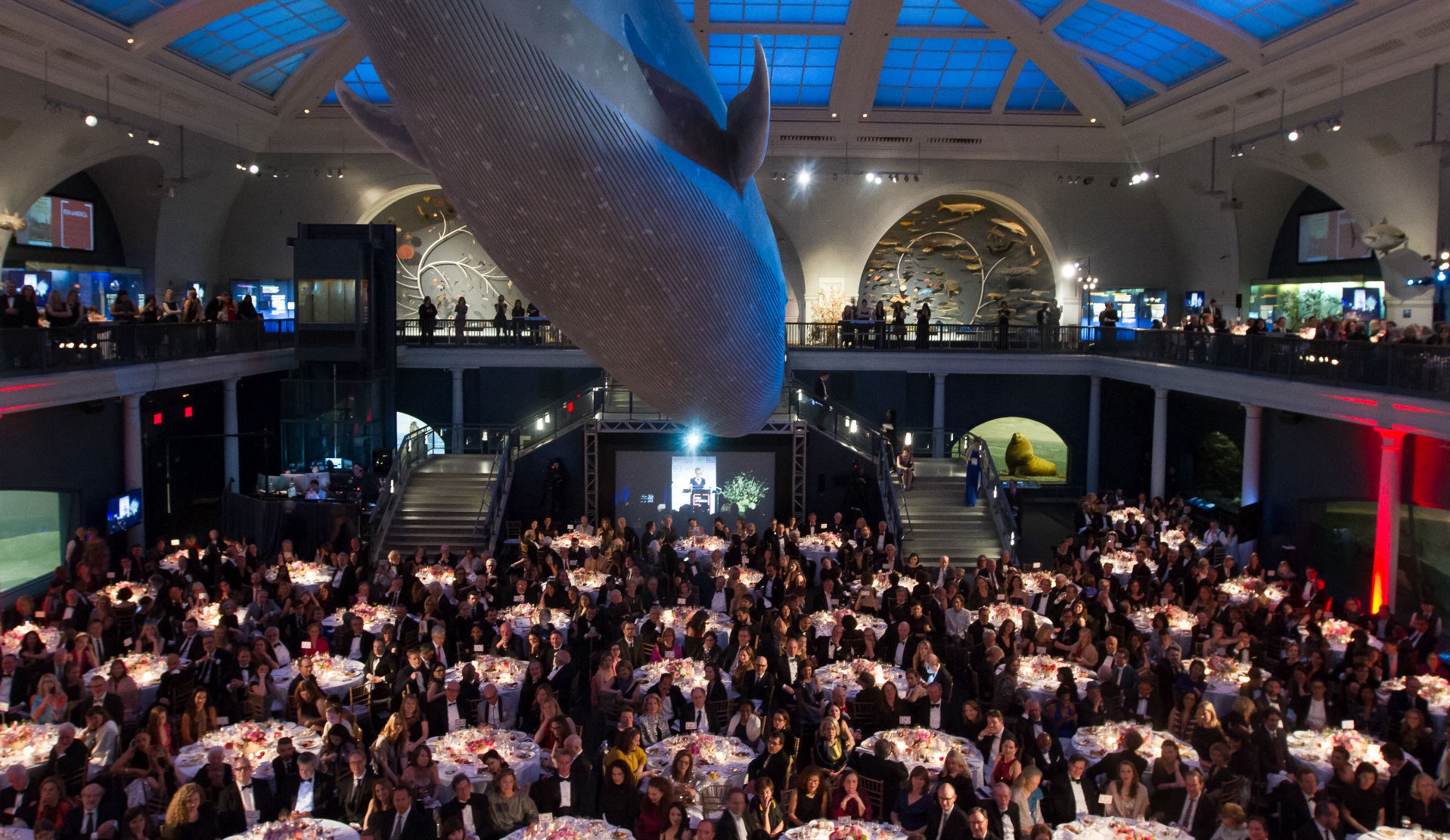
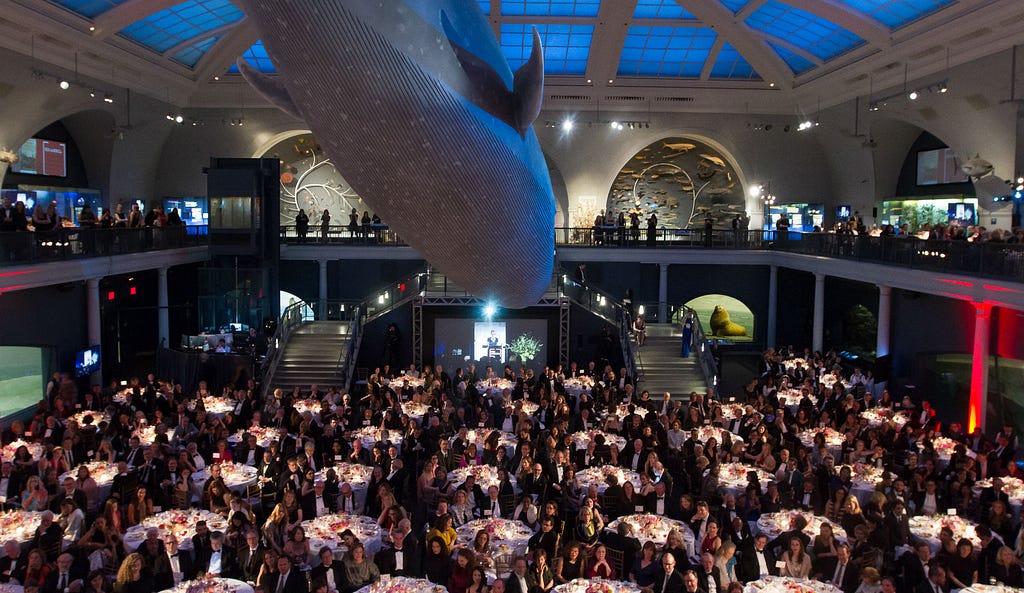
PEN America hosted their annual Literary Gala beneath the iconic blue whale at the American Museum of Natural History in New York Monday night. During the black tie affair, figures such as Harry Potter creator J.K. Rowling were honored, and PEN President Andrew Solomon delivered the soiree’s opening remarks by announcing that this was PEN’s biggest gala to date, having far exceed their own goal and raised over $1.75 million.
Pulitzer Prize-winning author, Donna Tartt, presented the Publisher Honoree award to friend, editor, and Hachette CEO Michael Pietsch. While accepting, Pietsch shared a heartfelt message to his publishing colleagues, “All over the world, writers are living in peril… Let us be brave, but not too safe. Let’s publish wild voices, diverse voices.”
Lee-Anne Walters and Dr. Hanna-Attisha — the critical voices that exposed the lead poisoning water crisis in Flint, Michigan — were the 2016 recipients of the Toni and James C. Goodale Freedom of Expression Courage Award, succeeding the Charlie Hebdo staff in 2015. The room collectively welcomed them with the only standing ovation of the night.
J.K. Rowling accepting the Literary Service Award
Though it was clear — not only from the buzz in the room and the young children seated next to parents in tuxes and gowns, but from every speaker’s personal anecdotes — that guests came to hear, albeit briefly, the author who captured readers with the wizarding world of Harry Potter. In her introduction, actress and producer Sarah Jessica Parker said, “Books are magic,” and also referenced Rowling’s famed Twitter account. Moments later, Rowling accepted the Allen Foundation Literary Service Award and stood at the podium delivering some of the mightiest lines of the evening, including thoughts on freedom of speech and Republican presidential nominee Donald Trump: “Now I find almost everything that Mr. Trump says objectionable. I consider him offensive and bigoted, but he has my full support to come to my country and be offensive and bigoted there. His freedom to speak protects my freedom to call him a bigot.” Several in the audience greeted her address with applause and laughs.
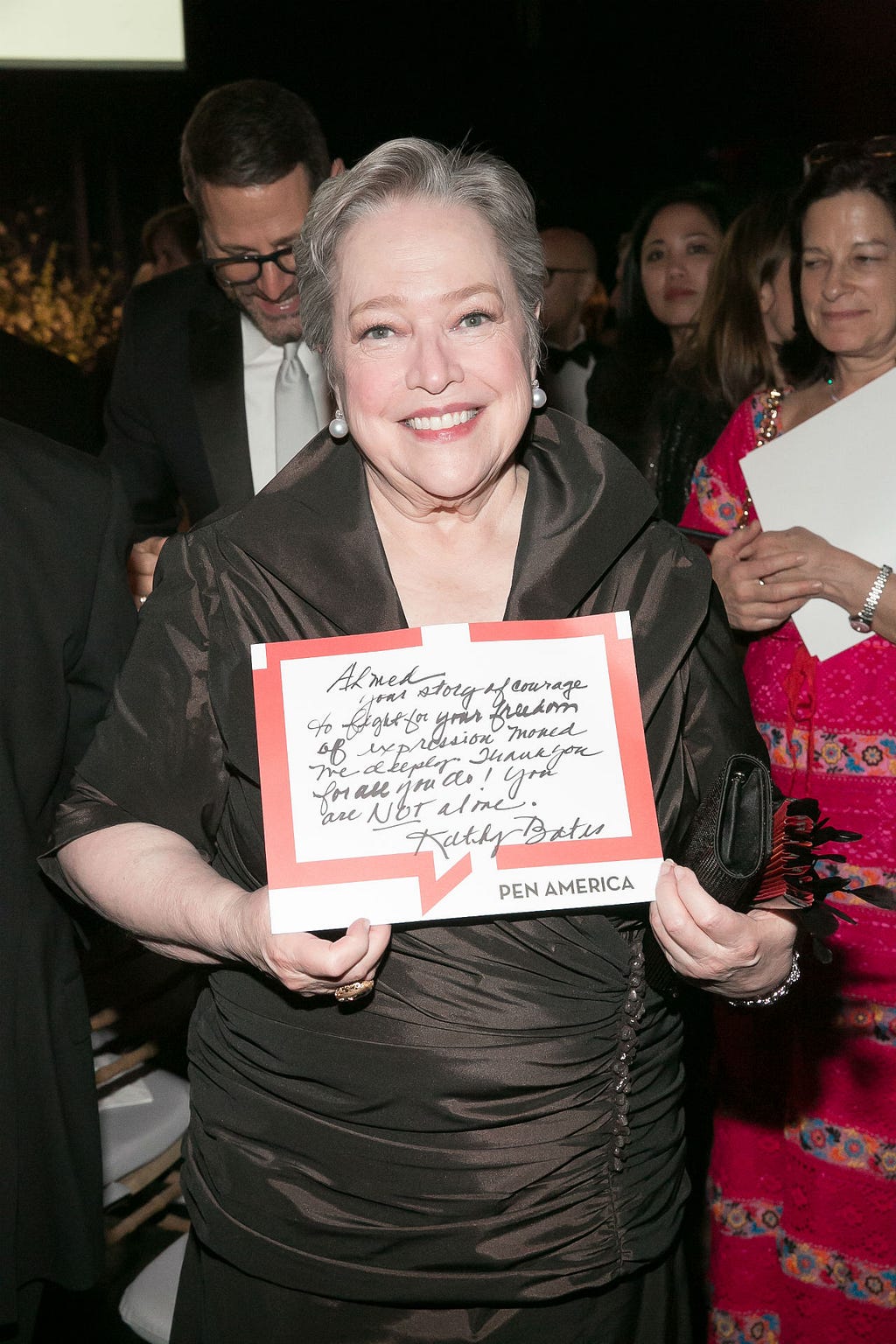
Actor Kathy Bates
PEN America Executive Director Suzanne Nossel closed the evening by presenting the Barbey Freedom to Write Award to jailed Egyptian novelist Ahmed Naji — who in 2015 was charged with “violating public modesty” after a private citizen complained of heart palpitations due to sexual content in Naji’s novel The Use of Life. After Najis’s brother accepted the award on his behalf, Nossel requested that those in attendance write notes of encouragement for Naji, stressing that PEN’s hopes are that the Barbey Freedom to Write Award will spur writers, readers, advocates, and world leaders to press Egypt to release Naji immediately and stop treating creativity as a crime.
— Photographs courtesy of PEN America, by Beowulf Sheehan
DON’T MISS OUT
Sign up for our newsletter to get submission announcements and stay on top of our best work.
YOUR INBOX IS LIT
Enjoy strange, diverting work from The Commuter on Mondays, absorbing fiction from Recommended Reading on Wednesdays, and a roundup of our best work of the week on Fridays. Personalize your subscription preferences here.