Surviving JFK’s Fifth Assassination Attempt with David Means

Every war has its literature, its classic novels. There’s WWI and Remarque’s All Quiet on the Western Front, the Spanish Civil War and Hemingway’s For Whom the Bell Tolls, WWII and Mailer’s The Naked and the Dead, and for better or worse many, many, many more. Such seminal works have provided us with stark windows into the violence on which human civilization invariably rests, but according to David Means and his debut novel, Hystopia, they aren’t simply about confronting the horrors of war, but also about concealing them, hiding them under a layer of rationalizations and wishful thinking that often simplifies their lawless anarchy and finds sense, meaning and purpose where there’s little. In Hystopia, he focuses on people affected in various ways by the Vietnam War, but in a bold move for a débutant novelist, he presents both an alternative history and a novel-within-a-novel, transforming his tale into a comment on how art and literature are very often used to twist reality into a comforting yet ultimately false shape.

It all begins with context, with a series of fictive editor and author notes that underline how the main body of the book — the novel-within-the-novel — is in fact the work of a Eugene Allen, a returning Vietnam veteran who by various lights was at once a “wacko,” “a good boy,” and “freaked out about being drafted.” As these notes would have it, President Kennedy has (apparently) survived numerous assassination attempts, yet such a beacon of hope wasn’t enough to stop Allen from killing himself shortly after the completion of Hystopia, leaving many of the interviewees to suppose that it’s the work of a damaged mind.

And in many ways they’re right, because Hystopia is primarily about damaged minds and the historical uncertainty that results from such damage. It follows Rake, a deeply wounded vet whose rage has sent him on a killing spree around Michigan, as well as Singleton, a government agent who’s tasked with bringing Rake to justice. Singleton works for the Psych Corps, a secret agency whose job it is to administer disturbed individuals with an experimental treatment known as “enfolding.” Explained by Singleton himself, enfolding involves using a drug called “tripizoid” and dramatic reenactments to rewrite a traumatized patient’s sense of biography, such that “all of the memories related to [his or her] trauma repress themselves.” It’s primarily around such a metaphorical figure that the novel subsequently revolves, becoming a warped, psychedelic allegory for how literature and history are themselves a form of enfolding, a mechanism that “turns (enfolds) the drama/trauma inward.”

Yet even if such characters as Singleton and his colleague Wendy have been deceived by enfolding as to the precise nature of their lives and the US they inhabit, Means’ assured prose furnishes a gnarled counterpoint that emphasizes just how deluded they really are. Already a veteran himself of numerous short-story collections, the novelist employs a richly contoured yet unsentimental palette to depict an America that’s being “left to sit and smolder as a monument to the riots” currently upbraiding its former peace. Torn apart by an interminable war effort in Vietnam and worsening social unrest, he paints the country as a wasteland of marauding biker gangs and equally marauding officials, seemingly held together only by the improbable survival of Kennedy and an all-but nationwide course of enfolding.

As the third-person narrator ominously notes at one point, “a shit-storm was coming,” a shit-storm Hystopia’s principal characters spend the best part of the novel’s duration trying to avoid. In the hunt for Rake, Singleton and Wendy come to suspect that the best way to do this is by uncovering the connection they believe the serial murderer has to their respective pasts, both of which have been submerged by the enfolding they underwent prior to becoming agents with the Psych Corps.

Consequently, both characters start trying to “unfold,” which can be done only by “Immersion in cold water” or “Fantastic, beautiful, orgasmic sex.” Via activities of mainly the latter variety, Singleton learns that he was indeed in Vietnam, and that perhaps the healthiest thing for him and the country as a whole to do is to confront even more of this history, rather than leave it obscured and allow the violence of the war to persist in contaminating the country. He also encourages Wendy to follow suit with regards to her former life with an infantryman known affectionately as “The Zomboid,” telling her, “You love the Zomboid and can’t say it and it’s my duty to get you to say it.”

It’s precisely this ‘saying it,’ this openness and honesty that provides the crux of Hystopia, the desired endpoint towards which most of its personae move. This is particularly true for the character based on Eugene Allen’s sister, Meg, who has been abducted by Rake as he makes his way across Michigan indulging in “statutory rape to begin with; murder, narcotics, dealing and using, robbery, burglary.” Meeting the noticeably less violent Hank in one of Rake’s hideaways, she also begins to take steps to unfold, dredging up her buried past in the hope that broaching it will improve her unstable, unhappy condition. With Hank she goes to a nearby lake, where “Down under the water she [hears] a voice speak and the voice” belongs to none other than her boyfriend who was killed in Vietnam, reminding her that what they shared before he marched to his death was “just pure dreaminess.”

Such momentary slides into lovelorn romance aside, the monologue in which Meg envisions her dead ex-boyfriend speaking is key to understanding Hystopia and its enfolding-related metaphors. Beyond simply exhibiting Means’ swift virtuosity as a writer and storyteller, this monologue includes the declaration, “That was how you got around the truth of your situation. You started to imagine the life you (if you survived) might have.” Revealingly, this description of how people coped with existence on the frontline applies to most of the soldiers in the novel, except for Rake, who “drew a blank in the dream department. He could only conjure nightmares.”

That the serial murdering Rake “had very little to go back to” after the war and therefore couldn’t dream of the future explains why he counts as one of the novel’s many “failed enfolds.” Such enfolds are individuals who, because of the poverty of their existences previous to landing in Vietnam, aren’t at all responsive to the enfolding treatment, and in fact become even more volatile when dosed up and subjected to violent reconstructions. That they exist at all is testament to Hystopia’s belief that merely attempting to alter people’s conceptions of history and reality isn’t enough when all they can possibly conceive is hardship, and that consequently the only viable solution to the socio-economic problems surrounding Vietnam or any other war is to address them directly, at the source.

What’s interesting about this view is that it seems to negate the very book that propagates it. Hystopia is itself an ostensible attempt to alter our conceptions of a historical era, but at the same time it affirms that we really have to change the course of history to experience any genuine benefits. This comes out most noticeably in the suicide of its supposed author, who despite his rewriting of events involving people he personally knew, wasn’t placated or palliated enough to actually prevent himself from taking his own life. Clearly, he’d tried to ‘enfold’ himself by writing his own personalized version of the past, but this wasn’t enough to stay his demons.

Ultimately, in writing a fictitious author into his debut novel like this, its real author has produced one of those rare, self-conscious books that operates on multiple levels, alluding to its own insufficiency while paradoxically becoming sufficient as a result. It works as a stylized reimagining of the Vietnam era, it works as an indirect revelation of the emotional truth of this same era, and it works as a subtle critique of the inability of stories and narratives to truly compensate when more than stories and narratives are needed. While the very fact that most of its characters have had their biographies erased means that they might seem a little too superficial at times, the novel as a multi-layered whole is far from it. In presenting itself as the work of a fictitious author rewriting history to better suit his personal needs, it alerts us to how historians in general rewrite the past to better suit the needs of the present in which they operate. As this fictitious author declares in the notes which conclude the novel, “History is avoidance of thought,” but what’s ironic is that, in explicitly avoiding the thought of some of the ugliest, nastiest features of the Vietnam era, his book — and David Means’ — will make its readers do more than their fair share of thinking.

10 Great Novels of Exile and Dislocation

The phrase “the immigrant experience” has never sat right with me — reductive, focusing on foreignness rather than on humanity — even though it’s regularly used to describe my work. For all its elasticity, the English language is limited in its ability to convey the migratory journey of geography and of the interior, and the spectrum of related traumas that transcend generations, imprinting itself on both the individual and on the collective. For now, let’s simply call this disassembly of the heart and excavation of a new identity in an unknown place irrespective of the events that lead up to it,exile, which comes to us not only in the social and political sense but in the emotional, the spiritual, the familial; the virtual undoing of the self in order to exist in a new life. And let’s add to it dislocation, the most specific descriptor of what occurs when one abandons one life, by choice, by force, or by circumstance, and is thrust into an unknown landscape.

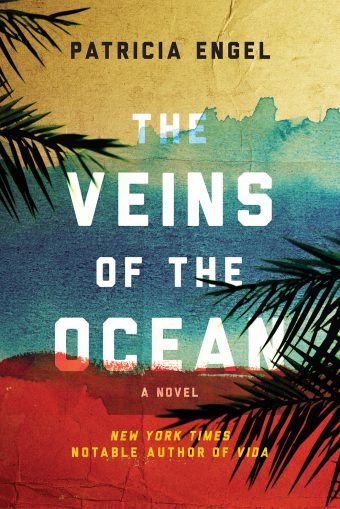
My new novel, The Veins of the Ocean, approaches transnationalism and immigration in different ways through its two protagonists, who’ve arrived in the United States from opposite ends of the Caribbean: one, who came from Colombia with her family as a baby, and the other, a newly arrived solitary Cuban defector. What I am often interested in exploring in my fiction is how exile and dislocation engender bonds specific to the condition of being uprooted and othered.

I’ve assembled here a list of some of my favorite novels of exile and dislocation; rather than focus on the individual, these are novels that depict the forming of new communities and relationships as a reaction to displacement.

Image result for ‫زندگی در پیش رو رومن گاری‬‎

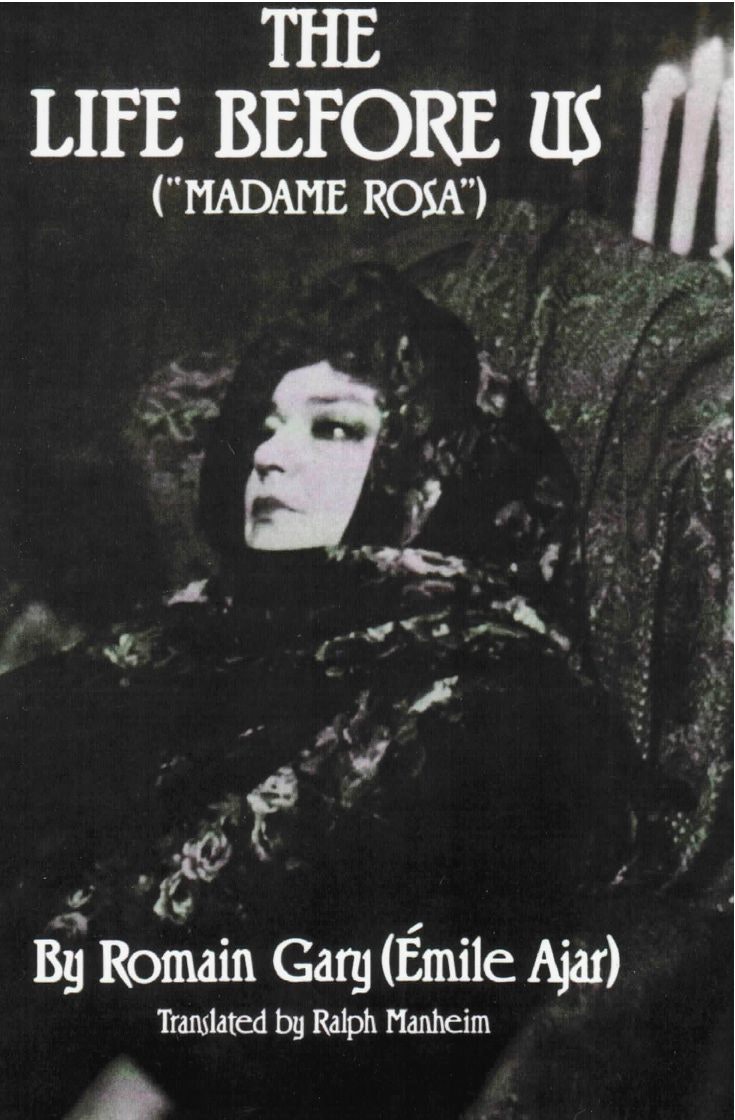
The Life Before Us by Romain Gary

I’ve given this book as a gift more times than I can remember. Momo, the child narrator whose own origin is a mystery to him recounts the plight of Madame Rosa, the woman charged with caring for the abandoned children of prostitutes in a Paris banlieue and the various Arab, African, and Jewish immigrant communities within it that come together when crisis strikes.

The Halfway House by Guillermo Rosales

This book was originally published under the title Boarding Home and tells of a young Cuban exile abandoned by his family in a ramshackle residence for the mentally ill in Miami. The prose is piercing and almost hallucinatory, and it’s a devastating portrait of people exploited for profit while descending further inward and away from all that was once familiar to them.

The Dew Breaker by Edwidge Danticat

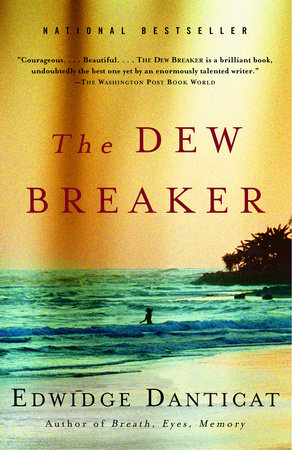
The Dew Breaker by Edwidge Danticat

Often with immigration, the individual will divorce themselves from their old life with the force of a guillotine. The Dew Breaker shows how in exile, we can escape our former lives yet also find ourselves later confronted by them in unexpected ways. Here, Ka learns her gentle and loving father was a military torturer in Haiti, and other characters lend their voices in heartbreaking testimony.

Image result for poster

Paradise Travel by Jorge Franco

Two young lovers from Medellín arrive in Queens but Marlon gets lost and separated from his girlfriend on his first day and the rest of the novel is his story of homelessness and survival in the city. With the help of other immigrants, he struggles to cobble together a new life and eventually find his way back to his lost love, though their reunion is not what he expects.

141015

Hope and Other Dangerous Pursuits by Laila Lalami

This is a harrowing account of several characters who’ve sacrificed nearly everything including their safety by taking a boat from Morocco to Spain in hopes of a better life. The brilliant structure allows us to go deep into the hearts of each character within the perilous journey across the sea that binds them together.

154824

Lila Says by Chimo

Narrated by an Arab teenager raised by a single mother in a rough neighborhood in Marseille, he tells of his infatuation with a white French girl left in the care of a relative, their sexual and romantic exchanges amid the racial and religious tensions that prevail in a community where identity seems as fixed as a badge on the sleeve, and nearly everyone is rootless.

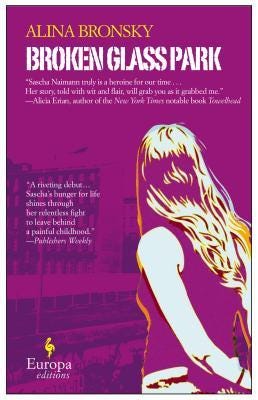
Broken Glass Park by Alina Bronsky

Sacha, a young Russian girl living in a housing project in Germany, deals with the trauma of immigration by overachieving in school, but finds its consequences extend well beyond the expected alienation and loneliness. This is a powerful novel about how families carry each other yet must also sometimes leave pieces of themselves behind in order to survive.

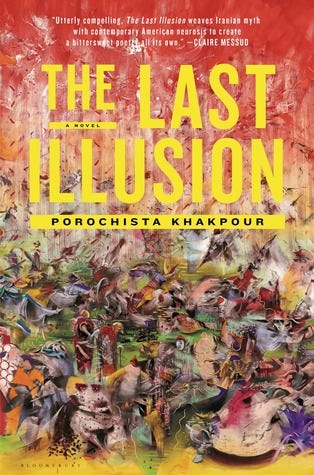
The Last Illusion by Porochista Khakpour

The mythic yet crushingly realistic tale of a boy raised among birds in Iran, rejected by his mother and then eroticized and objectified to no end in his new life in New York. The pain and joys of Zal are both shocking and tender, something most anyone displaced by immigration understands all too well.

Image result for book of clouds chloe aridjis

Book of Clouds by Chloe Aridjis

This is the perfect novel of dislocation and the unsettled spirit of exile. A young Mexican woman is alone in Berlin, a city that conjures visions and prompts her to forge unexpected connections with other people, equally adrift. I read this novel years ago and it still haunts me.

Image result for adios happy homeland

Adios, Happy Homeland by Ana Menéndez

In this exceptionally original work, the individuals, a group of Cuban exile writers, find their community on the page, and the voices compete and rise and go to battle in beautiful ways. The language is exquisite and Menéndez blows apart the map of wounds of immigration and sculpts something entirely new.

Ted Wilson Reviews the World: A Baby Hummingbird

★★★★☆

Hello, and welcome to my week-by-week review of the world. Today I am reviewing a baby hummingbird.

Most people when they see a hummingbird will point and say, “Look, a hummingbird.” But no one ever points and says, “Look, a baby hummingbird.” That’s because no one ever sees them. Have you ever seen one? No, you haven’t. Or have you? Maybe, actually. You probably have and didn’t even know it. Like most babies, baby hummingbirds are very small. Picture a regular hummingbird, but farther away than that. That’s basically what a baby hummingbird looks like.

The only reason I was even able to spot one was because he landed on me. I suspect it was my nectar-like sweat. I eat a lot of sweet things, so my sweat tends to be quite tasty. I know this from tasting it myself, but I also know this from the time I was jogging and accidentally bumped my sweaty arm into a guy’s face and I said sorry and he said “no problem, you’re quite yummy.”

When this baby hummingbird landed on my arm I froze with excitement. I also froze with fear because I was worried I would get so excited that I would move. A passerby threw money at my feet because she thought I was a person pretending to be a statue. Or she may have just dropped the money. Either way, I got five bucks.

I couldn’t make out all the details of the hummingbird since my glasses had fallen into the sewer while I was bent over looking for my glasses which I had forgotten were already on my face, but of the details I could see, the baby hummingbird was beautiful. It was a bright yellow color with black lines.

I reached for it cautiously to pick it up between my fingers as gently as possible, and that’s when it pecked me with its tail. It left quite a stinging sensation. Then it curled up and pretended to sleep. I suppose that’s a defense mechanism.

There was no baby hummingbird nest I could find to return the baby bird to no matter how many trees I climbed, so instead I threw it high into the air, knowing it would have no choice but to fly away, and I’m assuming it did. I couldn’t really tell without my glasses on and also because hummingbirds fly so fast it’s impossible to see.

BEST FEATURE: I don’t know because I couldn’t see the thing clearly. It probably had big, cute eyes like all babies do.
WORST FEATURE: It could have been bigger.

Please join me next week when I’ll be reviewing a square.

Giving Highsmith Her Due — and Her Dirt: Tyler’s Last by David Winner

by Jenna Leigh Evans

Devoted fans of Patricia Highsmith who rushed to see Carol, Todd Haynes’ ravishing film adaptation of The Price of Salt, might have noticed a missing element: ugliness. As film critic Anthony Lane put it, Haynes does beauty. Moreover, while the brutality of human desire is hinted at obliquely, the movie’s protagonists are neither vulgar nor repellent. Highsmith’s characters, on the other hand, are monsters, every one.

Those whose fondness for Highsmith is due in part to the satisfaction she took in depicting human beings as spiritually and psychologically deformed creatures will relish David Winner’s weird, compelling novel Tyler’s Last, an homage that positively bathes in the monstrous qualities she reveled in — and of late-life Highsmith herself, by most accounts a frankly awful person.

The novel works kaleidoscopically, a story-with-a-story in which the two halves of the tale start out distinct and divided, then begin to splinter, sending shards from one into the other. Yet it always holds its shape, remaining structurally tight, and a page-turner to boot.

In it, Tyler, an aging roué right out of the Talented Mr. Ripley — effete, cunning, lecherous — receives mysterious threats from a handsome goon he lusted after and tried to murder, in that order. Like Ripley, he’s essentially a pragmatist, and his practical solutions to this problem include impersonating the dead and abducting a child. Meanwhile, Tyler’s creator, an elderly lesbian writer, alcoholic and mean as a snake to her hapless caregivers, obsessively stalks her much younger ex-lover. In the background, the real world undergoes convulsive change, perceived by the narcissistic old drunk as nothing more than an inconvenience, ants milling on an anthill.

Both characters are driven by perversity, perversions and muddled romantic longings, and self-soothe with a comically inept attempt at meditation. Both have insides that are rotten both figuratively and literally. On every page, base corporality carries the day. As Winner’s Highsmith stand-in (never referred to by name) burrows ever more deeply into her guzzled whiskey, urine-stained clothes, and hateful views of the world, her literary creation descends ever further into dissolution, cruelty and gastro-intestinal distress. Stains, blood, semen, mud, pickled herring, piss: when it comes to the physical, Winner is as unsparing as William S. Burroughs; the pages practically stick together.

He’s no less so when it comes to character, driving his protagonists full-tilt into their own nastiness with an antic glee. The obsessive old author, in the presence — at last! — of her lost love, inflicts torment only a scorned writer could devise, tying her to a bedpost and reading aloud from a fictionalized version of their relationship, asking in conclusion, “Did the cunt factory that produced you fail to include a heart?”

Horrible, and funny. Is it dialogue that Highsmith could conceivably have written herself? Maybe not. Whether it is something she could conceivably have said is something else entirely, and for Highsmith fans, there’s a kinky pleasure to be had in this.

All The Lasting Things Subverts the Way with Which Society Measures Success

David Hopson’s All the Lasting Things opens with a nod to William Faulkner’s classic and ever-present “man-child” character: anti-hero Benji is in his early 30s, lives in a garage, falls back on family to pay rent, drinks excessively, and is incapable of maintaining romantic relationships. Benjy, Faulkner’s original man-child, who appears in The Sound and the Fury, is arguably autistic, while Benji is functional yet comically regressed. The concept of the man-child has since evolved and is now used as a derogatory label for men who are responsible for their prolonged adolescence. Hopson not only alludes to the celebrated author who invented the character, he also plays with and ultimately subverts the trope.

Like the original Faulknerian man-child, Benji needs assistance getting dressed and moving through space. In the fist chapter the childhood sitcom star turned reluctant Shakespearian actor must wear a “great metal suit” for his role as King Hamlet. Benji, however, decides to abandon a show right before curtain call. After having one too many on his lunch break, he begins to resent the relative obscurity of performing “outside a small dinner theater in the Catskills.” The clunky costume, coupled with Benji’s inebriation, impairs him so much that he tumbles down a ravine. This lands him in the hospital, unable to speak due to a severely bitten tongue. While in the hospital his sister Claudia repeatedly accuses him of being a baby, a word used to describe Benjy, who is nearly wordless and must be escorted outside, multiple times in the first chapter of Faulkner’s seminal work.

We’ve recently seen a resurgence and evolution of Faulkner’s man-child in Blockbuster films such as The 40 Year Old Virgin, Failure to Launch, and Step Brothers, to name a few. At first Benji exists as a comedic amplification of this character. The narrative of the man-child in popular culture is fairly predictable. It begins with selfishness, followed by rebuke, a desire for reformation, a saga of growing pains, and finally, the resolution: the reformed man. The reformed man often maintains his quirks but is financially stable, flourishes in romantic relationships, and is affirmed by his family and peers.

Benji follows the beginning of this narrative to a T. During his recovery from his nearly life-threatening escapade, he falls for and commits to Cat, an actress he met on the set of Hamlet. Unlike Benji, Cat has no taste for fame. Despite offers to act in well-known companies, she takes a pro bono job coaching high schoolers in Benji’s hometown of Aluvia, New York. Motivated by love, Benji quits drinking, gets in shape, and helps direct the high school Shakespeare production with Cat. By the end of the book, Benji is on his way to get a masters degree in teaching.

At this point, however, Hopson turns the narrative on its head. Benji relapses, but not into alcoholism or emotional instability; he relapses into his desire for fame. When a seedy man approaches him in a parking lot with an offer to star in a reality show called “The Comeback,” chronicling a fabricated tale in which Benji reclaims his celebrity status, Benji is torn. Despite the claim that “professionally speaking, he had turned a corner. Moved on. He no longer lived to be a joke for hire. He lived, quite literally now, in a different zip code,” he ultimately heeds the advice of the recruiter and abandons Cat with no warning. His only trace is a cryptic note that reads: “C — I don’t belong here. I never did. I love you. — B.”

Benji’s failure is compelling, because it’s not strictly a failure. If the definition of a man-child is a man who is motivated by the fulfillment of short term, selfish desires despite negative long-term repercussions on his relationships, then Benji has failed the test of maturity. Despite the promise of achieving monetary and success and recognition, his actions only confirm his status as a man-child.

Many of Hopson’s characters are similarly driven to destruction by their desire for their work, ideas, and selves to last. The stories of Benji’s sister, mother, father, lover and nephew are interwoven, and zero in on each characters precarious mental state as they fight for recognition and immortality. Ultimately, Hopson subverts the formula with which society measures success, and forces us to question the true value of lasting things.

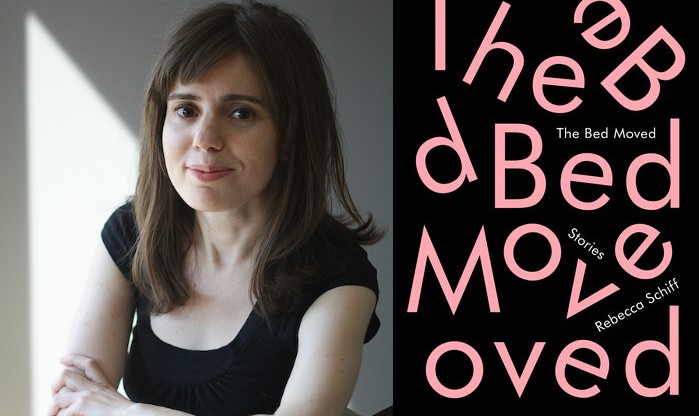
Rebecca Schiff on Humor, Crafting the Perfect Line and Casual Sex in Fiction: An Interview

by Claire Luchette

There are a whopping 23 stories in Rebecca Schiff’s slim new collection The Bed Moved, and this is just one of Schiff’s many sleights of hand. Each story is a delight — drily funny, irreverent, original. But just as they’re refreshingly candid and witty — they are very witty — Schiff’s stories also offer tender, but stubbornly unsentimental emotional truths. The stories in this collection are interested only in being honest, and that means shedding light on grief, pride, promiscuity, and loneliness in ways that are surprising, funny, and frank.

The narrator of the final story, “Write What You Know,” reflects on the titular aphorism: “I only know about parent death and sluttiness…liberal guilt and sexual guilt and taking liberties sexually.” Here is the magic of Schiff: she offers aphorisms without waxing pretentious, and she delivers humor without devaluing the emotional concerns. The book is evidence of her refreshing talent and sharp, incisive intelligence.

Schiff answered my questions about how these stories took shape, being funny, and casual sex in fiction.

[You can read Schiff’s story, “It Doesn’t Have to Be a Big Deal,” and her reading list, “Contemporary Innovators of the Short Story,” at Electric Literature.]

Claire Luchette: What I loved most about these stories is how stripped they are of all the often-clunky narrative stuff that shows up in more traditional stories, where it can seem like character biographical details and situational context are dumped into the text. It’s very refreshing. And I think that spare prose pairs so well with your humor. Tell me about being funny. How do you know when the wit lands or when something feels less successful? Are you able to judge for yourself?

RS: I’ve definitely written stuff that’s funny but lacked a greater emotional purpose. And then I can judge that I’m hiding behind the jokes. But I try and make sure the humor is connected to the emotions of the piece: is it organic to them? And then I feel more comfortable joking, because I know there’s more going on in the story.

I also, while I’m writing, often make bold the lines that I know could be funnier. And then I’ll go back later and try to push myself to make the line funnier.

CL: It’s an interesting thing — if you feel you’re funny and no one laughs, then are you actually funny? And if people tell you you’re funny and you don’t feel funny, then something’s off.

RS: Yeah! In some ways, we can’t find ourselves funny, because we’re just who we are to ourselves. It does require a kind of response or engagement. When I read aloud, some parts will get more laughs than others, and that’s a means of evaluating the humor. But you don’t often see people respond to your stuff, so you don’t know if they’re laughing or totally horrified.

CL: Who are your favorite funny writers?

RS: I love Etgar Keret. I love George Saunders, for obvious reasons. Sam Lipsyte’s very funny, as is Grace Paley. Lorrie Moore, obviously. I read her as a teenager, and she was the first person I had read who was strange and funny, and it opened up possibilities for me; I saw it could be done that way.

CL: The story “Communication Arts” is all about the challenges of teaching writing — it’s a teacher navigating all these students’ issues and requests on e-mail. What’s your approach to teaching writing?

RS: When I was just starting out, I never had control of the room — I was teaching maybe 30 kids, which isn’t so many, but is a lot if you haven’t done it before. I think that experience, of teaching composition, toughened me up. I had to be a better teacher in order to get through the day.

A lot of people seem to think student writing is terrible, but one of the things that helped a lot was I learned to find what students are doing exactly right and point it out to them. And then encourage that, instead of jumping straight to criticism. In teaching creative writing, it’s a bit different, but the same principle applies: look for the place where the magic is coming through, where you can see the student’s voice. And help the students see that in themselves, what’s working.
CL: How do you approach teaching “the rules” of creative writing?

RS: The thing about rules is that when a writer creates her own rules, she still has to follow them. Which, in a lot of ways, is even harder. Restrictions on a story — putting limits on it — can be really helpful.

Most of my students seem to want to know the rules — know some straight-forward way to write a story, like you would a five-paragraph essay. But of course that doesn’t exist.

CL: You have such a knack for first lines. Each of these really start with a bang. Some favorites: “She slept with men who only wanted to play Settlers of Catan.” “The pot grower was broke.” What are some of your favorite first lines in stories?

RS: Off the top of my head, there’s Leonard Michaels’s “In the fifties, I learned to drive a car.” The story’s called “In the Fifties.” It’s kind of like a list story, a non-traditional story. It’s such a specific first line, and then it allows the story to grow from there.

CL: What do you think any first line should do for a story?

RS: I think it’s mostly instinct. I’m not in love with all my first lines, but for a lot of stories I found my first line only after I started writing — after a couple of paragraphs, so I could see where the story really starts, where the good stuff begins. They say a line should draw you in, but it should definitely establish what we’re dealing with here…One way to start is with a lot of information. There’s that Joy Williams story, “Honored Guest,” and the first line tells us so much: “She had been having a rough time of it and thought about suicide sometimes, but suicide was so corny in the eleventh grade and you had to be careful about this because two of her classmates had committed suicide the year before and between them they left twenty-four suicide notes and had become just a joke.” Williams just takes it so much further in a way that establishes the tone, and it takes you a place you don’t expect.

CL: These stories are concerned with women who are navigating their worlds and are often dissatisfied. How do you describe the stories’ “aboutness”?

RS: I think the aboutness reveals itself to me as the stories unfold. I don’t always know why I start to write about something, and usually I’m interested in certain emotions or language, and I enjoy the way words sound together. But the way stories develop, I start to keep track of what characters are going through and what’s happening for them…I have trouble with that question, “What are your stories about?” I have trouble answering that. I usually say, “They are what they are!” They are about women getting through, or figuring out how to get out, or whether or not they should get out. It’s hard to see what your own work is about.

CL: In “Little Girl,” the last lines do such a great job of describing what it’s like to leave a lover’s place: “Some of the buildings had elevators and she enjoyed the anticipation of the ride up, the soreness on the ride down. What happened in between almost didn’t matter. She’d wind up back where she started, walk into the street, and hail a cab.” It’s so good! What do you understand as what happened “in between”?

RS: It’s the sex, but this woman is having so many of these experiences that the only constant is herself. There’re all these guys, and they have sex or talk or hang out, but the experiences all kind of blur together. What do you think happens?

CL: It’s almost like a commercial break, like these one-night stands are just distractions. A brief vacation.

RS: I like the idea that it’s a vacation. So many people think of casual sex as just depressing, and in my stories in this collection, I tried to present it as otherwise. It can be, but it can also be exhilarating and funny. There’s a lightness to it! For that narrator, she’s having a good time, but she’s also not.

CL: In Girls, we indulge in the awfulness of the sex. And in Broad City, it’s like it doesn’t end up mattering.
RS: Yeah. I like both shows. I think both wouldn’t exist without Sex and the City, and I fall between those generations. I don’t think I would be the writer I am without Sex and the City. I don’t know if that’s suicide for a literary writer to say, but I think it opened up the culture, and allowed us to start talking and thinking about sex.

CL: The final story, “Write What You Know,” is so funny and good. Tell me about your experience writing what you don’t know.

RS: I think the writer is always doing both simultaneously. There are things you think you know, and you start there, and it turns out that there’s a lot you don’t know — about a story, a situation, a plot. I’m always learning the way I feel about something, through writing fiction.

My Journey Into the Woods: What Stephen Sondheim Taught Me About Conceiving a Child

by Carly Rose

When I was in elementary school, one of my favorite hobbies was making lists of names. Mostly girls’ names. I would hunch over a piece of looseleaf paper, pen in hand, and try to fill the white space on the page with as many names as I could possibly think of, all in one sitting. It was a game of endless possibilities and all-consuming creativity, my smudged fist dragging quickly down the page, a swollen, inky protrusion on my middle finger. I’d start at the beginning of the alphabet and work my way to the end. Adeline, Amy, Beverly, Beth, Cora, Clarissa…Yarden, Yvette, Zora, Zadie. I loved reciting the particular strings of syllables aloud in my head, making small changes and watching total transformation. Trudy to Tracy. Greta to Greenie. Bonnie to Bronte.

I’m not sure why the activity brought on such a rush. As a child, I enjoyed writing stories, but these names often did not find their way into my work. Their depth was paper thin, tossed away after the exercise was over, a mere stepping stone for my longer, lovelier list. Weeks later, I’d push the boundaries even further. Today, with all the chic, alternative, hipster-fab names circulating around New York City, I’m certain I could best my last effort.

* * *

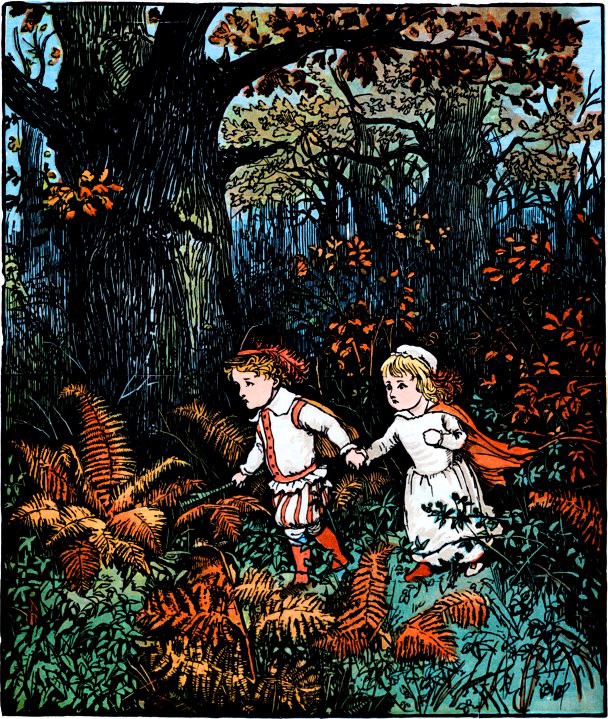
In December 2014, Into the Woods hit movie theaters. My husband has been a Sondheim fan since childhood and asked me to see the movie with him. I agreed. Anything to watch Anna Kendrick. In preparation, he played some of the music for me from the Into the Woods Broadway production starring Bernadette Peters. I hadn’t been familiar with it. The lyrics I could appreciate easily; they were meticulously chosen to clever and playful effect. Poetic. I felt dazzled with a phonic fulfillment that surpassed anything I had ever heard. Stephen Sondheim, where have I been all your life? I couldn’t wait to see the movie. But when I inquired more into the plot, I felt at a loss. Jack and the Beanstalk? Cinderella? Little Red Riding Hood? Rapunzel? The awaited enhancement had dispelled into a collection of fairytales. Hadn’t I heard these stories before? What more could I possibly glean from them? The one bright light for me: the baker and his wife. Their wish intrigued me. It seemed so simple. Something they could give to themselves if they chose to do so. More than anything, they wanted a child.

The baker and his wife, their wish intrigued me: It seemed so simple. More than anything, they wanted a child.

In December 2014 my husband and I began to try to conceive our first child. We hoped for a smooth road ahead, but did not expect one. At twenty-nine I had never gotten a natural period in my life. I had been on the pill since I was eighteen, because the doctors had told me that in order to keep my system running I needed the pill to induce an artificial period each month. And so, for eleven years I bled monthly and had the requisite cramps, but I never ovulated. I was told I had eggs. They just never left my ovaries. If my eggs were actual people, I would call them reclusive.

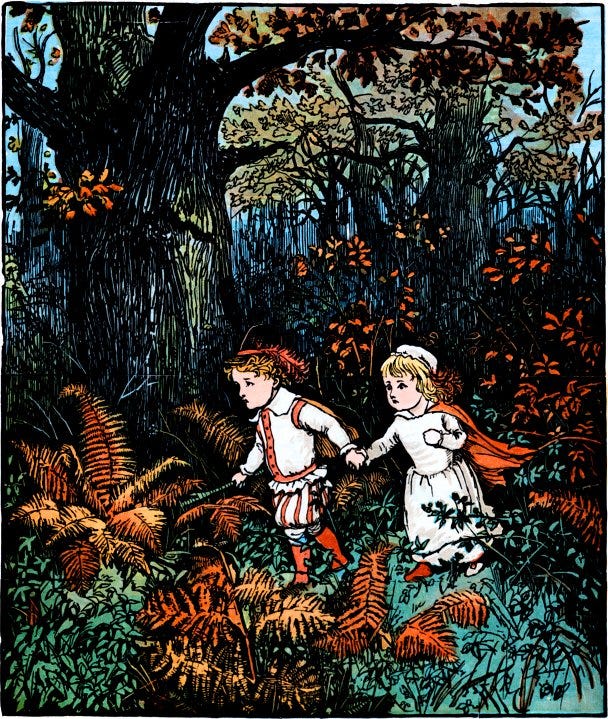
For the baker and his wife, they must venture into the woods to undo a curse cast on their house by their neighbor — a witch — in retaliation for the baker’s father stealing from the witch’s beloved vegetable garden years ago. The greatest betrayal of all was the theft of six magic beans, beans that the witch’s mother had warned her not to lose. As punishment for her loss, the witch was cast from a beautiful, young woman to the wretched old woman she is now. The witch, in turn, casts a spell on the thief’s house, that it will always be a barren one. When the baker and his wife learn of this, they are both devastated, yet determined. They will do whatever is needed to break the curse. The witch makes them an offer: “You wish to have the curse reversed? I’ll need a certain potion first. Go to the woods and bring me back: One: the cow as white as milk; Two: the cape as red as blood; Three: the hair as yellow as corn; Four: the slipper as pure as gold.” If all these items are brought to the witch before the stroke of midnight in three days’ time, she promises that they will have a healthy, neigh, a perfect child. Then she casts them off into the woods to begin their journey.

I had eggs. They just never left my ovaries. If my eggs were actual people, I would call them reclusive.

After college I went off birth control to see what would happen. My cheeks became rosy with acne, a familiar but unwelcome visitor. I also began losing hair. I noticed my thinning hairline in the mirror one day, in the bathroom I shared with one of my two roommates in our midtown east apartment. My hairline was intact on the right side of my head but my scalp peeked through on the left in a way it had not before. In the shower I felt clumps of tangled strands sliver down my back. I was devastated, certain that if my romantic prospects seemed slim now, they were certain to take a veritable nose dive in future months. My mother brought me to a hair growth specialist, who, ironically, was bald. He loaded me up on vitamins to counteract deficiencies that I had. Lysine. B12, Biotin. Vitamin D. I took them religiously. My mother told me to mail my fallen hair home in an envelope so she could count the strands to see if the doctor’s regimen was helping my cause.

Around that same time, I was diagnosed with a genetic condition called congenital adrenal hyperplasia (CAH), a hormonal imbalance caused by a missing enzyme, which is necessary for the production of cortisol. Severe cases of CAH can be fatal. Fortunately, I was diagnosed with non-classical CAH (late-onset CAH). While mild in its symptoms, it does preclude me from natural ovulation. It could also perhaps have been the cause of my severe acne beginning at the age of ten. Or the hair loss. Or the fact that I was average height as a child but turned out to be a short adult. Perhaps. Either way, I wasn’t too concerned. The doctor had told me that when I was ready, I could still have children. I just couldn’t start the process too late. Thirty, she told me, time and again, was the magic number. I got back on the birth control pill and continued on with my life. My hair stopped falling out, or maybe I just stopped counting.

Thirty, she told me, time and again, was the magic number.

The journey into the woods is, predictably, rife with conflict. For the baker and his wife, collecting these items in three days’ time proves to be more challenging than anticipated, both physically and emotionally. There arises the question of who needs the items more. To the baker and his wife, these four items mean they will have the child they have pined over for so long. What’s problematic is that these items are the dear possessions of the people encountered along the way. The cow as white as milk is best friend to a poor boy named Jack, whose mother has instructed him to go to the market and sell the sickly cow for as high a price as he can fetch. The cape as red as blood belongs to Little Red Riding Hood, and it is her only protection against the dangers of the woods. The hair as yellow as corn belongs to Rapunzel, a fair maiden locked in a tower, and it is the one thing that allows her visits from her beloved prince. The slipper as pure as gold belongs to Cinderella, whose fancy attire has gained her admittance into the royal life of her dreams.

The baker and his wife don’t have much to trade for these possessions, but they do have the beans. Magic beans, supposedly. Is it wrong to fool the poor boy into trading his cow for beans of questionable, and as yet, unproven power? The baker’s wife seems to think not: “If you know what you want, then you go and you find it, and you get it, and you give and you take, and you bid and you bargain, or you live to regret it.” Though I knew her judgment was questionable, I couldn’t help but take her side. What won’t we do for our children, even if they don’t exist yet?

What won’t we do for our children, even if they don’t exist yet?

Turns out, I hadn’t waited for my doctor’s deadline. Something had shifted in me before my thirtieth birthday. During the summer of 2014 at the age of twenty-nine, I summited Mt. Kilimanjaro. In the months following my arrival back home, I felt my wanderlust go on an indefinite hiatus. I wanted a baby. My husband did too. In January, after 10 weeks off the pill, I began my first round of Clomid at 50mg, one pill over the course of five days. There were evenings when I woke in a profuse sweat, or mornings when the edges of objects blurred, but aside from these side effects, I felt okay. Two days after I completed my five-day course, I went for a blood test. The results were disappointing: my eggs, cozily tucked away in my ovaries, were not growing. Nothing was happening. Next I went on 100mg of Clomid. Lo and behold, I ovulated. I was instructed by the nurse when to have intercourse and told to take a pregnancy test in two weeks. As any woman trying to conceive will tell you, there is nothing more interminable than the two-week waiting period to see if the egg and sperm took. As any woman (and man) will also tell you, reducing lovemaking to a routine appointment is a foolproof antidote to romance.

As any woman trying to conceive will tell you, there is nothing more interminable than the two week waiting period to see if the egg and sperm took.

On the designated morning, I ripped open the home pregnancy test and made my way to the bathroom. I peed on the stick and set it aside on the tub to wait for the results. Plus meant pregnant. Minus meant not pregnant. I was a minus. I consoled myself with the fact that this was just a trial period to see if the dosage of the medication worked, and it had. Success! (Sort of.) But the second time I tried it, 100 mg was a flop. A flop, but not a total failure. I had enough of a lining that I had to go on Provera to release it. I did not fare well on the medication. I was short with family members, cried hysterically without cause, and felt my generally sunny outlook plunge into darkness. The next round, my Clomid dosage was increased to 150 mg.

These days, Clomid wasn’t so easy either. I had tired of the routine surrounding the medication, and the constant purple bruises on the soft skin of my elbow. I was seeing the phlebotomist more than my friends and felt myself becoming bitter with my lot. I began to despise the thoughtlessness behind TV shows about teen moms, started to avoid my Facebook newsfeed because there were too many babies staring back at me and none were mine. Despite my husband’s constant comfort and support, I felt like I was failing. Wasn’t conceiving a child supposed to be the most natural thing in the world?

At some point in the woods, the baker and his wife realize that if they want this child, they can’t go it alone. They need to work together in order to secure the items that the witch has asked of them. And so they do, each helping the other to reach their mutual goal. This team approach works wonders for their relationship. Only now do they start to see the value that the other has brought to the journey. The hardship that has been their time in the woods has birthed a magic of its own, freeing them from their limitations and allowing them to set their sights on what really matters: their future family. The end is in sight.

If the story ended on this high note, I might have felt cheated, for the obstacles faced were flimsier than at first sight. But Sondheim knew, there’s always a second act.

The 150 mg of Clomid was working. Each month I tried it I successfully ovulated, sometimes multiple eggs. I was regularly in touch with a wonderful nurse and at each turn, we were excited for good news. It seemed that my situation was steadily improving. Each time the two-week waiting period ended, I took my test, first thing in the morning. I tried to visualize a plus sign on the pee stick. I channeled The Secret. I squinted my eyes. Nothing. When I realized how much money I was spending on these tests, I eschewed store brands, opting for a slew of cheaper online tests instead. On these tests a positive result came in the form of a second line. Just as well, I had grown tired of the minus sign anyway. By this point, my husband and I had turned to intrauterine injection (IUI), in which the sperm is injected directly into the uterus. We hoped it would increase our chances of success. For months, I waited for that second line. But it never appeared.

At the end of Part I of Into the Woods, the baker and his wife, successful in their mission, become pregnant with a child as the witch has promised. The witch, in turn, transforms into the beautiful woman she once was years before. Everyone who ventured into the woods to get the thing that they did not have now has it. Jack and his mom are rich with the gold coins he stole from the giants when he climbed up the beanstalk. Little Red Riding Hood has the newfound wisdom that will keep her safe in the future. Cinderella is now married to the prince, presiding over a royal court, and the baker and his wife are a happy family of three. If the story ended on this high note, I might have felt cheated, for the obstacles faced were flimsier than at first sight. But Sondheim knew, there’s always a second act.

Who knows? Maybe they’ve been there all along, traveling in the woods beside me, telling me that they’re on their way. Me, their mother.

I recently began in vitro fertilization. It has meant stronger medications (read: headaches and general exhaustion), an abundance of needles and more frequent monitoring. But the more I talk about it, the more I learn how many people have done it or are about to do it. I even had an unexpected reunion with an old friend in the doctor’s office waiting room. While the baker and his wife seemed to be the only people in their community who wanted a child, at least I have the comfort that I’m not alone. No one is alone. Sondheim got this right too.

* * *

I still think of those lists of names. The lists I so enjoyed creating back when I was a child, for no one but myself. The lists that tried to squeeze in as many names as could possibly fit on a page. Mostly girls’ names. But some boys too. Hundreds of them, standing at attention, trying to decipher my next move. These days, I wonder if my children were on that list. I wonder if I could pick out and circle their names. Who knows? Maybe they’ve been there all along, traveling in the woods beside me, telling me that they’re on their way. Me, their mother.

Sometimes I have visions of the future. My children are running around the house, my sons, my daughters. Sometimes there are three, sometimes five. They are loud and unruly and brilliant and kind and I’m sitting with my husband in the center of the chaos, beaming with a satisfaction that could only be conjured by a woman trying to conceive, who has both glamorized and whitewashed the messy travails of early motherhood.

The truth remains, I don’t know when the woods will end. My journey will get more difficult before it gets easier. But when I imagine what could be mine, I know I’d walk through the woods and back, if only to find it.

Noir is Protest Literature: That’s Why It’s Having a Renaissance

Noir is everywhere these days. The kind of hard-hearted crime stories that arose in pulp magazines and Hollywood films of the mid-20th century are achieving a cultural prominence they’ve not had in decades — best exemplified by the popularity and cachet of TV series like Breaking Bad and True Detective, but including a variety of other books, films and comics. More than this, the images and tropes of that classic noir have melted into the broader culture, and are now re-appearing in a broad swath of works, in many genres — from the urban fantasy of Richard Kadrey’s Sandman Slim to the YA of Chelsea Pitcher’s The S-Word. The modern re-invigoration of the Western, from Unforgiven through Deadwood, can be seen as injecting the classic cowboy film with ideas and images from noir; as can the re-invention of the comic book hero that was launched in the 1980s with The Dark Knight Returns and Watchmen and reached its grunting, incoherent anti-climax last month in Batman vs. Superman.

What is it about crime films and novels from the 1940s and ’50s that calls to us so strongly? True, we are also drowning in superheroes, wandering dumbly through an endless series of post-apocalypses, smothered by the advances of paranormal romance… Each of these gluts derives, in part, from the scope of today’s near-infinite media universe, which offers space for just about anything to have a renaissance, but to the degree it includes mainstream as well as cult success, each also taps into specific cultural desires and anxieties of the moment. There are reasons why noir was powerful to begin with, and why it’s coming back now.

By “noir,” I mean something more than a general tone of bleakness and dysfunction. In his foreword to The Best American Noir of the Century, genre sage Otto Penzler rather caustically remarks that “noir is not unlike pornography, in the sense that it is virtually impossible to define, but everyone thinks they know it when they see it.” He goes on to describe a nihilistic genre about monstrous people “doomed to hopelessness” by their own appetites. Penzler’s noir is compelling — if you haven’t read the collection in question, do so — but I think there are broader definitions that more fully encompass the challenge early 20th century noir posed to the literary status quo, and help explain the genre’s popularity today.

Anglo-American fiction evolved in the grip of a controlling public morality, which demanded the representation of behavior only within certain socially acceptable lines. The classic crime story, the kind written by Sir Arthur Conan Doyle and Dame Agatha Christie, is the whodunit: it takes place in an essentially orderly universe, with a common understanding of good and evil. Crime here is a dangerous anomaly, but order can be restored by a hero-detective who investigates and, eventually, unmasks the criminal: revealing evil for what it is, giving it a physical location in an individual, and in the process, re-affirming the innocence of the other characters.

Noir, as it emerged in the middle of a violent century, said to hell with all that. Its world was chaotic, baroque and hypocritical. Crime doesn’t disturb this world, it’s foundational to it. Noir stories gave the stage to criminals and their motivations, which range from unspeakable passions to a firm conviction that their particular crime serves a greater good. A detective may pursue such a criminal, but noir reveals the line between them to be a product of chance and circumstance — if, indeed, such a line exists at all.

In noir, the problem is not an individual: the problem is the world.

Penzler, like some other scholars, leans toward keeping noir for the bad guys, and excludes from the genre the very detective stories that are most associated with it: Philip Marlowe and Sam Spade and Mike Hammer are relegated to a separate category of “hard-boiled,” because they have a core of decency that makes them too close to “white knights.” Penzler has a point, but I see other aspects of those detective characters as more important than their (arguable) virtue. They work for money, not a cop’s sense of duty or a superhero’s great responsibility. Their decency is usually a struggle, and attempts at chivalry are often reluctant, hypocritical, costly — or all three. But most important is their ultimate powerlessness. They may catch a criminal, but their investigation reveals deep-rooted evils they are unable to change. In noir, the problem is not an individual: the problem is the world. Institutions are corrupt, public moralities hypocritical, the watchmen un-watched. One person may pull a trigger, but that act is part of a sprawling web of mendacity and exploitation. No one gets away clean.

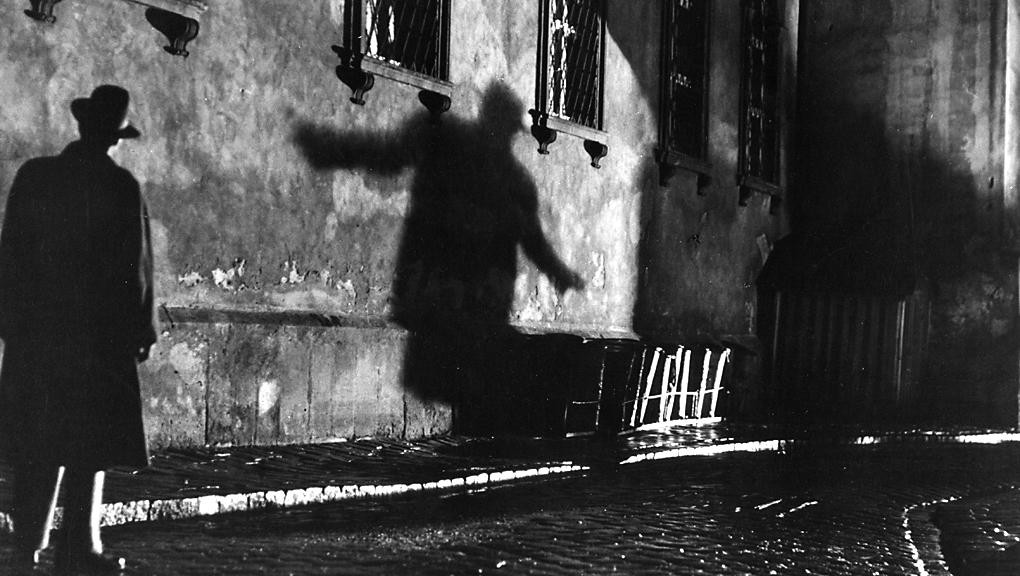
It is ironic that the visual signature of noir has been so defined by silhouette and stark black-and-white, when the genre’s true colors are shades of gray. It posits a world of complexity and interdependence, in which humans are incapable of functioning as the autonomous moral actors we want to be, because our every choice is influenced by distant and unassailable systems of power. If the superhero archetype was the aspirational counter-force to 20th century nihilism (some would call it wish fulfillment), noir was the opposite: a determined attempt to stare into the abyss we were creating, to acknowledge this thing of darkness as ours.

When Dashiell Hammett’s nameless operative brutalized criminals and civilians alike in the service of the Continental Detective Agency, he launched a frontal assault on the bizarre dreamland that popular culture had been forced into by the guardians of public morality. No more good-hearted-if-irascible detectives who always get their man, usually from the comfort of an armchair. The Op and his successors — Frank Chambers, as well as Philip Marlowe — demanded that literature represent a universe more like the one we live in than the one we imagine for ourselves.

Noir was powerful because it was a tiny bit true.

But then, it faded. Perhaps, in part, it was the cultural revolution of the 1960s and ’70s, when, for a moment, it seemed that victory over the forces of Old and Evil was possible. (I believe there were other reasons as well, which I’ll get to in a moment.) But today, noir has returned with a vengeance, and it’s easy to see why. Even as social and political revolutions have failed, the media revolution has succeeded. In an expanded world of internet and mobile technology, we are more aware than ever of the webs of power, money and influence that ensnare us, their global tendrils connecting us to people all over the planet. Yet more than ever we are powerless to influence the powers-that-be, change the system, or hold the corrupt to account. Add to that the nostalgia inspired by rapid change, and the proliferation of media and markets, and it seems clear why we look back to noir heroes and antiheroes: doomed losers, perhaps, but ones who could look the corruption in the face without flinching. There is, for me, no clearer marker of the noir moment in our popular culture than the UK TV series Sherlock, which tries (with very uneven success) to re-imagine Sherlock Holmes, the elite icon of the whodunit, the Superman of detectives, as a noir figure.

…a moment when noir could realize its original promise, or could melt away into so much kitsch…

As someone who re-reads The Black Dahlia every year, I’m predisposed to see the return of noir as a good thing. But I also recognize it as a turning point: a moment when noir could realize its original promise, or could melt away into so much kitsch. Noir tropes lose their power when they stray too far from their message: shorn of the impetus to address moral complexity and social injustice, they become parodies of themselves, just a lot of fedoras with nothing inside them.

Sadly, many of today’s noir-influenced entertainment products have exactly this problem. Modern noir can aspire to real relevance only to the degree that it returns to what noir always meant to be: a vehicle of protest and deconstruction, a weapon against entrenched and invisible systems power and privilege, a haven for unheard, angry voices.

Western literature in general has an inclusion problem (to put it gently), but in the case of noir it is particularly ironic. Here was the ideal vehicle for making visible and attacking those power imbalances that entangle us all, particularly racism and sexism. But that never happened. Classic noir presented worlds of corruption and inequality, but it was still primarily inequality between white men. Women remained cutouts: luscious objects of desire, their mystery no more than the question of whether they would prove to be princesses awaiting rescue, or seductive sirens waiting to drag you to hell or the gas chamber. Racial and sexual minorities fared even worse: they were cast mostly as set dressing, or as villains, tempting innocent white people into depravity. (Consider for a moment how even the name, noir, defines the world: through the absence of whiteness, i.e., goodness, purity, heroism. Racism masquerading as English: this is how tight the net is drawn around us.)

…the longer noir remained a white boy’s club, the more it stultified.

To my mind, noir’s failure to offer a mainstream voice to all those oppressed and entrapped by power was what truly sent the form into decline in the 1960s, and began its long sparring match with irrelevance. The genre of Cain and Hammett just had less to say to a racially and sexually diverse counterculture. And the longer noir remained a white boy’s club, the more it stultified.

Today it has a second chance — assuming it continues to draw in and cultivate new and challenging voices. This is already starting: I’m thrilled to see a growing number of bleak and hard-hearted crime stories being created by and about women. (I don’t have numbers, but I believe women have long been better represented in mystery and crime writing than in many other genres — noir and hard-boiled, though, were hold-outs, a last clubhouse for the “man’s men.”) Denise Mina has been one of the most powerful voices in modern crime writing since the late 1990s. Her bleak, brutal stories eschew noir tropes, but exist in truly noir worlds, where female protagonists struggle to solve crimes in the face of mental illness, gender and class discrimination. Megan Abbott has spent a decade writing classic hard-boiled tales in the vein of James M. Cain, but with women in all the big roles. Veronica Mars changed the pop-culture landscape with its melange of high-school drama with a genuine noir sensibility, and paved the way for today’s Jessica Jones, another genre-bending noir, this time with a female showrunner, Melissa Rosenberg.

At the same time, the genre, particularly where it intersects the mainstream, is still blindingly white and Anglo-centric. There are a few lights on this horizon. The poet, professor and activist Mũkoma wa Ngũgĩ (son of Kenyan literary icon Ngũgĩ wa Thiong’o) has written a pair of crime novels featuring detectives — one African-American, one Kenyan — who team up to unravel international webs of deceit and post-colonial violence. The Indian poet Jeet Thayil’s Booker-shortlisted Narcopolis, while not previously categorized as such, is an amazing work of modern noir, a story of murder, betrayal, transformation and addiction in Mumbai’s drug culture, with atmosphere so thick you can smoke it. Franco-Vietnamese writer Aliette de Bodard writes science fiction and culturally diverse alternate history, but her Xuya universe features a number of noir-influenced detective stories. British-Israeli writer Lavie Tidhar explores his obsession with classic pulp and noir in strange and magical crossover tales like Osama and A Man Lies Dreaming, that take the genre tropes in profound and unexpected directions. New imprints, like Hard Case Crime, have been formed to publish both contemporary noir and forgotten books from the genre’s heyday, while others, like Melville International Crime, are leading the way in bringing foreign noir classics into English translation.

…a true contemporary noir renaissance will need more. More female noir, black noir, Latino noir, queer and trans noir.

I look forward to readers who will point out exciting works that I’ve missed — because a true contemporary noir renaissance will need more. More female noir, black noir, Latino noir, queer and trans noir. More noir from English writers outside the Anglo-American axis, and more translation to and from other languages and cultures. It must be global, and it must be diverse.

Of course it’s not up to me: tomorrow’s writers will choose the modes they think best to attack prejudice and injustice. I hope some of them choose noir. Light can slant harshly though Venetian blinds in most any neighborhood on the planet; tough-as-nails private investigators can come in any gender identity or color of the rainbow; doom-driven crooks can ride from first kiss to gas chamber with a member of the same sex as easily as the opposite. Noir does not belong to America, or the ’50s, or some set of lily-white literary gatekeepers: it’s your world… if you’re hard-boiled enough to live there.

About the Author

Nicholas Seeley is the author of Cambodia Noir. He is an international journalist based over the past decade in the Middle East and Southeast Asia. His work has appeared in The Christian Science Monitor, Foreign Policy Magazine, Middle East Report, and Traveler’s Tales, among others. His fiction and criticism has been published in Strange Horizons. He is originally from Fairfax, Virginia. Cambodia Noir is his first novel.

Midweek Links: Literary Links from Around the Web (April 27th)

Looking for some interesting reading to get you through the week? Here are some literary links from around the web to check out:

Alexander Chee, Jesmyn Ward, and other authors pay tribute to the genius of Prince

Is Don DeLillo’s new novel too much of a retread?

The scoop on the Somali-British poet who inspired Beyonce’s new album

Why is George R. R. Martin’s Westeros so… backwards?

How mapping Alice Munro stories can help your own writing

Curious what a Pulitzer award does to book sales? (Hint: it helps)

Mensah Demary on hip-hop and storytelling

Some rad pics of the oldest libraries in the world

The novel you should be reading based on your favorite Game of Thrones character

A look at the literature of cyborgs and robots

Sometimes you read a book at just the right time in your life

10 Books that Capture the Ineffable Thing that Makes Texas Texas: A Reading List from Anton…

I was almost born in Texas — my mom was eight months pregnant when she and my father left Houston for Memphis. As it was, I spent nearly all of my childhood vacations crisscrossing the state, staring at the absurd (Cadillac Ranch in Amarillo) and the stunning (the historic houses of River Oaks) from the backseat of my parents’ rental car. (I also spent a lot of time staring at the desert landscapes of West Texas, the Piney Woods of East Texas, and the astonishing traffic of greater Houston.)

Even though I’ve never lived in there, I know Texas. I know that the Dallas/Houston rivalry isn’t fake; I know that you can smell Hereford before you see it, because of the feedlots; I know that a one-fingered wave is the proper way to address other cars on sparsely populated highways. (I also know that announcing you are a vegetarian to your rancher great-uncles will earn you a lot of good-natured mockery.)

My new novel, The After Party, was a story that couldn’t be set anywhere but River Oaks; my characters could only have been born and raised in Texas. I don’t know that everything is bigger in Texas (though it’s a place that loves hugeness) but it is different. It’s its own place. Here are ten books that capture the ineffable thing that makes Texas Texas.

Mary Karr

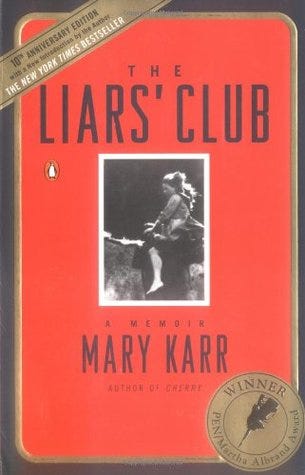
1. The Liars’ Club by Mary Karr

I wish I could go back in time to when I had not read this book and reread it; it’s my favorite memoir. And one of my favorite books. This clear-eyed account of Karr’s hardscrabble childhood in Southeast Texas is heartbreaking and awful and tender all at once. The Liars’ Club was Mary’s father’s poker club, and it’s a fitting title for a book about the stories that adults tell children, and the ways children live forever in those fictions.

Lonesome Dove

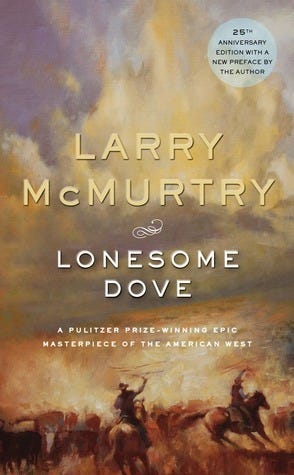
2. Lonesome Dove by Larry McMurtry

I mean, of course. Nobody captures the literal massiveness of Texas like McMurtry. I read this book from the backseat of the aforementioned car while on one of the aforementioned relative-visiting trips, and seeing the landscape McMurtry described while reading his book was one of the most powerful reading experiences I’ve ever had. It wasn’t hard to shuttle myself back a hundred years and imagine myself crossing old Texas on my trusty steed…

Philipp Meyer

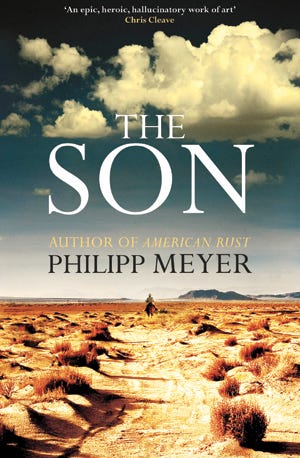
3. The Son by Philipp Meyer

Another sweeping historical epic set in Texas, this one involves the kidnapping of a settler child by roving Comanches; oil that turns people astonishingly rich; and the Texas Rangers. It’s the stuff of potboilers, yes, but not in Meyer’s hands: the Texas he writes about makes you weep.

Edna Ferber

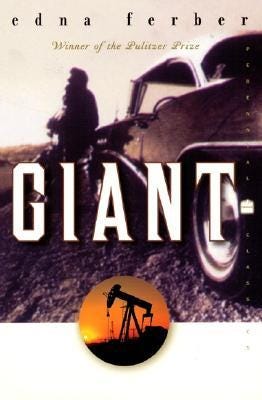
4. Giant by Edna Ferber

The famously thinly fictionalized account of eccentric oilman Glenn McCarthy’s life, who is Jett Rink in Ferber’s novel. James Dean went on to play Jett in the movie; Houston, who claimed McCarthy as one of their own, hated both the book and the film. Giant is a spectacular depiction of the rise and the fall of one of the great Texas oilmen.

Katherine Porter

5. Noon Wine by Katherine Anne Porter

A perfect novella, about a Texas rancher who loses control of his land to a hardworking Swede. Whether it’s rural Texas or Weimar Germany, nobody does place like Porter. And the final scene, which ends with this line — “That way he could work it” — is horrifyingly flawless.

Annie Proulx

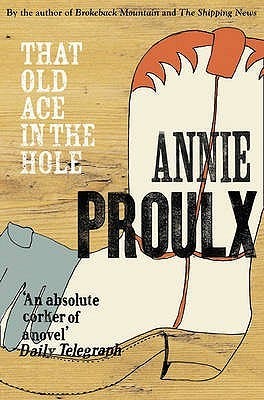
6. That Old Ace in the Hole by Annie Proulx

Proulx is so marvelously good at capturing the spectacular weirdness of a place, here a Texas town called Woolybucket. And the dialect? It does not disappoint.

Rene Steinke

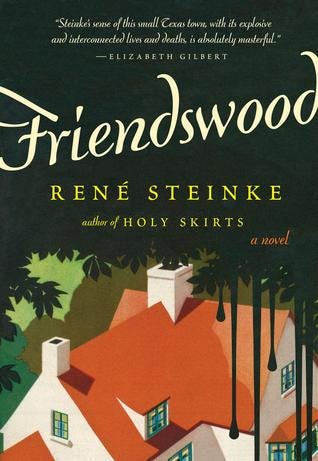
7. Friendswood by Rene Steinke

A small town in Texas is destroyed by a toxic leak. Told in multiple perspectives, the residents of Friendswood live, in various ways, in their own particular aftermath. There’s a lot of misery, but there’s hope, too.

Buzz Bissinger

8. Friday Night Lights: A Town, A Team, and A Dream by Buzz Bissinger

The origin story of Coach Taylor, and, besides that, a fascinating, shocking look at the role football plays in small-town America.

Robert Caro

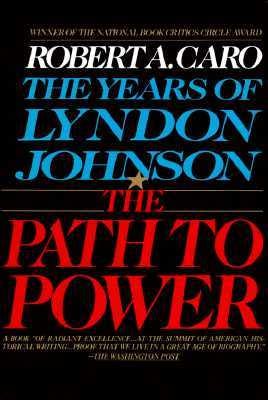
9. The Path to Power by Robert Caro

Could Lyndon B. Johnson have been born and raised anywhere besides Texas? Big and bawdy and powerful, with an unexpectedly sensitive side, the Lyndon Caro depicts for us here is fascinating and unforgettable.

David Foster Wallace

10. “Lyndon” by David Foster Wallace

Technically a short story (though I would argue it’s a novella) most of it is set in D.C., not Texas, and Wallace reinvents Lyndon’s history: here he’s bisexual, and dying (anachronistically) of AIDS. Speculative handiwork aside, Wallace’s Lyndon is so real — urinating in a flower pot, doting on Lady Bird, at all times surrounded by people (he hated to be alone) — you feel like you’ve shaken his hand by the end of the story.