At a certain point a decade or more back, I turned my house and dog over to a friend while I taught a semester at University of Syracuse and then went off to an artist’s residency. The deal was that he’d take care of the dog and pay the utilities but otherwise live in my place rent-free. On the one hand it went pretty well — the dog survived and the house received no structural damage. On the other hand, he did apparently work on his engine on the floor and counters and proved in various ways that the idea that you can white-knuckle it through your addiction just doesn’t work. I’d hoped to give him a little breathing room to get his shit together, but as it turned out it just postponed the further spreading of his shit temporarily. What started as an attempt on my part and on his too, I still believe, to help one another out, turned out to be the beginning of the end of our friendship.
I thought about that reading Rob Roberge’s stunning memoir, Liar, and about other friends too, and about myself, my own tendencies toward deception that I’ve managed, with varying degrees of success at different moments to channel out of my life and into my own fiction. Liar is a book about addiction, lying, memory gaps, mental illness, about what it is to live subject to all of those things and still continue to try to put a self together. It’s about those moments when you’re unable to distinguish between the lies you tell about yourself to the world and what the truth really is, who you really are, if it’s fair to say you ever really are anyone.
Told in the second person, Liar offers an uncomfortable (and at other times an almost too familiar) intimacy. The “you” at once calls out to the reader, asking them to place themselves within the narrative, and keeps confronting us with difference: we know we’re not this guy. Or hope we aren’t. Or hope we’ve grown out of it. But Roberge knows he’s not that guy too, or kind of does, or used to before he began to fear that he’d told lies so many times that he’s not sure what the truth actually is. And now that years of drinking and drugs combined with concussions are likely to progressively erode his already tenuous memory, it’s hard for the you of Liar not only to know what the truth is, but also to know whether he’ll even be able to hold on to the lies, whether, after a while, he’ll even have a sense of self at all.
Liar presents a cascade of remembered moments, some true, some not. Over a series of eleven chapters and through more than a hundred subsections, the memoir moves backward and forward in time, giving bits of memories, recoiling, anticipating, stuttering from the present to the past and back again. He, or rather “you”, cycles through girlfriends, engages in erratic behavior, contemplates suicide, relapses, lies to friends, apologies, feels awful, lies to get the next drink, the next hit, lies about having had a drink, a hit, has a months-long affair with the mother of a friend, sleeps with his girlfriend’s best friend, goes to A.A. and N.A., stops going to N.A. and A.A., stops taking his meds, spasms, falls desperately in love, and loses his first girlfriend to an unsolved murder.
This is anything but a redemption memoir; Roberge gives the sense rather of someone holding on to life and kind of amazed they’ve managed. At the same time, there’s nothing show-offy here either, no attempt to brag about what depths you’ve plumbed. What makes the book appealing is not so much that it’s inspiring or that it depicts a VH1 nightmare descent: it’s more a desire to see how Roberge will or won’t bring all the book’s different threads together. He does so delicately, constructing a kind of airy, shimmering structure crisscrossed with ligatures, with events expanded or retold or speaking to other similar events from one end of the book to the other.
There’s something incredibly vulnerable about Roberge’s book, something incredibly appealing, and how he manages to pull this off remains a real tour de force. I think of my ex-friend, charismatic and appealing in the way Roberge is, and of the stories he told as well, but also think of the moment when, his own memory slipping, he began to tell the same stories over again, often word-for-word, without realizing he was doing so or that we’d head them a half dozen times before. Or of my friend’s grandfather, who, because of old age would do the same. The fear of losing one’s memory and mind is strong in the book, and is something I deeply relate to as an author and as a human, but that is coupled with a profound awareness on Roberge’s part, and a feeling that if you’re going to lose your memory you might at least try to tell your life as right as you can just this once, and be honest about not knowing what’s true and what’s not. Liar is disarming and genuine, moving and maddening.
In June of 1977, just ten years after the U.S. Supreme Court banned all laws prohibiting interracial marriage, my father, who is of Japanese-Chinese descent, married my white mother. If there were no longer any sweeping legal impediments, then perhaps their marriage raised an eyebrow or two in ‘concern’? Well, no, but not because preconceptions had changed with the times; rather, at the time of their marriage and before, no preconceptions existed. The reason was simple: Theirs was a quiet ceremony held at Wailuku Union Church on the island of Maui in Hawai’i, one of the few states that had never passed anti-miscegenation statutes to begin with.Almost as soon as it was possible — beginning with the white missionaries arriving in the 1820s — people have intermarried in Hawai’i.
Almost as soon as it was possible — beginning with the white missionaries arriving in the 1820s — people have intermarried in Hawai’i. In fact, there were so many instances of marriage-based acculturation over such a long period of time that a study of interracial coupling had been conducted by The University of Hawai’i in 1937, forty years before my parents exchanged vows. As if to remember its placement in a wider, less tolerant history, the study’s introduction includes the strange presage that, “All kinds of things can and do happen on islands.” Citing insularity, which apparently “encourages individuality,” the introduction goes on to later repeat, lest the reader forget, “…it is true that one can never tell what will happen on an island.”
Following their wedding, my father settled into his job as a letter carrier while my mother tended house. Soon, my brother was born, then me. As birth stories go, mine begins early on a Monday morning in May of 1981. With my mother in labor, my father snapped into action gathering what they had pre-packed for their time at Maui Memorial Hospital. He then called his mother to ask that either she or his sister, Yoonie, watch over my two-year-old brother, as was the plan. The old rotary phone rang several times before a tattered voice answered, belonging to the only person awake at that too-early hour: my father’s grandmother, a 90-year-old woman affectionately known as Obaaban.
“Herro?” she said into the receiver.
“Baa-ban,” said my father, “Where’s mama?”
“Mama go holo holo.” Click.
My father called again.
“Herro??”
“Baa-ban! Where’s Yoonie?”
“Yoonie moi moi.” Click.
My father tried a third time –
“Herro!”
“Baa-ban, go get Yoonie!”
There was a brief pause on the other end and then a setting down of the receiver. My father could hear the shuffle of his grandmother’s old geta slippers as she made her way down the narrow hall. Yoonie eventually made it to the phone, then the house, and my parents hurried to the hospital in time for me to be born a short while later.
It is a favorite story of my mother’s. When she tells it, she does so by inflecting her Standard English with what is known to linguists as Hawai’i Creole English (HCE) but lovingly referred to by island locals as “pidgin.” As is often the case, I grew up drawing from both worlds without much awareness — it was all I knew.
With no one to understand her, Obaaban spoke less and less.
Obaaban, whose given name was Mie, died a few years later when I was three, leaving me with a single remembered moment, less a sustained memory than a visual flicker. We were in the small kitchen of my grandmother, the third daughter (out of four) with whom Obaaban lived. There was room enough for only two chairs, one of which was pushed up against a wall. Obaaban sat on this chair with her back so hunched her forward gaze was fixed to the floor. Her still-dark hair was pulled into a low bun and the polyester dress she wore hung loose as a bag on her bony frame. The few times she spoke, she did so using Japanese and Hawaiian in a rarefied pidgin common among the Issei, or first generation of Japanese immigrants who came to Hawai’i to work in the sugar cane fields. But at the time of my memory, that generation was long gone. With no one to understand her, Obaaban spoke less and less. At 93 years old, she was the last of her kind passing her final days on what my three-year-old brain imagined was the “lonely chair.”
As an adult, I asked questions my family answered with basic information. Mie was born in 1891; she lived in Niigata, Japan, until she came of age; she sailed to Maui as a picture bride; she married a man named Kotaro; she bore seven children; she worked her entire life for Hawai’i Cane & Sugar; she died at 93. But my curiosity lies in what I cannot know and so must imagine, a version of reality slightly askew.
I imagine Mie as a servant in a wealthy horse trader’s home. Because she is obedient, she is chosen to become the bride of the horse trader’s second son who was banished to Maui for misdeeds. On the day Mie meets this second son, the day she is married to him, she knows she will never love him. Her life is spent in the cane fields performing backbreaking work through her many pregnancies. Seven children in all are born — three boys, four girls — and in the end, when she buries her third son with only daughters looking on, she believes she is cursed.
On the day Mie meets this second son, the day she is married to him, she knows she will never love him.
All of which may be true, or at least partly so. Imagination for me has always been about the spaces in between, a sort of filler that completes a picture. If what we know is the jaggedness of the ocean floor, then imagination is the body of water that defines what is hidden and what is seen.
In thinking about the language of my great-grandmother, I used to try to imagine what it is I think she might’ve said had she possessed the words. But lately I’ve come to feel this thinking might be misguided, or worse, egocentric. Perhaps I should be imagining a way for me to possess her words, not the other way around. Perhaps those words still exist, albeit in an altered form, persisting through time like a legacy waiting for me to recognize it as such.
Though it has been spoken throughout the islands for more than a century, the U.S. Census Bureau announced its incorporation of “Hawaiian Pidgin” as an official language on November 3, 2015.
The American Community Survey, on which the five-year census was based, found that more than 100 languages are spoken throughout the islands. And out of the roughly 327,000 people surveyed, only 1,600 said they spoke pidgin at home. So if “Hawaiian Pidgin” is just one language in a long list of them, with data supporting only a fraction of existing speakers, then why does official recognition matter, I wondered?
The easy answer is that, without recognition, pidgin remains a ‘non-option’ for native speakers who either speak it exclusively or rely on it to some extent every day. Those 1,600 individuals who claimed pidgin as their language have in essence allowed a new box to exist for future survey participants, a box I imagine will be checked by far greater numbers in surveys to come.
The other part of the answer is more difficult because it is less hopeful. Prior to “Hawaiian Pidgin” existing as an option, pidgin speakers were compelled to skew self-information in order to fall within survey parameters. Being “official,” those parameters presented options not only “viable” but existing. This sent the unconscious yet inherent message that pidgin was not vital enough to be “real,” leaving its speakers vulnerable to the stigmatization that their language was at best just “casual talk” appropriate within the confines of family and friends and at worst “lazy talk” of the uneducated working class perpetually defined by the colonial subjugation of their ancestors. In short, without official recognition, pidgin has no future, only its past.
Like all things interwoven, Hawaii’s linguistic evolution cannot be separated from its long and tangled history with sugar. Beginning in the 1830s, the limited commercial enterprise between the Hawaiian Kingdom and the United States was in need of new product beyond those of the flagging whaling industry. Sugar was in contention, but needed serious capital to finance the leap from experimentation to profit. Eventually, as western settlement along the Pacific Coast increased, business heads began to turn curiously to Hawai’i as a potential source of revenue.
King Kamehameha III welcomed the attention. He proposed and secured The Great Mahele of 1848 which abolished the feudal system of the day and established what was needed to lure investors: private ownership of land. But for the Hawaiian people, privatization was as foreign a concept as the profit-seekers who out-maneuvered them to either purchase or lease most of the land, a veritable death knell for the native population.
Like all things interwoven, Hawaii’s linguistic evolution cannot be separated from its long and tangled history with sugar.
The commercial disruptions of The American Civil War brought about The Reciprocity Treaty of 1876, a trade agreement allowing sugar exports from Hawai’i into the U.S. tax-free. With a market secured, sugar production exploded and it soon became the new imperative to bolster industry with a pliable workforce. Contract laborers from all over the world were brought to Hawai’i and with them came a flurry of new languages: Japanese, Chinese, Korean, Portuguese, Filipino, just to name a few. A lingua franca formed to facilitate communication between the segregated camps, as well as with plantation employers. And just as quickly as these workers settled into family life, their interwoven languages transitioned from something makeshift to something more durable. The pidgin they’d spoken out of necessity and had acquired as a second language, they passed to their children as a native tongue.
Along with the sister who was born after me, my brother and I attended the same public schools, starting with Pukalani Elementary. Perched along the slopes of Haleakala, the campus — portable classrooms, jungle gym, basketball courts and soccer fields alike — featured a spectacular view of the entire island unfurling before us, so perpetually gorgeous as to be flagrant. Of course I never really looked.
Like the other kids, I was too busy playing in the dirt with my bambucha marbles, or trying to be the best at Chinese jump rope, or running to be first in the lunch line. Though there were students eligible for “free lunch,” most of us came from working class families who could afford the forty-five cents. But all of our parents drove beat-up cars and wore uniforms to work. We all shared ukus (our word for lice) and didn’t know that some people considered it a “poor person’s” affliction of which to be ashamed. For us, it wasn’t a matter of if or when we would “get ukus” but how many times in a school year.
Though we didn’t always see it as such, the differences between us kids were highlighted in our very names — for every Charlie, Julia, and Douglas, there was a Va’amua, Myces, and Eha. For every blonde head, there were fifty dark ones of varying shades. Our teachers were similarly diverse: Mr. Karimoto, Mrs. Chang, Mrs. Ogle, Mrs. Magalanes, Kapuna Maxwell.
The one glaring difference was in the realm of scholastic achievement. There were those kids who spoke (or at least could speak) “proper English” and those who spoke pidgin. I can still remember a classmate saying conspiratorially, “We friends, yeah?” Or, when a teacher scolded one of the boys for a misdeed, “I promise, Mistah, I nevah do um!” Or one kid taunting another with, “You! Some stupid, you…” We, my siblings and I, were given a slight “advantage” with a white woman for a mother, and so wouldn’t be caught dead speaking pidgin (though we could) in a formal setting. Kids like us, who could speak “properly,” were somehow programmed to think of those pidgin-speaking kids as “dumb” and those who wrote in pidgin, the very “dumbest” of all.
Kids like us, who could speak “properly,” were somehow programmed to think of those pidgin-speaking kids as “dumb” and those who wrote in pidgin, the very “dumbest” of all.
In a recent conversation with my brother, who is now 37, he recalled when the tables turned. From the time he entered high school, he worked bagging groceries and stocking shelves at the local grocery down the street from us. There, it felt like a fireable offense to not speak in pidgin. It was a matter of respect for the older generation who worked as cashiers or in the kitchen (mostly women), as well as a matter of masculinity when it came to the bosses (mostly men). Pidgin was — still is — an important social marker indicating who is local and who is not. My brother even recalled how he once encountered a fellow employee at her second job as a bank teller, and how she spoke “proper English” there, but “turned on da pidgin at da store.” The financial realm had somehow surpassed the commercial in formality, indicating an even more nuanced complexity to the “insider” system.
For whatever flawed reason, I myself grew alongside other kids believing that while I wasn’t superior to them, my ambitions were. I passed my childhood dreaming of the day I could leave for “The Mainland.” I didn’t want to be stuck with the “blahlas” who loitered at the beach, protecting the pavilion and shore break that amounted to their whole world. I graduated from Maui High School, turned eighteen, and took my leave right on schedule. Eventually, I would receive a bachelor’s degree from a liberal arts school, even enjoy a stint studying abroad in Scotland, but mainly passed my early adulthood in Southern California working various jobs that were all equally unfulfilling.
I’d never called myself a ‘writer’ before. How could I speak aloud, let alone proclaim with gusto, something as private and personal as a hoped-for dream?
In August of 2013, I arrived to the big sky of Texas. Ten years of working and waiting, dreaming and despairing, had resulted in the shocking good fortune of acceptance to a graduate program at the Michener Center for Writers in Austin (named for and financed by James A. Michener, author of the legendary tome, Hawaii, which I will address later). “MFA Candidate in Fiction” is what followed the email signatures of the other fellows. It sounded unreal as it applied to me; it felt off-limits to someone older than most of her peers, someone as fearful as she was under-qualified. I’d never called myself a ‘writer’ before. How could I speak aloud, let alone proclaim with gusto, something as private and personal as a hoped-for dream? I somehow fumbled my way through orientation and a week of classes only to find myself faced with our first real assignment as incoming fellows.
Straight away, the program whisked us wide-eyed students into a conference course with an instructor of international repute. I’d never heard of the man before, but quickly learned he was as prolific a writer as he was beloved by the literary community. The two-week intensive course involved him instructing us through the works of other writers such as John McGahern, James Joyce, Leo Tolstoy and Elizabeth Bishop. In addition to this, we were each scheduled for a private, one-on-one session with the instructor to discuss our own individual writing — all of which terrified me.
Prior to the instructor’s arrival, I had turned in a story for him to read in advance of our meeting. Set in a time before I was born, the story is an imagined recounting of a young man from Maui on the day he is to leave for basic training during the Vietnam War. In writing it, I drew heavily from my childhood memories of growing up on the island and relied mainly on sensory recall as filtered through my adult eyes. Very few people had read the story, let alone someone of the instructor’s illustrious stature.
Very few people had read the story, let alone someone of the instructor’s illustrious stature.
He burst onto the scene, a short man with a medium build whose energy and vitality belied his age. I first observed the busywork of his hands, both of which continually ran along the gleam of his baldpate in a worried cradle or nervous rub. Hanging at his neck was a pair of red-rimmed spectacles that could be pulled apart at its center and brought together again by a little click of a magnet. Off and on and up and down those spectacles went like a dance partner for his hands. He’d pull the lenses apart only to lower his eyes to the text moments later with that unforgettable click, click, click. All of this movement, along with his particular lilt set to the tempo of his storytelling, made me dread the day I’d sit before him exposed. But a part of me was also excited. “Maybe he’ll really like your story,” said my husband in an effort to bolster me. “Maybe he’ll recommend it for publication…you never know.”
On the day of our scheduled meeting, I wore a red and white checked dress with my favorite brown leather sandals. Bright and cheery was my thinking. I arrived to find the instructor sitting in a back room, waiting. He kindly ushered me in and arranged me before him in a straight-back chair. After a minute or two of exchanging pleasantries, he turned his attention to the page in a grand display of getting down to business.
“Maybe he’ll really like your story,” said my husband in an effort to bolster me. “Maybe he’ll recommend it for publication…you never know.”
He took a moment to review the first few lines of my story and familiarize himself with his earlier reading of it. His hands crept up to his head in what looked to me like a dismal and worried gesture. “Right,” he said. In one fluid motion, he flung back into his adjustable chair and raised his arms to link his hands behind his head.
“The thing is, I don’t really know what any of this means,” he said with such pained sweetness it took a moment for me to understand what was happening.
He slowly went through each sentence, pointing out what made very little physical sense to him, and by time we’d reached the end of the first paragraph, our session was more than halfway over. My cheeks were hot with shame. How could I have thought that something other than this might’ve happened? How could I have allowed myself to hope in that way? Of course he leveled his criticisms with such grace and affectation, I could only scribble down his words with a weak hand I was forcing to work. When he realized we were nowhere near the end of the twenty-five page story, he skipped to the point he ultimately wanted to make. In order to do so, he attempted to read aloud a paragraph that seemed extremely troublesome to him:
“Howzit, young man!” said Flora, the waitress who spoke for everyone.
Ebo gave a small smile, sat on a stool at the counter as if it was any day other than this one. Flora set down a mug for coffee, pivoted her body like a sprinkler as she wiped the counter. Her hair, a manapua bun sitting plump on the curve of her head, had never been let down, the coif of her fringe sprayed stiff for years. She had never been anything else, which was a comfort.
“Big day today,” she said, as much to the counter as to Ebo. “We is proud of you, young man, I can tell you dat. You go get’m and say you is born and raised Happy Valley. We make’m good in Happy Valley.”
Another section appeared to bring him even greater personal discomfort.
“Gotta ask you someting,” said Ebo, standing now to ask Daddy squarely. Daddy pivoted back down onto the bench seat, set his elbows to his knees, and hung his head between his shoulders. Ebo, in turn, leaned against the Ford so that like two reluctant dance partners, they’d traded places.
“I know what you like ask,” said Daddy. “Some kine advice, I know. Soljah to soljah. But only get one ting fo say…” Daddy looked up, settling his gaze seriously into the middle distance. Ebo hadn’t anticipated this. He gently pushed off from the Ford, stood tall and waited.
“Duh ting you gotta do,” said Daddy, “is…no die.”
Here the instructor leaned in close and spoke in a whisper. “Does he really need to say, ‘no die’? What I mean is, would he really say it exactly that way?”
I thought about it then, really thought, and imagined what my father, my uncles, my brother, what any of the men from home would say and how they would say it. I surprised myself by summoning the last of my energy and courage. “Yes,” I said, “he would say it exactly that way.”
The instructor pressed himself back into the embrace of his chair, trying to work out an answer to the apparent puzzle of me. “Here’s the thing,” he said as he leaned forward and rubbed his head, “when you write in dialect like this, it tends to be a little too political, you see. I worry about it sounding a bit demeaning to your characters. Do you understand what I’m trying to say?”
I said that I understood, thanked him for his time, and left.
According to most sources, HCE is currently spoken by nearly half of Hawai’i’s population, though it feels to me — and probably others who are born-and-raised — that the numbers should be higher. Even so, HCE has never been a written language in possession of a recognized orthography. Because of HCE’s long history of representation as a non-standard variety of English, even a deviant form, it has lacked the political and educational conditions for standardization. Without it, HCE is considered a literary dialect rather than a literary language, leaving its writers bereft of any wider appreciation.
One criticism leveled at the use of HCE in literature is that it is unreflective of the range of its speakers, “[functioning] to characterize not heroic figures, not even mature adult ones, but children, idiots, bums, and assorted antiheroes and buffoons.” Another concern pins HCE as a regional expression alone, limiting it to “provincialism” and “parochial insularity.” All of which leads to the perception that HCE poses limited appeal and traps writers into an under-appreciated corner where they can only wonder: Is it possible for writers from Hawai’i to create a literature of wider and lasting literary merit?
Is it possible for writers from Hawai’i to create a literature of wider and lasting literary merit?
I’ve played my own part in relegating writers from Hawai’i in two unforgivable ways. Firstly, beyond a cursory knowledge of Roughing it in the Sandwich Islands, Mark Twain’s account of Hawai’i in the 1860s, and James Michener’s blockbuster, Hawaii, published in 1959, the same year of statehood, I had no idea Hawai’i had a literature of its own — by its own people — until very recently. Though local literature had never been taught to me in school, I had also never asked or looked.
Once I did, I found that the literature of Hawai’i exists not only as a heritage, but also as something ongoing, with forward movement, which is also vitality. My initial dip soon became a full-body submersion into unexpectedly deep waters: from Milton Murayama to Darrel H.Y. Lum; from Marie Hara to Lee Cataluna; from Lee A. Tonouchi to Eric Chock; from Kiana Davenport to Christina Kahakauwila and beyond. There were so many writers to dispel my earlier loneliness, I found myself needing to streamline my efforts from “local literature” into “literature that spoke to one local.” Meaning me — just one island-born, non-native reader who was humbled to find so much to admire from those gone before and those who now carry the torch.
If my first mistake was failing to recognize the presence of local literature, then my second had everything to do with my placement in it. As the act of writing is itself often prohibitively difficult, I’d kept the rules very simple — write what you hear. But since we often write in hopes of being read, writing becomes a public act, and when presented to the world, it is fair for that world to expect thoughtfulness of you. By having no real consciousness as to why I was writing what I was writing, and more importantly how I was doing it, I failed a basic test of intention: having an aim to guide my efforts.
I spent the rest of that afternoon scribbling furiously into my journal certain self-admonishing phrases such as, “be more adult” and “be less provincial.”
Following my one-on-one meeting with the instructor, I hurried back to my house to write down the lesson I thought he was trying to teach me. I spent the rest of that afternoon scribbling furiously into my journal certain self-admonishing phrases such as, “be more adult” and “be less provincial.” I vowed to be “serious” going forward and to not rely on HCE as the thing that might make my writing “interesting.” On and on it went, this “call to be better,” this “illumination.”
And so I stopped incorporating HCE into my writing for the next year or so until I read a saying by Elbert Hubbard that struck me as true: “To avoid criticism, one must simply do nothing, say nothing, and be nothing.” In my mind, this nothingness sounded a lot like the silence of past generations who literally lacked the words to be understood. And to me, silence sounds a lot like shame. Without meaning to, the instructor had tapped into this deep-seated and familiar sense of shame that caused me to recoil as a way of preserving some small measure of self, or perhaps the small sense of self I had. But by avoiding HCE, by refusing to do the work of parsing its literary functions, I was actively perpetuating the imposed silence — even the “plantation mentality” — of my ancestors, the very people who labored their whole lives so that I might have the luxury to choose to be something else, perhaps even someone vocal.
Of course with time comes perspective and after a while, I could only feel grateful to this instructor for what he had given me, which was essentially me. More specifically, he’d given me good reason to discover the aim of my writing so that the act of writing might be suffused with and protected by more serious intention. Soon, what had felt like a liability became an asset; what had been shameful, turned into celebration; what I had seen as criticism was now an opportunity.
With regards to HCE’s literary viability, the question for me personally had always been: was it a problem of literary scope or the presentation of my writing? Having taken the first steps to finally learn something of Hawai’i’s literature, I understood that others had met with similar resistance and had long been working out a response. So I knew — perhaps I’d known all along — the problem was my execution.
This led to my layperson’s examination of a few linguistic features local writers employ. So basic was my search that I cannot presume to illuminate even the most casual of readers here. More to the point is the wider problem of orthography. Whereas one writer might spell the word “bumbai” (by and by), another might spell it “bumbye.” The word for father might look like “fada” or “faddah.” And still yet, the word thought can be viewed any which way: tot, tawt, taught, etc. Because HCE relies on the orthography of Standard English, the perception is such that HCE remains a “simplified” and “reduced” form. Without the existence of standardized spelling, HCE has no autonomy, and without autonomy, there will always be hierarchy.
Without the existence of standardized spelling, HCE has no autonomy, and without autonomy, there will always be hierarchy.
But if the collective challenge for writers of HCE is standardization, then the individual challenge must be narrower. As writers who employ HCE, do we lean toward Standard English wherever possible in order to appeal to the widest audience, choosing “I seen him” over “I wen see’m”? Do we avoid using apostrophes suggesting elided consonants and vowels, as in “What foh?” versus “What fo’?”? Is the question, how far do we compromise? Or is it that any compromise will eliminate our chance at creating the distance needed to move from dialect to language?
Delving further into methods of implementation, there is also the question of point of view, or rather the difference between dialogue and narration. The latter is typically expressed in third person, past tense, while the former, being more intimate, is mainly in first person. Because HCE is primarily reserved for character dialogue, writers often face the decision of how heavily they should lean on the Standard English for narration. Lean too heavily and they run the risk of creating such a distance from HCE as to render it jarring. But lean too lightly and readers are conscious of having entered the realm of “otherness” to a distracting degree.
Is the question, how far do we compromise? Or is it that any compromise will eliminate our chance at creating the distance needed to move from dialect to language?
In my own work, I’ve tried to utilize HCE for third person narration, which I found unusually challenging. The research I looked to gave a fascinating reason as to why: When using HCE as standard narration (i.e. 3rd person), it becomes public rather than private discourse. By attempting to use HCE as a means of expressing what has been conventionalized through Standard English, HCE stops being the thing it was created to be: a specific means of identifying against the mainstream. And so what feels truest for me is this: HCE belongs in someone’s mouth, otherwise it is possibly just the author — in this case, me — trying for an effect and sensing my own presence too heavily, which leaves less room for others. In the end, I simply missed the character I usually have to spend so much time imagining as my speaker in order to say anything in HCE at all.
Though I had initially set out to find answers to the infinite questions a writer of HCE — or any dialect — might face, it would seem the questions are unanswerable, if only because they need to always be asked. And the few answers I believe we can hope for are only ever found in what writing we accomplish. This writing is nothing more than a series of decisions that amount to a process reflective of our specific efforts. Because writing is not a buttoning-up, but a disrobing until there’s only you and the story of how you specifically give shape to your skin. It is the stamp of your choosing, carved and fashioned through work, the surface of which meets up with ink and presses to paper a perfect representation of what it is to be alone with yourself in space and time.
Because writing is not a buttoning-up, but a disrobing until there’s only you and the story of how you specifically give shape to your skin.
Or so I believe on good days.
Most of the time, I just worry. I worry about the utter blankness of the page, about whether or not any words will come. And if those words do come, will they even add up to ideas? Or is it that what few ideas I have actually outweigh my skill set for expressing them? Who really knows — I’m just like anyone else: stuck. Only where I am stuck feels like the space between two places — between motive and process, between cultural identity and ethnic, between writing that turns from Standard English and writing that perpetuates it. But maybe it’s exactly somewhere within this divide that story actually lives. Again, who knows?
For now, I am content to try for a new story, one where I happily re-imagine my great-grandmother, Mie. She is sitting in her chair, not lonely and waiting to die, but alone in the garden of her mind. While there, perhaps she sees a three-year-old girl and whispers to her how she should one day grow up to describe it.
Sources:
Romaine, S. (1994). “Hawai’i Creole English as a literary language.” Language in Society, 23, 527–554.
Sumida, S. H. (1991). And the View from the Shore: Literary Traditions of Hawai’i. Seattle, WA: University of Washington Press.
Elena Ferrante’s Neapolitan novels span some of the most dramatic decades in Italian history. The story is a profound study of female friendship and subjectivity but also an exploration of how history exerts itself on the individual, how important social and political upheavals are embodied in the smallest glances and most intimate details.
In a rare 2015 interview with The Paris Review, Ferrante said:
“I felt Elena and Lila were alienated from history in all its political, social, economic, cultural aspects — and yet they were part of history in everything they said or did. That alienation-inclusion seemed to lie outside the narrative frame. It seemed hard to include in the story. So of course I decided to try. I wanted the historical period to be a faintly defined background, but also to emerge from the characters’ lives, from their uncertainties, decisions, actions, language.”
In that “historical background,” Italian society was transformed on a massive scale, emerging from the ruins of the Second World War to become a major European country. The change in the Mezzogiorno — southern Italy — was epic. In the 1940s in that region, it was still possible to find people living in feudal poverty, their lives largely the same as a century before. By the early 1950s, the rural poor were moving into cities, taking up work in factories and commerce while their children entered university or became office workers. But even with advances in education, industrialization, and women’s rights — and all the struggles those advances entailed — discord, corruption, and patriarchy persisted, seeping into the body politic and erupting in the social conflicts and spats of violence that crowd into the world of the Neapolitan novels.
For English-speaking readers who want to explore that history more, these six non-fiction books are the place to start.
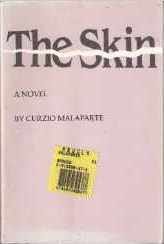
1. The Skin, by Curzio Malaparte
Several ghosts haunt the Ferrante tertraology, but none more than the Second World War and its deprivations. Naples was a key strategic city on the Italian penisula and the Allies bombed it mercilessly, marking the city for decades to come. Lila discovers, however, that the scars of the war were not confined to buildings but reside also in the region’s finances and power structures and that the Solara family used this dark time to get a stranglehold on the neighborhood’s petty economy.
In The Skin, Curzio Malaparte — who was, in his, life, a fascist, an anti-Mussolini activist, a Maoist, and lastly a Catholic — sketches out the liberation (and occupation) of Naples by Allied forces, foreshadowing how the trauma and resentments, the profiteering and black markets would linger on in the city’s soul long after the war.
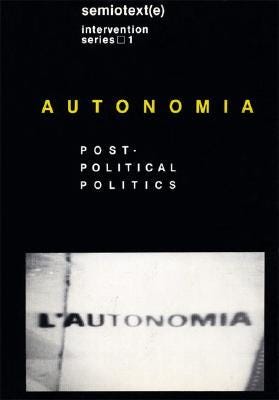
2. Autonomia: Post-Political Politics, edited by Sylvère Lotringer and Christian Marazzi
As Elena and Lila’s lives diverge in adulthood, they enter the upheaval that gripped Italy in the late 1960s and early 1970s — Elena in the universities and intellectual milieu of the middle classes, and Lila in the grinding horrors of a sausage factory brimming with class conflict and hatred.
Two minor characters, Pasquale Peluso and Nadia Galiani, however, transcend these political currents and embody the trajectory of the radical left. Nadia, a typical bourgeois revolutionary, moves from university protests to the bitter factory strikes and actions, while Pasquale turns to radicalism through those very struggles. Their partnership almost symbolizes the militant coalition of students and workers that emerged in Italy during the Hot Autumn of 1969–1970, a period of unprecedented strikes and university unrest.
Autonomia gathers the breadth and diversity of that movement’s thought and potential, from the more playful Metropolitan Indians — hippies who staged happenings and occupations — to the struggle for worker control on factory floors. It also examines the rise of clandestine armed groups like the Red Brigades that carried out kneecappings, bombings, and kidnappings in what became known as the Anni di piombo or Years of Lead. It is into this last shadowy chapter of the movement that Nadia and Pasquale disappear.
3. Italian Feminist Thought edited by Sandra Kemp and Paula Bono
Ferrante’s novels largely depict her female characters’ alienation from the social and political changes sweeping the country, but also show Italian women organizing to challenge the sexism and patriarchy that persisted in “liberalized” social institutions — like the office, classroom, or factory floor — as well as movements calling for outright revolution.
Out of the radical currents, detailed above, grew a vibrant and confrontational feminist movement and during the 1960s and 1970s, Italian feminism produced some of the most radical and influential theories on gender and woman’s roles in society, and this book collects some of those thoughts and manifestos together. Most famous was the call for “Wages for Housework,” which sought to recognize the massive amount of unpaid labor that fell on women and transform the domestic sphere into a place of struggle.
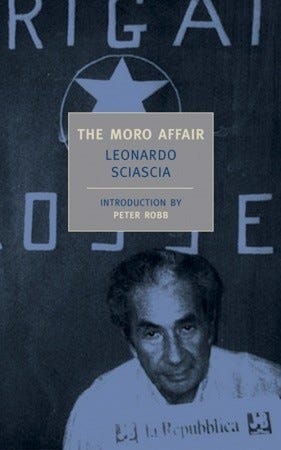
4. The Moro Affair, by Leonardo Sciascia
When the Red Brigades kidnapped Aldo Moro (chairman of the center-right Democrazia Cristiana party) in 1978, it marked the nadir of a political struggle between the far-left and the Italian state that developed out of the factories and universities and, at times, bordered on civil war. It was also a turning point for many left-wing intellectuals like Elena Greco, drawing a line between those who found the kidnapping and subsequent execution justified and those who couldn’t stomach it. “Moro’s body had been found a little more than a month earlier and I let slip a description of his kidnappers as murderers. It was always difficult with words, my audience required that I calibrate them according to the current usage of the radical left and I was very careful.” She, much like other intellectuals in that time, retreated from political life, unable to bear the calls for violence and repression.
Leonardo Sciascia, a crime writer from Sicily, wrote The Moro Affair not long after Moro’s body was left in the trunk of a car parked on the streets of Rome. It is an attempt to parse the texts of the kidnapping — the letters, the editorials, the declarations of party bosses. It tries to understand why the state and the terrorists seemed to collude in sacrificing this man, one side hoping that the ensuing state repression would galvanize Italians to revolution and the other that it would stamp the radicals out forever.
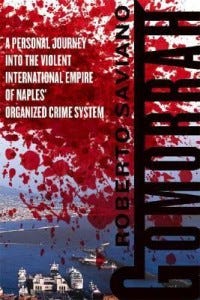
5. Gomorrah, by Roberto Saviano
The Solara family is the nebulous antagonist of Elena and Lila’s claustrophobic neighborhood. But the reach of their power and influence is always ambiguous, developing and revealing itself throughout the novels. At first they seem wrapped up in smalltime commercial enterprises: the pastry shop, the Cerullo shoe workshop and later shoe store, and also some black-market businesses left over from the war, such as loan sharking and trafficking in stolen goods. By the end of the teratology however, their legitimate business, while expansive, seems a mere front for a large-scale criminal empire tied directly to the Naples mafia, the Camorra.
In his 2006 book, Gomorrah, journalist Roberto Saviano exposed what most people in Naples already knew, that the Camorra crime syndicate was not merely a loose-knit collection of petty criminals but instead a powerful criminal organization that had metastasized into all aspects of the economy and political life, buying politicians, fixing markets, distributing heroin and cocaine, and poisoning the land around Naples with toxic waste.
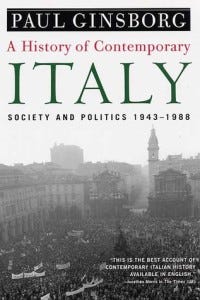
6. A History of Contemporary Italy 1943–80, by Paul Ginsborg
This is an excellent history of modern Italy from Allied liberation to the postwar economic miracle, from the tumult of the 1960s and ’70s to the malaise of the 1980s. Ferrante’s novels navigate this time, and you could chart their progress alongside this history, from the ruins of the allied occupation to the transformation of Italian society into a modern neoliberal state. This books lays out in each section, the weight of historical circumstances — culture, economics, politics — that come to bear on the characters of the Neapolitan novels.
The idea of nostalgia comes to us not from poetry but from medicine. A seventeenth-century Swiss student called Johannes Hofer coined the word in his dissertation, naming what was then thought to be a disease: “the sad mood originating from the desire for return to one’s native land.” Nostalgia’s early victims included students from the Republic of Berne studying in Basel, and Swiss soldiers fighting abroad. To treat it, one could apply leeches, or journey to the soothing air of the Alps. The best cure of all was return to the homeland.
Modern comprehensions of nostalgia are less concerned with bodily illness, or with homelands, than with the movement of history. Now, we long not for places, but for places in a historical moment, fleeing as if we were viewing them in a train window.
It was in the nineteenth century that the past began to be institutionalized. Towns erected museums and memorials. In these structures, nostalgia expanded from personal longing to public tradition of salvage. Our past became intimately known at the same time as it was rendered inert: the beginning of heritage.
In an A Public Space essay on returning to his hometown, Kolkata, Jai Chakrabarti wanders about the developing city. “I notice,” he writes, “which of the older buildings have become new malls, which of the sweet shops known for their condensed milk squares have now been replaced by modern confectionaries or worse, a Baskin-Robbins.” In the sparse audience at a play, he mourns the empty theater, a venue and form of art banished to obscurity by a crowd committed, so he claims, to 3-D thrills.
Nostalgia, now, is rebellion against that fraught and beloved idea, progress.
•
In my childhood, Hollywood films played at three cinema halls in the city of Kolkata. Grand destinations of the British era — marble staircases, red curtains which parted before the screen — these theaters sought contact with a world of which, we already knew as children, we occupied a filthy periphery. We were still a colony, in thrall to the west. Even the names of the cinemas declared it: Lighthouse, New Empire, Globe.
With the obsessions of a colonized people taught that we were unclean, we noticed the cleanliness and comfort of the west. On screen, the streets of America were so pristine that people could come home and jump into bed with shoes on. Americans had silent, efficient machines for everything — curling hair, cleaning carpets, chopping onions, washing clothes. We had nasal-voiced maids who slapped and punched our worn garments on the bathroom floor as if on riverside rock, after which we clipped dripping dresses, in summer, winter, and monsoon, to ropes strung from the verandah.
Our lives were terribly unsophisticated, even coarse. The lanes flooded every July, drowning roaches whose brown shells floated in the water. In all seasons, beggar children touched our elbows and whined with upturned palms until we gave them a rupee, and uncles on the minibus pinched our breasts.
So when the accoutrements of America, as we understood it — malls, multiplexes, Baskin-Robbins, 3-D movies — began to migrate to our city, how could we not be delighted? Our city was joining the rest of the world, and it was an aspiration shared by all. (This continues to be true — the state’s current chief minister’s ambition is to turn Kolkata into London.)
With familiarity tipped over into disdain (“worse, a Baskin-Robbins”), Chakrabarti dismisses his own luxurious acquaintance with ice cream upon ice cream devoured, until one day the cone was no longer coveted. Even the memory of its having been coveted became an embarrassment. But in order to disregard the restorative wonder of coming in from a hot city to a cool, clean shop, and the peace of purchasing a scoop, one has to forget how corrosive life can be in the city.
•
Complaints about missing sweet shops or changing architecture are, in the end, complaints about inauthenticity. What these grievances betray is a wish to feel the city textured by a time now gone, a time in which one had moved through the city and, recalling it, felt it, or oneself, as one feels verse. It is a wish to have an authentic experience that is also poetic.
Here is an authentic experience.
A lean man pumps his legs to draw you, in a rickshaw, up the lanes of a neighbourhood. The vehicle, an overgrown tricycle, has no suspension to speak of, so every pothole and speedbump launches a jolt to your spine. No matter. This is the common mode of transport in the interior of residential districts, and it costs little. When you climb off, backbone freshly aligned, you hand the man twenty rupees. He glances at the note. He says the fare is twenty-two.
Twenty-two? Just last week it was twenty.
The man grows irritated. He demands that you ask anybody, you ungrateful passenger, or says nothing at all, looking squarely ahead until you give in. And you do give in, but not without a sour feeling of being cheated. Rickshaw fares are written nowhere. There are no meters. The system is rigged against the passenger. But you look at this man, his muscled calves, cloth pants hitched to his knees. You recall the sweat on his back as he leaned forward to pull you up a slope, and in haggling with him over two rupees, you come to feel not only that you are being cheated, but that you are cheating him, too.
Being middle class in Kolkata means this and a dozen moral struggles every day. The hardships of individual life are made flint by class friction. They ignite, over and over, in public encounter.
This is authentic life, though it is not the poetic authenticity in which one feels uplifted rather than beaten down. But many cities around the world, like Kolkata, are dense with the small indignities of daily life. In these places, the romance of such authenticity is a joke.
Juan Villoro’s short story “Amigos Mexicanos” takes this joke to an extreme. In this story, a foreign journalist visits Mexico, and his chosen guide wonders how to give him a satisfying experience: “He wanted a reality that was like Frida’s paintings, ghastly but unique.”
So he takes him to a restaurant:
I’d chosen the restaurant carefully; it was perfect for torturing Katzenberg. I knew he’d thank me for taking him to a genuine locale. They were blasting ranchera music, the chairs had that toyshop color-scheme we Mexicans encounter only in “traditional” joints, there were six spicy salsas on the table and the menu offered three kinds of insects. All calamities picturesque enough for my companion to suffer them as “experiences.”
None of this really works. Finally, the journalist is kidnapped, and this, we learn,
immersed Katzenberg in the reality he so yearned for. Katzenberg had lived it as something indisputably true: his days in captivity were devastatingly authentic.
The visitor, like Katzenberg, yields to the cruelties of a place as enlightening. But the nostalgic is wary of the city’s thorny edges. If the nostalgic returns, a condition of his return is that he will leave. In his brief moments there, like Chakrabarti, he desires the city in its historical image, its charms preserved. The nostalgic wants, most of all, to observe the city’s beauty as unquestioned champion over the daily exhaustions that plague its people.
•
The first mall in Kolkata was called Forum. It was located opposite a house where a twentieth century Indian nationalist once lived. We never summoned the will‚ — we should, we should — to visit Subhas Chandra Bose’s house, but we flocked to Forum often enough that the mall authorities began to refuse entry to children in school uniforms.
At the mall, we did nothing, really. We rested in the cool air and ate cookies, separated for an hour from the streets in which we tucked each other’s bra straps, if they showed, back under blouses.
How can you begrudge us that?
If authentic life, in the end, encompasses beautiful architecture or the quaintness of men who work as blade sharpeners, carrying their tools around the neighbourhood on afternoons when only housewives are home, then it also encompasses how the old houses are cracking, plants growing in their walls, while their owners grow feeble and the heirs prosper in Singapore. If authenticity is about a blade sharpener, then it is, also, arguing with the blade sharpener over why he has given you a torn banknote, which nobody will accept.
Now that it is yours, though, you have to slyly slip it into a bunch of notes to hand a shopkeeper. If he spots it, he will return it, and you will both know what you have tried to do. But this is how it works. This is how the note goes, once more, into circulation.
Sadly, Emily Post died thirteen years before the first AWP conference, and thus did not offer advice on how best to conduct oneself at the largest literary gathering in North America. Luckily, you have me, someone who has never been compared to Emily Post once in his life. All the same, Electric Literature asked if I might answer some FAQs on how best to navigate AWP and I was more than happy to, because I love telling people what to do and believe everything would be right as rain if people would just do as I say. So, here we go:
Any packing tips for AWP?
Don’t forget your meds. If you’re attending AWP, you’re probably a writer, and if you’re a writer, you’re probably on medication. Sweeping generalization? Not especially. So whether you’re on a low dosage of Zoloft or an industrial-sized dose of Lithium, make sure you’ve called in your refills and packed your pills (in your carry-on!) before heading to Los Angeles. There are many, many situations one may find oneself in during AWP wherein one may desire the accompaniment and aid of one’s benzodiazepenes. And if you have them to spare, remember: sharing is caring. If you have foregone traditional Western medicine in favor of yoga, kale, and mindfulness, it still may be a good idea to invest in some Tylenol PM, which you can absolutely take in the AM for fun.
There are many, many situations one may find oneself in during AWP wherein one may desire the accompaniment and aid of one’s benzodiazepenes.
Do I need to wear a different outfit every day of the conference?
Absolutely not, sunshine. You will see, like I have, that even a titan like Anne Carson is an unapologetic outfit-repeater in a conference setting.
Any travel tips?
Whether you’re driving, flying, or arriving by some other form of transportation that I can’t think of right now: arrive alive if you can. AWP is a good time, all the more so when you’re in one piece.
Will I find an agent or sell my manuscript at AWP?
No. Desperation is accompanied by a foul odor, one that’s easily detectable from a distance. I’m sure your novel-in-progress is wonderful, and I’m sure you have Pushcart Prize nominations coming out of your ears, but remember: you’re surrounded by thousands of people who are trying to do the very same thing you are. Be buoyed, not discouraged, by that.
Should I try to become best friends with Maggie Nelson and suggest we get matching tattoos and/or friendship bracelets and maybe go on a vacation to Reykjavik?
Nope, that’s my thing. Sorry. I got there first, get your own.
What do I do if and when I run into a hero of mine?
Start reciting your favorite lines. Ask for pictures. Show your tattoos. Cry. It’s extremely exciting to meet your heroes, and you shouldn’t necessarily feel pressured to keep your light under a bushel in such scenarios. Just, you know, don’t follow the writer around after your encounter.
Are the people I interact with on Twitter going to be anything like I imagine them to be in person?
Probably not! Do not be surprised nor take it personally when, after finally meeting someone with whom you’ve had many fun interactions on the Internet, you find you run out of things to say rather quickly. We’re all shy weirdos; Twitter and Facebook just make it easier to seem like we aren’t. Treat it like speed dating and move on to the next booth at the book fair.
For whatever reason, most panels and readings end with time for questions from the audience. Why this has not yet been outlawed is beyond me.
I’m at a panel and I’m thinking of asking a question. Any advice?
Oh, for the love of Jesus my pearl, don’t. For whatever reason, most panels and readings end with time for questions from the audience. Why this has not yet been outlawed is beyond me, but I do plan on getting a petition up over at change.org the second I learn how to do that. Until that point, however, at such events one will inevitably be forced to sit in a conference room while someone in the audience asks a question — or, more often than not, uses up-speak to make an unsolicited comment — that is either asinine, pointless, already-been-covered, or upsetting. Sometimes all of the above. I’m not saying that nothing meaningful can come from a Q&A session — it can’t, but that’s not my point. Rather, I ask you — you whose palms are itching, you who can barely wait to raise your hand — to go through a few simple steps in your mind before doing so. First off, ask yourself: Is what I have to say even a question? Now ask yourself: is it something you must ask publicly? If you force your question through these machines and find it still intact and necessary to ask — well, you’re probably incorrect, but if you insist, a few more tips. Before raising your hand, phrase the question in your head. Rehearse it. Delete the preface, because it doesn’t need to be there. Get it condensed and concise. Cut it in half. And then? Don’t say anything at all. It’s good to have a lot unanswered in one’s life.
What is the most important rule of AWP?
Use protection! That novelist you jerked off at Breadloaf, that poet you got to third with at Sewanee, all of your exes and ex-flings from various MFA programs and magazines across the country — they’re all going to be there, there’s going to be a surplus of drugs and alcohol, and you’re probably going to sleep with them. This may or may not be a mistake; that will reveal itself the week after the conference if and when you’re drafting or fielding multiple emotional emails about the improbability of romance from a distance while listening to Tori Amos’s “Hey Jupiter” on a loop. (Friend of mine.)
In the words of my seventh grade sex-ed video, don’t have a party without balloons. (Or, you know, do have a balloon-free party. We pretty much all have HPV as I understand it and there’s a forty-foot wall of water headed our way that’s going to wipe out the country by 2050. Live a little. Get an STD. Just remember: what happens at AWP ends up in essay collections that anywhere from fifteen to twenty people will read.)
Just remember: what happens at AWP ends up in essay collections that anywhere from fifteen to twenty people will read.
So, now that the conference is over, should I bombard everyone with whom I networked with emails so that they don’t forget me/might publish me?
The first few days after AWP are not unlike the first few days after having one’s family in town: you’re watching a lot of Netflix, you’re tired, you’re cranky, and if you’re checking your email at all, you surely aren’t responding to it with haste. Give it a week, at least. Do not mention the possibility of sending a poem/story/essay their way. If they want you to, they’ll ask. Remember what I said about desperation’s foul odor? It can be sensed through the cloud. (I have not the faintest concept of what the cloud is. Just don’t be pushy.)
The first few days after AWP are not unlike the first few days after having one’s family in town: you’re watching a lot of Netflix, you’re tired, you’re cranky, and if you’re checking your email at all, you surely aren’t responding to it with haste.
I’m back home and no one in my office seems to care about my conference experience! What do I do?
No one at your office has heard of half any of the people you were ecstatic to meet, and that isn’t their fault. Treat your return to work and life like your return to high school after summer camp, where you were forced to recognize that it’s of little interest to most people what you did while you were away, or what you do at all.
One week after the conference, should I write Maggie Nelson a long-winded email saying how lovely it was to run into her, and doesn’t she feel a kind of kismet bond with me, and when next will our paths cross, we should get coffee?
Have I spoken immoderately or indelicately? Have I said something that is in diametrical opposition with your own experience of attending AWP? Well, they asked me to write this essay. So, leave it in the comments if it makes you feel better. I’m not even going.
Hello, and welcome to my week-by-week review of the world. Today I am reviewing Einstein’s heart.
Everyone is always talking about Albert Einstein’s brain because of how smart he was, but that wasn’t his only organ. He had all the same organs as dumb people.
Einstein’s heart was the key to his amazing brain. Without it pumping any blood to his brain, his brain never would have been able to do all those math problems. He would have been dumber than a million people combined.
Now I’ve never seen his heart personally — partly because it’s illegal to go digging up corpses and partly because I don’t know where he’s buried. “Grave robbing” is an awful sounding phrase, but “grave borrowing” sounds much more gentle and accurate and that’s all I would like to do for the purposes of this review.
Anyway, everything I know about Einstein’s heart is stuff I guessed or surmised by looking at the heart of a possum I found dead on the side of a road. I named that little possum Einstein in honor of the late mathematician, and because he was wearing a collar that said “Einstein” on it. He may have been a dog now that I think about it.
Like most hearts, Einstein’s was a goopy mess. Not the kind of thing you want to touch without gloves on. When not attached to him, it would probably have been impossible to tell who it belonged to, unless he was nearby, turning blue, and simultaneously grasping at the open wound in his chest with one hand and reaching out for his heart with the other.
The point I’m making is hearts are weird and ugly looking and it’s no wonder they decided to make the classic heart icon look nothing like the real thing. Yuck.
To try and better understand the nature of Einstein’s heart, I wrote this poem.
Einstein’s heart Plump and red Pumping blood Pump, pump, pump Look at it go! Never for infinity Always ’til the end His heart, your heart, my heart All the same
That was a pretty good poem, wasn’t it? For a poem about an organ I mean. I’ve read better poems, but no better poems about human organs.
UPDATE: I spoke with a local grammar school student who did a book report on Einstein and claims Einstein was cremated, in which case his heart will forever remain a mystery. That is unless somewhere in his works Einstein invented time travel and someone reading this can go back in time and vivisect him and report back to me.
BEST FEATURE: It only stopped working once. WORST FEATURE: It would have been swell if it had its own brain, the way some dinosaurs had extra brains for their tails.
Please join me next week when I’ll be reviewing pudding.
My first book will come out in 2017 on a small press, and I’m wondering what advice you would offer on how to handle the experience. I’m particularly interested in what to do about self-promotion, i.e., how not to be annoying about it.
Sincerely,
Publishing Noob
Dear Noob,
I’m glad you’re asking this question now (in 2016), because it’s a very good idea to start thinking about promotion well in advance of your book’s publication date.
There can be huge variation in how much time, effort, and money presses are able to put behind promotion — and I find this to be especially true when it comes to small presses. The term “small press” can apply to something as big as Coffee House Press or a tiny labor-of-love micropress producing handmade chapbooks. You can make up for a lack of promotion on your publisher’s part with self-promotion, but of course there is a point of diminishing returns.
You can make up for a lack of promotion on your publisher’s part with self-promotion, but of course there is a point of diminishing returns.
With this in mind, here’s my advice on how to maximize (or at least increase) exposure for your book without making everybody hate you.
Ask your press now what they have planned for promotion, if anything.
If your press has minimal time and/or money for marketing and promotion, or they don’t believe in promoting books, or they just don’t really know what they’re doing, it’s better to know ahead of time. You might have to pick up a lot of slack.
Here are some of the promotional activities you might consider asking about: Will they help you contact authors and critics for blurbs or advanced praise? Will they be sending out a designated number of review copies? How many and where? Will they be sending copies to Library Journal and Publishers Weekly (which will help get it into libraries)? Will they be doing any (print or online) advertising? Do they actively promote their authors on their own social media accounts? Will they be making appearances and selling books at conferences (such as BEA, AWP, ABA)? How will they be distributing your book into stores? Can they help you set up readings and events? Can they help you set up interviews or other features (online or in print or on radio)?
You can also research their recent catalog to get a sense of how much effort they typically put into backing their authors and marketing their titles.
Not every review copy will turn into a review, and the cost of travel for events can quickly outweigh any proceeds from sales. Even relatively well-known authors might only sell a handful of books at a reading.
If they don’t plan to do much of the above, figure out how much of your own time and money you are willing to put into promoting your book. Understand that the ROI of promotion can be iffy; not every review copy will turn into a review, and the cost of travel for events can quickly outweigh any proceeds from sales. Even relatively well-known authors might only sell a handful of books at a reading.
Build your audience before the book comes out.
I’m a believer in social media as a kind of distribution channel for artists. But you can’t just create an account and start broadcasting about your book because there won’t be anybody listening. You also probably won’t have time to be awesome on every social media network there is, so consider focusing your efforts on the one or two networks you’re most interested in and that best align with your work and audience.
People who follow you on social media will buy your book if they are already fans of your work by the time it comes out. So start building a community as early as you can. Use your account to showcase the kind of writing you do. Twitter is the most obvious choice for most writers — handily, poetry and fiction and nonfiction are all made up of either lines or sentences, which usually fit nicely in a tweet. If you’re a critic or a philosopher or a political scientist you can tweet opinions and ideas. You can share comics as images. In other words, be interesting in the same way that your book is interesting, but on social media instead of on paper.
Social media generally works best if you interact on it. On Twitter, you need to actively seek out like-minded people, especially people who write (or write about) work that’s similar to yours. If you want to get even more calculated about it (entering Pick-Up Artist territory), aim for a mix of people who are around the same career stage as you along with more aspirational types (i.e. people with a lot more followers than you).
The trick here, as with making friends and influencing people, is that you kind of have to genuinely enjoy other people or they’re probably not going to enjoy you.
“Be everywhere” when the book comes out.
It’s a really good idea to line up a bunch of stuff just before, during, and after your book’s publication date. By “stuff,” I mean: articles, essays, interviews, craft talk, early reviews if you can get them, even reviews by you of other people’s books (ideally that are somewhat similar to your own).
Two authors I have seen make really good use of this tactic in the past year or so are Matthew Salesses (author of The Hundred Year Flood) and Alexander Chee (author of Queen of the Night). It has the effect of making your name (and your book’s name, since it will appear in your bio) omnipresent around the time of your publication date (or “pub day” in the modern parlance). But if you’re writing about stuff other than your own book (such as favorite or formative books in your genre, for example), then you’re promoting yourself without seeming strictly self-promotional.
But if you’re writing about stuff other than your own book (such as favorite or formative books in your genre, for example), then you’re promoting yourself without seeming strictly self-promotional.
It can take a lot to break through the fog of noise on social media and in life. You might hear or see someone’s name five or ten times and still feel like you have never heard or seen it before, then suddenly on the eleventh occasion you feel like you’re seeing this name everywhere and maybe you should check this person out.
Don’t exclusively boost your book.
Just don’t! Don’t start a blog solely to post book updates. Don’t start a Twitter account if you’re only going to talk about your book. No one will like you. You can talk about your book too much. I unfollowed Rob Delaney when his book came out a couple of years ago because he wouldn’t shut up about it for weeks (and concurrently he stopped being funny).
Some of the time, you should just be having normal conversations. Some of the time, you should be promoting other people. One really good way to do this is by becoming a critic — that way you can promote your own writing while also promoting other people’s work (even negative criticism is a kind of promotion).
If other people mention your book positively on social media or link to reviews, it’s OK to amplify it, but I wouldn’t retweet every compliment you get. People who repeat compliments too often are, frankly, annoying.
Other ideas…
Even if you’ve got next to no money for this promotional stuff, you can do local readings/appearances. Go to local bookstores and see if they’ll carry your book and/or host a reading and signing. When you do readings and events, double-check ahead of time to make sure they will have copies of your book.
If you have connections at local colleges, see about doing a reading or class visit. While you’re at it, let your college or grad program, if you had one, know about the book; you might be able to get the book featured in an alumni magazine.
Email everyone you know (including family!) and let them know you have a book out and how to buy it. (Just once. Don’t spam them.)
Finally, use your author copies wisely. If you have friends with new books, offer to swap copies. If you’re offered more books at a discount, buy more. Send your book to authors you admire. Be generous with it. Add a hand-written note.
I hope this helps you make the most of the launch. Best of luck.
“You should not have grown wise before you grew old.” This piece of wisdom, from the last, and longest, of the eight stories in Jackson’s new collection, Prodigals, perfectly sums up the underlying current of the book. In short: Life doesn’t turn out the way you want it to, and it really sucks for those who learn that early on in adulthood.
These stories speak hard truths about being a grown up and the evolving definition of what it means to be one. The narrators are hyper-aware of the false security and knowledge that comes from having money, from schooling, from doing drugs, from having conversations, from religion, from the internet. The characters are remarkably perceptive, cynical, and defeated. But even though these stories lack hope, Jackson writes with a brutal frankness far more appealing than trying to sell the reader on happily-ever-afters.
In the first story, “Wagner in the Desert,” the narrator joins his friends for one last drug-fueled adventure before they try to have a baby. They want to take and do everything and anything, and refer to it as their ‘Baby Bucket List.’ Basically it’s free pass to treat reality with heavy doses of hallucinogens and espouse bullshit through a screen of pharmaceuticals. (When one character attempts to come up with something really deep and meaningful to say, all he manages it “I’m really stoned.”) But in actuality it’s a pathetic field trip for adults who secretly believe college was the best years of their lives but would never admit it out loud.
In “Serve-and-Volley, Near Vichy,” the narrator and his girlfriend visit with a former world-famous tennis pro who refuses to play the game any longer and instead ignores his wife and children by hiding away in his workroom. He has become convinced he may not actually exist, and infects those around him with the feeling of a shrinking reality.
In “Epithalamium,” a woman in the midst of a nasty divorce seeks to rectify her long list of regrets by surrounding herself with young people in the hopes of finding fun and joy. But having become inured to optimism and lost her capacity for happiness, she manages instead to make more of a mess of her life when she cannot hide her jealousy.
In all of the stories in “Prodigals,” the characters behave with the insight and indignation of people who have had revelations about their lives yet know they aren’t going to change. In “Dynamics in the Storm,” a couple pretends to meet for the first time while driving during a terrible storm, when in reality their relationship has already blown apart. Characters smoke in front of a woman whose husband is dying of lung cancer; they take truckloads of drugs to try and evoke happiness and a respite from reality. “The worst part of a trip, we can all agree, is the moment you have come down enough to realize you are not down all the way.”
Jackson is incredibly funny and amazingly sharp in his observations of regrets and disappointment, and the compelling stories are full of wisdom. This book has a lot of warmth in spite of the cold hard truths they tell. His characters struggle with morality in the face of a world where morals seem no longer worth having, and hopes and dreams are constantly being downgraded until they are simply stories they tell themselves to help them get through the day. “We were trying to find ways not to be villains,” one character says. These are people using the past as a salve on the present. Jackson deftly shows the nuances of adult consciousness with dark humor and compassion, and this pithy collection is a powerful debut sure to bring him recognition.
Family tragedy drew me to Cold War literary fiction.
My uncle Frank Olson died sometime around 2:30 am on November 28, 1953 when he “jumped or fell” from his room on the thirteenth floor of the Statler Hotel in New York City. The New York Medical Examiner’s report contained that ambiguous description of how Frank came to land on the sidewalk early that morning. Frank Olson was a highly skilled Army scientist who worked at Fort Detrick in Frederick, Maryland, a top secret U.S. Army facility that researched biological warfare agents. He had gone to New York to see a psychiatrist in the company of a CIA escort, Robert Lashbrook. This was all the family knew about Frank’s death for twenty-two years.
My uncle Frank Olson died sometime around 2:30 am on November 28, 1953 when he “jumped or fell” from his room on the thirteenth floor of the Statler Hotel in New York City.
Then, in June 1975, one bit of new information came to light. Buried inside a report by The Rockefeller Commission, which had been established by President Ford to investigate allegations of illegal CIA activity within the U.S., was a two-paragraph account of an army scientist who had been unwittingly given LSD and died in a fall from a hotel window in New York. To the conflicting theories that Frank Olson “jumped or fell” another possibility was added: he was dropped. Frank Olson’s death came to embody our collective fascination with the Cold War’s dark secrets, and it shined light on the dubious privileges men in the CIA gave themselves in the name of national security.
Frank Olson left behind his wife, Alice, my aunt, and three young children, Eric, Lisa, and Nils. Their lives went on, but were never the same, and Frank’s death traumatized each of them in deeply personal ways. Eric, the eldest, dedicated his life to unpacking the mystery of his father’s death.
I observed this tragedy over the years from within the tenuous intimacy of our family connection. I witnessed how my cousin Eric’s search was frustrated by an agency clinging to it secrets. None of the volumes of books on the CIA and biochemical warfare dug deeply into the minds of the men who inhabited Frank’s world — and even today questions about his death remain unanswered.
I was curious about the men who were responsible, but they remained hidden, opaque, masked. I believe that is why, some years ago, I was drawn to the literary spy novel. It put a human face on the Cold War by focusing on the psychological burdens of its characters rather than on Byzantine plot, or high politics. Doubt and paranoia bred in a culture of secrecy characterize these novels, as does a sophisticated amorality of men at the top of intelligence bureaucracies, and above all there is the strain put on family, friends, and faith. Men who work in covert operations inevitably bring some of that darkness into themselves, suffering the moral hazards of a line of work that sanctions lying, deceit, and murder — as was the case with my uncle. The interplay of state secrets and individual lives is the trademark of the genre.
We were able to measure things in the Cold War — borders, hope, annihilation. Today the enemy is stateless and violence seemingly random, which I believe, makes us nostalgic for the measurable dangers of the Cold War.
We were able to measure things in the Cold War — borders, hope, annihilation. Today the enemy is stateless and violence seemingly random, which I believe, makes us nostalgic for the measurable dangers of the Cold War. The resurgence of Cold War fiction coincides with the enormous popularity of Cold War movies, notably Bridge of Spies, and television series like The Americans. Readers can look to the literary spy novel to glide beneath the noise of headlines and see a complex world through the knowing eyes of empathetic characters. The age of surveillance in which we live makes the genre, born in the middle of the last century, feel contemporary.
Here are five literary spy novels that stand out.
1. A Coffin for Dimitrios, Eric Ambler
The Guardian, upon the occasion of the reissuing Ambler’s work, quoted Graham Greene, who called Eric Ambler “unquestionably our best thriller writer,” and John Le Carre, who once referred to Ambler as the “source on which we all draw.”
Ambler’s first five novels, which appeared in the tumultuous years between the World Wars, relied on durable tropes — the innocent man on whom suspicion wrongly falls who must solve a mystery to clear his name, and the precarious plight of stateless individuals. Both these themes appear in his classic, A Coffin for Dimitrios (1939). Greene admired the book so much he drew upon it when he wrote his film treatment for The Third Man. It is regarded as Ambler’s most sophisticated book. The reader quickly appreciates how the book’s narrator, Charles Latimer, an English professor who writes detective stories, turns his interest in Dimitrios into a writerly obsession that results in a stunning revelation, and in the process Latimer turns from a casual investigator into a man fearing for his life. When originally published, the book stood out within the nascent canon of spy novels, mostly nationalist in tone, rightwing in their politics, and dulled by flat prose. A Coffin for Dimitrios is among the handful of spy novels that can lay claim to launching the modern genre. Fittingly, Ian Fleming winked at the novel’s influence when he had James Bond in From Russia, with Love amuse himself with the novel (with its British title, A Mask for Dimitrios) on a plane journey to Istanbul.
A Coffin for Dimitrios is among the handful of spy novels that can lay claim to launching the modern genre.
2. The Human Factor, Graham Greene
Spies figure prominently in several Graham Greene novels (usually in ways incidental to the business of spying, as in Our Man in Havana and The Quiet American), but in The Human Factor (1978) Greene takes the reader deep inside the intelligence apparatus of MI6. The England in Greene’s novel is still in the dark shadow of Kim Philby’s embarrassing defection, a country of traitorous instincts and charming manners. This wonderfully transgressive spy story has senior British intelligence officers plan to quietly dispose of one of their own rather than risk that the exposure of the man’s suspected betrayal bring public opprobrium upon the agency. Gentlemen spies talk casually of poisons as if they were talking of tea. Intelligence officer Maurice Castle, the book’s central character, slides to his fall — there is the betrayal of professional trust, his unintentional participation in the murder, and a break up of his loving family when he defects to the Soviet Union. Some of the plot points have been called unrealistic, but they are distorted to reveal the facets of Castle’s humanity. Castle’s struggle with loyalty, morality, and conscience makes The Human Factor one of the most Christian of Greene’s major novels. Greene explained himself in his memoir, Ways of Escape, this way: “I wanted to present the Service unromantically as a way of life, men going daily to their office to earn their pensions, the background much like that of any other profession — whether the bank clerk of the business director — an undangerous routine, and within each character the more important private life.”
3. Istanbul Passage, Joseph Kanon
Edgar-award winning author Joseph Kanon has been called “the heir apparent to Graham Greene” by The Boston Globe. Kanon’s novels are all set in the half-decade after World War II when people and nations were called to account for their roles in the Holocaust. Kanon explores the fraught mood of that time in Istanbul Passage (2012), which was a wartime stopover for refugees and spies. Leon Bauer, an American tobacco merchant and part-time spy, undertakes one last assignment that goes fatally wrong. An exchange of gunfire leaves a body in the street and Bauer is forced to hide a defector, which draws Bauer into a tangle of shifting scrutiny, personal risk, and moral uncertainty. The novel is convincingly anchored in Istanbul’s exotic milieu and the city becomes a character, in much the same way Greene used grim, gray Vienna to good purpose in The Third Man.
4. A Delicate Truth, John Le Carré
Through his 50 year career Le Carré has anatomized British society in soul searching novels that now, some argue, were cunningly disguised as escapist spy fiction. His preoccupation with the world of intelligence agencies might seem like a narrow focus, but in that lens he has explored modern life. His intelligence officers are outsiders inside corrupt bureaucracy and his books take on a world that sanctions lies and deceits as a way to shed light on those human impulses. In A Delicate Truth (2013), Toby Bell, private secretary to the Foreign Office minister, happens upon the cover-up of a disastrous anti-terrorist raid conducted unofficially by a contract operations team that mistakenly killed civilians. Exposing the cover-up threatens powerful forces. A Delicate Truth is about deception and skullduggery at the highest levels of democratic government. The book examines the ambiguous morality of using deceit in the defense of truth and violence in pursuit of peace. Le Carré has said A Delicate Truth is the personal favorite among his novels. The Daily Telegraph has called Le Carré “our greatest living novelist.”
5. Agent in Place, Helen MacInnes
There are a few accomplished women writers of the espionage thriller, notably Stella Remington, who was the first ever female director of MI5, the British domestic spying arm, and of course, Helen MacInnes, whose 21 novels spanned the Cold War.
The spy genre, perhaps more than any other gene, has been the province of men, often men who once served in the intelligence community. There are a few accomplished women writers of the espionage thriller, notably Stella Remington, who was the first ever female director of MI5, the British domestic spying arm, and of course, Helen MacInnes, whose 21 novels spanned the Cold War. Her husband, Gilbert Highet, a classics professor at Columbia University, had been a MI6 intelligence officer World War II, and provided MacInnes with insight that enriched the detail of her novels. Agent in Place is set during the Cold War détente years of the mid-1970’s. At the start a Russian ‘sleeper’ agent has orchestrated the leak of the innocuous first part of a NATO memo to Tom Kelso, a Times journalist, in order to get the second and third parts which will give the Soviets information to unmask important Western agents. MacInnes’s heroes, like Ambler’s, are often wrongly accused innocent men who need to solve a crime to clear their name. In this case, Kelso, his integrity questioned in the leak of the NATO memo, begins a painful family affair of betrayal and loss, while a trusted friend, British agent, Tony Lawton, comes to his aid and hunts down the traitor. MacInnes is a witty writer who drapes the action of her novels with keenly observed social bunting.
I’m holding two things when I walk into a dark cocktail bar in Fort Greene, Brooklyn to meet Lynn Steger Strong for drinks: a finished copy of her debut novel, Hold Still (Liveright, 2016), and my unbound manuscript, still many moons from finished, which I’ve been noodling on during the train ride. Strong has no interest in talking about her own book, which is seventeen days from publication. She has no interest in promoting herself; in fact, she shies a bit when she sees the hardcover, and instead reaches for my work on the table, pushing her book aside. She asks me to tell her everything.
I haven’t been friends with Strong for very long, only since meeting her while co-teaching a conference in December, but this interaction is entirely emblematic of the person I know her to be. She is humble and gracious, and seems to scarcely believe that the good things that happen to her are deserved.
Yet Strong has written a book that is very much worthy of the praise it has received, and will continue to garner. Hold Still is a tender novel with a resonant emotional core that follows one family after an accident that tears at the fibers of their life. It is gripping without ever reaching toward the spectacular; and its lyrical, undulating prose never calls attention to itself, nor screams out wishing for you to applaud after each hard stop. In these moments, Hold Still is at its most accomplished.
Forty-five minutes into our meeting, Strong agreed to allow me to turn on the recorder, placing it atop our pile of writing, and we dove in.
Meredith Turits: There’s quite a contrast here between your finished book and my pile of draft pages — what does seeing an unbound manuscript make you feel again? Does it freak you out that it’s a process you’ll have to begin again at some point?
Lynn Steger Strong: I want to take it from you and be like, “Let’s talk about it!” It makes me so much more excited. I’m a person who likes that control, and right now I have no control, and it’s terrifying, whereas with that … the teacher in me comes out. The worker, too. I can do work. The object? I don’t know how to do object. I only know how to do work.
MT: Do you feel nervous about the promotional end of this?
LSS: Yes. And also, at a certain point, I had to stop thinking that a bound object was what I was interested in, because I wasn’t sure a bound object would happen. I had to keep writing, so it had to be about work all the time. Now whenever writing is not about working, I’m afraid I’m not a writer anymore. Even though this is where I’m supposed to be validated as a writer, I feel like the only way I’m a writer is if I’m working, and because I’m working on my other jobs and being an object in some ways, I miss writing. I miss engaging aggressively with words.
MT: What makes someone a writer?
LSS: I think engaging aggressively with words.
MT: So, in your definition, then, you’ve lapsed as a writer?
LSS: Although last year I would have said I wasn’t a writer, because all I had was a Word document that I cared for. I would have just said, “I’m a teacher.” But now I don’t want to say, “I’m a writer” because I feel like I’m bragging.
MT: So, then it’s an identity you’re afraid to engage with?
LSS: Yes, because writers are everything, and books are everything — well, maybe not anymore — but they were for a really long time, so the idea that I have the hubris to try to make one still feels insane.
MT: At what point did you decide, “I will try to make one,” or was this something that you always just worked toward?
LSS: In college I had this spewing of feelings into a Word document where all I did all day was read, and I didn’t talk to anybody. It was like my talking — I just typed and typed and typed. I was pre-law or something, and I didn’t understand that reading could be something you did with your life. I didn’t know that was allowed. So I just typed and typed and typed and I had all of these pages, and I was not liking the pre-law track, and so I found my way to giving myself permission to write. I was okay with it partially because I was other things, too — you know, “I want to be a writer, but I’m a waitress!” or “I want to be a writer, but I’m [insert difficult thing here].”
MT: If engaging with or manipulating the prose is the thing that’s kind of the most exciting or validating, tell me what the process of editing for you is like. When you have to relinquish the main role of being in charge of the course of the book, or the final draft, what is that like?
LSS: I think by the time it got to edits with Katie [Adams at Liveright], I trusted that we wanted the same thing … I understood that I didn’t necessarily know what had to get cut, because I loved so many parts, and I loved the people. Like, when I finished the last Ferrante novel, I understood that — I loved the people so much and I didn’t want to go away from them. But that’s not the most productive decision you can make. I understood that I needed someone who could step outside of it and tell me. And I trusted the editor who was telling it to me, so when she said “Cut,” I did.
MT: I know a little bit about you, and I know there are definitely elements of you that are in this story. What does it feel like to detach yourself from those elements and work with them as parts of character?
LSS: I think I think of those parts — these things that are really close to me — as great gifts. When I gave Maya, my main character, anxiety, which I can deeply relate to, I also gave her the ability to go for long runs and relieve that anxiety. It felt like the least I could do. I feel connected to these characters the way I feel connected to a dear friend with whom I have similarities. I see things in the friend that I respect and admire, and I want to support them as a friend.
MT: Does it make it harder to edit or see with objective eyes or cut anything when you’re working with a character you deeply understand and respect?
I wanted to write complex characters who sometimes do bad things.
LSS: Yeah. When you write a character who is like yourself or someone you know, you don’t want it to be reduced down to something like, She’s crazy or She’s a bad mom, or She’s a good mom with a bad daughter. I wanted to write complex characters who sometimes do bad things. I wanted to put something on every page that was like, Just remember, they’re a human! There’s a paragraph that’s like, They’re doing the best they can, but sometimes the best you can do fall short. That’s the most terrifying part. But you fall in love with these people and you hope that you made them nuanced enough that people won’t reduce them down.
MT: Is it hard to leave them now in this permanent world and know that their story has ended?
LSS: No. I love them, and I love that this is the book that is introducing me as a writer, and that these are the characters that are saying that. But I’m ready to work. I’m ready to go somewhere new.
DON’T MISS OUT
Sign up for our newsletter to get submission announcements and stay on top of our best work.
YOUR INBOX IS LIT
Enjoy strange, diverting work from The Commuter on Mondays, absorbing fiction from Recommended Reading on Wednesdays, and a roundup of our best work of the week on Fridays. Personalize your subscription preferences here.