I was raised Catholic. I became an atheist at eighteen and then had a period of devoutness that spanned my mid-twenties to my early thirties. I lost faith again in a much bigger and more substantial way when my son was born. I turned away from religion and didn’t look back. Except when I did. My work is imbued with Catholic imagery and symbolism. My characters are, for the most part, practicing Catholics or at least culturally Catholic. I have called myself many things over the years—a Catholic atheist, Catholic-haunted, a non-conforming Catholic, a cultural Catholic, wayward, lapsed, an agnostic who accepts mystery—but one thing’s always true: Catholicism, whether I like it or not, is at the root of everything I am and do. The shame and guilt and fear and paranoia come from there. A lot of the bullshit. But some good stuff, too. So many favorite writers, filmmakers, and musicians of mine are Catholic or shaped by Catholicism, and art’s where I’ve always felt the deepest sense of connection to faith.
My new novel, Saint of the Narrows Street, is set on a fictional block in the southern Brooklyn neighborhood of Gravesend, where I was born and raised. The action of the book spans the years 1986-2004. My subject isn’t Catholicism itself. There are no scenes set in a church, and there’s no Catholic message, but the atmosphere is imbued with the working-class Italian American Catholic aesthetic of the world I grew up in. The characters—some of whom have lost their faith, others who are losing it—have had their identities shaped by their Catholic upbringings. Years of parochial school. Mass every Saturday night. Crumbling statues of saints or Mary or Jesus in grottoes in front yards. Crucifixes on walls. Go-to rosary beads in pockets. Prayers, prayers, prayers. Codes of morality. Risa Franzone, the main character, is pushed to the limit by her bad seed husband, Sav, in the opening chapter, and she spends the rest of the book struggling with a decision she’s been forced to make. Risa’s reckoning is rooted in and challenged by her faith, which is ultimately disrupted by the action she’s taken against Sav and deteriorates across many years.
The list I’ve made here collects books that interact with Catholicism in much the same way, as a powerful force that hangs over everything in the worlds of these characters and authors. Books like these can feel simultaneously like acts of penance and reverence and blasphemy. It is, by no means, an exhaustive list. Not included are significant Catholic writers–Flannery O’Connor, Graham Greene, and Walker Percy jump to mind–that also had a major impact on me. Instead, I chose to focus on nine books that feel haunted–in varying degrees–by the trembling ghost of Catholicism. Even as the characters yearn for escape or different lives, they’re tethered to the sweltering Catholic atmospheres of their youth and young adulthood.
About Yvonne is a great book about being in your own head too much in a way that’s informed by being an Italian American recovering Catholic from Brooklyn. The setup is simple: Terry Spera, an adjunct and poet who is married to a Soho art dealer, Mark, begins to suspect that Mark is having an affair with a client of his, Yvonne. Terry begins stalking Yvonne, breaking into her apartment while she’s gone, befriending her at the gym. The plot revolves around Terry’s obsession with Yvonne, and everything she does is filtered through the Catholicism of her youth, which she abandoned many years before. Terry, like so many Catholics, is big on suffering and the sacramental and has “a special relationship to guilt.” She has a nostalgia for believing in things and is easily “seduced by the idea of the holy.” We also get this choice observation from her early on: “Asking a Catholic to ignore God is like telling a thief you left your door unlocked.”
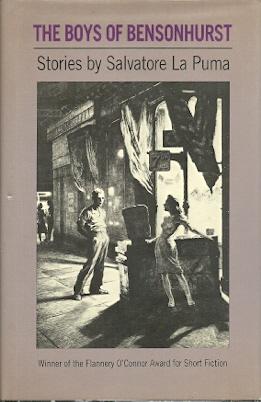
The Boys of Bensonhurst by Salvatore La Puma
There aren’t a ton of writers or books out there that tackle my part of southern Brooklyn. I can’t quite remember how I first discovered Salvatore La Puma’s award-winning 1987 story collection, The Boys of Bensonhurst. Did I stumble across it at a library bag sale or somewhere online? I feel certain no one told me about it, that I chanced upon it myself. In any case, it’s become something of a lodestar for me, and it remains, sadly, very neglected. The stories are set in prewar Brooklyn and capture the Italian American experience of my grandparents’ generation with verve. The characters are torn apart by the church and the mob. They are haunted by ghosts and trapped by the neighborhood. It’s an essential book that deserves to be rediscovered. La Puma went on to write a very good novel, A Time for Wedding Cake, and one more story collection, Teaching Angels to Fly, which are also well worth tracking down and deal with similar themes.
While it’s his second novel, Ask the Dust, one of the great Los Angeles books, that he’s most remembered for these days, it’s Wait Until Spring, Bandini—set in Colorado (where Fante’s family immigrated) during the Great Depression—that really captures the essence of Italian American family life. The yearnings and desires of young Arturo Bandini. The struggles of his father. The solemn piety of his mother. And, above all, there’s that voice—a rocket of bitterness and sweetness, of rage and craving.
Rush by Kim Wozencraft
I first read the book after seeing Lili Fini Zanuck’s 1991 adaptation starring Jennifer Jason Leigh and Jason Patric. Based on Wozencraft’s own experiences, it’s the story of Kristen Cates, “a nice Catholic girl who becomes an undercover narcotics officer and a junkie.” At the beginning of the book, as Kristen gets ready to face the Parole Commission, she thinks about leveraging her goody-goody Catholic background for some goodwill. The book is subsumed with an atmosphere derived from Kristen’s Catholic-shaped perceptions of the world. That strain is all but nonexistent in the film adaptation, but you can still feel it somehow. The pressure. The guilt. In an interview with Jill Eisenstadt for BOMB in 1992, discussing her initial naïve belief that drugs themselves are evil, Wozencraft said, “I grew up in a very conservative, traditional household, and I was a good Catholic girl. They teach you never to question authority. I didn’t question authority, and I bought the hype.”
Dennis Lehane’s Small Mercies is the only book from this century I’ve included here, but it’s set in 1974 during the Boston busing crisis. Lehane is a master at building the sort of atmosphere I’m describing. A tight-knit world of secrets and lies where a certain morality is preached and betrayed. To see an examination of racism framed through the lens of the stifling Irish American Catholic world of Southie is wrenching. Mary Pat Fennessy is one of the great characters in recent fiction.
When we meet the titular character, Thérèse, she has been let off after being tried in court for the attempted murder of her husband. There was plenty of evidence that she did in fact poison him using arsenic, but her husband testified on her behalf to avoid scandal. Thérèse’s reflections on all that’s led her to where she is—the stifling existence of a Catholic landowner’s wife, the pressures of a loveless marriage and of motherhood—carry the weight of a life shaped by guilt and spiritual starvation. After her release, she’s essentially imprisoned by her husband at his family estate, shut off from the world, trying to avoid further scandal. She only desires freedom.
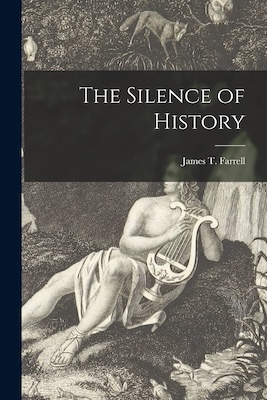
The Silence of History by James T. Farrell
Through the guise of working-class Chicago kid Eddie Ryan, we get a somewhat traditional coming-of-age book steeped in interiority. Ryan is working and going to college and thinking about All the Big Things. We slip into the POVs of other people in his life and learn their stories. Eddie struggles consistently with faith and finds himself drifting away from the people he was raised around, searching, yearning, feeling lost. He thinks a lot about history and its impact on him in his present moment. The novel is set over a hundred years ago in the 1920s and was written over sixty years ago, but it feels startlingly contemporary. Somewhere near the middle of the book, we get this from Eddie: “It was hard, damn hard, too damn hard to be a Catholic, and he found himself wishing, as he had often wished in boyhood days when he’d been tormented by the fear of having made a bad confession, that he weren’t a Catholic.”
The strict Catholic upbringing of main character Terry Dunn informs her downfall. A young schoolteacher from a large Catholic family that prizes obedience, Terry begins to drift into a secret life of illicit one-night stands with strangers, walking the razor-sharp edge of freedom, culminating in her murder on New Year’s Eve. While her self-destructive behavior is mystifying to some readers, it makes perfect sense when considering the psychological and emotional damage inflicted on her by the men in her life. Innocence gives way to emptiness. She lives in the shadows of the visions of sin she’s been sold. Richard Brooks’s 1977 adaptation, starring Diane Keaton as Terry, is excellent and has just received a stunning 4K UHD/Blu-ray release from Vinegar Syndrome.
The Doctor’s Wife by Brian Moore
The main character, Sheila Redden from Belfast, is in Paris when the book opens. She’s visiting with a friend for a few days before heading to the south of France, where her husband, a doctor back in Belfast, will join her on holiday. They’ll stay in the same hotel they honeymooned in years prior. But then Sheila meets a young American named Tom, and things go off course. She falls for Tom quickly, and he follows her south. When her husband’s trip is delayed by work, they have more time together. Sheila is a woman who has lost faith and yet maintains a sense of morality shaped by the church. As the possibility of a new life opens to her, other things crumble. While it was marketed as a steamy book about an affair, it’s much more about Sheila’s doubt and resilience. Late in the book, Sheila talks to a priest at Notre-Dame, and he asks, “Madame, are you a Catholic?” Sheila’s response: “I was. I don’t think I am anymore.” A knowing answer, trembling with both regret and pride.
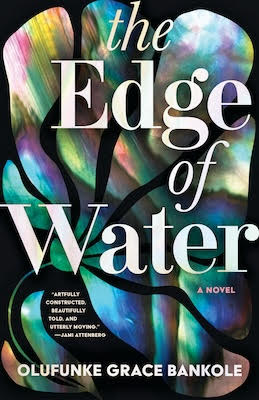
Olufunke Grace Bankole’s debut novel The Edge of Water opens with a prophecy: “A storm is coming.” The order of things, the Iyanifa tells us, will be disrupted by a soul who defies her fate.
What follows is the story of three generations of Nigerian and Nigerian American women: Esther, who dreams of a different life but finds herself stuck in the traditions of Yoruba Christianity; Amina, who goes to America ignorant of the divination her mother received that foretells danger for her there; and Laila, who is left with questions about the mother she barely knew. Through many points of view, the novel reckons with the collision of tradition, free will, and the devastation of a historic storm.
Exploring the narrative powers of choice and betrayal, the complexity of identity and belonging, and the many revisions that take place across a family and a life, The Edge of Water asks the question of how much we owe our loved ones, how much we owe ourselves, how much we control our destiny, and when it’s okay to let ourselves off the hook.
I interviewed Olufunke Grace Bankole over Zoom to discuss her book. We talked about layered storytelling, the difficulty of crafting a multi-POV novel, and what it was like to resist traditional immigrant narratives through writing about middle-class people from modern Nigeria.
Mariah Rigg: The Edge of Water is so ambitious in how it moves through time, layers POV, and borrows from the epistolary. Can you talk about how you came to write this novel, the seed it grew from, and what the journey toward completion looked like?
Olufunke Grace Bankole: I tried to implement a structure that reflects the complexities of the Yoruba, Nigerian, American, Christian, traditional religion cultures I grew up within. And inside those various worlds, I hoped to explore the tensions through the intimacies of language and storytelling. The novel grew from the very first short story I wrote many years ago—about a young Nigerian woman, newly-arrived to the U.S., who was working in the New Orleans French Quarter, and found herself without a place to go during a life-threatening hurricane.
I’d moved to New Orleans for work after graduating from law school, and the city became the first true home of my adulthood. When Hurricane Katrina struck, though I no longer lived in New Orleans, I couldn’t help but wonder of those who were far from home—as I had been, during my time in the city—and caught in the storm. What might life have been like for such a young woman back in Nigeria, and how might the aftermath of the hurricane affect her hopes and dreams, and the future of her family? The novel’s core emerged from my attempt to answer these questions.
MR: Your novel opens with a prophecy, a promise that the rest of the story lives up to. This oracle is especially echoed through the use of divination at each chapter’s opening. How do you see this sense of predetermination—and conversely, the free will that Amina exerts through her journey to America—informing your novel? Did you struggle at all with this dichotomy?
When Hurricane Katrina struck, I couldn’t help but wonder of those who were far from home and caught in the storm.
OGB: I think this dichotomy between predetermination and free will is central to the identity of many of us who are shaped by religious and cultural systems that tell us aspects of our lives must be carried out in prescribed ways. And yet, there is something—maybe the tiniest of feelings—within us that compels us to believe we can have so much more than what we’ve been given. Amina certainly struggles with simply accepting that the world she was born into is all there is, and she is determined to break free of it, even if she is unsure of what true freedom might entail.
MR: The Iyanifa and her prophecy are often at odds with the Yoruba Christianity practiced by Esther and others in The Edge of Water. Can you talk more about this clash, and why it felt important for it to be present on the page?
OGB: I think one of the most comical and evergreen dynamics for many Nigerian Americans who grew up in the church is realizing how much of Yoruba Christianity is steeped in Ifa and other traditional religious practices. It would not be uncommon, for instance, for a person seeking spiritual guidance to receive counsel from their pastor and divination from a babalawo simultaneously.
More broadly, wherever we are from, I find many of us are seekers—continually striving to understand the mysteries of living; and when one path fails to answer our longing, we reach for another.
MR: What were some of the difficulties of writing a multigenerational, multi-POV novel? What advice would you give other writers trying to accomplish this?
OGB: It was important to me in the writing of the novel to explore how silence, within ourselves and with others, impacts the viability of our dreams, the possibilities for our lives, and the depth of the pain we carry. And perhaps nowhere is silence more insidious than inside nuclear families—in this case, between mothers and their daughters.
I chose a multi-perspective approach with this novel because we often tell different stories, out of the very same experiences; I tried to give each character’s voice adequate space.
For me, the most challenging part of telling a multigenerational tale is effectively conveying each character’s distinctness throughout. I’m still sorting through the ways in which I might better accomplish this going forward, but for now, the advice I would offer another writer is to find a unique aspect of each character’s personality that can serve as the vehicle for their storytelling. For instance: The Edge of Water’s main narrator, Iyanifa, a Yoruba priestess, tells her side of matters through cowrie-shell divination. Esther, who misses her daughter that is living abroad, writes intimate, one-sided letters that are often informed by one of her favorite pastimes: community gossip.
MR: One of the POVs I was surprised by while reading was Joseph. What was behind your decision to give him this space in a novel otherwise populated by the voices of women?
My decision to not name Hurricane Katrina was meant to underscore that the storm could be any storm that threatens marginalized people everywhere.
OGB: It was important for me as a long-time student and admirer of African literature—past and present—to hopefully present a multi-dimensional male character who, though having his own story to tell, does so in the service of the women in his life. I very much enjoyed being with the character of Joseph—through his longing, shame, triumphs, and tenderness.
MR: The storm at the center of The Edge of Water remains unnamed, though readers can tell by the novel’s details that it is Katrina. As unprecedented storms level communities around the world, from the Philippines to Puerto Rico to North Carolina, it feels almost prescient to withhold this information. Can you talk about what it felt like to write and revisit this novel during a time of accelerated climate change?
OGB: Natural disasters are ever on our horizon, it seems. My decision to not name Hurricane Katrina in the novel was indeed meant to underscore that the storm could be any storm that threatens the survival, the dreams, and the dearly-held future of marginalized people everywhere. There were several times during the course of writing and editing when I needed to take a break because events off the page, in conjunction with occurrences in the novel, were painfully close to home. And that made me think, too, of how pervasive the grief of the consequences of climate change will increasingly become.
MR: I won’t spoil the novel’s ending, but I will say that I couldn’t help but wonder what Amina’s life might have looked like if she’d stayed in Nigeria. Did you think about this at all while writing?
OGB: From time to time, I’ve wondered the same. This novel is not the story of a girl who has a horrible life in Nigeria, and America is the only way out. Amina’s longing for life in the U.S. is more an attempt to determine for herself what more might be possible—and America offers that chance.
MR: A bit of a pivot away from the book and towards your inspirations as a writer. Whose work do you return to when you’re stuck? Which authors would you say are your guiding lights?
OGB: Once I knew that I truly wanted to write, African women writers—and their incredible, enduring works—became foundational for me. They are the reason I imagined that I, too, could tell stories. Mariama Ba’s So Long A Letter, a spare and stunning classic, inspired the epistolary form between Esther and Amina. Tsitsi Dangarembga and Nervous Conditionskept me writing at a time when I experienced stinging rejection. And the incomparable Yvonne Vera’s body of work helps me to continually stretch the parameters of language on the page; word by word, sentence to sentence, she is a north star for me, absolutely.
They treated themselves at the end of each year with a trip to the desert. There was something unfailingly optimistic about the long, light sky, and by the time they arrived in Desert Hot Springs at a hotel with three naturally heated springs on its property, they were both in high spirits. Seth would drive on to Joshua Tree, where he’d rented a little house, but first he helped Laurel carry her bags into the lobby, introducing himself to the woman behind the desk as her driver. They kissed goodbye. “Nice driver,” the woman said.
“Oh, that was my husband,” Laurel said, laughing. She could afford to be frivolous with this woman, this pleasant helper in peacock feather earrings who was not the manager of the hotel. Laurel could just make out the manager standing at a worktable in the back, using a curved knife to cut a block of green glycerin soap into cakes for the rooms. This was her third visit, and the manager would not let on whether she remembered her or not.
The helper led her out of the lobby, across the patio, and to her room. All of the rooms opened onto the patio. White linen curtains hung from a line strung inside the double glass doors. There was a platform bed and a concrete floor. The room was cold. The cold was sharper in the desert than in the San Gabriel Valley. The mountains weren’t smog-shrouded but enormously visible, their sides scored with long crisp folds, runnels through which snowmelt flowed, and the cold, too, felt clearer, more significant. She plugged in the electric heater, rolled it as close to the bed as she could get it, and texted Seth to see how he was faring. He replied that the house was heated only by a pellet stove. I’m freezing my balls off, he wrote.
Ah, but this was good for them, wasn’t it? Getting away from their lives, getting away from each other. On a wooden shelf was a laminated menu of massages one might order (the manager was the masseuse; it was generally understood that she was not trained). Just-What-You-Need; Couples-Just-What-You-Need; Deep Deep (Really Get Into Those Troublesome Parts); A Sensory Trip For The Mind And Body And (Maybe Even) Spirit. The idea of engaging the manager to massage her was a horrifying breach of the manager’s mystery. No, she was here for the springs, three concrete pools heated by the geothermal wells the town was known for. She changed into her suit, and with a towel and novel tucked under her arm she went to submerge herself in the warm pool. A wind picked up, raking the palms and sending a wren spinning off into the sky and a shiver of delicious contentment though her.
She sank into water to her chin, flexed her calves and wiggled her feet. From her place in the pool she could see the building that enclosed the hottest of the springs mere steps across the patio. The building was twelve-sided, with wooden walls and a corrugated metal roof that angled upward toward a hole cut into the middle to let out steam. This was the prize, something to admire from afar, to anticipate its enclosing warmth, the steam that rose from the water’s surface and the hollow slap and gurgle of the water as it swayed into and out of the pipe that fed it. The wind gusted once again. She climbed out of the water, hurried to the twelve-sided building, and wrenched open the glass door only to discover that someone was in the pool already. A couple could be ignored, but another solo soaker had to be acknowledged. She dropped her towel gamely. “Just need a little warm-up,” she said.
“Of course.” The skin above the man’s upper lip was beaded with water, as if he wore a sparkling mustache. Laurel made a show of reading her book as they sat in silence in the haze and heat, but she couldn’t concentrate with him there—it felt unnatural to read in a stranger’s presence, and she had to hold the book at an awkwardly high angle to keep it out of the water. When she marked her place with the dust jacket and looked up, he was staring at her frankly. “How is it?” he asked.
Laurel liked it so far, but her tastes had changed. She used to read as a writer does. Now all she wanted was for the story to pick her up and carry her along and deposit her somewhere else, unaware of how she’d gotten there. The characters in the novels she read spoke to her like her friends did, regaled her with their suffering for which she truly did feel sympathy tinged with tawdriness, a voyeur’s pleasure in their misfortune. It wasn’t the misfortune she experienced as pleasure, it was the distance she stood from it. For the last eight years, as she’d followed Seth from teaching job to teaching job, she had been writing a novel. But it was a heavy, tethered form, and it dragged her down and held her under and she sensed with the thrumming attunement animals brought to their environment a shining place above her, and she stopped working on it and came up. The shining place wasn’t visible once you were in it, surrounded by it.
She knew her friends must feel sorry for her. They must say what they were supposed to say, Laurel got so busy with her job. What is her job? some must ask and others answer, She’s a copywriter, isn’t she? Yeah, I think she’s a copywriter.
They would not understand that only when you stopped wanting, stopped grasping, did the gift give itself to you.
Time, as sweet and dense as honeycomb.
Now she replied to the man’s question about whether she liked the novel she’d placed a careful arm’s length away. “I don’t know yet. I’ll tell you when I’m a little farther in.”
The pellet stove didn’t feel like it was putting out much heat. Seth had just finished unpacking groceries—coffee, half-and-half, pasta, tomato sauce, bagged salad, wine—when he heard Juliette’s car in the dirt driveway and went out front to greet her because this would be the last time, though she didn’t know it. She stepped out of her car and dropped her bag at her feet and opened her arms. She would expect him to rush to her and pick her up and carry her into the house. Which he did, knocking her head against the doorway when he pivoted to enter. He apologized. He knew she was starting to hum inside like a windup toy and indeed she leaned her body in his arms to steer him toward what she guessed, correctly, was the bedroom. Seth was thirty-eight. She wouldn’t let him forget that he was ten years younger than her. “Can you just be a fucking feminist for once and stop nattering about it,” he’d said during their sole fight, and to his surprise she laughed at him.
He dumped her onto the bed and she bounced neatly back up to a sitting position. Her hands found his belt buckle.
“Can I get you something to drink?” he said.
“You sound like a stewardess. You can—” and she described a sexual endeavoring with such specificity he felt the embers of arousal in his stomach snuff out. The lingua franca among women in their forties was that they would inhabit and delight in themselves as they wished they had when they were younger, so Juliette inhabited and delighted in herself, speaking brashly of her body and its pleasures and needs. She cast off her shirt and hoisted her breasts out of her bra. Her nipples were like the soft eyes of a drunk. He had to tell her they couldn’t see each other anymore. He would not say he hoped they’d remain friends because he knew they would not remain friends. And because they would not remain friends, he had to wait until the last day of the trip to do so.
They had started out as friends. She was the director of communications for the college where he taught history. She was always going on terrible internet dates, and they’d have lunch and she’d tell him about them. “You never talk about Laurel,” she said one day. She knew Laurel a little—they saw each other occasionally at events at the college.
“There aren’t as many adventures attached to that subject,” he said, which was harsher than he meant to be. He was trying to compare a marriage of eight years, the stories he could squeeze out of it, to Juliette’s tumultuous flings. But she seemed pleased with his answer, seemed to think he was flirting.
‘There aren’t as many adventures attached to that subject,’ he said, which was harsher than he meant to be.
“I’m an adventure to you, am I?”
Seth laughed. “Yeah, you’d be an adventure.” It was funny that he was flirting back with this person he wasn’t at all attracted to, he thought, before realizing that he was, just this moment he was, less attraction than a swift shifting force inside him that unfolded itself in his chest like a pair of massive wings. The span of it shocked him. Later that day he texted Laurel to say that he’d forgotten there was a talk he had to stick around for, and she texted back an emoji of a face wearing a knowing smile. It seemed to say I’ll withhold judgment, mister, but whatever you’re doing is probably unnecessary. What he was doing was having sex with Juliette on her couch. To be caught between an urgency that built until he was sure there was nothing but its detonation and bright fallout in which he lost himself, his contours and earthliness, and then the process of return as he took on weight and shape again—in other words, metamorphosis—yes, maybe that wasn’t strictly necessary. His confusion might’ve turned to fatal regret had Juliette—naked and wiry as a dancing skeleton—not fetched a bottle of scotch and two glasses. They drank. She sat back and spread her legs like a man on a subway, and he crouched in front of her, knowing this proved his respect, how equitable he was in terms of ministering pleasure. She began to laugh and pushed his head away.
Now he got up from the bed in the rented house and pulled on his jeans. “Let’s go on a hike,” he said. The park was nearby, the Joshua trees furry and listing.
Laurel was walking along the hotel road, a luminous, jellied quality to the air. Morning, not quite seven o’clock, the distant white wind turbines like wavy lines of crosses planted at the feet of the mountains. A medical glove star-fished in the scrub. Blossoms on cacti like crepe-paper thumbprints. She never walked far, just up and down the road a few times. Back in the lobby, she spotted the man from the pool in the kitchen where coffee and breakfast were laid out. He was wrapped in a robe, cutting a piece of Meyer lemon cake. She’d intended to pour herself a cup of coffee but at the sight of him she continued out the door that led to the patio. She had a habit of avoiding men who made her feel this way, this prick and skitter of awareness. Before Seth the avoidance had a textured, erotic quality. She ignored those whom she knew she would come to love. And then put off saying so, waiting for a moment of unimpeachable integrity until it became a mind game, for what did one mean when one said I love you, and how could one know for sure at their tender age, and who would be crass enough, brave enough, crazy enough to say it first, and how would that person broach it, and would that person cry, and would that person look beautiful crying, and so forth. Now that she was married the avoidance couldn’t give. There was no crumbling of will to look forward to, no slow descent into the softness of beginnings. She turned away.
Not that she felt, with this man at the hotel, that there was anything to avoid except speculation. It was all on her side, she was sure.
After she’d had her coffee and fruit and toast slathered with Nutella, she swam laps in the cool pool, soaked in the warm pool, and entered the twelve-sided building where he was installed again. Apparently it couldn’t be avoided—when one person spent so much time in one particular pool, it might seem as if he was always being interrupted when in fact he was the interrupter, ignoring the natural flow of the place, the gently shifting occupancies.
She gave herself permission not to apologize as she joined him, and he said in a conspiratorial voice as she sank into the water, “Feel nice?” and Laurel realized her face must be dumb with pleasure.
She blushed. She didn’t want to play along, didn’t want to admire his angled collarbones and lean shoulders and blithely revealed interest.
“That book I was reading?” she said. “I do recommend it.”
“What was the title?”
She named the name of the novel that was a novel in name only.
“Thanks.” He yawned. It turned out that he was an actor. He used to do theater exclusively, but you couldn’t make a living doing that, he said. Now he did television. Television was easy money, just very limited people with large heads reciting lines some twenty-six-year-old Iowa grad had written. “Not to be gratuitous about it but I could write that shit! I could but I wouldn’t.”
He told her about a few of the plays he’d done. “So this may interest you. I did Shoppers Carried by Escalators into the Flames a while back. Denis Johnson. It was in New York, at the Dimson. I got to talk to him a little and I’ll never forget what he said about himself. How he described himself. He said, and I quote, he was a ‘criminal hedonist turned citizen of life.’”
She didn’t reply for a moment. “I guess I find that strangely impersonal. Like it’s a process he’s describing, something outside himself.”
“Really?” he said. “I see it as turning from estrangement—I suppose that’s being outside yourself—to a radical intimacy.”
“How intimate is it to be a citizen of life, though?”
“Life’s a big thing. Most people don’t feel they have access to it. He was saying that he was staking a claim.”
Then he asked her what she did, and she said she was a freelancer, and he asked her what type, and she said the writer type, and he asked her what sorts of publications she wrote for, and she said alumni magazines, law firm blogs, the occasional professional association quarterly, making sure to maintain a hearty note of contentment in her voice. She was getting hot and rose to leave. He didn’t follow her.
Juliette shuffled around the kitchen as they made dinner, her socked feet thrust into Seth’s wool slippers. She said their relationship had become about more than the sex, of course.
“What do you mean of course?” he said.
“It was its basis and it’s not anymore. We didn’t get together to talk about Robespierre.”
“Why, is it bad?”
Her face cracked open with pity and triumph. “No! That’s not what I’m saying but your worry is touching.”
“I’m not worried. Funny you would interpret that as worry.”
“Funny? What else could it be?”
“Ever heard of pure curiosity?”
“The cologne for intellectuals?”
He didn’t laugh. He dumped the pasta into a colander, steam clouding his glasses.
“Speaking of curiosity, how often do you and Laurel have sex? I bet not as much as you used to. Same with us, but if anything I feel closer to you.”
It was unseemly of her to bring Laurel into it, though he knew it wasn’t really about Laurel. And he didn’t agree that they had sex less—it seemed nearly incessant, like a roller coaster that had no line so you rode it again and again, the front car this time, the back the next, the place where you knew your picture would be taken so you mimed pleasure with overly large gestures . . .
He felt weak, suddenly, and sat at the table under a sign that read Bless the Food Before Us and the Love Between Us and wondered if love, unbound, invisible, would really content itself ponging back and forth during some lame couple’s dinner. He doubted it.
Juliette poured the pasta back into the pot and mixed it with tomato sauce and veggie sausage sautéed with onions and peppers. Why had it come to his eating an early dinner in a freezing house with a woman who was not his wife? Yes, he was going to end things, but the affair would remain immutable. Maybe Laurel would never find out. Maybe she would. That wouldn’t change the fact of its happening, only whether it was received, rued, discussed, whether it hardened and grew into the blade that severed his marriage. He had not thought through this possible severing. Had he acted out of spite? No. Boredom? Not really. Think, he told himself. Examine your life. It was too disheartening to admit that there had been no good reason, that he had been acting on chemical impulse, his body no better than a circuit box, fuses connecting simply and mechanically and at the behest of nearly anyone who stopped before him. Actually, it had been his ego Juliette had appealed to. The ego tripped the body, it happened that way.
And yet there was an element in his marriage to Laurel of being held back, of an expanding circle of energy sucked back into incipience. Their routine was limiting. He knew Laurel must feel it, too, but some arrogance inside him ardently believed it was his uniqueness being snuffed out, not hers. His potential for being whoever he would’ve been without her. He thought of this person every so often with a tenderness he could not summon for himself.
He knew Laurel must feel it, too, but some arrogance inside him ardently believed it was his uniqueness being snuffed out, not hers.
Juliette was speaking. “. . . if we drove home, we could stay at your place for once.”
Seth shook his head. “The neighbors.”
“I have neighbors too.”
“And I’d basically have to turn around and drive right back out to get Laurel.”
“If we left now we’d be home in two hours. We’d have two nights with central heating.”
“I like it here.” He speared some pasta. “But Juliette, if you’re that cold, you should go. There’s no reason you should stay and suffer.”
“We could keep each other warm,” she said, pushing her bowl away.
“Juliette.”
“Stop saying my name.”
“I’m sorry.”
“Are we ending things, is that it?”
He felt a rush of relief, then annoyance that she’d beaten him to it. “I need to.”
She shrugged. “There’s really nothing to end.”
“This is nothing? I guess it’s true you risked nothing. I didn’t.”
She took his hand and turned it over and kissed the inside of his wrist. Humiliatingly, he blinked back tears.
She was in the lobby reading the newspaper when the manager emerged from the recesses beyond the front desk carrying a fresh lemon cake. She made them dense and bitter, with a sticky, tangy glaze. “Warm enough?” she asked, proceeding into the kitchen.
“I am now,” Laurel called. “Thanks.”
“I see you’ve been enjoying the springs.”
“I love swimming, I love heat, I love solitude.” What else do you love? she thought. Buttercups?
“But don’t you feel,” the manager said as she reemerged, “that one experiences solitude most precisely in the company of others?”
“I lose myself with others.”
Cinnamon toast, melancholic piano riffs?
“I’m the person in a group always listening, asking questions,” Laurel continued. “It’s with women, what I’m describing. I’m very submissive with women.”
The manager rested her hand on the back of Laurel’s chair. “What do you need to be submissive about?”
“The fact of being another woman, I guess.”
She wondered what would happen if she took her hand in her own and said tell me how to be, if the manager had been waiting with perfect patience to anoint her new acolyte and with that question Laurel would ascend. Instead she returned to her room and texted Seth to ask if he was getting much writing done.
Sadly no, he replied.
Why not? she wrote.
Ellipses danced on her screen.
Robot writing fingers failing. All is discord, he texted.
“What’d she want?” Juliette said.
“Nothing.”
“Did you tell her you’re hers again, only hers?”
He had a quick, threadbare impulse to jab Juliette with his elbow. “You know what? I’m leaving too.”
“I thought you liked it here,” she said.
“I do. But I’m married.”
“It’s funny, you men, you take everything too seriously. You take yourselves too seriously, that’s why.”
They packed in silence, and Seth closed up the house. He stripped the sheets and left them in a lump on the floor, shut the lid of the pellet stove, placed the key in a basket on the kitchen counter, and locked the door behind him. Though he did not mean to, he pulled out of the driveway right behind Juliette and followed her car all the way home. He couldn’t bring himself to pass her. They reached Claremont in an hour and a half. He felt a little pang when she turned off the street they were on to the street that led to her neighborhood. She did not honk like he hoped she might.
When he let himself in at home, he half-expected to see Laurel there, but of course she was in Desert Hot Springs, where he would have to return to fetch her the day after tomorrow. He walked to the bedroom, lay down on her side of the bed, and pressed his face to her pillow. A vision of her came to him, her head thrown back in laughter. Imagine this, she said, thrusting the Claremont Courier into his lap. It was open to an obituary. Meredith Hickey née Caruso, it read. Imagine making that decision, she said. Willingly becoming a Hickey. She looked lovely laughing, unaware of herself, and he thought if only she could’ve always been unaware of herself what a beautiful woman she’d be. Then the vision flipped up its tail like a cellophane fortune-telling fish and her face betrayed that crucial self-consciousness that was beauty’s enemy. Laurel with her deadlines and licorice bridge mix, Laurel with her novels and oversized sleep T-shirts, Laurel with old aspirations he could hardly name. To do a different kind of writing. To live a different kind of life. Maybe he’d put them out of his mind to save her feeling like he was tracking her failure, or maybe it was his feeling for her, in which case he couldn’t fess up to it, wasn’t supposed to have it. Who was she, to occupy disappointment so easily?
The actor had turned on the timer to activate the jets and the water roiled and swirled, white froth icing the surface, bubbles clinging to his arms. She went in and under, where she was buffeted by sound like a diced carrot in a pot of boiling soup, and came up gasping.
“You’ll explode,” he said.
“I know.” She was smiling. She would be friendly, she decided. It was okay. She and Seth had gotten married at city hall. A few months later they threw a party at which Laurel didn’t drink because she was newly pregnant. The thought that she was pregnant—that was where life began. But she had a miscarriage and six years later she got pregnant again and had an abortion. She did it right away. Seth agreed.
The actor drifted as if propelled by the turbulent water closer and closer until she could feel his leg against hers, the silky slip of his skin. “Are you okay with this?” he asked. The jets shut off and she straddled him and they looked at each other and laughed. With one hand he undid the drawstring of his trunks and with the other plucked aside her suit. The water was clear again, as if they sat in the belly of a magnifying glass, and he pulled her onto him and she remembered how last year she and Seth had ridden in an aerial tram to the top of Mount San Jacinto. The glass car stopped halfway up and swayed back and forth, the engine heaving against its bulk. They were so exposed! The climb was two and a half miles and only as it happened was it possible—the second it stopped the mechanical world stopped too and they hung among the elements, the raw parts of nature, sky, sun, mountain, cloud, which appeared through the rounded windows as figures of emotion rather than matter if only they could break through to them and live among them properly, without distance. But they were not natural beings, they dangled in midair, gawking at the obdurate blueness. She placed her hands on the actor’s shoulders and leaned in close. His breath was puffing into the hollow of her throat. She let elation drain through her.
He threw himself into his writing, first with coffee and then with a small glass of aquavit. It all came back to him, Robespierre and the Feast of the Supreme Being, descending a papier-mâché mountain in a toga, Trump’s ride down his golden escalator, Sam Nunberg saying We could have had women in bikinis, elephants and clowns there. . . . It would have been the most gloriously disgusting event you’ve ever seen. False deities come to earth to govern by persuasion, cruelty, farce, force. He needed to work this out. Why hadn’t he worked this out in Joshua Tree? Fucking really wasn’t that rarefied an activity. He wished Laurel would text again to ask how the writing was going so he could say it was going, at least, and he was sorry he’d been flippant with her earlier, and tomorrow they’d stop for a date shake on their way home.
She was returning her dirty breakfast dishes to the trolley outside the kitchen window when she saw, in a room whose doors were wide open, the manager giving the actor a massage. She had avoided knowing which room was his but now she came closer and there he was, dressed in cloth shorts, lying on a folding table on his stomach while the manager chopped at his back with the sides of her hands. She said something and he turned over and she kneaded his calves and feet. His head lolled.
“You can come in,” the manager said.
She entered the room and went to stand beside him. His eyes were closed, his eyelashes like black threads.
“You can touch him if you want.”
“I’m not going to touch him.”
The manager’s kneading slowed and then stopped. “You eat with your eyes only?” she said.
Again she remembered the view of the Coachella Valley from the tram. According to the brochure she was given when Seth bought their tickets, the palms that grew on the valley floor were surrounded by a system of sand dunes that lizards swam through to escape from predators. The lizards had shovel-shaped jaws, and scales on their feet to give them traction. Still they were being crushed by the tires of off-road vehicles. She fished the brochure from her pocket and opened it for Seth at the top of the mountain. She enlisted his sympathy.
In a world that clings so ferociously to binaries, the witness occupies a disruptive place. Both insider and out, relevant and marginal, the witness is the one who sees, who hears, who straddles the competing exigencies of see-something-say-something and mind your own business. To speak up involves risk. To remain silent exacts a psychic toll. The witness must decide whether to step out of the shadows or stay hidden. To not decide is still to make a decision.
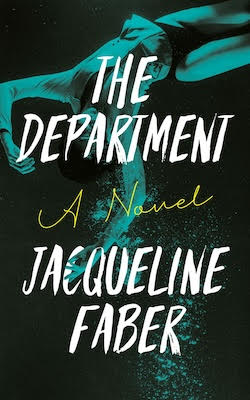
These ideas stalked me as I wrote my psychological thriller, The Department. When a college girl goes missing, a washed-up philosophy professor stumbles into the mystery of her disappearance, only to uncover a trove of disturbing secrets within his academic department. Exposing them means dragging his own long-buried traumas into the light. But remaining silent means succumbing to his lifelong fear of being a powerless bystander. Now, that fear is put to the test, and his choices will have repercussions, not only for his future, but also for his past.
As I wrote this novel, I looked to literary precursors that, in various ways, engaged with the question of the witness, the voyeur, the spectator in hopes of understanding what we can offer one another and where we fall short. The following list reveals just how complex the role of the witness truly is.
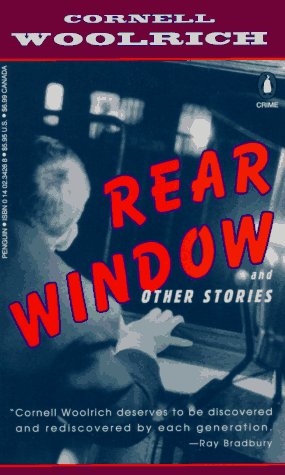
Rear Window by Cornell Woolrich
Before Alfred Hitchcock introduced audiences to James Stewart and Grace Kelly in his 1954 critically acclaimed adaptation of Rear Window, it was a short story by Cornell Woolrich, originally published in 1942 under the title, “It Had to Be Murder.” Over eight decades later, it remains a gripping, claustrophobic exploration about the permeable boundary between witnessing and voyeurism. Through Woolrich’s sparse prose, we meet Jeffries, bound to his apartment, peeping through his blinds. Jeffries is convinced that his neighbor murdered his wife, and we must decide whether we are privy to the delusional ravings of a madman or the urgent warning of a witness. Woolrich is the original master of a trope that traces its throughline to contemporary mysteries like Paula Hawkins’s The Girl on the Train, and A.J. Finn’s The Woman in the Window.
This gorgeous thriller was Tana French’s debut and introduced the world to her lush prose and rich characters. It’s included on the list because it circles around a character who is haunted by his own inability to become a veritable witness in a crime perpetrated against him. The novel opens with the disappearance of three children in the woods. Only one resurfaces, but he recalls nothing of the harrowing event, or the fates of his best friends. Twenty years later, they are still missing and he’s on the Dublin Murder Squad, investigating another crime in those same dark woods. The question is: can he quiet his own demons enough to solve it?
What if you discovered that your witness testimony put the wrong person behind bars and now that man is dead? Do you let sleeping dogs lie or do you go digging? This is the dilemma that Hannah Jones must face a decade after her college roommate’s body was found and Hannah’s word helped send the culprit to prison. When a journalist comes around suggesting that the past might not be what it seems, Hannah embarks on a deep dive into the lives of her once-best friends only to discover that witnessing can be a terrible burden, especially when you get it wrong.
Academia lends itself well to the complexities of the witness. This next book is about a professor who must confront her own buried knowledge about an old campus murder when she returns to her alma mater to teach a class. The novel feels like a fresh, exciting departure from Makkai’s stellar third book, The Great Believers, which was a finalist for the National Book Awards. In her latest novel, Makkai explores the dangers of refusing to acknowledge one’s past and the haunted form that memories take when one is relegated to the role of the bystander.
Pay attention to every detail because you never know if you’re witnessing something important. This is the agony that Laurel Mack lives with ten years after her daughter Ellie Mack’s disappearance. Struggling between the onward march of life and the unrelenting grip of the past, Laurel finds momentary relief in the company of a seemingly good man. But when his daughter turns out to bear an uncanny resemblance to her own missing girl, Laurel must scrutinize every aspect of her world in search of the clue she failed to see.
The disturbing premise alone will set you on edge. On her morning commute, Zoe Walker sees a grainy picture of her own face in the local paper. Soon she discovers that she’s not alone. Other women’s pictures appear in the ad, and now they’re turning up dead. As Zoe struggles to balance her justified worry with her reluctance to alarm her family, the novel twists and turns its way into the terrifying terrain of the stalker. It hits close to home as we realize that our repetitive daily actions, like a seemingly innocuous ride to work, can make us vulnerable. The idea of the witness is turned on its head when any one of us can sit in the crosshairs of someone else’s gaze.
This exquisite novel is about sight and sightlessness and the very delicate line between the two. Young and poor, Patch saves the local town beauty from an attempted kidnapping, only to be taken himself. Held in darkness, Patch comes to rely on the calming presence of a girl that he cannot see, but grows to love during their captivity. His freedom comes at a terrible price, as he spends his life searching for her, painting her from feel and from the haunting sound of her voice in his memories. The question at the beating heart of this novel is about the kind of witnessing we can bear and what we owe to those we love.
When a poet is first granted the expanse of a full-length collection to fill, their attention and technique can be stretched and warped into unexpected new shapes. This exploration often yields dazzling results: new forms, new perspectives, new agencies.
The poets on this list are stretching their imaginations to new heights to create impressive, laudable first full-length books. Some pursue a single narrative; others patchwork a lifetime of strange and fascinating experiences. They come from diverse backgrounds, and the poems often reflect those varied identities. These debut poets are united, though, by their search for connection and belonging in the world.
Sadly, it would be impossible to compile a list of every debut poetry book coming out this year. With that in mind, this list is weighted toward books coming out in the first half of 2025, which have more publication information available. I sought to include work from a variety of publishers, and ended up gravitating toward small presses, which are publishing particularly urgent, daring material.
Maria Zoccola audaciously reimagines Helen of Troy as a housewife in Tennessee in this slick, stylish collection. Zoccola’s version of the Homeric heroine defies the stultifying norms of her small town, coming into her own agency when she flees. An undercurrent of ’90s Americana combines with Helen’s epic journey to create this wholly original and hotly anticipated work of narrative poetry.
Through praise songs, erasures, and grammatical interrogations, Mia S. Willis crafts a lyric celebration of Blackness and queerness in the South. Their dynamic, singular poetic voice stands out and marks Willis as a rising poet to watch. the space between men is “an ode to the way life has cracked this body open” and a standout debut collection.
Lauren K. Watel concocts potions (“poem + fiction”) on the page, dreamy prose poems that flit between fear, elation, and fury. Watel drifts through scenes in the natural world, in the “white rooms” of operating tables and mental asylums, and in her speaker’s dreamscape. The poems play with the limits of phrase and sentence, creating units of meaning that strain at the seams and sustain the collection’s tension.
“If in place of a mentor you had a hostile mirror,” begins this virtuosic riot of a collection. Sarah Lyn Rogers invokes pop culture symbols from Charlie Brown to “Little Edie” Beale to Natalie Wood, from tarot cards to guided meditations, as she rages against society’s inherited myths. Defying the limits of form and language itself, Rogers asserts a shining new poetics of self-creation.
Isabelle Baafi chronicles the breakdown of her marriage and uncovers the marks of adolescent trauma in this incisive, fresh debut. Baafi plays with chronologies and tests the capacity of poetic form as she interrogates her own past. Through five deeply felt sections that magnify slices of time, she excavates the pieces of memory that make up a life.
In a voice of remarkable clarity and starkness, Patrycja Humienik shares intergenerational memories of her family’s migration from Poland to the United States. “Some eruptions start small in us,” Humienik confesses as she recounts her grief and desire. This collection is a moving, cohesive work animated by questions of diaspora, agency, language, and borders.
In this Yale Series of Younger Poets prize winner, John Liles examines the Earth’s changing ecology through a scientific lens. As judge Rae Armantrout writes, “In this book feeling isn’t confined to a single, privileged perspective.” Instead, Liles imbues the natural world with emotion, from the trees to the moon to the honeybees. His language is subtly musical, drawing in the reader to celebrate our planet.
These poems inhabit dreamlike realms: a mermaid village, a bustling World’s Fair, a surreal Tokyo street. Yuki Tanaka draws influence from Japanese lyric traditions like the tanka to craft slick, otherworldly poems. He shows off a layered use of vocality and gorgeous, hyperrealistic imagery in this stunner of a first collection.
Robin Walter’s greatest strength is her perceptive eye, which she employs to great effect in Little Mercy, winner of the Academy of American Poets First Book Award. The scenery of Colorado comes alive on the page: chickadees sing, honeybees flit, lilies blossom. Walter’s delicate poems hold the reader close and extol the beauty of the natural world.
Najya Williams flexes her range in this alluring new collection. The poems range from expansive free verse influenced by Williams’ spoken-word background to sensual pantoums that tease potential lovers with their recursive structure. on a date with disappointment is a triumphant reclamation of the body and a celebration of Black womanhood.
Jessica Bebenek’s poems move from hospital hallways to overgrown cemeteries in this lyrical exploration of medical trauma. The book explores two poignant stretches of time, one in which a young woman cares for her ailing grandmother and a later section in which the woman offers her younger self compassion. Bebenek’s deft poetic voice seems to leap from the page and become a breathing thing.
In her glowing debut, Kiyoko Reidy studies the cosmos and traces her family lineage. Reidy displays her experimental sensibilities, playing with structures like a contrapuntal and an interconnected triptych. Black Holes & Their Feeding Habits is a breathtaking and touching exhibition of new talent.
The innovative structure of this book mirrors the layout of an accessible art museum. Rob Macaisa Colgate orients the reader with a list of accessibility symbols and uses them to guide the reader through poems shaped like galleries. Hardly Creatures is an impressive titan of formalism and radical inclusion.
This astonishing collection tracks the improbable connection between the speaker and her incarcerated beloved. Leigh Sugar’s close narration seizes your attention, daring you to look away from the tenderness and brutality of the world. Freeland raises urgent questions about prison abolition, mental healthcare, race, and selfhood.
Disclaimer: Mia Nelson is a friend and former college housemate of mine.
Nelson is unflinching when it comes to matters of the heart, turning an incisive eye upon friends and ex-lovers alike. Her sun-soaked, magnetic poetic voice is utterly singular.
Ally Ang’s poems are made of houseplants and melatonin, leather and bloodstains, fresh fruit and rumpled bedsheets. They assert queer self-creation on the page in a poetic voice that is at once expansive and precise. Let the Moon Wobble is a striking, impressive first collection.
In my opinion, most crossword puzzles have too many boring trivia about sports, obscure historical events, and science questions (seriously, who cares how many molecules are in an atom?). So, we decided to take out the bits we didn’t like to create a crossword puzzle tailored for those of us with English degrees or who simply love to read. Forget baseball stats or presidential timelines; this puzzle is all about literature along with a couple cheeky little references that you’ll be able to guess by looking on our homepage.
Prefer solving puzzles the old-fashioned way? You can grab a printable PDF of this crossword here. If you get stuck, don’t worry—the answer key is waiting at the bottom of the page.
Answer key
Across:
2. Zadie 4. Bulb 6. Ahab 7. Indie 8. Poe 9. Romantasy 12. SciFi 13. TBR 15. Best 19. Cusk 20. Out 21. Joan 23. Tell 24. Happy 25. Joyce 26. Pen 27. Amazon 29. Mary 30. Narrator 32. Lizzie 33. Lewis 36. Meter 40. God 43. Intermezzo 45. Emma 46. Tolkien 49. ER 50. Red 51. Memoir 53. March 54. Eyre 56. MFA 57. Kang 58. NBA 59. Watson 61. Everything 63. Shelf
Down
1. Tiger 3. Fable 4. BookTok 5. Pilot 10. Library 11. French 14. Satire 16. Publishing 17. Chapters 18. Body 22. HEA 25. James 28. Tale 31. Ove 32. Lake 34. Editor 35. Myth 37. Banned 38. Kindle 39. Tree 41. Denmark 42. Clue 44. Ode 47. Ireland 48. Novel 52. Keegan 55. Passing 56. Marquez 60. Less 62. IV
Beside me, a staircase leads to nothing but open, blue sky. My breathing is ragged, my feet moving quickly. I pass a fork sticking perpendicularly out of a telephone pole, and just past that, the pile of bricks under which there used to be a red lacy bra. These are the familiar objects of my neighborhood. Any direction I turn out my front door, the aftermath of disaster is all around. I pick up the pace.
It is 2012, a year after a tornado has flattened Tuscaloosa, Alabama, and I have just moved from my nice, intact apartment in my still-intact neighborhood to an area half a mile away—a neighborhood that was, and still is, mostly destroyed. Why would you possibly move there, my friend asked. Is it, like, attraction to a car crash?
I wonder this on my daily runs, as I wave at the same construction crews again and again, as I watch bright red poppies bloom in a perfect row along a walkway toward what was once a house, now just an empty lot. I am on mile three of my looping run through the neighborhood, jogging up and down roads that hug the lake and snake around churches. Tuscaloosa was a college town filled with pine trees and brick houses and reverential statues of football coaches, until those things were gone.
A few houses down from my own, there’s a cardboard sign on a stick jammed into the ground in front of a pile of rubble. It reads: We will be back! There’s a smiley face beside the words. It hasn’t budged in a year.
Why are you moving to that part of town? For a long time, I wasn’t quite sure.
Everything can be lost.
There is plenty of research on our attraction to disaster. A place to rehearse our reaction to catastrophe without consequence, one idea goes. An exercise in human sympathy, a part of our pro-social behavior, another says. The urban disaster, a favorite landscape of the apocalyptic film genre, attracts us because of its vulnerability, still another idea says. The high-rises, concrete, intentionally-sculpted trees proclaim human triumph over nature. But once they’re flattened, there is no clearer indication of our susceptibility. Everything can be lost.
The sky was blue, and then slate, and then green. April 26, 2011. I was in class, a graduate seminar on William James at the University of Alabama, where I was an MFA student, when the tornado sirens rang out. We were a little giddy, a little scared. None of us were tornado people. The forecasters had been prepping us for days with how big the storm system looked, how worried we should be. Once-in-a-lifetime kind of storm. But unlike the approach of a hurricane where specific towns and counties are ordered to evacuate, there is no precise estimate for a tornado, no way to say you, get out of town. There’s just the waiting and seeing.
It was not the first tornado warning in the nearly two years I’d been living in Tuscaloosa. They came regularly in central Alabama and never amounted to much, so I’d carried on with my day as usual: teaching freshman composition, writing, heading into my seminar that afternoon, checking my phone every few minutes for updates—though not, like everyone else, about the weather.
Six months before, back in California, where I’m from, my mom had a massive stroke. No warning signs, no preexisting conditions. A headache sent her to bed, and by the time my stepdad joined her a few hours later, she was covered in vomit and shit. She was in a coma for a week. We have no way to know how much she will recover, if she will recover, the doctors told us. We always want to be optimistic, they said, and we nodded. But we also want to be realistic, they said. With this level of a brain bleed, most people don’t really come back.
Because there was no way to imagine that, we didn’t.
When they woke her up a week later, she was fully paralyzed, with no cognitive function or ability to communicate. I was twenty-six.
I have written about my mom’s stroke before, about what it felt like to be in the room with her once she was awake, the ledge of her head where her skull was removed, the bulge of brain still bleeding, how her eyes stared off into space and did not make eye contact, how her hand would not respond to squeezes. I have written before about how her swollen brain, bursting open where her skull had been removed, made me think of popcorn bursting from its kernel. I feel horror at having already written that, printed it, and also at the fact that I’m still thinking about it: half-popped popcorn kernel as mother’s skull. I am still there. I’ve written about all of this before, and here I am again, trying to untangle all that remains a knot.
Rilke, in Letters to a Young Poet, writes, “go now and do the heart-work on the images imprisoned within you.”
Her brain as a kernel of bursting popcorn. Her shaking hand in the hospital bed.
The row of delicate Icelandic poppies planted along a walkway leading up to a pile of debris that had once been a house.
The storm itself is not what haunts. The ghosts grew after, in the days that followed, in the weeks, in the year where I tied on my running shoes each day and set out amid the rubble. Flying back across the country as often as I could to visit my mom in the hospital. Flying home to Alabama and the wreckage. That is where I get lost. Why did you move there?
The tornado warning siren was compounded by police sirens, a loudspeaker telling everyone to take shelter immediately. We could hear it from Morgan Hall, where those of us who’d been in class had gathered in a nebulous pack in the central hallway, unsure of what to do next. Someone, looking at her phone, said: the tornado has touched down.
What I hadn’t known before, not having been a tornado person, was that this was the information you were always waiting to learn: has the tornado kept itself tucked up in the sky, or has it touched down to earth? The former could bring bad winds, the latter was devastating.
We opened the outside door to run a hundred feet in the blasting rain to the next building, which had a basement, and that’s when I saw the sky. I had never seen anything like it. Though it was mid-afternoon, the sky was mauve, a deep bruise over the clouds. And behind those clouds, as far as I could see, green. Pond-green. Patches that seemed almost neon.
It was April, and the fresh leaves and little white flowers from the tree outside were smeared across the concrete. The branches whipped to near-snapping. I’d never seen anything like any of it. I remember that moment so vividly, those few seconds first stepping outside the door, because it was the first time I understood that here might be another disaster.
My main disaster, always, was what was happening to my mother. My family, across the country in California, was always in emergency. There was the current question of where my stepdad would live, after months of couch-surfing between neighbors, since they’d lost their house right as my mom had her stroke. He’d hinted to me, our little secret, that he did not think he would live if she died, once she died. That he did not intend to. She was his whole world, his singular focus. So it was also my job to keep him alive. There was my brother, after all, twenty-one and in college, and it would not do for him to lose both parents. What had happened to my family was mine alone to fix, mine to hold while holding the hand of my mom, tubes in every vein, eyes rolled toward some distant corner of the room while I kept my mouth shut, knowing it was too selfish to beg her to come back.
In her craft book Body Work, Melissa Febos states that her compulsion to write her first memoir, which was about sex work, addiction, her childhood and more, “was an expression of [her] need to understand what the connections were between those things.” This is what I’m aiming to get at; the connections between things.
Thirty or so of us made it through the pelting rain and wind into the building next door. We took the stairs into the basement, paced, and then sat down in the narrow hallway on dirty off-white tiles that usually gleamed under the fluorescent lighting. But everything was dark. The power was out. We could hear the storm outside, a story above us. The hiss of rain, and then the moaning of wild wind.
One person had a radio, and turned it loud for the emergency weather information. The tornado had been in the next town over, but now, the voice told us, the tornado was on the ground right here, in Tuscaloosa. We held hands, our hearts thudding. My friend Jess, petrified of tornados, crawled into my lap.
The wind was as loud as I’d ever heard. Ashley was calling her husband over and over again. He was home with their dog in the part of town we’d just heard had been razed. He was not answering the phone.
The radio told us it was the biggest tornado Alabama had ever seen. It was a mile wide. No, a mile and a half. It was on the ground. All of us in the dark, straining toward the one radio. It was gaining strength, moving quickly, and then: it was headed for the University of Alabama campus.
Jess was shaking on my lap, pinching my arms. The sounds above us grew louder, smashing, metal torn apart, a machine cranked to high right above our heads. Cracks so loud someone said: gunshots. I tensed my muscles, ready for the roof to fly off, thinking about what it would feel like to be sucked up into the sky. Wondering how my family would survive a tragedy on top of a tragedy.
Back home, bad luck compounded. The most recent surgery to try to quell the relentless bleeding in my mom’s brain had resulted in sepsis, an infection so serious we’d had to wear astronaut suits and gloves and masks to visit her, and the only purpose of that visit, we’d been told, was to say goodbye. Alarms screamed, her eyes closed or opened in shock, but without focus. Nurses rushing in and out.
And then she died.
But that was not her final death.
Later, I would learn that when the tornado first touched down in Tuscaloosa, it tore through the Tamko Roofing plant, sucking a warehouse of nails and shingles up into the sky. So the tornado, as it tore through our town, was filled with weaponry.
Not long before the tornado, Jess had passed me a little love note. She had also recently lost someone important to her, a friend and former love. The note said we were sisters in grief, going through the same experience, and here was a thing she was doing to help with her grief and maybe I should try it. No, I said to her. Don’t try to connect these things. She later told me I snapped at her. It is not the same, I said. I didn’t want connection. I only had space for emergency, and the only way I knew to survive emergency was totally and completely on my own.
In our underground bunker, Jess curled into a ball, crying, the tornado above us. She was so scared, I thought right then, because she had room inside her to be scared. At first it made me angry, that she had space to be afraid. Then I was embarrassed for her. I was all filled up with grief and disaster and so could sit inside a tornado and wonder, with relative calm, what it would feel like to be suctioned up into the sky.
We waited, tensed. All of us straining to listen. After a few minutes, the cacophonous sounds grew fainter. But the radio had told us there was more than one tornado close by. We weren’t safe yet. We waited.
And then someone climbed the steps out of the basement, peeked out to ground level. Tree limbs were down, garbage cans and equipment knocked over. But the building stood. She could see no dead bodies. The rest of us emerged, blinking, into the afternoon. It was drizzling but we didn’t care. Someone put on music. We stood in a little pack between dumpsters, and people started dancing, laughing wildly. Hugging. What I remember is the overwhelming smell of pine, fresh, sharp, bringing me back to a memory of camping as a child and using pine needles to make beds for the fairies I was trying to catch. There were all of us here, alive. Ashley’s husband was ok. Jess had stopped shaking. I hadn’t learned yet that the air smelled like pine because all the trees for miles had been split or knocked down. That the cracking we’d thought was gunfire were the trees snapping in half. That the tornado had, amazingly, lifted its toe and stepped right over us, but that on either side of us, just past where we could see, there was nearly nothing left.
The storm left scars in the earth so deep, they can be seen from space.
My mom died of septic shock, but then they brought her back to life. Her brain still bled, her right side was still fully paralyzed, she could not communicate, but she was no longer dead. In her advanced directives, she’d written No Resuscitation.
We still never really knew what function or cognition would come back, what would be forever missing.
In the days following the tornado, the list of missing persons in Tuscaloosa alone was over four hundred. We heard stories of severed limbs in people’s yards. Of people’s bodies wrapped around tree branches like old mylar balloons. We heard the dead floated in all the bodies of water in town. I thought about it every time I ran by the small lake a block from where I’d later live, because I’d never heard for sure whether it was true.
Another of the first buildings to be flattened: the Tuscaloosa Emergency Management Agency. It was made of steel and 18-inch concrete walls, built to withstand nuclear fallout. The Emergency Operations Center, which held much of the city’s emergency rescue equipment, crumbled.
Sixty-two tornados hit Alabama that day. 240 people died, plus hundreds more killed in nearby states. It was the largest tornado outbreak in US history. The storm left scars in the earth so deep, they can be seen from space. Later, I would listen to the recording of a call between a policeman and dispatcher in Tuscaloosa. A bunch of babies are trapped in a building, the dispatcher says to the officer. Confirm your address. I am behind the precinct, the policeman says, and the dispatcher is confused, or growing irritated. Where are you, she says, there are trapped babies, you need to go. Confirm your address, the dispatcher says again.
I can’t confirm the address, he answers back. There are no addresses anymore.
We left our storm shelter, a big group of us convening at a friend’s house with the sturdiest basement. There was no question of going home to be alone for anyone; we were in it together. When we could find the emergency weather reports, they told us we had a couple of hours to take shelter again before another tornado would hit, this one much worse than the first. We bought as much beer as we could carry, made our way to the house, and when the tornado sirens rang out again, all sat on the dirt and concrete basement, in the dark, drinking, waiting for the worst of it.
But it didn’t come. This tornado was over. It was one of our friend’s birthdays, and eventually, after enough beer in the dark dirt of the basement, we crawled out into the yard, no lights but a hint of moon glow to see one another by, which told us that the storm had passed. Someone played music from their phone. We danced again.
The morning after the storm, the sun rose like it was any regular day. We emerged from the houses where we’d slept, and in a little pack went to go check on friends, on homes we hadn’t been able to access the night before. All of Jess’s windows had been shattered, and there were tree limbs in her living room, storm water and debris. We helped her pull out what could be salvaged, and then kept walking. Our friends and teachers were still not all accounted for. Trees and telephone poles were down across every road, so there could be no driving. What we didn’t understand yet was that we were still on the roads where nothing much had happened. We walked in a pack, shuffling like zombies. Stepped over downed power lines. And then we saw.
In the pictures I’d seen of storm wreckage up to that point, there were recognizable shapes: houses, their foundations or walls semi-intact but blown over, a car crushed, but clearly a car. What we came upon lacked anything recognizable. Nothing in the shape of a house, a car, a store.
We began walking toward friends’ apartments and houses, to see if they were alive. One of them, we knew already, had huddled in his bathtub while the rest of his apartment flew up into the sky. But we couldn’t make it to that part of town yet.
We ran into a frantic woman on a main four lane road. She was walking up and down the median and collecting scattered items, shirts and books and little plastic tchotskies. Nothing felt like reality because we could suddenly see the shopping center a mile and a half away, a collection of buildings we’d never considered from over here because it was all the way on the other side of town. All the buildings and trees that normally block the view were gone.
The woman was unloosed, muttering to herself. A looter, we whispered to one another, hanging back to keep our eyes on her. We knew to look for the bad guys. The national guard hadn’t yet arrived, though a day from now they’d be lining the edges of the neighborhoods with huge guns strapped across their chests. And a day from now, do-gooders would flood in from surrounding towns in pickup trucks, passing out sandwiches, bottles of water, hopping out of the back with chainsaws. President Obama hadn’t yet come to assess the damage, to say that he’d never seen anything like it. For now, there were just us.
The woman sat down on the curb and put her hands on her head. “Are you ok?” one of my friends asked, sitting beside her.
“I don’t know,” she said. Her dark hair was messy, ruffled by her nervous fingers.
“Do you need help?”
“No,” she said. “Maybe. It’s my husband. He died two weeks ago. I had a container of everything he owned being shipped back to his hometown. The tornado picked it up from the storage facility and dropped it here.” We looked at the road. It was covered in stuff. Shoe horns. Loose papers. Foam fingers. A twisted, half-intact metal shipping container.
“This is his,” the woman said, gesturing toward everything.
Our zombie pack started picking up the dead husband’s items. There were a few worn baseball caps near one another. I collected them, walked back to the woman on the ground, holding them in front of me. She nodded. I set them beside her, on a small pile of random goods she’d already begun assembling. We carried on like this for a long time.
“I just got a call,” she said when I brought over a car seat that was not hers. “Someone found his birth certificate.” I nodded, encouragingly. “In Georgia.”
We kept on with her for a while, helping to box some stuff and tuck it back into the wrecked container. She said a friend with a truck was going to come as soon as the roads were opened.
We did what we could. It wasn’t much. The road was still covered in people’s lives.
After Hurricane Katrina, countless stories were circulated in the media of looters, rapists, gangs of people who were taking advantage of the storm to steal from others. In these stories, the bad guys were usually Black. I have no doubt that racism abounded in the cleanup from the Tuscaloosa tornado. And also, what I saw, again and again, were all kinds of people helping one another.
The woman left eventually, and we did too. I’m sure she never got all her husband’s stuff. The morning we met her was likely just the beginning of the real difficulty, except it wasn’t the beginning, and that is the whole point. She was already inside her own private tragedy when the tornado came.
The critic Rebecca Solnit writes about our response to catastrophe in her landmark book A Paradise Built in Hell, in which she explains that, “in the wake of an earthquake, a bombing, or a major storm, most people are altruistic, urgently engaged in caring for themselves and those around them, strangers and neighbors as well as friends and loved ones.” In opposition to the story commonly perpetuated about looters and violence after a crisis, Solnit looks closely at the way communities came together after five disparate disasters, and how most—not all, but most—people chose altruistic collectivism. This, she says, is the kind of paradise of community that can arise in the midst of hell.
I’m spending time here, on the tornado and days just after, trying to get it right, because there is not much I can write about what comes in the weeks and then months to follow. Because this was the day I walked through my destroyed city with my friends and helped slice a tree into pieces so we could clear it off someone’s house. This was the day strangers began walking up the road from far-off to help, carting their chainsaws and axes, when people lugged coolers of PB&Js in Ziplocs and handed them out to every stranger they saw, this day, and the few that came after it, were the times I gathered with my community in this hellscape of destruction and found mostly—almost everywhere—people working from sunrise to sunset to help one another. I was there too, helping, doing what I could. Then I stopped.
“When will you be here?” my stepdad asked. I’d called him the day after the tornado to let him know I was alive. He hadn’t known about the tornado at all. “When can you be here?” It was all the reminder I needed. I didn’t have space for this new tragedy, for altruism, for community. I was still inside my own private disaster.
The pull of my private catastrophe was greater than this public one.
So I left. Flew home to be with my mom, days after the tornado. Probably I went because there was another emergency. I don’t remember now. But I do remember, vividly, what it felt like to take off from the Birmingham airport. Watching the trees and buildings grow smaller from the airplane window, I felt it all the way through my body. All my friends were back in Tuscaloosa, making crock pots of chili to share and sorting through donated clothes and chain-sawing downed trees, all of them there together, helping. There would be thousands of people who, like me, would leave the city while it was destroyed, those with the means to do so, but everyone else would be left to clean up the mess. I’d always thought of myself as a person who stayed to help. But here I was, leaving. The pull of my private catastrophe was greater than this public one.
I was extremely lucky, of course. I didn’t lose anyone or my home in the tornado, while so many others did. But I had many friends who also didn’t lose much personally, who stayed all summer in Tuscaloosa and helped with the relief efforts. I was back in California with my mom, waiting to see whether she could make any sounds now that her trach was removed, wondering whether this next brain surgery would successfully reintroduce the bone plate into her skull. My stepdad was falling apart at every turn, my brother did not come home from college, so I was there, alone, to do the work of keeping everyone alive.
One friend was out early every morning in Tuscaloosa, volunteering wherever she could, at first just rogue, wandering the streets and helping as soon as she found someone she could help. But then the national guard was there, the nonprofits descended to give order to the chaos, and she volunteered with them. Every day she went, morning to evening. Later, she told me about the overwhelming trauma of sorting through wreckage for so many days, weeks. Maybe she found dead bodies, I can’t remember. She started talking to a therapist about it, trying to process the experience, and as she described what it had been like out there, the therapist started crying. Can you believe it, my friend said. The therapist told me she’d never heard anyone describe the devastation of the tornado so effectively. And what I felt, hearing my friend’s story, was jealousy. She had been a part of something so big, so collective, that her grief was shared.
This, I think, is what pointed me toward the wrecked neighborhood. This is the beginning of the answer. Why did you move to that part of town?
Then it’s a year after the tornado, and I’m living in one of the neighborhoods I’d wandered through with my zombie pack, trying to help. The roads are clear. The power is on. I take long, looping runs past all that remains of the destruction. The Icelandic poppies are mostly open, their petals papery and thin, a bright red-orange against their green stems and the darker purple bulb of their interior. They are carefully spaced along the walkway, a stem arising every three or four inches.
The poppies are a marvel to me because they still bloom in such a meticulously straight row. Like the dirt here never got the message that everything above was different now. I slow down while I run past this brightness, wipe the sweat that is always blossoming from the humidity. The poppies’ walkway is concrete and leads to a step that leads to a front door, except there is no front door because there is no house at all. There’s a large, cracked, concrete foundation. Above that, where a house once stood, there is only air.
There are many beautiful places in Tuscaloosa I could run instead. There’s a path that runs alongside the Black Warrior River, for example, a wide calm waterway with low-hanging willows and brass bridges so pretty that in the spring, they’re clogged with high schoolers posing for prom photos. There’s also wide-open space a few miles away where, the story goes, a golf course had been donated to the city and left to grow wild, tall grasses and little yellow wildflowers springing up where there once had been so much order. It runs alongside an arboretum, and in there, tall, thin trees lose orange and red leaves in the fall that make the ground look aflame.
But I don’t run in those places. I run here, where I’d put my arms around a stranger and told her I was sure her son was ok, wherever he was. I run here, past the family of feral cats, and the glint of something buried deep in the dirt that, on closer inspection, is a button eye. I run past the one perfectly intact house with columns and a gazebo and no neighbors. Beside it, a real estate sign posted on an empty lot full of debris reads: “Gorgeous Waterfront Property!”
There were other factors in my decision to move to the neighborhood, though in retrospect, they were small. My old apartment’s rent was increasing by $25, and Jess, whose own apartment had been destroyed in the tornado while she’d been curled on my lap, needed a new place to live. There was no obligation for me to step in. I was perfectly happy living alone. But she was looking for a new place, and some string that was trying to tether me to something good, to another anchor point in the world, maybe some internal guide pointing me toward what I kept missing in the solitude of my grief said me, I want to live with you, and let’s move to Forest Lake.
A group of geese live in the small lake alongside tornado debris—a dumpster, a crane, unconfirmed dead bodies—a block from our house. The debris stands tall out of the water like it is meant to be there, a statue in a botanical garden.
Like most of the other houses for miles, the house Jess and I share still has the spray-painted X on the outside that signals disaster. X-codes, they’re called, or search codes by FEMA, and drawn on by first responders. The four quadrants around the X indicate emergency information: to the left of the X, who was in the crew, on top, the date and time, to the right, the hazards found inside, and on the bottom, the number of people inside, alive or dead.
X-codes still mark nearly every house. Even the houses that have been repaired, moved back into, maintain their X-codes. They’re a sort of remembrance, I think. I saw them in New Orleans, after Katrina. And I will see them once more: near my home in Asheville after Hurricane Helene, during the writing of this essay.
Back in Tuscaloosa, back to 2012. I run past a house on the corner whose yard is overflowing with flowers: pansies, roses, lilac. The lot looks almost normal, except for the black plastic still nailed over a section of the roof, and its spray-painted X-code. No bodies inside that one. The black plastic flutters in rhythm with the tall blooms as wind passes down the street in strong gusts, common now since there are no tall trees or buildings to block it. In the house next door, the young man who lives with three dogs emerges from his door each morning, shirtless, and practices some form of martial arts on his weedy lawn. I say hello to him when I run, to the construction workers repairing a roof, to the tractor driver clearing debris, to the dozens of lots with no humans but cicadas grinding their legs, and then I run home. Jess will be there, wrapped in the calf-length purple down coat she wore as a robe, pouring coffee. Why did I move to the disaster? Maybe a deeper part of me understood there was more work to be done connecting the threads, that the coming together I’d missed by leaving didn’t mean I’d lost it all.
It feels too easy, that idea. But I like what it suggests about humans, about me. Instead of the story I usually tell myself about how I was lost in grief and emergency, maybe this story is about unconscious choices acting in service of what I needed to be ok. That’s a generous idea. The world’s mysteries being answered by some inner music, singing you toward what you need.
There was nothing I could do to help my mom after her stroke. I stood against the hospital walls, sat on the edge of hospital beds. I held her hands, talked to doctors and social workers and nurses and hospice, but nothing was actually helping. I tried to teach my mom basic sign language and how to hold a pen to write yes or no or thumbs up thumbs down or to nod, anything to communicate—and failed. Time stomped forward. A month of that, a year. Six years. I have written about this before, but doing so has not enabled me to escape this central truth of my life. The almost unbearable weight of witnessing so much suffering. Living inside your own impotence right alongside it. Being there, alone.
A major loss in our own lives often isolates us from community, Rebecca Solnit writes. Nobody else is suffering in this way we are suffering; we are alone in our grief, in our loss.
Public disasters on the other hand, Solnit posits, usually have the effect of bringing a community closer together. For me, maybe I was still so deeply inside my private disaster when the tornado happened that I did not find the feeling of togetherness that so many did afterward. Or maybe I did for a few days, and then I left. Why did you move to this part of town? When I came back, I was outside the cohesion. Maybe by running to bear witness, I was trying to find my way back in.
Now, writing this, it is 2024, and Hurricane Helene has just taken out every road in and out of my city, Asheville. All of them are closed, gone. The water is out and power is out and cell service is out and internet is out. I have just completed this essay I’ve been thinking about for years, about public and private disasters, when another disaster arrives.
This time, I do not have a mother I am traveling back to see. She is long dead. This time, I have a child. She is two and a half, loves to sing, and has just gotten into poop jokes.
When a single road opens a few days after the storm, we pack our camper van and leave. I have a small child. There is no other choice.
We leave, and I get my daughter and husband settled at his mom’s house in Tennessee. I take a shower, I drink some water. And then I come back to Asheville, alone.
My camper van is filled all the way up with drinking water, shelf-stable food, diapers, wipes, pet food, flashlights, hygiene products, anything on any list I could find that people might need. I drive supplies deep into parts of the county with nothing left. I deliver them to the doorsteps of mothers I connect with on Facebook who need size 2 diapers, Similac formula, toddler snacks. I deliver latex gloves, Ziploc bags, cat food. And water, for everyone. I cook food, I knock on doorsteps to search for the missing, I comfort a man whose son-in-law was washed away in the river.
There’s no heroic conclusion to reach here about the right way to move through a disaster during the emergency or the long tail of its aftermath. This likely won’t be my last disaster, with the way things seem to be going. But I will tell you that for the five days I was back in Asheville alone after the hurricane, from sun-up to long after sun-down, I did not stop moving, driving, stacking, clearing, and each day, many times per day, I thought about the last disaster. I remembered not so much how the land had looked from the departing airplane window, but the feeling of getting further and further away from it. I remembered that as this time, I said yes to anything, feeling my hand graze a stranger’s as I helped peel away waterlogged drywall, as I passed along a box of pull-ups. So far, the feeling has been simpler. Gratitude, again, for not having lost much myself. And for getting to be here this time, in the middle of it. With all the other people in the middle of it.
Electric Literature is pleased to reveal the cover of Hothouse Bloomby Austyn Wohlers, which will be published by Hub City Press on August 26 2025. You can pre-order your copy here.
In the vein of Rachel Cusk, Han Kang, and Clarice Lispector, Hothouse Bloom follows a young woman who renounces her painting career and all her human relationships to become one with her late grandfather’s apple orchard.
Anna arrives at the orchard with the intention to abjure social life, deverbalize her experience, and adjust her consciousness to the rhythms of the trees. She succeeds, for a time, until the arrival of her old friend Jan, nomadic and lively and at work on a book about the painter Charles Burchfield. Alarmed by her isolation and declining health, he tries to get her painting again, while Anna is determined to show him the orchard as she sees it.
As the harvest approaches, the outside world descends in the form of pickers, contractors, neighbors, and pomologists. Anna realizes that the only way back to her idyllic life is to turn a profit. It becomes an obsession, much like her former in the way it consumes her, the way an apple oxidizes, might rot.
Hothouse Bloom is a millennial pastoral, both painterly and critical in its ideas about art, permaculture, subjectivity, and the natural world.
Here is the cover, designed by Meg Reid, with art by Daniel Ablitt.
Author Austyn Wohlers: “Hothouse Bloom is a novel in part about the emotional and material necessity of other people that masquerades as a slow, painterly, and solitary nature novel for its first half. As we were looking for cover art, I was emphatic that I didn’t want it to just look like a run-of-the-mill American nature novel, and that I wanted it to feel a little psychedelic, since so much of the language of the book is watercolory, dizzying, and elemental. I’m happy to have found Daniel’s painting, which unites a lot of those elements. The blurriness of landscape and setting—in the background forested mountains, a tree, or a colored ray of light. The focus on flora, which takes up all of Anna’s vision. The two red silhouettes, which could stand for a number of people in the novel but most likely Jan and Anna, which are both stark and a little vague, a little mysterious, and red like the apples Anna cultivates.
It took us a long time to decide how we wanted to do the typography. I have always liked how older books, poetry books, and certain presses like NYRB look where there is more focus on the design and less on big text, and I like the starkness and austerity of the typography we went with. At the same time, I wanted it, again, to look a little ‘psychedelic’ or ‘off,’ to key readers in to some of the wonkiness of the book, and was playing with some very minor visual distortions of the title text. We ended up going with a barely perceptible gold inkstain around the white text that you might not even notice at first glance, as though Anna’s painting were spilling or some celestial substance oozing out of the title.”
Designer Meg Reid: “It was a joy to work with Austyn on this cover. I love when authors know exactly how they want their book to present itself in the world and it’s my job to simply put ideas in front of them and refine. I loved how the image reflected the overwhelming intensity of the natural world that Anna yearns to belong to with branches reaching in and intertwining with the figures and I was especially struck by the vivid red of the two silhouettes—an intense hue that evokes Anna’s paints, apples, and blood—against the bruised colors of the mountain and sky.”
Artist Daniel Ablitt: “‘Time and place (red silhouette)’ is drawn from a memory I have from a family holiday in the U.S. We visited Yosemite National Park for a few days camping. This painting is of myself with my younger brother. My aim was to capture that feeling you get with a memory; of the details being blurred but the strong emotional connection to that moment remains clear.”
On January 29th, 2025 the Lunar New Year sheds its skin, and emerges into the Year of the Wood Snake.
Mysterious and maligned, the Snake is a misunderstood beast. Sixth of the twelve animals of the Chinese Zodiac’s cycling universe, the coils of the Snake represent the inner self, the unknown, and that which cannot be held.
For a writer, the Snake is the sting of mystery. Can the world’s white noise be rendered graspable? Can we reassess the familiar, and remember that some part will always be out of reach?
The Wood Snake in particular, invokes the blank slate, the empty page. When linked to the element of Wood, the Snake stands for the infinite possibility of emptiness. It is a time for new beginnings, to try new things, to keep in mind all that can be possible when preconceptions clear away.
Strongest in early Summer the Snake is associated with the quiet, inner fire of life, and paves the way for the heedless exuberance of next year’s Fire Horse.
Here is a look into the kind of fortune the Snake might portend for writers of every year sign.
This year the details seem to slip away. No matter how many problems you open up, smaller problems seem to rest inside. Words can only ever approximate the truth: pick a favorite problem and see if you can reframe it. Is the failure a problem, or is it part of the unevenness and texture that is reality?
As your Arts Star transitions to the Robbery Star the year sharpens to a blade before you. You will have to grasp one end or the other. It is a year for loss and ruthlessness. You will lose favorite words, scenes, pages, ideas, and yet, the Snake reminds us nothing is ever lost. Absence is also presence, one that is subtle and potent.
This year the ground shifts beneath your feet. Maybe you’re seeing a project in a new light, maybe the outside world is intruding on your routine. It may bring you peace to make your own stability. Carve out a time and space to which you can be constant, and it will bring you constancy in return.
This year you are part of the Western Triad—between the Ox and Snake persistence meets flexibility. For professional gains look to the Rooster’s social flair, reaching out, pitching ideas, coordinating projects, and putting yourself in the public eye. Pay attention to first impressions. Flash isn’t everything, but sometimes substance finds it a useful friend.
As your ominously named Death Star rises in the Snake, this is a year to take stock of your situation. The slipperiness of the Snake is said to frustrate the Tiger—this may be a year where nothing much seems to make sense, where all around you seem to be false fronts and false starts. Trust yourself, and focus on the process, the moment, the page, the simple pleasure of picking one more word.
Like a sunning snake or sleepy cat, this is also a year to bask. Try to rest mindfully. Don’t slump into vice as a mere distraction, avoidance, or guilty escape. Commit to pleasure. Be mindful of what you do for joy and you may be surprised how it feeds your art. Whether the tiger eats or rests, loves or hunts, it does exactly as it should.
In your native element of Wood, you may find your natural sensitivities amplified. Terms like joy, anger, and anxiety are rough umbrellas for countless sensations too specific and precise to name. When you next journal, stop and consider not just your thoughts, but these infinite feelings that we name too bluntly. Can you pinpoint the fine distinctions? Can you name what makes them yours? What do they become when they meet the page?
The Snake is also your Travelling Horse Star, suggesting movement. It’s a year in which you may cover a lot of ground, move from idea to idea, or else circle a restless pivot that won’t sit quite right. When in doubt, cut the snare, be free.
As the year of the Wood Dragon ends and your Age Star passes, you enter a new phase of life. Things may feel upside down this year as the fullness of the Dragon shifts to the emptiness of the Snake. Take this chance to pay attention to what is confounding or strange in your writing: scenes that confuse, images that captivate you alone, visions that feel potent for reasons you don’t understand. A new horizon is strange by necessity.
Lastly, with the Robbery Star, it’s a time to both hoard and discard. What preconceptions you shed and what new obsessions you take on is up to you alone, regardless of how peculiar. What a dragon deems precious is treasure by default.
As you meet your own year, a Zodiac is said to meet their Age Star. The sign of a new phase of life, it is a delicate transition, a tender new skin. Somewhere a radical transformation is ready to take place, perhaps one that scares you. Change arrives where we least expect, but the Snake has power to shape themselves. What is the transformation you are looking for? What is the first step to making it reality? Writing so often hinges on transformation—are there any that you haven’t considered yet, ready to fruit, and surprise even you?
The Age Star is also a time for reflection and caution. What is the heart of your work, your end goal, your life? Not everything needs to change, if you have the awareness not to let it.
This is a year for acceleration. The Wood Snake is spark and tinder ready to feed your hidden Fire, ready to burst forth next year.
For now, let yourself run wild. Chase your desires. When you want to write, write. When you want to daydream, daydream. You may be surprised how one feeds the other. Avoid self-editing and just see how long and far you can travel when you want to travel, both on the page and in your mind.
This year the Wood Snake is also your Death Star, which in your case means courage. Take ten minutes to answer the question: what about your work most scares you, and why? After doing this exercise, face the work again, acknowledge the fear, and move forwards.
The Wood Snake may deplete your hidden Earth element. When mystery hollows you, and meaning seems elusive, this is a good year to look outwards. What can you move or touch with your bare hands that brings you pleasure? What palpable measures of your work bring you fulfillment?
Reach out to others, be open about your craft and you are more likely to find like-minded souls. Push to get your writing somewhere it will be read, whether that’s in a published medium, a group workshop, or even just the hands of a trusted friend. Who is it you want to speak to, and how can you reach them? There might be more avenues available than you think, if you’re willing to take the leap.
Curiosity and mystery, the Monkey and Snake are a natural pair. Where the two come together, they create Water energy, the element of the subconscious, of endings, of letting go.
Consider journaling for ten minutes just before you go to bed, or just after you wake up. Follow no prompt at all, except for the first image that pops into your head. Pursue it, no matter how strange. You may write something interesting, but that isn’t the goal. It is enough to converse with the thing inside us that creates, unfiltered. Where water flows once, it flows easier after.
It is also a good year for work – even when it seems to go nowhere. Nothing truly disappears, and our choices settle within us like stones, lending their weight, even long after they’ve fallen from view.
This year you sparkle like silver, traveling from your Metal-partnership with the Dragon, to the Metal generating Western Triad. It is a year to play with nuance. What happens when a problem has no good solution? How are characters, are we, then forced to change? It’s also a good year to play with voice and humor. Push yourself, laugh, ventriloquize. You might be surprised who you meet.
To fill out your Triad you are seeking the persistence of the Ox. Keep showing up and answers will come. Surround yourself with reliable people, and you will find your own patterns growing more reliable.
As you exit your opposition to the Dragon, many things settle into place, and new challenges arise to replace them. The Red Phoenix Star and Death Star both meet you with the Snake, suggesting a year of passion and unease. Desire is a powerful force under the Red Phoenix. This may be a time to consider how desire drives story, and how it functions in your work. What do your characters really want, and what do they become if their desires are thwarted, or impossible?
We may also look at the year through the lens of our own desires. It is easy to assume all we want is the achievement of our goals. But there are always more goals, and hunger is a hard master. Fulfillment is not a place you arrive, but a relationship with travel. Where do you feel yours?
The Snake and Pig are natural opposites. Where the Pig lives in the moment, in the body, the Snake is of the ineffable. As the Snake loops its coils without a center, this year we may find the familiar grows unfamiliar. We may wonder what makes us who we are beyond a series of external poses, styles, or genres. But opposition years are a time for introspection, a good time to resolve what is unsure within ourselves.
If your writing stalls, take ten minutes to journal with one of the following questions: Why do I write? What do I want my writing to be? What do I need from my writing and why? What keeps me from writing? Write by hand so the process feels casual. Afterwards, let yourself return to the work, and see if the answers settle.
i must tell you this is not the first time a black man dies after locking eyes
i must tell you how blessed we are to be hashtagged while breathing
i must tell you a murderer’s breath is the homicide note no one ever writes
i must tell you this is the uncreation story of a black man in a Christ-stained body
i must tell you Freddie was genesis & on the 7th day he rested
i must tell you when the city is on fire the summer comes early
i must tell you i smile in amazement at fury-lit streets
i must tell you this poem is a famished reflection
i must tell you this poem has a bellyful of Black flesh and bone
i must tell you this poem will eat YOU alive
i must tell you this poem licks the plate when it’s done
i must tell you this poem is never done
i must tell you i pray for the day it will end
i must tell you when i pray i keep one eye cracked & just a bit of space between my palms hoping a bit of God will seep through.
DON’T MISS OUT
Sign up for our newsletter to get submission announcements and stay on top of our best work.
YOUR INBOX IS LIT
Enjoy strange, diverting work from The Commuter on Mondays, absorbing fiction from Recommended Reading on Wednesdays, and a roundup of our best work of the week on Fridays. Personalize your subscription preferences here.